
Fillmore City Zoning Code
ARTICLE V
- Definitions
6.04.9601 - Purpose.
The purpose of this section is to provide clear and easily understood definitions for the terms used in this ordinance. The meaning of words and phrases defined in this section applies throughout the ordinance, except where the context clearly indicates a different meaning.
6.04.9605 - General interpretation.
1.
The word "shall" is mandatory and not discretionary. The word "should" is not mandatory but strongly recommended. The word "may" is permissive and discretionary.
2.
In case of any difference of meaning or implication between the text of any provision and any caption or illustration, the text shall control.
3.
Words used in the present tense include the future; words used in the singular include the plural, and the plural the singular.
4.
Unless the context clearly indicates to the contrary, the following conjunctions shall be interpreted as follows:
A.
"And" indicates that all connected items or provisions shall apply.
B.
"Or" indicates that the connected items or provisions may apply singly or in any combination.
C.
"Either...or" indicates that the connected items or provisions shall apply singly but not in combination.
5.
The word "used" shall include arranged, designed, constructed, altered, converted, rented, leased, occupied, or intended to be utilized.
6.
References in the masculine and feminine genders are interchangeable.
6.04.9610 - Definitions.
For the purpose of this ordinance, the following definitions apply:
"Abandoned." To cease/discontinue developing, using, operating, or maintaining a structure (including signs) or use for a stated period of time. Exceptions are temporary closures for repairs, alterations, or other similar situations.
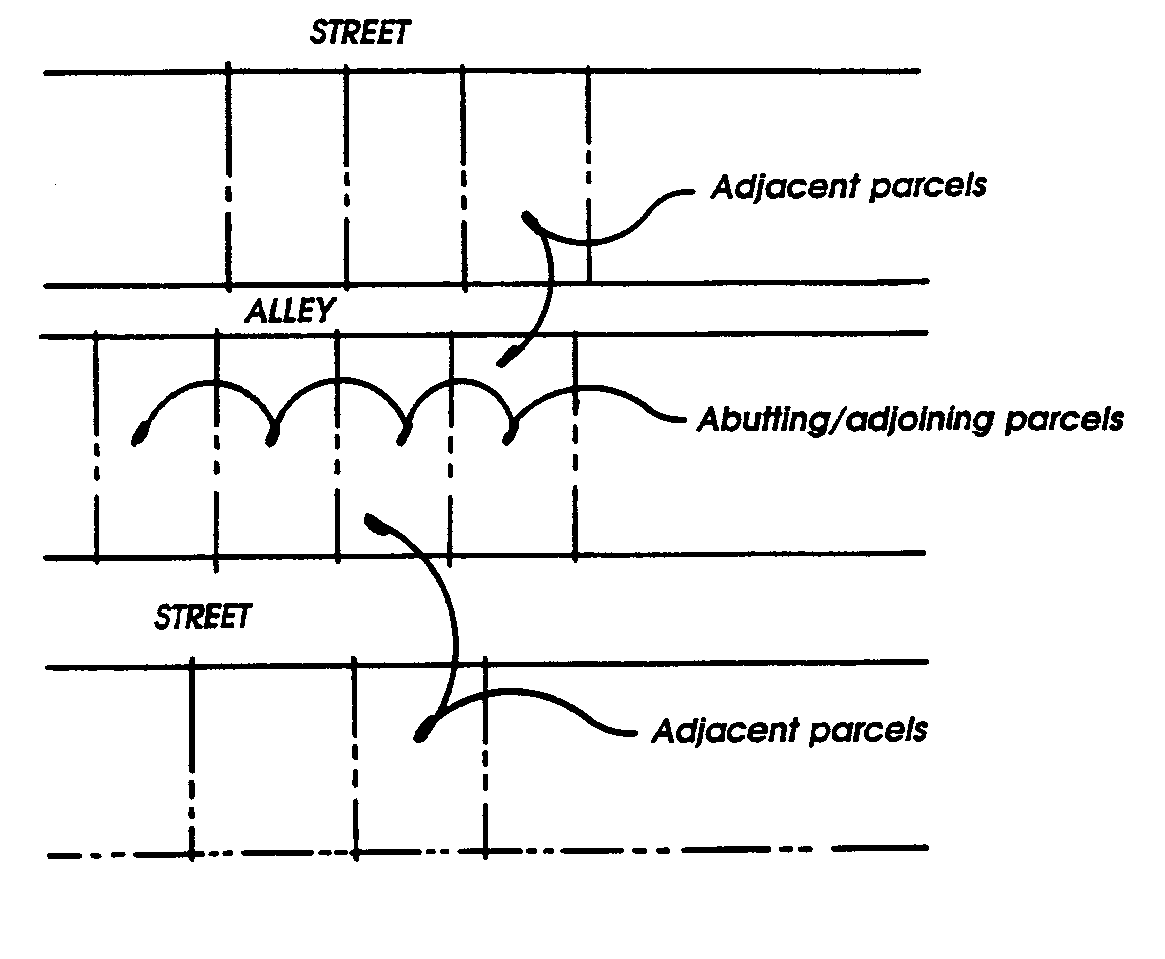
"Abutting/Adjoining." Two or more parcels of land sharing a common boundary line, or two or more objects that physically touch each other.
"Access." The place, or way, by which pedestrian and vehicles shall have safe, adequate, and usable ingress and egress to a property or use as required by this ordinance.
"Accessory dwelling unit." An attached or a detached residential dwelling unit which provides complete independent living facilities for one or more persons and is located on a lot with a proposed or existing primary residence. It shall also include permanent provisions for living, sleeping, eating, cooking, and sanitation on the same parcel as the single-family or multifamily dwelling is or will be situated. An accessory dwelling unit also includes the following: an efficiency unit, as defined in Section 17958.1 of the Health and Safety Code; and as a manufactured home, as defined in Section 18007 of the Health and Safety Code). (Includes "granny unit" or "guest house".)
"Accessory structure." A detached subordinate structure larger than one hundred twenty square feet, the use of which is incidental to that of the main structure or use located on the same parcel and not designed or used for living quarters.
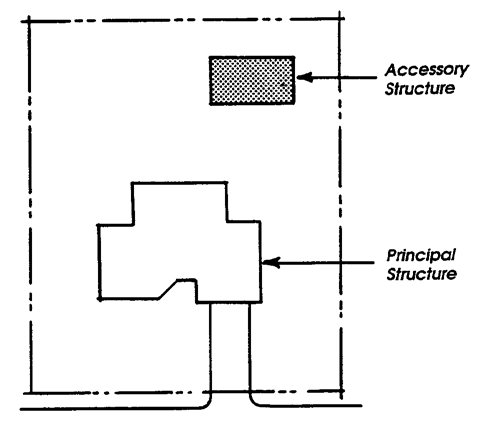
"Accessory use." A use incidental to and customarily associated with a specific principal use, located on the same parcel.
"Addition." Any construction which increases the size of a structure or facility in terms of site coverage, height, length, width, or gross floor area.
"Adjacent." Two or more parcels of land separated only by an alley, street, highway or recorded easement, or two or more objects that lie near or close to each other. See Figure V-1 above.
"Adult businesses." See Chapter 15 for related definitions.
"Agriculture." The production, keeping, or maintenance, for sale, lease, or personal use, of plants and animals useful to man, including, but not limited to: grains and seed crops; dairy animals and livestock; poultry and poultry products; bees and apiary products; fruits; vegetables; or nursery products.
"Agricultural employment." Employed within the County of Ventura in the cultivation and tillage of the soil; the production, cultivation, growing and harvesting of any agricultural or horticultural commodities; and any work on a farm as incident to or in conjunction with such farming operations, including the delivery and preparation of commodities for market or storage; and any person who works at a packing shed for a labor contractor or other entity that contracts with an agricultural employer in order to perform services in connection with handling, drying, packing, or storing any agricultural commodity in its raw or natural state. (Ord. 03-774, 1-13-2004)
"Alcoholic beverage sales." The retail sale of alcoholic beverages for consumption off the premises.
"Alley." A public or private right-of-way which affords a secondary means of vehicular access to abutting property on the side or rear of properties.
"Alteration." Any construction or physical change in the internal arrangement of rooms or the supporting members of a structure, or change in the exterior appearance of any structure.
"Antenna." A device for transmitting and/or receiving radio, television, or any other transmitted signals.
"Applicant." Owner(s) or lessee(s) of property, or their agent(s) (with legal power of attorney), who are seeking discretionary approval from the city.
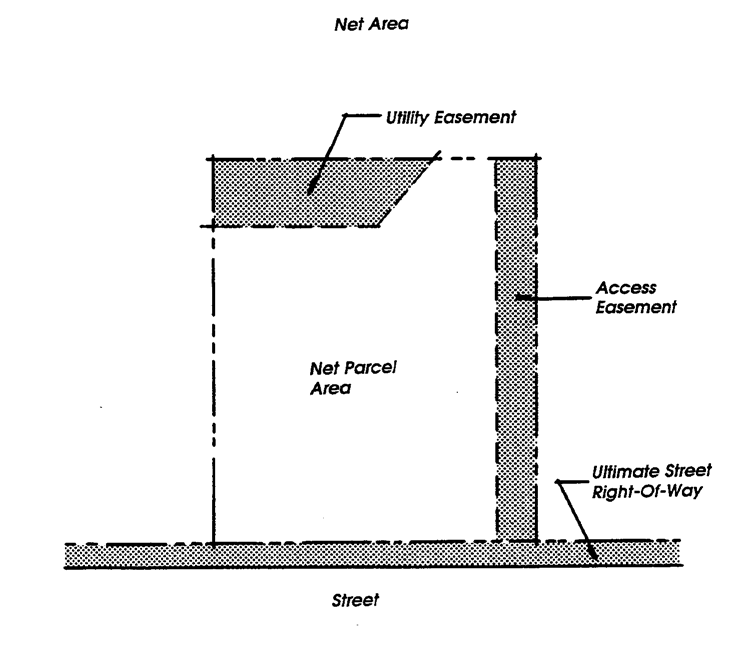
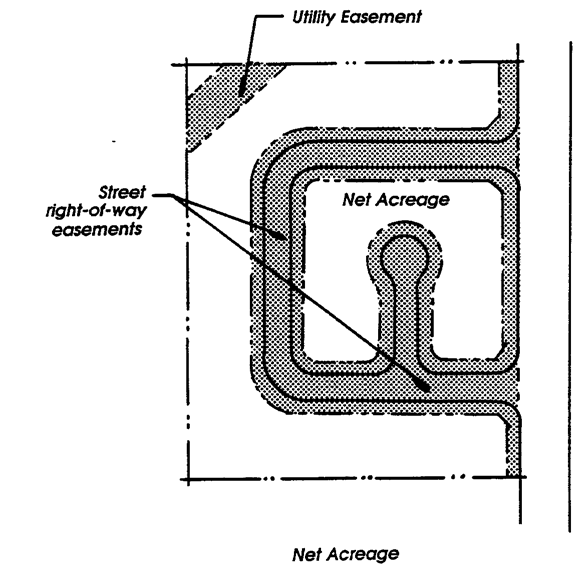
"Area, net." The area of a lot or parcel of land, less the area of existing or proposed public alleys, highways, streets, other necessary public sites, or other public or private easements where the owner does not have the right to the exclusive use of the entire surface.
"Artificial turf." A synthetically derived, natural grass substitute that may be used to fulfill the groundcover requirement of Section 6.04.2820 in as much as it meets the minimum standards for materials, installation, and maintenance of artificial turf prescribed in Section 6.04.2823. (Per CC Ord. No. 855 January 26, 2016)
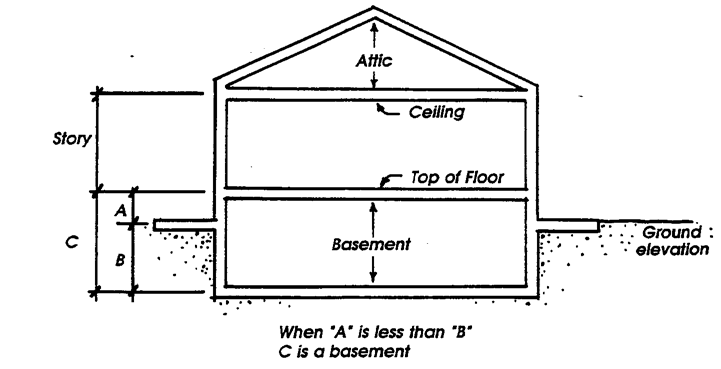
"Attic." A space immediately below the roof of a structure and above the ceiling of the story below that has no finished floor and is not designed or constructed as living quarters. An attic is not a story.
"Automobile dismantling." The wrecking or taking apart of motor vehicles or trailers, or the storage, sale, dumping of dismantled, partly dismantled, or wrecked motor vehicles or their parts.
"Automobile repair garage." Any structure/premises in which a business, service, or industry involving the maintenance, servicing, repair or painting of vehicles is conducted.
"Automobile sales lot." An open area used for the display, sale, and/or rental of new or used automobiles.
"Basement." A space partly or wholly underground and having more than one-half its height (measured from its floor to its finished ceiling) below the average adjoining finished grade. If the finished floor level directly above a basement is more than six feet above grade at any point, the basement shall be considered a story. See Figure V-4 above.
"Berm." A mound or embankment of earth.
"Buildable area." The area of a lot remaining after the minimum yard and open space requirements of the ordinance have been met.
"Building." Any structure built for the support, shelter or enclosure of persons, animals, or property of any kind.
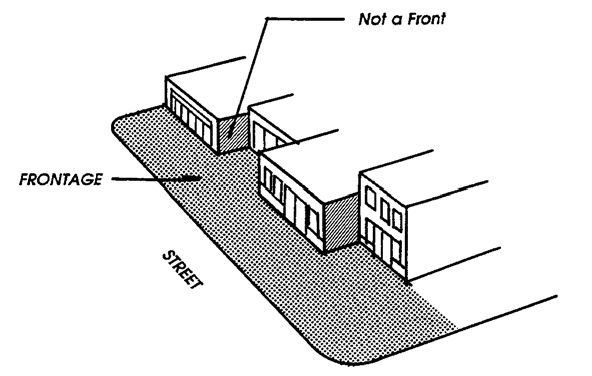
"Building frontage." That frontage of a building which faces upon a public or private street or which faces upon a public or private parking area adjoining a public or private street. Where a building faces 2 or more streets, the frontage containing the principal entrance to the building shall be the building frontage.
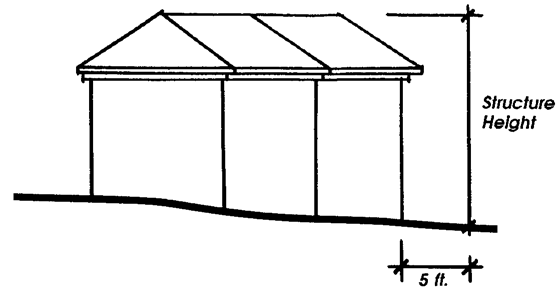
"Building Height." The vertical distance measured from the "finished grade" of the parcel, at a point within five feet of the exterior wall(s) of the structure, to the highest ridgeline of the structure, excluding architectural features not exceeding a height of three feet, including towers, spires, chimneys, machinery, penthouses, scenery lofts, cupolas, water tanks, radio aerials, television antennas and similar architectural and utility structures.
"Cargo container." A box-like structure, usually constructed of metal, used for the transportation of goods/freight by ship, train, and truck trailer.
"Carport." A permanent roofed structure not completely enclosed and not having a vehicle access door used for vehicle storage/shelter and enclosed storage of household items.
"City." The City of Fillmore hereafter referred to as "city."
"City council." See "council."
"Commercial vehicle." A vehicle customarily used as part of a business for the transportation of goods or people.
"Commission." The planning commission of the City of Fillmore, hereafter referred to as "commission."
"Communication equipment facility." A structure housing a telephone or similar public utility communication system's mechanical or electronic switching equipment and persons necessary to operate the equipment.
"Conditional use permit." A discretionary entitlement granted under the provisions of this ordinance and which when granted authorizes a specific use to be made of a specific property, subject to compliance with all terms and conditions imposed on the entitlement.
"Congregate housing." A structure or a group of structures providing residence, facilities with central or private kitchen, dining, and recreational facilities, and with separate bedrooms and/or living quarters.
Contractor's service and storage yard." An open area, which may include garages and sheds, for the storage of vehicles, equipment and materials which are associated with a contracting business or operation.
"Construction commencement." Satisfactory completion of the site preparation, grading, and forms for foundation(s), including reinforcing steel, and all electrical, plumbing and air conditioning groundwork after a building permit has been issued. (Also means "diligent pursuit.")
"Council." The City Council of Fillmore, hereafter referred to as "council."
"Convalescent home." A licensed facility which provides bed and ambulatory care for patients with post-operative convalescent, chronic illness, and persons unable to care for themselves; but not including alcoholics, drug addicts, or persons with mental or contagious diseases or afflictions. (Includes "nursing home" and "rest home").
"Convenience store." A facility for the retail sales of groceries, alcoholic beverages, staples, and sundry items, the gross floor area of which does not exceed five thousand square feet.
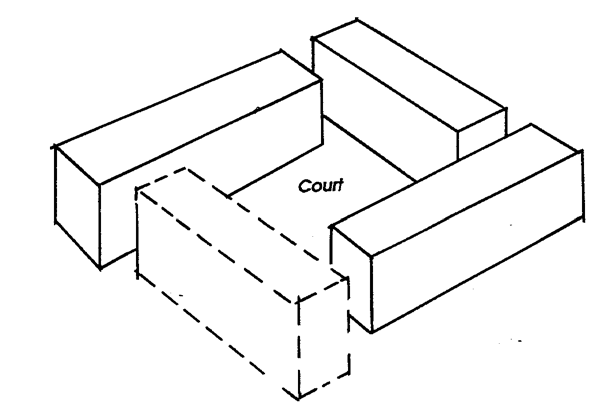
"Court." An open, unoccupied space, other than a yard, on the same parcel with a structure and bounded on three or more sides by the walls of a structure.
"Days." Shall always refer to consecutive calendar days unless otherwise stated.
"Density." The number of dwelling units per gross acre, unless otherwise stated, for residential uses.
"Department." The City of Fillmore Community Development Department, hereafter referred to as the "department."
"Detached." The condition of not having a wall or roof in common with any other structure.
"Development." Includes all of the following activities: 1) Changing the density or intensity of use of land, including, but not limited to, subdivision in compliance with the State Subdivision Map Act, and any other division of land, including lot splits, except where the land division is brought about in connection with the purchase of land for a public recreational use; 2) Constructing, reconstructing, demolishing, or altering the size of any structure, including any facility of any private, public, or municipal utility; 3) Discharging or disposing of any dredged material or any gaseous liquid, solid, or thermal waste; 4) Grading, removing, mining, or extraction of more than fifty square yards of any soil or materials; and 5) Placing or erecting any solid material or structure.
As used in this ordinance, "structure" includes, but is not limited to, any building, road, pipe, flume, conduit, siphon, aqueduct, telephone line, sign, and electrical power transmission and distribution line. A "project," as defined in state law (Government Code Section 65931), is included within this definition.
"Development permit." A discretionary entitlement granted under the provisions of this ordinance which may authorize a new structure or use other than a permitted use; expansion of an existing structure or use other than a permitted use; relocation of a structure; and, for the rebuilding or expansion of a nonconforming structure.
"Digital sign." A sign which uses a bank of grid or other lights that can be individually lit to form copy such as words, letters, logos, figures, symbols, illustrations, still images, or patterns to form a message without altering the sign face. This definition includes cathode ray projections, fiber optics, television screens, plasma screens, digital screens, LCD or LED screens, video boards, holographic displays or other electronic media technology, and other similar media.
"Director." The Director of the Fillmore Community Development Department (or the person designated by the Director) hereafter referred to as "director."
"Drive-Thru." An establishment/facility that by design, service or operation encourages or permits customers to receive services or obtain goods while remaining in their motor vehicles.
"Driveway." An improved drive that provides access to approved off-street parking/loading facilities.
"Dwelling." A structure or portion thereof designed for residential occupancy, not including hotels or motels.
"Dwelling, multi-family." A structure designed and/or used to house three or more families, living independently of each other.
"Dwelling, single-family." A detached structure designed and intended for occupancy by one family, and containing not more than one kitchen.
"Dwelling, two-family." A structure containing two kitchens, designed and/or used to house not more than two families living independently of each other.
"Dwelling Unit." One or more rooms in a building or portion thereof, designed, intended to be used, or used for occupancy by one family for living and sleeping quarters, and containing only one kitchen.
"Efficiency apartment." A dwelling unit having between four hundred and seven hundred square feet with a full bathroom and not more than one other habitable room for living and sleeping purposes, which may be used for cooking and eating.
"Emergency shelter." Housing with minimal supportive services for homeless persons that is limited to occupancy of six months or less by a homeless person. No individual or household may be denied emergency shelter because of an inability to pay.
"Family." One or more persons, related or unrelated, occupying a premises and living as a single non-profit housekeeping unit, as distinguished from a group occupying a boarding or lodging house, hotel, club, or similar dwelling for group use. A family shall not include a fraternal, religious, social, or business group. A family shall be deemed to include domestic help employed by the family.
"Farmworker." An individual who derives or prior to retirement or disability derived a substantial portion of his/her income, as defined by the United States Department of Agriculture, from Agricultural employment. (Ord. No. 03-774, 1-13-2004)
"Farmworker congregate housing." A structure or group of structures providing residence, facilities with central or private kitchen, dining, and recreational facilities, and with separate bedrooms and/or living quarters and restricted to farmworker households or farmworkers who are employed within the County of Ventura IN Agricultural employment. (Ord. No. 03-774, 1-13-2004)
"Farmworker household." A farmworker or farmworkers and other persons who reside or will reside with a farmworker in a Farmworker Restricted Living Unit. (Ord. No. 03-774, 1-13-2004)
"Farmworker restricted living unit." A living unit that is developed or rehabilitated as part of a farmworker congregate housing development and is subject to the occupancy and resale restrictions to guarantee for not less than thirty years their continued use and availability to farmworker households or farmworkers who are employed within the County of Ventura in agricultural employment. (Ord. No. 03-774, 1-13-2004)
"Floor area." The total horizontal area of all floors of a structure measured from the exterior surface of the outside walls including all floors below ground level but exclusive of vent shafts and courts.
"Freight terminal." A facility where trucks and trailers are loaded or unloaded where cargo/freight may be broken down or aggregated into smaller or larger loads for transfer to other vehicles or modes of transit.
"Frontage." The portion of a parcel or structure abutting a street (at the front lot line), except the side of a corner parcel.
"Front porch." An attached structure to the front of a residence which is open on at least two sides and covered by a roof, with a minimum depth of six feet and a minimum width of twelve feet.
"Garage." A structure with not less than three enclosed sides and a vehicle access door covering any unenclosed side, which is used or intended to be used for motor vehicle shelter or storage.
"General plan." The City of Fillmore General Plan as adopted by the council, hereafter referred to as the "general plan."
"Grade." The lowest horizontal elevation of the finished surface of the ground, paving, or sidewalk at a point where the height is to be measured. The degree of rise or descent of a sloping surface.
"Granny housing." See "second dwelling unit."
"Gross acreage." The total area within a parcel of land before public street easements or other easements or dedications/ reservations for public use have been dedicated.
"Gross floor area." The area included within the surrounding exterior finish wall surface of a structure or portion thereof, exclusive of courtyards.
"Group home. A facility that is being used as a supportive living environment for persons who are considered disabled under state or federal law, where non-medical care, supervision or assistance of any kind is provided. A group home operated by a single operator or service provider (whether licensed or unlicensed) constitutes a single facility, whether the facility occupies one or more dwelling units. Group homes shall not include the following:
(1)
Residential care facilities;
(2)
Any group home that operates as a single housekeeping unit;
(3)
Supportive housing; or
(4)
Transitional housing.
"Guest house." See "second dwelling unit."
"Heliport." A non-commercial helicopter landing facility used, designed, or intended to be used for receiving or discharging passengers or cargo. Does not include facilities for service, repair, shelter or storage of helicopters.
"Home occupation." Any use enterprise customarily carried on within a dwelling by the inhabitants thereof, and which use is incidental to the residential use of the dwelling and complies with the standards of Section 6.04.54.
"Hospital." An institution providing physical or mental health services, inpatient or overnight accommodations, and medical or surgical care of the sick or injured. Hospital includes sanitarium and sanatorium.
"Hotel/motel." Guest rooms or suites occupied on a transient basis for compensation and including ancillary facilities (i.e. restaurants, meeting rooms, and recreation facilities).
"Junior accessory dwelling unit." A residential dwelling unit that is no more than five hundred square feet in size and contained entirely within a single-family residence. A junior accessory dwelling unit may include separate sanitation facilities, or may share sanitation facilities with the existing structure.
"Junk/salvage yard." Any premises used for the commercial keeping or storage of junk including, but not limited to, iron and scrap metals, paper, rags, glass, wood, and similar materials, and includes premises used for dismantling machinery or for storage or keeping for sale of parts and equipment resulting from dismantling or wrecking operations on the premises or elsewhere. Junk and salvage yard also means any premises used for baling cardboard, cardboard boxes, paper, or paper carton.
"Kennel." Any parcel or structure where four or more dogs, cats, or other small animals over the age of four months are kept, whether the keeping is for pleasure, profit, breeding, or exhibition, including places where the animals are boarded or kept for sale.
"Kitchen." Any room, all or part of which is designed and/or used for storage, refrigeration, cooking and the preparation of food.
"Landscaping." The planting and maintaining of an area with predominantly native or exotic plant materials including lawn, groundcover, trees, shrubs, and other plant materials; and also including accessory decorative outdoor landscape elements (i.e. pools, fountains, paved or decorated surfaces, but excluding driveways, parking, loading, or storage areas).
"Loading area." A permanent usable space for the temporary parking, loading and unloading of trucks or other commercial vehicles.
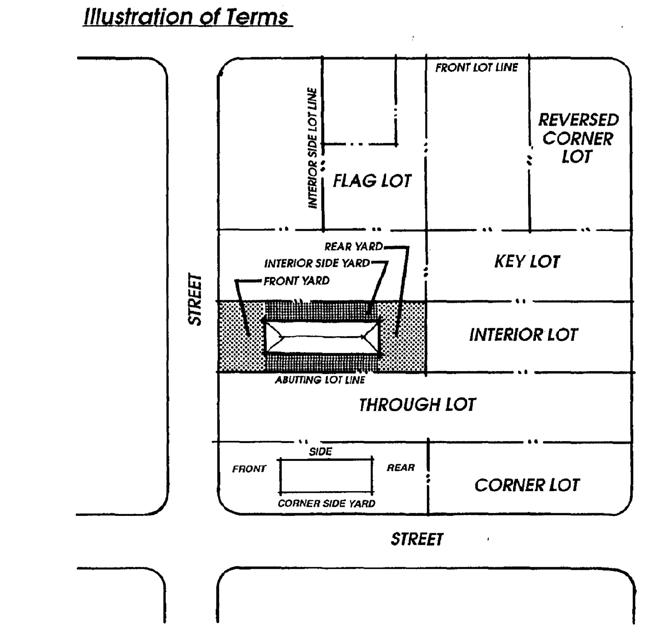
"Lot." A parcel of land: 1) Which is shown as a lot with a number or designation on a final subdivision map or plat recorded in the office of the county recorder of Ventura County, regardless of ownership; 2) The dimensions or boundaries of which are defined by a record of survey recorded in compliance with the provisions of the Subdivision Map Act of the State of California, in the office of the County Recorder of Ventura County, including both parcels shown on a subdivision map and parcels shown on a parcel map, regardless or ownership; or 3) Which is registered under the land title. Types of lots related to the ordinance from which this section was derived include:
"Corner." A lot located at the intersection of two or more streets at an angle of not more than one hundred thirty-five degrees. If the angle is greater than one hundred thirty-five degrees, the lot shall be considered an "interior lot";
"Flag." A lot having access or an easement to a public or private street by a narrow, private right-of-way;
"Interior." A lot abutting only one street;
"Key." A lot with a side line that abuts the rear line of any one or more adjoining lots;
"Reverse corner." A corner lot, the rear of which abuts the side of another lot; and
"Through." A lot having frontage on two generally parallel streets, with only one primary access.
"Lot area." The total horizontal area included within the lot lines of a parcel.
"Lot depth." The average distance between the front and rear lot lines or between the front line and the intersection of the two side lines, if there is no rear line.
"Lot frontage." The portion of the parcel contiguous to the street.
"Lot line." Any boundary of a parcel. The classifications of lot lines are:
"Front." On an interior lot, the line separating the parcel from the street. On a corner lot, the shorter lot line abutting a street. (If the lot lines on a corner lot are equal in length, the front lot line shall be determined by the director.) On a through lot, the lot line abutting the street providing the primary access to the lot;
"Interior." Any lot line not abutting a street;
"Rear." A lot line not abutting a street which is opposite and most distant from the front lot line. In the case of an irregular-shaped parcel, including a triangular parcel, a line within the parcel, parallel to and at a maximum distance from the front lot line, having a length of not less than ten feet; and
"Side." Any lot line which is not a front or rear lot line.
"Lot width." The distance between side lot lines measured at the front yard setback line.
"Manufactured housing." Factory-built, single-family detached housing that is constructed to the National Manufactured Housing Construction and Safety Standards Act of 1974.
"Medical clinic." Any facility providing physical or mental health service and medical or surgical care of the sick or injured, which will not include inpatient or overnight accommodations. Medical clinic includes health center, health clinic, and doctors' offices.
"Mixed use development." The development of a parcel or structure with a variety of complimentary and integrated uses including, but not limited to, residential, office, retail, public, or entertainment in a single or physically integrated group of structures.
"Mobile home." A transportable, factory-built home, designed to be used as a year-round residential dwelling and built prior to the enactment of the Federal Manufactured Housing Construction and Safety Standards Act of 1974.
"Mobile home park." A site containing spaces with required improvements and utilities that are leased for the long-term placement of mobile homes/manufactured houses.
"Mobile home subdivision." The division of a parcel of land into two or more lots or other divisions of land for sale to individual mobile home owners.
"Motel/Hotel." See "hotel/motel."
"Net acreage." The total area within a parcel of land after public street easements or other areas to be dedicated or reserved for public use are deducted from the parcel.
"Nightclub/Bar/Lounge." A structure or tenant space in a structure used primarily for the sale or dispensing of alcoholic beverages by the drink for consumption on the premises. Does not include a premises wherein beverages are sold in conjunction with the sale of food for consumption on the premises and the sale of alcoholic beverages comprises less than twenty-five percent of the gross receipts.
"Nonconforming property." Any subdivision of land that was lawfully established and in compliance with all applicable ordinances and laws at the time the property was subdivided, but which, due to a subsequently enacted ordinance or law, no longer complies with all of the applicable regulations and standards of the zoning district in which the property is located.
"Nonconforming structure." Any structure, or improvement upon land, other than the land itself, including any sign, that was lawfully established and in compliance with all applicable ordinances and laws at the time the structure or improvement was established, but which, due to subsequently enacted ordinance or law, no longer complies with all of the applicable regulations and standards of the zoning district in which the structure or improvement is located.
"Nonconforming use." Any use of land that was lawfully established and in compliance with all applicable ordinances and laws at the time the use was established, but which, due to a subsequently enacted ordinance or law, no longer complies with all of the applicable regulations and standards of the zoning district in which the use is located.
"Occupancy clearance." A permit issued by the department intended to ensure that any initiation or re-establishment of a legally permitted use within a legally established (or a legal nonconforming) structure complies with all applicable provisions of the Municipal Code.
"Open air produce stand." A structure, with or without a roof, and having no sides, for the display and sale of agricultural products (i.e. fruits, vegetables, nuts) grown on the same property.
"Open space." Land areas which are not occupied by structures, parking, streets, or alleys.
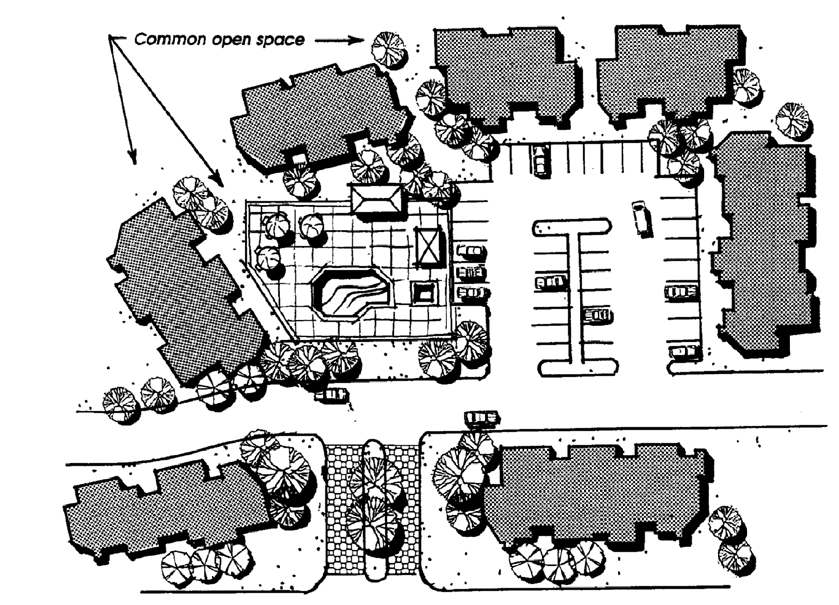
"Open Space, common." An outdoor area which is centrally located and improved for common recreational purposes, active or passive, and accessible to each parcel or dwelling unit within a development through a system of walkways.
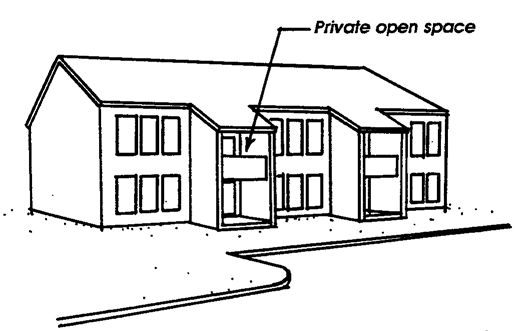
"Open space, private." An outdoor area which is designed and maintained for the sole and exclusive use of the occupants of not more than one adjoining dwelling and may include covered patio areas and balconies.
"Parcel." A portion of land under one ownership that has been legally subdivided or combined and is shown as a single property on the latest equalized assessment roll.
"Parking lot." An area of land which is accessible, improved, and usable for the off-street parking of motor vehicles.
"Parking space." A readily accessible area, not including driveways, ramps, loading or work areas, maintained exclusively for the parking of one motor vehicle.
"Permitted use." Any use allowed in a zoning district and subject to the provisions/regulations applicable to that district.
"Planned development." The planning, construction or implementation, and operation of any use or structure, or a combination of uses and structures, on a single parcel of land based on a comprehensive and complete design or plan treating the entire complex of land, structures and uses as a single project.
"Planning commission." See "commission."
"Principal entrance." The entrance to a business structure/use through which the majority of customers/patrons normally access the business.
"Principal use." The primary or predominant use of any parcel or structure.
"Professional/administrative offices." An establishment where the managerial, administrative, and clerical functions of a business or industry are conducted, or where members of a profession (i.e. doctors or attorneys) conduct their practice.
"Public right-of-way." Land acquired by purchase, reservation, dedication, prescription or condemnation and intended to be occupied by a road, trail, water line, sanitary sewer and/or other public uses.
"Public utility service center." Any structure(s) or premises used for the administration of public utility repair, maintenance and installation crews, including parking for service vehicles, but not including warehouses or storage yards.
"Quarry." Any place where dirt, soil, sand, gravel, rock, clay, decomposed granite, or other similar materials are removed by excavation or otherwise. Quarry includes mining operations for the removal of ores, precious stones, or other solid materials. Quarry does not include:
A.
Excavation and removal of materials from a parcel preparatory to construction of a structure for which a building permit is then in effect, provided that the excavation is confined to that necessary for construction and that no more than five thousand cubic yards of excavated materials is removed from the parcel; or
B.
Excavation of a parcel or subdivision necessary for grading or construction on the premises, where a building permit is not in effect, but where the excavation is necessary to prepare a site for a lawful use, provided that no more than five hundred cubic yards of excavated material is removed from the premises.
"Recorder." The recorder of the County of Ventura.
"Recreation vehicle." A vehicle, boat, vessel or other type of portable structure, with or without a mode of power, and without permanent foundation, which can be towed, hauled, sailed, or driven, and is designed primarily for recreational, camping, sailing and/or travel use, (i.e. travel trailers, motor homes, buses converted to recreational or other non-commercial uses, vans, campers, camping trailers, off-road vehicles, aircraft, boats or other vessels).
"Recycling facility." Refer to Section 6.04.36 for specific definitions.
"Reducing salon." An establishment in the business of assisting patrons to lose weight through dietary and exercise programs under the supervision of a medical doctor.
"Residential care facility." A residential facility licensed by the state where care, services, or treatment is provided to persons living in a supportive community residential setting. Residential care facilities include, but are not be limited to, the following: intermediate care facilities for the developmentally disabled (Health & Safety Code §§ 1267.8, 1267.9); community care facilities (Health & Safety Code Section 1500 et seq.); residential care facilities for the elderly (Health & Safety Code Section 1569 et seq.); residential care facilities for the chronically ill (22 C.C.R. § 87801(a)(5); Health & Safety Code Section 1568.02); alcoholism and drug abuse recovery or treatment facilities (Health & Safety Code §§ 11834.02—11834.30); pediatric day health and respite care facilities (Health & Safety Code Section 1760 et seq.); residential health care facilities, including congregate living health facilities (Health & Safety Code §§ 1265—1271.1, 1250(i), 1250(e), (h)); family care home, foster home, group home for persons with mental health disorders or other disabilities or dependent and neglected children (Wel. & Inst. Code §§ 5115—5120).
"Restaurant, full service." An establishment that prepares and serves food and beverages for consumption primarily within the principal structure. Restaurants include cafes, coffee shops, and similar uses and may include licensed "on-sale" provision of alcoholic beverages for consumption on the premises when accessory to food service.
"Restaurant take-out." An establishment where food and/or beverages are sold in a form ready for consumption where all consumption takes place or is designed to take place outside the confines of the restaurant, and where ordering and pickup of food may take place from a motor vehicle.
"Retail commercial." An establishment whose principal business is the sale of goods/ merchandise to the general public while providing limited services that are commonly incidental to the goods/merchandise offered for sale; unless otherwise defined elsewhere in this ordinance.
"Review authority." The person, committee, commission or council responsible for the review and final determination on a land use entitlement, map or amendment.
"Sanitarium." See "hospital."
"Self-storage." Storage units or compartments of space within a building or buildings, or on open storage space, within a larger facility, wherein each unit, compartment, or open storage space is offered for rent or lease for the private storage of materials, or vehicles including recreation vehicles (as defined above), to the general public or businesses, who are to have access to the space for the purpose of storing and removing property or for individual storage containers, but not the sale of materials. Self-storage does not include shipping/cargo containers or a garage or other storage area in a private residence, warehouse, or a public utility. Self-storage as defined here is also known as "mini-storage", "mini-warehousing", and "personal storage", as commonly referred to in the industry.
"Service station." The use of any structure or parcel for a business whose primary use is to supply motor fuel and minor services to motor vehicles, and may include the incidental sale of snack food items and beverages for the convenience of customers. This use excludes body and fender repair/painting and engine overhauling/replacement.
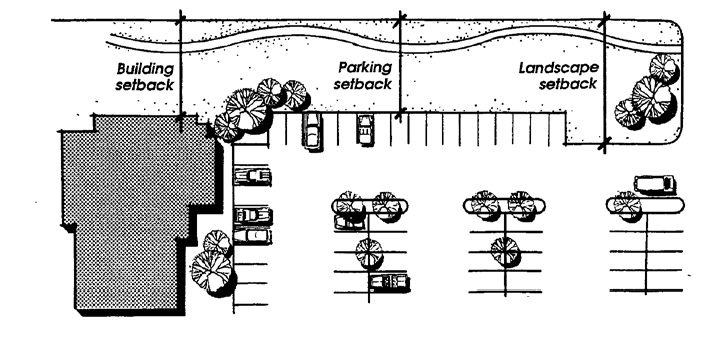
"Setback." The required distance that a structure, use, or parking shall be located from a lot line.
"Signs." See Section 6.04.38 for specific definitions.
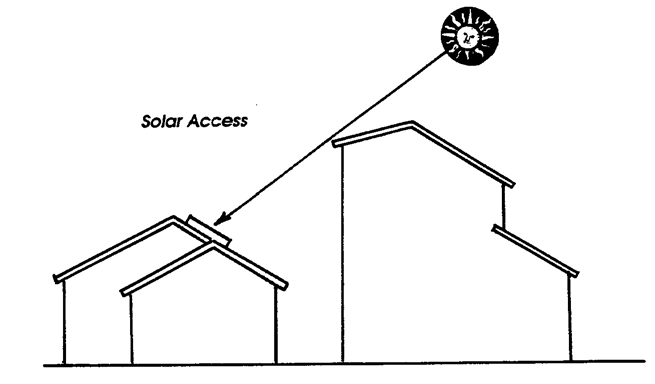
"Solar access." The airspace over a parcel that provides access for sunlight to shine on the particular parcel.
"Story." That portion of a structure included between the upper surface of any floor and the upper surface of the floor next above except that the topmost story shall be that portion of a structure included between the upper surface of the topmost floor and the ceiling or roof above. Uninhabitable attic space is not a story. If the finished floor level directly above a basement is more than six feet above grade at any point, the basement shall be considered a story. See Figure V-4.
"Street." Any public or private thoroughfare, which provides a primary means of access to abutting property.
"Street frontage." See "frontage."
"Structure." Anything constructed or erected, the use of which requires location on the ground or attachment to something having a fixed location on the ground.
"Structural alterations." Any change in the supporting members of a structure, including, but not limited to, foundations, bearing walls, columns, beams, girders and floor joists, ceiling joists or roof rafters.
"Supportive housing." Housing with no limit on length of stay, that is occupied by the target population, as defined in Government Code Section 65582, and that is linked to an onsite or offsite service that assists the supportive housing resident in retaining housing, improving his or her health status, and maximizing his or her ability to live and, when possible, work in the community. Supportive housing shall be considered a residential use and subject to those restrictions that apply to other residential uses of the same type and zone.
"Swap meet/flea market." An indoor or outdoor facility containing multiple tenant spaces, stalls or booths from which new or used merchandise, craftwares or food are sold, exchanged, or bought from separate vendors.
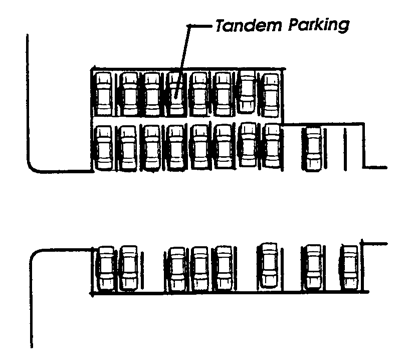
"Tandem parking." Any parking space which partially or wholly occupies the driveway or backup area for another parking space.
"Temporary use." A use established for a specified period of time, with the intent to discontinue the use at the end of the designated time period.
"Tourist attractions." The Fillmore Historical Society Museum, Natural History Museum, Santa Clara River Valley Railroad Historical Society Interpretive Center, Fillmore and Western Railroad, Giessinger Winery, and other categories of business within the city (i.e., antique stores, restaurants, etc.) geared toward tourism and other businesses within the city the director determines to be similar in nature to the businesses listed. (Revised per Ord. 98-728 adopted 4-14-1998)
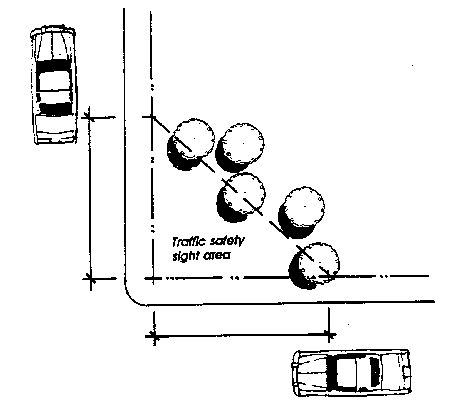
"Traffic safety sight area." A space that is set aside on a street corner or driveway entrance in which all visual obstructions (i.e. structures and plantings) that can prevent visibility and thus be a hazard to traffic and pedestrian safety, are prohibited.
"Transfer station." An area, including any necessary structures, for the temporary storage and salvage of rubbish, garbage, or industrial waste. Transfer station does not include junk and salvage yards.
"Transitional housing." Buildings configured as rental housing developments, but operated under program requirements that require the termination of assistance and recirculating of the assisted unit to another eligible program recipient at a predetermined future point in time that shall be no less than six months from the beginning of the assistance. Transitional housing shall be considered a residential use and subject to those restrictions that apply to other residential uses of the same type and zone.
"Truck stop." A use involving the repair and maintenance of commercial vehicles, including the dispensing of motor fuel and other petroleum products and the sale of accessories and equipment for trucks and similar commercial vehicles. Also includes long term parking.
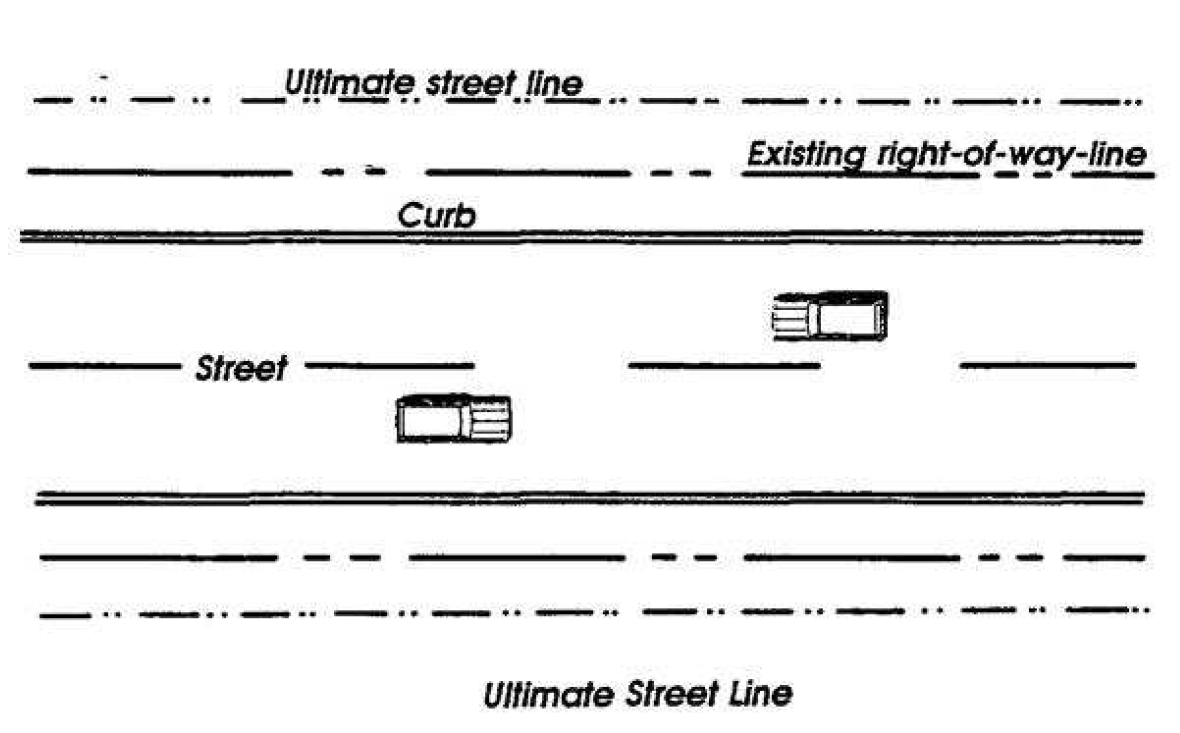
"Ultimate street line." The boundary of the right-of-way of any mapped highway or local street as shown on the map thereof on file in the office of the city engineer regardless of whether the right-of-way has been dedicated or acquired by a public agency.
"Use." The purpose (type and extent) for which land or a structure is arranged, designed, or intended, or for which either land or a structure is occupied or maintained.
"Use inauguration (initiation)." The implementation of a use on a parcel or the occupancy of a structure, subject to determination by the director.
"Variance." A discretionary entitlement which permits a departure from the strict application of the development standards contained in this ordinance.
"Vehicle leasing and rentals." The use of any structure or land for a business involving the leasing of vehicles.
"Vehicle repair." The use of any structure or land for a business, service, or industry involving the maintenance, servicing, or repair or painting of vehicles which is conducted as the sole or primary use of the land. (Also includes "automobile repair garage.")
"Vehicle sales." The use of any structure or land for the display and sale of new or used automobiles, trucks or vans, trailers, or recreational vehicles and including any warranty repair work and other repair service conducted as an accessory use only.
"Visibility Zone." See "traffic safety sight area."
"Warehouse." A structure used primarily for the storage of goods and materials with no more than 10% of the floor area used for offices or commercial purposes. This definition does not include warehouse as a use classification; warehousing and distribution as a use classification is defined separately.
"Warehousing and distribution." This use classification consists of storage within an enclosed building of commercial goods prior to their distribution to wholesale and retail outlets or individuals. This includes storage and sale of goods to other firms for resale; storage of goods for transfer to retail outlets of the same firm; and storage and sale of materials and supplies used in production or operation; and storage for sale of goods direct to consumers. This use typically operates from a warehouse or office having no display of merchandise, and is not designed to solicit walk-in traffic. This use classification excludes self-storage and the storage of hazardous chemical, mineral, and explosive materials.
"Yard." An open space on a parcel of land, other than a court, unobstructed and unoccupied from the ground upward, except for projections permitted by this Ordinance.
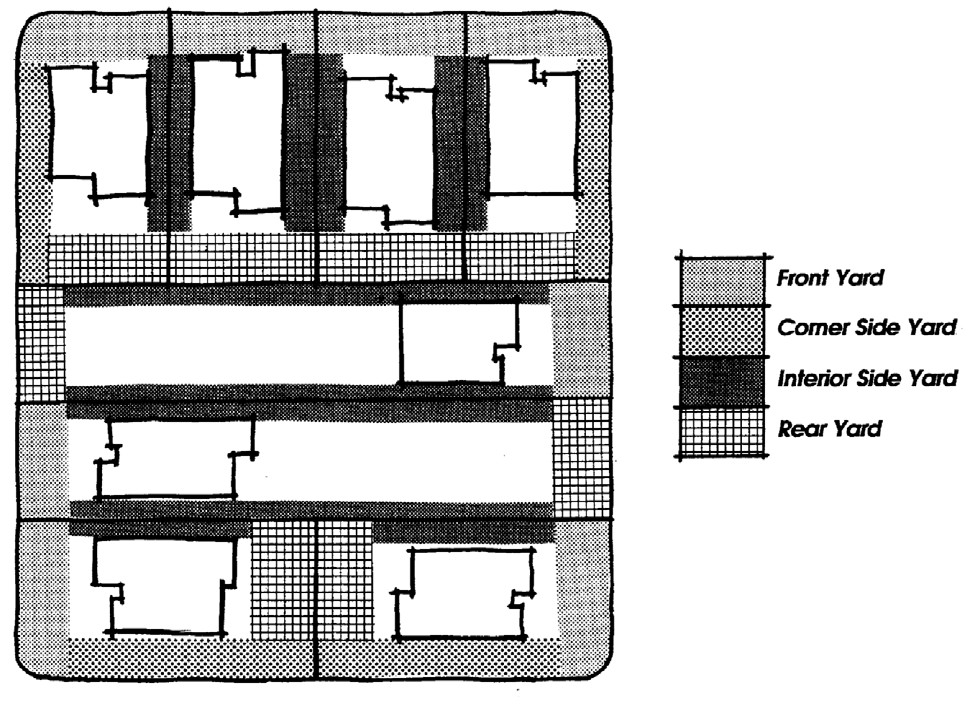
"Yard, corner side." An area extending from the front yard to the rear yard, and from the side street line to the structural setback line parallel thereto.
"Yard, front." An area extending across the full width of the parcel between the front lot line or the existing or future street right-of-way and a structural setback line parallel thereto.
"Yard, interior side." An area extending from the front yard to the rear yard, and from the interior side lot line to the structural setback line parallel thereto.
"Yard, rear." An area extending across the full width of the parcel between the rear lot line and the structural setback line parallel thereto.
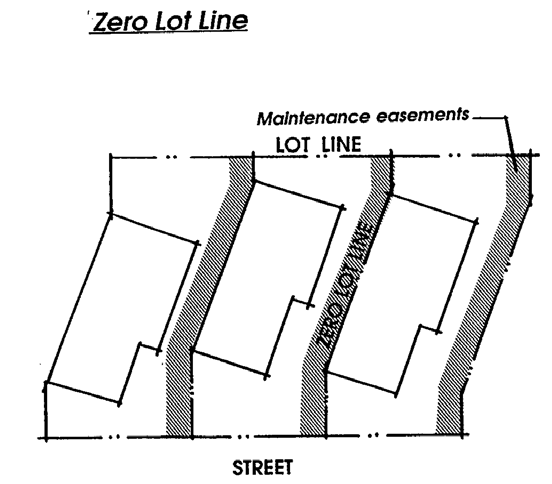
"Zero lot line." The location of a structure on a parcel in which one of the structure's sides is directly on a lot line, resulting in only one side yard.
"Zoning district." A portion of the city within which certain uses of land and structures are defined, and regulations are specified.
(Ord. No. 18-895, §§ 8, 9, 12-11-2018; Ord. No. 18-896, §§ 3, 4, 12-11-2018; Ord. No. 18-897, § 6, 12-11-2018; Ord. No. 19-902, § 6, 3-26-2019; Ord. No. 20-930, § 5, 7-14-2020; Ord. No. 24-968, §§ 5—7, 4-23-2024; Ord. No. 24-972, § 10, 6-11-2024; Ord. No. 25-984, § 3, 10-26-2025)

