
Grand Lake City Zoning Code
ARTICLE 7
- DESIGN REVIEW STANDARDS6
Note— Amending ordinances prior to 2018:
12-7-1 - Title.
The Article shall be known as the "Design Review Standards of the Town of Grand Lake, Colorado."
12-7-2 - Purpose and Application.
An historical perspective is extremely important to the Town, therefore it is the intent that new materials and innovations will strengthen and be harmonious with the "historic western" feel of the Town. A creative and rigorous approach to the best selection and application of building materials will generate a more inviting, vibrant and harmonious appearance to the Town.
As Grand Lake becomes more densely built, there is a need to create a symbiotic relationship between buildings and public and open spaces. The Town of Grand Lake seeks to preserve the historical, rustic, and unique western small-town character of Grand Lake while also integrating its preservation with new and pioneering creative designs. Intending to help enhance quality and strengthen visual continuity while preserving historically significant properties, allowing innovation and encouraging creativity, the purpose of these standards is to stimulate creative design solutions for individual properties while promoting and preserving a sense of cohesiveness among the entire Town of Grand Lake.
A successful project will combine the design elements of composition, scale, proportion and rhythm in proposed materials, surfaces and massing, designing buildings, open and public spaces that are timeless and in character with our Town and harmonious to the human eye. In addition, materials, surfaces and massing create a sense of entry and a desirable sense of place.
The provisions of this Article shall apply to any structure, including temporary facilities, within the Town limits on or after the effective date of the Ordinance for the following:
(A)
New construction of any building.
(B)
Exterior remodeling or painting of any existing building, even if a Town of Grand Lake Building Permit is not required.
(C)
Re-roofing, enlargements, expansions of or additions to any existing building.
Where a property is located within the Central Business District and meets the above criteria, both the design standards in this Article and those in the Central Business District Design Standards guidebook shall apply. If a conflict arises between the provisions of this Article and the Central Business District Design Standards, the more stringent shall apply. Where the Central Business District Design Standards guidebook is silent, the provisions of this Article shall apply.
(Ord. No. 06-2021, § 1, 5-24-2021; Ord. No. 06-2025, § 2, 12-8-2025; Ord. No. 01-2026, § 2, 1-12-2026)
12-7-3 - Definitions.
The definitions for this Municipal Code Article shall be consistent with the definitions of the Municipal Code Zoning Regulations and Land Use Development Procedures and Standards unless otherwise stated herein.
Accent Exterior Material — Classification of building material that may be used in limited capacity at no more than thirty percent (30%) of the total of each exterior wall of the building, not including the roof. Any individual exterior elevation can contain up to thirty percent (30%) of an accent material. By way of example and not limitation, a building may not be constructed of three (3) walls of approved material with a fourth wall consisting solely of Accent Exterior Material.
Approved Base Color Palette — The selection of appropriate exterior colors for structures located in the Town of Grand Lake. White will not be included in the Approved Base Color Palette. White-wash shall be included in the Approved Base Color Palette.
Central Business District — Commercially zoned, or commercial transitionally zoned lots generally located [from] Hancock Street on the east to Broadway Street on the west, and from Park Avenue on the north to the shoreline of Grand Lake on the south. The boundary also includes properties along Lake Avenue and curves around the Grand Lake Yacht Club before returning to Hancock Street. Properties within the CBD are subject to the Central Business District Design Standards, a supplemental guidebook that establishes specific design requirements and development goals for this district. The guidebook provides a map identifying the exact boundaries of the Central Business District.
Dumpster — A large metal refuse container of standardized dimensions with a capacity of one (1) cubic yard or greater.
Human Scale — A reasonable size and shape for an average person to use. It is the proportion of space in relation to human dimension.
Muted colors — Refer to all colors that have low saturation (or chrome). These are subtle colors that are not bright or have been subdued, dulled, or grayed.
Portable shed/garage — Any portable facility which utilizes a canvas, vinyl, rubber or similar type cover over a framework which is not permanently secured to the ground by means of concrete, asphalt or similar type material.
Primary Exterior Material — Classification of building material that shall be used on at least seventy percent (70%) of the exterior walls of the building, not including the roof.
Refuse, Rubbish, or Trash — Any waste materials including, but not limited to, grass clippings, leaves, hay, straw, manure, shavings, glass, cans, bottles, garbage, paper, food, grease and any other waste material of any kind or nature commonly known to as refuse, rubbish or trash.
Refuse Container — A fully enclose container for the purpose of temporary storage of refuse.
Refuse Enclosure — A fully enclosed area used for the storage of Refuse or Refuse Containers.
Step-back — A step-like form of a wall or other building frontage, also termed a recession or recessed story.
Street Wall — The public space adjacent to the sidewalk and/ or street as a result of buildings being constructed to or near the front and side property lines of a site.
Zoning Code Administrator — The officer or other designated authority charged with the administration and enforcement of this Code; the Town Manager, or a duly authorized representa-tive. The Zoning Code Administrator shall be responsible to the Planning Commission and the Town Board of Trustees and who shall administer and enforce all zoning and design review laws of the Town of Grand Lake. He shall have all powers conferred upon the Building Official under this Article and all other Articles of the Town of Grand Lake, in order to perform his functions.
(Ord. No. 9-2020, § 1, 6-22-2020; Ord. No. 06-2021, § 1, 5-24-2021; Ord. No. 08-2021, § 1, 6-14-2021; Ord. No. 04-2022, § 1, 2-28-2022; Ord. No. 02-2024, § 1, 2-12-2024; Ord. No. 06-2025, § 3, 12-8-2025; Ord. No. 01-2026, § 3, 1-12-2026)
12-7-4 - Design Standards for Structures.
These standards require applicants to consider the inherent nature of color and material selection and their appropriate application, the transition from one to another, and viewing the building as a whole and from many angles. Also, the standards require careful attention to which colors, materials and their structural application are selected for vertical supporting elements, spanning elements, or creating building planes and major building walls.
The standards and criteria established herein are made for the purposes of establishing and maintaining the harmony of appearance between existing buildings and newly constructed buildings and to require the use of materials and colors which are compatible with and which improves the surrounding environment and rustic setting of the Town. The guiding vision is to create a vibrant mountain village to improve the quality of life and physical environment for both residents and visitors alike. Unless otherwise stated, all structures, including temporary facilities, within the town limits are subject to these standards and all applicable provisions of the Building Code, Zoning and Land Use Development Regulations (as adopted) of the Town of Grand Lake.
(A)
Color Palette Selection. the intent of the color palette selection is to compliment rather than stand out against the Town's western historic mountain setting. This is particularly important when refurbishing or remodeling structures which need minimal updating but which may need a color palette that is more integrative to the existing Town.
Town Staff maintains an Approved Base Color Palette for exterior color selections, that reflects tones in nature. The use of muted tones for primary exterior material surfaces and brighter tones for accent exterior material surfaces is required by the Town of Grand Lake. The approved color palette shall be referenced and closely matched.
1.
All paint colors shall be approved by Town staff prior to painting.
2.
Reflective colors (shellac, enamels, florescent, neon and high gloss finishes) are not permitted.
3.
Accent colors shall be harmonious accents to the primary color selection.
(a)
Accent colors will be permitted in any color so long as it meets the provisions of this Section.
(b)
White shall be a permitted accent color.
(B)
Material Selection. Material selection shall take into account the historical and existing perspective of the Town. The objective of material standards is to allow flexibility in the choice and applications of exterior materials.
1.
The proposed materials must be appropriate to the surrounding context, both built and natural.
2.
The proposed materials must also be durable and maintainable over time and inclement weather.
3.
Acceptable Primary Exterior Materials:
(a)
Random, Dressed and Simulated Stone.
(b)
Fiber-cement horizontal, vertical and shingle siding.
(c)
Wood horizontal, vertical and shingle siding.
(d)
Exposed heavy timber framing.
(e)
Fiber-cement column framing with wood/fiber cement trim.
(f)
Barky siding, slab, split-log, hand-hewn siding, Rocky Mountain "Rustic" siding.
(g)
"Trex" or other composite decking material, for decking only.
(h)
Canvas, Rubber, Vinyl or other similar type material, for Portable shed/garage only.
(i)
Rough-sided plywood rated for weather exposure including board and batten style (or reverse board and batten style) contingent upon being painted, stained and with provision that joints are not exposed.
4.
Acceptable Accent Exterior Materials:
(a)
Exposed and ornamental metalwork—non-reflective.
(b)
Standing Seam Terne, Oxidizing Copper and painted/pre-finished metal.
(c)
Galvanized metal (non reflective)
(d)
Cor-Ten or other pre-rusted or exposure rusting steel.
(e)
Stucco.
5.
Acceptable Window Materials:
(a)
Aluminum Clad windows.
(b)
Painted wood windows.
(c)
Storefront wood-clad or wood windows.
(d)
Low profile skylights.
(e)
Tube lights.
(f)
Commercial Storefront windows.
(g)
Vinyl or Vinyl clad windows.
6.
Acceptable Roofing Materials:
(a)
Coated stainless steel (i.e., Standing Seam Metal Roof).
(b)
Naturally weathering flat profile metal shingles.
(c)
Architectural grade asphalt composition shingles.
(d)
Common asphalt composition shingles or panels.
(e)
Slate shingles.
(f)
Treated wooden shake shingles.
(g)
Tar and gravel or aggregate roofing, on flat roofs only.
(h)
Rolled roofing if a 1:1 replacement or by Planning Commission approval if requested as a material for new projects.
(i)
AWAPLAN, or similar type SBS-modified bitumen roll roofing.
(j)
Polyurethane Foam — for flat commercial roofs only.
7.
Prohibited Exterior Materials:
(a)
Vinyl and aluminum siding.
(b)
Exterior insulation and Finish Systems (EIFS).
(c)
Mosaic stonework veneer.
(d)
Non-oxidizing reflective metal finishes.
(e)
Large scale pre-finished metal wall or column panel systems.
(f)
Profiled metal, clay, or concrete shingles with characteristics generally associated with "Spanish" tile/shingles.
(g)
Glass block.
(h)
Reserved.
(i)
Outwardly enhanced reflective windows or coatings thereon.
(j)
Non-architectural exposed concrete.
(k)
Mirrored or highly reflective glass, glazing, or surfaces.
(l)
White Stucco Walls.
(m)
Bare sealed or unsealed plywood panels.
(n)
Fiberglas Windows.
(C)
Additional Design Standards for Commercial Structures. These standards address the physical relationship between commercial and other nonresidential development and adjacent properties, public streets, neighborhoods, and the natural environment, in order to implement the Town's vision for a more attractive, efficient, and livable community. These additional design standards are intended to protect and enhance commercial districts by requiring physical development that is of high quality and is compatible with the character, scale, and function of its surrounding area.
1.
Street Wall is the public space adjacent to the sidewalk and/ or street as a result of buildings being constructed to or near the front and side property lines of a site. The goal of street walls in the Town is to continue the connected network of comfortable and inviting pedestrian paths that form the transition between the street and adjacent buildings.
(a)
Creating a strong edge by defining the sidewalk and street, the proposed development minimizes small voids in the street wall, and where voids do exist, they are of such a scale as to create a better, more useful pedestrian space or walkway near the front and/or side lot lines of a site.
1.
Although commercial projects should generally be built to the property lines at the sides and along the street frontage, it is possible on Grand Avenue to also soften this edge by the creative uses of intermittent pocket parks, landscaped seating areas, terraces for pedestrian use, open spaces and other safe areas for pedestrian comfort and visual interest, and functional pedestrian walkways which form the transition between the street and adjacent buildings. It is also appropriate to open up the street wall for a portion of the frontage to create areas of public open space, identify entrances, and make better pedestrian connections.
2.
After the first two (2) stories or twenty-four (24) feet, each additional story shall step back the street wall a minimum of twelve (12) feet to preserve the viewshed from street level.
2.
Massing refers to the size of buildings and how they meet the street. A building's mass is defined by its component parts including the size of its footprint and number of stories. Building mass is also determined by building form, roof shape, and orientation. Grand Lake guidelines encourage use of only the more positive massing relationships to provide a positive, exciting and vital experience for people on the street.
(a)
Massing needs to be engaging and stimulating and address the relationship between the size of the proposed building and the scale of the pedestrian.
1.
The architectural form of development of mass and height should have a human scale and should not overwhelm people walking in the vicinity of the buildings.
2.
Roofs and all other overhangs should be designed so that NO snow or rain is deposited or shed onto any public or private walking surfaces. Safety considerations for the pedestrian are paramount.
(b)
Projects that contain multiple lots shall pay close attention to breaking up the vertical facade into a pattern and scale typical of single lot development.
(c)
Large monolithic buildings which overwhelm the scale of the existing town structures are to be avoided.
1.
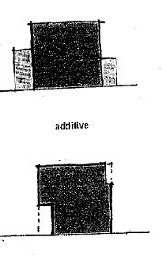
When working within a specified lot line and height restriction, every effort should be made to vary the simple cube shape. Both adding varied structures adjacent to the building(s) and subtracting volume sections and reducing heights from maximum allowances will help to reduce visual impact.
2.
Large building masses should be achieved by linking a series of smaller masses including natural ones. The result should be a building which can be seen as a group of related, integrated, and innovative structures, rather than one (1) large element.
3.
Both additive and subtractive massing approaches are encouraged to reduce the visual impact of large building masses.
(i)
The additive massing approach increases the size of the building by linking smaller, compatible elements in a way that allows them to remain visible as a separate pattern after they are put together.
(ii)
The subtractive massing approach is to take a building of large mass, and then reduce it by taking parts of it away, in a logical manner. This approach is especially useful when buildings are built on the property line.
(iii)
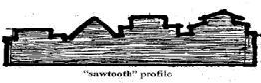
Reaching a balance between the old and the new is a major goal of the Grand Lake Design Guidelines, particularly retaining the historic sawtooth character while encouraging compatible and respectful new buildings and design.
1.
The Town of Grand Lake has a "ziggurat" or "sawtooth" profile of building heights which is a product of the historic building pattern, especially on Grand Avenue. The gaps that exist in the varied and historic sawtooth profile provide opportunities to insert new buildings or portions of buildings which are compatible in both scale and material, yet are distinguishable from surrounding historic vernacular.
3.
Key Architectural Design Guideline Principals include:
(a)
Façade materials and treatment.
1.
All sides of a building should express consistent architectural detail and character.
2.
Building entrances should be designed to be visually prominent with distinguishing façade variations, recesses, projections, or other integral building forms.
3.
Consist of durable, long lasting materials that will keep it's appearance over time.
4.
Building frontages should exhibit human scale detailing on the ground floors.
5.
Use reveals, projections, and other subtle changes in texture and color of wall surfaces. Building colors should emphasize natural, muted earth tones.
(b)
Windows.
1.
Fifty percent (50%) of the façade that faces the street should be composed of transparent materials- to the extent possible that it is compatible with the proposed use — Should be deep set and utilize mullions.
2.
Should be well lit to facilitate a positive merchandising environment.
3.
Should incorporate clear glass on storefronts, windows and doors.
4.
Highly reflective or mirrored glass should not be allowed.
(c)
Covered walkways.
1.
Covered walkways with boardwalk are a response to climate, providing protection from the weather and help articulate the mass and minimize the apparent bulk of a building. Covered walkways and arcades should be provided on all buildings frontages where pedestrian traffic is likely.
2.
Column treatments for the covered walkways should be consistent per business, should be constructed of wood, and take design cues from existing canopy column treatments in the central business district consistent with those depicted in Figures 1 and 2 and acceptable to the Town.
3.
All boardwalk conditions should be designed to Americans with Disabilities Act (ADA) standards and strive to address the needs of disabled individuals.
(d)
Roofs.
1.
Use of "false fronts" / parapets on commercial buildings in the central business district is encouraged to screen flat roofs.
2.
False fronts should be designed to screen mechanical and HVAC equipment from the street level.
3.
Flat roofs shall be designed to accommodate maximum snow loading conditions.
(e)
Infill/building additions in the central business district.
1.
When a new use (infill)/addition is proposed to an existing commercial development the newly constructed portion of the building should appear as an originally conceived part of the design. The new additions should match the scale and reflect the proportions of the original structure where they adjoin or are adjacent. New construction of a different height and bulk, than that of the original structure, should not occur abruptly.
2.
New additions should match the existing approved architecture of the existing central business district. See for example, Figures 1 and 2 below. Such matching approval shall be in the sole discretion of the Town. The extension of canopy elements, lighting, boardwalks, planting areas, fenestration (window) patterns, structural rhythms, and use of materials should exhibit a seamless transition between existing and new construction.
3.
Large setbacks from the street rights-of-way should be discouraged for new building construction.
4.
New construction should not incorporate precise replication of town center architecture but utilize similar colors, materials, textures, pattern, repetition, rhythm, and proportions to achieve architectural unity.
5.
All properties within the Central Business District shall meet the standards established in the Central Business District Design Standards guidebook.
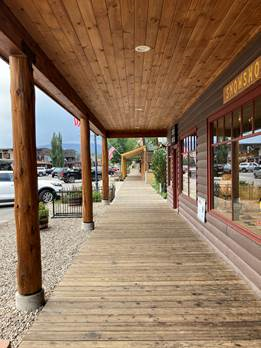
Figure 1
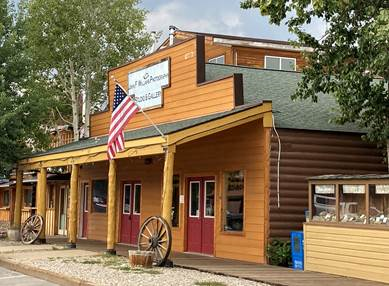
Figure 2
(D)
Additional Standards for Structures.
1.
Foundations may be exposed no more than thirty-six (36) inches above ground level with the exception of foundations and building walls constructed of native stone.
(a)
Exposed portions of poured or block concrete must be painted an appropriate earth tone color or faced with native or imitation stone, or wood.
(E)
Site Design Standards.
1.
Refuse containers shall, to the greatest extent possible, be accessed from the public alley right-of-way.
(a)
Town staff or the Planning Commission shall assess refuse container placement in relationship to the site plan, the topography of the lot, the alley access and the general applicability and availability of placement in or near an alley right-of-way.
2.
Refuse containers shall not be stored on the public street right-of-way.
(a)
Refuse containers, including Dumpsters, shall be permitted to be placed on the public street or alley right-of-way upon issuance of a Special Use or Special Events Permit.
1.
Permit applications shall include the placement of the refuse container and the proposed duration of the placement.
(b)
Dumpsters may be permitted to be stored on the public street right-of-way upon permission of the Town Board of Trustees.
1.
Dumpsters permitted by the Town Board of Trustees to be stored on the public street right-of-way shall be screened.
(i)
Dumpsters shall be screened on three (3) sides between October 16 th to May 14 th as to provide for provider access; and
(ii)
Dumpsters shall be screened on four (4) side May 15 th to October 15 th .
2.
Construction Dumpsters may be allowed to be placed on the public street or alley right-of-way as per the determination of Town staff in the building permit process or at the time of interior renovations.
(c)
Refuse containers may be permitted to be stored in the public alley right-of-way so long as vehicle access is not obstructed by the container.
3.
The Town shall encourage and promote the following:
(a)
Refuse Enclosures for Refuse Containers to optionally screen from the public street right-of-way view on a horizontal plane from the public street right-of-way; and
(b)
Fences for Refuse Containers to optionally screen from the public street right-of-way view on a horizontal plane down a public alley right-of-way; and
(c)
Multiple business cooperation of Refuse Containers sharing as to reduce the concentration of Refuse Containers in a given geographical area; and
(d)
Multiple business cooperation of Refuse Enclosure sharing as to centralize concentrated Refuse Containers in a given geographical area.
4.
Fences shall be constructed of wood, native or imitation stone in a style and color harmonious with the adjacent building architecture and the surrounding natural environment.
(a)
Chain link fences may be used as a perimeter around swimming pools, marinas, public playgrounds, licensed day-care facilities, and tennis or other recreational courts.
1.
Chain link fences may also be used for dog pens when such pens are screened from public view, and the fencing does not exceed seventy-five (75') perimeter feet.
(b)
Fences over eight (8') feet in height shall be reviewed by the Planning Commission for approval or denial.
(c)
White picket fences are permitted.
5.
Retaining walls are intended to be an attractive addition to the overall design of the site plan and the structures on it.
(a)
Walls shall be made of natural woods or stone. Poured or concrete block of the uncolored or unexposed aggregate type is not allowed unless faced with a stone or wooden veneer.
(Ord. No. 06-2021, § 1, 5-24-2021; Ord. No. 04-2022, § 2, 2-28-2022; Ord. No. 08-2023, §§ 1, 2, 8-14-2023; Ord. No. 06-2025, § 4, 12-8-2025; Ord. No. 01-2026, § 4, 1-12-2026)
12-7-5 - Design Standards for Public and Open Spaces.
As Grand Lake becomes more densely built, there is a need to create a symbiotic relationship between buildings and public and open spaces. It is noted, that in certain instances, open space might overlap public space in definition and/or use, but both are vital components for creating a more diverse and enjoyable pedestrian experience throughout the Town.
(A)
Public and Open Spaces can create appropriate relationships between the scale and function of all proposed development to the public and open space in Grand Lake, the street(s), and other existing developments within the area. This can be created through:
1.
Harmonious landscaping of public areas to the natural environment. Appropriate landscaping for our unique mountain area should include high-altitude, drought-resistant, complimentary materials promoting species diversity.
(a)
The Town maintains a recommended species list and is available in the Municipal Code Chapter Urban Forestry Management.
(b)
Examples of positive harmonious landscaping:
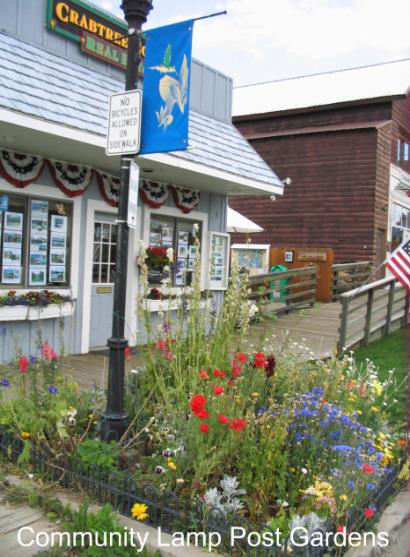 | 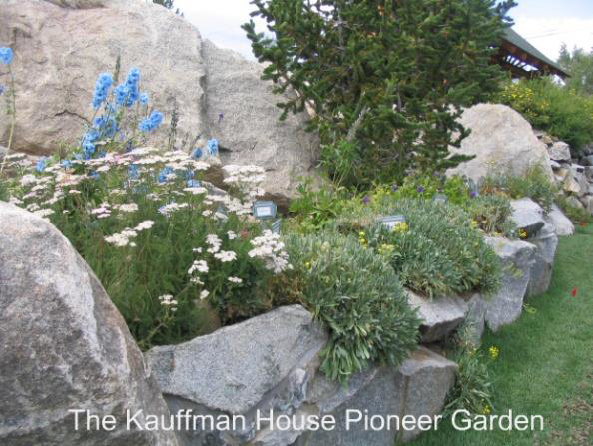 |  |
1.
The Kauffman House's Pioneer Garden.
2.
Community Lamp Post Gardens.
2.
Suitable design materials and diversity. Appropriate materials should be of high natural quality, have the ability to withstand the elements and provide for a positive mixture of materials.
(a)
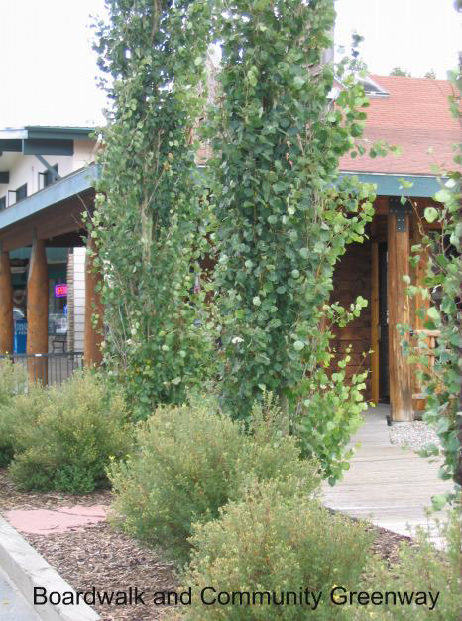
The Town's regulations regarding design materials are available in the Municipal Code Chapter 11: Municipal Property Regulations Article 4: Boardwalks, Sidewalks, and Community Greenways.
(b)
Examples of positive design materials and diversity:
Greenway in front of Grand Sports.
3.
Diversity in size and function of public accessed space ranging from covered boardwalks to pocket parks elements which help compliment the visitor's experience.
(a)
Examples of positive diversity in size and function:
1.
Tallaqua Square Covered Boardwalk.
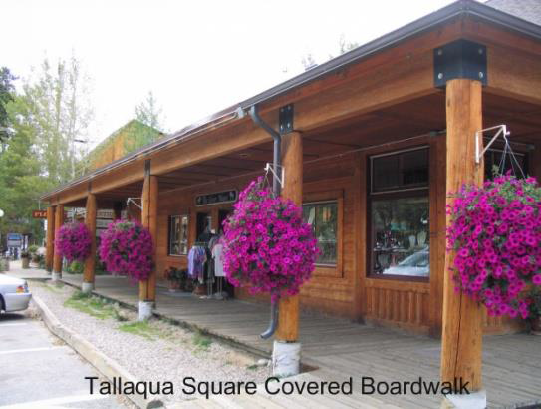
2.
Seating areas on North Inlet River.
4.
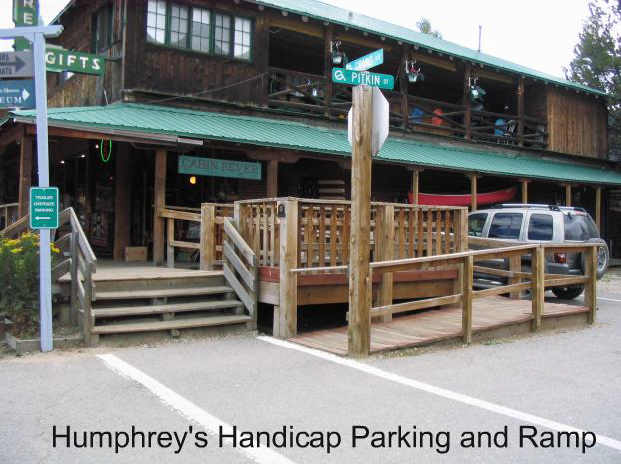
Pedestrian comfort in public spaces must also include adequate lighting for visibility and safety as well as access for the disabled in areas of parking, walking and the use of pedestrian pathways.
(a)
Examples of positive pedestrian comfort:
1.
Humphrey's Handicap Parking and Ramp
(B)
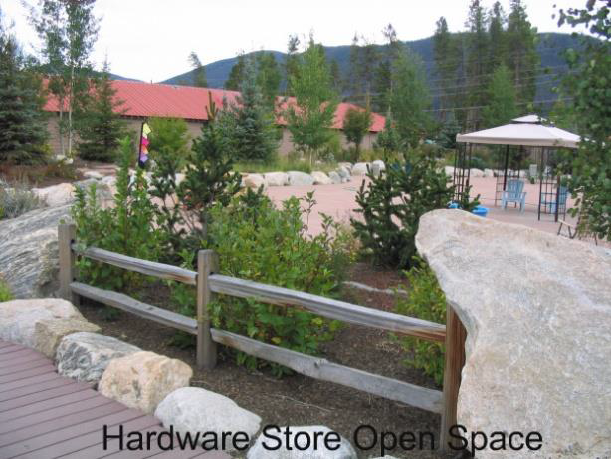
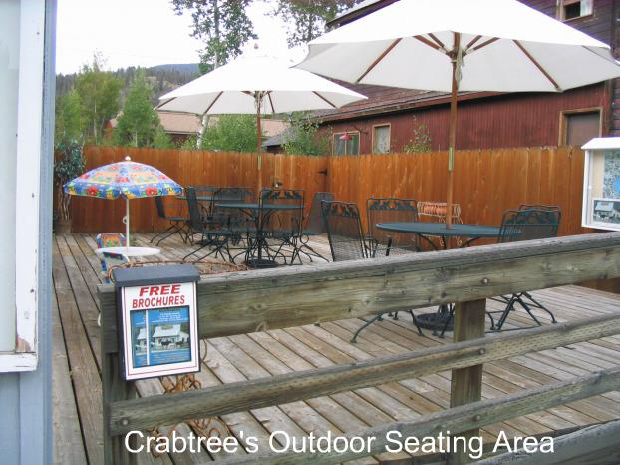
Open Space is undisturbed, re-vegetated or improved land dedicated to the pleasing visual openness to the public in general, common use by the public and/or recreational use by the residents of an approved development. Open Space could include: parks (including pocket parks), approved recreational areas, landscaped and natural areas.
1.
Examples of positive open space development:
(a)
Hardware Store Open Space.
(b)
Crabtree's Outdoor Seating Area.
2.
Regulations for the development of Open Space:
(a)
Open Space development shall comply with the regulations set forth in the Municipal Code Zoning Regulations Chapter.
(b)
Any amount of Open Space may be left in its natural state except where landscaping plans are required and so long as the recreational needs of the residents of the development and/or general public are being met in the opinion of the Planning Commission.
(c)
The development shall be designed in a manner such that wherever possible it protects the environmental assets of the area including considerations of elements such as plants and wildlife, streams and lakes, scenic vistas and other natural features.
3.
Guidelines for the development of Open Spaces:
(a)
Development of passive open spaces, such as pocket parks and seating areas which can be used by the public, areas of protection against the weather, and recreational areas are encouraged as positive additions to the Town.
(b)
Open space as a part of development will be encouraged by the Town where appropriate as a positive connector for the pedestrian experience and the un-built portion of a site as designed, functioning space.
1.
Development of these spaces should also strive to enhance harmony with existing natural resources, such as the Lake, RMNP, and our forested areas, and to complete a network of clear pedestrian footpaths, walkways, roads, and vehicular circulation links throughout the Town.
4.
Existing buildings and proposed developments should also increase the variety of sizes, types and locations of open space throughout Town, making the space both comfortable and functional and within human scale.
(a)
Examples include the use of trees, canopies, screening, or other elements that can break the perceived height of adjacent facades, creating a more desirable human scale relationship.
(C)
Public Space is an area or piece of land designated for public access and use and as a positive connector to better the public experience. Public space is a critical component in the future growth, integrity, and development of the Town of Grand Lake. It shall be usable and considered as a vital component of every development, creating a relationship between buildings and open space and for the general use of the public.
1.
Guidelines for the development of Open Spaces:
(a)
Public Spaces should create useable and engaging spaces, in which the unbuilt portion of the site is treated as a designed, functioning space.
(b)
Public Spaces should create safe, positive and comfortable connectors for the pedestrian experiences.
1.
Points of entry into a building should be clearly and safely identified.
(i)
Positive examples include the clear definition of entry into Juniper Library.
2.
A buffer zone for the pedestrian whenever possible from automobiles, utility and delivery vehicles and parking lots by the use of screens and/or landscaping.
(i)
Positive examples include boardwalks and community greenways.
3.
Public Space can further be defined through the use of trees, architectural walls, benches and landscape containers, which create a visual boundary or edge.
4.
Public Spaces should create harmony and balance between a proposed development and existing street configurations and other developments within the adjacent blocks and the overall town open space and pathways system.
(i)
The development of the pathway system should expand on existing pathways and trails whenever possible.
1.
This pathway system includes, but not be limited to, the Continental Divide Trail.
5.
Public Spaces should account for seasonable adaptability including pedestrian protection from full exposure to the sun, snow, wind, rain and other weather elements while taking advantage of both daylight and view, if possible.
(i)
Positive examples include covered boardwalks and picnic shelters in Lakefront and Town Parks.
12-7-6 - Lighting Standards and Dark Sky Compliance.
(A)
All lighting shall comply with the requirements set forth in the Town of Grand Lake Lighting Management Plan. Such Plan is set forth to substantially comply with the "Dark Sky Concept" as amended by the Board of Trustees to serve the needs of the Town of Grand Lake. A copy of the Grand Lake Lighting Management Plan is on file and available for inspection with the Town Clerk during normal business hours and may be amended from time to time by Resolution of the Board of Trustees.
(B)
Standards for controlling lighting and glare are set forth to reduce annoyance and inconvenience to property owners and traffic hazards to motorists while providing for the protection of a comfortable community environment. These standards are intended to allow reasonable enjoyment of adjacent and nearby property by the owners and the general public while requiring adequate levels of lighting in private and public spaces.
(Ord. No. 07-2024, § 3, 9-23-2024)
Editor's note— Ord. No. 07-2024, § 3, adopted September 23, 2024, amended the title of § 12-7-6 to read as herein set out. The former § 12-7-6 title pertained to Lighting Standards.
12-7-7 - Design Measurements for Alternative Energy Mechanisms.
Innovation, creative design, and appropriate new technologies can improve and enhance the immediate surroundings, while expanding and highlighting the varied and authentic palette of building materials used in the Town of Grand Lake. The Town of Grand Lake encourages the use of alternative energy mechanisms and supports the use of these mechanisms in new development, reconstruction and rehabilitation.
(A)
Solar Applications Exempted. Nothing in this section shall be construed as a limitation on the property owner as to the use of active or passive solar heating and cooling applications on any existing or proposed building covered by this Article provided that such solar applications in all other aspects comply with applicable provisions of the Code of Ordinances. In the event sunlight is found to shine into the eyes of passing motorists the property owner shall be required to mitigate. Abandoned or unused solar panels shall be removed.
12-7-8 - Design Review Procedures and Submission Requirements.
At the time of building permit application, the applicant shall present the required submission materials for design review. Town Staff shall not process this application unless the applicant (its constituents or members) are current with the Town and all Town enterprises for all fees, assessments, charges, taxes, or amount due of any type.
(A)
Design review for various projects shall be administered according to the following:
1.
Design review for commercial projects that are requesting Acceptable Primary Exterior, Window and Roofing Materials shall be handled in an administrative review process.
2.
Design review for commercial projects that are not visible from the public street right-of-way, including projects that are proposed behind privacy fences (six (6) feet in height or greater) shall be handled in an administrative review process. Town of Grand Lake staff may forward the review of these types of requests to the Planning Commission for design review and recommendation to Town staff for approval, approval with conditions or denial.
3.
Design review for new commercial developments or commercial developments proposing Acceptable Accent Exterior Materials/Prohibited Exterior Materials in any location shall be handled by the Planning Commission. The Planning Commission shall make recommendation to Town staff for approval, approval with conditions or denial. This review shall be in effect for any and all applicable exterior remodels, repairs and/or new construction on all commercial developments. Design review for commercial re-roofs and repairs, provided no change in the structure or pitch of roof is proposed, may be handled on an administrative level.
(B)
Design review approval will be based on how the proposal integrates with the local and immediate context. Review of proposed plans, materials, and colors will consider both the positive and negative impacts on the surrounding buildings and adjacent spaces and natural environment. Consideration factors shall include:
1.
The proposal's consideration to the local and immediate context of the existing buildings, the natural environment, historical aspects and the local community culture. Determination will be based on the design elements listed herein as well as:
(a)
The proposal's overall harmony with adjacent buildings, open and public spaces.
(b)
Any graphic design that might interfere with public safety or does not add to or enhance the aesthetic value of the Town of Grand Lake will be denied.
2.
The elemental design tools of composition, proportion, scale, and rhythm are important elements for achieving a balance between unity and complexity in design. These tools may be used to improve the limitations of architectural style and to achieve buildings with more timeless visual assets. Each of these design tools will be applied to the materials, surfaces, massing and street wall (if applicable) of buildings to better indicate use, visual interest, and creation of a more appropriate balance with human scale. Design Elements include:
(a)
Scale the proportion used to determine the relationships and harmony between different elements (existing surroundings including buildings and natural elements, to better define heights and widths and depth).
(b)
Composition the organization of parts (including non-built spaces) of a project to achieve a unified whole.
(c)
Proportion the relationship of one (1) part to another or to the whole.
(d)
Rhythm the relative variation of regular and repetitive elements (how surface materials begin and end and how a switch form one (1) material to another occurs).
(C)
Submission Requirements shall include the following information:
1.
Written permission of the owner of the property on which the action is proposed.
2.
Drawings of all building elevations (including the depiction of colors of the proposed or remodeled structure), at a minimum of one-quarter-inch scale.
3.
Photographs of surrounding properties within one-half (½) block in each direction to show how the new or remodeled project relates to these properties.
4.
Material (including lighting fixtures) and color samples or reasonable, clear photographs or representations of all material and color selections.
5.
A site plan clearly indicating the location and detailing of:
(a)
Lighting (indicating direction of lighting).
(b)
Benches and public seating area.
(c)
Signage (including all graphic designs depicted to scale).
(d)
Location and size of public and/or open space.
(e)
Screening from parking, utilities, and garbage facilities.
6.
A landscape plan including description of specific plantings and sizes.
7.
Building permit from the Town.
8.
Sign permit application, if applicable.
12-7-9 - Enforcement.
The building permit applicant shall use the materials and colors as reviewed and approved by the Planning Commission or Zoning Code Administrator during the course of construction. Failure to do so shall constitute a violation of the Article. In addition, the Zoning Code Administrator, or his designee, is specifically empowered to cause the construction site to be served with a stop-work order if necessary, in order to secure compliance.
12-7-10 - Appeals.
Any person who is aggrieved by the denial of a building permit due to the administrative ruling of the Building Code Administrator in regards to the design standards listed herein of this Article shall have the right to appeal to the Board of Trustees. The appeal must be in written form, state the grounds for the appeal, and be filed with the Town within fourteen (14) days of the denial. The Planning Commission shall hear the appeal at their next regularly scheduled meeting after receipt of the written notice and provide a recommendation to the Board of Trustees. The Board of Trustees shall hear the appeal at their next regularly scheduled meeting after the Planning Commission meeting.
12-7-12 - Liability for Damages.
This Article shall not be construed to hold the Town of Grand Lake or its authorized representative responsible for any damage to persons or property by reason of the responsible enforcement of this Article nor by reason of the issuance or denial of a building permit as is herein provided.
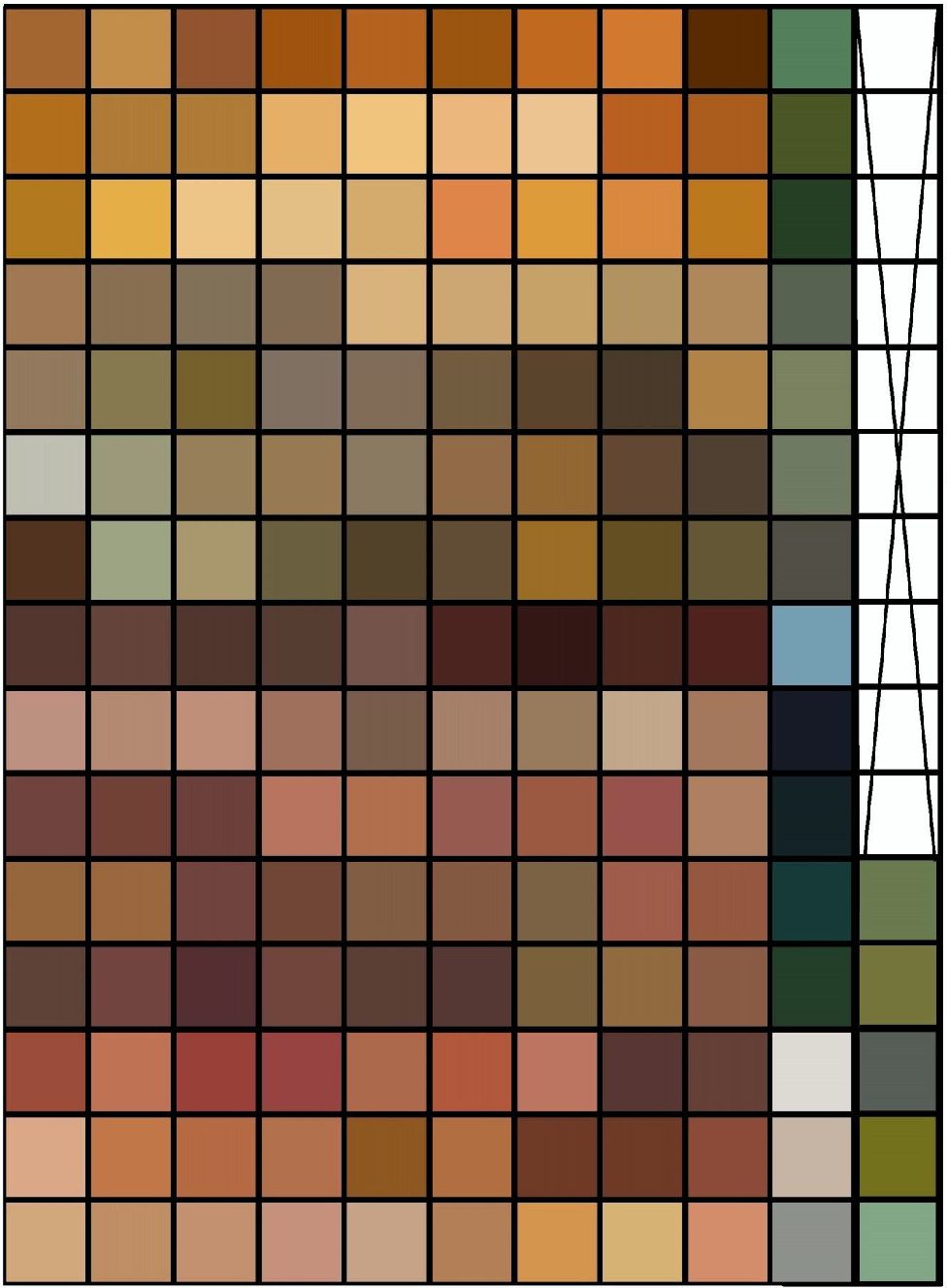
Chart 1 — Exterior Color Comparison

