
Hallandale Beach City Zoning Code
CHAPTER 28
TRAFFIC, MOTOR VEHICLES AND BOATS
Sec. 28-1. - Application of traffic laws.
Except as otherwise provided, the provisions of this article shall apply to the operation of vehicles wherever vehicles have the right to travel in the city.
(Ord. No. 2024-032, § 4(Exh. A), 11-20-2024)
Sec. 28-9. - Authority to erect stop and yield signs.
(a)
At through streets. Whenever any ordinance designates and describes a through street, or where any street is designated as a through street by the traffic engineer, it shall be the duty of the traffic engineer to place and maintain a stop sign or yield right-of-way sign on each street intersection, except at those intersections which are controlled by automatic signals or other traffic control devices.
(b)
At other than through streets. The traffic engineer is authorized to determine and designate intersections where a particular hazard exists and to determine whether a vehicle shall stop at one or more entrances to any such intersections, and the city shall erect a stop sign or yield right-of-way sign at every place where he shall find a stop required, except at those intersections which are controlled by automatic signals or other traffic control devices.
(Ord. No. 2024-032, § 4(Exh. A), 11-20-2024)
Sec. 28-10. - Operation of bicycles on sidewalks.
Bicycles operated on the sidewalks of the city must comply with the regulations set forth in F.S. § 316.2065.
(Ord. No. 2024-032, § 4(Exh. A), 11-20-2024)
Sec. 28-12. - Anchoring limitation areas.
(a)
Designation. Pursuant to the authority granted by the state legislature, the city hereby designates the following areas within its corporate boundaries to be an anchoring limitation area as authorized in ch. 2025-39, Laws of Florida, and codified at F.S. § 327.60(2)(f)3.:
(1)
Golden Isles Lake.
(b)
Restriction. No vessel shall be anchored anywhere within an anchoring limitation area for a period of one hour or more between one-half hour after sunset and one-half hour before sunrise for more than 30 days in any six-month period.
(c)
Exemptions. The following vessels are not subject to the restriction set forth in this section:
(1)
Vessels anchored within the boundaries of a marked mooring field.
(2)
Vessels anchored overnight for the purpose of completing permitted marine construction, installation, or maintenance work.
(3)
Vessels owned by a governmental entity or otherwise operated at the request of a governmental entity for a governmental purpose.
(4)
Commercial fishing vessels as defined in F.S. § 327.02(6).
(d)
Savings. This section is supplemental to, and does not otherwise alter, any more restrictive restrictions on anchoring or mooring arising from a local, state or federal law.
(e)
Enforcement. The provisions of this section may be enforced by the code compliance division, the police department or any other law enforcement agency having jurisdiction within the anchoring limitation area, in the manner prescribed below:
(1)
Warning notice. Prior to the issuance of a notice of violation pursuant to this section, the vessel owner, occupant, or operator must be provided a warning in the manner prescribed below that the vessel will be subject to enforcement if it remains anchored in the anchoring limitation area in violation of this section.
(2)
Warning notice procedure. At any time during which a vessel is anchored overnight in the anchoring limitation area for more than 14 days in any six-month period, a enforcement officer who has reason to believe that such vessel may violate the prohibition on overnight anchoring, shall provide the vessel owner, occupant or operator with written notice that it may be subject to future enforcement as follows:
a.
If the vessel is occupied, written notice shall be provided directly to the occupant, unless such person refuses to accept the written notice in which case the notice may be affixed to the vessel; or
b.
If the vessel is unoccupied or if occupancy cannot be determined, written notice shall be affixed to the vessel; and
c.
In addition to either a or b above, written notice shall be sent via certified mail, return receipt requested, to the registered owner and any lienholder of the vessel, irrespective of whether in-person notice was provided. The requirements of this section shall be deemed satisfied upon mailing. If no owner or lienholder can be identified after reasonable effort to ascertain the name and address of the owner and any lienholder, then this subsection c. shall not apply.
d.
The written warning notice shall include the following:
1.
Information that the vessel may soon be in violation of this section; and
2.
A copy of this section.
(3)
Notice of violation. If a vessel is found to be in violation of this section as of a date that is ten days or more after issuance of a warning notice by any method prescribed in subsection (2) above, a code compliance officer or law enforcement officer may issue a notice of violation utilizing the same procedure set forth in subsections (2)a.—c. above.
(4)
Fines and enforcement. The owner, occupant and/or operator of a vessel found to be in violation of this section as of a date that is ten days or more after issuance of a warning notice by any method prescribed above shall be subject to the following fines:
a.
$250.00 fine per day for a first violation.
b.
$500.00 fine per day for a second or subsequent violation.
In addition to the fines prescribed above, any vessel found to be in violation of this section as of a date that is ten days or more after issuance of a warning notice shall be subject to removal, towing, impoundment, and disposal in accordance with the provisions set forth below.
(5)
Appeal; towing, impoundment, disposal.
a.
Any cited party shall have ten days within which to appeal the notice of violation to the city by paying an administrative fee and submitting a written request which must include the vessel owner's name, address, telephone number, email address and a copy of the notice of violation that was issued to the vessel owner, occupant, operator or affixed to the vessel.
b.
Hearings held pursuant to this section shall be noticed and conducted according to the provisions of chapter 9. However, hearings under this section shall be on the hearing calendar at the soonest practicable hearing date and continuances requested by either party shall be limited to one only one continuance per side.
c.
Prior to and until the matter is determined by the special magistrate, the vessel found to be in violation of this section shall not be towed but fines shall continue to accrue so long as the vessel remains anchored in violation of this section.
d.
If no cited party timely appeals the notice of violation or the special magistrate upholds the violation, the vessel may be removed, towed and impounded by the city or its contractor until such time as the vessel owner or lienholder retrieves the vessel after paying all costs associated with the removal, along with all accrued fines owed to the city.
e.
If no cited party timely appeals the notice of violation, or no cited party timely appeals the special magistrates determination, or all appeals from the special magistrate's determination have been exhausted, and the vessel owner or lienholder has failed to retrieve the vessel from the impoundment facility, the city or its contractor may dispose of the vessel in accordance with law.
(6)
Additional remedies. The city may also pursue any additional remedies available to it in accordance with law.
(Ord. No. 2025-026, § 1, 11-5-2025)
Sec. 28-13. - Restricted swim areas and boat wakes.
(a)
When posted, it shall be unlawful to operate any boat, vessel or watercraft at a speed greater than that speed which is necessary to maintain steerage.
(b)
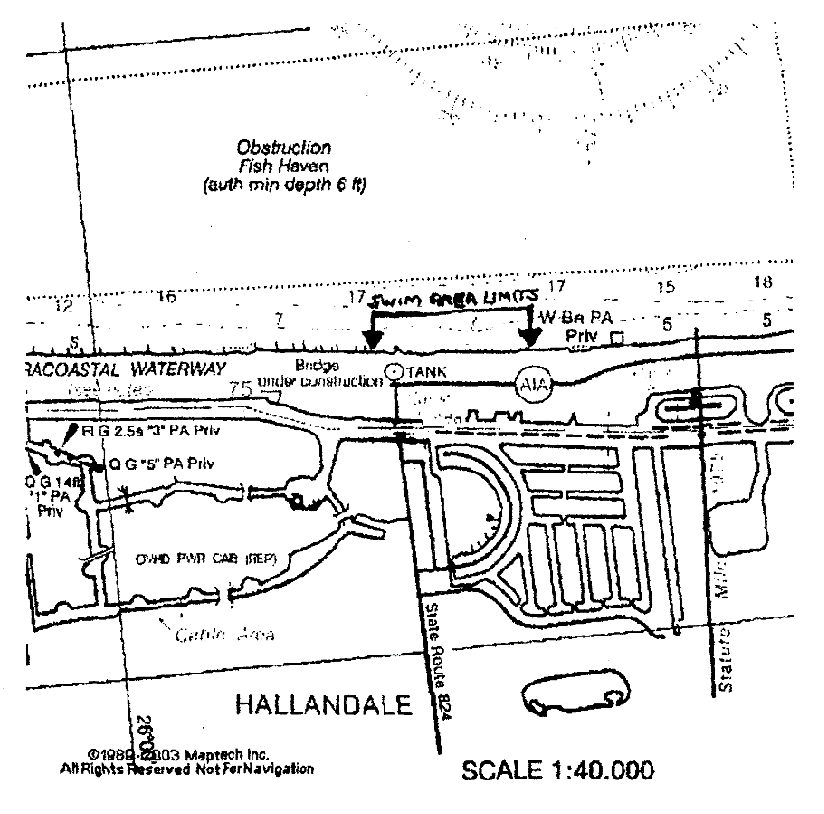
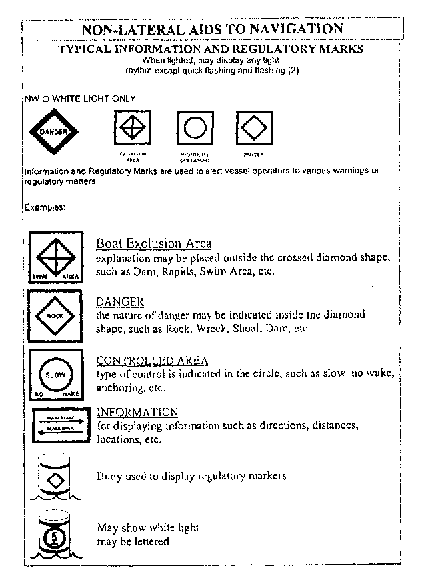
The areas located on public beaches within the city as described in appendix 1 shall be known as restricted boat areas. Such areas shall be marked by the use of buoys as described in appendix 2.
(c)
It shall be unlawful for any watercraft powered by engine to travel within the restricted areas which shall be reserved for swimmers.
(d)
The following shall be exceptions to the restrictions set forth herein:
(1)
Emergency and/or law enforcement watercraft; and
(2)
Watercraft operated for necessary municipal or governmental tasks.
(e)
Any person in violation of this section shall be punished by a fine not to exceed $500.00.
Appendix 1
Appendix 2
(Ord. No. 2024-032, § 4(Exh. A), 11-20-2024)
Sec. 28-14. - Truck routes.
(a)
Definitions. The following words, terms and phrases, when used in this section, shall have the meanings ascribed to them in this subsection, except where the context clearly indicates a different meaning:
Deviating truck means a truck which leaves and departs from a truck route while traveling inside the city.
Truck means any vehicle designed or operated for the transportation of property and the body weight or combined body and load weight of which exceeds 10,000 pounds and has more than two axles and four wheels.
Truck route means a way over certain streets over and along which trucks traveling in the city must operate.
(b)
Application of regulation. All trucks within the city shall be operated only over and along established truck routes, except that subsections (b) through (d) of this section shall not prohibit:
(1)
Operation on street of destination. The operation of trucks upon any street where necessary to the conduct of business at a destination point within the city, provided streets upon which truck traffic is permitted are used until reaching the intersection nearest the destination point.
(2)
Emergency vehicles. The operation of emergency vehicles upon any street in the city.
(3)
Public utilities. The operation of trucks owned or operated by the city, public utilities, any contractor or materialman, while engaged in the repair, maintenance or construction of streets, street improvements, or street utilities within the city, or the south side of Holiday Drive.
(4)
Detoured trucks. The operation of trucks upon any officially established detour in any case where trucks could lawfully be operated upon the street for which the detour is established.
(c)
Truck routes established. There are established within the city the following truck routes:
(1)
Hallandale Beach Boulevard, from A1A to west city limits.
(2)
Dixie Highway, from north city limits to south city limits.
(3)
A1A, from north city limits to south city limits.
(4)
Pembroke Road, from Federal Highway (U.S. 1) to west city limits.
(5)
U.S. Highway No. 1, from south city limits to north city limits.
(6)
N.E./S.E. First Avenue, from south city limits to north city limits.
(d)
Truck traffic in the city.
(1)
Generally. All truck traffic in the city shall proceed only over an established truck route and may deviate only at the intersection nearest to the destination point. When leaving the destination point, it shall return to the truck route by the shortest permissible route. Afterward it shall proceed to the next truck route intersection nearest each point of destination before deviating again. In the event the next point of destination is closer than the truck route intersection, the truck may proceed to the next point of destination by the shortest, most direct route. Compliance with these provisions is mandatory regardless of the fact that it may require a vehicle to depart from the most direct route from its point of origin to its point of destination, or from one point of destination to a subsequent point of destination.
(2)
Desoto Waterway Bridge. Notwithstanding any other provisions of this section, trucks picking up or delivering materials, equipment or supplies utilized in construction or land scarification, or any vehicles or equipment utilized in the land scarification or construction process, including without limitation bulldozers, pile driving equipment, cranes, cement mixers, and backhoes, may not, at any time or under any circumstances, be operated over or otherwise utilize Atlantic Shores Boulevard from Diplomat Parkway east to the intersection of Three Islands Boulevard, including the Desoto Waterway Bridge.
(Ord. No. 2024-032, § 4(Exh. A), 11-20-2024)
Sec. 28-18. - Solicitation upon streets, intersections, medians separating intersections, paved roadways and other places of vehicular travel.
(a)
In school zones and where the posted speed exceeds 25 miles per hour, no person shall stand or walk in the streets, intersections, medians separating intersections where traffic flows in opposite directions, paved roadways and other places of vehicular traffic whether or not the vehicles are stopped or moving, for the purpose of soliciting funds, collecting of monies, donations or contributions, freely distributing or handing and receiving of anything by hand to or from the occupants of motor vehicles whether or not money is exchanged, and selling of anything to the occupant of any motor vehicle.
(b)
In school zones or where the posted speed limit exceeds 25, no person shall conduct the business of collecting, displaying or selling merchandise or services from the public rights-of-way within the city limits, unless participating in a city sponsored event and/or a city approved and permitted event. Specifically prohibited under this section are street vendors and/or sale of food of any kind, flowers, goods, wares, services or merchandise from a vehicle cart, or other apparatus used to transport goods, whether motorized or not, regardless of the number of wheels affixed thereto or on foot.
(Ord. No. 2024-032, § 4(Exh. A), 11-20-2024)
Sec. 28-91. - Definitions.
The following words, terms and phrases, when used in this article, shall have the meanings ascribed to them in this section, except where the context clearly indicates a different meaning:
Parade means any parade, march, ceremony, show, exhibition, pageant or procession of any kind, or any similar display, in or upon any street, park or other public place in the city.
Parade permit means a permit as required by this article.
(Ord. No. 2024-032, § 4(Exh. A), 11-20-2024)
Sec. 28-92. - Permit required; exceptions.
No person may engage in, participate in, aid, form or start any parade unless a parade permit shall have been obtained from the chief of police; except that this article shall not apply to:
(1)
Funeral processions.
(2)
Students going to and from school classes or participating in educational activities, providing such conduct is under the immediate direction and supervision of the proper school authorities.
(3)
A governmental agency acting within the scope of its functions.
(Ord. No. 2024-032, § 4(Exh. A), 11-20-2024)
Sec. 28-93. - Permit application.
(a)
Filing period. An application for a parade permit must be filed with the chief of police not less than 30 days before the date on which it is proposed to conduct the parade.
(b)
Contents. The application for a parade permit shall set forth the following information:
(1)
The name, address and telephone number of the person seeking to conduct such parade.
(2)
If the parade is proposed to be conducted for, on behalf of, or by an organization, the name, address and telephone number of the headquarters of the organization, and of the authorized and responsible heads of such organization.
(3)
The name, address and telephone number of the person who will be the parade chairman and who will be responsible for its conduct.
(4)
The date when the parade is to be conducted.
(5)
The route to be traveled, the starting point and the termination point.
(6)
The approximate number of persons who, and animals and vehicles which, will constitute such parade; the type of animals, and description of the vehicles.
(7)
The hours when such parade will start and terminate.
(8)
A statement as to whether the parade will occupy all or only a portion of the width of the streets proposed to be traversed.
(9)
The location by streets of any assembly areas for such parade.
(10)
The time at which units of the parade will begin to assemble at any such assembly area or areas.
(11)
The interval of space to be maintained between units of such parade.
(12)
If the parade is designed to be held by, and on behalf of or for, any person other than the applicant, the applicant for such permit shall file with the chief of police a communication in writing from the person proposing to hold the parade, authorizing the applicant to apply for the permit on his behalf.
(13)
Any additional information which the chief of police shall find reasonably necessary to a fair determination as to whether a permit should issue.
(c)
Late applications. The chief of police, where good cause is shown, shall have the authority to consider any application under this section which is filed less than 30 days before the date such parade is proposed to be conducted.
(d)
Fee. There shall be paid at the time of filing the application for a parade permit a fee, as established and on file in the city clerk's office.
(Ord. No. 2024-032, § 4(Exh. A), 11-20-2024)
Sec. 28-94. - Standards for issuance of permit.
The chief of police shall issue a permit as provided for in this article when, from a consideration of the application and from such other information as may otherwise be obtained, he finds that:
(1)
The conduct of the parade will not substantially interrupt the safe and orderly movement of other traffic contiguous to its route.
(2)
The conduct of the parade will not require the diversion of so great a number of police officers of the city to properly police the line of movement and contiguous areas as to prevent normal police protection to the city.
(3)
The conduct of such parade will not require the diversion of so great a number of ambulances as to prevent normal ambulance service to portions of the city other than that to be occupied by the proposed line of march and contiguous areas.
(4)
The concentration of persons, animals and vehicles at assembly points of the parade will not unduly interfere with proper fire and police protection of or ambulance service to areas contiguous to such assembly areas.
(5)
The conduct of such parade will not interfere with the movement of firefighting equipment en route to a fire.
(6)
The conduct of the parade is not reasonably likely to cause injury to persons or property, to provoke disorderly conduct or create a disturbance.
(7)
The parade is scheduled to move from its point of origin to its point of termination expeditiously and without unreasonable delays en route.
(8)
The parade is not to be held for the sole purpose of advertising any product, goods or event, and is not designed to be purely for private profit.
(Ord. No. 2024-032, § 4(Exh. A), 11-20-2024)
Sec. 28-95. - Notice of rejection of application.
The chief of police shall act upon the application for a parade permit within 14 days after its filing. If the chief of police disapproves the application, he shall mail to the applicant within 21 days after the date upon which the application was filed a notice of his action, stating the reasons for his denial of the permit.
(Ord. No. 2024-032, § 4(Exh. A), 11-20-2024)
Sec. 28-96. - Alternative permit.
The chief of police, in denying an application for a parade permit, shall be empowered to authorize the conduct of the parade on a date, at a time, or over a route different from that named by the applicant. An applicant desiring to accept an alternate permit shall, within seven days after notice of the action of the chief of police, file a written notice of acceptance with the chief of police. An alternate parade permit shall conform to the requirements of and shall have the effect of a parade permit under this article.
(Ord. No. 2024-032, § 4(Exh. A), 11-20-2024)
Sec. 28-97. - Appeal procedure.
Any person aggrieved shall have the right to appeal the denial of a parade permit to the city commission.
(Ord. No. 2024-032, § 4(Exh. A), 11-20-2024)
Sec. 28-98. - Notice of issuance to city and other officials.
Immediately upon the issuance of a parade permit, the chief of police shall send a copy to the following:
(1)
The mayor and city commission.
(2)
The city manager.
(3)
The city attorney.
(4)
The fire chief.
(5)
The director of the department of public works.
(6)
The director of the county division of mass transit, the regular routes of whose vehicles will be affected by the route of the proposed parade.
(Ord. No. 2024-032, § 4(Exh. A), 11-20-2024)
Sec. 28-99. - Contents of permit.
Each parade permit shall state the following information:
(1)
Starting time.
(2)
Minimum speed.
(3)
Maximum speed.
(4)
Maximum interval of space to be maintained between the units of the parade.
(5)
The portions of the streets to be traversed that may be occupied by the parade.
(6)
The maximum length of the parade in miles or fractions of miles.
(7)
Such other information as the chief of police shall find necessary to the enforcement of this article.
(Ord. No. 2024-032, § 4(Exh. A), 11-20-2024)
Sec. 28-100. - Duties of permittee.
(a)
A permittee under this article shall comply with all permit directions and conditions and with all applicable laws and ordinances.
(b)
The parade chairman or other person heading or in charge of such activity shall carry the parade permit upon his person during the conduct of the parade.
(Ord. No. 2024-032, § 4(Exh. A), 11-20-2024)
Sec. 28-101. - Revocation of permit.
The chief of police shall have the authority to revoke a parade permit issued under this article upon application of the standards for issuance as set forth in this article.
(Ord. No. 2024-032, § 4(Exh. A), 11-20-2024)
Sec. 28-102. - Public conduct during parades.
(a)
Interference. No person may unreasonably hamper, obstruct or impede, or interfere with any parade or parade assembly or with any person, vehicle or animal participating or used in a parade.
(b)
Driving through parades. No driver of a vehicle may drive between the vehicles or persons comprising a parade when such vehicles or persons are in motion and are conspicuously designated as a parade.
(c)
Parking on parade route. The chief of police shall have the authority, when reasonably necessary, to prohibit or restrict the parking of vehicles along a highway or part of a highway constituting a part of the route of a parade. The chief of police shall post signs to such effect, and it shall be unlawful for any person to park or leave unattended any vehicle in violation of such signs. No person shall be liable for parking on a street unposted in violation of this article.
(Ord. No. 2024-032, § 4(Exh. A), 11-20-2024)
Secs. 28-220. - Golden Isles entry.
All drivers seeking to pass through the Golden Isles Safe Neighborhood District Guard Gate, located at 424 Layne Blvd, shall be required to present a valid driver's license prior to being allowed access to the streets beyond the security gate. Refusal to provide a valid driver's license will result in a denial of entry. No person providing a valid driver's license may be denied entry for any purpose.
(Ord. No. 2025-008, § 3, 5-7-2025)
Sec. 28-30. - Authority.
Pursuant to its authority under the Florida Constitution, Article 8, Section 2, and F.S. § 316.008, and in the exercise of its general police power, the city hereby implements the following regulations for stopping, standing and parking within the city, including a specified mechanism for enforcement of the provisions of this article.
(Ord. No. 2024-032, § 4(Exh. A), 11-20-2024)
Sec. 28-31. - Definitions.
The following words, terms and phrases, when used in this article, shall have the meanings ascribed to them in this subsection, except where the context clearly indicates a different meaning:
Commercial lettering means any letters, pictures, numbers, logos, symbols or combinations thereof which advertise or identify a trade, business, industry, or other activity for a profit, or a product, commodity or service. The term shall not include bumper stickers affixed to bumpers only, the brand name or the decal or plate commonly applied by a motor vehicle dealer or manufacturer.
Commercial vehicle means any vehicle bus, step van, truck, trailer, utility trailer, truck trailer, tow truck or wrecker, agricultural, construction or industrial equipment which has any one of the following:
(1)
Scale weight (vehicle only) in excess of 5,000 pounds.
(2)
A height of more than eight feet to the top of the vehicle, including ladders or other attachments.
(3)
A width of more than nine feet, excluding mirrors.
(4)
An overall length in excess of 22 feet.
(5)
Having more than two axles.
(6)
Commercial lettering.
Dwelling means a house, apartment or other permitted place of residence. In multi-family buildings, each unit is a separate dwelling for the purpose of chapter. Accessory dwelling units permitted in single family residential homes are not considered a separate dwelling for the purposes of this chapter.
Electric vehicle means any vehicle that operates, either partially or exclusively, on electrical energy from an off-board source, that is stored on-board for motive purpose. "Electric vehicle" includes:
(1)
Any "battery electric vehicle," defined as any vehicle that operates exclusively on electrical energy from an off-board source that is stored in the vehicle's batteries, and produces zero tailpipe emissions or pollution when stationary or operating;
(2)
Any "plug-in hybrid electric vehicle (PHEV)," defined as an electric vehicle that:
a.
Contains an internal combustion engine and also allows power to be delivered to drive wheels by an electric motor;
b.
Charges its battery primarily by connecting to the grid or other off-board electrical source;
c.
May additionally be able to sustain battery charge using an on-board internal-combustion-driven generator; and
d.
Has the ability to travel powered by electricity.
Nonresidential district means any zoning use district other than those bearing the prefix RS, RD or RM.
Passenger vehicle means those vehicles designed, used or maintained primarily to transport private passengers and which are currently licensed for travel on the public highways and are capable of and equipped to be lawfully operated in such fashion under their own power.
Recreational vehicle means any vehicle or portable structure designed primarily to provide temporary living quarters for recreation, camping or travel use; either a vehicular structure mounted on wheels, self-powered or designed to be pulled by another vehicle, or a structure designed to be mounted upon and carried by another vehicle. This definition is intended to include travel trailer, camping-trailer, camp-bus or house-bus, and truck-camper unit of walk-in capacity.
Residential district means any zoning use district bearing the prefix RS, RD or RM.
Service activity vehicle means any vehicle in the temporary custody of a person or entity, such as an auto repair shop or dealership, for the purpose of being serviced, including but not limited to body work, painting, window tinting, tire service, etc.
Special-purpose vehicle means a vehicle specially designed primarily for unusual terrain and conditions and which is not usually licensed for or used on the public roads, such as swamp buggies and track layers (caterpillar-track drive).
Swale means the patch of grass that is between the edge of the roadway and the edge of the dedicated pedestrian sidewalk.
Trailer means a vehicular structure mounted on wheels designed to be pulled by another vehicle.
Utility trailer means a trailer designed to transport materials, goods or equipment. This includes boat trailers.
(Ord. No. 2024-032, § 4(Exh. A), 11-20-2024)
Sec. 28-32. - Stopping and parking prohibitions and restrictions.
(a)
Generally. Except when necessary to avoid conflict with other traffic, or in compliance with law or the directions of a police officer or official traffic control device, no person shall:
(1)
Stop, stand or park a vehicle:
a.
On the roadway side of any vehicle stopped or parked at the edge or curb of a street.
b.
On any portion of any sidewalk. For the purposes of this section a sidewalk shall be construed to mean any walkway within the public right-of-way, upon which the public has unlimited right to traverse and does not include vehicular pathways.
c.
Within an intersection.
d.
On a crosswalk.
e.
Between a safety zone and the adjacent curb or within 30 feet of points on the curb immediately opposite the ends of a safety zone, unless the state division of road operations of the department of transportation or the county department of transportation indicates a different length by signs or markings.
f.
Upon any public street, road, highway or way upon which the public has a right to travel by motor vehicle so as to impede, hinder, stifle, retard or restrain traffic or passage on such place or so as to endanger the safe movement of vehicles or pedestrians traveling on such place.
g.
Upon any bridge or ramp.
h.
On any railroad tracks.
i.
At any place where official signs prohibit stopping.
j.
Within any parking space specifically designated and marked for the exclusive use of physically disabled persons, unless such vehicle displays a parking permit issued for such purpose by the state department of highway safety and motor vehicles and/or is transporting a person eligible for such parking permit. Any person who is chauffeuring a disabled person shall be allowed, without need for an identification parking permit, to momentarily park in any such parking space for the purpose of loading or unloading a disabled person, and no penalty shall be imposed upon the driver for such parking.
k.
In any fire lane or fire zone.
l.
Parking a non-electric vehicle within any parking space specifically designated for charging an electric vehicle.
m.
On or over any bicycle path.
n.
Within the 25 feet triangle of visibility.
o.
Parking more than one motor vehicle park in a single parking space.
p.
In a manner that causes the motor vehicle or any portion thereof to occupy more than one parking space.
q.
Parking on a surface other than a hard-paved surface, except for parking on grass swale area in residential districts where parking is not otherwise prohibited.
r.
In a space not designated for parking.
(2)
Stand or park a vehicle, whether or not occupied, except momentarily to pick up or discharge a passenger or passengers:
a.
In front of a public or private driveway.
b.
Within 15 feet of a fire hydrant.
c.
Within 20 feet of a crosswalk in an intersection.
d.
Within 30 feet upon the approach of any flashing signal, stop sign or traffic control signal located at the side of a roadway.
e.
Within 20 feet of the driveway entrance to any fire station and on the side of a street opposite the entrance to any fire station within 75 feet of the entrance (when property signposted).
f.
At any place where official signs prohibit standing.
(3)
Park a vehicle, whether or not occupied, except temporarily for the purpose of and while actually engaged in loading or unloading passengers:
a.
Within 50 feet of the nearest rail of a railroad crossing.
b.
At any place where official signs prohibit parking.
(b)
Parking on vacant, unimproved real property.
(1)
It shall be unlawful for any person to park, store or occupy any motor vehicle, trailer, motor home, camper, truck or other vehicle, whether or not self-propelled, on any vacant unimproved real property in the city.
(2)
For the purpose of this section, the term "vacant unimproved real property" shall be construed to mean a tract of land which is unpaved and does not contain a structure which is certified for occupancy by human beings.
(c)
School zones. When signs are erected giving notice thereof, no person shall park, stop or leave standing any motor vehicle upon any public school's right-of-way or swale adjacent to the school. Said prohibition includes but is not limited to grass areas or other paved areas not appropriately marked or designated for parking.
(d)
Two-way roadways. Except as otherwise provided in this subsection, every vehicle stopped or parked upon a two-way roadway shall be so stopped or parked with the right hand wheels parallel to and within 12 inches of the right hand curb or edge of the roadway.
(e)
One-way roadways. Every vehicle stopped or parked upon a one-way roadway shall be so stopped or parked parallel to the curb or edge of the roadway, in the direction of authorized traffic movement, with its right-hand wheels within 12 inches of the right-hand curb or edge of the roadway, or its left-hand wheels within 12 inches of the left-hand curb or edge of the roadway.
(f)
Rights-of-way. Every vehicle stopped, parked, or standing while on the right-of-way or swale shall do so in the direction of traffic.
(Ord. No. 2024-032, § 4(Exh. A), 11-20-2024)
Sec. 28-33. - Parking of vehicles and equipment in residential areas and districts.
(a)
General provisions.
(1)
Commercial vehicles shall not be parked or stored in a residential district, residential area or on residential property unless parked or stored within a completely enclosed building.
(2)
Other than commercial vehicles, the following may be parked or stored within residential districts, residential areas or on residential property only as follows:
a.
Automobiles may be parked in right-of-way areas designated for parking, on a hard-paved driveway, an area constructed and permitted by the city for parking of vehicles, or in the corner street side yard. However, vans and pickup trucks used for commercial activities and/or which have signage attached shall not be parked on the public road right-of-way. Notwithstanding the provisions herein, a resident may park only one taxi on his property if the taxi is owned or operated by the resident.
b.
Automobiles, boats, trailers, utility trailers, special-purpose vehicles and recreational vehicles may be parked in the side yard and the rear yard and may not exceed ten feet in height. Items parked in the side yard and rear yard must be screened by a fence, wall or hedge conforming to applicable height restrictions.
(b)
Requirements. These provisions do not permit parking or storage of junked, wrecked, inoperable or service activity vehicles. All vehicles permitted in this section to be parked or stored in residential districts, residential areas or on residential property:
(1)
Must be on property occupied for a permitted principal use.
(2)
Must have a currently valid license tag, if required by state law.
(3)
Must be parked or stored with wheels and tires mounted and maintained in a movable, roadworthy condition.
(4)
May not be used for storage, as an accessory building, occupied in any manner, or connected to utility or electrical service except as necessary to maintain or repair such vehicle.
(c)
Numerical restrictions on special items.
(1)
No more than a maximum of two special items listed in this section shall be parked or stored, per dwelling unit, outside of a completely enclosed building:
a.
Utility trailers.
b.
Recreational vehicles.
c.
Boats exceeding 12 feet in length or having a cabin or roof structure.
d.
Special-purpose vehicles.
e.
Vehicles not meeting any of the dimension requirements for commercial vehicles but having commercial lettering attached.
(2)
Items other than those specifically permitted herein, or in excess of amount authorized herein, are not permitted to be parked or stored in a residential district, residential area or on residential property except within a completely enclosed building. For the purposes of this restriction, a boat stored upon a boat trailer shall be deemed to be one item.
(d)
No access to side or rear yard. Where vehicle is permitted to be parked only in a side yard or rear yard, if it is physically impossible to gain access to side or rear yards of a property, a permitted vehicle may be parked in the front yard on a hard-paved surface at least five feet from the lot line.
(e)
Exceptions enumerated. Nothing in this section is to prohibit the reasonable parking and use of any vehicle or equipment at a location while performing lawful and authorized work, public or private, at the location, including:
(1)
Tradesmen performing service work or making deliveries of merchandise.
(2)
Public utility service work.
(3)
Temporary uses permitted in writing by the city manager.
(4)
Temporary uses accessory to valid construction permits, under supervision of the city. If the work related to the construction project exceeds five calendar days, the vehicle owner shall be required to purchase a tradesperson parking permit.
(g)
Violation; penalty. It is declared unlawful and a violation of this Code to park, store or permit or allow to be parked or stored any vehicle, equipment, boat or trailer in violation of the provisions of this section. Vehicles in violation of these provisions and parked on a public right-of-way or swale may be towed in accordance with article IV if the owner fails to remove the vehicle or correct the violation within 24 hours of notification. The provisions of this section shall be enforced, seven days per week, including holidays.
(Ord. No. 2024-032, § 4(Exh. A), 11-20-2024)
Sec. 28-34. - Parking of commercial vehicles and equipment in nonresidential areas and districts.
(a)
Restrictions.
(1)
The parking of commercial vehicle on nonresidential property is permitted provided the owner or person having the use of the commercial vehicle holds a current and valid business tax receipt to conduct business from the property on which the commercial vehicle is parked.
(2)
Commercial vehicles and service activity vehicles shall not be parked or stored in the public right-of-way in any nonresidential district or nonresidential area or on the public right-of-way abutting nonresidential property.
(b)
Exceptions enumerated. Nothing in this section shall prohibit the reasonable parking and use of commercial vehicle in accordance with other applicable laws and regulations at a location regulated in this section while performing the following lawful and authorized work at such location:
(1)
Tradesman performing service work or making deliveries of merchandise.
(2)
Public utility service work.
(3)
Temporary uses permitted in writing by the city manager.
(4)
Temporary uses accessory to valid construction permits under supervision of the city. If the work related to the construction project exceeds five calendar days, the vehicle owner shall be required to obtain a tradesperson parking permit from the city.
(Ord. No. 2024-032, § 4(Exh. A), 11-20-2024)
Sec. 28-50. - Definitions.
The following words, terms and phrases, when used in this division, shall have the meanings ascribed to them in this section, except where the context clearly indicates a different meaning:
Parking lot means any area owned by the city and designated as municipal parking lots.
Parking pay station means any type of mechanical or electronic timing device or any online mobile phone application used to electronically pay for parking authorized under this division to be utilized for the purpose of regulating or controlling parking, that is installed in a location to serve multiple parking spaces, with appropriate signage notifying the vehicle operator which defined parking spaces are served by the parking meter, and that provides a receipt or otherwise confirms legal parking upon the deposit of authorized legal tender by manual or electronic means, for a period of time in accordance with any such prescribed parking time limit.
Parking space means any individual area or space within any pay parking zone that is designated for the parking of a single vehicle by lines painted or otherwise durably marked on the curb or on the surface of the road.
Pay parking zone means any city street or roads designated by the city where parking payment requirements have been designated by signage.
Qualified residential owner or renter means a person who meets one of the following criteria:
(1)
A person who owns and occupies a residential property located within the city;
(2)
A person who rents residential property under an annual lease and resides at that property in the city;
(3)
A person who rents residential property with less than an annual lease who provides documentation that he or she resides in the city at the same address at the time of applying for a resident parking permit; or
(4)
A person who owns or rents property in the city seasonally.
Qualified vehicle means a vehicle meets one of the following criteria:
(1)
A vehicle that is owned or leased by a qualified residential owner or renter and is registered at the address used to qualify for a residential parking pass.
(2)
A vehicle that is not registered at the address but is owned by a qualified owner or renter of residential property who occupies his or her residence for all or part of the year.
Roadway means that portion of a street between the regularly established curblines.
Sidewalk means that portion of a street between the curblines and the adjacent property lines.
Street means every way set apart for public travel, except alleyways, bridle paths and footpaths.
Vehicle means any device by which any person or property may be transported upon a public highway, except those operated upon rails and permanent tracks.
(Ord. No. 2024-032, § 4(Exh. A), 11-20-2024)
Sec. 28-51. - Parking zones.
The city manager shall:
(1)
Establish pay parking zones within city parking areas where fees must be paid for parking, and designate the manner in which fees are to be collected, which may include, without limitation, parking pay stations, pay parking mobile applications, and license plate recognition technology. Parking zones shall be indicated by sufficient signage and street markings, as necessary, to advise the public.
(2)
Designate time limits, where appropriate, for parking in pay parking zones within the pay parking zones where such pay stations are placed, and to designate the fee to be paid for the purpose of obtaining legal parking for such time so designated.
(Ord. No. 2024-032, § 4(Exh. A), 11-20-2024)
Sec. 28-52. - Parking passes.
(a)
Residential parking pass. The city manager shall develop and implement policies and procedures for a residential parking pass program for on-street and off-premises parking within the city. Qualified owners or renters of residential property in the city may purchase a parking pass for qualified vehicles as provided herein, and in accordance with the policies and procedures implemented by the city manager.
(1)
A qualified residential owner or renter may purchase and use a resident parking pass for up to three of his or her qualified vehicles. No more than three passes shall be issued for any dwelling.
(2)
Residential parking passes shall be sold on a monthly calendar basis.
(b)
Business parking pass. The city manager shall develop and implement policies and procedures for a business parking pass for workforce, labor, and caregivers for on-street and off-premises parking within the city. This program will enable businesses to provide their employees passes for right-of-way parking, developers to provide tradespeople parking passes during construction and introduce home service (caregivers, cleaning services, etc.) parking passes. Business parking passes shall be sold on a monthly calendar basis.
(c)
Disqualifications.
(1)
No person may purchase a city residential or business parking pass who has any outstanding city parking citation.
(2)
No person may purchase a city residential parking pass for a commercial vehicle, as defined in this chapter.
(3)
The city can, at its discretion, revoke an existing parking pass from anyone that is in violation of a person who has an outstanding city parking citation or if a residential parking pass is used for a commercial vehicle.
(d)
Paid parking. If the driver of a vehicle possessing a parking pass pays the regular charge for a pay to park space, such parking shall not be restricted in any way by the parking pass program.
(Ord. No. 2024-032, § 4(Exh. A), 11-20-2024)
Sec. 28-53. - Marking spaces; parking within lines.
(a)
The city manager shall have markings painted or placed upon the curb and/or upon the street, or in parking lots where paid parking is required for the purpose of designating the parking space for which the payment is made.
(b)
Each vehicle parking in a paid parking space shall park within the lines or markings so established. It shall be unlawful to park any vehicle across any such line or marking or to park a vehicle in such a position that the vehicle shall not be entirely within the area so designated by such lines or markings.
(c)
Back-in parking is prohibited in any parking space where payment is required to park.
(Ord. No. 2024-032, § 4(Exh. A), 11-20-2024)
Sec. 28-54. - Period of parking; disabled parking; parking overtime.
(a)
Parking spaces may be lawfully occupied by any vehicle for the period of time which the motor vehicle parking is paid. The operator of the vehicle shall, upon entering the parking space, immediately pay for parking in the amount adequate to account for the length of time the motor vehicle is parked. Payment shall be made either by credit card or by mobile phone by following the directions on applicable signage. Failure to make payment when so required or failure to make payment beyond the parking session, shall constitute a violation of this section and shall subject such person to the prescribed penalty.
(b)
Disabled parking.
(1)
Except as otherwise provided in this Code, when on-street parking restricts the duration of time that a vehicle may be parked, a vehicle properly displaying a disabled parking permit may park for free for a maximum of four hours in any standard, non-designated handicap space. Any person whose vehicle is parked for longer than four hours, while parked in a standard, non-designated handicap space, shall pay the appropriate amount for any length of time greater than the original four-hour period of time. Any person who fails to make such appropriate payment shall be issued a parking citation for overtime parking.
(2)
Any vehicle which displays a disabled parking permit may park for free with no time limitation in any on-street parking space designated as a handicapped or disabled parking space.
(3)
All drivers must pay to park in the city's off-street public parking facilities identified below, including any motor vehicle with a disabled parking permit issued pursuant to F.S. §§ 316.1958 and 320.0848, except for drivers of vehicles displaying a disabled parking permit with specialized equipment such as a ramp, lift, or foot or hand controls, or displaying the Florida Toll Exemption Permit, or displaying the disabled veteran "DV" license plate.
a.
1870 S. Ocean Drive (South City Beach Park).
b.
1850 S. Ocean Drive (North City Park Garage).
c.
203 NE 3rd Street (City Lot #1).
d.
397 NE 1st Avenue (City Lot #2).
(4)
In accordance with F.S. § 316.1964(8), any motor vehicle displaying a disabled parking permit which has specialized equipment such as ramps, lifts or foot or hand controls and which is transporting the person who has a disability or any vehicle displaying the Florida Toll Exemption Permit which is transporting the person who has a disability, is exempt from any parking fees.
(Ord. No. 2024-032, § 4(Exh. A), 11-20-2024)
Sec. 28-55. - Exemptions for veterans.
The city commission recognizes the sacrifices U.S. veterans have made to protect the freedom of the United States and wishes to show their appreciation to those veterans of the United States who have been recognized for specified distinguished and meritorious service. Veterans whose cars properly display a Florida National Guard, U.S. Reserve, Ex-Prisoner of War, Pearl Harbor Survivor or Purple Heart license plate or other verifiable license plates from the State of Florida validly obtained from the State of Florida, shall be exempt from having to pay parking meter fees. Such exemption shall only be applicable to metered parking and shall not be applicable to the city's permitted parking program within residential neighborhoods.
(Ord. No. 2024-032, § 4(Exh. A), 11-20-2024)
Sec. 28-56. - Private property subject to parking regulations.
The owner or operator of a private property used for motor vehicle parking may establish rules and rates that govern private persons parking motor vehicles on such private property in accordance with F.S. § 715.075. The owner or operator of a private property used for motor vehicle parking must place signage that is a minimum size of 36 inches by 24 inches stating that the property is not operated by a governmental entity, list the rates for parking charges for violating the rules of the property owner or operator, provide a working phone number and an e-mail address to receive inquiries and complaints, and provide notice of the grace period and process for appeal. Such signage must comply with chapter 32 of this Code.
(Ord. No. 2024-032, § 4(Exh. A), 11-20-2024)
Sec. 28-70. - Method of enforcement.
(a)
Violations of the provisions of this article relating to the parking of vehicles on private residential or commercial property may be enforced by the city through the code enforcement procedure provided by F.S. ch. 162, as codified in chapter 9 of this Code, in the manner prescribed in this division, or any other procedure as may be authorized by law.
(b)
All other violations of this article shall be enforced in the manner prescribed by this division.
(Ord. No. 2024-032, § 4(Exh. A), 11-20-2024)
Sec. 28-71. - Enforcement personnel.
(a)
The city manager shall designate individuals as parking enforcement officers who shall be responsible for the management and enforcement of the provisions of this article. Parking enforcement officers are authorized to issue parking citations and take other enforcement actions as stipulated in this division for all violations of this article.
(b)
The city is authorized to utilize video and license plate reader technology in the enforcement of violations of this article relating to required payment for parking.
(Ord. No. 2024-032, § 4(Exh. A), 11-20-2024)
Sec. 28-72. - Parking citation.
(a)
Parking enforcement officers or law enforcement officers who discover a vehicle parking in violation of any of the provisions under this article may issue a parking citation to the driver or, if the vehicle is unattended, attach such parking citation to the vehicle in a conspicuous place. If, using video or license plate reader technology, the law enforcement officer or parking enforcement specialist discovers a vehicle in violation of the provisions of this article such that the required payment for parking is not made, the law enforcement officer or parking enforcement specialist may mail a notice of e-parking citation, which shall function as a parking citation for the purposes of this article except as otherwise noted, to the registered owner of the vehicle or the registered lessee when the cited vehicle is registered in the name of the person who leased the vehicle, to the address given on the motor vehicle registration.
(b)
The parking citation shall contain language providing notice of the following:
(1)
A description of the illegally parked vehicle and its location.
(2)
The type of violation and the amount of fine.
(3)
That the person receiving the parking citation or the owner of such vehicle has ten calendar days after the date of issuance of the parking citation to either:
a.
Make payment to the city of the fine amount listed on said parking citation; or
b.
Request a review of the parking citation.
(4)
In the case of a notice of e-parking citation, the deadline in subsection (3) above shall be 14 calendar days.
(5)
The penalty for failing to comply with the directions on the citation.
(Ord. No. 2024-032, § 4(Exh. A), 11-20-2024)
Sec. 28-73. - Penalties; parking citation fines.
(a)
Violations of this article shall be punishable by a civil parking citation at the fines indicated below.
Handicap parking .....$250.00
Oversize vehicle (2+ axles) .....250.00
Oversize vehicle (2 axles) .....150.00
Parked within 15' of a fire hydrant .....129.00
Parked in a fire lane/zone .....129.00
All other (standard) parking violations .....34.00
School crossing guard fee added to all parking citations .....5.00
Grace period to pay parking citation .....10 days
Late fee on day 11 .....15.00
Late fee on day 31 .....20.00
Grace period to pay e-Citation .....14 days
Late fee on day 15 .....15.00
Late fee on day 31 .....20.00
Collection agency add-on fee .....15% of fine amount
E-citation (remote enforcement) administrative fee .....25.00
(b)
All parking citations are assessed a mandatory school crossing guard fee of $5.00. A separate trust fund called "The School Crossing Guard Trust Fund" shall be established specifically for these funds.
(Ord. No. 2024-032, § 4(Exh. A), 11-20-2024)
Sec. 28-74. - Continuing violations; separate offenses.
The continuing violation of any of the provisions of this article shall constitute a separate offense for each time period that the violation occurs. It is not required to observe the violation continuously for each time period. However, not more than one citation shall be issued for the same violation by the same vehicle at the same location in any 24-hour period.
(Ord. No. 2024-032, § 4(Exh. A), 11-20-2024)
Sec. 28-75. - Failure to pay.
(a)
In the event that payment of the fine is not received or a response to the parking citation is not made within the time period specified on such citation, the city shall notify the registered owner of the vehicle that received the citation, by mail to the address given on the motor vehicle registration. Mailing of the notice to this address shall constitute adequate notification to the owner. The notice shall state that the owner has 14 days after the date of mailing of said notice to either:
(1)
Make payment of the fine amount and late fee; or
(2)
Elect to contest the violation only pursuant section 28-76 below.
(b)
Late fee penalties.
(1)
Parking violation fines for which full payment is not received within ten calendar days from the date of issuance will be subject to an additional $15.00 late fee penalty.
(2)
Parking violation fines and penalties for which full payment is not received within 30 calendar days from the date of issuance of the parking citation, will be subject to an additional $20.00 late fee penalty, for a total penalty of $35.00 in addition to the citation fine for each citation issued.
(Ord. No. 2024-032, § 4(Exh. A), 11-20-2024)
Sec. 28-76. - License plate required; responsibility of owner.
(a)
Pursuant to Florida Statutes, no vehicle shall be operated on the roads of this state without a current and valid license plate. The city has a responsibility to protect the public safety and welfare of the citizens and residents, which includes the proper regulation of stopping, standing and parking. The city commission hereby finds that it constitutes a public nuisance affecting the property, public safety and welfare of the citizens and residents of the city, and shall therefore be a violation of this Code, for any vehicle to be parked upon any a right-of-way or a place where the public is invited to travel or park within the city without a current and valid license plate. Such vehicles frustrate the city's ability to regulate stopping, standing or parking and undermine the enforcement of those regulations. Any such vehicle will be subject to immobilization pursuant to this division.
(b)
Presumption as to driver of vehicle. In any proceeding or in the collection of any fine for violation of this article, the registration plate displayed on the vehicle shall raise a presumption that the registered owner of the vehicle was the person who parked, placed or left the vehicle at the point where the violation occurred. This presumption may be rebutted by competent evidence.
(c)
The owner of a vehicle is responsible and liable for payment of any parking ticket violation unless the owner can furnish evidence that the vehicle was, at the time of the parking violation, in the care, custody or control of another person. In such instances, the owner of the vehicle is required to, within the time period indicated on the notice to owner, furnish the city with an affidavit setting forth the name, address and driver's license number of the person who leased, rented, or otherwise had the care, custody or control of the vehicle. The complete notarized affidavit, containing all of the required information, submitted under this subsection is admissible in a proceeding charging a parking violation and raises the rebuttable presumption that the person identified in the affidavit is responsible for payment of the parking ticket violation. The owner of the vehicle is not responsible for a parking ticket violation if the vehicle involved was, at the time, stolen.
(Ord. No. 2024-032, § 4(Exh. A), 11-20-2024)
Sec. 28-77. - Parking citation review process; appeals.
(a)
Administrative review. Any person who receives a parking citation and who believes the citation itself is incorrect for any reason may, within ten calendar days of the date of such citation, file a written request with the city's parking enforcement division for review of the citation. In the case of a notice of e-parking citation, the deadline shall be 14 calendar days. The request shall include the name, address and phone number of the person requesting the review and include all documentation relating to contesting the citation. The city's parking enforcement division shall review the request and supporting documents. If the parking enforcement division determines that the citation was improperly issued, then the citation will be voided, and the person shall be so notified by electronic mail to the electronic mail address on the request for review. If the decision is that the citation was properly issued, then the person shall be so notified by mail to the address on the request for review and advised that the fine must be paid within ten calendar days from the date of the notice. Failure to pay the fine shall result in the applicable late fees.
(b)
Hearing officer. There is hereby created for the purpose of conducting hearings pursuant to this article, the position of parking enforcement hearing officer. The parking enforcement hearing officer shall be selected by the office of the city attorney from a list of candidates approved by the city commission. The parking enforcement hearing officer shall be a member in good standing with the Florida Bar engaged in the practice of law in Broward County.
(c)
Appeal. Any person may appeal a decision of the city's parking enforcement division administrative review determination to the parking enforcement hearing officer, subject to applicable administrative costs.
(1)
Administrative review, when available pursuant to this chapter, shall be a condition precedent to filing an appeal with the parking enforcement hearing officer.
(2)
A written request for appeal stating the basis of the appeal shall be submitted by the appellant within ten calendar days from the date of the conclusion of the administrative review. Failure to file the appeal within the ten calendar day period shall be deemed a waiver of the right to appeal the citation or other act of parking enforcement.
(3)
Upon receipt of the appeal, a hearing date shall be scheduled by the city's parking enforcement division. The appellant shall be given a minimum of ten calendar days' notice of the time and place of the hearing. Said notice shall be sent via electronic mail to the electronic mail address on the request to review submittal. Such notice shall include, but not be limited to, the following:
a.
Place, date, and time of the hearing.
b.
Right of the alleged violator to be represented by an attorney.
c.
Right of the alleged violator to present witnesses and evidence and to conduct cross-examination.
d.
A conspicuous statement reflecting the requirements of F.S. ch. 286, that a person deciding to appeal any decision of a parking enforcement hearing officer will need to ensure that a verbatim record of the proceedings is made.
(Ord. No. 2024-032, § 4(Exh. A), 11-20-2024)
Sec. 28-78. - Hearing procedures.
(a)
All hearings shall be open to the public. All testimony shall be under oath, minutes shall be taken, and the proceedings shall be recorded.
(b)
The city shall provide clerical and administrative personnel as may be reasonably required by the parking enforcement hearing officer.
(c)
Each case before a parking enforcement hearing officer shall be presented by the division. The parking enforcement division shall adopt procedures for the conduct of hearings before parking enforcement hearing officers, which procedures must not be in conflict with any portion of this division.
(d)
Formal rules of evidence shall not apply, but fundamental principles of due process shall be observed and govern the proceedings. All evidence of a type commonly relied upon by reasonably prudent persons in the conduct of their affairs shall be admissible whether or not such evidence would be admissible in a Florida court.
(e)
Each party shall have the right to call and examine witnesses, to introduce exhibits, and to cross-examine opposing witnesses on any relevant matter.
(f)
The parking enforcement hearing officer shall make a determination based on clear and convincing evidence as to whether a parking violation has been committed.
(g)
Once a hearing is scheduled, failure to appear before the parking enforcement hearing officer will result in the dismissal of the hearing with prejudice, in which case the citation or other determination issued by the parking enforcement division shall be found valid.
(h)
The information contained in the citation shall be presumed correct in the absence of contrary evidence, and no testimony shall be necessary to support the presumption of correctness.
(i)
A person who elects to appear before a parking enforcement hearing officer to present evidence and who fails to attend the scheduled hearing waives his or her right to contest the determination of the parking enforcement division.
(Ord. No. 2024-032, § 4(Exh. A), 11-20-2024)
Sec. 28-79. - Contest by electronic mail and online portal.
(a)
Those persons who receive a parking citation pursuant to this division but who do not reside in Palm Beach, Broward, or Miami-Dade County, Florida, may contest the parking citation via the online portal, thus avoiding the necessity of appearing for a hearing.
(b)
To contest a parking citation pursuant to this section, the person who receives the parking citation must submit a written request for an administrative review along with all evidence in support of such request, via the parking enforcement division's online portal within ten calendar days after the date of the citation. In the case of a notice of e-parking citation, the deadline shall be 14 calendar days.
(c)
The city's parking enforcement division administrative review determination may be also appealed by electronic mail. The evidence shall be presented to the parking enforcement hearing officer at the scheduled hearing. Notwithstanding that the violator has requested to contest the issuance of the citation by electronic mail, such violator will nevertheless be notified in writing by the city of the scheduled date, time, and place of the hearing.
(d)
The evidence presented must include a sworn statement by the person cited. The statement must identify the parking citation at issue by its number and date of issuance. It must set forth the name and current address of the person cited. The statement may contain argument in opposition to the parking citation. The parking enforcement hearing officer will not consider unsworn statements.
(e)
The evidence may include sworn statements of witnesses with knowledge about the facts asserted in the statement.
(f)
The evidence submitted may also include such documents as are relevant and material to the disposition of the parking citation.
(Ord. No. 2024-032, § 4(Exh. A), 11-20-2024)
Sec. 28-80. - Orders of parking enforcement hearing officer.
(a)
After a hearing, the parking enforcement hearing officer shall make a determination based on the clear and convincing evidence as to whether a violation of this article has been committed and, if the parking citation is upheld, shall issue an order imposing:
(1)
The fine listed on the citation;
(2)
Hearing costs; and
(3)
Any late fees.
(b)
In the event the parking enforcement hearing officer determines a violation has not been committed, the parking enforcement hearing officer shall issue an order dismissing the citation.
(c)
All fines must be paid within 30 days after the hearing date; however, the parking enforcement hearing officer may in his or her discretion grant additional time to pay the fine.
(d)
All orders shall be in writing, signed, and dated by the parking enforcement hearing officer, and shall contain findings of fact supporting the order.
(Ord. No. 2024-032, § 4(Exh. A), 11-20-2024)
Sec. 28-81. - Parking enforcement collections and other enforcement.
(a)
The city manager is hereby authorized to employ the services of a collection agency for the purpose of the collection of parking violation fines which have not been paid or timely appealed. All parking citations placed with a collection agency are subject to the collection agency fees.
(b)
Registration holds. The city shall cause to be supplied to the state department of highway safety and motor vehicles a magnetically encoded computer tape reel or cartridge which is machine readable by the installed computer system at the department listing persons who have three or more outstanding or unpaid parking citations. The city shall request that the department mark the appropriate registration records of persons so reported and that such persons shall be subject to the provisions of F.S. § 320.03(8).
(c)
Immobilization.
(1)
The city's parking enforcement division is authorized to attach a "boot," or other nondestructive immobilization device which prevents a vehicle from being moved under its own power, to a motor vehicle located within a right-of-way or a place where the public is invited to travel or park under the following conditions:
a.
Any motor vehicle belonging to the registered owner of any motor vehicle which has, on at least two occasions, been found stopped, standing or parked on any street, alley or thoroughfare within the city in violation of a state law or city ordinance, for which violations the registered owner has failed or refused to pay the civil penalties indicated upon the citations or summonses issued by a police officer or parking enforcement officer of the city, or imposed by order of court; if
1.
The registered owner of a motor vehicle has been given notice by mail or otherwise that the provisions of this section may be enforced against any motor vehicle registered to that owner unless the owner pays the civil penalties for outstanding or unpaid citations; and
2.
The registered owner of the motor vehicle has failed or refused to respond to the notice described in subsection above by paying all such civil penalties. Partial payments shall not prevent immobilization of the vehicle.
b.
The motor vehicle has a stop hold order placed on it by the state department of highway safety and motor vehicles or other governmental or law enforcement agency.
c.
A vehicle parked on any right-of-way or a place where the public is invited to travel or park within the city that does not have displayed a visible current valid license plate registered to the vehicle.
(2)
The parking enforcement division shall maintain a current list of all motor vehicles to which an immobilizing device may be attached pursuant to this section.
(3)
The immobilizing device shall be attached to the motor vehicle at any location within a right-of-way or a place where the public is invited to travel or park; except that no motor vehicle shall be immobilized within the traveled portion of any street or in any portion of any street when immobilization at such place would create a hazard to the public or to traffic.
(4)
At the time that an immobilization device is attached to a motor vehicle, a notice shall be affixed to the vehicle stating that the immobilizing device has been attached and cautioning the operator not to attempt to operate the motor vehicle or to attempt to remove the immobilization device. The notice shall instruct the owner on the process and manner by which the owner can pay the required fines and penalties or request administrative review of the immobilization.
(5)
The immobilizing device shall be removed from the motor vehicle only upon payment of the total outstanding parking fine amounts and penalties assessed for which the motor vehicle has been immobilized, plus the immobilization charge, and/or upon the authorization of the parking enforcement unit.
(6)
The person notified of potential immobilization or the owner or operator of a vehicle which has been immobilized with an immobilizing device shall have the right to request an administrative review of the facts for the purpose of determining whether such vehicle was properly immobilized in accordance with the terms of this section. The review shall be held within 24 hours of such a request being made. If, upon the conclusion of the review, the parking enforcement division determines that the vehicle was properly immobilized in accordance with the terms of this section, the owner or operator, in order to obtain the removal of the immobilizing device, shall pay the city the total parking fine amount, penalties and the immobilization charge. If the parking enforcement division determines that the vehicle was not properly immobilized, the immobilization device shall be removed immediately at no additional charge. Request of an administrative review shall be a condition precedent to any judicial proceedings. The determination of the parking enforcement division shall be appealable to the parking enforcement hearing officer in the manner indicated in this division, except that a hearing on the matter will be scheduled to occur within 20 days of city's receipt of the request for an appeal.
(7)
The immobilization fee is hereby established and shall be $75.00.
(8)
Except for vehicles immobilized pursuant to subsection (c)(1)c above, if an immobilizing device remains on a motor vehicle for more than 24 hours, the vehicle may be towed and shall be impounded until the registered owner pays all outstanding parking fine amounts plus penalties, the immobilization charge, the costs of towing, vehicle storage, and admin fee.
(d)
Towing in accordance with the provisions of this chapter.
(Ord. No. 2024-032, § 4(Exh. A), 11-20-2024)
Sec. 28-82. - Write-off of parking citations due to death, bankruptcy, etc.
The parking enforcement division may upon written approval of the city's finance director, be authorized to write-off an itemized list of citations that are over five years old from the date of issuance and that have been determined to be uncollectable for one of the following reasons:
(1)
The citation was returned as undeliverable mail with no forwarding address;
(2)
The person named in the citation has died;
(3)
The person named in the citation has filed for bankruptcy;
(4)
Unable to locate the owner in whose name the license tag or vehicle identification number on the vehicle is registered having undertaken reasonable efforts to locate said owner, including contacting the state division of motor vehicles when appropriate; or
(5)
The citation was referred to a collection agency and the collection effort is exhausted and no longer justified.
(Ord. No. 2024-032, § 4(Exh. A), 11-20-2024)
Sec. 28-171. - Findings and intent.
This city commission finds and determines that the obstruction of the regular flow of traffic by unattended or incapacitated vehicles and the unauthorized parking of vehicles in violation of this chapter constitutes a public nuisance and a public emergency affecting the property, public safety and welfare of the citizens and residents of the city.
(Ord. No. 2024-032, § 4(Exh. A), 11-20-2024)
Sec. 28-172. - Construction.
The provisions of this division shall be supplementary to and shall not in any way preclude the city from utilizing the procedures specified under state law governing the towing, storage, and liens for the removal and storage of motor vehicles when such vehicles are parked on real property without the property owner's consent. All wrecker companies that provide nonconsensual towing, recovery, removal or storage of motor vehicles from private property shall comply with the provisions of state law in regard to the nonconsensual towing, recovery, removal or storage of motor vehicles as provided in F.S. §§ 713.78 and 715.07 as the law may apply to wrecker companies that provide nonconsensual towing, recovery, removal or storage of motor vehicles from private property.
(Ord. No. 2024-032, § 4(Exh. A), 11-20-2024)
Sec. 28-173. - Authority to tow and impound vehicles.
(a)
Generally. The city may cause to be impounded:
(1)
A motor vehicle which:
a.
Is a stolen motor vehicle;
b.
Is subject to seizure and forfeiture under the laws of the state;
c.
Is subject to being held for use as evidence in a criminal trial; or
(2)
A motor vehicle, the continued presence of which, because of the physical location or condition of the motor vehicle, poses a danger to the public safety or to the motor vehicle.
(3)
When the driver of such vehicle is taken into custody by the police department and such vehicle would thereby be left unattended upon a street.
(4)
When removal is necessary in the interest of public safety because of fire, flood, storm or other emergency reason.
(b)
Parking enforcement.
(1)
The city's parking enforcement division is authorized to tow a vehicle from any location within a right-of-way or a place where the public is invited to travel or park under the following conditions:
a.
Any vehicle that is left, unattended and illegally parked, continuously for more than 24 hours after a parking citation has been issued.
b.
An unattended vehicle parked in any parking zone requiring permit or payment in violation of the parking requirements under this article or F.S. § 316.1955(1).
c.
Any motor vehicle belonging to the registered owner of any motor vehicle which has, on at least five occasions, been found stopped, standing or parked on any street, alley or thoroughfare within the city in violation of a state law or city ordinance, for which violations the registered owner has failed or refused to pay the civil penalties indicated upon the citations or summonses issued by a police officer or parking enforcement officer of the city, or imposed by order of court; and
1.
The registered owner of a motor vehicle has been given notice by mail or otherwise that the provisions of this chapter will be enforced against any motor vehicle registered to that owner unless, not less than ten calendar days from the date the notice is sent, the owner has paid the civil penalties for each of the such outstanding or unpaid citations and summonses listed in the notice; and
2.
The registered owner of the motor vehicle has failed or refused to respond to the notice described in subsection above by paying all such civil penalties. Partial payments shall not prevent towing of the vehicle.
d.
The motor vehicle has a stop hold order placed on it by the state department of highway safety and motor vehicles or other governmental or law enforcement agency.
(Ord. No. 2024-032, § 4(Exh. A), 11-20-2024)
Sec. 28-174. - Vehicles towed pursuant to parking enforcement action.
(a)
When the city undertakes to enforce violations of this Code by parking enforcement activities involving vehicles that may be towed pursuant to this division, it shall be the duty of the owner of the vehicle to remove the vehicle after notification or posting that a violation exists and must be corrected. Failure to comply with the notice shall subject the vehicle to removal by the city at the vehicle owner's risk and expense, the imposition of a fee, towing and storage charges, and lien.
(b)
Once the vehicle is removed, a description of the vehicle shall be promptly forwarded to the police department which shall, as soon as practicable, attempt to ascertain the identity of the owner of the vehicle. Within 24 hours of the removal, the city shall attempt to contact the owner of the vehicle to notify him of the removal and location of the vehicle. If the city is unable to contact the owner or operator of the vehicle or if the vehicle remains unclaimed for 48 hours, written notice of the towing and location of the vehicle shall be mailed to the registered owner of the vehicle.
(c)
The motor vehicle shall be released to the registered owner:
(1)
Upon payment of the total outstanding parking fine amounts and penalties assessed for which the motor vehicle has been towed, plus the applicable towing, storage, and administrative fees;
(2)
Upon the authorization of the parking enforcement supervisor; or
(3)
Upon the posting of a bond pending judicial proceedings as permitted by law.
(d)
The person notified of potential towing or the owner or operator of a vehicle which has been towed shall have the right to request an administrative review of the facts for the purpose of determining whether such vehicle was properly towed in accordance with the terms of this chapter. The review shall be held within 24 hours of such a request being made. If, upon the conclusion of the review, the parking enforcement division determines that the vehicle was properly towed in accordance with the terms of this section, the owner or operator, to retrieve the vehicle, shall pay the city the total parking fine amount and penalties. If the parking enforcement division determines that the vehicle was not properly towed, the vehicle shall be released at no charge. Request of an administrative review shall be a condition precedent to any judicial proceedings. The determination of the parking enforcement division shall be appealable to the parking enforcement hearing officer in the manner indicated in article II, except that a hearing on the matter will be scheduled to occur within 20 days of city's receipt of the request for an appeal.
(Ord. No. 2024-032, § 4(Exh. A), 11-20-2024)
Sec. 28-175. - Towing services.
(a)
Definitions. As used in this section, the following words and terms shall have the following meanings:
Administrative charge is a financial charge imposed on the registered owner or other legally authorized person or entity of a motor vehicle or vessel to cover the cost of enforcement, including parking enforcement, by the municipality when the vehicle or vessel is towed from public property.
Towing business is a business entity that provides towing and/or wrecker services for monetary gain within the city pursuant to a towing services agreement.
Towing services agreement is an agreement between the city and a towing business that authorizes the towing business to provide services for private vehicles or vessels ordered towed by the city within the limits of the city and during designated periods of time.
Maximum towing rate is the maximum towing rate(s) established by the county, as may be amended from time to time.
(b)
In order to provide towing service for all damaged, disabled and abandoned motor vehicles, or as otherwise required by the city, the city may contract with a private towing agency to provide services pursuant to terms and conditions as agreed upon in the towing services agreement.
(c)
The city commission hereby authorizes the imposition of an administrative charge upon the registered owner or other legally authorized person or entity in control of a vehicle or vessel when a vehicle or vessel is towed from public property.
(1)
The administrative charge shall be equal to 25 percent of the maximum towing rate.
(2)
As directed by the city commission, a towing business shall, pursuant to a towing services agreement, impose and collect the administrative charge on behalf of the city and shall remit such fee or charge to the city monthly, on or before the 14th day of the month following collection.
(Ord. No. 2024-032, § 4(Exh. A), 11-20-2024)
Sec. 28-181. - Prerequisites to towing from private property within city; exceptions and prohibitions.
(a)
It shall be unlawful for any person to tow or cause to be towed any vehicle parked on private real property unless the provisions of F.S. § 715.07 have been complied with, together with the following requirements:
(1)
The owners of the real property and the towing service shall have executed, at least 24 hours prior to the towing or removal of any vehicle, a written agreement for trespass towing, which agreement shall contain the following provisions:
a.
The duration of the agreement.
b.
The time of day that such towing or removal is authorized.
c.
The days of the week that such towing or the removal.
d.
The fees to be paid for the towing and removal.
e.
The signatures of both the property owner, or the authorized representative, and the owner, or the authorized representative, of the towing service, certifying that each has read and is in compliance with all the provisions of F.S. § 715.07, as amended.
(2)
The agreement may not be amended or modified in any manner which provides for terms or activities which violate the provisions of this article or F.S. § 715.07, as amended.
(3)
A copy of the completed agreement shall be filed with the office of city manager.
(4)
Where the private real property is provided for residential parking other than for a single-family residence, the agreement shall not authorize the towing service to tow away or remove any vehicle without verified request to remove the specific vehicle by the property owner or an authorized representative. A property owner representative may include a resident manager, a property manager or other agent who has the legal authority to bind the owner, but may not be an officer, employee or agent of a towing service.
(b)
The provisions of this article shall not apply to:
(1)
The towing of abandoned and non-operating vehicles.
(2)
The towing of vehicles from property appurtenant to and obviously a part of a single-family residence.
(3)
When notice is personally given to the owner or other legally authorized person in control of the vehicle that the area in which that vehicle is parked is reserved or otherwise unavailable and that the unauthorized vehicle will be removed at the owner's or operator's expense.
(c)
The 24-hour notice requirement of this section shall not apply where the tow is of an emergency nature, and the owner has notified the police department prior to removing the vehicle. "Emergency" in this section shall only include circumstances where the usual operation of business is impeded by the blocking of entrances, exits, or access to operational equipment, but specifically shall not include tows for the purpose of clearing parking areas.
(Ord. No. 2024-032, § 4(Exh. A), 11-20-2024)
Sec. 28-182. - Registration required.
It shall be unlawful for any person, firm or corporation, either as principal, agent, or employee, to do any towing from private property without having first registered the owner, operators, and towing vehicles with the city police department. The information for registration shall contain the make, model, and the manufacturer's serial number of the vehicle; date the vehicle was put into service; the driver's license number of the owner and of all towing services vehicles; the name of the insurance company or companies with which the owner and operators have liability insurance coverage for the operation of the vehicle as required by law. The names and addresses of corporate officials that can accept service of process for the towing company and such other information as may be required. An initial registration fee of $100.00 shall be filed with each registration. The registration fee may be changed from time to time by resolution adopted by the city commission.
(Ord. No. 2024-032, § 4(Exh. A), 11-20-2024)
Sec. 28-183. - Revocation or suspension of privilege to tow; appeals.
(a)
The city manager or his/her designee may revoke the privilege of any person, firm or corporation to do trespass towing on any of the following grounds:
(1)
If the towing service owner or operator fails to register as required by this article; or
(2)
If the registration contains false statement of a material fact; or
(3)
If the towing service owner or operator violates any of the provisions of this article.
(b)
Three violations of the provisions of this chapter by any owner and/or operator of a towing service or towing service vehicle shall result in the automatic suspension of the owner's or operator's privilege to engage in the business of towing from private property.
(1)
The owner or operator shall be informed in person or by certified return receipt or registered mail within seven days prior to the effective date of the suspension.
(2)
The owner or operator may make a written request for a due process hearing within 15 calendar days of the date of the suspension. Failure to request a hearing within the 15 calendar day period shall constitute a waiver by the owner or operator of any right to a hearing.
(3)
A hearing will be conducted before a special master.
(4)
Upon the review of the evidence presented at the hearing, the chief of police or his designee may revoke the owner's or operator's privileges to engage in the business of trespass towing for up to one year.
(c)
Any towing service owner or operator whose privilege to engage in the towing from private property has been revoked, shall not be eligible to again register with the police department for trespass towing for a period of one year from the date of revocation.
(d)
Any towing service owner or operator whose privilege to engage in the business of trespass towing has been revoked, may file an appeal within 15 days of the date of revocation to the city clerk.
(Ord. No. 2024-032, § 4(Exh. A), 11-20-2024)
Sec. 28-184. - Prohibitions.
(a)
It shall be a violation of this article to charge any fee that is based on police response to a call by the owner of a vehicle.
(b)
It shall be a violation of this article to charge a release fee for towed vehicles that are released from storage facilities during normal business hours.
(c)
It shall be a violation of this article for any person other than the real property owner or an authorized representative of the owner to move, or deface any tow-away sign.
(Ord. No. 2024-032, § 4(Exh. A), 11-20-2024)
Sec. 28-185. - Penalties for offenses.
In addition to those penalties imposed by F.S. § 715.07, violation of any provision of this article, including any of the requirements of F.S. § 715.07 shall be subject to the following civil penalties:
(1)
Any person who violates this article shall be liable to the owner or lessee of the vehicle for all costs of recovery of any towed or removed vehicle for damages resulting directly or indirectly from the removal, transportation, or storage of the vehicle.
(Ord. No. 2024-032, § 4(Exh. A), 11-20-2024)
Sec. 28-186. - Towing vehicle from private property without owner's consent.
(a)
This section shall apply to the removal or towing of any motor vehicle from private property within the city without the consent of the registered owner, operator or person in control of that vehicle.
(b)
The towing or removal of any vehicle from private property within the city without the consent of the registered owner, operator or person in control of that vehicle is subject to strict compliance with the following conditions and restrictions:
(1)
Any towed or removed vehicles must be stored at a site within ten miles of the point of tow. When closed, the site shall have prominently posted a sign indicating a name and telephone number within the county where the operator of the site can be reached at all times. Upon receipt of a telephoned request to open the site to redeem a vehicle, the operator has one hour to return to the site or be in violation of this section. That line shall be kept open for receipt of these calls at all times; and if that line is busy for five continuous minutes, it shall create a rebuttable presumption that the line has been disconnected in violation of this section.
(2)
The person towing or removing the vehicle shall, within 30 minutes of such towing or removal, notify the police department of such towing or removal; the storage site; the time it was towed or removed; and the make, model, color and license plate number of that vehicle, and shall obtain the name of the person at the police department to whom such information was reported and note that name on the trip record.
(3)
If the registered owner, operator or person in control of the vehicle shall arrive at the scene prior to removal or towing of the vehicle, the vehicle shall be disconnected from the towing or removal apparatus; and that person shall be allowed to remove the vehicle without interference upon the payment of a reasonable service fee which complies with F.S. ch. 715.
(4)
The rebate or payment of money or any other valuable consideration from the person towing or removing vehicles to the owners or operators of the premises from which the vehicles are towed or removed, for the privilege of removing or towing those vehicles, is prohibited.
(5)
Except for single-family residences, and except for instances where notice is personally given to the owner, operator or person in control of the vehicle that the area in which that vehicle is parked is reserved or otherwise unavailable for unauthorized vehicles and subject to being removed at the owner's or operator's expense, any property owner or lessor or person authorized by the property owner or lessor, prior to towing or removing any vehicle from private property without the consent of the owner, operator or person in control of that vehicle, must post a notice meeting the following requirements:
a.
The notice must be prominently placed at each driveway access or curb cut allowing vehicular access to the property, within five feet from the public right-of-way line. If there are no curbs or access barriers, the signs must be posted not less than one sign each 25 feet of lot frontage.
b.
The notice must clearly indicate, in not less than two-inch-high light-reflective letters on a contrasting background, that unauthorized vehicles will be towed away at the owner's expense. The words "Tow Away Zone" must be included on the sign in not less than four-inch-high letters.
c.
The notice must also provide the name and current telephone number of the person towing or removing the vehicles if the property owner, lessor or person in control of the property has a written contract with the towing company.
d.
The sign structure containing the required notices must be permanently installed with the bottom of the sign not less than four feet above ground level and be continuously maintained on the property for not less than 24 hours prior to the towing or removal of any vehicles; and prior to the towing or removal of any vehicle, the following must be fully complied with:
1.
All existing signs and all new signs must have a permit from the city.
2.
A fee for the permit must be paid for each premises prior to issuance of the permit. Such fee is established and on file in the city clerk's office.
3.
Plans for the sign must be submitted to the building official, who shall inspect the completed sign prior to issuing the permit.
4.
Under no circumstances shall a permit be issued prior to inspection of the complete sign and the sign has been approved by the building official as being in conformity with the sign code and this section.
(6)
Any person who tows or removes vehicles and proposes to require the owner, operator or person in control of the vehicle to pay the costs of towing and storage prior to redemption of the vehicle must file and keep on record with the police department a complete copy of the current rates to be charged for such services, and post at the storage site an identical rate schedule and any written contracts with the owners, lessors or persons in control of such property which authorize such person to remove vehicles.
(7)
Any person towing or removing any vehicles from private property without the consent of the owner, operator or person in control of the vehicle shall, on any trucks or other vehicles used in towing or removal, have clearly indicated, in at least two-inch letters, the name, address and telephone number on the driver and passenger side doors.
(8)
When a vehicle has been towed or removed pursuant to this section, it shall forthwith be brought directly to the licensed storage site and shall be kept in any temporary holding area.
(9)
When a vehicle has been towed or removed pursuant to this section, it must be released to its owner or custodian within one-half hour after requested. Any vehicle owner, custodian or agent shall have the right to inspect the vehicle before accepting its return; and no release or waiver of any kind may be required from any vehicle owner, custodian or agent as a condition of release. A detailed, signed receipt showing the legal name of the person towing or removing the vehicle must be given to the person paying towing or storage charges at the time of payment, whether requested or not.
(c)
Violation of the provisions of this section shall constitute grounds for revocation of the towing service's permit and a fine not to exceed $500.00.
(d)
Each separate occurrence where a vehicle has been towed in violation of this section shall constitute a separate violation.
(Ord. No. 2024-032, § 4(Exh. A), 11-20-2024)
Sec. 28-201. - Authorized; controlled substances; prostitution.
(a)
A motor vehicle shall be subject to seizure and impoundment whenever a police officer has probable cause to believe that the vehicle:
(1)
Contains any misdemeanor amount of a controlled substance or two grams or more, but less than 20 grams, of cannabis as defined in F.S. § 893.02.
(2)
Was used in the purchase, attempt to purchase, sale or attempt to sell such controlled substances or cannabis.
(3)
Was used to facilitate the commission of any act of prostitution, assignation or lewdness as defined in F.S. § 796.07.
(b)
Upon seizing the motor vehicle, the police officer shall:
(1)
Provide for the towing of the vehicle by the city's authorized towing agent; and
(2)
Notify in writing the persons determined to be the owners of the vehicle, any lien holder, leasing entity, any person who is found to be in control of the vehicle at the time of the seizure, or to any and all persons that the city knows, or with reasonable investigation should know to have a legal interest in the subject property, of the fact of the seizure and impoundment of the vehicle, as well as the right to request a preliminary hearing; which request for preliminary hearing must be made in writing by delivery or by certified mail, return receipt requested, to the police department within five days after receipt of the notice of seizure, Saturdays, Sundays and legal holidays excluded, and which notice shall also advise of the right to pay a $500.00 administrative civil penalty plus towing and storage costs, in lieu of requesting the preliminary hearing.
(c)
The notices by the police department to be given pursuant to this section shall be provided by certified mail, return receipt requested, within five days from or by hand delivery at the time of the seizure and impoundment of the vehicle to the person in control of the vehicle, the owner of the vehicle, any lien holder, leasing entity, or to any and all persons that the city knows, or with reasonable investigation should know to have a legal interest in the subject property, excluding Saturdays, Sundays and legal holidays.
(d)
This section shall not apply and the vehicle shall not be seized or impounded if:
(1)
The possession, use or sale of the controlled substance and/or cannabis is authorized by F.S. chs. 893 or 499, or other law;
(2)
The vehicle was stolen at the time it is subject to seizure and impoundment;
(3)
The vehicle was operating as a common carrier at the time it was subject to seizure and impoundment; or
(4)
A law enforcement agency has expressed its intent, in writing, to institute state forfeiture proceedings on the vehicle.
(Ord. No. 2024-032, § 4(Exh. A), 11-20-2024)
Sec. 28-202. - Hearings; administrative penalty.
(a)
If the owner of a motor vehicle, or his agent or authorized representative, the person in control of the vehicle, any lien holder, leasing entity, or any and all persons that the city knows, or with reasonable investigation should know to have a legal interest in the subject property, has made a written request for a preliminary hearing:
(1)
The city shall set such hearings within five days of receipt of the written request, excluding Saturdays, Sundays and legal holidays, before a special master or alternate special master of the city. At the hearing, the city shall have the burden to show that there is probable cause to believe that the motor vehicle is subject to impoundment and continued seizure under section 28-201. The formal rules of evidence shall not apply at this hearing, and hearsay and circumstantial evidence shall be admissible.
(2)
If after the hearing the special master determines that there is probable cause to believe that the motor vehicle is subject to impoundment and continued seizure, he shall order the continued impoundment of the vehicle unless the owner, the person in control of the vehicle, any lien holder, or leasing entity, or his agent or to any and all persons that the city knows, or with reasonable investigation should know to have a legal interest in the subject property, or authorized representative pays the city an administrative civil penalty of $500.00 plus the towing and storage cost, or posts with the police department a cash bond in the amount of $500.00, plus the accumulated costs of towing and storing the vehicle. If after the hearing there is a finding of no probable cause, the vehicle shall be released forthwith to the owner or his agent or authorized representative without the imposition of penalties or fees.
(b)
The record owner, the person in control of the vehicle, any lien holder, leasing entity, or to any and all persons that the city knows, or with reasonable investigation should know to have a legal interest in the subject property, will also be notified of the right to pay a $500.00 administrative civil penalty plus accumulated towing and storage charges in lieu of the final hearing and the final hearing shall be scheduled and held no later than 30 days after a request. If the owner, the person in control of the vehicle, any lien holder, or leasing entity, or agent appears, or to any and all persons that the city knows, or with reasonable investigation should know to have a legal interest in the subject property, the city shall have the burden to show by clear and convincing evidence that the vehicle was used as set forth in subsection 28-201(a). If after the hearing a finding is made that the vehicle is subject to impoundment and seizure pursuant to subsection 28-201(a), the special master shall enter an order finding the owner of record of the vehicle civilly liable to the city for an administrative penalty of $500.00 plus towing and storage costs. If after the hearing a finding is made that the city did not meet its burden of proof as set forth in this subsection, or that one of the exceptions of subsection 28-201(d) applies, the vehicle shall be released to the owner along with any cash bond posted.
(c)
If after the hearing a finding is made that the owner of a vehicle, the person in control of the vehicle, any lien holder, or leasing entity, or to any and all persons that the city knows, or with reasonable investigation should know to have a legal interest in the subject property, establishes by a preponderance of the evidence that they neither knew, nor should have known after a reasonable inquiry, that such vehicle was being used or was likely to be used in violation of subsection 28-201(a), and that a bona fide interest in the vehicle had been perfected in the manner prescribed by law prior to such seizure, the vehicle shall be released, along with any cash bond posted. Co-owners shall be afforded the opportunity to establish by a preponderance of the evidence that such co-owner neither knew, nor had reason to know, after reasonable inquiry, that such property was used or was likely to be used in violation of subsection 28-201(a).
(Ord. No. 2024-032, § 4(Exh. A), 11-20-2024)
Sec. 28-203. - Administrative penalty.
If an administrative penalty is imposed pursuant to section 28-201 or 28-202, such penalty shall constitute a debt due and owing the city and shall be independent of the city's return or release of the vehicle. If a cash bond has been posted pursuant to section 28-202, the bond shall be applied toward payment of the penalty.
(Ord. No. 2024-032, § 4(Exh. A), 11-20-2024)
Sec. 28-204. - Return of vehicle.
Except as provided otherwise in section 28-202, an impounded vehicle shall be released to its record owner, or to the person who is legally entitled to possess the vehicle, upon his payment of the administrative penalty to the city, plus towing and storage fees, unless the vehicle had been sold or otherwise disposed of to satisfy a judgment or enforce a lien as provided by law.
(Ord. No. 2024-032, § 4(Exh. A), 11-20-2024)
Sec. 28-205. - Appeal.
The owner of the motor vehicle that has been the subject of a seizure and impoundment pursuant to section 28-201 or 28-202 or the city may appeal the final ruling and decisions of the special master to the circuit court of the Seventeenth Judicial Circuit of the county within 30 days of the date of the final order being appealed. The city may charge the appellant a reasonable fee for preparation of the record for purposes of making the appeal.
(Ord. No. 2024-032, § 4(Exh. A), 11-20-2024)

