
Harwood Heights City Zoning Code
CHAPTER 17
04 - GENERAL PROVISIONS AND DEFINITIONS
Sections:
17.04.010 - Short title.
This title is herewith entitled "An Ordinance providing for the regulation of the use and intensity of use of land and height and bulk of buildings." This title, including the zoning district map made a part hereof, may be referred to as the "Harwood Heights Zoning Ordinance."
17.04.020 - Purpose—Objectives.
A.
Purposes. This title is adopted for the purpose of:
1.
Promoting the public health, safety, comfort, morals, convenience, and general welfare;
2.
Securing adequate natural light, pure air, and safety from fire and other dangers;
3.
Lessening or avoiding the hazards to persons and damage to property resulting from the accumulation or runoff of storm or flood waters;
4.
Lessening or avoiding congestion in the public streets and highways;
5.
Conserving the value of land and buildings throughout the village; and
6.
Preserving and enhancing aesthetic values throughout the village.
B.
Objectives. To the ends prescribed in subsection (A) of this section, this title is intended to accomplish certain standards and objectives by:
1.
Dividing the entire village into districts and regulating the location, construction, reconstruction, alteration and use of buildings, structures and land, whether for residential, business, commercial, manufacturing or other specified uses;
2.
Avoiding or lessening congestion in the public streets by adequate requirements for off-street parking and loading facilities;
3.
Preventing the overcrowding of land by regulating and limiting the height and bulk of buildings hereafter erected;
4.
Establishing, regulating and limiting the building or setback lines along streets, alleys, and property lines;
5.
Regulating and limiting the intensity of the use of lot areas, and regulating and determining the area of open spaces surrounding buildings;
6.
Establishing standards to which buildings or structures in lot areas shall conform;
7.
Permitting in each zoning district only those uses, buildings and structures that are compatible with the character of each district;
8.
Preventing additions to, and alterations or remodeling of, existing buildings or structures in such a way as to avoid the restrictions and limitations imposed under this title;
9.
Providing controls governing the continuation of those existing uses, buildings and structures which are incompatible with the character of the districts in which they are located;
10.
Providing for the eventual elimination of structures and uses which are incompatible with the character of the districts in which they are located;
11.
Defining the powers and duties of the administrative officers and bodies as provided in this title; and
12.
Prescribing penalties for the violation of the provisions of this title, or of any amendment thereto.
17.04.030 - Interpretation of provisions.
In their interpretation and application, the provisions of this title shall be held to be the minimum requirements for the promotion and protection of the public health, safety, morals and general welfare. In addition:
A.
Where the conditions imposed by any provision of this title upon:
1.
The use of land, buildings or structures;
2.
Heights of buildings or structures;
3.
Floor area requirements;
4.
Lot area and width requirements;
5.
Yard and other open space requirements; or
6.
Other provisions of this title are either more restrictive or less restrictive than comparable conditions imposed by any other provision of this title or of any other law, ordinance, resolution, rule or regulation of any kind, the regulations which are more restrictive or which impose higher standards or requirements shall govern.
B.
This title is not intended to abrogate any easement, covenant, or other private agreement; provided that where the regulations of this title are more restrictive or impose higher standards of requirements than such easements, covenants or other private agreements, the requirements of this title shall govern.
C.
No building, structure or use not lawfully existing at the time of the adoption of this title shall become or be made lawful solely by reason of the adoption of this title; and to the extent that, and in any manner that the unlawful building, structure or use is in conflict with the requirements of this title, the building, structure, or use shall remain unlawful under the provisions of this title.
17.04.040 - Separability.
It is declared to be the intention of the village board of trustees that the several provisions of this title are separable, in accordance with the following:
A.
If any court of competent jurisdiction shall adjudge any provisions of this title to be invalid, such judgment shall not affect any other provision of this title not specifically included in the judgment.
B.
If any court of competent jurisdiction shall adjudge invalid the application of any provision of this title to a particular property, building or structure, such judgment shall not affect the application of the provision to any other property, building or structure not specifically included in this judgment.
C.
All ordinances or parts of ordinances in conflict herewith are repealed.
17.04.050 - Rules—Definitions.
A.
Rules.
1.
Words used in the present tense shall include the future tense, and the future the present.
2.
The singular number shall include the plural number and the plural number the singular number.
3.
The word "building" shall include the word "structure."
4.
The word "shall" is mandatory and not directory.
5.
The word "may" is permissive.
6.
The provisions under each caption heading in this comprehensive amendment shall be construed and limited in a manner consistent with the applicable captions or headings and subheadings.
7.
Any words not defined as follows shall be construed in their generally accepted meaning as defined in the most recent publication of Webster's New World Dictionary, College Edition.
B.
Definitions. For the purpose of this title, the following definitions shall apply unless the context clearly indicates or requires a different meaning.
"Abuts" or "abutting" means to have a common property line or district line.
"Accessory building" means a subordinate building or a portion of a principal building, the use of which is incidental and customary to that of the principal building. An accessory building shall comply in all respects with the requirements of this title applicable to the principal building.
Accessory use. See "Use, accessory."
"Adjacent" means lying near or close to; in the vicinity of.
"Adjoining" means touching or contiguous, as distinguished from lying near.
"Airport" means any area of land which is used or intended for the landing and take-off of aircraft, together with all structures located thereon.
"Alley" means a right-of-way which affords a secondary means of vehicular access to abutting properties.
"Alteration" means a change in site, shape, character or use of a building or structure.
"Alternative nicotine product" means any product or device not consisting of or containing tobacco that provides for the ingestion into the body of nicotine, whether by chewing, smoking, absorbing, dissolving, inhaling, snorting, sniffing, or by any other means. The term "alternative nicotine product" excludes any product approved by the United States Food and Drug Administration as a non-tobacco product for sale as a tobacco use cessation product or for other medical purposes, and is being marketed and sold solely for that approved purpose.
"Animal hospital" means a building or portion thereof designed or used for the care, observation or treatment of domestic animals.
"Automobile" means a motor vehicle designed for conveyance of persons.
"Automobile laundry" means a business establishment containing facilities for simultaneously washing more than two (2) motor vehicles, using production-line methods.
"Automobile service station" means a building or portion thereof, or lot used for offering for sale at retail to the public, fuels, oils and accessories for motor vehicles and repair service, where no storage or parking space is offered for rent, and where no motor vehicles, trailers or boats are offered for sale or rent. When such dispensing, sale or offering for sale is incidental to the conduct of a public garage, the premises are classified as a public garage.
"Automobile wrecking yard" means an area of land where three (3) or more motor vehicles, or vehicles, machinery or equipment drawn or operated by attachment to motor vehicles or mechanical units and not in or being restored or running or operable condition, or parts thereof; are stored in the open and any land, building or structure used for wrecking or storing prior to wrecking of such motor vehicles, vehicles, machinery or equipment or parts thereof.
"Awning" means a roof-like mechanism, retractable in operation, which projects from the wall of a building.
"Basement" means that portion of a building that is wholly or partially below grade and below the first finished floor.
"Block" means a tract of land bounded by streets, or by a combination of streets, public parks, railroad rights-of-way or other lines of demarcation.
"Boarding house" means a residential building or portion thereof, other than a motel, apartment hotel or hotel, containing lodging rooms for accommodation of three (3), but not more than five (5), permanent guests who are not members of the keeper's family and where lodging, meals or both are provided.
"Building" means a structure having a roof and which is permanently affixed to the land, and built for the enclosure, shelter or protection of persons, animals, chattels or movable property of any kind. When any portion thereof is completely separated from every other portion by a party wall, then such portion shall be deemed to be a separate building.
1.
Accessory. See "Accessory building."
2.
"Completely enclosed" means a building with a permanent roof separated on all sides from the adjoining open space, or from other buildings or structures, by exterior or party walls, pierced only by windows and normal entrance and exit doors.
3.
"Detached" means a building surrounded by open space on the same lot.
4.
"Principal" means a nonaccessory building in which is conducted the principal use of the lot.
"Building inspector" means the village zoning officer or duly authorized representative.
"Bulk" means the term used to indicate the size and setback of buildings or structures, and the location of same with respect to one another, and includes the following: size and height of buildings; location of exterior walls; floor area ratio; open space allocated to buildings; and lot area and lot width provided per dwelling unit.
"Business" means an occupation, employment or enterprise which occupies time, attention, labor and materials or where merchandise is exhibited or sold, or where services are offered.
"Cannabis" means as defined in Section 1-10 of the Cannabis Regulation and Tax Act.
"Cannabis business establishment" means a recreational cannabis business establishment, as defined herein, and a medical Cannabis Dispensary, as defined herein.
"Cannabis craft grower" means a "craft grower" as defined in Section 1-10 of the Cannabis Regulation and Tax Act, as amended.
"Cannabis cultivation center" means a "cultivation center" as defined in Section 1-10 of the Cannabis Regulation and Tax Act, as amended, or as defined in Section 1-10 of the Compassionate Use of Medical Cannabis Program Act, 410 ILCS 705/1-10, as amended.
"Cannabis infuser" means an "infuser organization" or "infuser" as defined in Section 1-10 of the Cannabis Regulation and Tax Act, as amended.
"Cannabis processer" means a "processing organization" or "processer" as defined in Section 1-10 of the Cannabis Regulation and Tax Act, as amended.
"Cannabis Regulation and Tax Act" means 410 ILCS 705/1 et seq., as amended.
"Cannabis transporter" means a "transporting organization" or "transporter" as defined in Section 1-10 of the Cannabis Regulation and Tax Act, as amended.
"Carport" means a roofed automobile shelter with two (2) or more open sides.
"Cellar" means an area having more than one-half of its floor to clear ceiling height below grade and which is not counted as a story.
"Civic health care facilities" means a building or portion thereof; the principal use of which is for medical care and supervision including state or federally licensed facilities that provide outpatient medical and/or psychiatric treatment that involves regular pharmaceutical distribution or treatment, blood or plasma collection facilities other than hospitals, medical laboratories, substance abuse treatment, and dialysis centers. "Civic health care facilities" does not include recreational cannabis businesses or medical cannabis dispensaries.
"Clinic, medical or dental" means a building or portion thereof; the principal use of which is for offices of more than two (2) medical practitioners, including physicians, dentists, optometrists, chiropractors, podiatrists, psychologists, osteopaths, acupuncturists, physical therapists, respiratory therapists, or similar practitioners of medical, mental health and healing arts for persons, licensed for such practice by the State of Illinois, and their professional associates, who provide examination, diagnosis, consultation, treatment, therapy, or other preventative or correctional services on an outpatient basis. Facilities may include patient waiting rooms and treatment areas. Services may be available without a prior appointment. This classification does not include private medical and dental offices that are smaller in scale as set forth in this chapter and which typically require advance appointments or "civic health care facilities" as defined herein. "Clinic, medical or dental" does not include recreational cannabis businesses or medical cannabis dispensaries.
Club or lodge, private. "Private club or lodge" means a nonprofit association whose facilities are restricted to persons who are bona fide members and their guests. Food and alcoholic beverages may be served on the premises provided they are secondary and incidental to the principal use.
"Comprehensive plan" means the official comprehensive plan of the village.
"Conforming building or structure" means a building or structure which complies with all the regulations of this title or of any amendment thereto governing bulk of the district in which the building or structure is located and which is designed or intended for a permitted or conditional use as allowed in the district in which it is located.
"Court" means an open unoccupied space other than a yard on the same lot with a building or group of buildings, and which is bounded on two (2) or more sides by such building or buildings.
Court, inner. "Inner court" means an open unoccupied space other than a yard on the same lot with a building and which is bounded on all sides by that building.
"Deck" means a flat-floored roofless structure, generally constructed of wood, where at least one (1) side of which adjoins or is adjacent to a building or dwelling, and which is used for recreation.
"District" means a portion of the village within which, on a uniform basis, certain uses of land and buildings are permitted and certain other uses of land and buildings are prohibited as set forth in this comprehensive amendment, or within which certain yards and other open space are required, or within which certain lot areas, dwelling sizes and density requirements are established, or within which a combination of such aforesaid regulations are applied.
"Drive-in establishment" means an establishment or part thereof in which are provided facilities where servicing or consuming commodities or both are intended to occur primarily in patrons' automobiles parked on the premises.
"Drive-through facility" means a facility or structure that is designed via physical facilities, service or packaging procedures to encourage or allow drivers to remain in their vehicles to receive services, obtain goods, or be entertained while remaining in their motor vehicles before and during an activity on the site. Drive-through facilities are a type of site development that is usually found in conjunction with "fast-food restaurants," facilities designed for the rapid servicing of vehicles, where the drivers may or may not remain in their vehicles, but where the drivers usually either perform the service for themselves, or wait on the site for the service to be rendered. Examples include, but are not limited to fast-food drive-up windows, menu boards, gas pump islands, car wash facilities, auto service facilities, such as air compressor, water, and windshield washing stations. Parking spaces used for customer pick-up or loading of goods or products purchased on-site, on the phone, or on-line from the establishment are not a drive-through facility. Facilities designed for the picking-up or loading of goods or products purchased from the establishment that include a stacking lane and a service area are a drive-through facility. "Drive-through facility" does not include recreational cannabis businesses or medical cannabis dispensaries.
"Dwelling" means a building, or portion thereof; designed or used exclusively for residential purposes, including single-family, two-family, and multiple-family dwellings, but not including mobile homes or other trailers, or lodging rooms in hotels, motels or lodging houses.
1.
"Attached" means a dwelling joined to two (2) other dwellings by party walls, or vertical cavity walls, and aboveground physically unifying horizontal structural elements.
2.
"Detached" means a dwelling which is surrounded on all sides by open space on the same lot.
3.
"Multiple-family" means a dwelling located in a structure containing three (3) or more dwelling units.
4.
"Semidetached" means a dwelling joined to one other dwelling by a party wall, or vertical cavity wall, and aboveground physically unifying horizontal structural elements.
5.
"Single-family" means a dwelling containing one (1) dwelling unit.
6.
"Two-family detached" means a dwelling located in a structure containing two (2) dwelling units.
"Dwelling unit" means one (1) or more rooms which are arranged, designed or used as living quarters for one (1) family only. Individual bathrooms and complete single kitchen facilities permanently installed to serve the entire family shall always be included within each dwelling unit.
"Efficiency unit" means a dwelling unit consisting of one (1) principal room, exclusive of bathrooms, kitchens, hallways, closets, or dining alcoves directly off the principal room.
"Electric distribution center" means a terminal at which electric energy is received from the transmission system and is delivered to the distribution system only.
"Electric substation" means a terminal at which electric energy is received from the transmission system and is delivered to other elements of the transmission system and, generally, to the local distribution system.
"Electronic cigarette" or "e-cigarette" means:
(1)
Any device that employs a battery or other mechanism to heat a solution or substance to produce a vapor or aerosol intended for inhalation;
(2)
Any cartridge or container of a solution or substance intended to be used with or in the device or to refill the device; or
(3)
Any solution or substance, whether or not it contains nicotine intended for use in the device.
The term "electronic cigarette" or "e-cigarette" includes, without limitation, any electronic nicotine delivery system, vapes, vaporizers, vape pens, vapor cigarettes, alternative vapor transmission modalities, e-cigars, hookah pens, electronic hookahs, electronic pipes, electronic cigars, and electronic cigarillos and any similar product or device, and any components or parts that can be used to build the product or device.
Establishment, business. "Business establishment" means a structure or lot used in whole or in part as a place of business, the ownership or management of which is separate and distinct from the ownership or management of any other place of business located on the same or other lot.
"Fallout shelter" means an accessory building and use which incorporates the fundamentals for fallout protection (shielding mass, ventilation, and space to live) and which is constructed of such materials and in such a manner as to afford to the occupants substantial protection from radioactive fallout.
"Family" means one (1) or more persons each related to the other by blood, marriage, legal adoption, or foster children, maintaining a common household in dwelling unit.
"Fence" means a structure, including gates, or tree or shrub hedge which is a barrier and used as a boundary or means of protection or confinement.
1.
"Open" means a fence which has over its entirety at least fifty (50) percent of the surface area in open space as viewed at right angles from the fence, except that the required open space in louver-type fences may be viewed from any angle.
2.
"Solid" means a fence which conceals from view, from adjoining properties, streets or alleys, activities conducted behind it.
"First finished floor" means the top of the surface of the lowest floor of a building that is wholly or mostly above grade and not the basement.
"Flood-crest elevation" means:
1.
The elevation of the highest flood level that has been or may be subsequently designated by the village engineer. The flood-crest elevation designated by the village engineer shall be based upon a storm water drainage map showing flood-crest elevations of appropriate locations as approved by the village board of trustees.
2.
Any point shall be deemed to be within the floodplain area if it falls below the elevation of a high-water mark, as the elevation of the mark is projected in horizontal directions perpendicular to the flow of the stream and thence to intersections at an equal elevation with the land on either side of the stream. Any point between the aforedescribed projections of any two (2) high-water marks shall be deemed within the floodplain area if it is at an elevation equal to or lower than similar projections of the interpolated flood-crest elevation. The interpolated flood-crest elevation is the calculated elevation of the flood crest at the center line of the stream between two (2) known flood crests of the nearest upstream and downstream high-water marks; and the difference in elevation between the flood crest at this location and at either of the high-water mark projections is directly proportional to the difference in stream center line distance between the two (2) high-water mark projections.
Floor area.
1.
For determining floor area ratio, "floor area" means the sum for the gross horizontal areas of the several floors including also the basement floor of a building, measured from the exterior faces of the exterior walls, or from the center lines of walls separating two (2) buildings. The floor area shall also include the horizontal areas on each floor devoted to:
a.
Elevator shafts and stairwells;
b.
Mechanical equipment, except if located on the roof; when either open or enclosed (that is, bulkheads, water tanks, and cooling towers);
c.
Habitable attic space as permitted by Title 15 of this code;
d.
Interior balconies and mezzanines;
e.
Enclosed porches; and
f.
Accessory uses.
2.
The floor area of structures used for bulk storage of materials (for instance, grain elevators and petroleum tanks) shall also be included in the floor area and such floor area shall be determined on the basis of the height of such structures with one (1) floor for each ten (10) feet of structure height, and if such structure measures less than ten (10) feet but not less than five (5) feet over such floor height intervals, it shall be construed to have an additional floor. The horizontal area in each floor of a building devoted to off-street parking and off-street loading facilities and the horizontal area of a cellar floor shall not be included in the floor area.
3.
For determining off-street parking and off-street loading requirements, "floor area," when prescribed as the basis of measurement for off-street loading spaces for any use, shall be the sum of the gross horizontal area of the several floors of the building, excluding areas used for accessory off-street parking facilities and the horizontal areas to the basement and cellar floors that are devoted exclusively to uses accessory to the operation of the entire building. All horizontal dimensions shall be taken from the exterior of the walls.
"Floor area ratio" means the numerical value obtained by dividing the floor area within a building or buildings on a lot by the area by such lot. (The floor area ratio as designated for each district, when multiplied by the lot area in square feet, shall determine the maximum permissible floor area for the building or buildings on the lot.)
"Foot candle" means a unit of illumination equivalent to the illumination at all points which are one (1) foot distant from a uniform point source of one (1) candle power.
"Footlambert" means a unit of brightness, usually of a reflecting surface. A diffusion surface of uniform brightness reflecting or emitting the equivalent of the light from one (1) candle at one (1) foot distance over one (1) square foot has a brightness of one (1) footlambert.
Garage.
1.
"Private" means an accessory building designed and used for the storage of motor vehicles owned and used by the occupants of the building to which it is accessory and in which no occupation or business for profit is carried on. Not more than one (1) of the motor vehicles may be a commercial vehicle of not more than one and one-half (1½) tons capacity.
2.
"Public" means a building or portion thereof other than a private or storage garage, designed or used for equipping, servicing or repairing motor vehicles. Hiring, selling or storing of motor vehicles may be included.
3.
Storage, off-street parking. "Off-street parking storage" means a building or portion thereof designed or used or land used exclusively for storage of motor vehicles, and in which motor fuels and oils are not sold, and motor vehicles are not equipped, repaired, hired or sold.
"Grade" means the established grade of the street or sidewalk. Where no such grade has been established, the grade shall be the elevation of the sidewalk at the property line or the crown of the street adjacent to the property line, whichever is higher. However, in cases of unusual topographic conditions as determined by the building inspector, grade shall be the average elevation of the finished surface of the ground adjoining the exterior walls of a building at the base of a structure.
"Gross density" means the ratio between total number of dwelling units on a lot and total lot area in acres, this area to include local streets, school and park sites, and is computed as one hundred thirty (130) percent of the land actually dedicated to residential use.
"Ground floor area" means the lot area covered by a principal building measured at highest ground grade, adjacent to building, from the exterior faces of the exterior walls, but excluding open porches or terraces, and garages or carports.
Guest, permanent. "Permanent guest" means a person who occupies or has the right to occupy a lodging house, rooming house, boarding house, hotel, apartment hotel or motel accommodation as his or her domicile and place of permanent residence.
"Guest, transient." "Transient guest" means a person who occupies or has the right to occupy a hotel, motel or a short-term residential rental accommodation for a temporary period of time only for a duration of thirty (30) consecutive calendar days or less, counting portions of calendar days as full days. The term "transient" shall be synonymous with "short-term" when used in the context of residential use or visitor accommodations.
"Habitable area" means area in a building used for living purposes as defined in the building code in Title 15, but not including area used strictly for storage.
Height, building. "Building height" means the vertical distance from grade to the highest point of the roof, parapet wall, or other structural element of a building excluding those elements that are excepted from maximum building height standards in Section 17.04.200.
Height, eave. "Eave height" means the vertical distance from grade to the edge of the roof along the drip line. No habitable area may be located above the maximum eave height except that floors that are at least seven (7) feet below this height may have ceilings that extend above this height.
Height, first finished floor. "First finished floor height" means the vertical distance from grade to the top surface of the first finished floor.
"Home occupation" means any gainful business, occupation or profession conducted within a dwelling unit by a member of the family residing in the dwelling unit which is incidental and secondary to the use of the dwelling unit for dwelling purposes.
"Hotel" means an establishment containing lodging rooms for occupancy by transient guests, as opposed to a lodging house, boarding house or a rooming house, and which provides customary hotel service such as maid, telephone and secretarial, bellboy and desk services; and the use and upkeep of furnishings and laundry of linens with no lodging rooms having direct pedestrian ingress or egress from outdoors.
Hotel, apartment. "Apartment hotel" means a hotel in which at least eighty (80) percent of the hotel accommodations are occupied by permanent guests.
Inner court. See "Court, inner."
"Institution" means a building occupied by a not-for-profit corporation wholly for public or private use.
"Junkyard" means a lot, and any accessory building or structure thereon, which is used primarily for buying, selling, exchanging, storing, baling, packing, disassembling or handling waste or scrap materials, including vehicles, machinery and equipment not in operable condition or parts thereof; and other metals, paper, rags, rubber tires and bottles. A "junkyard" includes an automobile wrecking yard, but does not include an establishment, located in the applicable manufacturing district, engaged exclusively in processing of scrap iron or other metals to be sold only to establishments engaged in manufacturing of steel or metal alloys.
"Kennel" means any premises or portion thereof on which more than three (3) dogs, cats or other household domestic animals over one (1) year of age are kept, or on which more than two (2) such animals are maintained, boarded, bred or cared for, in return to remuneration, or are kept for the purpose of sale.
"Laboratory" means a building or group of buildings in which are located facilities for scientific or medical research, investigation, testing, processing or experimentation, but not facilities for the manufacture or sale of products, except as incidental to the main purpose of the laboratory.
"Launderette" means a business that provides coin-operated self-service type washing, drying, dry-cleaning and ironing facilities, provided that not more than four (4) persons, including owners, are employed on the premises, and that no pick-up or delivery service is maintained.
"Loading space" means a space within the principal building or on the same lot as the principal building, providing for the standing, loading or unloading of one (1) truck, and with access to a street or alley.
"Lodging house" means a building originally designed for and used as a single-family dwelling, all or a portion of which contains lodging rooms which accommodate permanent guests who are not members of the keeper's family. Lodging, meals or both are provided for compensation for five (5), but not more than twenty (20) persons.
"Lodging room" means a room or suite of rooms rented as sleeping and living quarters, but without cooking facilities and with or without an individual bathroom. In a suite of rooms, each room which provides sleeping accommodations shall be counted as one (1) lodging room for the purpose of this title.
"Lot" means a tract of land which is designated by its owner or developer as a tract to be used, developed or built upon as a unit, under unified ownership or control. Therefore, a lot may or may not coincide with a lot of record.
1.
"Corner" means a lot of which at least two (2) adjacent sides abut for their full length upon streets, provided that the interior angle at the intersection of such two (2) sides is less than one hundred thirty-five (135) degrees.
2.
"Interior" means a lot that is not a corner lot.
3.
"Reversed corner" means a corner lot, the street side lot line of which is substantially a continuation of the front lot line of the first lot to its rear.
4.
"Through" means a lot having a pair of opposite lot lines along two (2) more or less parallel streets, and which is not a corner lot. Both street lines shall be deemed front lot lines.
"Lot area" means the area of the horizontal plan bounded by lot lines.
"Lot coverage" means the area of a lot occupied by the principal and accessory structures.
"Lot depth" means the mean horizontal distance between the front line and the rear lot line of a lot measured within the lot boundaries.
"Lot line" means the property line bounding a lot.
1.
"Front" means the boundary of a lot abutting a street. On a corner lot, either lot line may be construed to be the front lot line.
2.
"Interior" means a lot line which does not abut a street except for that boundary of a through lot which abuts a second street.
3.
"Rear" means an interior lot line which is most distant from and is almost parallel to the front lot line, and in the case of an irregular or triangular shaped lot, a line ten (10) feet in length within the lot, which is parallel to and at maximum distance from the front lot line.
4.
"Side" means any boundary of a lot which is not a front lot line or a rear lot line.
"Lot of record" means a single lot which is part of a subdivision, the plat of which has been recorded in the office of the Recorder of Deeds of Cook County, Illinois.
"Lot width" means the minimum horizontal distance between the side lot lines of a lot measured at the narrowest width within the thirty (30) feet of depth immediately in back of the front yard line.
"Manufacturing establishment" means an establishment, the principal use of which is manufacturing, fabricating, processing, assembly, repairing, storing, cleaning, servicing or testing of materials, goods or products. "Manufacturing establishment" does not include recreational cannabis businesses or medical cannabis dispensaries.
"Marquee" or "canopy" means a rooflike structure of a permanent nature which projects from the wall of a building.
"Medical cannabis dispensary" means a facility operated by a registered "medical cannabis dispensing organization," or "dispensing organization," or "dispensary organization" as defined in Section 1-10 of the Compassionate Use of Medical Cannabis Program Act, 410 ILCS 705/1-10, as amended, that has not obtained an early approval adult use dispensing organization license.
"Mobile home" means a trailer designed and constructed for dwelling purposes which contains cooking, sanitary and electrical facilities and has a gross floor area of two hundred fifty (250) square feet or more.
"Motel" means an establishment consisting of a group of attached or detached lodging rooms with bathrooms, having direct pedestrian ingress or egress from the outdoors and where more than fifty (50) percent of the lodging rooms are occupied or designed for occupancy by transient automobile tourists. A motel furnishes customary hotel services such as maid service and laundering of linen, telephone, secretarial and desk service, and the use and upkeep of furniture. One (1) dwelling unit may be included for occupancy by the owner or manager of the motel.
"Motor vehicle" means a passenger vehicle, truck, truck-trailer, trailer or semitrailer propelled or drawn by mechanical power.
"Nameplate" means a sign indicating the name and address of a building or the name of an occupant thereof, and the practice of a permitted occupation therein.
"No-access strip" means a strip of land within and along a rear lot line of a through lot adjoining a street which is designated on a recorded subdivision plat or property deed as land over which motor vehicular travel shall not be permitted.
"Nonconforming building or structure" means any building or structure lawfully established which does not comply with all the regulations of this title or of any amendment hereto governing bulk of the district in which such building or structure is located, or which is designed or intended for a nonconforming use.
"Nonconforming use" means any building or structure and the use thereof or the use of land that does not conform with the regulations of this title or any amendment thereto governing use in the district in which it is located, but conforming with all the codes, ordinances and other legal requirements applicable at the time such building or structure was erected, enlarged or altered, and the use thereof or the use of land was established.
"Noxious matter or material" means a material which is capable of causing injury to living organisms by chemical reactions, or is capable of causing detrimental effects of the physical or economic well-being of individuals.
"Nursery school" means an establishment for the part-time care of five (5) or more children of pre-elementary school age in addition to shelter for a supervisory staff or family residing therein.
"Nursing home" means an institution for the care of children or the aged, chronically ill, infirm, or incurable persons, or a place of rest for those persons suffering bodily disorders, in which three (3) or more persons not members of the family residing on the premises are received, and provided with food, shelter and care, but not including hospitals, clinics or similar institutions devoted primarily to the diagnosis and treatment of disease or injury, maternity cases or mental illness.
"Office, medical or dental" means a building or portion thereof; the principal use of which is for offices of no more than two (2) medical practitioners, including physicians, dentists, optometrists, chiropractors, podiatrists, psychologists, osteopaths, acupuncturists, physical therapists, respiratory therapists, or similar practitioners of medical, mental health and healing arts for persons, licensed for such practice by the State of Illinois, and their professional associates, who provide examination, diagnosis, consultation, treatment, therapy, or other preventative or correctional services on an outpatient basis. Facilities may include patient waiting rooms and treatment areas.
"Off-street parking facility" means land which is improved and used, or a structure which is designed and used for the storage of passenger motor vehicles.
"On-premises cannabis consumption establishment" means a cannabis business establishment or medical cannabis dispensary or other entity that is authorized or permitted to allow the on-premises consumption of cannabis.
"Open sale lot" means land used or occupied for the purpose of buying, selling or renting merchandise stored or displayed out-of-doors prior to sale. Such merchandise includes automobiles, trucks, motor scooters, motorcycles, boats or similar commodities.
"Owner" means the applicant or petitioner for an amendment, variance, appeal or special use including any person, firm or corporation having a freehold interest, a possessory interest entitled to exclusive possession, a contractual interest which may become a freehold interest, an option to purchase or any exclusive possessory interest which is especially enforceable on the land which is described in the application.
"Parking space" means an area, enclosed or unenclosed, reserved for the parking of one (1) motor vehicle and which is accessible to and from a street or alley.
Parking space, reservoir. "Reservoir parking space" means those off-street parking spaces allocated for temporary standing of automobiles awaiting entrance to a particular establishment.
"Party wall" means a common wall which extends from its footing below grade to the underside of the roof and divides buildings. It may be a vertical cavity wall or one with aboveground physically unifying horizontal structure elements.
"Patio" means a recreation area that adjoins a dwelling, is often paved, and is adapted especially for outdoor dining.
"Performance standard" means a criteria established to control smoke and particular matter, noise, odorous matter, toxic matter, vibration, fire and explosion hazards, glare and radiation hazards generated by or inherent in uses of land or buildings.
"Planned development" means a lot, initially under unified ownership or control, which is the site for a unified development, and where the regulations of this title may be modified.
"Planning and zoning commission" or "PZC" may be used interchangeably, and shall refer to the Planning and Zoning Commission of the Village of Harwood Heights, Illinois.
"Public open space" means any publicly owned open area, including but not limited to the following: parks, playgrounds, forest preserves, waterways, parkways and streets.
"Recreational cannabis business establishment" means a "cannabis business establishment," "infuser organization" or "infuser," as defined in Section 1-10 of the Cannabis Regulation and Tax Act, as amended from time to time, and such other cannabis business establishments authorized under that act.
"Recreational cannabis dispensary" means a facility operated by a "dispensing organization" as defined in Section 1-10 of the Cannabis Regulation and Tax Act, as amended, or a registered medical cannabis organization as defined in the Compassionate Use of Medical Cannabis Pilot Program Act or its successor act that has obtained an early approval adult use dispensing organization license.
"Refuse" means all waste products resulting from human habitation, except sewage.
"Research laboratory" means a building or group of buildings in which are located facilities for scientific or medical research, investigation, testing, processing or experimentation, but not facilities for the manufacture or sale of products, except as incidental to the main purpose of the laboratory. "Research laboratory" does not include recreational cannabis businesses or medical cannabis dispensaries.
"Restaurant" means an eating establishment which serves its food to be consumed only at seating areas so designated whether inside or outside the building, including serving its food in carry-out containers but not to be consumed in vehicles parked on the premises. This does not include drive-in restaurants.
1.
"Convenience food service establishments" means an eating establishment which serves its food or a substantial amount of its food on trays to be consumed at seating areas, or in carry-out containers to be consumed in motor vehicles parked on the premises. A convenience food establishment or restaurant is one that operates only on a self-service basis.
2.
Drive-in. See "Drive-in establishments."
"Roadway" means that portion of a street which is used or intended to be used for the travel of motor vehicles.
"Setbacks" means the minimum horizontal distance between the property line and the nearest point of the foundation wall of the main building on the property.
Setback, established. When forty (40) or more of the lots fronting on one (1) side of a street within a block are improved, the existing setback of such improved lots shall be the "established setback" for determining the depth of the required front yards for the remainder of the lots along such street frontage, as regulated in this title.
"Short-term residential rental" means a residential structure or dwelling unit that is used as a primary residence by owners or renters, or a portion of such unit, that is rented for less than thirty (30) consecutive days to transient guests. "Short-term residential rentals" shall not include hotels, motels, bed and breakfast establishments, lodging houses, rooming houses, boarding houses, hotels, apartment hotels, or motel accommodations, as defined in this chapter.
"Sign" means a name, identification, description, illustration, display, or device which is affixed to, painted or represented upon a building, structure or device which attracts attention to a product, place, activity, person, institution or business. The term "sign" shall not include a display of a court, public or official notice, nor shall it include the flag, emblem or insignia of a nation, political unit, school, religious or charitable institution or organization. The term "sign" shall also include a permanent sign located within an enclosed building in such a manner as to be viewed or intended for view primarily from the exterior of the building.
"Smoke" means the visible discharge from a chimney, stack, vent, exhaust or combustion process which is made up of particulate matters.
"Story" means that portion of a building, other than a cellar, included between the surface of any floor and the surface of the next floor above it or, if there is no floor above it, then the space between the floor and the next ceiling above it. The floor of a story may split levels, provided that there is not more than four (4) feet difference in elevation between the different levels of the floor. A basement shall be counted as a story, except when used for storage, garages for use of occupants of a building or other facilities common for the rest of the building. A mezzanine floor shall be counted as a story when it covers over one-third (⅓) the area of the floor next below it, or if the vertical distance from the floor next below it to the floor next above it is twenty-four (24) feet or more.
Story, half. "Half story" means a partial story under a gable, hip, mansard or gambrel roof, the wall plates of which on at least two (2) opposite exterior walls are not more than three (3) feet above the floor of such story, except that any partial story used for residence purposes, other than for a janitor or caretaker or his or her family, or by a family occupying the floor immediately below it, shall be deemed a full story.
"Street" means a public or private right-of-way or easement which is designated as a permanent right-of-way or easement for common use as the primary means of vehicular to properties abutting on it.
Street, frontage. "Frontage street" means all of the property fronting on one (1) side of a street between two (2) intersecting streets, or in the case of a dead-end street, all of the property along one (1) side of the street between an intersecting street and the end of such dead-end street.
"Street line" means the street right-of-way line abutting a property line of a lot.
"Structural alteration" means any change in the supporting members of a building or structure such as bearing walls, columns, beams or girders, or any substantial change in the roof or in the exterior walls, excepting such repair or replacement as may be required for the safety of the building or structure.
"Structure" means anything constructed or erected, the use of which requires more or less permanent location on the ground or attached to something having a permanent location on the ground, including, but without limiting the generality of the foregoing, advertising signs, back stops for tennis courts and pergolas.
"Tavern" means a business establishment where liquors are sold to be consumed on the premises but not including restaurants where the principal business is the serving of food.
"Tobacco product" means any product containing or made from tobacco that is intended for human consumption, whether smoked, heated, chewed, absorbed, dissolved, inhaled, snorted, sniffed, or ingested by any other means, including, but not limited to, cigarettes, cigars, little cigars, chewing tobacco, pipe tobacco, snuff, snus, and any other smokeless tobacco product which contains tobacco that is finely cut, ground, powdered, or leaf and intended to be placed in the oral cavity. "Tobacco product" includes any component, part, or accessory of a tobacco product, whether or not sold separately. "Tobacco product" does not include any product that has been approved by the United States Food and Drug Administration for sale as a tobacco cessation product, as a tobacco dependence product, or for other medical purposes, and is being marketed and sold solely for that approved purpose. "Tobacco shop" means an establishment engaged in the retail sale and display of tobacco, tobacco products, alternative nicotine products, electronic cigarettes, vape or vaping products including, without limitation, vapes, vaporizers, vape pens, vapor cigarettes and alternative vapor transmission modalities and paraphernalia associated with any of the foregoing. The term "tobacco shop" shall also include smoking lounges, which are retail establishments dedicated in whole or in part to entertaining smokers and users of tobacco. The term "tobacco shop" does not include cannabis business establishments.
Trailer, camping. "Camping trailer" means a trailer designed and constructed as a temporary dwelling primarily for travel, recreational and vacation purposes which may be used as a conveyance on streets and highways by its own motive power.
"Truck camper" means a trailer designed and constructed as a temporary dwelling primarily for travel, recreational and vacation purposes and which does not have its own wheel or motive power, but which is designed to be mounted on the back of trucks to convert such vehicles into travel trailers.
Usable open space. Ground area of a lot, landscaping and recreational facilities may qualify as "usable open space," provided that it is an area unobstructed from the ground to the sky and provided that it:
1.
Is not devoted to public or private roadways or driveways, and open off-street parking or loading;
2.
Is accessible and available only to occupants of dwelling units on the premises, except balconies;
3.
Is not covered by buildings, except that not more than five (5) percent of the required usable open space may be recreational facilities enclosed within a building for the use of occupants of the dwelling units on the premises;
4.
Has not less than ten (10) feet at its narrowest dimension between either a lot line and area not qualifying as usable open space; and
5.
Is developed, landscaped and maintained suitable for pedestrian, recreational and leisure use.
"Use" means the purpose or activity for which the land or building thereon is designed, arranged or intended, or for which it is occupied or maintained, and shall include any manner of performance of such activity with respect to the performance standards of this title.
1.
"Accessory" means a use which is incidental to the dominant use of the premises.
2.
"Lawful" means the use of any building, structure or land, that conforms with all of the regulations of this title or any amendment hereto and which conforms with all of the codes, ordinances and other legal requirements existing at the time of the enactment of this title or any amendment thereto for the structure or land that is being examined.
3.
"Permitted" means any use which is or may be lawfully established in a particular district or districts, provided it conforms with all requirements, regulations and, when applicable, performance standards of this title for the district in which such use is located.
4.
"Principal" means the dominant use of land or building as distinguished from a subordinate or accessory use.
5.
"Special" means a use that has unusual operational, physical or other characteristics that may be different from those of the predominant permitted uses in a district, but which is a use that complements and is otherwise, or can be made, compatible with the intended overall development within a district. Compliance with special standards not necessarily applicable to other permitted or special uses in the district shall be required as regulated in this title.
"Vape" or "vaping" means the use of an alternative nicotine product to inhale and/or exhale any smoke, vapor, or other substance other than those produced by unenhanced human exhalation.
"Vapes," "vaporizers," "vape pens," "vapor cigarettes," and "alternative vapor transmission modalities" are electronically-operated devices which contain a cartridge or open space filled with nicotine and/or other chemicals which are turned into vapor or steam that is inhaled and exhaled by the user.
"Vending machine" means a machine for dispensing merchandise or services designed to be operated by the customer.
"Village" means the Village of Harwood Heights, Illinois.
"Village clerk" means the Village Clerk of Harwood Heights, Illinois.
"Village engineer" means a professional engineer, registered in the state, who has been duly appointed as the village engineer, or who has been hired by the village as its consulting engineer.
"Wall opening percentage" means the surface area of all doors and operable and non-operable windows located at or above the first finished floor level on an exterior building wall as a percentage of the total surface area of the exterior building wall that is above the first finished floor on which the doors and windows are located. For purposes of calculating the required minimum wall opening percentage, building walls with recesses and projections of ten (10) feet or less in depth and less than four hundred (400) square feet of surface area shall be exempt.
"Yard" means an open area on a lot which is unobstructed from its lowest level to the sky, except as otherwise provided in this title.
1.
"Front" means a yard bounded by the side lot lines, front lot line and the front yard line.
2.
"Interior side" means a side yard which adjoins another lot or an alley separating such side yard from another lot.
3.
"Rear" means a yard which is bounded by the side lot lines, rear lot line and rear yard line.
4.
"Side" means a yard which is bounded by the rear yard line, front yard line, side yard line and side lot line.
5.
"Side-adjoining a street" means a yard which is bounded by the front lot line, side yard adjoining a street line, and rear lot line.
"Yard line" means a line in a lot that is parallel to the lot line along which the applicable yard extends and which is not nearer to such lot line at any point than the required depth or width of the applicable yard. A building, structure or other obstruction shall not encroach into the area between the yard line and such adjacent lot line, except for such permitted obstructions in yards as are set forth in this title.
"Zoning districts" means the districts into which the village has been divided for zoning regulations and requirements as set forth on the zoning district map.
"Zoning district map" means the zoning district map of the village.
"Zoning officer" means the official of the village duly appointed and designated to administer and enforce the building code and zoning code, or duly authorized representative.
(Ord. No. 19-24, § 2, 12-12-19; Ord. No. 20-01, § 2, 1-2-20; Ord. No. 20-18, § 6, 8-13-20; Ord. No. 20-19, § 2, 8-13-20; Ord. No. 23-01, § 2, 2-9-23)
17.04.060 - Use regulations.
A.
The uses of land and erection, alteration and use of buildings or structures shall be limited to:
1.
Uses lawfully established and existing on the effective date of this title, except uses lawfully established and existing on the effective date of this title and rendered nonconforming by the provisions herein shall be subject to the applicable regulations of this title.
2.
Uses permitted or special uses in the zoning district in which the land, building or structure is to be located. Unlisted uses are prohibited. The explicit listing of a particular use as being "prohibited" or "not permitted" in this title are for convenience only and shall not be construed to permit other unlisted uses by inference.
B.
A classification of special uses is established to provide for certain uses hereinafter specified that are unique in physical and operational characteristics, but are deemed desirable or necessary for public convenience and welfare within a given district or districts. Due to the unique characteristics of special uses, special standards and other conditions for the location and development are set forth in this title for each special use in the district regulations. Additions or alterations to existing structures or land improvements for expansion of a use herein designated as a special use shall conform with standards and other conditions governing the special use as set forth in this title for the district in which it is located.
1.
Where a use which is classified as a special use by this title existed on November 20, 1973, it shall be considered to be a lawful special use. Any use classified as a special use in this manner will be recorded as such by the zoning officer, and will be exempted from any fee for special use permits required elsewhere in this title.
2.
For any expansion or alteration of such existing legal special use, a social use permit will be issued in accordance with the procedures herein set forth, and appropriate fees will be charged as provided by this title.
C.
Where a building permit for a building or structure has been issued in accordance with the law prior to the effective date of this title, the building or structure may be completed in accordance with approved plans on the basis of which the building permit was issued; and, further, may upon completion be occupied under certificate of occupancy by the use originally designated, subject to the provisions of Chapter 17.52.
(Ord. No. 20-01, § 3, 1-2-20)
17.04.070 - Bulk regulations.
A.
New buildings or structures shall conform to the building regulations established by this title for the district in which each such building or structure is located. Existing buildings or structures shall not be enlarged, reconstructed, structurally altered, converted or relocated in such a manner as to conflict or to increase any existing conflict with the bulk regulations of this title for the district in which such structures are located.
B.
In a residential district, a lot of record under single and separate ownership on the effective date of this title and thereafter, which is unable to meet the requirements of this title as to area and yard requirements may be used for a single-family detached dwelling, provided it shall meet all other requirements of this title and other applicable village ordinances, regulations, and codes. This exemption shall not apply, however, if any adjoining lot or tract of land is held under common ownership with such exempted tract of land subsequent to the effective date of this title, if the combined tract has a land area equal to or more than the requirement. If the combined tract of land is less than the minimum requirement, the exemption shall apply to the entire combined tract. A lot of record existing on the effective date of this title referred to above shall be as follows.
1.
In residence districts, a lot, parcel or tract of land which was recorded in the office of the county recorder of deeds prior to the effective date of this chapter; and
2.
In residence districts, a lot in a subdivision which was so recorded alter the effective date of this title, provided a preliminary plat for such subdivision has been given tentative approval, as required by the subdivision regulations ordinance of Harwood Heights prior to the effective date of this title and a final plat has been submitted and approved by the village board of trustees and thereafter recorded in the office of the county recorder of deeds within the time periods required by such subdivision regulations for filing an application for final plat approval and for recording after approval.
C.
The zoning officer shall issue a zoning certificate for erecting a single-family detached dwelling on a lot or record upon compliance with all of the foregoing provisions. The zoning officer may, when requested by the owner, approve in certain cases a reduction in side yard width requirements, but neither side yard shall have a width less than ten (10) percent of the width of the lot.
17.04.080 - Number of buildings on a lot.
In any residence district, every single-family detached dwelling hereafter erected or structurally altered shall be located on a lot, and there shall be not more than one such dwelling on a lot.
17.04.090 - Lot division.
No lot containing a structure or use shall hereafter be divided in order to secure one or more additional lots for transfer of ownership and establishment of a principal use thereon, unless each lot, including also the lot containing the structure or use resulting from such division, shall have the minimum lot area and lot width as required in this title for the district in which the lot is located.
17.04.100 - Yards.
A.
Yards and other open spaces required by this title shall be located on the same lot as the principal building, structure or use.
B.
On through lots, the front lot line shall be along the street line designated by the zoning officer, except that when a front line has been established on one or more lots in the same block and all have front lot lines established along the same street line, the street line designated on the front lot line for such lot or lots shall be the front lot line on all vacant through lots in such block. Only those obstructions permitted in this title in front yards shall be located in that part of a rear yard adjoining a street that is equivalent in depth to a required front yard, except where a no-access strip has been provided for such lots on the recorded plot, in which case the no-access strip will be considered part of rear yard.
C.
No yards allocated to a building, structure, or use existing on the effective date of this title shall be subsequently reduced or further reduced below the yard requirements of this title, except a yard adjoining a street may be reduced in depth in the event and to the extent the right-of-way width of such street adjoining such yard is subsequently increased.
17.04.110 - Setbacks along streets.
Minimum setbacks on lots abutting a street shall be as required for yards in the district in which they are located and shall be measured from the street line or from the proposed street line if one has been designated on the official map.
17.04.120 - Accessory buildings, structures and uses.
All accessory buildings, structures and uses, as defined as in Section 17.04.050 (Rules—Definitions), shall be subject to the requirements of this section and the requirements of Section 17.04.130 (Encroachments) below. Additional accessory structures not regulated in this section may be regulated in Section 17.04.130 (Encroachments) below.
A.
Accessory Buildings and Structures—General Regulations. All accessory buildings and structures shall be subject to the following regulations, in addition to any other regulations within this section and title.
1.
No accessory building or structure shall be constructed prior to construction of the principal building to which it is accessory.
2.
Garages and other accessory buildings or structures shall not be used for the keeping of livestock, poultry and/or rabbits, whether or not for profit.
3.
Accessory buildings or structures are prohibited within the required front, corner side, reverse corner side or interior side yard of any lot, unless otherwise permitted by this title.
4.
The maximum height of any detached accessory building or structure shall not exceed fifteen (15) feet as measured from the floor of the structure to the peak of the roof, but the maximum height of the sidewall shall not exceed ten (10) feet in height, unless otherwise required by this title. (See Figure 17.04.120.1: Accessory Building Height)
5.
All detached accessory buildings or structures must be located a minimum of three feet from any rear lot line or side lot line, unless otherwise permitted by this title. Where an alley has been vacated, permitted accessory buildings and structures may be located five feet from the centerline of the alley, provided proof of ownership is established, a disclaimer by the village of any utility easement is obtained, and a written disclaimer by all utility companies is obtained waiving use of the portion of alley to be improved by a building or structure. (See 17.04.120.2: Accessory Building Setback)
6.
In residential districts, all detached accessory buildings or structures shall be located a minimum of ten (10) feet from the principal building on a lot or nearer than twenty (20) feet from any street curb. The distance shall be measured from the walls of the building. (See Figure 17.04.120.2: Accessory Building Setback)
7.
A maximum of two detached accessory buildings, including a detached garage, shall be permitted on a zoning lot.
8.
The combined floor area of all accessory structures on a zoning lot shall cover not more than thirty (30) percent of the area of the rear yard, nor exceed five hundred twenty-eight (528) square feet, unless otherwise specified.
9.
In case a parcel on which a principal building is constructed consists of two lots of record, each measuring forty (40) feet in width or more, a detached garage may be built in the rear yard of such parcel, whose dimensions shall not exceed thirty-six (36) feet in width and twenty-two (22) feet in depth. Such a garage shall have no door opening for more than eighteen (18) feet. Furthermore, such a garage shall be the only accessory building on a zoning lot.
10.
If a lot abuts a public alley, a detached garage shall be constructed so that access is from the public alley.
FIGURE 17.04.120.1: ACCESSORY BUILDING HEIGHT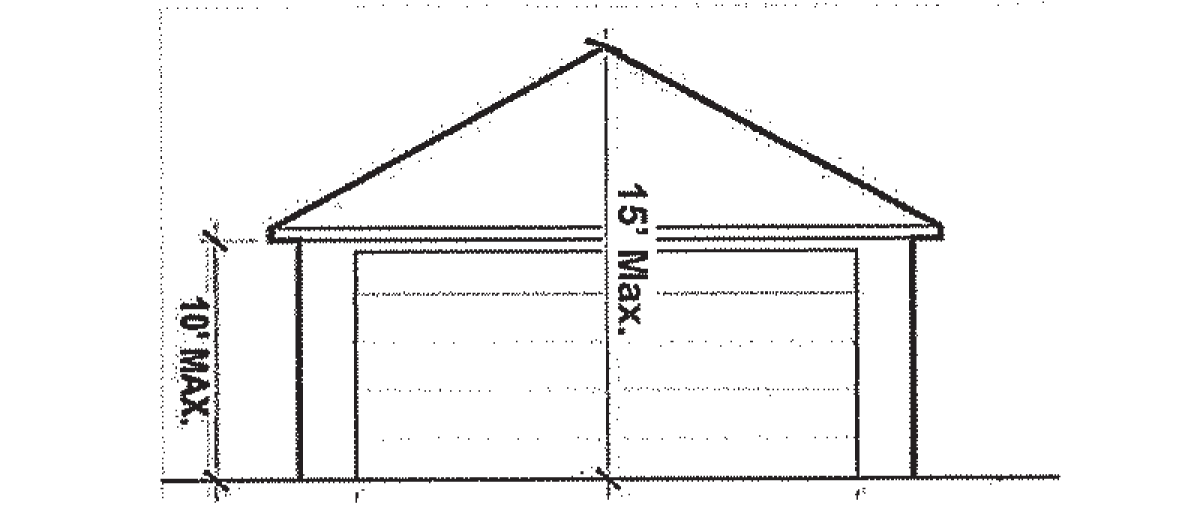
FIGURE 17.04.120.2: ACCESSORY BUILDING SETBACK*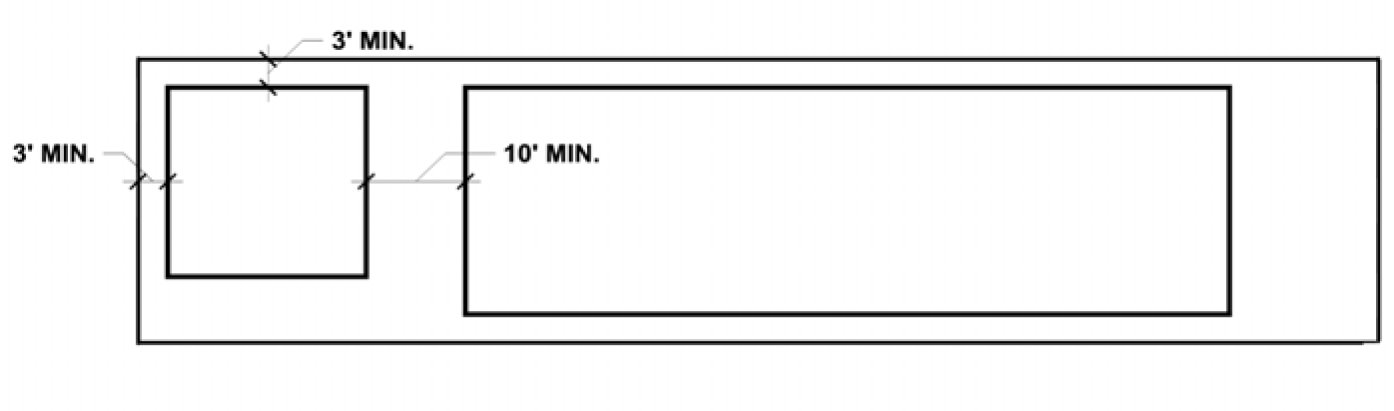
*However, where there is an accessory building with doors that open onto an alley, such accessory building shall not be located closer than five feet from the rear lot line.
17.04.130 - Encroachments.
A.
State of Illinois Right-of-Way. No person, firm, corporation or other entity shall install, place, maintain, or construct any structure that encroaches upon the State of Illinois Right-of-Way of Illinois Route 43 within the corporate limits of the village.
B.
Establishments of Uses. Structural obstructions of the principal building and encroachment of accessory structures and uses are permitted, and special uses may be allowed, in yards of the various districts.
C.
Temporary Buildings. Temporary buildings for construction purposes may be erected and maintained for a period not to exceed the time of such construction.
D.
Allowable Encroachments. Table 17.04.130.1—Allowable Encroachments identifies allowable encroachments in required yards and courts for all zoning districts.
Footnotes:
1Decks.
a.
Open to the Sky. A deck shall be considered open to the sky for purposes herein, if the floor permits rain water to drop through the planking and drain to the earth below. Landscape fabric may be used to cover the earth beneath the deck so long as the fabric is porous. There shall be a minimum space of one-quarter inch between floor boards or planks which shall measure no more than six inches in width. All decks shall be subject to minimum side, front, and back yard restrictions with a maximum size of five percent of total lot area.
b.
Non-Usable Open Space. A deck constructed over concrete, bricks, flagstone, crushed rock, plastic, or any other nonporous material, shall not be considered open to the sky for purposes of this section. A deck which is covered by a roof, canopy or permanent awning shall not be considered open to the sky for purposes of this section. The square footage of any deck constructed as described herein shall be added to footprint of the building of dwelling which it adjoins.
2Front Yard Porches.
a.
Size. Shall not exceed twenty-five (25) percent of the square footage of the front yard (including entrance sidewalk, stairs, and front porch landing).
b.
Steps. No brick or concrete wall shall be constructed so as to rise above the steps further than forty-two (42) inches above each tread.
c.
Variations. Construction of any new porch which exceeds twenty-five (25) percent of the square footage of the front yard (as defined herein) shall require approval of the zoning board of appeals, which shall consider setback requirements and conformity with existing residences or structures on the block. Additional footage may be allowed where the setback of the residence is greater than twenty-five (25) feet.
d.
Entrance Sidewalks. Shall include edging constructed of brick, flagstone, rock, gravel or other non-porous material.
17.04.140 - Vision clearance.
On corner lots no structure or plant shall obstruct a motor vehicle driver's vision of approaching vehicles. The minimum clearance section shall be measured from a maximum height of two feet six inches above grade to a minimum height of eight feet above grade within the triangular area formed by the point of intersection of the front lot lines and two points on the front lot lines located thirty-five (35) feet from the point of intersection.
17.04.150 - Floor area ratio application in particular cases.
Where a building, lawfully existing on the effective date of this title exceeds the permitted maximum floor area ratio, an addition to such existing building to be constructed on an adjoining lot shall be entitled to the maximum floor area ratio permitted for the adjoining lot in the district in which the lot is located.
17.04.160 - Mobile homes, trailers, truck campers, tents and boats.
A.
Mobile Homes, Travel and Camping Trailers.
1.
Mobile homes, truck campers and trailers shall not be permanently affixed to the ground as a principal building or accessory structure on a lot in any district.
2.
Mobile homes, truck campers, travel and camping trailers shall not be occupied for dwelling purposes nor parked or stored on any lot other than lots occupied by establishments selling or serving such trailers in conformance with other provisions of this title.
3.
In residence districts, one truck camper mounted on a pickup truck not exceeding three-quarter ton capacity, or one travel or camping trailer having a floor area of not more than one hundred thirty (130) square feet when hitched for travel, may be stored in the rear yard, in a garage, carport, screen shelter, or similar structure designed so as to substantially conceal the trailer or camper from the view of the adjoining property owners.
B.
Temporary Parking. Temporary parking and use of trailers shall be permitted when a permit has been issued by the zoning officer for temporary office or storage uses incidental to and only for the period of time of construction of a building development, provided such trailers are located on the same or contiguous lots to the building development.
C.
Tents. Tents shall not be erected, used or maintained on a residential lot, except such small tents as are customarily used for recreation purposes and located on the same as a dwelling or for entertainment purposes and only when the tent is located within a rear yard. Temporary use of tents for community, religious, charitable, educational, amusement, recreation, and commercial purposes shall be permitted only when a permit has been issued by the zoning officer in accordance with provisions set forth in Section 17.56.040(A)(1)(i).
D.
Boats. In a residence district, one boat owned by the occupant of the dwelling and which is not more than twenty-four (24) feet in length may be stored or parked on a lot containing a dwelling, provided that it shall be stored in the rear yard in a garage, carport, screen shelter or similar structure designed so as to substantially conceal the boat from the view of adjoining property owners; and provided further that no substantial repair, disassembly or rebuilding operations are conducted thereon.
17.04.170 - Sewerage and water systems.
A.
Each use hereafter established which requires sewerage and water facilities shall be served by public or community sewerage and water systems.
B.
In areas served by separate sanitary and storm sewers, connection of downspouts or roof drains into the sanitary sewer systems shall be prohibited as required by the regulations set forth by the metropolitan sanitary district.
C.
All downspouts shall be installed and maintained so that storm water shall be directed away from adjacent property lines.
17.04.180 - Floodplain area.
The ground floor including also a cellar or crawl space floor of any building hereafter erected, structurally altered, enlarged or moved to a floodplain area shall have an elevation that is equal to or above flood crest level, or the distance above floor crest level that may be required by the zoning officer for specific locations.
17.04.190 - Storage of junk, refuse, and disabled or damaged motor vehicles.
A.
The open storage of junk, refuse, and scrap is prohibited beyond seven days in all districts.
B.
The open storage of disabled or damaged motor or recreational vehicles, or similar items, whether awaiting repair or not, is prohibited beyond a seventy-two (72) hour period in all districts; except in B-l districts, disabled or damaged motor vehicles may be stored in automotive service stations awaiting repair or removal, for a period not to exceed thirty (30) days.
17.04.200 - Building height.
No building shall be erected, converted, enlarged, reconstructed or structurally altered to exceed the height limit herein established for the district in which the building is located, except that penthouses or roof structures for the housing of elevators, stairways, tanks, ventilating fans or similar equipment required to operate and maintain the building and fire or parapet walls, skylight, towers, steeples, flagpoles, chimneys, smokestacks, radio and television aerials, wireless masts, water tanks, silos, storage hoppers, elevators or similar structures may be erected above the height limits herein prescribed to the limitation of an additional twenty (20) feet. Except on land bordering, adjacent to, or in the vicinity of an airport, no building or structure shall be erected, converted, enlarged, reconstructed, or structurally altered to exceed the height limits for the area in which it is located, which now are or shall hereafter be established under the airport approach plan prepared by the state of Illinois, or the maximum height limit herein required for the district, whichever is the lower height. A copy of the airport approach plan shall be maintained in the office of the zoning officer as a public report.
17.04.210 - Utility exemptions.
The following public utility uses are permitted in any district: wires, cables, conduits, vaults, laterals, pipes, mains, and valves or other similar distributing equipment, provided that the installation and location shall conform with the rules and regulations of applicable administrative authorities.
17.04.220 - Retaining walls.
In cases where the zoning officer so deems necessary, because of topography, a concrete retaining wall not less than eight inches thick, and not less than thirty (30) inches below grade, with above-grade dimension to be determined by the zoning officer based on adequate retaining and drainage factors applicable to the particular situation, will be required.
17.04.230 - Zoning map.
A.
The zoning map of the village in the form attached to the ordinance codified in this section as Exhibit "A" and incorporated herein by reference is approved as the official zoning map of the village.
B.
The village clerk is authorized and directed to cause a certified copy of the zoning map to be filed with the Cook County Recorder of Deeds.

