
Haymarket City Zoning Code
ARTICLE II
DEFINITIONS
The following words, terms, and phrases, when used in this chapter, shall have the meanings ascribed to them in this article, except where the context clearly indicates a different meaning. Where terms are not defined, they shall have their ordinarily accepted meaning, or such as the context may imply.
Generally, the words "used for" include "designed for," and vice versa; the word "building" includes the word "structure"; the word "dwelling" includes the word "residence"; and the word "lot" includes the word "plot." Any words pertaining to gender shall be interchangeable. The word "he" shall mean "she," and "she" shall mean "he." The word "shall" is mandatory; the word "may" is permissive.
Accessory dwelling unit. A separate, independent dwelling unit located on the same property as the primary dwelling unit or a portion of a structure designed as a dwelling unit, and ancillary to the principal use of the structure, subject to one of the following:
(1)
A dwelling unit contained within a single-family dwelling that may equal the existing finished square footage of the primary dwelling, such as a basement, attic, or additional level; or,
(2)
A dwelling unit attached to the primary single-family dwelling, or as a dwelling unit located above a detached accessory unit; that shall be no more than one-half the size of the finished square footage of the primary dwelling unit located on the subject property.
(3)
A dwelling unit as ancillary use on the second floor of structures designed for other commercial uses; not more than 40 percent of the gross floor area of any structure may be devoted to apartment use
Occupancy of such accessory dwelling units shall be limited to no more than one family (as defined) and shall not be rented in less than six-month increments, and the primary dwelling unit must be occupied by the owner of the subject property or an immediate family member (as defined).
Accessory use or structure. A use or structure which is clearly subordinate and customarily incidental to the main use or structure that it is accessory to and located upon the same lot occupied by the main use or structure.
Access-way, private. A semi-public ingress and egress easement dedicated to one or more lots at the time of subdivision for pedestrian and vehicle access to a public street. Any such easement shall be maintained by its supporting lots as set out in this chapter.
Addition. Any increase to the gross floor area of a structure.
Administrator. Also referred to as the zoning administrator; The official charged with the enforcement of the subdivision and zoning ordinances
Affordable housing. Housing that is affordable to families with incomes at or below 80 percent of the area median income, provided that the individual pays no more than 30 percent of his or her gross income for gross housing costs, including utilities.
Aggrieved person. A person or group of people with an immediate, pecuniary, and substantial interest in an action taken by the administrator or board of zoning appeals under this ordinance, as opposed to remote or indirect interest. A person is also aggrieved if the person suffers a denial of some personal or property right or imposition of a burden or obligation different from that suffered by the public in general.
Alley. A permanent service way providing a secondary means of access to abutting properties.
Alteration. Any change in the floor area, use, adaptability, or external appearance of an existing structure.
Alternative tower structure. Man-made trees, clock towers, bell steeples, light poles, and similar alternative-design mounting structures that camouflage or conceal the presence of antennas or towers.
Amateur radio antenna. Pursuant to all conditions set forth in the Code of Virginia, § 15.2-2293.1, an accessory structure on which an antenna is installed for the purpose of transmitting and receiving amateur radio signals erected and operated by an amateur radio operator licensed by the FCC.
Antenna. Any exterior apparatus designed for telephone, radio, or television communications through the sending and/or receiving of electromagnetic waves.
Applicant. Any person submitting any application required or permitted pursuant to any of the provisions of this chapter, including his successors and assigns.
Architectural features. Pieces or portions of a building that are utilized primarily for aesthetic purposes such as, but not limited to, bay windows, porches, porticoes, balconies, chimneys, eaves and cornices, basement walk ups, and flower boxes.
Architectural review board. Board appointed by the Haymarket Town Council to review applications for architectural compliance in accordance with the Old and Historic Haymarket District Overlay, article 16.
Assisted living facility. A non-medical residential setting that provides or coordinates personal and health care services, 24-hour supervision, and assistance for the care of individuals who are aged, infirm, or disabled.
Automobile graveyard. Any lot, place, or parcel, except lawful motor vehicle repair or service facility, upon which five or more inoperative motor vehicles of any kind are found. Junkyard; Salvage and scrap service.
Automobile rental/leasing. Rental of automobiles, light trucks, and vans, including incidental parking and servicing of vehicles for rent or lease. Typical uses include auto rental agencies and taxicab dispatch areas.
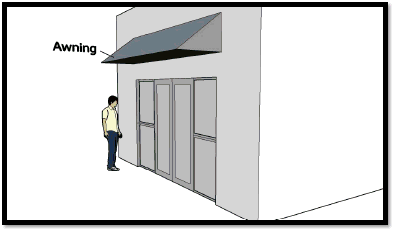
Awning. A shelter constructed of rigid or nonrigid materials on a supporting framework, either freestanding, or projecting from and supported by an exterior wall of a building. Sometimes referred to as a canopy.
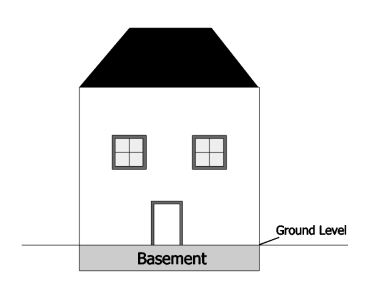
Basement. Any floor at least half of which is subgrade (below ground level). A basement shall be counted as a story for the purpose of height regulations.
Bed and breakfast. A dwelling in which not more than 12 bedrooms are provided for overnight guests for compensation, on a daily or weekly basis, with or without breakfast. The serving of meals other than breakfast, or the serving of breakfast to other than overnight guests, shall be considered a restaurant, general.
Bee. Apis mellifera and genetic variations thereof, at any living stage; and may include other hymenopterous insects that depend on pollen and nectar for food.
Bikeway. A bicycle pathway; either a bike lane, a bike trail, or bike route.
Board of zoning appeals. Also referred to as the BZA; The term refers to the Town of Haymarket Board of Zoning Appeals.
Boundary line adjustment. The adjustment of the boundary line between two or more lots, or the vacation of a lot line for the purpose of combining two or more lots, but not including any action which would result in a creation of additional building lots or the vacation of any street, alley, easement for public passage, or other public feature.
Broadcasting or communication tower. Any unstaffed facility for the transmission and/or reception of radio, television, radar, cellular telephone, personal paging device, specialized mobile radio (SMR), and similar services. A broadcasting or communication tower usually consists of an equipment shelter or cabinet, a support tower or other structure used to achieve the necessary elevation, and the transmission or reception devices or antenna. Excluded are amateur radio towers, which are described separately, data centers which are described separately, and wireless communication antennas which fit the definition of utility services, minor.
Buffer yard. A yard with screening and landscaping materials required between abutting zoning districts of differing intensities or between adjoining land uses for the purpose of decreasing the adverse impact of differing uses and districts.
Building. Any structure having a roof supported by columns or walls, for the shelter, housing or enclosure of any individual, animal, activity, process, equipment, goods, or materials of any kind.
Building, accessory. A subordinate structure customarily incidental to and located upon the same lot occupied by the main structure. No such accessory structure shall be used for housekeeping purposes.
Building, face. Any one of the four principal exposures, front, sides or back, of a building. For purposes of sign regulations, the face of a building is that portion exposed to a street, alley, or lot and is measured at a ground level on a linear basis from exposed corner to exposed corner.
Building, height of. See height, building.
Building line or setback line. A line that establishes the area within which the principal building or structure must be erected or placed, and which may be located by means of a plat of subdivision or site plan at a distance greater than, but in no case less than, the minimum setbacks or yard spaces required by the zoning ordinance. Bay windows, porches, balconies, chimneys, eaves, basement walk ups, and similar architectural features may project two feet into any required setback or building restriction line. Setback and building restriction lines shall not apply to terraces, patios, and unroofed porches on ground level.
Building, main. The principal structure or one of the principal buildings on a lot, or the building or one of the principal buildings housing the principal use on the lot.
Building official. The representative of the council who has been appointed to administer and enforce, within the town, the provisions in the Uniform Statewide Building Code.
Building permit. A document issued by the building official granting permission to another person to construct, extend, repair, remove or alter a structure.
Building setback. See setback.
Short term rental, residential (STRR). An owner occupied, residential dwelling unit that is used for paid, overnight accommodations for a minimum of two nights, but not to exceed 30 days. The frequency and volume of paying guests is intended to be incidental to the primary use of the property as a private residence. This use type does not include bed-and-breakfast.
Caliper. The diameter of the trunk of a tree at the height of four and one-half feet above grade.
Car wash. Washing and cleaning of vehicles. Typical uses include automatic conveyor machines and self-service car washes.
Cellar. See basement.
Cemetery. A place where human remains are interred, above or below ground, and where plots are sold for that purpose, and care of the graves is furnished.
Central sewage system. Any system of collection and treatment of sewage, as defined by rules and regulations of the state board of health governing the disposal of sewage, serving two or more connections, whether the system is privately or publicly owned and operated.
Central water. Any water supply and distribution system, whether privately or publicly owned and operated, serving two or more individual connections.
Chicken coop. A fully enclosed and covered hen house providing predator resistant shelter that is thoroughly ventilated, provides adequate sun and shade, protection from the seasonal elements, and designed to be easily accessed and cleaned where domestic chickens live.
Chicken run. An outdoor enclosed or fenced structure where chickens feed or exercise. This structure is attached to the chicken coop.
Civic use. Public parks and playgrounds, public schools, municipal buildings including police, fire and rescue facilities, and all other publicly owned structures.
Clerk. The clerk of the circuit court of the county.
Clinic. A facility providing medical, psychiatric, or surgical service for sick or injured persons exclusively on an out- patient basis, including emergency treatment, diagnostic services, training, administration and services to outpatients, employees, or visitors. The term "clinic" includes immediate care facilities, where emergency treatment is the dominant form of care provided at the facility.
Club. A use providing educational, meeting, or social facilities for civic or social clubs, fraternal/sororal organization, and similar organizations and associations, primarily for use by members and guests. Recreational facilities, unless otherwise specifically cited in this section, may be provided for members and guests as an accessory use. A club does not include a building in which members reside.
Code. The Code of the Town of Haymarket Virginia.
Code of Virginia. The Code of Virginia of 1950, as it may be amended from time to time.
Commercial, entertainment. Predominantly spectator uses conducted within an enclosed building. Typical uses include, but are not limited to, movie theaters, museums, and concert, music, or performance halls.
Commercial, recreation. A sports or activity facility open to the general public for a fee. Typical indoor uses include, but are not limited to, ice skating rink, roller skating rink, bowling alley, billiard hall, swimming pool, bingo hall, shuffleboard hall, arcade (video, pinball), hard and soft courts, miniature golf, squash court, tennis court, or racquetball court. Outdoor uses include driving ranges, miniature golf, batting cages, swimming pools, tennis courts, outdoor racquetball courts, motorized cart and motorcycle tracks, paintball facilities, equestrian facilities, pony rides, and motorized model airplane flying facilities.
Commercial, vehicle repair service. Repair of automobiles, noncommercial trucks, motorcycles, motor homes, recreational vehicles, including the sale, installation, and servicing of equipment and parts. Typical uses include tire sales and installation, wheel and brake shops, oil and lubrication services, and similar repair and service activities where minor repairs and routine maintenance are conducted.
Commercial, heavy equipment repair service. Repair of construction equipment, commercial trucks, agricultural equipment, and similar heavy equipment, where major repairs are conducted.
Commercial, catering. Preparation of food and related materials for a special event, occasion, or other temporary contract, which are to be delivered to a location other than where prepared.
Commercial vehicle. Any vehicle used for commercial purposes, regardless of capacity, which displays advertising thereon; or which is licensed as a "for hire" vehicle; or any limousine used as a common or contract carrier. Commercial vehicles shall not be deemed to include any of the following: Police vehicle; emergency vehicle; school bus.
Commission. The Planning Commission of the Town of Haymarket.
Common area. A tract or parcel of land not devoted to residential uses or structures; but directly related to an adjunct to a planned development, cluster development, or subdivision and which is owned and/or controlled by the residents or owners of such development.
Condominium. See multi-family dwelling.
Conservation easement. The granting of a property's development rights to an agency that stipulates that the described land will remain in its natural state and precludes future or additional development.
Construction yard. Establishment or place of business primarily engaged in construction activities, including outside storage of materials and equipment. Typical uses are building contractor's yards.
Continuing care facility. A facility providing a graduated range of services to elderly and handicapped persons, from independent living facilities to congregate housing facilities within which are available meal preparation, laundry, and cleaning services; providing common recreation and service facilities for the exclusive use of all residents of the center; may include assisted living, nursing or convalescent care and other medical facilities.
Coverage. The area of a lot occupied by structures, off-street parking, driveways, outside storage, or any other improvements not considered open space.
Cul-de-sac. A street with one outlet and with an appropriate turnaround for safe and convenient reverse traffic movement.
Custom manufacturing. Establishments primarily engaged in the on-site production of goods by hand manufacturing, within enclosed structures, involving the use of hand tools, or the use of mechanical equipment commonly associated with residential or commercial uses, or a single kiln. Examples include custom woodworking, ironworking, or stonework.
Data center. Shall mean a use involving a building/premise in which the majority of the use is occupied by computers and/or telecommunications and related equipment, including supporting equipment, where information is processed, transferred and/or store; minimum 20 acres.
Day care center. Any facility operated for the purpose of providing care, protection, and guidance to ten or more individuals during only part of a 24-hour day. This term includes nursery schools, preschools, day care centers for individuals including adults, and other similar uses but excludes public and private educational facilities or any facility offering care to individuals for a full 24-hour period.
Deck. A structure, without a roof, directly adjacent to a principal building, which has an average elevation of 30 inches or greater from finished grade. Residential decks over 36 inches above grade may project ten feet into the rear yard setback, and decks less than 36 inches above grade may project 15 feet into the rear yard setback. A deck may be constructed of any materials.
Dedication. The transfer of private property to public ownership upon written acceptance.
Developer. See applicant.
Development. Any man-made change to improved or unimproved real estate, including but not limited to buildings or other structures, mining, dredging, filling, grading, paving, excavation, or drilling operations.
District. A district as referred to in Code of Virginia, § 15.2-2282
Dog day care center. A facility operating with the primary purpose of providing dog day care and grooming with ancillary services of overnight boarding and/or training. The facility will limit the number of dogs to 85 that can be cared for overnight. The facility must have incorporated sound proofing technologies/building materials that provides an NRC (Noise Reduction Coefficient) rating of .80 or better.
Domestic chicken. A domesticated bird of the species gallus gallus domesticus.
Dwelling. Any structure which is designed with dwelling units for residential purposes. This definition does not include hotels, boarding houses, lodging houses, tourist cabins, recreational vehicles, and mobile homes.
Dwelling, multi-family. A building or portion thereof which contains three or more dwelling units for permanent occupancy. The units may be individually owned or offered for rent. Each unit shall be accessed from the outside from a common hallway, stairs, or elevator. Such units may be stacked or adjacent to one another. Included in the use type are garden apartments, low- and high-rise apartments, apartments for elderly housing, and condominiums.
Dwelling, single-family detached. A site built or modular building designed for or used exclusively as one dwelling unit for permanent occupancy, which is surrounded by open space or yards on all sides, is located on its own individual lot, and which is not attached to any other dwelling by any means.
Dwelling, townhouse. A grouping of three or more attached single-family dwellings each on its own individual lot in which each unit has its own front and rear access to the outside. No units are vertically stacked, no unit is located over another unit, and each unit is separated from any other unit by one or more common walls.
Dwelling unit. A room or group of rooms connected together containing cooking, bathroom and sleeping facilities constituting a separate, independent housekeeping unit, physically separated from any other dwelling unit in the same structure.
Easement. A right of the owner of one parcel of land, by reason of such ownership, to use the land of another for a special purpose not inconsistent with a general property owner.
Educational facility, college/university. An educational institution authorized by the Commonwealth of Virginia to award associate, baccalaureate or higher degrees, and facilities associated with it. This term includes academic buildings, administrative facilities, dormitories, special housing, parking areas, dining halls, and other physical plants associated with the college or university use.
Educational facility, primary/secondary. A public, private, or parochial school offering instruction at the elementary, junior, and/or senior high school levels in the branches of learning and study required to be taught in the public schools of the Commonwealth of Virginia.
Emergency shelter. A facility providing temporary housing for one or more individuals who are otherwise temporarily or permanently homeless.
Engineer. An engineer licensed by the Commonwealth of Virginia.
Establishment. Any entity or individual conducting a business, profession, or trade; and any entity or individual conducting a civic, community service, or nonprofit activity.
Façade. An entire outside wall of a structure, including wall faces, parapets, fascia, windows, and doors, of one complete elevation.
Family. Any number of persons living together as a single housekeeping unit consisting of:
Family shall mean a group of people living together as a single housekeeping unit and consisting of:
(1)
One person; or
(2)
Two or more persons related by blood, adoption, or marriage, together with any number of offspring, foster, step or adopted children; or
(3)
A group of not more than four unrelated persons living and cooking together as a single housekeeping unit though not related by blood, marriage, adoption, or guardianship, provided that the limitation on the number of unrelated persons shall not apply to residents in a housekeeping unit by persons having handicaps within the meaning of section 3602(f) of the Fair Housing Act (42 USC 3601, et seq., as amended); or
(4)
Those groups identified in Code of Virginia, § 15.2-2291, or like groups licensed by the Virginia Department of Social Services which otherwise meet the criteria of Code of Virginia, § 15.2-2291.
Family day home. A single-family dwelling in which more than five but fewer than 13 individuals are received for care, protection, and guidance during only part of a twenty-four-hour day. Individuals related by blood, legal adoption, or marriage to the person who maintains the home shall not be counted towards this total. The care of 5 or fewer individuals for portions of a day shall be considered as a home occupation.
Family health care structure, temporary. Pursuant to all conditions set forth in the Code of Virginia §15.2-2292.1, a transportable residential structure, providing an environment facilitating a caregiver's provision of care for a mentally or physically impaired person, that (i) is primarily assembled at a location other than its site of installation; (ii) is limited to one individual who shall be the mentally or physically impaired person or, in the case of a married couple, two individuals, one of whom is a mentally or physically impaired person, and the other requires assistance with one or more activities of daily living as defined in §63.2-2200, as certified in writing by a physician licensed in the Commonwealth; (iii) has no more than 300 gross square feet; and (iv) complies with applicable provisions of the Industrialized Building Safety Law (§ 36-70 et seq.) and the Uniform Statewide Building Code (§ 36-97 et seq.).
Farmer's market. Retail sale of fresh fruits and vegetables, and other food and related items, at a facility with spaces occupied by several different temporary tenants for no more than six hours on a weekly basis; indoor or outdoor.
Fence. A freestanding structure of metal, masonry, composition, vinyl or wood, or any combination, resting on or partially buried in the ground and rising above ground level, with posts at regular intervals, and used for confinement, screening, or partition purposes.
Financial institution. An establishment whose principal purpose is the provision of financial services, including but not limited to an insured depository institution, a credit union, a federal home loan bank, a small business investment company, a depository institution holding company, a mortgage lending business, or other institutions as defined by Federal code.
Flag lot. See lot, pipestem.
Floodplain. An area flooded by a flood of specific frequency or magnitude, which has been delineated as a regulated area by federal, state, or local government order through the use of maps, flood elevations, flood profiles or other techniques.
Floor area ratio (FAR). The ratio of gross floor area of all structures on a lot to total lot area.
Floor area, gross. The sum of the horizontal areas of the several stories of a building, measured from the exterior faces of exterior walls, or in the case of a common wall separating two buildings, from the centerline of such a common wall.
Gross floor area shall exclude basements and attics. The surface area of tennis courts, swimming pools, driveways, surface parking spaces, decks, patios, and porches, is not included in the total gross floor area.
Frontage. The side of a lot abutting on a street or right-of-way and ordinarily regarded as the front of the lot. For corner lots, only the side containing the parcel or building's main entrance shall be considered the frontage.
Frontage road. A service road, usually parallel to a highway, designed to reduce the number of driveways that intersect the highway.
Funeral home. Establishments engaged in undertaking services such as preparing the dead for burial, as well as related accessory activities such as a crematorium, and arranging and managing funerals. Typical uses include funeral homes or mortuaries.
Garage, commercial. See Commercial, vehicle repair service.
Garage, private. An accessory building designed or used for the storage of not more than three automobiles owned and used by the owners of the building to which it is accessory. On a lot occupied by a multiple-unit dwelling, the private garage may be designed and used for the storage of 1½ times as many automobiles as there are dwelling units.
Garden center. Establishments or places of business primarily engaged in retail sales from the premises including trees, shrubs, seeds, fertilizers, pesticides, plants, and plant materials primarily for agricultural, residential, and commercial consumers. Such establishments typically sell products purchased from others but may sell material which they grow themselves.
Gasoline station. Any place of business with fuel pumps and underground storage tanks which provides fuels and oil for motor vehicles. A store associated with automobile fuel sales shall be considered a gasoline station.
Glare. The effect produced by brightness, sufficient to cause annoyance, discomfort, or loss in visual performance and visibility.
Grade. The lowest of:
(1)
Lowest elevation of the street at the curb;
(2)
Established or mean street elevation if curb not established;
(3)
Lowest elevation of finished ground surface on any side of the building or property.
Governing body. The Mayor and Council of the Town of Haymarket.
Grandfathered. A term referencing a use or structure that is not in conformance with the current ordinance but that was legal at the time it was established or constructed. Also referred to as a legally, non-conforming use/structure.
Greenhouse. A building with transparent walls and roof; for the cultivation and exhibition of plants under controlled conditions; accessory to residential uses.
Greenhouse, commercial. A greenhouse operation in which plants are offered for sale to the public, either at wholesale or at retail.
Gross public floor area. The total area of the building accessible or visible to the public, including showrooms, motion picture theaters, motion picture arcades, service areas, behind-counter areas, storage areas visible from such other areas, restrooms (whether or not labeled "public"), plus aisles, hallways, and entryways serving such areas.
Group home. A residential facility in which no more than eight mentally ill or developmentally disabled persons reside, with one or more resident counselors or other staff persons, and shall be considered a residential occupancy by a single family. A group home may include services such as specialized education, training, habilitation, rehabilitation, custodial care, or supervision. Mental illness and developmental disability shall not include current illegal use of, or addiction to a controlled substance. Such facility shall be licensed by the Virginia Department of Behavioral Health and Developmental Services in order to qualify as a single-family use.
Guidance services. A use providing counseling, guidance, recuperative, or similar services for persons requiring rehabilitation assistance as a result of mental illness, alcoholism, detention, drug addiction, or similar conditions for only part of a twenty-four-hour day.
Halfway house. An establishment providing accommodations, supervision, rehabilitation, counseling, and other guidance services to persons suffering from alcohol or drug addiction, and/or to persons re- entering society after being released from a correctional facility or other institution.
Hazardous waste or materials. A substance listed under United States Public Law 96-510, entitled the Comprehensive Environmental Response Compensation and Liability Act.
Height. When referring to a tower or other structure, the distance measured from ground level to the highest point on the tower or other structure, even if said highest point is an antenna.
Height, building. The vertical distance measured from the adjoining grade at the front entrance of the building or structure to the highest point of the structure. For corner lots, the building height shall be the average of the front height defined above and the building side height adjacent to the street. The building side height shall be defined as the vertical distance measured from the lowest adjoining grade on the side adjacent to the street to the highest point of the structure.
Height, structure. The distance between the highest point of any structure, and the lowest grade adjacent to the structure.
Height, tree. The measurement taken from the top of the root ball to the top of the trunk.
Historic district. A site, structure, landmark, one or more of them, or a group of them, which have unique architectural, historic, cultural, or archaeological importance to the locality, the Commonwealth, or the nation, and which are designated on the official zoning map as constituting a historic district.
Historic resource. A building, place, or area in which historic events occurred or having special public value because of notable architectural or other features relating to the cultural or artistic heritage of the community, of such significance as to warrant conservation and preservation.
Historic building. Any structure that is:
(1)
Listed individually in the Virginia Landmarks Registry or the National Register of Historic Places (a listing maintained by the Department of Interior) or preliminarily determined by the Secretary of the Interior as meeting the requirements for individual listing on the National Register;
(2)
Certified or preliminarily determined by the Secretary of the Interior as contributing to the historical significance of a registered historic district or a district preliminarily determined by the Secretary to qualify as a registered historic district;
(3)
Individually listed on a state inventory of historic places in states with historic preservation programs which have been approved by the Secretary of the Interior; or
(4)
Individually listed on a local inventory of historic places in communities with historic preservation programs:
• By an approved state program as determined by the Secretary of the Interior; or
• Directly by the Secretary of the Interior in states without approved programs; or
• Designated as a contributing resource or structure by the town's comprehensive plan or similar land use policies.
Hive. Hive means a box, skep, barrel, log gum, or other container used as a domicile for bees.
Home occupation, class A. An occupation conducted primarily on-site involving persons residing on the premises. Such occupations may require the use of accessory structures or outside areas. No more than five clients or customers shall be allowed on the premises at any one time on a regular basis.
Home occupation, class B. An occupation conducted primarily on-site involving persons residing on the premises and not more than two full or part-time outside employees. Such occupations may require the use of accessory structures or outside areas. No more than ten clients or customers shall be allowed on the premises at any one time on a regular basis.
Hospital. A facility providing medical, psychiatric, or surgical service for sick or injured persons primarily on an in-patient basis and including ancillary facilities for outpatient and emergency treatment diagnostic services, training, research, administration, and services to patients, employees, or visitors.
Hotel. Also referred to as an inn, motel, or motor lodge; A building or group of attached or detached buildings containing lodging units intended primarily for rental or lease to transients by the day or week. Such uses generally provide additional services such as daily maid service, restaurants, meeting rooms, and/or recreation facilities. Overnight stays longer than 29 days consecutively are not permitted.
Housekeeping. The management of household affairs including, but not limited to, cooking, contributing financially, or cleaning.
Industrial, light. Enterprises engaged in the processing, manufacturing, compounding, assembly, packaging, treatment or fabrication of materials and products, from processed or previously manufactured materials. Light industry is capable of operating in such a manner as to control the external effects of the manufacturing process, such as smoke, noise, soot, dirt, vibration, odor, etc. Use may include, but are not limited to, a machine shop, the manufacturing of apparel, electrical appliances, electronic equipment, camera and photographic equipment, ceramic products, cosmetics and toiletries, business machines, paper products (but not the manufacture of paper from pulpwood), musical instruments, medical appliances, tools or hardware, plastic products (but not the processing of raw materials), pharmaceuticals or optical goods, bicycles, and any other product of a similar nature.
Inoperable vehicle. Vehicle most often defined as one in which the engine, wheels or other parts have been removed, altered, damaged or allowed to deteriorate so that the vehicle cannot be driven.
Interior parking lot island. An island or planter that is surrounded on at least three sides by a parking lot or access road.
Junkyard. An establishment or place of business which is maintained, operated, or used for storing, keeping, buying or selling junk, or for the maintenance or operation of an automobile graveyard; and the term shall include garbage dumps and sanitary fills. The keeping of more than five inoperable vehicles is considered a junkyard, which is not permitted in any residential zoning districts in the town and would be subject to additional zoning violations.
Junk. Any scrap, dismantled, inoperable, or dilapidated motor vehicles, including parts; machinery; household furniture and appliances; construction equipment and materials; tanks and drums; tires; pipes; wire; wood; paper; metals; rags; glass; and any other kind of salvage or waste material.
Kennel. Any place in which more than three dogs more than six months of age are kept, or any number of dogs are kept for which any fee is charged.
Laboratory. An establishment whose principal purpose is the research, compounding, and/or packaging of scientific products, which may include light manufacturing.
Landscaping. The improvement of the appearance of an area by the planting of trees, grass, shrubs, or other plant materials, or by the alteration of the contours of the ground.
Laundry. Establishments primarily engaged in the provision of laundering, cleaning, or dyeing services other than those classified as personal services. Typical uses include bulk laundry and cleaning plants, diaper services, or linen supply services.
Liaison.
Light pollution. Any adverse effect of man-made light including sky glow, glare, light trespass, light clutter, and decreased visibility at night.
Light trespass. Light sources casting excessive light upon adjacent property or upon a public right- of-way, also called light spillover.
Liquor. Any alcoholic beverage other than beer, wine, or cider, as those terms are defined in Virginia Code §§ 4.1-100 and 4.1-213.
Loading space, off-street. Space for bulk pick-ups and deliveries, scaled to delivery vehicles expected to be used, and accessible to such vehicles when required off-street parking spaces are filled.
Lot. A parcel of land intended to be separately owned, developed, or otherwise used as a unit, established by plat, subdivisions, or as otherwise permitted by law.
Lot, corner. A lot abutting on two or more streets at their intersection. Of the two sides of a corner lot, the front shall be deemed to be the shorter of the two sides fronting on streets.
Lot, depth of. The average horizontal distance between the front and rear lot line
Lot, double frontage. An interior lot having frontage on two streets.
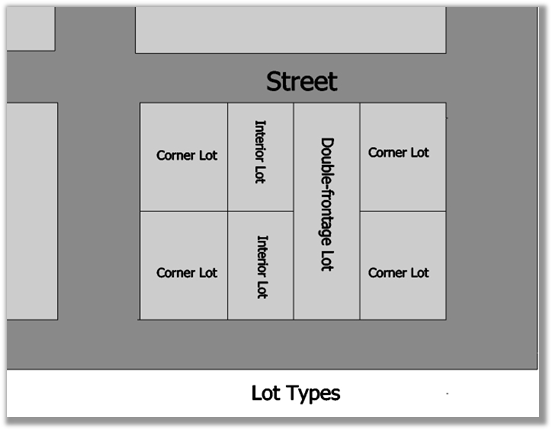
Lot frontage. Frontage shall be measured on a line parallel with the proposed front street line at the minimum required setback line.
Lot, interior. Any lot other than a corner lot.
Lot, irregular. A lot of such a shape or configuration that technically meets the area, frontage, and width to depth requirements of this ordinance but meets these requirements by incorporating unusual elongations, angles, curvilinear lines unrelated to topography, or other natural land features.
Lot of record. A lot which has been recorded in the clerk's office of the circuit court.
Lot, pipestem. A "panhandle" or "flag" shaped lot with its widest point set back from the road at the rear of another lot (called the pipe) and having a thin strip of land connecting to the road to provide legal access and frontage (called the stem). Pipestem lots are also referred to as panhandle lots or flag lots.
Lot width. The width of any lot at the setback line, calculated by measuring back a uniform distance from the street line as required by the setback regulation. If the street line curves or angles, the setback line shall also curve or angle uniformly with the street line and the lot width shall be calculated along the curve or angle setback line.
Marijuana Establishment. Means a marijuana cultivation facility, a marijuana testing facility, a marijuana manufacturing facility, a marijuana wholesaler, or a retail marijuana store as defined in state law.
Manufacture and/or manufacturing. The processing and/or converting of raw, unfinished materials, or products, or either of them, into articles or substances of different character, or for use for a different purpose.
Manufactured building. Also referred to as an industrialized building; any structure, or component thereof which is wholly, or in substantial part made, fabricated, formed, or assembled in manufacturing facilities for installation, or assembly and installation on a building site; which has been manufactured in such a manner that all parts, or processes cannot be inspected at the installation site without disassembly, damage, or destruction thereof.
Manufactured home. A structure subject to federal regulations, which is transportable in one or more sections; is eight feet in body or more in width and 40 body feet or more in length in the traveling mode, or is 320 or more square feet when erected on site; is built on a permanent foundation; is designed to be used as a single-family dwelling when connected to the required utilities; and includes the plumbing, heating, air conditioning and electrical systems contained in the structure. Some manufactured homes are also referred to as mobile homes. Building design and construction material shall be approved by the Architectural Review Board.
Manufactured home park,. Also referred to as a mobile home park or trailer park; Any area designed to accommodate two or more manufactured homes intended for residential use.
Maximum lot coverage. Area of impervious surfaces
Medical office. Use of a site for facilities which provide diagnoses, minor surgical care, and outpatient care on a routine basis, but which does not provide overnight care or serve as a base for an ambulance service. Medical offices are operated by doctors, dentists, or similar practitioners licensed by the Commonwealth of Virginia. Emergency treatment is not the dominant type of care provided at this facility.
Microbrewery. A small-scaled facility manufacturing no more than 15,000 barrels of beer per calendar year; or a small-scale distillery, winery, or cidery manufacturing no more than 36,000 gallons; all as licensed in accordance with the Code of Virginia, as amended. These facilities may also include accessory tasting rooms at which the consumption of the beverage manufactured on-site occurs, accessory food sales, and where retail sales of the manufactured product are conducted.
Mini warehouse. A building designed to provide rental storage space in cubicles where each cubicle has a maximum floor area of 400 square feet. Each cubicle shall be enclosed by walls and ceiling and have a separate entrance for the loading and unloading of stored goods.
Modular building. A dwelling unit primarily manufactured off-site in accordance with the Virginia Uniform Statewide Building Code standards and transported to the building site for final assembly on a permanent foundation. Considered a single family, detached home.
Motion picture theater, adult. An establishment that shows sexually oriented movies, distinguished, or characterized by an emphasis on the exhibition of specified sexual activities or specified anatomical areas, as a significant part of its business.
Motor vehicle, inoperable. Any motor vehicle, recreational vehicle, commercial vehicle, trailer, or semi-trailer which is not in operating condition; or which for a period of 60 days or longer has been partially or totally disassembled by the removal of tires and wheels, the engine, or other essential parts required for the operation of the vehicle; or on which a valid license plate or a valid inspection decal is not displayed.
National Register of Historic Places. The official list, maintained by the National Park Service of the United States Department of the Interior, of historic resources considered by that agency to be worthy of preservation.
Nonconforming activity. The otherwise legal use of a building or structure or of a tract of land that does not conform to the use regulations of this chapter for the district in which it is located, either at the effective date of the zoning ordinance of September 19, 1983, or as a result of subsequent amendments to such ordinance or this chapter.
Nonconforming lot. An otherwise legally platted lot that does not conform to the minimum area or width requirements of this chapter for the district in which it is located either at the effective date of the zoning ordinance of September 19, 1983, or as a result of subsequent amendments to such ordinance or this chapter.
Nonconforming sign. Any sign, the area, dimensions, or location of which were lawful at the time the sign was erected, but which fail to conform to the current standards and regulations due to the adoption, revision, or amendment of this ordinance.
Nonconforming structure. An otherwise legal building or structure that does not conform with the lot area, yard, height, lot coverage, or other area regulations of this chapter, or is designed or intended for a use that does not conform to the use regulations of this chapter for the district in which it is located, either at the effective date of the zoning ordinance of September 19, 1983, or as a result of subsequent amendments to such ordinance or this chapter.
Nonprofit organization. An organization that is exempt from paying federal income taxes under section 501 of the Internal Revenue Code (26 USC 501).
Occupancy. The period during which one owns, rents, uses, or occupies a certain premises or land.
Off-street parking. Space provided for vehicular parking outside of the dedicated street or access way right-of-way.
Office, general. The use of land wherein the primary use is the conduct of a business or profession such as, but not limited to accounting, architecture, computer software, or information systems research and development, engineering, insurance, law, management, organization and association offices, psychology, theology, real estate, and travel. Retail sales are permitted as an accessory use of the primary activity of a general office. This definition does not include medical office as defined by this chapter.
Office, medical. Use of a site for facilities which provide diagnoses, minor surgical care, and outpatient care on a routine basis, but which does not provide overnight care or serve as a base for an ambulance service. Medical offices are operated by doctors, dentists, or similar practitioners licensed by the Commonwealth of Virginia. Emergency treatment is not the dominant type of care provided at this facility.
Open space. Any parcel of land or water essentially unimproved and set aside, dedicated, designated, or reserved for public or private use or enjoyment. Open space may include active recreational facilities such as swimming pools, play equipment, ball fields, court games, and picnic areas.
Open space, common. Land within or related to a development, not individually owned, or dedicated for public use, which is intended for the common use or enjoyment of the residents of the development and may include such complementary structures as are necessary and appropriate. Common open space may include recreation centers, swimming pools, tennis and basketball courts, and similar facilities.
Open space, required. Any space required in any front, side, or rear yard.
Outdoor display. Outdoor portion of a retail use open to the public and dedicated to the display of wares for customer inspection.
Outdoor gathering. Any temporary organized gathering that is expected to attract 200 or more people at one time in open spaces. Included in this use type are entertainment and music festivals, church revivals, farmers markets, carnivals and fairs, and similar transient amusement and recreational activities not otherwise listed in this section.
Outdoor storage. The keeping, in other than a building, of any goods, materials, or merchandise on the same parcel for more than 24 consecutive hours. This includes items on a porch or in a carport.
Parcel or parcel of land. A lot or parcel which is described by a plat or other legal description.
Parking facility. A site for surface parking or a parking structure use which provides one or more parking spaces together with driveways, aisles, turning and maneuvering areas, incorporated landscaped areas, and similar features meeting the requirements established by this ordinance. This use type shall not include parking facilities accessory to a permitted principal use.
Parking lot area. The square foot area of the parking spaces and aisles and interior parking lot islands, excluding access drives that do not have parking spaces within them.
Parking space, compact. A space for parking one passenger automobile that is 16 feet long and eight feet wide and is marked "Compact car."
Parking space, normal. A space for parking one passenger automobile that is 18 feet in length and nine feet in width.
Patio. A level surfaced area directly adjacent to a principal building which has an average elevation of not more than 30 inches from finished grade, and without walls or a roof. A patio may be constructed of any materials.
Pawn shop. A use engaged in the loaning of money on the security of property pledged in the keeping of the pawnbroker and the incidental sale of such property.
Pedestrian ways. Paved, marked, or otherwise designated pedestrian treatments meeting AASHTO standards.
Person. An individual, firm, corporation, or association.
Plat. A map or plan of a parcel of land that is to be or has been subdivided. When used as a verb, "plat" is synonymous with "subdivide."
Planning commission. A body appointed by the town council, made up of five or more members, to review and act on matters related to planning, land use and development.
Plat, final. The map or plan of a subdivision of land prepared by a licensed engineer or surveyor which meets all the requirements of this chapter, including any accompanying material, as described in article III of this chapter.
Plat, preliminary. means the map or plan of a subdivision of land prepared by a licensed engineer, land surveyor, owner of the land, land planner, architect, certified landscape architect or others having training or experience in subdivision planning or design which meets the requirements of this chapter, including any accompanying material, as described in article V of this chapter.
Porch. A roofed open area, which may be glazed or screened, usually attached to or part of and with direct access to or from a building.
Premises. See lot.
Preservation. The act or process of applying measures to sustain the existing form, integrity, and material of a site, structure, or landmark, and their existing vegetative cover. Preservation may include initial stabilization work, where necessary, as well as ongoing maintenance of these elements.
Principal building or structure. A building or structure in which the primary use of the lot on which the building is located is conducted.
Principal use. The main use of land or structures as distinguished from a secondary or accessory use.
Property. Any tract, lot, parcel, or several of such tracts, lots or parcels collected together.
Public. Unless otherwise specifically indicated, public shall mean anything owned, operated, provided, and/or maintained by a local, state, or federal government.
Public assembly. Facilities that accommodate public assembly for sports, amusements, or entertainment purposes. Typical uses include auditoriums, sports stadiums, convention facilities, religious, and incidental sales, and exhibition facilities.
Public maintenance and service facility. A public facility supporting maintenance, repair, vehicular or equipment servicing, material storage, and similar activities including street or sewer yards, equipment services centers, and similar uses having characteristics of commercial services or contracting or industrial activities.
Public parking. Any area used primarily or regularly for parking motor vehicles; or to any parking space or area required to be provided by any law; except for parking provided solely to reserve a single- family dwelling.
Public use. Any use for exclusively public purposes without reference to the ownership of structures or the realty upon which it is situated by any department or branch of the federal government, commonwealth, or locality.
Public water or sewerage system. A water or sewerage system owned and operated by the town or owned and operated by a private individual or a corporation approved by the council and properly licensed by the state corporation commission, and subject to special regulations as set forth in this chapter. See utility service, major.
Public utility. Any person, firm, corporation, municipal department, or board duly authorized to furnish, under federal, state, or municipal regulations, to the public electricity, gas, steam, communications, telegraph, transportation, or water.
Recreation, active. Those recreational pursuits which require physical alteration to the area in which they are performed including, but not limited to, pedestrian ways, bikeways, tennis courts, swimming and boating areas, playgrounds, and play fields.
Recreation, passive. Recreational activities that generally do not require a developed site such as hiking, horseback riding, and picnicking.
Recreation facility, private. A private recreational facility for use solely by the residents and guests of a particular residential development, planned unit development, or residential neighborhood, including indoor and outdoor facilities. These facilities are usually proposed or planned in association with development and are usually located within or adjacent to such development.
Recreation facility, public. Publicly owned or operated recreation facilities.
Recreational vehicle. Any vehicle, trailer, or semitrailer designed for human occupation and not meeting the definition of manufactured home. For the purposes of this section this includes motorhome, camping trailer, truck camper, tent trailer, and boat trailer.
Recycling center. A facility used by the general public for the collection of materials for recycling or reuse, including bins, boxes, buildings, self-propelled motor vehicles, trailers, and other enclosures or receptacles. Except for municipal or other governmental sponsored programs to collect and/or recycle household hazardous wastes, this definition shall not include facilities for the collection of non-recyclable materials, such as business and household refuse, garbage, organic materials, medical waste, trash, junk, toxic substances, or similar materials.
Replacement cost. The cost of restoring a damaged building or structure to its original condition. Replacement cost shall include reasonable estimates of the cost of materials and labor and shall be compared with the assessed value as determined by the Assessor to determine the percentage of the cost of improvements.
Research and development. A business which engages in research, or research and development, of innovative ideas in technology- intensive fields. Examples include research and development of communication systems, transportation, geographic information systems, multimedia, and video technology. Development and construction of prototypes may be associated with this use.
Residential density. A measure of dwelling units per acre. The number of units shall be rounded up to the next whole unit (e.g., a 5.2 unit/acre average is counted as six units/acre).
Restaurant. An establishment engaged in the preparation of food and beverage.
Restaurant, general. An establishment with table side service (order and delivery) of individual portions of prepared food and/or beverages using non-disposable containers; traditional sit-down establishments with wait service. Carry-out service is a limited part of the establishment's business. This includes but is not limited to, cafeterias, cafes (indoor or outdoor) or tearooms.
Restaurant, drive-in/drive-through. An establishment primarily engaged in dispensing prepackaged food and beverages ready for consumption at the point of sale. Customers are served food in disposable containers and the product is delivered to their vehicles or at a drive through window.
Restaurant, mobile food unit. Motorized or non-motorized vehicles that can be moved from place to place with on-board power, refrigeration, food preparation facilities, and/or room for a limited number of employees. Also referred to as "food trucks" or "food carts".
Restaurant, carry out/ quick service. An establishment where the primary method of operation does not include table service but includes a walk-up counter. Carry-out is a primary function of the establishment. This includes but is not limited to fast-food, public snack bars, and delicatessens.
Retail. The selling of goods, wares, or merchandise directly to the ultimate consumer or persons without a resale license.
Retail, construction. Establishment or place of business primarily engaged in retail or wholesale sales of materials used in the construction of buildings or other structures, but specifically excluding automobile or equipment supplies otherwise classified herein. Typical uses include building material stores, lumber yard, and home supply establishments with products on site.
Retail, Equipment sales and rental. Establishments primarily engaged in the sale or rental of tools, trucks, tractors, construction equipment, agricultural implements, and similar industrial equipment, and the rental of mobile homes. Included in this use type is the incidental storage, maintenance, and servicing of such equipment.
Retail use, personal services. Establishments or places of business engaged in providing services involving the care of a person, personal property, or apparel, or provide for informational, instructional, and similar personal improvement services. Uses include but are not limited to beauty and barber shops; day spas; pet grooming; seamstresses, tailors, or shoe repairs; florists; laundromats and dry-cleaning stations serving individuals and households; physical fitness studios; dance studios; craft and music studios; driving schools; photographic studios; tattoo parlors and piercing shops; shipping services; appliance repair shops; shoe repair; watch or jewelry repair shops; repair of musical instruments; opticians. This definition does not include linen service establishments, day spas, dry cleaning plants, or motor vehicle repair shops.
Retail use, general. A business engaged in the sale of merchandise to the public. Such businesses include but are not limited to household goods, clothing, hardware, furniture, office supplies and repairs, candy stores, florists. This does not include motor vehicle sales, heavy equipment and vehicle sales, automobile parts and supply stores; quick service food stores, rental or service establishments, lumber yards, construction, motor vehicle service or repair, or grocery.
Retail use, grocery. A retail business primarily engaged in the sale of unprepared food for personal or household preparation and consumption. Such a facility may also engage in incidental sales of prepared foods for personal consumption on-or off-site.
Retail use, liquor. Any privately owned store (i) licensed by the Commonwealth of Virginia to sell liquor for off-premises consumption, but excluding Breweries or Distilleries as defined by this chapter, and (ii) in which liquor makes up more than 10 percent of its stock in trade or occupies more than 10 percent of its net floor area.
Retail use, drug. Establishment offering a variety of personal or household goods with a licensed pharmacist on staff for the purpose of dispensing prescription drugs. Such stores may or may not include a drive through.
Retail use, convenience. Establishments primarily engaged in the provision of frequently or recurrently needed everyday goods for household or personal use, such as prepackaged food and beverages, limited household supplies, over the counter drugs, newspapers, or magazines. Uses include but are not limited to neighborhood markets, or country stores. Convenience stores shall not include fuel pumps or the selling of fuel for motor vehicles.
Retail, equipment sales and rental. Establishments primarily engaged in the sale or rental of tools, trucks, tractors, construction equipment, agricultural implements, and similar industrial equipment, and the rental of mobile homes. Included in this use type is the incidental storage, maintenance, and servicing of such equipment.
Right-of-way. A legally established area or strip of land, either public or private, on which an irrevocable rite of passage has been recorded, and which is occupied or intended to be occupied by a street, utility service, water main, sanitary or storm sewer main, or other similar use.
Road. See street.
Salvage and scrap service. Place of business primarily engaged in the storage, sale, dismantling, or other processing of uses or waste materials which are not intended for reuse in their original forms. Typical uses included paper and metal salvage yards, automotive wrecking yards, junk yards, used tire storage yards, or retail, and/or wholesale sales of used automobiles parts and supplies.
Screening. A method of visually shielding or obscuring one abutting or nearby structure or use from another by fencing, walls, berms, or densely planted vegetation. Screening is intended to substantially, but not necessarily totally, obscure visual impacts between adjoining uses.
Setback. The minimum distance by which any building or structure must be separated from the front lot line.
Setback line. See building line.
Shelter. A facility providing temporary protective sanctuary for victims of crime or abuse including emergency housing during crisis intervention for individuals, such as victims of rape, child abuse, or physical beatings.
Shopping center. A group of commercial establishments planned, constructed, and managed as a total entity with shared access, customer and employee parking provided onsite, provision of goods, delivery separated from customer access, aesthetic considerations, and protection from the elements.
Shooting range, indoor. The use of a structure for archery or firearms for the purposes of target practice or competitions.
Solar energy system. An energy system that consists of one or more solar collection devices with the primary intention of generating electricity, storing electricity, or otherwise converting solar energy to a different form of energy. See article XXI, section 58-21.4(d) for more information, definitions, and examples.
Shrub. A woody plant producing multiple shoots or stems from the base height, with a total height of 15 feet or less. Also, when used to meet the landscaping criteria of the zoning ordinance, a perennial planting that, at the time of planting, has a minimum height of two feet measured from the ground elevation after planting.
Sign. Please see article XVII - Signs for more information and section 58-17.2 for definitions and examples.
Site plan. A plan prepared by a professional engineer or land surveyor licensed by the state showing all proposed improvements to the site in accordance with article III section 58-3.7 of this chapter.
Site plan, major. A major site plan is a required submission for development where the land disturbance will be 2,500 square feet or greater, increase of gross floor area is 1,000 square feet or more, or outside agency review is required, prepared in accordance with this chapter, and is a detailed engineering drawing of the proposed improvements required in the development of a property.
Site plan, minor. A minor site plan is a required submission for development where the land disturbance will be less than 2,500 square feet, increase of gross floor area is below 1,000 square feet, no outside agency review is required, or the use is an addition to an existing permitted use or an accessory use to a permitted principal use prepared in accordance with this chapter, and is a detailed drawing of the proposed improvements required in the development of a property.
Special exception. A special use exception or yard, area or height exception specifically listed in this chapter which may be permitted by the board of zoning appeals in a specified district or in all districts in accordance with the provisions of this chapter.
Special use. A use listed in this chapter as requiring a special use permit and which may be permitted under certain conditions, by the town council after public hearing and report by the planning commission, in accordance with the procedures specified by the zoning ordinance and applicable state law.
Square feet, gross. All enclosed, usable space within a structure, including unfinished service areas such as stairwells and elevators.
Square feet, net. All enclosed, usable finished space within a structure, not including unfinished service areas such as stairwells and elevators.
State road. A street or roadway that is part of the Virginia State Highway System or Secondary Highway System.
Story. That portion of a building, other than the basement, included between the surface of any floor and the surface of the floor next above it. If there is no floor above it, "story" means the space between the floor and the ceiling next above it.
Story, half. A space under a sloping roof, which has the line of intersection of roof decking and wall face not more than three feet above the top floor level, and in which space not more than two-thirds of the floor area is finished off for use.
Streetscape. The combination of buildings, uses, landscaping, and furniture located in the area that may either abut or be contained within a public or private street right-of-way or access way that create the visual image of the street.
Street line. The dividing line between a street or road right-of-way and the contiguous property.
Street, major. Any existing or future street identified in an adopted plan, which carries traffic, or anticipated traffic, exceeding 500 vehicles per day.
Street, minor. A street that is used primarily as a means of public access to abutting properties, with anticipated traffic of less than 500 vehicles per day.
Street width. The total width of the strip of land dedicated or reserved for public travel, including roadways, curbs, gutters, sidewalks, and planting strips, and when necessary public utility easements.
Street, private. A roadway constructed to the standards of the Commonwealth, guaranteed to be maintained by a private corporation, individual(s) served by the road, or by a property owners association by means of a covenant, deed, or other acceptable means by the town. Such street shall have guaranteed public vehicular access.,
Street, public. Public property which affords access to property and encompassed by a right-of-way. "Street" includes but is not limited to lane, road, way, place, court, drive, etc. Such street is dedicated to public use and maintained by the commonwealth as a part of the state primary or secondary road system. The street width and right of way shall be built to the existing standards of the town and commonwealth.
Street, service drive. Also referred to as a frontage road; A public right-of-way generally parallel and contiguous to a major highway, primarily designed to promote safety by controlling ingress and egress to the right-of-way by providing safe and orderly points of access to the highway.
Structure, permanent. Anything constructed or erected, the use of which requires permanent location on the ground or attachment to something having a permanent location on the ground. This includes, among other things, dwellings, buildings, and signs.
Structure, temporary. Anything constructed or erected without a permanent foundation or footings and that extends eight inches or more above the adjacent yard surfaces, but excluding a manufactured home as defined by this chapter.
Studio, fine arts. A building, or portion thereof, used as a place of work by a sculptor, artist, or photographer; or used as a place to exhibit and offer for sale works of the visual arts (other than film).
Subdivide. The process of dividing or consolidating land to establish a subdivision.
Subdivider. A person or his agent who has applied for approval of, or has duly recorded a plat for, the subdivision of a tract of land.
Subdivision. The division or re-division or consolidation of a parcel(s) of land into lots or parcel (s), for the purpose of transfer of ownership or building development. In addition, any division or redivision of existing real property for condominium development shall be considered a subdivision.
Subdivision, major. Any subdivision which involves four or more lots, or which involves the creation of any new public street, regardless of the number of lots involved.
Subdivision, minor. Any subdivision which involves three or fewer lots, all of which front on an existing dedicated and accepted public street and which does not require the creation of any new public street.
Substantial damage. Damage of any origin sustained by a structure whereby the cost of restoring the structure to its before-damaged condition would equal or exceed 50 percent of the market value of the structure before the damage occurred.
Substantial improvement. Any repair, reconstruction, or improvement of a structure, the cost of which equals or exceeds 50 percent of the market value of the structure either before the improvement or repair is started or, if the structure has been damaged and is being restored, before the damage occurred. For the purpose of this definition, "substantial improvement" is considered to occur when the first alteration of any wall, ceiling, floor, or other structural part of the building commences, whether or not that alteration affects the external dimensions of the structure. The term does not, however, include either:
(1)
Any project for improvement of a structure to comply with existing state or local health, sanitary, or safety code specifications which are solely necessary to assure safe living conditions; or
(2)
Any alteration of a structure listed on the National Register of Historic Places or a state inventory of historic places.
Surveyor. A certified land surveyor licensed by the Commonwealth of Virginia.
Tattoo parlor/body piercing salon. Any business that provides tattooing or body-piercing as those terms are defined in Virginia Code § 54.1-700, or both tattooing and body-piercing.
Town council. A body of elected officials who govern the Town of Haymarket. Referred to as the council.
Travel trailer. See recreational vehicle.
Tree canopy. The outer limit of a tree's foliage shown from directly overhead and will be measured in square feet.
Utility service, major. Service of a regional nature which normally entails the construction of new buildings or structures such as generating plants and sources, electrical switching facilities and stations or substations, community wastewater treatment plants, and similar facilities. Included in this definition are also electric, gas, and other utility transmission lines of a regional nature which are not otherwise reviewed and approved by the Virginia State Corporation Commission. All overhead service, distribution and transmission lines are included in this definition.
Utility service, minor. Service which is necessary to support development within the immediate vicinity and involve only minor structures. Included in this use type are small facilities such as transformers, relay, and booster devices, and well, water and sewer pump stations. Also included in this use type are wireless communication antennas which are attached to an existing building or structure, including but not limited to utility poles, signs, broadcasting or communication facilities, and water towers, and which are not greater than 20 feet in length.
Variance. A reasonable deviation from the provisions regulating the size or area of a lot or parcel of land, or the size, area, bulk or location of a building or structure in accordance with Section 15.2-2201 of the Code of Virginia, as amended. It shall not include a change in use, which change shall be accomplished by a rezoning or a conditional rezoning.
VDOT. The Virginia Department of Transportation.
Vegetative buffer. Deciduous and evergreen plants, shrubs, or trees that are mature enough to act as an effective visual and audible buffer.
Vegetative filter strip. Perennial vegetation established or left undisturbed adjacent to the shoreline of a watercourse intended to filter out sediment and other non-point source pollutants from runoff before it reaches a watercourse.
Veterinary hospital/clinic. Any establishment rendering surgical and medical treatment of animals. Boarding of domestic animals shall only be conducted indoors, for no more than 30 consecutive days, and shall only be incidental to such hospital/clinic use, unless also authorized and approved as a commercial kennel.
Virginia Landmarks Register. The official list, maintained by the department of historic resources, of historic resources considered by the Board of Historic Resources to be worthy of historic preservation.
Warehousing and distribution. Uses include storage, warehousing, and dispatching of goods within enclosed structures or outdoors. Typical uses include wholesale distributors, storage warehouses, and moving/storage firms.
Wetlands. Waters of the United States, including land where, at least some of the time, water saturates the soil enough to result in a hydric soil (soil that is characterized by an absence of free oxygen some or all of the time). Wetlands limits must be determined in accordance with the current federally approved method of delineation.
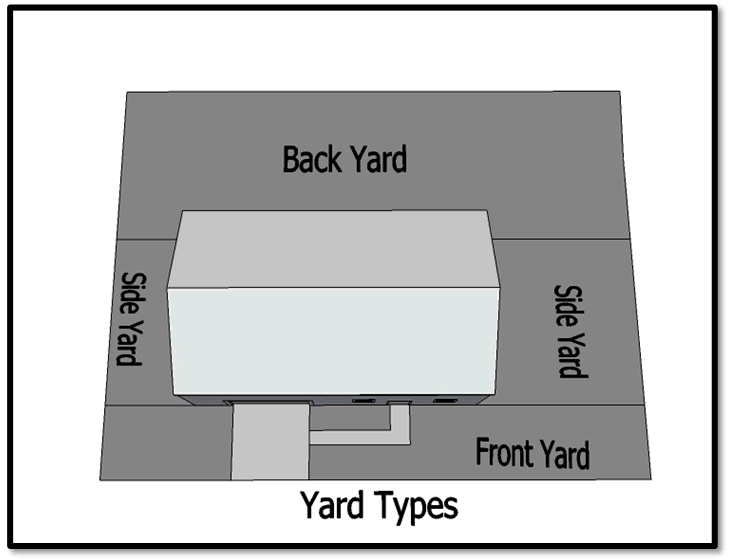
Yard. An open space on a lot other than a court unoccupied and unobstructed from the ground upward, except as otherwise provided in this ordinance.
(1)
Front yard — An open space on the same lot as a building between the front line of the building (excluding steps) and the front lot or street line and extending across the full width of the lot.
(2)
Rear yard — An open, unoccupied space on the same lot as a building between the rear line of the building (excluding steps) and the rear line of the lot and extending the full width of the lot.
(3)
Side yard — An open, unoccupied space on the same lot as a building between the sideline of the building (excluding steps) and the sideline of the lot and extending from the front yard line to the rear yard line.
Zoning permit. A document issued by the zoning administrator authorizing the use of lots, structures, lots and structures, and the characteristics of uses.
(Ord. No. 2021-002, 11-23-2021)

