
Jonesboro City Zoning Code
ARTICLE VII
ARCHITECTURAL STYLE AND SCALE
Sec. 86-221.- Purpose.
The City of Jonesboro seeks to preserve the character of this historic community. Such character is derived from architectural style, materials, scale and building siting. This ordinance classifies those architectural styles and materials typical of Jonesboro for the purpose of guiding new residential construction and renovation. Building scale and siting on the lot also influence the character of a neighborhood. Standards employed in controlling the scale and bulk of a structure involve maximum floor area and maximum height, and those that control siting, the position of the structure on the lot, concern setback. This article is established to regulate each of these parameters to ensure that the integrity of Jonesboro's established neighborhoods is preserved, to maintain high quality in construction and to protect real estate values.
(Ord. No. 05-08, § 2(7.01), 8-15-2005)
Sec. 86-222. - Applicability.
These standards shall apply to all new single family detached construction and renovation in the City of Jonesboro. Historic residential properties within the historic residential overlay shall conform to the architectural styles of this section and the provision of the overlay. Historic properties outside the overlay are encouraged to comply with these styles and the guidelines of the overlay.
(Ord. No. 05-08, § 2(7.02), 8-15-2005)
Sec. 86-223. - Jonesboro architectural styles influencing residential construction.
New single family detached construction shall be guided by the architectural styles of this section. Seven traditional dwelling types, or architectural styles, are found throughout Jonesboro's historic neighborhoods and comprise the styles the city deems appropriate for new construction. These seven dwelling types are as follows:
•
Folk Victorian
•
Colonial Revival
•
English Vernacular
•
Greek Revival
•
Queen Anne
•
Bungalow
•
Gabled El
These styles, or elements of these styles, shall guide new construction to ensure that residential development reflects the city's architectural history and complements the established character of Jonesboro's neighborhoods. New construction need not mimic the prescribed styles in their entirety; however, distinctive elements shall be reflected in proposed construction. Figures 1 through 7 illustrate each style and their predominant features. Ranch-style houses have been excluded from the acceptable styles for new construction; however, new construction proposed in an established neighborhood comprised primarily of single story, Ranch-style houses may reflect one of the seven acceptable styles or the Ranch style.
Suggested housing styles:
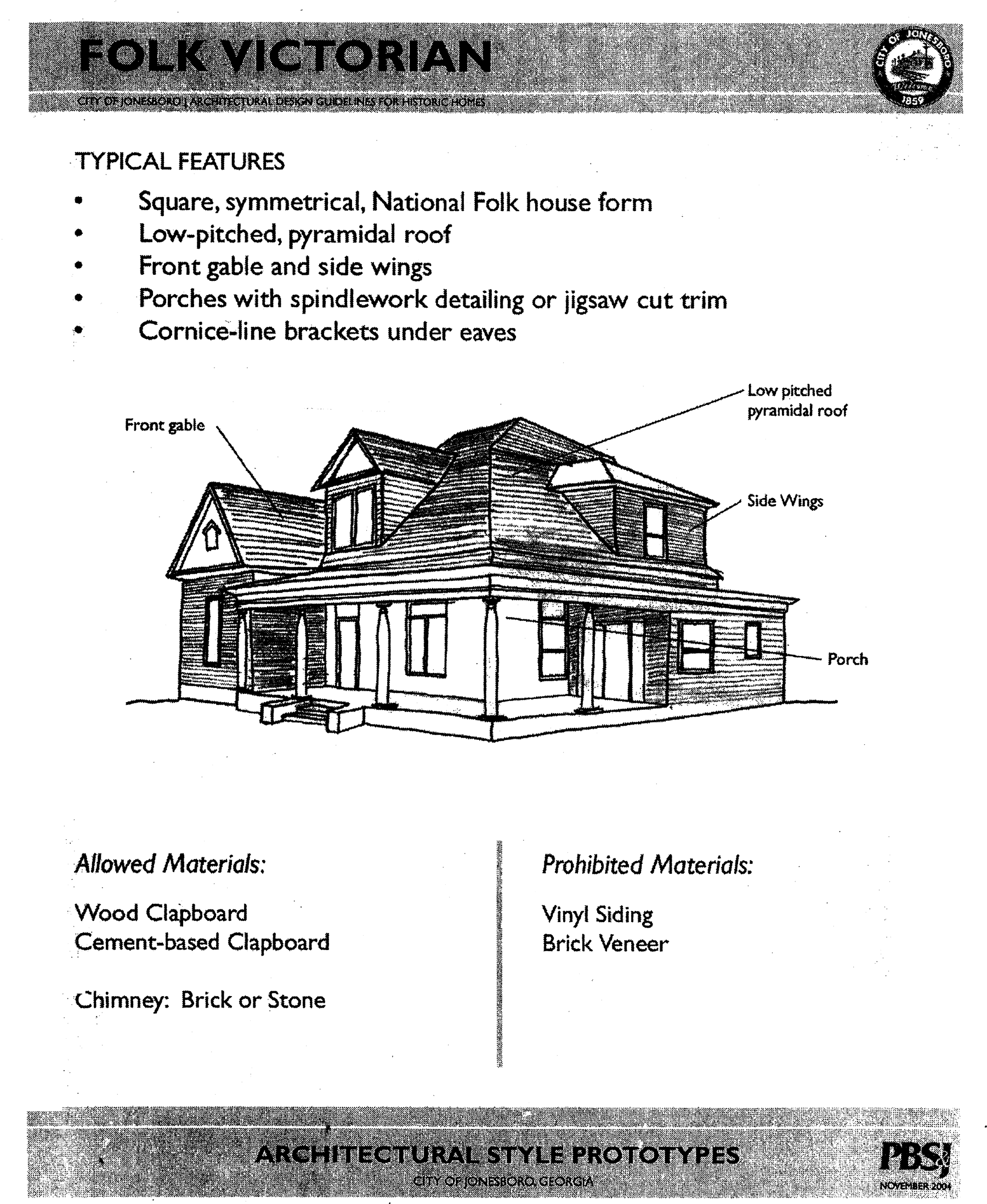
FIGURE 1
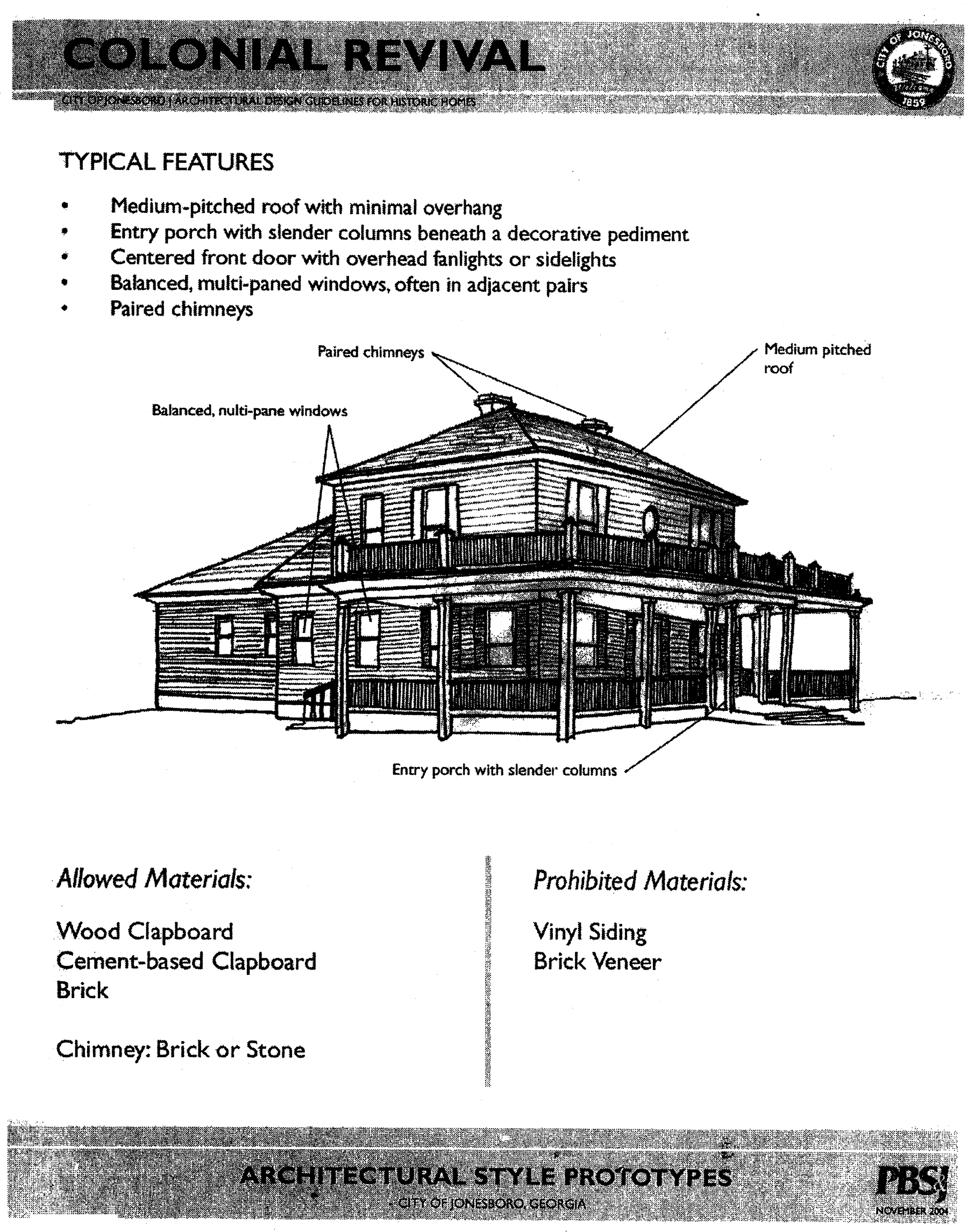
FIGURE 2
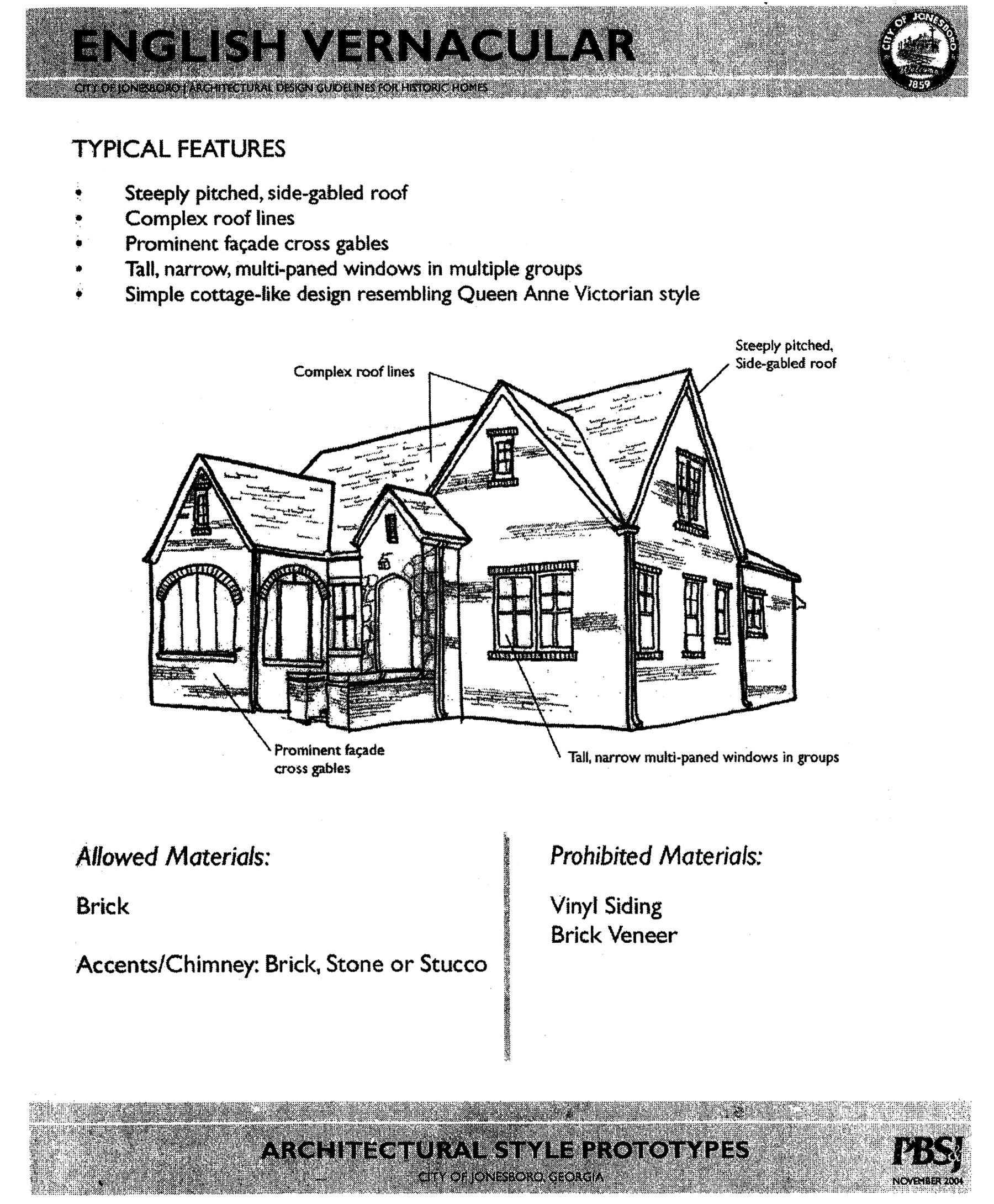
FIGURE 3
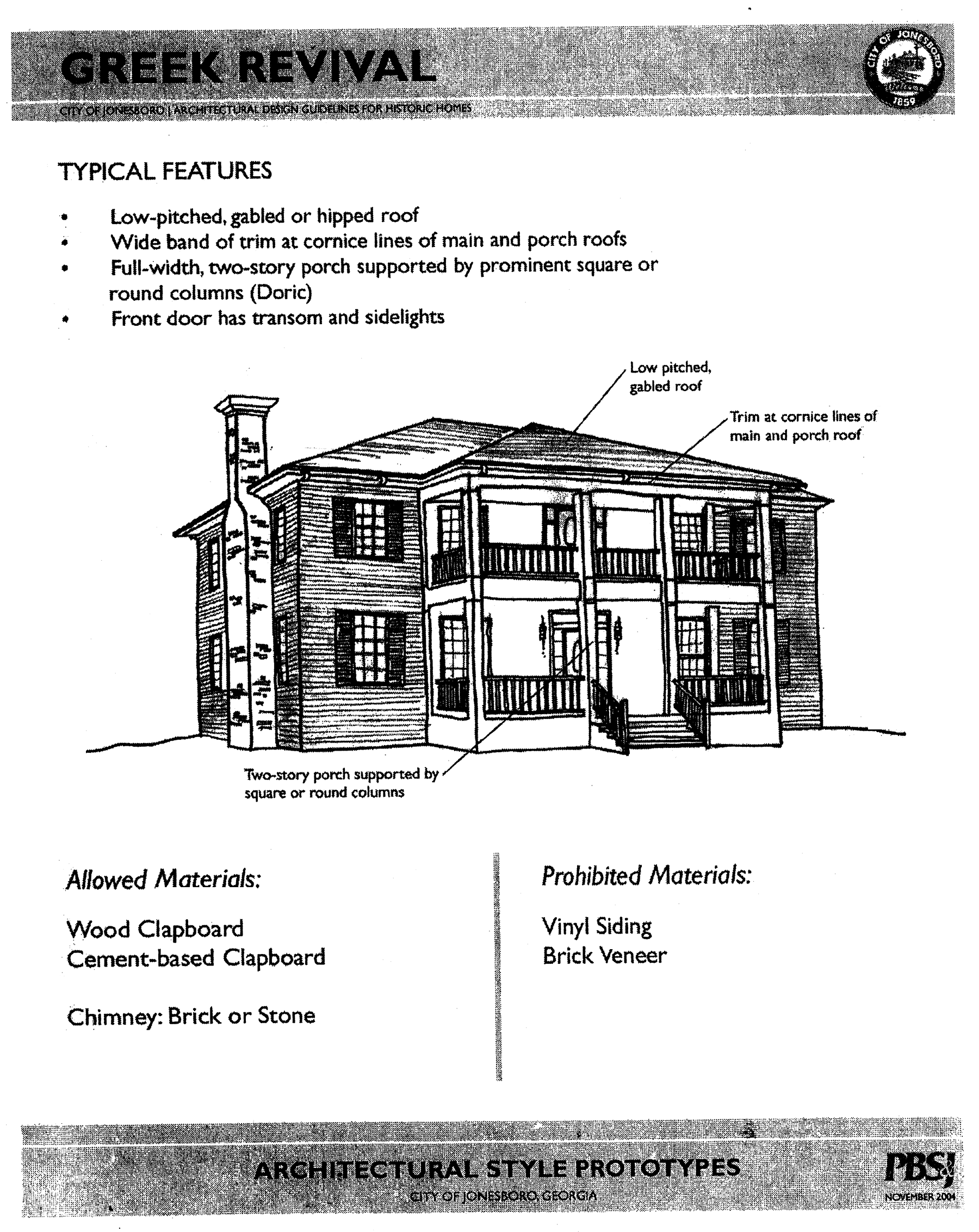
FIGURE 4
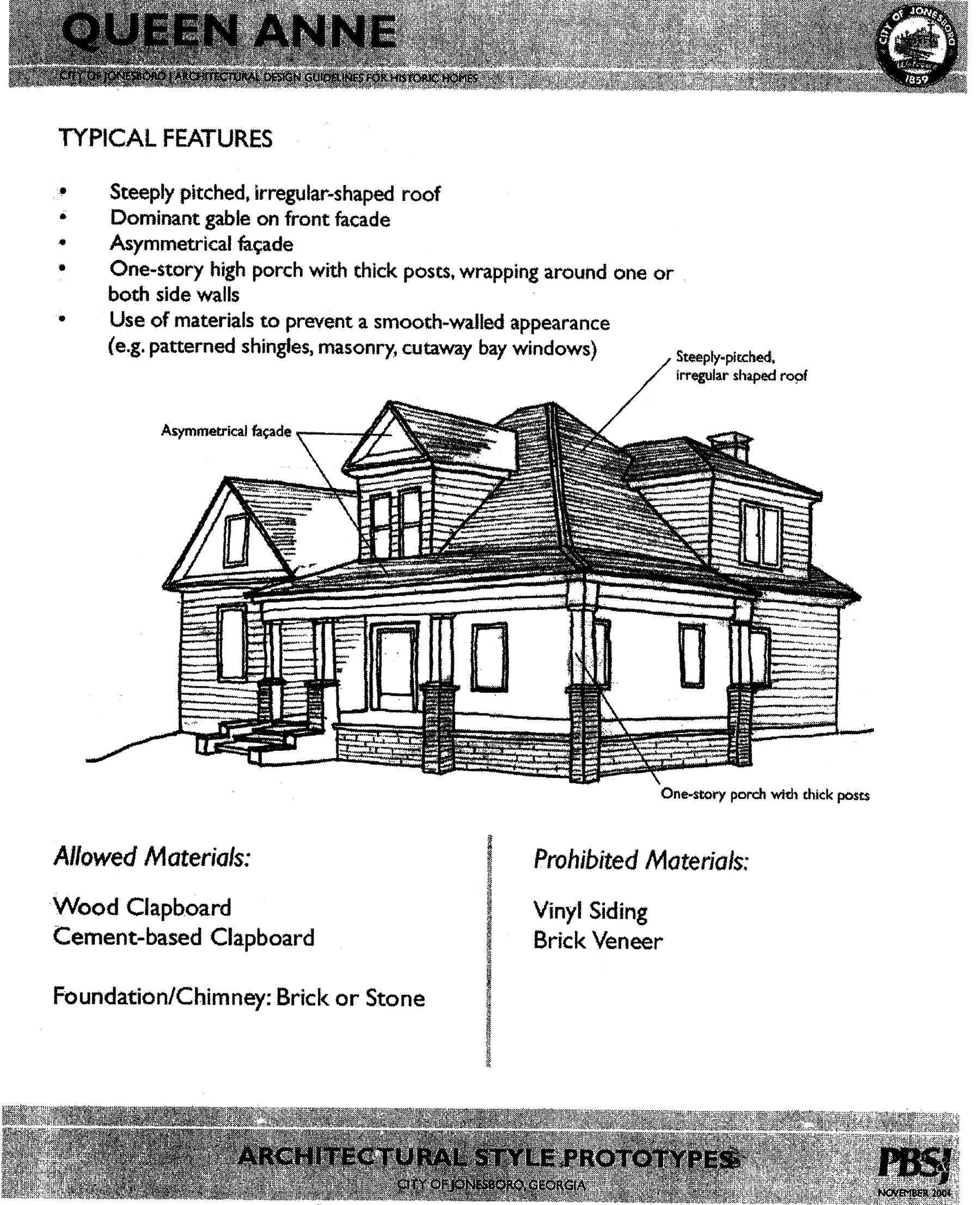
FIGURE 5
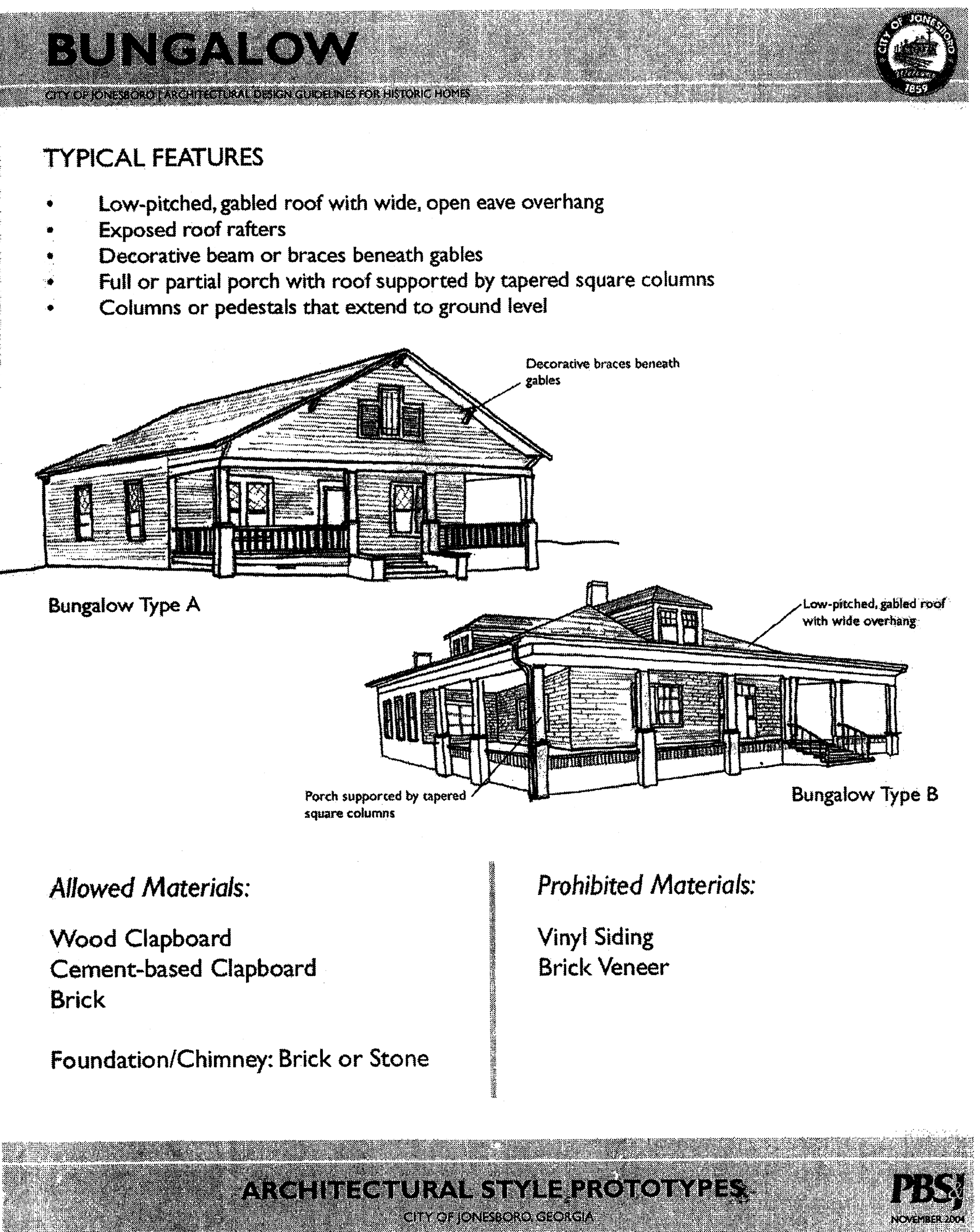
FIGURE 6
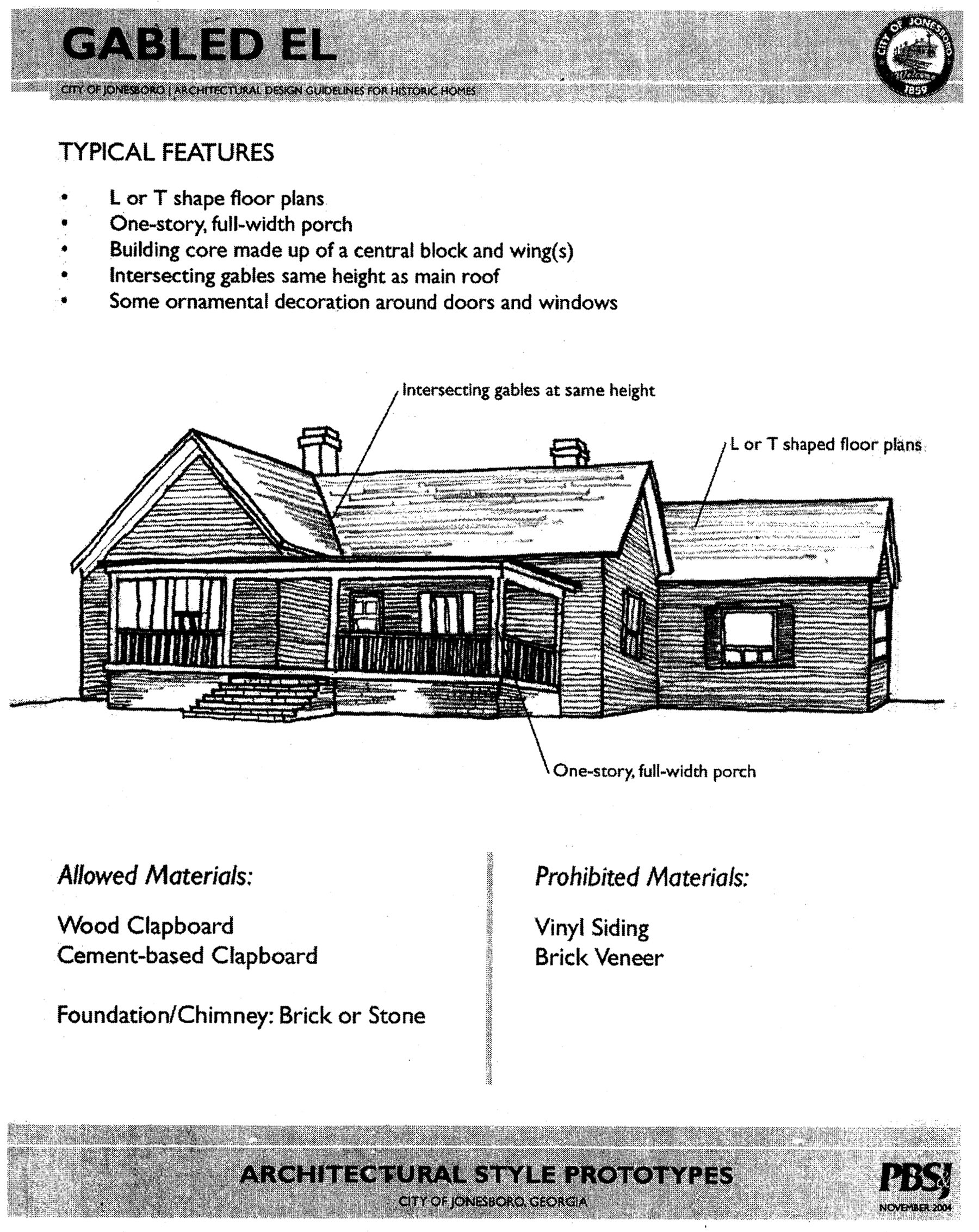
FIGURE 7
(Ord. No. 05-08, § 2(7.03), 8-15-2005)
Sec. 86-224. - Maximum floor area.
Maximum heated floor area of "infill" development shall not exceed 150 percent of
the average heated floor area of single family detached dwellings located on the same
street for a distance of 600 feet in either direction and situated on both frontages.
Such development shall be defined as construction or renovation of single family detached
dwellings on lots of record or newly platted lots within a subdivision served by a
new street or streets where a majority of the land located within a 600-foot radius
of such subdivision is developed in such single family use.
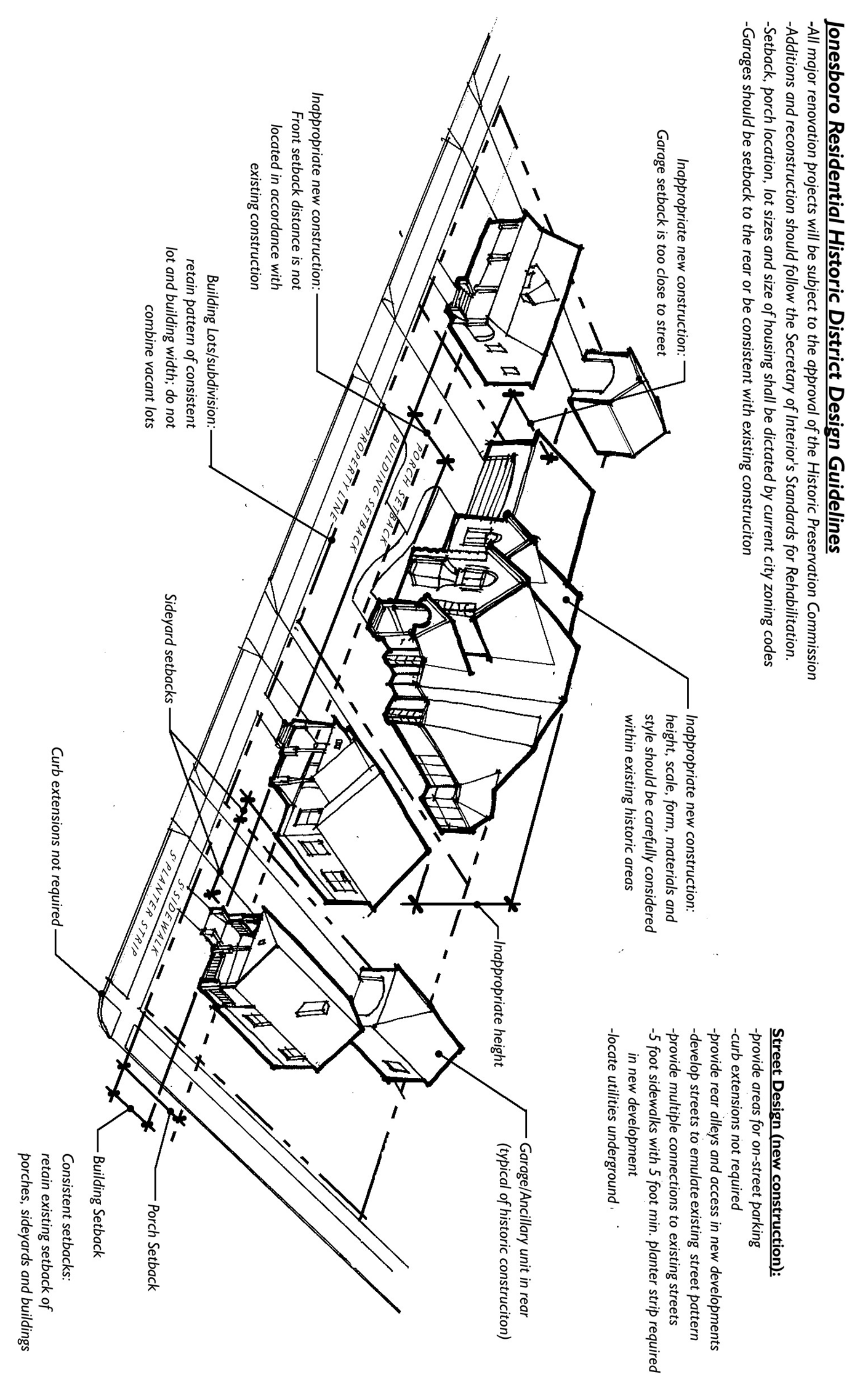
GUIDELINES/NEW S.F. RES. DEV.
(Ord. No. 05-08, § 2(7.04), 8-15-2005)
Sec. 86-225. - Maximum building height.
The maximum building height for infill development shall be determined by the maximum building height of single family detached dwellings located on the same street for a distance of 600 feet in either direction. That is, infill development in neighborhoods characterized by single story dwellings shall also be single story, and so on.
(Ord. No. 05-08, § 2(7.05), 8-15-2005)
Sec. 86-226. - Consistent building setbacks.
In cases where the front yard setback of single family detached dwellings on the two adjoining lots having frontage on the same street is less than that required in the zoning district, the average setback of the four dwellings shall be used to determine the setback applicable to the lot proposed for infill construction. In no event shall the front yard setback be less than ten feet as measured from the front property boundary.
(Ord. No. 05-08, § 2(7.06), 8-15-2005)
Sec. 86-227. - Building exterior.
All residential and commercial construction shall be brick, concrete stucco, stone, cementitious siding, wood or similar, durable architectural materials. Vinyl siding may be permitted in residential applications, only, provided the grade of vinyl meets or exceeds the Standard Specification for Rigid PVC Siding (ASTM D-3679). All manufacturers' recommendations concerning vinyl siding installation must be closely followed.
Vinyl siding is prohibited in the H-1 and H-2 historic districts and the historic overlay. Owners of structures within these districts or the overlay having vinyl siding are not required to replace such siding; however, renovation of or addition to any structure having a construction cost exceeding 50 percent of the assessed market value shall comply with this section. That is, the use of vinyl on the structure being renovated or the addition shall be prohibited.
Synthetic stucco may also be permitted, provided the materials and installation fully comply with the standards of this section. "Super" brick, split-faced block, concrete masonry units, cinder blocks and textured block are prohibited with the exception of use in foundation construction. Materials found to be other than durable construction products are specifically prohibited.
(Ord. No. 05-08, § 2(7.07), 8-15-2005)
Sec. 86-228. - Front porches required.
All residential construction shall feature a front porch having dimensions appropriate to the scale of the dwelling and consistent with the chosen architectural style.
(Ord. No. 05-08, § 2(7.08), 8-15-2005)
Sec. 86-229. - Placement of garages.
Attached garages shall feature side or rear entry access. Where lot width on a lot of record prevents such access, garages shall be recessed a minimum horizontal distance of four feet.
(Ord. No. 05-08, § 2(7.09), 8-15-2005)

