
Kenosha City Zoning Code
SECTION 6
0.- PARKING AND LOADING REQUIREMENTS
6.01.- Parking Requirements.
In all districts, there shall be provided at the time any building or structure is erected, enlarged, or expanded, off-street parking spaces in accordance with the following requirements:
A.
General Rules for Determining Parking Requirements. In computing the number of off-street spaces required, the following rules shall govern:
1.
Adjacent on-street curb parking shall not be considered as part of the required supply of off-street parking, except where permitted in Section 6.01.A.8. of the Zoning Ordinance, "B-4 Mixed-Use District Requirements."
2.
Off-street parking in residentially-zoned districts (RR-1, RR-2, RR-3, RS-1, RS-2, RS-3, RG-1, RG-2) shall be limited to the property's backyard or driveway apron as defined in Section 12 of this Ordinance, except for periods of a declared snow emergency.
a.
Off-street parking spaces for multifamily developments of three (3) or more units per building which are located directly in front of attached or detached garages shall not be considered when determining the number of required off-street parking spaces as outlined in Section 6.01.F. of this Ordinance.
3.
Where the intensity of use of any building, structure or premises shall be increased through addition of dwelling units, gross floor area, seating capacity, or other units of measurement specified herein, parking shall be provided for such increase in intensity of use.
4.
Where the determination of the number of off-street parking spaces results in a requirement of a fractional space, any fraction of less than one-half (½) may be disregarded, while any fraction equal to or in excess of one-half (½) shall be counted as one (1) parking space.
5.
The parking space requirements for a use not specifically mentioned herein shall be the same as required for a use of a similar nature.
6.
In the case of mixed uses, the parking spaces required shall equal the sum of the requirements of the various uses computed separately. Off-street parking spaces for separate uses may be provided collectively if the total number of spaces so provided is not less than the sum of the separate requirements of the uses being served. Further, no parking space or portion thereof shall serve as a required space for more than one (1) use.
7.
B-3 Central Business District Requirements.
a.
For the purpose of encouraging the development and redevelopment of property within the B-3 Central Business District, the following reduced parking requirements shall apply:
(1)
There shall be no additional parking requirements for any use or building located in the B-3 District which existed prior to November 5, 1984.
(2)
New construction within the B-3 District required parking equal to fifty (50) percent of the parking requirements of Section 6.01.F. of the Ordinance. New construction shall be defined as any new principal building or structure, or any addition to an existing building or structure which exceeds fifty (50) percent of the total assessed value of the existing building or structure.
(3)
New or reconstructed multiple-family development involving more than two (2) dwelling units above the first floor in the B-3 District shall be subject to compliance with the off-street parking requirements in Section 6.01.F. of this Ordinance.
b.
Notwithstanding the above, for properties located within the boundary specified in Figure 3-2 of this Section, the following parking requirements shall apply:
(1)
There shall be no additional parking requirements for any use or change in use for any existing building located in the B-3 District.
(2)
There shall be no additional parking requirements for new construction or building additions for any first and second floor occupancies.
(3)
There shall be reduced parking requirements for new construction or building additions equal to fifty (50) percent of the parking requirements of Section 6.01.F. of this Ordinance for occupancies at or above the third floor.
8.
B-4 Mixed-Use District Requirements. For the purpose of encouraging the redevelopment of property within the B-4 Mixed-Use District, the following parking requirements shall apply:
a.
There shall be reduced parking requirements for new construction of institutional, business and/or multiple family residential uses within the B-4 District equal to fifty (50) percent of the parking requirements of Section 6.01.F. of this Ordinance. Reduced parking requirements shall not be permitted for Elderly and Handicapped Multifamily units, Elderly and Handicapped Community Living Arrangements or Assisted Living Facilities.
b.
New single family attached dwelling units in the B-4 District shall be required to have 2.0 spaces per dwelling unit.
c.
Up to ten (10) percent of all required off-street parking spaces for nonresidential uses may be provided on-street, adjacent to the principal use. Such spaces shall be indicated on the Site Plan and shall be approved by the Review Authority. All approved on-street spaces shall be clearly marked on the street in a highly visible manner, but may not be limited in use to exclusively serve the use.
d.
Bicycle rack spaces and/or lockers shall be provided at one (1) space for every fifty (50) vehicle spaces at multiple locations for nonresidential uses.
9.
B-5 Downtown Mixed Use District Requirements. For the purpose of encouraging pedestrian-oriented development within the B-5 Downtown Mixed Use District, the following parking requirements must apply:
a.
Hotels/Motels, Elderly and Handicapped Housing Units, Community Living Arrangements, or Assisted Living Arrangements, must meet the parking requirements of Section 6.01.F. of the Zoning Ordinance.
b.
Multiple family residential must provide 1.3 parking spaces per unit.
c.
All other uses within the B-5 Downtown Mixed Use District will have reduced parking requirements equal to fifty (50) percent of the parking required in Section 6.01.F. of the Zoning Ordinance.
10.
B-6 Kenosha Innovation Neighborhood Requirements. For the purpose of encouraging pedestrian development within the B-6 district the following parking requirements apply:
a.
Residential development shall provide a minimum of one (1) off-street parking space per unit.
b.
Commercial, retail, office, restaurant uses shall provide parking equal to fifty (50) percent of the parking requirements of Section 6.01.F. Of the Zoning Ordinance.
B.
Location of Parking Spaces.
1.
All parking spaces required herein shall be located on the same lot with the building or use being served, except for transitional parking as permitted in this Ordinance, and except as hereinafter provided.
The following parking spaces may be located on a lot separate from the lot on which the building or use being served is located, provided such spaces are located within eight hundred (800) feet of the nearest lot line of the lot on which the building or use being served is located, provided the transitional parking area is owned by the business or property owner which it serves, and provided such spaces which service any nonresidential use are located in a nonresidential zoning district:
a.
Parking spaces to serve permitted or conditional uses in the B-1, B-2, B-3, B-4, B-5, M-1, M-2 or I-P Districts;
b.
Parking spaces serving buildings or uses which existed prior to November 5, 1984, which are enlarged so as to require the provision of additional parking spaces under this Ordinance; or
c.
Parking spaces provided collectively by two (2) or more buildings or uses.
2.
Required off-street parking spaces may be located in any yard, except in any required accessory front yard or accessory street side yard in a Residential District or in any required front yard or street side yard in an I-P District.
C.
Parking Design Standards. In addition to the requirements specified in Section 6.01 of this Ordinance, all off-street parking shall be designed, constructed and maintained in accordance with the requirements of Section 5.08 of the Code of General Ordinances.
D.
Screening.
1.
Screening of Parking Facilities. All off-street parking facilities for five (5) or more vehicles, not contained in a building or structure, shall be effectively screened on any side of the facility which is adjacent to or across an alley from a residential district.
Such screening shall be accomplished by a fence, wall, berm or landscaping, or some combination thereof, constituting an opaque characteristic which obscures from horizontal view, the parking facility. Such screen shall not be less than four (4) feet in height, except where reduced heights are required in Section 2.06, "Visual Clearance" of this Ordinance.
2.
Review of Screening Plans. As part of the overall review of a parking facility plan, the Administrator shall review and approve plans for the screening of a parking facility.
E.
Submission and Review of Proposed Off-Street Parking. The Administrator shall determine the number of off-street parking spaces required by the use being served and shall approve the location of said parking spaces on the lot as part of the Building Permit or Certificate of Occupancy Permit review procedure. The Department of City Inspections shall not issue any Certificate of Occupancy Permit until the proposed off street parking meets all requirements of Section 5.08 of the Code of General Ordinances.
F.
Minimum Parking Spaces Required for the Following Permitted or Conditional Uses:
RESIDENTIAL
1.
Single-Family and Two-Family:1.0 spaces per dwelling unit in the RG-1, RG-2 and RS-3 zoning districts. Two (2) spaces per dwelling unit in all other residentially zoned districts.
2.
Multiple-Family:2.0 spaces per dwelling unit, plus any additional parking required as part of a conditional use review.
3.
Elderly Housing.
a.
RM-1 and RM-2 Districts:1.0 space per dwelling unit, plus 1.0 space per dwelling unit reserved in open space for future conversion to conventional multifamily housing.
b.
RM-3 and B-4 Districts:
(1)
Elderly Multifamily Units:1.0 space per dwelling unit.
(2)
Elderly and Handicapped Community Living Arrangements and Assisted Living Facilities: 0.35 spaces per bed.
4.
Community Living Arrangements: 0.25 space per bed.
5.
Fraternity, Sorority, Rooming and Boarding House: 0.5 spaces per bedroom; Bed and Breakfast Establishments: 1.0 space per bedroom.
6.
Motel-Hotel:1.0 space per rental unit, plus 1.0 space per 3 employees.
INSTITUTIONAL
7.
Educational Institutions:
a.
Elementary and Middle Schools:1.0 space per one thousand five hundred (1,500) square feet of net floor area, including assembly halls.
b.
Senior High Schools:1.0 space per five hundred (500) square feet of net floor area, including assembly halls.
c.
Vocational Schools, University and College Campuses, and Private Business Schools: Four (4) spaces per one thousand (1,000) square feet of net floor area used for classrooms, offices, libraries, museums, conference rooms, and/or art galleries, plus 1.0 space per seven (7) seats for theaters, general auditoriums, arenas, stadiums, other similar places of assembly.
8.
Religious Institutions (churches, chapels, and other places of religious assembly):1.0 space per five (5) seats.
9.
Cultural Institutions (libraries, museums, and art museums):1.0 space per four hundred (400) square feet of gross floor area.
10.
Philanthropic and Charitable Institutions:1.0 space per four hundred (400) square feet of gross floor area.
OTHER
11.
Hospital: 1.5 spaces per one (1) bed.
12.
Convalescent and Nursing Homes, including Extended Care Facilities:1.0 space per three (3) beds.
13.
Nursery and Childcare, and Adult Day Care Centers:1.0 space per employee, plus 1.0 space per twenty (20) children or clients.
14.
Theaters; General Auditoriums; Arenas; Stadiums; Exhibition Halls or Other Similar Places of Assembly:1.0 space per five (5) seats.
15.
Penal, Reform, Disciplinary and Mental Health Facilities:1.0 space per six (6) beds.
16.
Conference Centers:10.0 spaces minimum, or spaces equal to thirty (30) percent of the licensed capacity, whichever is greater.
16.a.
Shelter Facility:1.0 space per six (6) beds.
BUSINESS
17.
Convenience Retail, General Merchandise and Service Stores; Office Buildings; Financial Institutions; Miscellaneous Retail and Service Uses; Home Improvement and Gardening Supply Stores and Uses; and Motor Vehicle Uses:1.0 space per two hundred fifty (250) square feet of gross floor area, except for the uses listed in 18. to 33. below.
18.
Automobile Sales and/or Service, Automobile and/or Truck Rental or Leasing, Mobile or Manufactured Home Sales and Service, and Recreational Vehicle Sales and Service:1.0 space per three hundred (300) square feet of gross floor area, plus one (1) space per two thousand five hundred (2,500) square feet of gross land area devoted to sales or rental.
19.
Automobile Service or Fuel Station:3.0 spaces minimum, plus 3.0 spaces per each service bay.
20.
Automobile Body Shop:3.0 spaces minimum, plus one (1) space per five hundred (500) square feet of gross floor area.
21.
Automobile or Truck Wash:1.0 space per employee on largest shift, plus any additional spaces required as part of a conditional use review.
22.
Carpenter, Electrical, Plumbing, Heating and Air Conditioning Shops; Furniture and Household Appliance Stores; Printing or Publishing Establishment; and Radio or Television Studio:1.0 space per five hundred (500) square feet of gross floor area.
23.
Funeral Home:1.0 space per fifty (50) square feet of gross floor area of public spaces, including parlor, chapel, reception, lobby and lounge areas.
24.
Self-Service Storage Facility:3.0 spaces minimum, plus one (1) space per one hundred (100) storage units.
25.
Medical Offices, Clinic, Laboratory, and Professional Offices of a Dentist, Doctor, Surgeon or Other Individual Licensed to Practice Medicine:1.0 space per two hundred fifty (250) square feet of gross floor area.
26.
Recreational Uses-Indoor, Private:
a.
Bowling Alley:5.0 spaces per alley, plus additional spaces as may be required herein for affiliated uses such as restaurants and other mixed uses.
b.
Game and Athletic Courts:3.0 spaces per court.
c.
Physical Fitness and Health Club:1.0 space per two hundred (200) square feet of gross floor area.
d.
Other Indoor Recreational Uses:1.0 space per five hundred (500) square feet of gross floor area.
e.
Golf Range, Batting Range, Batting Cage, or Golf and/or Batting Simulator:3.0 spaces per individual station.
27.
Recreational Uses-Outdoor, Private:
a.
Athletic Field:10.0 spaces per field, plus 1.0 space per ten (10) seats within bleachers or stands.
b.
Golf Driving Range:2.0 spaces per driving tee.
c.
Golf Courses:3.0 spaces per hole, plus spaces equal to thirty (30) percent of the total licensed capacity of any affiliated clubhouse, restaurant or lounge.
d.
Other Outdoor Recreational Uses:1.0 space per five thousand (5,000) square feet of lot area.
28.
Restaurants Without Drive-in or Drive-through Facilities:10.0 spaces minimum, or spaces equal to thirty (30) percent of the total licensed capacity, whichever is greater.
29.
Restaurants With Drive-in or Drive-though Facilities:10.0 spaces minimum, or spaces equal to forty (40) percent of the total licensed capacity, whichever is greater.
30.
Shopping Centers: 4.5 spaces per one thousand (1,000) square feet of leasable floor area, and any additional parking required as part of a conditional use review.
31.
Taverns and Cocktail Lounges:10.0 spaces minimum, or spaces equal to twenty (20) percent of the total licensed capacity, whichever is greater.
32.
Recycling Collection Centers: Minimum of five (5) parking spaces.
MANUFACTURING
33.
Manufacturing and Industrial Establishments or Uses:2.0 spaces per three (3) employees on maximum shift, but in no event less than 2.0 spaces per one thousand (1,000) square feet of gross floor area.
34.
Wholesale and Warehouse Establishments, and Distribution Plant:2.0 spaces per three (3) employees on maximum shift, but in no event less than:
a.
1.0 space per one thousand (1,000) square feet of gross floor area for the first twenty thousand (20,000) square feet.
b.
1.0 space per two thousand (2,000) square feet of gross floor area for the second twenty thousand (20,000) square feet.
c.
1.0 space per four thousand (4,000) square feet of gross floor area in excess of the initial forty thousand (40,000) square feet of floor area of the building.
(Ord. No. 22-23, § 4, 6-19-2023; Ord. No. 31-23, §§ 5, 6, 8-7-2023)
6.02. - Loading Requirements.
In
all business and manufacturing districts, there shall be provided at the time any building or structure is erected, enlarged, or expanded, loading space in accordance with the following requirements:
A.
General Rules for Determining Loading Requirements. In computing the number of off-street loading spaces required, the following rules shall govern:
1.
Adjacent on-street curb loading shall not be considered as part of the required supply of off-street loading spaces.
2.
Where the intensity of use of any building, structure or premises within a business or manufacturing district shall be increased through the addition of gross floor area, loading spaces shall be provided for such increase in intensity of use.
3.
Off-street loading spaces for separate business or manufacturing uses may be provided collectively if the total number of loading spaces so provided is not less than the sum of the separate requirements of the uses being served. Further, no loading space or portion thereof shall serve as a required space for more than one (1) use.
4.
B-3 Central Business District Requirements. In the B-3 Central Business District, for the purpose of minimizing disruptive curb-cuts and driveways and to encourage the consolidation of loading spaces in appropriate locations, the following rules governing loading requirements shall apply:
a.
There shall be no loading requirements for any use located in the B-3 District which existed prior to the effective date of this Ordinance.
b.
New construction within the B-3 District requires loading spaces equal to fifty (50) percent of the loading requirements of 6.02.D. of this Ordinance, unless reduced loading requirements are authorized by the City Plan Commission through the approval of a Conditional Use Permit. (Refer to Section 4.0 of this Ordinance for the conditional use review procedures.) New construction shall be defined as any new principal building or structure, or any addition to an existing building or structure which exceeds fifty (50) percent of the total assessed value of the existing building or structure.
5.
B-4 Mixed-Use District Requirements. In the B-4 Mixed-Use District, for the purpose of minimizing disruptive curbcuts and driveways, and to encourage the consolidations of loading spaces in appropriate locations for commercial uses, the following rules governing loading requirements shall apply:
a.
New construction within the B-4 District requires loading spaces equal to fifty (50) percent of the loading requirements of Paragraph 6.02.D. of this Ordinance, unless reduced loading requirements are authorized by the City Plan Commission through the Conditional Use Permit.
b.
Off-street loading spaces shall not be located between a building and a major street.
B.
Loading Design Standards. In addition to the requirements specified in Section 6.02 of this Ordinance, the design of all loading spaces may be subject to the approval of the City Traffic Engineer and said loading spaces shall be subject to the applicable requirements of Chapter V of the Code of General Ordinances.
C.
Submission and Review of Proposed Loading Spaces. The Administrator shall determine the number of loading spaces required by the use being served and shall approve the location of said loading spaces on the lot relative to any required yards or setback lines of any major streets, as part of the building permit review procedure. The Department of City Inspections shall not issue any Certificate of Occupancy Permit until the loading spaces meet the applicable requirements of Chapter V of the Code of General Ordinances.
D.
Loading Spaces Required.
Business/Manufacturing Districts (Permitted/Conditional Uses):
6.03. - Relief from Parking and Loading Requirements.
Reduced parking and loading requirements may be approved under a Conditional Use Permit or Site Plan Review, when so authorized by the City Plan Commission. The City Plan Commission shall hold a public hearing on the request and all owners within one hundred (100) feet of the property, excluding street rights-of-way, shall be notified by mail of the hearing.
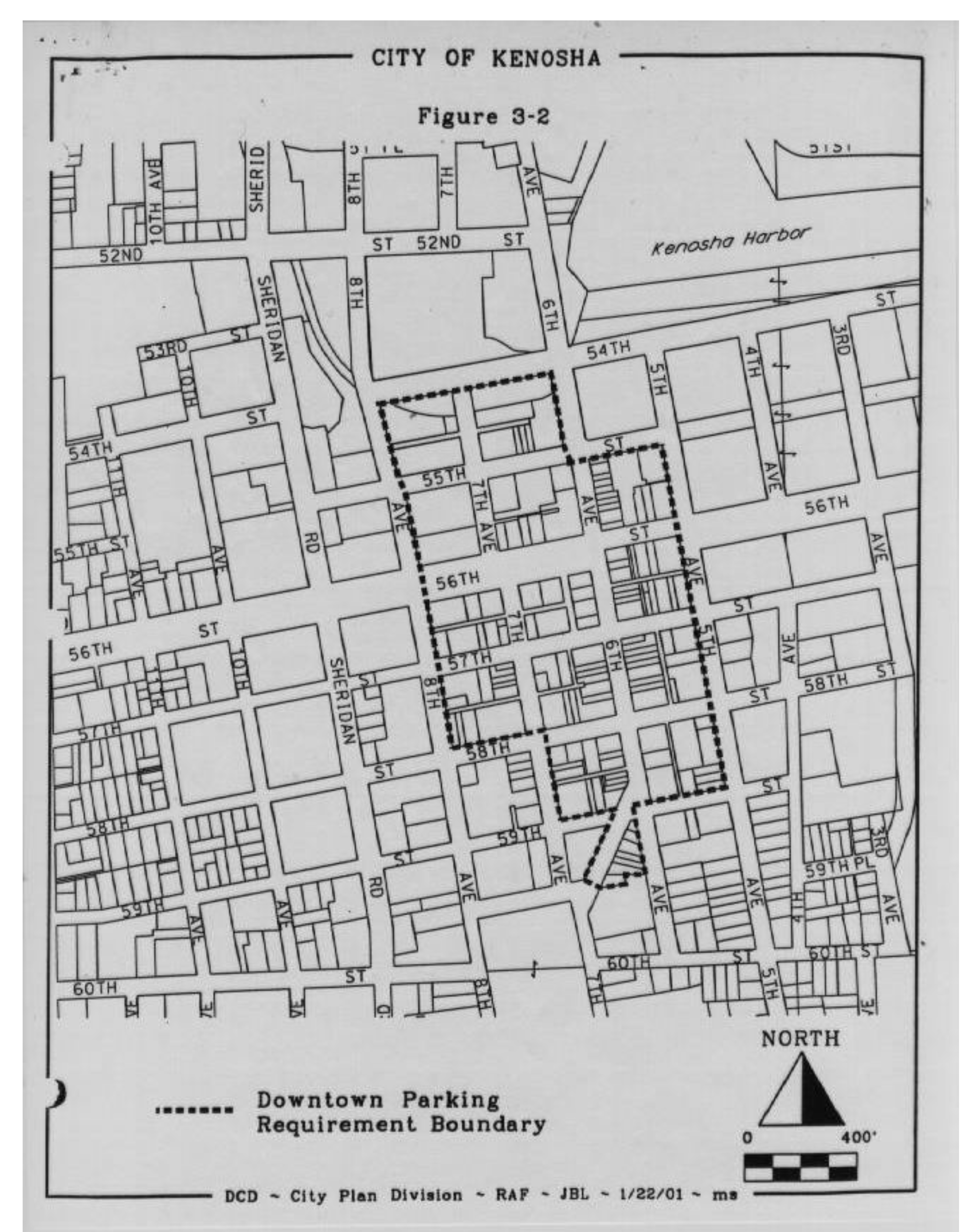
FIGURE 3-2—DOWNTOWN PARKING REQUIREMENT BOUNDARY

