
La Pine City Zoning Code
ARTICLE 2
DEFINITIONS AND USE CATEGORIES
Sec. 15.12.010. - Purpose.
The purpose of chapter 15.12 is to define terms that are used in the City of La Pine Development Code and other terms that may arise in interpreting the Development Code, particularly those that may be uncommon or have more than one meaning.
Sec. 15.12.012. - Applicability.
A.
Definitions. The definitions in chapter 15.12 apply to all actions and interpretations under the City of La Pine Development Code. The meanings of some terms in this chapter may, in certain contexts in which they are used, be clearly inapplicable. In such cases the context in which a term is used will indicate its intended meaning, and that intent shall control.
B.
When a term is not defined. Terms not defined in this Development Code shall have their ordinary accepted meanings within the context in which they are used. Webster's New International Dictionary of the English Language, Unabridged, Current Edition, shall be considered a standard reference.
C.
Land use categories. Land use categories are defined in chapter 15.14.
D.
Conflicting definitions. Where a term listed in chapter 15.12 is defined by another section of this Development Code or by other regulations or statutes referenced by this Development Code, the term is not redefined herein for purposes of that other code [for purposes of that other Development Code section].
Sec. 15.12.020. - Definitions.
[The following words, terms and phrases, when used in this chapter, shall have the meanings ascribed to them in this section, except where the context clearly indicates a different meaning:]
Abutting means having property or zone lines in common; e.g., two lots are abutting if they share a common property line.
Access means a way of approaching or entering a property, such as a driveway, alley, or right-of-way.
Accessory structure. See Structure, accessory.
Accessory use. See Use, accessory.
Agriculture, indoor, means agriculture, as defined in this Development Code, which is entirely contained within permanent, rigid structures designed to withstand snow and wind loads and not broadcast indoor lighting. Such structures do not include canopies, hoop houses, sheds, shipping containers, trailers and similar structures. See artisanal and light manufacturing, section 15.14.300.
Alley means a public or private narrow way, 20 feet or less as otherwise approved by the city, serving more than one lot or parcel primarily for vehicular access to the back or side of properties.
Alteration, as applied to a building or structure, means a change or rearrangement in the structural parts, or in the exit facilities, or an enlargement, whether by extending on a side or by increasing in height, or moving from one location or position to another.
Alteration, structural, means a change, other than incidental repairs, which would prolong the life of the supporting members of a building, such as bearing wall, columns, beams and girders.
Artisanal and light manufacturing. See use categories, section 15.14.300.
Automotive wrecking, salvage and junk yards. See use categories, section 15.14.310.
Awning shall include any structure made of cloth or metal with a metal frame attached to a building and projecting over a yard or thoroughfare, when the same is so erected as to permit its being raised to a position flat against the building when not in use or not permanently attached to and an integral part of a porch, carport, or similar attached accessory structure.
Basement means portion of a building partly underground.
Basic utilities. See use categories, section 15.14.400.
Bed and breakfast inn means an owner-occupied residence offering, for pay, overnight or short-term lodging, and breakfast for transient guests where no more than five rooms are for rent.
Block means the length of a street between two street intersections; or a piece of land bounded on all sides by streets or other transportation routes such as railroad lines, or by physical barriers such as waterbodies or public open space, and not traversed by a through street.
Building means an enclosed structure built, erected, and framed of component structural parts, designed for the housing, shelter, enclosure, and protection of persons, animals, or property of any kind, including mobile homes.
Building, accessory, means a detached, subordinate building, the use of which is customarily incidental and subordinate to that of the primary building, and which is located on the same lot as that occupied by the primary building.
Building, attached, means a building where both side walls of all except the end structures are party walls.
Building, detached, means a building which has no party wall.
Building, primary, means a building in which is conducted the primary use of the lot on which it is situated.
Building setback means the minimum allowable horizontal distance from a property line, to the nearest vertical wall or other element of a building or structure defined herein, except as allowed under section 15.80.040. Where a public access easement is provided in lieu of or in addition to public right-of-way, the interior easement shall be an assumed property boundary for the purposes of setbacks.
Building setback line means a line on a lot, which marks the building setback.
Campgrounds and recreational vehicle parks. See use categories, section 15.14.200.
Carport means a roofed structure having two or more open sides and extending from the side or rear wall of a primary or accessory building, used primarily as a shelter for automotive vehicles or recreation equipment. The open sides may be screened or enclosed, but at least 50 percent of such wall area must remain open. In addition, the carport shall not extend into any required yard.
Centerline means the line located at the middle of the travelled surface of a road, equi-distant from both edges of the road surface.
Certificate of use and occupancy means a statement, based on an inspection and signed by the city or building official, indicating that a building, structure, and/or land conforms with the provisions prescribed in this Development Code and may lawfully be occupied or used for a specified use or uses.
Child care facility provides out-of-home care for part of a 24-hour day to children 15 years and younger, including care provided in public or private profit or nonprofit facilities. Definition does not apply to care provided by a relative, in places of worship during religious services, and in a facility where the parent is present at all times child care is provided.
Church means a building for public religious worship.
City manager means the city manager of the City of La Pine, or the city manager's designee.
Clear vision (clear vision areas) means areas near intersections of roadways and motor vehicle access points where a clear field of vision is required for traffic safety and to maintain adequate sight distance. See section 15.88.040.
Clinic means any professional medical building or establishment where people are examined or treated by medical professionals or dentists but are not hospitalized overnight.
Clubs and fraternal organizations mean an establishment operated for social, recreational, or educational purposes, and open only to members and their guests, but not the general public.
Colleges. See use categories, section 15.14.410.
Commercial lodging. See use categories, section 15.14.205.
Commercial parking. See use categories, section 15.14.210.
Commercial recreation. See use categories, section 15.14.215.
Communication antenna means any device used for the transmission or reception of radio, television, wireless telephone, pager, commercial mobile radio service or any other wireless communications signals, including without limitation, omnidirectional or whip antennas and directional or panel antennas, owned or operated by any person or entity licensed by the Federal Communications Commission (FCC) to operate such device. The definition shall not include private residence mounted satellite dishes or television antennas or amateur radio equipment including, without limitation, ham or citizen band radio antennas.
Communication equipment building means an unmanned building or cabinet containing communications equipment required for the operation of communications antennas.
Communication tower means a structure other than a building, such as a monopole, self-supporting or guyed tower, designed and used to support communication antennas.
Community services. See use categories, section 15.14.420.
Conditional use. See Use, conditional.
Construction means the construction, reconstruction, renovation, repair, extension, expansion, alteration, or relocation of a building or structure, including the placement of mobile homes.
Court means a portion of a lot unoccupied above grade but partially or wholly surrounded by building walls.
Covenant means a private legal restriction on the use of land, contained in the deed to the property or otherwise formally recorded.
Curb level means the elevation of the street grade as established in accordance with the law or when a curb level has not been established, the grade at the center of the street.
Daycare centers. See use categories, section 15.14.430.
Deck means a horizontal, unenclosed platform that is either attached to a structure or detached (freestanding) and is greater than 18 inches in height at any point and has no roof, extended soffit, or walls, but may have railings, seats, or other related features.
Dedication means the transfer of property from private to public ownership.
Deed restriction. See Covenant.
Density means a measurement of the number of dwelling units in relationship to a specified amount of land based on the minimum lot size per dwelling unit required by the applicable zone. Density standards are based on gross acres (include [including] land needed to [for] roads and infrastructure).
Development means any man-made change to improved or unimproved real estate, including, but not limited to, buildings or other structures, the subdivision of land, the placement of mobile homes, streets, and other paving, utilities, filling, grading, excavation, mining, dredging, or drilling operations.
Drive up and drive thru facility means a permanent facility or structure that is designed to allow drivers to remain in their vehicles before and during an activity on the site. Drive-through facilities also include facilities designed for the rapid servicing of vehicles, where the drivers may or may not remain in their vehicles, but where the drivers usually either perform the service for themselves, or wait on the site for the service to be rendered. Drive-through facilities may serve the primary use of the site or may serve accessory uses.
Driveway means a private roadway providing vehicular access to a street or highway for a lot and its structures, or providing for interior vehicular movement on the lot or within a development.
Dwelling means a structure conforming to the definition of a dwelling under applicable building codes and providing complete, independent living facilities for one or more persons, including permanent provisions for living, sleeping, eating, cooking, and sanitation. If the individual units are self-contained, assisted living facilities for the elderly or disabled as defined by the State of Oregon, having common food preparation, dining, social, recreational, and/or housekeeping facilities, are included in this definition. For the purposes of this Development Code, the following types of dwellings are defined:
•
Accessory dwelling unit means an additional dwelling unit created on a lot with a single-family dwelling. The second unit is created auxiliary to, and is always smaller than the single-family dwelling, duplex, townhome, or manufactured home. The unit includes its own independent living facilities, including provision for sleeping, cooking, and sanitation, and is designed for residential occupancy by one or more people, independent of the primary dwelling unit.
•
Duplex means two primary dwelling units on one lot. The units may share a common wall or common floor/ceiling.
•
Cottage cluster development means a form of multi-family development where grouping(s) of four to 12 cottage dwellings are arranged around or adjacent to shared open space and located on a single lot. This form of development is intended to provide for small-scale detached dwellings that interact together as a small community.
•
Multi-family development means a structure or grouping of structures containing three or more dwellings on the same lot. Forms of multi-family development include multi-family structures, multiple detached dwellings on a single lot, and cottage cluster developments.
•
Multi-family structure means a structure containing three or more dwelling units. The land underneath the structure is not divided into separate lots.
•
Manufactured dwelling means a dwelling unit constructed off of the site which can be moved on the public roadways. Manufactured dwellings include residential trailers, mobile homes, and manufactured homes.
º
Manufactured home means a structure constructed for movement on the public highways that has sleeping, cooking, and plumbing facilities; that is intended for human occupancy; that is being used for residential purposes; and that was constructed in accordance with federal manufactured housing construction and safety standards and regulations in effect at the time of construction.
º
Mobile home means a structure constructed for movement on the public highways that has sleeping, cooking, and plumbing facilities; that is intended for human occupancy; that is being used for residential purposes; and that was constructed between January 1, 1962, and June 15, 1976, and met the construction requirements of Oregon mobile home law in effect at the time of construction.
º
Residential trailer means a structure constructed for movement on the public highways that has sleeping, cooking, and plumbing facilities; that is intended for human occupancy; that is being used for residential purposes; and that was constructed before January 1, 1962.
•
Single-family dwelling means a detached dwelling unit located on its own lot.
•
Townhome means a dwelling unit located on its own lot that shares one or more common or abutting walls with one or more dwelling units on adjacent lot(s).
Easement means a right given by the owner of land to another party for specific limited use of that land.
Eating and drinking establishment. See use categories, section 15.14.220.
Enlargement means a construction activity which increases the size of a building or other structure.
Exception means a provision, which permits under specified terms and conditions, particular uses to locate in a zone without detriment to the routine and orderly development as provided for that zone. The provision is granted by the planning commission or other designated entity.
Family daycare means care for not more than 16 children in a home. See ORS 657A.440(4) for applicable licensing and other requirements.
Fairgrounds means a facility utilized as an event venue for spectator and non-spectator field or arena events, such as rodeos, animal shows, equestrian events, festivals, as well as uses accessory to the main events, including concerts, parking, concessions sales, souvenir sales and amusement rides.
Farm means a lot, parcel, or tract of land used for agricultural purposes on which the primary structure(s) shall be the agricultural building(s) and farm house(s).
Flag lot means a lot located behind a frontage lot, plus a strip of land out to the street for an access drive. There are two distinct parts to a flag lot: the "flag" which comprises the actual building site located at the rear portion of the original lot, and the "pole" which provides access from a street to the flag lot.
Flood hazard areas means areas which will be inundated by a 100-year flood event, also called the base flood, are the greatest concern. The 100-year flood plain includes the river channel, the floodway, and the "floodway fringe." Floodway and flood plain boundaries are shown in dark gray on the flood maps; the floodway is crosshatched. It is important to note that the flood maps do not identify all areas subject to flooding, particularly from local drainage sources or from flood events larger than a 100-year flood.
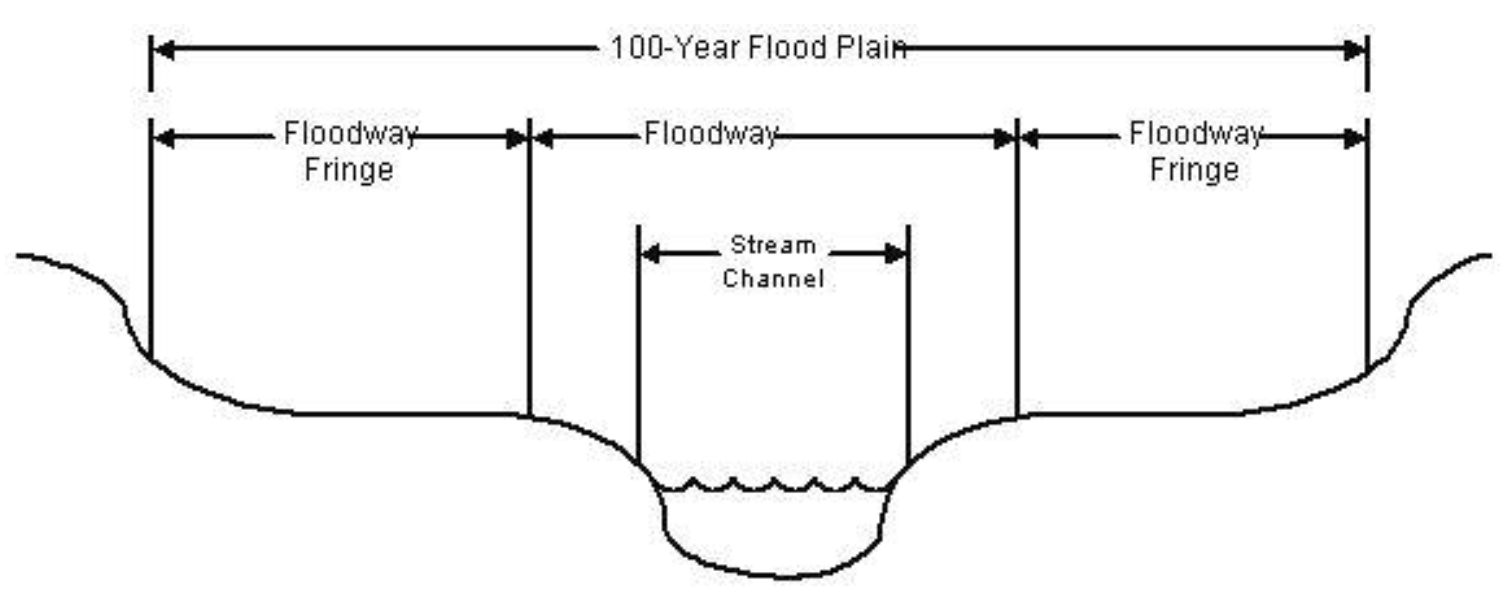
Flood plain. The FP zone protects the public from flood hazards and preserves scenic and natural resources along river/sloughs and streams.
Floor area, gross, means the total area of all floors of a building as measured to the outside surfaces of exterior walls and including halls, stairways, elevator shafts, attached garages, porches and balconies.
Floor area, residential, means the total area of all floors of a residential building devoted solely to residential use, measured between interior faces of walls, and exclusive of entrance ways, porches, breezeways and roofed terraces, whether enclosed or not, and excluding cellars, basements and garages.
Forestry. See use categories, section 15.14.510.
Fraternal organization means a group of people formally organized for a common interest, usually cultural, religious or entertainment, with regular meetings, rituals and formal written membership requirements.
Frontage means the frontage, or front of a lot, is the side nearest the street. For the purposes of determining yard and setback requirements on corner lots and through lots, all sides of a lot adjacent to streets shall be considered frontage, and yards and setbacks shall be provided as indicated in this Development Code.
Garage, private, means a structure that is accessory to a residential building and that is used for the parking and storage of vehicles owned or operated by the residents thereof and that is not a separate commercial enterprise available to the general public.
General manufacturing and production. See use categories, section 15.14.330.
Grade means the mean curb level, or when the curb level has not been established or all the walls of the building are more than 15 feet from street lot lines. Grade means the mean elevation of the ground adjoining the structure on all sides.
Group living. See use categories, section 15.14.100.
Height of a communication tower means the vertical distance measured from the ground level to the highest point on a communication tower, including antennas mounted on the tower.
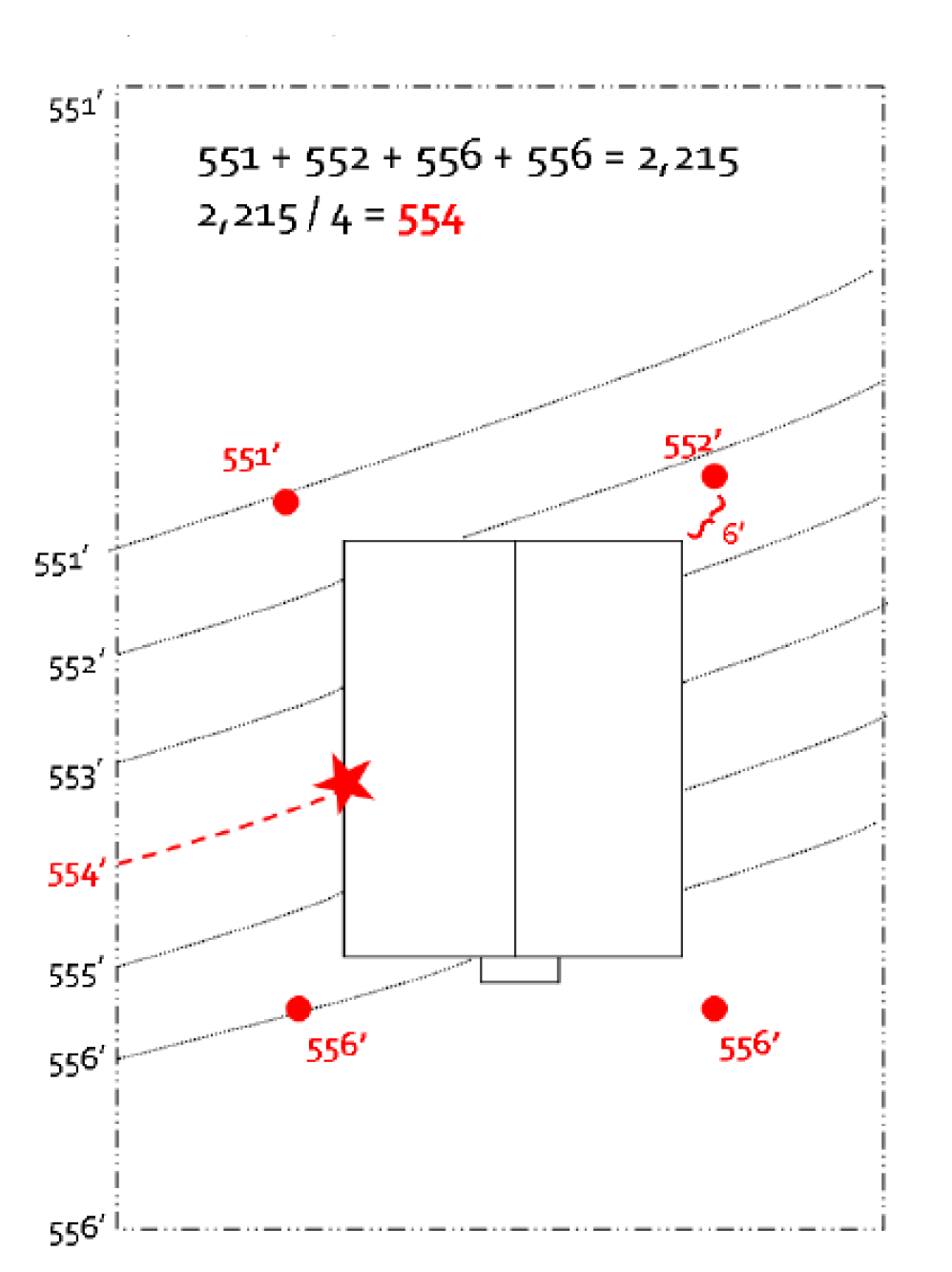
Height of building or structure means the vertical distance from the average grade to the highest point on a building or structure. To identify the average grade plane of the site, measure six feet out from each corner of the building and calculate the average of the elevation measurements (see Example A). This number is the grade plane from which the building height is measured.
Example A.
Height of wall means the vertical distance from the foundation wall or other immediate support of such wall to the top of the wall.
Home occupation means a business activity that is carried out on the same site as a dwelling unit by an occupant of the dwelling unit, and which is accessory to the residential use on the site, subject to the special use provisions of article 6.
Hotel means a building designed for occupancy as the temporary residence of individuals or transients who are lodged with or without meals.
Household living. See use categories, section 15.14.110.
Industrial service. See use categories, section 15.14.320.
Interior street means a newly constructed street designed to provide vehicular access to abutting properties in a planned development and discourage other through traffic. The sole purpose of an interior street is to serve the lots and/or units in a planned development.
Junk means any worn, cast off, or discarded articles or material which is ready for destruction or which has been collected or stored for sale, resale, salvage or conversion to some other use. Any such article or material which is stored on a farm for exclusive use of the owner or occupant of the farm or any article or material which, unaltered, not needed to be dissembled or unfastened from, or unchanged and without further reconditioning can be used for its original purpose as readily as when new shall not be considered junk.
Junk dealer means any person, as hereinafter defined, who shall engage in the business of selling, buying, salvaging, and dealing in junk and who maintains and operates a junk yard within the City of La Pine.
Land means the solid portion of the earth's surface which is capable of being used or occupied.
Land, developed, means improved land with buildings.
Land, improved, means raw land which has been provided with basic utilities such as water and sewerage, streets, sidewalks, but not buildings.
Land, raw, means vacant land unsubdivided and unimproved (without utilities or streets).
Landscaping means changing, rearranging, or adding to the original vegetation or scenery of a piece of land to produce an aesthetic effect appropriate for the use to which the land is put. It may include reshaping the land by moving the earth, as well as preserving the original vegetation or adding vegetation.
Land use means a description of how land is occupied or utilized.
Large land area commercial recreation. See Recreation, large land area commercial.
Loading space means an off-street space or berth on same lot with a building, or contiguous to a group of buildings, for the temporary stopping of commercial vehicles while loading or unloading merchandise or materials, and which abuts upon a street, alley or other appropriate means of access to a public right-of-way.
Lodge means the place where members of a local chapter of an association hold their meetings and the local chapter itself.
Lot means the basic development unit, an area with fixed boundaries, used or intended to be used customarily by one building and its accessory building(s) and not divided by any road or alley.
Lot area means the computed area of a lot contained within the lot lines and measured at grade on a horizontal plane in accordance with current law.
Lot, corner, means a lot abutting upon two or more streets at their intersection or upon two parts of the same street, such streets or parts of the same street forming an interior angle of less than 135 degrees. The point of intersection of the street lot lines is the "corner."
Lot coverage means the percentage of the lot area occupied or covered by primary and accessory structures.
Lot depth means the mean horizontal distance between the front lot line and the rear lot line.
Lot, double frontage, means an interior lot whose front and rear lot lines abut roads, or a corner lot with two opposite lot lines abutting a road.
Lot frontage. See Frontage.
Lot, interior, means a lot whose side lot lines do not abut a road.
Lot line, alley, means a lot line separating the lot from an alley.
Lot line, front, means the line separating the lot from a road right-of-way or public access easement.
Lot line, rear, means the lot line opposite and most distant from the front lot line.
Lot lines means the property lines bounding the lot.
Lot line, side, means any lot line other than a front or rear lot line; a side lot line separating a lot from a street is called a side street lot line.
Lot, non-conforming, means a lot lawfully existing at the effective date of this Development Code or by subsequent amendment thereto which does not completely conform with the area regulations and other provisions prescribed for the zone in which it is located.
Lot of record means a lot which is part of a recorded subdivision or a parcel of land which has been recorded or registered in Deschutes County.
Lot width means the mean horizontal distance between the side lot lines of a lot measured at right angles to the depth.
Manufactured dwelling park means any place where two or more manufactured dwellings are located within 500 feet of one another on a lot, tract, or parcel of land under the same ownership, the primary purpose of which is to rent or lease space, or keep space for rent or lease, to any person for a charge or fee paid, or to be paid, for the rental or lease or use of facilities, or to offer space free in connection with securing the trade or patronage of such person. Manufactured dwelling park does not include a lot or lots located within an approved subdivision being rented or leased for occupancy by one manufactured dwelling per lot. See also, ORS 446.
Marijuana means all parts of the plant Cannabis family Moraceae, whether growing or not; the resin extracted from any part of the plant; and every compound, manufacture, salt, derivative, mixture, or preparation of the plant or its resin.
Marijuana business means any establishment operated by any person or entity who is or must be appropriately licensed by the Oregon Health Authority or the Oregon Liquor Control Commission which sells, distributes, produces, cultivates, grows, wholesales, processes, researches, develops or tests any form of marijuana or marijuana derivatives including, but not limited to, marijuana production facilities, marijuana processing facilities, marijuana testing laboratories, marijuana wholesalers, and marijuana dispensaries.
Marijuana dispensary. See use categories, section 15.14.225.
Marijuana facilities. See use categories, section 15.14.340.
Marijuana processing facility means any structure in, or premises on, which a person or entity required to be licensed under ORS 475B.090 or ORS 475B.435 (which is not permitted to be located in a residential zone pursuant to state law) operates.
Marijuana production facility means any structure in, or premises on, which a person or entity required to be licensed under ORS 475B.070 or ORS 475B.420 operates.
Marijuana products means any item, good, or product made from or containing marijuana or marijuana derivatives.
Marijuana testing laboratory means a facility that conducts testing of marijuana products as required by ORS 475B.555 and required to be licensed under ORS 475B.560.
Marijuana wholesaler means any structure in, or premises on, which a person or entity required to be licensed under ORS 475B.100 operates.
Marquee means any permanent roof-like structure projecting beyond a building or extending along and projecting beyond the wall of the building, generally designed and constructed to provide protection from the weather.
Medical center. See use categories, section 15.14.440.
Mining. See use categories, section 15.14.520.
Mobile food unit means a mobile vehicle, such as a food truck, trailer, or car, from which primarily food or beverages is provided to walk-up customers and does not include drive-thru service. Mobile food units shall be mobile at all times and must be on wheels that are functional and appropriate for the type of unit at all times.
Motel means any building or group of attached, semi-attached, or detached buildings (not including a trailer) located on a single lot containing individual sleeping or housekeeping units designed for use by transients.
Non-commercial recreation. See Recreation, non-commercial.
Non-conforming structure. See Structure, non-conforming.
Non-conforming use. See Use, non-conforming.
Nursing home means a profit or nonprofit facility licensed by the State of Oregon providing long-term skilled nursing care and/or intermediate nursing care to the aged, ill, or disabled.
Office. See use categories, section 15.14.235.
Open space means an area of land unoccupied by a building and/or other structure which is maintained to permit human use, recreation, and enjoyment.
Owner means the duly authorized agent, attorney, purchaser, devisee, fiduciary or any person having vested or contingent interest in the lot, building, or structure in question.
Parking area means an open space on a lot used as an accessory use for the parking of automotive vehicles.
Parking space means a space, whether outside or inside a structure, to be used exclusively as a parking stall for one motor vehicle.
Parks and open areas. See use categories, section 15.14.450.
Partition means to divide a lot, parcel or tract of land into two or three parcels, but does not include the following:
1.
A division of land resulting from a lien foreclosure, foreclosure of a recorded contract for the sale of real property, or the creation of a cemetery lot.
2.
An adjustment of a property line by the relocation of a common boundary where an additional unit of land is not created, and where the existing unit of land reduced in size by the adjustment complies with the applicable zoning.
3.
The division of land resulting from the recording of a subdivision or condominium plat.
4.
The sale of a lot in a recorded subdivision or town plat, even though the developer, owner or seller of the lot may have owned other contiguous lots or property prior to the sale; the lot, however, must be sold as platted and recorded.
Partition, major, means a partition where a new street or road is created for access to one or more of the parcels created by the partitioning.
Partition, minor, means a partition where each lot or parcel created has access to an existing public road, street, highway or way; that is, a partitioning that does not include the creation of a new road or street for access to one or more of the lots or parcels being created. For the purposes of this definition and this definition only, an easement for access of more than 100 feet in length shall be considered a street or road.
Partition, series, means a series of partitions, major or minor, of a tract of land resulting in the creation of four or more parcels over a period of more than one calendar year, resulting in a de facto subdivision of land.
Partitioning land means dividing land to create not more than three parcels of land within a calendar year, but does not include:
1.
Dividing land as a result of a lien foreclosure, foreclosure of a recorded contract for the sale of real property or the creation of cemetery lots;
2.
Adjusting a property line as property line adjustment is defined;
3.
Dividing land as a result of the recording of a subdivision or condominium plat;
4.
Selling or granting by a person to a public agency or public body of property for state highway, county road, city street or other right of way purposes if the road or right of way complies with the applicable comprehensive plan and ORS 215.213 (2)(p) to (r) and 215.283 (2)(g) to (s). However, any property sold or granted for state highway, county road, city street or other right of way purposes shall continue to be considered a single unit of land until the property is further subdivided or partitioned; or
5.
Selling or granting by a public agency or public body of excess property resulting from the acquisition of land by the state, a political subdivision or special district for highways, county roads, city streets or other right of way purposes when the sale or grant is part of a property line adjustment incorporating the excess right of way into adjacent property. The property line adjustment shall be approved or disapproved by the applicable local government. If the property line adjustment is approved, it shall be recorded in the deed records of the county where the property is located.
Person means an individual, association, co-partner or corporation.
Planned development means a contiguous land area under single ownership, containing two or more primary uses, permitted by right or by conditional use in the zone in which the parcel lies, provided conditional use approval must be obtained through the process outlined in article 8 of this Development Code. Such planned developments shall be planned and developed as a whole in a single development operation or in a series of phases. All buildings and/or structures shall conform to the provisions of this Development Code and all provisions for the established zone.
Planning official (city planning official or planning director) means the city manager or the person(s), who may be a city employee or contractor, designated by the city manager with primary responsibility for administering the La Pine Development Code.
Plat means a map, plan or chart of a section or subdivision of the city indicating the location and boundaries of individual lots.
Plot means a parcel of land consisting of one or more lots or portions thereof which is described by reference to a recorded plat or by metes and bounds.
Porch means a roofed and predominantly open and/or unheated structure projecting from the front, side or rear wall of a building. A porch is considered a part of the primary building and is not permitted to extend into any required yards.
Primary structure. See Structure, primary.
Primary use. See Use, primary.
Projections (into yards) means parts of buildings such as architectural features which are exempted, to a specified amount, from the yard requirements of this Development Code.
Property line adjustment means a relocation or elimination of all or a portion of the common property line between abutting properties that does not create an additional lot or parcel.
Public safety facilities means facilities that provide police, fire, ambulance and emergency services to the community. With the exception of ambulance services, these facilities are typically publicly owned and operated.
Public utility transmission tower means a structure, owned and operated by a public utility electric company regulated by the state or federal government, designed and used to support overhead electricity transmission lines.
Quick vehicle servicing. See use categories, section 15.14.230.
Recreational vehicle means a vehicular-type unit primarily designed for temporary living quarters for recreational, camping, or travel use, which either has its own motive power or is mounted on or drawn by another vehicle. The basic entities are travel trailer, camping trailer, truck camper, and motor home. No recreational vehicle shall be used as a dwelling or business nor shall be used for other than recreational purposes.
Religious institutions. See use categories, section 15.14.460.
Replat means the act of platting the lots, parcels and easements in a recorded subdivision or partition plat to achieve a reconfiguration of the existing subdivision or partition plat or to increase or decrease the number of lots in the subdivision.
Residential care facility means a residential treatment or training home or facilities licensed by the State of Oregon that may provide residential care alone, or in conjunction with treatment and/or training, for individuals who need not be related. Residential care facilities provide accommodations for six to 15 individuals. Staff persons required to meet state licensing requirements shall not be counted in the number of facility residents and need not be related to each other or the residents.
Residential home means a home licensed by or under the authority of the department of human resources which provides residential care alone or in conjunction with treatment or training or a combination thereof for five or fewer individuals who need not be related. Staff persons required to meet department of human resources licensing requirements shall not be counted in the number of facility residents, and need not be related to each other or to any resident of the residential home.
Residential use. See use categories, household living, section 15.14.110 or group living, section 15.14.100.
Retail sales and service. See use categories, section 15.14.240.
Road means any street, highway, or other public roadway which is dedicated to public use by governmental authority.
Schools. See use categories, section 15.14.470.
Screening means a method of visually shielding or obscuring abutting or nearby structures or uses from another by fencing, walls, or densely planted vegetation.
Self-service storage. See use categories, section 15.14.250.
Setback. See Building setback.
Shelter means a permanent facility providing temporary housing for individuals and/or families who are homeless or in transition. Services may be provided including, but not limited to, accommodations, meals, toilet/bathing facilities, clothing/laundry, case management services and information on or referral to other community resources.
Short-term rental(s) means the use of a dwelling unit (or a habitable portion of a dwelling unit) by any person or group of persons entitled to occupy the dwelling unit for rent for a period of less than 30 consecutive days. Short-term rental(s) also means a vacation home rental approved under the regulations in effect through January 1, 2026, and owner-occupied short-term rentals. "Short-term rental(s)" does not mean bed and breakfast inns, hotels, and/or motels.
Site means a plot of land intended or suitable for development.
Site plan means a plan, to scale, showing uses and structures proposed for a parcel of land as required by the regulations involved. It includes, although is not limited to, lot lines, streets, building sites, reserved open space, buildings, major landscape features, both natural and man-made, and the locations of proposed utility lines.
Specialized animal raising, care & [and] processing means feed lots, pens, facilities or structures, which are maintained in close quarters, related to the processing of animals or animal products for the purpose of sale to market.
Story means a part of a building comprised between a floor and a floor or roof next above.
Street. See Road.
Structure means something constructed or built having a fixed base on, or fixed connection to, the ground or another structure.
Structure, accessory, means an attached, semi-detached or detached structure whose use is customarily incidental and subordinate to that of the primary structure or use and which is located on the same lot as the primary structure or use.
Structure, non-conforming, means a legal structure existing at the effective date of this Development Code or by a subsequent amendment thereto which does not completely conform to the height regulations, area regulations, and other provisions prescribed for the zone in which it is located. See chapter 15.08.
Structure, primary, means a structure in which is conducted the primary use of the lot on which it is located.
Subdivision means the division or redivision of a lot, tract, or parcel of land by any means into more than three lots, tracts, parcels, or other divisions of land, including changes in existing lot lines for the purpose, whether immediate or future, of lease, partition by the court for distribution to heirs or devisees, transfer of ownership, or building or lot development.
Time, place, and manner restrictions means City Ordinance Nos. 2015-02, 2016-10, 2017-02, 2019-02, and 2019-10 and any successor or supplemental ordinance(s), all as may be amended from time to time.
Terminal means (1) a place where transfer between modes of transportation takes place; (2) a terminating point where goods are transferred from a truck to a storage area or to other trucks, or picked up by other forms of transportation.
Trailer means any licensed or unlicensed piece of mobile equipment designed or constructed to be towed or pulled by a motor vehicle.
Use, accessory, means a use customarily incidental and subordinate to the primary use of a building, structure and/or land or a use not the primary use which is located on the same zoning lot as the primary building, other structure and/or land, except parking and/or loading facilities as herein provided. See section 15.14.030.
Use, conditional, means a permission or approval granted by the city to use land in a zone for a purpose other than that permitted outright in that zone. Conditional uses are specified in this Development Code and may be approved or denied only in accordance with the express standards and conditions set forth herein. The city may attach such reasonable conditions and safeguards, in addition to those expressed herein, as it may deem necessary to implement the purposes of this Development Code.
Use, non-conforming, means a legal use of a building, other structure and/or land existing at the effective date of this Development Code or by a subsequent amendment thereto, which does not completely conform with the use regulations and other provisions prescribed for the zone in which it is located. See chapter 15.08.
Use, primary, means the main or primary purpose for which a building, other structure and/or land is designed, arranged, or intended, or for which it may be used, occupied or maintained under the La Pine Development Code. See section 15.14.030.
Utility, private or public, means (1) any agency which, under public franchise or ownership, or under certificate of convenience and necessity, provides the public with electricity, gas, heat, steam, communication, rail transportation, water, sewage collection, or other similar service; (2) a closely regulated private enterprise with an exclusive franchise for providing a public service.
Variance means relief granted by the city in specific cases, from the terms of this Development Code as will not be contrary to the public interest, where owing to special conditions a literal enforcement of the provisions of this Development Code will result in unnecessary hardship, and so that the spirit of this Development Code will be observed and substantial justice done.
Vehicle repair. See use categories, section 15.14.245.
Vision clearance area. See Clear vision.
Visual obstruction means any fence, wall, sign, structure, tree, hedge, or shrub, or a combination of them which limits visibility.
Warehouse and freight movement. See use categories, section 15.14.360.
Waste treatment and recycling. See use categories, section 15.14.370.
Wholesale sales. See use categories, section 15.14.350.
Wireless communication facilities. See use categories, section 15.14.530.
Yard means the space contained within the area along the horizontal distance measured at right angles between the property lot line and the nearest wall of a building structure on the lot.
Yard, minimum dimension, means the minimum permitted horizontal distance between a lot line and the nearest point of a main wall of a primary building or structure exclusive of permissible yard encroachments and occupancy and street projections as provided by section 15.80.040. The measurement of the minimum dimension shall be made at grade and perpendicular to the lot line and building or structure.
Yard, rear, means a yard across the full width of the lot, extending from any point of a wall of a building or structure to the rear lot line of the lot.
Yard, side, means a yard extending from any point of a wall of a building or structure to the adjacent side lot line of the lot, extending from the front yard to the rear yard.
(Ord. No. 2020-05, § 2(exh. B), 2-12-2020; Ord. No. 2024-02, § 2(exh. A), 12-11-2024; Ord. No. 2025-04, § 2(exh. A), 3-11-2026)
Sec. 15.14.010. - Purpose.
This chapter classifies land uses and activities into use categories on the basis of common functional, product, or physical characteristics. Characteristics include the type and amount of activity, the type of customers or residents, how goods or services are sold or delivered, and certain site factors. The use categories provide a systematic basis for assignment of present and future uses to zones. The decision to allow or prohibit the use categories in the various zones is based on the goals and policies of the comprehensive plan.
Sec. [15.14.020.] - Classification of uses.
A.
Considerations.
1.
Uses are assigned to the category whose description most closely describes the nature of the primary use. The characteristics subsection of each use category describes the characteristics of each use category. Developments may have more than one primary use. Developments may also have one or more accessory uses. Developments with more than one primary use are addressed in subsection B below. Accessory uses are addressed in subsection D below.
2.
The following items are considered to determine what use category the use is in, and whether the activities constitute primary uses or accessory uses:
a.
The description of the activity(ies) in relationship to the characteristics of each use category;
b.
The relative amount of site or floor space and equipment devoted to the activity;
c.
Relative amount or type of sales from each activity;
d.
The customer type for each activity;
e.
The relative number of employees in each activity;
f.
Hours of operation;
g.
Building and site arrangement;
h.
Type of vehicle used with the activity;
i.
The relative number of vehicle trips generated by the activity;
j.
How the use advertises itself; and
k.
Whether the activity would be likely to be found independent of the other activities on the site.
B.
Developments with multiple primary uses. When all the primary uses of a development fall within one use category, then the development is assigned to that use category. For example, a development that contains a salon and a retail store would be classified in the retail sales and service category because all the primary uses are in that category. When the primary uses of a development fall within different use categories, each primary use is classified in the applicable category and is subject to the regulations for that category.
C.
Use of examples. The "Examples" subsection of each use category provides a list of examples of uses that are included in the use category. The names of uses on the lists are generic. They are based on the common meaning of the terms and not on what a specific use may call itself. For example, a use whose business name is "Wholesale Liquidation" but that sells mostly to consumers, would be included in the retail sales and service category rather than the wholesale sales category. This is because the actual activity on the site matches the description of the retail sales and service category.
D.
Accessory uses. Accessory uses are allowed by right in conjunction with the use unless stated otherwise in the regulations. Also, unless otherwise stated, they are subject to the same regulations as the primary use. Common accessory uses are listed as examples with the categories.
Sec. 15.14.100. - Group living.
A.
Definition. Group living is characterized by the residential occupancy of a structure by a group of people who do not meet the definition of household living. The size of the group will be larger than the average size of a household. Tenancy is arranged on a month-to-month basis, or for a longer period. Uses where tenancy may be arranged for a shorter period are not considered residential. They are considered to be a form of lodging (see commercial lodging, section 15.14.205). Generally, group living structures have a common eating area for residents. The residents may or may not receive any combination of care, training, or treatment, as long as they also reside at the site. Group living may include the state definition of residential facility (see [section]15.12.[20], definitions).
B.
Examples. Group living is divided into three subcategories based on the nature of the use:
1.
Room and board facilities are group living establishments where no personal care, training, and/or treatment is provided. Examples include dormitories, fraternities, sororities, boarding houses, monasteries and convents, residential hotels, lodging houses operated by organizations for members only, and similar uses.
2.
Residential care facilities provide housing and care for six to 15 individuals, as defined by state statutes (see section 15.12.020, definitions).
2. [3.]
Long-term care facilities are group living establishments that don't meet the definition of a residential care facility but where personal care for children, the aged, and special categories of persons with some limits on ability for self-care is provided. In addition to the provision of room and board, services such as supervision; protection; assistance while bathing, dressing, grooming, or eating; management of money; transportation; and recreation are provided. Medical care may or may not be a major element. Examples include hospice, nursing and personal care facilities, homes for the deaf or blind, and similar uses.
C.
Accessory uses. Accessory uses commonly found are recreational facilities, parking of autos for the occupants and staff, and parking of vehicles for the facility.
D.
Exceptions.
1.
Lodging where tenancy may be arranged for periods of less than one month is classified as commercial lodging or campgrounds and recreational vehicle parks.
2.
Lodging where tenancy is arranged on a month-to-month basis (or for a longer period) where the residents meet the definition of household is classified as household living.
3.
Residential homes as defined by the State of Oregon are included in the household living category.
4.
Apartment complexes within individual dwelling units that have accessory services such as food service, dining rooms, and housekeeping are included as household living.
Sec. 15.14.110. - Household living.
A.
Definition. Household living is characterized by the residential occupancy of a dwelling unit by a household. Tenancy is arranged on a month-to-month basis, or for a longer period. Uses where tenancy may be arranged for a shorter period are not considered residential. They are considered to be a form of transient lodging (see commercial lodging). Apartment complexes within individual dwelling units that have accessory services such as food service, dining rooms, and housekeeping are included as household living. Residential homes as defined by the State of Oregon are included in the household living category (see section 15.12.020, definitions).
B.
Examples. Uses include living in single-family dwellings, townhomes, cottage cluster developments, duplexes, multi-family developments, accessory dwelling units, and manufactured dwellings.
C.
Accessory uses. Accessory uses commonly found are recreational activities, raising of pets, hobbies, and parking of the occupants' vehicles. Additionally, the following accessory uses are permitted:
1.
Home occupations, subject to special use regulations, see section 15.104.090.
2.
Group day care homes and family daycare limited to on-site care for not more than 16 children and conforming to the state licensing requirements and standards under ORS 657A.250 and ORS 657A.440(4) are permitted as accessory uses. Other daycare uses are classified as daycare centers.
3.
Farm buildings as part of normal operations, on-site farm produce sales, provided that specialized animal raising, care, and processing, as defined in section 15.12.020, is subject to special use regulations, see section 15.108.080.
4.
Short-term rental(s) are permitted in accordance with the criteria of section 15.104.100.
D.
Exceptions.
1.
Lodging where tenancy may be arranged for periods of less than one month is classified as commercial lodging or campgrounds and recreational vehicle parks.
2.
In certain situations, lodging where tenancy may be arranged for periods less than one month may be classified as a community service use, such as short-term housing or mass shelter.
(Ord. No. 2025-04, § 3(exh. B), 3-11-2026)
Sec. 15.14.200. - Campgrounds and recreational vehicle parks.
A.
Definition. Campgrounds and recreational vehicle parks are park-like facilities containing sites or spaces for the temporary and recreational occupancy of persons in tents and/or recreational vehicles. Such facility may also contain recreation and other support facilities subordinate to and serving only the camping occupants.
B.
Examples. Examples are limited to campgrounds and recreational vehicle parks.
C.
Accessory uses. Accessory uses may include common bathrooms and showers, common laundry facilities, offices, a caretaker dwelling, and recreational amenities.
D.
Exceptions.
1.
The sale or lease of recreational vehicles is classified as retail sales and service.
2.
The service or repair of recreational vehicles is classified as vehicle repair.
3.
Lodging that is provided in a permanent structure is classified as commercial lodging.
4.
Lodging where tenancy is arranged on a month-to-month basis, or for a longer period, is classified as household living or group living.
Sec. 15.14.205. - Commercial lodging.
A.
Definition. Commercial lodging includes commercially-owned and -operated overnight accommodations where tenancy is typically arranged on a daily, weekly, or monthly basis and lodging is provided in a permanent structure.
B.
Examples. Examples may include bed and breakfast inns (as defined in section 15.12.020), hotels and motels, and extended stay hotels or suites.
C.
Accessory uses. At hotels and motels, accessory uses may include banquet, ballroom and conference center facilities, offices, parking for customers and employees, restaurant and bars, support retail activities, indoor or outdoor recreation facilities for use by customers only.
D.
Exceptions.
1.
The leasing of spaces or sites for temporary occupancy of persons in tents and/or recreational vehicles is classified as campgrounds and recreational vehicle parks.
2.
Short-term rental(s) are permitted in accordance with the criteria of section 15.104.100.
Sec. 15.14.210. - Commercial parking.
A.
Definition. Commercial parking facilities provide parking that is not accessory to a specific use. A fee may or may not be charged. A facility that provides both accessory parking for a specific use and regular fee parking for people not connected to the use is also classified as a commercial parking facility.
B.
Examples. Examples include short- and long-term fee parking facilities, commercial district shared parking lots, commercial shuttle parking, and mixed parking lots (partially for a specific use, partly for rent to others).
C.
Accessory uses. In a parking structure only, accessory uses may include gasoline sales, car washing, and vehicle repair activities if these uses provide service to autos parked in the garage, and not towards general traffic.
D.
Exceptions.
1.
Parking facilities that are accessory to a use, but which charge the public to park for occasional events nearby, are not considered commercial parking facilities.
2.
Public transit park-and-ride facilities are classified as basic utilities.
(Ord. No. 2025-04, § 3(exh. B), 3-11-2026)
Sec. 15.14.215. - Commercial recreation.
A.
Definition. Commercial recreation uses are facilities used for a variety of recreational, entertainment, or social activities, usually operated by a for-profit business or membership organization, but may be conducted by a non-profit or public entity. Activities may be conducted within an enclosed building or in open facilities.
B.
Examples. Examples may include sports courts, bowling alleys, skating rinks, game arcades, pool halls, and billiards halls, indoor firing ranges, golf courses and driving ranges, miniature golf facilities, disc parks, outdoor swimming pools or tracks, fairgrounds, hunting or fishing preserve, paint-ball facilities, outdoor sport courts and batting cages.
C.
Accessory uses. Accessory uses may include concessions, restaurants, parking, caretaker's quarters, and maintenance facilities.
D.
Exceptions. None.
Sec. 15.14.220. - Eating and drinking establishments.
A.
Definition. Eating and drinking establishments sell food and/or beverages to the general public as the primary use, for on-site consumption and/or take-away service.
B.
Examples. Examples include cafes, coffee shops and delicatessens; dine-in restaurants with or without take-out facilities; drive-up or drive-through restaurants with or without seating; taverns, brew pubs, bars and night clubs; and mobile food unit sites, subject to special use regulations, see section 15.108.070.
C.
Accessory uses. Offices, parking for customers and employees, storage, outdoor seating, banquet facilities, on-site breweries or wineries with tasting rooms, catering facilities, and incidental retail sales.
D.
Exceptions.
1.
Food service that is accessory to another use, (e.g., hotel), is regulated as part of the primary use.
2.
Catering or food preparation without on-site consumption is classified as retail sales and services.
3.
Breweries or wineries where the tasting room or restaurant is smaller than the production facilities are classified as artisanal and light manufacturing.
Sec. 15.14.225. - Marijuana dispensary.
A.
Definition. Any structure or use of property subject to registration through the Oregon Health Authority under ORS 475B.450 to 475.B455, as a medical marijuana dispensary as defined in ORS 475B.410(16) or licensed through the Oregon Liquor Control Commission under ORS 475B.110 to ORS 475B.125 as a marijuana retailer as defined in ORS 475B.015(20), as such statutes may be amended from time to time, involving the sale, distribution, transmittal, gift, dispensing, and/or otherwise provides marijuana or marijuana products, whether medical or recreational, but excluding the wholesaling, processing, production of marijuana or marijuana products, whether medical or recreational.
B.
Examples. Examples are limited to a marijuana dispensary.
C.
Accessory uses. Accessory uses include offices, parking for employees and customers, storage of goods, and repackaging of goods for on-site sale.
D.
Exceptions. The wholesaling, processing, production, or testing of marijuana or marijuana products is classified as marijuana facilities.
Sec. 15.14.230. - Quick vehicle servicing.
A.
Definition. Quick vehicle servicing uses provide direct services for motor vehicles where the driver generally waits in the car before and while the service is performed. The development will include a drive-through facility, the area where the service is performed. Full-serve and mini-serve gas stations are always classified as a primary use (quick vehicle servicing), rather than an accessory use, even when they are in conjunction with other uses.
B.
Examples. Examples include full-serve and mini-serve gas stations, unattended card key stations, car washes, quick lubrication services, and department of environmental quality vehicle emission test sites.
C.
Accessory uses. Accessory uses may include auto repair and tire sales.
D.
Exceptions.
1.
Truck stops are classified as industrial service.
2.
Refueling facilities for the vehicles that belong to a specific use (fleet vehicles) which are on the site where the vehicles are kept, are accessory to the use.
Sec. 15.14.235. - Office.
A.
Definition. Office uses are characterized by activities conducted in an office setting that focus on the provision of goods and services, usually by professionals. Traditional office uses are characterized by activities that generally focus on business, government, professional, medical, or financial services. Industrial office uses are characterized by activities that, while conducted in an office-like setting, are more compatible with industrial activities, businesses, and districts. Their operations are less service-oriented than traditional office uses and focus on the development, testing, production, processing, packaging, or assembly of goods and products, which may include digital products, media content, designs and specifications, computer software, advertising materials, and others. They primarily provide products to other businesses. They do not require customers or clients to visit the site; any such visits are infrequent and incidental.
B.
Examples. Examples include uses from the two subgroups listed below:
1.
Traditional office. Professional services such as lawyers or accountants; financial businesses such as lenders, brokerage houses, bank headquarters, or real estate agents; sales offices; government offices and public utility offices; medical and dental clinics, and blood collection facilities.
2.
Industrial office. Software and internet content development and publishing; computer systems design and programming; graphic and industrial design; engineers; architects; telecommunication service providers; data processing; television, video, radio, and internet studios and broadcasting; scientific and technical services; customer call centers; research and development laboratories; and medical and dental laboratories.
C.
Accessory uses. Accessory uses may include cafeterias, health facilities, parking, or other amenities primarily for the use of employees in the firm or building.
D.
Exceptions.
1.
Offices that are part of, and are located with, a firm in another category are considered accessory to the firm's primary activity. Headquarters offices, when in conjunction with, or adjacent to, a primary use in another category, are considered part of the other category.
2.
Contractors and others who perform services off-site are included in the office category if equipment and materials are not stored on the site or fabrication, services, or similar work is not carried on at the site.
3.
Medical clinics where overnight care is provided are classified as medical centers and hospitals.
Sec. 15.14.240. - Retail sales and service.
A.
Definition. Retail sales and service firms are involved in the sale, lease or rent of new or used products to the general public. They may also provide personal services or provide product repair or services for consumer and business goods.
B.
Examples. Examples include uses from the three subgroups listed below:
1.
Sales-oriented. Stores selling, leasing, or renting consumer, home, and business goods including art, art supplies, bicycles, clothing, dry goods, electronic equipment, fabric, furniture, garden supplies, gifts, groceries, hardware, home improvements, household products, jewelry, pets, pet food, pharmaceuticals, plants, printed material, stationery, and videos; food sales; and sales or leasing of consumer vehicles including passenger vehicles, motorcycles, light and medium trucks, and other recreational vehicles.
2.
Personal service-oriented. Branch banks; laundromats; photographic studios; photocopy and blueprint services; health and fitness centers; hair, tanning, and personal care services; business, martial arts, and other trade schools; dance or music classes; taxidermists; mortuaries and funeral homes; veterinary clinics, kennels, and animal grooming services where limited to indoor facilities.
3.
Repair-oriented. Repair of: TVs, bicycles, clocks, watches, shoes, guns, appliances and office equipment; photo or laundry drop off; quick printing; recycling drop-off; tailor; locksmith; and upholsterer.
C.
Accessory uses. Accessory uses may include offices, storage of goods, manufacture or repackaging of goods for on-site sale, and parking.
D.
Exceptions.
1.
Lumber yards and other building material sales that sell primarily to contractors and do not have a retail orientation are classified as wholesale sales.
2.
Bulk sales of landscape materials, including bark chips and compost, is classified as wholesale sales.
3.
Repair and service of consumer motor vehicles, motorcycles, and light and medium trucks is classified as vehicle repair.
4.
Repair and service of industrial vehicles and equipment, and heavy trucks is classified as industrial service.
5.
Sales, rental, or leasing of heavy trucks and equipment is classified as wholesale sales.
6.
Hotels, restaurants, and other services which are part of a truck stop are considered accessory to the truck stop which is classified as industrial service.
7.
Trade schools where industrial vehicles and equipment, including heavy trucks, are operated are classified as industrial service.
8.
Large animal veterinary clinics, kennels with outdoor facilities, and stables are classified as agriculture.
Sec. 15.14.245. - Vehicle repair.
A.
Definition. Vehicle repair uses are involved in the service and repair of passenger vehicles, light and medium trucks and other consumer motor vehicles such as motorcycles, boats and recreational vehicles. Generally, the customer does not wait at the site while the service or repair is being performed.
B.
Examples. Examples include vehicle repair, transmission or muffler shop, auto body shop, alignment shop, auto upholstery shop, auto detailing, and tire sales and mounting.
C.
Accessory uses. Accessory uses may include offices, sales of parts, vehicle storage.
D.
Exceptions.
1.
Repair and service of industrial vehicles and equipment, and of heavy trucks, is classified as industrial service.
2.
Towing and vehicle storage is classified as industrial service.
Sec. 15.14.250. - Self-service storage.
A.
Definition. Self-service storage uses provide separate storage areas for individual or business uses. The storage areas are designed to allow private access by the tenant for storing or removing personal property.
B.
Examples. Examples include single story and multistory facilities that provide individual storage areas for rent. These uses are also called mini-warehouses.
C.
Accessory uses. Accessory uses may include security and leasing offices or a caretaker dwelling. Use of the storage areas for sales, service and repair operations, or manufacturing is not considered accessory to the self-service storage use. The rental of trucks or equipment is also not considered accessory to a self-service storage use.
D.
Exceptions. A transfer and storage business where there are no individual storage areas or where employees are the primary movers of the goods to be stored or transferred is in the warehouse and freight movement category.
Sec. 15.14.300. - Artisanal and light manufacturing.
A.
Definition. Artisanal and light manufacturing uses are involved in the fabrication, production, and distribution of goods that do not produce nor cause to be produced noise, glare, vibration, air pollution, fire hazard, or emissions, that is noxious, dangerous, or a nuisance to neighboring properties. The manufacturing activity takes place within an enclosed structure. Retail sales of goods may occur sold on-site, as well as instructional services for the public.
B.
Examples. Examples may include breweries, distilleries, and wineries; production of specialty foods; catering establishments; metalworking; woodworking, including cabinet makers; indoor agriculture; craftsman studios and uses providing instruction and/or retail sales related to painting, sculpting, picture framing, knitting, sewing, and other similar uses.
C.
Accessory uses. Accessory uses may include offices, retail sales, instruction studios or classrooms, indoor storage, and parking.
D.
Exceptions.
1.
Manufacturing uses that may produce impacts on neighboring properties, including, but not limited to, noise, glare, vibration, air pollution, fire hazard, or emissions, are classified as general manufacturing and production.
2.
Artisanal and light manufacturing does not include the cultivation, production, or processing of marijuana or marijuana products where such activities require registration, licensing, other approval with or from the state. See marijuana facilities.
Sec. 15.14.310. - Automotive wrecking, salvage and junk yards.
A.
Definition. Automotive wrecking, salvage, and junk yards are the use of more than 200 square feet of the area of any lot, outside a building, or the use of any portion of that half of any lot that joins any street, for the storage, keeping or abandonment of junk (as defined in section 15.12.020). A junk yard shall include an automotive wrecking yard. Three or more unregistered and inoperable vehicles stored on any lot outside of a building shall be considered a junk yard. The operation of a junk yard requires a license, see section 15.108.040.
B.
Examples. Examples include the sales, repair, storage, salvage or wrecking of heavy machinery, metal, and building materials; towing and vehicle storage; and auto and truck salvage and wrecking.
C.
Accessory uses. Accessory uses may include offices, parking, storage, or rail spur or lead lines.
D.
Exceptions.
1.
Tool, equipment, and heavy truck repair that does not include the use of more than 200 square feet of outdoor area for storage of junk (as defined in section 15.12.020) is classified as industrial service.
2.
Repair and servicing of consumer vehicles that does not include the use of more than 200 square feet of outdoor area for storage of junk (as defined in section 15.12.020) is classified as vehicle repair.
Sec. 15.14.320. - Industrial service.
A.
Definition. Industrial service uses are engaged in the repair or servicing of industrial, business or consumer machinery, equipment, products or byproducts. Firms that service consumer goods do so by mainly providing centralized services for separate retail outlets. Contractors and building maintenance services and similar uses perform services off-site. Few customers, especially the general public, come to the site.
B.
Examples. Examples include welding shops; machine shops; tool repair; electric motor repair; repair of scientific or professional instruments; heavy truck servicing and repair; tire retreading or recapping; truck stops; building, heating, plumbing or electrical contractors; trade or vocational schools where industrial vehicles and equipment, including heavy trucks, are operated; printing, publishing and lithography; exterminators; janitorial and building maintenance services; fuel oil distributors; solid fuel yards; laundry, dry-cleaning, and carpet cleaning plants; and photofinishing laboratories.
C.
Accessory uses. Accessory uses may include offices, parking, storage, or rail spur or lead lines.
D.
Exceptions.
1.
Contractors and others who perform services off-site are included in the office category, if equipment and materials are not stored at the site, and fabrication, or similar work is not carried on at the site.
2.
Hotels, restaurants, and other services which are part of a truck stop are considered accessory to the truck stop.
3.
The use of more than 200 square feet of the area of any lot is classified as automotive wrecking, salvage, and junk yards.
Sec. 15.14.330. - General manufacturing and production.
A.
Definition. General manufacturing uses are involved in the manufacturing, processing, fabrication, packaging, or assembly of goods. Natural, man-made, raw, secondary, or partially completed materials may be used. Products may be finished or semi-finished and are generally made for the wholesale market, for transfer to other plants, or to order for firms or consumers. Goods are generally not displayed or sold onsite, but if so, they are a subordinate part of sales. Relatively few customers come to the manufacturing site.
B.
Examples. Examples include processing of food and related products; slaughter houses, and meat packing; weaving or production of textiles or apparel; lumber mills, pulp and paper mills, and other wood products manufacturing; production of chemical, rubber, leather, clay, bone, plastic, stone, or glass materials or products; concrete batching and asphalt mixing; production or fabrication of metals or metal products including enameling and galvanizing; manufacture or assembly of machinery, equipment, instruments, including musical instruments, vehicles, appliances, precision items, and other electrical items; production of prefabricated structures, including manufactured dwellings; and power or energy generation facilities.
C.
Accessory uses. Accessory uses may include offices, cafeterias, parking, employee recreational facilities, warehouses, storage yards, rail spur or lead lines, repair facilities, or truck fleets.
D.
Exceptions.
1.
Manufacturing of goods to be sold primarily on-site and to the general public are classified as artisanal and light manufacturing.
2.
Manufacture and production of goods from composting organic material is classified as solid waste treatment and recycling.
Sec. 15.14.340. - Marijuana facilities.
A.
Definition. Marijuana facilities are any establishments that meet the definition of marijuana production facilities, marijuana processing facilities, marijuana testing laboratories, or marijuana wholesalers, as defined in section 15.12.020.
B.
Examples. Examples are limited to marijuana production facilities, marijuana processing facilities, marijuana testing laboratories, or marijuana wholesalers.
C.
Accessory uses. Accessory uses include offices and parking for employees.
D.
Exceptions. Medical marijuana dispensaries and marijuana retailers are classified as marijuana dispensaries.
Sec. 15.14.350. - Wholesale sales.
A.
Definition. Wholesale sales uses are involved in the sale, lease, or rent of products primarily intended for industrial, institutional, or commercial businesses. The uses emphasize on-site sales or order taking and often include display areas. Businesses may or may not be open to the general public, but sales to the general public are limited as a result of the way in which the firm operates. Products may be picked up on-site or delivered to the customer.
B.
Examples. Examples include sale or rental of machinery, equipment, heavy trucks, building materials, special trade tools, welding supplies, machine parts, electrical supplies, janitorial supplies, restaurant equipment, and store fixtures; mail order houses; and wholesalers of food, clothing, auto parts, building hardware, and office supplies.
C.
Accessory uses. Accessory uses may include offices, product repair, warehouses, parking, minor fabrication services, and repackaging of goods.
D.
Exceptions.
1.
Firms that engage primarily in sales to the general public are classified as retail sales and service.
2.
Firms that engage in sales on a membership basis are classified as either retail sales and service or wholesale sales, based on a consideration of the characteristics of the use.
3.
Firms that are primarily storing goods with little on-site business activity are classified as warehouse and freight movement.
Sec. 15.14.360. - Warehouse and freight movement.
A.
Definition. Warehouse and freight movement firms are involved in the storage or movement of goods for themselves or other firms. Goods are generally delivered to other firms or the final consumer, except for some will-call pickups. There is little on-site sales activity with the customer present.
B.
Examples. Examples include separate warehouses used by retail stores such as furniture and appliance stores; household moving and general freight storage; cold storage plants, including frozen food lockers; major wholesale distribution centers; truck, marine, or air freight terminals; bus barns and light rail barns; parcel services; grain terminals; and the stockpiling of sand, gravel, or other aggregate materials.
C.
Accessory uses. Accessory uses may include offices, truck fleet parking and maintenance areas, rail spur or lead lines, and repackaging of goods.
D.
Exceptions.
1.
Uses that involve the transfer or storage of solid or liquid wastes are classified as waste treatment and recycling.
2.
Mini-warehouses are classified as self-service storage uses.
Sec. 15.14.370. - Waste treatment and recycling.
A.
Definition. Waste-related uses are characterized by uses that receive solid or liquid wastes from others for disposal on the site or for transfer to another location, uses that collect sanitary wastes, or uses that manufacture or produce goods from the biological decomposition of organic material.
B.
Examples. Examples include sanitary landfills, limited use landfills, waste composting, solid waste incinerators that generate energy, sewer treatment plants, portable sanitary collection equipment storage and pumping, and hazardous waste collection sites.
C.
Accessory uses. Accessory uses may include recycling of materials, offices, and repackaging and transshipment of byproducts.
D.
Exceptions.
1.
Disposal of clean fill material, as defined in OAR 340-093-0030, is not regulated as a land use.
2.
Community recycling or composting facilities at a community garden are classified as community service.
3.
Automotive wrecking yards are classified as automotive wrecking, salvage, and junk yards.
Sec. 15.14.400. - Basic utilities.
A.
Definition. Basic utilities are infrastructure services which need to be located in or near the area where the service is provided. Basic utility uses generally do not have regular employees at the site. Services may be public or privately provided.
B.
Examples. Examples include transportation facilities (includes construction, operation, and maintenance of facilities located within rights-of-way controlled by a public agency, consistent with the La Pine Transportation System Plan); water and sewer pump stations; sewage disposal and conveyance systems; electrical substations; water towers and reservoirs; water quality and flow control facilities; water conveyance systems; water harvesting and re-use conveyance systems and pump stations; stormwater facilities and conveyance systems; telephone exchanges; public transit stops, turnarounds, centers, and park-and-ride lots; and emergency communication broadcast facilities.
C.
Accessory uses. Accessory uses may include parking; control, monitoring, data or transmission equipment; and holding cells within a police station.
D.
Exceptions.
1.
Services where people are generally present are classified as community services or offices.
2.
Utility offices where employees or customers are generally present are classified as offices.
3.
Bus barns are classified as warehouse and freight movement.
Sec. 15.14.410. - Colleges.
A.
Definition. This category includes colleges and other institutions of higher learning which offer courses of general or specialized study leading to a degree. They are certified by the state board of higher education or by a recognized accrediting agency. Colleges tend to be in campus-like settings or on multiple blocks.
B.
Examples. Examples include universities, liberal arts colleges, community colleges, nursing and medical schools not accessory to a hospital and seminaries.
C.
Accessory uses. Accessory uses include offices, housing for students, food service, laboratories, health and sports facilities, theaters, meeting areas, parking, maintenance facilities, and support commercial.
D.
Exceptions. Vocational and trade schools are classified as retail sales and service. Vocational and trade schools where heavy equipment are operated are classified as industrial service.
Sec. 15.14.420. - Community services.
A.
Definition. Community services are uses of a public, nonprofit, social, or charitable nature generally providing a local service to people of the community. Generally, they provide the service on the site or have employees at the site on a regular basis. The service is ongoing, not just for special events. Community centers or facilities that have membership provisions are open to the general public to join at any time. The use may also provide special counseling, education, or training of a public, nonprofit, or charitable nature.
B.
Examples. Examples include libraries; museums; senior centers, community centers, publicly owned swimming pools and youth club facilities; clubs, lodges, and fraternal organizations; public safety facilities, including fire, police, and ambulance stations; soup kitchens; and surplus food distribution centers.
C.
Accessory uses. Accessory uses may include offices, meeting areas, food preparation areas, parking, health and therapy areas, daycare uses, and athletic facilities.
D.
Exceptions.
1.
Private or commercial athletic or health clubs are classified as retail sales and service. Commercial museums are classified as retail sales and service.
2.
Parks are classified as parks and open areas.
Sec. 15.14.430. - Daycare centers.
A.
Definition. Daycare centers includes day or evening care of two or more children outside of the children's homes, for a fee. Daycare center uses also include the daytime care of teenagers or adults who need assistance or supervision.
B.
Examples. Examples include child care facilities, preschools, nursery schools, latch key programs, and adult daycare programs.
C.
Accessory uses. Accessory uses include offices, play areas, and parking.
D.
Exceptions.
1.
Daycare centers does not include care given by the parents, guardians, or relatives of the children, or by babysitters.
2.
Daycare centers does not include registered or certified family child care homes as specified in ORS 329A. Registered or certified family child care homes for up to 16 or fewer children, including the children of the provider, that also meet the state's requirements, are accessory uses to household living.
Sec. 15.14.440. - Medical centers and hospitals.
A.
Definition. Medical centers and hospitals includes uses providing medical or surgical care to patients and offering overnight care. Medical centers and hospitals tend to be on multiple blocks or in campus settings.
B.
Accessory uses. Accessory uses include out-patient clinics, pharmacies, offices, mobile medical testing centers, laboratories, teaching facilities, meeting areas, cafeterias, parking, maintenance facilities, and housing facilities for staff or trainees.
C.
Examples. Examples include hospitals and medical complexes or campuses that include hospitals.
D.
Exceptions.
1.
Uses that provide exclusive care and planned treatment or training for psychiatric, alcohol, or drug problems, where patients are residents of the program, are classified in the group living category.
2.
Medical clinics that provide care where patients are generally not kept overnight are classified as office.
Sec. 15.14.450. - Parks and open areas.
A.
Definition. Parks and open areas are uses of land focusing on natural areas, large areas consisting mostly of vegetative landscaping or outdoor recreation, community gardens, or public squares. Lands tend to have few structures and are owned by a public or non-profit entity.
B.
Examples. Examples include parks, public squares, plazas, recreational trails, botanical gardens, boat launching areas, nature preserves, community gardens, cemeteries, and sports fields.
C.
Accessory uses. Accessory uses may include maintenance facilities, concessions, caretaker's quarters, and parking.
D.
Exceptions. None.
Sec. 15.14.460. - Religious institutions.
A.
Definition. Religious institutions are intended to primarily provide meeting areas for religious activities.
B.
Examples. Examples include churches, temples, synagogues and mosques.
C.
Accessory uses. Accessory uses include Sunday school facilities, parking, cemeteries, caretaker's housing, and group living facilities such as convents. A religious institution may allow overnight car camping for up to three vehicles as specified in ORS 203.082.
D.
Exceptions. None.
Sec. 15.14.470. - Schools.
A.
Definition. This category includes public and private schools at the primary, elementary, middle, junior high, or high school level that provide state mandated basic education.
B.
Examples. Examples include public and private daytime schools, boarding schools and military academies.
C.
Accessory uses. Accessory uses include play areas, cafeterias, recreational and sport facilities, athletic fields, auditoriums, and before- or after-school daycare.
D.
Exceptions.
1.
Preschools are classified as daycare centers.
2.
Vocational and trade schools are classified as retail sales and service. Vocational and trade schools where heavy equipment are operated are classified as industrial service.
Sec. 15.14.500. - Agriculture.
A.
Definition. Agriculture is the use of land for agricultural purposes, including farming, dairying, pasturage agriculture, horticulture, floriculture, viticulture, aquaculture, and animal and poultry husbandry. Agriculture does not include the sale, cultivation, production, or processing of marijuana or marijuana products where such activities require registration, licensing, other approval with or from the state.
B.
Examples. Examples include farming; dairying; pasturage agriculture; horticulture; floriculture; viticulture; aquaculture; animal and poultry husbandry; large animal veterinary clinics; kennels with outdoor facilities; stables; and wholesale plant nurseries. Specialized animal raising, care, and processing (as defined in section 15.12.020), is an agricultural use subject to special use regulations, see section 15.108.080.
C.
Accessory uses. Accessory uses include necessary activities for packing, treating, or storing the produce; dwellings for proprietors and employees of the use; and animal training.
D.
Exceptions.
1.
Agriculture does not include the cultivation, production, or processing of marijuana or marijuana products where such activities require registration, licensing, other approval with or from the state. See marijuana facilities.
3.
Livestock auctions are classified as wholesale sales.
4.
Plant nurseries that are oriented to retail sales are classified as retail sales and service.
5.
Horseback riding areas, riding academies, and equestrian centers that are oriented to public use are classified as commercial recreation.
6.
Veterinary clinics and kennels that are limited to indoor facilities are classified as retail sales and service.
Sec. 15.14.510. - Forestry.
A.
Definition. Forestry uses are the management of forests and timberlands, when practiced in accordance with accepted silvicultural principles, through developing, cultivating, harvesting, transporting, and selling trees for commercial purposes, which does not involve any land development.
B.
Examples. Example uses include timber harvesting, forest management, wildfire interface and wildfire prevention activities.
C.
Accessory uses. None.
D.
Exceptions. None.
Sec. 15.14.520. - Mining.
A.
Definition. Mining includes mining or extraction of mineral or aggregate resources from the ground for off-site use.
B.
Examples. Examples include quarrying or dredging for sand, gravel or other aggregate materials; mining; and oil, gas, or geothermal drilling.
C.
Accessory uses. Accessory uses include storage, sorting, stockpiling, or transfer off-site of the mined material.
C.
Exceptions. None.
Sec. 15.14.530. - Wireless communication facilities.
A.
Definition. Wireless communication facilities are antenna or other devices and associated towers, equipment, or buildings that are used for the transmission or reception of wireless communication signals.
B.
Examples. Example uses include communication antenna, communication equipment building, communication tower, or a public utility transmission tower.
C.
Accessory uses. None.
C. [D.]
Exceptions. Satellite dishes, television antennas, or amateur radio equipment, including ham or citizen band radio antenna, are classified as accessory uses and not subject to special use regulations for wireless communication facilities.

