
Leesburg City Zoning Code
ARTICLE IV
ZONING DISTRICT CODE
Sec. 25-267.- Short title.
This article shall be known and cited as the "City of Leesburg Zoning Code".
(Ord. No. 04-27, § V(4.1), 5-10-04)
Sec. 25-268. - Purpose.
(a)
The purpose of this article is to establish comprehensive controls for the development of land in the city based on the growth management plan and enacted in order to protect, promote and improve the public health, safety, comfort, order, appearance, convenience, morals and general welfare of the people.
(b)
The objectives of this article are to provide for:
(1)
Efficiency and economy in the process of development;
(2)
The appropriate and best use of land;
(3)
Preservation, protection, development and conservation of the natural resources of land, water and air;
(4)
Convenience of traffic and circulation of people and goods;
(5)
The use and occupancy of buildings;
(6)
Healthful and convenient distribution of civic amenities of beauty and visual interest;
(7)
Development in accord with the growth management plan.
(c)
To accomplish the purposes, the city commission shall divide the entire city into districts of such number, shape and size as may be deemed best suited to carry out the purposes of this article, and within these districts may regulate, determine and establish:
(1)
Height, number of stories, size, bulk, appearance, location, erection, construction, repair, reconstruction, alteration and use of buildings and other structures, for trade, industry, residence and other purposes;
(2)
Use of land and water for trade, profession, residence and other purposes;
(3)
Size of yards and other open spaces;
(4)
Percentage of lot that may be occupied;
(5)
Density of population;
(6)
Conditions under which various classes of nonconformities may continue, including authority to set fair and reasonable amortization schedules for the elimination of nonconforming uses;
(7)
Use, types and sizes of structures in those areas subject to seasonal or periodic flooding so that danger to life and property in such areas shall be minimized;
(8)
Performance standards for use of property and location of structures thereon.
(d)
All such regulations shall be uniform throughout each district, but the regulations in one (1) district may differ from those in other districts.
(e)
For each district designated for the location of trades, industries, commercial enterprises, residences or buildings designed for specific uses, regulations may specify those uses that shall be excluded or subjected to reasonable requirements of a special nature.
(Ord. No. 04-27, § V(4.2), 5-10-04)
Sec. 25-269. - Establishment of districts.
For the purpose of protecting, promoting and improving the public health, safety, comfort, order, appearance, convenience, morals and general welfare of the community, the city is hereby divided into the following types of zoning districts:
(1)
Active districts.
(2)
The following zoning districts exist on the official zoning map; however, no new lands in the City of Leesburg shall be rezoned to these designations.
(3)
Future land use designations
The future land use element of the City of Leesburg Comprehensive Plan (2012) designates areas that are appropriate to accommodate future growth within the twenty-five-year planning timeframe and influences the location of land use types and the density allowable in specified areas. These land use designations were developed for many functions to ensure adequate locations for all types of uses within the city. The designations are intended to be tools to protect the city's natural resources; to provide transitional uses to protect the quality of life; and, to ensure that development does not occur before infrastructure and public facilities are in place concurrently to serve the development.
(Ord. No. 04-27, § V(4.3), 5-10-04; Ord. No. 08-62, § I, 7-14-08; Ord. No. 18-03, § I, 2-12-18; Ord. No. 24-58, § 1(Exh. A), 9-9-24)
Sec. 25-270. - Official zoning map.
The districts established in this article are bounded as shown on the map entitled "City of Leesburg Zoning Map", adopted January 19, 1978 as amended, which accompanies and which with all explanatory matter thereon, is hereby made a part of this article. The original map, properly attested, is and shall remain on file in the office of the city clerk.
(Ord. No. 04-27, § V(4.4), 5-10-04)
Sec. 25-271. - Interpretation of boundaries.
Establishment and designation of districts.
(1)
Designation of district boundaries. The district boundary lines are intended generally to follow the centerlines of waterways, streets, and railroad rights-of-way, existing lot lines or municipal boundary lines, all as shown on the zoning map; but where a district boundary line does not follow such a line, its position is shown on said zoning map by a specific dimension expressing its distance in feet from a street centerline or other boundary line as indicated.
(2)
Determination of locations of boundaries. In case of uncertainty as to the true location of a district boundary line in a particular instance, the planning and zoning manager shall determine the boundary as an administrative decision which shall be corrected on an annual basis through the planning commission and city commission.
(Ord. No. 04-27, § V(4.5), 5-10-04)
Sec. 25-272. - Residential district intent statements.
(a)
RE-1: Estate density residential. The purpose of this district is to encourage the retention and development of suitable areas for residential development at a low density, such as detached high and medium value country estates for single-family use together with the essential services and compatible public facilities in accordance with the growth management plan; and to discourage the creation or continuation of conditions which could detract from the function, operation and appearances of rural areas by permitting uses of land and densities of population which more properly belong in urban places. The purpose of this district is to delineate areas for single-family residential development.
(b)
R-1-A: Single family residential. The purpose of this district is to delineate areas for primarily single-family residential with associated accessory uses and restricted conditional uses in accordance with the growth management plan.
(c)
R-1: Low density residential. The purpose of this district is to delineate areas for low-density single-family residential development together with the essential services and compatible public facilities in accordance with the growth management plan.
(d)
R-2: Medium density residential. The purpose of this district is to delineate areas for medium density development, which allows for a desirable variety of housing types in accordance with the growth management plan. The development intensity and character of the district are compatible with single-family development and the level of essential services and public facilities are similar to those within a single-family area.
(e)
R-3: High density residential. The purpose of this district is to delineate areas for high-density development, which allows for a variety of housing types in accordance with the growth management plan.
(Ord. No. 04-27, § V(4.6), 5-10-04)
Sec. 25-273. - Commercial and industrial district intent statements.
(a)
R-P: Residential-office. The purpose of this district is to provide for a mixed use area for single-family, multifamily housing and offices as a transition area where appropriate; also to provide for those professional services not in direct conflict with the residential usage and which do not generate traffic of such a nature as to require commercial or industrial zoning.
(b)
C-1: Neighborhood commercial. The purpose of this district is to delineate those areas suitable for neighborhoods serving commercial and related uses in accordance with the growth management plan.
(c)
C-2: Community commercial. The purpose of this district is to delineate areas suitable for community services, commercial and related uses in accordance with the growth management plan.
(d)
C-3: Highway commercial. The purpose of this district is to delineate those areas suitable for commercial uses adjacent to major highway facilities in accordance with the growth management plan and to encourage coordinated and attractive commercial development compatible with the adjacent highway.
(e)
M-1: Industrial. The purpose of this district is to delineate those areas suitable for manufacturing and industrial activities in accordance with the growth management plan.
(Ord. No. 04-27, § V(4.7), 5-10-04)
Sec. 25-274. - Planned development district intent statements.
(a)
SPUD: Small planned unit development. The purpose of this planned district is to provide for proper private development of infill areas, as well as for development of limited uses such as office, commercial or light industrial uses currently available in any other districts. The intent of this zoning district is to establish "SPUD" districts individually for primarily small size single purpose uses under approved site plans, submitted either at the initial rezoning stage or prior to the actual development of the property, and conditions necessary to promote the general welfare and to secure economic and coordinated land use in accordance with the growth management plan.
(b)
PUD: Planned unit development. The purpose of this district is to provide for proper private development of infill areas, as well as the comprehensive development of large areas of vacant or substantially vacant land that requires a flexible approach for development. The planned unit development (PUD) is intended to encourage mixed uses, allow a more flexible response to the market, encourage innovative subdivision or site plan design and promote creative development which is compatible with adjacent land uses and is in accordance with the growth management plan. The PUD district is separate and distinct from the planned development overlay (PDO) because the PUD district establishes the permitted uses, densities and intensities of the site as well as the basic district development standards as a part of the rezoning process and the issuance of a rezoning development order. The planned development overlay (PDO) relies upon the underlying zoning district to establish the basic development rights of the property including the permitted uses, permitted density and permitted intensity.
(c)
ARD: Age restricted development. The purpose of this district is to provide for large scale master planned developments that require a flexible approach for development. The ARD district encourages a mixture of land uses including residential, commercial and government/civic land uses and is the zoning district that implements the ARD future land use category.
(Ord. No. 04-27, § V(4.8), 5-10-04; Ord. No. 08-62, § I, 7-14-08; Ord. No. 18-03, § I, 2-12-18)
Sec. 25-275. - Special purpose district intent statements.
(a)
CBD: Central business district. The purpose of this district is to establish a central business district zoning district for the preservation of the unique development aspects of the city's central business area by maintaining a diverse set of uses that do not adversely affect the traditional retail, office, cultural, entertainment, transportation and residential functions of the area in accordance with the growth management plan.
(b)
P: Public. The purpose of this district is to provide for city, county, state or federal governmental entities to engage in public uses such as, but not limited to, airports, cemeteries without funeral homes, parks and recreation areas, governmental administration, public utility facilities and post offices, when located on publicly owned property. This district expressly excludes schools and hospitals.
(c)
I: Institutional. The purpose of this district is to provide for semi-public entities to engage in uses such as, but not limited to, post offices, places of worship, schools, colleges, universities and hospitals.
(Ord. No. 04-27, § V(4.9), 5-10-04)
Sec. 25-276. - Overlay district intent statements.
(a)
PDO: Planned development overlay. The planned development overlay (PDO) is an alternative zoning process that allows for the development of land in a well-planned and coordinated manner, providing opportunities for more efficient utilization of land than would otherwise be permitted by the conventional zoning provisions of this title. The PDO district may permit a greater mixing of land uses not easily accomplished by the application of conventional zoning district boundaries, or a framework for coordinating the development of land with the provision of an adequate roadway system or essential utilities and services.
(b)
HPO: Historic preservation overlay. The purpose of this district is to provide a protected area for historic properties, to preserve the historic heritage and character of the City of Leesburg, and to provide an incentive for development activity within the historic downtown in order to increase property values and tourism activity. The HPO provides design guidelines as well as development incentives that recognize the uniqueness of historic districts.
(c)
TDO: Traditional design overlay. The purpose of this district is to provide for complete traditional design with efficient land use and cost-effective delivery of urban services. The provisions of this district recognize the design challenges inherent to developing infill properties, and ensure that new development is consistency in character and scale with establishing residential and commercial developments. Policy 1.28 in the City of Leesburg's Comprehensive Plan requires the protection of single-family residential neighborhoods from the potential undesirable impacts of in-fill developments by assuring that infill developments shall be of a design, type, height, bulk and density not to overpower the existing architecture of the neighborhood.
(d)
CDO: Contemporary design overlay. The purpose of this district is to provide neo-traditional design standards for both Greenfield and re-development sites that will provide an efficient land use form and cost-effective delivery of urban services. The CDO district is based on the key principles of urban-type development, which are connectivity, unity, mixed-use, balance, and pedestrian orientation. Connectivity within both newly formed development areas as well as infill sites demand that each site plan be formed and shaped by the context of that site — one size does not fit all. Each project shall be designed so that it offers a distinct alternative to the surrounding suburban development, where applicable, while it also connects with that suburban development. Objective 1.4 in the Future Land Use Element of the City of Leesburg's Comprehensive Plan reinforces the city's desire and intent to create and sustain a smart growth development pattern. The CDO district is designed to implement various components of this objective and its associated policies.
(e)
AZO: Airport zones overlay. The purpose of the airport zones overlay establishes certain zones which include all of the land lying within the instrument approach zones, noninstrument approach zones, transition zones, horizontal zone and conical zone to regulate the height of structures in the vicinity of the airport, and to limit activities and uses that would create electrical interference with radio communication between the airport and aircraft, make it difficult for flyers to distinguish between airport lights and others, result in glare in the eyes of flyers using the airport, impair visibility in the vicinity of the airport or otherwise endanger the landing, taking-off, or maneuvering of aircraft.
(Ord. No. 04-27, § V(4.10), 5-10-04)
Sec. 25-277. - Inactive districts.
The inactive zoning districts exist on the official zoning map; however, no new lands in the City of Leesburg shall be rezoned to these designations. Parcels assigned an inactive zoning district shall be required to rezone to an active zoning district prior to proceeding through the development review process. Possible options for active zoning districts that are similar to each inactive district are provided below.
(1)
C-4: Mixed use commercial to SPUD: Small planned unit development planned.
(2)
PSC: Pine street commercial to PUD: Planned unit development.
(3)
M-2: Industrial/commercial to SPUD: Small planned unit development planned.
(4)
A: Agriculture to RE-1: Estate density residential.
(Ord. No. 04-27, § V(4.11), 5-10-04; Ord. No. 08-62, § I, 7-14-08)
Sec. 25-278. - Planned development process.
The following procedures shall be observed in applying for and acting on planned unit development (PUD) zoning, small planned unit development (SPUD) zoning, planned development overlay (PDO) zoning and contemporary design overlay (CDO). These districts are herein referred to as a planned development district.
(1)
Procedure. The procedure for receiving, reviewing and approving planned unit development applications shall be as follows:
a.
Prior to filing of an application for approval, the landowner is encouraged to request a pre-application conference with the planning and zoning division staff of the city to discuss the proposed development, submission procedure and provisions of the ordinance.
b.
An application for approval shall be filed by or on behalf of the landowner with the planning and zoning division. Twelve (12) copies of all maps and reports shall be submitted and be of sufficient detail to indicate conformance with subsection.
c.
The planning and zoning division will transmit the application and supporting documentation to the city departments and the planning commission.
d.
The planning commission will review the application and supporting documentation and hold a public hearing.
(2)
An applicant shall submit a master development plan to the planning division for review. The master development plan shall include the following information:
a.
Enough of the surrounding area to demonstrate the relationship of the planned development district to adjoining existing and planned uses. If smaller lot sizes are proposed adjacent to a zoning district with smaller lot sizes, the plan must express the provisions in section 25-282(a)(5), Perimeter requirements.
b.
Any plan which requires more than twelve (12) months to complete shall be constructed in phases substantially complete in themselves, and phasing plan must be submitted and approved as a part of the master development plan.
c.
Proposed land uses, building locations and housing unit densities and housing types.
d.
Proposed circulation pattern indicating the status of street ownership.
e.
Proposed open space uses.
f.
Proposed grading and drainage pattern.
g.
Proposed method of water supply and sewage disposal.
h.
Economic and supporting data to justify any proposed commercial development in an area not so zoned.
i.
Relation of the proposed development to the surrounding area and the comprehensive plan.
(3)
During its review the planning division shall distribute copies of the proposal to development review committee for study and comment. In considering the plan, the planning division shall seek to determine that:
a.
There are special physical conditions or objectives of development which the proposal will satisfy to warrant a departure from the standard ordinance requirements.
b.
Resulting development will not be inconsistent with the comprehensive plan provisions or zoning objectives of the area.
c.
The plan can be completed within a reasonable period of time.
d.
The streets are adequate to support the anticipated traffic and the development will not overload the streets outside the planned area.
e.
Proposed utility and drainage facilities are adequate for the population densities and type of development proposed.
f.
The parcel is suitable for the proposed use, considering its size, shape, location, topography, existence of improvements, and natural features.
g.
The proposed use will not alter the character of the surrounding area in a manner which substantially limits, impairs or prevents the use of surrounding properties for the permitted uses listed in the underlying zone.
h.
The proposed use is timely, considering the adequacy of public facilities and services existing or planned for the area affected by the use.
i.
Proposed uses which are not otherwise permitted by the underlying zoning on the parcel are accessory uses within the entire development.
(Ord. No. 04-27, § V(4.12), 5-10-04; Ord. No. 08-62, § I, 7-14-08)
Sec. 25-278A. - Age restricted development process.
The following procedures shall be observed in applying for and acting on ARD (age restricted development) zoning. This district is herein referred to as an age restricted development district.
(1)
Procedure. The procedure for receiving, reviewing and approving age restricted development applications shall be as follows:
a.
Prior to filing an application for approval, the landowner is will request a pre-application conference with the planning and zoning division staff of the city to discuss the proposed development, submission procedures and provisions of the section.
b.
An application for approval shall be filed by or on behalf of the landowner, designee with appropriate consent and designation forms provided, with the planning and zoning division. One (1) copy of all maps and reports and one (1) CD shall be submitted and be of sufficient detail to indicate conformance with this subsection.
c.
The planning and zoning division will transmit the application and supporting documentation to the city departments and the planning commission.
d.
The planning commission will review the application and supporting documentation and hold a public hearing.
(2)
An applicant shall submit a proposed zoning map to the planning division for review. The proposed zoning map shall include the following information:
a.
Enough of the surrounding area to demonstrate the relationship of the age restricted development district to adjoin existing and planned uses.
b.
Phasing plan, as necessary.
c.
Proposed conservation areas.
d.
Relation of the proposed development to the surrounding area and the comprehensive plan.
(3)
During its review the planning division shall distribute copies of the proposal for study and comment. In considering the plan, the planning division shall seek to determine that:
a.
Resulting development will not be inconsistent with the comprehensive plan provisions or zoning objectives of the area.
b.
The plan can be completed within a reasonable period of time.
c.
The parcel is suitable for the proposed use, considering its size, shape, location, topography, existence of improvements, and natural features.
d.
The proposed use will not alter the character of the surrounding area in a manner which substantial limits, impairs or prevents the use of surrounding properties for the permitted uses listed in the underlying zone.
e.
The proposed use is timely, considering the adequacy of public facilities and services existing or planned for the area affected by the use.
f.
Proposed uses which are not otherwise permitted by underlying zoning on the parcel are accessory uses within the entire development.
(Ord. No. 18-03, § I, 2-12-18)
Sec. 25-279. - Changes in approved master development plans.
Applicability:
This section shall apply to parcels of land zoned PUD (planned unit development), that are a minimum of ten (10) contiguous acres and consisting of the entire area platted. The PUD modification requested shall be intended to further compliance of the development with site development standards as required by City of Leesburg's Land Development Regulations technical development standards, such as, but not limited to, parking, basic form, open space, access/circulation, density/intensity, height, conditions, yards, use and traffic generation.
Changes in approved master development plans may be submitted under three (3) categories: minor change, minor modification and major modification except for properties owned by the City of Leesburg which shall require a resolution by the city commission for approval of changes. This section details the provisions to changes in an approved planned development district. Table 4.1 is a summary of the following regulations.
(1)
[Changes.] Changes in approved master development plans may be permitted by the planning and zoning manager, with office of city attorney review and concurrence, as required, on application by the original applicant or successors in interest, but only upon making a finding that such changes are:
a.
In accord with all applicable regulations in effect at the time of the amendment creating the planned development district, as modified in the amending action;
b.
In accord with all applicable regulations currently in effect; and
c.
In accord with all the conditions and requirements specified in the amendment creating the planned development district.
(2)
Minor changes.
a.
The planning and zoning manager is authorized to approve minor changes in the approved plans of planned development districts, as long as they are in harmony with the originally approved planned development district, but shall not have the power to approve changes that constitute a minor or a major modification of the approval. A minor modification shall require approval by resolution of the planning and zoning commission and shall be heard in the form of a personal appearance. A major modification shall require approval of the commission and shall be handled in the same manner as the original approval.
b.
In reaching a decision as to whether the changes qualify as a minor change, the planning and zoning manager shall, after reviewing the record of the project, determine if any of the following changes are present:
1.
Any change in parking areas resulting in a reduction or increase of ten (10) percent in the number of required spaces approved during the site plan review process.
2.
Significant changes in the basic form, if shown on the master development plan, that occurs farther than two hundred (200) feet from the boundary of the planned development district or farther than two hundred (200) feet from any part of the planned district which has been constructed or sold to any owner or owners different from the applicant requesting the change.
3.
Any reduction in the amount of open space/recreation area of ten percent or less or any change in the location or characteristics of open space determined not to be a minor or major modification.
4.
Any increase in density or intensity farther than five hundred (500) feet from the zoning lot boundaries or farther than two hundred (200) feet from any part of the planned district which has been constructed or sold to an owner or owners different from the applicant requesting the change and which has been determined not to be a minor or major modification.
5.
Any decrease in height or number of stories.
6.
A change to any condition required by the commission which merely restates a Code requirement without deviation if the regulation allows a waiver or if the regulation subsequently has been changed by the commission.
7.
Any decrease or increase in required yards of ten (10) percent.
8.
A change from multifamily to single family, if it does not increase external impacts such as, but not limited to, transportation, schools, parks, or utilities and is consistent in lot size, coverage, and yards with other single-family portions of the development of no single-family units are included in the project.
9.
Any increase in traffic generation up to five (5) percent.
c.
If any of the above changes are present, the change shall be considered a minor change.
(3)
Minor modifications.
a.
In reaching a decision as to whether or not the changes are substantial enough to be considered a minor modification, the planning and zoning manager shall, after reviewing the record of the project, determine if any of the following changes are present:
1.
Any change in parking areas resulting in a reduction of more than ten (10) percent in the number of required spaces.
2.
Significant changes in the basic form, if shown on the master development plan, that occur within two hundred (200) feet of the boundary of the planned development district or within two hundred (200) feet of any part of the planned district which has been constructed or sold to any owner or owners different from the applicant requesting the change.
3.
Any reduction in the amount of open space/recreation area of more than ten (10) percent or any substantial change in the location or characteristics of open space.
4.
Changes in location, or type of pedestrian or vehicular accesses or circulation, or any increase or decrease in the number of pedestrian or vehicular accesses.
5.
Any increase in density or intensity within five hundred (500) feet of the zoning lot boundaries or within two hundred (200) feet of any part of the planned district which has been constructed or sold to an owner or owners different from the applicant requesting the change. Relocation of uses which do not trigger these thresholds shall be considered a minor change as described in subsection 25-279(2)b.
6.
Any increase in density or intensity of use of up to five (5) percent usable floor area, three (3) percent of the number of dwelling units, or five (5) percent in the amount of outside land area devoted to sales, displays, or demonstrations over the entire planned development district. In no case shall the intensity or density be increased over the maximum permitted by the planned development district in general or the comprehensive plan.
7.
An increase in structure height less than fifteen (15) feet or an increase that permits an additional story.
8.
Any change in a condition specifically required by the commission as part of the planned development district approval. However, any condition which merely restates a code requirement without deviation may be modified by the planning and zoning manager if the regulation allows a waiver or if the regulation has subsequently been changed by the city commission.
9.
Any decrease in required yards of more than ten (10) percent, except that when such decrease is to apply to three (3) or less single-family lots within the project, the change shall be reviewed.
10.
Any deletion of a specifically approved use.
11.
Any increase in the area allocated to any land use type, except open space/recreation area, by ten (10) percent or less.
12.
Any increase in traffic generation, greater than five (5) percent up to ten (10) percent.
13.
Any request for a decrease in intensity from commercial to residential support or conventional single-family, or from commercial or office to conventional single-family, shall be considered a minor modification.
b.
If any of the above changes are present, the change shall be considered a minor modification.
(4)
Major modification.
a.
In reaching a decision as to whether the changes are substantial enough to be considered a major modification, the planning and zoning manager shall, after reviewing the record of the project, determine if any of the following changes are present:
1.
Any increase in intensity of use shall be considered to be an increase of more than five (5) percent usable floor area, or an increase of more than three (3) percent in the number of dwelling units, or an increase of more than five (5) percent in the amount of outside land area devoted to sales, displays, or demonstrations over the entire planned development district. In no case shall the intensity or density be increased over the maximum permitted by the planned development district in general or the comprehensive plan.
2.
Any increase in structure height of fifteen (15) feet or greater.
3.
Any addition of a use from the specifically approved use. However, a change from multifamily to single-family shall not be a major modification if it does not increase external impacts such as, but not limited to, transportation, schools, parks, or utilities and is consistent in lot size, coverage, and yards with other single-family portions of the development.
4.
Any increase in the area allocated to any land use type, except open space, by more than ten (10) percent.
5.
Any increase in traffic generation by more than ten (10) percent.
b.
If any of the above changes are present, the change shall be considered a major modification.
(5)
Submittals. All requests for review of changes to the master development plan shall include the information required in the original master development plan, a location drawing indicating the relationship of the portion to be revised to the entire planned development district, if the revision does not include the entire planned development district, and, such other information concerning the lot, adjoining lots, or other information concerning the lot, adjoining lots, or other matters as may be essential for determining whether the provisions of the district and this chapter are being observed. In addition, at the discretion of the planning and zoning manager, a drawing indicating the current property ownership within the entire district may be required.
Table 4.1 Changes in Approved General Plans
LAND DEVELOPMENT CODE
N/A = not applicable
(Ord. No. 04-27, § V(4.13), 5-10-04; Ord. No. 13-35, § I, 9-9-13; Ord. No. 17-33, § I, 8-28-17)
Sec. 25-280. - District development standard.
The following two (2) tables are the district development standards for active districts within the City of Leesburg. Table 4-2 is for residential districts and Table 4-3 is for nonresidential districts.
Table 4-2
*The total for both setbacks must be at least the first figure. Total for one (1) side must be at least the second figure.
A zero lot line setback will necessitate a common wall if it conforms to the fire code.
**See section 25-281 CBD District.
***Open to review by staff.
Table 4-3
* The total for both setbacks must be at least the first figure. Total for one (1) side must be at least the second figure.
A zero lot line setback will necessitate a common wall if it conforms to the fire code.
**See section 25-281, CBD District.
***Open to review by planning commission.
****Setback when adjacent to residential districts.
(1)
Supplemental district development standards for required yard setbacks
a.
Permitted obstructions and accessory structures in required yard setbacks. Table 4-4 details the permitted allowances for obstructions in front, side and rear setbacks.
Table 4-4
b.
Corner lots. The lot line opposite and most distant from the front lot line will be the rear lot line. On a corner lot all yards fronting on a street shall comply with a minimum twenty-foot setback except in RE which must conform to the setback in that district.
c.
Irregular lots. The front lot line width of an irregular shaped lot shall not be less than one-half (0.5) the required lot width.
d.
Front setback averaging. Structures may be located in accordance with the following diagram in any case where fifty (50) percent or more of the existing structures within the same block or within adjacent blocks if the subject block face is vacant and fronting on the same street as the subject lot have less than the required setback under these regulations. Refer to Chart 4-5.
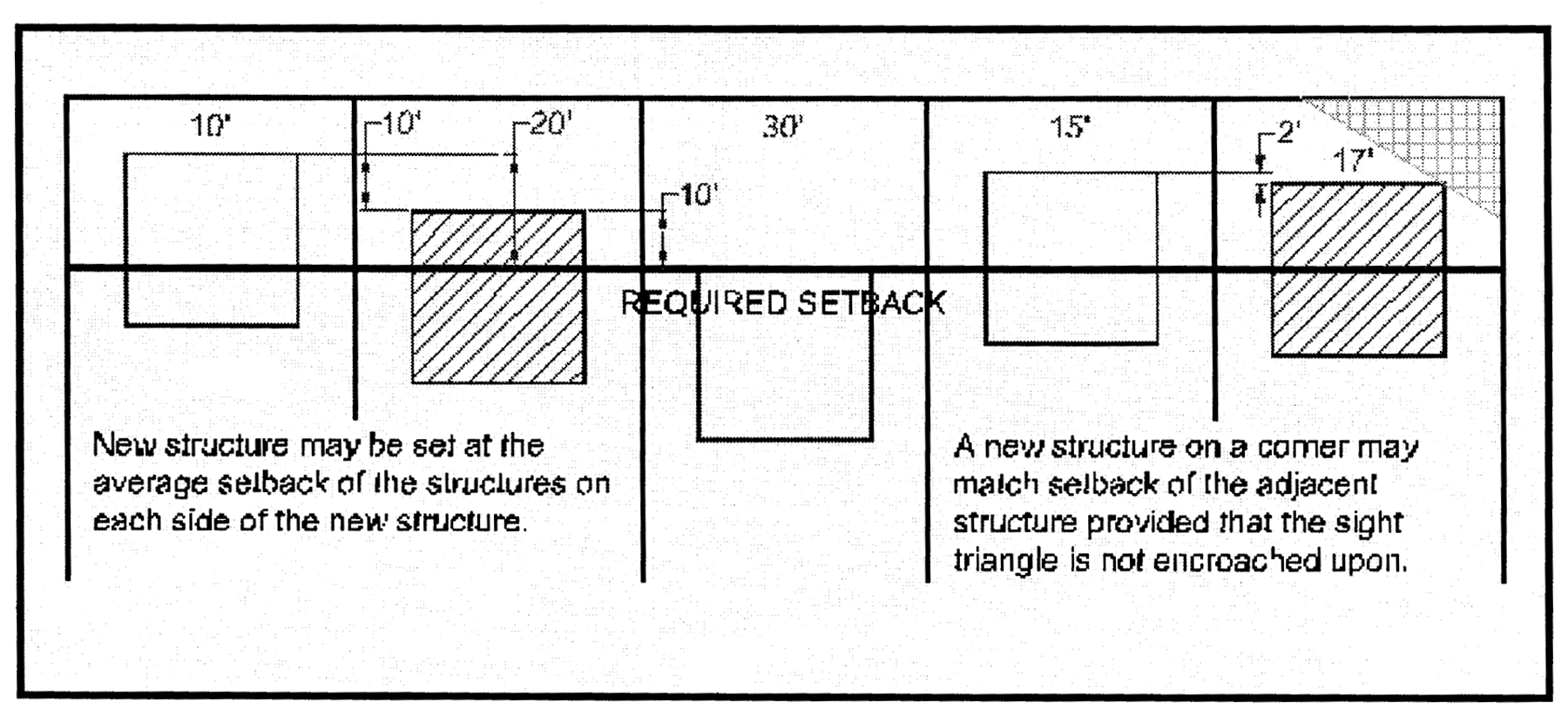
In no case will a structure which qualifies for this exception be set closer to the front property line that fifteen (15) feet in a residential zone or closer than ten (10) feet in a commercial or industrial zone.
If more than fifty (50) percent of the structures in a block meet the required setback, then the new structure must meet the normal setback or apply for a variation.
(2)
Supplemental district development standards for estate density residential (RE-1).
All development adjacent to estate residential lots shall conform to the requirements of one (1) of the following options.
a.
Provide a row of residential housing lots along the perimeter of the property line that abuts estate residential lots that have the same or greater lot width at the property line and have a depth that is a minimum of two-thirds (⅔) the width of the lot at the property line.
b.
Provide a buffer of five (5) or ten (10) feet and screening of adjacent lots as follows:
1.
Evergreen plants, at the time of planting, shall be six (6) feet in height and provide an overall screening opacity of seventy-five (75) percent; or
2.
A masonry wall six (6) feet in height and finished on all sides with brick, stone or painted/pigmented stucco; or
3.
A solid wooden or PVC fence six (6) feet in height (finished side out); or
4.
A berm in combination with 1, 2, or 3 above, to achieve a minimum height of six (6) feet and seventy-five (75) percent opacity at the time of installation; and
5.
Lawn, low growing evergreen plants, evergreen ground cover, or rock mulch covering the balance of the buffer.
(3)
Supplemental district development standards for residential districts.
a.
Cluster development.
1.
The purpose of cluster development is to provide an optional land development procedure which results in the preservation of open space; protection of valuable resources and environmentally sensitive lands, floodplain areas and significant existing tree cover; promotion of more efficient subdivision street and infrastructure networks; and encouragement of a variety of styles or types of residential dwellings while allowing for development where appropriate. Structures are to be concentrated on a portion of the site with the remaining open space reserved as a conservation easement.
2.
In order to provide variation in lot size, shape, width, depth and in the building setbacks, cluster development is permitted in the R-districts for single-family dwellings, duplexes and townhouses when developed in accordance with the following standards:
i.
Area requirements: No minimum area shall be required for a cluster development; however, a minimum of twelve (12) dwelling units shall be required to utilize this option unless approved by the development review committee for fewer units while still meeting the intent of this chapter.
ii.
Density: The dwelling units within a cluster development shall not exceed the density for the district where located.
iii.
Minimum yard requirements:
iv.
Off-street parking: Each dwelling unit shall have at least two (2) off-street parking spaces except for elderly restricted communities where a minimum of one and one-half (1½) spaces shall be provided. Parking areas shall be located to the rear of the dwelling unit where possible. The required garage or carport may be used in conjunction with an uncovered parking space to satisfy this requirement.
v.
Side yard setbacks: If a side lot line abuts common open space of at least twenty (20) feet in depth measured across the entire width of the affected lot line, the setback may be reduced to zero feet.
vi.
General requirements.
A.
No dwelling unit, or any part thereof, shall be located above any other dwelling unit.
B.
No building shall exceed thirty (30) feet or two and one-half (2½) stories.
C.
No building shall contain more than six (6) dwelling units.
D.
No cluster group containing more than two (2) dwelling units shall be within forty (40) feet of any other building.
E.
All dwelling units within a cluster development shall be connected to municipal sewer and water.
F.
No building or structure shall be located closer to a perimeter lot line than twice the required side yard of the abutting residential district.
G.
In order to provide a balance of housing types other than single-family detached dwellings, no one type of housing shall exceed forty (40) percent of the total project.
vii.
Provision shall be made for ownership, maintenance and control of all open space and/or common areas by a HOA or city approved entity.
viii.
Open space. Open space in cluster development shall be no less than twenty-five (25) percent of the gross area of the cluster development tract. All open space provided in a cluster development shall meet the following criteria in addition to other requirements of this chapter:
A.
Open space shall about seventy-five (75) percent of the lots within the subdivision and shall be well distributed throughout the development so as to achieve the requirement herein.
B.
All open space areas shall be at least forty (40) feet in width, except the open space that is provided around the perimeter of a cluster development. The forty-foot width minimum may be achieved through a combination of common open space and private land disturbing activities.
C.
All open space shall be linked, either directly or across street rights-of-way with pedestrian crossing designations.
(4)
Supplemental district development standards for nonresidential development.
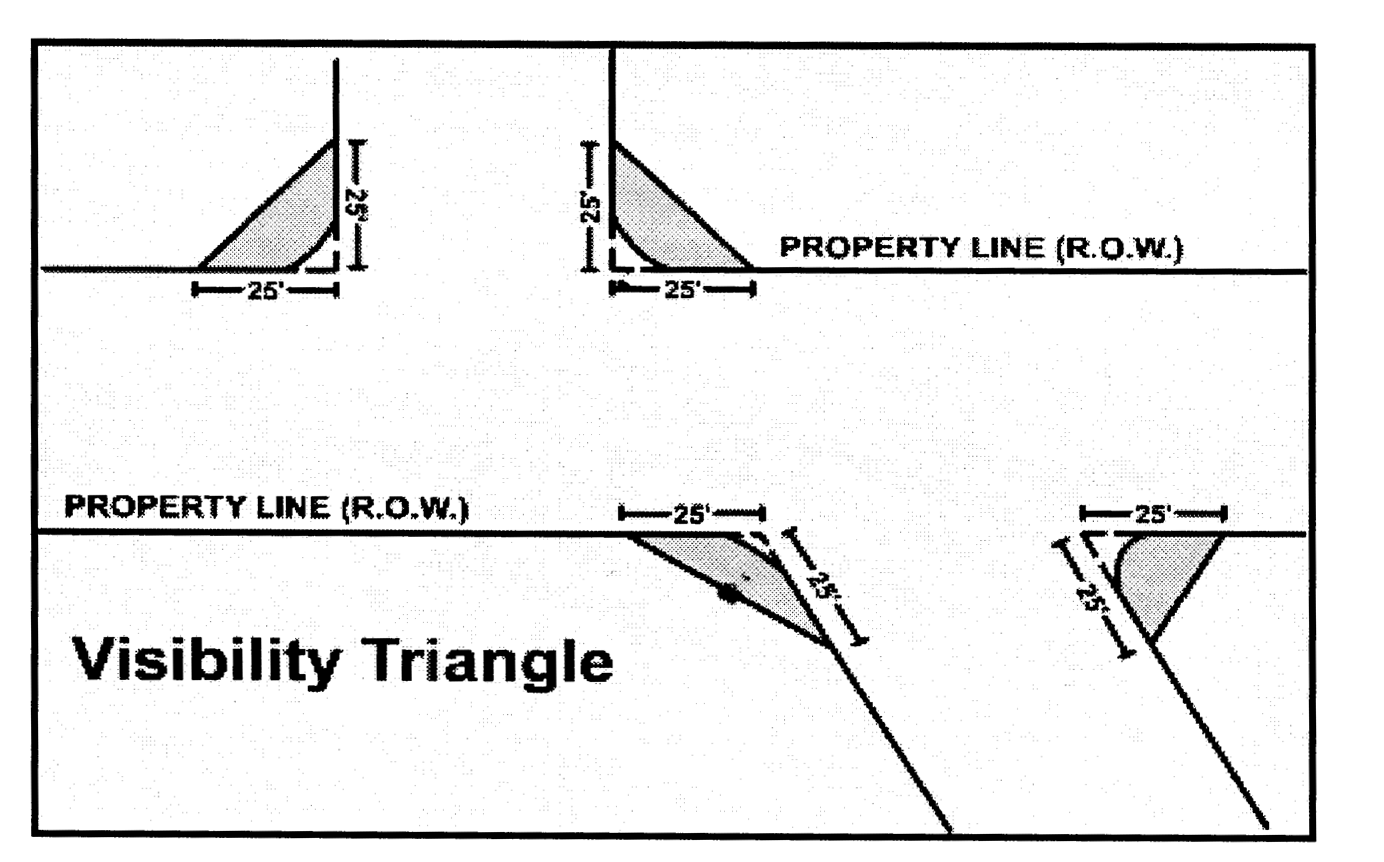
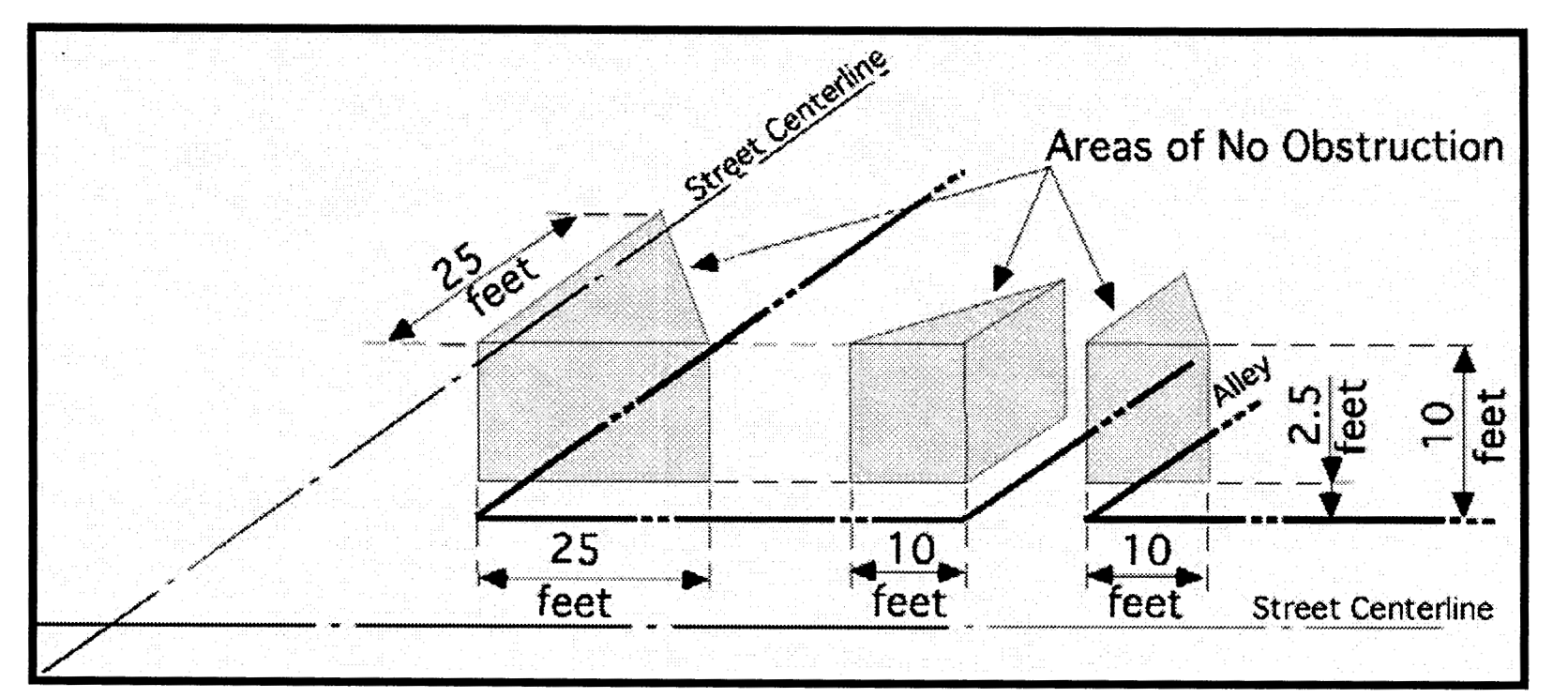
Visibility triangles are areas which have height restrictions to allow for safe visibility
when operating a motor vehicle or bicycle, or for pedestrian movement. At all street
intersections, no obstruction to vision shall be within a triangle formed by the point
of the intersection and two (2) points, twenty-five (25) feet from the point of intersection
along both property lines. No structure or portion of any structure shall be placed
or erected; no motor vehicle, trailer or equipment shall be allowed to park, stand,
stop or be stored; and no vegetation shall be maintained, planted or allowed to grow
in a manner that materially impedes the visibility from a street, alley or driveway
of lawfully oncoming traffic from any direction in the intersecting public street,
between heights of two and one-half (2½) feet and ten (10) feet, as measured from
the pavement edge of the adjacent roadway across triangles. The following diagram
shows the required visibility triangles. At a street intersection with an alley, clear
vision must be maintained for ten (10) feet across any lot measured from the corner
of the property line in both directions.
Visibility at Intersections
(5)
Minor lot splits/lot line deviation.
a.
Minor lot splits intent. The city may approve a minor lot split of a legally created lot that conforms to the requirements of this subsection. A minor lot split shall not be approved within a platted subdivision when such lot split changes the character of the subdivision, or where the lot split increases the density, beyond the general nature of the subdivision. The creation of a flag lot is prohibited.
b.
Lot line deviation/adjustment intent.
1.
To reconfigure two (2) or more lots of record or legally created lots each of which currently meet all other sections of these zoning regulations and all requirements of the city comprehensive plan; or
2.
To reconfigure two (2) or more lots of record or legally created lots in order to meet all other sections of the zoning regulations and all requirements of the comprehensive plan or to make each lot more compatible to the zoning regulations and the city comprehensive plan; or
3.
To reconfigure two (2) lots or more of record, either one (1) or all of which are nonconforming lots of records due to setbacks, in order to make them more conforming lots of records.
c.
Standards. All minor lot splits shall conform to the following standards:
1.
Only two (2) lots may be created per original parcel. The total number of lots created shall include the original parcel.
2.
Each lot shall front on a publicly maintained road and conform to the required minimum lot dimensions for the land use category and zoning district where the lots are located.
3.
If any lot abuts a publicly maintained road that does not conform to the right-of-way specifications provided or adopted by reference in these regulations, the owner shall be encouraged to dedicate the required right-of-way width necessary to meet the minimum design standards.
4.
All other sections of the City Code of Ordinances, and all requirements of the comprehensive plan shall apply.
d.
Standards. Lot line deviation/adjustment:
1.
A lot line deviation/adjustment may be sought for lots in either platted subdivisions or unrecorded subdivisions where lots are described by metes and bounds or other forms of legal description, provided that each parcel or lot is currently recognized as a lot of record or legally created lot approved by the city.
2.
Access to each lot may not be altered as to the current access for each lot. (i.e. an easement may not be added).
3.
Only abutting lots of records may be reconfigured.
4.
A lot line adjustment shall not be approved within a platted subdivision when such lot line adjustment changes the character of the subdivision, or where the lot line adjustment increases the density, beyond the general nature of the subdivision or the density allowed by the comprehensive plan. The creation of a flag lot is prohibited.
e.
Initial submittal. The city shall consider a proposed minor lot split or line deviation upon the submittal of the following materials:
1.
An application form provided by the city;
2.
Three (3) signed and sealed surveys of the proposed change;
3.
A statement indicating whether water and/or sanitary sewer service is available to the property;
4.
Required fee;
5.
Soils map;
6.
Aerial photograph;
7.
Property record card; and
8.
Warrantee deed for the subject property.
f.
Review procedure.
1.
The planning and zoning division shall transmit a copy of the application to any other appropriate departments of the city for review and comments.
2.
If the proposed minor change meets the conditions of these regulations and otherwise complies with all applicable laws and ordinances, the planning and zoning division shall approve the change by signing the application form.
g.
Final submittal. Prior to final approval, in addition to any other requirements the following shall be required:
1.
Legal descriptions and acreage or square footage of the original and proposed lots and a boundary survey showing the intended division prepared by a professional land surveyor registered in the State of Florida. The survey must show all structures, easements, surface water bodies, flood zones, and wetlands.
h.
Recordation. Upon approval of the change, the city shall record the change on the appropriate maps and documents, and shall, at the applicant's expense, record the lot change in the public records.
(6)
Lot regulations.
a.
Existing lots of record. A single-family structure may be constructed on any nonconforming lot in any R-District if lot is less than the minimum area and width and depth required for building lots in the R-District in which it is located, providing the following conditions exist or are met:
1.
Availability of adjacent vacant land. No structure shall be erected on any nonconforming lot if the owner of said lot owns any adjoining vacant land which would create a conforming lot if said vacant land were combined with the nonconforming lot.
2.
Side yards. No structure shall be constructed on a nonconforming lot unless it shall have a minimum side yard of five (5) feet to adjacent property or a minimum side yard of fifteen (15) feet where adjacent to any street.
3.
Front and rear yards. No structure shall be constructed on a nonconforming lot unless it shall have front and rear yards conforming to the minimums required for the R-District in which the lot is located.
b.
Required area of space cannot be reduced. The area or dimension of any lot, yard, parking area or other space shall not be reduced to less than the minimum required by this Code except as provided in the LDC; and if already less than the minimum required by this Code, the area or dimension may be continued but shall not be further reduced.
(Ord. No. 04-27, § V(4.14), 5-10-04; Ord. No. 08-62, § I, 7-14-08; Ord. No. 09-48, § I, 9-14-09; Ord. No. 18-03, § I, 2-12-18)
Sec. 25-281. - Special purpose districts.
CBD: Central Business District.
(1)—(5)
Reserved.
(6)
Maintain pedestrian walkways for use by the general public that shall maintain a minimum width of five (5) feet unless approved the city manager or his designee and shall not interfere with access to any business.
(7)
Nonconforming uses. Uses that exist prior to the adoption of this article shall be considered nonconforming uses and shall be regulated in accordance with Chapter 25, Article II, Division 7 of the City Code.
(8)
Temporary uses. The temporary use of public rights-of-way, parks or other public areas in the central business district shall require a permit from the city manager or designee. A permit application shall be provided by the city and shall be reviewed for appropriateness and need for city services prior to a permit being issued. Such permit may be granted for time periods not exceeding one (1) week. The city commission shall establish a permit fee for this application by resolution and shall determine from time-to-time, increases in such fee (also see section 25-123, special events). [2]
(9)
Lot size requirements.
(10)
All lots which have been subdivided and recorded as such in the public records of Lake County prior to the adoption of this section shall be considered lots of record.
(11)
Lots of record in the central business district are buildable and are not considered nonconforming; and
(12)
Any subdivision of lots of record shall require the property to be brought into compliance with minimum lot size regulations and platted as set forth in the City Code.
(13)
All lots in the central business district created after the adoption of this Code, either by subdivision or aggregation of lots of record, shall be at least fifty (50) feet in width and seventy (70) feet in depth; and have a minimum land area of four thousand (4,000) square feet.
(14)
Setbacks.
(15)
Setbacks for the central business district core shall be consistent with:
(16)
All setbacks shall be measured from the property line to the overhang of the structure, unless otherwise specified.
(17)
All buildings may maintain a zero (0) setback from the front property line to the overhang of the structure. The front setback shall maintain the existing building line on each respective block as it exists at the time this division is adopted.
(18)
All buildings are allowed awnings on the front, sides and rear of the buildings. The awnings are not to be an integral part of the roof of the structure. The awning may maintain a zero (0) setback or may encroach into the public right-of-way if such encroachment is permitted by the city manager or designee.
(19)
Requirements for side setbacks are as follows:
(20)
One (1) side of the structure shall be allowed up to a zero (0) setback.
(21)
One (1) side of the structure shall maintain a setback of at least fifteen (15) feet from the side property line allowing access to the rear of the structure for emergency vehicles, other traffic and in some cases access to the remainder of the property.
(22)
If an alley or public right-of-way exists that is a minimum of fifteen (15) feet wide and provides access to the rear side of the structure, both side setbacks shall be allowed to be zero (0) setbacks. Access shall be provided along the full length of the rear side of the structure.
(23)
All buildings must maintain a rear setback of at least fifteen (15) feet from the property line to the overhang of the structure.
(24)
Buildings which exist prior to the adoption of this section shall maintain their existing setbacks. Any additions to these buildings shall maintain the established setback or shall meet the setbacks as set forth in this Code, whichever is less stringent. For the purposes of this district only, the term "additions" shall not apply to any alterations necessary to comply with any local, state or federal law, rule or regulation other than the city land development code.
(25)
If any building which exists prior to the adoption of this section is destroyed or demolished, a new building may be constructed which either maintains the setbacks established by the demolished structure or those set forth in this Code, whichever standard is less stringent.
(26)
Setbacks for the central business district, other than the core area, shall meet the setbacks for the CBD as described in the City Code.
(27)
Building height. The building height shall not exceed six (6) stories or seventy-two (72) feet unless additional height is approved through the conditional use process.
(28)
Building architecture. The existing buildings within the central business district shall maintain the existing architecture style and character of the district. Any new buildings that are constructed in the district shall be constructed and maintained so as to continue the same architecture style and character. The rules and regulations that pertain to the historic district shall govern that part of the central business district that occurs within the historic district.
(29)
Maintenance of property—Duty of property owners.
(30)
Each building and structure shall be maintained in good condition in accordance with the appropriate sections in the City Code and adopted standard building codes.
(31)
Each and every lot, piece and parcel of land shall be required to be kept reasonably free and clear of undesirable horticultural overgrowth, refuse, trash, rubbish, garbage and other solid wastes there from or thereon as often as may be deemed reasonably necessary by the city manager or designee.
(32)
All deteriorated structural and decorative elements of building fronts and sides visible from a public right-of-way shall be repaired or replaced to match as closely as possible the original materials and construction of that building. Changes shall be permitted which are otherwise required or encouraged by the re-development program for the area, or which will restore the building to its original constructed condition.
(33)
Every such part of a structure shall be made structurally sound. Rotten or weakened portions shall be removed, repaired, or replaced in a manner compatible with the rest of the structure, or match the original materials and construction techniques. All exposed wood shall be stained or painted. Every part shall be clean of graffiti, litter, dirt, debris, or peeling paint.
(34)
Existing miscellaneous non-functional elements on the building fronts such as empty electrical conduit, unused sign brackets, etc. shall be removed and building surface repaired or re-built as required to match adjacent surfaces and original condition.
(35)
Mildew shall be cleaned from building fronts, and loose wires, such as television or telephone cable, shall be secured.
(36)
Rear and sidewalks shall be repaired and painted to present a neat and fresh appearance. Rear walls should be painted to cover evenly all miscellaneous patched and filled areas or be stuccoed to present an even, uniform surface.
(37)
Side walls where visible from the street shall be finished or painted so as to be harmonious with the front of the building.
(38)
Every broken or missing window shall be repaired or replaced.
(39)
Parking.
(40)
Existing and allowable uses, other than hotels, motels, or motor lodges, in the central business district shall be exempt from the off-street parking requirements in the City Code.
(41)
Parking for hotels, motels, motor lodges, new building construction or, the expansion of existing buildings shall be provided in accordance with section 25-357. Parking of the City Code.
(42)
Solid waste collection area.
(43)
All commercial developments shall provide solid waste collection areas with suitable vehicular access, which shall be independent from parking and loading/unloading areas. Dumpsters or containers shall not be located on public right-of-way or public property and shall be screened from the public view. These containers may be temporarily placed on public right-of-way or public property for pick-up service in accordance with chapter 11 of the City Code. These containers shall be removed as soon as possible, but no later than 10:00 a.m. of the pick-up day.
(44)
In situations in which the business permanently stores rollout containers or dumpsters on the public right-of-way or public property, the city manager or designee shall review each situation and shall determine if a reasonable alternative is available. If an alternative is available, the property owner or business owner shall have three (3) months from the time of receiving written notification from the city manager or designee in which to implement the alternative. If a reasonable alternative does not exist, the property owner or business owner may maintain the present location of the rollout container or dumpster until a reasonable alternative is developed and implemented.
(45)
Impervious surface coverage.
(46)
All lots in the central business district shall have a maximum impervious surface coverage not to exceed to eighty (80) percent of the lot except for the CBD core area which subject to storm water requirements shall have a maximum impervious surface coverage of one hundred (100) percent of the lot. When required the green space of twenty (20) percent may include storm water retention areas.
(47)
If any building which exists prior to the adoption of this section is destroyed or demolished, a building reconstructed within the same floor area as the original building, shall not be subject to storm water retention regulations. Any additions to the original building which are legally constructed after the adoption of this section that are destroyed or demolished, when reconstructed shall be subject to storm water retention regulations.
(48)
Except for the replacement of existing buildings within the same floor area as noted in subsection (2), all lots in the central business district shall be subject to storm water retention requirements in accordance with the City Code.
(49)
Signs. Signs shall be permitted in central business district in accordance with Chapter 25, Article VI, Sign Regulations, of the City Code. These signs shall meet the requirements of a commercial district and the following standards as described:
(50)
Awning signs. Advertised messages shall be placed at the bottom of the perimeter of the valance only. No messages are permitted in the upper angled or upper curved face of the awning or any other location of the awning. The awning sign:
(51)
Shall maintain a minimum zero (0) setback or may encroach into the public right-of-way if such encroachment is permitted by the city manager or designee;
(52)
Shall not have a bottom valance that is less than seven (7) feet and not more than nine (9) feet above the grade or sidewalk and shall terminate against the building no more than ten (10) feet above the grade or sidewalk for building existing as of the date of adoption of this section; where applicable, the bottom valance shall match the bottom valance(s) of adjacent or abutting buildings;
(53)
Shall not have a bottom valance that is less than nine (9) feet above the grade or sidewalk and shall terminate against the building no more than twelve (12) feet above the grade or sidewalk for buildings constructed after the adoption of this section; where applicable, the bottom valance shall match the bottom valance(s) of adjacent or abutting buildings;
(54)
Shall not have an awning top that exceeds fourteen (14) feet above grade or sidewalk.
(55)
Under canopy signs. Under canopy signs shall be attached to and suspended below an awning or canopy extending from part or all of a building face or hanging from a canopy or awning constructed of a durable material. An under canopy sign shall meet the following minimum standards:
(56)
Shall not exceed twelve (12) square feet of sign area;
(57)
Shall maintain a minimum height of seven (7) feet above the grade or sidewalk for buildings existing as of the date of adoption of this section;
(58)
Shall maintain a minimum height of nine (9) feet above the grade or sidewalk for buildings constructed after the adoption of this section; and
(59)
Shall be located at the front entrance and/or may be located at each entrance providing the entrance to the business faces another street.
(60)
Easel signs. An easel sign may be placed outside and in front of the business to advertise special sales or daily menu items. The following standards shall be met:
(61)
The sign shall be displayed only during the time in which the business is operating;
(62)
The sign shall not obstruct the walkway area or access to any business; a minimum walkway width of five (5) feet shall be maintained unless approved by the city manager or his designee;
(63)
The sign shall not obstruct any views related to pedestrian or vehicular traffic and safety;
(64)
The sign shall not exceed eight (8) square feet in sign area and shall be a minimum of two (2) feet wide;
(65)
Prior to easel signs being placed in the public right-of-way, a permit shall be obtained from the city to place the sign in a public right-of-way;
(66)
Within sixty (60) days of this section being adopted by the city, each existing easel sign owner shall submit a permit application to the development services department and obtain a permit to place the easel sign in the public right-of-way;
(67)
Easel signs not placed in public rights-of-way shall be exempt from sign permits, providing the signs meet the requirements of this section;
(68)
Window signs. Window signs shall be permitted as part of the on-structure signage requirements in accordance with the commercial zoning district.
(69)
Temporary signs. Temporary signs, including banners, shall be permitted in accordance with article VI.
(70)
Prohibited signs. The following signs shall be prohibited in the central business district:
(71)
Signs which substitute for or cover integral architectural parts of the structure such as fascia, cornice or band courses;
(72)
Glow in the dark or fluorescent paint signs;
(73)
Roof signs;
(74)
Externally lighted signs;
(75)
Free standing signs in the central business district core area;
(76)
Portable changeable copy signs;
(77)
Strip lighting, including neon tubing or other similar devices used to outline a building structure or part of a structure;
(78)
Any sign that exceeds the height or width of the structure.
(79)
Encroachments. The placement or cause to place any building, building part, structure, fence, wall, driveway, sign or any other item or part thereof, on or above any part of the public right-of-way or property shall be prohibited unless a permit has been obtained from the city manager or designee.
(80)
Any encroachments in the public right-of-way or public property that exist prior to the adoption of this ordinance shall be considered nonconforming uses. These encroachments shall be reviewed by the city manager or designee and shall be allowed to exist in accordance with section 25-161 of the City Code unless it is determined that the public health, safety and welfare are adversely affected. Easel signs placed in the public right-of-way or on public property shall not be considered nonconforming uses and shall be permitted in accordance with the City Code.
(81)
If an existing encroachment is allowed to continue, the encroachment shall be maintained and repaired as necessary to maintain its integrity and the public health, safety and welfare.
(82)
The city manager or designee shall develop and maintain a current listing of encroachments in the public right-of-way or public property in the central business district.
(83)
Prior to new encroachment into the public right-of-way, a permit shall be obtained from the city manager or designee. A permit application shall be provided by the city and shall be reviewed by the city manager or his designee prior to a permit being issued.
(84)
Permits for new, temporary encroachments may be granted for time periods not to exceed one (1) week from time of approval.
(85)
Permits for easel signs may be granted for time periods not to exceed one (1) year from the time of approval.
(86)
Permits for new, structural encroachments may be issued for the life of the building and subject to all applicable sections of the City Code.
(87)
The city commission shall establish fees for the permit application review and an annual fee for structural encroachments in the public right-of-way by resolution and shall determine from time-to-time, increases in such fees. These annual fees shall be due at the time the occupational license is renewed or issued.
(88)
Selling or placing merchandise, signs, advertisements, etc. on sidewalks and streets. The use and/or occupancy of any portion of any public square, park, street or sidewalk for the purpose of selling or offering for sale or rent any goods, wares, or merchandise, such as but not limited to pay phones, newspaper stands, vending machines or advertising benches shall require a permit from the city manager or designee as an encroachment in the public right-of-way. No person shall cause to be placed or place or allow to remain in front of the premises, any merchandise, goods or showcases, barrels, wagons, carts, signs, advertisements or article of any description on any sidewalk or street within the central business district whether for the purpose of sale or otherwise, except by permit issued by the city manager or designee as an encroachment in the public right-of-way.
(89)
Walls and fences. Walls and fences shall be permitted in the central business district that are compatible and similar in style with the architecture of the structure on the property. The following conditions shall be met:
(90)
The finished side of the wall or fence shall face toward the public right-of-way and shall be landscaped between the fence and property line in accordance with section 25-323 of the City Code.
(91)
Walls and fences shall be erected in such a fashion as not to interfere with pedestrian and vehicular traffic and safety.
(92)
Walls and fences shall not exceed six (6) feet in height.
(93)
Walls and fences shall have a minimum setback of three (3) feet from the property line and shall be landscaped except for the placement of trees which shall require a five-foot minimum planting area.
(94)
Barbed wire, razor wire or electric fences, or similar type fences shall be prohibited.
(95)
Chain link fences that are covered or painted in black or green shall be permitted in the central business district other than along main street; woven slats in chain link fences shall be prohibited.
(96)
Walls and fences along or adjacent to main street shall be prohibited in the central business district, unless such wall or fence is an integral part of the building.
(97)
Portable facilities for outdoor storage, commercial or office use. The use of portable facilities for outdoor storage, commercial or office uses is prohibited in the central business district. Facilities that exist prior to the adoption of this section shall have a time period not to exceed six (6) months to remove such facility. Portable storage facilities, temporary offices, and outdoor storage on construction sites are exempt and shall be removed from the site no later than two (2) weeks after the construction is completed.
(98)
Landscape requirements. Landscaping within the central business district core shall be exempt from meeting the landscape requirements as described in section 25-323 of the City Code, however, it shall be reviewed by the city manager or his designee for compatibility with the redevelopment area. The remainder of the CBD shall meet landscape requirements of the City Code.
(Ord. No. 04-27, § V(4.15), 5-10-04; Ord. No. 08-62, § I, 7-14-08; Ord. No. 16-25, § I, 5-23-16)
Section 25-123 was repealed by Ord. No. 08-100, adopted Nov. 10, 2008. For provisions pertaning to special events, see Ch. 26 of this Code.
Sec. 25-282. - Overlay districts.
(a)
PDO: Planned development overlay.
(1)
Applicability. A PDO district may be applied over any zoning district established by section 25-269, Establishment of districts. The minimum size for a PDO shall include no less than five (5) acres of contiguous land unless waived by the planning commission.
(2)
Uses permitted. The primary uses in any PDO will be required to conform to those uses permitted in the underlying zone district(s) with the following supplemental regulations:
a.
The city commission may also permit additional uses provided they are compatible and harmoniously incorporated into the design of the PDO. Such additional uses shall not, by reason of their location, construction, manner, or timing of operation, signs, lighting, parking arrangements, or other characteristics, have adverse effects on residential uses within or adjoining the property, or create traffic congestion or hazards to vehicular or pedestrian traffic.
b.
In residential zones, convenience shops intended for the principal use of occupants of the residential units, may be located within a multiple-dwelling, or community building of the development. Business signs or displays visible from the outside of buildings within residential areas shall comply with the article VI, Sign Regulations.
(3)
Bulk standards.
a.
Dimensional standards for lot area, depth, width, and all yard setback standards of the underlying zone shall not apply and these standards shall be established through the PDO approval process in order to fulfill the purpose set forth herein.
b.
Height regulations. For sites of at least ten (10) acres in size, maximum building heights may exceed those in the underlying zoning district to the maximum heights indicated below, provided they do not result in overall site area density exceeding that allowed by the underlying zoning district and the exceptions are specifically approved by the city council in the master development plan. Any building within the PDO that is located within one hundred (100) feet of an existing subdivision or development which is platted or developed as single-family residential or within one hundred (100) feet (external to the PDO site) shall be limited in height to thirty-five (35) feet.
(4)
Density. The overall density of a PDO will be based on the density of the underlying zone and shall not exceed such requirements. If a PDO is located in more than one (1) zoning district, the space and density requirements shall be calculated separately. The distribution of dwellings or other land uses within the PDO shall not be affected by the zoning district boundaries.
(5)
Perimeter requirements. If topographical, other barriers or the reserved landscape buffers detailed in section 25-325, do not provide adequate protection for existing uses adjacent to the PDO, the city may require any or all of the following performance standards to be met.
a.
Structures located along the perimeter of the PDO shall be setback by a distance sufficient to protect the privacy and amenity of adjacent existing uses.
b.
Additional buffer and/or screening options may be imposed in a way that will not create any adverse impact on adjoining single family dwellings.
(6)
Mixed use compatibility. The PDO master development plan may provide a mix of land uses as permitted by the underlying zoning district(s). The specific location of land uses within the PDO district shall not be limited to the boundaries of the underlying zoning district, but shall be established by the approved master development plan. The following standards apply to development in a PDO district containing nonresidential and mixed-use zoning districts.
a.
Internal compatibility. Approval of a master development plan containing a mixture of land uses shall be based on the following findings that:
1.
The land uses within the master development plan are arranged and designed in a complimentary and compatible manner;
2.
Noncompatible land uses are effectively buffered or otherwise protected utilizing the landscape buffer yard provisions of article V, Landscape Guidelines to the extent necessary to insure full use and enjoyment of all property within the district;
3.
The vehicular circulation system throughout the master development plan directs traffic in an efficient, safe and nonintrusive manner; and
4.
The individual land use components of the master development plan are interconnected by safe and convenient pedestrian linkages.
b.
External compatibility. When specific land uses allowed by the underlying zoning districts are permitted to transfer to another location on the site through a master development plan approval process, the master development plan shall include appropriate development order conditions that address external compatibility including adjacent buffers and screening such that the arrangement of land uses on site do not unreasonably impair the long-term use of properties adjoining the PDO district as established by the general plan.
(7)
Common open space. A minimum of twenty (20) percent of the PDO shall be common open space and adhere to the following provisions:
a.
The location, shape, size, and character of the common open space shall be provided in a manner to meet the needs of the PDO.
b.
The uses intended for the common open space must be appropriate to the scale and character of the PDO, considering its size, density, expected population, topography, and the number and type of dwellings to be provided.
c.
Common open space should be suitably improved for its intended use, but common open space containing natural features, existing trees, and ground cover worthy of preservation may be left unimproved. The buildings, structures, and improvements which are permitted in the common open space shall be appropriate to the uses which are approved for the common open space and shall conserve and enhance the amenities of the common open space having regard to its topography and unimproved condition.
d.
Common open space may include stormwater facilities as regulated in section 25-328.
The phasing of the development must coordinate the improvement of the common open space, and the construction of all buildings within the PDO.
(8)
Compliance with LDC. In cases of conflict between standards of the underlying zoning district and the PDO, the standards of the PDO district shall apply. Additional requirements and standards established by other article of this chapter, as well as any other applicable county, state or federal regulation, shall apply to the development and use of properties located within a PDO.
(b)
HPO: Historic preservation overlay.
(1)
Applicability. The City of Leesburg's HPO shall apply to all lots and parcels that are within the downtown historic district boundary as depicted in Figure 1.
(2)
General. The design guidelines for this district are provided in the document entitled, "Historic District Design Guidelines for the City of Leesburg", dated August 2002, which guidelines are adopted herein by reference.
(c)
TDO: Traditional design overlay.
(1)
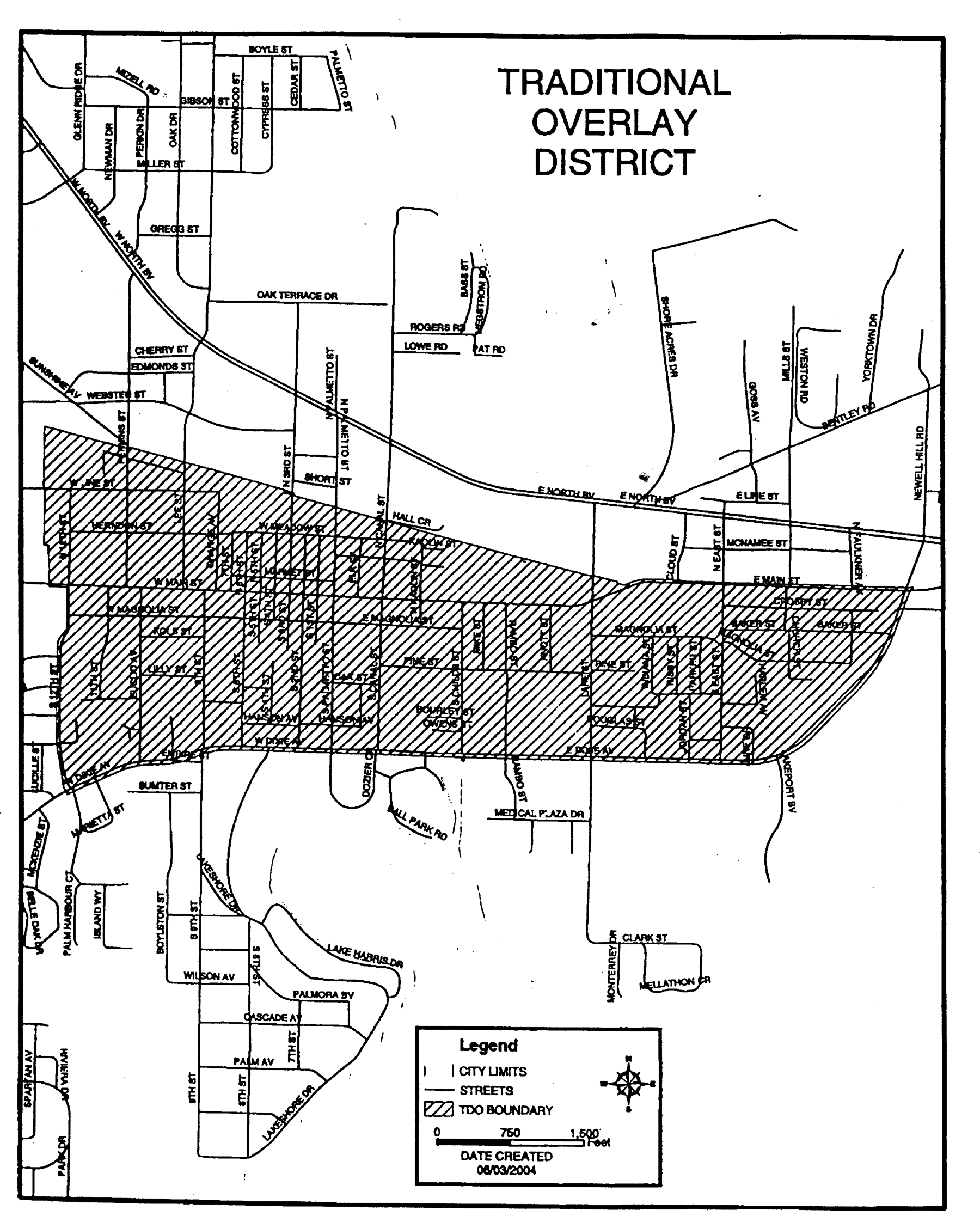
Applicability. The City of Leesburg's TDO shall apply to all lots and parcels that are adjacent to developed land on two (2) or more sides with the Traditional City or are comprised of at least five (5) acres of land within the Traditional City Area.
(2)
General. In order to promote efficient urban growth patterns, new development shall be organized to illustrate the intended redevelopment pattern within the TDO based on the application of the prototypical block models and the design standards set forth in section 25-339.
Traditional Overlay District
(d)
CDO: Contemporary design overlay.
(1)
Applicability. A CDO district may be applied over any zoning district established by section 25-269, Establishment of districts.
(2)
General procedures. The procedures for approval of a CDO shall be the same as required for a planned development district as established by sections 25-278 and 25-279.
(3)
Uses permitted.
(4)
General district standards. In order to promote efficient urban growth patterns, new development shall be organized to illustrate the intended development pattern within the CDO based on the application of the prototypical block models as set forth in section 25-323.
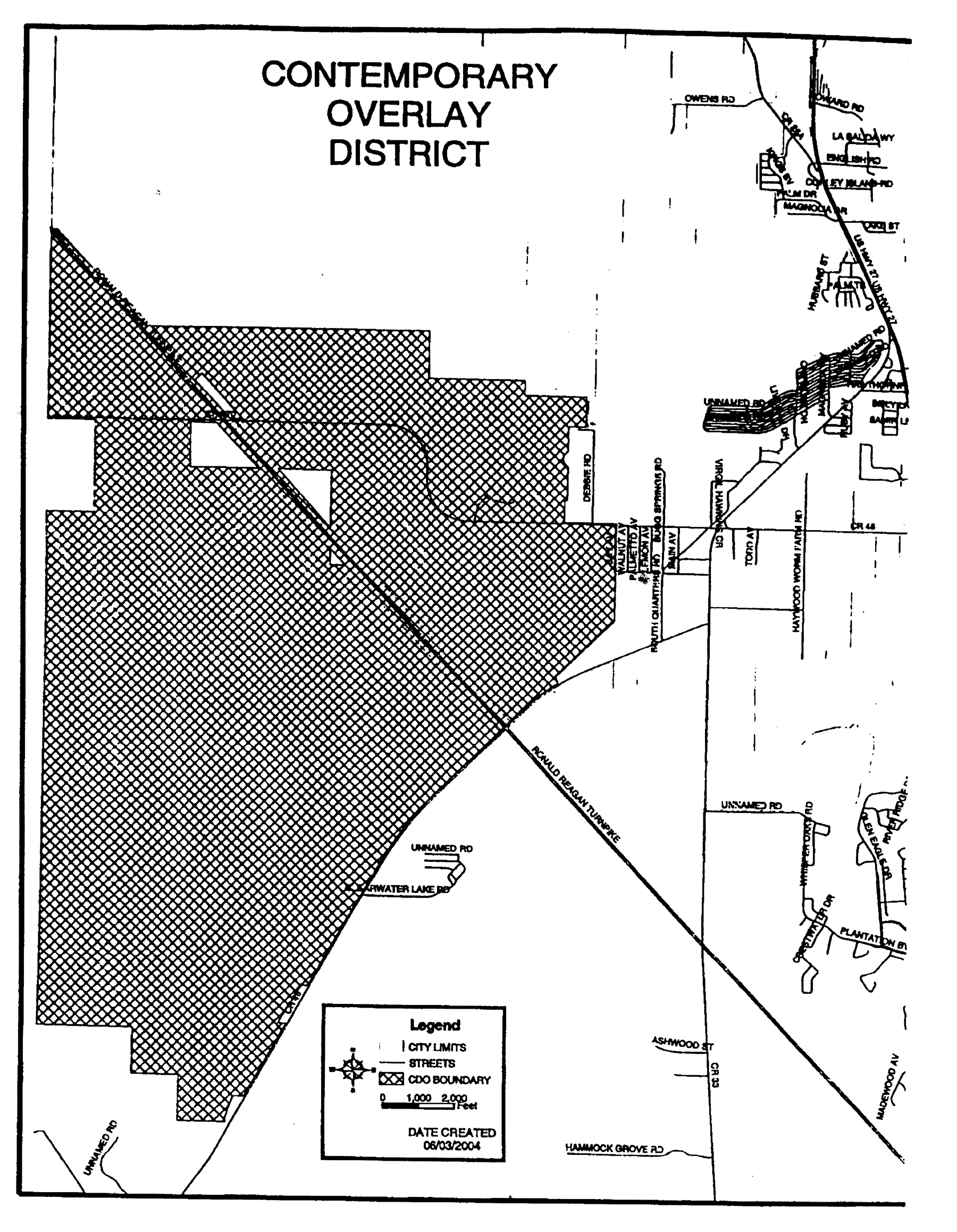
Contemporary Overlay District
(e)
AZO: Airport zones overlay.
(1)
Established and defined. There are hereby created and established certain zones which include all of the land lying within the instrument approach zones, noninstrument approach zones, transition zones, horizontal zone and conical zone. Such areas and zones are shown on the municipal airport zoning map, consisting of Sheet Z-1, prepared by Reynolds, Smith and Hills, Architects and Engineers, Jacksonville, Florida, and dated January 30, 1962, which is on file in the city clerk-finance director's office and made a part hereof. The various zones are hereby established and defined as follows:
a.
Instrument approach zone. An instrument approach zone is established at each end of the instrument runway for instrument landings and take-offs. The instrument approach zones shall have a width of one thousand (1,000) feet at a distance of two hundred (200) feet beyond each end of the runway, widening thereafter uniformly to a width of sixteen thousand (16,000) feet at a distance of fifty thousand two hundred (50,200) feet beyond each end of the runway, its center line being the continuation of the centerline of the runway.
b.
Noninstrument approach zone. A noninstrument approach zone is established at each end of all noninstrument runways on the municipal airport for noninstrument landing and take-offs. The noninstrument approach zone shall have a width of five hundred (500) feet at a distance of two hundred (200) feet beyond each end of the runway, widening thereafter uniformly to a width of one thousand seven hundred (1,700) feet at a distance of ten thousand two hundred (10,200) feet beyond each end of the runway, its center line being the continuation of the center line of the runway.
c.
Transition zones. Transition zones are hereby established adjacent to each instrument and noninstrument runway and approach zone as indicated on the zoning map. Transition zones symmetrically located on either side of the runways, have variable widths as shown on the zoning map. Transition zones extend outward from a line two hundred fifty (250) feet on either side of the center line of the noninstrument runway, for the length of such runway plus two hundred (200) feet on each end; and five hundred (500) feet on either side of the center line of the instrument runway, for the length of such runway plus two hundred (200) feet on each end, and are parallel and level with such runway center lines. The transition zones along such runways slope upward and outward one (1) foot vertically for each seven (7) feet horizontally to the point where they intersect the surface of the horizontal zone. Further, transition zones are established adjacent to both instrument and noninstrument approach zones for the entire length of the approach zones. These transition zones have variable widths, as shown on the zoning map. Such transition zones flare symmetrically with either side of the runway approach zones from the base of such zones and slope upward and outward at the rate of one (1) foot vertically for each seven (7) feet horizontally to the points where they interest the surfaces of the horizontal and conical zones. Additionally, transition zones are established adjacent to the instrument approach zone where it projects through and beyond the limits of the conical zone, extending a distance of five thousand (5,000) feet measured horizontally from the edge of the instrument approach zone at right angles to the continuation of the center line of the runway.
d.
Horizontal zone. A horizontal zone is hereby established as the area within a circle with its center at the airport reference point and having a radius of ten thousand (10,000) feet. The horizontal zone does not include the instrument and noninstrument approach zones and the transition zones.
e.
Conical zone. A conical zone is hereby established commencing at the periphery of the horizontal zone and extending to a distance of fifteen thousand (15,000) feet from the airport reference point. The conical zone does not include the instrument and noninstrument approach zones and transition zones.
(2)
Airport zoning height limitations.
a.
Except as otherwise provided in this division, no structure or tree shall be erected, altered, allowed to grow, or maintained in any zone created by this article to a height in excess of the height limit established in this section for such zone. Such height limitations are computed from the established airport elevation and are hereby established for each of the zones in question as follows:
1.
Instrument approach zone. One (1) foot in height for each fifty (50) feet in horizontal distance beginning at a point two hundred (200) feet from the end of the instrument runway and extending to a distance of ten thousand two hundred (10,200) feet from the end of the runway; thence one (1) foot in height for each forty (40) feet in horizontal distance to a point fifty thousand two hundred (50,200) feet from the end of the runway;
2.
Noninstrument approach zone. One (1) foot in height for each forty (40) feet in horizontal distance beginning at a point two hundred (200) feet from the end of the noninstrument runway and extending to a point ten thousand two hundred (10,200) feet from the end of the runway;
3.
Transition zones. One (1) foot in height for each seven (7) feet in horizontal distance beginning at a point two hundred fifty (250) feet from the center line of noninstrument runways and five hundred (500) feet from the center line of the instrument runway, measured at right angles to the longitudinal center line of the runway, extending upward to a maximum height of two hundred fifty (250) feet above the established airport elevation which is seventy-five (75) feet above mean sea level. In addition to the foregoing, there are established height limits of one (1) foot vertical height for each seven (7) feet horizontal distance measured from the edges of all approach zones for the entire length of the approach zones and extending upward and outward to the points where they intersect the horizontal and conical surfaces. Further, where the instrument approach zones project through and beyond the conical zone, a height limit of one (1) foot for each seven (7) feet of horizontal distance shall be maintained beginning at the edge of the instrument approach zone and extending a distance of five thousand (5,000) feet from the edge of the instrument approach zone measured at right angles to the continuation of the center line of the runway;
4.
Horizontal zone. One hundred fifty (150) feet above the established airport elevation or a maximum height of two hundred twenty-five (225) feet above mean sea level elevation;
5.
Conical zone. One (1) foot in height for each twenty (20) feet of horizontal distance beginning at the periphery of the horizontal zone, extending to a height of four hundred (400) feet above the airport elevation;
6.
Generally. Where an area is covered by more than one (1) height limitation, the more restrictive limitation shall prevail.
b.
Nothing in this division shall be construed as prohibiting the growth, construction or maintenance of any tree or structure to a height up to forty-five (45) feet above the surface of the land.
(3)
Airport zoning use restrictions. Notwithstanding any other provisions of this division, no use may be made of land within any zone established by this division in such a manner as to create electrical interference with radio communication between the airport and aircraft, make it difficult for flyers to distinguish between airport lights and others, result in glare in the eyes of flyers using the airport, impair visibility in the vicinity of the airport or otherwise endanger the landing, taking-off, or maneuvering of aircraft.
(Ord. No. 04-27, § V(4.16), 5-10-04; Ord. No. 04-73, § 1, 9-13-04; Ord. No. 08-62, § I, 7-14-08)
Sec. 25-283. - Application of regulations.
Except as otherwise provided in this article:
(1)
No building shall be erected and no existing building shall be moved, altered, added to or enlarged, nor shall any land or building be designed, used or intended to be used for any purpose or in any manner other than as permitted in the district in which such building or land is located.
(2)
No building shall be erected, reconstructed or structurally altered to exceed in height the limit designated in this article for the district in which such building is located.
(3)
No building shall be erected, no existing buildings shall be altered, enlarged or rebuilt, nor shall any open space surrounding any building be encroached upon or reduced in any manner, except in conformity to the yard, lot area and building located regulations designated in this article for the district in which such building or space is located.
(4)
No yard or other open space provided around any building for the purpose of complying with the provisions of this article shall be considered as providing a yard or open space for any other building, and no yard or other open space on one (1) lot shall be considered as providing a yard or open space for a building on any other lot.
(Ord. No. 04-27, § V(4.17), 5-10-04)
Sec. 25-284. - District use regulations.
The following uses categories are not zoning districts. These categories group uses for regulatory purposes. The names of some use categories (for example "commercial" may be similar to names for zoning districts (such as "neighborhood commercial").
(1)
Approach to categorizing uses. The use categories found in the use table are set forth in this section. Any use not specifically set forth in this section is expressly prohibited, unless the planning and zoning manager or designee determines that the use is similar to a permitted use in accordance with this section. Where such similar permitted use is subject to limited use standards or conditional use approval, the proposed use shall also be subject to such standards or approval.
(2)
Use table key—Types of uses.
a.
Uses permitted by right (P). A "P" indicates that a use is allowed by right in the respective district. Such uses are subject to all other applicable requirements of these regulations.
b.
Uses permitted as administrative limited uses (L). An "L" indicates a use that will be permitted subject to the use limitations in section 25-339 L's are uses that require the approval of the community development director and the conditions expressed in section 25-339. Administrative limited uses are subject to all other applicable requirement of these regulations, including the additional standards contained in section 25-339, except where expressly modified by the community development director as part of the administrative limited use approval. A sign is required to be posted on property informing public of request for limited use. Request granted, granted with modifications, deferred for additional information, or denied by staff within ten (10) days if no written objections stating reasons for objections are received from interested parties. If written objection received, request is scheduled for consideration by planning commission's next scheduled meeting.
c.
Uses permitted as conditional uses (CU). A "CU" indicates a use that is allowed only where approved as a conditional use by the city planning commission. Conditional uses are subject to all other applicable requirements of these regulations, including the additional standards contained in section 25-285, except where expressly modified by the commission as part of the conditional use approval.
d.
Uses not allowed. A blank cell in the use table indicates that a use is not allowed in the respective district.
(3)
Use table.
(4)
Residential use categories.
a.
Household living.
(5)
Group Living
(6)
Public and civic use categories.
a.
Community service.
b.
Day care.
c.
Educational facilities.
d.
Government facilities.
e.
Medical facilities.
f.
Parks and open areas.
g.
Passenger terminal.
h.
Places of worship.
i.
Social service institutions.
j.
Utilities.
(7)
Commercial use categories.
a.
Indoor recreation.
b.
Office.
c.
Outdoor recreation.
d.
Parking, commercial.
e.
Restaurants.
f.
Retail sales and service.
g.
Self-service storage.
h.
Transient accommodations.
i.
Vehicle sales and service.
j.
Water-oriented.
(8)
Industrial use categories.
a.
Light industrial service.
b.
Warehouse and freight movement.
c.
Waste-related service.
d.
Wholesale trade.
e.
Heavy industrial.
(Ord. No. 04-27, § V(4.18), 5-10-04; Ord. No. 08-62, § I, 7-14-08; Ord. No. 13-21, § I, 5-28-13)
Sec. 25-285. - Standards and criteria for specific uses.
There are specific uses because of their intensity and their effect on the surrounding environment that cannot be completely determined in advance of the use being proposed for a particular location. At the time of application, a review of the location, design, configuration and potential impact of the proposed use shall be conducted by the staff of the planning and zoning division and/or the planning commission, by comparing the use to established development standards and design guidelines. This review shall determine whether the following proposed use addresses the specific standards identified in this section, and whether it should be permitted, by evaluating the public need for, and the benefit to be derived from the use, against the impact caused by such purposed use.
Each use identified in article IV, shall address the following applicable standards and criteria, as identified. Additional conditions may be placed upon the applicant through the limited use or condition process as deemed necessary to provide for the health, safety, morals and general welfare of the neighborhood.
(Ord. No. 04-27, § V(4.19), 5-10-04)
Sec. 25-286. - Residential uses.
(a)
Apartments—General. Application for multi-family dwellings with four (4) or more dwelling units shall require the submission of a site development plan showing all structures, roadways, pathwalks, parking areas, recreation areas, utility and exterior lighting installations and landscaping on the site, all existing structures and uses within two hundred (200) feet of the site boundaries, and any other elements which may be deemed essential by the city. No certificate of occupancy shall be issued for any such building or buildings, unless all facilities included in the site plan have been provided for in accordance therewith. Before approving the site plan, the city shall make finding with respect to the following:
(1)
Arrangement of buildings. Adequate provision must be made for light, air, access and privacy in the arrangement of the buildings to each other. Each dwelling unit shall have a minimum of one (1) exterior exposure. Laundry facilities, including washing machines and clothes dryers shall be available for multifamily dwellings on the premises for use by all occupants of the premises.
(2)
Maximum length. A building group may not be so arranged as to be inaccessible by emergency vehicles.
(3)
Distance between buildings. The front or rear of any building may not be closer to the front or rear of any other building than forty (40) feet. The side of any building may be no closer to the side, front or rear of any other building than a minimum of fifteen (15) feet.
(4)
Parking areas shall be located in the rear yard of the site or other areas where visibility from a public right-of-way is minimized.
(5)
Areas of the property not occupied by buildings or paving shall be landscaped and sodded, or left in natural vegetative cover where there are heavy trees stands.
(6)
Recreation space.
a.
There shall be provided on the site of each apartment development, enclosed or un-enclosed recreational space, devoted to the joint use of the residents thereof. Such recreation space shall consist of not less than two hundred (200) square feet of space per dwelling unit. In computing usable recreation space, the following items may be considered at one and twenty-five hundredths (1.25) times the actual area.
1.
Recreational activities such as play grounds, basket ball, tennis and hand ball courts, etc.
2.
Developed recreational trails which provide access to the public trail system.
3.
Swimming pool, including the deck area which normally surrounds such pools.
4.
Indoor recreation rooms provided such rooms are permanently maintained for the use of tenants for recreation.
b.
Required stormwater areas and buffer areas shall not be considered as recreational space.
(b)
Apartments—Conversion of a single-family structure.
(1)
No more than three (3) such apartments shall occur in a former single-family dwelling converted completely to apartment use.
(2)
Each apartment unit shall contain a minimum square footage per section 25-280 Table 4-2 for R-3 district.
(3)
Each apartment unit shall contain a private bathroom with bathing and toilet facilities, and at least two (2) other habitable rooms, with one (1) being for sleeping purposes.
(4)
Each apartment unit shall contain separate cooking and food storage facilities.
(5)
Each apartment unit shall have a minimum of two (2) means of egress directly to the outside, with one (1) being to ground level.
(6)
Each apartment unit shall be capable of providing adequate heating, lighting and ventilation services, as required by the adopted building code.
(7)
There shall be off-street parking spaces provided per article VII of this chapter.
(c)
Community residential homes.
(1)
Community residential homes with one (1) to six (6) residents shall be permitted wherever single-family dwellings are permitted and under the same conditions as single-family dwellings, except for distance requirements established below. Community residential homes with seven (7) to fourteen (14) residents shall only be permitted wherever multiple-family dwellings are permitted and under the same conditions as other multiple-family dwellings, except for the distance requirements established below. Community residential homes with more than fourteen (14) residents shall only be permitted as indicated for the various districts of this article and under the additional conditions established below.
(2)
The following distance requirements shall be observed in the location of any community residential home
TABLE 1. MINIMUM DISTANCE REQUIREMENTS BETWEEN COMMUNITY RESIDENTIAL HOMES AND OTHER SPECIFIED USES
*All distances are measured between principal structures.
**Measured from the nearest property line of the existing facility to the nearest property line of proposed facility.
(3)
All principal and accessory structures shall be located and constructed in accordance with the following requirements:
a.
Community residential homes with one (1) to six (6) residents shall comply with the dimensional requirements for single-family residences of the district where located.
b.
Community residential homes with seven (7) to fourteen (14) residents shall comply with the dimensional requirements for multiple-family residences of the district where located.
c.
Community residential homes with more than fourteen (14) residents shall comply with the dimensional requirements for multiple-family residences of the district where located, except as indicated below:
1.
Minimum lot area: Ten thousand (10,000) square feet plus one thousand (1,000) for each client in excess of fourteen (14), or the minimum lot area requirements of the district where located, whichever requirement is greater.
2.
Minimum lot width at minimum front yard setback: See lot width requirements for the particular district in which located.
3.
Side, interior: Twenty (20) feet, provided the setback may be reduced to ten (10) feet where a wall, fence or berm is erected in accordance with the landscape ordinance; provided, however, where district requirements in which located are more stringent, the particular district requirements shall apply.
(4)
Interior dimensions are as per the housing code of the city or state licensing requirements, whichever is more stringent.
(5)
Community residential homes with more than fourteen (14) residents shall comply with the buffer requirements of offices, schools and places of religious assembly in accordance with landscape and tree management, section 25-323.
(6)
Before a building permit is issued for any community residential home with more than fourteen (14) residents, development plan approval in accordance with article V shall be required. The development plan shall be designed so as not to detract from the character of the district in which it is located. The character and use of surrounding properties shall be considered in determining the height, style and placement of structures, the placement of parking and recreational areas, landscape design and other elements of site design. All facilities must be maintained consistent with city codes and in a manner which will not interfere with the enjoyment of surrounding properties.
(7)
A community residential home licensed by the state department of health and rehabilitative services and lawfully existing on the date of adoption or amendment of this chapter which either (i) houses more than the number of persons permitted under the provisions of this chapter, or (ii) is not a permitted use in the district where located; or (iii) does not otherwise comply with the provisions of this chapter, is hereby designated as a legal nonconforming use, and shall be governed by the provisions of section 25-162.
(8)
Residents of community residential homes shall be limited to those classes of persons included in F.S. § 419.001(1)(d) as amended.
(9)
The owners and/or operators of any community residential home shall comply with all state laws, local ordinances, and regulations of the state, and any government or agency having jurisdiction over the location and/or operation of such home, as a condition precedent to the issuance and continued validity of any administrative permit or conditional use permit authorized by this chapter.
(d)
Live/work unit.
(1)
Only the owner, operator or an employee of the principal permitted use and the immediate family may occupy such units.
(2)
The apartment unit is integral with the commercial building.
(3)
Those requirements identified in subsection (h)(1) through (5) below, shall be met.
(e)
Manufactured home parks and subdivisions. All applications for a building permit for a mobile home park or subdivision or portion thereof as a conditional use shall, in addition to complying with all other applicable sections of this article and other appropriate ordinances of the city, comply with the following provisions:
(1)
Separation between homes.
a.
Mobile homes in new parks or subdivisions shall maintain a sliding side yard setback of 15/7.5 feet, and units placed end-to-end shall have a clearance of twenty (20) feet where opposing rear walls are staggered;
b.
An accessory structure which is attached to a mobile home shall be considered to be part of the unit;
c.
Existing parks in operation prior to the effective date of the ordinance from which this section was derived which had nonconforming setbacks may be replaced with a mobile home of equal size so long as the setback violations upon replacement are not greater than they were prior to such replacement and so long as the replacement is made within one hundred eighty (180) days after the nonconforming unit is removed.
(2)
Lots.
a.
Each mobile home lot shall consist of usable area of not less than five thousand (5,000) square feet exclusive of all roadways, common recreation areas or common parking areas;
b.
Each lot shall have not less than forty (40) feet of frontage on a park street.
(3)
Recreation areas.
a.
In all parks accommodating or designed to accommodate five (5) or more mobile homes, there shall be one (1) or more recreation areas which shall be easily accessible to all park residents;
b.
The size of such recreation areas shall be based upon a minimum of one hundred fifty (150) square feet for each lot. No outdoor recreation area shall contain less than four thousand five hundred (4,500) square feet;
c.
Recreation areas shall be so located as to be free of traffic hazards and should, where possible, be centrally located.
(4)
Setbacks, buffer strips and screening. All mobile homes shall be located at least forty (40) feet from any park property boundary line abutting upon a public street or highway and at least twenty (20) feet from other park property boundary lines;
(5)
There shall be a minimum distance of twenty (20) feet between an individual unit and adjoining pavement of a park walk, street, or common parking area, or other common areas;
(6)
All parks shall be provided with screening such as attractive and well maintained fences or natural growth along the property boundary line separating the park and adjacent uses.
(7)
Existing mobile home parks or subdivisions. Parks or subdivisions operating prior to the effective date of the ordinance from which this section was derived may continue to operate until they make application to extend, expand or alter the park or subdivision, at which time the addition to such park shall be brought into compliance with the provisions of this section.
(f)
Mobile home. Mobile homes shall not be allowed in any zoning district except in an established mobile home park or subdivision.
(g)
Transitional dwellings.
(1)
The proposed use and operation thereof must comply with all applicable federal, state, county and local rules and regulations.
(2)
All required state and county permits and licenses shall have been issued prior to final action by the city.
(3)
Supervision of the dwelling shall be provided in accordance with all federal, state, county and local regulations.
(4)
There shall be full-time responsible professional supervisors employed by the administering agency on the premises whenever any of the residents are home. The name, address, and telephone number of the current supervisor shall be kept on file with the city.
(5)
No transitional dwelling shall be located in a building that is occupied by any other residential use.
(6)
Buildings to be used as transitional dwellings shall not be closer to one another than two thousand (2,000) feet.
(7)
There shall be a minimum of two hundred (200) square feet per resident with a separate bed for each resident.
(8)
On-site parking shall be provided at the ratio of one (1) space per every three (3) residents.
(9)
Prior to issuance of an occupancy permit, the owner/administrator of the dwelling shall provide a statement, which identifies the number of bedrooms and the names of the residents. Such statement shall be updated as changes are made.
(h)
Accessory dwelling unit/guest house.
(1)
Shall not exceed twenty-five (25) percent of the total units for new developments as approved on the plat.
(2)
Shall not exceed fifty (50) percent of the primary residence living area or eight hundred (800) square feet which ever is smaller.
(3)
Shall not exceed two (2) bedrooms.
(4)
Shall be architecturally designed to be consistent with primary dwelling such as roof pitch, siding, window types, etc.
(5)
Shall require a conditional use permit for existing single family residences.
(Ord. No. 04-27, § V(4.19.1), 5-10-04; Ord. No. 10-40, § I, 5-10-10)
Sec. 25-287. - Public and civic uses.
(a)
Adult day care homes/centers.
(1)
A home to be used as an adult day care home shall be an occupied dwelling in which one (1) or more of the residents provide care or supervision for more than three (3) natural persons, other than the residents requiring such care or supervision. The total number of natural persons who are cared for or supervised shall not exceed five (5) persons at any one time. In no event shall more than eight (8) natural persons, including the operator's own children under eighteen (18) years of age, be permitted at the home at any one time. Such use shall not include nursing and personal care facilities, schools, rehabilitation centers, social service homes or halfway houses, or other similar activities or facilities which are not customarily incidental to residential.
(2)
There shall be no alteration or change to the outside appearance or character of the dwelling unit for which the permit is issued.
(3)
The facility shall be open at least five (5) days a week for a minimum of five (5) hours each day but no more than twelve (12) hours each day.
(4)
There shall be a minimum of thirty (30) square feet of useable floor area per adult in care. Hallways, stairs, closets, bathrooms and kitchen shall not be calculated as part of the useable floor area.
(5)
A paved circular driveway twenty (20) feet in width with a minimum inside radius of twenty (20) feet or a back-up area shall be provided.
(6)
The facility shall be located so that traffic generated will not negatively impact the surrounding road network or surrounding land uses.
(7)
For centers designed to accommodate more than twenty (20) adults, all principal buildings shall be no closer than thirty (30) feet from any property line or shall meet the yard requirements of the district, whichever is greater.
(8)
The maximum capacity shall not exceed fifty (50) adults per acre.
(9)
The design, intensity and scale of the adult care center shall be compatible with the surrounding land uses and zoning.
(10)
No more than two (2) adult day care homes per block face shall be permitted.
(11)
All requirements of Florida Administrative Code (FAC) 10A-6 shall be met.
(b)
Cemeteries. Cemeteries may be permitted in one (1) or both of two (2) categories:
(1)
Family burial plots. Consistent with applicable state or county regulations which are now in effect or which may in the future come into effect, tracts of land to be used for family burial plots may be permitted under the following guidelines:
a.
The entire tract shall be no greater in area than that required to inter that number of the immediate family who shall consist of grandparents of a single surname; husband and wife of a single surname; children of the husband and wife.
b.
Each grave site shall not exceed the dimensions of five (5) feet wide and ten (10) feet in length.
c.
Grave site and family burial plots shall be wholly maintained by the family. The city, at its option, may require an amount to be donated by the family to be placed in an interest bearing escrow account to be used by the city for perpetual care and maintenance of the site.
d.
The opinion of the city commission shall be final. In its review, the commission shall consider the application consistent with section 25-141 of the City Code.
(2)
Commercial cemeteries available to the general public. In all instances of request for commercial cemetery site, the commission will be guided by section 25-141 and by applicable state and county regulations and the following:
a.
Shall provide adequate means of ingress and egress for vehicles so that traffic along adjacent public roads or highways are not blocked or unduly congested while funeral processions are entering or leaving the cemetery.
b.
Setbacks for grave lots from the nearest property line adjacent to the right-of-way line of any public road, secondary or primary state or federal road or highway shall be fifty (50) feet.
c.
Setbacks for grave lots shall be five (5) feet from any property not within the approved boundaries of the cemetery.
d.
A landscaped buffer strip five (5) feet in depth shall be provided around all sides of the cemetery not fronting a public road, road or highway and the requirements thereof shall be made as a condition of approval.
(c)
Child day care centers. The following specific standards shall be used in deciding an application for approval of child day care centers:
(1)
Required patron parking shall be adjacent to the facility and clearly designated by raised directional signage and pavement of wheel stop markings. Each parking space shall be fronted with wheel stops set two (2) feet from a continuous five-foot wide sidewalk leading to the building entrance, or a raised curb and a continuous seven-foot wide sidewalk leading to the building entrance.
(2)
If a circular driveway is provided for pick-up/drop-off of children, the following shall be required in addition to paragraph 1, above: a paved circular driveway, twelve (12) feet in width with a minimum inside turning radius of twenty (20) feet for one-way traffic, and an area a minimum of fifteen (15) feet from the designated discharge point where the children are picked up or dropped off, into which cars shall not park or back. If fire regulations require the designation of a fire lane or if two-way traffic is approved, then the width of the circular driveway shall be at least twenty (20) feet.
(3)
Employee and van parking shall be designated by raised directional signage and pavement or wheel stop markings.
(4)
One (1) freestanding or wall sign, not exceeding sixteen (16) square feet, may be erected with the required permit.
(5)
A fenced outdoor play area for the children shall be provided. The use of the play yard shall be limited to between 8:00 a.m. and 6:00 p.m., if the fenced play area is within one hundred (100) feet of a residential zoning district.
(6)
The occasional twenty-four-hour stay of persons is permitted provided such stay complies with the provisions of the Florida Building Code, and complies with the requirements of the state as applicable; and provided, further, such stay does not exceed four (4) consecutive days in any one-month period.
(7)
Uses shall be located such that traffic generated by the child day care center will not negatively impact the affected transportation network or surrounding land uses.
(8)
For uses designed to accommodate more than thirty (30) children, all principle buildings shall be located no closer than thirty (30) feet from any zoning lot boundary or the yard requirements of the district, whichever is greater.
(9)
Child day care centers shall, as a usual practice, be located.
a.
So that it forms part of a group of community service uses such as churches, school, parks, etc.; or
b.
At the edges of commercial, industrial or office developments where they will form a transition between these uses and surrounding residential uses; or
c.
Within a residential area and shall be of a design, intensity and scale to serve the surrounding neighborhood and to be compatible with the surrounding land uses and zoning.
(10)
The development review committee may approve alternative parking standards for centers with thirty (30) children or less where an applicant can sufficiently demonstrate that a particular situation is unusual, unique or poses practical difficulty, and upon submission of adequate justification. Alternatives may include use of mulch or other acceptable material for parking and drives and drop-off points at the street.
(11)
Before a building permit is issued for any day care center, or to convert an existing use to a day care center, development plan approval shall be required.
(d)
Clubs and community buildings.
(1)
There shall be a minimum lot area of one (1) acre where all activities are conducted inside a building such as a woman's club and a minimum lot area of two (2) acres where activities are conducted outside a building such as a boys and girls club.
(2)
All structures shall be set back a minimum of fifty (50) feet from any property line.
(3)
Parking areas shall be located to the rear of the structure where possible and shall be screened from the adjacent residential properties, as per sections 25-326 and 25-327.
(4)
Exterior lighting shall be required in all structures; such lighting shall be oriented away from and shall not produce glare on adjacent residential properties as per section 25-321. Angle of light obstruction for all structures shall not exceed forty-five (45) degrees.
(5)
Outdoor speakers shall be prohibited.
(6)
Access shall be from collector or arterial roads only and uses shall be located such that traffic generated by the community or club building will not negatively impact the affected transportation network or surrounding land uses.
(7)
Identification signs may be placed on site, however, the sign shall not exceed eighteen (18) square feet or three (3) feet in height.
(8)
A fenced outdoor play area for the children when provided shall be limited to use between 8:00 a.m. and 6:00 p.m., if the fenced play area is within one hundred (100) feet of a residential zoning district.
(9)
The use shall be buffered by a permanent opaque fence six (6) feet in height as per section 25-323 where an outside active abuts a residential area.
(e)
Construction demolition debris landfills.
(1)
Landfills shall be located on sites with a minimum of one hundred (100) acres of upland area.
(2)
All landfill disposal areas shall be set back a minimum of one thousand (1,000) feet from all public roads.
(3)
All landfill disposal areas shall be set back a minimum of one (1) mile from an existing dwelling, school or church.
(4)
The landfill disposal area shall be screened from public view by dense foliage, topography or fencing. In addition, a security fence, a minimum of six (6) feet in height, shall be erected around the perimeter of the site and maintained in good condition.
(5)
A traffic and road condition study shall be submitted to determine the adequacy of the road network and the structural condition of the roads serving the landfill for the traffic to be generated by the landfill.
(6)
Access to the landfill shall not be through any residential district and shall be from a collector or arterial road.
(7)
All applicable state and county permits and licenses must be presented prior to issuance of city permits.
(f)
Hospital, nursing home, retirement/convalescent home.
(1)
The proposed use shall be licensed by the state.
(2)
The minimum lot size for a facility of up to forty (40) residents shall be two (2) acres. For every twenty (20) additional residents, or fraction thereof, one (1) additional acre of lot size shall be provided.
(3)
Structures shall be set back from the property lines by at least one hundred (100) feet.
(4)
Parking and loading areas shall be located to the rear of the structure where possible and shall be screened from the adjacent residential properties, as per sections 25-326 and 25-327.
(g)
Places of worship.
(1)
All principal and accessory structures for places of worship shall be located and constructed in accordance with the following requirements:
a.
On site parking areas shall be required. When a place of worship is located within the CBD, they may utilize off-site parking (with in two (2) blocks) or public parking spaces within two (2) blocks to meet the parking standard.
b.
Lighting shall not create glare for adjacent residential properties.
c.
Day care centers and schools may be allowed as accessory uses to places of religious assembly upon the granting of a limited or conditional use permit as required by this code. Where either a day care center or school is allowed as an accessory use the minimum dimensional requirements for all structures on the site shall be determined by either the zoning district or subsection (c) for day care centers or subsection (h) for schools, whichever is more restrictive.
(2)
The city manager or designee may issue a permit for a food distribution center for the needy within any zoning district where places of worship are permitted by right or by special use permits with the following restrictions
a.
No more than twenty (20) meals may be served in a twenty-four-hour period.
b.
The place of worship can physically provide an indoor eating area meeting all state, county and city codes for the proposed use.
c.
No food distribution center for the needy may be closer than one thousand three hundred twenty (1,320) feet from any other place of worship assembly having a food distribution center for the needy.
d.
Each place of worship shall file with the city manager a management program addressing hours of operation, personnel, management of solid waste, litter and lighting. The name, address, and phone number of the person responsible for the facility shall be kept up to date.
e.
Food distribution centers for the needy shall be limited to two (2) wall-mounted, no illuminated signs displaying the name of the facility, hours of operation and other functional information and directions. No more than one (1) sign shall be displayed on any building face. No sign shall exceed eighteen (18) square feet, nor shall the total combined area for two (2) signs exceed thirty (30) square feet.
f.
The planning commission may issue a conditional use permit for a residence for destitute people within any zoning district where places of worship are permitted by right or by special use permit with the following restrictions.
1.
The total number of beds that may be provided in a residence for destitute people that is accessory to a place of religious assembly is fifteen (15).
2.
Meals may be provided only to residents.
3.
No one over the age of eighteen (18) may be admitted as a resident without submitting a written report issued by the city police department stating that the person has no outstanding warrants for his or her arrest.
4.
Each place of worship shall file with the city a management program addressing hours of operation, personnel, management of solid waste, litter and lighting. The name, address, and phone number of the person responsible for the facility shall be kept up to date.
5.
Each place of worship must provide an indoor area meeting all state, county and city codes for use as a residence for destitute people. The area must be inspected and approved by the building official prior to being used as a residence for destitute people, either on a temporary or recurring basis.
6.
There must be at least one (1) staff person or volunteer on site, and a director or administrator on-call, when anyone is sheltered overnight in a residence for destitute people.
g.
Combined facilities. A conditional use permit may be issued for an accessory facility functioning as both a food distribution center for the needy and a residence for destitute people within any zoning district where places of religious assembly are permitted by right or by special use permit. All requirements for both types of facilities must be met in order to get a special use permit for a combined facility.
h.
Development plan approval, is required before a building permit may be issued for any place of worship.
(h)
Educational institutions.
(1)
All required federal, state and county permits shall be acquired prior to final action by the city.
(2)
The educational institution shall comply with the Florida Building Code.
(3)
All lighting shall be directed away from, and shall not create glare towards, adjacent residential properties.
(4)
The educational institution may be permitted in multi-use buildings where the uses are compatible.
(Ord. No. 04-27, § V(4.19.2), 5-10-04; Ord. No. 17-23, § I, 5-22-17)
Sec. 25-288. - Commercial uses.
(a)
Bed and breakfast inns. Bed and breakfast inns shall meet the requirements of the zoning district in which they are located and shall meet the following criteria:
(1)
Permitted locations. Bed and breakfast inns shall be allowed as a conditional use in low density residential (R-2) and as a permitted use in the moderate density residential (R-3), neighborhood commercial (C-1), community commercial (C-2), highway commercial (C-3) and the central business district (CBD) zoning districts.
(2)
Owner occupancy required. Bed and breakfast inns shall be permitted only where the principal structure or accessory structure is occupied by the owner. For occupancy to occur the owner shall use the address of the principal or accessory structure as the legal voting address and shall reside in the principal or accessory structure at least one hundred eighty-three (183) days each year.
(3)
Guest stay. East guest room or unit shall be rented on a daily basis. The maximum stay for an individual guest shall not exceed thirty (30) days in a twelve-month period.
(4)
Exterior modifications. Additions shall not be made to the external appearance of the principal structure to accommodate the bed and breakfast inn. Alternations may be required to provide accessibility in accordance with the state accessibility code and federal ADA regulations.
(5)
Kitchen facilities. Kitchen facilities shall be approved by the appropriate county and state departments and shall be limited to one (1) central kitchen to serve overnight guests and residents only. Kitchen facilities shall not be permitted in the guest rooms.
(6)
Exterior lighting. All exterior lighting shall be consistent with the style and architecture of the principal structure and shall be so designed, installed and operated so as not to adversely affect adjacent properties.
(7)
Signs. One (1) non-illuminated sign shall be permitted for the principal structure. The sign shall not exceed four (4) square feet in sign area and shall be located at the main entrance to the principal structure. The sign shall be permitted in accordance with the section (6).
(8)
Number of guests rooms or units. Maximum number of rooms for guests shall be as follows:
(9)
Minimum size of guest rooms or units. The minimum size of each guest room or unit shall not be less than seventy (70) square feet.
(10)
Off-street parking. One (1) parking space shall be required for the owner or owner's representative residence, one (1) parking space per employee and one (1) parking space shall be required for each guest unit. The parking area shall be located in the rear yard and/or screened from public view, and from the view of adjacent property owners.
(11)
Permits. Bed and breakfast inns shall comply with the appropriate health permits, building and fire codes, and business licenses, including but not limited to license for the Florida Division of Hotels and Restaurants applicable to such use.
(12)
Guest register. The owner of the bed and breakfast inn shall maintain a current guest register including names, addresses and dates of occupancy of all guests.
(13)
Site plan. All bed and breakfast inns shall be required to obtain site plan approval in addition to any other requirements that may be necessary for development in accordance with city code.
(14)
Discontinuance of activities. Where a bed and breakfast inn is permitted as a conditional uses, fails to operate for twelve (12) months or more, the conditional use permit shall be void.
(b)
Building materials and supply sales.
(1)
All storage of materials shall be within a structure.
(2)
All storage yards shall be screened form adjacent properties, as per section 25-285
(3)
All off-street parking shall be separate from loading areas as per section 25-327.
(4)
Areas of the property not occupied by buildings or paving shall be landscaped and sodded, or left in natural vegetative cover where there are heavy trees stands.
(c)
Carwashes—Automated or self.
(1)
Dimensional requirements. All principal and accessory structures shall be located and constructed in accordance with the following requirements:
a.
Where the side or rear yard abuts property which is in a residential district or is shown for residential use on the future land use map of the comprehensive plan, the minimum setback shall be twenty-five (25) feet or the distance created by the angle of light obstruction, whichever is greater.
b.
General requirements.
1.
All bay openings shall be oriented away from any property in a residential district or from view of the public right-of-way where ever possible.
2.
All outdoor lighting shall be oriented away from any property in a residential district.
(d)
Circus and carnival regulations. Before any circus or carnival commences operation on any private property within the City of Leesburg, a temporary permit shall be secured from the planning manager or his designee. Circuses or carnivals held on real property with an ARD (age restricted development) zoning designation are exempt from this provision. In determining whether to issue the temporary permit, the planning director shall take into account whether the proposed circus or carnival meets the following conditions:
(1)
Off-street parking for a carnival shall be provided in an area equal to or greater than, in size, the area devoted to carnival activities. Off-street parking for a circus shall be provided at the rate of one (1) parking space per each five (5) seats. Where parking is provided in existing parking lots serving other permitted uses, the city shall determine if both uses can utilize the same parking areas without adversely affecting each other, any other permitted uses, and the surrounding neighborhood. Paved parking is not required for a circus or carnival.
(2)
A carnival or circus located within five hundred (500) feet of any residence shall be prohibited from setting up, taking down, or conducting any operations, between the hours of midnight and 7:00 a.m.
(3)
A temporary permit shall not be issued for a period in excess of ten (10) consecutive days. No site may be permitted again for a circus or carnival within ninety (90) days after the expiration of the most recent permit.
(4)
Any temporary signs advertising a carnival or circus must be permitted separately under the applicable provisions of the sign ordinance. The maximum allowable sign area on-site is one hundred (100) square feet. Temporary off-site signs advertising the event are prohibited.
(5)
The carnival or circus must submit a plan detailing how access will be provided to the site and that plan shall be reviewed to insure that reasonable and safe access is provided for both vehicles and pedestrians.
(6)
The applicant for a temporary permit for a carnival or circus shall pay an application fee in the amount of one hundred twenty dollars ($120.00). Payment of the fee shall not be a guarantee that a permit will be issued. The applicant must meet all conditions of this section and any other applicable ordinances before a permit may be issued.
(7)
The applicant must comply with F.S. § 546.003 and § 546.004 regarding insurance requirements; F.S. § 616.12 regarding licensing requirements; and F.S. § 616.15 regarding permitting requirements.
(e)
Dry cleaning, pressing or tailoring shop.
(1)
Any dry cleaning, pressing or tailoring shop using cleaning solvents shall be required to submit a plan for hazardous waste removal for approval by the city.
(2)
No outdoor storage of materials is permitted.
(f)
Eating establishments.
(1)
Outdoor cafes.
a.
An outdoor cafe may be operated in conjunction with a principal use other than an eating place when all state requirements for food and beverage service are met. An outdoor cafe may include the sale of alcoholic beverages for consumption on premises when at least fifty-one (51) percent of the monthly gross revenues of the food and beverage activity is attributable to the sale of food and non-alcoholic beverages. The outdoor activity shall only include the sale of food and beverages, except as may otherwise be permitted as a special event.
b.
Every outdoor cafe shall be defined by an enclosure or barrier of at least three (3) feet in height, unless otherwise approved by the city staff. The enclosure or barrier can be plants, screens or fencing. The outdoor cafe shall be open to the weather. The outdoor cafe shall not interfere with the circulation of pedestrian or vehicular traffic on adjoining streets, alleys or sidewalks.
c.
All such areas shall be in the front yard when adjacent to the side or rear to property in any residential land use category.
d.
Any music or other entertainment outside the enclosed building shall not be amplified beyond the normal acoustical range of the instrument.
e.
Noise, smoke, odor or other environmental nuisances shall be confined to the lot upon which the restaurant is located and shall be controlled in accordance with city, state and federal regulations.
f.
The area for the outdoor cafe shall be shown on the development plan. The area must not be in conflict with required landscaped areas and development review shall determine appropriate modifications of existing landscaped areas. Stormwater management shall be required for landscaped areas that may become compacted or be stabilized with pavers or other materials for the cafe use.
(2)
Restaurants; restrictions on sale of alcoholic beverages. The following restrictions shall apply to the sale of alcoholic beverages by restaurants, in the C-1 and C-2 zoning districts only:
a.
No restaurant may sell or dispense alcoholic beverages for consumption off the premises.
b.
No restaurant may sell or dispense alcoholic beverages for on premises consumption, unless it is equipped to and does in fact serve full-course meals and unless it derives at least fifty-one (51) percent of its gross revenues from the sale of food and non-alcoholic beverages, nor shall alcoholic beverages be sold by such restaurant after the hours of serving food have elapsed.
(g)
Essential/municipal services.
(1)
Structures and/or outbuildings shall be designed to be compatible with the surrounding architecture where possible.
(2)
Structures and/or out buildings shall be sited so as to provide the least environmental disturbance.
(3)
All required federal, state and county permits shall be provided prior to issuance of an occupancy permit by the city.
(4)
All utilities shall be placed underground with a minimum easement of fifteen (15) feet.
(h)
Flea market.
(1)
Long-term (over six (6) months in any twelve-month period) or permanent flea markets shall be required to be within an enclosed structure.
(2)
Outdoor spaces may be provided for use on weekends only.
(3)
Off-street parking shall be provided at the rate of one (1) space per one hundred (100) square feet of display area.
(4)
No outdoor storage shall be permitted.
(5)
All applicable state and county permits and licenses must be presented prior to issuance of city permits.
(6)
No recreational vehicles, trailers, buses, or other temporary vehicles or structures shall be used for overnight residences.
(i)
Funeral service and crematories.
(1)
All principal and accessory structures for funeral service and crematories shall be located and constructed in accordance with the following requirements:
a.
Minimum lot area, CBD is twenty thousand (20,000) square feet.
b.
Minimum lot area, all other districts is forty three thousand five hundred sixty (43,560) square feet;
c.
All ingress and egress points shall be to or from collector and/or arterial streets as shown in the comprehensive plan, as well as designed and constructed in accordance with the access management section 25-338 of this chapter.
(j)
Kennel—Animal boarding.
(1)
There shall be a minimum lot area of one (1) acre.
(2)
Buildings housing animals shall be located no closer than one hundred fifty (150) feet from an adjacent residentially committed area.
(3)
All activities, with the exception of animal exercise yards, shall be conducted within an enclosed building.
(4)
Exercise and confinement yards shall be located no closer than two hundred (200) feet from any dwelling unit on adjacent property.
(5)
Disposal of dead animals shall be by means approved by the department of health and rehabilitative services. No facilities for cremation of animal remains shall be permitted on the site.
(k)
Hotel/motel.
(1)
Within the C-3 and M-1 districts, the use shall be located within six hundred sixty (660) feet of an intersection of collector or arterial streets. The measurements shall be taken from the nearest edge of right-of-way at the nearest point of intersection.
(2)
Industrial parks within the M-1 districts, the use shall not exceed fifty (50) percent of the acreage or square feet of the total industrial project.
(l)
Professional offices.
(1)
If more than one (1) structure, the minimum distance between structures shall be fifty (50) feet.
(2)
All parking, loading and access areas shall be screened from adjacent residential properties.
(3)
All required parking shall be in the rear of the structures, where feasible.
(m)
Retail—Large commercial design standards. The following design standards are intended to be used as a design aid by developers proposing large retail developments and as an evaluation tool by city staff in the review process. These standards shall apply to all projects for commercial establishments whether single or multiple stores of more than seventy-five thousand (75,000) gross square feet or a site of ten (10) acres or more.
(1)
Design standards—Aesthetic character.
a.
Façades and exterior walls.
Intent: Façades should be articulated to reduce the massive scale and the uniform, impersonal appearances of large retail buildings and provide visual interest that will be consistent with the community's identity, character, and scale. The intent is to encourage a more human scale that residents of the City of Leesburg will be able to identify with their community. The resulting scale will ensure a greater likelihood of reuse of structure by subsequent tenants.
Standard: Developments with façade over one hundred (100) feet in linear length shall incorporate
wall projections or recesses a minimum of three (3) foot depth and a minimum of thirty
(30) contiguous feet within each one hundred (100) feet of façade length which shall
extend over twenty (20) percent of the façade. Developments shall use animating features
such as arcades, display windows, entry areas, or awnings along at least sixty (60)
percent of the façade.
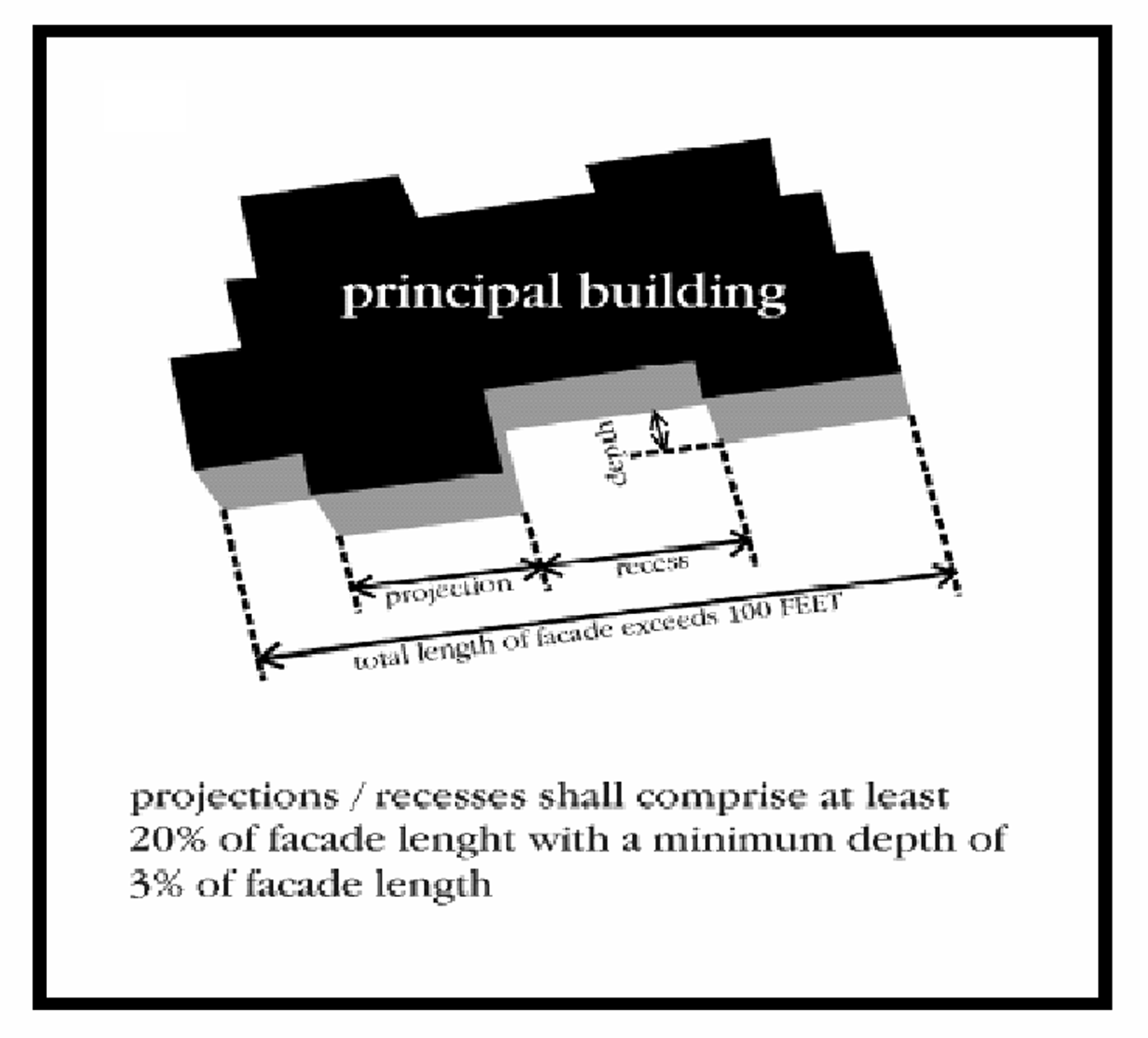
Figure 1 Building Façades
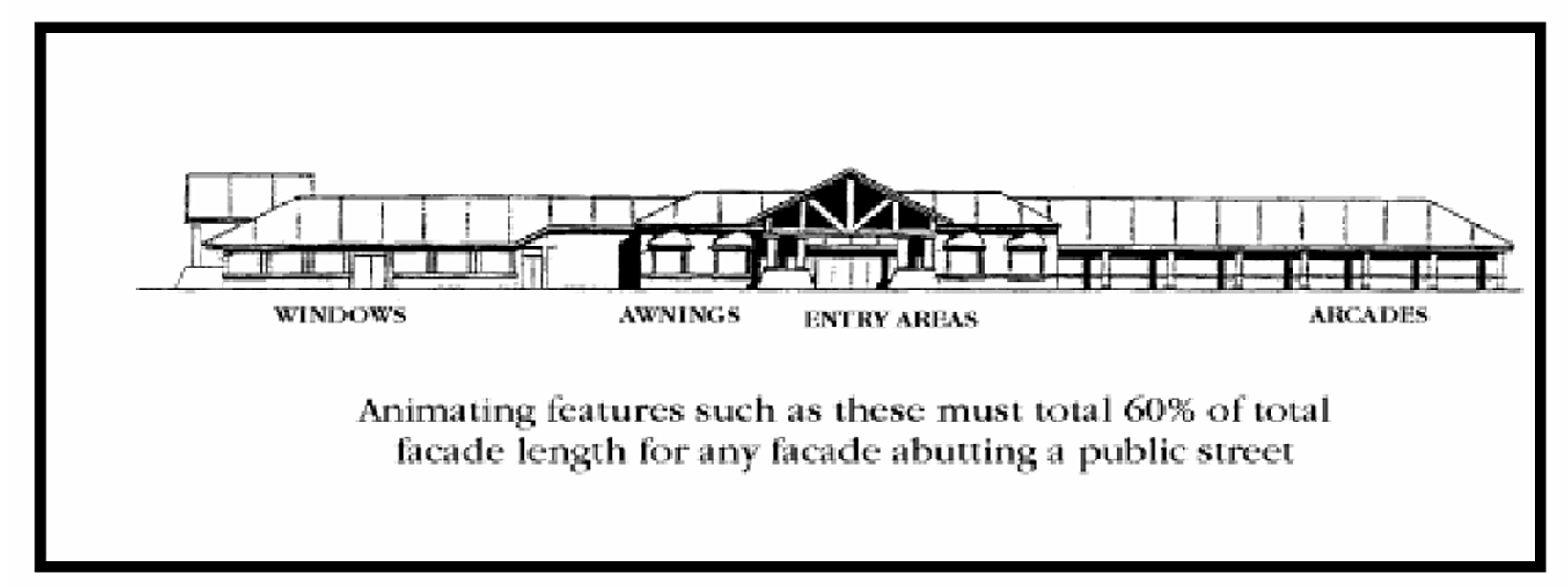
Figure 2 Animating Features
b.
Smaller retail stores.
Intent: The presence of smaller retail stores gives a center a "friendlier" appearance by creating variety, breaking up large expanses, and expanding the range of the site's activities. Windows and window displays of such stores should be used to contribute to the visual interest of exterior façades. The standards presented in this section are directed toward those situations where additional, smaller stores, with separate, exterior customer entrances are located in the principal buildings or along the perimeter of the development site.
Standard: Where principal buildings contain additional, separately owned stores, which occupy less than twenty-five thousand (25,000) square feet of gross floor area, with separate, exterior customer entrances:
1.
The street level façade of such stores shall be transparent between the height of three (3) feet and eight (8) feet above the walkway grade for no less than sixty (60) percent of the horizontal length of the building façade of such additional stores.
2.
Windows shall be recessed and should include visually prominent sills, shutters, or other such forms of framing.
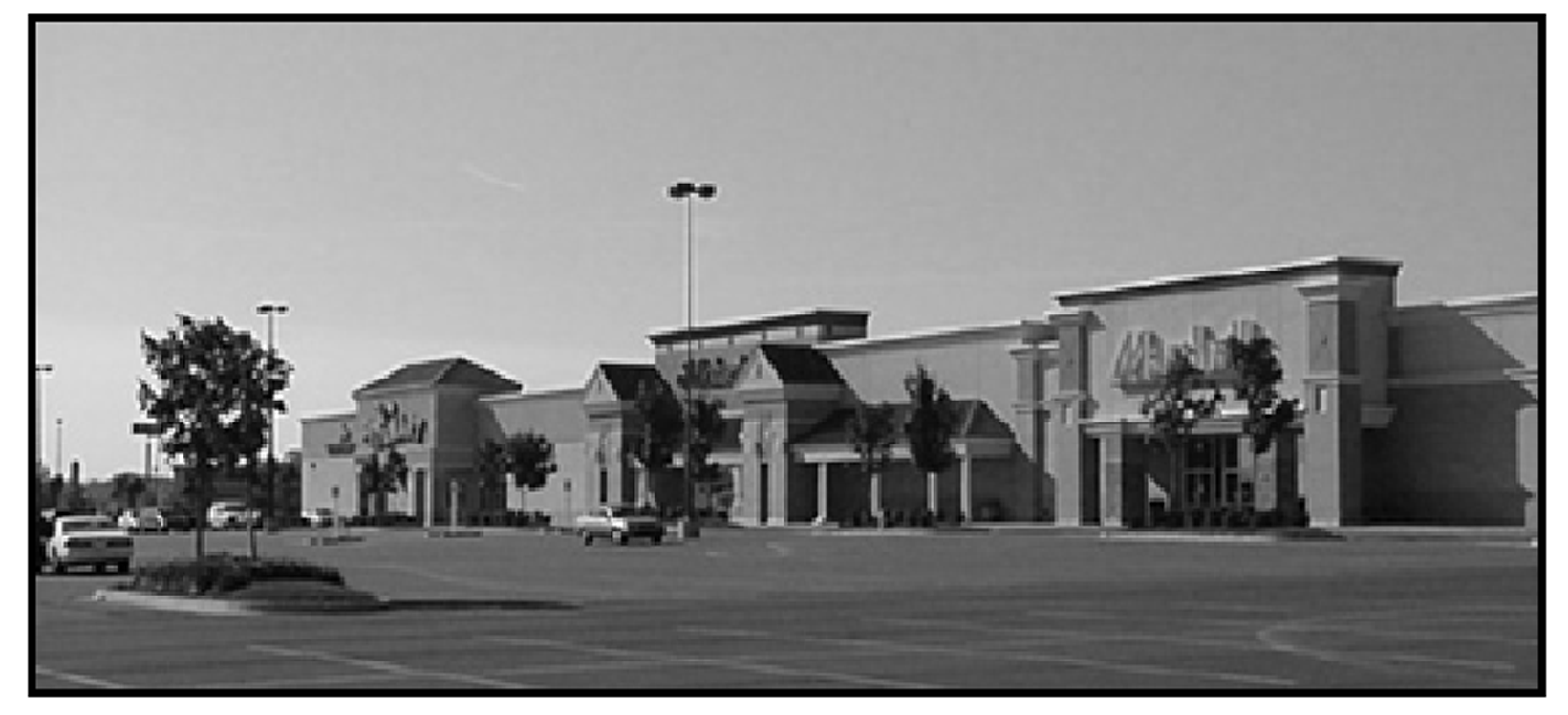
(Photo Animating Features)
c.
Detail features.
Intent: Buildings should have architectural features and patterns that provide visual interests, at the scale of the pedestrian, reduce massive aesthetic effects, and recognize local character. The elements in the following standard should be integral parts of the building fabric, and not superficially applied trim or graphics, or paint.
Standard: Building façades shall include a repeating pattern that shall include no less than three (3) of the elements listed below. At least one (1) of these elements shall repeat horizontally. All elements shall repeat at intervals of no more than thirty (30) feet, either horizontally or vertically.
1.
Color change.
2.
Texture change.
3.
Material module change.
4.
Expression of architectural or structural bay through a change in plane no less than twelve (12) inches in width, such as an offset, reveal, or projecting rib.
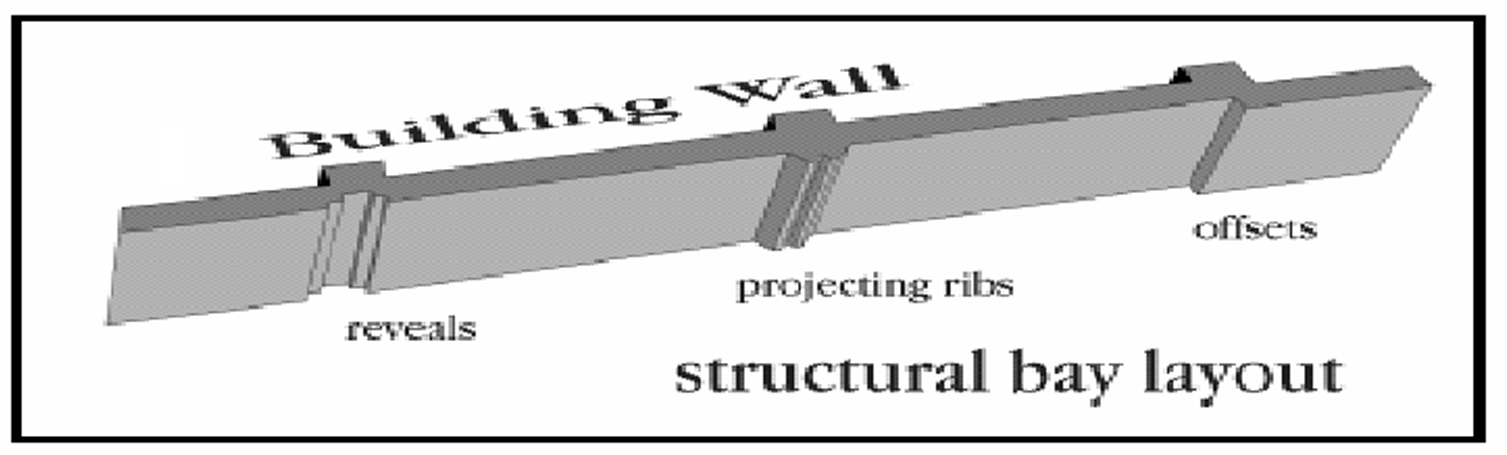
Figure 3 Expression of Architectural or Structural Bay
d.
Roofs.
Intent: Variations in roof lines should be used to add interest to, and reduce the massive scale of large buildings. Roof features should compliment the character of adjoining neighborhoods.
Standard: Roof lines shall be varied with a change in height every one hundred (100) linear
feet in the building length. Parapets, mansard roofs, gable roofs, hip roofs, or dormers
shall be used to conceal flat roofs and roof top equipment from public view. Alternating
lengths and designs may be acceptable and can be addressed during the preliminary
development plan process.
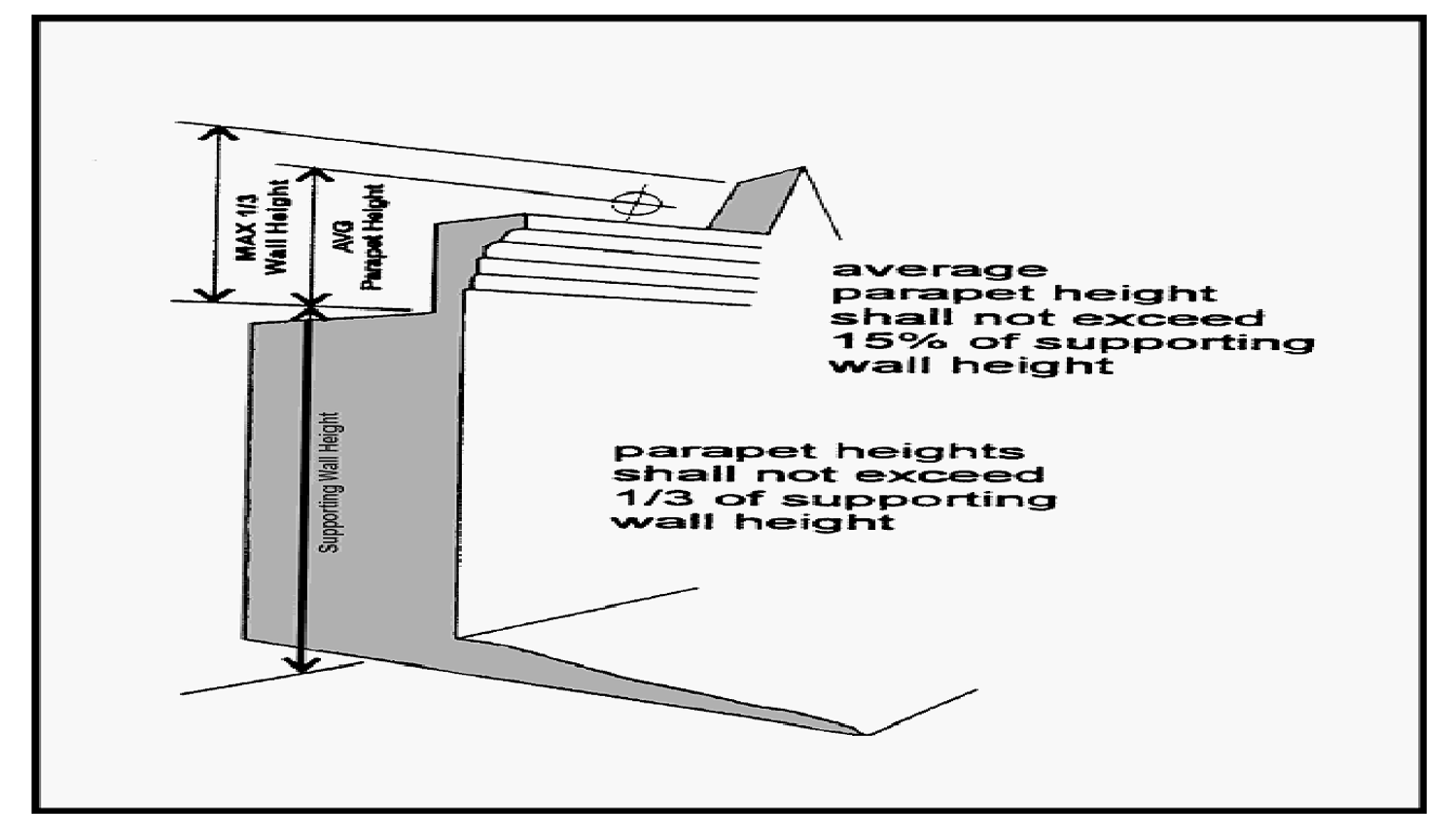
Figure 4 Parapet Heights
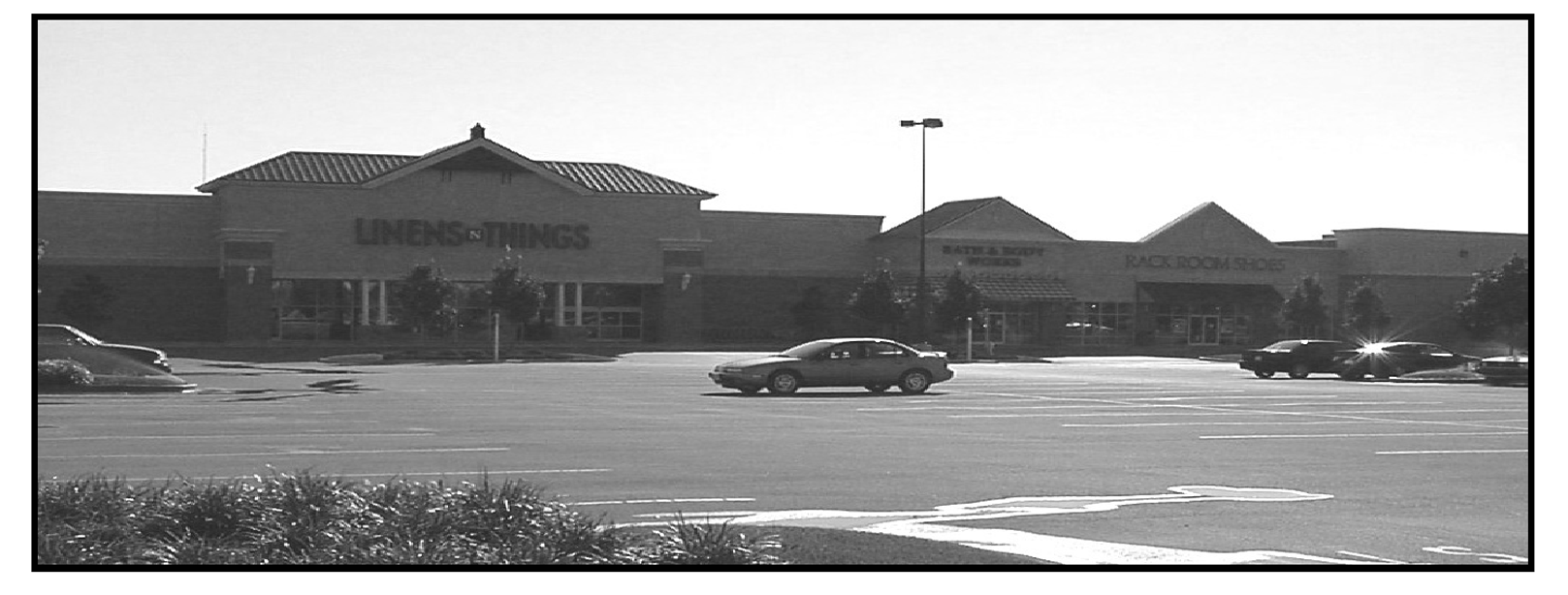
(Photo Parapet Heights)
e.
Materials and colors.
Intent: Exterior building materials and colors comprise a significant part of the visual impact of a building. Therefore, they should be aesthetically pleasing and compatible with materials and colors used in adjoining neighborhoods.
Standard:
1.
Predominant exterior building materials shall be high quality materials these include, without limitation:
i.
Stucco
ii.
Brick
iii.
Wood
iv.
Sandstone
v.
Other native stone
vi.
Tinted, textured, concrete masonry units
2.
Façade colors shall be low reflectance, subtle, neutral, or earth tone colors. The use of high intensity colors, metallic colors, black or fluorescent colors is prohibited.
3.
Building trim and accent areas may feature brighter colors, including primary colors, but neon tubing shall not be an acceptable feature for building trim or accent areas.
4.
Predominant exterior building materials as well as accents should not include the following unless covered with a textured stucco or other approved finish:
i.
Smooth-faced concrete block
ii.
Tilt-up concrete panels
iii.
Pre-fabricated steel panels
f.
Entryways.
Intent: Entryway design elements and variations should give orientation and aesthetically pleasing character to the building. The standards identify desirable entryway design features.
Standard Each principal building on a site shall have clearly defined, highly visible customer entrances featuring no less than three (3) of the following:
1.
Canopies or porticos
2.
Overhangs
3.
Recesses/projections
4.
Arcades
5.
Raised corniced parapets over the door
6.
Peaked roof forms
7.
Arches
8.
Outdoor patios
9.
Display windows
10.
Architectural details such as tile work and moldings which are integrated into the building structure and design
11.
Integral planters or wing walls that incorporate landscaped areas and/or places for sitting
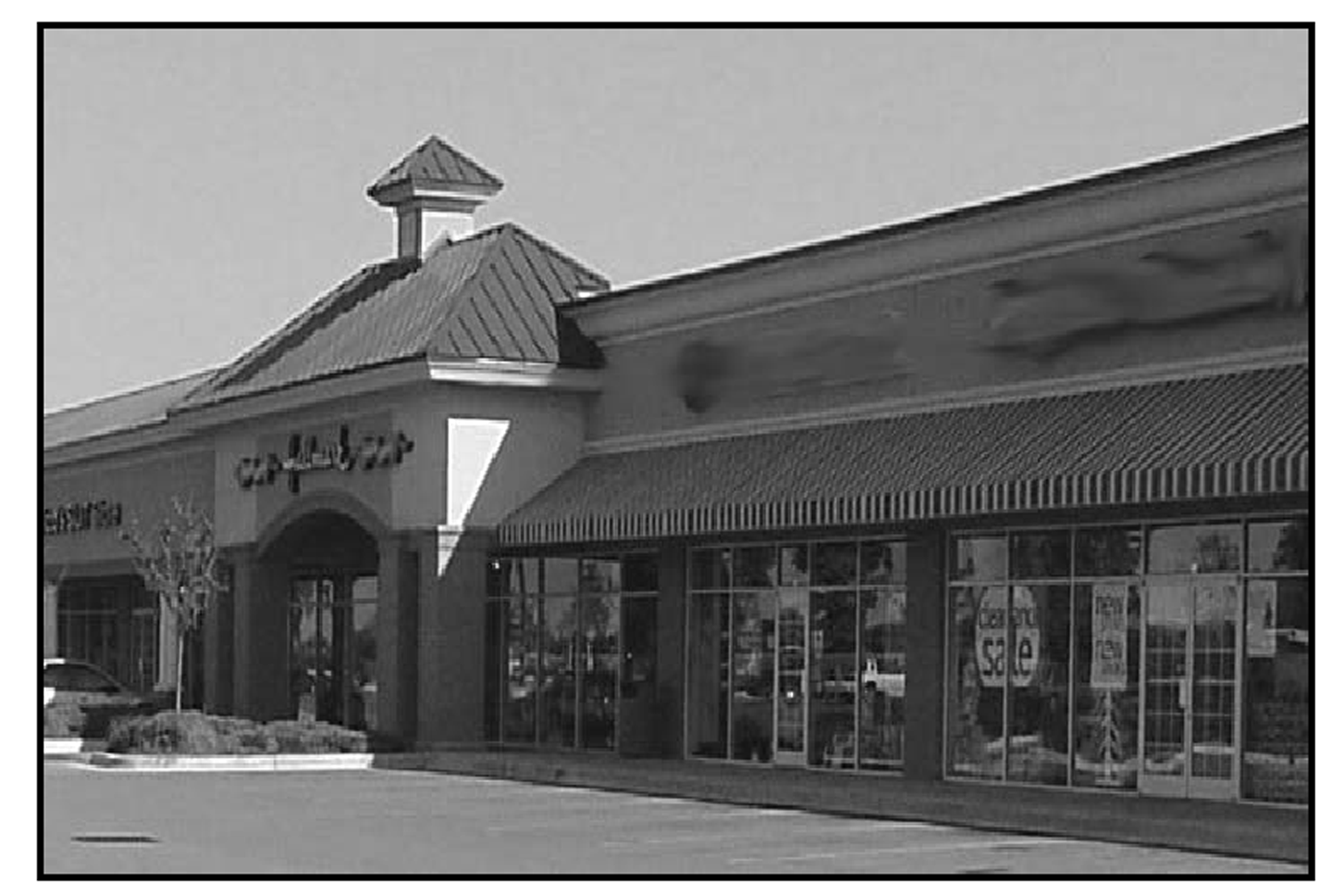
(Photo Building Entrances)
Site Design and Relationship to the Surrounding Community
g.
Entrances.
Intent: Large retail buildings should feature multiple entrances and smaller retail along the abutting public or private right-of-way and shall feature gateways or pedestrian mall at the intersection corner. Multiple building entrances reduce walking distances from cars, facilitate pedestrian and bicycle access from public sidewalks, and provide convenience where certain entrances offer access to individual stores, or identified departments in a store. Multiple entrances also mitigate the effect of the unbroken walls and neglected areas that often characterize building façades that face bordering land uses.
Standard: All sides of a principal building that directly face an abutting public or private
right-of-way shall feature at least one (1) customer entrance per side. Where a principal
building directly faces a row of smaller retail stores along the border of more than
two (2) abutting public or private rights-of-way, there shall be only two (2) entrances
required. The corner entrance shall be designed to provide a gateway or pedestrian
mall that provides pedestrian access to the larger retail store in the interior of
the site. The number of entrances for the buildings shall be addressed at the preliminary
development plan stage. Where additional stores will be located in the principal building
each such store shall have at least one (1) exterior customer entrance which shall
conform to the above requirements.
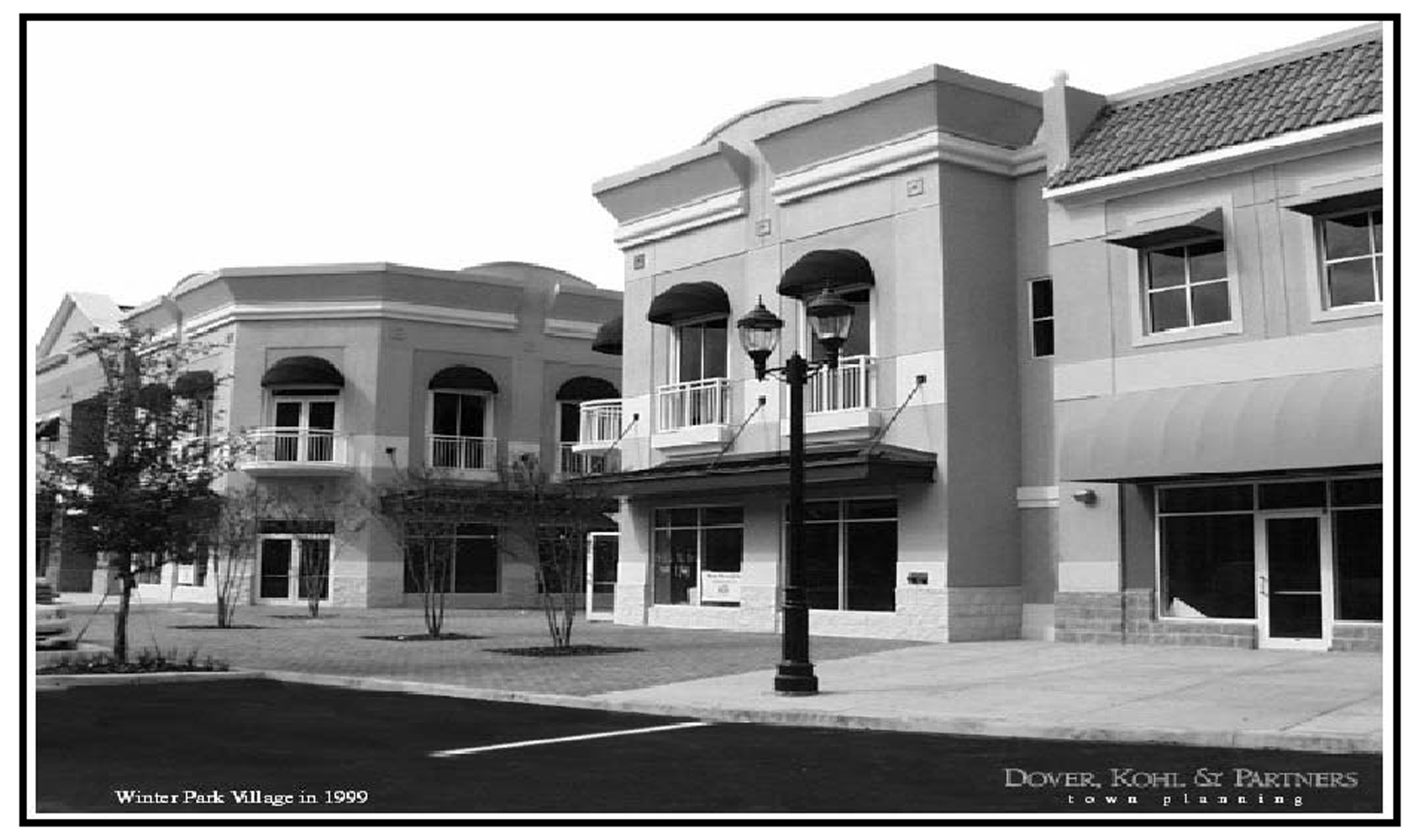
(Photo of customer entrances on all sides which face a public street)
(Photo of customer entrances on all sides which face a public street)
h.
Parking lot orientation.
Intent: Parking areas should provide safe, convenient, and efficient access for vehicles and pedestrians. They should be distributed around large buildings in order to shorten the distance to other buildings and public sidewalks and to reduce the overall scale of the paved surface. If buildings are located closer to streets, the scale of the complex is reduced, pedestrian traffic is encouraged, and architectural details take on added importance. Parking lots should be oriented between the larger principle buildings and the smaller retail/service stores required along the perimeters of the site adjacent to public streets and off site uses.
Standard: No more than thirty (30) percent of the off-street parking area for the entire property shall be located between the front façade within the front yard of the principal building(s) and the primary abutting street unless the principal building(s) and/or parking lots are screened from view by perimeter smaller retail store development.
i.
Back and sides.
Intent: The rear or sides of buildings often present an unattractive view of blank walls, loading areas, storage areas, HVAC units, garbage receptacles, and other such features. Architectural and landscaping features should mitigate these impacts. Any back or side of a building visible from a public or private right-of-way or a residential area shall be built in accordance with (b) Design guidelines—Aesthetic character. The development review committee may waive this requirement as part of the development plan review process if there are special circumstances.
Standard: The minimum setback for any building façade shall be in accordance with the Zoning Code. Where the façade faces adjacent residential uses an earthen berm shall be installed, no less than six (6) feet in height, containing at a minimum, a double row of evergreen or deciduous trees planted at intervals of ten (10) feet on center. Additional landscaping may be required by the development review committee to effectively buffer adjacent land use as deemed appropriate. All additional landscape requirements of the landscape and tree protection code shall apply.
j.
Outdoor storage, trash collection, and loading areas.
Intent: Loading areas and outdoor storage areas exert visual and noise impacts on surrounding neighborhoods. These areas, when visible from adjoining properties, residential areas and/or public streets, should be screened, recessed or enclosed. While screens and recesses can effectively mitigate these impacts, the selection of inappropriate screening materials can exacerbate the problem. Appropriate locations for loading and outdoor storage areas include areas between buildings, where more than one (1) building is located on a site and such buildings are not more than forty (40) feet apart, or on those sides of buildings that do not have customer entrances. Joint use of loading and screening areas by multiple users will be encouraged where ever possible.
Standard:
1.
Areas for outdoor storage, truck parking, trash collection or compaction, loading, or other such uses shall not be visible from public or private rights-of-way.
2.
No areas for outdoor storage, trash collection or compaction, loading, or other such uses shall be located within twenty (20) feet of any public or street, public sidewalk, or internal pedestrian way.
3.
No delivery, loading, trash removal or compaction, or other such operations shall be permitted between the hours of 10:00 p.m. and 7:00 a.m. unless the applicant submits evidence that sound barriers between all areas for such operations effectively reduce noise emissions to a level of forty-five (45) dB, as measured at the lot line of any adjoining property.
4.
Loading docks, truck parking, outdoor storage, utility meters, HVAC equipment, trash dumpsters, trash compaction, and other service functions shall be incorporated into the overall design of the building and the landscaping so that the visual and acoustic impacts of these functions are fully contained and out of view from adjacent properties and public streets, and no attention is attracted to the functions by the use of screening materials that are different from or inferior to the principal materials of the building and landscape.
5.
Non-enclosed areas for the storage and sale of seasonal inventory shall be permanently defined and screened with walls and/or fences. Materials, colors, and designs of screening walls and/or fences and the cover shall conform to those used as predominant materials and colors of the building. If such areas are to be covered, then the covering shall conform to those used as predominant materials and colors on the buildings.
6.
Temporary sales/displays, such as Christmas trees, landscape materials, and fireworks, shall follow requirements as described in the zoning code.
k.
Pedestrian flows.
Intent: Pedestrian accessibility opens auto-oriented developments to the neighborhood, thereby reducing traffic impacts and enabling the development to project a friendlier, more inviting image. This section sets forth standards for public sidewalks and internal pedestrian circulation systems that can provide user-friendly pedestrian access as well as pedestrian safety, shelter, and convenience within the center grounds.
Standard:
1.
Sidewalks at least six (6) feet in width shall be provided along all sides of the lot that abut a public or private right-of-way, excluding interstates. The DRC may waive this requirement as part of the plan review process if there are special circumstances.
2.
Continuous internal pedestrian walkways, no less than six (6) feet in width, shall be provided from the public sidewalk or right-of-way to the principal customer entrance of all principal buildings on the site. At a minimum, walkways shall connect focal points of pedestrian activity such as, but not limited to, transit stops, street crossings, building and store entry points, and shall feature adjoining landscaped areas that include trees, shrubs, benches, flower beds, ground covers, or other such materials for no less than fifty (50) percent of their length.
3.
Sidewalks, no less than six (6) feet in width, shall be provided along the full length of the building along any façade featuring a customer entrance, and along any façade abutting public parking areas. Such sidewalks shall be located at least three (3) feet from the façade of the building to provide planting beds for foundation landscaping, except where features such as arcades or entryways are part of the façade. The DRC may waive this requirement as part of the plan review process if there are special circumstances.
4.
Internal pedestrian walkways provided in conformance with subsection b above, shall provide weather protection features such as awnings or arcades within thirty (30) feet of all customer entrances, constructed parallel to the façade of the building. This is not intended to extend into the driving aisles or parking areas.
5.
All internal pedestrian walkways shall be distinguished from driving surfaces through the use of durable, low maintenance surface materials such as pavers, bricks, or scored concrete to enhance pedestrian safety and comfort, as well as the attractiveness of the walkways. Signs shall be installed to designate pedestrian walkways.
l.
Central features and community spaces.
Intent: Buildings should offer attractive and inviting pedestrian scale features, spaces and amenities. Entrances and parking lots should be configured to be functional and inviting with walkways conveniently tied to logical destinations. Bus stops and drop-off/pickup points should be considered as integral parts of the configuration. Pedestrian ways should be anchored by special design features such as towers, arcades, porticos, pedestrian light fixtures, bollards, planter walls, and other architectural elements that define circulation ways and outdoor spaces. The features and spaces should enhance the building and the center as integral parts of the community fabric.
Standard: Each retail establishment subject to these standards shall contribute to the establishment
or enhancement of community and public spaces by providing at least two (2) of the
following: patio/seating area, pedestrian plaza with benches, transportation center,
window shopping walkways, outdoor play area, kiosk area, water feature, clock tower,
steeple, or other such deliberately shaped area and/or a focal feature or amenity
that, in the judgment of the city staff, adequately enhances such community and public
spaces. Any such areas shall have direct access to the public sidewalk network and
such features shall not be constructed of materials that are inferior to the principal
materials of the building and landscape. Although the City of Leesburg does not currently
maintain a public bus system, Lake County does offer limited service to commercial
areas; therefore, areas should be provided or designed to accommodate bus service
and the growing number of private bus services (i.e., senior citizen, nursing home/assisted
living facilities, etc.).
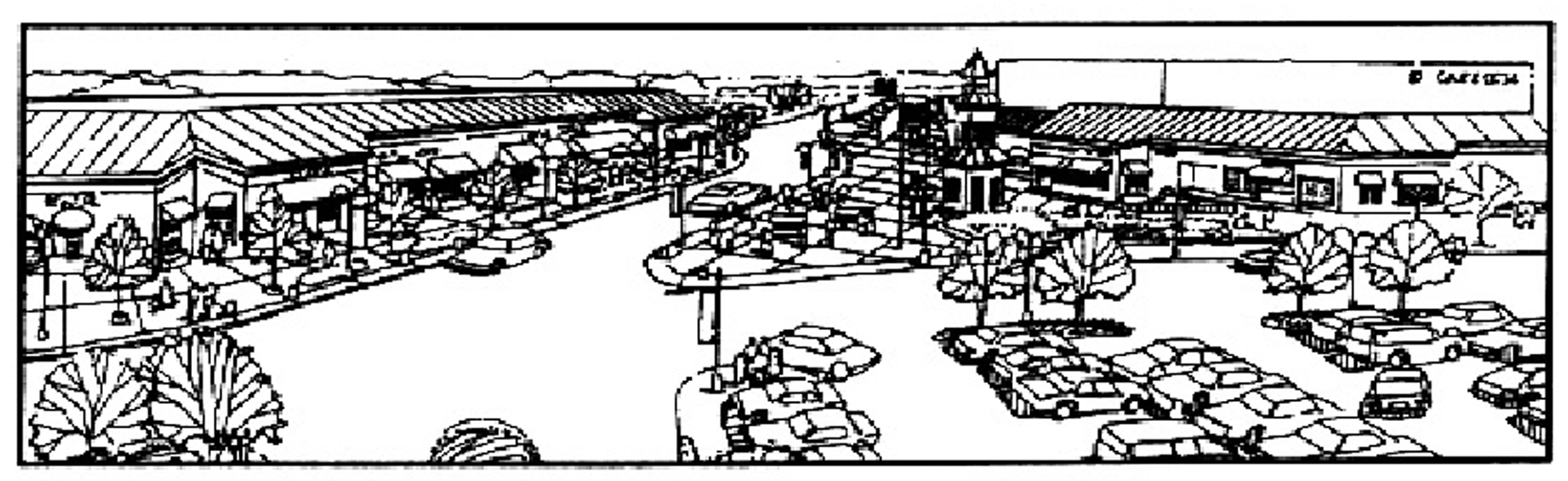
Figure 5 Special Features and Community Spaces
m.
Mixed use development.
Intent: Mixed-use projects combine efficient use of commercial/office and residential uses as components of a single development. Mixed-uses should be considered for all projects of more than one hundred thousand (100,000) gross square feet or a site over twenty (20) acres. Residential elements of mixed use are encouraged by the city with the development incentives provided in this section. The uses may be combined either vertically or horizontally within the same structure, or can be distributed in different areas/structure on the site.
Standard:
1.
Residential density shall be permitted up to eighteen (18) units per net acre of the residential components for the project site area.
2.
Site planning.
i.
Separate site access drive and parking facilities should be provided for residential uses and commercial uses.
ii.
Security gates should be considered for access to residential uses and residential parking areas.
iii.
Private open space areas which are intended for use by residents only should not be accessible from the commercial/office portion of the site.
iv.
Parking lot lighting and building security lighting for commercial uses should be appropriately shielded so as not to spill over into the residential area.
3.
Building design.
i.
The architectural style and use of materials should be consistent throughout the entire mixed-use project. Differences in use of architectural details may occur where the intent is to differentiate between the residential and commercial/office scale and character of the structure(s).
ii.
The design of storefronts should be consistent with the standards for commercial development. The residential portion of a mixed-use structure should be consistent with the design standards for multifamily residential development.
iii.
Projects three (3) stories or less in height should incorporate full roofs on at least fifty (50) percent of the roof area.
iv.
Commercial signage should incorporate architectural details of the structures. Where residential elements are included signage may exceed the maximum allowable signage for the district by ten (10) percent for the project where the scale and mass has been deemed appropriate by the development review committee.
v.
When residential and commercial uses are combined in the same structure, separate entrances should be provided for each use.
4.
Building height. Building height shall be as per the individual zoning district, but shall be adjusted as follows if the large-scale retail development adjoins residential development:
i.
Maximum height of any structure within one hundred (100) feet of a residential zoning district property line or the property line of undeveloped residential land shall be thirty-five (35) feet or two and one-half (2½) stories. Maximum height calculation shall include a parapet.
ii.
Structures may exceed the heights specified above where residential elements are included providing that the structure wall shall be stepped back two (2) horizontal feet for each vertical foot of additional height up to a maximum of forty-five (45) feet or four (4) stories, after the first twelve (12) feet of height.
5.
Surface parking.
i.
No single parking area shall exceed one hundred twenty (120) spaces unless divided into two (2) or more sub-areas by a building, internal landscaped street, or landscaped pedestrian way.
ii.
Number of spaces; exceptions. Reductions in the number of required spaces may be allowed where residential components are part of the mixture of land uses. There may be up to a ten (10) percent reduction of the nonresidential requirements and a two (2) to seven (7) percent reduction of the residential requirements. Further reductions may be considered on the basis of proximity to and availability of public transit as determined by the development review committee.
(2)
Nonconforming uses.
a.
Continuation of use. A use, building or structure, lawfully in existence at the effective date of this article, which shall be made nonconforming at the passage of this ordinance or any applicable amendment thereto may be continued except as otherwise provided in this division.
b.
Regulation of nonconforming uses and structures. No existing building or premises devoted to a nonconforming use shall be enlarged, extended, reconstructed, substituted or structurally altered except when changed to a conforming use, or when required to do so by law or as follows:
1.
Restoration. Any nonconforming structure which has less than fifty (50) percent of its previous existing floor area made unsafe or unusable may be restored, reconstructed, or used as before, provided that the floor area of such use, building or structure shall not exceed the floor area which existed prior to such damage. All repairs shall be completed within six (6) months after damages occur or such use or structure shall not be rebuilt except as a conforming use or structure.
2.
Expansion. Nonconforming uses and structures which exist at the adoption of this ordinance may be allowed expansion. An expansion of up to fifty (50) percent of the floor area maybe approved as a conditional use if such expansion is done in conformance with the design standards of this article. Such expansion must not create additional nonconformities.
c.
Termination of nonconforming uses and structures.
1.
Abandonment. A nonconforming use not used for a period of twelve (12) months or the change of use to a more restricted or for any period of time shall be considered abandonment thereof and such nonconforming use shall not thereafter be revived. existing.
2.
Partial destruction. When fifty (50) percent or more of the floor area of a nonconforming structure is destroyed by fire or other casualty or act of God and as a result becomes unsafe or unusable, the use of such structures, as a nonconforming use, shall thereafter be terminated.
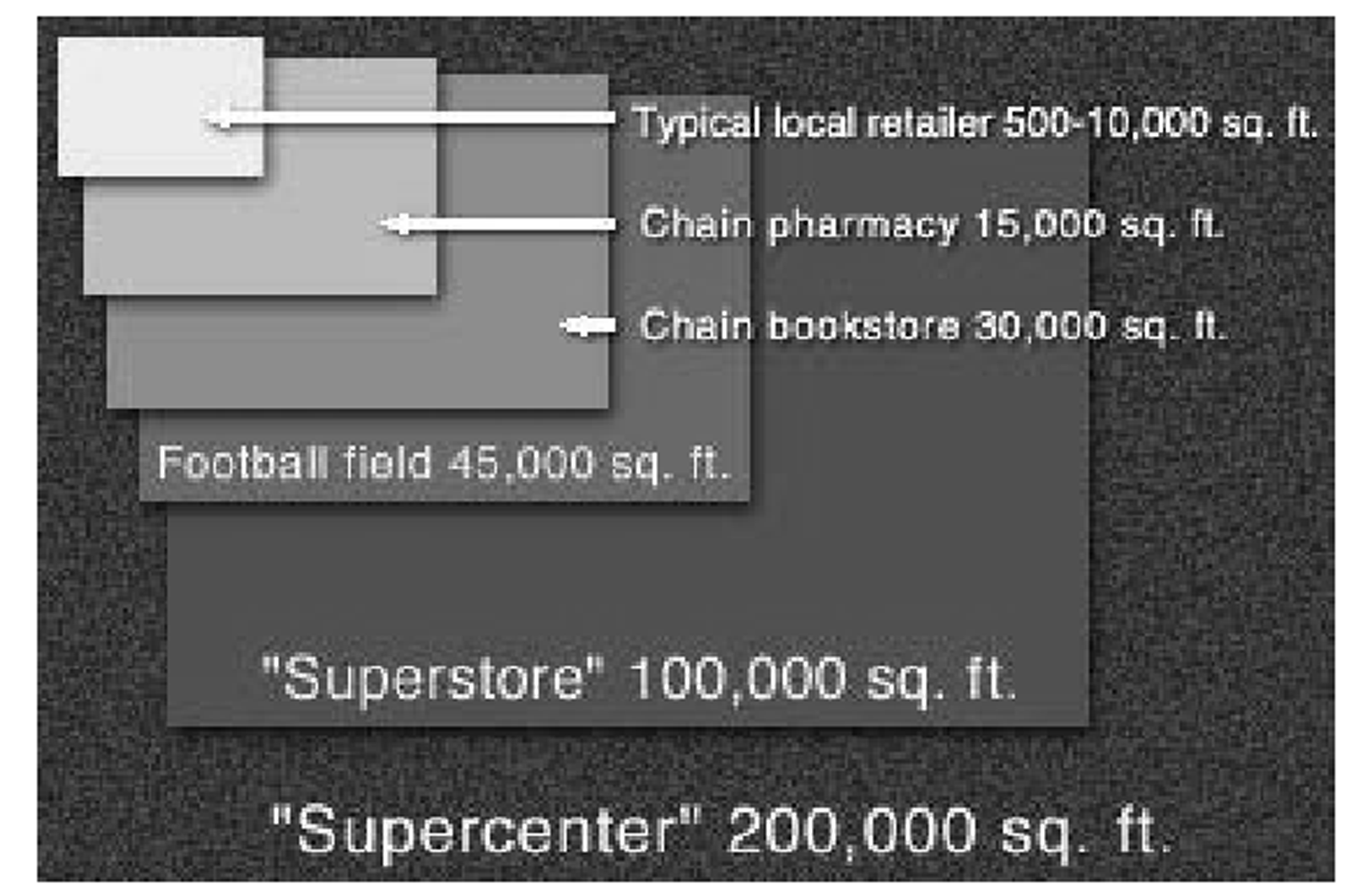
Figure 6 Typical Commercial Square Footage
Figure 7 Upper Floors with Residential Look
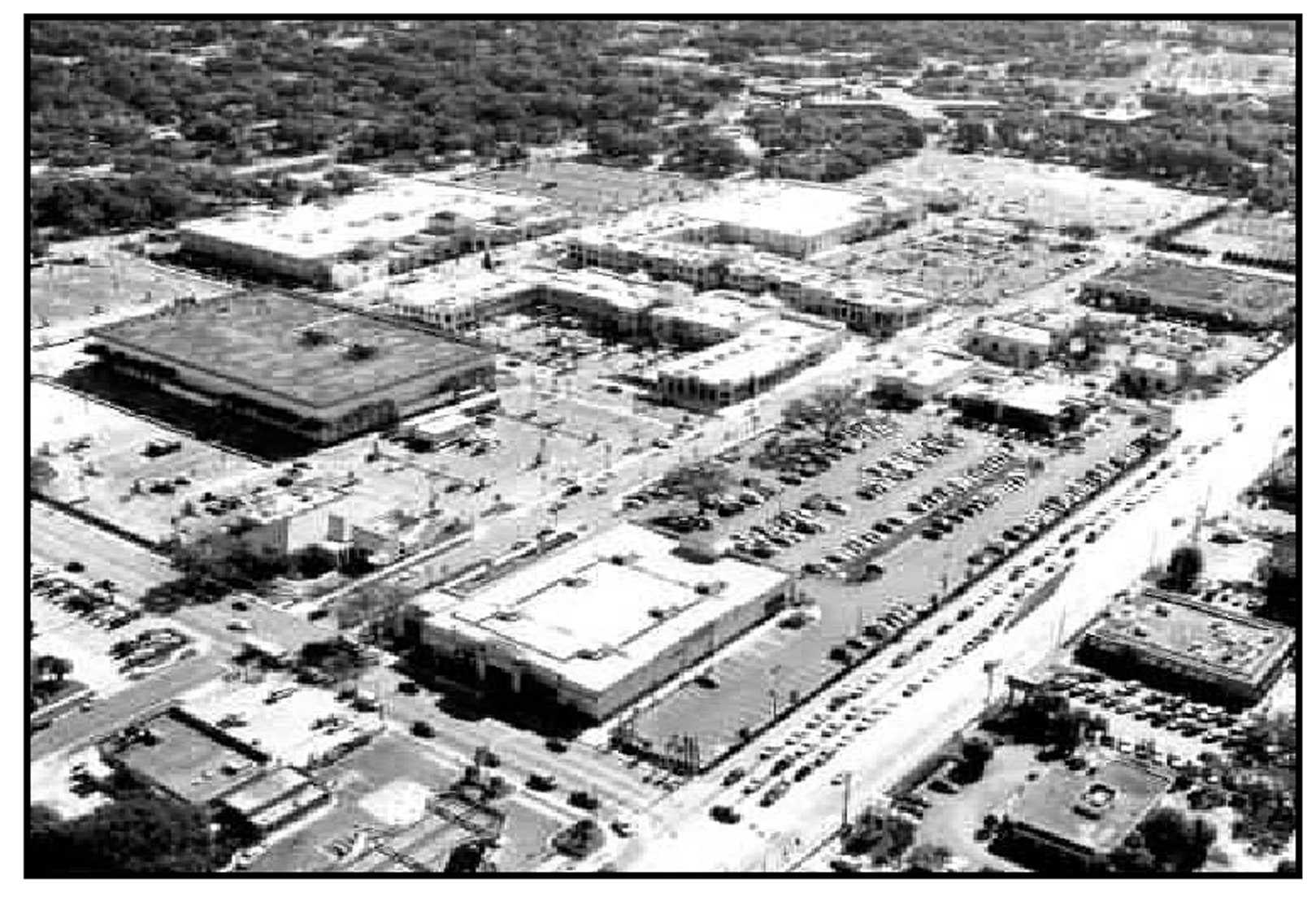
Figure 8 Photos Winter Park Village Mixed Use Development
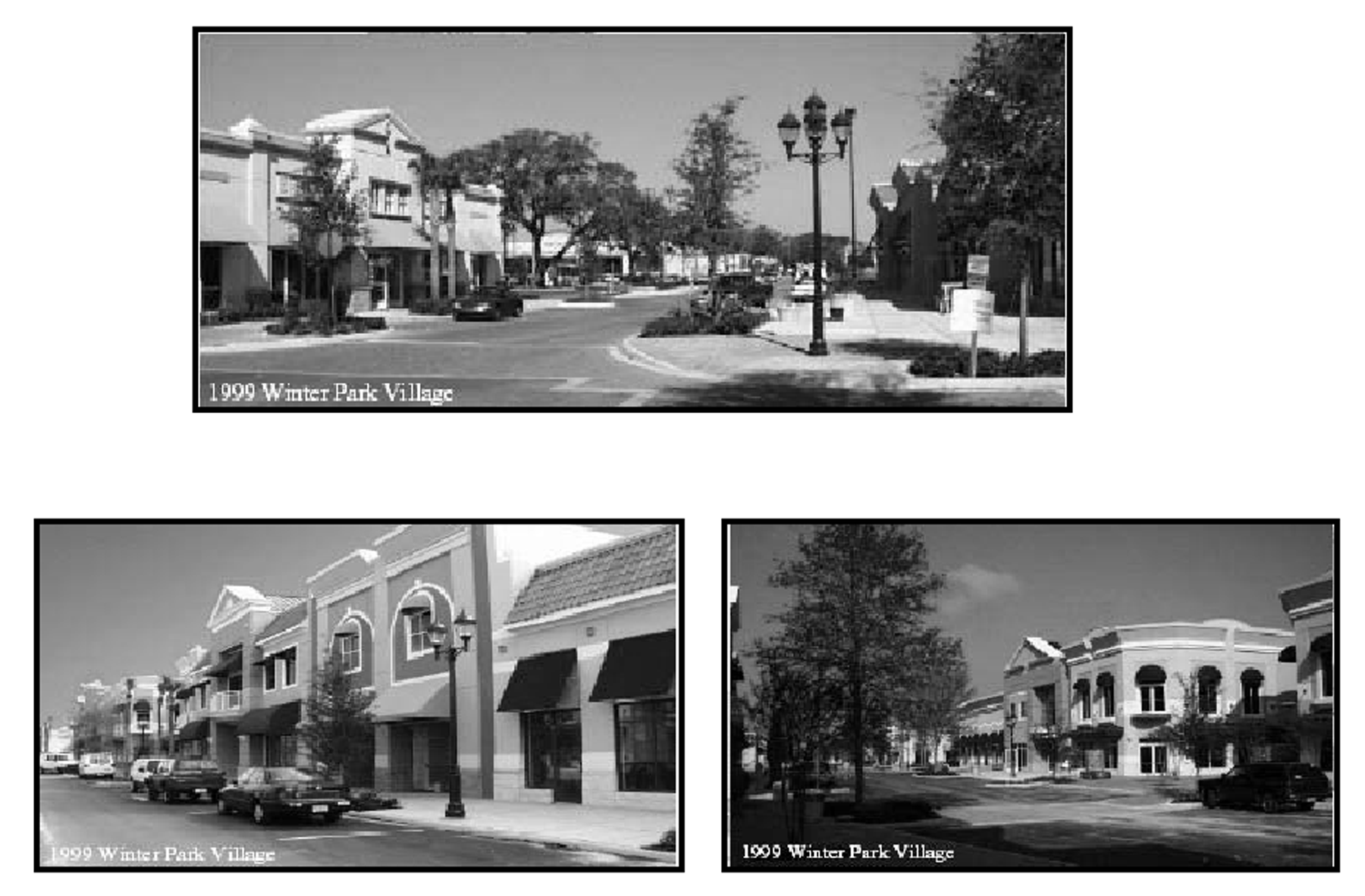
Winter Park Village
(n)
Real estate sales office.
(1)
The structure shall be similar to that being built within the development.
(2)
Parking shall be provided on the same lot, for a minimum of five (5) vehicles.
(o)
Recreational uses—Golf courses.
(1)
General provisions.
a.
Legislative findings. The city commission makes the following findings of fact:
1.
The natural environment of the city and Lake County is a unique and valuable resource enjoyed by residents and visitors alike.
2.
The unique economy of the city and Lake County is dependent upon maintaining and ensuring a high degree of environmental quality.
b.
Purpose and intent. The purpose and intent of this section is to ensure that the development of golf courses shall: protect and conserve natural resources and the environment for present and future generations; be consistent with the overall economic objectives of the city; minimize the adverse impacts and maximize the positive benefits of golf course development, and; ensure that these activities will be consistent with the city comprehensive plan. It is the further intent of this section that site-specific conditions which may be in conflict with the requirements of this section shall be addressed in the initial stages of planning and design in such a manner that the final design and development shall conform to the spirit of this section.
c.
Construction of code provisions. Nothing in this section shall be: Construed to limit, abridge or alter any duties, authority and responsibilities of any agency of the United States, the State of Florida or any other governmental agency having jurisdiction. Deemed to preempt any other city ordinance or provision of the City Code that imposes stricter design or development standards.
d.
Scope of application. The regulations set forth in this section shall apply to the development and construction of golf courses within all incorporated areas of the city.
(2)
General standards.
a.
Best management practices. All development activities shall employ best management practices during all phases of preconstruction, post-construction, and operation.
b.
Compliance with other laws. All golf course development shall be conducted in accordance with any and all applicable federal, state, regional and local laws, ordinances, rules and regulations.
(3)
Environmental protection standards for new development.
a.
The applicant shall incorporate environmental principles into the development of each new golf course, however, such applicant shall have flexibility in determining how to achieve this result.
b.
The applicant shall ensure that all criteria for environmental management are incorporated into the proposed project through a resource management plan. The applicant shall submit any required modifications to such plan to the city for approval.
c.
The applicant shall ensure that a resource management plan is prepared by professional consultant(s) with specialization in golf course design, construction, agronomy and relevant environmental expertise. The resource management plan shall be signed and sealed by a landscape architect or professional engineer registered to practice in the state. The resource management plan shall be a site specific comprehensive document submitted to the city detailing goals and best management practices including, but not limited to vegetation management, fertilizer and pesticide management, stormwater management, water quality management, irrigation management and general management.
d.
Resource management plans shall be updated and submitted for approval if any redevelopment of the golf course occurs.
e.
The following issues shall be addressed by the plan:
1.
The applicant shall ensure that the identification of natural features (Florida Natural Areas Inventory), wildlife habitat areas and environmentally sensitive areas (as defined by appropriate state agencies) are identified and approved early in the site evaluation process. The applicant shall ensure that the preservation of these areas is a basis for site design of the golf course.
2.
The applicant shall make every effort to route the golf course in such a way as to minimize the need to alter or remove existing native vegetation and wildlife habitat. The applicant shall ensure that the golf course routing identifies areas of restoration and enhancement as mitigation for disturbed areas.
3.
The applicant shall ensure that the design retains as much existing native vegetation and habitat as possible and understands that the supplemental planting of native vegetation is strongly encouraged.
4.
The applicant shall ensure that the resource management plan identifies areas of restoration and mitigation for disturbed habitat to re-establish wildlife migration corridors and linkages between fragmented habitat areas and that such plan also describes methods of protection for such areas during construction and ongoing operation. The applicant shall ensure that the resource management plan protects natural and constructed drainage systems which support retained vegetation during construction and ongoing operation.
5.
The applicant shall ensure that, where possible, any areas out of play are utilized to retain or restore existing native vegetation. The applicant shall ensure that the design provides for protection of environmentally sensitive areas by means of establishing suitable vegetative buffers or defining buffer areas to be unmaintained.
6.
The applicant shall ensure that a plan is provided for removal and prevention of invasive and exotic plants as specified in local and state regulations.
7.
The applicant shall ensure that any trees with a diameter greater than six (6) inches DBH which are to be retained are detailed in the resource management plan. The applicant shall ensure that any trees so identified which die or are damaged during construction or by post construction activities are replaced by like kind and size.
8.
The applicant shall ensure that all roads and cartways are located and designed so as to minimize environmental impacts.
9.
The applicant shall ensure that equipment utilized in the maintenance of golf courses and associated development is designed, used, maintained and stored in such a way to eliminate or minimize potential for pollution.
10.
The applicant shall ensure that plan includes a maintenance plan for all golf course design features. Low-maintenance features that require less intensive management are preferred.
(4)
Water resources requirements. The applicant shall ensure that water resource issues are addressed throughout the planning, development, construction and life of the golf course.
a.
Water conservation.
1.
The applicant shall identify goals in the resource management plan for conservation of water resources.
2.
The applicant shall ensure that the use of groundwater for irrigation shall follow water management district rules.
3.
The applicant shall ensure that any wells used for irrigation purposes are installed and developed in accordance with the requirements and recommendations of the St. Johns River Water Management District, and in full compliance with City of Leesburg codes, ordinances and policies pertaining thereto. In accordance with city ordinances and policies regarding wells, unless there is no feasible alternative, no well shall be dug or used to irrigate a golf course. All wells used for this purpose shall required approval from the city manager or his designee, and such approval may be conditioned on abandonment of the well once another appropriate irrigation water source such as, but not limited to, reclaimed water, becomes available.
4.
The applicant shall ensure that, prior to approval of any new golf course:
i.
A strategic water conservation plan is prepared for the course to minimize any adverse impact to surface water or groundwater. This plan shall utilize all available alternative water sources as primary irrigation sources, including reclaimed water and stormwater. Reclaimed water shall be utilized if sufficient capacity is available. The plan shall include a drought condition contingency plan.
ii.
Such a plan is implemented upon opening of any new course.
iii.
All plans are submitted and approved as part of the site plan approval process.
5.
The applicant shall ensure that construction techniques and soil amendments on greens and tees are used to reduce excessive irrigation. The applicant shall ensure that fairways are designed to minimize the need for irrigation and that non-playing areas are designed without irrigation, except as necessary to establish new vegetation for a maximum of sixty (60) days.
6.
The applicant shall ensure that all golf courses comply with all Florida Department of Environmental Protection and Water Management District water conservation requirements and shall make water conservation a critical priority in course design. These requirements include layout of turf areas and turfgrass and plant palette selection.
7.
The applicant shall ensure that irrigation system coverage is accurately mapped to determine wetted area and irrigation rates. The applicant shall ensure that irrigation system design provides that application rates are responsive to weather and soil conditions to avoid over application. The applicant shall ensure that the plan also includes programs to regularly inspect for leaks and to monitor usage. The applicant shall ensure that drawings show all irrigated areas, flow rates, actual spray patterns, etc. for all heads and zones.
8.
The applicant shall ensure that all ancillary irrigation systems not directly associated with actual course irrigation are automatic.
9.
The applicant shall, if the existing course is part of a residential development, that a best management practices document is developed for homeowners. The applicant shall ensure that the document shall addresses water conserving irrigation practices and use of drought-tolerant landscaping. The applicant shall ensure that the document is distributed free of charge to original purchasers and upon request to development residents thereafter.
b.
Water quality.
1.
The applicant shall identify goals in the resource management plan for protection of water quality.
2.
The applicant shall ensure that a water quality plan is prepared for the course to avoid or minimize potential adverse impacts to surface water or ground water. This plan may include directing flow from underground drains to areas of permeable soils to ensure adequate filtration. The applicant shall ensure that the water quality plan includes a contingency plan to be implemented in the event that monitoring shows a developing problem.
3.
The applicant shall ensure that the project employs established best management practices (BMP's) to control non-point source (stormwater) runoff pollution. The applicant shall ensure that there is no direct runoff into any natural water body or riparian habitat.
4.
The applicant shall ensure that all impervious areas incorporate suitable stormwater structures and devices to intercept debris and grease and oils prior to discharge into any stormwater pond. The applicant shall ensure that cart paths are graded and swales located such that runoff from them does not flow directly into any natural water body. The applicant shall ensure that the water quality plan includes a maintenance plan for all such structures and devices, as well as swales and ponds.
(5)
Habitat.
a.
The applicant shall ensure that the golf course design minimizes stream and wetland crossings. The applicant shall ensure that stream and wetland crossings are designed in such a way as to minimize erosion and harmful effects to riparian and wetland habitats and recognized corridors.
b.
The applicant shall ensure that the course design incorporates vegetated buffer strips to mitigate impacts to riparian corridors and other critical habitat which may result from surface drainage of the golf course, cart paths, and other developed areas.
1.
The applicant shall ensure that any habitat for wildlife species that help control pests are protected. The applicant shall ensure that additional habitat for these beneficial species is created whenever feasible.
2.
The applicant shall ensure that natural habitat are managed to maintain healthy populations of wildlife and aquatic species.
(6)
Vegetation.
a.
The applicant shall identify goals and methods in the resource management plan for the management of vegetation and landscaping.
b.
The applicant shall ensure that plant species that are best suited to the local area are selected. The applicant shall ensure that native, naturalized, or drought tolerant plants are used wherever possible. The applicant shall ensure that exotics and invasive species are not introduced.
c.
The applicant shall ensure that the design of the course and related facilities maximizes the preservation of clusters or significant stands of trees, and otherwise preserves interior habitat areas.
d.
The applicant shall ensure that irrigation systems are designed to avoid adversely impacting sensitive vegetation.
e.
The applicant shall ensure that barriers (curbs, signage, fencing, vegetation, etc.) are established to discourage cart and pedestrian travel off paths located within or adjacent to sensitive habitat areas.
(7)
Pollution prevention.
a.
The applicant shall identify goals in the resource management plan for the management of pollutants.
b.
The applicant shall ensure that an integrated pesticide, herbicide and fertilizer management plan that follows state approved best management practices is incorporated into the resource management plan. State submitted BMP plans are acceptable.
c.
The applicant shall ensure that the use of proven methods for minimizing nutrient leaching, and the use of the least mobile pesticides available is required as a part of the plan. The applicant shall ensure that all chemicals are applied at the lowest rate to accomplish desired results. Pesticides include herbicides, insecticides, fungicides and nemacides.
d.
The applicant shall ensure that drought, pest, and disease resistant grass species suitable for golf are selected.
e.
The applicant shall ensure that natural buffer areas are maintained free of invasive species.
(8)
Open space.
a.
The applicant shall ensure that golf courses are designed as functional linkages to create an open space network throughout the community.
b.
Golf course designs that facilitate an open space relationship with other planned or existing regional open spaces are encouraged.
(9)
Existing golf courses. Upon renewal of the consumptive use permit for any existing golf course or upon application for any modifications to existing facilities which require city permits or approvals, the existing golf course shall provide a complete resource management plan as set forth above, and shall bring all existing facilities into compliance within five (5) years from the effective date of the renewal or the city's approval of modifications, whichever is earliest.
(p)
Recreational uses—Commercial. Commercial recreational areas include golf courses, country clubs, fishing lakes, swimming pools, parks, playgrounds and fishing preserves, bowling alleys, skating rinks, paint ball and similar uses.
(1)
Structures shall be set back at least one hundred (100) feet from all property lines and property boundary areas if wooded areas, shall remain wooded.
(2)
Access drives shall be located on collector or arterial roads.
(q)
Vehicle services.
(1)
Limited.
a.
General requirements.
1.
All installation, sales and services must be conducted within a completely enclosed building, except as described in subsection (c) below.
2.
All service bay doors must not open onto property in a residential district or other existing, conforming residential use.
3.
All uses must comply with the requirements of article V for buffering incompatible uses.
b.
Services and repairs conducted outside of an enclosed building. Services and repairs may be conducted outside of an enclosed building only on property in a C-3 highway commercial and a M-1 industrial district and with the following conditions:
1.
The unenclosed work space must be over one hundred (100) feet from any land designated for residential use, or developed for residential use on property designated for mixed use or office on the future land use map. Any unenclosed work space shall be separated from an abutting residential use by a continuous nonresidential building, solid masonry wall, or berm that eliminates the noise of the work space. If the work space is within two hundred (200) feet of land designated for residential use or developed for residential use, staff or the appropriate reviewing board may require the applicant to submit a report addressing noise attenuation and ambient noise levels in order to make a finding as to the adequacy of proposed attenuation measures. The report shall be prepared by a licensed engineer or architect competent in acoustics. The distance and attenuation requirements may be reduced by the appropriate reviewing board if a study of the ambient noise level indicates that continuous and impulse noise generated by the proposed use will be masked by the ambient noise level.
2.
Any unenclosed work space must, at a minimum, be screened by a screen wall from direct view from any land designated for residential use on the future land use map that is within two hundred (200) feet of the property line. The wall shall be eight (8) feet in height. The screen wall shall be of solid construction, maintained in good repair at all times and shall not obstruct the vision triangle. At a minimum, each limited automotive service establishment shall provide completely enclosed space for office activity and restrooms in accordance with the building code and each unenclosed work space shall have a paved surface, maintained in good condition for the protection of groundwater.
3.
All proposed unenclosed work spaces shall be reviewed in accordance with the LDC and shall be physically delineated on the site. The development plan shall indicate the dimensions of the unenclosed work space and shall meet all other requirements of LDC. Unenclosed work spaces shall not eliminate required landscaping, parking, vehicle circulation area or stormwater management facilities, except as can be relocated elsewhere on the site in accordance with a development plan amendment. The number and width of existing driveways shall be reviewed. The addition of unenclosed work spaces may require existing driveways to be closed or narrowed to assure safe, efficient on-site circulation and to meet the objectives of access management, per the LDC.
4.
All lifts, tools or repair facilities must be located in the principal structure or completely within the designated unenclosed workspace and may not exceed eight (8) feet in height.
5.
Only low impact air guns may be used in an unenclosed work area located within two hundred (200) feet of any land designated for residential use on the future land use map.
6.
Prohibited lights. Lights shall not be mounted on the top or sides of the canopy when not part of a permitted sign and the sides (fascias) of the canopy shall not be illuminated, unless the illumination is part of a permitted sign.
(2)
Major.
a.
Vehicle body repair shall take place within a completely enclosed structure.
b.
All vehicle-dismantling activities shall be completely screened from adjacent properties.
c.
All material stored on the premises shall be removed periodically, but not less than bimonthly.
d.
All vehicle painting shall take place in an approved paint spray booth.
(3)
Vehicle service station (no repairs).
a.
No structure, whether above or below ground, shall be permitted in any required front, or side yard area.
b.
Canopy structures are permitted to overhang the required yard areas, but may not be closer than twenty (20) feet to the road right-of-way and shall be placed in the rear when located in design overlay district.
c.
Service station walls shall be of masonry construction where they are within fifty (50) feet of a property line.
d.
All hoists, pits and all lubricating, greasing, automobile washing and repair equipment shall be entirely within an enclosed building. Three (3) enclosed sides with an open bay is permitted where the bay opening is not visible from the right-of-way.
e.
No derelict, damaged or unlicensed vehicles shall be stored on the premises for more than one (1) month. Vehicles waiting repair shall be kept behind a fence at least six (6) feet high, obscuring their view from adjacent properties and roads.
f.
The design and arrangement of the station shall be compatible with the surrounding residential development, if applicable.
(4)
RV service center. This subsection shall not apply to recreational vehicle spaces, not more than fifteen (15) in number, provided by a bona fide recreational vehicle service center, on the same parcel where the service center is located, as authorized under a conditional use permit, where no rent or other direct remuneration is received by the owner or operator of the service center for the use of the spaces, occupancy of the spaces is limited to customers of the service center delivering their recreational vehicles for service, and occupancy by any individual recreational vehicle on any space is limited to no more than one (1) seventy-two-hour period in any calendar month. The planning commission may prescribe such additional conditions and restrictions in any conditional use permit authorizing such use of recreational vehicle spaces as it deems necessary and proper for the protection of the public health and safety, the general welfare, and the rights and quiet enjoyment of surrounding property owners.
(r)
Veterinary clinics.
(1)
No animal shall be kept on the premises overnight except in case of continuing treatment or an emergency. The primary purpose of a veterinary clinic is for the care and treatment of domestic animals and not for keeping or boarding animals (may include dog grooming).
(2)
All animals shall be kept in an enclosed building at all times. There shall be no outdoor runs or pens.
(3)
Four (4) off-street parking spaces shall be provided with one (1) additional off-street parking space for each treatment or examination room.
(s)
Agricultural (temporary) uses.
(1)
The following temporary agricultural uses may be permitted in the RE-1 Residential Estate zoning district per the following restrictions:
a.
Agricultural uses may be permitted on a minimum of twenty (20) acres of non-platted property and per section 25-292, Supplemental district requirements, subsection (4), the keeping of domestic animals and fowl, of the Code of Ordinances.
(2)
The production for sale of crops, livestock or livestock products, which shall include but not be limited to:
a.
Field crops, such as corn and hay;
b.
Fruits, such as citrus, apples, peaches, grapes, tomatoes, and berries;
c.
Vegetables, such as beans, cabbage, carrots, beets and onions;
d.
Horticultural specialties, including nursery stock, ornamental shrubs, ornamental trees and flowers;
e.
Livestock and livestock products, including cattle, sheep, goats, horses, poultry, ratites birds such as ostriches, emus, rheas and kiwis, farmed deer, farmed buffalo, and eggs;
f.
Aquaculture products, including fish, fish products, and water plants;
g.
Woody biomass, which means short-rotation woody crops raised for bioenergy, and shall include farm woodland.
(3)
Roadside stands that are used to show and sell products all of which are raised or produced on the land on which they are located.
(4)
No "Animal Feeding Operation (AFO)" feedlots or facilities such as swine, poultry or cattle feedlots shall be permitted as defined below:
a.
Where animals are confined for at least forty-five (45) days in a twelve-month period; and
b.
Where there is no grass or other vegetation in the confinement area during the normal growing season;
c.
Where crops, vegetation, forage growth, or post-harvest residues are not sustained in the normal growing season over any portion of the lot or facility.
(5)
The community development director shall determine if other similar uses shall be permitted based on whether they meet the intent of this section.
(Ord. No. 04-27, § V(4.19.3), 5-10-04; Ord. No. 14-09, § I, 3-24-14; Ord. No. 22-54, § VI, 10-10-22)
Sec. 25-289. - Industrial uses.
(a)
Junkyards and salvage yards.
(1)
Minimum lot area shall be ten (10) acres.
(2)
Distance from any property which is in a residential district or which is shown for residential use on the future land use map or from any state or federal highway right-of-way shall be one thousand (1,000) feet.
(3)
The entire area occupied by a junkyard or salvage yard shall be surrounded by a continuous solid masonry wall eight (8) feet in height without openings, except for entrances and exits, which shall be equipped with solid gates.
(4)
Junkyards and salvage yards shall comply with the city/county hazardous materials standards.
(5)
Development plan approval shall be required for any development or expansion of any junkyard or salvage yard. The county office of environmental protection shall receive notice of any development plans for junkyard development or expansion.
(b)
Industrial—Light uses of a nature similar to principal permitted uses.
(1)
All operations shall be carried on entirely within an enclosed building, except as permitted under accessory uses.
(2)
Outdoor storage areas shall be screened from all adjacent properties.
(c)
Landfills, Class I, II and III.
(1)
Location criteria. In order to protect the public health, safety and welfare from the possible adverse impacts of landfills and their associated operations, the following locational criteria are established:
a.
Where allowed. Class I, II, and III landfills shall only be allowed within the following zoning districts: Planned and M districts.
b.
Setbacks.
1.
Front, rear, and side yards shall be a minimum of two hundred (200) feet.
2.
When adjacent to a property with a dwelling unit, there shall be no land filling (i.e. disposal of wastes) within one thousand (1,000) feet of the closest portion of the dwelling unit or private potable water well, whichever provides the greater setback distance.
3.
The use shall not be within one (1) mile of a school, house of worship, or hospital, measured on a straight line along the shortest distance between the perimeter of the landfill and the boundary of the property upon which the school, house of worship, or hospital is located.
4.
Class I and II landfills only shall be located at least five (5) miles from any licensed and operating airport runway used by turbine powered aircraft, or any licensed and operating airport runway used only by piston engine aircraft, unless the applicant demonstrates that the facility is designed and will be operated so that it does not pose a bird hazard to aircraft.
c.
Access. The facility shall have direct access to a collector or arterial roadway shown on the functional classification map in the transportation element of the comprehensive plan, or a road designed for commercial vehicles which accesses direct to such street. No access shall be through residential local streets.
d.
Where prohibited. Landfills shall be prohibited within the following locations:
1.
Wellhead resource protection areas as shown on the city's well head resource protection map.
2.
Within one thousand (1,000) feet of the center of a wellhead of a public potable water supply well.
3.
Within environmentally sensitive areas as defined in the City of Leesburg Comprehensive Plan.
4.
Within areas where potential sinkhole development is very likely as determined by the available state, county or city sinkhole studies, maps or comprehensive plans.
5.
Within areas susceptible to groundwater contamination as may be determined by the available state, county or city groundwater studies, maps or comprehensive plans.
6.
Within the 100-year floodplain.
7.
Within open water bodies, whether natural or manmade.
8.
Within a ten (10) mile radius from the perimeter of the existing or approved landfills.
(2)
Special use permit.
a.
Procedure. An application for a landfill special use permit shall be processed pursuant to the procedures for a planned unit development.
b.
Factors to be considered. The following factors shall be considered in the review of a landfill special use permit application:
1.
The compatibility of the proposed landfill with existing and planned land uses. In making a determination of compatibility, the following shall be considered.
i.
The nature of existing and planned land use.
ii.
The size of the proposed land fill.
iii.
The type and volume of waste to the received.
iv.
The effect of increased truck traffic generation on existing and planned land uses.
v.
The proximity to residences, schools, hospitals, or houses of worship.
vi.
The proximity to recreational uses such as parks and playgrounds.
vii.
The proximity to potable water supply wells.
viii.
The proximity to surface water bodies and environmentally sensitive areas. Impact on roads and bridges to be used that are not designated as truck routes by the city, county or state as a plan truck route.
c.
Imposition of reasonable conditions. Reasonable conditions designed to mitigate the impact of the landfill upon those items listed in (b)(2) above, may be imposed upon the landfill operation.
d.
Duration of permit. The landfill special use permit shall be issued for a period based upon the estimated duration of landfill operations. Closure of the landfill shall be complete upon expiration of the landfill special use permit.
e.
Expiration of permit. If a landfill construction permit for the proposed facility has not been issued by the Florida Department of Environmental Protection (FDEP) within two (2) years after approval of a special use permit, the special use permit shall expire. Proof of issuance of FDEP Landfill Construction Permit shall be provided to the city.
(3)
Special use standards.
a.
The site shall be fenced by a six-foot high fence with a locking gate at all access points. All gates shall be secured and locked when there is no activity on site. The performance standards shall be observed with the point of measurement being the boundaries of the zoning lot.
b.
Buffering and screening shall be provided in accordance with the standards in article V.
c.
If construction of the landfill requires land excavation and off-site hauling of ten thousand (10,000) cubic yards or more of material from the site, approval of a special use permit for land excavation shall be required, as well as the issuance of an operating permit for land excavation.
d.
A performance bond as well as a maintenance bond shall be required in a amount determined by the city.
(d)
Municipal solid waste facilities. Municipal solid waste facilities includes the following facilities: composting, material recovery, transfer, community disposal, and waste to energy.
(1)
Front, rear and side yards shall be a minimum of fifty (50) feet.
a.
Composting facilities adjacent to residentially zoned property shall have minimum yards of five hundred (500) feet for non-office type buildings and uses.
b.
Material recovery facilities adjacent to residentially zoned property shall have minimum yards of five hundred (500) feet for non-office type buildings and uses.
c.
A transfer facility, when adjacent to residentially zoned property, shall have yards of a minimum of two hundred (200) feet for non-office type buildings and uses. A waste to energy facility, when adjacent to residentially zoned property, shall have yards of a minimum of seven hundred fifty (750) feet for non-office type buildings and uses.
(2)
Proof the ability to meet all applicable local, state and federal environmental standards shall be provided.
(3)
The facility shall have direct access to a collector or arterial as shown on the city's functional classification map.
(4)
The site shall be fenced by a six-foot high fence.
(e)
Manufacture or processing of food products, fertilizer, wood products, or other similar materials.
(1)
All proposed uses shall acquire the necessary county, state and federal permits prior to final action by the city.
(2)
All operations shall be carried on entirely within an enclosed structure, except as permitted under accessory uses.
(3)
Outdoor storage areas shall be completely screened from adjacent properties.
(4)
Areas of property not occupied by structures or paving shall be landscaped and maintained.
(f)
Outdoor storage industrial areas. Where outdoor storage is a principal permitted use or a regularly recurring accessory use in any industrial zone (not including short-term or temporary storage) the following requirements shall apply:
(1)
Screening requirements. A landscape buffer strip shall be provided in the same manner as if the property were zoned in an industrial zoning district/category in accordance with the requirements of the LDC, Section 5 with the following additional requirements.
a.
When a hedge is used, a chain link fence at least six feet in height is required.
b.
Screening is required whenever in the opinion of the planning and zoning manager it is necessary to visually shield the use from the public right-of-way. (This requirement shall apply notwithstanding the fact that the subject property abuts property which is zoned in an industrial district/category.)
c.
No merchandise, equipment, machinery, materials, motor vehicles or other items shall be stored above the height of the landscape buffer strip.
d.
If a landscape buffer strip is not required either under the provisions of section 25-323 or the provisions of this section, a fence or wall at least six (6) feet in height shall be provided.
(g)
Towing services.
(1)
No automobile repair work or salvage of parts shall be permitted.
(2)
A written hazardous materials and waste management plan shall be developed by the applicant and submitted to the fire department and planning and zoning division. At a minimum, the plan shall address the acquisition, storage, use and disposal of hazardous materials and vehicle-related waste products. A copy of an agreement; if applicable, between the applicant and the waste disposal companies shall be part of the plan.
(3)
Outdoor storage of vehicles exposed to view from a public street shall be restricted for two (2) vehicles, having current license plates; however, vehicles shall be prohibited from remaining for more than three (3) days. Storage of wrecked or inoperable vehicles is allowed only within the existing enclosed screened fence in the rear yard for a period not to exceed one hundred twenty (120) days.
(4)
Compliance with handicap accessibility requirements for parking and access to the building will be required for the site.
(5)
A conceptual site plan acceptable to the city to scale showing required parking including handicapped parking, storage of vehicles and accessibility etc. shall be submitted for review.
(6)
The granting of this conditional use permit does not exempt the applicant from other applicable regulations of the City of Leesburg and other governmental agencies and assessment of the impact fees necessary for the completion of this project.
(Ord. No. 04-27, § V(4.19.4), 5-10-04; Ord. No. 08-62, § I, 7-14-08)
Sec. 25-290. - Temporary uses.
The following uses are permitted within the city on a temporary basis as provided below. Each temporary uses shall obtain a permit from the planning and zoning manager or his designee.
(1)
Car washes held by unlicensed non-profit organization. Unlicensed non-profit organizations, including charitable organizations, churches, youth groups, etc., must secure from the city a permit prior to holding a car wash, whether for free, contribution or pay. A permit may not be secured by any group more often than once every ninety (90) days. The duration period of each permit shall not exceed two (2) consecutive days.
(2)
Commercial vehicles no commercial vehicles exceeding one-ton rated capacity may be used for storage for no more than thirty (30) days in any twelve-month period in any nonresidential district.
(3)
Seasonal temporary uses. Not in conjunction with an approved special event permit under Chapter 26, Special Events.
a.
The following uses are identified as temporary uses:
1.
Fireworks sales.
2.
Christmas tree sales.
3.
Flower sales.
4.
Product sales promotion for existing businesses (only on developed property of the business).
5.
Fair or carnival.
6.
Recreational vehicles in conjunction with an approved nonprofit temporary activity
7.
Other seasonal uses similar and temporary in nature.
b.
Seasonal temporary uses are permitted as follows:
1.
Use shall not be permitted for more than sixty (60) days within any one (1) calendar year except for construction trailers that are allowed until a project is completed.
2.
Use shall not obstruct a right-of-way, sidewalk, or required vehicular parking area.
3.
One (1) free-standing sign not exceeding thirty-two (32) square feet is permitted.
4.
Off-street parking spaces shall be provided in accordance with section 25-357.
5.
Shall not be located within the required front setback area.
6.
Shall be allowed on developed or vacant property.
(4)
Other temporary uses. That are not of a seasonal nature shall be permitted:
a.
The following uses are identified as temporary uses:
1.
Outdoor product sales promotion for existing City of Leesburg operating businesses for their in-store products with registration on the city's website www.leesburgflorida.gov.
2.
Outdoor product sales promotion for products which are not offered by current City of Leesburg operating businesses as their primary product sales. Business must obtain a temporary business tax receipt and may operate on vacant property, at large public shopping centers or public malls such as the Lake Square Mall, schools, college campuses, churches, hospitals such as the Leesburg Regional Medical Center, and in the Central Business District.
3.
As an extension of premises of an existing business in accordance with Chapter 5, Alcoholic Beverages, section 5-6.1, of this Code.
4.
Fair, carnival, circus, revival, performance etc.
5.
Recreational vehicles for security in conjunction with an approved temporary use activity.
(5)
Temporary use requirements. Temporary use requirements are as follows
a.
Use shall not be permitted for more than sixty (60) days within any one (1) calendar year except for construction trailers that are allowed until a project is completed.
b.
Use shall not obstruct a right-of-way, sidewalk, or more than twenty (20) percent of required vehicular parking area.
c.
One (1) free-standing sign or banner not exceeding twenty-four (24) square feet is permitted.
d.
Off-street parking spaces shall be provided in accordance with section 25-357.
e.
Shall not be located within ten (10) feet of the property line boundary.
f.
Shall be allowed on developed or vacant property per subsection (6) below.
(6)
Mobile food vendors. Mobile food vendors are permitted as follows:
a.
Shall be allowed on developed or vacant property.
b.
As part of a product sales promotion where the food is given away free.
c.
As an approved charitable event with a 501(c)(3) designation.
d.
Shall not be permitted for more than ninety (90) days within any one (1) calendar year and located on commercial or industrial property either vacant or developed property. Vacant property must be adjacent to developed property where use of restrooms, water and electric are approved by the adjacent developed property.
e.
As part of an approved Grand opening as per section 25-424 of this Code.
(7)
Recreational vehicles. Recreational vehicles may be stored temporarily in all districts. Such recreational vehicles shall not serve as a place of residence (See section 25-292, Supplemental district requirements, subsection (11), Recreational vehicles).
(8)
Yard, garage, carport, rummage or charity sale. A yard, garage, carport, rummage or charity sale shall have a duration period not to exceed three (3) days, composed of Thursday, Friday and Saturday, which may run for two (2) consecutive weeks on the above specified days. A permit must be secured for this activity stating the duration of time. A period of ninety (90) days must lapse after the expiration date appearing on the permit, before the property owner/occupant receives a permit for an additional yard, garage, and carport rummage or charity sale. Merchandise display after expiration date on permit is prohibited. The permit shall be prominently displayed at the sale.
(9)
Nothing in this section shall prohibit or conflict with provisions of Chapter 26, Special Events.
(Ord. No. 04-27, § V(4.20), 5-10-04; Ord. No. 12-32, § I, 5-14-12; Ord. No. 14-10, § I, 3-24-14)
Sec. 25-291. - Temporary structures.
(a)
For purposes of this section, "temporary structure" means a walled and roofed building that is principally above ground, affixed to the ground, for a limited time. Temporary structures include, but are not limited to, the following:
(1)
Construction office trailer.
(2)
Manufactured home or mobile home.
(3)
Recreational vehicles used in conjunction with a temporary, non-profit activity.
(b)
Temporary structures shall be permitted only in accordance with this section and upon the issuance of a temporary structure permit by the city manager or designee.
(c)
Manufactured or modular homes may be used as a temporary construction office incidental to the construction or development of the premises on which the temporary structure is located. The temporary structure may not be placed on the property until building permits have been issued for the construction activities on the site and maintained on site only during the time that construction or development is actively underway. The temporary structure shall be removed upon the issuance of a certificate of occupancy for the improvements being constructed. Such temporary structure shall in no instance be kept on site for more than one (1) year from the date of permit issuance, and shall not be extended by the commission.
(d)
Temporary sales and leasing offices for residential developments are allowed as a permitted use in any zoning district. In addition to applicable zoning district and use regulations, a temporary sales and leasing office must comply with the following standards:
(1)
A permit shall be issued by the city manager or designee after final development plan approval. If a temporary sales and licensing office is to be used, the development plan must meet the following conditions in addition to the other requirements for development plan approval:
a.
The development plan shall indicate the location of the temporary sales and leasing office.
b.
The temporary sales and leasing office must be located in an area approved for impervious area by the development plan for the project.
c.
The temporary sales and leasing office shall be fenced off from the remainder of the site where general construction is in progress. The petitioner may propose other design measures to prevent customers from moving into the construction area.
d.
The number and location of parking spaces proposed for the temporary use shall be designed so as to avoid backing or stacking of vehicles into the right-of-way.
e.
No ground-mounted sign other than the allowable temporary development sign for the main project shall be allowed. However, the temporary use may have one (1) sign not to exceed six (6) square feet directing customers to the sales and leasing office.
f.
The temporary sales and leasing office must meet all state all local requirements for structures used for commercial purposes and open to the general public and must be approved by the building division.
g.
The temporary sales and leasing office use may only be conducted on a site that has an approved development plan with an active building permit for construction of the main project being marketed under the temporary sales and leasing permit.
h.
The office may not be used to lease or sell off-site properties.
i.
The office may be used for a period of twelve (12) months or until a certificate of occupancy is issued for twenty-five (25) percent or more of the approved units or until a certificate of occupancy is issued for a permanent on-site management office, whichever occurs first.
j.
Once any of the conditions in subsection (i) have been met, no additional permits or certificates of occupancy will be issued until the temporary leasing and sales office is removed from the site.
k.
Neither the sales and leasing office nor the surrounding area where customers are permitted may be used for storage of building materials or building supplies.
(e)
Temporary structures are permitted during a natural or manmade disaster as follows:
(1)
When a natural or manmade disaster has rendered a single-family residence unfit for human habitation, as determined by the city manager or designee, the use of a temporary structure located on the single-family lot during rehabilitation of the original residence, or the construction of a new residence, may be permitted through the issuance of a temporary structure permit regardless of the zoning district requirements set forth in these regulations. The maximum length of use shall be one (1) year from the date of issuance of the temporary structure permit. The city manager or designee may require a temporary structure permit to include additional conditions in order to ensure that property owners are taking steps to build a permanent residence within a reasonable amount of time. The city manager or designee may grant extensions of the temporary structure permit if the property owner can demonstrate that the delay in completing the permanent residence was due to unavailability of construction materials, or delays in receiving financial assistance for the reconstruction or rehabilitation of the residence from private insurance or state or federal disaster assistance programs.
(2)
When a natural or manmade disaster has rendered a commercial or industrial structure unfit for occupancy, as determined by the city manager or designee, the use of a temporary structure to carry out the commercial or industrial use during the rehabilitation of the original structure, or the construction of a new structure, may be permitted. Such temporary non-residential structures may be permitted only for use on the site of a damaged structure. As a condition precedent to using a temporary structure for commercial or industrial purposes, the city manager or designee must make a finding that the use of the temporary, non-residential structure is necessary to preserve the public interest, and to allow for rehabilitation of the area's economic base. At the time of making this finding, the city manager or designee shall additionally determine the maximum length of use from the date of issuance of the temporary structure permit. The city manager or designee may additionally impose conditions as part of a temporary structure permit that will ensure a permanent structure shall be constructed within the time limitations imposed on the permit.
(3)
When a natural or manmade disaster has rendered a single-family residence(s) or commercial or industrial structure(s) unfit for occupancy, as determined by the city manager or designee, the use of a temporary structure by FEMA, the Red Cross, or any other emergency response team, may be permitted through the issuance of a temporary structure permit. In order for such permit to be issued to the emergency response team, the emergency response team must be providing assistance to residents or businesses of the City of Leesburg, Florida, whose primary residence or business was rendered unfit for human habitation as a result of the natural or manmade disaster.
(f)
Minimum standards for temporary structure permit issuance. For all temporary structures allowed under this subsection, the following apply:
(1)
The temporary structure shall not be placed on the site until the city environmental services department confirms in writing that adequate and safe sanitary waste facilities are available to the structure(s).
(2)
The temporary structure must be placed in a way as to minimize impact on wetland areas and shorelines.
(3)
For temporary structures placed in commercial or industrial zoning districts, parking shall be provided based upon the square footage of the temporary structure, including handicapped parking. Additionally, the temporary structure must meet the Florida Accessibility Code for building construction amenities.
(4)
More than one (1) temporary structure may be placed on a residential lot so long as the occupancy (based on bedrooms or such other measure determined by the building official) of all temporary structures does not exceed the capacity of the original structure by more than one hundred twenty-five (125) percent.
(5)
More than one (1) temporary structure may be placed on a non-residential lot to accommodate emergency response teams as they provide services to residents and businesses in accordance with subsection (e)(3).
(6)
The temporary structure shall be removed from the premises within thirty (30) days after the cancellation or expiration of the temporary structure permit. If a travel trailer or recreational vehicle is used, it shall be properly stored in accordance with zoning district rules or removed from the premises within thirty (30) days after the cancellation or expiration of the temporary structure permit.
(7)
Failure to so remove the temporary structure as described herein shall permit the City of Leesburg to avail itself of all legal remedies to have the structure removed, assess the cost thereof to the property owner, including remedies which permit the city to contract to have the unit removed, and the city may choose to prosecute or enforce as a violation of the code of ordinances.
(8)
All temporary structures shall be permitted and installed in accordance with all other applicable codes and standards.
(9)
Temporary structures shall be a minimum of twenty (20) feet from the street right-of-way line.
(10)
Temporary structures shall not obstruct a required vehicular parking area.
(Ord. No. 04-27, § V(4.20), 5-10-04; Ord. No. 07-91, § 1, 8-27-07)
Sec. 25-292. - Supplemental district requirements.
The following supplemental requirements shall apply to all uses with in this chapter. These standards and criteria are deemed necessary to provide for the health, safety, morals and general welfare of the citizens of Leesburg.
(1)
Adult uses. The following provisions apply to adult uses:
a.
No adult use shall be located within any zoning district other than M-1.
b.
No adult use shall be allowed in the M-1 zoning district without a conditional use permit.
c.
No adult use shall be located closer than one thousand five hundred (1,500) feet to either the boundary of any residential zoning district or to any other adult use or the following uses; public park, playground, school, church, child day care center and hospital.
d.
No portion of this chapter shall be construed as allowing, in any way whatsoever, any acts prohibited by F.S. ch. 847 or Chapter 5, Alcoholic Beverages, of this Code.
(2)
Accessory and temporary structures: minimum yard regulations.
a.
Except as provided in this section, unattached accessory or temporary structures such as tube and canvas structures, vendor trailers and vehicles etc. shall not project or be placed into the required front yard(s) in front of the principal structure or encroach into easements, parking areas, drive aisles, buffer areas or other required site plan areas except as permitted in section 25-292(18). Cabanas, outdoor shelters, sheds, work shops and other enclosed and temporary structures may be constructed in a required rear yard. Accessory structures, which are not attached to a principal structure, may be erected in accordance with the following requirements:
1.
An accessory building not exceeding twelve (12) feet in height may occupy not more than thirty (30) percent of a required rear yard.
2.
An accessory building exceeding twelve (12) feet in height may be permitted where an additional two (2) feet of setback is provided for every additional foot of height above twelve (12) feet to a maximum of the height of the principal structure or the height allowed in the district where located, whichever is less.
3.
No accessory structure shall be located within five (5) feet of side or rear property lines.
4.
No accessory structure shall be located closer to the street than the front yard setback required for a principal structure in the district in which such accessory structure may be located.
5.
Corner lots shall be considered to have two (2) front yards.
6.
Vehicles including tractor trailers, shipping containers, manufactured housing and mobile homes, shall not be used as permanent storage buildings, utility buildings, or other such uses.
b.
When an accessory structure is attached to the principal building, it shall comply in all respects with the yard requirements applicable to the principal building.
c.
Tube and canvas structures shall be prohibited in the front and side yards of all districts except for the industrial district where screening from the public right-of-way and adjacent residential properties shall be required. Existing approved tube and canvas structures permitted prior to December 12, 2011 shall comply with all provisions of this chapter by June 1, 2013.
(3)
Reserved.
(4)
Keeping of domestic animals and fowl. The keeping of domestic animals and fowl shall be limited as following:
a.
In all zoning districts, except for provisions provided in the RE-1 Residential Estate zoning district below, domestic animals or fowl being kept, harbored, raised, or maintained as accessory to a residential single-family structure, shall be subject to the following restrictions:
1.
No more than fifteen (15) chickens are permitted;
2.
The keeping of roosters are prohibited;
3.
Slaughtering of chickens is prohibited;
4.
The chickens shall be provided with a movable covered enclosure (See Exhibit Hen house/coop) and must be kept in the covered enclosure or a fenced enclosure at all times. Chickens must be secured within the movable henhouse/coop during non-daylight hours;
5.
The space per bird in the henhouse/coop shall not be less than three (3) square feet per bird and not larger than fifty (50) square feet;
6.
No covered enclosure or fenced enclosure shall be located in the front or side yard, nor shall the henhouse/coop be closer than twenty (20) feet to any occupied residential structure. Odors from chickens, chicken manure, or other chicken related substances shall not be detectable at the property boundaries;
7.
Chicken coops and pens shall be completely screened from adjacent roadways and parcels by a four-foot-tall solid fence (chain link with slats permitted), wall, or equivalent landscape vegetative material as approved by the city community development department;
8.
All enclosures for the keeping of chickens shall be so constructed and maintained as to prevent rodents or other pests from being harbored underneath, within, or within the walls of the enclosure. The henhouse/coop must be impermeable to rodents, wild birds, and predators, including dogs and cats. Enclosures shall be kept in neat condition, including provision of clean, dry bedding materials and regular removal of waste materials. All manure for composting must be kept in an enclosed bin. All other manure shall be removed promptly;
9.
All feed and other items associated with the keeping of chickens that are likely to attract or to become infested with or infected by rodents or other pests shall be kept in secure containers or otherwise protected so as to prevent rodents and other pests from gaining access to or coming into contact with them;
10.
The sale of eggs or any other chicken products generated with the keeping of chickens under this section in a residential district may not be advertised;
11.
No dog or cat that kills a chicken will, for that reason alone, be considered a dangerous or aggressive animal;
12.
Rabbits as pets shall be within a completely enclosed dwelling or detached garage or in an outside enclosure, coop or pen, up to a maximum of two (2) rabbits;
13.
Adult dogs, cats, birds etc. shall be limited in all districts to a maximum of five (5) adults per dwelling with adequate fencing and/or outside covered protection from the elements;
14.
For the keeping of chickens completion of the following two-hour course "Chicken University" is highly recommended. The course is offered by the UF/IFAS Lake County Extension Office, 1951 Woodlea Rd., Tavares, FL 32778, phone (352) 343-4101 ext. 6.
b.
In the RE-1 Residential Estate zoning district:
1.
Domestic fowl or other birds shall be limited to not more than ten (10) adult birds per acre up to twenty-five (25) total per two and one-half (2½)acres confined. A maximum total of fifty (50) adult birds on five (5) acres with a conditional use permit.
2.
Domestic hoofed mammals shall be limited to a maximum of one (1) confined animal per acre which shall be in addition to the minimum of one (1) acre required for the dwelling. Confined, as used in this section, refers to an approved fence that provides limitation on the movements of the animal on the required land area and which shall secure the animal from entering adjacent properties.
c.
Prohibited animals and fowl: Except for a retail establishment engaging in the lawful sale of animals, and approved zoos/animal sanctuaries, it shall be unlawful for any person to keep, harbor, raise or maintain the following except as permitted by this section:
1.
Any livestock.
2.
Farm animals or fowl such as cattle, hogs, sheep, goats, horses, rabbits, chickens, turkeys, ducks, and geese or any other animal or fowl not customarily considered a domestic household pet shall not be kept or maintained on any lot in a residential district.
d.
Variations to the site requirements may be granted by a conditional use permit where it is determined that no adverse impacts to adjacent properties will occur.
e.
Lake County Animal Control Services is responsible for enforcement of codes regarding leash and tethering of animals.
f.
A use, existing developed site, building or structure, lawfully in existence at the effective date of this section, may be continued but not expanded. Should the use discontinue for a period of ninety (90) days, any future use must comply with this code.
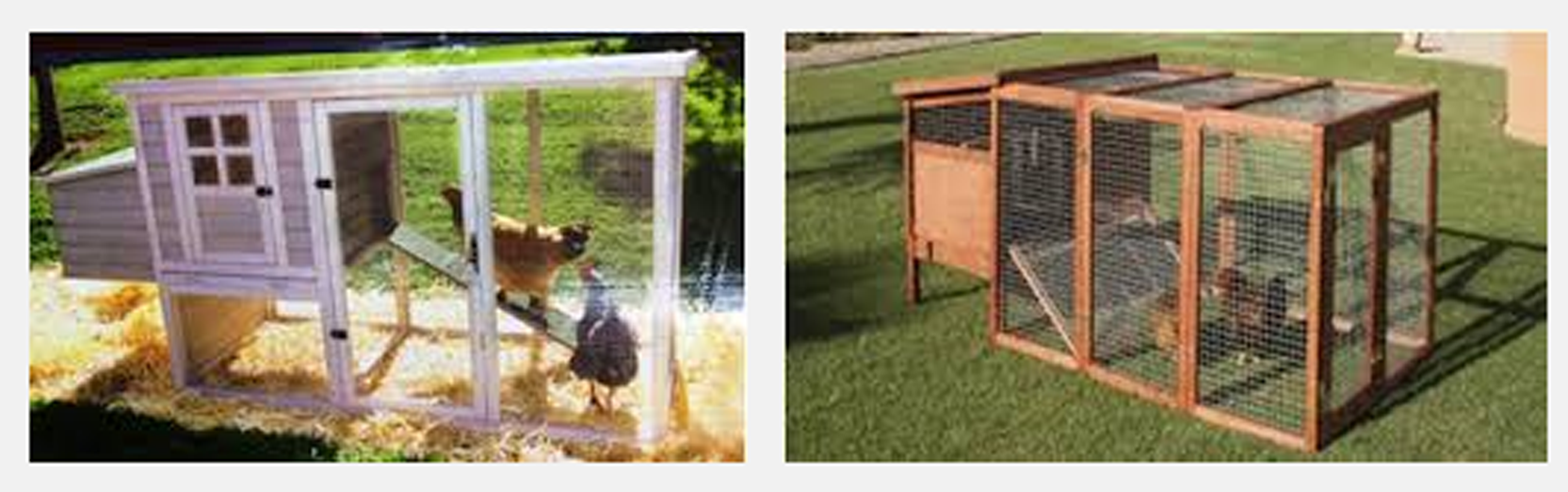
(5)
Bulkhead, seawall, dock and similar requirements.
a.
All bulkhead, seawalls or retaining walls in the location designed thereof are to be approved by the city after application has been made in writing to the planning and zoning manager.
b.
No structures shall be built on or over water except docks and the regulation of said docks, piers, wharves, and mooring poles or piers of any nature shall be subject to all applicable regulations of the state and all city and county ordinances pertaining to same.
(6)
Commercial, retail and/or service business two (2) or more on the same property.
a.
Access to the businesses shall be from an arterial or collector road;
b.
Access lanes shall not be through parking areas;
c.
Each structure shall have a common integrated architectural character and design.
d.
Loading areas shall be separate from parking areas and combined where possible.
e.
Pedestrian circulation shall be separate from vehicle access lanes.
f.
All edges of paved areas abutting landscaped areas shall be curbed.
g.
Access to adjacent parcels shall be provided through cross access easements or frontage roads wherever feasible.
(7)
Drive-thru establishments. Drive-thru establishments shall adhere to the following additional requirements:
a.
Each queuing lane shall be clearly designed and marked so as not to conflict or interfere with internal circulation or ingress or egress from the site.
b.
If a one-way traffic flow pattern is provided for the parking area, a twelve (12) foot wide bypass lane shall be provided.
c.
Each queuing space shall be a minimum of nine (9) feet by eighteen (18) feet.
d.
The minimum number of queuing spaces, including the vehicle being served, shall be provided as follows:
(8)
Flex-industrial uses. The following limitations regarding flex-industrial buildings and uses shall apply at a minimum:
a.
No building shall exceed two (2) stories in height.
b.
All buildings shall have a minimum of one (1) loading bay.
c.
All loading bays shall be located so that vehicles using such bays shall not be visible from public streets. All loading bays shall be screened from view by the building, landscaping, walls or decorative fencing. Except during the process of loading or unloading, trucks and trailers shall not be parked outside the building, unless parked in screened areas not visible from adjacent roads or properties.
d.
At least fifty (50) percent of the total gross floor space in any building shall have a floor load capacity of at least one hundred twenty-five (125) pounds per square live foot load.
e.
No more than forty-nine (49) percent of the gross floor space of each building shall be used for non-accessory office uses.
f.
Office uses recognized as appropriate in flex-industrial/office buildings shall be associated with permitted and conditional uses and shall not include professional office uses with high-turnover or high intensity traffic, such as but not limited to corporate headquarters (unless associated with a permitted use), law offices, architectural offices, insurance offices, medical offices and health maintenance organizations.
g.
No outdoor storage is permitted.
(9)
Home occupations.
a.
Home occupations shall be allowed in a bona fide dwelling unit, subject to the following requirements:
1.
The use of the residence for a home occupation shall be clearly incidental and subordinate to its use as a residential structure by the occupants and shall under no circumstances change the residential character of the structure.
2.
There shall be no change in the outside appearance of the building or premises, or other visible evidence of the conduct of such home occupation.
3.
No home occupation shall occupy more than thirty-five (35) percent of the total floor area of the dwelling unit.
4.
No pedestrian or vehicular traffic shall be generated by such home occupation in greater volumes than would normally be expected in a residential neighborhood.
5.
No equipment, tools, or process shall be used in such a home occupation which creates interference with neighboring properties due to noise, vibration, glare, fumes, odors, or electrical interference.
6.
Fabrication of articles commonly classified under the terms arts and handicrafts shall be deemed a home occupation provided no retail sales are made at the home.
7.
Outdoor storage of materials shall not be permitted.
b.
The following shall not be considered home occupations: beauty shops, barber shops, studio for group instruction, public dining facility or tea room, photographic studio, fortune telling or similar activity, outdoor repair, food processing, retail sales, nursery school or kindergarten.
c.
The giving of individual instruction to one (1) person at a time, such as an art or music teacher, shall be deemed a home occupation.
d.
A home occupation shall be subject to all applicable city/county occupational licensing requirements, fees, and other business taxes.
(10)
Parking of busses and semi-trailers.
a.
It shall be unlawful for any owner, agent, operator, or person in charge of any bus or semi-trailer, as defined by the State of Florida, to park, store, or keep such motor vehicle on any public street, avenue, alley, or other thoroughfare or any right-of-way therewith.
b.
It shall be unlawful for any owner of property in any residential zoning district to park on, or cause to be parked on any street, alleys, or parkways abutting his property, or to allow to be parked on his residential property, any bus or semi-trailer, as defined by the State of Florida.
c.
No recreational vehicles, trailers, buses, or other temporary vehicles or structures shall be used for overnight residences.
(11)
Recreational vehicles. The following regulations apply to the use, parking, storage and keeping of recreational vehicles in all zoning districts.
a.
Recreational vehicles may be used for living, sleeping or housekeeping purposes only in mobile home parks and those districts permitting recreational vehicle parks, except that recreational vehicles may be used on a lot of record in a residential district in accordance with regulation of temporary manufactured homes. Development plan approval is required for any development of a recreational vehicle park.
b.
Parking of recreational vehicles is permitted only for the purpose of storing the vehicles in all districts, except as provided in this section. Such vehicle shall not:
1.
Be used for the storage of goods, materials or equipment other than those items considered to be part of the vehicle essential for its immediate use.
2.
Discharge or discard any litter, effluent, sewage or other matter into any public right-of-way or upon any private property while parked and provided in this section.
3.
Be occupied or used for living, sleeping or housekeeping purposes except as permitted by code; or
4.
Be stored on any vacant, unoccupied or unimproved lot.
c.
No owner shall allow any recreational vehicle eighteen (18) feet or more in length to be parked on a public street longer than eight (8) hours in any twenty-four-hour period.
d.
In all residential districts the following additional restrictions shall also apply to the parking, storing or keeping of recreational vehicles:
1.
Parking is permitted inside any enclosed structure which complies with the dimensional requirements of the particular district.
2.
Parking is permitted outside any structure in the side or rear yard, provided the vehicle is a minimum of two (2) feet from the lot line.
3.
Parking is permitted in the front yard driveway for temporary periods for no more than forty-eight (48) hours for loading and unloading purposes.
e.
All mixed use, business, office and industrial districts storage of such vehicles shall comply with requirements for outdoor storage.
(12)
Swimming pools and/or screen enclosures. No swimming pool shall be built, erected or maintained unless it is fully enclosed by a fence or wall four (4) feet in height or by a screen enclosure. Gates or doors for access to said pool shall be self closing and self latching. The ladder or access to an above ground pool shall be retracted or removed at all times the pool is not under the supervision of an adult or it shall be fenced in a similar manner to an in ground pool. All building code requirements shall be met. An attached screened enclosure can be within five (5) feet of the rear property line.
(13)
Use of right-of-way. In all districts right-of-way use shall be restricted as follows:
a.
Display or storage of vehicles for sale or lease is prohibited.
b.
Repair of vehicles or storage of vehicles for repair is prohibited.
c.
Display or sale of merchandise is prohibited.
d.
Driveway aprons shall be paved and culverts shall be required where necessary for drainage.
e.
Nor shall any right-of-way shall be blocked, obstructed or used for any purpose without written approval of the city.
(14)
Watchman's or caretaker's quarters. An attached single family dwelling unit, not to include recreational vehicles, mobile homes or manufactured housing, may be used as a watchman's or caretaker's quarters upon obtaining a conditional use permit for that purpose. In the P public district, a single-family dwelling unit, including recreational vehicles, mobile homes or manufactured housing, may be used as a watchman's or caretaker's residence upon obtaining a conditional use permit for that purpose, provided that one (1) of the two (2) following conditions is met:
Any mobile home, manufactured home or recreational vehicle used for that purpose must be parked at all times, while in use as caretaker's quarters, inside a fully enclosed structure, and the lot or parcel on which such mobile home, manufactured home or recreational vehicle is used for this purpose must have a fully approved on-site dumping station for the proper disposal of wastewater; or a mobile home or manufactured home, but not a recreational vehicle, may be used for such purposes under a conditional use permit if the parcel is not less than ten (10) acres in size, is occupied not less than five (5) nights per week by a bona fide watchman or caretaker, and is served by municipal sewer service. No more than one (1) conditional use permit for a watchman's or caretaker's quarters shall be issued for any one (1) lot or parcel of property. In any district, a single-family dwelling unit used as a watchman's or caretaker's quarters shall have a living area of at least five hundred (500) square feet and not more than seven hundred fifty (750) square feet, plus an additional three hundred (300) square feet which may consist of attached screen room, garages, carports or utility areas. These square footage restrictions shall not apply to mobile homes, manufactured houses or recreational vehicles in the P public district, however those may also have up to three hundred (300) square feet of attached screen room, garages, carports or utility areas, in addition to the mobile home, manufactured house or recreational vehicle itself. Watchman's or caretaker's quarters may be occupied only by the business owner and his or her immediate family, a superintendent and his or her immediate family, or by a caretaker, watchman or custodian and their immediate family. These units may be used only in conjunction with the operation of a business on the property in the commercial or industrial districts and in those districts, shall be an integral part of the principal business structure and located behind or above that portion of the business structure devoted to service to the public.
(15)
Historic property additional uses. In order to enhance and protect historic properties within the City of Leesburg, permitted uses in addition to those allowed in the district where the historic property is located shall be permitted if approved as a conditional use as follows:
a.
The proposed use of an existing historic structure shall be compatible with adjacent properties and the surrounding district. In consideration of the conditional use, the proposed use shall be restricted to limit the intensity of the use on surrounding property and to maintain the historic character of the neighborhood.
b.
The site shall be presumed to be historic if it meets one (1) of the following criteria:
1.
The property is listed on the National Register of Historic Places;
2.
The property is within an approved historic district of the city, state or federal government;
3.
The property has been identified and designated by the city, following a professionally conducted survey or study, to be of local historic importance (whether or not it is to be submitted for inclusion of the Florida Master Site File or for consideration for the National Register of Historic Places).
(16)
Outdoor storage areas except industrial. Such uses shall not be located within fifty (50) feet from the nearest residential district and the operation thereof shall be governed by the following provisions and any other conditions as may be required to protect the public health, safety, comfort, convenience and general welfare, and especially with regard to abutting properties and the occupants thereof.
a.
Inflammable and explosive liquids. No highly inflammable or explosive liquids, solids or gasses shall be stored in bulk above ground. Tanks or drums of fuel directly connecting with heating devices or appliances located on the same premises as the tanks or drums of fuel are excluded from this provision.
b.
Fencing and setbacks. All outdoor storage facilities shall be enclosed by a fence or wall adequate to conceal such facilities and the contents thereof from adjacent property or a public street. Such walls and fences can be placed within the property line except such fences or walls must be a minimum of twenty-five (25) feet from the property line bordering a public street.
c.
Deposit of wastes. No materials or wastes shall be disposed of on any premises in such form or manner that they may be transferred off such premises by natural causes or forces.
d.
Other hazardous materials. All materials or wastes which might cause fumes or dust or which constitute a fire hazard or which may be edible by or otherwise be attractive to rodents or insects shall be stored outdoors only in closed containers.
e.
Portable storage facilities for outdoor storage. The use of portable storage facilities, such as trailers, piggy-back storage bins, and the like, for outdoor storage for a period in excess of two (2) weeks in any consecutive six-month period is prohibited. The two-week period shall be computed by adding the total periods of all such portable storage facilities for any six (6) consecutive months. Storage at a construction sites shall be exempt from this subsection.
f.
Portable storage facilities in use on the date this subsection amendment is enacted shall have a six-month period following its enactment within which to remove such facilities.
(17)
Subdivision model homes, sales trailers, and sales offices. Model homes, subdivision sales offices, trailers, and subdivision model home complexes shall comply with the following regulations:
a.
Limitation on office use. The sales office shall be used only for selling new, previously unoccupied homes located within the subdivision where the office has been established.
b.
Parking. Temporary parking facilities shall be required to have a stabilized surface for parking and may use mulch etc. if approved by the environmental services department. However, required handicap spaces and the drive aisle shall be constructed of concrete or asphalt and striped in compliance with city standards. A parking lot may not be required for subdivision sales trailer if adequate on-street parking exists as determined by the community development director. The trailer may not be located on a collector or arterial streets.
c.
Conversion. All installations related to the sales activity (e.g., display partitions, canopies, walls, etc.) shall be removed and any room used for sales activity shall be converted to the approved residential use prior to residential occupancy. Temporary parking facilities installed to serve any model home or sales office shall be removed within sixty (60) days after conclusion of sales activities.
d.
Design. As an administrative approval item, design standards for model home complexes may be established by the community development director. All temporary sales trailers shall comply with section 25-290, Temporary uses.
(18)
Mobile food vending.
a.
Short title. This subsection shall be known and cited as the "City of Leesburg Mobile Food Vendor" Ordinance.
b.
Definitions. For the purpose of this article, the following terms shall apply:
Central Business District refers to the City of Leesburg's Land Development Regulations, Article XI. Definitions.
City of Leesburg Historic District refers to the City of Leesburg's Code of Ordinances, Chapter 30 - Historic Preservation, Section 30-2, Definitions.
Food means all articles used for human consumption as food, drink, confectionery or condiments, whether simple, mixed or compound, and all substances or ingredients used in preparation thereof.
Food service establishment means any place where food is prepared and intended for individual portion service, and includes the site at which individual portions are provided. The term includes any such place regardless of whether consumption is on or off the premises and regardless of whether there is a charge for the food. The term includes delicatessens that offer prepared food in individual service portions. The term does not include schools, institutions, fraternal organizations, private homes where food is prepared or served for individual family consumption, retail food stores, the location of food vending machines, and supply vehicles, nor does the term include a research and development test kitchen limited to the use of employees and which is not open to the general public.
Mobile food unit (MFU) shall mean a vehicle mounted food service establishment, which is self-propelled, or otherwise designed to be movable from place to place, including but not limited to carts, mobile kitchens, hot dog carts, mobile trailers and lunch trucks. Mobile food units must comply with the standards specified by Chapter 5K-4.002 of the Florida Administrative Code and the U.S. Food and Drug Administrative 2001 Food Code as amended.
Mobile food vendor (MFV) shall mean the owner or operator of a food service establishment from a mobile food unit.
Public property shall mean all property, real and personal, belonging to the City of Leesburg, county, state or federal governments, excluding that which is used and/or intended for use by vehicular or pedestrian traffic and defined herein as a public way.
Public sidewalks shall mean that portion of a public way that has been improved with concrete, brick pavers or other similar surface treatments and intended for pedestrian traffic. It shall not include the portion of the public way intended for vehicular traffic or parking spaces delineated for public vehicular parking.
Public ways shall mean all areas legally open to public use and used and/or intended for vehicular or pedestrian traffic, including public streets, alleys, sidewalks and roadways but excluding any public property of the of the City of Leesburg, county, state or federal governments.
Signage refers to City of Leesburg's Land Development Regulations, Chapter 25, Article VI, Sign Regulations.
Temporary food service establishment shall mean a food service establishment that operates at a fixed location for a period of time in conjunction with a single special event for which a special events permit has been applied for and obtained from the City of Leesburg including but not limited to fairs, shows, circuses, exhibitions, municipal celebrations, festivals and other similar events within a specifically defined area of the municipality for a specified period of time.
c.
Purpose. The purpose of the "City of Leesburg Mobile Food Vendor" Ordinance is to establish permitting procedures and appropriate regulations for mobile food vending businesses operating within the City of Leesburg.
d.
Applicability.
1.
This section shall apply to those lands within the corporate limits of the City of Leesburg except for any lands with an ARD (age restricted development) zoning designation.
2.
This section shall apply to all mobile food vendors and mobile food vending activities, including permitting and operations.
3.
Mobile vending shall not be permitted within the corporate limits of the City of Leesburg except as permitted under the conditions of this section.
4.
Other vending and or sales from vehicles on public rights-of-way, or from or upon vacant lands within the corporate limits of the City of Leesburg shall not be permitted, regardless of the type of merchandise.
e.
Prohibitions.
1.
Mobile food vendors shall not operate in the central business district (downtown) of the City of Leesburg.
2.
Mobile food vendors shall not operate in the historic preservation district of the City of Leesburg.
3.
Mobile food vendors shall not operate on undeveloped property.
4.
The sale of alcoholic beverages is prohibited unless the vendor is part of, and included in, a special event application and permit as noted under the subsection (6) Exemptions.
f.
Exemptions.
1.
Special events sponsored by the City of Leesburg shall be exempt from the requirements of this subsection.
2.
Special events approved by the City of Leesburg shall be exempt from the requirements of this subsection.
3.
Holders of current permanent or temporary vendor permits, maintaining an on-going business concern within the corporate limits of the city, that are active as of the date of adoption of this subsection, shall be exempt from this subsection until such time as the business does cease operations for a period of thirty (30) days, provided that the business remains in compliance with the City Code of Ordinances and the permit issued to the business. Upon expiration of an existing permanent or temporary vendor permit, the regulations of this section shall prevail, and a new permit application shall be required.
4.
Fully self-contained ice cream and/or food trucks, that meet all locational and operational requirements of this subsection, which remain stationary for no longer than a two (2) hour period, (i.e. providing lunch at an employment center) shall be exempt from the requirements of this subsection.
g.
Appeals. The City of Leesburg Planning Commission will serve as the board of appeals of city staff decision regarding mobile food vending permits.
h.
Location requirements.
1.
Properties eligible for mobile food vending shall be privately owned and have an existing principal business operating in compliance with all applicable provisions of this Code.
2.
The property shall have a zoning district of commercial, industrial or a planned zoning district
3.
The property shall be located outside of both the CBD (central business district) and the historic preservation district of the City of Leesburg.
4.
Mobile food vending shall not be permitted on undeveloped property.
5.
No more than one (1) mobile vendor permit per property shall be permitted.
i.
Permit and permit fees.
1.
Mobile food vending permit fee—Fifty dollars ($50.00) (as amended).
j.
Requirements for permitting.
1.
Applications for mobile food vendor permits shall be made at City of Leesburg offices on a form furnished by the city. No person shall engage in the sale of food as a mobile food vendor without first completing an application and have said application approved by the City of Leesburg. Such information shall include:
(i)
Name, address and contact information of the vending operator.
(ii)
Name, address and contact information of the property owner.
(iii)
Name, address and contact information of the business owner/manager on duty.
(iv)
A site plan shall be required, providing the following information:
i.
Property lines and all existing structures.
ii.
Adjoining streets.
iii.
Vendor location and parking area.
iv.
Setbacks: all mobile food vendor vehicles must be set back at least thirty (30) feet from the right of way of all street side property lines and at least ten (10) feet from side and rear property lines.
(v)
License as a mobile food vendor from the state of Florida, Division of Restaurants and Hotels.
(vi)
Proof of license, registration and insurance of the mobile food vending vehicle.
(vii)
A signed, notarized affidavit form, as provided by the City of Leesburg application, indicating:
i.
Permission of the property owner to use the property for mobile food vending,
ii.
Permission from the existing business that all employees and customers of the vending operation shall have access to restroom and parking facilities, whereby the mobile food vendor shall operate without interference to pedestrian or vehicular travel or traffic flow to or from the principal business.
(viii)
Copy of permit from Lake County Health Department showing location/contract for disposal of wastewater and grease products per section 22-120 of the City of Leesburg's Code of Ordinances. The applicant for a mobile food vendor's permit shall provide to the City of Leesburg's Planning and Zoning Manager and the City of Leesburg's Public Works Director, compliant waste disposal facilities and best management practices documentation including a site plan. Such site plan shall indicate the address of the waste disposal facility and contractual responsibilities and obligations of the mobile food vendor permitee regarding disposal.
(ix)
Fire inspection approval and fire inspection report.
k.
Indemnification of City of Leesburg; insurance.
1.
Prior to the issuance of a permit for mobile food vending, the applicant shall sign the application, which shall include a statement that the permittee shall hold harmless the City of Leesburg, its officers and employees and shall indemnify the City of Leesburg, its officers and employees for any claims for damages to property or injury to persons which may be occasioned by any activity carried on under the terms of the permit.
2.
The permittee shall furnish and maintain such public liability, food products liability, and property damage liability from all claims and damage to property or bodily injury, including death, which may arise from operations under the permit or in connection therewith. Such insurance shall provide coverage of not less than one million dollars ($1,000,000.00) for bodily injury, property damage, or any claims or injuries respectively per occurrence. Such insurance shall be without prejudice to coverage otherwise existing therein and shall name as additional insured the City of Leesburg, its officers and employees, and shall further provide that the policy shall not terminate or be cancelled prior to the completion of the permit period without forty-five (45) days' written notice to the director of community development and planning and zoning manager at the address shown in the permit. Such proof of insurance shall be provided prior to receiving the permit.
l.
Operational standards.
1.
Mobile food vendors shall limit business-operating hours to the daily business hours of the principal business located on the property. Mobile food vendors operating on private property must remove from the property all mobile food units, vendor equipment and appurtenances of the vending operation, trash caused by or generated from the mobile food vending operation, effluence caused by food preparation, distribution (sales) and/or consumption by the close of business of the principal business each day.
2.
Compliance with wastewater, grease, food products, by-products or waste, which must be disposed of as required by the City of Leesburg's Oil and Grease Management Program (refer to section 22-120 of the City of Leesburg's Code of Ordinances), City of Leesburg Solid Waste disposal requirements and other City of Leesburg waste disposal requirements is required.
3.
Mobile food units shall be equipped with a suitable trash container readily accessible to the public, in which the vendor's customers may deposit any litter, trash or waste related to the vendor's business including, but not limited to sales, preparation, and consumption. Prior to moving a mobile food unit from a sales location, a mobile food vendor shall pick up and remove all litter, trash and waste related to the vendor's sales within a one hundred-foot radius.
4.
Mobile food vendors shall, at all times, maintain required fire suppression equipment on the mobile food-vending unit in operational condition. [3]
5.
The temporary storage of mobile food units, equipment and appurtenances must be in accordance with this Code and the City of Leesburg's land development regulations.
6.
Mobile food units shall be self-contained, but may be connected to the City of Leesburg's water service and may utilize electrical power derived from a stationary, permanent power source where explicit, written consent from the principal business owner or operator, City of Leesburg utility customer at the principal business address has been obtained by the mobile food vendor.
7.
Electrical power supplied to mobile food units and vending equipment may be provided by a portable generator with a maximum noise output rating not to exceed seventy (70) decibels as confirmed by the manufacturer's specifications for that model of generator.
8.
No onsite parking, patios, tables, chairs, or other such improvements shall be made to private property associated with mobile food vending operation.
9.
The City of Leesburg may restrict or prohibit mobile food vending from any specific location on any street or sidewalk at any time the public health, safety or welfare is determined to be adversely impacted by the City of Leesburg Police.
10.
The permittee operates the mobile food unit in a manner that violates state and City of Leesburg traffic, parking, stopping and standing laws and ordinances or otherwise creates or contributes to a potential safety or hazardous situation or condition on public or private property.
m.
Non-compliance. Non-compliance with the terms codified herein may result in enforcement action including but not limited to fines and referral to the city code enforcement magistrate for adjudication.
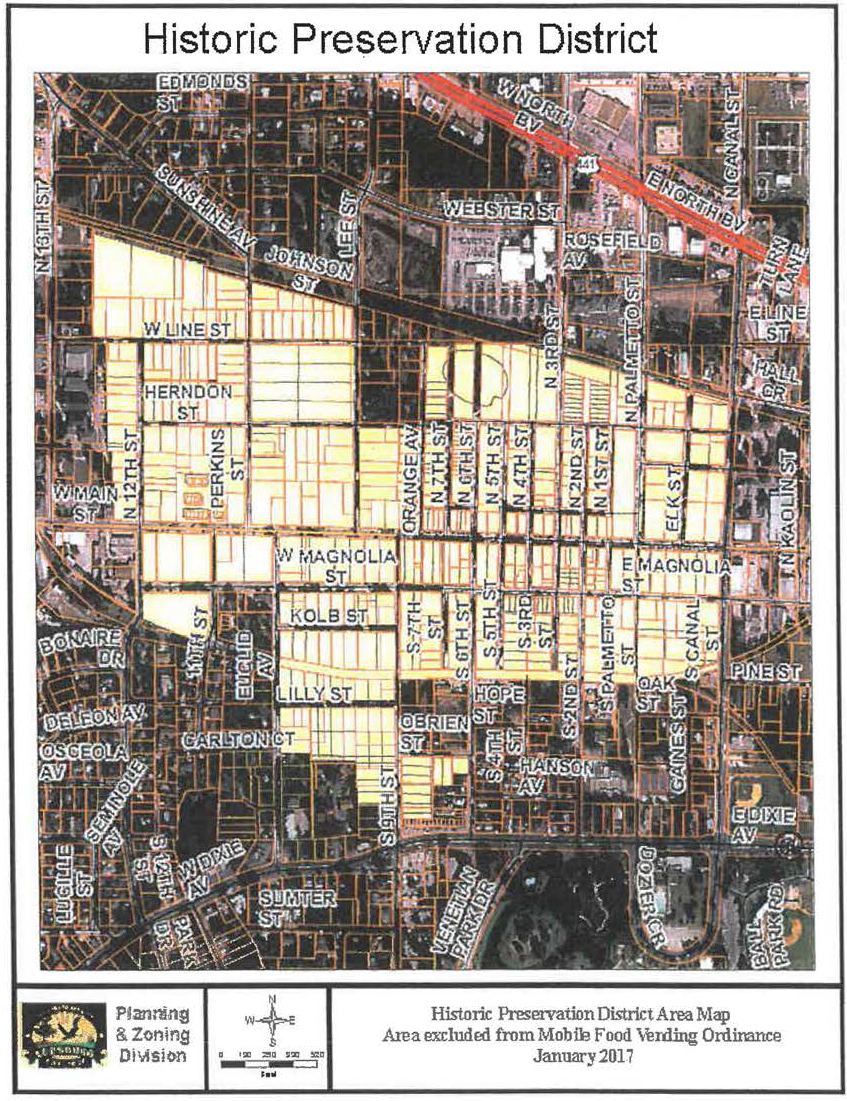
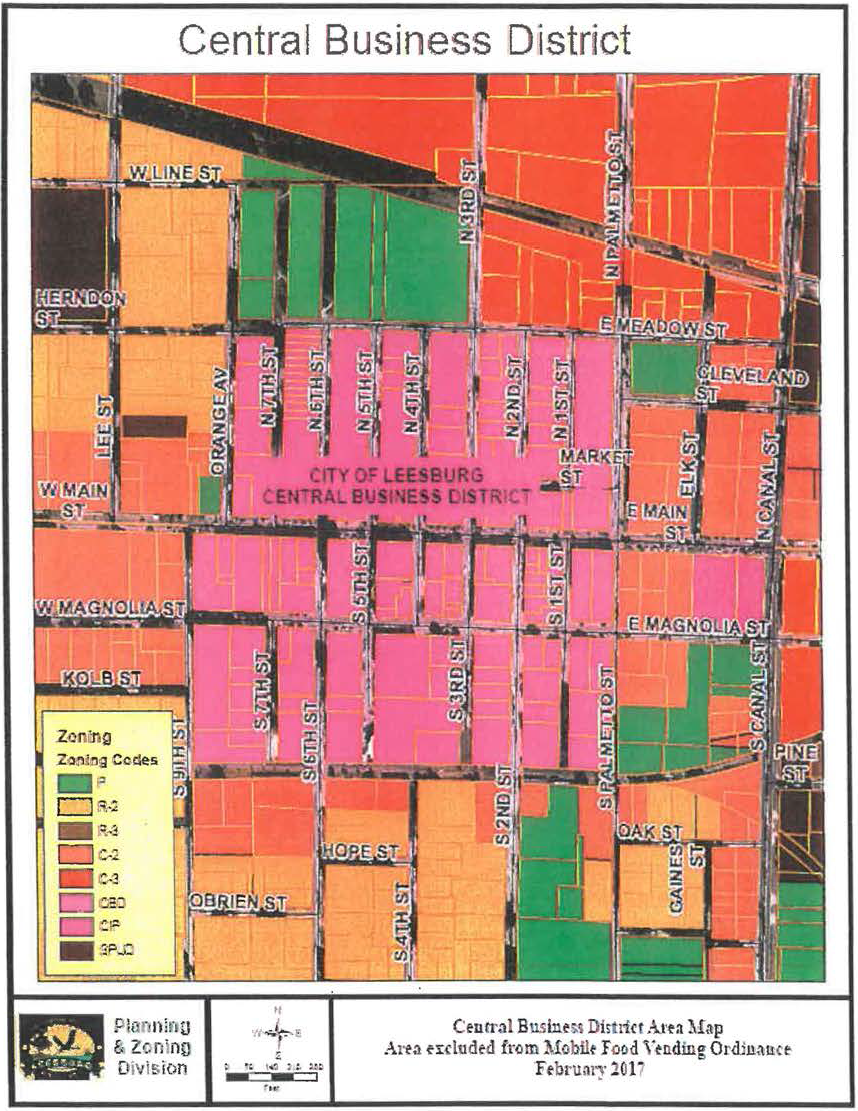
(19)
Residential garages. All new single-family detached dwellings constructed after the effective date of this section in all zoning districts shall require a garage of at least two hundred forty (240) square feet with minimum design dimensions of twelve (12) feet × eighteen (18) feet for automobile parking. All garages shall be equipped with an operational overhead door with minimum dimensions of eight (8) feet × seven (7) feet, which door, when closed, conceals the interior of the garage. Should any property owner enclose or reduce the size of any existing garage or carport below the square footage requirements of this section, the owner shall be required to have or construct a storage structure on the property sufficient to meet the square footage requirements of subsection (20), residential storage, below. However, historic dwellings listed in the city's historic district may be allowed to replace existing carports with a carport meeting the size requirements of this section if approved by the historic preservation board as necessary to maintain the historic character of the dwelling. New carports and garages shall be designed to be architecturally similar and compatible to the principal residence.
(20)
Residential storage. All new single family detached dwellings constructed after the effective date of this section in all zoning districts shall require an enclosed storage area of eighty (80) square feet as part of the dwelling or as a separate storage unit in the rear or side yard of the property. The minimum design dimensions of storage within the dwelling unit shall be three (3) feet × ten (10) feet. The minimum design dimensions of storage areas out side of or detached from the dwelling unit shall be six (6) feet × ten (10) feet. Storage areas requirements shall not include any area used for heating and air-conditioning equipment, washers and dryer etc., in meeting the minimum requirements. New detached storage units shall be designed to be architecturally similar and compatible to the principal residence.
(21)
Indoor recreation. "Adult gaming center" as used in this section shall mean a structure, building, edifice, facility or location, along with its grounds in which electronic gaming devices are used, operated or stored in conjunction with the use of such electronic gaming devices. The following regulations shall apply to all adult gaming centers.
a.
Only adults eighteen (18) years of age or older shall be permitted within buildings where this use is permitted.
b.
Adult gaming centers uses shall only be allowed by conditional use permit in the M-1 Industrial zoning district, and in the SPUD and PUD districts. Every application seeking approval shall include for every principal, officer, shareholder, and director of the owner of the proposed adult gaming center, a fingerprint card and letter certifying the results of a criminal background check generated by the Florida Department of Law Enforcement or the City of Leesburg police department.
c.
Adult gaming centers uses shall be located no closer than fifteen hundred (1,500) feet to either the boundary of any residential zoning district, or to any other adult gaming centers use, or to the following uses; park, school, church, establishment selling or serving alcoholic beverages for consumption on or off premises, or child day care.
d.
Hours of operation shall be restricted to 7:00 a.m. through 11:00 p.m., Monday through Saturday.
e.
The sale or consumption of alcohol on the premises shall be prohibited.
f.
On-site parking shall be provided at a ratio of two (2) spaces per seventy-five (75) square feet of gross leasable area or per each electronic gaming device equipment whichever is greater.
g.
No food shall be prepared on site, nor shall any food be catered, ordered in or otherwise brought to the site, however, on site vending machines and prepackaged snacks offered on site for sale or consumption shall be permitted.
h.
Adult gaming centers shall comply with F.S. § 849.094 "Game promotion in connection with sale of consumer products or services."
i.
Permittee shall provide the city within ninety (90) days of issuance of a permit a copy of their approval/permit for the adult gaming center use from the Florida Department of Agriculture and Consumer Services or the permit will be suspended. The permittee may request a hearing at the next regularly scheduled planning commission meeting to request reinstatement of the permit, however the decision whether to reinstate this permit shall lie within the discretion of the planning commission and reinstatement shall not be a matter of right.
j.
No permit or approval for the operation of any adult gaming centers shall be issued to an applicant if any person with an ownership interest in the business operating the adult gaming centers has been convicted of a felony, or any violation of federal, state or local law, statute or ordinance pertaining to gambling or any other crime involving moral turpitude within seven (7) years preceding the date of the filing of the application.
k.
Approval to operate an adult gaming centers must be granted to the applicant with a majority ownership interest in the business person or entity operating the adult gaming center, and may not be transferred to another entity.
l.
Permittee shall not operate more than ten (10) electronic gaming devices, and any reduction following the enactment of this chapter in electronic equipment pieces by such permittee shall become permanent. Replacing an existing electronic gaming device due to a defect or upgrade shall not be deemed a reduction pursuant to this section, provided that such replacement occurs within thirty (30) days of written notice to the city community development department that an electronic gaming device requires upgrade or replacement.
m.
No drawing by chance in connection with the sale of a consumer product or service, sweepstakes or game promotion shall:
i.
Design, engage in, promote, or conduct a game wherein the winner may be predetermined or the game may be manipulated or rigged;
ii.
Arbitrarily remove, disqualify, disallow, or reject any entry;
iii.
Fail to award any prize offered;
iv.
Print, publish, or circulate literature or advertising material which is false, deceptive, or misleading; or
v.
Require an entry fee, payment, or proof of purchase as a condition of entering.
n.
An operator conducting a drawing by chance in connection with the sale of a consumer product or service, sweepstakes or game promotion shall be required to:
i.
Maintain a list of the names and addresses of all persons who have won prizes which have a value of more than twenty-five dollars ($25.00) for one (1) year.
ii.
Maintain a trust account or bond in an amount equal to the total announced value of the prizes offered or fifty thousand dollars ($50,000.00), whichever is larger.
o.
On premises, the permittee shall maintain the following security devices and standards:
i.
A security camera system with inside and outside visual monitoring operating twenty-four (24) hours a day and capable of recording and retrieving an identifiable image both inside and outside the premises;
ii.
A drop safe or cash management device for restricted access to cash receipts;
iii.
A conspicuous notice at all public entrances to premises stating cash register contains limited amount of cash;
iv.
At exits to premises, height markers displaying height measures;
v.
A cash management policy limiting cash on hand;
vi.
A silent alarm system capable of notifying law enforcement; and when the premises is open for business, at least one (1) Florida state licensed, armed security guard.
vii.
A steel bullet resistant UL 752 Level 1 rated entry door with bullet-resistant security glass for viewing customers entering the premises including exterior automatic locking and interior panic push hardware.
p.
For additional security, centers shall not be located in strip centers or malls where the general public including children may be located but must be in stand alone building.
q.
Tinted windows or other obstructions of the view through the glass of any adult gaming centers shall be prohibited for purposes of visual security of police offices.
r.
As used in this section, the term "electronic gaming device" shall mean any device, computer, terminal, video or other equipment (either mechanical or electrical in nature) that may or may not be capable of downloading games from a central server system, machine, computer or other equipment upon connection with or the insertion of, swiping, passing in range of, or any other technical means of physically or electromagnetically connecting a coin, bill, ticket, token, card or other similar object, including entering a password or pass code obtained directly or indirectly through payment of consideration or obtained as a bonus or supplement to another transition involving the payment of consideration, which makes the devices available to play or operate computer or video simulation of any game such as slot machines, bingo, poker, keno, craps, or any other type of game ordinarily played in a casino, including a game involving the display of the results of a raffle, sweepstakes, drawing, contest, lottery, or other promotion, and which may deliver or entitle the person or persons playing or operating the device to a payoff of cash, money, or other credit, tickets, tokens, gift cards, or electronic credits to be exchanged for cash or merchandise, or any other thing of value, whether made automatically from the machine or manually.
"Owner" or "operator" shall mean any person who owns, operates, or distributes for the purpose of operating one (1) or more amusement device or electronic gaming device.
"Permittee" shall mean a person in whose name a permit to operate an adult gaming center has been issued, as well as all individuals listed as an applicant on the application for a permit for an adult gaming center.
s.
"Game promotion" means, but is not limited to, a contest, game of chance, sweepstakes, or gift enterprise, conducted by an operator within or throughout the state and other states in connection with and incidental to the sale of consumer products or services, and in which the elements of chance and prize are present. However, "game promotion" may not be construed to apply to bingo games conducted pursuant to F.S. § 849.0931.
t.
This section does not apply to: (a) amusement arcades that were operating with a business tax receipt in the city pursuant to F.S. § 849.161 on or before March 10, 2014 the effective date of this amendment to the City Code of Ordinances; or (b) bingo games lawfully conducted in accordance with the restrictions and requirements of F.S. § 849.0931, which were operating with a business tax receipt in the city pursuant to F.S. § 849.161 on or before March 10, 2014 the effective date of this amendment with only group games and not electronic single player games with connection to offsite systems for example the internet, servers, programs etc.
(22)
Location of helicopter landing areas. The following regulations will apply to the location of any helicopter landing site. Capitalized terms used in this subsection shall have the meanings ascribed to them in Chapter 4, Article III, of this Code:
a.
No helicopter landing site may be located in any zoning district within the City of Leesburg unless specifically permitted by a PUD (planned unit development) district, except that helicopters may land and take off from the Leesburg International Airport and Approved Public Property in accordance with airport and Federal Aviation Administration regulations.
b.
No PUD or other approval may be issued for any helicopter landing site until the applicant has furnished to the city a completed application seeking approval from the Federal Aviation Administration to locate a helicopter landing site at the proposed location, with proof the application has been filed and all fees due for the application have been paid. Any permit or approval for a helicopter landing site shall be contingent on receipt by the city of final approval by the Federal Aviation Administration for the helicopter landing site, within ninety (90) days after issuance of the permit or approval. If the application is not approved by the Federal Aviation Administration within that ninety-day period, or is disapproved, the permit or approval shall be deemed revoked as a matter of law without the requirement of notice to the applicant by the city. No helicopter landing site for which a permit or approval has been issued may be utilized for helicopter operations until the final Federal Aviation Administration approval has been granted.
c.
All applications for a helicopter landing site shall contain or be accompanied by the following:
1.
Name and address of the applicant, and if the applicant is not a natural person, the name and address of a natural person who will be representing the applicant in the approval process and be responsible for the accuracy of all information submitted.
2.
A certificate of insurance providing public liability and property damage coverage of at least two million dollars ($2,000,000.00) combined single limit, with the City of Leesburg named as an additional insured party.
3.
A noise study from a firm licensed to conduct such studies, setting forth the effect the noise from helicopter operations at the proposed helicopter landing site (including approach zones) will have on surrounding property owners, and concluding that the noise will not constitute a nuisance to or be deleterious to the owners and occupants of surrounding property. The study must be addressed to the city and authorize the city to rely on the study for its intended purpose of demonstrating no ill effects from the noise associated with the helicopter landing site.
4.
Such other material as may be required by the city for evaluation of the application, in order to protect the public health and safety.
d.
Construction of a helicopter landing site shall not be commenced, nor shall site preparation work be allowed, until both a planned unit development district rezoning has been issued and final Federal Aviation Administration approval has been secured.
(23)
Outdoor sales display and storage. Definitions, of "outdoor sales display and storage" shall read as follows:
"Outdoor storage" means the storing or maintaining, exterior to any permanent, fully enclosed building or structure of goods, merchandise, inventory, equipment or other tangibles for any purpose other than outdoor sales display as defined in this section. The term outdoor storage shall not include semitrailers, equipment and vehicles in industrial or the central business district areas.
"Outdoor sales display" means the displaying of goods, merchandise or products outdoors such that the items are readily available for sale at retail on the same lot and in conjunction with a permitted or conditional use which is otherwise operated entirely within a permanent fully enclosed building.
The following requirements apply to all outdoor display and storage in all nonresidential zoning districts.
a.
Outdoor display. Outdoor sales display shall adhere to the following standards:
1.
Outdoor display of merchandise shall not occupy any required parking spaces, landscape area, pedestrian accessibility or fire lane. Items located on a porch of a building are considered to be outside if the porch is not enclosed.
2.
Outdoor display shall not extend into public sidewalk or right-of-way or onto adjacent property and must not extend more than fifteen (15) feet outside of the principal structure or within fifteen (15) feet of adjacent public streets.
3.
The outdoor display area shall not exceed ten (10) percent of the square footage of the principal structure or five hundred (500) square feet whichever is less.
4.
Outdoor display shall be displayed in a neat and orderly manner and maintained in a clean, litter-free manner.
5.
Outdoor sales display merchandise shall not be placed, stored, or maintained outside, except during normal hours of operation of the business but not between sundown and sunup each day.
6.
Outdoor display may not be located on the roof of any structure or under tent/pole structures.
7.
All sales of such merchandise shall be consummated indoors, and no cash register or package-wrapping counter shall be located out of doors.
8.
The maximum height of merchandise shall not exceed four (4) feet with the exception of vehicles which may not exceed fourteen (14) feet in height.
9.
Outdoor display is not required to be screened.
b.
Outdoor storage. Outdoor storage on a temporary or permanent basis shall adhere to the following standards:
1.
Outdoor storage areas are allowed for the purpose of storing goods for a nonresidential enterprise. All outdoor storage areas shall meet each required district building setback lines.
2.
The location of outdoor storage areas shall be limited to the side or rear of the primary structure to which the facility belongs and a minimum four (4) feet from the principal building. Items located on a porch of a building are considered to be outside if the porch is not enclosed. At no point should materials be located in front of any portion of the principle building.
3.
A six-foot solid fence or wall is required to screen outdoor storage when the property is located adjacent to property zoned more restrictive than the subject site or when located along U.S. 27, SR 441, SR 44 and East/West Main Street and visual from the from said corridors. This requirement is in addition to the requirements of section 25-323, Landscape, through section 25-328 except where there is conflict this provision controls.
4.
Outdoor storage shall be prohibited on the roofs of structures or under tent/pole structures.
5.
The outdoor storage area shall not encroach upon the required off-street parking, pedestrian access, fire lanes and maneuvering areas of the site.
6.
The outdoor storage area is limited to a maximum five (5) percent of the square footage of the principal structure or tenant space, whichever is less, within office, retail and commercial zoning districts.
c.
Site specific requirements. Outdoor sales and storage can be adjusted through a conditional use permit granted by the planning commission that is in keeping with the intent of these provisions and will not adversely affect neighboring property.
d.
Exemptions. The following uses are exempt from the requirements set forth in this section.
1.
Areas designated for the outdoor sale, display or storage of monument head stones, plant material including live plants, fruits and vegetables and related plant materials. This exemption includes rock, mulch, pavers, building and landscape materials including bird baths, fountains etc., and lumberyards or new building materials.
2.
Sale, display, or storage areas for automobiles and trucks, boats and similar passenger and recreational vehicles, garden and farm equipment, or truck/trailer rentals which have met applicable requirements as set forth in these regulations and all other applicable laws, rules, and regulations.
3.
Retail operations that occur under a permitted permanent roofed canopy structure attached to the principal structure on the lot or per their approved site plan.
4.
Uses that are in the Industrial or Central Business District zoning districts.
e.
Effective date. Compliance with the conditions of this subsection will become effective on May 1, 2014.
(24)
Donation boxes.
a.
Definitions. The following words, terms and phrases, when used in this article, shall have the meanings ascribed to them in this section, except where the context clearly indicates a different meaning:
Donation box shall mean any container, receptacle or structure designed as or used for the purpose of collecting, gathering donating, giving or otherwise placing items for the purpose of selling, reusing, recycling, or otherwise disposing of household or business items which are no longer of use to the person or entity depositing the item. Such structures are commonly but not exclusively known as:
1.
Charity donation box.
2.
Collection box.
3.
Donation box or bin.
4.
Drop box.
5.
Collection point boxes.
6.
Collection center.
7.
Recycling center.
8.
Recycling box.
9.
Recycling location.
This definition specifically excludes (a) bins used for the solicitation and collection of donated items associated with a permitted special event, provided the bin is removed when the special event ends, and (b) recycling bins associated with the city's recycling collection program.
Donation any item placed in, on or near a donation box.
Refuse any item left outside a donation box shall be considered refuse for the purposes of this section.
b.
Permit required. The placement or continuance of a donation box shall be required to obtain a permit under the conditions and requirements set forth in this section, to be allowed for the purpose of donating items specifically sought by the agency or organization sponsoring the donation box.
c.
Application fees. A fee of one hundred ($100.00) dollars shall be charged for a donation box permit annually. This amount may be amended from time to time by resolution of the city commission.
d.
Permit application and site plan.
1.
Permit application. A completed city permit application (donation box) shall be required, and shall contain, at a minimum, the following information.
(i)
A permit application, completed on form(s) furnished by the city.
(ii)
Proof of property ownership and written consent of the property owner or legal designee having authority to place the donation box on said property.
2.
Site plan. A site plan shall be submitted with the permit application. The site plan shall be drawn to scale and shall contain the following information:
(i)
Property address, lot boundary lines, location of all adjacent streets, driveways and access points necessary to clearly locate the parcel.
(ii)
Location of all structures, parking spaces and landscaping on the parcel.
(iii)
Any vehicular loading/unloading zones.
(iv)
Proposed location of the donation box to show compliance with the required building setbacks of the zoning district.
e.
Design standards. Donation boxes must meet the following design and construction standards.
1.
The donation box shall not exceed twenty-five (25) square feet in area, or seven (7) feet in height.
2.
Shall be clean as to appearance; free of vermin; and kept in an aesthetically pleasing and orderly manner.
3.
Acceptable designs are shown below in Figure 1 below.
Figure 1 - Acceptable Designs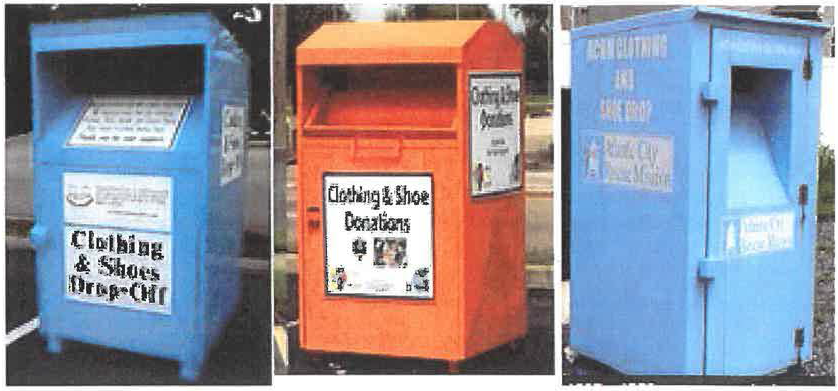
f.
Location criteria and standards for issuance.
1.
Location criteria. Donation boxes may be located under the following requirements.
•
Donation boxes shall be placed in accordance with the following:
(i)
Donation boxes shall be permitted only in developed and occupied non-residential, mixed use, commercial or industrial zoning districts.
(ii)
Donation boxes on a site are limited as follows:
i.
One (1) donation box may be permitted per parcel or business entity.
(iii)
Placed only on a developed parcel that is occupied by a business operating in compliance with all requirements of this Code at the time of permit application.
(iv)
Located only upon improved, level, paved or concrete surfaces.
(v)
Located outside of the twenty-five (25) foot visibility triangle for vehicular and pedestrian safety as shown in Figure 2.
(vi)
The receiving door on each donation box must be oriented toward the interior of the site and away from the public right-of-way.
(vii)
A three-foot wide landscape buffer shall be provided along three (3) sides at the base of the donation box. Landscape buffer plantings shall be in accordance with City of Leesburg Code of Ordinances.
(viii)
Each box must have minimum of twenty-foot setback from any parking space.
Figure 2 - Clear Visibility Triangle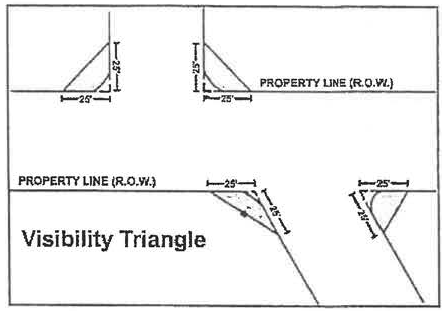
•
Donation boxes shall not be:
(i)
Located on vacant parcels.
(ii)
Placed within required parking spaces for the principal structure or business.
(iii)
Placed within required landscaping for the principal structure or business.
(iv)
Situated within the twenty-five-foot clear visibility triangle.
(v)
Situated so as to obstruct pedestrian or vehicular movement patterns.
(vi)
Placed in rights-of-way, sidewalks or easements within the parcel or adjacent parcels.
g.
Review. Donation boxes shall be reviewed and permitted for public health, safety and welfare based on, and according to the provisions found herein.
h.
General standards.
1.
Signage.
(i)
Signage is permitted on one (1) side of the donation box. Signage shall be limited to five (5) square feet.
(ii)
In addition to the signage allowed above, each box shall have the following signage on the front (depositing) side of the box, in conspicuous and clear lettering not less than two (2) inches high, below the box deposit chute:
i.
Signage identifying the name and telephone number of its responsible operator, and if applicable, the benefitting organization.
BENEFITTING ORGANIZATION (PHONE #)
OWNERSHIP OF BOX (PHONE #)
ii.
Signage indicating that all item(s) not wholly contained within the box shall be considered refuse, and persons placing unacceptable items inside or outside the donation box may be fined for littering.
ITEMS NOT WHOLLY CONTAINED WITHIN THE DONATION BOX SHALL BE CONSIDERED REFUSE AND ANYONE PLACING REFUSE OUTSIDE THE DONATION BOX MAYBE FINED FOR LITTERING;
iii.
Plus, the following statement:
For other than non-profit organizations: Boxes owned or operated by a person or entity other than a non-profit organization shall include the following statement on the depositing side of the donation box:
(PERMITTEE NAME) IS NOT A CHARITABLE ORGANIZATION. THE MATERIALS DEPOSITED IN THE DONATION BOX ARE NOT RE-USED BY ANY CHARITABLE ORGANIZATION BUT ARE INSTEAD RECYCLED AND/OR RE-SOLD FOR PROFIT, AND ARE NOT TAX DEDUCTIBLE CONTRIBUTIONS.
Non-profit organizations: For boxes owner or operated by a person or entity which is a non-profit organization, and has a benefitting foundation or organization, the following statement shall be placed on the depositing side of the donation box:
A PORTION OF THE PROCEEDS OF THE SALE OF THE MATERIALS DEPOSITED IN THIS BOX BENEFITS (NAME OF BENEFITTING FOUNDATION OR ORGANIZATION).
2.
Maintenance.
(i)
Donation boxes shall remain locked during those hours that the business is closed to prevent access by anyone other than those responsible for retrieval and maintenance of the donation box or its contents.
(ii)
Donation boxes shall be maintained in an orderly, clean manner that is aesthetically in character with the principle structure or business on the parcel, free from refuse and vermin.
(iii)
Donation boxes shall be emptied on a regular schedule no less than once per week, such that at no time shall donations overflow.
(iv)
Donations shall be contained wholly within the donation box; any items outside of the donation box shall be considered refuse and shall be disposed of immediately in accordance with city refuse collection and disposal requirements
(v)
Removal of refuse shall be the responsibility of the box owner, permittee(s) site property owner and business owner's responsibility and expense. Failure to immediately remove all refuse from the property may result in code enforcement action, including fines and/or removal and destruction of the box by the city.
(vi)
Donation box owners, permittees, and site property owners and business owners shall be responsible for and hold the liability for any violation(s) of these regulations, including, but not limited to maintenance, operation, and site appearance.
(vii)
Figure 3 below shows examples of improperly maintained donation boxes.
3.
Removal.
(i)
All donation boxes shall be removed by the box owner, within ten (10) days of cessation of operation by a business that ceases or otherwise becomes defunct.
(ii)
The city may remove, or cause to be removed, all donation boxes not located, permitted or utilized in consistency with in this section.
Figure 3 - Refuse by Donation Boxes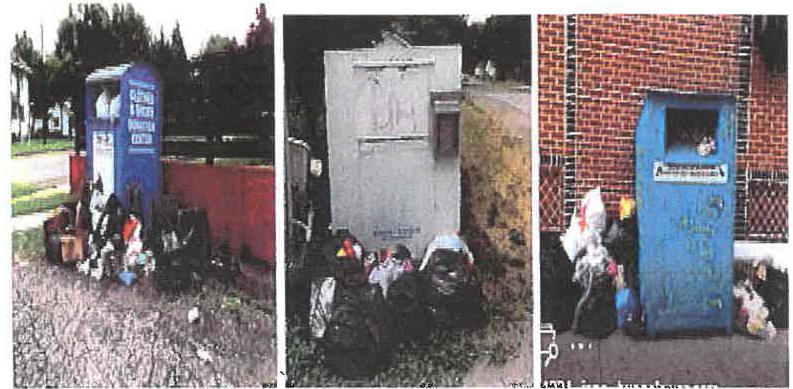
i.
Compliance. Owners of donation box(es) or property owners where donation box(es) are situated shall be compliant with this code within ninety (90) days of the effective date of this subsection.
j.
Revocation, appeals and penalties.
1.
Revocation. Failure to comply with the standards set forth herein shall result in revocation of the permit and removal of donation boxes at the permittee's expense.
2.
Appeals. Appeals to any action involving a donation box shall be to the city planning commission sitting as the board of appeals.
3.
Penalties. Penalties shall be assessed by the city's special magistrate through the city's code enforcement office.
(25)
Historic district density bonus.
a.
Short title. This subsection shall be known and may be cited as "The City of Leesburg Historic District Density Bonus Program".
b.
Definitions. For the purpose of this article, the following terms shall apply:
Commercial means a property use that is for the distribution or sale of goods, or the provision of services, including all uses as defined as commercial uses by the City of Leesburg Code of Ordinances, section 25-280 Table of Uses.
Construction means any activity produced by or incidental to the erection, demolition, assembling, altering, installing or equipping of buildings, public or private highways, roads, premises parks, utility lanes or other property, including, but not limited to, related activities such as land clearing, grading, earthmoving, excavation, blasting, filling and landscaping but not including agriculture.
Demolition means any dismantling, intentional destruction or removal of buildings or structures.
Emergency work means work made necessary to restore property to a safe condition following a public calamity or work necessary to protect persons or property from an imminent exposure to danger.
Historic district means the area shall be defined as the properties lying within the Leesburg Historic District Map as amended.
Industrial means property use that is for the fabrication, manufacturing, shipping, or production of durable or nondurable goods
Motor vehicles includes but not limited to automobiles, trucks, buses, mopeds, minibikes and other vehicles as defined by the Florida Highway Safety and Motor Vehicles.
Multi-use means property that includes a building(s) or structure(s) which contains or is zoned for both commercial and residential uses
Public right-of-way means any street, avenue, boulevard, highway, sidewalk or alley, or similar place normally accessible to the public used for roadway design, movement or conveyance which is owned or controlled by a governmental entity.
Public space means any real property or structures thereon that are owned, leased or controlled by a government entity.
Residential means property used for residential purposes, including but not limited to, single-family residences, duplex, triplex, multi-family residences, condominiums, apartments, hotels, motels, and assisted living facilities, and as defined by the City of Leesburg Code of Ordinances, chapter 25-284, Table of Uses.
Underutilized property shall mean a property which is abandoned, has no regular utility service, and has not been continuously occupied for at least a one-year period prior to approval of a bonus prescribed herein.
Slum property shall be used to describe a property which meets the criteria for underutilized property, plus has not had regular maintenance, repair for a period of at least two (2) years.
Blighted property shall indicate an ongoing need for maintenance, repair, occupation, and meets the descriptions of both underutilized and blighted property.
c.
Purpose and intent.
1.
Purpose. It shall be the purpose of this chapter is to create an environment for new economic development and redevelopment within the Historic District of the City of Leesburg, Florida. This purpose shall be accomplished through the use of regulations that encourage economic activity to stimulate development and redevelopment within the established district.
2.
Intent. It shall be the intent of this section to provide new opportunities that allow for an increase in density or intensity of proposed new structures or, the redevelopment of existing structures, which will create a positive benefit to the overall economic health and level of construction and economic activity within the city's Historic District.
d.
Eligibility of property.
1.
Residential, commercial and multi-use properties may be considered for inclusion in this program. Said properties shall consist of not less than one (1) acre of total land area, either single lots or combined, shall be contiguous by one (1) or more boundary areas, and shall be located entirely within the approved historic district as amended.
e.
Criteria for consideration. To be considered for inclusion in the City of Leesburg Historic Density Bonus program, the following criteria shall be considered by staff.
1.
Projects shall be considered on an individual basis by city staff, the historic preservation board and city commission. Eligibility considerations shall include:
2.
Projects shall consist of at least one (1) acre of land, whether a single parcel or multiple parcels combined into one (1) overall plan.
3.
All land under consideration shall be located within the Leesburg Historic District map, as may be amended from time to time.
4.
Projects that remove the conditions of slum, blight or underutilization properties, and/or maintain existing historic structures.
5.
Proposed development that supports goals of the downtown master plan adopted by the City of Leesburg in 2020, as amended.
6.
Development plans that create new investment within the historic district and extend benefits toward the central business district, such as shopping, dining, entrepreneurial activity.
7.
Proposed development plans that maintain or expand on architectural features to promote historic facades.
8.
The maximum allowable density shall be a bonus of seventy-five (75) percent in either land use density, square footage of the project or, a one-time density adjustment to the next highest future land use category, as determined by review of staff and recommendations by the historic preservation board and city commission. At no time shall the integrity or purpose of the historic district be negatively impacted, and all reviews and construction shall be conducted under the City of Leesburg Code of Ordinances and adopted building code.
9.
Priority consideration will be given to projects which create additional community walkability, including those near the existing or planned trail system, and those that support the city's downtown master plan, as amended.
f.
Review procedures. Review of each case shall be made on a case by case basis, in the manner set forth below, with each review step performed in the same manner and procedures as a zoning case as required by the City of Leesburg, Code of Ordinances. Recommendations may be in the form an approval, denial or a recommendation that states conditions which would allow the proposal to be acceptable to the city. Prior to public hearings, staff shall negotiate in good faith for provisions to minimize any potential negative impacts and recommend to the applicant such provisions.
1.
Staff review.
i.
A complete application shall be submitted to the planning and zoning staff on forms provided by the City of Leesburg, and processed under the same terms and timelines used for zoning cases reviewed by the City of Leesburg.
ii.
Staff shall review the application and confirm that all required information is provided. Incomplete applications may be returned to the applicant for additional information.
iii.
Staff shall then review and process the application and provide a recommendation regarding the case, and forward the recommendation to the historic board for consideration.
2.
Historic board review.
i.
The historic preservation board shall consider each case and make a written recommendation to city commission to approve, deny or approve with conditions for each application.
3.
Planning commission review.
i.
The planning commission shall review and provide comment and recommendations on cases that involve zoning, conditional use, variances, planned districts/overlays and all other cases that require review by the planning commission by the City of Leesburg Code of Ordinances.
ii.
The planning commission shall not be required to review cases that do not involve a zoning case as noted above and required by City of Leesburg Code of Ordinances.
iii.
These reviews shall be conducted in the same manner as provided for reviewing zoning cases under the City of Leesburg Code of Ordinances.
4.
City commission decision.
i.
The city commission shall review each application and provide a final decision regarding each application in the manner, form and procedures of a zoning case as required by the City of Leesburg Code of Ordinances.
g.
Chart 1: Maximum density/intensity.
1.
Chart 1 establishes the maximum densities/intensities which may be considered under an application. Density increases shall be based on the maximum allowed by the future land use district for the property. Intensity increases shall be based on no more than the maximum allowed under the existing zoning district for the property. Each request shall be considered on a case-by-case basis.
2.
For purposes of this section, the final approval of one (1) request, shall not be considered to create, form or be considered a precedent for consideration of any other case. It is the intent of this section that each case shall receive a final approval or disapproval based on the specific benefits as required herein.
(Ord. No. 04-27, § V(4.22), 5-10-04; Ord. No. 08-62, § I, 7-14-08; Ord. No. 09-02, § I, 1-26-09; Ord. No. 09-49, § I, 9-14-09; Ord. No. 10-17, § I, 2-8-10; Ord. No. 10-18, § I, 2-8-10; Ord. No. 10-40, § I, 5-10-10; Ord. No. 12-06, § I, 1-9-12; Ord. No. 12-32, § I, 5-14-12; Ord. No. 13-21, § I, 5-28-13; Ord. No. 14-11, § I, 3-24-14; Ord. No. 14-12, § I, 3-24-14; Ord. No. 14-14, § I, 3-24-14; Ord. No. 14-16, § I, 4-14-14; Ord. No. 14-37, § I, 11-24-14; Ord. No. 17-12, § I, 3-13-17; Ord. No. 18-11, § I, 5-14-18; Ord. No. 20-28, § II, 7-13-20; Ord. No. 21-21, § I, 5-24-21; Ord. No. 22-54, § VI, 10-10-22)
City of Leesburg fire inspection is conducted yearly and approved by the City of Leesburg's Building Official; such approval shall be maintained in the City of Leesburg records; such approval shall be provided to the City of Leesburg's Planning and Zoning Manager's office for record keeping.

