
Leesburg City Zoning Code
ARTICLE V
- SITE DESIGN STANDARDS
Sec. 25-321. - Lighting.
Illuminating Engineering Society of North America, IESNA, guidelines shall be used for the City of Leesburg's lighting standards. All lighting fixtures shall be designed and arranged so as not to interfere with the enjoyment of neighboring properties, residents, or the safety of neighboring roads. The amount of light that radiates from a source and crosses a residential or agricultural lot line shall not exceed two tenths (.02) of one (1) foot candle as measured by an luminance or foot-candle meter from the residential or agricultural lot line.
(Ord. No. 04-27, § V(5.1), 5-10-04)
Sec. 25-322. - Applicability and additions to existing development.
(a)
Applicability. It shall be unlawful for any person to clear, develop or increase the developed of any area of any lot, parcel, plot or tract of land unless in compliance with the terms of this section or otherwise exempted by this section.
(b)
Additions to existing development. As a condition of approval for such addition, the owner shall comply with the requirements of this section should any addition be made to a structure and/or parking area existing as of the effective date of this section which exceeds a twenty-five (25) percent change in the size of the existing structure and/or parking area.
(Ord. No. 04-27, § V(5.2), 5-10-04)
Sec. 25-323. - Landscaping—Purpose and general requirements.
(a)
Purpose. The purpose of this chapter is to establish minimum standards for landscaping, buffers, tree protection and reduction of energy cost within the city. This section is to be implemented to achieve the following intents and purposes:
(1)
To improve the appearance of the community;
(2)
To provide shade for the ground surfaces;
(3)
To buffer adjacent land uses;
(4)
To preserve natural and native vegetation;
(5)
To screen vehicular movement from pedestrian and public view;
(6)
To provide for the protection and preservation of trees and vegetation; and
(7)
To encourage water-efficient (xeriscape) landscaping principles.
(b)
General requirements. General requirements of this section shall include:
(1)
All landscaping shall be designed and located to provide a logical, consistent and attractive pattern of landscaping that relates to the human-scale, softens the built environment, and creates an attractive environment within the city.
(2)
All landscaping standards shall meet the requirements of the "Plant Material List" for plant species, specification of Revised Florida Grades and Standards as may be revised. All landscape and irrigation plans for projects of five (5) or more acres proposed for development excluding single-family projects shall be signed and sealed by a landscape architect licensed to practice in the State of Florida and shall be submitted as part of an application for site plan approval.
(3)
All parts of a required landscape buffer or other landscape planting area shall contain shrubs, groundcovers, landscape mulch, rock or sod. Required buffers may contain retention, drive isles, public trails and natural vegetation. No areas except landscape planting area shall contain gravel or mulch unless specifically approved by the planning and zoning manager.
(4)
Where required landscape materials are not available due to the time of year or local availability, alternative materials may be approved by the planning and zoning manager. Alternative such as increasing the number of plants with smaller plants for buffer areas shall be considered.
(5)
In administering this Code, the city manager or designee shall have authority to waive and/or adjust requirements on a case by case basis due to site constraints or other factors that are specific to the site in question. This authority is subject to meeting the overall intent and purpose of this section and providing written justification in the project file as a part of the public record.
(Ord. No. 11-89, § I, 9-26-11)
Editor's note— Ord. No. 11-89, § I, adopted Sept. 26, 2011, repealed §§ 25-323—25-337 and enacted new §§ 25-323—25-337.1 as set out herein. The former sections pertained to similar subject matter and derived from Ord. No. 04-27, § V, adopted May 10, 2004; Ord. No. 08-62, § I, adopted July 14, 2008; and Ord. No 10-40, § I, adopted May 10, 2010. For further information, see the Code Comparative Table.
Sec. 25-324. - Definitions.
The following words, terms and phrases, when used in sections 25-323 through 25-337.1, shall have the meanings ascribed to them in this section, except where the context clearly indicates a different meaning:
Agriculture—Field crops/wholesale nursery shall mean the production, keeping, or maintenance, for sale, lease, or personal use, of plants useful to man, and may include, but not be limited to, forage and sod crops, grain and seed crops, fruits of all kinds, vegetables, and nursery, floral, ornamental, and greenhouse products. This would not include a home garden.
Agriculture—Processing/hatcheries shall mean the production, keeping, maintenance, or processing, for sale, lease, or personal use, of animals and plants useful to man, and may include, but not be limited to, dairy animals and dairy products, grain mills, poultry and poultry products. This would not include domestic pets such dogs, cats, birds, fish, etc.
Caliper shall mean the minimum trunk diameter of a replacement tree as measured at a predetermined point measurement.
Clearing shall mean the removal of any trees or vegetation from the land, but shall not include mowing of lawn and field grasses.
Diameter at breast height (DBH) shall mean the trunk diameter of a tree measured four and one-half (4.5) feet above the average ground level at the base of the tree. Provided, however, if the tree forks four and one-half (4.5) feet above ground level, it is measured below the swell resulting from the double stem.
Drip line shall mean the ground area surrounding the trunk of a tree that is described by the vertical plane enclosing the outermost branches of the tree. For asymmetrical specimens, or those with unusually small crown spear, the drip line area shall in no case be less than that area described by a radial dimension of one (1) foot for each one (1) inch of trunk radius.
Landscaping shall mean areas set aside from structures and parking which are developed with natural materials (i.e., lawns, trees, shrubs, vines, hedges, bedding plants, rock) and decorative features, including paving materials, walls, fences, and street furniture.
Plant List for the City of Leesburg shall mean a listing of recommended canopy trees, ornamental trees, shrubs, groundcover and grasses for the City of Leesburg approved by the city commission. The publication shall also contain a listing of prohibited exotic plants, prohibited invasive plants and drought tolerant plants as listed by the USDA.
Remove or removal as used in section 25-338 of these regulations, the cutting down, destruction, or damaging of a tree or trees, or to cause the cutting down, destruction, or damaging of a tree or trees.
Tree shall mean any living, self-supporting, woody perennial plant which has a trunk diameter of at least two (2) inches at breast height.
Wetlands shall mean lands which are identified by being inundated or saturated by surface water or groundwater at a frequency and duration sufficient to support, and that under normal circumstances do or would support, a prevalence of vegetation typically adapted for life in saturated soil conditions. The definition includes all contiguous and noncontiguous or isolated wetlands to waters, water bodies, and watercourses. Wetlands include, but are not limited to, swamp hammocks, hardwood hybrid hammocks, riverine cypress, cypress ponds, bayheads, bogs, wet prairies, and freshwater marshes. Dominant wetland vegetation shall be determined as provided in Rule 17-3.022, Florida Administrative Code. In circumstances where the natural boundary of wetland vegetation is unclear, the line of demarcation may be approximated at a surveyed elevation measured at a location in the same wetland where the natural line is clear. In the event an undeveloped area has been recently cleared of all vegetation, the wetland boundary may be determined by a study of the soils, aerial mapping, photography, hydrology, and other historical information as appropriate.
(Ord. No. 11-89, § I, 9-26-11)
Sec. 25-325. - Nonconforming landscaping.
For landscaping that is nonconforming, the following shall apply:
(1)
Existing development shall comply with the landscape regulations of sections 25-327, 25-328 and 25-329 when the floor area of a structure or parking area is increased by twenty-five (25) percent or more.
(2)
Where the increase in area of a new structure, an additional structure, parking area or vehicular use area is less than any of the requirements of subsection (1) above, only the new structure, addition, increased parking area or increased vehicular use area shall be buffered in accordance with these provisions.
(3)
Nonconforming site or use landscaping which is not maintained or which is vacant (not operated without interruption) for a period of one (1) year, or the change of use to a more restricted use for any period of time, shall be considered termination and/or abandonment thereof and such nonconforming site or use landscaping shall not thereafter be revived without being brought into full compliance with this Code.
(4)
Each of the nonconforming sites or landscaping specified is deemed sufficiently objectionable, undesirable and out of character in the zoning district in which such sites or landscaping is located as to depreciate the value of the property and uses permitted in the district and otherwise inhibit the proper and orderly development of such district. Therefore, each such nonconforming site or landscaping, once determined to be terminated and/or abandoned under this section, shall be required to comply with section 25-164, Nonconforming developed properties, of the Code in the event of any change in use.
(5)
Nonconforming landscaping shall not be required to be brought into compliance as a result of a natural disaster.
(Ord. No. 11-89, § I, 9-26-11; Ord. No. 14-13, § I, 3-24-14)
Sec. 25-326. - Landscaping standards.
(a)
Purpose. The purpose of this section is to provide minimum standards for landscaping, buffering and site clearing within the City of Leesburg. This section shall be implemented so as to promote the preservation of native plant species, to provide for aesthetic landscaping complements to proposed development and to encourage the use of plants that qualify as Florida Friendly Landscaping. The provisions of this section may be cited as the landscape code.
(b)
General requirements and exemptions. It shall be unlawful for any person to clear, develop or increase the developed area of any site or lot unless in compliance with the terms of this section. No development order or development permit shall be issued unless it complies with these requirements or unless such development is specifically exempted as specified below. The following activities are exempt from the provisions of this section:
(1)
Agriculture and silviculture. So long as the operation qualifies as a bona fide farm operation on land classified as agricultural pursuant to F.S. § 193.461, or if such activity is regulated through implemented best management practices, interim measures, or regulations developed through the Florida Department of Environmental Protection, Florida Department of Agriculture and Consumer Services or a water management district and adopted under F.S. ch. 120 under a regional program; or if such activity is expressly regulated by the U.S. Army Corps of Engineers or U.S. Environmental Protection Agency. In addition, an exemption may be granted by the city manager or his designee for a proposed agricultural exemption activity. However, a surety bond shall be required to guarantee the restoration of the property should a bona fide agricultural exemption not be obtained within eighteen (18) months.
(2)
Emergency maintenance work performed for the protection of public health and welfare.
(3)
Any maintenance to an existing approved landscaped area made in accordance with approved landscape plan.
(4)
Parks and conservation lands with an approved land management plan shall be exempt from complying with the landscaping standards and tree protection standards required herein.
(Ord. No. 11-89, § I, 9-26-11)
Sec. 25-327. - Waterwise and Florida Friendly landscaping.
(a)
Landscaping. All ground surface areas of any lot shall maintain landscaping to eliminate erosion, reduce the generation of dust particles and other windborne particles, provide aesthetic relief, and further the objectives of this section.
(b)
Mandatory Waterwise and Florida Friendly Landscape Measures with site-appropriate plants. All required landscaping shall be installed and maintained to meet the following purposes:
(1)
To conserve and use water efficiently.
(2)
To encourage creative landscape design.
(3)
To use Waterwise and Florida Friendly Landscaping, implementing right plant-right place principles.
(4)
To use native vegetation.
(5)
To re-establish native plant communities.
(6)
To recognize the need to protect groundwater as a natural resource.
(7)
To use site appropriate plants.
(8)
To reduce energy costs and maintenance.
(c)
Water efficiency. All required landscaping shall be installed and maintained to be consistent with the water-efficient landscaping requirements established herein. Landowners are additionally encouraged to follow Waterwise Florida Landscapes and Florida Irrigation Society standards. The water-efficient requirements are as follows:
(1)
Use of mulch. Mulches shall be used and maintained around all trees located in turf grass areas, in landscaped areas not planted or not appropriate for growing turf grass, and in all planted areas. Mulch shall be installed two (2) to four (4) inches deep and kept off the root ball and a minimum of two (2) feet away from the foundation of any structure. Mulch shall be kept a minimum of one (1) foot from the base of a tree trunk.
(2)
Limit irrigated lawn areas. The use, type, and location of lawn area in the landscape shall be selected in a planned manner and not used as a fill-in material. Since most lawn varieties used in the landscape require supplemental watering more frequently than other types of landscape plants, turf shall be placed so that it can be irrigated separately. For existing development which is redeveloped through the removal of the existing structures, compliance with subsection (c)(4) below for new development shall be required using Florida-friendly landscaping, mulch, gravel, rock, other low water use materials or any combination thereof.
(3)
Low water use plants. Landscape plants shall be selected based on appropriateness to the site considering conditions such as soil type, moisture, and sunlight using the principle of "right plant, right place." The plants shall be grouped in accordance with their respective water needs. A list of low water use plants is contained in the Plant List for the City of Leesburg.
(4)
Efficient and well-designed irrigation. Up to sixty (60) percent of the pervious area equal to or less than fifteen thousand (15,000) square feet of the lot in any single-family or duplex platted residential development with more than ten (10) lots, which had plats approved after the effective date of the ordinance from which this section is derived, and commercial site plans submitted after the effective date of the ordinance may be irrigated with a conventional in-ground irrigation system. Micro-irrigation, drip systems and temporary irrigation necessary to establish new plantings are permitted on all areas of the lot or development. Golf course fairways and greens, public active recreation fields, greenhouses, landscape nurseries, retail nurseries, and agricultural production systems are exempt from meeting these requirements. Landscape production and retail centers shall comply with the watering restrictions for any landscape that is required under these regulations that is not related to the production or selling of landscape material on site. The following criteria for irrigating a site shall be used in the design of the system.
a.
Rain sensors. Functioning rain sensor devices shall be required on all automatic irrigation systems to avoid irrigation during periods of sufficient rainfall. Sensors shall be of the "instant off" type designed to prevent operation of the installed irrigation system during a rain event and shall be installed in a suitable locations not obstructed to rain fall.
b.
Irrigation overthrow. The irrigation system shall be designed to minimize irrigation overthrow onto impervious surfaces and to avoid any ponding effects.
c.
Temporary irrigation. Minimum size canopy trees requiring irrigation prior to becoming established shall use tree bubblers or micro-irrigation on a separate zone. Hand watering or a temporary irrigation system may be allowed to ensure the plants become established. Temporary irrigation lines shall be covered by mulch or buried.
d.
Where not required. Irrigation is not required in (existing wooded/forested) areas which are intended to be maintained in a natural condition.
(Ord. No. 11-89, § I, 9-26-11)
Sec. 25-328. - General landscaping requirements.
(a)
Plant materials. All required landscaping shall meet the following general requirements:
(1)
Quality. All required plant materials shall be installed and maintained in conformance with the provisions of this section and shall conform to the standards for Florida No. 1 or better as given in Grades and Standards for Nursery Plants, State of Florida, Department of Agriculture and Consumer Services, Tallahassee (97T-05, second edition, February 1998). All plant material shall be planted in suitable soil to permit its survival. Any plant materials not contained in the Landscape Plant Materials List under section 25-328.1, for the City of Leesburg and not prohibited by this chapter must be shown to be suitable for planting.
(2)
Soil reviewed. The existing soils on the site should be reviewed to help determine the appropriate plant types for the site.
(3)
Native plants. A minimum of fifty (50) percent of the required trees and shrubs shall be native species suitable for the site.
(4)
Canopy trees. All required canopy trees shall be a minimum of two and one-half (2.5) caliper inches and in a thirty (30) gallon container or greater. Equivalent ball and burlap trees may be used but container trees shall be preferred. The minimum height of trees should be approximately eleven (11) to twelve (12) feet in height and the minimum spread should be approximately five (5) feet. Trees that are not required by this section are not subject to this provision. New tree calipers shall be measured six (6) inches above grade for trees that are under four (4) inches caliper and measured twelve (12) inches above grade for trees larger than four (4) inches tree caliper. Existing tree calipers are measured at diameter at breast height (DBH) or fifty-four (54) inches height from grade. Additional tree credits for new larger canopy trees planted:
a.
Minimum four-inch caliper × twelve-foot height × five-foot spread = two (2) canopy tree credits.
b.
Minimum six-inch caliper × fourteen-foot height × six-foot spread = three (3) canopy tree credits.
Canopy trees shall be provided with a minimum one hundred (100) square foot pervious planting area around the trunk with a minimum diameter of eight (8) feet. Large maturing canopy trees will need more planting area typically. Each planting area shall be landscaped with a mulch ring, groundcover, or other landscape material, in addition to the required tree.
Clustering may be utilized if needed for design intent. Special precautions shall be taken to not locate canopy trees under or near utility casements.
(5)
Ornamental trees. Ornamental trees may be used in place of canopy trees in situations where height restrictions or root zone intrusion issues are shown to be a concern, such as under power lines at a ratio of two (2) ornamental trees to replace each canopy tree. All required ornamental trees shall be a minimum of two (2) caliper inches and in a thirty-gallon container or greater. Equivalent ball and burlap trees may be used, but container trees shall be preferred. The minimum height of trees should be approximately six- to eight-foot height overall and the minimum spread should be approximately three (3) feet. Trees that are not required by this section are not subject to this provision. New tree calipers shall be measured six (6) inches above grade for trees that are under four (4) inches caliper and measured twelve (12) inches above grade for trees that are larger than four (4) inches tree caliper. Existing tree calipers are measured at diameter at breast height (DBH) or fifty-four (54) inches height from grade. For multi-trunk trees, trunks shall have an average cumulative caliper of two (2) inches. Credits for new larger ornamental trees planted:
a.
Minimum three-inch caliper × ten-foot height × five-foot spread = two (2) ornamental tree credits.
b.
Minimum four-inch caliper × fourteen-foot height × six-foot spread = three (3) ornamental tree credits.
Adequate spacing shall be maintained to protect and allow for the growth of the root systems of each tree. Special precautions shall be taken to not locate ornamental trees under or near utility easements.
Required ornamental trees shall have a maximum spacing of fifty (50) feet. However, clustering may be utilized if needed for design intent. Spacing of tree groupings shall not exceed one hundred fifty (150) feet.
(6)
Palms. Palms may be used in place of ornamental or canopy trees to meet the minimum tree requirements. In no case shall the total number of palms of all species combined account for more than twenty (20) percent of the required canopy trees nor more than twenty (20) percent of the required ornamental trees. The minimum size of palms is four (4) feet of clear trunk for tree form palms. Two (2) palm trees count as one (1) canopy or ornamental tree unless it is a large specimen palm tree such as a Medjool or Date Palm which may be counted as one (1) palm tree to one (1) canopy or ornamental tree.
(7)
Shrubs. Shrubs shall be used for all visual screens that are required pursuant to the provisions of this section and shall be planted on minimum centers no greater than forty-eight (48) inches. The minimum installed height of shrubs shall be an average of two (2) feet in height by eighteen (18) inches spread. Their spread shall be appropriate for their size and species.
a.
Landscape buffer, shrubs shall be a minimum of a three (3) gallon container. Shrubs planted shall be able to obtain an approximate height of three (3) feet within twelve (12) months of planting under normal growing conditions.
(8)
Ground covers. Ground covers shall be used when required pursuant to the provisions of this section and shall be planted on minimum centers no greater than thirty-six (36) inches. The minimum installed size of groundcovers shall be one (1) gallon. Their spread shall be appropriate for their size and species. Required groundcovers shall be planted to provide complete coverage planted to industry standards.
(9)
Lawn grass. Required grass areas may be sodded, plugged, sprigged, or seeded including St. Augustine, Bahia and other grasses. Nothing herein shall be construed to prevent the conversion of lawn grass areas to Florida Friendly landscapes. Solid sod shall be used on slopes greater than fifteen (15) percent.
(10)
Site appropriateness. All landscape material shall be suited to soil and climate conditions of the site in order to conserve water.
(11)
Synthetic lawns and plants. Synthetic or artificial turf, trees, and plants shall be prohibited from use in lieu of required live plantings.
(12)
Architectural planters. The use of permanent or moveable architectural planters may be permitted as an alternative where appropriate with approval by the city manager or his designee. The planters shall be adequately sized for palms, ornamental trees, and shrubs, shall not cause the roots to bind and shall permit water to drain through the base of the planter. Required canopy trees are prohibited from being planted in moveable planters.
(13)
Existing trees. Existing trees may be used to meet tree requirements in accordance with the following criteria:
a.
The tree shall be in very good health and free of pests, disease, or injury.
b.
The tree shall meet the requirements above for canopy, ornamental and palms.
c.
The tree shall not be a prohibited species.
d.
To count for buffering or interior landscape requirements; the tree shall be located within the appropriate corresponding area.
e.
Tree credits shall be given for existing qualifying canopy trees are as follows:
f.
Ornamental trees meeting a minimum cumulative caliper shall be credited as one (1) existing ornamental tree = one (1) replacement (minimum two-inch caliper × eight-foot height × four-foot spread).
(14)
Existing shrubs. Existing shrubs may be used to meet shrub requirements in accordance with the following criteria:
a.
The shrub shall be in very good health and free of pests, disease, or injury.
b.
The shrub shall not be a prohibited species.
c.
To count for buffering or interior landscape requirements, the shrub shall be located within the appropriate corresponding area.
(15)
Plant substitutions to approved plans. Changes to the landscape section of the approved site plan shall require an amendment to the site plan, unless:
a.
The change affects five (5) percent or less of any plant species; or
b.
A buffer is moved less than twenty (20) feet.
Any change authorized by subsections (a) and (b) above shall require written notification by the applicant to the city manager, or designee, including plans indicating the change.
(b)
Diversity. In order to help guard against disease susceptibility, all required landscaping shall meet the requirements below. No more than fifty (50) percent of the trees or shrubs required shall be of the same species. Live Oak trees required for parking lot landscaping are exempt from this requirement.
(c)
Installation. All landscaping should be installed according to "Selecting and Planting Trees and Shrubs," published by the University of Florida/Florida Cooperative Extension Service (Institute of Food and Agricultural Sciences, Circular 858, October 2003) or to "Waterwise Florida Landscapes" published by the St. Johns River Water Management District, which describes the principles of "right plant, right place." The natural growth habit of a tree shall be considered in advance of conflicts which might arise (i.e. view, signage, lighting and similar conflicts). Plantings in close proximity to roadways and intersections shall meet the site distance requirements of the Florida Green Book as published by the Florida Department of Transportation.
(d)
Irrigation systems. All installed irrigation systems shall be designed to provide irrigation appropriate to meet the needs of the landscape area to be served. An irrigation plan shall be required for other than single-family lots. In evaluating irrigation plans, the primary consideration shall be water conservation. Irrigation systems shall be designed to provide the minimum irrigation necessary to ensure the survival of the plant material and shall be designed to avoid runoff and promote optimal percolation.
(1)
Temporary irrigation is the preferred method of irrigation and installed irrigation shall be discouraged.
(2)
The irrigation system shall be in compliance with the Florida Building Code and F.S. § 373.62, for rain sensor shut-off devices. The use of micro-irrigation shall be encouraged to conserve water resources, provided it is in compliance with the Florida Building Code. All irrigation systems shall use zones, automatic timers, back-flow preventers, soil-moisture sensors and rain sensors. Landscaped areas less than five (5) feet in width shall incorporate micro-irrigation, if irrigated.
(3)
Irrigation shall be limited as required by the applicable water management district irrigation rule.
(4)
To conserve potable water, reclaimed water, storm water ponds and cistern collection shall be encouraged for irrigation water if the water quality will meet the needs of the landscape. Developments seeking to use water from retention ponds or natural lakes shall comply with all requirements of the appropriate water management district.
(e)
Maintenance. All landscaping shall be maintained so as to present a neat, healthy, and orderly appearance free of refuse and debris. Use of high amounts of fertilizer and pesticides is discouraged.
(f)
Pruning. All pruning shall be in accordance with Standard Practice for Trees, Shrubs and Other Woody Plant Maintenance, ANSI 300 of the National Tree Care Association.
(g)
Notification. In any residential plat where landscaping is proposed on individual lots, the restrictive covenants shall contain a provision that notifies prospective lot purchasers of the landscape maintenance requirements.
(h)
Re-vegetation required.
(1)
Re-vegetation shall be required within six (6) months of expiration of any development order if natural vegetation was disturbed and if the landscaping has not been completed in accordance with the landscape plan. Re-vegetation shall be to pre-development conditions or through an alternative mitigation plan approved by the city manager or his designee to provide groundcover to prevent erosion and provide appropriate tree coverage.
(2)
If work ceases for six (6) months on a site, then the entire site shall be re-vegetated if natural vegetation was disturbed and if the landscaping has not been completed in accordance with the landscape plan.
(3)
If re-vegetation is required, the property owner shall submit and have approved an interim landscape plan within thirty (30) days by the city manager or designee for re-vegetation of the subject property, which shall provide for stabilized vegetative groundcover of trees, grasses, forbs, or legumes consistent with the original condition of the site. The re-vegetation plan shall indicate the method and location of tree replacement required by any tree removal permit.
(4)
When the proposed development of a site requires the removal of fifty (50) percent of the protected trees on the site and the estimated total caliper inches for the site exceeds one thousand (1,000) inches, a performance bond equal to the value of the trees to be removed may be required by the city manager or designee for re-vegetation of the subject property.
(i)
Landscape plant materials list. All required landscape materials shall be selected from the official plant materials list. These common plant materials shall be used along streets, buildings, buffers, and parking lots.
(1)
Decorative plant materials, not included on the list, may be used only with written city approval. All landscape materials shall be allowed to grow in a natural condition and not be pruned back to avoid overgrowth.
(2)
Tree standards.
a.
Canopy shade trees.
Minimum size: Two and one-half (2.5) caliper, eleven- to twelve-foot height, five-foot spread.
b.
Ornamental trees.
Minimum size: Two-inch caliper, six- to eight-foot height overall, three-foot spread.
TABLE 1
Canopy Trees:
Understory Trees (Ornamental):
(3)
Hedges shrubs, groundcovers and vines and flowers. All hedges, shrub, groundcover, vine and flower landscaped areas shall be planted to achieve one hundred (100) [percent] coverage of the planting area within one (1) year of installation. All continuous shrub hedges shall be installed at minimum eighteen (18) to twenty-four (24) inches overall height (depending on species); hedges to be a height of thirty-six (36) to forty-two (42) inches and ninety (90) percent opacity within one (1) year of planting.
a.
Specific requirements for hedges and shrubs: Three (3) gallon, container grown, planted thirty-six (36) inches on center maximum spacing. Plant count at thirty-six (36) inches triangular spacing equals planting area × .129.
b.
Specific requirements for groundcovers: One (1) gallon, container grown, planted twenty-four (24) inches on center maximum spacing. Plant count at twenty-four (24) inches triangular spacing equals planting area × .290.
c.
Specific requirements for flowers/annuals - (four-inch pots, planted six (6) to twelve (12) inches on center).
TABLE 2
Shrubs:
Groundcovers:
Vines:
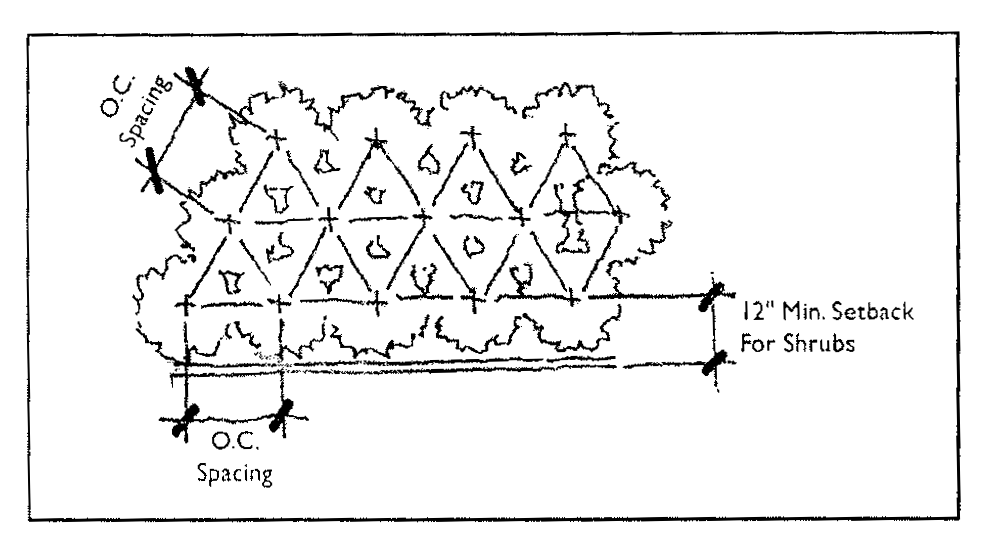
Triangular Spacing Detail (O.C. - on center)
Flower:
Notes:
WATER ZONE:
L = Low irrigation required
M = Medium irrigation required
1.
** Plants are reasonably drought tolerant once established (source www.biospherenursey.com).
2.
List developed by Sarah M. Whitaker, P.G. of SMW GeoSciences and list was reviewed by Teresa Watkins, Florida Yards & Neighborhoods Multi-County Program Coordinator, University of Florida/IFAS, June 2006.
d.
Approved aquatic plant material list.
1.
Upper littoral zone six (6) inches above or below the normal water level).
2.
Middle littoral zone (from one (1) inch to three (3) inches below normal water level).
3.
Lower littoral zone (from three (3) inches to five (5) inches below normal water level)
4.
Other aquatic plants may be used from the list of aquatic plants found in Florida, as prepared by the Florida Department of Environmental Protection, Bureau of Aquatic Plant Management.
(Ord. No. 11-89, § I, 9-26-11)
Sec. 25-329. - Landscape buffer requirements.
(a)
General buffer requirements. Any approved development order, other than for a single-family or duplex lot, shall provide for the following buffers.
(1)
Buffering from adjacent properties. Landscape buffering shall be required at the time of development as specified in herein.
a.
If no buffer exists on the adjoining property or if the existing buffer fails to meet the requirements herein, buffering shall be required.
b.
Single-family residential subdivisions of less than ten (10) lots and a density of less than one (1) dwelling unit per net acre shall be exempt from this buffer requirement.
(2)
Buffering from public roadways. Any parcel adjacent to a public right-of-way shall have a landscape buffer along its right-of-way that reflects the landscape requirements of the zoning district across the road/street or as required herein, whichever is greater.
(3)
Internal roadway buffering. Any development order shall require that:
a.
All single-family and multifamily development shall provide internal tree-lined roads. Street trees shall be selected from the canopy tree list, as listed in the Landscape Plant Materials List for the City of Leesburg, at an average spacing of fifty (50) feet on center alternating along both sides of roads. The canopy trees required for residential lots may also be used as required street trees as long as they are no more than twenty (20) feet away from the right-of-way line unless prohibited by an easement.
b.
Canopy trees shall be planted a minimum of ten (10) feet and a maximum of twenty (20) feet outside the right-of-way (R.O.W.) with an alternating pattern on each side of the road. When the proposed development is only on one (1) side of the road, then street trees shall be required for that side of the road. Developers may plant trees in the right-of-way or within ten (10) feet of the R.O.W., with a R.O.W. utilization permit. Any tree planted within the R.O.W. shall comply with the Florida Green Book. Canopy trees shall be planted a minimum of an eight-foot distance from public sidewalks.
(4)
Access roads adjacent to subdivisions. A landscape buffer shall be installed between any internal subdivision road and the property line of the adjacent subdivision or lot(s).
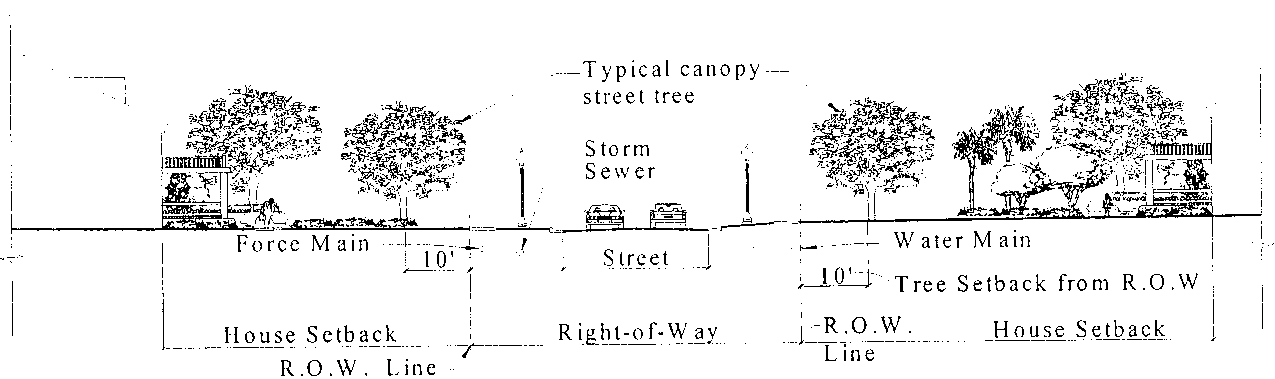
Figure A - Typical Street Tree Section
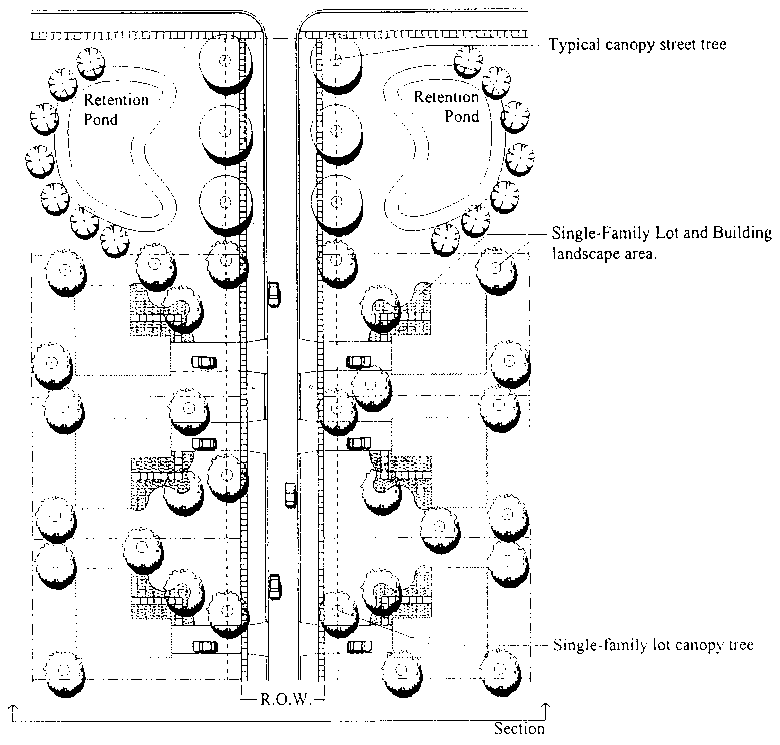
Figure B - Typical Street Tree Plan
(b)
Landscape buffer along public streets. Landscape buffers along public streets shall meet the following guidelines.
(1)
A fifteen- to twenty-five-foot landscape buffer shall be required along public streets and shall include canopy trees and groundcover. Where no utility easements are in the required buffer, the minimum buffer may be reduced to ten (10) feet. Optional ornamental and shrubs are permitted within the buffer and must follow the standards provided herein.
(2)
In areas where the buffer must be reduced to meet individual site constraints the planting area should be planted according to the following table of required buffer standards. Buffers smaller than fifteen (15) feet may be permitted by approval from the city manager, or designee.
(3)
Permitted features for front buffers. Sidewalks, signs, low wall and picket fences (wrought iron, wood or PVC), retention features according to section 25-330 and equipment according to section 25-334.
(4)
Additional features such as a knee walls and decorative picket fencing is permissible with the following standards.
a.
Knee wall. Maximum twenty-four (24) inches.
b.
Decorative fencing. Maximum forty-eight (48) inches and must have at least fifty (50) percent of required buffer planting adjacent to right-of-way.
(5)
Prohibited features in front buffers. Chain-link fences, walls greater than two (2) feet, loading, service or dumpsters areas or similar items may not be placed in the front buffer or in any additional "open space" adjacent to the street or any direction visible from the street except for the industrial or PUD districts.
(6)
Recreational vehicles (RVs), automobile/truck and boating sales.
a.
In the special case of front and side buffers for automobile/truck sale, recreational vehicle sale or boat sale property uses, all canopy trees shall be allowed to be substituted in favor of ornamental or palm trees in order to protect on site merchandise from leaf/bird droppings. For these uses only, two (2) ornamental trees or palms may be substituted for one (1) required canopy tree if the ornamental trees or palms are at least twelve-foot clear trunk height. Canopy tree shall not be substituted adjacent to rear buffers or residential uses.
TABLE 3
Figure C - Landscape Buffer Plan Views
Note: Below landscape buffer layouts are schematic and designer may adjust layouts as long as minimum requirements are provided.
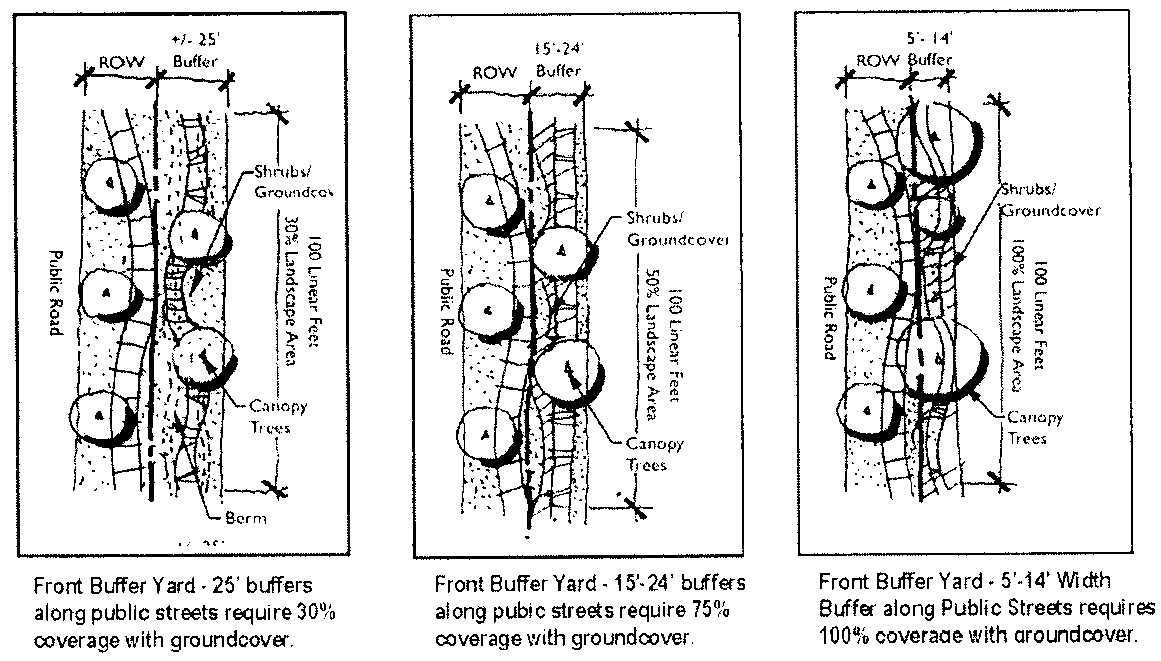
Front Yard Buffer
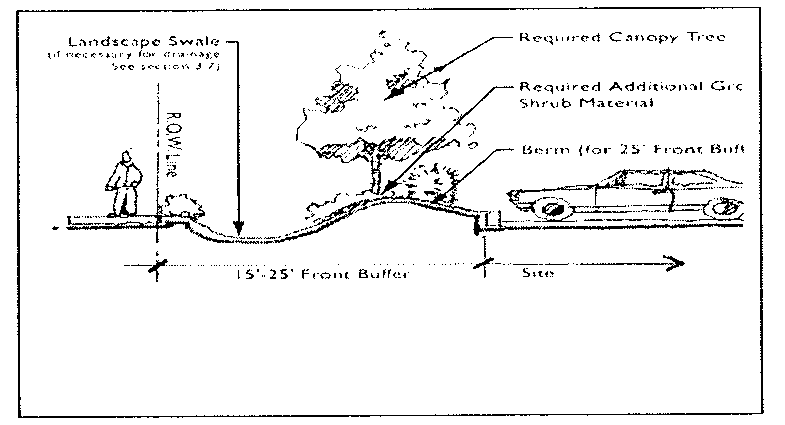
Required Front Buffer Yard Section
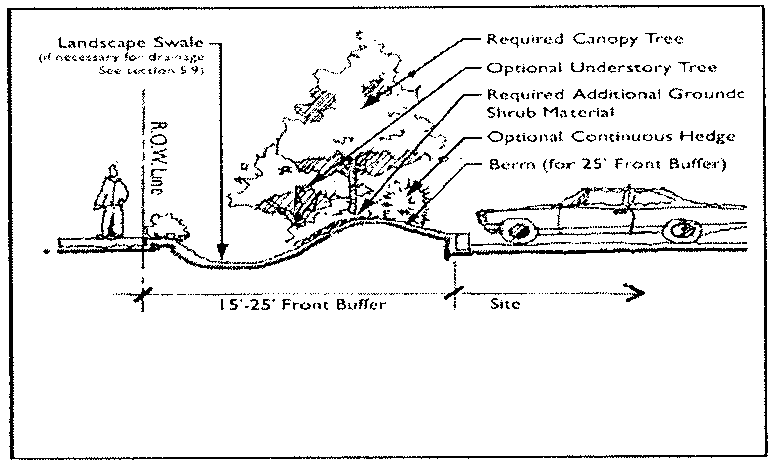
Buffer Yard Section with Optional Landscape
(c)
Landscape buffers between parcels when required.
(1)
A minimum ten-foot landscape buffer is required between adjacent tracts (side and rear property boundaries). In addition to tree requirements, shrubs and groundcover shall comprise one hundred (100) percent coverage of the landscaped area.
(2)
On adjoining parcels of similar use, when designed as one (1) buffer (such as adjacent commercial outparcels with automobile and pedestrian cross access), the combined buffers may be reduced to a total of ten (10) feet if the shrub and groundcover landscape areas are increased to one hundred (100) percent of the total required buffer area. The combined ten-foot buffer shall require a total of two (2) canopy trees per one hundred (100) linear feet. If approved by the city manager, or designee, the applicants may use optional landscaping of ornamental trees, where existing large canopy trees are located in the buffer area. The standards will require three (3) ornamental trees per one hundred (100) linear feet. No less than five (5) feet is required on each of the adjoining parcels.
(3)
Side or rear buffers adjoining noncommercial or residential parcels shall also be designed with a six-foot fence or wall. The fence or wall shall be of a decorative "split face" concrete masonry, decorative brick, wood or PVC or standard concrete masonry clad with painted stucco or other masonry veneer that is compatible with the adjacent area. When these materials are used for a visual screen, they shall conform to the architectural style, materials and color of the development. Wood fencing shall not be used along street sides. The fence or wall shall include a continuous cap and end column features if applicable. The fence or wall shall be placed a minimum of six (6) inches from the adjoining property line and provide pedestrian access deemed necessary by city staff. In addition, all open work areas or other supply areas shall be treated with a similar six-foot masonry, wood or PVC wall. Buffers smaller than ten (10) feet may be permitted through approval of the city manager, or designee provided the buffer is not adjacent to single-family residential uses. If the buffer is decreased, the planting median shall be planted according to Figure 5.6.1 plus additional shrubs and groundcovers planting to achieve one hundred (100) percent coverage. Where the potential for adverse impacts to residential areas is probable, a wall may be required by the city manager, or designee.
TABLE 4
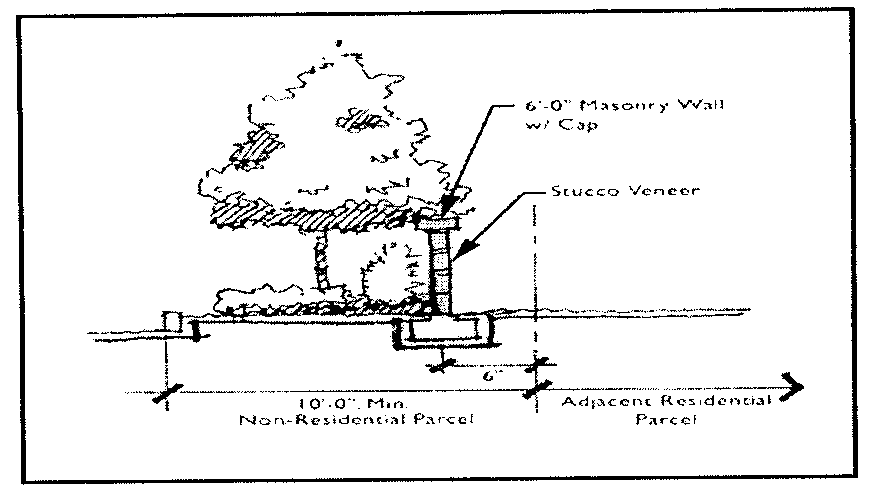
Section of Required Rear Buffer
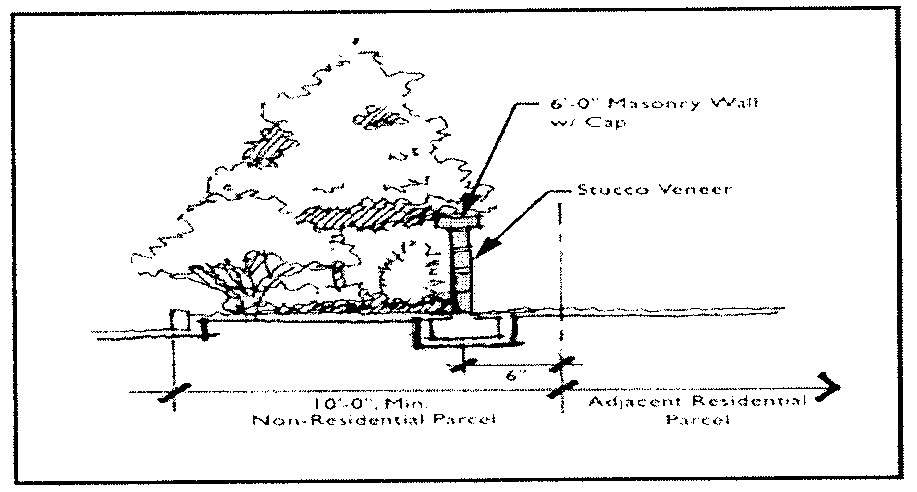
Section of Required Rear Buffer with Optional Landscape
(d)
Supplemental requirements for subdivisions and site plans. The following requirements supplement the tables above and shall be used to install and maintain the required buffer.
(1)
Separately platted or phased developments shall require a landscape buffer pursuant to the landscape buffer requirements between internal plats or phases.
(2)
Required walls shall be solid, and surfaces shall be finished. Allowed wall types mean solid walls and include Exterior Insulation Finish Systems (EIFS) with stucco, brick, finished or textured block, vinyl plastic, pre-cast and poured-in-place concrete wall with a finished surface. Solid fences where required shall be opaque. One-sided wood fences shall be installed with wood posts to the inside of the property that is installing the fence. Chain-link and barbwire fencing may not be used to meet the screening requirement.
(3)
Additional requirements:
a.
Seventy-five (75) percent of the required landscape buffer shall be located on the right-of-way side of any required fencing, walls, or any other screening structures. In addition, at least one (1) row of required screening shrubs shall be located on the right-of-way side of any screen, wall, or other screening structures.
b.
Any wall, fence, or other screening structure built along a public right-of-way for property which requires a landscape plan shall consist of harmonious screening material that has a consistent and uniform texture, color, and pattern along all major collector or arterial roadways.
(4)
All pervious areas shall have five (5) canopy trees per acre minimum. Some parts of the site may be left as open space, but the total number of trees shall average five (5) canopy trees per acre for pervious areas. Other landscape requirements may be used to meet this requirement such as required landscape buffering and retention pond landscaping. Permanent water bodies, wetlands and wet retention ponds shall be excluded in calculating the amount of pervious area requiring five (5) canopy trees per acre.
(5)
Subdivisions greater than ten (10) lots shall place the required landscape buffers in a separate tract or easement that shall be maintained by a homeowners association.
(6)
Landscape materials within buffers along rights-of-way shall be designed to display variety, color, form, and texture, by emphasizing native and drought tolerant plants. Such variety and color may be accomplished by using a combination of shrubs and ornamentals from the Plant List for the City of Leesburg. The placement of landscape materials within landscape buffers shall have a rational relationship to the existing patterns and densities of adjoining areas which have been designed or preserved. Arrangements shall replicate natural conditions and shall not be linear unless dimensional limitations necessitate such an arrangement or linear arrangement are part of a formal landscape directly related to the architecture of the building(s) or are part of a formal street tree landscape.
(e)
Supplemental requirements for big box structures.
(1)
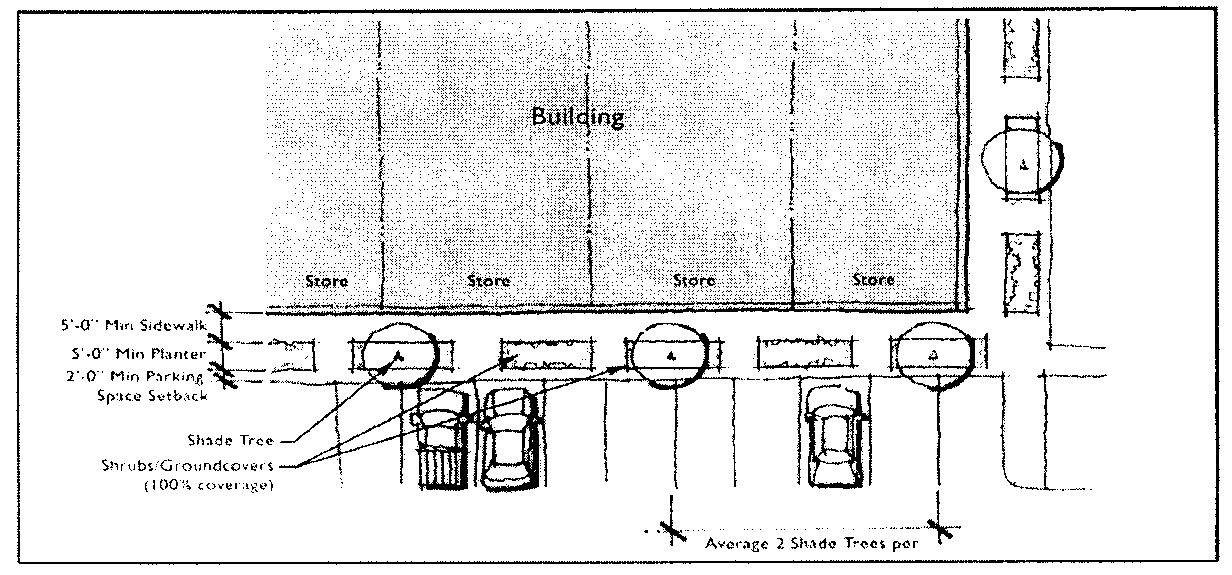
Big box structures—Landscaping requirement around the perimeter of large strip commercial centers or "big box" structures with a continuous building length of at least two hundred fifty (250) feet along the primary street frontage as follows (refer to Figure 5.4.3):
(2)
Rear/service area does not require planting.
(3)
The remaining three (3) sides of building perimeter shall include a five-foot continuous sidewalk as well as landscape planter areas along at least sixty (60) percent of that linear distance.
(4)
The required sixty (60) percent landscape coverage shall be in at-grade or raised planters at least five (5) inches to zero (0) inches deep and five (5) inches to zero (0) inches wide. Raised planters shall not exceed twenty-four (24) inches overall height.
(5)
Planters may be located along building edge, or along street, drive or parking edge. Planters along head-in parking shall be located at least two (2) feet clear from edge of curb to allow for continuous pedestrian access without stepping in landscape area.
(6)
All required planters shall be planted one hundred (100) percent with shrubs and groundcovers. Sod is prohibited.
(7)
An average of one (1) ornamental tree per fifty (50) linear feet shall be required for the remaining three (3) sides of building perimeter. Trees may be placed in planter areas. A walkway with a minimum width of five (5) feet shall be constructed to connect the main public entrance door of a building to the public walkway along right-of-way. Where the walkway extends through parking areas or an access drive, the walkway shall be delineated. A landscaped area, which includes sidewalk and landscaping, a minimum of nine (9) feet in total width, shall separate the walkway from parking spaces when extending through parking areas. The use of architectural features and landscaping is encouraged to define pedestrian gateways. If the area is landscaped with shrubs a setback shall be maintained and shall not form a wall effect along the edge of the walk.
(Ord. No. 11-89, § I, 9-26-11)
Sec. 25-330. - Garden walls, fences, and hedges.
All garden walls, fences or hedges located or constructed within the required yard area shall conform to the following regulations, except where special requirements are set forth for specific screening purposes elsewhere in this article.
(1)
Front yard in a residential district. All garden walls, fences or hedges located within the required front yard shall not exceed four (4) feet in height.
(2)
Side and rear yards in a residential district. All garden walls, fences or hedges located within the required side or rear yards shall not exceed six (6) feet in height.
(3)
Side yard of corner lot in a standard residential district. All garden walls, fences, or hedges located in the side-yard abutting the secondary street of a corner lot must not exceed four (4) feet in height.
a.
Side yard of corner lot in planned residential zoning districts. Garden walls, fences or hedges located outside of the clear site visibility triangle, as described in section 25-280(4), must not exceed six (6) feet in height.
(4)
Rear yard abutting water in a residential district. All garden walls, fences, or hedges located in the required rear yard abutting a body of water shall not exceed four (4) feet in height.
(5)
Commercial and industrial districts. All garden walls, fences, or hedges located in a commercial or industrial district shall not exceed eight (8) feet in height and must be constructed to allow an unobstructed view of the front yard of the property from adjacent property or a public street.
(6)
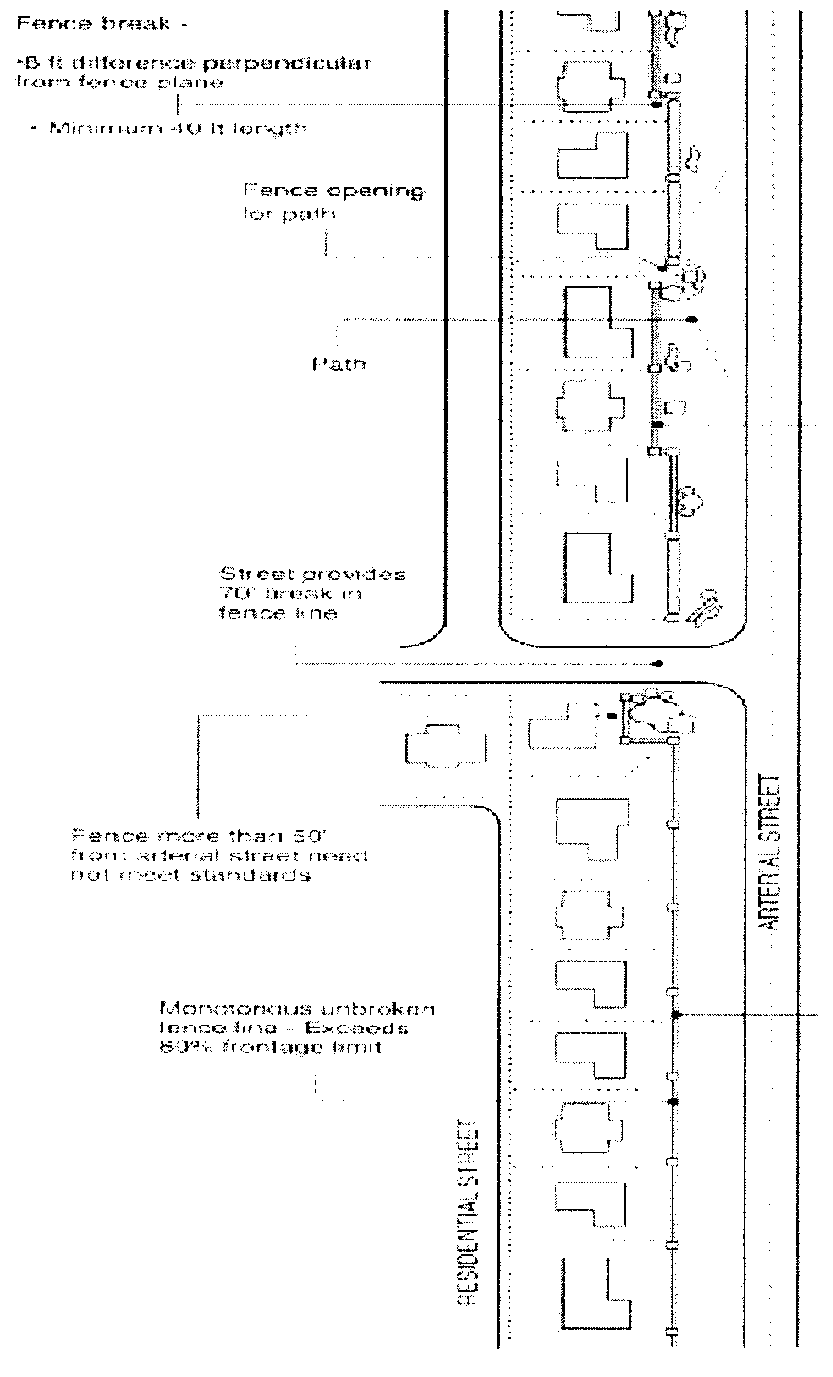
Perimeter fences and walls along collector or arterial street. All perimeter fences and walls located adjacent to these streets shall meet the following requirements:
a.
No more than sixty (60) percent of the street frontage may be occupied by the fence or wall; and
b.
The required forty (40) percent openings in the fence or wall frontage may occur to provide exposure for intersecting streets, pedestrian entryways, parks or open space, or any non-walled or non-fenced land use (e.g., a church or school). Fences or walls that have a surface area that is twenty-five (25) percent or less opaque, hedges and screens composed of living plant material, or any land use with a wall or fence lower than forty-two (42) inches may count toward the forty (40) percent requirement. Treatments should emphasize the incorporation of berms and landscape materials.
c.
A break in the length of the wall or fence shall be required every forty (40) feet in length (measured parallel to the street), at least eight (8) feet wide (measured perpendicular to the street), and is landscaped with at least one (1) tree and one (1) row of shrubs for each forty (40) feet in length. Landscaping shall incorporate species with seasonal color and plant variety and shall be in addition to any other landscaping required in this Code.
(7)
Transition yard screening requirements. Where a residential district abuts a nonresidential district, there shall be provided, by the nonresidential development, an opaque screen adequate to conceal such developments from the adjacent residential property. Such screen must be the maximum height, which is allowed elsewhere in this chapter. No such screen shall be required in the front yard of the nonresidential development.
(8)
Use of barbed wire. No fence shall be maintained or constructed, in whole or in part, of barbed wire, unless it is in an M-1 or M-2 (industrial) district, or an approved A (agricultural) district use, unless it is specifically allowed in a conditional use permit or a planned district within another zoning classification, based on the necessity of barbed wire for the particular use permitted by the conditional use, or unless it is in conjunction with either (1) a use by a public body, or (2) bona fide commercial agricultural pursuits lawfully being carried on in the particular zoning district involved.
(9)
General regulations. The following regulations shall apply to fences in all zoning districts or as specified.
a.
Prohibited materials. No fence shall be composed of scrap materials, tires, canvas, cardboard, asphalt-style shingles, or chicken wire. All fences must be maintained in good and sound condition. The city or utility company is not responsible for repair or replacement of any fence in an easement that is removed for purposes of work or maintenance of the easement.
b.
Appearance. All fences shall be uniform in material and color. In the case of a fence with a finished side and an unfinished side, the finished or more decorative side shall face outward toward the adjoining property or the street.
c.
Barbed wire. Where permitted by regulations of this chapter, barbed wire may be installed at the top of a fence if not more than three (3) strands are used, and if the lowest strand is at least six (6) feet above the adjoining ground. In the case of a fence located less than four (4) feet from a public sidewalk or a residential district line, the vertical supports for the strands shall slant away from the nearest property line at an angle of not less than forty-five (45) degrees. Such barbed wire may be placed above the otherwise applicable height limit for the fence to which it is attached.
d.
Maintenance. All fences shall be maintained in good condition, free of significant rust, peeling paint, breaks or missing structural members or other damage. Furthermore, all fences shall be kept plumb, with no more than a two-inch deflection from a vertical position. Vegetation adjacent to the fence must be maintained in good condition or trimmed as appropriate. The city has the authority to order the repair or removal of any fence that constitutes a nuisance or hazard and take appropriate action to recovery cost and assess penalties.
e.
Recreation facilities. On the grounds of a school or on the grounds of a public or private recreation use, an open fence erected to enclose a playground, playfield, swimming pool, tennis court, golf course or similar facility may exceed the otherwise applicable height limits, but shall not exceed twelve (12) feet in height.
f.
Utility properties. An open fence erected for security purposes around a public utility use may exceed the otherwise applicable height limits, but shall not exceed twelve (12) feet in height.
g.
Temporary construction fences. Notwithstanding other provisions of this chapter, a temporary fence shall be permitted in any zoning district to enclose a site at which construction activity is underway. Such fence shall be in place only for the duration of the construction activity and shall be removed when construction activity has been completed or has been discontinued for a period of three (3) months or more. Such fence shall be located as necessary to protect the public and to secure the construction site, as approved by the community development director. The fence may be chain link, wood or another material approved by the director.
h.
Nonconforming fences. Except as specified in this chapter, any fence not conforming to the regulations of this chapter may be retained and repaired but shall not be moved or replaced in whole unless made to conform with the provisions of this chapter.
Replacement of less than half of a nonconforming fence in a twelve-month period shall be considered "repair" and not "replacement" for purposes of this provision.
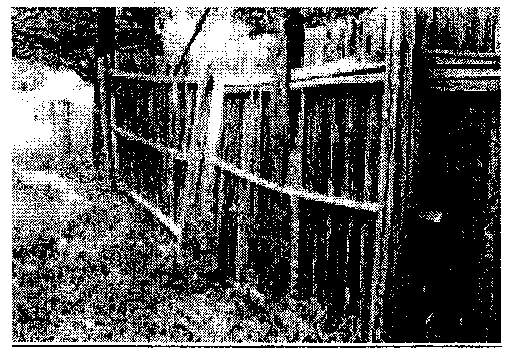
Homeowners and occupants are responsible for ensuring the proper maintenance of fence structures. This includes the repair/replacement of all posts, gates, and other structural elements, and ensuring your fence is properly painted.
(Ord. No. 11-89, § I, 9-26-11; Ord. No. 22-13, § 1, 2-28-22)
Sec. 25-331. - Internal landscaping in parking areas and other site areas, other than single-family and duplex lots.
Any development order other than for single-family or duplex dwellings shall require that all ground surface areas used on commercial, institutional, community facility, industrial, condominium, recreational vehicle parks, or multifamily sites shall have internal landscaping to provide visual and climatic relief from broad expanses of pavement and channelize and define logical areas for pedestrian and vehicular circulation. The following special landscaping requirements apply to commercial, institutional, community facility, industrial, condominium, recreational vehicle parks and multifamily sites.
(a)
Interior parking areas. Landscape islands shall be provided within parking areas, as described below to prevent excessively long, contiguous runs of parking spaces. These areas shall use curbs, wheel stops, bollards or other control measures to prevent encroachment or damage to trees and vegetation. This requirement shall not apply to parking garages, staging and storage areas at distribution centers. A minimum of fifty (50) percent of the required interior parking areas trees shall be Live Oak trees.
(1)
Single-row terminal landscape islands. A single row parking bay shall not contain more than twelve (12) contiguous parking spaces. One (1) single-row terminal landscape island, with a minimum pervious area of two hundred (200) square feet and a minimum width of ten (10) feet, shall be provided at each end of a single-row parking bay. Each single-row terminal landscape island shall contain at least one (1) canopy tree. Required maximum two-foot-high screening shrubs shall be utilized the entire length of the landscape island, or as limited by sight distances. Please see below Figure D - Single and Double-Row Terminal Landscape Island.
Figure D - Interior Parking Areas
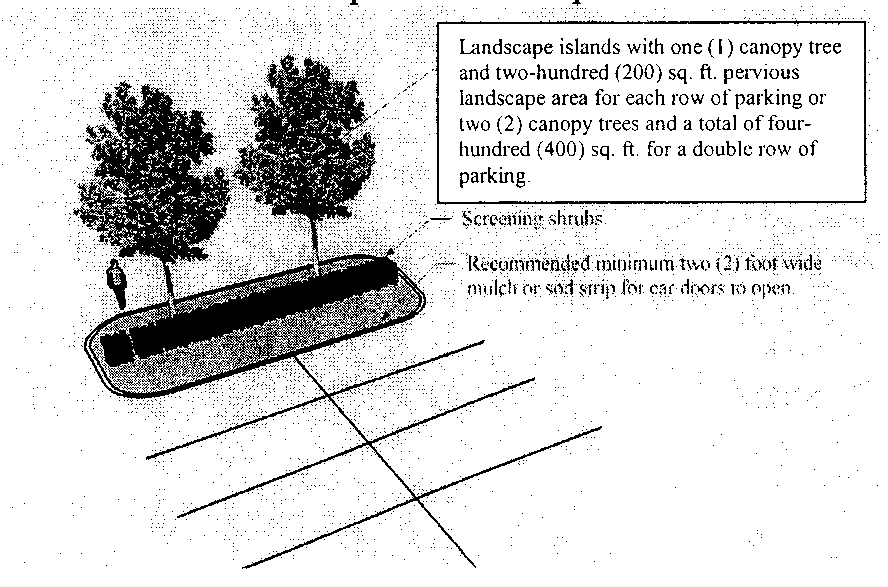
Single and Double-Row Terminal Landscape Island - Perspective View
(2)
Double-row terminal landscape islands. A double-row parking bay with head-to-head parking shall not contain more than twenty (24) contiguous parking spaces in a two (2) rows × twelve (12) space configuration. One (1) double-row terminal landscape island, with a minimum pervious area of four hundred (400) square feet and a minimum width of ten (10) feet, shall be provided at each end of a double-row parking bay. Each double-row terminal landscape island shall contain at least two (2) canopy trees. Required maximum two-foot-high screening shrubs shall be utilized the entire length of the landscape island, or as limited by sight distances.
(3)
Intermediate landscape islands. Intermediate landscape islands shall be provided for any parking lot with eighty (80) or more parking spaces, and an additional intermediate landscape island shall be provided for every additional twenty (20) parking spaces in excess of eighty (80). Each intermediate landscape island shall have a minimum pervious area of three hundred (300) square feet and a minimum width of twelve (12) feet, and each intermediate landscape island shall contain at least one (1) canopy tree. Required maximum two-foot-high screening shrubs shall be utilized the entire length of the landscape island, or as limited by sight distances. Alternatively, a minimum five-foot-wide landscape strip may be provided between head-to-head parking, which may count as the required intermediate landscape island for every three hundred square feet (300) of pervious area provided. If a landscape strip is used, ornamental landscape trees and shrubs shall be planted within the landscape strip on minimum thirty-foot centers. Please see below Figure E - Intermediate Landscape Islands.
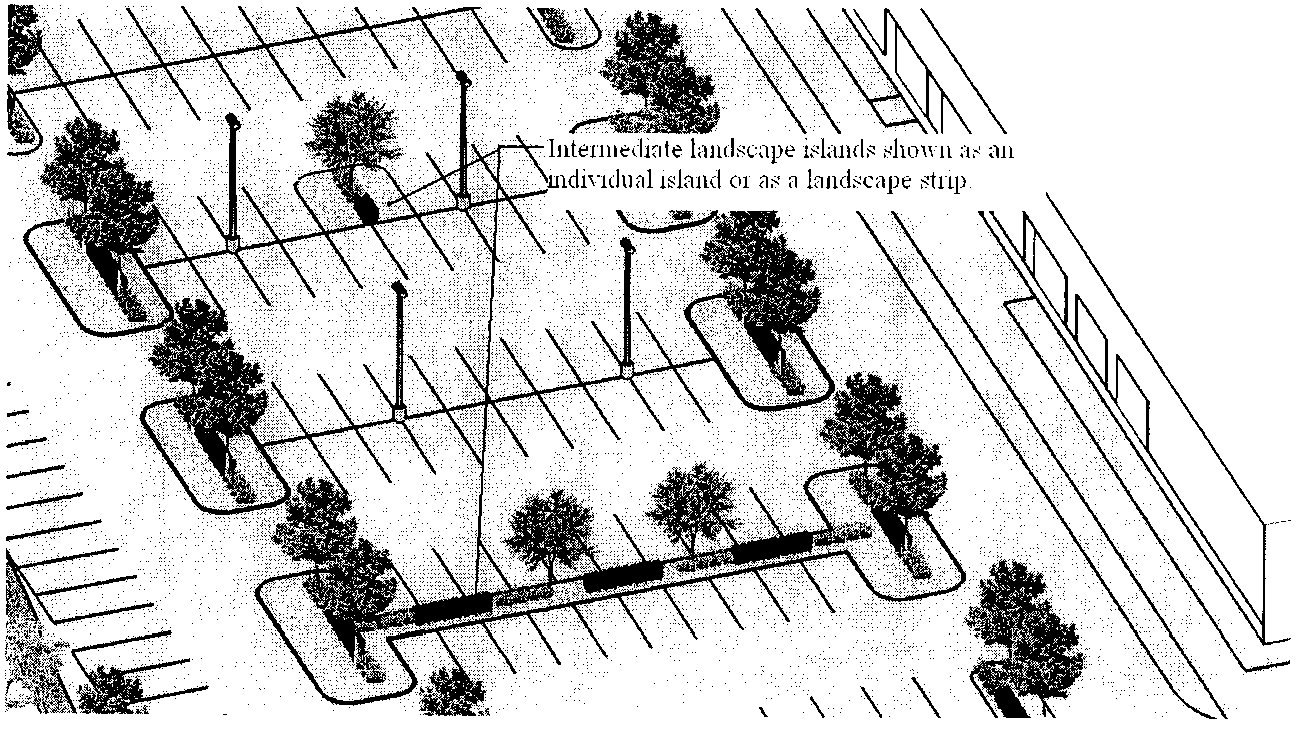
Figure E - Interior Parking areas - Intermediate Landscape Islands
(4)
Limited off-street paved parking areas. Interior portions of off-street parking facilities, which are not specifically designed as parking spaces or maneuvering areas, shall not be paved for vehicle use.
(5)
Parking lot trees and substitutions. All trees in the parking lots shall be canopy trees, unless otherwise provided. A maximum of twenty (20) percent of the required canopy trees in the parking lots may be substituted with palm trees. Vehicle display areas for such uses as autos, recreation vehicles (boats, motor homes, camper trailer, motor cycles etc.) shall be exempt for the percentage requirement. Palm trees used as substitutions in parking lots shall be planted at a 2:1 ratio (Cabbage Palms, Washingtonia Palms and Windmill Palms) in relation to canopy trees with the exception of Canary Island Palms, Date Palms and Paurotis Palms, which may be planted at a 1:1 ratio.
(6)
Perimeter trees and spacing. Canopy trees shall be planted an average of fifty-foot centers around the total perimeter of the parking lot and all vehicular service areas. Clustering may be utilized, but spacing shall not exceed one-hundred-fifty-foot spacing. The canopy trees shall be planted between eight feet (8) and thirty (30) feet from the edge of pavement. Canopy trees within the landscape buffers may be used if they fall within thirty (30) feet from the edge of paving or vehicular service area as shown in Figure F - Perimeter Trees and Spacing.
Figure 5.7.2. Chart for determining number trees to be replaced or credited on site.
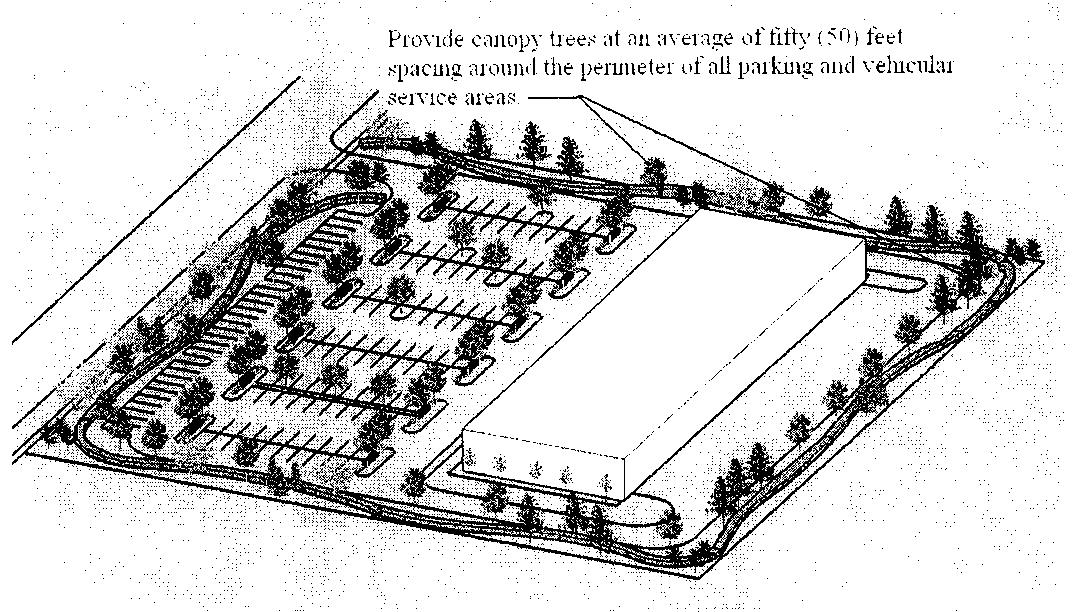
Figure F - Interior Parking areas - Perimeter Trees and Spacing
(b)
Building landscapes, other than industrial.
(1)
Buildings shall have landscape areas planted with trees, shrubs or groundcovers, other than sod, around the building as follows:
a.
Building perimeter landscaping. A minimum three-foot-wide landscape area, with an average of five (5) feet or more, around a minimum of forty (40) percent of the total building perimeter and within twenty-five (25) feet of the building walls.
b.
Minimum planting requirement. One (1) canopy tree or three (3) ornamental trees, and twenty-eight (28) shrubs shall be required for every three hundred fifty (350) square feet of planting area in subsection (a) above. Trees installed for any other requirement of this section may be credited towards this requirement if in the required location.
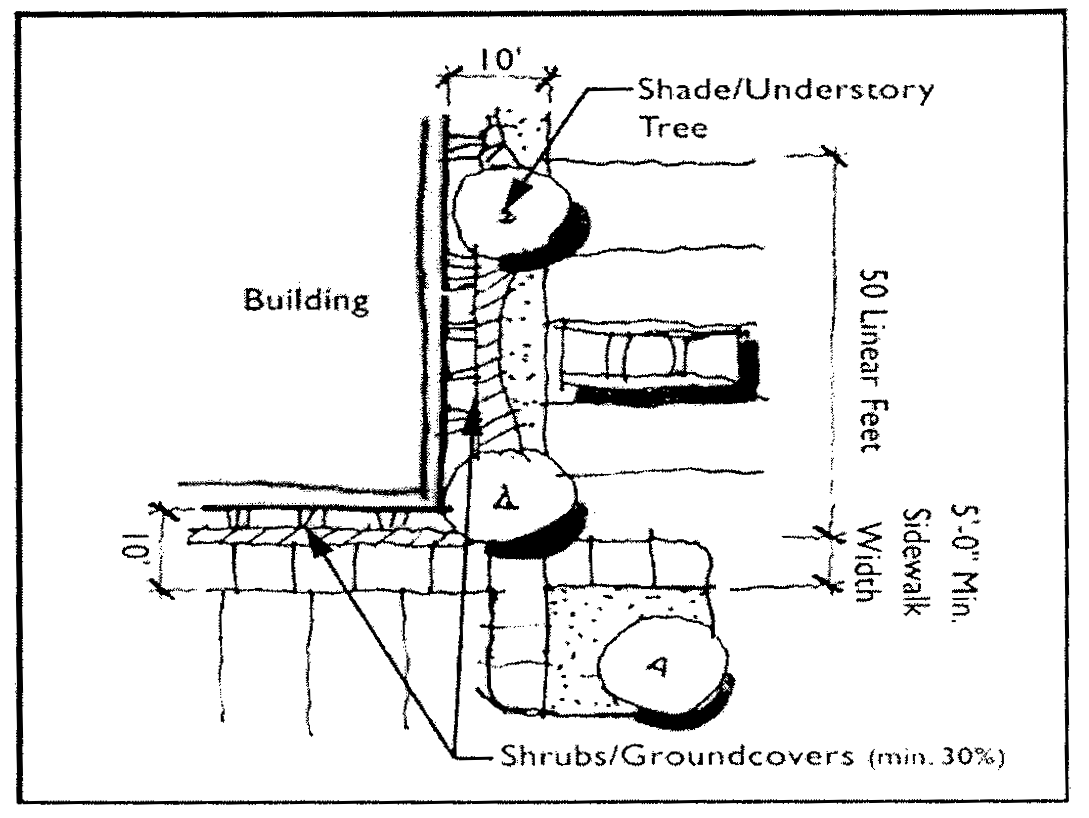
Single Tenant Building Open Areas
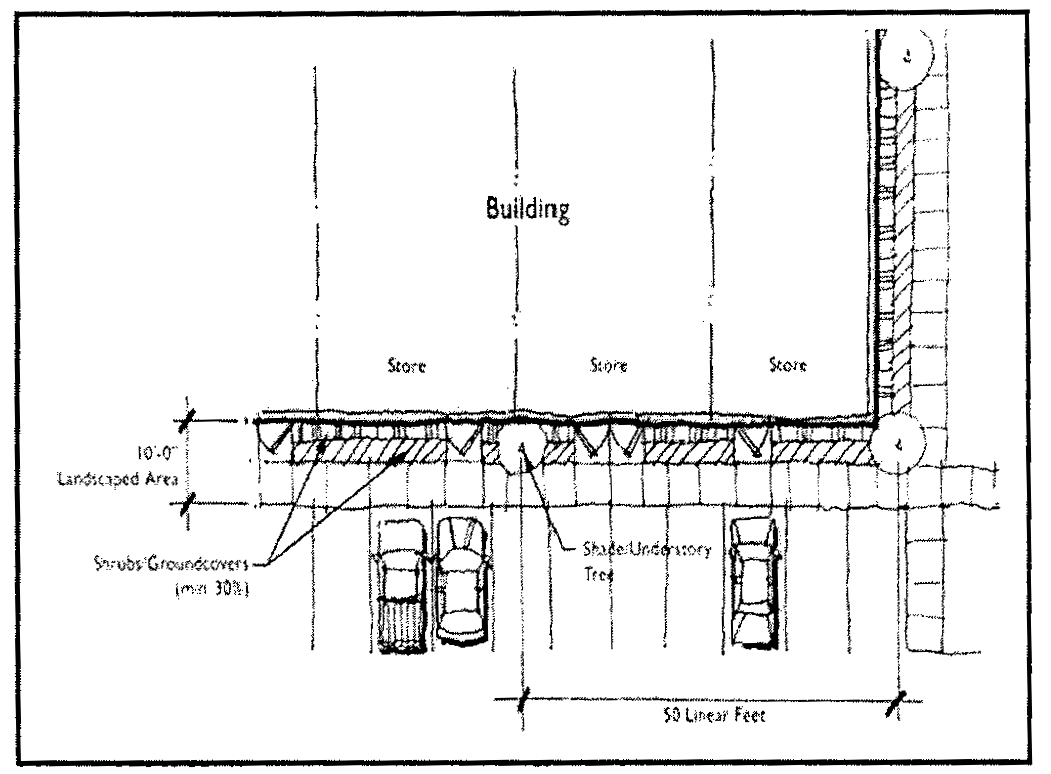
Multiple-Tenant Building Open Areas
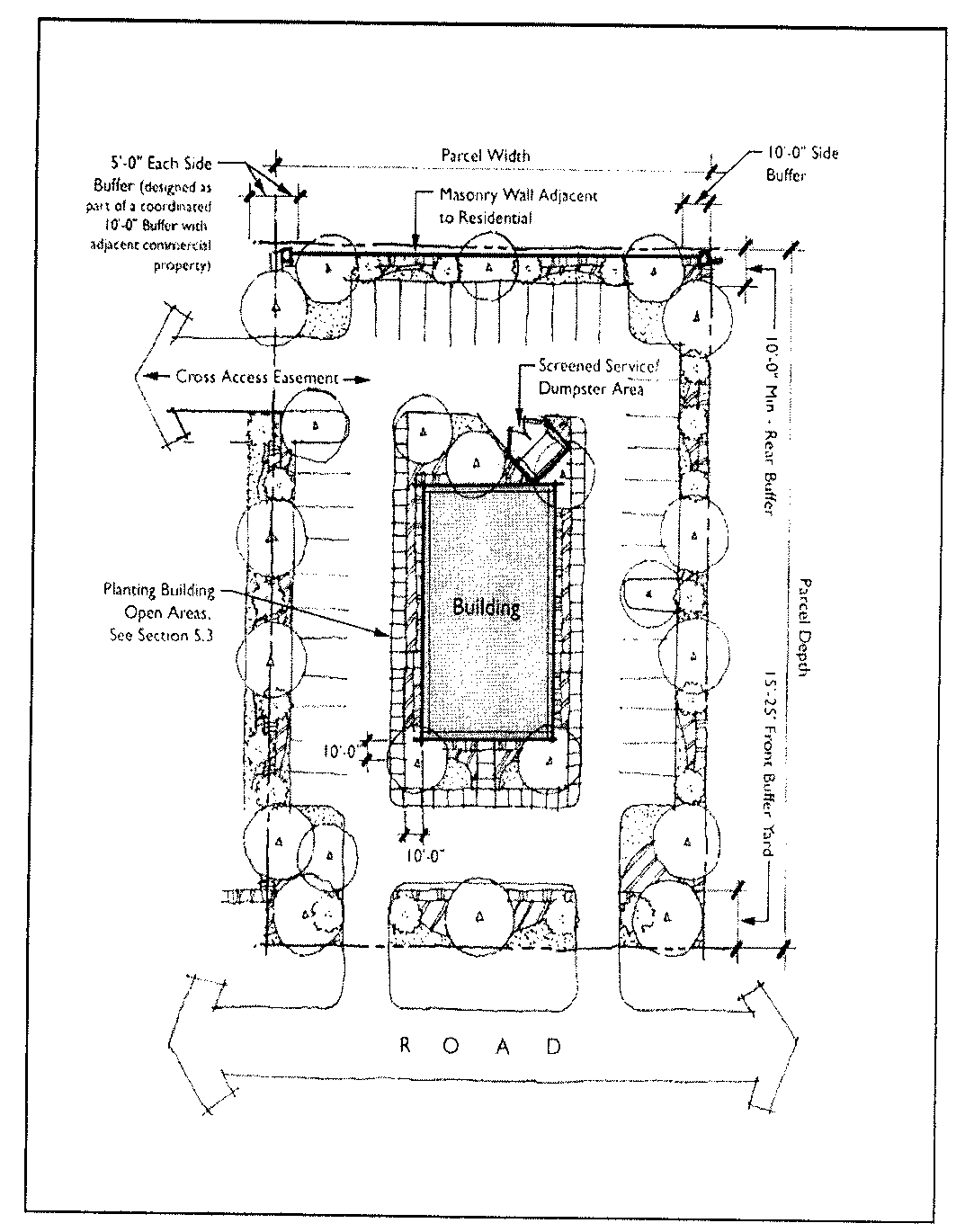
Sample Design
(c)
Pervious parking. Parking spaces provided in excess of the minimum required shall be constructed of pervious materials, such as turf blocks or grassed parking areas. Additional pervious parking may be provided, if not otherwise prohibited by other provisions of the City of Leesburg Code, in the following areas:
(1)
Adjacent to parking lot landscape islands to allow for the percolation of water and the exchange of oxygen for the tree roots.
(2)
In low impact areas or infrequent use areas such as churches or the outlying parking areas of malls or other shopping areas.
(d)
Internal access roads. Developments with internal access roads shall be required to plant one (1) canopy tree on each side of the road approximately every fifty (50) feet. Access roads immediately in front of commercial structures and other buildings do not have to meet the access road tree requirement but do have to meet other parking landscape requirements. Parking lot island canopy trees may be used to meet this requirement if they fall within thirty (30) feet from the edge of the pavement along the internal access road. Figure G - Internal Access Roads below.
Figure G - Interior Parking areas - Internal Access Roads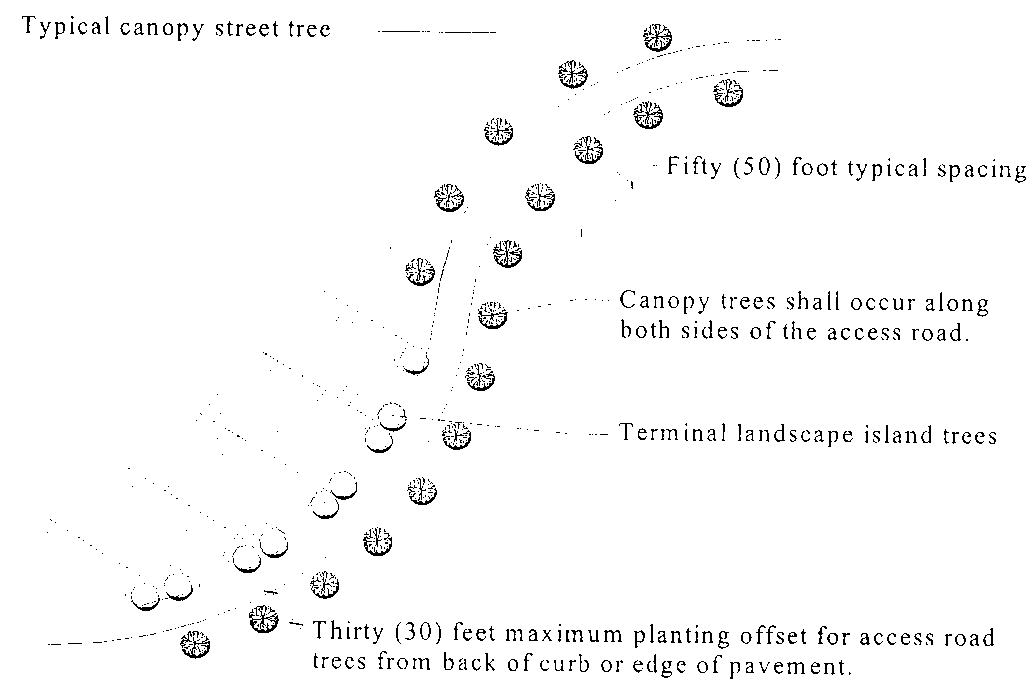
(e)
Accommodations for lighting and other features. Islands shall be enlarged beyond the minimum requirement if necessary to accommodate light poles, fire hydrants, or other necessary features. Light poles may be located within the parking area rather than in landscape islands if necessary to ensure that the lighting placement does not conflict with the location or normal growth of landscape island trees. Figure H - Parking Lot Light Placement below.
Figure H - Interior Parking areas - Parking Lot Light Placement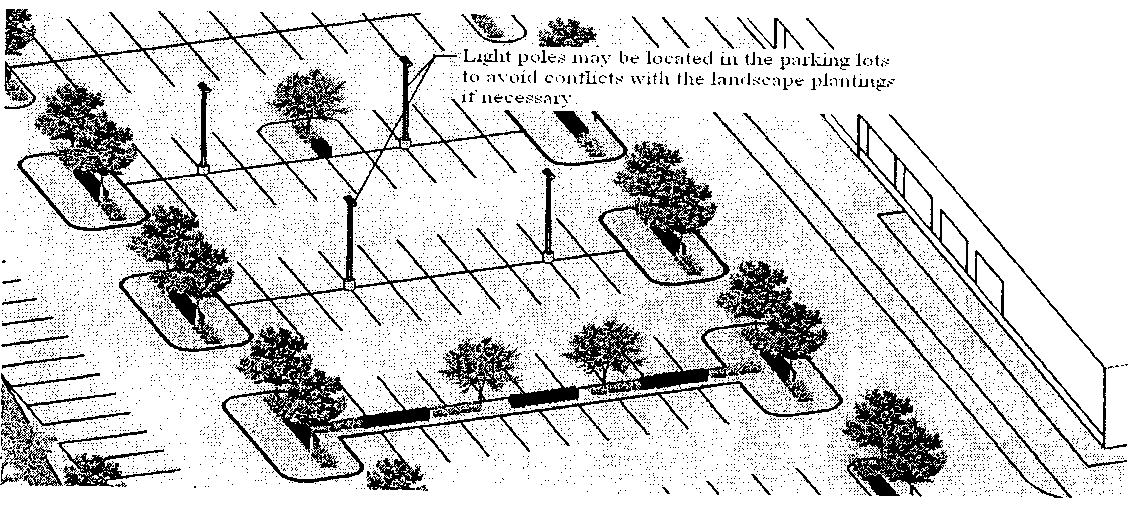
(f)
Rain gardens. Parking lot islands are encouraged to use curb breaks and create swale or depression areas to allow for the percolation of rainwater and parking storm water. Attention shall be given to the selection, placement and durability of landscape material within rain garden areas to ensure their long-term viability. Any proposed rain garden areas must comply with all storm water requirements. Smaller rain gardens that serve as landscape islands shall adhere to all canopy and understory requirements for landscape islands. Periodic maintenance to maintain proper function of rain gardens as designed is required. Lack of maintenance may be referred to the code enforcement division for action, with penalties as described by this Code. Figure I - Rain Garden Photo below.
Figure (Photo) I - Interior Parking areas - Rain Garden Example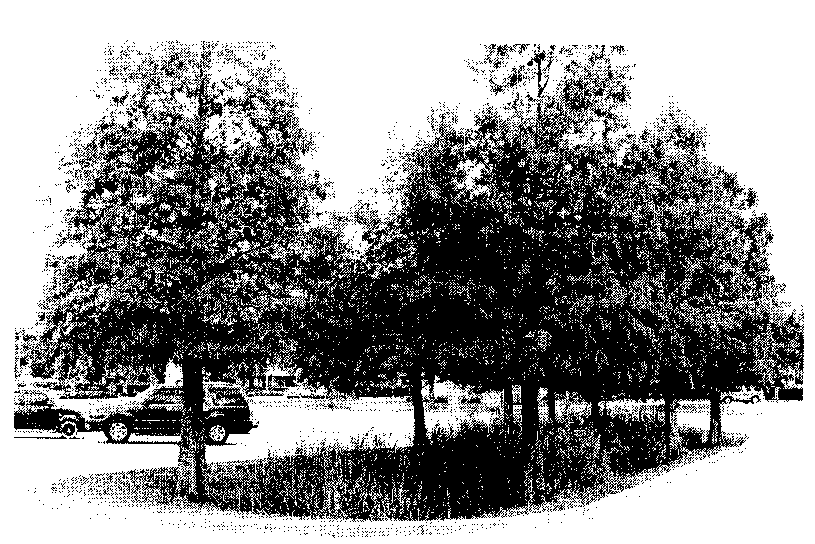
(g)
Guardhouses. An area greater than or equal to fifty (50) percent of the footprint of any guardhouse shall be landscaped immediately adjacent to the guardhouse to create an aesthetic landscape. When the guardhouse is located within the roadway median, the required landscaping shall also be planted in the median. Clear zones and clear sight lines must be maintained for any landscape within the road right-of-way. The clear zone shall consist of an area between two (2) feet and eight and one-half (8.5) feet height from the road elevation. The landscape area shall consist of shrubs, groundcovers, and trees. Sod or other ornamental landscaping may be utilized in the remaining area around the guardhouse as long as fifty (50) percent of the guardhouse square footage area has been landscaped as described. See Figure J Vehicular Gates and Associated Security Walls.
(h)
Vehicular gates and associated security walls. Landscaping shall be required on the entrance side of gates and walls as follows (see Figure J):
(1)
A minimum of four hundred (400) square feet of landscape area shall be provided on each side of an entrance road.
(2)
Within each entrance area of four hundred (400) square feet, one (1) canopy tree or three (3) ornamental trees shall be provided.
(3)
The landscape area shall have shrubs, perennials, vines or other ornamental plantings other than sod. When a utility easement or other restrictive condition restricts the use of trees, then the tree portion of this requirement may be waived or limited by the city manager or designee.
Figure J - Vehicular Gates and Associated Security Walls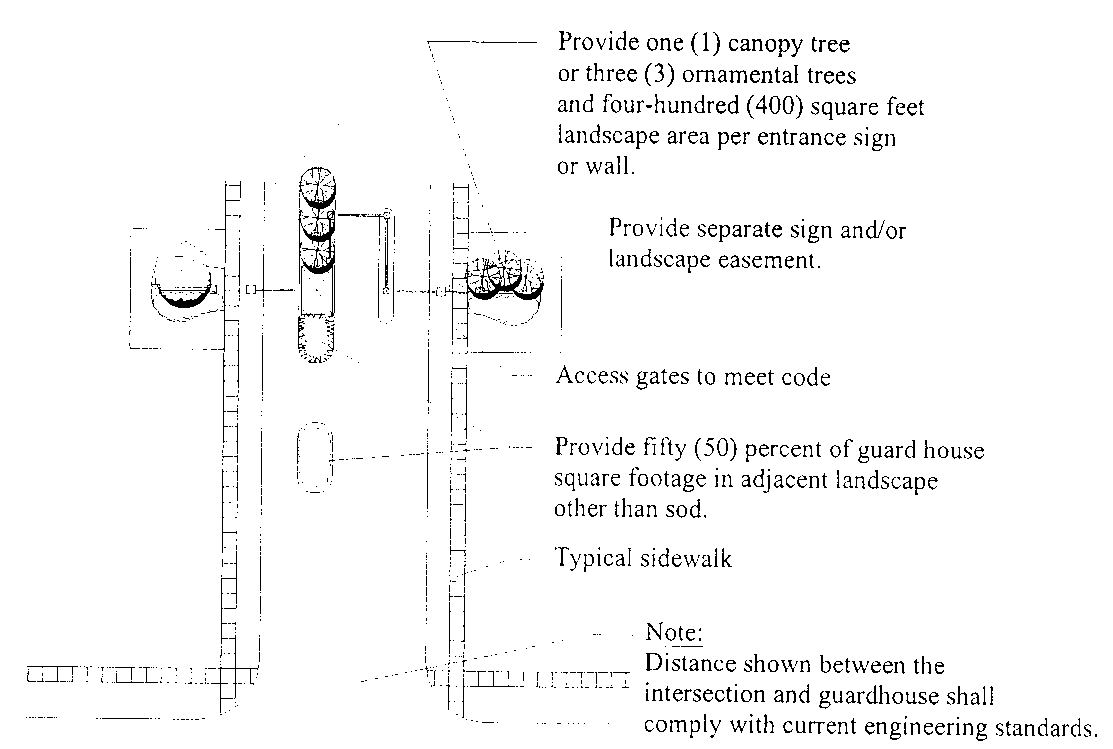
(i)
Screening of heating/ventilation/air conditioning units. Where heating/ventilation/air conditioning units are located on the ground surface area, they shall be screened from view. A combination of a fence and a berm or shrubs shall be required.
(j)
Pedestrian walkways. Pedestrian walkways shall be landscaped with additional shade or ornamental trees equal to an average of one (1) tree per fifty (50) linear feet of walkway, unless the walkway is adjacent or included within an existing compliant buffer or frontage planting.
(1)
One (1) canopy tree shall be planted for each two hundred (200) square feet of separate additional landscaped area.
(Ord. No. 11-89, § I, 9-26-11)
Sec. 25-332. - Stormwater facilities.
(a)
All stormwater retention ponds and retention areas shall be designed, landscaped and constructed so as to resemble as closely as possible a natural body of water, or if intended to operate as a "dry" retention area, to resemble a natural feature of the topography of the land, rather than being designed, landscaped and constructed as a parallelogram, triangle or other geometric shape. Stormwater retention areas shall also be sloped at no greater than a 4:1 ratio in order to avoid the necessity of fencing or other barriers surrounding the retention area. Landscaping shall be required at the same ratio as set forth in this chapter or any successor landscape ordinance. The city engineer along with the planning and zoning manager may waive this requirement where physical constraints of the property make it difficult to achieve the desired shape and the pond is located to the rear of the property and is not readily visible to a public right-of-way.
(b)
Stormwater facilities (ponds and/or depressions) shall be designed and utilized as site amenities along entrances and street frontages or incorporated with buffers between incompatible uses. These areas shall count toward open space requirements if the impervious area of the site does not exceed seventy-five (75) percent. Refer to Figure K.
(c)
Stormwater facilities should be designed and permitted so as not to require fencing. If fencing is required, a green vinyl/painted finish fence with solid hedge landscaping shall is required. Walls or other railings for structured stormwater "boxes" must be decorative. Fenced or walled ponds shall not count toward open space requirements within a project and shall only be located at the side or rear of a site with approval of the planning and zoning manager. The maximum fence height shall be four (4) feet.
(d)
Subject to the requirements of St. Johns River Management District, other governmental agencies, and a consideration of safety related issues stormwater facilities that are located in the front of a property may be prohibited from having fencing.
(e)
Wet stormwater detention/retention facilities adjoining public streets shall include a water feature such as a fountain or spray jet, and shall be planted with appropriate aquatic materials as outlined in the "Landscape Plant Materials List." Detention/retention along the front of a property shall be designed with curvilinear edges, not as a straight "box." Retention embankments shall be planted with one (1) tree per fifty (50) linear feet of retention perimeter measured from top of slope. Trees shall be suitable for wet locations as identified in the commercial corridor planter materials list.
(f)
Dry retention areas shall be planted with grass, and unless maintained as an open lawn swale, shall be screened from view with a continuous hedge of shrubs on thirty-six-inch centers around at least seventy-five (75) percent of the perimeter at the top of the slope.
(g)
Retention ponds landscaping. Three (3) canopy trees for every one hundred fifty (150) linear feet of retention pond bank shall be required as measured at the top of pond bank. Trees shall be planted within forty (40) feet from the top of bank line and include a ten (10) foot clear zone for maintenance. A minimum of three (3) canopy trees shall be required at retention ponds. Curvilinear retention ponds, rather than geometric or rectangular ponds, are required. See Figure K Retention Ponds.
Figure K - Retention Ponds (Landscaping)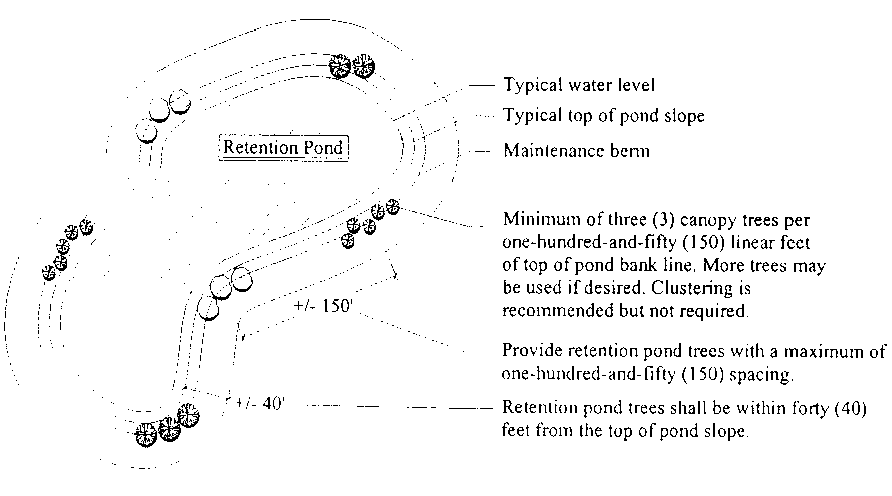
(Ord. No. 11-89, § I, 9-26-11)
Sec. 25-333. - Lake edges and wetlands.
Development abutting surface water bodies or wetlands shall be planted with appropriate aquatic plantings as outlined in the "Landscape Plant List."
(Ord. No. 11-89, § I, 9-26-11)
Sec. 25-334. - Site utilities.
(a)
All solid waste areas shall be designed with a six-foot decorative masonry wall. The wall shall be of the same materials as the primary structure or concrete masonry, decorative brick or standard concrete masonry clad with painted stucco or other masonry veneer. The wall shall include a continuous cap feature and closing gate. For industrial districts this requirement may be waived by the depending on the location of container(s) and whether they are located in a building except for pick up days.
(b)
In addition to the masonry enclosure, storage and dumpster/solid waste areas shall be treated with an eighteen- to twenty-four-inch high planted hedge (depending on species) that shall reach thirty-six (36) to forty-two (42) inches in height and ninety (90) percent opacity within one (1) year.
(c)
Long-term storage containers are prohibited unless located on a parcel with a fully screened masonry or brick enclosure designed and constructed for that purpose.
(Ord. No. 11-89, § I, 9-26-11)
Sec. 25-335. - Landscape requirements for individual single-family residential and duplex lots.
No development permit or certificate of occupancy shall be issued unless in compliance with this section. The requirements of this section shall be noted on the development permit; however this section shall not require the submittal of a single-family residential landscape plan unless required by other provisions in the City of Leesburg Code or any other development order.
(a)
Canopy tree requirements. Each single-family or duplex lot shall provide canopy trees as follows:
(1)
A minimum of two (2) trees for lots to six thousand (6,000) square feet or less.
(2)
A minimum of three (3) trees for lots between six thousand one (6,001) and ten thousand (10,000) square feet.
(3)
A minimum of five (5) trees for lots greater than ten thousand one (10,001) square feet. Three (3) trees for each additional acre in excess of one (1) acre, with a maximum number of trees not to exceed fifteen (15) for the total acreage.
(4)
Existing trees may be used to meet the provisions in per this section. Trees shall be in very good health and maintained in good condition for one (1) year during which survival is guaranteed by the property owner. One (1) of the required trees shall be planted within ten (10) feet of the front yard right-of-way for lots less than or equal to one-half (½) acre.
(b)
Street trees within lots. One (1) or more of the required trees shall be planted at a minimum of ten (10) feet and maximum of twenty (20) feet outside of the right-of-way for lots less than or equal to one-half (½) acre. More canopy trees may need to be planted along the road right-of-way to satisfy other requirements of the code.
(c)
Preservation of existing trees. Existing trees that are classified as protected trees in section 25-338 and greater than four (4) inches in diameter shall be preserved unless within the areas required for access, infrastructure, building footprint or within a five-foot offset of the footprint for the residence. Stem wall construction shall be used where necessary to achieve this requirement. The following exceptions may be allowed to this requirement:
(1)
Trees in fire prone areas, such as pine forests, or in rural communities with a density of less than two (2) dwelling units per acre, may be removed with the appropriate permit, a distance of up to thirty (30) feet from a building upon written authorization by the city fire chief or designee.
(2)
Existing fire-prone vegetation may also be removed up to thirty (30) feet from the structure's wall with permission granted by the city fire chief or designee. The minimum landscaping required by this section shall be provided.
(3)
Any trees or vegetation that are protected by other laws such as wetland trees shall not be removed without the prior written approval from the water management district or the appropriate jurisdictional agency.
(d)
Avoid damage by structures. Structures shall be located to avoid removing or damaging protected trees to the maximum extent possible.
(Ord. No. 11-89, § I, 9-26-11)
Sec. 25-336. - Landscaping requirements for industrial district.
(a)
The main entrances of the facilities shall be required to maintain a landscaped area adjacent to the entry area equivalent to a minimum of ten (10) percent of the office area or five hundred (500) square feet, whichever is greater.
(b)
For the primary building there shall be landscaping totaling twenty-five (25) percent of the building perimeter, excluding the entry area, with a minimum of a five-foot width along the area of the building face which is most visible to the employees and visitors. As an option for facilities with layouts which prohibit such layout due to needed doors and service areas, the required landscaping may be provided in other areas of the site with approval of the planning and zoning manager.
(c)
Parking lot landscape islands shall be at a total ratio of two hundred (200) square feet per one hundred fifty (150) linear feet of parking or one (1) every fifteen (15) spaces. All parking areas shall terminate with a minimum of one hundred (150) square feet of landscaping area. Parking lot landscaping shall consist of one (1) ornamental tree and five (5) shrubs per two hundred (200) square feet of required landscaping.
(d)
General open area site shall have canopy trees located on the site at a ration of one (1) tree per ten thousand (10,000) square feet of developed property.
(Ord. No. 11-89, § I, 9-26-11)
Sec. 25-337. - Prohibited plant species.
The control and elimination of invasive, non-native plant species helps protect the natural vegetative communities existing within the City of Leesburg.
(a)
Planting. Prohibited plant species shall not be planted or counted toward minimum tree or vegetation requirements.
(b)
Prohibited plants. Prohibited vegetation shall be listed in the Plant List for the City of Leesburg based on the following sources:
(1)
Prohibited aquatic plants per F.A.C. 5B-64.011.
(c)
Removal. Removal and eradication of prohibited plant species listed below shall be a condition of development approval on the parcel within one hundred (100) feet of principal structure(s) or up to fifty (50) feet from the overall limits of construction, whichever is greater.
(1)
Plants to be removed. All prohibited plants listed in the following resources require removal as a condition of development approval. The Prohibited Tree Species List for the City of Leesburg lists the plant to be removed based on the following specific sources:
a.
Plants listed on the Noxious Weed List developed by The Florida Department of Agriculture and Consumer Services 5B-57.007 Florida Administrative Code;
b.
Plants listed in F.S. § 369.251(1);
c.
All other prohibited plants are encouraged, but not required, to be removed.
(2)
Prohibited vegetation shall not be required to be removed from wetlands or natural water bodies that are regulated or protected by the water management districts or other regulatory agencies without approval.
CITY OF LEESBURG - PROHIBITED PLANT LIST
Aquatic - Class I (F.A.C. 5B-64.011):
Aquatic - Class II (F.A.C. 5B-64.011):
Exotic/Invasive Plants - (Florida Exotic Pest Plant Council)
Class I:
Class II:
(Ord. No. 11-89, § I, 9-26-11)
Sec. 25-337.1. - Tree protection.
(a)
Purpose. The purpose of this section is:
(1)
To encourage the proliferation of trees and palms.
(2)
To establish rules and regulations governing the protection and replacement of trees and palms within the City of Leesburg; and
(3)
To recognize the importance of trees and palms and their meaningful contribution to a healthy, beautiful, and safer community attributable to their carbon dioxide absorption, oxygen production, dust filtration, wind and noise reduction, soil erosion prevention, lakeshore erosion protection, wildlife habitat, surface drainage improvement, beautification and aesthetic enhancement of improved and vacant lands and the general promotion of the health, safety, welfare and well-being of the community.
(b)
Protected trees.
(1)
Designation of protected trees. The following trees and palms are designated protected trees:
a.
All trees and palms native to Florida or Florida Friendly, including, but not limited to those identified within the Protected Tree List four (4) inches or larger in diameter at breast height.
b.
Sand Pine and Xeric Oak Scrub community four (4) inches diameter or larger at breast height.
c.
Wetland trees of any size.
d.
Historic, specimen, and heritage trees.
(2)
Protected tree list. All trees native to Florida including, but not limited to, the types of trees set forth below are protected. The protected palm trees listed below may not be used for more than twenty-five (25) percent of the replacement trees required pursuant to subsection (e). These trees require an approved City of Leesburg Tree Removal Permit for removal.
(c)
Exemptions to protected trees. Prohibited trees, invasive trees, citrus or non-native fruit trees of any species shall not be considered a protected tree.
(d)
Tree removal permit. It shall be unlawful and a violation of this section to clear, kill or remove a protected tree or palm by any method without first obtaining a tree removal permit. When a development order is issued for a site plan, subdivision or master park plan, a separate tree removal permit shall not be required if the trees to be removed are identified and mitigated on the approved landscape plan. Approval of a preliminary plat does not authorize approval for the removal of trees or other vegetation. Any tree removal permit shall require replacement trees in compliance with this section and shall specify the schedule when trees will be removed and when such replacement trees will be planted. When the removal of trees is associated with a development project, the removal of trees authorized pursuant to the City of Leesburg Tree Removal Permit shall not commence until one (1) of the following has been approved or issued:
(1)
Subdivision construction plan;
(2)
Final master site plan;
(3)
Master park plan (only applicable within parks);
(4)
Building permit; or
(5)
Tree removal permit, lot grading/site alteration plan.
Existing hard wood trees on site that are over five (5) inches caliper shall be required to be shown on site plan and those removed shall be replaced at the ratio as per the following chart. Replacement trees may also count as credit toward required trees. When replacement of existing dense hard wood would be impracticable because of the large number involved, the city manager or designee may grant a waiver if the result would be in conformance with the content of this chapter.
Chart for determining number trees to be replaced or credited on site:
(e)
Tree protection.
(1)
Tree removal permit. It shall be unlawful and subject to the penalties herein for any person directly or indirectly by another on his behalf to conduct any of the following activities without securing a tree removal permit from the City of Leesburg, unless exempted herein:
a.
Perform any land-clearing or grubbing unless a land-clearing permit, if required, has been issued and is posted on-site pursuant to this article;
b.
Perform tree removal, land clearing, grubbing, grading, excavation, construction, or make or install any improvement upon any site or tract, regardless of the existence of valid permits or approvals for the given activity, unless each protected tree to be preserved pursuant to this article has been marked by a highly visible band and unless all protected areas established pursuant to this article has been surrounded by a protective barrier.
c.
No person shall pluck, cut, break, or otherwise deface or damage any flowers, trees, shrubs, or other things kept for ornament, screening, or existing in a natural, undisturbed state in any park, greenway, bicycle path, or public square, or along any roadway, city easement or other public property. Any person desiring to remove, destroy, cut, or severely prune (including the root system) any tree or shrub in or upon any public street, right-of-way or public property owned by the city, shall first obtain permission from the city manager or designee. Any work performed must be done in strict compliance with the conditions set forth in granting such permission, except permission shall not be required for the development of any property for a site plan or subdivision, as required under other sections of this article. The appropriate utilities departments shall supervise and inspect any utility work that may affect trees located in public rights-of-way, streets, or alleys within the city limits.
(f)
Violations.
(1)
Each tree damaged or destroyed without a permit required under this section shall be considered a separate violation punishable pursuant to Chapter 8 of this Code. Determinations of the number of cleared trees shall be based on best available data that may include surveys of adjacent property or aerial photographs taken prior to clearing.
(2)
If a protected/specimen tree is removed without a tree removal permit, each tree shall be replaced at a ratio of 1.25:1 of the mitigation requirement. If three (3) or more specimen/protected trees are removed without a tree removal permit, each tree shall be replaced at a ratio of 1:1 for mitigation. Any other tree removal without a tree removal permit shall be replaced in accordance with the replacement requirements stated for a permitted removal.
(3)
If a protected/specimen tree is removed without a permit, a restoration plan shall be prepared and submitted within thirty (30) days for approval by the city manager or designee. All trees shown of the approved site restoration plan must be installed on the property.
(g)
Exemptions to tree removal permit requirements. Notwithstanding anything to the contrary within this article, the following activities shall be lawful without application or issuance of a tree removal or land clearing permit. None of these exemptions shall apply to any wetland conservation area. The burden of proving entitlement to any particular exemption shall lie with the person claiming use of the exemption, in the event the exempted activity ever becomes subject to an enforcement action.
(1)
One (1) to three (3) trees, not to exceed a combined cumulative caliper of thirty (30) inches, within any one (1) three-year period; and are not required for any landscape requirement.
(2)
Trees located within new or existing recorded or prescriptive public road or drainage rights-of-way and easements that are to be removed as part of a city commission approved project. However, all protected trees removed under this exemption shall be avoided or relocated whenever feasible.
(3)
Any tree determined to be in a hazardous or dangerous condition so as to endanger the public health, safety or welfare and requires immediate removal. Authorization may be given by the city manager or designee pursuant to the following procedures:
a.
Photo documentation of the hazardous tree(s) by property owner is required prior to removal and shall be submitted to the city manager or designee.
b.
If the tree, due to immediate danger, is removed prior to obtaining written authorization, a letter and photo documentation demonstrating the immediate danger shall be submitted to the city manager or designee within fifteen (15) days of the removal.
(4)
Agriculture and silviculture so long as the operation qualifies as a bona fide farm operation on land classified as agricultural pursuant to F.S. § 193.461, if such activity is regulated through implemented best management practices, interim measures, or regulations developed through the Florida Department of Environmental Protection, Florida Department of Agriculture and Consumer Services or a water management district and adopted under F.S. ch. 120, under a regional program; or if such activity is expressly regulated by the U.S. Army Corps of Engineers, or U.S. Environmental Protection Agency.
(5)
Trees that have died through natural causes or diseased trees shall not require replacement or relocation. Trees killed or toppled by acts of God such as lightning, hurricanes and tornadoes shall not be required to be replaced or mitigated unless the tree(s) are required as part of a development order issued by the City of Leesburg.
(6)
Routine landscape maintenance such as trimming or pruning of vegetation which is not intended to result in the eventual death of the plants, mowing of yards or lawns, or any other landscaping or gardening activity which is commonly recognized as routine maintenance or replacement.
(7)
The removal, trimming, pruning, or alteration of any tree or vegetation in an existing utility easement or right-of-way provided such work is done by or under the control of the operating utility company and said company has received all necessary licenses or permits to provide utility service within the easement.
(8)
The removal, pruning, trimming, or alteration of any tree or vegetation for the purpose of maintaining existing access to a property.
(9)
Any activity conducted by a lawfully operating and bona fide commercial nursery, tree farm, agricultural operation, silvicultural operation, ranch, or similar operation, when the activity occurs on property owned or lawfully occupied by the person conducting said activity and is done in pursuit of said activity. This exemption shall include the purposeful removal of a tree or trees for their permanent relocation at another site undergoing development. When land-clearing or tree removal has been performed under this exemption based upon the use of property for an agricultural or silvicultural operation, the following shall apply:
a.
Pertaining to silviculture, operations are encouraged to implement a state division of forestry approved management plan.
b.
Pertaining to silviculture and agriculture, operations within wetlands will need to secure a notice of intent from the St. Johns River Water Management District before any clearing or harvesting is initiated.
c.
Pertaining to agriculture, operations are encouraged to implement a soil and water conservation district approved conservation plan as applicable to the specific area being cleared.
(10)
Removal of trees listed within the non-approved tree list.
(11)
Removal or relocation of trees less than four (4) inches DBH.
(h)
Criteria for issuance of tree removal permit.
(1)
Tree removal permit. A tree removal permit may be issued when one (1) or more of the following circumstances exist:
a.
Street opening. The location of a tree restricts the opening of a street or right-of-way. Streets and rights-of-way shall be located to minimize the loss of trees, especially historic, specimen and heritage trees;
b.
Utilities and drainage. The location of the tree restricts the construction of utility lines or drainage facilities. Utility lines and drainage facilities shall be located to minimize the loss of trees, especially specimen/protected trees;
c.
Property access. The location of the tree prevents access to the property. Exit and entry shall be located to minimize the loss of trees, especially specimen/protected trees;
d.
Property use. The location of the tree restricts use of the property consistent with all other city and state codes, statutes, ordinances, and resolutions, and site location modifications are not feasible or reasonable;
e.
Hazards. The tree constitutes a potential hazard to life or property that cannot be mitigated without removing the tree; i.e. that the tree is diseased, injured, or in danger of falling as determined by review of the planning and zoning division which may require a certification by a profession (arborist, landscape architect, etc.)
f.
Location. That the tree is located where it creates or will create a safety or health hazard, or a nuisance with respect to existing or proposed structures or vehicle or pedestrian routes, and relocation of the tree on the site is not a feasible alternative; or, that the tree is located where it interferes with the installation, delivery, or maintenance of proposed or existing utility services to the site;
g.
Poor tree health. The tree is dying or dead so that its restoration to sound condition is not practical, or it has a disease which can be expected to be transmitted to other trees and to endanger their health:
h.
Thinning of trees. For non-bona fide silviculture operations, thinning of trees in order to increase light and air circulation for the purpose of improving health conditions, or to prevent disease, of a group of trees, the selective removal of up to twenty-five (25) percent of the group of trees may be permitted. Thinning shall include any removal of trees from the lot and shall not exceed the maximum clearing allowed in this section. Thinning shall follow best management practices (BMPs) published by a government agency or the National Tree Care Industry Association.
i.
Permit expiration. The tree removal permit shall automatically expire twelve (12) months after issuance. Trees not removed during the life of the permit may not be removed without the issuance of a new permit based upon a new application.
j.
Restoration required. If trees have been approved for removal in the aforementioned plans, and the subject property has not been developed within twelve (12) months of approval of the development order, then the property owner shall submit a landscape plan to the planning and zoning manager for re-vegetating the subject property, which shall provide for the following:
1.
A stabilizing vegetative groundcover of grasses, forbs, or legumes;
2.
Canopy and ornamental trees at half the required number for approved development, three (3) trees per acre. The trees may be grouped together; and
3.
Masses of landscape shrubs to complement the canopy and ornamental trees.
(i)
Tree removal procedure. The tree removal permit, when issued, shall specifically identify which trees shall be permitted to be removed. Each tree permitted for removal shall be physically marked with an "X" using brightly colored paint or surveyor's tape; or if a group of trees are permitted for removal, the outside perimeter trees of the group may be designated with brightly-colored rope or tape in lieu of each tree. Such permit shall automatically expire twelve (12) months after issuance. Trees not removed during the life of the permit may not be removed without the issuance of a new permit based upon a new application.
(j)
Removal not required. Tree removal permits merely authorize the removal of trees specified therein. Nothing in this section shall be construed to require the removal of protected trees by the permittee.
(k)
Replacement requirements for tree removal permits. When a tree removal permit is issued, the city manager, or designee, shall require the replacement of removed trees and palms as a condition of the issuance of a permit, as follows:
(1)
Protected trees. Twenty-five (25) percent of the total number of caliper inches measured at diameter breast height (DBH) for qualifying trees as listed in the Plant List of the City of Leesburg.
(2)
Specimen trees. Fifty (50) percent of the total caliper inches of specimen trees.
(3)
Other tree replacement requirements.
a.
Amount of replacement. At least twenty-five (25) percent of the total number of estimated caliper inches of trees removed, pursuant to the tree removal permit, shall be replaced on-site by the applicant, where feasible, except as stated in section 25-328(g).
b.
It shall be also stated within the tree removal permit that all replacement trees shall be planted prior to the issuance of the certificate of occupancy, or as specified for subdivisions in subsection (5), below.
c.
Replacement trees shall be located on-site in approved areas as a condition of the tree removal permit.
d.
All replacement trees must be planted and maintained according to the requirements of this article.
e.
Subdivisions.
1.
The tree removal permit for a subdivision shall identify when replacement trees are required which requirement shall take the form of on or both of the following options:
i.
Prior to issuance of the certificate of occupancy for each individual structure on a lot; or
ii.
At the time of submission of the performance bond required pursuant to Section 7 of the City Land Development Code.
iii.
When the certificate of occupancy method is used pursuant to subsection i. above, the required number of replacement trees shall be equitably distributed on each lot within the subdivision.
iv.
When the performance bond method is used pursuant to subsection ii. above, the replacement trees shall be located on-site in an area or areas approved by the planning and zoning manager as a condition of the tree removal permit. These areas may include, but are not limited to, open space areas in PUDs, areas adjacent to stormwater management facilities buffer areas, and entrances to the project (when visibility for vehicular and pedestrian traffic would not be hindered). The permittee shall demonstrate the availability of water to maintain the trees through water trucks, wells, central system, or other methods.
v.
When both the certificate of occupancy and performance bond methods are used, the applicable proportions of replacement trees determined from each method shall be indicated on the tree removal permit.
(4)
When replacement trees are planted following final construction, the replacement trees shall be located on-site in approved areas as a condition of the tree removal permit.
(5)
Replacement credit. The permittee may choose and is encouraged to retain some of the trees permitted for removal in lieu of replacement. The trees to be retained may be selected totally at the discretion of the permittee except for those trees required to be removed by other ordinances, regulations, or statutes. The number of trees retained shall be credited toward meeting the above twenty-five (25) percent replacement requirement.
(6)
Maintenance. Replacement trees shall be maintained in good condition for one (1) year during which survival is guaranteed by the property owner.
(7)
Replacement size criteria. A replacement tree shall be a tree with a minimum height and DBH as required section 25-338(k). The caliper of multi-trunk trees required for replace shall be calculated using a total average DBH estimated for the site.
(l)
Regulations regarding replacement trees.
(1)
More than one (1) tree may be used to replace a tree or trees that are removed, but the minimum caliper of the replacement canopy trees shall be no less than two and one-half (2.5) inches and two (2) inches for replacement ornamental trees. However, trees required as mitigation replacement trees may be up to six (6) inches calipers to offset impacts.
(2)
Minimum of seventy-five (75) percent of the replacement trees shall be canopy trees.
(3)
Twenty-five (25) percent maximum of the replacement trees may be ornamental trees.
(4)
Palm trees and pine trees may be used but shall not exceed four (4) inches credit per tree given as replacement regardless of their installed size.
(5)
Replacement trees may be used to meet the landscape requirements set out in this section.
(m)
Prohibited tree species. The control and elimination of invasive, nonnative species shall protect the natural vegetative communities existing within City of Leesburg. The trees set forth below are prohibited from being counted toward the required number of trees, as replacements to removed trees, and shall not be voluntarily planted.
(1)
These trees are prohibited from being planted or counted toward minimum tree requirements. These trees do not require an approved City of Leesburg Tree Removal permit for removal.
(2)
Removal of these trees from a commercial, industrial, community facility, or multi-family site that is being developed shall be completed as a requirement for approval of the final permit inspection and prior to issuance of a certificate of occupancy. Single-family residences of new construction are not exempt from this requirement.
(n)
Tree sampling for large sites. Sites over ten (10) acres may identify and sample trees to be removed as follows:
(1)
The locations of all historic, specimen and heritage trees protected or proposed for removal shall be located.
(2)
Other protected trees shall be surveyed as follows:
a.
The first ten (10) contiguous acres shall be surveyed by accounting for all protected trees to be removed.
b.
The remaining acreage may be surveyed using sample plots. The sample plots shall be a minimum area of twenty (20) percent of the remaining part of the site to be developed and twenty (20) percent of each vegetative community within the remaining part of the site to be developed. Each of the sample survey plots shall be a minimum of one hundred (100) feet by one hundred (100) feet in size and shall conform to current forestry practices.
c.
All protected trees three (3) inch DBH caliper or greater, unless the trees are part of a wetland, sand pine or xeric oak scrub community in which case trees two (2) inches DBH and larger shall be counted.
(3)
The tree survey shall be conducted by a registered landscape architect, certified arborist, or certified forester.
(4)
A tree survey report detailing all findings, including the number and caliper of trees surveyed, estimates of trees surveyed, estimates of protected trees and distribution based on survey plots, and the size and location of specimen, historic, or heritage trees, shall be prepared and submitted to the city as part of the site plan review process. The methods of the tree survey shall be clearly detailed in the written report provided to the City of Leesburg.
(5)
The City of Leesburg reserves the right to require more detailed tree sampling if the city manager or designee determines that the information provided is insufficient or that site-specific considerations warrant additional information.
(6)
Landscape credit. The replacement trees may be used to meet the requirements of the landscape standards set out in section 5-328(k). All replacement trees may be provided even if the total number exceeds the landscape requirement.
(7)
Replacement maintenance. The replacement trees shall be maintained in good condition in perpetuity, and the property owner shall guarantee survival.
(8)
Restriction on use of palm trees. Palm trees shall not account for more than twenty (20) percent of the required replacement trees.
(9)
Replacement size. Replacement trees shall conform to the size and planting requirements of the landscape code. Ornamental trees may not exceed twenty-five (25) percent of the total caliper replacement inches required.
(o)
Location of tree replacement sites.
(1)
Replacement trees shall be mitigated on the lot, if possible.
(2)
If replacement trees cannot be placed on the lot, they shall be located in common areas of the development such as: open space areas, areas adjacent to stormwater management facilities, landscape buffer areas, or entrances of the development in which the site is located, if possible.
(3)
If replacement cannot be made on the lot or in a common area of the development, the owner or applicant may replace the required trees on a designated conservation or park property within the City of Leesburg. The recipient property shall be acceptable to the city and shall be suitable for the replacement trees. As an alternative at the city's discretion, the required trees can be accepted by the city for placement in other areas such as streets or trails or for donates to the public. Mitigated replacement trees shall not count toward meeting minimum landscaping requirements of the recipient site for development purposes. The request to utilize this option shall be submitted to the city manager or designee in writing and shall include the following justifications and information:
a.
Explanation why the trees cannot be replaced on site;
b.
A legal description and a copy of the property record information from the Lake County Property Appraiser for the proposed recipient site;
c.
If the property is not city-owned, an affidavit from the owner of the recipient site agreeing to the terms of accepting the mitigated trees as listed above. A conservation easement or similar legally-binding instrument approved by the city shall be required to ensure that mitigation trees planted at the recipient site will be protected and maintained in perpetuity; and
d.
The applicant shall be responsible for paying for all the costs for installation and maintenance of the tree(s), including planting and any necessary irrigation.
(p)
Voluntary planting. This section shall not be interpreted to restrict, regulate, or limit the voluntary planting of any protected tree in the City of Leesburg. Any size tree may be voluntarily planted. The provisions of this section govern only the planting of trees that are required to be planted or retained.
(q)
Specimen trees.
(1)
Purpose. It is the purpose of this subsection to acknowledge the existence of certain trees within the city that are rare or unique due to factors such as age, size, or type, and to protect such trees through their designation as specimen trees. Designation of specimen trees shall be in accordance with the standards and procedures in this subsection.
(2)
Designation standards. At least one (1) of the following standards in addition to subsection c., Form, shall apply in order for a tree to be designated a specimen tree:
a.
Size. Trees with a thirty (30) inch caliper or greater or a circumference of eight (8) feet or greater, singly or with a combined trunk, measured at fifty-four (54) inches from the surface of the ground.
b.
Age. Trees that are determined to be at least one hundred (100) years old or to be at approximate half-life maturity and are in good health.
c.
Form. Trees that are determined to have a unique form or shape, due to geography, climate, environmental or natural growth habitat conditions, and are in good health.
d.
Ecological value. Trees that are determined to have an ecological value to the city in terms of soil or water conservation and management, wildlife habitat, or endemic native flora habitat, and are in good health.
e.
Rarity. Trees that are determined to be non-indigenous, rare, or unique to the city, and are in good health.
(3)
Prohibited trees as listed under section 25-338(m) are excluded from designation as a specimen tree.
(4)
Mandatory recognition of specimen trees. Any non-prohibited trees with thirty-inch caliper or greater, or a circumference of eight (8) feet or greater, singly or with a combined trunk, measured at fifty-four (54) inches from the surface of the ground shall be recognized as a specimen tree. The applicant shall identify the location, number and size of all specimen trees on the required tree survey submitted to the city for site plan or plat review. In addition, the city may identify specimen trees that are found to meet this criterion.
(r)
Tree protection standards during construction. The following standards shall apply to all protected trees during construction.
(1)
Tree protection standards. The protection measures described in this subsection are based on those in the Tree City USA Bulletins published by The National Arbor Day Foundation: How to Save Trees During Construction (No. 8, 1998), A Systematic Approach to Building with Trees (No. 20, 1998), and How to Protect Trees During Underground Work (No. 35, 1998). These publications are hereby adopted and included by reference herein. These publications shall be used to supplement the required protection measures. They also provide information on the economic value of trees to developments and their incorporation into designs as well as guidelines on professional tree care, tree planting and tree transplanting.
(2)
Drip line protection. Solvents, materials, construction machinery or temporary soil deposits shall not be placed within the drip line of any protected tree. This includes soil that is placed in the drip line permanently for the purpose of a grade change, unless the grade is changed as allowed with these land development regulations.
(3)
Protection from injury. In order to protect against mechanical injuries to roots, trunks and branches, and injuries by chemical poisoning, grade changes, excavations, paving, and attachments or wires, the applicable protection measures set out below shall be implemented prior to commencement of any construction.
a.
A protective barrier (see Figure L - Tree Protection Barricades) shall be placed around all protected trees prior to any land preparation or construction of structures or other improvements in accordance with this section. No equipment, construction material, chemicals or debris of any kind shall be placed within the protection barrier.
b.
Posts shall be placed at points not closer than at the natural drip-line of the tree unless the structure or improvement has been permitted by the city manager or designee to be erected within the drip-line of the tree with a wide canopy. The structure or improvement may be placed within the drip line of the tree only if the tree has been root pruned, as supervised by a licensed registered landscape architect or arborist certified by the International Society of Arboriculture. For palm trees, the posts shall be placed at points not closer than six (6) feet from the trunk.
c.
The posts shall be connected with clearly visible plastic tape or ribbon, or rope.
Figure L - Tree Protection Barricades
(Properly constructed tree barricade protects the entire natural drip line area)
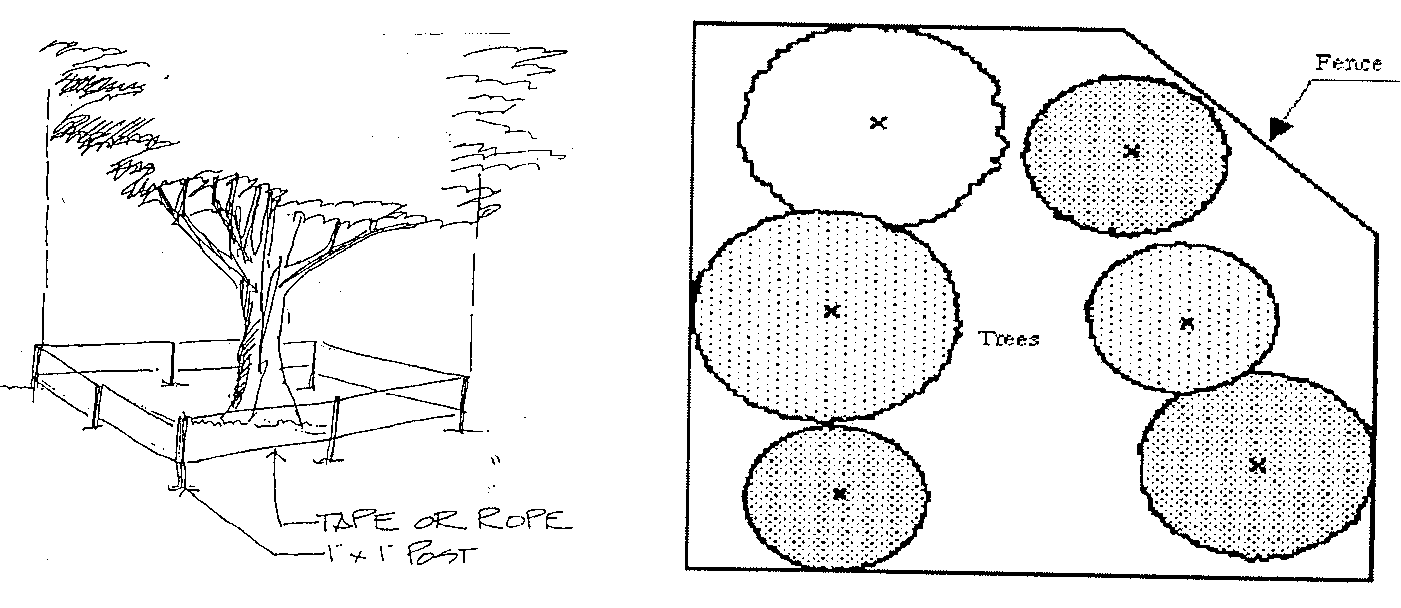
Plan View of Tree Protection Fencing
d.
With the exception of identification ribbons, no attachments, wires, signs, nails, or permits shall be fastened to a protected tree other than supportive wires, if applicable.
e.
Landscaping activities within the bounds of the protective barrier (before and after it is removed) shall be accomplished with light machinery (such as, aerators and mowers) or manual labor. No grubbing, root rakes or similar activities are permitted.
f.
In lieu of constructing the barriers required in this section, large areas containing protected trees where no land preparation or other development activities of any kind will occur may be designated on a tree removal application. The designated area shall be protected by placing stakes a maximum of twenty-five (25) feet apart along the outside perimeter of the area and tying clearly visible plastic tape or ribbon, or rope from stake to stake. The perimeter line shall be outside of the drip line of any protected tree within the designated area.
g.
Protective barriers and perimeter lines shall remain in place until all construction activity is terminated, except for landscaping.
(4)
Avoiding tree injury due to root impacts. Construction within the drip line, such as changes in grade and installation of underground utilities, commonly causes extensive root damage or death of a tree. Construction shall not be permitted within the drip line unless protective measures are taken and supervised by a registered landscape architect or certified arborist, to ensure the health of the tree.
(5)
Avoiding injuries due to paving within the drip line. When approved by the city manager or designee, paving may be placed within the drip line, so long as no damage is inflicted to the tree by grade change, compaction of soil, or any other cause and protective measures are taken and supervised by a registered landscape architect or certified arborist, to ensure the health of the tree.
(Ord. No. 11-89, § I, 9-26-11)
Sec. 25-338. - Access and circulation—Intent and purpose.
The intent of this section is to provide and manage access to land development, while preserving the regional flow of traffic in terms of safety, capacity, and speed. Major thoroughfares, including highways and other arterials, serve as the primary network for moving people and goods. These transportation corridors also provide access to businesses and homes and have served as the focus for commercial and residential development.
The purpose of this section is to provide reasonable access to private property and maintain the right of the citizens of the City of Leesburg and the State of Florida to safe and efficient travel. To achieve this policy intent, state and local thoroughfares have been categorized by function and classified for access purposes based upon their level of importance, with highest priority on the Florida Intrastate Highway System and secondary priority on the primary network of regional arterials.
Codes have been applied to these thoroughfares for the purpose of reducing traffic accidents, personal injury, and property damage attributable to poorly designed access systems, and to thereby improve the safety and operation of the roadway network. This will protect the substantial public investment in the existing transportation system and reduce the need for expensive remedial measures. These codes also further the orderly layout and use of land, protect community character, and conserve natural resources by promoting well-designed road and access systems and discouraging the unplanned subdivision of land.
(Ord. No. 04-27, § V(5.18, 5.19), 5-10-04)
Sec. 25-339. - Applicability.
This chapter shall apply to all arterials and selected collectors within the city, as identified in Table 1.1, and to all properties that abut these roadways. The access classification system and standards of the Florida Department of Transportation shall apply to all roadways on the state highway system.
(Ord. No. 04-27, § V(5.20), 5-10-04)
Sec. 25-340. - Conformance with plans, standards, and statutes.
This section is adopted to implement objective 1.2 of the Traffic Circulation Element of the City of Leesburg as set forth in the growth management plan. In addition, this section conforms to the planning policies of the Florida Department of Transportation set forth in the Florida Transportation Plan. The section also conforms to the access classification system and standards of the Florida Department of Transportation, the access management requirements of the Florida Intrastate Highway System Program, and policy and planning directives of the federal Transportation Equity Act for the 21st century of 1998.
(Ord. No. 04-27, § V(5.21), 5-10-04)
Sec. 25-341. - Access permit required.
Access to a public street requires an access permit in accordance with the following procedures.
(1)
Permits for access to city streets shall be subject to review and approval by the planning and zoning manager or designee based on the standards contained in this chapter, and the provisions of article VII, division 4, Transportation Standards. An access permit may be in the form of a letter to the applicant, or it may be attached to a land use decision notice as a condition of approval.
(2)
Permits for access to state highways shall be subject to review and approval by Florida Department of Transportation (FDOT), except where FDOT has delegated this responsibility to the city or Lake County. In that case, the city or county shall determine whether access is granted based on its adopted standards.
(3)
Permits for access to county roads shall be subject to review and approval by Lake County, except where the county has delegated this responsibility to the city, in which case the city shall determine whether access is granted based on adopted county standards.
(Ord. No. 04-27, § V(5.22), 5-10-04)
Sec. 25-342. - Access management classification system and standards.
(a)
As designated within the traffic circulation element of the comprehensive plan, the following access classifications have been assigned to all arterials and selected collectors under state and local jurisdiction in accordance with chapter 14-97, Administrative Rules of the Department of Transportation, and the requirements of this Code. These access classes are defined as follows:
(1)
Access Class 1 - Limited access highways, designed for high speed, high volume traffic movements. Access is permitted only via interchanges.
(2)
Access Class 2 - Highly controlled access facilities distinguished by their ability to carry high speed, high volume traffic over long distances in a safe and efficient manner. These highways are distinguished by a system of existing or planned service roads, a highly controlled limited number of connections, median openings and infrequent traffic signals.
(3)
Access Class 3 - These facilities are controlled access facilities where direct access to abutting land will be controlled to maximize the through movement of traffic. This class will be used where existing land use and roadway sections have not been built out to the maximum land use or roadway capacity or where the probability of significant land use change in the near future is high. These highways are distinguished by existing or planned restrictive medians and maximum distance between signals and driveway connections. Local land use planning, zoning and subdivision codes should support the restrictive spacings of this designation.
(4)
Access Class 4 - These facilities are controlled access highways where direct access to abutting land will be controlled to maximize the through movement of traffic. This class will be used where existing land use and roadway sections have not been built out to the maximum land use or roadway capacity or where the probability of significant land use change in the near future is high. These highways are distinguished by existing or planned non-restrictive median treatments.
(5)
Access Class 5 - This class will be used where existing land use and roadway sections have been built out to a greater extent than those roadway segments classified as Access Classes 3 and 4 and where the probability of a major land use change is not as high as those roadway segments classified Access Classes 3 and 4. These highways will be distinguished by existing or planned restrictive medians.
(6)
Access Class 6 - This class will be used where existing land use and roadway sections have been built out to a greater extent than those roadway segments classified as Access Classes 3 and 4, and where the probability of a major land use change is not as high as those roadway segments classified Access Classes 3 and 4. These highways will be distinguished by existing or planned non-restrictive medians or centers.
(7)
Access Class 7 - This class shall only be used in urbanized areas where existing land use and roadway sections are built out and where significant land use changes or roadway widening will be limited. This class shall be assigned only to roadway segments where there is little intended purpose to provide high-speed travel. Access needs, though generally high in those roadway segments, will not compromise the public health, welfare, or safety. Exceptions to standards in this class will be considered if the applicant's design changes substantially reduce the number of connections compared to existing conditions. These highways can have either restrictive or non-restrictive medians.
(b)
Access spacing. Driveway accesses shall be separated from other driveways and street intersections in accordance with the following standards and procedures:
(1)
Classified arterials and collectors. All connections on facility segments that have been assigned an access classification shall meet or exceed the minimum connection spacing requirements of that access classification, as specified in Table 2.
Table 1.2: Arterial Access Management Classifications & Standards
* "Restrictive" medians physically prevent vehicle crossing. "Non-Restrictive" medians allow turns across at any point.
(2)
Unclassified arterials and collectors. Separation between access connections on all collectors and arterials under local jurisdiction that have not been assigned an access classification shall be based upon the posted speed limit in accordance with Table 3:
Table 1.3: Driveway Spacing for Nonclassified Roadways
(3)
Local streets. A minimum of fifty (50) feet separation shall be required on local streets.
(c)
Driveway spacing shall be measured from the closest edge of the pavement to the next closest edge of the pavement. The projected future edge of the pavement of the intersecting road shall be used in measuring corner clearance, where widening, relocation, or other improvement is indicated in an adopted local thoroughfare plan or five-year transportation plan of the metropolitan planning organization.
(d)
The planning and zoning manager or designee may reduce the connection spacing requirements in situations where they prove impractical.
(e)
Variation from these standards shall be permitted at the discretion of the development review committee where the effect would be to enhance the safety or operation of the roadway. Examples might include a pair of one-way driveways in lieu of a two-way driveway, or alignment of median openings with existing access connections. Applicants may be required to submit a study prepared by a registered engineer to assist the city in determining whether the proposed change would exceed roadway safety or operational benefits of the prescribed standard.
(Ord. No. 04-27, § V(5.23), 5-10-04; Ord. No. 08-62, § I, 7-14-08)
Sec. 25-343. - Access options.
When vehicle access is required for development (i.e. for off-street parking, delivery, service, drive-through facilities, etc.), access shall be provided by one of the following methods.
(1)
Alley. Access is from an existing or proposed alley. If a property has access to an alley, direct access to a public street is not permitted.
(2)
Private street, joint use driveways or cross access easements. Access is from a private street, joint use driveway, or cross access easement connected to an adjoining property that has direct access to a public street. Joint use driveways and cross access easements shall be completed and recorded as specified in section 25-344. If a property has access to a private street or can connect to an adjacent parcel through a shared driveway, direct access to a public street is not permitted.
(3)
Adjacent public street. Access is from a public street adjacent to the development parcel. If practicable, the city may require the applicant to close or consolidate an existing access point as a condition of approving new access. Street access shall comply with access spacing standards in section 25-342.
(4)
Subdivisions fronting onto an arterial street. New residential subdivision fronting onto an arterial street shall be designed to provide through lots along the arterial with access from a frontage road or interior local road. Access rights of these lots to the arterial shall be dedicated to the city and recorded with the deed or plat. A berm or buffer yard may be required at the rear of through lots to buffer residences from traffic on the arterial. The berm or buffer yard shall not be located within the public right-of-way.
(5)
Double-frontage lots. Access to double frontage lots shall be required on the street with the lower functional classification.
(Ord. No. 04-27, § V(5.24), 5-10-04)
Sec. 25-344. - Joint use driveways and cross access easements.
(a)
All adjacent commercial or office properties and all parcels that cannot achieve the connection spacing of this Code (section 25-342) shall provide a cross access drive and pedestrian access to allow circulation between sites. In addition, any other parcels may provide access through joint use driveways or cross access easements.
(b)
A system of joint use driveways and cross access easements as shown in Figure 1.1 shall be established wherever feasible along all arterial roadways and the building site shall incorporate the following:
(1)
A continuous service drive or cross access extending the entire length of each block served to provide for driveway separation consistent with the access management classification system and standards.
(2)
Sufficient width to accommodate two-way travel aisles designed to accommodate automobiles, service vehicles, and loading vehicles;
(3)
Stub-outs and other design features to make it visually obvious that the abutting properties may be tied in to provide cross access via a service drive;
(4)
A unified access and circulation system plan that includes coordinated or shared parking areas is encouraged wherever feasible.
(c)
Pursuant to this section, property owners shall:
(1)
Record an easement with the deed allowing cross access to and from other properties served by the joint use driveways and cross access or service drive;
(2)
Record an agreement with the deed that remaining access rights along the thoroughfare will be dedicated to the city and pre-existing driveways will be closed and eliminated after construction of the joint-use driveway;
(3)
Record a joint maintenance agreement with the deed defining maintenance responsibilities of property owners.
(d)
The planning and zoning division may reduce required separation distance of access points where they prove impractical, provided all of the following requirements are met:
(1)
Joint access driveways and cross access easements are provided wherever feasible in accordance with this section.
(2)
The site plan incorporates a unified access and circulation system in accordance with this section.
(3)
The property owner shall enter a written agreement with the city, recorded with the deed, that pre-existing connections on the site will be closed and eliminated after construction of each side of the joint use driveway.
(e)
The planning and zoning division may modify or waive the requirements of this section where the characteristics or layout of abutting properties would make development of a unified or shared access and circulation system impractical.
(Ord. No. 04-27, § V(5.25), 5-10-04)
Sec. 25-345. - Corner clearance.
(a)
Corner clearance for connections shall meet or exceed the minimum connection spacing requirements for that roadway.
(b)
New connections shall not be permitted within the functional area of an intersection or interchange as defined by the connection spacing standards of this Code, unless:
(1)
No other reasonable access to the property is available, and
(2)
The planning and zoning division determines that the connection does not create a safety or operational problem upon review of a site specific study of the proposed connection prepared by a registered engineer and submitted by the applicant.
(c)
Where no other alternatives exist, the planning and zoning division may allow construction of an access connection along the property line farthest from the intersection. In such cases, directional connections (i.e. right in/out, right in only, or right out only) may be required.
(d)
In addition to the required minimum lot size, all corner lots shall be of adequate size to provide for required front yard setbacks and corner clearance on all street frontage.
(Ord. No. 04-27, § V(5.26), 5-10-04)
Sec. 25-346. - Access connection and driveway design.
(a)
Driveway grades shall conform to the requirements of FDOT Standard Index, latest edition.
(b)
Driveway approaches must be designed and located to provide an exiting vehicle with an unobstructed view. Construction of driveways along acceleration or deceleration lanes and tapers is discouraged due to the potential for vehicular weaving conflicts.
(c)
Driveway width and flair shall be adequate to serve the volume of traffic and provide for rapid movement of vehicles off of the major thoroughfare, but shall not be so wide as to pose safety hazards for pedestrians, bicycles, or other vehicles. Driveway openings shall be the minimum width necessary to provide the required number of vehicle travel lanes one (1) foot for each travel lane).
(d)
The length of driveways or "Throat Length" shall be designed in accordance with the anticipated storage length for entering and existing vehicles to prevent vehicles from backing into the flow of traffic on the public street or causing unsafe conflicts with on-site circulation. General standards appear in Table 5 but these requirements will vary according to the projected volume of the individual driveway. These measures generally are acceptable for the principle access to a property and are not intended for minor driveways; lesser throat lengths may be permitted for secondary access drives serving large developments. Variation from these shall be permitted for good cause upon approval of the city development review committee.
Table 1.5: Generally Adequate Driveway Throat Lengths
(e)
Driveways, private streets, aisles, turn-around areas and ramps shall have a minimum vertical clearance of thirteen (13) by six (6) inches for their entire length and width.
(Ord. No. 04-27, § V(5.27), 5-10-04)
Sec. 25-347. - Requirements for outparcels and phased development plans.
(a)
In the interest of promoting unified access and circulation systems, development sites under the same ownership or consolidated for the purposes of development and comprised of more than one building site shall not be considered separate properties in relation to the access standards of this Code. The number of connections permitted shall be the minimum number necessary to provide reasonable access to these properties, not the maximum available for that frontage. All necessary easements, agreements, and stipulations required under section 25-344 joint use driveways and cross access easements shall be met. This shall also apply to phased development plans. The owner and all lessees within the affected area are responsible for compliance with the requirements of this Code and both shall be cited for any violation.
(b)
All access to the outparcel must be internalized using the shared circulation system of the principle development or retail center. Access to outparcels shall be designed to avoid excessive movement across parking aisles and queuing across surrounding parking and driving aisles.
(c)
The number of outparcels shall not exceed one (1) per ten (10) acres of site area, with a minimum lineal frontage of three hundred (300) feet per outparcel or greater where access spacing standards for that roadway require. This frontage requirement may be waived where access is internalized using the shared circulation system of the principle development or retail center. In such cases the right of direct access to the roadway shall be dedicated to the city and recorded with the deed.
(Ord. No. 04-27, § V(5.28), 5-10-04)
Sec. 25-348. - Number of access points.
(a)
For single-family (detached and attached), two-family, three-family, and four-family residential units, one street access point is permitted per lot, when alley access cannot otherwise be provided; except that two access points may be permitted for two-family, three-family, and four-family housing on corner lots (i.e. no more than one access per street), subject to access spacing standards in section 25-342, Access management classification system and standards.
(b)
The number of street access points for multiple family, commercial, industrial, and public/institutional developments shall be minimized to protect the function, safety, and operation of the street(s) and sidewalk(s) for all users. Shared access may be required in order to maintain the required access spacing and minimize the number of access points. Typically, the number of access points to collectors or arterial roadways shall be limited regardless of the number of lots or businesses served.
(c)
The minimum number of access points to collector or arterial roadways from subdivisions with more than twenty-five (25) lots shall be two (2), subject to the access management standards of this section.
(Ord. No. 04-27, § V(5.29), 5-10-04; Ord. No. 08-62, § I, 7-14-08)
Sec. 25-349. - Shared access.
(a)
Subdivisions with frontage on the state highway system shall be designed into shared access points to and from the highway.
(b)
Direct access to individual one (1) and two (2) family dwellings shall be prohibited on the Florida Intrastate Highway System.
(Ord. No. 04-27, § V(5.30), 5-10-04)
Sec. 25-350. - Connectivity.
(a)
The street system of a proposed subdivision shall be designed to coordinate with existing, proposed, and planned streets outside of the subdivision as provided in this section.
(b)
Wherever a proposed development abuts unplatted land or a future development phase of the same development, street stubs shall be provided as deemed necessary by the city commission to provide access to abutting properties or to logically extend the street system into the surrounding area. All street stubs shall be provided with temporary turn-around or cul-de-sacs unless specifically exempted by the planning and zoning manager, and the restoration and extension of the street shall be the responsibility of any future developer of the abutting land.
(c)
Collector streets shall intersect with collector or arterial streets at safe and convenient locations.
(d)
Subcollector and local residential access streets shall connect with surrounding streets to permit the convenient movement of traffic between residential neighborhoods or facilitate emergency access and evacuation. Where such connections may have the effect of encouraging the use of such streets by substantial through traffic, the street shall be designed to slow traffic to appropriate speeds through street design and traffic calming measures.
(e)
Exception. Street stubs are not required when existing development patterns or physical constraints (e.g. topography, parcel configuration, and similar conditions) prevent extending the street in the future.
(Ord. No. 04-27, § V(5.31), 5-10-04)
Sec. 25-351. - Pedestrian access and circulation.
(a)
To ensure safe, direct and convenient pedestrian circulation, all developments, except single-family detached housing, shall provide a continuous pedestrian and/or multi-use pathway system.
(1)
Continuous pathways. The pathway system shall extend throughout the development site, and connect to all future phases of development, adjacent trails, public parks and open space areas wherever possible. The applicant may also be required to connect or stub pathway(s) to adjacent streets and private property.
(2)
Safe, direct, and convenient pathways. Pathways within developments shall provide safe, reasonably direct and convenient connections between primary building entrances and all adjacent streets, based on the following definitions:
(3)
Reasonably direct. A route that does not deviate unnecessarily from a straight line or a route that does not involve a significant amount of out-of-direction travel for likely users.
(4)
Safe and convenient. Bicycle and pedestrian routes that are reasonably free from hazards and provide a reasonably direct route of travel between destinations.
(5)
Primary entrance.
a.
For commercial, industrial, mixed use, public, and institutional buildings, the "primary entrance" is the main public entrance to the building. In the case where no public entrance exists, street connections shall be provided to the main employee entrance.
b.
For detached residential buildings, the "primary entrance" is the front door (i.e. facing the street).
c.
For multifamily buildings in which each unit does not have its exterior entrance, the "primary entrance" may be a lobby, courtyard or breezeway which serves as a common entrance for more than one (1) dwelling.
(6)
Connections within developments. For all developments subject to site design review, pathways shall connect all building entrances to one another. In addition, pathways shall connect all parking areas, storage areas, recreational facilities, and common areas (as applicable), and adjacent developments to the site, as applicable.
(7)
Street connectivity. Within the contemporary design overlay, pathways (for pedestrians and bicycles) shall be provided at or near mid-block where the block length exceeds the maximum block length requirement. Pathways shall also be provided where cul-de-sacs or dead-end streets are planned, to connect the ends of streets together, to other streets, and/or to other developments, as applicable. Pathways used to comply with these standards shall conform to all the following criteria.
(8)
Multi-use pathways (i.e. for pedestrians and bicyclists) are no less than ten (10) feet wide and located within a twenty-foot-wide right-of-way or easement that allows access for emergency vehicles.
(9)
If the streets within the subdivision or neighborhood are lighted, the pathways shall also be lighted.
(10)
Stairs or switchback paths using a narrower right-of-way/easement may be required in lieu of a multi-use pathway where grades are steep.
(11)
The city may require landscaping within the pathway easement/right-of-way for screening and privacy of adjoining properties.
(12)
The planning and zoning manager or designee may determine, based upon the facts in the record, that a pathway is impracticable due to: physical or topographic conditions (e.g. freeways, railroads, sensitive lands and similar physical constraints); buildings or other existing development on adjacent properties that physically prevent a connection now or in the future, considering the potential for redevelopment; and sites where provisions of recorded leases, easements, covenants, restrictions, and other agreements recorded as of July 1, 2004 prohibit the pathway connection.
(b)
Design and construction. Pathways shall conform to the following standards.
(1)
Vehicle/pathway separation. Where pathways are parallel and adjacent to a driveway or street (public or private), they shall be raised six (6) inches and curbed, or separated from the driveway/street by a five-foot minimum strip within bollards, a landscape berm, or other physical barrier. If a raised path is used, the ends of raised portions must be equipped with curb ramps.
(2)
Housing/pathway separation. Pedestrian pathway shall be separated a minimum of five (5) feet from all residential living areas on the ground floor, except at building entrances. Separation is measured from the pathway edge to the closest dwelling unit. The separation area shall be landscaped in conformance with the provisions of section 25-322. No pathway/building separation is required for commercial, industrial, public, or institutional uses.
(3)
Crosswalks. Where pathways cross a parking area, driveways, or street ("crosswalk"), they shall be clearly marked with contrasting paving material, humps, raised crossing, or painted striping. An example of contrasting paving material is the use of a concrete crosswalk through an asphalt driveway. In painted striping is used, it shall consist of thermoplastic striping or similar type of durable application.
(4)
Pathway surface. Pathway surfaces shall be concrete, asphalt, brick/masonry pavers or other durable surfaces, at least six (6) feet wide, and shall conform to ADA requirements. Multi-use paths (i.e. for bicycle and pedestrians) shall be the same materials, at least ten (10) feet wide accessible routes. Pathways shall comply with the American with Disabilities Act, which requires accessible routes of travel.
(Ord. No. 04-27, § V(5.32), 5-10-04)
Sec. 25-352. - Emergency access.
(a)
In addition to minimum side, front, and rear yard setback and building spacing requirements specified in this chapter, all buildings and other development activities such as landscaping, shall be arranged on site so as to provide safe and convenient access for emergency vehicles.
(b)
Fire access and parking area turn-arounds. A fire equipment access drive shall be provided for any portion of an exterior wall of the first story of a building that is located more that one hundred fifty (150) feet from an existing public street or approved fire equipment access drive. Parking areas shall provide adequate aisles or turn-around areas for service and delivery vehicles so that all may enter the street in a forward manner.
(c)
Emergency access to gated developments.
(1)
Uniform emergency access to gated developments: Each new or existing residential development, or business occupancy, access to which is limited by security gates or gates which are not attended on a twenty-four-hour basis, shall install an emergency vehicle access system as herein designated.
(2)
Emergency access system.
a.
Equipment. An emergency access system shall consist of Opticom technology or compatible technology.
b.
Personnel. The city fire chief shall develop and administer procedures to assure the security of the emergency access system.
(3)
Time for compliance.
a.
An existing gated development shall install an emergency vehicle access system on or before July 1, 2005. Gated developments that are completed after July 1, 2004 shall install an emergency vehicle access system prior to or concurrent with the installation of a security gate.
b.
For purposes of this division, a gated development shall be considered an existing development if it has obtained "final site plan approval" prior to July 1, 2004.
(4)
Approval, maintenance and inspections. No security gate required to incorporate an emergency access system shall be installed prior to, or maintained absent, obtaining written certification from the fire official that it meets the requirements of this division. Each emergency vehicle access system shall be maintained in working condition at all times so that timely access by emergency vehicles is provided during an emergency. Authorized emergency personnel may conduct inspections at any reasonable time to insure reliable operation of a system.
(5)
Minimum access. The provisions of this division are intended to insure a minimum level of access for emergency vehicles and personnel during emergencies and shall not be construed to warrant or guarantee the safety of a gated development or restricted access occupancy during an emergency.
(Ord. No. 04-27, § V(5.33), 5-10-04)
Sec. 25-353. - Transit access.
In commercial or office zoning districts where transit service is available or is planned to be available within five (5) years, provisions shall be made for adequate transit access, in the form of turn around loops or turnout bays. At a minimum, in the case of a loop or cul-de-sac, entrance curves shall have a thirty-five-foot radius, and the internal circle shall have an inside radius of thirty (30) feet and an outside radius of fifty-two and a half (52.5) feet. In the case of turnout bays, the curve radius shall be thirty-five (35) feet, the distance from the roadside edge to the inside edge of the outside radius shall be fifty-two and a half (52½) feet.
(Ord. No. 04-27, § V(5.34), 5-10-04)
Sec. 25-354. - Florida's turnpike interchange areas.
(a)
New interchanges or significant modification of an existing interchange will be subject to special access management requirements to protect the safety and operational efficiency of the limited access facility and the interchange area, pursuant to the preparation and adoption of an access management plan. The plan shall address current and future connections and median openings within one-fourth (¼) mile of an interchange area (measured from the end of the taper of the ramp furthest from the interchange) or up to the first intersection with an arterial road, whichever is less.
(b)
The distance to the first connection shall be at least six hundred sixty (660) feet where the posted speed limit is greater than forty-five (45) mph or four hundred forty (440) feet where the posted speed limit is forty-five (45) mph or less. This distance shall be measured from the end of the taper for that quadrant of the interchange.
(c)
The minimum distance to the first median opening shall be at least one thousand three hundred twenty (1,320) feet as measured from the end of the taper of the egress ramp.
(Ord. No. 04-27, § V(5.35), 5-10-04)
Sec. 25-355. - Nonconforming access features.
(a)
Permitted access connections in place as of July 1, 2004 that do not conform with the standards herein shall be designated as nonconforming features and shall be brought into compliance with applicable standards under the following conditions:
(1)
When new access connection permits are requested;
(2)
Substantial enlargements or improvements;
(3)
Significant change in trip generation; or
(4)
As roadway improvements allow.
(b)
If the principal activity on a property with nonconforming access features is discontinued for a consecutive period of one hundred eighty (180) days, or discontinued for any period of time without a present intention of resuming that activity, then that property must thereafter be brought into conformity with all applicable connection spacing and design requirements, unless otherwise exempted by the permitting authority. For uses that are vacant or discontinued upon the effective date of this chapter, the one hundred eighty-day period begins on the effective date of this chapter.
(Ord. No. 04-27, § V(5.36), 5-10-04)
Sec. 25-356. - Corridor access management overlay.
(a)
The minimum lot frontage for all parcels with frontage on (name relatively rural and undeveloped corridor(s), e.g. newly annexed areas) shall not be less than the minimum connection spacing standards of that thoroughfare, except as otherwise provided in this section. Flag lots shall not be permitted direct access to the thoroughfare and interior parcels shall be required to obtain access via a public or private access road in accordance with the requirements of this chapter.
(b)
The following requirements shall apply to segments of designated thoroughfares that are planned for commercial or intensive development. All land in a parcel having a single tax code number, as of July 1, 2004, fronting on (name commercial but relatively undeveloped corridors), shall be entitled one (1) driveway/connection per parcel as of right on said public thoroughfare(s). When subsequently subdivided, either as metes and bounds parcels or as a recorded plat, parcels designated herein shall provide access to all newly created lots via the permitted access connection. This may be achieved through subdivision roads, joint and cross access, service drives, and other reasonable means of ingress and egress in accordance with the requirements of this chapter The following standards shall also apply:
(1)
Parcels with large frontages may be permitted additional driveways at the time of adoption of these requirements provided they are consistent with the applicable driveway spacing standards.
(2)
Existing parcels with frontage less than the minimum connection spacing for that corridor may not be permitted a direct connection to the thoroughfare under this section where the development review committee determines alternative reasonable access is available to the site.
(3)
Additional access connections may be allowed where the property owner demonstrates that safety and efficiency of travel on the thoroughfare will be improved by providing more than one (1) access to the site.
(4)
No parking or structure other than signs shall be permitted within ten (10) feet of the roadway right-of-way. The ten-foot buffer shall be landscaped with plants suitable to the soil and in a manner that provides adequate sight visibility for vehicles exiting the site. Property owners shall be permitted to landscape the right-of-way, pursuant to an approved landscaping plan. (coordinate with landscaping standards; also promote side and rear parking or shared parking areas)
(5)
Permitted connections shall be identified on a map that shall be adopted by reference and that portion of a corridor affected by these overlay requirements shall be delineated on the city zoning map with hatch marks.
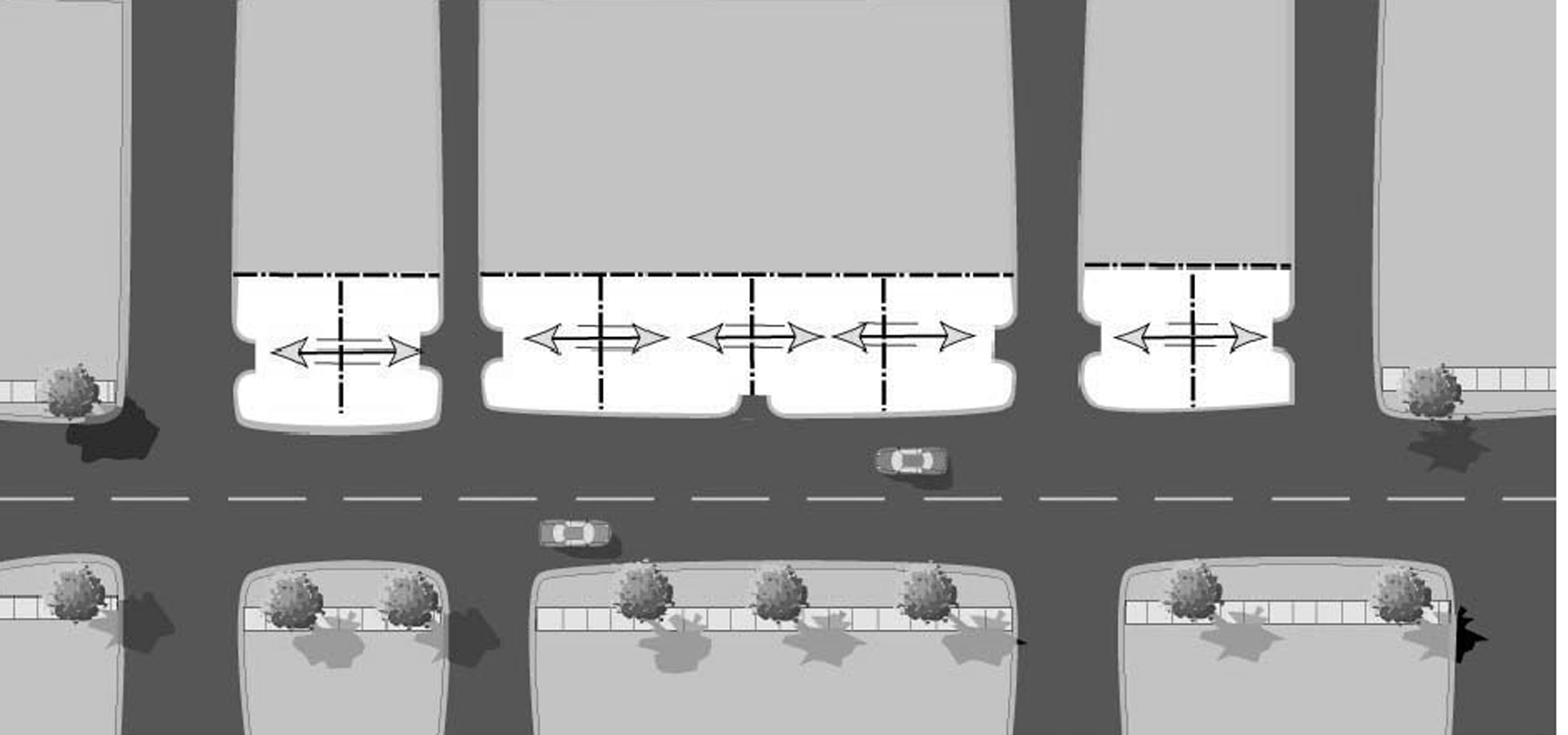
Street
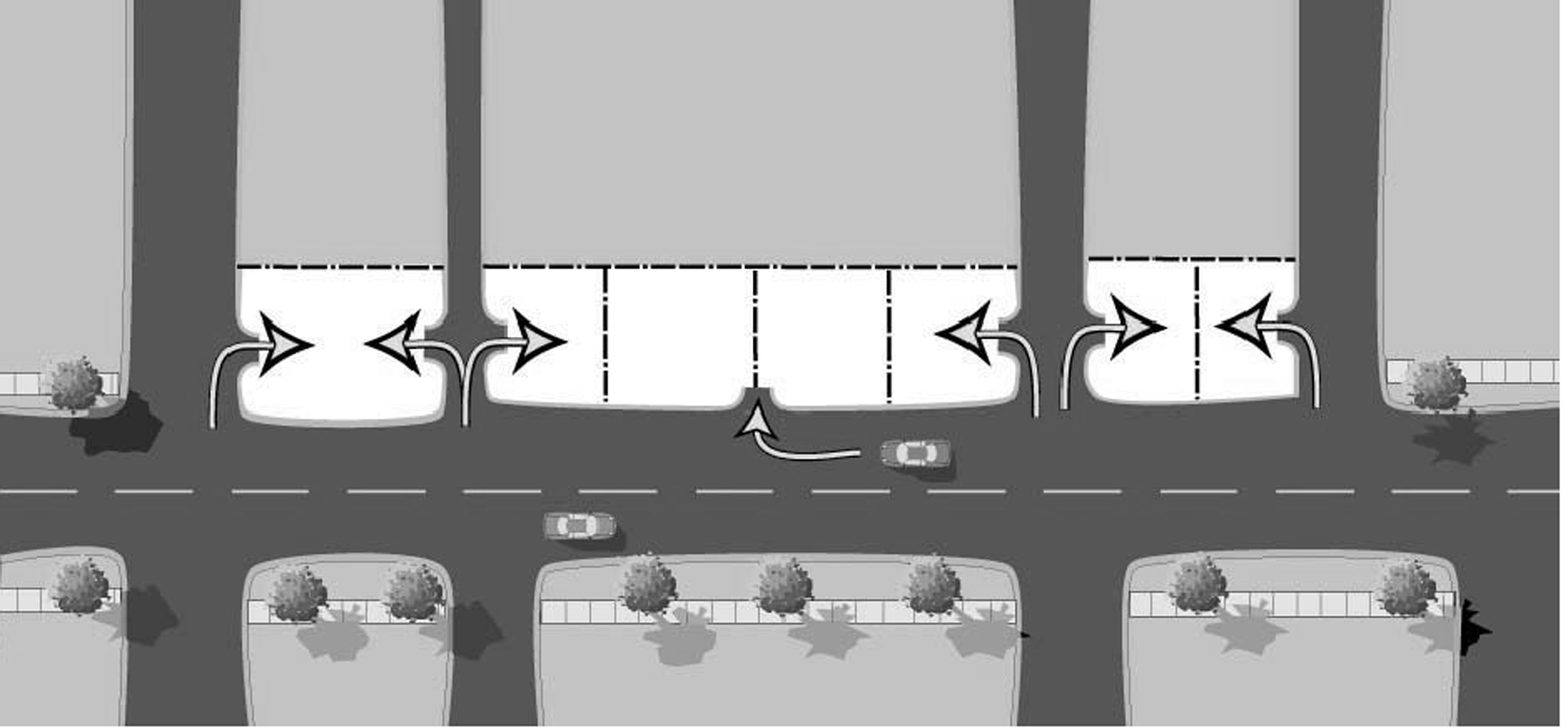
Figure 1-2 Joint Use Driveways
(Ord. No. 04-27, § V(5.37), 5-10-04)
Sec. 25-357. - Parking—Purpose.
The purpose of this article is to provide basic and flexible standards for development of vehicle and bicycle parking. The design of parking areas is important to the viability of some commercial areas, pedestrian and driver safety, the efficient and safe operation of adjoining streets, and community image and livability. Because vehicle parking facilities can occupy large amounts of land, they must be planned and designed carefully to use the land efficiently while maintaining the visual character of the community. This article recognizes that each development has unique parking needs by providing a flexible approach for determining parking space requirements (i.e., "minimum" and "performance-based" standards). This article also provides standards for bicycle parking because many people use bicycles for recreation, commuting, and general transportation. Children as well as adults need safe and adequate spaces to park their bicycles throughout the community.
(Ord. No. 04-27, § V(5.39, 5.40), 5-10-04)
Sec. 25-358. - Off-street parking.
In all districts and in connection with every use, with the exception of single family, there shall be provided, at the time any building is constructed or any existing building is moved, altered, added to or enlarged or reconstructed, off-street parking spaces in accordance with the requirements as set forth in this article; however, subsection (6) shall be enforced for all districts and in connection with every use. All requirements of the American Disabilities Act shall be adhered to regarding size and location of parking spaces, access, etc. as administered by the community development director for the city.
(1)
Size and access. An off-street parking space shall consist of a parking space having minimum dimensions of ten (10) feet in width by twenty (20) feet in length for the parking of each automobile, exclusive of access drives or aisles thereto. The parking plan, with the exception of single family, must be so arranged that each automobile may be placed and removed from the property without the necessity of moving any other automobile to complete the maneuver. Street or sidewalk areas may not be used for off-street parking purposes except as defined in this article. Individual ingress and egress drives extending across the sidewalks and curbs and connecting the off-street parking spaces to the public street areas shall be a minimum width of ten (10) feet for a one-way drive and a minimum of twenty (20) feet for two-way drives. The number, placement, and width of access drives is to be subject to the approval of the development review committee before being installed.
(2)
Automatic parking. Nothing in this section is intended to prohibit the installation of a fully automatic parking facility in which the placement and removal of automobiles are accomplished wholly by machinery.
(3)
Number of parking spaces required. There shall be provided at the time of the erection of any structure or at the time any structure is enlarged or increased in capacity by adding dwelling units, guest rooms, floor area or seats, or at the time any use or occupancy of an existing building is changed to a use or occupancy which increases the requirements for off-street parking, minimum off-street parking facilities with adequate provisions for ingress and egress, in accordance with subsection (1) of this section and the schedule of off-street parking requirements except within the area defined as the central business district which is exempt from this requirement.
(4)
Reserved.
(5)
Location of parking spaces. Parking spaces for all uses or structures which are provided as required parking in conformance with the schedule of off-street parking requirements and other applicable provisions shall be located on the same lot and have the same zoning district as the principal use or structure they are intended to service except as provided by this chapter.
(6)
Shared parking. Two (2) or more owners or operators of adjacent parcels requiring off-street parking facilities may make collective provision for such facilities. The planning and zoning manager or designee may approve shared parking facilities for developments or uses with different operating hours or different peak business periods if the shared parking complies with the all of following standards.
a.
Location. Shared parking spaces must be located within six hundred (600) feet of the primary entrance of all uses served. Required parking spaces reserved for persons with disabilities shall meet all requirements of the Florida Accessibility Code.
b.
Zoning classification. Shared parking areas require the same or a more intensive zoning classification than required for the use served.
c.
Shared parking study. Those wishing to use shared parking as a means of satisfying off-street parking requirements must submit a shared parking analysis to the planning and zoning manager or designee that clearly demonstrates the feasibility of shared parking. The study must be provided in a form established by the planning and zoning manager or designee and made available to the public. It must address, at a minimum, the size and type of the proposed development, the composition of tenants, the anticipated rate of parking turnover and the anticipated peak parking and traffic loads for all uses that will be sharing off-street parking spaces.
d.
Agreement for shared parking. A shared parking plan will be enforced through written agreement among all owners of record. The owner of the shared said parking area shall enter into a written developer's agreement with the city with enforcement running to the city providing that the land comprising the parking area shall never be disposed of except in conjunction with the sale of the building which the parking area serves so long as the facilities are required; and that the owner agrees to bear the expense of recording the agreement and such agreement shall bind his heirs, successors, and assigns. An attested copy of the agreement between the owners of record shall be submitted to the planning and zoning manager or designee for recordation in a form established by the city attorney. Recordation of the agreement must take place before issuance of a building permit or certificate of occupancy for any use to be served by the shared parking area. A shared parking agreement may be revoked only if all required off-street parking spaces will be provided on-site in accordance with the off-street parking schedules in this section. The written agreement shall be voided by the city if other offstreet facilities are provided in accord with these zoning regulations.
e.
Change in use. Where the uses subject to a shared parking agreement change, the planning and zoning manager or designee shall have the authority to require a revised shared parking study and a new shared parking agreement when the revised shared parking study indicates additional parking is required.
f.
Within the contemporary design overlay, the planning and zoning manager or designee shall regularly determine if the periods of peak usage of proximate buildings or uses are simultaneous with each other, and if not, shall require a shared parking joint use agreement.
(7)
Encumbered parking spaces. At no time shall required parking spaces be encumbered in any manner other than for parking, including display of merchandise and storage.
(Ord. No. 04-27, § V(5.41), 5-10-04; Ord. No. 08-62, § I, 7-14-08; Ord. No. 13-21, § I, 5-28-13)
Sec. 25-359. - Off-street loading.
In commercial and industrial districts, buildings or building groups or part thereof thereafter erected or altered and having a gross floor area of four thousand (4,000) square feet or more, which is to be occupied by commercial and industrial uses or other uses similarly requiring the receipt or distribution by vehicles or material or merchandise, there shall be provided and maintained, on the same lot with such building, off-street loading berths or unloading berths as follows:
4,000—20,000 square feet—1 berth
20,001—40,000 square feet—2 berths
40,001—60,000 square feet—3 berths
For each additional fifty thousand (50,000) square feet—one (1) berth
The loading berth required in each instance shall be not less than twelve (12) feet in width, fourteen (14) feet in height, and shall have an access drive of twenty-five (25) feet, and may occupy all or any part of any yard except for a front yard; provided, however, that the loading berth shall be screened from the street or public right-of-way. The planning and zoning manager may reduce this requirement in situations where they prove impractical.
(Ord. No. 04-27, § V(5.42), 5-10-04)
Sec. 25-360. - Commercial architectural design standards
(a)
General applicability.
(1)
Standards applied. These standards shall apply to regulate commercial, multi-family, professional office up to seventy-four thousand nine hundred ninety-nine (74,999) square feet of development allowed by this code. The intent of this chapter is to promote development that is aesthetically pleasing, compatible with the community character of the City of Leesburg, properly served with necessary public facilities and services and compatible with neighboring uses. Design requirements are included for architectural standards.
(2)
These standards shall not apply to industrial development.
(b)
General requirements.
(1)
Phased development. Each phase of any development shall be designed and improvements installed so that the phase can stand on its own if subsequent phases are not developed.
(2)
Maintenance. Maintenance of all improvements shall be the responsibility of the developer until such time as the city explicitly accepts maintenance responsibility. Should the developer fail to properly maintain any improvements, the city may, with notice, undertake the necessary maintenance and recover the cost of such maintenance from the developer.
(c)
Purpose and intent.
(1)
Enhanced community image. The purpose of these standards and guidelines is to supplement existing development criteria with specific criteria that apply to the design of commercial, multi-family, professional office buildings and projects. Commercial, multi-family, professional office development depends on high visibility from major public streets. In turn, the design of building(s) and site determines much of the image and attractiveness of the streetscapes and character of a community. Massive and/or generic developments that do not contribute to, or integrate with, the community in a positive manner can be detrimental to a community's image and sense of place. The goal is to create and maintain a positive ambiance and strong community image and identity by providing for architectural and site design treatments that will enhance the visual appearance of commercial, multi-family, professional office development in the City of Leesburg, while still providing for design flexibility. These standards are intended to enhance the quality of life in City of Leesburg.
(2)
Substantial compliance. These standards and guidelines incorporate a basic level of architectural design with site design features which incorporate safe and convenient vehicular use areas and pedestrian ways, and landscape and lighting treatments intended to result in a comprehensive plan for building design and site development consistent with the goals, policies and objectives of the City of Leesburg Comprehensive Plan and the purpose and intent of this code.
It is the intent of the development standards contained herein that a common sense approach in application and implementation shall be given all due consideration during the City of Leesburg's review process. Proposed development must be designed and implemented in substantial conformance with these standards.
(3)
Conflicts. Where the standards set forth herein are found to be in conflict with the Florida Building Code in force and effect at the time of application for development, renovation or redevelopment, regarding life and safety concerns, the Florida Building Code shall prevail.
(d)
Location applicability. Provisions of this section are applicable in all commercial, multi-family and professional office zoning districts, commercial and office components of R-P, C-1, C-2, C-3 and PDO districts, DRIs, and office park districts that have frontage (are contiguous to) the following corridors: U.S. Highway 27/SR-25, U.S. Highway 441/SR-500/West North Boulevard/Citrus Boulevard, SR-44/South Street/East and West Dixie Avenue, Citizens Boulevard and Main Street outside of the Central Business District, as provided below.
(e)
Renovations and redevelopment.
(1)
In the case of additions or renovations to, or redevelopment of, an existing commercial, multi-family, professional office building or project, where the cost of such addition, renovation, or redevelopment exceeds fifty (50) percent of the value of the existing structure(s), or twenty (20) percent of the square footage of the existing structures, the provisions of this section shall apply. Property values shall be based on the latest certified Lake County Tax Roll to determine the value of the existing structure(s).
(2)
These standards shall not apply to interior renovations, remodeling of interior spaces or re-roofs on existing structures, regardless of cost.
(f)
Non-conforming uses and structures. The provisions of part II, Chapter 25-Zoning, article II, division 7 of this Code shall apply to this section.
(g)
Site plan required.
(1)
Required site development or improvement plan. Compliance with the standards set forth in this section shall be demonstrated by submittal of architectural drawings and a site development plan or site improvement plan in accordance with article V—Site Design Standards of this code.
(2)
PUDs (planned unit development) and SPUDs (small planned unit development) shall be exempt from these standards where such standards are written into PUDs and SPUDs.
(h)
Illustrations. Illustrations provided in this section (appendix A) are intended to provide a graphic example of a specific provision or provisions set forth herein. Variations from these illustrations which nonetheless adhere to the provisions of this section may be permitted pending staff review and approval.
(i)
Florida Product Approval Code. All materials used on the exterior of structures must have Florida Product Approval Code.
(j)
Permit approval required. No building permit or site plan approval shall be issued unless the applicant thereof submits as part of the application, architectural drawings and a site development plan which meets or exceeds the standards set forth herein, in addition to all other submittals and requirements which may be required by the City of Leesburg's Land Development Regulations.
(k)
Exceptions, interpretations and definitions.
(1)
Exceptions. Exceptions to the provisions of this section may be granted by the city commission in the form of a planned zoning district where it can be demonstrated that such exceptions are necessary to allow for innovative design which, while varying from one (1) or more of the provisions of this section, nonetheless are deemed to meet the overall purpose and intent set forth herein. In the case of individual commercial buildings or projects, where site specific factors may impact the ability to meet these standards, variance from one (1) or more of the provisions of this section may be requested pursuant to the procedures set forth in City of Leesburg's Land Development Regulations, Article III—Variances and Appeals, Violations and Penalties, Division 1—Variances and Appeals to Code Requirements of this Code.
(2)
Interpretations. During the course of review should an applicant and staff be unable to concur on the application of a specific provision or provisions of this section, the planning and zoning manager or designee shall be authorized to make a final determination. The planning and zoning manager or designee shall render findings in writing within fifteen (15) business days of receipt of a written request from the applicant. The applicant may appeal the determination of the planning and zoning manager or designee to the planning commission, pursuant to the procedures set forth in this Code.
(3)
Definitions. The following terms shall be defined as follows:
a.
Cantilever—A projecting beam or member supported at only one (1) end; a bracket-shaped member supporting a balcony or a cornice
b.
Ground floor—The floor of a building which lies at grade.
c.
Second floor—The next floor above the ground floor; one (1) floor above grade.
d.
Recess (specifically windows)—Indentation in the planar surface for a window, a minimum of six (6) inches.
(l)
Building classes.
(1)
These standards are divided into three (3) classes of buildings, Class I, Class II and Class III.
a.
Class I includes structures up to but not exceeding four thousand nine hundred ninety-nine (4,999) square feet.
b.
Class II includes structures ranging in size from five thousand (5,000) square feet to nineteen thousand nine hundred ninety-nine (19,999) square feet.
c.
Class III includes structures ranging from twenty thousand (20,000) square feet to seventy-four thousand nine hundred ninety-nine (74,999) square feet.
(m)
General standards—Architectural and site design standards.
(1)
Building design standards—Purpose and intent.
a.
This section provides standards to maintain and enhance the attractiveness of the streetscape and the existing architectural elements of the community. Buildings shall have architectural features and patterns that provide visual interest from the perspective of the pedestrian, reduce the massing aesthetic, recognize local character and be site responsive. Façades shall be designed to reduce the mass/scale and uniform monolithic appearance of large unadorned walls, while providing visual interest that will be consistent with the community's identity and character through the use of detail and scale. Articulation of buildings shall be accomplished by varying the building's mass in height and width so that they appear to be divided into distinct massing elements and details that can be perceived at the scale of the pedestrian. (Refer to Appendix A, Illustration 1.)
b.
Buildings and structures on corner lots at an intersection of two (2) or more arterial or major collector roads shall be designed with additional architectural elements, such as corner towers, or other such design features, to emphasize their location as gateways and transition points within the community. Signage may not be located upon or within these additional architectural elements.
(2)
Façade/wall height transitions.
a.
Height. New structures that are proposed to be located within three hundred (300) feet of an existing building, and are more than twice the height of any existing building within three hundred (300) feet shall provide transitional massing elements to transition between the existing buildings of lower height within three hundred (300) feet, and the proposed structures. The transitional massing element can be no more than one hundred (100) percent taller than the average height of the adjacent buildings. (Refer to Appendix A, Illustration 3—Located at end of section.)
b.
Façade standard. All primary façades of a building shall be designed with consistent architectural style, detail and trim features. Façades attached to a primary façade shall incorporate features of the primary façade for a minimum of thirty-three (33) percent of the overall wall length measured from the attached primary façade. In the case of outparcel buildings, all exterior façades shall adhere to the requirements of this section with respect to architectural design treatments for primary façades.
c.
Window standards. Windows shall not appear to be false or applied. However, architectural elements that contribute to visual interest of exterior façades may be approved by the planning and zoning manager or designee.
d.
Awning standards. These standards apply to awnings associated with and attached to a building/structure. (Refer to Appendix A, Illustration 4—Located at end of section.)
1.
Mansard awnings are permitted provided they do not extend above the roofline of the building and are not backlit.
2.
All other awnings shall adhere to the following standards:
(i)
Awnings may be backlit provided the illuminated portion of the awning with graphics does not exceed the size limitations and standards of this code.
(ii)
Automobile sales parking lot awnings. Shade awnings may be erected in automobile sales parking lots subject to the following requirements and standards:
i.
No shade awning structure shall be constructed within seventy-five (75) feet of any public or private street.
ii.
No one (1) shade awning structure may exceed an area sufficient to provide cover for more than twenty (20) automobiles.
iii.
The minimum separation between shade awning structures shall be one hundred (100) feet.
iv.
Multi-colored shade awning structures are prohibited and the use of black, gray, florescent, primary and/or secondary colors is prohibited. Earth-tone colors are encouraged.
(3)
Overhead doors.
(i)
Overhead doors facing one (1) another may be treated as interior space provided that the buildings meet all other requirements of the City of Leesburg's Land Development Regulations and the Florida Building code in force and effect at the time of application for development or redevelopment. (Refer to Appendix A, Illustration 5—Located at end of section.)
(4)
Design elements.
a.
All commercial, multi-family, professional office [4] buildings shall have a minimum of four (4) of the following architectural elements: (Refer to Appendix A, Illustrations 7 and 8—Located at end of section.)
1.
Canopies or porticos, integrated with the building's massing and style;
2.
Overhangs, minimum of three (3) feet;
3.
Cantilever (extension of the floor below), minimum of eighteen (18) inches,
4.
Arcades, minimum of eight (8) feet for buildings of twenty thousand (20,000) square feet of gross building area or more, and six (6) feet for all other buildings, clear in width;
5.
Sculptured artwork;
6.
Raised cornice or building banding with a minimum of two (2) reliefs;
7.
Peaked roof forms;
8.
Arches;
9.
Ornamental and structural architectural details, other than cornices; which are integrated into the building structure and overall design;
10.
Clock bell towers or other such roof treatment (e.g. dormers, belvederes, cupolas);
11.
Emphasized building base, minimum of three (3) feet high and minimum projection from the wall of two (2) inches;
12.
Additional roof articulation above the minimum standards;
13.
Metal or tile roof as the dominant roof material;
14.
Decorative landscape planters or planting areas, a minimum of five (5) feet wide, or areas for shaded seating consisting of a minimum of one hundred (100) square feet;
15.
Integration of specialty pavers, or stamped concrete along the building's walkway;
16.
Two (2) or more accent or specimen trees (in addition to the minimum required landscaping) along the front façade with a minimum diameter of two and one-half (2 ½) inches measured four (4) feet above the ground and a minimum height of twelve (12) feet at planting;
17.
Any other treatment which, in the opinion of the planning and zoning manager, meets the intent of this section.
(5)
Detail features.
a.
Purpose and intent. The architectural elements in the following standards shall be integral parts of a building's exterior façade and shall be integrated into the overall architectural style. These elements shall not consist solely of applied graphics or paint, but may incorporate relief depictions or designs. [5]
b.
Blank wall areas. Blank wall areas shall not exceed ten (10) feet in the vertical direction nor twenty (20) feet in the horizontal direction of any primary façade. For façades connected to a primary façade this shall apply to a minimum of thirty-three (33) percent of the attached façade measured from the connection point. Control and expansion joints within this area shall constitute blank wall area unless used as a decorative pattern and spaced at intervals of six (6) feet or less. Relief and reveal element depth must be a minimum of one-half (½) inch, and may include relief depictions or designs. Landscaping may be used to assist in reducing the blank wall area. Such landscaping shall not be in lieu of architectural elements. (Refer to Appendix A, Illustrations 9 and 10—Located at end of section.)
c.
Repeating façade treatments. Building façades shall include a repeating pattern and shall include no less than three (3) of the architectural elements listed below. At least one (1) of these architectural elements shall repeat horizontally. All architectural elements shall repeat at intervals of no more than fifty (50) feet for buildings of twenty thousand (20,000) square feet of gross building area or more, and twenty-five (25) feet for all other buildings, horizontally, and a maximum of fifteen (15) feet vertically for all buildings. Such architectural elements shall include or combine the following to achieve the repeating façade treatment:
1.
Color change;
2.
Texture change;
3.
Material module change;
4.
Expression of architectural or structural bays, through a change in plane of no less than twelve (12) inches in width, such as a reveal, an offset, or a projecting rib (Refer to Appendix A, Illustration 11—Located at end of section);
5.
Architectural banding;
6.
Building setbacks or projections, a minimum of three (3) feet in width on upper level(s); or
7.
Pattern change, that may include relief depictions or designs. [6]
(6)
Additional façade design treatments for multiple use buildings.
a.
Purpose and intent. The presence of buildings with multiple tenants creates variety, breaks up large expanses of uninterrupted façades, and expands the range of the site's activities. Windows and window displays of such stores shall be used to contribute to the visual interest of exterior façades. The standards in this section are directed toward those situations where more than one (1) retailer, with separate exterior customer entrances, are located within the principal building.
b.
First floor primary façade treatments.
1.
The first floor of the primary façades shall, at a minimum, utilize windows between the heights of three (3) feet and eight (8) feet above the walkway grade for no less than thirty (30) percent of the horizontal length of the building façade.
2.
Windows shall be recessed, a minimum of one-half (½) inch, and shall include visually prominent sills, shutters, stucco, reliefs, or other such forms of framing.
(7)
Roof treatments.
a.
Purpose and intent. Variations in roof lines shall be used to add interest to, and reduce the massing of buildings. Roof features shall be in scale with the building's mass and complement the character of adjoining and/or adjacent buildings and neighborhoods. Roofing material should be constructed of durable high quality material in order to enhance the appearance and attractiveness of the community. The following standards identify appropriate roof treatments and features.
b.
Roof edge and parapet treatment. At a minimum of two (2) locations, the roof edge and/or parapet shall have a vertical change from the dominant roof condition, a minimum of three (3) feet for buildings of twenty thousand (20,000) square feet of gross building area or more, and two (2) feet for buildings up to seventy-four thousand nine hundred ninety-nine (74,999) square feet. "Big Box [7]"
standards shall apply for buildings of seventy-five thousand (75,000) square feet or more. [8] At least one (1) such change shall be located on a primary façade adjacent to a collector or arterial right-of-way. (Refer to Appendix A, Illustration 12—Located at end of section.)
c.
Roofs shall meet the following requirements. (Refer to Appendix A, Illustration 13.)
1.
Parapets shall be used to conceal roof top equipment and flat roofs;
2.
Except where an overhang is not possible due to a parapet wall treatment, overhangs shall be provided and shall be no less than three (3) feet beyond the supporting walls. Where overhangs on existing buildings under renovation are less than three (3) feet, they shall be provided with a band or cornice, a minimum of eight (8) inches in width, at least eight (8) inches below the soffit at the wall;
3.
Fascia shall be a minimum of eight (8) inches;
4.
Tile, metal, or 320-pound, 30-year architectural grade asphalt shingles of earth tone as the dominant roof material;
5.
Canopies covering fueling islands must match the roof treatment of the primary structure.
d.
Prohibited roof types and materials. The following types of materials are prohibited:
1.
Asphalt shingles, except laminated, 320-pound, 30-year architectural grade asphalt shingles or of superior quality;
2.
Mansard roofs and canopies except as specifically provided for herein;
3.
Roofs utilizing less than or equal to a 2:12 pitch unless utilizing full parapet coverage; and
4.
Back-lit awnings used as a mansard or canopy roof.
(8)
Materials.
a.
Purpose and intent. Exterior building materials contribute significantly to the visual impact of a building on the community. They shall be well-designed and integrated into a comprehensive design style for commercial, multi-family, and professional office projects.
b.
Exterior building materials, exterior colors, and standards.
1.
Predominant exterior building materials shall include, but are not limited to:
(i)
Stucco of earth tone;
(ii)
Natural brick (unpainted, unstained, and un-tinted);
(iii)
Textured, other than smooth or ribbed, concrete masonry units of earth tone;
(iv)
Stone (unpainted, unstained, and un-tinted), excluding an ashlar or rubble construction look;
(v)
Wooden or composite siding;
(vi)
The following colors are prohibited: Use of florescent or day glow colors; or
(vii)
Corporate colors or colors used in the marketing of the business occupying the space which are not earth tone shall be calculated towards the allowable signage copy area provided for under Article VI—Sign Regulations of this Code. In such case, a sign permit is required. This section is intended to provide corporations, franchises, and corporate chains, the opportunities to use other exterior colors other than earth tone.
2.
Predominant [9] exterior building materials that are prohibited include:
(i)
Plastic or vinyl siding;
(ii)
Corrugated metal panels;
(iii)
The use of various colors is encouraged.
(9)
Service function areas (SFA) including but not limited to loading, storage, mechanical equipment, and solid waste disposal.
a.
Purpose and intent. To diminish, in a safe manner, the visual impacts of service functions that may detract or have a negative impact on the streetscape, landscape and/or the overall community image.
b.
Buffering and screening standards. Loading or docking, outdoor storage, trash collection, mechanical equipment, trash compaction, vehicular storage, excluding new and used cars, recycling, roof top equipment and other service function areas shall be fully screened from adjacent properties and road way corridors at ground (grade) and pedestrian level.
c.
Materials and design standards. Screening material and design shall be consistent with design treatment of the primary façades of commercial, multi-family, professional office buildings or projects and the landscape plan.
(10)
Pedestrian walkways.
a.
Purpose and intent. To provide safe opportunities for alternative modes of transportation by connecting with existing and future pedestrian and bicycle pathways within the city and to provide safe passage from the public right-of-way to a commercial, multi-family, professional office building or project, and between alternative modes of transportation.
b.
Pedestrian access standards. Pedestrian ways, linkages and paths shall be provided from the building entry(s) to surrounding streets, external sidewalks, and outparcels. Pedestrian ways shall be designed to provide access between parking areas and the building entrance(s) in a coordinated and safe manner. Pedestrian ways may be incorporated within a required landscape perimeter buffer, provided that the buffer is not less than ten (10) feet in width on average. Shared pedestrian walkways are encouraged between adjacent commercial, multi-family, professional office projects.
c.
Minimum ratios. Pedestrian ways shall be provided at a minimum ratio of one (1) for each public vehicular entrance to a project, excluding ingress and egress points intended primarily for service, delivery or employee vehicles.
d.
Minimum dimensions. Pedestrian walkways shall be a minimum of five (5) feet wide.
e.
Materials. Pedestrian walkways shall be consistent with the provisions of the Americans with Disabilities Act (ADA), the Accessibility Guidelines and the Florida Accessibility Code. Materials may include specialty pavers, concrete, colored concrete or stamped pattern concrete.
f.
Pedestrian crosswalks at building perimeter. Building perimeter crosswalks shall be designed and coordinated to move people safely to and from buildings and parking areas by identifying pedestrian crossings with wayfinding signage and variations in pavement materials or markings.
g.
Shade. Pedestrian walkways shall provide intermittent shaded areas when the walkway exceeds one hundred (100) linear feet in length at a minimum ratio of one hundred (100) square feet of shaded area per every one hundred (100) linear feet of walkway. Shade structures may be natural, manmade or a combination of both.
(11)
Lighting.
a.
Purpose and intent. Commercial, multi-family, professional office buildings and sites, including outparcels, shall be designed to provide safe, convenient, and efficient lighting for pedestrians and vehicles. Lighting shall be designed in a consistent and coordinated manner for the entire site. The lighting and lighting fixtures shall be integrated and designed so as to enhance the visual impact of the project on the community and/or blend the project into the surrounding landscape.
Exterior lighting may be used to illuminate a building and its grounds for safety purposes but in an aesthetic manner. Lighting is not to be used as a form of advertising in a manner that is not compatible with the neighborhood or in a manner that draws considerably more attention to the building or grounds at night than daylight hours. All fixtures used in exterior lighting are to be selected for functional and aesthetic value. Decorative lighting fixtures in keeping with the architecture style shall be used for commercial and multi-family wall mount lighting and parking lot light poles. Exterior lighting shall be in accordance with the lighting design standards of the City of Leesburg's Land Development Regulations. (Reference Article V—Site Design Standards, Division 1—General Standards, section 25-321, Lighting.)
b.
Shielding standards. Lighting shall be designed so as to prevent direct glare, light spillage and hazardous interference with automotive and pedestrian traffic on adjacent streets and all adjacent properties. Illumination onto adjacent right-of-way or property shall not exceed (.02) of one (1) foot candle as measured by a luminance or foot-candle meter from the residential or agricultural lot line.
c.
Fixture height standards. Lighting fixtures shall be a maximum of thirty (30) feet in height within the parking lot and shall be a maximum of fifteen (15) feet in height within non-vehicular pedestrian areas. (Refer to Appendix A, Illustration 14—Located at end of section.)
d.
Design standards. Lighting shall be used to provide safety while accenting key architectural elements and/or emphasizing landscape features. Light fixtures shall be used as an integral design element that complements the design of the project. This can be accomplished through style, material or color (excluding florescent, primary and secondary colors) or by designing the lighting fixtures to blend into the landscape through the use of dark colors such as bronze, black and forest green. Concrete type poles or mill finish is not permitted. Light pole footers shall not be exposed more than six (6) inches above finish grade.
(12)
Fencing standards.
a.
Chain link and wood fencing are prohibited forward of the primary façade, except as provided below, and must be a minimum of one hundred (100) feet from a public right-of-way. Chain link and wood fencing facing a public right-of-way shall be buffered at a minimum by an irrigated hedge directly in front of the fence on the side of the right-of-way. Plant material shall be a minimum of twenty-four (24) inches in height and width and planted to create a continuous visual barrier at time of installation. This plant material shall be maintained at a minimum of three-quarter the height of the fencing. (Refer to Appendix A, Illustration 15—Located at end of section.)
b.
Fencing forward of the primary façade is permitted under the following conditions:
1.
Fencing does not exceed four (4) feet in height;
2.
The fencing provides either an open view at a minimum of twenty-five (25) percent of its length or provides variation in its height for a minimum of fifteen (15) percent of its length with a deviation of at least twelve (12) inches; and,
3.
The fence style must complement building style through architectural elements, material, or color.
(13)
Outparcels.
a.
Purpose and intent. To provide unified architectural design and site planning between outparcel structures and the main structure on the site in order to enhance the visual impact of the structures and to provide for safe and convenient vehicular and pedestrian access and movement within the site.
b.
Outparcel design. All exterior façades of an outparcel structure shall be considered primary façades and shall employ architectural elements, site and landscape design which are integrated with and common to those used on the primary structure on site. These common architectural elements, site and landscaping designs shall include colors and materials associated with the main structure. When the use of a common wall, side by side development occurs, continuity of façades and consolidated parking for several businesses on one (1) parking lot may be used. Outparcels that are adjacent to each other shall have vehicular connection between their respective parking lots and interconnected pedestrian walkways.
(n)
Building design—Class I structures.
(1)
Defined. Class I includes structures up to but not exceeding four thousand nine hundred ninety-nine (4,999) square feet.
(2)
Application. The following requirements shall be applied to all structures designated Class I for purposes of plan review.
(3)
Building orientation standards. (Refer to Appendix A, Illustration 2—Located at end of section.)
a.
For buildings less than five thousand (5,000) square feet of gross building area, façades facing a public street shall have one (1) of the following design features:
1.
Windows comprising a minimum of twenty-five (25) percent of the affected façade.
2.
Projected covered public entry with a minimum of twenty (20) percent of the wall space devoted to windows.
(4)
Massing standards. Exterior façades shall be designed to employ the following design treatments:
a.
No horizontal length or uninterrupted curve of any primary façade shall exceed thirty-five (35) linear-feet. For arcaded façades, no horizontal length or uninterrupted curve of the arcaded façade shall exceed sixty (60) feet, with varied lengths being desirable. Projections and recesses shall have a minimum depth of one (1) foot.
b.
All buildings shall provide a minimum of one (1) offset per public street or navigable waterway.
(5)
Entryways/customer entrance treatments.
a.
Purpose and intent. Entryway design elements and variations are intended to give protection from the sun and adverse weather conditions. These elements are to be integrated into a comprehensive design style for the project.
b.
Entryways/customer entrance standards. These standards identify appropriate entry features.
(o)
Building design—Class II structures.
(1)
Defined. Class II includes structures from five thousand (5,000) to nineteen thousand nine hundred ninety-nine (19,999) square feet of gross building area.
(2)
Application. The following requirements shall be applied to all structures designated Class II for purposes of plan review.
(3)
Building orientation standards. (Refer to Appendix A, Illustration—Located at end of section.) Façades facing a public street shall have one (1) of the following design features:
a.
Windows comprising a minimum of twenty-five (25) percent of the affected façade;
b.
Projected covered public entry with a minimum of twenty (20) percent of the wall space devoted to windows;
c.
Windows comprising a minimum of thirty-three (33) percent of the affected façade;
d.
Covered walkway (excluding canvas type unless provided with six-inch columns or better) attached to the building, with a minimum width of six (6) feet and a fifty (50) percent minimum coverage for the affected façade.
(4)
Massing standards. Exterior façades shall be designed to employ the following design treatments:
a.
No horizontal length or uninterrupted curve of any primary façade or arcaded façades shall exceed fifty (50) feet, no horizontal length or uninterrupted curve of any primary façade shall exceed eighty (80) feet, with varied lengths being desirable. Projections and recesses shall have a minimum depth of two (2) feet.
b.
Exterior wall planes shall not constitute more than fifty (50) percent of each affected façade;
c.
Primary façades on the ground floor shall have features along a minimum of thirty-three (33) percent of their horizontal length per affected side. These features include, but are not limited to: arcades, a minimum of six (6) feet clear in width; display windows; entry areas; or other such architectural elements. Awnings are included in this calculation at one and one-half (1.5) times the window, or architectural element equivalent to a window width when associated with windows/doors and are in increments of ten (10) feet in length or less.
(5)
Entryways/customer entrance treatments.
a.
Purpose and intent. Entryway design elements and variations are intended to give protection from the sun and adverse weather conditions. These elements are to be integrated into a comprehensive design style for the project.
b.
Entryways/customer entrance standards. These standards identify appropriate entry features.
(6)
For buildings of between ten thousand (10,000) and nineteen thousand nine hundred ninety-nine (19,999) square feet, inclusive, of gross building area.
a.
An outdoor patio area adjacent to the customer entrance, a minimum of fifty (50) square feet in area and which incorporates one (1) of the following:
1.
Benches or other seating components;
2.
A provision for intermittent shaded outdoor community space at a minimum of one (1) percent of the total gross floor area of the building or project. Said community space shall be located off or adjacent to the circulation path of the complex or main structure and shall incorporate benches or other seating components.
b.
A main front entry which shall be set back from the drive a minimum of fifteen (15) feet.
(p)
Building design—Class III structures.
(1)
Defined. Class III includes structures from twenty thousand (20,000) to seventy-four nine hundred ninety-nine (74,999) square feet of gross building area.
(2)
Application. The following requirements shall be applied to all structures designated Class III for purposes of plan review.
(3)
Building orientation standards. (Refer to Appendix A, Illustration 2—Located at end of section.)
a.
Façades that are adjacent to an arterial or collector street, or a navigable waterway, shall have two (2) of the following architectural elements:
1.
Windows comprising a minimum of forty (40) percent of the affected façade;
2.
Projected covered public entry with a minimum of twenty-five (25) percent of the wall space devoted to windows; or,
3.
Covered walkway (excluding canvas type unless provided with six (6) inch columns or better) attached to the building, with a minimum width of eight (8) feet and a sixty (60) percent minimum coverage for the affected façade.
(4)
Massing standards. Exterior façades shall be designed to employ the following design treatments:
a.
No horizontal length or uninterrupted curve of a primary building façade shall exceed one hundred (100) linear feet. For arcaded façades, no horizontal length or uninterrupted curve of the arcaded façade shall exceed one hundred twenty (120) feet, with varied lengths being desirable. Projections and recesses shall have a minimum depth of three (3) feet with twenty-five (25) percent of these having a varied length with a minimum differential of one (1) foot; (Refer to Appendix A, Illustration 6—Located at end of section.)
b.
Exterior wall planes shall not constitute more than sixty (60) percent of each affected façade;
c.
Primary façades on the ground floor shall have architectural elements along a minimum of fifty (50) percent of their horizontal length per affected side. These features include, but are not limited to: arcades, a minimum of six (6) feet clear in width; display windows; entry areas; or other such design elements. Awnings are included in this calculation at one and one-half (1.5) times the window width when associated with windows/doors and are in increments of twenty (20) feet in length or less.
(5)
Entryways/customer entrance treatments.
a.
Purpose and intent. Entryway design elements and variations are intended to give protection from the sun and adverse weather conditions. These elements are to be integrated into a comprehensive design style for the project.
b.
Single use buildings. Single use buildings shall have clearly defined, highly visible customer entrances which shall include the following:
1.
An outdoor patio area adjacent to the customer entrance, a minimum of two hundred (200) square feet in area which incorporates the following:
(i)
Benches or other seating components;
(ii)
Decorative landscape planters or wing walls which incorporate landscaped areas; and
(iii)
Structural or vegetative shading.
2.
A main front entry which shall be set back from the drive a minimum distance of fifteen (15) feet.
c.
Multiple use buildings and projects. Multi-use structures shall include the following:
1.
Anchor tenants shall provide clearly defined, highly visible customer entrances.
2.
Each anchor tenant shall have a front entry which shall be set back from the drive a minimum of fifteen (15) feet.
3.
A provision for intermittent shaded outdoor community space at a minimum of one (1) percent of the total gross floor area of the building or commercial project. Said community space shall be located off or adjacent to the circulation path of the complex or main structure and shall incorporate benches or other seating components.
(6)
Natural and manmade bodies of water including wet and dry retention areas for buildings of twenty thousand (20,000) square feet or more (exceeding twelve (12) feet in width). The shape of a manmade body of water, including wet and dry retention areas, shall be designed to appear natural by having off-sets in the edge alignment that are a minimum of ten (10) feet and spaced fifty (50) feet apart. On development sites with buildings of twenty thousand (20,000) square feet of gross building area or more, all bodies of water, including wet and dry retention areas, exceeding twenty thousand (20,000) square feet in area, and which are located adjacent to a public right-of-way, shall incorporate into the overall design of the project at least two (2) of the following items: (Refer to Appendix A, Illustration 16—Located at end of section.)
a.
A five-foot wide walkway with trees an average of fifty (50) feet on center and shaded benches a minimum of six (6) feet in length or picnic tables with one (1) located every one hundred fifty (150) feet;
b.
A public access pier with covered structure and seating;
c.
An intermittent shaded plaza/courtyard, a minimum of two hundred (200) square feet in area, with benches and/or picnic tables adjacent to the water body;
d.
A permanent fountain structure.
(7)
Off-street parking design. As provided for in section 25-358, Off-street parking and subject to the following provisions:
a.
Purpose and intent. Commercial and multi-family buildings and sites, including outparcels, shall be designed to provide safe, convenient, and efficient access for pedestrians and vehicles. Parking shall be designed in a consistent and coordinated manner for the entire site. The parking area shall be integrated and designed so as to enhance the visual appearance of the development within the community.
b.
Design standards. Parking, utilizing the same degree of angle, shall be developed throughout the site to provide efficient and safe traffic and pedestrian circulation.
c.
Refer to the City of Leesburg's Land Development Regulations, chapter 25, section 25.357 - Parking for buildings up to forty-nine thousand (49,000) square feet and chapter 25, section 25-288 - Commercial uses for buildings of seventy-five thousand (75,000) square feet or above.
(8)
Shopping center design standards. To maintain common architectural themes and to maintain architectural integrity of shopping centers where gross floor area is equal to but not greater than seventy-four nine hundred ninety-nine (74,999) square feet, design and material standards shall be enforced. [10]
a.
Shopping centers shall be constructed of split face, ribbed or salted block or other material as approved by the planning and zoning manager or designee.
b.
Standard architectural themes shall be maintained on all sides of buildings.
c.
Signs shall comply with the City of Leesburg's Land Development Regulations, chapter 25, article VI - Sign Regulations.
Appendix A
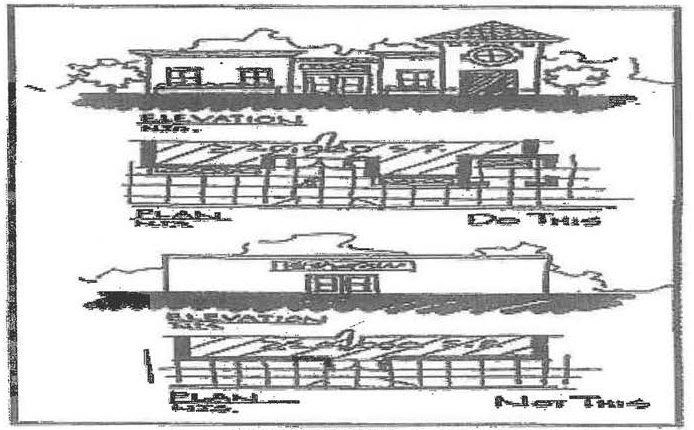
Illustration 1
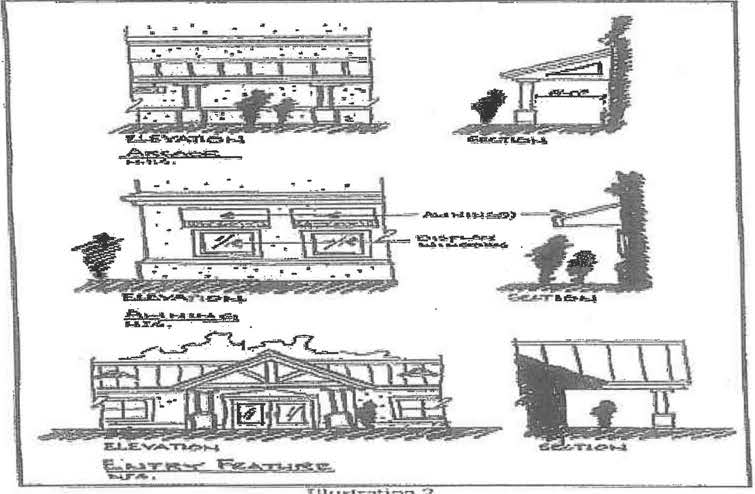
Illustration 2
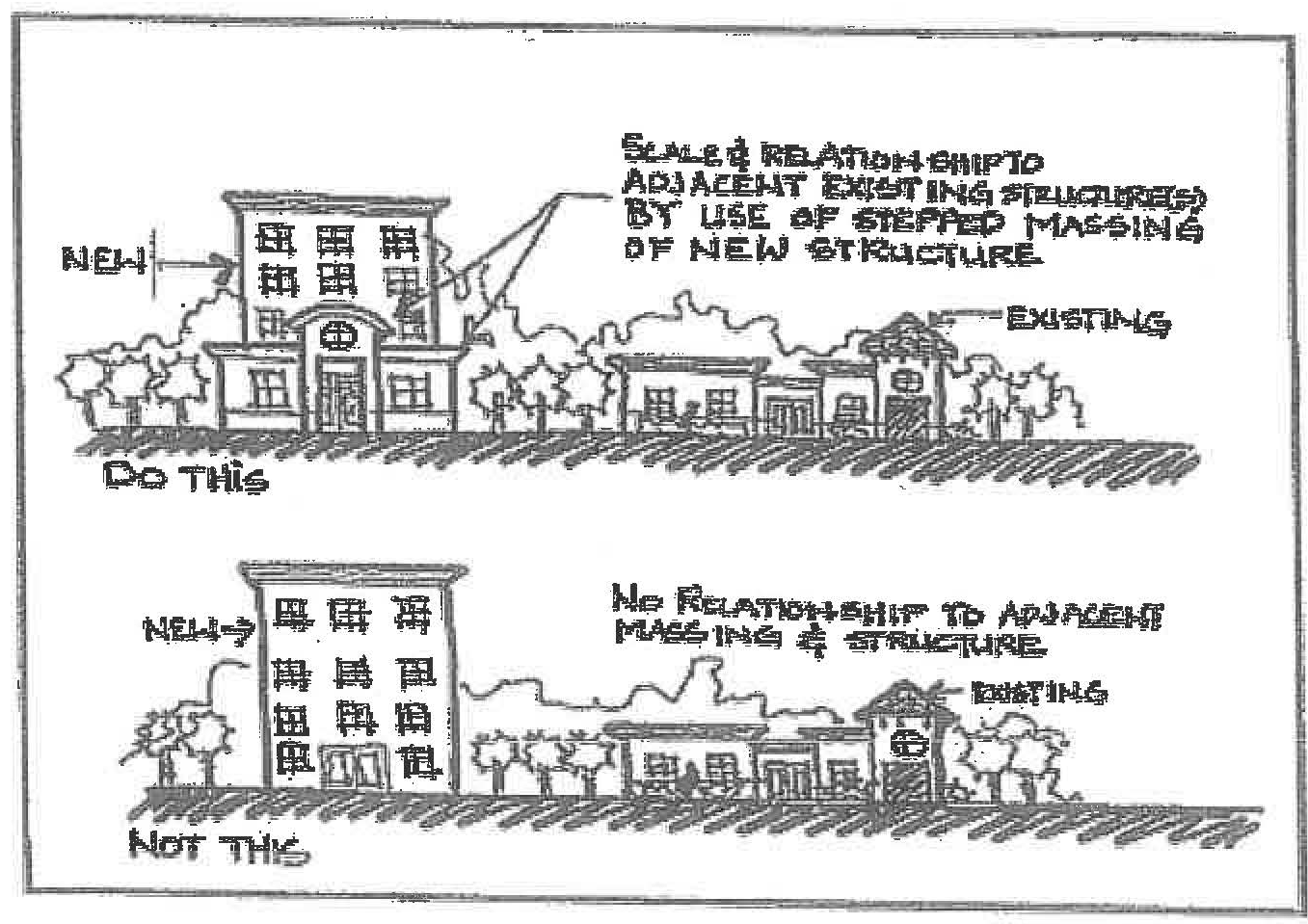
Illustration 3
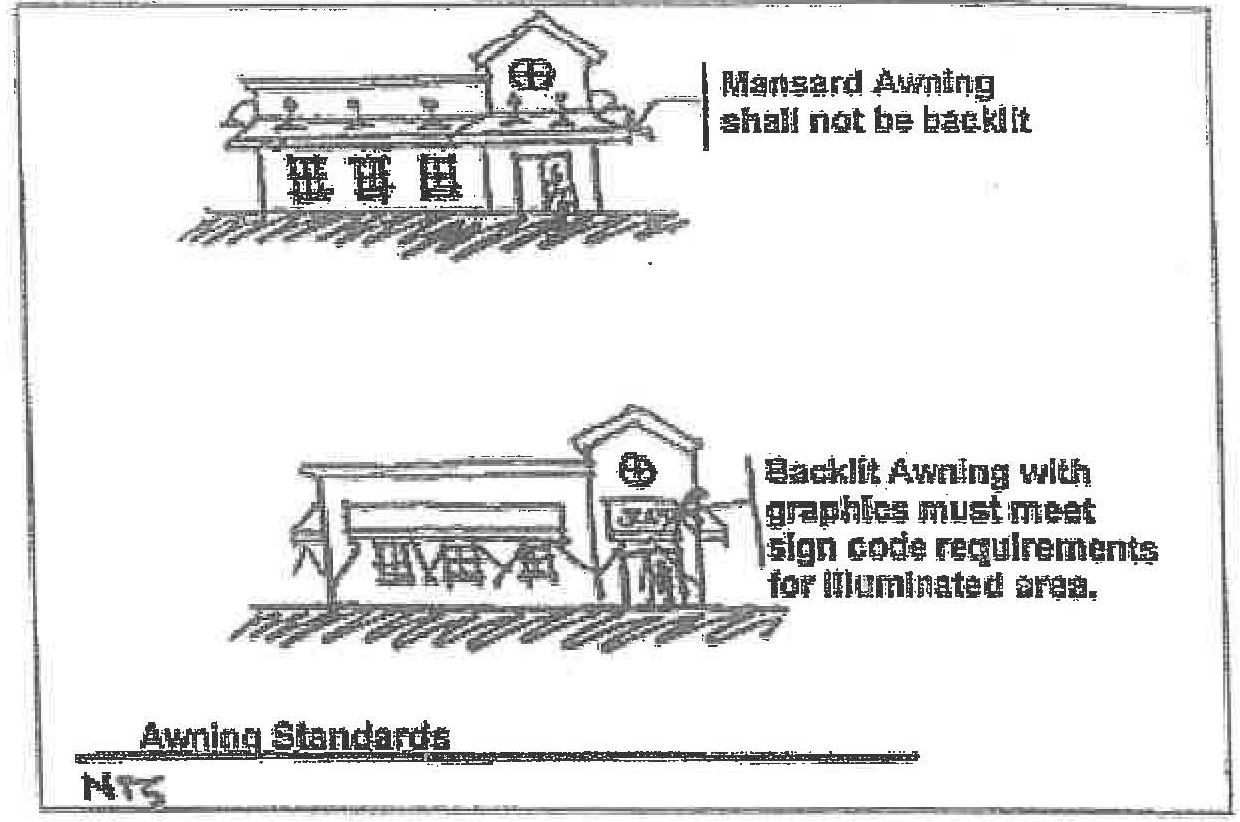
Illustration 4
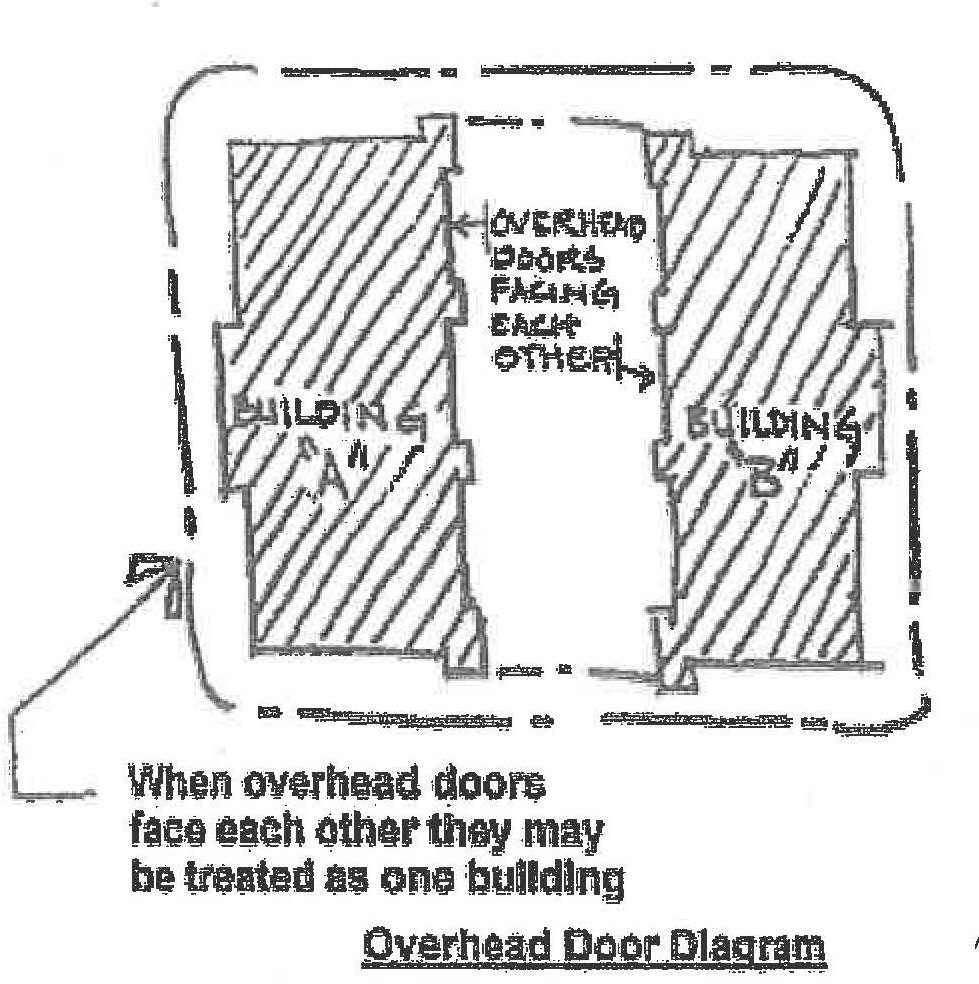
Illustration 5
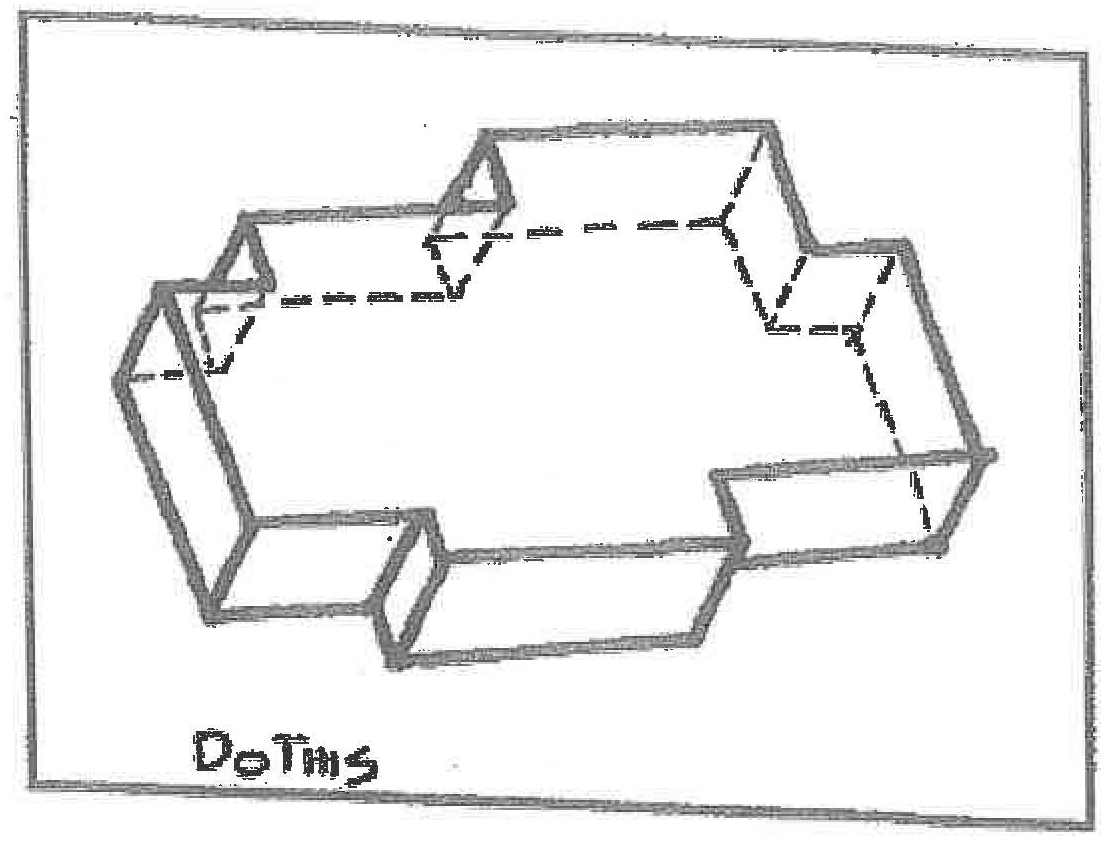
Illustration 6
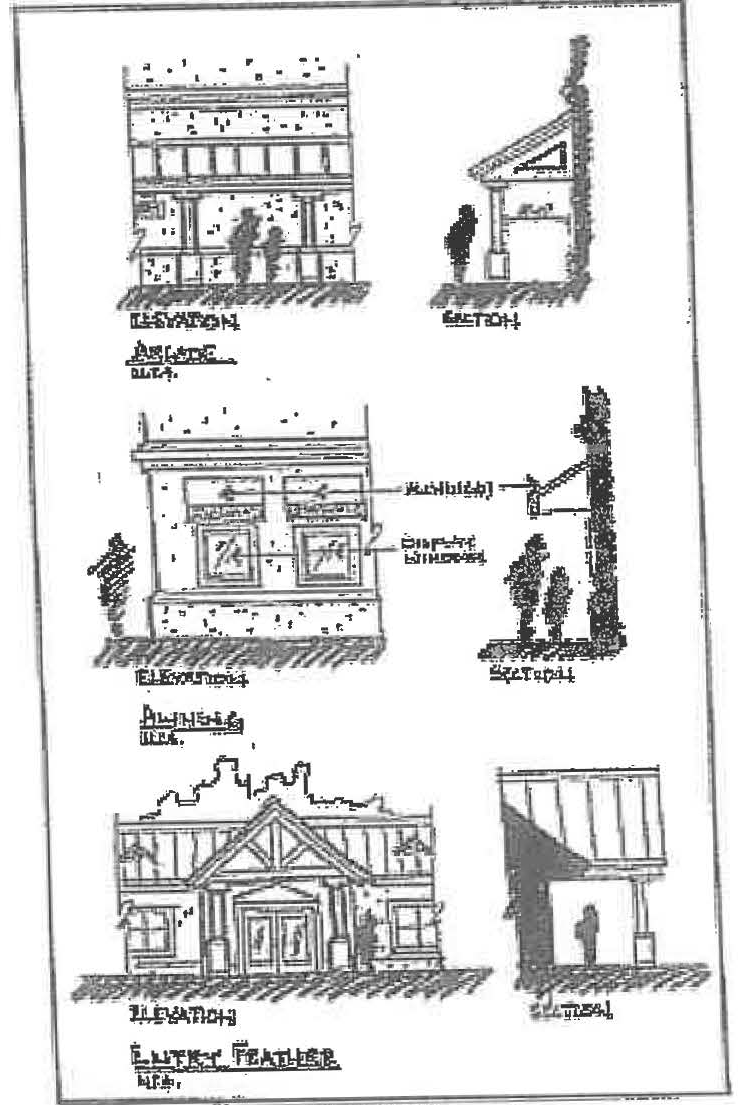
Illustration 7
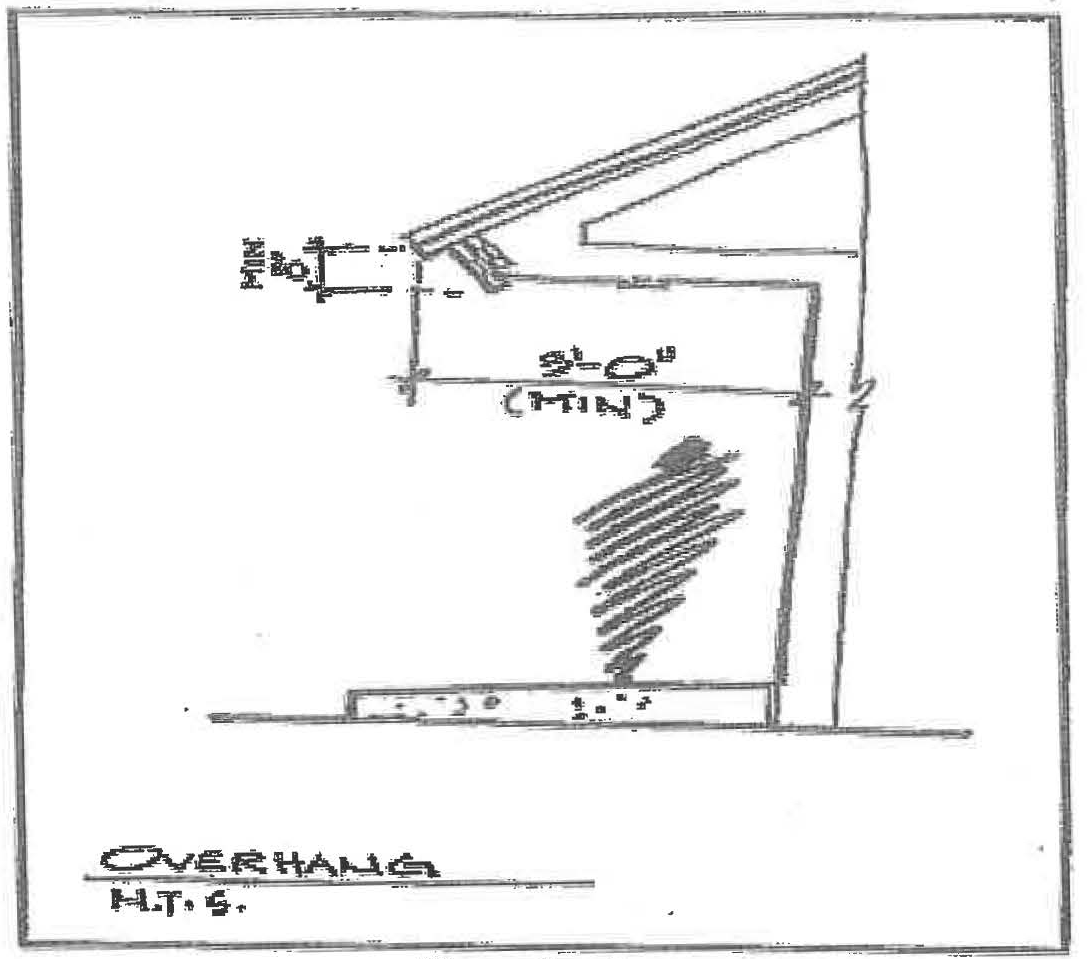
Illustration 8
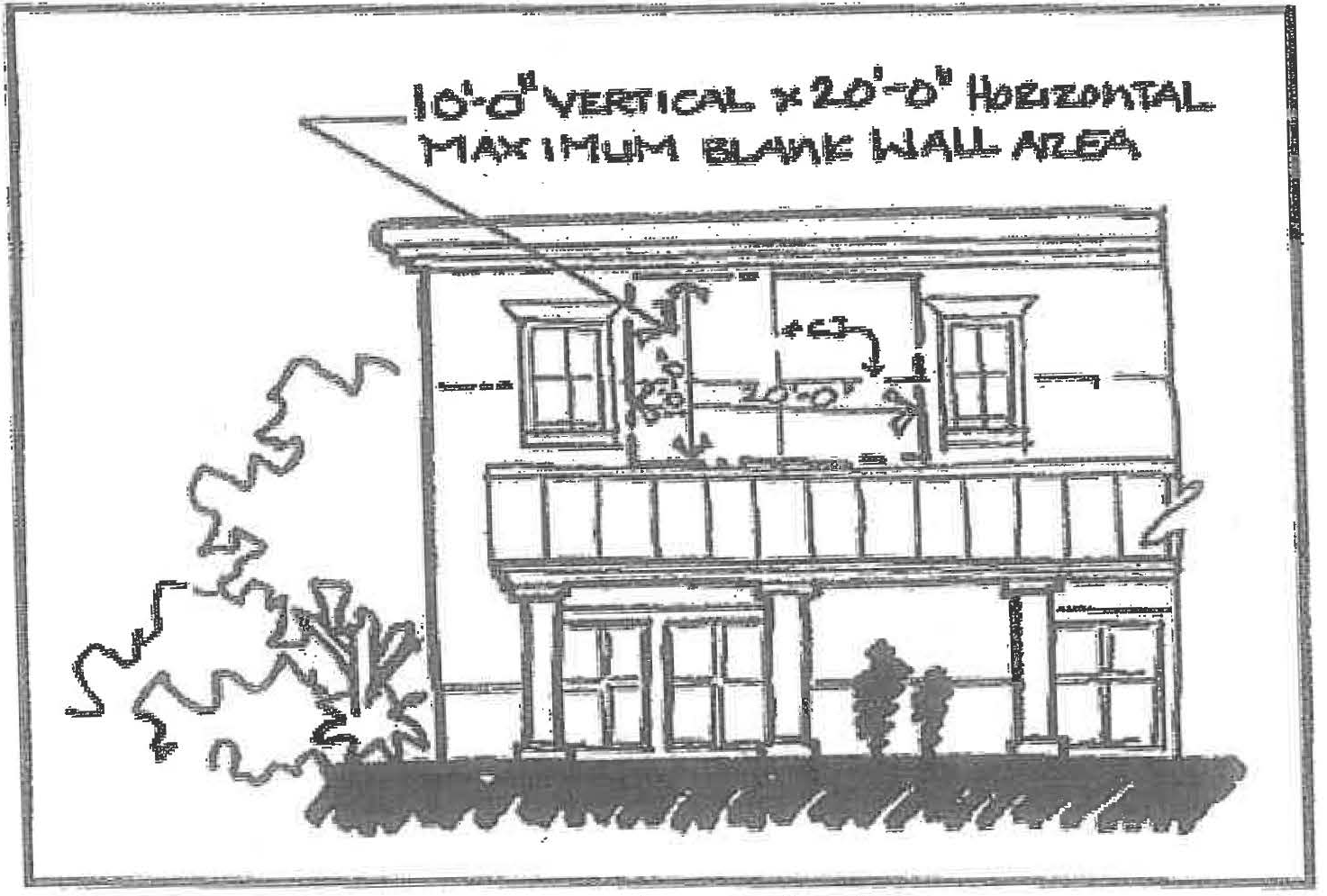
Illustration 9
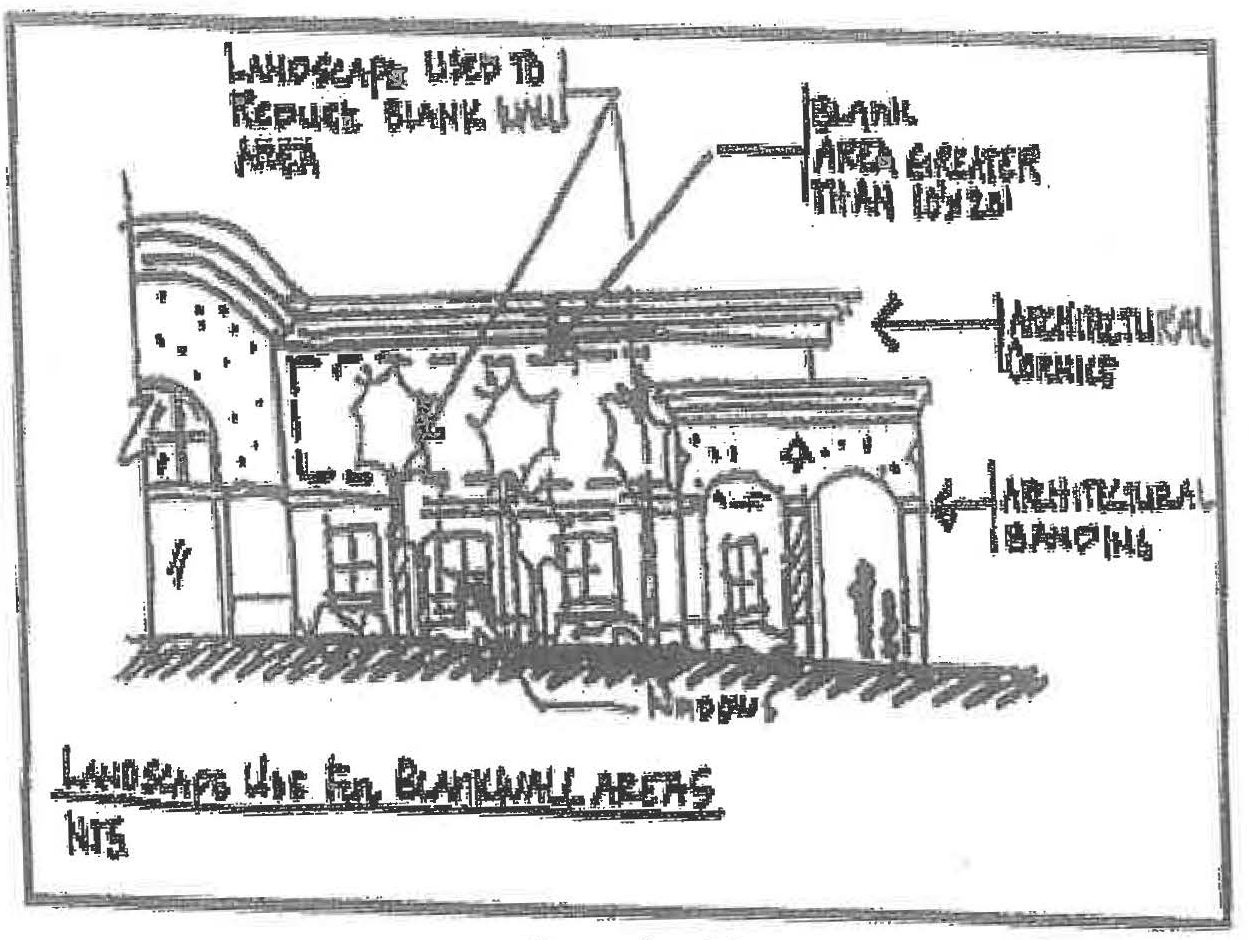
Illustration 10
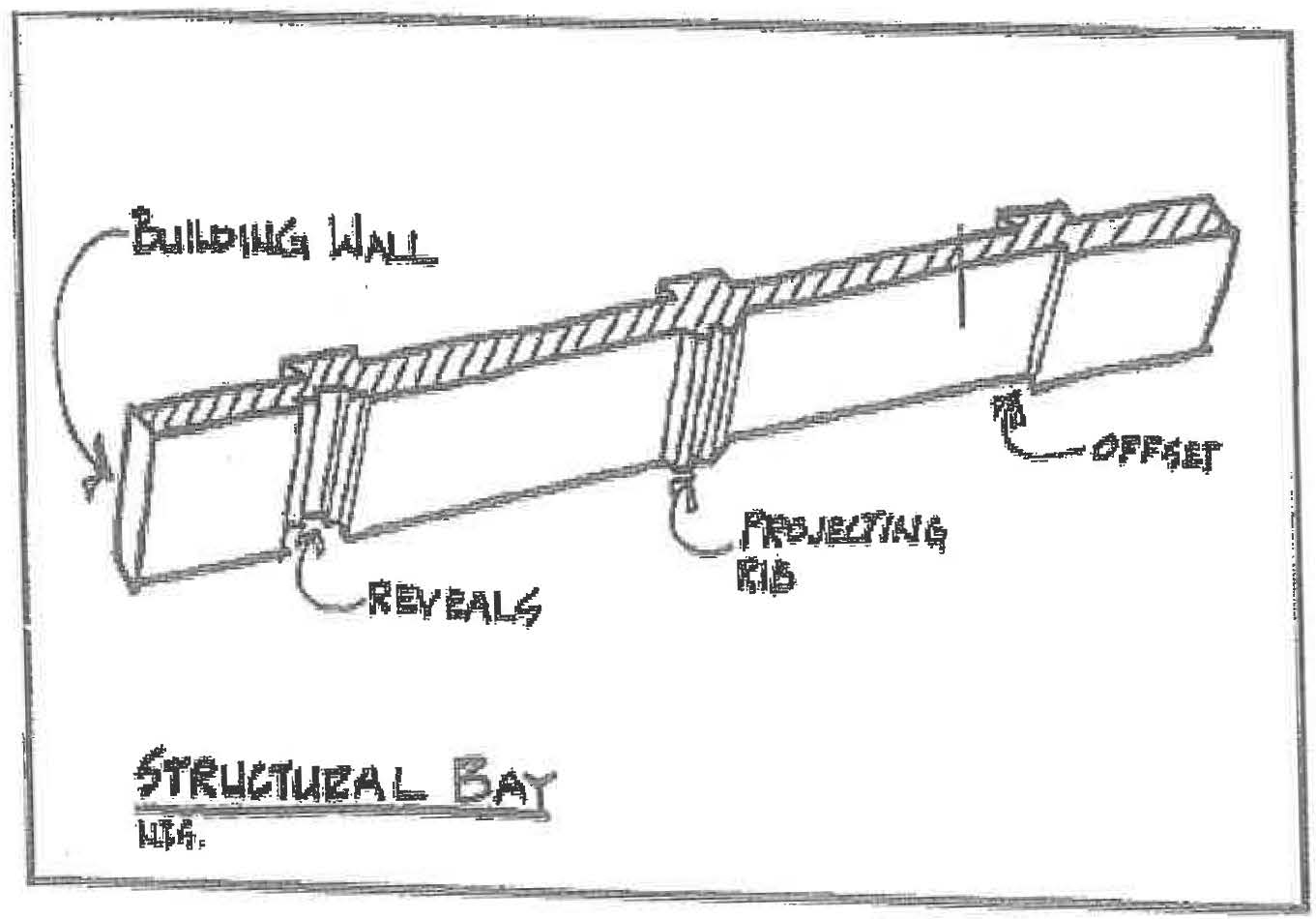
Illustration 11
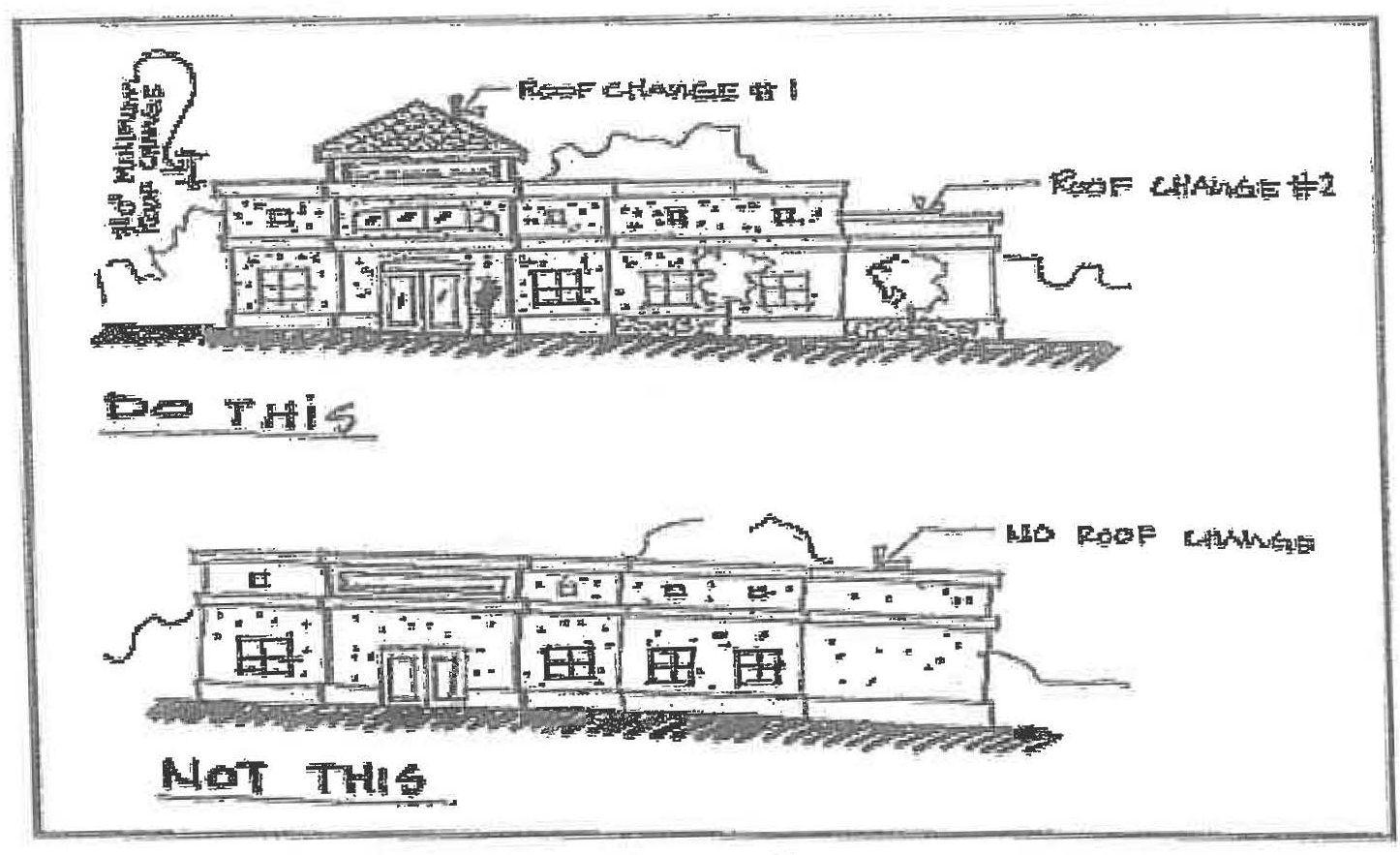
Illustration 12
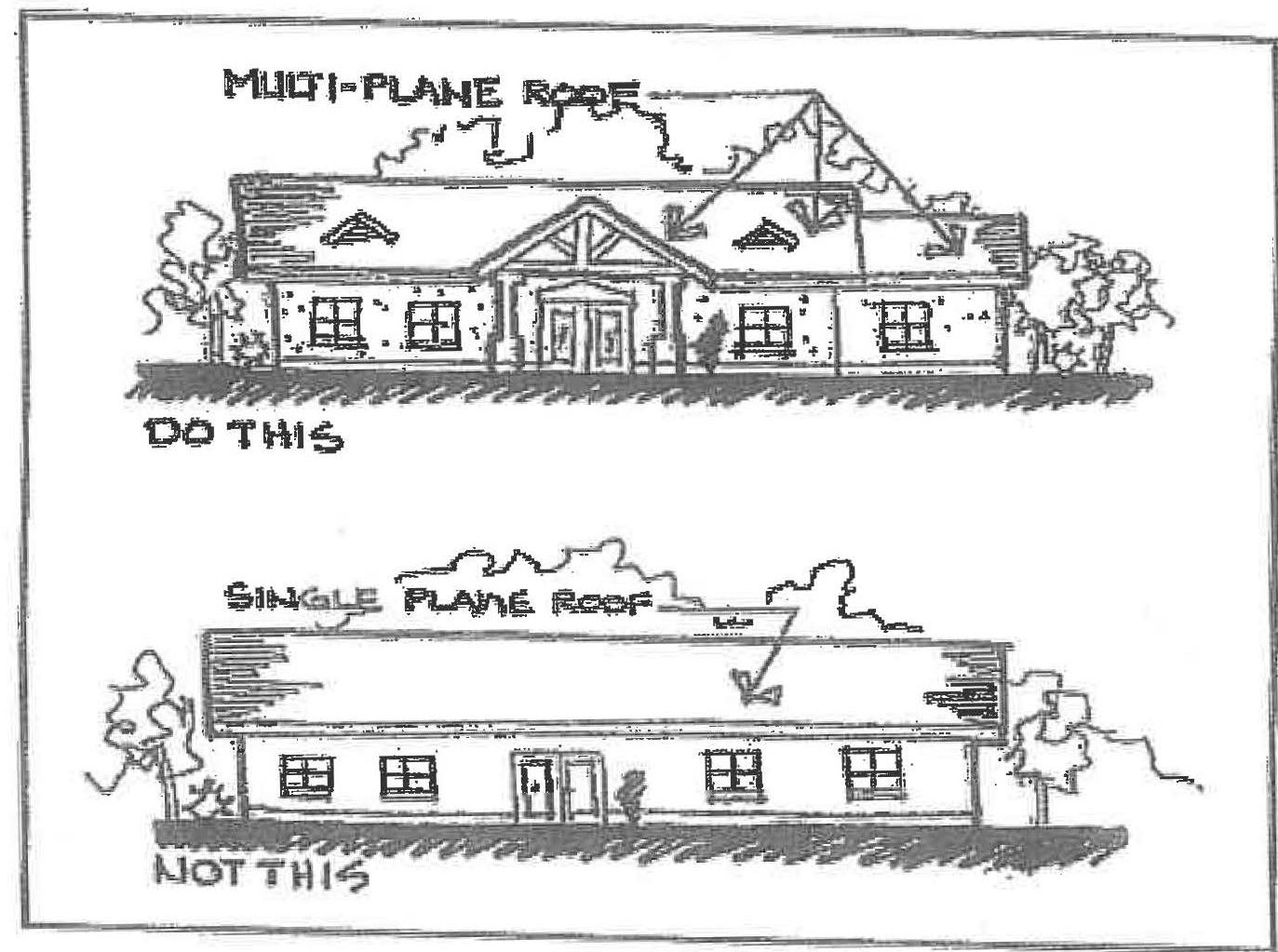
Illustration 13
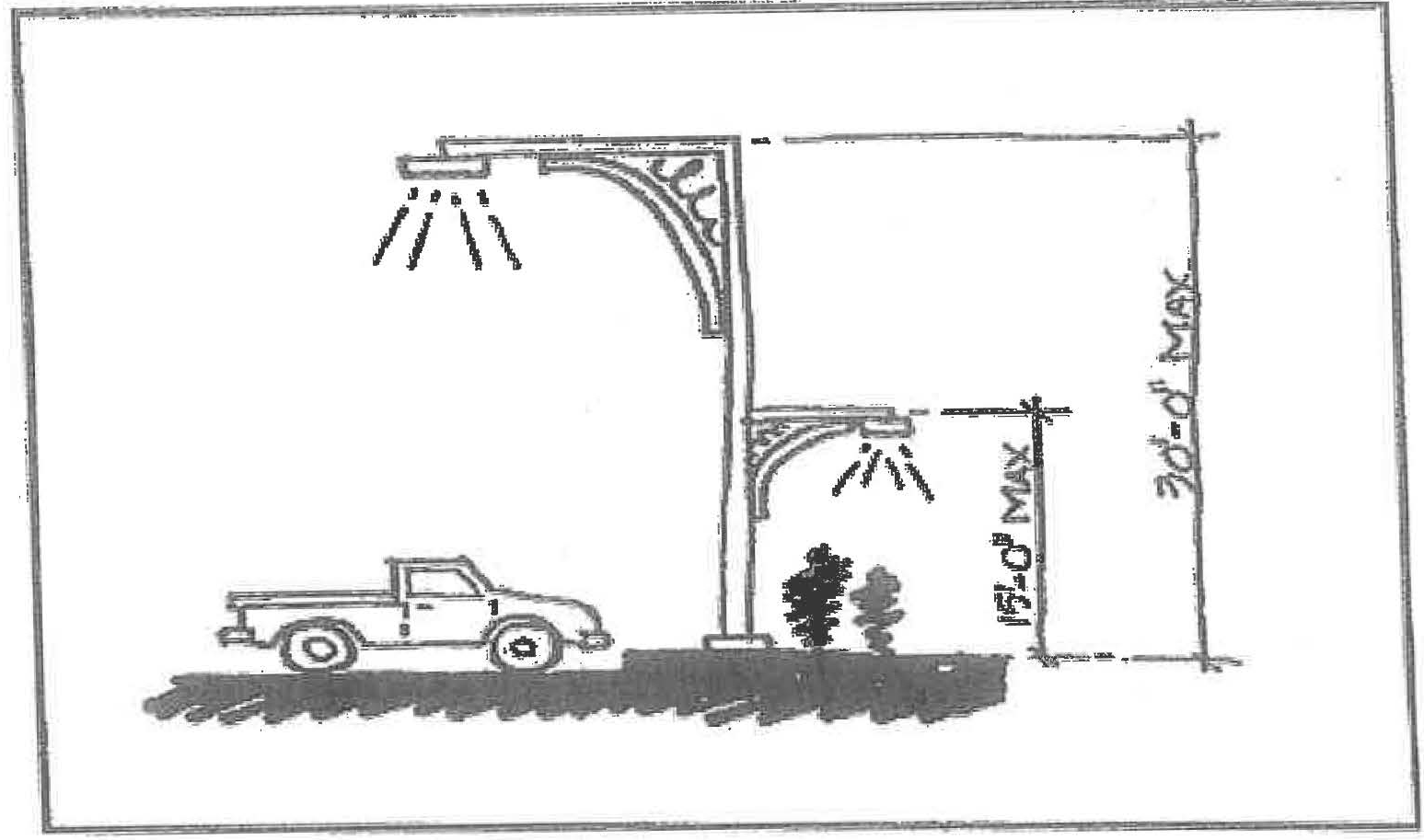
Illustration 14
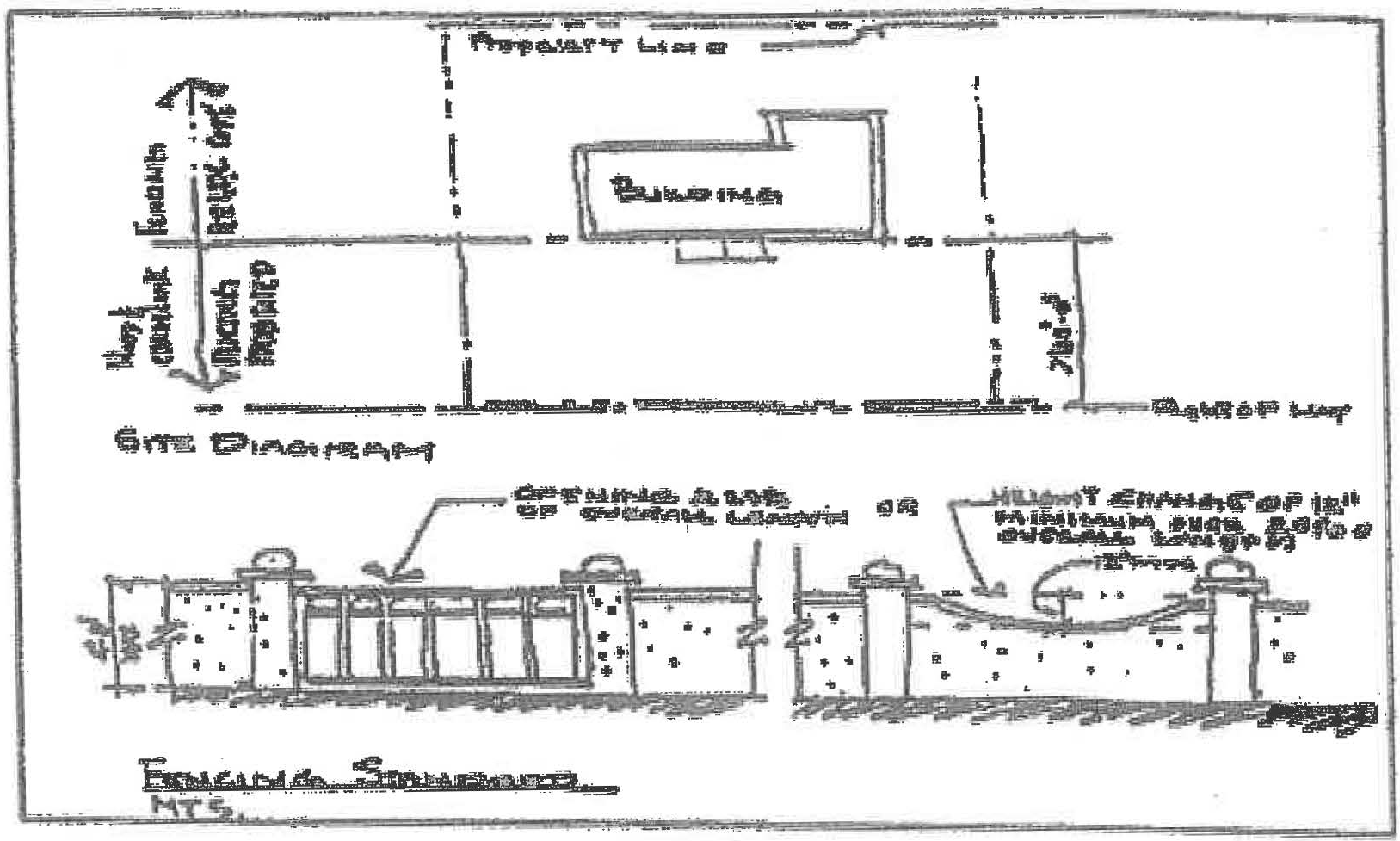
Illustration 15
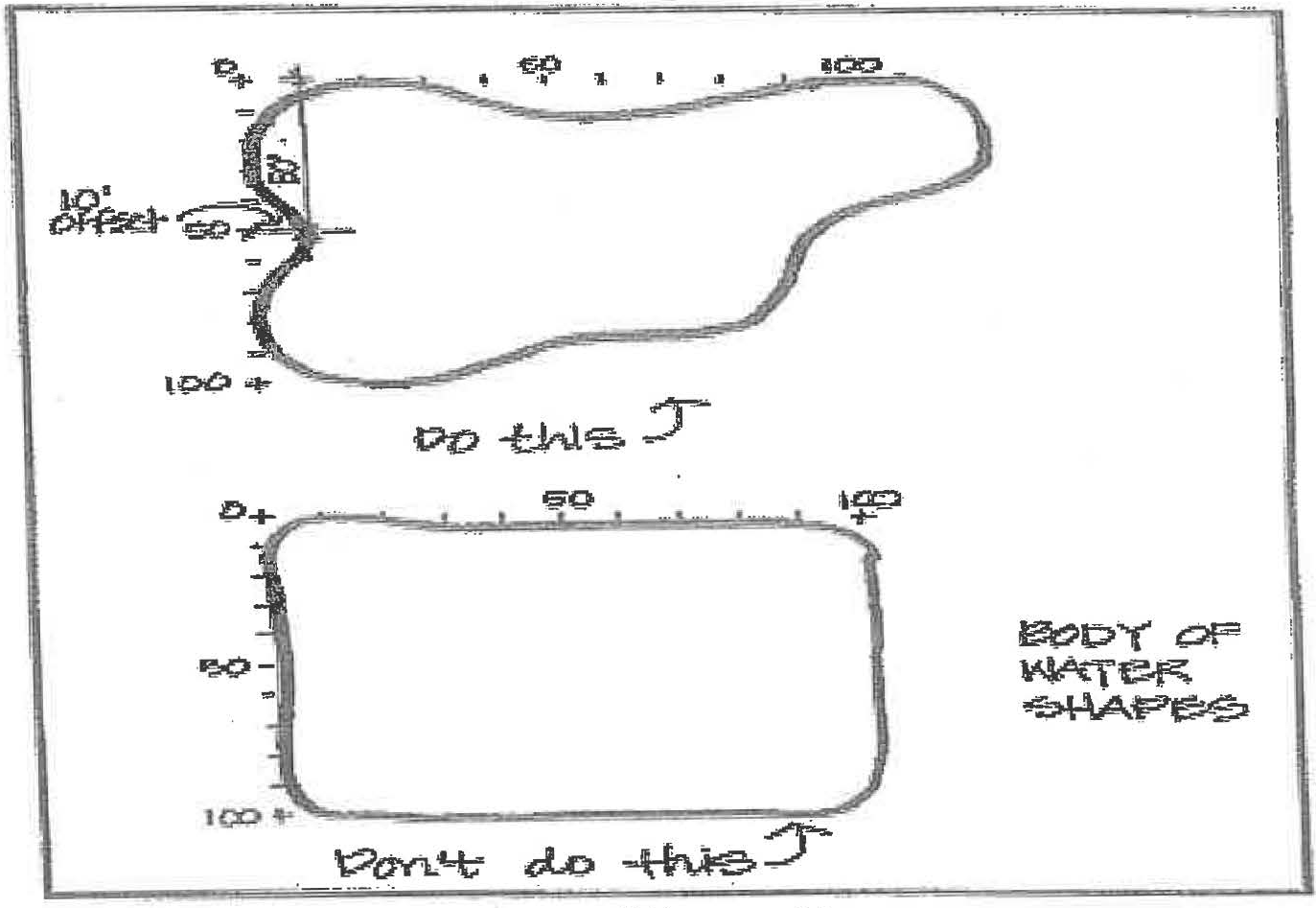
Illustration 16
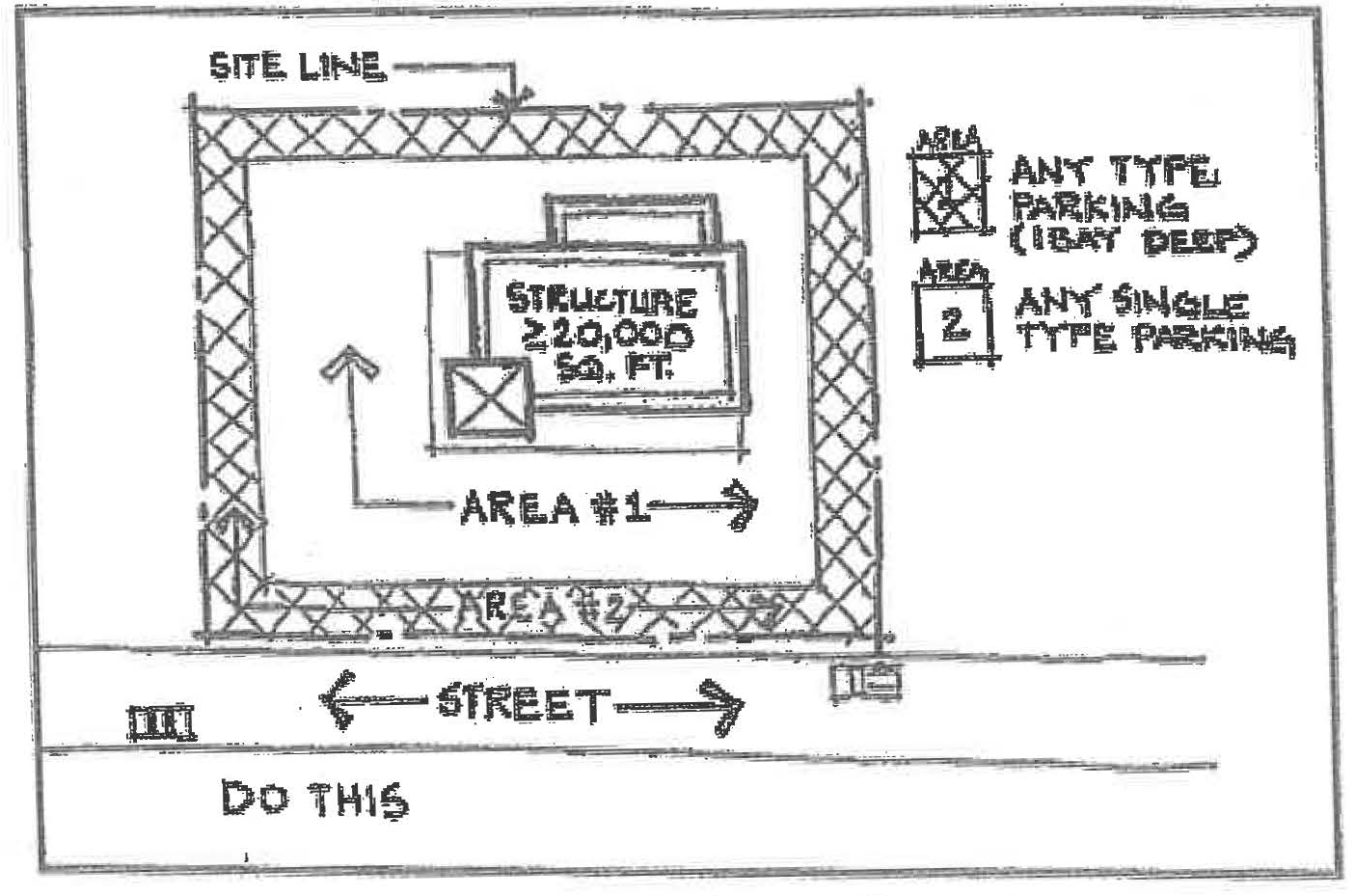
Illustration 17
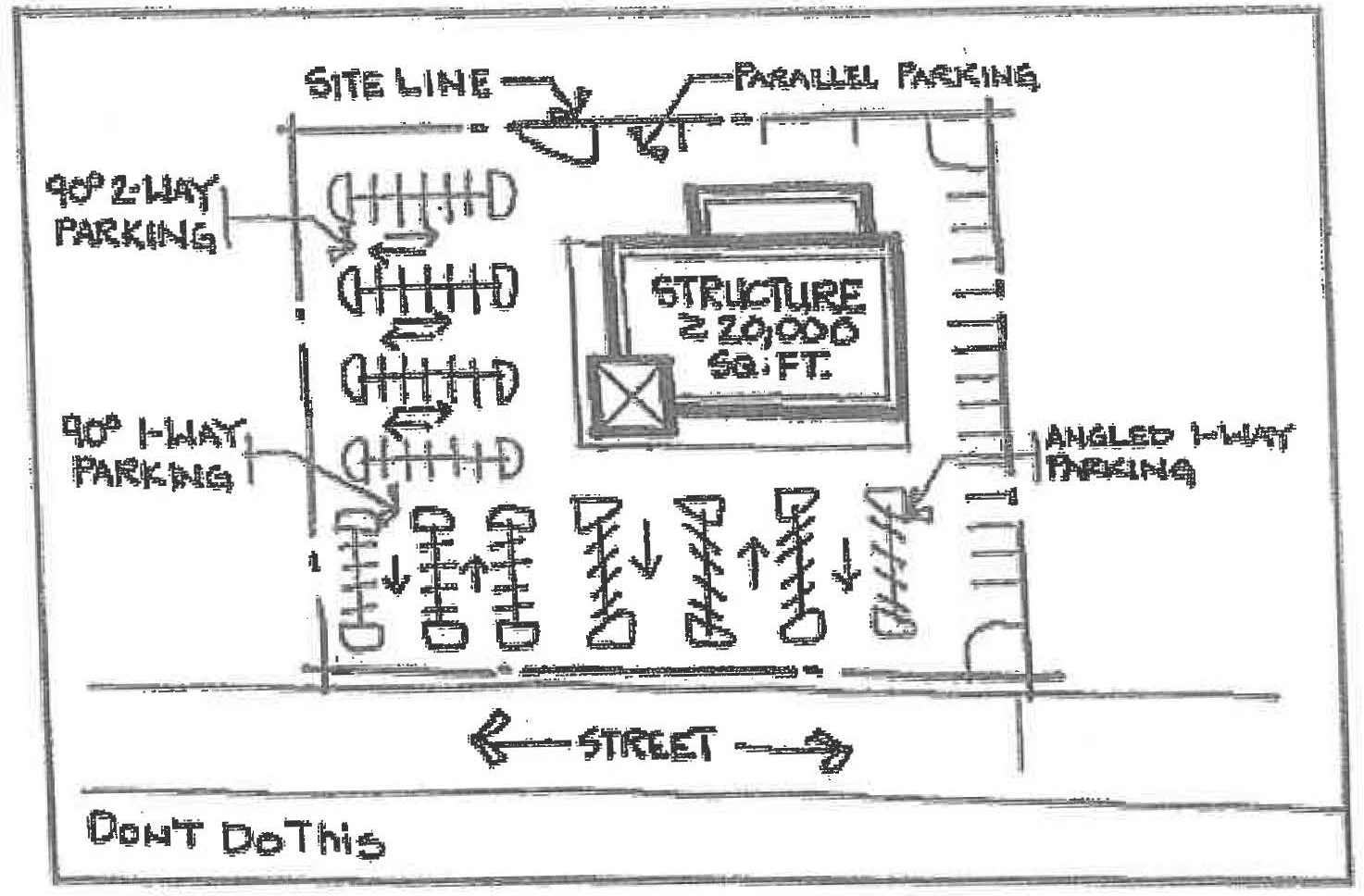
Illustration 18
(Ord. No. 16-35, § I(Att. A), 9-26-16)
Multi-family includes apartment complex developments, townhome communities, condominium communities.
--- (5) ---
City of Leesburg and Florida themes, such as historic events, culture and natural environment, are encouraged.
--- (6) ---
City of Leesburg and Florida themes, such as historic events, culture and natural environment, are encouraged.
--- (7) ---
Refer to City of Leesburg's Land Development Regulations, Chapter 25, Section 25-288 - Commercial Uses (m)(1) Design standards—Aesthetic character.
--- (8) ---
Gross area of the wall should be considered to visually interrupt otherwise flat continuous surface in order to create visual interest; these treatments shall be considered and implemented on all stories of the building/structure.
--- (9) ---
"Predominant" shall mean equal to or greater than twenty-one (21) percent.
--- (10) ---
For shopping centers where gross floor area is proposed to be equal to or greater than 75,000 square feet, cumulatively, refer to City of Leesburg's Land Development Code, Chapter 25, Section 25-288. Commercial uses, (m) Retail-Large commercial design standards.
Sec. 25-361. - Requirements for on-site traffic flow and parking.
(a)
Purpose and intent. The purpose of this section is to define regulations that apply to parking, loading, unloading and vehicle access requirements. The intent is to create and implement an efficient, safe and convenient parking and/or loading facility.
(b)
Applicability. The provisions of this section shall apply to all development approved, commencing with July 1, 2004. The provisions of this section shall apply to redevelopment, or amendments to existing development approvals, as follows:
(1)
Nonresidential development. A change in use of a nonresidential property, building or structure, or conversion or an existing residential use to a nonresidential use, shall require that the total parking requirement for the new use be met. An increase in total floor area of a building or structure shall require that the total parking requirement, based upon the existing floor area of the building or structure and the increased floor area, be met.
(2)
Residential development. Changes to approved development plans that result in an increase in the number of dwelling units shall include provisions for the total parking requirement specified in this section.
(3)
Status of prior approvals. Projects with unexpired, non-amended development plans approved prior to July 1, 2004 must meet only the parking requirements in effect at the time of development plan approval.
(4)
Maintenance. All off-street parking areas shall be well maintained, free of potholes, debris, weeds, broken curbs and broken wheel stops, clearly striped and with all lighting in working condition. Facilities shall be maintained as soon as the use exists which the facilities were designed to serve.
(5)
Central business district (CBD) development. Due to the unique characteristics of the downtown area and the provision of public parking on streets as well as in public parking lots, the requirements of this section shall not apply to properties within the CBD. However, where on-site parking currently exists, it shall not be reduced without approval of the development review committee and new development which has property available for on-site parking may be required by the development review committee to provide areas for on-site parking.
(c)
Off-street parking space. An off-street parking area including required parking spaces, accessways, buffers and related off-street parking appurtenances, shall be provided for all buildings and uses on the premises. However, if approved by the development review committee, such off-street parking may be located a maximum distance of five hundred (500) feet from the premises it serves and/or may be consolidated into a large parking area serving other buildings and uses provided that such off-street parking shall be regulated, enforced and maintained as if it were actually, physically located on the premises it is designed to serve.
(1)
The location of the off-site parking spaces shall not create unreasonable:
a.
Hazards to pedestrians;
b.
Hazards to vehicular traffic;
c.
Traffic congestion;
d.
Interference with access to other parking spaces in the vicinity;
e.
Detriment to any nearby use.
(2)
The city shall require a deed or other legal and binding instrument, necessary to show that the required parking area, if approved to be off-site of the premises it serves, is controlled by and available to, the applicant for as long as the use(s) it is intended to serve is in existence. In addition, the applicant must submit and receive approval of the site plan for the proposed parking area with regard to landscape, buffers, setbacks and other development criteria just as if the parking area were on the same premises as the intended building(s) or use(s). The following requirements shall apply:
a.
Size of spaces. Each off-street parking space shall consist of a minimum net area of two hundred (200) square feet, with a minimum width of ten (10) feet and a minimum length of twenty (20) feet.
b.
In all nonresidential districts, off-street parking spaces shall not be located within five (5) feet of the front lot line or five (5) feet of a side lot line. No parking spaces shall be located so as to necessitate the use of any portion of the right-of-way for access to individual parking spaces except insofar as approved access points for entire parking area cross public rights-of-way.
c.
Each off-street parking space (except exempted uses) shall open directly onto an aisle or driveway and not a public street.
d.
Aisles and driveways shall not be used for parking vehicles, except exempted uses, where driveways shall be approved by the planning and zoning manager based on the size of the flared apron and accessibility of the access to the street.
e.
Parking spaces, except exempted uses, shall be designed to permit entry and exit without moving any other motor vehicle. Any pullin parking space where driver error would result in a vehicle penetrating a structure where people are assembled shall be discouraged and be required to have an adequate barrier installed.
f.
Off-street parking spaces shall be delineated by lines, bumpers or some other means approved by the development review committee.
g.
Parking areas which will be used after sunset shall provide lighting for the safety and protection of persons using said parking lot.
(3)
Exempted uses. One- and two-family structures, historic structure or districts and the central business district except as per the requirements of this section.
(4)
Number of spaces. The minimum off-street vehicular space requirements shall be in accordance with the schedule of this section. Within the design overlay districts, central business district, and historic district, where legal and safe on-street parking is provided, after calculating the required minimum required number of off-street vehicle parking spaces, credit for off-street parking spaces shall be given for each adjacent on-street parking space. When an extended parcel line splits an on-street parking space that space shall be deducted from the parking requirements of the parcel that fronts the majority of the on-street parking space. On street types with parking on only one (1) side, on-street parking spaces shall be evenly distributed among parcels on both sides of the street. On-street parking spaces credited for a specific use may not be used exclusively by that use, but shall be available for general public use at all times. No signs or actions limiting general public use of on-street spaces are permitted. Parking requirements for historic structures shall be determined by the community development director after review of the impact that the parking will have on the historic character of the structure and the surrounding properties.
(5)
Mixed use development spaces. Where a mixed use development is proposed, the parking standards for each individual proposed use shall be used and the sum of spaces be required. If the development provides a complementary mix of uses (i.e., the uses operate on different days or at different times of the day), a parking study may be submitted with the development proposal to reduce the necessary parking requirement, as required within the shared parking section.
(6)
Large scale development spaces. Certain large scale uses, such as planned development projects, large schools, and regional hospitals, etc normally have a diversity and variability in parking demand. In such cases, a parking study is required to be submitted with the development proposal to identify the necessary parking requirement. The final decision on the amount of parking shall be determined by the development review committee in consideration of the parking study along with traffic engineering and planning data that are appropriate to the proposed development and intended use(s).
(7)
Off-street parking structures. All off-street parking structures designed to accommodate four (4) or more vehicles shall comply with all area and dimension regulation(s) for principal buildings as well as all off-street parking area buffer strip requirements included within this chapter. All off-street parking structures designed to accommodate three (3) or less vehicles shall be considered as accessory buildings unless attached to a principal building. If attached to a principal building, such off-street parking structures shall be subject to all regulations of this chapter for principal buildings and, if detached, shall be subject to all the regulations of this chapter for accessory buildings.
(d)
Design of parking lots. The parking lot design, including but not limited to, arrangement of spaces, width of aisles and access drives, angle of spaces, installation of curbing, etc., shall be specified. The specific design of each facility shall take into consideration the necessity of required landscaping in accordance with chapter 23. All parking lots shall be paved in accordance with accepted city design standards, except as follows:
(1)
For seasonal use or non-daily use, such as for places of worship or other similar uses where parking needs are limited to one (1) or two (2) days, up to one hundred (100) percent of the parking spaces may be grass area, provided that spaces are defined and that drive aisles, disable spaces and circulation areas shall be paved. Parking required for daily use activities such as full-time office staff, book stores, schools and day care facilities shall not be exempt from the requirement for paved parking. An exemption may be approved upon a finding by the development review committee that seasonal use or non-daily use, justifies the request for grass parking. In addition, historic properties and districts and the CBD may be exempt if it would result, in the property maintaining its historic character. Historic properties, where feasible, would be encouraged to incorporate period design materials in development of parking areas. All exemptions would be conditioned upon a finding that there would not be a detrimental effect due to erosion or other degradation of the natural or surrounding environment or properties.
(2)
Parking areas, which have grass parking spaces shall not use the unpaved spaces in calculations to meet minimum requirements for setbacks, buffers, landscaping or stormwater retention areas. Stormwater retention area requirements shall be calculated based upon the assumption that all spaces are paved.
(e)
Disabled parking requirements.
(1)
Level parking spaces shall be reserved for physically disabled persons according to the following requirements:
(2)
Each space shall contain a fixed sign and a white wheelchair symbol on the pavement.
(3)
Disabled spaces shall be located nearest the building entrance.
(4)
Ramps with a maximum slope of twelve (12) to one (1) are required for access into building from parking area.
(5)
Spaces to be dimensioned at twelve (12) feet wide, twenty (20) feet deep with a five-foot wide aisle.
Disabled Spaces Required
(6)
All disabled parking spaces shall be conspicuously outlined in blue paint and posted and maintained with permanent above-grade signs of a color and design consistent with standards established by the Florida Department of Transportation, bearing the international symbol of accessibility and the caption "PARKING BY DISABLED PERMIT ONLY". The required number of disabled parking spaces shall be included in the total number of parking spaces required for the new or expanded use. All disabled parking spaces shall be designed and located in accordance with the standards set forth in Florida Building Code, Chapter 11, Part A, Florida Accessibility Code, as may be amended from time to time.
(f)
Calculation of certain parking requirements. Where parking requirements relate to number of seats, and seating is in the form of individual pews, benches or the like, twenty (20) lineal inches shall be construed to be equal to one (1) seat. Where parking requirements relate to movable seating in auditoriums and other assembly rooms, ten (10) square feet of net floor area shall be construed to be equal to one (1) seat, except where otherwise specified. Net floor area shall be the actual area occupied by seating and related aisles, and shall not include accessory unoccupied areas or the thickness of walls.
(g)
Determination for unlisted uses or alternative parking. The planning and zoning manager, after consultation with the community development director, shall make a determination, in the cases of uses not listed in the schedule of the minimum required off-street parking spaces. In reaching the determination, the director and the manager shall be guided by the requirements for similar uses, the number and kind of vehicles likely to be attracted to the proposed use and parking requirements of such uses in other jurisdictions.
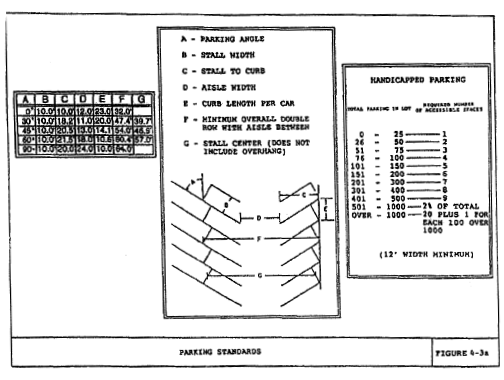
Figure 4-3a
Schedule—Vehicular Parking Space Requirements
*The number of seats shall be the maximum occupancy load as determined by building official and the fire marshall.
(Ord. No. 04-27, § V(5.44), 5-10-04; Ord. No. 08-62, § I, 7-14-08)
Sec. 25-362. - Bicycle parking requirements.
All uses which are subject to site design review shall provide bicycle parking, in conformance with the following standards, which are evaluated during site design review. within the contemporary design overlay, bicycle parking shall be provided according to these standards.
(a)
Number of bicycle parking spaces. A minimum of two (2) bicycle parking spaces per use is required for all uses with greater than ten (10) vehicle parking spaces. The following additional standards apply to specific types of development:
(1)
Multifamily residences. Every residential use of four (4) or more dwelling units provides at least one (1) sheltered bicycle parking space for each dwelling unit. Sheltered bicycle parking spaces may be located within a garage, storage shed, basement, utility room or similar area. In those instances in which the residential complex has no garage or other easily accessible storage unit, the bicycle parking spaces may be sheltered from sun and precipitation under an eave, overhang, an independent structure, or similar cover.
(2)
Parking lots. All public and commercial parking lots and parking structures provide a minimum of one (1) bicycle parking space for every ten (10) motor vehicle parking spaces.
(3)
Schools. Elementary and middle schools, both private and public, provide one (1) bicycle parking space for every ten (10) students and employees. High schools provide one (1) bicycle parking space for every five (5) students and employees. All spaces shall be sheltered under an eave, overhang, independent structure, or similar cover.
(4)
Colleges and trade schools provide one (1) bicycle parking space for every ten (10) motor vehicle spaces plus one (1) space for every dormitory unit. Fifty (50) percent of the bicycle parking spaces shall be sheltered under an eave, overhang, independent structure, or similar cover.
(5)
Central business district. Within the central business district, bicycle parking for customers shall be provided along the street at a rate of at least one (1) space per use. Individual uses shall provide their own parking, or spaces may be clustered to serve up to six (6) bicycles. Bicycle parking spaces shall be located in front of the stores along the street, either on the sidewalks or in specially constructed areas such as pedestrian curb extensions. Inverted "U" style racks are recommended. Bicycle parking shall not interfere with pedestrian passage, leaving a clear area of at least thirty-six (36) inches between bicycles and other existing and potential obstructions. Customer spaces may or may not be sheltered. When provided, sheltered parking (within a building or under an eave, overhang, or similar structure) shall be provided at a rate of one (1) space per ten (10) employees, with a minimum of one (1) space per store.
(6)
Multiple uses. For buildings with multiple uses (such as a commercial or mixed use center), bicycle parking standards shall be calculated by using the total number of motor vehicle parking spaces required for the entire development. A minimum of one (1) bicycle parking space for every ten (10) motor vehicle parking spaces is required.
(b)
Exemptions. This section does not apply to single-family, two-family, three-family, and four-family housing (attached, detached or manufactured housing), home occupations, agriculture and livestock uses, real property with an ARD (age restricted development) zoning designation or other developments with fewer than ten (10) vehicle parking spaces.
(c)
Location and design. Bicycle parking shall be conveniently located with respect to both the street right-of-way and at least one (1) building entrance (e.g., no farther away than the closest parking space). It should be incorporated whenever possible into building design and coordinated with the design of street furniture when it is provided. Street furniture includes benches, street lights, planters and other pedestrian amenities.
(d)
Visibility and security. Bicycle parking shall be visible to cyclists from street sidewalks or building entrances, so that it provides sufficient security from theft and damage;
(e)
Options for storage. Bicycle parking requirements for long-term and employee parking can be met by providing a bicycle storage room, bicycle lockers, racks, or other secure storage space inside or outside of the building;
(f)
Lighting. Bicycle parking should be least as well lit as vehicle parking for security.
(g)
Reserved areas. Areas set aside for bicycle parking shall be clearly marked and reserved for bicycle parking only.
(h)
Hazards. Bicycle parking shall not impede or create a hazard to pedestrians. Parking areas shall located so as to not conflict with vision clearance standards (section 25-338 - Access and circulation—Intent and purpose).
(Ord. No. 04-27, § V(5.45), 5-10-04; Ord. No. 22-54, § VI, 10-10-22)
Sec. 25-381. - Historical preservation overlay district.
General. The design guidelines for this district are provided in the document entitled, "Historic District Design Guidelines for the City of Leesburg", dated August 2002, which guidelines are adopted herein by reference.
(Ord. No. 04-27, § V(5.46), 5-10-04)
Sec. 25-383. - Sidewalk café development.
(a)
Definitions. The following words, terms and phrases, when used in this article, shall have the meanings ascribed to them in this section, except where the context clearly indicates a different meaning:
Director shall mean the Community Development Director of the City of Leesburg.
Planning and zoning manager shall mean the Planning and Zoning Manager of the City of Leesburg.
Permittee means the recipient of a sidewalk café permit under the terms and provisions of this article.
Sidewalk shall mean that paved portion of the street between the curb line or the lateral lines of a roadway and the adjacent property lines intended for use by pedestrians.
Sidewalk café shall mean the placing, locating, or permitting of the placing or locating of chairs, benches, and/or tables within the public property adjacent to a business licensed to operate as a restaurant, entertainment or eating establishment in the central business district. The sidewalk café use shall be accessory only to a principle use of a restaurant, entertainment or eating establishment.
Sidewalk café seating extension shall mean the extension of the sidewalk area to replace an existing parking space for the purpose of placing, locating, or permitting of the placing or locating of chairs, benches, and/or tables within the public property adjacent to a business licensed to operate as a restaurant, entertainment or eating establishment in the central business district. The sidewalk café use shall be accessory only to a principle use of a restaurant, entertainment or eating establishment, and shall be open to the sky except that it may have awnings or umbrellas, and shall be used for dining, drinking and circulation therein pursuant to an approved limited use permit.
(b)
Permitting.
(1)
Sidewalk cafés and sidewalk café seating extensions shall be permitted within geographical areas designated CBD (central business district). Except as provided by this section, it shall be unlawful for any person to establish, construct or operate a sidewalk café or sidewalk café extension.
(2)
Sidewalk cafés and sidewalk café seating extensions shall be required to apply for and receive a limited use permit from the City of Leesburg Community Development Department.
(3)
Sidewalk cafés and sidewalk café seating extensions shall be required to apply for and receive a revocable license agreement from the City of Leesburg.
(4)
Permits for sidewalk cafés and sidewalk café seating extensions shall be issued to the applicant and shall not be transferable to any subsequent owner of the business or property. Should a business with a sidewalk café or sidewalk café seating extension change ownership, the new owner shall comply with the regulations set forth herein, and shall make applications for a new sidewalk café and or sidewalk café seating extension as appropriate, prior to utilizing the existing sidewalk café or sidewalk café seating extension.
(5)
The City of Leesburg, its officers and employees shall not be responsible for sidewalk café components relocated during emergencies.
(6)
The permit shall be specifically limited to the area shown on the exhibit attached to and made part of the permit.
(c)
Application.
(1)
Application for a permit to operate a sidewalk café shall be made at the community development department in a form deemed appropriate by the director. Such application shall include but not be limited to the following information:
a.
The name and address of the applicant;
b.
A copy of a valid business license to operate a restaurant or a takeout food establishment adjacent to the sidewalk area which is the subject of the application;
c.
A copy of a valid certificate of use for the building frontage adjacent to the sidewalk area which is the subject of the application;
d.
A copy of current liability insurance;
e.
A scaled site drawing showing the layout and dimensions of the existing sidewalk area and adjacent private property, proposed location, size and number of tables, chairs and umbrellas, location of doorways, location of trees, sidewalk benches, trash receptacles, and any other sidewalk obstruction either existing or proposed within the pedestrian area.
f.
Photographs, drawings or manufacturers' brochures fully describing the appearance of all proposed tables, chairs, umbrellas or other objects related to the sidewalk café.
g.
Any other information or documentation required by staff to deem the application sufficient for processing.
(d)
Fees.
(1)
Application fees.
a.
Applications for a sidewalk café or sidewalk café seating extension shall be accompanied by a nonrefundable application fee of one hundred dollars ($100.00).
b.
Applications for a limited use permit shall be charged as noted on the City of Leesburg Planning and Zoning Fee schedule.
(2)
Impact fees.
a.
Sidewalk cafés and sidewalk café seating extensions shall be exempt from the assessment of City of Leesburg Impact Fees.
(3)
Other fees.
a.
The applicant shall be responsible for all other fees required to construct, operate and maintain a sidewalk café and/or sidewalk café seating extension as required by the City of Leesburg, Lake County, the State of Florida, or any government agency having jurisdiction.
(e)
Review.
(1)
Applications for a sidewalk café or sidewalk café extension shall be reviewed by community development staff for sufficiency. Insufficient applications shall be returned to the applicant within ten (10) days of receipt by the city with a written request for additional information needed to deem the application sufficient for review.
(2)
Upon a finding of application sufficiency, applications shall be reviewed by the City of Leesburg Development Review Committee for conformance to all applicable City of Leesburg Code of Ordinances. Approval of an application shall be contingent upon meeting all requirements of the City of Leesburg.
(f)
Standards for issuance.
(1)
Sidewalk cafés are restricted to the frontage of the licensed restaurant or food service establishment for which the permit is issued.
(2)
Sidewalk cafés shall be located in such a manner that a minimum five-foot-wide clear pedestrian path is maintained at all times. In areas of congested pedestrian activity, the review committee is authorized to require a wider or narrower pedestrian path, as circumstances dictate.
(3)
Tables, chairs, umbrellas and any other objects provided with the sidewalk café shall be of quality design, materials and workmanship, both to ensure the safety and convenience of users and to enhance the visual and aesthetic quality of the downtown environment.
(g)
Construction and costs.
(1)
Construction.
a.
Construction of a sidewalk café seating extension shall comply with the Florida Building Code, and necessary permitting by the City of Leesburg.
b.
Construction of a sidewalk café seating extension in the right of way shall comply the planning and zoning standard construction detail CD-1 and/or other such construction details as required by the City of Leesburg.
(2)
Costs.
a.
All costs associated with the construction of a sidewalk café and/ or sidewalk café seating extension shall be the sole responsibility of the applicant.
(h)
Maintenance.
(1)
Tables, chairs, umbrellas and any other objects provided with a sidewalk café shall be maintained with a clean and attractive appearance and shall be in good repair at all times.
(2)
The sidewalk area covered by the permit shall be maintained in a neat and orderly appearance at all times and the area shall be cleared of all debris on a periodic basis during the day and again at the close of each business day.
(3)
No advertising signs or business identification signs shall be permitted in the public right-of-way; this shall not prohibit the use of umbrellas carrying company logotypes.
(4)
No tables and chairs nor any other parts of sidewalk cafés shall be attached, chained or in any manner affixed to any tree, post, sign or other fixtures, curb or sidewalk within or near the permitted area.
(5)
Umbrellas provided for a sidewalk café must be anchored in a sufficient manner to remain stationary under windy conditions.
(i)
Insurance/indemnification.
(1)
Prior to the issuance of a permit under this division, the applicant shall furnish the director with a signed statement that the permittee shall hold harmless the City of Leesburg, including all officers and employees, and shall indemnify the City of Leesburg, including all officers and employees from any claims for damages or injury to property or persons which may be occasioned by any activity occurring in the area occupied by the sidewalk café and sidewalk café seating extension.
(2)
The permittee shall furnish and maintain such public liability, food products liability, and property damage liability from all claims and damage to property or bodily injury, including death, which may arise from operations under the permit or in connection therewith. Such insurance shall provide coverage of not less than one million dollars ($1,000,000.00) for bodily injury, property damage, or any claims or injuries arising from the sale or use of alcoholic beverages on the premises, respectively per occurrence. Such insurance shall be without prejudice to coverage otherwise existing therein and shall name the City of Leesburg as an additional insured.
(j)
Revocation, appeals and penalties.
(1)
Revocation. The director may deny, revoke or suspend a permit for any sidewalk café authorized in the city if it is found that:
a.
Any business or health permit required by city, county, state or federal law has been suspended, revoked or cancelled.
b.
The permittee does not maintain sufficient insurance as required herein.
c.
Changing conditions of pedestrian or vehicular traffic cause congestion necessitating removal of the sidewalk café. Such decision shall be based upon findings of the director that circumstances represent a danger to the health, safety or general welfare of pedestrians or vehicular traffic.
d.
The permittee has failed to correct violations of this article or conditions of his permit within three (3) days of receipt of the director's notice of such violations delivered in writing to the permittee.
e.
The permittee fails to control the conduct of customers by allowing them to harass or annoy or otherwise interfere with passing pedestrians or motorists.
f.
Tables, chairs and other vestiges of the sidewalk café may be removed by the city, and a reasonable fee charged for labor, transportation and storage, should the permittee fail to remove such items within thirty-six (36) hours of receipt of the director's final notice to do so for any reason provided for under this article.
g.
Upon denial or revocation, the director shall give notice of such action to the applicant or the permittee in writing, stating the action which has been taken and the reason therefor. If the action of the director is based on subsection (a)(4) of this section, the action shall be effective upon giving such notice to the permittee. Otherwise, such notice shall become effective within ten (10) days unless appealed to the city commission.
(2)
Penalties.
a.
Penalties for violations of this section shall be assessed as provided in the City of Leesburg Code of Ordinances. Violations shall be first referred to the code enforcement division for compliance, and may include an appearance before the special magistrate for assessment of fines.
(3)
Appeals.
a.
Appeals shall be initiated within ten (10) days of a permit denial or revocation under this division by filing a written notice of appeal with the city manager, and a copy of the notice shall be delivered the same day to the planning and zoning manager.
b.
The city manager shall place the appeal on the first agenda of the city commission for which proper notice can be given and shall notify the director thereof. At the hearing upon the appeal, the city commission shall hear and determine the appeal, and the decision of the city commission shall be final and effective immediately.
c.
The filing of a notice of appeal by a permittee shall stay an order by the director to remove a sidewalk café or sidewalk café extension until the appeal hearing is completed by city commission, unless said order notes a violation of public health, safety or welfare.
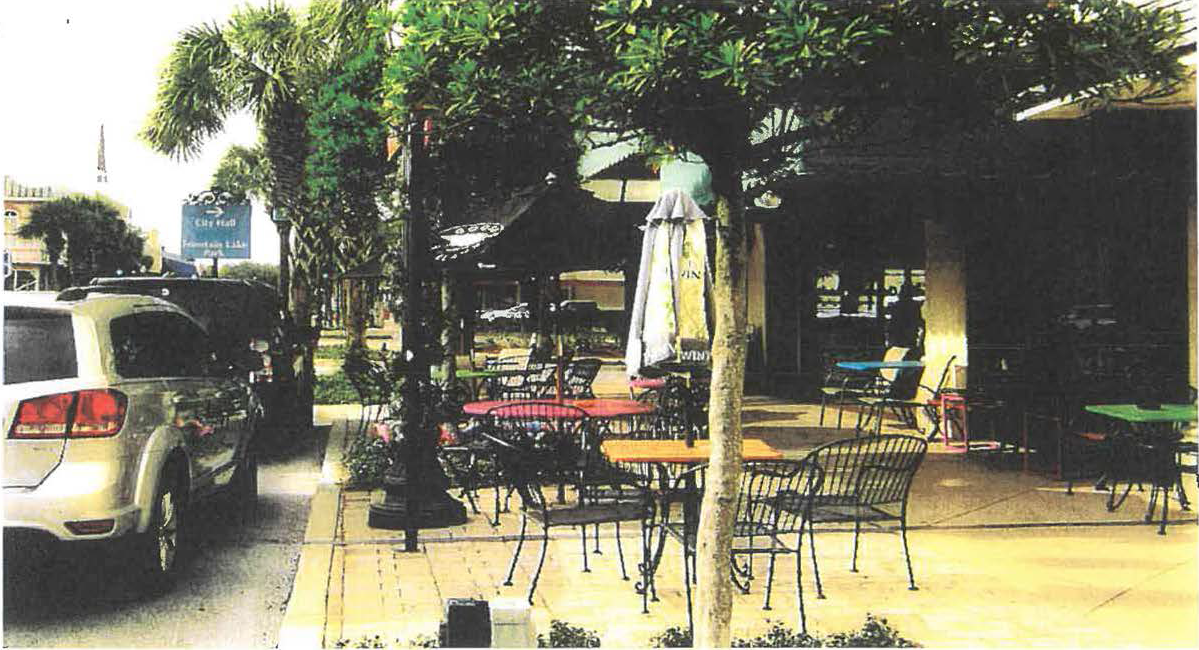
Existing sidewalk café at 5th and Main Street.
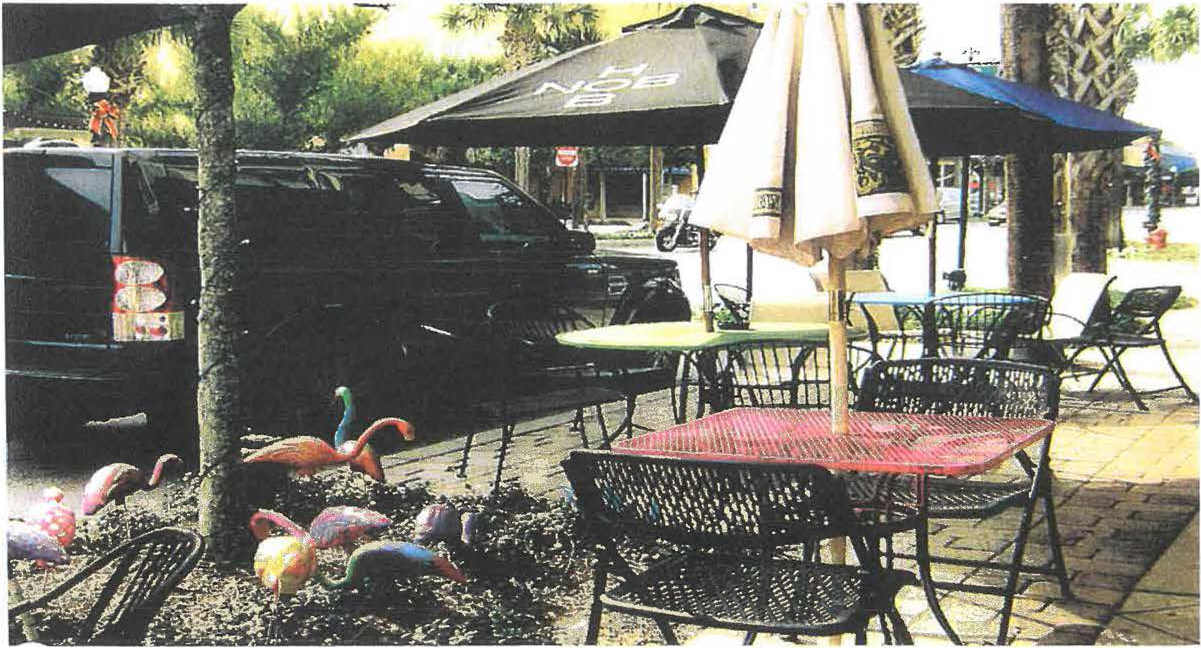
2nd view of existing sidewalk café at 5th and Main Street.
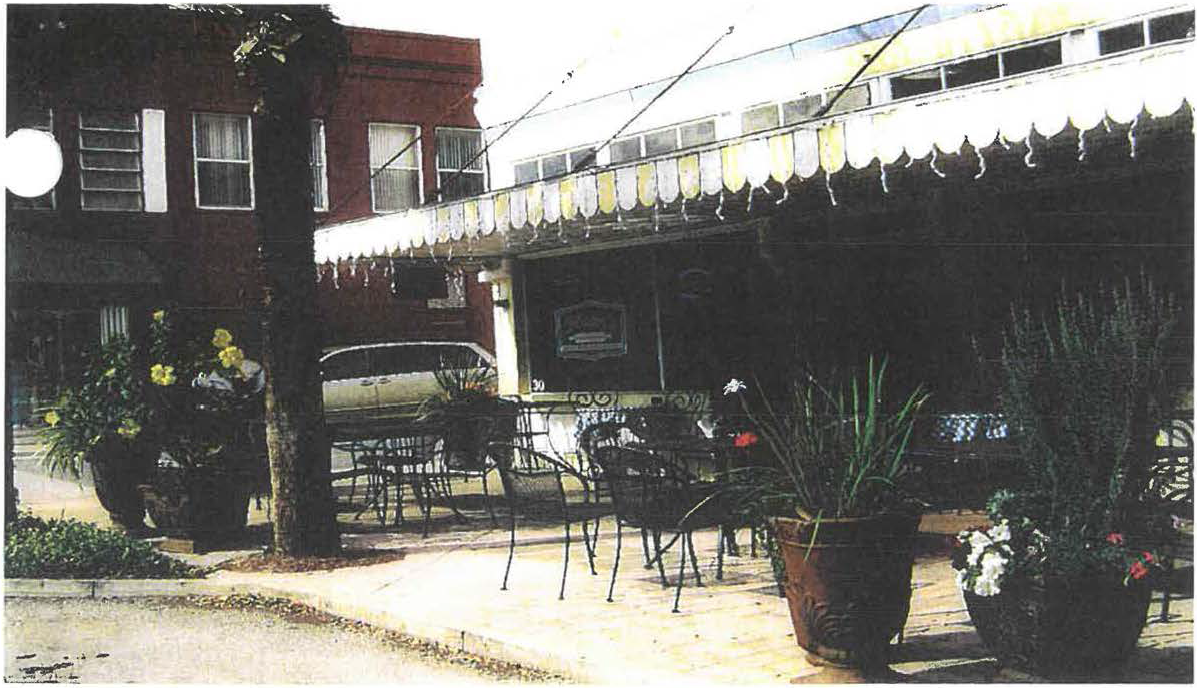
Existing sidewalk café at 7th and Main Street.
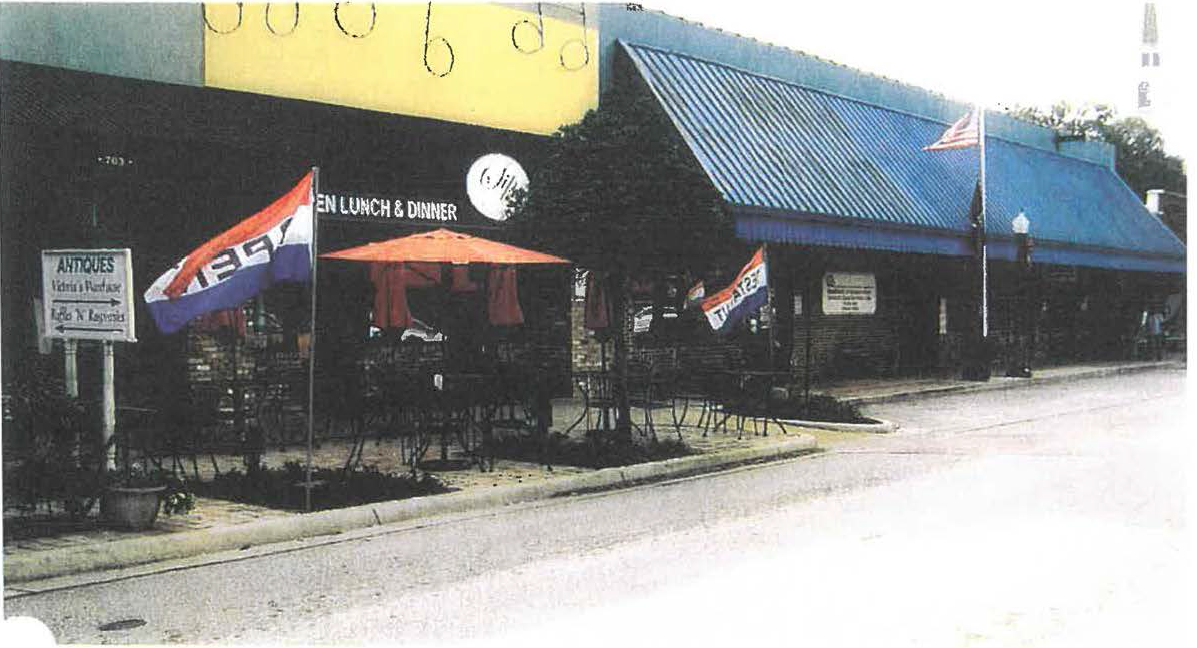
Existing café on West Main utilizing a typical sidewalk café extension area.
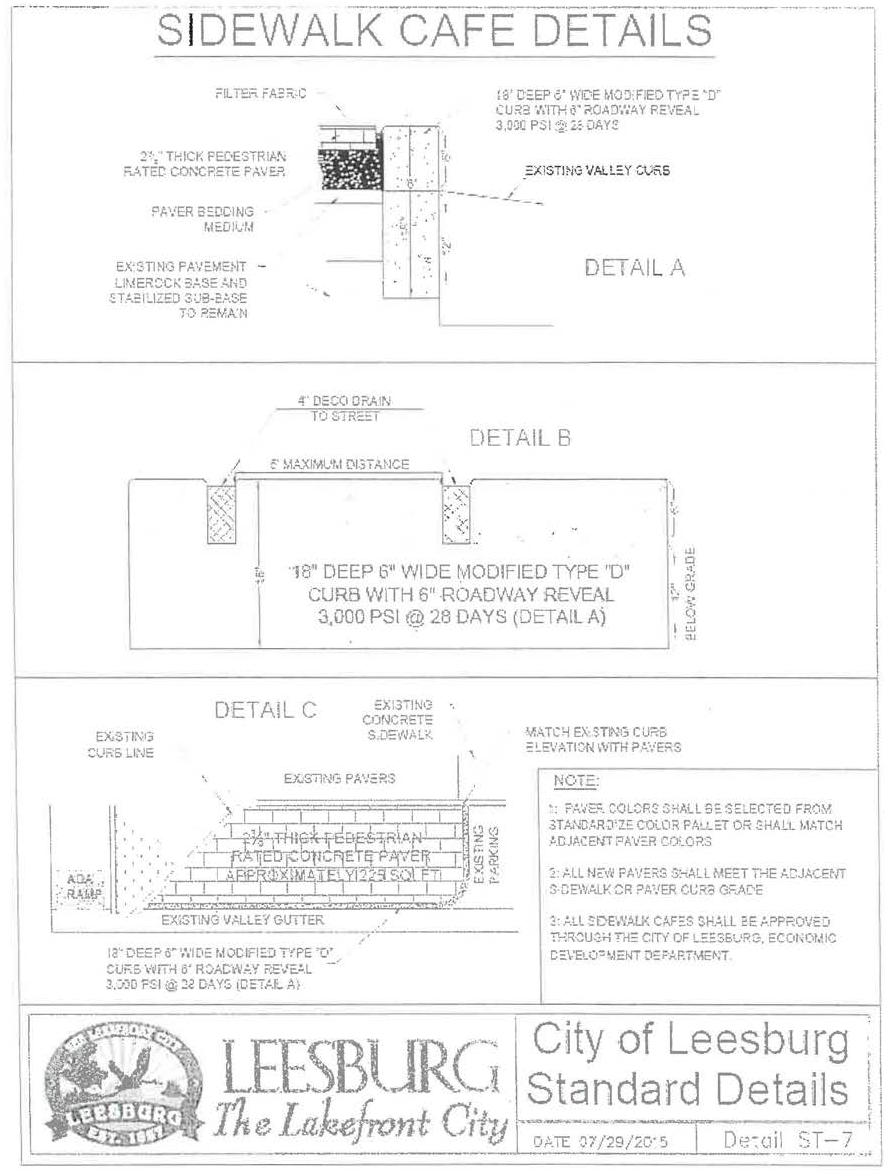
(Ord. No. 16-25, § I, 5-23-16)
Sec. 25-385. - Traditional design district overlay (TDO): general.
In order to promote efficient urban growth patterns, new development shall be organized to illustrate the intended redevelopment pattern within the TDO based on the application of the prototypical block models. Development activity shall be modeled after one (1) of three (3) different development block types:
(1)
Traditional Neighborhood Development Block (figure 5.50.1)
(2)
Detached Residential Front Load Development Block (figure 5.50.2)
(3)
Detached Residential Rear Load Development Block (figure 5.50.3)
(4)
Attached Residential: Duplex and Quadplex (figure 5.50.4)
(Ord. No. 04-27, § V(5.50), 5-10-04)
Sec. 25-386. - TDO: General design standards.
Flexibility to design each site to preserve the existing neighborhood and commercial form is encouraged by the use of block standards. The following guidelines shall be followed for five (5) acre or greater sites. Development of sites smaller than five (5) acres, to the maximum extent possible shall follow the same standards.
(1)
Blocks shall be designed to conform to a street pattern that is connected and allows for internal connections and external linkages.
(2)
For commercial, apartments and mixed-use development, the preferred block length shall range from five hundred (500) to seven hundred (700) feet including alleys that may bisect the block, and half-block width shall range from two hundred fifty (250) to three hundred fifty (350) feet.
(3)
Infill development that can not meet the standards for complete blocks, parking, service drives and alleys should be designed to allow for future connections to adjacent parcels.
For attached and detached residential uses the preferred block length shall range from four hundred (400) to six hundred (600) feet including alleys that may bisect the block, and half-block width shall range from two hundred (200) to three hundred (300) feet.
(4)
Site design and lot layout.
a.
Compatibility. Similar building types shall generally face across streets (e.g., detached residential shall face detached residential and attached residential shall face attached residential). Dissimilar building types, when adjacent (e.g., attached residential adjacent to multi-story structure), shall abut at rear lot lines separated by a shared alley or service drive. Each of the following shall be considered dissimilar building types: detached residential; detached nonresidential; attached residential; and any multi-story structure regardless of use.
b.
The underlying zoning district shall establish setbacks unless additional provisions are established within the TDO.
(Ord. No. 04-27, § V(5.51), 5-10-04)
Sec. 25-387. - TDO: Traditional neighborhood block.
The traditional neighborhood block provides for a mix of uses permitted in a traditional neighborhood community with examples for neighborhood commercial, attached single-family homes and a range of multifamily building types including apartment buildings, community residential homes, housing for older persons, and nursing and extended care facilities.
(1)
Site design and lot layout.
a.
Setback encroachment. Special architectural features, such as balconies, bay windows, arcades, awnings, etc. may project into front setbacks and public right-of-ways on streets provided they are eight (8) feet above the sidewalk and leave a minimum five-foot wide unobstructed sidewalk. Support structures for these features shall be located such that they do not affect the clear sight triangle for travel lanes or the on-street parking.
b.
Signage. All nonresidential signage shall adhere to article 6, Sign Regulations with the following provisions. Building signs are the only signs permitted in the TDO and may be illuminated only during business operating hours.
c.
Landscape. See section 25-323, Landscape standards for building open areas and screening standards. If site constraints exist, the planning and zoning manager or designee may waive the required landscape for front, side and rear buffers unless residential development is adjacent to the proposed development.
d.
Screening. All rooftop mechanical equipment shall be integrated into the overall mass of a building by screening it behind parapets or by recessing it into roof structure.
(2)
Building design.
a.
Building frontages shall occupy no less than seventy-five (75) percent of the street facing entrance.
b.
Height. The maximum building height may be increased by ten (10) feet as an incentive for vertical mixed use buildings, except where adjacent to single-story residential uses. Avoid building that in height, width or massing violates the existing scale of the area that greatly varies in height from the existing buildings in the vicinity unless it is a complete redevelopment block.
c.
Public entrance. Buildings that are open to the public shall have an entrance for pedestrians from the street to the building interior. This entrance shall be designed to be attractive and functionally be a distinctive and prominent element of the architectural design, and shall be open to the public during business hours. Buildings shall incorporate lighting and changes in mass, surface or finish to give emphasis to the entrances.
d.
Building façade. No more than twenty (20) feet of horizontal distance of wall shall be provided without architectural relief for building walls and frontage walls facing the street. Buildings shall provide a foundation or base, typically from ground to bottom of the lower windowsills, with changes in volume or material. A clear visual division shall be maintained between the ground level floor and upper floors. The top of any building shall contain a distinctive finish consisting of a cornice or other architectural termination as described below, subsection viii. Additional design features.
e.
Storefront character. Commercial and mixed-use buildings shall express a "storefront character". This guideline is met by providing all of the following architectural features along the building frontage as applicable.
1.
Corner building entrances on corner lots.
2.
Regularly spaced and similar-shaped windows with window hoods or trim (all building stories).
3.
Large display windows on the ground floor. All street-facing, park-facing and plaza-facing structures shall have windows covering a minimum of forty (40) percent and a maximum eighty (80) percent of the ground floor of each storefront's linear frontage. Blank walls shall not occupy over fifty (50) percent of a street-facing frontage and shall not exceed twenty (20) linear feet without being interrupted by a window or entry. Mirrored glass, obscured glass and glass block cannot be used in meeting this requirement. Display windows may be used to meet this requirement, but must be transparent and shall not be painted or obscured by opaque panels.
f.
Orientation. The primary building entrances shall be visible and directly accessible from a public street. Building massing such as tower elements shall be used to call-out the location of building entries.
g.
Habitable street frontage. The first twenty (20) feet of depth of the first floor of any multifamily structure's primary building frontage facing a street shall be constructed as habitable space.
h.
Garages. Residential garage units shall not be accessible from driveways or streets. Garages shall be accessed from an alley or interior parking court. Town home units are required to have garages and shall be accessed from the rear of the property from an alley. Ground floor parking, including garages that are located inside the internal block are permitted on the first floor of townhomes.
i.
Additional design features. All buildings shall utilize at least three (3) of the following design features to provide visual relief along all elevations of the building:
1.
Dormers
2.
Gables
3.
Recessed entries
4.
Covered porch entries
5.
Cupolas
6.
Pillars or posts
7.
Bay window (minimum twelve-inch projections)
8.
Eaves (minimum six-inch projections)
9.
Off-sets in building face or roof (minimum sixteen-inch trim).
10.
Repetitive windows with minimum four-inch trim.
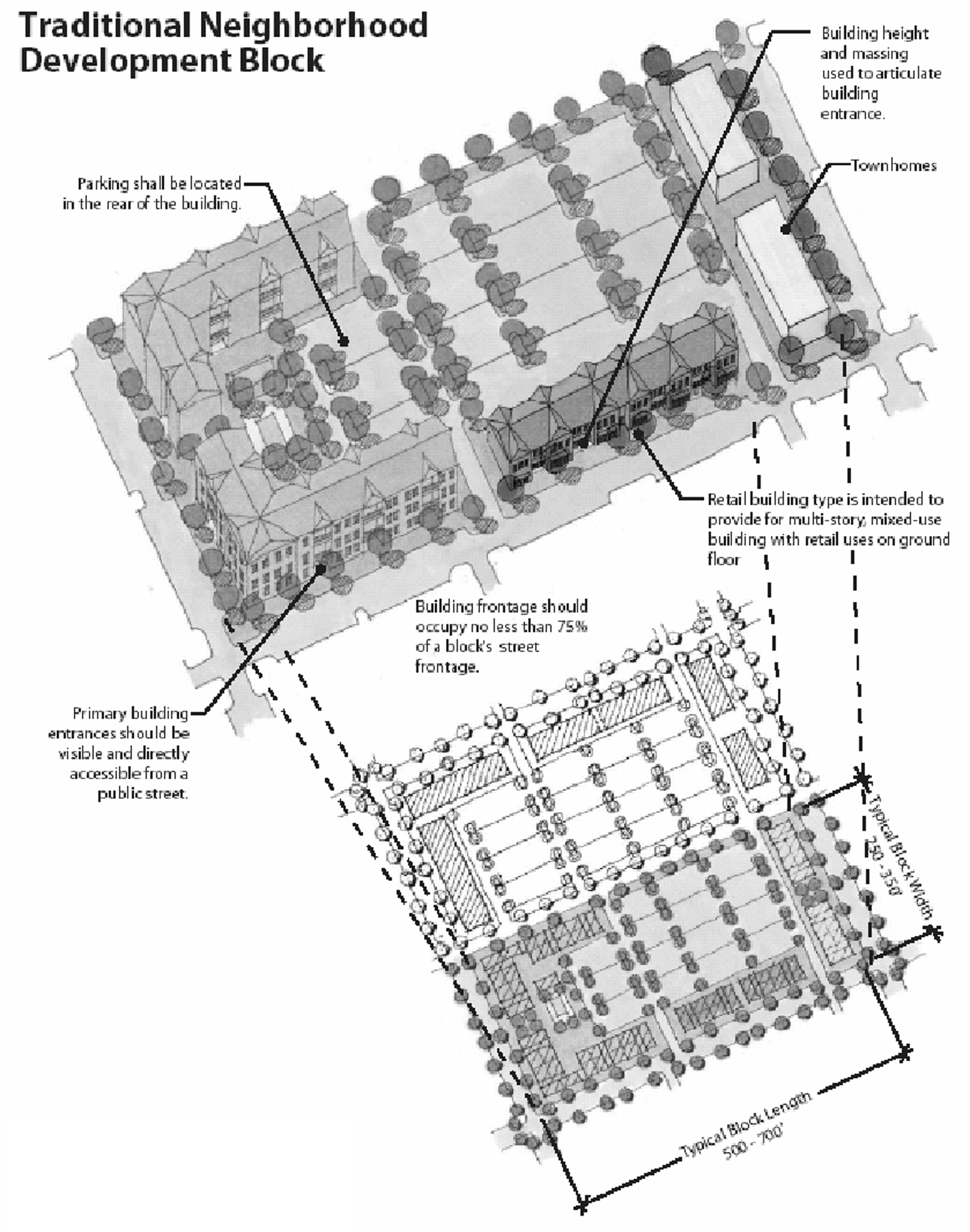
Figure 5.50.1
(Ord. No. 04-27, § V(5.52), 5-10-04)
Sec. 25-388. - TDO: Detached residential development blocks.
The attached and detached residential development block is designed to accommodate a range of residential building types including single-family residential homes, duplexes, triplexes, quadplexes and townhomes as well as accessory residential units.
(1)
Building design.
a.
Garages are required with the following provisions. Attached and detached homes are permitted to have garages located with the following provisions.
1.
Front garages must be set back a minimum of ten (10) feet from the primary structure.
2.
Rear garages must be setback a minimum of four (4) feet from an alley or rear access drive.
3.
Side garages may have an access from the street and are required at a minimum, to be setback in line with the primary structures side setback.
b.
Special yards. Distance between buildings.
1.
The distance between any principal building and accessory building shall be a minimum of ten (10) feet.
2.
An inner court providing pedestrian access to a double-row dwelling group shall be a minimum of twenty (20) feet wide.
c.
Driveways (duplex and quadplex) . Front driveway's are required to have a shared driveway and shall be located along the centerline on the common side lot line.
d.
Additional design features. All buildings shall utilize at least two (2) of the following design features to provide visual relief along all elevations of the building:
1.
Dormers
2.
Gables
3.
Recessed entries
4.
Covered porch entries
5.
Cupolas
6.
Pillars or posts
7.
Bay window (minimum twelve-inch projections)
8.
Eaves (minimum six-inch projections)
9.
Off-sets in building face or roof (minimum sixteen-inch trim).
(2)
Site design and lot layout. Setbacks standards are provided in the underlying zoning district.
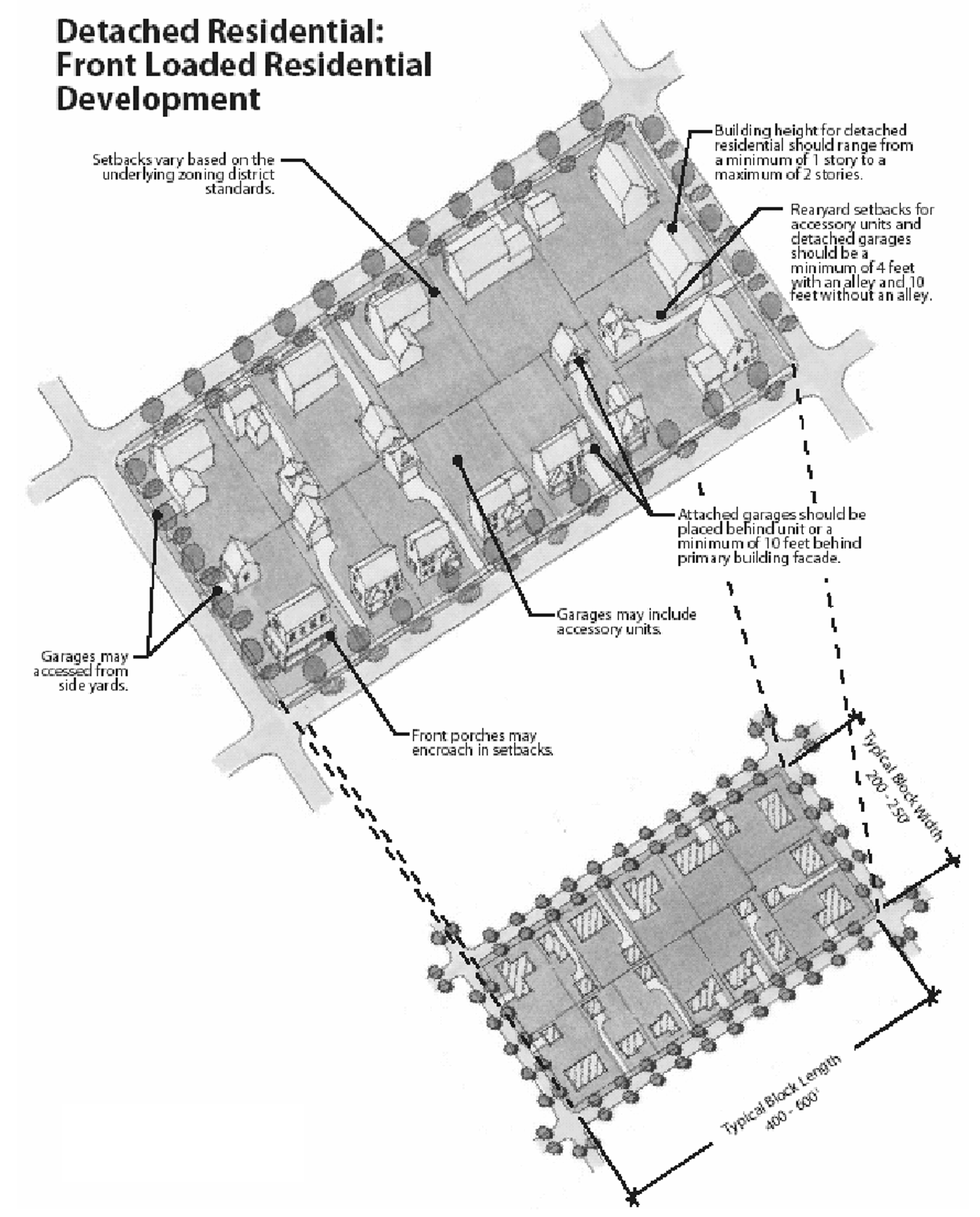
Figure 5.50.2
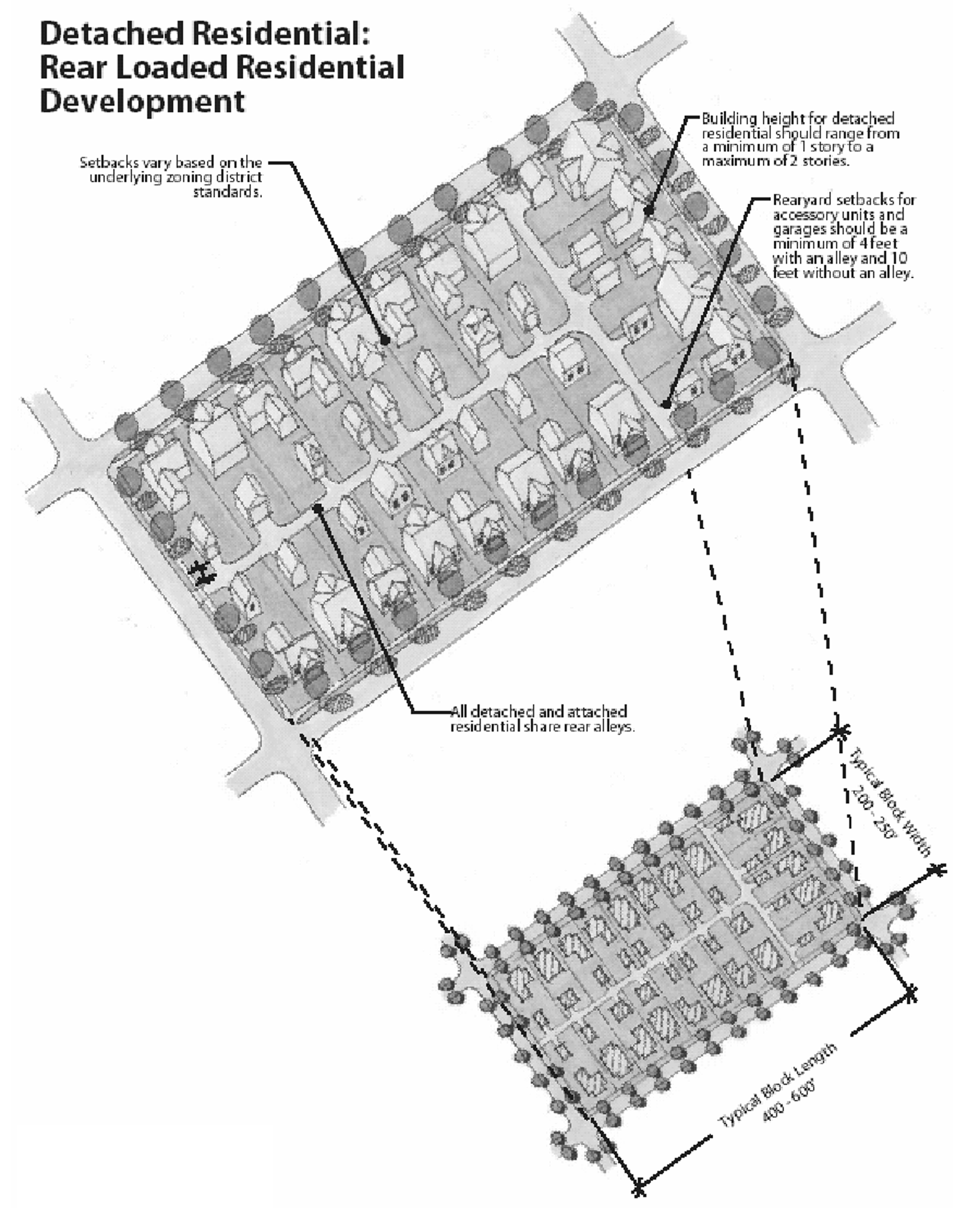
Figure 5.50.3
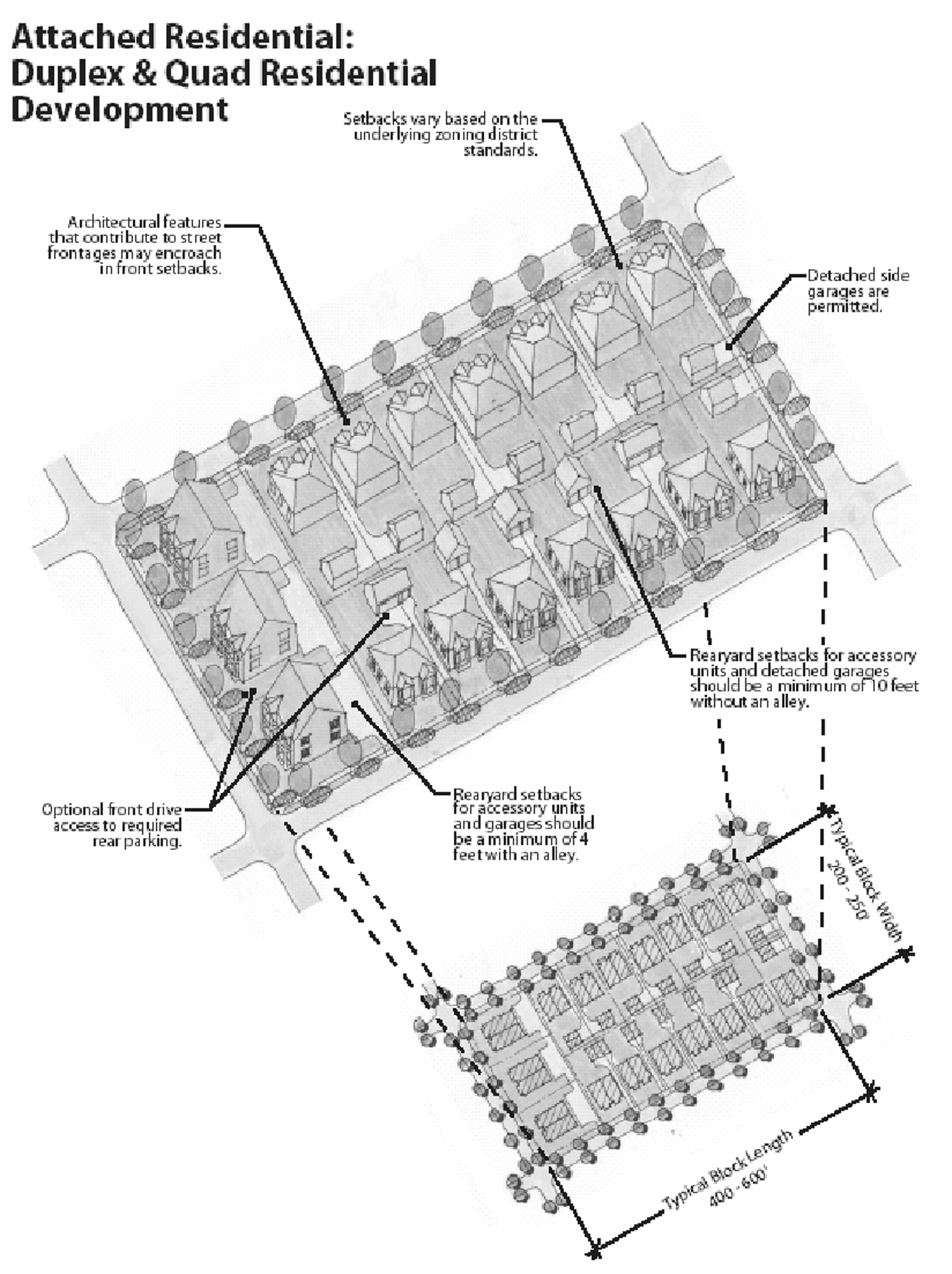
Figure 5.50.4
(Ord. No. 04-27, § V(5.53), 5-10-04)
Sec. 25-395. - Contemporary design district overlay (CDO): General district standards.
In order to promote efficient urban growth patterns, new development shall be organized to illustrate the intended development pattern within the CDO based on the application of the prototypical block models.
(1)
Development block structure. Development activity shall be modeled after the town center prototype (Figure 5.59.1) and shall conform to the principles illustrated in one (1) or more of the following development block types:
a.
Mixed use development block with surface parking (Figure 5.59.2) and mixed use development block with structured parking (Figure 5.59.3). The mixed use development blocks are designed to accommodate a range of retail, office and mixed-use building types including "anchor" retail, "liner" retail, and "main street" retail buildings (Figure 5.59.4).
b.
Multifamily development block (Figure 5.59.5). The multifamily development block is designed to accommodate a range of multifamily building types including apartment buildings, community residential homes, and nursing and extended care facilities.
c.
Attached, detached and accessory unit development block (Figure 5.59.6). The attached, detached and accessory residential development block is designed to accommodate a range of residential building types including single-family residential homes, duplexes, triplexes, quadplexes and townhomes as well as accessory residential units.
(2)
Height.
a.
Mixed use development blocks. Building height shall range from a minimum of twenty (20) feet (including parapet walls) for single-story buildings to a maximum height of seventy-five (75) feet (six (6) stories). Building height shall be further limited by the requirements of each district.
b.
Multifamily blocks. Building height for a multifamily (single-use) structure shall range from a minimum of twenty-four (24) feet (two (2) stories) to a maximum height of fifty-one (51) feet (four (4) stories). Building height shall be further limited by the requirements of each district.
c.
Attached, detached and accessory blocks (detached units). Building height for detached units shall range from a minimum of eighteen (18) feet (one (1) story) to a maximum of thirty-five (35) feet (three (3) stories). Building height shall be further limited by the requirements of each district.
d.
Attached, detached and accessory blocks (attached units). Building height for attached units shall range from a minimum of twenty-four (24) feet (two (2 stories) to a maximum of thirty-five (35) feet (3 stories). Building height shall be further limited by the requirements of each district.
(3)
Setbacks.
a.
Mixed use development blocks: Building setbacks along "A" street frontages shall be a minimum of zero feet to a maximum of ten (10) feet. Building setbacks along "B" streets shall be a minimum of zero feet to a maximum of thirty (30) feet.
b.
Multifamily development blocks: Building setbacks along "A" Street frontages shall be a minimum of zero (0) feet to a maximum of fifteen (15) feet. Building setbacks along "B" streets shall be a minimum of zero (0) feet to a maximum of thirty (30) feet.
c.
Attached, detached and accessory blocks:
Exemption. Porches may project six (6) feet into required front setbacks. Bay windows and balconies may extend up to three (3) feet into required front setbacks, but not for a width of more than eight (8) feet. Bay windows and balconies must be separated by at least twelve (12) feet from one (1) another.
(Ord. No. 04-27, § V(5.59), 5-10-04)
Sec. 25-396. - CDO: Site design standards: Use of prototypes.
Permitted block types are described within a single-use prototype for illustrative purposes. Development applications for specific sites are required to assemble structures into mixed-use blocks or partial blocks, as appropriate, for the site. Each site plan shall be required to identify how the proposed development including buildings and structures are assembled within a context that conforms to the design standards for the block or partial block within which the building occurs.
(Ord. No. 04-27, § V(5.60), 5-10-04)
Sec. 25-397. - CDO: General development block standards.
(a)
Block size. Blocks shall be designed to be generally rectangular in shape except where topographic or other conditions require modification.
(1)
For mixed use development and multifamily development, block length shall range from five hundred (500) to seven (700) feet including alleys that may bisect the block, and partial block width shall range from two hundred fifty (250) to three hundred fifty (350) feet. The block dimensions shall be measured from the street right-of-way to street right-of-way.
(2)
For attached and detached residential uses block length shall range from four hundred (400) to six hundred (600) feet including alleys that may bisect the block, and partial block width shall range from two hundred (200) to two hundred fifty (250) feet. The block dimensions shall be measured from the street right-of-way to street right-of-way.
(b)
Designation of "A" streets and "B" streets. All newly constructed streets, excluding alleys, shall be designated as an "A" street or a "B" street.
(1)
"A" streets shall have building frontage requirements that place buildings close to the street and restrict parking and service uses along them.
(2)
"B" streets shall have no building frontage requirements. While "B" streets are not intended to be primary pedestrian streets at a minimum they must include sidewalks and street trees in accordance with specified street design standards.
(3)
The lineal footage of "B" streets shall not exceed thirty-five (35) percent of the total linear length of all new streets.
(4)
"B" streets may be designated by individual block faces; however, no block face shall be split by "A" street and "B" street designations.
(c)
Off-street parking (surface parking lots).
(1)
Off-street surface parking lots must be located behind "A" street frontage buildings and cannot front on any "A" street.
(2)
A maximum of two (2) vehicular access/curb cuts to parking lots are allowed along "A" street block faces, subject to access management regulations. Vehicular access/curb cuts are not allowed on any block face less than three hundred fifty (350) feet. Vehicular access drives shall connect each parking lot with at least two separate streets.
(3)
Surface parking lots shall not comprise more than seventy-five (75) percent of any one (1) block.
(d)
Parking garages. The mixed use and multifamily development blocks are permitted to be constructed with structured parking as provided in the standards herein and represented by the mixed use development block (with structured parking) prototype. Structured parking decks shall be located behind "A" street frontage buildings with vehicular access restricted to "B" streets. Perimeter landscaping for parking garages shall be the same as for surface parking lots. However no perimeter landscaping shall be required for any portion of the parking garage frontage that incorporates other ground floor uses. Interior landscaping requirements for surface parking lots shall be met on parking garages by providing hanging baskets, landscape planters and/or flower boxes around the exterior of the first three (3) levels of the parking garage structure, such that the amount of landscaping shall be approximately equal to that required for interior landscaping for a surface parking lot of equal capacity. Parking structures that permit access from the "A" street shall comply with the following requirements:
(1)
Direct pedestrian access from parking garages to each adjacent street shall be provided.
(2)
Except for vehicle entrances as described below, the ground floor shall be developed with enclosed commercial or civic floor space to a minimum building depth of thirty (30) feet along the entire length of the structure on each adjacent street, unless separated from the street by another building, parking lot and/or landscaped open space with a minimum depth of thirty (30) feet.
(3)
Vehicle entrances to parking structures shall be a maximum of forty-eight (48) feet in width and shall be separated from other vehicle access to and from the structure or other parking structures on the same side of the block by a minimum distance of four hundred (400) feet.
(e)
General site design.
(1)
Building frontage. Mixed use and multifamily development blocks: Building frontages shall occupy no less than seventy-five (75) percent of a block's "A" street frontage.
(2)
Form. Buildings shall form a consistent, distinct edge, spatially delineating the public street through maximum building setbacks that vary by no more than five (5) feet from those of the adjacent building.
(3)
Compatibility. Similar building types shall generally face across streets (e.g., detached residential shall face detached residential and attached residential shall face attached residential). Dissimilar building types, when adjacent (e.g., attached residential adjacent to multi-story structure), shall abut at rear lot lines separated by a shared alley or service drive. Each of the following shall be considered dissimilar building types: detached residential; detached nonresidential; attached residential; and any multi-story structure regardless of use.
(4)
Solid waste storage areas. A solid waste refuse facility shall be screened on three (3) sides by a six-foot high masonry wall if it is located within the building setback area or located in areas visible to customers or from a public right-of-way.
(5)
Fences. Shall be constructed of masonry, wood, vinyl or cast iron/metal. Fences located in required front yards shall be a maximum of four (4) feet in height and fences located in required rear yards and side yards shall be a maximum of six (6) feet in height. Chain link fencing is regulated as follows:
a.
Permitted in residential required rear yard and required side yard locations along "B" streets only.
b.
Chain link fencing is prohibited on all required front yard areas.
(6)
Open storage. There shall be no open storage. Define "open storage" in definition section.
(7)
Utilities. All utilities shall be located underground.
(g)
Screening.
(1)
Trash, recycling receptacles, loading docks, service areas, and other similar areas must be located in parking areas or in a location that is not visible from "A" street frontages, and must be screened to minimize sound to and visibility from residences and to preclude visibility from adjacent streets. Service areas shall be screened by a masonry wall and landscape buffer. The wall shall be a minimum of six (6) feet in height using architectural design, materials and colors that are consistent with those of the primary structure. The landscape buffer shall be a minimum of five (5) feet in width and a minimum of three (3) feet in height.
(2)
Mechanical equipment at ground level shall be placed on the parking lot side of the building away from view from adjacent "A" street frontage and shall be screened from view of any street by fencing, vegetations, or by being incorporated into a building. All loading, service and trash collection shall be accessed from "B" streets.
(3)
All rooftop mechanical equipment shall be integrated into the overall mass of a building by screening it behind parapets or by recessing it into roof structure.
(h)
Signage. All nonresidential signage shall adhere to article 6, Sign Regulations.
(i)
Landscaping. See section 25-323, landscape standards for building open areas and screening standards. If site constraints exist, the planning and zoning manager or designee may waive the required landscape for front, side and rear buffers unless residential development is adjacent to the proposed development.
(j)
General building design standards.
(1)
Building orientation. A building's primary orientation shall be toward the street rather than the parking areas. The primary building entrances shall be visible and directly accessible from a public street. For the mixed use development block, building massing such as tower elements shall be used to call-out the location of building entries.
(2)
Public entrance. Buildings that are open to the public shall have an entrance for pedestrians from the street to the building interior. This entrance shall be designed to be attractive and functionally be a distinctive and prominent element of the architectural design, and shall be open to the public during business hours. Buildings shall incorporate lighting and changes in mass, surface or finish to emphasize the entrances.
(3)
Building façade. Blank walls shall not occupy over fifty (50) percent of a street-facing frontage and shall not exceed twenty (20) linear feet without being interrupted by a window or entry. No more than twenty (20) feet of horizontal distance of wall shall be provided without architectural relief for building walls and frontage walls facing the street. Buildings shall provide a foundation or base that extends from the ground to the bottom of the lower windowsills, that is distinguished from the building face by a change in volume or material. A clear visual division shall be maintained between the ground level floor and upper floors, which may include changes in volume or materials or other architectural detailing such as a belt course or cornice. The top of any building shall contain a distinctive finish consisting of a cornice or other architectural termination as described below; subsection iv, additional design features.
(4)
Additional design features. All buildings shall utilize at least three (3) of the following design features to provide visual relief along all elevations of the building:
a.
Dormers
b.
Gables
c.
Recessed entries
d.
Covered porch entries
e.
Cupolas
f.
Pillars or posts
g.
Bay window (minimum twelve-inch projections)
h.
Eaves (minimum six-inch projections)
i.
Off-sets in building face or roof (minimum sixteen-inch trim).
j.
Repetitive windows with minimum four-inch trim.
(5)
Storefront character. Commercial and mixed-use buildings shall express a "storefront character". This guideline is met by providing all of the following architectural features along the building frontage as applicable.
a.
Corner building entrances on corner lots.
b.
Regularly spaced and similar-shaped windows with window hoods or trim (all building stories).
c.
Large display windows on the ground floor. All street-facing, park-facing and plaza-facing structures shall have windows covering a minimum of forty (40) percent and a maximum eighty (80) percent of the ground floor of each storefront's linear frontage. Blank walls shall not occupy over fifty (50) percent of a street-facing frontage and shall not exceed twenty (20) linear feet without being interrupted by a window or entry. Mirrored glass, obscured glass and glass block cannot be used in meeting this requirement. Display windows may be used to meet this requirement, but must be transparent and shall not be painted or obscured by opaque panels.
(6)
Habitable street frontage. The first twenty (20) feet of depth of the first floor of any multifamily structure's primary building frontage facing a street shall be constructed as habitable space.
(7)
Building color. The use of black; or fluorescent colors, or pure primary and secondary colors, unless mixed in combination of three (3) or more, or mixed with white, is prohibited as the predominant exterior building color(s). Building trim and accent areas may feature any color(s) limited to ten (10) percent of the affected façade segment, with a maximum trim height of twenty-four (24) inches total for its shortest distance.
(Ord. No. 04-27, § V(5.61), 5-10-04)
Sec. 25-398. - CDO: Specific development block standards.
(a)
Mixed use development blocks.
(1)
"Main Street" retail. The main street retail building type permits multi-story, mixed-use buildings with retail and office uses on the ground floor.
(2)
"Liner" retail. The liner retail building type permits single-story retail uses along "A" Street frontages.
(3)
"Anchor" retail. The anchor retail building type permits grocery stores and larger format retail within the retail development block. The maximum size of an "anchor" retail use is seventy-five thousand (75,000) square feet. At least one (1) building entrance shall face a public street and shall be articulated with additional height and massing.
(4)
Transparency. All street-facing, park-facing and plaza-facing structures shall have windows covering a minimum of forty (40) percent and a maximum eighty (80) percent of the ground floor of each storefront's linear frontage. Mirrored glass, obscured glass and glass block cannot be used in meeting this requirement. Display windows may be used to meet this requirement, but must be transparent and shall not be painted or obscured by opaque panels.
(5)
Shelter. Buildings shall incorporate arcades, roofs, alcoves, porticos or awnings that protect pedestrians from the rain and sun.
(6)
Setback encroachment. Special architectural features, such as balconies, bay windows, arcades, awnings, etc. may project into front setbacks and public right-of-ways on streets provided they are eight (8) feet above the sidewalk and leave a minimum five-foot wide unobstructed sidewalk. Support structures for these features shall be located such that they do not affect the clear sight triangle for travel lanes or the on-street parking. Prior to new encroachment into the public right-of-way, a permit shall be obtained from the city manager or designee.
(b)
Multifamily development block. Garages. Street-facing ground floor parking, including garages, is not permitted on the first floor of a multifamily structure on an "A" street. Parking shall occur underground beneath the multifamily structure, within parking garages, or within surface lots that do not front on an "A" street.
(c)
Attached, detached and accessory development block. Access. All residential development on lots that are less than fifty (50) feet in width shall be served by rear alleys. Each alley shall connect with streets at both ends.
(Ord. No. 04-27, § V(5.62), 5-10-04)
Sec. 25-399. - CDO: Town center prototype.
The town center prototype is a development model that illustrates a typical assemblage of permitted structure types within permitted block types and details the specific design standards for each structure type within the context of a block. The "prototypical" block is not intended to be used to regulate development and therefore does not address specific or individual conditions of each site.
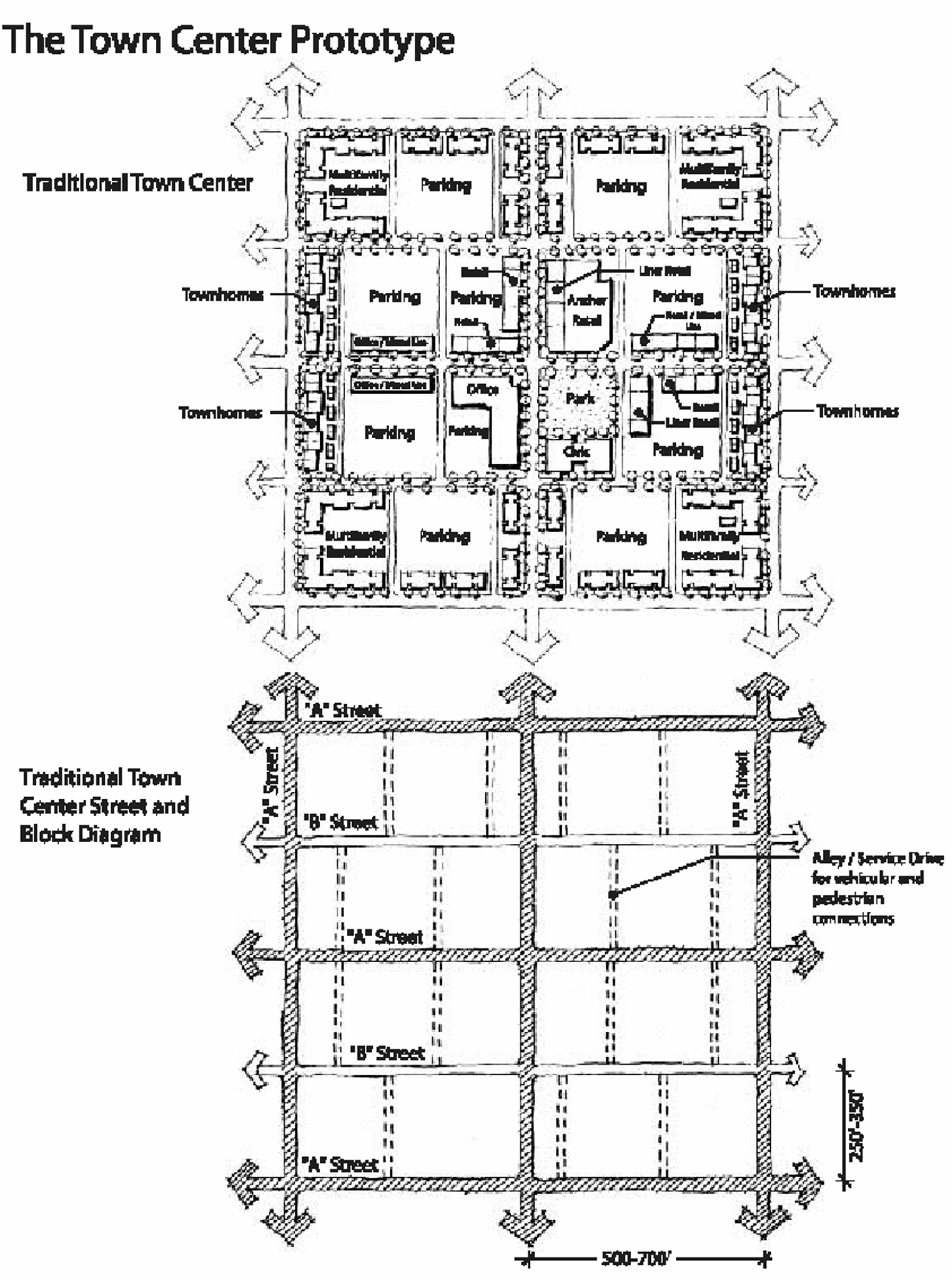
Figure 5.559.1
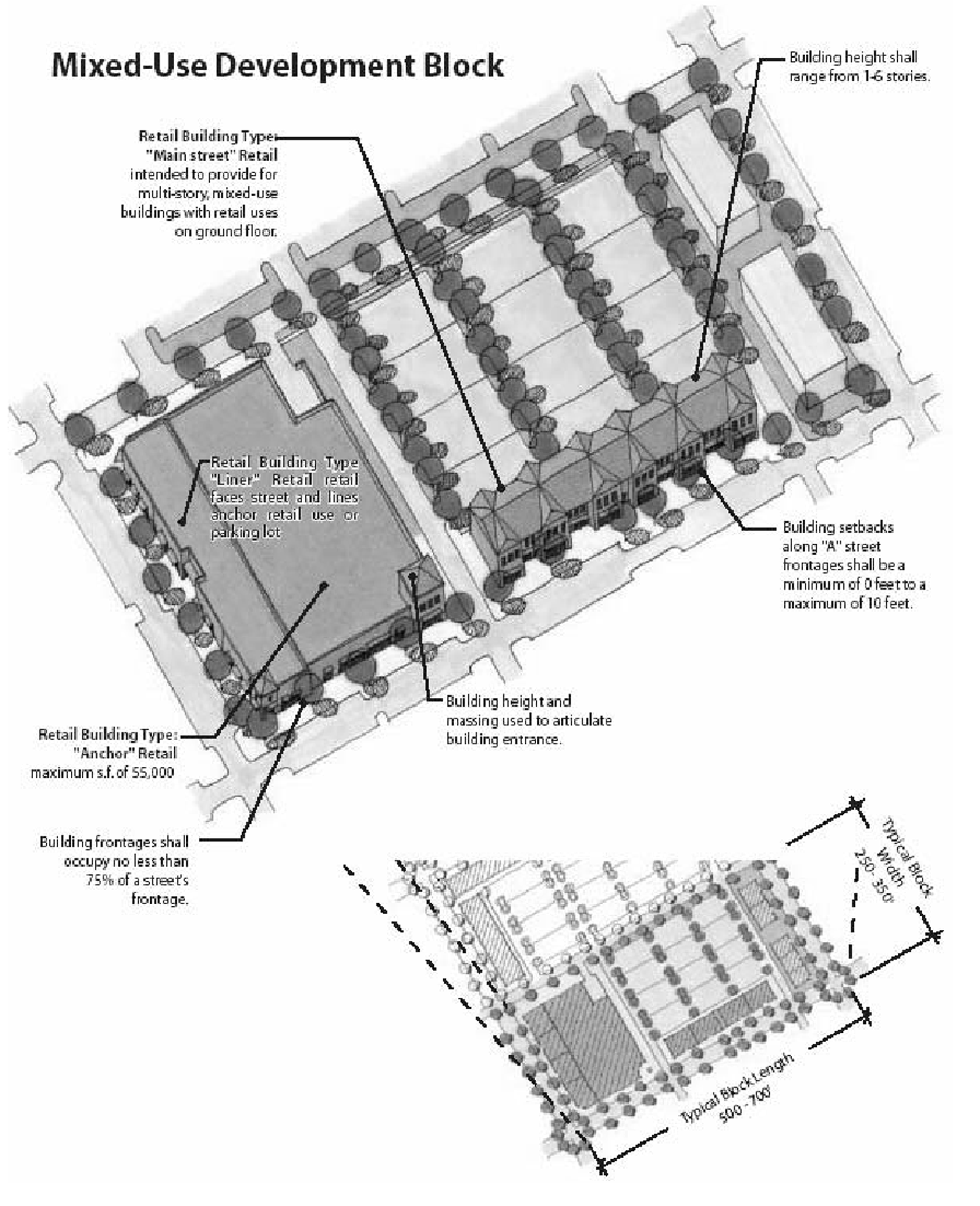
Figure 5.559.2
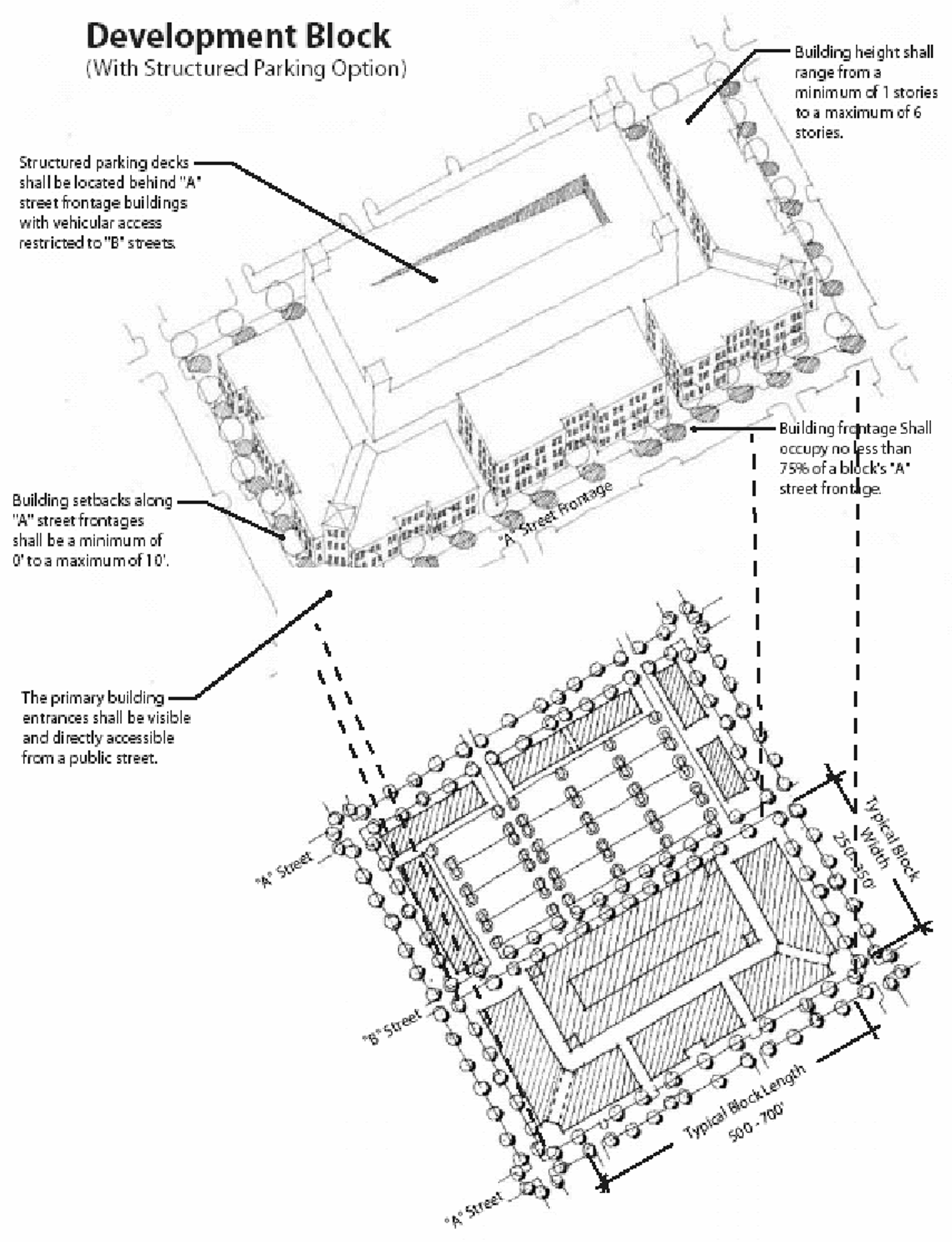
Figure 5.559.3
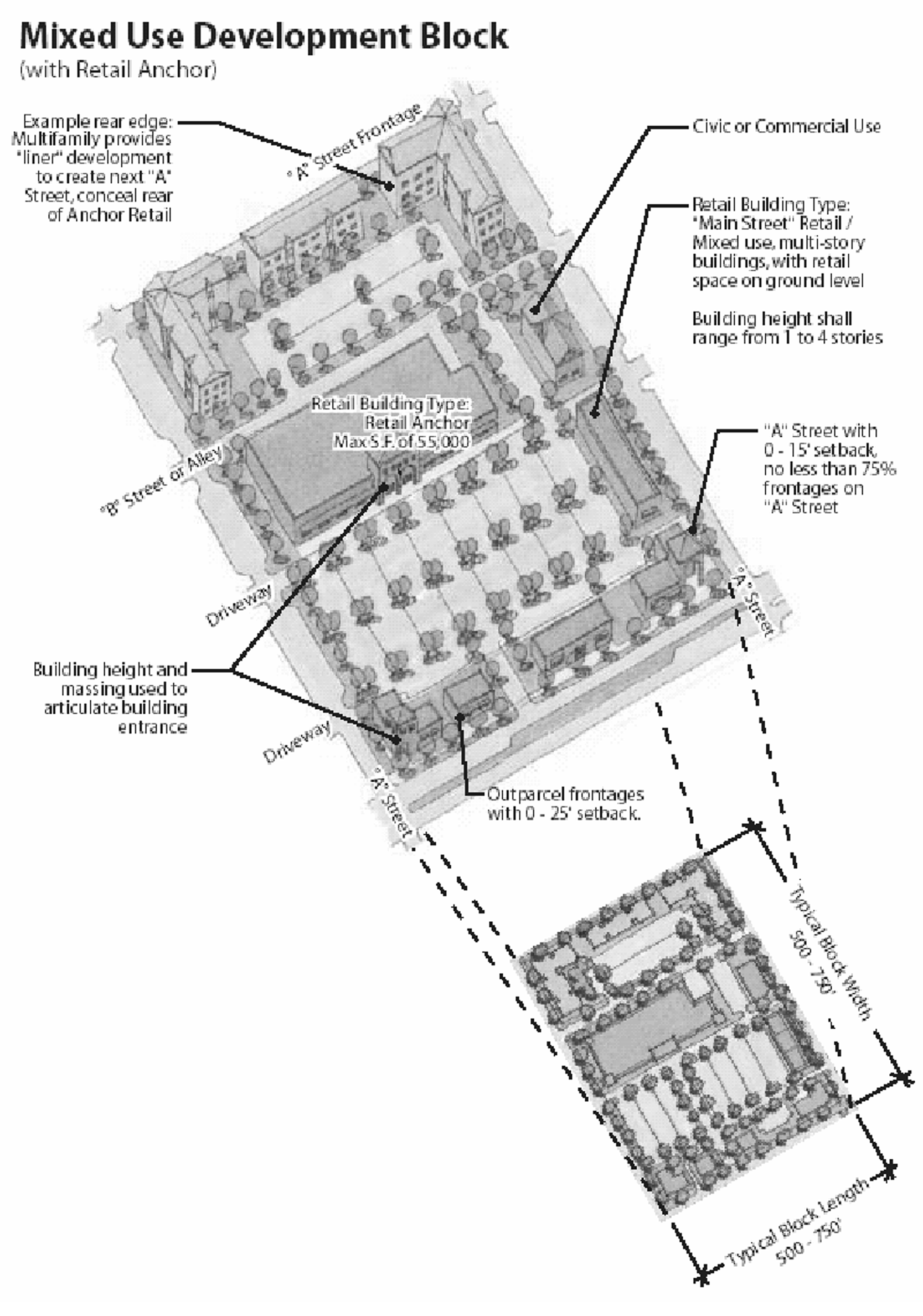
Figure 5.559.4
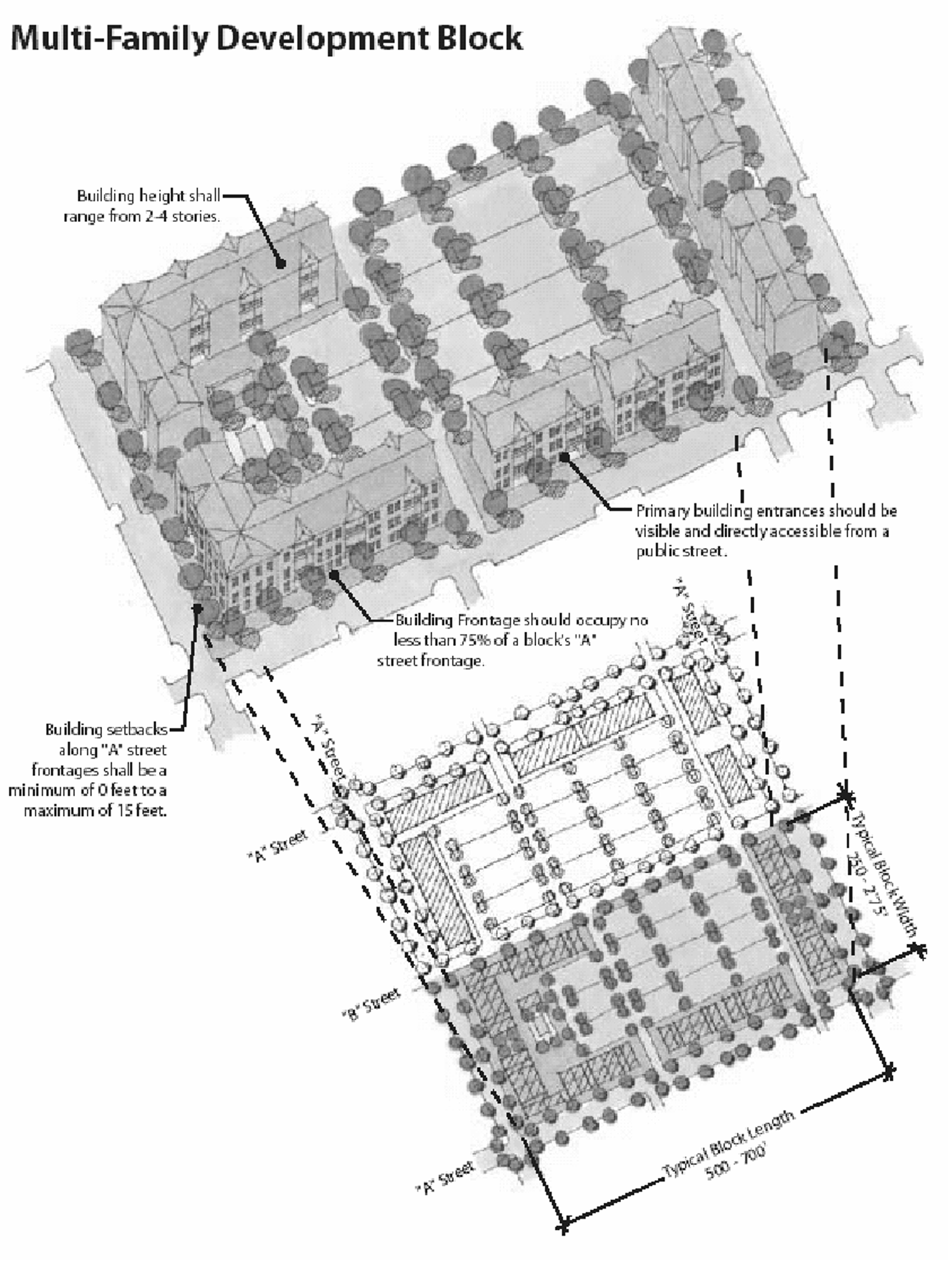
Figure 5.559.5
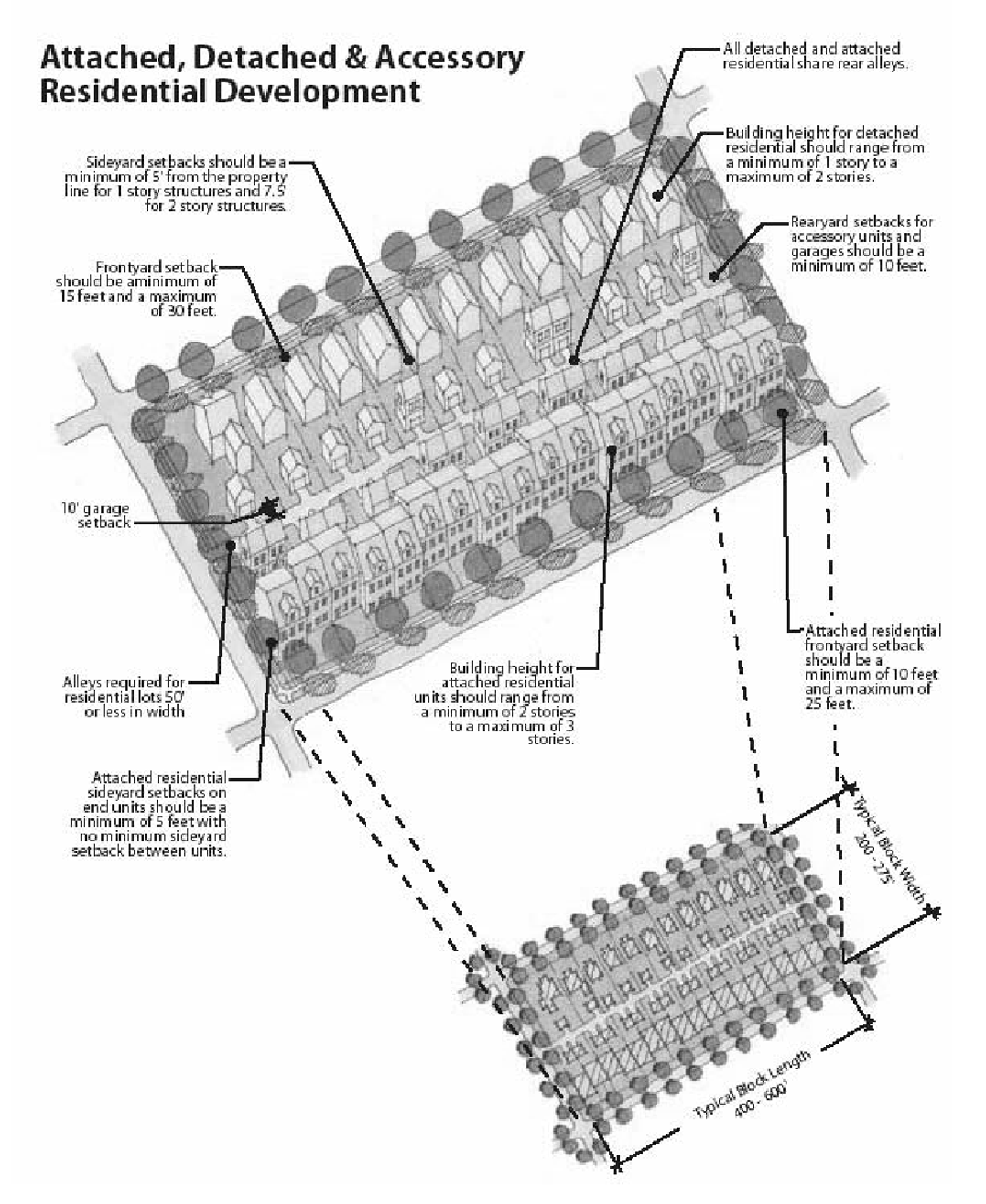
Figure 5.559.6
(Ord. No. 04-27, § V(5.63), 5-10-04)

