
Little Elm City Zoning Code
ARTICLE I
- GENERAL PROVISIONS
Sec. 106.01.01 - Title and purpose.
(a)
Title. This chapter shall be known and may be cited as the Town of Little Elm's "Zoning Ordinance."
(b)
Purpose. The zoning regulations and districts as herein established have been made in accordance with an adopted comprehensive plan for the purpose of promoting the public health, safety, morals and general welfare, and protecting and preserving places and areas of historical, cultural and/or architectural importance and significance within the town. They have been designed to lessen the congestion in the streets; to secure safety from fire, panic and other dangers; to ensure adequate light and air; to prevent the overcrowding of land and thus avoid undue concentration of population; and to facilitate the adequate provision of transportation, water, wastewater treatment, schools, parks and other public requirements. They have been made with reasonable consideration, among other things, for the character of each zoning district and its particular suitability for the uses specified; and with a view to conserving the value of buildings and attributes and to encouraging the most appropriate use of land throughout the town.
(Ord. No. 1407, § 2, 8-15-2017)
Sec. 106.01.02 - Authority.
This zoning chapter is adopted under the authority of V.T.C.A., Local Government Code ch. 211, which is hereby made a part of this chapter.
(Ord. No. 1407, § 2, 8-15-2017)
Sec. 106.01.03 - Jurisdiction and application.
(a)
The provisions of this chapter apply to the use and development of all land within the incorporated limits of the town.
(b)
No buildings or structures, including signs and temporary structures, are allowed to be constructed within the Town of Little Elm unless all applicable permits have been approved by the appropriate department and/or the governing body responsible for approving such permit.
(c)
No person shall erect, construct, or proceed or continue with, the erection or construction of any building or structure within the town in a manner that does not comply with this chapter.
(d)
All land, buildings, structures or building appurtenances within the town which are occupied, used, erected, altered, removed, demolished or converted shall be used, removed, placed and erected in conformance with the development and use regulations applicable to the zoning district in which such land or building is located.
(Ord. No. 1407, § 2, 8-15-2017)
Sec. 106.01.04 - Compliance required.
(a)
Compliance hereafter. All land, buildings, structures or appurtenances thereon located within the town which are occupied, used, constructed, erected, removed, placed, demolished, or converted after the effective date of this chapter shall be occupied, used, erected, altered, removed, placed, demolished or converted in conformance with the zoning regulations prescribed for the zoning district in which such land or building is located, as hereinafter provided, or such shall be subject to penalties provided in section 106.01.11, "penalties and enforcement" of this chapter. All of the standards and regulations prescribed herein shall be considered as the minimum requirement unless explicitly stated otherwise.
(b)
Use conflicting with other regulations. No uses shall be allowed that are prohibited by state or federal law or that operate in excess of state or federal environmental, pollution or performance standards as determined by the U.S. Environmental Protection Agency (EPA), Texas Air Control Board (TACB), Texas State Department of Health (TSDH), Texas Commission on Environmental Quality (TCEQ), Federal Aviation Administration (FAA), Federal Communications Commission (FCC), or any other applicable state or federal agency, as the case may be.
(c)
Restrictiveness. Where the regulations imposed herein are either more restrictive or less restrictive than comparable conditions imposed by any other provision of any other applicable law, ordinance, resolution, rule or regulation of any kind, the regulations which are more restrictive and impose higher standards are the requirements that shall govern.
(d)
Abrogation. The provisions of these regulations are not intended to abrogate any easement, covenant or other private agreement, provided that where the requirements of these regulations are more restrictive or impose higher standards or regulations than such easement, covenant or other private agreement, the requirements of these regulations shall govern.
(e)
Cumulative effect. The provisions of these regulations are cumulative and additional limitations upon all other laws and ordinances heretofore passed or which may be passed hereafter governing any subject matter set forth in the provisions of these regulations.
(f)
Error correction. In the event that any property or zoning district set forth on the zoning district map as provided in section 106.01.07, "official zoning map" of this chapter is misnamed, designated incorrectly, the boundaries are incorrect or the property is omitted, in part or in whole, the zoning district map may be amended and/or supplemented according to the following.
(1)
Applicants. The property owner of said tract, the town council, or the planning and zoning commission may submit an application to the director to initiate the error correction process.
(2)
Process. The error correction must be processed as a zoning map or text amendment according Section 106.02.11, "map amendments to the zoning ordinance" and section 106.02.12, "text amendments to the zoning ordinance."
(g)
Director authority to interpret the zoning ordinance.
(1)
Unless specified within a section, the director shall have the authority to interpret and enforce this zoning ordinance.
(2)
A person aggrieved by the director's interpretation may appeal the interpretation to the board of adjustment pursuant to section 106.02.02(d), "appeal of director's decision."
(h)
Setbacks, yards, and open spaces. No lot upon which a building has been erected shall later be so reduced in area that the setbacks, yards and/or open spaces shall be smaller than those required by this chapter, nor shall a part of a yard or other open space required by this chapter for any building or lot be included as a part of a yard or other open space similarly required for another building or lot.
(i)
Residential pavement. Any concrete flatwork (e.g. drives, patios, etc.) is subject to the setback regulations included in this chapter and in the subdivision ordinance.
(j)
Applications in relation to zoning. No construction or final plat applicable to land that is located within the town limits must be submitted for approval until the area contained within the plat has been zoned for the proposed use of the property.
(k)
Existing uses. All existing uses that may be nonconforming after the effective date of this chapter must comply with section 106.05.05, "nonconforming uses."
(l)
Establishment of legal nonconforming status. For purposes of interpretation of this section, any uses, structures and/or lots which in whole or part are not in conformance with current zoning standards shall be considered as follows:
(1)
Legal nonconforming. Defined as those uses, structures or lots which in whole or part are not in conformance with current zoning standards, but were legally established at a prior date at which time they were in conformance with applicable standards. Such uses, structures or lots may be maintained or potentially altered subject to the provisions of section 106.05.05, "nonconforming uses."
(2)
Illegal status. Those uses, structures or lots which in whole or part are not in conformance with current zoning standards and were not in conformance with applicable standards at the time of their inception shall not be considered nonconforming, but shall be considered illegal uses, structures, or lots and shall not be approved for any alteration or expansion, and must undertake necessary remedial measures to reach conformance with current standards, or be discontinued.
(3)
Time of adoption. Any use, platted lot, and/or structure is a lawful use at the time of the adoption of any amendment to this chapter but by such amendment is placed in a district wherein such use, platted lot, and/or structure is not otherwise permitted shall be deemed legal nonconforming.
(4)
Annexation. If a use, platted lot and/or structure was in existence at the time of annexation to the town and has since been in regular and continuous use shall be deemed legal nonconforming.
(m)
Burden of demonstrating nonconformance. The burden of establishing that any nonconformity is a legal nonconformity as defined in this subsection shall be borne by the owner or proponent of such nonconformity.
(n)
Characteristic of the land. Zoning is considered to be a characteristic of the land rather than a characteristic of the landowner. Zoning cannot be bought or sold separate from land and improvements.
(Ord. No. 1407, § 2, 8-15-2017)
Sec. 106.01.05 - Document rules of construction.
The language set forth in these regulations will be interpreted in accordance with the following rules of construction:
(a)
Number. The singular number includes the plural and the plural the singular.
(b)
Tense. The present tense includes the past and future tenses and the future the present.
(c)
Mandatory and permissive language. The words "shall," "will" and "must" are mandatory while the words "may" and "should" are permissive (i.e. optional).
(d)
Gender terms. The masculine gender includes the feminine and neuter.
(e)
Parentheses. Any word appearing in parentheses directly after a word herein defined shall be construed in the same sense as that word.
(f)
Conflicts. If there is an expressed conflict:
(1)
The text of this chapter controls over the charts or any other graphic display in this chapter; and
(2)
The use regulations control over the district regulations in this chapter.
(Ord. No. 1407, § 2, 8-15-2017)
Sec. 106.01.06 - Zoning districts established.
The following zoning districts are established and are applied to property with the town as set forth on the official zoning district map.
(Ord. No. 1407, § 2, 8-15-2017; Ord. No. 1587, § 2, 1-5-2021)
Sec. 106.01.07 - Official zoning district map.
(a)
Division into zoning districts. The town is hereby divided into zones, or districts, and the boundaries of zoning districts set out herein are delineated upon the zoning district map of the town, which may also be cited as the "zoning map," said map being adopted as a part of this chapter as fully as if the same were set forth herein in detail.
(1)
One original of the zoning district map shall be filed in the office of the town secretary and labeled as "Zoning Map of the Town of Little Elm, Texas - Ordinance No. 1407." This copy shall be the official zoning district map and shall bear the signature of the mayor, attested by the town secretary, and shall bear the seal of the town under the following words: "This is to certify that this is the official zoning map referred to in section 106.01.07(a)(1) of the zoning ordinance of the town of Little Elm, Texas, adopted on the [date of ordinance adoption]". The original map shall not be changed in any manner. In case of any question, this copy, together with amending ordinances, shall be controlling.
(2)
A copy of the original zoning district map shall be placed in the office of the mayor/town manager or his/her designee. The map copy shall be used for reference and shall be maintained up-to-date by posting thereon all subsequent amendments. Reproductions for informational purposes may only be made of the official zoning district map or this copy.
(b)
Zoning map changes/amendments. Any changes/amendments made to the zoning district boundaries shall be made on the map copy promptly after the amendment has been approved by the town council, together with a descriptive entry on the map as follows: "On the ___ th day of ___________, 20__, by official action of the town council of Little Elm, Texas, the following change was made on the town's official zoning district map: _________ (enter a brief description of the nature of the change), Ordinance No. _______, effective date __________, 20___". The descriptive entry shall be signed by the mayor and attested by the town secretary.
(Ord. No. 1407, § 2, 8-15-2017)
Sec. 106.01.08 - Zoning district boundaries.
(a)
Boundary delineations. The zoning district boundary lines shown on the zoning district map are usually along streets, alleys, property lines, or extensions thereof. Where uncertainty exists as to the boundaries of districts as shown on the zoning district map, the following rules shall apply:
(1)
Centerlines. Boundaries indicated as approximately following the centerlines of streets, highways or alley shall be construed to follow such centerlines.
(2)
Platted lot lines. Boundaries indicated as approximately following lot lines shall be construed as following such lot lines.
(3)
Town limits. Boundaries indicated as approximately following town limits shall be construed as following town limits.
(4)
Shore lines. Boundaries indicated as following shore lines shall be construed to follow such shore lines and in the event of change in the shore line shall be construed as moving with the actual shore line; boundaries indicated as approximately following the centerlines of streams, rivers, lakes, or other bodies of water shall be construed to follow such centerlines.
(5)
Natural features. Boundaries indicated as parallel to or extensions of feature indicated in subsections (1) through (4) of this section shall be so construed. Distances not specifically indicated on the official zoning map shall be determined by the scale of the map.
(6)
Vacated public way. Whenever any street, alley, or other public way is vacated by official action of the town council or whenever such area is franchised for building purposes, the vacated area must be rezoned according to section 106.02.11 "map amendments to the zoning ordinance."
(7)
Boundary as a condition of zoning approval. The zoning classification applied to a tract of land adjacent to a street shall extend to the centerline of the street, unless as a condition of zoning approval, it is stated that the zoning classification shall not apply to the street.
(8)
Interpretation. Where physical or cultural features existing on the ground are at variance with those shown on the official zoning map or in other circumstances not covered by subsections (1) through (7) of this section, the town council shall interpret the district boundaries.
(Ord. No. 1407, § 2, 8-15-2017)
Sec. 106.01.09 - Fees.
(a)
The town council shall establish a schedule of fees, charges, and expenses, and a collection procedure, for building permits, certificates of zoning compliance, appeals, and other matters pertaining to this chapter. The schedule of fees shall be posted in the office of the director and may be altered or amended only by the town council.
(b)
No permit, certificate, special exception, or variance shall be issued unless or until such costs, charges, fees, or expenses have been paid in full; nor shall any action be taken on proceedings before the board of adjustment unless or until preliminary charges and fees have been paid in full.
(c)
For the establishment of a schedule of fees for changes in zoning, the fee shall cover all of the costs which the town incurs in processing a zoning case, including the costs of publication and the cost of individual notices, engineering review, potential legal fees, etc. The town incurs those costs whether or not an applicant is successful in the request for a change in zoning. Therefore, the fee is not refundable to an applicant in the event a change in zoning is not approved.
(d)
If the applicant for a permit has not paid all amounts then due and outstanding to the town (other than amounts for ad valorem taxes) directly related to any project, including, without limitation, the payment of any amounts secured by liens filed against any property by the town and fines owed by the owner, the town will not issue any permits of any kind until the liens, fines or fees against the applicant for said permit are paid in full including any interest owed to the town.
(Ord. No. 1407, § 2, 8-15-2017)
Sec. 106.01.10 - Severability and repealer.
(a)
Severability. Should any section or provision of this chapter be declared by the courts to be unconstitutional or invalid, such decision shall not affect the validity of the ordinance as a whole, or any part thereof, other than the part so declared to be unconstitutional or invalid.
(b)
Repealer. All ordinances or parts of ordinances in conflict with any of the provisions of this chapter are hereby repealed insofar as the same are in conflict with the provisions hereof.
(Ord. No. 1407, § 2, 8-15-2017)
Sec. 106.01.11 - Penalties and enforcement.
(a)
Violation of the provisions of this chapter or failure to comply with any of its requirements shall constitute a misdemeanor. Any person who violates this chapter or fails to comply with any of its requirements shall, upon conviction thereof, be fined a sum not to exceed $2,000.00. Each day such violation continues shall be considered a separate offense.
(b)
The owner or tenant of any building, structure, premises, or part thereof, and any architect, builder, contractor, agent, or other person who commits, participates in, assists in, or maintains such violation may each be found guilty of a separate offense and suffer the penalties herein provided.
(c)
Nothing herein contained shall prevent the town from taking such other lawful action as is necessary to prevent or remedy any violation.
(Ord. No. 1407, § 2, 8-15-2017)
Sec. 106.01.12 - Publication required.
Providing for publication of the caption of this chapter and an effective date hereof. The caption of this chapter shall be published one time in a newspaper having general circulation in the town and shall be effective immediately upon its passage and publication.
(Ord. No. 1407, § 2, 8-15-2017)
Sec. 106.01.13 - Definitions.
The following words, terms and phrases, when used in this chapter, shall have the meanings ascribed to them in this section, except where the context clearly indicates a different meaning. Words used in the present tense include the future; words in the singular number include the plural number, and words in the plural number include the singular number; the word "building" includes the word "structure;" the word "shall" is mandatory and not discretionary.
(Ord. No. 1407, § 2, 8-15-2017)
Sec. 106.01.14 - Land use definitions.
Accessory structure. Any structure, either attached or detached from the main building, located on the same lot, the use of which is incidental to that of the main structure. Accessory structures include, but are not limited to, patio covers, arbors, gazebos, cabanas, outdoor kitchens, recreational fire enclosures, trellis, and structures/sheds or the like. A permit is required for many accessory structures (see sections 106.05.02.1(a) and (b), "accessory uses - residential" and "accessory uses - nonresidential," respectively, for regulations).
Adult day service. A daytime care establishment that supports the health, nutritional, social, and daily living needs of adults in a professionally staffed, group setting.
Airport or landing field. A landing facility for fixed or rotary wing aircraft containing a minimum of 60 acres (see section 106.05.02.2(a), "airport/helipad/heliport" for regulations).
Airport/heliport. A place where aircraft and/or helicopters can land and take off, usually equipped with hangars, facilities for refueling and repair, and various accommodations for pilots and passengers (see section 106.05.02.2(a), "airport/helipad/heliport" for regulations).
Alternative energy systems.
(1)
Solar devices. A solar panel or device is a structure that is intended to capture the light from the sun and transfer that energy to electricity for general use (see section 106.05.02.2(b), "alternative energy sources - solar" for regulations.)
(2)
Wind energy conversion system (WECS). Any mechanical device, such as a wind charger, windmill, or wind turbine, which is designed to extract kinetic energy from the wind and converts or stores it for practical use or a form of usable energy. (see section 106.05.02.2(c), "alternative energy sources - wind energy" for regulations)
Alternative financial services. A check cashing business, payday advance or loan business, money transfer business, car title loan business or pawn shop (see section 106.05.02.2(d), "alternative financial services" for regulations).
(1)
Bank, savings and loan or credit union. An establishment, open to the public, for the deposit, custody, loan, exchange or issue of money, the extension of credit, and/or facilitating the transmission of funds and that is typically licensed by the appropriate state or federal agency as a bank, savings and loan association, or credit union. This includes businesses' activities listed under SIC Codes 60 and 61, but excludes pawnshops, check cashing businesses, payday advance/loan businesses and car title loan businesses.
(2)
Car title and loan services. An establishment that makes small consumer loans that leverage the equity value of a car or other vehicle as collateral where the title to such vehicle is owned free and clear by the loan applicant and any existing liens on the car or vehicle cancel the application. The loan terms are often for 30 days and failure to repay the loan or make interest payments to extend the loan allows the lender to take possession of the car or vehicle. This excludes state or federally chartered banks, savings and loan associations or credit unions engaged primarily in the business of making longer term loans and which make loans that leverage the total equity value of a car or vehicle as collateral.
(3)
Check cashing business. An establishment that provides to the customer an amount of money that is equal to the face of the check or the amount specified in the written authorization for an electronic transfer of money, less any fee charged for the transaction, and where there is an agreement not to cash the check or execute an electronic transfer of money for a specified period of time, the business of cashing checks, warrants, drafts, money orders, or other commercial paper serving the same purpose for compensation by any person or entity other than a retail seller engaged primarily in the business of selling consumer goods, including consumables to retail buyers, that cashes checks or money orders or issues money orders or money transfers for a minimum flat fee as a service that is incidental to its main purpose or business. This definition excludes a state or federally chartered bank, savings and loan association or credit union, pawnshop, grocery store or gas station, so long as the gas station does not handle more than 100 such transactions within any calendar month.
(4)
Pawn shop. A shop that lends money in exchange for valuable personal property as security deposited with it or pledged to it. This definition includes the sale of such securities after repossession and the sale of merchandise generally found in retail stores.
(5)
Payday advance or loan business. An establishment that makes small consumer loans, usually backed by postdated check or authorization to make an electronic debit against an existing financial account, where the check or debit is held for an agreed-upon term, or until an applicant's next payday, and then cashed unless the customer repays the loan to reclaim such applicant's check.
Amenity center. A recreational facility, including, but not limited to, clubhouse, swimming pool, or play area, operated for the exclusive use of private residents or neighborhood groups and their guests, and not open to the general public.
Antenna. An instrument or device consisting of wires, poles, rods, or reflecting discs, designed for transmitting or receiving any portion of the radio, microwave, or electromagnetic spectrum (see section 106.05.02.2(h), "communications antennas" for regulations)
Antenna support structure. Any tower, mast, pole, tripod, box frame, or other structure utilized for the purpose of transmission, retransmission, and/or reception of electromagnetic, radio, television, or microwave signals and used for commercial broadcasting or telecommunication purposes. This definition shall also include a satellite dish exceeding 12 feet in diameter and a microwave-transmitting tower. All radiating equipment must comply with Federal Communications Commission (FCC), Environmental Protection Agency (EPA), Occupational Health and Safety Administration (OSHA), and all other applicable state and federal regulatory agency requirements and guidelines for human safety, as they exist or may be amended. Definition includes ancillary ground equipment. (See section 106.05.02.2(i), "communications support structures/towers" for regulations)
Antenna, stealth. A stealth antenna is a commercial antenna that is designed to be non-obtrusive, or virtually transparent or invisible to the surrounding neighborhood. Stealth antennas include, but are not limited to:
(1)
Antennas within a building's attic space,
(2)
Antennas on the roof of a minimum three-story building and not visible from the property line of the lot on which the antenna is located,
(3)
Antennas on a public utility structure, such as a water tower or high transmission line support tower, and painted to match the structure,
(4)
Antennas located within a structure such as a flagpole, church steeple, lamppost, subdivision monument, clock tower, or similar architectural feature, and antennas located on an athletic field light pole.
Antique shop and used furniture. A retail establishment engaged in the selling of works of art, furniture, or other artifacts of an earlier period, with all sales and storage occurring inside a building.
Arcade. An establishment in which there are located six or more skill or pleasure machines used for compensation found in the schedule of uses as "Commercial Amusement, Indoor."
Assembly uses. A building or structure for the gathering together of persons for purposes of civic, social, or religious functions.
Athletic stadium or field, private. A private field and/or structure used for sporting events with associated spectator seating, either permanent or temporary.
Athletic stadium or field, public. A field and/or structure owned and operated by the town and/or a local independent school district used for sporting events with associated spectator seating, either permanent or temporary. The stadium may include other accessory buildings such as a food service or catering facility and/or dressing rooms/showers.
Automated dispenser machine. An unmanned, freestanding structure that dispenses goods that may include, but are not limited to, water, ice, entertainment videos or CDs, newspapers, and soft drinks, that may be located outside of or separate from the primary structure.
Automated intake machine. An unmanned, freestanding structure that is designed to receive certain goods that include, but are not limited to, recycling items, library books and donations, that may be located outside of or separate from the primary structure.
Automated teller machine (ATM). An unmanned, freestanding structure that performs banking financial functions at a location that may be separate from the controlling financial institution.
Automobile. A self-propelled mechanical or electrical vehicle designed for use on streets and highways for the conveyance of goods and people, including, but not limited to, passenger cars, trucks, buses, motor scooters, and motorcycles.
Automobile and boat repair, major. A building or portion thereof whose principal use is for the repair, servicing, equipping, or maintenance of motor vehicles or motor vehicle components, including engines, radiators, starters, transmissions, brakes, tires and wheels, seats and similar components that may require overnight outdoor storage of vehicles awaiting or under repair, if screened in compliance with all applicable regulations. General repair or reconditioning of engines, air-conditioning systems, and transmissions for automobiles; wrecker or towing service with on-site storage of vehicles; collision services including body, frame, or fender straightening or repair; customizing; painting; vehicle steam cleaning; tire retreading; insurance estimations with on-site storage; undercoating and rust proofing, and other similar uses.
Automobile and boat repair, minor. A daytime retail operation wherein the sale, installation, and/or inspection of tires, batteries, brakes and other related minor parts or accessories is carried on; specifically intended to exclude major automotive repair and overnight outdoor storage of vehicles awaiting or under repair.
Automobile and boat sales, accessories. A retail shop that sells parts or accessories for vehicles that does not include any installation of same.
Automobile and boat sales, new. Retail sales or leasing of new automobiles, light load vehicles or boats. Sales, rental, and/or leasing of new automobiles or light load vehicles, including, as accessory uses: sales, repair, and automobile storage.
Automobile and boat sales, outside display. The use of any land area for the display and sale of new or used vehicles and accessory parts, including tires, for automobiles, trucks, vans, trailers, or recreation vehicles.
Automobile and boat sales, used. Retail sales or offering for sale of used automobiles, light load vehicles or boats.
Automobile and boat/RV storage. The storage on a lot or tract of operable motor vehicles for the purpose of holding such vehicles for sale, distribution, or storage.
Automobile parking garage. A structure for the parking of automobiles.
Automobile parking lot. An area where a fee is charged for parking automobiles.
Automobile wash, automated secondary use. A facility for the washing of motor vehicles, including a self-service operation, operated in conjunction with another primary use, such as fueling stations or convenience stores.
Automobile wash, full service. A facility where a customer may have an automobile, motorcycle, or other vehicles washed in exchange for financial remuneration. This definition generally includes detailing of the vehicle and may include other services, such as leather or upholstery cleaning.
Automobile wash, self service. A facility, typically coin or token operated, used by the customer to wash their own automobiles, motorcycles, and other vehicles.
Bakery, candy, or ice-cream shop. A relatively small retail establishment that primarily sells baked goods, candy and other confections, and/or ice-cream/yogurt for on-premises consumption or take-out.
Banquet hall. An establishment which is rented by individuals or groups to accommodate private functions including, but not limited to, banquets, weddings, anniversaries, and other similar celebrations. Such use, may or may not include: 1) kitchen facilities for the preparation or catering of food; 2) the sale of alcoholic beverages for on-premise consumption, only during the schedules events, and not open to the general public; 3) outdoor gardens or reception facilities.
Bar. An establishment principally for the sale and consumption of alcoholic beverages on the premises that derives 75 percent or more of its gross revenue on a quarterly (three-month) basis from the sale or service of alcoholic beverages, as defined in the Texas Alcoholic Beverage Code, for on-premises consumption. If an establishment is located in a hotel or motel, the gross revenues of the particular establishment, rather than the gross revenues of the entire hotel or motel, will be used in calculating the percentage of revenues derived from the sale or service of alcoholic beverages. (See section 106.05.02.2(e), "bar or brewpub" for regulations)
Bed and breakfast inn. An owner-occupied private home which offers lodging for paying guests not to exceed one week in duration, and which serves breakfast to these guests and which contains one or more guest bedrooms. (See section 106.05.02.2(f), "bed and breakfast" for regulations)
Body art studio. An establishment whose services include tattooing and/or body piercing. Tattooing shall mean the placing of designs, letters, figures, symbols, or other marks upon or under the skin of any person, using ink or other substances that result in the permanent coloration of the skin by means of the use of needles or other instruments designed to contact or puncture the skin. Body piercing shall mean the creation of an opening in an individual's body, other than ear piercing, to insert jewelry or other decoration.
Brewpub. An establishment where the on-site brewing of beer occurs as well as tasting and/or retail sales. (See section 106.05.02.2(e), "bar or brewpub" for regulations)
Building material and hardware sales, major. An establishment for the sale of materials customarily used in the construction of buildings and other structures, including outside storage or display of materials or merchandise and may include the rental of construction tools and/or vehicles.
Building material and hardware sales, minor. An establishment for the sale of materials customarily used in the construction of buildings and other structures, without any outside storage or display of materials or merchandise.
Business service. This group includes establishments primarily engaged in providing off-site services not elsewhere classified to business enterprises on a fee contract basis. Examples include, but are not limited to, plumbing services, cleaning services, computer/equipment repair services with certain on-site storage needs such as fleet vehicles used to provide off-site services to customers.
Campground or RV park. Any area that is designed for occupancy by transients using tents, mobile trailers, or recreational vehicles for temporary sleeping purposes. Also, a tract of land on which two or more campsites are located, established, or maintained as temporary living quarters for recreation, education, or vacation purposes.
Caretaker's/guard's residence. A residence located on a premises with a main nonresidential use and occupied only by a caretaker or guard, and his/her family, employed on the premises. (see section 106.05.02.2(g), "caretaker or guard residence" for regulations)
Catering service. A business which offers prepared food and drink for consumption elsewhere.
Child care center, incidental. A place designed solely for the care of children belonging to employees and/or patrons of the primary use. The center shall be completely contained within the primary use and shall not constitute more than 15 percent of the main use. The operating hours of the center shall be the same as the primary use and shall not include overnight lodging, medical treatment, counseling, or rehabilitation services. This use may be subject to regulation by the Texas Department of Family and Protective Services.
Child care center. A facility that is licensed to care for any number of children for less than 24-hours per day, at a location other than the permit holder's primary residence. Included in this definition are daycare services and Montessori schools.
Child care, group home. An adult and/or child caring facility licensed by the state, designed to provide resident services to individuals who are physically handicapped, mentally ill, mentally retarded, or developmentally disabled, in which no more than eight such individuals reside with one or more resident counselors or other staff persons. For the purposes of this section, mental illness and developmental disability shall not include illegal use of or addiction to a controlled substance or any criminal behavior.
Child care, foster family home (independent). Per the definition of the department of family and protective services (DFPS) or as amended by the DFPS, a single independent home that is the primary residence of the foster parents and licensed to provide care for up to six children up to the age of 18 years.
Child care, foster group home (independent). Per the definition of the department of family and protective services (DFPS) or as amended by the DFPS, a single independent home that is the primary residence of the foster parents licensed to provide care for seven to 12 children up to the age of 18 years.
Child care, licensed child care center. Per the definition of the department of family and protective services (DFPS) or as amended by the DFPS, an operation providing care for seven or more children younger than 14 years old for less than 24 hours per day at a location other than the permit holder's home.
Child care, licensed child care home. Per the definition of the department of family and protective services (DFPS) or as amended by the DFPS, the primary caregiver provides care in the caregiver's own residence for children from birth through 13 years. The total number of children in care varies with the ages of the children, but the total number of children in care at any given time, including the children related to the caregiver, must not exceed 12.
Child care, listed family home. Per the definition of the department of family and protective services (DFPS) or as amended by the DFPS, a caregiver at least 18 years old who provides care in her own home for compensation, for three or fewer children unrelated to the caregiver, ages birth through 13 years. Regular care is provided, which is care provided for at least four hours a day, three or more days a week, and more than nine consecutive weeks. The total number of children in care, including children related to the caregiver, may not exceed 12.
Child care, registered child care home. Per the definition of the department of family and protective services (DFPS) or as amended by the DFPS, a caregiver who provides regular care in her own home for not more than six children from birth through 13 years. Child day care can be provided for six additional school-aged children before and after the customary school day. The total number of children in care at any given time, including the children related to the caregiver, must not exceed 12.
Clinic, animal (no outside runs). An animal medical facility designed for immediate and short term care (i.e., not requiring the animal to be boarded or kept within the facility overnight), for diagnosis, treatment of household pets including but not limited to dogs, cats, and birds.
Clinic, animal (with outside runs). A facility for diagnosis, treatment or hospitalization of household pets including but not limited to dogs, cats, birds, and horses.
Clinic/medical lab. Offices for one or more physicians, surgeons or dentists engaged in treating sick or injured persons, but not including rooms for the lodging of patients. The facility may also conduct the testing of blood and other tissue samples for the purpose of diagnosis of diseases.
College, university, or trade school. An institution established for educational purposes offering courses for study beyond the secondary education level, including trade schools and commercial schools offering training or instruction in a trade, art, or occupation.
Commercial amusement, indoor. An enterprise providing for indoor recreational activities, services, amusements, and instruction, usually for an admission fee. Uses may include, but are not limited to, bowling alleys, ice or roller skating rinks, bingo parlors, amusement arcades, and/or sports practice areas. Such business shall be constructed to limit noise by installing adequate acoustic barriers.
Commercial amusement, outdoor. An enterprise providing for outdoor recreational activities, services, amusements, and instruction, usually for an admission fee, including, but not limited to, batting cages, miniature golf, go-kart tracks, and carnivals.
Commissary. A facility that is the home base for a restaurant-equipped vehicle that serves as a mobile food vendor. The commissary is also used for the storage and partial production of food items that are delivered to customers by the mobile food vendor located away from the commissary location.
Communication tower/antenna. Any tower, mast, pole, tripod, box frame, or other structure utilized for the purpose of transmission, retransmission, and/or reception of electromagnetic, radio, television, or microwave signals. See also "antenna support structure." (See section 106.05.02.2(h), "communication antennas" for regulations)
Concrete batch plant, permanent. A permanent manufacturing facility for the production of concrete or asphalt.
Concrete batch plant, temporary. A temporary manufacturing facility for the on-site production of concrete or asphalt during construction of a project, and to be removed when the project is completed. Following removal, the tract shall be returned to its previous condition. (See section 106.05.03(a), "batch plants, temporary" for regulations)
Construction yard, field office, temporary. A building, structure, or storage/assembly yard used in conjunction with a development project for housing temporary supervisory or administrative functions related to development, construction, or the sale of real estate properties within the development and subject to removal at completion of construction. A facility used for the temporary office and material storage in connection with a project under construction or remodel. (See section 106.05.03(d), "construction yard, temporary" for regulations)
Contractor's shop. A facility for the contractor's office and the storage and maintenance of contractor's supplies and operational equipment.
Dwelling, assisted living facility. A private facility that provides care for chronically ill, aged, or disabled persons who need some health supervision and related care but not including hospital care. Such facilities do not contain facilities for surgical care or the treatment of alcoholism, drug addiction, communicable disease, or injury. A facility designed for adults or children with special needs and/or who need assistance with daily living, including but not limited to the production of meals, assistance with shopping, management of medications and personal grooming. Typically, the resident occupies a room or suite of rooms and eats the majority of meals communally.
Dwelling, assisted living home. A facility located in a private residential home designed for adults who need or desire assistance with daily living, including but not limited to the production of meals, assistance with shopping, management of medications and personal grooming. (See section 106.05.02.2(j), "home child care" for regulations)
Dwelling, boardinghouse, or rooming house. A building other than a hotel where lodging and/or meals for three or more persons are provided for compensation.
Dwelling, duplex. A building containing two single-family dwelling units totally separated from each other by an unpierced fire wall from basement to roof, intended or designed for occupancy by two families.
Dwelling, factory-built home. Any manufactured single-family mobile home constructed prior to June 15, 1976. (See also dwelling, HUD-Code manufactured home)
Dwelling, group home. An adult and/or child care facility, licensed by the state, designed to provide resident services to individuals who are physically handicapped, mentally impaired, or developmentally disabled, but does not provide services to individuals with psychiatric, addiction, substance abuse or who exhibit criminal behavior. (See section 106.05.02.2(j), "home child care" for regulations)
Dwelling, HUD-Code manufactured home. A HUD-Code compliant single-family structure constructed after June 15, 1976, designed for long-term residential use that is constructed elsewhere and is moved from the factory or sales location to its permanent site (see also dwelling, factory-built home)
Dwelling, listed family home. A home that provides child care for compensation for three or fewer children, excluding children who are related to the caretaker, for at least four hours a day, three or more days a week, for more than nine consecutive weeks in the caretaker's own residence and that is required to [be] listed with the state. (See section 106.05.02.2(j), "home child care" for regulations)
Dwelling, live-work. A dwelling unit that contains, to a limited extent, a separate commercial component on the ground floor and is typically in the form similar to a townhouse or store with residential quarters above or behind the commercial use.
Dwelling, mobile home. Any manufactured single-family mobile home constructed prior to June 15, 1976.
Dwelling, multifamily. Any building or portion thereof, which is designed, built, rented, leased, or let to be occupied as three or more dwelling units or apartments or which is occupied as a home or place of residence by three or more families living in independent dwelling units. Though residential in use, it is considered a commercial development in regard to and application of development standards and regulations. A building containing three or more dwelling units on a single lot or tract designed to be occupied by three or more families living independent of one another.
Dwelling, patio home. A dwelling on a separate lot with open space setbacks on at least three sides.
Dwelling, single-family, detached. A platted lot containing one dwelling unit, not attached to any other dwelling by any means and is surrounded by open space or yards, designed and constructed for occupancy by one family and has no physical connection to a building located on any other separate lot or tract.
Dwelling, townhome. A structure containing three or more dwelling units with each unit designed for occupancy by one household and each unit attached by a common fire wall.
Electrical power generating plant. All equipment, fixtures, and property operated or maintained in connection with the production of electricity and transmission of electricity produced.
Electrical substation. A location for transforming electricity prior to the distribution of electricity to individual customers.
Fairgrounds/exhibition area. An area that may include structures or outside areas for the exhibition of rodeos, conventions, and similar special events.
Family. (1) one or more persons related by blood, marriage, adoption, or guardianship occupying a dwelling unit and living as a single housekeeping unit; or (2) a group of persons not all related by blood, marriage, adoption, or guardianship occupying a dwelling unit and living as a single housekeeping unit, but not to exceed two persons per bedroom with a maximum total of five such persons occupying a dwelling unit.
Farm accessory building. A structure located on an active farm, ranch, or orchard in which livestock, feed, equipment, vehicles, or accessories necessary for the running of the business are kept, including but not limited to, barns, silos, sheds, and exercise pavilions.
Farm, ranch, stable, garden or orchard. An area of five acres or more which is used for growing of usual farm products, vegetables, fruits, trees and grain and for the raising thereon of the usual farm poultry and farm animals such as horses, cattle, and sheep and including the necessary accessory uses for raising, treating, and storing products raised on the premises, but not including the commercial feeding of offal or garbage to swine or other animals and not including any type of agriculture or husbandry specifically prohibited by ordinance or law.
Farmers market. An area containing individual vendors who offer fruits, vegetables, herbs, spices, edible seeds, nuts, live plants, flowers, and honey for sale. This definition does include the sale of meat, fish, poultry, eggs, refrigerated dairy products, or home canned or packaged items when the proper health rules and regulations are followed and/or health permit obtained. (See section 106.05.03(c), "farmers market, temporary" for regulations)
Florist. A facility for the retail sale of flowers, ornamental plants, and accessory items. This definition does not include a nursery with outside display. (See also Greenhouse and Nursery)
Fraternal organization, lodge, civic club, fraternity, or sorority. A group of people whose membership is restricted by a set of bylaws or regulations.
Funeral home/crematorium. A place for the storage of human bodies prior to their burial or cremation, or a building used for the preparation of the deceased for burial or cremation, where cremation occurs within the building, with or without place where ceremonies or gatherings connected to the deceased may occur.
Funeral home/mortuary. A place for the storage of human bodies prior to their burial, or a building used for the preparation of the deceased for burial and the display of the deceased, a place where ceremonies or gatherings connected to the deceased may occur, but does not allow the cremation of human remains.
Gas pumps/fuel sales. A retail fuel sales facility selling fuel for motor vehicles including, but not limited to, automobiles, motorcycles, buses, or recreational vehicles with no ancillary services such as vehicle service, vehicle repair, or sale of items other than fuel. The fueling or gasoline station may be attended or automated.
Golf course, tennis club, polo club, or country club (private). An area of 20 acres or more containing a golf course, polo facilities, tennis facilities and/or a clubhouse and available only to private specific membership; such a club may contain adjunct facilities such as private club, dining room, swimming pool, retail sales, and similar recreational or service facilities. A tract of land with at least nine holes for playing the game of golf that may include a clubhouse, dining and snack bar, pro shop, practice facility and other accessory uses.
Greenhouse or nursery for retail plant sales. A facility that may include the outside display of plants offered for sale when such display is located behind the front yard line established in the district in which the nursery or greenhouse is located.
Gun or archery range, indoor. Any indoor facility open to the public and occupying all or a portion of a building where firearms are discharged or arrows are shot for either testing or recreation purposes. Such business shall be constructed to limit noise by installing adequate acoustic barriers.
Gunsmith. A retail establishment for the sale and service of guns and related items.
Gymnastics/dance studio/martial arts. A building or portion of a building used by a gymnast, dancer, or martial artist for practice or for instructional classes in gymnastics, dance, or martial arts and similar activities.
Health/fitness center. A facility which promotes physical fitness, weight control, exercise, and personal improvement that may also include massage or bathing.
Heavy machinery sales, service, and storage. A retail or wholesale facility that sells, services, and stores heavy machinery such as farm equipment, dredging equipment, paving equipment, etc.
Helipad. A place, typically on the roof of a building or a small ground area where helicopters may land and take off, but without any service or fueling capabilities. (See section 106.05.02.2(a), "airport/helipad/heliport" for regulations)
Home occupation. An occupation, which is secondary to the primary use of a dwelling as a residence, conducted on residential premises by the occupant of the residence. Home occupations shall be subject to the conditions set forth in section 106.05.02.2(k), "home occupations." Any activity carried out for personal gain in a dwelling unit by a resident of the premises, which occupation is secondary to the residential purpose of the premises.
Hospital. An institution or place where sick or injured patients are given medical or surgical care either at public (charity) or private expense.
Hotel. A building or group of buildings designed for and occupied as a temporary abiding place of individuals with access to the rooms from an indoor corridor and providing six or more room units where customary services such as linen, maid service, telephone, and upkeep of furniture are provided for a daily fee.
Hotel, extended stay (also called "residence hotel"). A building or group of buildings used as a temporary dwelling place for individuals in exchange for financial consideration where customary hotel services such as linen, housekeeping service, and telephone are provided. Residence hotel room units are designed to be suitable for long term occupancy with financial consideration typically being calculated on a weekly and/or monthly basis. Typical residence hotel attributes include, but are not limited to, kitchen facilities, and external doorways into room units. (See section 106.05.02.2(l), "hotel, extended stay" for regulations)
Hotel, full-service. A full service hotel is considered a top tier hotel in terms of amenities and service provided to the clientele. (See section 106.05.02.2(m), "hotel, full-service" for regulations)
Hotel, limited service. A limited service hotel provides travelers an economical choice with fewer amenities than a full service hotel. (See section 106.05.02.2(n), "hotel, limited-service" for regulations)
Household appliance service and repair. A retail establishment where household appliances are serviced and repaired on site. May also include sales of new or used household appliances.
Incidental retail and service uses. Defined as operating within another establishment, such as a bank branch, nail salon, eyewear service, tax service, etc. within a "big box" store. May also be located within an office complex or hotel, or institution, such as a deli, convenience store, or restaurant for the use of the employees, guests, and students.
Kennel, indoor. An establishment where domesticated animals(four or more dogs, cats, or other domestic animals at least four months of age) are housed, groomed, bred, boarded, trained, or sold for commercial purposes that does not include outside pens or runs.
Kennel, outdoor. An establishment where domesticated animals (four or more dogs, cats, or other domestic animals at least four months of age) are housed, groomed, bred, boarded, trained, or sold for commercial purposes that includes outdoor pens or runs.
Laundry and/or dry cleaning, commercial. A plant for cleaning garments, fabrics, rugs, uniforms, draperies, or other similar items on a commercial or bulk basis.
Laundry and/or dry cleaning, pickup and receiving station. A facility that only receives and dispenses laundry and dry cleaning that is processed in bulk by a commercial laundry or dry cleaning facility located elsewhere.
Laundry and/or dry cleaning, self-service. A facility for washing and/or dry cleaning garments and similar items where typically the customer supervises and handles the cleaning of his/her garments and items, such as a laundromat. Machines for use are typically of a similar size as found in the home and not a commercial laundry or cleaning plant.
Laundry and/or dry cleaning, small custom shop. A retail establishment for the cleaning of individual garments, fabrics, rugs, draperies, or other similar items on the premises, which may include minor garment repair. A custom cleaning shop not exceeding 5,000 square feet of floor area or a pickup station.
Liquor store. A facility for the sale of beer, wine, and/or liquor not for on-premises consumption that derives 75 percent or more of its gross revenue from the on-premises sale of beer, wine, and/or liquor. (See section 106.05.02.2(o), "liquor stores" for regulations).
Machine/welding shop. A facility in which materials are processed by machining, cutting, grinding, welding, etc.
Manufactured home. Any manufactured single-family mobile home constructed prior to June 15, 1976. (See also Dwelling, factory-built home. (See section 106.05.02.2(p), "manufactured home replacement" for replacement regulations)
Manufactured/mobile home display and sales. The offering for sale, storage, or display of trailers, HUD-Code manufactured homes or mobile homes on a parcel of land but excluding the use of such facilities as dwellings either on a temporary or permanent basis. Such use may be permitted with the approval of the town council in the MH Mobile Home District to permit sale of mobile homes or HUD-Code manufactured homes owned by the mobile home park owner or operator for placement in the mobile home park.
Manufacturing and industrial, heavy. A facility that involves assembly and fabrication activities and the use of machines, tools, and labor to make items for use or sale and typically requires access to major thoroughfares, major highways, and/or other means of transportation such as the railroad for transfer of parts and final products. May also include warehousing, research and development, wholesaling operations with infrequent customer or client visits, and may include related office and shipping areas. Heavy industry involves one or more of the following characteristics such as large and heavy products; large and heavy equipment and facilities (such as heavy equipment, large machine tools, and spacious buildings); or complex and numerous processes. Examples of heavy industry include, but are not limited to, steel manufacturing, automotive assembly, machine tool design and construction, boat or aircraft manufacturing, and power plants.
Manufacturing and industrial, light. A facility that involves assembly and fabrication activities and the use of machines, tools, and labor to make items for use or sale. May also include warehousing, research and development, wholesaling operations with infrequent customer or client visits, and may include related office and shipping areas. Light industry is often assembly-based and is typically consumer-oriented (i.e., most light industrial products are sold to retail stores or end users rather than as intermediate parts for use by other industries). Light industry generally has less environmental impact than those associated with heavy industry. Light industries require a relatively small amount of raw materials, area, and power. Examples of light industry include, but are not limited to, plastic items, clothing, shoes, foods, beverages, personal care and home care products, cosmetics, drugs, furniture, consumer electronics, and home appliances.
Media studio. A facility where the production, editing, storage, and/or transmittal of audio/visual media occurs. Includes, but is not limited to, a TV studio, a radio studio, a production or editing facility. (See section 106.05.02.2(q), "media studio" for regulations)
Mini-warehouse/self storage. A building containing separate, individual self-storage units for rent or lease. The conduct of sales, business, or any activity other than storage is prohibited within any individual storage unit.
Mixed-use building. A vertical mixed use building that includes a variety of retail, office, and/or residential uses such as lofts, live-work units, apartments, and condominiums, but contains nonresidential use in a majority of the ground floor.
Mobile food vendor, food truck. Any person who operates and sells food from a motorized vehicle capable of moving from place to place during the course of the day and may include some preparation of food or drink for sale.
Mobile food vendor, stationary. Any person or persons who operates and sells food from a stationary cart or trailer mounted on a chassis, for a period of 15 calendar days or more per year. Stationary mobile food vendors include, but are not limited to, snow-cone stands, hot-dog carts, and ice-cream carts. Any similar facility that operates for 14 calendar days or less shall be considered a "temporary food establishment" as defined by the town health ordinance, as it exists or may be amended.
Model home. A single-family dwelling in a developing subdivision located on a legally platted lot of record that is limited to temporary use as a sales office for the subdivision and to provide an example of the dwellings which have been built or which are proposed to be built in the same subdivision. (See section 106.05.03(e), "model home, temporary" for regulations)
Motel. A facility offering short-term overnight lodging accommodations on a daily rate to the general public and having direct access to individual guest rooms from the parking area or outside balconies.
Motorcycle sales/service. A facility that sells, leases, and services motorcycles, usually defined as two-wheeled, self-propelled vehicle having one or two saddles or seats, and may have a sidecar attached. For purposes of this chapter, motorbikes, motor-scooters, mopeds and similar vehicles are classified as motorcycles.
Municipal uses operated by the Town of Little Elm. Any structure, park, open space, or roadway owned and/or operated by the Town of Little Elm, including but not limited to town hall, libraries, recreation centers, parks, and roadways.
Museum/art gallery. A building serving as a repository for a collection of natural, scientific, artistic, or literary objects of interest, and designed to be used for viewing, with or without an admission charge, and which may include as an accessory use the sale of goods related to the collection.
Office, administrative, medical, or professional. A building used for the provision of executive, management, or administrative services. Typical uses include, but are not limited to, administrative offices and services including real estate, property management, investment, medical, architect, engineer, travel, secretarial services, accounting organizations and associations, and vehicle rental office without on-site storage of fleet vehicles.
Office, showroom. A building that primarily consists of sales offices and sample display areas for products and/or services delivered or performed off-premises. Catalog and telephone sales facilities are examples. Incidental retail sales of products associated with the primary products and/or services are also permitted. Warehousing facilities shall not exceed 50 percent of the total floor area. This designation does not include contractor's shop and storage yard.
Office, warehouse, distribution center. A building primarily devoted to storage, warehousing, and distribution of goods, merchandise, supplies, and equipment. Accessory uses may include retail and wholesale sales areas, sales offices, and display areas for products sold and distributed from the storage and warehousing areas. Also referred to as "flex space."
Open storage and display, permanent. A secondary land use providing outdoor storage or display of commodities, materials, goods, equipment, vehicles, or merchandise in its normal day-to-day business activities. This definition excludes new and used sale or lease of automobiles, motorcycles recreational vehicles, boats, or watercrafts. This definition does not include temporary outside merchandise display, such as a sidewalk sale. (See section 106.05.02.2(s), "open storage, permanent or ongoing" for regulations)
Open storage and display, temporary. The temporary display of merchandise for sale outside of a building. (See section 106.05.03(f), "open storage, temporary" for regulations)
Open storage and display, under eave display, temporary. The temporary display of merchandise for sale located immediately outside the main entrance to the building and generally in the area that is adjacent to the building and between the building and the walkway/entrance. Items include, but are not limited to, firewood, plants, pumpkins, shopping carts, and other similar items. (See section 106.05.03(g), "open storage, temporary, under eave display" for regulations)
Park or playground. An open recreation facility or park owned and operated by a public agency such as the municipal park department or school board and available to the general public.
Personal service (other than listed). Establishments primarily engaged in providing on-site services to consumers based on intellectual or manual efforts. Examples include, but are not limited to, a licensed massage business, tutoring service, tailor, shoe repair service, barbershop, beauty shop, health studio, spa/salon, or travel consultant.
Portable building sales. A retail establishment that sells portable buildings meant to be used as accessory uses only and not for habitation.
Print shop, major industrial plant. An establishment specializing in long-run printing operations including, but not limited to, book, magazine, and newspaper publishing using engraving, die cutting, lithography, and thermography processes.
Print shop, minor retail shop. An establishment specializing in short-run operations to produce newsletters, flyers, resumes, maps, construction documents and plans, and similar materials using photocopying, duplicating, and blue printing processes. This definition shall include mailing and shipping services, but excludes the on-site storage of heavy load fleet vehicles, such as a Kinko's.
Printing plant, reprographic shop. A facility for the reproduction of materials or drawings on a job order or bulk basis utilizing lithography, off-set printing, or other printing techniques.
Private club. A facility that caters to a limited clientele that requires membership standing in order to participate. May include, but is not limited to, cigar clubs, gaming clubs, pool rooms, or other similar type uses. May require additional licenses from TABC or the state for operation. Does not include not-for-profit gaming operations, such as Bingo, offered by charitable organizations.
Religious facility. A building used primarily for religious assembly and worship and those accessory activities which are customarily associated therewith, and the place of residence for ministers, priests, nuns, rabbis, or other religious personnel on the premises (tax exempt as defined by state law). For the purposes of this chapter, Bible study and other similar activities that occur in a person's primary residence do not constitute a "religious facility."
Research and development center. Facilities for research including laboratories, experimental equipment and operations involving compounding or testing of materials or equipment. Any facility that is determined by health, fire, or building official to be a hazard or nuisance to adjacent property or the community at large, due to the possible emission of excessive smoke, noise, gas, fumes, dust, odor, or vibration, or the danger of fire, explosion, or radiation is not to be included in this category.
Restaurant. A building or portion of a building where food and drink is served for consumption in the building, and where provisions may be made for serving food on the premises outside the building.
Restaurant, dine-in only. An establishment where food and drink are prepared, served, and consumed by the general public within an indoor dining area and may include an outdoor seating area.
Restaurant, dine-in only with alcoholic beverages. An establishment where food and drink, including alcoholic beverages, are prepared, served, and consumed by the general public within an indoor dining area and may include an outdoor seating area.
Restaurant, drive-in. An eating establishment where food or drink is served to customers in motor vehicles or where facilities are provided on the premises which encourage the serving and consumption of food in automobiles on or near the restaurant premises. An establishment where food and drink are prepared and ordered via service screens and served to customers either in an outdoor seating area or in their motor vehicles that are temporarily parked and which the food will generally be consumed in their vehicles or off-premises.
Restaurant, drive-through service. An establishment where food and drink are prepared, served, and consumed by customers who are given the option of dining within the indoor dining area, the outdoor seating area or via a service window and drive-through lane to customers in motor vehicles who will be consuming the food off-premises.
Restaurant, pick-up or delivery only. An establishment preparing food to the general public in which the food, once prepared, is either picked up for consumption off-premises, or is delivered to the end user by the restaurant staff.
Restaurant, temporary. A retail food establishment that operates at a fixed location for a limited period of time.
Restaurant, with micro-brewery. An establishment that serves food and alcoholic beverages that prepares handcrafted natural beer or ale intended for consumption on the premises as an accessory use.
Salvage yard, wrecking yard. Any lot upon which four or more motor vehicles of any kind which are incapable of being operated due to condition or a lack of license or have been placed for the purpose of obtaining parts for recycling or resale.
School, charter. An alternative institution to the public school system licensed and funded by the state which provides a basic academic education comparable to that provided in the public schools and receives funding from the state and charges no admission fees to its attendees.
School, private or parochial. A school under the sponsorship of a private or religious agency having a curriculum generally equivalent to public elementary or secondary schools, but not including private or trade or commercial schools, and receives no funding from any governmental agency. Establishments that provide cooperative education (co-op) are included in this definition.
School, public. An educational institution regulated by the state which is operated by the public or an independent school district, having a curriculum that includes kindergarten, elementary or secondary education, but not including private, business, commercial, trade, or craft schools.
Seasonal sales. Temporary display and sale of items customarily associated with a particular season, such as Christmas trees, holiday decorations, firewood; pumpkins, or any other similar product for sale during a recognized holiday.
Senior living facility. A multiple family dwelling means any building or portion thereof which is designed, built, rented, leased, or let to contain three or more age-restricted (55 or older) dwelling units or apartments on a single lot, or which is occupied as a home or place of residence by three or more age-restricted (55 or older) families living in independent dwelling units.
Sewage pump station. A facility for transporting sewer including pumps, piping, valves, and controls.
Sewage treatment plant. A facility that treats sewage so that it may be returned to the natural water supply without negative effects. Water from a sewage treatment plant is considered "gray water" and is suitable for irrigation but no consumption.
Sexually oriented businesses. Sexually oriented establishments and businesses as defined in Town Ordinance No. 628 as it exists or may be amended. Sexually oriented uses include, but are not limited to, adult bookstore, adult video store, adult theater, adult cabaret, sexual encounter center, and nude modeling center. (See section 106.05.02.2(v), "sexually oriented businesses" and the aforementioned Town Ordinances for regulations)
Smoking establishment. An establishment that sells products and devices primarily for the purpose of smoking or vaping in various forms. These establishments sometime provide a contained area with a separate ventilation system for the purpose of smoking within the associated structure.
Store, big box. A retail establishment with a single-tenant that comprises more than 50,000 square feet, such as Target or Walmart.
Store, convenience. A retail establishment providing for the sale of food items, nonprescription drugs, small household items and gifts. Gasoline and diesel fuel may also be offered for sale. Maximum size of the establishment shall be no more than 6,000 square feet, not including storage areas and administrative offices.
Store, discount, variety, or department. A retail establishment offering a wide variety of merchandise in departments and exceeding 6,000 square feet in floor area.
Store, drugstore, or pharmacy. A retail establishment for preparing, preserving, compounding, and dispensing of drugs and medicines; and may include the display and sale of other merchandise such as cosmetics, notions, fountain service and similar items.
Store, feed. A retail establishment for the sale of grain, prepared feed, and forage for pets, livestock, and fowl, but not involving the grinding, mixing, or commercial compounding of such items. An establishment for the selling of corn, grain, and other foodstuffs for animals and livestock and including other implements and goods related to agricultural processes, but not including farm machinery.
Store, furniture, home furnishings and appliance store. A retail facility that sells primarily goods for the home, such as furniture, carpet, appliances, and accessories.
Store, grocery. A retail establishment that displays and sells consumable goods and sundries and may include secondary uses such as a pharmacy, photo shop, banking service, delicatessen, bakery, and/or prepared foods.
Store, hardware, and home improvement. A retail establishment that sells building materials, paint, cutlery, tools, utensils, screws, nails, etc. This definition does not include "big box" hardware/lumber/home improvement type stores with outdoor display.
Store, incidental retail or service uses. Located within an office or other employment center, such uses include barbershop or beauty shop, smoke shop, candy counter, restaurant, pharmacy, or other incidental activity secondary to the primary office or employment occupancy.
Store, pet shop. A retail establishment offering small animals, fish, or birds for sale as pets and where all such creatures are housed within the building.
Store, shopping center. A group of retail, service, commercial, and restaurant establishments planned, constructed, and managed as a single entity with customer and employee parking provided on-site, provision for goods delivery separated from customer access, provision of aesthetically appropriate design and protection from the elements.
Street, private. A thoroughfare which affords access to property abutting thereon for residents of that property and service vehicles only via controlled gate access. The land on which the street is constructed is owned by a homeowner's association and the street is maintained by that entity. (See sections 106.05.02.2(t), "private street development/gated communities - existing subdivisions" and (u), "private street development/gated communities - new subdivisions", for regulations)
Street, public. A thoroughfare which affords principal means of access to property abutting thereon. The land on which the street is constructed is owned by a governmental entity and the pavement is maintained by that entity.
Telephone exchange. A telecommunications facility to which subscribers' telephones connect that switches calls among subscribers or to other exchanges for further routing.
Theater, drive-in. An outdoor facility arranged so that patrons can view the screen and receive the sound in the privacy of their cars, or while seated outside.
Theater, indoor. A facility for showing motion pictures to an audience inside an enclosed structure.
Transit center/bus terminal. Passenger terminal or loading facilities for franchised private or publicly-owned transit system.
Truck terminal. An area where trucks used to transport goods are stored or parked between trips.
Truck/trailer/heavy equipment/RV/bus repair. An establishment providing major and minor automobile repair services to heavy load vehicles defined as self-propelled vehicles having a manufacturer's recommended gross vehicle weight (GVW) of greater than 11,000 pounds, such as large recreational vehicles, tractor trailers, buses, and other similar vehicles. Such vehicle repair may occur within a structure or outside the structure due to the size of the vehicles.
Truck/trailer/heavy equipment/RV/bus sales. A facility which sells or leases vehicles having a manufacturer's recommended gross vehicle weight (GVW) of greater than 11,000 pounds, such as large recreational vehicles, tractor trailers, buses, and other similar vehicles. The term "truck" shall be construed to mean "heavy load vehicle" unless specifically stated otherwise. The sales and leasing facility includes outdoor storage and display of the vehicles listed.
Utility distribution/transmission line. Facilities, including subsidiary stations, that serve to distribute, transmit, transform, or reduce the pressure of gas, water, or electric current, including, but not limited to, electrical transmission lines, gas transmission lines, and metering stations.
Vending kiosk, commercial. An unmanned structure that provides a product for remuneration. Examples are ice machines, video vending machines (see section 106.05.02.2(w), "vending kiosk, commercial" for regulations).
Vending kiosk, not-for-profit. An unmanned structure that provides a product. The fee for such product may be reduced or waived. (See section 106.05.02.2(x), "vending kiosk, not-for-profit" for regulations)
Warehouse. A large facility used primarily for the storage of goods and may include an office incidental to the primary use.
Water pumping station. A facility for transporting water including pumps, piping, valves, and controls.
Water reservoir or well. An artesian well or manmade underground reservoir where water is collected and kept in quantity for use by a water system.
Water treatment plant. A facility for the purifying, storage, and distribution of town water including a system of reservoirs, channels, and mains.
Wholesale and distribution center. An establishment engaged in the receipt, storage, and distribution of goods, products, cargo, and materials to retailers, wholesalers, agents, brokers, and/or to industrial, commercial, institutional, or professional business users and may include an office incidental to the primary use.
Winery/brewery retail sales. An establishment operated by the holder of a winery or brewery permit which has been lawfully issued to the permittee for the premises by the Texas Alcoholic Beverage Commission (or any successor entity thereto) in accordance with V.T.C.A., Alcoholic Beverage Code ch. 16 for the on-premises consumption of wine and or beer.
Winery/brewery/distillery. A manufacturing plant designed to distill alcoholic spirits such as wine, beer, ale, or liquor. No on-premises individual sales of alcoholic drinks are allowed.
(Ord. No. 1407, § 2, 8-15-2017; Ord. No. 1527, § 2, 10-15-2019; Ord. No. 1582, § 2, 12-1-2020; Ord. No. 1614, § 2, 3-2-2021; Ord. No. 1646, § 2, 11-16-2021; Ord. No. 1692, § 2, 12-20-2022; Ord. No. 1745, § 2, 1-16-2024)
Sec. 106.01.15 - Other zoning ordinance definitions.
Access lane, major. Any privately owned on-site drive or lane intended to access the primary entrance(s) to land parcels and parking areas, and which accommodates vehicles or pedestrians. Such major access lanes may serve as fire lanes. Such lanes will likely intersect a major roadway at a median break, subject to the director's approval.
Access lane, minor. Any privately owned on-site drive or lane intended for internal access to land parcels and parking areas, and which accommodates vehicles or pedestrians.
Accessory use. Defined as any land use or building that, by its nature, is not the primary use of the tract of land upon which it is located. For example, a garage is secondary to the residence. In commercial districts, an accessory use is that which occupies less than 50 percent of the square footage of the main building.
Acts of nature. An extraordinary interruption by a natural cause (such as a flood or earthquake) of the usual course of events that experience, prescience, or care cannot reasonably foresee or prevent.
Advertising sign or structure. Any cloth, card, paper, metal, glass, wooden, plastic, plaster, or stone sign or other sign, device, or structure of any character whatsoever, including a statuary or place for outdoor advertising purposes on the ground or any tree, wall, bush, rock, post, fence, building, or structure. The term placed shall include erecting, constructing, posting, painting, printing, tacking, mailing, gluing, sticking, carving, or otherwise fastening, affixing or making visible in any manner whatsoever. The area of an advertising structure shall be determined as the area of the largest cross-section of such structure. Neither directional, warning, nor other signs posted by public officials in the course of their public shall be construed as advertising signs for the purpose of this chapter. (See chapter 86 of the Code of Ordinances, "Signs" for further details)
Agricultural use. A use that consist of the growing of crops mainly for food and fiber, or the keeping, grazing, breeding, or feeding of animals for the products they produce or for eventual sale.
Alley. A minor, one-lane drive which is used primarily for vehicular access to the back or side of properties otherwise abutting or facing a street.
Animal shelter. A public or private facility for the enclosure of animals, especially stray, abandoned or unlicensed pets, with the intention of animal adoption.
Apartment. A room or suite of rooms arranged, designed, or occupied as the residence by a single-family, individual or group of individuals. Also known as a "unit."
Apartment accessory uses. Any structure that is intended for the use of residents, visitors, or employees of an apartment complex and includes, but is not be limited to, leasing centers, amenity centers, offices, and/or laundry facilities.
Applicant. Any person or entity that submits to the town an application for a permit required by the town for a project. To be qualified as an applicant under this chapter, the person or entity must have sufficient legal authority or proprietary interests in the land to commence and maintain proceedings under this chapter. The term shall be restricted to include only the property owner or a duly authorized agent and representative of the property owner.
Application for a permit. Any document filed with the town that clearly indicates that the applicant is seeking consideration for a permit, the type of permit sought, and provides the town with fair notice of the project, and when used in this zoning ordinance, shall include a plan for development; but excluding applications to establish or amend a zoning district, including but not limited to a request to establish or amend a Planned Development District or to receive or amend a specific use permit.
Area of the lot. The square footage of a lot shall be the net area of the lot and shall not include portions of streets or alleys.
Basement. A story located primarily below the natural grade line of the property.
Bay. A large opening in a wall or building, whether with or without bay doors, which is designed to allow vehicle access. Also referred to as docks or internal loading spaces.
Bay door. An oversized door, typically with roll-up or swing-type doors, commonly used in conjunction with docks, bays, and loading spaces.
Block. An area enclosed by streets and occupied by or intended for buildings, or if said word is used as a term of measurement, it shall mean the distance along a side of a street between the nearest two streets which intersect said street on the said side.
Block face. The portion of a block adjacent to the street.
Block length. The length of the block face between two street intersections.
Buildable area. The allowable area available to construct a building or structure after complying with the town's applicable setback and maximum lot coverage requirements.
Building. Any structure built for the support, shelter, and enclosure of persons, animals, chattels or movable property of any kind.
Building ends. Those sides of a building having the lesser dimensions as compared to the front or rear of a building. As used herein for the building spacing regulations for multiple family dwelling, a "building end" shall be interpreted as being the more narrow side of a building regardless of whether it fronts upon a street, faces the rear of the lot or is adjacent to the side lot line or another building.
Building height. The vertical distance between the average of the highest and lowest points of grade of that portion of the lot covered by the building to the highest point of a structure, not including chimneys, aerials, and similar projections.
Building line. A line parallel or approximately parallel to the street line at a specific distance there from, marking the minimum distance from the street line that a building may be erected.
Building official. The building inspector or administrative official charged with responsibility for issuing permits and enforcing the zoning ordinance and building code.
Building, main. A building in which the principal use of the lot on which it is situated is conducted. In a residential district any dwelling shall be deemed to be a main building on the lot on which it is situated.
Building site. A single tract of land located within a single block, which (at time of filing for a building permit) is designed by its owner or developer as a tract to be used, developed, or built upon as a unit, under single ownership or control. It shall front upon a street or approved place. A building site may be subsequently subdivided into two or more building sites, and a number of building sites may be combined into one building site, subject to the provisions of this chapter and subdivision ordinance.
Build-to line. A line parallel or approximately parallel to the street line at a specific distance therefrom, marking the maximum distance from the street line that a building may be erected - generally used in form-based zoning districts.
Candlepower. The quantity of light required to illuminate a surface one foot distance from a light source to the intensity of one footcandle.
Carnival or circus. A traveling show or exhibition, sometimes housed in tents which has no permanent structure or installation and may include restaurants and retail shops incidental to the use.
Carport. A structure open on a minimum of three sides designed or used to shelter the owner's vehicle, not to exceed 24 feet on its longest dimension. Carports are generally prohibited in the town. Also called "covered parking area."
Cellar. That portion of a building between floor and ceiling which is partly below and partly above grade but so located that the vertical distance from grade to the floor below is greater than the vertical distance from grade to ceiling.
Cemetery and/or mausoleum. A cemetery is a place designed for the burial of the dead. A mausoleum is a building with places for the entombment of the dead.
Certificate of occupancy or compliance. An official certificate issued by the town through the building official which indicated conformance with or approved conditional waiver from the zoning regulations and authorized legal use of the premises for which it is issued.
Comprehensive plan. Policies adopted by the town council which govern the future development of the town and which consist of various components governing specific geographic areas as well as functions and services provided by the town.
Court. An open, unoccupied space, bounded on more than two sides by the walls of a building. An inner court is a court entirely surrounded by the exterior walls of a building. An outer court is a court having one side open to a street, alley, yard or other permanent space.
Day services, adult. A facility that provides services under an adult day care program on a daily or regular basis, but not overnight, to four or more elderly or handicapped persons who are not related by blood, marriage, or adoption to the owner of the facility. Adult day services centers (also referred to as adult day care centers) must be licensed by the Texas Department of Human Services.
Decibel (dBA). A unit of measurement of sound pressure.
Depth of lot. The mean horizontal distance between the front and rear lot lines.
Depth of rear yard. The mean horizontal distance between the rear line of a building other than an accessory building and the rear lot line except as modified by this chapter.
Development. Any manmade change to improved or unimproved real estate, including but not limited to, buildings and/or other structures, paving, drainage, utilities, storage, and agricultural activities.
Director. The director of development services for the Town of Little Elm.
Disability or handicap. With respect to an individual:
(1)
A physical or mental impairment which substantially limits one or more of such person's major life activities,
(2)
A record of having such an impairment, or
(3)
Being regarded as having such an impairment, but such term does not include current, illegal use of or addiction to a controlled substance. (as defined in Section 102 of the Controlled Substances Act (21 U.S.C. 802))
District. A section of the town for which the regulations governing the area, height, or use of buildings are uniform for each type and class of structure.
Dwelling unit. A building or portion of a building which is arranged, occupied, or intended to be occupied as living quarters of an individual or family and including facilities for food preparation and sleeping.
Easement. A grant of one or more of the property rights by the property owner to and/or for the use by the public, a corporation, or another person or entity.
Fence, open ornamental. Fencing constructed with wrought iron, tubular steel, or similar materials and designed to allow for partial visibility from one side of the fence to the other. Open ornamental fences may have solid masonry foundations, columns, or similar features. Chain link fences are not included in this definition.
Fence, residential. Fencing for residential rear yard screening is generally wood. See regulations in section 106.06.32, "residential fences."
Fence, solid masonry screening wall. Fences or screening walls are generally solid masonry with columns. See regulations in section 106.06.31, "screening."
Fire lane. A fire apparatus access road according to the International Fire Code adopted by the town.
Floodplain. Any property within the limits as delineated by FEMA (Federal Emergency Management Agency) of the 100-year floodplain or as amended by an engineering flood study of the ultimate developed conditions prior to any reclamation.
Floor area. The total square feet of usable floor space within the outside dimensions of a building including each floor level, but excluding cellars, carports or garages. Sometimes called "air conditioned space."
Floor area ratio (FAR). An indicated ratio between the number of square feet of total floor area in the main building on a lot and the total square footage of land in the lot; it is the number resulting from dividing the main building floor area by the lot area.
Footcandle. A unit of illumination produced on a surface, all points of which are one foot from a uniform point source of one candle. When metric units are used, lux is the unit of light quantity. One lux equals one lumen per square meter of area. One footcandle equals 10.76 lux.
Frequency. The number of times per second a vibration or sound wave oscillates.
Glare. Direct light emitted from a light source, which is sufficient to cause annoyance, discomfort, or temporary loss of visual performance and visibility.
Grade.
(1)
For buildings having walls adjoining one street only, it is the elevation of the sidewalk at the center of the wall adjoining the street.
(2)
For buildings having walls adjoining more than one street, it is the average of the elevation of the sidewalk at the center of all walls adjoining the street.
(3)
For buildings having no wall adjoining the street, it is the average level of the finished surface of the ground adjacent to the exterior wall of the building.
(4)
Any wall approximately parallel to and not more than five feet from a street line is to be considered as adjoining the street.
(5)
Where no sidewalk has been constructed, the building official shall establish such sidewalk level or its equivalent for the purpose of these regulations.
Gross floor area. The gross floor space of an apartment house shall be measured by taking the outside dimension of the apartment building at each floor level, excluding, however, the floor area of basements or attics not used for residential purposes.
Height of buildings. The vertical distance measured from the highest of the following three levels:
(1)
From the street curb level;
(2)
From the established or main street grade in case the curb has not been constructed;
(3)
From the average finished ground level adjoining the building if it sets back from the street line.
(4)
To the level of the highest point of the roof beams of flat roofs or roofs inclining not more than one inch to the foot, or to the mean height level of the top of the main plates and highest ridge for other roofs.
Height of yard or court. The vertical distance from the lowest level of such yard or court to the highest of any boundary wall.
Home occupation. An occupation, which is secondary to the primary use of a dwelling as a residence, conducted on residential premises by the occupant of the residence. Home occupations shall be subject to the conditions set forth in section 106.05.02.2(k) "home occupations" of the zoning ordinance. Any activity carried out for personal gain in a dwelling unit by a resident of the premises, which occupation is secondary to the residential purpose of the premises. A residential structure used exclusively for a business with no permanent, overnight residence is considered a business and not a home occupation.
Infill development. The development of structures in vacant lots within developed areas which can utilize existing infrastructure.
Junk. The term "junk" includes scrap iron, scrap tin, scrap brass, scrap copper, scrap lead or scrap zinc and all other scrap metals and their alloys, bones, rags, used cloth, used rubber, used rope, used tinfoil, used bottles, old cotton or used machinery, used tools, used appliances, used fixtures, used utensils, used boxes or creates, used pipe or pipe fittings, used automobile or airplane tires, and other manufactured goods that are so weak, deteriorated or obsolete as to make them unusable in their existing condition.
Landfill. A tract of land used for the burial of farm, residential, institutional, industrial, or commercial waste that is not hazardous, medical, or radioactive.
Landscape architect. A person who holds a license to practice landscape architecture in the State of Texas.
Landscaping. Material such as, but not limited to, grass, groundcovers, shrubs, vines, hedges, trees, and non-living durable material commonly used in landscaping, such as, but not limited to, rocks, pebbles, sand, walls or fences, but excluding paving.
Loading space. An off-street space or berth used for the delivery and loading or unloading of vehicles.
Lot. A parcel of land occupied or to be occupied by one building, or unit group of buildings or uses customarily incident thereto, including such open spaces as are required under this chapter, and having its principal frontage upon a public street or a place.
Lot coverage. The percentage of the total area of a lot occupied by the base (first story or floor) of buildings located on the lot. The lot area covered by all structures located thereon. Structures shall include main structures and accessory structures with or without a permeable roof. Lot coverage does not include uncovered patios, drives, walkways, swimming pools or swimming pool decks.
Lot depth. The mean horizontal distance from the front street line to the rear line.
Lot lines. The lines bounding a lot as defined herein.
Lot line, front. The boundary between a lot and the street on which it fronts.
Lot line, rear. The boundary line which is opposite and most distant from the front street line; except that in the case of uncertainty the building official shall determine the rear line.
Lot line, side. Any lot boundary line not a front or rear line thereof. A side line may be a party lot line, a line bordering on an alley or place or side street line.
Lot of record. A lot which has been recorded in the office of the county clerk.
Lot, corner. A lot abutting upon two or more streets at their intersection. A corner lot shall be deemed to front on that street on which it has the smaller dimension, unless otherwise specified by the building official.
Lot, flag or panhandle. A lot having access to a street by means of a parcel of land having a depth greater than its frontage, and having a width less than the minimum required lot width, but not less than 25 feet. The maximum distance of the area less than the required width from the front property line shall be 110 feet.
Lot, interior. A lot whose property lines do not abut upon any street.
Lot, key. A corner lot that is so designed that the lots located directly behind it face the side street of the corner lot and are not separated by an alley shall be considered a key lot.
Lot, reverse corner. A corner lot abutting upon two intersecting streets where the rear lot line of one lot is also the side lot line of an adjoining lot.
Lot, through. An interior lot having frontage on two streets.
Lot, width. The horizontal distance between side property lines, measured at the front building or setback line, as established by the minimum front yard requirement of this chapter.
Nonconforming use, legal. A building, structure, or use of land lawfully occupied at the time of the effective date of this ordinance [from which this chapter is derived] or amendments thereto, but which does not currently conform to the use regulations of the district in which it is situated. (See section 106.05.05, "nonconforming uses" for more detailed information)
Nonresidential. Property zoned or used for other than residential purposes. For the purposes of this chapter, multifamily developments are considered to be commercial and nonresidential.
Occupancy. The use or intended use of the land or buildings by proprietors or tenants.
Octave band. A portion of the audible sound spectrum. An octave band analyzer divides the audible sound spectrum into eight octave bands.
Odor threshold. The concentration of odorous matter in the atmosphere necessary to be perceptible to the olfactory nerve of a normal person. Determination of the odor threshold is prescribed by A.S.T.M.D. 1391-57, Standard Method for Measuring Odor in Atmosphere.
Open space. Area included in any side, rear or front yard or any unoccupied space on the lot that is open and unobstructed to the sky except for the typical projections of cornices, eaves or porches.
Outside merchandise display, temporary. A temporary display of merchandise for sale outside of a building.
Outside storage and display, permanent. A primary land use providing outdoor storage or display of commodities, materials, goods, equipment, vehicles, or merchandise in its normal day-to-day business activities. This definition excludes new and used sale or lease of automobiles, motorcycles recreational vehicles, boats, or watercrafts. This definition does not include temporary outside merchandise display, such as a sidewalk sale.
Outside storage and display, under eave display, temporary. The temporary display of merchandise for sale located immediately outside the main entrance to the building and generally in the area that is adjacent to the building and between the building and the walkway/entrance. Items include, but are not limited to, firewood, plants, pumpkins, shopping carts, and other items. (See section 106.05.03(g), "open storage, under eave display," for regulations)
Parking space. An area of not less than 180 square feet (measuring approximately nine feet by 20 feet not on a public street or alley, surfaced with concrete, enclosed or unenclosed, together with a driveway connecting the parking space with a street or alley permitting free ingress and egress. Head-in parking adjacent to a public thoroughfare or major access lanes shall not be permitted unless in the Lakefront District.
Particulate matter. Finely divided solid or liquid matter, other than water, which is released into the atmosphere.
Permit. A license, certificate, approval, registration, consent, permit, contract, or other agreement for the construction or provision of service from a utility owned, operated, or controlled by the town, or other form of authorization required by law, rule, regulation, order, or ordinance, which has been approved by the town, that a person or entity must obtain to perform an action or initiate, continue, or complete a project for which the permit is sought, and for which the application for the permit or information required to be submitted for consideration provides fair notice of the project to the town. Notwithstanding, an ordinance establishing or changing a zoning district, including but not limited to an ordinance establishing or amending a Planned Development District or specific use permit, is not considered a permit under this definition.
Photometric plan. A point-by-point plan depicting the intensity height, and location of lighting on the property.
Planned Development District. Intentional associations of uses developed as integral land use units such as industrial parks or industrial districts, offices, commercial or service centers, shopping centers, residential developments of multiple or mixed housing, including attached single-family dwellings or any appropriate combination of uses which may be planned, developed, or operated or integral land use units either by a single owner or a combination of owners.
Planning and zoning commission. The agency appointed by the town council as an advisory body to council and which is authorized to recommend changes in the zoning ordinance and is authorized to decide matters relating to platting.
Plat. A plan of a subdivision of land creating legal building lots or tracts and showing all essential dimensions and other information essential to comply with the subdivision standards of the town and subject to approval by the planning and zoning commission. Reference to a plat in this chapter means an official plat of record which has been approved by the planning and zoning commission and filed in the plat records of Denton County.
Premises. Land together with any buildings or structures occupying it.
Primary use. The principal or predominant use of any lot or building.
Private franchised utility, other than listed. A nonpublic utility requiring special facilities in residential areas or on public property such as heating, cooling, or communications not customarily provided by the municipality or the normal franchised utilities. Railroad track and right-of-way, but not including railroad stations, sidings, team tracks, loading facilities, dock yards or maintenance areas.
Private street development. A development of two or more lots sharing private gated vehicular accessways that are not dedicated to the public and are not publicly maintained. Private streets and alleys may be established only under the terms of both the subdivision ordinance and the zoning ordinance, sections 106.05.02.2(t), "private street development/gated communities - existing subdivisions" and (u), "private street development/gated communities - new subdivisions." The term "private street" shall include alleys within a private gated community.
Riparian buffer. An area of permanent vegetation adjacent to a watercourse and actively managed to maintain the integrity of stream channels and shorelines to reduce the impact of upland sources by trapping, filtering, and converting pollutants and supplying food, cover, and thermal protection to fish and other wildlife. The director shall establish and maintain a riparian buffer/corridor map.
Riparian corridor. An ecosystem that includes three major components: stream channel, floodplain, and transitional upland fringe. The director shall establish and maintain a riparian buffer/corridor map indicating riparian corridor locations.
River stone. This is smooth river cobble measuring approximately three to eight inches in diameter.
Room. A building or portion of a building which is arranged, occupied, or intended to be occupied as living or sleeping quarters, but not including toilet or cooking facilities.
Screening. Screening is defined as a solid barrier of permanent material of sufficient height and density so that the objects being screened are not visible from any point on the lot line when viewed from any height between ground level and seven feet above ground level.
Secondary use. A use included in a building or on a lot that is a lesser percentage of area than the primary use.
Shopping cart. A shopping cart is a metal or plastic conveyance meant to move goods from the store to a vehicle. The carts are owned by the store and not to be taken off premises (see section 106.05.03(f), "open storage, temporary" and (g), "open storage, under eave display" for regulations).
Shopping center. A group of primarily retail, service, commercial, and restaurant establishments planned, constructed and managed as a single entity with customer and employee parking provided on-site, provision for goods delivery separated from customer access, provision of aesthetically appropriate design and protection from the elements, and includes a managed sign program for all tenants.
Sign. Any device, including its structure and component parts, which conveys commercial messages for visual communication or advertising that is used for the purpose of attracting attention of the public, but not including any lawful display of merchandise. Signs are governed by chapter 86 of the Code of Ordinances.
Site plan. A detailed set of plans including such things as building footprints, parking, landscaping, photometrics, and building elevations. (See section 106.02.15, "site plan approval" for more detailed information)
Smoke. The visible discharge of particulate matter from chimney, vent, exhaust, or combustion process.
Snow cone establishment. A structure for the temporary sale of snow cones and similar pre-packaged food items.
Special exception. A special exception is a use that would not be appropriate generally or without restriction throughout the zoning district but which, if controlled as to number, area, location, or relation to the neighborhood, would promote the public health, safety, welfare, morals, order, comfort, convenience, appearance, prosperity or general welfare. Such uses may be permitted in such zoning district as special exceptions if specific provision for the special exception is made.
Story. That part of a building included between the surface of one floor and the surface of the floor next above, or if there is no floor above, that part of the building which is above the surface of the highest floor thereof. A top story attic is a half-story when the main line of the eaves is not above the middle of the interior height of such story. The first story is the highest story having its interior floor surface not more than four feet above the curb level established or mean street grade or average ground level, as mentioned in "height of buildings" of this section. The standard height for a story is 11 feet, six inches.
Story, half. A single room within a dwelling unit above the second floor. A half-story will occupy no less than two-thirds of the area under the roof, and shall have non-operating opaque windows for facades that face adjacent properties. Transparent windows may face the front yard. A half-story containing independent apartment, living quarters, or bedroom shall be counted as a full story.
Street. A thoroughfare which affords principal means of access to property abutting thereon.
Street line. The dividing line between the street and the abutting property.
Streetscape. The urban elements that establish the major part of the public realm. The streetscape is composed of thoroughfares (travel lanes for vehicles and bicycles, parking lanes for cars, and sidewalks or paths for pedestrians) as well as the visible frontages (building facades and elevations, porches, yards, fences, awnings, etc.), and the amenities of the public frontages (street trees and plantings, benches, streetlights, etc.).
Structure. Anything constructed or erected which requires location on the ground or attached to something having a location on the ground, including but not limited to advertising, signs, billboards, and poster panels but exclusive of customary fences or boundary or retaining walls.
Structural alterations. Any change in the supporting members of a building, such as bearing walls, columns, beams or girders.
Structure, accessory. Any structure, either attached or detached from the main dwelling, the use of which is incidental to that of the main structure and located on the same lot. Accessory structures include, but are not limited to patio covers, arbors, gazebos, cabanas, outdoor kitchens, recreational fire enclosures, solar panels, flagpoles, trellis, and structures/sheds or the like. A permit is required for many accessory structures. (See section 106.05.02.1(a) through (i) for requirements, "accessory uses.")
Temporary building. An industrialized or modular building or structure without a permanent foundation shall be considered a temporary building. Membrane structures shall not be considered a temporary building.
Thoroughfare. Same as street.
Town. References to the "town" shall mean the Town of Little Elm, Texas.
Town council. The governing body of the Town of Little Elm, Texas.
Toxic and noxious matter. Any solid, liquid or gaseous matter which is present in sufficient quantities to endanger health, safety or comfort of persons in the vicinity or which may cause injury or damage to property.
Tri-partite design. The technique of dividing the architectural elements of a building into three horizontal planes, with a distinctive base, middle and top. The top plane may be smaller in size and considered an architectural feature.
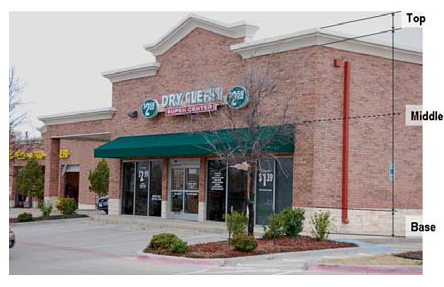
Urban mixed use. A development or portion of a development that includes a mixture of residential and nonresidential uses in a configuration where a majority of the buildings are two or more stories tall and pedestrian oriented.
Usable open space. An open area or recreational facility which is designed and intended to be used for outdoor living and/or recreation. An area of common usable open space shall have a slope not exceeding ten percent, shall have no dimension of less than ten feet, and may include landscaping, walks, recreational facilities and decorative objects such as art work or fountains. Usable open space shall not include: roof tops, accessory buildings, except those portions of any building designed specifically for recreational purposes, parking areas, driveways, turnaround areas, or the right-of-way of easement or public and private streets or alleys.
Variance. An adjustment to the application of the specific regulations of the zoning ordinance or subdivision ordinance on a particular parcel of property which, because of special conditions or circumstances of hardship peculiar to the particular parcel, is necessary to prevent the property from being deprived of rights and privileges enjoyed by other parcels in the same vicinity and zoning district. Only the board of adjustment of the town council may grant a variance. (See section 106.02.02(g), "variances" for more information).
Vested rights. The specific land use rights that are granted upon receipt of certain applications. (See section 106.02.07, "vested rights" for more information).
Vibration. A periodic displacement of the earth measured in inches (related to sound).
Yard, front. All the open area across the full width of the lot contained between the front property line of the lot and any portion of the main building.
Yard, rear. All the open area between the rear lot line and the rear line of the main building and the side lot lines.
Yard, side. All the open area between the building and the side line of the lot and extending from the front yard to the required minimum rear yard.
Yard, size. All the open area between the main building and the adjacent side line of the lot, and extending entirely from the front yard to the rear yard thereof.
Yard. An open space at-grade between a building and the adjoining lot lines, unoccupied and unobstructed by any portion of a structure from the ground upward, except as otherwise provided, in measuring a yard for the purpose of determining the width of a side yard, the depth of a front yard or the depth of a rear yard, the least horizontal distance between the lot line and the main building shall be used.
(Ord. No. 1407, § 2, 8-15-2017; Ord. No. 1527, § 2, 10-15-19)

