
Maitland City Zoning Code
ARTICLE 10
DEFINITIONS AND RULES FOR CONSTRUCTION, INTERPRETATION, AND MEASUREMENT
SECTION 10.1.- RULES OF CONSTRUCTION AND INTERPRETATION
The rules in this section shall apply for construing or interpreting the terms and provisions of this LDC.
10.1.1. - Meanings and Intent.
All provisions, terms, phrases, and expressions contained in this LDC shall be interpreted in accordance with the general purposes set forth in Section 1.3, General Purpose and Intent, and the specific purpose statements set forth throughout the LDC. When a specific section of the LDC gives a different meaning than the general definition provided in this article, the specific section's meaning and application of the term shall control.
10.1.2. - Headings, Illustrations, and Text.
In the event of a conflict or inconsistency between the text of this LDC and any heading, caption, figure, illustration, table, or map, the text shall control. Graphics and other illustrations are provided for informational purposes only and should not be relied upon as a complete and accurate description of all applicable regulations or requirements.
10.1.3. - Lists and Examples.
Unless otherwise specifically indicated, lists of items or examples that use terms like "for example," "including," and "such as," or similar language are intended to provide examples and are not exhaustive lists of all possibilities.
10.1.4. - Computation of Time.
(a)
In computing any period of time prescribed or allowed, the day of the act, event, or default from which the designated period of time begins to run shall not be included. The last day of the period so computed shall be included, unless it is a Saturday, Sunday, or legal holiday, in which event the period shall run until the end of the next day which is not a Saturday, Sunday or legal holiday. When the period of time prescribed or allowed is less than seven (7) days, intermediate Saturdays, Sundays, and legal holidays shall be excluded in the computation.
(b)
The term "day" means a business day (Monday through Friday, excluding days on which the Maitland City Council is closed due to a holiday), unless a calendar day is indicated.
(c)
The term "month" means a calendar month.
(d)
The term "year" means a calendar year unless otherwise indicated.
(e)
Whenever a person has the right or is required to do some act within a prescribed period of time following the service of a notice or other document through mailed delivery, three (3) days shall be added to the prescribed period.
10.1.5. - References to Other Regulations/Publications.
Whenever reference is made to a resolution, ordinance, statute, regulation, or document, it shall mean a reference to the most recent edition of such regulation, resolution, ordinance, statute, regulation, or document, unless otherwise specifically stated.
10.1.6. - Delegation of Authority.
Any act authorized by this LDC to be carried out by a named individual or department may be delegated by the individual or the head of that department to a professional-level City employee under the individual or head of the department's authority or control.
10.1.7. - Public Officials and Agencies.
All public officials, bodies, and agencies to which references are made are those of the City of Maitland, Florida, unless otherwise indicated.
10.1.8. - Mandatory and Discretionary Terms.
The words "shall," "must," "should" and "will" are mandatory, establishing an obligation or duty to comply with the particular provision. The word "may" is permissive.
10.1.9. - Conjunctions.
Unless the context clearly suggests the contrary, conjunctions shall be interpreted as follows:
(a)
"And" indicates that all connected items, conditions, provisions, or events apply; and
(b)
"Or" indicates that one or more of the connected items, conditions, provisions, or events apply.
10.1.10. - Tenses and Plurals.
Words used in the present tense include the future tense. Words used in the singular number include the plural number and the plural number includes the singular number, unless the context of the particular usage clearly indicates otherwise. Words used in the masculine gender include the feminine gender, and vice versa.
10.1.11. - Term Not Defined.
If a term used in this LDC is not defined in this LDC, the Community Development Director is authorized to interpret its meaning in accordance with Sec. 2.5.5, Interpretations. Such interpreted meaning shall be based upon the definitions used in accepted sources — including, but not limited to, A Planners Dictionary, A Glossary of Zoning, Development, and Planning Terms, A Survey of Zoning Definitions (all published by the American Planning Association), and Black's Law Dictionary, as well as general dictionaries such as Merriam-Webster, American Heritage, Webster's New World, and New Oxford American dictionaries.
10.1.12. - Interpretation of Unlisted Uses.
(a)
Procedure for Interpreting Unlisted Uses. The Community Development Director may interpret as allowable in a particular zone district a particular principal use or accessory use or structure not expressly listed in the use tables in this Article 4: Use Regulations, as either a permitted or conditional use, based on the standards in this section and in accordance with the procedures in Sec. 2.5.5, Interpretations.
(b)
Criteria for Allowing Unlisted Principal Uses. The Community Development Director shall interpret an unlisted principal use as a permitted or conditional use only after finding that the nature, function, and duration of the use and the impact of allowing it in the zone district are so similar to those of a use type or use category that is expressly allowed in the zone district that the unlisted use should be deemed allowed in the same manner (as a permitted or conditional use) as the similar use type or use category and subject to the same use-specific standards. In making such interpretation, the Community Development Director shall evaluate the relevant characteristics of the unlisted use to the characteristics, function, and physical impacts of the use categories established in Article 4: Use Regulations, the purpose and intent statements in this LDC concerning the zone district (see Article 3: Zone Districts), and the character and features of use types allowable in the zone district. The relevant characteristics of the unlisted use that should be considered in making this interpretation include, but are not limited to, the following:
(1)
Actual or projected characteristics of each activity likely to occur as part of the unlisted use;
(2)
The type, size, orientation, and nature of buildings and structures devoted to each activity;
(3)
The number and intensity of employees and customers per unit area of a site in relation to business hours and employment shifts;
(4)
Vehicles used and their parking requirements, including the ratio of the number of spaces required per unit area or activity;
(5)
Transportation demands, including the volume and frequency of trips generated to and from the site, the split of traffic volume among various means of transportation, and other characteristics of trips and traffic;
(6)
Relative amounts of sales or revenue from each activity;
(7)
The nature and location of storage and outdoor display of merchandise, whether enclosed, open, inside, or outside the principal building, and the predominant types of items stored;
(8)
Customer type for each activity;
(9)
How the use is advertised, including signage;
(10)
The amount and nature of any nuisances generated on the premises, including but not limited to noise, smoke, odor, glare, vibration, radiation, and fumes;
(11)
Any special public utility requirements for serving the use, including but not limited to water supply, wastewater output, pre-treatment of wastes and emissions required or recommended, and any significant power structures and communications towers or facilities; and
(12)
The impact on adjacent lands created by the use, which should not be greater than that of other use types allowed in the zoning district.
(c)
Standards for Allowing Unlisted Accessory Uses and Structures. The Community Development Director shall interpret an unlisted use or structure as an allowable accessory use or structure to a principal use allowed in a particular zone district (either because the use is expressly listed in Table 4.2.2: Principal Use Table or allowed in accordance with this section if the Community Development Director determines that:
(1)
The use or structure is accessory to the principal use, in accordance with the definitions of "accessory use" and "accessory structure," and the example accessory uses listed in the definition of the principal use or the description of the relevant use category in Sec. 4.2.3, Classification of Principal Uses.
(2)
The nature, function, and potential impacts of the use or structure are so similar to those of uses or structures that are accessory to the principal use, or of accessory uses allowable in the zone district, that the unlisted use or structure should be deemed allowable in the same manner as the similar accessory uses or structures;
(3)
The use or structure is compatible with the character of principal and accessory uses allowable in the zone district; and
(4)
Allowing the use or structure as an accessory use or structure is consistent with the purpose and intent statements in this LDC concerning the zone district (see Article 3: Zone Districts).
(d)
Effect of Allowing Unlisted Uses as Permitted, Conditional, or Accessory Use. On interpreting an unlisted use as allowed in a zoning districts, and finding that the use or structure is likely to be common or would lead to confusion if it remains unlisted, the Community Development Director may initiate an application for a text amendment to this LDC in accordance with Sec. 2.5.1(c), LDC Text Amendment, to list the use or structure in Article 4: Use Regulations, as a permitted or special exception use, as appropriate. Until final action is taken on the text amendment application, the interpretation of the Community Development Director shall be binding and shall be maintained in the record of interpretations required by Sec. 2.5.5, Interpretations.
10.1.13. - Rules of Interpretation of Zone District Boundaries.
If there is uncertainty regarding the boundaries of a zone district shown on the Official Zone District Map, the Community Development Director shall use the following general rules of interpretation:
(a)
Boundaries indicated as approximately following the centerlines of streets or alleys shall be interpreted to follow such centerlines.
(b)
Boundaries indicated as following railroad lines shall be interpreted to be midway between the main tracks.
(c)
Boundaries indicated as approximately following platted lot lines shall be interpreted as following such lot lines.
(d)
Boundaries indicated as approximately following City limits shall be interpreted as following such city limits.
(e)
Boundaries indicated as following shorelines shall be interpreted to follow such shorelines, and in the event of change in the shoreline shall be construed as moving with the actual shoreline.
(f)
Boundaries indicated as approximately following the center lines of streams, canals, lakes, or other bodies of water shall be interpreted to follow such centerlines.
(g)
Boundaries indicated as extensions of features indicated in subsections (a) through (f) above shall be interpreted accordingly.
(h)
Distances not specifically indicated on the Official Zone District Map shall be determined by the scale of the map.
(i)
If any portion of a public street, alley, right-of-way, or easement is transferred or conveyed so it is in private ownership, or is no longer used for a public purpose, the regulations applicable to the property to which it is reverted shall apply.
10.2.1. - Buildings.
(a)
Building Height.
(1)
The vertical distance of a building measured from the average elevation of the proposed finished grade to the highest point of the roof (outside top covering of the building) on a flat or shed type roof and to top of the highest eave (excluding dormers) for a hip, gable, gambrel, mansard, or barrel roof. If a structure or appurtenance, such as a penthouse, mechanical or equipment room, or air conditioning equipment is located above the roof level of the building, the height measurement shall include said structures and appurtenances.
(2)
The height measurement shall not include spires, belfries, cupolas, antennas, water tanks, ventilators, chimneys, or other appurtenances required to be placed on the roof and not intended for human occupancy; however, the heights of these structures or appurtenances thereto shall not exceed any height limitations prescribed by the Federal Aviation Administration if they are within the flight-approach zone of airports.
(b)
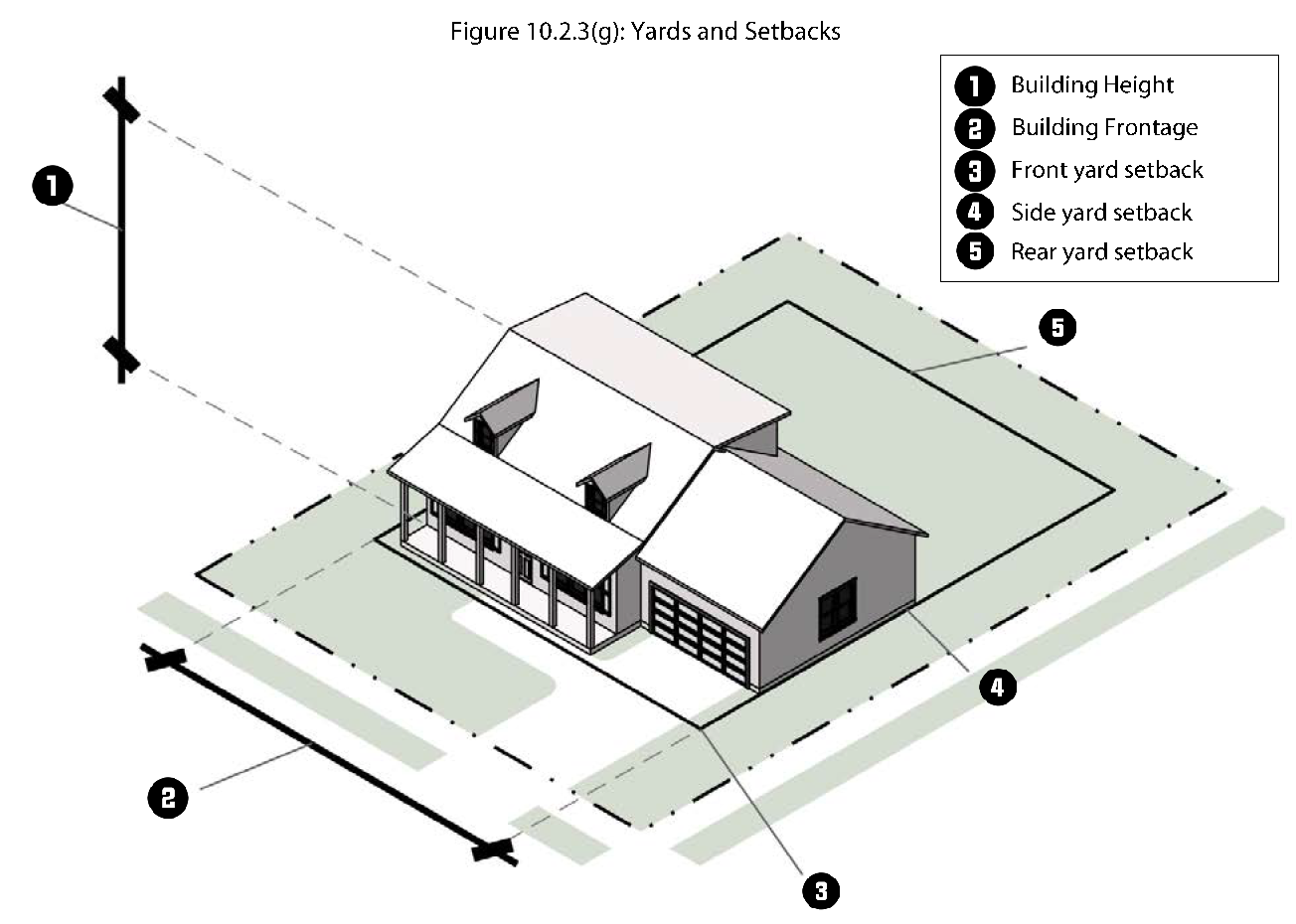
Building Frontage. The length of the outside building wall facing a public right-of-way. (See Figure 10.2.3(f): Yards and Setbacks.)
(c)
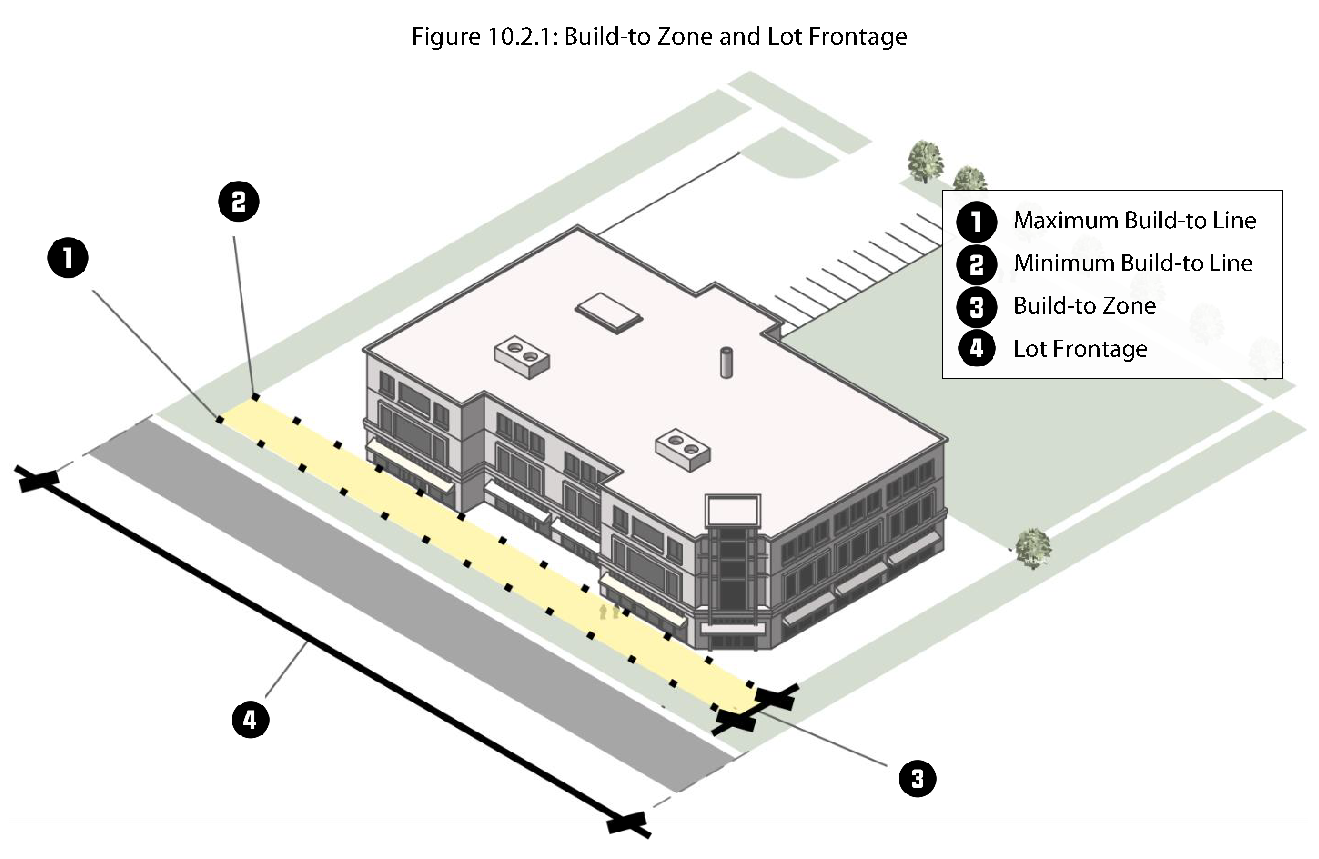
Build-to Line. An alignment establishing a certain distance from the front property line where a building shall be constructed. (See Figure 10.2.1: Build-to Zone and Lot Frontage.)
(d)
Build-to Zone. The area between a minimum build-to line and a maximum build-to line. (See Figure 10.2.1: Build-to Zone and Lot Frontage.)
10.2.2. - Density and Area.
(a)
Floor Area Ratio. The gross floor area of all buildings on a lot (and contiguous lots being utilized for a particular land use), excluding parking structures, divided by the area of such lot(s) excluding land below the controlled water elevation level.
(b)
Floor Area (GFA). For the purpose of determining the floor area ratio, the gross floor area of a building is the sum of the gross horizontal areas of the several floors of the building measured from the exterior faces of the exterior walls. The gross floor area of a building shall include the basement floor area when more than one-half of the basement height is above the established curb level or above the finished grade level where a curb has not been established, elevator shafts and stairwells at each floor, floor space used for mechanical equipment, interior balconies and mezzanines and enclosed porches, and floor area devoted to accessory uses.
10.2.3. - Lots and Yards.
(a)
Impervious Coverage. The portion of a lot covered with impervious materials such as buildings, swimming pools, decks, patios, or driveways. Areas of a lot on which solar panels are placed (except when placed on a building) shall not be included in any calculation of impervious coverage.
(b)
Lot. A parcel, tract, or area of land established by a plat or otherwise permitted by law which can be identified and referenced by a recorded plat or map. The word lot includes the words plot, parcel, and tract. For purposes of Article 6: Subdivision Standards, a lot shall be of sufficient size to meet the minimum requirements of to LDC as to use, coverage, and area and to provide all yard and open spaces required by this LDC.
(c)
Lot Measurement.
(1)
Lot Area. The size of a lot measured within the lot lines.
(2)
Lot Depth. The distance measured from the midpoint of the front lot line to the midpoint of the opposite rear line of the lot.
(3)
Lot Frontage. The length of the lot line measured at the street right-of-way line. (See Figure 10.2.1: Build-to Zone and Lot Frontage.)
(4)
Lot Width. The distance between straight lines connecting front and rear lot lines at each side of the lot, measured across the rear of the required front yard. If, however, a lot fails to meet the minimum lot width at the rear of the required front yard, the required front yard shall be established at the point where the minimum lot width has been satisfied.
(d)
Lot Line. Any legal boundary of a lot. Where applicable, the lot line may coincide with the right-of-way line.
(e)
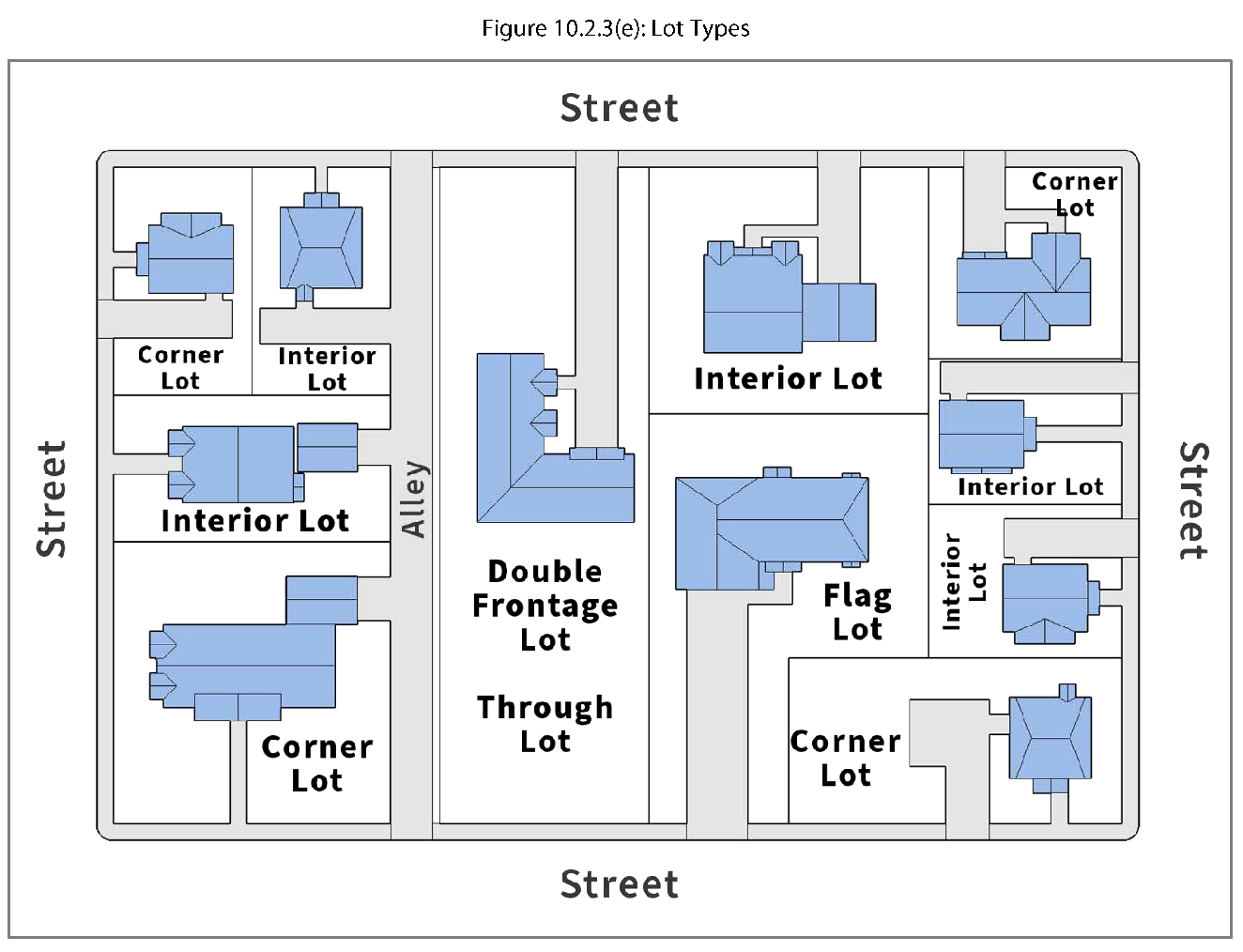
Lot Types. See Figure 10.2.3(e): Lot Types.
(1)
Lot, Corner. A lot located at the intersection of two (2) or more streets. A lot abutting on a curved street or streets shall be considered a corner lot if straight lines drawn from the foremost points of the side lot lines to the foremost point of the lot meet at an interior angle of less than one hundred thirty-five (135) degrees.
(2)
Lot, Double Frontage. A through lot that abuts two (2) streets.
(3)
Lot, Flag. A lot that does not meet the minimum frontage requirements at the intersection with the right-of-way and where access to the public road is by a narrow, private right-of-way or driveway.
(4)
Lot, Interior. A lot other than a corner lot with only one (1) frontage on a street
(5)
Lot, Through. A lot other than a corner lot with frontage on more than one (1) street. A double-frontage lot is a through lot that abuts two (2) streets.
(f)
Setback. The distance by which a building or structure is required to be separated from a property line. (See Figure 10.2.3(g): Yards and Setbacks.)
(g)
Yard. An area within a lot that lies between a principal structure on the lot and the nearest lot line. (See Figure 10.2.3(g): Yards and Setbacks.) Every part of every yard between the property line and any setback line shall remain open and unobstructed from the ground to the sky except as otherwise allowed in Table 10.2.4(a): Allowable Encroachments beyond Setbacks/Build-to Zones, or allowed or limited elsewhere in this LDC.
(h)
Yard, Front.
(1)
A yard extending the full width of the lot between side lot lines across the front of a lot adjoining a street.
(2)
In the case of through lots, unless the prevailing front yard pattern on adjoining lots indicates otherwise, front yards shall be provided on all frontages. Where one of the front yards that would normally be required on a through lot is not in keeping with the prevailing yard pattern, the Community Development Director may waive the requirements for the normal front yard and substitute therefor a special yard requirement which shall not exceed the average of the yards provided on adjacent lots (see also subsection (l) below).
(3)
In the case of corner lots, front yards of the required depth shall be provided on both frontages (See also subsection (l) below).
(4)
In the case of flag lots, the front yard shall be assigned by the Community Development Director and shall begin at the point where the flag portion of the lot terminates and the yard complies with the minimum lot width standards of the district in which the lot is located.
(5)
The depth of required front yards shall be measured at right angles to a straight line joining the foremost points of the side lot lines. The foremost point of the side lot line, in the case of rounded property corners at street intersections, shall be assumed to be the point at which the side and front lot lines would have met without such rounding. Front and rear front yard lines shall be parallel.
(i)
Yard, Rear. A yard extending across the rear of the lot between inner yard lines. In the case of through lots and corner lots there will be no rear yards. The depth of a required rear yard shall be measured in such a manner that the yard established is a strip of the minimum width required by district regulations with its inner edge parallel with the rear lot line.
(j)
Yard, Side. A yard extending from the rear line of the required front yard to the rear lot line, or, in the absence of any clearly defined rear lot line, to the point on the lot farthest from the intersection of the lot line involved with the public street. In the case of through lots, side yards shall extend from the rear lines of front yards required. In the case of corner lots, yards remaining after full depth front yards have been established on both frontages shall be considered side yards. The width of a required side yard shall be measured in such a manner that the yard established is a strip of the minimum width required by district regulations with its inner edge parallel with the side lot line.
(k)
Yard, Special. A yard behind any required yard adjacent to a public street, required to perform the same functions as a side or rear yard, but adjacent to a lot line and so placed or oriented that neither the term side yard nor the term rear yard clearly applies. In such cases, the Community Development Director shall require a yard with minimum dimensions as generally required for a side yard or a rear yard in the applicable zone district. The appropriate yard shall be determined based up the relation of the portion of the lot on which the yard is to be located to the adjoining lot or lots, with due regard to the orientation and location of structures and buildable areas thereon.
(l)
Yard, Street-Side. On a lot with multiple street frontages, the side of the lot that abuts a street to the side façade of the primary building. Special provisions regarding street-side frontages apply to fences in all districts and structures within the RSF-3 district.
(Ord. No. 1433, § 11, 10-14-24)
10.2.4. - Exceptions.
(a)
Allowable Encroachments Beyond Setbacks/Build-to Zones.
(1)
Encroachments into the required yard between the property line and any setback line are allowed in accordance with Table 10.2.4(a): Allowable Encroachments beyond Setbacks/Build-to Zones, or as allowed or limited elsewhere in this LDC.
(2)
Except within the Sight Triangle, nothing in this subsection (a) shall be so construed as to prevent any type of landscaping or nonprofit gardening on any lot.
10.3.1. - Introduction.
The definitions in this section apply throughout the LDC unless otherwise specified and are listed in alphabetical order. Additional definitions are located elsewhere in this LDC as follows:
(a)
Principal uses are categorized and defined in Sec. 4.2.3, Classification of Principal Uses.
(b)
Definitions that relate to the Flood Damage Prevention Ordinance at Section 5.7, Flood Damage Prevention, are included at Sec. 5.7.17, Definitions.
(c)
Definitions that relate to the Mobility Fee Ordinance at Section 7.1, Mobility Fees, are included at Sec. 7.1.19, Definitions.
10.3.2. - Definitions.
ABUTTING. To physically touch or border upon, or to share a common property line.
ACCESS WALKWAY. The portion of a dock that commences on the upland parcel and terminates at the junction with the terminal platform.
ADJACENT. An arrangement where two (2) properties either share a common boundary line or would share a common boundary line but for the fact an alley, easement, drive aisle, or rail line divides the properties.
ACCESSORY USES AND STRUCTURES. A use or structure which is customarily accessory and clearly incidental and subordinate to permitted principal uses and structures and which are located on the same lot as the permitted principal use or structure, or on a contiguous lot under the same ownership.
ADVERTISING. Sign copy intended to aid, directly or indirectly, in the sale, use, or promotion of a product, service, commodity, entertainment, or real or personal property.
AGGRIEVED OR ADVERSELY AFFECTED PARTY. "Aggrieved or adversely affected party" has the meaning given it in Ch. 163, Fla. Stat: any person that will suffer an adverse effect to an interest protected or furthered by comprehensive development plan, including interests related to health and safety, police and fire protection service systems, densities or intensities of development, transportation facilities, health care facilities, equipment, or services, and environmental or natural resources. The alleged adverse interest may be shared in common with other members of the community at large but must exceed in degree the general interest in community good shared by all persons. The term includes the owner, developer, or applicant for a development order.
AIR CONDITIONER COMPRESSOR UNIT. The outdoor component of a central air-conditioning system which contains a motor that compresses the refrigerant and enables the cooling functionality of the air conditioning system.
ALLEY. A right-of-way which affords a secondary means of access and service to abutting property.
ALTER. To do construction on or renovate an existing structure other than a repair or addition. This includes any change or rearrangement that impacts the configuration or function of the exterior components of an existing building (such as exterior walls, roof structure, doors, and windows), any enlargement to or diminution of a building or structure, whether horizontally or vertically, or the moving of a building or structure from one location to another.
For purposes of Section 5.14, Signs, only, to make a change to a sign or sign structure, including but not limited to, changes in size, sign copy area to signs other than manual changeable copy signs, height, projection, illumination, shape, materials, placement, and location on a site. Altering a sign does not include ordinary maintenance, repair, or repainting of an existing sign surface provided the sign copy area is not increased.
AMATEUR HAM RADIO ANTENNA. An antenna used to send and receive amateur (ham) radio broadcasts.
ANNUAL. A plant whose entire life lasts one year or growing season.
APPLICANT. The owner of land, or the duly designated agent of the property owner, who applies for a development permit or approval authorized by this LDC.
APPURTENANCE. A functional or ornamental object that is visible and accessory to, and part of, a building or structure.
ARCADE. A series of arches or beams supported by columns or pillars; a covered passageway; a recessed gallery with columns or piers open to the street.
ASSESSED VALUE. The total value of a tax parcel, excluding the value of the land, as determined by the Orange County property appraiser, and shown on the most recent property tax bill sent to the owner of record by the County. In the absence of such information, applicants may submit an assessment prepared by a professional appraiser.
AUTOMATED TELLER MACHINE (ATM). A mechanized device operated by or on behalf of a bank or financial institution that allows customers to conduct automated banking or financial transactions. Where an ATM is provided at the site of a bank or financial institution for use by customers in motor vehicles, the ATM is considered a drive-through facility accessory use. At other locations, an ATM may be considered a separate accessory use to the principal use(s) of the location.
AUTOMATIC CAR WASH. A structure providing the exterior washing of vehicles where vehicles are manually driven or pulled by a conveyor through a system of rollers and/or brushes.
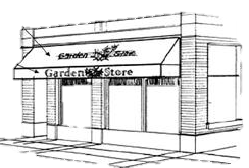
AWNING. A shelter projecting from and supported by the exterior wall of a building constructed of rigid or non-rigid materials on a supporting framework that may include a type that can be retracted, folded, or collapsed against the wall of a supporting building.
BEDROOM. For purposes of Sec. 4.2.4(d)(6)(B), Short-Term Rental Unit, only, bedroom has the meaning given to it in Sec. 381.0065(2)(b), Fla Stat. The term "sleeping room" is the same as a bedroom and shall meet the minimum requirements of the Florida Building Code (Residential) and National Fire Protection Association Code.
BERM. A man-made landscape feature generally consisting of a linear, raised mound of soil covered with grass lawn or other permanent, living ground cover.
BOARDWALK. An elevated walkway structure typically constructed with timber.
BOATHOUSE. A roofed structure, primarily over water, used to shelter boats and/or watercraft.
BOAT DOCK OR DOCK. Any temporary, permanently fixed, or floating structure extending from the normal high water elevation (NHWE) into or over the water, capable of use for vessel mooring and other water-dependent recreational activities. This includes any floating structure, boat lift or mooring pilings, detached from the land, capable of use for mooring vessels and or for other water-dependent activities. This also includes any area adjacent to the dock designated for mooring purposes.
BOAT RAMP. Any structure or clearing that extends to or waterward of the normal high water elevation or any structure or clearing upon which trailer-able watercraft can be launched or retrieved, except that the definition shall not apply to a homeowner who clears land which is the site of his personal residence, in compliance with applicable regulations, without building any structure or dredging or filling, for the purpose of launching and retrieving his or her personal watercraft.
BOAT SLIP. An area of a boat dock designed to enclose a boat on three (3) sides.
BRACKET. A fixture attached to a wall.
BRICK REVEAL. Recessed brick courses that are a layer of the same brick unit running horizontally in a wall and/or may be a continuous row of brick units.
BUILDING. Any structure either temporary or permanent, having a roof designed to be impervious to weather, and used or built for the shelter or enclosure of persons, animals, chattels, or property of any kind. This definition shall include tents, awnings, cabanas, but does not include screened enclosures not having a roof impervious to weather.
For purposes of Article 6: Subdivision Standards only, the definition includes the word structure and shall be construed as if followed by the phrase "or part thereof."
For purposes of Section 5.15, Building Numbering and Street Naming, only, the definition excludes accessory structures.
BUILDING FRONT. For purposes of Section 5.15, Building Numbering and Street Naming, only, the side of a building which faces a public or private street, road, or way pursuant to which the building is numbered. When a building is constructed on a corner lot, the building front shall be that area of the building which faces the public or private street, road, or way on which a projected address is assigned, or, if a projected address has not been assigned, the area so designed by the street naming and numbering agency.
CALIPER. A nursery measurement of tree trunk diameter. Trunk caliper for trees up to four (4) inches is to be measured six (6) inches above the soil line. Trees four (4) inches in caliper and greater are measured twelve (12) inches above the soil line.
CANNABIS. Any plant or part of a plant of the genus Cannabis, whether growing or not; the seeds thereof; the resin extracted from any part of the plant; and every compound, manufacture, salt, derivative, mixture, or preparation of the plant or its seeds or resin, including low-TCH cannabis, which are dispensed from a medical marijuana treatment center for medical use by a qualified patient as defined in Section 381.986, Fla Stat.
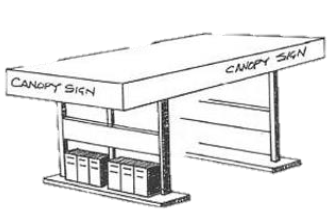
CANOPY. A roof-like structure with no walls that is attached or not attached to an adjacent structure. A canopy is not a marquee. See also Sign, Canopy.
CHICKEN-KEEPING. The keeping or raising of chickens as an accessory use to a residential property.
CHEMICAL FREE. For purposes of Section 5.3, Landscape, Buffer, and Tree Protection Standards, only, no non-aquatic use chemicals including, but not limited to pesticides (including herbicides) and fertilizers that can be applied by any means of application to land in the shoreline protection area.
CHICKEE. An open-sided wooden hut that has a thatched roof of palm or palmetto or other traditional materials, that does not incorporate any electrical, plumbing, or other non-wood features.
CHIEF CODE ENFORCEMENT OFFICER. The person appointed by the City Manager in accordance with Sec. 5.3-2 of the City Code, and who is charged with enforcement of the codes and ordinances of the City in accordance with Ch. 5.3 of the City Code and this LDC.
CHILD CARE, HOME, FIVE OR FEWER CHILDREN. A day care facility located in the operator's principal residence which receives no more than five (5) children for periods of less than twenty-four (24) hours per day per child.
CHILD CARE, HOME, SIX OR MORE CHILDREN. A day care center facility located in the operator's principal residence which receives six (6) or more children twelve (12) years of age and under and which is licensed by the Florida Department of Children and Families to operate such a use.
CITY COUNCIL. The Maitland City Council. See Sec. 2.3.2, City Council, and Article II of the City Charter.
CITY STAFF. Employees of the City.
CLEARANCE. For purposes of Section 5.14, Signs, only, the distance between the finished grade to the lowermost portion of a sign.
CLUBHOUSE. A building or room used for social or recreational activities by occupants of a residential development, or members of a club (e.g., golf course clubhouse) or occupants of a residential or other development.
CODE ENFORCEMENT OFFICER. An employee or agent of the City who has been assigned the duty to ensure and enforce compliance with the City Code and this LDC, in accordance with Sec. 5.3-22 of the City Code.
COLUMN. An upright pillar, typically cylindrical and made of stone or concrete, supporting an entablature, arch, or other structure, or standing alone as a monument.
COMMERCIAL USES. For purposes of Section 7.1, Mobility Fees, only, those business, retail, service, or professional activities which provide products and services to individuals, businesses, or groups, and which include those uses specified in the ITE Trip Generation Manual under Land Use Code Series 800 and 900.
COMMERCIAL VEHICLE. Any self-propelled or towed vehicle which is designed, intended, or used for transportation of persons, chattel, or goods, and used for purposes other than for a private passenger vehicle, with gross vehicle weight over ten thousand (10,000) lbs. For purposes of this LDC, stake body trucks, walk-in vans, and any vehicle regardless of weight, which displays logos and/or lettering totaling more than five (5) square feet (as calculated in accordance with Sec. 5.14.5(c), Calculation of Sign Area) other than the vehicular manufacturer's logo, name, make and/or model, shall also be deemed a commercial vehicle. This definition excludes municipal and other governmental vehicles.
COMPOSTING, SMALL-SCALE. An enclosed area at least one hundred (100) square feet in area that contains a compost tumbler or similar apparatus designed for the purpose of converting household kitchen and yard waste into fertilizer.
COMPREHENSIVE DEVELOPMENT PLAN. The Maitland Comprehensive Development Plan 2035, as amended or superseded.
CONSTRUCTION-RELATED BUILDING, STRUCTURE, OR USE. A temporary structure, facility, or space associated with the staging, management, and security of new construction or major renovation — including an office building, security building, storage buildings, construction waste and recycling receptacles, temporary sanitation facilities, outdoor storage, and employee parking areas — and located on or adjacent to the construction site.
CORBEL. A structural piece of stone, wood, or metal jutting from a wall to carry a superincumbent weight; a type of bracket. A corbel is a solid piece of material in the wall.
COPY. The linguistic or graphic content of a sign.
COURTYARD. An unoccupied open space, other than a yard, on the same lot with a building and that is bordered on two (2) or more sides by the building.
CROSS-ACCESS. Providing connections between abutting properties, whether vehicular or pedestrian (or both).
CUL-DE-SAC. A street terminated at the end by a vehicular turnaround.
DECIBEL. A unit of measure used to express the magnitude of sound pressure and sound intensity.
DEDICATION. A generic term used as a surrogate for or in reference to easements or rights-of-way.
DEP. Florida Department of Environmental Protection.
DEVELOPER. A person, or a person's agent, who undertakes the activities covered by this LDC, including development or development activity, or the preparation and presentation of a subdivision plat showing the layout of the land and the improvements involved thereon. The term developer includes the term subdivider, even though the identity or persons involved in successive stages of a development project may vary.
DEVELOPMENT OR DEVELOPMENT ACTIVITY. Any construction, reconstruction, or any use of real property which requires review and approval of a development permit, as well as any activity as defined in Sec. 380.04, Fla Stat.
DEVELOPMENT AGREEMENT. An enforceable agreement entered into between the City and a landowner or developer in which specific development terms, conditions, obligations are defined and agreed upon, including agreements entered into in accordance with the City's home rule powers under the Florida Constitution and Ch. 166, Fla. Stat., and an agreement entered in accordance with Secs. 163.3220—163.3243, Fla Stat., or an agreement or development order issued pursuant to Ch. 380, Florida Stat.
DEVELOPMENT OF REGIONAL IMPACT (DRI). See Sec. 380.06(1), Fla. Stat.
DEVELOPMENT ORDER. Any order granting, with or without conditions, or denying a development permit including any building permit, zoning permit, rezoning, subdivision approval, site plan approval, permitted conditional use, certification, variance, or any official action of the City having the effect of permitting any type, level, nature, density, intensity, or other form of development of land.
DISTURB. For purposes of Sec. 9.3.2, Specific Violations, only, to disrupt; to cut down plants or shrubs; or to affect the ability of landscape to be maintained in a healthy condition.
DORMER. A window that projects vertically from a sloping roof.
DONATION CENTER. An accessory use with one or more containers where donated goods such as clothing, books, shoes, or other non-perishable personal property are dropped off for resale or reuse by a charitable organization into enclosed containers. This does not include on-site containers approved for the purpose of book returns or donations in conjunction with a public library or recycling containers provided by the city or private contract hauler for residential use.
DRIPLINE. A vertical line run through the outermost portion of the crown of a tree and extending to the ground, provided, however, that the same shall not be less than a ten-foot diameter circle which is drawn from the center of the trunk of a tree.
DRIVE-THROUGH FACILITY. A commercial establishment that provides goods or services through a special window or station for customers who order from their cars and leave after receiving the service. Use types that commonly use drive-through facilities include restaurants, banks, pharmacies, car wash facilities, and dry cleaning establishments.
DWELLING UNIT. A room or rooms connected together, constituting a separate, independent living unit and physically separated from any other rooms or dwelling units which may be in the same structure, and containing independent cooking, sleeping, and sanitation facilities.
EASEMENT. A grant by a landowner to another landowner or to the public, for the right to occupy or use land for specific purposes, such as access, drainage, conservation, the location of public improvements, or other specified purposes. An easement does not constitute fee simple ownership of the land.
For purposes of Article 6: Subdivision Standards, only, a strip of land created by a subdivider for public or private utilities, drainage, sanitation, or other specified uses having limitations, the title to which shall remain in the name of the property owner, subject to the right of use designated in the reservation of the servitude. The granting of such an easement will be an express grant which may or may not be recorded. In any case, the public, when benefited by the easement, will be known as the "dominant" estate and the property which is subject to the easement will be known as the "servient" estate. The easement runs with the land and the "dominant" estate will have full rights to use the easement for the stated purpose and full rights to permit or deny use of the easement to any other party including the "servient" estate for any purpose whatsoever.
ELECTRIC VEHICLE (EV) LEVEL 1, 2, OR 3 CHARGING STATION. A vehicle parking space served by an electrical component assembly or cluster of component assemblies (battery charging station) designed and intended to transfer electric energy by conductive or inductive means from the electric grid or other off-board electrical source to a battery or other energy storage device within a vehicle that operates, partially or exclusively, on electric energy.
Level 1 Charging Station. A Level 1 charging station is a slow-charging station that typically operates on a 15- or 20-amp breaker on a 120-volt Alternating Current (AC) circuit.
Level 2 Charging Station. A Level 2 charging station is a medium-speed charging station that typically operates on a 40- to 100-amp breaker on a 208- or 240-volt AC circuit.
Level 3 Charging Station. A level 3 charging station is an industrial grade charging station that operates on a high-voltage circuit to allow for fast charging.
ENCROACHMENT. An improvement, structure, or obstruction extending into or located within, upon, above, or under an area where such projections or intrusions are typically prohibited, such as a public right-of-way, public easement, required property buffer, or a vehicle into parking lot landscaping.
ENGINEER. A registered professional engineer licensed in Florida.
EVERGREEN. Plants which have leaves all year and are never leafless.
FAMILY. One (1) or more persons occupying a single dwelling unit, provided that unless all members are related by law, blood or marriage, no such family shall contain over five (5) persons. Persons employed on the premises may be housed on the premises without being counted as a separate or additional family or families.
FARMERS' MARKET, TEMPORARY. An occasional or periodic market held in a designated area where groups of individual sellers offer for sale to the public items such as fresh produce, seasonal fruits, and fresh flowers.,
FDOT. Florida Department of Transportation.
FERTILIZER. Any substance or mixture of substances, excluding pesticides, organic composts, and fertilizer derived from biosolids. that contains one or more recognized plant nutrients and promotes plant growth, controls soil acidity or alkalinity, provides other soil enrichment, or provides other corrective measures to the soil.
FLORIDA BUILDING CODE. The family of codes adopted by the Florida Building Commission, including: the Florida Building Code, Building; the Florida Building Code, Residential; the Florida Building Code, Existing Building; the Florida Building Code, Mechanical; the Florida Building Code, Plumbing; the Florida Building Code, Fuel Gas, as amended by the City Code.
FLORIDA GREENBOOK. The most recent edition of the book published by the Florida Department of Transportation entitled "The Manual of Uniform Minimum Standards for Design, Construction and Maintenance for Streets and Highways (Florida Greenbook)."
FOOD DISPENSING VEHICLE. A mobile public food service establishment (sometimes referred to as a food truck or food cart) mounted on wheels and axle(s) that is movable from place to place and includes self-contained utilities, such as gas, water, electricity, and liquid waste disposal. Food dispensing vehicles can be vehicle-mounted, self-propelled and built to travel on public streets, not self-propelled but can be moved from place to place, or watercraft.
GALLERY. A frontage element wherein the building façade is aligned close to the property line with an attached cantilevered shed or a lightweight colonnade overlapping the sidewalk. This frontage element type is conventional for retail use.
GARAGE OR CARPORT. An accessory structure designed or used for inside parking of private passenger vehicles by the occupants of the main building. A private garage attached to or a part of the main structure shall be considered part of the main use. An unattached private garage shall be considered an accessory structure.
GEOTEXTILE TUBE. Specially fabricated containers made of high-strength, woven geotextile, with special high strength seaming to resist pressures during pumping operations reclaiming lake bottom materials, used as integral components in the construction of a variety of marine and hydraulic structures.
GREEN ROOF. A roof of a structure that is partially or completely covered with vegetated landscape built up from a series of layers. Green roofs are constructed for multiple reasons - as spaces for people to use, as architectural features, to add value to property or to achieve particular environmental benefits (for example, stormwater capture and retention, improved species diversity, insulation of a building against heat gain or loss, and energy conservation). Vegetation on green roofs is planted in a growing substrate (a specially designed soil substitution medium) that may range in depth, depending on the weight capacity of the structure's roof and the aims of the design.
GRID SYSTEM GUIDE. A series of designed north/south parallel lines intersecting a second set of east/west parallel lines, as indicated on the official master grid maps on file with the street naming and numbering agency.
GROUND COVER. Low growing plants, other than turfgrass, used to cover the soil and form a continuous low mass of foliage.
HOME GARDEN. An on-site garden planted by an owner or occupant of a single-family detached dwelling unit for the purpose of growing vegetables or fruit for consumption by occupants of the dwelling unit only.
HOME OCCUPATION. An occupation, profession, or trade customarily and commonly carried out by an occupant in a dwelling unit as a secondary use which is clearly incidental and subordinate to the residential character of the dwelling unit.
HOUSEBOAT. A barge or dwelling supported on the water by floats, whether or not it includes a motor, fitted for use as a dwelling or for leisurely cruising.
IMPACT GENERATING LAND DEVELOPMENT ACTIVITY. Land development designed or intended to permit a use of the land which will contain more dwelling units and/or increase in gross floor area of non-residential uses than the then existing use of the land in a manner that increases the generation of person trips and person miles of travel demand.
IMPROVEMENTS, PUBLIC. Street pavements, curbs and gutters, sidewalks, alley pavements, walkway pavements, water mains, sanitary sewers, storm sewers or drains, street names, signs, landscaping, permanent reference monuments, permanent control points, monuments, or any other improvement required by the City Council and dedicated for public use.
INDEPENDENT MOBILITY FEE STUDY. A study, conducted by a person other than the City, to calculate the mobility fee for a particular development. The study shall be based upon a methodology approved by the City that complies with professionally acceptable standards and that is conducted by a person with documented experience in conducting such studies or with mobility fee and transportation impact fee experience.
ITE TRIP GENERATION MANUAL. The latest edition of the Trip Generation Manual published by the Institute of Transportation Engineers (ITE).
KEYSTONE. The wedge-shaped stone at the apex of a masonry arch, or a typically round-shaped one at the apex of a vault.
LAND. The earth, water, and air, above, below, or on the surface. This definition includes any improvements or structures customarily regarded as land.
LEASING OFFICE. An establishment used for leasing space in an attached or adjacent multifamily residential building or complex.
LIMITED FUEL/OIL/BOTTLED GAS DISTRIBUTION. The distribution, for compensation, of fuel oil or bottled gases such as propane or liquid petroleum in containers no greater than five (5) gallons in volume.
LINTELS ABOVE WINDOWS. A structural horizontal block that spans the space or opening between two (2) vertical supports. It can be a decorative architectural element or a combined ornamented structural item.
LION-TAILING. The removal of greater than one-half (½) of the foliage on the lower two-thirds (⅔) of individual limbs of trees.
LIQUOR. Liquor has the meaning given it in Ch. 565, Fla. Stat. ("that substance known as ethyl alcohol, ethanol, or spirits of wine in any form, including all dilutions and mixtures thereof from whatever source or by whatever process produced.")
LITTORAL ZONE. Shoreline area including all land six (6) inches above the normal high water elevation and less to a maximum of three (3) feet of water depth below the normal high water elevation.
LIVING PURPOSES. For purposes of Sec. 2.5.3(d), Waterfront Structure Permit, only, an area in a structure that includes space for living, sleeping, eating, cooking, and/or bathing/restroom facilities.
LOT. See Sec. 10.2.3(b), Lot, and Sec. 10.2.3, Lots and Yards.
LOT LINE. See Sec. 10.2.3(d), Lot Line.
LOT OF RECORD. A lot which is part of a subdivision recorded in the office of the county clerk of the circuit court, or a lot or parcel described by metes and bounds, the description of which has been so recorded on or before the effective date of this LDC.
MAIN ACCESS WALKWAY. For purposes of Sec. 2.5.3(d), Waterfront Structure Permit, only, primary access to the boathouse or boat dock. Includes the portion of the dock which commences on the upland parcel and terminates at the junction with the terminal platform.
MAINTENANCE. For purposes of Section 5.14, Signs, only, the repairing or repainting (provided the sign copy area is not increased) of a portion of a sign or sign structure, periodically manually changing changeable copy, or renewing the copy provided there are no sign copy area changes for signs which have been made unusable by ordinary wear.
MAJOR RECREATIONAL EQUIPMENT. Boats, houseboats, trailers, pickup campers or coaches (designed to be mounted on automotive vehicles), motor homes, tent trailers, cases, or boxes used for transporting recreational equipment, whether occupied by such equipment or not.
MARIJUANA. See Cannabis, above.
MARQUEE. A permanent roofed structure that is attached to or supported by a building and extending more than two (2) feet from the building, generally designed and constructed to provide protection from the weather.
MAXIMUM EXTENT PRACTICABLE. The degree to which a project meets an adopted standard in which all possible efforts to comply with the standard or to minimize harmful or adverse effects have been undertaken by the applicant, but full compliance cannot be achieved, and no feasible or practical alternative exists as determined by the Director. Economic considerations may be taken into account but shall not be the overriding factor determining "maximum extent practicable."
MINOR STRUCTURE. A structure or feature that is incidental to a principal structure that is not elsewhere defined as an accessory use. Examples include outdoor fireplaces and barbecue pits, noncommercial greenhouses and plant nurseries, tool houses, garden sheds, garden work counters, and children's play areas and play equipment.
MIXED USE. The combination, whether horizontal or vertical, of commercial and/or office and/or residential uses within a single development site.
MOBILITY FEE. The fee assessed at the time of issuance of a building permit on a proportional basis associated with the average demand for mobility facilities created by the development of a principal use, for the purpose of providing funds for multi-modal facilities needed to address demand generated by new development.
MOBILITY PLAN. The Mobility Plan adopted in the comprehensive development plan which serves as the basis for a mobility fee.
MULTIMODAL. Multiple modes of travel including, but not limited to, walking, bicycling, jogging, rollerblading, kayaking, riding transit, driving a golf cart, low speed electric vehicle or motor vehicle.
MULTIMODAL FACILITY. Capital facilities necessary or convenient for the movement of people from one location to another, which includes but is not limited to: capital infrastructure such as sidewalks, trails, paths, bike lanes, paved shoulders, cycle tracks, transit stops, park and ride lots, parking garages, transit vehicles, car, bicycle and ridesharing programs, transit pull-outs, way-finding signs, streetscape, bicycle racks, shelters/kiosks, benches, docks, bicycle stations, cross-walks, round-a-bouts, vehicular travel lanes, turn-lanes, bridges, curbs, gutters, medians and/or shoulders, drainage facilities and/or mitigation areas, signage, advanced traffic management systems and/or traffic control devices.
MUTCD. The Manual on Uniform Traffic Control Devices for Streets and Highways published by the Federal Highway Administration, 2009 Edition with Revision Numbers 1 and 2 incorporated (May 2012), or latest version.
NATIVE AQUATIC VEGETATION. Indigenous aquatic plant species that provide fish and wildlife habitat, water quality protection, and shoreline stabilization.
NATIVE PLANT COMMUNITY. A community of native plants including trees and understory plants.
NEON TUBING. Electric discharge, cold cathode tubing manufactured into shapes that form letters, parts of letters, skeleton tubing, outline lighting, and other decorative elements or art forms, in various colors and diameters and filled with inert gases.
NON-COMMERCIAL MESSAGE. Any message that is not a commercial message.
NONCONFORMING LOT. A lot, the area, dimensions, or location of which was lawful prior to the adoption, revision, or amendment of the LDC, but which fails by reason of such adoption, revision, or amendment to conform to the present requirements of the LDC or the zone district in which it is located.
NONCONFORMING SITE FEATURE. A feature of a developed lot, parcel, or site such as parking areas, landscaped areas, screening, or exterior lighting that does not conform to the provisions of this LDC but that was lawful at the time the feature was put in place.
NONCONFORMING STRUCTURE OR BUILDING. A structure or building the size, dimensions, or location of which was lawful prior to the adoption, revision, or amendment of the LDC, but which fails by reason of such adoption, revision, or amendment, to conform to the present requirements of the LDC or the zone district in which it is located.
NONCONFORMING USE. A use or activity which was lawful prior to the adoption, revision, or amendment of the LDC, but which fails, by reason of such adoption, revision, or amendment, to conform to the present requirements of the LDC or the zone district in which it is located.
NORMAL HIGH WATER ELEVATION (NHWE). The average height of the high waters over a 19-year period. For shorter periods of observation, "Normal High Water Elevation" means the height of the high waters after corrections are applied to eliminate known variations and to reduce the result to the equivalent of a mean 19-year value.
NOXIOUS AQUATIC PLANT. Any part, including, but not limited to, seeds or reproductive parts, of an aquatic plant which has the potential to hinder the growth of beneficial plants, interfere with irrigation or navigation, or adversely affect the public welfare or the natural resources of the state of Florida.
OBSERVATION DECK. A deck that is intended for the viewing of nature by users. An observation deck extends lakeward of the NHWE and provide fixed handrails, and may include intermediate rails, that are installed around the perimeter of the structure thereby prohibiting the launching or mooring of boats or other watercraft powered by motor, wind, paddles, or oars.
OCCUPANT. For purposes of Section 5.15, Building Numbering and Street Naming, only, any person who is occupying or leasing a building or other property for a period exceeding thirty (30) days.
OPEN SPACE. In the City, excluding the Wekiva study area, land within or related to a development which is designated and intended for the common use or enjoyment of the residents of the development, including permeable and impermeable surfaces under roof or covered, but with at least two (2) open sides. Examples of open space include, but are not limited to, natural features, landscape areas, pedestrian walkways or courtyards, green roofs, arcades, and storm retention areas (up to 50 percent when landscaped as an amenity). Driving aisles and parking spaces are not deemed to be open space.
In the Wekiva study area only, land that is left undeveloped or minimally developed to preserve natural resources and for conservation purposes, trails, and boardwalks as part of a natural resource preserve or passive recreation area, stormwater management area using BMP's such as those provided In the Public Infrastructure Element, Stormwater Sub-element Policy 3.2.1 of the comprehensive development plan and those enhanced as amenities, pervious surface areas, and excluding impervious areas of parking lots and street rights-of-way.
For the area defined as the Summit DRI, open space shall be in accordance with the Summit DRI and all amendments thereto.
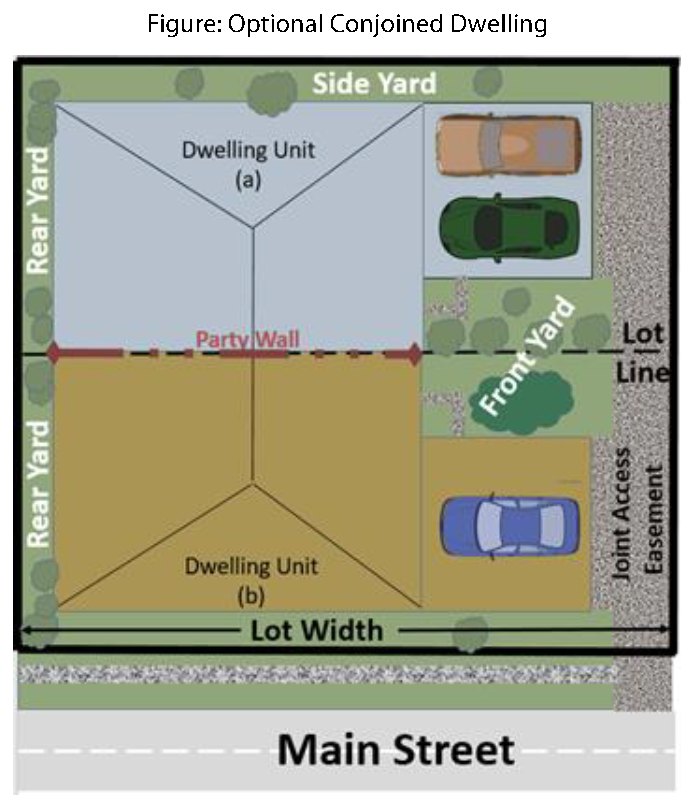
OPTIONAL CONJOINED DWELLING. A two-family dwelling on two (2) lots which are conjoined by a common wall along the lot line. Each dwelling unit has its own external entrance and is available to be sold for fee-simple ownership. Optional conjoined dwellings generally begin as duplexes on a single lot that are split into two (2) lots in accordance with Sec. 2.5.2(d), Lot Split. See the figure below.
OUTDOOR DISPLAY OF MERCHANDISE. The placement of products or materials for sale outside the entrance of a retail or wholesale sales establishment.
OUTDOOR MECHANICAL EQUIPMENT, RESIDENTIAL. Electric generators and accessories, utility meters, swimming pool heaters and pumps, and other similar features.
OUTDOOR STORAGE. The provision of on-site outdoor seating or entertainment areas by an eating or drinking establishment where food or beverages are served for consumption or where outdoor entertainment takes place. The accessory use also may include outdoor seating areas on public sidewalks in front of the establishment.
OWNER. Any and all persons who own the fee title to, or have an undivided interest in, or other legal interest in, any building or property.
For purposes of Sec. 2.5.2(b), Subdivision, only, an owner or group of owners of fee simple title to a particular lot of real property.
OWNER'S AUTHORIZED AGENT. An agent of the owner duly authorized to submit and process a development application. If the applicant is not the property owner, a proper authorization must accompany the application. The authorization shall be evidenced by a power of attorney signed by the owner and notarized specifically authorizing the agent to represent the owner in connection with the application and as to the owner's real property which is the subject of the application. The authorization shall include an agreement of the owner to be bound by the actions of the owner's authorized agent and the provisions of this article.
PALM TREE. A plant of tropical or subtropical species commonly marked by a simple stem and terminal crown of large leaves.
PARCEL. See Lot, above.
PARKING STRUCTURE AND LOT, PRIVATE. An off-street area used for temporary storage of motor vehicles, including any appurtenant spaces, aisles, and driveways, and not owned by the government. A parking lot is a ground level parking area, typically surfaced and improved. A parking structure is a structure or portion of a structure composed of one or more levels. A parking structure may be totally below grade or partially or totally above grade, with levels either being open to the sides (deck) or enclosed (garage).
PARKING, TANDEM. The parking of a vehicle in front of or behind another vehicle which requires one of the vehicles to be moved for the other to enter or exit.
PERSON. Any person or persons, individual or groups of individuals, company, firm, corporation, partnership, organization, or association.
PERSON MILE OF TRAVEL (PMT). The number of miles traveled by each person on a trip in order to account for all miles traveled by motor vehicle, transit, walking, and/or bicycling.
PERSON TRIP. A trip by one person by one or more modes of travel including, but not limited to, driving a motor vehicle or low speed electric vehicle, riding transit, walking, bicycling, or paddling.
PILASTER. A rectangle column (see Columns) projecting from the wall.
PLANT, AQUATIC. Any plant (including any part or seed of such plant) which grows in or is closely associated with an aquatic environment. This definition Includes floating, emersed, submersed, or ditch bank species.
PLANT, INVASIVE. An exotic or nuisance plant that disrupts naturally occurring native plant communities.
PLANT, NATIVE. Plants that grow naturally in Florida and have adapted to the climate, soil, location, and rainfall patterns of their area as listed in the Xeriscape Plant Guide, St. Johns River Water Management District.
PLAT. A map or delineated representation of the subdivision of lands that is a complete exact representation of the subdivision and other information in compliance with the requirements of Ch. 177, Fla. Stat., and this LDC. Each plat shall depict such facilities and public improvements as may be required under this LDC.
PLAZA. A public square or similar open area intended as a gathering space that typically provides a hardscape and plantings and includes pedestrian elements such as benches, seating, fountains, landscaping, and public art.
PORTABLE STORAGE. A container that is designed and rented or leased for the temporary storage of commercial, industrial, or residential household goods and that does not contain a foundation or wheels for movement. This use includes shipping containers that can be transported by mounting on a chassis, and "POD" type boxes that can be transported on a flatbed or other truck. This use does not include prefabricated sheds that are not designed for transport after erection, or commercial trailers used by construction or other uses in the regular performance of their business.
PREMISES. A lot together with all buildings and structures, if any.
PRINCIPAL BUILDING. Any structure which is designed, built, or used for the support, enclosure, shelter or protection of persons, animals, chattels, or property of any kind for any residential, commercial, or industrial purpose.
PROCEDURES MANUAL. The document prepared and maintained by the Community Development Director that contains detailed submission information for applications under this LDC, as well as additional explanatory information about the development review process, the LDC, and the role of the Community Development Department.
PROTRUDING SILL. The surface at the bottom of a window that extends out from the wall.
PROPERTY LINE. See Lot Line, above.
PUBLIC GATHERING SPACE. A space that is open and accessible to people, such as plazas.
PUBLIC SQUARE. A public square or similar open space area intended as a gathering space that typically provides a hardscape and plantings and includes pedestrian elements such as benches, seating, fountains, landscaping, and public art.
RAINWATER CISTERN OR BARREL. A catchment device to capture rain water from a roof or other surface before it reaches the ground, which may be either above or below ground level.
REMOVAL. For purposes of Section 5.3, Landscape, Buffer, and Tree Protection Standards, only, the use of mechanical, non-mechanical, or chemical means to up root, tear out, kill, smother, or destroy plant life so that it no longer exists in an area.
REPLACEMENT TREE. Any immature tree with a minimum trunk caliper of three (3) inches that is graded as Nursery Grade No. 1 or better, as outlined by the Florida Department of Agriculture and Consumer Services, Division of Plant Industry Grades and Standards for Nursery Plants.
RESERVE STRIP. A piece of land used to prevent public access to a street or other property from adjacent streets.
RETAINING WALL. A manmade structure built of materials such as but not limited to, large stones, cement, rubble, railroad ties, cement blocks, or wooden planks that form a wall to hold upland soil in place, preventing its erosion. When used to prevent erosion into a water body, a retaining wall shall be built landward of a surface water's normal high water elevation and the wetland delineation line established by DEP.
REVEGETATION. Replanting an area, where existing plants were formerly removed by mechanical, non-mechanical, or chemical means, with approved plants. It requires the planting and establishment of terrestrial and aquatic grasses and plants, both emergent and non-emergent, associated with waterfront and shoreline environments and excludes the use of exotic and invasive species.
RIDE SHARING. Where more than one person rides primarily with unrelated persons using carpools, vanpools, and/or a real-time, on-demand ride sharing service, also known as ridesourcing, accessed through a smartphone application or through an online portal where one-time shared rides are provided on short notice by private motor vehicles.
RIGHT-OF-WAY. Land dedicated, deeded, used, or to be used, for a street, alley, walkway, boulevard, drainage facility, access for ingress and egress, or other purpose by the public, certain designated individuals, or governing bodies.
RIPARIAN ZONE. A transitional area between terrestrial and aquatic ecosystems that is distinguished by gradients in biophysical conditions, ecological processes, and biota, through which surface and subsurface hydrology connect water bodies with their adjacent uplands. The riparian zone includes those portions of terrestrial ecosystems that significantly influence exchanges of energy and matter with aquatic ecosystems (i.e., a zone of influence).
RIPRAP. Broken rock, cobbles, or boulders placed in front of seawalls to slow down wave action and reduce the wave's energy being carried shoreward.
ROOF LINE. The top edge of a roof or building parapet, whichever is higher, excluding any cupolas, chimneys, or minor projections.
ROOT ZONE. A specific measurement of a tree's root zone which shall be determined by this formula: each inch of DBH shall equal one foot in radius of the minimum rooting area requirement for a healthy tree to maintain itself and anchor itself in the ground.
ROUTINE SHORELINE MAINTENANCE. A situation in which exotic or nuisance vegetation is being controlled or removed but no revegetation is necessary due to a pre-existing state of compliance with the standards in Section 5.3, Landscape, Buffer, and Tree Protection Standards.
SATELLITE DISH. A device which includes an antenna or dish antenna the purpose of which is to transmit or receive communication or other signals from orbiting satellites and other extraterrestrial sources; includes a low-noise amplifier (LNA) which is situated at the focal point of the receiving component, the purpose of which is to magnify and transfer signals; and usually includes a coaxial cable whose purpose is to carry signals into the interior of any building or other structure.
SATELLITE DISH, MOBILE. A portable satellite dish that is mounted on wheels.
SEASONAL SALES. A temporary business enterprise that is conducted primarily outdoors and offers for retail sale decorative items that are, by their nature, in particular demand during a relatively short peak season—including, but not limited to, Christmas trees, pumpkins, and flowers and plants.
SEAWALL. A manmade wall structure made of materials such as, but not limited to, cement block, concrete, galvanized steel, wood, or metal that some portion of which touches the surface water of a lake or waterway. The structure is designed and placed so that it prevents shoreline erosion by dispersing the energy of a wave's action elsewhere on the shoreline.
SECONDARY ACCESS. For purposes of Sec. 2.5.3(d), Waterfront Structure Permit, only, secondary means of accessing boat and/or secondary area to tie up a boat.
SHORELINE. The area where land and water meet. For the purposes of this LDC, the area shall include the littoral zone, the riparian zone, and the shoreline protection area.
SHORELINE ALTERATION. Any change in the appearance, form, or condition of the area from twenty-five (25) feet upland of the normal high water elevation down to and including the littoral zone of a water body.
SHORELINE PROTECTION AREA. The area extending twenty-five (25) feet landward from normal high water elevation.
SHORELINE VEGETATION. Plant life that grows or exists near to or below the normal high water line of a waterway. It includes terrestrial and aquatic plants, both emergent and non-emergent that are associated with wetlands.
SHORT-TERM RENTAL UNIT. For purposes of Sec. 4.2.4(d)(6)(B), Short-Term Rental Unit, only, any single-family, two-family, three-family, or four-family unit that is rented, in part or in whole, more than three (3) times in a calendar year for any duration less than thirty (30) consecutive days, or which is advertised or held out to the public as a place regularly rented to guests. This includes uses where a portion or the entire unit is marketed to the public for temporary lodging primarily within a residential neighborhood or residentially zoned property. This does not include bed and breakfast units, timeshare projects regulated by the state, single-family or duplex units rented for durations exceeding thirty (30) consecutive days, or short-term rentals within a multifamily residential building or complex that includes five (5) or more individual dwelling units total.
SHORT-TERM RENTAL, HOST STAY. For purposes of Sec. 4.2.4(d)(6)(B), Short-Term Rental Unit, only, a use where the record owner of a short-term rental unit acts as host to short-term rental unit guests for the duration of the guests' stay and is a resident of a unit within the same duplex, triplex, or fourplex as the short-term rental unit.
SHORT-TERM RENTAL, OWNER-OCCUPIED. For purposes of Sec. 4.2.4(d)(6)(B), Short-Term Rental Unit, only, a use where the record owner of the short-term rental unit acts as host to short-term rental unit guests for the duration of the guests' stay.
SHRUB. A self-supporting woody species of plants characterized by controlled persistent stems and branches springing from the base.
SIGHT DISTANCE. The maximum extent of unobstructed vision (in vertical and horizontal planes) along a street located at any given point on the street.
SIGHT TRIANGLE. The triangular shaped area located the intersection of two (2) streets, whether public or private, or a street and private driveway through which an unobstructed view is necessary for the safety of motorists, bicyclists, and pedestrians. The extent of the sight triangle shall be calculated in accordance with the standards in the Florida Greenbook.
SIGN. A written and/or illustrated device or display including structural or supporting elements, consisting of letters, numbers, symbols, pictures, illustrations, announcements, decorations, emblems, cut-outs, insignias, trademarks or demonstrations, banners, flags, pennant strings, attached balloons, streamers, spinners, or ribbons, that is designed to convey information to the public. Wall murals, life-scenes and artwork that do not communicate informational messages, apart from any artistic or aesthetic enjoyment, are not signs.
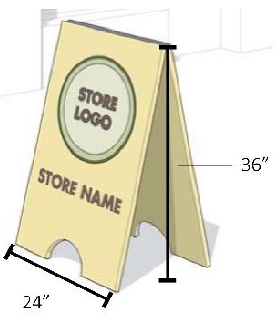
SIGN, A-FRAME. A portable sign that may be double or single faced, with the base of the sign being the supporting structure and the connecting point(s) located at the top. A-frame signs may be easily moved from place to place.
SIGN, ABANDONED. A sign which for a period of a least 90 days no longer correctly relates to a bona fide business, lessee, owner, or activity conducted on the premises where the sign is displayed; and/or the sign has been damaged, and repairs and restoration are not started within 90 days of the date the sign was damaged, or repairs are not diligently pursued, once started.
SIGN, ANIMATED. A sign that has any visible moving part, color change, flashing or osculating lights, visible mechanical movement of any description, or other apparent visible movement achieved by any means that move, change, flash, osculate or visibly alters in appearance. The term may include electronic changeable signs with optical illusion of movement, color change, or change of lighting, to depict action or create a special effect or scene; and signs using electronic ink, signs set in motion by movement of the atmosphere, any sign set in motion by intentional movement by a person, any type of screen using animated or scrolling displays, such as an LED (light emitting diode) screen or any other type of video display.

SIGN, ATTACHED. A sign that is attached to and extends no more than 12 inches from a wall, or that is painted on a wall of a building.
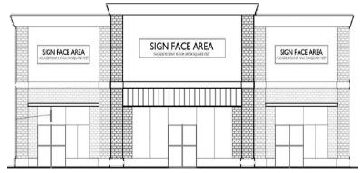
SIGN, AWNING. A sign that is painted on, printed on, or attached flat against the surface of an awning.
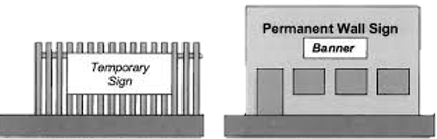
SIGN, BANNER. A temporary sign applied to cloth, plastic, paper, fabric, or other light pliable material of any kind either with or without frames; and which is suspended, mounted, or attached to buildings, poles, or natural elements at two (2) ends.
SIGN, BEACON. A stationary or revolving light which flashes or projects illumination, single color or multicolored, in any manner which has the effect of attracting or diverting attention. This term does not include any kind of lighting device which is required or necessary under the safety regulations of the Federal Aviation Administration (FAA) or other similar agency. This definition does not apply to any similar type of lighting device contained entirely within a structure which does not project light to the exterior of the structure.

SIGN, BENCH. A sign on an outdoor bench.

SIGN, BILLBOARD. A freestanding off-site sign or sign structure.

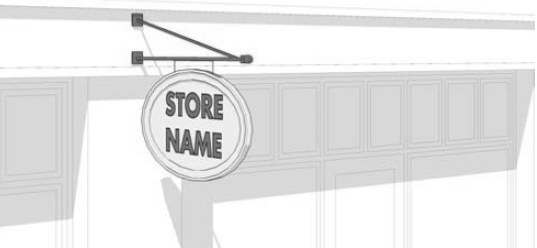
SIGN, BLADE. A small-scale sign hanging or projecting perpendicular to the face of a building.
SIGN, CANOPY. A sign that is placed on or integrated into fabric or other material that is an integral part of a canopy. See also Canopy.
SIGN, CHANGEABLE COPY. A sign that is designed so that characters, letters, or illustrations can be manually changed or rearranged without altering the sign face.

SIGN, CITY INFORMATION. A sign announcing official City business, including meeting information, workshops, elections, emergency and disaster notices, directions, warnings, and Amber alerts, and official City Leisure Services programs and event announcements, including classes, athletics, cultural partner special events, and other events.

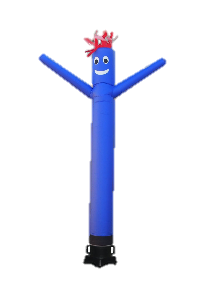
SIGN, COLD AIR INFLATABLE. A balloon-type sign with a blower (fan) system which runs to keep the sign inflated.
SIGN, COMMERCIAL MESSAGE. Any sign wording, logo, or other representation or image that directly or indirectly names, advertises, or calls attention to a product, service, sale, or sales event or other commercial activity.
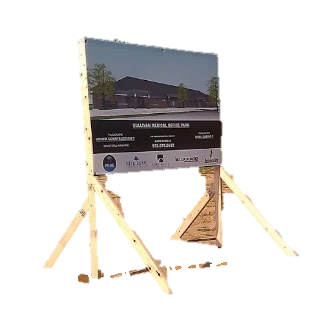
SIGN, CONSTRUCTION. A temporary on-site sign identifying the ongoing construction activity during the time that a building permit is active, but prior to completion of the work for which the permit was issued, containing sign copy that is limited to the ongoing construction activity and identifying the contractor, professionals, and/or any subcontractor engaged to perform construction activity on the site.
SIGN, DIRECTIONAL. An attached or freestanding on-site non-commercial sign directing the movement of pedestrian or vehicular traffic on the premises where it is located. A directional sign may use words such as "entrance," "exit," "caution," "no parking," "one way only," and the like, or arrows or similar graphics.
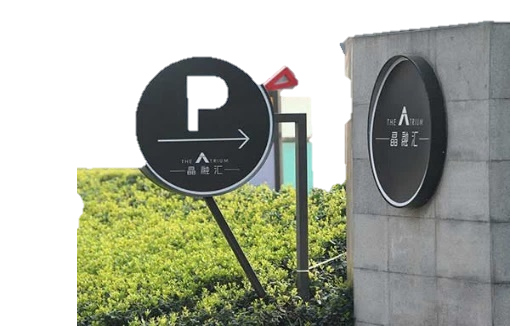
SIGN, DIRECTORY. A non-commercial sign that lists the names and locations of occupants or the use of a building. It is limited to use at multi-tenant buildings and a development made up of a group of buildings.
SIGN, ELECTRONIC CHANGEABLE. A sign that uses changing lights or an electronic medium to form an image, picture, or message of any kind, whether the image, picture, or message is moving or stationary, where the sequence of the messages and the rate of change are electronically programmed and can be modified by electronic processes. Electronic changeable signs include LED signs (light emitting diode technology or other similar semiconductor technology), OLED signs (transmissive, organic light emitting diodes), LEP signs (light emitting polymer), OEL signs (organic electro luminescence), or any similar technology.
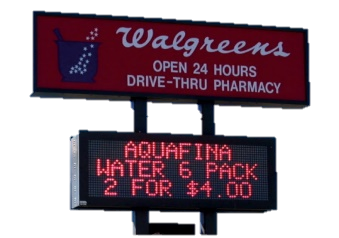
SIGN, FIXED AERIAL. Any aerial advertising medium that is tethered to the ground or any object that is on the ground.
SIGN, FLAG. A piece of fabric of distinctive design that is displayed hanging free from a staff halyard or building to which it is attached, used as an ornamental flag or as a symbol of the United States, a nation, state, local government or other political subdivision, corporation, business, organization, or a person. Flags are not banners.
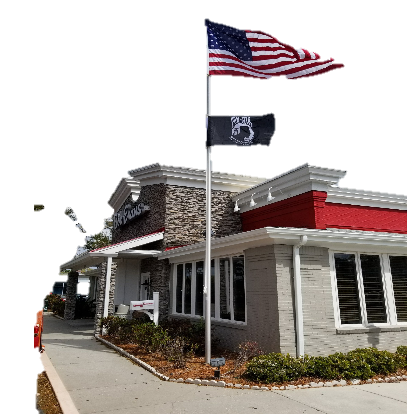
SIGN, FLASHING. A sign that directly or indirectly is illuminated and that exhibits changing natural or artificial light or color effects by any means whatsoever.

SIGN, FREE EXPRESSION. A sign that communicates information or views of concern of the owner of the sign, or contains any other non-commercial message that is otherwise lawful.

SIGN, FREESTANDING. A sign that is not attached to any building, such as monument signs. The definition of a "freestanding sign" does not include a portable sign.
SIGN, GARAGE OR YARD SALE OR GARAGE-YARD. An on-site temporary sign pertaining to the sale of personal property in, at, or upon any property that is zoned for residential use. Garage or yard sales shall include but not be limited to all such sales, and shall include the advertising of the sale of personal property, or other offering to make any sale, whether made under any name such as garage sale, lawn sale, yard sale, front yard sale, back yard sale, attic sale, rummage sale, patio sale, moving sale, or any similar designation.

SIGN, GROUND. A sign that is defined as a freestanding sign.
SIGN, HOLIDAY, AND SEASONAL DECORATIONS. Decorations that do not communicate informational messages apart from recognizing legal or other recognized holidays or a season of the year. They are not considered signage.

SIGN, ILLUMINATED. A sign illuminated by an internal light source or an external light source primarily designed to illuminate the sign.
SIGN, MACHINERY AND EQUIPMENT. A sign that is integral to the machinery or equipment and that identifies the manufacturer of the machinery or equipment, that is placed on the machinery or equipment at the factory at the time of manufacture. Machinery and equipment signs are not vehicle signs.
SIGN, MARQUEE. A sign that is attached to a marquee.
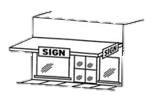
SIGN, MENU BOARD. A sign placed at the beginning of a drive-through service lane of a food service establishment that includes a menu and a two-way speaker system for taking food orders.
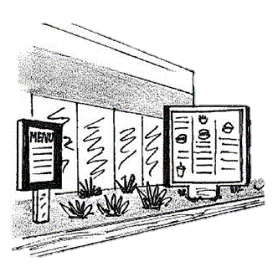
SIGN, MENU DISPLAY. A fully enclosed or otherwise protected from the elements on-site sign, including but not limited to a box, shadow box or cabinet, attached to a wall or freestanding, which is used solely for the purpose of displaying restaurant menus. A menu display sign may be used for a restaurant without drive-through service and for transient lodging facilities that have restaurant facilities open to the general public, in addition to the registered guests. Menu display sign structures shall be limited to two (2) per establishment.
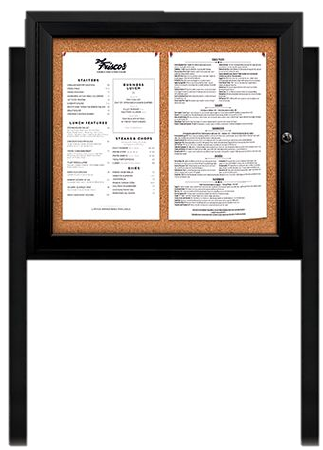
SIGN, MOBILE BILLBOARD ADVERTISING. A vehicle or wheeled conveyance that carries, conveys, pulls, or transports any sign or billboard for the exclusive purpose of advertising.

SIGN, MONUMENT. A freestanding, on-site ground sign not erected on one or more poles or similar structures but which has a solid supporting base on the ground equal or greater than the width of the sign face that is generally made of stone, masonry, or concrete, with no separations between the sign and base, and which is of a finished or decorative-type construction.

SIGN, NAMEPLATE. An attached wall sign indicating the name and/or profession or address of a person or persons residing on the premises where the sign is located or legally occupying the premises where the sign is located.
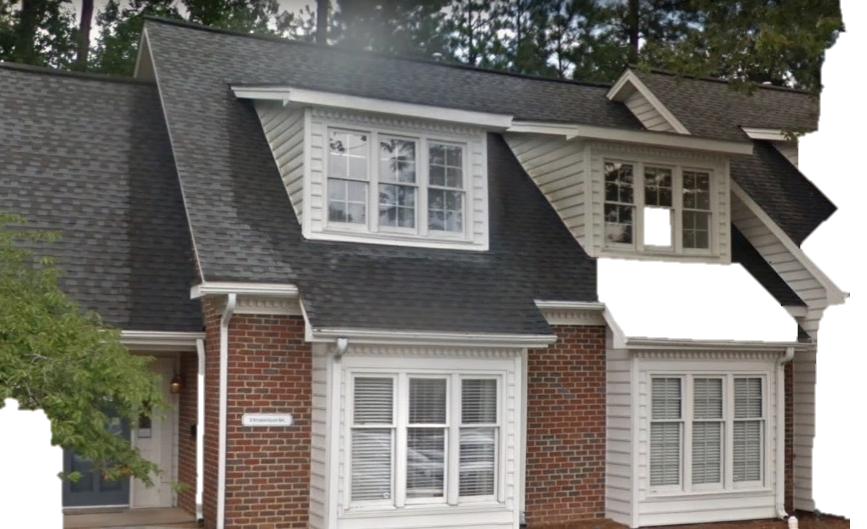
SIGN, NEON. A sign that is manufactured utilizing neon tubing which is visible to the viewer.
SIGN, NONCONFORMING. Any sign that was lawful when it was erected but does not currently comply with the requirements of Section 5.14, Signs
SIGN, OCCUPANT IDENTIFICATION. See Sign, Nameplate.
SIGN, OFF-SITE. A sign that identifies activities conducted or products or services that are not available on the premises on which the sign is located.
SIGN, ON-SITE. A sign that is located on the premises to which the sign pertains that identifies an activity conducted or products or services available on the premises where the sign is located, and/or displays a non-commercial message.
SIGN, OPEN HOUSE REAL ESTATE. Signs advertising an open house viewing at a residential property.

SIGN, PARK EVENT. A temporary sign posted on public property designated herein by an individual, group or other entity authorized and approved by the City to conduct a special event.
SIGN, PENNANT STRING. A string of small flag-like pieces of plastic or paper attached to any staff, cord, or building at only one or two (2) edges, the remainder hanging loosely.
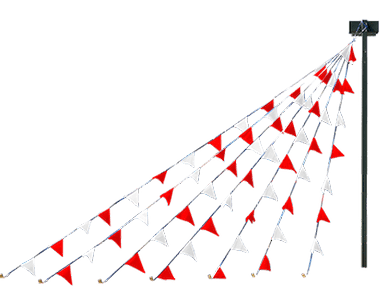
SIGN, PERMANENT. A sign which, when installed, is intended for permanent use. For the purposes of this LDC, any sign with an intended use in excess of 90 days from the date of installation shall be deemed a permanent sign unless otherwise indicated elsewhere in this LDC.
SIGN, POLE. A freestanding sign that is supported from the ground up by one or more poles, columns, uprights, braces, or anchors. The definition of pole sign does not include flags, temporary signs, warning signs, safety signs, traffic control device signs, statutory signs, parking space identifications signs, or canopy signs.
SIGN, PORTABLE. A sign, except a motor vehicle sign, that is not permanently affixed to a building, structure, or the ground, that is designed to be moved from place to place. A portable sign may fall within the definition of other types of signs, yet still be a portable sign. For purposes of this definition, a cold air inflatable sign, mobile billboard advertising sign, and A-frame sign shall be considered to be portable signs.

SIGN, PROJECTING. A sign attached to a building or other structure extending in whole or in part more than 12 inches beyond the surface of the portion of the building to which it is attached.
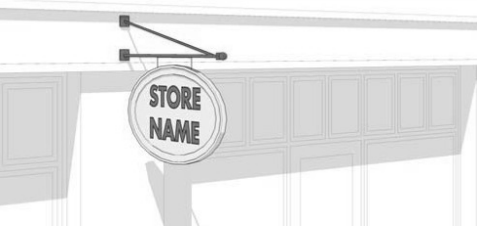
SIGN, REAL ESTATE. A temporary sign advertising the sale, rental, or lease of the premises or part of the premises on which the sign is displayed temporarily. For purposes of this LDC, a sign advertising an open house or a model home sign shall be considered a real estate sign.

SIGN, ROOF. A sign erected, constructed, and maintained wholly upon the roof of any building, with the principal support on the roof structure.
SIGN, SAFETY. See Sign, Warning.
SIGN, SNIPE. Any sign tacked, nailed, fastened, affixed to, painted, posted, pasted, glued, staked, or otherwise attached to trees or other vegetation (living or dead), telephone poles, utility poles, or fences, or installed in yards or rights-of-way with the message appearing thereon not applicable to the owner of the utility poles or present use of the premises upon which the sign is located.

SIGN, STATUTORY. A sign required by any federal or state law.
SIGN, STREET ADDRESS. A sign denoting the street address of the premises on which it is attached or located.
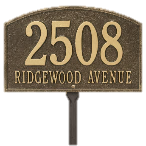
SIGN, SUSPENDED. A sign attached to and located below a canopy or similar structure.
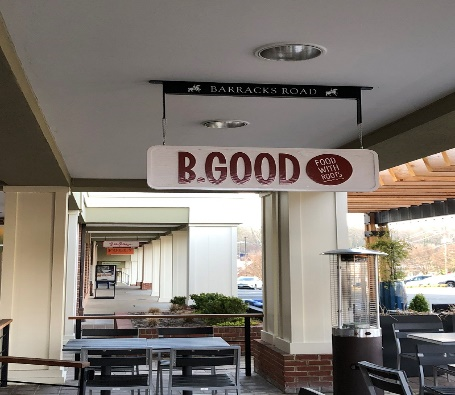
SIGN, TEMPORARY. A sign, banner, valance, or display constructed of cloth, canvas, light fabric, cardboard, wallboard, or other light materials, with or without frames, intended to be displayed for a period of time not to exceed 90 days, or as otherwise authorized by Section 5.14, Signs.
SIGN, TRAFFIC CONTROL DEVICE. A sign located within the right-of-way that is used as a traffic control device that is described and identified in the Manual on Uniform Traffic Control Devices (MUTCD) and approved by the Federal Highway Administrator as the National Standard. A traffic control device sign includes those signs that are classified and defined by their function as regulatory signs (that give notice of traffic laws or regulations), warning signs (that give notice of a situation that might not readily be apparent), and guide signs (that show route designations, directions, distances, services, points of interest, and other geographical, recreational, or cultural information). Some traffic control device signs may be portable.
SIGN, VEHICLE. A sign on a truck, vehicle, or trailer which displays an advertisement or business identification of its owner for the purpose of providing transportation for owners or employees of the business advertised on the vehicle.

SIGN, WALL. See Sign, Attached.
SIGN, WARNING. A sign that provides warning of a dangerous condition or situation that might not be readily apparent or that poses a threat of serious injury (e.g., gas line, high voltage, condemned building, etc.), or that provides warning of a violation of law (e.g., no trespassing, no hunting allowed, etc.).

SIGN, WIND. A sign that uses objects or a series of fabric, paper, plastic, or other similar material fastened in such a manner as to move upon being subjected to pressure by wind. A wind sign may include ribbons, spinners, streamers, or captive balloons. The term wind sign shall not include flags.
SIGN, WINDOW. A temporary or permanent sign mounted, attached to, placed upon, or painted on a window of a building that is viewable from the outside of the building.
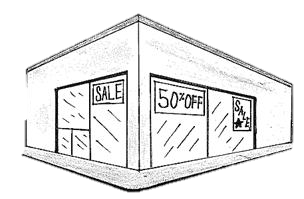
SIGN COPY. The message or image conveyed by a sign.
SIGN COPY AREA. The surface area of a sign upon which the sign copy is displayed.
SIGN FACE. The sum of the surfaces of the sign copy area as seen from one plane or elevation.
SIGN HEIGHT. The vertical distance measured from the average finished grade beneath a sign to the topmost point of the sign structure.
SIGN STRUCTURE. Any construction designed to support or to provide a surface for a sign, including any marquee, canopy, or awning.
SILTATION. Rapid influx of sediment into bodies of water, typically caused by the removal of native ground cover followed by seasonal rainstorms.
SINGLE-FAMILY DETACHED. See definition of dwelling, single-family detached in Sec. 4.2.3(a)(1), Household Living Uses.
SOLAR ENERGY COLLECTION FACILITY, SMALL-SCALE. Equipment for the collection of solar energy or its conversion to electrical energy for use on the same property, or for incidental sale to a public utility, when that equipment is accessory to a principal use of the property. Components are typically mounted on the roof(s) of principal or accessory structures, but may be mounted on other parts of structures, or on the ground.
SPECIAL MAGISTRATE. The officer of the City established in accordance with Sec. 4.7-8 et seq. of the City Code who is authorized to conduct hearings and assess fines against persons who violate the City Code and this LDC, in accordance with Ch 5.3 of the City Code and Article 9: Enforcement of this LDC.
SPECIAL EVENT. An event as defined by section 14-2 of the City Code.
SPECIAL PRIVATE GAIN. See definition in Sec. 112.3143, Fla Stat.
SPECIMEN TREE. A tree located on private property that has unique or unusual arboricultural value, including any tree with a dbh larger than thirty (30) inches.
STOOP. A frontage element wherein the building façade is aligned close to the property line with the first story elevated from the sidewalk sufficiently to secure privacy for the windows. The entrance is usually an exterior stair and landing that may include a roof. This type is recommended for ground-floor residential use.
STORY (DOWNTOWN MAITLAND). The space in a building between two (2) adjacent floor levels or between a floor and a roof. Basements that emerge less than four (4) feet from grade or attics, with or without dormer windows, not exceeding five and one-half (5½)feet shall not constitute a story. Whenever a story exceeds twenty-five (25) feet in height, measured from the finished floor to the bottom of the slab above, each height of fifteen (15) feet or portion thereof shall be construed to be one (1) story.
STREET. A way for vehicular traffic, whether designated as a street, highway, thoroughfare, parkway, throughway, road, avenue, boulevard, lane, place, or however otherwise designated.
STREET, COLLECTOR. A street which, in addition to giving access to abutting properties, carries traffic from minor streets to major arterial streets and highways. A collector street may include the principal entrance street or streets of a residential development and streets for circulation within a development.
STREET, HALF OR PARTIAL. A street, generally parallel and adjacent to the boundary line of a parcel or tract of land which is only a portion of the ultimate right-of-way width.
STREET, MAJOR ARTERIAL (OR ARTERIAL). A street or highway used primarily for fast and high traffic volumes traveling considerable distances with a width of right-of-way of one hundred six (106) feet or more.
STREET, MARGINAL ACCESS. A minor street parallel to and adjacent to major arterial streets or highways, which provides access to abutting property and protection from through traffic. A marginal access street may also be called a frontage street or road.
STREET, MINOR. A street used primarily for access to abutting properties and not for through traffic.
STREET, PRIVATE. Any street used for vehicular traffic which is not a public street, including, but limited to, streets in apartment or office complexes.
STREET, PUBLIC. The area of the public right-of-way, either paved or unpaved, which is intended for vehicular traffic, excluding service entrances or driveways.
STREETSCAPE. Hardscape elements such as pavers, benches, lighting, trash and recycling receptacles, fountains, seating, shade structure, landscape elements such as canopy and understory trees, shrubs, bushes, grasses and flowers, green infrastructure and architectural structures and projections that provide shade and protection from various weather conditions.
STRUCTURE. That which is built, constructed, erected, or placed, including all temporary, fixed, or movable construction.
SUBDIVISION. The division of land into three (3) or more lots, parcels, tracts, tiers, blocks, sites, or units, or any other division of land. The term includes establishment of new streets and alleys, additions, and resubdivisions; and, when appropriate to the context, relates to the process of subdividing or to the lands or area subdivided.
SUBMERGED WETLAND PLANTS. Plants which grow entirely underwater and cannot survive out of water.
SURVEYOR. Refers to a land surveyor registered in the state of Florida, and who is engaged by the subdivider to survey and prepare the plat of the land proposed for subdivision.
SWALE. A shallow trench which has sides and slopes flatter than three (3) feet horizontal to one (1) foot vertical (3:1). A swale is designed and created to slow and direct the flow of stormwater in a desired direction, preventing its rapid flow into a waterway, thereby reducing stormwater pollutant loading in a lake. A swale typically is accompanied by a berm.
SWIMMING POOL AND POOL SCREEN ENCLOSURE. A swimming pool is a built structure, in-ground or above group, at least two (2) feet deep on average with a surface area exceeding one hundred (100) square feet, that is filled with water and used for wading or swimming, and that is accessory to a principal use. A pool screen enclosure is a structure constructed around a pool, typically a framework of aluminum or similar materials, with screening that encloses the pool and surrounding area and protects it from leaves and other debris.
TERMINAL PLATFORM. The portion of a dock beginning at the terminal end of the main access walkway including platform decking, boathouse, boat slip, and secondary access. The terminal platform shall be designed for the mooring and launching of vessels or other water-dependent activities.
TRANSPORTATION OPERATION AND MAINTENANCE EXPENSES. Expenses associated with the operation and maintenance of transportation facilities, including cleaning, repairs, mowing, landscape maintenance, resurfacing that does not expand transportation capacity, and fuel and salary costs for the operation of transit systems.
TREE. Any self-supporting woody or fibrous perennial plant of a species that normally grows to a mature height of twenty-five (25) feet or greater and has a tree trunk DBH of twelve (12) inches or greater.
TREE ABUSE. Damage to a tree that includes: removing more than thirty (30) percent of foliage a year, cutting more than thirty (30) percent of roots in critical root zone, "lion-tailing," or removing bark from a tree greater than twenty-five (25) percent of the circumference of the stems and branches which would directly lead to the death of the tree in subsequent years or which would begin the decline cycle and/or destroy the natural growth habit of the tree.
TREE CLEARANCE. The minimum distance from a vehicle or pedestrian to a branch or limb of a tree, measured from grade.
UNIFIED PARCEL BOUNDARY. Where a single lot is divided into two (2) lots in accordance with Sec. 2.5.2(d), Lot Split, and the two (2) lots include an optional conjoined dwelling, the exterior parcel lines of the two (2) lots with which compliance with zone district dimensional are determined.
UNIFORM BUILDING NUMBERING SYSTEM. A system by which existing buildings and Individual lots and parcels for future buildings are assigned addresses in a coordinated and uniform method based on a designated grid system contained in the official mast grid maps.
USED. For purposes of Article 6: Subdivision Standards only, the words used or occupied include the words intended, designed, or arranged to be used or occupied.
UTILITY TRAILER. A non-motorized vehicle designed to be pulled by an automobile or truck, with a flat bed open to the air or an enclosed structure, used for storage or transportation of materials, goods, or objects.
VEGETATION. Any true, shrub, ground cover, or living plant species.
VEHICLE MILES OF TRAVEL. A unit to measure vehicle travel made by a private motor vehicle, such as an automobile, van, pickup truck, or motorcycle where each mile traveled is counted as one vehicle mile regardless of the number of persons in the vehicle.
WALKWAY. A right-of-way intended primarily for pedestrians, excluding self-propelled vehicles.
WATERFRONT STRUCTURE. A seawall, retaining wall, boardwalk, boat slip, boat ramp, boathouse, boat dock, observation deck, floating structure, boat lift, or mooring pilings, whether temporary or permanent, located within a Shoreline protection area, that area beginning 25 feet landward of the NHWE and extending through the littoral zone of the water body.
WATERFRONT VEGETATION. Submerged and emergent aquatic or wetland vegetation, including wetland forest species and revegetation.
WATERWAY OR WATER BODY. Lakes, streams, canals, runs, and creeks.
WETLAND PROTECTION ZONE. See Sec. 5.3.8(d), Wetland Protection Zone.
(Ord. No. 1407, § 11, 9-12-22; Ord. No. 1433, § 12, 10-14-24)

