
Mauston City Zoning Code
ARTICLE IV
LAND USE DEVELOPMENT STANDARDS
Sec. 114-114.- General information.
(a)
Purpose. The purpose of this article is to describe and define the principal and accessory land uses which are authorized by this chapter.
(b)
Land use categories. The land uses are divided into the following general categories:
(1)
Residential land uses.
(2)
Agricultural land uses.
(3)
Institutional land uses.
(4)
Commercial land uses.
(5)
Storage/disposal land uses.
(6)
Transportation land uses.
(7)
Industrial land uses.
(8)
Accessory land uses.
(9)
Temporary land uses.
(c)
Group developments. A group development is any development containing:
(1)
Two or more structures containing principal land uses on the same lot;
(2)
Any single structure on a single lot which contains five or more dwelling units or two or more nonresidential uses; and/or
(3)
Any single structure devoted to institutional, office or commercial land uses containing more than 5,000 gross square feet of floor area. Group developments are allowed as conditional uses in all zoning districts, provided that the proposed uses within the group development are either permitted uses or conditional uses within the zoning district in question. Group developments require special consideration because of the unique issues which arise when several principal structures, and/or several land uses, and/or numerous dwelling units, and/or large land uses are proposed on a single lot. Hence, additional regulations are imposed on group developments in section 114-130.
(d)
Omitted uses. Land uses which are not specifically described in this chapter are not necessarily excluded from locating within any given zoning district. Article VIII of this chapter empowers the zoning administrator to make interpretations on matters regarding specific land use proposals which are not addressed by this chapter.
(e)
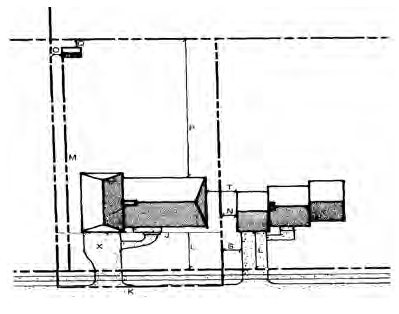
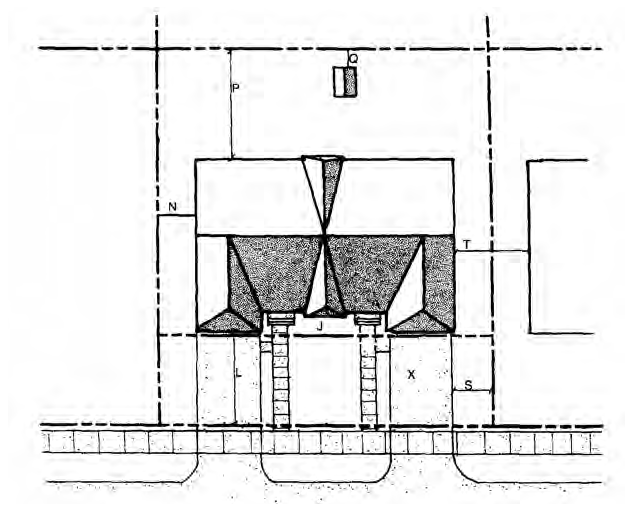
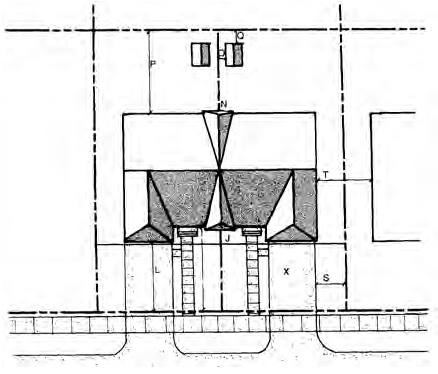
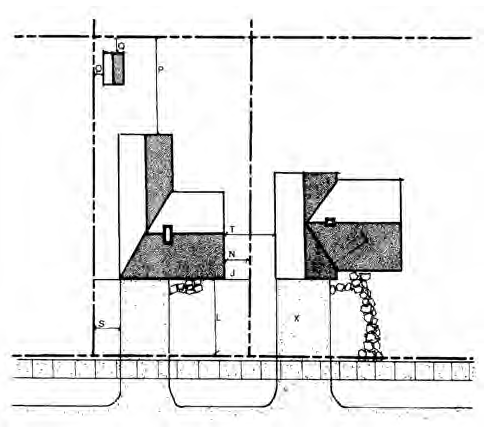
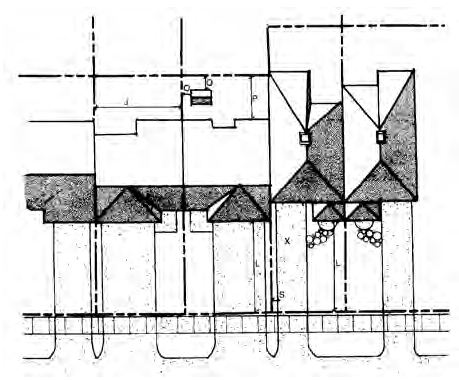
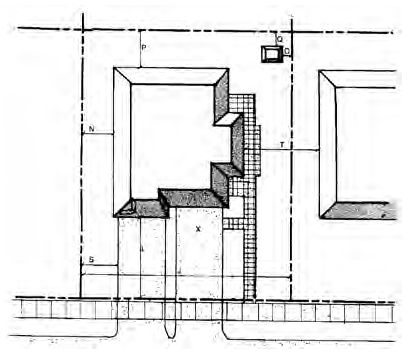
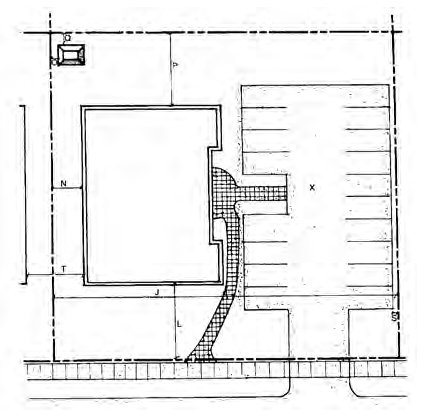
Illustrations. The illustrations contained herein demonstrate how to measure the various setback requirements labeled in capital letters.
(f)
Discrimination against condominium forms of ownership. It is not the intent of this section, nor any other provision of this chapter, to discriminate against condominium forms of ownership in any manner which conflicts with Wis. Stats. § 703.27. As such, the provisions of this section are designed to ensure that condominium forms of ownership are subject to the same standards and procedures of review and development as other physically similar forms of development.
(Ord. No. 2017-1092, § 1, 4-11-2017)
Sec. 114-115. - Regulations applicable to all land uses.
(a)
The regulations set forth in this chapter apply to all structures and all land uses, except as otherwise provided in this chapter.
(b)
Number of buildings per lot. In the AG, ER-1, SR-3, and SR-4 districts, only one principal building shall be permitted on any one lot. In the TR-6, MR-8, MR-10, NB, PB, GB, CB, GI, and HI districts, more than one principal building shall be permitted on any one lot upon the granting of a conditional use permit (section 114-288) for a group development (section 114-130).
(c)
Number of land uses per building.
(1)
No more than one nonresidential land use shall be permitted in any building unless a conditional use permit (section 114-288) for a group development (section 114-130) is granted.
(2)
With the exception of a commercial apartment or a home occupation, no building containing a nonresidential land use shall contain a residential land use.
(d)
Division or combining of a lot. No recorded lot shall be divided into two or more lots, and no two or more recorded lots shall be combined into one or more lots, unless such division or combination results in the creation of lots, each of which conforms to all of the applicable regulations of the zoning district in which said lot is located, as set forth in this chapter.
(Ord. No. 2017-1092, § 1, 4-11-2017)
Sec. 114-116. - Nonconforming use.
(a)
Existing nonconforming uses. An active and actual use of land or structures, or both, legally established prior to the effective date of the ordinance from which this chapter is derived or subsequent applicable amendment thereto which has continued the same use to the present, and which would not be permitted under the current terms of the chapter.
(b)
Continuance of a nonconforming use. Any nonconforming use lawfully existing upon the effective date of the ordinance from which this chapter is derived may be continued at the size and in a manner of operation existing upon such date, except as specified in this section. Any legal use under the previous zoning ordinance which is made nonconforming by this chapter may apply for a conditional use permit (per section 114-288) to be granted legal conforming status. Any legal use under the previous zoning map which is made nonconforming by a change to the official zoning map may apply for a zoning map amendment, per section 114-286, to an appropriate zoning district to be granted legal conforming use status.
(c)
Modification of a nonconforming use.
(1)
Except as permitted in subsection (c)(2) below of this section, a nonconforming use shall not be expanded or changed to another nonconforming use unless such modification would make the nonconforming use have a more desirable effect in terms of implementing the purpose of this chapter, as determined by the zoning administrator. If such a modification occurs, said use shall not be modified back to the original nonconforming use or to any other nonconforming use which does not better accomplish the purpose of this chapter.
(2)
A nonconforming nonresidential use which is not served by public sanitary sewer and/or public water may be permitted to expand without being served by public sanitary sewer and/or public water if said facilities are not available within 1,000 feet of the subject property and upon the granting of a conditional use permit per the requirements of section 114-288.
(d)
Discontinuance of a nonconforming use. When any nonconforming use of any structure or land is discontinued for a period of 12 months, or is changed into a conforming use, any future use of said structure or land shall be in complete conformity with the provisions of this chapter.
(e)
Maintenance of a nonconforming use. The normal maintenance of a structure or land containing or related to a nonconforming use is permitted, including necessary repairs and incidental alterations which do not exacerbate the adverse impacts of the nonconforming use in relation to the purpose of this chapter.
(f)
Destruction of nonconforming uses. A building or structure containing a nonconforming use which is accidentally damaged by fire, tornado or other disaster may be repaired so that the nonconforming use may be continued thereafter, provided that the total cost of all the repairs, both structural and non-structural, does not exceed 50 percent of the assessed value of the building or structure. However, if the cost to repair the building or structure exceeds 50 percent of the assessed value of the building or structure, then the building or structure shall not be allowed to be repaired and then used for a nonconforming use, except in the following circumstances:
(1)
The following nonconforming uses may be allowed, by conditional use, to rebuild as a nonconforming use regardless of the cost of repairs, provided that neither the floor area nor the footprint of the structure shall be expanded:
a.
Single-family detached (section 114-121(a));
b.
Duplex (section 114-121(b));
c.
Twin-house (section 114-121(c));
d.
Two-flat house (section 114-121(d));
e.
Townhouse (section 114-121(e)).
(2)
A nonconforming use which owns and occupies two or more principal buildings or structures in close proximity to one another (e.g., an industry which has two or more buildings located next to each other on separate tax parcels), may be allowed, by conditional use, to rebuilt as a nonconforming use, provided that the total cost of the rebuilding does not exceed 50 percent of the assessed value of all the adjacent buildings and structures owned and occupied by that nonconforming use.
Nothing herein shall be construed to prohibit the repair or rebuilding of a building or structure which will contain a legal conforming use after the repairs are completed, provided the building or structure itself conforms with the other provisions of this chapter. For regulations dealing with destruction of nonconforming structures, see section 114-78.
(Ord. No. 2017-1092, § 1, 4-11-2017)
Sec. 114-117. - Substandard lot regulations.
(a)
Prohibition. Upon and after the effective date of the ordinance from which this chapter is derived, no lot shall be created which does not meet the minimum zoning district area (MZA), or the minimum lot area (MLA) requirements, or the lot dimension requirements of each applicable zoning district.
(b)
Preexisting lots. A lot of record existing upon the effective date of the ordinance from which this chapter is derived in a residential district, which does not meet the minimum zoning district area (MZA) or the minimum lot area (MLA) requirements of article II, or which does not meet the lot dimension requirements of article II of this chapter may be utilized for a detached single-family dwelling unit, provided the measurements of such area and dimensions are equal to or greater than 70 percent of the requirements of this chapter. Said lot shall not be more intensively developed with multifamily or nonresidential uses unless combined with one or more abutting lots, or portions thereof, so as to create a lot which meets the requirements of this chapter.
(c)
Division or combining of a lot. No recorded lot shall be divided into two or more lots, and no two or more recorded lots shall be combined into one or more lots, unless such division or combination results in the creation of lots, each of which conforms to all of the applicable regulations of the zoning district in which said lot is located.
(Ord. No. 2017-1092, § 1, 4-11-2017)
Sec. 114-118. - Nonconforming structures and buildings.
(a)
Any lawful nonconforming structure existing at the time of the adoption or amendment of this chapter may be continued although its size and/or location does not conform to the lot width, area, yard, height, parking, loading, and access provisions of this chapter.
(b)
Existing nonconforming structures shall not be extended, enlarged, reconstructed, moved, or structurally altered except when required to do so by law or so as to comply with the provisions of this chapter.
(c)
Notwithstanding the above, an existing nonconforming principal structure in the residential districts which is used for any specified or conditional use, may be extended, reconstructed, moved, or structurally altered, but only if such change does not result in an increase to the nonconforming nature of the structure. No such change may increase the parking requirements for the use unless on-site parking spaces can be provided in accordance with section 114-161.
(d)
When a nonconforming structure is damaged by fire, explosion, flood, violent wind, vandalism, ice, snow, mold, or infestation it may be reconstructed if such change does not result in an increase to the nonconforming nature of the structure.
(e)
A nonconforming garage may be enlarged or replaced provided the following requirements are met:
(1)
That the proposed garage replacement or addition does not encroach farther into required setback than the current legal, nonconforming structure;
(2)
That the proposed garage replacement or addition does not locate closer to an existing residence on an adjacent parcel than the sum of the required garage setback on the subject property and the required house setback on said adjacent parcel; and
(3)
That precautions, determined the zoning administrator, are taken to reduce the possibility of fire damage to nearby structures.
a.
Issued building permits. Any structure or building for which a building permit has been lawfully granted prior to the effective date of the ordinance from which this chapter is derived, which will become nonconforming under the provisions of this chapter or amendments thereto, may be completed in accordance with the approved plans, provided construction is started within 365 days of the effective date of the ordinance from which this chapter is derived, and provided that construction is completed within 730 calendar days of the effective date of the ordinance from which this chapter is derived or amendments thereto. Said structure or building shall thereafter be a nonconforming structure or building. Extensions to these time limits may be granted by the plan commission for good cause.
(Ord. No. 2017-1092, § 1, 4-11-2017)
Sec. 114-119. - Density and intensity standards.
(a)
Purpose. The purpose of these standards is to indicate the maximum permitted density for residential projects and maximum permitted intensity for nonresidential projects of development. The development potential of any site is determined by a variety of factors, including, but not limited to:
(1)
The area of the site;
(2)
The proportion of the site not containing sensitive natural resources;
(3)
The zoning district in which the site is located;
(4)
The development option the site is developed under; and
(5)
The use considered for development.
(Ord. No. 2017-1092, § 1, 4-11-2017)
Sec. 114-120. - Bulk regulations.
(a)
Purpose. The purpose of this section is to indicate the requirements for building height, size and location in both residential and nonresidential developments. The provisions of this section interact closely with the provisions of the previous section regarding density and intensity regulations.
(b)
Reserved.
(c)
Yard setback adjustments.
(1)
Front yard setback adjustments.
a.
Wide roads. For lots located adjacent to a street with an officially mapped or existing right-of-way equal to or exceeding 100 feet, 40 feet of setback is required to address anticipated future conditions of noise and air quality.
b.
Reductions. The required front yard setback for any use may be reduced through the conditional use process for a principal structure on any lot where more than 50 percent of the same type of principal structures on the same block face or street face do not meet the required front yard setback. In such instances, the required front yard setback for the proposed structure shall be the average of all the adjoining same type principal structures on said block face or street face.
c.
Averaging. In order to preserve and maintain the character of established neighborhoods within the city with front yard setbacks substantially less than the minimum required front yard setback, the following regulations shall apply, unless altered through the conditional use process:
1.
On block faces with an average front yard setback more than five feet less than the minimum required front yard, the setback shall be decreased to the average of the adjoining same type principal structures on said block face or street face.
d.
Corner lots. Lots which abut on more than one street and, therefore, have more than one front yard (e.g., corner lots) shall comply with the setback requirements for front yards along each street, except that the required front yard setback may be reduced through the conditional use process, subject to the following limitations:
1.
The required front yard setback must be maintained along at least one street abutting the lot; and
2.
No front yard setback may be reduced below the minimum set back required for side yards. Intrusions into required yards:
(i)
General standards. The minimum setback requirements found in each zoning district shall establish the minimum required yards for all uses, except those exempted by the provisions of this section.
A.
Reductions. No yard shall be reduced in area or dimension so as to make such yard less than the minimum required by this chapter. If an existing yard is less than the minimum required, it shall not be reduced further, except where exempted by the provisions of this section.
B.
Lots separate. No required yard or lot area allocated to satisfy the minimum yard or lot area requirements for one building or structure shall be used to satisfy the minimum yard or lot area requirement for another building or structure.
C.
Bufferyards. In instances where the required bufferyard width exceeds the minimum required setback width, the minimum required bufferyard width shall prevail. Absolutely no intrusions of a building or structure are permitted within the required bufferyard.
D.
Front yards. With the exception of fences, no accessory structures shall be permitted within any portion of a front yard or street yard.
(d)
Permitted intrusions into required front or street yards. The following intrusions are permitted into front or street yards:
(1)
Chimneys, flues, sills, pilasters, lintels, ornamental features, cornices, eaves, and gutters for residential buildings; provided they do not extend more than two and one-half feet into the required yard.
(2)
Yard lights, ornamental lights, and nameplate signs for residential lots, provided that they comply with the illumination requirements of section 114-59 and provided they do not locate closer than five feet from the front or street property line.
(3)
Terraces, steps, stoops, or similar appurtenances to residential buildings which do not extend above the floor level of the adjacent building entrance, provided they do not locate closer than 20 feet from any street right-of-way.
(4)
Fences on residential or nonresidential lots which do not exceed four feet in height; provided they do not locate closer than two feet to any street right-of-way. Permitted fence types shall comply with the provisions of section 114-177.
(5)
Landscape areas.
(e)
Permitted intrusions into required side or rear yards. The following intrusions are permitted into rear or side yards:
(1)
Chimneys, flues, sills, pilasters, lintels, ornamental features, cornices, eaves, and gutters for residential buildings, provided they do not extend more than two and one-half feet into the required yard.
(2)
Fences may locate on the property line. Permitted fence types shall comply with the provisions of section 114-172.
(3)
Fire escapes on residential buildings which do not extend more than four feet into the required yard.
(4)
Landscape areas.
(5)
Terraces, steps, uncovered porches, decks, stoops, or similar appurtenances to residential buildings which do not extend more than one foot above grade, provided they do not locate closer than 20 feet to the rear lot line.
(6)
In neighborhoods that were platted before adoption of this Code (October 31, 2001), driveways may be located within the side yard setback and/or may extend across side yard property lines (e.g., shared driveways), provided that a written agreement:
a.
Executed by the adjacent property owners;
b.
In a form recordable with the register of deeds;
c.
Addressing the issues of stormwater run-off, snow removal, parking, outside storage, and driveway maintenance; and
d.
Addressing any additional issues which, in the discretion of the zoning administrator, are created by the unusual characteristics of the property, is approved by the zoning administrator pursuant to the process for the issuance of zoning permits for permitted uses under section 114-287. Upon approval of any such agreement, it shall be recorded with the register of deeds.
(f)
Exceptions to maximum height regulations.
(1)
Permitted exceptions. The following are permitted to exceed the maximum height regulations by ten feet, within any district where permitted: church spires, belfries, cupolas and domes which do not contain useable space, public monuments, water towers, fire and hose towers, flag poles, chimneys, smokestacks, cooling towers, and elevator penthouses. Such uses may exceed said maximum by more than ten feet with the approval of a conditional use permit.
(2)
Conditional use exceptions. Any building or structure not otherwise accounted for by subsection (f)(1) of this section may exceed said maximum height regulations with the granting of a conditional use permit which specifically states the maximum permitted height of the proposed building or structure.
(Ord. No. 2017-1092, § 1, 4-11-2017)
Sec. 114-121. - Residential land uses.
(a)
Single-family detached.
(1)
Description. A dwelling designed for and occupied by not more than one family and having no roof, wall, or floor in common with any other dwelling unit. This dwelling unit type consists of a single-family residence which is located on an individual lot or within a group development and which is fully detached from another dwelling unit or building.
(2)
Regulations.
a.
The dwelling unit must be one of the following:
1.
A site-built structure, built in compliance with the UDC;
2.
A manufactured dwelling (modular home) as permitted by the UDC; or
3.
A manufactured home as permitted by the HUD code.
b.
For all dwelling units, the use of a permanent, continuous UDC foundation is required.
c.
This dwelling unit type may not be split into two or more residences.
d.
All below-grade portions of these dwellings (e.g., footings, crawl spaces, basements, etc.) shall be of masonry construction.
e.
Refer to the illustration below and to article II of this chapter for lot requirements labeled in capital letters.
Single-Family Detached Dwelling Unit
(b)
Duplex.
(1)
Description. This dwelling unit type consists of a single, two-family dwelling unit which is in complete compliance with the state one- and two-family dwelling code (§ 101.60.66), and which has two individual dwelling units located side-by-side upon a single lot, compared with two-flat houses which are the same as duplexes except the units are above and below each other. Each dwelling unit is typically occupied by the same family for periods of one month or longer. (See commercial indoor lodging, for rental periods of less than one month.)
(2)
Regulations.
a.
Individual entrances, sanitary sewer laterals and public water laterals are required for each dwelling unit.
b.
The two residences must be located on the same lot. (The twin-house is distinguished from the duplex merely by having each unit located on an individual lot or within a group development.)
c.
A duplex may not be expanded into additional (i.e., more than two) dwelling units.
d.
All below-grade portions of these dwellings (e.g., footings, crawl spaces, basements, etc.) shall be of masonry construction.
e.
Refer to the illustration below and to article II of this chapter for lot requirements labeled in capital letters.
Duplex
(c)
Twin-house.
(1)
Description. The twin-house is identical to a duplex except each dwelling unit must be located on a separate individual lot or within a group development. Separate lots permit, but do not require, ownership of each unit by a different person. Each dwelling unit is typically occupied by the same family for periods of one month or longer. (See commercial indoor lodging for rental periods of less than one month.)
(2)
Regulations.
a.
The regulations for duplexes apply to all twin-houses wherever located in the city.
b.
Individual sanitary sewer and public water laterals are required for each dwelling unit.
c.
Refer to the illustration below and to article II of this chapter for lot requirements labeled in capital letters.
Twin-house
(d)
Two-flat house.
(1)
Description. This dwelling unit type consists of a single, two-family dwelling unit which is in complete compliance with the state one- and two-family dwelling code (§ 101.60.66), which has individual dwelling units on multiple levels, rather than side-by-side as for a duplex or twin-house, and which is located on a single lot. This dwelling unit type also includes any single-family residence that has been converted into a two-family residence. Each dwelling unit is typically occupied by the same family for periods of one month or longer. (See commercial indoor lodging, for rental periods of less than one month.)
(2)
Regulations.
a.
The two residences must be located on the same lot or within the same group development.
b.
This dwelling unit type may not be split into additional dwelling units.
c.
Refer to the illustration below and to article II of this chapter for lot requirements labeled in capital letters.
Two-Flat House
(e)
Townhouse.
(1)
Description. This residential dwelling unit type consists of attached two-story, single-family residences, each having a private, individual access, and each located on a separate lot. Each dwelling unit is typically occupied by the same family for periods of one month or longer. (See commercial indoor lodging, for rental periods of less than one month.)
(2)
Regulations.
a.
Individual sanitary sewer and public water laterals are required for each dwelling unit.
b.
No more than eight and no less than three townhouse dwelling units may be attached per group. (Two-unit townhouses are referred to herein as twin-houses.)
c.
All townhouse units within a development shall be located a minimum of 30 feet from the boundary of the development.
d.
Refer to the illustration below and to article II of this chapter for lot requirements labeled in capital letters.
Townhouse
(f)
Multiplex.
(1)
Description. This residential dwelling unit type consists of several attached dwelling units, each of which has a private, individual exterior entrance. Each dwelling unit is typically occupied by the same family for periods of one month or longer. (See commercial indoor lodging, for rental periods of less than one month).
(2)
Regulations.
a.
No more than 16 and no less than three multiplex dwelling units may be attached in a single building.
b.
As part of the conditional use requirements for group developments, any development comprised of one or more buildings which contain four or more dwelling units shall provide additional site design features, such as underground parking, architectural elements, landscaping, and/or onsite recreational facilities.
c.
All multiplex units within a development shall be located a minimum of 30 feet from the boundary of the development.
d.
Refer to the illustration below and to article II of this chapter for lot requirements labeled in capital letters.
Multiplex
(g)
Apartment.
(1)
Description. This dwelling unit type consists of several attached family dwelling units which provide access to the dwelling units from a shared entrance or hallway. Each dwelling unit is typically occupied by the same family for periods of one month or longer. (See commercial indoor lodging, for rental periods of less than one month.)
(2)
Regulations.
a.
No more than 16 and no less than three dwelling units may be located in a single building. (Two-unit buildings are either duplexes or two-flat houses.)
b.
As part of the conditional use requirements for group developments, any development comprised of one or more buildings which contain four or more dwelling units shall provide additional site design features, such as underground parking, architectural elements, landscaping, and/or onsite recreational facilities.
c.
All apartment units within a development shall be located a minimum of 30 feet from the boundary of the development.
d.
Refer to the illustration below and to article II of this chapter for lot requirements labeled in capital letters.
Apartment
(h)
Commercial apartment.
(1)
Description. Commercial apartments are dwelling units which are located above the ground floor of a building used for a commercial land use as designated in section 114-124, most typically an office or retail establishment. The primary advantage of commercial apartments is that they are able to share required parking spaces with nonresidential uses.
(2)
Regulations.
a.
The gross floor area devoted to commercial apartments shall be counted toward the floor area of a nonresidential development.
(i)
Mobile home.
(1)
Description. This dwelling unit type consists of a structure manufactured or assembled before June 15, 1976, designed to be towed as a single unit or in sections upon a highway by a motor vehicle, and equipped and used, or intended to be used, primarily for human habitation, with walls of rigid uncollapsible construction, which has an overall length in excess of 45 feet. Each dwelling unit is typically occupied by the same family for periods of one month or longer. (See commercial indoor lodging, for rental periods of less than one month.)
(2)
Regulations.
a.
No mobile home may be placed, parked, stored or occupied within the city unless:
1.
It is located in a mobile home park (subsection (j) of this section) land use;
2.
It is exclusively used as a contractor's project office temporary land use; or
3.
It is exclusively offered for sale at an outdoor sales or service (section 114-124(d)) commercial land use, provided the business conducting the outdoor sales or service is engaged in the business of selling new mobile homes.
b.
Except for contractor's project offices and outdoor sales or service land uses, the following regulations shall apply to all mobile homes in the city:
1.
Within 30 days of occupancy the owner shall remove the wheels and install around the entire mobile home skirting made of durable material (e.g., fiberglass, aluminum, metal, vinyl) and shall be of a color matching the mobile home.
2.
The minimum width of each mobile home shall be 14 feet.
3.
Underground utilities shall be provided to each mobile home. Overhead wires and propane tanks shall not be permitted.
4.
This dwelling unit type may not be split into two or more residences.
(j)
Mobile home/manufactured home parks.
(1)
Description. This land use is a form of residential development which is exclusively reserved for;
a.
Conventional mobile home parks, in which lots are owned by a single entity and rented (with or without mobile homes) to individuals; and
b.
Mobile home condo parks, in which all lots are part of the same condominium association and are owned individually by unit owners.
(2)
Regulations. The following regulations apply to all mobile home/manufactured home parks, wherever located in the city:
a.
Each dwelling unit shall be occupied by not more than one family.
b.
Developments shall be located so as to blend with adjacent residentially zoned areas to the greatest extent possible.
c.
No access shall be permitted to local residential streets.
d.
Each of the lots and mobile home units must meet the requirements for mobile homes listed in section 114-121(i).
e.
Under this development option, approximately ten percent of a development's gross site area (GSA) can contain natural resource areas which must be protected, or other permanently protected green space areas, without a reduction in maximum gross density (MGD). This estimate is provided as a general rule of thumb for the convenience of the users of this chapter. Such a yield is not to be considered as ensured by the provisions of this chapter.
f.
A blanket variance is hereby granted to all existing mobile home/manufactured home parks located in the city upon the effective date of the ordinance from which this article is derived. This blanket variance will permit such parks to continue operation, and will permit the removal and replacement of mobile homes on existing lots within the park. However, such parks may not be expanded or altered except in compliance with this article. Nothing herein shall limit or waive the obligation of each park to obtain a license therefore from the city.
Rationale. The purpose of this blanket variance is to make sure that the continued operation of existing mobile home parks are not affected by this article, but any expansion or modification of existing parks shall comply with this chapter. It is expected that park expansions or modifications shall be pursued either as a conditional use within the TR-6 district (section 114-45(b)), or as a planned development (section 114-48). This blanket variance ensures that existing parks do not encounter difficulty when transferring ownership, because they would otherwise be considered nonconforming uses, and it ensures that mobile homes within the parks can be removed and replaced without triggering the need for a zoning permit.
(k)
Adult family home (AFH).
(1)
Description. Adult family home land uses include all facilities provided for under the provisions of Wis. Stats. § 50.01(1).
(2)
Regulations.
a.
The proposed site shall be located so as to avoid disruption of an established or developing area.
b.
No individual lots are required, although the development shall contain a minimum of 900 square feet of gross site area for each occupant of the development.
(Ord. No. 2017-1092, § 1, 4-11-2017)
Sec. 114-122. - Agricultural land uses.
(a)
Cultivation.
(1)
Description. Cultivation land uses include all operations primarily oriented to the on-site, outdoor raising of plants. This land use includes trees which are raised as a crop to be replaced with more trees after harvesting, such as in nursery or Christmas tree operations. The raising of plants for consumption by farm animals is considered cultivation if said plants are consumed by animals which are located off site.
(2)
Principal and accessory land use regulations.
a.
Unless permitted through a conditional use permit on lots of record, cultivation areas shall not exceed 20 percent of the lot's area.
b.
Cultivation areas shall not be located within the required front yard or street yard of any lot of record or developed lot.
c.
In all natural resource protection overlay districts, cultivation is allowed only as a conditional use, provided the area proposed for cultivation is designated on the submitted site plan and/or recorded plat or CSM as an area which may be used for cultivation.
d.
All cultivation uses shall be setback a minimum of 15 feet from all property lines when cultivation uses are located along streets that contain curb and gutter and/or storm sewer systems.
e.
Section 28-1 relating to the land application of manure shall be strictly adhered to.
(b)
Husbandry.
(1)
Description. Husbandry land uses include all operations primarily oriented to the on-site raising and/or use of animals at an intensity of less than one animal unit (as defined in section 114-16) per acre. Apiaries are considered husbandry land uses.
(2)
Regulations.
a.
Any building housing animals shall be located a minimum of 300 feet from any residentially zoned property, and 100 feet from all other lot lines.
b.
All outdoor animal containments (pastures, pens, and similar areas) shall be located a minimum of ten feet from any residentially zoned property.
(Ord. No. 2017-1092, § 1, 4-11-2017; Ord. No. 2020-2030, 6-23-2020)
Sec. 114-123. - Institutional land uses.
(a)
Indoor institutional.
(1)
Description. Indoor institutional land uses include all indoor public and not for profit recreational facilities such as gyms, swimming pools, libraries, museums, and community centers, schools, churches, nonprofit clubs, nonprofit fraternal organizations, convention centers, hospitals, jails, prisons, and similar land uses.
(2)
Regulations.
a.
Shall be located with primary vehicular access on a collector or arterial street.
b.
Shall provide off-street passenger loading area if the majority of the users will be children as in the case of a school, church, library, or similar land use.
c.
All structures shall be located a minimum of 50 feet from any residentially zoned property.
(b)
Outdoor institutional.
(1)
Description. Outdoor institutional land uses include public and private cemeteries, privately held permanently protected green space areas, country clubs, non-public golf courses, campgrounds, fairgrounds, substations, and similar land uses.
(2)
Principal and accessory land use regulations.
a.
Shall be located with primary vehicular access on a collector or arterial street.
b.
Shall provide off-street passenger loading area if a significant proportion of the users will be children.
c.
All structures and actively used outdoor recreational areas shall be located a minimum of 50 feet from any residentially zoned property.
d.
Facilities using night lighting and adjoining a residentially zoned property shall install and continually maintain a bufferyard with a minimum opacity of six-tenths of one percent. Said bufferyard shall be located at the property line adjacent to said residentially zoned property.
e.
Shall comply with section 114-288, standards and procedures applicable to all conditional uses.
f.
In all natural resource protection overlay districts, non-native vegetation shall not be permitted to spread into native vegetation areas.
(c)
Institutional residential.
(1)
Description. Institutional residential land uses include group homes, convents, monasteries, nursing homes, convalescent homes, retirement homes, limited care facilities, rehabilitation centers, and similar land uses not considered to be community living arrangements under the provisions of Wis. Stats. § 62.23.
(2)
Regulations.
a.
The proposed site shall be located so as to avoid disruption of an established or developing office area.
b.
Within the neighborhood business (NB) and planned business (PB) districts, institutional residential developments shall be designed so as to maintain the character of the adjacent properties.
c.
No individual lots are required, although the development shall contain a minimum of 800 square feet of gross site area for each occupant of the development.
d.
A minimum of 30 percent of the development's gross site area (GSA) shall be held as permanently protected green space. This estimate is provided as a general rule of thumb for the convenience of the users of this chapter. Such a yield is not to be considered as ensured by the provisions of this chapter.
e.
The development shall provide off-street passenger loading area at a minimum of one location.
f.
All structures shall be located a minimum of 50 feet from any residentially zoned property which does not contain an institutional residential land use.
(d)
Community living arrangement (CLA).
(1)
Description. Community living arrangement (CLA) land uses include all facilities provided for in Wis. Stats. § 46.03(22). CLAs do not include day care centers nursing homes general hospitals, special hospitals, prisons, or jails. CLA facilities are regulated depending upon their capacity as provided for in Wis. Stats. § 62.23.
(2)
Regulations.
a.
The distance between CLAs is controlled by Wis. Stats. § 62.23(7)(i)1. Exceptions thereto may be granted by conditional use.
b.
The number of CLAs in the city is controlled by Wis. Stats. § 62.23(7)(i)2. Exceptions thereto may be granted by conditional use.
c.
The city may determine whether a CLA poses a threat to the health, safety or welfare of the residents of the city, and may order the CLA to cease operation, pursuant to the statutory procedures of Wis. Stats. § 62.23(7)(i).
d.
Capacity/location pursuant to Wis. Stats. § 62.23(7)(i):
1.
CLAs with capacity for eight or fewer persons and which meet the criteria of Wis. Stats. § 62.23(7)(i) shall be permitted to locate in any residential zoning district.
2.
CLAs with capacity for nine to 15 persons and which meet the criteria of Wis. Stats. § 62.23(7)(i) shall be permitted to locate in any residential zoning district except in single-family and two-family zoning districts (e.g., ER-1, SR-3, SR-4, TR-6 districts).
3.
CLAs with capacity for 16 or more persons and which meet the criteria of Wis. Stats. § 62.23(7)(i) shall be allowed, by conditional use, to locate in the MR-8 and the MR-10 districts.
(Ord. No. 2017-1092, § 1, 4-11-2017; Ord. No. 2018-2000, 10-9-2018)
Sec. 114-124. - Commercial land uses.
(a)
Office.
(1)
Description. Includes all exclusively indoor land uses whose primary functions are the handling of information or administrative services such as accounting firms. Such land uses do not typically provide services directly to customers on a walk-in or on an appointment basis (see subsection (b) of this section).
(b)
Personal or professional service.
(1)
Description. Includes all exclusively indoor land uses whose primary function is the provision of services directly to an individual on a walk-in or on-appointment basis. Examples of such uses include professional services, insurance or financial services, realty offices, medical offices and clinics, veterinary clinics, barbershops, beauty shops, and related land uses, but do not include sexually oriented land uses.
(c)
Indoor sales or service.
(1)
Description. The sale and/or display of merchandise or equipment or non-personal or non-professional services, entirely within an enclosed building. Includes general merchandise stores, grocery stores, butcher, sporting goods stores, antique stores, gift shops, laundromats, bakeries, pawn shops, payday lenders, and a number of other uses meeting this definition.
(2)
Regulations.
a.
Depending on the zoning district, such land uses may or may not display products outside of an enclosed building. Such activities are listed as outdoor sales or service incidental to indoor sales under accessory uses in the table of land uses, section 114-128(6).
b.
A land use which contains both indoor sales and outdoor sales exceeding 15 percent of the total sales area of the building on the property shall be considered as an outdoor sales land use. (See subsection (d) of this section.)
c.
Artisan craft production such as consumer ceramics, custom woodworking, or other production activities directly associated with retail sales are regulated as light industrial uses incidental to indoor sales.
(d)
Outdoor sales or service.
(1)
Description. Includes all land uses which conduct sales, display sales or rental merchandise or equipment outside of an enclosed building such as vehicle sales, vehicle rental, manufactured and mobile housing sales and monument sales.
(2)
Regulations.
a.
The area of outdoor sales shall be calculated as the area which would be enclosed by a fence installed and continually maintained in the most efficient manner which completely encloses all materials displayed outdoors.
b.
The display of items shall not be permitted in permanently protected green space areas, required landscaped areas, or required bufferyards.
c.
The display of items shall not be permitted within required setback areas for the principal structure.
d.
In no event shall the display of items reduce or inhibit the use or number of parking stalls provided on the property below the requirement established by the provisions of section 114-56. If the number of provided parking stalls on the property is already less than the requirement, such display area shall not further reduce the number of parking stalls already present.
e.
Display areas shall be separated from any vehicular parking or circulation area by a minimum of ten feet. This separation shall be clearly delimited by a physical separation such as a greenway, curb, fence, or line of planters, or by a clearly marked paved area.
f.
Signs, screening, enclosures, landscaping, or materials being displayed shall not interfere in any manner with either onsite or off-site traffic visibility, including potential traffic/traffic and traffic/pedestrian conflicts.
g.
Outdoor sales or service shall be permitted during the entire calendar year, however, if goods are removed from the display area all support fixtures used to display the goods shall be removed within ten calendar days of the goods' removal.
h.
Inoperative vehicles or equipment, or other items typically stored or displayed in a junkyard or salvage yard, shall not be displayed for this land use.
(e)
Indoor maintenance service.
(1)
Description. Includes all land uses which perform maintenance services such as repair and contain all operations, except loading, entirely within an enclosed building. Because of outdoor vehicle storage requirements, vehicle repair and maintenance is considered a vehicle repair and maintenance land use.
(f)
In-vehicle sales or service.
(1)
Description. Includes all land uses which perform sales and/or services to persons in vehicles such as drive-ins, drive-ups, and drive-through facilities, vehicular fuel stations, and all forms of car washes. If performed in conjunction with a principal land use, for example, a convenience store, restaurant or bank, in-vehicle sales and service land uses shall be considered an accessory use.
(2)
Principal and accessory land use regulations.
a.
Clearly marked pedestrian crosswalks shall be provided for each walk-in customer access to the facility adjacent to the drive-through lane.
b.
The drive-through facility shall be designed so as to not impede or impair vehicular and pedestrian traffic movement, or exacerbate the potential for pedestrian/vehicular conflicts.
c.
In no instance shall a drive-through facility be permitted to operate which endangers the public safety, even if such land use has been permitted under the provisions of this section.
d.
The setback of any overhead canopy or similar structure shall be a minimum of ten feet from all street right-of-way lines, a minimum of 20 feet from all residentially zoned property lines, and shall be a minimum of five feet from all other property lines. The total height of any overhead canopy or similar structure shall not exceed 20 feet as measured to highest part of structure.
e.
All vehicular areas of the facility shall provide a surface paved with concrete or bituminous material which is designed to meet the requirements of a minimum four-ton axle load.
f.
Interior curbs shall be used to separate driving areas from exterior fixtures such as fuel pumps, vacuums, menu boards, canopy supports and landscaped islands. Said curbs shall be a minimum of six inches high and be of a non-mountable design. No curb protecting an exterior fixture shall be located closer than 25 feet to all property lines.
g.
Each drive-up lane shall have a minimum stacking length of 100 feet behind the pass through window and 40 feet beyond the pass-through window.
(g)
Indoor commercial entertainment.
(1)
Description. Includes all land uses which provide entertainment services entirely within an enclosed building. Such activities often have operating hours which extend significantly later than most other commercial land uses such as restaurants, taverns, theaters, health or fitness centers, all forms of training studios (dance, art, martial arts, etc.), bowling alleys, arcades, roller rinks, and pool halls.
(2)
Regulations.
a.
If located on the same side of the building as abutting residentially zoned property, no customer entrance of any kind shall be permitted within 150 feet, or as far as possible, of a residentially zoned property.
(h)
Outdoor commercial entertainment.
(1)
Description. Includes all land uses which provide entertainment services partially or wholly outside of an enclosed building such as outdoor commercial swimming pools, driving ranges, miniature golf facilities, amusement parks, drive-in theaters, go-cart tracks, and racetracks. If the proposed outdoor commercial entertainment is a freestanding operation which charges a separate fee from the principal land use, then the entertainment is probably not an accessory use, and should be treated as a separate principal use.
(2)
Principal and accessory land use regulations.
a.
Activity areas shall not be located closer than 300 feet to a residentially zoned property.
b.
Activity areas, including drive-in movie screens, shall not be visible from any residentially zoned property.
(i)
Commercial animal boarding.
(1)
Description. Includes short-term and/or long-term boarding for animals such as commercial kennels and commercial stables. Exercise yards, fields, training areas, and trails associated with such land uses are considered accessory to such land uses and do not require separate consideration.
(2)
Regulations.
a.
All activities, except vehicle parking, exercise yards, fields, training areas, and trails, shall be completely and continuously contained indoors.
b.
The minimum permitted size of horse or similar animal stall shall be 100 square feet.
c.
Special events such as shows, exhibitions, and contests shall only be permitted when a temporary use permit has been secured.
d.
Animal waste disposal shall be handled in a manner that minimizes odor and potential spread of disease.
(j)
Commercial indoor lodging.
(1)
Description. Includes land uses which provide overnight housing in individual rooms, suites of rooms, or apartments, with each room, suite or apartment having a private bathroom. Such facilities may provide kitchens, laundry facilities, multiple bedrooms, living rooms, and may also provide indoor recreational facilities for the exclusive use of their customers. Restaurants, arcades, fitness centers, and other on-site facilities available to non-lodgers are not considered accessory uses and therefore require review as a separate land use. Commercial indoor lodging facilities include motels, hotels, time-share condos and short-term rental apartments, which provide housing for one month or less.
(2)
Regulations.
a.
If located on the same side of a building as abutting residentially zoned property, no customer entrance of any kind shall be permitted within 100 feet of a residentially zoned property.
b.
Within the PB district, each and every room must take primary access via an individual interior door, and may not be accessed via an external balcony, porch or deck, except for emergency purposes.
(k)
Bed and breakfast establishment.
(1)
Description. Bed and breakfast establishments are exclusively indoor lodging facilities which provide meals only to paying lodgers. Such land uses may provide indoor recreational facilities for the exclusive use of their customers.
(2)
Regulations.
a.
All such establishments shall be required to obtain a permit to serve liquor pursuant to Wis. Stats. ch. 125, if they intend to serve liquor.
b.
They shall be inspected annually at a fee established by a separate fee ordinance, to verify that the land use continues to meet all applicable regulations.
c.
The size, number and location of all signs shall be established by conditional use.
d.
No premises shall be utilized for a bed and breakfast operation unless there are at least two exits to the outdoors from such premises. Rooms utilized for sleeping shall have a minimum size of 100 square feet for two occupants with an additional 30 square feet for each additional occupant to a maximum of four occupants per room. Each sleeping room used for the bed and breakfast operation shall have a separate operational smoke detector alarm, as required in the building code. One lavatory and bathing facility shall be required for every ten occupants, in addition to the owner's/operator's personal facilities.
e.
The dwelling unit in which the bed and breakfast is operated shall be the principal residence of the operator/owner and said operator/owner shall live on the premises when the bed and breakfast operation is active.
f.
Only the meal of breakfast may be served and only to overnight guests.
g.
Each operator shall keep a list, for a period of one year, of the names and addresses of all persons staying at the bed and breakfast. Such list shall be available for inspection by city officials at reasonable times.
h.
The maximum stay for any occupant of a bed and breakfast shall be determined by state statute and/or administrative code.
i.
In addition to the application requirements for all conditional uses, applicants shall submit an interior floor plan of the dwelling illustrating that the proposed operation will comply with this article as amended, and other applicable city codes and ordinances.
j.
In addition to the standards of review for all conditional uses, the commission shall also determine whether a permit shall be issued based upon the public convenience and necessity. In determining the number of bed and breakfast operations required to provide for such public convenience and necessity, the commission shall consider the effect upon residential neighborhoods, the condition of existing holders of permits, if any, and the necessity of issuance of additional permits for public service.
k.
Any permit issued under the provisions of this chapter may be revoked by the commission for good cause shown after investigation and after granting the permit holder the opportunity to be heard in opposition thereto.
l.
Each conditional use permit shall be valid only while said property is owned by the permit holder at time of conditional use approval. Unless specifically stated otherwise in the conditional use, the conditional use permit shall automatically terminate upon conveyance of the property to a new owner.
(l)
Group day care center (nine or more children).
(1)
Description. Group day care centers are land uses in which qualified persons provide child care services for nine or more children. Examples of such land uses include day care centers and nursery schools.
(2)
Regulations.
a.
Property owner's permission is required as part of the conditional use permit application.
b.
Such land uses shall not be located within a residential building.
c.
Such land uses may be operated in conjunction with another principal land use on the same environs, such as a church, school, business, or civic organization. In such instances, group day care centers are not considered as accessory uses and therefore require review as a separate land use.
d.
Such land uses may be operated on a for-profit or a not-for-profit basis.
(m)
Boardinghouse.
(1)
Description. Boardinghouses include any residential use renting rooms which do not contain private bathroom facilities, with the exception of approved bed and breakfast facilities.
(2)
Regulations.
a.
Shall be located in an area of transition from residential land uses to nonresidential land uses.
b.
Shall comply with section 114-288, applicable to all conditional uses.
(n)
Sexually oriented land uses.
(1)
Description. Sexually oriented land uses include any facility which rents, sells or displays sexually oriented materials, such as X-rated videos, movies, slides, photos, books, or magazines. For the purpose of this chapter, the term "sexually specified areas" includes any one or more of the following: genitals, anal area, female areola or nipple; and the term "sexually oriented material" includes any media which displays sexually specified areas. Establishments which sell or rent sexually oriented materials shall not be considered sexually oriented land uses if:
a.
The store area devoted to the sale or rent of said materials is less than five percent of the sales area devoted to non-sexually oriented materials;
b.
Such materials are placed in generic covers or are placed in an area which is separate from and not visible from the areas devoted to non-sexually oriented materials; and
c.
Such materials are not advertised by any advertising located or visible outside of the store.
(2)
Rationale. The incorporation of this subsection (p) into this chapter is designed to reflect the common council's official finding that sexually oriented commercial uses have a predominant tendency to produce certain undesirable secondary effects on the surrounding community, as has been demonstrated in other, similar jurisdictions. Specifically, the common council is concerned with the potential for such uses to limit the attractiveness of nearby locations for new development; the ability to attract and/or retain customers; and the ability to market and sell nearby properties at a level consistent with similar properties not located near such facilities. It is explicitly not the intent of this subsection (p) to suppress free expression by unreasonably limiting alternative avenues of communication, but rather to balance the need to protect free expression opportunities with the need to implement the city's comprehensive master plan and protect the character and integrity of its commercial and residential neighborhoods.
(3)
Regulations.
a.
The facility shall be located a minimum of 1,000 feet from any agriculturally zoned property or residentially zoned property; and shall be located a minimum of 1,000 feet from any school, church, or outdoor recreational facility.
b.
Exterior building appearance and signage shall be designed to ensure that the use does not detract from the ability of businesses in the vicinity to attract customers, nor affect the marketability of properties in the vicinity for sale at their assessed values.
(o)
Vehicle repair and maintenance service.
(1)
Description. Vehicle repair and maintenance services include all land uses which perform maintenance services, including repair, to motorized vehicles and contain all operations except vehicle storage entirely within an enclosed building.
(p)
Zero lot line structures.
(1)
Description. A structure that is built on the property line, such as a twin house, townhouse, or downtown unit.
(2)
Regulations.
a.
Lots shall have a minimum area of 5,000 square feet and shall not be less than 45 feet in width with one dwelling unit per lot.
b.
There shall be a minimum setback of 25 feet from the street lot line. There shall be a side yard requirement on one side of a building of not less than ten feet. The dwelling unit shall be placed on one side property line with a zero-foot side yard. There shall be a rear yard of not less than 25 feet for all lots.
c.
Buildings constructed shall be of the row (party wall) dwelling type and shall consist of a row of two attached dwelling units. The common wall between individual dwelling units shall be constructed of at least a one-hour fire rated construction.
d.
Common public utility laterals shall not be permitted.
e.
Side lot lines shall be a straight line and perpendicular or radial to the street line.
(Ord. No. 2017-1092, § 1, 4-11-2017; Ord. No. 2019-2021, 7-27-2021; Ord. No. 2024-2067, 4-23-2024)
Sec. 114-125. - Storage or disposal land uses.
(a)
Indoor storage or wholesaling.
(1)
Description. Indoor storage and wholesaling land uses are primarily oriented to the receiving, holding, and shipping of packaged materials for a single business or a single group of businesses. With the exception of loading and parking facilities, such land uses are contained entirely within an enclosed building. Examples of this land use include conventional warehouse facilities, long-term indoor storage facilities, and joint warehouse and storage facilities. Retail outlets associated with this use shall be considered accessory uses per subsection 114-128(d).
(b)
Outdoor storage or wholesaling.
(1)
Description. Outdoor storage and wholesaling land uses are primarily oriented to the receiving, holding, and shipping of packaged materials for a single business or a single group of businesses. Such a land use, in which any activity beyond loading and parking is located outdoors, is considered an outdoor storage and wholesaling land use. Examples of this land use include contractors' storage yards, equipment yards, lumber yards, coal yards, landscaping materials yard, construction materials yards, and shipping materials yards. Such land uses do not include the storage of inoperative vehicles or equipment, or other materials typically associated with a junkyard or salvage yard.
(2)
Regulations.
a.
All outdoor storage areas shall be completely enclosed by any permitted combination of buildings, structures, walls and fencing. Such walls and fencing shall be a minimum of eight feet in height and shall be designed to completely screen all stored materials from view from non-industrialized areas at an elevation of five feet above the grade of all adjacent properties and rights-of-way.
b.
The storage of items shall not be permitted in natural resource protection areas.
c.
The storage of items shall not be permitted in required frontage landscaping or bufferyard areas.
d.
In no event shall the storage of items reduce or inhibit the use or number of parking stalls provided on the property below the requirement established by the provisions of section 114-56. If the number of provided parking stalls on the property is already less than the requirement, such storage area shall not further reduce the number of parking stalls already present.
e.
Storage areas shall be separated from any vehicular parking or circulation area by a minimum of ten feet. This separation shall be clearly delimited by a physical separation such as a greenway, curb, fence, or line of planters, or by a clearly marked paved area.
f.
Materials being stored shall not interfere in any manner with either on-site or off-site traffic visibility, including potential traffic/traffic and traffic/pedestrian conflicts.
g.
Inoperative vehicles or equipment, or other items typically stored in a junkyard or salvage yard, shall not be stored under the provisions of this land use.
h.
All outdoor storage areas shall be located no closer to a residentially zoned property than the required minimum setback for buildings on the subject property.
(c)
Personal storage facility.
(1)
Description. Personal storage facilities are land uses oriented to the indoor storage of items entirely within partitioned buildings having an individual access to each partitioned area. Such storage areas may be available on either a condominium or rental basis. Also known as "mini-warehouses."
(2)
Regulations.
a.
Facility shall be designed so as to minimize adverse visual impacts on nearby developments. The color, exterior materials, and orientation of proposed buildings and structures shall complement surrounding development.
b.
Facility shall comply with section 114-288, standards and procedures applicable to all conditional uses.
c.
No electrical power shall be run to the storage facilities, except for exterior lighting.
(d)
Junkyard or salvage yard.
(1)
Description. Junkyard or salvage yard facilities are any land or structure used for a salvaging operation, including, but not limited to, the aboveground, outdoor storage and/or sale of waste paper, rags, scrap metal, and any other discarded materials intended for sale or recycling; and/or the collection, dismantlement, storage, or salvage of two or more unlicensed and/or inoperative vehicles. Recycling facilities involving on-site outdoor storage of salvage materials are included in this land use.
(2)
Regulations.
a.
All buildings, structures, outdoor storage areas, and any other activity areas shall be located a minimum of 100 feet from all lot lines.
b.
In no instance shall activity areas be located within a required frontage landscaping or bufferyard areas.
c.
Facility shall not involve the storage, handling or collection of hazardous materials, including any of the materials listed in section 114-71.
(e)
Waste disposal facility.
(1)
Description. Waste disposal facilities are any areas used for the disposal of solid wastes including those defined by Wis. Stats. § 289.01(33), but not including composting operations (see subsection (f) of this section).
(2)
Regulations.
a.
Facility shall comply with all county, state and federal regulations.
b.
All buildings, structures, and activity areas shall be located a minimum of 300 feet from all lot lines.
c.
Operations shall not involve the on-site holding, storage or disposal of hazardous materials, as defined by section 114-71, in any manner.
d.
Required site plans shall include detailed site restoration plans, which shall include, at minimum, detailed grading and revegetation plans, and a detailed written statement indicating the timetable for such restoration. A surety bond, in an amount equivalent to 110 percent of the costs determined to be associated with said restoration, as determined by a third party selected by the city, shall be filed with the city by the petitioner, subject to approval by the city administrator, and shall be held by the city for the purpose of ensuring that the site is restored to the condition required by the approved site plan. The requirement for said surety is waived for waste disposal facilities owned by public agencies.
(f)
Composting operation.
(1)
Description. Composting operations are any land uses devoted to the collection, storage, processing and or disposal of vegetation.
(2)
Regulations.
a.
Facility shall comply with all county, state and federal regulations.
b.
All buildings, structures, and activity areas shall be located a minimum of 100 feet from all lot lines.
c.
No food scraps or other vermin-attracting materials shall be processed, stored or disposed of on site.
d.
Operations shall not involve the on-site holding, storage or disposal of hazardous wastes, as defined by section 114-71, in any manner.
(g)
Solid waste transfer station and material recovery facility (MRF).
(1)
Description. Solid waste transfer stations and MRFs are any land or facility which accepts waste for temporary storage, or consolidation and further transfer of solid waste to a landfill and which is permitted by the state department of natural resources.
(2)
Regulations.
a.
Facility shall comply with all county, state and federal regulations.
b.
All equipment and activities associated with this use shall be contained within an enclosed building with only sufficient openings for ingress/egress of vehicles.
c.
All materials stored outside shall be kept within storage bins or bales screened from view from adjacent properties and streets.
d.
Facility shall not involve the storage, handling or collection of hazardous materials, including any of the materials listed in section 114-71.
e.
The receiving or processing of scrap steel and junked cars shall be prohibited.
(Ord. No. 2017-1092, § 1, 4-11-2017)
Sec. 114-126. - Transportation land uses.
(a)
Off-site parking lot.
(1)
Description. Off-site parking lots are any areas used for the temporary parking of vehicles which are fully registered, licensed and operative. See also section 114-56 for additional parking regulations.
(2)
Regulations.
a.
Access to an off-site parking lot shall only be permitted to a collector or arterial street.
b.
Access and vehicular circulation shall be designed so as to discourage cut-through traffic.
(b)
Airport/heliport.
(1)
Description. Airports and heliports are transportation facilities providing takeoff, landing, servicing, storage and other services to any type of air transportation. The operation of any type of air vehicle, including ultralight aircraft, hang gliders, parasails, and related equipment, but excepting model aircraft, within the jurisdiction of this Chapter shall occur only in conjunction with an approved airport or heliport.
(2)
Regulations.
a.
All buildings, structures, outdoor airplane or helicopter storage areas, and any other activity areas shall be located a minimum of 100 feet from all lot lines.
(c)
Trucking facility.
(1)
Description. Trucking facilities include:
a.
Motor freight terminals used at any end of one or more truck carrier line or route.
b.
Truck service facilities such as facilities for the sale of petroleum products primarily to the trucking industry, and facilities for repair and maintenance service.
c.
Motor freight relay stations, refueling and service facilities for motor freight carriers privately owned by trucking companies, truck stops with separate or integrated facilities providing eating and/or sleeping accommodations, refueling facilities, and minor repair or service facilities, and other related facilities whose basic function is to serve the trucking and motor freight industry. Trucking facilities may have some or all of the following facilities: yards, docks, management offices, storage sheds, buildings and/or outdoor storage areas, freight stations, fueling stations with canopies, and truck maintenance and repair facilities, principally serving several or many businesses.
(2)
Regulations.
a.
All buildings, structures, outdoor storage areas, and any other activity areas shall be located a minimum of 100 feet from all lot lines abutting residentially zoned property.
b.
In no instance shall activity areas be located within a required frontage landscaping or bufferyard areas.
c.
In no instance shall a drive-through facility be permitted to operate which endangers the public safety, even if such land use has been permitted under the provisions of this section.
d.
The setback of any overhead canopy or similar structure shall be a minimum of ten feet from all street rights-of-way lines, a minimum of 20 feet from all residentially zoned property lines, and shall be a minimum of five feet from all other property lines. The total height of any overhead canopy or similar structure shall not exceed 20 feet as measured to highest part of structure.
(d)
Indoor vehicle storage.
(1)
Description. Indoor vehicle storage facilities are detached vehicle storage buildings for nonresidential purposes and shall be considered as a principal use building.
(2)
Regulations.
a.
All activities shall be conducted entirely within the confines of the building.
b.
This facility will require consideration of a group development (section 114-130) if located on the same lot as another principal use building.
(Ord. No. 2017-1092, § 1, 4-11-2017)
Sec. 114-127. - Industrial land uses.
(a)
Light industrial land use.
(1)
Description. Light industrial land uses are industrial facilities at which all operations, with the exception of loading operations:
a.
Are conducted entirely within an enclosed building;
b.
Are not potentially associated with nuisances such as odor, noise, heat, vibration, and radiation which are detectable at the property line;
c.
Do not pose a significant safety hazard such as danger of explosion; and
d.
Comply with all of the performance standards listed for potential nuisances in article V of this chapter.
Examples of light industrial land uses include commercial greenhouse operations, aquaponics, animal feed storage facilities, canning and other packaging facilities, and distribution centers.
(2)
Regulations.
a.
All activities, except loading and unloading, shall be conducted entirely within the confines of a building.
b.
Light industrial land uses may conduct retail sales activity as an accessory use, provided that the requirements of section 114-128(d) are complied with.
(b)
Heavy industrial land use.
(1)
Description. Heavy industrial land uses are industrial facilities which do not comply with one or more of the following criteria:
a.
Are conducted entirely within an enclosed building;
b.
Are not potentially associated with nuisances such as odor, noise, heat, vibration, and radiation which are detectable at the property line; and
c.
Do not pose a significant safety hazard such as danger of explosion.
More specifically, heavy industrial land uses are industrial land uses which may be wholly or partially located outside of an enclosed building, may have the potential to create certain nuisances which are detectable at the property line, and may involve materials which pose a significant safety hazard. Examples of heavy industrial land uses include meat product producers, alcoholic beverage producers, paper, pulp or paperboard producers, chemical and allied product producers, except drug producers, including poison or fertilizer producers, petroleum and coal product producers, asphalt, concrete or cement producers, tanneries, stone, clay or glass product producers, primary metal producers, heavy machinery producers, electrical distribution equipment producers, electrical industrial apparatus producers, transportation vehicle producers, commercial sanitary sewage treatment plants, railroad switching yards, food processing facilities, and recycling facilities not involving the onsite storage of salvage materials.
(2)
Regulations.
a.
All outdoor activity areas shall be located a minimum of 100 feet from residentially zoned property. No materials shall be stacked or otherwise stored so as to be visible over bufferyard screening elements.
b.
Heavy industrial land uses shall not exceed the performance standards listed in article V of this chapter.
(c)
Towers.
(1)
Description. Towers include all freestanding broadcasting, receiving, or relay structures, wind energy conversion towers, smokestacks, and similar principal land uses, and any office, studio or other land uses directly related to the function of the tower.
(2)
Requirements. See section 114-131 for communication towers, also section 114-178 regarding standards for signal receiving antennas and section 114-179 regarding standards for wind energy conversion systems.
(d)
Extraction use.
(1)
Description. Extraction uses include land uses involving the removal of soil, clay, sand, gravel, rock, minerals, peat, or other material in excess of that required for approved on-site development or agricultural activities.
(2)
Regulations.
a.
Shall receive approval from the county prior to action by the city, and shall comply with all county, state and federal regulations.
b.
All buildings, structures, and activity areas shall be located a minimum of 300 feet from all lot lines.
c.
Required site plans shall include detailed site restoration plans, which shall include at minimum, detailed grading and re-vegetation plans, and a detailed written statement indicating the timetable for such restoration. A surety bond, in an amount equivalent to 110 percent of the costs determined to be associated with said restoration, as determined by a third party selected by the city, shall be filed with the city by the petitioner, subject to approval by the zoning administrator, and shall be held by the city for the purpose of ensuring that the site is restored to its proposed condition. The requirement for said surety is waived for publically-owned extraction or waste disposal facilities.
(Ord. No. 2017-1092, § 1, 4-11-2017)
Sec. 114-128. - Accessory land uses.
Accessory uses are land uses which are incidental to the principal use conducted on the subject property. As such, accessory uses cannot be conducted or built until the principal use is conducted and built (e.g., in a single-family residential zoning district, an accessory use, such as a garage, cannot be built and used before the principal use, the single-family dwelling, is built). Moreover, only those accessory uses listed herein shall be permitted within the jurisdiction of this chapter. With the exception of a commercial apartment, or a farm residence, in no instance shall an accessory use, cellar, basement, tent or recreational trailer be used as a residence.
(a)
Commercial apartment.
(1)
Description. Commercial apartments are dwelling units which are located above the ground floor of a building used for a commercial land use as designated in section 114-124, most typically an office or retail establishment. The primary advantage of commercial apartments is that they are able to share required parking spaces with nonresidential uses.
(2)
Regulations.
a.
The gross floor area devoted to commercial apartments shall be counted toward the floor area of a nonresidential development.
(b)
Minor accessory structures.
(1)
Description. A garage, carport or utility shed is a structure which primarily accommodates the sheltered parking of vehicles and/or maintenance equipment of the subject property. For the purposes of this section, children's play structures, including play houses or elevated play structures and climbing gyms, shall be considered accessory structures and shall comply with the requirements of this section whether such play structures are placed on a foundation or not. Swing sets, slides, and sand boxes are not considered children's play structures for purposes of this section and are not regulated by this article. This section may be used, in the discretion of the zoning administrator, to handle other similar accessory structures, not otherwise specifically covered by this article IV.
(2)
Regulations.
a.
In zoning districts where this accessory use is permitted by right, no more than one attached or detached garage, and no more than two accessory structures, shall be permitted by right. More accessory structures may be allowed by conditional use.
b.
In zoning districts where this accessory use is permitted by right, all accessory structures shall not exceed a total of 1,000 square feet. Accessory structures exceeding a total of 1,000 square feet may be allowed by conditional use. Under no circumstances shall this accessory use exceed 30 percent coverage of the rear yard area, or exceed the coverage of the principal structure.
c.
Walks, drives, paved terraces and purely decorative garden accessories such as pools, fountains, statuary, sun dials, flag poles, etc., shall be permitted in setback areas but not closer than three feet to an abutting property line other than a street line.
d.
Play structures shall not be used for storage or be constructed out of materials that would constitute a nuisance.
e.
These detached structures may be located on the same lot as the principal land use, or on a separate adjacent lot used in conjunction with the principal land use.
f.
See section 114-118 for requirements applicable to legal, nonconforming garages.
(c)
Company provided on-site recreation.
(1)
Description. A company provided on-site recreational facility is any active or passive recreational facility located on the same site as a principal land use, and which is reserved solely for the use of company employees and their guests.
(2)
Regulations.
a.
All structures and actively used outdoor areas shall be located a minimum of 50 feet from any residentially zoned property.
b.
Facilities using night lighting shall require a conditional use permit.
(d)
Indoor sales incidental to storage or light industrial land use.
(1)
Description. These land uses include any retail sales activity conducted exclusively indoors which is incidental to a principal land use such as warehousing, wholesaling or any light industrial land use, on the same site.
(2)
Regulations.
a.
The total area devoted to sales activity shall not exceed 25 percent of the total area of the buildings on the property.
b.
Shall provide restroom facilities directly accessible from retail sales area.
c.
Retail sales area shall by physically separated by a wall from other activity areas.
(e)
Light industrial activities incidental to indoor sales or service land use.
(1)
Description. These land uses include any light industrial activity conducted exclusively indoors which is incidental to a principal land use such as indoor sales or service, on the same site.
(2)
Regulations.
a.
The total area devoted to light industrial activity shall not exceed 15 percent of the total area of the buildings on the property, or 5,000 square feet, whichever is less.
b.
Production area shall be physically separated by a wall from other activity areas and shall be soundproofed to the level required by section 114-61 for all adjacent properties.
(f)
Home occupation.
(1)
Description. Home occupations are resident occupied small home-based family or professional businesses performed within any single-family detached residence which comply with the following requirements. Examples include personal and professional services, and handicrafts, which comply with all of the following requirements.
(2)
Regulations.
a.
It is the intent of this section to provide a means to accommodate a small home based family or professional business without the necessity of a rezoning from a residential to a commercial district. Approval of a physical expansion of a home to accommodate a growing occupation is beyond the limitations of this section and is not to be anticipated. Hence, once a home occupation outgrows the residence, relocation of the business to an area that is appropriately zoned may be necessary.
b.
The home occupation shall be conducted only within the enclosed area of the dwelling unit or an attached garage.
c.
There shall be no exterior alterations which change the character thereof as a dwelling and/or exterior evidence of the home occupation other than those signs permitted in the district.
d.
No storage or display of materials, goods, supplies, or equipment related to the operation of the home occupation shall be visible outside any structures located on the premises.
e.
No home occupation use shall create smoke, odor, glare, noise, dust, vibration, fire hazard, small electrical interference or any other nuisance not normally associated with the average residential use in the district.
f.
Only one sign may be used to indicate the type of occupation or business. Such sign shall not be illuminated and shall not exceed three feet square.
g.
The use shall not involve the use of commercial vehicles for more than occasional delivery of materials to or from the premises.
h.
A permitted home occupation is restricted to a service-oriented business prohibiting the manufacturing of items or products or the sale of items or products on the premises. Examples of service-oriented businesses are, but are not limited to, computer programming, accounting, insurance agency and computer-based consulting and clerical services.
i.
A permitted home occupation shall not occupy more than 30 percent of the floor area of the dwelling.
j.
Persons employed by a permitted home occupation shall be limited to the resident family members and no more than one non-resident employee.
k.
Under no circumstances shall a vehicle repair or body work business qualify as a home occupation.
l.
The plan commission may approve home occupations in residential districts which do not meet standards included in subsections (f)(2)(a) through (f)(2)(j) of this section, as conditional uses subject to the following:
(i)
The types and number of equipment or machinery used on the conditional use site may be restricted by the plan commission.
(ii)
Sale or transfer of the property or expansion of the home occupation shall cause the conditional use permit to be null and void.
(g)
Family day care home (four to eight children).
(1)
Description. Family day care homes are occupied residences in which a qualified person or persons provide child care for four to eight children. The care of less than four children is not subject to the regulations of this chapter.
(2)
Regulations. See state statutes and regulations.
(h)
Intermediate day care home (nine to 15 children).
(1)
Description. Intermediate day care homes are occupied residences in which a qualified person or persons provide child care for nine to 15 children.
(2)
Regulations. See state statutes and regulations.
(i)
On-site parking lot.
(1)
Description. On-site parking lots are any areas located on the same site as the principal land use which are used for the temporary parking of vehicles which are fully registered, licensed, and operative. Refer also to sections 114-159 and 114-161.
(2)
Regulations.
a.
Access to an off-site parking lot shall only be permitted to a collector or arterial street.
b.
Access and vehicular circulation shall be designed so as to discourage cut-through traffic.
(j)
Private residential recreational facility.
(1)
Description. This land use includes all active outdoor recreational facilities located on a private residential lot which are not otherwise listed. Common examples of these accessory uses include swing sets, tree houses, basketball courts, tennis courts, swimming pools, and recreation-type equipment.
(2)
Regulations.
a.
Swimming pools shall be regulated by the performance standards provided in section 114-75.
b.
Tree houses and similar platforms shall not exceed a platform height of eight feet and shall be setback twice their elevation from any property line.
c.
Lighting shall be controlled so that light levels at said property line are limited to 0.5 footcandles or less.
d.
All private residential recreation facilities and their attendant structures shall comply with the bulk requirements for accessory structures.
(k)
Private residential kennel.
(1)
Description. A maximum of any combination of three dogs and/or cats over six months of age are permitted by right for any one residential unit. Any residence housing a number of dogs and/or cats exceeding this number shall be considered a private residential kennel, and such a kennel shall require licensing by the city.
(2)
Regulations.
a.
For any number over three animals, a maximum of one additional animal per five acres shall be permitted.
b.
Outdoor containments or enclosures for animals shall be located a minimum of 25 feet from any residentially zoned property and shall be screened from adjacent properties.
(l)
Private residential stable.
(1)
Description. A private residential stable is a structure facilitating the keeping of horses or similar animals on the same site as a residential dwelling.
(2)
Regulations.
a.
A minimum lot area of 175,000 square feet (four acres) is required for a private residential stable.
b.
A maximum of one horse per acre.
c.
Outdoor containments for animals shall be located a minimum of 25 feet from any residentially zoned property.
d.
The requirements of section 114-124(i) shall also apply to private residential stables.
(m)
Individual septic disposal system.
(1)
Description. This land use includes any state-enabled, county-approved septic disposal system.
(2)
Regulations.
a.
Minimum lot size of one-half acre.
b.
System shall not be located closer than 30 feet to any natural resource protection overlay district.
(n)
Exterior communication devices.
(1)
Description. This land use includes any antennas used for communication reception (e.g., satellite dishes, ham radio towers, TV antennas).
(2)
Regulations.
a.
Except for television antennas and satellite dishes 18 inches or smaller, exterior communication devices shall not be visible from a public street.
b.
Devices must be sited an equal or greater number of feet from any property lines as their maximum height and may not be located in a required street yard.
c.
The applicant must demonstrate that all reasonable mechanisms have been used to mitigate safety hazards and the visual inputs of the device.
(o)
Caretaker's residence.
(1)
Description. This land use includes any residential unit which provides permanent housing for a caretaker of the subject property in either an attached or detached configuration.
(2)
Regulations.
a.
Residence shall provide housing only for on-site caretaker and family.
(p)
Piers and wharfs.
(1)
Description. Public and private piers, docks, boat ramps, and wharfs. This does not include boat houses or storage facilities for piers, boats, etc.
(2)
Regulations.
a.
A site plan shall be required per section 114-291 for construction, erection, placement or extension of a pier or wharf, with specific information provided regarding its location in relation to the shoreline and abutting riparian property lines and regarding dimensions and building materials.
b.
Nothing herein shall be construed to waive the requirements of the DNR or any state laws or regulations applicable to piers and wharfs.
(Ord. No. 2017-1092, § 1, 4-11-2017; Ord. No. 2018-2006, 10-23-2018)
Sec. 114-129. - Temporary land uses.
These land uses are allowed pursuant to the procedures of section 114-289.
(a)
General temporary outdoor sales.
(1)
Description. Includes the display of any items outside the confines of a building which is not otherwise permitted as a permitted or conditional use, or a special event otherwise regulated by this Code. Examples of this land use include, but are not limited to, seasonal garden shops, tent sales, bratwurst stands, and garage sales, however, up to two garage sales per lot per calendar year are exempt from the provisions of this section.
(2)
Regulations.
a.
Display shall be limited to a maximum of 12 days in any calendar year.
b.
Display shall not obstruct pedestrian or vehicular circulation, including vehicular sight distances.
c.
Signage shall comply with the requirements for temporary signs in section 114-259(g).
d.
Adequate parking shall be provided.
e.
If subject property is located adjacent to a residential area, sales and display activities shall be limited to daylight hours.
f.
Shall comply with section 114-289, standards and procedures applicable to all temporary uses.
(b)
Outdoor assembly.
(1)
Description. Includes any organized outdoor assembly of more than 100 persons.
(2)
Regulations.
a.
Activities shall not obstruct pedestrian or vehicular circulation, including vehicular sight distances.
b.
Signage shall comply with the requirements for temporary signs in section 114-259(g).
c.
Adequate parking, drinking water, and toilet facilities shall be provided, and shall be described in the application.
d.
If subject property is located adjacent to a residential area, activities shall be limited to the extent practicable to daylight hours.
e.
Adequate provisions for crowd control shall be made, and shall be described within the application.
f.
Activities shall comply with section 114-289, standards and procedures applicable to all temporary uses.
(c)
Relocatable building.
(1)
Description. Includes any manufactured building which serves as a temporary building for less than six months. Facilities serving for more than six months shall be considered conditional uses and subject to the general standards and procedures presented in section 114-288.
(2)
Regulations. The building shall:
a.
Conform to all setback regulations.
b.
Conform to all state and local building code regulations.
c.
Comply with section 114-289, standards and procedures applicable to all temporary uses.
(d)
On-site real estate sales office.
(1)
Description. Includes any building which serves as an on-site sales office for a development project.
(2)
Regulations.
a.
Structure shall not exceed 5,000 square feet in gross floor area.
b.
Facility shall be removed or converted to a permitted land use within ten days of the completion of sales activity.
c.
Signage shall comply with the requirements for temporary signs in section 114-259(g).
d.
Projects requiring land use to be in place for more than 365 days shall require a conditional use permit
(e)
Seasonal outdoor sales of farm products.
(1)
Description. Includes any outdoor display of farm products not otherwise regulated by this Code.
(2)
Regulations.
a.
Display shall not obstruct pedestrian or vehicular circulation, including vehicular sight distances.
b.
Signage shall comply with the requirements for temporary signs in section 114-259(g).
c.
Adequate parking shall be provided.
d.
If subject property is located adjacent to a residential area, sales and display activities shall be limited to daylight hours.
e.
Display shall comply with section 114-289, standards and procedures applicable to all temporary uses.
(Ord. No. 2017-1092, § 1, 4-11-2017)
Sec. 114-130. - Group developments.
(a)
Definition. A group development is any development containing:
(1)
Two or more structures containing principal land uses on the same lot;
(2)
Any single structure on a single lot which contains five or more dwelling units or two or more nonresidential uses; and/or
(3)
Any single structure devoted to institutional, office or commercial land uses containing more than 5,000 gross square feet of floor area.
(b)
[Examples.] Common examples of group developments include six-unit apartment buildings, apartment complexes, condominium complexes, strip centers, shopping centers, and office centers. One-tenant office or commercial buildings containing less than 5,000 square feet of gross floor area, four-unit apartment buildings, and other land uses in which each nonresidential building contains only one tenant, or where the lot contains only one structure, or where each residential building contains four or fewer dwelling units, are not group developments even though such developments may contain parcels under common ownership.
(c)
Regulation of group developments. Group developments are permitted as conditional uses in all nonresidential zoning districts and in the TR-6, MR-8 and MR-10 residential districts. Any land use which is allowed either as a permitted use or as a conditional use within the zoning district applicable to the group development is allowed as a conditional use within a group development. Land uses which are not allowed as permitted uses or conditional uses shall not be allowed in a group development. The land use regulations of this section, as well as article IV of this chapter and all other applicable provisions of this chapter, shall apply to group developments. The conditional use review and approval procedures of section 114-288 shall apply to the review of proposals for group developments.
(d)
Specific development standards for group developments.
(1)
Trash. The development shall contain a sufficient number of waste bins to accommodate all trash and waste generated by the land uses in a convenient manner.
(2)
Access. No group development shall take access to a local residential street.
(3)
Setbacks. All development located within a group development shall be located so as to comply with the intent of this chapter regarding setbacks of structures and buildings from lot lines. As such, individual principal and accessory structures and buildings located within group developments shall be so situated as to facilitate the subdivision of group developments into separate lots in the future (if such subdivision is desired).
(4)
Five thousand plus-square-foot developments: The following standards shall apply to all new institutional, commercial, and office buildings in excess of 5,000 gross square feet and to all multi-building group developments in which the combined total of all structures on a site, regardless of diverse ownership, use or tenancy, combine to exceed 5,000 square feet. These conditions shall also be applied to the entire building and site in instances where building additions bring the total building size to over 5,000 gross square feet. Such conditions shall apply to both the building additions and to older portions of the building and the site which were constructed prior to the adoption of this chapter. This 5,000-square-foot limit shall apply to individual freestanding buildings and to group developments in which the combined total of all structures on a site, regardless of diverse use or tenancy, combine to more than 5,000 gross square feet.
(5)
Reserved.
(6)
Building exterior materials shall be of high quality on all sides of the structure including glass, brick, decorative concrete block, or stucco. Decorative architectural metal with concealed fasteners may be approved with special permission from the city.
(7)
Building exterior design shall be unified in design and materials throughout the structure, and shall be complementary to other structures in the vicinity. However, the development shall employ varying building setbacks, height, roof, treatments, door and window openings, and other structural and decorative elements to reduce the apparent size and scale of the structure. A minimum of 20 percent of the combined facades of the structure shall employ actual facade protrusions or recesses. A minimum of 20 percent of the combined linear roof eave or parapet lines of the structure shall employ differences in height of eight feet or more. Roofs with particular slopes may be required by the city to complement existing buildings or otherwise establish a particular aesthetic objective.
(8)
Mechanical equipment, refuse containers and any permitted outdoor storage shall be fully concealed from on-site and off-site ground level views, with materials identical to those used on the building exterior.
(9)
Standard corporate trademark building designs, materials, architectural elements, and colors all shall be acceptable, as determined by the city, only as subtlety integrated into the more generic design of the building as a whole. Color schemes of all architectural elements shall be muted, neutral, non-reflective and non-use nor tenant specific.
(10)
Public entryways shall be prominently indicated from the building's exterior design, and shall be emphasized by on-site traffic flow patterns. All sides of the building that directly face or abut a public street shall have public entrances.
(11)
Loading areas shall be completely screened from surrounding roads, residential, office, and commercial properties. Said screening may be through internal loading areas, screen wall which will match the building exterior in materials and design, fully opaque landscaping at time of planting, or combinations of the above. Gates and fencing may be used for security purposes, but not for screening, and shall be of high aesthetic quality.
(12)
Vehicle access from public streets shall be designed to accommodate peak annual 20th hour traffic volumes without disrupting traffic on public streets from inadequate throat length access drive width or design or inadequate driveway location. The impact of traffic generated by the proposed development shall be demonstrated by a traffic impact analysis performed by the applicant's traffic engineer to not adversely impact off-site public roads, intersections, interchanges during the peak annual 20th hour. Where the project shall adversely impact off-site traffic, the city may deny the application, may require a size reduction in the proposed development, or may require off-site improvements.
(13)
A minimum of one 200-square-foot cart return area shall be provided for every parking area pod. There shall be no exterior cart return nor cart storage areas located within 25 feet of the building in areas located between the building and a public street.
(14)
The applicant shall demonstrate full compliance with city standards for stormwater management, sanitary sewerage, public water, erosion control and public safety.
(15)
On site landscaping shall be provided per the landscaping requirements of the zoning ordinance except that building foundation landscaping and paved area landscaping shall be provided at one and one-half times the required landscape points for development in the planned business zoning district.
(16)
A conceptual plan for exterior signage shall be provided at time of GDP that provides for coordinated and complimentary exterior sign location, configurations, and colors throughout the planned development. All freestanding signage within the development shall compliment the on-building signage. Freestanding sign materials and design shall compliment building exterior, and may not exceed the maximum height requirement of the zoning ordinance.
(17)
The entire development shall provide for full and safe pedestrian and bicycle access within the development, and shall provide appropriate connections to the existing and planned pedestrian and bicycle facilities in the community and in surrounding neighborhoods, including sidewalk connections to all building entrances from all public streets. The development shall provide secure bicycle parking and pedestrian furniture in appropriate quantities and location.
(18)
Where group developments are proposed to provide a new location for a business already located within the community, a required condition of approval for the new development shall be a prohibition on conditions of sale, lease, or use of the previously occupied building or site which impose limits beyond the range of applicable local, state or federal regulations. If such limits are required, the applicant may seek city approval to demolish the previously occupied structure and prepare the site for some future development.
(19)
Where group developments are proposed to provide a new location for a business already located within the community, the applicant shall provide adequate evidence that the proposed development shall not have the likely result of creating long-term vacancies for the applicant's current location, or long-term vacancies in specialized buildings related to the potential closure of competing local businesses.
(20)
The applicant shall provide adequate evidence that the proposed development and uses cannot be adequately sited within or on existing developed properties or buildings within the community.
(21)
The applicant shall provide adequate evidence that the proposed development and uses shall not hinder or undermine the city's community character objectives as stated and elaborated in the city's comprehensive master plan.
(22)
The applicant shall provide adequate evidence that the proposed development shall not have the likely result of hindering the preservation or attainment of the community's desired small city community character as exemplified by certain off-site impacts, including increase in traffic congestion, new lane additions, new traffic signals, stormwater management problems, sudden declines in road conditions or substantial impacts on city facilities or services.
(Ord. No. 2017-1092, § 1, 4-11-2017)
Sec. 114-131. - Communication towers.
(a)
This section provides the procedures and standards for issuance of conditional use permits for the placement, construction or modification of communication towers as defined in section 114-16.
(b)
It is intended that conditional use permits shall be issued under this section to accommodate the expansion of wireless communication technology while minimizing the number of tower sites through the requirement that permitted towers be placed or constructed so that they may be utilized for the collocation of antenna arrays to the extent technologically and economically feasible.
(c)
No conditional use permit for the placement or construction of a tower shall be issued unless the applicant presents to the city staff credible evidence establishing to a reasonable degree of certainty the following:
(1)
No existing communication tower is located within the area in which the applicant's equipment must be located; or
(2)
No existing communication tower within the area in which the applicant's equipment must be located is of sufficient height to meet applicant's requirements and the deficiency in height cannot be remedied at a reasonable cost; or
(3)
No existing communication tower within the area in which the applicant's equipment must be located has sufficient structural strength to support applicant's equipment and the deficiency in structural strength cannot be remedied at a reasonable cost; or
(4)
The applicant's equipment would cause electromagnetic interference with equipment on the existing communication tower(s) within the area in which the applicant's equipment must be located, or the equipment on the existing communication tower(s) would cause interference with the applicant's equipment and the interference, from whatever source, cannot be eliminated at a reasonable cost; or
(5)
The fees, costs or contractual provisions required by the owner in order to collocate on an existing communication tower are unreasonable relative to industry norms; or
(6)
The applicant demonstrates that there are other factors that render existing communication towers unsuitable or unavailable and establishes that the public interest is best served by the placement or construction of a new communication tower.
(7)
The cost of eliminating impediments to collocation shall be deemed reasonable if it does not exceed by 25 percent the cost of constructing a new tower on which to mount applicant's equipment.
(8)
In the event the city staff determines that it is necessary to consult with a third party in considering the factors listed in subsection (2) above, all reasonable costs and expenses associated with such consultation shall be borne by the applicant. Failure to pay such costs and expenses or provide information requested by the committee shall be grounds for denial or revocation of a conditional use permit. The applicant may provide to the committee the names of consultants which the applicant believes are qualified to assist in resolving the issues before the committee.
(9)
In applying the standards and criteria set forth in section 114-16 to applications for conditional use permits for the placement or construction of a communication tower the city staff shall, unless it is shown to be unreasonable, condition the grant of the permit upon the applicant placing or constructing the communication tower so as to accommodate, at a minimum height of 150 feet, the collocation of two additional antenna arrays similar in size and function to that placed on the tower by the applicant. Collocation sites need not be available on the tower as initially placed or constructed, provided that the tower will support at the specified minimum height the later addition of the required number of collocation sites. Notwithstanding the height and number of collocation sites on the tower as initially placed or constructed, the communication tower design approved and permitted under this chapter shall be for a tower of 150 feet in height and shall include the required collocation sites. The holder of a permit under this section shall make the collocation sites required hereunder available for the placement of technologically compatible antenna arrays and equipment upon contractual provisions which are standard in the industry and at prevailing market rates allowing the permit holder to recoup the cost of providing the collocation sites and a fair return on investment.
(10)
Unless otherwise provided herein, a conditional use permit is required for any modification of a communication tower which significantly alters the appearance or structural integrity of the tower or which involves the installation of antenna or equipment differing in size and function from that previously installed on the tower. The committee shall apply the standards under section 114-16 when considering an application for a conditional use permit to allow the modification of an existing communication tower. In addition, the city staff shall consider the reasonableness, based on economic and technological feasibility, of conditioning the grant of the conditional use permit upon modifying the tower in a manner which would accommodate the collocation of one or more additional antenna arrays.
(11)
Upon written inquiry by the committee the recipient of a conditional use permit under this section shall have the burden of presenting credible evidence establishing to a reasonable certainty the continued compliance with all conditions placed upon the conditional use permit. Failure to establish compliance with all conditions placed upon the conditional use permit shall be grounds for revocation of the permit. In the event the city staff determines that it is necessary to consult with a third party to ascertain compliance with conditions on a conditional use permit, all reasonable costs and expenses associated with such consultation shall be borne by the holder of the subject conditional use permit. Failure to pay such costs and expenses or provide information requested by the committee shall be grounds for revocation of the conditional use permit. The holder of the subject conditional use permit may provide to the committee the names of consultants which the permit holder believes are qualified to assist in resolving the issues before the committee. In any event, where a dispute arises under this chapter involving an applicant for a conditional use permit and the holder of a conditional use permit hereunder, the committee may allocate consulting costs and expenses between the applicant and permit holder.
(12)
A conditional use permit shall not be required for collocation on an existing tower permitted under this section, provided the collocated antenna array or equipment is similar in size and function to that installed by the holder of the conditional use permit for the tower, does not significantly alter the appearance or structural integrity of the tower approved and permitted under this section, and is fully in compliance with all conditions contained in the original conditional use permit. The holder of the conditional use permit for any tower on which collocation occurs shall within 30 days of such collocation provide the plan commission with written notification of the identity of the collocator and the nature of the equipment installed. Within 30 days of the date on which any collocated use ceases, the permit holder shall provide the city staff with written notice of the cessation of such use.
(13)
The holder of a conditional use permit for a tower and any user collocating under this chapter shall each be permitted to construct a building of no more than 14 feet in height and 314 square feet in floor area for use directly incidental and necessary to the use of the tower. Two or more users of the tower may build a single building with a floor area of no more than 314 square feet per user sharing the building. Buildings constructed or used by tower collocators shall be subject to conditions established for the conditional use permit for the tower.
(14)
Conditional use permits issued hereunder shall identify the primary type or types of transmission equipment which is to be placed on the subject communication tower. Any communication tower on which the transmission equipment so identified is no longer placed or used for a continuous period of 12 months shall, upon notification by the city staff, be removed by the holder of the conditional use permit issued under this section. If the tower is not removed within 60 days of such notification, the county may remove the tower at the expense of the holder of the conditional use permit.
(15)
The city staff may require that an applicant for a conditional use permit under this section provide information regarding the applicant's then current plans for future placement or construction of communication towers in the city in addition to the tower which is the subject of the application.
(d)
Applicant shall provide a CUP application along with additional items that are peculiar to communication towers. The required application items are:
(1)
Legal description.
(2)
Tax parcel numbers.
(3)
Completed zoning application form.
(4)
Completed communication tower information form.
(5)
Written statement.
a.
Project description.
b.
Collocation.
c.
Existing and proposed network.
(6)
Site plan, design elevations, site photos, and photo simulations.
(7)
CUP applications fee.
(8)
Radio frequency engineering analysis.
(Ord. No. 2017-1092, § 1, 4-11-2017)

