
Meridian City Zoning Code
CHAPTER 1
- GENERAL REGULATIONS
11-1-1.- Title.
Upon adoption by the Meridian City Council, this title is declared to be and shall hereafter constitute the official zoning ordinance of the City of Meridian. This title shall be known and cited as the "Unified Development Code of the City of Meridian." The Unified Development Code of the City of Meridian is published by authority of the Meridian City Council. Within this title, the Unified Development Code of the City of Meridian shall be referred to as "this title".
(Ord. 16-1672, 2-16-2016)
11-1-2. - Purpose.
A.
Carry out the intent and purposes of the "Local Land Use Planning Act", Idaho Code § 67-6501 et seq., as amended;
B.
Carry out the policies of the comprehensive plan by classifying and regulating the uses of property and structures within the incorporated areas of the City of Meridian;
C.
Establish districts within the City of Meridian in accord with the adopted comprehensive plan in conformance with Idaho Code § 67-6511;
D.
Provide standards for the orderly growth and development of the City of Meridian. As required by Idaho Code § 67-6511, such standards include, but are not limited to, those regulating:
1.
The height, number of stories, size, design, construction, reconstruction, alteration, repair or location of structures.
2.
Size, minimum lot dimensions, landscape buffers, size of required yards, and density of residential properties.
3.
The use of structures and property.
E.
Ensure the most appropriate use of properties;
F.
Protect property rights and enhance property values;
G.
Provide a method of administration and prescribe penalties for the violations of regulations hereafter described as authorized by the constitution and laws of the State of Idaho; and
H.
Protect and promote health, safety and the general welfare.
(Ord. 05-1170, 8-30-2005, eff. 9-15-2005)
11-1-3. - Scope and content.
This title shall consist of the text adopted by Ordinance 05-1170 and Ordinance 05-1171, as amended from time to time, and the official zoning maps, as amended from time to time. Copies are available for review at the Meridian City Hall. This title and each and all of its terms are to be read and interpreted in light of the designations of the official zoning maps.
(Ord. 05-1170, 8-30-2005, eff. 9-15-2005)
11-1-4. - Applicability.
The regulations of this title shall apply and govern development and use of all properties: a) within the corporate limits of the City of Meridian and b) outside the city limits for which annexation has been requested, or as otherwise permitted through written agreement(s) with Ada County.
A.
No person or public agency shall construct, alter, move, or change the use of a structure or undertake any development unless:
1.
The proposed use, structure, or division of property complies with this title.
2.
Any required approval is first obtained as provided by chapter 5, "Administration", of this title, and any applicable conditions of approval are met.
B.
Nothing in this title shall eliminate the need for obtaining any other required permits, including, but not limited to, building permits, plumbing, electrical, or mechanical permits, grading permits, or any permit, approval, or entitlement required by other titles of this code, other political subdivisions of the State of Idaho, or agencies of the State of Idaho.
C.
All properties in the Meridian City Corporate Limits shall comply with the regulations of this title unless otherwise preempted by federal statute or local law statutory ordinance.
D.
The prosecution of violations that occurred under previous land use regulations and that remain a violation under this title shall continue until resolved.
E.
Applications pending as of the effective date of this title, September 15, 2005:
1.
Project with pending application. All applications shall be processed according to the regulations and requirements in effect as of the date the director accepted the application.
2.
Approved project with pending request for a time extension. Time extension requests shall be consistent with the requirements that are in effect when the original application was approved.
3.
Approved projects not yet completed. Any approved application may still be completed as provided by the approval.
(Ord. 05-1170, 8-30-2005, eff. 9-15-2005)
11-1-5. - Interpretation.
A.
Language.
1.
Terminology. When used in this title, all words used in the present tense shall include the future; words used in the singular number shall include the plural number and the plural the singular, unless the natural construction of the sentence indicates otherwise. The word "shall" is mandatory, and the word "may" is permissive.
2.
Number of days. Whenever a number of days is specified in this title, or in any permit, condition of approval, or notice issued or given as provided in this title, the number of days shall be construed as calendar days, except that such time limits shall extend to the following working day when the last of the specified number of days falls on a weekend or Meridian City holiday.
3.
Minimum requirements. When interpreting and applying the regulations of this title, all regulations shall be considered to be minimum requirements, unless stated otherwise. Proposed uses shall comply with all applicable regulations and standards unless specifically exempt elsewhere in this title.
4.
Defined terms. Terms defined in section 11-1A-1 of this chapter shall have their defined meaning when used elsewhere in this title. For the purpose of readability and clarity, such terms are not shown in initial caps.
5.
Section headings. Section headings or captions are for reference purposes only and shall not be used in the interpretation of this title.
6.
References. All references to state or federal laws and/or regulations shall refer to such laws and/or regulations as they may be amended over time.
B.
Measurements.
1.
Structure height shall be measured in accord with the Meridian City Building Code as set forth in title 10, chapter 1 of this Code.
2.
Linear distance shall be measured in a horizontal line; it shall not be measured along an inclined surface or line. For uses that have a separation standard, the distance shall be measured from the nearest customer entrance of the proposed use to the nearest property line of the specified use. The measurement is to be conducted in a radial fashion by the specified number of feet (e.g., three hundred (300) feet, one thousand (1,000) feet).
3.
The area of the sign background shall be computed by measuring the area enclosed by straight lines drawn to enclose the extremities of the copy. When computing the area of sign background, only the face or faces that may be seen from one direction at one time shall be considered. If a sign consists of individual letters, only the total area enclosed by straight lines drawn to enclose each letter shall be computed as sign background area.
4.
The height of a sign shall be computed by measuring the distance measured vertically from the top of curb of the abutting street (or, where no curb exists, from the edge of pavement) to the highest point of the sign or visual appurtenance(s). The height of any landscape berm or other structure erected to support or ornament the sign shall be measured as part of the sign height. This allowance does not apply to streets that are part of a freeway interchange or overpass.
5.
For residential subdivision identification signs, sign height applies only to that portion of a structure which is physically supporting the sign background area. Other architectural elements primarily related to an entry feature that may be associated with the subdivision identification sign are not regulated as part of the sign height.
6.
The projection of a sign is measured by the distance by which a sign extends beyond the building line.
7.
The required landscaped area for freestanding signs shall be computed by measuring the inside of the landscaped area, excluding any part of the support structure.
8.
A fence shall be measured from the lowest grade at the base of the fence unless otherwise stated in section 11-3A-7.
C.
District boundaries. Where uncertainty exists about the location of any district boundary shown on the official zoning map, the following rules shall be used to resolve the uncertainty.
1.
Where a district boundary approximately follows a property line, such property line shall be construed as the district boundary.
2.
Where a district boundary approximately follows a street, alley, or railroad line, such street, alley, centerline, or the extension of such line shall be construed as the district boundary.
3.
Where a district boundary approximately follows a watercourse, the centerline of the watercourse shall be construed to be such boundary. In the event of a change in the watercourse shoreline, the boundary shall be construed as moving with the actual shoreline.
4.
Where a district boundary does not obviously coincide with any of the above lines (property; street, alley, or railroad line; watercourse), or where it is not designated by dimensions, it shall be deemed to be located along the nearest section, quarter section, or sixteenth section line.
D.
Conflicting regulations.
1.
In case of conflict between the text and the maps of this title, the maps shall prevail.
2.
If conflicts occur between different regulations of this title, or between this title and other regulations of this Code, the most restrictive regulation shall apply.
3.
It is not intended that this title interfere with, abrogate, or annul any easements, covenants, or other agreements between parties; however, where this title imposes a greater restriction upon the use of structures or premises or upon the height of structures, or requires larger space than is imposed or required by ordinances, rules or regulations, or by easements, covenants, or agreements, the regulations of this title shall govern.
E.
Allowed uses. If a proposed use of property is not specifically listed in chapter 2, "district regulations", of this title, the use shall be prohibited, except as follows: The director may determine that a proposed use not listed in chapter 2, "district regulations", of this title, is equivalent to a principal permitted or conditional use. In making the determination, the Director shall consider the following:
1.
The impacts on public services and activities associated with the proposed use are substantially similar to those of one (1) or more of the uses listed in the applicable base districts as allowed;
2.
The proposed use shall not involve a higher level of activity or density than one (1) or more of the uses listed in the applicable base districts as allowed;
3.
The proposed use is within the same three (3) digit category of an allowed use listed in the latest edition of the "North American Industrial Classification System (NAIC)", published by the United States Department of Commerce;
4.
The proposed use is consistent with the purpose of the district in which the use is proposed to be located; and
5.
The proposed use is in substantial conformance with goals and objectives of the comprehensive plan.
(Ord. 05-1170, 8-30-2005, eff. 9-15-2005) (Ord. 13-1546, 3-5-2013; Ord. No. 25-2099, § 1, 9-23-2025)
11-1-6. - Errors in legal descriptions of property.
Where a property has not been zoned because of an error in a legal description, the following shall apply:
A.
If the error is caused by the city, the error shall be corrected and duly processed by the city as soon as the error is discovered.
B.
If the error is caused by the applicant and/or owner, the applicant shall apply for an official zoning map amendment and submit the proper fees pursuant to chapter 5, "administration", of this title.
(Ord. 05-1170, 8-30-2005, eff. 9-15-2005)
11-1-7. - References.
References in this title to other ordinances or codes of the City of Meridian and statutes of the State of Idaho are provided solely for the coordination of this title with such other ordinances and statutes. Any amendments to cited codes that are adopted subsequent to the adoption of this title shall be applicable to this title.
(Ord. 05-1170, 8-30-2005, eff. 9-15-2005)
11-1-8. - Preservation of private property rights.
This title shall be interpreted to equally protect citizens from the undue encroachment on their private property by their neighbors' uses of their private property and equally protect each citizen's right to use of their property without creating undue burden upon their neighbors.
(Ord. 05-1170, 8-30-2005, eff. 9-15-2005; Ord. No. 24-2062, § 1, 10-8-2024)
11-1-9. - Saving clause.
Should any section, clause, or regulation of this title be declared by a court of competent jurisdiction to be invalid, the same shall not affect the validity of this title as a whole, or any part thereof, other than the part so declared to be invalid, each section, clause, or regulation hereof being declared severable.
(Ord. 05-1170, 8-30-2005, eff. 9-15-2005)
11-1-10. - Violations.
A.
It is a violation of this title for any person to initiate or maintain or cause to be initiated or maintained the use of any structure, land or real property within the City of Meridian without first obtaining proper permits or authorizations required for the use by this title.
B.
It is a violation of this title for any person to use, construct, locate, demolish or cause to be used, constructed, located, or demolished any structure, land or property within the City of Meridian in any manner that is not permitted by the terms of any permit or authorization issued pursuant to this title or previous codes.
C.
It is a violation of this title for any person to not comply with specific conditions of approval as stated in a certificate of zoning compliance, conditional use permit, accessory use permit, final plat, or planned development as set forth in this title.
D.
It is a violation of this title to misrepresent any material fact in any application, plans or other information submitted to obtain any land use authorization as set forth in this title.
E.
It is a violation of this title for anyone to fail to comply with the requirements of this title, as set out in the specific sections of this title.
(Ord. 05-1170, 8-30-2005, eff. 9-15-2005) (Ord. 07-1325, 7-10-2007)
11-1-11. - Code enforcement.
A.
Duty to enforce.
1.
It shall be the duty of the Community Development Director or designee to interpret this title.
2.
It shall be the duty of the Code Enforcement Division of the Police Department to enforce the regulations of this title, as set forth in this section. Code Enforcement Officers may call upon the services of the planning, fire, parks or other appropriate city departments to assist in enforcement.
3.
It is the intent of this title to place the obligation of complying with its requirements upon the owner, occupier or other person responsible for the condition of the land and buildings within the scope of this title.
B.
Investigation.
1.
The Code Enforcement Officer shall investigate any structure or use which he or she reasonably believes does not comply with the standards and requirements of this title.
2.
If, after investigation, it is determined that the standards or requirements of this title have been violated, a Code Enforcement Officer shall serve a notice of violation upon the owner, tenant or other person responsible for the condition. The notice of violation shall state separately each standard or requirement violated; shall state what corrective action, if any, is necessary to comply with the standards or requirements; and shall set a reasonable time for compliance. The notice shall state that any further violation may result in criminal prosecution and/or civil penalties.
3.
The Code Enforcement Officer will record all efforts made to effect service in person or by mail as part of their investigative report. Methods of service shall be by any of the following:
a.
Personal service upon such owner, occupier, or person in charge or control of the property; or
b.
Regular mail to such owner, occupier, or person in charge or control of the property, at the address shown on the last available assessment roll, or as otherwise known; or
c.
Posting such notice and order at a conspicuous place on the property and publishing one (1) notice in the official newspaper of the city that the property has been posted in accordance with this chapter and ordering the owner, occupier, or person in charge or control of the property to remedy the violation by the given date.
C.
Extension of compliance date.
1.
The Community Development Director or designee may grant a reasonable extension of time for compliance with any notice or order, whether pending or final, upon finding that substantial progress toward compliance has been made and that the public will not be adversely affected by the extension. Such extension of time shall not exceed one hundred eighty (180) days.
2.
An extension of time may be revoked by the Community Development Director or designee if it is shown that any of the following are true:
a.
The conditions at the time the extension was granted have changed,
b.
The Code Enforcement Officer determines that a party is not performing corrective actions as agreed and so notifies the Community Development Director or designee, or
c.
If the extension creates an adverse effect on the public.
The date of revocation shall then be considered as the compliance date.
D.
Revocation of conditional use permit.
1.
A conditional use permit may be revoked or modified by the City Council, upon notice and hearing, for breach or violation of any condition of approval or limitation of the permit.
2.
If the City Council decides to revoke a conditional use permit, either on its own action or upon complaint to the City Council, the Council shall notify the permit holder of its intention to revoke the permit and provide the permit holder with the opportunity to contest the revocation at a public hearing before the City Council.
3.
Fifteen (15) days' prior notice of the hearing shall be given to the permit holder and all property owners within three hundred (300) feet of the boundaries of the land for which the permit was issued.
4.
The City Council shall make findings of fact and conclusions of law supporting its decision to revoke the conditional use permit. If the Council does not decide to revoke the permit, no findings of fact and conclusions of law shall be made.
E.
Revocation, modification, or denial of accessory use permit.
1.
An accessory use permit may be revoked or modified by the Director upon a finding of breach or violation of any condition of approval or limitation of the permit. An accessory use permit application may be denied by the Director upon a finding that the proposed use cannot or will not be conducted in compliance with applicable specific use standards. The Director shall provide the permit holder written notice of the revocation, modification, or denial, and shall provide the permit holder with information regarding the opportunity to appeal such action.
2.
The permit holder or applicant may appeal the Director's revocation, modification, or denial of an accessory use permit. Such appeal shall be made in writing, shall state the reasons for such appeal, and shall be delivered to the City Clerk via U.S. mail or in person within fourteen (14) days of such revocation, modification, or denial. Upon receipt of such written appeal, the City Clerk shall schedule a public hearing on the appeal at a City Council meeting within thirty (30) days. The Clerk shall provide fifteen (15) days' notice of the hearing to the permit holder or applicant and all property owners within three hundred (300) feet of the boundaries of the land for which the permit was issued.
3.
Following public hearing on the appeal, City Council shall affirm, modify, or reverse the Director's action and shall issue written findings supporting such decision. The City Council's decision on such appeal shall be a final decision.
(Ord. 05-1170, 8-30-2005, eff. 9-15-2005; Ord. 12-1514, 5-16-2012, eff. 5-21-2012; Ord. 18-1762, 1-23-2018; Ord. 19-1833, 7-9-2019)
11-1-12. - Penalties.
A.
A violation of the provisions of this title is declared a misdemeanor. Any person violating or failing to comply with any of the provisions of this title shall be subject to criminal prosecution and upon conviction shall be fined in a sum not exceeding one thousand dollars ($1,000.00) or be imprisoned for a term not exceeding six (6) months or be both fined and imprisoned. Each day of noncompliance with any of the provisions of this title shall constitute a separate offense.
B.
Notwithstanding the provisions of subsection (A) of this section, the City Attorney, at his or her sole discretion, may civilly prosecute any violation of this Code and seek all available remedies that may include, but are not limited to, abatement of the noncompliant conditions, revocation of existing permits for noncompliance, civil damages for enforcement, or any other remedy as allowed by law.
C.
The city may file a lien upon any real property owned by convicted persons if they fail to comply with the penalty as set forth in this section.
D.
The city may withhold any approval and/or permit for any and all proposed activities or uses on any real property with outstanding violations of this title, except that such approval and/or permit shall not be withheld where such withholding would adversely affect health, safety or the general public welfare.
(Ord. 05-1170, 8-30-2005, eff. 9-15-2005; Ord. 08-1372, 7-8-2008, eff. 7-8-2008)
11-1A-1. - Definitions of terms.
As used in this Title, each of the terms defined shall have the meaning given in this section unless a different meaning is clearly required by the content. Where terms are not defined, they shall have their ordinary accepted meanings within the context with which they are used. The most current version of the "Merriam-Webster's Unabridged Dictionary of the English Language" shall be considered as providing accepted meanings. References to the NAIC are "North American Industrial Classification System (NAIC)", published by the United States Department of Commerce.
Abandoned. To cease or discontinue a use or activity for twelve (12) months.
Abut or abutting. Having a common border with the subject property.
Accessory structure. A detached structure in a residential zoning district that is incidental and subordinate to the principal structure and is located upon the same property. The term accessory structure shall include, but not be limited to, the following: Private garage, storage structure, workshop, and/or greenhouse. The term shall not include additional structures for approved public, commercial, or industrial uses.
Accessory use, home occupation. A commercial use or activity that is incidental and secondary to a residential dwelling unit. This term shall not include "daycare facility" as herein defined.
Accessory use, nonresidential. A use or activity that is incidental and secondary to the principal use and is conducted upon the same property.
Accessory use, residential. A use or activity on a residential property that is secondary to the principal use.
Ada county street name committee. An advisory group on street naming.
Alley. A public or private way affording only secondary means of access to abutting property at the back or side of a property.
Allowed use. Any use listed in sections 11-2A-2, table 11-2A-2; 11-2B-2, table 11-2B-2; 11-2C-2, table 11-2C-2; and 11-2D-2, table 11-2D-2 of this title, as a principal permitted, conditional, or an accessory use.
Alterations, structural. Any change, other than incidental repairs, which would prolong the life of the supporting members of a building or structures, such as bearing walls, columns, beams, and girders.
Alternative compliance. An administrative determination that a specific application achieves or exceeds specific requirements as set forth in this title. Consideration of alternative compliance is limited in circumstances as identified in this title.
Animal care facility. Any structure, or portion thereof, that is designed or used for the boarding, care, grooming, diagnosis or treatment of animals, including, but not limited to, sick, ailing, infirm or injured animals, and those that are in need of medical or surgical attention. The term animal care facility shall include, but not be limited to, an animal clinic, animal hospital, or veterinary office or kennel.
Annexation. The process by which the city's corporate boundary is expanded to incorporate additional property pursuant to I.C. 50-222.
Antenna. A transmitting or receiving device used in telecommunication that radiates or captures radio or other signals, including omnidirectional or whip, directional or panel, parabolic or dish, and ancillary antennas.
Antenna, ancillary. An antenna that is less than twelve (12) inches in its largest dimension and that is not directly used to provide personal wireless communication services (i.e., cellphone service). An example would be a global positioning antenna.
Antenna, directional (also known as "panel antenna"). Receives and transmits a signal in a directional pattern typically encompassing an arc of one hundred twenty (120) degrees.
Antenna, omnidirectional (also known as "whip antenna"). Receives and transmits signals in a three hundred sixty-degree pattern of varying lengths and typically less than four (4) inches in diameter.
Antenna, parabolic (also known as "dish antenna"). A bowl-shaped device that receives and transmits signals in a specific directional pattern.
Approach. An access from a state highway. The access may be a driveway, common drive, private street, or a commercial/industrial drive aisle.
Approved use. Shall include, but not be limited to: a principal permitted use with a certificate of zoning compliance; an approved conditional use; or an approved accessory use.
Architectural blade. An integral part of the design and function of the structure, rather than an object added to or standing on the structure.
Arterial. See definition of "street, arterial."
Artist's studio. The use of the site for small scale, craftsman operated production of materials, assembly of parts, or the blending of materials, including metal, plastics, computer components, electronics, oils, and resins. Uses included are furniture refinishing, machine shops, cabinetmakers, frame shops, and works of art.
Arts, entertainment and recreation facilities. The use of a site or facility for entertainment, spectator sports or recreational activities. The use includes, but is not limited to: amusement parks, carnivals, motion picture and performing arts theaters, racetracks, sports fields, golf courses, fitness clubs, karate lessons, yoga classes, activity studios, museums, zoos, marinas, bowling, video and other games and amusements.
Automated teller machine (ATM). A pedestrian oriented banking device operated by a financial institution for use by its customers for conducting transactions. The machines may be located at or within the financial institutions, or in other locations. ATMs for use by customers in vehicles are included in the definition of "drive-through establishment" of this section.
Automobile. A vehicle with a gross vehicle weight rating (GVWR) of under twelve thousand (12,000) pounds primarily designed for transporting passengers and light cargo upon streets.
Awning. A projecting cover extending over a door, window or wall section with support attached to the structures and used as cover, protection, or as decoration.
Babysitting.
A.
The act of caring for up to three (3) children at the home of the babysitter while the parents or usual guardians are absent on a sporadic or occasional basis; or
B.
The act of caring for sibling children at their home or at the home of a relative.
C.
Babysitting is not regulated by this title.
Barrier. A vertical element including, but not limited to, a fence, wall, structure, or a combination thereof, that completely surrounds an area and controls access to such area.
Bedroom. A bedroom is a room used for sleeping that has a floor area of not less than seventy (70) square feet, not less than seven (7) feet in ceiling height, provides one means of egress and a closet as defined by the currently adopted international residential code.
Berm. An earthen mound designed to provide visual interest, screen undesirable views, and/or decrease noise.
Brewery. The use of a site that manufactures beer or malt liquor. The use may include the ancillary sale or dispensing of beer or malt liquor by the drink or glass.
Buffer. A combination of physical space and vertical elements, including, but not limited to, trees, shrubs, berms, artwork, fountains, seating and/or other landscape features.
Building. A building shall be as defined by Title 10, Chapter 1, "building codes", of this Code.
Building envelope. The area on a property exclusive of the required yards, setbacks, buffers, and unbuildable areas. See Section 11-1A-2, figure 1 of this article.
Building material, garden equipment, and supplies (NAICS Code 444). The use of a site for the retail sale and service of merchandise used in home and garden improvements. The use includes home and garden centers; hardware stores; lawn and garden equipment supply stores; paint and wallpaper stores; lumberyards; nursery, garden and farm supply stores.
Building official. The officer or other designated authority charged with the administration and enforcement of the building code as established by Title 10 of this Code or the building official's duly authorized representative.
Business center. A neighborhood service area to meet the limited needs of residents running home occupations and/or telecommuting from home.
Caliper. A measurement of the diameter of the trunk of a deciduous tree. The caliper of the trunk shall be measured six (6) inches above the ground for all trees up to and including four-inch caliper size, and twelve (12) inches above the ground for larger sizes.
Canopy. A rooflike structure projecting from the exterior surface of a structure and of sufficient height and design to drive under. Detached canopy structures, e.g., a fuel station facility, shall be considered a separate structure.
Cash escrow. Cash or certified check submitted to the City Clerk for incomplete landscape improvements in order to secure a temporary certificate of occupancy.
Cemetery. The use of a site for the interment of human remains or cremated remains. The use includes burial parks, mausoleum for vault or crypt interments, columbarium for cinerary interments or a combination thereof.
Certificate of occupancy. Official certification that a building and site conform to the provisions of city codes, including appropriate conditions such as a development agreement, and/or conditional use permit.
Certificate of zoning compliance. A document issued by the Director that certifies that the structure or use meets the requirements of this title.
Chord measurement. A straight line measurement from the beginning point of a curvature to the ending point of a curvature.
Church or place of religious worship. An establishment that by design and construction is primarily intended for conducting organized religious services, meetings, and associated activities and that is recognized as a religious corporation or society of the State of Idaho with a state tax exempt status in accord with I.C. 63-602B.
City. The City of Meridian, Idaho.
City core. The area bordered on the north by E. Carlton Avenue, on the south by E. Ada Street, on the west by N. Meridian Road, and on the east by NE Third Street. The City core includes abutting properties on both sides of the street.
City engineer. The City Engineer of the City of Meridian, Idaho, or an authorized representative of the Meridian Public Works Department.
Civic, social and fraternal organizations (NAICS Code 813). A facility owned or operated by an organized association of persons for a social, literary, political, educational or recreational purpose primarily for the exclusive use of members and their guests; and not primarily operated for profit nor to render a service that is customarily carried on as a business.
Clear vision triangle. The boundaries of an area at the intersection of:
A.
Two (2) public streets;
B.
The intersection of a public street and driveway;
C.
The intersection of a public street and alley; or
D.
At the crossing of a railroad over a street, where visual observations are limited and specified by this title for the purpose of protecting public health and safety.
Also known as a sight vision triangle. See Section 11-3A-3, Figure 1 of this Title.
Collocation. The use of a single tower to support more than one (1) wireless telecommunication service provider's equipment, or the mounting of an antenna to a preexisting structure.
Commission. The Planning and Zoning Commission of the City of Meridian, Idaho.
Common drive. An access shared by adjacent property owners that is privately owned and maintained.
Comprehensive plan. The duly adopted Comprehensive Plan for the City of Meridian, Idaho, pursuant to the "Local Land Use Planning Act", I.C. 67-6501 et seq., as amended.
Conditional use. A use that, owing to some special characteristics attendant to its operation or installation (for example, potential danger, hours of operation, or noise), is allowed in a district subject to approval by the Planning and Zoning Commission and subject to special requirements in conformance with Chapter 5, Article B of this Title and as enabled by I.C. 67-6512.
Condominium. An estate in real property as defined in I.C. 55-101B that is not a subdivision.
Conference center. A facility that is designed, constructed, and devoted to hosting conferences, exhibitions, large meetings, seminars, and training sessions.
Construction sand and gravel mining (NAICS Code 212321). The use of a site for one (1) or more of the following activities:
A.
Operating commercial grade (i.e., construction) sand and gravel pits;
B.
Dredging for commercial grade sand and gravel; and
C.
Washing, screening, or otherwise preparing commercial grade sand and gravel (excluding crushing operations).
Contiguous land. Unplatted parcels held in one (1) ownership that abut each other at a common boundary.
Contractor. A person who agrees to furnish materials or perform services at a specified price, especially for construction. The term contractor shall include, but not be limited to, building, landscaping, electrical, plumbing, heating, or air conditioning contractors.
Contractor's yard. Any area of land used by a contractor for storage, maintenance, or processing incidental to the business of building, hauling, excavation, demolition, or similar activity and including any area of land used for minor preinstallation work or repair of machinery used for any of the above listed activities.
Corner property. See definition of property, corner.
Council. Meridian City Council.
Cul-de-sac. See definition of street, cul-de-sac.
Daycare facility. Any home, structure or place where nonmedical care, protection or supervision is regularly provided to children under twelve (12) years of age, or disabled persons of any age, for periods of less than twenty-four (24) hours per day, while the parents or guardians are not on the premises. There are three (3) types of daycare facilities distinguished by the number of individuals served.
A.
Daycare center. More than twelve (12).
B.
Daycare, group. More than six (6) but no greater than twelve (12).
C.
Daycare, family. Six (6) or fewer.
Decision-making body. The Director, Commission, or Council, as set forth in Chapter 5 of this Title.
Dedication. The setting apart of land or interests in land for public use, charitable, religious, or educational purposes.
Density. The number of dwelling units per acre of land.
Density, gross. The ratio of the total number of dwelling units within a development divided by the total area, including streets, alleys, easements, waterways, and common spaces.
Density, net. The ratio of the total number of dwelling units within a development divided by the total area, excluding streets, alleys, easements, waterways, common spaces, and any other area not devoted to the residential lots.
Development. Any construction or installation of a structure, or any change in use of a structure, or any subdivision of property, or any change in the use of the land that creates additional demand and/or need for public facilities.
Development agreement. A written agreement as a condition of annexation or rezone between the Council and an owner or applicant concerning the use or development of a property in accord with I.C. 67-6511A and Chapter 5, "administration", of this Title.
Development application. An application for development that requires approval and/or action by the Director, Commission, or Council.
Direct sales. The sale, distribution, presentation, demonstration, or supply of goods directly to consumers from the fabricator or producer of such goods through independent consultants, agents, or contractors.
Director. The Director of the Meridian City Community Development Department or an authorized representative.
Dismantled vehicle: Any vehicle, or parts thereof, which:
A.
Cannot be safely operated under its own power;
B.
Is missing any one (1) of the following: Foot brakes, hand brakes, headlights, taillights, horn, muffler, rearview mirrors, windshield wipers, or adequate fenders;
C.
Has been declared salvage, or has been physically damaged to the extent that the cost of parts and labor minus the salvage value would make it uneconomical to repair or rebuild such vehicle; or is otherwise in a wrecked, inoperative, or dilapidated condition.
Distillery. The use of a site that manufactures distilled beverages. The use may include the ancillary sale or dispensing of liquor by the drink or glass.
District or zone. The zone district classification, listed in Chapter 2 of this Title, in effect on any given property.
Double fencing. Two (2) fences as defined in this section that parallel each other along an abutting common property line.
Drinking establishment. The use of a site primarily for the sale or dispensing of alcohol by the drink or glass. This use is commonly referred to as a bar, lounge, nightclub, and tavern.
Drive-through establishment. The use of a portion of a structure where business is transacted, or is capable of being transacted, directly with customers located in a motor vehicle. The term drive-through establishment shall include, but not be limited to, providing food or beverage service, bank service, and/or film processing. The term drive-through establishment shall not include "fuel sales facility" or "vehicle washing facility" as herein defined.
Dustless materials. Hard surfaces used for driveways, loading and parking including, but not limited to, concrete, asphalt, grasscrete, pavers, bricks, and macadam.
Dwelling or dwelling unit. Any structure, or portion thereof, providing independent living facilities for one (1) "family" as herein defined, including provisions for living, sleeping, eating, cooking, and sanitation. See section 11-1A-2, figure 2 of this article, for types of dwellings.
Dwelling, accessory. A habitable dwelling unit, either attached or detached from but established on the same property and subordinate to a primary dwelling unit. The term shall include guesthouse, granny flat, tiny house, in-law unit, accessory dwelling unit (ADU), carriage house, secondary dwelling, garage apartment and caretaker unit.
Dwelling, duplex. A structure containing two (2) primary dwelling units attached by a common wall, where both dwelling units are located on the same property.
Dwelling, multi or multi-family. A structure, or portion thereof, that contains three (3) or more primary dwelling units or apartments, where all such units are located on the same property. For the purposes of this title, a multi-family dwelling shall be deemed multi-family development.
Dwelling, primary. A habitable dwelling unit providing independent living facilities for one (1) "family" as herein defined, including provisions for living, sleeping, eating, cooking, and sanitation.
Dwelling, single-family attached. A structure containing two (2) primary dwelling units attached by a common wall or walls, where each dwelling unit is located on a separate property.
Dwelling, single-family detached. A detached structure that accommodates a single primary dwelling.
Dwelling, townhouse. A structure containing three (3) or more primary dwelling units attached by common walls where each dwelling unit is located on a separate property.
Easement. A right of use, falling short of ownership, and usually for a certain stated purpose, as defined by Idaho Code § 50-1301.
Education institution, private. The use of a site for education purposes not supported by the State of Idaho. The use includes, but is not limited to, elementary and secondary schools; institutions of higher learning; professional, technical and trade schools; driving schools; and fine arts schools.
Education institution, public (NAICS Code 61). The use of a site for education supported by the State of Idaho. The use includes, but is not limited to, elementary and secondary schools; institutions of higher learning; and vocational schools.
Employee. A person employed on the premises by the property owner and receiving not less than seventy-five (75) percent of the employee's annual income from said property owners.
Entertainment, adult. Adult entertainment shall include a place of business or commercial establishment providing or selling, as a substantial or significant portion of its stock or trade, live or pre-recorded entertainment, activity, goods, services, or media of a sexually prurient nature, meaning any image, depiction, communication, or product that, in context, is obscene, lewd, lascivious, or indecent, including:
A.
Nude or substantially nude person(s), including persons dancing, stripping, or exhibiting or modeling lingerie, bikinis or similarly styled garments;
B.
Personal contact of a sexual nature between persons or devices; or
C.
Adult stores distinguished or characterized by their emphasis on such matter or which sells or displays for sale devices designed to stimulate sexual arousal by contact with the skin or bodily orifices.
Terms used herein shall be defined as set forth in I.C. 18-1514 and 18-4101. Equipment sales, rental and services. The use of a site for the sale, rental or servicing of tools, trucks, tractors, construction equipment, agricultural implements, or similar industrial equipment.
Family.
A.
A person living alone or two (2) or more persons related by blood or marriage;
B.
A group of not more than ten (10) persons who need not be related by blood or marriage living together in a dwelling unit;
C.
Eight (8) or fewer unrelated mentally and/or physically handicapped or elderly persons residing in a dwelling under staff supervision, provided that no more than two (2) staff members reside in the dwelling at any one (1) time.
Fence. An enclosure, barrier, wall, trellis, or other design element used to enclose, screen, designate, adorn or separate an outdoor area.
Fence, closed vision. A fence that does restrict or impede vision or sight through the fence by more than twenty (20) percent.
Fence, nonscalable. A fence erected as a barrier to unauthorized access by persons or vehicles, usually six (6) feet in height and often made of wrought iron or woven wire.
Fence, open vision. A fence that does not restrict or impede vision or sight through the fence by more than twenty (20) percent.
Fence, semiprivate. A fence that does not restrict or impede vision or sight through the fence by more than fifty (50) percent.
Fence, solid. A fence that effectively conceals from viewers in or on adjoining properties and streets, materials stored and operations conducted behind it.
Final plat. See definition of plat, final.
Financial institution (NAICS Code 52). The use of a site for lending, exchanging and handling money or currency for customers. The use includes, but is not limited to, credit unions, savings and loans, commercial banks, cash machines, insurance agents, and loan establishments.
Flag. Any fabric, banner, or bunting containing distinctive colors, patterns or symbols, used as a symbol of government, political subdivision, or other entity.
Flammable substance storage. An establishment, or portion thereof, wherein combustible substances (as defined by the fire code) are stored.
Flex space. The use of a building or portion thereof for small scale warehousing and/or light industry with associated office and/or retail showroom space. Flexibility in use of the interior spaces and low scale, attractive exterior appearance characterize flex buildings.
Floor area, gross. The measure of total square footage of habitable space of a structure.
Food and beverage products processing; major (NAICS Code 311). The use of a site for producing, manufacturing, processing or storage of food products. The use includes, but is not limited to, beverages, coffee, ice, snacks, fruits, vegetables, spices, confectionery, and dairy products.
Food and beverage products processing; minor. The use of a site or portion thereof for small scale operation of producing; manufacturing; processing and storage of food and beverage products. The use must contain a tasting room, dining area, retail showroom or any combination of these areas. The term includes brewery; distillery and winery. A use that does not meet the specific use standards listed in Chapter 4 of this Title shall be defined as food and beverage products processing, major.
Food truck court. Food truck court is an area that consists of two (2) or more food trucks on a permanent site with designated stalls.
Food truck. A commercial or retail establishment or enterprise that operates from a readily movable wheeled or towed vehicle or cart; and from which the operator stores, prepares, sells, displays, serves, or offers for sale or giveaway, food and/or beverages, which remains in any three hundred (300) square foot area for more than two (2) consecutive hours within any twenty-four-hour period.
Foot-candle. A standard unit of measurement used to identify the intensity of light. A unit of illumination equal to that given by a source of one (1) candela at a distance of one (1) foot. This is the SAE/imperial unit of measurement whereas lux is the metric unit of measurement.
Footprint. Area of the ground covered by a structure, including the foundation and all areas enclosed by exterior walls and/or footings.
Freight terminal. See definition of terminal, freight or truck.
Front property line. See definition of property line, front.
Frontage. The front of the property, measured along the street from side property line to side property line. On corner lots and through lots, all sides of a lot adjacent to streets shall be considered frontage.
Frontage, street. See definition of street frontage.
Fuel sales facility. A retail establishment that sells and supplies motor fuel, lubricating oils, and/or grease to on premises trade. The use may also include an accessory convenience store selling a limited line of groceries and self-service food items.
Fuel sales facility, truck stop. A retail establishment that sells and supplies motor fuel, lubricating oils, and/or grease to on premises trade, primarily to trucking industry. The use may also include accessory repair shops, automated washes, convenience store, restaurant and/or motel.
Full cutoff shield. In its installed position, a light fixture with a full cutoff shield will not allow any direct light above a horizontal plane and no more than five (5) percent of the total light output may come from the zone from fifteen (15) degrees below the horizontal to the horizontal plane. See Section 11-3A-11, Figure 1 of this Title.
Girdling. Damaging or removing the bark and cambium layer around a tree trunk in a manner that usually kills the tree.
Glare. Light emitted from a fixture with intensity great enough to cause visual discomfort, eye fatigue, reduction in a viewer's ability to see and, in extreme cases, momentary blindness.
Grade. The elevation of the finished surface of the ground adjacent to the midpoint of any exterior wall of a building or structure.
Grandfather rights. See Article B, "nonconforming property, use, structure or sign", of this Chapter.
Gross land area. The total area of the land being developed, exclusive of required street buffers and buffers between incompatible land uses. The calculation for required open space in residential subdivisions and multi-family residential development is based on the gross land area of the land being developed.
Hardship. An unusual situation on an individual property that will not permit the property owner to enjoy the full utilization of their property as is enjoyed by others in the same district. A hardship can exist only when it is not self-created. Examples of hardship include unusual shape of the property, natural features, or other exceptional physical conditions on the property.
Head to head spacing. Placement of sprinkler heads in a rectangular pattern such that one (1) sprinkler head sprays to the next (spacing is fifty (50) percent of the sprinkler's spray diameter).
Health authority. The Central District Health Department, the Idaho Department of Health and Welfare, the United States Environmental Protection Agency, and any agency as may succeed to any of their powers. The term health authority shall be liberally construed to include all of the adopted, approved or certified plans, rules, regulations, statutes or laws of the health authority.
Healthcare and social services (NAICS Code 62). The use of a site for ambulatory healthcare services. Included in this use are offices of dentists; physicians; chiropractors; optometrists; mental health practitioners; physical, occupational and speech therapists; audiologists; outpatient care centers; family planning centers, medical and diagnostic laboratories, imaging centers, kidney dialysis centers; blood and organ banks. Social service uses include, but are not limited to, individual and family services; community food and housing, emergency and other relief services; vocational rehabilitation services; services for the elderly and persons with disabilities; vocational rehabilitation services; and emergency and other relief services.
Heat island. In urban areas, the absorption of solar radiation from low reflectance materials that leads to a gradual increase in temperatures versus rural and undeveloped areas.
Heavy industry. See definition of industry, heavy.
Height, wireless communication facility. The vertical distance measured from finished grade to the top of the pole, structure, or tower, including the antenna.
Hospital. A medical institution licensed by the state that is devoted to the maintenance and operation of facilities for the medical or surgical care of patients twenty-four (24) hours a day, including air transport facilities. The term hospital does not include healthcare and social services, nursing and residential care facility, or establishments that forcibly confine patients.
Hotel or motel. An establishment that provides lodging to the public for a fee as defined by I.C. 67-4711.
Illumination. See definition of "sign: illuminated sign."
Impact area. The area of future possible city incorporation as established by the area of city impact agreement with Ada County.
Impervious surface. A surface that has been compacted or covered with a layer of material so that it is highly resistant to infiltration or absorption by water. It includes surfaces such as compacted sand or clay as well as most conventionally surfaced streets, roofs, sidewalks and parking lots.
Indoor shooting range. A controlled area of activity, specifically designed for the discharging of firearms at targets. The term does not include arts, entertainment and recreation facilities.
Industry, heavy.
A.
A use engaged in the basic processing and manufacturing of materials or products, predominately from extracted or raw materials;
B.
A use engaged in storage or manufacturing processes using flammable or explosive materials;
C.
Storage or manufacturing processes that potentially involve hazardous or commonly recognized offensive conditions. Included uses are animal products, seafood, milling and refining.
Industry, information (NAICS Code 51). The use of a site for processing data. The use includes, but is not limited to, publishing industries such as newspapers, books, music, internet and software; recording and broadcasting studios; data processing centers, call centers, internet providers and other information systems.
Industry, light. A use engaged in the manufacture, processing, fabrication, assembly, treatment, and/or packaging of finished products or parts, predominantly from previously prepared materials.
Infill. Any vacant lot or parcel within a developed area of the City, where at least eighty (80) percent of the land within a three hundred-foot radius of the site has been developed, and where water, sewer, streets, schools and fire protection have already been developed and are provided.
Interior common open space. "Open space" as defined in this section located internal to a development; exclusive of open space on the perimeter of a development.
Junk. Discarded, used, or secondhand materials, including, but not limited to, used machinery, scrap copper, brass, iron, steel, other ferrous and nonferrous metals, tools, appliances, implements, vehicles or portions thereof, furniture, beds and bedding, rags, glass, plastic, cordage, rubber, building materials (excluding lumber), or other waste that has been abandoned from its original use and may be used again in its present or in a new form.
Landscape maintenance. Watering, weeding, pruning, mowing, litter removal, pest control, and removal/repair of vandalism as needed to maintain a neat and orderly appearance.
Laundromat.
A.
An establishment that provides washing, drying, and/or ironing machines for hire;
B.
An establishment that provides washing, drying and/or ironing services to walk-in retail customers.
Laundry and dry cleaning. An establishment that washes large quantities of laundry or dry cleaning for commercial patrons in machines larger than standard laundry machines.
Letter of credit. A letter issued by a bank or other guaranteed financial institution authorizing the City of Meridian to draw a stated amount of money from the issuing bank under specific, stated conditions.
Light industry. See definition of industry, light.
Light trespass. Light emitting from one (1) property that crosses the property line of another property in excess of 0.1 foot-candle as measured at a height of sixty (60) inches above grade in a plane at any angle of inclination.
Lighting, direct. Lighting, the source of which is visible to a viewer and/or which is reflected from the surface of a sign or building. This definition shall include exposed neon lights and tubing.
Lighting, indirect or internal. Lighting for which the source of light is located in such a manner that the light must travel through a translucent material other than the bulb or tube necessary to enclose the light source, which material has the effect of dispersing the light before it strikes the eye of the viewer.
Live/work residential project. A structure used for both residential and nonresidential uses, where:
A.
The structure includes a dwelling unit;
B.
The nonresidential square footage exceeds the area allowed for home occupations and is less than one thousand five hundred (1,500) square feet; and
C.
The structure is designed to integrate residential occupancy and work activities, including complete kitchen and sanitary facilities and working space used by one (1) or more occupants of the unit.
Living area. The area of a residential dwelling as measured in square feet, excluding the garage.
Lot. A portion of a subdivision intended as a unit for transfer of ownership and development.
Lot, common. A lot held in common ownership among all owners of the subdivision and separate from individual building lots.
Lumen. A lighting industry standard unit of measurement used to measure the total quantity of visible light emitted by a source.
Manufactured home.
A.
A dwelling constructed according to HUD/FHA construction and safety standards and as defined by I.C. 39-4105.
B.
A rehabilitated dwelling certified by the State of Idaho Department of Labor and Industry, Building Safety Division.
Manufactured home park. A multifamily residential development developed exclusively for siting manufactured homes on individual spaces that are rented or leased.
Matched precipitation rates. Sprinklers that are designed to work together on the same irrigation valve to deliver an equivalent rate of water application, regardless of the arc of the nozzle being used.
Mew. Dwelling units built around a common open space area or court where the units face the open space area and are generally not accessed from a public street.
Micropathway. A pedestrian passageway providing access by way of a short travel link between points of destination.
Mitigation. An action that will eliminate, minimize or compensate for impacts from development or uses.
Mobile home. A transportable structure suitable for year-round single-family occupancy and having water, electrical, sewage connections similar to those of conventional dwellings. This definition applies only to units constructed prior to June 15, 1976.
Mobile services. Contractors and other personal and/or professional services that typically are invited to travel to the customer as part of the service provided. Mobile services include, but are not limited to, taxis, landscape maintenance contractors, carpet cleaners, maid service, and grocery and/or food delivery. This use excludes the service and/or repair of fleet vehicles.
Mortuary. An establishment in which deceased human bodies are kept and prepared for burial or cremation.
Motel. See definition of hotel or motel.
Mulch. A protective covering placed around plants to prevent the evaporation of moisture, the freezing of roots, and the growth of weeds.
Multifamily development. Development where there are three (3) or more dwelling units or apartments located on the same property. A multifamily dwelling may or may not be present on the property.
Multifamily dwelling. See definition of dwelling, multifamily.
Multiuse pathway. A passageway, typically ten (10) feet in width, that is designed to provide walking, bicycling and other nonmotorized recreational opportunities between areas and facilities.
Murals and artistic graphics. Any abstract mosaic, mural, painting, graphic art technique, or any combination thereof that does not contain any copy, business logo, or other visual elements intended to advertise.
Natural waterways. As defined by the United States Army Corps of Engineers, including, but not limited to, the Five Mile Creek, Eight Mile Creek, Ten Mile Creek, and Jackson Drain.
Neighboring properties. Abutting properties and any properties separated from the subject property solely by a roadway or dedicated easement.
Nonconforming property. A property that lawfully existed prior to the effective date of this title, but that does not now conform to the dimensional standards for the district in which it is located.
Nonconforming sign. See definition of "sign: nonconforming sign."
Nonconforming structure. A structure that was lawfully constructed and/or existing prior to the effective date of this title but that does not conform to the dimensional standards for the district in which it is located.
Nonconforming use. A use that lawfully existed prior to the effective date of this title but that does not now conform to the allowed uses for the district in which it is located. For the purposes of this title, nonconforming parking lot design and landscaping shall be deemed a nonconforming use.
Nursery or urban farm. Any grounds, structures, greenhouses, or premises in which garden, landscaping, or florist's stock is propagated, grown, stored, or packed for commercial sale, and where the general public may purchase goods.
Nursing and residential care facility (NAICS Code 623). The use of a site for providing assistance to individuals needed to perform the routines of daily life. The use includes, but is not limited to, children's treatment facility, assisted care, skilled nursing facility, residential care facility, and drug and alcohol treatment facility.
Open space. An area substantially open to the sky that may be on the same property with a structure. The area may include, along with the natural environmental features, linear open spaces, parks, playgrounds, trees, water areas, swimming pools, tennis courts, community centers or other recreational facilities. This term shall not include streets, parking areas, or structures for habitation.
Outdoor activity area. An area not fully enclosed that is associated with the use, including storage, equipment, loading and docking, but excluding vehicle parking.
Owner. A "person", as herein defined, having sufficient proprietary interest in the land to maintain proceedings under this title.
Parcel. A tract of unplatted land or contiguous unplatted land held in single ownership, considered a unit for purposes of development.
Parcel of record, original. A parcel of land that was of record in the Ada County Recorder's Office prior to April 2, 1984.
Park. A public or private open space that is primarily used for active recreation and community events.
Parking facility. The use of a site for parking vehicles for a fee.
Parking lot overlay. The addition of one (1) or more layers of pavement over an existing parking lot.
Parking lot reconstruction. Removal and replacement of an existing parking surface done for the purpose of improvement or repair.
Parking lot, restriping. Any change in the configuration, size or distribution of existing painted stripes designed to create spaces for motorized vehicles.
Parking space, off street. An area adequate for parking an automobile with dimensions conforming to the requirements of chapter 3, article C, "off street parking and loading requirements", of this title.
Parkway. A landscaped area located between the edge of a street section or curb and a sidewalk dedicated to separate pedestrian and vehicular traffic.
Pathway. Shall include, but not be limited to, micropathways and multiuse pathways as herein defined.
Pedestrian scale. The proportional relationship between buildings, outdoor spaces, or streetscapes and the dimensions of the human body. Design on a pedestrian scale is dimensionally smaller than design intended for vehicular traffic flow. Examples are lighting and other street features that are no higher than twelve (12) feet; surfaces with small dimensions such as brick and pavers, a variety of planting and landscaping; arcades or awnings that reduce the perception of wall heights; buildings that reflect detail, texture and variety, and signs that are designed for the pedestrian viewing from a short distance.
Permitted use. See definition of principal permitted use.
Person. Includes, but is not limited to, an individual, associations, joint ventures, partnerships, estates, trusts, business trusts, syndicates, fiduciaries, corporations, and all other or any other similar entity.
Personal property. Any property that is not real property.
Personal services. The use of a site for the provision of individualized services generally related to personal needs. Personal service uses include, but are not limited to, beauty services such as salons, hair, nail and skin care, spa, and barbers; fitness training and instruction; locksmiths; and repairs such as footwear and leather goods, and watches.
Planned unit development (PUD). Property planned as a unit that demonstrates innovation and creativity in site design to protect natural features, preserve open space and create public amenities.
Plat, final. A map or plan of an approved preliminary plat meeting all the requirements as set forth in Chapter 6, "subdivision regulations", of this Title and in a form required for recording with the Ada County Recorder.
Plat, preliminary. A tentative map or plan of a proposed subdivision of land, cemetery, or replatting of land, meeting all the requirements set forth in Chapter 6, "subdivision regulations", of this Title.
Plat, recorded. A plat including certificates, descriptions, approvals and requirements as set forth in Chapter 6, "subdivision regulations", of this Title and the Idaho Statutes, and recorded with the Ada County Recorder.
Power plant.
A.
An electricity generating facility regulated by the Federal Energy Regulatory Commission including, but not limited to, fossil fuel, geothermal, hydroelectric, biomass, and wind energy conversion facilities; or
B.
A qualifying facility as set forth in 18 CFR part 131.80.
Principal permitted use. The use of land or a structure allowed in a specific district as distinguished from an accessory or conditional use.
Professional services. Professional service uses include, but are not limited to: Architects, landscape architects and other design services; graphic designers; consultants; lawyers; media advisors; photography studios; and general offices. The term does not include healthcare and social service.
Prohibited use. Any use that is not listed as an allowed use for that district in Sections 11-2A-2, Table 11-2A-2; 11-2B-1, Table 11-2B-1; 11-2B-2, Table 11-2B-2; 11-2C-2, Table 11-2C-2; and 11-2D-2, Table 11-2D-2 of this Title, or as determined by the Director in accord with this Chapter.
Property. A "lot" or "parcel" as defined herein.
Property boundary adjustment. The division for conveyance of a lot or parcel for the purpose of adjusting the boundary between properties.
Property, corner. A property located at the intersection of two (2) or more streets.
Property, flag. A property in the shape of a flag on a pole where access to the street is from a narrow right-of-way.
Property line, front. The line separating the lot or parcel from the street on which it takes access, excluding alleys.
Property line, rear. The property line opposite and most distant from the front property line. Where the lot or parcel is irregular and the property lines converge, the rear property line shall be deemed to be a line at a point where the side property lines are not less than twenty (20) feet apart.
Property line, side. Any property line other than a front or rear property line. A property line adjoining a street is called a street side property line. A property line adjoining another property is called an interior side property line.
Property size. The computed horizontal area contained within a property.
Property, through. A property other than a corner property having frontage on two (2) parallel or approximately parallel streets, excluding alleys.
Public amenity. The term public use or amenity shall include, but not be limited to, the following: School site, bike path, transit shelter, park site, and public safety facility such as police, fire, or emergency medical facilities.
Public infrastructure. The use of a site for a public infrastructure including, but not limited to:
A.
Power substation, electric substation, grid switching site, electric transmission line;
B.
Water reservoir; and
C.
Municipal wastewater and treatment facility.
Public or quasi-public use. The use of a site for a public purpose or public facility, including municipal, state and federal services. The use includes, but is not limited to, City Hall; community centers; courts; emission testing facility; fire station; law enforcement; library; park and ride lot; Post Office; and transit stations.
Public right-of-way. A right-of-way open to the public and subject to the jurisdiction of a public highway agency.
Public utility. Facilities owned and operated by a public utility as defined in I.C. 61-129.
Public utility, major. The use of a site for a public purpose, including, but not limited to, sanitation services facility, school busing facility, and municipal and utility shops, garage, or storage.
Public utility, minor. The use of a site for minor public utility infrastructure including, but not limited to:
A.
Pumping station for water, sewer, or gas;
B.
Electric subtransmission line, electric distribution line; and
C.
Storm drainage facility and storm detention facility that is not within a right-of-way.
Quasi-public use. See definition of public or quasi-public use.
Rear property line. See definition of property line, rear.
Rear yard. See definition of yard, rear.
Recreation item, personal. The term "personal recreation item" shall include, but not be limited to, boat, snowmobile, motorbike, and all-terrain vehicles.
Recreational vehicle. A vehicle or portable structure primarily designed as temporary living accommodation for recreational, camping, and travel use. The term shall include, but not be limited to, motor home, travel trailer, fifth wheel trailer, truck camper, fold down camping trailer, park trailer, mobile tiny homes and travel trailer.
Recreational vehicle park. A premises upon which two (2) or more parking sites are located, established, or maintained for occupancy by recreational vehicles for temporary use for recreation or vacation purposes.
Recycling center. An establishment that is not a junkyard and in which recoverable resource materials, such as paper products, glassware, and metal cans, are collected, sorted, flattened, crushed, or bundled within a completely enclosed structure prior to shipment to others who use such resource materials to manufacture new products.
Required yard. See definition of yard, required.
Research and development facility. A business engaged in research and development of ideas and applications in technologically intensive fields including, but not limited to, medical and biomedical technology, computer software and information systems, and telecommunications. Prototype development, assembly and testing as well as supportive administrative and corporate functions may be associated with such uses.
Residential district. For the purposes of this Title, the term residential district shall include the low-density residential district (R-2), medium low-density residential district (R-4), medium-density residential district (R-8), medium high-density residential district (R-15), high-density residential district (R-40), and traditional neighborhood residential district (TN-R).
Restaurant.
A.
The use of a site for the primary purpose of food preparation, having a commercial kitchen and cooking facilities, and where meals are regularly served to the public for compensation. The use includes, but is not limited to, cafe, coffee shop, delicatessen, diner, eatery, grill, pizza parlor, restaurant, retail bakery, sushi bar, steakhouse.
B.
Establishments with a liquor and/or beer and wine license that includes a restaurant certificate and that meet the definition of restaurant as set forth in Idaho Administrative Code 11.05.01.010.07.
Retail sales. The sale, distribution, presentation, demonstration, or supply of goods to consumers through or at a retail store.
Retail store. The use of a site that offers merchandise to the public for monetary compensation. The use includes, but is not limited to, convenience stores; food stores; apparel and accessories stores; book, computer, and music stores; electronics and appliances; florists; furniture and home furnishings; general merchandise stores; health and personal care stores; hobby, office supplies, stationery and gift stores; specialty stores; sporting goods; and used merchandise stores.
Retail store, wine and beer sales and servings. The use of a site that offers wine and/or beer to the public for monetary compensation for off-site consumption as well as offers servings of such for purchase by the bottle or glass. The use includes, but is not limited to, wine shops and brewing supply stores. The use does not include, brewery, distillery, drinking establishment, restaurant or winery as herein defined. The use does not include stores that sell wine and beer but do not offer servings.
Right-of-way. See definition of public right-of-way.
Riparian area. A native vegetated area along waterways such as flood plains and streambanks that are distinctly different from surrounding lands because of unique soil and vegetation characteristics that are strongly influenced by the presence of water.
Section line roads. The following roads are section line roads within the Meridian Comprehensive Plan. Chinden, McMillan, Ustick, Fairview, Franklin, Overland, Victory, Amity, Lake Hazel, Columbia, Can-Ada, Star, McDermott, Black Cat, Ten Mile, Linder, Meridian, Locust Grove, and Eagle. The term shall include other roadways that follow surveying section lines as additional areas are added to the Meridian Comprehensive Plan.
Self-service storage facility, residential. Any real property designed and used for renting or leasing individual storage spaces incidental to residential property or dwelling units, to which the occupants thereof have access for storing or removing personal property.
Self-service uses. Any commercial use in which there is not an attendant on the site during all hours of operation, including, but not limited to, automated teller machines, laundromats, vehicle washing, fuel sales facilities, and storage facilities.
Setback. The minimum required distance between the property line and the nearest structure. See Section 11-1A-2, Figure 1 of this article.
Side property line. See definition of property line, side.
Side yard. See definition of yard, side.
Sidewalk. A facility or easement reserved or intended for use by pedestrians, whether such facility is publicly or privately owned, which is adjacent to or within a public right-of-way or a private street.
Sight vision triangle. See definition of clear vision triangle.
Sign. The following definitions apply to signs:
Awning sign. The copy area or separate background areas attached to an awning.
Background area. The area comprising the portion of a sign on which copy could be placed, not including the supporting structure.
Banner. A sign made of fabric or other similar nonrigid material with no enclosing framework or electrical components that is supported or anchored on two (2) or more edges or at all four (4) corners. Banners also include nonrigid signs anchored along one edge or two (2) corners.
Building sign allowance. The allowed sign area for each elevation, excluding freestanding signs and including, awning signs, canopy signs, changeable copy signs, hanging signs, projecting signs, wall signs, and window signs.
Business identification sign. A sign that serves to identify only the name, address, and lawful use or uses of the premises upon which it is located and provides no other advertisements or product identification.
Canopy sign. The copy area or separate background areas attached to a canopy.
Changeable copy sign. A sign on which copy may be changed, whether manually or electronically.
A.
Animated changeable copy sign. A changeable copy sign, any visible part of which blinks, flashes, moves or changes color to depict action or create a special effect or scene, regardless of the source of energy causing the animation.
B.
Manual changeable copy sign. A changeable copy sign, any visible part of which is constructed with removable letters and is not electronically changeable.
Conforming sign. A sign that conforms to the requirements of Chapter 3, Article D of this Title.
Construction sign. A sign on a property or portion thereof that has a valid and active building permit.
Copy. Any combination of letters, the space between the letters, numbers, identifying print, symbols, illustrations, logos, or other graphic elements which conveys information.
Copy area. The area of the sign occupied by "copy" as defined herein.
Directional sign. A freestanding sign directing automobile movement through a site that has a drive-through establishment.
Freestanding sign. A sign whose background or copy area is wholly supported by a column, pole, foundation, pedestal or other support structure in or upon the ground and that is independent from any other structure.
Freestanding sign allowance. The allowed sign area for a property, excluding building signs and including freestanding signs, directional signs, and banners and/or other signs attached to freestanding structures such as a pole.
Hanging sign. A sign suspended below an awning and/or a canopy.
Illegal sign.
A.
Any sign and/or sign structure that does not conform to the requirements of Chapter 3, Article D of this Title and for which a permit was never issued and that cannot meet the requirements of a nonconforming sign.
B.
A sign and/or sign structure lacking a current and valid permit.
Illuminated sign. A sign that uses a source of light for illumination, including, but not limited to, the following:
A.
Direct illumination. A source of light located away from the sign that lights the sign and is visible to persons viewing the sign from a street, sidewalk, parking area or neighboring property.
B.
Indirect illumination. A source of light located away from the sign that lights the sign, but which is itself not visible to persons viewing the sign from any street, sidewalk, parking area, or neighboring property.
C.
Internal illumination. A source of light that is concealed or contained within the sign and becomes visible in darkness through a translucent surface.
D.
Neon tube illumination. A source of light for externally lit signs supplied by a neon tube that is bent to form letters, symbols, or other shapes.
Limited duration sign. Any sign allowed only to be displayed for a limited period of time and capable of being viewed from any street, sidewalk, parking area or abutting property.
Marketing sign. A sign on a property or any portion thereof available for inspection, sale, lease, or rent, but not including limited duration signs.
Nonconforming sign. A sign, sign structure, or use of a sign lawfully existing prior to January 1, 2010, but that does not now conform to the dimensional and/or locational standards for the district in which it is located.
Off-premises outdoor advertising sign. Any outdoor sign, display, light, device, figure, painting, drawing, message, plaque, poster, billboard or other thing which is designed, intended or used to advertise or inform and which is situated in order to be visible from any highway, or other traveled way and which is located on property which is separate from and not adjoining the premises or property on which the advertised activity is carried out.
Pole cover. Decorative treatment that encloses the support structure of a freestanding sign.
Portable sign. Any A-frame, T-frame, and similar freestanding, movable signs that are placed on the sidewalk for the promotion of a business and/or product.
Projecting sign. A sign other than a wall sign, that projects from and is supported entirely by a wall of a building or other structure.
Roof sign. Any sign erected and constructed wholly on and over the roof of a building, supported by the roof structure or extending vertically above the eaves of the roof, with the exception that a mansard roof sign is treated as a wall sign.
Scrolling. Text or graphics, usually as part of an electronic reader board, which moves up or down or across a display screen in a consistent and predictable manner.
Sign. Any device, fixture, placard, or structure that uses any color, form, graphic, illumination, symbol, or writing to advertise, announce the purpose of, or identify the purpose of a person or entity, to communicate information of any kind to the public. See Section 11-3D-1, Figure 1 of this Title.
Sign structure. Any structure that is specifically designed to support a sign, including decorative cover.
Subdivision identification sign. A freestanding sign that identifies a platted subdivision name or the name under which such subdivision is being marketed.
Under awning sign. See definition of "sign: hanging sign."
Under canopy sign. See definition of "sign: hanging sign."
Vehicle sign. A sign on a vehicle of any kind that is directly affixed to the body of the original vehicle, including, but not limited to, magnetic decals, vinyl stickers, vinyl wraps, and/or paint.
Wall area. The wall surface of a single-tenant structure or the storefront of a multi-tenant structure.
Wall sign. Any sign that is attached, erected, or painted on the exterior wall of a structure with the exposed face of the sign parallel to the wall.
Window sign. Any sign upon or within twelve (12) inches) of the windowpanes or glass of a window and visible from the exterior of the window.
Single-family attached dwelling. See definition of "dwelling, single-family attached."
Single-family detached dwelling. See definition of "dwelling, single-family detached."
Site plan. A plan, to scale, showing existing and proposed uses, structures and improvements proposed for a property as required by the regulations involved. Such plans include property lines, streets, driveways, parking, building sites, landscaping, open space, and utility easements.
Soil stabilization. The state of having sufficient vegetation and gradual slopes to prevent soil erosion and sedimentation onto adjacent features such as sidewalks, driveways, parking areas, lawns, or water bodies.
Solid waste transfer station. The use of a site for the collection and temporary storage of solid waste for subsequent transport to a permanent disposal location.
State. The State of Idaho.
Storage facilities, outdoor. The use of a site where equipment, inventory, supplies, or other similar items are stored outside, including a building with a roof but without walls completely enclosing the building.
Storage facility, self-service. A structure or group of structures with a controlled access and fenced compound that contains individual, compartmentalized, or controlled units that are leased or sold to store material (including, but not limited to, goods, wares, merchandise, or vehicles).
Stormwater facilities, green. A stormwater facility designed in accord with ACHD's "Drainage and Stormwater Management Policy Manual" that enhances and/or mimics the natural hydrologic cycle processes of infiltration, evapotranspiration and reuse.
Story. As defined by Meridian City Building Code as set forth in Title 10, Chapter 1 of this Code.
Street. A private or public right-of-way that provides vehicular access to adjacent properties. The term street shall include, but not be limited to, a road, thoroughfare, parkway, avenue, boulevard, lane, place, or highway.
Street, arterial. A street designated as a major or minor arterial on the most recent regional transportation plan for Ada County by the Community Planning Association of Southwest Idaho or the City of Meridian comprehensive plan that carries high volume through traffic on a continuous route.
Street, collector. A street designated as an urban collector or proposed urban collector on the most recent regional transportation plan for Ada County adopted by the Community Planning Association of Southwest Idaho or the City of Meridian comprehensive plan that carries traffic from local streets to arterials.
Street, cul-de-sac. A dead end street provided with a turnaround at its terminus.
Street, entryway corridor. Arterial roadways that introduce both visitors and residents to the City of Meridian, as defined by the city's comprehensive plan.
Street frontage. The distance measured along the property line, which fronts upon a street or alley or other principal thoroughfare that provides vehicular access to a property.
Street island. A landscape island located within or surrounded by public street right-of-way.
Street knuckle. An expansion of a local street providing access to abutting properties.
Street, local. A street used primarily for access to abutting properties.
Street, private. A roadway that is not dedicated to the public that is not a part of the public highway system, and that is approved pursuant to chapter 3, article F, "private street requirements", of this title.
Street, public. A street that is subject to the jurisdiction of the Idaho Department of Transportation (ITD) or the Ada County Highway District (ACHD).
Streetscape.
A.
The visual character along a roadway created by the combined use of elements such as building facades, landscaping, trees, open space paving, plantings, sidewalks, lighting, signs and furniture.
B.
In the City core, that portion of right-of-way adjacent to the roadway, between the back of the curb and face of building, including use zone, clear zone, and street furnishing zone.
Strobe light. An attention getting device that emits a repetitive light; independent of, or as part of a sign. For the purposes of this Title, a strobe light shall not be considered an animated sign.
Structure. See definition of "building."
Subdivision.
A.
The division of a lot or parcel of land, into two (2) or more lots for the purpose of conveyance of ownership or for building development; and the recorded plat thereof; or
B.
The platting of one (1) lot or parcel for the purposes of remedying a prior illegal division of property or as deemed appropriate by the Director and/or City Engineer.
Surety. Cash, or cash equivalent, including an irrevocable letter of credit or a certificate of deposit, guaranteeing the performance of the terms and conditions of a development approval.
Swale. A shallow, grassy depression.
Swale, stormwater. A broad, shallow channel covered with erosion resistant vegetation and used to conduct, infiltrate, and pretreat surface runoff.
Temporary use. The carrying on, for a determinate and transitory period of time, a use of, at, or upon real property, including, but not limited to, the sale, trade, offer, delivery, or display of goods or services, which such use is not the approved conditional or principal permitted use designated for such real property as such terms are defined in this title.
Terminal, freight or truck. The use of a site where freight brought by truck or rail is transferred. The use may include the storage or repair of trucks or railcars. The use excludes the long term or permanent storage of freight.
Through property. See definition of "property, through."
Tower, full array. A wireless communication facility that does not qualify as a stealth tower design or a slimline tower design. See Section 11-1A-2, Figure 3 of this article.
Tower, lattice. A tower made of an open metal framework consisting of strips of metal overlapped in a pattern to achieve strength and height.
Tower, monopole. A cylindrical shaped pole usually made of steel that has no visible break in shape or appearance, other than tapering, which is secured to the ground in a manner to stand vertically upright.
Tower, slimline. A wireless communication facility, consisting of a monopole and one (1) or more antennas, on which the antenna panels are narrow and closely spaced with one (1) another atop the monopole and does not exceed the standards set forth in Section 11-4-3-43 of this Title. See Section 11-1A-2, Figure 3 of this article.
Tower, stealth. A wireless communication facility which is disguised as another object or otherwise concealed from view. Examples of stealth facilities include, but are not limited to, streetlights, field lights, flagpoles, trees or architectural elements such as dormers, steeples, and chimneys.
Townhouse dwelling. See definition of "dwelling, townhouse."
Trailer. A vehicle without motive power designed for carrying persons or property and for being drawn by a motor vehicle. This term shall not include recreational vehicles. This term shall include, but shall not be limited to, boat trailer, horse trailer, utility trailer, snowmobile trailer, all-terrain vehicle trailer, and motorbike trailer.
Transportation authority. The Ada County Highway District, the Idaho Transportation Department, the Valley Regional Transit and any other agency that may succeed to their powers or establish public jurisdiction in the field of transportation. The term transportation authority shall be liberally construed to include all the adopted, approved, or certified plans, rules, regulations, statutes, or laws of the transportation authority.
Trees, class I, II, III. The classes of trees are defined for the purposes of this title by the publication "Tree Selection Guide for Streets and Landscapes Throughout Idaho" by the urban forestry unit of the Boise parks and recreation department (latest edition). In general, class I trees are smaller ornamental trees, class II trees are medium/large trees appropriate for street tree planting, and class III trees are very large trees.
Truck terminal. See definition of "terminal, freight or truck."
Unplatted. A parcel that is not included in any subdivision of record in Ada County.
Uplighting. Lighting that is directed in such a manner as to shine light rays onto a building surface.
Urban canopy. The layer of leaves, branches, and stems of trees that provide shelter of landscaping, hardscaping, and other improvements beneath when viewed from above.
Urban service planning area. The land area within an area of city impact where urban services are available or planned, as provided and described in the comprehensive plan and designated on the adopted area of city impact boundary map.
Use. Shall include the specific purposes for which an area or structure is arranged, designed, constructed, altered, converted, rented, leased, or intended to be maintained and/or occupied.
Use, change of. A change of use shall include, but not be limited to, an expansion, alteration, or change in occupancy resulting in a more intense use of a site, such as additional dwelling units, gross floor area, seating capacity.
Utility. Electrical, natural gas, water, wastewater, telephone and cable services and facilities.
Variance. A relief from certain standards as set forth in Section 11-5B-4B of this Title and as enabled by I.C. 67-6516.
Vehicle. Shall include, but not be limited to, automobile, pickup truck, truck, motorcycle, bus or as otherwise defined in I.C. 49-123 which includes every device in, upon, or by which any person or property is or may be transported or drawn upon a public highway, excepting devices moved by human power or used exclusively upon stationary rails or tracks.
Vehicle impound yard. The use of a site for the temporary storage of vehicles to be claimed by the owners.
Vehicle, inoperable. A vehicle that cannot move under its own power or does not meet the minimum legal requirements necessary for the motor vehicle to be operated in a safe and lawful manner upon the roadways and highways in the State of Idaho, as set forth in Idaho Code title 49.
Vehicle repair, major. The use of a site for major vehicle rebuilding or reconditioning. The use includes engine rebuilding; major reconditioning of worn or damaged motor vehicles; and collision service, including body, frame, or fender straightening or repair.
Vehicle repair, minor. The use of a site for minor vehicle maintenance and repair. The use includes vehicle repair garages, muffler shops, tire sales and installations, transmission shops, and wheel and brake shops.
Vehicle sales or rental and service. The sale, rental, trade, or lease of new or used vehicles in operating condition and any repair work or minor service. Repair work or minor service shall include, but not be limited to, replacement of parts (e.g., tires, shocks, brakes, mufflers, windshields, radiators, upholstery), oil change, minor engine repair, tune up, and accessory sales of replacement parts. Any operation specified under the definition of "vehicle repair, major" of this section is excluded.
Vehicle washing facility. The use of a site where a vehicle may be washed, waxed, detailed, or vacuumed by the owner of the vehicle or employees on the site.
Vehicle wrecking or junk yard. Any area, lot, land, or parcel where two (2) or more vehicles without current registration or inoperable or dismantled vehicles that are not in operating condition (or parts thereof) are stored, dumped, dismantled, partially dismantled or wrecked; or as defined by I.C. 40-111, the use of a site that is maintained, operated, or used for storing, keeping, buying, or selling junk, or for the maintenance or operation of an automobile graveyard, garbage dumps and sanitary fills. The following uses are excluded from this definition. agricultural equipment on a farm as herein defined and vehicles stored or dismantled within a completely enclosed structure.
Vertically integrated residential project. The use of a multi-story structure for residential and nonresidential uses where the different uses are planned as a unified, complementary whole and functionally integrated to share vehicular and pedestrian access and parking. This term shall not include "accessory use, home occupation" or "live/work residential project" as herein defined.
Veterinary office. See definition of "animal care facility."
Vision triangle. See definition of "clear vision triangle."
Walkway. A public way for nonvehicular use only, whether or not along the side of a road.
Wall area. The total square footage of an exterior wall and determined by multiplying the total linear elevation of the building (or the leased portion thereof) by the distance from the roofline to pedestrian grade.
Warehouse and storage (NAICS Code 493). A structure used primarily for storing materials and/or freight, including, but not limited to, goods, wares, merchandise, or vehicles.
Water amenity. Any body of water either natural or manmade, which either exists or is proposed to be improved as a part of the development, in which its banks in all places adjacent to and located on said development are no steeper than one (1) foot vertical per every four (4) feet horizontally and which has a depth and velocity in all places adjacent to and located on said development such that the product of the maximum depth (feet) multiplied by the peak velocity (feet per second) does not exceed four (4).
Wholesale sales. The use of a site for selling, distributing, or brokering merchandise to retailers, business users, or other wholesalers. This use can include incidental retail sales to the general public.
Winery. The use of a site that manufactures alcoholic beverages from the fermented juice of grapes, fruits, or other liquid bearing plants. The use may include the ancillary sale or dispensing of wine by the drink or glass.
Wireless communication facility. A steel monopole, guywire tower, lattice tower or other similar structure designed to support directional antennas, parabolic dishes or antennas, microwave dishes, in addition to associated ground equipment and other similar equipment used in the wireless communications industry.
Xeriscape. Landscaping that is characterized by the use of vegetation that is drought tolerant or of low water use in character.
Yard, rear. An area extending across the full width of the property and lying between the rear property line and the nearest line of the principal structure. See Section 11-1A-2, Figure 1 of this article.
Yard, required. An area that extends along a property line to a depth or width specified in the setback regulations for the district in which the property is located. See Section 11-1A-2, Figure 1 of this article.
Yard, side. An area extending from the street yard to the rear yard between the interior side property line and the nearest line of the principal structure. See Section 11-1A-2, Figure 1 of this article.
Yard, street. An area extending across the full width of the property and lying between the front property line and the nearest line of a principal structure. On corner lots the street yard extends from the front property line and the street side property line to the nearest line of the principal structure. See Section 11-1A-2, Figure 1 of this article.
(Ord. 05-1170, 8-30-2005, eff. 9-15-2005; Ord. 05-1171, 8-30-2005, eff. 9-15-2005; Ord. 06-1241, 7-5-2006, eff. 7-15-2006; Ord. 07-1325, 7-10-2007; Ord. 08-1356, 4-22-2008; Ord. 08-1372, 7-8-2008, eff. 7-8-2008; Ord. 09-1436, 12-15-2009, eff. 1-1-2010; Ord. 10-1439, 1-12-2010, eff. 1-18-2010; Ord. 10-1463, 11-3-2010, eff. 11-8-2010; Ord. 11-1482, 4-26-2011, eff. 5-2-2011; Ord. 11-1492, 9-6-2011, eff. 9-12-2011; Ord. 11-1494, 9-6-2011, eff. 9-12-2011; Ord. 12-1514, 5-16-2012, eff. 5-21-2012; Ord. 14-1592, 1-21-2014; Ord. 14-1623, 9-2-2014; Ord. 16-1672, 2-16-2016; Ord. 16-1717, 1-3-2017; Ord. 18-1762, 1-23-2018; Ord. 19-1831, 7-9-2019; Ord. 19-1833, 7-9-2019; Ord. No. 21-1950, §§ 1, 2, 10-20-2021; Ord. No. 22-2001, § 1, 11-1-2022; Ord. No. 24-2062, § 2, 10-8-2024; Ord. No. 25-2099, §§ 2, 3, 9-23-2025)
Cross reference— See also Chapter 3, Article D of this Title.
State Law reference— Similar provisions, I.C. 40-1910A.
11-1A-2. - Figures.
FIGURE 1 SETBACKS, REQUIRED YARDS AND PROPERTY TYPES
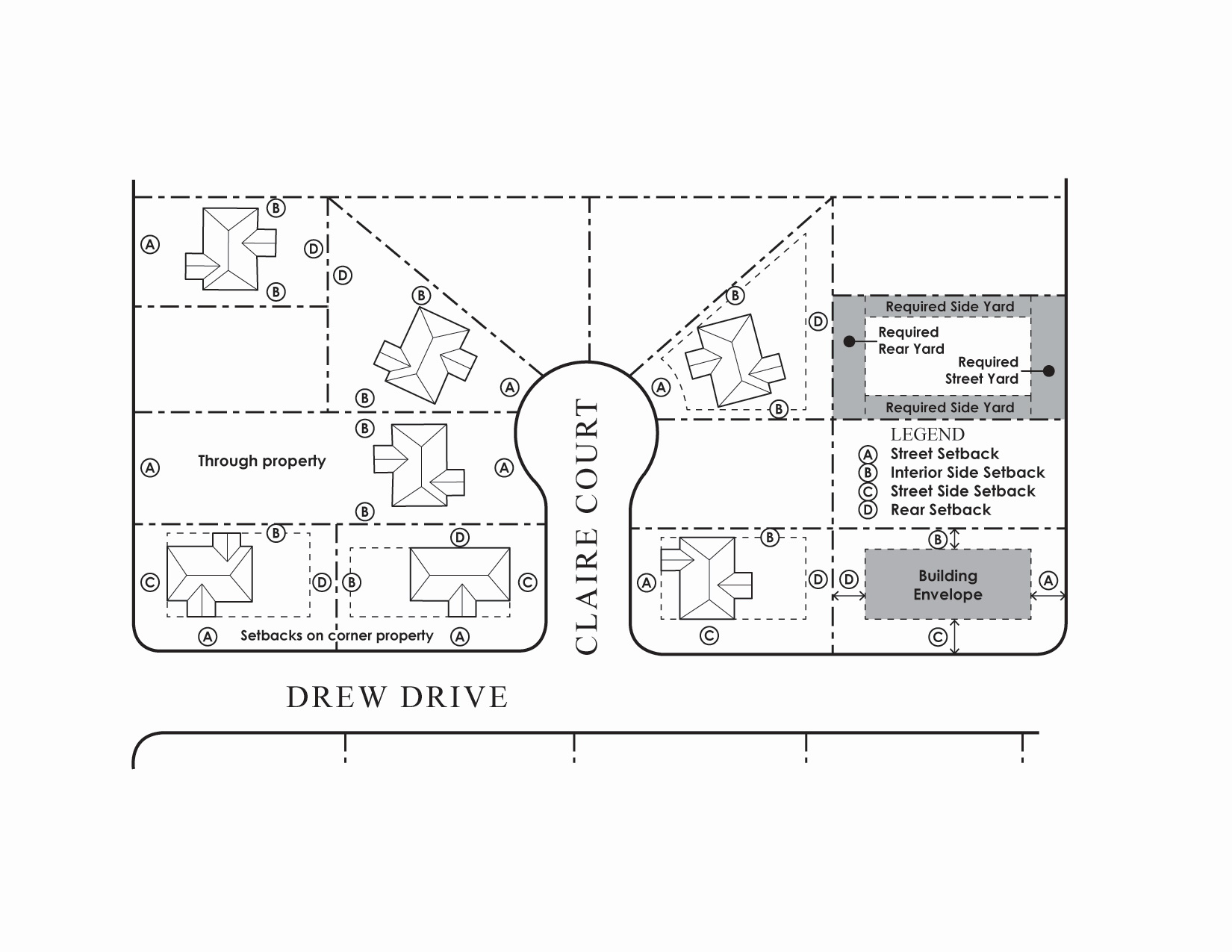
FIGURE 2 TYPES OF DWELLING UNITS
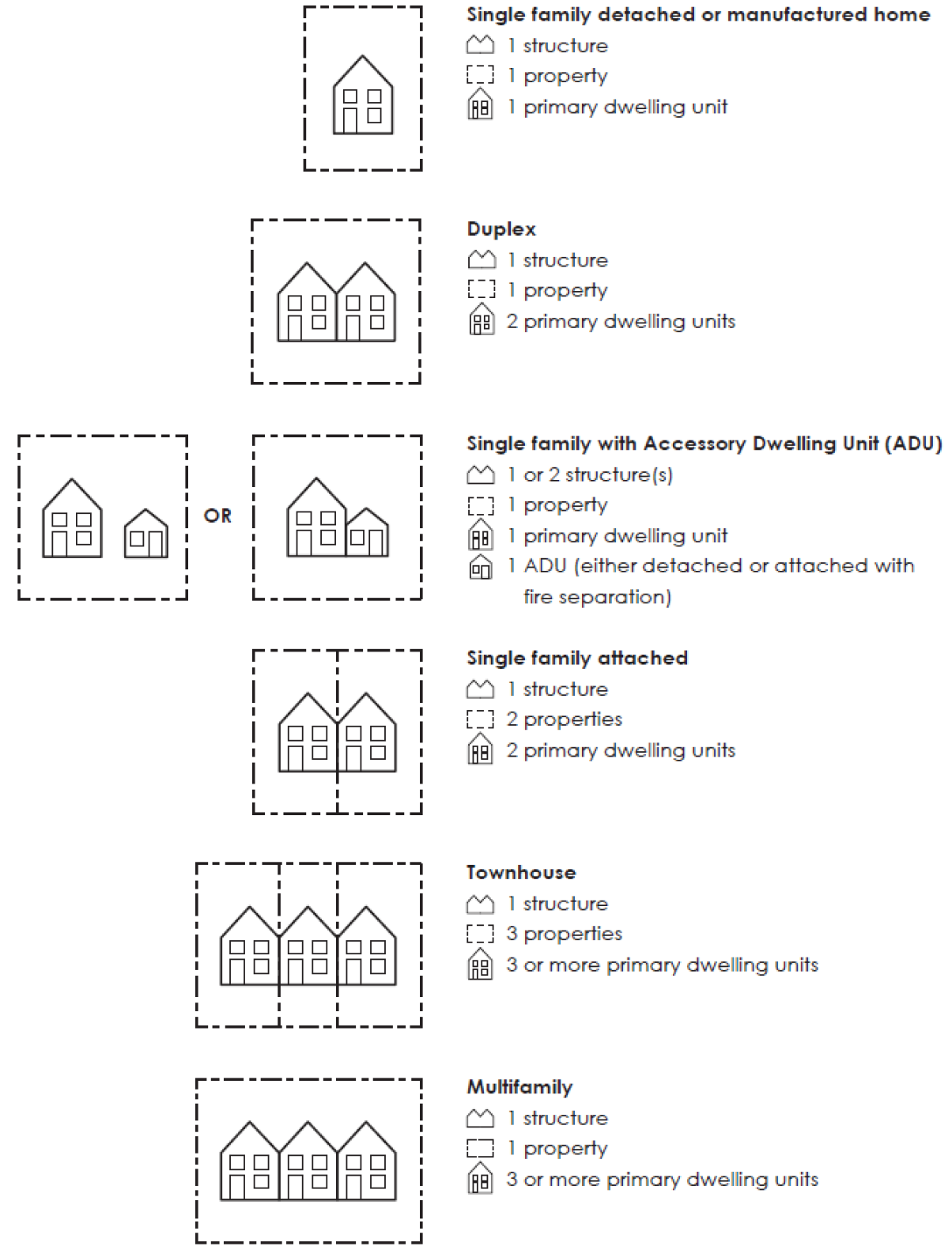
FIGURE 3
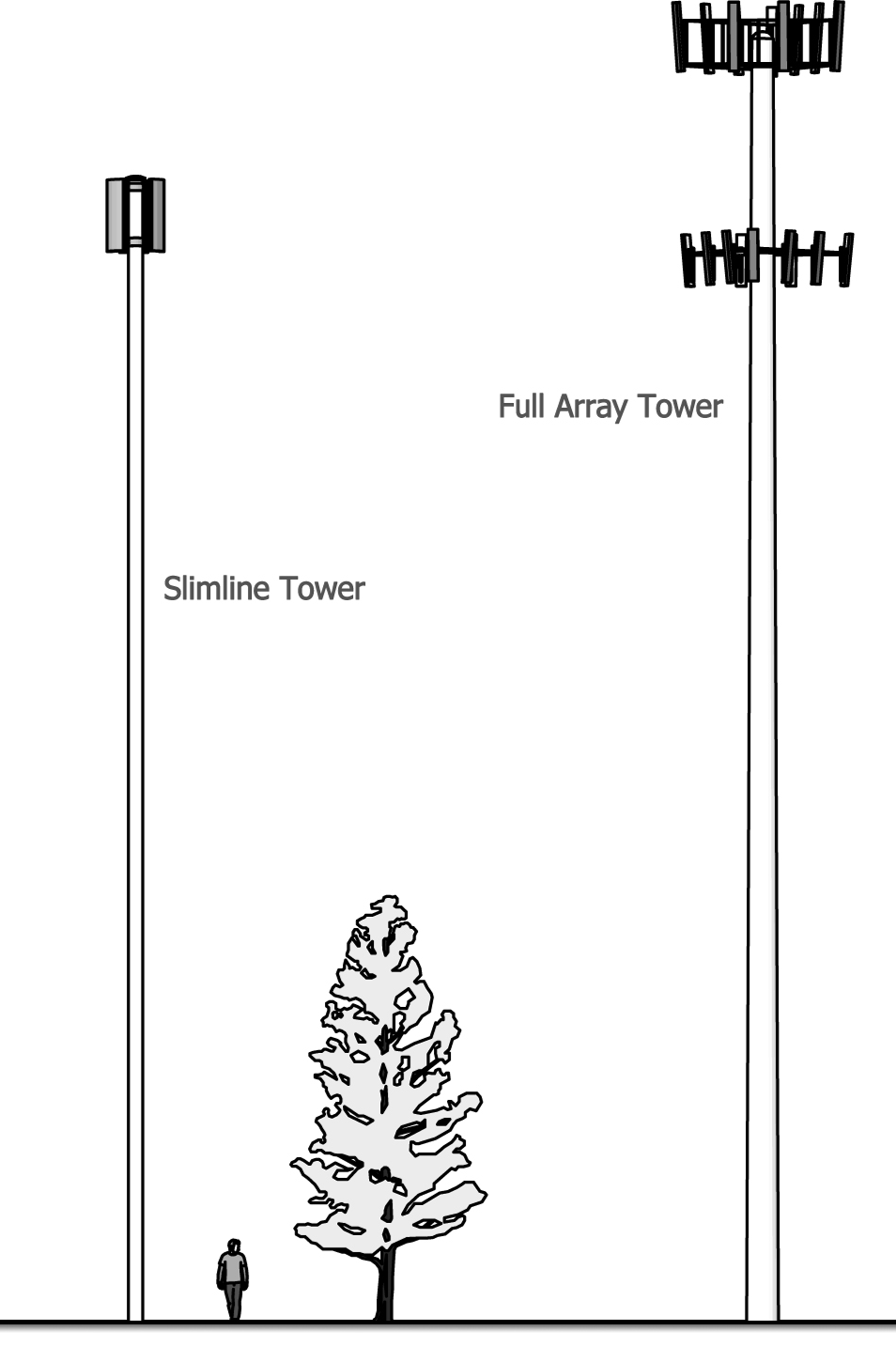
FIGURE 4
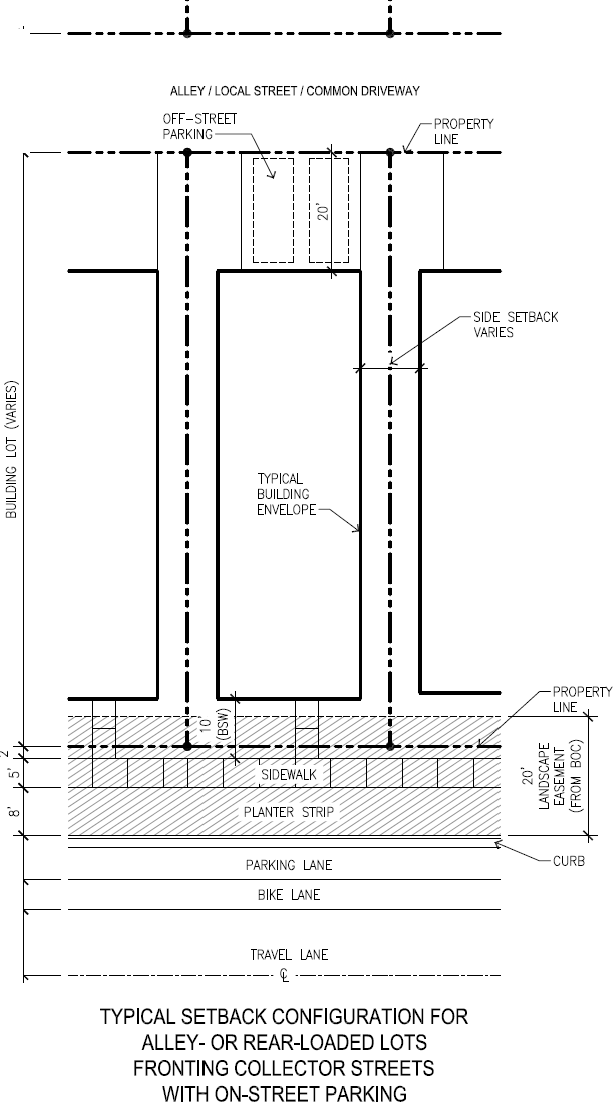
(Ord. 07-1325, 7-10-2007; Ord. 08-1372, 7-8-2008, eff. 7-8-2008; Ord. 12-1514, 5-16-2012, eff. 5-21-2012; Ord. No. 22-1968, § 1, 2-8-2022; Ord. No. 25-2099, § 4, 9-23-2025)
11-1B-1. - Purpose.
The purpose of this article is to allow any nonconforming property, use, or structure that lawfully existed prior to September 15, 2005, and any sign that lawfully existed prior to January 1, 2010, to continue until they are removed, but not to encourage their continuation. It is further the intent of this article that nonconforming properties, uses, structures, or signs shall not expand or extend the nonconforming aspect of the property, use, structure, or sign unless approved subject to a conditional use permit as set forth in section 11-5B-6 of this title.
(Ord. 09-1436, 12-15-2009, eff. 1-1-2010)
11-1B-2. - Applicability.
These regulations shall apply to any lawfully existing nonconforming property, use, structure, or sign in any district, except. In the event that a property, use, structure, or sign that was deemed nonconforming under past regulations now complies with the standards of this title, such property, use, structure, or sign shall be deemed conforming.
(Ord. 09-1436, 12-15-2009, eff. 1-1-2010)
11-1B-3. - Nonconforming property.
A.
The nonconforming property shall not be diminished in size.
B.
Any property reduced by governmental action that reduces an existing conforming parcel below the required property size shall be deemed as a conforming property for the purpose of development. To be deemed a conforming property, the owner or applicant shall submit documents to the Director proving the following:
1.
The property was in compliance with the minimum property size requirement of the applicable district prior to the decrease in property size; and
2.
The decrease in property size was caused by acquisition through prescription, purchase, or other means by the transportation authority, a utility company or corporation under the jurisdiction of the Idaho Public Utilities Commission, or other local, state, or federal agency.
(Ord. 05-1170, 8-30-2005, eff. 9-15-2005)
11-1B-4. - Nonconforming use.
A.
The nonconforming use may continue as long as the use remains lawful and is not expanded or extended, subject to the following provisions:
1.
Alteration. No existing structure containing a nonconforming use may be enlarged, extended, constructed, reconstructed, moved or structurally altered except:
a.
Through the approval of a conditional use permit in accord with the procedures set forth in chapter 5, article B, "specific provisions", of this title; or
b.
Where the use of the structure is changed to a conforming use.
2.
Extension. A nonconforming use may be extended to occupy additional land area only through the approval of a conditional use permit in accord with the procedures set forth in chapter 5, article B, "specific provisions", of this title.
B.
If a nonconforming use has ceased for twelve (12) consecutive months or has been replaced with a conforming use, the nonconforming use shall be deemed abandoned and shall not be reestablished.
C.
A nonconforming use or structure housing a nonconforming use that is damaged more than fifty (50) percent of its current assessed taxable value by fire, flood, explosion, wind, earthquake, war, riot, calamity, or other catastrophic event, shall comply with this title upon reconstruction. If the damage to the nonconforming use or structure housing the nonconforming use is fifty (50) percent or less of its current assessed taxable value, the nonconforming use may continue, provided that the nonconforming use commences within twelve (12) months of the event.
D.
Uses housed within structures listed on the National Register of Historic Places shall be exempt from the regulations of this section.
(Ord. 05-1170, 8-30-2005, eff. 9-15-2005)
11-1B-5. - Nonconforming structure.
A.
Nonconforming structures may be enlarged, repaired or modified, provided that the additions or modifications to the structure conform to the requirements of this title.
B.
A nonconforming structure that is damaged more than seventy-five (75) percent of its current assessed taxable value by fire, flood, explosion, wind, earthquake, war, riot, calamity, or other catastrophic event, shall comply with this title upon restoration or reconstruction. If the damage to the nonconforming structures is seventy-five (75) percent or less of its current assessed taxable value, the structure may be restored or reconstructed, provided that restoration or reconstruction commences within twelve (12) months of the event.
C.
Structures listed on the National Register of Historic Places shall be exempt from the regulations of this section.
(Ord. 05-1170, 8-30-2005, eff. 9-15-2005)
11-1B-6. - Nonconforming sign.
A.
Except as set forth in subsection (B) of this section, a nonconforming sign shall lose its nonconforming status and may become an illegal sign if any of the following occur:
1.
The sign and/or sign structure is moved.
2.
The sign and/or sign structure is replaced and/or removed for any period of time.
3.
There is a change in, cessation of, and/or abandonment of the use of the property, or any portion thereof, on which the sign and/or sign structure is located.
4.
There are alterations or enlargements to the site or building on the property in excess of twenty-five (25) percent or more of the existing site or building. The amount of alterations and/or enlargements shall be cumulative over time.
5.
The sign and/or sign structure is damaged to the extent of more than fifty (50) percent of its replacement value.
B.
Any nonconforming sign that is subject to the Idaho Code § 40-1910A related to the removal of off premises outdoor advertising along state highways shall lose its nonconforming status and may become an illegal sign if any of the following occur:
1.
The sign and/or sign structure is moved.
2.
The sign structure is replaced and/or removed for any period of time.
C.
Where a nonconforming sign becomes an illegal sign, the owner of the property on which the illegal sign is located shall:
1.
Remove the sign within sixty (60) days;
2.
Bring the sign into full compliance with this title within sixty (60) days; or
3.
Submit a complete application for conditional use approval within thirty (30) days and subsequently gain approval reinstating the nonconforming status of the sign. If the conditional use is not approved, the owner of the property on which the sign is located shall remove the sign within thirty (30) days.
(Ord. 09-1436, 12-15-2009, eff. 1-1-2010)

