
Meridian City Zoning Code
CHAPTER 2
- DISTRICT REGULATIONS
11-2-1.- Zoning districts established.
For the purpose of this title, the incorporated territory of the City of Meridian, Idaho, is divided into the following districts:
(Ord. 05-1170, 8-30-2005, eff. 9-15-2005; Ord. 08-1372, 7-8-2008, eff. 7-8-2008)
11-2-2. - Official zoning map.
The boundaries of the districts are shown on the official zoning map of the City of Meridian. The official zoning map is made a part of this title, as well as such other map or maps that are duly adopted. Said official zoning maps properly attested, shall be placed and remain on file in the office of the Meridian City Clerk.
(Ord. 05-1170, 8-30-2005, eff. 9-15-2005)
11-2-3. - Applicability.
It shall be unlawful and a violation of the Unified Development Code for any person to use, construct, locate, initiate, alter or maintain any structure, land or real property, or cause any structure, land or real property to be used, constructed, located, initiated, altered or maintained in any manner which violates, omits, or fails to conform to any applicable procedure, standard, or requirement established by this title for the zoning district in which such structure, land, or real property is located.
(Ord. 08-1372, 7-8-2008, eff. 7-8-2008)
11-2A-1. - Purpose.
The purpose of the residential districts is to provide for a range of housing opportunities consistent with the Meridian Comprehensive Plan. Residential districts are distinguished by the dimensional standards of the corresponding zone and housing types that can be accommodated. Residential land uses are also allowed within the O-T, TN-C, and TN-R Districts as set forth in article D of this chapter.
(Ord. 16-1717, 1-3-2017)
11-2A-2. - Allowed uses.
Table 11-2A-2 of this section lists principal permitted (P), accessory (A), and conditional (C), or prohibited (-) uses.
A.
Permitted uses and accessory uses in residential districts shall be reviewed in accord with chapters 2, "district regulations", 3, "regulations applying to all districts", 4, "specific use standards", and 5, "administration", of this title. It shall be unlawful and a violation of this title for any person to conduct in a residential district any permitted or accessory use unless such person first obtains each and every applicable permit from the city.
1.
Single-family detached homes, single-family attached homes, townhomes and secondary dwellings shall be reviewed in accord with the standards established in title 10 of this Code and shall not require certificate of zoning compliance and/or accessory use approval.
2.
The operator of a home occupation accessory use or family daycare in a residential district shall obtain an accessory use permit prior to establishing, operating, or carrying on such use. The Director shall deny an application for a home occupation accessory use upon a finding that such use cannot or will not be conducted in compliance with applicable specific use standards. Such finding may be based on the inherent nature of the use, the proposed manner of the use, or the manner of the use as previously conducted by the applicant.
3.
Any other permitted and/or non-residential accessory use in a residential district shall obtain a certificate of zoning compliance prior to establishing, operating, or carrying on such use.
B.
Conditional uses shall be approved in accord with the procedures and regulations for conditional uses set forth in chapters 5, "administration", and 3, "regulations applying to all districts", of this title and the specific use standards in chapter 4, "specific use standards", of this title. It shall be unlawful and a violation of this title for any person to conduct in a residential district any conditional use unless such person shall first obtain a conditional use permit from the City.
C.
Any use not explicitly listed, or listed as a prohibited use in table 11-2A-2 of this section is prohibited in all residential districts. It shall be unlawful and a violation of this title for any person to conduct in a residential district any prohibited use.
D.
Uses that are listed as P/C or A/C may be subject to a conditional use permit depending on if the use is in accord with the specific use standards as set forth in chapter 4, "specific use standards", of this title.
E.
Interpretation of the inclusion or exclusion of allowed uses shall be made by the Director and based on the Director's findings in review of the criteria established in chapter 1, "General Regulations", of this title.
TABLE 11-2A-2
ALLOWED USES IN THE RESIDENTIAL DISTRICTS
Notes:
1.
Indicates uses that are subject to specific use standards in accord with chapter 4 of this title.
2.
Multifamily dwellings may be allowed in the R-4 and R-8 Land Use Districts when included in a planned unit development (PUD).
3.
Subject to the home occupation, accessory use standards set forth in section 11-4-3-21 of this title.
4.
A manufactured home located outside of a manufactured home park shall be subject to the standards and requirements set forth in this title for single-family detached dwellings.
(Ord. 05-1170, 8-30-2005, eff. 9-15-2005; Ord. 07-1325, 7-10-2007; Ord. 08-1372, 7-8-2008, eff. 7-8-2008; Ord. 14-1623, 9-2-2014; Ord. 18-1762, 1-23-2018; Ord. 18-1773, 4-24-2018; Ord. 19-1831, 7-9-2019; Ord. 19-1833, 7-9-2019; Ord. No. 22-2001, § 2, 11-1-2022; Ord. No. 23-2037, § 1, 10-3-2023; Ord. No. 24-2062, § 3, 10-8-2024)
11-2A-3. - Standards.
The standards for development in all residential districts shall be as follows:
A.
Minimum property size.
1.
Each property shall be of sufficient size to meet the minimum setbacks as established in this section and dwelling unit size requirements in accord with subsection (F) of this section.
2.
Minimum property size shall be determined exclusive of land that is used for the conveyance of irrigation water, drainage, creek or river flows unless:
a.
The water is conveyed through pipe or tile; and
b.
Included as part of a utility easement that generally runs along the property lines.
3.
When two (2) or more parcels of land, each of which is of inadequate area and dimension to qualify for a permitted use under the requirements of the district in which the parcels are located, are held in one ownership, they shall be used as one (1) property for such use.
B.
Minimum street frontage.
1.
Properties with street frontages on cul-de-sacs or at approximately a ninety-degree angle shall be a minimum of thirty (30) feet measured as a chord measurement.
2.
Street knuckles shall be separated from through traffic by a landscape island. Properties with frontages on such knuckles shall be a minimum of thirty (30) feet measured as a chord measurement.
3.
Properties taking access from common driveways do not require street frontage.
4.
Street frontage for flag properties shall be a minimum of thirty (30) feet.
C.
Corner lot setbacks. Corner properties shall have one (1) interior side setback and one (1) rear setback.
D.
Encroachments allowed in any setback.
1.
Open structures such as porches, canopies, balconies, platforms, covered patios, cornices, eaves or other projections, which do not increase the volume of space enclosed by the building and do not project into any required setback by more than two (2) feet.
2.
Chimneys, pop out windows, direct vent gas fireplaces, entertainment centers, window seats and other projections which do not increase the usable floor area and do not exceed eight (8) feet in width may project up to two (2) feet into any required setback. Where building setbacks are below five (5) feet encroachments into the required setback may project up to one (1) foot.
3.
One (1) detached accessory building that is exempt from a permit as defined by the currently adopted international residential code shall be allowed in the required rear yard. In no case shall an accessory building be allowed in the street yard or the required side yard.
E.
Maximum height limit.
1.
The maximum height limitations shall not apply to the following architectural features not intended for human occupation. steeple, belfry, cupola, chimney. Such architectural features shall have a maximum height limit of twenty (20) feet as measured from the roofline.
2.
The maximum height limitations shall not apply to the following: spire; amateur radio antenna; bridge tower; fire and hose tower; observation tower; power line tower; smokestack; water tank or tower; ventilator; windmill; wireless communication facility, or other commercial or personal tower and/or antenna structure; or other appurtenances usually required to be placed above the level of the ground and not intended for human occupancy.
3.
Notwithstanding other height limitations as set forth in this chapter, the maximum height for education facilities shall be fifty (50) feet.
4.
No exception shall be allowed to the height limit where the height of any structures will constitute a hazard to the safe landing and takeoff of aircraft in an established airport.
F.
Living space. Excluding the garage, all detached residential dwelling units in the R-2 and R-4 districts shall meet minimum living space size requirements in accord with Sections 11-2A-4 and 11-2A-5 of this Article.
G.
Roof design. All residential dwelling structures shall have a pitched roof not less than three (3) feet in height for each twelve (12) feet in length. Alternative roof designs for attached single-family, duplex, townhouse, and multi-family residential dwelling structures may be approved through administrative design review.
H.
Drainage.
1.
In no case shall a development propose less than a five-foot setback adjacent to a property that is not part of the development application.
2.
Properties shall provide adequate area to maintain drainage on the site.
(Ord. 05-1170, 8-30-2005, eff. 9-15-2005; Ord. 09-1394, 3-3-2009, eff. retroactive to 2-4-2009; Ord. 10-1439, 1-12-2010, eff. 1-18-2010; Ord. 14-1592, 1-21-2014; Ord. 14-1601, 4-8-2014; Ord. 16-1672, 2-16-2016; Ord. No. 21-1950, § 5, 10-10-2021)
11-2A-4. - Low-density residential district (R-2).
Dimensional standards for development in the R-2 residential district shall be as follows:
TABLE 11-2A-4
DIMENSIONAL STANDARDS FOR THE R-2 DISTRICT
Notes:
1
Measured from back of sidewalk or property line where there is no adjacent sidewalk. A reduction of the collector street setback shall be granted for homes that front on a collector street when on-street and required off-street parking is provided and garage access is from an alley, common drive or local street. The required twenty-foot landscape buffer easement shall be measured from back of curb and the dwelling setback shall not be less than ten (10) feet from the back of sidewalk along the collector. See section 11-1A-2, figure 4 of this article.
2
A reduction to the width of the buffer may be requested as set forth in subsection 11-3B-7.C.1.c of this title.
3
An additional setback of seven and one-half (7.5) feet per story is required for multi-story buildings. This requirement does not apply to basements.
(Ord. 14-1623, 9-2-2014; Ord. 16-1672, 2-16-2016; Ord. 16-1717, 1-3-2017; Ord. No. 22-1968, § 2, 2-8-2022; Ord. No. 24-2062, § 4, 10-8-2024; Ord. No. 25-2099, § 5, 9-23-2025)
11-2A-5. - Medium low-density residential district (R-4).
Dimensional standards for development in the R-4 residential district shall be as follows:
TABLE 11-2A-5
DIMENSIONAL STANDARDS FOR THE R-4 DISTRICT
Notes:
1
Measured from back of sidewalk or property line where there is no adjacent sidewalk. A reduction of the collector street setback shall be granted for homes that front on a collector street when on-street and required off-street parking is provided and garage access is from an alley, common drive or local street. The required twenty-foot landscape buffer easement shall be measured from back of curb and the dwelling setback shall not be less than ten (10) feet from the back of sidewalk along the collector. See Section 11-1A-2, figure 4 of this article.
2
A reduction to the width of the buffer may be requested as set forth in subsection 11-3B-7.C.1.c of this title.
(Ord. 14-1623, 9-2-2014; Ord. 16-1672, 2-16-2016; Ord. 16-1717, 1-3-2017; Ord. No. 22-1968, § 3, 2-8-2022; Ord. No. 24-2062, § 5, 10-8-2024)
11-2A-6. - Medium-density residential district (R-8).
Dimensional standards for development in the R-8 Residential District shall be as follows:
TABLE 11-2A-6
DIMENSIONAL STANDARDS FOR THE R-8 DISTRICT
Notes:
1
Measured from back of sidewalks or property line where there is not adjacent sidewalk. A reduction of the collector street setback shall be granted for homes that front on a collector street when on-street and required off-street parking is provided and garage access is from an alley, common drive or local street. The required twenty-foot landscape buffer easement shall be measured from back of curb and the dwelling setback shall not be less than ten (10) feet from the back of sidewalk along the collector. See Section 11-1A-2, figure 4 of this article.
2
A reduction to the width of the buffer may be requested as set forth in subsection 11-3B-7.C.1.c of this title.
(Ord. 14-1623, 9-2-2014; Ord. 16-1672, 2-16-2016; Ord. 16-1717, 1-3-2017; Ord. 19-1833, 7-9-2019; Ord. No. 22-1968, § 4, 2-8-2022)
11-2A-7. - Medium high-density residential district (R-15).
Dimensional standards for development in the R-15 Residential District shall be as follows:
TABLE 11-2A-7
DIMENSIONAL STANDARDS FOR THE R-15 DISTRICT
Notes:
1
Measured from back of sidewalks or property line where there is not adjacent sidewalk. A reduction of the collector street setback shall be granted for homes that front on a collector street when on-street and required off-street parking is provided and garage access is from an alley, common drive or local street. The required twenty-foot landscape buffer easement shall be measured from back of curb and the dwelling setback shall not be less than ten (10) feet from the back of sidewalk along the collector. See Section 11-1A-2, figure 4 of this article.
2
A reduction to the width of the buffer may be requested as set forth in subsection 11-3B-7.C.1.c of this title.
(Ord. 14-1623, 9-2-2014; Ord. 16-1672, 2-16-2016; Ord. 16-1717, 1-3-2017; Ord. No. 22-1968, § 5, 2-8-2022)
11-2A-8. - High-density residential district (R-40).
Dimensional standards for development in the R-40 residential district shall be as follows:
TABLE 11-2A-8
DIMENSIONAL STANDARDS FOR THE R-40 DISTRICT
Notes:
1
Measured from back of sidewalks or property line where there is not adjacent sidewalk. A reduction of the collector street setback shall be granted for homes that front on a collector street when on-street and required off-street parking is provided and garage access is from an alley, common drive or local street. The required twenty-foot landscape buffer easement shall be measured from back of curb and the dwelling setback shall not be less than ten (10) feet from the back of sidewalk along the collector. See Section 11-1A-2, figure 4 of this article.
2
A reduction to the width of the buffer may be requested as set forth in subsection 11-3B-7.C.1.c of this title.
(Ord. 14-1623, 9-2-2014; Ord. 16-1672, 2-16-2016; Ord. 16-1717, 1-3-2017; Ord. No. 22-1968, § 6, 2-8-2022)
11-2B-1. - Purpose.
The purpose of the commercial districts is to provide for the retail and service needs of the community in accordance with the Meridian Comprehensive Plan. The following districts are designated which differ in the size and scale of commercial structures accommodated in the district, the scale and mix of allowed commercial uses, and the location of the district in proximity to streets and highways:
TABLE 11-2B-1
PURPOSE AND ALLOWED USE BY COMMERCIAL DISTRICT
(Ord. 08-1372, 7-8-2008, eff. 7-8-2008)
11-2B-2. - Allowed uses.
Table 11-2B-2 of this section lists principal permitted (P), accessory (A), and conditional (C) or prohibited (-) uses within each commercial district:
A.
Permitted uses and accessory uses in commercial districts shall be reviewed in accord with chapters 2, "district regulations", 3, "regulations applying to all districts", 4, "specific use standards", and 5, "administration", of this title. It shall be unlawful and a violation of this title for any person to conduct in a commercial district any permitted or accessory use unless such person first obtains each and every applicable permit from the city.
1.
The operator of a home occupation accessory use or family daycare in a commercial district shall obtain an accessory use permit prior to establishing, operating, or carrying on such use. The Director shall deny an application for a home occupation accessory use upon a finding that such use cannot or will not be conducted in compliance with applicable specific use standards. Such finding may be based on the inherent nature of the use, the proposed manner of the use, or the manner of the use as previously conducted by the applicant.
2.
Any other permitted and/or non-residential accessory use in a commercial district shall obtain a certificate of zoning compliance prior to establishing, operating, or carrying on such use.
B.
Conditional uses shall be approved in accord with the procedures and regulations for conditional uses set forth in Chapters 5, "Administration", and 3, "Regulations Applying to All Districts", of this title and the specific use standards in Chapter 4, "Specific Use Standards", of this Title. It shall be unlawful and a violation of this title for any person to conduct in a commercial district any conditional use unless such person shall first obtain a conditional use permit from the city.
C.
Any use not explicitly listed, or listed as a prohibited use in table 11-2B-2 of this section is prohibited in all commercial districts. It shall be unlawful and a violation of this title for any person to conduct in a commercial district any prohibited use.
D.
Uses that are listed as P/C or A/C may be subject to a conditional use permit depending on if the use is in accord with the specific use standards as set forth in Chapter 4, "Specific Use Standards", of this Title.
E.
Interpretation of the inclusion or exclusion of allowed uses shall be made by the Director and based on the director's findings in review of the criteria established in Chapter 1, "General Regulations", of this Title.
F.
For uses that may fall into more than one (1) category, the Director shall determine the most appropriate category based on the more restrictive standards.
TABLE 11-2B-2
ALLOWED USES IN THE COMMERCIAL DISTRICTS
Note:
1
Indicates uses that are subject to specific use standards in accord with chapter 4 of this title.
(Ord. 05-1170, 8-30-2005, eff. 9-15-2005; Ord. 07-1325, 7-10-2007; Ord. 08-1372, 7-8-2008, eff. 7-8-2008; Ord. 12-1514, 5-16-2012, eff. 5-21-2012; Ord. 16-1672, 2-16-2016; Ord. 18-1762, 1-23-2018; Ord. 19-1833, 7-9-2019; Ord. No. 21-1950, § 6, 10-10-2021; Ord. No. 22-2001, § 3, 11-1-2022; Ord. No. 24-2062, § 6, 10-8-2024)
11-2B-3. - Standards.
The standards for all development in the commercial districts shall be as follows:
A.
Dimensional standards.
1.
Requirements. Table 11-2B-3 of this subsection shall be used for determining required setbacks, street and residential landscape buffers and maximum building height standards for development in each of the respective commercial districts. Subsections A2 and A3 of this section and subsection 11-3B-7C1c of this title set forth certain exceptions and additional clarification for the dimensional standards.
TABLE 11-2B-3
DIMENSIONAL STANDARDS IN THE COMMERCIAL DISTRICTS
Notes:
1
All setbacks shall be measured from the ultimate right-of-way for the street classification as shown on the adopted transportation plan.
2
Minimum setback only allowed with reuse of existing residential structure.
3
Where the adjacent property is vacant, the Director shall determine the adjacent property designation based on the Comprehensive Plan designation.
4
Dimensional standards for setbacks, landscape buffers, building heights, and parking requirements within adopted specific area plans take precedence over standards provided in this table.
2.
Encroachments allowed in any setback. Fire escapes may project a distance not exceeding one (1) foot.
3.
Maximum height limit.
a.
The maximum height limitations shall not apply to the following architectural features not intended for human occupation. steeple, belfry, cupola, chimney. Such architectural features shall have a maximum height limit of twenty (20) feet as measured from the roofline.
b.
The maximum height limitations shall not apply to the following: spire; amateur radio antenna; bridge tower; fire and hose tower; observation tower; power line tower; smokestack; water tank or tower; ventilator; windmill; wireless communication facility, or other commercial or personal tower and/or antenna structure; or other appurtenances usually required to be placed above the level of the ground and not intended for human occupancy.
c.
No exception shall be allowed to the height limit where the height of any structures will constitute a hazard to the safe landing and takeoff of aircraft in an established airport.
d.
Additional height not to exceed twenty (20) percent of the maximum height allowed for the district may be approved by the Director through the alternative compliance procedures set forth in chapter 5, "administration", of this title. Additional height shall be allowed when the development provides ten (10) percent of the building square feet in open space, courtyards, patios, or other usable outdoor space available for the employees and/or patrons of the structure, excluding required setbacks and landscape buffers.
e.
Additional height exceeding twenty (20) percent of the maximum height allowed for the district or when additional height is requested without providing the required open space in accord with subsection (A)(3)d of this section requires approval through a conditional use permit.
B.
Hours of operation. Business hours of operation within the L-O and C-N Districts shall be limited from 6:00 a.m. to 10:00 p.m.. Business hours of operation within the C-C and C-G Districts shall be limited from 6:00 a.m. to 11:00 p.m. when the property abuts a residential use or district. Extended hours of operation in the C-C and C-G Districts may be requested through a conditional use permit. These restrictions apply to all business operations occurring outside an enclosed structure, including, but not limited to, customer or client visits, trash compacting, and deliveries. These restrictions do not apply to business operations occurring within an enclosed structure, including, but not limited to, cleaning, bookkeeping, and after hours work by a limited number of employees.
(Ord. 05-1170, 8-30-2005, eff. 9-15-2005; Ord. 10-1439, 1-12-2010, eff. 1-18-2010; Ord. 14-1623, 9-2-2014; Ord. 19-1833, 7-9-2019)
11-2C-1. - Purpose.
A.
Light industrial district (I-L). The purpose of the I-L district is to provide for convenient employment centers of light manufacturing, research and development, warehousing, and distributing. In accord with the Meridian Comprehensive Plan, the I-L district is intended to encourage the development of industrial uses that are clean, quiet and free of hazardous or objectionable elements and that are operated, entirely, or almost entirely, within enclosed structures. Accessibility to transportation systems is a requirement of this district.
B.
Heavy industrial district (I-H). The purpose of the I-H district is to provide for the existing manufacturing, warehousing and heavy distribution centers that exist along major transportation corridors. In accord with the Meridian Comprehensive Plan, these areas require buffering from residential uses to mitigate the effects of noise, vibration, traffic, odor, dust, smoke or glare that is typically associated with the uses allowed in the I-H district. Accessibility to transportation systems is a requirement of this district.
(Ord. 05-1170, 8-30-2005, eff. 9-15-2005)
11-2C-2. - Allowed uses.
Table 11-2C-2 of this section lists principal permitted (P), accessory (A), conditional (C), or prohibited (-) uses within each industrial district.
A.
Permitted uses and accessory uses in industrial districts shall be reviewed in accord with chapters 2, "district regulations", 3, "regulations applying to all districts", 4, "specific use standards", and 5, "administration", of this title. It shall be unlawful and a violation of this title for any person to conduct in an industrial district any permitted or accessory use unless such person first obtains each and every applicable permit from the city.
1.
Any permitted and/or non-residential accessory use in an industrial district, including a single-family detached dwelling used as a caretaker dwelling, shall obtain a certificate of zoning compliance prior to establishing, operating, or carrying on such use.
B.
Conditional uses shall be approved in accord with the procedures and regulations for conditional uses set forth in chapters 5, "administration", and 3, "regulations applying to all districts", of this title and the specific use standards in chapter 4, "specific use standards", of this title. It shall be unlawful and a violation of this title for any person to conduct in an industrial district any conditional use unless such person shall first obtain a conditional use permit from the city.
C.
Any use not explicitly listed, or listed as a prohibited use in table 11-2C-2 of this section is prohibited in all industrial districts. It shall be unlawful and a violation of this title for any person to conduct in an industrial district any prohibited use.
D.
Uses that are listed as P/C or A/C may be subject to a conditional use permit depending on if the use is in accord with the specific use standards as set forth in chapter 4, "specific use standards", of this title.
E.
Interpretation of the inclusion or exclusion of allowed uses shall be made by the Director and based on the Director's findings in review of the criteria established in chapter 1, "general regulations", of this title.
F.
For uses that may fall into more than one (1) category, the Director shall determine the most appropriate category based on the more restrictive standards.
TABLE 11-2C-2
ALLOWED USES IN THE INDUSTRIAL DISTRICTS
Note:
1
Indicates uses that are subject to specific use standards in accord with chapter 4 of this title.
(Ord. 05-1170, 8-30-2005, eff. 9-15-2005; Ord. 08-1372, 7-8-2008, eff. 7-8-2008; Ord. 10-1463, 11-3-2010, eff. 11-8-2010; Ord. 11-1494, 9-6-2011, eff. 9-12-2011; Ord. 16-1672, 2-16-2016; Ord. 18-1762, 1-23-2018; Ord. 19-1833, 7-9-2019; Ord. No. 24-2062, § 7, 10-8-2024)
11-2C-3. - Standards.
A.
Dimensional standards.
1.
Requirements. Table 11-2C-3 of this subsection shall be used for determining required setbacks, street and use landscape buffers and maximum building height standards for development in each of the industrial districts. Subsection (A)(2) of this section and subsection 11-3B-7.C.1.c of this title sets forth certain exceptions and additional clarification for the dimensional standards.
TABLE 11-2C-3
DIMENSIONAL STANDARDS IN THE INDUSTRIAL DISTRICTS
Note:
1
All setbacks shall be measured from the ultimate right-of-way for the street classification as shown on the adopted transportation plan.
2.
Maximum height limit.
a.
The maximum height limitations shall not apply to the following architectural features not intended for human occupation. steeple, belfry, cupola, chimney. Such architectural features shall have a maximum height limit of twenty (20) feet as measured from the roofline.
b.
The maximum height limitations shall not apply to the following: spire; amateur radio antenna; bridge tower; fire and hose tower; observation tower; power line tower; smokestack; water tank or tower; ventilator; windmill; wireless communication facility, or other commercial or personal tower and/or antenna structure; or other appurtenances usually required to be placed above the level of the ground and not intended for human occupancy.
c.
No exception shall be allowed to the height limit where the height of any structures will constitute a hazard to the safe landing and takeoff of aircraft in an established airport.
d.
Additional height not to exceed twenty (20) percent) of the maximum height allowed for the district may be approved by the Director through the alternative compliance procedures set forth in chapter 5, "administration", of this title. Additional height shall be allowed when the development provides ten (10) percent of the building square feet in open space, courtyards, patios, or other usable outdoor space available for the employees and/or patrons of the structure, excluding required setbacks and landscape buffers.
e.
Additional height exceeding twenty (20) percent of the maximum height allowed for the district or when additional height is requested without providing the required open space in accord with subsection (A)(2)d of this section requires approval through a conditional use permit.
(Ord. 05-1170, 8-30-2005, eff. 9-15-2005; Ord. 10-1439, 1-12-2010, eff. 1-18-2010; Ord. 14-1623, 9-2-2014)
11-2D-1. - Purpose.
The purpose of the traditional neighborhood districts is to encourage mixed use, compact development that is sensitive to the environmental characteristics of the land and facilitates the efficient use of services. Vertically integrated residential projects are encouraged in all traditional neighborhood districts. A traditional neighborhood district diversifies and integrates land uses within close proximity to each other, and it provides for the daily recreational and shopping needs of the residents.
A.
Old town district (O-T). The purpose of the O-T district is to accommodate and encourage further intensification of the historical city center in accord with the Meridian Comprehensive Plan. The intent of the O-T district is to delineate a centralized activity center and to encourage its renewal, revitalization and growth as the public, quasi-public, cultural, financial and recreational center of the city. Public and quasi- public uses integrated with general business, and medium high to high density residential is encouraged to provide the appropriate mix and intensity of activities necessary to establish a truly urban city center.
B.
Traditional neighborhood center district (TN-C). The purpose of the TN-C district is to serve as the focal point of a neighborhood center, containing retail, commercial, and community services to meet the daily needs of community residents within a one- to two-mile radius. A TN-C is pedestrian oriented, and it is designed to encourage pedestrian connection with a traditional neighborhood residential district. TN-C district uses include small scale retail, restaurants, recreational, personal services, public or quasi-public uses, churches, and attached and multifamily dwellings.
C.
Traditional neighborhood residential district (TN-R). The purpose of the TN-R district is to provide for a variety of residential land uses including attached and detached single-family residential, duplex, townhouse, and multifamily. A TN-R district includes open spaces and promotes pedestrian activity through well designed and varied streetscapes that also provide for the safe and efficient movement of vehicular traffic. Most dwelling units should be accessed from alleys. The minimum density is six (6) units per acre. Density should decrease away from the center and closer to conventional residential districts. The TN-R district should be generally located adjacent to a TN-C district, along a transit corridor, or within a mixed-use neighborhood. For the purposes of this title, the term residential district shall also include the traditional neighborhood residential district.
(Ord. 05-1170, 8-30-2005, eff. 9-15-2005; Ord. 16-1717, 1-3-2017)
11-2D-2. - Allowed uses.
Table 11-2D-2 of this section lists principal permitted (P), accessory (A), and conditional (C) or prohibited (-) uses within each traditional neighborhood district.
A.
Permitted uses and accessory uses in traditional neighborhood districts shall be reviewed in accord with chapters 2, "district regulations", 3, "regulations applying to all districts", 4, "specific use standards", and 5, "administration", of this title. It shall be unlawful and a violation of this title for any person to conduct in a traditional neighborhood district any permitted or accessory use unless such person first obtains each and every applicable permit from the city.
1.
Single-family detached homes, single-family attached homes, townhomes and secondary dwellings shall be reviewed in accord with the standards established in title 10 of this Code and shall not require certificate of zoning compliance and/or accessory use approval.
2.
The operator of a home occupation accessory use or family daycare in a traditional neighborhood district shall obtain an accessory use permit prior to establishing, operating, or carrying on such use. The Director shall deny an application for a home occupation accessory use upon a finding that such use cannot or will not be conducted in compliance with applicable specific use standards. Such finding may be based on the inherent nature of the use, the proposed manner of the use, or the manner of the use as previously conducted by the applicant.
3.
Any other permitted and/or nonresidential accessory use in a traditional neighborhood district shall obtain a certificate of zoning compliance prior to establishing, operating, or carrying on such use.
B.
Conditional uses shall be approved in accord with the procedures and regulations for conditional uses set forth in chapters 5, "administration", and 3, "regulations applying to all districts", of this title and the specific use standards in chapter 4, "specific use standards", of this title. It shall be unlawful and a violation of this title for any person to conduct in a traditional neighborhood district any conditional use unless such person shall first obtain a conditional use permit from the city.
C.
Any use not explicitly listed, or listed as a prohibited use in table 11-2D-2 of this section is prohibited in all traditional neighborhood districts. It shall be unlawful and a violation of this title for any person to conduct in a traditional neighborhood district any prohibited use.
D.
Uses that are listed as P/C or A/C may be subject to a conditional use permit depending on if the use is in accord with the specific use standards as set forth in chapter 4, "specific use standards", of this title.
E.
Interpretation of the inclusion or exclusion of allowed uses shall be made by the Director and based on the Director's findings in review of the criteria established in chapter 1, "general regulations", of this title.
TABLE 11-2D-2
ALLOWED USES IN THE TRADITIONAL NEIGHBORHOOD DISTRICTS
Note:
1
Indicates uses that are subject to specific use standards in accord with chapter 4 of this title.
(Ord. 05-1170, 8-30-2005, eff. 9-15-2005; Ord. 07-1325, 7-10-2007; Ord. 08-1372, 7-8-2008, eff. 7-8-2008; Ord. 15-1663, 10-20-2015; Ord. 16-1672, 2-16-2016; Ord. 18-1762, 1-23-2018; Ord. 19-1833, 7-9-2019; Ord. No. 22-2001, § 4, 11-1-2022; Ord. No. 24-2062, § 8, 10-8-2024)
11-2D-3. - Standards applicable in all traditional neighborhood districts.
The standards for development in all the traditional neighborhood districts are set forth in this section as follows:
A.
Encroachments allowed in any setback. Open structures on the second floor such as porches, canopies, balconies, platforms, covered patios, cornices, eaves or other projections, which do not increase the volume of space enclosed by the building and do not project into any required setback by more than two (2) feet.
B.
Maximum height limit.
1.
The maximum height limitations shall not apply to the following architectural features not intended for human occupation. steeple, belfry, cupola, chimney. Such architectural features shall have a maximum height limit of twenty (20) feet as measured from the roofline.
2.
The maximum height limitations shall not apply to the following: spire; amateur radio antenna; bridge tower; fire and hose tower; observation tower; power line tower; smokestack; water tank or tower; ventilator; windmill; wireless communication facility, or other commercial or personal tower and/or antenna structure; or other appurtenances usually required to be placed above the level of the ground and not intended for human occupancy.
3.
No exception shall be allowed to the height limit where the height of any structures will constitute a hazard to the safe landing and takeoff of aircraft in an established airport.
4.
In the O-T and TN-C districts, the additional height allowed is limited as follows:
a.
In the area defined as the city core in chapter 1 of this title, additional building height may deviate up to twenty (20) percent of the minimum or maximum height in the O-T district subject to the alternative compliance procedures set forth in chapter 5, "administration", of this title. Proposed building height exceeding twenty (20) percent of the maximum or minimum height for the district requires approval through a conditional use permit. In no case shall the building height exceed fifty (50) percent of the maximum height allowed in the district.
b.
Additional building height not to exceed twenty (20) percent of the maximum height allowed for the TN-C district may be approved by the Director through the alternative compliance procedures set forth in chapter 5, "administration", of this title. Additional height shall be allowed when the development provides ten (10) percent of the building square feet in open space, courtyards, patios, or other usable outdoor space available for the employees and/or patrons of the structure, excluding required setbacks and landscape buffers.
c.
Additional building height exceeding twenty (20) percent of the maximum height allowed for the TN-C district or when additional height is requested without providing the required open space in accord with subsection (B)(4)b of this section requires approval through a conditional use permit.
C.
Street and pedestrian systems.
1.
Street layout. The street system shall be primarily based on a grid with connections to the existing street system.
2.
Block length. No block face shall have a length greater than five hundred (500) feet without an intersecting street or alley, except as allowed in subsection 11-6C-3.F.3. of this Title.
D.
Parking. See Chapter 3, Article C, "off street parking and loading requirements", of this Title.
E.
Landscaping requirements. See Chapter 3, Article B, "landscaping requirements", of this Title.
(Ord. 05-1170, 8-30-2005, eff. 9-15-2005; Ord. 08-1372, 7-8-2008, eff. 7-8-2008; Ord. 10-1439, 1-12-2010, eff. 1-18-2010; Ord. 16-1672, 2-16-2016; Ord. No. 21-1932, § 1, 6-15-2021)
11-2D-4. - Standards in the old town district (O-T).
The standards for development in the Old Town District are set forth in this section as follows:
A.
Building height. In the area defined as the city core in chapter 1, any new construction shall have a minimum height of thirty-five (35) feet and a maximum height of one hundred (100) feet. All other areas in the district, the maximum building height is seventy-five (75) feet.
B.
Number of stories. Minimum number of stories for new construction is two (2) and/or as set forth in the "City of Meridian Architectural Standards Manual".
C.
Streetscape improvements. Streetscape improvements within the city core shall be designed in accord with the "City of Meridian Public Works Design Standards Manual".
D.
Residential to commercial conversions. Residential to commercial conversions within old town shall comply with the established standards set forth in the "Architectural Standards Manual" (ASM) and structure and site design standards set forth in Section 11-3A-19 of this title. Where there are site constraints that prevent a conversion from wholly complying with these standards, the applicant may submit for a design standard exception as set forth in the ASM.
E.
Public and other urban open spaces. When proposed as part of a development, public and other urban open spaces shall have sufficient pedestrian access and be integrated into the overall site design.
(Ord. 05-1170, 8-30-2005, eff. 9-15-2005; Ord. 16-1672, 2-16-2016; Ord. 16-1717, 1-3-2017; Ord. No. 21-1932, § 2, 6-15-2021)
11-2D-5. - Standards in the traditional neighborhood center district (TN-C).
The standards for development in the traditional neighborhood center district are set forth in this section as follows:
A.
Maximum building height is forty-five (45) feet.
B.
Minimum number of stories for new construction adjacent to any street is two (2).
C.
Maximum building footprint is twenty thousand (20,000) square feet; however, other than retail, all other uses may be allowed a footprint of greater than twenty thousand (20,000) square feet through the conditional use permit process.
D.
Minimum contiguous district size is six (6) acres; or two (2) acres when adjacent to property with a mixed-use future land use designation.
(Ord. 05-1170, 8-30-2005, eff. 9-15-2005; Ord. 08-1372, 7-8-2008, eff. 7-8-2008; Ord. 16-1717, 1-3-2017)
11-2D-6. - Standards in the traditional neighborhood residential district (TN-R).
The standards for development in the traditional neighborhood residential district are set forth in this section as follows:
A.
Dimensional standards.
TABLE 11-2D-6
DIMENSIONAL STANDARDS IN THE TN-R DISTRICT
Notes:
1
Measured from back of sidewalk and/or alley right-of-way as applicable.
2
On any given property, there shall be no more than 2 property lines that have 0-foot setbacks.
3
Measured from back of curb.
4
These are standards for properties where the front yard of the property adjoins the street landscape buffer and the units take access from an alley.
5
These are standards for properties where the rear or side yard of the property adjoins the street landscape buffer.
6
A reduction to the width of the buffer may be requested as set forth in subsection 11-3B-7.C.1.c of this title.
B.
Minimum property size. Each building site shall be of sufficient size to meet the minimum setbacks as established in this section.
C.
Housing unit allocation. In the TN-R district, a minimum of two (2) housing types, including, but not limited to, single-family dwellings with attached garages, single-family dwellings with detached garages, single-family dwellings with alley loaded garages, single-family dwellings with alley loaded garages facing a mew, townhouses, and multifamily dwellings, shall be required on any subdivision submittal or planned unit development application.
D.
Drainage.
1.
In no case shall a development propose less than a five-foot setback adjacent to a property that is not part of the development application.
2.
Properties shall provide adequate area to maintain drainage on the site.
E.
Options for street sections in the TN-R district.
1.
For alley accessed properties, the following options shall apply:
a.
Standard ACHD street sections.
b.
Fire lane chicane option as shown in figure 11-2D-6.E of this section.
FIGURE 11-2D-6E
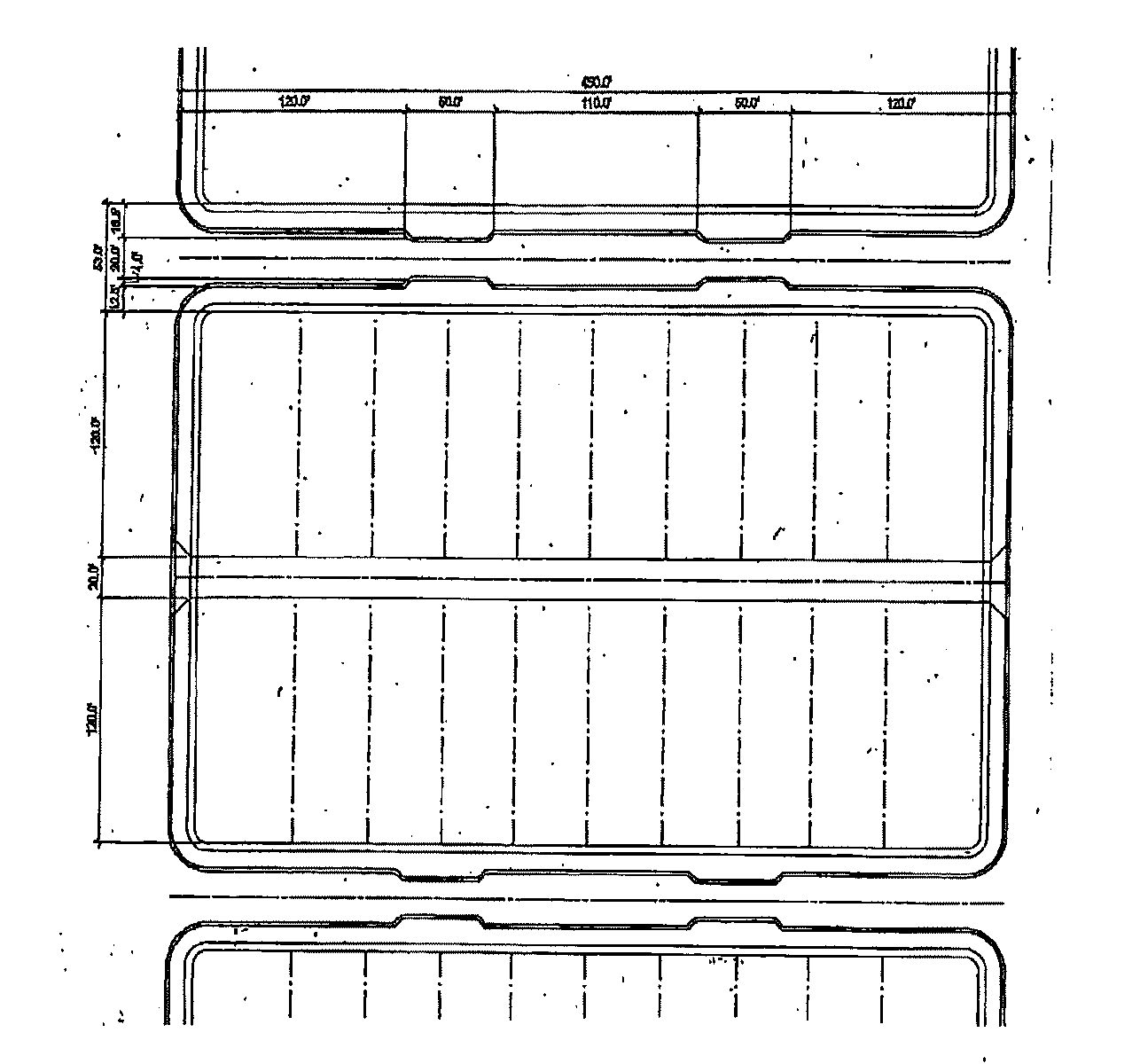
2.
Although street accessed properties are allowed in this district, it is anticipated that only properties on the perimeter of a TN-R development would be street accessed. The applicant shall demonstrate that the design meets the purpose statement of the TN-R district. Standard ACHD street sections shall apply.
3.
Block lengths shall meet the standards as set forth in subsection 11-6C-3.F.2 of this title.
F.
Lighting. In addition to the standards as set forth in section 11-3A-11 of this title, the following standards shall apply within the TN-R district. All dwelling units shall have a minimum of two (2) lights at the front of the unit. All dwelling units on alley accessed properties shall have a minimum of two (2) lights along the alley. All lighting required in this section shall prevent uplighting and shall be on a photocell that activates the lighting at dusk and turns it off at dawn.
(Ord. 05-1170, 8-30-2005, eff. 9-15-2005; Ord. 06-1241, 7-5-2006, eff. 7-15-2006; Ord. 12-1514, 5-16-2012, eff. 5-21-2012; Ord. 14-1623, 9-2-2014; Ord. 16-1717, 1-3-2017)

