
Moody City Zoning Code
ARTICLE X
- SIGN REGULATIONS
§ 1.00.- Purpose and intent.
The purpose of these sign regulations is: to encourage the effective use of signs as a means of communications in the City of Moody, to maintain and enhance the aesthetic environment and the city's ability to attract sources of economic development and growth, to improve pedestrian and traffic safety, to minimize the possible adverse effects of signs on nearby public and private property; and, to enable the fair and consistent enforcement of these regulations. This sign ordinance is adopted under the zoning authority of the City of Moody in furtherance of the more general purposes set forth in the zoning ordinance.
1.01
Definitions applicable to this ordinance (M2022-05-23)The following definitions are applicable to the sign section of this ordinance:
Air dancers. devices that use air power for the purpose moving fabric in a manner designed to attract the attention of passersby, often powered at the base by a fan that forces air into attached fabric in a cylindrical or "t" shape causing the fabric to move about. The fabric may or may not contain writing and other identifying marks and/or information.
Animated sign. Any sign that uses movement or change in lighting to depict action or create a special effect or scheme.
Banner. Any sign of light-weight fabric or similar material that is temporarily mounted to a pole or off a building by permanent frame or one (1) or more edges, except national flags, state flags and municipal flags, or official flags of any institution or business. See Temporary Sign.
Bench sign. Any sign located on any part of the surface of a bench or seat placed on or adjacent to a public right-of-way.
Billboard. A non-point of sale sign which directs attention to a business, commodity, service or activity sold or offered for sale at a location other than premises upon which the said billboard is located. See Off-premises sign.
Changeable copy sign (electronic). A sign board that is designed so that the characters, letters or illustrations can be electronically changed or arranged without permanently altering the face or surface of the sign.
Changeable copy sign (manual). A sign that is designed so that characters, letters or illustrations can be manually changed or arranged without permanently altering the face or surface of the sign.
Construction sign. A sign that bears the name and names of the principal contractors, architects and lending institution responsible for the construction of the site where the sign is place, together with other information included thereon. See Temporary Sign.
Direct light. One emitting light from a source within or affixed to the sign face and beaming outward from it.
Director sign. A sign upon which the name and location of the occupants or the use of a building is provided.
Erect. To build, construct, attach, hang, place, mount, suspend or affix and it shall include the painting of wall signs upon the exterior wall surface of building or structures.
Feather signs. A sign comprised of a base and supported by a single support emanating from said base, which may or may not contain additional supports off that base to support the sign. These signs are designed to allow at least one side, but often more, unattached to supports so that fabric may flutter and/or move and pivot in such a way as to attract attention to the sign. Also known as flutter signs, teardrop banners, and rectangle flags.
Free-standing sign. Any sign supported by structures or supports that are placed on an anchored in the ground. These signs are independent from any building or other structure.
Ground sign. Any sign which is supported by structures or supports in or upon the ground and is independent of support from any building. Also qualities as a free standing sign.
Illuminated sign. A sign lighted by or exposed to artificial lighting from a source light or inside the sign face or directed towards the sign.
Indirect light. One reflecting light from a separate outside source aimed toward it, including silhouettes on a background or reflected light.
Intermittent light. Any flashing, traveling light, including arrangements that spell messages, simulate motion or form various symbols or images.
Location. Any lot, premises, building, structure, wall, or any place whatsoever, upon which a sign is located.
Marquee. Any permanent roof-like structure projecting beyond a building or extending along and projecting beyond the wall of a building, generally designed and constructed to provide protection from the weather.
Non-conforming sign. Any sign that does not conform to the requirements of this ordinance.
Off-premises sign. A sign that directs attention to a business, commodity, service, entertainment or activity conducted, sold or offered for sale at a location other than the premises upon which the sign is located.
On-premises sign. A sign which advertise only goods, services, facilities, events or attractions that are available on the premises or identifies the owner or the occupant or one that directs traffic on the premises.
Permanent sign. A sign which is originally designed, constructed or modified to be permanently affixed to a building, structure or to the ground.
Person. Any person, firm, partnership, association, corporation, or organization, singular or plural, of any kind.
Portable sign. Any sign which is not permanently fixed to the ground or other permanent structure or a sign designed to be transported, including, but not limited to, signs designed to be transported by means of wheels, signs converted to "A" or "T" frames, menu and sandwich board signs, balloons used as signs, umbrellas used for advertising and signs attached to or painted on vehicles parked and visible from the public right-of-way, unless said vehicle is used in the day to day operation of a business. Portable signs are temporary signs.
Premises. A lot or tract of land upon which a sign is located or is to be located.
Principal building. A building in which the principal use of a particular zone is conducted. Zone lots with multiple principal uses may have multiple principal buildings; but, storage buildings, garages and other buildings which are clearly accessory in nature, shall not be considered principal buildings.
Projecting sign. Any sign affixed to a building or wall in such a manner that its leading edge extends more than six inches (6) beyond the surface of such building or wall.
Roof sign. Any sign erected and constructed wholly on and over the roof of a building, supported by the roof structure.
Roof sign-integral. Any sign erected or constructed as an integral or essentially integral part of a normal roof structure of any design, such that no part of the sign extends vertically above the highest portion of the roof and no part of the sign is separated from the rest of the roof by a space of no more than six inches (6").
Sign. A name, identification, image, description, display, or illustration which is affixed to, painted on or represented directly or indirectly upon a building, structure or piece of land and which directs attention to an object, product, place, activity, facility, service, event, attraction, person, institution, organization, or business, and which is visible from a street, right-of-way, sidewalk, alley, park, or other public property. Customary displays or merchandise or objects and material without lettering placed behind a store window are not considered signs or a part f a sign. All signs shall reflect a professional quality or workmanship, including all art work, lettering, ornamentation, etc.
Sign area. The area of a sign, measured as follows:
The area of any geometric/non-geometric shape, which forms the sign, that encompasses the extreme limits of each and every sign face, including all advertising surfaces, background, framing and ornamentation, excluding structural members that do not form an integral part of the display or pole covers which contain no advertising copy. The area of all such face shall totaled and then divided by two (2) to determine the total sign area.
All other signs shall be measured as the area within a single rectangle which encompasses all letters, words, symbols or other graphic elements, plus any back ground area which does not appear as continuous portion of the building surface.
Sign face. The surface or surfaces used for display of a sign message as seen from only one direction.
Signable wall area. The area within a rectangle which encompasses a continuous portion of a building facade, unbroken by windows, doors or major architectural interruptions of the building surface. For signs located completely within a gable, signable wall area may be triangular shape.
Spacing of signs. The distance, between signs, measured from points directly opposite to the signs along the nearest edge of the pavement or roadway, of the main thoroughfare or traveled way of the street or thoroughfare to which said signs are directed.
Temporary sign. Any sign not originally designed, constructed or intended to permanently be affixed to any building, structure or the ground. All temporary signs shall be removed by the responsible party/parties at the time specified in the permit.
Temporary subdivision sign. A temporary sign advertising the sale of property in an approved subdivision within the City.
Wall sign. Any sign painted on or attached to an erected parallel to the face of or erected and confirmed within the limits of, the outside wall of any building and supported by such wall or building and which displays only on advertising surface.
Window sign. Any sign, picture, symbol, or combination thereof, designed to communicate information about an activity, business, commodity, product, service, event or sale, that is place in side a window or upon the window pane or glass, and is visible from the exterior of the building.
1.02
General regulations applying to all signs (amended M2014-02-24; amended M2022-05-23) In any zoning district, within the City of Moody, the following regulations shall apply;
A.
No sign shall be erected or maintained at any location where, by reason of its position, working, illumination, shape, symbol, color, form or character, it may obstruct, impair, obscure or interfere with the view. Such signs shall be designed and located in a manner that would prevent them from being mistaken for any authorized traffic sign, signal or device. They shall not interfere with, mislead, confuse or disrupt traffic flow or traffic safety.
B.
Signs incorporating any noisy mechanical device (whistles, horns noise makers, sirens, or any other noisy audible devices) are expressly prohibited within the City of Moody.
C.
No sign of any type or foundation or support thereof shall be placed in a public street or its right-of-way.
D.
No sign with flashing, traveling or animated illumination shall be permitted in any zone district of the City, with the exception of permanent signs located in commercial districts providing public service information such as, but not limited to: time, date, temperature, news or weather.
E.
All portable and temporary signs shall be set back at least 20 feet from the pavement edge of public street or road; and in, no case shall such signs be closer than ten feet from the property line. No portable or temporary sign of any type shall be permitted within 35 feet of an intersection of the pavement edge lines of two public streets or roads or of the edge of the pavement line of public street or road and the right-of-way line of a railroad.
F.
No illuminated sign, other than a permanent subdivision identification sign, shall be permitted within 50 feet of any residential zone district of the city.
G.
The area around all signs shall be kept clean and free of trash and all vegetation, unless such area is a part of the landscaping associated with the sign, in case of which, such shall be well maintained. In addition, it shall be the responsibility of the sign owner/lessor or property owner to maintain all signs in a safe and proper operating manner at all times.
H.
No person shall park any vehicle or trailer on a public street or public parking area for the sole purpose of advertising.
I.
Snipe signs, feather signs, and air dancers shall not be permitted in any district except as may be authorized by the city ordinance.
J.
The City of Moody planning commission (the "commission"), or the Building Inspector and the chairperson of the commission (the "committee"), must approve any sign prior to its construction or modification. Upon approval of any sign by the commission or committee, a permit shall be issued by the city's building inspector for the construction of said sign.
Upon a determination by the commission or committee that any sign has been constructed or modified in a manner inconsistent with the approval given by the commission or committee, or the permit issued by the building inspector, the owner of said sign shall be allowed 30 days to bring said sign into compliance at his/her expense. If the sign is not brought into compliance within the 30 days allowed, the sign shall be removed by the City at the owner's expense.
All signs must be maintained in a manner to preserve and enhance the quality of the surrounding community. All signs shall be kept free from defects or disrepair that adversely impact the safety, health, welfare, image and character of the surrounding community. Upon a determination by the commission or committee that any sign has not be maintained, the owner shall be allowed 30 days to be bring said sign into compliance at his/her/its expense. After the 30-day compliance period, a sign still in violation shall be removed or brought into compliance by the city at the owner's expense.
No future construction of a permanent pole-mounted sign shall be permitted in commercial zoned areas; except, this restriction shall not apply to the "interstate district". All signs in commercial zoned areas must be of a monument/ground type. One freestanding monument/ground type sign is allowed for each street frontage per establishment or per multi-establishment development (i.e., shopping centers, office buildings/complexes, etc.). All signs must be a minimum often feet from the nearest public right-of-way and may be located in a landscaped area or "planting strip" area between the development and any public right-of-way.
Signs shall have a base no more than two feet wide and no less than one foot in height from the ground. Signs shall be no taller than seven feet in height, as measured from the top of the closest edge of the adjacent roadway and no longer than 16 feet in total length. Signs shall have no more than 72 square feet in total sign area. All sign bases and columns shall be fully enclosed in masonry (brick, stone, hard coat stucco or a combination thereof).
Signs for shopping centers or developments shall be allowed to display a signed sign on each street frontage displaying the name of the shopping center or development. Each individual business within said shopping center or development shall be allowed to mount a single wall sign, 20 percent of the gross area of the exterior wall of the structure on which said sign is located, on the outside of its business. The size of wall signs for businesses not a part of a shopping center or development shall be limited to 20 percent of the gross area of the exterior wall of the structure on which said sign is located. Wall signs for said business shall be located exclusively on the wall of the business which fronts the road.
Roof signs are prohibited, except as provided for by regulation. Plasma signs are prohibited. Portable signs are prohibited.
Owners of signs which utilize lights or light sources of any type to provide any information to the general public must diligently conduct all maintenance on said lights and lighting sources to keep them fully functional and operational. Within ten days of notification by the City of any defect in any sign's light or lighting source, the owner or operator of the sign at issue shall conduct any necessary maintenance as required by the City to bring any lights or lighting sources at issue back into compliance.
The above provisions shall not apply to signs erected within the "interstate district" of the city. Businesses located within the interstate district must elect to construct signs consistent with this section or the section devoted to interstate district signage.
K.
No sign shall occupy any portion of a parking space or aisle.
L.
All signs shall conform with the Standard Building Code, chapter 22, or as may be amended, which provides a comprehensive set of construction standards for signs. These specifications include wind loads, vibration resistance, seismic loads, acceptable supports, allowable stresses and electrical wiring and other components.
M.
Professional signs for home occupations, where permitted, shall not exceed three square feet in area. Such sign may be either a wall mounted sign or a ground sign. In the case of ground signs, none shall be located any closer than 20 feet from the street right-of-way.
1.03.
Exempt signs, permit exemptions.
A.
Except as may be otherwise provided for elsewhere in this ordinance, the following signs are exempt from the sign permit requirements and the provisions of this ordinance, subject to meeting all the applicable regulations, codes and any city policies concerning such signs.
1.
Permanent or temporary signs required to be posted by law.
2.
Permanent or temporary WARNING and NO TRESPASSING signs. (snipe signs shall not be allowed.)
3.
Permanent or temporary signs established by, or by order of, any government agency or official body.
4.
Signs indicating the location of bus stops, taxi stands and similar transportation facilities.
5.
Signs providing information concerning the location or use of accessory off-street facilities and/or loading or unloading facilities.
6.
Permanent or temporary signs required for the control of vehicular or pedestrian traffic.
7.
Temporary holiday signs, banners, displays and decorations.
8.
Routine sign maintenance and repair, including changeable copy signs.
9.
Decorative flags and bunting for city-wide celebrations, conventions and commemorations, when authorized by the city for a specified time period.
10.
One construction sign per street frontage, located on the property, shall be allowed, where building is actually in progress under a current building permit. This shall be a ground sign not to exceed 32 square feet in area, be non-illuminated and may include the names of persons and firms performing such services, labor or supplying materials to the premises. Such sign must be removed before a certificate of occupancy is issued.
11.
Flags, banners or insignias of a governmental, religious, charitable or fraternal organization.
12.
Integral, decorative or architectural features of buildings, except letters, trademarks or moving parts.
13.
Directory signs located inside the buildings they serve.
14.
Signs not exceeding three square feet in area and bearing only property numbers, post office box numbers or names of the occupants of the premises to which the sign permits.
15.
Window signs located in commercial zone districts, advertising activities, services, goods or products available within the building, with a total area of 20 percent or less of the window glass surface area.
16.
A permit shall be obtained by the responsible individual(s) or party/parties, from the City of Moody, to post all political campaign posters, signs, etc. provided that they do not create traffic hazards as a result of poor or improper placement. The said individual(s) or party/parties shall remove all such signs, posters, etc. within 72 hours of the end of the general or runoff election or political even to which they pertain. Such signs shall not be illuminated in any manner whatsoever. (Snipe signs shall not be allowed.)
17.
Temporary, non-illuminated signs, located in residential and agricultural districts, not to exceed four square feet in sign area, pertaining to agricultural products raised on the premises. (Snipe signs shall not be allowed.)
18.
Temporary, non-illuminated real estate signs which are used to offer the sale, lease or rent of property upon which such signs are located. (Snipe signs shall not be allowed.).
§ 2.00. - Billboard regulations.
Billboards, where permitted, shall comply with the following regulations, unless otherwise stipulated elsewhere in this article:
A.
No billboard shall be permitted on any lot which has two or more on premises signs pertaining to an establishment or establishments located on the same lot.
B.
No billboard shall be erected closer than 100 feet from any residential zone district in the City of Moody.
C.
Any illumination of a bill board shall be of an indirect type of lighting and the beam of light(s) shall be directed toward the face of the sign area and away from adjacent areas and thoroughfares.
D.
No flashing, traveling, animated or intermittent illumination of billboards shall be permitted.
E.
No portion of any billboard shall project over or be located on any public property or public right-of-way.
F.
Where permitted, no billboard shall be erected closer to another billboard or off-premises pole sign other than the following prescribed distances:
1.
Interstate Highway 20: 1,000 feet between sign structures located on the same side of the street, highway or thoroughfare.
2.
National Highway System, rural routes: 500 feet between sign structures located on the same side of the street, highway, or thoroughfare.
3.
All other streets not permitted.
§ 3.00. - Portable sign regulation (amended M2022-05-23).
Where permitted, portable signs shall conform with the following requirements and regulations.
A.
No portable sign shall contain flashing or traveling lights.
B.
No portable sign shall contain lights that consist of those colors used by fire department vehicles, law enforcement vehicles, emergency medical vehicles, or other official vehicles. This shall include the following colors: red, blue, orange, and yellow.
C.
All portable signs shall be set back at least 20 feet from the pavement edge of public road or highway and in no case closer than ten feet from the property line. No portable sign shall be permitted within 35 feet of the intersection of the pavement edge lines of two roads or streets or railroad rights-of-way. Under no circumstances shall these signs be placed on public rights-of-way.
D.
The location of portable signs shall not interfere with or impede motorists' vision at points of ingress and egress.
E.
No portable sign shall exceed 50 square feet in area.
F.
All portable signs shall be UL listed, when illuminated.
G.
No portable sign shall be permanently or temporarily mounted on any roof, pole, tree or suspended structure.
H.
Portable signs shall be considered temporary.
I.
A permit is required for all portable/temporary signs. A permit will be issued for a period of 30 days. The responsible party/parties may obtain only four such permits per year with 60 days between any two permits.
J.
A permit may be issued to property owners in the City for use of feather signs and air dancers pursuant to this paragraph. This permit may only be issued for grand openings or special events. Once issued, this permit shall not be issued again to any property owner during the twelve month period following the end of the permitted use. A permit issue pursuant to this paragraph shall be valid for only two weeks measured from and including the date of issuance. Use of the permitted signs shall be limited to the property on which the special event or grand opening occurs and there shall be no more than four of such signs permitted.
§ 4.00. - Signs permitted in residential areas.
The following types of signs are permitted in residential zone districts of the City of Moody, subject to specified requirements, unless otherwise provided for elsewhere in this ordinance. (See subsections 1.02, regulation pertaining to signs, and subsection 1.03, exempt signs, permit exemptions, also.)
A.
For detached or attached single-family, two-family and multifamily dwelling districts, nameplates, not to exceed three square feet in area shall be permitted for each dwelling unit. Such nameplates shall indicate the name and address of the premises, the occupants thereof and announcements only. (The indirect illumination of nameplates is permissible.)
B.
Professional signs for home occupation, where permitted, shall not exceed three square feet in area. They may be mounted on walls or placed upon the ground; such shall not be illuminated in any manner. Such signs shall be neutral colors or earth tones. Ground mounted signs shall not be located closer than 20 feet from any street right-of-way.
C.
Temporary, non-illuminated ground signs advertising yard sales, garage sales, or the sale of personal property, shall not exceed four square feet in area and shall not be located closer than 20 feet from any street right-of-way. The responsible party/parties shall remove such signs within 24 hours of sale.
D.
Permanent subdivision identification signs shall be ground mounted, with an area not to exceed 48 square feet. These may include a masonry wall, landscaping and other similar material or features, designed and intended to form a display for neighborhood or subdivision identification. If illuminated, such signs shall utilize direct illumination only. The principal entrance to the subdivision and the main street leading to the subdivision shall each adorn one such sign. These shall not be located closer than 15 feet from the pavement edge of the street or thoroughfare and shall not create any traffic hazard.
E.
Temporary subdivision identification signs shall be ground mounted with an area not to exceed 32 square feet. If illuminated, such signs shall utilize direct illumination only. The principal entrance to the subdivision and the main street leading to the subdivision shall each adorn one such sign. Temporary signs shall be permitted only when property remains unsold. Such signs shall be located no closer than 15 feet from the property line of the street to which it is directed and shall not be used concurrently with the permanent subdivision sign referred to in D above.
F.
For multifamily and group dwellings, identification signs shall not exceed nine square feet in the sign area. Such signs shall indicate the name and address of the premises and the name of the management only. No sign shall be flushed with the principal building. Any lighted sign shall have indirect illumination only.
G.
Permanent church, school or other public building bulletin boards or identification signs, including manually-operated, changeable-copy signs shall not exceed 32 square feet in area. These may be illuminated or non-illuminated and shall be located no closer than 15 feet from the property line of the street to which the sign is directed.
H.
Signs permitted in planned residential districts shall be determined during the site plan review process.
Note: Billboards, portable signs and signs containing animated, traveling or flashing lights, are prohibited in all residential zone districts of the City of Moody.
§ 5.00. - Signs permitted in the O-1 Office Building District.
Permanent, freestanding, on-premises pole or ground mounted signs, limited to one per street frontage of a lot, regardless of the number of business on a lot, shall be permitted. The following may be included:
A.
A permanent, on premises, pole-mounted sign, either illuminated or non-illuminated, shall not exceed 100 square feet in sign are and shall not exceed a maximum of 30 feet in height from the ground level to the highest point on the sign. In addition, such signs shall have a minimum clearance of ten feet from the ground level to the lowest point on the sign face and shall be located no closer than the property line. No sign shall be located on, nor project into, a public right-of-way. See typical illustration of sign type below.
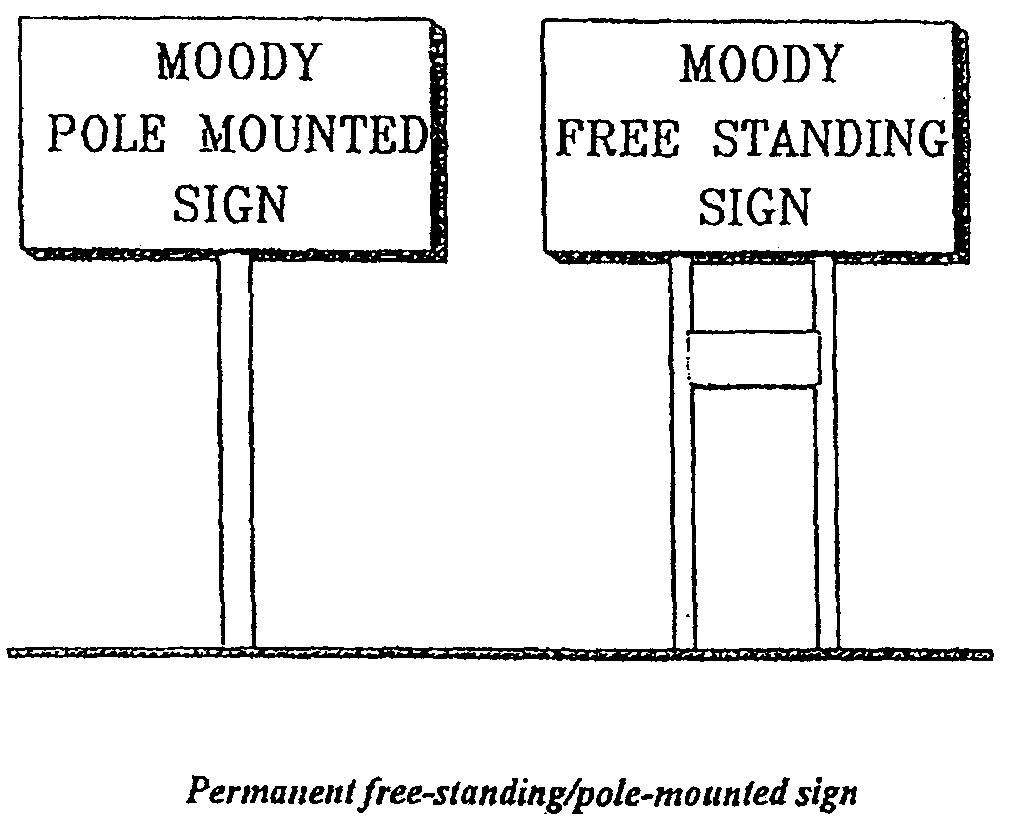
Permanent Freestanding/Pole Mounted Sign
B.
A permanent, on-premises, ground sign, either illuminated or non-illuminated, may include a masonry wall, landscaping and similar features or materials. Such sign shall not exceed 48 square feet in sign face area and shall be located no closer than the property line. No sign shall be located on, nor project into, a public right-of-way. See typical illustration of sign type below.
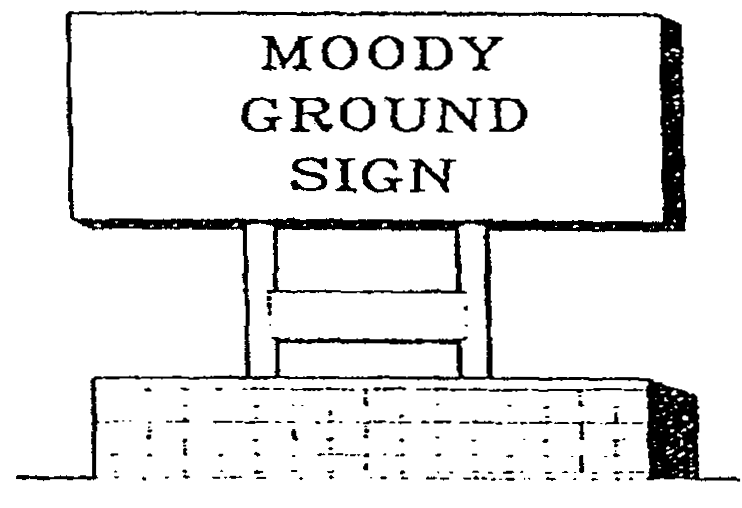
Ground Sign
C.
In addition to either A or B above, attached, permanent, on-premises signs, illuminated or non-illuminated, shall be limited to one per business, per street frontage; and, the following may be included:
1.
Wall or fascia sign either illuminated or non-illuminated shall be limited to one per street frontage, provided no other signs for such establishment are located on the same wall. Such signs shall not extend above the roofline of—or project more—than 12 inches from the building upon which it is mounted. Wall signs, which identify the rear entrance of the principle building, may be permitted, provided such signs do not exceed ten square feet in area.
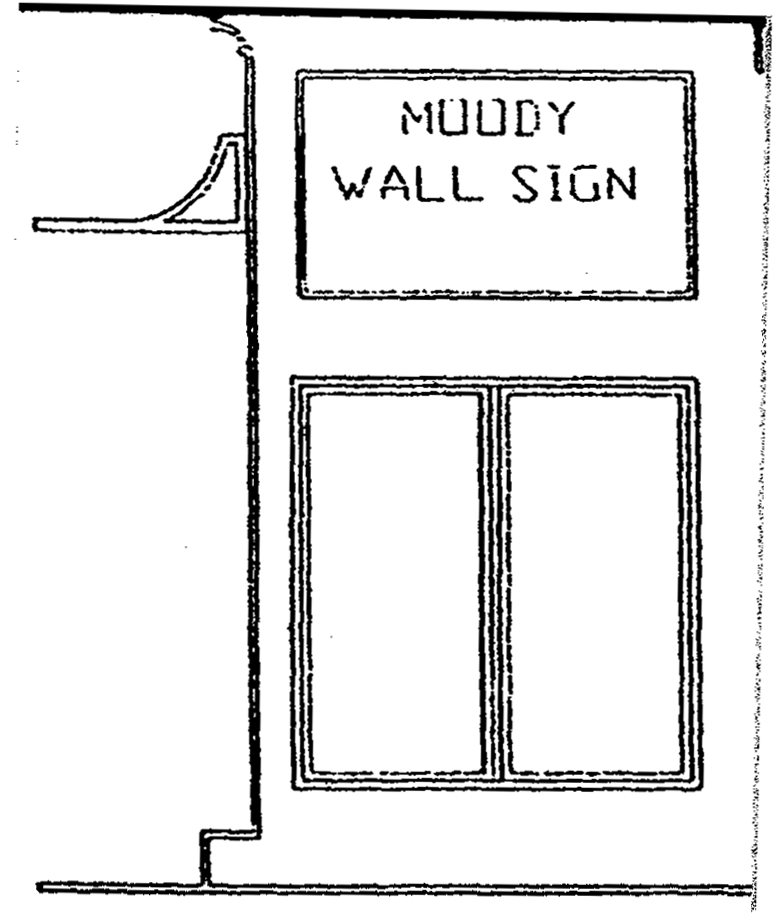
Wall or Fascia Sign
2.
A projecting sign either illuminated or non-illuminated shall be attached to the wall of the establishment it serves, provided no other signs for such establishment are located on the same building wall; and, it shall not project outward more than 36 inches from the face of the building upon which it is mounted. It shall not exceed 16 square feet in area and shall have a minimum clearance of ten feet from the lowest point of the sign to the ground level or sidewalk on which it stands. Such signs shall not project into any public right-of-way.
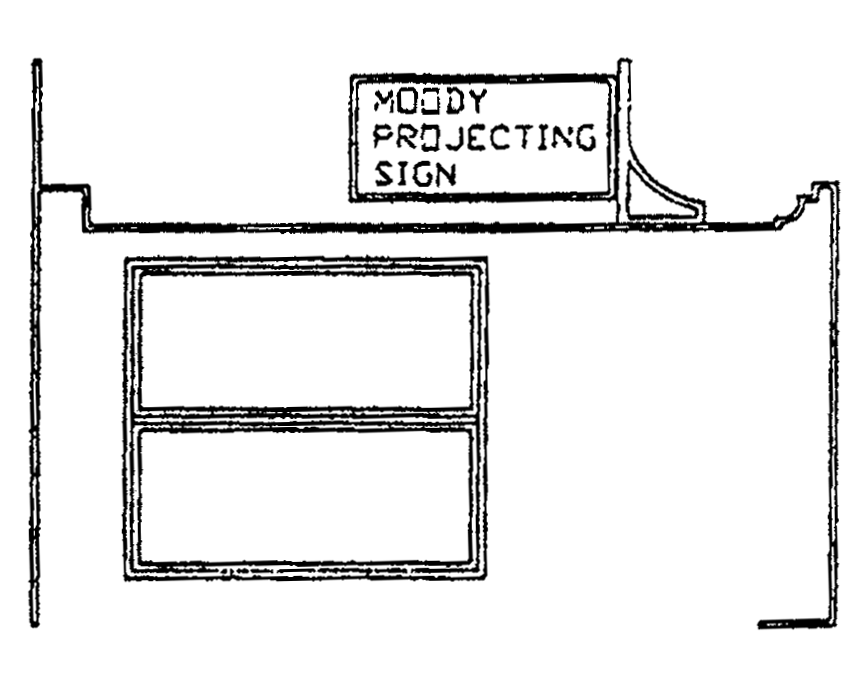
Projecting Sign
3.
A roof sign, illuminated or non-illuminated, limited to one per street frontage, per establishment, shall be located within a selected signable area. A signable wall area, for a roof sign, shall not exceed beyond the dimensions of a mansard roof, penthouse or an architectural roof element on which it is located. See definition of Signable area. The vertical dimensions of a signable wall area shall not exceed 40 percent of the signable wall area.
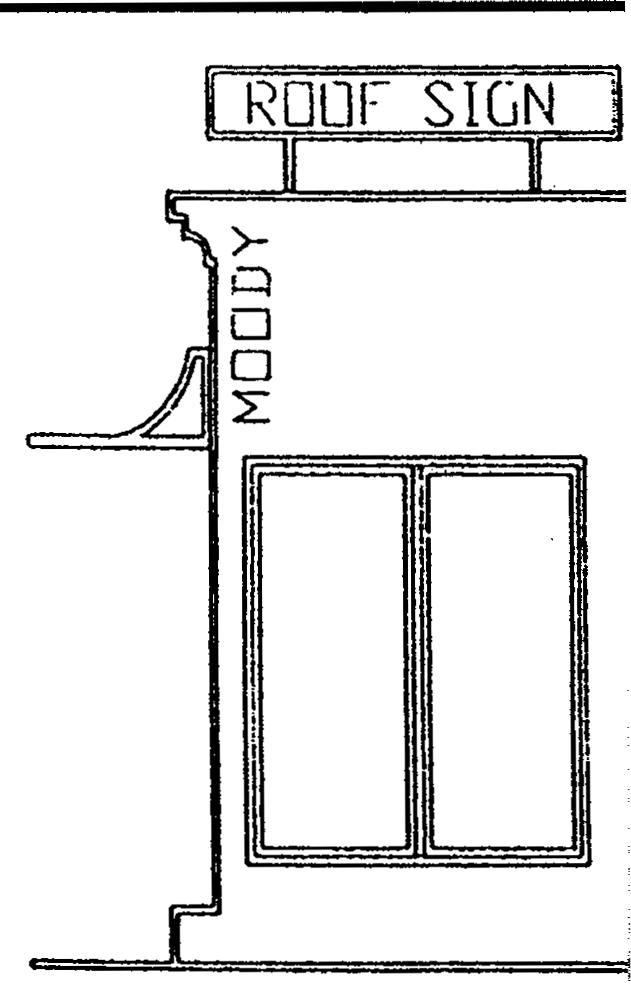
Roof Sign
D.
Signs in the unified business centers and shopping centers:
1.
There shall be an architectural harmony and unity of signs within a shopping center or unified business (office) center on a property. Sign type, color scheme, size and illumination within the site shall be coordinated and compatible with the architecture of the center.
2.
Either a permanent, freestanding, pole-mounted or ground sign, illuminated or non-illuminated, shall be permitted to identify a shopping center or unified business center. In addition, wall or fascia signs for each establishment within the center shall be permitted, with all signs subject to the height, dimensional requirements and restrictions of § 3.00. See typical illustration of sign types below.
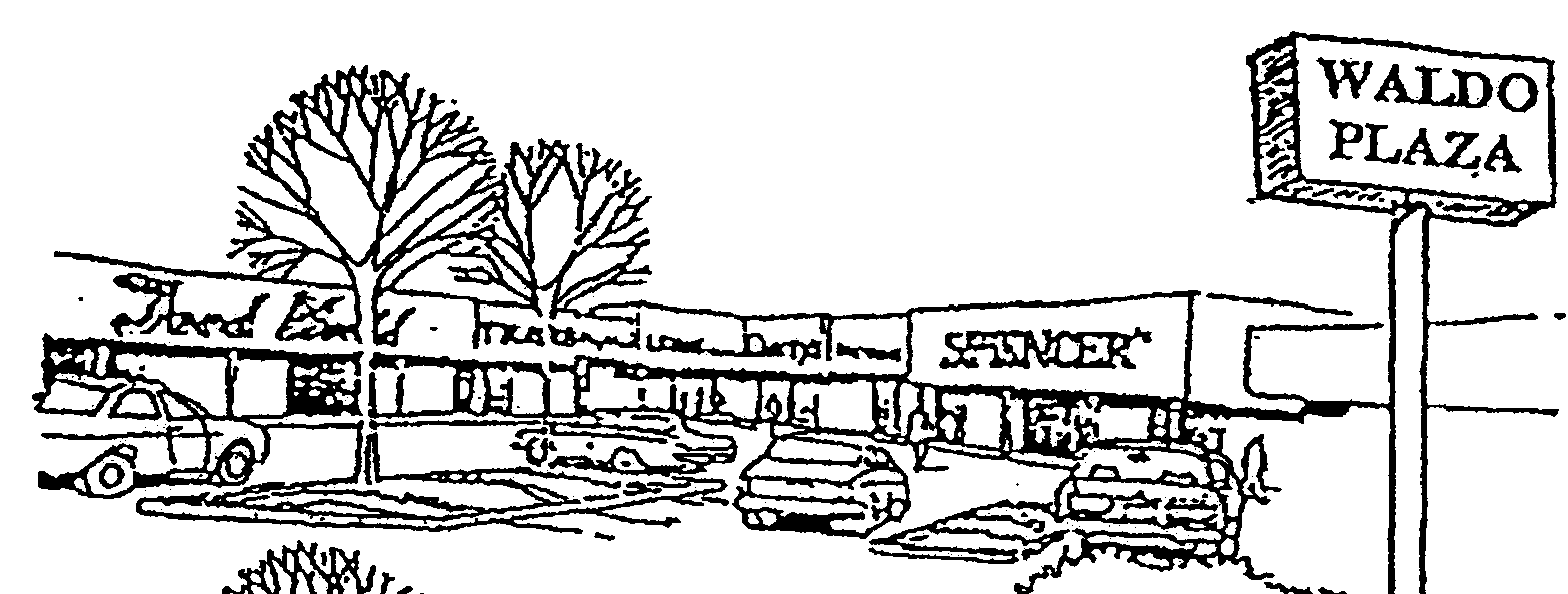
Unified Business Center (Waldo Plaza)
E.
Signs in the unified business centers (office parks):
1.
There shall be an architectural harmony and unity of signs within a unified business center on a property. Sign type, size and illumination within the site shall be coordinated and compatible with the architecture of the center.
2.
Either a permanent, freestanding, pole-mounted or ground sign, illuminated or non-illuminated, shall be permitted to identify a unified business center. In addition, wall or fascia signs for each establishment within the center shall be permitted, with all signs subject to the height, dimensional requirements for such signs as described in this section.
3.
The installation of billboards is prohibited in the 0-1 office building [district], subject to the provision of § 2.00.
4.
Portable signs shall be permitted, subject to the provisions in § 3.00.
5.
Marquees, canopies or fixed awnings shall be permitted, subject to the provisions of the Standard Building Code, chapter 22, §§ 2201.2—2201.6, or as many be amended.
§ 6.00. - Signs permitted in the B-1 Neighborhood Shopping District.
Permanent, freestanding, on-premises, pole-mounted or ground-mounted signs shall be permitted, limited to one such sign per street frontage of a street of a lot, regardless of the number of businesses located on the lot. The following may be included:
A.
A permanent, on premises, freestanding, pole-mounted sign, illuminated or non-illuminated, shall not exceed 100 square feet in area. Such sign shall not exceed a height of 35 feet from the ground level to the highest point on the sign. It shall have a minimum clearance of ten feet from the ground level to the lowest point on the sign and shall not be located closer than the edge of the property line. No sign shall be located on, nor project into, any public right-of-way. (See illustration in § 5.00, A.)
B.
A permanent, on-premises, ground sign, either illuminated or non-illuminated may include a masonry wall, landscaping and similar features or materials. Such sign shall not exceed 48 square feet in area and 15 feet in height measured from the ground level to the highest point of the sign. It shall not be located closer than the edge of the property line. No sign shall be located on, nor project into, any public right-of-way. (See illustration in § 5.00, B.)
C.
In addition to either A or B above, attached, permanent, on-premises signs, illuminated or non-illuminated, shall be limited to one per business, per street frontage; and, the following may be included:
1.
A wall or fascia sign, either illuminated or non-illuminated, shall be limited to one per street frontage, provided no other signs for such establishment are located on the same building wall. Such signs shall not extend above the roof line of-or project more than 12 inches outward from the building upon which it is mounted. Wall signs, which identify the rear entrance of the principal building, may be permitted, provided it is non-illuminated and does not exceed to ten square feet in area. (See illustration in § 5.00, C., 1.)
2.
A projecting sign, either illuminated or non-illuminated, shall be attached to the wall of the establishment it serves, provided no other signs for such establishment are located on the same building wall; and, it shall not project outward more than 36 inches from the face of the building upon which it is mounted. It shall not exceed 16 square feet in area and shall have a minimum clearance of ten feet from the lowest point of the sign to the ground level or sidewalk on which it stands. Such signs shall not project into any public right-of-way. (See illustration in § 5.00, C., 2.)
3.
A roof sign, illuminated or non-illuminated, limited to one per street frontage, per establishment, shall be located within a selected signable area. A signable wall area, for a roof sign, shall not extend beyond the dimensions of a mansard roof, penthouse or an architectural roof element on which it is located. See definition of Signable area. The vertical dimensions of a signable wall area shall not exceed six feet. The size of such signs shall not exceed 40 percent of the signable wall area. (See illustration in § 5.00, C., 3.)
D.
Signs located in the unified business centers (shopping centers and office parks).
1.
There shall be an architectural harmony and unity of signs within a shopping center or unified business center on a property. Sign type, color scheme, size, and illumination within the site shall be coordinated and compatible with the architecture of the center.
2.
Either a permanent, freestanding, pole-mounted or ground sign, illuminated or non-illuminated, shall be permitted to identify a shopping center or unified business center. In addition, wall or fascia signs for each establishment within the center shall be permitted, with all signs subject to the height, dimensional requirements and restrictions of § 5.00 for permanent, freestanding, pole-mounted or ground signs.
3.
Portable signs shall be permitted in the B-1 Neighborhood Shopping District, subject to the provisions of § 3.00.
4.
Marquees, canopies, or fixed awnings shall be permitted, subject to the provisions of the Standard Building Code, chapter 22, §§ 2201.2—2201.6, or as may be amended. (See illustration of sign, permitted in the unified business centers, in § 5.00, D.)
§ 7.00. - Signs permitted in the B-2 General Business District.
Permanent, freestanding, on-premises, pole-mounted, or ground-mounted signs shall be permitted, limited to one such sign per street frontage of a street of a lot, regardless of the number of businesses located on the lot. The following may be included:
A.
A permanent, on-premises, freestanding, pole-mounted, illuminated or non-illuminated, shall not exceed 150 square feet in area. Such sign shall not exceed a height of 40 feet from the ground level to the highest point on the sign. It shall have a minimum clearance of ten feet from the ground level to the lowest point on the sign and shall not be located closer than the edge of the property line. No sign shall be located on, nor project into, any public right-of-way. (See illustration in § 5.00, A.)
B.
A permanent, on-premises, ground sign, either illuminated or non-illuminated may include a masonry wall, landscaping and similar features or materials. Such sign shall not exceed 48 square feet in area and 15 feet in height measured from the ground level to the highest point of the sign. It shall not be located closer than the edge of the property line. No sign shall be located on, nor project into, any public right-of-way. (See illustration in § 5.00, B.)
C.
In addition to either A or B above, attached, permanent, on-premises signs, illuminated or non-illuminated, shall be limited to one per business, per street frontage; and, the following may be included:
1.
A wall or fascia sign, either illuminated or non-illuminated, shall be limited to one per street frontage, provided no other signs for such establishment are located on the same building wall. Such signs shall not extend above the roof line of or project more than 12 inches outward from the building upon which it is mounted. Wall signs, which identify the rear entrance of the principal building, may be permitted, provided it is non-illuminated and does not exceed ten square feet in area. (See illustration in § 5.00, C., 1.)
2.
A projecting sign, either illuminated or non-illuminated, shall be attached to the wall of the establishment it serves, provided no other signs for such establishment are located on the same building wall; and, it shall not project outward more than 36 inches from the face of the building upon which it is mounted. It shall not exceed 16 square feet in area and shall have a minimum clearance of ten feet from the lowest point of the sign to the ground level or sidewalk on which it stands. Such signs shall not project into any public right-of-way. (See illustration in § 5.00, C., 2.)
3.
A roof sign, illuminated or non-illuminated, limited to one per street frontage, per establishment, shall be located within a selected signable area. A signable wall area, for a roof sign, shall not extend beyond the dimensions of a mansard roof, penthouse or an architectural roof element on which it is located. See definition of Signable area. The vertical dimensions of a signable wall area shall not exceed six feet. The size of such signs shall not exceed 40 percent of the signable wall area. (See illustration in § 5.00, C., 3.)
D.
Signs located in the unified business centers (shopping centers and office parks).
1.
There shall be an architectural harmony and unity of signs within a shopping center or unified business center on a property. Sign type, color scheme, size, and illumination within the site shall be coordinated and compatible with the architecture of the center.
2.
Either a permanent, freestanding, pole-mounted or ground sign, illuminated or non-illuminated, shall be permitted to identify a shopping center or unified business center. In addition, wall or fascia signs for each establishment within the center shall be permitted, with all signs subject to the height, dimensional requirements and restrictions of § 5.00 for permanent, freestanding, pole-mounted or ground signs.
3.
Portable signs shall be permitted in the B-2 General Business Shopping District, subject to the provisions of § 3.00.
4.
Marquees, canopies, or fixed awnings shall be permitted, subject to the provisions of the Standard Building Code, chapter 22, §§ 2201.2—2201.6, or as may be amended. (See illustration of sign, permitted in the unified business centers, in § 5.00, D.)
§ 8.00. - Signs permitted in the B-3 Tourist Commercial District.
Permanent freestanding, on-premises, pole-mounted or ground mounted signs shall be permitted, limited to one such sign per street frontage of a street of a lot, regardless of the number of businesses located on the lot. The following may be included:
A.
A permanent, on-premises, freestanding, pole-mounted sign, illuminated or non-illuminated, shall not exceed 150 square feet in area. Such sign shall not exceed a height of 40 feet from the ground level to the highest point on the sign. It shall have a minimum clearance of ten feet from the ground level to the lowest point on the sign. No sign shall be located on, nor project into, any public right-of-way nor be located under any overhead utility lines. (See illustration in § 5.00, A.)
B.
A permanent, on-premises, ground sign, either illuminated or non-illuminated, may include a masonry wall, landscaping and similar features or materials. Such sign shall not exceed 48 square feet in area and 15 feet in height measured from the ground level to the highest point on the sign. No sign shall be located on, nor project into, any public right-of-way nor be located under any utility lines. (See illustration in § 5.00, B.)
C.
A permanent, on premises, freestanding, pole-mounted sign, illuminated, or nonilluminated, and located within 1,900 feet of the I-20 right-of-way, shall not exceed 150 square feet in area. Such sign shall not exceed a height of 75 feet from the ground level to the highest point on the sign. It shall have a minimum clearance of ten feet from the ground level to the lowest point on the sign. It shall have a minimum clearance of ten feet (from the ground level to the lowest point on the sign. No sign shall be located on, nor project into, any public right-of-way, not be located under any utility lines. (See illustration in § 5.00, A.)
D.
In addition to either A, B or C above, attached, permanent, on-premises signs, illuminated or non-illuminated, shall be limited to one per business, per street frontage; and, the following may be included:
1.
A wall or fascia sign, either illuminated or non-illuminated, shall be limited to one per street frontage, provided no other signs for such establishment are located on the same building wall. Such signs shall not extend above the roof line of—or project more than 12 inches outward from the building upon which it is mounted. Wall signs, which identify the rear entrance of the principal buildings, may be permitted, provided it is non-illuminated and does not exceed ten square feet in sign area. (See illustration in § 5.00, C., 1.)
2.
A projecting sign either illuminated or non-illuminated, shall be attached to the wall of the establishment it serves, provided no other signs for such establishment are located on the same building wall; and, it shall not project outward more than 36 inches from the face of the building upon which it is mounted. It shall not exceed 16 square feet in area and shall have a minimum clearance of ten feet from the lowest point of the sign to the ground level or sidewalk on which it stands. Such signs shall not project into any public right-of-way. (See illustration of § 5.00, C., 2.)
3.
A roof sign, illuminated or non-illuminated, limited to one per street frontage, per beyond the dimensions of a mansard roof, penthouse or an architectural roof element on which it is located. See definition of Signable area. The vertical dimensions of a signable wall area shall not exceed six feet. The size of such signs shall not exceed 40 percent of the signable wall area. (See illustration in § 5.00, C., 3.)
E.
Signs located in unified business centers (shopping centers and office parks).
1.
There shall be an architectural harmony and unity of signs within a shopping center or unified business center on a property. Sign type, color scheme, size, and illumination within the site shall be coordinated and compatible with the architecture of the center.
2.
Either a permanent, freestanding, pole-mounted, or ground sign, illuminated or non-illuminated, shall be permitted to identify a shopping center or unified business center. In addition a wall or fascia signs for each establishment within the center shall be permitted, with all signs subject to the height, dimensional requirements and restriction of § 5.00 for permanent, freestanding, pole-mounted, or ground signs.
3.
Billboards shall be permitted in the B-3 Tourist Commercial District, subject to the provisions of § 2.00.
4.
Portable signs shall be permitted in the B-3 Tourist Commercial District subject to the provisions of § 3.00.
5.
Marquees, canopies or fixed awnings shall be permitted, subject to the provisions of the Standard Building Code, chapter 22, §§ 2201.2—2201.6, or as may be amended.
§ 9.00. - Signs permitted in the I-1 Light Industrial District and the I-2 Heavy Industrial District.
Permanent, freestanding, on-premises, pole-mounted or ground mounted signs shall be permitted, limited to one such sign per street frontage of a street frontage of a street of a lot, regardless of the number of businesses located on the lot. The following may be included:
A.
A permanent, on-premises, freestanding, pole-mounted sign, illuminated or non-illuminated, shall not exceed 150 square feet in area. Such sign shall not exceed a height of 40 feet from the ground level to the highest point of the sign. It shall have a minimum clearance of ten feet from the ground level to the lowest point on the sign. It shall not be located closer than the edge of the property line. No sign shall be located on, nor project into, any public right-of-way. (See illustration in § 5.00, A.)
B.
A permanent, on-premises, ground sign, either illuminated or non-illuminated, may include a masonry wall, landscaping and similar features or materials. Such sign shall not exceed 60 square feet in area and 15 feet in height measured from the ground level to the highest point of the sign. It shall not be located closer than the edge of the property line. No sign shall be located on, nor project into, any public right-of-way. (See illustration in § 5.00, B.)
C.
In addition to either A or B above, attached, permanent, on-premises signs, illuminated or non-illuminated, shall be limited to one per business, per street frontage; and, the following may be included:
1.
A wall or fascia sign, either illuminated or non-illuminated, shall be limited to one per street frontage, provided no other signs for such establishment are located on the same building wall. Such signs shall not extend above the roof line of—or project more than 12 inches outward from the building upon which it is mounted. Wall signs, which identify the rear entrance of the principle building, may be permitted, provided it is non-illuminated and does not exceed ten square feet in sign area. (See illustration in § 5.00, C., 1.)
2.
A projecting sign either illuminated or non-illuminated, shall be attached to the wall of the establishment it serves, provided no other signs for such establishment are located on the same building wall; and, it shall not project outward more than 36 inches from the face of the building upon which it is mounted. It shall not exceed 16 square feet in area and shall have a minimum clearance of ten feet from the lowest point of the sign to the ground level or sidewalk on which it stands. Such signs shall not project into any public right-of-way. (See illustration of § 5.00, C., 2.)
D.
Portable signs shall be permitted in the I-1 and I-2 Industrial Districts, subject to the provisions of § 3.00.
§ 10.00. - Signs permitted in the AG-1 Agricultural District.
The following signs shall be permitted in the AG-1 Agricultural District:
A.
Those signs permitted in the residential areas listed in § 4.00.
B.
Signs customarily incidental to uses permitted in the agricultural district.
Note— Also, see subsection 1.03, Exempt signs, permit exemptions, and subsection 1.02, Regulations pertaining to all signs.
§ 11.00. - Construction and maintenance of signs.
All signs shall comply with the following construction and maintenance requirements and regulations:
A.
All signs shall conform with the City of Moody building and other construction codes. These specifications include wind loads, vibration resistance, seismic loads, acceptable supports, allowable stresses, materials and electrical wiring and components.
B.
All signs and all components thereof, including structural supports, shall be kept in a state of good repair.
C.
The area surrounding the base of any freestanding sign shall be kept clean of all trash, debris and undergrowth.
D.
No person may, for the purpose of increasing or enhancing the visibility of any sign, damage, trim, destroy or remove any trees, shrubs, or other vegetation within any right-of-way or on any area where landscaping is required under city regulations, unless express written authorization is obtained from the agency having jurisdiction over the said right(s)-of-way.
§ 12.00. - Required permits, fees and inspections.
A.
Permits required.
1.
Except where this article explicitly exempts a sign, all signs erected shall require a sign permit issued by the building inspector.
2.
Whether a sign is exempt or not, an electrical permit shall be required for all illuminated signs.
3.
All outdoor advertising signs to be located within 660 feet of the nearest edge of the right-of-way of a highway on Interstate or National Highway System-urban and rural routes, shall file an application for a permit with the State of Alabama Highway Department as required by the Highway Beautification Act-Outdoor Advertising.
B.
Application forms.
1.
Each application for a sign permit shall include the following:
a.
The name, signature and address of property owner or the authorized agent of the property owner and that of the sign contractor.
b.
The address of the property owner where the sign is to be erected.
c.
The lot area, sign district, zoning district, and principal land use(s) on the lot where the sign is to be erected.
d.
A complete description of the sign(s) to be erected, including, but not limited to, the number, type, method of illumination, size, height, etc.
e.
A scaled drawing of the sign and a plot plan showing the location of each sign on the lot.
f.
All other details, sufficient for the building inspector to determine compliance with the requirements of this article, which may include a building elevation, survey or other drawings, or any documentation deemed satisfactory by the City of Moody to assess a permit for the sign.
g.
All applicable fees.
12.01.
Issuance denial.
When a permit is denied by the building inspector, he or she shall serve a written notice to the concerned applicant explaining the reason or reasons behind such a denial. A copy of the said statement shall be made as an attachment to the permit application.
12.02.
Appeals of permit denial.
An appeal, concerning the denial of a permit, may be taken to the zoning board of adjustments by the concerned applicant.
12.03.
Permit fees.
Applications for permits shall be filed with the building inspector, together with a permit fee, as specified by the building inspector, for each sign, in accordance with this ordinance. The building permit fees for signs shall be determined by the city in the same manner as the fees for other building permits.
12.04.
Inspection of signs.
The person erecting, altering, relocating, enlarging, or converting any sign shall notify the building inspector of the completion of such work for which permits were required and issued. See subsection 1.03, Exempt signs, permit exemptions.
12.05.
Unlawful signs.
Every sign in the City of Moody shall be maintained and in good structural condition at all times. The building inspector may inspect and shall have the authority to order the painting, repair, alteration, movement, or removal of signs which are dilapidated or abandoned, or which constitute a physical hazard to public safety. Any repair, painting, alteration, relocation, or removal shall be at the sign owner's expense. See subsections 12.06 and 12.10 of this article.
12.06.
Confiscation of signs located in public right-of-way.
Any sign installed or placed on a right-of-way, except in conformance with the requirements of this ordinance, shall be forfeited to the public and subject to confiscation. In addition to other remedies provided for under this article, the city shall have the right to recover, from the owner or person placing the sign, the full cost of removal and disposal.
12.07.
Abandoned signs.
Except as may otherwise be provided for in this article, any sign that is located on property which becomes vacant and is unoccupied for a time period of four months or more, or any sign which pertains to a time, event or purpose which no longer applies, shall be deemed to have abandoned. Permanent signs applicable to a business, temporarily suspended because of change in ownership or management, shall not be deemed abandoned unless the property remains vacant for a period of nine months or more. An abandoned sign is prohibited and shall be removed by the owner of the sign or owner of the premises.
12.08.
Misleading signs.
All signs, for businesses and other commercial or industrial establishments that are no longer in operation, shall be removed within 90 days of the disuse of such an establishment. The removal of such misleading signs shall be the responsibility of the owner of that sign.
12.09.
Notification.
All notices mailed by the building inspector shall be sent by certified mail. Any time period, provided in this section, shall be deemed to commence on the date of the receipt of the certified mail. The notice shall be mailed to the owner of the property, on which the sign is located, as shown on the latest available tax records and maps, as well as the occupant which the sign serves. Any person or persons with an interest in the sign or the property may appeal the determination of the building inspector. The building inspector's order of the removal of the sign or the measures necessary to bring the sign into compliance with the provisions of this ordinance may be appealed with the City of Moody zoning board of adjustments in writing. This appeal must be filed within 30 days of the date the building inspector's notice for the removal of a sign/signs was mailed.
12.10.
Removal of signs.
The building inspector shall order the removal of any sign that endangers public safety. Signs that are abandoned, dangerous, materially inadequate, electrically or structurally defective, signs for which no permits have been issued, etc., shall be written up for violations. The building inspector shall issue a detailed description of the violation or violations and advise that these be corrected within 30 days. The failure to rectify all the cited violations shall lead to the removal of the sign(s) in accordance with the provisions of this ordinance. The following shall apply to signs place in public rights-of-way; any sign installed or place on a public right-of-way, except in conformance with the requirements of this ordinance, shall be forfeited to the public and shall be subject to confiscation. In addition to other remedies provided under this article, the city shall have the right to recover, from the owner or person placing such a sign, the full costs of removal and disposal as described in subsection 12.06.

