
North Kansas City City Zoning Code
CHAPTER 17
16 - RESIDENTIAL DEVELOPMENT STANDARDS
17.16.010 - Building types and intent.
The standards for building types are intended to create relationships between private development and the public realm, and specify a compatible building form and scale for different building types within a district or along a block, based on the context. The following building types are established to allow a range of buildings and create effective transitions within and between zoning districts.
Table 16-1: Building Types and Intent
| Detached House A residential building designed for one primary dwelling unit in an urban neighborhood or suburban setting. Variants of this type are based primarily on lot size and context. • Detached House—Neighborhood • Detached House—Compact | 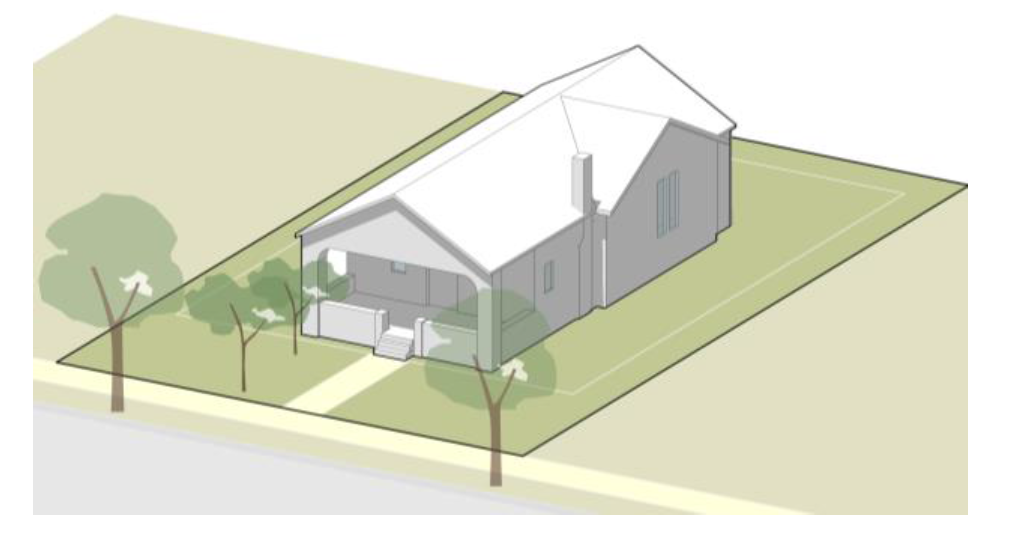 |
| Duplex A residential building designed to accommodate two primary dwelling units in an urban neighborhood or suburban setting. Duplexes have an outward design, scale and appearance of a Detached House. Variants of this type are primarily based on context, and how the frontage is designed to be compatible with the neighborhood character. They include side-by-side, up-down, or front-back configurations. | 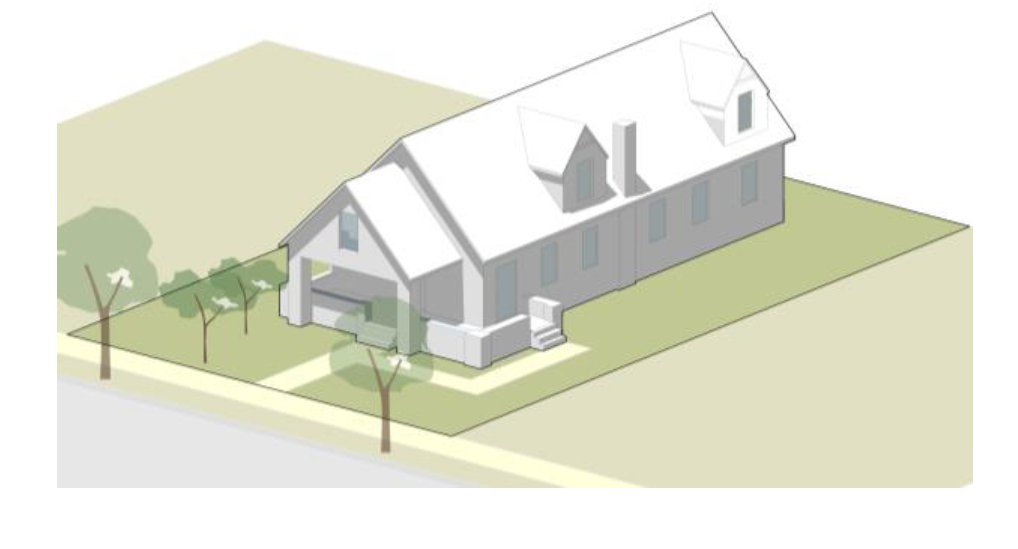 |
| Multi-unit House A residential building designed to accommodate two to four dwelling units in an urban neighborhood or suburban setting. Multi-unit houses have an outward design, scale and appearance of a Detached House. Variants of this type are primarily based on context, and how the frontage is designed to be compatible with the neighborhood character. | 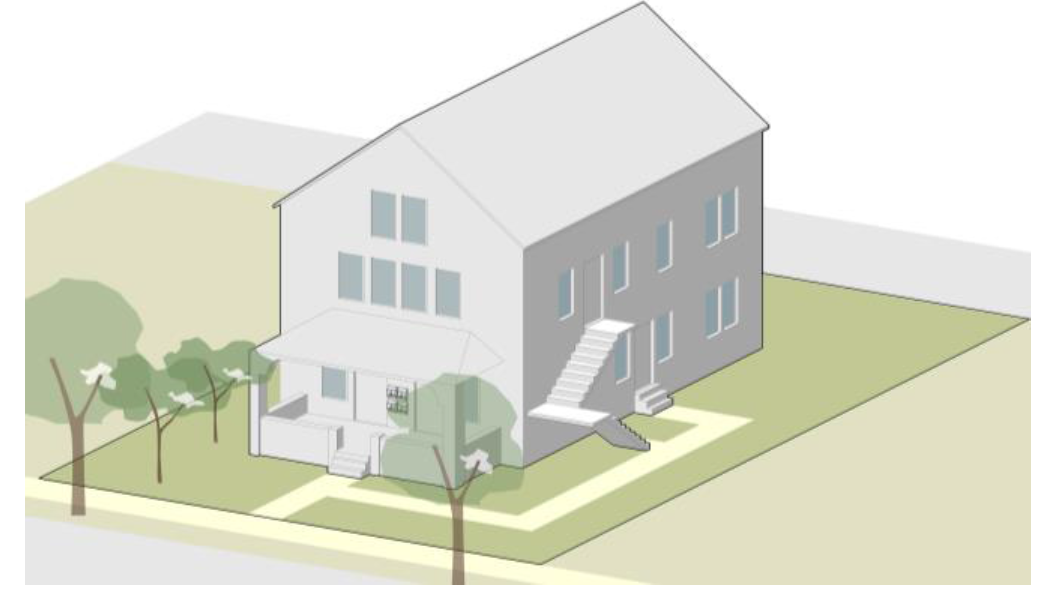 |
| Row House A residential building type designed to accommodate three to eight dwelling units in an urban neighborhood or mixed-use setting. Each unit is separated by a common sidewall with a side-by-side configuration, and each has its own private entrance. | 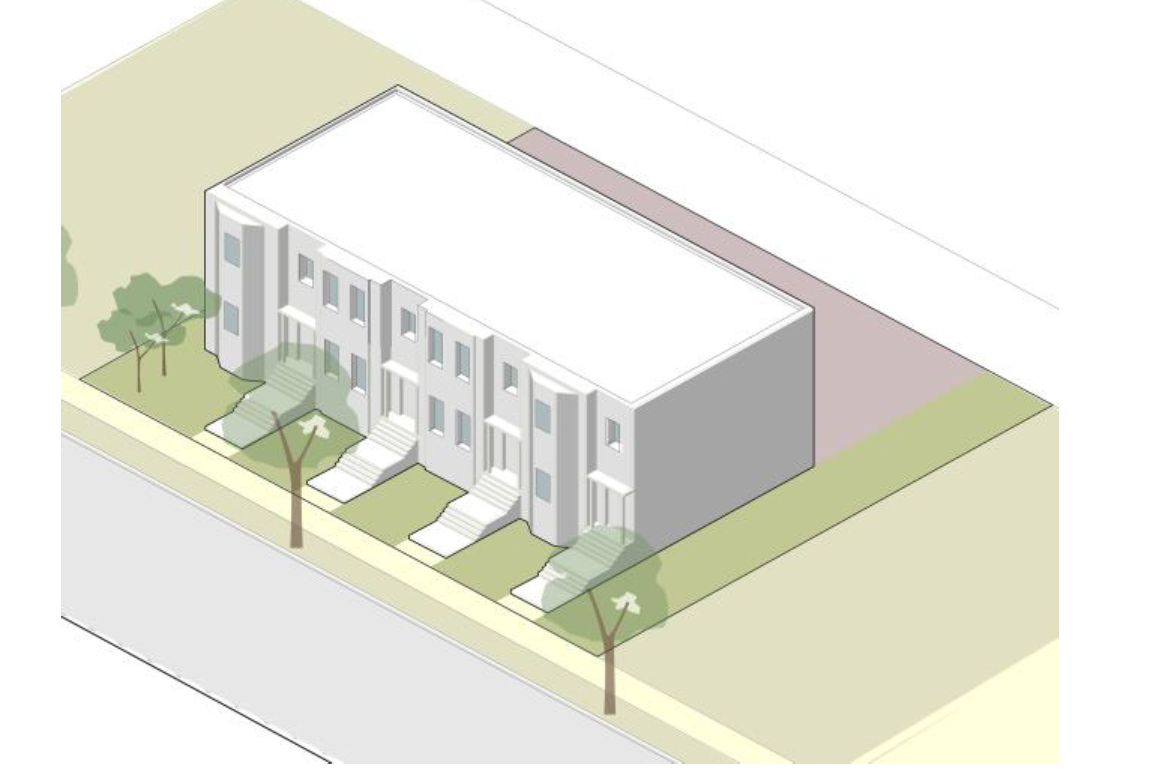 |
| Small Apartment A small scale, multi-unit residential building designed on a small or moderate-sized lot in an urban neighborhood or mixed-use stetting. The building is accessed by a common lobby entrance at building frontage, and arranged to integrate into the block structure of a neighborhood. | 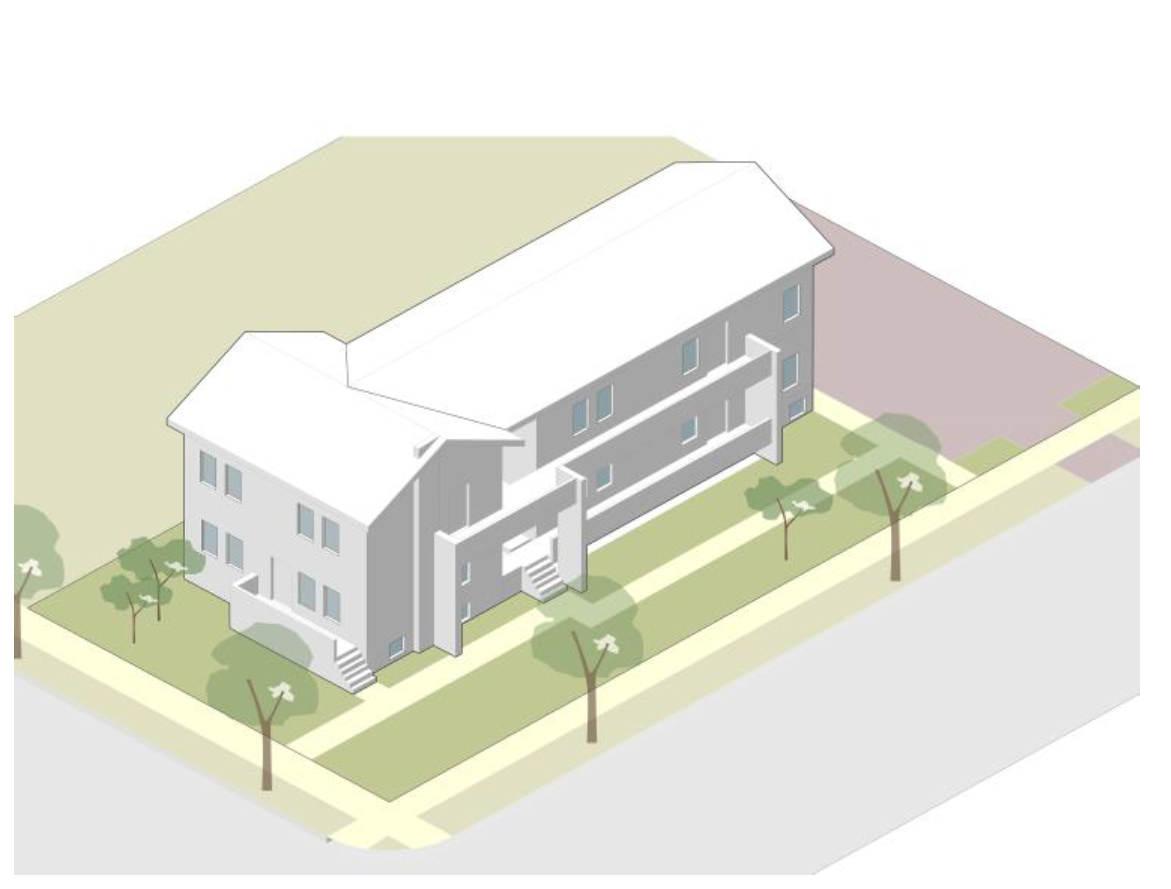 |
| Medium Apartment A moderate scale, multi-unit residential building on a moderate-sized lot in high-density areas, corridors or mixed-use areas. The building is accessed by a common lobby entrance at the building frontage, and arranged to integrate into the block structure of a neighborhood. | 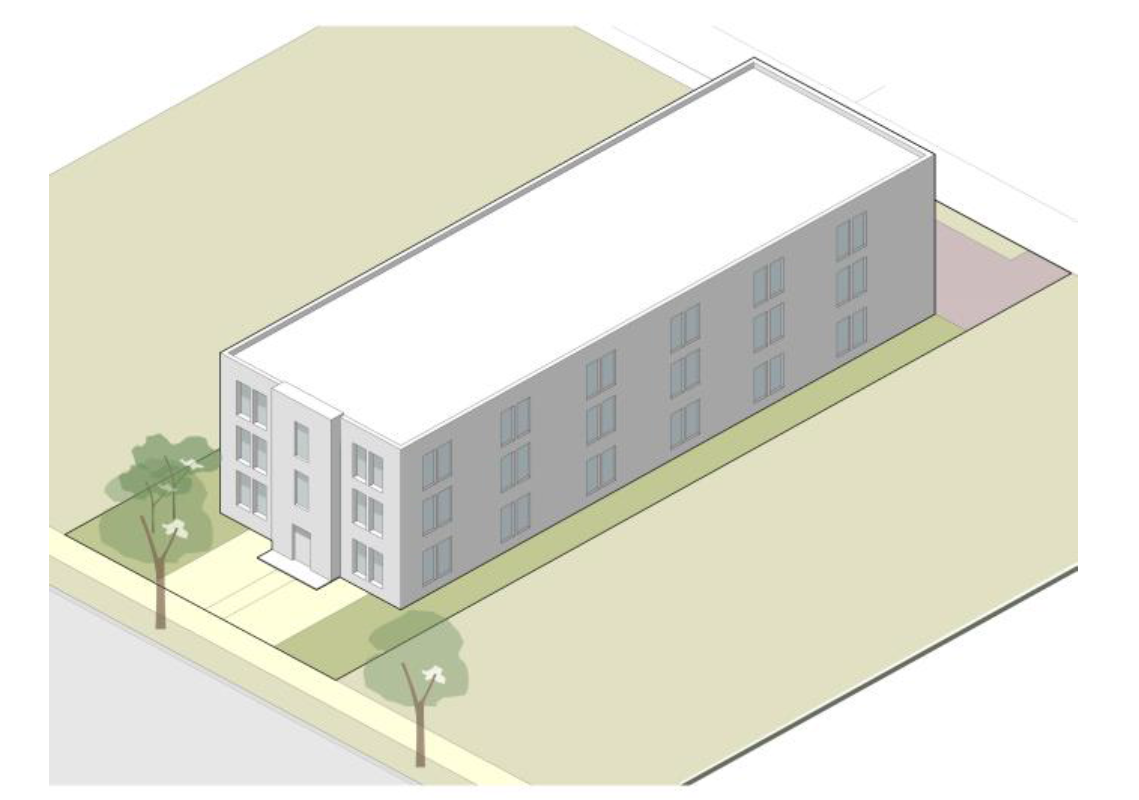 |
| Large Apartment A large-scale, multi-unit residential building on a moderate- to large-sized lot in high-density areas, corridors or mixed-use areas. The building is accessed by a common lobby entrance at the building frontage, and appropriate in particular contexts where greater density or intensity supports broader planning goals. | 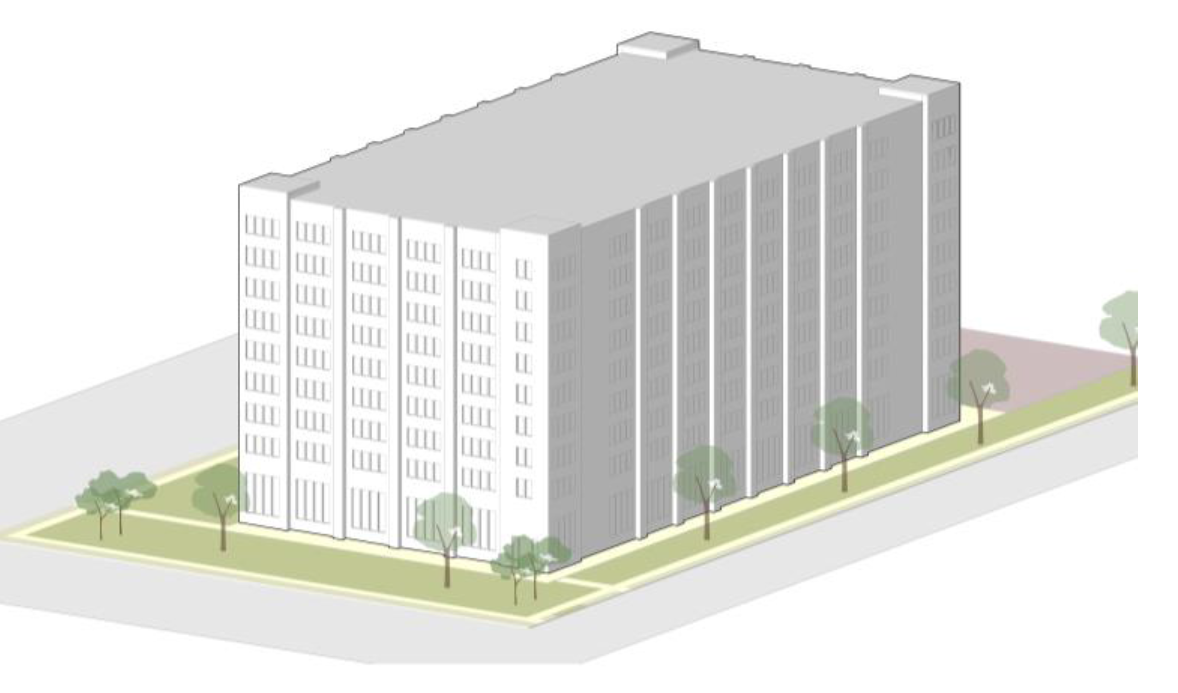 |
| Garden Apartment A grouping of small-scale apartment buildings in a common development, typically in a suburban context and arranged around an internal system of streets/internal access, walkways and common open space. | 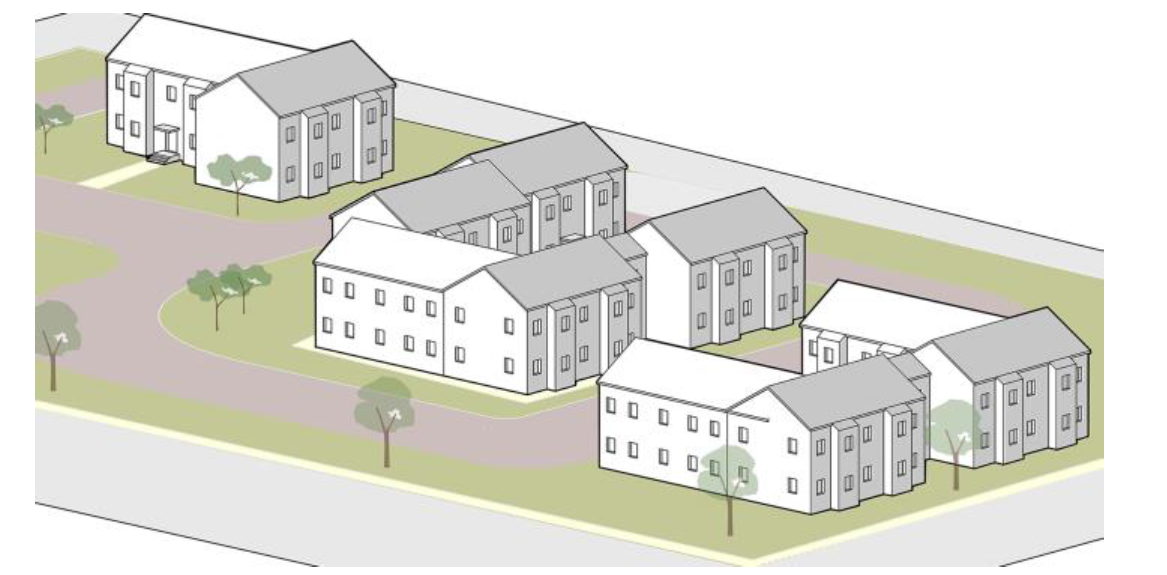 |
| Live/Work A building designed for a primary dwelling unit but has a secondary component—typically at the building frontage—designed for a commercial and occupational function by the resident. This building type is for transitions between neighborhoods and commercial centers or busier corridors, or for mixed-use areas. | 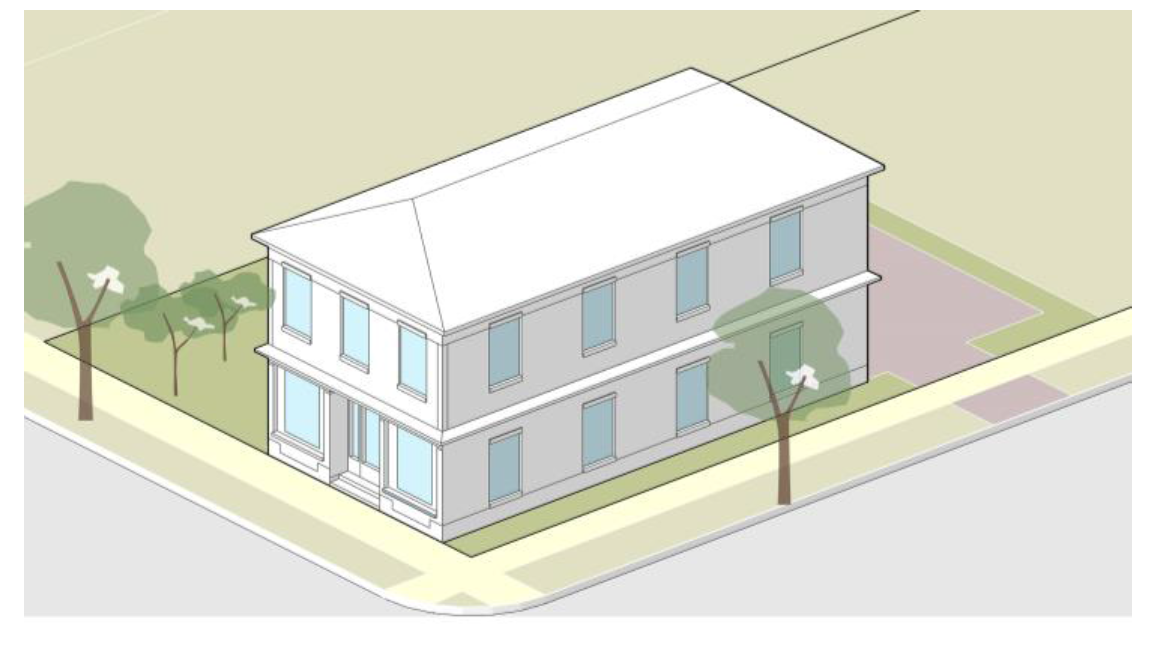 |
| Small Civic A building designed for a civic, institutional or public use, with the building and site design that emphasizes the public realm through enhanced design and relationships to streetscape and open space. Variations include small civic buildings for integration into neighborhoods and mixed-use areas, and prominent civic buildings often in a campus setting, with specific patterns and scale based on the functions for the intended use. | 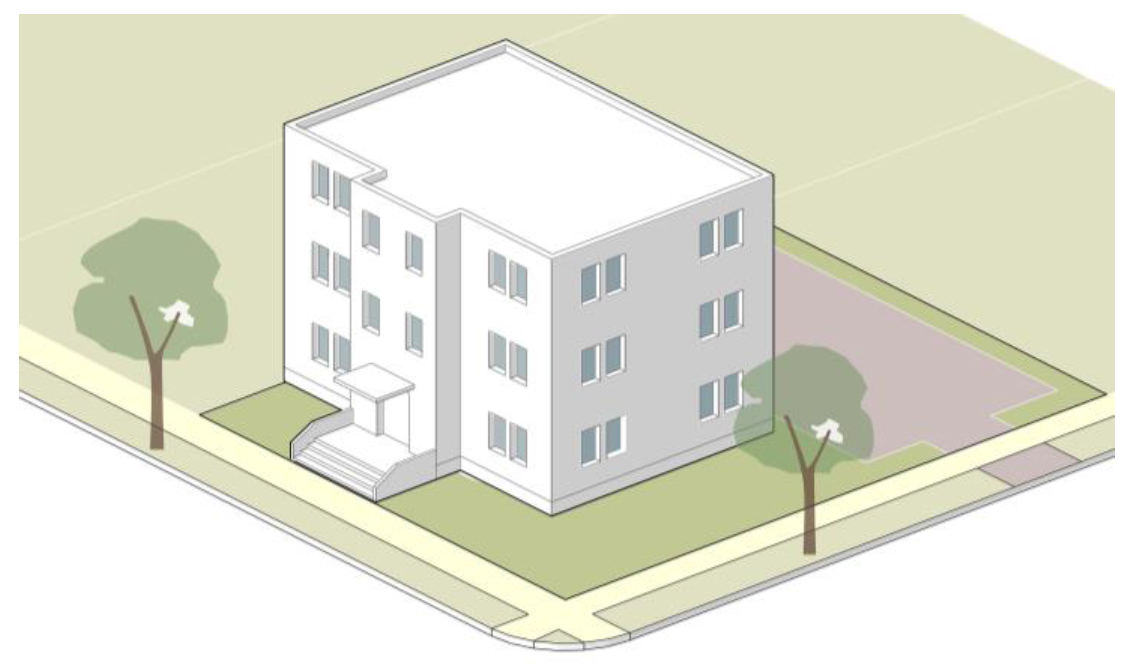 |
| Small Mixed-Use A small-footprint building designed to accommodate a ground floor non-residential uses and residential on the upper-level and/or behind the non-residential uses. This building type is similar in scale to the small or medium apartment, and is appropriate in limited locations at the transition between neighborhood and commercial areas or at a key intersection or node within urban and mixed-density neighborhoods. | 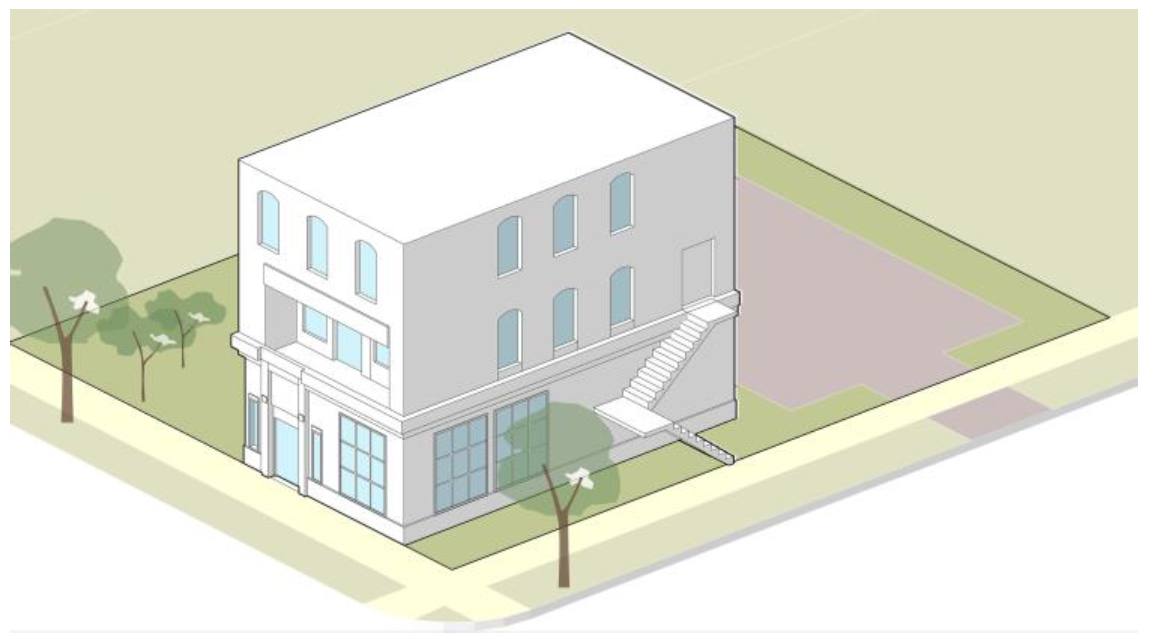 |
(Ord. No. 9212, § 3(Exh. A), 7-2-2019)
17.16.020 - Building type and development standards.
The development standards for residential districts shall be based on the different building types permitted in each district, as specified in Table 16-2. The design standards in Section 17.16.030 may further specify the design and location of each building type.
Table 16-2: Residential District Building Type and Development Standards
□Building types are limited in the particular district, and shall only be permitted in the following locations:
a.
Lots fronting on or across the street from public or common open spaces.
b.
Corridors of major collector or arterial streets.
c.
Transition blocks adjacent to non-residential districts.
[1] Front setback requirements are modified for a particular street or block, based on the frontage type standards in 17.16.030.C or, where applicable, the frontage standards in 17.20.020.
A.
Height Exceptions. The following are exceptions to the height limits in Table 16-2:
1.
Accessory building elements integral to the design and construction of the building, such as parapet walls, false mansards may extend up to six feet above the roof deck.
2.
Architectural features such as belfries, chimneys, ornamental towers and spires may extend up to fifty (50) percent above the actual building height.
3.
Functional and mechanical equipment such as elevator bulkheads, cooling towers, smokestacks or other equipment may be built up to their necessary height in accordance with building codes.
4.
Site elements, flag poles, monuments, water towers, may have a height limit of seventy-five (75) feet, but shall be setback a distance of at least one-third its height from the property line.
5.
Public, semi-public or public service buildings, such as hospitals, churches, schools may have a height limit of one hundred (100) feet, provided any portion above the allowed maximum height shall be setback from the property line an additional one foot for each foot above the maximum allowed height.
6.
All height exceptions shall be in conformance with air space regulations relative to the Kansas City Municipal Airport.
B.
Setback Exceptions. The following are exceptions to the setback limits in Table 16-2, except that in no case shall this authorize structures that violate the provisions of any easement.
1.
Structural projections such as bay windows, balconies chimneys, eaves, open fire escapes, egress wells, or other non-foundational overhangs or projections may extend up to four feet from the foundation and encroach into the setback, but no closer or three feet from any lot line. This exception shall be limited to no more than twenty (20) percent of a building elevation.
2.
Whenever a lot abuts upon a public alley, one-half of the alley width may be considered as a portion of the required setback.
3.
Primary entrance features may encroach into the front setback as specified in Section 17.16.030.C.
4.
Unenclosed and un-roofed decks or patios at or below the first-floor elevation may extend into the rear or side setback up to fifteen (15) feet, but no closer than five feet to any lot line.
5.
Ground-mounted mechanical equipment may be located in the side or rear setback provided that it extends no more than six feet from the principal building, no closer than three feet to the lot line, and is screened from public right-of-way by structures or landscape.
6.
Where at least five lots comprise over forty (40) percent or more of the frontage on the same side of a street between two intersecting streets (excluding reverse corner lots), are developed with buildings having front yards with a variation of not more than ten (10) feet in depth, the average of these front yards shall establish the minimum front yard depth for the entire frontage.
7.
Any accessory use or structure within the setback shall have a setback of at least one-third its height from the property line, unless a more specific limit is provided in these regulations.
C.
Accessory Buildings. Accessory buildings shall be permitted in association with and on the same lot as a principal building, and are subject to the following additional limitations.
1.
Generally. All accessory buildings shall be at least ten (10) feet from the principal building.
2.
Small Sheds. Accessory buildings two hundred (200) square feet or less, and less than twelve (12) feet tall shall be limited to one per lot, located behind the rear building line of the principal building, and be no closer than three feet from the rear or side property line.
3.
Detached Building. In any residential district, accessory buildings over two hundred (200) square feet shall meet the following:
a.
No more than one per lot.
b.
Located behind the front building line and at least sixty (60) feet from the front lot line.
c.
Be at least three feet from the rear and side lot line, except that corner lots shall have the same street-side setback as the [principal] building.
d.
Maximum height of one and one-half stories, or no higher than the principal building, whichever is less. The following specific massing standards apply:
(1)
The first story wall height shall be no more than nine feet above the finished floor.
(2)
The roof peak or other top of structure shall not exceed twenty-two (22) feet above finished floor.
(3)
Any portion of an accessory building façade that is more than fifteen (15) feet high, such as a dormer, gable, upper story knee wall or similar façade component, shall be at least ten (10) feet from any lot line.
e.
Maximum of four hundred (400) square feet or fifty (50) percent of the [principal] building footprint, whichever is greater.
f.
Be constructed with materials, architectural details and style, and roof forms that are compatible with the principal structure.
g.
Detached buildings may be attached to the [principal] building by a breezeway or roofed structure provided it remains entirely open except for support columns.
(Ord. No. 9212, § 3(Exh. A), 7-2-2019)
17.16.030 - Traditional and urban neighborhoods design standards.
A.
Intent. The intent of the residential design standards is to:
1.
Promote quality and human-scale neighborhood design.
2.
Maintain the appearance and livability of neighborhoods.
3.
Provide for a wider range of compatible building types and housing options, particularly where compact, walkable patterns are desired.
4.
Improve the relationship of the buildings and sites to the neighborhood streetscape.
5.
Encourage lasting investments in neighborhoods.
B.
Applicability. The standards in this section apply to:
1.
Any development in the traditional neighborhood character area of the master plan.
2.
Any residential development in the downtown, gateway commercial, or industrial transition character areas of the master plan.
3.
Any application of the R-4 and R-5 zoning districts.
4.
Other residential components of mixed-use development projects seeking walkable patterns and designs, to the extent they are not modified through planned district applications.
C.
Frontage Types.
1.
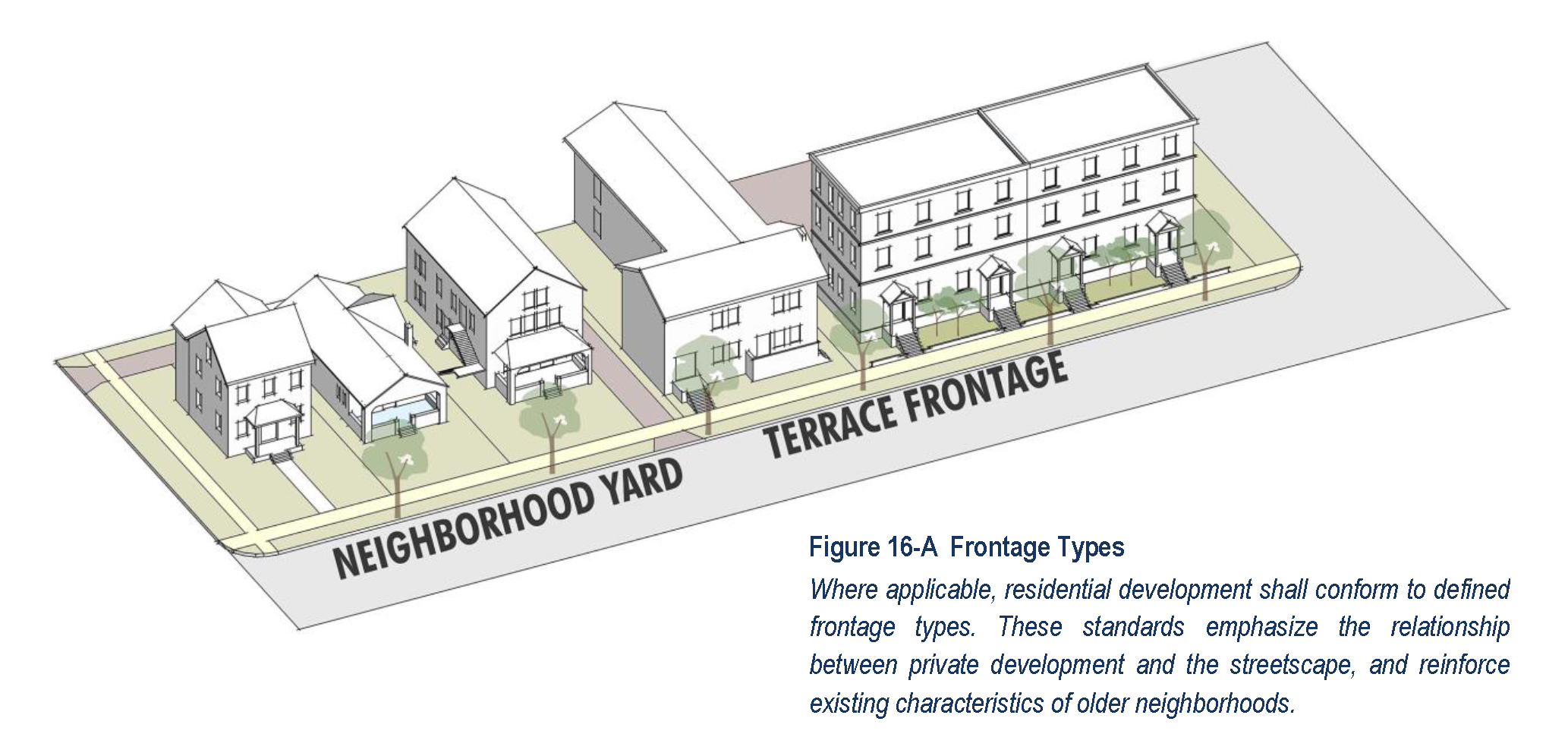
Design Objective. The design of lot frontages establishes the relationship of buildings and lots to the streetscape. The proportion of this area designed for social spaces and pedestrian access, as opposed to space and access dedicated to vehicles, activates the streetscape. A consistent frontage design among all lots and buildings along a block face reinforces neighborhood character.
2.
Frontage Design Standards. The design standards for different frontage types are in Table 16-3. Frontage designs should be consistent for all lots on the same block face, although where buildings are placed within five feet of the adjacent front building line, they may facilitate the gradual transition to different types.
Table 16-3: Residential Frontage Types
[1] Driveway width limits apply to all points in front of the front building line, in cases where driveway width limits or prevent private drives to parking areas or garages, the following configurations should be used to access lots: single lanes to expanded setback parking pads; shared drives along lot lines; common lanes and access easements internal to block shared by three or more lots; or mid-block alleys accessing all lots on the block.
D.
Front Entry Features.
1.
Design Objective. Front entry features create a human-scale relationship of buildings to the street. They provide opportunities for subtle variations in design of different buildings or dwelling units on the streetscape. This can help create compatible relationships between buildings of different size and develop a distinct character within neighborhoods.
2.
Design Standards. All buildings shall include a front entry feature connecting the front façade to the streetscape and meeting the design standards for one of the front entry design types in Table 16-4.
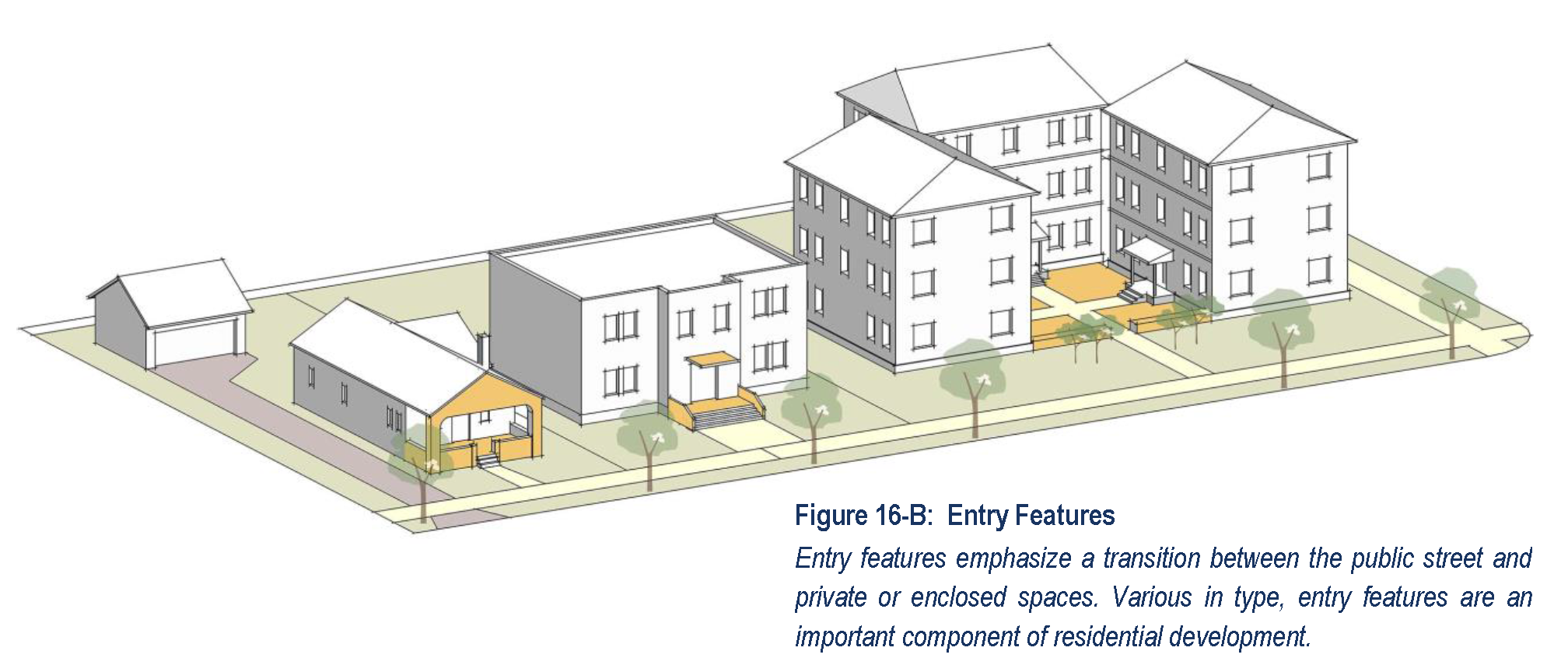
Table 16-4: Front Entry Design Standards
3.
Allowed Encroachment. Entry features meeting these design requirements may encroach up to ten (10) feet in front of the required front building line, but never closer than five feet to a public or common property line, provided they are unenclosed on all sides projecting into the setback (no windows, screens or full walls).
4.
Variation. To maintain or promote neighborhood character, variations in the front entry features shall create diversity among adjacent buildings along a block face, so that the same or similar entry feature does not occur within two buildings on either side. Variations may include any combination of:
a.
Different entry feature types: such as, porch, stoop, or entry court;
b.
Different roof styles: such as gable, hip, shed, flat, arched, or no roof;
c.
Different locations and extent: such as centered, shifted, wrapped; and half or full;
d.
Different ornamentation or architectural styles that lead to distinct qualities within a similar scale or pattern.
E.
Building Scale and Design Guidelines.
1.
Design Objective. Massing and facade compositions refine the scale of buildings beyond basic height, setback and lot coverage standards by breaking down the volume into smaller-scale masses, and adding depth, texture and variation to surfaces. This improves the relationships of buildings to the lot, to adjacent lots and buildings, and to the streetscape. It is particularly important where a mix of building types is permitted, so that larger-scale buildings can have a compatible design and scale to smaller-scale buildings. The standards in this subsection E. apply to all multi-family or non-residential buildings that are subject to these Traditional and Neighborhood Residential Design Standards. The following guidelines should be used to apply and interpret the design standards in Table 16-5 Building Scale and Design Standards.
2.
Massing and Modulation Guidelines. Vary the massing of buildings to break down the scale of larger building components and to be compatible with the scale of adjacent buildings with the following techniques:
a.
Provide porches, balconies and covered entries that accompany off-sets or projections in the facade.
b.
Use bays, cantilevers, and canopies to break up wall planes.
c.
Differentiate stories, roofs, bays, groupings of windows or other components with prominent trim materials and incorporation of material changes on different masses of the buildings.
d.
Vary the footprint and foundation with main mass and secondary mass or wing compositions to avoid large unbroken wall planes, particularly near property lines.
e.
Step the building height nearest property lines or recess upper stories to reflect a similar scale when buildings of different height are adjacent.
f.
Step roof lines and roof planes using gables and dormers, dropping eaves, and using prominent overhangs to decrease the emphasis of roofs.
3.
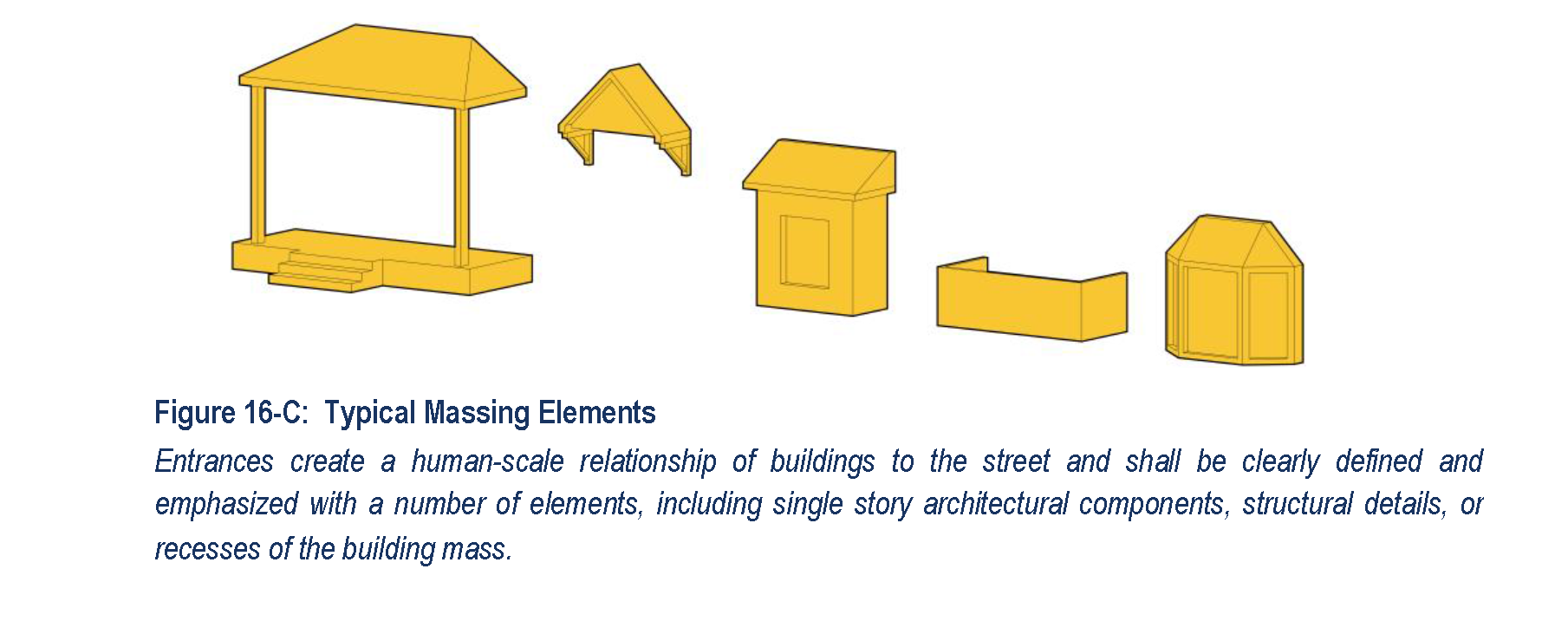
Windows and Doors Guidelines. Provide transparency, detail and visual rhythm on the façade with the location, pattern and proportions of windows and doors with the following techniques:
a.
Use windows that deeply recess (at least three inches), have projecting trim (at least one inch) to add depth and texture to the façade, or both.
b.
Emphasize a hierarchy of doors with different levels of ornamentation and details, particularly where multi-unit buildings are designed to be compatible with adjacent detached houses.
c.
Locate windows strategically in relation to privacy concerns in adjacent spaces and buildings, but recall that window treatments is a better adaptable and user-controlled strategy than simply no windows at all.
d.
Use multi-pane windows or windows with frames, casings and trim designed to create shadows, depth and texture.
e.
Incorporate visually significant window types (size, orientation, and ornamentation) or groupings of windows at key locations in association the massing and modulation components.
4.
Materials Guidelines. Use building materials with a texture and pattern that create visual interest and signify quality construction and detailing with the following techniques:
a.
Use natural materials such as painted or natural finish horizontal wood lap siding, brick, stone, stucco, ceramic or terra cotta tile. Synthetic alternates to natural materials may be used if manufacturer specifications and/or precedents for application demonstrate that it will perform equally or better than the principle materials in terms of maintenance, design and aesthetic goals.
b.
Coordinate changes in color and materials in association with the massing and modulation components.
c.
Use changes in materials and color to differentiate the ground floor from upper floors, and the main body of the building from the top or roof-structure and from the foundation.
d.
In multi-building projects use subtle variations in the composition, building materials, or colors on different buildings.
Table 16-5: Building Scale and Design Standards
| Design Detail—Minimum Window Coverage | ||
| Minimum window/door openings per elevation (includes decorative trim, molding and casing) | 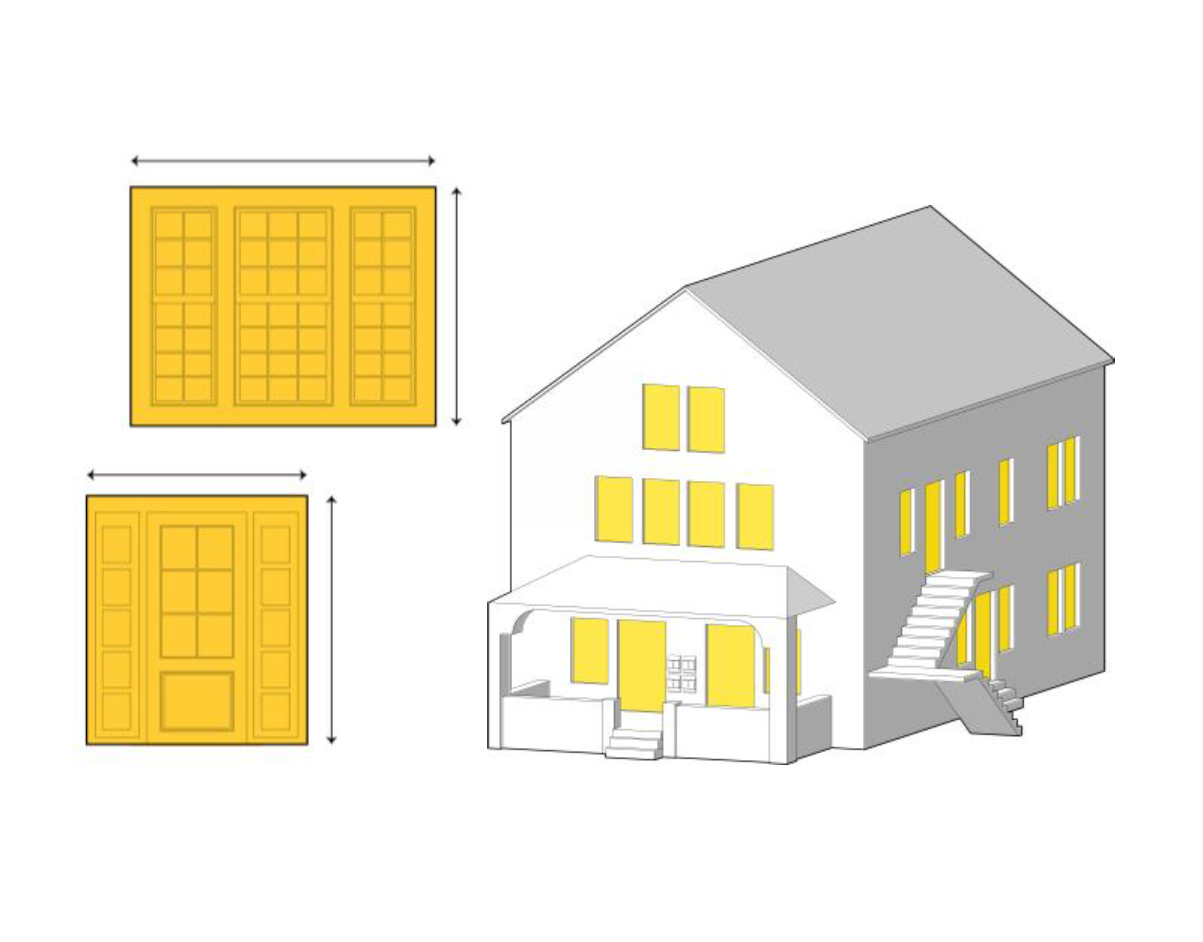 | |
| Duplex, Multi-Unit House, Row House Front—20% 1st story; 10% upper stories Side—8% Street-side—15% Rear—8% | ||
| Medium Apartment, Large Apartment, Mixed-Use and Other Non-residential Buildings Front—20% 1st story; 10% upper stories Side—8% Street-side—15% Rear—8% | ||
| Design Detail—Maximum Roof Plane | ||
| Maximum roof plane limits without offsets, dormers or gables | 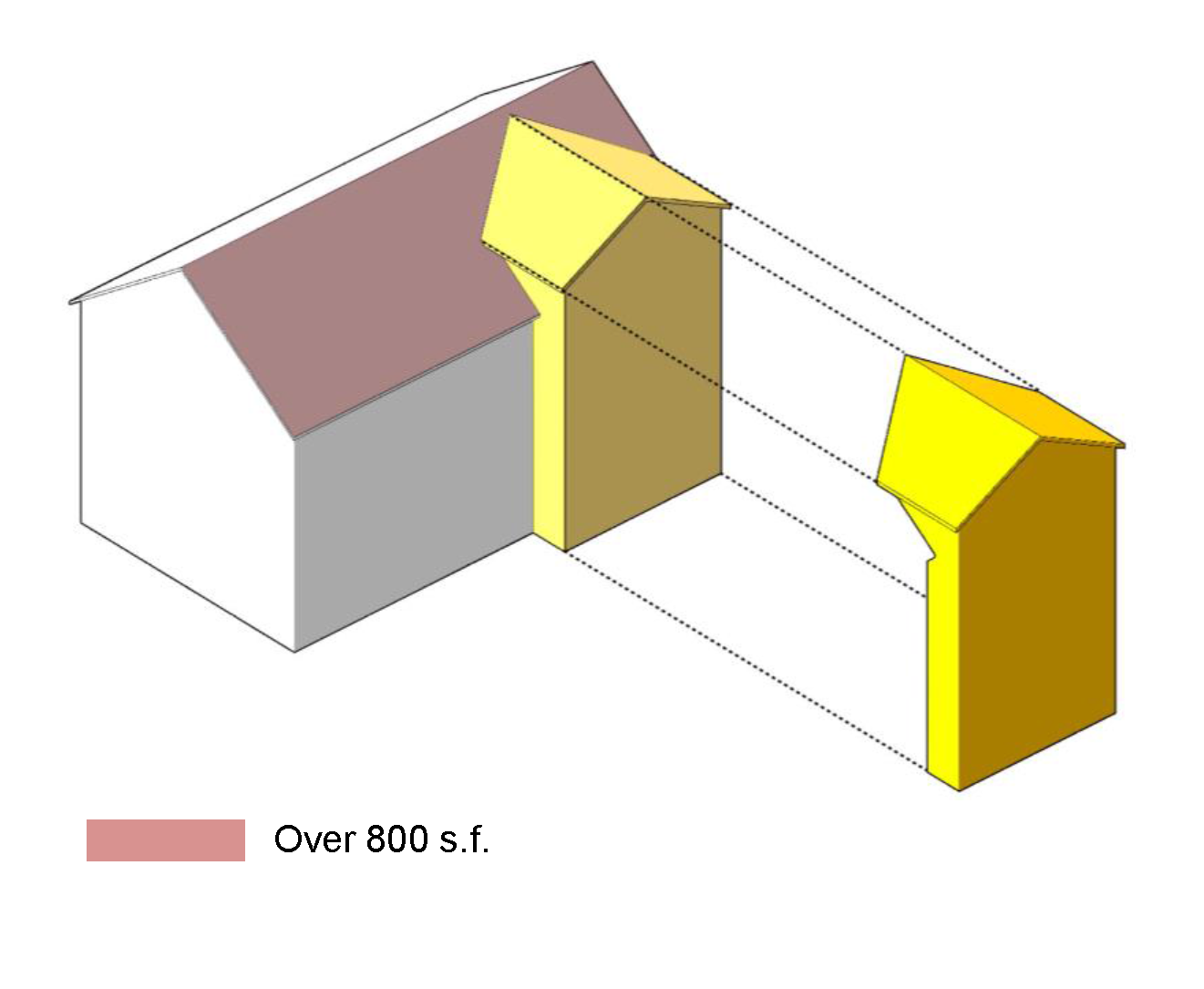 | |
| Duplex, Multi-Unit House, Row House 800 s.f. or 40 linear feet | ||
| Medium Apartment, Large Apartment, Mixed-Use and Other Non-residential Buildings 1,000 s.f. or 50 linear feet | ||
| Design Detail—Minimum Window Coverage | ||
| Duplex, Multi-Unit House, Row House | Medium Apartment, Large Apartment | |
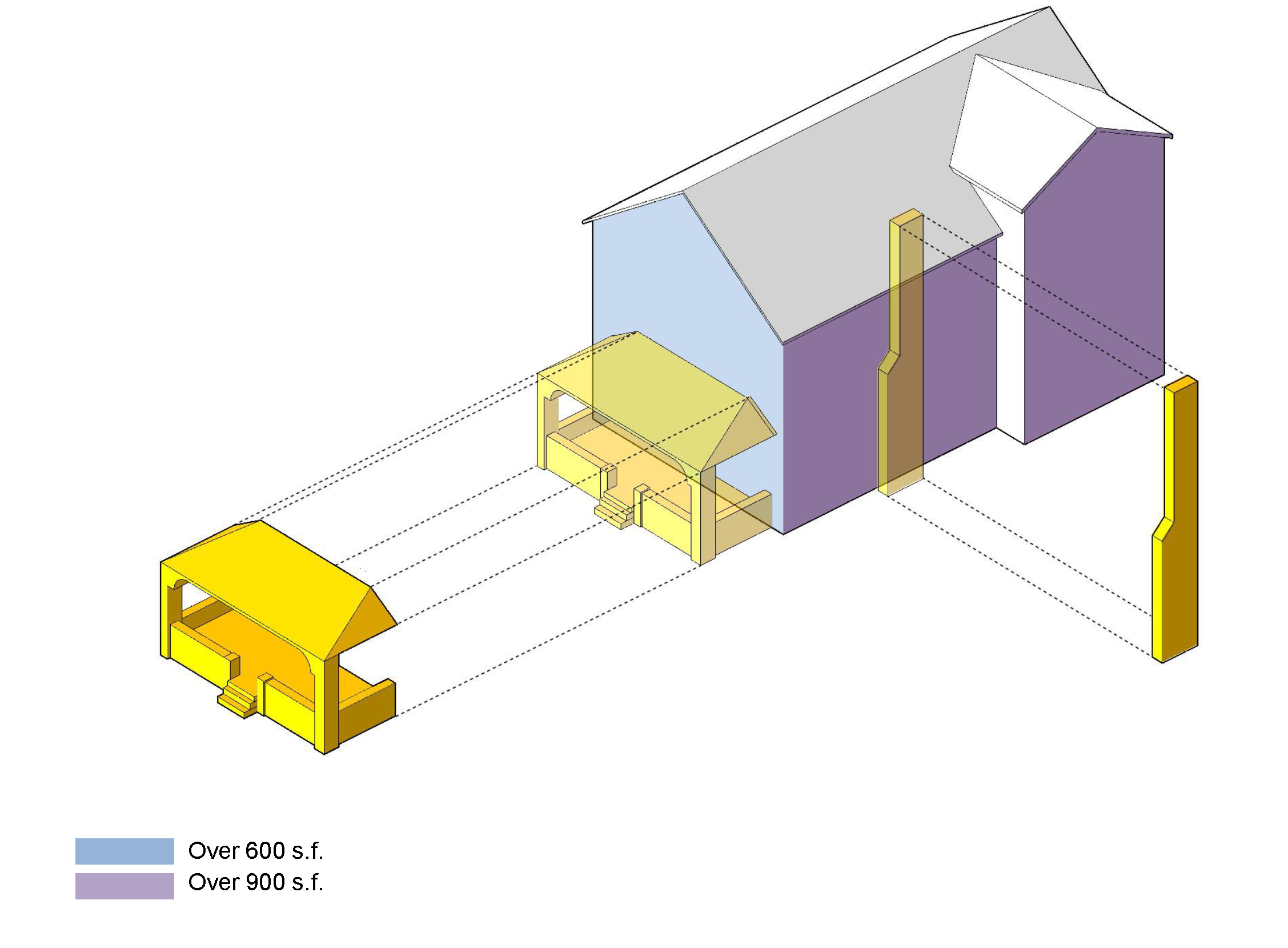
| Maximum wall plane, with no modulation | 600 s.f., or 35 linear feet | 800 square feet, or 50 linear feet |
| Maximum wall plan, with at least 20% modulation | 601—900 s.f., or 36—50 linear feet | 901—1,200 square feet, or 51—70 linear feet. |
| Maximum building elevation without minimum 4′ off-set on at least 25% of façade | 901+ s.f. or 51+ linear feet | 1,201+ s.f. or 71+ linear feet |
F.
Open and Civic Space.
1.
Design Objective. A hierarchy of different types, sizes and ownership (public, common, and private) of open space is an extension of the public realm and shapes the neighborhood character. These spaces can help create unique identities within neighborhoods and allows a variety of housing types to better integrate in the neighborhood with effective transitions using open space.
2.
Design Standards. Each building type shall provide the open space specified in Table 16-6 through common or private areas within the lot or project. Buildings and lots may credit any public or neighborhood common open spaces toward this requirement, provided it meets the design standards in Section 17.24.020 and is within the distance specified by Table 16-6 from the lot.
Table 16-6: Open Space Standards—Residential
3.
Open Space Types. Required open space shall be designed according to the types specified in Chapter 17.24, except that up to fifty (50) of the required open space for any building may be made up of private or common areas accessed from the building or units, such as balconies, patios, internal courtyards, or decks. To be eligible for this exception individual spaces shall be at least sixty (60) square feet, be at least six feet in all directions, and be designed as an accessible leisure or social space accessory to the dwelling units.
G.
Courtyard Pattern.
1.
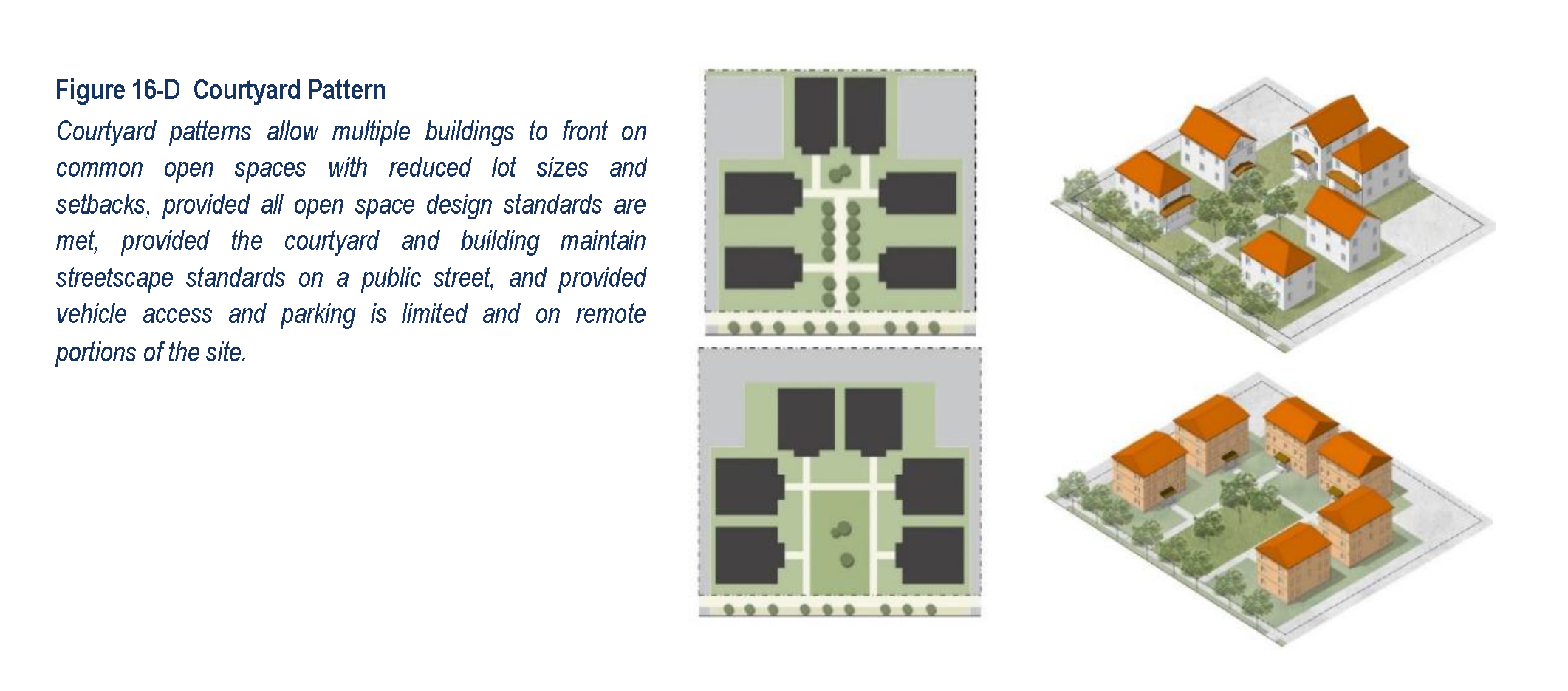
Design Objective. A courtyard pattern can integrate multi-building projects into the neighborhood pattern by organizing buildings around a formal open space associated with the street frontage. It is an effective infill strategy or appropriate on deeper lots and blocks. Residential buildings and lots may be designed to front on a courtyard based on the following design standards.
2.
Applicability. The courtyard pattern is appropriate where:
a.
Courtyards are designed and visible as an extension of the public streetscape and open space system for the neighborhood.
b.
Blocks and surrounding lots are deep, allowing a different configuration of buildable lots; or
c.
Other developed areas where existing lot patterns in the vicinity warrant use of this pattern to facilitate infill development and compatible building types.
3.
Eligible Building Types. The following building types are eligible for this pattern, subject to the limitations stated:
a.
Small Apartments, up to five buildings or thirty-six (36) units, whichever is less.
b.
Row Houses, up to four buildings or twenty-four (24) units, whichever is less.
c.
Duplex/Multi-unit Houses and Detached Houses, up to six buildings.
4.
Design Standards and Exceptions.
a.
The minimum lot size per building may be reduced up to thirty (30), provided the courtyard is owned in common by all lots or otherwise established as a shared-space amenity.
b.
The courtyard shall be designed according to the standards in Section 17.24.020 and have frontage on a public street.
c.
Lots may front on the courtyard, rather than along a street.
d.
The front setback may be reduced to five feet from the courtyard.
e.
Any buildings fronting on the street, or the sides of any buildings adjacent to the street shall still meet requirements for public frontages and orientation standards in this section.
(Ord. No. 9212, § 3(Exh. A), 7-2-2019)

