
Orinda City Zoning Code
CHAPTER 17
18 - SIGNS2
Sections:
Editor's note— Ord. No. 12-01, § 2, adopted Mar. 20, 2012, amended Ch. 17.18 in its entirety to read as herein set out. Former Ch. 17.18, §§ 17.18.1—17.18.19, pertained to similar subject matter, and derived from: Ord. 99-5, § 2(Exh. A(part); and Ord. No. 10-05, § 2, adopted July 20, 2010.
17.18.1 - Purpose.
The purpose of this Chapter is to provide standards to safeguard life, health, property and public welfare by regulating and controlling the design, quality of materials, location, installation and maintenance of signs and sign structures. The City Council finds that signs are important to the economic life and welfare of the City. However, when placed in improper locations and used to an excessive extent, signs may be detrimental to the public health, safety and welfare. The public interest, conservation of property values, encouragement of orderly city development, aesthetic values and protection of the public health, safety and welfare therefore require that the use of signs be regulated.
(Ord. No. 12-01, § 2, 3-20-12)
17.18.2 - Objectives.
The objectives of the regulations in this Chapter are to:
A.
Reduce traffic and safety hazards through proper location and design of signs;
B.
Conveniently direct persons to various activities and enterprises in the City;
C.
Prevent uncontrolled sign competition which is costly to business and visually unattractive to the community;
D.
Enhance the appearance and economic value of the community by regulating the quantity, size, type, location, design and maintenance of signs;
E.
Encourage signs that are compatible with adjacent land uses and that preserve the semi-rural character of the City;
F.
Encourage high-quality design with a minimum of clutter;
G.
Encourage signs that are well designed and pleasing in appearance; and
H.
Provide a reasonable and constitutional system of sign control.
(Ord. No. 12-01, § 2, 3-20-12)
17.18.3 - Definitions.
Area of signs or "Sign Area" means the area within a perimeter enclosing the limits of lettering, writing, representation, emblem, figure, character and lighted surface (collectively "message"), but excludes essential sign structure, foundations or supports.
Arterial streets, minor means Glorietta Boulevard, Rheem Boulevard, St. Stephens Drive, Via Las Cruces, El Nido Ranch Road, and Minor Road between Camino Pablo and Lomabardi Lane.
Arterial streets, principle means Camino Pablo and Moraga Way.
Banner means a strip of flexible material such as cloth, paper, or plastic, securely fastened to a building or a structure.
Billboard means a sign 48 square feet or larger that is oriented toward a public street or freeway.
Building frontage means an exterior primary wall of a building that faces or abuts a street (not including a freeway) or, if no exterior wall faces or abuts a street, then the exterior primary wall of a building that faces a mall, plaza, or parking lot that faces or abuts a street (not including a freeway). If no exterior wall of a building faces or abuts a street, then the exterior wall of the building containing the main entry is the building frontage.
City-maintained landscape area means an area of land that is planted and maintained by the City. These areas include but are not limited to medians, irrigated landscape areas, an area near an intersection that is planted with non-native or ornamental plants, etc.
Copy means the text, logo, or other writing on the face of a sign.
Erect means to locate, construct, attach, suspend, affix, or paint a sign.
Freestanding sign means a sign that is independently supported in a fixed location and not attached to a building, fence or structure.
Height of signs or "sign height" means the distance between the highest point of the sign (including the structure supporting the sign) and the finished grade directly below it.
Illuminated sign means a sign that is illuminated by internal or direct external lighting. Multi-tenant building means any building occupied by two (2) or more tenants.
Nonconforming sign means a sign that does not conform to this Chapter.
Off-site advertising sign means a sign that directs attention to a business, profession, commodity, service or entertainment that is conducted, sold, or offered elsewhere than the lot or parcel where the sign is located.
One-day sign means a portable temporary sign that is erected and removed on the same calendar day and is displayed for no more than 12 consecutive hours during that day. This definition includes signs displayed on consecutive calendar days, provided they are erected and removed each day. This definition excludes signs displayed continuously over consecutive calendar days.
Permanent sign means a sign that is intended and constructed to be used for an unlimited period of time.
Portable sign means a sign that is easily erected and moved by hand without the use of a shovel or other tool, and is capable of standing on its own frame without being affixed to a structure.
Projecting sign means a sign, other than a wall sign, that is suspended from or supported by a building and that either projects outward from the building at a perpendicular angle or hangs below a canopy, overhang or covered walkway at a perpendicular angle to the building.
Public right-of-way is a strip of land owned or controlled by a governmental entity over which the public has right of passage, such as streets, parkways, medians, sidewalks, easements, and driveways.
Readerboard sign means an internally illuminated sign that displays copy as moving or flashing script.
Residential lot means a lot or parcel of land located within a residential district and occupied by one (1) or more structures used for human habitation.
Sign means a writing, graphic (including colored background), pictorial representation, logo, trademark, symbol, banner, or any other figure of whatever material that is used to identify, announce, direct attention to, advertise, or communicate a message. The word "sign" includes, but is not limited to, readerboard signs, portable signs, banners, pennants, insignia, bulletin boards, ground signs, billboards, posters, murals, illuminated signs and marquees. Sculptures, analog clocks, and seasonal decorations are not "signs" for purposes of this Chapter.
Subdivision means a group of residential lots created at the same time, as the result of a division of a single or multiple lots.
Temporary sign means a sign that is intended and constructed to be used for a limited period of time. These signs include but are not limited to, banners, flags, portable signs, and wall signs displayed for a temporary period of time.
Temporary sign, oversized means a temporary sign for which a type 1 permit is granted pursuant to Subsection 17.18.9.C allowing the sign to exceed the limit of six (6) square feet of sign area per face generally imposed under Subsection 17.18.12.D.
Type 1 permit means a sign permit reviewed as described in Subsection 17.18.11.B.
Type 2 permit means a sign permit reviewed as described in Subsection 17.18.11.C.
Wall sign means a sign that is erected, printed, painted, incorporated into, suspended from or otherwise affixed to a wall, awning, canopy, overhang, or covered walkway of a building or structure in an essentially flat position or with the exposed face of the sign in a location parallel to the plane of the wall.
Window sign means either a sign erected on a building window or a sign located indoors and within three (3) feet of a window or building opening that is visible and legible from a street or other public place.
Zoning Administrator is the Planning Director or a member of the Planning Staff appointed by the Planning Director to act as the hearing body on certain projects.
(Ord. No. 12-01, § 2, 3-20-12)
17.18.4 - General provisions.
A.
A sign that fails to comply with or violates any provision of this Chapter, or is erected or maintained contrary to the terms of a sign permit issued pursuant to this Chapter, is hereby declared to be unlawful and a public nuisance and may be abated by appropriate proceedings pursuant to Section 19.03.020 of this Code.
B.
No sign may be erected or maintained within the City unless it is exempt from the provisions of this Chapter, allowed without a permit, or permitted in accordance with this Chapter or other Chapter of this Code.
C.
This Chapter supplements and is in addition to all other applicable regulatory codes, statutes and ordinances.
(Ord. No. 12-01, § 2, 3-20-12)
17.18.5 - Exempt signs.
A.
A sign is exempt from the provisions of this Chapter if it is not visible from a street, other public place, or an adjacent property. Exempt signs include, but are not limited to, signs placed inside a structure or building that are not visible or legible through windows or building openings.
B.
Any sign erected and maintained by the City on public property or within the public right-of-way for the purpose of directing, managing or regulating traffic are exempt from the provisions of this Chapter. Such signs include, but are not limited to, street signs, traffic signals, traffic safety signs, speed limit signs, city entry/welcome signs, neighborhood identification signs, and directional signs.
(Ord. No. 12-01, § 2, 3-20-12)
17.18.6 - Signs allowed in the public right-of-way without a permit.
The following signs are allowed without a permit in the public right-of-way, provided they comply with all applicable requirements in this Chapter, including the installation and design criteria contained in Section 17.18.12:
A.
One-day signs, including off-site advertising signs.
B.
Portable temporary signs displayed for no more than 70 consecutive days per calendar year in the locations specified in the City's adopted policy on "Approved Locations for Temporary Signs in the Public Right-of-Way." Any such sign referencing a specific event (e.g., election) shall be removed as soon as possible, but no more than ten (10) days, after the event.
(Ord. No. 12-01, § 2, 3-20-12)
17.18.7 - Signs allowed without a permit.
The following signs are allowed without a permit, provided they are displayed with the property owner's permission, comply with all applicable requirements in this Chapter (including the installation and design criteria contained in Section 17.18.12), and do not encroach into the public right-of-way:
A.
In any zoning district, one (1) flag per lot, no larger than 15 square feet, displayed on a permanent flagpole no higher than 25 feet. For lots with multiple commercial businesses, one (1) flag is allowed for every 50 linear feet of ground floor building frontage.
B.
In any zoning district, on any building, one (1) permanent wall sign with a maximum area of two (2) square feet.
C.
In any zoning district, hand-held signs, up to four (4) square feet in area, provided that the person carrying the sign does not interfere with, block, or impede traffic or pedestrian movement.
D.
In any zoning district, any number of one-day signs.
E.
In any zoning district, any number of portable temporary signs displayed for no more than 70 consecutive days per calendar year. Any such sign referencing a specific event (e.g., election, garage sale, property sale/lease) shall be removed as soon as possible, but no more than ten (10) days, after the event.
F.
In any zoning district, one (1) nonportable temporary sign per street frontage displayed for no more than one (1) year. Any such sign referencing a specific event (e.g., election, garage sale, property sale/lease) shall be removed as soon as possible, but no more than ten (10) days, after the event.
G.
On private roadway easements in any zoning district, a number of nonportable temporary signs equal to the number of parcels accessed by that easement displayed for no more than one (1) year. Any such sign referencing a specific event (e.g., election, garage sale, property sale/lease) shall be removed as soon as possible, but no more than ten (10) days, after the event.
H.
Window signs, provided that such signs do not obstruct more than ten (10) percent of the area of any individual window and are not illuminated.
(Ord. No. 12-01, § 2, 3-20-12; Ord. No. 14-04, § 2(exh. A), 5-20-14)
17.18.8 - Signs Allowed with a permit in residential and open space districts.
The following signs are allowed in residential and open space districts with a type 1 permit:
A.
On residential lots where there are three (3) or more residential units, one (1) permanent, non-illuminated or illuminated, freestanding sign or wall sign, with a maximum area of ten (10) square feet.
B.
On lots occupied by nonresidential buildings, one (1) permanent, freestanding sign, with a maximum area of 20 square feet. Illumination of these signs is only allowed on properties fronting principle and minor arterial streets.
C.
At the entrance of a subdivision, one (1) permanent, freestanding sign with a maximum area of 20 square feet. Illumination of these signs is only allowed on properties fronting principle and minor arterial streets.
D.
On the building frontage of nonresidential buildings, one (1) wall sign per occupant per building, provided that no individual wall sign may exceed 15 square feet in area, and that the total area of all wall signs is not greater than one-half (½) square foot of sign area for each linear foot of ground floor building frontage. Illumination of these signs is only allowed on properties fronting principle and minor arterial streets.
(Ord. No. 12-01, § 2, 3-20-12)
17.18.9 - Signs allowed by permit in downtown office; downtown commercial; public, semi-public and utility; and park and recreation districts.
The following signs are allowed in the downtown office; downtown commercial; public, semi-public and utility; and park and recreation districts with the specified permit (type 1 or type 2):
A.
Before erecting any new sign on a multi-tenant building, the building owner shall obtain a type 2 permit from the City for a master sign program addressing that multi-tenant building. The master sign program shall provide for the reasonable and attractive coordination of the type, area, dimensions, location, materials, lighting, colors, style, and graphics of signs for which permits are required under this Chapter. All signs later proposed for the multi-tenant building shall be consistent with the approved master sign program.
B.
The following signs are allowed with a type 1 permit if they are located on a multi-tenant property with an approved master sign program and the sign is consistent with the multi-tenant sign program. For single-tenant properties, type 2 permits are required for the following signs:
1.
On lots where all buildings are set back at least 25 feet from the street curb or street pavement edge, one (1) permanent, freestanding sign with a maximum area of 20 square feet and a maximum height of six (6) feet. Display surfaces shall be back-to-back and may not exceed two (2) in number.
2.
On the building frontage of any building, one (1) wall sign per tenant or occupant, per building frontage, provided that the total sign area on each frontage does not exceed the following limits:
a.
For buildings with only one (1) building frontage, one-half (½) square foot of sign area for each linear foot of ground-level building frontage.
b.
For buildings with multiple building frontages, one-half (½) square foot of sign area for each foot of ground-level building frontage of one (1) building frontage and one-quarter (¼) square foot of sign area for each linear foot of additional frontages. Buildings with multiple building frontages may not combine permissible sign area from two (2) or more frontages to create a wall sign that is larger than could be permitted for one (1), individual frontage.
c.
For wall signs located above the first floor, every one (1) square foot of sign area is counted as one and one-half (1.5) square feet of the total permitted sign area.
3.
On the building frontage of any building, one (1) projecting sign per tenant or occupant per building frontage, provided that the sign does not exceed five (5) square feet in area, three (3) feet in height, or four (4) inches in thickness. Any such projecting sign must be located at least seven (7) feet, six (6) inches above grade level, and must not project farther than three (3) feet, six (6) inches from the building wall unless located under a building projection or canopy, in which case the sign shall not project beyond the outside edge of the building projection or canopy. Display surfaces of such projecting signs must be back-to-back. The number of projecting signs shall not exceed one (1) for every 25 linear feet of ground floor building frontage. Projecting signs may be located above the first floor of the structure.
C.
Oversized temporary signs not exceeding 15 square feet in size per face are allowed with a type 1 permit. No such sign may be displayed for more than 30 consecutive days per calendar year. No more than one (1) such sign shall be permitted per tenant. On multi-tenant properties, only one (1) oversized temporary sign is allowed for every 25 feet of ground floor building frontage.
(Ord. No. 12-01, § 2, 3-20-12)
17.18.10 - Signs allowed in planned development districts.
The development plan for any project within a planned development district shall indicate the zoning district that most closely resembles the type of development allowed by the plan. All signs within the area governed by the development plan shall comply with the regulations of this Chapter for that zoning district.
(Ord. No. 12-01, § 2, 3-20-12)
17.18.11 - Permit application; appeals.
A.
Applications. An application for either a type 1 or type 2 permit shall include the information specified by the Planning Department.
B.
Type 1 Permit Process.
1.
For a type 1 permit, the permit applicant must present the application at the Planning Department counter.
2.
If the application is complete and the proposed sign complies with all applicable requirements of this Chapter, City Planning staff shall grant the permit within ten (10) days.
3.
If the application is incomplete, City Planning staff shall indicate in writing the information that is missing within ten (10) days.
4.
If the application is complete but the proposed sign does not comply with all applicable requirements of this Chapter, City Planning staff shall deny the permit and place the reasons for the denial in writing within ten (10) days.
C.
Type 2 Permit Process.
1.
Type 2 permit applications shall be reviewed by the Zoning Administrator or by the Planning Commission, if the application is related to other matters before the Planning Commission.
2.
The reviewing body shall approve a type 2 permit if and only if it finds that all of the following conditions exist:
a.
The sign complies with all applicable requirements of this Chapter.
b.
The sign is designed to be compatible with other nearby signs, other elements of street and site furniture and adjacent structures. Compatibility shall be determined by the relationships of the elements of form, proportion, scale, color, materials, surface treatment, overall sign size and the size and style of lettering.
3.
In determining whether to grant or deny a type 2 permit, the reviewing body shall comply with all applicable laws regarding trademarks.
4.
The reviewing body shall comply with the deadlines and procedures set forth in the Permit Streamlining Act and the California Environmental Quality Act. However, if a project is exempt from the requirements of the California Environmental Quality Act, the reviewing body shall approve or deny the permit application within 60 days of the submission of a complete application.
5.
When design review is required for a major remodel, addition, or new building and the applicant intends to erect a sign requiring a type 2 permit on the remodeled or new building, the applicant shall include an application for a type 2 permit with the application for the major remodel, addition, or new building. The reviewing body for the sign application shall be the reviewing body for the design review application.
D.
Appeals. The decision to approve, approve with conditions, or deny a type 1 or type 2 permit shall be appealable to the Planning Commission by submitting a written appeal to the Planning Department within ten (10) days. Appeals shall be considered in accordance with Orinda Municipal Code Chapter 17.43, Appeals. The appeal must be accompanied by the appeal fee published in the master fee schedule. The City shall issue its decision on the appeal no later than 60 days after the appeal is filed and shall make written findings.
(Ord. No. 12-01, § 2, 3-20-12)
17.18.12 - Sign installation and design criteria.
A.
Sign Installation. All signs shall be installed in a safe and nonhazardous manner and in conformance with State Building Codes and regulations.
B.
Freestanding Signs. Freestanding signs shall not:
1.
Exceed six (6) feet in height;
2.
Be located within ten (10) feet of the edge of pavement on the roadway;
3.
Have more than two (2) faces.
C.
Wall Signs. A wall sign may not exceed six (6) inches in thickness.
D.
Temporary Signs. Temporary signs shall not:
1.
Have more than two (2) faces;
2.
Exceed six (6) square feet of sign area per face;
3.
Exceed three (3) feet in height if they are portable;
4.
Exceed six (6) feet in height if they are nonportable;
5.
Be illuminated;
6.
Be made out of materials not resistant to moisture (e.g., nonlaminated cardboard, paper);
7.
Be secured to City-owned infrastructure, including streetlights, trees, pavement, fences, mechanical equipment, utility poles or street furniture;
8.
Be located in a City-maintained landscape area.
E.
Roof Signs. No portion of a sign or sign structure may be located on or extend above a building roof, except that a wall sign may be architecturally integrated into a sloping roof fascia or a mansard roof.
F.
Sign Illumination. Sign illumination shall be subdued lighting that does not interfere with the reasonable enjoyment of surrounding property, conflict or interfere with traffic, or present a public nuisance. Sign Illumination in residential districts may not cast light or shadow onto adjacent properties or roads.
(Ord. No. 12-01, § 2, 3-20-12)
17.18.13 - Prohibited signs.
A.
General Prohibitions. No person may erect or maintain a sign that is:
1.
In violation of this Chapter.
2.
Dilapidated or unsafe.
3.
Constructed in such a manner or at such a location that it will obstruct access to any fire escape or other means of ingress or egress from a building or any exit corridor, exit hallway or exit doorway. No sign or supporting structure shall cover, wholly or partially, any window or doorway in any manner that will substantially limit access to the building in case of fire.
4.
Constructed or erected in such a manner as to interfere with, obstruct, or misdirect traffic, impede pedestrian movement, or create a pedestrian or vehicular safety hazard.
5.
Located above the first floor of a building, except: (a) a window sign in any zoning district, and (b) a wall sign or projecting sign that complies with the requirements of Section 17.18.9.
6.
Equipped or displayed with moving, flashing, or intermittent illumination. This prohibition applies to all signs, including but not limited to readerboards.
7.
Equipped with rotating or moving parts.
8.
Oriented so as to be visible from the freeway (Highway 24).
9.
Located on top of a canopy, covered walkway, or projecting sign.
10.
Located within three (3) feet of a fire hydrant, bus stop improvement or pedestrian push button for a traffic signal.
B.
Billboards and Off-Site Advertising Signs. Off-site advertising signs and billboards are prohibited except where specifically authorized by this Chapter.
(Ord. No. 12-01, § 2, 3-20-12)
17.18.14 - Historical signs.
The Planning Commission may designate a sign as a historical sign if the Planning Commission finds that the sign is at least 25 years old and it:
A.
Has outstanding design character; or
B.
Represents a unique contribution to its architectural period; or
C.
Contributes to the historic character of the building at which it is located.
A sign designated as a historical sign by the Planning Commission shall not contribute to the maximum sign area or number allowed per lot or building under this Chapter, and shall be deemed a permanent, nonconforming sign.
(Ord. No. 12-01, § 2, 3-20-12)
17.18.15 - Maintenance of signs.
Each sign shall be maintained in a state of security, safety and good repair.
(Ord. No. 12-01, § 2, 3-20-12)
17.18.16 - Nonconforming signs.
Permanent, nonconforming signs existing on the date this ordinance became effective are not in violation of this Chapter, except that if any such sign is altered, partially demolished, or reconstructed, the provisions of this Chapter shall apply. Normal repairs and maintenance that do not change the location or appearance of the sign do not constitute alteration, demolition, or reconstruction for purposes of this section.
(Ord. No. 12-01, § 2, 3-20-12)
17.18.17 - Area of signs.
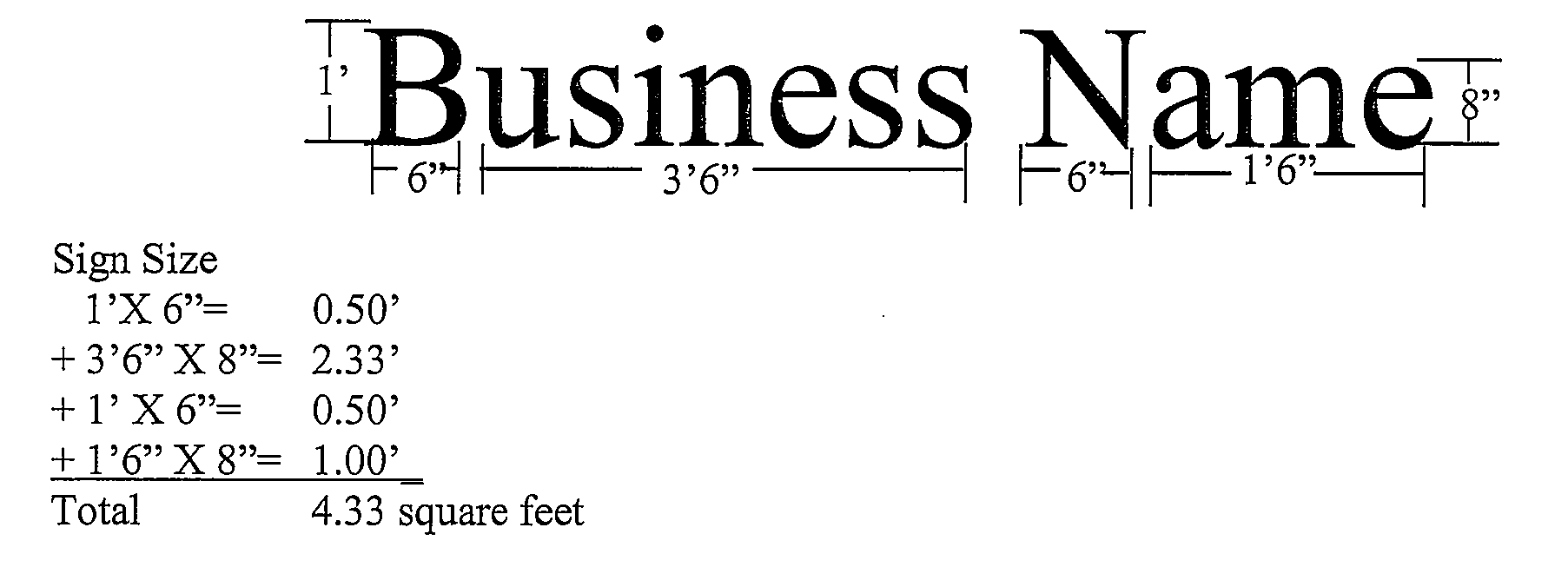
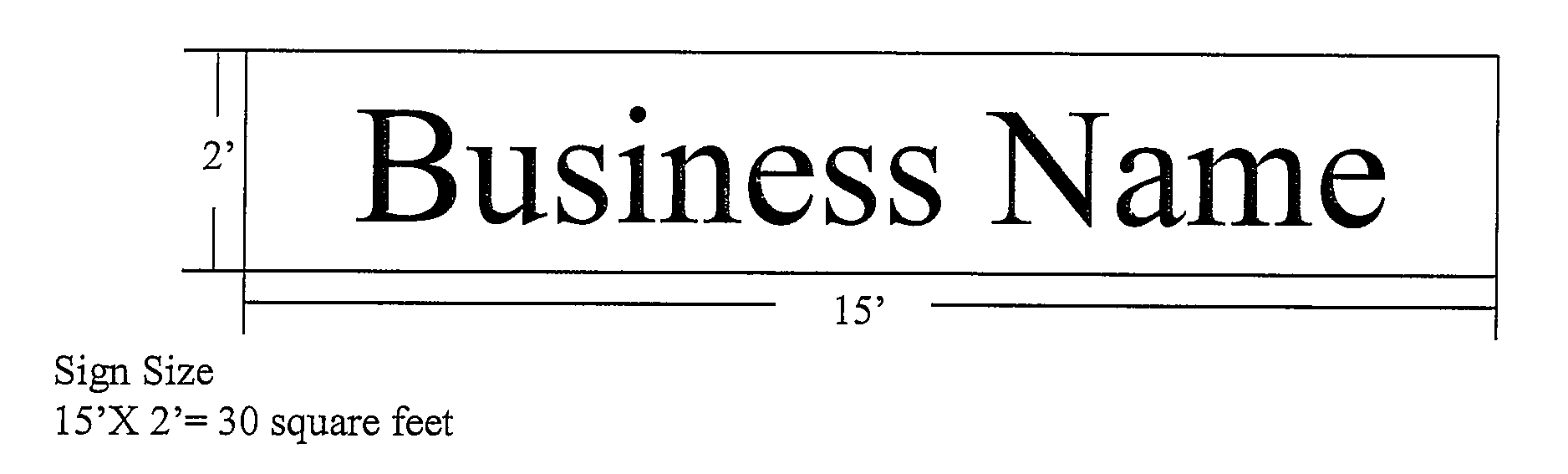
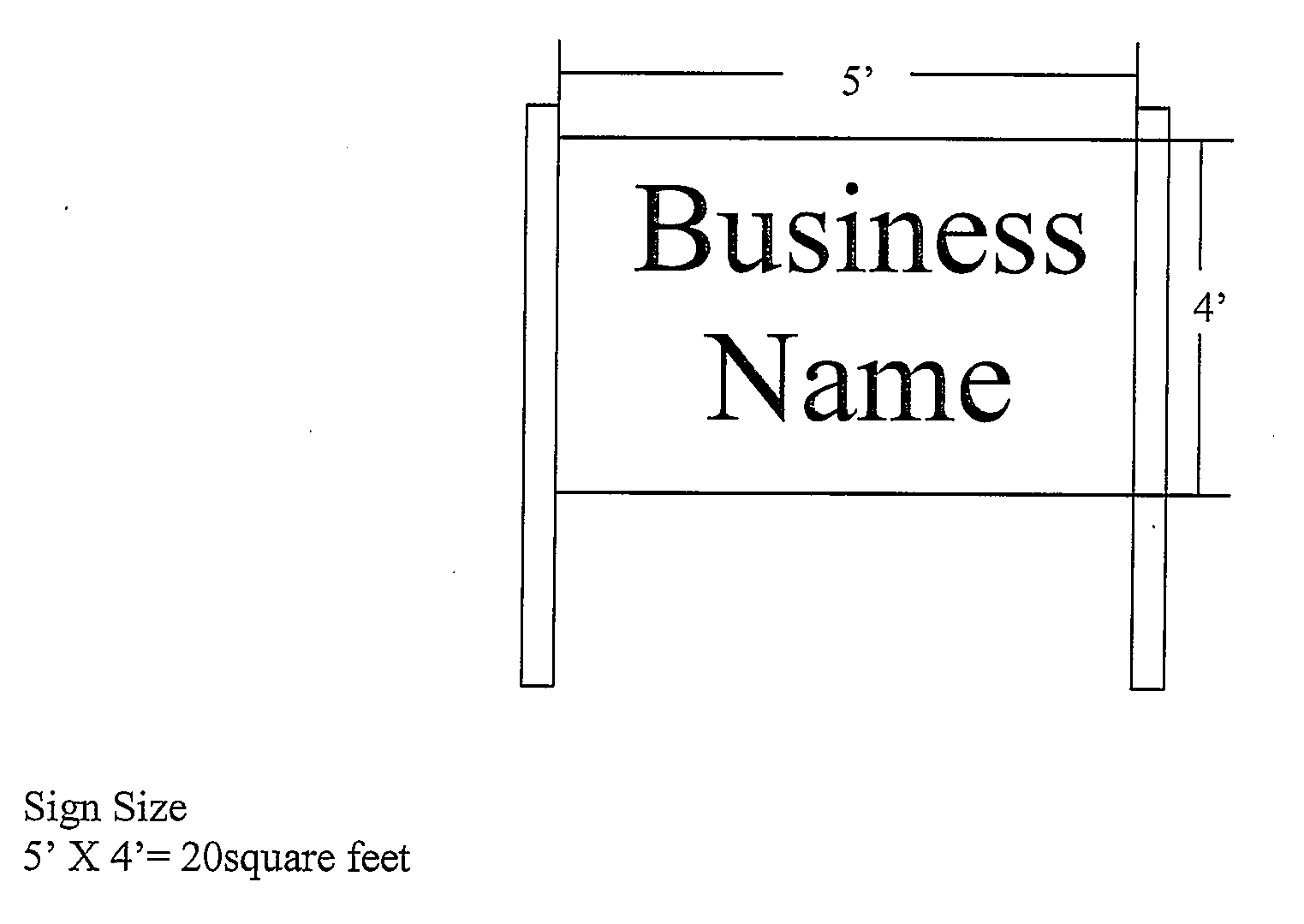
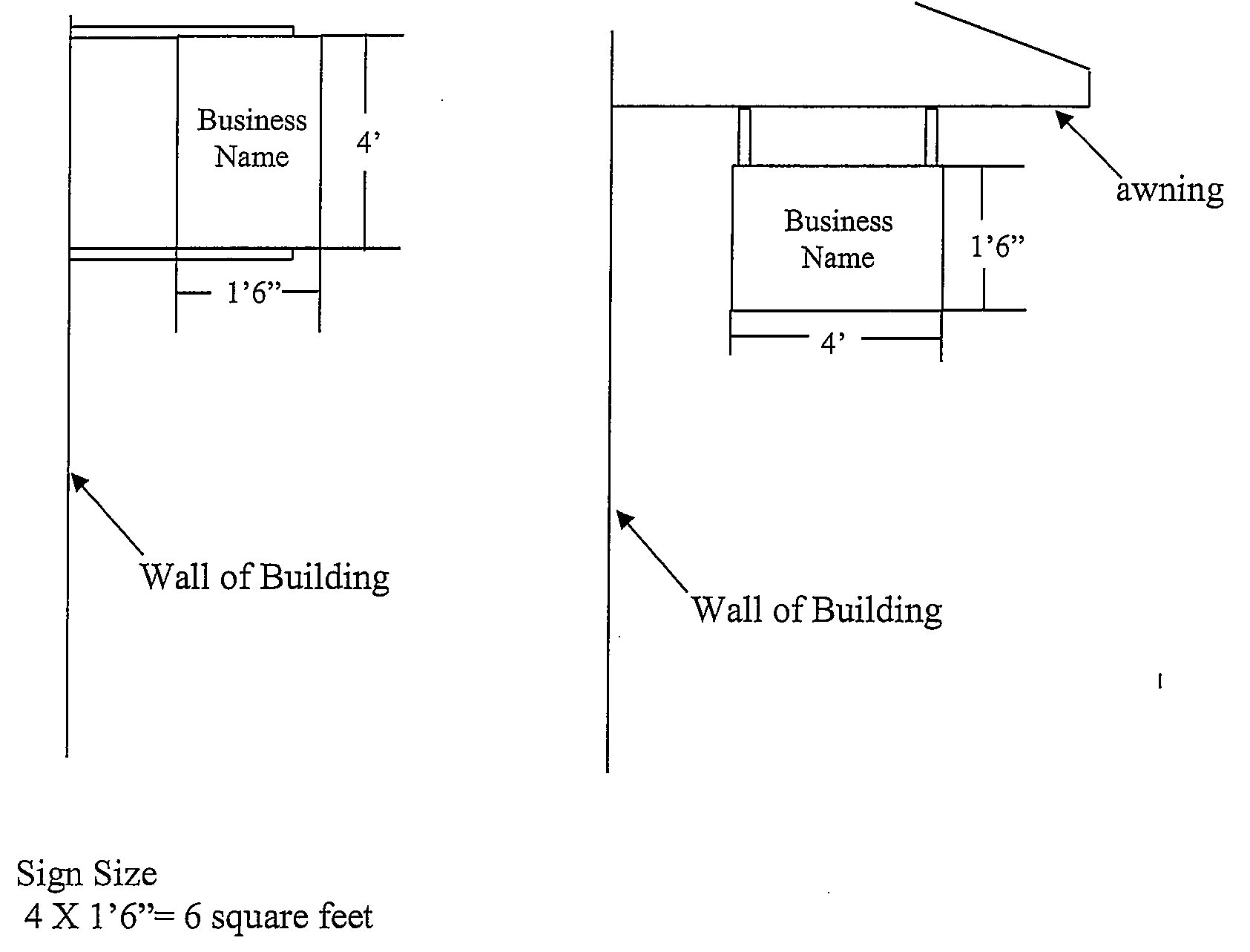
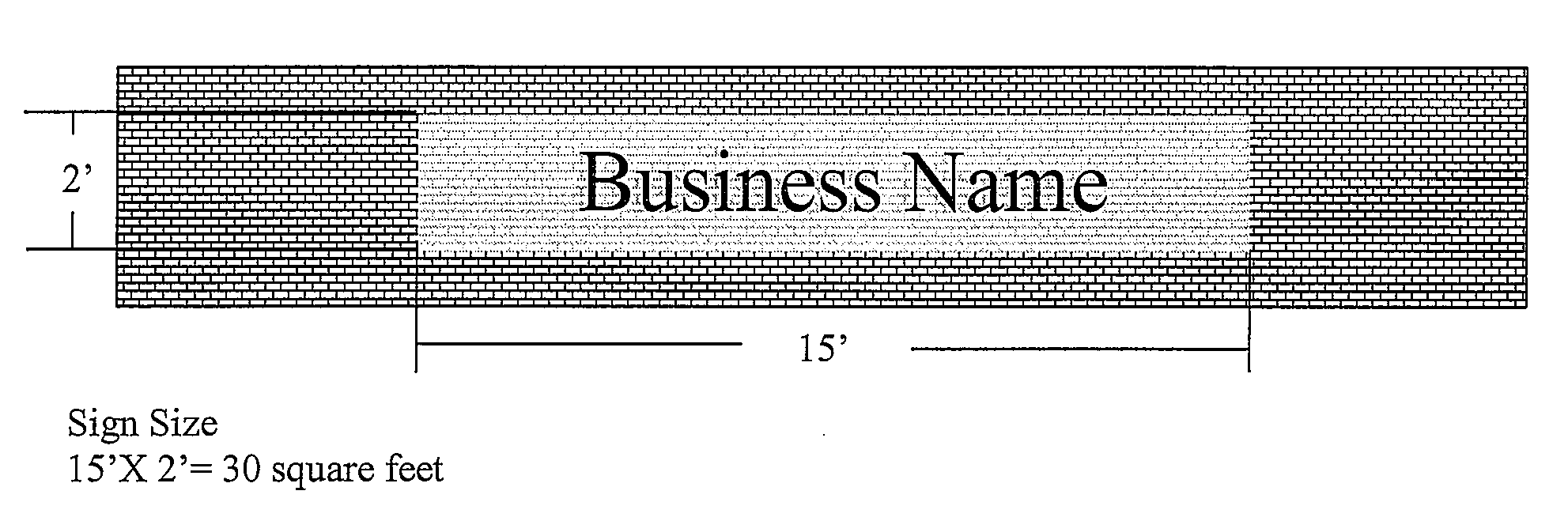
Sign area includes the area within a perimeter enclosing the limits of lettering, writing, representation, emblem, figure, character and lighted surface (collectively "message"), but excludes essential sign structure, foundations or supports. For double-sided signs with back-to-back display surfaces, the sign area shall be the message area of one (1) side. For all other multiple-face (i.e., more than one-sided) signs, the sign area shall be the total of the message area of all faces. If the sign consists of more than one (1) section or module, the areas of all sections and modules shall be included in calculating the total sign area. The following illustrations are examples of how signs should be measured:
Individual Letters Sign:
Framed Sign:
Freestanding Sign
Projecting Signs
Etched Retaining Wall Sign
(Ord. No. 12-01, § 2, 3-20-12)
17.18.18 - Calculation of time.
For purposes of this Chapter, a sign is considered to be displayed or maintained for an entire day if it is displayed or maintained for any portion of a calendar day.
(Ord. No. 12-01, § 2, 3-20-12)

