
Payson City Zoning Code
13.32 Signs
And Outdoor Advertising
13.32.010 Purpose And Intent
The purpose of this Chapter is to encourage signs and outdoor advertising that complement proposed and existing structures and do not distract from the aesthetics or safety of the vicinity in which they are placed.
It is the intent of this Chapter to regulate signs and outdoor advertising in the community in a manner that creates an interesting and visually pleasing streetscape in the City. Signs are highly visible and are seen by residents and visitors alike. Signs and outdoor advertising are a reflection upon the community and the land use goals and objectives of the City.
Signs and outdoor advertising must be regulated to ensure the safety of the residents and visitors to the City. Signs and outdoor advertising that present a safety hazard as determined by the Development Services director or designee will not be allowed whether permitted by this Chapter or not.
Adopted by Ord. 05-18-2022-D on 5/18/2022
13.32.020 Definitions: Signs And Outdoor Advertising
The definitions in this Section are intended to be specific to this Chapter. If any word or phrase in this Chapter requires further definition, the word or phrase shall be defined in accordance with the definitions listed in PCC 13.04. Furthermore, if a word or phrase cannot be adequately defined by the definitions listed in this Chapter or PCC 13.04, the Development Services Director’s interpretation will control.
The following words and phrases shall be defined as follows:
A-FRAME SIGN. Any sign or structure composed of two (2) sign faces mounted or attached back-to-back and forms a vertical A and the base rests on the ground.
AFFIXED. A sign or sign support directly attached to the building face.
ABANDONED SIGN. A sign that no longer correctly directs or influences a person, advertises a bona fide business, lessor, owner, product or activity conducted or available on the premises where the sign is displayed.
ADVERTISEMENT. Any copy, letters, logos, symbols, or other form of communication that attracts or directs attention to a use, product, or activity.
ADVERTISING BENCH. A bench for public use and convenience that is painted or otherwise covered with advertisement.
ADVERTISING SIGN. A sign that attracts or directs attention to a use, product, or activity.
ANIMATED OR FLASHING SIGN. A sign that includes motion or rotation of any part by mechanical or artificial means or a sign that displays flashing or intermittent lights.
AWNING SIGN. An awning having copy or a logo that attracts or directs attention to a use, product, or activity, or is backlit or externally illuminated.
BANNER, ADVERTISING. A flag or banner constructed of cloth, canvas, or light fabric that is used for promotional purposes and is temporary in nature.
BANNER, NON-ADVERTISING. A flag or banner constructed of cloth, canvas, or light fabric that is displayed for cultural events and special holidays or seasons. The flag or banner shall not contain commercial advertising except for the cultural event, special holiday or season.
BUILDING FACE. The visible outer surface of the main exterior wall of a building defined as the wall that contains the primary entrance to the structure. The area of the face of the building shall be the total area of such surface including the area of doors and windows that open into a surface.
CANOPY OR MARQUEE SIGN. A sign on or attached to a canopy or marquee such as a canopy over gasoline islands or drive-up tellers.
CHANGEABLE COPY. A sign on which the copy is changed manually such as a message center or reader boards with changeable letters or changeable pictorial panels. This definition does not include poster panels or painted bulletins.
COMMUNITY OR CIVIC EVENT SIGN. A sign used to promote community and civic events of interest to the public at large, not to include events for particular civic groups or more focused group functions.
DEVELOPMENT SIGN. A sign used to advertise the sale of units or parcels within an approved development including:
- DIRECTIONAL DEVELOPMENT SIGN. A sign intended to direct potential buyers to a particular development or to navigate within a particular development.
- DEVELOPMENT PROMOTIONAL SIGN. A sign intended to advertise the future sale of units or parcels in a development, contemplated improvements or announcing the name of the builder, owner, designer, or developer of the project.
- ENTRANCE SIGN. A permanent sign indicating the name of the development together with associated aesthetic improvements.
DIRECTIONAL OR GUIDE SIGN. An on premise sign that contains directional information to facilitate or control the efficient or safe movement of pedestrians or vehicles on or into a site. A directional or guide sign may include the name of the business but shall not be used for advertising purposes and shall not exceed six (6) square feet in area.
ERECT. To build, construct, place, relocate, enlarge, substantially alter, attach, suspend, paint post, or display a sign. Normal maintenance, including refinishing, is not included in this definition provided the size of the sign copy is not changed or altered.
FREESTANDING OR POLE SIGN. A sign supported by one (1) or more poles or posts or similar uprights permanently affixed to the ground and not attached to any other structure.
HOME OCCUPATION SIGN. A sign identifying a home occupation legally existing on the premises.
INTERIOR SIGN. A sign located in a building visible only within the building in which the sign is located.
MENU SIGN. A sign used to advertise the product available at a fast food restaurant or convenience store.
- FREESTANDING MENU SIGN. A sign located along the driveway to the drive-up window of a fast food restaurant or convenience store that does not contain a noise emitting device for communication.
- FREESTANDING MENU NOISE EMITTING SIGN. A sign located along the driveway to the drive-up window of a fast food restaurant or convenience store that contains a noise emitting device for communication.
- WALL MOUNTED MENU SIGN. A sign either attached or painted on a wall that displays the product available at a fast food restaurant or convenience store.
MONUMENT SIGN. A sign where the horizontal bottom of the sign surface is attached to the ground, a foundation in the ground, or where the horizontal bottom of the sign is no more than eighteen (18) inches from the ground and where there are no poles, braces, or other visible means of support other than attachment to the ground. A monument sign may be expanded to become part of a fence surrounding a project such as an entrance feature.
MOVABLE OR PORTABLE SIGN. A sign that is designed to be moved from place to place either by vehicle or manually and not permanently affixed to the ground. Handheld signs are considered movable or portable signs. For the purposes of this Chapter, trailers, automobiles, and other movable objects used for advertising are not considered movable signs and are not an allowable means of advertising in Payson City. A-frame signs are not considered movable signs as defined herein.
NAMEPLATE. A sign indicating the name of a person or persons residing on the premises or legally occupying the premises.
NECESSITY OR HAZARD. A sign informing the public of any danger or hazard existing on or adjacent to the premises, or the posting of private property against trespass.
NONCONFORMING SIGNS. A sign or sign structure that lawfully existed prior to the effective date of the modifications of this Chapter, February 18, 2004, that is no longer in compliance with the provisions of this Chapter due only to the modified provisions herein.
OFF-PREMISE OR NON-APPURTENANT SIGN. A sign that advertises products, services, or business establishments that are not located, conducted, manufactured, or sold at the premises upon which the sign is erected.
ON-PREMISE OR APPURTENANT SIGN. A sign that advertises products, services, or business establishments located, conducted, manufactured, or sold at the premises upon which the sign is erected.
PERMANANET. An immovable structure, support, building or other feature anticipated to remain in place for ten (10) years or more without moving.
POSTER PANELS OR PAINTED BULLETINS. An advertising device used as a promotional display inside of a transparent faced container or painted on a transparent surface. Poster panels or painted bulletins include coming attraction displays and window advertising.
PROJECT SIGN. A sign approved by the City Council, or designee, as an amenity in a large multi-building commercial development used to advertise multitenant projects.
PROJECTING SIGN. A sign attached to a building and extending in whole or in part more than eighteen (18) inches beyond any wall of the building.
PROMOTIONAL SIGNS. Advertising devices including banners, inflatable displays, streamers, pennants, valance, spotlights, or other similar devices intended to draw attention to a building, use, product, or activity. In addition, to include displays constructed of paper, cloth, canvas, fabric, cardboard, wallboard or other materials with or without frames, intended to be displayed in or out of doors for a short period of time.
PUBLIC INFORMATION SIGN. A sign intended to provide information or direction to the general public such as locations of parking lots and restrooms.
READER BOARD (MESSAGE CENTER). A portion of a sign used to electronically display lettering or other symbols upon which it is possible to change the copy or message.
REAL ESTATE SIGN. A temporary sign related to the sale or lease of the property upon which the sign is located.
ROOF SIGN. A sign erected on a portion of a pitched roof. Roof signs are not allowed on a flat roof building.
SIGN. Every advertising message, announcement, declaration, demonstration, display, illustration, insignia, trade names, trademarks, surface or space erected or maintained in view of the observer thereof for identification, advertisement, or promotion of the interest of any person, entity, product, or service whether placed on the ground, rocks, trees, stumps, or other natural objects, or on a building, wall, roof frame, support, fence, or other man-made structure, visible from any adjoining parcel or public right-of-way. The definition of sign shall also include the sign structure, supports, lighting system and any attachments, ornaments or other features used to draw the attention of observers. For the purpose of this Title, the word “sign” does not include the flag, pennant, or insignia of any nation, state, city, or other political unit, or of a non-profit organization. Further, it shall not include any official notice issued by any court, public body or officer, directional warning or information sign or structure required or authorized by law.
SIGN AREA. The area of a sign that is used for display purposes, excluding the frame and supports. In computing sign area, only one (1) side of a back-to-back or double-face sign covering the same subject shall be computed when the sign faces are parallel or diverge from a common edge by an angle of not more than forty-five (45) degrees. In relation to signs that do not have a frame or a separate background or are of irregular shape, sign area shall be measured on the basis of the least rectangle, triangle, or circle large enough to frame the advertisement.
SIGN DIMENSIONS. The sign area shall be measured for compliance with this Chapter as follows:
- HEIGHT OF SIGN. The height of a sign is the vertical distance measured from the ground plane to the top uppermost portion of the sign including sign supports.
- WIDTH OF SIGN. The width of a sign is the horizontal distance measured from the outermost edges of the sign on a vertical plane.
- COMPLETE SIGN AREA. Signs that do not have a frame or a separate background shall be measured on the basis of the least rectangle, triangle, or circle large enough to frame the advertisement.
SIGN LIGHTNING. A sign made legible in the absence of daylight by devices which reflect or project light upon the sign including:
- BACKLIT. The lighting of a sign from behind, through a semi-transparent material, to make the sign copy visible.
- ILLUMINATION. The lighting of a sign from outside of the sign by directing light onto the sign face.
- FLOODLIGHTED. The display of an image or copy, by projection, upon a surface or building face.
SNIPE SIGN. A sign for which a permit is required and has not been obtained and which is tacked, nailed, posted, pasted, glued, or otherwise attached to trees, poles, stakes, fences, or other objects with advertising appearing thereon.
SPECIAL PURPOSE SIGN. A sign used to promote the sale of land, the location of a church or quasi government entity, and other unique situations further defined herein.
SUSPENDED SIGN. A sign that is hung from the have of a roof, pole, canopy or other similar structure.
TEMPORARY SIGN. A movable sign, poles, posts, or other structure or apparatus intended to be erected for a short period of time and not fastened to a foundation or other permanent structure.
WALL SIGN. A sign with messages or copy erected parallel to and attached to or painted on the outside wall of a building.
- Wall signs affixed to the building face shall not extend more than eighteen (18) inches from the building face with messages or copy on the face side only.
- A painted wall sign is defined as assign on the building face painted in a manner that gives the visual appearance of being painted on the building face by not having a frame or separation from the building face.
WINDOW SIGN. A sign or lettering either attached to a window or door, or located within a building that is visible through a window or door from outside the building.
Adopted by Ord. 05-18-2022-D on 5/18/2022
13.32.050 Signs Permitted In Agricultural And Residential Zones
Signs in agricultural and residential zones should be carefully reviewed to ensure that the residential, non-commercial characteristics of the zones are protected. Signs should not have a negative impact on surrounding uses or be used to attract patrons and their associated traffic into residential areas.
Each sign in an agricultural or residential zone shall require a Sign Permit and satisfy the regulations of this Chapter. The following signs, and no others, are allowed in agricultural and residential zones:
- One (1) nameplate may be allowed for each dwelling unit to indicate the name of the person or persons residing in the dwelling unit. The nameplate shall not exceed two (2) square feet.
- One (1) on-premise home occupation sign may be allowed to identify an approved home occupation and indicate the type of service conducted. The sign shall not be more than four (4) feet in height nor exceed nine (9) square feet in sign area.
- Multi-family structures consisting of eight (8) or more dwelling units may include appropriate directional signs, not to exceed four (4) square feet, on each structure that will allow residents and visitors to identify the dwelling units.
- Development Signs as a Special Purpose Sign in accordance with PCC 13.32.030.3 paragraph B.
- Entrance Signs approved by the City Council as an amenity of the development.
Adopted by Ord. 05-18-2022-D on 5/18/2022
13.32.070 Outdoor Advertising Structures (Billboards)
Outdoor advertising structures (billboards) shall be permitted only along Interstate I-15 and only in P-C, Planned Community Zone, the I-1, Light Industrial Zone and the I-2, Heavy Industrial Zone. Outdoor advertising structures shall be erected and maintained in conformance with the following provisions and must, at a minimum, satisfy state statute and the provisions of the Utah Department of Transportation. Each outdoor advertising structure shall:
- Have a maximum area of six hundred seventy-five (675) square feet per face.
- Advertising structures shall have a maximum height of forty (40) feet.
- All outdoor advertising structures shall be located behind the line of the required front yard setback of the zone in which the sign is located and a minimum of four hundred (400) feet from the nearest residential zone.
- Advertising structures shall be spaced with a minimum of one thousand (1,000) feet maintained between each outdoor advertising structure measured in any direction.
- Each outdoor advertising structure shall be limited to one (1) sign face, except when:
- Two (2) sign faces are mounted back-to-back with faces in parallel planes at a distance not to exceed four (4) feet.
- Two (2) sign faces are mounted in a “V” configuration and the faces are attached on one end with a maximum distance of thirty (30) feet at the other end.
- Two (2) sign faces may be allowed if the total area of the sign faces is not greater than the maximum area for one (1) face, if both faces were originally erected together.
- Outdoor advertising structures must be issued a building permit prior to construction and satisfy all requirements of the adopted building codes.
- The owner or person in control of any sign shall be responsible for maintaining the sign including border, trims, faces, weight-bearing and bracing structures, and surrounding grounds or environment in a clean and safe manner. Signs shall not be allowed to deteriorate, and must be kept in good repair or removed.
Adopted by Ord. 05-18-2022-D on 5/18/2022
05-18-2022-D
05-03-2023-B
13.32.030.1 Administration And Interpretation
The Development Services Director, or designee, is hereby authorized and directed to enforce all provisions of this Chapter. In applying the provisions of this Chapter, the Development Services Director, or designee, shall make a determination of whether an application is complete and the provisions of this Chapter have been satisfied. Furthermore, the Development Services Director, or designee, will ensure that any proposed sign has been reviewed and authorized by the appropriate staff members for compliance with the adopted building code, and the zoning and design guidelines of Payson City. The Development Services Director, or designee, is under no obligation to exercise the discretionary authority granted in this Chapter.
In relation to the interpretation of this Chapter, the Development Services Director shall make all decisions in behalf of staff. Any person who has been ordered to alter or remove any sign or any person whose application for a Sign Permit has been denied because of conflict with the regulations herein may appeal the decision of the Development Services Director to the Board of Adjustment within fifteen (15) working days of the order or denial.
Adopted by Ord. 05-18-2022-D on 5/18/2022
13.32.030.2 Sign Permit And Fees
All signs, unless otherwise exempted by this Chapter, require the issuance of a Sign Permit from the Development Services Department. Construction activity for a sign shall not commence until a Sign Permit has been issued. All signs shall be inspected and approved by the City during reasonable times during or after construction. A Sign Permit issued by the Development Services Director shall be valid for a period of one hundred eighty (180) days at which time the Sign Permit shall become null and void if the sign has not been erected or significant construction completed.
The applicant for a Sign Permit shall submit payment of all appropriate fees in accordance with PCC 13.06.070, Fee Schedule. Although all signs require a Sign Permit in order to ensure compliance with this Title, not all signs will necessarily require the payment of a fee. All prohibited or non-permitted signs may be removed at the discretion of the Development Services Director or designee.
Adopted by Ord. 05-18-2022-D on 5/18/2022
13.32.030.3 General Requirements
Any sign not expressly allowed by this Chapter is prohibited. The following general requirements shall apply to signs and outdoor advertising structures erected within the City.
- Promotional Signs. The following devices, as defined in PCC 13.32.020, used to attract the attention of pedestrian or drivers of vehicles are allowed for a period not to exceed one hundred eighty (180) days in the commercial and industrial zones of Payson City. It shall be the responsibility of the party erecting the promotional signs to obtain a sign permit each calendar year and keep a record of the promotional period. The City has the right to inspect the record at any time. All signs must be placed on site and may not be placed within a public right-of-way.
Promotional signs are limited to two (2) of the following categories of promotional advertising devices for each commercial or industrial business for each promotional period:
- One (1) banner or combinations of two (2) banners when combined are no more than four (4) feet in height nor twenty (20) feet in length. The banner may be affixed to the business building and shall be temporary in nature.
- One (1) inflatable display but shall not be placed on any structure.
- Ten (10) or less strands of either streamers or pennants not to exceed five hundred (500) feet in the total length of all strands.
- One (1) set of four spotlights or searchlights for no more than thirty (30) days during the promotional period.
- Two (2) displays constructed of paper, cloth, cardboard etc. such as beverage advertising signs not to exceed nine (9) square feet of sign area.
- One (1) temporary sign not to exceed twenty (20) square feet of sign area that may not be placed within a public right-of-way and may not be more than six (6) feet in height.
- One (1) movable or portable sign is allowed as an advertising device for promotional purposes only in accordance with the following:
- The sign must be an on premise sign.
- The movable or portable sign shall not be displayed, placed or held on public property or within a public right-of-way.
- The movable or portable sign shall not exceed thirty-six (36) square feet and may not be more than six (6) feet in height.
- Electronic message centers cannot be used as promotional signs.
- Special Purpose Signs. In addition to any other permitted sign(s), signs for special purposes set forth in this Section shall be permitted as provided herein:
- Signs associated with construction projects or the sale of units or parcels within an approved development as follows:
- The following signs are allowed for projects in residential zones:
- Directional development signs on premise and off premise. Six (6) directional signs that include only the name and direction to the development may be installed on private property to provide direction to the project. Each sign may have a maximum area of nine (9) square feet of sign area.
- Development promotional signs on premise. One (1) development promotional sign, not to exceed sixty-four (64) square feet of sign area, may be placed at each approved entrance of the development. Two (2) additional signs, not to exceed thirty-two (32) square feet, may be allowed to show sponsorship/financing arrangements within the development.
- Development promotional signs on an individual lot or parcel during construction. Two (2) development promotional signs, not to exceed sixteen (16) square feet, may be placed on the lot being built upon to indicate the name of the builder, owner, designer, or real estate agency associated with the project. Promotional signs shall be removed upon completion of construction on the subject lot.
- The following signs are allowed for projects in commercial and industrial zones:
- Promotional signs announcing or identifying the future development or sale of commercial or industrial property are allowed one (1) sign per public or private street frontage. In no case shall the number of signs exceed the maximum number of signs included on the following chart. The size the sign depends on the number of acres involved in the project as indicated below. The total height of the sign and support structure shall not exceed fifteen (15) feet.For commercial or industrial properties adjacent to Interstate 15, one (1) additional development promotional or real estate sign may be approved by the Development Services Director, or designee, provided the sign does not exceed one hundred twenty-eight (128) square feet. This sign will be included in the maximum allowed sign count.
Project Size Size of Sign Max. Allowed <5 acres 32 sq. ft. 1 sign 5 to 10 acres 48 sq. ft. 2 signs 10 to 15 acres 64 sq. ft. 4 signs >15 acres 96 sq. ft. 6 signs
- Promotional signs announcing or identifying the future development or sale of commercial or industrial property are allowed one (1) sign per public or private street frontage. In no case shall the number of signs exceed the maximum number of signs included on the following chart. The size the sign depends on the number of acres involved in the project as indicated below. The total height of the sign and support structure shall not exceed fifteen (15) feet.
- Special purpose signs shall satisfy the location and safety standards of this Chapter and shall be maintained in accordance with PCC 13.32.040.5.
- All promotional signs associated with construction projects shall be removed within thirty (30) days of the sale of all lots or dwelling units to individual buyers in the development, or approved phase of the development.
- The following signs are allowed for projects in residential zones:
- Permanent development entrance signs may be allowed provided the sign does not exceed thirty-six (36) square feet in area or be more than six (6) feet in height. The sign materials used must be low maintenance and consist of hard surface materials such as masonry, brick, stucco, and stone and must be approved by the Development Services Director.
- Permanent directional or guide signs may be erected on premise for the purpose of facilitating or controlling the efficient or safe movement of pedestrians or vehicles on or into private property, and shall be located on the properties to which they pertain. No such sign shall exceed six (6) square feet of sign area.
- In residential zones, churches and public or private schools may erect the following on premise signs:
- One (1) wall sign on each side of the building to identify the name of the organization and announce activities thereof. The sign shall not exceed sixty-four (64) square feet of sign area.
- One (1) monument sign provided: the sign is not more than six (6) feet high. The sign area shall not exceed sixty-four (64) square feet of sign area per side. The monument sign shall include architectural features and materials similar to those used in the construction of the primary building.
- One reader board, message center, or changeable copy sign is allowed. When the sign is located in a residential zone, it must be demonstrated that the level of illumination will not negatively impact the surrounding residential uses.
- In residential zones, churches, and public or private schools in excess of 60,000 square feet may vary from the above requirements. The signs may be designed to be proportionate to the size of the building and may be approved as part of the site plan process and approved by the City Council.
- School districts are exempt from the above regulations pursuant to state code. However, school districts must obtain a sign permit and pay applicable fees.
- In all zones that allow temporary uses as a permitted or conditional use, the temporary use shall be permitted to install one (1) movable or portable on-premise sign to identify the business and indicate the type of business being conducted provided:
- The sign shall not project over a public way, sidewalk, or parking surface.
- The sign shall not exceed six (6) feet in height.
- The sign area shall not exceed sixteen (16) square feet of sign area.
- The sign may be illuminated, but shall not be an animated sign or contain any flashing lights or moving parts but may be illuminated.
- One on-premise garage or yard sale sign is allowed provided the sign is not placed on or over a public way and the sign is removed the night the garage or yard sale ends. Up to four (4) off-premise signs to attract interest to the sale may be posted on private property, with written permission of the landowner, from dawn until dusk on the day of the sale. The address shall be indicated on the sign. Signs must be removed within twenty-four (24) hours after completion of the yard sale.
- Signs associated with construction projects or the sale of units or parcels within an approved development as follows:
- Public Purpose Signs: Promotional Or Informational And Civic Events.
- In order to promote a public service or event, or to provide public information, the City may place signage on City owned property, following approval by the City Council. Public purpose signs may include the following:
- Wall signs attached to a publicly owned building or structure.
- A monument sign that does not exceed sixty-four (64) square feet and is no more than six (6) feet in height.
- Directional signs necessary to direct vehicular and pedestrian traffic.
- Reader board and message centers provided the sign will not impact residential uses.
- The City may erect promotional or informational signs, on or off premise, as defined in PCC 13.32.020, for the purpose of sponsorship of athletic events or informing the general public of community activities or civic events. The City shall satisfy the location and safety standards included herein.
- Sponsorship signs of athletic events may be allowed provided:
- Sponsorship signs may be placed on fencing surrounding community athletic fields. The sponsorship signs must be facing the field of play and will not include sign copy facing away from the field of play.
- Sponsorship signs will only be allowed during the outdoor athletic season and must be kept in good condition. The sponsor must recognize, in writing that Payson City is not responsible to repair or replace signage that is damaged by acts of vandalism or weather conditions.
- A recreation sponsorship fee, consistent with the adopted fee schedule, will be assessed on each sign placed on a Payson City athletic field.
- The placement of signs on the fence of a Payson City athletic field shall be on a first come, first serve basis without prejudice.
- Sponsorship signs shall be limited to the name, address, logo, website and other general contact information and free from advertising.
- Sponsorship and informational signs for community events held on public property may be allowed. The sponsor of the event must submit a signage plan that includes the date of the event, and the size and location of all signage. The signage plan may be approved by the Development Service Director who may choose to forward the final decision to the City Council whose decision shall be final.
- Banners for community or civic events and other non-profit gatherings may be approved by the Development Services Director who may choose to forward the final decision to the City Council whose decision shall be final. The banner will be suspended from the poles located at the Centennial Pioneer Plaza.
- Sponsorship signs of athletic events may be allowed provided:
- In order to promote a public service or event, or to provide public information, the City may place signage on City owned property, following approval by the City Council. Public purpose signs may include the following:
- Sign Placement.
- All signs shall be erected in the location approved by the Development Services Director and consistent with the approved Sign Permit. The Development Services Director shall consider the following issues in the placement of signs:
- Sign placement will not create an unsafe condition where the sign blocks the view of drivers, impedes the flow of pedestrians, or is distracting to a point where the attention of drivers is negatively impacted.
- Signs shall complement the built environment by assisting patrons in identifying places of business, while limiting confusion of patrons not familiar with the area.
- Signs will not be placed in a location that will have a negative impact on a residential zone.
- Affixed signs shall be placed upon the primary structure of the business. Signs shall not be placed on any accessory structure, solid waste enclosure, fence, utility pole, or any other facility on site. Promotional signs and other signs that are temporary in nature shall not be attached to any utility pole, streetlight, or other publicly owned facility or public right-of-way.
- The Development Services Director may approve the placement of a monument sign, in addition to other approved signs, on a corner lot or parcel with two entrances if it can be shown that the monument sign will allow better identification of the business and improve traffic circulation. In approving the monument sign, the applicant may be asked to reduce the size of the other approved signs. In no case shall two (2) freestanding signs be permitted.
- All signs shall be erected in the location approved by the Development Services Director and consistent with the approved Sign Permit. The Development Services Director shall consider the following issues in the placement of signs:
- Streetscape And Design Criteria. The streetscape of the City is an important feature that is significantly influenced by signs and advertising devices. It is the intention of Payson City to create a streetscape that is safe, attractive and inviting. The City Council may impose specific design guidelines in a project if it can be reasonably shown that the materials, colors or design of the sign could have a significant impact on the existing or future atmosphere of the area. The design criteria may include, but are not limited to, architectural controls, colors, material, size, theme or motif. A project sign for a multi-tenant large-scale commercial or industrial development shall incorporate the approved architectural motif into the sign through the placement of a sign cap or other appropriate feature. Payson City encourages signs to be used for more than a singular purpose. Under the right circumstances, benches (not used for advertising), lighting, landscaping and other features can be incorporated into the sign.
- Signage In Multi-Tenant Projects (Non-Residential). An applicant for a multi-tenant project will be required to submit a sign package for all signs proposed in the project, including directional signs, which must be approved by the Development Services Director. The sign package must indicate signs that complement the building and other signage in the project in terms of size, materials, lighting and other design features. As new tenants occupy the building, all new signage must be consistent with the initially approved sign package. A Sign Permit may be issued for the entire project and an additional Sign Permit is not required provided the additional sign(s) comply with the approved sign package.
- Wall signs for multi-tenant buildings may be allowed on more than one face of a building under the following conditions:
- Each unit in a multi-tenant building is allowed to have one wall sign on the front and back of the unit; end-cap units may be allowed to have an additional sign on the third wall face of the unit as calculated in accordance with the sign regulations of the zone provided the side and/or rear of the building does not abut residential structures.
- If more than one (1) wall sign is requested, the size of the signs must be proportional and the additional sign(s) must be at least five (5) percent of the square footage requirement.
- No other signs will be allowed on the parcel including, but not limited to, monument signs, freestanding signs, and portable signs, except that a business may advertise on an approved project sign.
- Reader boards are not permitted as wall signs in multi-tenant and condominium projects.
- Multi-tenant projects in the PO-1 Professional Office Zone are allowed to erect an on-premise directory sign displaying the names of occupants of a building. The signs shall be situated at least two (2) feet inside the property line and shall not exceed six (6) feet in height. The sign structure shall not exceed an area of one hundred (100) square feet and shall not be placed within a clear view area.
- Wall signs for multi-tenant buildings may be allowed on more than one face of a building under the following conditions:
- Changeable Copy Signs. Changeable signs may be allowed provided:
- The changeable copy sign is part of a larger sign approved by the Development Services Director.
- The sign face area of the changeable copy sign is less than the sign face area on the primary sign.
- The sign face area of the changeable copy sign is included in the calculation of the total sign face area.
- Reader Board And Message Center. Reader Boards and Message Centers are allowed in the GC-1, General Commercial Zone and the S-1, Special Highway Services Zone provided:
- The reader board or message center shall not exceed more than fifty (50) percent of the sign face area.
- The message on the reader board or message center shall not change more than once every fifteen (15) minutes.
- The reader board or message center shall not obstruct the view of, or be confused with any authorized traffic signs, signal or device, or which makes use of the words “stop,” “look,” “drive-in,” “danger” or other words, phrases, symbols, or characters in a manner that would interfere with, mislead or confuse traffic.
- The area of the reader board or message center shall be included in the calculation of the allowable sign face for the business or project.
- The reader board or message center shall not exceed seventy five (75) percent of the maximum wattage output of the reader board or message center.
- Bench Signs. One (1) sign is allowed on a bench donated for public use located on public or private property subject to the following:
- No public hazard or nuisance shall be created.
- The sign shall only be located on the backrest of the bench.
- The sign shall not extend over the top, nor past the sides of the bench.
- The sign shall not contain any lights, moving parts, nor be in colors that would detract from the harmony of the district.
- The sign shall not contain any wording or picture(s) that could divert the attention of operators of motor vehicles.
- Prohibited Signs.
- The following devices, as defined in PCC 13.32.020, used to attract the attention of pedestrian or drivers of vehicles are prohibited in any zone of Payson City:
- Animated or flashing signs. No sign shall be permitted which because of its intensity of light constitutes a nuisance or hazard to vehicular traffic, pedestrians or adjacent properties.
- Signs mounted or painted upon vehicles or trailers, on-premise or off-premise, that are parked in a location for the purpose advertising. This Section is not intended to apply to standard advertising or identification practices where such signs or advertising devices are painted on or permanently attached to a business or commercial vehicle that is operable, properly licensed and legitimately utilized in said operation or business.
- Handbills, posters, advertisement or notice of any kind or sort fastened, placed, posted, painted, or attached in any way on any curbstone, lamppost, utility pole, hydrant, fence, tree, sidewalk, or right-of-way.
- All off-premise or non-appurtenant signs are prohibited, except outdoor advertising (billboards) as allowed by state statute, directional signs erected by Payson City intended to provide off premise advertising opportunities, and project signs in accordance with this Chapter.
- Snipe signs
- Graffiti
- Signs which are located on the roof of a building or structure, except as permitted in this Chapter.
- Abandoned signs as defined in PCC 13.32.030.6.
- All prohibited signs may be removed at the discretion of the Development Services Director or designee.
- The following devices, as defined in PCC 13.32.020, used to attract the attention of pedestrian or drivers of vehicles are prohibited in any zone of Payson City:
Adopted by Ord. 05-18-2022-D on 5/18/2022
13.32.030.4 Classification Of Signs
Every sign erected or proposed to be erected in Payson City shall be classified by the Development Services Director or designee in accordance with the definitions contained in PCC 13.32.020. A sign that is not clearly defined herein shall be classified as the sign having the most similar characteristics of a sign defined herein in consideration of the design, location, and purpose of the sign as determined by the Development Services Director.
Adopted by Ord. 05-18-2022-D on 5/18/2022
13.32.030.5 Signs Not Regulated By This Chapter
This Chapter shall not apply to signs used exclusively for the following activities:
- Directional, warning, or public information signs intended to inform the general public of potential hazard or danger relating to a public or private utility function containing no advertising.
- Any sign of a non-commercial nature when used to protect the health, safety or welfare of the general public.
- Any official flag, pennant, or insignia of any nation, state, city, or other political unit.
- Campaign signs are addressed in PCC 1.16.060.
- Signs notifying the general public of community or civic events.
- Monuments approved by the City Council that signify an historic event or location important to the heritage of the City.
- Signs erected by a unit of government for control of traffic and other regulatory purposes including street signs, danger and warning signs, railroad crossing signs, hospital signs, directional or warning signs for public service companies or signs erected by or on the order of a public officer in performance of public duty.
- Real estate signs located on-premise that does not exceed nine (9) square feet in size and four (4) feet in height. Real estate signs are not allowed off premise.
- Signs for children’s entrepreneur projects such as the selling of lemonade and worms, which shall be on-premise signs.
- Signs identifying public parks, trails and other public spaces and associated signs that notify the public of specific regulations.
Adopted by Ord. 05-18-2022-D on 5/18/2022
Amended by Ord. 05-03-2023-B on 5/3/2023
13.32.030.6 Abandoned Or Discarded Signs
An abandoned sign, discarded sign, a sign for a business that no longer exists, or a sign in disrepair shall be removed or repaired to satisfy the standards of this Chapter within fourteen (14) days of notification from the Development Service Department.
Adopted by Ord. 05-18-2022-D on 5/18/2022
13.32.030.7 Wall Art, Murals
Wall art and murals may be allowed, but must be approved by the Development Services Director. Offensive or vulgar language or pictures will not be allowed. Furthermore, the Development Services Director may place restrictions on the size, color and lighting of wall art or murals.
Adopted by Ord. 05-18-2022-D on 5/18/2022
13.32.040.1 Standards Of Construction
The following construction standards shall apply to all signs in all zones of Payson City:
- All signs shall comply with the provisions of the National Electric Code, adopted building code, and this Chapter in effect at the time the Sign Permit is issued.
- All signs, fixtures or devices involving electrical wiring or connections shall be erected or installed by a licensed and bonded contractor.
- All signs shall be engineered to demonstrate compliance with the applicable provisions of the adopted building codes. The Building Official may require the construction drawings to be stamped by a structural engineer licensed in the State of Utah attesting to the adequacy of the proposed construction of the sign and associated supports. Where applicable, signs shall be permanently mounted on foundations and footings that conform to the adopted building codes.
Adopted by Ord. 05-18-2022-D on 5/18/2022
13.32.040.2 Traffic Safety
Signs or other advertising structures shall not be erected in a manner that may be confused with an official traffic sign or signal, or that includes words normally used in official traffic signs, such as stop, go slow, caution, danger, or warning. Signs or advertising structures shall not be erected which by reason of size, location, shape, content, coloring, or manner of illumination might be confused as a traffic control device. Signs shall not have lighting that impairs the vision of anyone traveling upon a public street or distracts any driver creating a public nuisance. In no case will a sign or sign structure be permitted that constitutes a safety hazard.
Adopted by Ord. 05-18-2022-D on 5/18/2022
13.32.040.3 Clear View Area
In order to ensure the safety of pedestrians and patrons, and preserve the visual sightline necessary for vehicular traffic, signs shall not be erected in a clear view zone as defined in PCC 13.20.050.
Signs shall also not be erected in a clear view area of an intersection of a public or private right-of-way and a driveway. The dimensions shall be determined by extending a line ten (10) feet from the intersection of the driveway and the public/private right-of-way boundary in toward the property along the edge of the driveway, and by extending a line ten (10) feet from the intersection of the driveway and the public/private right-of-way line away from the driveway along the right-of-way boundary. Then a line is drawn connecting the two points, creating a triangle.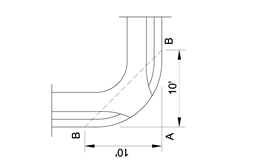
Adopted by Ord. 05-18-2022-D on 5/18/2022
13.32.040.4 Specific Clearance And Location Requirements
The following clearance and location requirements shall apply to all signs in all zones of Payson City:
- Except signs located in the Historic District, signs shall not be erected in a manner that any portion of the sign or any support will extend over a public or private walkway, nor may any sign extend over an adjoining property line without permission of the adjoining owner.
- Signs may not interfere with any fire escape, exit, required stairway, ventilation equipment, or window.
- Signs may not encroach upon any public property, public right-of-way, or public easement except by permission of the authorized agency.
- Except for an approved sign for a home occupation, when a sign is erected on a parcel adjacent to a residential zone, the sign shall not be positioned in a manner that the sign will face toward the residential zone. Furthermore, all sign lighting shall be directional and directed away from residential zones.
- All signs are required to be placed upon the premise where the product, service, or business establishment is located, conducted, manufactured or sold. Off premise signs are not allowed, except outdoor advertising (billboards) as allowed by state statute and the requirements of PCC 13.32.080, directional signs erected by Payson City intended to provide off premise advertising opportunities, and project signs in accordance with this Chapter.
Adopted by Ord. 05-18-2022-D on 5/18/2022
13.32.040.5 Maintenance
Every sign shall be kept in proper operating condition. Maintenance includes the repair of facades where signs have been removed, and the painting, cleaning, and repairing of the sign. Furthermore, all lighting fixtures shall be kept in operating condition and replaced when necessary.
Banners, pennants, streamers, and other advertising devices allowed by this Chapter shall be kept in good repair free from torn or frayed lines or pennants. Banners, pennants, streamers and other advertising devices in poor repair shall be removed within two (2) days of notification by the Development Services Department.
Adopted by Ord. 05-18-2022-D on 5/18/2022
13.32.040.6 Landscaping
Landscaping is an integral part of sign design and streetscape of the commercial corridors. Each permanent non-affixed sign erected in Payson City must be landscaped. The landscaped area in which any sign is placed shall be kept free from weeds, garbage, and debris. The landscaping plan shall include:
- Monument Sign. Each monument sign shall be enclosed in a landscaped planter of at least one hundred (100) square feet. The planter areas shall be surrounded by a concrete barrier to protect the vegetation and the sign. The planter shall be completely landscaped using appropriate vegetation such as plants, shrubs, flowers and low-lying ground cover. The planter areas shall be surrounded by a concrete barrier to protect the vegetation and the sign.
- Freestanding Or Pole Sign. Each freestanding or pole sign shall be enclosed in a landscaped planter of at least fifty (50) square feet. The planter areas shall be surrounded by a concrete barrier to protect the vegetation and the sign. The planter shall be completely landscaped using appropriate vegetation such as plants, shrubs, flowers and low-lying ground cover. The size of the planter may be modified to accommodate a more attractive landscape design surrounding the base of the planter.
- Development Entrance Sign. A development entrance sign should be a predominant feature of the development. The landscaping should complement the project in scale and aesthetics and shall include appropriate vegetation such as plants, shrubs, flowers and low-lying ground cover.
Adopted by Ord. 05-18-2022-D on 5/18/2022
13.32.040.7 Structural Covering
All freestanding or pole signs must have the structural supports covered or concealed with a material that is consistent with the materials used on the primary structure with the exception of a project sign as defined in PCC 13.32.020. The structural supports on a project sign shall incorporate materials or color scheme of the project.
Adopted by Ord. 05-18-2022-D on 5/18/2022
13.32.040.8 Lighting
The light from the illumination of signs shall be carefully directed so that the light is not obtrusive or a nuisance to adjacent properties, particularly residential areas. All lighting fixtures shall be kept in proper operating condition and replaced when necessary.
All sign lighting must be approved as part of the Sign Permit process. Neon lighting and other colored lighting must be indicated on the application and reviewed for safety and aesthetic controls.
Adopted by Ord. 05-18-2022-D on 5/18/2022
13.32.060.1 Purpose And Intent Of The Signs In The Commercial And Industrial Zones
Signs In The CC-1. Central Commercial Zone should complement the buildings in the district. Signs erected to advertise businesses in historic buildings should reflect the time period of the building. Businesses located in the Historic District may have additional requirements imposed by the Main Street program or other adopted historical preservation programs.
Signs In The GC-1. General Commercial Zone should complement the buildings in the district. Signs should enhance the built environment, improve traffic circulation, and allow business to effectively market their goods and services
Signs In The S-1. Special Highway Service Zone should be designed to serve the traveling public, complement the buildings in the district, enhance the built environment, improve traffic circulation, and allow business to effectively market their good and services.
Signs In The PO-1. Professional Office Zone should complement the buildings in the district, enhance the built environment, and identify the type of professional service offered.
Signs In The NC-1. Zone should complement the residential atmosphere and existing built environment of the district. The signs should be constructed of materials and colors consistent those used to construct residential dwellings and should not include backlit signage, neon signs and tubing, plastic facing, bright or Day-Glow colors, etc.
Adopted by Ord. 05-18-2022-D on 5/18/2022
13.32.060.2 Specific Sign Regulations
A-Frame Sign. One A-frame sign per building or for a multi-tenant project one A-frame sign per fifty (50) feet of frontage on a public street is allowed provided:
- The A-frame sign does not exceed sixteen (16) square feet on each of the two faces on the A-frame sign.
- The A-frame sign shall satisfy the definition of an A-frame sign as defined in PCC 13.32.020.
- The A-frame sign shall not block or partially block any public sidewalk, trail, fire escape, or any portion of a street or roadway, or road right of way except in the Historic Downtown Area. A-frame signs in the Historic Downtown Area shall be allowed if the sign can be placed in a safe manner that does not violate state or federal laws. The size of the A-frames in this zone may be reduced to accommodate the placement in the public right of way.
- The A-frame sign shall not be backlit or contain lighting fixtures, or light emitting devices.
- The A-frame sign shall be kept in good repair, protected from weather by an appropriate covering or lamination and free from graffiti.
- The A-frame sign shall be placed in a safe location. Any A-frame sign determined by Payson City to create a safety hazard shall be removed or placed in a location approved by Payson City.
- The owner of each A-frame sign shall obtain a sign permit from the Development Services Department. The approval of an A-frame sign shall have a duration of one (1) year at which time, the owner of an A-frame sign must apply for renewal of the sign permit. If the owner of an A-frame sign has violated any portion of this Section, the sign permit for an A-frame sign may not be renewed or may be revoked at any time and another permit may be denied for one (1) year.
Awning Sign. Awning signs, in place of wall signs, must function as true awnings by being placed over a doorway or window to protect from weather elements. The following provisions shall apply to awning signs:
- The awning sign may not extend more than eighteen (18) inches beyond each edge of a doorway or window.
- The height of the awning sign shall not exceed thirty (30) inches. The awning sign must project at least eighteen (18) inches but shall not exceed 48 inches.
- The sign copy may not exceed fifty (50) percent of the area of the front of the awning face.
- Only one awning sign may be allowed for each building, except that in a multi-tenant building one awning sign may be allowed for each unit if the awnings are consistent with an approved sign theme.
- An awning sign shall not project above the roofline, defined as the highest point of the vertical wall. Furthermore, the entire area of an awning sign shall be backed by the building face.
- An awning sign will not be approved on a structure that contains or is proposed to contain a wall sign.
Canopy Sign. The following provisions apply to signs for canopies:
- Sign copy and corporate logo signs shall not exceed thirty (30) percent of one face of the canopy. Two (2) sides of the canopy may be used for signs provided the thirty (30) percent of one face regulation is not exceeded.
- The individual letters, logos, or symbols shall not project beyond the face of the canopy more than eighteen (18) inches nor project above or below the canopy face.
- Gas price signs are not allowed as canopy signs. Changeable copy is not allowed on canopy structures.
- Signs painted on or affixed to canopies that are attached to a building shall be considered part of the total allowed area of wall signs for the walls from which the canopy projects.
Changeable Copy Sign. The following provisions shall apply to changeable copy signs:
- A changeable sign must be a portion of a freestanding, menu, or monument sign and satisfy the requirements of PCC 13.32.030.3 paragraph G.
- Changeable copy signs affixed to a building as a message board or menu sign shall be included in the calculation of a wall sign.
Directional Sign. Directional signs may be allowed as defined in PCC 13.32.020.
Freestanding Sign. The following provisions shall apply to freestanding signs:
- One (1) freestanding sign may be allowed for each parcel.
- The height of a freestanding sign shall be limited twenty (20) feet in height.
- The sign face of a freestanding sign shall not exceed one hundred (100) square feet.
- All freestanding sign supports must be covered with material used in the construction of the primary structure; and the pole covering must be a total width of four (4) feet.
- Multi-tenant and condominium projects are limited to one (1) freestanding sign that must include advertising for all tenants.
- Each tenant shall be allowed a permanent advertising space, not including reader board advertising.
- If a freestanding sign is erected, no additional freestanding or monuments signs will be permitted on the parcel unless otherwise stated in this Chapter. See PCC 13.32.030.3 paragraph D.
- Each freestanding sign shall include a landscaping planter consistent with the requirements of PCC 13.32.040.6.
Menu Sign. Menu signs are not allowed in the Historic District. Outside of the Historic District, three (3) of the following types of menu signs may be allowed per parcel and the following provisions shall apply to menu signs:
- Freestanding Menu Sign, Not Noise Emitting.
- The sign shall not exceed twenty (20) square feet nor be more than six (6) feet in height.
- Freestanding Menu Sign, Noise Emitting.
- The sign shall not exceed twenty (20) square feet nor be more than six (6) feet in height.
- The sound device shall not violate the noise ordinance of the City.
- The sound device shall be removed if it can be shown that the device has a negative impact on surrounding uses and the business has not taken steps to minimize negative impacts.
- A sound device on a parcel adjacent to or facing a residential zone shall take precautions to minimize the noise effects on the residential neighbors.
- Wall Mounted Menu Sign.
- The sign shall not exceed twenty (20) square feet and the sign area shall be included in the calculation of the maximum area allowed for a wall sign.
Monument Sign. The following provisions shall apply to monument signs:
- Only one monument sign may be allowed per parcel except as allowed in PCC 13.32.030.3 paragraph D.
- The monument sign shall not exceed sixty-four (64) square feet nor be more than six (6) feet in height.
- In the S-1 Zone and the I-1 Zones the monument sign shall not exceed one hundred (100) square feet nor be more than ten (10) feet in height.
- The monument sign shall include architectural features and materials similar to those used in the construction of the primary building on at least fifty (50) percent of the monument sign.
- Multi-tenant and condominium projects are limited to one (1) monument sign that must include advertising for all tenants.
- Each tenant shall be allowed a permanent advertising space, not including reader board advertising.
- If a monument sign is erected, no additional monument or freestanding signs will be permitted on the parcel unless otherwise stated in this Chapter. See PCC 13.32.030.3 paragraph D.
- Each monument sign shall include a landscaping planter consistent with the requirements of PCC 13.32.040.6.
Poster Panel Sign. Poster panel and painted bulletin signs may be allowed, as defined in PCC 13.32.020 provided:
- No more than two (2) poster panels may be allowed on any building and shall not exceed twelve (12) square feet per sign, except that motion picture theaters may have one (1) poster panel sign per theater screen, unless otherwise approved by the city council.
Project Sign. Project signs are allowed in the zones indicated below. All project signs shall include architectural features consistent with the approved design guidelines of the development to which the project sign belongs. In the I-1 and I-2 Zones, a large-scale industrial project consisting of more than five (5) acres may be allowed to erect one (1) project sign within the project area. Subdivision or phasing of an industrial project for the purpose of erecting an additional project sign(s) will not be approved by the City Council. The project sign will be reviewed and approved as part of the Site Plan approval process consistent with PCC 13.18 and PCC 13.14.170.
Project signs shall not exceed thirty (30) feet in height and shall not contain more than two hundred fifty (250) square feet of sign face. The structural supports on a project sign shall incorporate materials and color schemes of the project. Any one entity may not exceed one hundred (100) square feet of sign face on the project sign.
A project sign in the PO-1 Zone shall only be allowed for project areas of larger than five (5) acres, with one (1) sign allowed per project area. The project sign shall be no more than twenty (20) feet in height nor have a sign face larger than two hundred (200) square feet and shall have a base consisting of masonry material.
The size of project signs in the GC-1 and S-1 Zones on projects below twenty-five (25) acres in size shall be governed by the following table:
| Project Size | Sign Face | Sign Height |
| 2 acres | 200 Sq Ft | 20 Feet |
| 3 acres | 300 Sq Ft | 30 Feet |
| 4 acres | 400 Sq Ft | 40 Feet |
| 5-25 acres | 500 Sq Ft | 50 Feet |
For projects larger than twenty-five (25) acres in the S-1 Zone, the City Council may approve exemptions to project sign height and square footage if the following conditions are met:
- The parcel where the sign is constructed abuts Interstate 15;
- The sign is located within three hundred (300) feet of Interstate 15 centerline;
- The applicant can demonstrate that an increase in sign height and square footage will not have a negative impact on adjacent properties.
If an exemption is granted by the City Council that meets the criteria outlined above, the sign shall not exceed seventy (70) feet in height and shall not exceed seven hundred fifty (750) total square feet of sign face. Signs that are granted an exemption may be used to advertise a single business.
Projecting Sign. Projecting signs may be allowed as defined in PCC 13.32.020 provided:
- The projecting sign may be allowed if it can be demonstrated to the Development Services Director that the sign is architecturally compatible with the building in terms of architectural period and consistent with the characteristics of the business.
- Projection signs will vary in size and configuration, but must be designed in scale with the building. In no case shall the sign project more than thirty-six (36) inches and the bottom of the sign shall be at least ten (10) feet above grade level.
Reader Board Sign. Reader Boards and Message Centers are allowed in designated commercial zones provided:
- The reader board or message center shall not exceed more than fifty (50) percent of the sign face area.
- The reader board or message center shall not obstruct the view of, or be confused with any authorized traffic signs, signal or device, or which makes use of the words “stop,” “look,” “drive-in,” “danger” or other words, phrases, symbols, or characters in a manner that would interfere with, mislead or confuse traffic.
- The area of the reader board or message center shall be included in the calculation of the allowable sign face for the business or project.
- The reader board or message center shall not exceed seventy-five (75) percent of the maximum wattage output of the reader board or message center.
- In the PO-1 Zone reader boards and message centers are only allowed for a human health care facility greater than ten thousand (10,000) square feet in size
- The interval between message changes on the reader board or message center shall not be more frequent than at least eight (8) seconds and the actual message rotation process shall be three (3) seconds or less in accordance with Utah Code § 72-7-505(1)(d).
Roof Sign. The following provisions shall apply to roof signs:
- One (1) roof sign, in place of all wall signs, may be allowed on a pitched-roof building provided the sign is placed on the pitch of the roof and below the peak as viewed from the public street in front of the building.
- The sign shall not exceed one hundred (100) square feet.
- The sign shall not project beyond the front line of the building.
- The sign supports shall not be visible from a public street.
- A roof sign will not be approved on a structure that contains or is proposed to contain a wall sign.
- Roof signs are not allowed on a flat roofed building or a building with a parapet wall.
Suspended Sign. Suspended signs, in place of wall signs, are allowed if the architecture of the building is appropriate to allow the proposed sign. The following provisions shall apply to suspended signs:
- The sign area shall not exceed nine (9) square feet, nor be greater than twenty-four (24) inches in vertical height. Furthermore, the sign shall be at least eight (8) feet above grade level.
- The sign shall not project beyond the outermost edge of the building, roof, pole, canopy or other structure from which the sign is hung.
- The sign area shall be included in the calculation of the maximum area allowed for a wall sign.
Wall Sign. The following provisions shall apply to wall signs:
- The number of wall signs allowed per building will be calculated according to the following:
- The sign(s) shall not be more than fifteen (15) percent of building face not to exceed five hundred (500) square feet, whichever is less. If wall signs are implemented, a wall sign must be placed near the primary entrance to the structure. Additional wall signs may be placed in other locations on the structure but shall not exceed the square footage as calculated above. The wall sign placed at the primary entrance shall be equal to or larger than any other sign placed on the structure
- The following provisions shall apply to wall signs in the GC-1 Zone: The sign(s) shall not be more than twenty (20) percent of building face not to exceed five hundred (500) square feet, whichever is less. If wall signs are implemented, a wall sign must be placed near the primary entrance to the structure. Additional wall signs may be placed in other locations on the structure but shall not exceed the square footage as calculated above. The wall sign placed at the primary entrance shall be equal to or larger than any other sign placed on the structure.
- The following provisions shall apply to wall signs in the S-1 Zone: The sign(s) shall not be more than twenty-five (25) percent of building face not to exceed five hundred (500) square feet, whichever is less and no one sign shall exceed fifteen (15) percent. If wall signs are implemented, a wall sign must be placed near the primary entrance to the structure. Additional wall signs may be placed in other locations on the structure but shall not exceed the square footage as calculated above. The wall sign placed at the primary entrance shall be equal to or larger than any other sign placed on the structure.
- The following provisions shall apply to wall signs in the PO-1 Zone: One (1) wall sign, not to exceed thirty-six (36) square feet, may be allowed per building. Multi-tenant buildings are limited to one (1) wall sign that indicates the location of each tenant. Buildings in excess of 50,000 square feet are allowed fifteen percent (15%) or five hundred (500) square feet whichever is less.
- The sign shall be proportionate to the scale of the building.
- Advertising painted on the wall of a building shall be considered a wall sign and must satisfy the provisions of this Chapter.
- A wall sign may contain changeable copy provided that the changeable copy sign be part of the calculation in paragraph B above and not exceed thirty-six (36) square feet.
- The sign shall not extend above the top of a wall or the eve of a building.
- Multi-tenant buildings: see PCC 13.32.030.3 paragraph F.
- A commercial structure may contain a wall sign on the side and/or rear wall of the building provided the side and/or rear of the building does not abut residential structures and are limited to one sign per wall face.
Window Sign. The following provisions shall apply to window signs:
- Window signs shall be used to identify the business, hours of operation, phone number, address, advertising of weekly specials and services and other general information about the business. Signs must be located on the interior of a window and shall not obstruct more than fifty percent (50%) of the window surface and are allowed without a permit.
Adopted by Ord. 05-18-2022-D on 5/18/2022
13.32.060.3 CT, Commercial Transition Zones
Because there are several transition zones, signs in the CT-1 Zone shall be consistent with the requirements of the S-1 Zone, the signs in the CT-2, Zone shall be consistent with the requirements of the I-1, Zone and only signs allowed in residential zones shall be allowed in the CT-3 Zone.
Adopted by Ord. 05-18-2022-D on 5/18/2022
13.32.060.4 NC-1, Neighborhood Commercial
Signs in the NC-1 Zone should complement the residential atmosphere and existing built environment of the district. The signs should be constructed of materials and colors consistent those used to construct residential dwellings and should not include backlit signage, neon signs and tubing, plastic facing, bright or day-glo colors, etc.
The following regulations apply to signs in the NC-1 Zone:
- One wall sign will be allowed not to exceed thirty-six (36) square feet may be placed on a wall facing a public street. Changeable copy is not allowed on a wall sign in the NC-1 Zone.
- The sign shall be proportionate to the scale of the building and surrounding structures.
- Advertising painted on the wall of a building shall be considered a wall sign and must satisfy the provisions of this Chapter.
- The sign shall not extend above the top of a wall or the eve of a building.
Adopted by Ord. 05-18-2022-D on 5/18/2022
13.32.080.1 Non-Conforming Business Signs
Non-conforming businesses that are properly licensed in the City may install directory signs and one monument sign provided:
- The sign area of a monument sign shall not exceed thirty-two (32) square feet.
- There may not be more than one (1) monument sign for each parcel of property.
- The sign shall not exceed six (6) feet in height.
- The sign shall not project over a property line.
- The sign shall not be an off-premise sign.
Adopted by Ord. 05-18-2022-D on 5/18/2022

