
Pelham City Zoning Code
ARTICLE VI
SPECIAL PURPOSE DISTRICTS
Sec. 6.01.- A-1 agricultural district.
6.01.01. Intent. The intent of this district is to hold these lands in agricultural, forestry, rural residential and other limited yet compatible uses until such time as higher density development patterns may be desired and city services can be expanded to accommodate development.
6.01.02. Use regulations. Only the uses specifically listed in table 6-1 as "permitted by right," "conditional use" or "special exception" are allowed. For conditional uses, refer to section 13.07, Conditional uses. For special exceptions, refer to section 12.05, Special exceptions.
A.
Regulations to agricultural uses.
1.
A minimum lot area of three acres is required for the raising of livestock or fowl. At least one acre of lot area is required for each cow, horse, or other livestock animal. A maximum of 20 fowl per acre is permitted.
2.
Provision must be made to dispose of manure and other organic wastes in such a manner as to avoid pollution of groundwater, lakes and streams.
3.
All structures, cages, pens, and other facilities used for the feeding or housing of livestock or fowl or for the storage of manure must be set back at least 200 feet from any abutting lot not under the same ownership and 75 feet from the front property line.
B.
Prohibited uses.
1.
Keeping of swine.
2.
Meat and poultry processing.
3.
Par three golf course, miniature course, or practice golf driving range operated for commercial purposes.
4.
All commercial and industrial uses except as specified in table 6-1.
5.
repair garages or storage yards for materials, vehicles or equipment, warehouses, buildings and other facilities having commercial or industrial characteristics and buildings used or intended to be used as communal living facilities, detention, correctional, or penal institutions.
6.01.03. Area and dimensional regulations. The area and dimensional regulations set forth in table 6-2 must be observed.
6.01.04. Additional regulations.
A.
Non-agricultural accessory structures may be built in a rear yard, but may not be nearer than ten feet to any lot line.
B.
Parking regulations. Off-street parking spaces must be provided in accordance with article XI, Parking and Loading.
C.
Landscape buffer regulations. Landscaping and buffers must be in accordance with article X, Landscaping and Buffers.
D.
Sign regulations. Any signage must be in accordance with article VIII, Signs.
Table 6-1. Use Regulations, Agricultural Districts.
P: The use is permitted by right.
C: The use requires conditional use approval, see section 13.07.
SE: The use requires special exception approval, see section 12.05.
Table 6-2. Area and Dimensional Requirements; A-1 District.
Sec. 6.02. - Planned unit development.
6.02.01. General provisions.
A.
Purpose. The planned unit development district offers flexibility in density, use and design to enable and encourage innovation and development meeting community objectives.
B.
Community objectives. Planned developments are afforded more flexibility than provided through conventional zoning regulations to:
1.
Enable residential developments with integrated mixed-use centers, in which businesses, institutions and amenities are accessible on foot and bike from surrounding housing;
2.
Enable choice in housing type, lot size and neighborhood design;
3.
Preserve trees, slopes, wetlands, flood prone areas and natural drainage patterns and limit disruption of natural features; and
4.
Promote efficient development patterns that result in economically designed infrastructure.
C.
Applicability.
1.
All properties in an approved PUD are bound by the standards in its master plan, even if subsequently sold, until the master plan is voided by the city. In the case of multiple ownership, the approved PUD master plan is binding on all owners. No use of the property, nor construction, modification or alteration of any use or structure is permitted in conflict with the approved PUD master plan.
2.
No amendment of this section affects a PUD approved prior to such amendment. The approved master plan may continue in accordance with the zoning ordinance in effect at the time of such prior approval. Should the PUD master plan approval expire or be voided, any newly submitted PUD master plan must conform to the regulations in effect at the time of the new submittal.
3.
The zoning board of adjustments may not grant variances that would have the effect of amending an approved PUD master plan.
4.
All provisions of the zoning ordinance and subdivision regulations apply except where specifically addressed in this section and within the approved PUD master plan. During review of any subdivision plats related to an approved PUD, the planning commission ("commission") may modify or waive requirements of the subdivision regulations, as necessary to implementation of the approved master plan.
6.02.02. General requirements.
A.
Minimum area. Each PUD must contain at least ten acres of contiguous land. The council may approve PUD zoning for a smaller land area provided evidence in the preliminary master plan that:
1.
The project is consistent with the developmental goals of the comprehensive plan for the particular location;
2.
The minimum acreage requirement is impractical due to ownership, existing development patterns and similar constraints;
3.
The design concept fully integrates the development into the surrounding neighborhood or business area;
4.
The arrangement of uses, buildings, streets, parking, open spaces and amenities could not be reproduced on the site under conventional zoning regulations.
B.
Community benefits. The applicant must demonstrate that, in exchange for the flexibility conferred by PUD designation, the development will feature at least three of the following benefits:
1.
All buildings will feature quality, durable materials.
2.
Driveways, garages and parking areas will not dominate public views along streets. Parking garages along residential blocks will be varied, set back behind the front building line, oriented away from street view, accessed from the rear of lots or a combination of these.
3.
Residential developments will feature a range of housing types and sizes appropriate to different stages in life.
4.
Paths will be provided to enable the safe movement of residents, on foot or bike, throughout the development and to adjoining neighborhoods and community destinations.
5.
Usable open spaces will be provided in accessible locations throughout the development. A greater amount of common open space will be provided in more intensively developed portions of the development.
6.
Development will be arranged to reduce disruption of steep slopes, forested areas, wetlands, flood-prone areas and wildlife habitats. Natural features will be incorporated into the development as preserves, passive recreational areas.
C.
Common property. Provisions must be made for the ownership and perpetual maintenance of common open spaces and facilities in accordance with section 3.10, Common open spaces and facilities.
6.02.03. Development standards.
A.
PUDs are composed of residential subdistricts, mixed-use subdistricts, special subdistricts or a combination of these.
B.
Uses.
1.
Uses in residential and mixed-use subdistricts must be in accordance with table 6-3 and are contingent on approval of the master plan. Uses similar in character or impact to those in table 6-4 may be considered. If any such use is not specifically approved by the council with the PUD zoning, it may only be approved by the council as an amendment to the PUD master plan.
2.
Uses in a special subdistrict are limited to those proposed and approved as part of the master plan.
C.
Density, building height and setbacks must conform to the standards in table 6-4. The area and dimensional requirements for uses in article VII, Detailed Use Regulations apply unless other standards are approved with the PUD zoning.
D.
Open space standards. Common open space must be provided in each subdistrict as shown in table 6-4. No designated common open space may be subdivided in the future, nor may it be reduced in area or used for any other purpose unless approved through an amendment to the master plan. The following are excluded from calculation of required common open space:
1.
Open spaces that may only be accessed by way of individual residential lots;
2.
Land encumbered by any substantial structure, enclosure or parking facility;
3.
Narrow, remnant strips of land except those provided for pedestrian or bicycle trails; and
4.
Land to be used as or be in any required drainage area or easement unless such area is designed and maintained for recreational use.
Table 6-3. PUD Permitted Uses.
Table 6-4. PUD Development Standards.
E.
Signage. A signage plan must be submitted as part of the PUD master plan and must conform to article VIII, Signs except where alternate standards are specifically proposed. All permitting requirements apply to signs in a PUD district.
1.
Off-premises signs are prohibited.
2.
Street signs must be uniform in design throughout a PUD development. If a street sign standard other than that of the city is used, the developer or property owners' association will be responsible for maintenance.
F.
Landscaping. The standards of article X, Landscaping and Buffers, apply unless alternate standards are approved with the PUD master plan to address buffering, screening and landscaping for vehicular areas.
G.
Exterior materials. Standards for exterior building materials must be specified in the PUD master plan consistent with the following standards. Unless an alternative set of materials standards is specifically approved by the city, the standards in this subsection and in table 6-5 apply. Materials standards approved as part of the PUD master plan must be included within covenants for all applicable property within the planned development.
1.
Area of window and door openings are not included in calculation of exterior building requirements in table 6-5.
2.
Cement block may only be used on residential building exteriors at the foundation up to a height of two feet. Cement block foundations along front façades must be screened with shrubs or other landscaping. Cement block may only be used on nonresidential building exteriors along rear and side elevations.
3.
Vinyl and metal siding are discouraged as primary exterior materials for buildings but may be used in combination with other materials if specified in the approved PUD master plan.
Table 6-5. Materials Standards.
6.02.04. Procedure.
A.
Application. Application for PUD zoning must be accompanied by a preliminary master plan. See appendix for submittal requirements.
B.
Preliminary master plan and PUD zoning.
1.
Within 30 days after holding a public hearing on a PUD rezoning request, the commission will make a recommendation for approval, approval with changes, or denial to the council; or, with consent of the applicant, table its recommendation to allow time for further review or for the applicant to make requested changes.
2.
Upon receipt of the commission's recommendation, the council will conduct a public hearing on the rezoning request. Following its public hearing on the PUD zoning request, the council may approve, approve with conditions or disapprove the rezoning.
3.
Approval of the preliminary master plan by the council establishes the maximum density, maximum number of dwelling units, land use composition and minimum open space in each subdistrict and phase and any other zoning standards specifically approved to modify or replace those in this ordinance.
C.
PUD master plan approval.
1.
After PUD zoning has been established, no building permit may be issued, and no grading, clearing, excavation or filling may take place until the final PUD master plan has been approved by the commission. The applicant must submit the PUD master plan within 180 days from the date of PUD zoning approval.
2.
The PUD master plan must substantially conform to the preliminary master plan presented with the PUD rezoning request and must incorporate any modifications recommended or required as conditions by the council. How such conditions are to be addressed must be clearly indicated in the PUD master plan.
3.
Upon submission of the PUD master plan, the commission will conduct a public hearing on the PUD master plan and approve, approve with changes or disapprove the PUD master plan. The decision by the commission may be appealed to the council.
D.
Changes and amendments.
1.
The zoning official and commission may approve changes to an approved PUD master plan as provided in table 6-6. Changes by the commission do not require a public hearing. All other changes require an amendment by the council, which may only be approved after a public hearing.
2.
Any deviation from the PUD master plan in conflict with the limits set out herein constitutes a violation of this ordinance.
Table 6-6. PUD Changes and Amendments.
Sec. 6.03. - Corridor overlay district.
6.03.01. Intent.
A.
Recognizing the special nature of certain thoroughfares and the impact of the appearance of such corridors and their importance to the local economy, the intent of the corridor overlay district is to establish minimum standards for building development, design and orientation, site development, signage and landscaping to ensure that development is aesthetically pleasing and economically viable.
B.
Furthermore, the purpose of these regulations is to ensure creativity and compatibility of the planning and design among land uses in the corridor. These regulations have been developed with consideration of the character of the corridor to ensure quality development and redevelopment, to conserve the value of property and to enhance the investment in property within the corridor.
6.03.02. Applicability.
A.
Major corridors. The regulations of the major corridor overlay district apply to all lots, parcels, tracts, and portions thereof within 300 feet of the right-of-way line of the major corridors as shown on the official zoning map.
B.
Minor corridors. The regulations of the minor corridor overlay district apply to all lots, parcels, tracts, and portions thereof within 250 feet of the right-of-way line of the minor corridors as shown on the official zoning map.
Table 6-7. Major and Minor Corridors.
(Refer to the zoning map for boundaries).
C.
These regulations apply in addition to the regulations of the underlying zoning district.
D.
No structure or land may hereafter be located, extended, converted, or structurally altered without full compliance with the terms of this section and other applicable regulations.
E.
The uses permitted in the underlying zoning district are not affected by such overlay district designation.
F.
Detached single-family and duplex residential properties are exempt from the requirements of this section except as specified in section 6.03.04.
6.03.03. Submission requirements. For any building permit application, a site plan and accompanying information must be submitted to the zoning official for review and approval. The site plan must be drawn to a scale no smaller than one inch equals 50 feet and must include all information specified in appendix A-5.
6.03.04. General standards. The following standards apply in the major and minor corridor overlay districts.
A.
Site design.
1.
Loading and service areas may not face public rights-of-way. Service and loading areas, outdoor storage areas, trash receptacles, utility equipment, mechanical units, satellite dishes and similar appurtenances must be screened in accordance with section 10.02, Screening.
2.
Screening walls and fences must be compatible in color and materials to that of the principal building.
3.
The outdoor display of sales merchandise may not be visible from public rights-of-way.
4.
Mechanical units must be ground-mounted whenever possible. Mechanical units, whether roofmounted or ground-mounted, must be screened from view from public rights-of-way. See also section 10.02, Screening.
5.
Other than multi-family, residential lots may not front on a major or minor corridor. They must be designed as reverse frontage lots or be separated from the corridor by a parallel street. The following are required for reverse frontage developments:
a)
A no-access reserve strip must be provided as necessary to prevent direct access to the lots from the major or minor corridor.
b)
Residential lots must be screened from the corridor. The screen must include a fence or wall in accordance with section 10.05, Design standards for fences. Between the fence or wall and the corridor, one shade tree must be planted per 40 feet of corridor frontage.
B.
Building design and orientation.
1.
Buildings must be oriented so that the building's main entrance fronts the corridor. At least 60 percent of the building's overall width must be along the front building line.
2.
Building materials and colors.
a)
To prolong the life of buildings, reduce the need for periodic maintenance and maintain a character, which is commensurate with the public interest, at least 75 percent of exterior building materials on each building elevation visible from public rights-of-way must be one or more of the following: brick, stone, glass, wood, stucco, imitation stucco, precast concrete, poured concrete, or split-face concrete block.
b)
There must be at least one principal material per façade. No single subordinate material may be applied to more than 25 percent of any façade.
c)
The following materials are prohibited on building elevations visible from public rights-of-way: rib and R-panel metal siding.
d)
Changes in exterior materials may not occur within six feet horizontally of outside corners (see figure 6-1).
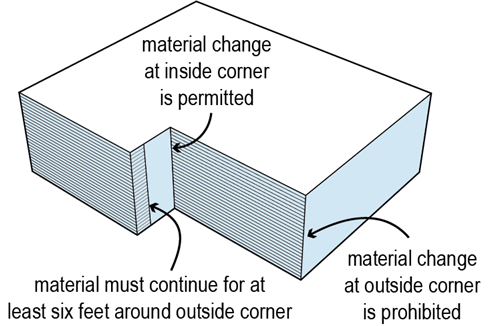
Figure 6-1. Change in building materials at outside corners.
e)
There must be at least one principal color per façade. No single subordinate color may be applied to more than 25 percent of any façade.
f)
Stripes and other patterns created through changes in color may not be applied to large areas of the façade. Such patterns are limited to horizontal or vertical bands no greater than five feet in their least dimension. This does not apply to signs, mortar joints, masonry color blends or to natural variations in wood siding.
3.
Nonstructural awnings, covered with cloth fabric, or rigid metal, may not project more than seven feet from the building wall, may not be lower than eight feet nor higher than 14 feet above grade level, and may not be internally illuminated.
C.
Parking and access.
1.
Off-street parking must be provided in accordance with article IX, Parking and Loading. However, parking may not exceed 105 percent of the parking required in section 9.02, Parking requirements.
2.
The location and design of driveway access to public streets must comply with section 3.07, Street access.
D.
Landscaping. Landscaping and buffers must be provided in accordance with article X, Landscaping and Buffers, and the following:
1.
For parking areas exceeding 25 spaces, landscape islands must be provided for each ten parking spaces per row. Each island must contain at least one shade tree. As an alternative a continuous landscape strip at least five feet in width and planted with an equivalent number of shade trees may be provided between rows of parking. Each row must be terminated with a landscape island containing at least one shade tree.
2.
Vehicular use areas must be separated from rights-of-way and from abutting properties by landscaping as follows:
a)
Front landscape strips must be at least ten feet deep measured perpendicular to the right-of-way line, planted with one shade tree per 30 linear feet of lot frontage, and supplemented with a continuous row of shrubs.
b)
Perimeter landscape strips must be planted with one shade tree per 30 linear feet in addition to the applicable requirements of section 10.04.04, Perimeter landscaping.
c)
Required trees must be one or more of the species listed in table 10-3 and must be spaced as evenly as practicable.
E.
Fences and walls.
1.
Fences must be made of masonry, ornamental metal, durable wood, vinyl that is designed and fabricated to appear as wood, or a combination of these materials. Chain link, plastic or wire fencing may not be used in locations visible from public rights-of-way.
2.
Evergreen shrubs must be provided on the right-of-way side of any solid fence visible from public property.
3.
Retaining walls visible from public rights-of-way
a)
The exterior surface of retaining walls must be compatible with the architecture and site design of the property.
1)
Retaining walls may not be poured in place concrete.
2)
Concrete block must be split-face, ribbed, stamped or a similar decorative type of block. Integral colored concrete block may be used provided more than one color is used, such as in a brick blend or other decorative pattern or design. Painted concrete block does not meet this requirement.
b)
Landscaping plants must be provided at the base of retaining walls which exceed eight feet in height and are visible from public right-of-way.
F.
Exterior lighting.
1.
Electric service to lighting fixtures must be underground.
2.
The intensity, location, and design of lighting must be such that not more than one foot candle of light is cast upon adjacent property or the public right-of-way. Light fixtures must be designed to cast light downward. Where necessary, cutoff devices must be used to minimize glare off-premises.
3.
Light poles may not exceed 20 feet in height.
4.
Wooden light poles are prohibited.
5.
Light poles and fixtures must be compatible with the architecture of the principal buildings.
6.
Flashing, blinking, or intermittent lights, and bare neon tubing are prohibited.
G.
Grading and drainage.
1.
Except for retaining walls, smooth topographic transition must be provided throughout the site and between properties. Grades may not exceed a slope of three horizontal to one vertical.
2.
Crushed granite and limestone may not be used for slope stabilization in the public right-of-way nor in areas visible from public rights-of-way.
3.
All slopes must be stabilized with grass or other evergreen groundcover or other vegetation prior to the issuance of a certificate of occupancy.
4.
In areas which are visible from public rights-of-way, subsurface drainage structures and grass swales may be used to manage stormwater. Open ditches are prohibited.
5.
To the degree practicable, stormwater basins must be located away from public view. Where visible from public view, frontage landscaping, as required for vehicular areas, must be provided to screen stormwater basins. Fencing must be in accordance with section 6.03.04.E, Fences and walls. Screening is not required for retention basins that are designed to appear as natural water features.
H.
Signs. Signs must comply with article IX, Signs, and the following:
1.
Freestanding signs must be monument-type. Signs may not be mounted on poles or similar supports.
2.
Color and lighting of all signs must be compatible in color and materials to that of the principal building on the premises. One or more of the exterior materials of the principal building must be incorporated into the sign base or other components of the sign
3.
Wall signs.
a)
Wall signs may be used on no more than two building elevations.
b)
Wall signs may not be larger than 20 percent of the area of the primary façade of the establishment.
4.
Off-premise signs are prohibited.
5.
Electronic message displays. When included on freestanding signs, electronic message displays may not exceed 50 percent of the total copy area of the sign face.
6.03.05. Major corridor standards.
A.
Off-street parking forward of the front building line is limited to one single-loaded aisle. This restriction does not apply if developed properties on both sides of the subject property have more parking than a single-loaded aisle forward of their front building lines. In such cases, the zoning official may modify the maximum front setback, but only as necessary to accommodate one double-loaded parking aisle.
B.
Buildings must be set back at least 25 feet but not more than 75 feet from the front lot line.
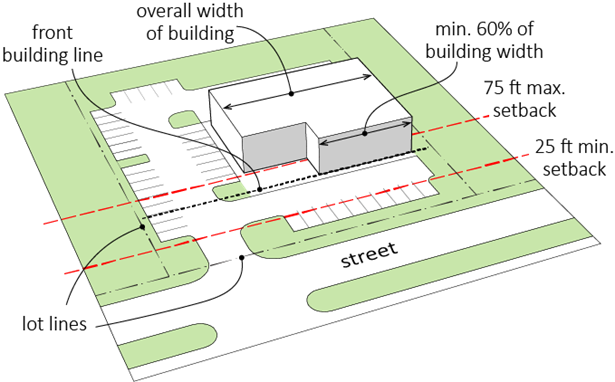
Figure 6-2. Building placement standards.
C.
Freestanding signs. See table 6-8 for maximum sign height and area.
D.
At least 20 percent of the area of the street façade must be fenestration. Opaque garage doors do not count toward this requirement.
Table 6-8: Freestanding Sign Height and Area.
6.03.06. Minor corridor standards.
A.
Off-street parking is prohibited forward of the front building line. Driveways for drive-through facilities may not cross between the building and front property line.
B.
Buildings must be set back at least 15 feet but not more than 50 feet from the front lot line. The maximum setback does not apply to residential uses on reverse frontage lots.
C.
At least 30 percent of the area of the street façade must be fenestration. Opaque garage doors do not count toward this requirement.
D.
Awnings may not be longer than 40 feet.
E.
Freestanding signs. See table 6-8 for maximum sign height and area.
6.03.07. Alterations to developed properties. When a permit is requested for work on an existing building or site improvements of a developed property, the building, site or both must be made to conform to corridor overlay district requirements in accordance with the following provisions. It is intended that these provisions be administered and interpreted so that the conditions required for approval of a permit are reasonable and proportionate to the cost of the work otherwise intended to be performed by the applicant.
A.
The application must provide estimated costs for all work proposed on existing structures and for all proposed site work, including but not limited to parking, signs, lighting, landscaping and fences.
B.
For building permits in which the work to be performed exceeds 50 percent of the total appraised value of the property, as determined by the Shelby County Tax Assessor, the entire premises must be made to conform to all applicable requirements of the corridor overlay district and all other applicable requirements of this ordinance. Conformance to maximum setback requirements may be waived if the work does not include additions or other changes to the building footprint.
C.
If the work to be performed will be less than 50 percent of the total appraised value of the property, the following provisions apply:
1.
Street façades.
a)
All changes to street façades must conform to the applicable material and fenestration standards of the corridor overlay district. Any street façade proposed to be changed must be made to conform to such standards to the extent practicable as determined by the zoning official. No proposed changes will be permitted that decreases conformity of a street façade. For example, an altered façade may not contain a lower percentage of required materials or fenestration than on the existing façade.
b)
Existing street façade materials must be repaired of any defect or damage identified by the zoning official or replaced with conforming materials. No existing prohibited materials may be replaced with the same or other prohibited materials.
c)
Any flashing, blinking or intermediate lights or bare neon tubing on a street façade, including on a wall sign, must be replaced, removed or otherwise made to conform.
2.
Building additions.
a)
If the principal building will be expanded by more than 20 percent, each street façade must be made to conform to material and fenestration standards, regardless of where the building expansion takes place.
b)
Building additions must increase conformity with building orientation and maximum setback requirements to the extent practicable. For example, additions to buildings that do not conform to the maximum setback and building orientation requirement should occur along the front of the building to increase conformity to such requirements.
D.
Site Improvements. The following provisions apply when site improvements are proposed on a developed site that does not conform to site design standards required by this section or elsewhere in this ordinance:
1.
If the site work to be performed exceeds 50 percent of the total value of the land, as determined by the Shelby County Tax Assessor, the site must be improved to conform to all applicable requirements.
2.
Any flashing, blinking or intermediate lights or bare neon tubing on a freestanding sign or elsewhere on the site, if visible from public view must be replaced, removed or otherwise made to conform.
3.
Vehicular area landscaping must be provided or made to conform in accordance with section 10.04.02, General requirements.
4.
If the site work to be performed will be less than 50 percent of the total value of the land, then the zoning official will require that portions of the site be made to conform according to the following order of importance and provided such requirements do not exceed 50 percent of the cost of the site work initially proposed in the permit request:
a)
Screening, which may include relocation of applicable site elements away from public view.
b)
Frontage landscaping for vehicular areas.
c)
Freestanding signs.
d)
Replacement or removal of existing fences or walls visible from public view if nonconforming or repair, when required, of such fences or walls that otherwise conform to the standards herein.
e)
Interior landscaping for vehicular areas.
f)
Exterior, freestanding lighting.
g)
Buffer plantings.
h)
Wall signs.
i)
Perimeter landscaping for vehicular areas.
j)
Any other required landscaping plantings.
E.
If the proposed work is not in accordance with the requirements herein or altered to comply with such requirements, to the satisfaction of the zoning official, the requested permit may only be issued upon approval by the board in accordance with section 12.05, Special exceptions.

