
Pinecrest City Zoning Code
ARTICLE 7
- SIGNS6
Cross reference— Definitions, div. 9.2.
Div. 7.1.- Short title and applicability.
(a)
This article shall be known as the "Sign Code of the Village of Pinecrest, Florida" and shall be applicable in the village.
(b)
If property in the village fronts a street or public right-of-way that forms a common boundary with another municipality or unincorporated area of the county, and if the zoning classifications on both sides of the boundary are comparable, the property in the village shall comply with the provisions of the village's ordinance.
(Ord. No. 2002-8, § 3, 11-13-02; Ord. No. 2016-5, § 2, 5-10-16)
Div. 7.2. - Scope, purpose and intent.
(a)
Scope.
(1)
The provisions of this article shall govern the number, size, location, and character of all signs which may be permitted either as a principal or accessory use under the terms of this article. No signs shall be permitted on a lot as a principal or accessory use except in accordance with the provisions of this article.
(2)
This article does not regulate village signs on property owned by the village, Miami-Dade County or the State of Florida, and does not regulate traffic control devices.
(3)
In the event of any conflict between this article and any declaration of covenants, bylaws, or other restrictions applying to any property within the village, the language affording the more restrictive interpretation shall apply.
(4)
The village specifically finds that these sign regulations are narrowly tailored to achieve the compelling and substantial governmental interests of traffic safety and aesthetics, and that there is no other way for the village to further these interests.
(b)
Purpose.
(1)
Florida Constitution. Article II, Section 7 of the Florida Constitution provides that "[i]t shall be the policy of the state to conserve and protect its natural resources and scenic beauty. . . ." A beautiful environment preserves and enhances the desirability of the village as a place to live and to do business. Implementing the Florida Constitution is a compelling governmental interest.
(2)
Florida Statutes. Florida law requires cities to adopt comprehensive plans and implement them through the adoption of land development regulations (also known as zoning regulations) and the approval of development orders that are consistent with the comprehensive plan. See Part II of Chapter 163, Florida Statutes. Florida law specifically requires that the village adopt sign regulations. See Section 163.3202(2)(f), Florida Statutes. Complying with state law is a compelling governmental interest.
(3)
Village Strategic Plan. The Village of Pinecrest is a highly livable community with an excellent government, stable finances, safe streets, outstanding recreational facilities and infrastructure, a high-quality residential character with lush streetscape, excellent schools, valuable cultural assets, and sustainable operations and living, with leadership which progressively enhances opportunities for citizen interaction and participation.
(4)
Village comprehensive plan. Located in southern Miami-Dade County, the Village of Pinecrest is home to over 18,400 people and occupies approximately eight square miles of land. The predominant land use, single-family residential, is buffered by a vibrant commercial corridor on the east side of the Pinecrest-Parkway (U.S. 1). Development of the area began in the 1950s and 1960s, as large, ranch style homes on one acre lots were built, establishing the foundation for the lushly landscaped properties that are prominent in the community today. Since its incorporation in 1996, the village has been committed to improving the infrastructure of the community and the quality of life of its residents. With its tree-lined streets, large estate lots, and historical Pinecrest Gardens, the village is recognized as one of the most beautiful and best places in Florida for quality of life. Pinecrest strives to preserve and enhance its beautiful setting and quality of life through the goals, objectives and policies described in the comprehensive development master plan (CDMP). The future land use element of the CDMP identifies the need to promote efficient traffic flow, improve the image and function of commercial development, and promote, reinforce and enhance the village's community appearance. The Transportation element addresses the need to develop a multi-modal system that emphasizes safe and convenient movement of pedestrian and non-motorized and motorized vehicles. The village's comprehensive plan has numerous provisions that require the village to ensure the aesthetic character of the village and ensure traffic safety on roads within the village through the regulation of signs, as set forth in detail below. Implementing the village's comprehensive development master plan is a compelling government interest. Several goals, objectives, and policies of the village's comprehensive plan require the village to maintain its scenic beauty and traffic safety through its land development regulations and actions:
Goal 1-1: Land Use. The Village of Pinecrest shall maintain and enhance the extraordinary character and quality of land uses within the village by: Advancing the aesthetic, physical, social, cultural, and economic [welfare] of its residents; and protecting the public health, safety, and welfare and preventing threats to health, safety, and welfare which may be caused by incompatible land uses, environmental degradation, hazards, and nuisances.
Policy 1-1.2.3: Improve the image and function of commercial development along Pinecrest parkway. The land development regulations shall address issues surrounding urban design amenities, including, but not limited to, signage controls, pedestrian amenities, landscaping improvements and other related design features.
Policy 1-1.3.2: Planning and management framework. The Village of Pinecrest shall maintain land development regulations which regulate land use, density and intensity of development, and nuisance impacts of non-residential development.
Policy 1-1.3.3: Pursue nuisance abatement standards and criteria. The village land development regulations include performance standards that protect residential areas from nuisance impacts of non-residential development.
Objective 1-1.7: Promote village appearance, natural amenities and urban design principles.
Policy 1-1.7.1: Reinforce and Enhance the village's community appearance. Major physical attributes within the village shall be preserved through application of design review standards and management of signs, landscaping, open space preservation, tree protection, and other urban design amenities.
Policy 1-3.2.2: Comprehensive Plan implementation and land development regulations. The village land development regulations ensure that qualitative and quantitative performance criteria are applied in the development review process to achieve consistency with the comprehensive plan. The village shall require maintenance and continuing adherence to these criteria. The land development regulations shall be enforced and shall be revised as needed in order to: 1) effectively regulate future land use activities and natural resources identified on the future land use map; 2) adequately protect property rights; and 3) implement the goals, objectives, and policies stipulated in the comprehensive plan. The land development regulations shall include a regulatory framework to: 1. Regulate signage; and 2. Ensure safe and convenient on-site and off-site traffic flow and vehicle parking needs and prohibit development within future rights-of-way.
Policy 1-3.2.5: Performance standards. Performance standards have been incorporated in the land development regulations and reflect best management principles and practices. These standards include balancing and protecting private property rights and the public interest by incorporating legally defensible land use controls.
Policy 1-3.3.1: Regulatory enforcement activities. Land development regulations and building code compliance activities shall be continued as an integral part of the village's code compliance programs. The code compliance program shall preserve and protect structurally sound land improvements and land uses consistent with the comprehensive plan.
Policy 1-3.9.8: Urban Design and Community Appearance. Good principles of urban design shall be applied through site plan review procedures in order to enhance general community appearance as well as to preserve and enhance open space and landscape. This program shall assist in protecting major natural and man-made resources within the village.
Objective 2-1.1: Motorized and Non-Motorized System. Develop an integrated multi-modal transportation system that emphasizes safe and convenient movement of pedestrian and non motorized and motorized vehicles, maximizes efficient use of energy resources, and minimizes emission of greenhouse gases within Pinecrest, through the use of management systems.
(5)
Caselaw. In accordance with the U.S. Supreme Court's cases on sign regulation, the regulations in this article are not intended to regulate or censor speech based on its content or viewpoint, but rather to regulate the secondary effects of speech that may adversely affect the village's substantial and compelling governmental interests in preserving scenic beauty and community aesthetics, and in vehicular and pedestrian safety in conformance with the First Amendment. These cases and their holdings include, but are not limited to:
a.
Reed v. Town of Gilbert, U.S. , 135 S. Ct. 2218, 192 L. Ed. 2d 236 (2015) on the topic on noncommercial temporary signs;
b.
Metromedia, Inc. v. City of San Diego, 453 U.S. 490 (1981) on the topic of commercial signs and off-premise signs:
c.
City of Ladue v. Gilleo, 512 U.S. 43 (1994) on the topic of political protest signs in residential areas;
d.
Linmark Assocs., Inc. v. Township of Willingboro, 431 U.S. 85 (1977) on the topic of real estate signs in residential areas;
e.
Burson v. Freeman, 504 U.S. 191 (1992) on the topic of election signs near polling places;
f.
Central Hudson Gas & Electric Corp. v. Public Service Commission, 447 U.S. 557 (1980) on the topic of commercial speech; and
g.
City Council v. Taxpayers for Vincent, 466 U.S. 789 (1984) on the topic of signs on public property.
(6)
Impact of sign clutter. Excessive signage and sign clutter impair the legibility of the environment, and undermine the effectiveness of governmental signs, traffic control devices and other required signs (such as noncommercial onsite directional signs and warning signs) that are essential to identifying locations for the delivery of emergency services and other compelling governmental purposes. The intent of these sign regulations is to enhance the visual environment of the village, ensure that village residents and visitors can safely navigate through the village to their intended destinations, and promote the continued well-being of the village. It is therefore the purpose of this article to promote aesthetics and the public health, safety and general welfare, and assure the adequate provision of light and air within the village through reasonable, consistent and nondiscriminatory standards for the posting, displaying, erection, use, and maintenance of signs that are no more restrictive than necessary to achieve these governmental interests.
(7)
Specific legislative intent. More specifically, the sign regulations are intended to:
a.
Classify and categorize signs by type and zoning district.
b.
Permit, regulate and encourage the use of signs with a scale, graphic character, and type of lighting compatible with buildings and uses in the area, so as to support and complement the goals, objectives and policies set forth in the village's comprehensive development master plan;
c.
Establish regulations affecting the design, erection and maintenance of signs for the purpose of ensuring equitable means of graphic communication, while maintaining a harmonious and aesthetically pleasing visual environment within the village. It is recognized that signs form an integral part of architectural building and site design and require equal attention in their design, placement and construction;
d.
Encourage the effective use of signs as a means of communication in the village;
e.
Maintain and enhance the scenic beauty of the aesthetic environment and the village's ability to attract sources of economic development and growth;
f.
Ensure pedestrian safety and traffic safety;
g.
Minimize the possible adverse effect of signs on nearby public and private property;
h.
Foster the integration of signage with architectural and landscape designs;
i.
Lessen the visual clutter that may otherwise be caused by the proliferation, improper placement, illumination, animation, excessive height, and excessive area of signs which compete for the attention of pedestrian and vehicular traffic and are not necessary to aid in wayfinding;
j.
Allow signs that are compatible with their surroundings and aid orientation, while precluding the placement of signs that contribute to sign clutter or that conceal or obstruct adjacent land uses or signs;
k.
Encourage and allow signs that are appropriate to the zoning district in which they are located consistent with and serving the needs of the land uses, activities and functions to which they pertain;
l.
Curtail the size and number of signs to the minimum reasonably necessary to identify a residential or business location, and the nature of such use, and to allow smooth navigation to these locations;
m.
Regulate signs so that they are effective in performing the function of identifying and safely directing pedestrian and vehicular traffic to a destination;
n.
Preclude signs from conflicting with the principal permitted use of the lot and adjoining lots;
o.
Regulate signs so as to not interfere with, obstruct the vision of, or distract motorists, bicyclists or pedestrians;
p.
Except to the extent expressly preempted by Miami-Dade County, State or Federal law, ensure that signs are constructed, installed and maintained in a safe and satisfactory manner, and protect the public from unsafe signs;
q.
Preserve, conserve, protect, and enhance the aesthetic quality and scenic beauty of all zoning districts in the village;
r.
Allow for traffic control devices without village regulation consistent with national standards because they promote highway safety and efficiency by providing for the orderly movement of road users on streets and highways, and by notifying road users of regulations and providing nationally consistent warnings and guidance needed for the safe, uniform and efficient operation of all elements of the traffic stream and modes of travel, while regulating private signs to ensure that their size, location and other attributes do not impair the effectiveness of such traffic control devices;
s.
Protect property values by precluding, to the maximum extent possible, signs that create a nuisance to the occupancy or use of other properties as a result of their size, height, illumination, brightness, or movement;
t.
Protect property values by ensuring that the size, number and appearance of signs are in harmony with buildings, neighborhoods, structures, and conforming signs in the area;
u.
Regulate the appearance and design of signs in a manner that promotes and enhances the beautification of the village and that complements the natural surroundings in recognition of this village's reliance on its natural surroundings and beautification efforts as a source of economic advantage as an attractive place to live and work;
v.
Not regulate signs more than necessary to accomplish the compelling and important governmental objectives described herein;
w.
Enable the fair and consistent enforcement of these sign regulations;
x.
Be considered the maximum standards allowed for signage;
y.
Regulate signs in a permissive manner so that any sign is not allowed unless expressly permitted and not expressly prohibited; and
z.
Establish dimensional limits and placement criteria for signs that are legible and proportional to the size of the parcel and structure on which the sign is to be placed, or to which it pertains.
(Ord. No. 2002-8, § 3, 11-13-02; Ord. No. 2016-5, § 2, 5-10-16)
Div. 7.3. - Interpretation.
Only those signs that are specially authorized by this article shall be permitted. Those that are not listed or authorized shall be deemed prohibited.
(Ord. No. 2002-8, § 3, 11-13-02; Ord. No. 2016-5, § 2, 5-10-16)
Div. 7.4. - Permits required.
(a)
Applications and permits. No sign, unless exempted by this article, shall be erected, constructed, posted, painted, altered, maintained, or relocated, except as provided in this division and until a sign permit and any applicable building permit have been issued by the administrative official. Before any sign permit is issued, an application for such permit shall be filed together with two sets of drawings and/or specifications (one to be returned to the applicant) as may be necessary to fully advise and acquaint the issuing department with the location, method of construction, type of materials, manner of illumination, method of erection, securing or fastening, number and type of signs applied for, and advertisement to be carried. All electrically illuminated signs shall require a separate electric permit and inspection.
(b)
Consent of property owner. No sign shall be placed on any property unless the applicant has the written consent of the owner and lessee, if any, of the property.
(c)
Calculating number of signs. A single sign containing advertisement on two sides shall be counted as one sign when the two sides face opposite directions and are not simultaneously visible from any one point. Every other sign shall be counted as a separate sign for each face thereof. Each tenant/owner along the business district may select one design type (wall, projecting or marquee) and seek a permit for an awning sign as provided in this Code. Additional signs may be permitted for large single tenant properties based on the lot frontage dimension as follows: lot frontage 0—75 feet, two signs; 76—150 feet, three signs; and 151 feet or greater, four signs.
(d)
Calculating sign size. The area of sign shall include borders and framing. Heights shall be measured to the top extremity of the sign and distances to the farthest point. The administrative official shall have the discretion of determining the area of any sign which is irregular in shape and in such cases will be guided by calculations as made by a licensed registered engineer when same are shown on the drawing.
(e)
Location of signs. All signs must be placed on the owner's property as permitted in this Code. No signs may be placed in areas within five feet of a residential zone, with the exception of those businesses having primary street frontage on a public road. Further, no signs may be placed in the public right-of-way. Any sign found posted or otherwise affixed upon any public property contrary to the provisions of this article shall be removed by the department of public works, public safety department or code compliance staff. The person or entity responsible for any such posting shall be liable for the cost incurred in the removal and disposal thereof, and the village is authorized to collect such cost from the owner or person placing the sign, or the person who is the beneficiary of the sign.
(f)
Application review. The village shall approve or deny the sign permit application based on whether it complies with the requirements of this article. Such applications shall be first reviewed by the administrative official or his/her designee who shall, within ten business days of the receipt of such application, determine whether the sign permit application is complete. If the application is deemed incomplete, it shall be returned to the applicant within ten business days with a letter detailing the information needed to complete the application. Upon resubmission of the application, the village shall have five additional business days to determine whether the applicant's revisions are sufficient to complete the application. If they are not, the village will again inform the applicant of any remaining deficiencies in writing. This process shall continue until the applicant has submitted a complete application, or demands that the application be reviewed "as is." For complete applications, the administrative official or his/her designee shall, within 30 business days of a determination of completeness, issue a sign permit if the application complies with the requirements of this article. If the application does not comply with the requirements of the article, the application shall be returned to the applicant with a letter detailing the requirements that are not satisfied. If the village does not approve the application, then the applicant may seek relief in a court of competent jurisdiction in Miami-Dade County, as provided by law.
(g)
Lack of sign permit. Signs erected without a sign permit shall be brought into compliance or removed. If such signs are not brought into compliance or removed following notification by the village, the village shall proceed with enforcement actions as provided herein.
(Ord. No. 2002-8, § 3, 11-13-02; Ord. No. 2016-5, § 2, 5-10-16)
Div. 7.5. - Compliance with other codes.
(a)
Required. All signs shall conform to the requirements of the building, electrical, and other applicable technical codes.
1.
Signs erected, constructed, posted, painted, altered or relocated without a building permit shall be brought into compliance or removed. If such signs are not brought into compliance or removed following notification by the village, the village shall proceed with enforcement actions as provided herein.
2.
Signs shall not obstruct driver visibility or normal pedestrian traffic.
(b)
Conflict with zoning rules. No sign shall be erected or used in a manner which would conflict with the regulations for the district in which it is located or be in conflict with the use permitted under the certificate of use or occupancy for the property.
(Ord. No. 2002-8, § 3, 11-13-02; Ord. No. 2007-1, § 1, 1-16-07; Ord. No. 2016-5, § 2, 5-10-16)
Div. 7.6. - Qualification and certification of erector.
Where the erection of any sign requires compliance with any applicable technical code, the erector of the sign shall qualify with the respective examining board.
(Ord. No. 2002-8, § 3, 11-13-02; Ord. No. 2016-5, § 2, 5-10-16)
Div. 7.7. - Fee required.
No sign, where a sign permit or building permit or both is necessary, shall be exhibited unless the required sign permit and building permit is issued and permit fees are paid.
(Ord. No. 2002-8, § 3, 11-13-02; Ord. No. 2016-5, § 2, 5-10-16)
Div. 7.8. - Time limitation of sign permits.
All signs shall be erected on or before the expiration of 90 days from the date of issuance of the sign permit. If the sign is not erected within said 90 days, the sign permit shall become null and void, and a new sign permit required; provided, however, that the administrative official may extend such sign permit for an additional period of 90 days from the date of the expiration of the sign permit if written application for such extension is received and approved by the administrative office prior to the expiration date of the initial sign permit and provided that the proposed sign complies with all requirements in effect at the date of such renewal.
(Ord. No. 2002-8, § 3, 11-13-02; Ord. No. 2014-02, § 2, 4-8-14; Ord. No. 2016-5, § 2, 5-10-16)
Div. 7.9. - Identification of permit holder on sign.
Each sign requiring a sign permit shall carry the permit number and the name of the person or firm placing the sign on the premises; such marking shall be permanently attached and clearly visible from the ground.
(Ord. No. 2002-8, § 3, 11-13-02; Ord. No. 2016-5, § 2, 5-10-16)
Div. 7.10. - Responsibility for sign.
The owner or tenant of the premises, and the owner, erector or beneficiary of the sign shall be held responsible for any violation of this article, provided, however, that when the sign has been erected in accordance with this article, a sign company shall be relieved of further responsibility after final approval of the sign by the village.
(Ord. No. 2002-8, § 3, 11-13-02; Ord. No. 2007-1, § 2, 1-16-07; Ord. No. 2016-5, § 2, 5-10-16)
Div. 7.11. - Inspection.
No sign shall be approved for use, unless the same shall have been inspected by the building and planning department, and no sign shall be erected or used unless it complies with all the requirements of this article and applicable technical codes. The holder of a permit for a sign shall request inspections of a sign as follows:
(a)
Foundation inspection. This shall include method of fastening to building or other approved structure.
(b)
Shop inspection. Electrical and/or structural where indicated on the permit and/or approved plan.
(c)
Final inspection. This shall include structural framing, electrical work identification of permit number and erector of sign, etc.
(d)
Additional inspections. Any additional inspections, which may be specified on the permit and/or approved plans.
(Ord. No. 2002-8, § 3, 11-13-02; Ord. No. 2016-5, § 2, 5-10-16)
Div. 7.12. - Exempt signs.
All signs or sign structures erected or required to be erected on village, county or state government property or by an agency of such government are exempt from regulation as provided in Div. 7.2. The following signs shall be exempt from the sign permit requirements of this article. However, this exemption in no way waives the requirements of the Florida Building Code or the village's adopted engineering standards, any limitation or restriction on the number, size, height, setback, placement or duration of such signs under this article, or any limitation or restriction under any other applicable law or regulation.
(a)
Private traffic signs, provisional warnings and signs indicating danger, not containing any commercial advertisement.
(b)
Signs not exceeding 1½ square feet in area identifying the premises.
(c)
Flags.
(d)
Temporary signs as set forth in Div. 7.16 (2), (3.), and (4).
(Ord. No. 2002-8, § 3, 11-13-02; Ord. No. 2007-1, § 3, 1-16-07; Ord. No. 2016-5, § 2, 5-10-16; Ord. No. 2021-10, § 2(Exh. A), 10-19-21)
Div. 7.13. - Prohibited signs.
Except as otherwise specifically provided in this article, the following signs shall be prohibited:
(a)
No sign shall be so located as to constitute a danger to public safety.
(b)
No sign shall exhibit thereon any lewd or lascivious matter.
(c)
No sign shall be attached to trees, utility poles or any other unapproved supporting structure.
(d)
Roof signs are prohibited.
(e)
No signs shall be erected or painted on fence and wall enclosures in residential districts. Fence and wall signs shall be prohibited in the residential district.
(f)
Blinking or flashing lights, streamer lights, pennants, permanent banners, streamers, and all fluttering, spinning or other type of attention attractors or advertising devices are prohibited. Flags shall not be used in mass primarily as an advertising device in order to circumvent this subsection.
(g)
No revolving or rotating sign shall be permitted or erected.
(h)
Signs that may be confused with a traffic control device. Red, green or amber (or any color combination thereof) revolving or flashing light giving the impression of police or caution light is a prohibited sign, whether on a sign or on an independent structure.
(i)
Portable signs unless otherwise authorized by law.
(j)
Signs painted or affixed in any manner to any vehicle, trailer or pickup truck, van or similar transportable device and which are used to advertise a place of business or activity as viewed from a public road shall be prohibited. This shall not be interpreted to prohibit identification of commercial vehicles provided such vehicles are operational and moved and used daily for delivery of service purposes and are not used, or intended for use, as portable signs. This sign shall also not be interpreted to apply to buses, taxicabs, and similar common carrier vehicles, which are licensed or certified by the county or other governmental agency.
(k)
Billboard signs are prohibited.
(l)
Animated signs that use movement, changeable message, moving message, or change of lighting to depict action or create a special effect or scene, or emit a sound, odor, or visible matter such as smoke or vapor or uses variable graphics or video are prohibited. Manual changeable copy signs are not included in this prohibition.
(m)
Balloons or inflatables used as signs or for advertising purposes are prohibited.
(n)
Electronic signs are prohibited.
(o)
Signs that obstruct any window, door, fire escape, stairway, or opening intended to provide light, air, ingress, or egress for any building that would cause a violation of the building code are prohibited.
(p)
Obsolete signs, abandoned signs, or dilapidated signs.
(Ord. No. 2002-8, § 3, 11-13-02; Ord. No. 2014-02, § 2, 4-8-14; Ord. No. 2016-5, § 2, 5-10-16; Ord. No. 2024-3, § 2, 7-9-24)
Div. 7.14. - Illumination.
Except as provided in Division 7.16, sign standards and requirements, signs illuminated by flashing, moving, intermittent, chasing or rotating lights are prohibited. Signs may be illuminated by exposed bulbs, fluorescent, tubes, interior lighting, or by indirect lighting from any external source. Indirect lighting, such as floodlights, shall not shine directly on adjacent property, signage, motorists or pedestrians, or illuminate an area greater than the area occupied by the permitted signage. Illumination shall be such that it will provide reasonable illumination and eliminate glare and intensity, which might pose safety hazards to drivers and pedestrians.
In order to prevent glare, illuminated signs shall not emit more than 5,000 candelas per square meter (Cd/M 2 ) in full daylight and 100 candelas per square meter (Cd/M 2 ) between dusk and dawn.
Illumination of building facades with light emitting diodes (LED) or other "wall washer" or "building wash" lights is prohibited.
Awnings and canopies shall not be illuminated.
(Ord. No. 2002-8, § 3, 11-13-02; Ord. No. 2014-02, § 2, 4-8-14; Ord. No. 2016-5, § 2, 5-10-16)
Div. 7.15. - Maintenance of signs.
(a)
Required. All signs shall be properly maintained in a safe and legible condition at all times. In the event that a use having a sign is discontinued for a period of 45 days, all signs identifying the use are to be removed from the site or in the case of a painted sign, painted out. Sign removal shall be the responsibility of the owner of the property.
(b)
Latticework, painting, etc. Where the rear of any sign is visible from a street, waterway, park or residence, or from a EU, RU, or BU district, the exposed structural members of such sign shall be either concealed by painted latticework, slats or be suitably painted or decorated, and such back screening shall be designed, painted and maintained to the satisfaction of the administrative official.
(c)
Cutting weeds. The owner of each sign not attached to a building shall be responsible for keeping the weeds cut on his property within a radius of 50 feet or to the nearest highway or waterway.
(d)
Removal of dilapidated signs. The administrative official may cause to be removed any sign which shows neglect or becomes dilapidated or where the area around such sign is not maintained as provided herein after due notice has been given. The owner of the sign and/or the property shall be financially responsible for the removal of the sign.
(Ord. No. 2002-8, § 3, 11-13-02; Ord. No. 2016-5, § 2, 5-10-16)
Div. 7.16. - Sign standards and requirements.
The following charts indicate the physical standards and requirements applicable to specific sign types and the districts in which they are permitted.
Permanent sign types permitted:
(1)
Awning sign;
(2)
Detached sign;
(3)
Marquee sign;
(4)
Master planned development entrance sign;
(5)
Non-commercial onsite directional sign;
(6)
Noncommercial sign;
(7)
Parking area light standard sign;
(8)
Projecting sign; and
(9)
Wall sign.
Temporary sign types permitted:
(1)
Banner sign;
(2)
Construction/subdivision sign;
(3)
Real estate sign;
(4)
Temporary non-commercial sign.
The following standards are subject to other applicable technical code requirements:
(a)
Permanent Signs.
1.
Awning Sign.

Awning Sign
2.
Detached sign.
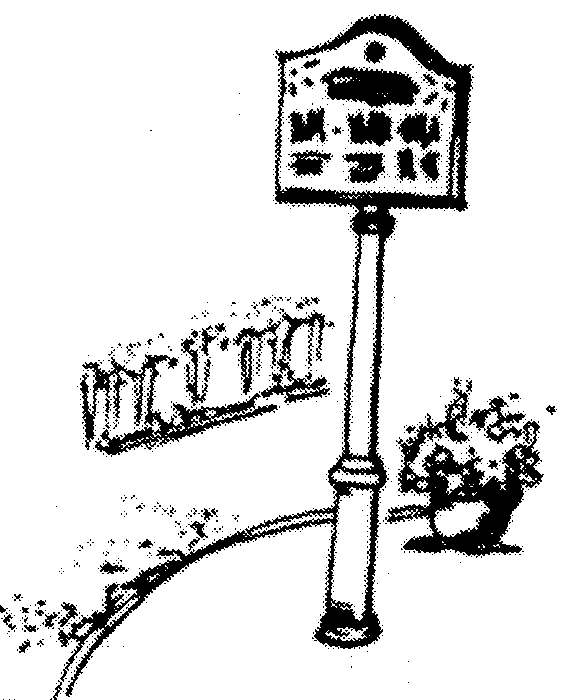
Detached Sign
|
Zoning District
or Location Permitted | Size | Number |
Setback
and Spacing | Illumination |
Maximum
Height | Special Conditions |
|---|---|---|---|---|---|---|
| PS Districts | 80 Square feet total sign area; digital changeable copy area shall be limited to 28 square feet. | One sign | Five feet from the front property line. |
Illumination permitted; see general provision on illumination digital changeable message
content permitted. The color of the changeable message copy shall be soft white.
Multicolored copy shall not be permitted. | Six feet from grade to top of sign |
No off-premises advertising shall be permitted.
  Sign Design: The design of a changeable message sign shall be consistent with either
of the design alternatives provided above.Non-conforming Signs: Other non-conforming
pylon or monument signs on the property shall be removed prior to issuance of a permit
allowing a detached, changeable copy sign. Animation/Movement: The digital message
shall not be animated; may not flash or scroll. Illumination: The sign may not be
illuminated between the hours of 10:00 p.m. and 6:00 a.m.Changeable Message Frequency:
The sign message shall not be changed more frequently than one time every 60 seconds
(one minute).
Sign Design: The design of a changeable message sign shall be consistent with either
of the design alternatives provided above.Non-conforming Signs: Other non-conforming
pylon or monument signs on the property shall be removed prior to issuance of a permit
allowing a detached, changeable copy sign. Animation/Movement: The digital message
shall not be animated; may not flash or scroll. Illumination: The sign may not be
illuminated between the hours of 10:00 p.m. and 6:00 a.m.Changeable Message Frequency:
The sign message shall not be changed more frequently than one time every 60 seconds
(one minute).
|
| RU-EU districts | Not permitted. | |||||
| Shopping centers | Up to 40 square feet for first 50 feet of frontage plus 0.75 square feet for each additional foot of frontage to a maximum sign size of 200 square feet | One sign only if shopping center has less than 500 feet of lineal street frontage; a shopping center with 500 or more lineal street frontage is permitted either one 300-square foot sign or two 200-square-foot signs; shopping centers on a corner lot are permitted an additional 40 square-foot sign on a side street |
Setback for all street r.o.w. is seven feet for a sign not exceeding 40 square feet;
thereafter 0.1825 feet of additional setback for each ten square feet of sign (calculated
to the nearest one-half foot). Interior side setback shall be as follows: Street frontage/setback:
0—59 feet - 3.5' 60—99 feet - 13.5' 100—199 feet - 33.5' 200 feet - 63.5' | Illumination permitted; see general provision on illumination | 15 feet from grade to top of sign | Sign shall be used to identify the shopping center and/or as a directory of tenants in the shopping center. The supporting structure of the sign must be attached to the ground by a concrete foundation. |
| BU districts | 40 square feet for first 50 feet of initial street frontage plus 0.75 square feet for each additional foot of street frontage to a maximum sign size of 200 square feet | See special conditions |
Setback for all street r.o.w. is seven feet for a sign not exceeding 40 square feet;
thereafter 0.1825 feet of additional setback for each 10 square feet of sign (calculated
to the nearest one-half foot); maximum required setback need not be greater than 20
feet. Interior side setback shall be as follows: Street frontage/setback:
0—59 feet - 3.5' 60—99 feet - 13.5' 100—199 feet - 33.5' 200 feet - 63.5' Minimum space between detached signs shall be 10 feet. Pole signs erected in connection with service stations may disregard the interior side setbacks, provided that they do not overhang on property of different ownership and the clear distance between the bottom of the sign and the established grade elevation of the property is at least eight feet with service stations. | See general provision on illumination | 15 feet from grade to top of sign |
Type and number of point of sale signs permitted for a single individual business
on a lot will be based on the following formula:
Lot frontage: 0—75 feet = no detached signs allowed. Lot frontage: 76—150 feet = one detached sign. Lot frontage: 151+ feet = one detached sign. In addition, a corner lot with minimum dimensions of 300 feet by 300 feet will be allowed two detached signs, provided that the second sign is no greater than one-half the size allowed the first sign and provided the separation between the two signs is a least equal to 50 percent of the total amount of frontage on both streets or roadways Where multiple businesses are located on a given lot, each business use shall be permitted a wall sign only. The supporting structure of the sign must be attached to the ground by a concrete foundation. |
3.
Marquee sign.
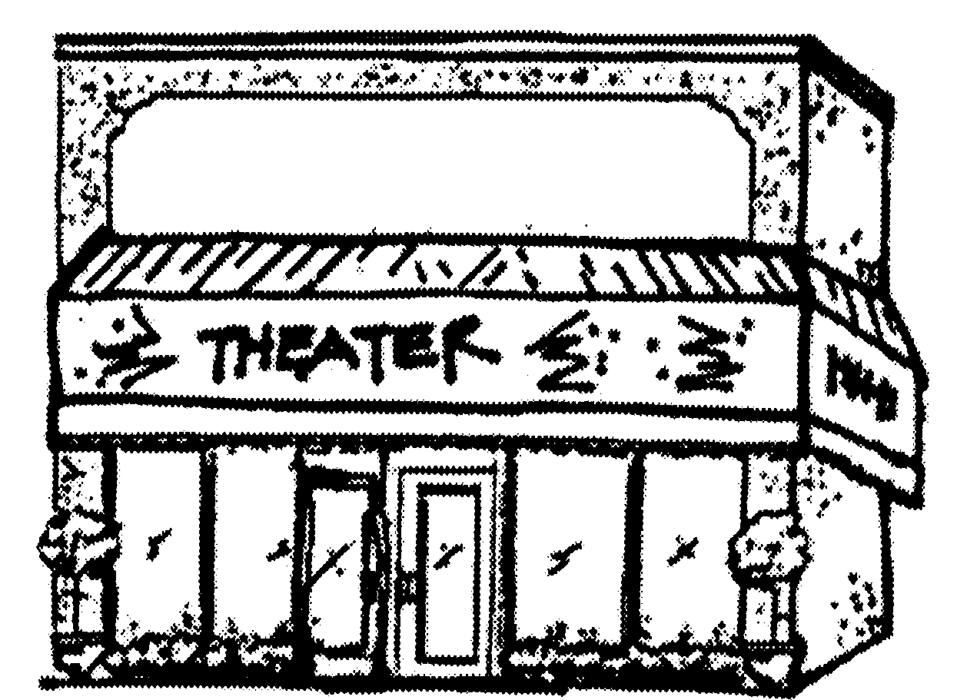
Marquee Sign
4.
Master-planned development entrance sign
5.
Non-commercial on-site directional sign.
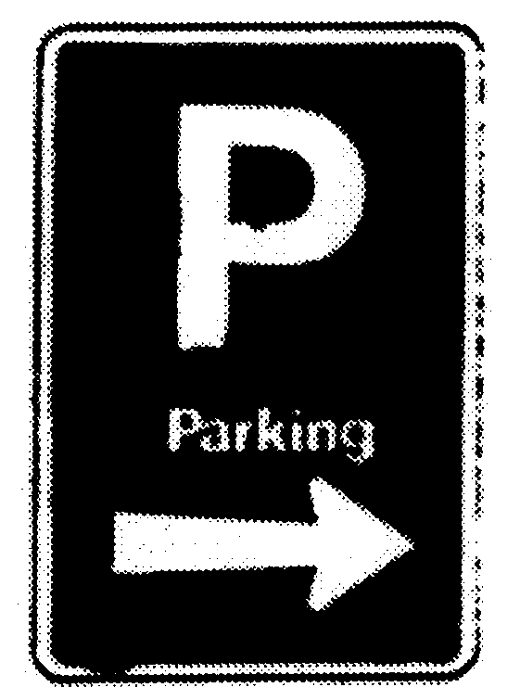
6.
Noncommercial Sign.
7.
Parking area light standard sign.
8.
Projecting sign.
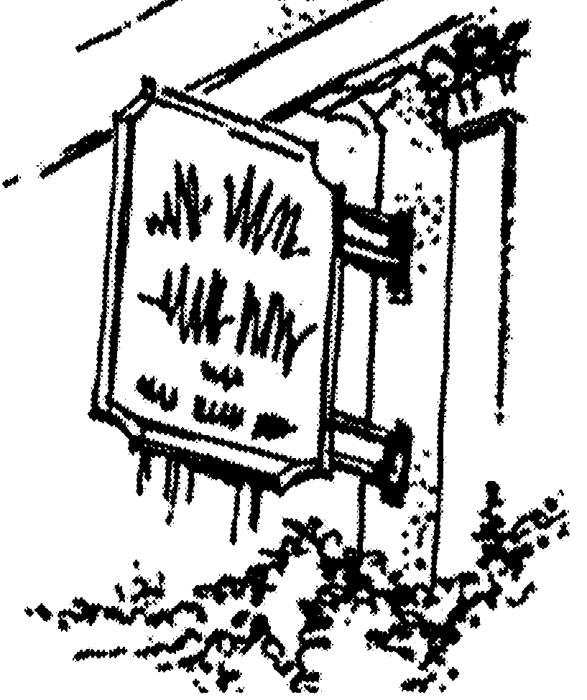
Projecting Sign
9.
Wall Sign.
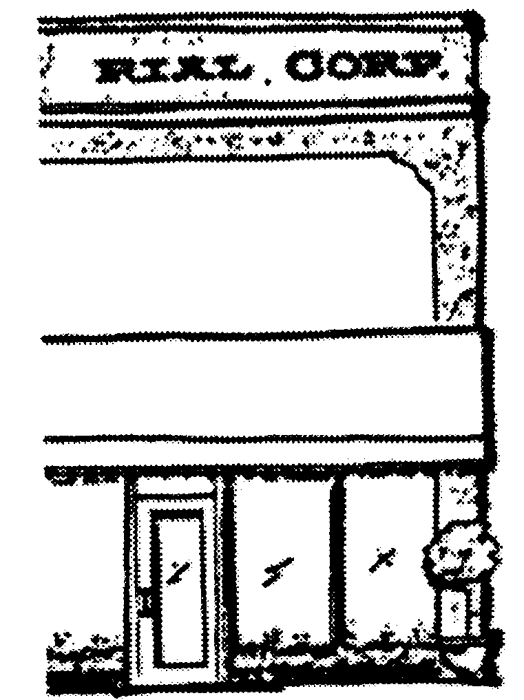
Wall Sign
(b)
Temporary Signs. Unless otherwise specified herein, temporary signs may not remain in place for more than ninety (90) days.
1.
Banner sign.
|
Zoning District
or Location Permitted | Size | Number |
Setback
and Spacing | Illumination |
Maximum
Height | Special Conditions |
|---|---|---|---|---|---|---|
| EU, RU residential districts | Not permitted. | |||||
| Shopping centers BU, business districts RU-5, office development district | 10 percent of the wall area on which the banner is attached | 1 | N/A | Not permitted | N/A | Regulations. A new business, upon initial opening, shall be limited to one (1) banner permit.
Permits for banner signs shall be obtained from the building and planning department
upon submittal of an application and payment of applicable fees. Banner signs may
be permitted as follows
1. Any banner sign to be displayed shall be subject to the following limitations: a. All locations must obtain or have previously obtained a certificate of use and business tax receipt from the village. b. Banners must be located on the wall of the business and shall be limited in size to ten percent of the wall area of the business to which the sign is attached. c. All banners shall be securely fastened with screws, wire or tie mechanisms so as to prevent them from blowing in the wind or from removal as may be required by the building and planning department. d. Window decorations shall be included in the ten percent of wall area but shall be permitted without time limitations. |
| PS, public service district | Maximum dimensions of any banner are limited to 4 x 8 feet | N/A - Maximum banner display area on each outward side of a fence facing a public street is limited to 128 square feet. Banner signs may be placed on a diagonal side of a fence facing two intersecting streets in which case the area of signage placed on the diagonal side of the fence shall be substituted for one of the sides adjacent to either one of the two intersecting streets. | N/A | Not permitted | N/A | Regulations. Commercial banners are not permitted; recognition of businesses as sponsors of school
events, activities and accomplishments on non-commercial banners is allowed provided
that the area of the banner devoted to such sponsor recognition is incidental to the
area devoted to the primary non-commercial message of the banner, such as, but not
limited to, in the following example:
 Display of noncommercial banners shall be subject to compliance with the following
restrictions and requirements:1. Application. Schools and other permitted organizations intending to install noncommercial banner
signs within the PS, public service zoning district shall submit an application and
sign plan that accurately identifies the proposed area or areas designated and reserved
for the display of banner signs for a permit that complies with the requirements of
this code. A "no fee" permit shall be issued by the village for the display of such
banner signs following review and approval of the submitted application and sign plan.2.
Size and Location. Banners shall be placed only on portions of the applicant's fence which have street
frontage. The maximum vertical dimension of any display area shall be limited to four
(4) feet. Banners shall have grommets in all four (4) corners and midway along the
top and the bottom sides. All banners shall be maintained in good condition and securely
affixed to the fence. Torn, faded or defaced banners must be removed or replaced in
a timely manner. All signs on any fence shall be displayed contiguously.3. Banners
shall be allowed to be displayed on a year-round basis. Display of any banner shall
be limited to 90 consecutive days.
Display of noncommercial banners shall be subject to compliance with the following
restrictions and requirements:1. Application. Schools and other permitted organizations intending to install noncommercial banner
signs within the PS, public service zoning district shall submit an application and
sign plan that accurately identifies the proposed area or areas designated and reserved
for the display of banner signs for a permit that complies with the requirements of
this code. A "no fee" permit shall be issued by the village for the display of such
banner signs following review and approval of the submitted application and sign plan.2.
Size and Location. Banners shall be placed only on portions of the applicant's fence which have street
frontage. The maximum vertical dimension of any display area shall be limited to four
(4) feet. Banners shall have grommets in all four (4) corners and midway along the
top and the bottom sides. All banners shall be maintained in good condition and securely
affixed to the fence. Torn, faded or defaced banners must be removed or replaced in
a timely manner. All signs on any fence shall be displayed contiguously.3. Banners
shall be allowed to be displayed on a year-round basis. Display of any banner shall
be limited to 90 consecutive days.
|
2.
Construction/subdivision sign.

Construction/Subdivision Sign
3.
Real estate.
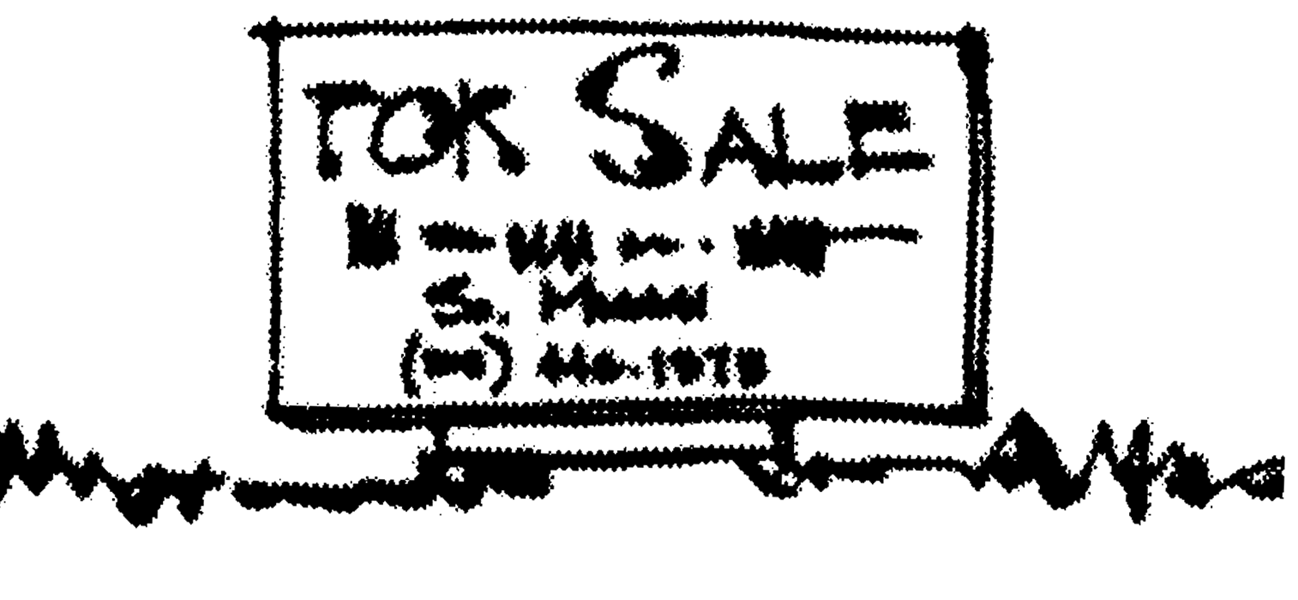
Real Estate Sign
4.
Temporary non-commercial signs.

Temporary non-commercial sign
(Ord. No. 200-8, § 3, 11-13-02; Ord. No. 2007-1, § 4, 1-16-07; Ord. No. 2012-17, § 2, 11-13-12; Ord. No. 2014-02, § 2, 4-8-14; Ord. No. 2016-5, § 2, 5-10-16; Ord. No. 2018-5, § 2(Exh. A), 5-8-18; Ord. No. 2018-7, § 2, 7-17-18; Ord. No. 2021-10, § 2(Exh. A), 10-19-21; Ord. No. 2024-3, § 2, 7-9-24)
Div. 7.17. - Flag display standards.
(a)
Location and maximum height. Except as otherwise provided herein, flags shall be displayed on flag poles. Such poles in nonresidential zoning districts shall not exceed the allowed height of the zoning district or 45 feet, whichever is less. Flagpoles may not be placed on top of buildings or light poles. Flagpoles in residential zoning districts shall not exceed 25 feet in height.
(b)
Maximum number and size.
1.
The maximum dimensions of any flag shall be proportional to the flag pole height. The hoist side of the flag shall not exceed 50 percent of the vertical height of the pole. In addition, flags are subject to the following dimensional limitations:
2.
Each property shall be allowed only one flag pole. A maximum of three flags shall be allowed. References to a flagpole height in this subsection refer to vertical flagpoles. References to the number of flags and flag poles and flag dimensions refer to both vertical flagpoles and mast-arm flagpoles (for example, staff extending at an angle from a building).
(c)
Setback. A vertical flag pole must be set back from all property boundaries a distance that is at least equal to the height of the pole.
(d)
Condition of flag and pole or other permanent mounting. The flag and flag pole or other permanent mounting shall be maintained in good repair. Flag poles with broken halyards shall not be used, and torn or frayed flags shall not be displayed.
(Ord. No. 2016-5, § 2, 5-10-16)
Div. 7.18. - Penalty; injunctive remedy.
Any person violating any of the provisions of this article shall be punished by a fine not to exceed $500.00 in the discretion of the county court or special magistrate. Each day's violation shall be considered a separate violation. Any continuing violations of the provisions of this article may be enjoined and restrained by injunctive order of the circuit court in appropriate proceedings instituted for such purpose, or enforced by any other means legally available to the village.
(Ord. No. 2002-8, § 3, 11-13-02; Ord. No. 2016-5, § 2, 5-10-16)
Div. 7.19. - Nonconforming signs.
(a)
All nonconforming signs must be brought into compliance with all current applicable regulations or must be removed within five years from the date of formal notification of non-conforming status by the village. The village shall provide, by certified mail to all property owners whose property contains a nonconforming sign, a notification of the nonconforming status following direction by the village council. Such notification shall clearly state the reasons for the nonconforming status and shall further indicate that a waiver or extension of the provisions of this paragraph may be requested under the variance procedures set forth in this Code.
(b)
A nonconforming sign must be maintained. Routine maintenance and repair will not result in the loss of nonconforming status. In the case of nonconforming detached sign, a change of copy is permitted, provided, however, that the provisions specified in (c) and (d) below are not applicable.
(c)
The structural elements of a nonconforming sign may not be altered, reconstructed, expanded, or enlarged.
(d)
A nonconforming sign must be replaced or made to comply with the provisions of these regulations immediately, if one of the following conditions exist:
(1)
If the sign is removed from a wall or façade of a building in order to renovate, enlarge, and/or structurally alter such façade or wall.
(2)
If the sign is located on a building which is undergoing major reconstruction, renovation, or redevelopment. A major reconstruction renovation or redevelopment project is defined for the purposes of this division, as construction work equivalent to 40 percent or more of the assessed value of the building, as listed in the public records of the county property appraiser's office.
(Ord. No. 2002-8, § 3, 11-13-02; Ord. No. 2016-5, § 2, 5-10-16)
Div. 7.20. - Severability.
(a)
Generally. If any part, section, subsection, paragraph, subparagraph, sentence, phrase, clause, term, or word of this article is declared unconstitutional by the final and valid judgment or decree of any court of competent jurisdiction, this declaration of unconstitutionality or invalidity shall not affect any other part, section, subsection, paragraph, subparagraph, sentence, phrase, clause, term, or word of this article.
(b)
Severability where less speech results. Without diminishing or limiting in any way the declaration of severability set forth above in subsection (a) of this section, or elsewhere in this article, this Code, or any adopting ordinance, if any part, section, subsection, paragraph, subparagraph, sentence, phrase, clause, term, or word of this article is declared unconstitutional by the valid judgment or decree of any court of competent jurisdiction, the declaration of such unconstitutionality shall not affect any other part, section, subsection, paragraph, subparagraph, sentence, phrase, clause, term, or word of this article, even if such severability would result in a situation where there would be less speech, whether by subjecting previously exempt signs to permitting or otherwise.
(c)
Severability of provisions pertaining to prohibited signs. Without diminishing or limiting in any way the declaration of severability set forth above in subsection (a) of this section, or elsewhere in this article, this Code, or any adopting ordinance, if any part, section, subsection, paragraph, subparagraph, sentence, phrase, clause, term, or word of this article or any other law is declared unconstitutional by the valid judgment or decree of any court of competent jurisdiction, the declaration of such unconstitutionality shall not affect any other part, section, subsection, paragraph, subparagraph, sentence, phrase, clause, term, or word of this article that pertains to prohibited signs, including specifically those signs and sign types prohibited and not allowed under Div. 7-13. Furthermore, if any part, section, subsection, paragraph, subparagraph, sentence, phrase, clause, term, or word of Div. 7-13 is declared unconstitutional by the valid judgment or decree of any court of competent jurisdiction, the declaration of such unconstitutionality shall not affect any other part, section, subsection, paragraph, subparagraph, sentence, phrase, clause, term, or word of Div. 7-13.
(d)
Severability of prohibition on billboards. If any part, section, subsection, paragraph, subparagraph, sentence, phrase, clause, term, or word of this article and/or any other code provisions and/or laws are declared invalid or unconstitutional by the valid judgment or decree of any court of competent jurisdiction, the declaration of such unconstitutionality shall not affect the prohibition on billboards as contained in Div. 7.13(k).
(Ord. No. 2016-5, § 2, 5-10-16)
Div. 7.21. - Substitution of noncommercial speech for commercial speech; content-neutrality as to sign message.
(a)
Notwithstanding anything to the contrary contained in this article, any sign permitted by this Code may be permitted to substitute or change the lettering on said sign face to convey any noncommercial message as often as the person owning or in control of the sign wishes, provided that all other criteria of this Code relating to design criteria, size, setbacks, etc., are satisfied.
(b)
Notwithstanding anything to the contrary contained in this article, no sign or sign structure shall be subject to any limitation based solely upon the content of the message contained on such sign or displayed on such sign structure.
(Ord. No. 2016-5, § 2, 5-10-16)

