
Rockland Town City Zoning Code
18-01.08
Definitions.
A.
Certain words and terms in this ordinance are to be interpreted as defined herein:
1.
Accessory solar energy system (ASES). An area of land or other area used for a solar collection system used to capture solar energy, convert it to electrical energy or thermal power and supply electrical or thermal power for onsite use. An accessory solar energy system consists of one or more free-standing ground or roof mounted solar arrays or modules, or solar related equipment and is primarily intended to reduce on-site consumption of utility power or fuels.
2.
Accessory structure. A structure/building located on the same lot as the principal structure/building and is subordinate and customarily incidental to the use of the principal structure/building.
3.
Advertising device. Any advertising sign, billboard, statuary, or poster panel which directs attention to a business, commodity, service, or entertainment not exclusively related to the premises where such sign is located or to which it is affixed; but does not include those advertising signs, billboards, or poster panels which direct attention to the business on the premises or to a brand name of a product or commodity with which the business is specifically identified and which is sold on the premises.
4.
Agriculture. The employment of land for the primary purpose of obtaining a profit in money:
a.
By raising, harvesting, and selling crops; or
b.
Feeding (including grazing), breeding, managing, selling, or producing livestock, poultry, fur-bearing animals or honeybees; or
c.
By dairying and the sale of dairy products; or
d.
By any other horticultural, floricultural or viticultural use; or
e.
By animal husbandry; or
f.
By any combination thereof.
5.
Agricultural use. Means beekeeping; commercial feedlots; dairying; egg production; floriculture; fish or fur farming; forest and game management; grazing; livestock raising; orchards; plant greenhouses and nurseries; poultry raising; raising of grain, grass, mint and seed crops; raising of fruits, nuts and berries; sod farming; placing land in federal programs in return for payments in kind; owning land, at least 35 acres of which is enrolled in the conservation reserve program under 16 U.S.C. 3831 to 3836; participating in the milk production termination program under 7 U.S.C. 1446(d); and vegetable raising.
6.
Agricultural use, consistent with. As defined in Wis. Stats. § 91.01(10), means any activity that meets all of the following conditions:
a.
The activity will not convert land that has been devoted primarily to agricultural use.
b.
The activity will not limit the surrounding land's potential for agricultural use.
c.
The activity will not conflict with agricultural operations on the land subject to a farmland preservation agreement.
d.
The activity will not conflict with agricultural operations on other properties.
7.
Airport or heliport. Any area of land designated for the take-off and landing of aircraft, including all necessary facilities for the housing and maintenance of aircraft.
8.
Alley. A public right-of-way that normally affords a secondary means of vehicular access to abutting property.
9.
Animal, domestic. Any animal that has been bred or raised to live in or about the habitation of humans and is dependent on people for food and shelter including, but not limited to, dogs, cats, birds, rabbits, hamsters, turtles, and the like. See also "livestock."
10.
Animal, exotic. Any member of a species of animal, reptile, or bird, warm or cold-blooded, that is not indigenous to the environs of the State of Wisconsin or is not classified or considered as wildlife, livestock, or domestic animal.
11.
Aquaculture. The hatching, raising, and breeding of fish or other aquatic plants or animals for sale or personal use.
11.
Artificial lake. A man-made body of water, two acres or greater in size utilized for recreational, aesthetic, or conservation purposes.
13.
Auto dealership. The use of land for the display or sale of new or used automobiles, panel trucks or vans, trailers, or recreational vehicles. Auto dealerships must meet all applicable state codes.
14.
Auto salvage yard. Any lot or place that is exposed to the weather and upon which two or more motor vehicles of any kind incapable of being operated or not currently licensed are placed, located, or found. Auto salvage yards must meet all applicable state codes.
15.
Basement. That portion of any structure located partly underground and having more than one-half of its height below the finished lot grade.
16.
Bed and breakfast. A place of lodging that provides five or fewer rooms for rent for more than ten nights in a 12-month period, is the owner's personal residence, is occupied by the owner at the time of rental, and in which the only meal served to guests is breakfast.
17.
Berm. A man-made mound of earth in excess of two feet in vertical height used to shield or buffer properties from adjoining uses, highways, or noise, for decorative purposes, or to control the direction of surface water flow.
18.
Block. A parcel, lot, or group of lots existing within well defined and fixed boundaries, usually being an area surrounded by streets or other physical barriers, and having an assigned number, letter, or other name through which it may be identified.
19.
Board of appeals. A body consisting of appointed members authorized to: hear and decide upon appeals from any order, requirement, decision or determination of the Town of Rockland Zoning Administrator; hear and pass upon applications for variances from the terms of this ordinance as directed by the Town of Rockland Planning Commission; and hear and pass upon all matters referred to it, or upon which it is required to pass.
20.
Buildable area. The space remaining on a lot after the minimum open space and setback requirements have been complied with; and that which is not in any floodway, wetland, or similarly designated environmental areas.
21.
Building. Any structure built, used, designed, or intended for the support, shelter, protection, or enclosure of persons, animals, chattels (personal property), or property of any kind, and which is permanently affixed to the land. When a building is divided into separate parts by unpierced fire or party walls extending continuously from the ground through all stories to and above the roof, each part shall be deemed a separate building.
22.
Building, attached. A building which has at least part of a wall in common with another building, or which is connected to another building by a roof.
23.
Building, detached. A building which is not attached to any other building, but which is separated by a yard space from all other buildings.
24.
Building height. The vertical distance measured from the average elevation of the finished lot grade at the front of the building to the highest point of structure.
25.
Building, principal. The building in which is conducted the principal use of the zone lot on which it is located. Zone lots with multiple principal uses may have multiple principal buildings, but storage buildings, garages, and other clearly accessory uses shall not be considered principal buildings.
26.
Building setback line. The distance from the boundaries of a lot within which structure(s) shall not be erected.
27.
Building, temporary. Excluding agricultural structures, any building not designed to be permanently located in the place where it is, or where it is intended to be placed or affixed, for a period of time not to exceed six months, or as otherwise allowed in a specific ordinance. Manufactured homes used as residences and affixed to a permanent foundation shall not be classified as temporary buildings. See also "roadside stands."
28.
Business establishment. A place of business carrying out operations, the ownership and management of which are separate and distinct from those of any other place of business located on the same zoning lot.
29.
Campground. A tract or parcel of land on which space is provided for camping; includes day and overnight camping.
30.
Canopy (marquee). A roof-like structure projecting from a wall and supported in whole or in part by vertical supports from the ground and erected primarily to provide shelter from the weather.
31.
Capacity in persons of an establishment or use. The maximum number of persons that can avail themselves of the services (or goods) of such establishment at any one time, with reasonable safety and comfort, as determined by the building code or as may be determined by the Zoning Administrator.
32.
Clinic. A facility for examining and treating human patients with medical problems on an outpatient basis, including ambulatory care or similar medical services. A clinic shall not include inpatient care.
33.
Clinic, veterinary. An establishment for the care and treatment of the diseases and injuries of animals by a licensed veterinarian and where animals may be boarded during their convalescence.
34.
Club. An association of persons for some common purpose, but not including groups organized primarily to render a service, which is customarily carried on as a business. All organizations shall be recognized clubs or fraternities.
35.
Community based residential facility (CBRF). A place where persons who are not related to the operator or administrator and who do not require care above intermediate level nursing care reside and receive care, treatment or services that are above the level of room and board but that include no more than three hours of nursing care per week per resident as described in Wis. Stats. § 50.01. The establishment of a community based residential facility shall be in conformance with the Federal Fair Housing Act, 42 U.S.C. 3601, as amended, and shall not include transitional residential facilities as defined in this section.
36.
Community garden. A privately or publicly owned piece of land for cultivation of fruits, flowers, vegetables, or ornamental plants by more than one person or family.
37.
Condominium, (or condo). A privately-owned individual unit within a community of other lots/units. Condo owners jointly own shared common areas, such as pools, garages, elevators, etc.
38.
Contiguous. Land abutting other land which is not separated by public road rights-of-way or railroad/trail rights-of-way.
39.
Convenience store. A retail store with a floor area of between 5,000 and 10,000 square feet that sells convenience goods, such as prepackaged food items, beverages, periodicals, other household goods and may also sell petroleum products. Does not include service stations or repair garages.
40.
Corner side yard. A yard extending along a side lot line from front yard to rear yard when said side lot line is parallel with a street right-of-way line.
41.
Conditional use. Uses of a special nature as to make impractical their predetermination as a principal use in a respective zone district.
42.
DATCP. The Department of Agriculture, Trade, and Consumer Protection.
43.
Day care center, group. Any property other than an occupied residence for the care and supervision of nine or more children under seven years of age for more than four and less than 24 hours a day for more than ten days a month and is licensed for such use by the State of Wisconsin.
44.
Day care, family or home. Any state licensed occupied residence in which the occupant provides day care for persons other than occupant's own family and the children of close relatives. Such care is limited to the care given to eight or fewer persons, including persons living in the home and persons of close relatives cared for in the home.
45.
Drive-in business. An establishment with street access, which provides no interior seating or service; or an establishment which allows for interior seating or service but the majority of its business is conducted by means of a service window, in-car service, or carry-out counter.
46.
Driveway access. That portion of a driveway which extends from a public roadway/highway through the town right-of-way and onto private property.
47.
Driveway construction. A temporary access to a building site on a property that is constructed in a manner to minimize the tracking of mud and gravel onto a public or private road during the construction process and to minimize damage to the public roadway/highway.
48.
Driveway, permanent. A private driveway or field driveway or other avenue of vehicular travel that runs through any part of a private parcel of land and that connects or will connect to a public roadway/highway.
49.
Dwelling. A building or portion of a building designed exclusively for residential occupancy, including single-family dwellings, two-family dwellings, and multiple-family dwellings with individual sleeping, toilet, and cooking facilities, but not including buildings intended for use by transients. Dwellings shall include manufactured homes.
50.
Dwelling, detached. A dwelling which is completely surrounded by open space on the same lot.
51.
Dwelling unit. One or more rooms, which are arranged, designed, or used as living quarters for one family only. Individual bathrooms and complete kitchen facilities, permanently installed on a foundation, shall always be included for each "dwelling unit." Any structure used as a dwelling unit in the Town of Rockland must meet the requirements of the Uniform Dwelling Code.
52.
Dwelling, single-family. A building designed for and occupied exclusively by one family.
53.
Dwelling, two-family. A building designed for and occupied exclusively by two families.
54.
Dwelling, multiple-family. A building, or portion thereof, which contains three or more dwelling units.
55.
Employee or staff member, full time. A person who works full-time at the building or use regulated. For computation of the sum of employees at a use scheduling more than one shift, the sum shall be based on the maximum number of employees at any one shift working at least 30 hours per week.
56.
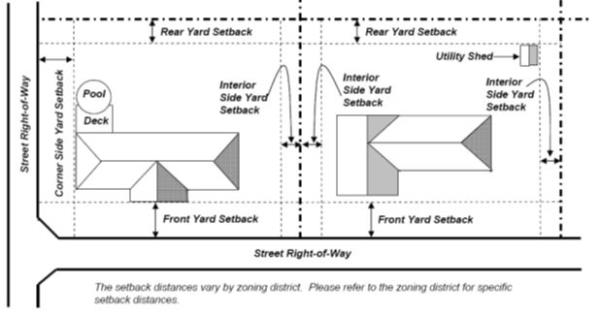
Extended stay hotel. A hotel intended and designed for extended stays by guests which includes in-room cooking facilities, and is not a highway-oriented, overnight-stay facility.
57.
Family. One or more persons, each related to the other by blood, marriage, adoption, or foster children, who are living together in a single dwelling and maintaining a common household. Not more than eight unrelated persons living together on the premises may constitute a "family."
58.
Farm. Any parcel of land, which is used for gain in the raising of agricultural products, livestock, poultry, or dairy products. At least 50 percent of gross household income must be earned from agricultural activities to be classified as a farm.
59.
Farm consolidation. Any combination of two or more farms that result in a smaller number of farms.
60.
Farm family business. As stated in Wis. Stats. § 91.75(8), any lawful activity, except a farm operation, conducted primarily for any of the following:
a.
The purchase, sale, lease, or rental of personal or real property.
b.
The manufacture, processing, or marketing of products, commodities, or any other personal property.
c.
The sale of services.
d.
A farm family business may be permitted as a conditional use if limited to existing farm residences or structures or portions of the existing farmstead that are not dedicated to agricultural uses. No more than two persons who are not members of the resident farm family may be employed in the farm family business.
61.
Farm structures. Any building or structure used for storing agricultural equipment or farm produce or products, housing livestock or poultry, or processing dairy products. The term "farm structure" shall not include dwellings or manure storage facilities, but shall include a barn or feed storage facility unless otherwise noted in this ordinance.
62.
Feedlot. An agricultural enterprise where livestock is purchased and raised and then sold to purchasers such as a buyer, feedlot, or slaughterhouse.
63.
Fence. A barrier or screening forming a boundary or enclosing an area constructed of railings, posts, boards, wire or other approved material.
64.
Floor area (for determining floor area ratio and minimum building size).
a.
The sum of the gross horizontal areas of the several floors of the building measured from the exterior faces of the exterior walls or from the center line of walls separating two buildings.
b.
The "floor area" of a building shall include:
(1)
Basement floor area;
(2)
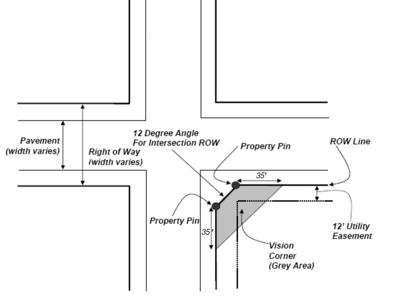
Elevator shafts and stairwells at each floor;
(3)
Floor space used for mechanical equipment (except equipment, open or enclosed, located on the roof);
(4)
Penthouse;
(5)
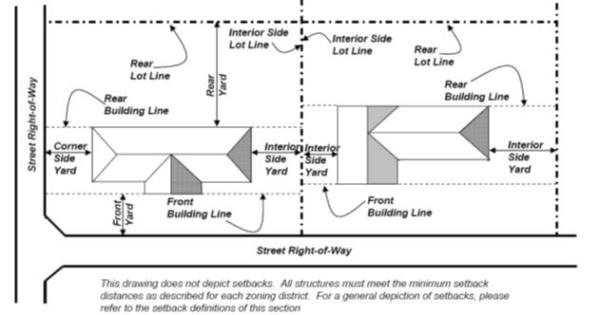
Attic space having headroom of seven feet ten inches or more;
(6)
Interior balconies and mezzanines;
(7)
Enclosed porches; and
(8)
Floor area devoted to accessory uses.
c.
However, any space devoted to off-street parking or loading shall not be included in "floor area." The floor area of accessory uses is further described in RCO 18-01.09(C)(4).
d.
The "floor area" of structures devoted to bulk storage of materials including, but not limited to, grain elevators and petroleum storage tanks shall be determined on the basis of height in feet; i.e., ten feet in height shall equal one floor.
65.
Floor area (for determining off-street parking and loading requirements).
a.
Shall mean the sum of the gross horizontal areas of the several floors of the building or portion thereof, devoted to such use;
(1)
Including accessory storage area located within selling or working space; such as counters, racks or closets; and
(2)
Any basement floor area devoted to:
(A)
Retailing activities to the production or processing of goods; or
(B)
To business or professional offices.
b.
However, "floor area" for the purposes of measurement for off-street parking spaces shall not include: floor area devoted primarily to storage purposes (except as otherwise noted herein); floor area devoted to off-street parking or loading facilities, including aisles, ramps, and maneuvering space; or basement floor area other than area devoted to retailing activities, to the production or processing of goods, or to business or professional offices.
66.
Foundation. A closed perimeter formation consisting of materials such as concrete or concrete block which extends into the ground a minimum of 48 inches on footings below finish grade.
67.
Frontage. A length of the front property line of the lot, lots, or tract of land abutting a public street, road, highway, or rural right-of-way.
68.
Fur farm. Agricultural operation where the major income is derived from the selling or sale of fur bearing animals and/or pelts.
69.
Game farm. Agricultural operation where non-domesticated animals typically found in the wild are bred and raised for purposes of hunting or harvest. Game farm does not include livestock.
70.
Game preserve. An area of land where game animals are stocked and persons pay a fee for purposes of hunting or harvest on the premises of the preserve.
71.
Garage, private. An accessory to the main building which provides for the storage of motor vehicles and in which no occupation, business, or service for profit is carried on.
72.
Garage, public and storage. Any building or premises, other than a private garage, where motor driven vehicles are equipped, repaired, serviced, hired, sold, or stored.
73.
Grade. The average level of the finished surface of the ground adjacent to the exterior walls of the building or structure.
74.
Greenhouse, retail. Retail business whose principal activity is the selling of plants grown on the site and having outside storage, growing, or display.
75.
Greenhouse, wholesale. Wholesale business whose principal activity is the growing of plants for resale to a retail outlet within an enclosed building.
76.
Green space. A landscaped or grassy area in the business, industrial, and institutional districts, as well as planned multi-family developments. Stormwater management facilities may be included in the calculation of minimum green space requirements.
77.
Gross floor area. The sum of the gross horizontal areas of the several floors of a building or buildings measured from the exterior faces of exterior walls or from the center line of party walls separating two buildings.
78.
Hard surfaced. A driveway or parking lot surfaced with concrete or bituminous paving.
79.
Health and medical institutions. Institutions or organizations which provide specialized inpatient or outpatient medical and dental care.
80.
Hedge. A dense row of vegetation forming a boundary, fence, or barrier.
81.
Home occupation. A home occupation is defined as any business or commercial activity that is conducted from property that is zoned for residential or agricultural use, and meets the following requirements:
a.
The use shall be conducted entirely within a dwelling and carried on by the inhabitants hereof and no others.
b.
The use shall be clearly incidental and secondary to the use of the dwelling for dwelling purposes, and the appearance of the structure shall not be altered or the occupation within the residence be conducted in a manner that would cause the premises to differ from its residential character by the use of colors, materials, construction, lighting, or the emission of sounds or vibrations that carry beyond the premises.
c.
Neither home occupation nor any storage of goods, materials, or products connected with a home occupation shall be allowed in accessory buildings, detached garages or outside of the dwelling.
d.
There shall be no display of products visible in any manner from the outside of the dwelling.
e.
There shall be no change in the outside appearance of the dwelling or premises or any visible evidence of the conduct of a home occupation.
f.
The area set aside for home occupations shall not exceed 20 percent of the total floor area of such residence.
g.
One sign advertising the home occupation may be permitted, provided that it does not exceed six square feet of total area and is not illuminated.
h.
A home occupation shall not create greater vehicle or pedestrian traffic than normal for the district in which it is located.
i.
The use shall not require additional off-street parking spaces for clients or customers of the home occupation.
j.
No home occupation shall cause an increase in the use of any one or more public utilities (such as water, sewer, electricity, and garbage collection) so that the combined total use for dwelling and home occupation purposes exceeds the average for residences in the neighborhood.
k.
There shall be no deliveries to or from a home occupation with a vehicle larger than a 20,000 pound GVW truck.
l.
There shall not be conducted on the premises the business of selling stocks of merchandise, supplies, or products, provided that orders previously made by telephone, via internet, or at a sales party may be filled on the premises. That is, direct sales of products on display shelves or racks are not allowed, but a person may pick up an order placed earlier as described above.
m.
No motor power other than electrically operated motors shall be used in connection with a home occupation.
n.
No equipment or process shall be used in a home occupation which creates noise, vibration, glare, fumes, or odor detectable to the normal senses off the property.
o.
No equipment or process shall be used which creates visual or audible electrical interference in any radio or television receiver off the premises or causes fluctuations in line voltage off the premises.
p.
No commercial telephone directory listing, newspaper, radio, or television services shall be used to advertise the location of a home occupation to the general public.
q.
Notwithstanding any provision contained herein to the contrary, garage, basement, yard, or other similar sales shall not be allowed more than twice each calendar year, and each sale shall not last more than 72 consecutive hours.
82.
Hotel. A building in which lodging, with or without meals, is offered to transient guests for compensation and in which there are more than five sleeping rooms with or without cooking facilities in any individual room or apartment.
83.
Incompatible use. A use or service, which is unsuitable for direct association with certain other uses because it is contradictory, incongruous, or discordant.
84.
Industrial park. A special or exclusive type of planned industrial area designed and equipped to accommodate a community of industries, providing them with all necessary facilities and services in attractive surroundings among compatible neighbors. Industrial parks may be promoted or sponsored by private developers, community organizations, or government organizations.
85.
Kennel (indoor). A soundproof building in which four or more dogs at least three months of age are kept. Outdoor kennels shall not be permitted in the Town.
86.
Lawn. A tract of land or area, covered with grass and maintained such as a yard, garden or park. Used for aesthetic, anti-erosion or recreational purposes.
87.
Livestock. Grazing animals or poultry kept either in open fields or structures for training, boarding, home use, sales, or breeding and production, including, but not limited to, cattle, riding and draft horses, hogs, sheep, goats, miniature horses, llamas, emus, alpacas, chickens, or turkeys.
88.
Lot. A fractional part of a subdivision or certified survey map having an assigned number through which it may be identified and meeting the requirements of this ordinance for a building site.
89.
Lot of record. A lot which is part of a subdivision, the plat of which has been recorded in the Office of the Register of Deeds of Brown County; or a parcel of land, the deed to which was recorded in the Office of said Register of Deeds prior to the adoption of this ordinance, and certified survey maps approved and recorded in the Register of Deeds' Office of Brown County.
90.
Lot, corner. A lot abutting intersecting streets at their intersection.
91.
Lot, depth of. The mean horizontal distance between the front lot line and the rear lot line of a lot measured within the lot boundaries.
92.
Lot area, gross. The area contained within the property lines of the individual parcels of land as shown on a plat, excluding any area within a street right-of-way, but including the area of any easement.
93.
Lot, interior. A lot other than a corner or reversed corner lot.
94.
Lot line, front. That boundary of a lot which is along an existing or dedicated public street, or where no public street exists, along a public way.
95.
Lot line, rear. That boundary of a lot which is most distant from and is, or is most nearly, parallel to the front lot line.
96.
Lot line, side. Any boundary of a lot which is not a front lot line or a rear lot line.
97.
Lot, reversed corner. A corner lot which is orientated so that it has its rear lot line coincident with or parallel to the side lot line of the interior lot immediately to its rear.
98.
Lot, through. A lot having a pair of opposite lot lines along two more or less parallel public streets and which is not a corner lot. On a through lot, both street lines shall be deemed front lot lines.
99.
Lot width. The horizontal distance between the side lot lines of a lot, measured at the narrowest width within the first 30 feet of lot depth immediately in back of the front yard setback line.
100.
Manufactured home. A factory-built, single-family structure that is manufactured under the authority of the National Manufactured Home Construction and Safety Standards Act, is transportable in one or more sections, is built on a permanent chassis, and is used as a place of human habitation; but which is not constructed with a permanent hitch or other device allowing transport of the unit other than for the purpose of delivery to a permanent site, and which does not have wheels or axles permanently attached to its body or frame. For purposes of this ordinance, a manufactured home placed on a permanent foundation and meeting this definition shall be considered a single-family home and, therefore, may locate in any district permitting such use.
101.
Manufactured home park. Any parcel of land designed, maintained, intended or used for the purpose of supplying a location of accommodations for two or more manufactured homes, and shall include all facilities used or intended for use as part of the equipment thereof. Manufactured home parks shall not include mobile or manufactured home sale lots on which unoccupied mobile or manufactured homes are parked for purposes of inspection and sale.
102.
Manure storage facility. A structure made by constructing an embankment or excavating a pit or dugout or by fabricating a structure to contain manure and other animal or agricultural wastes.
103.
Mini-warehouse (self-service storage facility). A building consisting of varying sizes of unheated, unattended, private, individual, compartmentalized, self-contained and controlled access units, stalls or lockers that are rented, leased, or owned for the storage of household or business goods or wares.
104.
Mobile home (or manufactured home class II). A structure, transportable in one or more sections, which is at least eight feet in width and 32 feet in length, which is built on a permanent chassis, has a permanent hitch and axels, and is designed to be used as a dwelling unit, with or without a permanent foundation when connected to the required facilities.
105.
Mobile home park (or manufactured home class II park). A parcel of land that has been planned and improved for the placement of two or more mobile homes for rental purposes for nontransient use. Mobile home parks shall not include mobile or manufactured home sale lots on which unoccupied mobile or manufactured homes are parked for purposes of inspection and sale.
106.
Motel. A building or series of buildings in which transient lodging is offered for compensation, and which is distinguished from a hotel primarily by reason of providing direct independent access to, and adjoining parking for, each rental unit.
107.
Motor vehicles. A self-propelled device used or intended to be used for the transportation of freight or passengers upon a street or highway, except a device used exclusively upon stationary rail or tracks.
108.
Nonconforming lot. A lot of record that does not conform to the lot requirements of the zoning district in which it is located.
109.
Nonconforming structure. A structure which is used in a manner that does not conform to the dimensional regulations of the zoning district in which the building is located.
110.
Nonconforming use. Any use of land which does not comply with all of the use regulations of the zoning district in which the building is located.
111.
Nursery. A retail or wholesale operation for the cultivating, harvesting, and sale of plants, bushes, trees, and other nursery items grown on site or established in the ground prior to sale.
112.
Paddock. An open, fenced area which may have a portion of the enclosed area roofed to provide shade, used to house one or more animals.
113.
Parking space. A graded and surfaced area of not less than 200 square feet in area either enclosed or open for the parking of a motor vehicle, having adequate ingress (entrance) and egress (exit) to a public street or alley, exclusive of passageways, driveways, or other means of circulation of access.
114.
Parties in interest. Parties in interest include the applicant, property owners within 100 feet of the property boundaries, and any others who have provided written communication requesting notification.
115.
Planning Commission. An officially constituted Town of Rockland body consisting of elected and appointed members authorized to consider zoning matters and make recommendations to the Town Board.
116.
Planned development. A development guided by a total design plan in which one or more of the zoning or subdivision regulations, other than use regulations, may be waived or varied to allow flexibility and creativity in site and building design and location, in accordance with general guidelines.
117.
Pond, landscape. A man-made permanent or temporary body of open water, decorative in nature, which is less than 200 square feet in surface area and has a maximum depth of three feet.
118.
Pond, man-made. A permanent or temporary body of open water which is equal to or greater than 200 square feet in size and less than two acres in surface area.
119.
Pond, stormwater detention. A permanent man-made pond or pool used for the temporary storage of stormwater runoff and which provides for the controlled release of such waters.
120.
Pond, stormwater retention. A permanent man-made pond or pool designed to collect and prevent the release of a given volume of stormwater by complete on-site storage.
121.
Pool house. A pool house is a free-standing structure that exists separate and apart from a house and is in close proximity to an outdoor pool. It is most commonly used to house pool equipment, pumps, pool related equipment and materials.
122.
Principal solar energy system (PSES). An area of land or other area used for a solar collection system principally used to capture solar energy, convert it to electrical energy or thermal power and supply electrical or thermal power primarily for offsite use. Principal solar energy systems consist of one or more free-standing ground or roof-mounted solar collector devices, solar related equipment and other accessory structures and buildings, including light reflectors, concentrators, and heat exchangers, substations, electrical infrastructure, transmission lines and other appurtenant structures. This is more commonly referred to as a solar farm.
123.
Professional office. Administrative, executive, professional, research, or similar organizations, except health care, having only limited contact with public, provided that no merchandise or merchandising services are sold on the premises, except such as are incidental or accessory to the principal permissible use.
124.
Professional office, medical. A building used exclusively by physicians, dentists, and similar personnel for the treatment and examination of patients solely on an outpatient basis, provided that no overnight patients shall be kept on the premises.
125.
Recreational vehicle. A vehicle primarily used for leisure activities including, but not limited to: trailers; boats with or without trailers; all-terrain vehicles and snowmobiles. For the purpose of this Code, recreational vehicles do not include four-wheel drive cars or trucks and motorcycles.
126.
Retail sales establishment. Establishments that provide goods directly to the general public for personal or household use, where such goods are available for immediate purchase and removal from the premises by the purchaser, including, but not limited to, sales of dry goods, prescription drugs, groceries, apparel, print materials, household wares, electronics, and appliances.
127.
Retail services establishment. Establishments providing services or entertainment, as opposed to products, to the general public for personal or household use, including, but not limited to, eating and drinking places, hotels and motels, finance, real estate and insurance, personal service, motion pictures, amusement, and recreation services.
128.
Repair garage. A facility that provides collision repair services, including body frame straightening, replacement of damaged parts, painting, or major automotive, small engine, or agricultural implement repair.
129.
Restaurant. A commercial establishment where food and beverages are prepared, served, and consumed primarily within the principal building and where food sales constitute more than 70 percent of the gross sales receipts for food and beverages.
130.
Right-of-way. A strip of land occupied or intended to be occupied for a special use, dedicated to the public by the developer or subdivider of said plat on which utilities or town access is granted for the service of the community.
131.
Roadside stand. A structure not permanently fixed to the ground that is readily removable in its entirety, covered or uncovered and not wholly enclosed, and used solely for the sale of farm products produced on the premises. No such roadside stand shall be more than 300 square feet in ground area and limited to ten feet maximum height.
132.
Salvage (junk) yard. An area, exposed to the weather, where waste or scrap materials are bought, sold, exchanged, stored, baled, packed, disassembled, or handled, including, but not limited to, scrap iron and other metals, paper, rags, rubber tires, and bottles.
133.
Sanitary landfill. Disposal of refuse on land without creating a nuisance or hazard to public health or safety, by utilizing the principles of engineering to confine the refuse to the smallest practical volume, and to cover it with a layer of earth at the conclusion of each day's operation or at more frequent intervals.
134.
Satellite dish antenna. A device incorporating a surface that is solid, open mesh, or bar configured and is in the shape of a shallow dish, cone, horn, or cornucopia. Such device shall be used to transmit and/or receive radio or electromagnetic waves between terrestrially and/or orbitally based uses. This definition is meant to include but not be limited to what are commonly referred to as satellite earth stations, and satellite microwave antennas. For purposes of this ordinance only, the regulations contained herein shall not apply to satellite dish antennas measuring one meter or less in diameter or width.
135.
Service station. Any premises where gasoline and other petroleum products are sold and/or light maintenance activities such as engine tune-ups, lubrication and minor repairs are conducted; but shall not include establishments where major automotive maintenance activities, such as engine overhauls, vehicle painting, or body work is conducted. See also "convenience store."
136.
Setback. The minimum horizontal distance between the line of a building or structure and the property line.
137.
Setback area. The minimum horizontal area between the front, side and/or rear line of the building or use, including porches, and the lot lines, or street right-of-way lines.
138.
Setback, corner side yard. The minimum horizontal distance between the side line of the building or use that runs perpendicular to a fronting street, and the side right-of-way line perpendicular to the fronting street.
139.
Setback, front yard. The minimum horizontal distance between the front line of the building or use and the street right-of-way line.
140.
Setback lines. Lines established adjacent to lot lines or street right-of-way lines for the purpose of defining limits within which any or certain buildings, structures, or uses may not be constructed, maintained or carried on, except as shown herein.
141.
Setback, rear yard. The minimum horizontal distance between the back line of the building or use and the rear lot lines.
142.
Setback, side yard. The minimum horizontal distance between the side line of the building or use and the side lot lines; unless the side line of the building or use is parallel to a street, whereas it shall be a corner side yard setback.
143.
Sign. A name, identification, description, display, or illustration which is affixed to, or represented directly or indirectly upon, a building, structure, or piece of land, and which directs attention to an object, product, place, activity, person institution, organization, or business.
144.
Sign, advertising. A sign which directs attention to a business, commodity, service, or entertainment not exclusively related to the premises where such sign is located or to which it is affixed.
145.
Sign, business. A sign which directs attention to a business or profession conducted, or to a commodity, service or entertainment sold or offered, upon the premises where such sign is located or to which it is affixed.
146.
Slaughterhouse. A building or portion thereof used in the conducting of a business enterprise where animals are butchered or where animals or parts thereof are processed, cut, or altered.
147.
Solar farm. An installation or area of land in which a large number of solar collector devices are assembled to collect and generate energy to primarily be transmitted for offsite use.
148.
Stockfarm. An agricultural operation, usually non-dairying in nature where livestock is raised.
149.
Story. That part of a building between any floor and the floor next above and, if there be no floor above, then the ceiling floor. A basement is a story if its ceiling is five feet or more above the level from which the height of the building is measured, or if it is used for business purposes, or if it contains any dwelling units other than one dwelling unit for the caretaker of the premises.
150.
Street. Means and includes all access ways in common use, such as streets, roads, lanes, highways, avenues, boulevards, alleys, parkways, viaducts, circles, courts, and culs-de-sac, and includes all of the land lying between the right-of-way lines as delineated on a plat showing such streets whether improved or unimproved, and whether dedicated for public use or held in trust, under the terms of a reservation; but shall not include those access ways, such as easements and rights-of-way intended for solely limited utility purposes, such as for electric power lines, gas lines, telephone lines, water lines, or drainage and sanitary sewers.
151.
Structure. Anything constructed or erected on the ground (to include all types of buildings, attachments to buildings, parking lots, fences, and berms).
152.
Structure, principal. A structure or building in which is conducted the principal or main building or use.
153.
Structure, accessory. A subordinate structure detached from, or attached to, but located on the same lot as a principal building. The use of an accessory structure must be identical and accessory to the use of the principal building.
154.
Structural alteration. Any change, other than incidental repairs which would prolong the life of the supporting members of a building, such as the addition, removal, or alteration of bearing walls, columns, beams, girders, or foundations.
155.
Tavern. An establishment used primarily for the serving of alcoholic beverages by the drink to the general public and where food may be served or sold as accessory to the primary use.
156.
Town. The Town of Rockland, Brown County, Wisconsin.
157.
Town board. The governing body of the Town of Rockland.
158.
Town Zoning Administrator. The Administrator appointed by the Town Board to administer and enforce the provisions of the Zoning Ordinance.
159.
Transitional residential facility. A premises for the temporary placement of two or more unrelated persons who are not considered handicapped under the Fair Housing Act and are persons whom have been adjudicated juvenile delinquents, current users of illegal controlled substances, persons convicted for the illegal manufacture or distribution of a controlled substance, or convicted sex offenders, all of whom are on parole, extended supervision, or probation in a controlled environment, including supervision or monitoring.
160.
Truck terminal (cartage facility). A facility for the receipt, transfer, short term storage, and dispatching of goods transported by truck.
161.
Unit. Any division of a parcel by the owner/developer for the purpose of sale, lease or building development. An isolated plot of land in a Planned Unit Development or a Planned Development district.
162.
Use, accessory. A use that is incidental and subordinate to that of the main building or use of land and that is located on the same lot and under the same ownership in all respects.
163.
Use, conditional. A use, either public or private, which, because of its unique characteristics, cannot be properly classified as a permitted use in a particular district or districts. After due consideration, in each case of the impact of such use upon neighboring land, and of the public need for the particular use of the particular location, such "conditional use" may or may not be granted, subject to the terms of this ordinance.
164.
Use, principal. The main use of land or buildings as distinguished from a subordinate or accessory use. A "principal use" may be "permitted," "conditional" or "nonconforming."
165.
Use, permitted. A use, which may be lawfully established in a particular district or districts, provided it conforms to all requirements, regulations, and standards of such district.
166.
Utility easement. A strip of property owned and maintained by property owner or the town and made available for the use of placing, maintaining or moving utility's facilities, such as but not limited to telephone, water, sewer, gas, electric, cable.
167.
Variance. A departure from the terms of this Zoning Ordinance as applied to a specific building, structure, or parcel of land which the Board of Appeals may permit when the Board of Appeals finds that a literal enforcement of the provisions of this section will result in practical difficulty or unnecessary hardship, owing to circumstances unique to the individual property on which the variance is sought, or a literal application of such regulation will effect a limitation on the use of the property which does not generally apply to other properties in the same district, and for which there is no compensating gain or risk to the public health, safety and welfare. In no case shall a variance be granted to permit any use not permitted in a particular zone.
168.
Vision corner. An established line of sight that does not obstruct or impair the line of sight for motorized or non-motorized vehicles traveling in an established right-of-way.
169.
Wildlife. Animals or plants existing in their natural habitats.
170.
Wind energy system, large (LWEF). A facility that generates electricity or performs other work consisting of one or more wind turbines in which any one turbine has a total height of more than 170 feet and a nameplate capacity of more than 100 kilowatts under common ownership or operating control, and includes substations, MET towers, cables/wires and other buildings accessory to such facility, whose main purpose is to supply electricity to off-site customers. It includes substations, MET towers, cables and wires and other buildings accessory to such facility.
171.
Wind energy system, small (SWEF). A single wind energy system that generates electricity or performs other work, has a total height of 170 feet or less, and has a nameplate capacity of 100 kilowatts or less. Any wind energy facilities not falling under this definition shall be deemed large wind energy facilities.
172.
Wireless telecommunication facility. Includes any structure that is designed and constructed primarily for the purpose of supporting one or more antennas, including self supporting lattice towers, guy towers, or monopole towers. The term includes radio and television transmission towers, microwave towers, common-carrier towers, cellular telephone towers, PSC towers, alternative tower structures, and the like as regulated in RCO 18-06.00.
173.
Yard. An open space on the same lot with a building or structure, unoccupied and unobstructed from the ground upward, except for vegetation. A "yard" extends along a lot line, and to a depth or width specified in the yard requirements for the zone the lot is located in.
174.
Yard, corner side. A side yard which adjoins a public street.
175.
Yard, front. A yard extending along the full length of the front lot line between the side lot lines and in front of the front building line.
176.
Yard, interior side. A side yard which is located immediately adjacent to another zoning lot or to an alley separating such side yard from another zoning lot.
177.
Yard, rear. A yard extending along the full length of the rear lot line between the side lot lines and behind the rear building line.
178.
Yard, transitional. That yard which must be provided on a zoning lot in a business district which adjoins a zoning lot in a residence district, or that yard which must be provided on a zoning lot in an industrial district which adjoins a zoning lot in either a residence or business district.
179.
Zoning district. Divisions of the Town, each area being accurately defined to boundaries and locations on the official zoning map and in the Zoning Ordinance, for which the regulations and requirements governing use, lot, and bulk of buildings and premises are uniform.
(Ord. No. 2019-03, 8-19-2019; Ord. No. 2021-01, §§ 4), 5), 9-7-2021; Ord. No. 2022-01, 4-4-2022)

