
Rogers City Zoning Code
ARTICLE 125
III - DEVELOPMENT STANDARDS AND PROCEDURES
Sec 125-20 - Review And Approval
- Enforcing Officer. It is the intent of this Ordinance that all questions of interpretation and enforcement shall be first presented to the Zoning Administrator, and that such questions shall be presented to the Board of Appeals from the decision of the Zoning Administrator and that recourse from the decisions of the City Council shall be as provided by law and Minnesota Statutes.
- The City Planner shall be the Zoning Administrator, unless otherwise designated by the City Council.
- The Zoning Administrator shall enforce this ordinance and shall perform the following duties:
- Receive, file, and forward all applications for appeals, variances, special uses or other matters to the designated official bodies.
- Institute, in the name of the City, any appropriate actions or proceedings against a violator as provided for.
- City Council. The City Council is established in Chapter 2, Article II of the City Code.
- Powers
- Board of Adjustments and Appeals. The City Council shall serve as the Board of Adjustments and Appeals as provided in Minnesota Statutes §462.354, subd. 2. Prior to the Board making its decision on an appeal or petition, the Planning Commission shall review and report to the board upon the appeal or petition.
The Board shall act upon all questions as they may arise in the administration of this chapter, including the interpretation of the zoning maps, and it shall hear and decide appeals from and review any order, requirement, decision, or determination made by an administrative official charged with enforcing this chapter. Such appeal may be taken by any person aggrieved or by any officer, department, board or bureau of a town, municipality, county or state.
The Board shall also have the power to grant variances to provisions of this Code under certain conditions. The conditions for the issuance of a variance are as indicated in Sec. 125-42. Variances. Hearings of the Board may reserve or affirm wholly or partly, or may modify the order, requirement, decision, or determination as in its opinion ought to be made in the premises and to that end shall have all the powers of the officer from whom the appeal was taken and may issue or direct the issuance of a permit. The reasons for the Board’s decision shall be stated. The decision of such Board shall not be final and any person having an interest affected by such decision shall have the right to appeal to district court in the county in which the land is located on questions of law and fact.
- Board of Adjustments and Appeals. The City Council shall serve as the Board of Adjustments and Appeals as provided in Minnesota Statutes §462.354, subd. 2. Prior to the Board making its decision on an appeal or petition, the Planning Commission shall review and report to the board upon the appeal or petition.
- Powers
- Planning Commission. The Planning Commission has been established in Chapter 2, Article V of the City Code.
- Powers
- Prior to the City Council making its decision on an appeal or petition, the Planning Commission shall review and report to the Council upon the appeal or petition.
- No zoning ordinance or amendment shall be adopted by the City Council until a public hearing has been held thereon by the Planning Commission upon notices provided in Minnesota Statutes §462.357, subd. 3. The matter will thereafter be heard by the City Council after action by the Planning Commission for final action.
- Powers
Sec 125-21 - General Review Procedures
This Section establishes the procedures for all approvals and administrative reviews, required by this Chapter. The tables are for illustrative purposes only
- Common Procedural Requirements. The following describe procedural elements common to all applications. The specific procedures followed in reviewing various applications may differ. Reference shall be made to the appropriate section in this chapter which addresses specific procedures and requirements of a particular application. If none are listed, the procedure set forth in this section shall apply. Generally, the procedures for all applications are:
- Completion of a pre-application meeting with the Zoning Administrator.
- Submittal of a complete application, including required fee payments and appropriate information.
- Review of the submittal by appropriate staff, agencies, and boards.
- Action to approve, approve with conditions, or deny the application.
- Appeals.
GENERAL PROCEDURE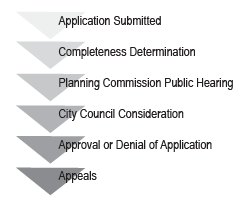
GENERAL PROCEDURE WITHOUT PUBLIC HEARING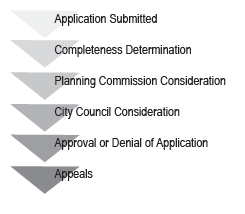
- Pre-Application Meeting. Prior to the preparation of a zoning or sub application, the applicant or owners may meet with the Zoning Administrator, and other appropriate officials in order to be made fully aware of all applicable ordinances, regulations, and plans pertaining to the area. At this time, or at subsequent informal meetings, the applicant may submit a general concept plan of the proposed development or subdivision. The concept plan can be presented in simple form but should show that consideration has been given to the relationship of the proposal to existing City facilities that would serve it, to neighboring subdivisions and developments, to the topography of the site, to the natural and built character of the surrounding environs, and to the suitability of on-site treatment systems.
Applicants are urged to avail themselves of the advice and assistance of the Zoning Administrator and City staff at this point in order to save time and effort, and to facilitate the approval of the zoning or subdivision applications. - Review for Completeness
- No application shall be deemed complete unless all of the information required for the application is included, and all filing fees/escrows required by the master fee schedule have been paid. An application, which includes such information, shall be deemed complete.
- Current application materials shall be made available in the applicable department offices. Such applications shall be filed according to the submittal deadlines established by the City.
- The Zoning Administrator may establish a schedule for filing any application requiring action by the Planning Commission or the City Council. Such schedule shall provide adequate time for notice and/ or publication consistent with the applicable state statutes and this chapter. Completed applications shall be filed according to any published schedule.
- Review Procedures: These procedures shall be used to review any application for completeness unless a different procedure is established elsewhere in this chapter.
- All applications shall be reviewed by staff for completeness. Upon receipt of a complete application, as determined by staff review, and following preliminary staff analysis of the application and request, the Zoning Administrator, when appropriate, shall instruct the appropriate staff persons to prepare technical reports where appropriate, and provide general assistance in preparing a recommendation on the action to the Planning Commission and the City Council.
 Application & Fee required
 - If the application is incomplete, the City must send written notice explaining what information is missing to the applicant within 15 business days of receipt of the application.
- Whenever this article establishes a time period for processing of an application by the City, such time period shall not commence until the Zoning Administrator has reviewed such application for completeness and deemed the application to be complete.
- Review for completeness of application forms is solely for the purpose of determining whether preliminary information required for submission with the application is sufficient to allow further processing, and shall not constitute a decision as to whether application complies with the provisions of this chapter.
- All applications shall be reviewed by staff for completeness. Upon receipt of a complete application, as determined by staff review, and following preliminary staff analysis of the application and request, the Zoning Administrator, when appropriate, shall instruct the appropriate staff persons to prepare technical reports where appropriate, and provide general assistance in preparing a recommendation on the action to the Planning Commission and the City Council.
- Notice
- Upon receipt of a complete application, the Zoning Administrator, when required by Table 1. Procedures Summary Table, shall cause a notice of the application to be mailed to all owners of land within 350 feet of the boundary of the property in question, at least 10 days prior to the Planning Commission meeting.
- Failure of a property owner to receive said notice shall not invalidate any such proceedings as set forth within this Chapter.
- Proceedings. Following the determination of a complete application:
- The City shall have the authority to add conditions, request additional information from the applicant concerning operational factors or to retain expert testimony with the consent and at the expense of the applicant concerning operational factors.
- Said information is to be declared necessary to evaluate the request and/or to establish performance conditions in relation to all pertinent sections of this Chapter.
- Failure on the part of the applicant to supply all necessary supportive information may be grounds for denial of the request.
- When required by Table 1. Procedures Summary Table, a public hearing before the Planning Commission will be scheduled.
- The applicant or a representative thereof shall appear before the Planning Commission in order to present information and answer questions concerning the proposed request.
- Failure by the applicant to appear before the Planning Commission may be grounds for denial.
- The Planning Commission shall recommend such actions or conditions relating to the request as they deem necessary to carry out the intent and purpose of this Chapter.
- The City Council shall not consider an application until they have received a report and recommendation from the Planning Commission.
- Upon receiving the report and recommendation of the Planning Commission, the Zoning Administrator shall schedule the application for consideration by the City Council. Such reports and recommendations shall be entered in and made part of the permanent written record of the City Council meeting.
- The applicant or a representative thereof may appear before the City Council in order to present information and answer questions concerning the proposed request.
- Approval of such request shall require passage by a majority vote of the entire City Council.
- The City shall have the authority to add conditions, request additional information from the applicant concerning operational factors or to retain expert testimony with the consent and at the expense of the applicant concerning operational factors.
- Time Deadline for Agency Action on Zoning Applications. Pursuant to Minnesota Statutes §15.99 and 462.358, Subd. 3b, an application related to zoning approval shall be approved or denied within 60 days from the date of its official and complete submission unless extended pursuant to Statute or a time waiver is granted by the applicant. Pursuant to Minnesota Statutes §15.99, City staff is hereby authorized to extend the 60 day time limit by a time period not to exceed 60 additional days, provided written notice of such extension is provided to the applicant before the end of the initial 60 day period.
- Time Deadline for Agency Action on Subdivisions. Pursuant to Minnesota Statutes §462.358, an application for a preliminary plat must receive preliminary approval or disapproval within 120 days from the date of its official and complete submission, unless the applicant agrees to an extension. If no action is taken within 120 days, the application will be deemed approved after this time period.
Final plats must be approved within a period of 60 days from the date of official and complete submission of an application for the final plat. - Appeals. An appeal shall only be applicable to an interpretation of legislative intent of provisions of this Ordinance. Opinions and evaluations as they pertain to the impact or result of a request are not subject to the appeal procedure.
- Filing: An appeal from the action of the Zoning Administrator of the City shall be filed by the property owner or their agent with the Zoning Administrator within 10 days after the making of the order, requirement, or interpretation being appealed.
- Stay of Proceedings: An appeal stays all proceedings and the furtherance of the action being appealed unless it is certified to the Board of Adjustments and Appeals, after the notice of appeal is filed, that by reason of facts stated in the certificate a stay would cause imminent peril to life and property. In such case, the proceedings shall not be stayed other than by a restraining order which may be granted by a court of record on application, and upon subsequent notice to the City.
- Procedure: the procedure for making an appeal shall be as follows:
- The property owner or their agent shall file with the Zoning Administrator a notice of appeal stating the specific grounds upon which the appeal is made. Said application shall be accompanied by a fee as established by City Council. In cases where the application is judged to be incomplete, the Zoning Administrator shall notify the applicant, in writing, within 15 business days of the date of submittal.
- The Zoning Administrator shall instruct the appropriate staff persons to prepare technical reports when appropriate and shall provide general assistance in preparing a recommendation on the action to the Board of Adjustment and Appeals.
- Pursuant to Minnesota Statutes §15.99, as amended, the Board of Adjustment and Appeals shall make its decision by resolution within 60 days from the date on which a completed application is filed, unless an extension has been provided pursuant to Minnesota Statutes §15.99.
- The Zoning Administrator shall serve a copy of the final order of the Board upon the applicant by mail.
- Appeals from the Board of Adjustment and Appeals: All decisions made by the Board of Adjustment and Appeals shall be considered final, except any person or persons, any private or public board, or taxpayer of the City aggrieved by any decision of the Board of Adjustment and Appeals shall have the right to appeal within 30 days after delivery of the decision to the appellant, with a court of record in the manner provided by the laws of the State of Minnesota, and particularly Minnesota Statutes, §462, as such statutes may be from time to time amended, supplemented or replaced. Any person seeking judicial review under this ordinance must serve the City and all necessary parties, including any landowners, within the 30 day period defined above.
TABLE 1. PROCEDURES SUMMARY TABLE
| Type of Application | Review, Decision, & Appeal Authority | ||||||
R = Review D = Decision A = Appeal <> = Hearing N= Newspaper Notice M= Mail Notice RES = Resolution
ORD = Ordinance | Public Notice Required* | Pre-Application Meeting Required** | Staff | Zoning Administrator | Planning Commission | Council | Final Action*** |
| Rezoning, Text and Map | M/N | No | R | R | <R> | D | ORD |
| Conditional Use Permit | M/N | No | R | R | <R> | D | RES |
| Interim Use Permit | M/N | No | R | R | <R> | D | RES |
| General Concept Plan | No | R | R | R | |||
| Site Plan | No | R | R | R | D | RES | |
| Minor Site Plan Amendment | No | R | D | ||||
| Major Site Plan Amendment | No | R | R | R | D | RES | |
| Planned Unit Development | No | R | R | <R> | D | ORD | |
| Planned Unit Development - Rural Cluster | No | R | R | <R> | D | ORD | |
| Lot Consolidation | No | R | R | D | RES | ||
| Lot Line Adjustment | No | R | R | D | RES | ||
| Lot Split | No | R | R | D | RES | ||
| Minor Subdivision | No | R | R | D | RES | ||
| Preliminary Plat | M/N | Yes | R | R | <R> | D | RES |
| Final Plat | No | R | R | D | RES | ||
| Ghost Plat | No | R | R | D | |||
| Variances | M/N | No | R | R | <R> | D | RES |
| *Mailed notice is not required to affected property owners within 350 feet when the amendment involves changes in district boundaries affecting an area of 5 acres or less | |||||||
| **Planning staff will provide applicant with a pre-application verification. | |||||||
| ***Applicant must provide documentation that the plat has been recorded with the county. | |||||||
Sec 125-22 - Required Agreement And Financial Guarantee
- Purpose
- Prior to the installation of any required improvements and prior to the approval of the final plat or following approval of the site plan or any other zoning approval and before issuance of a building permit, the applicant shall enter into all required contracts, including but not limited to, a developer’s agreement. The applicant will be required to furnish and construct said improvements at their sole cost in accordance with the plans and specifications and usual contract conditions all approved by the City which shall include provisions for supervision of details of construction by the City Engineer. The agreement shall require the applicant to provide financial guarantee for the performance of construction and approval of certain improvements as agreed to in the developer’s agreement. The financial guarantee shall be in a form consistent with the City Council approval.
- The developer shall guarantee to the City the completion of all public improvements and all private exterior amenities as shown in the site plan (such private amenities are hereby defined as landscaping, private driveways, parking areas, buffering, screening, grading, drainage improvements and other similar facilities).
- The amount of the financial guarantee shall be approved by the City Council. The amount of the financial guarantee shall cover the total cost of the improvements to be furnished under the contract, including the cost of inspection by the City. The time for completion of work and the several parts thereof shall be determined by the City upon the recommendation of the City Engineer after consultation with the applicant and shall be reasonable in relation to the work to be done, the season of the year, and proper correlation with construction activity in the subdivision.
- Prior to the installation of any required improvements and prior to the approval of the final plat or following approval of the site plan or any other zoning approval and before issuance of a building permit, the applicant shall enter into all required contracts, including but not limited to, a developer’s agreement. The applicant will be required to furnish and construct said improvements at their sole cost in accordance with the plans and specifications and usual contract conditions all approved by the City which shall include provisions for supervision of details of construction by the City Engineer. The agreement shall require the applicant to provide financial guarantee for the performance of construction and approval of certain improvements as agreed to in the developer’s agreement. The financial guarantee shall be in a form consistent with the City Council approval.
- Escrow Deposit. An escrow deposit shall be made with the City and the City shall be entitled to reimburse itself out of said deposit for any cost and expense incurred by the City for completion of the work in case of default by the applicant under said contract and for any damages sustained by the City on account of any breach thereof. Upon completion of the work and termination of any liabilities to the City or the applicant under said contract, the balance remaining of said deposit shall be refunded to the applicant pursuant to the escrow policy approved by the City Council.
- Petition Items. When the financial guarantee covers petition items to be constructed by the City under Minnesota Statutes §429, the security shall be a percentage approved by the City Council of the special assessments levied and a financial guarantee pursuant to the escrow policy and approved developer’s agreement of the amount of the escrow items to be installed by the applicant, except as modified or varied by the City Council for good cause shown by the applicant.
- Guarantee. The applicant shall guarantee all work required to be performed for a period of two years subsequent to acceptance by the City against both poor material and faulty workmanship. The applicant specifically guarantees and agrees to maintain the stability of work and material, furnished or installed, for a period of two years after the date of acceptance of said improvements by the City. The applicant shall provide a financial guarantee pursuant to the escrow policy and approved developer’s agreement for the construction costs. The financial guarantee shall be held as security during the two-year guarantee and warranty period.
Sec 125-23 - Rezoning, Text And Map
- Purpose. An official map amendment may be required to correct an error in the map or because of changed or changing conditions in a particular area or in the City generally, to rezone an area to implement adopted plans, or to change the regulations and restrictions of an area as reasonably necessary to promote the public health, safety or general welfare.
AMENDMENT PROCEDURE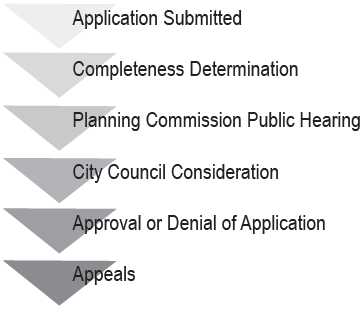
- Procedure
- An amendment to the text of this chapter or the zoning map may be initiated by the City Council, the Planning Commission or by application of a property owner. Any amendment not initiated by the Planning Commission shall be referred to the Planning Commission for review and may not be acted upon by the Council until it has received the Planning Commission recommendations.

Application & Fee Required - Individuals wishing to initiate an amendment to this chapter shall fill out a zoning amendment application form and submit it to the Zoning Administrator.
- The application will be subject to the procedure outlined in Sec. 125-21. General Review Procedures.
- No application of a property owner for an amendment to the text of this chapter or the zoning map shall be considered by the Planning Commission within the one-year period following a denial of such request, except the Planning Commission may permit a new application, if in the opinion of the Planning Commission, new evidence or a change of circumstances warrant it.

Note limitations in Code
- An amendment to the text of this chapter or the zoning map may be initiated by the City Council, the Planning Commission or by application of a property owner. Any amendment not initiated by the Planning Commission shall be referred to the Planning Commission for review and may not be acted upon by the Council until it has received the Planning Commission recommendations.
- Initiation of Amendments. The City Council may adopt amendments to this chapter and zoning map in relation both to land uses within a particular district or to the location of the district lines. Such amendments shall not be issued indiscriminately, but shall only be used as a means to reflect change in the goals and policies of the community as reflected in the policies plan or changes in conditions in the City.
Sec 125-24 - Conditional Use Permits
- Purpose. Certain uses, while generally not suitable in a particular zoning district, may under some circumstances be suitable if conditions are attached. When such circumstances exist, a Conditional Use Permit (CUP) may be granted. Conditions may be applied to issuance of the CUP and a periodic review of the CUP may be required. The CUP shall be granted for a particular use and not for a particular person or firm.
CUP PROCEDURE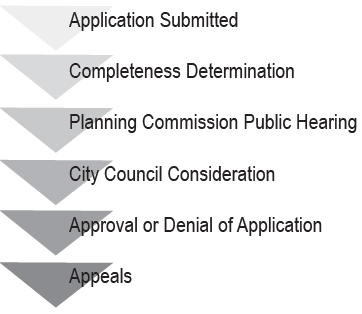
- Procedure.
- The person applying for a CUP shall fill out and submit to the Zoning Administrator the required application form, fees/escrow and plan sheets in the number and format described in the application form unless a waiver of certain information is granted by the Zoning Administrator.

Application & Fee required - The application will be subject to the procedure outlined in Sec. 125-21. General Review Procedures.
- No application for a CUP shall be resubmitted for a period of six months from the date of said order of denial. A CUP shall expire and be considered null and void one year after it has been issued if no construction has begun or if use has not been established or, once having been established, has not been actively maintained for more than one year.

Note limitations in Code - In the event that the applicant violates any of the conditions set forth in this permit, the City Council shall have the authority to revoke the CUP.
- A violation of any condition set forth in a CUP shall be a violation of this development code. If within 30 days of written notice from the Zoning Administrator the violation has not been corrected, the City may pursue the following procedure to terminate the permit.
- Written notice of revocation shall be served upon the permittee at least 10 working days prior to the CUP being revoked. Notice to the permittee shall be served personally or by first class mail at the address designated in the permit application. Such written notice of revocation shall contain the effective date of the revocation, the nature of the violation constituting the basis of the revocation, the facts which support the conclusions that a violation has occurred and a statement that if the permittee desires to appeal, the appeal must, within 10 working days, exclusive of the day of service, file a request for a hearing.
- The hearing request shall be in writing, stating the grounds for appeal and served personally or by first class mail on the City clerk at the City hall by 4:30 p.m. of the tenth City working day following service.
- Following the receipt of a request for hearing, the City Council shall set a time and place for the hearing.
- A violation of any condition set forth in a CUP shall be a violation of this development code. If within 30 days of written notice from the Zoning Administrator the violation has not been corrected, the City may pursue the following procedure to terminate the permit.
- Length of Conditional Use. Any use permitted under the terms of any CUP shall be established and conducted in conformity to the terms of such permit and of any conditions designated in connection therewith. CUPs shall remain in effect for so long as the conditions agreed upon are observed, provided that nothing in this Section shall prevent the City Council or the Planning Commission from acting or amending official controls to change the status of conditional uses.

Note limitations in Code
- The person applying for a CUP shall fill out and submit to the Zoning Administrator the required application form, fees/escrow and plan sheets in the number and format described in the application form unless a waiver of certain information is granted by the Zoning Administrator.
- Criteria for Granting CUPs. In granting a CUP, the City Council shall consider the advice and recommendations of the Planning Commission and the effect of the proposed use upon the health, safety, morals and general welfare of occupants of surrounding lands. Among other things, the City Council shall make the following findings where applicable:
- Compliance with and effect upon the Comprehensive Plan, including public facilities and capital improvement plans.
- The establishment, maintenance or operation of the conditional use will promote and enhance the general public welfare and will not be detrimental to or endanger the public health, safety, morals or comfort.
- The conditional use will not be injurious to the use and enjoyment of other property in the immediate vicinity for the purposes already permitted, nor substantially diminish and impair property values within the neighborhood.
- The establishment of the conditional use will not impede the normal and orderly development and improvement of surrounding property for uses permitted in the district.
- Adequate public facilities and services are available or can be reasonably provided to accommodate the proposed use.
- Adequate public facilities and services are available or can be reasonably provided to accommodate the proposed use.
- The conditional use and site conforms to performance standards as specified by this Chapter.
- Amendment
- An amended CUP application shall be administered in a manner similar to that required for a new conditional use permit, amended conditional use permits shall include request for changes in conditions, and as otherwise described in this chapter.

Permit required - The Zoning Administrator shall maintain a record of all CUPs issued including information on the use, location, and conditions imposed by the City Council, time limits, review dates, and such other information as may be appropriate.
- An amended CUP application shall be administered in a manner similar to that required for a new conditional use permit, amended conditional use permits shall include request for changes in conditions, and as otherwise described in this chapter.
Sec 125-25 - Interim Use Permit
- Purpose. The purpose and intent of allowing interim uses through an Interim Use Permit (IUP) is to allow a use for a determined period of time. The use must be presently judged acceptable by the City Council, but determined that with anticipated development or redevelopment, will not be acceptable in the future or will be replaced in the future by a permitted or conditional use allowed within the respective district.
IUP PROCEDURE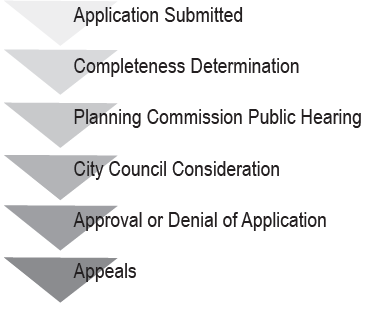
- Procedure
- The person applying for an IUP shall fill out and submit to the Zoning Administrator the required application form, fees/escrow and plan sheets in the number and format described in the application form unless a waiver of certain information is granted by the Zoning Administrator.

Application & Fee required - The Zoning Administrator shall refer the application to the Planning Commission.
- The application will be subject to the procedure outlined in Sec. 125-21. General Review Procedures.
- No application for an IUP shall be resubmitted for a period of six months from the date of said order of denial. An IUP shall expire and be considered null and void one year after it has been issued if no construction has begun or if use has not been established or, once having been established, has not been actively maintained for more than one year.

Note limitations in Code - In the event that the applicant violates any of the conditions set forth in the IUP, the City Council shall have the authority to revoke the IUP. Any IUP may also be terminated by a change in zoning regulations.
- In the event of a denial, the applicant may appeal the decision pursuant to Sec. 125-21. General Review Procedures of this chapter.
- The person applying for an IUP shall fill out and submit to the Zoning Administrator the required application form, fees/escrow and plan sheets in the number and format described in the application form unless a waiver of certain information is granted by the Zoning Administrator.
- Criteria for Granting IUPs
- The use conforms to the zoning regulations and comprehensive plan for land use guiding;
- The date or event that will terminate the use can be identified with certainty;

Note limitations in Code - Permission of the use will not impose additional costs on the public if it is necessary for the public to take the property for public use in the future; and
- The user agrees to any conditions that the City Council deems appropriate for permission of the use.
- Amendment.The Zoning Administrator shall maintain a record of all IUPs issued including information on the use, location, and conditions imposed by the City Council, time limits, review dates, and such other information as may be appropriate.
An amended IUP application shall be administered in a manner similar to that required for a new IUP, amended IUPs shall include request for changes in conditions, and as otherwise described in this Section and other applicable zoning ordinances.
Sec 125-26 - General Concept Plan
Prior to filing a formal application applicants may present a concept plan to the Zoning Administrator. The Zoning Administrator may require submittal of a concept plan for development in non-residential districts.
- Procedure. The Zoning Administrator may refer the sketch plan to the City Council for discussion, review, and informal comment. Any opinions or comments provided to the applicant by the Zoning Administrator and/or City Council shall be considered advisory only and shall not constitute a binding decision on the request.
- Information Requirement
- The applicant shall fill out and submit to the Zoning Administrator the application form all information as required on the form unless a waiver of certain information is granted by the Zoning Administrator.
- The applicant shall fill out and submit to the Zoning Administrator the application form all information as required on the form unless a waiver of certain information is granted by the Zoning Administrator.
Sec 125-27 - Site Plan
- Purpose. The purpose of this Section is to establish a formal site plan review procedure and provide regulations pertaining to the enforcement of site design standards consistent with the requirements of this Ordinance.
SITE PLAN PROCEDURE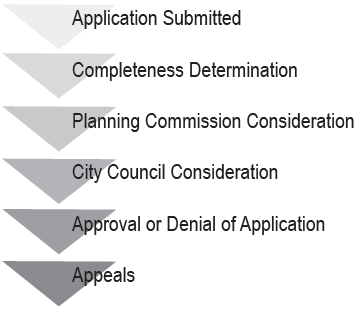
- Exceptions to Review. Site Plan review and approval is required for all new developments, except the following:
- Single family detached dwellings.
- Two family attached dwellings.
- Procedure
- The application will be subject to the procedure outlined in Sec. 125-21. General Review Procedures.
- Before building permits are issued for the development of structures, a site plan shall be reviewed by the Planning Commission and approved by the City Council.

Permit required
- Information Requirement
- The applicant shall fill out and submit to the Zoning Administrator the application form all information as required on the form unless a waiver of certain information is granted by the Zoning Administrator.
- Evaluation Criteria. The Planning Commission shall evaluate the effects of the proposed site plans. This review shall be based upon, but not be limited to, compliance with the City’s Comprehensive Plan and provisions of this Ordinance.
- Minnesota State Building Code. The review and approval of site improvements pursuant to the requirements of City adopted building and fire codes shall be in addition to the site plan review process established under this Section. The site plan approval process does not imply compliance with the requirements of these building and fire codes.
- Plan Agreements. All site and construction plans officially submitted to the City shall be treated as a formal agreement between the property owner, building contractor and the City. Once approved, no changes, modifications or alterations shall be made to any plan detail, standard, or specifications without prior submission of a plan modification request to the Zoning Administrator for review and approval.
- Enforcement. The Zoning Administrator shall have the authority to order the stopping of any and all site improvement activities, when and where a violation of the provisions of this Section has been officially documented by the Building Official.
- Expiration.
- Unless otherwise specified by the Zoning Administrator or City Council as may be applicable, the site plan approval shall become null and void one year after the date of approval, unless the property owner or applicant has substantially started the construction of any building, structure, addition or alteration, or use requested as part of the approved plan. The property owner or applicant shall have the right to submit an application for time extension in accordance with this Section.
- A written request to extend the approval of a site plan for up to an additional one year shall be submitted to the Zoning Administrator not less than 30 days before the expiration of said approval. Such request for an extension shall include the following:
- An explanation for why the improvements have not commenced,
- What, if any, good faith efforts have been made to commence the project,
- Additional time requested and anticipated project completion date, and
- The signature of the applicant and property owner. A request for an extension not exceeding one year shall be subject to the review and approval of the Zoning Administrator. A request pertaining to a major project involving a longer period of time than one year or a second request for a time extension of a major project shall be presented to the City Council for a decision. Additional requests for a time extension of a minor project may be approved by the Zoning Administrator, subject to the same procedures established for the first time extension as outlined above.
- In making its determination on whether an applicant has made a good faith attempt to complete the improvements shown on the approved site plan, the Zoning Administrator or the City Council, as applicable, shall consider such factors as the type, design, and size of the proposed construction, any applicable restrictions on financing, or special and/or unique circumstances beyond the control of the applicant which have caused the delay.
Sec 125-28 - Site Plan Amendment
Any change to an approved site plan shall require a site plan amendment.
- Minor Site Plan Amendment. Proposed minor structural additions involving 10% or less of the total existing floor area and proposed minor site modifications involving 10% or less of the total existing site area which meet all ordinance requirements may be approved by the Zoning Administrator prior to a building permit being issued and shall not require Planning Commission or Council review, subject to the following:
- This Section shall apply to minor additions or minor site modifications (as described above) to previously-approved site plans, regardless of proximity to residential property, provided there is full compliance with all regulations in this Chapter. This Section shall also apply to:
- Lighting maintenance of existing light standards and/or existing lighting fixtures with replacement of new light standards and/ or new lighting fixtures in their current locations, regardless of proximity to residential property, provided there is full compliance with the City’s lighting regulations; and
- Lighting expansion or changes (new lighting not previously on a site or relocated lighting), provided the site is not located within 200 feet of residential property, and there is full compliance with the City’s lighting regulations.
- Compliance with all Ordinance requirements shall be construed to include all adopted policies and codes.
- Any variances from Ordinance and policy requirements shall be subject to the established review and hearing procedures in Sec. 125-42. Variances.
- Plans submitted for minor structural additions or minor site alterations under the terms of this Section shall be the same as those required for site plan approval.
- A copy of the plans approved under this Section shall be appropriately certified by the Zoning Administrator and placed on file with the City Council approved plans.
- Site plan amendments requested beyond minor additions or site modifications (as described above) shall adhere to the procedure set forth in this section.
- This Section shall apply to minor additions or minor site modifications (as described above) to previously-approved site plans, regardless of proximity to residential property, provided there is full compliance with all regulations in this Chapter. This Section shall also apply to:
- Major Site Plan Amendment
- Plans not qualifying as minor shall be classified as major.
- An amended site plan involving major changes shall be applied for and administered in a manner similar to that required for a new site plan as outlined in Sec. 125-27. Site Plan.
- Plans not qualifying as minor shall be classified as major.
Sec 125-29 - Planned Unit Developments
- Purpose. The purpose of the planned unit development (PUD) district is to provide flexibility in the application of development code provisions to allow a more creative and effective approach to development which achieves the vision, goals, policies and land use guidance of the comprehensive plan. Use of PUDs is encouraged to:
PUD PROCEDURE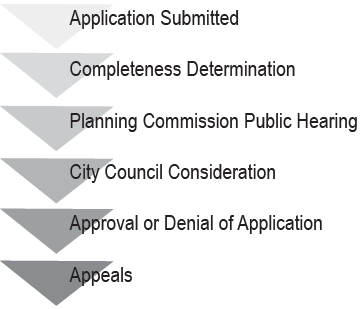
- Preserve desirable site characteristics and sensitive environmental features including open spaces, trees, steep slopes, wetlands, and historic or cultural resources;
- Provide for appropriate transitions between different land uses and along significant corridors in the community;
- Promote high quality design which is compatible with surrounding land uses, both existing and planned; and
- Allow for the mixing of land uses when appropriate to provide a more efficient and effective use of land, open space and public facilities.
- Procedure
- Review of PUD Concept Plan. The applicant shall submit a concept plan for City feedback. Such feedback is not binding in any manner on the Planning Commission or City Council. The PUD concept plan submittal shall follow the information requirements found in Sec. 125-26. General Concept Plan.

Recommended meeting with Staff - Planning Commission and City Council Action Not Required. No formal action of the Planning Commission or City Council is required. The comments of the Planning Commission and City Council shall be for guidance only and not be considered binding on any future action taken when a formal PUD application is submitted. Applications for concept review shall be made to the City consistent with the required deadlines for land use applications. The City Council will hear the concept plan review within 30 days following the Planning Commission meeting.
- Formal PUD application: Review of a Master Development Plan. Following City review of the PUD concept plan, the applicant shall file a PUD Master Development Plan. Applications shall be filed with the Zoning Administrator and be accompanied by all fees. The PUD Master Development Plan shall be filed concurrently with the application for Rezoning to PUD and a Preliminary Plat.

Application & Fee required - Planning Commission and City Council Action Required
- Formal action of the Planning Commission and City Council is required and shall follow the procedure set forth in Sec. 125-21. General Review Procedures.
- The Master Development Plan shall be reviewed concurrently with a Preliminary Plat application.
- Final Development Plan. Following approval of the PUD Master Development Plan, the applicant shall submit a final plat application in accordance with Sec. 125-34. Final Plat. A Master Development Agreement shall be approved by the City when the final plat is approved. The Master Development Agreement shall describe the PUD standards and required improvements.
- Review of PUD Concept Plan. The applicant shall submit a concept plan for City feedback. Such feedback is not binding in any manner on the Planning Commission or City Council. The PUD concept plan submittal shall follow the information requirements found in Sec. 125-26. General Concept Plan.
- Prior to Issuance of Building Permits
- Prior to the issuance of any building permits for development within a PUD, applications for the following actions must be submitted, reviewed and approved by the City Council:

Application & Fee required- Concept plan, detailed in Sec. 125-26. General Concept Plan.
- Master Development Plan, detailed in Sec. 125-29. Planned Unit Developments.
- Final Development Plan, detailed in Sec. 125-29. Planned Unit Developments.
- Rezoning to a PUD, detailed in Sec. 125-29. Planned Unit Developments.
- Preliminary plat, detailed in Sec. 125-33. Preliminary Plat.
- Final plat for the entire or specific parts of the PUD, detailed in Sec. 125-34. Final Plat
- If the applicant requests, and at the discretion of the Zoning Administrator, the process of reviewing one or more of the applications identified above may be combined and processed concurrently for all or any portion of a PUD. Such combined procedure shall generally be reserved for smaller, single stage PUDs, or for any single stage of a multiple stage PUD.
- Building permits shall not be issued until the Final Plat is recorded with Hennepin County and all required fees and financial guarantees have been provided to the City.
- PUDs which are planned in stages or phases may require periodic review of the project and progress. The cost of periodic review shall be the responsibility of the applicant and/or developer.
- Approval of a PUD shall constitute and have the effect of a rezoning of the approved area, including lot and performance standards specific to the PUD, and shall be so designated on the zoning map.
- Prior to the issuance of any building permits for development within a PUD, applications for the following actions must be submitted, reviewed and approved by the City Council:
- Rezoning Request Review
- Requests to rezone to a PUD shall be considered concurrently with applications for a Master Development Plan.
- Rezoning to a PUD shall not be effective until a Master Development Plan has been approved by the City Council.
- Staging. In its discretion, the applicant may elect to process the PUD as a planned and staged development within the meaning of Minnesota Statutes §462.358, subd. 3c. In such instance, the land may be subdivided and developed in stages pursuant to a series of sequenced plans including a master development plan, preliminary plat, final development plan and final plat with outlots for future stages for the entire PUD area, the plans, terms and conditions of approval for which are documented in a PUD agreement. Thereafter, each stage may proceed through a re-platting procedure of the outlots with any changes or additional requirements, particularly pertaining to streets and utilities installation, documented in a separate development agreement for each stage.
- Land Dedication
- A PUD is subject to the minimum land dedication required per Sec. 125-37. Park Land Dedication Requirements of this Chapter. A PUD will only be approved to dedicate open space if the dedicated area is consistent with the Parks and Trails Master Plan or approved by the Park Board.
- Land dedicated for parks may be subject to a permanent conservation easement and used for the purposes as defined herein. The conservation easement shall be dedicated to the City, an acceptable land trustee, or other similar organization as approved by the City and as permitted by this Chapter.
- The uses within the open space shall be accessible to the residents of the development as well as the general public.
- A financial guarantee ensuring the construction and completion of any common facilities shall be submitted to the City.
- Open Space and Maintenance
- Homeowners Associations
- A homeowners association shall be established if the open space is owned by a homeowners association. Membership in the association is mandatory for all purchasers of homes in the development and their successors.
- A homeowner’s association agreement, guaranteeing continuing maintenance, shall be submitted to the City as part of the data required for any PUD with common open space. The homeowner’s association documents or the declaration of covenants, conditions, and restrictions shall contain the following information:
- The legal description of the common lands or facilities.
- The restrictions placed upon the use and enjoyment of the lands or facilities including the persons or entities entitled to enforce the restrictions.
- A mechanism for resolving disputes among the owners or association members.
- A mechanism to assess and enforce the common expenses for the land or facilities, including upkeep and maintenance expenses, real estate taxes, and insurance premiums.
- The conditions and timing of the transfer of ownership and control of land or facilities to the association or to common ownership.
- Any other matter the developer deems appropriate.
- The management of collector sewage treatment systems.
- Homeowners Associations
- Methods of Amending & Revocation
- Amending
- Changes in the master development plan, including rearrangement of lots, blocks and building tracts; the enlargement or intensification of use; or changes to the provision of open space shall require a public hearing and the approval of the City Council.
- The applicant shall apply for an amended PUD. All procedures shall apply as if a new master development plan is requested, including the need for a public hearing. Any such changes shall be recorded as amendments to the recorded copy of the PUD after City Council approval.
- Revocation
- Any existing, approved PUD shall be deemed to be revoked if the owner of the land governed by the PUD applies for and receives a rezoning with respect to said property prior to the time that there is any physical implementation of the matters covered by the previously approved PUD.
- The City may initiate the revocation of a PUD. This revocation includes the rezoning of the property to a zoning district consistent with the comprehensive plan. In considering the revocation, a public hearing must be held in compliance with public hearings required for zoning code amendments. Revocation may be initiated if any of the following occur:

Public hearing- A final development plan and/or final plat is not requested within one year following approval of the master development plan by the City Council, unless a petition for an extension has been granted by the City Council. Such extension shall be requested in writing and filed with the Zoning Administrator 30 days prior to the expiration of the time limit. There shall be no charge for the filing of such petition. The request for extension shall state facts justifying the request.
- The process outlined for approval in Sec. 125-29. Planned Unit Developments are not complete.
- If one year after approval of the Final Development Plan was granted no construction has begun or use has not been established, unless a petition for an extension has been granted by the City Council. Such extension shall be requested in writing and filed with the Zoning Administrator 30 days prior to the expiration. There shall be no charge for the filing of such petition. The request for extension shall state facts justifying the request.
- Amending
- Minimum Requirements for a PUD. In order to apply for a PUD, the following are required:
- Projects eligible for a PUD must demonstrate that there are unique features of the site which will be better preserved through the use of a PUD.
- Public sewer and water must be immediately available or available through the extension of services as guided by the comprehensive plan and to be constructed as part of the PUD within the urban districts. PUDs in rural districts must follow the requirements for a PUD - rural cluster.
- The developer shall have a property interest in the site which shall consist of a fee simple title, contract interest, an option to acquire a fee simple title within a specified time period, a leasehold interest in excess of 30 years, or a substantial interest in a joint venture agreement, real estate investment trust or other real estate syndication which has or can obtain a fee simple title, or a marketable title subject to encumbrances which will not substantially restrict its development. If the applicant does not own clear title to all properties within the project area, but has another interest as noted above, all fee title owners shall be required to sign the PUD application.
- Criteria for Approving a PUD. The City Council may approve a PUD in areas proposed to have public sewer and water services provided the proposed development is consistent with the comprehensive plan. In granting approval for a PUD, the City Council shall consider how the proposed PUD will impact:

Note limitations in Code- The health, safety, and general welfare of the occupants of the surrounding lands.
- Existing and anticipated traffic conditions within the PUD and on adjacent streets and land.
- Parks, schools, and other public facilities and utilities.
- Natural resources, scenic views, and historic or cultural resources in the surrounding area.
- The reasonable enjoyment of neighboring property.
- Uses. The uses within a PUD are limited to those uses as identified within the future land use designation in the comprehensive plan.

Note limitations in Code - Development Standards
- The maximum density of the PUD shall not exceed the maximum density specified for the land use designation identified for the area in the comprehensive plan, unless approved by the City Council and deemed in the public interest.

Note limitations in Code - Where a proposed PUD is designated for more than one land use in the comprehensive plan, the City may require that the PUD include all the land uses so designated or such combination of the designated uses as deemed necessary to achieve the intent of the comprehensive plan.
- PUDs may be excluded from certain requirements of this code. The various standards of the most closely related zoning district shall be considered presumptively appropriate, but may be departed from to accomplish the purposes of the PUD. The applicant shall demonstrate why departure from the standards is in the public interest.
- The maximum density of the PUD shall not exceed the maximum density specified for the land use designation identified for the area in the comprehensive plan, unless approved by the City Council and deemed in the public interest.
Sec 125-30 - Planned Unit Development - Rural Cluster
Except where this section explicitly differs, a Planned Unit Development - Rural Cluster shall adhere to all regulations, requirements and procedures outlined in Sec. 125-29. Planned Unit Developments.
PUD RURAL CLUSTER PROCEDURE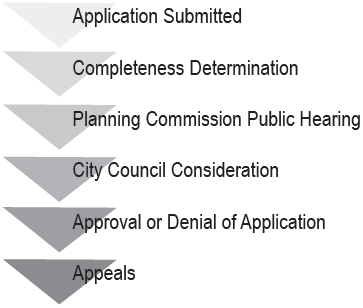
- Purpose. The purpose of the Rural Cluster PUD is to encourage development of rural housing clusters that meet the following purposes:

Note limitations in Code- Provide efficient use of the land while maintaining contiguous blocks of economically viable agricultural land, mature woodlands, and open space; and preserving historical features, scenic views, natural drainage systems and other desirable features of the natural environment.
- Allow housing to be concentrated on sites that have low agricultural potential and/or high natural housing appeal.
- Create neighborhoods with direct access to open space, distinct identities, and sense of community.
- To encourage innovation and promote flexibility, economy, and creativity in residential development.
- To provide for diversity of lot sizes, housing choices and building densities to accommodate a variety of age and income groups.
- To preserve scenic views and elements of the community’s rural character by minimizing views of new development from existing roads.
- Informational Requirements. The following items shall be submitted as part of the PUD - Rural Cluster application as deemed necessary by the Zoning Administrator.
- Resource inventory. The plan for a rural cluster development shall include a resource inventory, to include the following, mapped at a scale of no less than one inch equals 100 feet:
- Topographic contours at ten-foot intervals, showing rock outcrops and slopes of more than 15 percent.
- Soil type locations and identification of soil type characteristics such as depth to bedrock and suitability for wastewater disposal systems.
- Hydrologic characteristics, including surface water bodies, floodplains, wetlands, natural swales, and drainage ways.
- Vegetation of site, according to general cover type (pasture, woodland, etc.), defining boundaries of woodland areas and stand-alone trees with a caliper of more than 18 inches. Vegetative types shall be classified as generally deciduous, coniferous, or mixed, and described by plant community, relative age, and condition.
- Current land use and land cover (cultivated areas, paved areas, etc.), all buildings and structures on the land, and all encumbrances, such as easements or covenants.
- Visual resources, showing views onto the tract from surrounding roads and public areas, as well as views within the tract.
- Cultural resource: Brief description of historic character of buildings and structures, historically important landscapes, and archaeological features.
- Context: General outlines of existing buildings, land, and natural features such as water bodies or wooded areas, roads, and property boundaries within 500 feet of the tract. This information may be presented on an aerial photograph.
- Yield Plan. The applicant shall submit a “yield plan” showing the maximum number of dwelling units that would be permitted given the minimum lot size and lot widths for a subdivision utilizing the underlying zoning and subdivision regulations. For the purposes of this requirement, the yield plan shall be arrived by preparing a sketch plan subdivision of the property, accounting for known land features such as wetlands, roads, etc. The yield plan shall establish the maximum number of lots that may then be developed on a smaller area utilizing the open space development process in this Section. The yield plan need not be engineered; however, it shall be drawn to scale and it shall identify all the major physical features on the parcel, taking into account the character of the land as closely as possible.
- Open Space Preservation Plan. One or more open space design plans meeting the intent of this Chapter and including at least the following information shall be prepared:
- Open space areas indicating which areas are to be protected
- Boundaries of areas to be developed and proposed general street and lot layout.
- Number and type of housing units proposed.
- Areas proposed for stormwater management and on- or off-site sewage treatment.
- Said plans shall be drawn at a scale of one inch equals 100 feet.
- Phasing Plan. Rural cluster development may be phased in accordance with a unified development plan for the entire tract meeting the following requirements:
- A phasing plan identifying the sequence of development showing approximate areas, serially numbered with a description of each phase. Information shall be provided regarding the number of dwelling units, proposed improvements, and common facilities for each.
- The phasing plan shall be made a part of the preliminary plat approval and is effective for five years from the date of preliminary plat approval. If final plat approval is not received within five years, the permit shall become null and void.
- Any common facilities, including golf courses, shall be constructed prior to the sale of any lots and shall be clearly marked on a site map which shall be an attachment to all sales agreements for individual lots.
- As part of the development agreement, a financial guarantee to ensure completion of the common facilities, trails, and landscaping shall be provided.
- General Location Map
- Resource inventory. The plan for a rural cluster development shall include a resource inventory, to include the following, mapped at a scale of no less than one inch equals 100 feet:
- Performance Standards. Performance Standards for all PUD - Rural Cluster development shall adhere to Sec. 125-65. Specific Standards: PUD - Rural Cluster.
Sec 125-31 - General Provisions
- Intent and Purpose. Subdivision approval in compliance with the provisions of this Article shall be required for the separation of an area, parcel, or tract of land under single ownership into two or more parcels, lots, tracts or long-term leasehold interests. The City will withhold building permits from properties created under state, federal or judicial preemption if such properties do not meet the minimum development standards of the City.
All subdivisions of land hereafter submitted for approval shall fully comply, in all respects, with the regulations set forth herein. General Subdivision Standards are set forth in Sec. 125-82. It is the purpose of these regulations to:- Encourage well planned, efficient, and attractive subdivisions by establishing adequate standards for design and construction.
- Provide for the health and safety and general welfare of residents by requiring the necessary services such as properly designed streets and adequate sewage and water service.
- Place the cost of improvements against those benefiting from their construction.
- Secure the rights of the public with respect to public lands and waters.
- Create pedestrian bicycle connectivity throughout the City to ensure access to parks, recreation areas and business districts through the addition and/or enhancement of the sidewalk and trail network.
- Scope and Administration. The rules and regulations governing plats and subdivisions of land contained herein shall apply within the City and other land as permitted by State Statutes. In the event of overlapping jurisdiction within the prescribed area, the extent of jurisdiction shall be determined and agreed upon between this City and the other municipality or municipalities concerned. Except in the case of resubdivision, this chapter shall not apply to any lot or lots forming a part of a subdivision recorded in the office of the county recorder prior to the effective date of the ordinance from which this chapter is derived, nor is it intended by this chapter to repeal, annul, or in any way impair or interfere with existing provisions or other laws or ordinances except those specifically repealed by, or in conflict with this chapter. Where this chapter imposes a greater restriction upon the land than is now imposed or required by such existing provisions of law, ordinance, contract, or deed, the provisions of this chapter shall control.
This chapter shall be administered by the Zoning Administrator. - Application. Approval under this ordinance is required for conveyances of land as provided in this subdivision. No conveyance of land that constitutes a subdivision under this ordinance may be filed or recorded, if the land is described in the conveyance by metes and bounds, by reference to an unapproved registered land survey made after April 21, 1961, or by reference to an unapproved plat. The foregoing provision does not apply to the conveyance if the land meets one of the exception criteria in Minnesota Statutes §462.358, Subd. 4b.
- Modifications, Exceptions and Variances. The City may grant a variance from the requirements of this chapter in accordance with Division IV. Variances.
Sec 125-32 - Minor Land Divisions
- Procedure. The procedures described in this section are minor in nature. Therefore, certain requirements of the subdivision regulations of the subdivision regulations will be waived. The applications in this section shall require City Council approval and shall follow the procedures in Sec. 125-34. Final Plat.
MINOR LAND DIVISIONS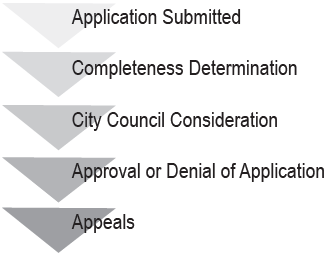
- Lot Consolidation
- When two parcels or lots of record are combined to result in one lot or parcel.
- Lot Line Adjustment

Recommended meeting with Staff- When the lot line between two parcels or lots of record is changed.
- Land parcels may be conveyed by metes and bounds property description, however, no building permit may be issued for any parcel that has not been surveyed. This process can not be repeated on the same parcel more than three times in five years. Transfer of title or the process of subdividing may be by filing of a final plat or certificate of survey.

Note limitations in Code
- Lot Split
- When one parcel or lot of record is divided to result in two lots or parcels, the submission of topographic maps, soil tests and other data may be waived if approved by the City Council.
|
Recommended meeting with Staff - Created lots must satisfy the zoning and performance standards established in Article IV. Zoning District Standards and Article V. Performance Standards and Regulations of the Land Development Regulations Ordinance.
- Land parcels may be conveyed by metes and bounds property description, however, no building permit may be issued for any parcel that has not been surveyed. This process cannot be repeated on the same parcel more than two times in five years. Transfer of title or the process of subdividing may be by filing of a final plat or certificate of survey.

Note limitations in Code
- When one parcel or lot of record is divided to result in two lots or parcels, the submission of topographic maps, soil tests and other data may be waived if approved by the City Council.
- Minor Subdivision
- When any parcel of land is divided in three to not more than five lots, submission requirements such as soils tests and topography information shall be as required by the City Council. Transfer of title or the process of subdivision shall be by filing a final plat. The Minor Subdivision process shall follow the final plat process in Sec. 125-34. Final Plat.

Recommended meeting with Staff
- When any parcel of land is divided in three to not more than five lots, submission requirements such as soils tests and topography information shall be as required by the City Council. Transfer of title or the process of subdivision shall be by filing a final plat. The Minor Subdivision process shall follow the final plat process in Sec. 125-34. Final Plat.
Sec 125-33 - Preliminary Plat
- Purpose. The purpose of this Section is to establish a formal preliminary plat review procedure consistent with the requirements of this Ordinance.
PRELIMINARY PLAT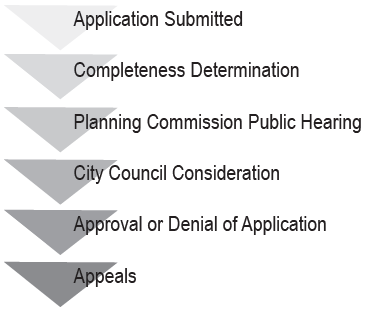
- Procedure
- After the pre-application meeting, the applicant shall submit to the City the application form, fees/escrow and plan sheets in the number and format described in the application form.
- City staff will have 15 days to review the application and determine if the application satisfies all requirements.

Application & Fee required - Upon determination that the preliminary plat is submitted according to all requirements, the preliminary plat shall be submitted to the next scheduled Planning Commission meeting for which a public hearing may be set.

Public hearing- In addition, a list of property owners located within 350 feet of the subject property obtained from the County shall be submitted to the City Clerk.
- An administrative fee in the amount established by ordinance shall be paid at the time of the filing. In addition to the administrative fee, the applicant shall pay into an escrow account, an amount to be determined by the City Council for any estimated administrative and consulting cost in reviewing said plat.
- Any necessary applications for variance from the provisions of this Chapter shall be submitted with the required fee. The plat shall be considered as being officially submitted when all of the information requirements are complied with. Engineering, administrative, or legal expenses incurred by the City shall be paid by the applicant or their assigns as noted on the application.
- The Zoning Administrator shall refer copies of the preliminary plat to applicable City staff persons, appropriate watershed district and other jurisdictional bodies as needed in order to receive written comment. A staff review will be made and a written report attached prior to forwarding to the Planning Commission.

Recommendation by Staff/Commission - The Planning Commission shall hold a public hearing on the preliminary plat after notice of the time and place thereof has been published once in the official newspaper at least 10 days before the day of the hearing. This shall constitute the public hearing on the plat as required by state law.

Public hearing- The applicant or a duly authorized representative is required to attend the Planning Commission meetings at which their proposal is scheduled for consideration.
- The Planning Commission shall study the practicability of the preliminary plat, taking into consideration the requirements of the City. Particular attention shall be given to the arrangement, location, and width of streets, their relation to the topography of the land, water supply, treatment systems, drainage, lot sizes and arrangement, the future development of adjoining lands as yet unsubdivided, and the requirements of the comprehensive plan, and this Chapter.
- At the public hearing, all persons present interested in the proposed plat shall be heard.
- The Planning Commission shall recommend approval, modification and approval, or disapproval of the preliminary plat, and submit to the City Council, the applicant, and administrator, their findings and recommendations.
- The City Council shall act upon the preliminary plat and send written notification of their action to the Planning Commission, administrator, and applicant.
- The applicant must submit the final plat within one year after preliminary plat approval, unless the applicant and City agree otherwise as set forth in the resolution granting preliminary plat approval. If the final plat is not submitted and approved by said deadline, subject to the following subparagraphs and the provisions of Minnesota Statutes §462.358, subd. 3c., approval of the preliminary plat shall be void.
- At any time within 60 days before or 30 days after said deadline, the applicant may file with the Zoning Administrator a written request that said deadline be extended one year beyond the said deadline of the prior preliminary plat approval.
- The Zoning Administrator shall place the applicant’s request on the agenda of a regularly scheduled Council meeting to be held within 30 days of said filing if no change has occurred in any land use restriction or the comprehensive plan, or any other official control affecting the use, development density, lot size, lot lay-out, or dedication or platting required or permitted by the approved preliminary plat. Said request may be approved by the Council as a consent item on its agenda.
- Failure to file an extension request in a timely fashion, or the change of any restriction or control referred to in Sec. 125-36. Plat Improvements Required; Listing and Description will require the submission of a new application for preliminary plat approval.
- The approval of a preliminary plat is an acceptance of the general layout as submitted, and indicates to the applicant that final plat may be submitted in accordance with the terms of approval and provisions of this Chapter.
- At any time within 60 days before or 30 days after said deadline, the applicant may file with the Zoning Administrator a written request that said deadline be extended one year beyond the said deadline of the prior preliminary plat approval.
- The applicant must submit the final plat within one year after preliminary plat approval, unless the applicant and City agree otherwise as set forth in the resolution granting preliminary plat approval. If the final plat is not submitted and approved by said deadline, subject to the following subparagraphs and the provisions of Minnesota Statutes §462.358, subd. 3c., approval of the preliminary plat shall be void.
- Information Requirement
- The applicant shall fill out and submit to the Zoning Administrator the application form all information as required on the form unless a waiver of certain information is granted by the Zoning Administrator.
- Other Information
- If any zoning changes are contemplated, the proposed zoning plan for the areas.
- The Planning Commission may require that the applicant submit a concept plan or ghost plat of the remainder of the property or an adjacent property so as to show the possible relationships between the proposed subdivision and the future subdivision. In any event, all subdivisions shall be shown to relate well with existing or potential adjacent subdivisions.
- Such other information as may be requested by the Zoning Administrator, Planning Commission or City Council.
- Findings for Denial. In the case of subdivisions, if the preliminary plat complies with all the policies and requirements pursuant to the comprehensive plan, zoning and subdivision ordinance and all other applicable City ordinances and regulations, the City Council shall approve the plat. The City Council may deny approval of a preliminary plat based on one or a combination of the following findings:

Note limitations in Code- That the proposed subdivision is in conflict with adopted applicable general and specific plans of the City.
- That the physical characteristics of this site, including, but not limited to, topography, vegetation, soils, susceptibility to flooding, water storage, drainage and retention, are such that the site is not suitable for the type of development or use contemplated according to the zoning and sewer ordinances.
- That the site is not physically suitable for the proposed density of development and does not meet minimum lot size standards.
- That the design of the subdivision or the type of improvements is likely to cause substantial environmental damage.
- That the designs of the subdivision or the type of improvements are likely to cause serious public health problems.
- That the design of the subdivision or the type of improvements will conflict with easements of record or with easements established by judgment of a court.
- Amendment. Should the applicant desire to amend the preliminary plat as approved by the council, the applicant shall submit the amended plat following the original procedures set forth except for the public hearing and fees unless the Planning Commission considers the scope of the revisions to constitute a new plat, then the hearing and fees shall be required.
- Intervening Time. During the intervening time between approval of the preliminary plat and the signing of the final plat, the applicant must submit acceptable engineering plans for all required improvements.
Sec 125-34 - Final Plat
- Purpose. The purpose of this Section is to establish a formal final plat review procedure consistent with the requirements of this Ordinance.
FINAL PLAT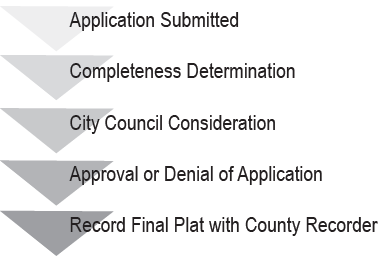
- Procedure
- The owners or applicants shall file the required number of copies of the final plat with the Zoning Administrator. If this is not done within one year of the approval of the preliminary plat, the preliminary plat will be considered void, unless for good cause an extension is requested in writing by the applicant and granted by the City Council. The owners or applicants shall also submit, at this time, an up-to-date certified abstract of title or registered property report for City Attorney review. The final plat shall have incorporated all changes recommended by outside jurisdictions where applicable, the Planning Commission, City Council and the City engineer as conditions to approval of the preliminary plat, but in all other respects it shall conform to the preliminary plat as approved. It may constitute only that portion of the approved preliminary plat that the applicant proposed to record and develop at that time, provided that such a portion conforms with all requirements of this Chapter.
- The Zoning Administrator shall refer appropriate copies of the final plat to the City Council and the City Council shall act on the final plat within 60 days of submission of the plat.
- The City Council shall, if the Zoning Administrator indicates deviation in the final plat from the approved preliminary plat, determine if the submission shall represent a new plat. If the submission does represent a new plat, the City Council shall deny the final plat and direct the applicant to resubmit his proposal following preliminary plat requirements.
- If accepted, the final plat shall be approved by resolution, which resolution shall provide for the acceptance of all agreements for basic improvements, public dedication and other requirements as indicated by the City Council.

Subdivision Procedure required - If the final plat is approved by the City Council, or by act of law, the applicant shall record it with the county recorder within six months, and subject to the following subsections, approval of the plat shall be void.
- A final plat will not be released by the City for recording purposes until the applicant has satisfied applicable ministerial requirements of this Chapter, including payment of fees, execution of a developer’s agreement, deposit of surety, letters of credit, mylar copies of the final plat, easement documents, and all other requirements of approval by resolution.
- Within 30 days of said deadline, the applicant may file with the Zoning Administrator a written request that said deadline be extended one year beyond the date the extension is granted.
- The Zoning Administrator shall place the applicant’s request on the agenda of a regularly scheduled Council meeting to be held within 30 days of said filing if in their opinion no change has occurred in any land use restriction or the comprehensive plan, or any other official control affecting the use, development density, lot size, lot layout, or dedication or platting required or permitted by the approved preliminary plat. Said request may be approved by the City Council as an item on its consent agenda.
- The change of any restriction or control referred to in this Section will require the submission of a new application for subdivision approval.
- Upon submission and approval of all required conditions of approval, the City Council shall by resolution authorize the mayor to sign the final plat.
- Information Requirement
- The applicant shall fill out and submit to the Zoning Administrator the application form all information as required on the form unless a waiver of certain information is granted by the Zoning Administrator.
- Findings for Denial. In the case of subdivisions, if the preliminary and final plat comply with all the policies and requirements pursuant to the comprehensive plan, zoning and subdivision ordinance and all other applicable City ordinances and regulations, the City Council shall approve the plat. City Council may deny approval of a preliminary or final plat based on one or a combination of the following findings:

Note limitations in Code- That the proposed subdivision is in conflict with adopted applicable general and specific plans of the City.
- That the physical characteristics of this site, including, but not limited to, topography, vegetation, soils, susceptibility to flooding, water storage, drainage and retention, are such that the site is not suitable for the type of development or use contemplated according to the zoning and sewer ordinances.
- That the site is not physically suitable for the proposed density of development and does not meet minimum lot size standards.
- That the design of the subdivision or the type of improvements is likely to cause substantial environmental damage.
- That the designs of the subdivision or the type of improvements are likely to cause serious public health problems.
- That the design of the subdivision or the type of improvements will conflict with easements of record or with easements established by judgment of a court.
- Modifications. No changes, erasures, modifications or revisions shall be made in any final plat after approval has been given by the City Council and endorsed in writing on the plat, unless the said plat is first resubmitted to the City Council and such body approves any modifications.
In the event that any such final plat is recorded without complying with this requirement, the same shall be considered null and void and the City Council shall institute proceedings to have the plat stricken from the records of the City.
Sec 125-35 - Ghost Plat
- Purpose. The purpose of requiring the applicant to submit a ghost plat is:
GHOST PLAT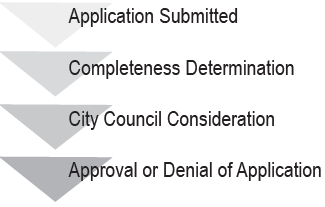
- To permit development in a configuration that does not cause unnecessary barriers to future development and provision of public services, future subdivision, or redevelopment.
- Foster discussion and consideration of long-term development of neighborhoods at greater density than is currently permitted to guide efficient and equitable expansion of urban services such as sewer and water.
- To ensure that adequate public right of way and easements are identified and dedicated to serve the community at urban densities.
- To adequately plan for future development of public facilities such as parks.
- To ensure that adequate land area is identified for future storm water management facilities.
- Procedure
- In agricultural or rural zoning districts (AG, R1) or where a rural subdivision is requested, a ghost plat may be deemed necessary by the Zoning Administrator.
- The City Council shall then consider the ghost plat request following the same procedure for a concept plan as outlined in Sec. 125-26. General Concept Plan.
- The ghost plat is not recordable and will require formal submission of a plat when further subdivision is proposed
- Buildings on lots where future subdivision planned by the ghost plat shall be placed in manner that does not prohibit future subdivision as shown on the ghost plat.
- Requirement. In the event that a ghost plat is required, the design of the ghost plat shall include the following:
- The proposed street and lot layout for the subdivision overlay will be required to integrate with the design of the proposed subdivision and future possible surrounding properties including the comprehensive plan proposed land use and required density. Future street right-of-ways and public easements may be required for approval with the City Council.

Application & Fee required - Lot yield and calculation of buildable land area for each lot.
- Proposed and potential future house pad locations.
- The potential location of easements for drainage, municipal water, sanitary sewer, storm sewer systems, including connection points for utility systems at the plat boundaries shall be shown on the subdivision and ghost plat. Such easements may be required by the City to be dedicated together with the final plat of the proposed subdivision.
- The proposed street and lot layout for the subdivision overlay will be required to integrate with the design of the proposed subdivision and future possible surrounding properties including the comprehensive plan proposed land use and required density. Future street right-of-ways and public easements may be required for approval with the City Council.
Sec 125-36 - Plat Improvements Required; Listing And Description
- Improvements Required. Prior to the approval of a final plat, the applicant shall have agreed in the manner set forth below to install in conformity with construction plans approved by the City Engineer and in conformity with all applicable standards and ordinances, the following improvements on the site.

Recommendation by Staff/Commission- Streets. The full width of the right-of-way of each street and alley dedicated in the plat shall be graded. All streets and alleys shall adhere to design standards specified by City of Rogers Land Developer Requirements and Procedures.
- Pedestrian Ways.
- Commercial zoning districts: pedestrian ways shall be required along both sides of all streets.
- Single-family, mid-density and multifamily residential districts: pedestrian ways shall be required along one side of all streets, except in cul-de-sacs wherein pedestrian ways shall only be required if the City Council makes a specific finding of fact that pedestrian ways are needed therein for public health or safety
- Pedestrian ways, width: five feet minimum, unless otherwise required by the City Council.
- Trails shall be a minimum of eight feet in width unless otherwise required by the City Council.
Notwithstanding anything above to the contrary, if the City Council makes a specific finding of fact at the time the subdivision is given its final approval that a pedestrian way is not required along all or part of a street because it would not serve a public need or be a benefit to the City, it may waive the requirement of pedestrian way installation. If pedestrian ways are so deleted in a subdivision, the City Council shall by resolution determine the amount of the pedestrian way fee payment, if any. - Water Supply. Where a municipal water supply is available within a reasonable distance, the applicant shall be required to provide a connection to the municipal system pursuant to the Comprehensive Master Water Supply Plan. The feasibility of this requirement shall be evaluated based on the cost of constructing the connection weighed against the cost of installing individual wells and the likelihood of an eventual municipal connection in the future.
- Water mains shall be provided to serve the subdivision by extension of an existing City system wherever feasible. Service connections shall be stubbed into the property line and all necessary fire hydrants shall also be provided. Extensions of the public water supply system shall be designed so as to provide public water in accordance with the standards of the City.
- In areas being platted for rural service with large lots, individual wells shall be provided on each lot, properly placed in relationship to the treatment system on the same and adjoining lots. Well location plans must be submitted for the approval of the City Engineer.
- Sewage Disposal and Treatment Systems
- Sanitary sewer mains and service connections shall be installed to serve all the lots in the subdivision and shall be connected to the public system in accordance with the approved comprehensive sewer plan.
- Hennepin County issues septic permits and notes that in areas being platted for rural service with large lots, a primary and secondary sewage treatment system shall be provided for each lot, properly located with reference to the wells on the same and adjoining lots, and the disposal facilities on adjacent lots.
- Street Lighting. Street lighting of a type approved by the City shall be required at all intersections within an urban subdivision. Additional lighting may be required as recommended by the City Engineer.

Recommendation by Staff/Commission - Drainage. A complete and adequate drainage system that will convey the surface water runoff within the subdivision shall be provided. A drainage system may include a storm sewer system or system of ditches, culverts, pipes and catch basins, or both. Storm sewers and culverts shall be installed where necessary in conjunction with the grading of streets. Cross drains shall be provided to accommodate all natural water flow and shall be of sufficient length to permit full-width roadways and required side slopes. Drainage ditches shall be sodded to prevent erosion, and drainage design shall conform to the local watershed district requirements. The final design of all drainage areas and water discharge areas from the home shall be approved by the City Engineer both prior to final plat approval but also prior to receiving a certificate of occupancy after home construction.

Recommendation by Staff/Commission - Street Signs. Street signs of standard design approved by the City shall be installed at each street intersection.

Recommendation by Staff/Commission - Private Utilities. All utility lines for telephone, electrical, natural gas, fiber optic, etc. service shall be required to have buried utility lines.
- Construction Plans. Construction plans for the required improvements, conforming in all respects to the standards of the City and the applicable ordinances, shall be prepared and signed at the applicant’s expense by a professional engineer who is registered in the state. Such plans, together with the quantity of construction items, shall be submitted to the City Engineer for approval per the City’s approved construction drawings template and for the estimate of total cost of the required improvements; upon approval they shall become a part of the developer’s agreement and contract required in this section. Record drawings shall be filed with the City.
Sec 125-37 - Park Land Dedication Requirements
- General
- Applicants for the subdivision of land and developers of land within the City shall be required to dedicate to the City for park, playground, trail and public open space purposes the following minimum amounts of land or cash, or both, whichever the City, at its option, shall require. The required dedication shall be made prior to the City’s release of the final plat for filing. The amount of any required cash contribution shall be calculated based upon rates established by the City and in effect as of the date of the release of the final plat for filing.

Application & Fee required - Land to be dedicated for public use shall be suitable for its intended use as determined by the City and shall be at a location convenient to the public to be served. Factors used in evaluating the adequacy of proposed park and recreation areas shall include size, shape, topography, geology, hydrology, tree cover, access and location.
- The applicant shall consult with the Planning Commission and Park Commission, at the time the preliminary plat is under consideration, to secure their recommendation as to the location of any property that should be dedicated to the public, such as parks, playgrounds or other public property. The preliminary plat shall show the location and dimensions of all areas to be dedicated in this manner. Such contribution requirement recommendations will be sent to the City Council for their approval. The applicant shall construct and pave all trails through and abutting their developments as identified in the City’s parks, open space and trail system plan, or provide funding for the City to construct and pave all trails at the City’s discretion.
- When a proposed park, playground, recreational area, or other public ground has been indicated in the City’s Park Plan or comprehensive plan and is located in whole or in part within a proposed plat, it may be dedicated to the appropriate governmental unit. If the applicant elects not to dedicate an area in excess of the land required hereunder for a proposed public site that the City feels is in the public interest to acquire, the City may consider acquiring the excess land through purchase or other appropriate means.
- Land area conveyed or dedicated to the City shall not be used in calculating density requirements of Article IV. Zoning District Standards, and shall be in addition to and not in lieu of open space requirements for planned unit developments.
- Where private open space for park, playground, trail, open space or other recreation purposes is provided in a proposed subdivision and such space is to be privately owned and maintained by the future residents of the subdivision, such areas may be used for credit at the discretion of the City Council against the requirement of dedication for purposes described in this chapter provided the City Council finds it is in the public interest to do so and that the following standards are met:
- That yards, court areas, setbacks and other open space required to be maintained by the zoning and building regulations shall not be included in the computation of such private open space;
- That the private ownership and maintenance of the open space is adequately provided for by written agreements;
- That the private open space is restricted for park, playground, trail, or recreational purposes by recorded covenants which run with the land in favor of the future owners of property within the tract and which cannot be eliminated without the consent of the City Council;
- That the proposed private open space is reasonably adaptable for use for such purposes, taking into consideration such factors as size, shape, topography, geology, access and location of the private open space land;
- That facilities proposed for such purposes are in substantial accordance with the provisions of the recreational element of the comprehensive plan, and are approved by the City Council; and
- That where such credit is granted, the amount of credit shall not exceed 25% of the amount of dedication as calculated herein.
- That yards, court areas, setbacks and other open space required to be maintained by the zoning and building regulations shall not be included in the computation of such private open space;
- The City, upon consideration of the particular type of development, may require larger or lesser parcels of land to be dedicated if the City determines that present or future residents would require greater or lesser land for park and playground purposes. In addition, the City Council may also require lots within the subdivision be held in escrow for future sale or development. The moneys derived from the sale of escrowed lots will be used to develop facilities or to purchase parkland in the future.
- Where fees are not specifically stated in this chapter, said fees shall be established by ordinance.
- In the event the City waives the requirement that an applicant or developer proposing to subdivide land plat the same, the City Council may require the applicant or developer, as a condition of granting such waiver, to dedicate parks (or pay cash in lieu thereof) in a manner consistent with the provisions of this chapter.
- Applicants for the subdivision of land and developers of land within the City shall be required to dedicate to the City for park, playground, trail and public open space purposes the following minimum amounts of land or cash, or both, whichever the City, at its option, shall require. The required dedication shall be made prior to the City’s release of the final plat for filing. The amount of any required cash contribution shall be calculated based upon rates established by the City and in effect as of the date of the release of the final plat for filing.
- Residential Dedications.
- Land shall be dedicated pursuant to the schedule herein, density is calculated by consideration of the total acreage of the entire plat, subdivision or development being considered: 10% of subdivision area.

Application & Fee required - A cash contribution in lieu of land dedication may be required pursuant to a standard formula established by the City, which formula takes into consideration such things as, but not necessarily limited to, the fair market value of the raw land prior to platting. The cash contribution shall be as established by ordinance.
- Combination of land and cash dedication. The City may require the applicant or developer to make a combination cash and land dedication pursuant to the following formula:
- The amount of land that could be required in accordance with this chapter shall be calculated.
- From the total calculated in D. Cash-In-Lieu, the actual amount of land the City determines to be needed to fulfill the purposes of this chapter shall be subtracted.
- The balance arrived at in D. Cash-In-Lieu, shall be converted into a cash contribution in lieu of land dedicated pursuant to a standard formula established by the City, which formula takes into consideration such things, as, but not necessarily limited to, the fair market value of the property in the plat, subdivision or development and the percentage of the total park dedication obligation represented by the said balance.
- Land shall be dedicated pursuant to the schedule herein, density is calculated by consideration of the total acreage of the entire plat, subdivision or development being considered: 10% of subdivision area.
- Commercial and Industrial Dedication Requirements
- Land dedication, if required, shall be 10% of the subdivision or development.

Application & Fee required - If the City requires payment of fees in lieu of land dedication, that the fee shall equal 10% of the City’s calculated fair market value for the property as if zoned in the classification requested by the applicant or developer.
- Where a combination land and cash dedication is made, the lands dedicated will be deducted from the total park dedication land requirement and the balance of acreage will be multiplied by the current per acre dedication rate.
- Land dedication, if required, shall be 10% of the subdivision or development.
- Cash-In-Lieu
- The City may elect to receive a combination of cash, land and development of the land for park use. The fair market value of the land the City wants and the value of the development of land shall be calculated.
- Cash fees for park dedication, in lieu of land, shall be as established by ordinance.
- Planned unit developments with mixed land uses shall make cash and/ or land contributions in accordance with this section based upon the percentage of land devoted to the various uses.
- The City Council shall establish a separate fund into which all cash contributions received from owners and developers in lieu of conveyance or dedication of land for park, playground, trail and open space purposes shall be deposited. The City Council shall establish separate budgeting and accounting procedures for such fund and shall make from time to time appropriations for such purposes, for developing existing parks, or the development of new park facilities.
- Exemptions
- Wetlands, ponding areas and drainageways accepted by the City may not be considered in the parkland and/or cash contribution to the City, except where the City expressly credits such areas pursuant to unique conditions, consistent with the directives of the park plan.
- Property being replatted with the same number of lots shall be exempt from all park land dedication requirements. If the number of lots or housing units is increased or if land outside the previously recorded plat is added, then the park land dedication and/or park cash contributions shall be based on the additional lots or units and on the additional land being added to the plat. If the additional land is not being platted, park dedication requirements for such additional land shall be determined by dividing the net acreage by the minimum lot size in the applicable zoning district.
- Dedication Requirements
- Cash payment. A cash contribution required by the City shall be made at the time of final plat or lot split approval by the City Council, prior to final plat being released for recording or as specified by the applicable development contract.
- The following requirements apply to all dedications or conveyances for park, playground, trail or public open space purposes:
- Land conveyed or dedicated pursuant to the provisions of this section must be located outside of drainageways, floodplains and ponding areas after the site has been developed, except as may be as provided in this Section.
- As part of their development contract or site plan approval responsibilities, applicants and developers shall be responsible for making certain improvements to the developments for park, playground, trail and public open space purposes including, but not limited to, finished grading and ground cover for all park, playground, trail and public open spaces within their developments.
- Dedication credit shall not be granted for the construction of recreational facilities unless a specific agreement granting credit is approved by the City Council.
- Areas to be dedicated for public park or trail shall be brought to a suitable condition by the subdivider prior to acceptance by the City. At the direction of the City, this may include the following: All dead trees, trash, junk, unwanted structures or similar undesirable elements shall be removed by the owner at his expense; on grades or exposed areas which are not sodded, lawn grass seed shall be sown at not less than four pounds to each 1,000 square feet of lane area; seeding and germination testing shall take place on a schedule set forth by the City at the time of the conveyance; seeding shall consist of maximum of 10% rye grass by weight and a minimum of 90 percent of permanent bluegrass and/or fescue grass by weight. The applicant shall submit an agreement in writing signed by the developer that respreading of soil and seeding of lawn will be done during the immediately following planting season as set forth in this section and provide a performance bond to guarantee said seeding. Said condition shall also be in accordance with the City’s resolution on condition of acceptance of public parks in the City.
- Title and Survey Requirements.
- Lands dedicated for public park, trail or ponding shall be accompanied by a certificate of survey or shall be designated as a park, trail or ponding area on the plat as determined by the City. Lands dedicated for public parks shall be dedicated as a legal lot of record.
- Further, such lands shall be free and clear of all liens and encumbrances including special assessments as evidenced by an up-to-date abstract of title or registered property abstract to be submitted at the applicants cost to the City for its examination.
- Such dedication shall be in the form and manner as prescribed by the City.
Sec 125-38 - Building Permit Required
This ordinance uses the Minnesota Building Code regulations adopted by the code in Chapter 105 of the City Code. A building permit shall be required of all persons intending to erect, alter, wreck or move any building.
Sec 125-39 - Administrative Permits
- Procedure
ADMINISTRATIVE PERMITS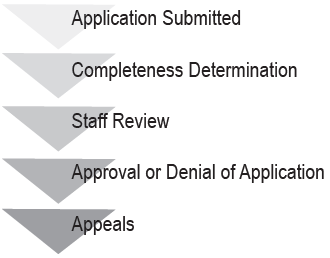
- The Zoning Administrator shall review the application and related materials and shall determine whether the proposal is in compliance with all applicable evaluation criteria, codes, ordinances, and applicable performance standards set forth in this Chapter.
- The Zoning Administrator shall consider possible adverse effects of the proposed events or activity. Judgment shall be based upon (but not limited to) the following factors:
- Compliance with and effect upon the Comprehensive Plan and public facilities plans.
- The establishment, maintenance or operation of the use, event or activity will promote and enhance the general public welfare and will not be detrimental to or endanger the public health, safety, morals or comfort. The use, event, or activity will not be injurious to the use and enjoyment of other property in the immediate vicinity for the purposes already permitted, nor substantially diminish and impair property values within the neighborhood.
- The establishment of the use, event or activity will not impede the normal and orderly development and improvement of surrounding property for uses permitted in the district.
- Adequate public facilities and services are available or can be reasonably provided to accommodate the use, event or activity which is proposed.
- The use, event or activity shall, in all other respects, conform to the applicable regulations of the district in which it is located.
- The use, event or activity and site conform to the performance standards as outlined in Sec. 125-27. Site Plan and all other applicable provisions of this Chapter.
- Compliance with and effect upon the Comprehensive Plan and public facilities plans.
- The application will be subject to the procedure outlined in Sec. 125-21. General Review Procedures.
- A written permit shall be issued to the applicant when a determination of compliance has been made. Specific conditions to assure compliance with applicable evaluation criteria, codes, ordinances, and the standards of this Chapter shall be attached to the permit.
- Determination of non-compliance with applicable codes, ordinances, and the standards in this paragraph shall be communicated to the applicant in writing and the application for the permit shall be considered denied; unless, within 10 days of the date of such notice, the applicant submits revised plans and/or information with which the Zoning Administrator is able to determine compliance.
- Unresolved disputes as to administrative application of the requirements of this paragraph shall be subject to appeal as defined by Sec. 125-20. Review and Approval of this Chapter.
- Information Requirement. The applicant shall fill out and submit to the Zoning Administrator the application form all information as required on the form unless a waiver of certain information is granted by the Zoning Administrator.
- Performance Standards. All uses, events or activities allowed by administrative permit shall conform to the applicable standards outlined in the zoning district in which such use, event or activity is proposed.
Sec 125-40 - Accessory Structures
- Permit. Accessory structures will be allowed and permitted as detailed in Sec. 125-84. Accessory Use Standards.
Sec 125-41 - Nonconforming Uses And Structures
- Purpose

Prohibited form or function
It is the purpose of this Section to provide for the regulation of legal nonconforming uses, structures including buildngs, and lots, and to specify the conditions under which such nonconformities shall be allowed to continue in compliance with Minnesota Statues §462.357, Subd. 1e. - General Provisions Except as otherwise provided by law, any nonconforming use or structure may be continued at the size or in the manner of operation, as the context requires, existing on June 23, 2020, or the earlier date of adoption of the ordinance from which the relevant restriction is derived, subject to the following conditions:
- A nonconforming use or structure shall not be expanded, enlarged, or extended. Such prohibition shall include any increase in intensity including, but not limited to, a change to the use that expands or intensifies the impact to surrounding properties, or a physical expansion of a structure that increases the size or dimensions of the structure.
- Routine maintenance of a nonconforming structure, or a structure containing a nonconforming use, is permitted.
- Whenever a nonconforming structure or use is damaged by fire or other peril, it may be reconstructed in accordance with, and to the extent provided in, Minnesota Statutes §462.357, Subd. 1e.
- Whenever any nonconforming use of any structure or land is replaced, the new use or structure must conform to the provisions of this Chapter.
- If a nonconforming use is discontinued for a period of more than one year, any subsequent use shall be in conformity with this Chapter.
- Nonconforming uses or structures declared by the City Council to be public nuisances shall not be allowed to continue as legal nonconforming uses or structures.
Sec 125-42 - Variances
- Purpose. The purpose of this Section is to provide for deviations from the literal provisions of this Chapter in instances where their strict enforcement would cause practical difficulties because of circumstances unique to the individual property under consideration, and to grant such variances only when it is demonstrated that such actions will be in keeping with the spirit and intent of this Chapter.
Variances for subdivision shall be granted only with respect to the standards for subdivision plat approval, and not for the process for obtaining subdivision plat approval.
VARIANCES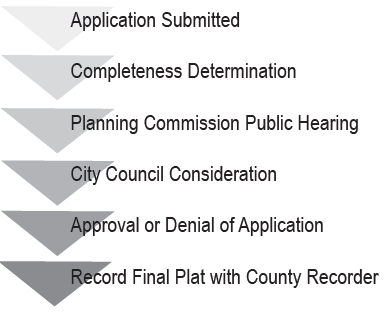

Note limitations in Code
Prohibited form of function - Procedure
- The applicant shall fill out and submit to the Zoning Administrator the application form all information as required on the form unless a waiver of certain information is granted by the Zoning Administrator.
- The Zoning Administrator shall refer the application to the Planning Commission for review, which then may refer it to the City Council.

Application & Fee required - The application will be subject to the procedure outlined in Sec. 125-21. General Review Procedures.
- The Board shall make written findings of fact in any case of an application for a variance and shall state therein the reasons for its decision; the order issued shall include the legal description of the land involved. Any such order shall be filed with the Zoning Administrator.
- No application for the same variance as ruled upon by the City Council shall be resubmitted for a period of 12 months from the date of denial of the previous application unless there has been a substantial change in circumstances as it relates to the request.

Note limitations in Code - An approved variance will become null and void if after 1 year no construction begins that is related to the variance unless an extension is granted by City Council.
- Criteria for Granting a Variance. The Planning Commission shall hear and the City Council shall make findings of fact that the proposed variance from the literal provisions of this Chapter be granted or denied pursuant to the requirements of Minnesota Statutes §462.357 and any amendments thereto, which include, but are not limited to the following considerations:
- Variances shall only be permitted when they are in harmony with the general purpose and intent of City code and consistent with the comprehensive plan.
- Variances may only be permitted when the applicant establishes that there are non-economic undue hardship in complying with the zoning ordinance, meaning the property owner proposes to use the lot or parcel in a reasonable manner not permitted by the zoning code.
- The plight of the property owner must be due to circumstances that are unique to the lot or parcel and is not created by the property owner.
- The variances must not alter the essential character of the locality including all zoning district and overlay district provisions.
- Under the circumstances, the public interest underlying the proposed variance outweighs the public interest underlying the particular regulation for which the variance is granted; and
- The granting of the variance will not be injurious to other property and will not prevent the orderly subdivision of other property in the area in accordance with these regulations.

