
Salt Lake County Unincorporated
City Zoning Code
City Zoning Code
CHAPTER 19
72 - FOOTHILLS AND CANYONS OVERLAY ZONE FCOZ1
Editor's note— Ord. No. 1808, § I, adopted March 14, 2017, repealed the former ch. 19.72, §§ 19.72.010—19.72.070, and enacted a new ch. 19.72 as set out herein. The former ch. 19.72 pertained to similar subject matter and derived from Ord. 1417, adopted in 1998; Ord. 1454, adopted in 1999; Ord. 1473, adopted in 2001; Ord. No. 1724, adopted on March 6, 2012; Ord. No. 1758, adopted September 24, 2013.
19.72.010 - Purpose.
The general purpose of the foothills and canyons overlay zone is to promote safe, environmentally sensitive development that strikes a reasonable balance between the rights and long-term interests of property owners and those of the general public. Specifically, these standards are intended to:
A.
Preserve the visual and aesthetic qualities of the foothills, canyons, and prominent ridgelines as defined herein, contributing to the general attractiveness and, where appropriate, the commercial viability of these areas.
B.
Protect public health and safety by adopting standards designed to reduce risks associated with natural and man-made hazards.
C.
Provide efficient, environmentally sensitive, and safe vehicular and pedestrian circulation.
D.
Encourage development that conforms to the natural contours of the land and minimizes the scarring and erosion effects of cutting, filling and grading on hillsides, ridgelines, and steep slopes.
E.
Balance private and commercial needs against the risk of destabilizing fragile soils, defacing steep slopes and degrading water quality.
F.
Minimize disturbance to existing trees and vegetation, conserve wildlife habitat, protect aquifer recharge areas, and otherwise preserve environmentally sensitive natural areas by encouraging clustering, the transfer of development rights, or other design techniques to preserve the natural terrain.
G.
Reduce flooding by protecting streams, drainage channels, absorption areas, and floodplains.
H.
Protect property rights and commercial interests, and encourage economic development.
I.
Recognize the link between environmental protection and economic prosperity in the canyons.
(Ord. No. 1808, § I, 3-14-2017)
19.72.020 - Applicability.
A.
Geographic Area of Application. Maps delineating the boundaries of the foothills and canyons overlay zone are on file with the planning and development services division. Such maps, as amended, are incorporated into this chapter as if fully described and detailed herein.
B.
Development Activities Covered. The standards and regulations of the foothills and canyons overlay zone apply to all development that occurs within the mapped foothills and canyons overlay zone. Development includes all land disturbance activities such as grading, clearing, and excavation.
C.
Jurisdictional Exemptions. These provisions do not apply to properties owned by the state or the government of the United States, except as specifically authorized by state or federal statute or regulation, intergovernmental agreement, or other form of cooperative agreement.
D.
Recognition of Salt Lake City Extraterritorial Jurisdiction. Salt Lake County recognizes that Salt Lake City has extraterritorial jurisdiction for protection of its watershed located in the canyons east of Salt Lake City from City Creek Canyon south to Little Cottonwood Canyon. All development in the county impacting surface water, wells, storage facilities, or aquifers located within Salt Lake City watershed areas shall be referred to Salt Lake City to confirm compliance with applicable ordinances and watershed protection standards. If confirmation is not received within the time prescribed by county ordinance for processing applications, the planning commission or director may approve the application subject to confirmation being received prior to a building permit being issued. The county shall notify other water providers of which the county is aware that have protected watersheds in the canyons and may have authority over the proposed development within those areas. Notification shall include a copy of the application, any public hearing dates for the application, and contact information for the county planning and development services division.
E.
Mountain Resort Zone. Due to the unique and specialized uses of mountain resort properties, including recreational and mixed residential and commercial uses, mountain resorts may apply for specialized mountain resort ("MRZ") zoning. Should a resort choose not to apply for MRZ zoning, it shall be subject to all of the requirements of the underlying zone and this chapter.
(Ord. No. 1808, § I, 3-14-2017)
19.72.030 - FCOZ Development approval procedures.
A.
Purpose. The purpose of this section is to outline the site plan application and approval process required for all development or construction activity, including tree/vegetation removal and grading, or subdivision of land, in the foothills and canyons overlay zone.
B.
Joint Applications. Where a process is already established by ordinance or agreement for review and approval of a land use application in the foothills and canyons (such as a subdivision, conditional use or permitted use site plan, development agreement, or variance process), applicable FCOZ standards shall be applied concurrently with the related application. If there is no related land use application under review, the applicant shall be subject to the following process.
C.
Application Process.
1.
Pre-Application Meeting.
a.
Purpose. An informal pre-application meeting with the director is required prior to submitting a site development plan application. The purposes of the pre-application meeting are to provide an opportunity for the parties to discuss:
i.
The application submittal, review and approval process.
ii.
The proposed development of the site and its relationship to site conditions and area characteristics, including geologic, hydrologic, and environmental issues.
b.
Scheduling of Pre-Application Meeting. To request a pre-application meeting, the applicant shall submit a pre-application meeting request on a form provided by the county, together with any required fees and materials. Upon submittal of a complete application, the development proposal shall be scheduled for discussion at a pre-application meeting.
c.
Attendance. In addition to the director, other county participants in the pre-application meeting may include representatives from the health department, county engineer's office, fire department, Salt Lake City department of public utilities, and any other person or entity the county deems appropriate.
2.
Site Development Plan.
a.
Application.
i.
Upon conclusion of the pre-application meeting process, an applicant seeking approval of a development plan shall submit an application form, together with required maps, plans, reports, special requests, and fees, to the director. All submitted materials shall be available for public review.
ii.
Following documentation of assurances provided at the pre-application meeting or field inspections, the director may waive or modify submittal requirements deemed unnecessary.
iii.
The director may require additional information, as necessary, to substantiate compliance with the provisions and standards of this chapter and other applicable codes and ordinances. For example, the director may seek technical and policy recommendations from other public agencies with related legal jurisdiction such as the local health department; Unified Fire Authority; state division of wildlife resources; state division of forestry, fire, and state lands; U.S. Forest Service; and U.S. Soil Conservation Service.
b.
Staff Review. The director shall review the development proposal for compliance with the standards and processes of this ordinance, including Paragraph D below, and shall document findings in a written report. The report shall specify all areas of noncompliance with regulations together with any recommended modifications or conditions of approval to mitigate detrimental impacts and bring the plan into compliance, and shall be made available to the public and provided to the applicant (unless specifically waived by the applicant) no less than three business days prior to any applicable planning commission meeting.
D.
Approval Standards. The following is a summary of site development plan review standards. Failure to document compliance with any of the following may result in denial of a site development application.
1.
The development is consistent with the purposes and intent of the policies, goals, and objectives of any applicable plan, including the Wasatch Canyons general plan, the Salt Lake County regional trails plan, and applicable community general plans, as amended.
2.
The site plan, grading, construction, and development activities comply with the mandatory requirements of the FCOZ, unless modifications or waivers have been expressly granted.
3.
The development complies with all applicable development regulations, standards, requirements, or plans adopted by the local or state authority, including but not limited to water quality and wastewater regulations and the Wildland-Urban Interface Code.
E.
Expiration of Site Development Plan/Issuance of a Building Permit.
1.
A building permit issued pursuant to the FCOZ site development plan approval process must reference all conditions or stipulations applicable to such approval. All development, construction, and use shall be in accordance with the approved site development plan.
2.
An approved site development plan shall be valid for a period of twelve months from the date of the final approval, unless authorized as a multi-phase development.
3.
A building permit may be obtained at any time within the twelve-month period. If substantial progress towards obtaining a building permit is not made within the one-year period, approval of the site development plan automatically lapses and the plan is null and void.
4.
A building permit issued for any phase of a development that has received site development plan approval may extend the life of the site development plan for the entire development for an additional twelve months from the date of issuance of the building permit. If any successive twelve-month period expires before a building permit application is filed for a subsequent phase or phases, then the site development plan approval automatically lapses and the plan is null and void as to all undeveloped or un-built phases of the development, unless substantial progress toward obtaining a building permit is demonstrated.
5.
A twelve month extension of the life of the site development plan may be obtained subject to paying an extension fee equal to the conditional use and subdivision extension fee in the township services planning review fee schedule on file with township services.
F.
Appeals. Pursuant to Section 19.92.050 of this title, any person adversely affected by a final decision of the zoning authority may appeal that decision to the land use hearing officer.
(Ord. No. 1929, § III, 9-17-2024; Ord. No. 1808, § I, 3-14-2017)
19.72.040 - Underlying zoning district.
A.
Conflicts. Unless specifically exempted or modified by the underlying zone, such as a mountain resort zone, all development shall comply with the standards of this chapter.
B.
Division of Consolidated Lots. Previously platted lots consolidated into one taxable parcel may not be re-divided into lots smaller than the minimum area required in the underlying zone.
C.
Setbacks. Setbacks from property lines are established by the underlying zone. If no setbacks are stated, an applicant wishing to locate a building closer than ten feet to the property line shall demonstrate that the structure will not place additional burden on neighboring properties by addressing the following factors: snow load, drainage, access, fire protection, and building code.
(Ord. No. 1808, § I, 3-14-2017)
19.72.050 - Cluster development.
A.
General Requirements. Cluster development is the grouping of residential properties on lots smaller than allowed in the underlying zone to reduce infrastructure costs and environmental impacts and to reserve otherwise developable land for open space or recreation. Whether proposed by an applicant or required by the planning commission, cluster development may only be approved upon satisfaction of the following conditions:
1.
The clustering proposal meets all other applicable requirements set forth in the foothills and canyons overlay zone or in other applicable ordinances or regulations.
2.
The clustering proposal, compared with a more traditional site plan, better attains the policies and objectives of the foothills and canyons overlay zone, such as providing more natural open space, preserving existing trees and vegetation coverage, and preserving sensitive environmental areas such as stream corridors, slide areas, prominent ridgelines, wetlands, and steep slopes.
3.
The clustering proposal shall have minimal adverse impact on adjacent properties or development, or, if such impacts may result, the applicant has agreed to implement appropriate mitigation measures such as landscape, screening, illumination standards, and other design features as recommended by the director to buffer and protect adjacent properties from the proposed clustered development.
4.
The architecture, height, building materials, building colors, and other design features of the development blend with the surrounding natural landscape and are compatible with adjacent properties or development.
B.
Density Bonus for Cluster Development.
1.
A cluster density bonus of up to twenty-five percent over the base density permitted in the underlying zone may be available for cluster developments that satisfy the above standards while taking into account the bonus density.
2.
The allowable density bonus for a cluster development is equal to twenty-five percent of the "net developable acreage," and must be rounded to the nearest whole number, but in no case less than one.
3.
The density bonus for clustering allowed pursuant to subsection B.1 is not allowed in the MRZ.
C.
Cluster Development Design.
1.
The undeveloped area of the development site shall be preserved as active or passive natural open space. Natural open space areas shall conform with any adopted county open space and/or trail plans, provide contiguity with adjacent natural open space and/or conservation areas, protect unique natural, historic, or cultural site features and resources, and avoid fragmentation of conservation areas within the site
2.
The maximum number of lots allowed in a single cluster is twenty lots. Each cluster shall be separated from other residential clusters by a minimum of one-hundred feet.
3.
The layout of a cluster development shall protect significant natural resources on or adjacent to the site. Natural resources include riparian areas, wetlands, ecological resources, steep slopes and ridgelines, and wildlife habitat and corridors. The overall site design shall employ the site's natural topography to hide multiple residential clusters from the sight of adjacent clusters.
4.
A cluster development shall preserve the open sky backdrop above any ridgelines and, where possible, significant views of the natural landscape as viewed from adjacent streets.
D.
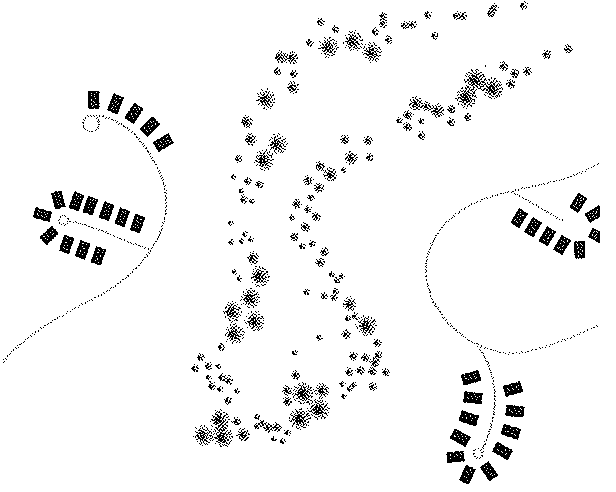
Illustration of Cluster Development. Figure 19.72.1: Cluster Development illustrates recommended cluster development.
FIGURE 19.72.1: CLUSTER DEVELOPMENT
(Ord. No. 1808, § I, 3-14-2017)
19.72.060 - Slope protection.
A.
Slope Protection Standards.
1.
Unless otherwise allowed in this Title, no development activities, including clearing, excavation, grading, and construction, are allowed on slopes greater than thirty percent.
2.
Structures shall be set back from ascending or descending slopes greater than thirty percent in accordance with the requirements of the current adopted building code.
B.
Development on Ridgelines.
1.
Unless otherwise allowed in this title, no development may break the horizon line, defined as the point where the ridge visibly meets the sky as viewed from public rights of way or trails.
2.
Unless otherwise allowed in this title, no development may be located within one-hundred feet (map distance) from either side of the crest of a protected ridgeline designated as such in an adopted county master plan or incorporated by other ordinance.
3.
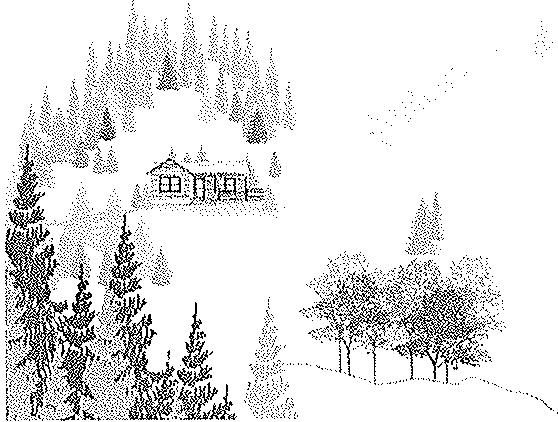
Figure 19.72.2: Ridgeline Development illustrates recommended ridgeline development.
FIGURE 19.72.2: RIDGELINE DEVELOPMENT
C.
Natural Open Space within Steep Slopes. Unless expressly allowed in this title, all areas with slope greater than thirty percent must remain in natural private or public open space, free of any development activities.
D.
Waiver of Slope Protection Standards for Lots of Record.
1.
The planning commission may only waive or modify the following slope protection standards as applied to development on lots of record and in subdivisions that were approved prior to the effective date of this chapter:
a.
Slope protection standards prohibiting development on slopes greater than thirty percent or in ridge line protection areas, as set forth above.
b.
Limitations on the crossing of slopes greater than thirty percent by any street, road, private access road or other vehicular route, as addressed in subsection 19.72.080.
2.
The planning commission may only waive these standards upon satisfaction of the following criteria:
a.
Strict compliance with the above slope protection standards.
i.
Renders the site undevelopable, or
ii.
Results in substantial economic hardship not created by the applicant or otherwise self-imposed, or
iii.
Results in a building location that requires excessive grading, vegetation removal, or driveway distances in conflict with the purposes of this chapter; and
b.
The development substantially conforms to all other development, site design, and environmental standards of this chapter and in all other applicable ordinances and codes.
3.
In granting a waiver from slope and ridge line protection standards, the planning commission may impose reasonable conditions to mitigate the impacts, if any, that the planning commission determines the proposed development has on adjacent properties and the surrounding environment.
4.
Notwithstanding its discretion to grant waivers for lots of record from the slope protection standards set forth in this chapter, in no case shall the planning commission permit development other than roads on slopes greater than forty percent.
5.
In the interest of protecting the public health, safety, and welfare, the county may pursue negotiations with a property owner to purchase their property as open space as an alternative to granting a waiver. These negotiations, as long as they are performed in good faith, shall not delay the county's processing of any land use application.
(Ord. No. 1808, § I, 3-14-2017)
19.72.070 - Grading standards.
A.
Prior to issuance of a building permit in accordance with a grading and excavation plan and report for the site approved by the development services engineer; no grading, excavation, or tree/vegetation removal (unless specifically exempted in section 19.72.110) is permitted, whether to provide for a building site, for on-site utilities or services, or for any roads or driveways.
B.
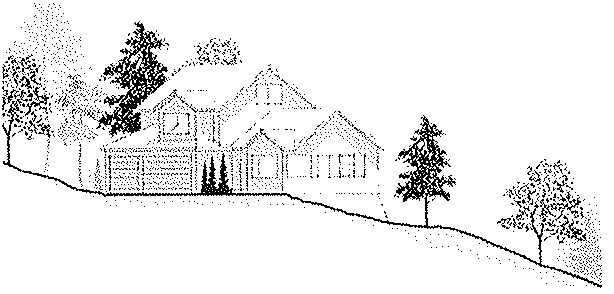
Figure 19.72.3: Cutting and Grading illustrates recommended development that minimizes cuts.
FIGURE 19.72.3: CUTTING AND GRADING
C.
The original, natural grade of a lot may not be raised or lowered more than four feet at any point for construction of any structure or improvement, except:
1.
The site's original grade may be raised or lowered eight feet if a retaining wall is used to reduce the steepness of man-made slopes, provided that the retaining wall complies with the requirements of subsection I. below.
2.
The site's original grade may be raised or lowered more than eight feet with terracing, as specified in subsection I. below.
D.
Separate building pads for accessory buildings other than private garages, (such as barns, or recreational structures such as tennis courts, swimming pools, and similar facilities) are prohibited except where the natural slope is twenty percent or less.
E.
The following limits apply to graded or filled man-made slopes:
1.
Slopes of twenty-five percent or less are encouraged wherever possible.
2.
Graded or filled man-made slopes may not exceed a slope of fifty percent.
3.
Cut man-made surfaces or slopes may not exceed a slope of fifty percent unless it is substantiated, on the basis of a site investigation and submittal of a soils engineering or geotechnical report prepared and certified by a qualified professional, that a cut at a steeper slope will be stable and will not create a hazard to public or private property.
4.
All cut, filled, and graded slopes shall be re-contoured to the natural, varied contour of the surrounding terrain.
F.
Any slope exposed or created in new development shall be landscaped or re-vegetated pursuant to the standards and provisions of this chapter.
G.
Excavation for footings and foundations shall be minimized to lessen site disturbance and ensure compatibility with hillside and sloped terrain. Intended excavation must be supported by detailed engineering plans submitted as part of the application for site plan approval.
H.
Use of retaining walls is encouraged to reduce the steepness of man-made slopes and to provide planting pockets conducive to re-vegetation.
1.
If a single retaining wall is used, one vertical retaining wall up to eight feet in height is permitted to reduce excavation and embankment.
2.
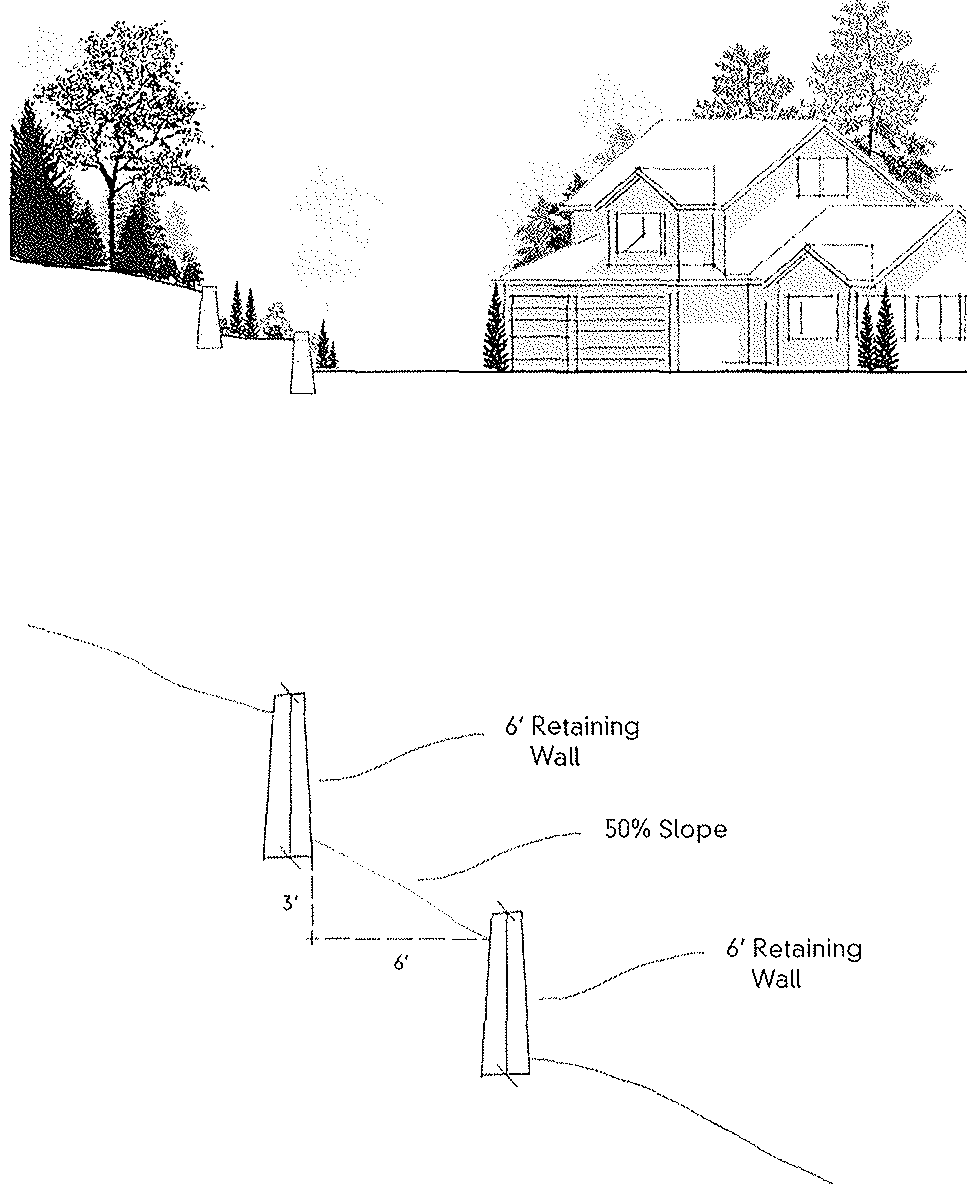
Terracing is limited to two walls with a maximum vertical height of six feet each. The width of a terrace shall be a minimum of a one-to-one ratio with the height of the wall. Terraces are measured from the back of the lower wall to the face of the upper wall. Terraces created between retaining walls shall be permanently landscaped or re-vegetated as required by this chapter.
3.
Figure 19.72.4: Terracing and Retaining Walls illustrates recommended terracing.
FIGURE 19.72.4: TERRACING & RETAINING WALLS
4.
Retaining walls shall be faced with stone or earth-colored materials similar to the surrounding natural landscape, as required by the design standards of foothills and canyons overlay zone.
5.
All retaining walls shall comply with the minimum standards of the International Building Code.
I.
Except for restoration and maintenance activities authorized by the state engineer and county flood control division, filling or dredging of water courses, wetlands, gullies, stream beds, or stormwater runoff channels is prohibited. Bridge construction is allowed pursuant to the standards set forth of this section.
J.
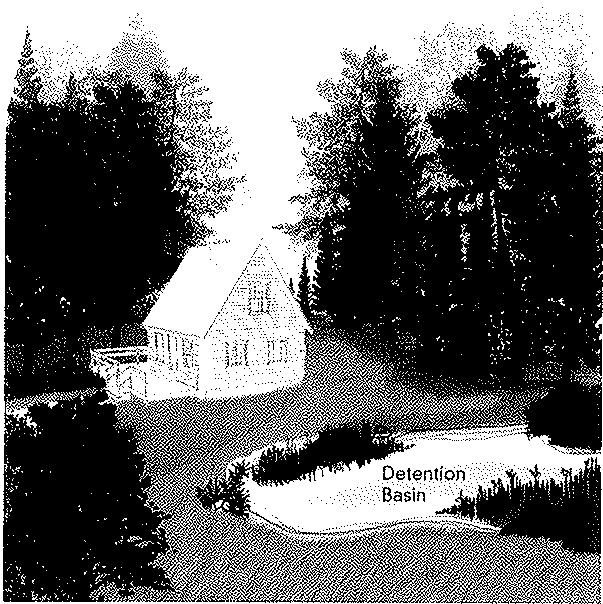
Where detention basins and other storm and erosion control facilities are required, any negative visual and aesthetic impacts on the natural landscape and topography shall be minimized. See Figure 19.72.5: Recommended Detention Basin Treatment which illustrates recommended treatment.
1.
Detention basins shall be free form, following the natural landforms. If such forms do not exist, the basin shall be shaped to emulate a naturally formed depression.
2.
Redistributing soils from basin construction to natural side slopes around the perimeter of the basin is encouraged. Side slopes are limited to a maximum slope of three-to-one. These slopes are created to filter, redirect or soften views of the basin. Total screening of basins is not required. Side slopes shall be varied to replicate natural conditions.
3.
Naturalized planting themes are required for basins. Trees and shrubs may be grouped in informal patterns to emulate the natural environment but may not reduce the volume of the basin.
4.
The ground surface of the basin and surrounding disturbed areas shall be covered with native grass mixture or other appropriate groundcover. It is the intent to provide a natural cover that does not require regular mowing or fertilization.
5.
Appropriate erosion control measures are required on all slopes.
FIGURE 19.72.5: RECOMMENDED DETENTION BASIN TREATMENT
(Ord. No. 1929, § III, 9-17-2024; Ord. No. 1808, § I, 3-14-2017)
19.72.080 - Site access.
A.
Motor vehicle access to a building or development site shall be by road (including private access road), street, alley, or driveway. Any road, street, alley, or driveway constructed after the enactment of this chapter shall comply with the applicable requirements of this section.
B.
Streets, roads, alleys, or driveways shall comply with the Salt Lake County highway ordinance and fire authority regulations.
C.
Streets, roads, alleys, or driveways may not cross slopes averaging (in any fifty feet interval) between thirty percent and fifty percent unless specifically authorized by the Planning Commission, upon the favorable recommendation of the director and public works engineer, after finding that all of the following conditions and constraints are met:
1.
No alternate location for access is feasible or available.
2.
No individual segment or increment of the street, road, alley, or driveway in excess of one hundred feet in length may cross slopes averaging between thirty percent and fifty percent.
3.
The cumulative length of individual segments or increments that cross slopes averaging between thirty percent and fifty percent may not exceed ten percent of the total length of the street, road, alley, or driveway.
4.
All crossings shall be designed and constructed to eliminate significant adverse environmental or safety impacts.
D.
Under no circumstances shall any segment of a street, road, alley, or driveway cross slopes averaging greater than fifty percent.
E.
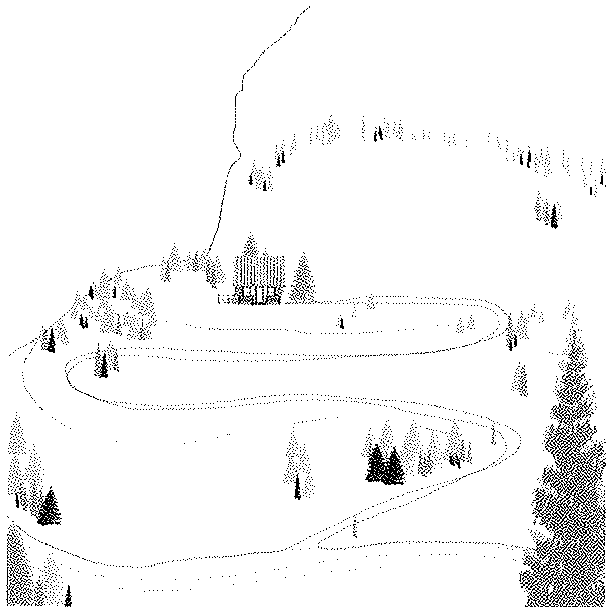
Streets, roads, alleys, or driveways shall follow natural contour lines where possible. If the natural contour lines do not reasonably facilitate access to the development site, a private access road or driveway may be designed and submitted for approval with a slope not to exceed the requirements set forth in Title 14 of the county Code. Figure 19.72.6: Recommended Access Route Configuration illustrates the access route following natural contours.
FIGURE 19.72.6: RECOMMENDED ACCESS ROUTE CONFIGURATION
F.
Grading for streets, roads, alleys, or driveways is limited to the paved portion of the right-of-way, plus up to an additional ten feet on either side of the pavement as approved. However, when developing access on slopes in excess of twenty-five percent, only the paved portion of the right-of-way used for vehicular travel, plus the minimum area required for any additional improvements, such as curb, gutter or sidewalk, may be graded. The remainder of the access right-of-way must be left undisturbed.
G.
Streets or roads may be required to provide access or maintain existing access to adjacent lands for vehicles, pedestrians, emergency services, and essential service and maintenance equipment.
H.
Private access roads and driveways shall ensure safe, convenient and adequate access to individual buildings. Driveway access to a development must be consistent with Salt Lake County general plans. In addition, provision of private access road and driveway access is subject to the following requirements:
1.
All private access roads and driveways shall comply with the Salt Lake County highway ordinances and fire authority regulations.
2.
Private access roads and driveways greater than one hundred fifty feet in length shall meet the following requirements:
a.
Provide a turnaround that meets the county's road/street and fire authority standards.
b.
Provide an adequate number of spaced turn-outs along the length of the private access road or driveway, as determined by the public works engineer in consultation with the fire authority.
3.
If variation from the above standards is sought, the applicant shall apply for a written Code Modification Approval from the fire authority that specifies any additional requirements that must be completed prior to construction.
4.
Shared private roads and driveways are encouraged between adjacent lots.
5.
Private access roads and driveways to a building site shall have direct access to a public street or to a private right-of-way previously approved by the planning commission.
6.
Finished grades shall comply with the following:
a.
Finished private access roads and driveways are limited to a maximum grade of twelve percent, or as determined by the public works engineer on a case-by-case basis based on health and safety concerns and the need for adequate access for county service providers. In no case, however, may the public works engineer approve a maximum grade greater than fifteen percent.
b.
Private access road and driveway grades within twenty feet of the roadway are limited to ten percent slope.
7.
The director has discretion to administratively offer relief of the driveway access standards by a maximum of twenty-five percent where applicable upon satisfaction of the following criteria:
a.
The modification is designed to yield:
i.
More effective preservation of existing mature trees, vegetation, riparian areas, rock outcrops, or other significant natural features of the site;
ii.
Less visual impact on the property or on the surrounding area; or
iii.
Better protection of wildlife habitat; or,
b.
Strict application of the standard(s) would render a site undevelopable.
(Ord. No. 1808, § I, 3-14-2017)
19.72.090 - Trails.
A.
All proposed development in the foothills and canyons overlay zone shall be platted consistent with county general plans regarding trails, including those portions of the adopted Salt Lake County parks and recreation master plan that address trails and trail access locations. A dedication of private land may be required for public trails if the required dedication complies with the exaction requirements set forth in Utah Code Section 17-27a-507(1).
B.
All land offered for dedication for trails or public access to trails must be verified on the ground by the director before approval of the site plan. The county has the option of rejecting the applicant's offered land dedication if the proposed dedication does not comply with the exaction requirements set forth in Utah Code Section 17-27a-507(1), or the requirements set forth in subsection (C) below; the county may suggest more suitable land for the applicant's consideration that does comply with each of these requirements.
C.
Land offered for dedication for trails must be located so that:
1.
Proposed trail construction and maintenance is feasible.
2.
Side slopes do not exceed seventy percent.
3.
Rock cliffs and other insurmountable physical obstructions are avoided.
D.
At the county's sole option, dedications for trails or public access may be of a fee or less-than-fee interest to either the county, another unit of government, or non-profit land conservation organization approved by the county.
E.
The County may allow a density bonus up to twenty-five percent of the maximum allowable density attributable to areas of the site with greater than thirty percent slope to be transferred to the developable areas of the site where the applicant demonstrates that the offered dedication is beyond what would be roughly proportional to the demand for such trails or trail access generated by the proposed development. The county may reduce the applicable minimum lot area requirement within the site's developable area if necessary to accommodate the transferred density.
(Ord. No. 1808, § I, 3-14-2017)
19.72.100 - Fences.
A.
No fence may be constructed or installed unless shown on an approved site plan.
B.
No fence in excess of forty-two inches in height may be constructed or installed outside the designated limits of disturbance on a site, unless required by the county, such as fenced corrals for horses or other animals. Fences are subject to the intersecting streets and clear visibility restrictions of this title.
C.
Fences in front yards and along roadways may not exceed forty-two inches in height.
D.
Fences in identified wildlife corridors are strongly discouraged, but in no case may exceed forty-two inches in height.
E.
Fences shall conform to the design standards of this section.
(Ord. No. 1808, § I, 3-14-2017)
19.72.110 - Tree and vegetation protection.
A.
Purpose. Protection of existing tree and vegetation cover is intended to:
1.
Preserve the visual and aesthetic qualities of the county's foothills and canyons.
2.
Encourage site design techniques that preserve the natural environment and enhance the developed environment.
3.
Control erosion, slippage, and sediment run-off into streams and waterways.
4.
Increase slope stability.
5.
Protect wildlife habitat and migration corridors.
6.
Conserve energy, in proximity to structures, by reducing building heating and cooling costs.
B.
Applicability. These provisions apply to all development in the foothills and canyons overlay zone, with the following exceptions:
1.
The removal of dead or naturally fallen trees or vegetation to protect public health, safety, and welfare, which may be removed at all times without a permit.
2.
The removal or trimming of trees or vegetation necessary to obtain clear visibility at driveways or intersections, to perform authorized field survey work, or to comply with the Utah Wildland-Urban Interface Code.
3.
The trimming of trees and landscaping which overhang roads in accordance with Salt Lake County Roadway Development Standards.
4.
The removal of trees or vegetation on land zoned or lawfully used for agricultural and forestry activities, including tree farms. In the event a site is substantially cleared of trees pursuant to such legitimate activities, no development or site plan applications for other types of development may be accepted by the county within thirty-six months from the date of the clearing.
5.
The removal of trees or vegetation pursuant to a fuels reduction plan or forest management plan in accordance with Section 19.72.115.
6.
The director has discretion to administratively offer relief of the standards in this section by up to twenty-five percent if either of the following circumstances applies:
a.
The modification is designed to yield:
i.
More effective preservation of existing mature trees, vegetation, riparian areas, rock outcrops, or other significant natural features of the site;
ii.
Less visual impact on the property or on the surrounding area; or
iii.
Better protection of wildlife habitat; or,
b.
Strict application of the standard(s) would render a site undevelopable.
C.
Tree/Vegetation Removal.
1.
Outside the Limits of Disturbance. No trees or vegetation may be removed outside the approved limits of disturbance unless specifically exempted by this section.
2.
Within the Limits of Disturbance. Significant trees removed from within the limits of disturbance shall be replaced as set forth in this section, unless specifically exempted by this section.
3.
Wildfire Hazards and Tree/Vegetation Removal. Defensible space is defined as the required space between a structure and wildland area that, under normal conditions, creates a sufficient buffer to slow or halt the spread of wildfire to a structure. Appropriate defensible space surrounding a structure is established in Utah Wildland-Urban Interface Code incorporated in UFA Wildland-Urban Interface Site Plan/Development Review Guide. If required by the Wildland-Urban Interface Code, a copy of the approved fire protection plan shall be submitted to the director for incorporation into the final approval documents.
4.
Tree/Vegetation Removal for Views Prohibited. No trees or vegetation may be removed solely for the purpose of providing open views to or from structures on a site.
D.
Replacement of Significant Trees.
1.
When a significant tree is removed from inside the established limits of disturbance, which removal is not required by wildland-urban interface standards referenced in B.2. or C.3. above, the applicant or developer shall replace such tree(s) on the lot, according to the following schedule and requirements:
a.
A significant tree that is removed shall be replaced by two trees with a minimum size of one inch caliper for deciduous trees and a minimum height of four feet for coniferous trees in locations on the lot that comply with UFA Wildland-Urban Interface Site Plan/Development Review Guide Plant Spacing Guidelines and defensible space requirements of the Utah Wildland Urban Interface Code. To the extent that is not possible, tree replacement is not required.
b.
Replacement trees shall be maintained through an establishment period of at least two years. The applicant shall post a bond in the amount of ten percent of the value of all replacement trees guaranteeing their health and survival during the first year of the establishment period.
2.
If the director determines that the remainder of the lot outside the permitted limits of disturbance is heavily wooded, defined as areas of trees with canopies that cover eighty percent of the area, and is not suitable to the planting of replacement trees, the requirement to plant replacement trees shall be waived. The director shall also waive the requirement to plant replacement trees for properties that require Class 1 ignition-resistant construction in accordance with the Wildland Urban Interface Code, as determined by the local fire authority.
E.
Revegetation and Land Reclamation Plan.
1.
On a parcel of land that has been or will be altered from its natural condition by man-made activities, a revegetation and land reclamation plan prepared and certified by a qualified professional may be required for review and approval by the director. The plan shall incorporate the elements of the fire protection plan (if required by the Wildland-Urban Interface Code), and shall indicate a timeframe for revegetation that is acceptable to the county and that takes into account optimal seasonal growing conditions.
2.
The revegetation and land reclamation plan shall depict the type, size, number, and location of any vegetation and trees to be planted and illustrate how the site will be recontoured with sufficient topsoil to ensure that vegetation is successful. All new trees shown on the plan shall:
a.
Comply with all applicable requirements of the Wildland-Urban Interface Code, including the Vegetation Clearance Guidelines;
b.
Be spaced no closer than twenty feet on center; and,
c.
Be on the Utah Fire Resistive Species list in the Wildland-Urban Interface Code.
3.
Any slope exposed or created in new development shall be landscaped or revegetated with native or adapted trees and plant material. New vegetation shall be equivalent to or exceed the amount and erosion-control characteristics of the original vegetation cover in order to mitigate adverse environmental and visual effects.
4.
On man-made slopes of twenty-five percent or greater, plant materials with deep rooting characteristics shall be selected to minimize erosion and reduce surface runoff. The planting basin shall be kept level with a raised berm around the base of the plant to help retain moisture.
5.
Topsoil that is removed during construction may be conserved for later use on areas requiring revegetation or landscaping, such as cut-and-fill slopes.
6.
The land reclamation plan may not include landscaping or other elements that conflict with the approved fire protection plan (if required by the Wildland-Urban interface Code).
F.
Tree/Vegetation Protection During Construction and Grading Activities.
1.
Limits of disturbance, as established in Section 19.72.160, shall be shown on the final plans for development and shall be clearly delineated on site with fencing or other separation methods approved by the director prior to the commencement of excavation, grading, or construction activities on the site.
2.
Within the limits of disturbance, fencing, at a minimum, shall be placed around each significant tree that will not be removed and around stands of twelve or more smaller trees. Such fencing shall be placed at the edge of the individual or outermost tree's drip zone. No construction, grading, equipment or material storage, or any other activity is allowed within the drip zone, and the fencing must remain in place until all land alteration, construction, and development activities are completed.
3.
If it is necessary to fill over the root zone, compacted soils shall be avoided by sandwiching fabric, rocks, and more fabric under the area to be filled.
4.
If fill creates a tree well or depression around a tree or shrubs, such area shall be filled in or drained so that the vegetation is not drowned by the pooling of rainfall or irrigation.
5.
If a significant tree that will not be removed has roots that are cut, the branches shall be trimmed by an amount equal to the percent of roots that were lost. Cutting more than thirty percent is prohibited. Roots shall be pruned cleanly prior to digging and not ripped off by heavy equipment. If the tree whose roots have been cut dies within a two year period, the replacement provision in section D above applies.
6.
Utility trenches near trees shall be avoided. If a line must be near a tree, tunneling, auguring, or other mitigation measures shall be used.
G.
Tree Removal not Authorized by this Section.
1.
If a significant tree(s) is removed contrary to any provision in this section, the person(s) responsible for the removal shall pay to the county the value of the tree(s).
a.
The value of the tree(s) shall be determined by a tree appraiser who is an ISA (International Society of Arboriculture) certified arborist with at least five years of experience appraising trees using the appraisal methods outlined in the current edition of "The Guide for Plant Appraisal," authored by the Council of Tree and Landscape Appraisers (CTLA). The appraiser shall prepare an appraisal report using these methods, and adding to the value from these methods an analysis of the tree(s) contributory value, i.e., the value that the tree(s) contributed to the overall value of the property on which they were located.
b.
The appraiser shall be chosen by the person(s) responsible for the removal and the county.
c.
The person(s) responsible for the removal shall pay the cost of the appraisal.
2.
If a significant tree(s) is removed contrary to this section, all development and county permitting and processing of the land use application shall be put on hold for up to sixty days from the date of county's discovery of removal. During that time, the county will inventory the significant tree(s) that were removed, and the process of valuing the tree(s) that were removed shall commence, pursuant to paragraph 1 above.
3.
The person(s) responsible for removing the significant tree(s) shall pay for the cost of site restoration, including the removal of the stump(s). The stump(s) may not be removed until an appraisal is completed pursuant to Paragraph 1. above.
4.
The person(s) responsible for removing the significant tree(s) shall also replace the tree(s) in accordance with the provisions in this section. The bond referenced in subsection (D)(1)(b) of this section shall be a surety bond for those that unlawfully remove trees.
In addition to the civil penalties provided in paragraphs 1—4 of this subsection (G), the person(s) responsible for removing the significant tree(s) may also be subject to criminal prosecution as a Class B misdemeanor for each significant tree unlawfully removed.
(Ord. No. 1949, § II, 4-14-2026; Ord. No. 1929, § III, 9-17-2024; Ord. No. 1808, § I, 3-14-2017)
19.72.115 - Forest management plan, fuels reduction plan.
A.
Definitions. For purposes of this section, the following terms have the following meanings.
"Chipping." The mechanical reduction of woody material into small pieces using a chipper or similar equipment designed to produce chips generally less than three inches in any dimension.
"DBH." Diameter at breast height, referring to the diameter of a tree trunk measured four and one-half feet from the ground on the uphill side of the tree.
"Decking." The process of gathering, sorting, and stacking logs after their removal.
"Directional felling." The technique of using precise cuts to control where a tree falls, creating a "hinge" of wood that guides its descent, even against its natural lean, to protect other trees, minimize damage, and ensure safety.
"Division." The Utah Division of Forestry, Fire, and State Lands.
"Forest litter." The collective composition of needles, leaves, small twigs and other vegetative matter that are present on the forest floor before trees and vegetation are removed.
"Fuels reduction." Removal of trees and other vegetation in accordance with a fuels reduction plan.
"Fuels reduction plan." A plan for removal of trees and vegetation that are not already dead or naturally fallen or that are not subject to WUI removal standards, in order to achieve fuel reduction and/or wildfire prevention, including for firefighter safety.
"Forest management plan." A systematic and long-term strategy for the limited removal of trees and vegetation for any of the following purposes:
1.
Conservation of natural resources and biodiversity;
2.
Sustainable timber production or other forest products;
3.
Enhancement of wildlife habitats;
4.
Reduction of invasive plants or noxious weeds;
5.
Soil and water quality conservation; or
6.
Protection of drinking water supply.
"Government land manager." A federal, state, or local public entity, other than the Division, responsible for the administration, stewardship, and regulated use of publicly owned lands, which oversees activities like conservation and protection of habitat, watershed, etc.
"Hand-held equipment." Tools and equipment that are carried and operated by a walking operator, including but not limited to chainsaws, brush cutters, and loppers.
"Heavy equipment." Machinery that is sufficiently large, powered, and specialized to perform tasks that would be impractical or unsafe to do manually, including but not limited to skid steers, equipment with tracks rather than tires, and equipment with masticator attachments.
"Invasive plants or noxious weeds." Any plant identified on the Utah Invasive Species List prepared by the United States Department of Agriculture, or the Salt Lake County Noxious Weed List.
"Ladder fuels." Vegetation of varying heights that can carry fire from ground surface into tree crowns, including low-hanging branches, shrubs, small trees, and dead material in the understory.
"Landing." A collection area, usually centrally located, to where logs or forest products are transported so the products may be disposed of.
"Limb/limbing." The process of removing the branches and limbs from a tree.
"Lop and scatter." A fuel reduction technique where tree branches are cut into smaller pieces and spread out on the forest floor instead of piling or removing them.
"Mulch." The shredding of trees and brush into small pieces on-site to create a protective, nutrient-rich ground cover.
"Professional forester." A person who has earned a bachelor of science in forestry or masters degree in forestry from a society of in subsection D.2. A site plan can be on an overhead photo, a topographical map, and/or other visual depiction of the property that is subject to the fuels reduction plan.
"Skid trail." The temporary course through which removed trees and vegetation are transported to a landing(s), without addition of any fill or other improvements.
"Slash." Any residual woody material left on the site after any type of harvest operation and usually includes tree stems, branches and foliage.
"Stand." A contiguous group of trees sufficiently uniform in age class distribution, composition, and structure, and growing on a site of sufficiently uniform quality to be a distinguishable unit.
"Stream ford." Crossing of a stream without a structure or culvert, where stream banks are low and firm, the streambed is firm, and the stream is shallow.
"Stream management zone." An area of specialized management to protect water quality by limiting soil disturbance and exposure; an area of land adjacent to a waterbody where soil disturbance is minimal and vegetative disturbance is reduced to provide a buffer for the filtration of contaminants entering the waterbody, while also maintaining cooler temperatures.
"Substantially cleared." Removal of seventy-five percent or more of trees over six inches DBH within a stand, resulting in less than thirty percent canopy cover remaining.
"Threatened or endangered species." Animals that are identified as threatened or endangered on Utah's Species of Greatest Conservation Need list maintained by the Utah Division of Wildlife Resources.
"Waterbody." Any stream, creek, river, pond, lake, reservoir, wetland, or other feature that contains or seasonally contains water.
"Watershed, protected." The Salt Lake City Watershed Area and the Salt Lake County Watershed Area defined in the Salt Lake County Health Department Watershed Regulation #14.
"Watershed, general." All watershed areas, as defined in Salt Lake County Health Department Watershed Regulation #14, not located within the protected watershed.
"Wetlands." Land designated as wetlands by the United States Army Corps of Engineers or other agency of the federal government.
B.
Findings and Authority. The county council finds that:
1.
Wildfire presents a significant and increasing threat to public health, safety, property, drinking water supplies, and ecological resources within the Foothills and Canyons Overlay Zone;
2.
Fuels reduction and forest management activities, when properly planned and implemented, reduce wildfire intensity, improve firefighter safety, and protect watershed functions;
3.
Improper tree and vegetation removal may result in soil erosion, sedimentation of waterbodies, degradation of drinking water quality, and increased flood risk; and
4.
Salt Lake County has authority to regulate land use and land-disturbing activities pursuant to its police powers to protect public health, safety, and welfare. This section is adopted pursuant to that authority.
C.
Purpose and Scope. This section recognizes the need for fuels reduction by property owners to mitigate wildfire risks on their own property, and the need for the division to implement fuels reduction and the goals of forest management plans throughout the Foothills and Canyons Overlay Zone. The section recognizes the institutional expertise of the division in preparing and implementing fuels reduction plans and forest management plans, but also its limited resources to implement these plans on behalf of all property owners within the FCOZ areas. Accordingly, this section provides for standards that will direct property owners in their fuel reduction efforts on their own property.
1.
Exceptions. The section does not apply to removal of trees or vegetation for creation of defensible space under the Utah Wildland Urban Interface Code, or that are dead or naturally fallen, both of which are allowed by Salt Lake County Code without a permit.
D.
Applicant.
1.
For forest management plans or fuel reduction plans prepared by the division and implemented by the division or its contractors on its own behalf or on behalf of property owners, the division need only submit said plans to the director for their awareness and need not make formal application to and receive approval from the director.
a.
If the division prepares either of these plans on behalf of a property owner, the division must also implement the plans itself or through its contractors.
2.
Property owners desiring to submit and implement their own fuel reduction plans are subject to the application processes and standards in this section.
a.
Property owners preparing and implementing their own plan are limited to applying for a fuels reduction plan and may not apply for approval of a forest management plan.
E.
Application. An application for approval of a fuels reduction plan shall contain the following. An applicant for approval of a fuels reduction plan need not also comply with the FCOZ development approval procedures outlined in Section 19.72.030.
1.
A project narrative that describes the following:
a.
Types of trees within stands where fuels reduction will take place.
b.
General size of existing trees and density/acre of the same in the project area.
c.
General forest health conditions of the project area, especially presence of insects and disease, as well as noxious weeds and invasive plants.
d.
The wildfire risk of the project area pursuant to maps issued by the division.
e.
General description of wildlife that are present in the project area and vicinity, including any threatened or endangered species.
f.
Existence of cultural or archeological resources or sites within the project area or vicinity.
g.
Estimated number of trees over six inches DBH to be removed, together with the tree species to be removed.
h.
Other vegetation that will be removed, including limbing and other understory vegetation removal. Indicate species of this other vegetation to be removed.
i.
The plan for disposing of trees, slash, and other vegetation that is removed.
j.
The plan for re-seeding and adding mulch or slash to skid trails on slopes greater than thirty-five percent.
k.
Estimated time required to implement the fuels reduction plan to completion.
l.
The contractor who will implement the fuels reduction plan, including the following:
(1)
The contractor's experience with specific projects in the areas of expertise outlined in subsection N.2., and references from those projects.
(2)
The contractor's experience operating the equipment outlined in subsection N.3., including how it will access this equipment.
(3)
Safety measures that the contractor will use to mitigate risk caused by implementation of the fuels reduction plan, especially removal of trees on slopes greater than thirty-five percent.
2.
A site plan showing the following:
a.
Boundaries of the parcels or lots where the fuels reduction plan is to be implemented, together with the boundaries of the project area within those parcels or lots.
b.
The location of all water bodies.
c.
The location of stream management zones within the project area.
d.
Slopes in excess of thirty-five percent, as obtained from a private study or from the county surveyor.
e.
Location of tree stands where fuels reduction will take place, including the species type and estimated number of trees over six inches DBH that will be removed from each stand.
f.
Location of landings, skid trails, and stream fords.
(1)
Also indicate portions of skid trails on slopes over thirty-five percent.
g.
Location of all existing roads and trails, together with the location of existing roads that will access the project area.
h.
Location of existing structures.
3.
A legal description of the lots or parcels in which the project area is located.
4.
Payment of the application fees for a fuels reduction plan as provided in the county fee schedule for planning and development services.
5.
For project areas of five contiguous acres or less, the director may waive or modify submittal requirements deemed unnecessary. An applicant and/or a related entity may not file multiple applications to avoid the submittal requirements of this subsection.
F.
Approval.
1.
The director shall approve an application and site plan for a fuels reduction plan if the application, site plan, and associated materials meet all of the applicable standards in this section. Approval may include reasonable conditions in accordance with applicable standards.
2.
The director may approve minor modifications to an approved fuels reduction plan during implementation where site conditions necessitate adjustment, provided the modification does not increase impacts to waterbodies, stream management zones, slopes greater than thirty-five percent, or tree removal thresholds. Minor modifications shall be documented in writing.
3.
The Director may approve a simplified fuels reduction plan for parcels of one acre or less or where tree removal is limited to ladder fuels, provided the plan demonstrates compliance with stream management zone protections and slope limitations. An applicant and/or a related entity may not file multiple applications to circumvent the requirements of a full fuels reduction plan.
G.
Appeal. Denial of an application for a fuels reduction plan is appealable pursuant to Section 19.92.050.
H.
Tree and vegetation removal standards.
1.
No removal of aspen.
2.
No removal of trees larger than sixteen inches DBH.
3.
No limit on removal of the following:
a.
Noxious weeds or invasive plants.
b.
Limbs of any tree up to six feet from ground, measured on uphill side of tree.
4.
Where a site is substantially cleared of trees pursuant to an approved fuels reduction plan, no development or site plan applications for new structures may be accepted within the affected stand for thirty-six months from the date of the clearing. This restriction shall not apply to structures constructed by public utilities.
I.
Stream Management Zones.
1.
The following stream management zones shall be designated on both the site plan and on the ground of the project area:
a.
A zone fifteen feet horizontally from the ordinary high-water mark of a water body.
b.
In a protected watershed, a zone seventy-five feet horizontally from the ordinary high-water mark of a water body. If any portion of this zone has slopes in excess of thirty-five percent, the zone shall be one hundred feet.
c.
In a general watershed, a zone thirty-five feet horizontally from the ordinary high-water mark of a water body. If any portion of this zone has slopes in excess of thirty-five percent, the zone shall be fifty feet.
2.
Designation of stream management zones shall be by temporary paint, flagging, and/or signage.
3.
The following standards apply to the stream management zone in subsection I.1.a:
a.
Except for limbing of trees or removal of noxious weeds or invasive plants, no disturbance of land or vegetation;
b.
No construction of culverts or bridges is allowed to cross streams in order to implement a fuels reduction plan; only use of existing bridges, or a stream ford, is allowed.
4.
Subject to the limitations in subsection I.3., the following standards apply to removal of trees and vegetation within the stream management zones in subsections I.1.b. and c.:
a.
No use of equipment other than hand-held equipment. This prohibition includes equipment on existing roads, except that existing legally established roads within stream management zones may be used for access provided no ground disturbance occurs outside the existing road.
b.
No trees, slash, or mulch in water bodies as a result of implementing fuels reduction plan.
c.
Remove slash caused by implementation of fuels reduction plan; forest litter can remain.
d.
No skid trails that cross water bodies.
e.
No use, mixture, storage, or handling of chemicals or hazardous/toxic materials.
(1)
No cleaning, fueling, or servicing equipment. No cleaning containers of fuels, pesticides or herbicides.
(2)
No storage of fuel, oil, or antifreeze.
(3)
No draining used oil, fuel, or antifreeze onto ground anywhere in the project area.
(4)
Pesticide may not be used anywhere in a project area unless allowed by county health department regulations.
J.
Heavy Equipment, Skid Trails, Landings.
1.
Heavy Equipment. All heavy equipment must be thoroughly cleaned and decontaminated off-site prior to usage within the project area to remove oil, seeds, plant material, insects, invertebrates, and other biological material.
a.
The applicant shall provide written notification to director of compliance with this subsection prior to commencement of work.
b.
Compliance with this subsection may be verified during any of the inspections outlined in subsection P.
2.
Skid trails.
a.
Minimize the number of skid trails by using directional felling methods.
b.
Revegetate any portion of skid trail in excess of thirty-five percent slope in accordance with section 19.72.110.E. Director may inspect revegetation in subsequent growing seasons to verify that revegetation has resulted in the growth of live vegetation in areas that had vegetation prior to the fuels reduction plan implementation.
c.
Fertilizers and other growth stimulators may only be used if permitted by county health department regulations.
3.
Landings.
a.
No portion of landings may be on slopes greater than thirty-five percent.
b.
Number of landings may be minimized by decking removed trees along existing roads so long as no portion of the road is obstructed.
K.
Slope. The following standards apply to implementation of a fuels reduction plan on slopes in excess of thirty-five percent:
1.
No heavy equipment or vehicles, including commercial vehicles, are allowed unless such vehicles are on a previously approved and permitted road.
2.
Hand-held equipment is allowed to implement a fuels reduction plan if the applicant proposes measures to mitigate the risk of falling and rolling timber.
3.
Vehicles, including commercial vehicles, heavy equipment, and hand-held equipment are allowed to implement a fuels reduction plan on slopes less than thirty-five percent, subject to the other standards in this section, including the following:
a.
An applicant using heavy equipment is required to submit a plan with its application for keeping soil moist in areas where heavy equipment will be used, and to implement that plan in order to mitigate wildfire risk during operation of heavy equipment. Implementation of this plan is subject to any of the inspections outlined in subsection P.
L.
Roads. No new roads or trails shall be created for purposes of implementing a fuels reduction plan unless they are first applied for and approved pursuant to applicable grading and land use requirements. This prohibition does not apply to skid trails.
M.
Disposal. Any or a combination of the following are allowed methods of disposal of removed trees and vegetation:
1.
Hauling to a disposal facility that accepts green waste.
2.
Chipping in place.
a.
Wood chips may not exceed two inches in average depth.
3.
Cutting and storing or selling firewood.
a.
Firewood may be stored on-site so long as doing so complies with the version of the Wildland Urban Interface Code currently adopted by the State of Utah.
4.
Slash may be lopped and scattered.
5.
Burning is only permitted if doing so is allowed and a permit obtained pursuant to county health department's solid fuel burning regulation, Utah Administrative Rules for General Burning, and other applicable regulations.
N.
Time.
1.
A fuels reduction plan with an estimated completion date of longer than one year must submit a phasing plan.
a.
A phasing plan shall be in one-year increments.
b.
Each phase of a phasing plan must include all the requirements of an individual fuels reduction plan.
2.
A fuels reduction plan and each phase of a phasing plan shall expire three years after approval. A new fuels reduction plan may be submitted after expiration of the plan or phase.
3.
To protect fowl during nesting season, a fuels reduction plan may not be implemented between April 1—July 15. Exceptions to this limitation shall be approved by the director if a professional forester or staff from the Utah Division of Wildlife Resources recommend an exception with conditions to mitigate the risk of harm to nesting fowl, in accordance with wildlife management best practices.
O.
Contractors. A fuels reduction plan must be implemented by a contractor with all of the following qualifications:
1.
Experience and expertise in at least one of the following areas, as established in subsection E.1.l.:
a.
Land/natural resource management services;
b.
Fuel reduction services for wildfire prevention/mitigation;
c.
Tree felling/removal/trimming;
d.
Vegetation/land clearing.
2.
Experience operating and access to equipment for mastication, chipping, or hauling removed trees and vegetation, as established in subsection E.1.l.
3.
Due to their experience with fuel reduction projects and their existing contractors who implement these projects, government land managers may use contractors of their choosing or those required by multi-party grants to implement their fuels reduction plans.
P.
Inspections. Implementation of a fuels reduction plan shall be subject to the following inspections:
1.
A site visit prior to commencement of implementation of the fuels reduction plan.
a.
For any property within the protected watershed, this site visit will include the presence of Salt Lake Public Utilities or the county health department to ensure that all water bodies are accounted for on the site plan pursuant to subsection E.2.b. and that all stream management zones are marked on the ground pursuant to subsection H.2. Such site visits shall not take place during winter conditions when snow prevents verification of all water bodies.
b.
This site visit will also ensure that all other requirements of this section for commencement of fuels reduction plan implementation have been satisfied.
2.
For fuels reduction plans with an estimated completion time of longer than sixty days, scheduled inspections may take place at reasonable times agreeable to the applicant and the director.
3.
A final inspection upon completion of the fuels reduction plan to verify compliance with this section.
4.
In addition to these scheduled inspections, the director retains the authority under Section 19.94.020 of this code to conduct unscheduled inspections to verify compliance with this section.
Q.
Plans that Deviate from Standards.
1.
Fuels reduction plans that deviate from the standards in subsections H.—J. shall be approved if:
a.
The plan is prepared by a professional forester;
b.
The plan is consistent in all respects with Utah's Forest Water Quality Guidelines issued by the division, and all applicable county regulations; and
c.
The plan is implemented by a contractor from the division's approved rangeland contractor list, or for plans approved for government land managers, a contractor chosen by the government land manager or via a multi-party grant.
R.
Emergency Fuels Reduction.
1.
The director may authorize emergency fuels reduction activities without prior plan approval where an imminent wildfire risk exists, such as windthrow, insect infestation, drought conditions, or proximity to active wildfire.
2.
Emergency authorization shall be in writing and shall be limited to the minimum activity necessary to mitigate the immediate hazard.
3.
A fuels reduction plan documenting the completed emergency work shall be submitted within thirty days of commencement.
S.
Penalties. Failure to comply with an approved fuels reduction plan or this section is subject to the applicable penalties outlined in Section 19.72.110.G and Chapter 19.94.
(Ord. No. 1949, § III, 4-14-2026)
19.72.120 - Natural hazards.
A natural hazards report, together with geotechnical, slope, soils, and grading reports, may be required as provided in 19.75,030 "Geological Hazards" and Chapter 19.74 "Floodplain Hazards." The county shall review all natural hazards reports and recommendations in the report and may require, consistent with the above ordinances, that preliminary conditions be satisfied prior to final approval of the site plan.
(Ord. No. 1808, § I, 3-14-2017)
19.72.130 - Stream corridor and wetlands protection.
A.
Purpose. The following requirements and standards are intended to promote, preserve, and enhance the important hydrologic, biological, ecological, aesthetic, recreational, and educational functions of stream corridors, associated riparian areas, and wetlands.
B.
Applicability. Unless previously delineated by Salt Lake County, boundaries for stream corridors and wetland areas are delineated according to the following standards:
1.
Stream corridor and wetland area delineation shall be performed by a qualified engineer or other qualified professional with demonstrated experience and expertise to conduct the required site analysis. Delineations are subject to the approval of the director.
2.
Stream corridors shall be delineated at the ordinary high-water mark. Stream corridors do not include irrigation ditches that do not contribute to the preservation and enhancement of fisheries or wildlife.
3.
Boundary delineation of wetlands are established using the current Federal Manual for Identifying and Delineating Jurisdictional Wetlands jointly published by the U.S. Environmental Protection Agency, the Fish and Wildlife Service, the Army Corps of Engineers, and the Soil Conservation Service.
C.
Prohibited Activities. No development activity may be conducted that disturbs, removes, fills, dredges, clears, destroys, or alters, stream corridors or wetlands, including vegetation, except for restoration and maintenance activities allowed in this title as approved by Salt Lake County flood control, the state engineer's office, and other applicable authorities.
D.
Setbacks.
1.
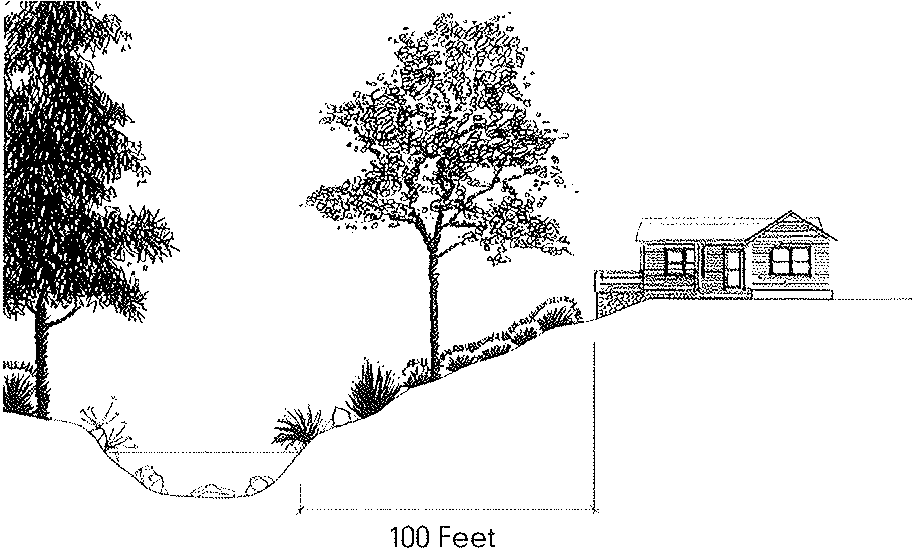
Perennial Stream Corridors. All buildings, accessory structures, parking lots, and all on-site wastewater disposal systems shall be set back at least one-hundred feet horizontally from the ordinary high-water mark of perennial stream corridors. (See Figure 19.72.7: Setback from Stream Corridor)
FIGURE 19.72.7: SETBACK FROM STREAM CORRIDOR
2.
Wetlands. All buildings, accessory structures, and parking lots shall be set back at least fifty feet, and all on-site wastewater disposal systems shall be set back at least one hundred feet horizontally from the delineated edge of a wetland.
3.
Ephemeral Streams. Leach fields shall be set back one hundred feet from the channel of an ephemeral stream. All buildings, accessory structures, and parking areas or parking lots shall be set back at least fifty feet from the channel of an ephemeral stream. The zoning administrator may recommend to the land use authority modifications to this prohibition upon finding that the modification is likely to cause minimal adverse environmental impact or that such impact may be substantially mitigated. For properties located within the Salt Lake City watershed, the zoning administrator shall consult with Salt Lake City public utilities prior to making a recommendation.
4.
Natural Open Space/Landscape Credit for Setback Areas. All setback areas are credited toward any relevant private natural open space or landscape requirements, but are not credited toward trail access dedication requirements.
E.
Preservation of Vegetation. All existing vegetation within the stream corridor or wetland setback area shall be preserved to provide adequate screening or to repair damaged riparian areas, supplemented where necessary with additional native or adapted planting and landscaping.
F.
Bridges. Any bridge over a stream corridor and within the stream setback area may be approved provided the director affirms that the bridge is planned and constructed in such a manner as to minimize impacts on the stream corridor.
G.
Modification of Setbacks.
1.
The director has discretion to administratively reduce the perennial stream corridor and wetlands setbacks by a maximum of twenty-five percent where applicable upon satisfaction of the following criteria:
a.
The modification is designed to yield:
i.
More effective preservation of existing mature trees, vegetation, riparian areas, rock outcrops, or other significant natural features of the site;
ii.
Less visual impact on the property or on the surrounding area; or
iii.
Better protection of wildlife habitat; or,
b.
Strict application of the standard(s) would render a site undevelopable.
H.
Perennial Stream Corridor and Wetland Setback Requirements for Lots of Record.
1.
Existing Legally-Established Structures. A structure legally existing on the effective date of this chapter that is within fifty feet of a perennial stream corridor or wetland may be renovated, altered, or expanded or reconstructed if damaged or destroyed by fire, flood, or act of nature as follows:
a.
Renovations or alterations or reconstruction of a damaged or destroyed structure that will not increase the gross floor area of the original, existing structure are permitted.
b.
Renovations, alterations, or expansions that will increase the gross floor area of the original, existing structure are limited to a cumulative total expansion of no more than two hundred fifty square feet of gross floor area located closer than fifty feet to a perennial stream corridor or wetland.
c.
Renovations, alterations, expansions, or reconstruction of a damaged or destroyed structure that increase the gross floor area of the original, existing structure but which are no closer than fifty feet to a perennial stream corridor or wetland are permitted, subject to compliance with all other applicable regulations and standards.
2.
New Structures. For new developments, the director may authorize construction to no closer than fifty feet from a perennial stream corridor or to no closer than twenty-five feet from a wetland subject to the following criteria:
a.
Denial of an encroachment of more than the twenty-five percent into the stream or wetlands setback area allowed by Section 19.72.130(G) would render the site undevelopable.
b.
No alternative location for the development further away from the stream or wetland is feasible or available.
c.
Creative architectural or environmental solutions have been incorporated into the development proposal in order to ensure that the purposes of stream corridor protection, as set forth in subsection 19.72.130 are achieved.
d.
No federal or state laws, or other county ordinances or regulations are violated.
3.
Limitation. In allowing for the preceding improvements, the director may not:
a.
Increase the maximum limits of disturbance set forth in subsection 19.72.160.
b.
Authorize the encroachment of more than five-hundred square feet of gross floor area of structural improvements (cumulative total) within the land area between seventy-five feet and fifty feet from perennial stream corridor or within the land area between fifty and twenty-five feet of a wetland.
4.
In the interest of protecting the public health, safety, and welfare, the county may pursue negotiations with a property owner to purchase their property as open space as an alternative to granting a waiver. These negotiations, as long as they are performed in good faith, shall not delay the county's processing of any land use application.
(Ord. No. 1808, § I, 3-14-2017)
19.72.140 - Wildlife habitat protection.
A.
Purpose. Salt Lake County finds that its foothills and canyon areas provide important wildlife habitat for a wide variety of animal and bird species. In combination with the tree/vegetation and stream corridor/wetlands protection standards, the following requirements have been developed to promote and preserve valuable wildlife habitats and to protect them from adverse effects and potentially irreversible impacts.
B.
Development Limitations in Areas of Critical Habitat. All development subject to these provisions shall incorporate the following principles in establishing the limits of disturbance and siting buildings, structures, roads, trails, and other similar facilities:
1.
Facilitate wildlife movement across areas dominated by human activities by:
a.
Maintaining connections between adjacent natural open space parcels and areas, and between natural open space parcels and areas in close proximity.
b.
Prohibiting fencing types that inhibit the movement of wildlife species.
2.
Mimic features of the local natural landscape by:
a.
Minimizing disturbance to trees, the understory, and other structural landscape features during construction.
b.
Providing selective plantings on the property that enhance the habitat value for the endemic wildlife population.
(Ord. No. 1808, § I, 3-14-2017)
19.72.150 - Traffic studies.
A.
Traffic and Parking Impact Study Required. A traffic and parking impact study is required as part of the site plan application for the following developments in the foothills and canyons overlay zone:
1.
All residential development that creates a projected increase in traffic volumes equal to or greater than ten percent of current road/street capacity as determined by the public works engineer.
2.
All non-residential development that creates a projected increase in traffic volumes equal to or greater than fifty trip-ends per peak hour.
3.
All development that affects a roadway identified by the county transportation engineering manager as having an unacceptable level of service (LOS) based on AASHTO guidelines and the Highway Capacity Manual.
B.
Required Submittals. A traffic and parking impact study must address, at a minimum, the items specified in the "Submittal Requirements for Development Proposals in the Foothills and Canyons Overlay Zone," which is incorporated by reference.
C.
Review and Improvements. All development subject to this section must demonstrate that the peak hour levels of service on adjacent roadways and at impacted intersections after development will comply with current Salt Lake County transportation and impact mitigation policies and recommendations.
D.
Circulation and Access Plan. All development required by this subsection to submit a traffic and parking impact study is also required to provide a circulation and access plan to ensure free-flowing access to the site and avoid congestion and unsafe conditions on adjacent public roads and streets. The circulation and access plan may be combined with the required traffic and parking impact study.
(Ord. No. 1808, § I, 3-14-2017)
19.72.160 - Limits of disturbance.
A.
Scope and General Requirements. "Limits of disturbance" must be established on the site plan, indicating the specific area(s) of a site where construction and development activity must be contained. (See Figure 19.72.8).
FIGURE 19.72.8: ILLUSTRATION OF LIMITS OF DISTURBANCE
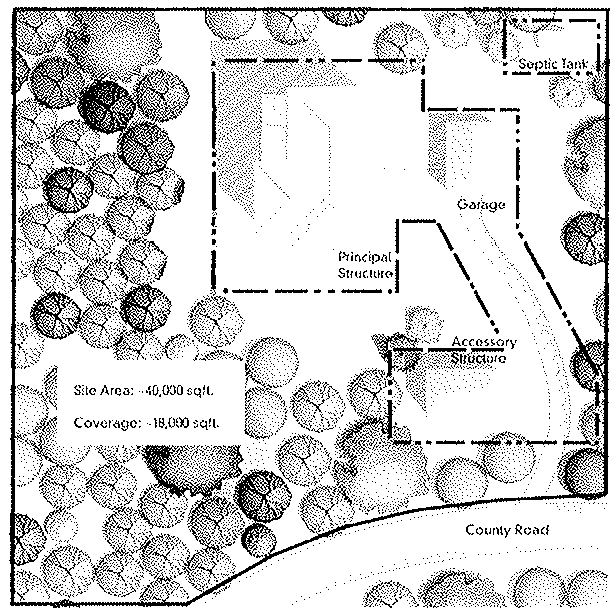
B.
Purpose for Limits of Disturbance. Limits of disturbance are established for the following purposes:
1.
Minimizing visual impacts from the development including, but not limited to: screening from adjacent and downhill properties, ridgeline area protection, and protection of scenic views.
2.
Erosion prevention and control including, but not limited to, protection of steep slopes and natural drainage channels.
3.
Fire prevention and safety including, but not limited to, location of trees and vegetation near structures.
4.
Preservation of tree cover, vegetation, and the site's natural topography.
5.
Conservation of water including, but not limited to, preservation of existing native vegetation, reduction in amounts of irrigated areas, and similar considerations.
6.
Wildlife habitat protection including, but not limited to, preservation of critical wildlife habitat and migration corridors and routes.
7.
Stream corridor and wetland protection and buffering.
C.
Limits of Disturbance May Be Noncontiguous. Limits of disturbance necessary to accommodate proposed development may be noncontiguous in order to best achieve the above purposes.
D.
Maximum Limits of Disturbance.
1.
For single family residential uses on lots or parcels less than one acre in size, the limits of disturbance are limited to twenty thousand square feet.
2.
For single family residential uses on lots or parcels one acre in size or greater, the limits of disturbance are limited to twenty thousand square feet plus an additional square footage of twenty percent of the acreage over one acre.
3.
For all other uses, the maximum limits of disturbance shall be determined by the director on a case by case basis in harmony with the purposes of FCOZ stated in 19.72.010 to accomplish the purposes set forth in subsection B of this section.
E.
Modification of Limits of Disturbance.
1.
The director has discretion to administratively increase the limits of disturbance by a maximum of twenty-five percent where applicable upon satisfaction of the criteria set forth below:
a.
The modification is designed to yield:
i.
More effective preservation of existing mature trees, vegetation, riparian areas, rock outcrops, or other significant natural features of the site;
ii.
Less visual impact on the property or on the surrounding area; or
iii.
Better protection of wildlife habitat; or,
b.
Strict application of the standard(s) would render a site undevelopable.
(Ord. No. 1808, § I, 3-14-2017)
19.72.170 - FCOZ design standards.
A.
Purpose. As stated in 19.72.010, the general purpose of design standards is to promote development that balances the rights of the landowner with protection of the foothill and canyon environment. These standards are intentionally broad to allow flexibility in design, compatibility with varying features of the natural landscape, and consistency with the following purposes:
1.
Preserve and enhance the beauty of the landscape by encouraging the retention of natural topographic features, such as drainage swales, streams, slopes, ridge lines, rock outcroppings, vistas, natural plant formations, trees, and similar features.
2.
Encourage planning and design of development and building sites that balances safety, recreational opportunity, economic development, and enjoyment of property rights, while adapting development to, and preserving natural terrain.
3.
Establish a foundation for development in sensitive lands to insure a more harmonious relationship between man-made structures and the natural setting.
4.
Direct new development in the canyons and foothills toward areas meeting suitability criteria, as outlined in the Wasatch Canyons general plan and other applicable general or community plans.
B.
Advisory or Mandatory Design Standards. The development and design standards set forth in this chapter fall into two categories: "advisory" standards and "mandatory" standards. Design standards that are advisory encourage voluntary adaptation. Development within the foothills and canyons overlay zone is to comply with all of the mandatory standards unless alternative design is approved by the planning commission upon a finding that the alternative design is in harmony with the purposes of FCOZ as stated in Section 19.72.010. The design standards and categories are summarized below in Table 19.72.1: FCOZ Design Standards.
|
SALT LAKE COUNTY, UTAH
TABLE 19.72.1: FCOZ DESIGN STANDARDS | ||
|---|---|---|
| DESIGN STANDARDS | ||
| Mandatory | Advisory | A. Select an appropriate site |
| X | A site must be suitable for the type of building or use being planned without major alterations to the site. | |
| X | Buildings or uses shall comply with this chapter and all applicable state and federal laws, recognizing the natural or man-made restraints on particular sites such as slope, soil instability, landslides, avalanche, or flooding. (See, for example, Section 19.72.120 (Natural Hazards) and Chapter 19.74 (Floodplain Hazard Regulations).) | |
| Mandatory | Advisory | B. Site buildings in a manner that preserves existing land forms See Figure 19.72.9 |
| X | Each building should be located so that it does not dominate the landscape. The best way to decrease visual impacts is to locate the project as far away from prominent viewing locations as possible. | |
| X | Visually prominent areas of the site shall be left in their natural condition with the exception of areas necessary for access. Structures shall be screened using existing land forms and vegetation. (See subsection 19.72.110 (Tree and Vegetation Protection).) | |
| X |
Where practical, buildings should be placed in the following locations on a site:
1. Within tree masses to screen buildings 2. At the edge of trees or land masses overlooking natural open space 3. In open areas where they are not visible from roads, trails, or other public lands. | |
FIGURE 19.72.9: PRESERVE EXISTING LAND FORMS
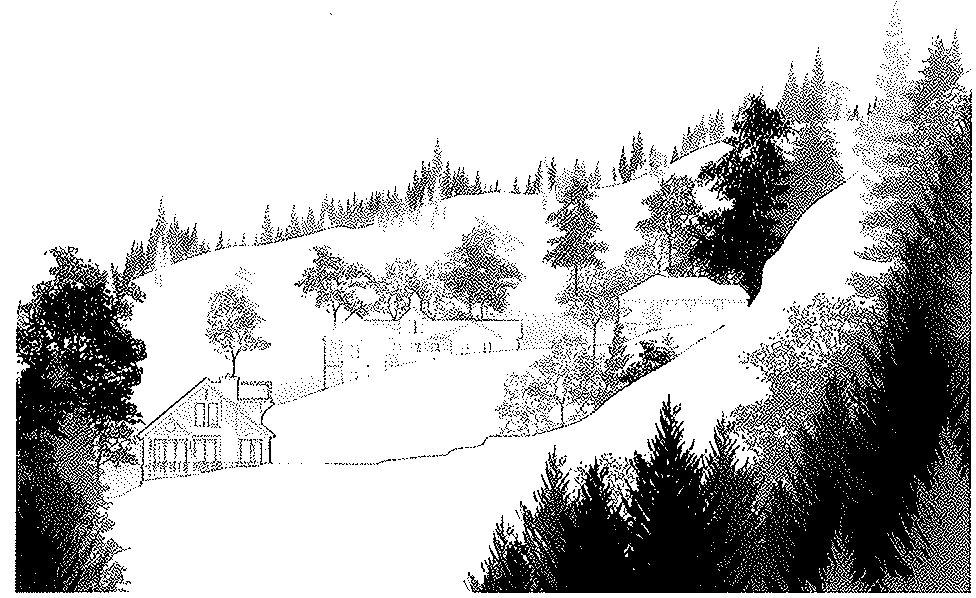 | ||
| Mandatory | Advisory | C. Site buildings so they do not protrude into significant viewscapes. See Figure 19.72.10 |
| X | Buildings should be designed to fit their sites and to leave natural massing and features of the landscape intact. Each building should be designed as an integral part of the site rather than an isolated object at odds with its surroundings. | |
| X | Where feasible, views should be maintained both to the site and to features beyond, as seen from public rights-of-way, trails, and other public lands. Projects should not be located on prominent topographic features where they dominate views or unnecessarily obscure the views of others. | |
FIGURE 19.72.10: PRESERVE SIGNIFICANT VIEWS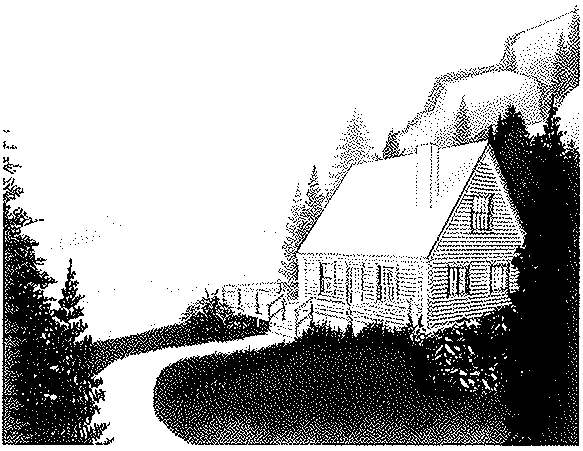 | ||
| Mandatory | Advisory | D. Site buildings so their form does not break prominent skylines See Figure 19.72.11 |
| X | Buildings shall be sited at less visible places and designed so they are not obtrusive, do not loom over the hillside, and do not break prominent skylines from key vantage points. Skylines are ridges or hilltops on the horizon line that do not have backdrops behind them as viewed from key vantage points. Heavily traveled public roads located below skylines or hilltops are key vantage points. | |
FIGURE 19.72.11: RIDGELINE DEVELOPMENT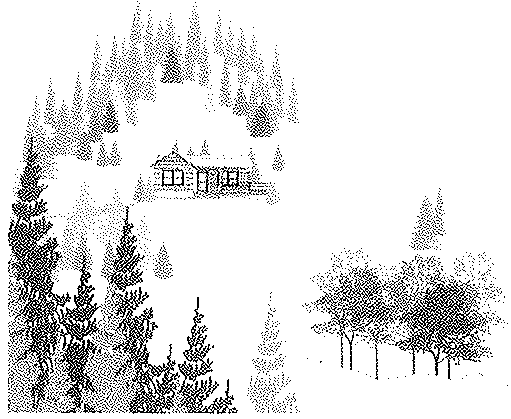 | ||
| Mandatory | Advisory | E. Site buildings to preserve significant trees and vegetation. See Figure 19.72.12 |
| X | Buildings shall be sited to keep removal of significant trees and vegetation to a minimum. (See section 19.72.160 (Limits of disturbance), 19.72.110 (Tree and vegetation protection.) | |
FIGURE 19.72.12: PRESERVE SIGNIFICANT VEGETATION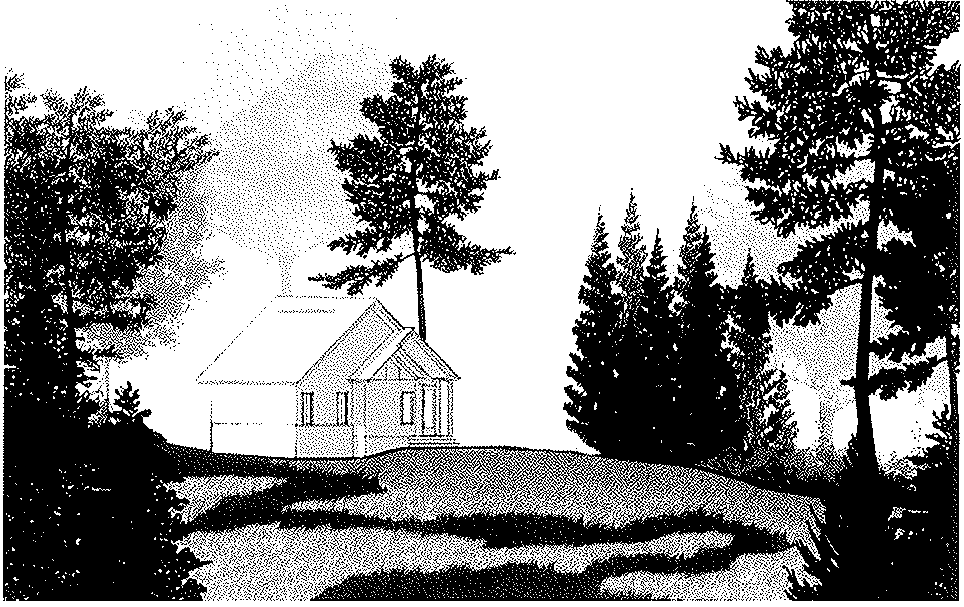 | ||
| Mandatory | Advisory | F. Cluster buildings and parking, and coordinate neighboring developments. See Figure 19.72.1 |
| X | Clustering is encouraged to reduce land disturbance and the cost of providing services, road and parking area maintenance, snow removal, etc. (See Section 19.72.080 (Site Access).) | |
| X | Cooperative, coordinated development and the sharing of services, infrastructure, facilities, and parking among adjoining landowners is encouraged. | |
| Mandatory | Advisory | G. Locate parking facilities to minimize their visual impact. See Figure 19.72.13 |
| X | When visible from publicly used roads, parking facilities shall be screened to blend into the natural environment. Parking lot design that requires backing onto a public street is prohibited. (See Section 19.72.080 (Site Access) | |
| X | Parking facilities should be located to the rear or side of main buildings if possible when a site has a lot width of one hundred feet or more. | |
| X | Parking facilities shall be designed consistent with the existing topography. | |
| X | Parking facilities shall provide adequate snow storage areas. | |
FIGURE 19.72.13: PARKING LOCATION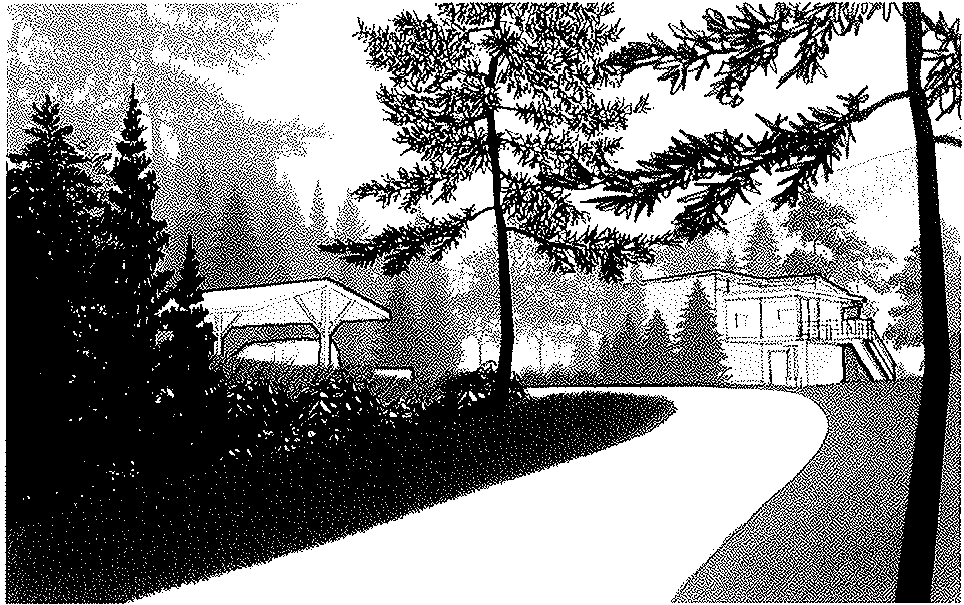 | ||
| Mandatory | Advisory | H. Place utility lines underground |
| X | When possible, utilities shall be placed underground and within existing roadways or in established shoulders to minimize the impact to existing natural features, such as natural vegetative patterns and land forms. | |
| X | Tree cutting for utility corridors shall be minimized to reduce visual impacts. All disturbed areas shall be re-vegetated. (See Section 19.72.110 (Tree and Vegetation Protection).) | |
| Mandatory | Advisory |
I. Design buildings to solidly meet the ground plane. See Figure 19.72.14 |
| X | Building designs that require a strong structural statement, such as extensive cantilevers or cuts and fills, are prohibited on sensitive hillsides with slopes greater than thirty percent, wetlands, streams, or hillsides with soil instability consistent with this chapter. | |
| X | Buildings shall firmly meet the ground. Placing buildings on piers such that exterior walls do not continue down to the ground is prohibited, with the exception of piers that support decks. | |
FIGURE 19.72.14: STRUCTURES MEET THE GROUND PLANE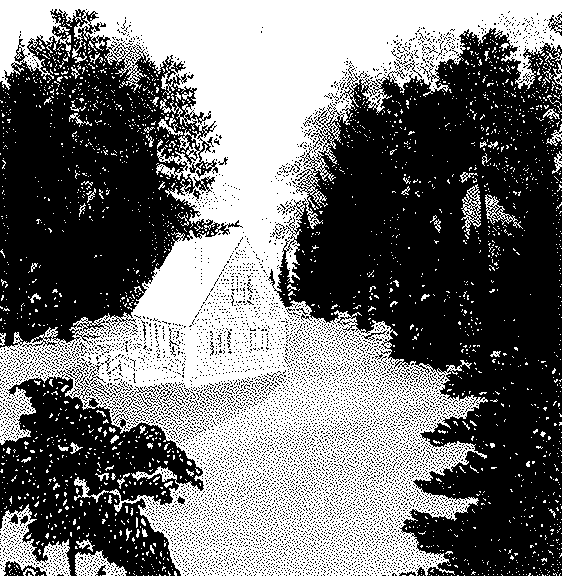 | ||
| Mandatory | Advisory | J. Design buildings on hillsides to follow the natural terrain. See Figure 19.72.15 |
| X | Buildings shall be located to minimize earth work and land disturbance. | |
| X | Buildings shall be designed to follow natural contours rather than modifying the land to accept a building design not tailored to the site. (See Section 19.72.070 (Grading)) | |
FIGURE 19.72.15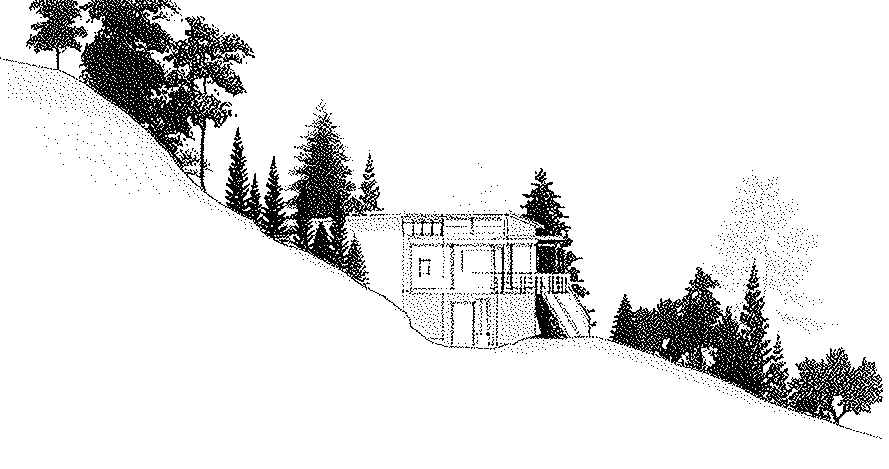 | ||
| Mandatory | Advisory | K. Design buildings to minimize mass and scale See Figure 19.72.16 |
| X | Building designs shall incorporate changes in the planes of walls and changes in the slope and height of roof lines to add variety, create visual interest, and minimize scale. | |
| X | The massing of buildings shall be scaled to harmonize and achieve balance with the natural features of the specific site. | |
| X | Roof lines and building mass shall echo the angles and shapes repeated in the natural landscape. | |
| X | Building mass and wall lines shall be broken up to complement natural canyon settings and slopes. | |
FIGURE 19.72.16: MASS AND SCALE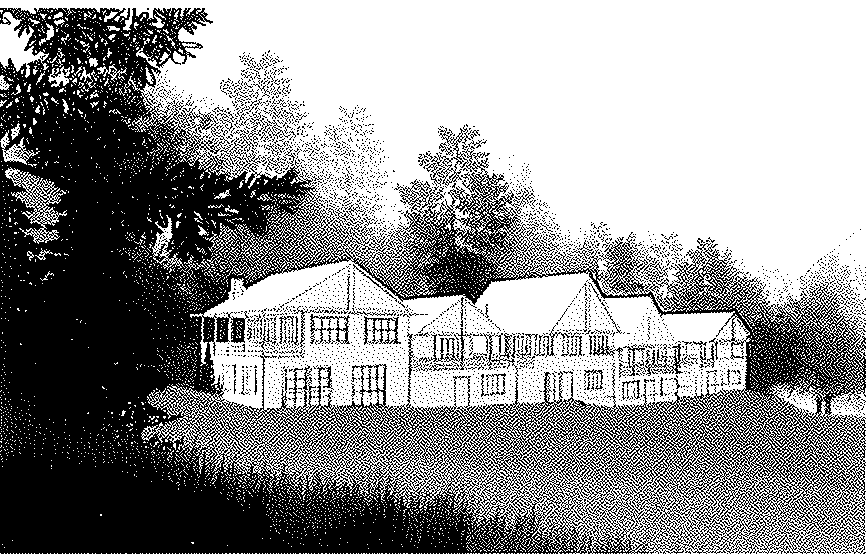 | ||
| Mandatory | Advisory | L. Select appropriate building materials and colors |
| X | Predominant tones on exterior walls shall tend toward neutral colors, replicating natural textures—for example, warm earthy hues; dark green of forests; whites, greys, and grey-brown of the mountains; the tan of grasses; and similar colors. Bright, harshly contrasting color combinations are prohibited. Paint finishes shall have low levels of reflectivity. | |
| X | The use of self-weathering metals is encouraged. Chemically treating wood so that it can be allowed to self-weather is also encouraged. | |
| Mandatory | Advisory | M. Use fire-resistant roof surfacing materials that blend with the colors of the adjacent landscape. |
| X | The color of roof surfacing materials shall blend with the surrounding landscape such as brown, tan, dark green, grey, etc. | |
| X | Flammable wood roofing shingles are prohibited in the canyons or foothills. | |
| Mandatory | Advisory | N. Preserve existing trees and vegetation |
| X | Significant trees and vegetation shall be preserved as provided in Section 19.72.110. | |
| X | When landscaping within the thirty-foot fire-break area, the use of fire-resistant plants that meet the Wildland-Urban Interface Code is required. | |
| X | Dryland species of plants shall be selected for slope re-vegetation. | |
| Mandatory | Advisory | O. Landscape in order to retain the original character and harmony among the various elements of a site. |
| X | Landscaping shall incorporate natural features such as trees, significant vegetative patterns, interesting land forms, rocks, water, views, and orientation. | |
| X | Landscaped areas should be an integral part of the development project, and not simply located in left-over space on the site. New planting should blend in with the existing landscape. | |
| X | All disturbed areas shall be re-vegetated using native or adapted plant species and materials characteristic of the area. | |
| X | Use of fire-resistant plants is encouraged. | |
| Mandatory | Advisory | P. Limit site grading for buildings to preserve existing land forms. See Figure 19.72.17 |
| X | Building designs that require extensive cut and fills are prohibited. See Section 19.72.070. | |
| X | Modification of the natural terrain should be minimized. | |
| X | Slopes steeper than thirty percent shall not be disturbed except as allowed by this chapter. | |
| X | Buildings, driveways, and roads shall follow the natural contours of the site as feasible, and comply with county excavation, grading, and erosion control standards. | |
FIGURE 19.72.17: BUILDINGS DESIGNED TO LIMIT GRADING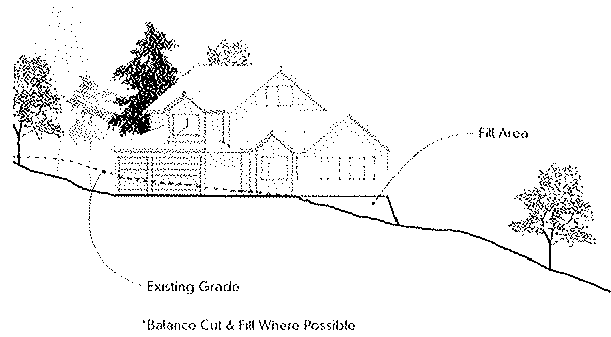 | ||
| Mandatory Standard | Advisory Standard | Q. Preserve natural drainage patterns in site design. See Figure 19.72.18 |
| X | All final excavation, grading, and drainage plans shall conform to applicable county excavation, grading, and erosion control standards. | |
| X | Development shall preserve the natural surface drainage pattern unique to each site. Grading plans shall ensure that drainage flows away from structures, especially structures that are cut into hillsides. | |
| X | Development must prevent negative or adverse drainage impacts on adjacent and surrounding sites. | |
| X | Standard erosion control methods are required during construction to protect water quality, control drainage, and reduce soil erosion. Sediment traps, small dams, or barriers of straw bales are generally required to slow the velocity of runoff. | |
FIGURE 19.72.18: PRESERVE NATURAL DRAINAGE PATTERNS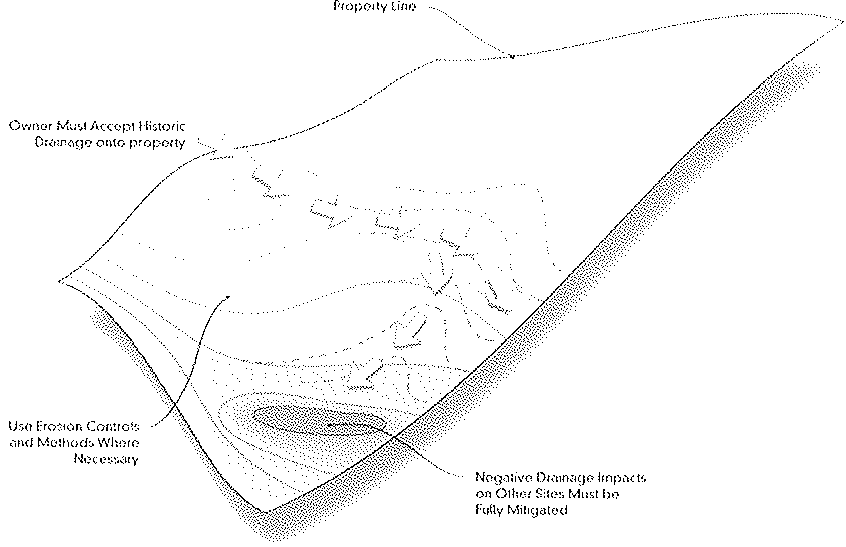 | ||
| Mandatory | Advisory | R. Locate buildings outside stream corridor buffer zones |
| X | Permanent structures shall be located a minimum of one hundred feet horizontally (plan view) from the ordinary high-water mark of stream corridors or other bodies of water. At the discretion of the Director and based on site-specific soils, water, or vegetation studies, setback distances may be reduced as provided in Section 19.72.130 (Stream Corridor and Wetlands Protection). | |
| X | Where feasible, developments shall not alter natural waterways. | |
| Mandatory | Advisory | S. Construct bridges for stream crossings. See Figure 19.72.19 |
| X | Culverts may only be installed on small side drainages, across swales, and on ephemeral or intermittent streams. (See Section 19.72.130, (Stream Corridor and Wetlands Protection)). Culverts are prohibited to cross perennial streams; bridges to cross perennial streams are permitted. | |
| X | Bridges and culverts shall be sized to withstand one hundred year storm events. Concrete or stone head walls and side walls are required to maintain the integrity of the bridge structure. (See Chapter 19.74 (Floodplain Hazards). | |
FIGURE 19.72.19: CULVERTS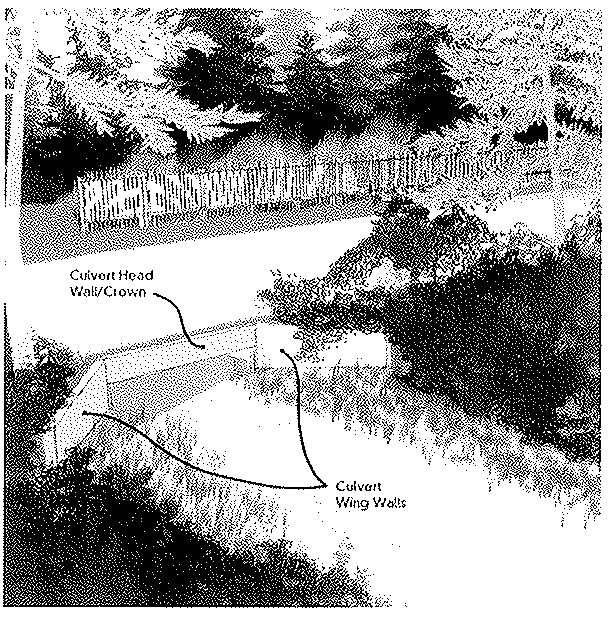 | ||
| Mandatory | Advisory | T. Design traffic circulation to respect existing topography, achieve acceptable slopes,
and adhere to minimum width and turning standards. See Figure 19.72.20 |
| X | Vehicular access shall be safe and have adequate width to allow for snowplowing and snow storage. | |
| X | Access roads shall avoid steep grades and sharp turning radii that can make access, especially in the winter, difficult. | |
FIGURE 19.72.20: DRIVEWAY DESIGN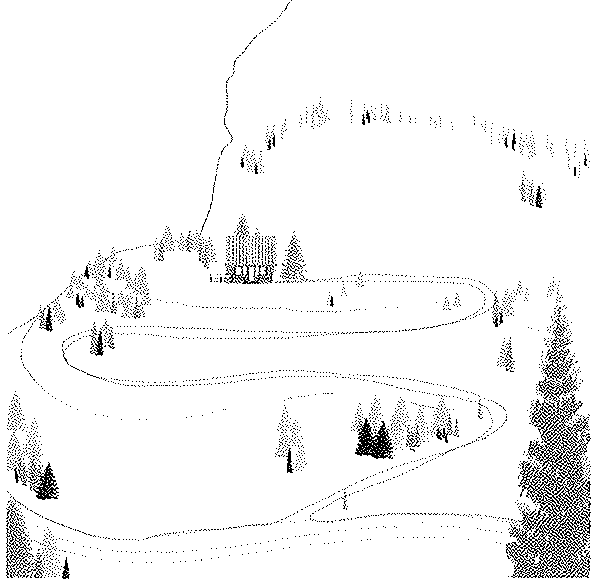 | ||
| Mandatory | Advisory | U. Provide safe, adequate off-street parking with year-round access |
| X | New development shall comply with off-street parking requirements provided in this chapter. | |
| X | Shared driveways and shared parking areas with adjoining owners are encouraged. | |
| X | Off-street parking areas shall be large enough to avoid vehicles having to back out onto a public street. | |
| Mandatory | Advisory | V. Design new roads and driveways to reduce their visual impact |
| X | Roads and driveways should be screened using existing land forms and vegetation. Long tangents, including on side roads intersecting with arterial roads or highways, should be avoided in favor of curvilinear alignments reflecting topography. | |
| X | Cuts and fills shall be re-graded to reflect adjacent land forms and re-vegetated with native plants. See Section 19.72.070. | |
| Mandatory | Advisory | W. Respect existing land forms, contours, and natural settings in the placement of
fences. See Figures 19.72.21 and 19.72.22 |
| X | Fences may be erected to screen service and outdoor areas or provide a safety barrier. (See Section 19.72.070 (Grading Standards—Retaining Walls)) | |
| X |
Fencing used to screen patios, other outdoor areas, and service areas may be composed
of the following fencing materials:
a. Natural or stained wood b. Brick c. Rock d. Stone e. Pre-cast fences or walls textured and colored to imitate any of the above materials f. Wrought iron | |
| X |
The following fencing materials are prohibited:
a. Solid board b. Concrete or concrete block c. Chain link, except around telecommunications facilities, public utility compounds, and other related or similar facilities where security concerns and terrain make this type of fencing practical, as approved by the Planning Commission for fences around conditional uses and approved by the Zoning Administrator for fences around permitted uses. Where a chain link fence is used, a powder or dull coating of the fence is required. d. Plywood e. Painted materials f. Vinyl, except rail fences for containment of horses | |
| X | Rail fences and low rock walls are permitted along arterial roads and highways, and at other locations to delineate property lines. | |
| X | Fences located along property lines and arterial roads or highways are limited to a maximum height of forty-two inches, except where necessary for security, safety, protection of public health, wildlife, private property, livestock, etc. | |
| X | Solid barrier fences located along arterial roads or highways or placed directly on a site's front property line are discouraged. | |
| X | Walls and fences are to be reviewed on a site-by-site basis, and require a building permit. | |
FIGURE 19.72.21: OPAQUE FENCE FOR SCREENING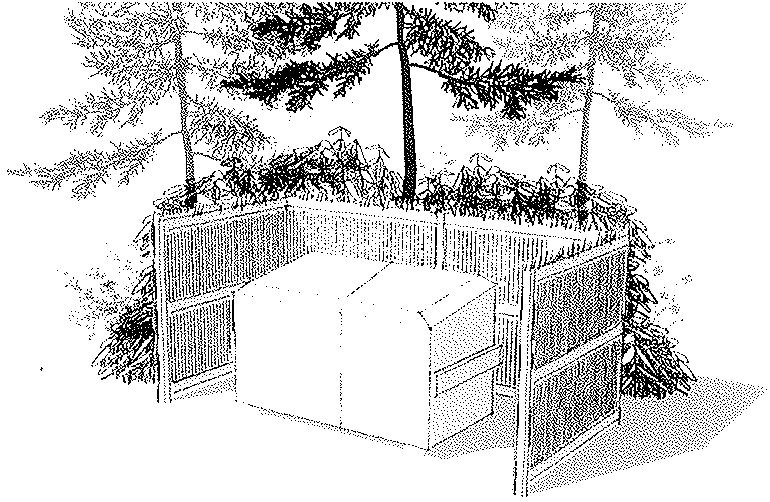 | ||
FIGURE 19.72.22: FENCES RESPECT EXISTING LAND FORMS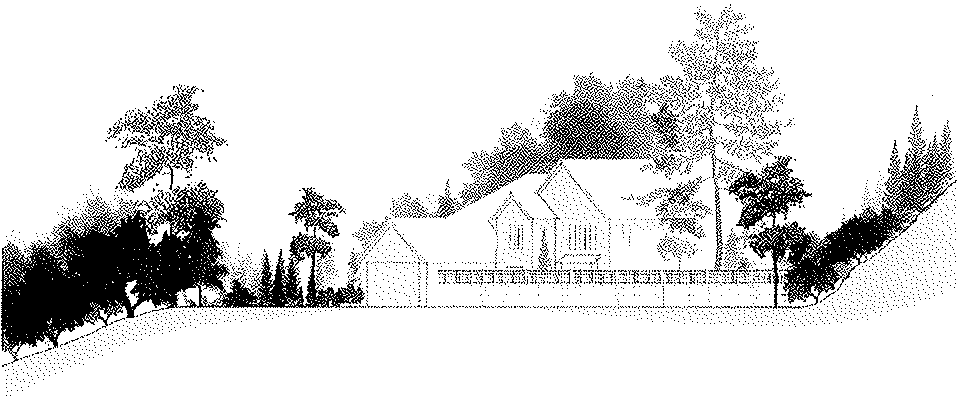 | ||
| Mandatory | Advisory | X. Select and locate lighting fixtures only where needed to provide for the safe movement
of people on the site. See Figure 19.72.23 |
| X | Light poles for public outdoor recreational facilities are limited to sixty feet in height. Light poles for outdoor recreational facilities on private residential property are limited to eighteen feet in height. Both require site plan review which may require restrictions on locations and hours of illumination based upon impacts on adjoining properties. | |
| X | With the exception of light poles for outdoor recreational facilities, lights poles, and building-mounted fixtures shall be designed with fully shielded luminaires directed downward. | |
FIGURE 19.72.23: SHIELDED LIGHTING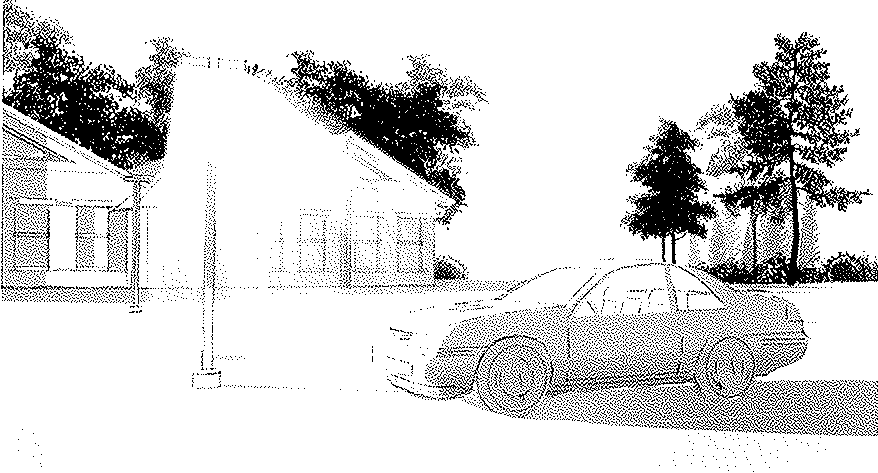 | ||
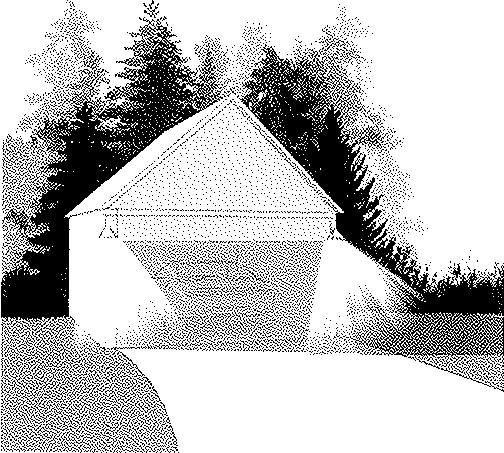 | ||
(Ord. No. 1929, § III, 9-17-2024; Ord. No. 1808, § I, 3-14-2017)
19.72.180 - Exceptions for minor ski resort improvements.
Minor ski resort improvements are permitted the following exceptions, subject to approval of the site plan application for FCOZ:
A.
Development on slopes greater than thirty percent.
B.
Development on designated ridge lines or ridgeline protection area.
C.
No Limitations on terracing.
D.
Permissions for streets, roads, private access roads, and other vehicular routes to cross slopes over fifty percent, including limitations on driveway length.
E.
Removal of trees and vegetation, therefore no requirements for tree replacement.
(Ord. No. 1808, § I, 3-14-2017)
19.72.190 - Waivers for mountain resort improvements that are not within a mountain resort zone and public uses.
A.
Authority to Grant Waivers. The topographic conditions, soil characteristics, hydrologic patterns, climatic constraints, susceptibility to natural hazards, vegetation, wildlife habitat concerns, and aesthetic considerations of foothill and canyon areas often create circumstances in which strict compliance with adopted standards is not only difficult but sometimes impossible to achieve. As these challenges are frequently created by the very nature and operational characteristics of mountain resorts and many public uses, and are therefore most often self-imposed, other avenues of administrative relief are sometimes necessary and appropriate. Accordingly, the land use authority may waive or modify the development standards for these uses.
B.
Waiver Request Procedures.
1.
A petition or request for a waiver or modification of an FCOZ development standard may be submitted in writing by the owner or authorized agent of the subject property. A mountain resort may only submit such a petition or request on property that is not within a mountain resort zone, which it owned prior to the effective date of the 2017 modifications to FCOZ. The petition or request shall be made concurrent with the related land use permit application—for example, conditional use application. The petition or written request shall clearly explain:
a.
Those aspects or elements of the development proposal that are strictly prohibited.
b.
All FCOZ regulations requested to be waived or modified in order for the development to reasonably proceed.
c.
The basis, justification or grounds for granting the waiver or modification.
d.
Why other common designs or improvements that may be less impactful on the environment and adjacent properties are not being considered.
2.
Each proposed waiver or modification is to be referred for decision to the relevant land use authority under the ordinance. The waiver or modification petition is to be accompanied by a written staff report with recommendations.
3.
When a public hearing is required, the notice shall be given fourteen days in advance of the hearing and shall specify the waivers or modifications requested, the relevant ordinance provisions from which the waivers or modifications are sought, and the general nature of the development that is proposed if the requested waivers or modifications are granted.
C.
Approval Standards. In deciding whether to grant waivers or modifications to the development standards of the foothills and canyons overlay zone, the land use authority shall consider the following standards as deemed applicable by the land use authority:
1.
The proposed waiver and improvements contribute to the overall use, operation, and maintenance of the property, and whether reasonable alternative means exist to reduce or mitigate adverse impacts.
2.
Strict compliance with these regulations may result in substantial economic hardship or practical difficulties for the owner of the property.
3.
Strict or literal interpretation and enforcement of the specified regulation may result in a development approach inconsistent with the intent and objectives of this chapter.
4.
The waivers or modifications may result in a development proposal that better preserves area views, reduces adverse impacts on existing trees and vegetation, reduces the overall degree of disturbance to steep slopes, protects wildlife habitat, or reflects a greater degree of sensitivity to stream corridors, wetlands, rock outcrops, and other sensitive environmental features in the vicinity of the proposed improvements.
5.
The granting of the waiver or modification may have neutral or beneficial impact to the public health, safety, or welfare, or to properties or improvements in the vicinity.
6.
The proposed development, as modified by the request, is consistent with the goals, objectives, and policies of the adopted community general plan applicable
7.
Creative architectural or environmental solutions may be applied to alternatively achieve the purposes of this chapter.
8.
The development in all other respects conforms to the site design, development, and environmental standards set forth in the foothills and canyons overlay zone and in all other applicable ordinances and codes.
9.
The waivers or modifications requested do not violate other applicable federal, state, and local laws.
D.
Waivers. Slope waivers are not required for facilities or uses with slopes of thirty percent or less. Slope waivers are required for eligible development activities associated with such land uses according to Table 19.16.2.
E.
Action on Waiver Requests.
1.
The waiver or modification request may be approved as proposed, denied, or approved with conditions.
2.
The decision on the request shall include the reasons for approval or denial.
3.
In granting a waiver from or modification of development standards, conditions may be imposed to mitigate the impacts of the proposed development on adjacent properties and the area. These may include, for example, measures to:
a.
protect scenic vistas, especially views from public rights-of-way and public lands,
b.
protect natural settings in the vicinity of site improvements, and
c.
enhance the relationship to and compatibility with other structures and open spaces in the vicinity of the proposed improvements.
4.
All development shall comply with approved plans. Any proposed revisions or changes to plans requires a resubmittal and request for final action.
(Ord. No. 1895, § III, 4-12-2022; Ord. No. 1808, § I, 3-14-2017)
Editor's note— Section III of Ord. No. 1895, adopted April 12, 2022, changed the title of § 19.72.190 from "Waivers for mountain resort improvements that are not within a mountain resort zone, public uses and mineral extraction and processing" to read as herein set out.
19.72.200 - Definitions.
For the purposes of this Chapter, the following terms shall have the following meanings:
"Alteration." Any change or rearrangement in the supporting members of an existing structure, such as bearing walls, columns, beams, girders, or interior partitions, or any change in the dimensions or configurations of the roof or exterior walls.
"Building site." A space of ground occupied or to be occupied by a building or group of buildings.
"Caliper." A standard for trunk measurement of nursery stock, determined by measuring the diameter of the trunk six inches above the ground for up to and including five-inch caliper size, and twelve inches above the ground for larger trees.
"Clustering." A development or subdivision design technique that concentrates buildings or lots on a part of the site to allow the remaining land to be used for recreation, common open space, and/or preservation of environmentally sensitive areas.
"Driveway." A private area used for ingress and egress of vehicles, which allows access from a street or road to a building, structure, or parking spaces.
"Engineering geologist." A geologist who, through education, training and experience, is able to conduct field investigations and interpret geologic conditions to assure that geologic factors affecting engineered works are recognized, adequately interpreted, and presented for use in engineering practice and for the protection of the public.
"Expansion." An increase in the size of an existing structure or use, including physical size of the property, building, parking, and other improvements.
"Fence." A structure erected to provide privacy or security, which defines a private space or is used to constrain domestic animals.
"Geotechnical engineer." A professional engineer licensed in the state of Utah, whose education, training, and experience is in the field of geotechnical engineering.
"Grading." Any change of existing surface conditions by excavating, placing of any soils or rocks, or stripping of vegetation.
"Landscape architect." A person who is licensed to practice landscape architecture by the state of Utah.
"Limits of disturbance." The area(s) in which construction and development activity are to be contained, including development and construction of the principal building, accessory structures, recreation areas, utilities, services, driveways, septic tank drain fields and related system requirements, storm drainage, and other similar services or improvements. The following need not be included in limits of disturbance:
A.
Up to ten feet of paved or unpaved shoulders for driveways.
B.
Areas consisting of natural ponds, streams, trees, and other vegetation where no grading work is done.
"Lot of Record." A lot or parcel of land established in compliance with all laws applicable at the time of its creation and recorded in the office of the county recorder either as part of a recorded subdivision or as described on a deed, having frontage upon a street, a right-of-way approved by the Land use hearing officer, or a right-of-way not less than twenty feet wide.
"Minor ski resort improvements." Construction activities associated with the ongoing operation and maintenance of previously approved facilities, ski runs, ski trails, ski lifts and related resort appurtenances, equipment, recreational access corridors, pedestrian or non-motorized trails, non-snow related activities and accessory uses, or vehicular maintenance roads constructed or used in connection with the construction, operation, or maintenance of a resort.
"Mountain resort or Ski resort."
A.
Any publicly or privately developed recreational use permitted by relevant local, state, and federal authorities, for snow-related activities, accessory year-round or non-snow related activities, and associated facilities and improvements.
B.
Such uses, activities, and facilities may be conducted on a commercial or membership basis, whether solely on privately-owned property or on privately-owned lots or parcels interspersed with public land under a special use permit from the U.S. Forest Service or other public agency, primarily for the use of persons who do not reside on the same lot or parcel as that on which the recreational use is located.
1.
Snow related activities include but are not limited to: downhill skiing, cross-country skiing, snowboarding, snow shoeing, snowmobiling, or other snow related activities.
2.
Accessory year-round and non-snow related activities include but are not limited to: alpine recreational activities; cultural events and festivals; and conference events.
3.
Associated facilities and improvements include, but are not limited to: lodging; food, retail, and support services; recreational and fitness facilities; parking accommodations; and other uses of a similar nature specifically authorized in conjunction with the operation of a year-round resort.
"Natural open space." Land in a predominantly open and undeveloped condition that is suitable for any of the following: natural areas; wildlife and native plant habitat; important wetlands or watershed lands; stream corridors; passive, low-impact activities; little or no land disturbance; or trails for non-motorized activities.
"Net developable acreage" is defined as land with all of the following:
a.
An average slope less than thirty percent.
b.
Soils of a suitable depth and type based on soil exploration and percolation tests in accordance with the regulations of the Utah Department of Environmental Quality in order to ensure against adverse impacts on surface and groundwater quality.
c.
Minimum distance from any stream corridor as defined in this Chapter.
d.
Free from any identified natural hazards such as flood, avalanche, landslide, high water table and similar features. (See Chapter 19.74 (Floodplain Hazard Regulations) and Section 19.72.120 (Natural Hazards).
"Open Space." Any area of a lot that is completely free and unobstructed from any man-made structure or parking areas.
"Ordinary high water mark."
A.
The line on the bank to which the high water of a stream ordinarily rises annually in seasons, as indicated by changes in the characteristics of soil, vegetation, or other appropriate means, taking into consideration the characteristics of the surrounding areas.
B.
Where the ordinary high water mark cannot be found, the top of the channel bank shall be substituted.
C.
In braided channels, the ordinary high water mark shall be measured to include the entire stream feature.
"Overlay zone." A zoning district that encompasses one or more underlying zones and that imposes additional or alternative requirements to that required by the underlying zone.
"Qualified professional." A professionally trained person with the requisite academic degree, experience, and professional certification or license in the field(s) relating to the subject matter being studied or analyzed.
"Retaining wall." A wall designed and constructed to resist the lateral displacement and erosion of soils or other materials.
"Ridgeline protection area." An area consisting of a prominent ridgeline that is highly visible from public right-of-ways or trails, and that includes the crest of any such designated prominent hill or slope, plus the land located within one hundred feet horizontally (map distance) on either side of the crest.
"Significant trees." Live trees of six-inch caliper or greater, groves of five or more smaller live trees, or clumps of live oak or maple covering an area of fifty square feet to the drip line perimeter.
"Site plan." An accurately scaled plan that illustrates the existing conditions on a land parcel and the details of a proposed development, including but not limited to: topography; vegetation; drainage; flood plains; wetlands; waterways; landscaping and open space; walkways; means of ingress and egress; circulation; utility easements and services; structures and buildings; lighting; berms, buffers and screening devices; development on adjacent property; and any other information that may be required to make an informed decision.
"Slope." The level of inclination from the horizontal, determined by dividing, in fifty foot intervals, the average horizontal run of the slope into the average vertical rise of the same slope and converting the resulting figure into a percentage value.
"Stream, Ephemeral." Those channels, swales, gullies, or low areas that do not have flow year-round or are not shown on United States Geological Services (U.S.G.S.) topographic maps as perennial streams. These are generally channels that are tributary to perennial streams, other ephemeral streams, terminal low areas, ponds, or lakes. They are typically dry except during periods of snowmelt runoff or intense rainfall. (Contrast with "Stream, Perennial.")
"Stream, Perennial." Those streams, excluding ephemeral streams, or ditches and canals constructed for irrigation and drainage purposes, which flow year-round during years of normal rainfall, and that are identified on the appropriate United States Geological Services (U.S.G.S.) topographic maps as perennial streams. (Contrast with "Stream, Ephemeral.")
"Stream corridor." The corridor defined by a perennial stream's ordinary high water mark.
"Substantial economic hardship." A denial of all reasonable economic use of a property.
"Trails." A type of natural open space that is a system of public recreational pathways located within the unincorporated county for use by the public for walking, biking, and/or horseback riding as designated.
"Undevelopable" means strict application of this title prevents the minimum development necessary to establish a permitted or conditional use in the underlying zone on the property.
"Vegetation." Living plant material, including but not limited to trees, shrubs, flowers, grass, herbs, and ground cover.
"Waiver." Permission to depart from the requirements of an Ordinance with respect to the application of a specific regulation.
(Ord. No. 1808, § I, 3-14-2017)

