
San Fernando City Zoning Code
ARTICLE III
- GENERAL REGULATIONS
Sec. 106-188. - Exceptions to setback depths.
(a)
For the purposes of this article, on existing lots of record less than 100 feet in depth may have a front and rear setback equal to 20 percent of the depth of the lot of record.
(b)
On existing lots of record less than 50 feet in width may have a side yard equal to ten percent of the width of the lot but not less than three feet.
(c)
In the commercial zone, a land parcel constituting initial platted lots of record and comprising 7,000 square feet or less may have a street right-of-way setback depth equal to the average setback depth of the immediately adjoining buildings abutting the same street.
(d)
Any one side or rear setback depth, whichever is applicable, may be varied on an existing nonconforming permitted structure in a residential district to an average side or rear setback depth found for similar located structures on lots within the block. Where applicable average depth is less than the existing setback depth, the given setback depth for the present structure shall govern. Where no applicable average depth is found for similarly located structures on lots within the block, established setback depth for the district shall govern. Total area of the proposed structural expansion may not exceed 50 percent of the total surface area of one side of the existing structure, nor shall the proposed structural expansion when completed result in having a detrimental effect on the adjoining property's fire safety and enjoyment of light and air.
(e)
Where an existing easement depth from the property line is greater than the required setback depth from the property line for a principal or accessory structure, the easement depth shall prevail as the required setback for the principal or accessory structure.
(Ord. No. 1732, § 3(Exh. A), 5-5-2025)
Sec. 106-189. - Projections into required setback area.
Building projections may extend into, and other encroachments may be located in, required yards according to the standards of Table 106-189 and are subject to all applicable requirements of the building code. The "limitations" column states any other limitations that apply to such structures when they project into required yards.
(Ord. No. 1732, § 3(Exh. A), 5-5-2025)
Sec. 106-190. - Access.
(a)
Access to streets.
(1)
Every structure shall be constructed upon, or moved to, a legally recorded parcel with a permanent means of access to a public street, in compliance with city standards.
(2)
All structures shall be properly located to ensure safe and convenient access for servicing, fire protection, and parking.
(3)
Parcels located on a private street, which were legally established before the effective date of this title, are exempt from the required compliance with the latest adopted city standards for private streets.
(b)
Pedestrian access. All multiple-family residential, non-residential, or mixed use developments shall provide a minimum of one pedestrian walkway of no less than four feet in width, from each adjoining street frontage connecting said street with either the main building entrance or common pedestrian corridor.
(c)
Access to accessory structures. Accessory structures and other on-site architectural features shall be properly located to ensure that they do not obstruct access to main structures or accessory living quarters.
(Ord. No. 1732, § 3(Exh. A), 5-5-2025)
Sec. 106-212.- Exceptions.
Section 106-214 does not apply to the following buildings or structures if they comply with all other sections of this chapter:
(1)
Electrical distribution and transmission substations.
(2)
Water storage tanks, water reservoirs and water pumping plants, but excluding offices or maintenance yard facilities.
(3)
Gas measurement, distribution and meter control stations.
(4)
Telephone repeater stations.
(Ord. No. 1732, § 3(Exh. A), 5-5-2025)
Sec. 106-213. - Requirement.
Except as otherwise provided in this division and this article, no building or other structure shall be used on any lot, any portion of which abuts upon any public street, unless the one-half of the street which is located on the same side of the centerline as such lot has been dedicated and improved as provided in this division.
(Ord. No. 1732, § 3(Exh. A), 5-5-2025)
Sec. 106-214. - Dedication standards.
Streets shall be dedicated to one-half the planned ultimate width, measured from the centerline, and including corner cutoffs. All such rights-of-way are to be determined by the director as specified in the subdivision ordinance in chapter 78 of this Code and the circulation element of the general plan.
(Ord. No. 1732, § 3(Exh. A), 5-5-2025)
Sec. 106-215. - Improvements.
Before a structure subject to this article may be used, curbs, gutters, sidewalks and drainage structures where required shall be constructed at the grade and at the location specified by the director of public works unless these already exist within the present right-of-way; in such cases, all damaged sidewalks, curbs and drainage structures shall be replaced or repaired as required by the director of public works; or on property the owner has agreed to dedicate, curbs, gutters, sidewalks and drainage structures which are adequate, and the director of public works so finds.
(Ord. No. 1732, § 3(Exh. A), 5-5-2025)
Sec. 106-216. - Agreement to dedicate.
In lieu of dedication as provided in this division, the director of public works may accept an agreement to dedicate signed by all persons having any right, title, interest or lien in the property, or any portion thereof, to be dedicated. The signatures on such agreement shall be acknowledged and the director of public works shall record such agreement in the office of the county recorder.
(Ord. No. 1732, § 3(Exh. A), 5-5-2025)
Sec. 106-217. - Agreement to improve.
(a)
In lieu of the required improvements under this division, the director of public works may accept from any responsible person a contract to make such improvements. The improvements shall be completed within the time specified in the agreement to improve, except that the director of public works may grant such additional times as he deems necessary if, in his opinion, a good and sufficient reason exists for the delay.
(b)
Such contract shall be accompanied by a deposit with the city of a sum of money or negotiable bonds or savings and loan certificates of shares in an amount which, in the opinion of the director of public works, equals the cost thereof. If savings and loan certificates or shares are deposited, the owners thereof shall assign such certificates or shares to the city, and such deposit and assignment shall be subject to all the provisions and conditions of the director of public works.
(c)
If the estimated cost of the improvements equals or exceeds $1,000.00, in lieu of such deposit, the applicant may file with the city a corporate surety bond guaranteeing the adequate completion of all the improvements, in a penal sum equal to such estimated cost.
(d)
Upon the failure of the responsible person to complete any improvement within the time specified in an agreement, the council may, upon notice in writing of not less than ten days served upon the person signing such contract, or upon notice in writing of not less than 20 days served by registered mail addressed to the last known address of the person signing such contract, determine that the improvement work or any part thereof is incomplete and may determine that the responsible person is in default and may cause the improvement security or such portion of deposits or bonds given for the faithful performance of the work, as is necessary to complete the work, to be forfeited to the city, or may cash any instrument of credit so deposited in such amount as may be necessary to complete the improvement work.
(Ord. No. 1732, § 3(Exh. A), 5-5-2025)
Sec. 106-218. - Existing structures.
Sections 106-213 to 106-216 do not apply to the use, alteration or enlargement of an existing building or structure or the erection of one or more buildings or structures accessory thereto, or both, on the same lot, if the total value of such alteration, enlargement or construction does not exceed one-half of the current market value of all existing buildings or structures on such lot.
(Ord. No. 1732, § 3(Exh. A), 5-5-2025)
Sec. 106-219. - Parkway trees.
Parkway trees are required to be provided and planted by the owner or developer of any lot in connection with any construction on such lot requiring a permit valued under the building code in excess of $1,000.00, except as otherwise provided in the following:
(1)
Such parkway trees shall be planted in the public easement (parkway strip) between the street pavement and the lot line of such lot. If a sidewalk exists in such parkway strip without provision for parkway trees, tree wells shall be provided as part of such parkway tree requirement.
(2)
No occupancy permit shall be issued for such construction on such lot until the required parkway trees have been planted or such planting has been provided for in accordance with this section and the specifications of the director of public works. Such provision may be made by bond in an amount not to exceed the estimated cost of the parkway tree requirement.
(3)
Notwithstanding subsections (1) and (2) of this section:
a.
The total estimated cost of the parkway tree requirement shall not exceed one-third of the estimated value of the improvements provided for in such permit; and
b.
Where adequate public right-of-way (parkway strip) does not exist, or where the adjacent street is not improved with curb, gutter and sidewalk, such parkway tree requirement may be waived in connection with such building permit. Such waiver shall not affect the requirement for parkway trees in connection with any subsequent application for a building permit with respect to such lot.
(4)
This section shall not apply to incidental construction on already developed residential lots. Such incidental construction shall include, but not be limited to, room or patio additions, room realignment, and swimming pool and garage construction. Incidental construction as used in this subsection shall not include the construction of a residential unit.
(Ord. No. 1732, § 3(Exh. A), 5-5-2025)
Cross reference— Vegetation, ch. 98.
Sec. 106-220. - Landscape maintenance.
(a)
Prior to the installation of the landscaping in the public right-of-way, the developer shall provide for the continued maintenance by an agreement with the city.
(b)
Lawn and ground cover shall be trimmed or mowed regularly. All planting areas shall be kept free of weeds and debris.
(c)
All plantings shall be kept in a healthy and growing condition. Fertilization, cultivation, and tree pruning shall be a part of regular maintenance. Good horticultural practices shall be followed in all instances.
(d)
Irrigation systems shall be kept in working condition. Adjustments, replacements, repairs and cleaning shall be a part of regular maintenance.
(e)
Trees shall be staked and tied with lodge poles.
(f)
Stakes and ties on trees shall be checked regularly for correct functions. Ties shall be adjusted to avoid creating abrasions or girdling on trunks or branches.
(Ord. No. 1732, § 3(Exh. A), 5-5-2025)
Sec. 106-342.- Purpose.
This division establishes requirements for landscaping on private property to improve the livability and attractiveness of the city, enhance the appearance of development, provide shade, reduce heat and glare, control soil erosion, conserve water, screen and buffer incompatible land uses, reduce paving, increase permeable surfaces, enhance the quality of neighborhoods, and improve air quality.
(Ord. No. 1732, § 3(Exh. A), 5-5-2025)
Sec. 106-343. - Applicability.
The provisions of this section shall apply to all development and land uses as follows:
(1)
Development projects. All projects that require an administrative or discretionary permit, including conditional use permits, site plan review for major remodels as described in subsections (3) and (4) below, and subdivisions shall provide landscaping in compliance with this section.
(2)
Model Water Efficient Landscape Ordinance (MWELO). All projects that require landscape and irrigation plans compliant with MWELO shall provide landscaping in compliance with this section.
(3)
Existing development. Any application for the expansion of an existing multifamily residential, commercial, or industrial development that results in a 20 percent or more of the existing square footage or 500 square feet, whichever is less.
(4)
Single-family dwellings. Projects involving the new construction of one or more single-family dwellings, or an addition of 500 square feet or more to an existing single-family dwelling, shall be required to submit landscape and irrigation plans.
(5)
Parking lots. Redesigned or resurfaced multi-family, commercial, or industrial parking lots when the work is in association with a development project, or if grading is required.
(Ord. No. 1732, § 3(Exh. A), 5-5-2025)
Sec. 106-344. - Landscape design and irrigation plans.
The project applicant shall submit a landscape design plan and irrigation plan that meets the criteria set forth in this section for all projects that meet the applicability standards above. All landscape design and irrigation plans shall be prepared by a California licensed landscape architect or other qualified professional and shall include the following:
(1)
Plans showing landscape areas, hardscape areas, and allowable impervious surfaces.
(2)
The project applicant shall ensure that the defensible space required by the city code is maintained and shall avoid fire-prone plant materials and mulches.
(3)
A description of the type and size of all proposed plant materials.
(4)
Any proposed stormwater facilities.
(5)
A description of all hardscape materials and features.
(6)
Irrigation plans shall accompany the landscape design plan and incorporate low water use systems as required by the California Model Water Efficient Landscape Ordinance.
(Ord. No. 1732, § 3(Exh. A), 5-5-2025)
Sec. 106-345. - Landscaping standards.
(a)
Tree Requirement. All new development projects require a minimum one 15-gallon, native canopy tree within a street facing setback.
(b)
Residential zones. The following landscaping standards shall apply to all residential properties within the R-1, R-2, R-3, RPD Zones:
(1)
A minimum of 20 percent of the lot area not comprised of buildings or required vehicular access and parking areas shall be comprised of pervious surfaces such as landscaping, gravel, rocks, or other similar pervious materials.
(2)
A minimum of 50 percent of all street-facing yard areas between the principal dwelling unit and the public or private street curb, shall be maintained as a landscaped area. Hardscape areas containing impervious surfaces shall only be used for the purpose of pedestrian and vehicular access, and paved patios and decks.
(3)
No more than 50 percent of the required landscaped areas may consist of decorative features such as boulders, river and lava rock, fountains, ponds, rock riverbeds, pedestrian bridges, arbors and pergolas with a maximum height of nine feet.
(4)
Mulch may be used as an integral part of required landscaped areas.
(5)
The following standards shall apply to multi-family residential properties with surface parking lots:
a.
A minimum five-foot landscape buffer strip shall be provided between a parking lot and public right-of-way and shall be maintained with a permanent automatic irrigation system.
b.
Parking lot canopy trees shall be provided at the ratio of one tree for every four parking spaces.
(6)
No vehicle shall be parked in a required landscape area.
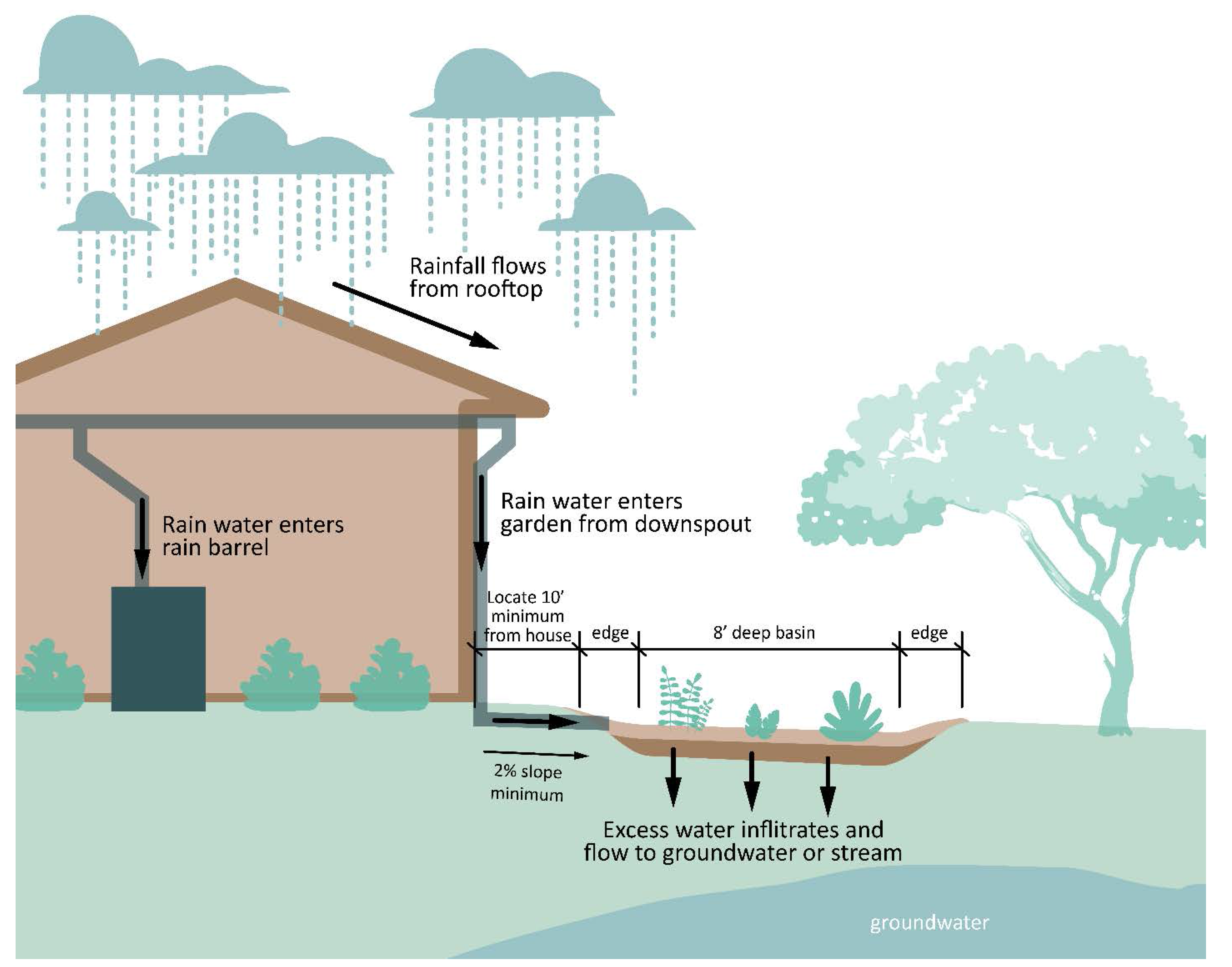
Figure 106-345-1. Residential Landscaping Diagram
(c)
Commercial zones. The following landscaping standards shall apply to all commercial properties within the C-1 and C-2 zones:
(1)
A minimum 50 percent of all street facing setback areas shall be maintained as a landscaped area except for driveways, pedestrian walkways, or parking aisles.
(2)
For commercial buildings where no setback is provided on a street facing part of the building, a minimum 25 percent of the wall area shall area shall be planted with a living wall or minimum two-foot wide planter boxes or planting beds.
(3)
The following standards shall apply to commercial properties with surface parking lots:
a.
A minimum of two percent of parking lot area shall be landscaped and shall be so arranged as to emphasize visual attractiveness as viewed by the public from surrounding streets and walkways.
b.
A minimum five-foot landscape buffer strip shall be provided between a parking lot and public right-of-way.
c.
Parking lot canopy trees shall be provided at the ratio of one tree for every four parking spaces.
d.
The total area of any project not devoted to lot coverage and paving shall be landscaped, irrigated, and maintained in compliance with the requirements of this section.
e.
All areas of a project site not intended for a specific use, including pad sites held for future development, shall be landscaped, unless it is determined by the community development director that landscaping is not necessary to fulfill the purpose of this section.
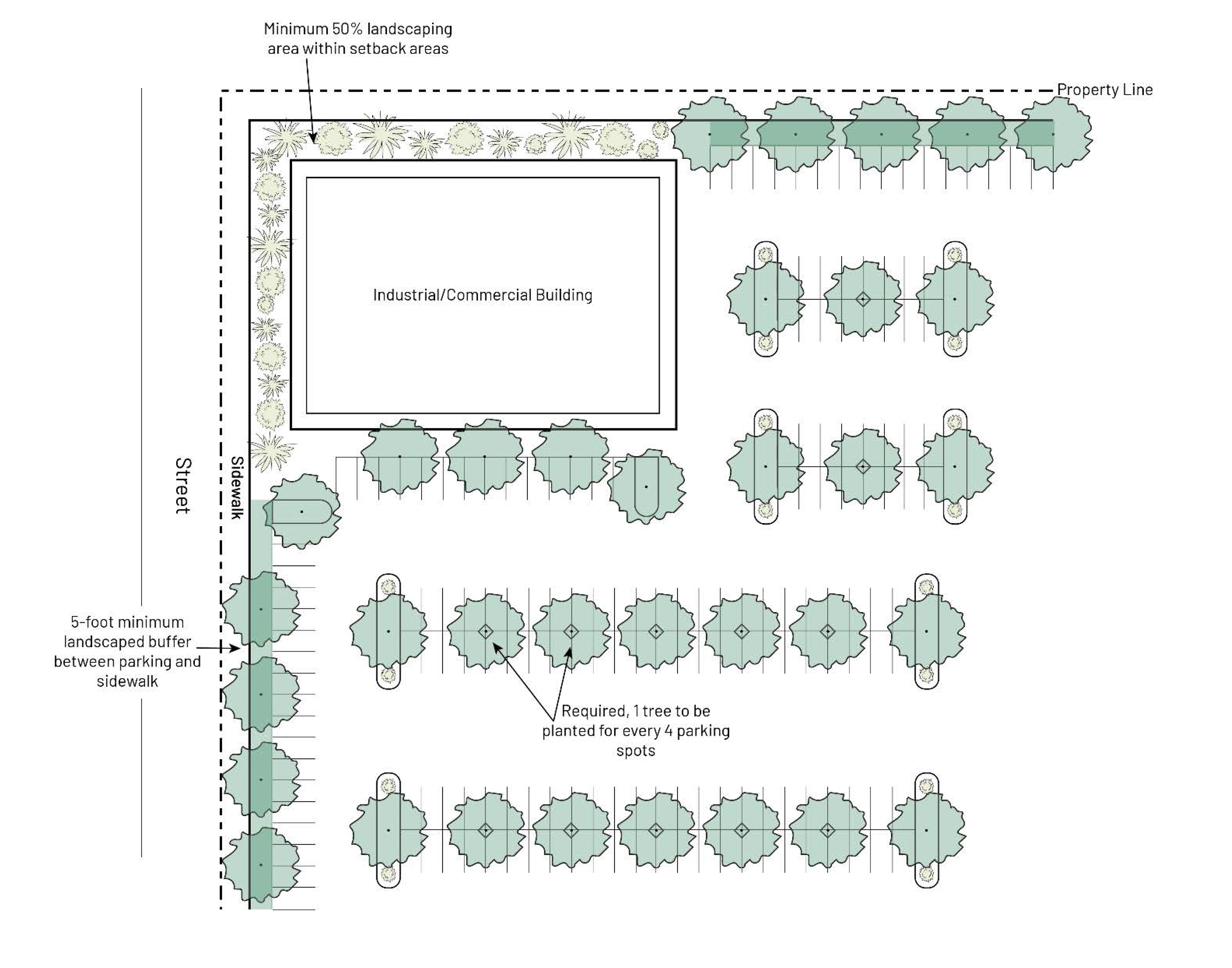
Figure 106-345-2. Commercial Parking Lot Landscaping Diagram
(d)
Industrial zones. The following landscaping standards shall apply to all industrial properties within the M-1 and M-2 Zones:
(1)
A minimum 50 percent of all street facing setback areas shall be maintained as a landscaped area except for driveways, pedestrian walkways, or parking aisles.
(2)
For industrial properties with parking lots the following standards shall apply:
a.
A minimum of two percent of parking lot areas shall be landscaped and shall be so arranged as to emphasize visual attractiveness as viewed by the public from surrounding streets and walkways.
b.
A minimum five-foot landscape buffer strip shall be provided between a parking lot and public right-of-way and shall be maintained with a permanent automatic irrigation system.
c.
Parking lot canopy trees shall be provided at the ratio of one tree for every four parking spaces.
d.
The total area of any project not devoted to lot coverage and paving shall be landscaped, irrigated, and maintained in compliance with the requirements of this section.
e.
All areas of a project site not intended for a specific use, including pad sites held for future development, shall be landscaped, unless it is determined by the community development director that landscaping is not necessary to fulfill the purpose of this section.
(Ord. No. 1732, § 3(Exh. A), 5-5-2025)
Sec. 106-346. - Modification to landscape standards.
The community development director may modify the landscape requirement by a maximum one percent in the required setback areas, open space areas, and areas not devoted to lot coverage and paving. The modification may only be approved if the director finds that the project provides: a higher overall quality of landscape design than would normally be expected for a similar development project; a superior landscape maintenance plan; and for outdoor dining activities, special paving or other examples of exceptional architectural quality in the project's design.
(Ord. No. 1732, § 3(Exh. A), 5-5-2025)
Sec. 106-347. - Plant materials and planting standards.
Plant materials shall be of a type and placement compatible with the project site and surrounding land uses as follows:
(1)
Artificial turf is prohibited.
(2)
Invasive plant species are prohibited.
(3)
Landscape planting shall emphasize drought-tolerant and native species and be suitable for the soil and climatic conditions of the site.
(4)
Native plant material or compatible, nonnative plant material shall be selected.
(5)
Plant materials shall be provided in the following sizes and shown on the landscape plan:
a.
The minimum acceptable size for trees shall be a 15-gallon.
b.
Newly planted trees shall be supported with stakes or guy wires.
c.
Shrubs shall be a minimum size of five gallons. When planted to serve as a hedge or screen, shrubs shall be planted with two or four feet of spacing, depending on the plant species.
d.
Shrubs and hedges shall not exceed three feet in height within the front and street side setback areas.
e.
Ground cover shall be generally spaced at a maximum of six to eight inches on center. When used as ground cover, minimum one-gallon sized shrubs may be planted ten to 24 inches on center.
(6)
Trees planted within ten feet of a street, sidewalk, paved trail or walkway shall be a deep-rooted species or shall be separated from paved surfaces by a root barrier to prevent physical damage to public improvements
(7)
A minimum distance of 15 feet is required between the center of trees to street light standards, water meters, back-flow prevention systems, sewer cleanouts and fire hydrants.
(8)
New and replacement tree species shall be in conformance with the City of San Fernando Urban Forest Management Plan or as approved by the community development director.
(Ord. No. 1732, § 3(Exh. A), 5-5-2025)
Sec. 106-348. - Landscape maintenance standards.
The following landscape maintenance standards are required for all landscaped areas in the city:
(1)
All landscaping shall be permanently maintained in a healthy and thriving condition at all times, in compliance with the approved landscape design plan.
(2)
Lawn and ground cover shall be trimmed or mowed regularly. All planting areas shall be kept free of weeds and debris.
(3)
All plantings shall be kept in a healthy and growing condition. Fertilization, cultivation, and tree pruning shall be a part of regular maintenance. Good horticultural practices shall be followed in all instances.
(4)
Irrigation systems shall be kept in working condition. Adjustments, replacements, repairs and cleaning shall be a part of regular maintenance.
(5)
Stakes and ties on trees shall be checked regularly for correct functions. Ties shall be adjusted to avoid creating abrasions or girdling on trunks or branches.
(Ord. No. 1732, § 3(Exh. A), 5-5-2025)
Sec. 106-349. - Enforcement.
Any person, firm or corporation, whether as principal, agent, employee or otherwise, violating any provisions of these landscape standards or failing to comply with any order or regulation made hereunder, shall be subject to the penalties set forth in chapter 1 article III of the San Fernando Municipal Code.
(Ord. No. 1732, § 3(Exh. A), 5-5-2025)
Sec. 106-350. - Tree preservation and protection on private property.
The following regulations apply to the protection, preservation, maintenance, removal, and replacement of any heritage tree, protected tree, or native tree on private property:
(1)
A heritage or protected tree that is a threat to the public welfare as determined by the Los Angeles Fire Department, San Fernando Police Department, or San Fernando Public Works Director or removal as directed by a county, state, or federal agency, or an insurance provider shall be exempt from obtaining a zoning clearance, administrative permit, or discretionary permit approval for its removal.
(2)
The director is authorized to approve the removal of a heritage tree, native tree, or protected tree based on the findings of a report prepared an International Society of Arboriculture (ISA) certified arborist confirming one or more of the following factors:
a.
The tree is dead.
b.
The tree has reached an over-protected condition for its pre-existing location and will result in the deterioration of surrounding hardscaped areas potentially resulting in a health and safety hazard.
c.
The tree which is infected with a disease which cannot be treated successfully, or there is a strong potential that the pathogen could spread to other trees in the immediate vicinity.
d.
The tree has a severe void of heartwood due to wood consuming organisms which could potentially cause catastrophic failure (i.e., collapse).
e.
A tree has been determined to be a hazard because of its high potential for failure due to considerable dead or dying foliage, branches, roots or trunk.
f.
The tree requires extensive root pruning because of excessive hardscape damage resulting in the severe reduction of its capacity to support itself thereby creating a potential safety hazard.
g.
A healthy living tree that has caused damage to any underground utility as a result of root blockage.
h.
A tree that is causing an immediate threat to the health and safety or general welfare of the property owner or the public.
i.
The removal is necessary to prevent a substantial inconvenience or financial hardship to the property owner as determined by the community development director.
The foregoing notwithstanding, the city, acting through the director, shall have discretion to conduct such additional inspections as the director may deem warranted to confirm the findings of the arborists report before authorizing removal for any of the reasons stated above.
(3)
Property owners that met United States HUD low income household income limits may request that the city's contracted arborist to prepare the required report as described in subsection (2) above.
(4)
Where it has been determined that preservation of a heritage tree, native tree, or protected tree is infeasible, replacement tree(s) shall be provided at a 1:2 ratio as follows:
a.
Replacement trees shall be planted on the site where the tree has been removed, except in instances where on-site planting and future tree survival is shown to be infeasible in which case the community development director shall authorize other off-site locations where maintenance will be guaranteed.
b.
If the relocation or replacement tree is to be planted on private property, the owner of the proposed suitable relocation site consents in writing to the placement of a relocated or replacement tree.
c.
Replacement trees shall be canopy trees as defined in this section.
d.
The property owner shall sign a covenant to maintain the tree and replace it in three years if it dies. Follow up with survival of required trees after three years. Trees that have not survived establishment must be replaced.
(5)
Tree protection before construction. Construction projects that will impact more than 1,200 square feet of land must submit a tree protection plan as a part of building plan check outlining what measures will be taken to protect existing trees during construction including:
a.
The location, species, DBH, and condition of trees;
b.
The tree protection zone for all trees to be preserved;
c.
Tree fencing (to be installed under dripline);
d.
Erosion control;
e.
Tree pruning;
f.
Soil compaction mitigation;
g.
Irrigation;
h.
Tree maintenance schedule;
i.
A tree root plan will be required in the case of grading or excavation. Tree plans should be approved and overseen by a certified arborist.
(6)
Tree protection during construction. Care shall be exercised by all individuals, developers and contractors working near heritage trees or protected trees so that no damage occurs to such trees. During construction, these trees shall be protected in the following manner:
a.
All trees to be saved shall be enclosed/delineated by an appropriate temporary construction barrier, such as fencing or other mechanism, prior to commencement of work. Barriers are to remain in place during all phases of construction and may not be removed without the written consent of the community development director.
b.
Such barrier(s) must be located a distance from the trunk base of two times the trunk diameter, up to a maximum of 15 feet, unless otherwise approved in writing by the community development director.
c.
No fill material shall be placed within three feet from the outer trunk circumference of any tree.
d.
No fill materials shall be placed within the drip line of any tree in excess of 18 inches in depth. This guideline is subject to modification to meet the needs of an individual tree species, as determined by a certified arborist or licensed landscape architect.
e.
No substantial compaction of the soil within the drip line of any tree shall be undertaken.
f.
No construction, including structures and walls, that disrupts the root system shall be permitted. As a guideline, no cutting of roots should occur within a distance equal to three and one-half times the trunk diameter, as measured at ground level. Actual setback may vary to meet the needs of individual tree species as determined by a certified arborist or licensed landscape architect. When some root removal is necessary, the tree crown may require thinning to prevent wind damage.
g.
Any tree that dies as a result of construction must be replaced with two 15-gallon size trees with a mature tree canopy of at least 20 feet and low water requirement.
(7)
The community development director, through city police officers, building inspectors, community preservation officers and members of the community development department, in the course of their duties, when monitoring construction activities, shall check for compliance with the provisions of this article. Any irregularities or suspected violations of this article shall be reported immediately to the community development director.
(8)
Immature trees may be relocated or removed without a permit.
(Ord. No. 1732, § 3(Exh. A), 5-5-2025)
Sec. 106-351. - Model Water Efficient Landscape Ordinance (MWELO) requirements.
Landscape design plans are required to comply with California MWELO standards as follows:
(1)
Property owners or their building or landscape designers, including anyone requiring a building or planning permit, plan check, or landscape design review from the city, who are constructing a new (single-family, multi-family, public, institutional, commercial, or industrial) project with a landscape area greater than 2,500 square feet, or rehabilitating an existing landscape with a total landscape area greater than 500 square feet, shall comply with Sections 496.6(a)(3)(B), (C), (D), and (G) of the MWELO, including sections related to use of compost and mulch as delineated in this section. Other requirements of the MWELO are in effect and can be found in 23 CCR, Division 2, Chapter 2.7.
(2)
Property owners or their building or landscape designers that meet the threshold for MWELO compliance above shall:
a.
Comply with Sections 492.6(a)(3)(B), (C), (D) and (G) of the MWELO, which requires the submittal of a landscape design plan with a soil preparation, mulch, and amendments section to include the following:
1.
For landscape installations, compost at a rate of a minimum of four cubic yards per 1,000 square feet of permeable area shall be incorporated to a depth of six inches into the soil. Soils with greater than six percent organic matter in the top six inches of soil are exempt from adding compost and tilling.
2.
For landscape installations, a minimum three-inch layer of mulch shall be applied on all exposed soil surfaces of planting areas except in turf areas, creeping or rooting groundcovers, or direct seeding applications where mulch is contraindicated. To provide habitat for beneficial insects and other wildlife up to five percent of the landscape area may be left without mulch. Designated insect habitat must be included in the landscape design plan as such.
3.
Organic mulch materials made from recycled or post-consumer materials shall take precedence over inorganic materials or virgin forest products unless the recycled post-consumer organic products are not locally available. Organic mulches are not required where prohibited by local fuel modification plan guidelines or other applicable local ordinances.
b.
The irrigation plan shall include sustainable landscaping principles and must prevent irrigation runoff, low head drainage and overspray.
c.
The installation of synthetic grass or artificial turf in landscaping plans for private development is prohibited.
d.
The MWELO compliance items listed in this section are not an inclusive list of MWELO requirements; therefore, property owners or their building or landscape designers that meet the threshold for MWELO compliance outlined in section 70-147(a) shall consult the full MWELO for all requirements.
e.
Comply with LID stormwater management standards by encouraging the construction of roofs on new private development that directly runoff into vegetated areas onsite, or include a rain gutter that is directed toward vegetated areas.
(3)
If, after the adoption of this article, the California Department of Water Resources, or its successor agency, amends 23 CCR, Division 2, Chapter 2.7, Sections 492.6(a)(3)(B), (C), (D), and (G) of the MWELO September 15, 2015 requirements in a manner that requires city to incorporate the requirements of an updated MWELO in a local ordinance, and the amended requirements include provisions more stringent than those required in this section, the revised requirements of 23 CCR, Division 2, Chapter 2.7 shall be enforced.
Figure 106-351. Example of MWELO Compliance
(Ord. No. 1732, § 3(Exh. A), 5-5-2025)
Sec. 106-353.- Outdoor lighting.
General standards for outdoor lighting. Exterior lighting shall comply with the following requirements:
(1)
All lighting shall be energy-efficient (e.g., LED, or other lighting technology) with a rated average bulb life of not less than 10,000 hours.
(2)
All lighting shall be shielded and/or recessed so that direct glare and reflections are confined to the maximum extent feasible within the boundaries of the site, and shall be directed downward and away from adjoining properties and public rights-of-way.
(3)
Permanently installed lighting shall not blink, flash, or be of unusually high intensity or brightness.
(4)
All outdoor lighting for non-residential uses shall be on a time clock or photo-sensor system and turned off during daylight hours and during hours when the building(s) is not in use and the lighting is not required for security.
(5)
All lighting fixtures on the site should be uniform or compatible with respect to base support, finish material texture, color, and/or style of poles and luminaires. Landscaping and pedestrian walkway lights shall be less than four feet in height.
(6)
Maximum height. Freestanding light poles and luminaires shall not exceed the following maximum heights:
(7)
Fifteen feet for residential and mixed-use projects.
(8)
Eighteen feet for non-residential projects, or a lesser height determined by the director, to mitigate any impacts to adjoining properties.
(9)
Security lighting.
a.
Multiple-family residential developments. Aisles, passageways, and entryways/recesses related to and within the building complex shall be illuminated with an intensity of at least one-quarter foot-candles at the ground level during the hours of darkness.
b.
Non-residential developments. All exterior doors, during the hours of darkness, shall be illuminated with a minimum of one-quarter foot-candles of light.
(Ord. No. 1732, § 3(Exh. A), 5-5-2025)
Sec. 106-364.- Screening.
(a)
Screening. When a multi-story building is proposed and the second story or above is located within 50 feet of the side or rear yard of a single-family lot, screening measures should be applied to provide a reasonable degree of privacy.
(1)
Screening measures include, but are not limited to, landscaping, alternate window and balcony placements, placing windows at least six feet from the floor of the interior of the unit, incorporating wing walls or louvers, using glass block or other translucent material, and other such methods.
(2)
Sufficiency of screening. The planning and preservation commission shall determine the sufficiency of the proposed screening measures and may require additional measures.
(b)
Equipment screening. All of the following equipment and spaces shall be screened on all sides and subject to the standards of this section:
(1)
Solid walls and/or fences of six feet in height shall screen mechanical equipment, garbage receptacles, loading areas, and other unsightly areas, and provide privacy at the back of lots and alongside streets.
(2)
All rooftop mechanical equipment shall be placed behind a permanent parapet wall and shall be completely screened from view.
(3)
Screening shall be equal in height to the highest portion of the equipment or ducting and shall be permanently maintained.
(4)
All wall air conditioner units shall be screened from view with material that is compatible and in harmony with the architectural styling and detailing of the building.
(Ord. No. 1732, § 3(Exh. A), 5-5-2025)
Sec. 106-374.- All zones.
The following standards shall apply to all walls and fences city-side.
(1)
The height of a wall or fence located along an interior property line shall be measured from the higher natural or established grade of the two abutting properties.
(2)
Jacuzzi, spa, swimming pools and other similar outdoor water features shall be fenced in compliance with the Uniform Building Code.
(3)
Screening of outdoor uses and equipment shall be provided in compliance with division 6 of this article or as specified in article IV for specific land uses and activities.
(4)
Temporary fencing may be approved as deemed necessary and appropriate by the Director.
(5)
If a fence or wall obstructs the view of a property address from the street right-of-way, the address numbers shall be located on the fence so that they are clearly visible from the street right-of-way.
(6)
Decorative lighting fixtures may exceed the maximum allowed height for walls and fences along a street-facing property line shall reflect light down and away from adjoining properties so that the light emitted does not create a public nuisance or offense, in compliance with other applicable SFMC provisions.
(7)
Lighting fixtures may be attached to the side of a fence along an interior property line, provided that they do not project above the top of the fence.
(8)
Fences or walls shall not incorporate electrical currents, razor ribbon or wire, barbed wire, concertina ribbon, protruding fragments of broken glass or similar materials shall be permitted.
(9)
Chain link is prohibited within any front or side yard area except as part of a temporary construction fence.
(10)
The director may administratively approve fences and walls that exceed the maximum heights identified in this section, in compliance with division 9 of article V (modifications, 20 percent or less).
(Ord. No. 1732, § 3(Exh. A), 5-5-2025)
Sec. 106-375. - Residential zones.
The following standards shall apply to all walls and fences within the R-1, R-2 and R-3 zones. Height limits for all walls, fences and hedges in residential zones are as follows:
(1)
In a required front yard setback or street-facing side yard setback on corner lots, a fence, a combination of a wall and a fence, or a vegetative hedge shall not exceed a maximum height of four feet as measured from existing finish grade.
a.
For a combination of a wall and a fence, the wall portion shall not exceed a maximum height of two feet. The portion above the two feet high wall shall be non-view obscuring with 50 percent visibility.
b.
Decorative elements, such as pillars, spikes, lights or similar ornamentation may exceed the maximum allowed height for walls and fences.
c.
Pedestrian gateways shall have a maximum of seven feet height clearance as measured from grade.
d.
Any fence in the front yard setback or street-side yard setback areas shall be non-view obscuring with 50 percent visibility, except side yard fences within the front yard setback area for an interior lot can be view obscuring.
(2)
In a side or rear yard, no fence or wall shall exceed a height of six feet as measured from the existing finish grade. Coyote rollers can be installed above the permitted six-foot high wall or fence in a side or rear yard.
(3)
In a multiple-family zone, a non-view obscuring fence shall not exceed a height of six feet along the street-facing side yard, outside of the front yard setback, for a corner lot.
(4)
For private schools in residential zones, a non-view obscuring tubular steel fence shall not exceed a maximum height of eight feet.
(5)
The combined height of the wall retaining a fill and a freestanding fence or wall built above the retained earth level shall not exceed the maximum height allowed for a freestanding fence or wall within the setback area.
(Ord. No. 1732, § 3(Exh. A), 5-5-2025)
Sec. 106-376. - Commercial, industrial, and mixed-use zones/properties.
The height limit for non-view obscuring fences in commercial, industrial, and mixed-use zones/properties shall be eight feet. The height limit for view-obscuring fences, walls, or vegetative hedges shall be six feet, except that the director may approve a sound wall to a maximum height of eight feet, if the property is adjacent to a residential use and the director determines that an eight feet high wall is needed. The director may require a noise study to demonstrate a need for a sound wall of eight feet.
(1)
All block walls adjacent to a right-of-way (sidewalk, alley, paseo, etc.) shall incorporate architectural details to create an aesthetically pleasing and attractive design including:
a.
Pilasters shall be provided at no more than eight feet apart to add depth and visual appeal.
b.
Decorative cornices or moldings shall be provided along the top of the wall to create a sense of elegance and architectural character.
c.
One or all of the following decorative elements shall be included:
1.
Niches and recesses: Incorporate niches or recessed areas into the wall design to create opportunities for displaying artwork, sculptures, or decorative objects. Ensure that the niches are proportionate to the overall scale of the wall and complement the desired aesthetic.
2.
Friezes and relief patterns: Install decorative friezes or relief patterns on sections of the wall to add texture and visual interest. These can be crafted from materials like stone, metal, or composite materials, depending on the desired effect.
3.
Medallions and ornaments: Attach medallions or decorative ornaments to the wall surface, strategically placing them to create focal points or break up large expanses. Consider motifs that resonate with the architectural style and theme.
4.
Decorative tiles or mosaics: Incorporate decorative tiles or mosaic patterns into the wall design. These elements can introduce color, intricate patterns, and artistic expression to enhance the overall aesthetic appeal.
(2)
The wall shall be textured, split-faced, stucco, or plastered. Plain concrete masonry unit (CMU) wall is not allowed.
(3)
The wall shall be coated with two layers of permanent anti-graffiti coating.
(4)
If the wall is higher than six feet, the wall shall comply with the following standards:
a.
All design standards in subsection (1), regardless of its adjacency to a right-of-way.
b.
A minimum of five-foot wide landscape area with trees, shrubs, and groundcovers shall be provided along the outside of the wall, if adjacent to a right-of-way or open space (sidewalk, alley, paseo, etc.).
(Ord. No. 1732, § 3(Exh. A), 5-5-2025)
Sec. 106-377. - Construction materials.
Construction materials shall conform to the following:
(1)
In residential zones, all proposed fence or wall material shall be compatible with the architectural style and treatment of the primary residential structure. All fences and walls shall be made of materials generally used for fencing such as masonry, vegetative hedges, wood, vinyl, brick, ornamental concrete blocks, ornamental tubular steel, or wrought iron, and must have a finished appearance. Acceptable finish treatments include colored stucco, wood stain, natural or polished stone, slump stone, split-faced concrete block, prefabricated finish texture, color-coated tubular steel or wrought iron, or a combination thereof. Plain concrete block masonry shall be permitted only if coated with colored stucco or other coating finish approved by the director or designated staff.
(2)
In industrial zones, curved top tubular steel spikes must be at least six feet from grade at the public right-of-way with the spike curving inward away from the property line.
(3)
All fences and walls shall be properly maintained in order to preserve their structural integrity and to provide a neat appearance. All solid walls and fences facing the public right-of-way shall be coated with two layers of permanent anti-graffiti coating.
(Ord. No. 1732, § 3(Exh. A), 5-5-2025)
Sec. 106-378. - Sight clearance.
Sight clearance for visibility of pedestrians and vehicles shall be maintained as follows:
(1)
On corner lots in all zones, a sight clearance triangle permitting pedestrian and vehicular visibility at intersecting streets shall be maintained for a minimum distance of 20 feet measured along the street right-of-way from the point of intersection of the two streets. Sight distances at alleys intersecting with streets shall be ten feet.
(2)
In all zones, sight clearance for automobiles emerging from adjacent driveways shall be maintained for a minimum distance of 20 feet for commercial and multifamily driveways and ten feet for single-family driveways, measured from the property line. A non-view obscuring fence that does not impede visibility or a vegetative hedge not to exceed 30 inches shall be permitted in this area.
(Ord. No. 1732, § 3(Exh. A), 5-5-2025)
Sec. 106-379. - Permits.
All persons erecting or substantially altering or repairing a fence, wall or security gate shall first obtain submit an application to the planning division. In addition, any fence, wall or security gate over six feet in height shall or containing masonry components (i.e. walls or pillars) first obtain a building permit. As part of the application process, the applicant shall submit a scaled site plan indicating property lines and the height, location, building materials and finish treatment of the proposed fence, wall, or security gate. Temporary fencing may be approved as deemed necessary and appropriate by the director.
(Ord. No. 1732, § 3(Exh. A), 5-5-2025)
Sec. 106-380. - Inspection.
The building inspector must approve all construction or substantial alteration or repair of fences, walls and security gates requiring a building permit. An initial inspection of the footings or pole holes shall be conducted before the wall, fence, or security gate is erected, and a final inspection shall be conducted upon completion of the construction.
(Ord. No. 1732, § 3(Exh. A), 5-5-2025)
Sec. 106-381. - Hedges and shrubs.
If hedges, shrubs, and similar vegetation are maintained at the property line and are of sufficient density to block vision, they shall comply with the height limit for fences and walls within the required front, rear, and side yard setbacks, as well as with sight clearance triangle requirements.
(Ord. No. 1732, § 3(Exh. A), 5-5-2025)
Sec. 106-383. - Applicability.
Nothing in this section shall be deemed to set aside or reduce the requirement for fences and walls as required by applicable federal, state, and local statutes designed to protect the health, safety and welfare of the community.
(Ord. No. 1732, § 3(Exh. A), 5-5-2025)
Sec. 106-384.- Multiple dwellings or group quarters.
For each lot developed with multiple dwellings or group quarters, trash and garbage collection and storage areas shall be provided to serve the residential uses as follows:
(1)
Location. All trash areas shall be located and arranged both for convenience to residents and for convenient vehicular access and pickup. No trash area shall be located within five feet of any window opening into a dwelling unit.
(2)
Screening. All trash and garbage collection facilities shall be either enclosed within a building or by a screening fence or wall and gate five to six feet in height, unless, in the opinion of the director, such facilities are not within public view. The screening fence or wall shall be approved by the planning director.
(3)
Number and size. The number and size of trash areas shall be as follows:
a.
For residential facilities of one to three units: no specific number or size requirement.
b.
For residential facilities of four or more units: A common trash area shall be provided of at least four and one-half feet by 15 feet with an additional five square feet of trash area for each unit over 13.
(Ord. No. 1732, § 3(Exh. A), 5-5-2025)
Sec. 106-385. - Nonresidential uses.
For each lot developed with a nonresidential use, adequate trash and garbage collection and storage areas shall be provided to accommodate all accumulation of refuse on the premises, subject to the following minimum requirements:
(1)
Location. All trash areas shall be located and arranged both for convenient vehicular access and pickup and shall not interfere with other pedestrian and vehicular traffic patterns.
(2)
Screening. All trash storage areas shall be enclosed within a building or by a screening fence or wall six feet in height, unless, in the opinion of the director, such facilities are not within public view. The screening fence or wall shall be architecturally compatible with the main building or buildings.
(3)
Number and size. There shall be at least one outdoor trash storage area. Each trash storage area shall be at least four and one-half feet by six feet.
(Ord. No. 1732, § 3(Exh. A), 5-5-2025)
Sec. 106-413.- Purpose and intent.
(a)
It is the intent of the citizens of the city that this division emphasize the importance of business activity to the economic vitality of the city, help improve the ability of business owners and operators to identify their businesses to the community in order to enhance the furtherance of commerce, foster varied and interesting places of trade, and promote public safety by making business signing visible to the passing public.
(b)
The city recognizes that different situations present different signing problems. Accordingly, the purpose of this division is to control signs in a manner which will maintain a high quality of development throughout the city.
(Ord. No. 1732, § 3(Exh. A), 5-5-2025)
Sec. 106-414. - General regulations.
(a)
A sign permit shall be required prior to the placing, erecting, moving, reconstructing, altering or displaying of any sign within the city. Building and electrical permits shall also be obtained as required by the building and electrical code. Nothing in this subsection shall be interpreted to mean that any permit shall be required for maintaining and repairing existing signs which comply with this division.
(b)
In no case shall a lighted sign or lighting device thereof be so placed or directed so as to permit the beams and illumination therefrom to be directed or beamed upon a public street, walkway or adjacent premises so as to cause glare or reflection that may constitute a traffic hazard or nuisance.
(c)
It shall be the responsibility of the property owner to remove all signs from any business that has been vacant for 60 days. However, any sign may be continued past 60 days if the sign face area is removed and replaced with a blank sign face or covered completely with a material approved by the planning director. If after eight months the business remains vacant or a new business is occupying the building and not utilizing the sign, the sign shall be removed.
(d)
All signs shall be maintained in good repair, including display surfaces which shall be kept neatly painted or pasted.
(e)
Any sign which does not conform to this division shall be made to conform or shall be removed as provided in section 106-1035.
(f)
Any sign which is not in compliance with this division shall be brought into compliance within 30 days of notice of the nature of the noncompliance to the owner or person in possession of the sign by the director. If the sign is not made to comply with this division within 30 days, it shall be removed. This 30-day period may be extended by the director for good cause shown by the owner thereof.
(Ord. No. 1732, § 3(Exh. A), 5-5-2025)
Sec. 106-415. - Criteria for all signs requiring a permit.
A permit application for a sign otherwise in compliance with this division shall be approved by the planning director if the sign complies with the following criteria:
(1)
A sign would serve primarily to identify the business, the establishment, or the type of activity conducted on the same premises, or the project, service or interest being offered for sale, lease or rent thereon, except as otherwise specifically provided.
(2)
The design of signs should be consistent with professional graphic standards.
(3)
Illumination of signs, where not specifically prohibited by this division, should be at the lowest possible level consistent with adequate identification and readability.
(4)
Signs should be harmonious with the materials, color, texture, size, shape, height, placement and design of the building, property, shopping center and area.
(Ord. No. 1732, § 3(Exh. A), 5-5-2025)
Sec. 106-416. - Exemptions.
(a)
The sections of this division regulating signs shall not apply to the following signs except as otherwise indicated:
(1)
Official notices issued by any court, public body, or public officer.
(2)
Notices posted by any public officer in performance of a public duty, or for any person in giving legal notice.
(3)
Traffic, directional, warning or informational signs required or authorized by the public authority having jurisdiction.
(4)
Official signs used for emergency purposes only.
(5)
Permanent memorial or historical signs, plaques or markers.
(6)
Public utility signs, provided such signs do not exceed three square feet in sign face area.
(7)
Signs, including painted signs, on private property prohibiting parking, blocking of driveways and trespassing and similar directional signs, subject to the approval of the director.
(8)
Residential name and number plates identifying the residence address or its occupants, or both, not to exceed two square feet in area.
(9)
Seasonal or special event signs and decorations displayed between 20 days prior to and 15 days after the event, provided that they are not located in the public right-of-way without city council approval and that seasonal or special event signs shall be limited to one wall sign or one window sign not exceeding 30 square feet in area.
(10)
Non-commercial signs, not subject to any other subsection of this subsection (a), provided that temporary signs relating to a specific event are not displayed more than ten days after the event, and the total sign area for any one parcel does not exceed 64 square feet, and such signs shall not be located in the public right-of-way.
(11)
One unlighted construction sign per job site, not exceeding six square feet in any residential zone, or in all other zones, one unlighted project sign not exceeding 32 square feet and one unlighted sign for each participating contractor not exceeding six square feet each. Project and contractor signs shall be removed prior to final inspection.
(12)
In the C and M Zones, temporary advertising signs on windows not exceeding 40 percent of the total window area (with 60-percent visibility). Seasonal or special event decorations shall be calculated as part of the 40-percent window area coverage.
(13)
Automobile service station price signs, not exceeding 12 square feet in sign area.
(14)
Menu boards on the interior driveways of drive-through facilities, subject to the approval of the director.
(b)
All restrictions expressed in section 106-417 are applicable to this section.
(Ord. No. 1732, § 3(Exh. A), 5-5-2025)
Sec. 106-417. - Prohibited signs.
The following advertising signs shall be prohibited in all zones:
(1)
Frame or sandwich-board signs.
(2)
Flashing or scintillating signs.
(3)
Painted signs (see article VI, Definitions).
(4)
Devices dispensing bubbles and free-floating particles of matter.
(5)
Any notice, placard, bill, card, poster, sticker, banner, sign, advertising or other device calculated to attract the attention of the public which any person posts, prints, sticks, stamps, takes, or otherwise affixes or causes the same to be done to or upon any public street, walkway, crosswalk, other rights-of-way, curb, lamp post, hydrant, tree, telephone booth or pole, lighting system, or other public place except as may be required by ordinance or law. The provisions of this section shall not impact the city's ability to permit commercial sponsor signs to be posted on the city owned little league fields pursuant to regulations adopted by the city council.
(6)
Devices projecting, or otherwise reproducing, the image of an advertising sign or message or any surface or object.
(7)
Signs on vehicles. No person shall erect or maintain a sign which is attached to, suspended from, or supported in whole or in part by any vehicle, whether self-propelled or towed. A sign will be allowed if painted directly upon, or permanently affixed to, the body or integral part of the vehicle or permanent decoration, identification or display, if such vehicle is used regularly in the business to which the sign pertains, for purposes other than as an advertising device, and such sign shall conform to the limitations set forth in the state vehicle code, excluding only public carrier buses and trains.
(8)
Outdoor advertising signs, except as provided for in [footnote (2) of table] 106-102.
(9)
Subdivision directional signs.
(10)
Roof signs.
(11)
Home occupation signs.
(Ord. No. 1732, § 3(Exh. A), 5-5-2025)
Sec. 106-418. - Real estate advertising signs.
Real estate advertising signs are permitted in residential, commercial and industrial zones, subject to the following:
(1)
Residential zones.
a.
In the R-1 Zone, one unlighted real estate advertising sign is permitted, not to exceed six square feet in area and six feet in height from ground level to top of sign, on a straight stake, containing information restricted to the sale, lease or rental of the premises on which the sign is located. A double-faced rider, not larger than six inches by 24 inches, containing advertising matter pertinent to the premises, is permitted to be placed under and over the real estate advertising sign.
b.
In the R-2 and R-3 Zones, one nonilluminated or indirectly illuminated sale or lease sign for each street frontage of the total parcel involved is permitted, not exceeding a height of 12 feet if freestanding and not above the roofline if attached to a building; having an area not exceeding six square feet for each lot or for each 5,000 square feet in such total parcel, whichever ratio permits the larger area; and provided that no such sign shall exceed 64 square feet in area and any such sign exceeding 18 square feet in area shall be set back at least four feet from all street property lines.
c.
Real estate advertising signs shall be removed from the premises within seven days after the close of escrow or cancellation of the sales or lease agreement.
d.
Flags, streamers, pennants, lean-in and directional signs and similar displays are permitted between 9:00 a.m. and sunset. One additional sign denoting open house, not to exceed six square feet in area, is permitted between 9:00 a.m. and sunset, provided a representative of the real estate firm or the property owner is present at all times while such sign is displayed. Such sign is subject to all restrictions provided in this section.
e.
All restrictions expressed in division 2 of article II of this chapter are applicable to this section.
(2)
Commercial and industrial zones.
a.
One unlighted sign structure is permitted per lot, except on parcels larger than five acres one such sign structure is permitted for each street frontage of the parcel.
b.
A sign structure may have any number of sign faces, but the total sign area shall not exceed 50 square feet per sign structure in commercial zones and not more than 100 square feet per sign structure in industrial zones.
c.
All portions of a sign structure shall be not less than five feet from the inside line of the sidewalk, or if there is no sidewalk, from the lot line, except, if the building setback is less than ten feet, the sign structure shall not be less than one-half of the setback from the inside line of the sidewalk or lot line.
d.
A sign may be affixed to a building provided that the sign shall not extend above the roofline or parapet wall of the building.
e.
Advertising copy shall pertain only to the premises upon which the sign is located.
f.
Any such signs shall be removed within 15 days after the close of escrow or cancellation of the sales or lease agreement.
g.
All restrictions expressed in divisions 3 of article II of this chapter are applicable to this section.
(Ord. No. 1732, § 3(Exh. A), 5-5-2025)
Sec. 106-419. - Identification signs.
(a)
In residential zones, for each multiple dwelling or rooming house, one unlighted sign not exceeding six square feet in area and four feet in any dimension may be placed on the wall of the building, provided it does not extend above or out from the front wall and indicates only the name and address of the premises.
(b)
Identification signs for nonresidential uses, in residential zones including a bulletin board of a public, charitable or religious institution used to display announcements relative to meetings to be held on the premises, may be erected subject to the following:
(1)
Not more than two sign structures shall be permitted on a lot, except the commission may approve additional signs if it finds there are more than two separate nonresidential uses on the same lot, the location of not more than two sign structures would constitute an unnecessary hardship on the property owner, and the additional signs would not be materially detrimental to the public health, safety and general welfare.
(2)
The total sign area per lot shall not exceed an area in square feet equal to one-half of the linear feet of lot frontage on a public street not to exceed a maximum of 25 square feet.
(3)
A freestanding sign in excess of four feet in height shall not be permitted.
(4)
A sign may be affixed to a building provided that the sign shall not extend more than three feet above the roofline or parapet wall of the building.
(5)
All restrictions and regulations expressed in sections 106-417 and 106-423 are applicable to this section.
(Ord. No. 1732, § 3(Exh. A), 5-5-2025)
Sec. 106-420. - Business signs.
Business signs are permitted in commercial and industrial zones, subject to the following:
(1)
Total sign area per building frontage shall not exceed 20 percent of the area of the building elevation fronting on a public street, public alley, or parking lot (not to exceed 150 square feet of total sign area). This sign area standard applies to single tenant as well as multitenant buildings. Furthermore, advertising, other than the business name, is restricted to 25 percent of the total sign area. These limitations shall not apply to on-site business directory signs, provided that such on-site directory signs comply with the following:
a.
The area devoted to advertising each individual business shall not exceed two square feet.
b.
The area devoted to advertising the name of the complex or center shall not exceed 25 percent of the total directory sign area or 20 square feet, whichever is greater.
(2)
Freestanding monument signs are permitted, subject to the following:
a.
Height shall be a maximum of four feet.
b.
The area shall be a maximum of 30 square feet (total area).
(3)
Canopy signs are permitted, subject to the following:
a.
The distance between ground elevation and the bottom of such sign shall not be less than ten feet.
b.
Such sign shall be located at a 90-degree angle to the face of the building.
c.
Such sign shall be centered between the face of the building and the outer edge of the awning or canopy.
d.
Such sign shall not exceed two feet in height or two-thirds the length of the projection of the awning or canopy.
(3)
A wall sign may not extend more than three feet above the roofline or parapet wall of the building.
(4)
Electronic message center signs are permitted, subject to the following:
a.
Such sign shall be at least 100 feet from a residential zone.
b.
Such sign shall be at least 500 feet from any other electronic message center sign.
c.
Such sign shall be affixed to a pole or building and subject to the freestanding sign limitations of this division.
d.
No such sign shall be erected until written approval is obtained from the city traffic commission. Approval shall not be granted if the proposed sign would interfere with traffic signals, disrupt normal traffic flow or otherwise create a safety hazard.
(6)
Signs which are affixed to a building and which project into an existing or future right-of-way may so project to a maximum distance as designated in the following table:
(7)
The following signs are permitted subject to the granting of a conditional use permit:
a.
Revolving signs;
b.
Super graphic signs; and
c.
A sign program meeting the intent of this chapter and the approval of the planning commission.
(8)
All restrictions expressed in section 106-417 are applicable to this section.
(9)
Window signs shall be governed as follows:
a.
Permanent window sign copy may not occupy more than ten percent of the total area of the window or door where it is displayed. If the lettering or symbol in such a display is higher than three inches, it is counted against the total allowable signage on a building.
b.
Permanent window sign and temporary advertising postal sign copy and/or painted window sign shall not exceed 40 percent of the total area of the window where they are displayed.
(Ord. No. 1732, § 3(Exh. A), 5-5-2025)
Sec. 106-421. - Streamers, banners and pennants.
(a)
Prohibition. Streamers, banners, pennants, and similar displays are not permitted in residential zones except as provided in section 106-418.
(b)
Commercial and industrial zones. No streamers, banners, pennants, whirling devices, flags and similar objects which wave, float, fly, rotate or move in the breeze shall be permitted except for a 21-day period not to exceed five times each year for promotional event and in connection with opening of a store or other permitted establishment. An opening includes a new facility, establishment under new management and opening following a closure due to accidental damage. A permit shall be issued by the city for each 21-day period per year but not to exceed 105 days. Display of banners and pennants for special events authorized by the city is exempt from the 21-day permit requirement provided the display is removed at the end of the special event. In lieu of the use of streamers, whirling devices, banners, pennants, flags, and similar displays, businesses engaged in the sale of automobiles may utilize a temporary canopy or tent type structure for the 21-day period. Height limits for all displays shall not exceed the height limit established for the zoning district.
(c)
Restrictions. All restrictions expressed in section 106-417 are applicable to this section.
(Ord. No. 1732, § 3(Exh. A), 5-5-2025)
Sec. 106-422. - Signs in yards in commercial zones.
In commercial zones, signs are permitted in required yards other than in existing or future street rights-of-way if in accordance with sections 106-417, 106-418, 106-420 and 106-421.
(Ord. No. 1732, § 3(Exh. A), 5-5-2025)
Sec. 106-423. - Specific business signs.
(a)
Automobile service station signs. Automobile service station signs shall be permitted a total sign area of two and one-half square feet per linear foot of lot frontage or 20 percent of the area of the building elevation fronting on a public street, public alley, or public parking lot, whichever is greater.
(b)
Sale of automobiles, recreation vehicles, travel trailers, trucks and trailers. In addition to permanent signs permitted for such facilities, such as pole signs approved by the planning commission through a special sign permit, devices such as kite-shaped, round, oval and other temporary fabric or vinyl signs, called diamond or fan top pole displays or signs of similar materials, typical of car dealerships, may be utilized. Each property shall be limited to one such device for each functional on-site light pole. The signs shall be similar in design to sketches found in Exhibit "A", a copy of which is on file in the office of the city clerk.
The maximum size of such signs shall not exceed 48 square feet in area, with a minimum clearance from the public right-of-way of eight feet. No part of the signage shall extend above the connecting base of the light standard to the pole. Such signs shall not obstruct the sight distance of motorists entering or leaving an intersection or block out the permanent sign copy of any other business establishment situated along the same street frontage. The temporary signage shall be maintained in a clean, neat and untattered condition.
To display promotional banner-, streamer- and pennant-type signs, a conditional use application and an interior landscape plan for two percent of the lot area devoted to automotive sales shall be submitted within 90 days from the passage of the ordinance from which this chapter is derived to the planning department. The two percent interior landscaping plan shall be arranged to emphasize visual attractiveness as viewed by the public from surrounding streets and walkways. Included as part of the required two percent landscaping shall be a landscape strip not less than five feet in width running parallel to and along the street excluding space devoted to driveways and other access points. Such landscaped strip shall be maintained with an automatic irrigation system permanently and completely installed, which delivers water directly to all landscaped areas. Work on the proposed interior landscaping plan shall commence in 30 days and be completed in 60 days from the date of approval of the conditional use permit. Failure to comply with the aforementioned time frame shall result in the immediate removal of promotional banners, streamers and pennants.
(c)
Hospital signs. Hospital signs shall be permitted provided that the signs are submitted to and approved by the planning commission. Off-site directional signs may be permitted by the commission.
(d)
Exceptions and restrictions. All exceptions and restrictions expressed in sections 106-416 and 106-417 are applicable to this section.
(Ord. No. 1732, § 3(Exh. A), 5-5-2025)
Sec. 106-424. - Freestanding signs.
(a)
In all commercial and industrial zones, freestanding signs, other than monument signs, shall be reviewed by the planning commission and shall require a special sign permit. In order for the commission to approve such a sign, or approve with conditions, it shall require a finding that the sign is compatible with existing conditions in the neighborhood and is necessary for the conduct of the business the sign advertises.
(b)
Sign size, height and location shall be subject to planning commission approval.
(c)
Procedures for approval of an application for a freestanding sign are as follows:
(1)
An applicant for a freestanding sign shall provide such information and plans as shall be required by the community development department. The department shall notify adjacent property owners within 300 feet on either side along the street frontage of the property that is the subject of the hearing not less than ten days prior to the planning commission public hearing on the application. The notice shall include the sign size, height and location.
(2)
For this purpose, the last name and address of such owners as shown upon the latest assessment roll of the county assessor shall be used. Such notice shall state the nature of the request, the location of the property and the time and place of the scheduled hearing.
(3)
The planning commission shall conduct the public hearing in accordance with section 106-834 of this chapter.
(4)
After conducting the hearing, the commission shall approve, approve with conditions, or deny the application. Such decision shall be sent by certified mail to the applicant and adjacent property owners. The decision will be effective ten days after the decision.
(d)
The planning commission's decision may be appealed to the city council by any affected party, in accordance with sections 106-817 through 106-822 of this chapter.
(e)
The application fee and appeal fee for a special sign permit shall be set by resolution of the city council.
(Ord. No. 1732, § 3(Exh. A), 5-5-2025)
Sec. 106-425. - Materials.
Signs and sign support structures shall conform to the requirements specified in chapter 62 of the 1991 edition of the City of Los Angeles Uniform Building Code adopted by the city by reference.
(Ord. No. 1732, § 3(Exh. A), 5-5-2025)
Sec. 106-426. - Required signs in all zones.
All structures in the city which face a public right-of-way shall display in a conspicuous and easily visible place a sign or plate not to exceed one square foot in area containing the numerals of the street address of the structure. In the residential zones, the numerals shall be no less than three inches in height; in the commercial and manufacturing zones, the numerals shall be no less than four inches in height.
(Ord. No. 1732, § 3(Exh. A), 5-5-2025)
Sec. 106-427. - Alcohol advertising.
(a)
Purpose and intent. The purpose of this section is to promote the welfare of minors by discouraging the commercial exploitation of potential underage alcohol consumers and by discouraging actions that promote the unlawful sale of alcoholic beverages to minors as well as the unlawful purchase or possession of alcoholic beverages by minors.
(b)
Restrictions on alcohol advertising.
(1)
Except as otherwise provided in this chapter, no person shall place or maintain, or cause or allow to be placed or maintained, any advertising or promotion of alcoholic beverages on any advertising display in a publicly visible location.
(2)
No part of this section shall be construed to permit any advertising display that is otherwise restricted or prohibited by law. Nor shall it be construed to permit an otherwise restricted or prohibited advertising display because it is combined with a permitted public service message.
(3)
No part of this section shall be construed to permit any advertising display otherwise restricted or prohibited by sections 106-413 et seq. of this Code.
(4)
No part of this section shall be construed to regulate messages that do not propose a commercial transaction.
(5)
No part of this section shall be construed to prohibit the display of public service messages designed to communicate the hazards of alcoholic beverages or to encourage minors to refrain from consuming or purchasing alcoholic beverages. However, this section shall not be construed to permit such a message when it is made in conjunction with the positive display of a recognized image, artwork, photograph, logo or graphic used for marketing or promotion of alcoholic beverages.
(c)
Exceptions. This section does not apply to any advertising display:
(1)
That is located in a nonresidential zone, provided it is more than 1,000 feet in any direction (measured in a straight line from parcel boundary to parcel boundary) from any area which minors frequent; or
(2)
That is located adjacent to and the copy on which is visible from, an interstate highway; or
(3)
That exists at the time of the introduction of the ordinance from which this chapter is derived, contains the name or slogan of a business that sells alcoholic beverages, and is on the premises of the business; or
(4)
That is located on the premises of a commercial establishment if the advertising display provides notice that the establishment sells alcoholic beverages, as long as the display does not promote any brand of alcoholic beverage or otherwise constitute a promotion as defined by this section; or
(5)
That is located inside the premises of an establishment that lawfully sells alcoholic beverages unless the advertising display is attached to, affixed to, leaning against, or otherwise placed within three feet of any window or door in such a manner that it is visible from outside the building; or
(6)
That is located on a commercial vehicle used exclusively for transporting alcoholic beverages; or
(7)
That is located on alcoholic beverage packaging; or
(8)
That is worn as clothing by an individual; or
(9)
That is erected in conjunction with a one-day alcoholic beverage sales license or temporary license issued by the California Department of Alcoholic Beverage Control provided the advertising display is located at the location licensed for alcoholic beverage sales.
(d)
Nonconforming uses.
(1)
On the effective date of the ordinance adopting this section, advertising displays that were in place at the time of the introduction of the ordinance from which this chapter is derived may remain in place for no more than 60 additional days, unless an extension of time is granted pursuant to this section.
(2)
Owners of advertising displays in place on April 19, 1999 may, no later than the 60th day after the effective date of the ordinance, apply for an extension of time for compliance and provide written documentation to the Director of community development or his designee that demonstrates that the owner had a right or an obligation under a written lease or contract executed prior to April 19, 1999 to maintain an advertising display in violation of this section for a period extending beyond November 30, 1999. On timely receipt of sufficient documentation, the director of community development or his designee shall grant an extension of time to remove the advertising display for the period required or authorized by the lease or contract or for a period of one year, whichever is shorter. Renewal rights present in the lease or contract shall not affect the determination of the period required or authorized by the lease or contract.
(3)
Owners of advertising displays in place on April 19, 1999 may, no later than November 30, 1999, apply for an extension of time for compliance and provide written documentation to the director of community development or his designee that demonstrates that timely compliance would cause unreasonable financial hardship and that granting the extension of time would not confer a special privilege on the owner. On timely receipt of sufficient documentation, the director of community development or his designee shall conduct a hearing pursuant to sections 106-832 et seq. of this Code and determine whether, and on what conditions, the extension of time ought to be granted.
(4)
Whether or not an extension of time to remove a pre-existing advertising display is granted pursuant to subsection 106-427(e)(2), or (3) herein, advertising displays that are prohibited by this chapter shall not be legal nonconforming uses.
(e)
Violation/penalties.
(1)
Causing, permitting, aiding, abetting or concealing a violation of any provision of this chapter shall constitute a violation. After notification, it shall be a separate offense for each day such violation shall continue.
(2)
In addition to the other remedies provided in this Code, any violation of this section may be enforced by a civil action brought by the city attorney, including, but not limited to, administrative or judicial nuisance abatement proceedings, civil or criminal code enforcement proceedings, and suits for injunctive relief. The remedies provided by this section are cumulative and in addition to any other remedies available at law or in equity.
(3)
An action for injunction may be brought in a court of competent jurisdiction by any aggrieved person, or any person or entity that will fairly and adequately represent the interests of the protected class.
(Ord. No. 1732, § 3(Exh. A), 5-5-2025)
Sec. 106-428. - Tobacco advertising and promotion.
(a)
Purpose and intent. The purpose of this section is to promote the welfare of minors by discouraging the commercial exploitation of potential underage tobacco consumers and by discouraging actions that promote the unlawful sale of tobacco products to minors as well as the unlawful purchase or possession of tobacco products by minors.
(b)
Restrictions on tobacco advertising.
(1)
Except as otherwise provided in this chapter, no person shall place or maintain, or cause or allow to be placed or maintained, any advertising or promotion of tobacco products on any advertising display in a publicly visible location.
(2)
No part of this section shall be construed to permit any advertising display that is otherwise restricted or prohibited by law. Nor shall it be construed to permit an otherwise restricted or prohibited advertising display because it is combined with a permitted public service message.
(3)
No part of this section shall be construed to permit any advertising display otherwise restricted or prohibited by sections 106-413 et seq. of this Code.
(4)
No part of this section shall be construed to regulate messages that do not propose a commercial transaction.
(5)
No part of this section shall be construed to prohibit the display of public service messages designed to communicate the hazards of tobacco products or to encourage minors to refrain from using or purchasing tobacco products. However, this section shall not be construed to permit such a message when it is made in conjunction with the positive display of a recognized image, artwork, photograph, logo or graphic used for marketing or promotion of tobacco products.
(c)
Exceptions. This section does not apply to any advertising display:
(1)
That is located in a nonresidential zone, provided it is more than 1,000 feet in any direction (measured in a straight line from parcel boundary to parcel boundary) from any area which minors frequent; or
(2)
That it is located adjacent to and the copy on which is visible from, an interstate highway; or
(3)
That exists at the time of the introduction of the ordinance from which this chapter is derived, contains the name or slogan of a business that sells tobacco products, and is on the premises of the business; or
(4)
That is located on the premises of a commercial establishment if the advertising display provides notice that the establishment sells tobacco products, as long as the display does not promote any brand of tobacco product or otherwise constitute a promotion as defined by this section; or
(5)
That is located inside the premises of an establishment that lawfully sells tobacco products unless the advertising display is attached to, affixed to, leaning against, or otherwise placed within three feet of any window or door in such a manner that it is visible from outside the building; or
(6)
That is located on a commercial vehicle used exclusively for transporting tobacco products; or
(7)
That is located on tobacco product packaging; or
(8)
That is worn as clothing by an individual.
(d)
Requirement of vendor-assisted sales. It shall be unlawful for any person, business, or tobacco retailer to sell, permit to be sold, or offer for sale any tobacco product by means of a self-service display, cigarette vending machine, or by any means other than vendor-assisted sales. This prohibition shall not apply to tobacco shops and cigar lounges. A self-service display is the open display of tobacco products which the public has access to without the intervention of a store employee, including, but not limited to, a rack, shelf, or counter-top display.
(e)
Purchaser identification. The seller of any tobacco products shall require photographic identification if a purchaser reasonably appears to be under 27 years of age. In compliance with federal and state law, tobacco products shall not be sold to anyone under 18 years of age.
(f)
Nonconforming uses.
(1)
On the effective date of the ordinance adopting this section, advertising displays that were in place at the time of the introduction of the ordinance from which this chapter is derived may remain in place for no more than 60 additional days, unless an extension of time is granted pursuant to this section.
(2)
Owners of advertising displays in place on April 19, 1999 may, no later than the sixtieth day after the effective date of the ordinance, apply for an extension of time for compliance and provide written documentation to the director of community development or his designee that demonstrates that the owner had a right or an obligation under a written lease or contract executed prior to April 19, 1999 to maintain an advertising display in violation of this section for a period extending beyond November 30, 1999. On timely receipt of sufficient documentation, the director of community development or his designee shall grant an extension of time to remove the advertising display for the period required or authorized by the lease or contract or for a period of one year, whichever is shorter. Renewal rights present in the lease or contract shall not affect the determination of the period required or authorized by the lease or contract.
(3)
Owners of advertising displays in place on April 19, 1999 may, no later than November 30, 1999, apply for an extension of time for compliance and provide written documentation to the director of community development or his designee that demonstrates that timely compliance would cause unreasonable financial hardship and that granting the extension of time would not confer a special privilege on the owner. On timely receipt of sufficient documentation, the director of community development or his designee shall conduct a hearing pursuant to sections 106-832 et seq. of this Code and determine whether, and on what conditions, the extension of time ought to be granted.
(4)
Whether or not an extension of time to remove a pre-existing advertising display is granted pursuant to subsection 106-428(g)(2), or (3) herein, advertising displays that are prohibited by this section shall not be legal nonconforming uses.
(g)
Violation/penalties.
(1)
Causing, permitting, aiding, abetting or concealing a violation of any provision of this section shall constitute a violation. After notification, it shall be a separate offense for each day such violation shall continue.
(2)
In addition to the other remedies provided in this Code, any violation of this section may be enforced by a civil action brought by the city attorney, including, but not limited to, administrative or judicial nuisance abatement proceedings, civil or criminal code enforcement proceedings, and suits for injunctive relief. The remedies provided by this section are cumulative and in addition to any other remedies available at law or in equity.
(3)
An action for injunction may be brought in a court of competent jurisdiction by any aggrieved person, or any person or entity that will fairly and adequately represent the interests of the protected class.
(Ord. No. 1732, § 3(Exh. A), 5-5-2025)
Sec. 106-453.- Property and intent.
The purpose and intent of this chapter are as follows:
(1)
To define as public nuisances and violations those conditions and uses of land that are detrimental to the public health, safety and welfare, or which reduce property values in the city.
(2)
To develop regulations that will promote the sound maintenance of property and enhance conditions of appearance, habitability, occupancy, use and safety of all structures and premises in the city.
(3)
To establish administrative procedures for the city's use, upon its election, to correct or abate violations of this chapter on real property throughout the city.
This chapter is not intended to be applied, construed or given effect in a manner that imposes upon the city, or upon any officer or employee thereof, any duty towards persons or property within the city or outside of the city that creates a basis for civil liability for damages, except as otherwise imposed by law.
(Ord. No. 1732, § 3(Exh. A), 5-5-2025)
Sec. 106-454. - Public nuisance conditions.
The city council finds and declares that it is a public nuisance and unlawful for any person to allow, cause, create, maintain, suffer or permit others to maintain, real property or premises in the city in such a manner that:
(1)
Any one or more of the following conditions are found to exist thereon:
a.
Land, the topography, geology or configuration of which whether in natural state or as a result of the grading operations, excavation or fill, causes erosion, subsidence, or surface water drainage problems of such magnitude as to be injurious or potentially injurious to the public health, safety and welfare, or to adjacent properties.
b.
Buildings or other structures, or portions thereof, that are partially constructed or destroyed or allowed to remain in a state of partial construction or destruction for an unreasonable period of time. As used herein, an "unreasonable" period shall mean any portion of time exceeding the period given to a responsible person by the city for the complete abatement of this nuisance condition with all required city approvals, permit and inspections. Factors that may be used by the city to establish a reasonable period for the complete abatement of this nuisance include, but are not limited to, the following:
1.
The degree of partial construction or destruction and the cause of the current physical state or condition.
2.
Whether or not this condition constitutes an attractive nuisance or if it otherwise poses or promotes a health or safety hazard to occupants of the premises, or to others.
3.
The degree of visibility, if any, of this condition as viewed from public property or adjoining private real property.
4.
The scope and type of work that is needed to abate this nuisance.
5.
The promptness with which a responsible person has applied for and obtained all required city approvals and permits in order to lawfully commence the nuisance abatement actions.
6.
Whether or not a responsible person has complied with other required building or other technical code requirements, including requesting and passing required inspections in a timely manner, while completing nuisance abatement actions.
7.
Whether or not a responsible person has applied for extensions to a building or other technical code permit or renewed an expired permit, as well as the number of extensions and renewals that a responsible person has previously sought or obtained from the city.
8.
Whether or not a responsible person has made substantial progress, as determined by the city, in performing nuisance abatement actions under a building or other technical code permit that has expired, or is about to expire.
9.
Whether delays in completing nuisance abatement actions under a building or other technical code permit have occurred, and the reason(s) for such delays.
c.
Real property, or any building or structure thereon, that is abandoned, uninhabited, or vacant for a period of more than six months.
d.
Abandoned personal property that is visible from public or private property.
e.
Interior portions of buildings or structures (including, but not limited to, attics, ceilings, walls floors, basements, mezzanines, and common areas) that are maintained in a condition of dilapidation, deterioration or disrepair to such an extent as to result in, or tend to result in, a decrease in property values, or where such condition otherwise violates, or is contrary to, or other provisions of the city code, or state law.
f.
Exterior portions of buildings or structures (including, but not limited to, roofs, balconies, decks, fences, stairs, stairways, walls, signs and fixtures), as well as sidewalks, driveways and parking areas, that are maintained in a condition of dilapidation, deterioration or disrepair to such an extent as to result in, or tend to result in, a decrease in property values, or where such condition otherwise violates, or is contrary to, provisions of the city code, or state law.
g.
Clothes lines in front or side yard areas.
h.
Obstructions of any kind, cause or form that interfere with light or ventilation for a building, or that interfere with, impede, delay or get in the way of building or structure ingress and egress.
i.
Broken, defective, damaged, dilapidated, or missing windows, doors or vents in a building or structure, and/or broken, defective, damaged, dilapidated, or missing screens for windows, doors, or crawl spaces in a building or structure.
j.
Windows or doors that remain boarded up or sealed after ten calendar days of written city notice to a responsible person requesting the removal of these coverings and the installation of fully functional and operable windows or doors. City actions to board up or seal windows or doors in order to deter unauthorized entry into structures shall not relieve responsible persons from installing fully functional and operable windows or doors.
k.
Overgrown vegetation including, but not limited to, any one of the following:
1.
Vegetation likely to harbor, or promote the presence of, rats, vermin and insects.
2.
Vegetation causing detriment to neighboring properties, or that is out of conformity with neighboring community standards to such an extent as to result in, or contribute to, a decrease in property values, including, but not limited to:
i.
Lawns with grass in excess of five inches in height, provided that this shall not be applicable to ornamental grasses which are part of a city-approved drought-tolerant landscape plan
ii.
Hedges, trees, lawns, plants, or other vegetation that are not maintained in a neat, orderly, and healthy manner as a result of lack of adequate mowing, grooming, trimming, pruning, fertilizing, watering, and/or replacement;
3.
Vegetation that creates, or promotes, the existence of a fire hazard.
4.
Tree branches within five feet of a rooftop that facilitate rodent or animal access to a building or structure.
5.
Vegetation that overhangs or grows onto or into any public property, including, but not limited to, any public alley, highway, land, sidewalk, street or other right-of-way, so as to cause an obstruction to any person or vehicle using such public property.
l.
Dead, decayed, diseased or hazardous trees, weeds, ground cover, and other vegetation, or the absence of live and healthy vegetation, that causes, contributes to, or promotes, any one of the following conditions or consequences:
1.
An attractive nuisance.
2.
Afire hazard.
3.
The creation or promotion of dust or soil erosion.
4.
A decrease in property values.
5.
A detriment to public health, safety or welfare.
m.
Any form of an attractive nuisance.
n.
Items of junk, trash, debris or other personal property that are kept, placed, or stored inside of a structure or on exterior portions of real property that constitute a fire or safety hazard or a violation of any provision of this Code, or items of junk, trash, debris, or other personal property that are visible from public property or adjoining private real property, or that are otherwise out of conformity with neighboring community standards to such an extent as to result in, or tend to result in, a decrease in property values. The existence of a junkyard is not a public nuisance when such use and the premises on which such use occurs are in full compliance with all provisions of this Code (including all approvals and permits required thereby), and all other applicable provisions of the city code, as well as all future code amendments and additions, and applicable county, state, and/or federal laws and regulations.
o.
Garbage cans, yard waste containers, and recycling containers that are kept, placed or stored in front or side yards and visible from public property, except at times and places that solid or yard waste, or recyclables, are scheduled for collection by the city or its permitted collector(s). A nuisance also exists under this provision when garbage cans, yard waste containers and recycling containers are stored with open lids, and/or any associated trash enclosure contains garbage, yard waste, or recyclables which is not properly placed in said containers.
p.
Combustible or other materials including, but not limited to, composting, firewood, junk, lumber, packing boxes, pallets, plant cuttings, tree trimmings or wood chips, in interior or exterior areas of building or structures, when such items or accumulations:
1.
Render premises unsanitary or substandard as defined by the city housing code, the state housing law, the city building code, or other applicable local, state or federal law, rule or regulation.
2.
Violate the city health code.
3.
Cause, create, or tend to contribute to a fire or safety hazard.
4.
Harbor, promote, or tend to contribute to the presence of rats, vermin and/or insects.
5.
Cause, create, or tend to contribute to, an offensive odor.
6.
Cause the premises to be out of conformity with neighboring community standards to such an extent as to result in, or tend to result in, a decrease of property values. This use of land or condition shall not constitute a nuisance when expressly permitted under the applicable zone classification and the premises are in full compliance with all provisions of this chapter and all other applicable provisions of the city code, as well as all future code amendments and additions, and all applicable county, state and/or federal laws, rules and regulations.
q.
Vehicles, construction equipment, or other machinery exceeding the permissible gross vehicle weight for the streets or public property upon which they are located. A nuisance also exists under this provision when a vehicle, construction equipment, or other machinery is stopped, kept, placed, parked, or stored on private real property and when such vehicle, equipment, or machinery exceeds the permissible gross vehicle weight for the streets or public property that were utilized in its placement on said private real property unless pursuant to a valid permit issued by the city.
r.
Any equipment, machinery, or vehicle of any type or description that is designed, used, or maintained for construction-type activities that is kept, parked, placed, or stored on public or private real property except when such item is being used during excavation, construction, or demolition operations at the site where said equipment, machinery, or vehicle is located pursuant to an active permit issued by the city.
s.
Abandoned, dismantled, inoperable or wrecked boats, campers, motorcycles, trailers, vehicles, or parts thereof, unless kept, placed, parked, or stored inside of a completely enclosed, lawfully constructed building or structure.
t.
Vehicles, trailers, campers, boats, recreational vehicles, and/or other mobile equipment parked or stored in violation of any provision of this Code.
u.
Maintenance of signs, banners, streamers, pennants, or sign structures, on real property relating to uses no longer lawfully conducted or products no longer lawfully sold thereon, or signs and their structures that are in disrepair or which are otherwise in violation of, or contrary to this chapter and any other sections of the city code.
v.
Specialty structures that have been constructed for a specific use, and which are unfeasible to convert to other uses, and which are abandoned, partially destroyed or are allowed to remain in a state of partial destruction or disrepair. Such specialty structures include, but are not limited to, the following: tanks for gas or liquid(s), lateral support structures and bulk-heads, utility high-voltage towers and poles, utility high-rise support structures, electronic transmitting antennas and towers, structures which support or house mechanical and utility equipment and are located above the roof lines of existing buildings, high rise freestanding chimneys and smoke stacks, recreational structures such as tennis courts and cabanas, and buildings and structures used for specialty equipment or vehicle storage.
w.
Any personal property, building, or structure that obstructs or encroaches on any public property, including, but not limited to, any public alley, highway, land, sidewalk, street or other right-of-way unless a valid encroachment permit has been issued authorizing said encroachment or obstruction.
x.
Causing, maintaining, suffering or permitting graffiti or other defacement of real or personal property, as defined in chapter 50, article VII of this Code, to be present or remain on a building, structure or vehicle, or portion thereof that is visible from a public right-of-way or from adjoining public or private real property.
y.
Storage of hazardous or toxic materials or substances on real property, as so classified by any local, state or federal laws or regulations, in such a manner as to be injurious, or potentially injurious or hazardous, to the public health, safety or welfare, or to adjacent properties, or that otherwise violates local, state or federal laws or regulations.
z.
Failure to provide and maintain adequate weather protection to structures or buildings, so as to cause, or tend to cause or promote, the existence of cracked, peeling, warped, rotted, or severely damaged paint, stucco or other exterior covering.
aa.
Any condition recognized in local or state law or in equity as constituting a public nuisance, or any condition existing on real property that constitutes, or tends to constitute, blight, or that is a health or safety hazard to the community or neighboring properties.
bb.
Any discharge of any substance or material, other than storm water, which enters, or could possibly enter, the city's storm sewer system in violation of the city code.
cc.
Maintenance of any tarp or similar covering on, or over, any graded surface or hillside, except in the following circumstances:
1.
A state of emergency has been declared by local, state or federal officials directly impacting the area to be tarped.
2.
Tarping performed pursuant to an active building or grading permit.
3.
Tarps installed during the period from December 1 through March 30 of each year, when required by local, state, or federal regulations due to forecasted rain or other weather likely to damage or erode a hillside or graded surface.
dd.
Maintenance of any tarp or similar covering on, or over, any roof of any structure, except during periods of active rainfall, or when specifically permitted under an active building permit.
ee.
Maintenance of any tarp or similar covering on, over or across any fence, wall or other structure and used as screening material or for any other purpose, except when specifically permitted under an active building permit.
ff.
Unsanitary, polluted or unhealthful pools, ponds, standing water or excavations containing water, whether or not they are attractive nuisances but which are nevertheless likely to harbor mosquitoes, insects or other vectors. The likelihood of insect harborage is evidenced by any of the following conditions: water which is unclear, murky, clouded or green; water containing bacterial growth, algae, insect larvae, insect remains, or animal remains; or, bodies of water that are abandoned, neglected, unfiltered or otherwise improperly maintained.
gg.
Maintenance of premises so out of harmony or conformity with the maintenance standards of properties in the vicinity as to cause, or that tends to cause, substantial diminution of the enjoyment, use, or property values of such properties in the vicinity.
(2)
Any condition recognized in local or state law or in equity as constituting a public nuisance, or any condition existing on real property that constitutes, or tends to constitute, blight, or that is a health or safety hazard to the community or neighboring properties.
(3)
A condition, use or activity is present that constitutes a public nuisance as defined by California Civil Code §§ 3479 or 3480, and any future amendments thereto.
(4)
Any building or structure, or portion thereof, or the premises on which the same is located, in which there exists any of the conditions listed in California Health and Safety Code, § 17920.3 and any future amendments thereto.
(5)
Any "unsafe building" or "unsafe structure" as defined by the city building code.
a.
Any building or structure used by any person to engage in acts which are prohibited pursuant to the laws of the United States or the State of California, the provisions of this Code, or any other ordinance of this city, including, but not limited to, the following acts:
b.
Unlawful possession, use, and/or sale of controlled substances; and/or
c.
Prostitution; and/or
d.
Unlawful gambling.
(6)
Any building, structure, or use of real property that violates or fails to comply with any of the following:
a.
Any applicable approval, permit, license, or entitlement or condition relating thereto;
b.
Any ordinance of the city, including, but not limited to, any provision of this Code; or
c.
Any applicable county, state, or federal law or regulation.
(Ord. No. 1732, § 3(Exh. A), 5-5-2025)
Sec. 106-455. - Penalty.
(a)
Notwithstanding any other provision of this Code, any person who causes, permits, suffers, or maintains a public nuisance, or any person who violates any provision of this chapter, or who fails to comply with any obligation or requirement of this chapter, is guilty of a misdemeanor punishable in accordance with chapter 1, article II of this Code.
(b)
Each person shall be guilty of a separate offense for each and every day, or part thereof, during which a violation of this chapter, or of any law or regulation referenced on this chapter, is allowed, committed, continued, maintained or permitted by such person, and shall be punishable accordingly.
(Ord. No. 1732, § 3(Exh. A), 5-5-2025)
Sec. 106-456. - Abatement of public nuisances.
All conditions or uses that constitute a public nuisance as defined in this chapter, or that are contrary to, or in violation of, any other provision or requirement of the city code, or of any applicable county or state law, or regulation thereof, which shall also constitute a public nuisance, shall be abated by rehabilitation, repair, demolition, removal or termination. The procedures for abatement in this part shall not be exclusive and shall not limit or restrict the city from pursuing any other remedies available at law, whether civil, equitable or criminal, or from enforcing city codes and adopted ordinances, or from abating or causing abatement of public nuisances, in any other manner provided by law.
(Ord. No. 1732, § 3(Exh. A), 5-5-2025)
Sec. 106-457. - Continuing obligation of responsible persons to abatement a public nuisance.
(a)
Responsible persons shall not allow, cause, create, maintain, suffer or permit a public nuisance to exist on their premises. If public nuisances do arise or occur, responsible persons shall promptly abate them by rehabilitation or repair, demolition, removal or termination with all required and applicable city approvals, permits and inspections.
(b)
The city may exercise its administrative, civil/injunctive and criminal remedies, or any one or combination of these remedies, to compel responsible persons to abate a public nuisance when, in its judgment, such persons have not completed nuisance abatement actions in a timely or proper manner, or when responsible persons have failed to prevent an occurrence or recurrence of a public nuisance.
(Ord. No. 1732, § 3(Exh. A), 5-5-2025)
Sec. 106-458. - Procedures for the city to establish the right to enter private real property to abate a public nuisance.
(a)
Whenever a code enforcement officer or other public official determines that city employees, representatives or contract agents (hereafter "city personnel") may need to abate a public nuisance, he or she shall give a written "notice of public nuisance and intention to abate with city personnel" (hereafter in this section and in subsequent sections of this chapter, the "notice of abatement") to the responsible person(s) that contains the following provisions:
(1)
The address of the real property on which the nuisance condition(s) exist(s).
(2)
A description of the nuisance condition(s).
(3)
A reference to the law prohibiting or pertaining to the nuisance condition(s).
(4)
A brief description of the required corrective action(s), and,
(5)
A time period and/or schedule in which to complete the nuisance abatement actions (with all required city approvals, permits and inspections, when applicable).
(6)
The period and manner in which a responsible person may contest the notice of abatement pursuant to section 106-461 of this chapter. No such right shall exist when the city is not seeking to establish the right to abate a public nuisance with city personnel.
(7)
A statement that the city may record a notice of substandard property with the county recorder's office against the premises if the public nuisance is not fully abated or corrected (with all required approvals, permits and inspections), as determined by the city, within a 30-day period after service of the notice of abatement and provided that a timely appeal therefrom has not been made.
(b)
The procedure in subsection (a) shall not apply to public nuisances constituting an imminent hazard. In such instances, the provisions in section 106-465 shall be followed.
(c)
The city's election to issue a notice of abatement pursuant to this section shall not excuse responsible persons from their continuing obligation to abate a public nuisance in accordance with all applicable laws, regulations and legal requirements. Furthermore, the issuance of this notice of abatement shall not obligate the city to abate a public nuisance.
(Ord. No. 1732, § 3(Exh. A), 5-5-2025)
Sec. 106-459. - Additional requirements for demolitions of buildings or structures.
(a)
The city shall, excepting in cases involving an imminent hazard, provide responsible persons with a reasonable period to elect between options of repair, rehabilitation, or demolition, as well as a reasonable period of time to complete any of these options, before city personnel abate a public nuisance by demolishing a building or structure pursuant to this chapter.
(b)
The city shall, except in cases involving an imminent hazard, serve a notice of abatement on all secured lien holders of record with the county recorder's office in the event abatement actions include demolition of a building or structure.
(c)
Notwithstanding other provisions of this chapter, entry onto any real property to abate a public nuisance by demolition of a building or structure, excepting in cases involving an imminent hazard, shall be pursuant to a warrant issued by a court of competent jurisdiction.
(d)
The provisions of this section shall not apply if demolition is required to address an imminent hazard. In such situation, the provisions of section 106-468 shall apply.
(Ord. No. 1732, § 3(Exh. A), 5-5-2025)
Sec. 106-460. - Service of notice of abatement.
(a)
Except as otherwise expressly required by a provision of this chapter, any notice required by this chapter may be served by personal delivery to any responsible person or by both certified mail, return receipt requested and first class mail. The date of service shall be the date it is personally delivered or placed in a U.S. Postal Service receptacle. Failure of any responsible person to receive a properly addressed notice of abatement by mail shall not invalidate any action or proceeding pursuant to this chapter.
(b)
Except as otherwise expressly required by a provision of this chapter, any notice issued to an owner of real property shall be sent to the mailing address on the last equalized assessment roll of the county assessor's office. Failure of any owner to receive a properly addressed notice by mail shall not invalidate any action or proceeding pursuant to this chapter.
(Ord. No. 1732, § 3(Exh. A), 5-5-2025)
Sec. 106-461. - Right of appeal from a notice of abatement.
(a)
A responsible person may contest a notice of abatement by filing a written request for an appeal with the city clerk within ten calendar days of service of the notice of abatement. No fee shall be due for the filing of an appeal.
(b)
A written request for an appeal shall contain the following information:
(1)
Name, address, and telephone number of each responsible party who is appealing the notice of abatement (hereinafter, "appellant");
(2)
Address and description of real property upon which the city intends to enter and abate a public nuisance;
(3)
Date of notice of abatement being appealed;
(4)
Specific action or decision being appealed;
(5)
Grounds for appeal in sufficient detail to enable the hearing officer to understand the nature of the controversy;
(6)
The signature of at least one appellant.
(c)
Failure of the city clerk to receive a timely appeal constitutes a waiver of the right to contest a notice of abatement. In this event, the notice of abatement is final and binding.
(d)
The provisions of this section only apply to instances where the city has elected to establish the right, but not the obligation, to abate public nuisances with city personnel. In no event does this chapter limit the right of city officials to issue alternative written or oral notices of code violations to responsible persons or to cause the abatement of public nuisances in a different manner, including without limitation, by court orders arising from the city's exercise of its criminal or civil remedies. In such instances, a responsible person shall receive a right to hearing and other due process rights through the court process.
(Ord. No. 1732, § 3(Exh. A), 5-5-2025)
Sec. 106-462. - Sample notice of abatement.
(a)
The notice of abatement shall be written in a form that is substantially consistent with the following:
Notice of Public Nuisance(s) and Intention to Abate with City Personnel
[Date]
___________ [Responsible Person(s)]
___________ [Mailing Address]
___________ [City, State and Zip Code]
Re: Real Property at ___________, ________
L.A. County A.P.N.: ___________
Legal description [Optional]: ___________
Notice is hereby given that the following public nuisance conditions or activities exist on the premises described above:
(1) [Describe condition or activities] ___________ in violation of San Fernando City Code [as well as county and state laws, if applicable], Section(s) ________.
(a) Required Corrective Action(s): ___________ (with all required permits, approvals and inspections).
(b) Required Completion Date: ___________.
[Repeat (1 a-b) for each additional public nuisance to be included in this notice]
Please Take Notice that the foregoing public nuisance conditions are subject to abatement by rehabilitation, demolition, repair, removal or termination.
Please Take Further Notice that city personnel may abate these public nuisance conditions or activities in the manner contained in this document if you do not perform the required corrective or preventative actions in a timely or proper manner with all required approvals, permits and inspections of the city and other appropriate public agencies. In such instances, the city shall seek recovery of all abatement costs, fees and expenses as allowed by the San Fernando City Code, or by applicable state laws, in any manner allowed by law.
Please Take Further Notice that, in the event of abatement by city personnel, all personal property constituting a public nuisance may be removed from the subject premises or from public property and destroyed or disposed of, without regard to its actual or salvage value.
Please Take Further Notice that, pursuant to § 106-474 of the San Fernando City Code, the city hereby elects to seek recovery of its attorneys' fees incurred in this action, and in any proceedings arising therefrom, to abate, or cause the abatement of, the public nuisance condition described herein.
Please Take Further Notice that the city's election to issue this Notice of Intent to Abate does not excuse you from your continuing obligation to abate a public nuisance in accordance with all applicable laws, regulations and legal requirements. Furthermore, the issuance of this Notice shall not obligate the City to abate a public nuisance.
Please Take Further Notice that you may appeal this Notice of Public Nuisance and Intention to Abate with City Personnel by submitting an appeal on a completed city-approved form with the city clerk's office (located at 117 Macneil Street, San Fernando, California 91340) within ten (10) calendar days of service of this notice. No fee shall be due for the filing of an appeal. Failure of the city clerk to receive a timely appeal constitutes a waiver of your right to any further administrative appeal and renders the Notice of Public Nuisance and Intention to Abate with City Personnel final and binding.
Please Take Further Notice that, if the violations are not abated within the time specified and a timely appeal is not made, such public nuisance may be abated by city employees, representatives or contract agents (hereafter "city personnel"), in the manner stated in this notice. On such occasions, all costs of the abatement, including, but not limited to, those stated in the city code, shall be assessed against you and/or the subject property, as a lien, or as a special assessment.
Please Take Further Notice that the city may record a Notice of Substandard Property with the Los Angeles County Recorder's Office against the premises if the public nuisance is not fully abated or corrected (with all required approvals, permits and inspections), as determined by the city, within a 30-day period after service of the Notice of Abatement and provided that a timely appeal therefrom has not been made.
Dated: This ________ day of ________, 20___.
City Personnel [Name and Title]
[End of Form]
(b)
A notice of abatement shall be deemed in substantial compliance with this subsection regardless of form if all substantive information is contained in such notice of abatement.
(Ord. No. 1732, § 3(Exh. A), 5-5-2025)
Sec. 106-463. - Consequence for an untimely appeal.
(a)
If a timely appeal is not received by the city clerk, the right to appeal is waived and the notice of abatement is final and binding. In such instances, the city may, without any administrative hearing, cause the abatement with city forces of any or all of the public nuisance conditions or activities stated in the notice of abatement. Entry on improved private real property shall, excepting instances of an imminent hazard, be with an abatement warrant from the county superior court. The city shall follow the procedures stated in this chapter for recovery of all abatement costs, fees and expenses.
(b)
Nothing contained in this chapter shall obligate the city to undertake abatement actions pursuant to a notice of abatement, whether or not there is a timely appeal.
(Ord. No. 1732, § 3(Exh. A), 5-5-2025)
Sec. 106-464. - Abatement by responsible person prior to hearing.
(a)
Any responsible person shall have the right to abate a nuisance in accordance with the notice of abatement at his or her own expense, provided all corrective actions are completed with all required and applicable city permits, approvals and inspections, prior to the date the matter is set for a hearing.
(b)
A hearing shall be cancelled if all public nuisance conditions or activities are, as determined by the city, fully and lawfully abated prior thereto.
(Ord. No. 1732, § 3(Exh. A), 5-5-2025)
Sec. 106-465. - Review by hearing officer.
(a)
Any responsible person who contests a notice of abatement shall, subject to filing a timely appeal, obtain review thereof before a hearing officer. The administrative appeal shall be scheduled no later than 60 calendar days, and no sooner than ten calendar days, after receipt of a timely filed request for appeal. The appellants listed on the written request for an appeal shall be notified in writing of the date, time, and location of the hearing at least ten calendar days prior to the date of the hearing.
(b)
Any request by an appellant to continue a hearing must be submitted to the city clerk in writing no later than two business days before the date scheduled for the hearing. The hearing officer may continue a hearing for good cause or on his/her own motion; however, in no event may the hearing be continued for more than 30 calendar days without stipulation by all parties.
(c)
At the place and time set forth in the notification of appeal hearing, the hearing officer shall hear and consider the testimony of the appealing person(s), the issuing officer or city personnel, and/or their witnesses, as well as any documentary evidence presented by these persons concerning the alleged public nuisance(s).
(d)
Appeal hearings are informal, and formal rules of evidence and discovery do not apply. The city bears the burden of proof to establish a public nuisance exists by a preponderance of evidence. The issuance of a notice of abatement shall constitute prima facie evidence of the violation and the code enforcement officer who issued the notice of abatement is not required to participate in the appeal hearing. The appellant, and the code enforcement officer issuing the notice of abatement, as well as all other responsible persons, shall have the opportunity to present evidence and to cross-examine witnesses. The appellant and the enforcement officer issuing the notice of abatement, or other responsible persons, may represent himself/herself/themselves or be represented by anyone of his/her/their choice. The appellant, or other interested persons, may bring an interpreter to the hearing at his/ her/their sole expense. The city may, at its discretion, record the hearing by stenographer or court reporter, audio recording, or video recording.
(e)
If the appellant fails, or other responsible persons fail, to appear, or to otherwise submit any admissible evidence demonstrating the non-existence of the alleged nuisance(s), the hearing officer shall cancel the hearing and send a notice thereof to the responsible person(s) by first class mail to the address(es) stated on the appeal form. A cancellation of a hearing due to non-appearance of the appellant shall constitute the appellant's waiver of the right to appeal. In such instances, the notice of abatement is final and binding.
(Ord. No. 1732, § 3(Exh. A), 5-5-2025)
Sec. 106-466. - Decision and notice by hearing officer.
(a)
Within a reasonable time, not to exceed 15 calendar days following conclusion of the hearing, the hearing officer shall determine if any nuisance condition exists at the subject property. If the hearing officer determines that each nuisance condition described in the notice of abatement is non-existent, the notice of abatement shall be deemed cancelled. If the hearing officer determines that one or more of the nuisance conditions described in the notice of abatement exists, he/she shall issue a written order of abatement which shall contain the following:
(1)
A finding and description of each public nuisance condition at the subject property, or the non-existence thereof. In the latter instance, the hearing officer shall cancel the notice of abatement.
(2)
The name of each person responsible for a public nuisance condition, or conditions, at the subject property, as well as the name of any appellant who is not responsible for said public nuisance condition(s).
(3)
The required corrective action and completion date for each unabated nuisance condition. Such provisions in the decision shall be referred to as an "order of abatement."
(4)
Any other finding, determination or requirement that is relevant or related to the subject matter of the appeal.
(b)
The decision of the hearing officer is final and conclusive. The decision shall also contain the following statement:
"This decision is final and binding. Judicial review of this decision is subject to the provisions and time limits set forth in California Code of Civil Procedure, Section 1094.6."
(c)
A copy of the decision shall be served by first class mail on each responsible person to whom the notice of abatement was issued. If the owner is not an appellant, a copy of the order of abatement shall also be served on the owner by first class mail to the address shown on the last equalized assessment roll. Failure of a person to receive a properly addressed decision shall not invalidate any action or proceeding by the city pursuant to this chapter.
(d)
The failure of any responsible person to comply with an order of abatement by completing each of the requisite corrective actions in the manner and time set forth in the order of abatement constitutes a misdemeanor offense.
(Ord. No. 1732, § 3(Exh. A), 5-5-2025)
Sec. 106-467. - Abatement of nuisance by responsible persons prior to city abatement actions.
(a)
Any responsible person shall have the right to fully abate a public nuisance in accordance with the hearing officer's decision prior to the date of entry of city personnel upon the subject real property, provided that all corrective actions are completed with all city permits, approvals and inspections, prior to said entry date. In such instances, all administrative proceedings shall be cancelled with the exception of the city's right to seek recovery of its incurred incidental expenses, code enforcement fees, and attorney's fees as provided by and pursuant to the provisions of this chapter.
(b)
Once the city enters a subject real property to abate a public nuisance, it shall have the right to complete this action.
(c)
It is unlawful and a misdemeanor for any person to obstruct, impede, or interfere with city personnel in the performance of any act that is carried out to abate a public nuisance.
(d)
All buildings, structures, and/or personal property that are removed by city personnel from premises in the abatement of a public nuisance shall be lawfully disposed of or destroyed without regard to its actual or salvage value.
(Ord. No. 1732, § 3(Exh. A), 5-5-2025)
Sec. 106-468. - Emergency action to abatement an imminent hazard.
(a)
Notwithstanding any provision of the city code to the contrary, the police chief, the fire chief, or the building official, or any of their designees, may cause a public nuisance to be summarily abated if it is determined that the nuisance creates an imminent hazard to a person or persons, or to other real or personal property.
(b)
Prior to abating the public nuisance, the city administrator or their designee may attempt to notify a responsible person by telephone or in writing of the imminent hazard and request its abatement by said person. The city administrator or their designee may, at his/her discretion, dispense with an attempt of prior notification of a responsible person if the nature or severity of the hazard justifies such inaction. If, in the sole discretion of the city personnel declaring an imminent hazard, the responsible person(s) fail(s) to take immediate and meaningful steps to abate the imminent hazard, the city may abate the public nuisance with city personnel, and charge the costs and fees associated with said abatement to the responsible person(s).
(c)
Within ten business days following emergency actions of city personnel to abate an imminent hazard, the city shall serve any responsible person with a notice of emergency abatement by city personnel of an imminent hazard by both certified mail, return receipt requested and first class mail. The city may, if a responsible person is a property owner, rely on that person's mailing address according to the last equalized assessment roll of the county assessor's office in determining a service address for this notice. Failure of any responsible person to receive a notice of emergency abatement by city personnel of an imminent hazard by mail shall not invalidate any action or proceeding pursuant to this chapter.
(d)
A notice of emergency abatement by city personnel of an imminent hazard shall contain the following provisions:
(1)
The name of all known responsible persons who are being served with the notice of emergency abatement by city personnel of an imminent hazard and the address of the real property on which the imminent hazard was present.
(2)
A brief description of the condition(s) and reasons why it constitutes an imminent hazard.
(3)
A brief description of the law prohibiting or pertaining to the imminent hazard.
(4)
A brief description of the actions city personnel took to abate the imminent hazard.
(e)
Omission of any of the foregoing provisions in a notice of emergency abatement by city personnel of an imminent hazard, whether in whole or in part, or the failure of a responsible person to receive this document, shall not render it defective or render any proceeding or action pursuant to this chapter invalid.
(f)
Emergency abatement of an imminent hazard by city personnel shall not preclude the city from recording a notice of substandard property in accordance with the provisions of section 106-472, if conditions thereafter remain at the premises that constitute a violation of law or a public nuisance.
(g)
The city shall be entitled to recover its fees and costs (incidental or otherwise) for the abatement of an imminent hazard. In such instances, the city shall follow the procedures set forth in this chapter.
(Ord. No. 1732, § 3(Exh. A), 5-5-2025)
Sec. 106-469. - Combination of notices.
The notices that are authorized by this chapter may be combined in the discretion of the city.
(Ord. No. 1732, § 3(Exh. A), 5-5-2025)
Sec. 106-470. - Establishment of costs of abatement.
(a)
The city shall keep an accounting of the costs, fees and expenses (collectively hereafter, "the costs") of abating a public nuisance.
(b)
The city shall serve a statement of abatement costs on the responsible persons within 90 calendar days of the city's completion of nuisance abatement actions. Service of this statement may be made in the manner provided for in section 106-460 of this division.
(c)
Unless a timely contest of statement of abatement costs is filed, a responsible person shall tender the costs in U.S. currency to the city within 30 calendar days of the date of service of the statement of abatement costs. Alternatively, a responsible person may contest the statement in the manner provided for in subsection (d).
(d)
A responsible person has the right to contest a statement of abatement costs by filing a written request for contest on a completed city form with the city clerk within ten calendar days of service of the notice of abatement.
(1)
A written request for contest shall contain the following information:
a.
Name, address, telephone number, and signature of each responsible person who is contesting the statement of abatement costs;
b.
Address and description of the real property upon which the city abated a public nuisance;
c.
Date of the statement of abatement costs being contested;
d.
Description of the specific abatement cost being contested, and a statement of the grounds for contest in sufficient detail to enable the city council to understand the nature of the controversy.
(2)
No fee shall be due for the filing of a request for contest.
(e)
Failure of the city clerk to receive a timely contest constitutes a waiver of the right to contest a statement of abatement costs. In this event, the statement of abatement costs is final and binding, and the city may proceed to collect the costs as contained in a final statement of abatement costs in any manner allowed by law.
(f)
If a timely appeal is received by the city clerk, a hearing shall be set before the city council no later than 60 calendar days, and no sooner than ten calendar days, of receipt of the request for contest. A notice of the date, time and location of the hearing shall be served on all responsible persons who contested the statement of abatement costs by first class mail to the address(es) stated on the appeal form at least ten calendar days prior to the hearing. Failure of a person to receive a properly addressed notice shall not invalidate any action or proceeding by the city pursuant to this chapter.
(g)
Any request by an appellant to continue a hearing must be submitted to the city clerk in writing no later than five business days before the date scheduled for the hearing. The city council may continue a hearing for good cause or on its own motion; however, in no event may the hearing be continued for more 60 calendar days without stipulation by all parties.
(h)
At the time and place fixed for receiving and considering the request to contest the statement of abatement costs, the city council shall hear and pass upon the evidence submitted by city personnel, together with any objections or protests raised by responsible persons liable for said costs. Testimony and evidence shall be limited to issues related to the abatement costs, and no person shall be permitted to present evidence or testimony challenging the existence of a public nuisance or manner of abatement as described in the notice of abatement. Thereupon, the city council may make such revision, correction or modification to the statement as it may deem just, after which the statement, as it is submitted, or as revised, corrected or modified, shall be confirmed. The hearing may be continued from time to time.
(i)
The decision of the city council is final.
(j)
The city clerk shall cause a confirmed statement of abatement costs to be served upon all responsible persons who contested the original statement by first class mail to the address(es) stated on the appeal form. The city clerk shall also cause a confirmed statement of abatement costs to be served on the owner of the property on which city personnel abated a public nuisance by first class mail to the address shown on the last equalized assessment roll (irrespective of whether the owner contested the statement of abatement costs). This document shall also contain the following statement:
"This decision is final and binding. Judicial review of the city's council's decision is subject to the provisions and time limits set forth in California Code of Civil Procedure, Section 1094.6."
Failure of a person to receive a properly addressed confirmed statement shall not invalidate any action or proceeding by the city pursuant to this chapter.
(k)
A responsible person shall tender the costs in U.S. currency to the city within 30 calendar days of the date of service of the confirmed statement of abatement costs. The city may thereafter proceed to collect the costs as contained in the confirmed statement of abatement costs in any manner allowed by law.
(Ord. No. 1732, § 3(Exh. A), 5-5-2025)
Sec. 106-471. - Collection of costs of abatement by special assessment.
(a)
The city may cause a special assessment to be made upon real property upon which a public nuisance was abated pursuant to California Government Code, § 38775.5, and future amendments thereto, in the event a statement of abatement costs or a confirmed statement of abatement costs is not paid in a timely manner.
(b)
A notice of special assessment shall be sent to the owner(s) of the subject real property by certified mail at the time the assessment is the imposed that shall contain the following recitals:
The property may be sold after three years by the tax collector for unpaid delinquent assessments. The tax collector's power of sale shall not be affected by the failure of the property owner to receive notice. The assessment may be collected at the same time and in the same manner as ordinary city taxes are collected, and shall be subject to the same penalties and the same procedure and sale in case of delinquency as provided for ordinary city taxes. All laws applicable to the levy, collection and enforcement of city taxes shall be applicable to the special assessment. However, if any real property to which the cost of abatement relates has been transferred or conveyed to a bona fide purchaser for value, or if a lien of a bona fide encumbrancer for value has been created and attaches thereon, prior to the date on which the first installment of the taxes would become delinquent, then the cost of abatement shall not result in a lien against the real property but instead shall be transferred to the unsecured roll for collection.
(c)
The city attorney or city prosecutor shall establish the notice of special assessment form for use, or consideration by, the county tax collector in collecting a special assessment.
(d)
The notice of special assessment shall be entitled to recordation with the county recorder's office.
(e)
The amount of a special assessment shall also constitute a personal obligation of the property owners of land upon which the nuisance was abated.
(Ord. No. 1732, § 3(Exh. A), 5-5-2025)
Sec. 106-472. - Collection of costs of abatement by nuisance abatement lien.
(a)
As an alternative to the procedure contained in section 106-469, the city may cause a public nuisance abatement lien to be recorded upon real property upon which a public nuisance was abated pursuant to California Government Code, § 38773.1, and future amendments thereto, in the event a statement of abatement costs or a confirmed statement of abatement costs is not paid in a timely manner.
(b)
A lien shall not be recorded prior to serving the owner of record of the parcel of land on which the public nuisance is maintained, with a notice. This document shall be served in the same manner as a summons in a civil action in accordance with Article 3 (commencing with § 415.10) of Chapter 4 of Title 5 of Part 2 of the California Code of Civil Procedure. If the owner of record, after diligent search cannot be found, the notice may be served by posting a copy thereof in a conspicuous place upon the property for a period of ten calendar days and publication thereof in a newspaper of general circulation published in the county in which the property is located pursuant to California Government Code § 6062.
(c)
The nuisance abatement lien shall be recorded in the county recorder's office in the county in which the parcel of land is located and from the date of recording shall have the force, effect, and priority of a judgment lien.
(d)
A nuisance abatement lien authorized by this section shall specify the amount of the lien for the City of San Fernando, the name of the city department(s) on whose behalf the lien is imposed, the date of the abatement actions, the street address, legal description and assessor's parcel number of the parcel on which the lien is imposed, and the name and address of the recorded owner of the parcel.
(e)
In the event that the lien is discharged, released, or satisfied, either through payment or foreclosure, notice of the discharge containing the information specified in subsection (d) shall be recorded by the city. A nuisance abatement lien and the release of the lien shall be indexed in the grantor-grantee index.
(f)
A nuisance abatement lien may be foreclosed by an action brought by the city for a money judgment.
(g)
The city may recover from the property owner any of the costs incurred regarding the processing and recording of the lien and providing notice to the property owner as part of its foreclosure action to enforce the lien.
(h)
The amount of a nuisance abatement lien shall also constitute a personal obligation of the property owners of land upon which the public nuisance was abated.
(Ord. No. 1732, § 3(Exh. A), 5-5-2025)
Sec. 106-473. - Triple the costs of abatement.
Upon entry of a second or subsequent civil or criminal judgment within a two-year period finding that an owner of property is responsible for a public nuisance pursuant to this chapter, the court may order that person to pay triple the costs of the abatement.
(Ord. No. 1732, § 3(Exh. A), 5-5-2025)
Sec. 106-474. - Recordation of substandard notice.
(a)
Notwithstanding any provision of the city code to the contrary, if the city determines that any property, building or structure, or any part thereof, is in violation of any provision of the city code and said violation has not been fully abated or corrected, as determined by the city, within a 30-calendar day period after written notice to a responsible person, then the city, in its sole discretion, may record a notice of substandard property with the county recorder's office against said premises. As used herein, "fully abated or corrected" includes the procurement of all required city approvals, permits, licenses and the passage of all city required inspections.
(b)
The city may record a notice of substandard property without the issuance of a notice of abatement pursuant to section 106-460 of this chapter, provided that a notice of correction or a notice of violation to a responsible person previously disclosed that a substandard notice may be recorded against a property if a violation is not fully abated or corrected in a period of 30 calendar days.
(c)
A notice of substandard property may be recorded 30 days after service of a notice of abatement provided that:
(d)
The notice contained this disclosure;
(1)
The public nuisance was not fully abated or corrected within that period; and
(2)
A timely and proper appeal to the notice of abatement was not made.
(3)
The form that constitutes a notice of substandard property shall be approved by the city attorney or the city prosecutor.
(e)
The city shall record a notice of rescission of substandard property with the county recorder's office within ten business days of its determination that a violation or a public nuisance has been fully abated or corrected.
(f)
The city shall cause copies of recorded notices of substandard property and notices of rescission of substandard property to be served on all persons having an ownership interest in the subject real property as shown in the last equalized assessment roll of the county assessor's office. Service thereof shall be by first class mail. Failure of any person to receive such notices shall not invalidate any action or proceeding pursuant to this chapter.
(Ord. No. 1732, § 3(Exh. A), 5-5-2025)
Sec. 106-475. - Code enforcement fees.
(a)
Pursuant to California Health and Safety Code § 17951, and any successor statute thereto, responsible persons, who cause, allow, permit, suffer or maintain a violation in, or upon, residential properties, shall be charged code enforcement fees, by the city to defray its costs of code enforcement actions, as defined in article VI of this chapter. Such fees shall not exceed the amount reasonably required to achieve this objective and are chargeable whether the city's code enforcement actions occur in the absence of formal administrative or judicial proceedings, as well as prior to, during, or subsequent to, the initiation of such proceedings.
(b)
The amount(s) or rate(s) of code enforcement fees for city personnel time and other resources that are used for code enforcement actions shall be established, and may thereafter be amended, by resolution by the city council.
(c)
The city administrator, or a designee thereof, is authorized to adopt regulations for the uniform imposition of code enforcement fees, and for related administrative actions pertaining to such fees.
(d)
The fees imposed pursuant to this section shall be in addition to any other fees or charges that responsible persons may owe in accordance with any other provision of the city code, or which are imposed pursuant to county, state or federal laws or regulations.
(e)
Code enforcement fees shall be recoverable in conjunction with any civil, administrative or criminal action to abate, cause the abatement, or cessation of, or otherwise remove, a violation or a public nuisance.
(f)
Failure to pay code enforcement fees shall constitute a debt that is collectible in any manner allowed by law.
(Ord. No. 1732, § 3(Exh. A), 5-5-2025)
Sec. 106-476. - Recovery of attorney's fees.
(a)
A prevailing party in any administrative, civil or equitable judicial action to abate, or cause the abatement of a public nuisance as defined in this chapter, or in any appeal or other judicial action arising therefrom, may recover reasonable attorney's fees in accordance with the following subsections:
(1)
Attorney's fees are not recoverable by any person as a prevailing party unless the city administrator, or a designee thereof, or an attorney for, and on behalf of, the city, elects in writing to seek recovery of the city's attorney fees at the initiation of that individual action or proceeding. Failure to make such an election precludes any entitlement to, or award of, attorney's fees in favor of any person or the city.
(2)
The city is the prevailing party when an administrative or judicial determination is made or affirmed by which a person is found to be responsible for one or more conditions or activities that constitute a public nuisance. A person is the prevailing party only when a final administrative or judicial determination completely absolves that person of responsibility for all conditions or activities that were alleged, in that action or proceeding, to constitute a public nuisance. An administrative or judicial determination that results in findings of responsibility and non-responsibility on the part of a person for conditions or activities that were alleged in that action or proceeding to constitute a public nuisance, shall nevertheless result in the city being the prevailing party.
(b)
Provided that the city has made an election to seek attorney's fees, an award of attorney's fees to a person shall not exceed the amount of reasonable attorney's fees incurred by the city in that action or proceeding.
(Ord. No. 1732, § 3(Exh. A), 5-5-2025)
Sec. 106-477. - Applicability of other laws.
(a)
This chapter does not exclusively regulate the conditions and use of property within the city. This chapter shall supplement other provisions of this Code and other statutes, ordinances or regulations now existing or subsequently enacted by the city, the state or any other entity or agency having jurisdiction.
(b)
The procedures for abatement set forth in this chapter are not exclusive and are in addition to any other provisions set forth in this Code or by state law for the abatement of public nuisances.
(Ord. No. 1732, § 3(Exh. A), 5-5-2025)
Sec. 106-490.- Purpose.
The purpose of this division is to provide for recognition, preservation, protection and use of historic resources in the city in a manner consistent with the goals and objectives of the Historic Preservation Element of the General Plan, and with the public health, safety and welfare, by establishing such procedures and regulations that are necessary to:
(1)
Implement the city's historic preservation goals, policies and programs;
(2)
Protect, enhance and perpetuate historic resources that represent or reflect distinctive and important elements of the city's cultural, social, economic, political, archeological and architectural history;
(3)
Encourage public understanding and involvement in the unique architectural and environmental heritage of the city;
(4)
Foster civic pride in the beauty and notable accomplishments of the past by promoting private stewardship of historic resources that represent these accomplishments;
(5)
Encourage and promote preservation, restoration, rehabilitation and maintenance of historic resources and potential historic resources for the culture, education, enjoyment and economic welfare of the city's inhabitants;
(6)
Ensure that historic preservation planning is inclusive and reflective of the unique background and diversity of the city;
(7)
Encourage the repair rather than the replacement of historic materials in accordance with the Secretary of the Interior's Standards;
(8)
Protect historic and cultural resources from demolition and inappropriate alterations;
(9)
Integrate historic preservation into community economic development strategies for sustainable development and to promote adaptive reuse of historic structures;
(10)
Fulfill the city's responsibilities under the California Environmental Quality Act;
(11)
Fulfill the city's responsibilities pursuant to federal historic preservation statutes; and
(12)
Stabilize, improve, and protect property values within the city by establishing policies and procedures that protect historic resources.
(Ord. No. 1732, § 3(Exh. A), 5-5-2025)
Sec. 106-491. - Criteria for designation of historic resources.
(a)
Historic resource. An improvement may be considered for designation as an historic resource if it meets at least one of the following criteria:
(1)
It is associated with events or lives of persons that have made a significant contribution to the broad patterns of the history of the city, region, state or nation;
(2)
It embodies the distinctive characteristics of a historic type, period, architectural style or method of construction, or represents the work of an architect, designer, engineer, or builder whose work is significant to the city, region, state or nation; or
(3)
It has yielded, or is likely to yield, information important in the history of the city, region, state or nation.
(b)
Historic resource (interior). Public or semi-public spaces and features for an interior to a building may be designated as an historic resource if it meets all of the following criteria.
(1)
Historically, the space has been open to the public;
(2)
The materials, finishes or detailing are intact or later alterations are reversible;
(3)
The plan, layout and features of the space are illustrative of its historic function;
(4)
Its form and features articulate a particular concept of design; and,
(5)
There is evidence of distinctive craftsmanship.
(c)
Historic district. An area of the city including more than one property may be considered for designation as an historic district if it meets at least one of the following criteria:
(1)
Any of the criteria identified in section 106-491(a) of this Code;
(2)
It is a noncontiguous grouping of thematically related properties or a definable area possessing a concentration of historic, scenic or thematic sites, which contribute to each other and are unified aesthetically by plan, physical development or architectural quality;
(3)
It reflects significant geographical patterns, including those associated with different eras of settlement and growth, particular transportation modes, or distinctive examples of park or community planning; or,
(4)
It has a unique location, a singular physical characteristic, or is an established and familiar visual feature of a neighborhood, community or the city.
(Ord. No. 1732, § 3(Exh. A), 5-5-2025)
Sec. 106-492. - Procedure for designating historic resources.
The commission, upon its own initiative or upon the written request of any person or organization, may propose the designation of an historical resource in the city. Upon submittal of such a proposal to the director, the procedure to consider it shall include the following actions:
(1)
The applicant shall complete the application for the proposed designation on a form provided by the director, include all information required, and pay any required fee.
(2)
The director shall notify the property owner of record in an effort to obtain such owner's written consent prior to initiation of the proposed designation.
(3)
The commission shall review the proposed designation at a meeting pursuant to section 2-472 of this Code. Written notice of such meeting shall be sent to the property owner, at least ten days prior to the meeting date. The commission shall determine if the proposed resource meets the specified criteria for designation as an historic resource, as supported by substantial evidence in the record documenting the historic, architectural or other significance.
(4)
If the commission determines that the proposed designation does not merit approval, the applicant and property owner shall be notified of such determination and the process shall terminate, except that any person may appeal it to the city council within ten days of the commission's determination per the procedure provided in section 106-819 of this Code.
(5)
If the commission determines that the proposed designation warrants approval, the director shall schedule the matter for consideration by the city council. However, if the proposed historic resource is privately owned, the director shall obtain prior to scheduling the matter for consideration by the city council a written statement by the property owner, or by those owners having an interest greater than 50 percent of the assessed value of the property, consenting to such designation, unless the director determines that there is good cause to schedule the matter for consideration by the council without such written consent. An owner or owner's successor in interest may thereafter provide such concurrence at any time by filing such a written statement with the director.
(6)
Subsequent to scheduling a proposed designation for consideration by the city council, the director shall provide a written report to the council incorporating the commission's recommendation and its reasons in support of the proposed designation. If the proposed historic resource is privately owned, such report shall include written documentation of the property owner's consent to the proposed designation if such consent has been obtained. Notice of the scheduled consideration of the matter by the city council shall be provided to the applicant and the property owner(s) at least ten days prior to such consideration.
(7)
A declaration shall be recorded by the city clerk in the office of the county recorder when the city council designates a historic resource, except that no such declaration shall be recorded on a private property without the written consent of the property owner(s) to designation of the property as a historic resource.
(Ord. No. 1732, § 3(Exh. A), 5-5-2025)
Sec. 106-493. - Procedure for designating historic districts.
The commission, upon its own initiative or upon the request of any person or organization, may propose the designation of an historic district in the city. Such proposal shall specify proposed contiguous or non-contiguous areas to be included in the district and the guidelines and requirements that would apply to all properties within the district. Such proposal shall also include a survey of all properties within the district that assesses their historical significance. Upon submittal of such a proposal to the director, the procedure to consider it shall include the following actions:
(1)
The applicant shall complete the application for the proposed designation on a form provided by the director, include all information required, and pay any required fee.
(2)
The director shall notify the property owners within the proposed district in an effort to obtain such owners' written consent prior to initiation of the proposed designation.
(3)
The commission shall review the proposed designation at a meeting pursuant to section 2-472 of this Code. Written notice of such meeting shall be sent to the owners of property within the proposed district at least ten days prior to the meeting date. The commission shall determine if the proposed district meets the specified criteria for designation as an historic district, as supported by substantial evidence in the record, including testimony and documentation of historic, architectural or other significance.
(4)
If the commission determines that the proposed district does not merit approval, the owners of property within the proposed district shall be notified of such determination, and the process shall terminate; except that any person may appeal the commission's decision to the city council within ten days of the commission's determination per the procedure provided in section 106-819 of this Code.
(5)
If the commission determines that the proposed district warrants approval, the director shall schedule the matter for consideration by the city council and submit a written report to the city council incorporating the commission's recommendation and its reasons in support of the proposed designation. Such report shall include written documentation of the property owners consenting to the proposed designation if such consent has been obtained. Notice of the scheduled consideration of the matter by the city council shall be provided to the applicant and to the owners of all property located within the proposed district at least ten days prior to such consideration.
(6)
Upon a determination by the commission that the proposed district merits approval, any alteration, restoration, construction, removal, relocation or demolition, in whole or in part, of a building or structure within the proposed historic district is prohibited, and no permit issued by any city department, board or commission, including, but not limited to, any entitlements authorizing any such alteration, restoration, construction, removal, relocation or demolition, shall be granted while consideration of the proposed designation of the proposed district by the city council, or any appeal related thereto, is pending.
(7)
Any person subject to subsection 106-493(6) of this Code may apply to the director, on appeal, for an exception. Exceptions may be granted for repairs or alterations which do not involve any detrimental change or modification to the exterior of the structure in question or for actions which are necessary to remedy emergency conditions determined by the director to be dangerous to life, health or property.
(8)
The owner of any property that is included in a proposed district may elect to exclude their property from inclusion into the proposed district by written request to the director prior to designation of the district.
(9)
If the city council determines that the proposed district is eligible for designation, but objection to such designation is made by 51 percent of the owners of property within the proposed district, the district shall not be designated and no declaration of designation shall be recorded. Otherwise, the city council may approve the historic district, which approval shall be evidenced by a resolution declaring designation and attached map identifying the district's boundary.
(10)
A declaration shall be recorded by the city clerk in the office of the county recorder when the city council designates a historic district.
(Ord. No. 1732, § 3(Exh. A), 5-5-2025)
Sec. 106-494. - Criteria for designating a structure of merit.
For the purpose of this division, an improvement may be designated a structure of merit if the commission determines that it has one or more of the following characteristics:
(1)
The structure is included in the historic resources survey.
(2)
The structure was built at least 50 years prior to its consideration for such designation, and meets at least one of the following criteria:
a.
The structure is a unique or rare example of an architectural design, detail, historical type, or the work of a notable architect, builder, or designer whose style influenced architectural development of the city, region, state, or nation;
b.
The structure is representative of an architectural style in the city, region, state, or nation that is no longer prevalent;
c.
The structure contributes to a potential historic district; or
d.
The structure is identified with a person or persons or groups who significantly contributed to the culture and development of the city, region, state, or nation.
(Ord. No. 1732, § 3(Exh. A), 5-5-2025)
Sec. 106-495. - Procedure for designating a structure of merit.
Structures of merit may be designated by the commission in accordance with the following procedure:
(1)
Any person may request the designation of an improvement as a structure of merit by properly filing with the director an application for such designation. Additionally, the commission may file an application for the designation of a structure of merit on its own motion. Within 30 days of filing an application, the property owner and tenants of the subject property shall be notified of the application filing.
(2)
Upon the proper filing of an application, the removal or demolition, in whole or in part, of a proposed structure of merit is prohibited. No permit shall be issued by any city department, board or commission including, but not limited to, any entitlements authorizing any such removal or demolition, while any action on the application or any appeal related thereto, is pending.
(3)
The director shall conduct an evaluation of the proposed designation and shall make a recommendation to the commission as to whether the structure merits such designation. The commission shall meet pursuant to section 2-72 of this Code within 60 days of filing of an application to determine whether the structure merits such designation.
(4)
The decision of the commission shall be in writing and shall state the findings of fact and such decision shall be filed with the director. Any person may appeal a decision or action of the commission to the city council within ten days of the commission's decision, per the procedure provided in section 106-810 of this Code.
(5)
Upon designation of a structure of merit, as evidenced by a resolution of the commission or of the city council on appeal, the owner of the designated structure shall be given written notification of such designation by the director.
(6)
A declaration shall be recorded by the director in the office of the county recorder when the commission designates a structure of merit.
(Ord. No. 1732, § 3(Exh. A), 5-5-2025)
Sec. 106-496. - Criteria for rescinding or amending a historic resource, historic district, or structure of merit designation.
The city council may consider rescinding or amending the designation of a historic resource, historic district, or structure of merit upon request by a majority of affected property owners, by a recommendation of the commission, or by motion of a majority of the city council. In rescinding the designation of a historic resource, historic district or structure of merit the city council shall determine that the historic resource, historic district, or structure of merit no longer meets the designation criteria due to any of the following findings of fact that:
(1)
Destruction of the historic resource or structure of merit through a catastrophic event has rendered the historic resource or structure of merit a hazard to the public health, safety or welfare;
(2)
The historic resource, historic district or structure of merit no longer conforms to any of the criteria identified in section 106-491 of this Code;
(3)
There is a clear and convincing evidence that the historic significance of the historic resource, historic district or structure of merit has diminished and is no longer significant; or
(4)
The historic resource or structure of merit cannot be restored, rehabilitated, stabilized or renovated for any use permitted in the zone in which it is located without causing an economic hardship disproportionate to the historic value of the historic resource or structure of merit as substantiated by clear and convincing evidence. Proof of economic hardship shall require a showing that the cost of stabilization of the historic fabric of the property or properties exceeds the appraised value as determined by a qualified appraiser of the historic improvements on the site or in the district through a hardship waiver application. If the appraised value of the historic improvements on a historic site is less than 75 percent of the average value of similarly sized buildings within a 500-foot radius, the average appraised value of property improvements in the radius area shall be used. For properties where neighborhood standards are not comparable, standard real estate practice comparable worth studies shall be produced to justify the burden of stabilization as compared to property value. The city council shall consider the value of property tax incentives allowed by this division and other benefits as may be available for historic preservation or stabilization in determining if economic hardship exists to the extent that removal of the designation status of an historic resource is warranted.
(Ord. No. 1732, § 3(Exh. A), 5-5-2025)
Sec. 106-497. - Procedure for rescinding or amending a historic resource, historic district, or structure of merit designation.
Upon the request of a majority of the affected property owners, or upon a recommendation of the commission, or by a motion of the majority of the city council, the procedure for city council consideration of a rescission or amendment of a historic resource or district designation shall include the following steps:
(1)
The applicant shall complete the application on a form provided by the director, include all information required, and pay any required fee.
(2)
The director shall notify the owner(s) of all affected property in an effort to obtain such owners' written consent prior to consideration of the proposed rescission or amendment of an historic resource, historic district or structure of merit designation.
(3)
The commission shall review the proposed rescission or amendment at a meeting pursuant to section 2-472 of this Code. Written notice of such meeting shall be sent to the owners of all affected property or district, and to all owners of property within 500 feet of the affected property, at least ten days prior to the meeting date. The commission shall determine if the proposed rescission or amendment meets the criteria for rescission of an historic resource, historic district or structure of merit designation as specified per section 106-494 of this Code, and as supported by substantial evidence in the record.
(4)
If the commission determines that the proposed rescission or amendment does not merit approval, the owners of all affected property shall be notified of such determination, and the process shall terminate; except that any person may appeal the commission's decision to the city council within ten days of the commission's determination per the procedure provided in section 106-810 of this Code.
(5)
If the commission determines that the proposed rescission warrants approval, the director shall schedule the matter for consideration by the city council and submit a written report to city council incorporating the commission's recommendation and its reasons in support of the proposed rescission. Such report shall include written documentation of the property owners consenting to the proposed rescission if such consent has been obtained. Notice of the scheduled consideration of the matter by the city council shall be provided to the applicant, to the owners of all affected property, and to the owners of all property within 500 feet of any affected property or district at least ten days prior to such consideration.
(6)
If the city council approves the proposed rescission or amendment, it shall make findings of fact and determinations in writing subject to the requirements of California Environmental Quality Act. The city clerk shall record the declaration in the office of the county recorder.
(Ord. No. 1732, § 3(Exh. A), 5-5-2025)
Sec. 106-498. - Criteria and procedure for issuance of a certificate of appropriateness.
(a)
The review and decision on the issuance of a certificate of appropriateness will be undertaken by the commission. The director shall review the application, deem it complete, and then schedule the item for consideration by the commission.
(b)
The director shall review the application using the secretary's standards and make a recommendation to the commission. In analyzing the project's conformance with the building code provisions, the state historical building code may be applied to the project.
(c)
The property which is the subject of review for a certificate of appropriateness shall be posted with a notice of such pending application at least ten days prior to the commission review. The posting shall consist of a sign that states "Notice of Pending Application" and include the nature of the request, the location of the property, and the time and place of the scheduled meeting. The location of the posting on the site, the number of postings, and the size of the posting shall be determined by the director.
(d)
At a scheduled meeting, the commission shall approve, deny, approve with conditions, or continue the application with specific direction for additional information needed to render a decision to approve or deny the application. Any person may appeal a decision or action of the commission to the city council within ten days of the commission's decision, per the procedure provided in section 106-810 of this Code.
(e)
A certificate of appropriateness shall expire one year from the date of issuance unless work is started within that time. No changes shall be made to the approved plans after the issuance of a certificate of appropriateness without resubmittal to the director and determination of the necessary approval process for the proposed changes.
(Ord. No. 1732, § 3(Exh. A), 5-5-2025)
Sec. 106-499. - Process for revocation of certificate of appropriateness.
Revocation proceedings may be initiated upon a motion by the commission or city council. Once revocation proceedings have been initiated, all work being done in reliance upon such certificate or associated permits shall be immediately suspended until a final determination is made regarding the revocation. The decision to revoke a certificate of appropriateness shall be made by the commission at a meeting pursuant to section 2-72 of this Code. A certificate of appropriateness may be revoked or modified for any of the following reasons:
(1)
Noncompliance with any terms or conditions of the certificate of appropriateness;
(2)
Noncompliance with any provisions of this division; or
(3)
A finding of fraud or misrepresentation used in the process of obtaining the certificate.
(Ord. No. 1732, § 3(Exh. A), 5-5-2025)
Sec. 106-500. - Criteria and procedure for issuance of a certificate of no effect.
(a)
The director shall issue a certificate of no effect only after all of the following findings of fact are made in a positive manner:
(1)
It is determined that the work is minor and clearly meets the applicable city design guidelines;
(2)
Modifications to the proposed work requested by the city are agreed to by the applicant;
(3)
The proposed work will not diminish, eliminate or adversely affect the character of the historic resource.
(b)
No changes shall be made to the approved plans for which a certificate of no effect was issued without resubmitting to the director for approval of the changes.
(c)
If the director determines that the proposed work is not eligible for a certificate of no effect, then the applicant must apply for and obtain a certificate of appropriateness.
(Ord. No. 1732, § 3(Exh. A), 5-5-2025)
Sec. 106-501. - Hardship of waiver.
(a)
Purpose. The purpose of this section is to address circumstances in which the applicant for a proposed project to alter or demolish, in whole or in part, a historic resource, contributing structure, or structure of merit, asserts that full compliance with all of the requirements of this division would create an undue economic hardship, or is infeasible for other specific reasons. Under such circumstances, a project feasibility assessment shall be required to determine the nature and extent of the economic or other hardship, and to assess the impact of the proposed project on the community's historic resources. A hardship waiver of specified requirements of this division for the proposed project may be approved subject to the standards and procedures in this section.
(b)
Criteria for approval of a hardship waiver.
(1)
For an income producing property that is an historic resource, contributing structure, or structure of merit, the basis for approval of a hardship waiver exempting a project to alter or demolish the property, in whole or in part, from full compliance with the requirements of this division shall be that a reasonable rate of return cannot be obtained from the property if altered in a manner consistent with the requirements of this division, or in its present condition, and that the proposed project will not have a significant adverse impact on the community's historic resources.
(2)
For a non-income producing property that is an historic resource, contributing structure, or structure of merit, the basis for approval of a hardship waiver exempting a project to alter or demolish the property, in whole or in part, from full compliance with the requirements of this division shall be that the property no longer provides beneficial public, private or institutional benefit to the community, and that that the proposed project will not have a significant adverse impact on the community's historic resources. Non-income producing properties shall consist of owner-occupied dwellings or properties owned by institutional, non-profit organizations, or public entities.
(3)
The following circumstances shall not be considered as contributing to the basis for approval of a hardship waiver:
a.
Willful or negligent acts by the property owners or managers;
b.
Purchase of the property for substantially more than market value;
c.
Failure to perform ordinary maintenance and repairs;
d.
Failure to diligently solicit and retain tenants;
e.
Failure to provide normal tenant improvements; or
f.
Failure to accept an offer of purchase of the property at fair market value from a party willing to dedicate a conservation easement for the preservation of the property.
(c)
Procedures for approval of a hardship waiver.
(1)
Application: The applicant shall complete the application provided by the director, include all information required, and pay any required fee. The property owner seeking a project approval under a hardship waiver must provide information as necessary to support the application for a hardship determination. The director shall maintain a written policy statement identifying the types of submittal materials required for the consideration of a hardship waiver. Different submittal materials may be required depending upon the property's use and circumstances. Necessary studies, evaluations and the compilation of information as required by the director shall be provided at the waiver applicant's expense.
(2)
Review process: Upon receiving an application for a hardship waiver, the director shall provide a written response describing the submittal materials required to consider the request pursuant to the following procedure:
a.
Upon receipt of an application and required submittal materials, the director shall determine its completeness. If the director determines that the application is not complete, the applicant will be notified in writing as to the deficiencies. The director will take no further steps to process the application until the deficiencies have been remedied.
b.
Upon receipt of a completed application, the director shall conduct an evaluation of the proposed designation and shall make a recommendation to the commission as to whether a hardship waiver is justified for the proposed project. The commission shall meet pursuant to section 2-72 of this Code to consider whether a hardship waiver is justified for the proposed project. If the proposed project is to demolish, in whole or in part, a historic resource, contributing structure, or structure of merit, all property owners within 500 feet of the project location shall be notified at least ten days prior to the meeting.
c.
If the commission determines that a hardship waiver is not justified for the proposed project, the project applicant and all owners of the subject property shall be notified of such determination, and the process shall terminate; except that any person may appeal the commission's decision to the city council within ten days of the commission's determination, per the procedure provided in section 106-810 of this Code.
d.
If the commission determines that a hardship waiver for the proposed project is justified, or justified with conditions, the director shall schedule the matter for consideration by the city council and submit a written report to the city council incorporating the commission's recommendation and its reasons in support of the proposed hardship waiver. If the proposed project is to demolish, in whole or in part, a historic resource, contributing structure or structure of merit, all property owners within 500 feet of the project location shall be notified at least ten days prior to the meeting.
e.
If the city council approves, or approves with conditions, a hardship waiver for a proposed project, it shall make findings of fact and determinations in writing subject to the requirements of the California Environmental Quality Act.
f.
If a hardship waiver is approved for a project to demolish, in whole or in part, a historic resource, contributing structure, or structure of merit, the project applicant may be required to take measures including, but not limited to, the following prior to any demolition:
1.
Document the site, structures, buildings or objects that are to be demolished, using the Historic American Buildings Survey and/or the Historic American Engineering Record standards when determined to be applicable by the director; and
2.
Salvage building materials, architectural elements or other features deemed valuable for other preservation or restoration activities within the city.
(Ord. No. 1732, § 3(Exh. A), 5-5-2025)
Sec. 106-502. - Ordinary maintenance and repair of a historic resource, contributing structure, or structure of merit.
Nothing in this chapter shall be construed to prevent:
(1)
The ordinary maintenance and repair of any exterior architectural feature of a historic resource, contributing structure, or structure of merit that does not involve a change in design, alteration or appearance thereof; or
(2)
The repair of an unsafe or dangerous condition pursuant to section 106-502 of this Code. Every historic resource and contributing structure shall be maintained in good repair by the owner in order to preserve it against decay and deterioration to the extent practicable.
(3)
An environmental assessment pursuant to the California Environmental Quality Act.
(Ord. No. 1732, § 3(Exh. A), 5-5-2025)
Sec. 106-503. - Unsafe or dangerous conditions.
Notwithstanding any other provision of this chapter, the director may authorize permits to alter, restore, construct, demolish, relocate, remove or significantly alter an historic resource, a contributing structure, or a structure of merit for the purpose of remedying emergency conditions determined to be dangerous to life, health or property. In such cases, no certificate of appropriateness from the commission shall be required.
(Ord. No. 1732, § 3(Exh. A), 5-5-2025)
Sec. 106-504. - Construction-based incentives.
In addition to any other incentive of federal or state law, owners of properties designated as historic resources may apply to the director for the following:
(1)
Building permit fee waiver. Building permit fees (excluding fees covering structural plan check, school fees and associated costs) shall be waived for construction work that is determined by the director to preserve or enhance the historical features of a building that is designated as a historic resource.
(2)
State Historical Building Code. Whenever applicable, the property owner may elect to use the State Historical Building Code for alteration, restoration, new construction, removal, relocation, or demolition of a historic resource, in any case which the building official determines that such use of the code does not endanger the public health or safety, and such action is necessary for the continued preservation of an historic resource. Such use of the code is subject to construction work undertaken for historical resources pursuant to the secretary's standards, and that has already been reviewed and approved by the commission and/or city council in conjunction with a certificate of appropriateness.
(3)
Parking reduction for historic resources. Addition of floor area to a residential building designated as an historic resource of up to 25 percent shall be exempt from the requirements of subsection 106-278(a) of this Code if such addition is determined by the director to preserve or enhance the historical features of the structure.
(Ord. No. 1732, § 3(Exh. A), 5-5-2025)
Sec. 106-505. - Financial incentive.
In addition to any other incentive of federal or state law, owners of properties designated as historic resources or contributing structures may apply to the director for a Mills Act contract.
(1)
Mills Act Contract application. All applications shall be filed with the director. The applicant is encouraged to confer with the director prior to application submittal. All applications shall include all of the following:
a.
A copy of an updated title report for the property;
b.
A rehabilitation plan which lists the work to be completed within the ten-year contract period, including cost estimates and the year in which the work will be completed;
c.
A financial analysis form showing current property taxes and estimated taxes for the property under a Mills Act contract; and
d.
Required fees, as set by city council resolution.
(2)
Mills Act Contract requirements. Mills Act contracts shall comply with the provisions listed in California Government Code § 50281, which includes, but is not limited to, the following contract terms:
a.
The term of the contract shall be for a minimum of ten years.
b.
The owner shall comply with the secretary's standards and the State Historic Building Code for preserving, rehabilitating, restoring and reconstructing historic structures.
c.
The owner shall agree to periodic inspections to determine the owner's compliance with the contract.
d.
The contract shall be binding upon, and inure to the benefit of, all successors in interest of the owner.
e.
The director shall provide written notice of the contract to the office of historic preservation within 180 days of entering into the contract.
(3)
Mills Act Contract procedure.
a.
The director shall determine the completeness of an application within 30 days of receipt. Once an application is deemed complete, the director shall seek a recommendation by the commission.
b.
The commission shall make a recommendation in writing and transmit such to the city council, the property owner(s), and the applicant.
c.
The city council, within 60 days of receipt of the recommendation from the commission, shall approve or deny the application and shall notify the applicant of the city council's decision within ten days.
(4)
Mills Act Contract non-renewal. A Mills Act contract shall be a minimum ten-year contract that automatically renews annually. Either party may file a request for non-renewal by written notice.
(5)
Mills Act Contract cancellation. A Mills Act contract may be cancelled or modified if due to:
a.
Owner's written request to the director at any time;
b.
Noncompliance with any terms or conditions of the contract;
c.
Noncompliance with any provision of division; or
d.
A finding of misrepresentation or fraud used in the process of obtaining the contract.
(6)
Mills Act Contract cancellation procedure. Cancellation proceedings may be initiated by any member of the commission.
a.
Once cancellation proceedings have been initiated, the commission shall make a recommendation to the city council and the property owner.
b.
The city council, within 90 days of initiation of the proceedings, shall cancel or continue the contract.
c.
The property owner shall be notified of the city council's decision within ten days of a determination on the contract.
(7)
Mills Act Contract cancellation fee. If a Mills Act contract is cancelled, a cancellation fee equal to 12.5 percent of the current assessed fair market value of the property, as determined by the county assessor as though the property were free of the contractual restriction, shall be paid to the county auditor, pursuant to California Government Code § 50286 et seq.
(Ord. No. 1732, § 3(Exh. A), 5-5-2025)
Sec. 106-506. - Conservation easements.
Conservation easements for historic resources may be acquired by the city or by a third party through purchase, donation or condemnation. A conservation easement would include any recorded easement, restriction, covenant or condition designed to preserve or maintain the significant features of such historic resource.
(Ord. No. 1732, § 3(Exh. A), 5-5-2025)
Sec. 106-507. - Redevelopment project areas.
The provisions of a disposition and development agreement or owner participation agreement, approved and entered into by the redevelopment agency, may supersede the provisions of this division, exclusive of any environmental review pursuant to the requirements of the California Environmental Quality Act.
(Ord. No. 1732, § 3(Exh. A), 5-5-2025)
Sec. 106-508. - CEQA time extensions.
Any time periods set forth in this division may be extended by the Director as necessary to comply with the requirements of the California Environmental Quality Act.
(Ord. No. 1732, § 3(Exh. A), 5-5-2025)
Sec. 106-509. - Structure demolitions and relocations.
(a)
Designated structures. A structure designated as an historic resource, contributing structure, or structure of merit shall not be demolished or relocated unless the city council, pursuant to the procedure for approval of a hardship waiver, and subsequent to a recommendation by the commission, makes one or more of the following findings of fact at a public hearing:
(1)
Based upon sufficient evidence, including evidence provided by the applicant, the property retains no reasonable economic use, taking into account the condition of the structure, its location, the current market value, and the costs of rehabilitation to meet the requirements of the building code or other city, state or federal law.
(2)
That the demolition or relocation of the structure is necessary to proceed with a project consistent with and supportive of identified goals and objectives of the general plan, and the demolition of the structure will not have a significant effect on the achievement of the purposes of this division or the potential effect is outweighed by the benefits of the new project.
(3)
In the case of an application for a permit to relocate, that the structure may be moved without destroying its historic or architectural integrity and importance.
(4)
That the demolition or relocation of the historic resource is necessary to protect or to promote the health, safety or welfare of the citizens of the city, including the need to eliminate or avoid blight or nuisance.
(b)
Undesignated structures. Prior to the issuance of a permit pursuant to section 18-31 in article II of chapter 18 of this Code for the demolition or relocation of any structure that is not designated as a historic resource, contributing structure, or structure of merit, the director within 30 days of receipt of a permit request to demolish or relocate such a structure shall determine whether the structure has potential for designation as an historic resource based on the criteria for such designation in this division. If the director determines that such potential exists, the structure shall not be demolished or relocated unless and until an environmental assessment is completed pursuant to the provisions of the California Environmental Quality Act. This will entail the preparation of an initial study to determine whether an environmental impact report or a negative declaration must be prepared by the city in conjunction with any such demolition. The cost of conducting this environmental assessment shall be borne entirely by the applicant for the demolition permit. If an environmental impact report is completed and it documents that demolition of the structure would have a significant effect on the environment, the structure shall not be demolished or relocated unless the city council, pursuant to the procedure for approval of a hardship waiver, and subsequent to a recommendation by the commission, makes one or more of the following findings of fact at a public hearing:
(1)
Based upon sufficient evidence, including evidence provided by the applicant, the property retains no reasonable economic use, taking into account the condition of the structure, its location, the current market value, and the costs of rehabilitation to meet the requirements of the building code or other city, state or federal law;
(2)
That the demolition or relocation of the structure is necessary to proceed with a project consistent with and supportive of identified goals and objectives of the general plan, and the demolition of the structure will not have a significant effect on the achievement of the purposes of this division or the potential effect is outweighed by the benefits of the new project;
(3)
In the case of an application for a permit to relocate, that the structure may be moved without destroying its historic or architectural integrity and importance; or,
(4)
That the demolition or relocation of the structure is necessary to protect or to promote the health, safety or welfare of the citizens of the city, including the need to eliminate or avoid blight or nuisance.
(c)
Demolition by neglect of an historic resource, contributing structure, or structure of merit is prohibited.
(d)
Demolition or relocation of any structure in violation of this section may be subject to criminal prosecution by the city.
(Ord. No. 1732, § 3(Exh. A), 5-5-2025)
Sec. 106-510. - Decisions and general findings.
The commission shall not approve applications or proposed designations submitted pursuant to the provisions of this division unless the commission makes one or more of the following findings concerning the proposed application, as it may have been conditioned or modified:
(1)
The project is consistent with the secretary's standards and the purposes of this division.
(2)
The project is not consistent with the secretary's standards due to economic hardship or economic infeasibility that has been proven by the project applicant, but the project is generally consistent with, and supportive of, the goals and policies of the general plan and the purposes of this division.
(3)
The project is not consistent with the secretary's standards, but it is consistent with and supportive of identified goals and objectives of the general plan; and the project is either generally consistent with, and supportive of, the purposes of this division, or if not, the benefits of the project and furthering the identified goals and policies of the general plan justify the project's inconsistency with any purpose of this division.
(Ord. No. 1732, § 3(Exh. A), 5-5-2025)
Sec. 106-511. - Appeals.
Any person aggrieved by any determination, interpretation, decision, judgment or similar action taken by the director under this division may appeal such action to the commission. Any person aggrieved in a similar manner by any action taken by the commission may appeal such action to the city council. The city council by a majority vote may initiate an appeal to the city council of any action taken by the commission. Otherwise, any appeals made pursuant to this section shall be filed per the procedure provided in section 106-810 of this Code.
(Ord. No. 1732, § 3(Exh. A), 5-5-2025)
Sec. 106-512. - Fees.
The city council shall by resolution prescribe fees for all applications, reviews and appeals authorized by this division.
(Ord. No. 1732, § 3(Exh. A), 5-5-2025)
Sec. 106-513. - Enforcement.
A violation of any provision of this division is expressly prohibited and is punishable pursuant to section 1-53 of this Code.
(Ord. No. 1732, § 3(Exh. A), 5-5-2025)
Sec. 106-247. - Paving and drainage of vehicular areas.
(a)
All areas used for the movement, parking, loading, repair, or storage of vehicles of any type, other than mobile home sites, shall be paved with either:
(1)
Concrete to a minimum thickness of three and one-half inches;
(2)
Asphaltic pavement to a minimum thickness of one and one-half inches over four inches of crushed rock, gravel or similar material; or
(3)
Other surfacing material providing equivalent life, service and appearance in the opinion of the director of public works.
(b)
All such areas shall be graded and drained to dispose of all surface water. Drainage shall not be permitted across the surface of sidewalks or driveways, except for vehicular areas serving residential uses.
(Ord. No. 1732, § 3(Exh. A), 5-5-2025)
Sec. 106-277. - General requirements.
Every use of property shall be required to provide the number of off-street parking spaces which satisfies the needs of the use. The required parking spaces shall be used only for the purpose of parking vehicles. Unless otherwise specified in this division, the off-street parking required may be at grade, below grade or above grade and may be open or within a partially or fully enclosed structure. Every parking space shall be directly accessible from a vehicular driveway or aisle unless specified otherwise.
(Ord. No. 1732, § 3(Exh. A), 5-5-2025)
Cross reference— Traffic and vehicles, ch. 90.
Sec. 106-278. - Parking spaces required.
(a)
Residential. The minimum number of off-street parking spaces required for each category of residential use shall be as follows:
(b)
Institutional. The minimum number of off-street parking spaces required for each category of institutional use shall be as follows:
(c)
Commercial. The minimum number of off-street parking spaces required for each category of commercial use shall be as follows:
(d)
Industrial. The minimum number of off-street parking spaces required for each category of industrial use shall be as follows:
(e)
Recreational (public and private). The minimum number of off-street parking spaces required for each category of public and private recreational uses shall be as follows:
(f)
Exception. Pursuant to Government Code § 65863.2, there are no minimum parking requirements on a residential, commercial, or other development project if the project is located within one-half mile of public transit.
(Ord. No. 1732, § 3(Exh. A), 5-5-2025)
Sec. 106-279. - Computation of required parking spaces.
(a)
When required parking spaces are based upon gross floor area, the floor area devoted exclusively to parking and maneuvering of vehicles shall not be considered in the computation.
(b)
When, as a result of computation, the total number of parking spaces results in a fractional amount, any fraction less than one-half shall be disregarded, and any fraction equal to or greater than one-half shall require one parking space.
(Ord. No. 1732, § 3(Exh. A), 5-5-2025)
Sec. 106-280. - Nonconforming off-street parking and loading facilities.
(a)
Existing conforming buildings whose off-street parking and loading facilities do not conform to this chapter may be expanded or facilities added, provided the requirements for off-street parking and loading space shall have been complied with for those facilities which are added and enlarged. In the central business district, as defined in the city's general plan, any legal conforming use may occupy a vacant or partially vacant building without regard to the amount of parking available, except that banks, savings and loans and other lending institutions must obtain conditional use permit approval by the planning commission to occupy a building with less parking than required by section 106-278, pertaining to parking spaces required. In addition, any existing commercial building may be utilized to the fullest extent feasible within existing footprints and building walls to accommodate any legal conforming use without regard to the parking available on site.
(b)
Existing nonconforming single-family dwellings whose off-street parking and loading facilities do not conform to this chapter may be expanded or facilities added to a maximum of 20 percent of the existing facilities without meeting current requirements for off-street parking. If the expansion or addition or facilities exceeds 20 percent, the off-street parking and loading space requirements shall have to be complied with for those facilities to be constructed.
(Ord. No. 1732, § 3(Exh. A), 5-5-2025)
Sec. 106-281. - Parking spaces required for mixed uses.
(a)
When there are two or more different uses located on the same lot or within the same building, the total number of parking spaces required shall equal the sum of requirements, including fractional amounts, for each use. The resulting sum shall then be rounded off to the nearest whole number pursuant to section 106-279. No parking space required for one use shall be considered as providing the required parking for any other use. However, for the area designated as the central business district in the land use element map of the general plan, parking spaces serving uses possessing unique and widely divergent operating hours, such that one use would not in its day-to-day operation have need of the parking spaces during the operating hours of the other use, may share those parking spaces with another use providing the area where the sharing occurs is not heavily impacted by a parking shortage as determined by the city engineer's parking study prepared and updated periodically for the city parking authority and provided:
(1)
A shared parking agreement is developed between property owners and the agreement is submitted to the planning department for review prior to recording the agreement with the county recorder; and
(2)
A copy of the recorded shared parking agreement is transmitted to the planning director prior to issuance of a certificate of occupancy.
(b)
Office space incidental to a manufacturing, warehouse or other industrial use shall have its required parking spaces computed at the same ratio as the industrial use, provided the office space does not exceed 20 percent of the total gross floor area. Office space in excess of 20 percent of the total gross floor area shall have its required parking spaces computed at the same ratio specified for office space.
(Ord. No. 1732, § 3(Exh. A), 5-5-2025)
Sec. 106-282. - Change in intensity.
Whenever the intensity of use changes through a change in the number or quantity of dwelling units, floor area, employees, fixed seats or other units of measurement specified in this subdivision to determine the required parking, the number of required spaces shall be adjusted either upward or downward to reflect the change in intensity.
(Ord. No. 1732, § 3(Exh. A), 5-5-2025)
Sec. 106-283. - Change in use.
Whenever there is a change in use resulting in a different parking requirement, the required spaces shall be adjusted either upward or downward to reflect the change in use. This section shall not apply to the conversion of manufacturing or warehouse floor area to office space, provided the total office space does not exceed 20 percent of the total gross floor area.
(Ord. No. 1732, § 3(Exh. A), 5-5-2025)
Sec. 106-284. - Location of parking.
(a)
Parking spaces required for uses shall be located on the same lot as the use for which such spaces are provided. For nonresidential development, some or all of the required parking spaces may be located off site if facilities and/or in-lieu fees determined by city council resolution are provided instead of the required parking spaces and with a city-approved off-site parking plan. Conditions for granting the off-site parking plan require findings that the off-site parking plan will be an incentive to, and a benefit for, the proposed nonresidential development and that public transit facility is available for providing public transit patrons access to the nonresidential development.
(b)
A nonresidential off-street parking lot may be permitted in a residential zone if the parking lot is located immediately adjacent to or across an alley, street, or easement from a nonresidential zoning district.
(c)
Notwithstanding subsections (a) and (b) of this section, the shared use of parking facilities may be permitted where particular uses or activities meet the following conditions:
(1)
Parking facilities for any nonresidential use may share parking facilities with another use if no substantial conflicts exists in the principal operating hours of the uses proposed to share parking facilities;
(2)
The maximum distance between the outer boundaries of the uses proposed to share parking facilities shall be 500 feet from the uses being served, measured from the nearest corner of the parking facility to the entrances of the uses being served via the shortest pedestrian route; and
(3)
The adjacent or nearby properties shall not be adversely affected by the proposed shared parking.
(4)
Parking facilities used for off-site parking, except city parking lots, shall require a written agreement between property owners specifying the term of the agreement, the number of spaces to be required of each use proposing to share parking facilities and further documenting how the sharing arrangement will satisfy the parking needs of each affected use, and the location and layout of the parking facility represented on a site plan. The agreement shall be submitted to the director of community development for approval before it is recorded in the official records of the county recorder's office, on title to the property where the off-site parking is being provided. A conformed copy of the recorded agreement shall be delivered to the director of community development prior to the issuance of a certificate of occupancy.
(d)
Notwithstanding subsections (a) and (b) of this section, managed or valet parking may be provided for all on-site or off-site parking subject to a parking plan approved by the director of community development which shall include:
(1)
An executed lease agreement for the use of the off-site vehicle parking area;
(2)
A site plan prepared a by design professional indicating all site features, address and address of the property served by the parking, site ingress and egress location(s); proposed queuing location (if any) and the identified land uses; and the total parking spaces required and where provided;
(3)
The hours and method of parking operation including vehicle storage and retrieval process;
(4)
The number of parking attendants serving the parking facility; and
(5)
Methods for vehicles storage and retrieval during non-operating hours.
(Ord. No. 1732, § 3(Exh. A), 5-5-2025)
Sec. 106-285. - Provision for using city parking lots for on-site off-street parking facilities.
(a)
Notwithstanding any other section of this chapter to the contrary, off-street parking required of development consisting of either new construction or change in use intensity resulting from an enlargement of an existing building footprint taking place in the central business district, as defined in the general plan, may be provided by existing city parking lots through a written contract with the city. The contract shall:
(1)
Designate the city parking lot number within the distance designated in section 106-284 and the number of off-site parking spaces to be credited to the development. In no case shall the number of credited parking spaces designated for a city parking lot exceed the actual number of available spaces.
(2)
Prohibit the owner from utilizing the number of credited parking spaces in a city parking lot for any other use than that provided for in the contract.
(3)
Provide that the credited parking spaces be conferred on a specified property and shall continue to apply to the property and shall not be transferable to another property by the owner who holds the credited parking spaces under the contract.
(4)
Specify an appropriate cost per credited parking space to be paid the city by the owner of the property that has been given an entitlement to use credited parking spaces and specify the method of payment.
(b)
For purposes of meeting the off-street parking requirements of this chapter, a contract meeting the requirements in subsection (a) of this section shall be deemed to be the equivalent of satisfying on-site off-street parking regulations.
(Ord. No. 1732, § 3(Exh. A), 5-5-2025)
Sec. 106-286. - Parking stall size.
The minimum parking stall dimensions for required parking spaces shall not be less than that set forth as follows:
(Ord. No. 1732, § 3(Exh. A), 5-5-2025)
Sec. 106-287. - Parking for handicapped persons.
Parking for handicapped persons shall be provided in accordance with standards established in the state handicapped requirements.
(Ord. No. 1732, § 3(Exh. A), 5-5-2025)
Sec. 106-288. - Compact spaces.
For nonresidential parking, not more than 30 percent of the total required spaces may be designed and reserved for the parking of compact vehicles. Such spaces shall be so designated either by signing or marking.
(Ord. No. 1732, § 3(Exh. A), 5-5-2025)
Sec. 106-289. - Parking lot design.
(a)
The layout and design of parking lots and areas, including access to required parking spaces, turning radii, angle of parking and aisle width shall be as set forth in parking lot design standards adopted in accordance with section 106-324. All required off-street parking spaces shall be designed to provide safe and efficient means of access to an alley, street or driveway to the satisfaction of the director, and all off-street parking lots or areas with six or more spaces shall be designed in such a manner that vehicles exit such lots or areas facing forward.
(b)
The minimum width with parking aisle for one-way traffic shall be 15 feet.
(Ord. No. 1732, § 3(Exh. A), 5-5-2025)
Sec. 106-290. - Lighting.
All off-street parking areas within commercially zoned projects shall be provided with exterior lighting, meeting the following minimums:
(1)
The equivalent of one footcandle of illumination shall be provided throughout the parking area.
(2)
All lighting shall be on a time-clock or photo-sensor system.
(3)
All lighting shall be designed to confine direct rays to the premises. No spillover beyond the property line shall be permitted.
(4)
Illumination shall not include low pressure sodium.
(Ord. No. 1732, § 3(Exh. A), 5-5-2025)
Sec. 106-291. - Perimeter guards.
Bumper guards or wheel stops shall be provided for all parking spaces abutting the perimeter of a parking area where such perimeter is within 15 feet of a building, structure, public right-of-way or lot line, except spaces within a garage or carport.
(Ord. No. 1732, § 3(Exh. A), 5-5-2025)
Sec. 106-292. - Marking of parking areas.
Required parking spaces shall be double-striped with the stall widths measured from the midpoints of the double-stripe markings.
(Ord. No. 1732, § 3(Exh. A), 5-5-2025)
Sec. 106-293. - Parking area design.
Common off-street parking areas including multiple garages and carports serving five or more dwelling units shall comply with the following:
(1)
The off-street parking area shall be designed so that a vehicle within a parking area will not have to enter a street to move from one location to another within the parking area. Parking and maneuvering areas, including garages/carports, shall be designed so that any vehicle can leave the parking area and enter an adjoining vehicular right-of-way traveling in a forward direction.
(2)
Bumpers and tire stops shall be provided at the end of each open parking space along any property line abutting a public walkway, street or alley except for screening its position to ensure that the motor vehicle will not extend into the public right-of-way.
(3)
All parking spaces shall be clearly outlined on the surface of the parking facility except for parking spaces that otherwise have been in compliance with the parking detail approved by the planning director.
(Ord. No. 1732, § 3(Exh. A), 5-5-2025)
Sec. 106-322. - Loading areas required.
Off-street loading areas shall be provided for the uses listed as follows:
(Ord. No. 1732, § 3(Exh. A), 5-5-2025)
Sec. 106-323. - Truck maneuvering and loading area standards.
Truck maneuvering and loading areas shall be provided and arranged as set forth in truck maneuvering and loading area standards adopted in accordance with section 106-322 wherever:
(1)
A loading area is required.
(2)
A loading dock is provided.
(3)
A door greater than eight feet by eight feet is provided, unless the Director finds that such door cannot be utilized or is not intended to be utilized for loading and unloading.
(4)
Wherever a door equal to or less than eight feet by eight feet is provided, unless the director finds that such door cannot be utilized or is intended to be utilized for loading and unloading.
(Ord. No. 1732, § 3(Exh. A), 5-5-2025)
Note— Any primary use which is developed as office space shall not be required to provide a truck loading area, provided that a deed restriction is recorded, in the office of the county recorder, restricting the use on the property to office space, and such proof of recordation is submitted to the satisfaction of the director.
Sec. 106-324. - Driveway access and traffic sight clearance.
(a)
The location and design of driveway access to the public street and limitations on the location and height of walls, landscaping, buildings, signs and other facilities shall be as required by the director of public works pursuant to the highway and traffic regulations of this Code, where applicable, or as otherwise determined by the director of public works or by the fire department to be necessary in order to provide adequate sight distance for vehicular and pedestrian safety.
(b)
Driveway access widths required to serve the following uses shall be as follows:
(1)
For a single-family dwelling a driveway shall be ten to 15 feet wide but may be up to 20 feet when leading to a double car garage at the or near the front setback.
(2)
For four or less dwellings in any combination of single-family or multiple-family dwellings, the driveway shall be 20 to 24 feet wide.
(3)
For five or more dwellings in any combination of single-family or multiple-family dwellings, the driveway shall be 24 feet wide, for each driveway, where one or more two-way traffic driveways are provided or 12 feet, for each driveway, where two or more one-way driveways are provided.
(4)
For commercial uses, the minimum width of a driveway having public access shall be 24 feet. Channelized driveway widths shall be subject to the approval of the director and the director of public works.
(5)
For industrial uses, the minimum driveway width shall be 24 feet and subject to the approval of the director and the director of public works.
(c)
Circular driveways. Circular driveways shall be approved by the planning division and subject to the following standards:
(1)
Allowed only in the R-1 Zone.
(2)
On lots only with a street frontage of 75 feet or more are eligible for circular driveways.
(3)
On lots with more than one street frontage, the circular driveway may only be located on the street frontage which is 75 feet or greater.
(4)
The circular driveway shall not have a width greater than 15 feet.
(5)
The circular driveway shall have a minimum outer radius of 26 feet measured from the front property line perpendicular to the center point of the circular driveway.
(6)
The department of public works shall review and approve the proposed curb cuts, the distance between the curb cuts, and the potential traffic impacts that could result from the installation of the circular driveway.
(7)
All other standards and requirements in this Code shall be met.
(Ord. No. 1732, § 3(Exh. A), 5-5-2025)
Note— If any building, or portion thereof, is proposed to be located more than 150 feet from a street, then fire department regulations may require a greater minimum driveway access width than the standards stated herein.
Sec. 106-325. - Parking standards.
Under this subdivision, the minimum width with parking aisle for one-way traffic shall be 15 feet.
(Ord. No. 1732, § 3(Exh. A), 5-5-2025)

