
Shawnee City Zoning Code
DIVISION 4
DEVELOPMENT STANDARDS
Sec. 22-207.- General provisions.
A.
Purpose. This article establishes uniform standards for the development and improvement of property throughout Shawnee to ensure quality development that is consistent with the comprehensive plan.
B.
Organization. This article is organized into the following sections for each development standard. This article regulates:
1.
Dimensional Regulations—Section 22-208.
2.
Parking—Section 22-209.
3.
Loading—Section 22-210.
4.
Landscaping—Section 22-211.
5.
Screening and Fencing—Section 22-212.
6.
Outdoor Lighting—Section 22-213.
7.
Design Standards—Section 22-214.
8.
Refuse Facilities—Section 22-215.
9.
Signs—Section 22-216.
10.
Infill Development Standards—Section 22-217.
11.
Performance Standards—Section 22-218.
C.
Applicability. This article applies to all new development, expansions, and redevelopment within the corporate limits of Shawnee unless otherwise specified. Each section in this article establishes when a particular standard applies.
D.
Administrative adjustments. Any development may inquire about administrative adjustments to allow for development flexibility. The director may modify the standards in this article pursuant to section 22-238.
(Ord. No. 2806NS, § 1(Exh. A), 8-19-2024)
Sec. 22-208. - Dimensional regulations.
A.
Purpose. The purpose of this section is to establish the general rules and exceptions for required lots, yards, setbacks, and height requirements.
B.
Applicability. This section applies to any lot, yard, setback, and height required by this UDC.
C.
Number of buildings per lot.
1.
Single-family and two-family residential uses. Only one primary building for single-family or two-family residential uses with permitted accessory buildings is allowed on a lot, unless specified otherwise in this UDC.
2.
Nonresidential and all other uses. Where a lot is used for townhouses, multi-family, nonresidential uses, or a combination of those uses, more than one primary building may be located upon the lot, but only when conforming to all applicable requirements to those uses and the zoning district in which it is located, unless specified otherwise in this UDC.
D.
Lot area and dimensions.
1.
No lot shall be created or reduced in area, width, or depth below the minimum requirements established in division 2.
2.
A lot that was legally created prior to the adoption of this UDC may be redeveloped, but any deviations from the dimensional standards other than minimum lot area shall require a variance unless located within an infill development.
E.
Yard regulations.
1.
Generally.
a.
Every part of a required yard shall be unoccupied and unobstructed by any portion of a structure from the ground upward, except as provided below.
b.
In measuring a setback, the shortest distance between a lot line and the building applies.
c.
All yards abutting a street are measured from the nearest edge of the right-of-way, or from the lot line, whichever provides the greater setback.
d.
Required yard means that portion of any yard constituting the minimum area required in any zoning district, but excluding that portion of the yard in excess of the minimum required area.
e.
This UDC's required yards and setbacks are summarized in Figure IV.1: Lots, Yards, and Setbacks Summary and Table IV.1: Lots, Yards, and Setbacks Summary Key.
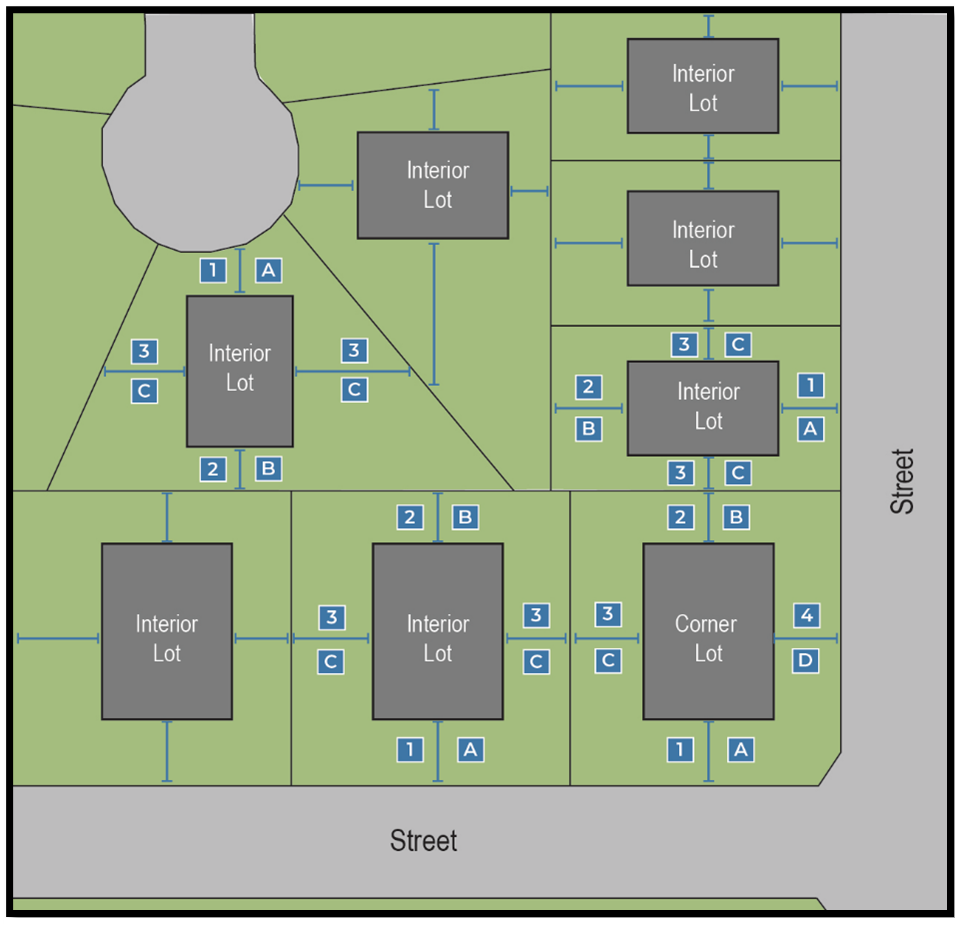
Figure IV-1: Lots, Yards, and Setbacks Summary
Table IV.1: Lots, Yards, and Setbacks Summary Key
2.
Front yard regulations.
a.
The front yard shall be open and unobstructed. Eaves and roof extensions or a porch may project into the required front yard for a distance not to exceed four feet. See Figure IV.2: Front Yard Projection.
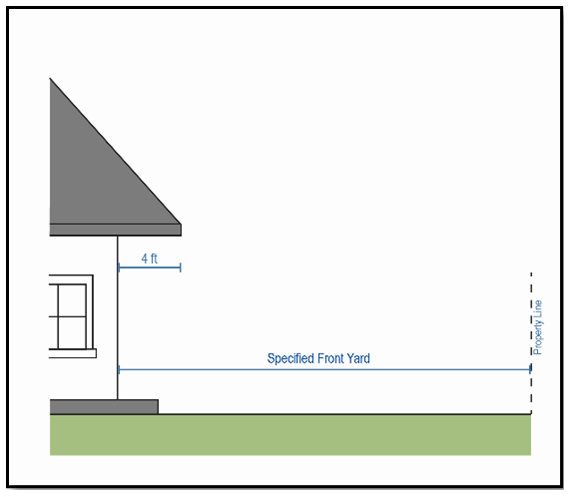
Figure IV-2: Front Yard Projection
b.
Where a building line has been established by an approved plat that deviates from the setback that is prescribed by this UDC, the required front yard shall comply with the building line established by that plat.
3.
Side yard regulations.
a.
Every part of a required side yard shall be open and unobstructed except for the ordinary projections of window sills, belt courses, cornices, and other architectural features projecting not to exceed 12 inches into the required side yard and roof eaves projecting not to exceed four feet into the required side yard. A fence may be constructed in accordance with section 22-212.D.).
b.
Where a side property line divides a nonresidential district from a residential district, a minimum ten-foot side yard is required for the nonresidential lot side adjacent to that residential district.
4.
Rear yard regulations. Every part of a required rear yard shall be open and unobstructed except for permitted accessory buildings and the ordinary projections of window sills, belt courses, cornices, roof overhangs, and other architectural features projecting not to exceed four feet into the required rear yard. A fence (in accordance with section 22-212.D.) may be constructed on the property line adjacent to a rear yard.
5.
Condition corner side yard regulations.
a.
Corner lots are on the junction of and abutting two or more intersecting streets.
b.
The longest dimension of the yard abutting the street shall be identified as the corner side yard.
c.
The other yard that abuts a street adjoined to the corner side yard shall be identified as the front yard.
F.
Intersection visibility triangle.
1.
Generally.
a.
These provisions apply to all new development or proposed expansions into the intersection visibility triangle. However, these provisions do not apply to or otherwise interfere with the: placement and maintenance of traffic control devices under governmental authority and control and public utilities; existing screening and fencing requirements; and existing and future city, state, and federal regulations.
b.
Obstructions are prohibited at elevations between two and one-half feet and nine feet above the average street grade within the intersection visibility triangle. Prohibited obstructions include any fence, wall, screen, billboard, sign, structure, foliage, or any other object.
c.
At intersections where streets do not intersect at or near right angles, the director shall have the authority to increase the minimum sight distances required above as they deem necessary to provide safety for both vehicular and pedestrian traffic.
2.
Arterials and collector intersections. At intersections where arterials and collectors intersect at or near right angles, the intersection visibility triangle shall be the area formed by extending the two curb lines from their point of intersection 45 feet along the curb and connecting these points with an imaginary line, creating a triangle. See Figure IV.3: Visibility at 45-Degree Intersection Point.
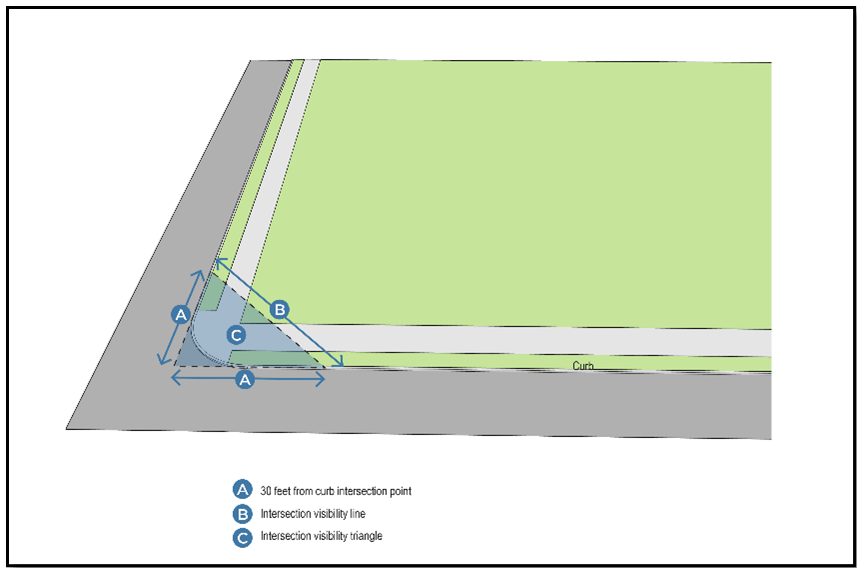
Figure IV-3: Visibility at 45-Foot Intersection Point
3.
Intersections at local streets. At all intersections where local streets intersect at or near right angles, the intersection visibility triangle shall be the area formed by extending the two curb lines from their point of intersection 30 feet along the curb and connecting these points with an imaginary line, creating a triangle. See Figure IV.4: Visibility at 30-Foot Intersection Point.
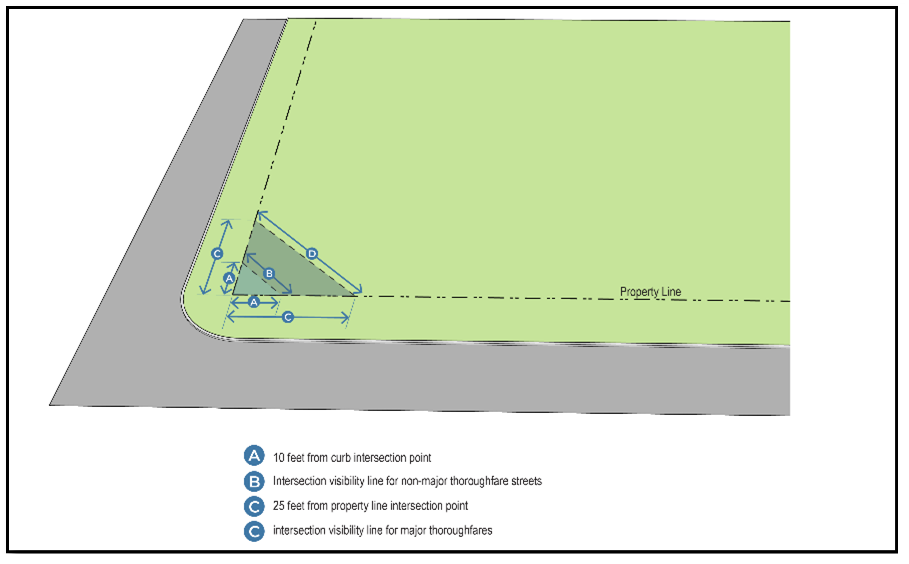
Figure IV-4: Visibility at 30-Foot Intersection Point
4.
No curb intersections. If there are no curbs existing, the triangular area shall be formed by extending the property lines from their point of intersection 25 feet on arterials and collectors and ten feet on local streets, and connecting these points with an imaginary line, creating a triangle. See Figure IV.5: Visibility at No Curb Intersection Point.
Figure IV-5: Visibility at No Curb Intersection Point
G.
Height regulations.
1.
A building or structure shall meet the requirements established in this section unless specified otherwise.
2.
The height of a building or structure is the vertical distance from the average line of the highest and lowest points of that portion of the lot covered by the building to the highest point of coping of a flat roof, or the deckline of a mansard roof or the average height of the highest gable of a pitch or hip roof (see Figure IV.6: Building Height).
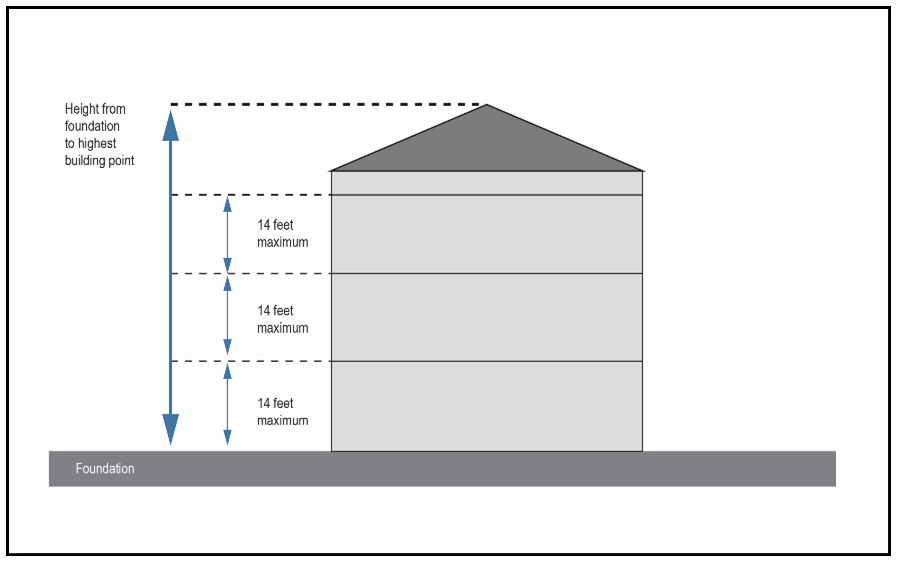
Figure IV-6: Building Height
3.
Religious steeples, domes, spires, cooling towers, roof gables, chimneys, vent stacks, and athletic field equipment and fencing are exempt from maximum height provisions.
(Ord. No. 2806NS, § 1(Exh. A), 8-19-2024; Ord. No. 2813NS, § 2, 11-18-2024)
Sec. 22-209. - Parking.
A.
Purpose. The purposes of this section are to:
1.
Ensure that adequate off-street parking is provided for new land uses and changes in use;
2.
Minimize the negative environmental and development design impacts that can result from excessive parking, driveways, and drive aisles within parking areas;
3.
Establish standards and regulations for safe and well-designed parking and vehicle circulation areas that minimize conflicts between pedestrians and vehicles within parking areas and surrounding land uses;
4.
To regulate off-street parking and to specify the requirements for residential off-street parking as they pertain to the appearance and the health, safety, and welfare of the city;
5.
Offer flexible means of minimizing the amount of area devoted to vehicle parking by allowing reductions in the number of required spaces in context-sensitive locations;
6.
Ensure compliance with provisions of the Americans with Disabilities Act (ADA);
7.
Minimize the visual impact of off-street parking areas; and
8.
Ensure that adequate off-street bicycle parking facilities are provided in walkable areas and promote parking that offers safe and attractive pedestrian routes.
B.
Applicability.
1.
Any new building, structure, use, redeveloped site, or enlarged or expanded existing building or use, must meet this section's parking requirements. These developments require permanent parking. Parking spaces may be provided in a garage or a paved open area.
2.
When a change in intensity of use of any building or structure would increase the required parking by more than five spaces or ten percent, whichever is greater, through an addition or change in the number of dwelling units, gross floor area, or other specified units of measurements, the increment of additional required parking is provided in accordance with this section unless an adjustment is permitted in subsection G. below.
C.
Compliance required.
1.
Off-street parking and loading review. Each application for a site plan, building permit, or certificate of occupancy shall include information as to the location and dimensions of parking space, and the means of ingress and egress to those spaces. This information is in sufficient detail to determine the requirements of this UDC are met and shall contain necessary information required by applicable provisions of this UDC.
2.
ADA compliance. All ADA parking spaces and related ADA accessibility features are required to be installed in accordance with the current edition of the ADA Standards for Accessible Design (the "ADA Standards") as published by the Department of Justice. Where discrepancies exist between this UDC and the ADA Standards, the ADA Standards shall apply. All required parking shall meet the ADA Standards.
3.
Parking reduction procedures. No existing or proposed parking shall be reduced or eliminated unless otherwise specified. Reductions in parking spaces may be permitted where spaces are no longer required by these regulations or alternative spaces meeting the requirements of these regulations are provided.
D.
Off-street parking requirements. Minimum off-street parking shall follow the requirements established in Table III.2: Use Table.
E.
Metrics and interpretations for computation.
1.
Square footage (floor area). The total or gross building square footage.
2.
Fraction of a space. When the calculation of the number of required parking spaces results in a requirement of a fractional space, any fraction is interpreted as one whole parking space.
3.
Parking calculations by specific variables.
a.
Square footage:
i.
Example: 1/1,000 square feet.
ii.
Interpretation: One parking space for each 1,000 square feet of the building's floor area.
b.
Dwelling unit:
i.
Example: 1/DU.
ii.
Interpretation: One parking space for each dwelling unit.
c.
Bedroom(s)/guestroom(s):
i.
Example: 1 + (0.75) bedrooms.
ii.
Interpretation: One parking space plus the number of parking spaces from calculating 0.75 times all bedrooms.
d.
Bedroom unit:
i.
Example: 1.5/1 BRU.
ii.
Interpretation: 1.5 parking spaces for a single bedroom apartment unit.
e.
Acres:
i.
Example: 1/5 acres.
ii.
Interpretation: One parking space for every five acres.
f.
Site:
i.
Example: 5/site.
ii.
Interpretation: Five parking spaces for the entire site.
g.
Bay:
i.
Example: 1/bay.
ii.
Interpretation: One parking space for every bay.
h.
Pumps:
i.
Example: 1/2 pumps.
ii.
Interpretation: One parking space for every two pumps.
F.
Additional rules for computing parking requirements.
1.
Uses not listed. The planning commission shall have the authority to determine the required parking facilities for uses not specifically listed in Table III.2: Use Table.
2.
Cumulative parking. In computing the parking requirements for any development, the total parking requirements shall be the sum of the specific parking space requirements for each use included in the development except as provided in [subsection] G.2. below. Where multiple uses are proposed for a building, the parking requirements shall be calculated on the basis of the most restrictive requirements unless specific areas of different uses are delineated by floor or building segment.
3.
Accessory uses. Areas accessory to the principal use of a building, or portion of a building, are to be included in the calculation of floor area of the principal use unless noted otherwise.
4.
Alterations, expansions, and changes in use. For alterations, expansions, or changes in uses, prior to the issuance of a certificate of occupancy, the director shall determine in writing, based on information submitted by the applicant, the impact of the proposed change on the parking requirement for the building and the adequacy of the parking provided.
G.
Adjustments and reductions to parking requirements.
1.
Generally.
a.
In specific instances established below, a reduction in required parking spaces may be approved by the director. Applications for a reduction shall include the following information:
i.
A parking study that substantiates the need for a reduced number of spaces; and
ii.
A plan showing how the parking spaces are provided on the site.
b.
Multiple parking adjustments and reductions may be used.
c.
The maximum required parking reduction shall not exceed 40 percent unless authorized by a variance approved by the board of adjustment.
2.
Joint parking facilities. Joint parking allows parking spaces to be shared among two or more uses that typically experience peak parking demands at different times and that are located on the same lot or on lots within 600 feet. Because parking spaces are shared, the total number of parking spaces that would otherwise be required may be reduced. In addition to all other applicable requirements of this section, the following requirements apply to joint parking:
a.
Authority to reduce parking.
i.
The director may reduce the total minimum number of required parking spaces, provided that each use participating in shared parking experiences peak parking demands at different times.
ii.
The director shall base this decision on the criteria established for each parking reduction.
b.
Parking study. The director shall require the applicant to submit a parking study to determine the peak parking demand periods or other information needed to determine the viability of joint parking.
3.
On-street parking.
a.
On-street parking consists of parking spaces located in a public right-of-way.
b.
Each parking space that is in a public right-of-way abutting the lot may count as a required parking space for the purpose of meeting the requirements in Table III.2: Use Table.
c.
Each parking space must be on a paved area abutting or within the public right-of-way. If it is in a public right-of-way, then it shall not prohibit or limit access for emergency service vehicles as required by the fire marshal.
4.
Captive market. Parking requirements for retail and restaurant uses may be reduced up to 25 percent where it can be determined that some portion of the patronage of these businesses comes from other uses (i.e., employees of area offices patronizing restaurants) located within the same building or a maximum walking distance of 500 feet.
5.
Availability of public parking.
a.
Parking requirements may be reduced by 20 percent if a property has available to it a sufficient supply of existing underutilized public parking spaces in off-street public parking lots and/or on-street public parking spaces.
b.
Parking must be within a maximum walking distance of 500 feet from the proposed use.
6.
Structured parking.
a.
Generally. Parking reductions may be applied for providing parking in a parking structure in addition to any reduction in this subsection.
b.
Above-grade parking structure reduction. For every 100 parking spaces located in an above-grade parking structure, a 20 percent reduction in required parking may be applied.
7.
Mixed-Use (MU) District parking. Any new development in the Mixed-Use (MU) District may apply a 50 percent reduction to the required parking ratio established in Table III.2: Use Table for that particular use.
8.
Downtown (DT) District parking.
a.
Downtown Core (DT-C). Required parking ratios do not apply in the Downtown Core (DT-C) Subdistrict.
b.
Downtown Edge (DT-E) and Downtown Transition (DT-T). Any new development or redevelopment in the Downtown Edge (DT-E) and Downtown Transition (DT-T) Subdistricts may apply a 50 percent reduction to the required parking ratio established in Table III.2: Use Table for that particular use.
9.
Infill development parking.
a.
Any new nonresidential infill development may apply a 35 percent reduction to the required parking ratio established in Table III.2: Use Table for that particular use.
b.
Any new residential infill development may apply a 25 percent reduction to the required parking ratio established in Table III.2: Use Table for that particular use.
10.
Electric vehicle (EV) parking spaces. The off-street parking spaces required for nonresidential development may be satisfied with EV spaces, not exceeding 25 percent of the required total. The following requirements shall be met to reduce the total parking required.
a.
Size. An electric vehicle charging station parking space must meet the size of a parking space as required by this UDC.
b.
Installation and equipment.
i.
Electric vehicle charging station installation and equipment must comply with the rules and regulations under the city's adopted building and fire codes.
ii.
The required installation and equipment shall include electric vehicle supply equipment and signage.
iii.
The circuit needed for an electric vehicle charging station shall have no other outlets.
iv.
The necessary service panel shall include an over-current protective device and provide sufficient capacity and space to accommodate the circuit and over-current protective device with the termination point located within 30 feet the electric vehicle parking space.
v.
Electric vehicle spaces shall be marked with a permanent and visible sign located in a conspicuous place at the service panel to identify each panel space reserved to support electric vehicles.
c.
Accessible facilities. Accessible electric vehicle charging stations shall be located within 75 feet of the building or facility entrance and connect to a barrier-free accessible route of travel.
11.
Reduction for improved landscaping. The minimum parking requirements may be reduced by 20 percent if the required site landscaping is increased by 20 percent.
12.
Redcution for pervious pavement. The minimum parking requirements may be reduced by 25 percent if the site uses pervious pavement for required parking spaces.
H.
Residential parking.
1.
No person shall park any automobile, bus, truck, motorcycle, or any vehicle on any portion of a yard of any area that is zoned residential unless that area is a:
a.
Hard-surfaced driveway or parking area;
b.
Pervious pavement bordered by cement curbing or similar permanent border; or
c.
Side yard that is enclosed by a fence at least six feet in height and so constructed that no person can see through into the area surrounded by the fence.
2.
All residential driveways and any other associated standards shall meet the requirements and specifications established in the city's Engineering Design Manual.
3.
No major recreational equipment shall be parked or stored on any lot in a residential district except in a carport or enclosed building, or in a required side or rear yard; provided, however, that such equipment may be parked anywhere on a residential premises no more than 24 hours during loading or unloading.
4.
No major recreational equipment shall be used for living, sleeping, or housekeeping purposes when parked or stored on a residential lot.
I.
Design.
1.
Generally.
a.
All required off-street parking facilities are located within 500 feet of the building measured from the nearest point of the building or structure.
b.
All required parking spaces shall be clearly outlined on the surface of the lot with paint or other easily distinguishable material.
c.
The surface of parking spaces and aisles, truck standing spaces, and access driveways shall be treated, prepared, and maintained for adequate drainage and eliminating dust, dirt, and mud.
d.
All parking areas shall be landscaped with grass, shrubs, trees, and evergreen groundcover and maintained in good condition year-round as required by section 22-211.
2.
Parking space dimensions. Parking spaces must meet the following standards prescribed in Table IV.2: Parking Space Dimensions. All dimensions represent the minimum requirement for any required parking space.
Table IV.2: Parking Space Dimensions
a.
Circulation and maneuverability.
i.
Circulation within a parking area shall be designed so that a car entering the parking area need not enter a street to reach another aisle.
ii.
All maneuvering, except parallel parking, shall occur on site and be designed so that a vehicle may enter an off-street parking space in one forward motion and may exit in one reverse and one forward motion.
3.
Drive aisle dimensions.
a.
The minimum for a one-way drive aisle shall be 14 feet wide.
b.
The minimum for a two-way service aisle shall be 24 feet wide.
c.
Driveways used for ingress and egress shall be confined to and shall not exceed 30 feet in width, exclusive of curb returns.
4.
Parking construction and maintenance. Off-street parking areas for nonresidential developments with more than two parking spaces shall comply with the following provisions:
a.
All sides of a lot abutting a residential use shall be enclosed with an opaque, ornamental fence, wall, or dense evergreen hedge having a height of at least six feet.
b.
No parking shall be permitted within ten feet of a front yard setback in a residential district or any abutting residential use. In all other cases, no setback shall be required; provided, however, that on any corner lot formed by two intersecting streets, no parking shall be permitted within the intersection visibility triangle.
c.
All areas used for parking and driveway purposes shall be paved as established in the Engineering Design Manual.
d.
Bumper guards or wheel stops may be required where deemed necessary by the director.
e.
The intensity of light and arrangement of reflectors shall be such as to not interfere with residential district use.
J.
Bicycle parking facilities.
1.
Generally.
a.
Bicycle parking is required for certain uses in the DT, MU, and TL zoning districts to encourage the use of bicycles by providing secure and convenient places to park bicycles.
b.
Required bicycle parking is designed so people of all ages and abilities can access the bicycle parking and securely lock their bicycle without inconvenience.
c.
Bicycle spaces are measured as the ability for a facility to store one bicycle. One bicycle space equals one stored bicycle.
d.
A bicycle parking facility shall not obstruct pedestrian traffic or interfere with the use of the pedestrian area.
2.
Required minimums. Minimum bicycle parking shall follow the requirements below:
a.
Multi-family dwelling (apartment): Two bicycle spaces per 40 units.
b.
Mixed use building: Two bicycle spaces per 1,000 square feet.
c.
Bar: One bicycle space per 1,000 square feet.
d.
Brewpub: One bicycle space per 1,000 square feet.
e.
Restaurant: One bicycle space per 500 square feet.
f.
Any nonresidential building larger than 10,000 square feet: One bicycle space per 5,000 square feet.
3.
Bicycle parking facility types. Where bicycle parking is required, one of the following bicycle parking facility types established in Table IV.3: Bicycle Parking Facility Types shall be provided.
Table IV.3: Bicycle Parking Facility Types
| Facility Type | Description | Graphic |
|---|---|---|
| U-Rack | A "U-shaped" bicycle facility affixed to pavement that stores up to two bicycles which are locked from the outside | 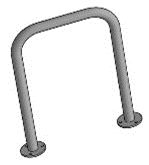 |
| Bollard Rack | A bicycle facility affixed to pavement that stores up to two bicycles which are locked from the outside | 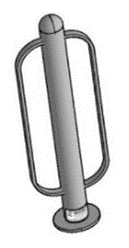 |
| Low Profile Rack | A low-lying bicycle facility affixed to pavement that stores multiple (1 to 20) bicycles which are locked from the outside | 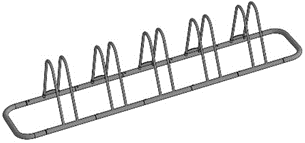 |
| Grid Rack | A dual-sided bicycle facility affixed to pavement that stores multiple (1 to 20) bicycles which are locked from the outside | 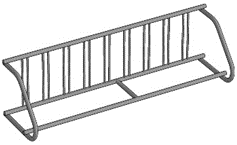 |
| Bicycle Locker | A locker or box in which multiple bicycles can be placed, stored, and locked | 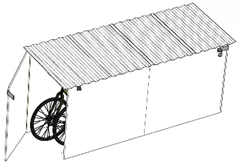 |
| Secure Bicycle Parking Area | A weather-protected, standalone bicycling parking structure or building extension with shared racks and access control | 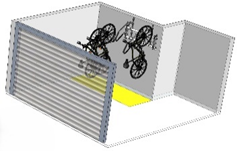 |
4.
Bicycle facilities.
a.
Generally. A bicycle facility shall:
i.
Allow a bicycle frame and one wheel to be locked to the rack with a high-security lock;
ii.
Allow a bicycle to be securely held with its frame supported in at least one place;
iii.
Be durable and securely anchored;
iv.
Have a locking surface thin enough to allow standard u-locks to be used, but thick enough so the rack cannot be cut with bolt cutters; and
v.
Not include any elements, impediments, or features within the interior space.
b.
Installation. A bicycle facility shall be:
i.
Available to the public;
ii.
Located in a convenient, well-lit area that is clearly visible to both a visitor to the building and a person who is on the sidewalk that access the building's primary entrance; and
iii.
Within 150 feet of:
(A)
The primary entrance of each building, and closer than the nearest vehicle parking space; or
(B)
At least one primary entrance of a building with multiple entrances; unless an alternative location during the site plan process is approved; and
iv.
Outfitted to where a bicycle can be safely and securely locked.
(Ord. No. 2806NS, § 1(Exh. A), 8-19-2024)
Sec. 22-210. - Loading.
A.
Purpose. The purposes of this section are to:
1.
Ensure that adequate loading facilities are provided for new land uses;
2.
Establish standards and regulations for safe and well-designed loading and unloading to minimize conflicts between pedestrians and vehicles within parking areas and surrounding land uses;
3.
Minimize the impact of improperly planned loading areas.
B.
Applicability.
1.
Any new commercial, industrial, or public/civic/institutional building, structure, use, redeveloped site, or enlarged or expanded existing building or use as identified in Table III.2: Use Table, must meet this section's requirements unless specifically exempted.
2.
This section does not apply to residential, accessory, and temporary uses.
C.
Compliance required. Each application for a site plan, building permit, or certificate of occupancy shall include information as to the location and dimensions of loading facilities, and the means of ingress and egress to those facilities. This information is in sufficient detail to determine the requirements of this UDC are met and shall contain the necessary information required by applicable provisions of this UDC.
D.
Standards.
1.
Generally. The required number of off-street loading spaces is determined by gross floor area. Outdoor storage, sales, or display areas must be added to gross floor area if these areas contain materials that are received or distributed by trucks. If a development has more than two uses, the off-street loading space requirement is the highest number of spaces required by any one use. Required loading spaces follow the standards prescribed in Table IV.4: Required Loading.
Table IV.4: Required Loading
2.
Location. A loading space is:
a.
Located within the same development as the building or use served;
b.
Prohibited from projecting into a sidewalk, street, or public right-of-way;
c.
Prohibited from being located between the front building line and the front lot line;
d.
Located to the rear or side of buildings in visually unobtrusive;
e.
Set back a minimum distance of 100 feet from any adjacent residential zoning district or use unless completely enclosed by building walls, a uniformly solid wall, or any combination of the two;
f.
Set back a minimum distance of 40 feet from any public street, nearest point of intersection on any two streets or highway, or front property line; and
g.
Oriented away from the street frontage.
3.
Dimensions.
a.
Unless otherwise specified, all off-street loading spaces shall have a minimum dimension of 12 feet by 50 feet and an overhead clearance of 15 feet.
b.
In no case shall required off-street loading spaces encroach upon off-street parking spaces required by this section, or on public right-of-way.
4.
Maneuvering.
a.
The size of delivery vehicles intending to serve the site determine maneuvering area size as established in the Engineering Design Manual.
b.
Each maneuvering area for loading spaces must not conflict with parking spaces or with the maneuvering areas for spaces.
c.
A maneuvering area must be located on-site and have a minimum of 40 feet for spaces serving delivery vehicles.
5.
Design.
a.
Each loading space must minimize conflicts with other vehicular, bicycle, and pedestrian traffic.
b.
Loading spaces shall be designed so that vehicles shall maneuver entirely within the property lines of the premises and not on public right-of-way.
c.
Unenclosed off-street loading areas shall be permanently paved with hard-surfaced pavement.
d.
A six-inch header curb must also be constructed to separate a loading area from public right-of-way.
e.
Landscaping and screening requirements prescribed in section 22-211 and section 22-212 apply to loading facilities and shall prevent direct views of the loading facilities and their driveways from adjacent properties and public right-of-way.
(Ord. No. 2806NS, § 1(Exh. A), 8-19-2024)
Sec. 22-211. - Landscaping.
A.
Purpose. The purpose of this section is to preserve Shawnee's unique character and integrate and enhance new development by promoting landscape design that:
1.
Reinforces the identity of the community;
2.
Appropriately situates new buildings in the landscape;
3.
Provides adequate vegetation for screening and buffering between land uses;
4.
Provides tree canopies to reduce urban heat island effect;
5.
Preserves the existing native trees and other physical site values where possible;
6.
Reduce soil erosion and reduce stormwater runoff;
7.
Aid in energy conservation for structures;
8.
Balances water demand and use;
9.
Soften the visual impact of paved areas, parking lots, and adjoining right-of-way;
10.
Identifies climate-appropriate landscape material; and
11.
Protects natural resources.
B.
Applicability.
1.
Generally. This section applies to:
a.
All development for new construction within Shawnee's corporate limits except for the exemptions listed below.
b.
The following landscaping standards apply to all new nonresidential development and to the expansion by more than 25 percent of an existing building mass or site in any zone.
2.
Exemptions. This section does not apply to:
a.
Any property with a site plan that was approved prior to the adoption of this UDC, unless an amended site plan is required by the requirements in the submittal checklist.
b.
Properties containing only single-family or two-family land uses.
c.
Agricultural uses in the Transitional Agriculture (TA) District.
d.
Properties in the Heavy Industrial (I-2) District.
e.
Properties in the Downtown Core (DT-C) and Downtown Edge (DT-E) Subdistricts.
f.
Any development that utilizes zero lot line setbacks as permitted by applicable zoning specifications shall be exempt from landscaping requirements for each applicable yard area.
C.
Compliance required.
1.
Each application for a site plan or building permit shall include information as to the location, dimensions, and types of trees and landscaping required. This information is in sufficient detail to determine the requirements of this section are met and shall contain necessary information required by applicable provisions of this section.
2.
A landscape plan is required and shall be shown as part of the site plan or building permit. Landscape plans shall meet the requirements established in the submittal checklist.
3.
No permits shall be issued for building, paving, grading, or construction until a landscape plan is approved. Prior to the issuance of a certificate of occupancy for any building or structure, all landscaping shall be in place in accordance with the landscape plan.
4.
If a certificate of occupancy is sought at a season of the year in which the director determines that it would be impractical to plant trees, shrubs, or grass, or to lay turf, a temporary certificate of occupancy may be issued if a letter of agreement from the property owner is provided stating when the installation shall occur. All landscaping required by the landscape plan shall be installed within six months of the date of issuance of the temporary certificate of occupancy or the site shall be deemed to be in violation of this section and the temporary certificate of occupancy shall be revoked.
D.
Standards.
1.
Required landscaping.
a.
Required landscaping shall meet the standards established in Table IV.5: Landscaping Requirements.
b.
A minimum of 15 percent of any site shall be landscaped.
c.
A minimum of 50 percent of any required landscaping shall be evergreen plantings.
d.
Up to 20 percent of required site trees (exclusive of front yard trees) may be substituted with shrubs at a rate of five shrubs per one tree.
e.
Any irrigation for required landscaping shall:
i.
Be automatic;
ii.
Be contained on site; and
iii.
Not flood adjacent streets or properties.
_____
iv.
Table IV.5: Landscaping Requirements
2.
Landscape materials and plant selection.
a.
Permitted landscape materials include trees, shrubs, groundcover plants, nonplant groundcovers, and outdoor hardscape features, the selection of which shall be based on local climate, exposure, water availability, potential allergens, and drainage conditions.
b.
When new vegetation is planted, soils shall be amended, as necessary, to allow for healthy plant growth.
c.
Planting shall consist primarily of native plantings and noninvasive species in accordance with the approved planting/species list maintained by the city.
d.
Trees and shrubs shall meet the minimum size and spacing standards established in Table IV.5: Landscaping Requirements and in Appendix A. Approved Tree List.
3.
Existing vegetation.
a.
Existing noninvasive vegetation may be used to meet landscape requirements.
b.
When existing mature trees are protected on the site (e.g., within or adjacent to parking areas), the director may reduce the number of new trees required by a ratio of one-inch caliper of new tree(s) for every one-inch caliper of existing tree(s) protected.
4.
Nonplant groundcovers.
a.
Bark dust, chips, aggregate, or other nonplant groundcovers may be used, but shall cover no more than 50 percent of the area to be landscaped and shall be confined to areas underneath plants.
b.
Nonplant groundcovers cannot be substituted for groundcover plants.
5.
Species and irrigation.
a.
The use of drought-tolerant native plant species is required when irrigation is not available or impractical.
b.
Irrigation shall be provided for plants that are not drought-tolerant.
c.
If the plantings fail to survive, the property owner shall replace them with an equivalent specimen. Appendix A. Approved Tree List provides a list of recommended species.
6.
Parking areas.
a.
Parking areas shall comply with the standards established in Table IV.5: Landscaping Requirements.
b.
Landscaping shall consist of evenly distributed shade trees with shrubs and/or groundcover plants that conform to the criteria in this section.
c.
"Evenly distributed" means that the trees and other plants are distributed around the parking lot perimeter and between parking bays to provide a partial canopy.
d.
At a minimum, one tree per six parking spaces on average shall be planted to create a partial tree canopy over and around the parking area.
e.
All parking area landscapes shall have dimensions of not less than 24 square feet of area, or not less than four feet in width by six feet in length, to ensure adequate soil, water, and space for healthy plant growth.
7.
Front yards and frontage landscaping improvements.
a.
Front yards, excluding ingress and egress points, shall be landscaped to include landscaping that enhances the property, softens the building and parking areas, and provides an aesthetically pleasing streetscape.
b.
Landscaping shall be located within the front yard setback area in accordance with the criteria of this section and Table IV.5: Landscaping Requirements, while providing reasonable opportunity for signage, entrance features, parking, and ingress/egress areas as determined by the director.
c.
Street trees planted within city right-of-way shall not count towards required landscaping.
d.
Adequate sight distance, as established in section 22-208.F. shall be maintained.
8.
Low impact development.
a.
The city encourages the use of low impact development practices for new development through green stormwater facilities, rainwater harvesting, and pervious pavement to reduce public infrastructure costs, increase developable land, preserve natural resources, and improve water quality.
b.
Stormwater facilities shall:
i.
Be landscaped with at least one evergreen tree and three shrubs for every 50 linear feet of perimeter;
ii.
Use low water-consuming grass or other approved vegetation or groundcovers as the primary ground cover.
iii.
Be covered with sod or other approved vegetation for stormwater facilities within the five-year floodplain; and
iv.
Use native vegetation or live plant material if it is maintained free of weeds.
c.
Low impact development practices like rainwater harvesting or pervious pavement may be incorporated for any development. These practices may be used to reduce the rate and volume of stormwater runoff and required drainage improvements if the drainage report indicates a reduction and the director determines that:
i.
The improvements will reduce stormwater demands, using generally accepted engineering principles;
ii.
There is a maintenance plan that ensures the adequate ongoing maintenance of those facilities; and
iii.
The maintenance plan ensures that the improvements will continue to control the rate and volume of stormwater runoff as agreed upon.
E.
Landscaping maintenance.
1.
All landscaping improvements shall be maintained in a live and healthy condition. It shall be the continuing duty of the property owner, its successors, or anyone having beneficial use of the property to maintain landscaping in a live and healthy condition and, if necessary, to replace any dead, diseased, or damaged plants as soon as natural conditions allow.
2.
Generally, no regulation in this section shall conflict with the requirements established in section 22-208.F. However, plantings may be allowed within the sight triangle if plantings do not exceed a mature height of 24 inches.
3.
Property owners in all zoning districts shall be responsible for landscaping and maintaining the area within the street right-of-way between the curb line and property line, alleys, behind walls and fences, and other utility easements. Landscaping within this area shall not count towards the required landscaping.
4.
The type and location of vegetation shall not interfere with utilities or the safe and efficient flow of street traffic. Approval by the appropriate city departments responsible for street and utilities is required.
5.
Trees that reach a mature height of more than 15 feet shall not be planted within ten feet of an overhead utility line. This requirement may be waived by the director, providing that the applicant submits a letter stating no objection from the utility company.
6.
Plantings and vegetation may be relocated or adjusted as necessary per the fire marshal's recommendation.
7.
Vegetation, other than groundcover or turf grass, shall not be planted within three feet of a fire hydrant or an above-ground traffic control box.
8.
It shall be the responsibility of the property owner to maintain in good condition all the improvements required by this section. Any required screening device or fence that are damaged shall be repaired, and any vegetation which dies shall be replaced no later than the following planting season (spring or fall).
9.
Failure to provide the improvements required by this UDC or failure to maintain required improvements in the manner prescribed by this UDC shall constitute an offense and violation of this UDC.
F.
Tree preservation.
1.
All trees within areas proposed to be disturbed by development shall be surveyed and have location, species, size, and condition or health noted in a tree preservation plan.
2.
Existing noninvasive trees shall be incorporated into the design in their existing location whenever possible.
3.
Existing noninvasive trees greater than six inches at DBH shall be preserved and protected from damage during site development.
4.
Any noninvasive trees greater than six inches at DBH preserved on a site meeting these specifications may be credited toward meeting the requirements of subsection D. above for that area within which they are located, according to Table IV.6: Tree Preservation Credits, depending on the applicant's preference to accept or decline the credit. For purposes of this section, caliper measurement shall be taken at DBH above the ground and shall be rounded to the nearest whole number.
Table IV.6: Tree Preservation Credits
5.
The following requirements apply if an existing noninvasive tree greater than six inches at DBH cannot remain in its existing location as determined by the director.
a.
Tree relocation.
i.
Any existing noninvasive tree shall be spaded and relocated by a professional landscaping company.
ii.
Trees shall be relocated to another on-site location or to a city-owned facility after consultation with the director.
iii.
All measures shall be taken to ensure the survival and health of the tree.
iv.
All existing noninvasive trees that are incorporated into the site shall be adequately protected in the tree protection zone from damage during construction.
b.
Tree replacement fund.
i.
An existing noninvasive tree may be removed and disposed of if the applicant pays into the city's tree replacement fund.
ii.
The required payment shall reflect the dollar value of each removed tree and the estimated cost of installation.
G.
Xeriscaping.
1.
Generally. This subsection promotes the establishment of water conscious landscaping through the implementation of xeriscaping principles. Additionally, this subsection provides an alternative to the typical landscape requirements for nonresidential properties.
2.
Principles. All submitted landscaping plans using xeriscaping practices shall comply with the following principles:
a.
Planning and design.
i.
Landscape designs and plans shall account the regional and microclimatic conditions of the site, its existing vegetation and topographical conditions, the intended use, and the zoning (i.e. vegetation zone) of plant materials according to their unique water needs.
ii.
Plans shall account for the various heights of landscaping materials. If the landscape plan is proposed in phases, to account for optimum planting times, all future phases shall be included on the landscape plan.
iii.
Xeriscaping shall:
(A)
Preserve and protect existing vegetation and topsoil,
(B)
Stabilize and cover all bare soil areas; and
(C)
Incorporate energy/water conservation.
b.
Soil improvement.
i.
Since soil tends to vary from site to site all soil shall be analyzed to determine what plants are suitable to include on the landscape plan and if any soil amendments are required.
ii.
Soil may require additional organic material be added to ensure the continued health of plants.
c.
Appropriate plant selection.
i.
Plant selection shall be based on the plant's adaptability to the existing site conditions and need for supplemental watering.
ii.
Most xeriscaping will not require supplemental watering.
iii.
In selecting plant materials, mature plants and shrubs shall be used to ensure establishment after installation.
iv.
A list of trees that are native and acceptable within the city has been provided in Appendix A. Approved Tree List; however, the director may approve alternate plantings if deemed appropriate for the site. The director shall consider the:
(A)
Diversity of the plant species being proposed;
(B)
Size, maturity and water requirements of the selected plantings; and
(C)
Variation of height, spread and color.
d.
Practical turf areas.
i.
The type and location of turf areas are considered to be a major xeriscaping design element (turf in this case involves typical varieties of Bermuda, St. Augustine, Ryegrass blends, etc.).
ii.
The maintenance needs of turf can be minimized by the shape, area, irrigation equipment, and turf type selected.
iii.
Drainage areas and sloped areas are especially suited to the use of native grasses as opposed to turf. The following items will be reviewed to assess the practicality of the proposed turf areas:
(A)
The design of the turf areas (rounded, compact turf areas typically are more efficient),
(B)
Turf areas shall be designed to be on a separate zone from other landscaping;
(C)
Turf shall be appropriate for the selected location;
(D)
Turf shall be avoided on slopes and drainage areas in favor of native grasses; and
(E)
Minimize turf areas by using native grasses, hardscape elements and alternatives.
e.
Efficient irrigation.
i.
All landscaping is required to have an irrigation system that is designed by a licensed landscape architect.
ii.
Additionally, all irrigation systems shall be designed to be water efficient utilizing low-flow irrigation equipment.
iii.
The landscape plan shall show that turf areas will be watered separately, and plants shall be grouped in separate zones based on water need.
iv.
Any irrigation systems are required to be maintained in proper working order.
f.
Use of mulches.
i.
Mulches minimize evaporation, reduce weed growth, slow erosion, and help maintain soil temperature.
ii.
Mulches used in xeriscaping shall ensure:
(A)
The use of a deep layer of mulch in planting beds (typically three to four inches) is utilized; and
(B)
Mulches are locally or regionally derived materials.
iii.
Mulches may include the use of pea gravel, crushed granite, rock, or pebbles in unplanted areas.
g.
Appropriate maintenance. Proper pruning, weeding and fertilization as required with all landscape plans shall be required. Typically, xeriscaping requires less maintenance, fertilizer and other chemicals and pesticides.
(Ord. No. 2806NS, § 1(Exh. A), 8-19-2024)
Sec. 22-212. - Screening and fencing.
A.
Purpose. The purposes of this section are to:
1.
Minimize conflicts between potentially incompatible land uses and development on abutting property;
2.
Ensure that screening devices and fences are attractive and in character with the neighborhood;
3.
Maintain fences by recognizing their use to create privacy; and
4.
Distinguish screening devices and fences from each other by clearly defining the two terms and applying specific standards to each term.
B.
Applicability. This section applies to all development within Shawnee's corporate limits. This section does not apply to residential development unless otherwise specified. The director may utilize their discretion to meet the spirit and intent of this section.
C.
Screening standards.
1.
Generally.
a.
All required screening devices must be equally finished on both sides.
b.
All openings in the surface for passage shall be equipped with gates equal in height and screening characteristics specified below but need not be of the same material as the main fence or wall.
c.
Where a screening device is constructed, placed, or planted on uneven terrain, there shall be no gap under the device, and the device must be composed of the same material throughout.
d.
No screening device comprised of brick, masonry, concrete, or solid metal shall be erected or placed that would interfere with the installation or maintenance of any public utility line, service, or drainage way within a dedicated easement.
e.
No screening device shall conflict with the intersection visibility triangle requirements of section 22-208.F.
f.
Any required screening device provided by a more intensive use abutting a residential use or district shall be permanently and adequately maintained by the more intensive use's property owner.
g.
If there is an existing screening device or fence along a residential property line and a nonresidential use is proposed, the required screening device shall be a living plant screen that complies with the requirements established in section 22-211 and is deemed acceptable by the director. However, this requirement may be waived if a five-foot minimum space between two screening devices and fences is provided for maintenance access. The intent of these requirements is to eliminate screening situations where two screening walls or fences abut each other.
h.
Before certificate of occupancy permit issuance, all approved screening devices must be in place.
i.
All screening devices shall be permanently and continually maintained in a neat and orderly manner as a condition of use. The occupancy permit may be revoked by the director for failure to adequately maintain such screening device.
2.
Exceptions. Required screening devices are not required if:
a.
An approved screening device already exists along the property line; or
b.
The portion of the subject property to be screened contains a wooded area that shall be maintained for the life of the project, and a tree survey indicates that a majority of the trees in the wooded area on the subject property are found to be noninvasive trees.
3.
Design requirements. A screening device shall be erected or placed in all locations and follow all provisions specified below:
a.
Height. The minimum and maximum screening device height follow the requirements established in Table IV.7: Screening Height Requirements.
Table IV.7: Screening Height Requirements
b.
Materials. The materials shall consist of one or more of the following unless specified elsewhere in this UDC (See Figure IV.7: Allowed Screening Devices):
i.
Brick masonry, stone masonry, concrete block, or other architectural masonry finish; or
ii.
Tubular steel (primed and painted) or wrought iron fence with masonry columns spaced a maximum of 20 feet on center with structural supports spaced every ten feet, and with sufficient evergreen landscaping to create a solid screening effect; or
iii.
Living plant screens (evergreen shrubs with a minimum of three feet in height at the time of planting) that will not be detrimental to adjacent property and will provide sufficient visual screening based on the proposed location and characteristics of the project. A living plant screen shall comply with the requirements established in section 22-211; or
iv.
Alternate equivalent screening that provides an exceptional screening aesthetic, meets sound structural practices and engineering design criteria, and meets the intent and function of this section at the discretion of the director.
c.
Locational requirements. The following locational requirements apply:
i.
All allowed open storage of materials, equipment, or commodities shall be screened from view from all streets and any residential properties. Materials, equipment, or commodities shall be stacked no higher than one foot below the top of the screening device or visual barrier.
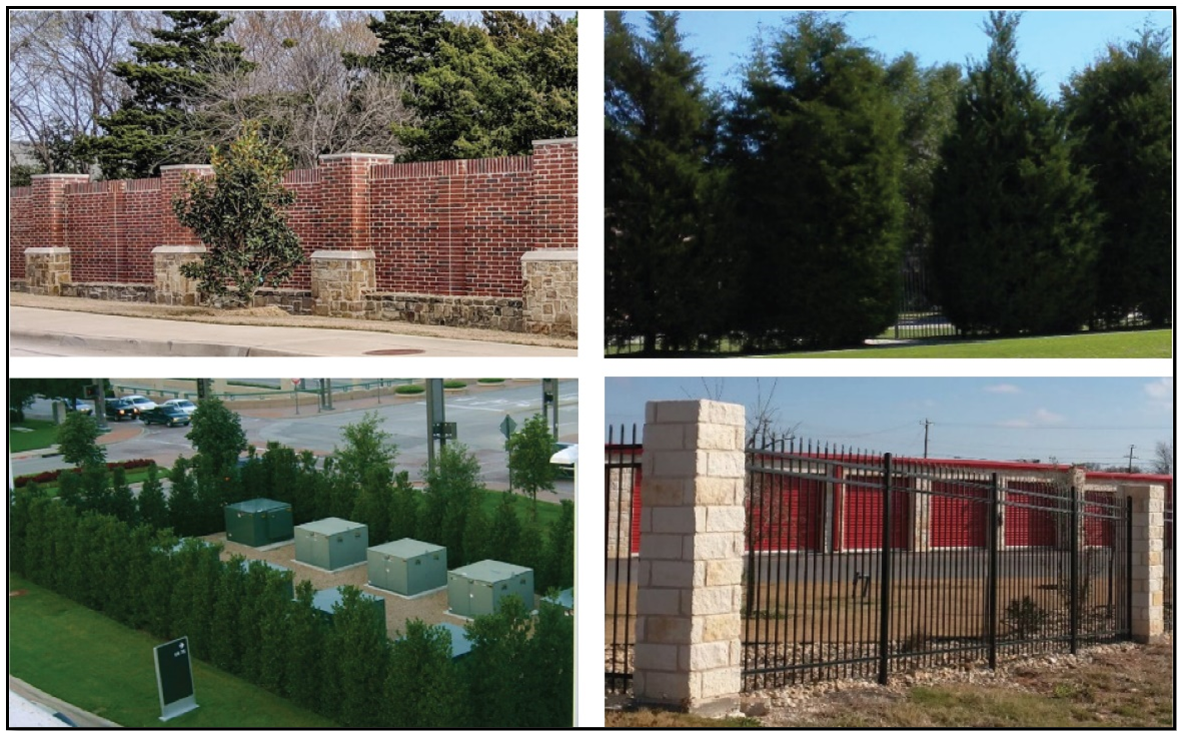
Figure IV-7: Allowed Screening Devices
ii.
Garbage, trash, or refuse containers shall meet the requirements established in section 22-215.
iii.
All wrecking yards, junkyards, or salvage yards shall be contained on all sides and shall be screened from view from the public right-of-way and from adjacent residential property at an eight-foot minimum height.
iv.
Ground mechanical and heating and air conditioning equipment in nonresidential and multi-family uses shall be screened from view from the public right-of-way and from adjacent residential property.
v.
Roof-mounted mechanical units shall be screened from view at a point of four feet above the property line with a parapet wall, mansard roof, or alternative architectural element. The height of the screening device shall be equal to or greater than the height of the mechanical unit provided that the device shall not extend more than six feet above the roof on a one- or two-story building or more than 12 feet above the roof on a building of three or more stories. A mechanical unit that is taller than the maximum permitted height of the screening feature shall be set back from the screen three feet plus one foot for each foot exceeding the height of the screen. Screening for mechanical units shall apply to new building construction only.
vi.
For commercial and industrial uses, vehicles and equipment awaiting repair for more than 24 hours or after the close of business shall be screened from view from public right-of-way and from adjacent residential property.
vii.
A screening device meeting the standards established in Table IV.7: Screening Height Requirements shall be constructed on nonresidential property adjacent to residential property lines.
viii.
Nonresidential uses in a residential district shall be screened from view of any adjacent residential lot or dwelling use along the side and rear property lines of that nonresidential use. These screening requirements are not required for public schools, parks, or religious land uses, except where a parking lot or active outdoor intensive use area (such as a playground) is adjacent to a residential lot or dwelling.
ix.
Off-street loading areas of any nonresidential use shall be screened from view of any residential dwelling or lot or of any other adjacent public land use.
x.
Where a multi-family use abuts a single-family or two-family use or district, the side and rear property lines of that multi-family use shall be screened from view of adjacent dwelling(s).
xi.
No screening device or fence shall be erected, placed, or planted beyond the front building line of any permitted building in a residential district, either on a corner lot or interior lot, unless otherwise allowed by the board of adjustment through a variance request.
xii.
Where a nonresidential use abuts a residential lot or use, the side and rear property lines abutting that residential lot or use shall be suitably screened by the nonresidential use so as to obscure the view from the residential lot, use, or district to the nonresidential use to a height not less than six feet.
xiii.
Where a district boundary separating a residential district from a nonresidential district is along a street or alley, and a parking area is located in the front yard of the nonresidential use, then the parking area facing the residential lot, use, or district shall be suitably screened to a height of at least than three feet.
D.
Fencing standards.
1.
Generally.
a.
Fences are not required for any property within the corporate limits.
b.
No fences exceeding three feet in height shall be allowed in the required front yard in any residential district.
c.
No fence shall be allowed in the required right-of-way.
d.
No fence shall conflict with the intersection visibility triangle requirements of section 22-208.F.
e.
Every fenced enclosure constructed under the provisions of this section shall have at least one gate in its perimeter.
f.
All fences constructed under the provisions of this section shall be maintained so as to comply with the requirements of this section at all times. The director may order the repair or removal of a fence if it is more than five percent damaged or leaning ten degrees from vertical. Fences shall be repaired in compliance with the provisions of this section.
2.
Corner lots.
a.
On all corner lots in residential districts that have opposing rear lot lines, fences may be constructed not to exceed six feet in height along the side and rear yard lines, as indicated in Figure IV.8: 6-Foot Fence Height Limit.
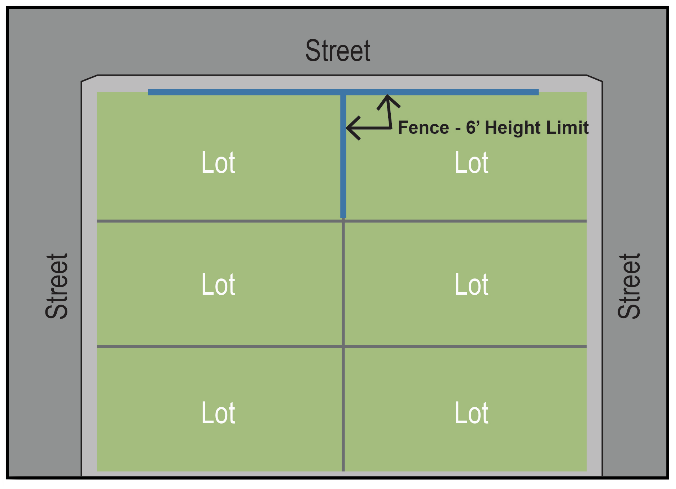
Figure IV-8: 6-Foot Fence Height Limit
b.
On all residential district corner lots where the rear lot line is opposed to a side lot line across an alley from that side lot line, no fence exceeding three feet in height shall be constructed upon or within the side yard that is next to the street at a distance from the side building line greater than the minimum side yard requirement, as indicated in Figure IV.9: Fence near Alley.
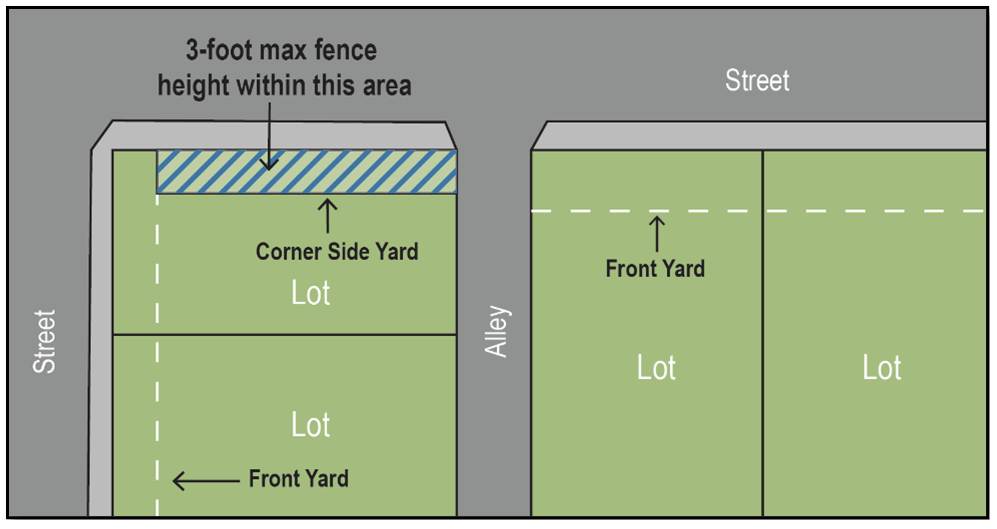
Figure IV-9: Fence near Alley
3.
Design requirements.
a.
The minimum fence height is six feet from average lot grade with a maximum height of eight feet, unless otherwise specified.
b.
Treated lumber attached with galvanized screws to two and three-eighths inches diameter galvanized poles installed in an eight-inch diameter holes no less than two and one-half feet deep in two feet of premixed concrete.
4.
Security fencing.
a.
Barbed wire fences used in conjunction with permitted agricultural and related activities are permitted without restrictions, but are expressly prohibited in all other districts except as provided below.
b.
In residential areas, barbed wire, razor wire, electrified fencing, or other hazardous material are not allowed in the construction of fencing.
c.
No fence that conducts an electrical current is allowed in any district or for any use except for those uses in an agricultural zoning district or correctional facility.
d.
Barbed wire strands may be placed on top of permitted fences and screening devices in any nonresidential district for the purpose of security from theft, entry, and hazard around public utility substations and uses of a similar nature, provided the top strand is not higher than 12 feet nor the bottom strand lower than eight feet from the adjacent grade line.
e.
Barbed wire may be placed on gate arms and fences and screening devices at least eight feet above grade in industrial zoning districts.
(Ord. No. 2806NS, § 1(Exh. A), 8-19-2024)
Sec. 22-213. - Outdoor lighting.
A.
Purpose. The purposes of this section are to:
1.
Allow the use of outdoor lighting for night-time safety, utility, security, productivity, enjoyment, and commerce.
2.
Minimize adverse off-site impacts of lighting.
3.
Limit light pollution.
4.
Encourage outdoor lighting that is functional, aesthetically pleasing, and complementary to the architectural style of buildings or settings.
B.
Applicability. This section applies to all outdoor lighting within the corporate limits. All outdoor lighting installed after the effective date of this UDC shall comply with this section and division 5, section 22-221.D.10.
C.
Exemptions. The following are exempt from the regulations in this section unless noted otherwise:
1.
Single-family residential uses are exempt from the outdoor lighting plan requirements, but when lighting is provided, it is subject to the standards of subsections F. and G.
2.
Public street lighting.
3.
Temporary holiday displays.
4.
Emergency/warning lights.
5.
City-owned facilities, provided these uses meet the following standards:
a.
The luminaire angle from a lighting source that illuminates a recreational use may exceed an angle of zero degrees only to the extent necessary for lighting the use, provided that the luminaire is shielded to minimize spillover to surrounding properties;
b.
Maximum permitted illumination at the property line for a recreational use shall be two footcandles;
c.
Exterior lighting for a recreational use shall be extinguished as soon as possible after the event.
D.
Compliance required.
1.
An outdoor lighting plan shall be submitted whenever outdoor lighting is to be installed or whenever site plan review is required.
2.
The outdoor lighting plan shall be reviewed by the director to determine whether the proposed outdoor lighting complies with the standards of this section.
3.
All outdoor lighting plans shall include a photometric plan and data on the types of lighting fixtures to be used.
4.
All lighting and photometric plans shall comply with the requirements established in the submittal checklist.
5.
No permits shall be issued for building, paving, grading, or construction until a lighting plan is approved.
6.
Before certificate of occupancy issuance for any building or structure, all lighting shall be in place in accordance with the outdoor lighting plan.
E.
Generally.
1.
The direct or reflected light from any light fixture shall not create a traffic hazard to operators of motor vehicles on public streets or to operators of aircraft, and no colored lights may be used in such a way as to be confused or construed as street-traffic or air-traffic control devices.
2.
No blinking, flashing, or fluttering lights, or other illuminated device that has a changing light intensity, brightness, or color, is permitted in any zoning district.
3.
The director may require modifications to outdoor lighting after installation upon finding that the lighting, as installed, does not comply with these standards.
F.
Standards.
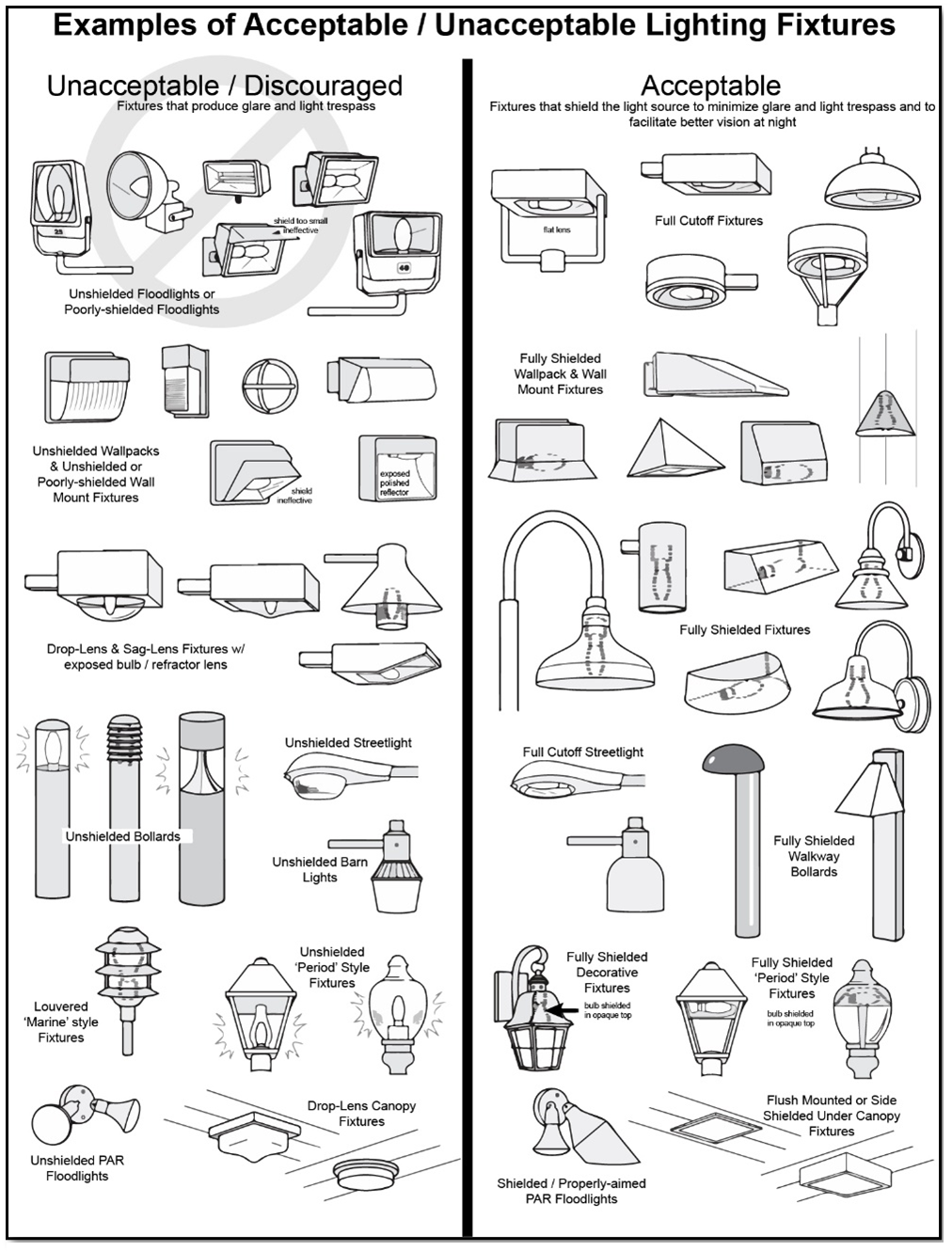
Figure IV-10: Cutoff Light Fixtures
Lighting shall meet the following design standards:
1.
All outdoor lighting shall meet the functional security needs of the proposed land use without adversely affecting surrounding properties and the natural environment.
2.
All new and replacement light fixtures shall be full cutoff, except that light sources not exceeding 500 lumens for individual light fixtures, 150 lumens for individual lights in a light string (e.g., patio lights), and 3,000 Kelvin in color temperature are not required to be full cutoff. For cutoff light fixtures, refer to Figure IV.10: Cutoff Light Fixtures.
3.
Light sources shall be concealed or shielded to minimize the potential for glare and light pollution.
4.
Light fixtures shall be installed so that the luminaire angle is zero degrees (vertical to the ground).
5.
Lights that shine outward and create direct glare are prohibited.
6.
The amount of light trespass projected onto a residential use from another property shall not exceed 0.1 footcandles at the property line.
7.
Lighting shall be distributed evenly to minimize extremes in luminance levels.
8.
Light types of limited spectral emission, such as low-pressure sodium or mercury vapor lights, are prohibited in all areas.
9.
Energy efficient lighting shall be used to the maximum extent practicable.
10.
Light sources in residential zoning districts shall not exceed 3,000 Kelvin in color temperature.
11.
Light sources in nonresidential zoning districts shall not exceed 5,000 Kelvin in color temperature.
12.
Light fixtures used to illuminate flags, statues, or any other objects shall minimize glare beyond the illuminated object.
G.
Lighting height standards.
1.
Light fixtures mounted to a building or structure shall not exceed the height of the building or structure.
2.
Freestanding light fixtures located in residential zoning districts shall be mounted no higher than 20 feet from the ground.
3.
Freestanding light fixtures located in other zoning districts shall be mounted no higher than 35 feet from the ground.
4.
Light fixtures higher than the maximum heights specified in this subsection, but not exceeding the maximum structure height in the applicable zoning district, are prohibited unless the director finds that such lighting is appropriate and necessary for the development, shall not adversely affect surrounding properties and is consistent with the purpose of the lighting standards.
(Ord. No. 2806NS, § 1(Exh. A), 8-19-2024)
Sec. 22-214. - Design standards.
A.
Purpose. The purposes of this section are to:
1.
Establish minimum standards for the appearance of development and corresponding architectural design and site elements that enhance property values, reflecting the interest of the city's general welfare.
2.
Promote variety, visual interest, and pedestrian-oriented streets in residential development.
3.
Encourage the design of a developed environment that is built to human scale.
4.
Ensure buildings are compatible with the surrounding area and contribute to the unique community character of Shawnee.
B.
Applicability.
1.
This section applies to all new development and redevelopment.
2.
These standards shall be in addition to those established in subsection C.
C.
General standards.
1.
Metal construction. All metal construction shall include a masonry facade as outlined below. These requirements shall apply to all primary structures and accessory buildings larger than 200 square feet except for single-family residences. For purposes of this section, the term "masonry materials" means and includes brick, slump-faced or decorative concrete masonry unit (CMU), stucco, concrete (poured in place, pre-cast or tilt-wall) with aggregate, sandblasted or textured coating finish, stone, rock or other structural material of equal durability and architectural effect.
a.
All metal buildings constructed on nonresidential property shall have exterior walls constructed using masonry material covering at least 60 percent of the facade, excluding windows, doors, and garage doors.
b.
Facade means any exterior wall or face of a building that fronts a public right-of-way.
c.
Metal roofs are permitted, and coated aluminum siding may be used to cover clapboards on existing buildings.
D.
Two-family residential standards.
1.
Front entry garages. The face of a garage shall not:
a.
Extend more than ten feet beyond the remainder of the front elevation of the dwelling; or
b.
Be over 60 percent of the total frontage width of a dwelling.
E.
Tiny home standards.
1.
Generally. In addition to the requirements established in section 22-198.D., a tiny home shall comply with regulations established in this subsection.
2.
Fenestration.
a.
Windowless exterior elevations that front and face a public right-of-way or other similar highly visible areas are prohibited.
b.
All tiny homes shall comply with International Building Code, appendix Q.
3.
Tiny home repetition.
a.
Within tiny home developments, tiny homes with substantially identical exterior elevations can only repeat every five lots when fronting the same right-of-way, including both sides of the street.
b.
Tiny homes side by side or across the street within one house (directly across the street or "caddy corner" across the street) shall not have substantially identical exterior elevations.
F.
Multi-family standards.
1.
Building articulation.
a.
Horizontal wall planes longer than 40 feet in length shall be segmented into smaller sections by a structural or ornamental minor facade offset (recess or projection) of a minimum of four feet deep and eight feet wide.
b.
The height of those offsets is equal to the building's height at the location of the offset.
2.
Roof treatment.
a.
Pitched or flat roofs are allowed.
b.
A parapet wall is allowed if constructed to prevent flat roof visibility.
3.
Fenestration. Any glass with a visible light reflectance rating of 25 percent or greater is prohibited.
4.
Architectural elements. A multi-family development is required to provide at least two of the following elements:
a.
At least one dormer is provided for each roof plane over 1,000 square feet in area that faces a street. The dormer must be appropriately scaled for the roof plane and shall not be wider than the windows on the building elevation;
b.
All windows feature shutters. The shutters provided must be operational or appear operational and must be in scale with the corresponding window;
c.
All windows are emphasized through the use of molding around the windows, plant ledges, sills, shaped frames, awnings, or another similarly related architectural element;
d.
Climate controlled interior walkways that connect to all units;
e.
At least 75 percent of the required parking is covered (garages, canopies, carports, etc.);
f.
Downspouts associated with gutters are internally incorporated into the building's construction rather than attached to the building after construction of the facade is complete.
g.
Other similar architectural features as approved by the director.
5.
Parking and access design.
a.
Parking shall be located to the side or behind buildings.
b.
No front yard shall primarily consist of parking.
c.
A five-foot landscape buffer shall line the perimeter of the parking area and planting islands shall be included in accordance with the established landscaping requirements.
d.
Walkways shall be provided from the public or private street(s) to all primary building entrances in the form of a continuous separated walkway of at least five feet in width.
6.
Amenities.
a.
A multi-family development shall provide the required amount of amenities and open space percentages prescribed in Table IV.8: Required Amenities. Open space percentages can be accomplished through the use of landscaping, play areas, and the outdoor amenities in subsection b. below.
Table IV.8: Required Amenities
b.
The amenities below may be used to fulfill the requirements of Table IV.8: Required Amenities. Each amenity counts as one required amenity towards the requirements in Table IV.8: Required Amenities. However, multiples of the same amenity do not count towards the requirements in Table IV.8: Required Amenities.
i.
Swimming pool (minimum 1,000 square foot surface area) with cooling deck (minimum ten feet wide in all areas).
ii.
Jacuzzi or hot tub area (minimum 50 square foot area).
iii.
At least three barbeque grills with shaded seating areas.
iv.
Ramada(s), arbor(s), and/or trellis(es) covering at least 1,000 square feet of recreation space.
v.
Child play lot (minimum 2,000 square foot area).
vi.
A splash pad (water play amenity for children) that is a minimum of 1,000 square feet in area.
vii.
A dog park that is at least 4,000 square feet in area that:
(A)
Is enclosed by a minimum five-foot tall vinyl coated chain link fence;
(B)
Uses grass, wood chips, or a combination of the two as surface materials; and
(C)
Provides at least one dog waste station that includes a bag dispenser and waste receptacle installed along the perimeter of the enclosure for every 2,000 square feet of the associated dog park.
viii.
Regulation size volleyball, basketball, tennis, or other similarly related playing court.
ix.
Golf putting green (minimum 1,000 square feet).
x.
Fitness center/weight room (minimum 500 square feet).
xi.
Business center (minimum 500 square feet).
xii.
Media room (minimum 500 square feet).
G.
Nonresidential standards.
1.
Facades.
a.
Facades greater than 150 feet in length, measured horizontally, shall incorporate wall plane projections or recessed having a depth of at least three percent of the length of the facade and extending at least 20 percent of the length of the facade. No uninterrupted length of any facade shall exceed 100 horizontal feet.
b.
Ground floor facades that face public right-of-way shall have arcades, display windows, entry areas, awnings, or other such features along no less than 60 percent of their horizontal length. Building structure facades shall include a repeating pattern that includes no less than three of the following elements:
i.
Color changes;
ii.
Texture change;
iii.
Material module change; or
iv.
An expression of architectural or structural bays through a change in plane no less than 12 inches in width, such as an offset, reveal, or projection.
2.
Roofs. Roofs shall have no less than two of the following features:
a.
Overhanging eaves, extending no less than three feet past supporting walls;
b.
Sloping roofs that do not exceed the average height of the supporting walls, with an average slope greater than or equal to one foot of vertical rise for every three feet of horizontal run and less than or equal to one foot of vertical rise for every one foot of horizontal run; or
c.
Three or more roof slope planes.
3.
Materials and colors.
a.
Predominant exterior buildings materials shall be high quality materials, including, but not limited to, brick, sandstone, other native stone, and tinted/textured concrete masonry units.
b.
Facade colors shall be low reflectance, subtle, neutral or earth tone colors. The use of high-intensity colors, metallic colors, or fluorescent colors are prohibited.
c.
All building facades shall be constructed to include masonry material covering at least 60 percent of the facade, except in the DT District, which shall require 80 percent coverage. Windows and standard doors shall be included in the coverage total, but garage doors shall not.
d.
Metal roofs are permitted and coated aluminum siding may be used to cover clapboards on existing buildings.
e.
For purposes of this section, masonry materials shall mean and include brick, slump-faced or decorative concrete masonry unit (CMU), stucco, concrete (poured in place, pre-cast or tilt-wall) with aggregate, sandblasted or textured coating finish, stone, rock or other structural material of equal durability and architectural effect.
f.
For purposes of this section, facade shall mean any exterior wall or face of a building that fronts on a dedicated public street.
g.
Additions to existing buildings shall be deemed new construction under these provisions and the facade requirements shall apply to the new portion.
h.
Building trim and accent areas shall be no more than 15 percent of the exterior finish and may feature EIFS, brighter colors, including primary colors, but neon tubing, fiber optic, or similar lighting shall not be an acceptable feature for building trim or accent areas.
4.
Entryway.
a.
Each building shall have clearly defined, highly visible primary entrances featuring at least three of the following:
i.
Canopies or porticos;
ii.
Overhangs;
iii.
Recessed/projections;
iv.
Arcades;
v.
Raised corniced parapets over the door;
vi.
Peaked roof forms;
vii.
Arches;
viii.
Outdoor patios;
ix.
Display windows;
x.
Architectural details such as tile work and moldings integrated into the building structure and design; or
xi.
Integral planters or wing walls that incorporate landscaped areas or places for sitting.
b.
If a building has multiple storefronts, each storefront shall have at least one exterior primary entrance, which shall conform to the above requirements.
5.
Sidewalks and walkways.
a.
Perimeter sidewalks shall, at a minimum, meet the city's Engineering Design Manual standards and be provided where required along all public rights-of-way.
b.
Walkways at least five feet in width shall be provided along the length of any building facade with a primary entrance and along a facade abutting a parking area.
c.
Internal pedestrian walkways shall provide weather protection features such as awnings and arcades within 30 feet of all primary entrances.
d.
All internal pedestrian walkways shall be distinguished from driving surfaces.
6.
Amenities. Each building subject to these standards shall contribute to the establishment or enhancement of community and public spaces by providing at least two of the following features. Any such feature shall have direct access to the public sidewalk network and shall not be constructed of materials that are inferior to the principal materials of the building and landscape:
a.
Patio/seating area;
b.
Pedestrian plaza with benches;
c.
Transportation center;
d.
Window shopping walkway;
e.
Outdoor playground area;
f.
Kiosk area;
g.
Water feature;
h.
Clock tower;
i.
Public art; or
j.
Other such deliberately shaped area and/or focal feature or amenity that, in the judgment of the director adequately enhances communal and public spaces.
H.
Mixed use standards.
1.
Building articulation.
a.
All buildings shall utilize facade offsets and appropriate fenestration to add variation and visual interest to an elevation and to break up long uninterrupted walls or elevations.
b.
Elevations that are 50 feet or longer in horizontal length require at least two offsets (projection or recess) from the primary facade plane of at least 18 inches deep and four feet wide.
c.
The height of those offsets is equal to the building's height at the location of the offset.
d.
Columns and piers shall be spaced no farther apart than the height of the column or pier.
2.
Roof treatment.
a.
Long uninterrupted roof lines and planes shall be broken into smaller segments through the use of scaled gables or dormers, changes in height, changes in roof form, type or planes that typically correspond to offsets in the building's facade, or other appropriate architectural elements.
b.
Parapet roof lines shall feature a well-defined cornice treatment or another similar element to visually cap each building elevation.
c.
Mansard roofs are prohibited.
3.
Fenestration.
a.
The use of recessed windows, awnings, sills, drip caps, projecting trim casings or surrounds, projecting muntins or mullions and other elements is required.
b.
Any glass with a visible light reflectance rating of 25 percent or greater is prohibited.
4.
Ground floor.
a.
The ground or first floor of a mixed-use development is reserved for commercial uses, like retail, office, and restaurant uses.
b.
For those mixed-use developments incorporating live work units, the first floor may be shared with residential and commercial uses.
c.
The ground floor shall have a minimum ceiling height of 14 feet.
5.
Architectural elements. All buildings or developments shall be required to provide at least two of the following architectural elements:
a.
The primary entrance for all buildings shall feature a protected entry through the use of a recessed entry, porte-cochere, awning, canopy, or similar feature that serves the same purpose. The covering shall be at least three feet in depth when measured from the face of the adjoining facade.
b.
All building elevations shall feature at least two facade offsets (recess or projection) of at least five feet in depth for every 50 feet of horizontal length.
c.
All building elevations shall feature at least three distinct roof lines.
d.
All primary and secondary building entrances, excluding emergency exits and service doors, feature a recessed entry, canopy, awning, or similar sheltering feature of at least 50 square feet.
e.
Climate controlled interior walkways that connect to all units.
f.
At least 50 percent of the required parking is covered (garages, canopies, carports, etc.).
g.
Other similar architectural features as approved by the director.
6.
Amenities.
a.
A mixed-use development shall provide a minimum of two amenities.
b.
The amenities below may be used to fulfill the requirements. Each amenity counts as one required amenity towards the requirements; however, multiples of the same amenity do not count towards the requirements.
i.
Swimming pool (minimum 850 square foot surface area) with cooling deck (minimum ten feet wide in all areas);
ii.
Jacuzzi or hot tub area (minimum 50 square foot area);
iii.
At least two barbeque grills with shaded seating areas;
iv.
Ramada(s), arbor(s), and/or trellis(es) covering at least 1,000 square feet of recreation space;
v.
A dog park that is at least 2,500 square feet in area that:
(A)
Is enclosed by a minimum five-foot tall vinyl coated chain link fence;
(B)
Uses grass, wood chips, or a combination of the two as surface materials; and
(C)
Provides at least one dog waste station that includes a bag dispenser and waste receptacle installed along the perimeter of the enclosure for every 1,500 square feet of the associated dog park.
vi.
Fitness center/weight room (minimum 500 square feet);
vii.
Business center (minimum 500 square feet);
viii.
Media room (minimum 500 square feet).
I.
Downtown standards.
1.
Generally.
a.
Development in the DT District shall comply with the regulations established in subsection C. above.
b.
In addition to the requirements established in this subsection, downtown development shall comply with regulations established in section 22-190.
2.
Building articulation.
a.
All buildings shall utilize facade offsets and appropriate fenestration to add variation and visual interest to an elevation and to break up long uninterrupted walls or elevations.
b.
Elevations that are 50 feet or longer in horizontal length require at least two offsets (projection or recess) from the primary facade plane of at least 18 inches deep and four feet wide.
c.
The height of those offsets is equal to the building's height at the location of the offset.
d.
Columns and piers shall be spaced no farther apart than the height of the column or pier.
3.
Roof treatment.
a.
Long uninterrupted roof lines and planes shall be broken into smaller segments through the use of scaled gables or dormers, changes in height, changes in roof form, type or planes that typically correspond to offsets in the building's facade, or other appropriate architectural elements.
b.
Parapet roof lines shall feature a well-defined cornice treatment or another similar element to visually cap each building elevation.
4.
Architectural elements. All buildings or developments shall be required to provide at least two of the following architectural elements:
a.
The primary entrance for all buildings shall feature a protected entry through the use of a recessed entry, porte-cochere, awning, canopy, or similar feature that serves the same purpose. The covering shall be at least three feet in depth when measured from the face of the adjoining facade.
b.
All building elevations shall feature at least two facade offsets (recess or projection) of at least five feet in depth for every 50 feet of horizontal length.
c.
All building elevations shall feature at least three distinct roof lines.
d.
All primary and secondary building entrances, excluding emergency exits and service doors, feature a recessed entry, canopy, awning, or similar sheltering feature of at least 50 square feet.
e.
Other similar architectural features as approved by the director.
5.
Building materials. Downtown development shall have exterior walls constructed using masonry material covering at least 80 percent of the sides and 100 percent of the front.
(Ord. No. 2806NS, § 1(Exh. A), 8-19-2024)
Sec. 22-215. - Refuse facilities.
A.
Purpose. The purpose of this section is to provide adequate provisions for on-site waste disposal and collection while promoting sightly development.
B.
Applicability. This section applies to all nonresidential development within Shawnee's corporate limits. This section does not apply to residential development unless otherwise specified.
C.
Standards.
1.
Generally.
a.
Refuse facilities require enclosures and shall meet the requirements established in section 22-212.
b.
One refuse enclosure is required on every lot unless a double enclosure is provided on an adjacent lot and access is mutually agreed upon by the two lot owners.
c.
All refuse enclosures are fully screened on all sides.
d.
Refuse enclosure materials shall be masonry or concrete block and the same color as the exterior walls of the main structure.
e.
A solid metal gate is required, and when open is not allowed to encroach within any fire lane.
f.
No solid metal gate shall exceed ten feet in height.
g.
Refuse enclosures shall also be complemented by a living plant screen as established in section 22-212.
h.
Refuse facilities shall not be located in front of the main building unless no other option is available as determined by the director.
i.
Gates shall remain closed except when in use for access.
2.
Design. Refuse facilities shall comply with the design specifications below.
a.
A concrete approach loading pad shall be constructed in front of all refuse enclosures.
b.
The loading pad shall be at least 12 feet wide by 12 feet deep, and have a minimum of six inches thickness of concrete at a standard of 3,500 PSI.
c.
Required enclosures shall have a minimum inside dimension of 12 feet by 12 feet with an enclosure gate opening of not less than 12 feet in width.
d.
Refuse enclosures shall have steel-framed grates with spring-loaded hinges and fasteners.
e.
Keeper latches shall be required to hold gates in the fully opened position while refuse containers are being serviced.
f.
Four-inch diameter pipe bollards shall be required inside each enclosure to protect the enclosure from truck operation.
g.
An unobstructed approach path of at least 50 feet long shall be required for a 35-foot long collection truck to access the refuse facility.
h.
A turnaround area shall be provided of sufficient length to allow the collection truck to exit without backing onto a public right-of-way.
(Ord. No. 2806NS, § 1(Exh. A), 8-19-2024)
Sec. 22-216. - Signs.
A.
Purpose. The purpose of this section is to regulate signs of all types (temporary and permanent) in a manner that:
1.
Protects constitutional rights to free speech by providing ample opportunities for expression through signs, while avoiding content-based distinctions, and providing clear approval standards;
2.
Protects public health and safety by:
a.
Minimizing visual traffic hazards, distractions and obstructions for motorists, cyclists, and pedestrians, or signs causing confusion by virtue of visual similarity to traffic control signs;
b.
Reducing hazards caused by collapse, fire, collision, decay, or abandonment;
c.
Not obstructing firefighting or police surveillance; and
d.
Encouraging the upgrading, updating, or removal of signs that are poorly maintained, or do not conform to this section, and preventing signs that are potentially dangerous due to structural deficiencies and disrepair.
3.
Enhances the appearance and economic value of the landscape, by providing that signs:
a.
Do not interfere with scenic views;
b.
Do not create a nuisance to persons using the public rights-of-way;
c.
Do not constitute a nuisance to occupancy of adjacent and contiguous property by their brightness, size, height, or movement; and
d.
Are not detrimental to land or property values.
4.
Promotes the community's appearance, character, quality, and business climate by encouraging signs that are attractive and functional for their intended purpose, and that are in scale and harmony with the development site and building(s) and with surrounding areas;
5.
Reduces and prevents visual clutter or potential deterioration of the community's appearance and attractiveness; and
6.
Implements the goals and policies of the city's adopted planning policies by establishing uniform standards and procedures to regulate the size, type, number, design, placement, illumination, timeframe for display, and maintenance of signs.
B.
Applicability.
1.
Generally.
a.
This section is enacted pursuant to the home rule provisions of Article 18, Section 3(a) of the Oklahoma Constitution and the authority and powers contained in the Oklahoma Statutes (11 O.S. § 43-101 et seq.).
b.
This section applies everywhere within the city's corporate limits, except as specifically stated otherwise in this section.
c.
This section does not prohibit signs required by state or federal law and does not authorize signs that state or federal law prohibits.
d.
A person shall not erect, operate, display, or otherwise use any sign that this section prohibits.
e.
A person shall not erect, operate, display, or otherwise use any sign at a time, place, or manner that this section prohibits.
2.
Message neutrality.
a.
Content neutrality. Despite any other provision of this section, no sign is subject to any limitation based on the content of its message.
b.
Substitution allowed. Any sign authorized in this section may contain any noncommercial copy or messages instead of a commercial or another noncommercial message.
C.
Prohibited signs. The following signs and related objects are prohibited from being installed or publicly displayed at any location within the city's corporate limits, except as otherwise specifically prescribed within this section, and if only after authorized issuance of a city-issued sign permit required by this section.
1.
Billboards.
2.
Moving and flashing signs, including signs that flash, revolve, rotate, swing, undulate or otherwise attract attention through the movement or flashing of lights, LEDs, or other parts, or through the impression of movement or flashing. However, this prohibition shall not apply to:
a.
Noncommercial message(s); and
b.
Signs that are fully located within an enclosed building that are not observable from the exterior of that building.
3.
Signs which are of a size, location, movement, content, coloring, or manner of illumination, which may be confused with or construed as a traffic-control device or which hide from view any traffic or street sign or signal, or which obstruct the view in any direction at a street or road intersection.
4.
Signs placed on or affixed to vehicles, trailers, or equipment that are parked on a public right-of-way, public property, or private property so as to be visible from a public right-of-way where the apparent purpose is to direct people to another property.
5.
No person shall attach any sign, paper or other material to, or paint, stencil or write anything on, or otherwise mark on any sidewalk, curb, gutter, street utility pole, tree, public building or structure unless authorized by this section or by the city commission or its delegated representatives.
6.
No person shall erect or allow to be erected any sign in, on or over public rights-of-way and easements, railroad right-of-way or designated fire lanes unless specifically exempted by this section or unless erected under a valid, unexpired permit as specifically set forth elsewhere in this section.
7.
Signs on a lot without a permanent or primary structure, unless related to construction.
8.
No person shall hold, display, or wear a sign unless on private property and not in the right-of-way.
9.
Searchlights.
10.
Signs that are in disrepair to the extent that the cost of repair would exceed 50 percent of the value of a similar sign if purchased new and signs in danger of falling or that are otherwise unsafe to the public.
11.
Signs that display multidimensional projections of diffracted light are prohibited.
12.
Signs that are located on or that interfere with the use of public sidewalks, required off-street parking areas, or vehicle maneuvering areas unless specifically regulated in this section.
13.
Any unauthorized sign on or attached to a public streetlight, utility pole, hydrant, bridge, traffic-control device, street sign or other public structure or building, or any sign located in, on, over or within a public street, sidewalk, alley, easement, or right-of-way.
14.
Signs (illuminated from within or without) that are illuminated in such a manner, to such intensity, or without shielding, so as to constitute a hazard to the operation of motor vehicles upon a street or substantially interfere with the reasonable enjoyment of property.
15.
Signs located on private property without the consent of that property owner.
16.
Signs that use a revolving beam or beacon resembling any emergency vehicle, or are located or illuminated in such a manner as to obscure or otherwise interfere with the effectiveness of an official traffic sign, signal or device, or so as to prevent any traveler on any street from obtaining a clear view of approaching vehicles for a distance of at least 250 feet along the street.
17.
All signs not expressly allowed, exempted, or permitted under this section.
D.
Exempt signs. The following signs and related objects are generally allowed to be erected and publicly displayed at any location within the city's corporate limits, except as otherwise specifically proscribed within this section, and a city-issued sign permit is not required in order to erect and display any of the following signs unless specifically set forth in this section. This section shall not apply to:
1.
Any signs and signals properly authorized by law, signs authorized by statute or a state agency, and other traffic signals, public warnings, or legal notices provided that such objects are installed in a location and in a manner and condition required by federal or state statute, a state agency, or a city ordinance or authorized authority.
2.
Nonconforming signs as defined in division 7, except that each such sign must be permitted by the city as a nonconforming sign under the procedures set forth in division 7.
3.
Existing billboards, except that each such sign must be permitted by the city as a nonconforming sign under the procedures set forth in division 7.
4.
Signs required by governmental bodies or agencies having proper jurisdiction for a public purpose by law, statute, or ordinance. This also includes any signs the city commission decides by ordinance or resolution to erect within its corporate limits or any real property that it may own or control.
5.
Signs on vehicles, trailers, or equipment are exempted only to the extent such signs are incidental to the primary use of the vehicle, trailer, or equipment, provided that the vehicle, trailer, or equipment is in good mechanical repair and is not left in one place for more than 72 hours without being moved.
6.
Signs erected by the city that direct vehicular or pedestrian traffic, which may display arrows, words, or other symbols to indicate directions of facilities.
7.
Address numerals and other similar information required to be maintained by law or governmental order, rule or regulation, provided that the size of the sign may not exceed the requirements of such law, order, rule or regulation.
8.
Signs contained within a walled, fenced, or secured property or area.
9.
Signs that are interior facing and not visible from public right-of-way.
10.
Signs erected by governmental bodies or agencies serving the public, that are less than 32 square feet in area.
11.
Decorations, lights, pennants, and similar devices on public property with the permission and under the supervision of the city.
12.
Seasonal lights and decorations customarily displayed during federally, state, local, or tribal recognized holidays.
13.
Burglar/security alarms and signs that are less than four square feet in area.
14.
Signs in plaza or public space structures located in the city's right-of-way, that are installed and maintained by the city or a contractor authorized by the city.
E.
General requirements.
1.
Installation.
a.
Signs and sign structures shall comply with the city's building code and all other regulatory requirements. An applicant shall obtain all applicable plans and permits before installing a sign.
b.
For wall signs, the sign installation area on the building wall shall be cleaned, patched, and painted upon sign removal.
2.
Maintenance.
a.
All signs, together with any supports, braces, guys and anchors, and colors, shall remain in good repair and be properly maintained.
b.
Any defective signs or damaged parts or components of a sign shall be replaced and keep the adjacent properties free of debris, weeds, trash, or other public nuisances.
c.
The director may enforce the standards as provided in division 8.
3.
Vertical clearance for signs projecting over sidewalks, walkways, and driveways.
a.
The bottom edge of any projecting sign, attached awning/canopy sign, hanging sign, marquee sign, and any other sign that extends or projects over a sidewalk, walkway, or driveway shall be at least nine feet above grade as shown in Figure IV.11: Sign Vertical Clearance unless specified elsewhere in this section.
Figure IV-11: Sign Vertical Clearance
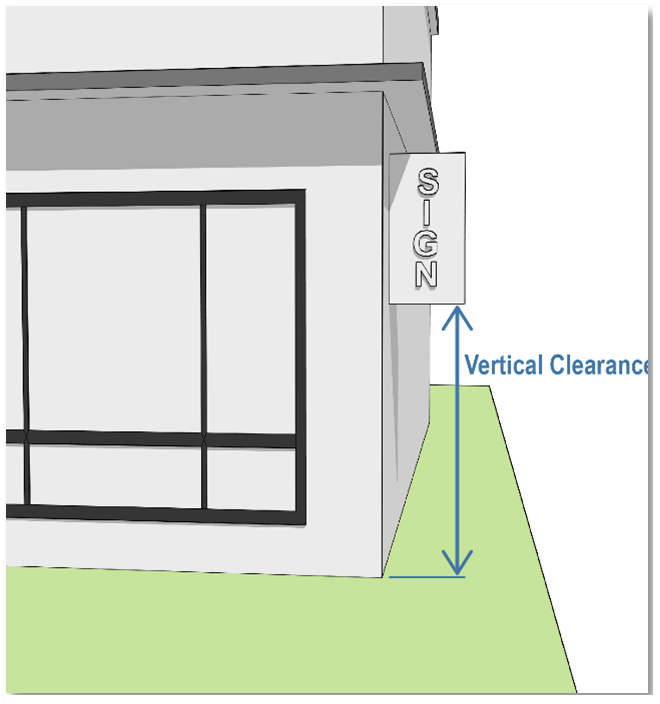
b.
Projecting signs, attached awning/canopy signs, hanging signs, marquee signs, and any other sign that extends or projects over public sidewalks shall not extend into or occupy more than half the width of the sidewalk or five feet (whichever is less), as measured from the building unless specified elsewhere in this section.
4.
Right-of-way and sight distances.
a.
Signs prohibited in right-of-way. No person shall place or install a sign within the right-of-way of any public street except as provided below.
b.
Signs in the intersection visibility triangle.
i.
No person shall place or install a sign in a location as established in the UDC's "Intersection Visibility Triangle" requirements (see section 22-208.F.) except as provided below.
ii.
Inspection for sign placement. The director may approve a sign permit for placement of a sign in a required intersection visibility triangle if this section allows the sign type, and the sign cannot be located outside the intersection visibility triangle due to unusual circumstances. The director shall perform an on-site inspection and determine that a safe and adequate intersection visibility exists based on the following factors:
(A)
Generally accepted traffic engineering best practices, as recognized by the American Association of State Highway and Transportation Officials (AASHTO);
(B)
Sign design;
(C)
Traffic conditions; and
(D)
Driveway or street design.
F.
Computations and interpretations.
1.
Interpretation. All images and graphics are for illustrative purposes to orient the reader with the requirements of this section.
2.
Measurement.
a.
Sign area. This is measured in square feet ("sf") and calculated as the width multiplied by the height of a single rectangle that contains all sign elements, including decorative embellishments, and any internally illuminated or backlit panel, fabric, or similar material not approved as an architectural element of the building.
i.
Sign area includes cabinets, background panels, or colors that are part of the sign installation and not part of the building architecture or the sign support.
ii.
Sign area measurement are as follows:
(A)
Only one side of a multi-faced sign is considered when determining the sign area, if the faces are equal in size, the interior angle formed by the faces is less than 45 degrees, and the two faces are not more than 18 inches apart.
(B)
Where two faces of a multi-faced sign are not equal in size, but the interior angle formed by the faces is less than 45 degrees and the two faces are no more than 18 inches apart, the larger sign face is used to calculate sign area.
(C)
When the interior angle formed by the faces of a multi-faced sign is greater than 45 degrees, or the faces are greater than 18 inches apart, all sides of the sign are considered in calculating sign area.
iii.
For irregularly shaped signs, sign area is calculated as the sum of the boundaries that completely contain all sign elements.
iv.
The calculation of sign area for a single sign includes all related sign elements on the same facade or structure. Sign elements are related if they are all constructed in a similar manner and are located less than five feet apart. Additionally, to be considered a single sign, the facade on which the elements of the sign are mounted can be offset by up to five feet.
v.
Where two or more signs are allowed on a facade, the separate sign area rectangles for each sign are added together to determine the total amount of sign area on that building facade.
vi.
Area limits control the sign area per face for a sign with two faces.
b.
Sign height.
i.
The sum of the height of the sign base and sign face as measured from the ground immediately adjacent to the highest point of the sign, including any cabinets, trim, or attachments.
ii.
Height limits include the combined height of the sign face and monument base.
c.
Sign width. This is measured as the greatest horizontal distance between any two points on the sign, irrespective of whether the points are part of the sign face, sign base, or a combination of the two.
d.
Wall area. Where sign size is required as a percentage of a wall area, the "wall area" is a continuous portion of a building facade, as viewed by a person approaching the building from the public right-of-way, consisting of a plane surface.
G.
Sign features. Signs may incorporate the following features established below; however, these features shall only be allowed as established in subsections K.—O.
1.
Illumination.
a.
Generally.
i.
A sign that is "illuminated" means any sign that incorporates illumination on or in the sign, or that directs illumination toward or over all or part of the sign, or that is created by the projection of illuminations onto a surface (such as a building wall).
ii.
Permanent signs may be illuminated by static and continuous internal, external, and halo illumination configurations as indicated in the tables for each sign type in subsections K.—O.
iii.
Temporary signs shall not be illuminated.
b.
Standards. The standards below apply to all signs that are illuminated.
i.
Signs that are illuminated shall not operate at brightness levels of more than 0.5 foot-candles above ambient light conditions at the property line, as measured using a foot-candle meter. Illumination levels shall be measured in foot-candles with a meter sensor in a horizontal position at an approximate height of three feet above grade.
ii.
Illumination shall not include animation, moving video, or flashing, scrolling, intermittent, moving lights, rotating beams, or flashing beacon lights.
iii.
Signs that are illuminated shall not be illuminated by flashing, intermittent, or moving lights, or lights that consist of an image projected upon a stationary object.
iv.
The illumination source for a sign or building shall be shielded from view from any point on the ground by either an opaque or translucent material.
v.
Illumination shall comply with all applicable provisions of the city's electrical code.
vi.
Signs with illumination in or within 100 feet of a residential area shall be reduced to 50 percent of the maximum brightness level allowed by this section between the hours of 12:00 a.m. and 6:00 a.m.
2.
Electronic message centers.
a.
Generally.
i.
A sign that incorporates an electronic message center (EMC) means a sign that displays a digital copy, including any illuminated sign on which the illumination is not kept stationary or constant in intensity and color when the sign is in use, including any light emitting diode (LED) or digital panel, and which varies in color or intensity. Electronic message centers are also referred to as digital signs, dynamic signs, or changeable electronic variable message signs (CEVMS).
ii.
Permanent signs may incorporate electronic message centers as indicated in the tables for each sign type in subsections K.—O.
iii.
Temporary signs shall not incorporate electronic message centers.
b.
Standards.
i.
Hold time.
(A)
Each message on the sign must be displayed for at least 15 seconds duration.
(B)
Message changes shall be completed instantaneously and shall be imperceptible.
ii.
Electronic copy.
(A)
Signs incorporating electronic message centers shall only contain static messages changed exclusively by dissolve or fade transitions, and shall not have movement or the appearance or optical illusion of movement during the static display period of any part of the sign.
(B)
A static message shall not include any flashing or varying of light intensity, and the message shall not scroll.
(C)
The change of message using dissolve or fade transition shall not exceed two seconds of time between each message displayed on the sign.
iii.
Brightness.
(A)
The intensity of the light source for an electronic message center shall not produce glare, the effect of which constitutes a traffic hazard or is otherwise detrimental to the public health, safety or welfare.
(B)
An electronic message center shall not operate at brightness levels of more than 0.5 foot-candles above ambient light conditions at the property line, as measured using a foot-candle meter. Illumination levels shall be measured in foot-candles with a meter sensor in a horizontal position at an approximate height of three feet above grade.
(C)
Prior to the issuance of a sign permit, the applicant shall provide written certification from the sign manufacturer that the light intensity has been factory pre-set not to exceed 0.5 foot-candles above ambient light and that the intensity level is protected from end-user manipulation by password-protected software or other method as deemed appropriate by the director.
iv.
Light sensing device. Each digital sign must have a light-sensing device that will adjust the brightness as ambient light conditions change.
v.
Technology.
(A)
The technology currently being deployed for electronic message centers is LED (light emitting diode), but there may be alternate, preferred, and superior technology available in the future.
(B)
Any other technology that complies with the performance standards for electronic message centers, including the maximum brightness levels as stated above, is permitted.
vi.
Automatic shutoff. An electronic message center shall:
(A)
Have automatic dimmer software or solar sensors to control brightness for nighttime viewing and variations in daytime ambient light.
(B)
Include systems and monitoring to either turn the display off, show "full black" on the display, or include a default mechanism that freezes the sign in one position if a malfunction occurs; and
(C)
Be designed so that a catastrophic power surge will cause the sign to go dark or to deploy the maximum brightness limitations; and
(D)
Automatically adjust the intensity of its display according to natural ambient light conditions.
vii.
Resolution.
(A)
Electronic message center faces shall have a pixel pitch of no more than 16 millimeters.
(1)
"Pixel pitch" means a measurement of the resolution of a digital display, in terms of the distance (generally in millimeters) between the center of a light-emitting diode (LED) cluster (pixel) and the center of the next LED pixel.
(2)
A lower pixel pitch measurement indicates a higher display resolution.
(B)
This subsection applies only to signs that are constructed, rebuilt or replaced after the effective date of this UDC.
c.
Maintenance.
i.
The sign owner shall provide the director with the phone number and email address of a person who is available to be contacted at any time and who is able to turn off the electronic message center promptly after a malfunction occurs.
ii.
The light modules on electronic message centers shall be repaired or replaced if they become broken, burned-out, or substantially dimmed.
3.
Changeable copy.
a.
Generally. Permanent signs may incorporate changeable copy as indicated in the tables for each sign type in subsections K.—O.
b.
Standards. The standards below apply to signs incorporating changeable copies.
i.
Where allowed, each sign is limited to a percentage of the sign face area that may be used for a changeable copy.
ii.
Changeable copies may be illuminated if the dimensions and standards allow illumination for the sign type in the district.
H.
Sign types.
1.
Purpose.
a.
This section establishes the required standards for signs from the following sign categories:
i.
Ground signs;
ii.
Attached signs;
iii.
Incidental signs;
iv.
Temporary signs; and
v.
Special signs.
b.
This classification system provides flexibility for persons and businesses who display signs, avoids sign distinctions that depend on a sign's message, supports the communities' aesthetic goals, and avoids potential traffic hazards and clutter.
2.
Generally. This section establishes standards for individual sign types. Sections and subsections on each sign type addresses the following standards:
a.
An introductory paragraph defining the sign type;
b.
Images and/or graphics that illustrate the sign type;
c.
A table summarizing the applicable sign standards, including:
i.
If the sign type is allowed in the designated areas provided in subsection J.
ii.
If a sign permit is required;
iii.
The maximum number of signs of each type;
iv.
Maximum sign dimensions, including:
(A)
Sign area;
(B)
Height;
(C)
Location/setbacks; or
(D)
Other requirements.
v.
If the sign features provided in subsection G. are allowed or required:
(A)
Electronic message centers;
(B)
Illumination features; and
(C)
Changeable copies.
I.
Sign equivalency. Table IV.9: Sign Equivalency Table identifies the sign types that existed under the previous sign chapter (chapter 3—Advertising and Signs) and the sign types and regulations that now apply in this section.
Table IV.9: Sign Equivalency Table
J.
Sign allocations. This section regulates signs by zoning districts. This section's permitting requirements for each sign type references the subsections that apply to that sign type.
K.
Ground signs. Ground signs are classified into one of the following sign types: monument signs, pole signs, or subdivision entry signs. Their associated regulations are established in this subsection. A lot may have one ground sign, but not multiple ground signs unless specified elsewhere in this subsection. (NOTE: a lot cannot have a monument sign and a pole sign. A lot can only have one of the permitted ground signs—monument sign, pole sign, or subdivision entry sign.)
1.
Monument sign.
a.
Definition. A permanent detached or freestanding sign with a low profile, a base, and a support structure with a solid appearance that is at least 50 percent of the width of the widest part of the sign's face.
b.
Standards.
i.
Generally. Table IV.10: Monument Sign Standards establishes the standards for monument signs.

Table IV.10: Monument Sign Standards
ii.
Number.
(A)
This subsection generally allows one double-sided monument sign for each lot fronting a street for the sign districts shown in Table IV.10: Monument Sign Standards unless the lot fronts multiple streets, in which an additional monument sign is allowed for each street frontage.
(B)
No monument sign is allowed on a lot without street frontage.
iii.
Multi-tenant allowances.
(A)
The maximum sign area for a monument sign on a lot with multiple tenants may be increased by 25 percent.
(B)
No monument sign on a lot with multiple tenants with an increased maximum sign area allowance shall be located within 200 feet of another monument sign.
(C)
No monument sign on a lot with multiple tenants with an increased maximum sign area allowance shall be located within 500 feet of a residential use.
(D)
A monument sign on a lot with multiple tenants shall be set back at least ten feet from the front property line.
iv.
Design and installation.
(A)
Any electrical service provided to a monument sign shall be underground.
(B)
Monument signs shall be designed to withstand wind loads established by the building code.
(C)
All monument signs shall be placed in concrete bases or footings.
(D)
Monument signs shall be landscaped around the base of the sign in an area equal to two feet for each square foot of sign and base area.
(E)
An individual monument sign shall contain at a minimum a three-foot masonry base around all sides of the sign.
(F)
A monument sign may incorporate a changeable copy or an electronic message center based on the standards of subsection G. and the allowances established in Table IV.10: Monument Sign Standards.
2.
Pole sign.
a.
Definition. A permanent detached of freestanding sign in which the sign face is mounted on one or more poles and the base of the sign face is situated more than 12 inches above the ground. A pole sign does not include a flag mounted on a flagpole.
b.
Standards.
i.
Generally. Table IV.11: Pole Sign Standards establishes the standards for pole signs.
Table IV.11: Pole Sign Standards
ii.
Number.
(A)
This subsection generally allows one double-sided pole sign for each lot fronting a street for the sign districts shown in Table IV.11: Pole Sign Standards unless the lot fronts multiple streets, in which an additional pole sign is allowed for each street frontage.
(B)
No pole sign is allowed on a lot without street frontage.
iii.
Location. Pole signs are only allowed if:
(A)
A lot fronts Interstate Highway 40, U.S. 177, or U.S. 270; and
(B)
Located within a distance of 100 feet from the right-of-way line of the linear segment of that thoroughfare and situated so as to be viewed from that thoroughfare.
iv.
Multi-tenant allowances.
(A)
The maximum sign area for a pole sign on a lot with multiple tenants may be increased by 25 percent.
(B)
No pole sign on a lot with multiple tenants with an increased maximum sign area allowance shall be located within 200 feet of another pole sign.
(C)
No pole sign on a lot with multiple tenants with an increased maximum sign area allowance shall be located within 500 feet of a residential use.
(D)
A pole sign on a lot with multiple tenants shall be set back at least ten feet from the front property line.
v.
Design and installation.
(A)
Any electrical service provided to a pole sign shall be underground.
(B)
Pole signs shall be designed to withstand wind loads established by the building code.
(C)
All pole signs shall be placed in concrete bases or footings.
(D)
All pole signs shall be landscaped around the base of the sign in an area equal to two square feet for each square foot of sign area.
(E)
Pole signs shall not have attached any guys or braces.
(F)
A pole sign may incorporate a changeable copy or an electronic message center based on the standards of subsection G. and the allowances established in Table IV.11: Pole Sign Standards.
3.
Subdivision entry sign.
a.
Definition. A specific monument sign located at the entry of a platted subdivision from a local, collector, or arterial street.
b.
Standards.
i.
Generally. Table IV.12: Subdivision Entry Sign Standards establishes the standards for subdivision entry signs.
Table IV.12: Subdivision Entry Sign Standards
ii.
Number and location. Two subdivision entry signs may be located at the intersection of a local, collector, or arterial street and an entry street or private driveway into a subdivision. The signs shall be configured as follows:
(A)
Two signs with one sign face each located on opposite sides of the entry street or private driveway;
(B)
One sign with two faces located within a landscaped area dividing two one-way entry streets or private driveways; or
(C)
One sign located on one side of the entry street or private driveway.
iii.
Design and installation.
(A)
Any electrical service provided to a subdivision entry sign shall be underground.
(B)
Subdivision entry signs shall be designed to withstand wind loads established by the building code.
(C)
Subdivision entry signs shall be constructed with stone, brick, concrete, metal, routed wood planks or beams, or similar durable, weatherproof materials.
(D)
All subdivision entry signs shall be landscaped around the base of the sign in an area equal to three square feet for each square foot of sign area.
L.
Attached signs. Attached signs are classified into one of the following sign types: wall signs, attached awning/canopy signs, hanging signs, grounded canopy signs, marquee signs, projecting signs, roof signs, skyline signs, or window signs. Their associated regulations are established in this subsection. A building may have multiple attached signs unless specified elsewhere in this section.
1.
Wall sign.
a.
Definition. An attached sign painted on or attached to the wall or surface of a building or display surface which is parallel to the supporting surface. A sign attached to a wall or fence located on the boundary of a parcel shall be regulated as a ground sign.
b.
Standards.
i.
Generally. Table IV.13: Wall Sign Standards establishes the standards for wall signs.
Table IV.13: Wall Sign Standards
ii.
Number. There is no limit to the amount of wall signs allowed on a building; however, in no instance shall the cumulative wall sign allowance exceed the requirements in Table IV.13: Wall Sign Standards, unless specified otherwise in this subsection.
iii.
Design and installation. A wall sign shall affix flush against the wall of the building or as flush as possible while allowing the plane of the face of the sign to remain perpendicular to the ground.
2.
Attached awning/canopy sign.
a.
Definition. A permanent sign painted, printed, attached, or otherwise applied to any facet of the covering or frame structure of an awning or attached structural canopy.
b.
Standards.
i.
Generally. Table IV.14: Attached Awning/Canopy Sign Standards establishes the standards for attached awning/canopy signs.

Table IV.14: Attached Awning/Canopy Sign Standards
ii.
Instead of wall sign.
(A)
Attached awning/canopy signs may be displayed instead of a wall sign on any exterior wall on which a wall sign is allowed under this section.
(B)
An attached awning/canopy sign shall not be displayed on the same wall as a wall sign.
iii.
Attached awning/canopy signs for multi-tenant buildings with separate storefronts. Tenants in multi-tenant buildings with separate storefronts may each display attached awning/canopy signs on the frontage where the primary public entrance is located.
iv.
Design and installation.
(A)
Attached awning/canopy signs may be printed, attached, or directly applied to the surface of the awning/canopy covering.
(B)
An attached awning/canopy sign shall not extend from the surface of the awning/canopy to which it is affixed.
3.
Hanging sign.
a.
Definition. A sign suspended from the underside of a canopy, awning, ceiling, marquee, roof overhang, a covered porch, or walkway.
b.
Standards.
i.
Generally. Table IV.15: Hanging Sign Standards establishes the standards for hanging signs.
Table IV.15: Hanging Sign Standards
ii.
Design and installation. A hanging sign shall affix to the surface of the wall so that the face of the sign remains perpendicular to the ground.
4.
Grounded canopy sign.
a.
Definition. A permanent attached sign that is affixed to a grounded canopy. A grounded canopy is a permanent structure that is structurally independent of a building affixed to the ground, that is of rigid construction, and over which a covering is attached that provides weather protection, identity, or decoration.
b.
Standards.
i.
Generally. Table IV.16: Grounded Canopy Sign Standards establishes the standards for grounded canopy signs.
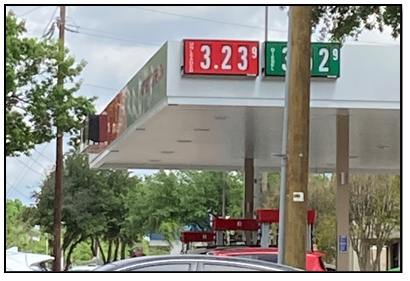
Table IV.16: Grounded Canopy Sign Standards
ii.
Number.
(A)
If a grounded canopy is allowed for the zoning district, one sign may be displayed on each frontage in which that grounded canopy is located.
(B)
Grounded canopy signs are an additional allowance for wall signs provided by this subsection.
iii.
Design and installation.
(A)
A grounded canopy sign shall affix flush against the surface of the face of the grounded canopy or as flush as possible while still allowing the plane of the face of the sign to remain perpendicular to the ground.
(B)
The face of a grounded canopy sign cannot extend above the top surface of the face of the grounded canopy to which it is attached.
5.
Marquee sign.
a.
Definition. A permanent attached sign affixed to a marquee.
b.
Standards.
i.
Generally. Table IV.17: Marquee Sign establishes the standards for marquee signs.
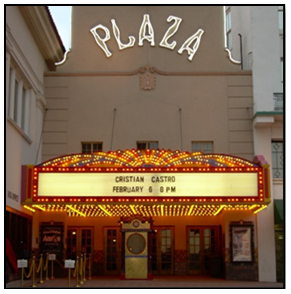
Table IV.17: Marquee Sign
ii.
Number. One marquee sign may be displayed in addition to other signs allowed in this subsection.
iii.
Design and installation. A marquee sign shall be located above the primary public entrance of a building.
6.
Projecting sign.
a.
Definition. A permanent attached sign type that is affixed to and projects 18 inches or more from the wall of a building and is generally perpendicular to the building facade. A projecting sign does not include signs located on an attached canopy, awning, marquee, or roof.
b.
Standards.
i.
Generally. Table IV.18: Projecting Sign Standards establishes the standards for projecting signs.
Table IV.18: Projecting Sign Standards
ii.
Design and installation. A projecting sign shall affix to the surface of the wall so that the face of the sign remains perpendicular to the ground.
7.
Roof sign.
a.
Definition. A sign that is mounted on the roof of a building, or that is wholly or partially dependent upon the building for support, and that projects above the highest point of a building with a flat roof, the eave-line of a building with a gambrel, gable, or hip roof, or the deck-line of a building with a mansard roof.
b.
Standards.
i.
Generally. Table IV.19: Roof Sign Standards establishes the standards for roof signs.
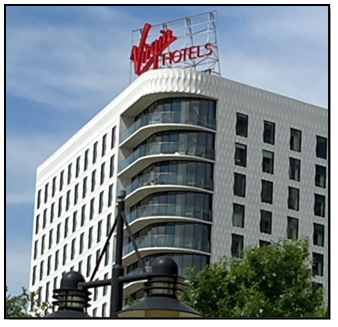
Table IV.19: Roof Sign Standards
ii.
Number. A building may include either a roof sign or a skyline sign subject to this subsection, but not both.
iii.
Design and installation.
(A)
Roof signs shall not project above:
(1)
Ten feet above the top of a flat roof; or
(2)
The top of a mansard roof; or
(3)
The top ridge of a gable, hip, cone, gambrel, or shed roof; or
(4)
The top ridge of any other sloped roof.
(B)
Roof signs shall be designed to withstand wind loads established by the building code.
8.
Skyline sign.
a.
Definition. A sign that is placed above the windows of the highest floor of a building that is at least multiple stories and taller than 35 feet in height.
b.
Standards.
i.
Generally. Table IV.20: Skyline Sign Standards establishes the standards for skyline signs.

Table IV.20: Skyline Sign Standards
ii.
Number. A building may include either a skyline sign or a roof sign subject to this subsection, but not both.
iii.
Design and installation.
(A)
A skyline sign shall affix flush against the wall of the building or as flush as possible while allowing the plane of the face of the sign to remain perpendicular to the ground.
(B)
The skyline sign's face shall not project more than two feet from the surface of the wall to which it is attached.
(C)
Skyline signs shall not project above the roofline of the building.
9.
Window sign.
a.
Definition. A sign posted, printed, placed, or affixed to a window or glass door. A window sign includes any sign that is located inside a building, that is three feet or less from a window or glass door, and that is clearly visible from outside the building.
b.
Standards.
i.
Generally.
(A)
Table IV.21: Window Sign Standards establishes the standards for window signs.
(B)
Table IV.21: Window Sign Standards expresses the sign area as the percentage of sign coverage per windowpane or per window if it does not contain separate panes.

Table IV.21: Window Sign Standards
ii.
Design and installation.
(A)
Window signs shall be posted or affixed to the window.
(B)
No window sign shall be drawn or painted onto the window.
(C)
No window sign shall be allowed on any nontransparent window.
M.
Incidental signs. Incidental signs are classified into one of the following sign types: general incidental signs, flags, speaker boards, or walk-up boards. Their associated regulations are established in this subsection. A building or lot may have multiple incidental signs as allowed in this subsection.
1.
General incidental signs.
a.
Definition. A small permanent sign other than a flag, speaker board, or walk-up board, that is freestanding or attached to a building that is in addition to the primary sign types for the property, such as detached (ground) signs and attached signs, and that has a height and scale that is clearly subordinate to the primary sign types allowed for the property. Examples of typical general incidental signs include house numbers, occupant directories, property or tenant identification names or numbers, wayfinding signs, and directional signs, and signs warning the public against trespassing or danger from animals. The list of examples is not exhaustive and is provided to clarify the regulations and does not limit the content of general incidental signs. The city will not review the content of general incidental signs.
b.
Standards.
i.
Generally. Table IV.22: General Incidental Sign Standards establishes the standards for general incidental signs not specified in subsections 2.—4.
Table IV.22: General Incidental Sign Standards
ii.
Number.
(A)
There is no maximum general incidental sign per lot allowance.
(B)
The sum of the general incidental sign area on a lot shall not exceed those established in Table IV.22: General Incidental Sign Standards.
iii.
Design and installation.
(A)
An attached general incidental sign shall affix flush against the wall of the building in which it is located.
(B)
A detached general incidental sign shall have an enclosed base and be securely and firmly embedded in the ground.
(C)
Incidental signs constructed in conjunction with a ground sign shall be consistent with the building elements and materials of those established on the same lot and within the development.
2.
Flags.
a.
Definition. A piece of fabric or other flexible material with distinctive colors and patterns, customarily mounted on a pole or similar freestanding structure or on a pole mounted on a building.
b.
Standards.
i.
Generally. Table IV.23: Flag Standards establishes the standards for flags.
Table IV.23: Flag Standards
ii.
Number.
(A)
There is no maximum flag per lot allowance.
(B)
The sum of the flag area on a lot shall not exceed those established in Table IV.23: Flag Standards.
iii.
Design and installation.
(A)
Flags shall be securely mounted in a frame or to a pole or wall.
(B)
No flag that is attached to a building shall exceed the height of that building in which it is located.
3.
Speaker boards.
a.
Definition. A professionally constructed and installed sign made of a durable, weather-resistant product such as metal or high-density plastic and may include a two-way speaker system for ordering from a vehicle in a drive-thru lane provided the volume of the speaker does not exceed ambient noise conditions as measured at the property line.
b.
Standards.
i.
Generally. Table IV.24: Speaker Board Standards establishes the standards for speaker boards.
Table IV.24: Speaker Board Standards
ii.
Design and installation.
(A)
A speaker board shall provide no more than three feet and no less than 18 inches of horizontal separation from the curb or edge of the driveway the speaker board faces.
(B)
Speaker boards shall provide a minimum landscaped area of two square feet per one square foot of sign area abutting the sign base.
4.
Walk-up boards.
a.
Definition. A sign mounted near the sidewalk entrance to a building or affixed to a building wall where the sign is visible to pedestrian traffic.
b.
Standards.
i.
Generally. Table IV.25: Walk-Up Board Standards establishes the standards for walk-up boards.
Table IV.25: Walk-Up Board Standards
ii.
Design and installation. No walk-up board is allowed more than three feet from the public sidewalk adjacent to the side of the building to which it is affixed.
N.
Temporary signs. Temporary signs are classified into one of the following sign types: general temporary signs, sidewalk signs, attached banners, or ground banners. Their associated regulations are established in this subsection. A building or lot may have multiple temporary signs as allowed in this subsection. A temporary sign shall not be used as a placeholder for ground and attached signs unless specified elsewhere in this section.
1.
General temporary signs.
a.
Definition. A sign constructed of cloth, canvas, light fabric, cardboard, wood, wallboard, metal, or other light materials, with or without frames, which is intended to be displayed for a limited period of time only. Examples of typical general temporary signs include feather signs, political signs, inflatable devices, public demonstrations, grand opening signs, contractor signs, real estate signs, garage sale signs, and signs that announce an event such as a carnival, circus, or similar event. The list of examples is not exhaustive and is provided to clarify the regulations and does not limit the content of general temporary signs. The city will not review the content of general temporary signs.
b.
Standards.
i.
Generally. Table IV.26: General Temporary Sign Standards establishes the standards for general temporary signs not specified in subsections 2.—4.
Table IV.26: General Temporary Sign Standards
ii.
Duration. A general temporary sign may be displayed for:
(A)
Ninety consecutive days over one calendar year; or
(B)
Thirty consecutive days three times during a calendar year, with each 30-day period separated by at least 14 calendar days.
iii.
Design and installation.
(A)
A detached general temporary sign shall be securely and firmly embedded in or on the ground.
(B)
A detached general temporary sign shall not use sandbags or other weighted objects to secure the sign to or in the ground.
(C)
A general temporary sign shall not use an adhesive (tape, glue, etc.) to affix the sign to any surface.
2.
Sidewalk signs.
a.
Definition. A temporary and portable sign that is ordinarily in the shape of an "A" or inverted "T" with back-to-back sign faces, an easel, or a similar configuration to be located on a sidewalk or walkway.
b.
Standards.
i.
Generally. Table IV.27: Sidewalk Sign Standards establishes the standards for sidewalk signs.

Table IV.27: Sidewalk Sign Standards
ii.
Duration. All sidewalk signs shall only be displayed during a use's business hours.
iii.
Design and installation.
(A)
Sidewalk signs are not allowed in planter beds.
(B)
Sidewalk signs are allowed only where a building is within a build-to-zone or maximum setback, or where a front facade that includes an entryway open to the general public during normal business hours is within ten feet of the edge of a public sidewalk.
(C)
Sidewalk signs shall leave a five-foot minimum, unobstructed sidewalk clearance or as otherwise required by the ADA and city fire lane requirements, whichever is greater.
(D)
Sidewalk signs shall have no permanent attachments to the sidewalk.
(E)
Sidewalk signs shall be composed of wood, medium-density fiberboard, metal (iron or steel) frames, or other materials with equivalent weight and density. Sidewalk signs shall not be composed of plastic or similar materials.
(F)
The sign face of a sidewalk sign may include a chalkboard or dry-erase board.
3.
Attached banners.
a.
Definition. A temporary sign made of fabric, cloth, bunting, plastic, paper, or any other non-rigid material with no enclosing framework that is attached, mounted, tied, or otherwise placed on a building or pole attached to a building. This definition does not include flags, pennants, or streamers.
b.
Standards.
i.
Generally. Table IV.28: Attached Banner Standards establishes the standards for attached banners.
Table IV.28: Attached Banner Standards
ii.
Duration. All attached banners shall meet the requirements established in subsection 1. above.
iii.
Design and installation.
(A)
Attached banners shall not be attached to any window, door, or other sign.
(B)
Attached banners shall not use an adhesive (tape, glue, etc.) to affix the attached banner to any surface.
4.
Ground banners.
a.
Definition. A temporary, freestanding sign made of fabric, cloth, bunting, plastic, paper, or any other non-rigid material with no enclosing framework that affixes to the ground. This definition does not include flags, pennants, or streamers.
b.
Standards.
i.
Generally. Table IV.29: Ground Banner Standards establishes the standards for ground banners.
Table IV.29: Ground Banner Standards
ii.
Duration. All ground banners shall meet the requirements established in subsection 1. above.
iii.
Design and installation. All ground banners shall meet the requirements established in subsection 1. above.
O.
Special signs. Special signs are classified into one sign type—murals. Their associated regulations are established in this subsection.
1.
Murals.
a.
Definition. A hand-produced work in which paint is applied by hand directly on an exterior wall of a building or structure. A mural does not include:
i.
Mechanically produced or computer-generated prints or images, including digitally printed vinyl sheets and wraps;
ii.
Works containing electrical or mechanical components; or
iii.
Works that involve changing or moving images or components.
b.
Standards.
i.
Generally. Table IV.30: Mural Standards establishes the standards for murals.
Table IV.30: Mural Standards
ii.
Number. One mural may be displayed on a building in addition to other signs allowed in this section.
iii.
Additional allowances. The maximum sign area for a mural allowed in the MU and DT Districts may be increased to 100 percent of the building wall with approval by the arts and culture commission and subsequent registration of the mural as public art.
P.
Unified development sign modification.
1.
Generally. A unified development sign modification may be used for any master planned development more than five acres where the plan proposes a large lot and smaller out parcels (lots).
2.
Standards.
a.
Sign allowances shall generally follow those established in subsections K.—O.
b.
One out parcel (lot) may have an additional allowance to increase ground sign area by 25 percent.
c.
Any out parcel (lot) using this allowance shall not have multiple ground signs.
d.
No ground signs, as established in subsection K. shall be allowed on the largest lot of the development.
(Ord. No. 2806NS, § 1(Exh. A), 8-19-2024)
Sec. 22-217. - Infill development standards.
A.
Purpose. The purpose of this section is to accommodate and encourage compatible development in existing developed areas, while reinforcing the established character of those areas and mitigating adverse impacts on adjacent properties.
B.
Applicability. This section applies to all development and redevelopment within Shawnee's corporate limits unless otherwise specified.
C.
Standards.
1.
Generally.
a.
Infill development shall share a similar height to surrounding buildings.
b.
The infill development shall reflect the architectural styles on either side along the block face, except for single-family residential infill in which this standard does not apply.
c.
The relationship between height, width, material, and style of existing facades shall be respected, except for single-family residential infill in which this standard does not apply.
d.
The infill development shall have consistent setbacks with the buildings on its block face.
2.
Lot size.
a.
Generally, infill development lots shall meet the required minimums of the zoning district in which it is located.
b.
In certain instances, the required minimum lot size may be reduced by 50 percent if there are site constraints that will otherwise prevent the future development of the lot.
3.
Setbacks.
a.
The front setback for infill development shall be determined by assessing the as-built setbacks on the block face (see Figure IV.12: Infill Development Setback Range).
b.
The infill development may be placed anywhere between the smallest and largest front setbacks on the block face (see Figure IV.12: Infill Development Setback Range).
c.
All other setbacks shall meet the zoning district's dimensional standards unless specified otherwise.
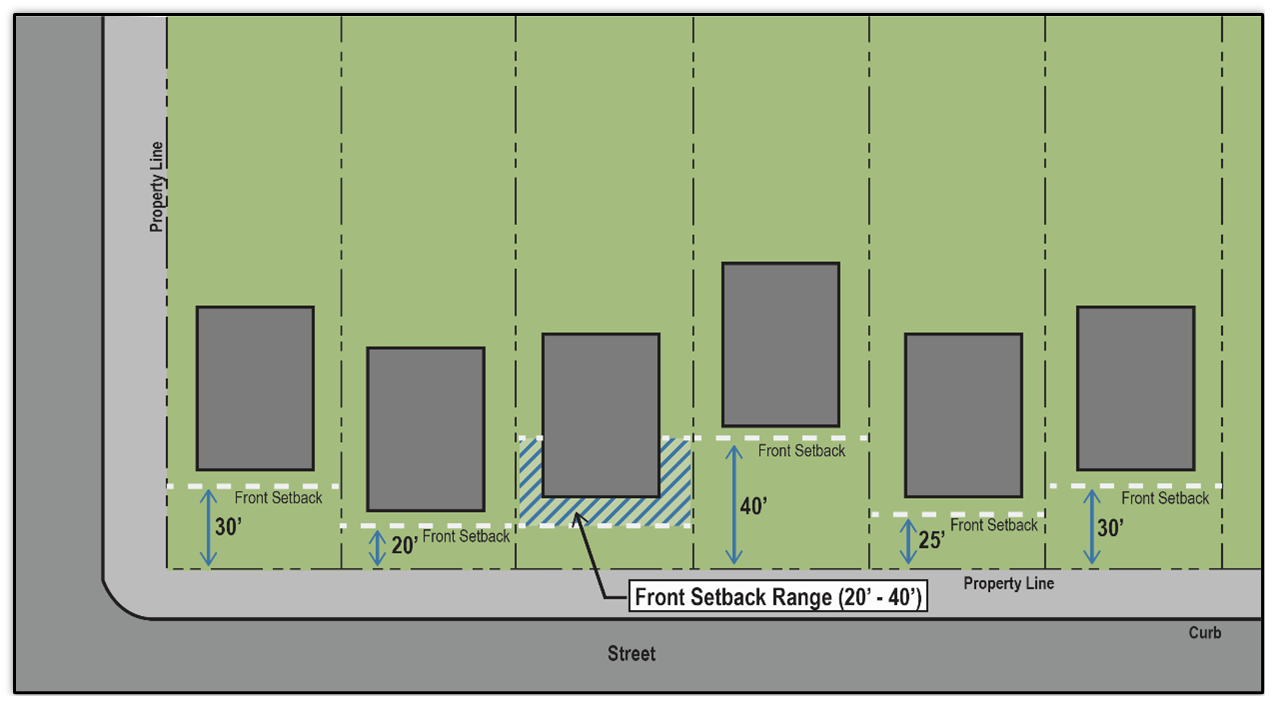
Figure IV-12: Infill Development Setback Range
4.
Architectural requirements.
a.
Architectural requirements apply for all nonresidential infill development.
b.
These architectural requirements do not apply to single-family residential infill development.
c.
Infill development shall use similar building materials as assessed by the as-built developments on the block face.
d.
Color shades shall be used to facilitate blending the infill development into the block face. The color shades of building materials shall draw from the range of color shades that already exist on the block or in the adjacent neighborhood. If no specified range can be determined, then the infill development shall utilize earth tones.
e.
The use of high-intensity colors, metallic colors, or fluorescent colors is prohibited.
5.
Building height.
a.
The building height for infill development shall be determined by assessing the as-built building heights on the block face (see Figure IV-13: Infill Lot Building Heights).
b.
The building height for infill development may be placed anywhere between the shortest and tallest building height on the block face (see Figure IV-13: Infill Lot Building Heights).
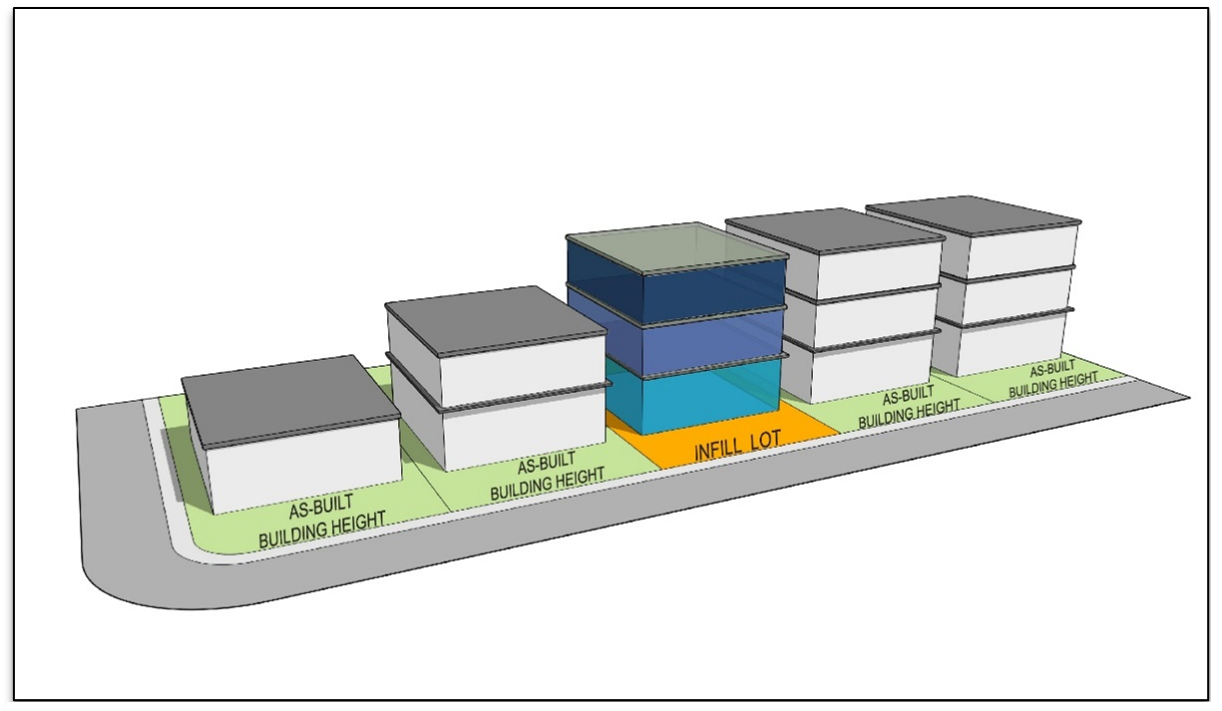
Figure IV-13 : Infill Lot Building Heights
6.
Massing. Buildings shall either be similar in size or, if larger, be articulated and subdivided into massing that is proportional to the mass and scale of other structures, if any, on the same block face, abutting or adjacent to the subject property, opposing block face or cater-corner block face at the nearest intersection.
7.
Glare. Building materials and windows shall not create excessive glare nor create a significant adverse impact on the adjacent property owners, neighborhood, or community in terms of vehicular and pedestrian safety and enjoyment of views.
(Ord. No. 2806NS, § 1(Exh. A), 8-19-2024)
Sec. 22-218. - Performance standards.
A.
Purpose. The purpose of this section is to establish regulations that protect the public from the potential negative effects of industrial and intense commercial development by regulating smoke and particulate matter, odorous matter, fire or explosive materials, toxic and noxious matter, vibration, open storage, and glare in the vicinity of those sites.
B.
Applicability. In all zoning districts, any permitted use shall conform in operation, location, and construction to the performance standards established in this section.
C.
Standards.
1.
No noise from any operation conducted on the premises, other than that emanating from vehicular traffic, either continuous or intermittent, shall be detectable at any boundary line of the district.
2.
All industrial uses shall be carried on in such a manner so as not to be injurious or offensive by reasons of the emission or creation of noise, vibration, smoke, dust or other particulate matter, toxic or noxious matter, odor, glare or heat, fire or explosive hazards.
3.
No fuel or energy with the exception of electricity, natural and/or liquefied petroleum, and solar, should be used.
4.
All buildings shall be furnished with all-weather, hard-surfaced sidewalks, and the grounds shall be planted and landscaped.
5.
The manufacture, or the use, of any materials that produce explosive vapors or gases is prohibited.
6.
No activities involving storage, utilization, or manufacture of materials or products that decompose by detonation shall be permitted.
7.
Any operation that produces intense glare or heat shall be performed within a completely enclosed building, and exposed sources of light shall be screened so as not to be detectable beyond the lot lines.
8.
No vibration shall be detectable beyond the lot lines of the lot on which the use is located.
(Ord. No. 2806NS, § 1(Exh. A), 8-19-2024)

