
South Salt Lake City
City Zoning Code
City Zoning Code
CHAPTER 17
07 - DESIGN STANDARDS
17.07.010 - Applicability.
In addition to all applicable Construction Codes and the South Salt Lake Lighting Master Plan, the following design standards shall apply to:
A.
All new Structures;
B.
Any Change of Use, addition, expansion, remodel, or intensification of the Use of any property that increases or modifies the Floor Area of a Building or Use by 50% or more; and
C.
All Noncomplying Structures that are a part of any Development identified in Subsection B.
(Ord. No. 2020-02, § IV(Exh. C), 1-8-2020; Ord. No. 2021-06, § XVIII, 5-26-2021; Ord. No. 2020-02, § IV(Exh. C), 1-8-2020; Ord. No. 2021-06, § XVIII, 5-26-2021)
17.07.020 - Building Form by Land Use District.
A.
Building Forms. Only Building forms designated by the letter A in the following matrix are allowed in each district. All other Building forms are prohibited. This section does not apply to the City Facility and City Facility (CF) Overlay district.*
* See 17.03.130
** Excludes Station District
*** See East Streetcar MPMU
B.
Building Form Does Not Determine Land Use. Regardless of Building form, all Uses carried on within a Building shall be limited to the Permitted Uses in the land use district in which the Building is located.
(Ord. No. 2020-02, § IV(Exh. C), 1-8-2020; Ord. No. 2021-06, § XVIII, 5-26-2021; Ord. No. 2022-08, § I(Exh. A), 4-13-2022; Ord. No. 2022-16, § 1(Exh. A), 9-14-2022; Ord. No. 2020-02, § IV(Exh. C), 1-8-2020; Ord. No. 2021-06 , § XVIII, 5-26-2021; Ord. No. 2022-08 , § I(Exh. A), 4-13-2022; Ord. No. 2024-28, § II (Exh. B, § V), 12-11-2024; Ord. No. 2025-10, § 1(Exh. A), 4-23-2025; Ord. No. 2025-32, § 2(Exh. A), 7-9-2025; Ord. No. 2025-38, § 1(Exh. A), 7-23-2025)
17.07.030 - Development Standards.
In addition to the Subdivision and platting requirements contained elsewhere in this Title, the following Development standards apply to all Structures * :
A.
Yard Areas. All Development shall comply with the Setbacks, both for each Building and for the Project perimeter, designated for each district. All Yard areas shall be free of any Structure and shall not be used for parking, unless otherwise provided herein.
1.
Setbacks.
* This section does not apply to the City Facility and City Facility (CF) Overlay district. See 17.03.130.
** See Approved MPMU, Overlay District, or Development Agreement
*** Double Frontage Lots shall have two (2) Front Yards and no Rear Yard.
2.
Yard Requirements and Qualifications.
a.
Outdoor Storage is prohibited in all Yard areas, off-Street Parking Areas, maneuvering and loading areas, and site Landscaping.
b.
All Front and Corner Side Yard areas shall be landscaped according to the landscape standards established in this Title.
c.
Yard areas shall not be used for parking, except for driveways or garages as required by this Title.
d.
Fences, Courtyards, and patios are permitted in certain Yard areas in specific districts, provided they meet requirements established elsewhere in this Title.
B.
Build-to Standards. All Structures shall conform to the following Build-to Standards, as applicable * :
* This section does not apply to the City Facility and City Facility (CF) Overlay district. See 17.03.130
** See Approved MPMU
*** See Approved SSLC-PD Accessory Structure siting regulations
**** Equal to required perimeter setback
A Structure may encroach into the Front Yard to comply with a Build-to Standard.
C.
Architectural Elements and Mechanical Equipment into Yard Areas.
1.
All architectural elements and mechanical equipment must be confined within the Building Lot or designated Building pad.
2.
Permitted projections of Architectural Elements and mechanical equipment into Yard areas shall comply with the Clear View requirements established in this Title.
3.
Architectural elements and mechanical equipment, specified below, may project into required Yard areas according to the standards established in the following table.
(Ord. No. 2020-02, § IV(Exh. C), 1-8-2020; Ord. No. 2021-06, § XVIII, 5-26-2021; Ord. No. 2022-08, § I(Exh. A), 4-13-2022; Ord. No. 2022-16, § 1(Exh. A), 9-14-2022; Ord. No. 2022-08 , § I(Exh. A), 4-13-2022; Ord. No. 2024-01, § I(Exh. A), 2-7-2024; Ord. No. 2024-28, § II (Exh. B, § VI), 12-11-2024; Ord. No. 2025-10, § 1(Exh. A), 4-23-2025; Ord. No. 2025-32, § 2(Exh. A), 7-9-2025; Ord. No. 2025-38, § 1(Exh. A), 7-23-2025)
____________
17.07.040 - Crime Prevention through Environmental Design (CPTED).
The following principles shall be addressed in the design of all Buildings and Developments:
1.
Natural Surveillance. Physical design that keeps potential intruders under the perception of continual watch, such as view to Streets, driveways, and Parking Lots, and visual permeability in architecture, lighting, and Landscaping.
2.
Natural Access Control. Physical design that guides the mobility of people, decreases crime opportunity, and increases perception of risk to potential offenders.
3.
Territorial Enforcement. Physical design encourages users of property to develop ownership over it. Territorial Enforcement includes Developing space with an easily discernable purpose, using symbolic barriers such as low-lying fences and walls, Landscaping, and signage, eliminating ambiguous spaces, encouraging easy maintenance, and discouraging crime.
4.
Landscaping Standards. Shrubs shall be a maximum height of two (2) to three (3) feet and trees shall have a ground clearance of seven (7) feet above walkways and sidewalks.
5.
Public Safety. In order to encourage public safety solid windowless walls shall not be permitted adjacent to Streets, pedestrian areas, and open space.
6.
Maintenance and Management. Proper maintenance and management of a site and Building discourages criminal activity. Site maintenance to keep grounds and Building clean and orderly, and where indicated, public access management plan. Public access management plans shall address strategies: (1) to limit public WIFI access outdoors during evening hours; (2) to avoid single-user restrooms; (3) to control or eliminate exterior electrical outlets; (4) for strategic irrigation to prevent overnight camping; (5) for scheduling activities in common areas; and (6) for site lighting to discourage criminal activity.
7.
Lighting. Lighting consistent with the design standards in the lighting character district identified in the South Salt Lake Lighting Master Plan, or the nearest lighting character district to any proposed Development that is not within an area identified as a lighting character district.
(Ord. No. 2020-02, § IV(Exh. C), 1-8-2020; Ord. No. 2021-06, § XVIII, 5-26-2021; Ord. No. 2022-08 , § I(Exh. A), 4-13-2022)
17.07.050 - General Design Review Considerations.
In addition to the specific design standards required for each Building form all Development shall comply with the following:
A.
General. All Development shall:
1.
Minimize the impacts of Development on utility facilities including water, sewer, storm drainage, power, gas, and communications;
2.
Incorporate CPTED principles in Building design, site layout, and Landscaping design;
3.
Integrate permitted signage into architectural and site design; and
4.
Design patios, Accessory Structures, awnings, and other appurtenances to blend with the design of the Primary Buildings and site.
B.
Façades.
1.
All Buildings shall be designed with all Façades using similar quality materials and percentage of windows.
2.
Primary Façade. All Buildings shall have at least one Primary Façade. The Primary Façade shall contain at least one primary entrance. Buildings on Corner Lots shall locate the Primary Façade on the corner closest to the adjacent Street intersection.
3.
Every man-door shall have overhead weather protection at least four-feet in depth.
C.
Height Transition. Any Building located within 100 feet an R-1 district, as measured from the closest Property Line, shall be subject to the following Height transition requirements:
1.
Beginning at the Setback of the subject property abutting the R-1 district the maximum Building Height shall be 35 feet measured from Grade to the peak of the roof or, for flat roofed structures, from Grade to the top of the parapet;
2.
An additional one (1) vertical foot of Building Height for every two (2) horizontal feet of distance from the subject property Setback abutting the adjacent R-1 district may be added to achieve the lesser of the maximum district Height or the maximum Building form Height;
3.
This Building Height transition requirement shall end 100 feet (100') from the abutting R-1 district; and
D.
Traffic Safety and Congestion. All Development shall design and locate on a Site Plan all:
1.
Vehicular and pedestrian entrances, exits, drives, and walkways;
2.
Off-street parking;
3.
Loading and service areas;
4.
Circulation patterns within the Development;
5.
Connections to abutting and nearby sites; and
6.
Site lighting to minimize the impacts of the Development on traffic safety and congestion in the surrounding neighborhood.
E.
Building and Site Layout. All Developments shall:
1.
Minimize Structure silhouette and massing, site location, elevations, and impacts on abutting and nearby Buildings;
2.
Ensure Compatibility of Building Façades with abutting and nearby Buildings in terms of height, color, materials, Primary Façades, placement of windows, rooflines and roof pitches, and the arrangement of Buildings on approved Development Lot(s);
3.
Design energy efficient Structures through the use of energy efficient building materials, passive solar designs or Solar Energy Systems, and Landscaping; and
4.
Use durable, high quality building materials.
F.
Roofs. All roof vents, pipes, Antennae, satellite dishes, and other roof penetrations and equipment, except chimneys, shall be located on the rear Façade or configured to have a minimum visual impact as seen from any adjacent Street.
G.
Fencing and Clear View Regulations.
1.
Fences.
a.
All fences shall meet the Clear View Area requirements contained in this Title.
b.
All fences shall be maintained in a state of good repair.
c.
All Fences and retaining walls shall meet applicable building code requirements and shall meet or exceed City engineering standards.
d.
Development of all fences over six feet (6') and any retaining wall require a Building Permit.
e.
Retaining Walls. Where a retaining wall protects a cut below or a fill above the natural Grade and abuts a Boundary Line, such retaining wall may be topped by a fence, wall, or hedge of the same height that would otherwise be permitted at the location, as measured from the Grade of the higher side ground level.
f.
Barbed Wire. Fences containing strands of barbed wire, including all forms of security wire, shall be prohibited in all districts, except that barbed or security wire shall be permitted as a security fence on Jail property.
g.
Electrified Fences. Electrified fences shall be prohibited in all districts, except that electrified fences shall be permitted as a security fence on Jail property. This provision does not prohibit an "invisible" fence (wired or wireless) to contain canines with a collar receiver.
h.
Vacant Lots and Parcels. Vacant Lots and Parcels shall be fenced with a six-foot (6') temporary security fence.
i.
All Development shall ensure that the location, height, and materials of walls and fences are Compatible with abutting and nearby Development and the character of the neighborhood, and shall completely conceal storage areas, utility installations, waste containers, or other Uses that are required to be screened from view by the standards in this Title.
j.
Exceptions.
i.
The height and location requirements contained in this Section shall not limit state imposed fencing requirements for public utility installations, public schools, or other public Buildings.
ii.
Specialty fences requiring greater heights than allowed in this Title, such as tennis courts or basketball backstops may be allowed, subject to the following conditions:
a)
They do not create a hazard, nuisance, or violation of other ordinances; and
b)
The Applicant has submitted the signed approval of all property Owners whose property abuts the Applicant's property.
2.
Clear View Regulations.
a.
On Corner Lots, no obstruction to view will be permitted on that portion of the Lot defined as the Clear View Area.
b.
No view-obstructing fence, wall, hedge or planting exceeding four feet (4') in height above the level of the sidewalk shall be located in the triangular area bounded by lines drawn from a point on the centerline of any driveway, set back fifteen feet (15') from the Front Property Line to points on the Property Line at the Street in front of the property fifteen feet (15') on either side of the driveway.
c.
Shade trees may be located or maintained in the Clear View Area in excess of the permitted height, provided the Clear View Area shall be clear of all obstruction between (1) the ground and 14 feet in height above all public Right-of-Ways; or (2) the ground and six feet (6') in height above any private property.
H.
Permanent Structures and Occupiable Space.
1.
All Structures and Occupiable Space shall be permanently affixed to a foundation and of permanent construction without a chassis, hitch, wheels, or other features that would make the Structure mobile.
2.
Prefabricated or relocatable Structures or Occupiable Space shall conform to one of the Building forms and accompanying design standards established in this Code.
3.
Prefabricated or relocatable Structures or Occupiable Space shall be permanently affixed to a foundation, in compliance with the International Building Code.
I.
Loading and Service Areas. Loading and service areas shall be configured to avoid disruption of primary vehicular access and circulation on the site and shall be separated from customer parking, pedestrian areas, and main Drive Aisles.
J.
Waste Containers and Enclosures.
1.
Waste container enclosures are required for all new non-residential, Multi-Family, Townhome, Homeless Shelter, or Family Interim Non-Congregate Children Housing Facility Development, redevelopment, improvement, or construction.
2.
All waste container enclosures shall be constructed according to the requirements of this Title.
3.
All waste containers shall be located at the rear of each Building, in the service area, or in another properly fenced and screened area approved by the land use authority.
4.
All waste containers shall be located so they are not visible from a public Right-of-Way.
5.
Height. Waste container enclosures shall be constructed to a Height 12" above the highest part of the waste container that the waste container enclosure will house. Waste container enclosures shall not be less than six feet (6') in height, including gates.
6.
Materials and Construction Methods. Waste container enclosures shall have walls constructed of finished masonry units (block or brick), decorative pre-cast concrete, metal, or a combination of these materials. The materials and colors used for all waste container enclosures shall be Compatible with the materials used on the Primary Building.
a.
Masonry and Brick Walls. All exterior Façades of waste container enclosures shall be constructed with finished block, brick, or split-faced blocks installed according to industry standards. All masonry walls shall have a permanent block or pre-cast end cap to prevent deterioration from climate exposure.
b.
Concrete Walls. Pre-cast or poured concrete walls shall have a decorative textured finish. Pre-cast walls shall be installed according to industry standards.
c.
Metal Enclosures.
i.
Exterior walls of any metal waste container enclosure shall be constructed of at a minimum, 16-gauge metal cladding.
ii.
Attachments of cladding to structural frame shall not exceed 32 inches (32") center-to-center in either direction.
iii.
All structural posts, and their foundations, shall be adequately sized to support the walls and gates and shall be spaced at a maximum of six feet (6') center-to-center.
iv.
Structural frame members shall have a minimum steel thickness of 3/16 th of an inch and consists of structural tubing, angle iron.
v.
Corrugated roofing or other metal roofing materials are prohibited.
7.
Gates. All enclosures shall have service access gates.
a.
All gates shall be constructed with a sturdy metal frame.
b.
Gate posts shall be embedded on the outside of the enclosure to limit damage when the waste container is removed from the enclosure.
c.
All gates shall be constructed with commercial grade hinges, poles, and hasps.
d.
Waste container enclosures with gates that swing out from the dumpster shall be set back from the Property Line a distance at least equal to the width of the gate.
e.
Gates shall be closed except during scheduled collection periods.
f.
Vinyl gates are prohibited.
8.
Pads.
a.
All waste container enclosures and waste containers shall be placed on poured concrete or any existing hardened paving system.
b.
New pads shall be a minimum thickness of six inches (6") using 3,500 psi steel- reinforced concrete. If subgrade conditions are poor, the minimum thickness increases to eight inches (8").
c.
All pads shall have an interior drain or shall have a maximum two percent (2%) grade for water to drain from the enclosure.
d.
When an enclosure is constructed as part of new construction there shall be a minimum ten-foot (10') apron with a minimum 12-inch thickened edge.
9.
Bollards and Wheel Stops. The corners of all waste container enclosures, where the gate hinges are attached, shall be protected with colored bollards to prevent vehicles from driving into the enclosure. Each waste container enclosure shall have bollard or pre-cast concrete curb wheel stops attached to the slab to keep the waste container from hitting the back of the enclosure.
10.
Location. All waste containers and enclosures shall be located on major drives within Developments to provide adequate circulation of waste collection vehicles. Waste container enclosures shall be located so that waste collection vehicles can pull in front of the enclosure, empty, and reset the container without physically removing the container from the enclosure. Waste Containers in Townhome Developments shall be located within 150 feet of each Townhome building and shall be hidden from public view.
11.
Maintenance. Waste container enclosures shall be maintained in good condition and appearance at all times.
a.
Screening materials shall be replaced immediately when found to be in disrepair.
b.
Gates and latches shall remain in place and shall be kept fully operable.
c.
Gates shall be closed except during scheduled collection periods.
d.
Waste container enclosure pads and access drives shall be repaired or rebuilt whenever the pavement Structure deteriorates.
e.
Graffiti shall be removed immediately.
K.
Utilities. All utility lines shall be underground in designated easements.
1.
Underground utility lines serving multi-Building Developments shall be placed within Drive Aisles or fire lanes.
2.
No pipe, conduit, cable, water line, gas, sewage, drainage, or any other energy or service equipment shall be installed permanently above ground, except for backflow devices.
3.
Gas meters, electric service meter panels, transformers, and other utility equipment shall be grouped together and shall be painted to match the adjacent Building wall.
L.
Solar Energy Systems. All Solar Energy Systems shall comply with the following standards:
1.
Solar Energy Systems that do not comply with the following standards are prohibited.
2.
Solar Energy Systems in the Historic and Landmark district shall be subject to additional standards found in Chapter 17.03.
3.
Panels shall be constructed of non-glare glass with an aluminum frame or equal or better quality.
4.
All Solar Energy Systems shall minimize visual impacts on the surrounding neighborhood by preserving natural vegetation, Screening adjoining properties, or other appropriate measures.
5.
Setback and Location.
a.
Building-mounted systems shall be mounted only on lawfully permitted Structures.
b.
Free-standing Solar Energy Systems are subject to the Accessory Structure design standards in this Chapter.
c.
Free-standing Solar Energy System shall not extend into the Yard area.
6.
Roof-Mounted Systems. The following design standards apply to all roof mounted Solar Energy Systems:
a.
All Solar Energy Systems shall meet all design review, Screening, and visibility requirements found elsewhere in this Chapter.
b.
Pitched Roofs.
i.
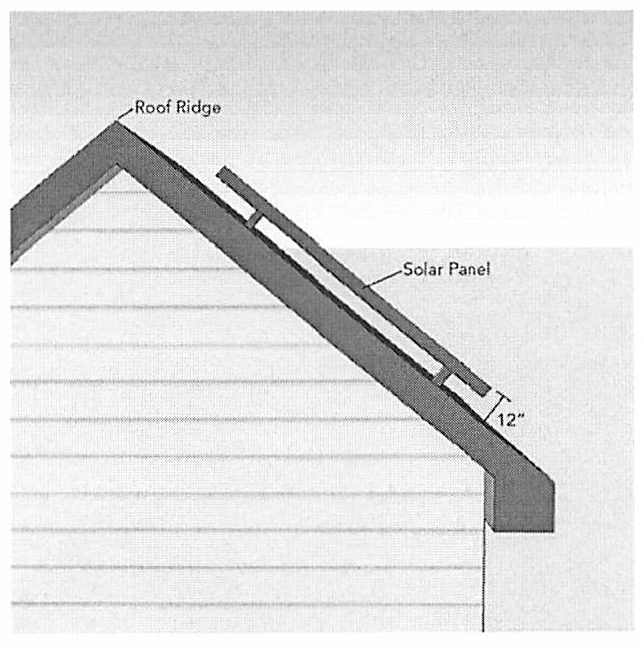
Solar Energy Systems that face the Front Yard shall be mounted a maximum 12 inches from the roof, as measured from the roof surface and the highest edge or surface of the system.
ii.
No Solar Energy System shall extend past the roof ridge, roof bottom, or side edges of the roof.
iii.
Solar Energy Systems that face the Front Yard or a public Right-of-Way shall be installed at the same angles and contour as the roof on which they are installed.
c.
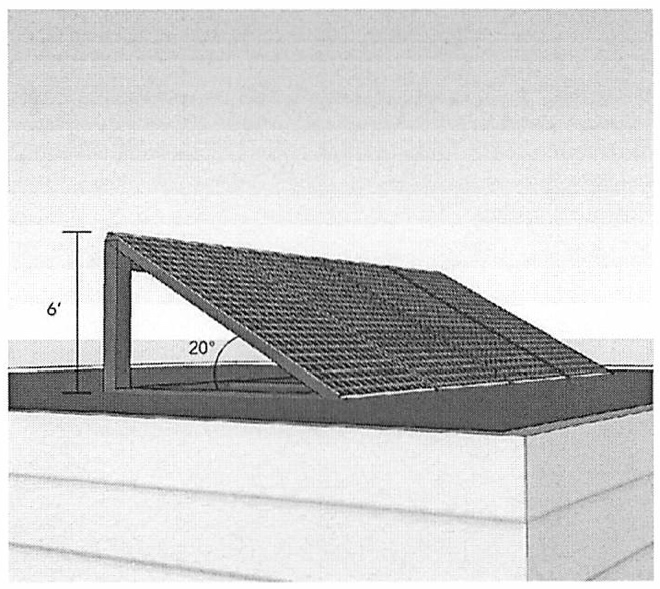
Flat Roof. Solar Energy Systems installed on flat roofs shall only extend up to six feet (6') above the roof and shall be placed at a maximum 20° angle.
7.
Design.
a.
Solar Energy Systems shall be designed to blend into the architecture of the Building upon which it is mounted and the surrounding neighborhood.
b.
Solar Energy Systems shall be screened from view from public Rights-of-Way through use of one or more of the following methods:
i.
Parapet wall;
ii.
Setback from the roof edge; or
iii.
Architectural Elements attached to the Building.
(Ord. No. 2020-02, § IV(Exh. C), 1-8-2020; Ord. No. 2021-06, § XVIII, 5-26-2021; Ord. No. 2022-16, § 1(Exh. A), 9-14-2022; Ord. No. 2022-08 , § I(Exh. A), 4-13-2022; Ord. No. 2024-28, § II (Exh. B, § VII), 12-11-2024)
____________
17.07.060 - General Design Standards for Residential Buildings/Development.
In addition to the general design standards contained in 17.07.050 the following design standards apply to all residential Building forms unless otherwise exempted in specific detail in a Development Agreement executed as a condition of approval of a rezone:
A.
Frontage and Orientation.
1.
Single-Building Developments. Single-Building Developments shall front on a Street.
2.
Multi-Building Developments (excluding Townhome Developments). All multi-Building Developments shall be oriented so that the Primary Façade of each Building faces toward the following, listed in priority order:
a.
Public Street;
b.
Perimeter Street;
c.
Primary internal Street;
d.
Park or other Common Open Space; and
e.
Secondary internal Street.
3.
Townhome Developments. All Townhome Developments shall be oriented so that the Primary Façade of each Building faces toward the following, listed in priority order:
a.
Public Street;
b.
Perimeter Street;
c.
Primary internal Street; and
d.
Park or other approved Common Open Space.
B.
Windows and Doors.
1.
Windows are required on the Primary Façade of all Buildings.
2.
Windows on the Primary Façade shall have a minimum transparency of 70%.
3.
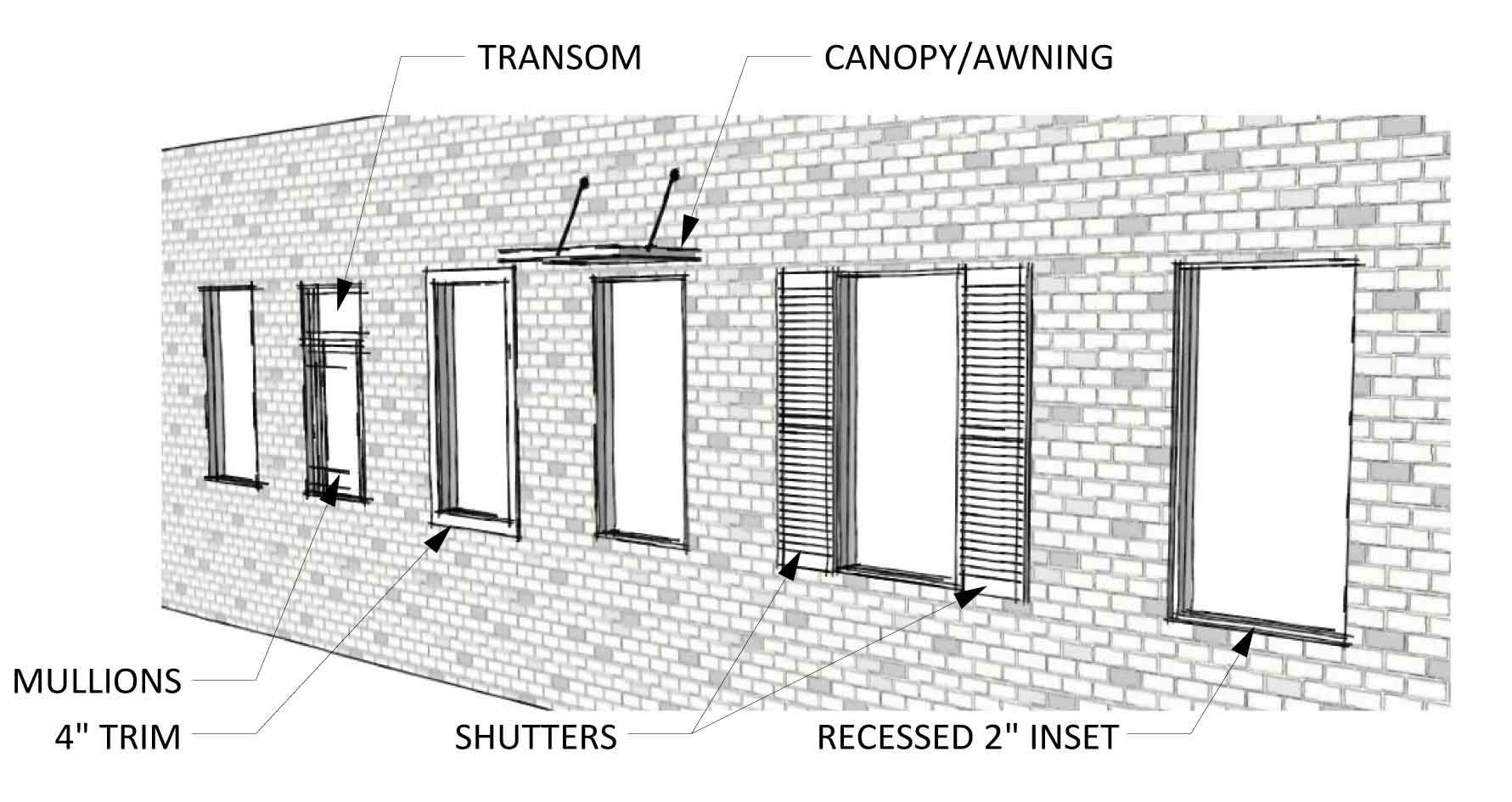
All windows on the Primary Façade shall incorporate at least two (2) of the following features:
a.
Mullions and/or transoms;
b.
Trim or molding at least four inches (4") in width;
c.
Canopies, shutters, or awnings proportional to window size; or
d.
Recessed insets from the Primary Façade by at least two inches (2").
C.
Materials.
1.
Primary Materials. All Buildings shall use one of the following materials on at least 80% of each Façade:
a.
Brick;
b.
Wood;
c.
Stone; or
d.
Hardie-board or equivalent material.
2.
Secondary Materials. No Building shall use the following materials on more than 20% of any Façade:
a.
Stucco;
b.
Corrugated metal siding;
c.
Split-faced masonry block;
d.
Exposed smooth-finish concrete block;
e.
Architectural metal panels;
f.
Cementous fiber board; or
g.
EIFS.
3.
Prohibited Materials. No Building shall use vinyl or aluminum siding on any Façade.
4.
Roofs. All roofs shall be clad in asphalt shingles, wood shingles, standing seam metal, or a material of equivalent quality and durability.
5.
Arrangement.
a.
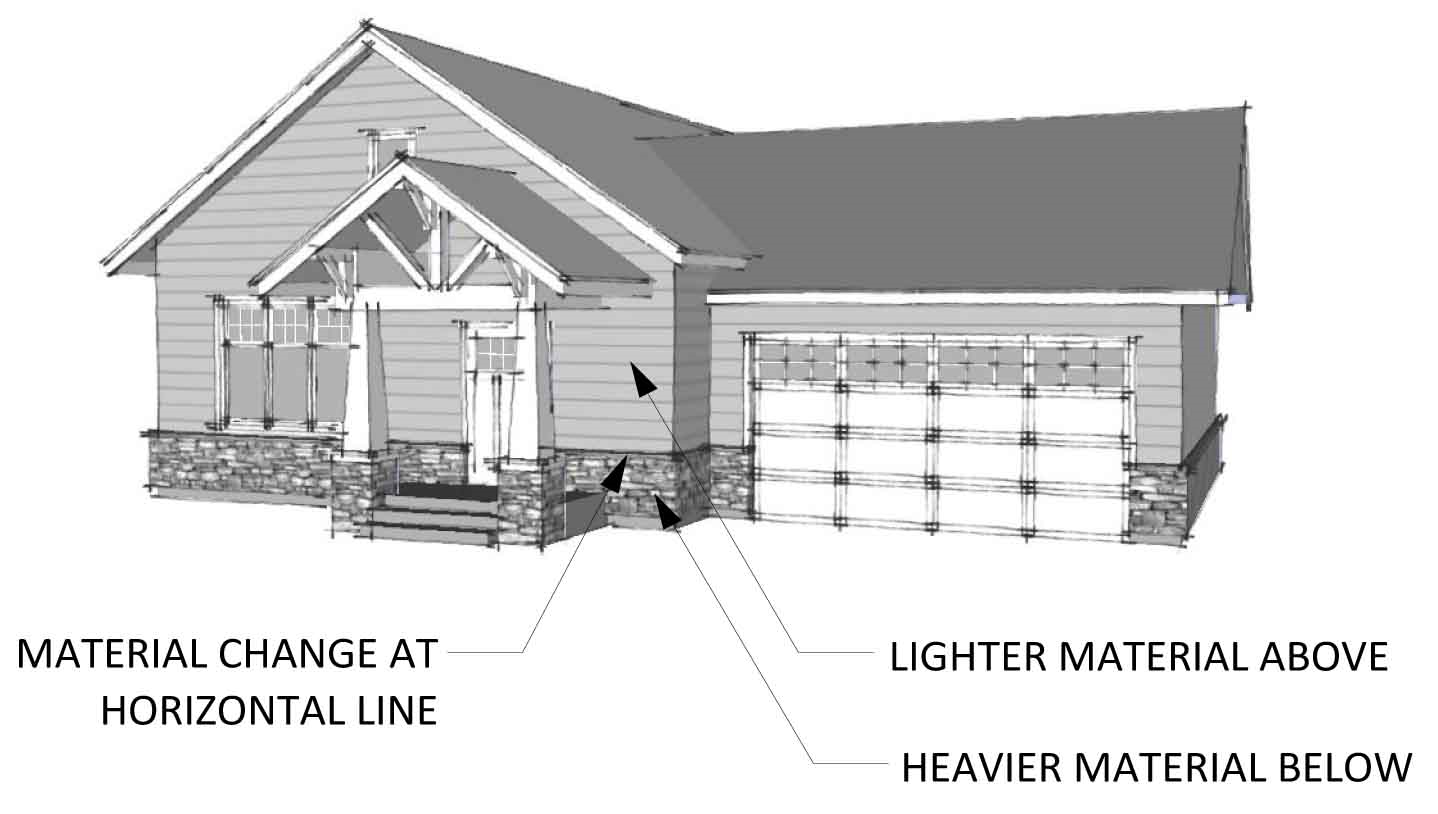
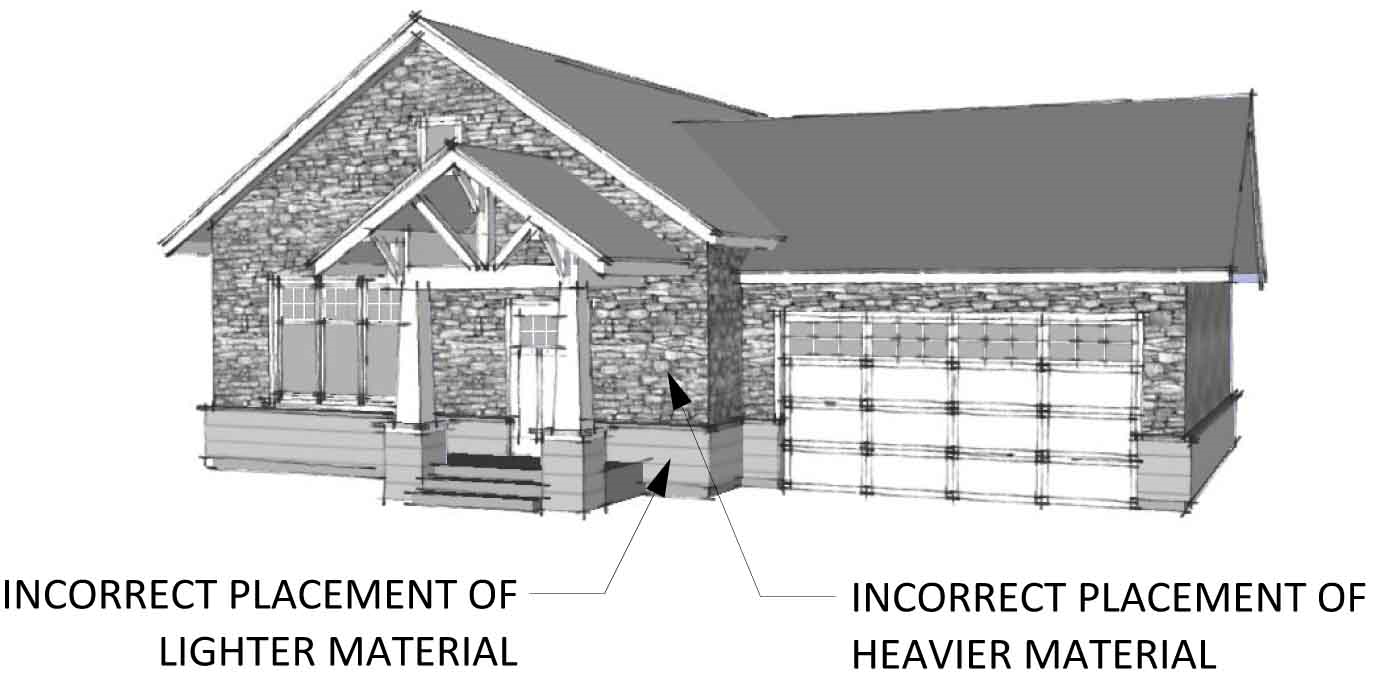
Where two or more materials are proposed to be combined on a Façade, the heavier and more massive material shall be located below the lighter material.
b.
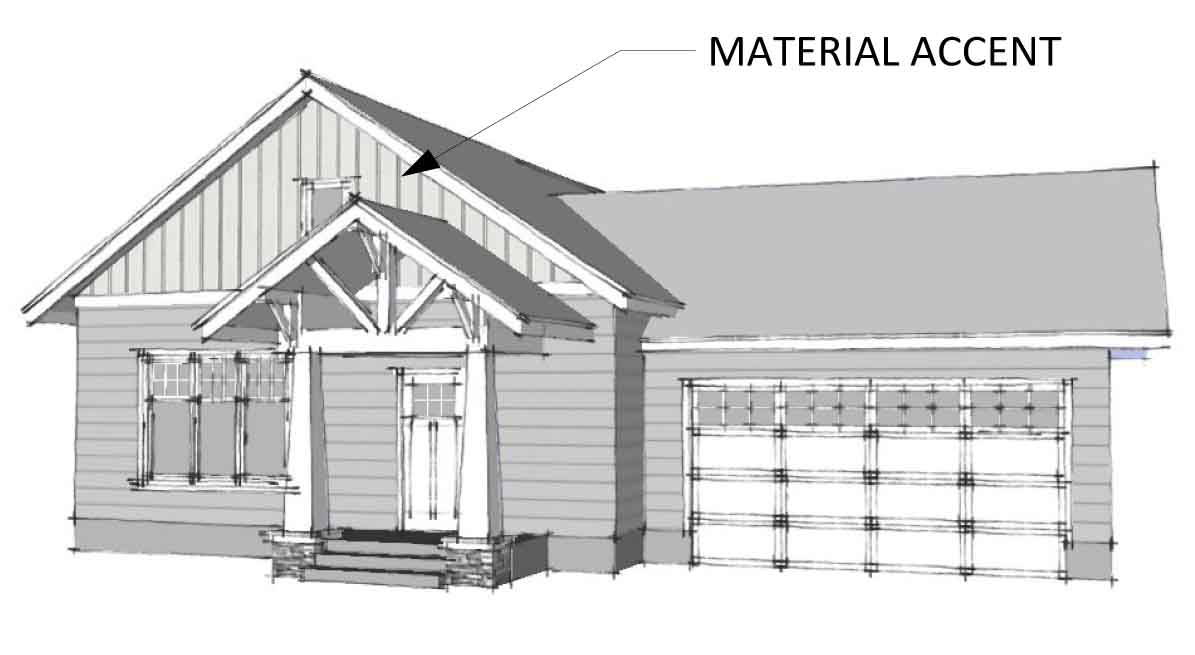
All material changes shall occur along a horizontal line or where two forms meet; material changes may occur as accents around windows, doors, cornices, at corners, or as a repetitive pattern.
c.
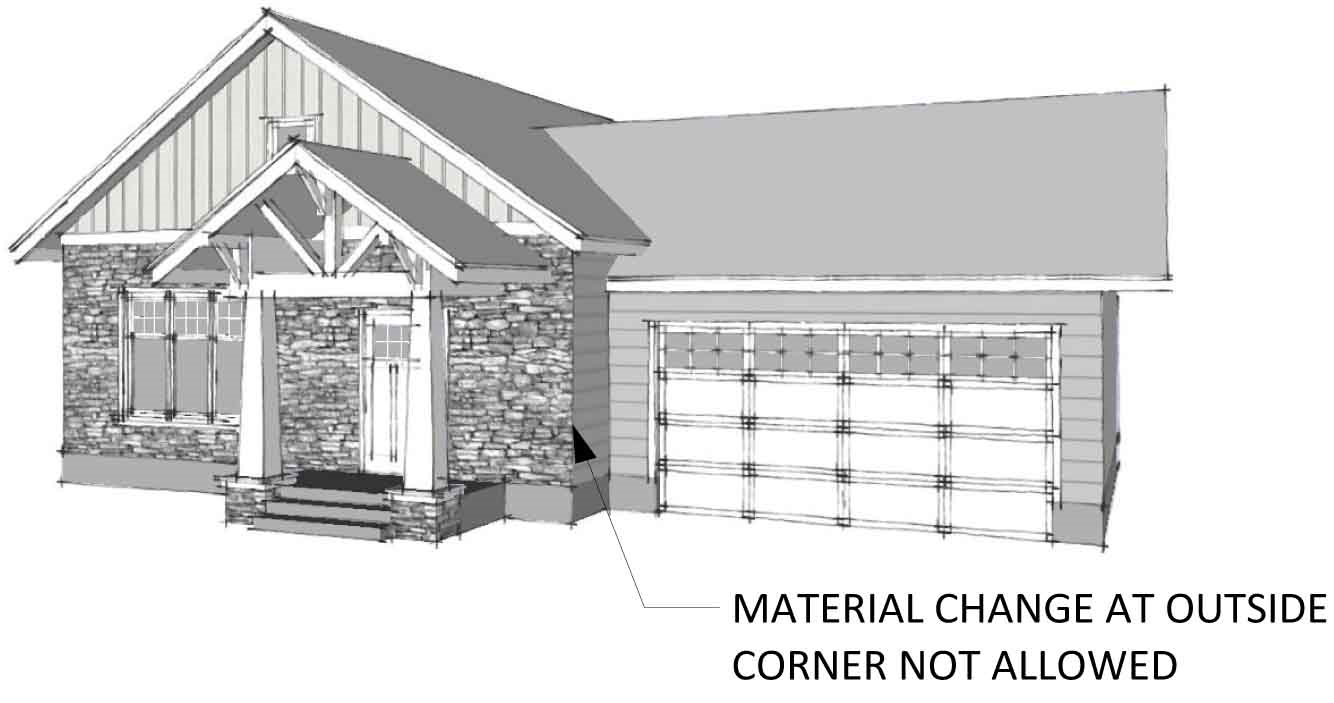
Primary Façade materials and/or colors shall not change within two feet (2') of Building corners and shall continue along any Façade visible from a Street or pedestrian Right-of-Way. Materials may change where side or rear wings meet the main body of a Building. Primary Façade materials used on Buildings on Corner Lots shall extend the full length of the sides visible from a Street or pedestrian Right-of-Way.
D.
Compatibility. New Building forms shall be Compatible with the existing neighborhood.
E.
Fencing.
1.
Fences in Front Yards shall not exceed four feet (4') in height.
2.
Fences in Corner Side Yards shall not exceed six feet (6') in height.
3.
Fences in Rear Yards shall not exceed six feet (6') in height.
4.
Fences may extend to the back of sidewalks, where permitted.
5.
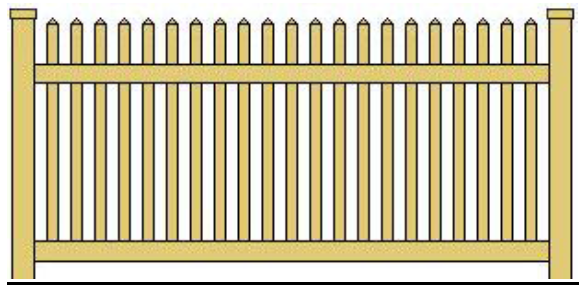
A straight classic vinyl picket fence is allowed:
6.
Other Vinyl fences are prohibited.
7.
Chain link fences are prohibited in any new multi-family or townhome development.
(Ord. No. 2020-02, § IV(Exh. C), 1-8-2020; Ord. No. 2021-06, § XVIII, 5-26-2021; Ord. No. 2022-08, § I(Exh. A), 4-13-2022; Ord. No. 2022-16, § 1(Exh. A), 9-14-2022; Ord. No. 2022-08 , § I(Exh. A), 4-13-2022; Ord. No. 2025-32, § 2(Exh. A), 7-9-2025)
____________
17.07.070 - Single-Family Building Form.
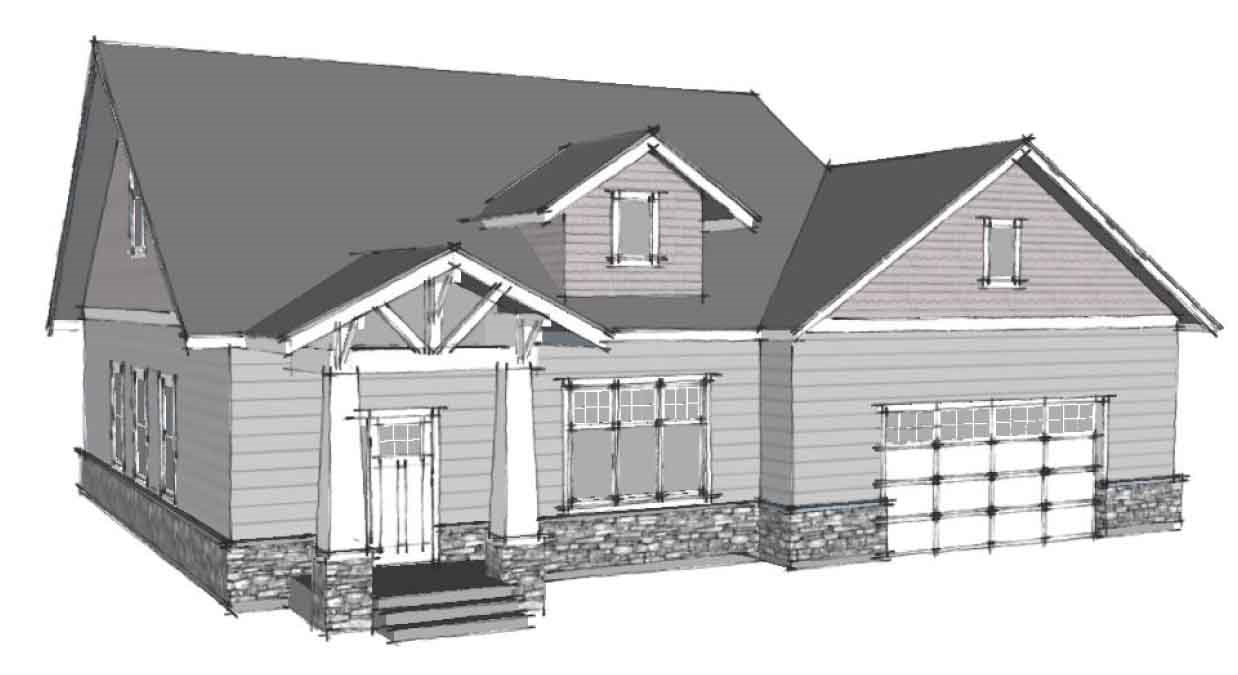
In addition to the standards contained in 17.07.050 and 17.07.060, the following design standards apply to all Single-Family Buildings.
A.
Orientation. All Buildings shall front on a Public Street.
B.
Primary Façade. Any Primary Façade of 30 feet or more shall incorporate wall offsets in the form of projections or recesses. Required offsets shall have a minimum depth of two feet (2').
C.
Building Height.
1.
The maximum height for any Building shall be 35 feet measured from Grade to the peak of the roof or, for flat roofed Buildings, from Grade to the top of the parapet.
2.
Buildings on Lots that abut existing single-Story residential Buildings in existing R1, RM, or Jordan River districts shall have a maximum height of 30 feet.
D.
Materials. Additional permitted Primary Materials include:
1.
Wood clapboard; or
2.
Wood board and batten.
E.
Garages. All Buildings shall include a garage. The following garage standards shall apply:
1.
Garages shall not visually or architecturally dominate the Primary Façade of the Primary Building.
2.
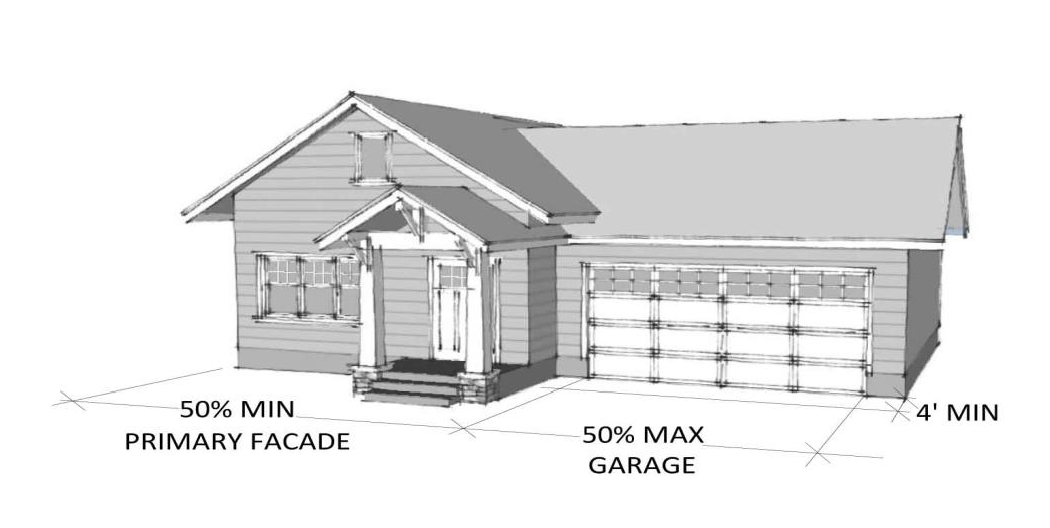
Garages shall not comprise more than fifty (50) percent of the Primary Façade.
3.
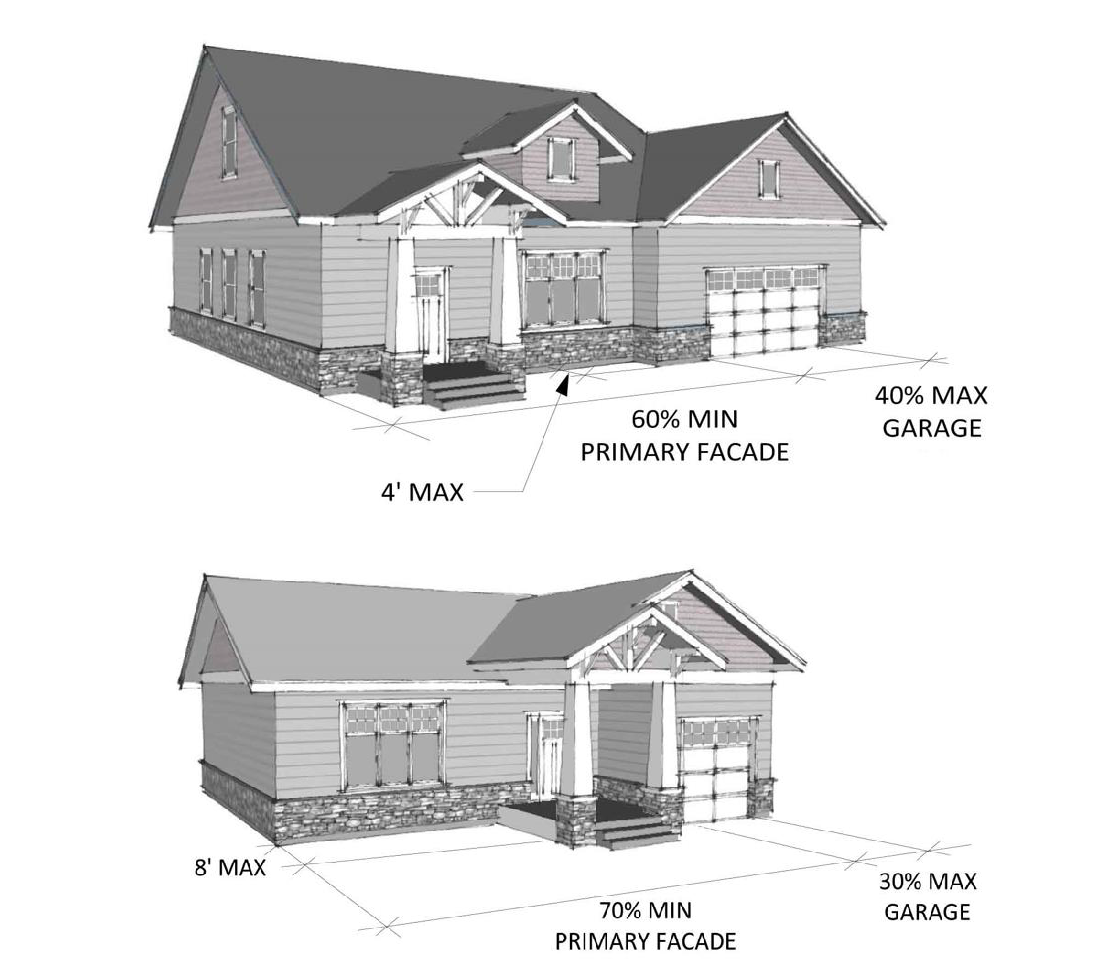
Garages that comprise between forty (40) percent and fifty (50) percent of the Primary Façade shall be recessed from the Primary Façade by at least four feet (4').
4.
Garages that comprise less than forty (40) percent of the Primary Façade may be flush with the Primary Façade.
5.
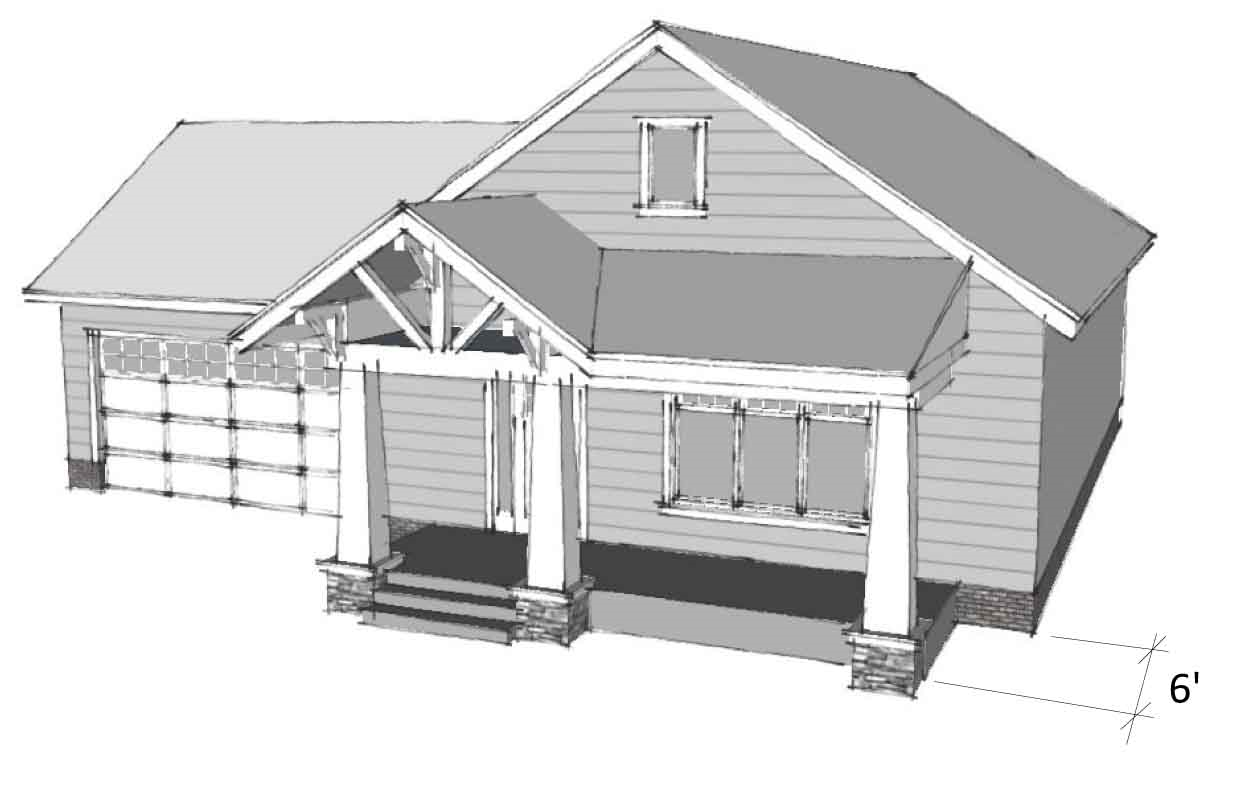
Garages that comprise no more than (30%) of the Primary Façade may protrude from the Primary Façade but shall not protrude more than eight feet (8'). All Buildings with garages protruding more than four feet (4') from the Primary Façade shall include a Porch or covered landing that extends at least six feet (6') from the plane of the living space.
6.
All garages protruding four feet (4') or more from the Primary Façade shall have garage doors with windows.
7.
Garages with more than two bays or with doors greater than 16 feet wide shall be located on the rear Façade or shall be Side-Loaded.
8.
Side-Loaded Garages. All Buildings with side-loaded garages shall incorporate a portico, arbor, trellis, or other element to emphasize the primary entrance on the Primary Façade.
9.
All garages must contain at least three (3) of the following design features:
a.
Single carriage house garage doors with windows;
b.
Garage doors that include windows and are painted to match the main or accent color of the Dwelling;
c.
Ornamental light fixtures flanking the doors;
d.
Arbor or trellis;
e.
Columns flanking doors and/or an eyebrow overhand;
f.
Portico;
g.
Dormers;
h.
Twelve-inch overhangs over garage doors;
i.
Eaves with exposed rafters with a minimum six-inch (6") projection from the front plane; or
j.
Roof line changes.
10.
Carports are not permitted.
F.
Roofs and Overhangs. Roofs and overhangs shall comply with the following standards:
1.
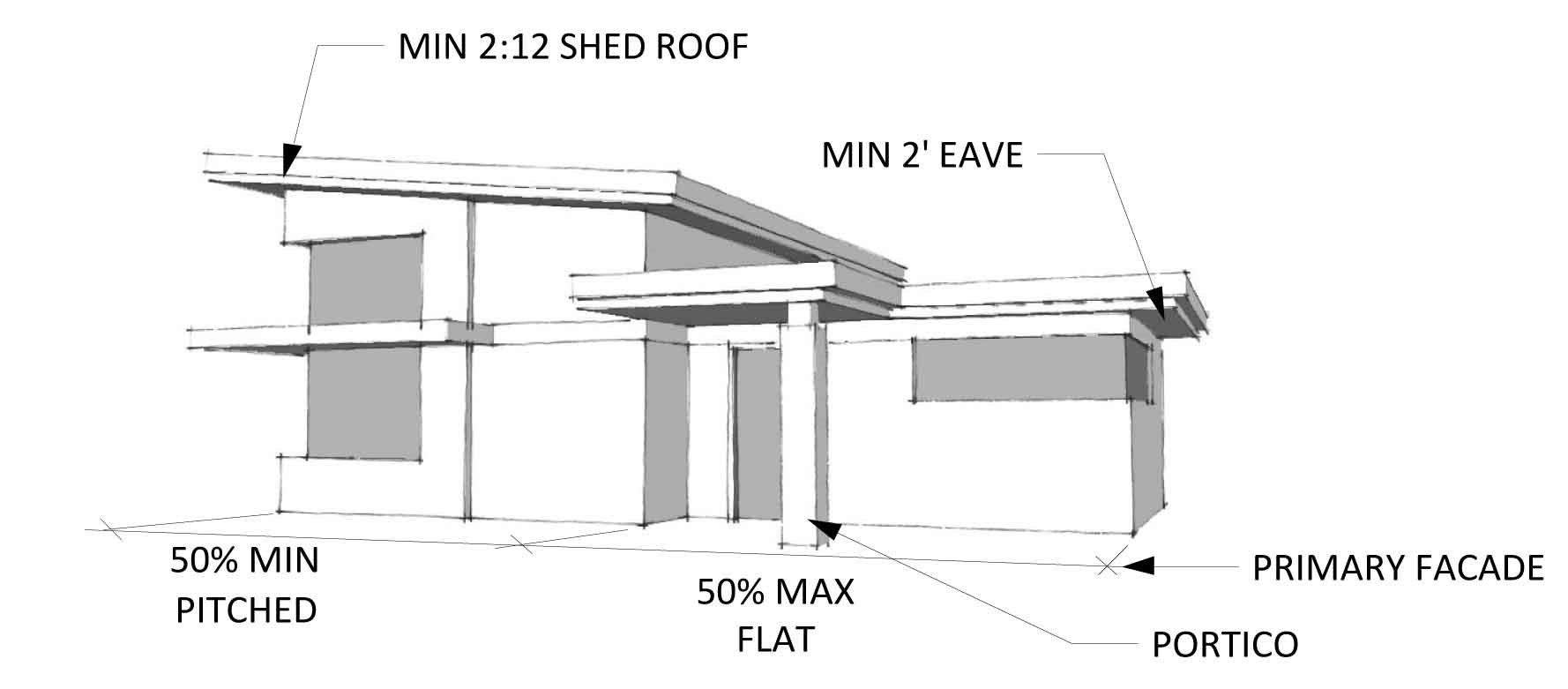
Pitched roofs covering the main body of the Building shall be hip style, shed style, mansard, or shall have symmetrical gables.
2.
Shed roofs shall maintain a minimum pitch of 2:12 and all other roofs covering the main body shall maintain a minimum roof pitch of 6:12.
3.
Overhanging eaves may expose rafters. Flush eaves shall be finished with profiled molding or gutters.
4.
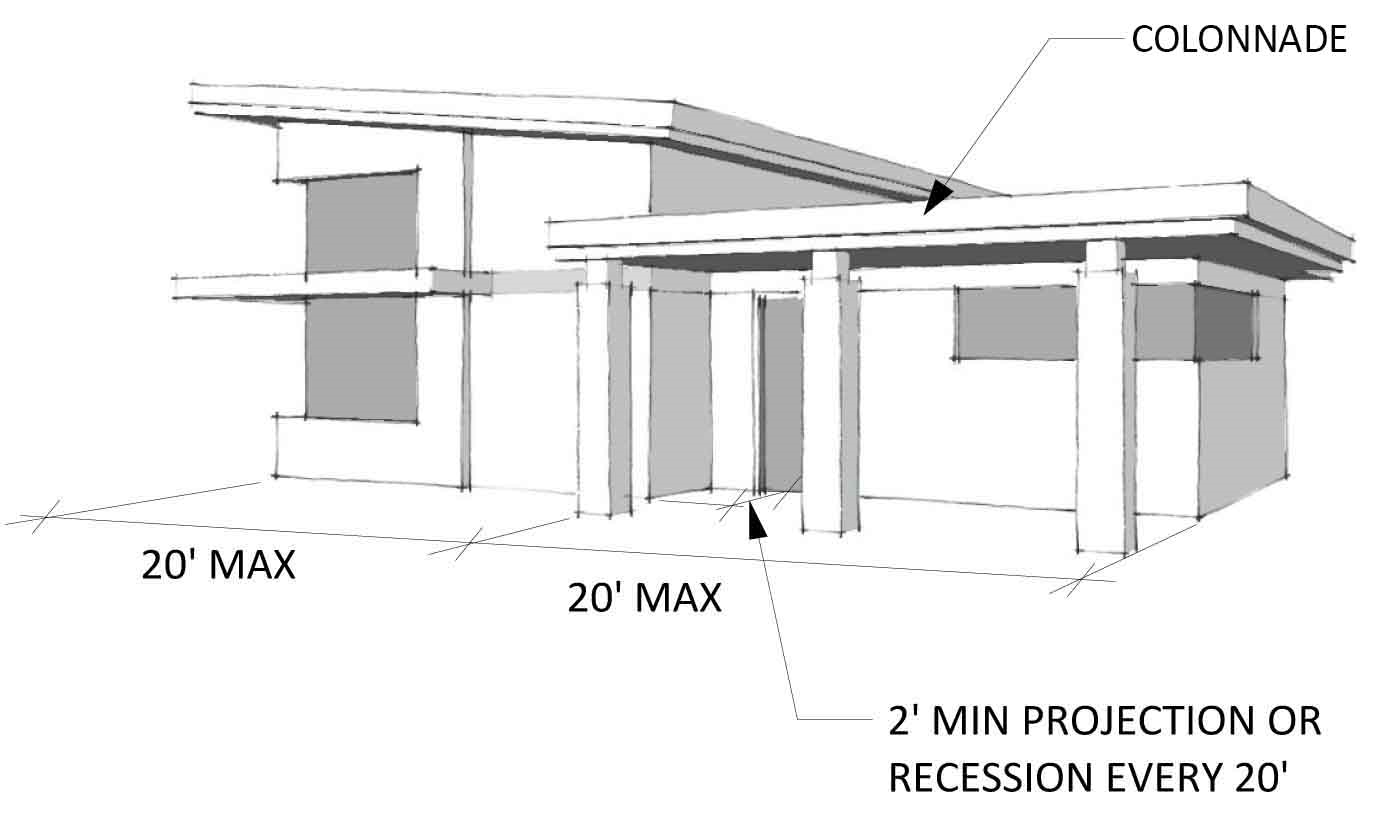
Flat Roofs. All flat roofs shall require a minimum of two-foot (2') parapet wall. All flat roofs shall also include two (2) of the following:
a.
Gables, shed roofs, or pitched roof elements covering at least 50% of the length of the Primary Facade;
b.
A Porch, portico, or colonnade located along the Primary Façade of the Building, emphasizing the front door; or
c.
Additional two-foot (2') projections or recesses in the Façade plane every 20 feet (20').
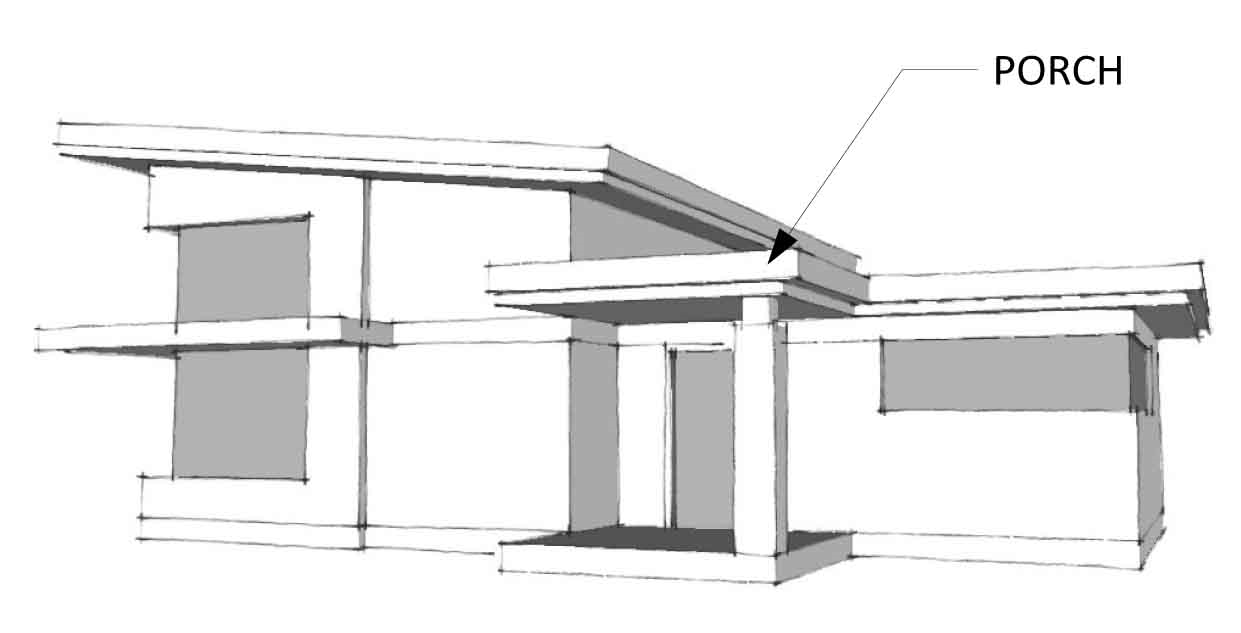
G.
Porches. All Buildings shall have a covered Porch that is the prominent Architectural Element of the Primary Façade and that is least six feet (6) deep.
H.
Accessory Structures. (Non-Habitable) Accessory Structures shall be built in the same architectural style with a similar roofline and exterior materials as the Primary Dwelling. The following standards shall apply to all Accessory Structures:
1.
Building Requirements.
a.
Accessory Structures shall not exceed one (1) Story and shall total no more than seven hundred (700) square feet.
b.
Accessory Structures shall be clad in similar materials and shall be a similar color as the Primary Dwelling.
c.
Accessory Structures shall only be accessed at Grade.
d.
Windows are permitted on Accessory Structures. Façades of Accessory Structures facing abutting properties shall have the heads or upper casings of windows no higher than eight (8) feet above Grade of the Structure. Greenhouses and Structures with clerestory windows that are at least eight (8) feet above Grade are exempt from this requirement.
e.
Accessory structures shall not be connected to sewer service. All other utilities for Accessory Structures shall be accessed from the Primary Dwelling.
2.
Setbacks.
a.
Accessory Structures shall be located behind the Primary Dwelling.
b.
Accessory Structures shall be separated from the Primary Dwelling by at least ten (10) feet.
c.
Accessory Structures shall be located at least three (3) feet from any Property Line.
3.
Height. Accessory Structures may not exceed twenty (20) feet in height. Accessory Structures shall have a maximum first floor height of fourteen (14) feet measured from Grade to ceiling. Pitched roofs may extend to twenty (20) feet.
4.
Carports. The following requirements apply to all Carports.
a.
Carports are only permitted for existing Single-Family Buildings.
b.
Carports shall have a maximum height of fourteen (14) feet and shall only house one (1) car.
c.
Carports must be placed on a properly located Hard-Surfaced driveway.
d.
Carports must be permanently affixed to the ground with a proper foundation and footings.
I.
Internal ADU Development and Design Standards.
1.
Internal ADU Development Standards:
a.
Maximum Number of Units per Lot or Parcel. One (1) Internal ADU is permitted per Lot or Parcel where a Single-Family Dwelling is the Primary Dwelling.
b.
Area: The minimum Lot Area or Parcel for a Primary Dwelling (Single-Family Dwelling) in the R1 and RM District to develop a new Internal ADU is six thousand (6,000) square feet.
c.
Minimum Width. The minimum width of any Lot or Parcel shall be fifty (50) feet at all points along the length of the property from the Front Property Line to the Rear Property Line.
d.
Location. The Internal ADU shall be located within the Primary Dwelling (Single-Family Dwelling).
e.
Parking. One (1) on-site parking stall is required in addition to the parking stall requirements for the Primary Dwelling. In no case shall fewer than three (3) total off-street parking stalls be provided. If the Primary Dwelling provides more than four (4) total off-street parking stalls, there shall be no additional parking stall requirement.
2.
Internal ADU Design Standards:
a.
The Internal ADU shall have an exterior entrance with weather protection.
b.
The Internal ADU shall have a designated address next to the dwelling entrance.
c.
The Internal ADU shall conform to all applicable standards and codes.
d.
The Internal ADU shall be subject to the same standards for decks, patios, and other encroachments that apply to the Primary Dwelling.
J.
External ADU Development and Design Standards. External ADU Development Standards.
a.
Maximum Number of Units per Lot or Parcel. One (1) External ADU is permitted per Lot or Parcel where a Single-Family Dwelling is the Primary Dwelling.
b.
Area. The minimum Lot Area or Parcel for a Single-Family Dwelling in the R1 and RM District to develop a new External ADU is six thousand (6,000) square feet.
c.
Minimum Width. The minimum width of any Lot or Parcel shall be fifty (50) feet at all points along the length of the property from the Front Property Line to the Rear Property Line.
d.
Maximum Height. The maximum Height for any External ADU is either the same height of the Primary Dwelling or twenty (20) feet, whichever is the more restrictive. The External ADU shall not exceed two (2) stories.
e.
Maximum Size. The maximum square footage of the External ADU shall not exceed fifty (50) percent of the Primary Dwelling's total square footage, not including the garage, or up to one thousand (1,000) square feet, whichever is more restrictive.
f.
Rear Yard Coverage. An External ADU may not cover more than fifty (50) percent of the Rear Yard area.
g.
Required Setbacks.
i.
Distance from Primary Dwelling (Single-Family Dwelling): Ten (10) feet.
ii.
Side Yard Setback: Five (5) feet.
iii.
Rear Yard Setback: Five (5) feet.
h.
Parking. One (1) additional on-site parking stall is required in addition to the parking stall requirements for the Primary Dwelling. Any additional vehicles owned by occupants must be accommodated on-site.
2.
External ADU Design Standards.
a.
The External ADU shall have an exterior entrance with weather protection.
b.
The External ADU shall not contain more than two (2) bedrooms.
c.
The External ADU shall conform to all applicable standards and codes.
d.
The External ADU shall not be located in a Front or Corner Side Yard and shall meet the same setbacks as required for the Primary Dwelling in the land use district.
e.
Any External ADU located in a required Side Yard must comply with the setbacks for the Primary Dwelling and shall have adequate facilities for all discharge from roof and other drainage.
f.
Solar panels attached to the roof of an External ADU are permitted to exceed the maximum height of the Structure up to four (4) feet.
g.
Conversion of existing Accessory Structures may only occur where the existing Accessory Structure meets the setback requirements for an ADU in the land use district and meets the applicable building codes.
h.
Rooftop patios on an External ADU are prohibited.
i.
Patios are permitted. A patio may be covered with a roof provided the square footage of the roof is no larger than one hundred twenty (120) square feet and the covered patio complies with the setbacks required of the ADU. A covered patio shall not count towards the maximum square footage requirement of the ADU but does count toward the total building coverage of the lot.
j.
Balconies are permitted provided they do not extend into a required ADU setback and extend no further than five (5) feet from an exterior wall of the ADU. Balconies shall not contain HVAC equipment nor be used as storage areas. Balconies are prohibited on Facades abutting adjacent residential properties.
k.
Second Story Windows: Windows on the second story of an External ADU are prohibited on an exterior wall that is adjacent to a Side or Rear Property Line unless:
i.
The window is a clerestory window where the bottom of the window is at least six (6) feet above the finished floor of the second story;
ii.
The window is on a wall that faces an elevation of the Primary Dwelling;
iii.
The window faces and is at least ten (10) feet from a Side or Rear Property Line;
iv.
The exterior wall is adjacent to an alley; or
v.
The window faces a Side or Rear Property Line that is adjacent to a property in a land use district that permits commercial uses or a property that contains a non-residential use.
K.
Solar Energy Systems. In addition to the requirements found in 17.07.050, all Solar Energy Systems installed on Single-Family Buildings with flat roofs shall have a maximum height of three (3) feet above the roof and shall be placed at a maximum 20° angle. All Solar Energy Systems shall meet all design review, Screening, and visibility requirements found elsewhere in this Chapter.
L.
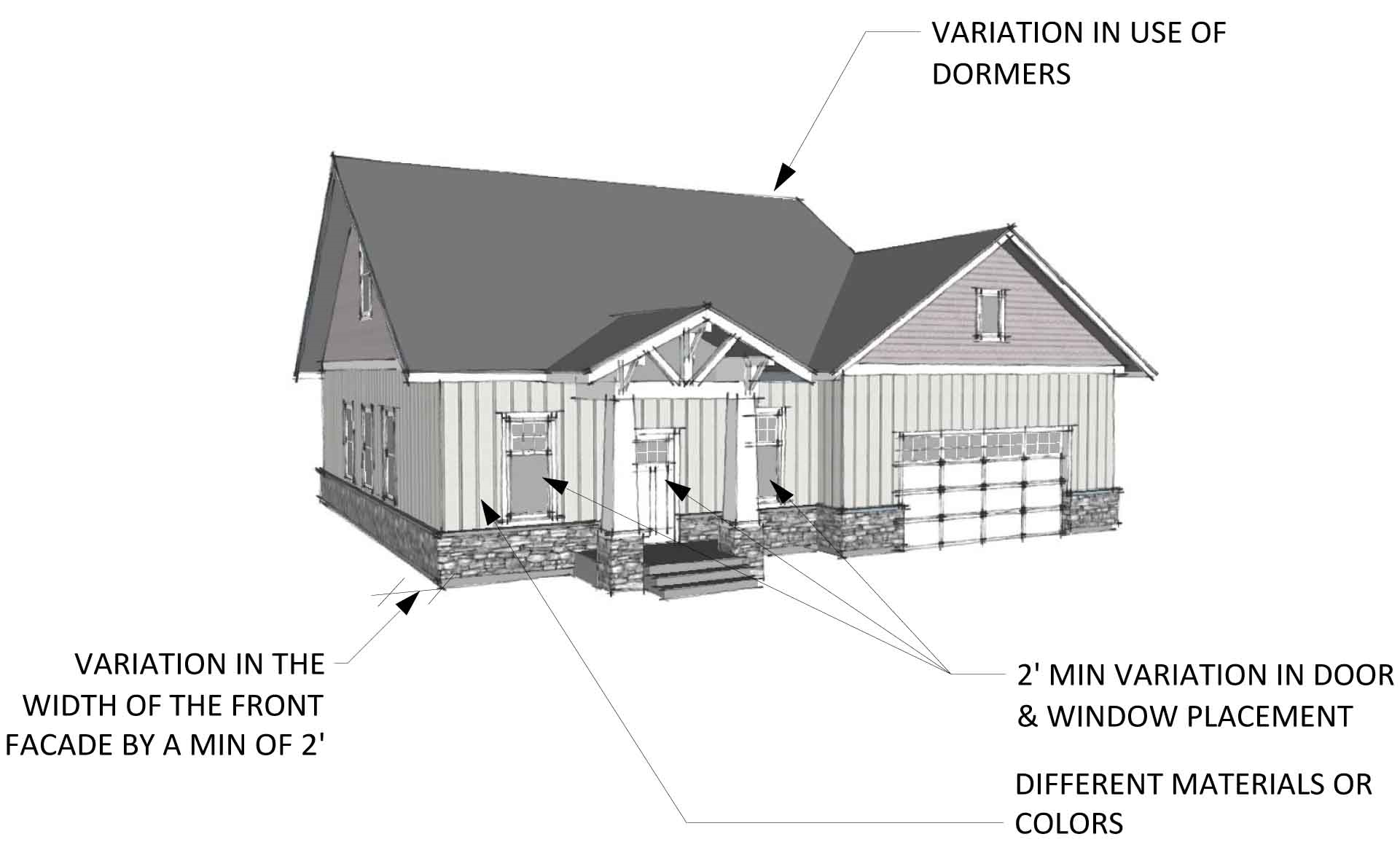
Architectural Variability.
1.
Developments with three to ten (3-10) units shall have a minimum of three (3) Distinctly Different Primary Façade variations.
2.
Developments with greater than ten (10) units shall add one (1) additional Distinctly Different Primary Façade variation for each additional ten (10) units.
3.
Mirror images of the same Primary Façade are not Distinctly Different Primary Façades.
4.
Distinctly Different Primary Façades shall utilize at least one (1) of the Required Architectural Variability standards and three (3) of the Optional Architectural Variability standards listed in the following table:
Architectural Variability Table:
5.
No Primary Façade design shall be used:
a.
Within 3 Lots of the same Primary Façade design;
b.
Directly across the Street from the same Primary Façade design; or
c.
On more than 25% of the Buildings within a single phase of a Development.
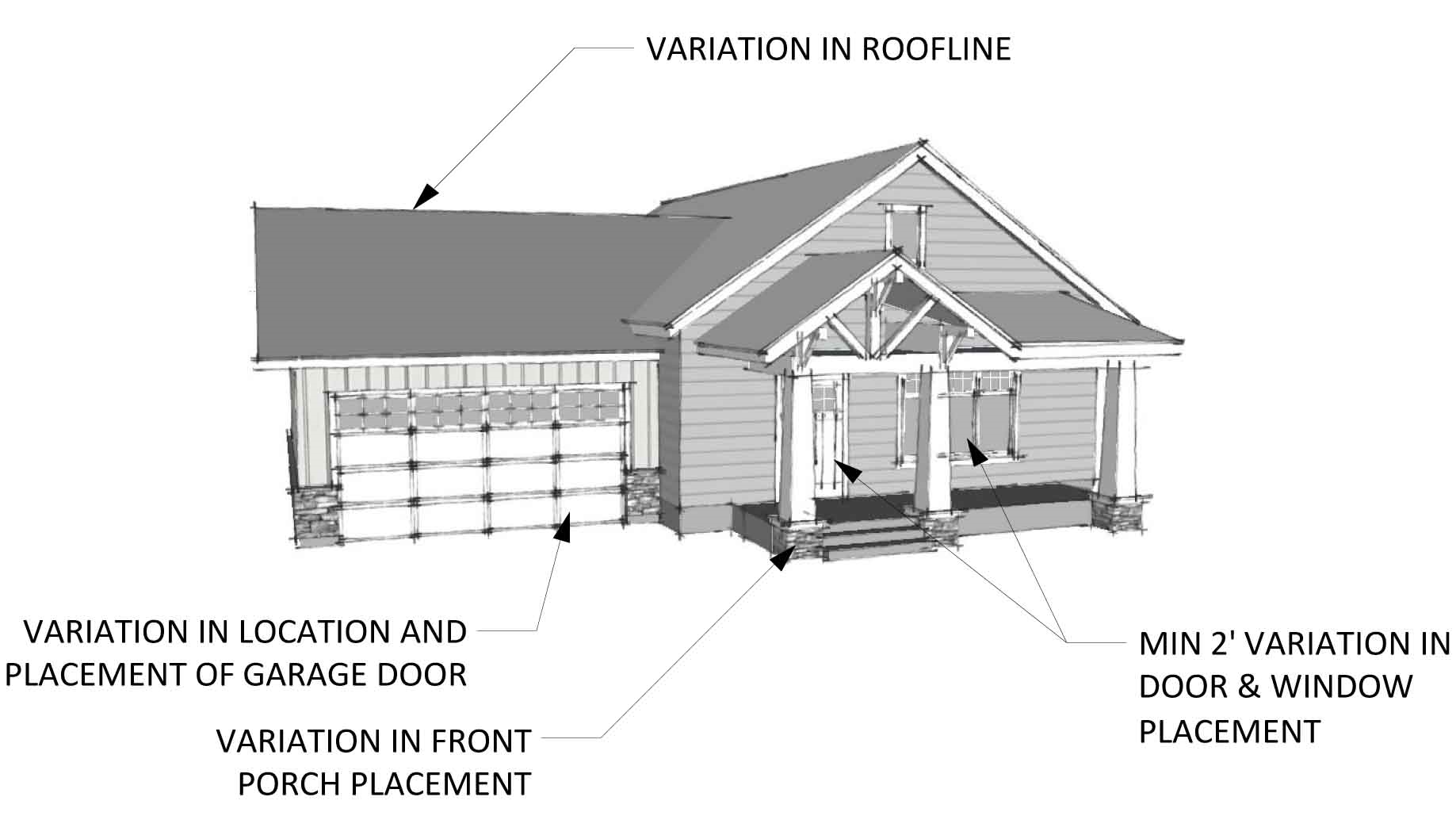
(Ord. No. 2020-02, § IV(Exh. C), 1-8-2020; Ord. No. 2021-06, § XVIII, 5-26-2021; Ord. No. 2022-16, § 1(Exh. A), 9-14-2022; Ord. No. 2023-27, § 1(Exh. A), 9-12-2023; Ord. No. 2022-08 , § I(Exh. A), 4-13-2022; Ord. No. 2024-01, § I(Exh. A), 2-7-2024)
17.07.080 - Townhome building forms/development.
There are four (4) allowed Townhome Building forms. Each Townhome Building form allows for no less than three (3) to and no more than eight (8) attached Dwelling Units (or commercial units in the Urban Style Townhome Building Form) to be located side by side, in a single Building. In addition to the design standards contained in 17.07.050 and 17.07.060, the following design standards apply to all Townhome Buildings.
A.
Frontage and Orientation.
1.
Single-Building Developments. Single-Building Townhome Developments shall front on a Street.
2.
Multi-Building Developments.
a.
Traditional multi-Building Townhome Developments shall be oriented so that the Primary Façade of each Building faces toward the following, listed in priority order:
i.
public street;
ii.
Internal Primary Access Road; and
iii.
park or other internal Common Open Space.
b.
Urban Style & Live/Work Townhome Buildings shall be oriented so the commercial units and the upper floors of Dwelling Units face toward the following, listed in priority order (with Dwelling Units' primary entrance and vehicular access facing an internal Street):
i.
public Street;
ii.
primary internal Street; and
iii.
park or other internal Common Open Space.
B.
Windows and Doors.
1.
Windows are required on at least forty (40) percent of any Façade facing a Public Street or Internal Primary Access Road. Any Façade facing secondary internal street or neighboring parcel or lot shall have at least twenty five (25) percent windows.
2.
Each Façade of every Building shall display the same level of architectural detail and transparency as the Primary Façade.
3.
Windows on the Primary Façade shall have a minimum transparency of seventy (70) percent.
4.
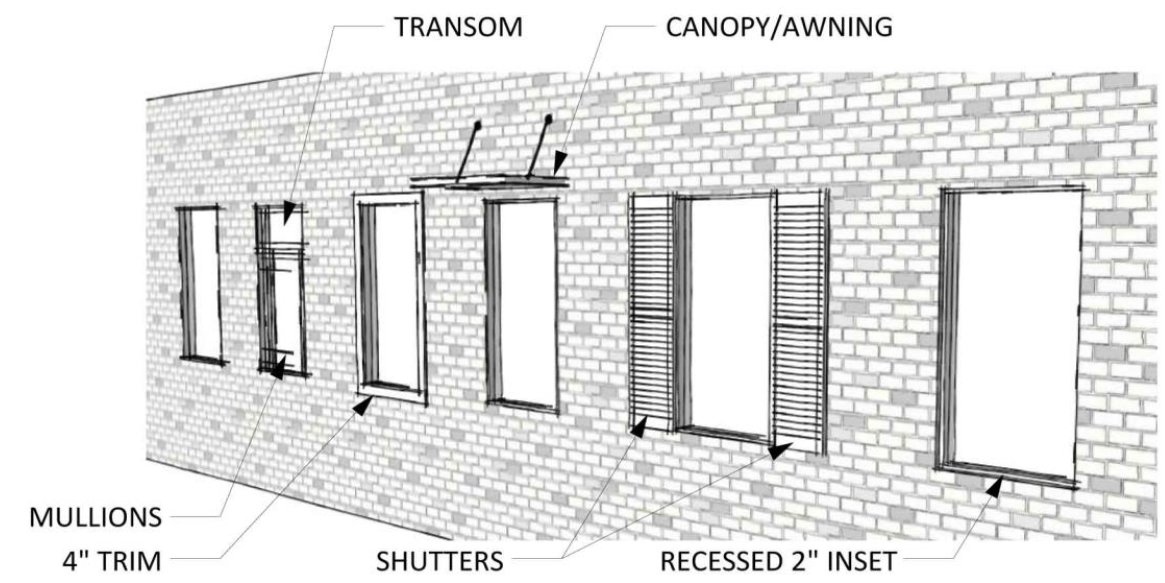
All windows on each Façade of every Building shall incorporate at least two (2) of the following features:
a.
mullions and/or transoms;
b.
trim or molding at least four (4) inches in width;
c.
canopies, shutters, or awnings proportional to window size; or
d.
recessed insets from the Primary Façade of at least two (2) inches.
C.
Building Materials.
1.
Primary Materials. All Buildings shall use one (1) of the following materials on at least eighty (80) percent of each Façade:
a.
Brick;
b.
wood clapboard;
c.
wood board and batten;
d.
stone; or
e.
Hardie board or similar fiber cement siding.
2.
Secondary Materials. No Building shall use the following materials on more than twenty (20) percent of any Façade:
a.
stucco;
b.
corrugated metal siding;
c.
split-faced masonry block;
d.
exposed smooth-finish concrete block;
e.
architectural metal panels;
f.
wood; or
g.
EIFS.
3.
Prohibited Materials. No Building shall use vinyl or aluminum siding on any Façade.
4.
Roofs. All roofs shall be clad in asphalt shingles, standing seam metal, or a material of equivalent quality and durability.
5.
Arrangement.
a.
Where two (2) or more materials are proposed to be combined on a Façade, the heavier and more massive material shall be located below the lighter material.
b.
All material changes shall occur along a horizontal line or where two (2) forms meet; material changes may occur as accents around windows, doors, cornices, at corners, or as a repetitive pattern.
c.
All materials shall wrap around each Building Façade and shall reflect the same level of architectural detailing on all four (4) Facades of the Building.
d.
Primary Façade materials and/or colors shall not change within two (2) feet of Building corners and shall continue along any Façade visible from a Street or pedestrian Right-of-Way. Materials may change where side or rear wings meet the main body of a Building. Primary Façade materials used on Buildings on Corner Lots shall extend the full length of the sides visible from a Street or pedestrian Right-of-Way.
D.
Fencing.
1.
Fences in Front Yards shall not exceed four (4) feet in height.
2.
Fences in Corner Side Yards shall not exceed six (6) feet in height.
3.
Fences in Rear Yards shall not exceed six (6) feet in height.
4.
Fences may extend to the back of sidewalks, where permitted.
5.
A straight classic vinyl picket fence is allowed:
6.
All other Vinyl or Chain link fences are prohibited.
7.
Developments that abut single-family developments shall have a six-(6) foot CMU (or similar material) wall for the length of the Townhome Development perimeter that abuts a single-family development, (excluding that length of the single-family Development perimeter that is required for vehicular and pedestrian access).
E.
Façade Offsets. For each Dwelling Unit, the Building Façade shall incorporate:
1.
a horizontal and vertical wall offset in the form of a projection or recess, every twenty two (22) feet (or the Unit width if the Unit exceeds the minimum Townhome Unit width) with a minimum depth of six (6) feet and a minimum width of six (6) feet; and
2.
at least two (2) of the following:
a.
a change in roofline;
b.
an offset in the Primary Façade of the Dwelling Unit of at least two (2) feet; or
c.
variation in the location and proportion of front Porches.
F.
Building Height. The Building Height for each Townhome Building form is measured from Grade to the peak of the roof or, for flat-roofed Buildings, from Grade to the top of the roof parapet. The maximum Building Height for each Townhome sub-form is as follows:
1.
Urban Style Townhome Building form is forty (40) feet.
2.
Live/Work Townhome Building form is forty (40 feet.
3.
Traditional two (2) Story Townhome Building form is thirty five (35) feet.
4.
Traditional three (3) Story Townhome Building form is forty (40) feet.
G.
Roofs and Overhangs. Roofs and overhangs shall comply with the following standards:
1.
Pitched roofs covering the main body of the Building shall have a minimum 6:12 pitch.
2.
Shed roofs shall maintain a minimum pitch of 2:12 and all other roofs covering the main body shall maintain a minimum roof pitch of 6:12.
3.
Overhanging eaves may expose rafters. Flush eaves shall be finished with profiled molding or gutters.
4.
Flat Roofs.
a.
All flat roofs shall include:
i.
a minimum two-2) foot parapet wall; and
ii.
at least one (1) significant roofline height variation along the parapet.
b.
All flat roofs shall also include at least two (2) of the following:
i.
gables, shed roofs, or pitched roof elements covering at least fifty (50) percent of the length of the Primary Façade;
ii.
a Porch, portico, or colonnade located along the Primary Façade of the Building, emphasizing the front door; or
iii.
additional two-(2) foot projections or recesses in the Façade plane every twenty (20) feet; or
iv.
outdoor living room amenities developed on at least fifty (50) percent of the surface area of each unit.
H.
Porches. Each Unit shall have a covered, weather-protected Porch that is the prominent Architectural Element of its primary entrance Façade, and is at least six (6) feet deep.
I.
Solar Energy Systems. All Solar Energy Systems shall meet all design review, Screening, and visibility requirements found elsewhere in this Chapter.
J.
Architectural Variability.
1.
Developments with more than three (3) Buildings shall vary the Design of each Building to enhance the architectural appeal of the Project.
2.
Mirror images of the same Primary Façade do not count toward the required variation of Façades.
K.
Façades.
1.
All Dwelling Units shall include at least one (1) primary entrance on the Primary Façade of the Townhome Building. Individual Dwelling Units may have a secondary entrance on the Side or Rear Façade. If the primary entrance of each Commercial unit is on the Primary Façade of an Urban Style Townhome Building the primary entrance of each residential unit within that Building may be located on the Side or Rear Façade of the Building.
2.
All details on a single Building, including roof forms, siding materials, windows, doors, and trim shall use a consistent architectural style.
3.
All Façades of any Building in a multi-Building Development shall use the same materials, Architectural Elements, and detailing.
4.
All Townhome buildings with Live/Work Units, or with ground floor Commercial uses shall comply with the Design Standards for Urban Style Buildings detailed in this Chapter.
L.
Garages. At a minimum, all Buildings shall include a two (2)-car garage serving each Dwelling Unit.
1.
No Garage entrance shall be located on the Primary Façade of the Building.
2.
All garages must accommodate two (2) cars.
3.
All garages must contain at least three (3) of the following design features:
a.
garage doors that include windows and are painted to match the main or accent color of the Dwelling;
b.
ornamental light fixtures flanking the doors;
c.
arbor or trellis;
d.
dormers;
e.
eaves with exposed rafters with a minimum six-(6) inch projection from the front plane; or
f.
roof line changes.
4.
Carports are prohibited.
M.
Fire Access.
1.
All Buildings adjacent to a Townhome Internal Primary Access Road must be separated from one (1) another by at least forty five (45) feet along every point of any Building wall, along the entire radius of any curve in the Townhome Internal street, from Grade to the heavens.
2.
No Secondary Internal Access Road may exceed one hundred fifty (150) feet in length if it does not have two (2) points of ingress and egress, fully accessible by fire apparatus, with buildings separated by at least forty five (45) feet, along any point of any Building wall, along the radius of any curve in the Secondary Internal Access Road.
N.
Access and Off-Street Parking Areas.
1.
85% of all Dwelling Units shall be designed to provide vehicular access from a Secondary Internal Access Road.
2.
Driveway access design shall conform to Utah APWA Plan 225 (Dec. 2009 ed.).
3.
No off-Street Parking Area shall be located between a Building and the Street or road it fronts.
4.
No on-Street parking is allowed.
O.
Usable Open Space. All Buildings shall include Usable Open Space equal to at least twenty (20) percent of the Development site and shall include a programmed and landscaped area of at least twenty five (25) percent of the required Usable Open Space that is centrally located within the Project, abuts an Internal Primary Access Road, and is configured in a shape that is roughly equal in length and width.
P.
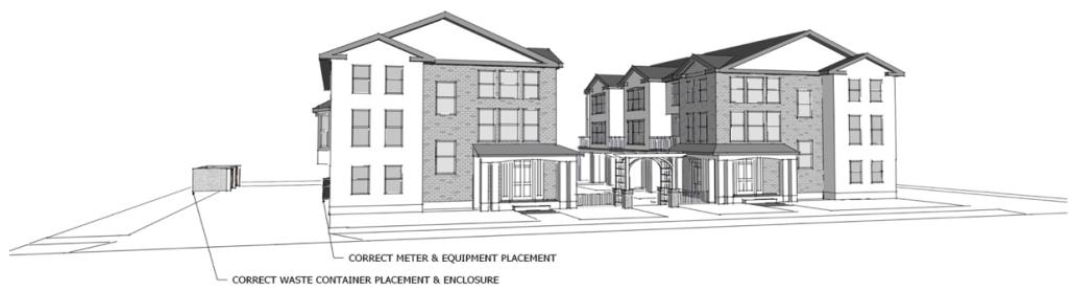
Meter and Equipment Placement.
1.
Wall-mounted and ground-based meters, HVAC, and utility equipment serving any Building shall:
a.
be fully screened from view or located to the sides or rear of the Building they serve;
b.
be placed in close proximity to one (1) another; and
c.
shall not be located on any Façade on which a Unit's primary entrance is located.
2.
All roof-mounted vents, pipes, Antennae, satellite dishes, and other roof penetrations and equipment, except chimneys, shall be fully screened from view and shall be painted the same color as the roof.
Q.
Circulation.
1.
Each Townhome Development shall include concrete sidewalks, at least five (5) feet in width, that connects each Dwelling Unit to each Townhome Internal Street, right-of-way, commonly owned amenity, and waste container.
2.
Each Townhome Internal Primary Access Road and Secondary Internal Access Road shall be painted with crosswalks in a manner and in locations determined by the City Engineer.
3.
Each Internal Primary Access Road shall connect one (1) Public Street to another.
R.
Accessory Structures. Accessory Structures shall be constructed with the same architectural style and roofline and with similar materials as the Primary Building.
1.
Building Requirements.
a.
Unoccupied: The following standards apply to Accessory Structures that will not be occupied:
i.
shall not exceed one (1) Story and shall total no more than seven hundred (700) square feet;
ii.
shall be of similar architectural style, be clad in similar materials, and shall be a similar color as the Primary Buildings;
iii.
shall only be accessed at Grade;
iv.
shall not be connected to sewer service. All other utilities for Accessory Structures shall be accessed from a Primary Building;
v.
shall not exceed twenty (20) feet in height; and
vi.
carports are prohibited.
b.
Occupied: Accessory Structures that will be occupied shall follow the same design standards as the Primary Buildings within the Project and shall be constructed in a central location within the Project.
2.
Mailbox Pavilion. Each project shall incorporate a mailbox pavilion that is centrally located, safely accessed, and designed to complement the architecture of the Project. The location of the mailbox pavilion shall be marked on each project's site plan and Plat.
3.
Setbacks.
a.
Accessory Structures shall be separated from other Buildings by at least ten (10) feet.
b.
Accessory Structures shall be located at least two (2) feet from any Property Line.
(Ord. No. 2020-02, § IV(Exh. C), 1-8-2020; Ord. No. 2021-06, § XVIII, 5-26-2021; Ord. No. 2022-08, § I(Exh. A), 4-13-2022; Ord. No. 2022-16, § 1(Exh. A), 9-14-2022; Ord. No. 2023-28, § 1(Exh. A), 7-26-2023; Ord. No. 2024-01, § I(Exh. A), 2-7-2024)
17.07.090 - Urban-Style Multi-Family Building Form.
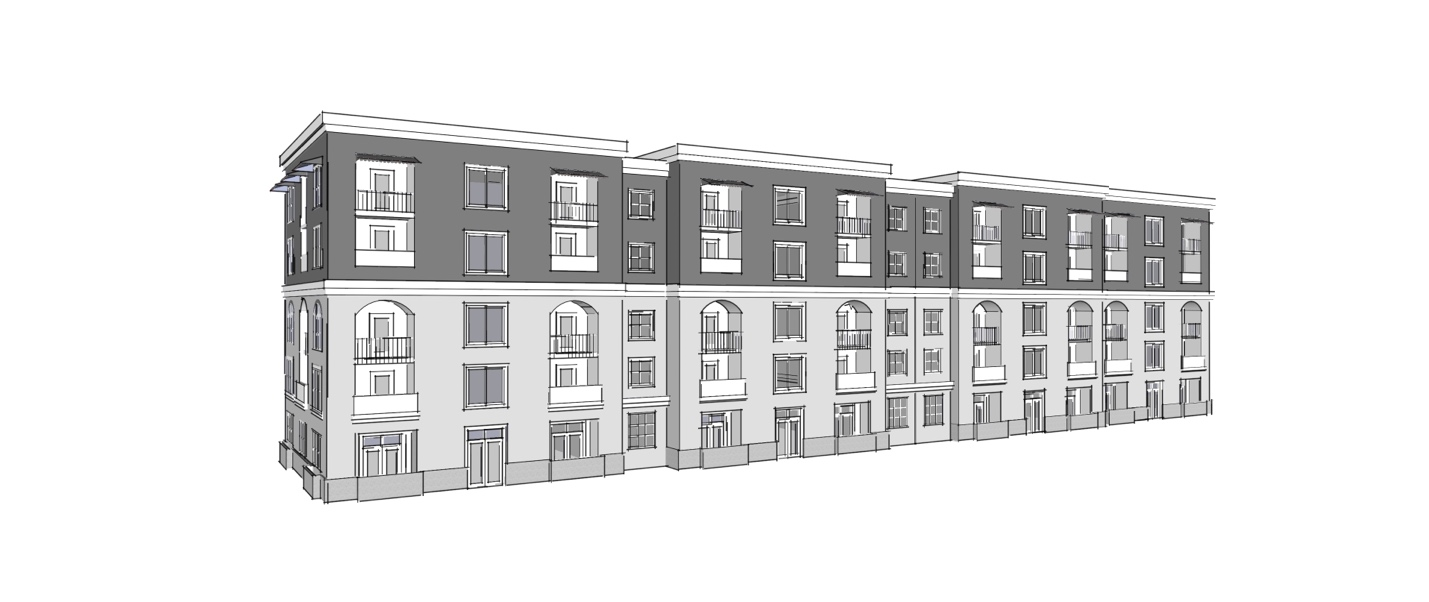
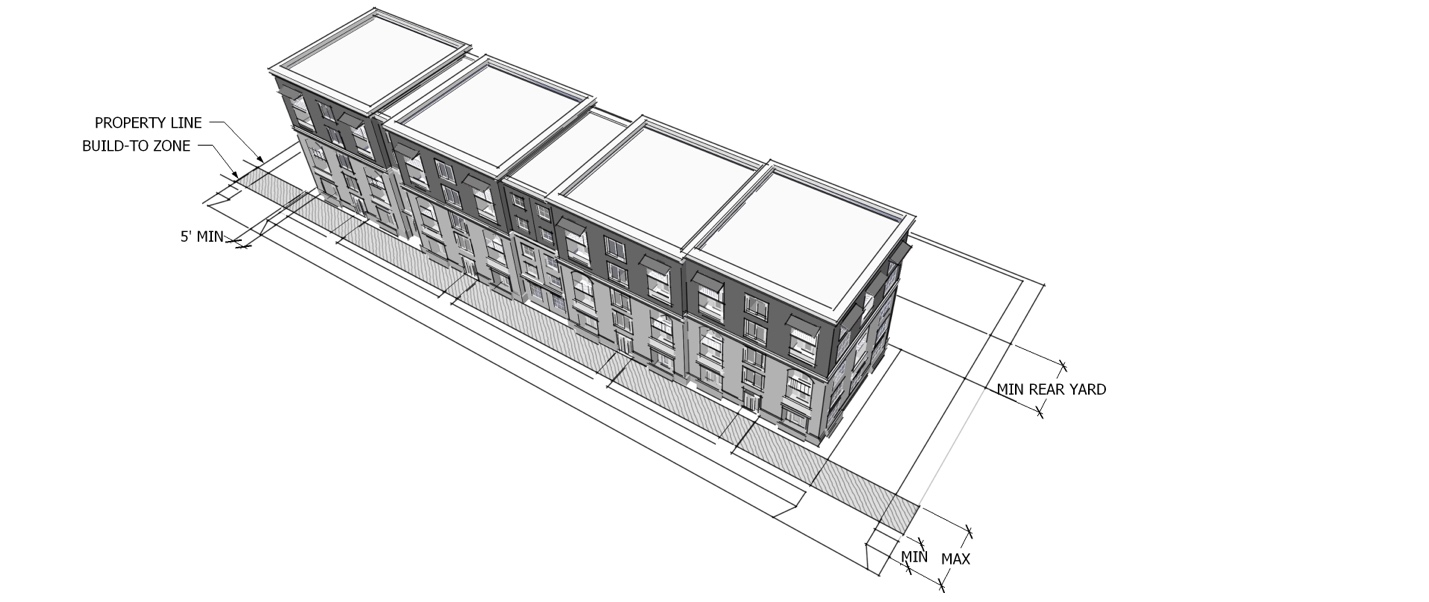
The urban-style Multi-Family Building form requires Dwelling Units arranged in a stacked configuration where units are located side-by-side and one atop another and all units are accessed via internal hallways, staircases, or elevators. In addition to the design standards contained in 17.07.050 and 17.07.060 the following design standards apply to all urban-style Multi-Family Buildings.
A.
Façades.
1.
All Façades shall include at least three (3) of the following design features:
a.
Projections or recesses in the Façade plane every 30 feet (30'). Projections or recesses shall have a minimum depth of two feet (2');
b.
At least two (2) different exterior Building materials or colors;
c.
Decorative textures on exterior finish (e.g., scales/shingles, wainscoting, ornamentation, and similar features);
d.
One or more dormer windows, or box or bay windows with a minimum twelve-inch (12") projection from the Façade plane;
e.
Eaves with exposed rafters or a minimum twelve-inch (12") projection from the Façade plane;
f.
A parapet wall with an articulated design with design variation rather than a simple rectilinear form; or
g.
Windows with a minimum four-inch (4') wide trim.
2.
Dwelling Units located on the ground floor that face a public Right-of-way or park shall have an additional, separate entrance to the Dwelling Unit from the exterior of the Building.
B.
Building Height. The maximum Building Height is sixty-five feet (65') measured from Grade to the peak of the roof or, for flat-roofed Buildings, Grade to the top of the parapet. All Buildings shall have a first-floor minimum ceiling height of twelve feet (12') measured from floor deck to floor deck.
C.
Primary Materials. Additional permitted Primary Materials shall include:
1.
Wood clapboard;
2.
Wood board and batten; or
3.
Wood siding.
D.
Identifiable Transition. All Buildings shall provide an identifiable transition between the lower and upper floors. An identifiable transition shall consist of:
1.
A change in material, with the heavier or more massive material on the lower floor(s); or
2.
A change in Façade articulation.
E.
Windows and Doors. All Façades shall provide windows or doors in the following amounts:
1.
At least 40 percent (40%) of the Primary Façade and any Façade that faces a Street or Open Space; and
2.
At least 25 percent (25%) of the side and rear Façades.
F.
Garages.
1.
Individual garages or Carports shall be located within interior Parking Lots of the Development.
2.
Shared garages shall include Façade treatments at Street level to enhance the pedestrian environment and obscure the view of parked cars, such as:
a.
Artwork;
b.
Decorative grilles;
c.
Unique material treatments; or
d.
Projections or recesses in the Façade plane every 30 feet.
3.
Shared garages shall incorporate openings with grillwork or other treatments that resemble windows at the Street level.
4.
No Tandem parking is allowed.
G.
Off-Street Parking. An off-Street Parking Lot, including access and Drive Aisles, shall not occupy any portion of the Building's Public Street Frontage.
I.
Roofs. Roofs shall comply with the following standards:
1.
Pitched roofs covering the main body of the Building shall have a minimum pitch of 6:12 and shall be hip style, mono-pitch or shed style, or shall have symmetrical gables.
2.
Roof forms shall be designed to emphasize individual Dwelling Units and to correspond and denote Building elements and functions such as primary entrances and arcades.
3.
All roofs shall be clad in asphalt shingles, wood shingles, standing seam metal, or other material of similar quality and durability.
4.
Flat Roofs. All flat roofs shall have a minimum two-foot (2') parapet along the entire length of roofline.
5.
Equipment. All roof mounted vents, pipes, Antennae, satellite dishes, and other roof penetrations and equipment, except chimneys, shall be fully screened from view and shall be painted the same color as the roof.
J.
Porches, Balconies, and Private Patios.
1.
At least seventy percent (70%) of the Dwelling Units on each Façade of every Building shall have either a Porch, a balcony, or a private patio.
2.
Porches, balconies, or private patios shall have a minimum area of 60 square feet and a minimum depth of five feet (5').
3.
Porches, balconies, and private patios shall:
a.
Be configured to avoid views into rear yards of Lots or Parcels containing Single-Family Dwellings to the maximum extent practicable; and
b.
Have railings consisting of materials other than vinyl, such as powder coated steel, or other material of similar quality and durability.
K.
Stairways and Corridors. All stairways and corridors that provide access to Dwelling Units in any Buildings shall be enclosed and climate controlled.
L.
Open Space. All Developments shall provide large landscape Buffers between Buildings that shall contain some of the required amenities as specified in this Chapter. All Developments shall designate at least 20 percent (20%) of the Development site as Usable Open Space. At least 15 percent (15%) of the required Usable Open Space shall consist of improved exterior recreational amenities. Indoor recreation or community club houses may be included in the calculation of Usable Open Space.
M.
Pedestrian Circulation.
1.
Sidewalks. All Buildings shall provide full pedestrian access around the exterior of the Building in the form of sidewalk that shall be at least five feet (5') wide.
2.
Crosswalks. Crosswalks used as part of an internal pedestrian circulation system, or across driveways accessing Public Streets, shall be constructed using a contrasting paving material, such as stamped concrete, stenciled graphics, colored or varying paint applications, or similar design.
N.
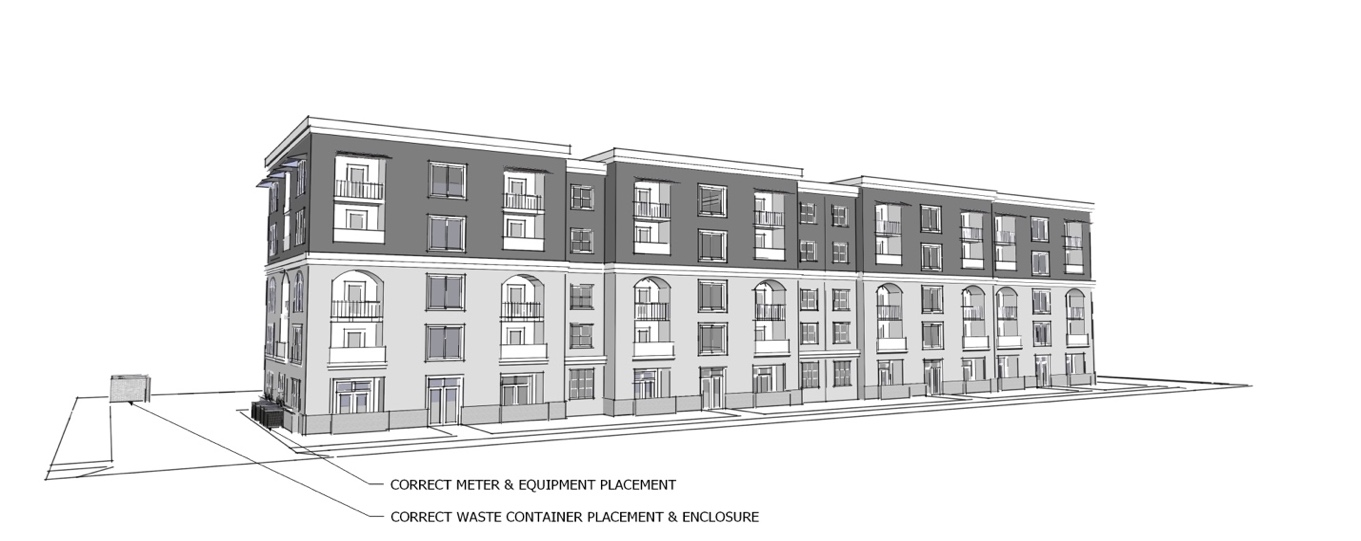
Meter and Equipment Placement. Wall-mounted and ground-based meters, HVAC, and utility equipment shall:
1.
Be fully screened from view, or located to the sides or rear of the Building they serve; and
2.
Be placed in close proximity to one another.
O.
Accessory Structures. Accessory Structures shall be constructed in the same architectural style and roofline and similar materials as the Primary Building.
(Ord. No. 2020-02, § IV(Exh. C), 1-8-2020; Ord. No. 2022-08, § I(Exh. A), 4-13-2022; Ord. No. 2022-16, § 1(Exh. A), 9-14-2022; Ord. No. 2022-08 , § I(Exh. A), 4-13-2022)
Editor's note— Ord. No 2022-16, § 1(Exh. A), adopted September 14, 2022, repealed former § 17.07.090, which pertained to garden style multi-family building form and derived from Ord. No. 2020-02, § IV(Exh. C), adopted January 8, 2020. Subsequently, §§ 17.07.100—17.07.190 were renumbered as §§ 17.07.090—17.07.180 .
____________
17.07.100 - Required Amenities for Multi-Family, Dwelling, Micro-Unit and Townhome Building Forms.
A.
Unless otherwise specifically substituted in a Development Agreement executed as a condition precedent to a rezone, at a minimum, all Buildings shall include the following amenities:
1.
Full size washer and dryer;
2.
Nine-foot (9') ceilings;
3.
Enhanced soundproofing;
4.
Upgraded countertops in kitchen and bathrooms (granite, marble, quartz, or equivalent);
5.
Stainless steel appliances.
B.
Unless otherwise specifically substituted in a Development Agreement executed as a condition precedent to a rezone, all Multi-Family Buildings shall provide the following additional amenities according to the table below:
Table of Required Amenities-Multi-Family
C.
All Townhome Developments shall provide the following additional amenities according to the table below:
Table of Required Amenities-Townhomes
(Ord. No. 2020-02, § IV(Exh. C), 1-8-2020; Ord. No. 2021-06, § XIX, 5-26-2021; Ord. No. 2022-08 , § I(Exh. A), 4-13-2022; Ord. No. 2022-16, § 1(Exh. A), 9-14-2022; Ord. No. 2024-01, § I(Exh. A), 2-7-2024; Ord. No. 2025-32, § 2(Exh. A), 7-9-2025; Ord. No. 2026-02, § 1(Exh. A), 1-28-2026)
Note— See editor's note at § 17.07.090.
17.07.110 - General Design for Non-Residential Development.
Unless otherwise specifically substituted in a Development Agreement executed as a condition precedent to a rezone, in addition to the design standards contained in 17.07.050, the following design standards apply to all non-residential Development:
A.
Frontage. The Primary Façade of all Buildings shall front onto a Public Street or a Common Open Space area.
B.
Orientation.
1.
Single-Building Development. All single-Building Development shall be oriented so that the Primary Façade is parallel to the Public Street it fronts.
2.
Multi-Building Development. Multi-Building Development shall be configured to:
a.
Break up the site into a series of smaller Blocks defined by on-site Streets, Drive Aisles and internal Streets, pedestrian walkways, or other circulation routes;
b.
Frame the corner of an adjacent Street intersection or entry point into the Development;
c.
Frame and enclose a main pedestrian or vehicle access corridor within the Development site;
d.
Frame and enclose at least three (3) sides of Parking Areas, public spaces, or other site amenities; or
e.
Frame and enclose outdoor dining or gathering spaces for pedestrians between Buildings.
3.
Outparcel Development.
a.
Outparcel Developments shall be clustered to define Street edges, entry points, and outdoor seating and gathering areas.
b.
Spaces between Buildings and outparcels shall be improved to provide small scale pedestrian amenities such as plazas, seating areas, pedestrian connections, gathering spaces, or landscaped Parking Areas.
C.
Building Height. The maximum Building Height shall be the lesser of the maximum district height (See 17.03 for Land Use Districts) or the maximum Building form height as provided below:
*Unlimited height applies to the Downtown District only, in the Commercial Corridor the maximum height is 65 feet.
D.
Materials.
1.
Primary Materials.
a.
The following shall be additional permitted Primary Materials:
i.
Cast concrete;
ii.
Brick; or
iii.
Stone.
b.
All Buildings shall use low-reflectance, subtle, and neutral colored Primary Materials.
2.
Secondary Materials.
a.
The following shall be additional permitted Secondary Materials:
i.
Cementitious fiber board; or
ii.
Architectural metal paneling.
b.
Secondary Materials may feature brighter colors and need not be neutral in color.
3.
Prohibited Materials. No Building shall use the following materials on any Façade:
a.
Stucco;
b.
Vinyl siding; or
c.
Aluminum siding.
4.
All Buildings shall use at least two (2) materials on each Façade.
5.
Identifiable Transition. All Buildings shall provide an identifiable transition between the lower third (1/3) of the Building and the upper two-thirds (2/3). An identifiable transition shall consist of:
a.
A change in material, with the heavier or more massive material on the lower floor(s); or
b.
A change in Façade articulation.
6.
Building materials shall continue to the Grade on any Façade.
7.
Exceptional Architectural Merit. The Community Development Director may, with a written explanation of such findings, accept Building designs that deviate from these materials standards for designs exhibiting exceptional architectural merit.
E.
Windows.
1.
The total Building Façade area shall comprise at least 50% windows.
2.
Each Façade that fronts on a Street shall have a minimum of 40% windows.
3.
All Façades shall have a minimum of 20% windows.
4.
All ground floor windows shall extend from two-feet (2') above Grade a minimum of six-feet (6'), to achieve at least eight-feet (8') above Grade.
5.
All ground floor windows shall have a minimum transparency of 60%.
6.
All windows above the ground floor shall have a minimum transparency of 25%.
7.
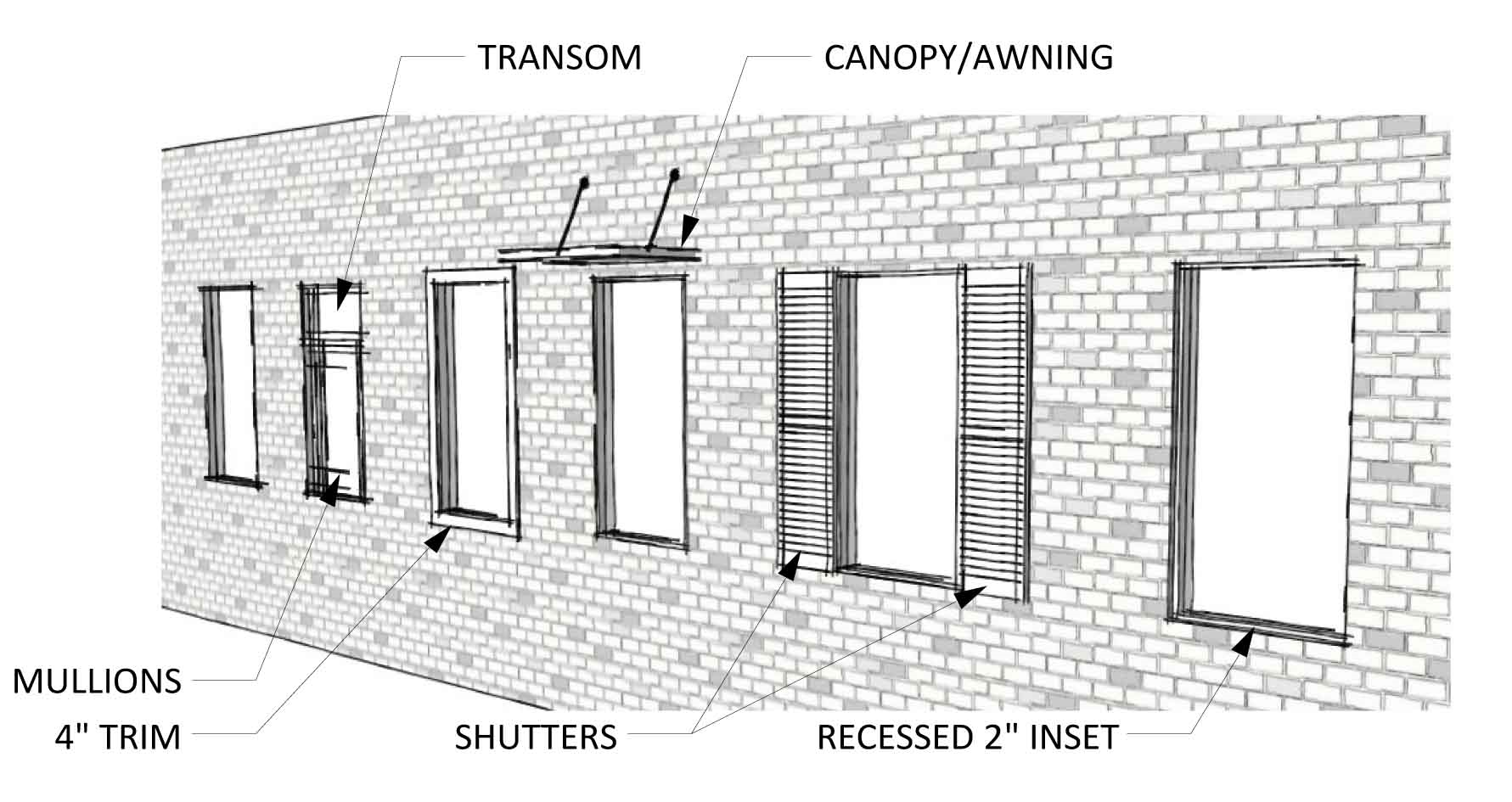
All windows shall be recessed from the exterior surface by at least two inches (2").
8.
In addition, all Buildings shall incorporate at least two of the following window design elements:
a.
Mullions and/or transoms;
b.
Trim or molding at least four inches (4") wide; or
c.
Canopies, shutters, or awnings, proportional to window size.
F.
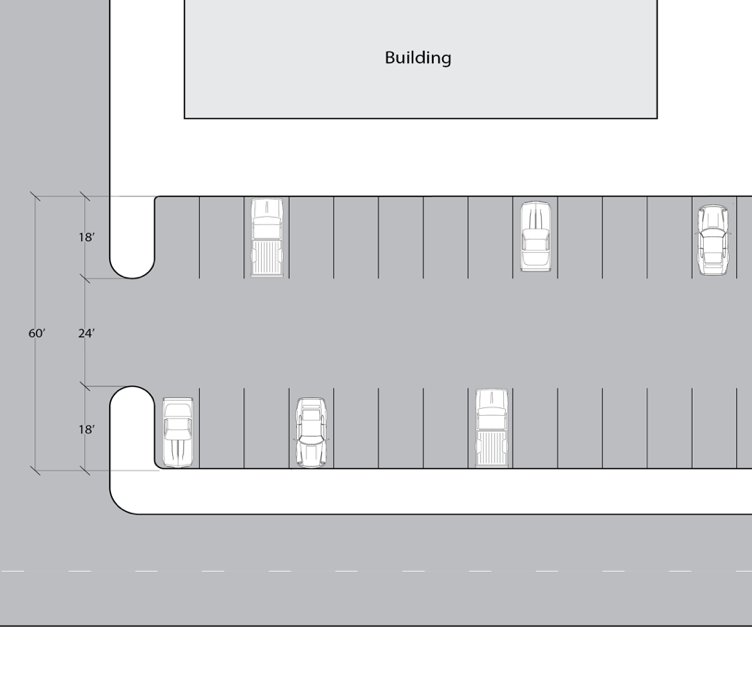
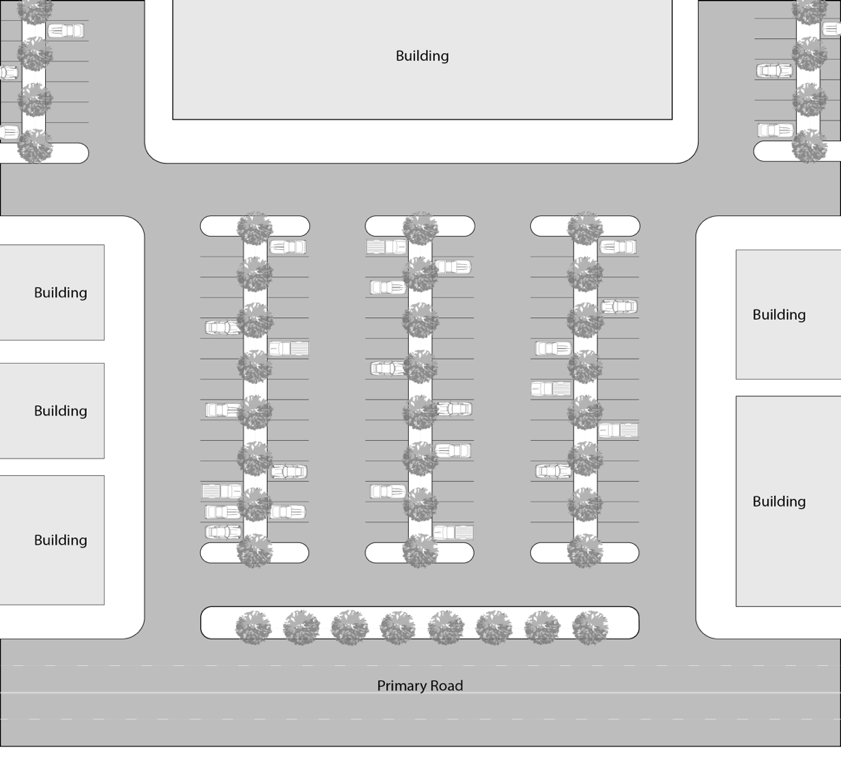
Off-Street Parking Areas. In addition to the parking and Landscaping requirements found elsewhere in this Title, the following requirements apply to all non-residential Buildings:
1.
Multiple-Building Development. Buildings shall be arranged to frame and enclose at least three (3) sides of all Parking Areas.
2.
Surface Parking Lots containing 100 or more stalls shall be organized into a series of parking bays surrounded by Buildings, Landscaping, pedestrian walkways, or Drive Aisles designed to function as Streets.
G.
Roofs.
1.
All Buildings shall have roofs clad in asphalt shingles, wood shingles, standing seam metal, a material of similar quality and durability, or a combination thereof.
2.
Buildings with flat roofs shall incorporate a two-foot (2') parapet wall along the entire roofline.
H.
Primary Entrance. Every Building shall provide a primary entrance along the Primary Façade.
1.
Buildings with multiple tenants shall feature multiple primary entrances.
2.
All Primary Façades shall incorporate a Building canopy, awning, or similar weather protection, projecting at least four feet (4') from the Façade, along the Building's primary entrances.
3.
Primary Façades shall incorporate visually prominent Building entrances through the use of at least one of the following features:
a.
Secondary roof structures or a parapet roof with transitions used to accent the principal public entrance;
b.
Outdoor pedestrian features such as seat walls and Landscaping, or permanent landscaped planters with integrated benches; or
c.
Architectural details such as tile, metal, stone, precast or cement board work and moldings integrated into the Building.
I.
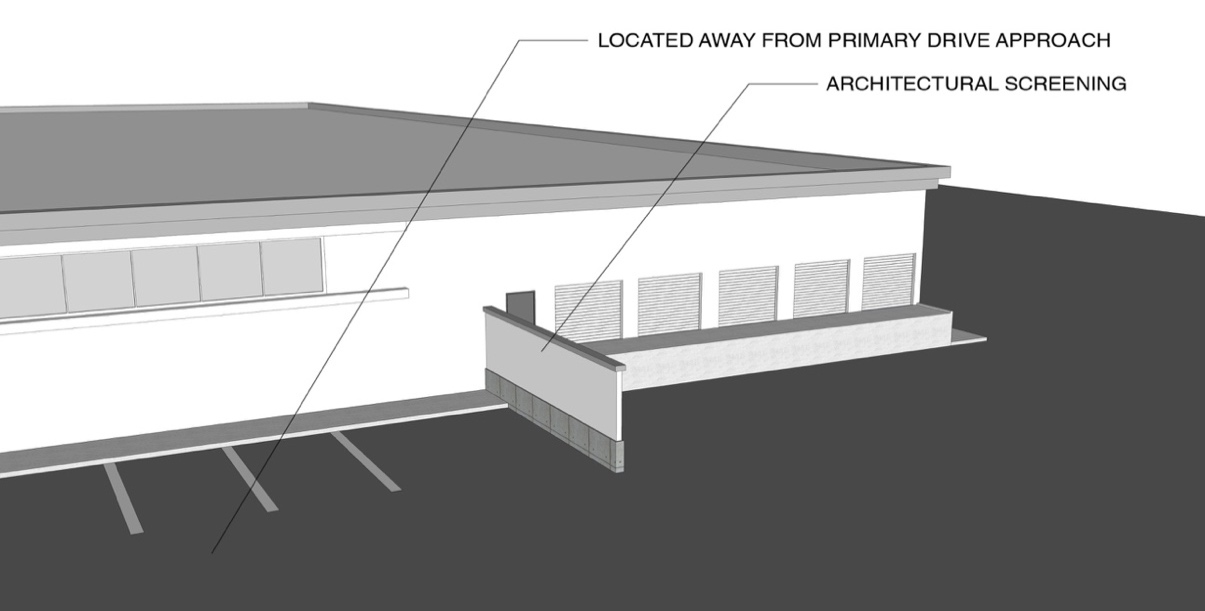
Loading and Service Areas. Loading, service, and equipment areas shall be located at the rear or side of the Building, behind the Primary Façade, in a manner that minimizes their visibility from drive approaches, Parking Lots, and Streets. Loading, service, and equipment areas shall be screened through the use of Architectural Elements, materials, and Landscaping that reduce their visibility. All loading and service areas must comply with the parking and loading area standards in Chapter 17.06.
J.
Screening Requirements.
1.
Ground-level, wall-mounted, or roof-top mechanical equipment shall be screened from Streets and off-site view.
2.
All roof vents, pipes, Antennae, satellite dishes, and other roof penetrations and equipment, except for chimneys, shall be located on the rear elevation, shall be screened from view, and shall match the roof color.
K.
Fencing. All Buildings shall comply with the following additional fencing requirements:
1.
All fences shall meet the Clear View Area requirements set out in this Title.
2.
Front Yard. The maximum height for any fence in the Front Yard of any Building shall be four feet (4').
3.
Rear or Side Yard. The maximum height for any fence in the Rear or Side Yard of any Building shall be eight feet (8').
4.
Solid Fencing. Solid fencing within a Development or along required Buffers shall be constructed of brick, ceramic tile, stone, precast concrete panel, concrete block, composite, or similar masonry material.
5.
Semi-Transparent Fencing. Semi-Transparent fencing is permitted where solid fencing is not required. Acceptable materials for semi-transparent fencing visible from drive approaches, Parking Lots, or Streets shall be metal or composite picket fencing.
6.
Prohibited Materials.
a.
Vinyl fencing is prohibited. Existing vinyl fence may be extended as part of a permitted Building addition or site expansion.
7.
Exceptions. Regardless of the exceptions contained in this Section, minimum Clear View Area requirements shall not be violated under any circumstance. Public schools or private schools approved by applicable state agencies may use a decorative fence up to six feet (6') high in Front Yards and up to ten feet (10') high in Side or Rear Yards for school playgrounds or school-related recreation areas only.
L.
Buffering Requirements. All new Development that abuts a Residential Use shall provide a landscape Buffer, containing a solid eight-foot (8') fence, on each Property Line or portion thereof that abuts the Residential Use.
1.
A Single-Family Use shall have a 10-foot (10') Buffer.
2.
A non-Single-Family Use shall have an 8-foot (8') Buffer.
M.
Waste Container Enclosures. Waste container enclosures are required to be constructed for existing non-residential Buildings when any of the following occur:
1.
An existing Building is expanded or remodeled;
2.
Garbage, junk, solid waste, debris, or refuse are piled or stacked next to or outside the container on a regular basis;
3.
The container is regularly overfilled to the point that garbage or refuse from the waste container litters the property on which the container is located or litters that of adjoining properties; or
4.
The container has been damaged or dilapidated to the extent that it has become unsightly, or the property Owner has allowed graffiti defacement of the container to remain on the container for more than seven (7) days after the vandalism occurred, and this has occurred at least two (2) other times.
N.
Unity.
1.
The architectural design within a multi-Building Development shall be organized around a consistent theme in terms of the Architectural Elements, character, materials, texture, color, and Scale of Buildings.
2.
Themed Restaurants, Retail chains, and other franchise-style Buildings shall conform to the Development's Architectural Elements and character.
O.
Drive-Through Window.
1.
Canopy or Roof. Drive-through windows shall include a canopy or roof that is architecturally integrated with the Building and mirrors the roof form of the Primary Building.
2.
Location. Except when a 10 ft. landscape Buffer that fully screens the drive-through from view is provided, drive-through windows shall be prohibited on any Façade that faces a Right-of-Way.
(Ord. No. 2020-02, § IV(Exh. C), 1-8-2020; Ord. No. 2022-08, § I(Exh. A), 4-13-2022; Ord. No. 2022-16, § 1(Exh. A), 9-14-2022; Ord. No. 2022-08 , § I(Exh. A), 4-13-2022; Ord. No. 2025-32, § 2(Exh. A), 7-9-2025)
Note— See editor's note at § 17.07.090.
17.07.120 - Small Format Commercial Building Form.
Unless otherwise specifically substituted in a Development Agreement executed as a condition precedent to a rezone, the small format commercial Building form is intended to be used for small and moderate scale commercial or Retail Uses. In addition to the design standards contained in 17.07.050 and 17.07.120, the following design standards apply to all small format commercial Buildings.
A.
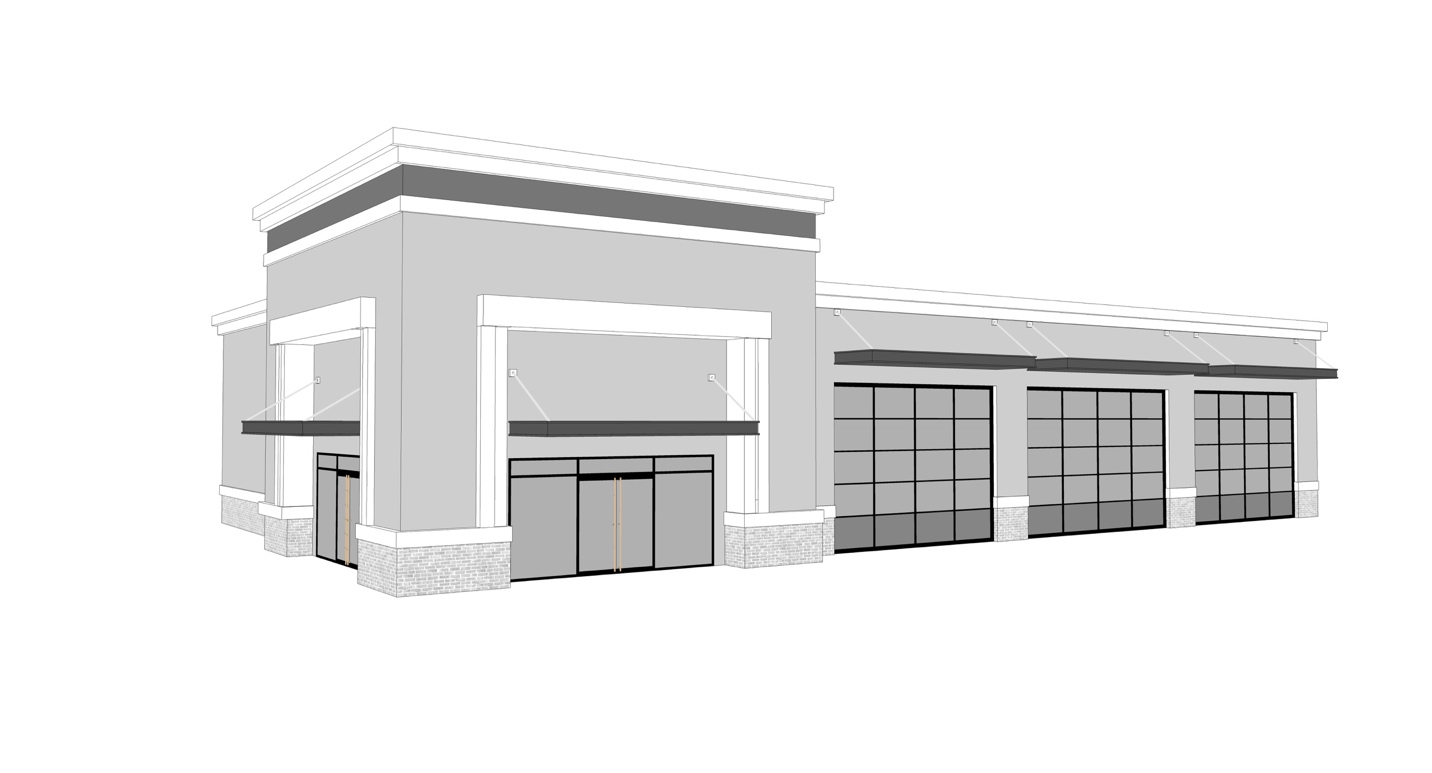
Façade. All Buildings shall comply with the following Façade requirements:
1.
The Primary Façade shall contain at least one primary entrance and one entrance for every seventy-five feet (75') of Frontage.
2.
The Primary Façade shall contain Façade depth variations every 40 feet (40') of Façade. Façade depth variations shall be at least one-foot (1') deep and ten (10') feet wide.
3.
Primary Façade. Primary Façades shall incorporate at least four (4) of the following design elements:
a.
Variation in roof form and parapet height;
b.
Wall recesses or projections of a minimum depth of two feet (2') at least every forty feet (40');
c.
A ground-level arcade along the full length of the Primary Façade;
d.
Architectural metal awnings above all entrances and windows;
e.
Secondary roof structures or a parapet roof with transitions used to accent the primary entrance;
f.
Outdoor pedestrian features such as seat walls and Landscaping or permanent landscaped planters with integrated benches; or
g.
Architectural details such as tile, metal, stone, precast or cement board work and moldings integrated into the Building.
B.
Windows and Doors.
1.
Each Façade shall have a minimum of 40% windows.
2.
All Buildings shall have doors at least every 30 feet (30') along the ground floor.
C.
Materials.
1.
Primary Materials. Additional permitted Primary Materials shall include:
a.
Marble;
b.
Split-faced masonry block; or
c.
Other materials comparable in appearance, quality, and durability.
2.
Secondary Materials. Additional Permitted Secondary Materials shall include:
a.
EIFS; or
b.
Architectural metal panels.
D.
Roofs. All roofs shall comply with the following standards:
1.
Roofs shall correspond with and denote Architectural Elements and Building functions, including primary entrances and arcades.
2.
Flat Roofs. Flat roofs shall incorporate a minimum two-foot (2') parapet wall along the entire roofline. The following additional standards apply:
a.
The parapet shall have a distinct cornice treatment;
b.
The parapet shall extend along all Façades of the Building; and
c.
Additional two-foot (2') projections or recesses shall be required in the Façade plane at least every 40 feet (40').
E.
Overhead Doors. Buildings may incorporate overhead doors, subject to the following standards:
1.
Overhead doors may not exceed 22 feet in width.
2.
Transparency. Each overhead door visible from a public Right-of-Way shall be at least 80% transparent.
3.
Materials. Overhead doors visible from a public Right-of-Way shall use materials and colors consistent with Building design standards in this Title.
4.
Façades containing overhead doors shall incorporate:
a.
A canopy or awning over the door; and
b.
Sconces or other decorative lighting.
(Ord. No. 2020-02, § IV(Exh. C), 1-8-2020; Ord. No. 2022-16, § 1(Exh. A), 9-14-2022; Ord. No. 2022-08 , § I(Exh. A), 4-13-2022; Ord. No. 2025-32, § 2(Exh. A), 7-9-2025)
Note— See editor's note at § 17.07.090.
17.07.130 - Civic Building Form.
The civic Building form is reserved for City facilities and Libraries. In addition to the design standards contained in 17.07.050 and 17.07.120, the following design standards apply to all civic Buildings.
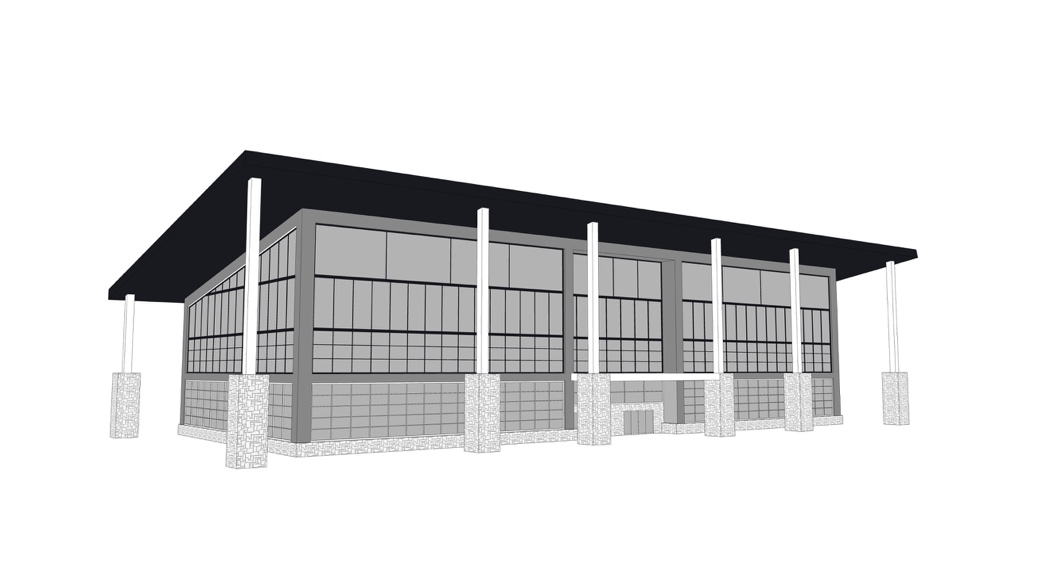
A.
Orientation. Accessory Buildings shall be located behind the Primary Façade of the Primary Building and shall be arranged to create secondary gathering space on the site.
B.
Materials.
1.
Primary Materials. Additional permitted Primary Materials shall include:
a.
Integral color CMU; or
b.
Marble.
2.
Secondary Materials. EIFS shall be an additional permitted Secondary Material.
C.
Façades. Blank Façades are prohibited.
D.
Windows.
1.
All Buildings shall have a 4-sided average of at least 75% windows on the ground floor.
2.
All floors above the ground floor shall have a 4-sided average of at least 25% windows.
(Ord. No. 2020-02, § IV(Exh. C), 1-8-2020; Ord. No. 2022-16, § 1(Exh. A), 9-14-2022; Ord. No. 2022-08 , § I(Exh. A), 4-13-2022)
Note— See editor's note at § 17.07.090.
17.07.140 - Office Building Form.
In addition to the design standards contained in 17.07.050 and 17.07.120, the following design standards apply to all office Buildings.
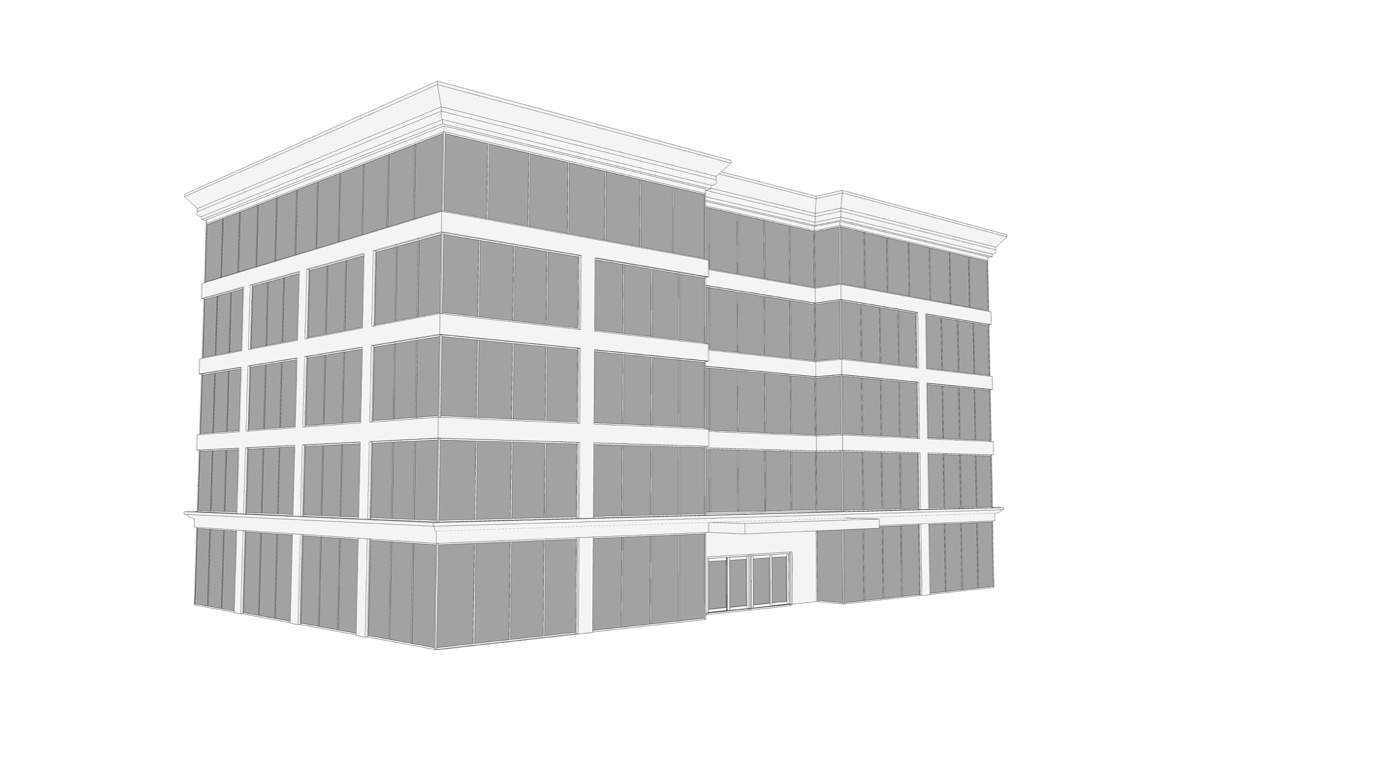
A.
Orientation.
1.
Single Building Development. All single-Building Developments shall have the primary entrance on the Primary Façade.
2.
Multi-Building Development. Multi-Building Developments shall be configured to incorporate on-site Streets, drive approaches, pedestrian walkways, and other circulation routes throughout the Development.
B.
Façade.
1.
Primary Façade.
a.
All Buildings shall incorporate at least three (3) of the following design features:
i.
Canopies or porticos above all entrances;
ii.
Roof overhangs above all entrances;
iii.
Entry recesses or projections;
iv.
Raised corniced parapets above all entrances;
v.
Gabled roof forms or arches above all entrances; or
vi.
Architectural details, such as tile work or moldings, integrated into the Building above or directly adjacent to all entrances.
b.
All Buildings shall have a primary entrance a least every 75 feet (75') on the Primary Façade.
2.
Façade Division. All Buildings shall emphasize, through the use of materials, design elements, or architectural details, the proportion of height to width so that Building Façades are oriented vertically.
a.
Horizontal Façade Division:
i.
All multi-Story Buildings shall have a base, consisting of at least one-third (1/3) of the total Building Height, that incorporates at least 3 Of the following features:
a)
Thicker walls, ledges, or sills;
b)
Integrally textured materials such as stone or other masonry;
c)
Integrally colored and patterned materials such as smooth finished stone or tile;
d)
Bulkheads;
e)
Lighter or darker colored materials, mullions, or panels;
f)
Landscaped planters; or
g)
A canopy or an awning above all windows on the Primary Façade.
i.
All Buildings with a maximum height of 44 feet (44') shall have a horizontal Façade division within three feet (3') of the top of the ground floor.
ii.
All Buildings over 44 feet (44') in height shall have a horizontal Façade division within three feet (3') of the top of the ground Story or the second Story.
b.
Vertical Façade Division. All Buildings shall incorporate a vertical Façade division at least every 40 feet (40') of Façade for the entire height of the Building.
c.
Façade Depth Variation. All Buildings shall have a Façade depth variation that is at least two-feet (2') deep.
C.
Materials.
1.
Primary Materials. Additional permitted Primary Materials shall include:
a.
Cast concrete;
b.
Marble;
c.
Split-faced masonry block; or
d.
Other material of equivalent quality and durability.
2.
Secondary Materials. Additional permitted Secondary Materials shall include:
a.
EIFS;
b.
Architectural metal panels; or
c.
Corrugated metal.
D.
Windows. All Buildings shall comply with the following window design standards:
1.
All Buildings shall have a 4-sided average on the ground floor of at least 75% windows. For the purposes of this Section, the ground floor of the Primary Façade consists of the portion of the Façade from Grade to the roof deck of the ground floor, or 14 feet (14'), whichever is less.
2.
All floors above the ground floor shall have a 4-sided average of at least 35% windows.
E.
Roofs.
1.
Flat Roofs. All Buildings with flat roofs shall have a parapet of at least two-feet (2') for the entire roofline.
2.
All roofs shall correspond to and denote Architectural Elements and Building functions, including primary entrances and colonnades.
3.
All rooftop equipment shall be screened from pedestrian view.
4.
All skylights shall be flat.
F.
Pedestrian Circulation. All Buildings shall provide a six-foot (6') wide sidewalk across the Primary Façade of the Building.
(Ord. No. 2020-02, § IV(Exh. C), 1-8-2020; Ord. No. 2022-16, § 1(Exh. A), 9-14-2022; Ord. No. 2022-08 , § I(Exh. A), 4-13-2022)
Note— See editor's note at § 17.07.090.
17.07.150 - Large Format Commercial Building Form.
The large format commercial Building form is intended for commercial Buildings with a ground Floor Area of 30,000 square feet or greater. In addition to the design standards contained in 17.07.050 and 17.07.120, the following design standards apply to all large format commercial Buildings.
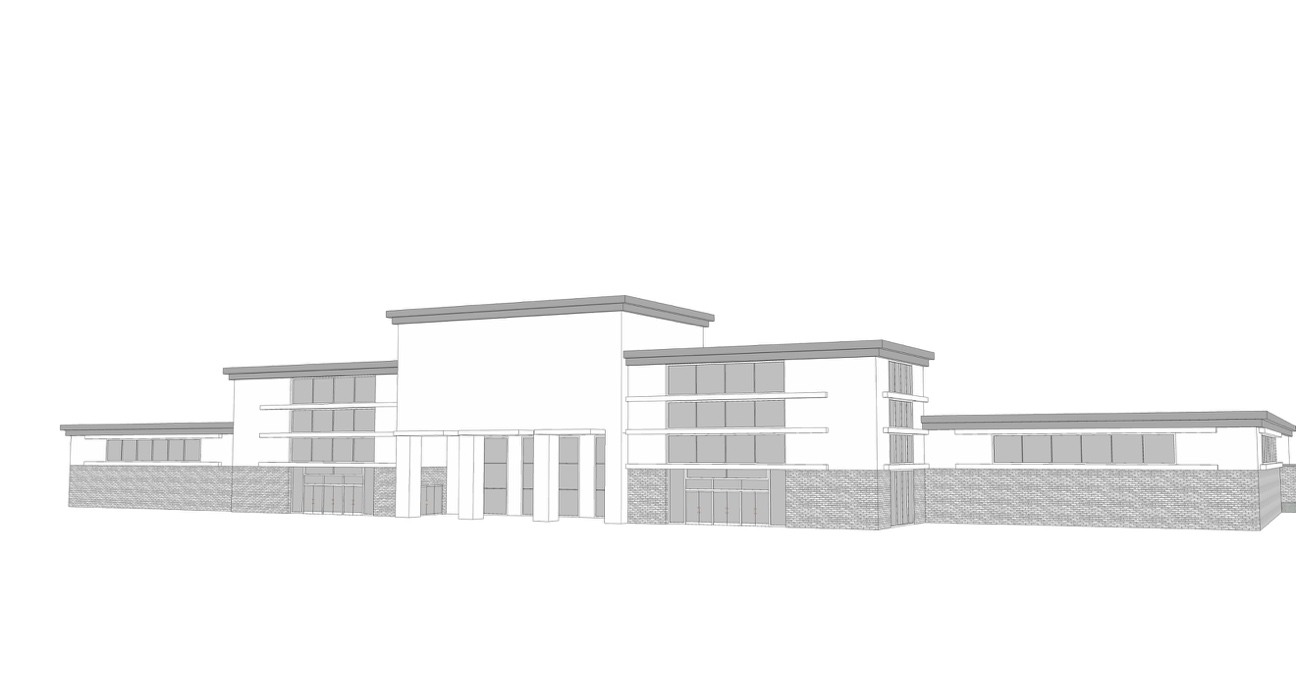
A.
Façade. All Buildings must comply with the following Façade design standards:
1.
The Primary Façade shall contain at least one primary entrance and one entrance for every seventy-five feet (75') of Frontage.
2.
The Primary Façade shall contain Façade depth variations at least every 40 feet (40') of the Façade. Façade depth variations shall be at least one-foot (1') deep and ten (10') feet wide.
3.
All Buildings shall provide a Building canopy, awning, or similar weather protection over the primary entrance that extends at least four feet (4') from the Façade.
4.
Primary Façade.
a.
All Primary Façades shall feature a primary entrance featuring an outdoor plaza adjacent to the entrance containing seating. Outdoor plazas shall have a minimum depth of 20 feet (20').
b.
Customer Entrances. All Buildings shall include at least one primary entrance on the Primary Façade.
c.
Primary Façades shall incorporate at least four (4) of the following design elements:
i.
Variation in roof form and parapet height;
ii.
Wall recesses or projections of a minimum depth of two feet (2') every forty feet (40');
iii.
A ground-level arcade along the full length of the Primary Façade;
iv.
Architectural metal awnings above all entrances and windows;
v.
Secondary roof structures, or a parapet roof with transitions, used to accent the primary entrance;
vi.
Outdoor pedestrian features such as seat walls and Landscaping, or permanent landscaped planters with integrated benches; or
vii.
Architectural details such as tile, metal, stone, precast or cement board work and moldings integrated into the Building.
B.
Materials.
1.
Primary Materials. Additional permitted Primary Materials:
a.
Marble;
b.
Split-faced masonry block; or
c.
Other materials comparable in appearance and durability.
2.
Secondary Materials. Additional permitted Secondary Materials:
a.
EIFS; or
b.
Architectural metal panels.
C.
Roofs. All roofs shall comply with the following standards:
1.
Roof forms shall correspond with and denote Architectural Elements and Building functions, including primary entrances and arcades.
2.
Flat Roofs. All flat roofs shall incorporate a minimum two-foot (2') parapet along the entire roofline. The following additional standards apply:
a.
The parapet shall have a distinct cornice treatment;
b.
The parapet shall extend along all Façades of the Building; and
D.
Overhead Doors. Buildings may incorporate overhead doors, subject to the following standards:
1.
Overhead doors may not exceed 22 feet in width.
2.
Transparency. Each overhead door visible from a public Right-of-Way shall be at least 80% transparent.
3.
Materials. Overhead doors visible from a public Right-of-Way shall use materials and colors consistent with Building material standards in this Chapter.
4.
Façades containing overhead doors shall incorporate:
a.
A canopy or awning over the door; and
b.
Sconces or other decorative lighting.
(Ord. No. 2020-02, § IV(Exh. C), 1-8-2020; Ord. No. 2022-16, § 1(Exh. A), 9-14-2022; Ord. No. 2022-08 , § I(Exh. A), 4-13-2022)
Note— See editor's note at § 17.07.090.
17.07.160 - Flex Building.
In addition to the design standards contained in 17.07.050 and 17.07.120, the following design standards apply to all flex Buildings.
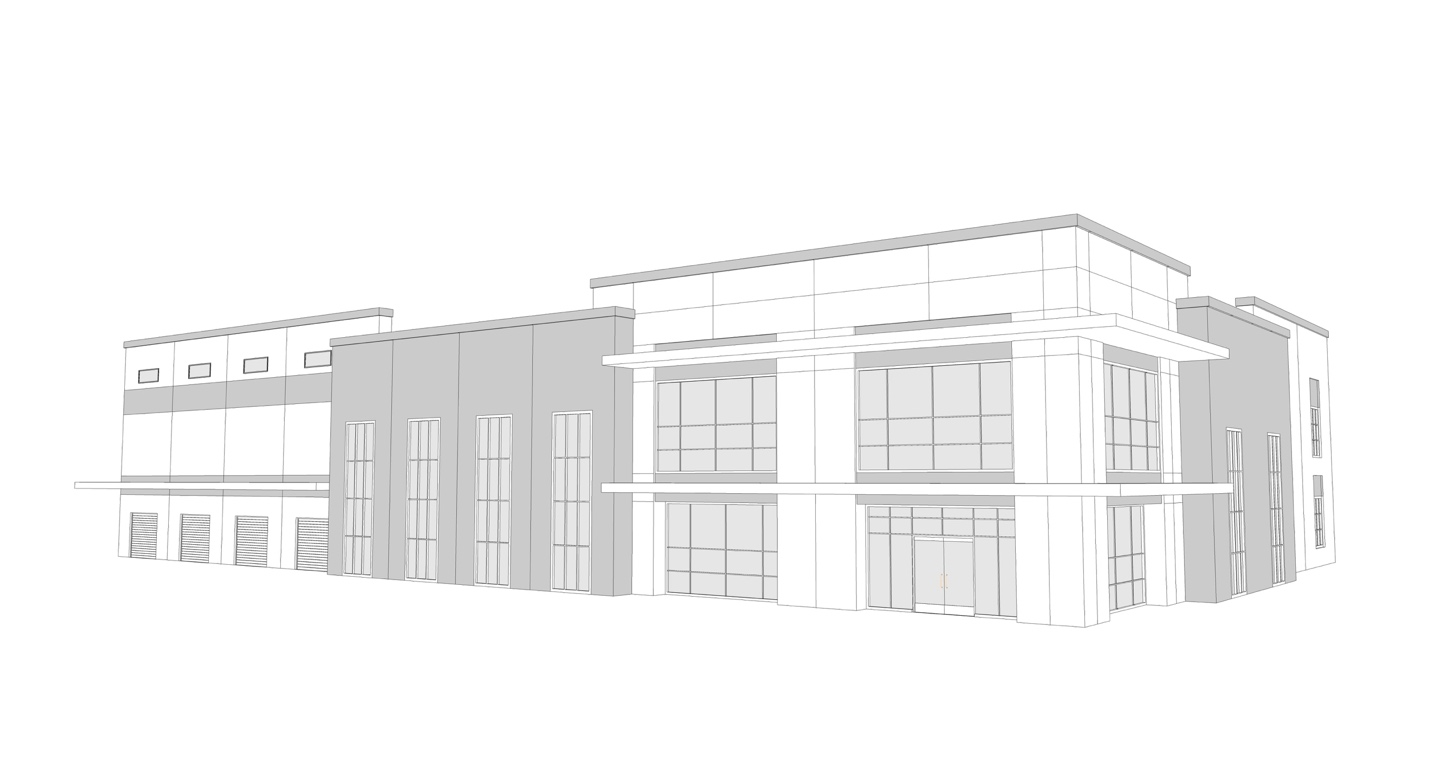
A.
Materials
1.
Primary Materials. Additional Primary Materials shall include:
a.
Natural or synthetic stone;
b.
Integral color CMU;
c.
High-quality pre-stressed concrete systems;
d.
Finished and treated tilt-up concrete panels; or
e.
Float finish EIFS.
2.
Secondary Materials. Additional Secondary Materials shall include:
a.
Architectural metal paneling;
b.
Unfinished or untreated tilt-up concrete panels; or
c.
Standard single-tee or double-tee concrete systems.
B.
Façades. All Buildings shall incorporate wall recesses or projections along the Primary Façade at least every 60 feet (60') or for each primary entrance, whichever is greater. Recesses or projections shall be a minimum depth of two feet (2'). In addition, at least two of the following design elements are required:
1.
Variations in roof form and parapet height;
2.
Distinct changes in texture and color of wall surfaces; or
3.
Vertical accents or focal points.
C.
Windows. The following window design standards apply to all flex Buildings and supersede the general, non-residential, minimum window percentages contained in this Chapter.
1.
Each Façade that fronts on a Street shall have a minimum of 40% windows.
2.
Each Facade that fronts on a Street may have a minimum of 15% windows if the following are met:
a.
The building is setback 100 feet or more from the property line,
b.
Landscaping is upgraded to screen the building, and
c.
Additional architectural elements are added for visual relief.
3.
All Façades shall have a minimum of 5% windows.
D.
All Buildings shall employ pedestrian Scale design along the ground floor consisting of a variety of Architectural Elements and architectural detail to break up large walls and enhance visual quality.
(Ord. No. 2020-02, § IV(Exh. C), 1-8-2020; Ord. No. 2022-16, § 1(Exh. A), 9-14-2022; Ord. No. 2022-08 , § I(Exh. A), 4-13-2022)
Note— See editor's note at § 17.07.090.
17.07.170 - Indoor Storage Climate Controlled Building.
In addition to the design standards contained in 17.07.050 and 17.07.120 the following design standards apply to all Indoor Storage Climate Controlled Buildings.
A.
Materials.
1.
Primary Materials. Additional Primary Materials shall include:
a.
Natural or synthetic stone;
b.
Integral color CMU;
c.
High-quality pre-stressed concrete systems;
d.
Finished and treated tilt-up concrete panels; or
e.
Insulated metal panels.
2.
Secondary Materials. Additional Secondary Materials shall include:
a.
Architectural metal paneling;
b.
Unfinished or untreated tilt-up concrete panels;
c.
Standard single-tee or double-tee concrete systems; or
d.
Float finish EIF'S.
B.
Façades.
1.
All facades shall have the same level of architectural design and exterior materials.
2.
The Primary Facade shall feature a primary entrance that includes a Building canopy, awning or similar weather protection over the primary entrance that extends at least four (4) feet from the Façade.
3.
The Primary Façade and primary entrance shall have enhanced design. The primary entrance shall be the primary architectural element on the façade.
4.
All Buildings shall incorporate wall façade depth variation at least every forty feet (40'). Façade depth variation shall be a minimum depth of two (2) feet every forty (40) feet of façade width of the bottom 3 stories. In addition, at least two of the following design elements are required:
a.
Variations in roof form and parapet height;
b.
Distinct changes in texture and color of wall surfaces; or
c.
Vertical accents or focal points.
5.
Exterior ground floor overhead doors are prohibited along the Primary Façade.
C.
Windows. The following window design standards apply to all Indoor Storage Climate Controlled Buildings and supersede the general, non-residential, minimum window percentages contained in this Chapter.
1.
The Primary Façade shall have a minimum of 40% windows.
2.
The side and rear Façades shall have a minimum of 20% windows.
D.
Setbacks. The following setbacks apply to all Indoor Storage Climate Controlled Buildings located in the Downtown District. All Indoor Storage Climate Controlled Building located in the Commercial Corridor shall comply with the setbacks found in 17.07.030.
1.
Front Yard: 0' - 10'
2.
Side and Rear Yard: 5'
E.
Fencing. The following fencing design standards apply to all Indoor Storage Climate Controlled Buildings and supersede the general, non-residential fencing standards contained in this Chapter.
1.
The entire property shall be fenced with an eight (8') non-cuttable transparent metal fence from the front plane of the front façade around the entire side and rear property lines. Chain link and vinyl fences are prohibited.
2.
All vehicle access into the Development shall be through an access-controlled gate.
F.
Loading Areas.
1.
Loading areas shall be configured to avoid disruption of primary vehicular access and circulation on the site and shall be separated from customer parking, pedestrian areas, and main Drive Aisles.
(Ord. No. 2022-08, § I(Exh. A), 4-13-2022; Ord. No. 2022-16, § 1(Exh. A), 9-14-2022; Ord. No. 2022-08 , § I(Exh. A), 4-13-2022)
Note— See editor's note at § 17.07.090.
17.07.180 - Accessory Structures to Non-Residential Buildings.
In addition to the design standards contained in 17.07.050 and 17.07.120 the following design standards apply to all Accessory Structures to non-residential Buildings.
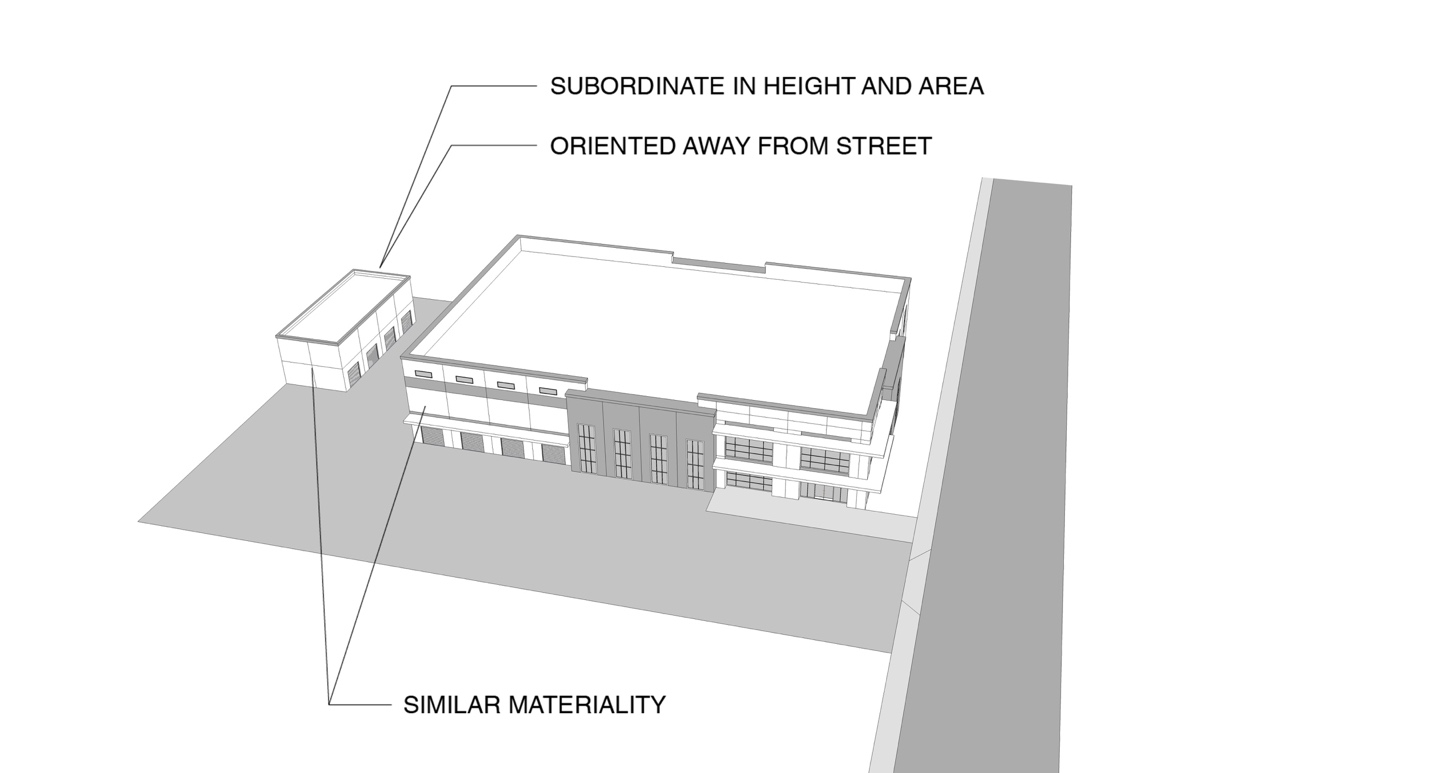
A.
Orientation. Except for fuel pump canopies, Accessory Structures shall not front on a Street, and shall be located in the rear yard in a manner that minimizes their impact on adjacent Uses.
B.
Height and Area Requirements.
1.
Except for fuel pump canopies, Accessory Structures shall not exceed the height of the Primary Building.
2.
Except for fuel pump canopies, Accessory Structures shall have a maximum area of 20% of the Primary Building.
C.
Materials. Accessory Structures shall use materials of the same or higher quality and durability as the materials used on the Primary Building it serves.
D.
Roofs. Accessory Structures shall incorporate the same roof type, materials, and pitch used on the Primary Building it serves.
E.
Fuel Pump Canopies.
1.
Fuel pump canopies shall incorporate similar materials used on the Primary Building it serves.
2.
Canopy lighting shall be recessed and flush with the underside of the canopy.
3.
Columns shall be integrated with the design of the Primary Building it serves.
(Ord. No. 2020-02, § IV(Exh. C), 1-8-2020; Ord. No. 2022-08, § I(Exh. A), 4-13-2022; Ord. No. 2022-16, § 1(Exh. A), 9-14-2022; Ord. No. 2023-27, § 1(Exh. A), 9-12-2023)
Note— See editor's note at § 17.07.090.

