
St Charles Parish City Zoning Code
SECTION III
- Definitions.2
For the purpose of this Ordinance, certain words and terms are hereby defined. Words used in the present tense shall include the future, the singular number shall include the plural and the plural the singular; the word "Building" shall include the word "Structure" and the word "Shall" is mandatory and not directory. "Commission" is the Parish Planning and Zoning Commission and "Planning Director" is the Parish Planning and Zoning Director.
Abandonment: The cessation of the use of a property or of a particular use for at least six (6) months. (Also see discontinuance).
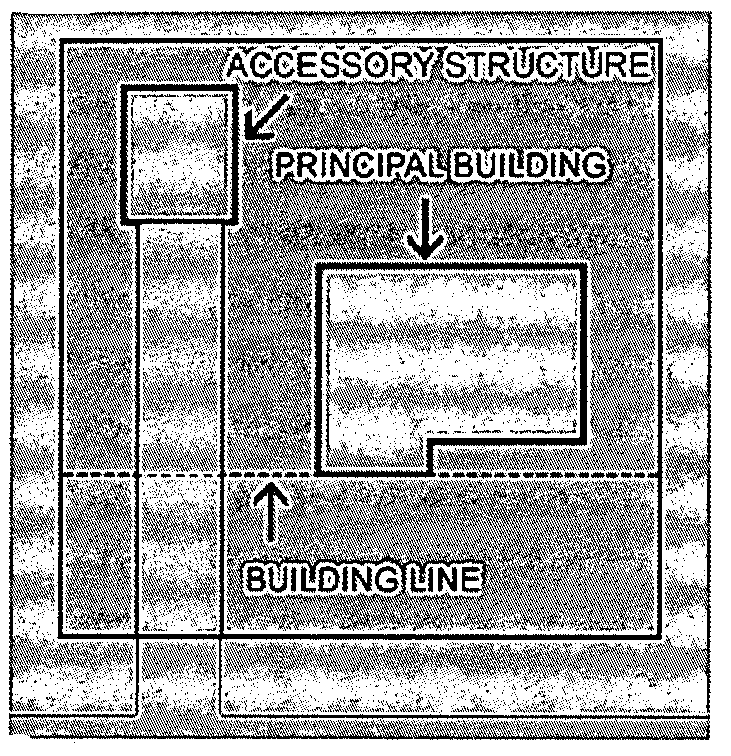
Accessory building or structure: A subordinate structure, not sharing a common wall with the main structure, the use of which is incidental to that of the main structure.
Accessory dwelling unit: A secondary dwelling unit established in conjunction with and clearly subordinate to a primary dwelling unit, whether a part of the same structure as the primary dwelling unit or a detached dwelling unit on the same lot.
Accessory use: A use that is customarily incidental and subordinate to the principal use, and which is located on the same lot as the principle use.
Addition orenlargement: Any construction that increases the size of a building or structure in terms of lot coverage, height, length, width or floor area.
Adult establishment: Any business as defined by Louisiana Revised Statute (LA R.S.) 14:106A, including adult bookstores, adult motion picture theaters, adult mini-motion picture theaters, adult live entertainment businesses, adult nightclubs or massage businesses. These uses are further defined in (LA R.S.) 14:106. However, those massage businesses where all employees associated with massage meet the ethical and educational requirements specified by the American Massage Therapy Association, or equivalent national or state standards, are exempt from this definition.
Alcohol beverage sales: The sale of beer, wine, or other alcoholic beverages for on- or off-premises consumption.
(1)
Alcohol beverage sales, off-premises: The retail sale of alcoholic beverages in the original manufacturer sealed and labeled container in a business such as a grocery store, convenience store or liquor store for consumption off-site.
(2)
Alcohol beverage sales, on-premises: The sale of beer, wine, or other alcoholic beverages as the primary activity (e.g. bars, taverns, etc.) or as an incidental or secondary activity to another primary business activity (e.g. full-service or specialty restaurants, hotels, banquet halls) for consumption on-site.
Alteration: Any change, addition or modification in construction, use or occupancy of a building or site.
Anchorage: A place designated for vessels to anchor.
Antenna: A metallic, graphite, fiberglass, or other device which is attached to a transmission tower, telecommunications tower, monopole, mast, building, or other structure for transmitting and receiving electromagnetic waves.
Apartment: A room or suite of rooms with culinary facilities designed for or used as a living unit for a single family.
Appurtenance: An architectural feature of a structure that is higher than the adjacent portion of the structure, such as a chimney, cupola, spire, or parapet wall.
Attic: The finished or unfinished space of a building that is immediately below and wholly or partly within the roof framing.
Automobile/vehicle dealership: An establishment that sells or leases new or used, functional automobiles, trucks, vans, trailers, recreational vehicles, boats, motorcycles or other motorized transportation vehicles. An automobile/vehicle dealership may contain an inventory of the vehicles for sale or lease either on-site or at a nearby location, and may provide on-site facilities for the repair and service of the vehicles sold or leased by the dealership.
Automotive repair, major: An establishment primarily engaging in the repair or maintenance of motor vehicles, trailers and similar large mechanical equipment, including paint, body and fender, and major engine and engine part overhaul, which is conducted within a completely enclosed building.
Automotive repair, minor: An establishment primarily engaging in the repair or maintenance of motor vehicles, including brake, muffler, upholstery work, tire repair and tire change, lubrication, tune ups, etc., which is conducted within a completely enclosed building.
Bar: An establishment serving alcoholic beverages in which the principal business is the sale of such beverages for consumption on the premises.
Boathouse: A structure consisting of posts and a roof, with or without walls, connected to either a dock or ground in a body of water, constructed for boat storage or related marine use only. The term "boathouse" includes the anchoring system and any walkways or bridges that connect to the structure.
Boat launch: A structure or area used for the placement of a boat into the water and for the retrieval of a boat from the water to a trailer or device.
Boardwalk: An elevated public pedestrian walkway constructed over a public street or along a waterfront.
Borrow pit: An excavated hole in the ground from which sand, gravel, soil, or similar material is extracted for use as fill. Borrow pits do not include pits located in navigable waterways, pits used for foundations for buildings, private man-made lakes, and pits developed as swimming pools or similar accessory facilities.
Brewery/distillery: A facility for either the production or packaging of malt beverages of low alcoholic content for wholesale distribution.
Buffer orbuffer zone: A strip of land established to protect one type of land use from another which may be incompatible. The buffer may include landscaping, fencing or other buffering materials.
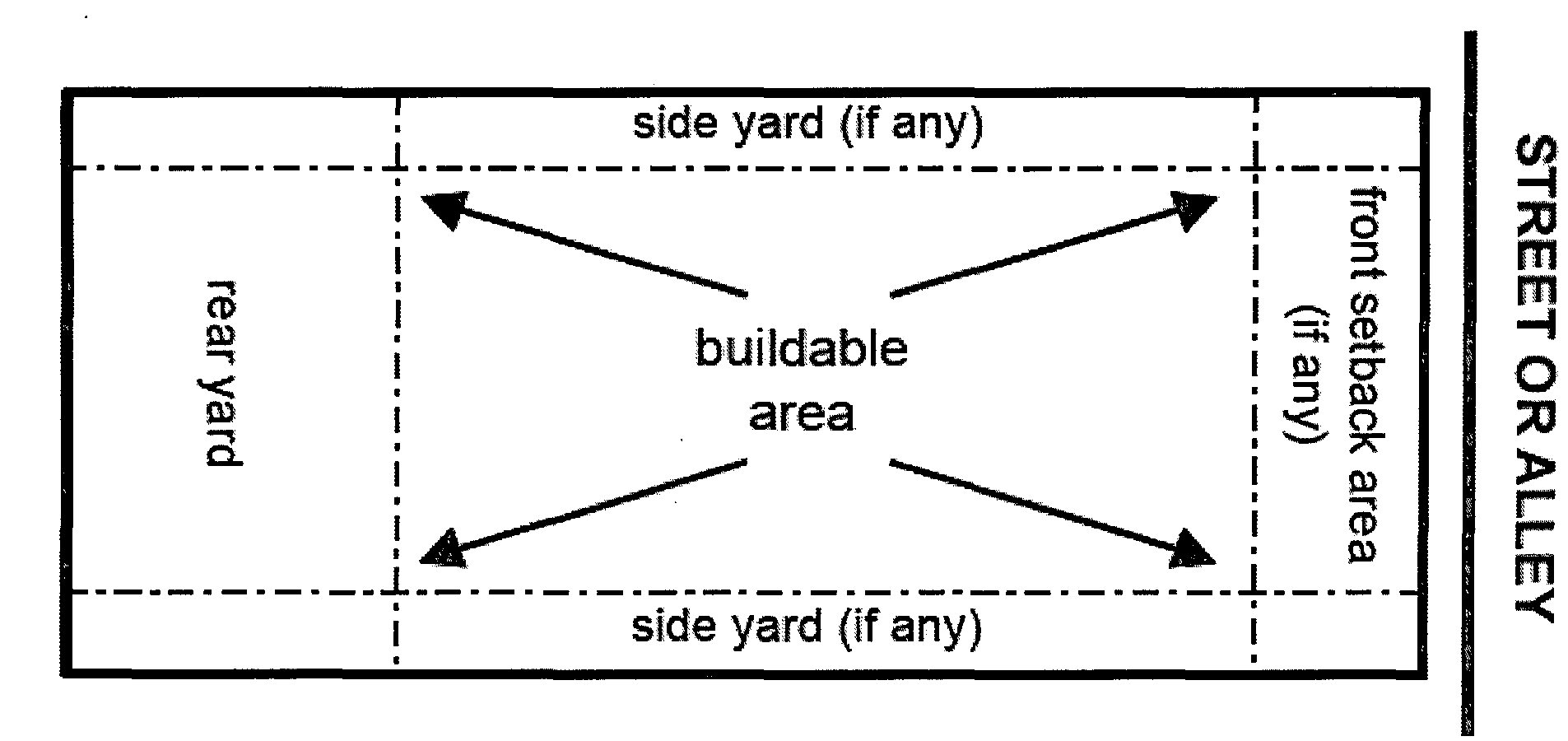
Buildable area: The area of a lot in which a primary structure may be placed; identified as the area remaining after the minimum yard and open space requirements are met, exclusive of servitudes and easements.
Building: Any structure, either temporary or permanent, having a roof and designed, intended, or used for the sheltering or protection of persons, animals, or property of any kind.
Building (main, primary, principal): A building which houses the principal use of the lot on which it is situated. A dwelling shall be deemed to be the main building on the lot in all residential districts.
Building temporary: A building located at or near a construction site that serves only as an office or storage until the given construction work is completed.
Building official: The officer or other designated authority charged with the administration and enforcement of the Louisiana State Uniform Construction Code (LSUCC), or his duly authorized representative.
Cafeteria: A restaurant at which patrons serve themselves at a counter and take the food to the tables to eat.
Canopy: A roofed structure constructed of fabric or other material supported by the building or by support extending to the ground directly under the canopy placed so as to extend outward from the building providing a protective shield for doors, windows, and other openings.
Carport: An accessory structure consisting of a canopy or shed attached or adjacent to the main structure and open on two (2) or more sides for the purpose of providing shelter for one (1) or more vehicles.
Car wash: A commercial establishment engaged in the washing and cleaning of passenger vehicles, recreational vehicles, or other light dirty equipment, whether automatic in an enclosed structure or by hand.
Casino: A building in which the primary use is legal gaming as defined by the State of Louisiana.
Cellular installation: Facility transmitting and receiving electromagnetic frequency transmissions in the 800—900 MHZ ultra-high frequency (UHF) range.
Cemetery: Land used or intended to be used for the interment of the human dead.
Church: See House of worship
Clinic, animal: A building used by one or more professional medical persons for the healing. arts or treatment of small animals on an out-patient or nonboarding basis only, without runs.
Clinic, persons: A building used by one or more professional medical persons for the healing arts or treatment of persons on an out-patient or nonboarding basis only.
Club: Buildings and facilities owned and operated by a corporation, association, person or persons for a social, educational or recreational purpose, but not primarily for profit or to render a service which is normally carried on as a business.
Clubhouse: The principal building associated with a golf course, tennis club, or similar recreational facility that typically contains the pro shop, administrative offices, exercise facilities and locker rooms, golf cart storage and maintenance, and may also contain food and beverage services, including public meeting and banquet rooms and related facilities.
Coastal dependent use: A use which cannot perform its intended purpose unless it is located or carried out in close proximity to water.
Code enforcement officer: The officer or other designated authority charged with the administration and enforcement of this Code, or his duly authorized representative.
Co-location: Locating wireless communications equipment from more than one (1) provider on one (1) site.
Commercial activity: The exchange of goods, products, services, or property of any kind. The buying, selling, exchange, or associated storage of articles, including the manufacture or production of same for commerce. The term "commercial activity" shall not be construed to include the occasional and isolated sales or transactions by a person who does not hold himself out as engaged in business.
Commission: Same as Planning Commission of St. Charles Parish.
Communications equipment shelters: A constructed or prefabricated building or other structure located on a telecommunications site designed principally to enclose equipment, switches, communication lines, and other related facilities used in connection with telecommunications transmissions. Communications equipment shelters shall not be considered as an accessory use for purposes of determining the required setback limitations.
Community center: A facility to be used as a place of meeting, recreation, training or social activity, and not operated for profit, which is open to the community and designed to accommodate the surrounding neighborhood or the larger community.
Community garden: Neighborhood-based developments that provide space for community members to grow plants for beautification, education, recreation, community distribution, or personal use.
Conceptual development plan: A generalized plan drawn to scale for the proposed development of property requested to be zoned as a planned unit development and that identifies the following: the use of the property; the intensity of the uses; general location and size of proposed buildings; access points, parking areas, and the number of spaces; open space, general landscaping, and general planometric elements.
Contractor storage yard: Any land or buildings used primarily for the storage of equipment, vehicles, machinery, or other building materials or construction contractor in the conduct of any building trade or craft.
Condominium: A single-dwelling unit in a multi-unit dwelling or structure, that is separately owned and may be combined with an undivided interest in the common areas and facilities of the property.
Convalescent home: A facility that provides nursing services and custodial care on a twenty-four-hour basis for persons suffering from illness, other than mental illness, which is not of sufficient severity to require hospitalization, or persons requiring institutional care.
Correctional facility: A public or privately-operated facility for the detention, confinement, treatment or rehabilitation of persons arrested or convicted for the violation of civil or criminal law. Such facilities include adult detention centers, juvenile delinquency centers, jails, or prisons.
Day care center, adult: A facility where, for a portion of a twenty-four (24) hour day, functionally-impaired adults that are not related to the owner or operator of the facility are supervised or participate in a training program. This excludes alcohol and drug abuse clientele, former inmates of prisons or correctional institutions or former patients of mental institutions who have been found not guilty by reason of insanity. An adult day care center does not include adult day care homes.
(1)
Day care center, small: Up to fifteen (15) adults
(2)
Day care center, large: Sixteen (16) to fifty (50) adults
(3)
Day care center, commercial: Fifty-one (51) or more adults
Day care center, child: A facility where, for a portion of a twenty-four-hour day, supervision and guidance of children that are not related to the owner or operator of the facility is provided on a regular basis. A child day care center does not include a child day care home.
Day care home, adult: A private home in which a permanent occupant provides care for the elderly and/or functionally impaired adults in a protective setting for less than twenty-four-hours per day. This excludes alcohol and drug abuse clientele, former inmates of prisons or correctional institutions, or former patients of mental institutions who have been found not guilty by reason of insanity.
(1)
Day care home, small: Up to five (5) adults.
(2)
Day care home, large: Six (6) to twelve (12) adults.
Day care home, child: A private home in which a permanent occupant provides care for up to five (5) children from outside households for less than twenty-four-hours per day.
Density: The number of dwelling units that exist or can be permitted on a specific area measurement of land.
Detention/retention pond: A man-made basin designed to protect against flooding by storing stormwater for a limited period of time.
Directional boring: Method of installing underground pipes, conduits, and cables in a shallow arc along a prescribed bore path using either a drilling fluid and directional cutting heads, or high pressure water jets to cut the desired bore hole below ground without needing an open trench. This shall include the process known as "hydro tunneling."
Directional boring slurry: Any viscous material removed by use of directional boring technology either containing drilling fluids, or simple water and soil mixtures.
Discontinuance: (also see "abandonment") The abandonment of a property or of a particular use for a period of at least six (6) months. The determination of discontinuance for non-conforming uses or structures shall be supported by evidence, satisfactory to the Planning and Zoning Department (e.g. the actual removal of equipment, furniture, machinery, structures, or other components of the non-conforming use and not replaced, the turning off of the previously connected utilities, or where there are no business receipts/records or any necessary licenses available to provide evidence that the use is in continual operation).
District: Any part of the Parish of St. Charles in which these zoning regulations are uniform.
Dock: A wharf or a row of piers with no enclosed buildings or roofs, where boats can be moored, loaded or unloaded.
Dormitory: A structure specifically designed for the long-term stay by students of a college, university or non-profit organization, for the purpose of providing rooms for sleeping purposes. A common kitchen and common gathering rooms for social purposes may also be provided.
Drainage plan: A plan showing proposed site drainage features for controlling storm water runoff and conveying it to public outfalls.
Driveway: A private access way, not classified as a street, road, or highway.
Dwelling: A building used for residential purposes.
(1)
Dwelling, single-family: A building that contains only one dwelling unit including attached buildings in the case of townhouses.
(2)
Dwelling, two-family: A building that contains a maximum of two (2) attached dwelling units.
(3)
Dwelling, multifamily: A building that contains more than two (2) dwelling units.
Dwelling, townhouse: A single-family dwelling on its own separate lot of record with its own front and rear access to the outside, and with its own yards, in a row with other similar dwelling units, in which no unit is located over another unit, and each unit is separated from other units by one or more common fire resistant walls.
Dwelling unit: Any room or group of rooms located within a structure forming a single habitable unit with facilities which are used or intended to be used for living, sleeping, cooking, eating and sanitation by one (1) family.
Eave: The projecting sides of a roof overhanging the wall of a building.
Encroachment: The extension or placement of any structure or component of a structure into a required yard, setback, or street right-of-way.
Extraction activities: The removal from the premises of sand, gravel, shells, topsoil, minerals, or other natural resources from a lot or a part thereof.
Façade: The exterior wall of a building exposed to public view or that wall viewed by persons not within the building.
Family: One or more persons, related by blood, marriage, or legal adoption, living together and occupying a single housekeeping unit with single culinary facilities; or a group of not more than four (4) unrelated persons living together by mutual agreement or a registered domestic partnership and occupying a single housekeeping unit with single culinary facilities on a nonprofit, cost sharing basis. Also, domestic servants resident on the premises shall not be considered a separate family for the purposes of this ordinance.
Farm: Any parcel of land which is used for the raising of agricultural or aquicultural products, livestock, poultry, and dairy products. It includes necessary farm structures within the prescribed limits and the storage of equipment used. It include[s] the raising of fur-bearing animals, riding academies, or boarding stables.
Farmers' market: The seasonal selling or offering for sale at retail of vegetables or produce, flowers, orchard products, and animal agricultural products, occurring in a pre-designated area, where the vendors are individuals who have raised the vegetables or produce or have taken the same on consignment for retail sale. (Includes vendors selling non-agricultural products as well).
Fence: A barrier, solid or otherwise, used as a boundary or means of enclosure for protection, confinement, or concealment.
Floor area: The square feet of floor space on all floors of a building within the exterior walls. It does not include porches, garages, basements or cellar space, stair wells, elevator shafts or mechanical equipment rooms, inner courts, corridors and malls from which goods or services are not offered or sold.
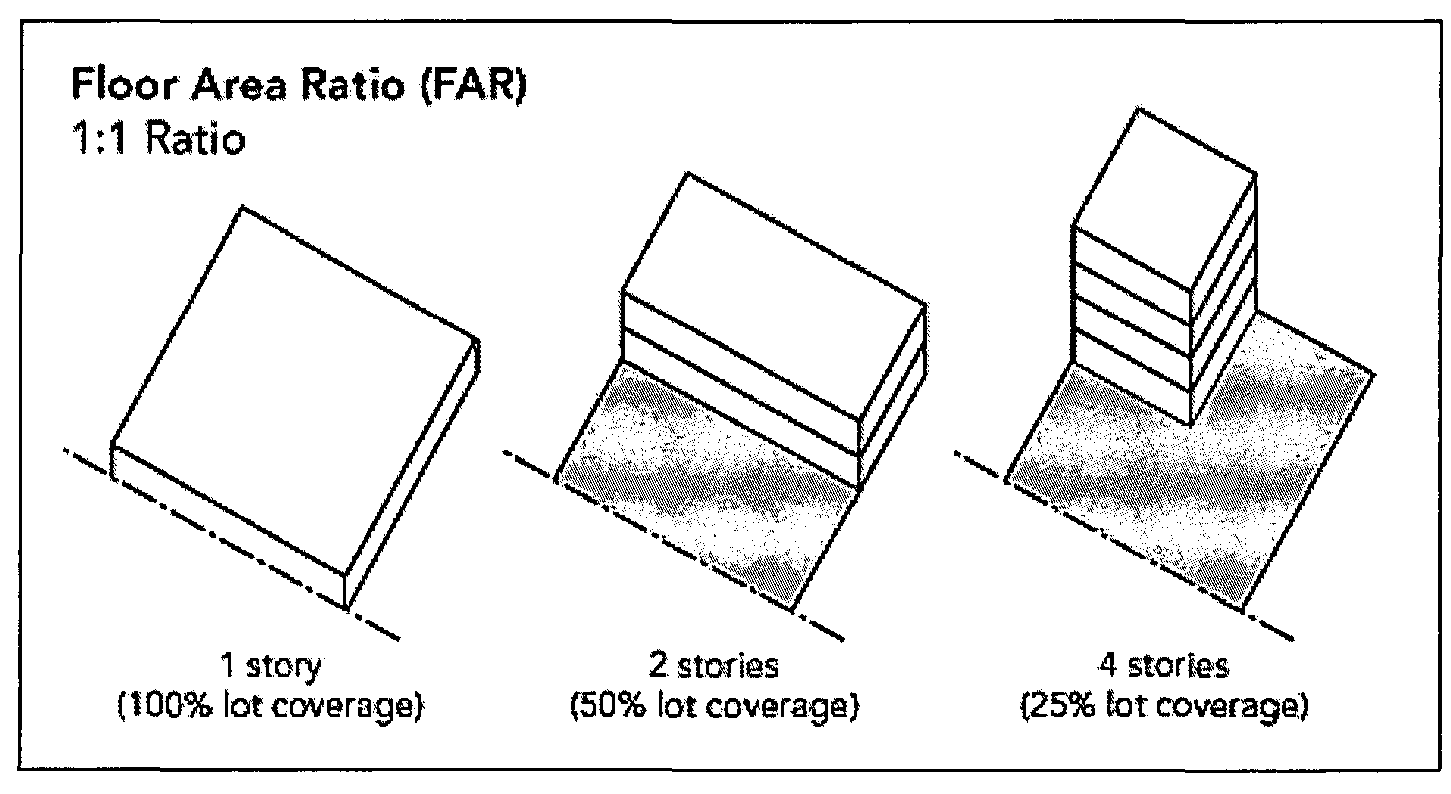
Floor area ratio (FAR): The total floor area of all buildings or structures on a zoning lot divided by the area of said lot.
Funeral home: An establishment in which the dead are prepared for burial or cremation. The facility shall be permitted to include a chapel for the conduct of funeral services and spaces for funeral services and informal gatherings, and/or display of funeral equipment.
Garage, private: An accessory building for the storage of motor vehicles.
Gardening: The growing of herbs, fruits, and vegetables for resident use only.
Gas/service station: A business where flammable or combustible liquids or gases used as fuel for motor vehicles are stored and dispersed from fixed equipment into the tanks of motor vehicles.
Government facility: A building or structure owned, operated, or occupied by a governmental agency to provide a governmental service to the public, and shall include public works and public safety facilities.
Grade, finished: The average elevation of the ground surface that exists after man-made alterations, such as grading, grubbing, filling, or excavating.
Grade, natural: The average elevation of the ground surface that exists or existed prior to man-made alterations, such as grading, grubbing, filling, or excavating.
Gross floor area: The total area of all the floors of a building, including intermediately floored tiers, mezzanine, basements, garages, unfinished attics, etc., as measured from the exterior surfaces of the outside walls of the building.
Group home or community home: A single-family residential structure, specifically licensed by the State of Louisiana, for occupancy of unrelated persons.
Hazardous material (or hazardous chemical): Material presenting dangers beyond the fire problems relating to flash point and boiling point. These dangers may arise from but are not limited to toxicity, reactivity, instability, or corrosivity.
Hazardous waste: A waste, or combination of wastes, regulated by Title 33, Part V of the Louisiana Environmental Regulatory Code (LAC 33.V), which because of its quantity, concentration, or physical, chemical or infectious characteristics may do either of the following: (1) cause or significantly contribute to an increase in mortality or increase or serious irreversible or incapacitating reversible illness; (2) pose a substantial present or potential hazard to human health or environment when improperly treated, stored, transported, disposed of or otherwise managed.
(1)
Hazardous waste disposal facility: All structures, appurtenances, and improvements on the land used for treatment, storage or disposing of hazardous waste, including all operations or storing areas, diked overflows, or emergency spillway areas. A hazardous waste disposal facility may consist of several treatment, storage or disposal operational units; it includes all areas where hazardous waste may be received, stored, handled or processed.
(2)
Hazardous waste incinerator: An enclosed device using controlled flame combustion, where the primary purpose of which is to thermally break down hazardous waste.
(3)
Hazardous waste processing facility: Any commercial facility, as defined by LAC 33.V, that treats or stores hazardous waste generated on properties other than those on which the processing facilities are located.
(4)
Hazardous waste storage: Any environmentally sound facility used to store hazardous waste for a temporary period as regulated by LAC 33.V.
(5)
Hazardous waste treatment: The physical, chemical or biological processing of any hazardous waste so as to neutralize such waste or so as to render such waste nonhazardous, safer for transport, amenable for recovery, amenable for storage, or reduced in volume.
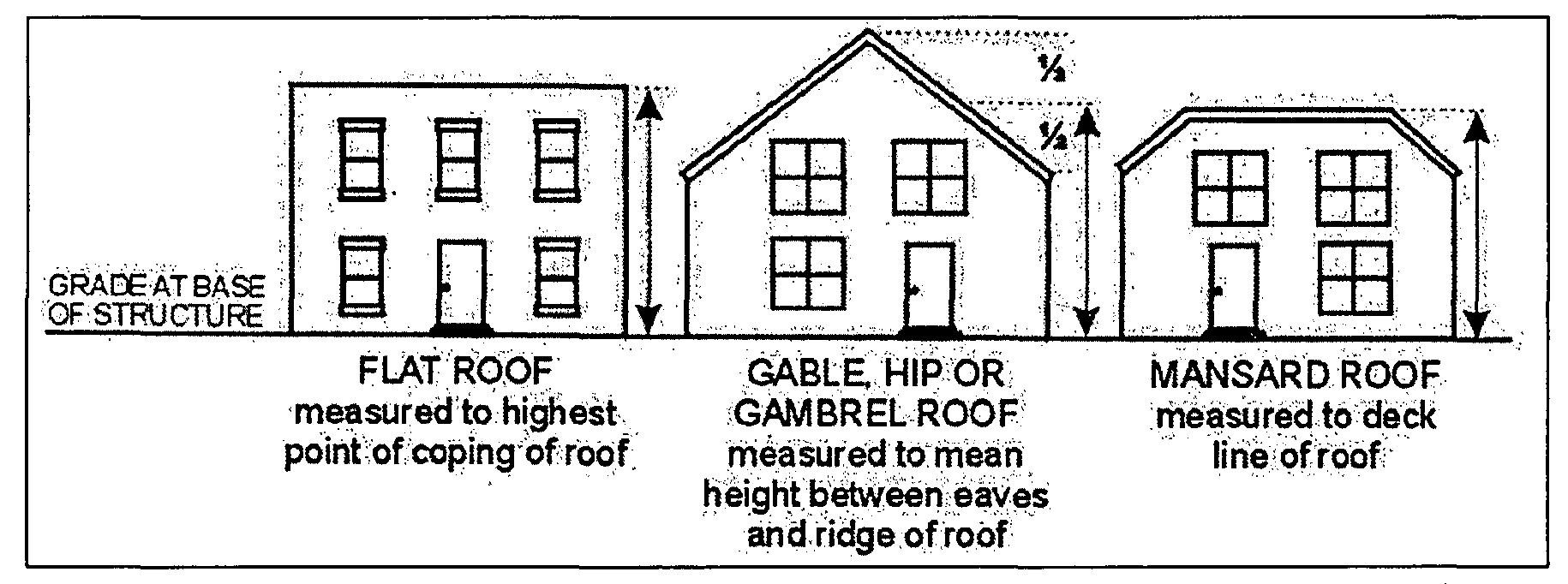
Height of a building: The vertical distance from the finished grade to (a) the highest point on a flat roof, (b) the deck line of a mansard roof, or (c) the mean height between eaves and ridge for gable, hip and gambrel roofs.
Historic home site bed and breakfast: Accommodations for tourists and travelers which provide sleeping rooms within a historic home or on the historic home site in another historic structure. Historic home sites are identified as having a main structure that is over one hundred (100) years old. (Ord. No. 20-10-5 § I, 10-5-20)
Home occupation: A business, profession, occupation, or trade conducted within the principle structure of a residential use by residents of the dwelling which is incidental and secondary to the residential use of the dwelling, does not change the essentially residential character of the use, and which complies with the requirements of Section XXII Home Occupations.
Hospital: A building designed or used for the diagnosis, therapeutic treatment, or other care of ailments of patients who are physically or mentally ill.
Hotel or motel: A business providing temporary living and sleeping accommodations.
House of worship (religious institution): A building where persons regularly assemble for religious worship and which is maintained and controlled by a religious body organized to sustain religious expression, together with all accessory buildings and uses customarily associated with such primary purpose.
Impervious surface or material: Material that does not allow the penetration of water to the ground.
Intensity: Relative measure of development impact as defined by characteristics such as the use/activity, number of dwelling units, amount of traffic generated, and amount of site coverage. To alter the character of a development to the extent that the use generates new or different impacts to the surrounding neighborhood constitutes an intensification of use.
Institution: A building or group of buildings designed or used for the non-profit, charitable, or public service purposes of providing board, lodging, health care for persons aged, indigent or infirm, or for the purpose of performing educational or religious services and offering board and lodging to persons in residence.
Junk: Scrap brass, scrap copper, scrap iron, scrap lead, scrap tin, scrap zinc, and other scrap metal and the alloys and bones, rags, used cloth, rope, rubber, tinfoil, bottles, machinery of any type, tools, appliances, fixtures, utensils, lumber, boxes or crates (fabricated or any material), pipe or pipe fittings, conduit or conduit fittings, inoperative motor vehicles, tires and other manufactured goods that are so worn, deteriorated or obsolete as to make them unusable in their existing condition or which are subject to being dismantled.
Junkyard: An open area where any waste, used, or secondhand materials are brought, sold, exchanged, stored, baled, packed, disassembled or handled, including but not limited to scrap iron and other metals, paper, rags, rubber tires and bottles. A "junkyard" includes an auto wrecking yard or the storage of keeping of one or more inoperative motor vehicles unless where otherwise specifically permitted but does not include uses established entirely within enclosed buildings.
Landfill: As defined by the Louisiana Administrative Code Section (LAC 33:VII. Subpart I. Section 115) and generally defined by Types of Facilities as follows:
(1)
Type I facility—A facility used for disposing of industrial solid wastes. Any Type I facilities shall only be allowed as an accessory use to an approved industrial facility.
(2)
Type II facility—A facility used for disposing of residential and/or commercial solid waste.
(3)
Type III Facility—A facility used for disposing or processing of construction/demolition debris or wood waste, composting organic waste to produce a usable material, or separating recyclable wastes. As per LAC 33: VII Subpart I. Section 115, construction/demolition debris is further defined as: non-hazardous waste generally considered not water-soluble that is produced in the process of construction, remodeling, repair, renovation, or demolition of structures, including buildings of all types (both residential and nonresidential). Solid waste that is not C&D debris (even if resulting from the construction, remodeling, repair, renovation, or demolition of structures) includes, but is not limited to, regulated asbestos-containing material (RACM) as defined in LAC 33:111.5151.B, white goods, creosote-treated lumber, and any other item not an integral part of the structure.
Landscape plan: Graphic/written specifications and detailed plans to arrange and modify the natural features with required plantings and water forms, walks, and other features to comply with the provisions of this ordinance.
Laundromat: A business providing for the hire and use on the premises of home type washing, drying and/or ironing machines.
Lawful use: The operation of an activity with proper occupational licenses, when applicable, payment of all applicable taxes and authorized by the zoning ordinance in existence at the time the activity was commenced.
Lawn care service: A business offering gardening and lawn maintenance activities, such as mowing lawn and overgrowth, edging, weeding, or trimming of hedges and shrubbery.
Light manufacturing: The manufacturing or processing of materials employing electricity or other unobjectionable motive power, utilizing hand labor or unobjectionable machinery or processes, and free from any objectionable odors, fumes, dirt, vibration, or noise.
Live entertainment venue: An establishment for the presentation of live performances, including musical acts (including karaoke), theatrical plays or acts (including stand-up comedy and magic), revues, dance acts, or any combination thereof, performed by one (1) or more persons, whether or not they are compensated for the performance
Loading and/or unloading space: A surface space within the main building or on the same lot providing for the temporary standing, loading and/or unloading of trucks.
Local public entity: A facility or service operation which is domiciled in St. Charles Parish, is open to public use, and is supported all or in part by public taxes or levies on private citizens and/or concerns of St. Charles Parish.
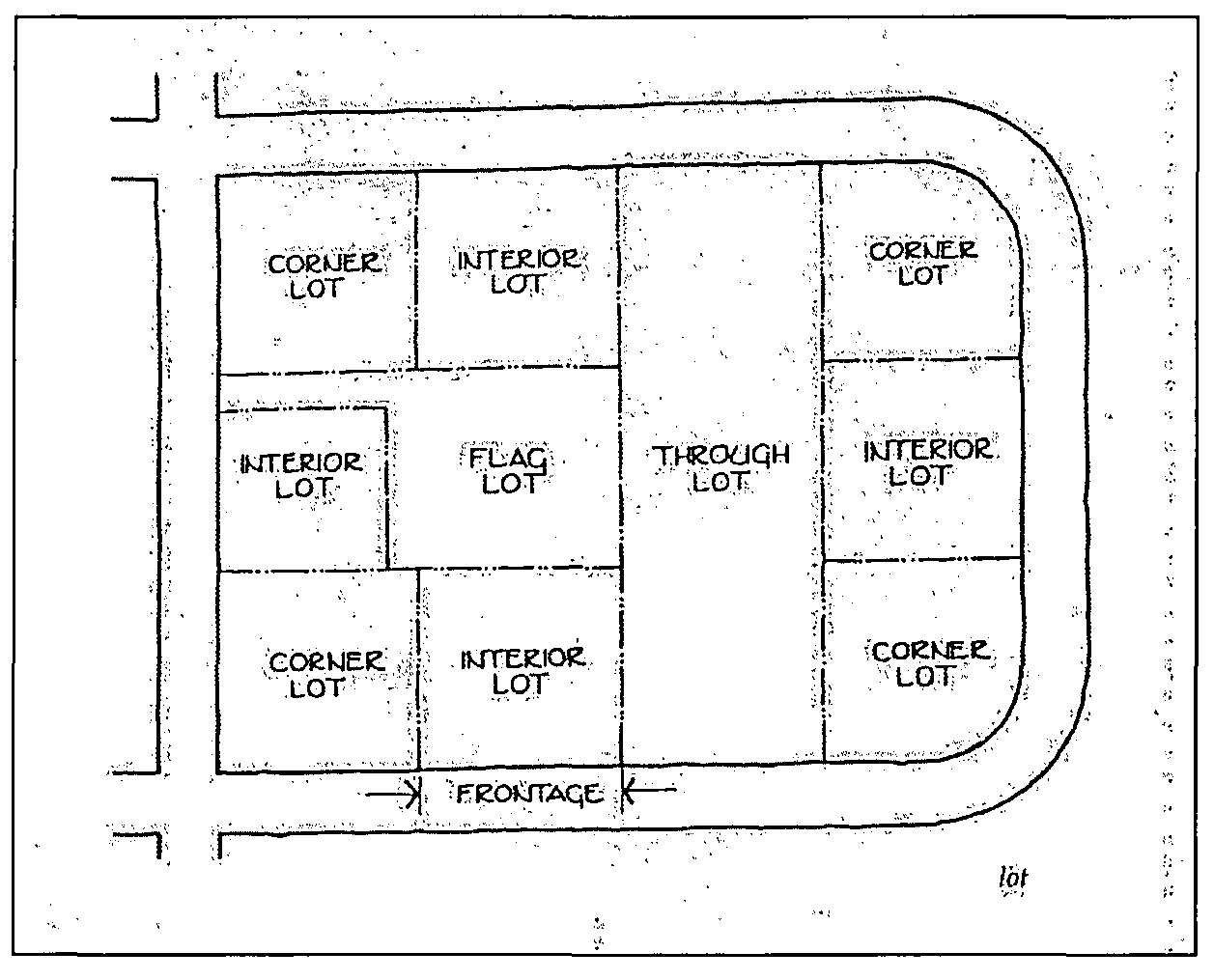
Lot: A parcel, tract, or area of land; established by plat, subdivision, deed, or as permitted/created by law.
(1)
Lot area: The total area within the lot lines of a lot, excluding any street rights-of-way.
(2)
Lot, corner: A lot or parcel of land abutting two (2) or more streets at their intersection or on two (2) parts of the same street forming an interior angle of less than one hundred thirty-five (135) degrees.
(3)
Lot coverage: The area of the lot covered by a structure or impervious surfaces.
(4)
Lot depth: The average distance between the front and rear lot lines.
(5)
Lot frontage: Any portion of a lot abutting a public or private street.
(6)
Lot, through: A lot having frontage on two (2) approximately parallel streets or places.
(7)
Lot width: The shortest distance between side lot lines measured at the minimum front building setback line.
(Ord. of 18-5-10, § 1, 5-21-18)
Lot lines: The lines bounding a lot.
Lot of record: A lot which is either part of a subdivision or a tract of land which became legally established and defined by deed or act of sale prior to October 19, 1981.
Lounges: See "bar."
Manufactured home: A dwelling unit, designed and built in a factory, which bears a seal certifying that it was built in compliance with the Federal Manufactured Housing Construction and Safety Standards Law (42 U.S.C. 5401 et seq.). The term shall include "manufactured housing.(Ord. No. 17-11-4, § I, 11-13-17)
Manufactured home park: A specially designed community or park which is designed to accommodate either a manufactured home or a mobile home without the requirement for permanent foundations.
Manufacturing, heavy: The assembly or fabrication of goods and materials, which may include the storage of flammable or toxic matter. Heavy manufacturing processes may have significant impacts on the environment or on the use and enjoyment of adjacent property.
Manufacturing, light: The manufacturing from previously prepared materials of finished products or parts, including processing, fabrication, assembly, treatment and packaging of such products, and incidental storage, sales and distribution of such products.
Marina: A facility for the storage, servicing, fueling, berthing, and securing of boats along with customary accessory uses.
Mast: A frame supporting antennas not exceeding thirty-five (35) feet in height which is mounted on a roof or some other structure.
Medical waste: Solid waste which is generated in the diagnosis, treatment or immunization of human beings or animals, in research pertaining thereto, or in the production or testing of biologicals.
Medical waste storage facilities: All facilities in which medical waste is temporarily held at a central collection point, including but not limited to transfer facilities.
Medical waste treatment or disposal facilities: Any and all facilities for the purpose of changing the character or composition of any medical waste so as to reduce or eliminate its potential for causing disease, including but not limited to decontamination by autoclaving and other methods; incineration; landfill disposal; or sanitary sewer disposal.
Mini-storage facility (self-storage facility): A commercial structure offering space for lease to the general public for storage excluding highly toxic, flammable, and/or combustible substances. Recreational vehicles, motor vehicles, boats, RVs, and trailers are allowed as customary accessory uses.
Mining and drilling activities: Any pursuit or occupation associated with an area of land where operations are conducted to extract subsurface valuable mineral deposits, petroleum, or other materials.
Mobile home: A structure equipped for use as a dwelling and designed to be transported by hauling along a highway or public street. (Ord. No. 17-11-4, § I, 11-13-17)
Modular home: A dwelling unit assembled in accordance with the state and local building codes and composed of modules or sections substantially assembled in a manufacturing plant and transported to the building site for final assembly on a permanent foundation.
Monopole (standard): A single self-supporting vertical pole with no guy wire anchors, usually consisting of a galvanized or other unpainted metal, or a wooden pole with below grade foundations that is intended to support antennas necessary to deliver and receive telecommunications transmissions.
Monopole (non-standard): A monopole, or other freestanding structure containing antennas, which is designed to camouflage the appearance of a standard monopole, such as a clock tower. Non-standard monopoles shall be designed to be aesthetically compatible with the character of the surrounding area. Artificial tree designs shall not be permitted as non-standard monopoles.
Mortuary: See "funeral home."
Night club: See "bar."
Nonconforming lot: A lot of record which does not conform to the minimum requirements specified for the district in which it is located. (Ord. No. 88-9-24, 9-19-88)
Nonconforming site (structure): A site upon which any of the following design aspects: building, structure, yard, parking, landscaping, buffering, or required setback; lawfully existed before the adoption or amendment of this Ordinance, but which does not conform to all of the requirements contained in this Ordinance or amendments thereto which pertain to the district in which it is located.
Nonconforming use: An activity which lawfully existed before the adoption or amendment of this ordinance, but which does not conform to all of the requirements contained in this ordinance or amendments thereto which pertain to the district in which it is located.
Nursery (horticulture): Any building or lot, or portion thereof, used for the cultivation or growing of plants and including all accessory buildings, but does not include the wholesale or retail sale of any items other than those incidental to the items raised or grown on said premises.
Nursing home: See "convalescent home."
Off-track betting facility: An establishment that accepts wagers on horse and dog races away from a racetrack.
Office: A room or group of rooms used for conducting the affairs of a business, profession, service, industry or government.
Open space: That part of a lot, including all yards, which is open and unobstructed from grade level upward and is not occupied by off-street parking, streets, drives, or other surfaces for vehicles.
Outdoor advertising signs ("billboards"): An attached or free standing structure constructed and maintained for the purpose of conveying to the public, information, knowledge or ideas. Such structure may be double faced or V type, but shall contain no more than four (4) signs in any (1) one unit and not more than two (2) signs side by side. The structure shall have a total length of not more than sixty (60) feet.
Outdoor storage yard: The storage of any material, as a principal use of the lot including items for sale, lease, processing and repair not in an enclosed structure.
Parapet wall: The portion of the wall that extends above the roofline.
Parcel: A lot formally described and recorded with block and lot numbers, by metes and bounds, by ownership or in such a manner as to specifically identify the dimensions and/or boundaries.
Parish: St. Charles Parish, Louisiana.
Parking area or lot: An off-street parking facility, enclosed or unenclosed; parking area includes parking spaces and access drives.
Parking space, automobile: A delineated space for the parking of an automobile located either within a building or on private or public parking lot.
Parking structure: A structure or portion thereof composed of one (1) or more levels or floors used exclusively for the parking or storage of automobiles.
Parks/playgrounds: A facility designed to serve the recreational needs of the residents of the community, and shall include but not be limited to, ball fields, basketball courts, skateboard parks, playgrounds and field houses which may have indoor recreation facilities.
PCS (personal communication service) installation: Facility transmitting and receiving electromagnetic frequency transmissions in the 1,850—2,000 MHZ ultra-high frequency (UHF) range.
Personal service establishment: An establishment or place of business primarily engaged in the provision of frequent or recurrent services of a personal nature. Typical uses include, but are not limited to, beauty shops, barbershops, tanning salons, massage parlors, shoe repair, personal item repair shops, laundromats, dry cleaners, and tailors. Personal services establishments shall not include any adult establishments or uses.
Planned unit development (PUD): A residential, commercial or mixed-use development guided by a total design plan in which one or more of the zoning or subdivision regulations, other than use regulations, shall be permitted to be waived or varied to allow flexibility and creativity in site and building design and location, in accordance with general guidelines.
Planning and zoning director: Head of the St. Charles Parish Planning and Zoning Department or his duly authorized representative, who shall advise the Planning Commission in the exercise of its responsibilities and in connection therewith, provide necessary staff assistance.
Planning Commission: The term "Planning Commission" shall mean the St. Charles Parish Planning Commission which constitutes the zoning commission as identified in the Parish Home Rule Charter in accordance with Louisiana law.
Plat: A plan or map of a subdivision or a parcel of land.
Principal building: A structure on a lot or parcel in which the primary use or function is conducted.
Primary use: See "principal use."
Principal use: The primary use and chief purpose of a lot or structure.
Property line: See "Lot line."
Public utility station: A structure or facility used by a public or quasi-public agency to store, distribute, and/or generate electricity, gas, telecommunications and related equipment; to pump sewage or drainage, or to pump or chemically treat water. This does not include storage or treatment of sewage, solid waste or hazardous waste.
Rated capacity: The maximum number of occupants, as determined by the Louisiana State Fire Marshal's Office.
Recreational vehicle (RV): A structure or vehicle used as a temporary dwelling by vacationers, transient workers, etc., designed to be towed by a vehicle or self-propelled, and designed to be licensed as a vehicle. The structure may be used without connections to public utilities; provided however that self-contained, sanitary, water and electrical systems are installed. Additionally, the structure may be occupied in the R-1M District without the requirement to screen the chassis of the structure or vehicle.
Recreational vehicle (RV) park: A specially designed community or park which is designed to accommodate recreational vehicles for temporary, recreational or transient uses.
Restaurant: Any establishment whose primary purpose is the service of food for consumption on or off the premises.
Restaurant, carry-out: An establishment where food, frozen desserts or beverages are primarily sold in a packaged, ready-to-consume state, intended for ready consumption by the customer on or off the premises. Carry-out restaurants shall not offer alcoholic beverages for sale.
Retail sales: A commercial enterprise that provides goods, products or merchandise directly to the consumer, where such goods are typically available for immediate purchase and removal from the premises by the purchaser.
School, business: Privately owned schools offering instruction in accounting, secretarial work, business administration, the fine or illustrative arts, trades, dancing, music, and similar objects.
School, industrial or trade: An establishment, public or private, offering training to students, in skills required for the practice of trades and in industry.
School, private: Privately owned schools having a curriculum essentially the same as ordinarily given in public elementary or high school. The term includes day nurseries and kindergartens.
Servitude: Same as easement. The right, granted by the property owner, to use a portion of a lot for specified purposes, such as public utilities, drainage and other public or private purposes, the title of which shall remain with the property owner, subject to the right of use designated in the reservation of the servitude.
Setback: The required minimum distance between a building and any property line, lot line, servitude line, or easement. This distance is measured using a perpendicular line from the building to the property lines, lot lines, servitude lines, or easements.
Sidewalk: A paved pedestrian walk usually paralleling a street.
Sight triangle: The triangular area at either side of an access way or public right-of-way at its junction with a public street within which clear visibility of approaching vehicular or pedestrian traffic must be maintained in all directions.
Sign: A name, identification, description, display, illustration, or device which is affixed to or represented directly or indirectly upon a building, structure or land and which directs attention to a product, place, activity, person, institution or business.
Site plan/development plan: A scaled drawing showing the location of buildings, lot lines, landscaping, parking, and access features to describe the existing and proposed development of a specified lot.
Social club or lodge: Buildings and facilities or premises used or operated by an organization or association for some common purpose, such as, but not limited to, a fraternal, social, educational or recreational purpose, but not including clubs organized primarily for profit or to render a service that is customarily carried on as a business. Such organizations and associations shall be incorporated under the laws of the State of Louisiana as a non-profit corporation or registered with the Secretary of State of Louisiana.
Solar Energy System, Large (LSES): A utility-scale facility that converts sunlight into electricity by photovoltaics (PV) or experimental solar technologies, including any related cables, conduit, power switchyards, transmission lines, collection facilities, PV panel arrays, operation and maintenance (O&M) buildings, transformers, and related structures and uses necessary for their operation. Any ground-mounted facility that covers more than 10,000 square feet is included in this definition. (Ord. No. 23-3-1, § I, 3-13-23)
Solar Energy System, Small (SSES): Structures, equipment, and/or machinery that converts sunlight into electricity by photovoltaics (PV) or experimental solar technologies as an accessory use to principal permitted uses. (Ord. No. 23-3-1, § I, 3-13-23)
Special exception use: Those building or land uses requiring in-depth review and consideration by the director of the planning and zoning department prior to development of the use under question.
Special permit uses: Those building or land uses requiring in-depth review and analysis by the planning and zoning department and approval of the Planning Commission and/or the Parish Council when required by this ordinance.
Spot zone: Rezoning a lot or parcel of land which gives to a single lot or a small area privileges not extended to other land in the vicinity and which is not done in furtherance of the comprehensive plan or to serve the best interest of the community.
Stable, private: An accessory building for the housing of not more than two (2) horses or mules owned by a person or persons living on the premises and which horses or mules are not for hire or sale.
Stable, public: A stable with a capacity for the housing of more than two (2) horses or mules which stable may be operated for remuneration, hire, sale or stabling.
Story: The portion of a building included between the surface of any floor and the surface of the floor next to it; or, if there is no floor above it, the space between the floor and the ceiling above it.
Street: A public right-of-way or private thoroughfare, which provides vehicular and pedestrian access to adjacent properties. All public streets will be within dedicated rights-of-way.
(1)
Arterial streets: A highway primarily for through traffic usually on a continuous route.
(2)
Collector streets: A street which provides for traffic movement between major arterials and local streets, and provides for direct access to abutting property.
(3)
Local streets: A street primarily for access to residences, business, or other abutting property.
(4)
Cul-de-sac: A local street having an opening at one end and closed on the other end, with facilities for vehicular turn around.
Structure: A combination of materials constructed or erected with a fixed location on, above, or below the surface of land or water.
Subdivision/resubdivision: See Appendix C Subdivision Regulations.
Swimming pool: Any portable or permanent pool with water eighteen (18) inches or more in depth and two hundred (200) square feet or more of water surface area intended for recreational purposes including a wading pool but not including an ornamental reflecting pool, fish pond or similar type pool less than eighteen (18) inches in depth located and designed so as not to create a hazard or be used for swimming or wading.
Theater: A building or part of a building devoted to showing motion pictures, or for dramatic, dance, musical, or other live performances.
Theater, drive in: An open lot or part thereof, with its appurtenant facilities, devoted primarily to the showing of moving pictures of theatrical productions, on a paid admission basis, to patrons seated in automobiles or on outdoor seats.
Towing yard: An open area used for temporary vehicle storage in which no repair, dismantling, auto-wrecking, or sale of salvaged parts occurs. Towing yards shall not exceed storage of fifty (50) vehicles and vehicles shall be stored no longer than ninety (90) days.
Townhouse: See 'Dwelling, townhouse.'
Tract: A portion of land identified by letter or number the boundaries of which are shown on the recorded subdivision or development plat. A tract need not be suitable for development.
Traffic impact analysis: An analysis of the effect of traffic generated or expected to be generated by a development on the capacity, operations and safety of the public street and highway system.
Transmission tower: A structure or framework, usually of a steel lattice construction, principally intended to support radio, cellular, telecommunications, television, electric utility and/or any other electromagnetic transmissions, and receiving antennas and/or equipment.
Trash/garbage storage area: That area of a development used for the storage and containment of refuse and refuse containers (i.e. dumpsters).
Travel trailer: See "recreational vehicle."
Truck terminal: A facility which sells fuel, lubricating oil, and other vehicular merchandise, such as batteries, tires, or vehicle parts for eighteen-wheel tractor-trailers.
Truck terminal (with video poker gaming facilities): A facility covering at least ten (10) developed contiguous acres which sells fuel, lubricating oil, and other vehicular merchandise, such as batteries, tires, or vehicle parts for eighteen-wheel tractor-trailers, and which also meets the criteria of the State of Louisiana for the placement of video poker gaming facilities within said development.
Use: The activity occurring on a lot or parcel, for which land or a building is arranged, designed or intended including all accessory uses.
Use, change of: The change of a classified use of a structure or parcel.
Use, permitted: A by-right use in the zoning district in which the use is located.
Use, temporary: A use that is authorized by the Parish to be conducted for a fixed period of time.
Yard: The area of a lot surrounding the principal building or buildings. (Ord. No. 15-12-9, § II, 12-14-15)
(1)
Yard, front: The area between a front lot line and a wall of the principal building.
(2)
Yard, rear: The area between the rear lot line and the rear wall of the principal building.
(3)
Yard, required: The minimum area between a lot line and the buildable area of a lot. This area shall be measured using a perpendicular line from the corresponding lot line to the buildable area line.
(4)
Yard, side: The area between the side lot line and the side wall of the principal building.
(5)
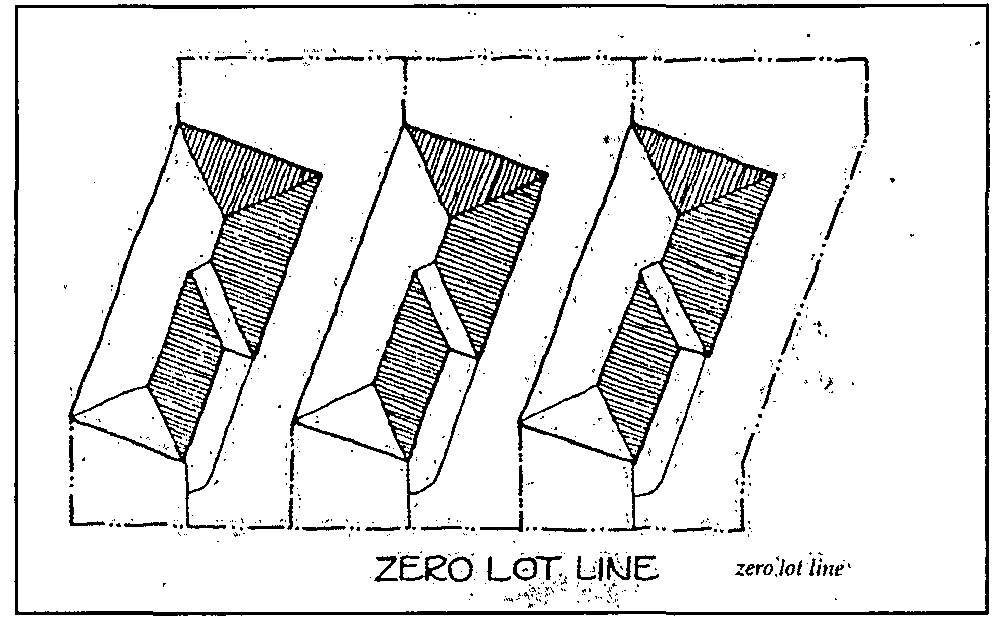
Zero lot line: "Zero lot line" housing is single-family detached housing which shall have only one (1) side yard. Zero lot line dwellings shall be constructed against the lot property line on one side of a lot.
(Ord. No. 15-7-5, § I, 7-6-15; Ord. No. 19-2-3, §§ I, II, 2-4-19; Ord. No. 19-2-13, § I, 2-18-19; Ord. No. 19-3-13, § I, 3-25-19)
Editor's note—Ord. No. 15-7-5, § 1, adopted July 6, 2015, amended former Section III in its entirety. Former Section III pertained to similar subject matter and derived from the parish zoning ordinance of 1981 and the following:

