
Storey County Unincorporated
City Zoning Code
City Zoning Code
CHAPTER 17
84 - SIGNS AND BILLBOARDS
Sections :
17.84.010 - Purpose and findings.
The purpose of these regulations is to promote the wellbeing of the community by establishing standards that assure the provision of signs adequate to meet essential communication needs while safeguarding First Amendment rights and providing for a safe, healthy, and visually attractive and appropriate environment. Within this overall framework, it is the intent of these regulations to:
A.
Protect the right to the use and display of signs for the identification of activities and any related products, services, and events;
B.
Protect the right of individuals to privacy and freedom from nuisances;
C.
Protect the value of property and improvements thereon;
D.
Permit signs that are appropriate for their surroundings;
E.
Assure that signs are constructed and maintained in a safe condition;
F.
Assure that signs conform to applicable county, state, and federal codes and regulations;
G.
Prevent signs from interfering with traffic regulatory devices or otherwise obstructing motorists or pedestrian vision;
H.
Reduce traffic hazards and eliminate obsolete signs; and
I.
Provide an efficient and effective means of administration and enforcement.
(Ord. No. 12-244, § I, 12-4-2012; Ord. No. 18-284A, § 5, 11-30-2018)
17.84.020 - Applicability.
All signs shall comply with the applicable standards outlined in this chapter. This chapter applies to outdoor temporary and permanent signs including, but not limited to: writing or text (including letter, word, or numeral); pictorial representations (including illustration or decoration); emblem (including device, symbol, or trademark); flag (including banner, streamer, or pennant), and lights and other things or combination thereof that are designed, intended, or used to advertise, attract special attention to, or otherwise inform when any part of the advertising or information content is visible from any public place within an outdoor area.
It is recognized that these standards are neither exclusive, nor exhaustive. In instances where a health or safety concern is identified with regard to any proposed sign, billboard, or advertising device, additional or more restrictive conditions may be imposed. If any part of this chapter is in conflict with regulations of any federal, state, or county agency, other political subdivision (e.g., homeowner's association) the more stringent limitation or requirement will prevail to the extent of the conflict.
(Ord. No. 12-244, § I, 12-4-2012; Ord. No. 18-284A, § 5, 11-30-2018)
17.84.040 - Comstock Historic District applicability.
In addition to the requirements set forth by this chapter, all signs located within the Comstock Historic District must comply with the regulations set forth by Section 17.12.049 of this title and NRS Chapter 384; the regulations set forth supersede this chapter in the event of a conflict. All signs shall be reviewed and approved by the Comstock Historic District Commission and/or their designee.
(Ord. No. 12-244, § I, 12-4-2012; Ord. No. 18-284A, § 5, 11-30-2018)
17.84.070 - Sign validity.
A.
All new signs shall conform to the requirements of this chapter.
B.
All signs located within the Comstock Historic District, and are not consistent with Comstock Historic District regulations, shall be brought into conformance with this chapter prior to March 31, 2019.
C.
Existing signs conforming to this sign ordinance may remain whether or not the business associated with the sign maintains operations at the site.
D.
Existing signs which are not conforming to this sign ordinance shall be brought into conformance with the sign ordinance prior to December 31, 2021. This may require removal and/or retrofitting of non-conforming signs and/or obtaining a special use permit for certain signs as identified by this chapter.
E.
Existing signs which were installed prior to December 31, 1999, which are not consistent with this sign ordinance, may remain, with the exception of signs not consistent with the Comstock Historic District, if applicable. Any changes to the sign shape, size, location, or other similar modification which is not considered ordinary maintenance and repair, shall require the signs to come into conformance with the sign ordinance.
F.
If a sign has been identified by the Comstock Historic District Commission as having historical significance, the provision for removing and/or retrofitting the sign may be administratively waived by the director of planning.
(Ord. No. 18-280, § XI, 2-6-2018; Ord. No. 18-284A, § 5, 11-30-2018)
17.84.080 - General requirements.
All signs, whether temporary or permanent, located in any regulatory zone are regulated as follows:
A.
Maintenance. All signs must be maintained so that they remain free of graffiti and cracking, separation, splitting, ripping, chipping, and fading of exposed surfaces including, but not limited to, faces, lettering, and all structural supports (See examples in Figure 8.1). Signs must be maintained so that they remain safe, fully upright and level, and firmly secured to their place of attachment. Guy wires, tie-downs, and lean-to support apparatuses are prohibited unless it can be demonstrated to the satisfaction of the director that the supports are crucial to the structural integrity of the advertising device and that design alternatives are impracticable.
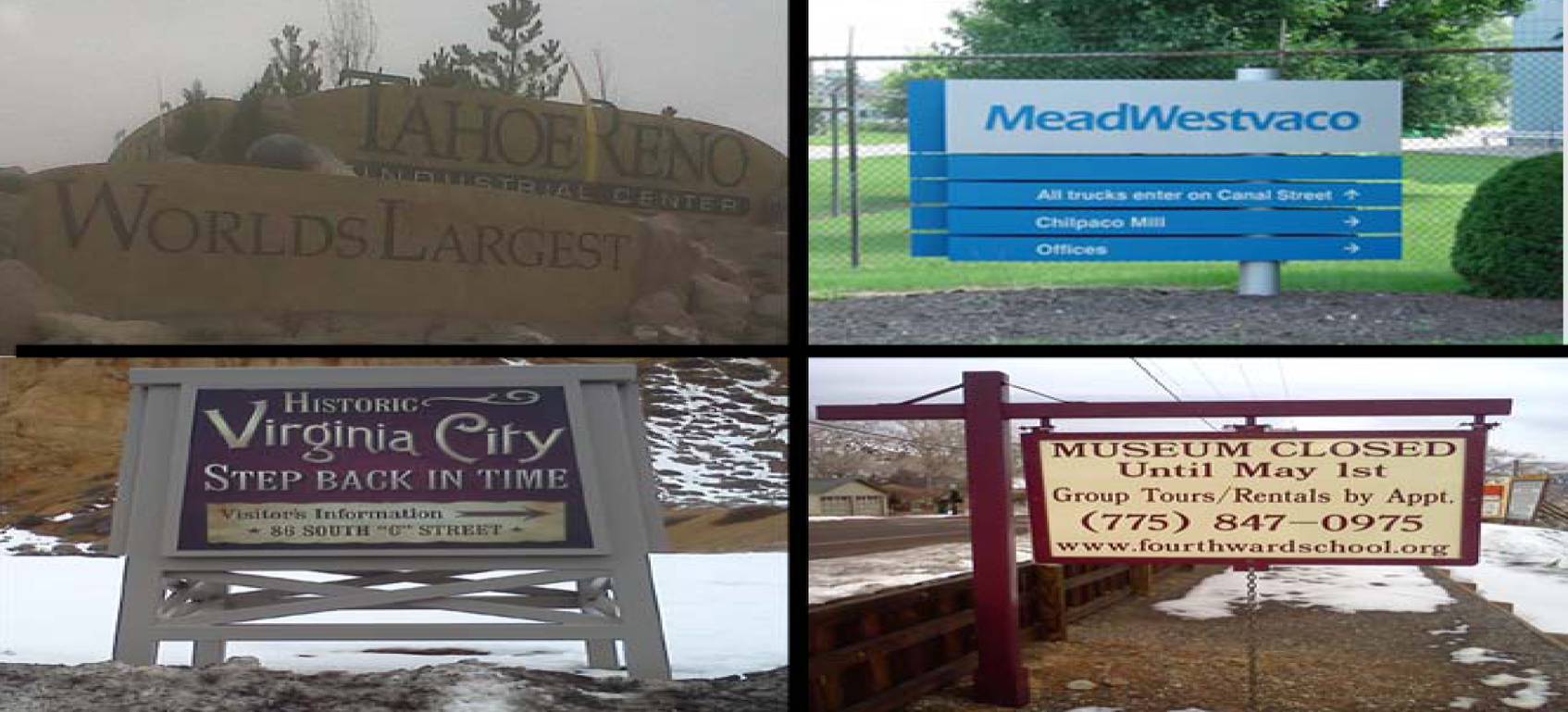
Figure 8.1: The free standing signs retain their upright position with neat and professional
designs. The tether at the bottom right sign prevents sign face swinging due to wind
forces; this device exhibits an appropriate and attractive method of mitigating this
effect. The signs are maintained appropriately in order to preserve their structural
integrity and visual appearance.
B.
Historic design. Signs located within the Comstock Historic District must comply with applicable provisions under this chapter, Section 17.12.049 and NRS 384.
C.
Lighted and illuminated signs. Signs and billboards which are lighted, illuminated, or otherwise employ the use of direct or indirect lighting, lights, or other forms of illumination, must comply with applicable regulations set forth by this chapter, Chapter 8.02 Dark Skies, and NRS 384, when applicable. Lighted or illuminated signs located in or within two thousand feet of the Comstock Historic District or a CR, E, or R zone must be Compact Florescent Lighting (CFL), or Light Emitting Diode (LED) type lighting. CFL and LED light emitting devices which are made to look like incandescent light "bulbs" are permitted to be plainly visible. No neon (see Section 17.84.090.C. or blinking, flashing, chasing, or motion lighting is permitted.
D.
Changeable copy or variable image signs. These types of signs (as defined in Chapter 17.10) are prohibited within two thousand feet of CR, E, and R zones and the Comstock Historic District. A special use permit is required in other zones. A special use permit is not required for changeable copy or variable image signs displaying only the time and temperature when located beyond two thousand feet of CR, E, and R zones and the Comstock Historic District.
E.
Murals. A special use permit is required for the application or placement of a mural. Murals proposed within the Comstock Historic District must also comply with NRS 384, this chapter, and Section 17.12.049 and approval from the Comstock Historic District is required. The definition and intent of murals is provided for in Figure 8.2 below.
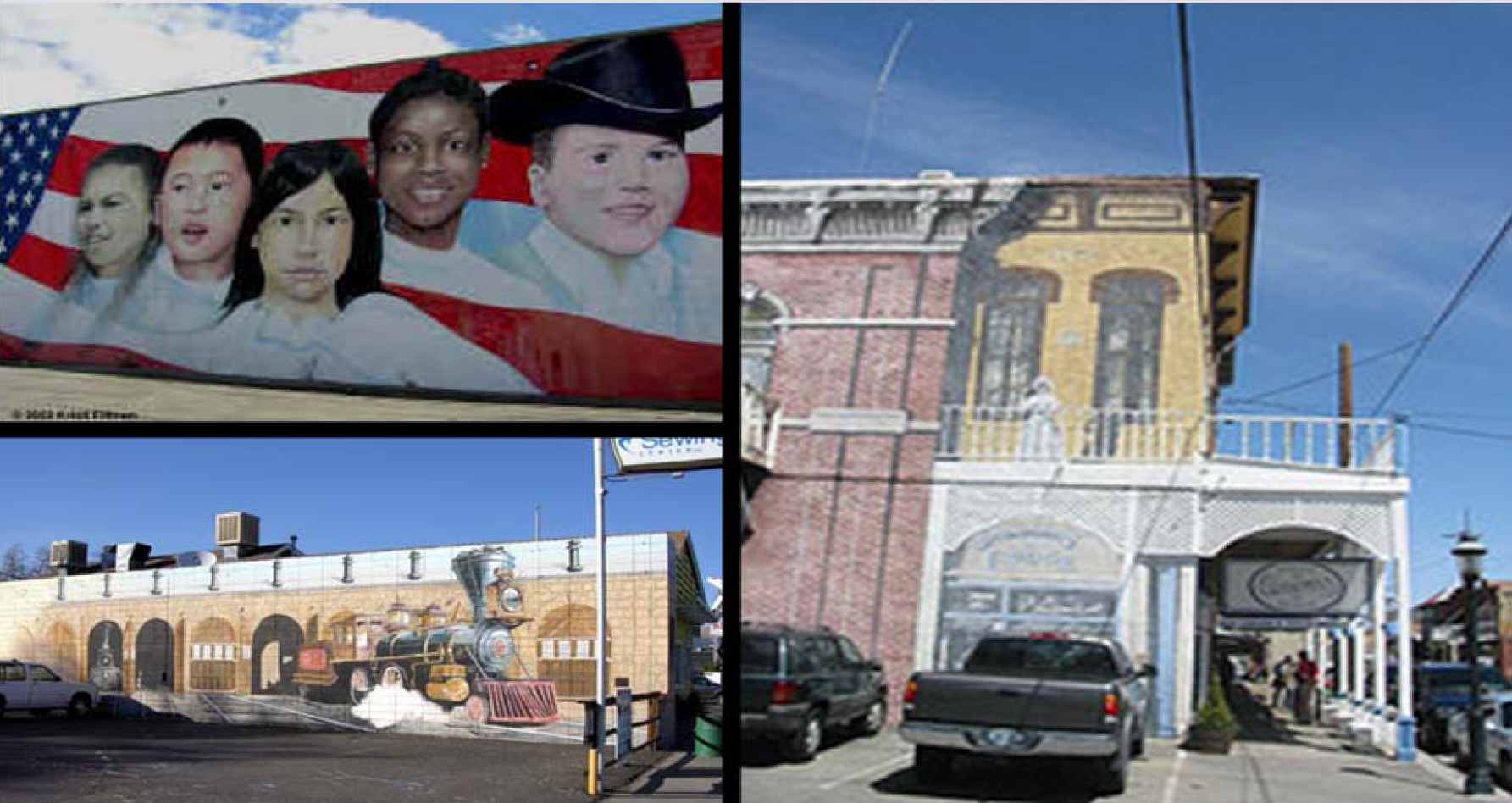
Figure 8.2: Murals are non-commercial images such as paintings or enlarged photographs
applied directly to walls, ceilings, or other exterior surfaces. They are typically
large in size. Murals typically exhibit few or no words and are not intended to advertise
or otherwise bring attention to any attraction. Non-commercial images, such as those
illustrated above, are intended to enhance the beauty, highlight the social or historical
character, or otherwise depict a message or theme that is common to the immediate
community in which the mural is displayed. The themes depicted above, for example,
are as follows: (top left) Ely, Nevada - diversity and unity of the ever-changing
mining community; (bottom left) Carson City, Nevada - celebration of the history of
the Virginia and Truckee Railroad; (right) Virginia City, Nevada - painted wall intended
to continue the historic storefront façade to the side of a normally unattractive
stucco and brick wall.
F.
Outdoor advertising adjacent to interstate/primary highways. As regulated pursuant to NRS 410.320, outdoor advertising may not be erected or maintained within six hundred sixty feet from the nearest edge of the right-of-way of the interstate and primary highway systems which is visible and placed with the purpose of having its message read from the main- traveled way of the interstate and primary highway systems, unless the exemptions outlined in the Nevada Revised Statutes can be made.
G.
Right-of-way visibility. Signs located near property lines and intersecting driveways and public rights-of-way are allowed outside of the vision clearance triangle as demonstrated in Figure 8.3. Any sign, with exception of traffic regulatory signs installed by a government agency, located within the vision clearance triangle must have a base that is higher than eight feet above street/grade level or a total height not exceeding three feet above street/grade level. In instances where a safety or traffic hazard is identified with regard to these requirements, additional or more restrictive conditions may be imposed. Otherwise, setback requirements apply as follows:
1.
C, CR, E, and R zones - Seven-foot clearance setback;
2.
All other zones - Twenty-five-foot clearance setback.
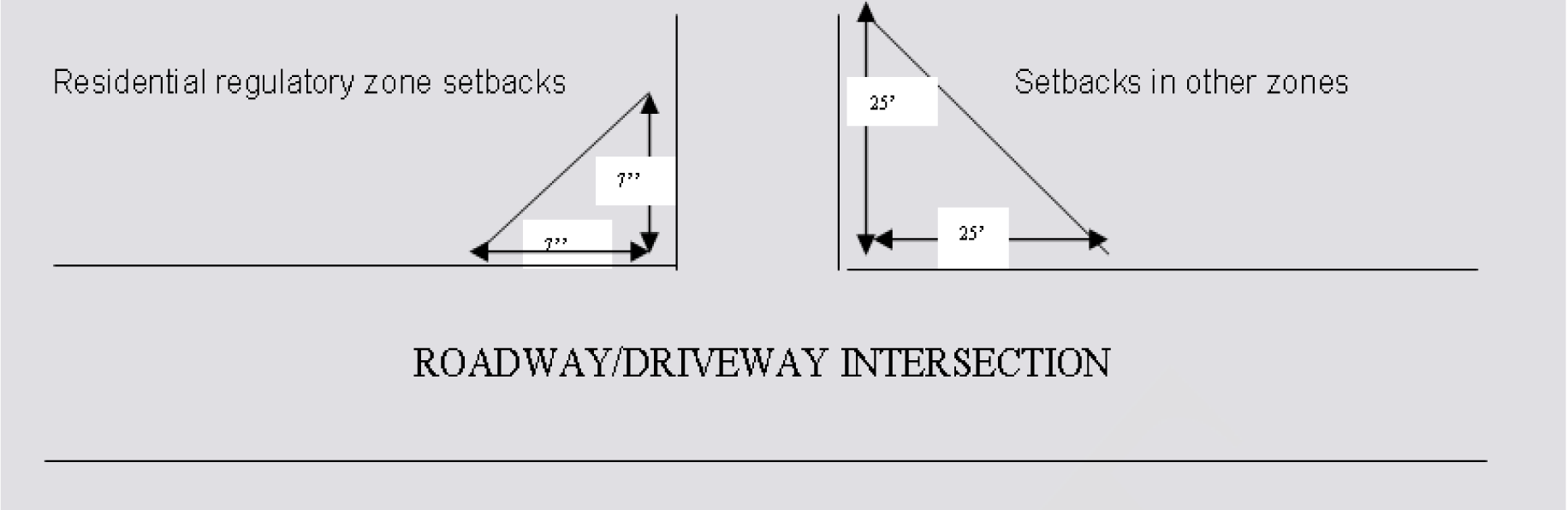
Figure 8.3: Setback requirements for devices installed within the vision clearance
triangle maintain clear visibility for vehicular and pedestrian traffic. In some instances
more restrictive requirements may be necessary to maintain a safe travel environment.
Regulations pertaining to the vision clearance triangle are also found in Section 17.12.050
H.
Directional signs. Directional signs may only be placed at the location where the traveler must change direction from one public right-of-way to another in order to reach the destination. The sign must display a directional element, such as an arrow, pointing to the associated attraction. Directional signs located on private property shall be included in the calculation of the allowable sign area for the parcel on which the sign is located. Signs located in the right-of-way must be consistent with the requirements for signs in rights-of-way adopted by the entity which owns the right-of-way. Directional signs shall meet all other requirements outlined in this chapter.
I.
Sign area shall be calculated by enclosing the extreme limits of all framing, emblem, logo, representation, writing or other display within a single continuous perimeter composed of squares, ovals or rectangles.
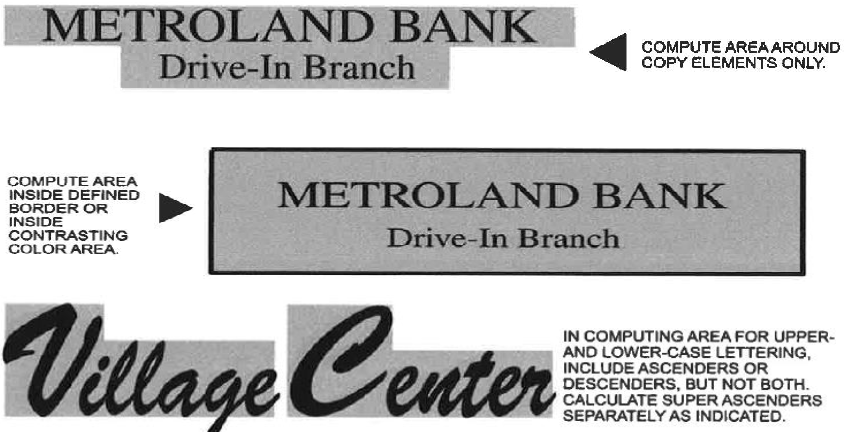
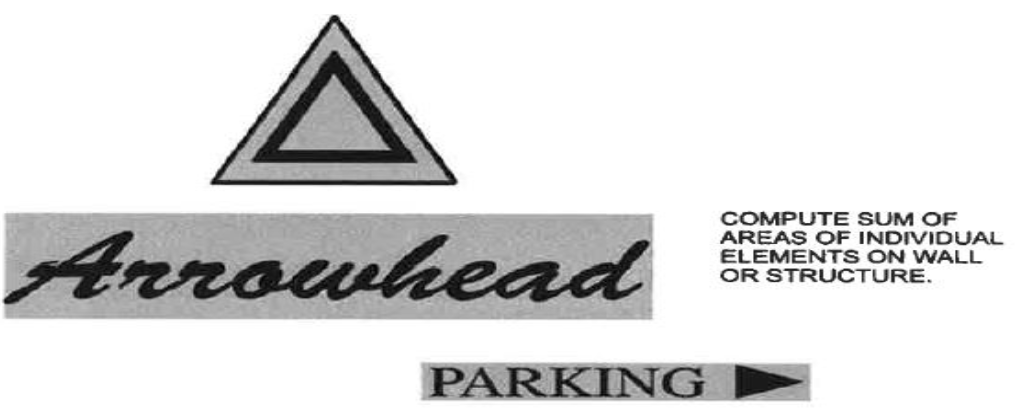
Figure 8.4. Source: 2015 International Zoning Code.
(Ord. No. 12-244, § I, 12-4-2012; Ord. No. 18-284A, § 5, 11-30-2018)
17.84.090 - Comstock Historic District sign requirements.
Visible materials for signs and supporting structures within the Comstock Historic District must be or appear to be of substance that can be shown to have existed for advertising purposes up to and including the year 1942, and must be appropriate in design for that time period. A Certificate of Historical Appropriateness from the Comstock Historic District Commission is required. The following standards apply exclusively to all signs located within the Comstock Historic District as established pursuant to the terms of NRS 384.
A.
Signs are not permitted to extend from buildings or from porches over streets with any overhang over streets, curbs, or shoulders without a Special Use Permit.
B.
Building titles, names, dates, and other messages, including advertisements that were painted directly to the exterior walls, parapet walls, and between the windows of the upper floors of the building at or prior to the year 1942 may be reapplied as they existed at that time. Photographic proof of messages existing at that time must be submitted to the director with a Certificate of Historical Appropriateness from the Comstock Historic District Commission before the sign may be reapplied. These applications do not count toward the maximum allowed sign area identified in Section 17.84.100 of this chapter.
C.
Neon signs. Neon signs are prohibited outside of buildings or within windows or openings visible from a public place. This limitation includes lighted signs that appear similar to neon signs, such as those which employ light emitting diodes (LED) that are configured so that they appear as continuous streams of light. (See examples in Figure 8.5). Neon signs are permitted within enclosed buildings when the neon sign is located no closer than six feet to the building windows, or if the placement of the sign is not visible from the public right-of-way, boardwalk, or other public access location.

Figure 8.5: The top two light emitting diode (LED) signs appear similar in character
to the bottom neon sign.
(Ord. No. 12-244, § I, 12-4-2012; Ord. No. 18-284A, § 5, 11-30-2018)
17.84.100 - Sign allowances per zoning district.
The following identifies the calculations for the amount of sign area allowed per building/parcel. All signs must conform to all other requirements of this chapter. Any proposed individual sign one hundred twenty-eight square feet in area or greater shall require a special use permit. Any individual freestanding sign one hundred twenty-eight square feet in area or greater and is supported by a single monopole structure is also defined as a billboard and must meet the requirements identified in this chapter for billboards.
A.
CR and C zoning districts. The following standards apply to commercial land uses:
1.
Building signs. Three square feet multiplied by the linear building frontage shall be allowed. The total area of all signs (not including boardwalk hanging signs, some window signs or other signs identified as exempt in this chapter) for the building frontage shall not exceed this square footage. Signs included in the building sign area calculations are:
a.
Signs attached or applied to the building or porch (roof and/or fascia).
b.
Signs painted directly on the building or projecting from the building. Projecting signs shall have each side equal in size. Only one side of the sign shall count towards the building sign calculation.
c.
Freestanding signs. Each side of the freestanding sign shall be equal in size and only on side shall count towards the overall square footage calculation.
d.
Signs attached to accessory structures or features.
e.
Signs painted on or attached to porch posts. Signs attached to porch posts that exceed the width of the post shall be mounted higher than seven feet to allow for pedestrian clearance.
f.
Exterior-applied window signs. Signs applied to the interior of the window are not a part of the building sign calculation, see subsection A.2., below.
2.
Window signs. Window signs shall be painted or permanently applied to the interior surface of a window. Signs which are attached or applied over the exterior of the window are not considered window signs and count toward the total allowable sign area for the building.
3.
Boardwalk Porch Hanging Signs. One porch hanging sign is allowable for each doorway along C Street which provides public access to the business. The sign may extend from the building face to the porch support posts and must be a minimum of seven feet in height to allow for pedestrian clearance underneath the sign. Signs may have advertising copy on both sides of the sign. Secondary signs may be attached to the primary porch sign, but must meet the seven-foot pedestrian clearance requirement. This area of signage does not contribute to the building sign calculations.
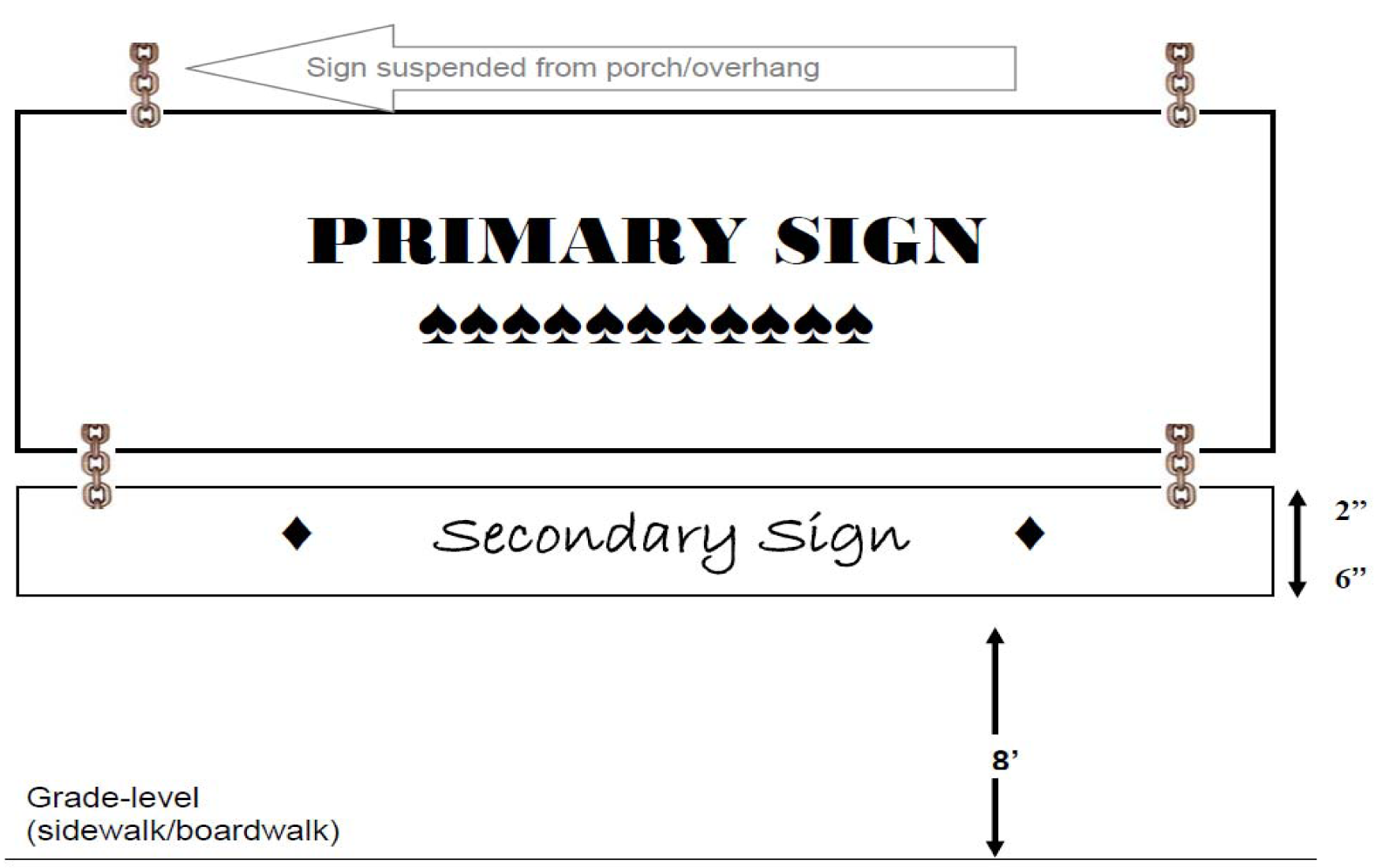
Figure 8.6: The above diagram illustrates the manner in which two signs may be suspended
over the sidewalk or boardwalk within the Comstock Historic District. All signs must
be secured taut.
4.
Sandwich board signs. One sandwich board sign is allowed per principle building. The sign shall only be displayed during business hours and shall not exceed six square feet on each side. The signs shall be located so as not to impede pedestrian traffic and shall not be located within the street right-of-way. Signs in the Comstock Historic District shall be constructed of approved materials for the district. This area of signage does not contribute toward the building sign allowance calculations.
5.
Outdoor operations. For commercial businesses which do not operate within building, or have a small office building (five hundred square feet or less) associated with an outdoor operation, the maximum amount of all signage for the site shall be three square feet multiplied by the linear parcel frontage, but shall be less than one hundred twenty-eight square feet. Additional sign area may be permitted with a special use permit associated with the use on the parcel.
6.
Freestanding signs shall not exceed ten feet in height above grade level and must be designed so as not to impede traffic and pedestrian visibility. Additional height may be permitted with a special use permit. Signs must also conform to the right-of-way visibility requirements identified in Section 17.84.080.G.
7.
On-site directional signs (e.g. truck entrance, one way driveway, employee entrance) shall be considered in the calculations for the overall allowable building signs and shall meet the design requirements outlined for building signs.
8.
If a permitted principal use has not been established on the parcel, a special use permit is required for any sign or signs proposed, with the exception of real-estate for-sale signs and signs associated with the election process.
B.
CR, R, E zoning districts. The following standards apply for signs associated with residential uses within CR, R and E. All signs must conform to all other requirements of this chapter.
1.
One sign, no larger than six square feet, is permitted. An opposing face of exactly the same color, shape, size, and configuration to convey its message to opposing pedestrian or vehicular traffic is permissible. Only one side of the sign shall count towards the overall calculation of sign area. The sign may be attached to the residence, be a freestanding sign or a sandwich board sign. The sign may only be located so as not to impede pedestrian traffic and shall not be located within the street right-of-way.
2.
A special use permit is required for any lighting or illumination of signs. No neon, blinking, flashing, chasing, or lighting which is otherwise in motion, reader boards and variable image displays, including those which display time and date, or translucent lighted signs are permitted.
3.
If a permitted principal use has not been established on the parcel, a special use permit is required for any sign or signs proposed, with the exception of real-estate for-sale signs and signs associated with the election process.
C.
I, P and A zoning Districts. The following standards apply to industrial, public and agriculture uses:
1.
For parcels one acre or less in size, three square feet multiplied by the linear building frontage shall be allowed. The total area of all signs on the frontage shall not exceed this square footage. Signs include those attached to the building or porch, signs painted directly on the building or projecting from the building, onsite directional signs, exterior-applied window signs and freestanding signs. Signs projecting perpendicular to the building frontage and freestanding signs shall only count one side towards the overall square footage calculation, and each side shall be equal in size. Signs attached to accessory structures or features shall count towards the building sign calculation for the closest business frontage.
2.
For parcels over one acre in size, one square foot multiplied by the property line frontage shall be allowed. The total area of all signs on the frontage shall not exceed this square footage. Signs include those attached to the building or porch, signs painted directly on the building or projecting from the building, onsite directional signs, some window sides and freestanding signs. Signs projecting perpendicular to the building frontage and freestanding signs shall only count one side towards the overall square footage calculation and each side shall be equal in size. Signs attached to accessory structures or features shall count towards the building sign calculation for the closest business frontage.
3.
Sandwich board signs. One sandwich board sign is allowed per principle building. The sign shall only be displayed during business hours and shall not exceed six square feet on each side. Signs shall be located so as not to impede pedestrian traffic and shall not be located within the street right-of-way. Signs in the Comstock Historic District shall be constructed of approved materials for the district. This area of signage does not contribute to the building sign calculations.
4.
Outdoor operations. For industrial and agricultural businesses and public uses which do not operate within building, or have a small office building (five hundred square feet or less) associated with an outdoor operation, the maximum amount of all signage for the site shall be less than one hundred twenty-eight square feet. Additional sign area may be permitted with a special use permit.
5.
Freestanding signs shall not exceed ten feet in height above grade level and be designed so as not to impede traffic and pedestrian visibility. Additional height may be permitted with a special use permit.
6.
On-site directional signs (e.g. truck entrance, one way driveway, employee entrance) shall be considered in the calculations for the overall allowable building signs and shall meet the design requirements outlined for building signs.
7.
Window signs. Window signs shall be painted or permanently applied to the interior surface of a window. Signs which are attached or applied over the exterior of the window are not considered window signs and count toward the total allowable sign area for the building.
8.
If a permitted principal use has not been established on the parcel, a special use permit is required for any sign or signs proposed, with the exception of real-estate for-sale signs and signs associated with the election process.
D.
F, NR and SPR zoning districts. The following standards apply to forestry, natural resources and SPR uses:
1.
Total sign area for all signs shall be less than one hundred twenty-eight square feet and freestanding signs shall not exceed ten feet above grade level.
2.
Additional sign area and height may be permitted with a special use permit.
3.
If a permitted principal use has not been established on the parcel, a special use permit is required for any sign, with the exception of real-estate for-sale signs and signs associated with the election process.
E.
Signs located within a planned unit development (PUD). All signs shall conform to the sign regulations outlined in the county PUD approval.
(Ord. No. 18-284A, § 5, 11-30-2018)
17.84.110 - Exempt signs.
The following signs and devices are exempt from the provision of this chapter. The regulations under Chapter 17.12, General Provisions apply to exempt signs. Exempt signs do not count toward the maximum allowed signs identified in Section 17.84.100 of this chapter. All signs located within the Comstock Historic District must comply with the regulations under this chapter and NRS 384. The provisions set forth supersede this section in the event of a conflict. Any display or types of signs not listed in this section and not in conflict with the provisions of this chapter are subject to approval of the director.
A.
Signs that are displayed for public safety (e.g. fire extinguishers, exit, call 911, AED and signs necessary for safe and orderly traffic control) are considered exempt.
B.
Customary holiday decorations and signs in the nature of decorations which are seasonal, clearly incidental, and customarily associated with any national, local, or religious holiday and removed within thirty days of the official recognized date of the associated holiday. Such decorations/signs must be located so as not to impede pedestrian or vehicular access.
C.
Religious symbols located on a building or otherwise on-site which are used for organized religious worship and related services.
D.
Scoreboards related to and located within established athletic fields and arenas.
E.
Commercial and non-commercial advertisement and sponsor signs which are attached to the interior portion of fencing which surrounds a designated athletic field or arena. Signs must not be plainly visible from any public place outside of the premises.
F.
"Vacancy," "no vacancy," "open," "closed," "yes," "no," "full," "sorry," and similar type signs associated with commercial uses provided that the area of the sign does not exceed two and one-half square feet in area. Neon is not permitted in the Comstock Historic District. This sign area shall not be included in the overall sign calculations.
G.
Motor vehicle for-sale signs provided that:
1.
The message of each sign is directly related to the sale of the motor vehicle on or in which it is located;
2.
There are no more than three signs per vehicle, including posters, stickers, and other advertising devices allowed by this chapter;
3.
The sign is attached to or located within the vehicle. Stickers may be placed directly onto the exterior surfaces of the vehicle or its windows;
4.
The sign or combination thereof does not exceed three square feet in total area;
5.
The vehicle is located in either an approved sales lot or on private property with the owner's consent; and
6.
The sale of the vehicle or vehicles and location and placement thereof is not in violation of any federal, state, or county regulations.
H.
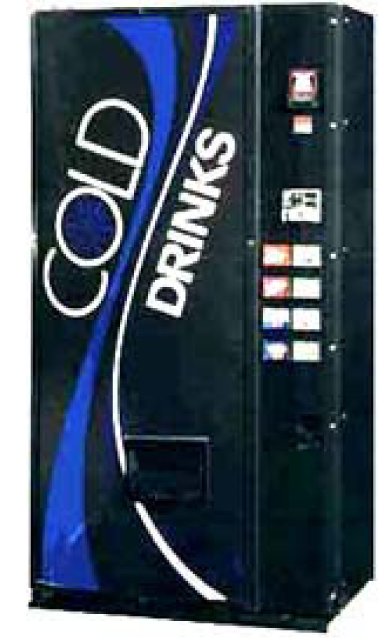
Advertising on vending machines, such as that shown in the illustration to the right, which depicts the product contained therein.
I.
Exempt flags shall be eighteen square feet or less, be rectangular in shape and have a width to length ratio between approximately 1:1.5 to 1:2.
J.
House and property addresses, familial name signs, and devices that are similar in nature and clearly do not facilitate the purpose of advertising a commercial or non-commercial business, service, or attraction.
K.
Traffic and pedestrian control and information signs which are installed by a government agency.
L.
Temporary or permanent signs erected to warn of danger or hazardous conditions so long as the hazards may exist, including signs indicating the presence of underground cables, gas lines, and other potentially dangerous conditions.
M.
Signs associated with the national, state or local election processes shall be consistent with the following:
1.
Signs, posters and banners shall not be displayed prior to the first day allowed for the filing of candidacies for election.
2.
Signs, posters and banners may not be placed on private property without the private property owner's permission.
3.
Unsuccessful primary candidates must remove, or cause to be removed, their signs or posters no later than thirty days after the primary election.
4.
All signs, posters and banners associated with national, state or local elections shall be removed no later than thirty days after the general election.
5.
Signs, posters and banners may not be affixed or placed on the public domain. The public domain placement restriction does not apply to signs placed on the county-owned property located as shown in Appendix A. Signs located in these public areas shown in Appendix A shall be permissible up to thirty-two square feet.
6.
Sign, posters, and banners shall not exceed thirty-two square feet. Signs, posters and/or banners may have copy on both sides. Only one side is counted toward the overall allowable sign area.
7.
The sign owner is responsible for knowing the location of the abutting state and county right-of-way and for complying with state and federal regulations.
8.
The county is not responsible for state right-of-way non-compliance or penalties imposed against the sign owner for violation of those regulations.
9.
There is no limit on the number of signs or posters that may be placed on a parcel.
10.
Lighting installed specifically for signs, posters and banners is not allowed.
11.
Signs, posters and banners located near property lines and intersecting driveways and public rights-of-way are allowed outside of the vision clearance triangle as demonstrated in Section 17.84.080.G. Any sign located within the vision clearance triangle must have a base that is higher than eight feet above street/grade level or a total height not exceeding three feet above street/grade level. In instances where a safety or traffic hazard is identified with regard to these requirements, additional or more restrictive conditions may be imposed. Otherwise, setback requirements apply as follows:
a.
C, CR, E, and R zones - Seven-foot clearance setback;
b.
All other zones - Twenty-five-foot clearance setback.
N.
Real-estate for-sale and open-house signs not exceeding six square feet in CR, E, R, and SPR zones and thirty-two square feet in all other zones. Signs must be removed within fourteen days following the sale of the property for which the sign represents. Commercial advertisement signs indicating the presence or existence of a real estate office, business, or service are not considered real estate for-sale signs and are not exempt signs pursuant to this section.
O.
Yard, rummage, and garage sale signs not exceeding six square feet in area that are removed within twelve hours after the sale and not displayed in public view before twelve hours of the sale and are in public view for no more than two consecutive or non-consecutive days within a twelve-month period.
P.
On-site temporary signs and banners displaying a non-commercial message related to household or familial celebrations (e.g., "birthday," "newborn baby," "anniversary," "welcome back," etc.).
Q.
"No trespassing," "no hunting," "no fishing," "no loitering," and like signs not exceeding six square feet in C, CR, E, and R zones and thirty-two square feet in all other zones.
R.
Signs such as building contractor signs not exceeding six square feet in total area within C, CR, E, and R zones and thirty-two square feet in total area in all other zones and which are placed upon the property at which the associated project is located. These signs must be removed within fourteen days after the associated project has been completed.
S.
Commemorative or historical non-advertisement plaques and tablets installed by a government or non-profit entity.
T.
One on-site barber pole of traditional design (i.e., red, white, and/or blue rotating swirl absent of text), such as that illustrated to the right, not exceeding twelve inches in width and forty-eight inches in length and directly attached to the associated building in which the barber service is provided. The device may rotate during the hours that the associated barber is open for business. Lighting placed on or within the device is permitted when in accordance with the applicable provisions of this chapter and Chapter 8.02, Dark Skies.

U.
Displays of string lights outside of a seasonal and/or customary nature, local, or religious holiday, provided that:
1.
They are not placed on the public domain;
2.
They are decorative displays which only outline or highlight landscaping or architectural features of a building;
3.
They are steady burning, and do not blink, flash, or exhibit intermittent changes in intensity, animation, or rotating characteristics;
4.
They comply with the regulations of Chapter 8.02, Dark Skies;
5.
They are no greater in intensity than five watts for each bulb, or equivalent to the lumen intensity produced by a five-watt incandescent bulb (approximately seventy-three lumens);
6.
They are not placed on or used to outline any type of sign, billboard, or advertising device or their support structures unless otherwise allowed by the provisions of this chapter and Chapter 8.02, Dark Skies;
7.
They are not assembled or arranged to convey messages, words, commercial advertisements, slogans, and/or logos;
8.
They are commercial grade UL Listed for long-term outdoor use and do not otherwise create a safety hazard with respect to placement and connection to power supply as determined by applicable codes and regulations. The power supply must be a dedicated weather-protected and GFCI protected receptacle. The use of extension cords shall not be permitted;
9.
They are maintained and repaired so that no individual light bulb is inoperative for more than a period of thirty consecutive days. In the event that the bulbs are not maintained or repaired for a period exceeding thirty days, the string lights must be removed.
10.
Lighting located with the Comstock Historic District shall be consistent with the historic district requirements.
V.
Points of entry and public interest signs. In addition to the regulations of this chapter, non-commercial point of entry and public interest signs (See examples in Figure 8.7) that are owned, leased, or otherwise managed by any federal, state, or county agency, or a political subdivision thereof (e.g., homeowner's association or general improvement district), are permitted provided that they comply with the regulations below and the provisions under Sections 17.84.040, and 17.84.080. Changeable copy and variable image signs are prohibited. Point of entry signs installed at the entrance(s) of a planned unit development or subdivision; multi-family dwelling complex; industrial, shopping, or other commercial center; education facility or campus; or other building complex are permitted when they are managed and maintained by a federal, state, or county agency, or a political subdivision thereof, or the management of the property. All signs under this subsection are subject to approval of the director and comply with the following regulations:
1.
The sign must conform to the purpose and intent of this chapter and NRS 384, where applicable;
2.
The owner or political subdivision is responsible for sign placement, maintenance, and compliance with all applicable regulations;
3.
Encroachment permits must be obtained, where applicable;
4.
The sign must have proper access and maintenance easements;
5.
No more than one sign may be erected at any given location, with exception of one similar sign that may be placed at both sides of a point of entry. The maximum sign face area, excluding supporting structures, may not exceed thirty-two square feet;
6.
The sign and all parts thereof must be non-commercial and relate directly to the point of entry or public interest.
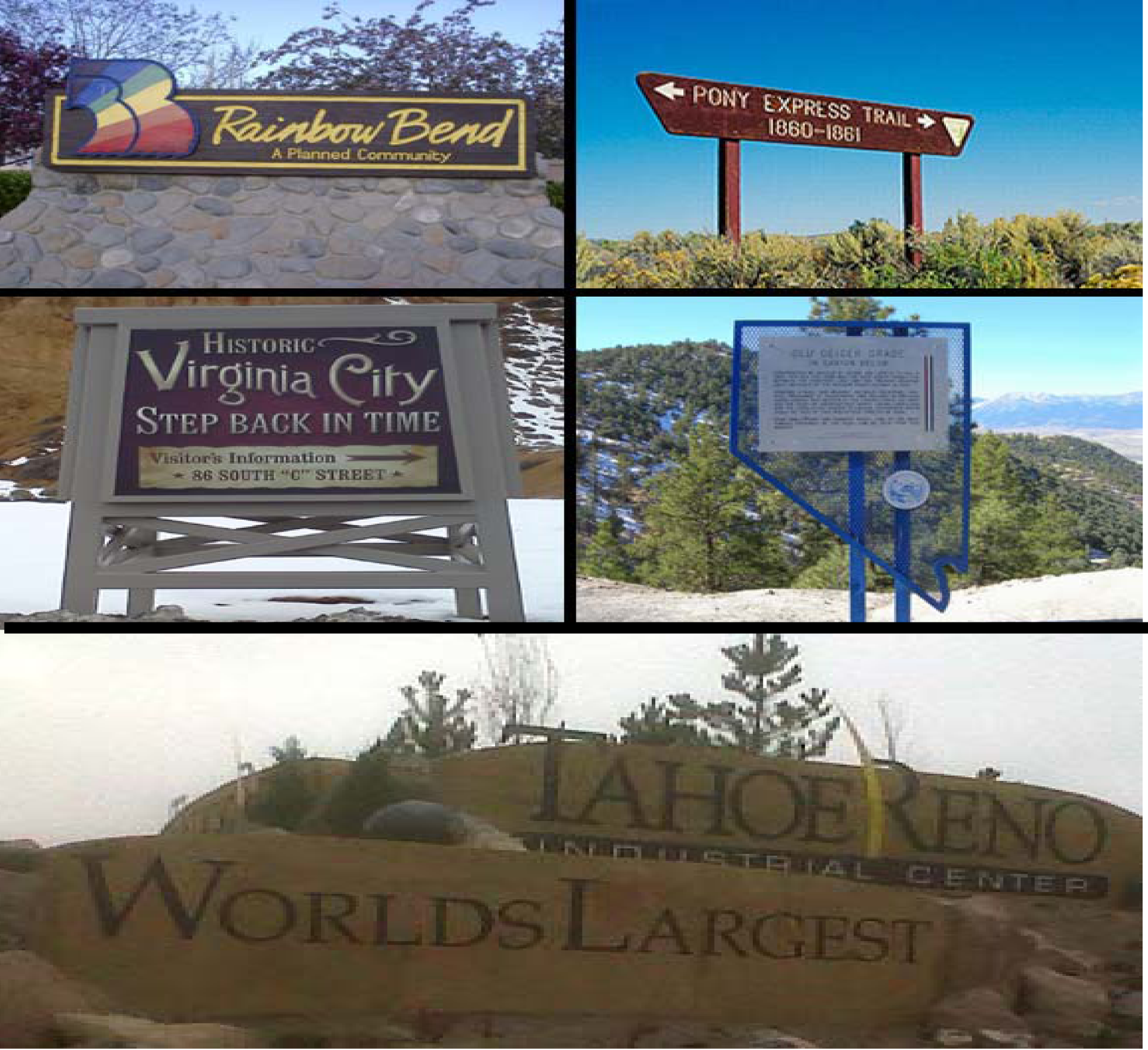
Figure 8.7: The point of entry signs (left and bottom) and place of interest sign
(top right) are owned and managed by public entities and their message is non-commercial.
The message in each devise relates directly to the point of entry or public interest
for the viewer.
(Ord. No. 12-244, § I, 12-4-2012; Ord. No. 18-284A, § 5, 11-30-2018; Ord. No. 22-321 , 7-5-2022)
17.84.120 - Temporary signs and banners.
Any sign or banner, except those listed in Sections 17.84.100, 17.84.110 and 17.84.120 displayed for a period of time not exceeding thirty consecutive or non-consecutive days in a twelve-month period of time is considered a temporary sign or banner.
Banners, posters, pennants, fliers; signs attached to temporary structures directly associated with operating special events, fairs, carnivals, and concessions; and devices which are supported, worn, or otherwise displayed on and by human or animal subjects (otherwise known as "human signs") and flags beyond that listed in Section 17.84.110.I. are considered temporary signs.
A.
In addition to all other applicable provisions of this chapter, all temporary signs and banners must comply with the following regulations:
1.
They must be professionally painted or printed. Those which become tattered, torn, or otherwise fall into disrepair must be immediately removed or replaced with a similar size and type sign.
2.
They may not exceed twelve square feet in total area.
B.
Banners that are mounted to a wall or canopy must be secured taut. A temporary banner mounted in such a manner that it becomes suspended between two points (e.g., between buildings, poles, trees, etc.) must not impede pedestrian or vehicular traffic.
C.
No more than one banner may be attached to any two points.
D.
Any banner which is suspended over a right-of-way is subject to approval of the director.
E.
A second sign or banner of exactly the same color, shape, size, and configuration may be applied to the opposite side of the sign in order to convey its message to opposing pedestrian or vehicular traffic.
F.
Temporary signs and banners may not be publicly displayed more than thirty consecutive or non-consecutive days in a twelve-month period.
G.
No more than four temporary signs or banners may be displayed for any one entity within a twelve-month period.
H.
Only one temporary sign or banner may be displayed at any given time per business. In a multi-tenant shopping center, two temporary signs or banners may be displayed.
I.
A special use permit may be granted to allow for exceptions to the regulations in Section 17.84.120.
(Ord. No. 12-244, § I, 12-4-2012; Ord. No. 18-284A, § 5, 11-30-2018)
17.84.130 - Prohibited signs.
The following signs and advertising devices are prohibited in any zone:
A.
Within, attached to, or hanging over a public right-of-way or on the public domain, with exception of permitted signs regulated pursuant to Sections 17.84.090, 17.84.100, and temporary banners.
B.
Located on private property without the expressed permission of the property owner.
C.
Mobile signs that are affixed to a frame or chassis having wheels and capable of being carried, or otherwise portable and designed to stand free from a building or other structure and fulfill the purpose of advertising. Mere removal of wheels or temporary securing of the mobile sign to the surface of real estate does not classify it as a free-standing sign. Ordinary identification of a business or service on an associated utility vehicle (e.g., construction contractor's vehicle or equipment such as those illustrated in Figure 8.8 below) is not considered a mobile sign and is thus exempt from the restrictions of this subsection. When uncertainty exists regarding the provisions of this subsection, the advertising device will be subject to the review and approval of the board with action by the planning commission.

Figure 8.8: The images shown on the top two vehicles (allowable) contrast with those
below (prohibited) in that they clearly relate to the service provided in association
with the vehicle. The bottom vehicles depicted are examples of mobile signs which
facilitate off-site advertising.
D.
Inflatable signs, including those which are made of Mylar, vinyl, plastic, rubber, or any other material which is supported by gasses contained therewith, or its parts, at pressure which is equal to or greater than the surrounding natural atmospheric pressure.
E.
Paper signs and fliers displayed on the exterior of buildings, trees, and other structures lasting more than twelve hours in a one year period.
F.
Portraying sexual, sexually-related, or other "adult" material in a provocative or otherwise obscene manner within or in view of a public place.
G.
Located in such a place that they negatively impact visual corridors and view sheds from public places, or obscure a view of the road, or other vehicular and pedestrian rights-of-way ahead, or curves, grades, or interstate highways or railways. The integrity of location, setting, feeling, and association of properties to their surrounding environment and view sheds (The Comstock Historic District and natural and largely undisturbed environment surrounding many rural properties county-wide are considered sensitive for the purposes herein and should be protected against visual impacts caused by signs and billboards).
H.
Emit noise, flames, smoke, steam, or other matter.
I.
Employ movement including, but not limited to, pennants, banners (except those that may be allowed as stated in Section 17.84.110 of this chapter), streamers, balloons, disks, searchlights, and lasers.
J.
Employ direct, indirect, internal flashing, or other illumination with light source or reflectivity of such brightness that it constitutes a hazard to ground or air traffic or a nuisance as determined by the designee or any federal or Nevada State agency.
K.
Obstruct or impair the display of any permanent regulatory or advisory traffic sign or parking sign or traffic signal.
L.
Obstruct, obscure, or impair the safe passage of pedestrians, cyclists, or persons with disabilities.
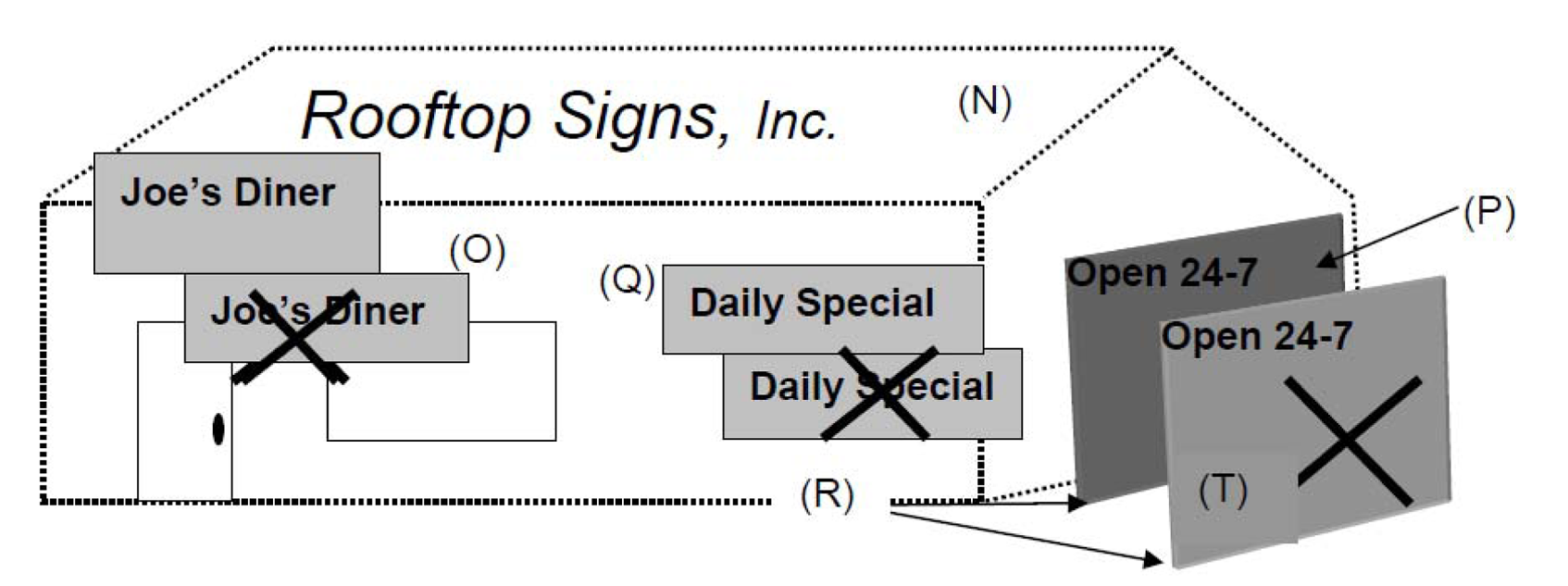
M.
Placed on the roof of buildings unless a special use permit is granted. In determining the special use permit application, Section 17.84.120.G. shall be a consideration. Signs may be placed on the roof of porches if a building story is the backdrop for the sign.
N.
Painted or attached to trees, fences, utility poles, rocks when located in their current natural place or state, or similar natural and man-made structures and objects.
O.
Attached or placed adjacent to any utility pole, traffic sign post, traffic signal, historical marker or any other official traffic control device.
(Ord. No. 12-244, § I, 12-4-2012; Ord. No. 18-284A, § 5, 11-30-2018)
17.84.140 - Billboards.
Any sign face measuring one hundred twenty-eight square feet or more in total area and is a freestanding sign supported by a single monopole structure is classified as a billboard and must comply with federal, state, and county regulations, including this chapter.
A.
Special use permit required. The regulations of this section and title are considered the minimum requirements for billboards. A special use permit is required before erecting or displaying a billboard. The special use permit may impose conditions as deemed appropriate by the board with action by the planning commission. Billboards must be listed as an allowed use or allowed with a special use permit land use in the corresponding zoning district for the property where the billboard will be located. The size of the billboard shall be determined on the allowable sign area associated with the parcel the billboard will be located on and the associated zoning district.
B.
Other permits and requirements. No billboard or its supporting devices may be erected until plans developed by a licensed engineer for the proposed project have been reviewed by the fire and community development departments and a building permit has been issued. A building permit may not be issued until the special use permit has been granted and all requirements of the county have been satisfied. The issuance of a building permit or any other authorizations prior to approval of the special use permit must not be construed as an approval to commence construction of a billboard.
C.
Transfer of entitlement. The owner(s) of a billboard may not sell, transfer, ground lease, or assign a billboard or property on which a billboard is located in whole or in part to any person, partnership, joint venture, firm, company, or corporation without a minimum of ninety days notification to the director prior to closing. The new owner of the billboard shall accept the conditions of approval for the billboard, or the billboard and associated features shall be removed.
D.
Best management practices. Preparation and construction within a billboard site including, but not limited to, the development, operation, and reclamation of all roads, access corridors, foundation pads, equipment storage and staging areas, and all related facilities must conform to grading and slope stability requirements, fire codes, and all Nevada Division of Environmental Protection (NDEP) best management practices.
E.
Distances limitations. No billboard may be permitted or otherwise erected or displayed:
1.
Less than six hundred sixty feet from federal aid rights-of-way and primary highway systems (e.g., Interstate 80).
2.
Within two thousand feet of:
a.
Any CR, E, P, or R zone, the Comstock Historic District, and within one thousand feet of the following public rights-of-way: Six Mile Canyon Road, Seven Mile Canyon Road, State Route 341, and State Route 342.
3.
With more than one display face, with exception of a second billboard face of the exact same shape, size, and configuration which is applied to the billboard's opposite side as to convey the device's message to opposing pedestrian and/or vehicular traffic, and not more than twenty inches apart.
F.
Support structures. Structures supporting billboards must conform to the local building code and be unobtrusive and recessive in their appearance. Billboards must be supported by a single monopole structure
G.
Billboard support structures must be coated with a non-reflective beige or gray-colored finish. Other colors and finishes may be permitted or required as part of the special use permit.
H.
Lighting. All direct and indirect lighting of a billboard must conform to the regulations under Section 17.84.080.C. and Chapter 8.02, Dark Skies. If any proposed billboard will employ use or display of variable images or changeable copies, will be placed within two thousand feet of any traffic signals or traffic signs, or will be located within a road boundary, the billboard owner must provide the county a traffic engineering report created by a licensed traffic engineer. The report must confirm that the advertising devise and its placement will be safe for vehicular and pedestrian traffic. The report must consider all factors relevant to traffic safety including applicable criteria contained in this title. The report will be completed at the cost of the applicant. The county may require an independent review of the report by a qualified person at the expense of the applicant. For changeable copy or variable images, no sign shall exceed one thousand five hundred nits between sunset and sunrise and shall exceed five thousand nits between sunrise and sunset. Signs shall automatically adjust/dim due to changes in ambient light, such as inclement weather. No animation is permissible.
I.
Facility closure. Any billboard not meeting the standards of this this chapter and the applicable federal, state, and county regulations will be considered closed. The process of removing the billboard and its supporting structures and reclaiming the site to the condition existing prior to its development must commence immediately and must be completed within one hundred eight days of closure. Further specifications pertaining to site reclamation will be determined by the conditions of the special use permit.
J.
Reclamation extension. If necessary, such as during times of force majeure, a request for a reasonable extension of the completion of removal and reclamation may be submitted to the director for approval. The application for extension must include all applicable documentation necessary to demonstrate that final removal and reclamation will take longer than the time allowed under the provisions of this chapter and that reasonable steps have been taken by the owner to conform to the requirements set forth by this chapter.
K.
Reclamation surety bond. A surety bond must be posted by the applicant of any billboard. The surety bond assures that a closed billboard and the land in which it is located is restored to a condition existing prior to installation of the billboard. The surety bond must be posted prior to disturbance of the land. The amount of the surety bond necessary to remove the structure and reclaim the land will be determined by a qualified licensed engineer or environmental manager at the expanse of the applicant and will be subject to third-party review as determined appropriate by the county. Additionally, the following requirements will apply:
1.
The applicant must submit to the director proof that a cash deposit, certified check, irrevocable bank letter of credit, or surety bond has been deposited to ensure completion of reclamation work that is consistent with the requirements for reclamation under the special use permit, including estimated costs associated with removal of each billboard and all associated equipment and accessory structures and restoration of the site to a natural state.
2.
The surety bond will be released after the county has determined that the land has been returned to a state existing prior the facility's existence.
3.
The required certification must include all applicable documentation necessary for certification of closure.
4.
Before the bond is released, the county will reserve the right to retain the service of an independent, qualified person, at the expense of the permit holder to verify that final reclamation has been completed in a manner which is determined by the director to be satisfactory.
L.
Liability insurance and indemnification. The permit holder and his or her assigns, heirs, or successors:
1.
Must provide proof of liability insurance to the county and maintain satisfactory insurance for all aspects of the facility in the amount of at least one million dollars. The county may require additional liability insurance coverage as needed. "Storey County" must be named as the "additional insured".
2.
Must agree to the extent not prohibited by law, to indemnify, defend, and hold harmless Storey County from any costs, damages, claims, causes for action, penalties, fines, liabilities, and judgments of any kind or nature to the extent such liability arises from or in connection with the permit holder's and operator's negligent use, operation, management, or maintenance of the premises.
(Ord. No. 12-244, § I, 12-4-2012; Ord. No. 18-284A, § 5, 11-30-2018)
17.84.170 - Complaint by state personnel.
Should the state highway engineer file a complaint with Storey County showing that any sign erected is a hazard to traffic, the director must immediately order the removal of the sign.
(Ord. No. 12-244, § I, 12-4-2012; Ord. No. 18-284A, § 5, 11-30-2018)
17.84.180 - Nuisance declared.
All signs not in compliance with the provisions of this chapter are declared to be nuisances and detrimental to the health, safety, economics, and general welfare of the people of this county and may be abated under the provisions of Section 17.03.045.
(Ord. No. 12-244, § I, 12-4-2012; Ord. No. 15-267, § VI, 3-15-2016; Ord. No. 18-284A, § 5, 11-30-2018)
17.84.260 - Violation liability.
Any person who violates any provision of this chapter is liable to Storey County for any expense, loss or damage incurred by Storey County by reason of the violation.
(Ord. No. 12-244, § I, 12-4-2012; Ord. No. 18-284A, § 5, 11-30-2018)
17.84.270 - Violation remedies not exclusive.
Nothing in this chapter may be construed to limit or prohibit the prosecution of the owner(s), or others, for a violation of this chapter by criminal complaint or by a civil action provided for by law.
(Ord. No. 12-244, § I, 12-4-2012; Ord. No. 18-284A, § 5, 11-30-2018)
APPENDIX A - LOCATIONS FOR SIGNS ASSOCIATED WITH NATIONAL, STATE OR LOCAL ELECTION PROCESSES WITHIN COUNTY-OWNED RIGHTS-OF-WAY OR PROPERTY.
The identified locations are approximate only (indicated in yellow or blue on the following maps). Signs associated with the election processes may be located on Storey County public right-of-way/property only in the general locations shown. No signs may be located that impede pedestrian or vehicle visibility and may not be located within a vision clearance triangle. Signs located in these public areas shall be permissible up to thirty-two square feet regardless of the zoning district. It is the sign owner's responsibility to make sure signs are not on private property without permission from the property owner and not located in any other public right-of-way. Signs must be located a minimum of one hundred feet from a polling location.
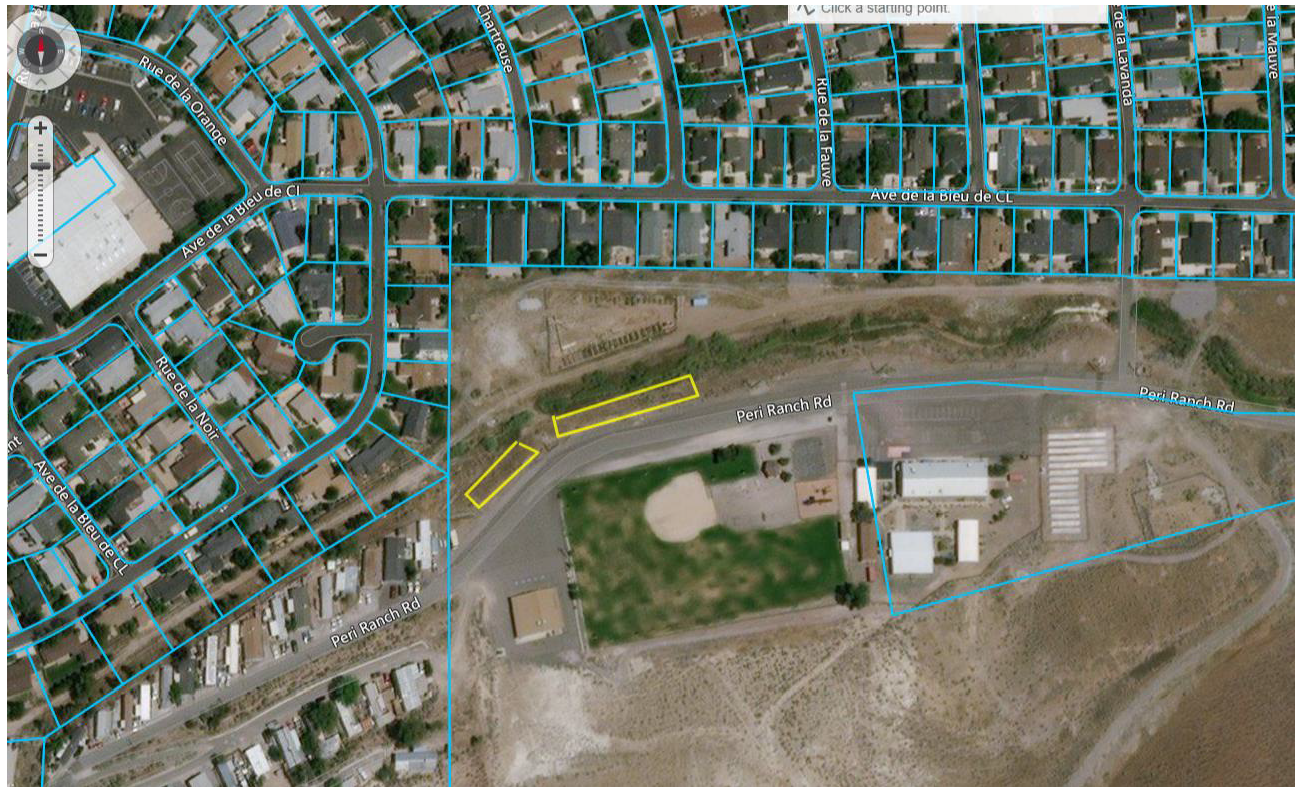
Lockwood Area
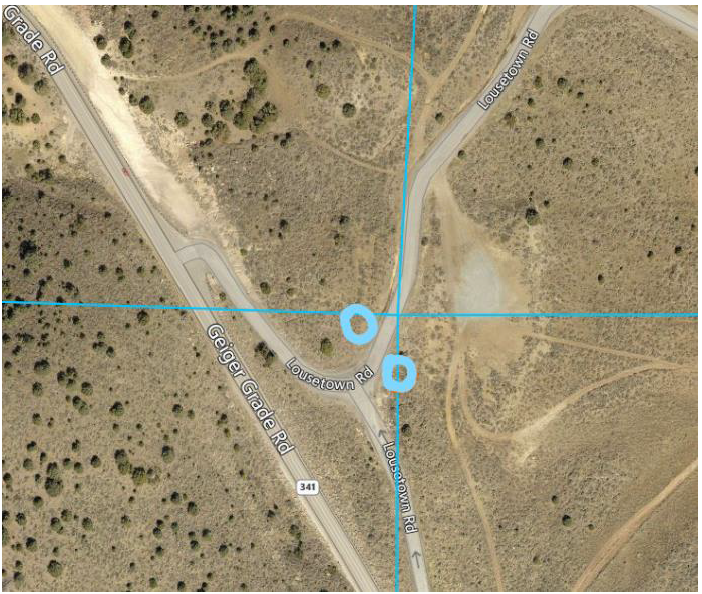
Lousetown Road
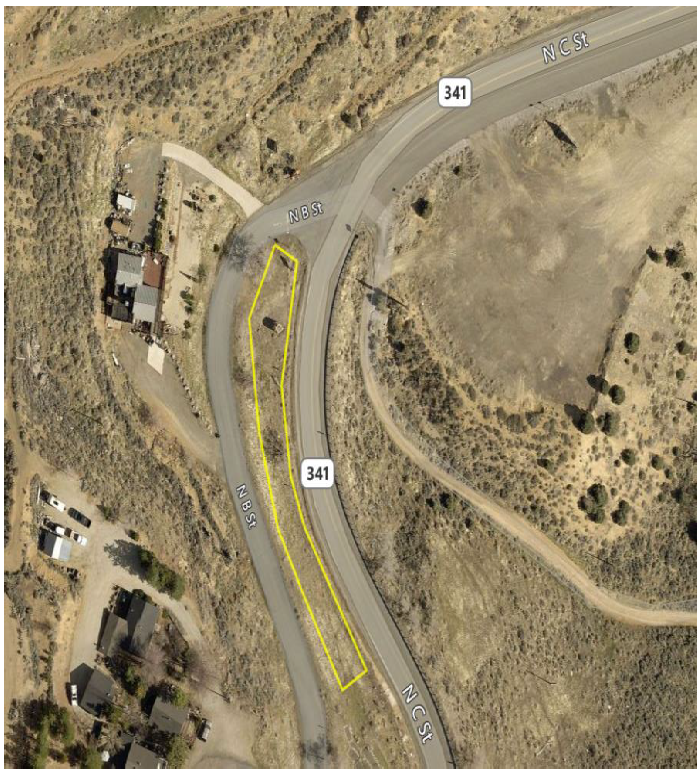
North C Street, Virginia City
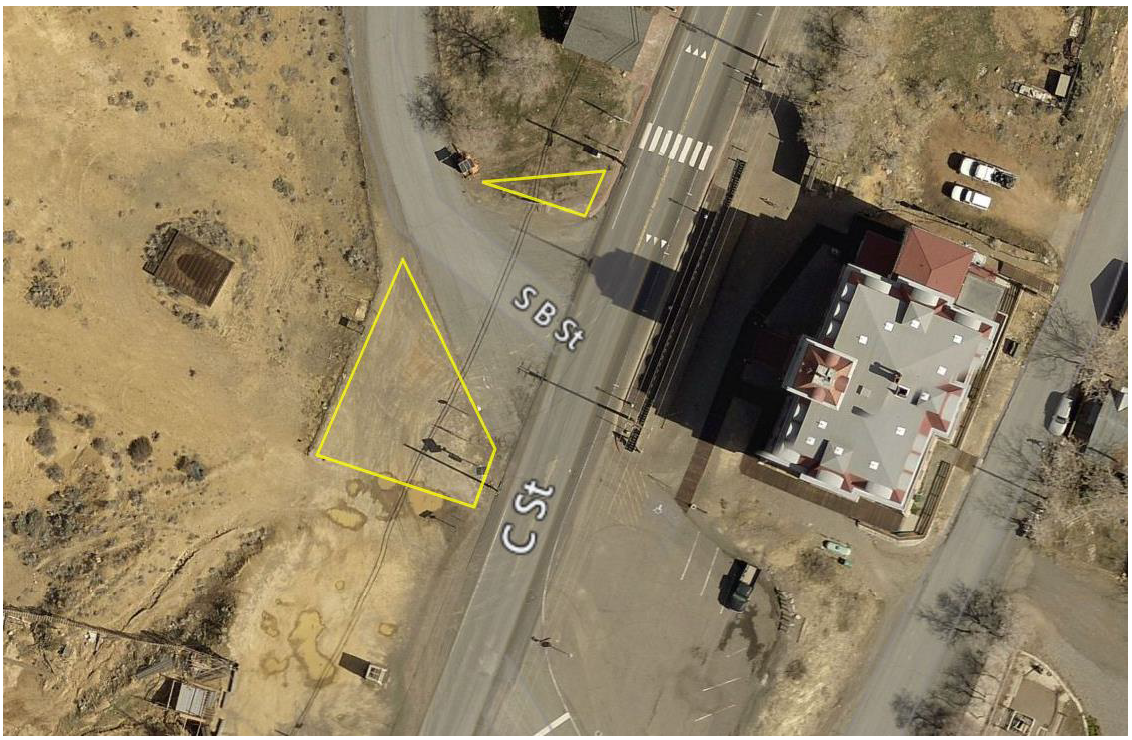
South C Street, Virginia City
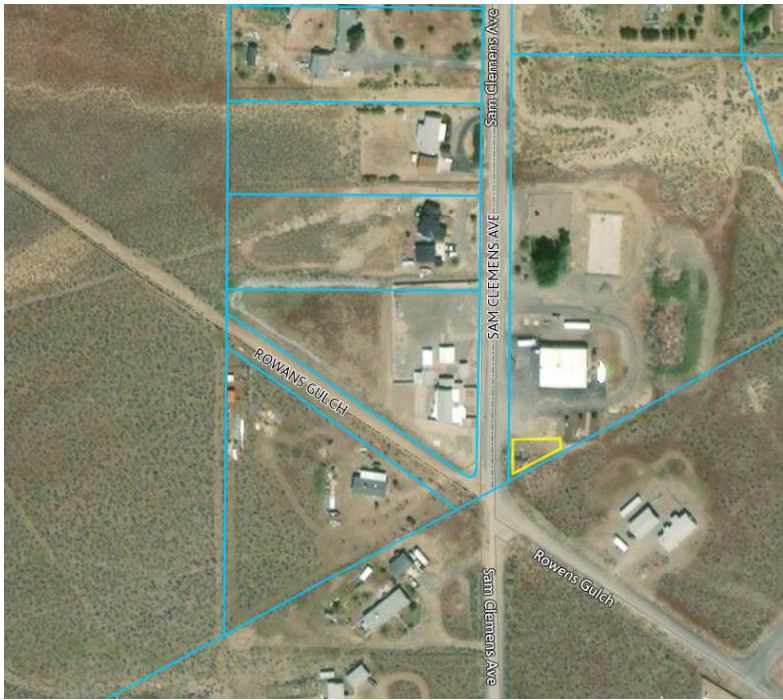
Mark Twain area - signs must be located a minimum of 100-feet from the entrance to
the polling location.
(Ord. No. 12-244, § I, 12-4-2012; Ord. No. 18-284A, § 5, 11-30-2018)

