
Victorville City Zoning Code
ARTICLE 8
- Residential Districts
Sec. 16-3.08.010: - General purpose and intent
(a)
The purpose of these regulations is to ensure that development within residential zoning districts of the City will produce an urban environment of stable, desirable character; which is harmonious with existing and future development; and is consistent with the goals and policies of the Victorville General Plan. These regulations are further established to:
(1)
Assist in implementing the goals and objectives of the Victorville General Plan and all Elements of the General Plan;
(2)
Reserve appropriate areas for residential living in a variety of dwelling types and tenures, at reasonable ranges of population densities, consistent with sound standards of public health and safety;
(3)
Encourage the continued vitality of existing neighborhoods, and, where appropriate, encourage the revitalization of neighborhoods by the use of appropriate standards and incentives;
(4)
Promote stable neighborhoods, which are well designed, safe, and pleasant places to live;
(5)
Ensure adequate light, air, privacy, and open space for each dwelling unit;
(6)
Establish architectural and design guidelines to encourage a high quality appearance of new and remodeled structures;
(7)
Reserved;
(8)
Protect residential properties from the hazards of traffic congestion, noise, fire, explosion, noxious fumes and other hazards which may be incidental to non-residential uses;
(9)
Facilitate the provision of public utilities and services commensurate with their need; and
(10)
Allow for innovative and flexible methods of implementing the goals and policies of the General Plan.
(b)
The purpose of each residential zoning district is as follows:
(1)
The AE (Exclusive Agriculture) zoning district is intended to provide protection for agricultural areas from urban development or residential subdivision, and to serve as an open space area around the more intensive urban uses of the City.
(2)
The S-R (Suburban Residential) zoning district is intended to provide for the development of large residential lots that have the combined attributes of a rural and urban environment.
(3)
The R-1 (Single-Family Residential) zoning district is intended to protect established neighborhoods of single-family dwellings and to provide space for suitable locations for additional developments of this kind, with appropriate community facilities. R-1 districts may be divided into several density categories, and the suffix number shall indicate a minimum lot area in each density class. Single-family residential districts are intended to correlate with the low-density residential designation expressed by the general plan which allows up to five dwelling units per gross residential acre.
(4)
The R-2 (Low-Medium Density Residential) zoning district is intended to provide areas for the development of multiple-family dwellings at low-medium densities, as stipulated in the land use element of the General Plan, of up to twelve dwelling units per gross residential acre.
(5)
The R-3 (Medium Density Residential) zoning district is intended to protect established neighborhoods of such dwellings and to provide suitable space in appropriate locations for additional housing developments of this kind, such as garden apartments, townhouses, duplexes and similar dwellings, including condominium developments. The high-density category depicted by the General Plan, which provides up to twenty dwelling units per gross residential acre, is intended to guide development for this district.
(6)
The R-4 (High Density Residential) zoning district is intended to protect established neighborhoods of such dwellings and to provide suitable space in appropriate locations for additional housing developments of this kind, such as garden apartments, townhouses, duplexes and similar dwellings, including condominium developments. The very-high-density category depicted by the General Plan, which provides up to thirty dwelling units per gross residential acre, is intended to guide development for this district.
(7)
The R-MPD (Residential Mobile Home Planned Development) zoning district is intended to provide for the development of subdivisions to be occupied primarily by residential mobile homes. R-MPD districts are intended to correlate with the low density residential designation of the General Plan land use element which allows a maximum residential density of five dwelling units per gross residential acre.
(8)
The MDR (Mixed Density Residential) zoning district is intended to protect established neighborhoods of mixed-density dwellings and to facilitate single-family infill development in the event that extraordinary developmental constraints, such as a lack of required sewer infrastructure, make the continued development of the permitted high-density uses impractical or infeasible. Mixed-density residential districts are intended to correlate with the mixed density residential designation expressed by the General Plan that allows up to fifteen dwelling units per gross residential acre.
(Ord. No. 2318, § 2, 2-3-15; Ord. No. 2448, § 5(Exh. B), 2-6-24)
Sec. 16-3.08.020: - Development standards
Tables 8-1 ,8-2, 8-3, 8-4, and 8-5 summarize development standards for all residential zone districts.
Table 8-1: Standards for Dwelling Unit Areas
Table 8-2: Residential Development Standards
Notes for Table 8-2:
(1)
No principal building shall exceed a height of one story when located within one hundred feet of an existing single-family residence.
(2)
Single-family residential development shall comply with the provisions of R-1 District. Multiple-family residential development shall comply with the provisions of the R-3 District.
(3)
The Zoning Administrator may approve a fence not to exceed eight feet in height based upon evidence of unique circumstances. The evidence may include:
(a)
Documented safety and/or security problems which exceed those same problems incurred by other residential developments in the nearby vicinity; and/or
(b)
Location of the development adjacent to public property.
(4)
All accessory structures and additions shall incorporate architectural features/elements of the primary structure (including but not limited to roof pitch, style, building material and color) at the discretion of the Zoning Administrator.
(5)
An accessory structure with a height in excess of ten (10) feet shall comply with the setback requirements for a primary building and shall not exceed the height of the primary structure or thirty (30) feet, whichever is less.
(6)
Excluding multi-family developments, all accessory structures shall be located at or behind the front yard plane of the principal structure, shall not exceed seven (7) feet in height when located within five (5) of the side or rear property lines and shall meet all current Building Code requirements.
(7)
Accessory structures on lots one-half gross acre in size or greater are permitted a maximum accessory structure size up to 60% the square footage of the main building.
(8)
When feasible, larger side yard setbacks of 12 feet or more are encouraged to be placed on the side of the lot where the driveway is located to allow for recreational vehicle access to the side and rear yard.
(9)
Decorative garden walls, fences, railings, pilasters and retaining walls that are not Intended to enclose the front yard area are allowed not to exceed 3 feet in height with the allowance of pilasters to extend no more than 4 feet in height. However, properties within ½ acre minimum lot size districts or larger are allowed enclosure fencing not to exceed 4 feet in height, and properties that utilize visibility fencing are allowed enclosure fencing not to exceed the height requirements herein, unless otherwise regulated by this Chapter.
(10)
A minimum of 15 feet, of the required 20 foot rear yard setback, is required to be useable area.
(11)
Multi-story setbacks shall provide floor areas above the second story that do not exceed 85% of the floor area of the floor immediately below the story subject to the multi-story setback.
Table 8-3: Accessory Dwelling Unit (ADU) Development Standards
Notes for Table 8-3:
(1)
Applicable to sites developed for single-family use.
(2)
No setback shall be required for an existing accessory structure that is converted to an accessory dwelling unit
(3)
No height limit shall be required for an existing living space or garage area within the primary dwelling or an accessory structure that is converted to an accessory dwelling unit.
(4)
A detached accessory dwelling unit may be permitted in excess of sixteen feet in height as otherwise allowed for a single-story primary dwelling within the underlying zone district but shall not exceed the height of the primary dwelling.
(5)
Height allowances shall be 18 feet in multi-family zone districts when developments are in excess of one story.
Table 8-4: Urban Subdivision: Urban Lot Split Development Standards
(Any standards not noted within this table shall be subject to the development standards of the underlying zone district and/or Section 16-3.08.050 of this Chapter.)
Notes for Table 8-4:
(1)
The lot split resultant parcels shall not be smaller than 1,200 sq. ft.
(2)
Only objective zoning standards are allowed that would not have the effect of physically precluding the construction of two units of at least 800 sq. ft. in size on the resulting parcels, as described in Section 16-3.08.050.
Table 8-5: Urban Subdivisions: Small Lot Subdivisions Development Standards
Notes for Table 8-5:
(1)
If the parcel is identified in the current Housing Element, the development project must result in at least as many units as projected for the parcel in the Housing Element, which is based on the maximum dwelling unit density associated with the underlying zone district as described in Table 8-2.
(2)
Setbacks between dwelling units are not required, except as provided by the California Building Code.
(Ord. No. 2299, 6-18-13, eff. 7-18-13; Ord. No. 2318, § 2, 2-3-15; Ord. No. 2360, § 3, 12-20-16; Ord. No. 2410, § 2, 7-21-20; Ord. No. 2448, § 5(Exh. B), 2-6-24; Ord. No. 2461, § 3, 11-18-25)
Sec. 16-3.08.030 - Wall and fence standards
(a)
Developments and single-family subdivisions shall provide six-foot high masonry block walls, as follows:
(1)
Decorative masonry wall shall be constructed along the perimeter of all new residential developments and subdivisions, including all interior side and rear project boundaries, and street frontages without front-on units.
(2)
A decorative masonry wall shall be constructed along all street side yards within a single-family subdivision.
(3)
Masonry walls along interior side and rear property lines, within a single-family subdivision, are required with the concurrent construction of two or more units by the same developer.
(4)
Walls along the rear or side property lines shall not be required along lot lines that abut a property zoned or used as open space/recreation.
(b)
Prohibited fences and walls include:
(1)
Razor wire and/or barb wire;
(2)
Chain link fence on any new multi-family development; and
(3)
Chain link fence within the front or street side yard areas on single-family residential properties zoned for lots less than a half-acre in net area.
Sec. 16-3.08.035: - Residential Sound Barrier along Highways 18 and 395
Applicants for residential developments, developing along Highways 18 (Palmdale Road) and 395, shall either set up a Landscape Maintenance Assessment District (LMAD) or annex into an already existing LMAD. The applicant shall properly install a landscaped sound barrier in accordance with Figure 8-1. In addition, the sound barrier shall be in conformance with the following development standards:
(a)
The sound barrier shall be 30-feet wide measured from edge of highway right-of-way.
(b)
The barrier shall contain a six-foot high decorative wall where the LMAD meets private property and shall be located on top of a five-foot high dirt berm with slopes not exceeding a three-foot horizontal to one-foot vertical ratio.
(c)
The landscaping and irrigation shall be installed in accordance with the design and landscaping palette shown in the LMAD Specifications and Detail Booklet. Any changes to the design and palette may be approved by the Zoning Administrator.
The Applicant must also ensure the following:
(d)
All single-family and multi-family residential units within 150 feet of the right-of-way of Highways 18 and 395 shall be limited to one-story only unless the required noise study determines alternative noise mitigation.
(e)
A noise study for any residential development adjacent to these highways shall be submitted with the development application to determine the future noise impacts. The noise study shall determine the appropriate mitigation to reduce the future interior noise level below a Community Noise Equivalent Level (CNEL) of 45dB. Additionally, the noise study shall determine the appropriate mitigation to reduce the future exterior noise level (behind the sound barrier) below a (CNEL) of 65dB.
(f)
The applicant is required to install the irrigation and the landscaping prior to issuance of certificate of occupancy of any of the units.
(g)
The applicant is responsible for all costs of improvements and for the costs of either setting up the LMAD or annexing into an existing LMAD.
FIGURE 8-1
RESIDENTIAL SOUND BARRIER ALONG HIGHWAYS 18 AND 395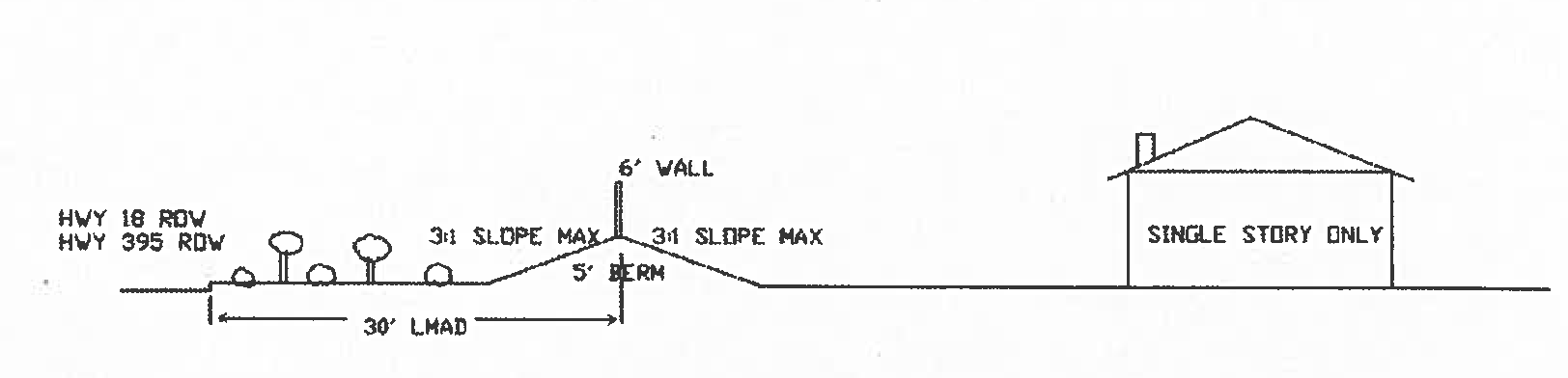
(Ord. No. 2326, § 1, 1-20-15)
Sec. 16-3.08.040: - Residential density bonus
When a developer of housing agrees to construct at least twenty-five percent of the total units of a housing development for persons and families of low and moderate income as defined in Section 50093 of the Health and Safety Code, or ten percent of the total units of a housing development for lower income households as defined in Section 50079.5 of the Health and Safety Code, the Planning Commission shall either (1) grant a density bonus; or (2) provide other incentives of equivalent financial value. This Section is executed pursuant to Section 65915 of the State Government Code.
(a)
Density bonuses shall be permitted only in the following zone districts: R-2, R-3 and R-4, and specific plans (SP) that provide for residential development.
(b)
Prior to occupancy or re-occupancy of any unit designated for habitation by persons of low or moderate income as defined by the aforementioned Sections of the Health and Safety Code, and also on an annual basis, the owner of the unit or a representative thereof shall submit to the Planning Commission documentation and evidence that the resident(s) shall meet the criteria as specified by the Sections. The documentation shall include:
(1)
A schedule of proposed rents for all structures designated as low income housing units;
(2)
Federal income tax information or, such other information as required and approved by the Planning Commission, for proposed residents of low income housing units which verifies tenant's eligibility for housing; and
(3)
A copy of rental agreement, including language that states tenant shall vacate premises within a thirty-day period at such time that tenant's gross income increases to a level which excludes the tenant(s) from the category of low or moderate income.
(c)
The owner of the unit or a representative thereof shall also notify the City of:
(1)
Any and all notices of termination of a rental agreement by a qualified low or moderate income renter, or owner of the unit thereof; and
(2)
Any and all proposed rent increases, to be reviewed by the City at least sixty days prior to the proposed increase. The increase shall be subject to approval of the Planning Commission.
(d)
A request for a density bonus may be made by Site Plan application to the Planning Commission pursuant to Article 1 of this Chapter prior to or concurrent with any formal requests for General Plan amendments, zoning amendments or subdivision map approvals.
(e)
An adopted density bonus or equivalent financial incentives shall lapse and be void unless the use is established, or plans have been submitted and accepted by the building division for building permit processing within twenty-four months of the date of the final action of approval. Building permits shall remain active or the entitlement will lapse and be void if the building permits expire after the initial twenty-four month approval period has passed.
(f)
In receiving a density bonus, the applicant or successors in interest thereof, shall enter into a contractual agreement with the City to ensure the obligation of the applicant to comply with all the provisions of this Section. Further, the applicant shall cause to be recorded on the grant deed a statement to the effect that twenty-five percent of the units are involved in a density bonus program obligating any owner or successor in interest to comply with the provisions of this Section.
Sec. 16-3.08.050: - Urban dwelling units and urban subdivisions
(a)
Purpose. The purpose of this Section is to implement California Government Code Sections 65852.21, 65852.28, 65913.4.5, 66411.7, and 66499.41 as they relate to urban subdivisions and certain residential housing development projects, to comply with State housing laws while retaining the character of the City of Victorville's single-family and multi-family residential zone districts. This Section will allow for expanded housing opportunities within the City's residential zones by establishing streamlined, ministerial approval processes as described by this Section. These provisions are intended to support infill development while ensuring consistency with applicable objective standards related to zoning, design, access, and public safety as outlined in this Title.
(b)
Applicability. The provisions of this Section apply to projects located within specified areas of the City as described herein and involve the creation of one or more urban dwelling units or urban subdivisions on residential zoned properties where public services and infrastructure such as water, sewer, and emergency access are available and sufficient to support the proposed development.
(1)
To ensure that no adverse unavoidable impacts occur to public health and safety, proposed development on sites with specific environmental constraints as described below, shall not be eligible to utilize the provisions of this Section. All existing discretionary review processing and zoning requirements shall apply where a proposed project is located on a lot that is any of the following:
(i)
Prime farmland or farmland of statewide importance;
(ii)
Wetlands;
(iii)
Land identified for conservation in an adopted community conservation plan;
(iv)
Habitat for protected species including properties containing one or more Western Joshua Trees;
(v)
Under a conservation easement;
(vi)
Within a very high fire hazard severity zone, unless fire safety risks are adequately mitigated;
(vii)
A Hazardous waste site, unless environmental risks are mitigated, and the site has been remediated or certified safe;
(viii)
Within flood hazard areas or regulatory floodways unless a small lot urban subdivision project can appropriately mitigate concerns;
(ix)
Within an earthquake fault zones unless the project complies with applicable seismic protection building code standards; or
(x)
Subject to any other environmental constraints outlined in California Government Code Sections 66411.7 and 66499.41, as applicable.
(2)
A lot shall not be eligible to utilize the provisions of this Section if it was previously established through an urban dwelling unit project or urban subdivision approved under this Section. In addition, eligibility is precluded where the record owner, or any individual acting in concert with the record owner, has previously developed or subdivided an adjacent lot pursuant to the provisions of this Section.
(c)
Application Process.
(1)
An application shall be submitted to the Planning Department utilizing an Application for Zoning Administrator Action. The following application types shall be utilized:
(i)
Urban lot split / small-lot subdivision - Urban Subdivision Application; or
(ii)
Two-unit urban dwelling unit projects / Small-lot urban dwelling unit projects - Urban Dwelling Unit Application.
(2)
All applications for urban dwelling unit projects or urban subdivisions shall be approved or denied within sixty (60) calendar days from the date the City determines the application to be complete.
(3)
If the City denies an application for an urban dwelling unit project or urban subdivision, it shall issue written findings demonstrating that the proposed project would result in a specific, adverse impact on public health or safety. Such impact must be quantifiable, direct, and unable to be feasibly mitigated or avoided, and shall be based on objective, clearly identified standards, policies, or conditions.
(d)
General Standards.
(1)
All qualifying urban dwelling unit projects and urban subdivision applications shall be subject to ministerial review. Such projects shall not require discretionary review, public hearings, or environmental review under the California Environmental Quality Act (CEQA), consistent with applicable state law.
(2)
Notwithstanding any other provision herein, eligible projects shall be subject only to the objective standards associated with the specific project type and underlying zone district as specified within this Chapter, except where such standards would physically preclude the development of an urban dwelling unit project or urban subdivision.
(i)
If full compliance with one or more objective standards is physically infeasible due to site-specific constraints, conflict with minimum density requirements, or an inability to meet all objective standards, the applicant shall submit documentation as requested by the City (e.g., topographic survey, site plan, or other relevant materials) to demonstrate the physical constraint. Upon review, the City shall determine which objective standards may be modified or waived to facilitate the proposed development, pursuant to Gov Code Sections 66411.7 & 65852.28.
(3)
Qualifying urban dwelling unit and urban subdivision projects shall not result in the demolition or alteration of any of the following:
(i)
Housing that is restricted to moderate-, low-, or very low-income households by a recorded covenant, ordinance, or other enforceable restriction;
(ii)
Housing subject to rent or price control administered by a public entity; or
(iii)
Housing that has been occupied by tenants within the past:
1.
Three (3) years for urban lot splits or two-unit urban dwelling projects; or
2.
Five (5) years including housing that has been demolished or that tenants have vacated prior to the submission of a small-lot subdivision project.
(e)
Standards for Urban Lot Splits and Two-Unit Urban Dwelling Unit Projects:
(1)
A property may accommodate up to two urban dwelling units under the provisions of this section and in accordance with state law if such property is zoned for single-family residential use within the R-1, AE, S-R, and R-MPD zone districts; single family development within the MDR zone district; or single-family uses within PUDs and Specific Plans, and are not located within a historic district or identified as a historical property or landmark.
(2)
Lots resulting from an urban lot split shall be approximately equal in size with no lot smaller than 40 percent of the original parcel size and not smaller than 1,200 sq. ft., whichever is larger.
(3)
No more than two dwelling units of any kind may be built on a lot that results from an urban lot split. A final map must be recorded in accordance with this Title prior to the issuance of building permits for new construction on a parcel resulting from an urban lot split.
(4)
A maximum of two dwelling units, inclusive of accessory dwelling units (ADUs) or junior accessory dwelling units (JADUs), shall be permitted on any lot created through an urban lot split or on any lot utilizing the provisions for a two-unit urban dwelling unit project under this Section.
(i)
Urban lot splits: No more than two total units may be established on each resulting parcel, regardless of whether those units include ADUs or JADUs.
(ii)
Two-unit projects without lot splits: Parcels not subject to an urban lot split may accommodate up to four total units, consisting of two primary units and up to two ADUs or JADUs, provided all applicable standards are met.
(5)
All required improvements shall be limited to the boundaries of the subject parcel. Urban lot split and two-unit urban dwelling unit projects eligible under this Section shall not require off-site improvements or the dedication of right-of-way. Easements for public utilities and a requirement for access to the public right-of-way meeting city standards is required if not already directly provided for.
(6)
Owner Occupancy: Prior to recordation of a final map associated with an urban lot split, the applicant/property owner must sign an owner occupancy affidavit acknowledging intent to live in one of the units created, which specifies that owner-occupancy shall be required in one of the housing units for a minimum of three (3) years from the date of the approval of the urban lot split, unless the applicant is a community land trust or a qualified non-profit organization as defined in state law.
(7)
Each unit created under this chapter may be rented separately, however rental terms must be for a minimum of 31 consecutive days. No tenancy may be terminated prior to the completion of at least one 31-day occupancy period by the same tenant.
(f)
Standards for Small-Lot Subdivisions and Small-Lot Urban Dwelling Unit Projects:
(1)
A property may accommodate ten (10) or fewer parcels meeting specified criteria when located within the following zone districts:
(i)
R-2, R-3, R-4, MDR zone districts and multi-family designated areas of PUDs and Specific Plans no more than five (5) net acres in size; or
(ii)
R-1, AE, S-R, R-MPD zone districts, and single-family designated areas of PUDs and Specific Plans that are vacant and no more than 1.5 net acres.
(2)
Newly created small-lot subdivision parcels shall meet the following minimum lot area requirements:
(i)
No smaller than 600 square feet if zoned for multi-family residential; or
(ii)
No smaller than 1,200 square feet if zoned for single-family residential.
(3)
Average total area of floorspace for the proposed urban dwelling units on the lots created through a small-lot subdivision shall not exceed 1,750 net habitable square feet.
(4)
Small-lot subdivisions may result in a remainder parcel in excess of the 10-lot limit, but shall retain existing land uses or structures, and shall not contain any new residential units, or serve the housing development project. The separate sale of any remainder lot created is prohibited unless it contained a residential dwelling unit prior to subdivision.
(5)
No accessory dwelling unit(s) (ADU) or junior accessory dwelling unit(s) (JADU) shall be permitted on a parcel created through a small-lot subdivision pursuant to this Chapter.
(6)
Tentative tract and parcel map applications for small-lot subdivisions utilizing the allowances within this Title must conform to all applicable objective requirements of Chapter 4 and the Subdivision Map Act.
(7)
A building permit for an eligible small-lot dwelling unit project may be issued prior to the recordation of an associated small-lot subdivision map, if the applicant has submitted proof to the satisfaction of the Zoning Administrator of a recorded covenant that states that the applicant and the applicant's successors and assignees agree that the building permit is issued on the condition that a certificate of occupancy or equivalent final approval for the building will not be issued unless the final map has been recorded.
(8)
Small-lot subdivisions created pursuant to this Title shall provide access to all created lots in the form of right-of-way dedication and off-site improvements meeting city standards as a condition of approval for the final map.
(Ord. No. 2461, § 3, 11-18-25)
Sec. 16-3.08.060: - Gated communities
Gated communities within a single-family residential zone district shall be subject to all requirements and development standards of a Planned Unit Development, as outlined in Article 16 of this Chapter.
Sec. 16-3.08.070: - Other development requirements
The following requirements also apply to uses and structures in Residential Districts:
(a)
Asphalt roof shingles are prohibited with the concurrent construction of two or more houses by the same developer.
(b)
Rooftop mechanical equipment shall be screened from public view to the greatest extent possible with the design of the building.
(c)
Signs are limited as set forth in Article 22.
Sec. 16-3.08.080: - Site plan review
Site plan review is required, as prescribed in Section 16-3.01.020.
(Ord. No. 2388, § 3, 3-19-19)
Sec. 16-3.08.090: - Single-family design guidelines
(a) Purpose
(b) Design review for tract developments
(c) Neighborhood design
(d) Site and building design
(e) Landscape design
(a)
Purpose. The purpose of this section is to provide general planning and design guidance for single-family residential neighborhoods within Victorville. These guidelines have been established to encourage the highest level of design quality aimed to enrich the quality of life of residents by:
(1)
Creating safe neighborhoods though arranging the physical characteristics of a neighborhood in a functional manner where residents obtain a greater surveillance level of adjoining areas and share an increased sense of responsibility/ownership for an area thereby becoming key agents in ensuring their own security; and
(2)
Increasing the value of a neighborhood by emphasizing architectural quality and variety while achieving an interactive design where buildings and places are oriented toward pedestrians, streetscapes, and the public realm.
(3)
Where mandatory language is used, such as "shall" or "will", these guidelines are mandatory. Where permissive language is used, such as "may" or "should", the guidelines are to be used as guidance to properly steer the reviewing body to make the best planning decisions based upon proper findings.
(b)
Design review for developments.
(1)
Applicability. All residential development shall comply with the provisions of this Article after the effective date of the approving ordinance (Ordinance No. 2318).
(2)
Review Process. To ensure that the built environment reflects the quality of design expected in Victorville, each development proposal will undergo design review to ensure consistency with this Section and the mandatory development regulations contained in this Chapter. It is the responsibility of the Planning Commission to review neighborhood street design, lot configurations and grading compliance during the tentative map application process. It shall be the responsibility of the Zoning Administrator, or his designee, to review design compliance of all other individual components of a development through the Site Plan Application process contained in this Chapter. The Zoning Administrator shall conduct a Site Plan review prior to issuance of any permit allowing ground disturbance. The Zoning Administrator or his/her designee may impose such conditions deemed necessary to achieve the purpose of this Chapter.
(3)
Scope of Review. The design review process will continue through the development, review, modification, and approval stages to ensure developer packages foster a cohesive community design that meet the standards specified in this Chapter. Design review encompasses, but is not limited to, these elements:
(i)
Design integrity
(ii)
Neighborhood crafting
(iii)
Grading
(iv)
Drainage
(v)
Phasing
(vi)
Open Space/Recreation
(vii)
Street Design
(viii)
Transit
(ix)
Lighting
(x)
Lot design
(xi)
Driveway
(xii)
Porches and Balconies
(xiii)
Garages
(xiv)
Dwelling variety
(xv)
Architectural detail
(xvi)
Landscape design
(xvii)
Conservation design
(c)
Neighborhood design.
(1)
Design Integrity. The charm and inherent beauty of a great neighborhood is the result of good urban design. Neighborhood design should be more than an execution of design elements; it should create streetscapes that express aesthetically pleasing compositions. In order to achieve this overall quality and design integrity sought by this Chapter, tract developers shall utilize licensed architects for the landscaping and residential dwelling design of a community.
(2)
Neighborhood Crafting. Neighborhood Crafting is intended to describe the level of craftsmanship and composition needed in creating a residential neighborhood with inherent value and uniqueness. This shift in community character, compared with typical subdivisions neighborhoods, will distinguish each community within the marketplace and provide "added value" to builders and homeowners alike. The following aim to achieve this objective by:
(i)
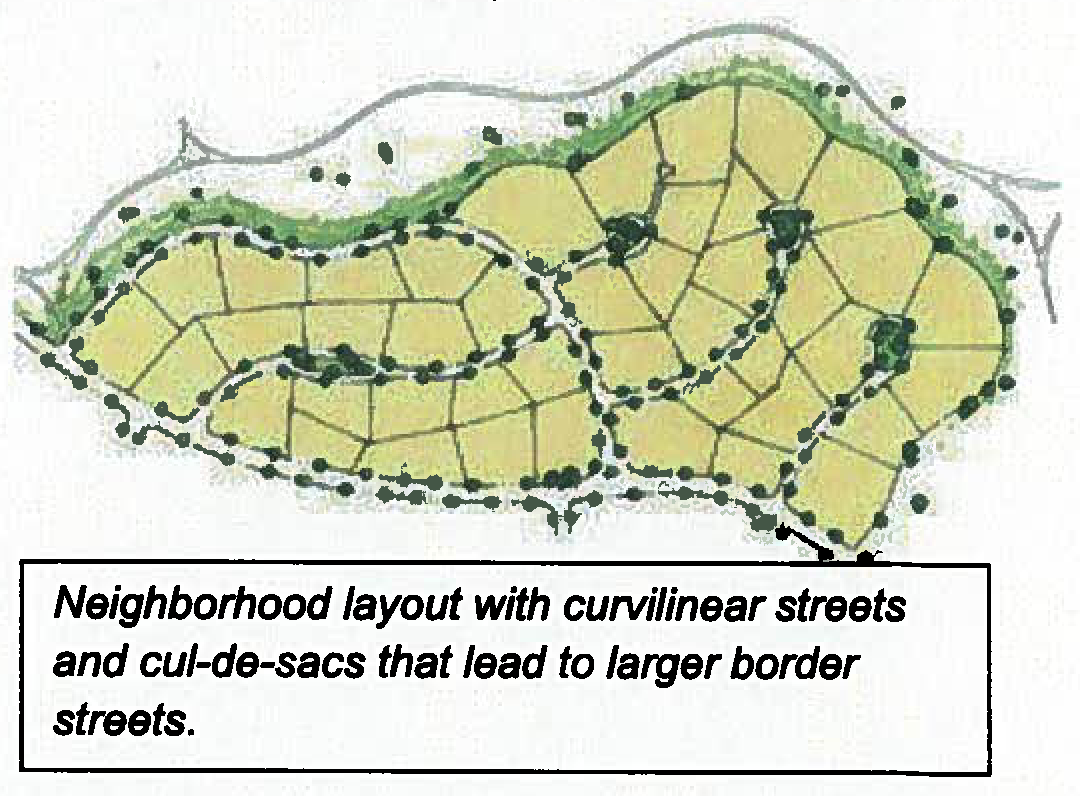
Promoting safe and aesthetically pleasing subdivision designs that include curvilinear streets, cul-de-sacs and street hierarchies to reduce neighborhood noise and increase safety and privacy.
(ii)
Minimize outside access into a neighborhood to ensure safety, by limiting excessive through streets that bisect neighborhoods.
(iii)
Defining neighborhoods through neighborhood character, parks, landscape features, and natural physical elements that "override" single builder/product identity, while providing an underlying diversity that allows individual product lines to "blend" together.
(iv)
Creating meaningful, walkable destinations within the neighborhood, such as parks and open spaces, with streets and paseos aligned to link important places such as schools and community facilities.
(v)
Making the street a more safe and pleasant place by introducing street trees, landscaped parkways between curbs and sidewalks, and greater architectural interest along the street.
(vi)
Emphasizing architectural detail and interactive architecture with porches, courtyards, entries, windows, and second story balconies related to the street.
(vii)
De-emphasizing the garage on the street by placing the living space of the home in front of the garage to increase surveillance of the streetscape.
(viii)
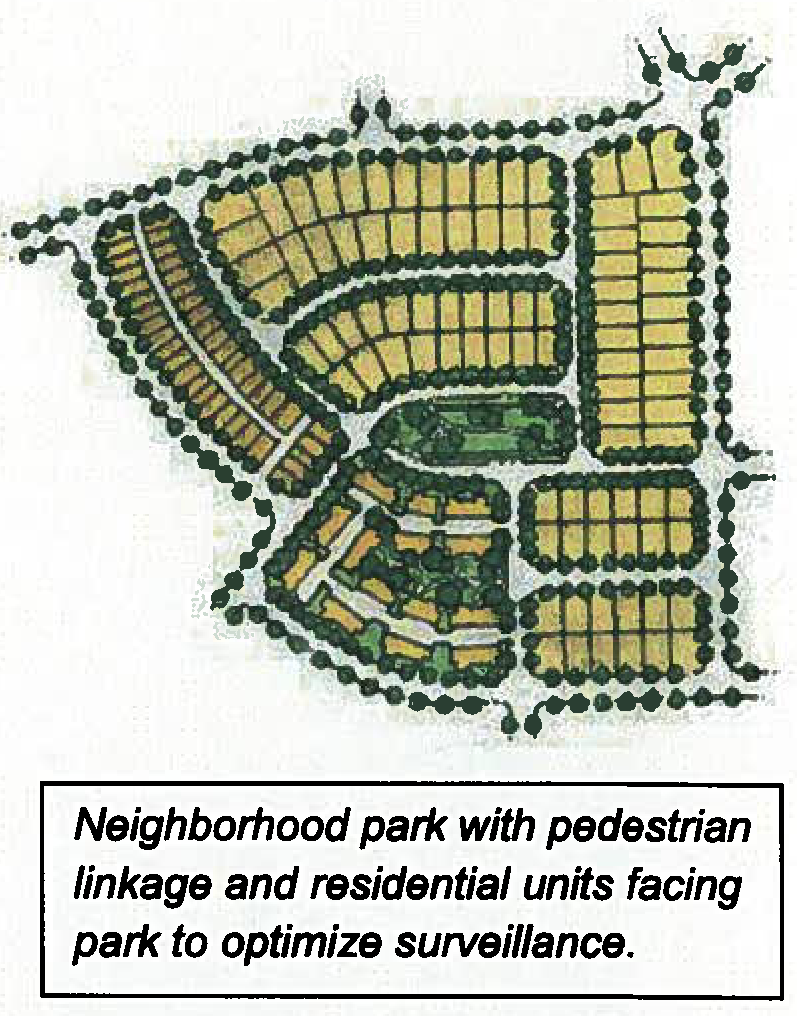
Using parks as a focal element to organize neighborhoods. Parks should be sized to provide human scale and a strong sense of place. Architecture and housing mass around the parks should be designed to further frame and articulate the space. Each park shall have a unique program, form and character to enhance neighborhood identity.
(ix)
Orienting living activity toward the street by incorporating front porches and active living space toward the front of the home for surveillance opportunities.
(3)
Grading. Grading should be minimized where possible to preserve the natural character of the land. When grading is unavoidable, incorporate the following guidelines:
(i)
Follow the natural contours as much as possible.
(ii)
Slopes should be rounded and contoured to blend with the existing terrain.
(iii)
Emphasize and accentuate scenic vistas.
(iv)
Avoid large manufactured slopes in favor of several smaller slopes.
(v)
Retain and incorporate significant natural vegetation into the project.
(vi)
When grading is unavoidable, minimize raising the grade significantly above the grade of adjacent properties, especially near interior property lines and/or the perimeter of the tract.
(vii)
Property lines shall be located at the top of a slope to avoid cross lot drainage issues.
(4)
Drainage.
(i)
Basins and drainage channels should be utilized as recreational or visual amenity opportunities for the neighborhood in the form of parks and/or trail systems, where feasible.
(ii)
Basins and drainage channels, when visible from public views, shall be designed with decorative walls/fencing and landscaping to soften the edge where the facility meets the public realm.
(iii)
Open storm water drainage channels and basins shall provide landscaping a minimum of 10 feet in width when abutting a public street or public trail, excluding channel street crossings. Said landscaping shall be constructed per Landscape Maintenance Assessment District (LMAD) standards and the landscaping standards listed within this Chapter.
(5)
Phasing.
(i)
Amenities (e.g. parks, clubhouses and paseos) and infrastructure improvements (e.g. drainage channels, detention/retention basins, utility undergrounding) within a tract should not be postponed to a later tract phase of development. Each phase of development shall contribute and/or construct the fair share of amenities and infrastructure within the entire tract.
(ii)
Landscaping and walls associated with a Landscape Maintenance Assessment District (LMAD), Drainage Facility Assessment District (DFAD) and/or similar facility within a tract shall be installed prior to the completion of the first dwelling unit within a tract map, unless otherwise approved by the Planning Commission. Construction plans for the landscaping and walls shall be submitted for review prior to or concurrently with the submittal of a precise grading plan for an individual lot.
(iii)
Phased tract maps should contain a minimum of fifty (50) lots within each phase, unless otherwise approved by the Planning Commission.
(6)
Integrated open spaces. Neighborhoods should be designed with open space and community facilities as integral parts of the neighborhood. Integrated open space and public facilities foster a sense of community and create a more livable environment. Such open spaces shall be substantially consistent with an adopted master plan.
(i)
Schools and parks. Neighborhoods should be designed around neighborhood parks, schools and other community facilities. Pedestrian connections to these facilities are also encouraged.
(ii)
Paseos. Neighborhoods should be designed to include paseos, trails or other connections to community facilities. Paseos should be used for pedestrian connections at cul-de-sacs and dead-end streets. Neighborhoods designed without connections to community facilities should be avoided. Paseos, trails and other community facilities shall not be walled-in; instead they should flank streets, parks, streambeds or other similar facility with transparent view fencing to increase the surveillance level.
(iii)
Non-recreational open space. Neighborhoods should be designed to protect natural features. Natural areas can enhance a neighborhood while protecting the environment. Developments that alter or destroy natural features should be avoided. Manmade features that do not include a joint recreational use, such as utility corridor easements and altered drainage courses, shall not count as open space.
(7)
Street Design.
(i)
Streets shall promote safe and aesthetically pleasing subdivision designs that include curvilinear streets, cul-de-sacs and street hierarchies to reduce neighborhood noise and increase safety and privacy.
(ii)
Cul-de-sacs are recognized as an excellent opportunity to enhance the privacy and safety of residents, especially children. Cul-de-sac designs are strongly encouraged subject to the following:
1.
Length shall not exceed six hundred feet without secondary access, unless otherwise approved by the Fire Department.
2.
To avoid confusion for emergency services personnel, cul-de-sac names shall not be derived from other nearby streets.
3.
Cul-de-sacs shall have pie-shaped lots around the perimeter of the cul-de-sac, unless the subdivision is designed with recreational access at the end of a cul-de-sac.
(iii)
Landscaped parkways provide a more attractive streetscape and create a buffer between automobile and pedestrian traffic. Neighborhood streets should be designed with landscaped parkways. Streets with sidewalks adjacent to the curb should be avoided. Landscape parkways shall also be irrigated and permanently maintained by the owner of the adjoining residential property.
(iv)
Trees planted within landscaped parkways create a pleasant environment for pedestrians and provide shade to neighborhoods during the hot summer months. Street trees should be shade trees that provide a large canopy at maturity. Trees such as palms and other non-shade trees should be avoided.
(v)
Entry identification monuments are required at main entrances to a neighborhood for tract developments over fifty units. Refer to the Landscape Design section for more information.
(8)
Transit.
(i)
Residential Neighborhoods should be designed to take advantage of mass transit opportunities by consulting with the local transit authority and local school districts. Neighborhood edges along arterial and collector streets should provide transit stops, including turnouts for bus stops.
(ii)
When required, transit shelters should be designed to complement a neighborhood. Transit shelters that are incorporated within the form of a building (e.g. under an awning or arcade) are encouraged. For freestanding shelters, the developer should explore with the transit agency and the city, possibilities for a structure that is integrated architecturally with the project through its color, materials and architectural style.
(9)
Lighting. Effective pathway lighting provides safety and direction for pedestrians and shall incorporate the following design standards:
(i)
Lighting should relate to the pedestrian scale of residential neighborhoods. Light standards less than fifteen feet in height are encouraged throughout paseos and other usable open spaces.
(ii)
The design of the lighting fixture should contribute to the overall theme within a neighborhood.
(iii)
Pedestrian paths shall be illuminated with bollards or lighting standards.
(iv)
Spotlighting or glare from any lighting should be shielded from adjacent properties and directed at the specific object or target.
(v)
The quality of light, level of lights as measured in footcandles, and the type of bulb or source should be carefully addressed. Lighting levels should not be so intense as to draw attention to the glow or glare of the area.
(d)
Site and building design.
(1)
Lots.
(i)
Through lots, flag lots and reverse frontage lots are prohibited.
(ii)
Reverse corner lots should be avoided.
(iii)
Single-story buildings and larger lots are encouraged on corners.
(iv)
A mixture of larger lot widths are encouraged within a subdivision to allow for recreational vehicle access to the side yard, more separation between dwellings and a variety of dwelling product types.
(2)
Driveways. Driveways shall be designed to minimize the visual impact on the streetscape. The following design criteria shall be utilized:
(i)
Required Driveways
1.
A primary driveway approach at property line shall not exceed eighteen feet in width or be less than nine feet in width. However, dwellings with a three-car garage that faces the street shall be allowed a driveway approach not to exceed twenty-four feet in width.
2.
Primary driveways should be setback a minimum of two feet from an interior property line within the front yard area in order to provide a separation from the neighbor's driveway with space for landscaping and drainage.
3.
The starting point to flare out a primary driveway in the direction of a garage or sideyard must start at or behind the property line.
4.
Primary driveways shall lead to a garage and/or gated access on the side yard or rear yard.
(ii)
Optional Secondary Driveways
1.
A secondary driveway for side-yard or rear-yard recreational vehicle access can be established and shall be installed per city standards not to exceed fourteen feet in width. There shall be no flare out of secondary driveway.
2.
Secondary driveways shall be setback a minimum of two feet from a property line and shall be separated a minimum of four feet from an existing driveway.
3.
Secondary driveways shall not impact: recorded non-vehicular access easements; maintenance assessment districts; existing utilities such as water meters, fire hydrants, and/or streetlights; or minimum front yard landscaping requirements.
4.
Placement of any secondary driveway on a corner lot shall only be permitted on the street side yard to limit impacts to existing curb ramps and shall not cross maintenance assessment districts or provide access from collector roadways or larger street designations specified within the City's General Plan Circulation Element.
(3)
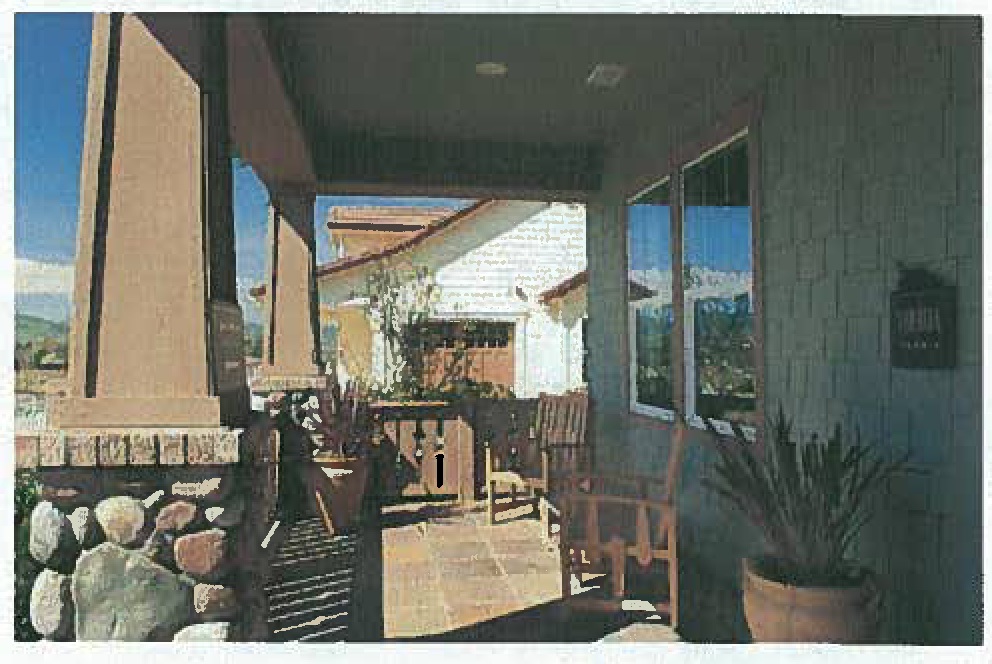
Front Porches and Balconies. Outside seating areas that face a street increase the ability of residents to survey their street block and provide a traditional architectural element that adds to the character of a neighborhood and promotes neighborly interaction. The following standards shall be utilized:
(i)
A minimum of fifty percent of all dwellings within a housing tract shall include a front porch and/or front second story balcony.
(ii)
Required porches and balconies shall be fully covered with a roof form and supports that are architecturally integrated with the building design.
(iii)
Required porches and balconies shall have a minimum depth of six feet and should cover at least eight feet of the street facing facade.
(iv)
Porches shall have a minimum size of seventy-five square feet.
(v)
Porches and balconies shall be open on at least one side.
(vi)
Porches should be placed immediately adjacent to primary entries and be clearly visible from the street.
(vii)
The garage and interior living space of a dwelling unit shall not extend more than five feet beyond the front plane of a porch, except for side-load garages.
(viii)
Corner entries and wrap around porches are encouraged on corner lots.
(4)
Garages. Neighborhoods shall be designed to minimize the visual impact of garages along streets, while orienting active living spaces towards the street to increase surveillance of the streetscape. A variety of garage orientations and placements are encouraged within a neighborhood, such as recessed, detached and side-loaded garages.
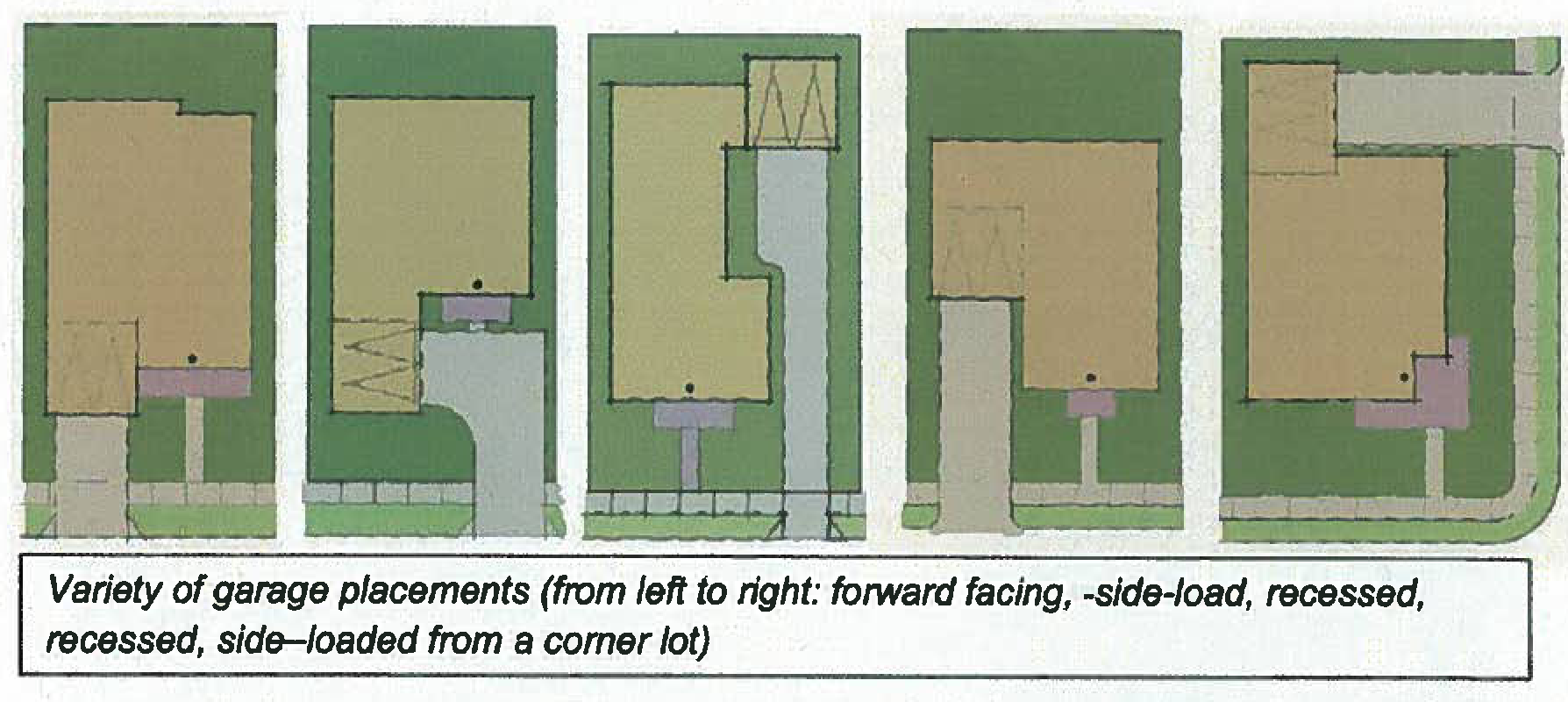
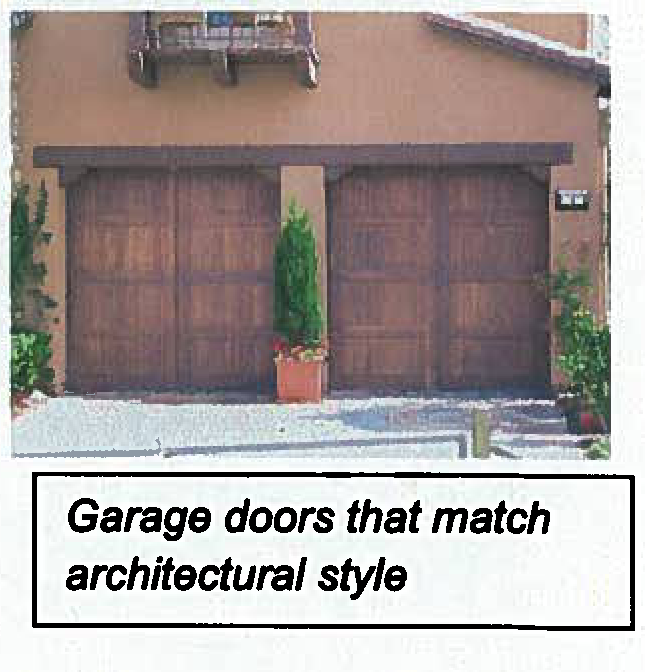
Placement of forward facing garages should vary from the front wall plane of the dwelling's porch or living area and shall incorporate architectural features such as single-bay doors, recessed doors, decorative doors with windows and detailing around opening. Forward facing third car garages or larger shall vary from the wall plane of the required two-car garage. The color of a garage door shall match the color scheme of the dwelling.
(5)
Dwelling variety. Single-family dwellings should be varied to avoid monotonous streetscapes and to create a custom look for a house and neighborhood. This shall be accomplished by all of the following minimum standards:
(i)
In tract developments, the design of structures shall be varied to create variety and interest. A significant difference in the massing and composition (not just materials) of each adjacent house should be accomplished. Different models can be established by varying the design features such as porches, bay windows and roof forms. One particular design (one matching floor plan and exterior elevation) should be separated by three lots and may be repeated on the fourth lot. This separation is to be measured outwardly in all directions along connecting street frontages.
(ii)
Front yard setbacks should vary from house to house. Minimum setbacks shall not be reduced to accommodate this variation.
(iii)
A variety of larger side yard setbacks are encouraged between single family dwellings to provide more separation between dwellings and allow space for recreational vehicle parking within the side and/or rear yard.
(iv)
Window placements shall be evaluated to ensure that the window placements of adjacent homes are done in a manner to maximize privacy and reduce line of sight problems between neighboring homes.
(v)
In single family housing developments, a variety of different floor plans and building elevations shall be provided as prescribed in the table below. Developments with less than 5 dwelling units shall consist of custom exterior designs, subject to the review and approval of the Zoning Administrator.
(6)
Architectural detail. The design criteria in these guidelines are established to ensure excellent architecture and authenticity of styles through the use of appropriate elements and scale. Although detail elements may be used to further convey the character of a style, the overall massing of the buildings along with appropriate roof forms should be used to establish a recognizable style. Proper scale and proportion of architectural elements and appropriate choice of details, colors and materials are all factors in achieving quality architecture.
(i)
Style. Each residential neighborhood shall be comprised of a variety of architecture. The following palette of architectural styles provides a foundation for direction and vision in creating appealing residential neighborhoods within the community; however, new styles may be developed and added on in the future as deemed appropriate.
Selected styles may include but are not limited to the following:
• Mid-Century Modem/Desert Modem
• Desert Prairie
• Craftsman
• Cottage
• Spanish Monterey
• Spanish Colonial
• Spanish Mission
• American Farmhouse
• Ranch/Hacienda
Desert Prairie/Southwest Prairie
The first Prairie houses were usually plaster with wood trim or sided with horizontal board and batten. Later Prairie homes used concrete block. Prairie homes can have many shapes: square, L-shaped, T-shaped, Y-shaped, and even pinwheel-shaped.
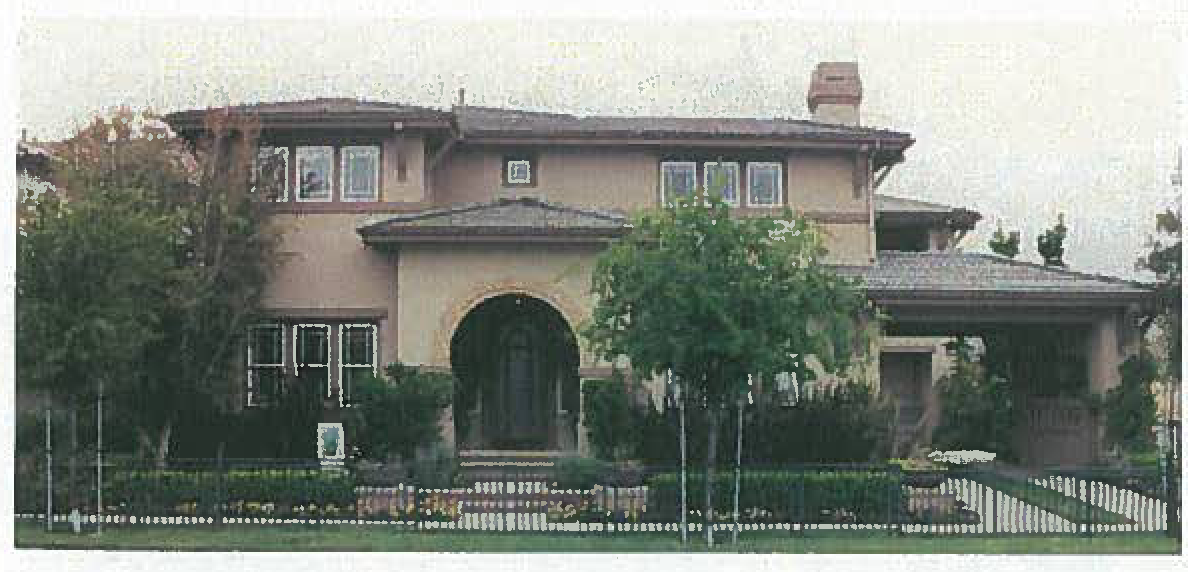
While the Prairie style originated in Chicago and in other large Midwestern cities, vernacular examples were spread widely throughout the country in the early 20th century by pattern books and popular magazines. In the southwest region, the Prairie style has evolved and adapted to the dramatic, rugged landscape of the desert environment.
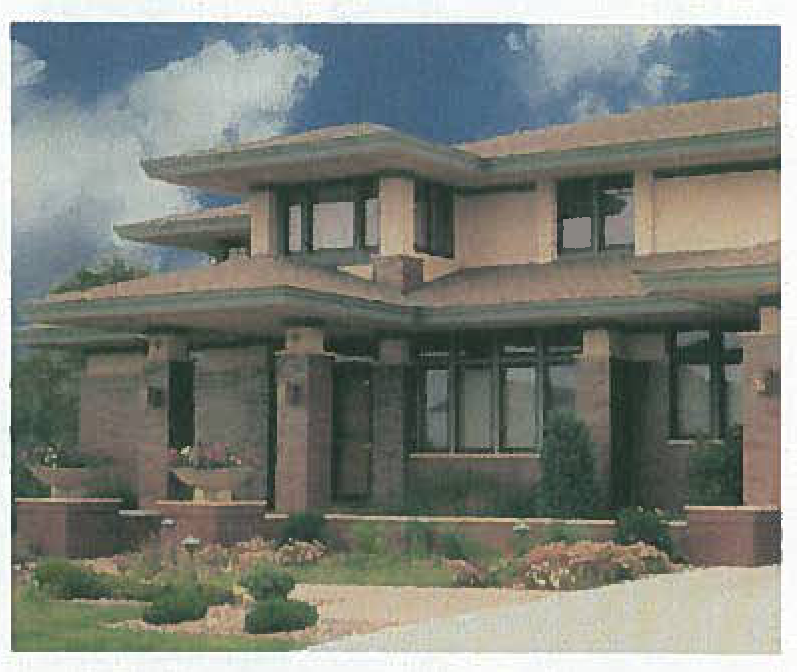
Key Elements:
• Plan form is primarily single story with a recessed second story.
• Roofs are typically low-pitched hips with flat concrete tile and wide overhangs.
• Wall materials typically consist of light to medium sand finish stucco; rustic cut stone accents at wainscots and at columns; banding or belt courses are typical.
• Windows are typically rectangular and/or square-shaped in arts and crafts style; banding is commonly found along top or bottom of the windows; sometimes with ribbon windows high on wall.
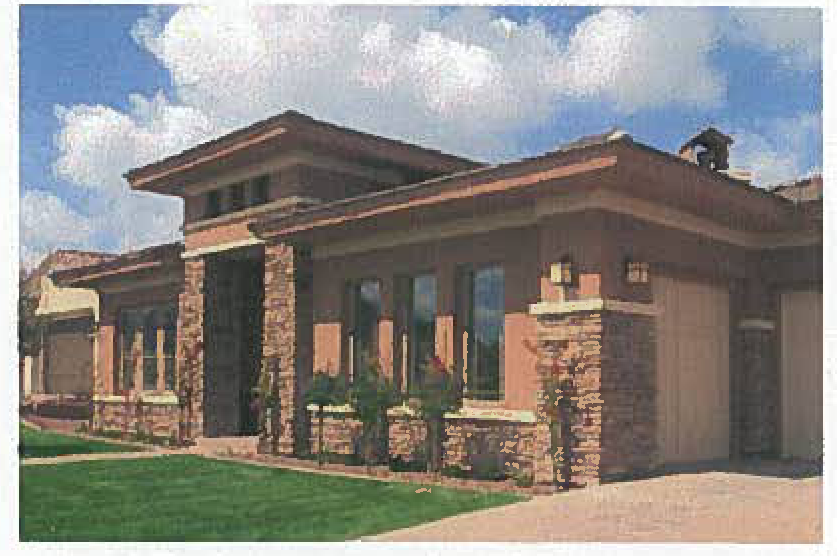
• Massive columns with stone pier bases are typical.
Craftsman
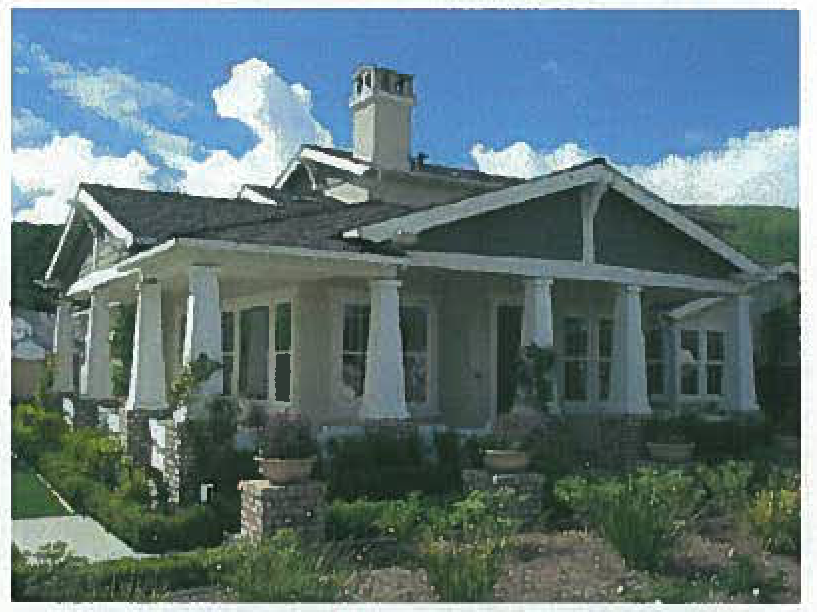
Originating in California, Craftsman architecture relied on the simple house tradition, combining hip and gable roof forms with wide, livable porches and broad overhanging eaves. Extensive built-in elements define this style, treating details such as windows and porches as if they were furniture. The horizontal nature is emphasized by exposed rafter tails and knee braces below broad overhanging eaves with rustic-textured building materials. The overall effect was the creation of a natural, warm and livable home of artful and expressive character.
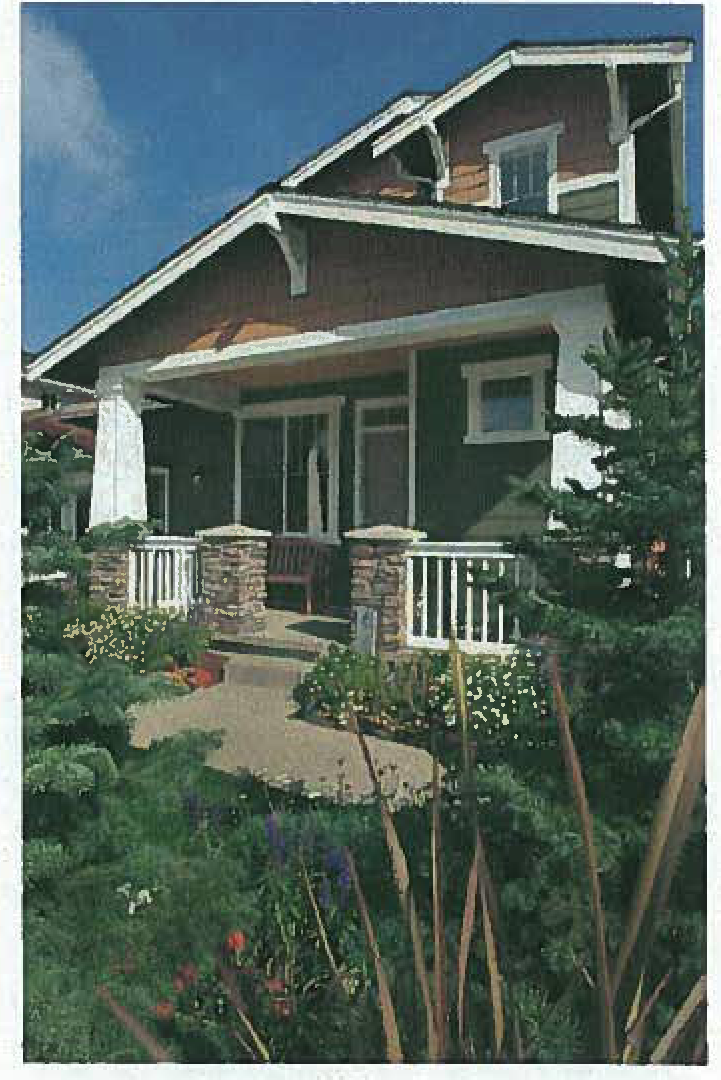
Key Elements:
• Plan form is typically a simple box.
• Roofs are typically a shallower pitch with shingles (no wood or asphalt shingles) or flat concrete tiles and exaggerated eaves.
• Roof forms are typically a side-to-side gable with cross gables.
• Roof pitch ranges from 3:12 to 5:12.
• Wall materials may include stucco, horizontal siding and stone.
• Exposed rafter tails are typical under eaves.
• Siding accents at gable ends are typical.
• Front porch at the main entry is typical.
• The following three options of porch columns are typical of the Craftsman style:
• Battered tapered columns.
• Battered columns resting on brick or stone piers.
• Simpler porch supports of double square post resting on piers; piers may be square or tapered.
• Windows are typically fully trimmed.
• Window accents typically include dormers or ganged windows with continuous head or sill trim.
Cottage
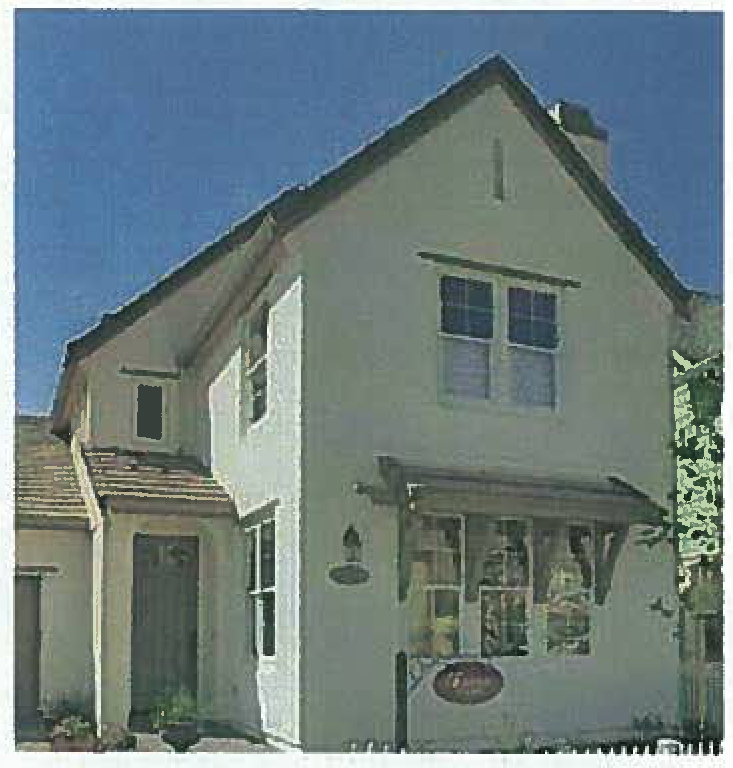
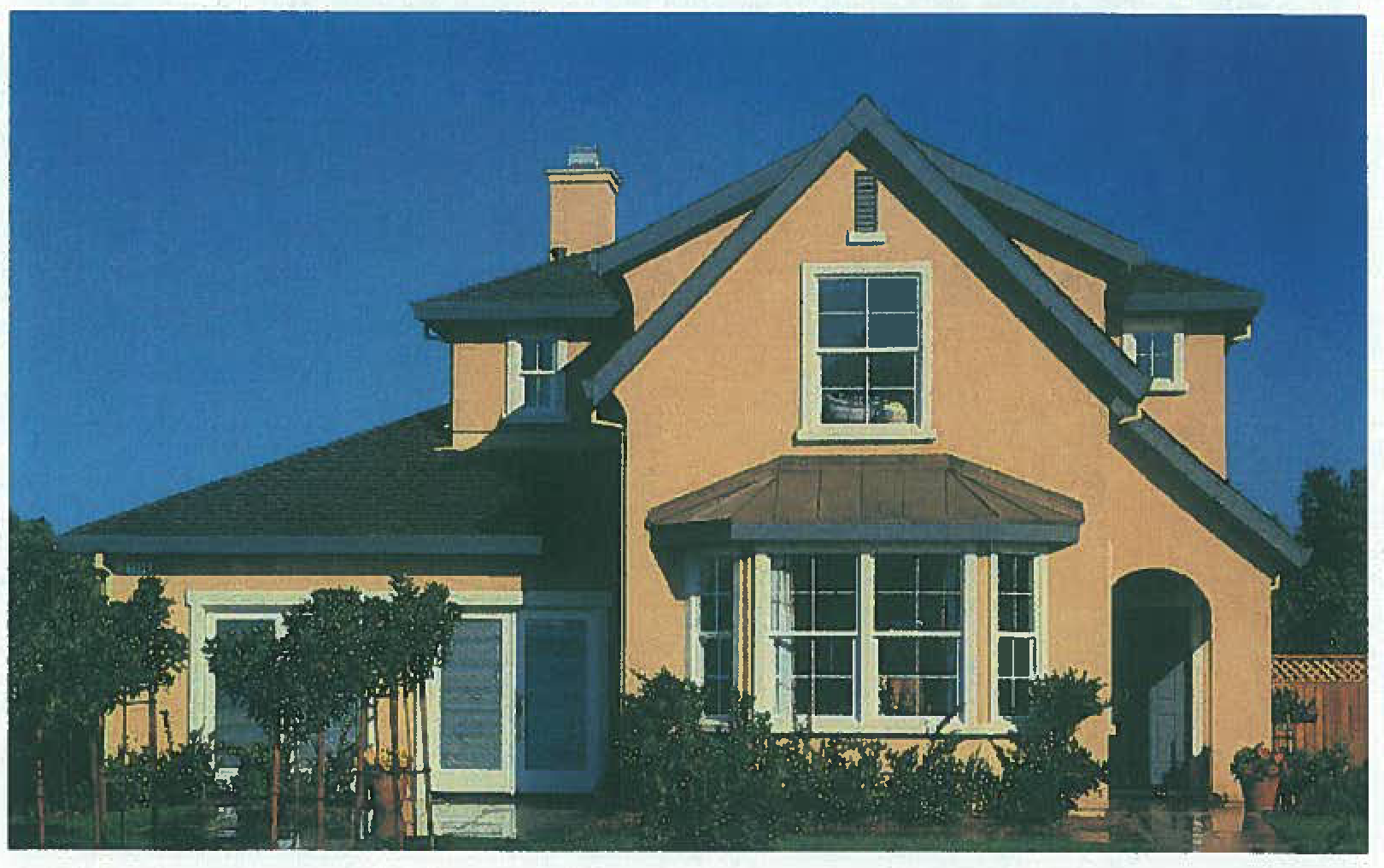
The Cottage is a picturesque style that evolved out of medieval Tudor and Norman domestic architecture. The evolving character that resulted in the English "cottage look" became extremely popular when the addition of stone and brick veneer details added in the 1920's. The Cottage's roof pitches are steeper than traditional homes, and are comprised of gables, hips and half-hip roof forms. The primary material is stucco with a heavy use of stone and brick bases, veneers and tower elements. Some of the most recognizable features for this style are the stucco accents in gable end forms and the sculptured swooping walls at the front elevation.
Key Elements:
• Plan form is typically a combination of one- and two-story elements.
• Roofs are typically steeper pitched hip or gables with shingles (no wood or asphalt shingles) or flat concrete tile and typical overhangs.
• Wall materials typically consist of stucco; stone and siding are appropriate accent materials.
• A steep, second-story roof form breaking over a first-story element is typically a prominent feature of the elevation.
• Angled bay windows are typical.
• Balcony or porch is typically detailed by simple columns without cap or base trim.
• Details typically include wrought iron or balcony accents, projecting head or sill trim, round or arch features at windows or entry and plank or panel shutters.
Spanish Monterey
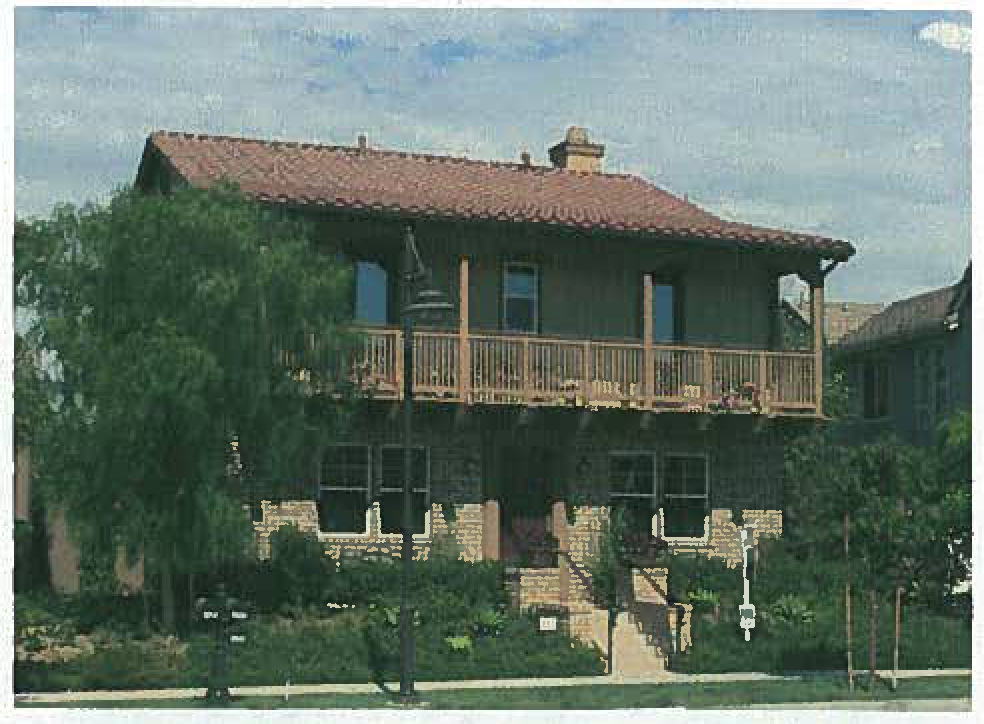
Influenced by Spanish Colonial and the two-story New England house, this version of Monterey architecture favors Spanish detailing, while maintaining simpler, Colonial-style form. This indigenous California style adapted the American influences of the gold-rush era into the traditional Spanish adobe-style homes of the Mission-established towns. Borrowing the second-story cantilevered porch and covered first-story porch in place of the traditional courtyard, lends a Monterey and New England flavor to an otherwise Spanish eclectic home.
Elegant and simple, the Spanish Monterey style exhibits rectilinear building forms, wrought iron details and rusticated corbels and head trim. Homes in this style should be distinctively Spanish with adjustments in the form and materials to emphasize the cantilevered balcony or covered outdoor living space.
Key Elements:
• Plan form is typically a simple two-story box with a strong one-story element.
• Roofs are typically a shallow to moderately pitched with concrete "S" or barrel tiles and typical rake/eave overhangs.
• Roof forms are typically comprised of a main front-to-back gable with front-facing gables.
• Wall materials are typically stucco or brick.
• Shaped corbels and beams typically detail roof overhangs and cantilevers.
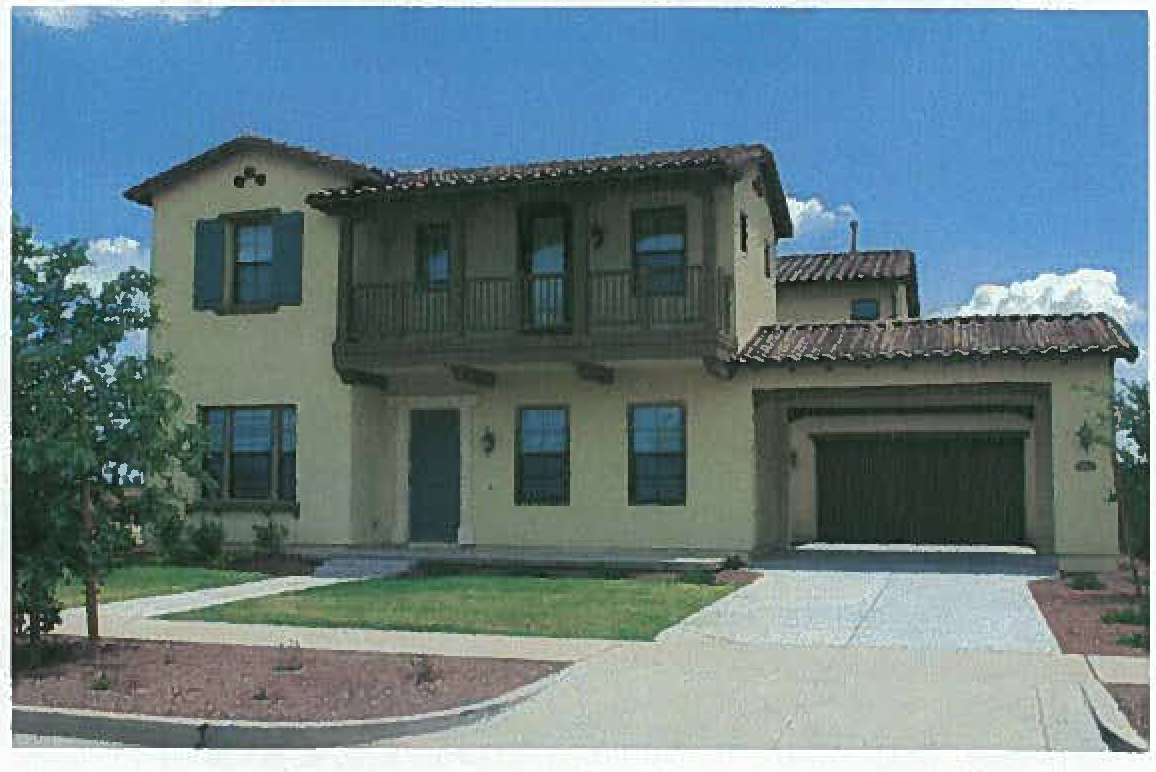
• A second-story cantilevered balcony is typically the main feature of the elevation.
• Balcony or porch is typically detailed by simple columns without cap or base trim.
• Front entry is typically sheltered.
• Spanish elevation details typically include round or half-round tile profiles at gable ends, exposed rafter tails, segmented arch elements and wrought iron accents.
• Windows may be recessed with simple head and/or sill trim, sometimes with plank-style shutters and/or entry door.
Spanish Mission
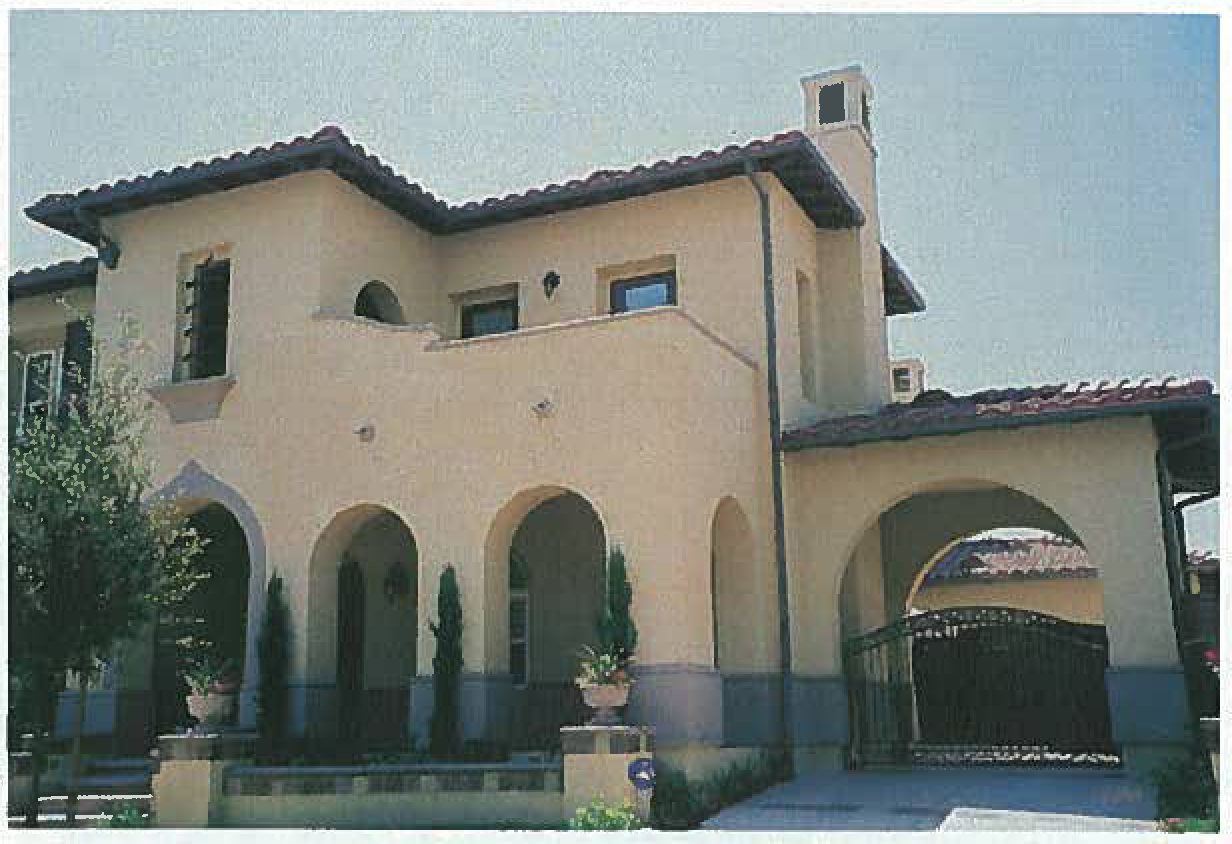
The inspiration for Spanish Mission style dates back as far as the late seventeenth century. Spanish and Mexican missionaries settling in the southwest set up the small communities known as missions to convert the American Indians to Catholicism.
Using the materials and labor at hand, combined with the influences from Spain and other parts of Europe, these buildings took on a unique regional appearance. The American Indian influence produced a simple flat walled building like a pueblo, with heavy wooden gates and few other openings, built with adobe, wood and tile, then plastered. The corners, worn by the environment, took on a soft, rounded look, not too different than some of the purposely sculpted forms from Spain. The sculpted parapet walls, arch forms, bell towers, and sometimes ornate details at the entry came from the Spanish-inspired architecture. Later, wood railings, decorative wooden gates and shutters were added, and as this style evolved, became more ornamental details.
Key Elements:
• Plan form is typically a rectangular two-story formal geometric box with a strong one-story element. The central form may expand to create an "L" or "U" shape configuration.
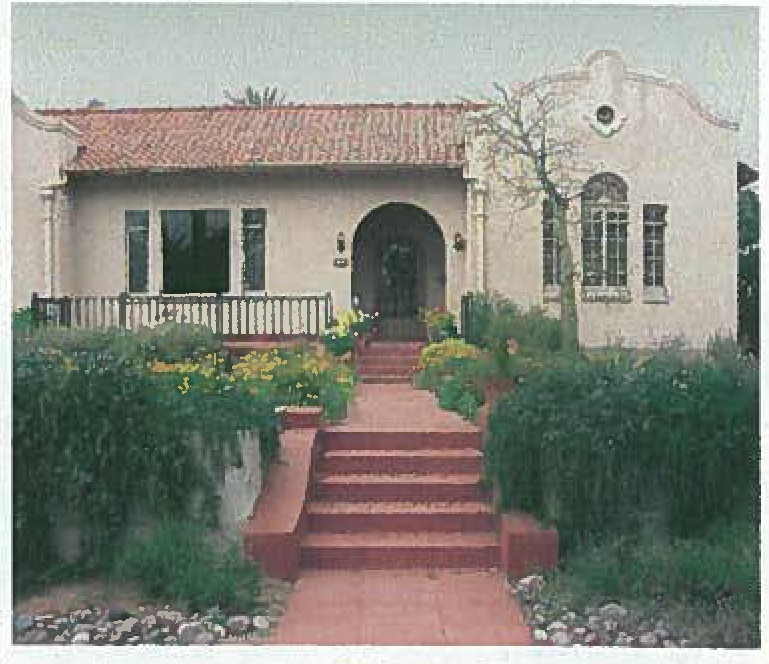
• Predominant hip roofs rectilinear in plan form, or gable roofs typically terminated by characteristic sculpted Mission parapet with eaves and rakes.
• Roofs are typically moderately pitched with concrete "S" or flat clay tile.
• Wall materials are typically stucco with smooth to light sand finish.
• Structural elements typically include segmented or elliptical arched arcades. Predominant round pre-cast concrete columns, or stucco pilasters with decorative cornice trim.
• Windows typically use segmented or elliptical arch forms as the characteristic shapes with custom divided lights. Square or rectilinear window shapes are possible, with standard divided light configurations.
• Front entry is typically sheltered by a single-story arcade.
• Decorative walls with brick or pre-cast concrete sills, caps and coping may be used.
Spanish Colonial
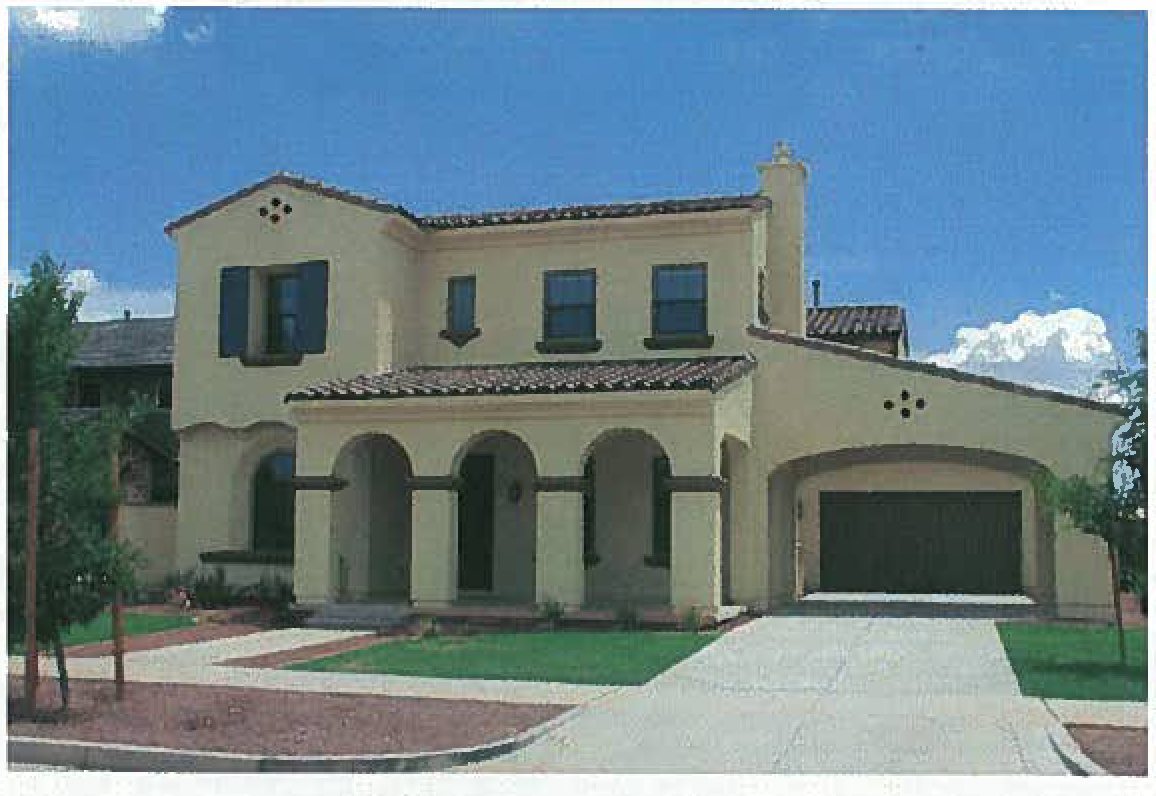
This style evolved in California and the southwest as an adaptation of Mission Revival infused with additional elements and details from Latin America. Key features of this style were adapted to the California lifestyle. Plans were informally organized around a courtyard with the front elevation very simply articulated and detailed. The charm of this style lies in the directness, adaptability and contrasts of materials and textures.
Key Elements:
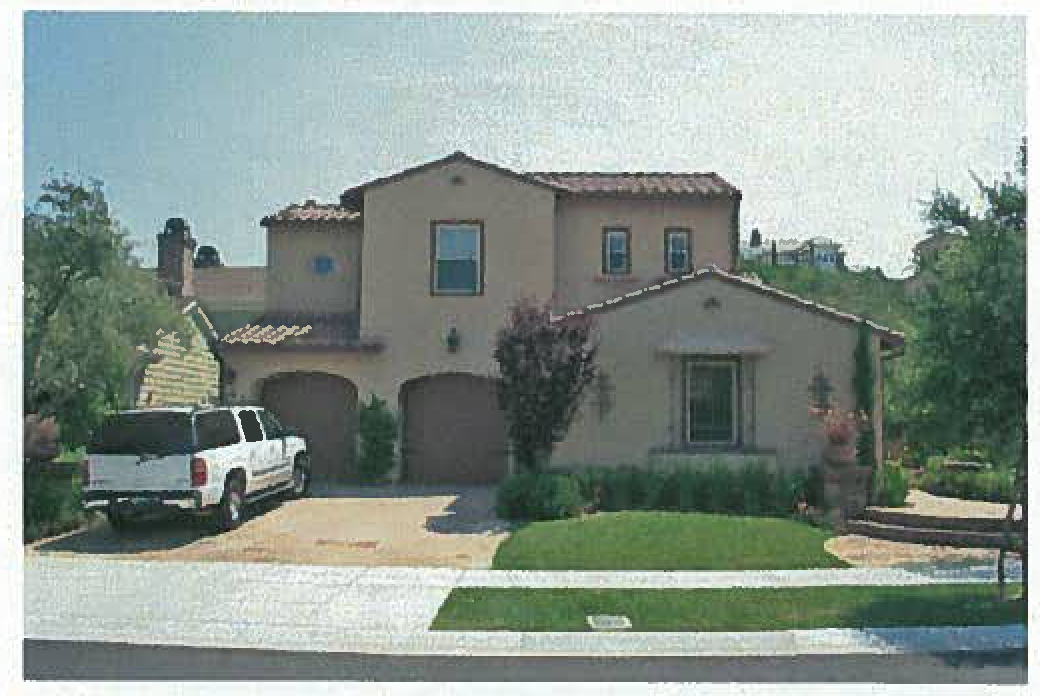
• Plan form is typically a rectangular or "L"-shaped.
• Roofs are typically a shallower pitch with concrete "S" or barrel tiles.
• Roof forms are typically comprised of a main front-to-back gable with front-facing gables.
• Wall materials are typically stucco.
• Decorative "wood" beams or trim are typical.
• Siding accents at gable ends are typical.
• Segmented or full-arch elements are typical in conjunction with windows, entry or the porch.
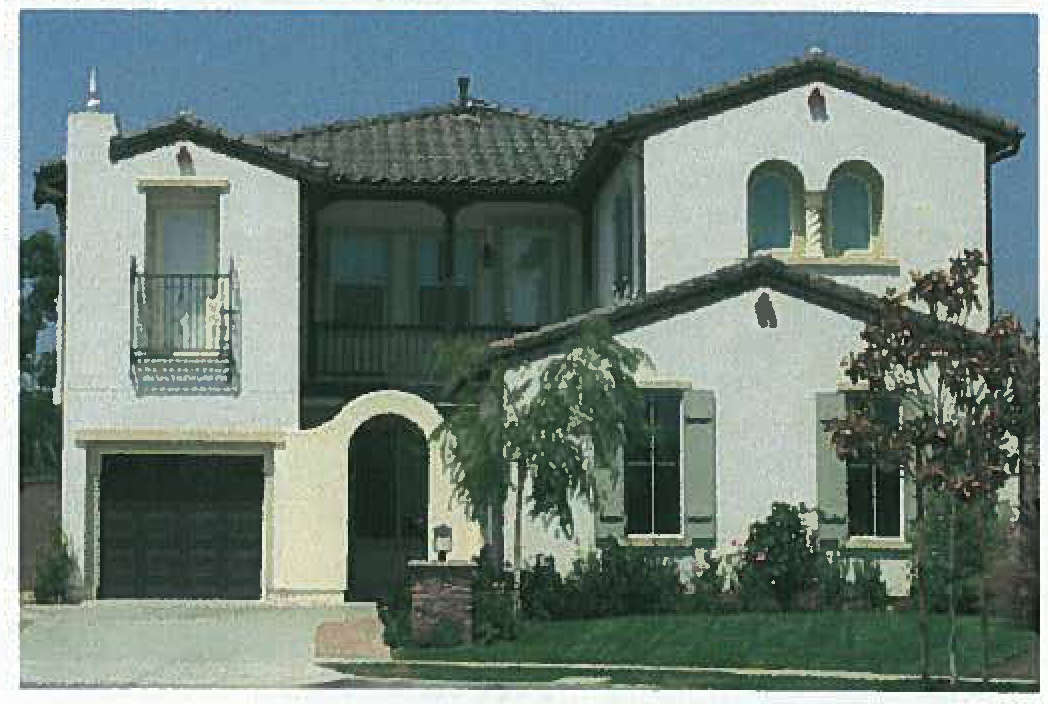
• Round or half-round tile profiles are typical at front-facing gable ends.
• Arcades are sometimes used.
• Windows may be recessed, have projecting head or sill trim or be flanked by plank-style shutters.
• Decorative wrought-iron accents, grille work, post or balcony railing may be used.
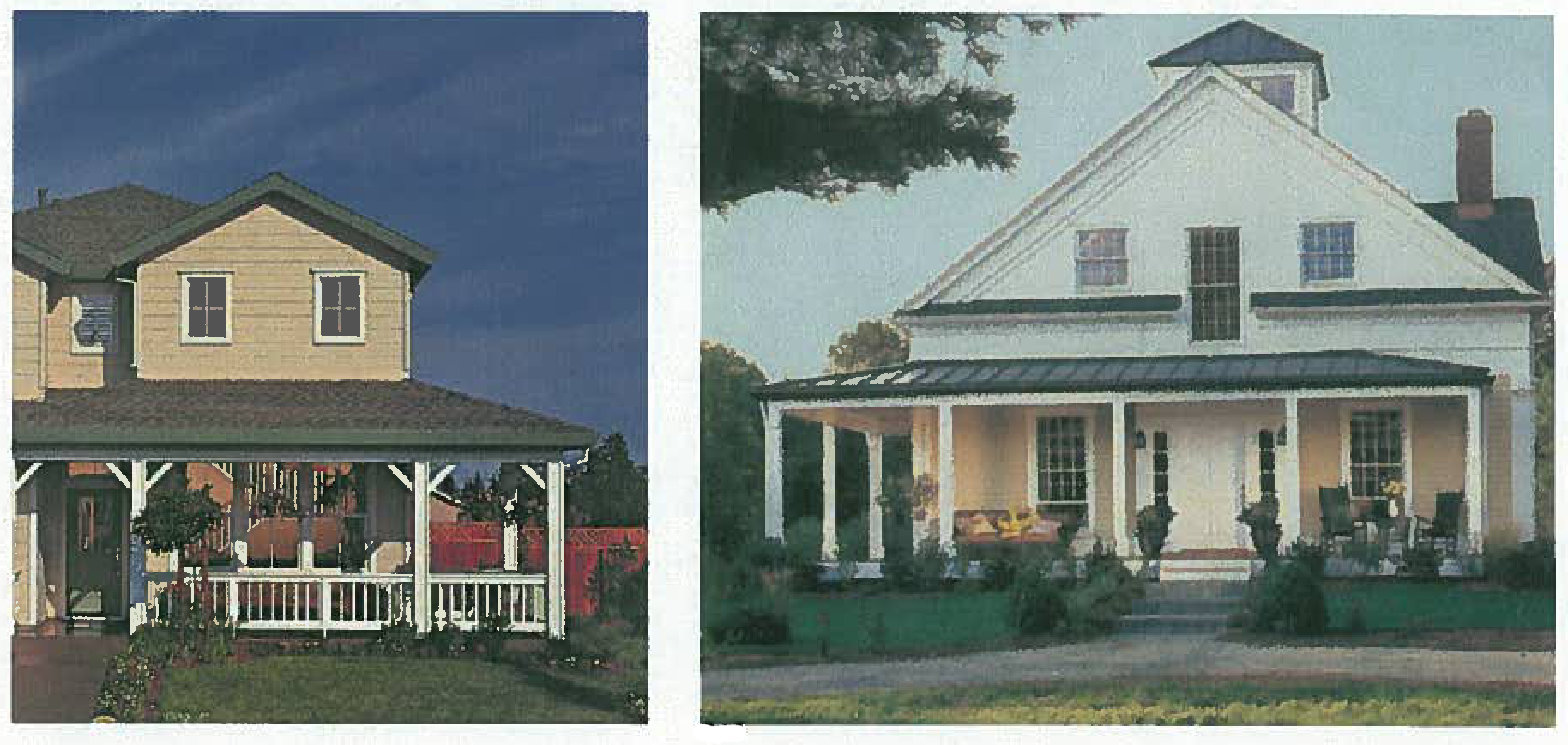
American Farmhouse
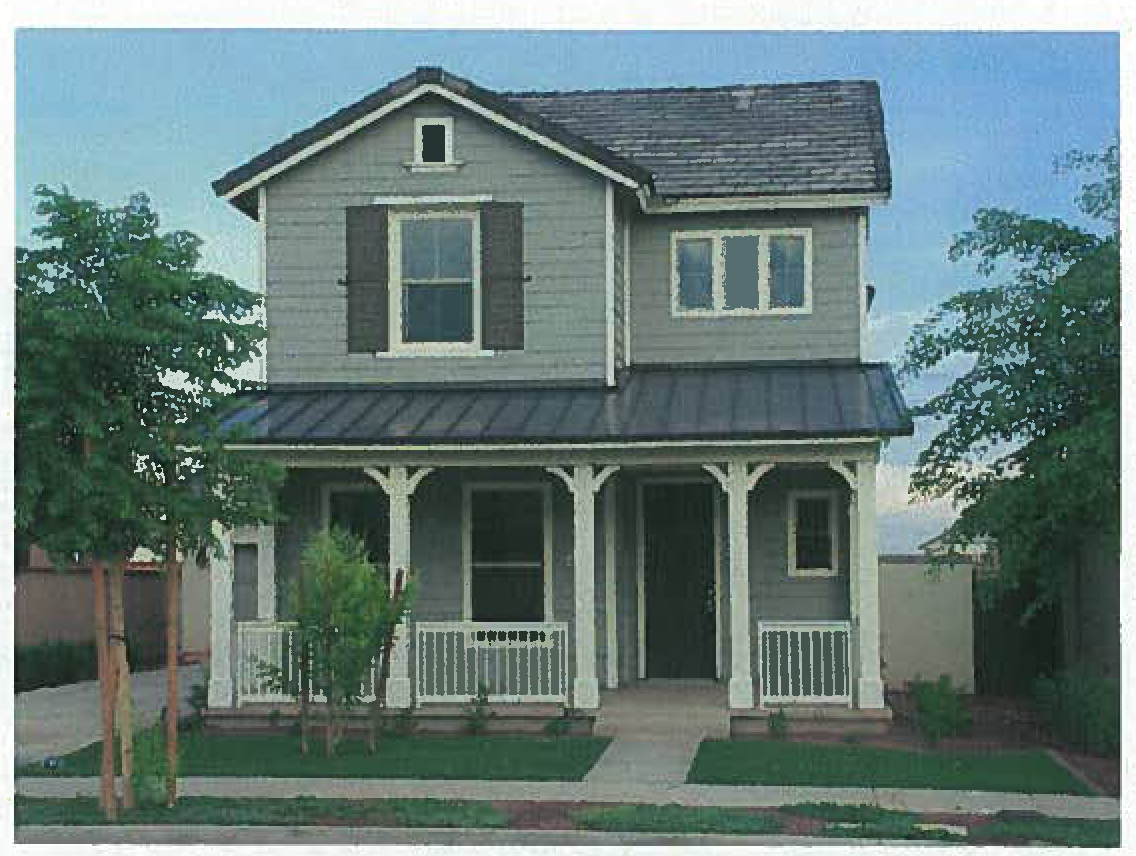
The American Farmhouse represents a practical and picturesque country house. Its beginnings are traced to both Colonial styles from New England and the Midwest. As the American frontier moved westward, the American Farmhouse style evolved according to availability of materials and technological advancements - such as balloon framing. Large, wrapping front porches with a variety of wood columns and railings are the predominant feature of the style. Two story massing, dormers and a casual cottage look, with a more decorated appearance, is typical of the Farmhouse adaptations that spread through the West and California.
Key Elements:
• Plan form is typically simple.
• Roofs are typically of steeper pitch with flat concrete tiles.
• Roof forms are typically a gable roof with front facing gables and typical overhangs.
• Roof accents sometimes include standing-seam metal or shed forms at porches.
• Wall materials may include stucco, horizontal siding and brick.
• A front porch typically shelters the main entry with simple posts.
• Windows are typically trimmed in simple colonial-style; built up head and sill trim is typical.
• Shaped porch columns typically have knee braces.
Ranch/Hacienda
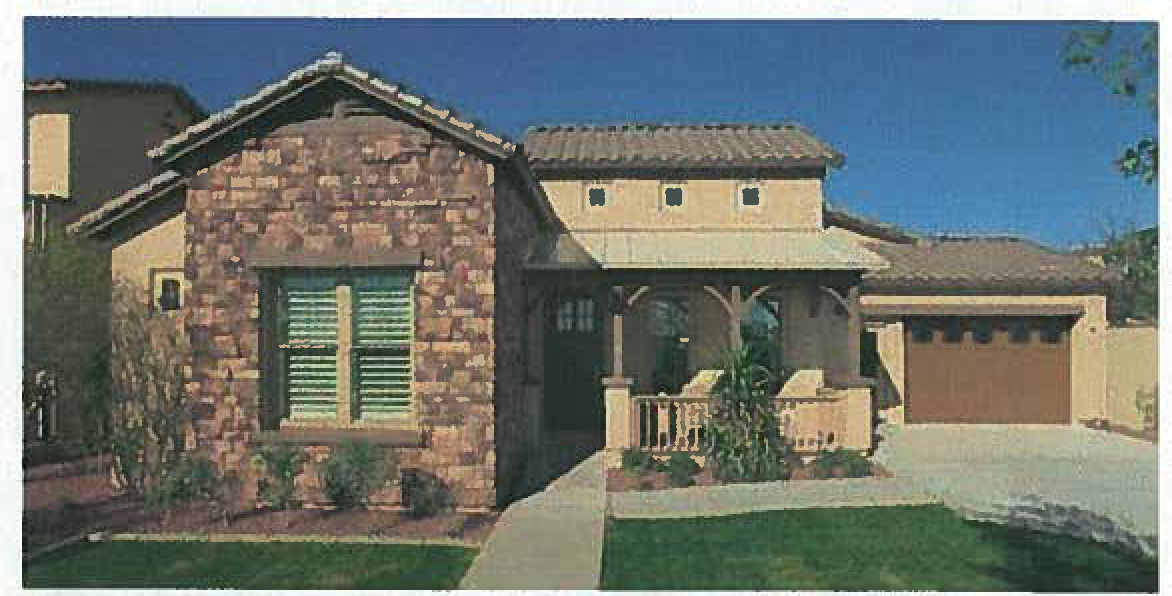
The Ranch/Hacienda house is a building form rather than an architectural style. It is primarily a one-story rambling home with strong horizontal lines and stronger connection between indoor and outdoor spaces. Rooted in the plan are forms of working ranches and traditional haciendas, the "U" or "L"-shaped open floor plan focused windows, doors and living activities on the porch or courtyard with simplified indoor spaces. The horizontal plan form is what defines the Ranch House. The materials, style and character applied to the Ranch have been varied, adapted, interpreted and modernized based on function, location, era and popularity.
A staple of the working ranch and Spanish Hacienda, this single-story family oriented home became very popular with the development of tract homes in the post-World War II era. Simple and affordable to build, the elevation of the Ranch house was done in a variety of styles. Spanish stylings with rusticated exposed wood beams, rafter tails under broad front porches and elegantly simple recessed windows were just as appropriate on the Ranch Home as the clean lines of siding and floor to ceiling divided-light windows under broad overhanging laminate roofs.
Details and elements of the elevation of a Ranch House should be chosen as a set identifying a cohesive style. Brick and stucco combinations with overly simple sill trim under wide windows with no other detailing lends a modem Prairie feel while all stucco, recessed windows and exposed rusticated wood evokes a Spanish Hacienda Ranch.
Key Elements:
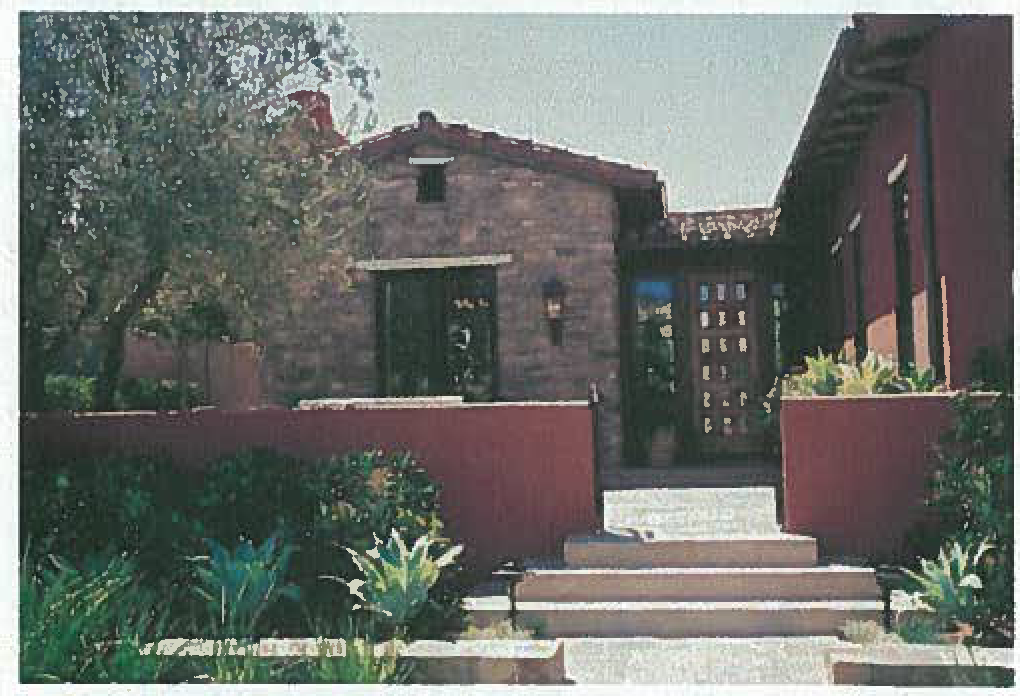
• Plan form is typically one-story of strong horizontal design.
• Roofs are typically a shallow pitch with "S" tile, barrel tile, shingles or flat concrete tile.
• Roof forms are typically gable or hip with exaggerated overhangs.
• Wall materials may include stucco, siding and brick.
• A porch, terrace or courtyard is typically the prominent feature of the elevation.
• Exposed rafter tails are typical.
• Porch is typically detailed by simple posts/beams with simple cap or base trim.
• Front entry is typically pedimented by a surround, porch or portico.
• Windows are typically broad and accented with window head and sill trim, shutters or recessed.
• A strong indoor/outdoor relationship joined by sliding or French doors or bay window is typical.
Mid-Century Modern/Desert Modern
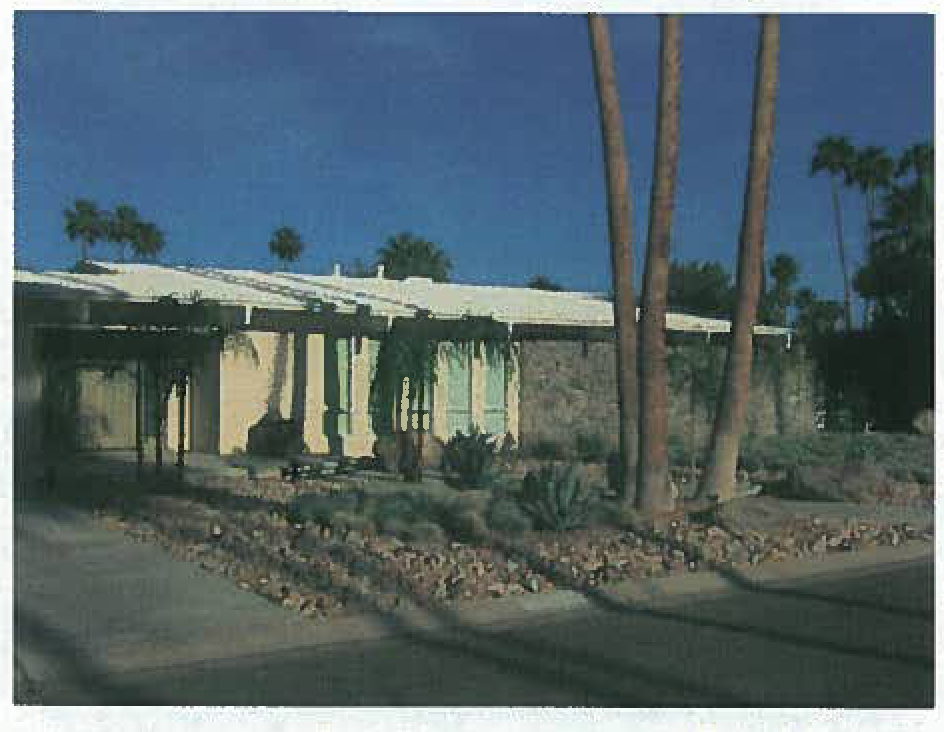
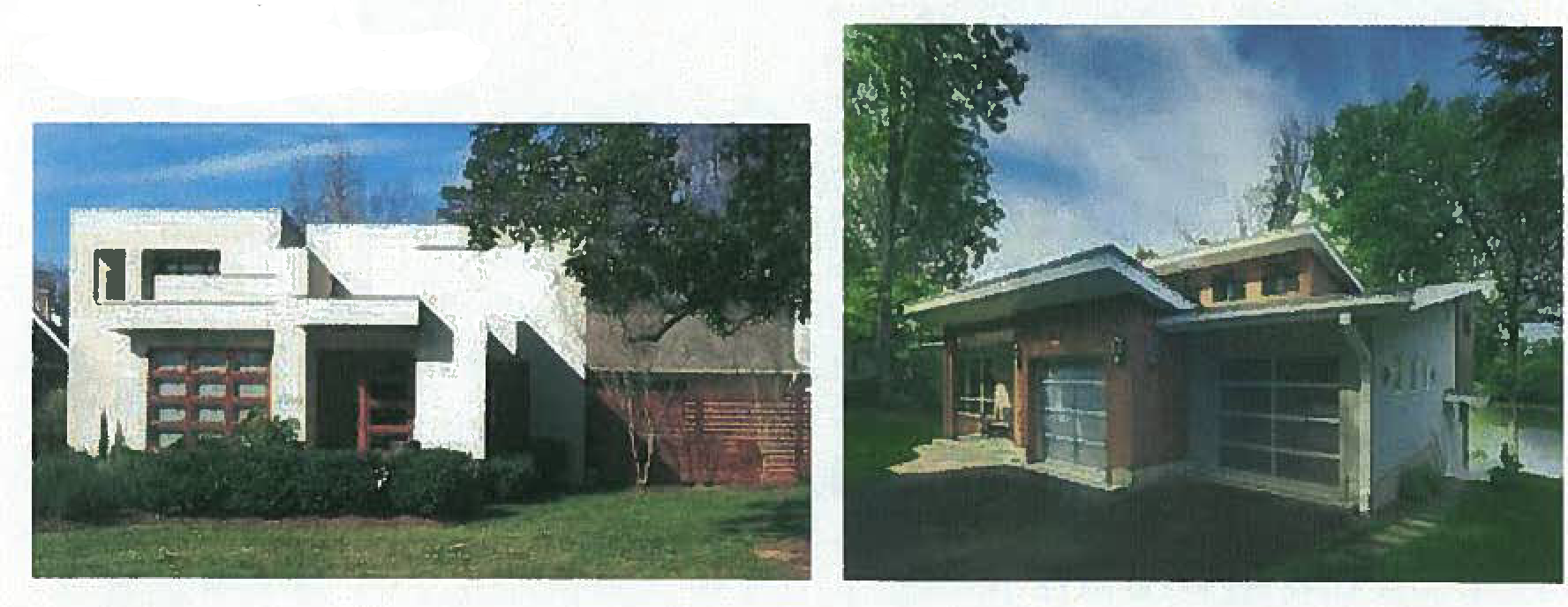
The "Mid-Century Modem" or "Desert Modern" style grew out of the aesthetics of the world-renowned German Bauhaus and gained popularity in the United States in the middle of the 20th Century. It is reflected in the work of Albert Frey, Donald Wexler, Richard Neutra, and other world-famous architects. A home developer, Alexander Homes, popularized this post-and-beam style in the Coachella Valley.
This architectural style represents the sculptural persona of the modern vocabulary. The mid-century homes are design-oriented and expressive, reflecting the function but also allowing for elaborate details that highlight the building techniques and materials.
Use of materials, projections, and windows hallmark the statement made by the form of this style. Often more than one material and more than one color are used in a balanced composition that emphasizes the massing.
Key Elements:
• Plan form is typically box-like, or a collection of square or skewed boxes, in bold, simplified forms.
• Roofs are typically low pitched and shielded by parapets.
• Wall materials typically consist of stucco, standing-seam metal and/or siding.
• Front entries are typically less pronounced than in historical styles, however entries may be articulated by trim, form or overhangs for resident identification.
• Projections to articulate façades are typical and may include building wall planes, awnings, overhangs, window trim and accent roof forms.
• Windows are typically a primary feature of the elevation; designs usually include groupings, unique size or shape, and oversized; floor-to-ceiling windows are typically used to create an indoor/outdoor ambiance most suitable for private, pool-side living in a desert climate.
• Color blocking is typical.
(ii)
Side and rear elevations. All side and rear elevations of homes shall be treated in a similar manner to the front elevation. These elevations are viewed in three ways: from adjacent units, as foreground along adjacent streets and as distant silhouettes viewed from adjacent neighborhoods and public areas. Such dwellings shall incorporate the following elements:
a.
Single Story Elements. Single story homes, when part of a tract development, are encouraged to be plotted as often as feasible on visible perimeter conditions. On two-story dwellings, single story elements such as balconies, patio covers and/or wall plane changes are encouraged to provide articulation and visual interest to the rear or side elevation.
b.
Varying Rear Setbacks. No more than two adjacent dwellings may have the same rear setback when rearing or siding to a street or public open space.
c.
Variation of Roof Planes. A variety of roof forms are encouraged using gable, cross-gable, hip, and shed elements. No more than two adjacent residences may have primary gable end roof forms facing the visible perimeter edges of the parcel. Ridgelines of adjacent residences should be in different directions to the extent feasible.
d.
Architectural Enhancements. All elevations above a fence or wall height shall be sufficiently articulated to provide visual interest by providing detailing, materials, color, enhanced window treatment and changes in wall planes as appropriate to style.
(iii)
Massing and floor plan form. Building massing and floor plan variations shall be oriented so that a diverse architectural street scene is created. Dwelling design and placement shall demonstrate compliance with the following guiding standards:
a.
Employ variation in massing, height and garage placements between plans to achieve diversity in the street scene.
b.
Keep selected styles in mind and use simple and appropriate massing, architectural elements and roof lines/pitches to establish clearly identifiable styles.
c.
Selection of style mix should consider common roof forms/pitches, massing and elements that may be expressed appropriately in several styles with minor additions or adjustments.
d.
Boxy two-story building forms that overwhelm the street scene are discouraged.
e.
The building mass should be broken up with similar design elements, where feasible, to provide visual interest and articulation to the neighborhood street alone.
(iv)
Roof Massing. Composition and balance of roof forms is as definitive to a streetscape as the street trees, active architecture or architectural character. Rooflines and pitches, ridgelines and ridge heights will create an authentic and balanced form to the architecture and elevation.
a.
Multiple ridgelines and ridge heights should be incorporated on each dwelling, based on the style of the dwelling. Additionally, the direction of ridgelines and ridge heights should vary between plans.
b.
Roof form and pitch shall match the architectural style of the elevation.
c.
Roof forms should be designed to accommodate photovoltaic systems (solar power), outside of the direct public view, such as flush with the roofing material.
(v)
Materials and Details. The character and style of homes should be established primarily through the use of massing, roof forms, and key architectural elements. Appropriate secondary character elements, detailing and accent materials also provide an effective means of reinforcing and enhancing character and style interpretations.
Key elements are those primary architectural features of the home that clearly discern one style from another. Secondary elements and details are identified as those that help to reinforce or enhance an already identifiable style. Key or Secondary elements are:
• Doors and Entries
• Windows
• Exterior Light Fixtures
• Roof Materials
• Color
• Accent Materials
• Wall Finishes
a.
Doors and Entries. Building entries represent an important point of interface between public and private spaces typically creating the initial impression for the user and a focal point for the viewer. Front doors and associated entry spaces should thereby be treated with a sense of importance and detailed so as to emphasize their location and purpose. In designing the door and entry space of homes the following guidelines shall be observed:
• Design of door and entry spaces shall be consistent with the architectural style of the home.
• Doors shall be protected by a deep recess, porch or other covered element.
• Door and entry spaces shall reflect a level of detail appropriate to their function and architectural style.
b.
Windows.
• Proportions and alignment shall be appropriate to individual style.
• Shutters shall be sized proportionally to match window opening.
• Style-appropriate grates, shutters and tile surrounds are encouraged.
• Full window trim is encouraged on visible elevations.
• Security bars shall not be installed over windows.
c.
Exterior light fixtures. Exterior light fixtures shall be selected to conceal the light source, lamp or bulb. Recessed canister lighting or fully shielded fixtures are required. The appearance of exterior light fixtures should be appropriate to the style, character and color of the home. Exterior light fixtures are required at each garage located on a private drive. These fixtures can be either recessed canister lighting or fully shielded fixtures.
d.
Roof materials.
• Roof materials, colors and treatments should correspond to the individual character or style of the home or building and be compatible with the overall look of the neighborhood.
• Concrete, metal or clay tiles may be used as appropriate to the style of home.
• Asphalt shingles are not allowed as a residential roof material.
• Solid patio covers shall be architecturally integrated with the primary residence including roof pitch, roof materials, and siding material (stucco, siding, etc.) based on the architectural style of the primary residence. Use of shed roofs with torch down, composition shingles, or rolled asphalt roofing shall not be permitted.
e.
Chimneys.
• Chimneys, when provided, shall be compatible in design, material, and color with the adjoining building.
• Chimney caps should be compatible with the architecture of the building and shall be approved as part of the fireplace assembly, pursuant to the local fire code. Exposed fire arrestors are prohibited.
f.
Color. A variety of natural looking materials and colors provide the diversity required for visual interest while unifying the homes with their settings and creating a timeless appeal. The primary purpose of color selection is to avoid monotony, provide a variety of colorful schemes, and promote visual diversity. To further this diversity, the following criteria shall be met:
• Each elevation shall have a minimum of three colors (Four is preferred. For example, one body color, one trim color and two accent colors.)
• Individual color schemes must be appropriate to the architectural styles with a harmonious selection of accent materials, roof profiles and colors.
• All color changes shall occur on an inside corner or coincide with an architectural element/massing change that conceals their meeting point.
• In conventional front loaded neighborhoods, adjacent homes shall have different color schemes.
g.
Accent Materials.
• Accent materials shall enhance and reinforce the architectural style and composition of individual homes and provide variety in the street scene. Selective use of appropriate materials, color and placement can provide maximum impact while providing a sense of unique character to each home.
• Accent materials shall terminate at inside corners or coincide with an edge or architectural element to conceal changes in material. Where views are limited or edges concealed by an architectural element, accent materials may terminate at privacy wall conditions.
• Natural stone, approved manufactured or cultured stone, painted or natural brick, precast concrete, ceramic tile, wrought iron, slump block, and horizontal or vertical wood siding (or approved manufactured siding, i.e. cementitious board) are encouraged.
• Accent materials shall be selected to complement the overall color and style of the home or building.
h.
Wall Finishes. Style-appropriate wall finishes shall visually enhance individual homes. The use and placement of extreme contrasts in color and/or materials should be carefully considered in order to maintain a compatible overall look throughout the neighborhood. Footings at front elevations shall be exposed no higher than 6" above finished grade.
i.
Gutters and Downspouts. Exposed gutters and downspouts shall be colored to compliment or match fascia or accent trim color(s).
j.
Mechanical Equipment. Mechanical equipment shall not detract from the architectural design of the home. Special care should be taken to ensure that all mechanical equipment including junction boxes, trash receptacles and air conditioners are properly screened from public view via walls, enclosures, etc.
• Air conditioning units shall not be placed in the front yard or street side setback. Ground mounted air conditioning units shall be located behind side yard privacy return walls. When feasible, air conditioning units shall be placed in shaded areas or the north side of the dwelling to conserve energy.
• Mechanical equipment such as air conditioners, heaters, evaporative coolers, and other devises shall not be mounted on roofs.
• Mechanical devices such as exhaust fans, vents and pipes shall be painted to match roof surfaces.
• The placement of mechanical equipment within side yards shall not restrict pedestrian access in emergency situations. Mechanical equipment may be accommodated within the rear yard with minimal impact on yard use and layout.
(e)
Landscape design. The high-desert environment provides a rich palette of colors, textures and materials within the landscape. These guidelines are designed to take advantage of the natural aesthetic setting that encourages residents to have a closer contact with their outdoor environment. Repeated use of desert themed landscape elements such as decorative rock, natural boulders, Joshua trees and other appropriate plant material will evoke the high-desert's natural environment.
All landscape areas within the Landscape Maintenance Assessment District shall be built consistent with this Chapter and per city standards subject to the approval of the Director of Public Works and the City Manager or their designees.
(1)
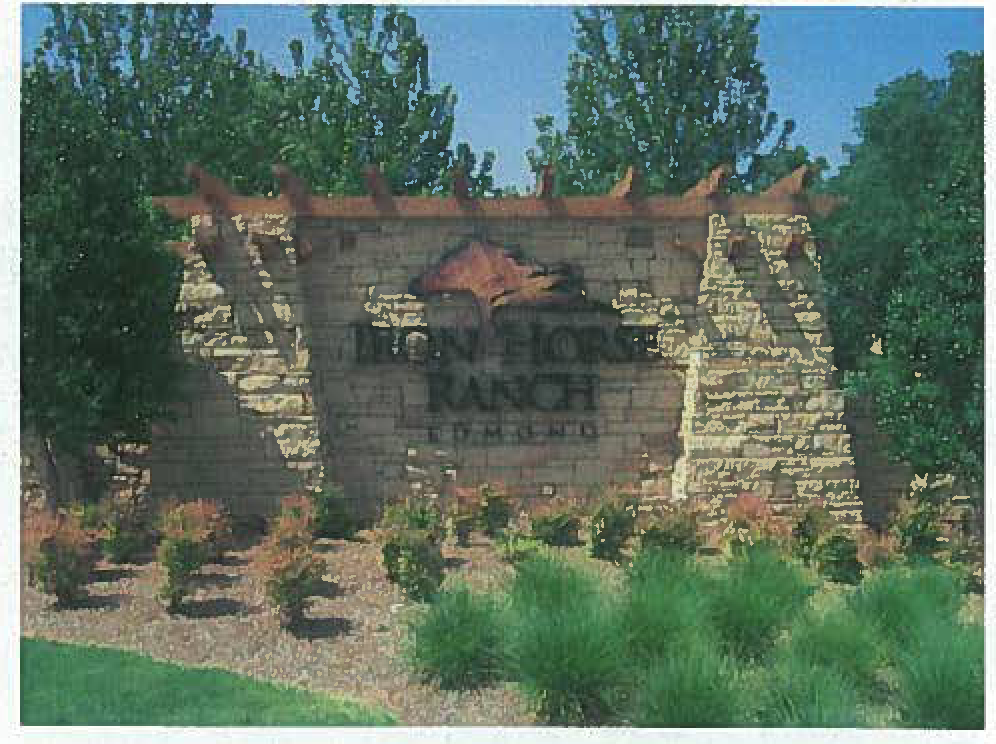
Neighborhood entries. Entry points leading into the community are essential in creating a sense of place and identity. Neighborhood entry points shall use landscape design elements that embrace the high-desert landscape to help set the stage on building the arrival sequence of visitors and residents alike. The landscape design at the entrances shall reflect the community's quality of life and provide continuity in neighborhood design. All landscaping in the sight triangle of all road intersections shall not have trees or bushes, only low ground cover and low plants are permitted.
Highlights:
• Entry points shall be accentuated through an enhanced landscape of unique accent trees, palms, shrubs and groundcovers.
• Changes in height, texture and color of plant material will highlight visibility and introduce the overall landscape theme of the neighborhood.
• Enhanced accent paving should be used on community entrances to encourage vehicular traffic to slow down.
• Entry points shall likewise have thematic signage and markers for identity and emphasis. This design shall remain consistent throughout the entire community.
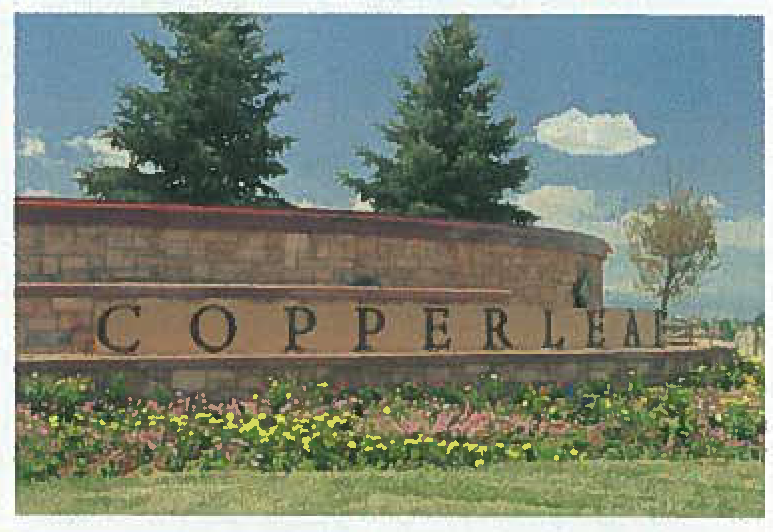
• Wall treatments on entry points shall employ the use of rich colors and materials that shall coordinate with adjacent architecture styles for character.
• Neighborhood identification signs should be freestanding and not affixed to a subdivision wall.
• Median landscape strips at entries are encouraged with desert themed planting for transition into the neighborhood.
• Sign area is allowed at 1 square foot for each dwelling unit not to exceed 45 square feet for each neighborhood entry sign.
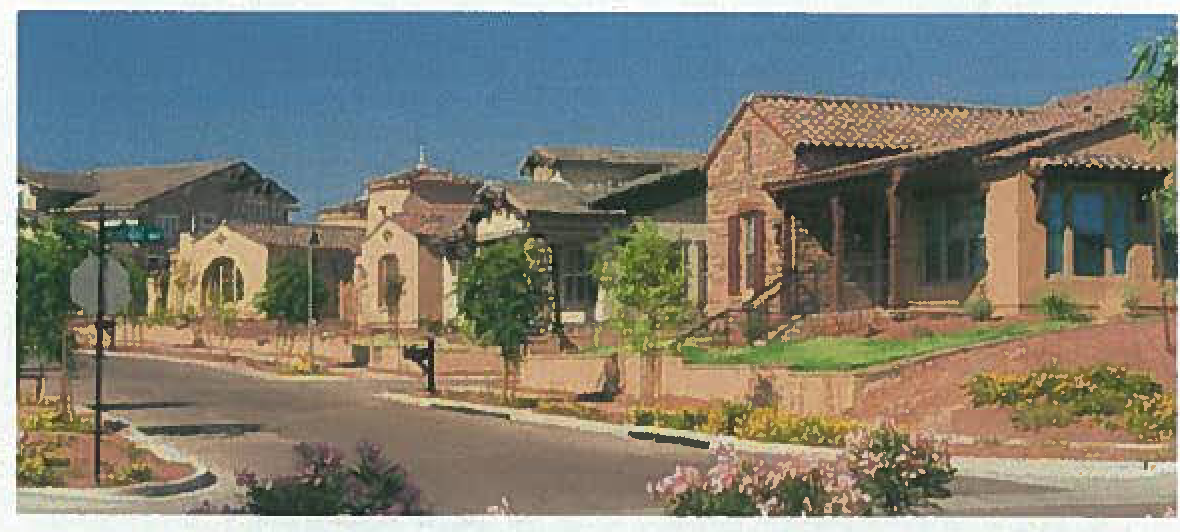
(2)
Streetscape design. Landscape design plays a crucial role in effective street design that goes beyond form and aesthetics. Streetscape connects neighborhoods allowing a smooth circulation of vehicular traffic for visitors and residents. It addresses comfort, safety, security and accessibility for residents and visitors. Streets in neighborhoods will be more enjoyable, walkable and interactive to pedestrians. Construction of neighborhood streetscapes including all improvements and furnishings of its areas shall be the entire responsibility of the parcel developer. The following are standards based on the street size:
(i)
Arterial and Collector Streets.
• All landscaped areas shall be constructed in accordance with the Specifications and Detail Booklet for Landscape Maintenance Assessment Districts (LMAD), which is maintained by the City's Public Works Department.
• Landscaping along arterials and collectors that front a subdivision wall shall be maintained by the City through an assessment district, or privately by a home owners association approved by the Planning Commission.
• The developer shall provide a tree and plant palette for review and approval, which complements existing developments and is consistent with the overall design theme of the neighborhood. All trees and plant materials shall correspond with the approved tree and plant palette to reinforce community theme.
• Streetscapes shall be designed to provide a cohesive and hierarchal element tying the community together as a whole.
• Street trees shall be provided along street frontages with an average on-center spacing not to exceed 125% of the spread of the subject tree at maturity.
• 24-inch box trees or larger shall be utilized at time of installation.
• Trees shall be strategically located so as not to interfere with driving visibility.
• A minimum of two rows of shrubs will be installed in planting beds.
• Shrubs shall be sized in 5 gallon containers or larger at time of installation.
• Shrub and ground cover on-center spacing at installation shall not exceed a dimension of 75% of growth spread of a subject plant at maturity.
(ii)
Local Streets.
• The developer shall designate a street tree species for each street.
• Street trees shall be provided along street frontages with an average on-center spacing not to exceed 150% of the spread of the subject tree at maturity.
• Street trees along local streets shall be maintained by the residential property owner who directly abuts the subject tree(s) or by a designated home owners association.
• Landscaping and irrigation within street right-of-way shall be installed to meet Landscape Maintenance Assessment District (LMAD) detail specifications.
• All trees shall correspond with the approved tree and plant palette submitted by the developer to reinforce community theme.
• Street trees shall be at a minimum size of 15 gallons.
• Root barriers shall be used to discourage root growth invasion on pavement.
• A consistent ground cover shall be selected for parkway landscaping within in neighborhood.
(3)
Yard landscape design. The Landscape Design for single-family neighborhood developments shall serve the purpose of creating a sense of neighborhood within each development. These guidelines are in addition to the landscape standards specified in Section 16-3.24.030.
Highlights:
• All front yard and street side yard areas shall be landscaped prior to the final construction of a dwelling.
• An overall theme of water conservation shall be represented throughout each neighborhood in the manner that the front yard landscapes are to be designed and maintained. Drip irrigation principals are to be used within the front yard landscape.
• The landscape shall feature a mixture of trees, shrubs, groundcovers and rockscape with different shapes, textures and colors that will coordinate with the landscape theme of the neighborhood.
• Pedestrian pathways from the street sidewalk to the building entry are encouraged and should be independent from the driveway.
• The manufactured contour of a front yard shall be varied to create natural contours or tiered levels with retaining elements.
• Size of trees and placement will be appropriate with neighborhood scale. Opportunities for summer shade and sunlight penetration shall be considered.
• No turf shall be allowed within the front yard landscape.
• Decorative rock color shall complement the overall neighborhood theme and the natural desert environment.
• All trees within five feet of a concrete walkway area shall require the installation of appropriate root barriers.
Methods:
Front Yard Landscape Requirements for each lot
(4)
Walls and Fencing. Construction of all neighborhood walls and fences shall be the entire responsibility of the parcel developer in accordance with the standards established herein and as set forth in Section 16-3.08.030.
• Exterior wall colors shall harmonize with the site at all times. Textures are to be integrated with the site to produce a variety of shade and texture. Walls and fences will reinforce the community's character and appeal.
• Wall design, materials, color and finishes shall complement adjacent architecture while keeping the community design theme cohesive.
• Walls and fences should step, not slope, to accommodate grade changes.
• Landscape Maintenance Assessment District (LMAD) walls shall include pilasters at wall angle points and along the wall surface that faces a street and paseo/trail, with a maximum separation of one hundred feet.
• Wrought iron view fencing with pilasters shall fence in open drainage channels and basins within Drainage Facilities Assessment Districts (DFAD), when abutting a public right-of-way or recreational area. Chain link in these locations shall be prohibited. Pilasters shall be installed at fence angle points and at intervals not to exceed one hundred feet.
• Front yard garden walls shall match the architectural style of the dwelling.
• Where practical, street side yard walls that face local streets should be minimized in length to allow more of the dwelling to be exposed to the streetscape.
(f)
Conservation design. Victorville is an environmentally responsible community. Developments shall incorporate sustainable practices that further the goals of the General Plan, including but not limited to the following:
• The incorporation of wastewater infrastructure into city's existing and future street network, to enable ready connection to recycled water infrastructure, when available;
• Drought tolerant landscaping plans in accordance with Chapter 13.60 of the Victorville Municipal Code, entitled Water Conservation; and
• Require all residential projects over one hundred units to generate electricity on site through solar power, to the maximum extent feasible.
(Ord. No. 2318, § 2, 2-3-15; Ord. No. 2346, § 2, 11-17-15; Ord. No. 2388, § 3, 3-19-19; Ord. No. 2410, § 2, 7-21-20; Ord. No. 2443, § 3, 9-5-23)
Sec. 16-3.08.100: - Multi-family design guidelines
(a)
Design goals. Multi-family residential development appears in a variety of forms throughout the city of Victorville. Multi-family developments, if not properly designed, can dominate their surrounding, increase neighborhood parking and circulation problems, and decrease common and private open space. These guidelines present common goals that encourage the highest level of design quality while allowing maximum flexibility in the design of multi-family residential development that will:
(1)
Create livable neighborhoods and residential areas as well as safe and attractive streets by encouraging high-quality architecture, landscape, design and open space; and
(2)
Emphasize design compatibility within existing neighborhoods, both in site planning and architectural design.
(b)
Design objectives. The design of multi-family residential development projects in Victorville shall:
(1)
Respect the scale, proportion and character of the surrounding area;
(2)
Provide pedestrian-friendly design solutions to adverse traffic patterns;
(3)
Establish attractive, inviting, imaginative and functional site design;
(4)
Provide adequate open space, parking and privacy;
(5)
Create visual interest and variety;
(6)
Maintain a sense of harmony and proportion along street frontages and other portions of the project exposed to public view;
(7)
Preserve and incorporate natural amenities unique to the site such as hillside views, topography, and mature trees; and
(8)
Preserve and incorporate historically, culturally, or architecturally significant buildings into the project development proposal.
(c)
Site design guidelines.
(1)
Grading. Grading should be minimized where possible to preserve the natural character of the land. When grading is unavoidable, incorporate the following guidelines:
(i)
Follow the natural contours as much as possible.
(ii)
Slopes should be rounded and contoured to blend with the existing terrain.
(iii)
Emphasize and accentuate scenic vistas.
(iv)
Avoid large manufactured slopes in favor of several smaller slopes.
(v)
Retain and incorporate significant natural vegetation into the project.
(vi)
When grading is unavoidable, minimize raising the grade significantly above the grade of adjacent properties, especially near interior property lines. When such grading is unavoidable, compensate by planning for reduced building heights within the raised grades.
(vii)
Implement slope-stabilizing landscaping and irrigation on manufactured slopes.
(2)
Compatibility. New units should be built in scale with the existing neighborhood. Therefore, in addition to the minimum code requirements for yards, height, lot coverage and floor area; the predominant setback, yards, size and height of the existing neighborhood should be considered in determining the overall size and situation of the buildings.
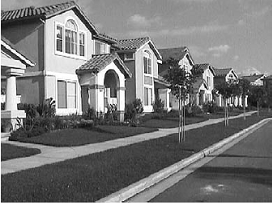
Appropriate Orientation
(i)
The arrangement of structures, circulation and open spaces should recognize the particular characteristics of the site.
(ii)
Project design should relate to the surrounding built environment in pattern, function, scale, character and materials.
(iii)
Infill structures and new projects should meet or exceed the standards of quality, which have been set by surrounding development.
(iv)
Structures that are distinctive due to their age, cultural significance, or unique architectural style should be preserved and incorporated in the project proposal.
(v)
Residential units should be buffered from incompatible development through increased setbacks, intensified landscaping, and appropriate building orientation.
(3)
Building Siting
(i)
Building Orientation - Primary building entries should be designed to front onto either street, interior pedestrian paths or common open space. Up to 25% of all units in multi-family complexes may have building entries that do not front onto streets or common open space. All entries and common open spaces should have a direct connection to a street via a connecting walkway. Street frontages consisting of garages, carports and parking lots are to be minimized.
(ii)
Garage Placement - Developments should be designed to minimize the visual impact of garages along streets. Garages should not comprise more than 33% of a building's street frontage. The following options should be used:
(A)
Place garages behind buildings (with access from driveways or alleys);
(B)
Recess garages that face the street behind the primary façade of buildings with a setback of at least one foot (1') from the primary façade for every two feet (2') of garage width; or
(C)
Use a side-facing garage door (with no additional setback required).
(4)
Driveways and Guest Parking Areas.
(i)
Main driveways should incorporate no more than one lane in each direction, separated by a four-foot-wide net, curbed, planted divider within the required street setback area.
(ii)
Guest parking facilities may be located directly off the main driveway, outside the required street setback area, provided they are screened from view from the street by a 42-inch high wall.
(iii)
Main driveways should be enhanced by a pergola consistent with the architectural style of the buildings, of a depth of at least half the required street setback.
(iv)
All driveways should incorporate an enhanced paving strip consisting of unit pavers or textured/scored concrete at the entrance and at 100 foot-intervals thereafter, of at least 10 feet in width.
(5)
Setback. The structures should be set back from the front property line either the distance required by the zoning code or the average of existing setbacks on the street, whichever is greater.
(6)
Open Space and Landscaping.
(i)
Common Open Space - Common open space areas include shared gardens, plazas, water elements, courtyards, recreation facilities, or equivalent landscaped areas. The following open space guidelines should be followed:
(A)
Connecting Walkways - An interconnected path system should be provided and should be integrated with the public sidewalk, where available. The path system should serve the guest parking areas. Entry points to the path system shall have special paving or scored concrete.
(B)
Location and Surrounding - Common open space should be designed to integrate buildings and other structures. At least seventy-five percent (75%) of common open spaces shall be bounded by building walls with windows, by architectural elements such as low walls or trellises, by landscape features such as hedges or rows of trees, or by some combination of these elements. Required open space should be conveniently located near the majority of units.
(C)
Size - Common open space areas may be small, while providing amenity and identity through appropriate design.
(D)
Landscaping and Features - Landscaping and open space must be designed as an integral part of project design and enhance the building design, enhance public views and provide buffers where needed. Every site shall contain at least one 24-inch box size tree for each dwelling unit.
(ii)
Private Open Space - All private open space shall be fenced or walled for the private use of the occupants of the unit it is intended to serve. Ground-level private open space shall be located adjacent to the dwelling unit. Aboveground private open space (i.e. decks and balconies) should be set back at least 10 feet from interior property lines.
(iii)
Common Recreational Facilities - The minimum number of recreational facilities for a development is based on the amount of residential units within a complex and is listed in the following table:
* For each 100 units above the first 200 units, 4 additional recreational facilities should be provided.
**For each 100 units above the first 200 units, 5 additional recreational facilities should be provided.
Developments shall select from the following recreational facilities, subject to Planning Commission review and approval:
(A)
Large open lawn with one of the dimensions no less than 100 feet;
(B)
Pool and spa;
(C)
Multiple tot lots with multiple play equipment, conveniently located throughout the site;
(D)
Community multi-purpose room equipped with kitchen, with attached patio area;
(E)
Court facilities (i.e. tennis, volleyball, basketball, etc.);
(F)
Barbecue facility equipped with grill, picnic benches, etc.
(7)
Utilities - Transformers, post-indicator valves, backflow-preventers and similar apparatus shall either be undergrounded or located in inconspicuous areas, and screened with landscaping.
(8)
Walls and Fences - Fences and walls should be designed as an integral part of the whole project.
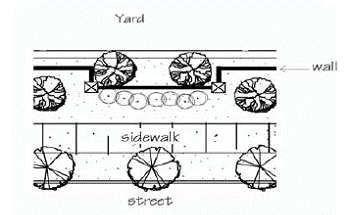
One option is to incorporate a 2' stagger to wall at appropriate intervals.
(i)
Materials - Fences and walls should use materials and design elements that make it consistent with the design of the whole project. Fences and walls in public view should be built with attractive, durable materials including, but not limited to, wrought iron with pilasters, textured concrete block, or formed concrete with reveals. Chain link fencing, corrugated metal or fiberglass fencing and "tennis windscreens" are prohibited. All fences and walls should have a distinctive cap of different width, material or texture.
(ii)
Height - Fences and walls should not exceed a height of six feet (6') without being made of textured concrete block, textured interlocking blocks, formed concrete with reveals, or similar materials.
(iii)
Special Design Considerations - Short fences, walls, hedges and gates are encouraged along sidewalks to contribute to an attractive streetscape. Decorative gates are encouraged near the sidewalk. To maintain some visual connection between entries and a street or walkway, walls, and fences should be accompanied by a gate. Gates should be accompanied by pilasters or other special architectural or landscape treatment.
(iv)
Fence and Wall Styles - While site plans should avoid placing tall walls and fences along local streets and collectors, sometimes it is unavoidable.
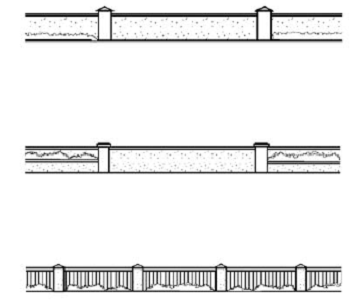
Fences and walls should be built with attractive, durable materials. Pilasters should
include a distinctive cap.
Treatments should be used to avoid long and monotonous street fronts. Appropriate designs include:
(A)
A solid wall with pilasters;
(B)
A short wall with fencing and pilasters;
(C)
Fencing with pilasters, staggered walls (i.e. change-in-plane);
(D)
Gated openings, and planters integrated with walls.
(E)
Exterior security fencing should be considered in the initial design stage to avoid the need for future modifications to the plan.
(9)
Refuse Enclosures and Equipment - Refuse Enclosures should be designed to be integrated into the whole project. Refuse containers and equipment should be easily accessed by service vehicles and located within a screened enclosure. Reflect the architectural style of adjacent buildings in the design of enclosures, and use similar, high quality materials. Landscaping or trellises are encouraged where screened enclosures are visible from a street or connecting walkway and shall be permanently maintained.
(10)
Drainage - Using various control techniques to limit off-site drainage helps to create a healthier watershed. There are many ways to capture water on-site and divert water underground. Residential development should integrate water runoff best management practices into the site design.
(a)
Architectural Design Guidelines.
(1)
Architectural Style - The architectural style chosen should reflect a style that characterizes or complements the predominant neighborhood style. The architectural style should be consistent across all units, however, variation in color schemes and design details should be evident. Some commonly found styles in Victorville are described below, along with their defining elements.
(i)
Craftsman - Heavy exposed beams and porch columns; full-width front porches; use of natural materials such as stone and brick for base treatments; low-pitched roofs with wide eve overhangs; wood or stucco siding; darker earth tone exterior colors; double- or single-hung windows.
(ii)
Mediterranean - Low-pitch, tile or flat roofs with parapet; arched windows and entries, sometimes recessed; trowel stucco finish; cream or light earth tone color; front porches accented with decorative columns or pilasters; if two-story, upper windows smaller and less ornate than lower windows.
(iii)
Spanish - Low-pitch red tile roof, usually with little or no eave overhang; typically with one or more prominent arches placed above door or principal window, or beneath porch roof; wall surface usually stucco; façade normally asymmetrical.
(iv)
Pueblo Revival - Flat roof with a parapet wall above; wall and roof parapet with irregular, rounded edges; projection wooden roof beams extending through walls; stucco wall surface, usually earth-colored.
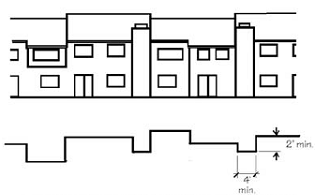
Recommended architectural projections
(v)
International - Multi level flat roof, windows (usually metal casements) set flush with outer wall, some floor to ceiling windows; smooth, unornamented wall surfaces with no decorative detailing at doors or windows; façade asymmetrical;
(vi)
Ranch - Low-pitched, hipped roof with wood or wood-look shingles and wide eves; wide windows; variety of siding with base treatment, including stucco, lap, board-and-baton, brick or stone cladding.
(2)
Scale and Massing - At a minimum, the following guidelines should be implemented. Exceptions to these requirements are permissible, if the architectural style dictates otherwise.
(i)
Attached units should incorporate plan elements, which provide distinction to individual units or small groups of units, such as wall breaks, projections, individual roof treatments, porches and decks.
(ii)
The front wall mass of each unit should be broken up into two or three planes, with a break depth of at least two (2) feet. No required plane should be less than 25 percent of the length of the front wall.
(iii)
Units adjacent to property lines should incorporate a third floor setback of at least 10 feet from lower-story walls facing the property line. Units adjacent to pedestrian paths and common open spaces should incorporate a third floor setback of at least 5 feet from the wall facing the path or common open space.
(iv)
All front, rear and interior facing wall planes should be proportionately fenestrated, including garage, sidewalls and dormers.
(v)
Use variation in the building footprints, facades, and roof forms.
(vi)
Use a variety of shapes and forms including architectural projections such as roof overhangs bay window, entry elements such as porches, stoops, balconies, trellises, and cantilevers that create shadows on the building.
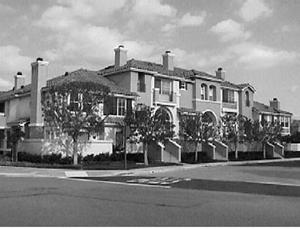
Appropriate Massing for Multi-family Units
(vii)
Use contrasting vertical and horizontal elements that help break the visual mass of facades into small areas.
(viii)
When appropriate to the architectural style of the building, a minimum of a 12-inch roof overhang should be provided.
(ix)
For multi-family buildings, higher tower elements or similar features are encouraged at focal points, such as plazas, major entrances, street intersections, or where walkways meet streets.
(x)
Buildings constructed on corner lots should incorporate a well-defined architectural focal element addressing the corner. The corner element should complement existing corner elements on other buildings adjacent to the intersection, in size, scale and composition, and should be proportionate in size to the street intersection it addresses.
(3)
Garage design - Garage and carport structures should exhibit designs, which are compatible, supportive, and fully integrated into the overall architectural theme. Garage design should be implemented through the following provisions:
(i)
Fenestrated indoor living space or balcony space should be built over the garage;
(ii)
Strong shadow lines should be created around the garage face by recessing the door one foot behind the adjacent wall plane;
(iii)
For multiple car garages, no garage door should exceed nine feet (9') in width and intervening posts should be at least one foot in width;
(iv)
Long structures present difficulties in keeping proportions appropriate with the design intent with the main structures, and therefore, the garage/carport should be limited to 8-12 cars;
(v)
Integrate substantial design elements (i.e. columns, beams, roof design) into carport structures to convey a more permanent concept. Prefabricated metal carports are prohibited.
(4)
Entries and Windows
(i)
Entries - Main entries should be given prominent treatment, by incorporating the following elements:
(A)
Front entries should be clearly identified using porches, stoops or canopied outdoor areas;
(B)
Front door surround treatment, including a cover for weather protection, utilizing decorative trim appropriate to the style, a recess, or sidelights;
(C)
A decoratively-paved walkway leading to the sidewalk;
(D)
A decorative, shaded porch light appropriate to the architectural style.
(ii)
Windows -The following window guidelines should be followed:
(A)
Windows should either be inset or framed to create a more substantial appearance. All windows should have trim or other treatments consistent with the style or architecture of the building.
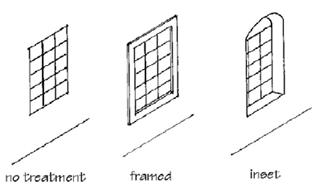
Window Treatments
(B)
Windows should be arranged to avoid direct views into the windows of neighboring units.
(C)
Windows should be designed to open vertically or swinging. Horizontal sliding windows should be avoided.
(D)
Windows should not be placed in the path of vehicle headlights.
(E)
Interior window coverings shall be included on all bedroom and bathroom windows, as well as those windows, which are within the view of a public right-of-way. Acceptable types of window coverings include drapes, blinds, and shades. Window coverings shall match throughout the development.
(5)
Architectural Trim and Finish Materials - The following elements are common to all multi-family development and should be incorporated into the design of the house/unit, unless the style dictates otherwise:
(i)
A base treatment (wainscot) shall be in proportion to the scale of the building, at least four feet in height and incorporate at least a one-inch projection from the wall surface above. The base treatment should be of a darker color and/or material than the wall surface above, as appropriate to the style, and should incorporate a cap course or capping element.
(ii)
Gable/attic/chimney vents should incorporate an integrated, decorative design appropriate to the style.
(iii)
Chimneys should be sided with natural stone, masonry or stucco, as is visually appropriate to their function.
(iv)
Pitched roofs should be tiled as appropriate to the architectural style of the house.
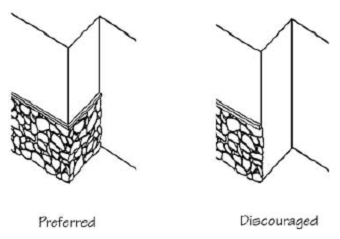
Material Changes
(v)
Rain gutters and downspouts should be inconspicuously located (not visible from the public right-of-way), and painted to match the building color.
(vi)
Architectural details and trim, including siding, should be carried onto all sides of the dwelling. Rear units should not be afforded significantly less architectural detail than front units.
(vii)
The wall and trim colors should be appropriate to the architectural style of the units, as described above.
(viii)
All finish materials should be of high quality. Faux materials are not encouraged, but are permissible if a high quality imitation is selected, especially if using faux stone or brick.
(ix)
In all cases, outside corner material changes are not permitted. Additionally, foam may not be used for trim or details except on upper stories.
(6)
Additions and Accessory Buildings - Additions should be constructed as an integral part of the structure to which they are attached. Detached garages and/or carports for all multi-family development should reflect the architectural style of the primary building to which they relate by incorporating the following guidelines:
(i)
The existing siding should be carried onto the addition or building.
(ii)
The windows should be of the same style as the main house, including opening mechanisms and trim.
(iii)
The existing roofline should be carried onto the addition. Shed-roof additions are not permitted, unless integral to the style of the house. For detached structures, the roof style should be the same as that of the main building.
(iv)
Overall proportion should be maintained.
(v)
Integrate substantial design elements (i.e. columns, beams, roof design) into carport structures to convey a more permanent concept.
(vi)
Prefabricated metal carports are not permitted.
(7)
Exterior Lighting - Lighting should be provided by a combination of porch lights, bollards and/or a ground-level decorative landscape and path lighting system. Proportionately sized light standards are acceptable for large area lighting in larger projects. Where flood lighting is deemed essential, lighting should be provided by shaded fixtures, which are complementary to the architectural style of the units (typical shoebox light fixtures are prohibited). "Wal-pac" style, high intensity security lights produce unnecessary light pollution in the form of glare and are not acceptable.
(Ord. No. 2448, § 5(Exh. B), 2-6-24)
Sec. 16-3.08.110: - Reasonable accommodation policy and procedures
The City of Victorville, in compliance with federal and state fair housing laws and the 2014 update to the Housing Element of the Victorville General Plan, shall provide flexibility in the application of land use, zoning and building codes to promote housing opportunities for persons with disabilities. These laws include the Federal Fair Housing Act, Section 3604(f)(3)(b) of Title 42 of the United States Code and the California Fair Employment and Housing Act, Section 12955 of the California Government Code. The Zoning Administrator may grant a request for reasonable accommodation for persons with disabilities seeking fair access to housing to eliminate regulatory barriers in housing. These barriers may include, but not limited to, the siting, development and use of housing.
(a)
Any person who requires reasonable accommodation because of a disability shall make the request on an application form provided by the Development Department. The application shall be accompanied by information that will enable the Zoning Administrator to make the appropriate decision. City Staff shall be available to assist with the completion of a reasonable accommodation request if needed.
(b)
Any information provided as part of a reasonable accommodation request shall be kept and retained confidentially so as to respect the privacy rights of the applicant and shall not be available for public review.
(c)
If the project for which the request is being made also requires one or more related or unrelated discretionary reviews, such as a Site Plan or a Conditional Use Permit, etc., then the applicant shall file the reasonable accommodation request together for a comprehensive review of all applications. However, the reasonable accommodation request application shall be considered separately by the Zoning Administrator at the Administrative review level.
(d)
The Zoning Administrator shall issue a written determination as to the request in a timely manner, but no later than thirty (30) days of the date of receipt of a complete application. The Zoning Administrator shall either: (1) grant the request; (2) grant the request with conditions or modifications; or (3) deny the request. All determinations by the Zoning Administrator shall have the right for an appeal by the applicant to the Planning Commission. All determinations shall be sent to the applicant by first class mail or in a format requested by the applicant. The decision shall become final and the appeal period shall end ten (10) calendar days from the date of the written decision.
(e)
In reviewing a request for reasonable accommodation, the Zoning Administrator shall consider the information provided by the applicant. The Zoning Administrator may consider any additional information consistent with this Section, such as the Americans with Disabilities Act (ADA), to assist with the review and decision.
(f)
The housing for the request of reasonable accommodation shall be used by people with disabilities protected under fair housing laws.
(g)
The reasonable accommodation shall be necessary to afford people with disabilities an equal opportunity to use and enjoy the dwelling unit in question.
(h)
The requested reasonable accommodation shall not create a health, safety and welfare issue in regards to land use, zoning or building.
(i)
The requested reasonable accommodation shall not impose an undue financial or administrative burden to the City.
(j)
The requested reasonable accommodation shall be consistent with the City of Victorville General Plan.
(Ord. No. 2339, § 2, 8-18-15)

