
Walterboro City Zoning Code
CHAPTER 5
- SIGNS
Section 5.1 - Purpose and Applicability
A.
The purpose of this section is to support and complement the various land uses allowed in the City of Walterboro by the adoption of policies and regulations concerning the placement of signs. The outdoor placement of signs is a legitimate use of private property, but the erection of signs should be controlled and regulated in order to promote the health, safety, welfare, convenience, and enjoyment of travel on roadways, as well as protect the public investment in such roadways. The provisions of this section are also intended to promote the reasonable, orderly, and effective display of such signs, displays, and devices. It is also the intent of this section to prevent signs from dominating the visual appearance of the area in which they are located and to enhance the overall appearance of Walterboro.
B.
Except as otherwise provided in this Ordinance, it shall be unlawful for any person to erect, construct, enlarge, move, or replace any sign, without first having obtained a Sign Permit for such sign from the Administrator as required by this Ordinance. A fee, in accordance with a fee schedule adopted by the City Council, shall be charged for each such permit issued.
Section 5.3 - Signs That Do Not Require a Permit
The following types of signs are exempt from permit requirements and may be placed in any zoning district. Such signs shall otherwise be in conformance with all applicable requirements contained in this Ordinance. All such signs (except government signs) shall be located outside of the street right-of-way and shall not be illuminated.
A.
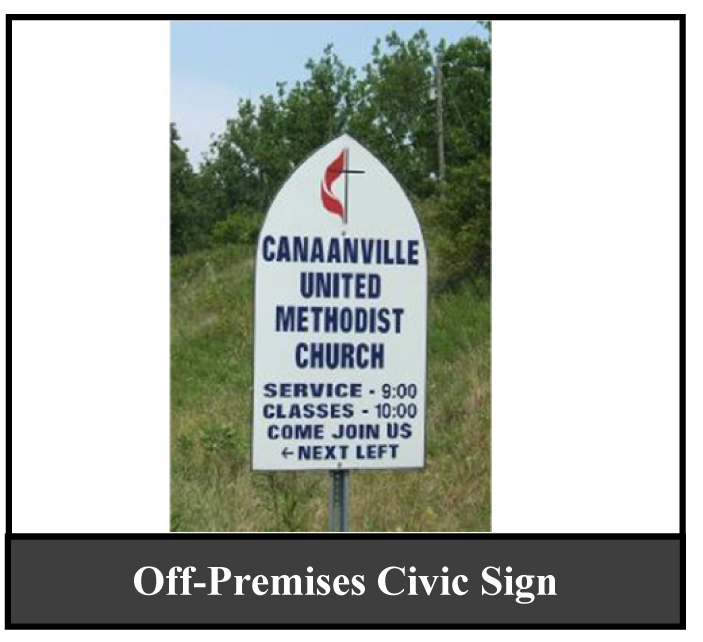
Civic Signs (off-premises). Signs which denote the location of religious, charitable, fraternal, military or service organizations.
B.
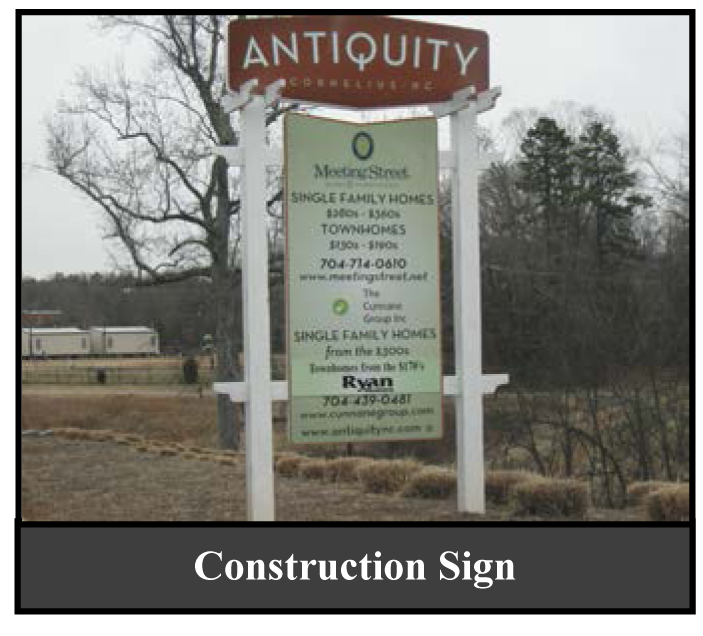
Construction/Contractor's and Subdivision Project Signs. Signs to identify future occupants, home builders, contractors, and architectural or engineering designers during the period of construction.
C.
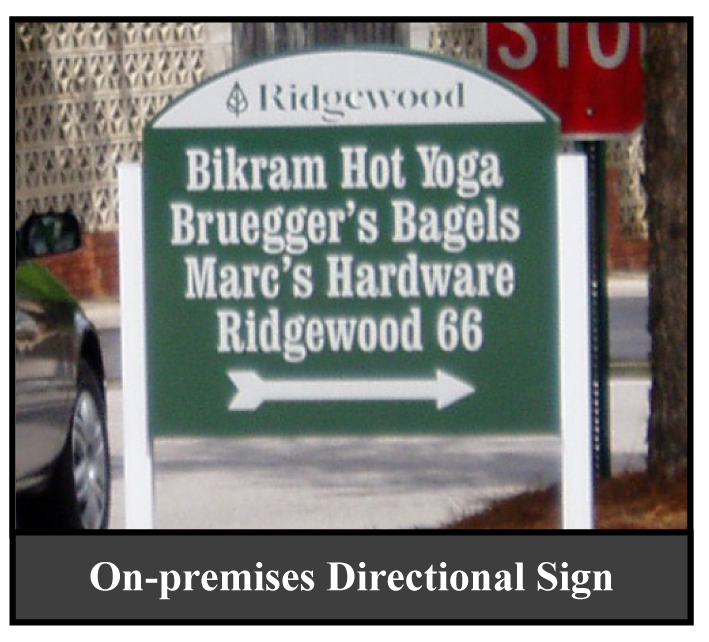
Directional Signs (on-premises). Signs that are located on the premise/property to provide directions.
D.
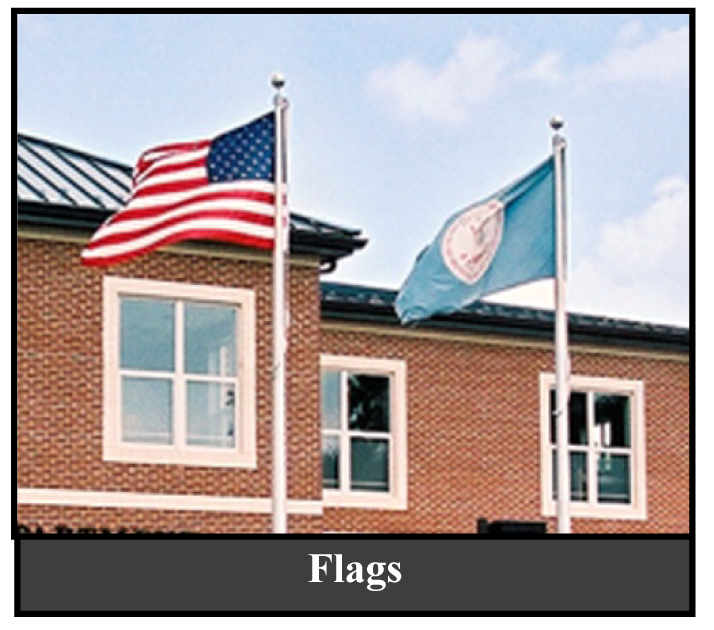
Flags. Flags or insignia of any nation, organization of nations, state, county or municipality, any religious, civic or fraternal organization, or any educational or cultural facility and/or any one corporate flag per lot.
E.
Government Signs. Signs posted or authorized by various local, state, and federal agencies in the performance of their duties including providing community information and facilitating economic development, not including Electronic Message Displays which must meet the requirements of Section 5.2.7 of this Ordinance. Such signs include regulatory signs, traffic signs, welcome signs, bulletin board, and directory signs.
F.
Wayfinding Signs. City-sponsored wayfinding signs may be posted within the City of Walterboro. Such signs shall direct travelers and tourists to points of interest including Historic Downtown Walterboro, government facilities, cultural arts facilities, galleries, accommodations, restaurants, and shops.
G.
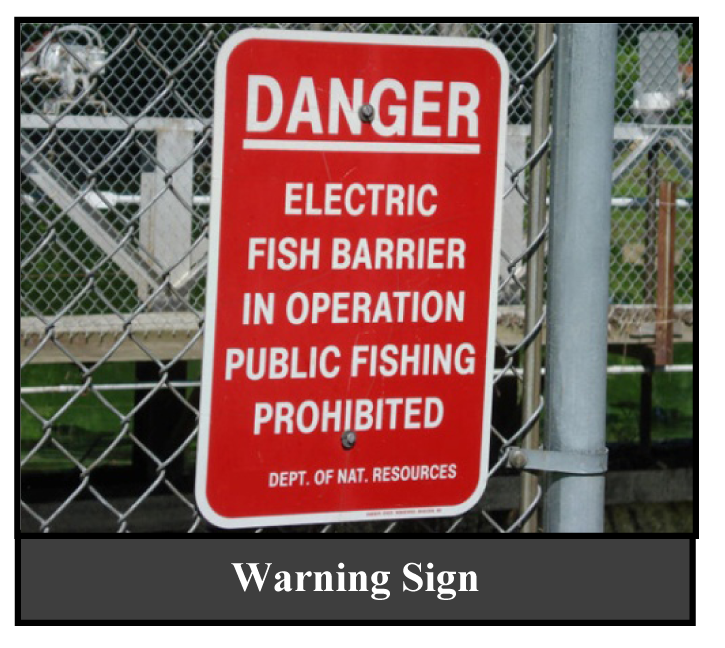
Legal and Warning Signs. Signs erected to warn of danger or hazardous conditions such as signs erected by public utility companies or construction companies; signs required for or specifically authorized for a public purpose by any law, statute or ordinance.
H.
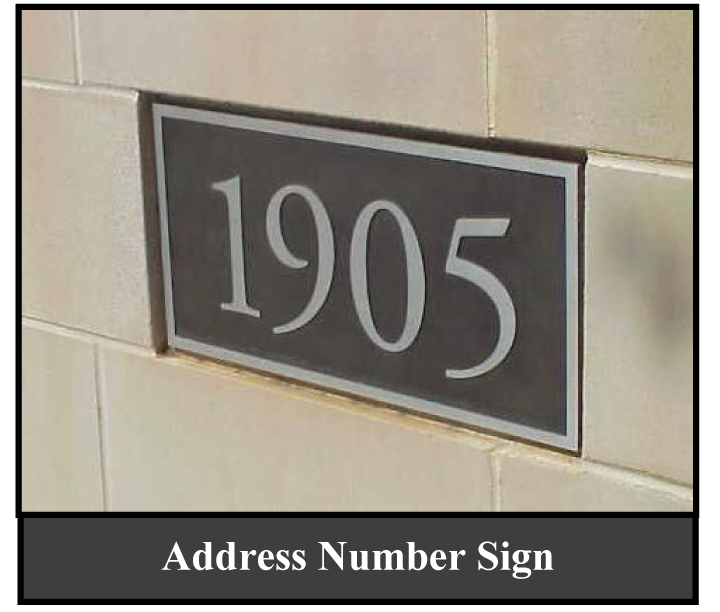
Occupant/Address Number Signs. Signs affixed to structures, mailboxes, decorative light posts, driveway entrances, etc., which serve to identify the address of the structure or occupant.
I.
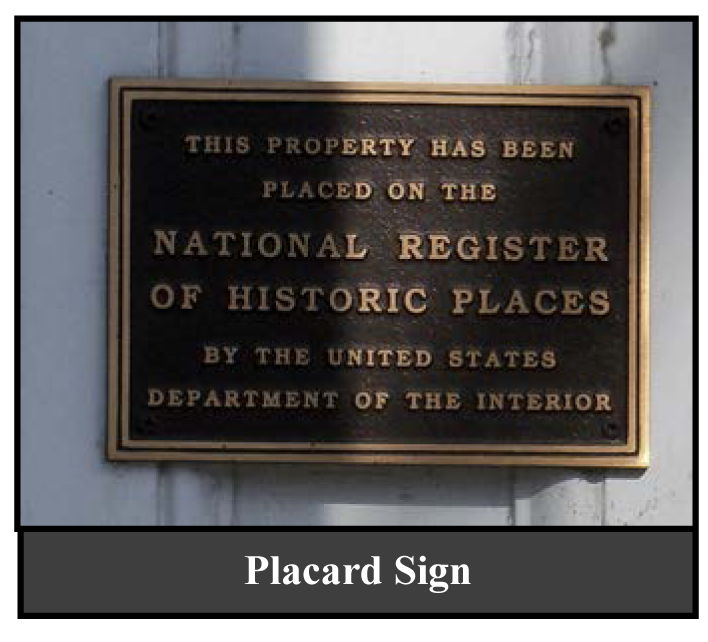
Placard Sign. Small signs attached to a wall near the building entrance which displays historic designations or the name, address, and/or logo, trademark, occupation or profession of the occupant or building.
J.
Temporary Signs. Temporary signs shall not be located within a public street right-of-way or sight triangle and shall not be attached to trees or utility poles or on publicly-owned property. Temporary signs shall not be illuminated except for temporary holiday decorations. Temporary signs that do not fit into one of the following categories are not permitted.
1.
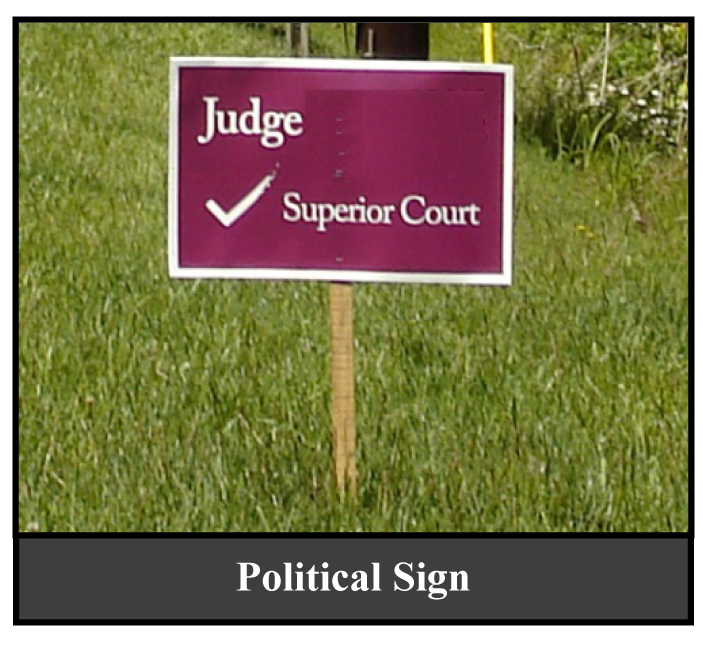
Political Signs. Signs displaying support for or opposition to a candidate, political party, or referendum.
2.
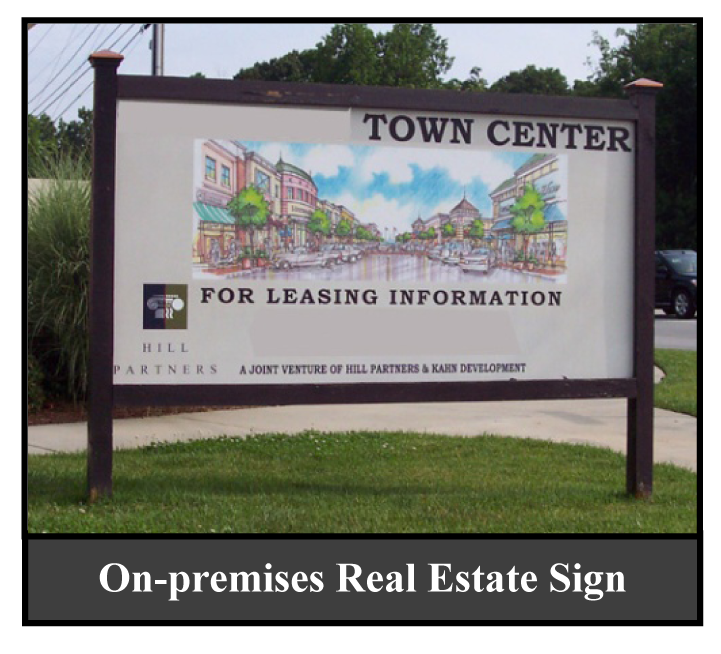
Real Estate Signs (On-premises). On-premises real-estate signs advertise the sale or lease of the property on which said sign is located.
3.
Temporary Holiday Decorations. Temporary decorations or displays, when such are clearly incidental to and are customarily and commonly associated with any national, local or religious holiday/celebration.

4.
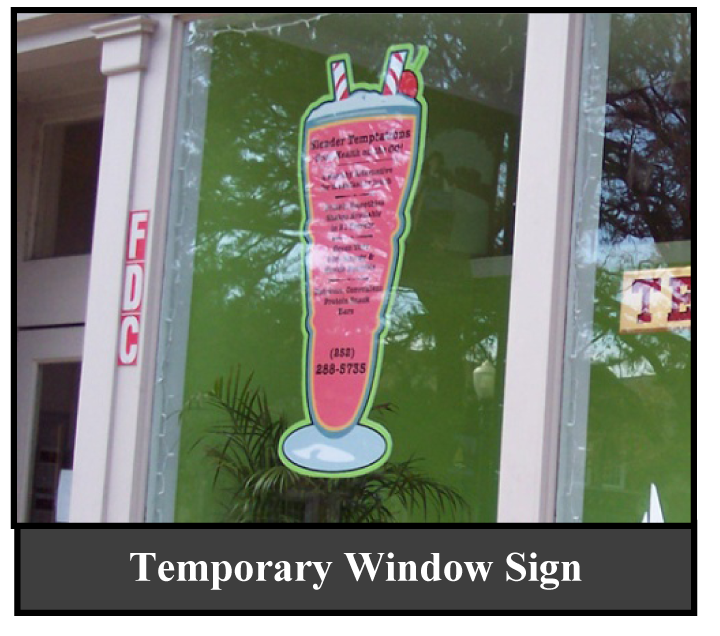
Window Signs (temporary). Signs temporarily attached or temporarily painted to a window or door, announcing sale or special features.
5.
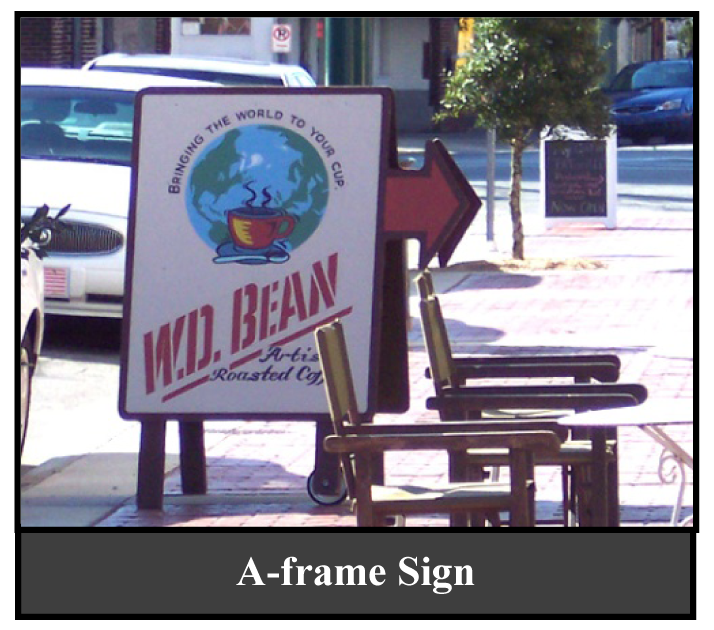
A-frame signs. Two-sided signs advertising a special sale or feature.
6.
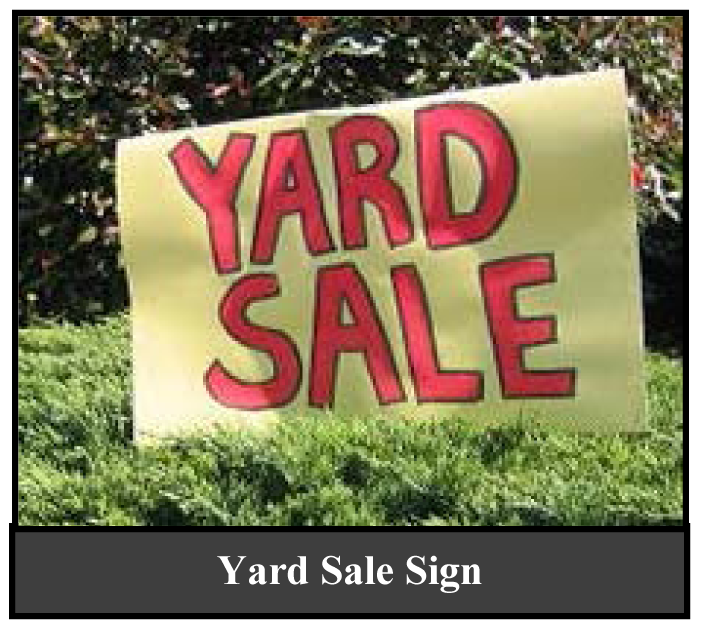
Yard Sale/Fundraiser signs. On-premises signs identifying a temporary yard sale or fundraisers for non-profit organizations.
K.
Incidental signs. Signs that cannot be read from the street right-of-way which inform or instruct customers or visitors on-site (i.e. drive-through menu boards, gas pump signs, bulletin boards, signs inside of a stadium).
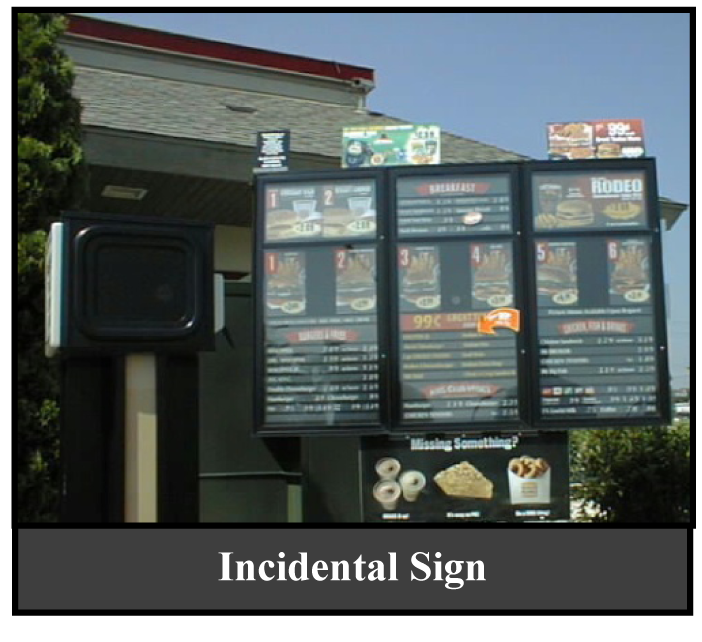
(Ord. No. 2017-03 , 5-2-17)
Section 5.4 - Signs That Require a Permit
All of the signs that are permanent in nature enumerated in this section require a Certificate of Zoning Compliance prior to issuance of Sign Permit and subsequent to construction or alteration of a sign.
A.
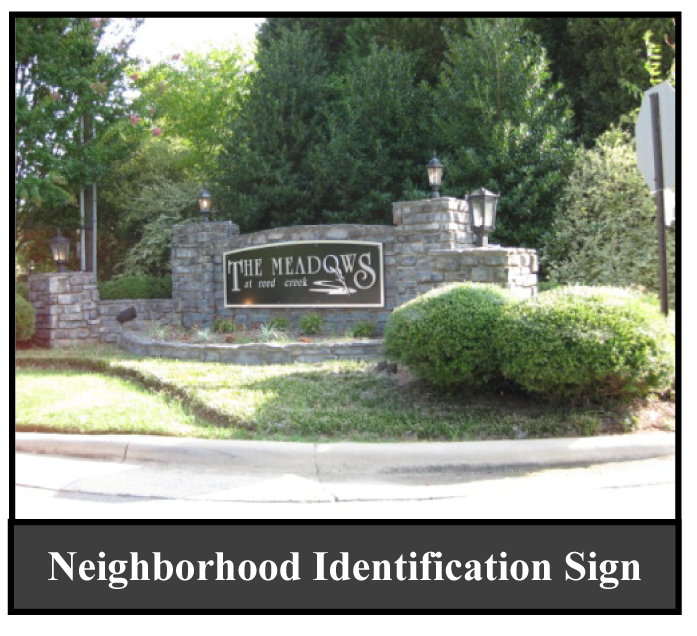
Neighborhood Identification Sign. Permanent Sign at the entrance of neighborhoods that identifies the name and/or address of the development or area.
P: Sign permitted
C: Sign permitted for Civic, Government, & Institutional uses & Recreation uses only (see Section 2.4 Permitted Uses Table)
L: Illumination Allowed
*: External illumination only
NA=Not Applicable
B.
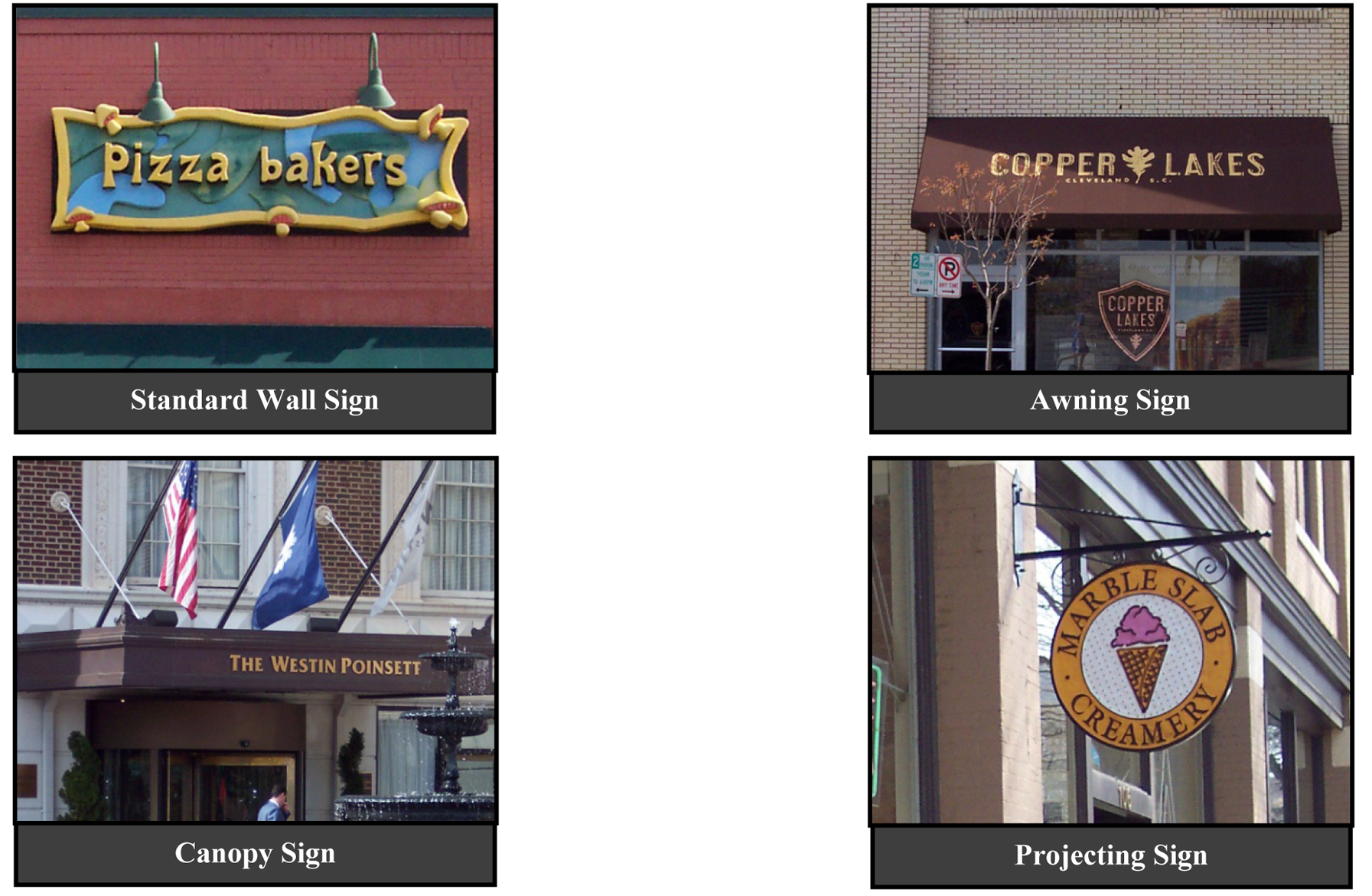
Wall Sign. A permanent sign larger than two (2) square feet that identifies a business or organization and is affixed to a building wall, window, canopy or awning.
P: Sign permitted
C: Sign permitted for Civic, Government, & Institutional uses & Recreation uses only (see Section 2.4)
L: Illumination Allowed
*: External illumination only
C.
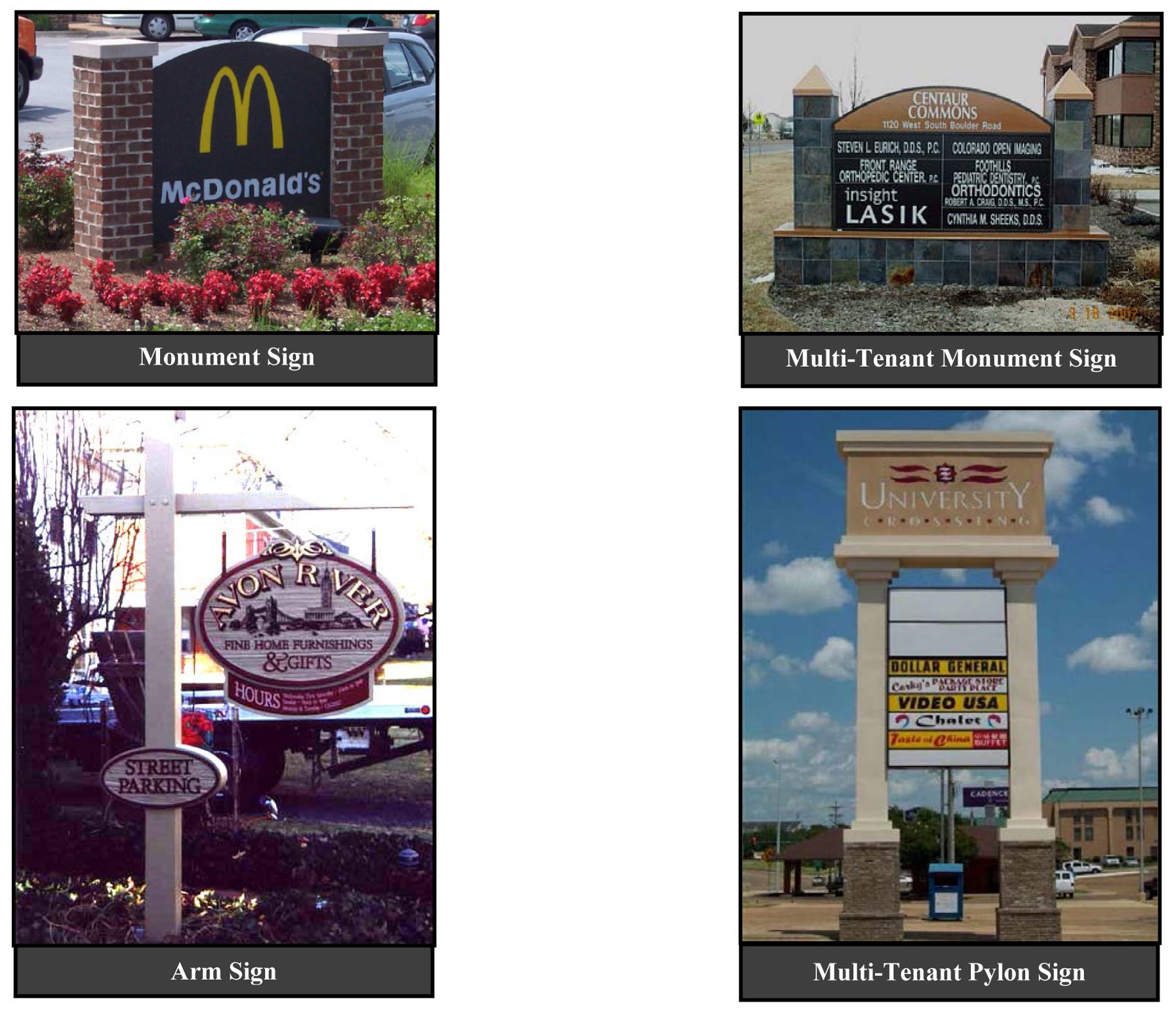
Freestanding Sign (on-premises). A permanent sign that identifies a business or organization or a group of businesses or organizations located on-site that is mounted to the ground. A free-standing sign may be monument, arm, pole, or pylon style, unless otherwise specified.
P: Sign permitted
C: Sign permitted for Civic, Government, & Institutional uses & Recreation uses only (see Section 2.4 Permitted Uses Table)
L: Illumination Allowed
*: External illumination only
NA=Not Applicable
D.
Downtown Business Sign. A small sign attached to a light pole or freestanding pole to identify businesses in the Central Business District.
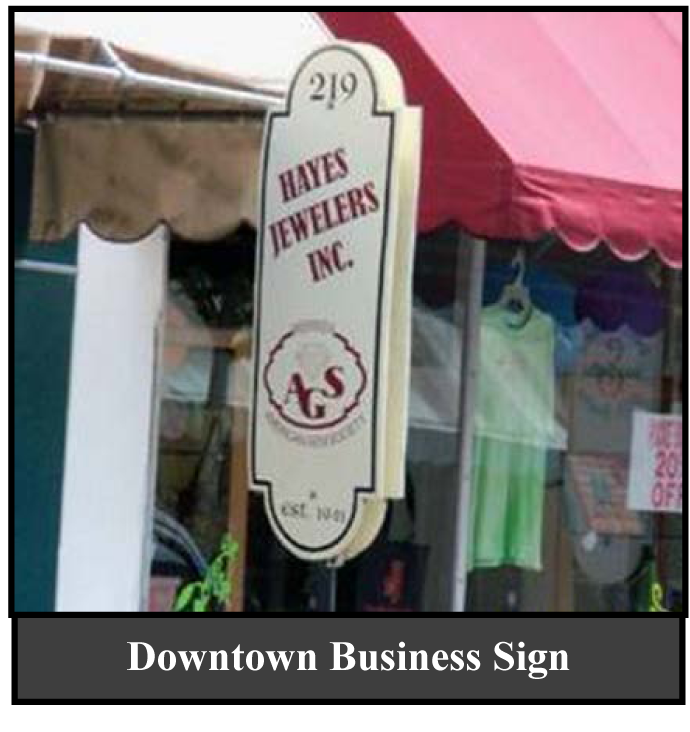
P: Sign permitted
C: Sign permitted for Civic, Government, & Institutional uses & Recreation uses only (see Section 2.4 Permitted Uses Table)
L: Illumination Allowed
*: External illumination only
NA=Not Applicable
E.
Interstate Sign. A tall on-premises monopole sign within 1,000 feet of the Interstate 95 right-of-way intended to be visible to the travelling public on the interstate.
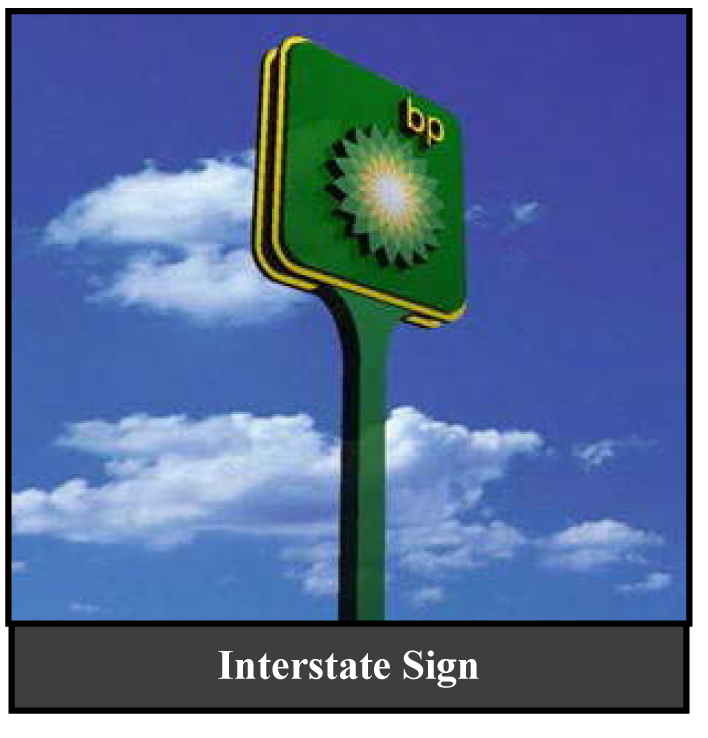
P: Sign permitted
C: Sign permitted for Civic, Government, & Institutional uses & Recreation uses only (see Section 2.4 Permitted Uses Table)
L: Illumination Allowed
*: External illumination only
NA=Not Applicable
F.
Banners. Flexible signs advertising a special sale or feature.

P: Sign permitted
C: Sign permitted for Civic, Government, & Institutional uses & Recreation uses only (see Section 2.4 Permitted Uses Table)
L: Illumination Allowed
*: External illumination only
NA=Not Applicable
G.
Pennants/Inflatables. Flexible advertising material for special sale or event designed or capable of being moved in the wind. May include pennants, feather flags, streamers, or inflatable signs including inflated balloons having a diameter of greater than one (1) foot.

P: Sign permitted
C: Sign permitted for Civic, Government, & Institutional uses & Recreation uses only (see Section 2.4 Permitted Uses Table)
L: Illumination Allowed
*: External illumination only
NA=Not Applicable
H.
Billboards. Signs advertising goods or services that are not necessarily located on the same premises as the sign.
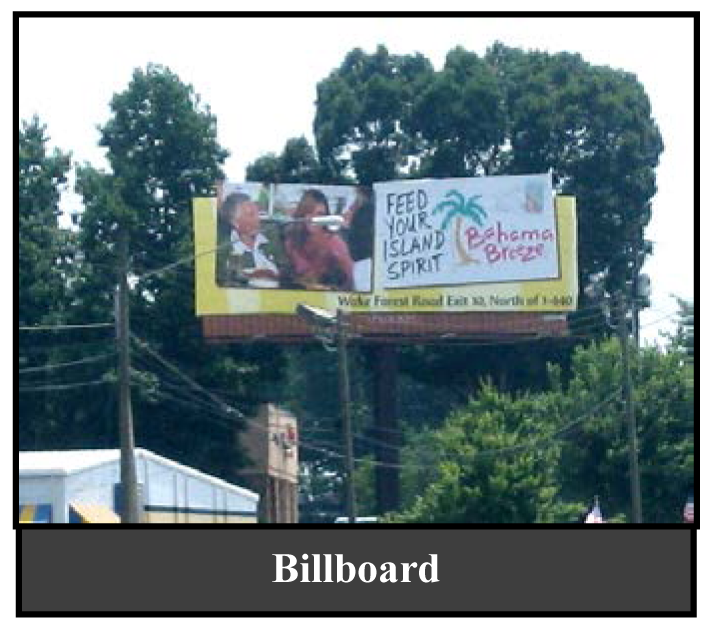
P: Sign permitted
C: Sign permitted for Civic, Government, & Institutional uses & Recreation uses only (see Section 2.4 Permitted Uses Table)
L: Illumination Allowed
*: External illumination only
NA=Not Applicable
( Ord. No. 2014-02 , 5-13-14)
Section 5.5 - Prohibited Signs
A.
Any sign which the Administrator determines obstructs the view of bicyclists or motorists using any street, approach to any street intersection, or which interferes with the effectiveness of or obscures any traffic sign, device, or signal shall be prohibited.
B.
Illuminated, highly reflective signs, or spot lights which hamper the vision of motorists or bicyclists.
C.
Signs not erected by a public authority which may be erroneously construed as government signs or emergency warning signs. An example of this is a sign which contains a picture of a traffic sign plus the word "Stop", "Yield", etc.
D.
Any sign located outdoors which interferes with free passage from or obstructs any fire escape, downspout, window, door, stairway, ladder, or opening intended as a means of ingress or egress or providing light or air.
E.
Flashing signs, signs with flashing or reflective disks, signs with flashing lights or lights of changing degree of intensity or color.
F.
Signs placed on property without permission of its owners or agent.
G.
Illuminated tubing or strands of lights except for neon accent trim, temporary holiday displays, and city-approved displays as permitted by Section 5.3 (J3).
H.
Portable or temporary signs except as permitted by Section 5.3 (J).
I.
No manufactured home, mobile home, shipping container, recreational vehicle, or similar structure or non-structure shall be used as a sign in any manner.
J.
Facsimile signs, three-dimensional objects, or human figures which may or may not contain advertising matter, and may or may not contain information about products sold on the premises, and is located in such a manner as to attract attention.
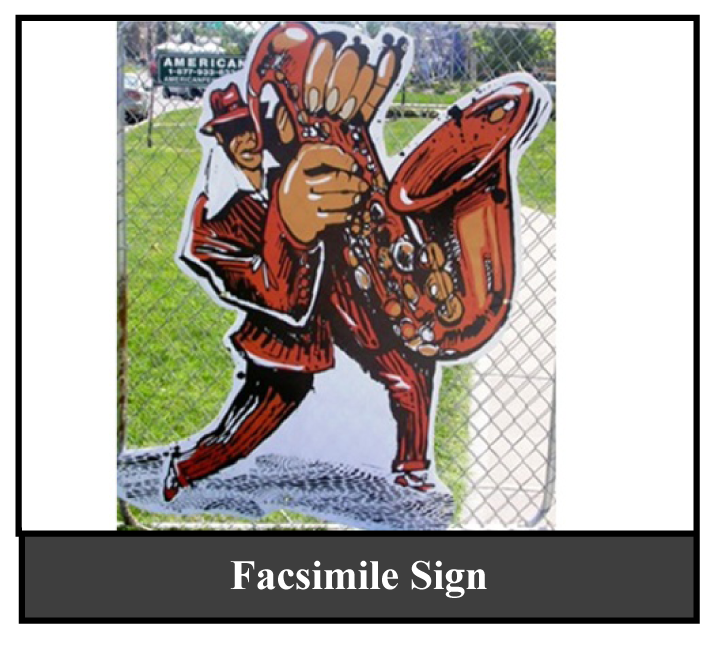
K.
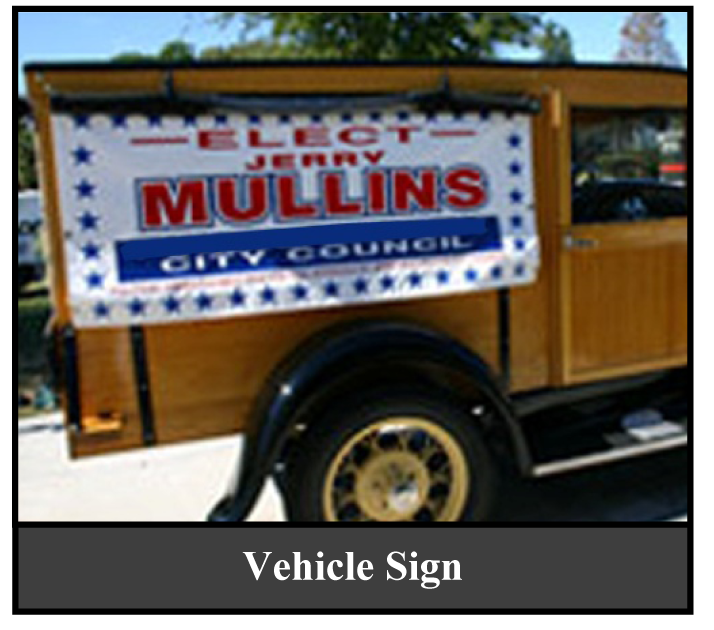
Parked vehicles with messages (exempting vehicles with commercial advertising which are used regularly and customarily to transport persons or property for business).
L.
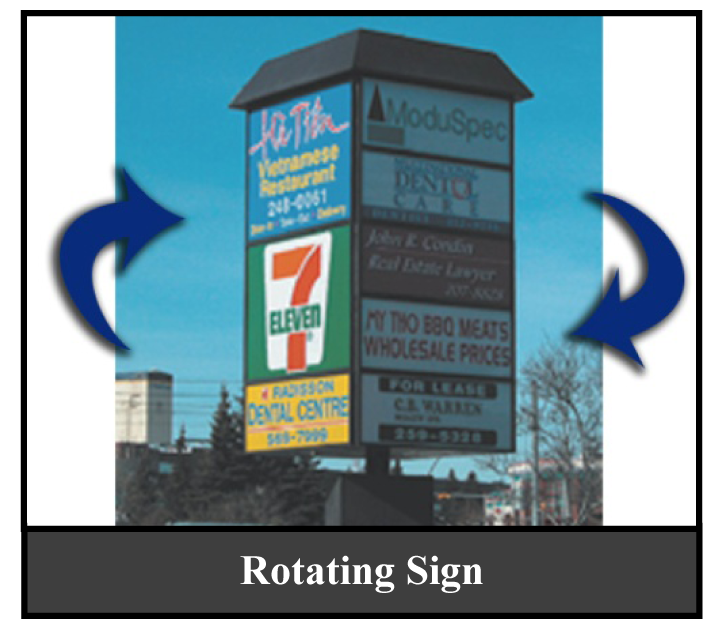
Rotating signs, other than on-premise rotating identification names which contain a logo and/or business name on it.
M.
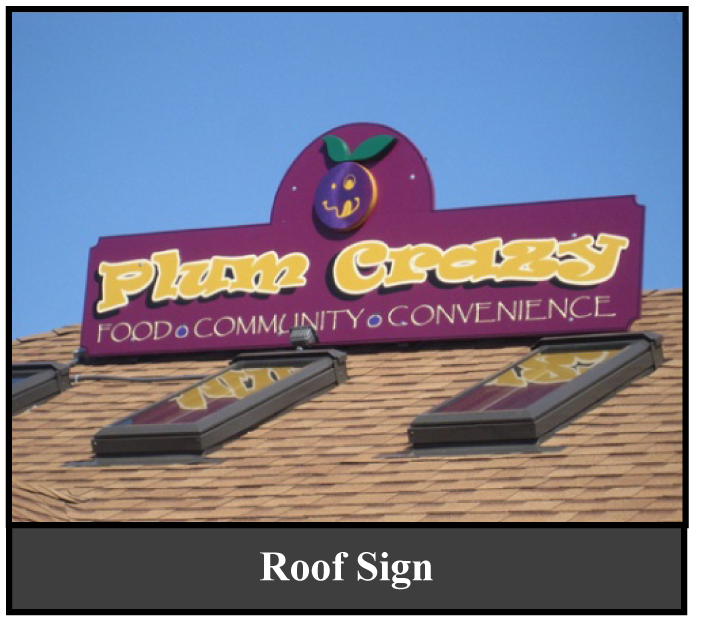
Roof signs.
N.
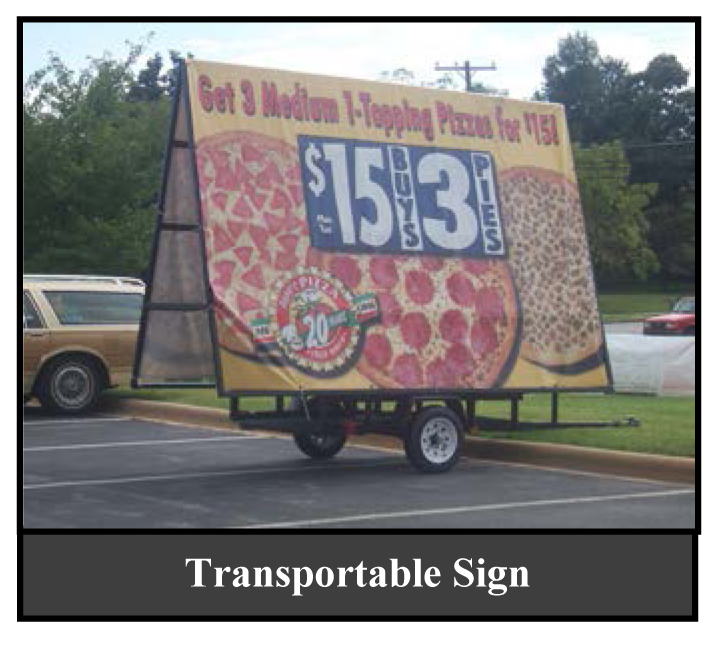
Any sign whose sign face was initially constructed and designed to be placed and/or transported on wheels, regardless if said sign face is removed from its base and placed on or in the ground so as to otherwise classify said sign as a "freestanding" sign as herein defined.
O.
Other signs not expressly permitted in this Ordinance.
5.2.1 - Sign Design Guidelines
A.
Materials, colors, scale, and shapes of proposed signs should be compatible with the buildings and the surrounding area of its location.
B.
All signs must be composed of durable all-weather materials and all painting and lettering must be completed in a professional manner.
C.
Signage plans are required for sign permits covering any of the following:
1.
Two (2) or more adjacent properties under the same ownership;
2.
A single lot with more than one (1) principal use, such as a shopping center; and
3.
A Planned Development District.
The plan shall specify standards for consistency in size, color, style, material, and location. Once approved by the Administrator, the plan is binding on all uses occupying the affected lots.
5.2.2 - Maximum Number of Signs Allowed
A.
Unless otherwise specified in this Chapter, no establishment shall have more than one (1) primary identification sign.
B.
Corner lots may be permitted to have one (1) sign per street frontage.
C.
Accessory structures subordinate to the principal structure are permitted one (1) wall sign.
5.2.3 - Sign Area
Measurement of a sign face for compliance with this ordinance does not include foundations or supports, but only the face of the sign from edge to edge. Double facing signs are only measured on one (1) side. Multiple signs on one (1) post and signs composed of more than one (1) piece are measured cumulatively as one (1) sign face. See Fig. 5.1
FIG. 5.1: SIGN AREA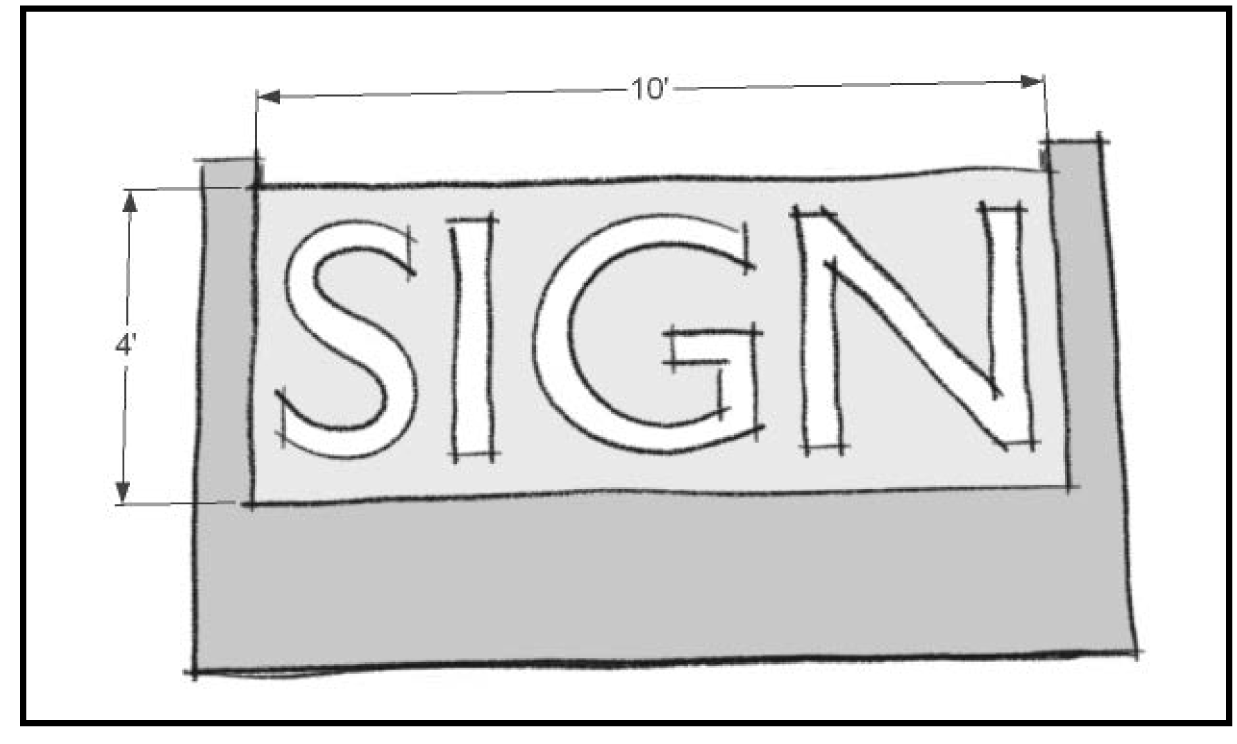
5.2.4 - Sign Height
A.
The height of a sign shall be measured from the highest point of a sign to the point of ground surface beneath it. Ornamentation such as caps, spires, and finials shall not extend more than two (2) feet from the top of the sign. The use of berms or raised landscape areas is only permitted to raise the base of the sign to the mean elevation of the fronting street. See Fig. 5.2.
B.
Signs extending over pedestrian walkways shall have a minimum clearance of eight (8) feet above the walkway directly below the sign. Signs extending over parking areas shall have a minimum clearance of fourteen (14) feet above the driving surface directly below the sign.
FIG. 5.2: SIGN HEIGHT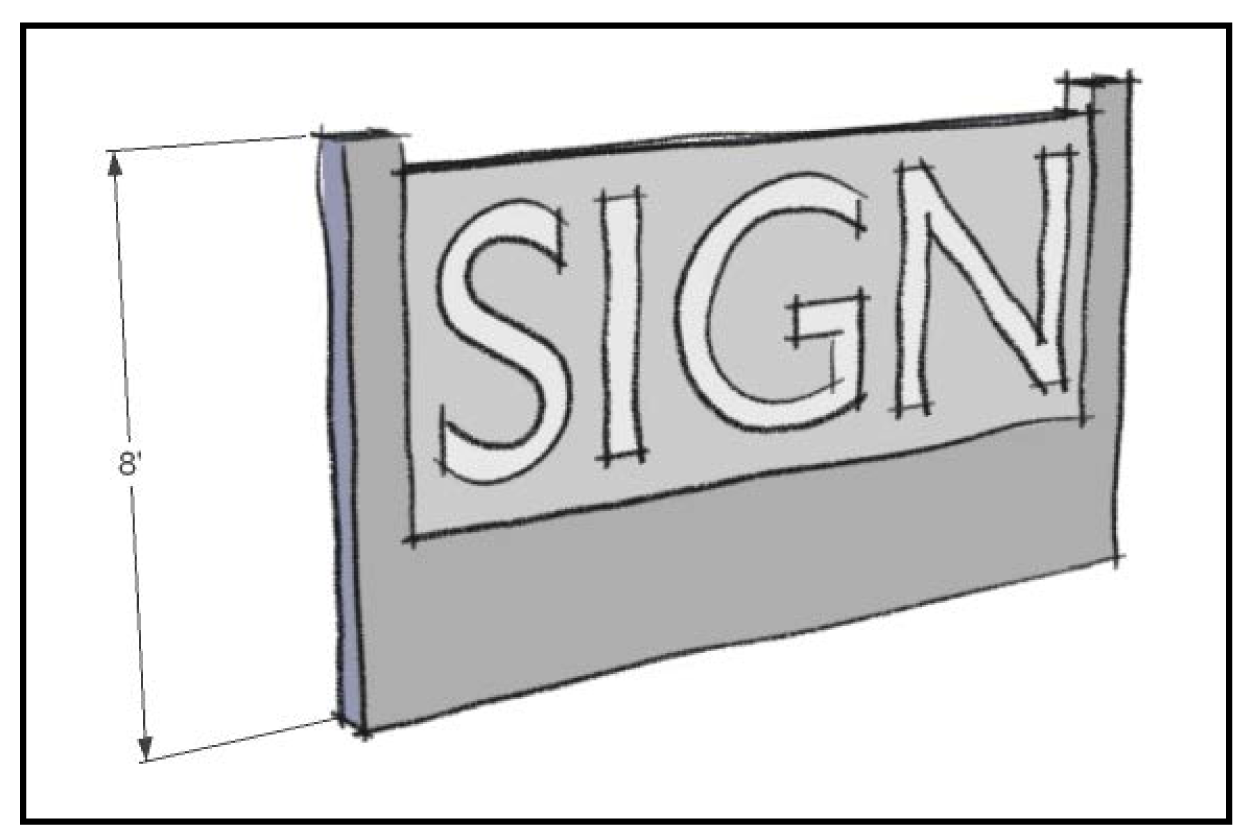
5.2.5 - Sign Placement
A.
At intersections, no sign shall be in the sight triangle as defined by this Ordinance.
B.
Unless otherwise specified in this Chapter, all signs shall be located on-premises and not within a right-of-way. Only the following signs are permitted in public rights-of-way: governmental public information signs, traffic control and emergency signs, historical signs and markers, and postings of legal notice.
C.
The Administrator or his designee may remove and destroy or otherwise dispose of any sign placed on public property or within any public right-of-way. Penalties may be levied for each such sign as outlined in Section 10.8 of this Ordinance.
5.2.6 - Sign Illumination
Illuminated signs shall conform to the following:
A.
All illuminated signs shall have their lighting directed in such a manner as to illuminate only the face of the sign.
B.
External light sources shall not be visible from the right-of-way nor cause glare hazards to pedestrians, motorists, or adjacent properties.
C.
All lighting shall meet all applicable electrical codes.
D.
Illuminated signs must not resemble traffic or emergency lighting that could cause drivers to become disoriented.
5.2.7 - Electronic Message Displays
A.
Electronic message displays are permitted on interstate signs and freestanding signs for commercial uses in zoning districts for which internally illuminated signs are permitted on parcels that front on a four-lane or greater arterial roadway. These signs are not permitted in the Historic Preservation Overlay.
B.
An electronic message display board shall not have any distracting appearance of motion, flashing, blinking, shimmering, varying of light intensity, flipping, crawling, or any other message changing mechanism which gives the impression or appearance of movement.
C.
The area occupied by electronic message display board may comprise no more than 24 square feet of a permitted freestanding sign.
D.
An electronic message display board that is readily visible to drivers of vehicles on any public right-of-way must have characters of sufficient size to be easily discerned and must not constitute a safety hazard by distraction of drivers.
E.
The display may change no more frequently than 10 seconds. For time and/or temperature signs, the display may change no more frequently than seven (7) seconds.
5.2.8 - Maintenance and Upkeep of Signs
All signs and all components thereof, including supports, braces, and anchors shall be kept in a good state of repair, in compliance with all building and electrical codes, and in conformance with the requirements of this Ordinance (unless deemed a legal nonconforming sign by Chapter 13 of this Ordinance). Any sign which is determined by the Administrator or building inspector as being insecure, in danger of falling or otherwise endangering the public safety shall be immediately removed by its owner unless it is repaired and made to otherwise comply with the requirements of this Ordinance.

