
Washington County Unincorporated
City Zoning Code
City Zoning Code
ARTICLE III
LAND USE DISTRICTS
300 - INTRODUCTION
Article III of the Washington County Community Development Code consists of the primary and overlay districts which apply to the unincorporated areas of Washington County. These districts are provided to implement the goals and policies of the Comprehensive Plan. In addition to the standards listed in each District, all development is subject to all other applicable provisions of this Code, including Article IV, Development Standards; Article V, Public Facilities; and Article VI, Land Divisions. Additionally, all development is subject to the applicable requirements and standards of the Community Plans, the Rural/Natural Resource Plan, and the Transportation Plan listed below.
300-1
Intent and Purpose
The intent and purpose of the land use districts is to implement the policies of the Comprehensive Plan and land use designations on the Community Plan maps and the Rural/Natural Resource Plan. The purpose is to provide for a full range of uses to implement the land use needs set forth in the Community Plans and the Rural/Natural Resource Plan.
In addition to the standards of the land use districts, all development, including Land Divisions, shall comply with the following applicable standards and requirements of the Community Plans, the Rural/Natural Resource Plan, and the Transportation Plan:
300-1.1
Community Plan provisions:
A.
General Design Elements;
B.
Subarea Provisions, including the Design Elements and Area of Special Concern and Potential Park/Open Space/Recreation Requirements;
C.
Significant Natural Resource Designations;
D.
Historic and Cultural Resource Designations;
E.
Mineral and Aggregate Resource District A and B designations;
F.
Major Bus Stop Designations;
G.
Interim Light Rail Station Overlay Designations;
H.
Transportation Circulation Designations;
I.
Street Corridor, Arterial Access and Pedestrian System Designations;
J.
Local Street Connectivity Lands Designations;
K.
Pedestrian Connectivity Areas; and
L.
Transportation Functional Classification Map.
300-1.2
Rural/Natural Resource Plan Provisions:
A.
Significant Natural Resource Designations;
B.
Historic and Cultural Resource Designations;
C.
Mineral and Aggregate Resource District A and B designations;
D.
Habitat Protection Plan;
E.
Implementing Strategy e. of Policy 10; and
F.
Transportation Functional Classification Map.
300-1.3
Additional provisions specific to the North Bethany Subarea Overlay District are identified under Section 390-3.
300-1.4
Additional provisions specific to the Bonny Slope West Subarea Overlay District are identified under Section 391.
300-1.5
Transportation System Plan
A.
Goals 1 through 11 including their implementing objectives and strategies;
B.
The Functional Classification System Map;
C.
The Lane Numbers Map;
D.
The Special Area Street Overlay Maps;
E.
The Transit System Map;
F.
The Pedestrian System Map;
G.
The Bicycle System Map.
300-1.6
Comprehensive Framework Plan for the Urban Area
Policy 41, Urban Growth Boundary Expansions
(Ord. No. 824, § 2.B.(Exh. 2, § 3), 9-5-17, eff. 11-24-17; Ord. No. 890A, § 2.A.(Exh. 1, § 1.), 2-7-23, eff. 3-9-23; Ord. No. 903, § 2.M.(Exh. 13, § 3.), 10-15-24, eff. 11-14-24)
300-2
Residential Density Calculation
To determine the maximum or minimum number of units which may be constructed on a site for residential uses, the site size (in acres) shall be multiplied by the maximum or minimum number of units per acre allowed on the site, as designated on the applicable Community Plan, except as specified otherwise below or by Table C of Section 375.
Example:
300-2.1
Site size shall include the area of the subject lot(s) or parcel(s), in acres or portions thereof, excluding all areas currently dedicated for public right-of-way.
300-2.2
Allowable density shall be as designated on the Community Plan Map or Rural Plan, except as otherwise indicated within district standards of this code for Middle Housing.
300-2.3
No portion of the allowable density shall be permitted to be transferred from one land use designation to another land use designation, except as permitted in accordance with the Planned Development provisions of Section 404-4.5.
300-2.4
The number of units which may be constructed on the subject site shall be subject to the limitations of the applicable provisions of this Code, including the requirements of Section 300-3 and such other things as landscaping, parking, floodplain, buffering, slopes and other site limitations.
300-2.5
When the maximum or minimum number of units allowed on a site results in a fraction of .5 or more, the number of units allowed shall be the next highest whole number, provided all minimum district requirements other than density can be met.
300-2.6
Except in the North Bethany Subarea, land that is dedicated to a park and recreation provider as public park land may be used to calculate the minimum or maximum density, provided the land is developed for recreational uses, and is not comprised of floodplain, drainage hazard, wetland, slopes over 10%, or a Significant Natural Resource area.
300-2.7
When allowed by a legislative or quasi-judicial plan amendment:
A.
Assisted living units, that are part of a mixed use residential development, may be used to satisfy the minimum density requirement; and
B.
Land used for a private park, that is available to the general public outside of the residential development the park is located in, may be excluded from the acreage used to calculate the minimum density provided the park is developed for recreational uses, and is not comprised of floodplain, drainage hazard, wetland, slopes over 10%, or a Significant Natural Resource area.
C.
The provisions of Section 300-2.7 are not applicable in the North Bethany Subarea in the Bethany Community Plan.
300-2.8
Only categories of land listed in Section 300-3.1 may be excluded from the acreage used to calculate minimum required densities. Categories of land listed in Section 300-3.1 may be included when calculating maximum allowed densities provided the densities transferred comply with Section 300-3.3. The provisions of Section 300-2.8 and Section 300-3 are not applicable in the North Bethany Subarea in the Bethany Community Plan.
(Ord. No. 885A, § 2.1.(Exh. 1, § 3.), 6-28-22, eff. 7-28-22)
300-3
Density Transfers for Unbuildable Lands
300-3.1
Applicability:
Transfer of density from one area of land to another shall be permitted for any unbuildable portion of a lot or parcel when a portion of the subject lot or parcel is within any of the following areas.
The provisions of Section 300-3 are not applicable in the North Bethany Subarea in the Bethany Community Plan.
A.
Floodplain;
B.
Drainage Hazard;
C.
Jurisdictional Wetland;
D.
Slopes over 20%;
E.
Significant Natural Resource area;
F.
Power line easement or right-of-way;
G.
Future right-of-way for Arterials and Collectors;
H.
Water Quality Sensitive Areas;
I.
Vegetated Corridors;
J.
In Transit Oriented Districts, land needed for public or private streets, including sidewalks, accessways, greenways, public parks and plazas, and common open space as defined in Section 431-3.4; and
K.
In Pedestrian/Bicycle Districts, land needed for public or private streets, including sidewalks, accessways, greenways, public parks and plazas, and common open space as defined in Section 431-3.4.
300-3.2
Density may be transferred only as follows:
A.
Within a single lot or parcel within the same land use designation; or
B.
To an adjoining lot or parcel that is a subject of the development application provided it is also within the same land use designation as the other lot or parcel.
300-3.3
Density Transfer Calculations:
The number of units which may be transferred shall be calculated as follows:
A.
Determine the total density for the subject lot(s) or parcel(s).
B.
Determine the total number of units in the buildable portion and the unbuildable portion of the total site.
C.
Transfer the density of the unbuildable portion of the site to the buildable portion of the site, provided that the transferred density does not more than double the density allowed on the buildable portion of the site.
300-3.4
For the purpose of this Section, buildable shall mean all portions of the subject lot(s) or parcel(s) not included within a category listed in Section 300-3.1, and unbuildable shall mean all portions of the lot(s) or parcel(s) included in one of the categories in Section 300-3.1.
(Ord. No. 902A, § 2.B.(Exh. 2, § 4.), 11-5-24, eff. 12-5-24)
300-4
Development at Less than Maximum Density
The standards of the applicable district shall apply regardless of whether the proposed development meets the maximum density.
300-5
Development at Lower than Minimum Density
300-5.1
Applicability:
The Review Authority may approve development at less than the required minimum density when the following standards are met:
A.
The site was located within the Portland Metropolitan Area Urban Growth Boundary on or before January 1, 2002;
B.
The site contains lands identified by Metro as Regionally Significant Fish & Wildlife Habitat on Metro's current Regionally Significant Fish & Wildlife Habitat Inventory Map;
C.
The Regionally Significant Fish & Wildlife Habitat area is protected by compliance with Sections 405-4 and 405-5;
D.
The proposed reduction in density associated with the protected portion of the site shall not exceed the protected area's proportional share of the overall site density. (For example, on a 1 acre site with a minimum density of eight units per acre, a one-quarter acre protected area would yield a maximum density reduction of two units, resulting in six units on the remainder of the site); and
E.
Prior to final approval, the applicant submits evidence of having provided notice to Metro stating:
(1)
The map and tax lot number(s) of the lot(s) or parcel(s) subject to the density reduction;
(2)
The acreage of the Regionally Significant Fish & Wildlife Habitat area being protected; and
(3)
The number of units (net reduction) below the normally required minimum.
302 - R-5 DISTRICT (RESIDENTIAL 5 UNITS PER ACRE*)
* This limit not applicable to Middle Housing
(Ord. No. 885A, § 2.1.(Exh. 1, § 4.), 6-28-22, eff. 7-28-22; Ord. No. 890A, § 2.A.(Exh. 1, § 1.), 2-7-23, eff. 3-9-23)
302-1
Intent and Purpose
The R-5 District is intended to implement the policies of the Comprehensive Plan for areas designated for residential development at no more than five units per acre and no less than four units per acre, except as specified otherwise for Middle Housing, or by Sections 300-2, 300-5, or 302-6. Infill development (not including Middle Housing) on all parcels two acres or less is subject to review under Infill provisions of Section 430-72.
(Ord. No. 885A, § 2.1.(Exh. 1, § 4.), 6-28-22, eff. 7-28-22; Ord. No. 890A, § 2.A.(Exh. 1, § 1.), 2-7-23, eff. 3-9-23)
302-2
Uses Permitted Through a Type I Procedure
The following uses are permitted subject to the specific standards for the use set forth below and in applicable Special Use Sections of Section 430, as well as the general standards for the district, the Development Standards of Article IV and all other applicable standards of the Code.
302-2.1
Accessory Uses and Structures - Section 430-1.
302-2.2
Bus Shelter - Section 430-23.
302-2.3
Attached Dwelling Units (Duplex on an approved Duplex lot only) - Section 430-13.3.
302-2.4
Single Detached Dwelling Unit
A.
Single new detached dwelling unit on an existing lot or parcel that meets the following:
(1)
Does not exceed 16,500 square feet in buildable area (buildable area excludes unbuildable land categories listed in Section 300-3.1) -Section 430-37.1 A.; and
(2)
When on a public street:
(a)
Along the entire site frontage, existing right-of-way width meets the required minimum below, or the applicant proposes to dedicate right-of-way to meet the following:
(i)
Local street: 25 feet to centerline;
(ii)
Neighborhood route: 30 feet to centerline;
(iii)
Collector: 37 feet to centerline;
(iv)
Arterial: 45 feet to centerline; or
If road improvements built to ultimate County standard exist, no additional right-of-way is required.
(b)
Right-of-way dedications needed to meet minimums above shall be provided using a document prepared and approved by the County Surveyor's Office and recorded prior to issuance of the first building permit.
B.
Expansion or replacement of an existing Single Detached Dwelling Unit - (Section 430-37.1 A) that meets the following:
(1)
Expansion or replacement will not create an additional primary dwelling unit; and
(2)
Expansion or replacement will result in a net habitable space increase of 2,000 square feet or less; or
(3)
If the expansion or replacement will result in a net habitable space increase of more than 2,000 square feet, when on a public street:
(a)
Along the entire site frontage existing, right-of-way width meets the required minimum below, or the applicant proposes to dedicate right-of-way to meet the following:
(i)
Local street: 25 feet to centerline;
(ii)
Neighborhood route: 30 feet to centerline;
(iii)
Collector: 37 feet to centerline;
(iv)
Arterial: 45 feet to centerline; or
If road improvements built to ultimate County standard exist, no additional right-of-way is required.
(b)
Right-of-way dedications needed to meet minimums above shall be provided using a document prepared and approved by the County Surveyor's Office and recorded prior to issuance of the first building permit.
302-2.5
Expansion of any Type II or III use which meets the following:
A.
Is exempt from application of public facility standards of Section 501-2 or meets the standards for a Type I review pursuant to Section 501-3.2;
B.
Is not in an Area of Special Concern as designated on the applicable Community Plan map; and
C.
Is not a telecommunication facility.
302-2.6
Home Occupation - Section 430-63.1.
302-2.7
Parks - Section 430-97.
302-2.8
Recycle Drop Box - Section 430-113.
302-2.9
Temporary Use - Section 430-135.1, excluding C.(9) and J.
302-2.10
Manufactured Home on an existing lot or parcel that does not exceed 16,500 square feet in buildable area (buildable area is exclusive of unbuildable land categories listed in Section 300-3.1) - Section 430-76.
302-2.11
Co-location of antennas, excluding those antennas exempt pursuant to Sections 430-109.3 and 201-2 - Section 430-109.
302-2.12
New Telecommunication Facilities with Towers using Stealth Design to a maximum height of 100 feet and new Small Wireless Facilities, excluding those facilities exempt pursuant to Sections 430-109.3 and 201-2 - Section 430-109.
302-2.13
Urban Accessory Dwelling Unit(s) - Section 430-2.1.
302-2.14
Middle Housing (Section 430-84) on an existing lot or parcel that meets the following:
A.
Does not exceed 16,500 square feet in buildable area; or
B.
Exceeds 16,500 square feet in buildable area, and the proposed number of Middle Housing units would meet or exceed the minimum density required for other housing types in the district (four units per acre). Existing lawful dwellings to be retained may be counted in this calculation; and
C.
In the case of A or B, above, when on a public street:
(1)
Along the entire site frontage, existing right-of-way width meets the required minimum below, or the applicant proposes to dedicate right-of-way to meet the following:
(a)
Local street: 25 feet to centerline;
(b)
Neighborhood route: 30 feet to centerline;
(c)
Collector: 37 feet to centerline;
(d)
Arterial: 45 feet to centerline; or
If road improvements built to ultimate County standard exist, no additional right-of-way is required.
(2)
Right-of-way dedications needed to meet minimums above shall be provided using a document prepared and approved by the County Surveyor's Office and recorded prior to issuance of the first building permit.
Note: For a Middle Housing Land Division (Article VI), right-of-way minimums for site frontage are as required by Washington County Functional Classification standards, and dedications shall be included on the plat.
D.
Buildable area above excludes unbuildable land categories listed in Section 300-3.1.
302-2.15
Tree removal in areas identified in the applicable Community Plan as Significant Habitat, subject to Section 422-7.
(Ord. No. 826A, § 2.A.(Exh. 1, § 3), 10-24-17, eff. 11-24-17; Ord. No. 831A, § 2.A.(Exh. 1, § 3), 7-17-18, eff. 8-16-18; Ord. No. 855, § 2.A.(Exh. 1, § 3), 8-6-19, eff. 11-28-19; Ord. No. 856A, § 2.A.(Exh. 1, § 2), 10-22-19, eff. 11-28-19; Ord. No. 859, § 2.A.(Exh. 1, § 2), 9-17-19, eff. 11-28-19; Ord. No. 885A, § 2.1.(Exh. 1, § 4.), 6-28-22, eff. 7-28-22; Ord. No. 890A, § 2.A.(Exh. 1, § 1.), 2-7-23, eff. 3-9-23; Ord. No. 902A, § 2.B.(Exh. 2, § 5.), 11-5-24, eff. 12-5-24; Ord. No. 912A, § 2.B.(Exh. 2, § 1), 4-28-26, eff. 5-28-26)
302-3
Uses Permitted Through a Type II Procedure
The following uses are permitted subject to the specific standards for the use set forth below and in applicable Special Use Sections of Section 430, as well as the general standards for the district, the Development Standards of Article IV and all other applicable standards of the Code. Approval may be further conditioned by the Review Authority pursuant to Section 207-5.
302-3.1
Ambulance Service - Section 430-9.1.
302-3.2
Flag lot - Section 430-46.
302-3.3
Home Occupation - Section 430-63.2.
302-3.4
Infill - Section 430-72.
302-3.5
Parks - Section 430-97.
302-3.6
Construction of a local street not in conjunction with a development application or within existing right-of-way.
302-3.7
Temporary Use - Section 430-135.2 A. and B.
302-3.8
Expansion of Existing Telecommunication Facilities, including co-located antennas, not otherwise allowed through a Type I Procedure pursuant to Section 430-109.5 or exempt pursuant to Sections 430-109.3 and 201-2 - Section 430-109.
302-3.9
Uses Accessory and Incidental to a Residential Development Provided for the Service and Convenience of the Residents:
A.
Clubhouse.
B.
Meeting hall.
C.
Day care facility - Section 430-53.2.
D.
Recreation center.
E.
Gymnasium.
F.
Indoor swimming pool.
302-3.10
Tree removal in areas identified in the applicable Community Plan as Significant Habitat, subject to Section 422-9 or 422-10.
302-3.11
Single Detached Dwelling Unit on an existing lot or parcel when the following apply:
A.
Buildable area is greater than 16,500 square feet (buildable area excludes unbuildable land categories listed in Section 300-3.1) - Section 430-37.1 B; and/or
B.
Where site fronts a public road, the proposal does not meet right-of-way requirements of Section 302-2.4 A and the applicant seeks a Type II exemption subject to criteria of 501-8.4.
302-3.12
Manufactured Home on an existing lot or parcel with a buildable area greater than 16,500 square feet (buildable area is exclusive of unbuildable land categories listed in Section 300-3.1) - Section 430-76 and Section 430-37.1 B. (1) through (3).
302-3.13
Guest House - Section 430-55.
302-3.14
Expansion or replacement of an existing Single Detached Dwelling Unit (Section 430-37.1 A) that will not create an additional primary dwelling unit and will result in a habitable space increase of more than 2,000 square feet, where any of the following apply:
A.
Where site fronts a public road, the proposal does not meet right-of-way requirements of Section 302-2.4 B; and
B.
The applicant seeks a Type II exemption subject to criteria of 501-8.4.
302-3.15
Middle Housing (Section 430-84) on an existing lot or parcel when any of the following apply:
A.
Buildable area exceeds 16,500 square feet, and the proposed number of Middle Housing units will not meet or exceed the minimum density required for other housing types in the district (four units per acre). Existing lawful dwellings to be retained may be counted in this calculation (Section 430-37.1 B); and/or
B.
Where site fronts a public road, the proposal does not meet requirements of Section 302-2.14, and the applicant seeks a Type II exemption subject to criteria of 501-8.4.
(Ord. No. 826A, § 2.A.(Exh. 1, § 3), 10-24-17, eff. 11-24-17; Ord. No. 832A, § 2.A.(Exh. 1, § 3), 9-18-18, eff. 10-18-18; Ord. No. 864, § 2.A.(Exh. 1, § 1), 7-21-20, eff. 8-20-20; Ord. No. 885A, § 2.1.(Exh. 1, § 4.), 6-28-22, eff. 7-28-22; Ord. No. 890A, § 2.A.(Exh. 1, § 1.), 2-7-23, eff. 3-9-23; Ord. No. 902A, § 2.B.(Exh. 2, § 5.), 11-5-24, eff. 12-5-24)
302-4
Uses Which May Be Permitted Through a Type III Procedure
The following uses may be permitted subject to the specific standards for the use set forth below and in applicable Special Use Sections of Section 430, as well as the general standards for the District, the Development Standards of Article IV and all other applicable standards of the Code. Approval may be further conditioned by the Review Authority pursuant to Section 207-5.
302-4.1
Attached Dwelling Units (when proposal is not consistent with the Middle Housing definition in Section 106 and provisions of 430-84) - Section 430-13.
302-4.2
Boarding House, includes Bed & Breakfast - Section 430-19.
302-4.3
Campground - Section 430-25.
302-4.4
Cemetery - Section 430-27.
302-4.5
Golf Course (may include Country Club) - Section 430-51.
302-4.6
Group Care - Section 430-53.1 through 430-53.3.
302-4.7
Heliport (Personal use only) - Section 430-59.
302-4.8
Hospital - Section 430-65.
302-4.9
Kennel - Section 430-73.
302-4.10
Public Building - Section 430-103.
302-4.11
Public Utility - Section 430-105.
302-4.12
New Telecommunication Facilities with towers not using Stealth Design, to a maximum height of 100 feet - Section 430-109.
302-4.13
School - Section 430-121.
302-4.14
Special Recreation Use - Section 430-131.
302-4.15
Storage Area for Recreation Vehicles - Section 430-133.
302-4.16
Religious Institution - Section 430-116.
302-4.17
Tree removal in areas identified in the applicable Community Plan as Significant Habitat, subject to Section 422-11.
(Ord. No. 826A, § 2.A.(Exh. 1, § 3), 10-24-17, eff. 11-24-17; Ord. No. 832A, § 2.A.(Exh. 1, § 3), 9-18-18, eff. 10-18-18; Ord. No. 885A, § 2.1.(Exh. 1, § 4.), 6-28-22, eff. 7-28-22; Ord. No. 890A, § 2.A.(Exh. 1, § 1.), 2-7-23, eff. 3-9-23; Ord. No. 902A, § 2.B.(Exh. 2, § 5.), 11-5-24, eff. 12-5-24)
302-5
Prohibited Uses
302-5.1
Structures or uses not specifically authorized by Section 302.
302-5.2
The use of a manufactured dwelling or recreational vehicle as a residence except where specifically authorized as a temporary use in Section 302-2.8, 302-2.9, 302-3.7, 302-3.12 or as allowed under 201-2 (Exclusions from Permit Requirement).
302-5.3
Any parking or storage of tractor trailers, semi-trucks, or heavy equipment, not including farm equipment or logging trucks used in conjunction with a farm or forest use.
302-5.4
The outdoor parking or storage of any five or more operable vehicles on a single lot or parcel for more than 48 hours, except as approved in conjunction with a development or as allowed under 201-2 (Exclusions from Permit Requirement).
302-5.5
Keeping of fowl for sale, keeping swine (except for up to three purebred potbelly pigs as household pets and not for breeding purposes) or operating a feed lot.
302-5.6
The location of service facilities such as high schools, hospitals, nursing homes, public assembly and high density residential development in airport approach zones. Location of these facilities shall be avoided within any existing June, 1983 airport year 2000 LDN 55 contour.
302-5.7
Mounting a communication tower or antenna, that is not a permitted accessory use, on a detached dwelling.
302-5.8
Mounting an antenna, that is not a permitted accessory use, on a communication tower that is accessory to a detached dwelling.
302-5.9
Auto wrecking yards.
302-5.10
Marijuana production that requires a license from the Oregon Liquor Control Commission. Marijuana production includes the manufacture, planting, cultivation, growing, or harvesting of marijuana.
(Ord. No. 810, § 2.A.(Exh. 1, § 1), 10-25-16; Ord. No. 866, § 2.C.(Exh. 3, § 3), 9-1-20, eff. 10-1-20)
302-6
Density/Number of Units
302-6.1
Middle Housing in the R-5 District:
A.
Density is not a consideration for development of the three Middle Housing types listed below, however the following limits apply to the parent lot:
(1)
Duplex - maximum of two units;
(2)
Triplex - maximum four units per lot;
(3)
Quadplex - maximum four units per lot.
Except in areas subject to Section 421 and/or 422-8, up to one lawful existing Single Detached Dwelling Unit and up to two lawful existing Accessory Dwelling Units (ADUs) may be retained as such on the parent lot, without counting toward plex unit maximums.
Any existing dwellings converted to/considered as Middle Housing shall count toward plex unit maximums.
B.
Cottage Clusters:
(1)
Up to 12 units allowed per common courtyard (no maximum number of courtyards);
(2)
Minimum density of four units per acre;
(3)
Maximum density does not apply.
C.
Townhouses provided as Middle Housing:
(1)
Minimum of two units per development (land must be divided to create a separate lot or parcel for each unit);
(2)
Minimum density does not apply;
(3)
Maximum density 20 units per acre.
D.
For all Middle Housing types, if the parent lot or parcel is divided through a Middle Housing Land Division, only one dwelling is permitted on each resulting lot or parcel.
302-6.2
Other housing in the R-5 District (residential development that does not meet the definition of Middle Housing in Section 106):
A.
The permitted residential density shall be no more than five units per acre and no less than four units per acre, except as permitted by Section 300-2 or by 302-6.2 C, below; and
B.
The Review Authority may exclude slopes between 15% and 20% from the acreage used to calculate density when the following standards are met:
(1)
The applicant submits an engineering geology report that demonstrates the subject area should not be built to the minimum density due to landslide or soil liquification hazards, or other geologic hazards. The engineering geology report shall be prepared by a registered civil engineer experienced in geotechnical engineering and/or a certified engineering geologist or a registered professional geologist. The report shall be accepted as complete by the Building Engineer prior to submission of an application. The Building Engineer may require an outside peer review to assist in the review of the engineering geology report. The applicant shall be responsible for the costs of such a review; and
(2)
The Review Authority finds that building to the minimum density would result in, or be in jeopardy of, landslide or soil liquification hazards, or other geologic hazards.
C.
Development to the required minimum density may be phased over time through future Standard Land Divisions when the following standards are met:
(1)
A future development plan shall be submitted which demonstrates how the entire site can be ultimately developed consistent with the minimum density and other applicable standards of the Code. The plan shall include:
(a)
Complete parcelization of the subject property, including the size and configuration of all lots or parcels;
(b)
Vehicular and pedestrian access and circulation necessary to serve the ultimate development on the subject property and adjacent properties;
(c)
Public facilities and services necessary to serve the ultimate development, including location and required easements and tracts. Public facilities and services shall include, but are not limited to, water, sewer, fire protection, and drainage, including storm-water and water quality facilities and any necessary buffers; and
(d)
The location of unbuildable categories of land listed in Section 300-3.1;
(2)
The size, configuration and location of proposed lots or parcels to be created through an application, and the location of dwellings and structures on the proposed lots or parcels, shall not preclude:
(a)
Future development of the subject property to the minimum density as shown in the future development plan; and
(b)
Future development or redevelopment of adjacent properties to the permitted density;
(3)
No future street, easement, or public facility shall be located on the subject property in a manner that would preclude future development to the minimum density as shown on the future development plan or preclude development of adjacent properties to the permitted density; and
(4)
For Standard Subdivisions, each phase of a Subdivision shall comply with the minimum density requirement.
(Ord. No. 885A, § 2.1.(Exh. 1, § 4.), 6-28-22, eff. 7-28-22; Ord. No. 890A, § 2.A.(Exh. 1, §§ 1., 6.), 2-7-23, eff. 3-9-23; Ord. No. 902A, § 2.B.(Exh. 2, § 5.), 11-5-24, eff. 12-5-24)
302-7
Dimensional Requirements
302-7.1
Middle Housing in the R-5 District (residential development that meets the definition of Middle Housing in Section 106)
A.
Minimum Lot Area - For purposes of 302-7.1 A (1) through (4), "lot" means the parent lot that will accommodate the overall development (not individual units) based on lot size prior to any right-of-way dedications necessary to meet minimums outlined above:
(1)
Duplex: No minimum;
(2)
Triplex: 5,500 square feet;
(3)
Quadplex: 7,000 square feet;
(4)
Cottage Cluster: 7,000 square feet;
(5)
Townhouses: Lots for individual units must average no less than 1,500 square feet.
B.
Minimum yard (Setback) Requirements. Yards shall be measured from the property line, sidewalk, or easement for public travel, whichever is closest to the building line.
The minimum yard requirements shall be:
(1)
Front:
(a)
Duplex, Triplex, Quadplex, Townhouse: 15 feet to front building wall; 12 feet to porch or other covered or enclosed entryway;
(b)
Cottage Cluster: 10 feet; 7 feet to porch or other covered or enclosed entryway.
(2)
To garage vehicle entrance, for all Middle Housing types:
(a)
From front or street side yard: 20 feet;
(b)
From alley: 4 feet (portions of a structure located directly above a rear alley-loaded garage are also subject to a minimum 4-foot rear yard and shall not be closer to the rear lot line than the garage vehicle entrance).
(3)
Street side for all Middle Housing types: 8 feet;
(4)
Non-street side for all middle housing types:
(a)
Zero feet where units attach;
(b)
Five feet where abutting offsite land, except as permitted under (c) below;
(c)
Three feet where not abutting offsite land, or as little as zero feet when a reduction is approved on a residential lot or parcel where all of the following requirements are met:
(i)
The lot or parcel adjoins the non-street side yard of another residential lot or parcel that is within:
•
The same site; or
•
An adjacent site for which a concurrent Middle Housing and/or Middle Housing Land Division application is submitted by the same applicant; or
•
An adjacent site under the same ownership;
(ii)
Neither of the two adjoining side yards is within an unbuildable tract;
(iii)
The combined width of the two adjoining side yards is at least 6 feet; and
(iv)
A private perpetual reciprocal maintenance easement is provided that runs the length of the primary dwellings on both adjoining lots for a minimum combined width of 6 feet.
The easement area shall be kept clear of structures, including fences and any other fixed object from the ground upward that would physically preclude access to the easement area and the adjacent dwellings, except heat pumps and air conditioners as allowed under Section 430-1.6.
(5)
Rear yard, except as provided in (2)(b) above:
(a)
Duplex, Triplex, Quadplex, Townhouse: 15 feet;
(b)
Cottage Cluster: 10 feet.
(6)
Required yards for all Middle Housing types shall be horizontally unobstructed except as provided in Section 418; and
(7)
Additional setbacks may be required as specified in Section 418.
Note: For Middle Housing on a single shared lot, above yard/setback requirements apply to the parent lot. For a Middle Housing Land Division, above yard/setback requirements apply within each resulting lot (child lot).
C.
Minimum separation between buildings on the same lot that comprise dwelling units: 6 feet.
Note: If a Middle Housing Land Division is proposed, additional separation may be needed to meet setback/yard requirements of B, above, for each resulting lot (child lot).
D.
Maximum height:
(1)
Cottage Cluster units and community buildings: 25 feet;
(2)
Duplex, Triplex, Quadplex, Townhouse: 35 feet.
(3)
Normal building appurtenances and projections such as spires, belfries, cupolas, chimneys, ventilators, elevator housings or other structures placed on or extending above roof level may exceed the 35-foot building height limit to a maximum height of 60 feet.
E.
Minimum frontage on a public or private street:
(1)
Townhouses - 15 feet for each separate lot that will accommodate an individual unit (not applicable to parent lot that constitutes the overall development site);
(2)
All other Middle Housing - No minimum.
302-7.2
Other housing in the R-5 District (residential development that does not meet the definition of Middle Housing in Section 106)
A.
Minimum Lot Area:
(1)
The average lot area of lots within a proposed development (Standard Land Divisions and property line adjustments) shall be no less than 6,000 square feet (does not include tracts); and
(2)
The minimum lot area of a lot shall be 5,500 square feet.
B.
Yard (Setback) Requirements. Yards shall be measured from the property line, sidewalk, or easement for public travel, whichever is closest to the building line.
The minimum yard requirements shall be:
(1)
Fifteen-foot front yard to the front building wall and 12 feet to a porch or other covered or enclosed entryway;
(2)
Twenty-foot front or street side yard to garage vehicle entrance, or four-foot rear yard to vehicle entrance from an alley. Portions of a structure located directly above a rear alley-loaded garage are also subject to a minimum four-foot rear yard and shall not be closer to the rear lot line than the garage vehicle entrance;
(3)
Ten-foot street side yard;
(4)
Five-foot side yard;
(5)
Fifteen-foot rear yard, except as provided in (2), above;
(6)
Required yards shall be horizontally unobstructed except as provided in Section 418; and
(7)
Additional setbacks may be required as specified in Sections 411 and 418.
C.
Height:
(1)
The maximum height for structures shall be 35 feet except as modified by other Sections of this Code.
(2)
The maximum height for accessory structures shall be 15 feet except as modified by other Sections of this Code.
(3)
Normal building appurtenances and projections such as spires, belfries, cupolas, chimneys, ventilators, elevator housings or other structures placed on or extending above roof level may exceed the 35-foot building height limit to a maximum height of 60 feet.
(4)
The height of telecommunication facilities is regulated by the Permitted Use sections of this Land Use District, Sections 201, 430-1, 430-109 and other applicable provisions of this Code.
(5)
For any detached dwelling or manufactured dwelling (except manufactured dwellings in a manufactured dwelling park or a manufactured dwelling approved as a temporary use), and their accessory structures, the maximum building height shall comply with the Solar Balance Point Standard in Section 427-4.
D.
Lot Dimensions:
The minimum dimensions for any new lot or parcel shall be:
(1)
Lot width - 40 feet;
(2)
Lot depth - 60 feet;
(3)
Lot width at the street or access point - 40 feet except as allowed through Section 430-46 (flag lots); and
(4)
Lot width at street on a cul-de-sac, eyebrow corner, hammerhead terminus, or other street terminus - 20 feet.
(Ord. No. 855, § 2.A.(Exh. 1, § 3), 8-6-19, eff. 11-28-19; Ord. No. 885A, § 2.1.(Exh. 1, § 4.), 6-28-22, eff. 7-28-22; Ord. No. 890A, § 2.A.(Exh. 1, § 1.), 2-7-23, eff. 3-9-23)
302-8
Parking Requirements
Off-street parking, when provided, and on-street parking shall be in accordance with the provisions of Section 413.
(Ord. No. 903, § 2.M.(Exh. 13, § 4.), 10-15-24, eff. 11-14-24)
302-9
Article IV - Development Standards
In addition to the requirements of this District, the standards of Article IV - Development Standards, including Section 422 (Significant Natural Resources), are applicable as required by Subsection 403-3.
303 - R-6 DISTRICT (RESIDENTIAL 6 UNITS PER ACRE*)
* This limit not applicable to Middle Housing
(Ord. No. 885A, § 2.1.(Exh. 1, § 5.), 6-28-22, eff. 7-28-22; Ord. No. 890A, § 2.A.(Exh. 1, § 1.), 2-7-23, eff. 3-9-23)
303-1
Intent and Purpose
The purpose of the R-6 District is to implement the policies of the Comprehensive Plan for areas designated for residential development at no more than six units per acre and no less than five units per acre, except as specified otherwise for Middle Housing, or by Sections 300-2, 300-5 or 303-6. The intent of the R-6 District is to provide the opportunity for more flexibility in development than is allowed in the R-5 District.
(Ord. No. 885A, § 2.1.(Exh. 1, § 5.), 6-28-22, eff. 7-28-22; Ord. No. 890A, § 2.A.(Exh. 1, § 1.), 2-7-23, eff. 3-9-23)
303-2
Uses Permitted Through a Type I Procedure
The following uses are permitted subject to the specific standards for the use set forth below and in applicable Special Use Sections of Section 430, as well as the general standards for the District, the Development Standards of Article IV and all other applicable standards of the Code.
303-2.1
Accessory Uses and Structures - Section 430-1.
303-2.2
Bus Shelter - Section 430-23.
303-2.3
Attached Dwelling Units (Duplex on an approved Duplex lot only) - Section 430-13.3.
303-2.4
Single Detached Dwelling Unit
A.
Single new dwelling on an existing lot or parcel that:
(1)
Does not exceed 13,100 square feet in buildable area (buildable area excludes unbuildable land categories listed in Section 300-3.1) - Section 430-37.1 A; and
(2)
When on a public street:
(a)
Along the entire site frontage, existing right-of-way width meets the required minimum below, or the applicant proposes to dedicate right-of-way to meet the following:
(i)
Local street: 25 feet to centerline;
(ii)
Neighborhood route: 30 feet to centerline;
(iii)
Collector: 37 feet to centerline;
(iv)
Arterial: 45 feet to centerline; or
If road improvements built to ultimate County standard exist, no additional right-of-way is required.
(b)
Right-of-way dedications needed to meet minimums above shall be provided using a document prepared and approved by the County Surveyor's Office and recorded prior to issuance of the first building permit.
B.
Expansion or replacement of an existing Single Detached Dwelling Unit (Section 430-37.1 A) that meets the following:
(1)
Expansion or replacement will not create an additional primary dwelling unit; and
(2)
Expansion or replacement will result in a net habitable space increase of 2,000 square feet or less; or
(3)
If the expansion or replacement will result in a net habitable space increase of more than 2,000 square feet, when on a public street:
(a)
Along the entire site frontage, existing right-of-way width meets the required minimum below, or the applicant proposes to dedicate right-of-way to meet the following:
(i)
Local street: 25 feet to centerline;
(ii)
Neighborhood route: 30 feet to centerline;
(iii)
Collector: 37 feet to centerline;
(iv)
Arterial: 45 feet to centerline; or
If road improvements built to ultimate County standard exist, no additional right-of-way is required.
(b)
Right-of-way dedications needed to meet minimums above shall be provided using a document prepared and approved by the County Surveyor's Office and recorded prior to issuance of the first building permit.
303-2.5
Expansion of any Type II or III use which meets the following:
A.
Is exempt from application of public facility standards of Section 501-2 or meets the standards for a Type I review pursuant to Section 501-3.2;
B.
Is not in an Area of Special Concern as designated on the applicable Community Plan map; and
C.
Is not a telecommunication facility.
303-2.6
Home Occupation - Section 430-63.1.
303-2.7
Parks - Section 430-97.
303-2.8
Recycle Drop Box - Section 430-113.
303-2.9
Temporary Use - Section 430-135.1, excluding C.(9) and J.
303-2.10
Manufactured Home on an existing lot or parcel that does not exceed 13,100 square feet in buildable area (buildable area is exclusive of unbuildable land categories listed in Section 300-3.1) - Section 430-76.
303-2.11
Co-location of antennas, excluding those antennas exempt pursuant to Sections 430-109.3 and 201-2 - Section 430-109.
303-2.12
New Telecommunication Facilities with Towers using Stealth Design to a maximum height of 100 feet and new Small Wireless Facilities, excluding those facilities exempt pursuant to Sections 430-109.3 and 201-2 - Section 430-109.
303-2.13
Urban Accessory Dwelling Unit(s) - Section 430-2.1.
303-2.14
Middle Housing (Section 430-84) on an existing lot or parcel that meets the following:
A.
Does not exceed 13,100 square feet in buildable area; or
B.
Exceeds 13,100 square feet in buildable area, and the proposed number of Middle Housing units would meet or exceed the minimum density required for other housing types in the district (five units per acre). Existing lawful dwellings to be retained may be counted in this calculation; and
C.
In the case of A or B, above, when on a public street:
(1)
Along the entire site frontage, existing right-of-way width meets the required minimum below, or the applicant proposes to dedicate right-of-way to meet the following:
(a)
Local street: 25 feet to centerline;
(b)
Neighborhood route: 30 feet to centerline;
(c)
Collector: 37 feet to centerline;
(d)
Arterial: 45 feet to centerline; or
If road improvements built to ultimate County standard exist, no additional right-of-way is required.
(2)
Right-of-way dedications needed to meet minimums above shall be provided using a document prepared and approved by the County Surveyor's Office and recorded prior to issuance of the first building permit.
Note: For a Middle Housing Land Division (Article VI), right-of-way minimums for site frontage are as required by Washington County Functional Classification standards, and dedications shall be included on the plat.
D.
Buildable area above excludes unbuildable land categories listed in Section 300-3.1.
303-2.15
Tree removal in areas identified in the applicable Community Plan as Significant Habitat, subject to Section 422-7.
(Ord. No. 826A, § 2.A.(Exh. 1, § 4), 10-24-17, eff. 11-24-17; Ord. No. 831A, § 2.A.(Exh. 1, § 4), 7-17-18, eff. 8-16-18; Ord. No. 855, § 2.A.(Exh. 1, § 4), 8-6-19, eff. 11-28-19; Ord. No. 856A, § 2.A.(Exh. 1, § 3), 10-22-19, eff. 11-28-19; Ord. No. 859, § 2.A.(Exh. 1, § 3), 9-17-19, eff. 11-28-19; Ord. No. 885A, § 2.1.(Exh. 1, § 5.), 6-28-22, eff. 7-28-22; Ord. No. 890A, § 2.A.(Exh. 1, § 1.), 2-7-23, eff. 3-9-23; Ord. No. 902A, § 2.B.(Exh. 2, § 6.), 11-5-24, eff. 12-5-24; Ord. No. 912A, § 2.B.(Exh. 2, § 1), 4-28-26, eff. 5-28-26)
303-3
Uses Permitted Through a Type II Procedure
The following uses are permitted subject to the specific standards for the use set forth below and in applicable Special Use Sections of Section 430, as well as the general standards for the District, the Development Standards of Article IV and all other applicable standards of the Code. Approval may be further conditioned by the Review Authority pursuant to Section 207-5.
303-3.1
Ambulance Service - Section 430-9.1.
303-3.2
Attached Dwelling Units - Section 430-13 (when proposal is not consistent with the Middle Housing definition in Section 106, and provisions of 430-84).
303-3.3
Flag lot - Section 430-46.
303-3.4
Home Occupation - Section 430-63.2.
303-3.5
Infill - Section 430-72.
303-3.6
Manufactured Dwelling Park - Section 430-77.
303-3.7
Manufactured Dwelling Subdivision - Section 430-79.
303-3.8
Parks - Section 430-97.
303-3.9
Construction of a local street not in conjunction with a development application or within existing right-of-way.
303-3.11
Temporary Use - Section 430-135.2 A. and B.
303-3.12
Zero Lot Line Development - Section 430-147.
303-3.13
Expansion of Existing Telecommunication Facilities, including co-located antennas, not otherwise allowed through a Type I Procedure pursuant to Section 430-109.5 or exempt pursuant to Sections 430-109.3 and 201-2 - Section 430-109.
303-3.14
Uses Accessory and Incidental to a Residential Development Provided for the Service and Convenience of the Residents:
A.
Clubhouse.
B.
Meeting hall.
C.
Day care facility - Section 430-53.2.
D.
Recreation center.
E.
Gymnasium.
F.
Indoor swimming pool.
303-3.15
Tree removal in areas identified in the applicable Community Plan as Significant Habitat, subject to Section 422-9 or 422-10.
303-3.16
Single Detached Dwelling Unit on an existing lot or parcel where any of the following apply:
A.
Buildable area is greater than 13,100 square feet (buildable area excludes unbuildable land categories listed in Section 300-3.1) - Section 430-37.1 B; and/or
B.
Where site fronts a public road, the proposal does not meet right-of-way requirements of Section 303-2.4 A, above, and the applicant seeks a Type II exemption subject to criteria of 501-8.4.
303-3.17
Manufactured Home on an existing lot or parcel with a buildable area greater than 13,100 square feet (buildable area is exclusive of unbuildable land categories listed in Section 300-3.1) - 430-76 and Section 430-37. B.(1—3).
303-3.18
Guest House - Section 430-55.
303-3.19
Expansion or replacement of an existing Single Detached Dwelling Unit (Section 430-37.1 A) that will not create an additional primary dwelling unit and will result in a habitable space increase of more than 2,000 square feet, where any of the following apply:
A.
Where site fronts a public road, the proposal does not meet right-of-way requirements of Section 303-2.4 B, and
B.
The applicant seeks a Type II exemption subject to criteria of 501-8.4.
303-3.20
Middle Housing (Section 430-84) on an existing lot or parcel when any of the following apply:
A.
Buildable area exceeds 13,100 square feet, and the proposed number of Middle Housing Units will not meet or exceed the minimum density required for other housing types in the district (five units per acre). Existing lawful dwellings to be retained may be counted in this calculation (Section 430-37.1 B);
B.
Where site fronts a public road, the proposal does not meet right-of-way requirements of Section 303-2.14, above, and the applicant seeks a Type II exemption subject to criteria of 501-8.4.
(Ord. No. 826A, § 2.A.(Exh. 1, § 4), 10-24-17, eff. 11-24-17; Ord. No. 832A, § 2.A.(Exh. 1, § 4), 9-18-18, eff. 10-18-18; Ord. No. 864, § 2.A.(Exh. 1, § 1), 7-21-20, eff. 8-20-20; Ord. No. 885A, § 2.1.(Exh. 1, § 5.), 6-28-22, eff. 7-28-22; Ord. No. 890A, § 2.A.(Exh. 1, § 1.), 2-7-23, eff. 3-9-23; Ord. No. 902A, § 2.B.(Exh. 2, § 6.), 11-5-24, eff. 12-5-24)
303-4
Uses Which May Be Permitted Through a Type III Procedure
The following uses may be permitted subject to the specific standards for the use set forth below and in applicable Special Use Sections of Section 430, as well as the general standards for the District, the Development Standards of Article IV and all other applicable standards of the Code. Approval may be further conditioned by the Review Authority pursuant to Section 207-5.
303-4.1
Boarding House, includes Bed & Breakfast - Section 430-19.
303-4.2
Campground - Section 430-25.
303-4.3
Cemetery - Section 430-27.
303-4.4
College - Section 430-31.
303-4.5
Golf Course (may include Country Club) - Section 430-51.
303-4.6
Group Care - Section 430-53.1 through 430-53.3.
303-4.7
Heliport (Personal use only) - Section 430-59.
303-4.8
Hospital - Section 430-65.
303-4.9
Kennel - Section 430-73.
303-4.10
Public Building - Section 430-103.
303-4.11
Public Utility - Section 430-105.
303-4.12
New Telecommunication Facilities with towers not using Stealth Design, to a maximum height of 100 feet - Section 430-109.
303-4.13
School - Section 430-121.
303-4.14
Special Recreation Use - Section 430-131.
303-4.15
Storage Area for Recreation Vehicles - Section 430-133.
303-4.16
Religious Institution - Section 430-116.
303-4.17
Tree removal in areas identified in the applicable Community Plan as Significant Habitat, subject to Section 422-11.
(Ord. No. 826A, § 2.A.(Exh. 1, § 4), 10-24-17, eff. 11-24-17; Ord. No. 832A, § 2.A.(Exh. 1, § 4), 9-18-18, eff. 10-18-18; Ord. No. 902A, § 2.B.(Exh. 2, § 6.), 11-5-24, eff. 12-5-24)
303-5
Prohibited Uses
303-5.1
Structures or uses not specifically authorized by Section 303.
303-5.2
The use of a manufactured dwelling or recreational vehicle as a residence except where specifically authorized under Section 303-2.9, 303-2.10, 303-3.6, 303-3.7, 303-3.11, 303-3.17 or as allowed under 201-2 (Exclusions from Permit Requirement).
303-5.3
Any parking or storage of tractor trailers, semi-trucks, or heavy equipment, not including farm equipment or logging trucks used in conjunction with a farm or forest use.
303-5.4
The outdoor parking or storage of any five or more operable vehicles on a single lot or parcel for more than 48 hours, except as approved in conjunction with a development or as allowed under 201-2 (Exclusions from Permit Requirement).
303-5.5
Keeping of fowl for sale, keeping of swine (except for up to three purebred potbelly pigs as household pets and not for breeding purposes) or operating a feed lot.
303-5.6
The location of service facilities such as high schools, hospitals, nursing homes, public assembly and high density residential development in airport approach zones. Location of these facilities shall be avoided within any existing (June, 1983) airport year 2000 LDN 55 contour.
303-5.7
Mounting a communication tower or antenna, that is not a permitted accessory use, on a detached dwelling.
303-5.8
Mounting an antenna, that is not a permitted accessory use, on a communication tower that is accessory to a detached dwelling.
303-5.9
Auto wrecking yards.
303-5.10
Marijuana production that requires a license from the Oregon Liquor Control Commission. Marijuana production includes the manufacture, planting, cultivation, growing, or harvesting of marijuana.
(Ord. No. 810, § 2.A.(Exh. 1, § 2), 10-25-16; Ord. No. 866, § 2.C.(Exh. 3, § 4), 9-1-20, eff. 10-1-20)
303-6
Density/Number of Units
303-6.1
Middle Housing in the R-6 District
A.
Density is not a consideration for development of the three Middle Housing types listed below, however the following limits apply to the parent lot:
(1)
Duplex - maximum of two units;
(2)
Triplex - maximum four units per lot;
(3)
Quadplex - maximum four units per lot.
Except in areas subject to Section 421 and/or 422-8, up to one lawful existing Single Detached Dwelling Unit and up to two lawful existing Accessory Dwelling Units (ADUs) may be retained as such on the parent lot, without counting toward plex unit maximums.
Any existing dwellings converted to/considered as Middle Housing shall count toward plex unit maximums.
B.
Cottage Clusters:
(1)
Up to 12 units allowed per common courtyard (no maximum number of courtyards);
(2)
Minimum density of four units per acre;
(3)
Maximum density does not apply.
C.
Townhouses provided as Middle Housing:
(1)
Minimum of two units per development (land must be divided to create a separate lot or parcel for each unit);
(2)
Minimum density does not apply;
(3)
Maximum density 24 units per acre.
D.
For all Middle Housing types, if the parent lot or parcel is divided through a Middle Housing Land Division, only one dwelling is permitted on each resulting lot or parcel.
303-6.2
Other housing in the R-6 District (residential development that does not meet the definition of Middle Housing in Section 106):
A.
The permitted residential density shall be no more than six units per acre and no less than five units per acre, except as permitted by Section 300-2 or by 303-6.2 B, below.
B.
The Review Authority may exclude slopes between 15% and 20% from the acreage used to calculate the minimum density when the following standards are met:
(1)
The applicant submits an engineering geology report that demonstrates the subject area should not be built to the minimum density due to landslide or soil liquification hazards, or other geologic hazards. The engineering geology report shall be prepared by a registered civil engineer experienced in geotechnical engineering and/or a certified engineering geologist or a registered professional geologist. The report shall be accepted as complete by the Building Engineer prior to submission of an application. The Building Engineer may require an outside peer review to assist in the review of the engineering geology report. The applicant shall be responsible for the costs of such a review; and
(2)
The Review Authority finds that building to the minimum density would result in, or be in jeopardy of, landslide or soil liquification hazards, or other geologic hazards.
C.
Development to the required minimum density may be phased over time through future Standard Land Divisions when the following standards are met:
(1)
A future development plan shall be submitted which demonstrates how the entire site can be ultimately developed consistent with the minimum density and other applicable standards of the Code. The plan shall include:
(a)
Complete parcelization of the subject property, including the size and configuration of all lots or parcels;
(b)
Vehicular and pedestrian access and circulation necessary to serve the ultimate development on the subject property and adjacent properties;
(c)
Public facilities and services necessary to serve the ultimate development, including location and required easements and tracts. Public facilities and services shall include, but are not limited to, water, sewer, fire protection, and drainage, including storm water and water quality facilities and any necessary buffers; and
(d)
The location of unbuildable categories of land listed in Section 300-3.1;
(2)
The size, configuration and location of proposed lots or parcels to be created through an application, and the location of new dwellings and structures on the proposed lots or parcels, shall not preclude:
(a)
Future development of the subject property to the minimum density as shown on the future development plan; and
(b)
Future development or redevelopment of adjacent properties to the permitted density;
(3)
No future street, easement or public facility shall be located on the subject property in a manner that would preclude future development to the minimum density as shown on the future development plan or preclude development of adjacent properties to the permitted density; and
(4)
For Standard Subdivisions, each phase of a Subdivision shall comply with the minimum density requirement.
(Ord. No. 885A, § 2.1.(Exh. 1, § 5.), 6-28-22, eff. 7-28-22; Ord. No. 890A, § 2.A.(Exh. 1, §§ 1., 7.), 2-7-23, eff. 3-9-23; Ord. No. 902A, § 2.B.(Exh. 2, § 6.), 11-5-24, eff. 12-5-24)
303-7
Dimensional Requirements
303-7.1
Middle Housing in the R-6 District (residential development that meets the definition of Middle Housing in Section 106)
A.
Minimum Lot Area - For purposes of 303-7.1 A (1) through (4), "lot" means the parent lot that will accommodate the overall development (not individual units) based on lot size prior to any right-of-way dedications necessary to meet minimums outlined above:
(1)
Duplex: No minimum;
(2)
Triplex: 5,000 square feet;
(3)
Quadplex: 7,000 square feet;
(4)
Cottage Cluster: 7,000 square feet;
(5)
Townhouses: Lots for individual units must average no less than 1,500 square feet.
B.
Minimum yard (Setback) Requirements. Yards shall be measured from the property line, sidewalk, or easement for public travel, whichever is closest to the building line.
The minimum yard requirements shall be:
(1)
Front:
(a)
Duplex, Triplex, Quadplex, Townhouse: 15 feet to front building wall; 12 feet to porch or other covered or enclosed entryway;
(b)
Cottage Cluster: 10 feet; 7 feet to porch or other covered or enclosed entryway.
(2)
To garage vehicle entrance, for all Middle Housing types:
(a)
From front or street side yard: 20 feet;
(b)
From alley: 4 feet (portions of a structure located directly above a rear alley-loaded garage are also subject to a minimum 4-foot rear yard and shall not be closer to the rear lot line than the garage vehicle entrance).
(3)
Street side for all Middle Housing types: 8 feet;
(4)
Non-street side for all middle housing types:
(a)
Zero feet where units attach;
(b)
Five feet where abutting offsite land, except as permitted under (c) below;
(c)
Three feet where not abutting offsite land, or as little as zero feet when a reduction is approved on a residential lot or parcel where all of the following requirements are met:
(i)
The lot or parcel adjoins the non-street side yard of another residential lot or parcel that is within:
•
The same site; or
•
An adjacent site for which a concurrent Middle Housing and/or Middle Housing Land Division application is submitted by the same applicant; or
•
An adjacent site under the same ownership;
(ii)
Neither of the two adjoining side yards is within an unbuildable tract;
(iii)
The combined width of the two adjoining side yards is at least 6 feet; and
(iv)
A private perpetual reciprocal maintenance easement is provided that runs the length of the primary dwellings on both adjoining lots for a minimum combined width of 6 feet
The easement area shall be kept clear of structures, including fences and any other fixed object from the ground upward that would physically preclude access to the easement area and the adjacent dwellings, except heat pumps and air conditioners as allowed under Section 430-1.6.
(5)
Rear yard, except as provided in (2)(b) above:
(a)
Duplex, Triplex, Quadplex, Townhouse: 15 feet;
(b)
Cottage Cluster: 10 feet.
(6)
Required yards for all Middle Housing types shall be horizontally unobstructed except as provided in Section 418; and
(7)
Additional setbacks may be required as specified in Section 418.
Note: For Middle Housing on a single shared lot, above yard/setback requirements apply to the parent lot. For a Middle Housing Land Division, above yard/setback requirements apply within each resulting lot (child lot).
C.
Minimum separation between buildings on the same lot that comprise dwelling units: 6 feet.
Note: If a Middle Housing Land Division is proposed, additional separation may be needed to meet setback/yard requirements of B, above, for each resulting lot (child lot).
D.
Maximum height:
(1)
Cottage Cluster units and community buildings: 25 feet;
(2)
Duplex, Triplex, Quadplex, Townhouse: 35 feet.
(3)
Normal building appurtenances and projections such as spires, belfries, cupolas, chimneys, ventilators, elevator housings or other structures placed on or extending above roof level may exceed the 35-foot building height limit to a maximum height of 60 feet.
E.
Minimum frontage on a public or private street:
(1)
Townhouses - 15 feet for each separate lot that will accommodate an individual unit (not applicable to parent lot that constitutes the overall development site);
(2)
All other Middle Housing - No minimum.
303-7.2
Other housing in the R-6 District (residential development that does not meet the definition of Middle Housing in Section 106)
A.
Minimum Lot Area:
(1)
For Single Detached Dwelling Units:
(a)
The average lot area within a proposed development (including property line adjustments) shall be no less than 4,500 square feet (does not include tracts); and
(b)
The minimum lot area shall be 4,000 square feet.
(2)
For attached dwelling units on individual lots: 3,500 square feet.
B.
Yard (Setback) Requirements. Yards shall be measured from the property line, sidewalk or easement for public travel, whichever is closest to the building line.
The minimum yard requirements shall be:
(1)
Fifteen-foot front yard to the front building wall and 12 feet to a porch or other covered or enclosed entryway;
(2)
Twenty-foot front or street side yard to garage vehicle entrance, or four-foot rear yard to vehicle entrance from an alley. Portions of a structure located directly above a rear alley-loaded garage are also subject to a minimum four-foot rear yard, and shall not be closer to the rear lot line than the garage vehicle entrance;
(3)
Ten-foot street side yard;
(4)
Five-foot side yard;
(5)
Fifteen-foot rear yard, except as provided in B. above;
(6)
Required yards shall be horizontally unobstructed except as provided in Section 418; and
(7)
Additional setbacks may be required as specified in Sections 411 and 418.
C.
Height:
(1)
The maximum height for structures shall be 35 feet, except as modified by other Sections of this Code.
(2)
The maximum height for accessory structures shall be 15 feet except as modified by other Sections of this Code.
(3)
Normal building appurtenances and projections such as spires, belfries, cupolas, chimneys, ventilators, elevator housings or other structures placed on or extending above roof level may exceed the 35 feet building height limit to a maximum height of 60 feet.
(4)
The height of telecommunication facilities is regulated by the Permitted Use sections of this Land Use District, Sections 201, 430-1, 430-109 and other applicable provisions of this Code.
(5)
For any detached dwelling or manufactured dwelling (except manufactured dwellings in a manufactured dwelling park or a manufactured dwelling approved as a temporary use), and their accessory structures, the maximum building height shall comply with the Solar Balance Point Standard in Section 427-4.
D.
Lot Dimensions:
The minimum dimensions for any new lot or parcel shall be:
(1)
Lot width for detached units - 35 feet;
(2)
Lot width for attached units - 30 feet;
(3)
Lot depth - 60 feet;
(4)
Lot width at the street or access point for detached units- 35 feet except as may be allowed through Section 430-46 (flag lots);
(5)
Lot width at the street or access point for attached units- 30 feet except as may be allowed through Section 430-46 (flag lots); and
(6)
Lot width at the street on a cul-de-sac, eyebrow corner, hammerhead or other street terminus - 20 feet.
(Ord. No. 855, § 2.A.(Exh. 1, § 3), 8-6-19, eff. 11-28-19; Ord. No. 885A, § 2.1.(Exh. 1, § 5.), 6-28-22, eff. 7-28-22; Ord. No. 890A, § 2.A.(Exh. 1, § 1.), 2-7-23, eff. 3-9-23)
303-8
Parking Requirements
Off-street parking, when provided, and on-street parking shall be in accordance with the provisions of Section 413.
(Ord. No. 903, § 2.M.(Exh. 13, § 5.), 10-15-24, eff. 11-14-24)
303-9
Article IV - Development Standards
In addition to the requirements of this District, the standards of Article IV - Development Standards, including Section 422 (Significant Natural Resources), are applicable as required by Subsection 403-3.
304 - R-9 DISTRICT (RESIDENTIAL 9 UNITS PER ACRE*)
* This limit not applicable to Middle Housing
(Ord. No. 885A, § 2.1.(Exh. 1, § 6.), 6-28-22, eff. 7-28-22; Ord. No. 890A, § 2.A.(Exh. 1, § 1.), 2-7-23, eff. 3-9-23)
304-1
Intent and Purpose
The R-9 District is intended to implement the policies of the Comprehensive Plan for areas designated for residential development at no more than nine units per acre and no less than seven units per acre, except as otherwise specified for Middle Housing, or by Sections 300-2, 300-5 or 304-6. The purpose of the R-9 District is to provide areas for detached and attached houses on small lots, Middle Housing, manufactured homes on individual lots and manufactured dwelling subdivisions and parks.
(Ord. No. 885A, § 2.1.(Exh. 1, § 6.), 6-28-22, eff. 7-28-22; Ord. No. 890A, § 2.A.(Exh. 1, § 1.), 2-7-23, eff. 3-9-23)
304-2
Uses Permitted Through a Type I Procedure
The following uses are permitted subject to the specific standards for the use set forth below and in applicable Special Use Sections of Section 430, as well as the general standards for the District, the Development Standards of Article IV and all other applicable standards of the Code.
304-2.1
Accessory Uses and Structures - Section 430-1.
304-2.2
Attached Dwelling Units (Duplex on approved Duplex lot only) - Section 430-13.3.
304-2.3
Bus Shelter - Section 430-23.
304-2.4
Single Detached Dwelling Unit
A.
Single new dwelling on an existing lot or parcel that was approved for the construction of a Single Detached Dwelling Unit through a Standard Subdivision or Standard Partition, when the lot or parcel meets the following:
(1)
Does not exceed 10,000 square feet in buildable area (buildable area excludes unbuildable land categories listed in Section 300-3.1) - Section 430-37.1 A; and
(2)
When on a public street:
(a)
Along the entire site frontage, existing right-of-way width meets the required minimum below, or the applicant proposes to dedicate right-of-way to meet the following:
(i)
Local street: 25 feet to centerline;
(ii)
Neighborhood route: 30 feet to centerline;
(iii)
Collector: 37 feet to centerline;
(iv)
Arterial: 45 feet to centerline; or
If road improvements built to ultimate County standard exist, no additional right-of-way is required.
(b)
Right-of-way dedications needed to meet minimums above shall be provided using a document prepared and approved by the County Surveyor's Office and recorded prior to issuance of the first building permit.
B.
Expansion or replacement of an existing Single Detached Dwelling Unit (Section 430-37.1 A) that meets the following:
(1)
Expansion or replacement will not create an additional primary dwelling unit; and
(2)
Expansion or replacement will result in a net habitable space increase of 2,000 square feet or less; or
(3)
If the expansion or replacement will result in a net habitable space increase of more than 2,000 square feet, when on a public street:
(a)
Along the entire site frontage, existing right-of-way width meets the required minimum below, or the applicant proposes to dedicate right-of-way to meet the following:
(i)
Local street: 25 feet to centerline;
(ii)
Neighborhood route: 30 feet to centerline;
(iii)
Collector: 37 feet to centerline;
(iv)
Arterial: 45 feet to centerline; or
If road improvements built to ultimate County standard exist, no additional right-of-way is required.
(b)
Right-of-way dedications needed to meet minimums above shall be provided using a document prepared and approved by the County Surveyor's Office and recorded prior to issuance of the first building permit.
304-2.5
Expansion of any Type II or III use which meets the following:
A.
Is exempt from application of public facility standards of Section 501-2 or meets the standards for a Type I review pursuant to Section 501-3.2;
B.
Is not in an Area of Special Concern as designated on the applicable Community Plan map; and
C.
Is not a telecommunication facility.
304-2.6
Home Occupation - Section 430-63.1.
304-2.7
Manufactured Home on an existing lot or parcel that was approved for the construction of a detached dwelling unit through a Standard Subdivision or Standard Partition, provided the lot or parcel does not exceed 10,000 square feet in area - Section 430-76 and Section 430-37.1 B.(1—3).
304-2.8
Parks - Section 430-97.
304-2.9
Recycle Drop Box - Section 430-113.
304-2.10
Urban Accessory Dwelling Unit(s) - Section 430-2.1.
304-2.11
Temporary Use - Section 430-135.1, excluding C.(9) and J.
304-2.12
Co-location of antennas, excluding those antennas exempt pursuant to Sections 430-109.3 and 201-2 - Section 430-109.
304-2.13
New Telecommunication Facilities with Towers using Stealth Design to a maximum height of 100 feet and new Small Wireless Facilities, excluding those facilities exempt pursuant to Sections 430-109.3 and 201-2 - Section 430-109.
304-2.14
Middle Housing (Section 430-84) on an existing lot or parcel that was approved for the construction of a Single Detached Dwelling Unit through a Standard Subdivision or Standard Partition, when the lot or parcel meets the following:
A.
Does not exceed 10,000 square feet in buildable area; or
B.
Exceeds 10,000 square feet in buildable area, and the proposed number of Middle Housing Units would meet or exceed the minimum density required for other housing types in the district (seven units per acre). Existing lawful dwellings to be retained may be counted in this calculation; and
C.
In the case of A or B, above, when on a public street:
(1)
Along the entire site frontage, existing right-of-way width meets the required minimum below, or the applicant proposes to dedicate right-of-way to meet the following:
(a)
Local street: 25 feet to centerline;
(b)
Neighborhood route: 30 feet to centerline;
(c)
Collector: 37 feet to centerline;
(d)
Arterial: 45 feet to centerline; or
If road improvements built to ultimate County standard exist, no additional right-of-way is required.
(2)
Right-of-way dedications needed to meet minimums above shall be provided using a document prepared and approved by the County Surveyor's Office and recorded prior to issuance of the first building permit.
Note: For a Middle Housing Land Division (Article VI), right-of-way minimums for site frontage are as required by Washington County Functional Classification standards, and dedications shall be included on the plat.
D.
Buildable area above excludes unbuildable land categories listed in Section 300-3.1.
304-2.15
Tree removal in areas identified in the applicable Community Plan as Significant Habitat, subject to Section 422-7.
(Ord. No. 826A, § 2.A.(Exh. 1, § 5), 10-24-17, eff. 11-24-17; Ord. No. 831A, § 2.A.(Exh. 1, § 5), 7-17-18, eff. 8-16-18; Ord. No. 855, § 2.A.(Exh. 1, § 5), 8-6-19, eff. 11-28-19; Ord. No. 856A, § 2.A.(Exh. 1, § 4), 10-22-19, eff. 11-28-19; Ord. No. 859, § 2.A.(Exh. 1, § 4), 9-17-19, eff. 11-28-19; Ord. No. 885A, § 2.1.(Exh. 1, § 6.), 6-28-22, eff. 7-28-22; Ord. No. 890A, § 2.A.(Exh. 1, § 1.), 2-7-23, eff. 3-9-23; Ord. No. 902A, § 2.B.(Exh. 2, § 7.), 11-5-24, eff. 12-5-24; Ord. No. 912A, § 2.B.(Exh. 2, § 1), 4-28-26, eff. 5-28-26)
304-3
Uses Permitted Through a Type II Procedure
The following uses are permitted subject to the specific standards for the use set forth below and in applicable Special Use Sections of Section 430, as well as the general standards for the District, the Development Standards of Article IV and all other applicable standards of the Code. Approval may be further conditioned by the Review Authority pursuant to Section 207-5.
304-3.1
Ambulance Service - Section 430-9.1.
304-3.2
Attached Dwelling Units (when proposal is not consistent with the Middle Housing definition in Section 106, and provisions of 430-84).
304-3.3
Single Detached Dwelling Unit, not otherwise permitted by Section 304-2.4 and/or when any of the following apply:
A.
Buildable area is greater than 10,000 square feet (buildable area excludes unbuildable land categories listed in Section 300-3.1) - Section 430-37.1 B; and/or
B.
Where site fronts a public road, the proposal does not meet right-of-way requirements of Section 304-2.4 A, above, and the applicant seeks a Type II exemption subject to criteria of 501-8.4.
304-3.4
Flag lot - Section 430-46.
304-3.5
Home Occupation - Section 430-63.2.
304-3.6
Manufactured Dwelling Park - Section 430-77.
304-3.7
Parks - Section 430-97.
304-3.8
Construction of a local street not in conjunction with a development application or within existing right-of-way.
304-3.9
Storage Area for Recreation Vehicles - Section 430-133.
304-3.10
Temporary Use - Section 430-135.2 A. and B.
304-3.11
Zero Lot Line Development - Section 430-147.
304-3.12
Expansion of Existing Telecommunication Facilities, including co-located antennas, not otherwise allowed through a Type I Procedure pursuant to Section 430-109.5 or exempt pursuant to Sections 430-109.3 and 201-2 - Section 430-109.
304-3.13
Uses Accessory and Incidental to a Residential Development Provided for the Service and Convenience of the Residents:
A.
Clubhouse.
B.
Meeting hall.
C.
Day care facility - Section 430-53.2.
D.
Recreation center.
E.
Gymnasium.
F.
Indoor swimming pool.
304-3.14
Group Care - Section 430-53.1 I.
304-3.15
Tree removal in areas identified in the applicable Community Plan as Significant Habitat, subject to Section 422-9 or 422-10.
304-3.16
Manufactured Home, not otherwise permitted by Section 304-2.8 - Section 430-76 and Section 430-37.1 B.(1—3).
304-3.17
Manufactured Dwelling Subdivision - Section 430-79.
304-3.18
Guest House - Section 430-55.
304-3.19
Expansion or replacement of an existing Single Detached Dwelling Unit (Section 430-37.1 A) that will not create an additional primary dwelling unit and will result in a habitable space increase of more than 2,000 square feet, when the following apply:
A.
Where site fronts a public road, the proposal does not meet right-of-way requirements of Section 304-2.4 B, above; and
B.
The applicant seeks a Type II exemption subject to criteria of 501-8.4.
304-3.20
Middle Housing (Section 430-84) not otherwise permitted by Section 304-2.14 and/or when any of the following apply:
A.
Buildable area exceeds 10,000 square feet, and the proposed number of Middle Housing Units will not meet or exceed the minimum density required for other housing types in the district (seven units per acre). Existing lawful dwellings to be retained may be counted in this calculation (Section 430-37.1 B); and/or
B.
Where site fronts a public road, the proposal does not meet right-of-way requirements of Section 304-2.14, above, and the applicant seeks a Type II exemption subject to criteria of 501-8.4.
(Ord. No. 826A, § 2.A.(Exh. 1, § 5), 10-24-17, eff. 11-24-17; Ord. No. 832A, § 2.A.(Exh. 1, § 5), 9-18-18, eff. 10-18-18; Ord. No. 864, § 2.A.(Exh. 1, § 1), 7-21-20, eff. 8-20-20; Ord. No. 885A, § 2.1.(Exh. 1, § 6.), 6-28-22, eff. 7-28-22; Ord. No. 890A, § 2.A.(Exh. 1, § 1.), 2-7-23, eff. 3-9-23; Ord. No. 902A, § 2.B.(Exh. 2, § 7.), 11-5-24, eff. 12-5-24)
304-4
Uses Which May be Permitted Through a Type III Procedure
The following uses may be permitted subject to the specific standards for the use set forth below and in applicable Special Use Sections of Section 430, as well as the general standards for the District, the Development Standards of Article IV and all other applicable standards of the Code. Approval may be further conditioned by the Review Authority pursuant to Section 207-5.
304-4.1
Access to an existing solid waste disposal site - Section 430-127.3.
304-4.2
Boarding House - (Includes Bed and Breakfast) - Section 430-19.
304-4.3
Campground - Section 430-25.
304-4.4
Cemetery - Section 430-27.
304-4.5
Golf Course (may include Country Club) - Section 430-51.
304-4.6
Group Care - Section 430-53.1 through 430-53.3 and 430-53.5.
304-4.7
Heliport (Personal use only) - Section 430-59.
304-4.8
Hospital - Section 430-65.
304-4.9
Kennel - Section 430-73.
304-4.10
Public Building - Section 430-103.
304-4.11
Public Utility - Section 430-105.
304-4.12
New Telecommunication Facilities with towers not using Stealth Design, to a maximum height of 100 feet - Section 430-109.
304-4.13
School - Section 430-121.
304-4.14
Special Recreation Use - Section 430-131.
304-4.15
Religious Institution - Section 430-116.
304-4.16
Tree removal in areas identified in the applicable Community Plan as Significant Habitat, subject to Section 422-11.
(Ord. No. 823, § 2.A.(Exh. 1, § 1), 9-5-17, eff. 10-5-17; Ord. No. 826A, § 2.A.(Exh. 1, § 5), 10-24-17, eff. 11-24-17; Ord. No. 832A, § 2.A.(Exh. 1, § 5), 9-18-18, eff. 10-18-18; Ord. No. 902A, § 2.B.(Exh. 2, § 7.), 11-5-24, eff. 12-5-24)
304-5
Prohibited Uses
304-5.1
Structures or uses not specifically authorized by Section 304.
304-5.2
The use of a manufactured dwelling or recreational vehicle as a residence except where specifically authorized under Section 304-2.7, 304-2.11, 304-3.6, 304-3.10, 304-3.16, 304-3.17 or as allowed under 201-2 (Exclusions from Permit Requirement).
304-5.3
Any parking or storage of tractor trailers, semi-trucks or heavy equipment, not including farm equipment or logging trucks used in conjunction with a farm or forest use.
304-5.4
The outdoor parking or storage of any five or more operable vehicles on a single lot for more than 48 hours, except as approved in conjunction with a development or as allowed under 201-2 (Exclusions from Permit Requirement).
304-5.5
Keeping of fowl for sale, keeping of swine (except for up to three purebred potbelly pigs as household pets and not for breeding purposes) or operating a feed lot.
304-5.6
The location of service facilities such as high schools, hospitals, nursing homes, public assembly and high density residential development in airport approach zones. Location of these facilities shall be avoided within any existing (June, 1983) airport year 2000 LDN 55 contour.
304-5.7
Mounting a communication tower or antenna, that is not a permitted accessory use, on a detached dwelling.
304-5.8
Mounting an antenna, that is not a permitted accessory use, on a communication tower that is accessory to a detached dwelling.
304-5.9
Auto wrecking yards.
304-5.10
Marijuana production that requires a license from the Oregon Liquor Control Commission. Marijuana production includes the manufacture, planting, cultivation, growing, or harvesting of marijuana.
(Ord. No. 810, § 2.A.(Exh. 1, § 3), 10-25-16; Ord. No. 866, § 2.C.(Exh. 3, § 5), 9-1-20, eff. 10-1-20)
304-6
Density/Number of Units
304-6.1
Middle Housing in the R-9 District
A.
Density is not a consideration for development of the three Middle Housing types listed below, however the following limits apply to the parent lot:
(1)
Duplex - maximum of two units;
(2)
Triplex - maximum four units per lot;
(3)
Quadplex - maximum four units per lot.
Except in areas subject to Section 421 and/or 422-8, up to one lawful existing Single Detached Dwelling Unit and up to two lawful existing Accessory Dwelling Units (ADUs) may be retained as such on the parent lot, without counting toward plex unit maximums.
Any existing dwellings converted to/considered as Middle Housing shall count toward plex unit maximums.
B.
Cottage Clusters:
(1)
Up to 12 units allowed per common courtyard (no maximum number of courtyards);
(2)
Minimum density of four units per acre;
(3)
Maximum density does not apply.
C.
Townhouses provided as Middle Housing:
(1)
Minimum of two units per development (land must be divided to create a separate lot or parcel for each unit);
(2)
Minimum density does not apply;
(3)
Maximum density 25 units per acre.
D.
For all Middle Housing types, if the parent lot or parcel is divided through a Middle Housing Land Division, only one dwelling is permitted on each resulting lot or parcel.
304-6.2
Other housing in the R-9 District (residential development that does not meet the definition of Middle Housing in Section 106):
A.
The permitted residential density is no more than nine units per acre and no less than seven units per acre, except as otherwise specified by Section 300-2; and
B.
For developments with detached dwelling units, and attached dwelling units or assisted living units, where the detached dwelling units comprise 60% or more of the total density, building permits for the final 15% of the proposed number of detached dwelling units shall not be issued until at least 50% of the proposed number of attached dwelling units or assisted living units have been constructed or are under construction.
(Ord. No. 885A, § 2.1.(Exh. 1, § 6.), 6-28-22, eff. 7-28-22; Ord. No. 890A, § 2.A.(Exh. 1, §§ 1., 8.), 2-7-23, eff. 3-9-23; Ord. No. 902A, § 2.B.(Exh. 2, § 7.), 11-5-24, eff. 12-5-24)
304-7
Dimensional Requirements
304-7.1
Middle housing in the R-9 District (residential development that meets the definition of Middle Housing in Section 106)
A.
Minimum Lot Area - For purposes of 304-7.1 A (1) through (4), "lot" means the parent lot that will accommodate the overall development (not individual units) based on lot size prior to any right-of-way dedications necessary to meet minimums outlined above:
(1)
Duplex: No minimum;
(2)
Triplex: 5,000 square feet;
(3)
Quadplex: 7,000 square feet;
(4)
Cottage Cluster: 7,000 square feet;
(5)
Townhouses: Separate Townhouse lots for individual units must average no less than 1,500 square feet.
B.
Minimum yard (Setback) Requirements. Yards shall be measured from the property line, sidewalk, or easement for public travel, whichever is closest to the building line.
The minimum yard requirements shall be:
(1)
Front:
(a)
Duplex, Triplex, Quadplex, Townhouse: 12 feet to front building wall; 9 feet to porch or other covered or enclosed entryway;
(b)
Cottage Cluster: 10 feet; 7 feet to porch or other covered or enclosed entryway.
(2)
To garage vehicle entrance, for all Middle Housing types:
(a)
From front or street side yard: 20 feet;
(b)
From alley: 4 feet (portions of a structure located directly above a rear alley-loaded garage are also subject to a minimum 4-foot rear yard and shall not be closer to the rear lot line than the garage vehicle entrance).
(3)
Street side for all Middle Housing types: 8 feet;
(4)
Non-street side for all middle housing types:
(a)
Zero feet where units attach;
(b)
Five feet where abutting offsite land, except as permitted under (c) below;
(c)
Three feet where not abutting offsite land, or as little as zero feet when a reduction is approved on a residential lot or parcel where all of the following requirements are met:
(i)
The lot or parcel adjoins the non-street side yard of another residential lot or parcel that is within:
•
The same site; or
•
An adjacent site for which a concurrent Middle Housing and/or Middle Housing Land Division application is submitted by the same applicant; or
•
An adjacent site under the same ownership;
(ii)
Neither of the two adjoining side yards is within an unbuildable tract;
(iii)
The combined width of the two adjoining side yards is at least 6 feet; and
(iv)
A private perpetual reciprocal maintenance easement is provided that runs the length of the primary dwellings on both adjoining lots for a minimum combined width of 6 feet
The easement area shall be kept clear of structures, including fences and any other fixed object from the ground upward that would physically preclude access to the easement area and the adjacent dwellings, except heat pumps and air conditioners as allowed under Section 430-1.6.
(5)
Rear yard, except as provided in (2)(b) above:
(a)
Duplex, Triplex, Quadplex, Townhouse: 15 feet;
(b)
Cottage Cluster: 10 feet; 7 feet to porch or other covered or enclosed entryway.
(c)
For all Middle Housing types, a 5-foot rear yard may be provided to a detached garage that is accessed from the front street, provided the standards of (6) below are met. If an Accessory Dwelling Unit (Section 430-2) is provided above a detached garage, the building shall meet the applicable setback standards of (6) below and Section 430-2.1 C.
(6)
Required yards for all Middle Housing types shall be horizontally unobstructed except as provided in Section 418; and
(7)
Additional setbacks may be required as specified in Section 418.
Note: For Middle Housing on a single shared lot, above yard/setback requirements apply to the parent lot. For a Middle Housing Land Division, above yard/setback requirements apply within each resulting lot (child lot).
C.
Minimum separation between buildings on the same lot that comprise dwelling units: 6 feet.
Note: If a Middle Housing Land Division is proposed, additional separation may be needed to meet setback/yard requirements of B, above, for each resulting lot (child lot).
D.
Maximum height:
(1)
Cottage Cluster units and community buildings: 25 feet;
(2)
Duplex, Triplex, Quadplex, Townhouse: 35 feet.
(3)
Normal building appurtenances and projections such as spires, belfries, cupolas, chimneys, ventilators, elevator housings or other structures placed on or extending above roof level may exceed the 35-foot building height limit to a maximum height of 60 feet.
E.
Minimum frontage on a public or private street:
(1)
Townhouses - 15 feet for each separate lot that will accommodate an individual unit (not applicable to parent lot that constitutes the overall development site);
(2)
All other Middle Housing - No minimum.
304-7.2
Other housing in the R-9 District (residential development that does not meet the definition of Middle Housing in Section 106)
A.
Minimum Lot Area:
(1)
For detached units: 2,800 square feet per unit except as permitted through a Planned Development. No partitioning or subdividing to less than 20,000 square feet is permitted except when the standards of Sections 304-7.2 D and 420 are met.
(2)
For attached dwelling units on individual lots: 2,400 square feet per unit, except as permitted through a Planned Development. No partitioning or subdividing to less than 20,000 square feet is permitted except when the standards of Sections 304-7.2.D. and 420 are met.
B.
Yard (Setback) Requirements. Yards shall be measured from the property line, sidewalk, or easement for public travel, whichever is closest to the building line.
The minimum yard requirements shall be:
(1)
Twelve-foot front yard to the front building wall and a 9-foot front yard to a porch or other covered or enclosed entryway, except as necessary to comply with (6), below;
(2)
Twenty-foot front or street side yard to garage vehicle entrance, or 4-foot rear yard to vehicle entrance from an alley. Portions of a structure located directly above a rear alley-loaded garage are also subject to a minimum 4-foot rear yard and shall not be closer to the rear lot line than the garage vehicle entrance;
(3)
Ten-foot street side yard;
(4)
Five-foot side yard, except where a reduction to as little as zero feet is approved on a residential lot or parcel through a land division where all of the following requirements are met:
(a)
The lot or parcel adjoins the non-street side yard of another residential lot or parcel that is within the same site;
(b)
Neither of the two adjoining side yards is within an unbuildable tract;
(c)
The combined width of the two adjoining side yards is at least 6 feet; and
(d)
A private perpetual reciprocal maintenance easement is provided that runs the length of the primary dwellings on both adjoining lots for a minimum combined width of 6 feet.
The easement area shall be kept clear of structures, including fences and any other fixed object from the ground upward that would physically preclude access to the easement area and the adjacent dwellings, except heat pumps and air conditioners as allowed under Section 430-1.6.
(5)
Fifteen-foot rear yard, except as provided in (2) above. A 5-foot rear yard may be provided to a detached garage which is accessed from the front street, provided the standards of (6) below are met. If an Accessory Dwelling Unit (Section 430-2) is provided above a detached garage, the building shall meet the applicable setback standards of (6) below and Section 430-2.1 C.
(6)
A perimeter setback shall be provided along the perimeter of the development site when the adjacent property was developed under dimensional standards in effect prior to November 27, 1998. The required perimeter setback shall be the applicable front, side, street side, or rear yard setback of the R-9 District that was in effect on January 1, 1998, plus any screening and buffering setback now required by Section 411;
(7)
Required yards shall be horizontally unobstructed except as provided in Section 418; and
(8)
Additional setbacks may be required as specified in Sections 411 and 418.
C.
Height:
(1)
The maximum height for detached dwelling units and attached dwelling units on individual lots shall be 35 feet, except as modified by other Sections of this Code.
(2)
The maximum height for accessory structures shall be 15 feet except as modified by other Sections of this Code.
(3)
The maximum height for all other structures shall be 40 feet, except as modified by other Sections of this Code.
(4)
Normal building appurtenances and projections such as spires, belfries, cupolas, chimneys, ventilators, elevator housings or other structures placed on or extending above roof level may exceed the 35- and 40-foot building height limits to a maximum height of 60 feet.
(5)
The height of telecommunication facilities is regulated by the Permitted Use sections of this Land Use District, Sections 201, 430-1, 430-109 and other applicable provisions of this Code.
(6)
For any detached dwelling or manufactured dwelling (except manufactured dwellings in a manufactured dwelling park or a manufactured dwelling approved as a temporary use), and their accessory structures, the maximum building height shall comply with the Solar Balance Point Standard in Section 427-4.
D.
Lot Dimensions:
The minimum dimensions for any new lot or parcel shall be:
(1)
For attached units:
(a)
Lot width - 24 feet;
(b)
Lot depth - 60 feet;
(c)
Lot width at the street - 24 feet, except as may be allowed through Section 430-46 (flag lot); and
(d)
Lot width at the street on a cul-de-sac or hammerhead street terminus - 20 feet.
(2)
For detached units:
(a)
Lot width - 30 feet;
(b)
Lot depth - 60 feet;
(c)
Lot width at the street - 30 feet except as may be allowed through Section 430-46 (flag lot); and
(d)
Lot width at the street on a cul-de-sac or hammerhead street terminus - 20 feet.
E.
Required Outdoor Area
(1)
For detached dwellings, a minimum contiguous outdoor area of 450 square feet shall be provided on each lot, excluding driveways, of which no dimension shall be less than 10 feet. A recorded outdoor area use easement provided on an adjoining lot may also be used to satisfy the requirements of this Section provided that the same required outdoor area is not allocated for use by more than one dwelling.
(2)
For attached dwelling units on individual lots, a minimum contiguous outdoor area of 400 square feet shall be provided on each lot, excluding driveways, of which no dimension shall be less than 10 feet. A recorded outdoor area use easement provided on an adjoining lot may also be used to satisfy the requirements of this Section provided that the same required outdoor area is not allocated for use by more than one dwelling.
(3)
The required outdoor area required by (1) and (2) above may be re-allocated to porches, decks or patios when the following requirement(s) are met:
(a)
The dwelling unit has a porch, deck or patio on its front elevation with clear dimensions of at least 8 feet wide and 5 feet deep, which is covered by a roof supported by structurally integral columns, cables or brackets.
(b)
Other porches, decks or patios when provided in addition to decks required under (3)(a) must have clear dimensions of at least 5 feet wide and 4 feet deep.
(c)
Re-allocation does not result in a reduction in the overall amount of required outdoor area provided on each lot.
(Ord. No. 822A, § 2.C.(Exh. 3, § 5), 10-17-17; Ord. No. 855, § 2.A.(Exh. 1, § 5), 8-6-19, eff. 11-28-19; Ord. No. 859, § 2.A.(Exh. 1, § 4), 9-17-19, eff. 11-28-19; Ord. No. 885A, § 2.1.(Exh. 1, § 6.), 6-28-22, eff. 7-28-22; Ord. No. 889A, § 2.C.(Exh. 3, § 4.), 2-7-23, eff. 3-9-23; Ord. No. 890A, § 2.A.(Exh. 1, § 1.), 2-7-23, eff. 3-9-23)
304-8
Building Façade Requirements
The following standards shall apply to detached dwelling units, and attached dwelling units on individual lots with individual vehicular access to a street, that are located within 1,320 feet of an existing or planned Regular Bus Service route, Frequent Bus Service route or an Existing High Capacity Transit station as designated on the Transportation System Plan. Middle Housing is not subject to these Building Façade Standards.
(Ord. No. 890A, § 2.A.(Exh. 1, § 1.), 2-7-23, eff. 3-9-23)
304-8.1
Garage Frontage
A.
No more than 40% of the width of the ground floor of a dwelling shall be an attached garage (the garage width is the width of the garage door); or
B.
Up to 50% of the width of the ground floor of a dwelling may be an attached garage (the garage width is the width of the garage door) provided the garage front is located at least 5 feet behind the front building wall (the front building wall does not include a porch or other projections); or
C.
For lots with front loaded double car garages, up to 60% of the width of the ground floor of a dwelling may be an attached garage (the garage width is the width of the garage door) when:
(1)
The garage front is located at least 8 feet behind the entire width of the remaining frontage of the dwelling; and
(2)
A minimum of 20 square feet of windows on the front exterior wall of living space (e.g., living or family room; does not include an enclosed porch) is provided. Lower window sills shall not be more than 3 feet above grade except where interior floor levels prevent such placement, in which case the lower window sill shall be not more than a maximum of 4 feet above the finished exterior grade; and
(3)
The lots are interspersed among other lots within the development that meet the garage frontage standards of A. and B. above; or
D.
The width of an attached garage may exceed the dimensional requirement of A, B, or C above when the applicant demonstrates compliance with the principles of Section 431-5.3 pursuant to the Type III procedure and Departmental review requirements for Type III actions in Transit Oriented Districts.
E.
The above garage frontage standards do not apply to lots on non-through public or private streets (e.g., culs-de-sac) unless the street is connected by an accessway to another street.
(Ord. No. 885A, § 2.1.(Exh. 1, § 6.), 6-28-22, eff. 7-28-22)
304-9
Parking Requirements
Off-street parking, when provided, and on-street parking shall be in accordance with the provisions of Section 413.
(Ord. No. 903, § 2.M.(Exh. 13, § 6.), 10-15-24, eff. 11-14-24)
304-10
Article IV - Development Standards
In addition to the requirements of this District, the standards of Article IV - Development Standards, including Section 422 (Significant Natural Resources), are applicable as required by Subsection 403-3.
305 - R-15 DISTRICT (RESIDENTIAL 15 UNITS PER ACRE*)
* This limit not applicable to Middle Housing
(Ord. No. 885A, § 2.1.(Exh. 1, § 7.), 6-28-22, eff. 7-28-22; Ord. No. 890A, § 2.A.(Exh. 1, § 1.), 2-7-23, eff. 3-9-23)
305-1
Intent and Purpose
The intent and purpose of the R-15 District is to implement the policies of the Comprehensive Plan for areas designated for residential development at no more than 15 units per acre and no less than 12 units per acre, except as otherwise specified for Middle Housing, or by Sections 300-2, 300-5 or 305-6.
(Ord. No. 885A, § 2.1.(Exh. 1, § 7.), 6-28-22, eff. 7-28-22; Ord. No. 890A, § 2.A.(Exh. 1, § 1.), 2-7-23, eff. 3-9-23)
305-2
Uses Permitted Through a Type I Procedure
The following uses are permitted subject to the specific standards for the use set forth below and in applicable Special Use Sections of Section 430, as well as the general standards for the District, the Development Standards of Article IV and all other applicable standards of the Code.
305-2.1
Accessory Uses and Structures - Section 430-1.
305-2.2
Attached Dwelling Units (Duplex on approved Duplex lot only) - Section 430-13.3.
305-2.3
Bus Shelter - Section 430-23.
305-2.4
Expansion of any Type II or III use which meets the following:
A.
Is exempt from application of public facility standards of Section 501-2 or meets the standards for a Type I review pursuant to Section 501-3.2;
B.
Is not in an Area of Special Concern as designated on the applicable Community Plan map;
C.
Is not a telecommunication facility; and
D.
Is not a school (Section 430-121).
305-2.5
Home Occupation - Section 430-63.1.
305-2.6
Parks - Section 430-97.
305-2.7
Recycle Drop Box - Section 430-113.
305-2.8
Urban Accessory Dwelling Unit(s) - Section 430-2.1.
305-2.9
Temporary Use - Section 430-135.1, excluding C.(9). and J.
305-2.10
Single Detached Dwelling Unit
A.
Single new detached dwelling unit on an existing lot or parcel that was approved for the construction of a Single Detached Dwelling Unit through a Standard Subdivision or Standard Partition, provided the lot or parcel meets the following:
(1)
Does not exceed 10,000 square feet in buildable area (buildable area excludes unbuildable land categories listed in Section 300-3.1) - Section 430-37.1 A; and
(2)
When on a public street:
(a)
Along the entire site frontage, existing right-of-way width meets the required minimum below, or the applicant proposes to dedicate right-of-way to meet the following:
(i)
Local street: 25 feet to centerline;
(ii)
Neighborhood route: 30 feet to centerline;
(iii)
Collector: 37 feet to centerline;
(iv)
Arterial: 45 feet to centerline; or
If road improvements built to ultimate County standard exist, no additional right-of-way is required.
(b)
Right-of-way dedications needed to meet minimums above shall be provided using a document prepared and approved by the County Surveyor's Office and recorded prior to issuance of the first building permit.
B.
Expansion or replacement of an existing Single Detached Dwelling Unit (Section 430-37.1 A) that meets the following:
(1)
Expansion or replacement will not create an additional primary dwelling unit; and
(2)
Expansion or replacement will result in a net habitable space increase of 2,000 square feet or less; or
(3)
If the expansion or replacement will result in a net habitable space increase of more than 2,000 square feet, when on a public street:
(a)
Along the entire site frontage, right-of-way width meets the required minimum below, or the applicant proposes to dedicate right-of-way to meet the following:
(i)
Local street: 25 feet to centerline;
(ii)
Neighborhood route: 30 feet to centerline;
(iii)
Collector: 37 feet to centerline;
(iv)
Arterial: 45 feet to centerline; or
If road improvements built to ultimate County standard exist, no additional right-of-way is required.
(b)
Right-of-way dedications needed to meet minimums above shall be provided using a document prepared and approved by the County Surveyor's Office and recorded prior to issuance of the first building permit.
305-2.11
Manufactured Home on an existing lot or parcel that was approved for the construction of a detached dwelling unit through a Standard Subdivision or Standard Partition, provided the lot does not exceed 10,000 square feet in area - Section 430-76.
305-2.12
Co-location of antennas, excluding those antennas exempt pursuant to Sections 430-109.3 and 201-2 - Section 430-109.
305-2.13
New Telecommunication Facilities with Towers using Stealth Design to a maximum height of 100 feet and new Small Wireless Facilities, excluding those facilities exempt pursuant to Sections 430-109.3 and 201-2 - Section 430-109.
305-2.14
Middle Housing (Section 430-84) on an existing lot or parcel that was approved for the construction of a Single Detached Dwelling Unit through a Standard Subdivision or Standard Partition, when the lot or parcel meets the following:
A.
Does not exceed 10,000 square feet in buildable area; or
B.
Exceeds 10,000 square feet in buildable area, and the proposed number of Middle Housing Units would meet or exceed the minimum density required for other housing types in the District (12 units per acre). Existing lawful dwellings to be retained may be counted in this calculation; and
C.
In the case of A or B, above, when on a public street:
(1)
Along the entire site frontage, existing right-of-way width meets the required minimum below, or the applicant proposes to dedicate right-of-way to meet the following:
(a)
Local street: 25 feet to centerline;
(b)
Neighborhood route: 30 feet to centerline;
(c)
Collector: 37 feet to centerline;
(d)
Arterial: 45 feet to centerline; or
If road improvements built to ultimate County standard exist, no additional right-of-way is required.
(2)
Right-of-way dedications needed to meet minimums above shall be provided using a document prepared and approved by the County Surveyor's Office and recorded prior to issuance of the first building permit.
Note: For a Middle Housing Land Division (Article VI), right-of-way minimums for site frontage are as required by Washington County Functional Classification standards, and dedications shall be included on the plat.
D.
Buildable area above excludes unbuildable land categories listed in Section 300-3.1.
305-2.15
Tree removal in areas identified in the applicable Community Plan as Significant Habitat, subject to Section 422-7.
(Ord. No. 826A, § 2.A.(Exh. 1, § 6), 10-24-17, eff. 11-24-17; Ord. No. 831A, § 2.A.(Exh. 1, § 6), 7-17-18, eff. 8-16-18; Ord. No. 855, § 2.A.(Exh. 1, § 6), 8-6-19, eff. 11-28-19; Ord. No. 856A, § 2.A.(Exh. 1, § 5), 10-22-19, eff. 11-28-19; Ord. No. 859, § 2.A.(Exh. 1, § 5), 9-17-19, eff. 11-28-19; Ord. No. 866, § 2.C.(Exh. 3, § 6), 9-1-20, eff. 10-1-20; Ord. No. 885A, § 2.1.(Exh. 1, § 7.), 6-28-22, eff. 7-28-22; Ord. No. 890A, § 2.A.(Exh. 1, § 1.), 2-7-23, eff. 3-9-23; Ord. No. 902A, § 2.B.(Exh. 2, § 8.), 11-5-24, eff. 12-5-24; Ord. No. 912A, § 2.B.(Exh. 2, § 1), 4-28-26, eff. 5-28-26)
305-3
Uses Permitted Through a Type II Procedure
The following uses are permitted subject to the specific standards for the use set forth below and in applicable Special Use Sections of Section 430, as well as the general standards for the District, the Development Standards of Article IV and all other applicable standards of the Code. Approval may be further conditioned by the Review Authority pursuant to Section 207-5.
305-3.1
Ambulance Service - 430-9.1.
305-3.2
Attached Dwelling Units (when proposal is not consistent with the Middle Housing definition in Section 106, and provisions of 430-84).
305-3.3
Boarding House - Section 430-19.
305-3.4
Single Detached Dwelling Unit, not otherwise permitted by Section 305-2.10 and/or where any of the following apply:
A.
Buildable area is greater than 10,000 square feet (buildable area excludes unbuildable land categories listed in Section 300-3.1) - Section 430-37.1 B; and/or
B.
Where site fronts a public road, the proposal does not meet right-of-way requirements of Section 305-2.10 A, above, and the applicant seeks a Type II exemption subject to criteria of 501-8.4.
305-3.5
Flag Lot - Section 430-46.
305-3.6
Home Occupation - Section 430-63.2.
305-3.7
Manufactured Dwelling Park - Section 430-77.
305-3.8
Manufactured Dwelling Subdivision - Section 430-79.
305-3.9
Parks - Section 430-97.
305-3.10
Construction of a local street not in conjunction with a development application or within existing right-of-way.
305-3.11
Temporary Use - Section 430-135.2 A. and B.
305-3.12
Zero Lot Line Development - Section 430-147.
305-3.13
Expansion of Existing Telecommunication Facilities, including co-located antennas, not otherwise allowed through a Type I Procedure pursuant to Section 430-109.5 or exempt pursuant to Sections 430-109.3 and 201-2 - Section 430-109.
305-3.14
Uses Accessory and Incidental to a Residential Development Provided for the Service and Convenience of the Residents:
A.
Clubhouse.
B.
Meeting hall.
C.
Day care facility - Section 430-53.2.
D.
Recreation center.
E.
Gymnasium.
F.
Indoor swimming pool.
305-3.15
Group Care - Section 430-53.1 I and 430-53.3.
305-3.16
Manufactured Home, not otherwise permitted by Section 305-2.11 - Section 430-76 and Section 430-37.1 B.(1-3)
305-3.17
Tree removal in areas identified in the applicable Community Plan as Significant Habitat, subject to Section 422-9 or 422-10.
305-3.18
Expansion or replacement of an existing Single Detached Dwelling Unit (Section 430-37.1 A) that will not create an additional primary dwelling unit and will result in a habitable space increase of more than 2,000 square feet, where the following apply:
A.
Where site fronts a public road, the proposal does not meet right-of-way requirements of Section 305-2.10 B, above; and
B.
The applicant seeks a Type II exemption subject to criteria of 501-8.4.
305-3.19
Middle Housing not otherwise permitted by Section 305-2.14 and/or when any of the following apply:
A.
Buildable area exceeds 10,000 square feet, and the proposed number of Middle Housing Units will not meet or exceed the minimum density required for other housing types in the District (12 units per acre). Existing lawful dwellings to be retained may be counted in this calculation (Section 430-37.1 B); and/or
B.
Where site fronts a public road, the proposal does not meet right-of-way requirements of Section 305-2.14, above, and the applicant seeks a Type II exemption subject to criteria of 501-8.4.
(Ord. No. 826A, § 2.A.(Exh. 1, § 6), 10-24-17, eff. 11-24-17; Ord. No. 832A, § 2.A.(Exh. 1, § 6), 9-18-18, eff. 10-18-18; Ord. No. 885A, § 2.1.(Exh. 1, § 7.), 6-28-22, eff. 7-28-22; Ord. No. 890A, § 2.A.(Exh. 1, § 1.), 2-7-23, eff. 3-9-23; Ord. No. 902A, § 2.B.(Exh. 2, § 8.), 11-5-24, eff. 12-5-24)
305-4
Uses Which May Be Permitted Through a Type III Procedure
The following uses may be permitted subject to the specific standards for the use set forth below and in applicable Special Use Sections of Section 430, as well as the general standards for the District, the Development Standards of Article IV and all other applicable standards of the Code. Approval may be further conditioned by the Review Authority pursuant to Section 207-5.
305-4.1
Access to an existing solid waste disposal site - Section 430-127.3.
305-4.2
Group Care - Section 430-53.1, 430-53.2 and 430-53.5.
305-4.3
Heliport (Personal use only) - Section 430-59.
305-4.4
Kennel - Section 430-73.
305-4.5
Professional Office - Section 430-101.
305-4.6
Public Building - Section 430-103.
305-4.7
Public Utility - Section 430-105.
305-4.8
New Telecommunication Facilities with towers not using Stealth Design, to a maximum height of 100 feet - Section 430-109.
305-4.9
Special Recreation Use - Section 430-131.
305-4.10
Religious Institution - Section 430-116.
305-4.11
Expansion of an existing school - Section 430-121.
305-4.12
Tree removal in areas identified in the applicable Community Plan as Significant Habitat, subject to Section 422-11.
(Ord. No. 823, § 2.A.(Exh. 1, § 2), 9-5-17, eff. 10-5-17; Ord. No. 826A, § 2.A.(Exh. 1, § 6), 10-24-17, eff. 11-24-17; Ord. No. 832A, § 2.A.(Exh. 1, § 6), 9-18-18, eff. 10-18-18; Ord. No. 866, § 2.C.(Exh. 3, § 6), 9-1-20, eff. 10-1-20; Ord. No. 902A, § 2.B.(Exh. 2, § 8.), 11-5-24, eff. 12-5-24)
Editor's note— Ord. No. 902A, § 2.B.(Exh. 2, § 8.), adopted Nov. 5, 2024 and effective Dec. 5, 2024, set out provisions intended for use as § 305-4.11. Inasmuch as there were already provisions so designated, said section has been codified herein as § 305-4.12 at the discretion of the editor.
305-5
Prohibited Uses
305-5.1
Structures or uses of land not specifically authorized by Section 305.
305-5.2
The use of a manufactured dwelling or recreational vehicle as a residence except where specifically authorized in Section 305-2.9, 305-2.11, 305-3.7, 305-3.8, 305-3.11, 305-3.16 or as allowed under 201-2 (Exclusions from Permit Requirement).
305-5.3
Any parking or storage of tractor trailers, semi-trucks or heavy equipment, not including farm equipment or logging trucks used in conjunction with a farm or forest use.
305-5.4
The outdoor parking or storage of any five or more operable vehicles on a single lot for more than 48 hours except as approved in conjunction with a development or as allowed under 201-2 (Exclusions from Permit Requirement).
305-5.5
Keeping of fowl for sale, keeping of swine (except for up to three purebred potbelly pigs as household pets and not for breeding purposes) or operating a feed lot.
305-5.6
The location of service facilities such as high schools, hospitals, nursing homes, public assembly and high density residential development in airport approach zones. Location of these facilities shall be avoided within any existing (June, 1983) airport year 2000 LDN 55 contour.
305-5.7
Mounting a communication tower or antenna, that is not a permitted accessory use, on a detached dwelling.
305-5.8
Mounting an antenna, that is not a permitted accessory use, on a communication tower that is accessory to a detached dwelling.
305-5.9
Auto wrecking yards.
305-5.10
Marijuana production that requires a license from the Oregon Liquor Control Commission. Marijuana production includes the manufacture, planting, cultivation, growing, or harvesting of marijuana.
(Ord. No. 810, § 2.A.(Exh. 1, § 4), 10-25-16; Ord. No. 866, § 2.C.(Exh. 3, § 6), 9-1-20, eff. 10-1-20)
305-6
Density/Number of Units
305-6.1
Middle Housing in the R-15 District
A.
Density is not a consideration for development of the three Middle Housing types listed below, however the following limits apply to the parent lot:
(1)
Duplex - maximum of two units;
(2)
Triplex - maximum four units per lot;
(3)
Quadplex - maximum four units per lot.
Except in areas subject to Section 421 and/or 422-8, up to one lawful existing Single Detached Dwelling Unit and up to two lawful existing Accessory Dwelling Units (ADUs) may be retained as such on the parent lot, without counting toward plex unit maximums.
Any existing dwellings converted to/considered as Middle Housing shall count toward plex unit maximums.
B.
Cottage Clusters:
(1)
Up to 12 units allowed per common courtyard (no maximum number of courtyards);
(2)
Minimum density of four units per acre;
(3)
Maximum density does not apply.
C.
Townhouses provided as Middle Housing:
(1)
Minimum of two units per development (land must be divided to create a separate lot or parcel for each unit);
(2)
Minimum density does not apply;
(3)
Maximum density 25 units per acre.
D.
For all Middle Housing types, if the parent lot or parcel is divided through a Middle Housing Land Division, only one dwelling is permitted on each resulting lot or parcel.
305-6.2
Other housing in the R-15 District (residential development that does not meet the definition of Middle Housing in Section 106):
A.
The permitted residential density is no more than 15 units per acre and no less than 12 units per acre, except as otherwise specified by Section 300-2; and
B.
For developments with detached dwelling units, and attached dwelling units or assisted living units, where the detached dwelling units comprise 60% or more of the total density, building permits for the final 15% of the proposed number of detached dwelling units shall not be issued until at least 50% of the proposed number of attached dwelling units or assisted living units have been constructed or are under construction.
(Ord. No. 885A, § 2.1.(Exh. 1, § 7.), 6-28-22, eff. 7-28-22; Ord. No. 890A, § 2.A.(Exh. 1, §§ 1., 9.), 2-7-23, eff. 3-9-23; Ord. No. 902A, § 2.B.(Exh. 2, § 8.), 11-5-24, eff. 12-5-24)
305-7
Dimensional Requirements
305-7.1
Middle housing in the R-15 District (residential development that meets the definition of Middle Housing in Section 106)
A.
Minimum Lot Area - For purposes of 305-7.1 A (1) through (4), "lot" means the parent lot that will accommodate the overall development (not individual units) based on lot size prior to any right-of-way dedications necessary to meet minimums outlined above:
(1)
Duplex: No minimum;
(2)
Triplex: 5,000 square feet;
(3)
Quadplex: 7,000 square feet;
(4)
Cottage Cluster: 7,000 square feet;
(5)
Townhouses: Lots for individual units must average no less than 1,500 square feet.
B.
Minimum yard (Setback) Requirements. Yards shall be measured from the property line, sidewalk, or easement for public travel, whichever is closest to the building line.
The minimum yard requirements shall be:
(1)
Front:
(a)
Duplex, Triplex, Quadplex, Townhouse: 10 feet to front building wall; 6 feet to porch or other covered or enclosed entryway;
(b)
Cottage Cluster: 10 feet; 6 feet to porch or other covered or enclosed entryway.
(2)
To garage vehicle entrance, for all Middle Housing types:
(a)
From front or street side yard: 20 feet;
(b)
From alley: 4 feet (portions of a structure located directly above a rear alley-loaded garage are also subject to a minimum 4-foot rear yard and shall not be closer to the rear lot line than the garage vehicle entrance).
(3)
Street side for all Middle Housing types: 8 feet;
(4)
Non-street side for all middle housing types:
(a)
Zero feet where units attach;
(b)
Five feet where abutting offsite land, except as permitted under (c) below;
(c)
Three feet where not abutting offsite land, or as little as zero feet when a reduction is approved on a residential lot or parcel where all of the following requirements are met:
(i)
The lot or parcel adjoins the non-street side yard of another residential lot or parcel that is within:
•
The same site; or
•
An adjacent site for which a concurrent Middle Housing and/or Middle Housing Land Division application is submitted by the same applicant; or
•
An adjacent site under the same ownership;
(ii)
Neither of the two adjoining side yards is within an unbuildable tract;
(iii)
The combined width of the two adjoining side yards is at least 6 feet; and
(iv)
A private perpetual reciprocal maintenance easement is provided that runs the length of the primary dwellings on both adjoining lots for a minimum combined width of 6 feet.
The easement area shall be kept clear of structures, including fences and any other fixed object from the ground upward that would physically preclude access to the easement area and the adjacent dwellings, except heat pumps and air conditioners as allowed under Section 430-1.6.
(5)
Rear yard, except as provided in (2)(b) above:
(a)
Duplex, Triplex, Quadplex, Townhouse: 12 feet;
(b)
Cottage Cluster: 10 feet;
(c)
For all Middle Housing types, a 5-foot rear yard may be provided to a detached garage that is accessed from the front street, provided the standards of (6) below are met. If an Accessory Dwelling Unit (Section 430-2) is provided above a detached garage, the building shall meet the applicable setback standards of (6) below and Section 430-2.1 C.
(6)
Required yards for all middle Housing types shall be horizontally unobstructed except as provided in Section 418; and
(7)
Additional setbacks may be required as specified in Section 418.
Note: For Middle Housing on a single shared lot, above yard/setback requirements apply to the parent lot. For a Middle Housing Land Division, above yard/setback requirements apply within each resulting lot (child lot).
C.
Minimum separation between buildings on the same lot that comprise dwelling units: 6 feet.
Note: If a Middle Housing Land Division is proposed, additional separation may be needed to meet setback/yard requirements of B, above, for each resulting lot (child lot).
D.
Maximum height:
(1)
Cottage Cluster Units and community buildings: 25 feet;
(2)
Duplex, Triplex, Quadplex, Townhouse: 35 feet.
(3)
Normal building appurtenances and projections such as spires, belfries, cupolas, chimneys, ventilators, elevator housings or other structures placed on or extending above roof level may exceed the 35-foot building height limit to a maximum height of 60 feet.
E.
Minimum frontage on a public or private street:
(1)
Townhouses - 15 feet for each separate lot that will accommodate an individual unit (not applicable to parent lot that constitutes the overall development site);
(2)
All other Middle Housing - No minimum.
305-7.2
Other housing in the R-15 District (residential development that does not meet the definition of Middle Housing in Section 106)
A.
Minimum Lot Area:
(1)
For detached units: 2,100 square feet per unit, except as permitted through a Planned Development. No partitioning or subdividing to less than 20,000 square feet is permitted except when the standards of Sections 305-7.2D(2) and 420 are met.
(2)
For attached dwelling units on individual lots: 1,600 square feet, except as permitted through a Planned Development. No partitioning or subdividing to less than 20,000 square feet is permitted except when the standards of Sections 305-7.2 D(2) and 420 are met.
B.
Yard (Setback) Requirements. Yards shall be measured from the property line, sidewalk, or easement for public travel, whichever is closest to the building line.
(1)
The minimum yard requirements for detached dwelling units shall be:
(a)
Ten-foot front yard to the front building wall and 6-foot front yard to a porch or other covered or enclosed entryway, except as necessary to comply with (f) below;
(b)
Twenty-foot front or street side yard to garage vehicle entrance, or 4-foot rear yard to garage vehicle entrance from an alley. Portions of a structure located directly above a rear alley-loaded garage are also subject to a minimum 4-foot rear yard, and shall not be closer to the rear lot line than the garage vehicle entrance;
(c)
Eight-foot street side yard;
(d)
Five-foot side yard, except where a reduction to as little as zero feet is approved on a residential lot or parcel through a land division where all of the following requirements are met:
(i)
The lot or parcel adjoins the non-street side yard of another residential lot or parcel that is within the same site;
(ii)
Neither of the two adjoining side yards is within an unbuildable tract;
(iii)
The combined width of the two adjoining side yards is at least 6 feet; and
(iv)
A private perpetual reciprocal maintenance easement is provided that runs the length of the primary dwellings on both adjoining lots for a minimum combined width of 6 feet.
The easement area shall be kept clear of structures, including fences and any other fixed object from the ground upward that would physically preclude access to the easement area and the adjacent dwellings, except heat pumps and air conditioners as allowed under Section 430-1.6.
(e)
Twelve-foot rear yard, except as provided in (b) above. A 5-foot rear yard may be provided to a detached garage which is accessed from the front street, provided the standards of (f) below are met. If an Accessory Dwelling Unit (Section 430-2) is provided above a detached garage, the building shall meet the applicable setbacks standards of (f) below and Section 430-2.1 C.
(f)
A perimeter setback shall be provided along the perimeter of the development site when the adjacent property was developed with detached dwellings under dimensional standards in effect prior to November 27, 1998. The required perimeter setback shall be the applicable front, side, street side, or rear yard setback of Section 305-7.2 B(3), plus any screening and buffering setback now required by Section 411.
(2)
The minimum yard requirements for attached dwelling units on individual lots, when 35 feet in height or less, shall be:
(a)
Ten-foot front yard to the front building wall and 6-foot front yard to a porch or other covered or enclosed entryway, except as necessary to comply with (f) below;
(b)
Twenty-foot front or street side yard to garage vehicle entrance, or 4-foot rear yard to garage vehicle entrance from an alley. Portions of a structure located directly above a rear alley-loaded garage are also subject to a minimum 4-foot rear yard, and shall not be closer to the rear lot line than the garage vehicle entrance;
(c)
Eight-foot street side yard, except as necessary to comply with (f) below;
(d)
Five-foot side yard, except where a reduction to as little as zero feet is approved on a residential lot or parcel through a land division where all of the following requirements are met:
(i)
The lot or parcel adjoins the non-street side yard of another residential lot or parcel that is within the same site;
(ii)
Neither of the two adjoining side yards is within an unbuildable tract;
(iii)
The combined width of the two adjoining side yards is at least 6 feet; and
(iv)
A private perpetual reciprocal maintenance easement is provided that runs the length of the primary dwellings on both adjoining lots for a minimum combined width of 6 feet.
The easement area shall be kept clear of structures, including fences and any other fixed object from the ground upward that would physically preclude access to the easement area and the adjacent dwellings, except heat pumps and air conditioners as allowed under Section 430-1.6.
(e)
Twelve-foot rear yard, except as provided in (b) above or as necessary to comply with (f) or (g) below;
(f)
A perimeter setback shall be provided along the perimeter of the development site when the adjacent property was developed with detached dwelling units under dimensional standards in effect prior to November 27, 1998. The required perimeter setback shall be the applicable front, side, street side, or rear yard setback of Section 305-7.2 B(3), plus any screening and buffering setback now required by Section 411.
(g)
To determine the minimum setback for a different Primary Land Use District adjacent to this district, a 10-foot minimum shall be used.
(3)
The minimum yard requirements for all other uses (such as attached dwelling units on individual lots which exceed 35 feet in height, apartments, institutional uses) shall be:
(a)
Twenty-foot front yard;
(b)
Twenty-foot front yard to garage vehicle entrance, measured from the property line, sidewalk, or easement for public travel;
(c)
Twenty-foot rear yard;
(d)
Side yards:
(i)
Five-foot - one story.
(ii)
Seven-foot - two stories.
(iii)
Ten-foot - three stories.
(iv)
Fifteen-foot - four stories.
(v)
Twenty-foot - five stories.
(vi)
Ten-foot street side yard except as specified in (iv) or (v) above.
(vii)
To determine the minimum setback for a different Primary Land Use District adjacent to this district, a 10-foot minimum shall be used.
(4)
Additional setbacks may be required as specified in Sections 411 and 418.
(5)
Required yards shall be horizontally unobstructed except as provided in Section 418.
C.
Height:
(1)
The maximum height for Single Detached Dwelling Units shall be 35 feet, except as modified by other Sections of this Code;
(2)
The maximum height of accessory structures shall be 15 feet, except as modified by other Sections of this Code.
(3)
The maximum height for all other structures shall be 50 feet, except as modified by other Sections of this Code.
(4)
Normal building appurtenances and projections such as spires, belfries, cupolas, chimneys, ventilators, elevator housings or other structures placed on or extending above roof level may exceed 35 or the 50-foot building height limits to a maximum height of 60 feet;
(5)
The height of telecommunication facilities is regulated by the Permitted Use sections of this Land Use District, Sections 201, 430-1, 430-109 and other applicable provisions of this Code.
(6)
For any detached dwelling or manufactured dwelling (except manufactured dwellings in a manufactured dwelling park or a manufactured dwelling approved as a temporary use), and their accessory structures, the maximum building height shall comply with the Solar Balance Point Standard in Section 427-4.
D.
Lot Dimensions:
(1)
The minimum dimensions for new lots 20,000 square feet or greater shall be:
(a)
Lot width - 100 feet;
(b)
Lot depth - 100 feet; and
(c)
Lot width at the street - 40 feet, except as may be allowed through Section 430-46 (flag lot).
(2)
The minimum dimensions for new lots of less than 20,000 square feet shall be:
(a)
For attached units:
(i)
Lot width - 20 feet;
(ii)
Lot depth - 60 feet;
(iii)
Lot width at the street - 20 feet, except as allowed through Section 430-46 (flag lot); and
(iv)
Lot width at the street on a cul-de-sac or hammerhead street terminus - 20 feet.
(b)
For detached units:
(i)
Lot width - 23 feet;
(ii)
Lot depth - 60 feet;
(iii)
Lot width at the street - 23 feet, except as may be allowed through Section 430-46 (Flag Lots); and
(iv)
Lot width at the street on a cul-de-sac or hammerhead street terminus - 20 feet.
E.
Required Outdoor Area
(1)
For detached dwellings, a minimum contiguous yard outdoor area of 400 square feet shall be provided on each lot, excluding driveways, of which no dimension shall be less than 10 feet. A recorded outdoor area use easement provided on an adjoining lot may also be used to satisfy the requirements of this Section provided that the same required outdoor area is not allocated for use by more than one dwelling.
(2)
For attached dwelling units on individual lots, a minimum contiguous outdoor area of 300 square feet shall be provided on each lot, excluding driveways, of which no dimension shall be less than 10 feet. A recorded outdoor area use easement provided on an adjoining lot may also be used to satisfy the requirements of this Section provided that the same required outdoor area is not allocated for use by more than one dwelling.
(3)
The required outdoor area required by (1) and (2) above may be re-allocated to porches, decks or patios when the following requirement(s) are met:
(a)
The dwelling unit has a porch, deck or patio on its front elevation with clear dimensions of at least eight feet wide and five feet deep, which is covered by a roof supported by structurally integral columns, cables or brackets.
(b)
Other porches, decks or patios when provided in addition to decks required under Section (3)(a) must have clear dimensions of at least eight feet wide and four feet deep.
(c)
Re-allocation does not result in a reduction in the overall amount of required outdoor area provided on each lot.
(Ord. No. 822A, § 2.C.(Exh. 3, § 6), 10-17-17; Ord. No. 855, § 2.A.(Exh. 1, § 6), 8-6-19, eff. 11-28-19; Ord. No. 859, § 2.A.(Exh. 1, § 5), 9-17-19, eff. 11-28-19; Ord. No. 885A, § 2.1.(Exh. 1, § 7.), 6-28-22, eff. 7-28-22; Ord. No. 889A, § 2.C.(Exh. 3, § 5.), 2-7-23, eff. 3-9-23; Ord. No. 890A, § 2.A.(Exh. 1, § 1.), 2-7-23, eff. 3-9-23)
305-8
Building Façade Requirements
The following standards shall apply to Single Detached Dwelling Units, and attached dwelling units on individual lots with individual vehicular access to a street, that are located within 1,320 feet of an existing or planned Regular Bus Service route, Frequent Bus Service route or an Existing High Capacity Transit station as designated on the Transportation System Plan. Middle Housing is not subject to these Building Façade Standards.
(Ord. No. 890A, § 2.A.(Exh. 1, § 1.), 2-7-23, eff. 3-9-23)
305-8.1
Garage Frontage
A.
No more than 40% of the width of the ground floor of a dwelling shall be an attached garage (the garage width is the width of the garage door); or
B.
Up to 50% of the width of the ground floor of a dwelling may be an attached garage (the garage width is the width of the garage door) provided the garage front is located at least 5 feet behind the front building wall (the front building wall does not include a porch or other projections); or
C.
For lots with front loaded double car garages, up to 60% of the width of the ground floor of a dwelling may be an attached garage (the garage width is the width of the garage door) when:
(1)
The garage front is located at least 10 feet behind the entire width of the remaining frontage of the dwelling; and
(2)
A minimum of 20 square feet of windows on the front exterior wall of living space (e.g., living or family room; does not include an enclosed porch) is provided. Lower window sills shall not be more than 3 feet above grade except where interior floor levels prevent such placement, in which case the lower window sill shall not be more than a maximum of 4 feet above the finished exterior grade.
(3)
The lots are interspersed among other lots within the development that meet the garage frontage standards of A. and B. above; or
D.
The width of an attached garage may exceed the dimensional requirement of A., B., or C. above when the applicant demonstrates compliance with the principles of Section 431-5.3 pursuant to the Type III procedure and Departmental review requirements for Type III actions in Transit Oriented Districts.
E.
The above garage frontage standards do not apply to lots on non-through streets, (e.g., culs-de-sac) unless the street is connected by an accessway to another street.
(Ord. No. 885A, § 2.1.(Exh. 1, § 7.), 6-28-22, eff. 7-28-22)
305-9
Parking Requirements
Off-street parking, when provided, and on-street parking shall be in accordance with the provisions of Section 413.
(Ord. No. 903, § 2.M.(Exh. 13, § 7.), 10-15-24, eff. 11-14-24)
305-10
Article IV - Development Standards
In addition to the requirements of this District, the standards of Article IV - Development Standards, including Section 422 (Significant Natural Resources), are applicable as required by Subsection 403-3.
306 - R-24 DISTRICT (RESIDENTIAL 24 UNITS PER ACRE*)
* This limit not applicable to Middle Housing
(Ord. No. 885A, § 2.1.(Exh. 1, § 8.), 6-28-22, eff. 7-28-22; Ord. No. 890A, § 2.A.(Exh. 1, § 1.), 2-7-23, eff. 3-9-23)
306-1
Intent and Purpose
The intent and purpose of the R-24 District is to implement the policies of the Comprehensive Plan for areas designated for residential development of no more than 24 units per acre and no less than 19 units per acre, except as otherwise specified for Middle Housing, or by Sections 300-2, 300-5 or 306-6.
(Ord. No. 885A, § 2.1.(Exh. 1, § 8.), 6-28-22, eff. 7-28-22; Ord. No. 890A, § 2.A.(Exh. 1, § 1.), 2-7-23, eff. 3-9-23)
306-2
Uses Permitted Through a Type I Procedure
The following uses are permitted subject to the specific standards for the use set forth below and in applicable Special Use Sections of Section 430, as well as the general standards for the District, the Development Standards of Article IV and all other applicable standards of the Code.
306-2.1
Accessory Uses and Structures - Section 430-1.
306-2.2
Attached Dwelling Unit (Duplex on approved Duplex lot only) - Section 430-13.3.
306-2.3
Bus Shelter - Section 430-23.
306-2.4
Expansion of any Type II or III use which meets the following:
A.
Is exempt from application of public facility standards of Section 501-2 or meets the standards for a Type I review pursuant to Section 501-3.2;
B.
Is not in an Area of Special Concern as designated on the applicable Community Plan map; and
C.
Is not a telecommunication facility.
306-2.5
Home Occupation - Section 430-63.1.
306-2.6
Parks - Section 430-97.
306-2.7
Recycle Drop Box - Section 430-113.
306-2.8
Urban Accessory Dwelling Unit(s) - Section 430-2.1.
306-2.9
Temporary Use - Section 430-135.1, excluding C.(9) and J.
306-2.10
Single Detached Dwelling Unit
A.
Single new detached dwelling unit on an existing lot or parcel that was approved for the construction of a Single Detached Dwelling Unit through a Standard Subdivision or Standard Partition, provided the lot or parcel meets the following:
(1)
Does not exceed 10,000 square feet in buildable area (buildable area excludes unbuildable land categories listed in Section 300-3.1) - Section 430-37.1 A; and
(2)
When on a public street:
(a)
Along the entire site frontage, existing right-of-way width meets the required minimum below, or the applicant proposes to dedicate right-of-way to meet the following:
(i)
Local street: 25 feet to centerline;
(ii)
Neighborhood route: 30 feet to centerline;
(iii)
Collector: 37 feet to centerline;
(iv)
Arterial: 45 feet to centerline; or
If road improvements built to ultimate County standard exist, no additional right-of-way is required.
(b)
Right-of-way dedications needed to meet minimums above shall be provided using a document prepared and approved by the County Surveyor's Office and recorded prior to issuance of the first building permit.
B.
Expansion or replacement of an existing Single Detached Dwelling Unit (Section 430-37.1 A) that meets the following:
(1)
Expansion or replacement will not create an additional primary dwelling unit; and
(2)
Expansion or replacement will result in a net habitable space increase of 2,000 square feet or less; or
(3)
If the expansion or replacement will result in a net habitable space increase of more than 2,000 square feet, when on a public street:
(a)
Along the entire site frontage, existing right-of-way width meets the required minimum below, or the applicant proposes to dedicate right-of-way to meet the following:
(i)
Local street: 25 feet to centerline;
(ii)
Neighborhood route: 30 feet to centerline;
(iii)
Collector: 37 feet to centerline;
(iv)
Arterial: 45 feet to centerline; or
If road improvements built to ultimate County standard exist, no additional right-of-way is required.
(b)
Right-of-way dedications needed to meet minimums above shall be provided using a document prepared and approved by the County Surveyor's Office and recorded prior to issuance of the first building permit.
306-2.11
Manufactured Home on an existing lot or parcel that was approved for the construction of a detached dwelling unit through a Standard Subdivision or Standard Partition, provided the lot does not exceed 10,000 square feet in area - Section 430-76.
306-2.12
Co-location of antennas, excluding those antennas exempt pursuant to Sections 430-109.3 and 201-2 - Section 430-109.
306-2.13
New Telecommunication Facilities with Towers using Stealth Design to a maximum height of 100 feet and new Small Wireless Facilities, excluding those facilities exempt pursuant to Sections 430-109.3 and 201-2 - Section 430-109.
306-2.14
Middle Housing (Section 430-84) on an existing lot or parcel that was approved for the construction of a Single Detached Dwelling Unit through a Standard Subdivision or Standard Partition, when the lot or parcel meets the following:
A.
Does not exceed 10,000 square feet in buildable area; or
B.
Exceeds 10,000 square feet in buildable area, and the proposed number of Middle Housing Units would meet or exceed the minimum density required for other housing types in the district (19 units per acre). Existing lawful dwellings to be retained may be counted in this calculation; and
C.
In the case of A or B, above, when on a public street:
(1)
Along the entire site frontage, existing right-of-way width meets the required minimum below, or the applicant proposes to dedicate right-of-way to meet the following:
(a)
Local street: 25 feet to centerline;
(b)
Neighborhood route: 30 feet to centerline;
(c)
Collector: 37 feet to centerline;
(d)
Arterial: 45 feet to centerline; or
If road improvements built to ultimate County standard exist, no additional right-of-way is required.
(2)
Right-of-way dedications needed to meet minimums above shall be provided using a document prepared and approved by the County Surveyor's Office and recorded prior to issuance of the first building permit.
Note: For a Middle Housing Land Division (Article VI), right-of-way minimums for site frontage are as required by Washington County Functional Classification standards, and dedications shall be included on the plat.
D.
Buildable area above excludes unbuildable land categories listed in Section 300-3.1.
306-2.15
Tree removal in areas identified in the applicable Community Plan as Significant Habitat, subject to Section 422-7.
(Ord. No. 826A, § 2.A.(Exh. 1, § 7), 10-24-17, eff. 11-24-17; Ord. No. 831A, § 2.A.(Exh. 1, § 7), 7-17-18, eff. 8-16-18; Ord. No. 855, § 2.A.(Exh. 1, § 7), 8-6-19, eff. 11-28-19; Ord. No. 856A, § 2.A.(Exh. 1, § 6), 10-22-19, eff. 11-28-19; Ord. No. 859, § 2.A.(Exh. 1, § 6), 9-17-19, eff. 11-28-19; Ord. No. 885A, § 2.1.(Exh. 1, § 8.), 6-28-22, eff. 7-28-22; Ord. No. 890A, § 2.A.(Exh. 1, § 1.), 2-7-23, eff. 3-9-23; Ord. No. 902A, § 2.B.(Exh. 2, § 9.), 11-5-24, eff. 12-5-24; Ord. No. 912A, § 2.B.(Exh. 2, § 1), 4-28-26, eff. 5-28-26)
306-3
Uses Permitted Through a Type II Procedure
The following uses are permitted subject to the specific standards for the use set forth below and in applicable Special Use Sections of Section 430, as well as the general standards for the District, the Development Standards of Article IV and all other applicable standards of the Code. Approval may be further conditioned by the Review Authority pursuant to Section 207-5.
306-3.1
Ambulance Service - Section 430-9.1.
306-3.2
Attached Dwelling Units (when proposal is not consistent with the Middle Housing definition in Section 106, and provisions of 430-84).
306-3.3
Boarding House - Section 430-19.
306-3.4
Single Detached Dwelling Unit, not otherwise permitted by Section 306-2.10 and/or where any of the following apply:
A.
Buildable area is greater than 10,000 square feet (buildable area excludes unbuildable land categories listed in Section 30—3.1) - Section 430-37.1 B; and/or
B.
Where site fronts a public road, the proposal does not meet right-of-way requirements of Section 306-2.10 A, above, and the applicant seeks a Type II exemption subject to criteria of 501-8.4.
306-3.5
Flag Lot - Section 430-46.
306-3.6
Home Occupation - Section 430-63.2.
306-3.7
Parks - Section 430-97.
306-3.8
Construction of a local street not in conjunction with a development application or within existing right-of-way.
306-3.9
Temporary Use - Section 430-135.2 A. and B.
306-3.10
Zero Lot Line Development - Section 430-147.
306-3.11
Expansion of Existing Telecommunication Facilities, co-located antennas, not otherwise allowed through a Type I Procedure pursuant to Section 430-109.5 or exempt pursuant to Sections 430-109.3 and 201-2 - Section 430-109.
306-3.12
Uses Accessory and Incidental to a Residential Development Provided for the Service and Convenience of the Residents:
A.
Clubhouse.
B.
Meeting hall.
C.
Day care facility - Section 430-53.2.
D.
Recreation center.
E.
Gymnasium.
F.
Indoor swimming pool.
306-3.13
Group Care - 430-53.1 I and 430-53.3.
306-3.14
Manufactured Home, not otherwise permitted by Section 306-2.11 - Section 430-76 and Section 430-37.1 B.(1-3).
306-3.15
Tree removal in areas identified in the applicable Community Plan as Significant Habitat, subject to Section 422-9 or 422-10.
306-3.16
Expansion or replacement of an existing Single Detached Dwelling Unit (Section 430-37.1 A) that will not create an additional primary dwelling unit and will result in a habitable space increase of more than 2,000 square feet, where the following apply:
A.
Where site fronts a public road, the proposal does not meet right-of-way requirements of Section 306-2.10 B, above; and
B.
The applicant seeks a Type II exemption subject to criteria of 501-8.4.
306-3.17
Middle Housing not otherwise permitted by Section 306-2.14 and/or when any of the following apply:
A.
Buildable area exceeds 10,000 square feet, and the proposed number of Middle Housing units will not meet or exceed the minimum density required for other housing types in the district (19 units per acre). Existing lawful dwellings to be retained may be counted in this calculation (Section 430-37.1 B); and/or
B.
Where site fronts a public road, the proposal does not meet right-of-way requirements of Section 306-2.14, above, and the applicant seeks a Type II exemption subject to criteria of 501-8.4.
(Ord. No. 826A, § 2.A.(Exh. 1, § 7), 10-24-17, eff. 11-24-17; Ord. No. 832A, § 2.A.(Exh. 1, § 7), 9-18-18, eff. 10-18-18; Ord. No. 864, § 2.A.(Exh. 1, § 1), 7-21-20, eff. 8-20-20; Ord. No. 885A, § 2.1.(Exh. 1, § 8.), 6-28-22, eff. 7-28-22; Ord. No. 890A, § 2.A.(Exh. 1, § 1.), 2-7-23, eff. 3-9-23; Ord. No. 902A, § 2.B.(Exh. 2, § 9.), 11-5-24, eff. 12-5-24)
306-4
Uses Which May Be Permitted Through a Type III Procedure
The following uses may be permitted subject to the specific standards for the use set forth below and in applicable Special Use Sections of Section 430, as well as the general standards for the District, the Development Standards of Article IV and all other applicable standards of the Code. Approval may be further conditioned by the Review Authority pursuant to Section 207-5.
306-4.1
Group Care - Section 430-53.1, 430-53.2 and 430-53.5.
306-4.2
Heliport (Personal use only) - Section 430-59.
306-4.3
Kennel - Section 430-73.
306-4.4
Professional Office - Section 430-101.
306-4.5
Public Building - Section 430-103.
306-4.6
Public Utility - Section 430-105.
306-4.7
New Telecommunication Facilities with towers not using Stealth Design, to a maximum height of 100 feet - Section 430-109.
306-4.8
Special Recreation Use - Section 430-131.
306-4.9
Religious Institution - Section 430-116.
306-4.10
Tree removal in areas identified in the applicable Community Plan as Significant Habitat, subject to Section 422-11.
(Ord. No. 823, § 2.A.(Exh. 1, § 3), 9-5-17, eff. 10-5-17; Ord. No. 826A, § 2.A.(Exh. 1, § 7), 10-24-17, eff. 11-24-17; Ord. No. 832A, § 2.A.(Exh. 1, § 7), 9-18-18, eff. 10-18-18; Ord. No. 902A, § 2.B.(Exh. 2, § 9.), 11-5-24, eff. 12-5-24)
306-5
Prohibited Uses
306-5.1
Structures or uses not specifically authorized by Section 306.
306-5.2
The use of a manufactured dwelling or recreational vehicle as a residence except where specifically authorized in Section 306-2.9, 306-2.11, 306-3.9, 306-3.14 or as allowed under 201-2 (Exclusions from Permit Requirement).
306-5.3
Any parking or storage of tractor trailers, semi-trucks or heavy equipment, not including farm equipment or logging trucks used in conjunction with a farm or forest use.
306-5.4
The outdoor parking or storage of any five or more operable vehicles on a single lot for more than 48 hours except as approved in conjunction with a development or as allowed under 201-2 (Exclusions from Permit Requirement).
306-5.5
Keeping of fowl for sale, keeping of swine (except for up to three purebred potbelly pigs as household pets and not for breeding purposes) or operating a feed lot.
306-5.6
The location of service facilities such as high schools, hospitals, nursing homes, public assembly and high density residential development in airport approach zones. Location of these facilities shall be avoided within any existing (June, 1983) airport year 2000 LDN 55 contour.
306-5.7
Mounting a communication tower or antenna, that is not a permitted accessory use, on a detached dwelling.
306-5.8
Mounting an antenna, that is not a permitted accessory use, on a communication tower that is accessory to a detached dwelling.
306-5.9
Auto wrecking yards.
306-5.10
Marijuana production that requires a license from the Oregon Liquor Control Commission. Marijuana production includes the manufacture, planting, cultivation, growing, or harvesting of marijuana.
(Ord. No. 810, § 2.A.(Exh. 1, § 5), 10-25-16; Ord. No. 866, § 2.C.(Exh. 3, § 7), 9-1-20, eff. 10-1-20)
306-6
Density/Number of Units
306-6.1
Middle Housing in the R-24 District
A.
Density is not a consideration for development of the three Middle Housing types listed below, however the following limits apply to the parent lot:
(1)
Duplex - maximum of two units;
(2)
Triplex - maximum four units per lot;
(3)
Quadplex - maximum four units per lot.
Except in areas subject to Section 421 and/or 422-8, up to one lawful existing Single Detached Dwelling Unit and up to two lawful existing Accessory Dwelling Units (ADUs) may be retained as such on the parent lot, without counting toward plex unit maximums.
Any existing dwellings converted to/considered as Middle Housing shall count toward plex unit maximums.
B.
Cottage Clusters:
(1)
Up to 12 units allowed per common courtyard (no maximum number of courtyards);
(2)
Minimum density of four units per acre;
(3)
Maximum density does not apply.
C.
Townhouses provided as Middle Housing:
(1)
Minimum of two units per development (land must be divided to create a separate lot or parcel for each unit);
(2)
Minimum density does not apply;
(3)
Maximum density 25 units per acre.
D.
For all Middle Housing types, if the parent lot or parcel is divided through a Middle Housing Land Division, only one dwelling is permitted on each resulting lot or parcel.
306-6.2
Other housing in the R-24 District (residential development that does not meet the definition of Middle Housing in Section 106):
A.
The permitted residential density is no more than 24 units per acre and no less than 19 units per acre, except as otherwise specified by Section 300-2; and
B.
For developments with detached dwelling units, and attached dwelling units or assisted living units, where the detached dwelling units comprise 60% or more of the total density, building permits for the final 15% of the proposed number of detached dwelling units shall not be issued until at least 50% of the proposed number of attached dwelling units or assisted living units have been constructed or are under construction.
(Ord. No. 885A, § 2.1.(Exh. 1, § 8.), 6-28-22, eff. 7-28-22; Ord. No. 890A, § 2.A.(Exh. 1, §§ 1., 10.), 2-7-23, eff. 3-9-23; Ord. No. 902A, § 2.B.(Exh. 2, § 9.), 11-5-24, eff. 12-5-24)
306-7
Dimensional Requirements
306-7.1
Middle Housing in the R-24 District (residential development that meets the definition of Middle Housing in Section 106)
A.
Minimum Lot Area. For purposes of 306-7.1 A (1) through (4), "lot" means the parent lot that will accommodate the overall development (not individual units) based on lot size prior to any right-of-way dedications necessary to meet minimums outlined above:
(1)
Duplex: No minimum;
(2)
Triplex: 5,000 square feet;
(3)
Quadplex: 7,000 square feet;
(4)
Cottage Cluster: 7,000 square feet;
(5)
Townhouses: Lots for individual units must average no less than 1,300 square feet.
B.
Minimum yard (Setback) Requirement. Yards shall be measured from the property line, sidewalk, or easement for public travel, whichever is closest to the building line.
The minimum yard requirements shall be:
(1)
Front - for all Middle Housing types: 10 feet to front building wall; six feet to porch or other covered or enclosed entryway;
(2)
To garage vehicle entrance, for all Middle Housing types:
(a)
From front or street side yard: 20 feet;
(b)
From alley: 4 feet (portions of a structure located directly above a rear alley-loaded garage are also subject to a minimum 4-foot rear yard and shall not be closer to the rear lot line than the garage vehicle entrance).
(3)
Street side for all Middle Housing types: 8 feet;
(4)
Non-street side for all middle housing types:
(a)
Zero feet where units attach;
(b)
Five feet where abutting offsite land, except as permitted under (c) below;
(c)
Three feet where not abutting offsite land, or as little as zero feet when a reduction is approved on a residential lot or parcel where all of the following requirements are met:
(i)
The lot or parcel adjoins the non-street side yard of another residential lot or parcel that is within:
•
The same site; or
•
An adjacent site for which a concurrent Middle Housing and/or Middle Housing Land Division application is submitted by the same applicant; or
•
An adjacent site under the same ownership;
(ii)
Neither of the two adjoining side yards is within an unbuildable tract;
(iii)
The combined width of the two adjoining side yards is at least 6 feet; and
(iv)
A lot or parcel private perpetual maintenance easement is provided that runs the length of the primary dwellings on both adjoining lots for a minimum combined width of 6 feet.
The easement area shall be kept clear of structures, including fences and any other fixed object from the ground upward that would physically preclude access to the easement area and the adjacent dwellings, except heat pumps and air conditioners as allowed under Section 430-1.6.
(5)
Rear yard, except as provided in (2)(b) above;
(a)
Duplex, Triplex, Quadplex, Townhouse: 12 feet;
(b)
Cottage Cluster: 10 feet;
(c)
For all Middle Housing types, a 5-foot rear yard may be provided to a detached garage that is accessed from the front street, provided the standards of (6) below are met. If an Accessory Dwelling Unit (Section 430-2) is provided above a detached garage, the building shall meet the applicable setback standards of (6) below and Section 430-2.1 C.
(6)
Required yards for all Middle Housing types shall be horizontally unobstructed except as provided in Section 418; and
(7)
Additional setbacks may be required as specified in Section 418.
Note: For Middle Housing on a single shared lot, above yard/setback requirements apply to the parent lot. For a Middle Housing Land Division, above yard/setback requirements apply within each resulting lot (child lot).
C.
Minimum separation between buildings on the same lot that comprise dwelling units: 6 feet.
Note: If a Middle Housing Land Division is proposed, additional separation may be needed to meet setback/yard requirements of B, above, for each resulting lot (child lot).
D.
Maximum height:
(1)
Cottage Cluster units and community buildings: 25 feet;
(2)
Duplex, Triplex, Quadplex, Townhouse: 35 feet.
(3)
Normal building appurtenances and projections such as spires, belfries, cupolas, chimneys, ventilators, elevator housings or other structures placed on or extending above roof level may exceed the 35-foot building height limit to a maximum height of 60 feet.
E.
Minimum frontage on a public or private street:
(1)
Townhouses - 15 feet for each separate lot that will accommodate an individual unit (not applicable to parent lot that constitutes the overall development site);
(2)
All other Middle Housing - No minimum.
306-7.2
Other housing in the R-24 District (residential development that does not meet the definition of Middle Housing in Section 106)
A.
Minimum Lot Area:
(1)
For detached units: 2,100 square feet per unit. No partitioning or subdividing to less than 20,000 square feet is permitted except when the standards of Sections 306-7.2 D(2)(b) and 420 are met.
(2)
For attached dwelling units on individual lots: 1,300 square feet. No partitioning or subdividing to less than 20,000 square feet is permitted except when the standards of Sections 306-7.2 D(2)(a) and 420 are met.
B.
Yard (Setback) Requirements.
Yards shall be measured from the property line, sidewalk, or easement for public travel, whichever is closest to the building line.
(1)
The minimum yard requirements for detached dwelling units shall be:
(a)
Ten-foot front yard to the front building wall and a 6-foot front yard to a porch or other covered or enclosed entryway, except as necessary to comply with (f) below;
(b)
Twenty-foot front or street side yard to garage vehicle entrance, or 4-foot rear yard to garage vehicle entrance from an alley. Portions of a structure located directly above a rear alley-loaded garage are also subject to a minimum 4-foot rear yard, and shall not be closer to the rear lot line than the garage vehicle entrance;
(c)
Eight-foot street side yard;
(d)
Five-foot side yard, except where a reduction to as little as zero feet is approved on a residential lot or parcel through a land division where all of the following requirements are met:
(i)
The lot or parcel adjoins the non-street side yard of another residential lot or parcel that is within the same site;
(ii)
Neither of the two adjoining side yards is within an unbuildable tract;
(iii)
The combined width of the two adjoining side yards is at least 6 feet; and
(iv)
A private perpetual reciprocal maintenance easement is provided that runs the length of the primary dwellings on both adjoining lots for a minimum combined width of 6 feet.
The easement area shall be kept clear of structures, including fences and any other fixed object from the ground upward that would physically preclude access to the easement area and the adjacent dwellings, except heat pumps and air conditioners as allowed under Section 430-1.6.
(e)
Twelve-foot rear yard, except as provided in (b) above. A 5-foot rear yard may be provided to a detached garage which is accessed from the front street, provided the standards of (f) below are met. If an Accessory Dwelling Unit (Section 430-2) is provided above a detached garage, the building shall meet the applicable setbacks standards of (f) below and Section 430-2.1 C.
(f)
A perimeter setback shall be provided along the perimeter of a development site when the adjacent property was developed with detached dwellings under dimensional standards in effect prior to November 27, 1998. The required perimeter setback shall be the applicable front, side, street side, or rear yard setback of Section 306-7.2 B(4), plus any screening and buffering setback now required by Section 411.
(2)
The minimum yard requirements for attached dwelling units on individual lots, when 35 feet in height or less, shall be:
(a)
Ten-foot front yard to the front building wall and a 6-foot front yard to a porch or other covered or enclosed entryway, except as necessary to comply with (f) below;
(b)
Twenty-foot front or street side yard to garage vehicle entrance, or 4-foot rear yard to garage vehicle entrance from an alley. Portions of a structure located directly above a rear alley-loaded garage are also subject to a minimum 4-foot rear yard, and shall not be closer to the rear lot line than the garage vehicle entrance;
(c)
Eight-foot street side yard, except as necessary to comply with (f) below;
(d)
Five-foot side yard, except where a reduction to as little as zero feet is approved on a residential lot or parcel through a land division where all of the following requirements are met:
(i)
The lot or parcel adjoins the non-street side yard of another residential lot or parcel that is within the same site;
(ii)
Neither of the two adjoining side yards is within an unbuildable tract;
(iii)
The combined width of the two adjoining side yards is at least 6 feet; and
(iv)
A private perpetual reciprocal maintenance easement is provided that runs the length of the primary dwellings on both adjoining lots for a minimum combined width of 6 feet.
The easement area shall be kept clear of structures, including fences and any other fixed object from the ground upward that would physically preclude access to the easement area and the adjacent dwellings, except heat pumps and air conditioners as allowed under Section 430-1.6.
(e)
Twelve-foot rear yard, except as provided in (b) above or as necessary to comply with (f) or (g) below;
(f)
A perimeter setback shall be provided along the perimeter of a development site when the adjacent property was developed with detached dwellings under dimensional standards in effect prior to November 27, 1998. The required perimeter setback shall be the applicable front, side, street side, or rear yard setback of Section 306-7.2 B(4), plus any screening and buffering setback now required by Section 411.
(g)
To determine the minimum setback for a different Primary Land Use District adjacent to this district, a 10-foot minimum shall be used.
(3)
The minimum yard requirements for multi-dwelling attached units, not on individual lots, that are 35 feet in height or less shall be:
(a)
Front yard: 10-foot front yard to the front building wall and a 6-foot front yard to a porch or other covered or enclosed entryway, except as necessary to comply with (e) below;
(b)
Street side yard: 8-foot, except as necessary to comply with (e) and/or (f) below;
(c)
Side yards:
(i)
Five-foot - one story;
(i)
Seven-foot - two stories, or 10-foot when adjacent to lower density district;
(iii)
Ten-foot - three stories;
(d)
Rear yard: 8-foot, except as necessary to comply with (e) and/or (f) below;
(e)
A perimeter setback shall be provided along the perimeter of a development site when the adjacent property was developed with detached dwellings under dimensional standards in effect prior to November 27, 1998. The required perimeter setback shall be the applicable front, side, street side, or rear yard setback of Section 306-7.2 B(4), plus any screening and buffering setback now required by Section 411.
(f)
If the development site is adjacent to a different Primary Land Use District, a 10-foot minimum shall be used for all yard setbacks.
(4)
The minimum yard requirements for all other uses, including residential uses that exceed 35 feet in height, and all nonresidential uses shall be:
(a)
Front yard: 20-foot, except 10-foot front yard in North Bethany;
(b)
Twenty-foot yard to garage vehicle entrance, measured from the property line, sidewalk, or easement for public travel;
(c)
Rear yard: 20-foot;
(d)
Side yard:
(i)
Five-foot - one story;
(ii)
Seven-foot - two stories, or 10-foot when adjacent to lower density district;
(iii)
Ten-foot - three stories;
(iv)
Fifteen-foot - four stories;
(v)
Twenty-foot - five stories;
(vi)
Ten-foot street side yard except as specified in (iv) or (v) above;
(vii)
If the development site is adjacent to a different primary Land Use District, a 10-foot minimum shall be used for all yard setbacks.
(5)
Additional setbacks may be required as specified in Sections 411 and 418.
(6)
Required yards shall be horizontally unobstructed except as provided in Section 418.
C.
Height:
(1)
The maximum height for Single Detached Dwelling Units shall be 35 feet, except as modified by other Sections of this Code.
(2)
The maximum height of accessory structures shall be 15 feet, except as modified by other Sections of the Code.
(3)
The maximum height for all other structures shall be 50 feet, except as modified by other Sections of this Code.
(4)
Normal building appurtenances and projections such as spires, belfries, cupolas, chimneys, ventilators, elevator housings or other structures placed on or extending above roof level may exceed the 35-foot building height limit to a maximum height of 60 feet or the 50-foot building height limit to a maximum height of 65 feet.
(5)
The height of telecommunication facilities is regulated by the Permitted Use sections of this Land Use District, Sections 201, 430-1, 430-109 and other applicable provisions of this Code.
D.
Lot Dimensions:
(1)
The minimum dimensions for new lots 20,000 square feet or greater shall be:
(a)
Average lot width - 100 feet;
(b)
Average lot depth - 100 feet;
(c)
Lot width at the street - 40 feet, except as allowed through Section 430-46 (flag lot).
(2)
The minimum dimensions for new lots of less than 20,000 square feet shall be:
(a)
For attached units:
(i)
Average lot width - 14 feet;
(ii)
Average lot depth - 60 feet;
(iii)
Lot width at the street - 14 feet.
(b)
For detached units:
(i)
Average lot width - 23 feet;
(ii)
Average lot depth - 60 feet;
(iii)
Lot width at the street - 23 feet, except as may be allowed through Section 430-46 (flag lot);
(iv)
Lot width at the street on a cul-de-sac or hammerhead street terminus - 20 feet.
E.
Required Outdoor Area
A minimum contiguous outdoor area of 250 square feet shall be provided on each lot, excluding driveways, of which no dimension shall be less than 10 feet. A recorded outdoor area use easement provided on an adjoining lot may also be used to satisfy the requirements of this Section provided that the same required outdoor area is not allocated for use by more than one dwelling.
The required outdoor area may be reduced or reallocated to porches, decks or patios when the standards under Section 306-7.2 E(1) or (2) are met:
(1)
The required outdoor area may be reduced to 140 square feet when the following standards are met:
(a)
The outdoor area shall consist of 140 contiguous square feet of which no dimension shall be less than 10 feet;
(b)
The development site shall be located within 1,000 feet of an existing Regular Bus Service route, Frequent Bus Service route or an Existing High Capacity Transit station as designated on the Transportation System Plan; and
(c)
Common open space, as defined by Section 431-3.4, is provided within the development site consistent with the standards of Sections 431-7.2 and 431-7.3. The common open space shall consist of at least one acre of contiguous land that is developed for recreational uses.
(2)
The required outdoor area may be re-allocated to porches, decks or patios when the following requirement(s) are met:
(a)
The dwelling unit has a porch, deck or patio on its front elevation with clear dimensions of at least eight feet wide and five feet deep, which is covered by a roof supported by structurally integral columns, cables or brackets.
(b)
Other porches, decks or patios when provided in addition to decks required under Section 306-7.5 E(2)(a) must have clear dimensions of at least eight feet wide and four feet deep.
(c)
Re-allocation does not result in a reduction in the overall amount of required outdoor area provided on each lot.
(Ord. No. 822A, § 2.C.(Exh. 3, § 7), 10-17-17; Ord. No. 842, § 2.A.(Exh. 1, § 1), 9-18-18, eff. 11-23-18; Ord. No. 855, § 2.A.(Exh. 1, § 7), 8-6-19, eff. 11-28-19; Ord. No. 859, § 2.A.(Exh. 1, § 6), 9-17-19, eff. 11-28-19; Ord. No. 885A, § 2.1.(Exh. 1, § 8.), 6-28-22, eff. 7-28-22; Ord. No. 889A, § 2.C.(Exh. 3, § 6.), 2-7-23, eff. 3-9-23; Ord. No. 890A, § 2.A.(Exh. 1, § 1.), 2-7-23, eff. 3-9-23)
306-8
Building Façade Requirements
The following standards shall apply to Single Detached Dwelling Units, and attached dwelling units on individual lots with individual vehicular access to a street, that are located within 1,320 feet of an existing or planned Regular Bus Service route, Frequent Bus Service route or an Existing High Capacity Transit station as designated on the Transportation System Plan. Middle Housing is not subject to these Building Façade standards.
(Ord. No. 890A, § 2.A.(Exh. 1, § 1.), 2-7-23, eff. 3-9-23)
306-8.1
Garage Frontage
A.
No more than 40% of the width of the ground floor of a dwelling shall be an attached garage (the garage width is the width of the garage door); or
B.
Up to 50% of the width of the ground floor of a dwelling may be an attached garage (the garage width is the width of the garage door) provided the garage front is located at least 5 feet behind the front building wall (the front building wall does not include a porch or other projections); or
C.
For lots with front loaded double car garages, up to 60% of the width of the ground floor of a dwelling may be an attached garage (the garage width is the width of the garage door) when:
(1)
The garage front is located at least 10 feet behind the entire width of the remaining frontage of the dwelling; and
(2)
A minimum of 20 square feet of windows on the front exterior wall of living space (e.g., living or family room; does not include an enclosed porch) is provided. Lower window sills shall not be more than 3 feet above grade except where interior floor levels prevent such placement, in which case the lower window sill shall not be more than a maximum of 4 feet above the finished exterior grade; and
(3)
The lots are interspersed among other lots within the development that meet the garage frontage standards of A. and B. above; or
D.
The width of an attached garage may exceed the dimensional requirement of A., B., or C. above when the applicant demonstrates compliance with the principles of Section 431-5.3 pursuant to the Type III procedure and Departmental review requirements for Type III actions in Transit Oriented Districts.
E.
The above garage frontage standards do not apply to lots on non-through streets (e.g., culs-de-sac) unless the street is connected by an accessway to another street.
(Ord. No. 885A, § 2.1.(Exh. 1, § 8.), 6-28-22, eff. 7-28-22)
306-9
Parking Requirements
Off-street parking, when provided, and on-street parking shall be in accordance with the requirements of Section 413.
(Ord. No. 903, § 2.M.(Exh. 13, § 8.), 10-15-24, eff. 11-14-24)
306-10
Article IV - Development Standards
In addition to the requirements of this district, the standards of Article IV - Development Standards, including Section 422 (Significant Natural Resources), are applicable as required by Subsection 403-3.
307 - R-25+ DISTRICT (RESIDENTIAL 25 UNITS OR MORE PER ACRE*)
*This limit not applicable to Middle Housing
(Ord. No. 885A, § 2.1.(Exh. 1, § 9.), 6-28-22, eff. 7-28-22; Ord. No. 890A, § 2.A.(Exh. 1, § 1.), 2-7-23, eff. 3-9-23)
307-1
Intent and Purpose
The intent of the R-25+ District is to implement the policies of the Comprehensive Plan for areas designated for residential development of 25 units or more per acre and no less than 20 units per acre, except as otherwise specified for Middle Housing, or by Sections 300-2, 300-5, or 307-6. The purpose of the district is to provide areas for high density attached housing.
(Ord. No. 885A, § 2.1.(Exh. 1, § 9.), 6-28-22, eff. 7-28-22; Ord. No. 890A, § 2.A.(Exh. 1, § 1.), 2-7-23, eff. 3-9-23)
307-2
Uses Permitted Through Type I Procedure
The following uses are permitted subject to the specific standards for the use set forth below and in applicable Special Use Sections of Section 430, as well as the general standards for the District, the Development Standards of Article IV and all other applicable standards of the Code.
307-2.1
Accessory Uses and Structures - Section 430-1.
307-2.2
Bus Shelter - Section 430-23.
307-2.3
Expansion of any Type II or III use which meets the following:
A.
Is exempt from application of public facility standards of Section 501-2 or meets the standards for a Type I review pursuant to Section 501-3.2;
B.
Is not in an Area of Special Concern as designated on the applicable Community Plan map; and
C.
Is not a telecommunication facility.
307-2.4
Home Occupation - Section 430-63.1.
307-2.5
Parks - Section 430-97.
307-2.6
Recycle Drop Box - Section 430-113.
307-2.7
Urban Accessory Dwelling Unit(s) - Section 430-2.1.
307-2.8
Temporary Use - Section 430-135.1, excluding C.(9) and J.
307-2.9
Single Detached Dwelling Unit
A.
Single new detached dwelling unit on an existing lot or parcel that was approved for the construction of a Single Detached Dwelling Unit through a Standard Subdivision or Standard Partition, provided the lot or parcel meets the following:
(1)
Does not exceed 10,000 square feet in buildable area (buildable area excludes unbuildable land categories listed in Section 300-3.1) - Section 430-37.1 A; and
(2)
When on a public street:
(a)
Along the entire site frontage, existing right-of-way width meets the required minimum below, or the applicant proposes to dedicate right-of-way to meet the following:
(i)
Local street: 25 feet to centerline;
(ii)
Neighborhood route: 30 feet to centerline;
(iii)
Collector: 37 feet to centerline;
(iv)
Arterial: 45 feet to centerline; or
If road improvements built to ultimate County standard exist, no additional right-of-way is required.
(b)
Right-of-way dedications needed to meet minimums above shall be provided using a document prepared and approved by the County Surveyor's Office and recorded prior to issuance of the first building permit.
B.
Expansion or replacement of an existing Single Detached Dwelling Unit (Section 430-37.1 A) that meets the following:
(1)
Expansion or replacement will not create an additional primary dwelling unit; and
(2)
Expansion or replacement will result in a net habitable space increase of 2,000 square feet or less; or
(3)
If the expansion or replacement will result in a net habitable space increase of more than 2,000 square feet, when on a public street:
(a)
Along the entire site frontage, existing right-of-way width meets the required minimum below, or the applicant proposes to dedicate right-of-way to meet the following:
(i)
Local street: 25 feet to centerline;
(ii)
Neighborhood route: 30 feet to centerline;
(iii)
Collector: 37 feet to centerline;
(iv)
Arterial: 45 feet to centerline; or
If road improvements built to ultimate County standard exist, no additional right-of-way is required.
(b)
Right-of-way dedications needed to meet minimums above shall be provided using a document prepared and approved by the County Surveyor's Office and recorded prior to issuance of the first building permit.
307-2.10
Manufactured Home on an existing lot or parcel that was approved for the construction of a detached dwelling unit through a Standard Subdivision or Standard Partition, provided the lot does not exceed 10,000 square feet in area - Section 430-76.
307-2.11
Co-location of antennas, excluding those antennas exempt pursuant to Sections 430-109.3 and 201-2 - Section 430-109.
307-2.12
New Telecommunication Facilities with Towers using Stealth Design to a maximum height of 100 feet and new Small Wireless Facilities, excluding those facilities exempt pursuant to Sections 430-109.3 and 201-2 - Section 430-109.
307-2.13
Middle Housing (Section 430-84) on an existing lot or parcel that was approved for the construction of a Single Detached Dwelling Unit through a Standard Subdivision or Standard Partition, when the lot or parcel meets the following:
A.
Does not exceed 10,000 square feet in buildable area; or
B.
Exceeds 10,000 square feet in buildable area, and the proposed number of Middle Housing units would meet or exceed the minimum density required for other housing types in the district (20 units per acre) (Section 430-37.1 B). Existing lawful dwellings to be retained may be counted in this calculation; and
C.
In the case of A or B, above, when on a public street:
(1)
Along the entire site frontage, existing right-of-way width meets the required minimum below, or the applicant proposes to dedicate right-of-way to meet the following:
(a)
Local street: 25 feet to centerline;
(b)
Neighborhood route: 30 feet to centerline;
(c)
Collector: 37 feet to centerline;
(d)
Arterial: 45 feet to centerline; or
If road improvements built to ultimate County standard exist, no additional right-of-way is required.
(2)
Right-of-way dedications needed to meet minimums above shall be provided using a document prepared and approved by the County Surveyor's Office and recorded prior to issuance of the first building permit.
Note: For a Middle Housing Land Division (Article VI), right-of-way minimums for site frontage are as required by Washington County Functional Classification standards, and dedications shall be included on the plat.
D.
Buildable area above excludes unbuildable land categories listed in Section 300-3.1.
307-2.14
Tree removal in areas identified in the applicable Community Plan as Significant Habitat, subject to Section 422-7.
(Ord. No. 826A, § 2.A.(Exh. 1, § 8), 10-24-17, eff. 11-24-17; Ord. No. 831A, § 2.A.(Exh. 1, § 8), 7-17-18, eff. 8-16-18; Ord. No. 855, § 2.A.(Exh. 1, § 8), 8-6-19, eff. 11-28-19; Ord. No. 856A, § 2.A.(Exh. 1, § 7), 10-22-19, eff. 11-28-19; Ord. No. 859, § 2.A.(Exh. 1, § 7), 9-17-19, eff. 11-28-19; Ord. No. 885A, § 2.1.(Exh. 1, § 9.), 6-28-22, eff. 7-28-22; Ord. No. 890A, § 2.A.(Exh. 1, § 1.), 2-7-23, eff. 3-9-23; Ord. No. 902A, § 2.B.(Exh. 2, § 10.), 11-5-24, eff. 12-5-24; Ord. No. 912A, § 2.B.(Exh. 2, § 1), 4-28-26, eff. 5-28-26)
307-3
Uses Permitted Through a Type II Procedure
The following uses are permitted subject to the specific standards for the use set forth below and in applicable Special Use Sections of Section 430, as well as the general standards for the District, the Development Standards of Article IV and all other applicable standards of the Code. Approval may be further conditioned by the Review Authority pursuant to Section 207-5.
307-3.1
Ambulance Service - Section 430-9.1.
307-3.2
Attached Dwelling Units (when proposal is not consistent with the Middle Housing definition in Section 106, and provisions of 430-84).
307-3.3
Boarding House - Section 430-19.
307-3.4
Single Detached Dwelling Unit, not otherwise permitted by Section 307-2.9 and/or where any of the following apply:
A.
Buildable area is greater than 10,000 square feet (buildable area excludes unbuildable land categories listed in Section 300-3.1) - Section 430-37.1 B; and/or
B.
Where site fronts a public road, the proposal does not meet right-of-way requirements of Section 307-2.9 A, above, and the applicant seeks a Type II exemption subject to criteria of 501-8.4.
307-3.5
Flag Lot - Section 430-46.
307-3.6
Home Occupation - Section 430-63.2.
307-3.7
Parks - Section 430-97.
307-3.8
Construction of a local street not in conjunction with a development application or within existing right-of-way.
307-3.9
Temporary Use - Section 430-135.2 A. and B.
307-3.10
Zero Lot Line Development - Section 430-147.
307-3.11
Expansion of Existing Telecommunication Facilities, including co-located antennas, not otherwise allowed through a Type I Procedure pursuant to Section 430-109.5 or exempt pursuant to Sections 430-109.3 and 201-2 - Section 430-109.
307-3.12
Uses Accessory and Incidental to a Residential Development Provided for the Service and Convenience of the Residents:
A.
Clubhouse.
B.
Meeting hall.
C.
Day care facility - Section 430-53.2.
D.
Recreation center.
E.
Gymnasium.
F.
Indoor swimming pool.
307-3.13
Manufactured Home, not otherwise permitted by Section 307-2.10 - Section 430-76 and Section 430-37.1 B.(1—3).
307-3.14
Tree removal in areas identified in the applicable Community Plan as Significant Habitat, subject to Section 422-9 or 422-10.
307-3.15
Group Care - Section 430-53.3.
307-3.16
Expansion or replacement of an existing Single Detached Dwelling Unit (Section 430-37.1 A) that will not create an additional primary dwelling unit and will result in a habitable space increase of more than 2,000 square feet, where the following apply:
A.
Where site fronts a public road, the proposal does not meet right-of-way requirements of Section 307-2.9 B, above; and
B.
The applicant seeks a Type II exemption subject to criteria of 501-8.4.
307-3.17
Middle Housing not otherwise permitted by Section 307-2.13 and/or when any of the following apply:
A.
Buildable area exceeds 10,000 square feet, and the proposed number of Middle Housing Units will not meet or exceed the minimum density required for other housing types in the district (20 units per acre). Existing lawful dwellings to be retained may be counted in this calculation (Section 430-37.1 B); and/or
B.
Where site fronts a public road, the proposal does not meet right-of-way requirements of Section 307-2.13, above, and the applicant seeks a Type II exemption subject to criteria of 501-8.4.
(Ord. No. 826A, § 2.A.(Exh. 1, § 8), 10-24-17, eff. 11-24-17; Ord. No. 832A, § 2.A.(Exh. 1, § 8), 9-18-18, eff. 10-18-18; Ord. No. 885A, § 2.1.(Exh. 1, § 9.), 6-28-22, eff. 7-28-22; Ord. No. 890A, § 2.A.(Exh. 1, § 1.), 2-7-23, eff. 3-9-23; Ord. No. 902A, § 2.B.(Exh. 2, § 10.), 11-5-24, eff. 12-5-24)
307-4
Uses Which May Be Permitted Through a Type III Procedure
The following uses may be permitted subject to the specific standards for the use set forth below and in applicable Special Use Sections of Section 430, as well as the general standards for the District, the Development Standards of Article IV and all other applicable standards of the Code. Approval may be further conditioned by the Review Authority pursuant to Section 207-5.
307-4.1
Group Care - Section 430-53.1, 430-53.2 and 430-53.5.
307-4.2
Heliport (Personal use only) - Section 430-59.
307-4.3
Kennel - Section 430-73.
307-4.4
Neighborhood Commercial Use - Section 430-83.
307-4.5
Park and Ride Facility - Section 430-89.
307-4.6
Professional Office - Section 430-101.
307-4.7
Public Building - Section 430-103.
307-4.8
Public Utility - Section 430-105.
307-4.9
New Telecommunication Facilities with towers not using Stealth Design, to a maximum height of 100 feet - Section 430-109.
307-4.10
Special Recreation Use - Section 430-131.
307-4.11
Transit Center - Section 430-137.
307-4.12
Tree removal in areas identified in the applicable Community Plan as Significant Habitat, subject to Section 422-11.
(Ord. No. 823, § 2.A.(Exh. 1, § 4), 9-5-17, eff. 10-5-17; Ord. No. 826A, § 2.A.(Exh. 1, § 8), 10-24-17, eff. 11-24-17; Ord. No. 832A, § 2.A.(Exh. 1, § 8), 9-18-18, eff. 10-18-18; Ord. No. 902A, § 2.B.(Exh. 2, § 10.), 11-5-24, eff. 12-5-24)
307-5
Prohibited Uses
307-5.1
Structures or uses not specifically authorized by Section 307.
307-5.2
The use of a manufactured dwelling or recreational vehicle as a residence except where specifically authorized in Section 307-2.8, 307-2.10, 307-3.9, 307-3.13 or as allowed under 201-2 (Exclusions from Permit Requirement).
307-5.3
Any parking or storage of tractor trailers, semi-trucks or heavy equipment, not including farm equipment or logging trucks used in conjunction with a farm or forest use.
307-5.4
The outdoor parking or storage of any five or more operable vehicles on a single lot for more than 48 hours except as approved in conjunction with a development or as allowed under 201-2 (Exclusions from Permit Requirement).
307-5.5
Keeping of fowl for sale, keeping of swine (except for up to three purebred potbelly pigs as household pets and not for breeding purposes) or operating a feed lot.
307-5.6
The location of service facilities such as high schools, hospitals, nursing homes, public assembly and high density residential development in airport approach zones. Location of these facilities shall be avoided within any existing (June, 1983) airport year 2000 LDN 55 contour.
307-5.7
Mounting a communication tower or antenna, that is not a permitted accessory use, on a detached dwelling.
307-5.8
Mounting an antenna, that is not a permitted accessory use, on a communication tower that is accessory to a detached dwelling.
307-5.9
Auto wrecking yards.
307-5.10
Marijuana production that requires a license from the Oregon Liquor Control Commission. Marijuana production includes the manufacture, planting, cultivation, growing, or harvesting of marijuana.
(Ord. No. 810, § 2.A.(Exh. 1, § 6), 10-25-16; Ord. No. 866, § 2.C.(Exh. 3, § 8), 9-1-20, eff. 10-1-20)
307-6
Density/Number of Units
307-6.1
Middle Housing in the R-25+ District
A.
Density is not a consideration for development of the three Middle Housing types listed below, however the following limits apply to the parent lot:
(1)
Duplex - maximum of two units;
(2)
Triplex - maximum four units per lot;
(3)
Quadplex - maximum four units per lot.
Except in areas subject to Section 421 and/or 422-8, up to one lawful existing Single Detached Dwelling Unit and up to two lawful existing Accessory Dwelling Units (ADUs) may be retained as such on the parent lot, without counting toward plex unit maximums.
Any existing dwellings converted to/considered as Middle Housing shall count toward plex unit maximums.
B.
Cottage Clusters:
(1)
Up to 12 units allowed per common courtyard (no maximum number of courtyards);
(2)
Minimum density of four units per acre;
(3)
Maximum density does not apply.
C.
Townhouses provided as Middle Housing:
(1)
Minimum of two units per development (land must be divided to create a separate lot or parcel for each unit);
(2)
Minimum density does not apply;
(3)
Maximum density 25 units per acre.
D.
For all Middle Housing types, if the parent lot or parcel is divided through a Middle Housing Land Division, only one dwelling is permitted on each resulting lot or parcel.
307-6.2
Other housing in the R-25+ District (residential development that does not meet the definition of Middle Housing in Section 106):
A.
R-25+ property which meets the general standards of the R-25+ District shall develop at no more than 25 units per acre and no less than 20 units per acre, except as otherwise specified by Sections 300-2, 307-6.2 B, or 307-6.2 C.
B.
R-25+ property which meets the following criteria shall develop at no more than 40 units per acre and no less than 25 units per acre, except as otherwise specified by Section 300-2 or 307-6.2 C.
(1)
The subject property is within 1/4 mile of a Regular Bus Service route, Frequent Bus Service route or an Existing High Capacity Transit station and/or within a Pedestrian/Bicycle District as designated on the Transportation System Plan;
(2)
The subject property is within 1/4 mile of a developed Community Business District, Community Core Mixed-Use District, Neighborhood Mixed-Use District or Transit Oriented Retail Commercial District, or equivalent level in a city; and
(3)
The subject property is within 1/2 mile of an existing, approved or planned facility with a current or projected minimum of 250 employees.
C.
To develop over 40 units per acre, to a maximum of 100 units per acre, in addition to the criteria of Section 307-6.2 B, the following criteria must be met:
(1)
An additional 5% of the site shall be devoted to open space;
(2)
The maximum height shall be 100 feet except as provided in Section 419; and
(3)
The maximum lot coverage for residential structures shall be 40%, not including accessory structures or parking.
D.
For developments with detached dwelling units, and attached dwelling units or assisted living units, where the detached dwelling units comprise 60% or more of the total density, building permits for the final 15% of the proposed number of detached dwelling units shall not be issued until at least 50% of the proposed number of attached dwelling units or assisted living units have been constructed or are under construction.
(Ord. No. 853A, § 2.A.(Exh. 1, § 1), 10-15-19, eff. 11-28-19; Ord. No. 857, § 2.D.(Exh. 4, § 1), 8-27-19, 11-28-19; Ord. No. 885A, § 2.1.(Exh. 1, § 9.), 6-28-22, eff. 7-28-22; Ord. No. 890A, § 2.A.(Exh. 1, §§ 1., 11.), 2-7-23, eff. 3-9-23; Ord. No. 902A, § 2.B.(Exh. 2, § 10.), 11-5-24, eff. 12-5-24)
307-7
Dimensional Requirements
307-7.1
Middle Housing in the R-25+ District (residential development that meets the definition of Middle Housing in Section 106)
A.
Minimum Lot Area - For purposes of 307-7.1 A (1) through (4), "lot" means the parent lot that will accommodate the overall development (not individual units) based on lot size prior to any right-of-way dedications necessary to meet minimums outlined above:
(1)
Duplex: No minimum;
(2)
Triplex: 5,000 square feet;
(3)
Quadplex: 7,000 square feet;
(4)
Cottage Cluster: 7,000 square feet;
(5)
Townhouses: Lots for individual units must average no less than 1,300 square feet.
B.
Minimum yard (Setback) Requirements. Yards shall be measured from the property line, sidewalk, or easement for public travel, whichever is closest to the building line.
The minimum yard requirements shall be:
(1)
Front - for all Middle Housing types: 10 feet to front building wall; six feet to porch or other covered or enclosed entryway;
(2)
To garage vehicle entrance, for all Middle Housing types:
(a)
From front or street side yard: 20 feet;
(b)
From alley: 4 feet (portions of a structure located directly above a rear alley-loaded garage are also subject to a minimum 4-foot rear yard and shall not be closer to the rear lot line than the garage vehicle entrance).
(3)
Street side for all Middle Housing types: 8 feet;
(4)
Non-street side for all middle housing types:
(a)
Zero feet where units attach;
(b)
Five feet where abutting offsite land, except as permitted under (c) below;
(c)
Three feet where not abutting offsite land, or as little as zero feet when a reduction is approved on a residential lot or parcel where all of the following requirements are met:
(i)
The lot or parcel adjoins the non-street side yard of another residential lot or parcel that is within:
•
The same site; or
•
An adjacent site for which a concurrent Middle Housing and/or Middle Housing Land Division application is submitted by the same applicant; or
•
An adjacent site under the same ownership;
(ii)
Neither of the two adjoining side yards is within an unbuildable tract;
(iii)
The combined width of the two adjoining side yards is at least 6 feet; and
(iv)
A lot or parcel private perpetual maintenance easement is provided that runs the length of the primary dwellings on both adjoining lots for a minimum combined width of 6 feet.
The easement area shall be kept clear of structures, including fences and any other fixed object from the ground upward that would physically preclude access to the easement area and the adjacent dwellings, except heat pumps and air conditioners as allowed under Section 430-1.6.
(5)
Rear yard, except as provided in (2)(b) above:
(a)
Duplex, Triplex, Quadplex, Townhouse: 12 feet;
(b)
Cottage: 10 feet;
(c)
For all Middle Housing types, a 5-foot rear yard may be provided to a detached garage that is accessed from the front street, provided the standards of (6) below are met. If an Accessory Dwelling Unit (Section 430-2) is provided above a detached garage, the building shall meet the applicable setback standards of (6) below and Section 430-2.1 C.
(6)
Required yards for all Middle Housing types shall be horizontally unobstructed except as provided in Section 418; and
(7)
Additional setbacks may be required as specified in Section 418.
Note: For Middle Housing on a single shared lot, above yard/setback requirements apply to the parent lot. For a Middle Housing Land Division, above yard/setback requirements apply within each resulting lot (child lot).
C.
Minimum separation between buildings on the same lot that comprise dwelling units: 6 feet.
Note: If a Middle Housing Land Division is proposed, additional separation may be needed to meet setback/yard requirements of B, above, for each resulting lot (child lot).
D.
Maximum height:
(1)
Cottage Cluster units and community buildings: 25 feet;
(2)
Duplex, Triplex, Quadplex, Townhouse: 35 feet.
(3)
Normal building appurtenances and projections such as spires, belfries, cupolas, chimneys, ventilators, elevator housings or other structures placed on or extending above roof level may exceed the 35-foot building height limit to a maximum height of 60 feet.
E.
Minimum frontage on a public or private street:
(1)
Townhouses - 15 feet for each separate lot that will accommodate an individual unit (not applicable to parent lot that constitutes the overall development site);
(2)
All other Middle Housing - No minimum
307-7.2
Other housing in the R-25+ District (residential development that does not meet the definition of Middle Housing in Section 106)
A.
Minimum Lot Area:
(1)
For detached units: 2,100 square feet per unit. No partitioning or subdividing to less than 20,000 square feet is permitted except when the standards of Sections 307-7.2 D.(2)(a) and 420 are met.
(2)
For attached units: 1,300 square feet. No partitioning or subdividing to less than 20,000 square feet is permitted except when the standards of Sections 307-7.2 D.(2)(b) and 420 are met.
B.
Yard (Setback) Requirements.
Yards shall be measured from the property line, sidewalk, or easement for public travel, whichever is closest to the building line.
(1)
The minimum yard requirements for detached dwelling units shall be:
(a)
Ten-foot front yard to the front building wall and a 6-foot front yard to a porch or other covered or enclosed entryway, except as necessary to comply with (f) below;
(b)
Twenty-foot front or street side yard to garage vehicle entrance, or 4-foot rear yard to garage vehicle entrance from an alley. Portions of a structure located directly above a rear alley-loaded garage are also subject to a minimum 4-foot rear yard, and shall not be closer to the rear lot line than the garage vehicle entrance;
(c)
Eight-foot street side yard;
(d)
Five-foot side yard, except where a reduction to as little as zero feet is approved on a residential lot or parcel through a land division where all of the following requirements are met:
(i)
The lot or parcel adjoins the non-street side yard of another residential lot or parcel that is within the same site;
(ii)
Neither of the two adjoining side yards is within an unbuildable tract;
(iii)
The combined width of the two adjoining side yards is at least 6 feet; and
(iv)
A private perpetual reciprocal maintenance easement is provided that runs the length of the primary dwellings on both adjoining lots for a minimum combined width of 6 feet.
The easement area shall be kept clear of structures, including fences and any other fixed object from the ground upward that would physically preclude access to the easement area and the adjacent dwellings, except heat pumps and air conditioners as allowed under Section 430-1.6.
(e)
Twelve-foot rear yard, except as provided in (b) above. A 5-foot rear yard may be provided to a detached garage which is accessed from the front street, provided the standards of (f) below are met. If an Accessory Dwelling Unit (Section 430-2) is provided above a detached garage, the building shall meet the applicable setbacks standards of (f) below and Section 430-2.1 C.
(f)
A perimeter setback shall be provided along the perimeter of the development site when the adjacent property was developed with detached dwellings under dimensional standards in effect prior to November 27, 1998. The required perimeter setback shall be the applicable front, side, street side, or rear yard setback of Section 307-7.2 B(4), plus any screening and buffering setback now required by Section 411.
(2)
The minimum yard requirements for attached dwelling units on individual lots, when 35 feet in height or less shall be:
(a)
Ten-foot front yard to the front building wall and a 6-foot front yard to a porch or other covered or enclosed entryway, except as necessary to comply with (f) below;
(b)
Twenty-foot front or street side yard to garage vehicle entrance, or 4-foot rear yard to garage vehicle entrance from an alley. Portions of a structure located directly above a rear alley-loaded garage are also subject to a minimum 4-foot rear yard, and shall not be closer to the rear lot line than the garage vehicle entrance;
(c)
Eight-foot street side yard, except as necessary to comply with (f) below;
(d)
Five-foot side yard, except where a reduction to as little as zero feet is approved on a residential lot or parcel through a land division where all of the following requirements are met:
(i)
The lot or parcel adjoins the non-street side yard of another residential lot or parcel that is within the same site;
(ii)
Neither of the two adjoining side yards is within an unbuildable tract;
(iii)
The combined width of the two adjoining side yards is at least 6 feet; and
(iv)
A private perpetual reciprocal maintenance easement is provided that runs the length of the primary dwellings on both adjoining lots for a minimum combined width of 6 feet.
The easement area shall be kept clear of structures, including fences and any other fixed object from the ground upward that would physically preclude access to the easement area and the adjacent dwellings, except heat pumps and air conditioners as allowed under Section 430-1.6.
(e)
Twelve-foot rear yard, except as provided in (b) above or as necessary to comply with (g) below;
(f)
A perimeter setback shall be provided along the perimeter of the development site when the adjacent property was developed with detached dwellings under dimensional standards in effect prior to November 27, 1998. The required perimeter setback shall be the applicable front, side, street side, or rear yard setback of Section 307-7.2 B(4), plus any screening and buffering setback now required by Section 411.
(g)
To determine the minimum setback for a different Primary Land Use District adjacent to this district, a 10-foot minimum shall be used.
(3)
The minimum yard requirements for multi-dwelling attached units, not on individual lots, that are 35 feet in height or less shall be:
(a)
Front yard: 10-foot to the front building wall and 6-foot to a porch or other covered or enclosed entryway, except as necessary to comply with (e) below;
(b)
Street side yard: eight-foot, except as necessary to comply with (e) and/or (f) below;
(c)
Side yards:
(i)
Five-foot - one story;
(ii)
Seven-foot - two stories, or 10-foot when adjacent to lower density district;
(iii)
Ten-foot - three stories;
(d)
Rear yard: eight-foot, except as necessary to comply with (e) and/or (f) below;
(e)
A perimeter setback shall be provided along the perimeter of a development site when the adjacent property was developed with detached dwellings under dimensional standards in effect prior to November 27, 1998. The required perimeter setback shall be the applicable front, side, street side, or rear yard setback of Section 307-7.2 B(4), plus any screening and buffering setback now required by Section 411.
(f)
If the development site is adjacent to a different Primary Land Use District, a 10-foot minimum shall be used for all yard setbacks.
(4)
The minimum yard requirements for all other uses (including residential uses that exceed 35 feet in height and all nonresidential uses) shall be:
(a)
Front yard: 20-foot;
(b)
Twenty-foot yard to garage vehicle entrance, measured from the property line, sidewalk, or easement for public travel;
(c)
Rear yard: 20-foot;
(d)
Side yards:
(i)
Five-foot - one story;
(ii)
Seven-foot - two stories, or 10-foot when adjacent to lower density district;
(iii)
Ten-foot - three stories;
(iv)
Fifteen-foot - four stories;
(v)
Twenty-foot - five stories;
(vi)
Ten-foot street side yard except as specified in (iv) or (v) above;
(vii)
If the development site is adjacent to a different primary Land Use District, a 10-foot minimum shall be used for all yard setbacks.
(5)
Additional setbacks may be required as specified in Sections 411 and 418.
(6)
Required yards shall be horizontally unobstructed except as provided in Section 418.
C.
Height:
(1)
The maximum height for Single Detached Dwelling Units shall be 35 feet, except as modified by other Sections of this Code.
(2)
The maximum height of accessory structures shall be 15 feet, except as modified by other Sections of the Code.
(3)
The maximum height for all other structures shall be 65 feet, except as modified by other Sections of this Code.
(4)
Normal building appurtenances and projections such as spires, belfries, cupolas, chimneys, ventilators, elevator housings or other structures placed on or extending above roof level may exceed the 35-foot building height limit to a maximum height of 60 feet or the 65-foot building height limit to a maximum height of 80 feet.
(5)
The height of telecommunication facilities is regulated by the Permitted Use sections of this Land Use District, Sections 201, 430-1, 430-109 and other applicable provisions of this Code.
D.
Lot Dimensions:
(1)
The minimum dimensions for new lots 20,000 square feet or greater shall be:
(a)
Average lot width - 100 feet;
(b)
Average lot depth - 100 feet; and
(c)
Lot width at the street - 40 feet except as allowed through Section 430-46 (flag lots).
(2)
The minimum dimensions for new lots of less than 20,000 square feet shall be:
(a)
For attached units:
(i)
Average lot width - 14 feet;
(i)
Average lot depth - 60 feet; and
(iii)
Lot width at the street - 14 feet.
(b)
For detached units:
(i)
Average lot width - 23 feet;
(i)
Average lot depth - 60 feet;
(iii)
Lot width at the street - 23 feet, except as may be allowed through Section 430-46 (flag lot); and
(iv)
Lot width at the street on a cul-de-sac or hammerhead street terminus - 20 feet.
E.
Required Outdoor Area
A minimum contiguous outdoor area of 250 square feet shall be provided on each lot, excluding driveways, of which no dimension shall be less than 10 feet. A recorded outdoor area use easement provided on an adjoining lot may also be used to satisfy the requirements of this Section provided that the same required outdoor area is not allocated for use by more than one dwelling.
The required outdoor area may be reduced or reallocated to porches, decks or patios when the standards under (1) or (2) are met:
(1)
The required outdoor area may be reduced to 140 square feet when the following standards are met:
(a)
The outdoor area shall consist of 140 contiguous square feet of which no dimension shall be less than 10 feet;
(b)
The development site shall be located within 1,000 feet of an existing transit stop that has 20 minute or more frequent service during the peak hour; and
(c)
Common open space, as defined by Section 431-3.4, is provided within the development site consistent with the standards of Sections 431-7.2 and 431-7.3. The common open space shall consist of at least one acre of contiguous land that is developed for recreational uses.
(2)
The required outdoor area may be re-allocated to porches, decks or patios when the following requirement(s) are met:
(a)
The dwelling unit has a porch, deck or patio on its front elevation with clear dimensions of at least eight feet wide and five feet deep, which is covered by a roof supported by structurally integral columns, cables or brackets.
(b)
Other porches, decks or patios when provided in addition to decks required under Section 307-7.5 E.(2)(a) must have clear dimensions of at least eight feet wide and four feet deep.
(c)
Re-allocation does not result in a reduction in the overall amount of required outdoor area provided on each lot.
(Ord. No. 822A, § 2.C.(Exh. 3, § 8), 10-17-17; Ord. No. 842, § 2.A.(Exh. 1, § 2), 9-18-18, eff. 11-23-18; Ord. No. 855, § 2.A.(Exh. 1, § 8), 8-6-19, eff. 11-28-19; Ord. No. 859, § 2.A.(Exh. 1, § 7), 9-17-19, eff. 11-28-19; Ord. No. 885A, § 2.1.(Exh. 1, § 9.), 6-28-22, eff. 7-28-22; Ord. No. 889A, § 2.C.(Exh. 3, § 7.), 2-7-23, eff. 3-9-23; Ord. No. 890A, § 2.A.(Exh. 1, § 1.), 2-7-23, eff. 3-9-23)
307-8
Building Façade Requirements
The following standards shall apply to Single Detached Dwelling Units, and attached dwelling units on individual lots with individual vehicular access to a street, that are located within 1,320 feet of a street designated as an existing or planned Regular Bus Service route, Frequent Bus Service route or an Existing High Capacity Transit station as designated on the Transportation System Plan. Middle Housing is not subject to these Building Façade Standards.
(Ord. No. 890A, § 2.A.(Exh. 1, § 1.), 2-7-23, eff. 3-9-23)
307-8.1
Garage Frontage
A.
No more than 40% of the width of the ground floor of a dwelling shall be an attached garage (the garage width is the width of the garage door); or
B.
Up to 50% of the width of the ground floor of a dwelling may be an attached garage (the garage width is the width of the garage door) provided the garage front is located at least 5 feet behind the front building wall (the front building wall does not include a porch or other projections); or
C.
For lots with front loaded double car garages, up to 60% of the width of the ground floor of a dwelling may be an attached garage (the garage width is the width of the garage door) when:
(1)
The garage front is located at least 10 feet behind the entire width of the remaining frontage of the dwelling; and
(2)
A minimum of 20 square feet of windows on the front exterior wall of living space (e.g., living or family room; does not include an enclosed porch) is provided. Lower window sills shall not be more than 3 feet above grade except where interior floor levels prevent such placement, in which case the lower window sill shall not be more than a maximum of 4 feet above the finished exterior grade; and
(3)
The lots are interspersed among other lots within the development that meet the garage frontage standards of A. and B. above; or
D.
The width of an attached garage may exceed the dimensional requirement of A., B., or C. above when the applicant demonstrates compliance with the principles of Section 431-5.3 pursuant to the Type III procedure and Departmental review requirements for Type III actions in Transit Oriented Districts.
E.
The above garage frontage standards do not apply to lots on non-through streets (e.g., culs-de-sac) unless the street is connected by an accessway to another street.
(Ord. No. 885A, § 2.1.(Exh. 1, § 9.), 6-28-22, eff. 7-28-22)
307-9
Parking Requirements
Off-street parking, when provided, and on-street parking shall be in accordance with the requirements of Section 413.
(Ord. No. 903, § 2.M.(Exh. 13, § 9.), 10-15-24, eff. 11-14-24)
307-10
Article IV - Development Standards
In addition to the requirements of this District, the standards of Article IV - Development Standards, including Section 422 (Significant Natural Resources), are applicable as required by Subsection 403-3.
308 - FUTURE DEVELOPMENT 20-ACRE DISTRICT (FD-20)
308-1
Intent and Purpose
The FD-20 District applies to the unincorporated urban lands added to the urban growth boundary by Metro through a Major or Legislative Amendment process after 1998. The FD-20 District recognizes the desirability of encouraging and retaining limited interim uses until the urban comprehensive planning for future urban development of these areas is complete. The provisions of this District are also intended to implement the requirements of Metro's Urban Growth Management Functional Plan.
308-2
Uses Permitted Through a Type I Procedure:
The following uses may be permitted unless specified otherwise by the applicable Community Plan or Policy 41 of the Comprehensive Framework Plan for the Urban Area. These uses are permitted subject to the specific standards for the use set forth below and in applicable Special Use Sections of Section 430, as well as the general standards for the District, the Development Standards of Article IV and all other applicable standards of this Code.
308-2.1
Accessory Uses and Structures - Section 430-1.
308-2.2
Any Type II or III use, expansion of an existing use or change of use which meets all of the following:
A.
Is exempt from application of the Public Facility Standards under Section 501-2 or meets the standards for a Type I review pursuant to Section 501-3.2;
B.
Is not in an Area of Special Concern as designated on the applicable Community Plan or the Future Development Areas Map in Policy 41 of the Comprehensive Framework Plan for the Urban Area;
C.
Is on an existing lot;
D.
Does not amend any previous approval or previous condition of approval;
E.
Is in compliance with all applicable standards of this Code; and
F.
Is not a telecommunication facility.
308-2.3
Bus Shelter - Section 430-23.
308-2.4
Detached Dwelling Unit (one) - when a city's future comprehensive plan designation for the subject property is single-family residential; or when the county land use district that was applicable to the property prior to designating the subject property FD-20 permitted a detached dwelling through a Type I procedure - Section 430-37.1 A. and 430-37.1 B.(1) & (2).
308-2.5
Home Occupation - Section 430-63.1.
308-2.6
Parks - Section 430-97; see also Section 308-7.1.
308-2.7
Public and Private Conservation areas and structures for the conservation of water, soil, open space, forest or wildlife resources.
308-2.8
Temporary Use - Section 430-135.1, excluding C.(9) and J.
308-2.9
Manufactured Home - Section 430-76.
308-2.10
Co-location of antennas, excluding those antennas exempt pursuant to Sections 430-109.3 and 201-2 - Section 430-109; see also Section 308-7.1.
308-2.11
New Telecommunication Facilities with Towers using Stealth Design to a maximum height of 100 feet and new Small Wireless Facilities, excluding those facilities exempt pursuant to Sections 430-109.3 and 201-2 - Section 430-109; see also Section 308-7.1.
308-2.12
Urban Accessory Dwelling Unit(s) - only with an existing or approved detached dwelling unit that complies with 308-2.4 - Section 430-2.1.
308-2.13
Tree removal in areas identified in the applicable Community Plan as Significant Habitat, subject to Section 422-7.
(Ord. No. 826A, § 2.A.(Exh. 1, § 9), 10-24-17, eff. 11-24-17; Ord. No. 831A, § 2.A.(Exh. 1, § 9), 7-17-18, eff. 8-16-18; Ord. No. 855, § 2.A.(Exh. 1, § 9), 8-6-19, eff. 11-28-19; Ord. No. 856A, § 2.A.(Exh. 1, § 8), 10-22-19, eff. 11-28-19; Ord. No. 859, § 2.A.(Exh. 1, § 8), 9-17-19, eff. 11-28-19; Ord. No. 902A, § 2.B.(Exh. 2, § 11.), 11-5-24, eff. 12-5-24; Ord. No. 912A, § 2.B.(Exh. 2, § 1), 4-28-26, eff. 5-28-26)
308-3
Uses Permitted Through a Type II Procedure
The following uses may be permitted unless specified otherwise by the applicable Community Plan or Policy 41 of the Comprehensive Framework Plan for the Urban Area. These uses are permitted subject to the specific standards for the use set forth below and in applicable Special Use Sections of Section 430, as well as the general standards for the District, the Development Standards of Article IV and all other applicable standards of the Code. Approval may be further conditioned by the Review Authority pursuant to Section 207-5.
308-3.1
Home Occupation - Section 430-63.2.
308-3.2
Parks - Section 430-97; see also Section 308-7.1.
308-3.3
Construction of a local street not in conjunction with a development application or within existing right-of-way.
308-3.4
Temporary Use - Section 430-135.2 A. and B.
308-3.5
Expansion of Existing Telecommunication Facilities, including co-located antennas, not otherwise allowed through a Type I Procedure pursuant to Section 430-109.5 or exempt pursuant to Sections 430-109.3 and 201-2 - Section 430-109; see also Section 308-7.1.
308-3.6
Day Care Facility - 430-53.1 I., except as prohibited in Areas of Special Concern 4, 5, 6 and 7 in Policy 41 of the Comprehensive Framework Plan for the Urban Area, Area of Special Concern 1 in the West Union Community Plan and Areas of Special Concern 6, 7 and 8 in the East Hillsboro Community Plan.
308-3.7
Tree removal in areas identified in the applicable Community Plan as Significant Habitat, Section 422-9 or 422-10.
(Ord. No. 826A, § 2.A.(Exh. 1, § 9), 10-24-17, eff. 11-24-17; Ord. No. 832A, § 2.A.(Exh. 1, § 9), 9-18-18, eff. 10-18-18; Ord. No. 889A, § 2.C.(Exh. 3, § 8.), 2-7-23, eff. 3-9-23; Ord. No. 902A, § 2.B.(Exh. 2, § 11.), 11-5-24, eff. 12-5-24)
308-4
Uses Which May Be Permitted Through a Type III Procedure
The following uses may be permitted unless specified otherwise by the applicable Community Plan or Policy 41 of the Comprehensive Framework Plan for the Urban Area. These uses may be permitted subject to the specific standards for the use set forth below and in applicable Special Use Sections of Section 430, as well as the general standards for the District, the Development Standards of Article IV and all other applicable standards of the Code. Approval may be further conditioned by the Review Authority pursuant to Section 207-5.
308-4.1
Cemetery - Section 430-27, except as prohibited in Areas of Special Concern 4, 5, 6 and 7 in Policy 41 of the Comprehensive Framework Plan for the Urban Area, Area of Special Concern 1 in the West Union Community Plan and Areas of Special Concern 6, 7 and 8 in the East Hillsboro Community Plan; see also Section 308-7.1.
308-4.2
Commercial Chicken or Rabbit Raising.
308-4.3
Commercial Greenhouse.
308-4.4
Commercial Equestrian Uses, including Training Tracks, Riding Arenas and Stables (See Boarding of Horses - Section 430-21).
308-4.5
Contractor's Establishment.
308-4.6
Day Care Facility - Section 430-53.1, except as prohibited in Areas of Special Concern 4, 5, 6 and 7 in Policy 41 of the Comprehensive Framework Plan for the Urban Area, Area of Special Concern 1 in the West Union Community Plan and Areas of Special Concern 6, 7 and 8 in the East Hillsboro Community Plan; see also Section 308-7.1.
308-4.7
Public Building - Section 430-103; see also Section 308-7.1.
308-4.8
Public Utility - Section 430-105; see also Section 308-7.1.
308-4.9
New Telecommunication Facilities with towers not using Stealth Design, to a maximum height of 100 feet - Section 430-109; see also Section 308-7.1.
308-4.10
School - Section 430-121, except as prohibited in Areas of Special Concern 4, 5, 6 and 7 in Policy 41 of the Comprehensive Framework Plan for the Urban Area, Area of Special Concern 1 in the West Union Community Plan and Areas of Special Concern 6, 7 and 8 in the East Hillsboro Community Plan; see also Section 308-7.1.
308-4.11
Religious Institution - Section 430-116 except as prohibited in Areas of Special Concern 4, 5, 6 and 7 in Policy 41 of the Comprehensive Framework Plan for the Urban Area, Area of Special Concern 1 in the West Union Community Plan and Areas of Special Concern 6, 7 and 8 in the East Hillsboro Community Plan; see also Section 308-7.1.
308-4.12
Tree removal in areas identified in the applicable Community Plan as Significant Habitat, Section 422-11.
(Ord. No. 826A, § 2.A.(Exh. 1, § 9), 10-24-17, eff. 11-24-17; Ord. No. 889A, § 2.C.(Exh. 3, § 8.), 2-7-23, eff. 3-9-23; Ord. No. 902A, § 2.B.(Exh. 2, § 11.), 11-5-24, eff. 12-5-24)
308-5
Prohibited Uses
308-5.1
Structures or uses not specifically authorized in Section 308, except as listed under Section 201-2 (Exclusions from Permit Requirement).
308-5.2
Structures or uses prohibited by the applicable Community Plan or Policy 41 of the Comprehensive Framework Plan for the Urban Area.
308-5.3
The use of a recreational vehicle as a residence except where specifically authorized as a temporary use in Sections 308-2.8 and 308-3.4 or as allowed under Section 201-2 (Exclusions from Permit Requirement).
308-5.4
The outdoor parking or storage of any five or more vehicles on a single lot or parcel for more than 48 hours, except as approved in conjunction with a development or as allowed under Section 201-2 (Exclusions from Permit Requirement).
308-5.5
Keeping of fowl for sale, keeping of swine (except for up to three purebred potbelly pigs as household pets and not for breeding purposes) or operating a feed lot, except as provided in Section 308-4.2.
308-5.6
Mounting a communication tower or antenna, that is not a permitted accessory use, on a detached dwelling.
308-5.7
Mounting an antenna, that is not a permitted accessory use, on a communication tower that is accessory to a detached dwelling.
308-5.8
Auto wrecking yards.
308-5.9
Any parking or storage of tractor-trailers, semi-trucks, or heavy equipment, except in conjunction with an approved development or with a farm or forest use.
308-5.10
Any recreational marijuana activity or use that requires a license from the Oregon Liquor Control Commission.
(Ord. No. 810, § 2.A.(Exh. 1, § 7), 10-25-16; Ord. No. 867, § 2.A.(Exh. 1, § 3), 9-1-20, eff. 10-1-20)
308-6
Dimensional Requirements
In applying the minimum lot size provisions of this District, the boundary lines used in the deed or sales contract shall be used. If a lot is bounded by a dedicated road, 50% of the area of the road contiguous to the lot shall be considered as a portion of the lot. If the lot is severed by the road, 100% of the road area within the lot shall be considered a portion of the lot. This provision shall be liberally construed in favor of the landowner.
308-6.1
Lot Area:
A.
The minimum lot area shall be 20 acres unless specified otherwise by the applicable Community Plan or Policy 41 of the Comprehensive Framework Plan for the Urban Area, or as provided below.
B.
Standard Partitions or property line adjustments to create or reconfigure parcels less than 20 acres may be allowed for public facilities and services associated with the provision of sewer, water, school, fire, and park and recreation services. If the Partition is required to accommodate the sale of land for the noted public facilities and services, application submittal materials shall include the following in order to demonstrate proof of a qualified service provider's intent to purchase the parcel(s) created through such a Partition:
(1)
A letter of intent to purchase or signed purchase agreement from the applicable service provider for the proposed parcel(s), and
(2)
Application by all the owners of the subject property and the service provider(s) intending to purchase the proposed parcel(s), or any person authorized in writing to act as agent of the owners or service providers.
308-6.2
Yard Requirements:
The minimum yard requirements shall be:
A.
Thirty-foot front yard;
B.
Ten-foot side yard;
C.
Thirty-foot street side yard;
D.
Twenty-five-foot rear yard;
E.
Additional setbacks may be required as specified in Sections 411 and 418; and
F.
Required yards shall be horizontally unobstructed except as provided by Section 418.
308-6.3
Height:
A.
The maximum height for structures shall be 35 feet, except as modified by other Sections of this Code.
B.
The maximum height for accessory structures shall be 15 feet except as modified by other Sections of this Code.
C.
Normal building appurtenances and projections such as spires, belfries, cupolas, chimneys, ventilators, elevator housings or other structures placed on or extending above roof level may exceed the 35-foot building height limit to a maximum height of 60 feet.
D.
The height of telecommunication facilities are regulated by the Permitted Use sections of this Land Use District, Sections 201, 430-1, 430-109 and other applicable provisions of this Code.
E.
For any detached dwelling or manufactured dwelling (except manufactured dwellings in a manufactured dwelling park or a manufactured dwelling approved as a temporary use), and their accessory structures, the maximum building height shall comply with the Solar Balance Point Standard in Section 427-4.
308-6.4
Lot Dimensions:
A.
The minimum lot width at the street shall be 40 feet;
B.
The minimum lot width at the building line shall be 70 feet; and
C.
The minimum lot depth shall be 100 feet.
(Ord. No. 889A, § 2.C.(Exh. 3, § 8.), 2-7-23, eff. 3-9-23; Ord. No. 890A, § 2.A.(Exh. 1, § 1.), 2-7-23, eff. 3-9-23)
308-7
Additional Standards
308-7.1
All new permitted uses shall be constructed in a manner which does not interfere with future conversion of the land to planned urban densities and/or uses.
308-7.2
Lawful nonconforming uses in the FD-20 District may be expanded or rebuilt to the limit of available services, through a Type II procedure when in conformance with the adopted Comprehensive Plan for the area. Expansion or replacement shall be subject to the provisions of development review and shall not include new uses.
308-7.3
Property in an Area of Special Concern on the Future Development Areas Map in the Comprehensive Framework Plan for the Urban Area is subject to the applicable Area of Special Concern provisions in Plan Policy 41.
308-8
Access
All lots in this District shall either:
308-8.1
Abut a public street; or
308-8.2
Have an easement of record at least 40 feet wide at the street or as approved by the appropriate fire marshal. In cases where no fire marshal has jurisdiction, the easement shall be subject to the standards of Fire District #1.
308-9
Article IV - Development Standards
In addition to the requirements of this District, the standards of Article IV - Development Standards, including Section 422 (Significant Natural Resources), are applicable as required by Subsection 403-3.
309 - FUTURE DEVELOPMENT 10-ACRE DISTRICT (FD-10)
309-1
Intent and Purpose
The FD-10 District applies to the unincorporated portions of some city active planning areas where these cities are the only available source of urban services. The FD-10 District is in limited agricultural, forest, or residential use. The FD-10 District recognizes the desirability of encouraging and retaining limited interim uses until a need for more intensive urban land use activities develops and such lands are annexed to a city.
309-2
Uses Permitted Through a Type I Procedure
The following uses are permitted subject to the specific standards for the use set forth below and in applicable Special Use Sections of Section 430, as well as the general standards for the District, the Development Standards of Article IV and all other applicable standards of the Code.
309-2.1
Accessory Uses and Structures - Section 430-1.
309-2.2
Any Type II or III use, expansion of an existing use or change of use which meets all of the following:
A.
Is exempt from application of the Public Facility Standards under Section 501-2 or meets the standards for a Type I review pursuant to Section 501-3.2;
B.
Is not in an Area of Special Concern as designated on the applicable Community Plan map;
C.
Is on an existing lot;
D.
Does not amend any previous approval or previous condition of approval;
E.
Is in compliance with all applicable standards of this Code; and
F.
Is not a telecommunication facility.
309-2.3
Bus Shelter - Section 430-23.
309-2.4
Detached Dwelling Unit (one) only in areas designated for residential use by the applicable city - Section 430-37.1.
309-2.5
Home Occupation - Section 430-63.1.
309-2.6
Parks - Section 430-97.
309-2.7
Public and Private Conservation areas and structures for the conservation of water, soil, open space, forest or wildlife resources.
309-2.8
Temporary Use - Section 430-135.1, excluding C.(9) and J.
309-2.9
Manufactured Home - Section 430-76.
309-2.10
Co-location of antennas, excluding those antennas exempt pursuant to Sections 430-109.3 and 201-2 - Section 430-109.
309-2.11
New Telecommunication Facilities with Towers using Stealth Design to a maximum height of 100 feet and new Small Wireless Facilities, excluding those facilities exempt pursuant to Sections 430-109.3 and 201-2 - Section 430-109.
309-2.12
Urban Accessory Dwelling Unit(s) - only with an existing or approved detached dwelling unit that complies with 309-2.4 - Section 430-2.1.
309-2.13
Tree removal in areas identified in the applicable Community Plan as Significant Habitat, subject to Section 422-7.
(Ord. No. 826A, § 2.A.(Exh. 1, § 10), 10-24-17, eff. 11-24-17; Ord. No. 831A, § 2.A.(Exh. 1, § 10), 7-17-18, eff. 8-16-18; Ord. No. 855, § 2.A.(Exh. 1, § 10), 8-6-19, eff. 11-28-19; Ord. No. 856A, § 2.A.(Exh. 1, § 9), 10-22-19, eff. 11-28-19; Ord. No. 859, § 2.A.(Exh. 1, § 9), 9-17-19, eff. 11-28-19; Ord. No. 902A, § 2.B.(Exh. 2, § 12.), 11-5-24, eff. 12-5-24; Ord. No. 912A, § 2.B.(Exh. 2, § 1), 4-28-26, eff. 5-28-26)
309-3
Uses Permitted Through a Type II Procedure
The following uses are permitted subject to the specific standards for the use set forth below and in applicable Special Use Sections of Section 430, as well as the general standards for the District, the Development Standards of Article IV and all other applicable standards of the Code. Approval may be further conditioned by the Review Authority pursuant to Section 207-5.
309-3.1
Home Occupation - Section 430-63.2.
309-3.2
Parks - Section 430-97.
309-3.3
Construction of a local street not in conjunction with a development application or within existing right-of-way.
309-3.4
Temporary Use - Section 430-135.2 A. and B.
309-3.5
Expansion of Existing Telecommunication Facilities, including co-located antennas, not otherwise allowed through a Type I Procedure pursuant to Section 430-109.5 or exempt pursuant to Sections 430-109.3 and 201-2- Section 430-109.
309-3.6
Day Care Facility - 430-53.2 I.
309-3.7
Tree removal in areas identified in the applicable Community Plan as Significant Habitat, subject to Section 422-9 or 422-10.
(Ord. No. 826A, § 2.A.(Exh. 1, § 10), 10-24-17, eff. 11-24-17; Ord. No. 832A, § 2.A.(Exh. 1, § 10), 9-18-18, eff. 10-18-18; Ord. No. 902A, § 2.B.(Exh. 2, § 12.), 11-5-24, eff. 12-5-24)
309-4
Uses Which May Be Permitted Through a Type III Procedure
The following uses may be permitted subject to the specific standards for the use set forth below and in applicable Special Use Sections of Section 430, as well as the general standards for the District, the Development Standards of Article IV and all other applicable standards of the Code. Approval may be further conditioned by the Review Authority pursuant to Section 207-5.
309-4.1
Cemetery - Section 430.27.
309-4.2
Commercial Chicken or Rabbit Raising.
309-4.3
Commercial Greenhouse.
309-4.4
Commercial Equestrian Uses, including Training Tracks, Riding Arenas and Stables (See Boarding of Horses - Section 430-21).
309-4.5
Contractor's Establishment.
309-4.6
Day Care Facility - Section 430-53.2.
309-4.7
Public Building - Section 430-103.
309-4.8
Public Utility - Section 430-105.
309-4.9
New Telecommunication Facilities with towers not using Stealth Design, to a maximum height of 100 feet - Section 430-109.
309-4.10
Religious Institution - Section 430-116.
309-4.11
Tree removal in areas identified in the applicable Community Plan as Significant Habitat, subject to Section 422-11.
(Ord. No. 826A, § 2.A.(Exh. 1, § 10), 10-24-17, eff. 11-24-17; Ord. No. 902A, § 2.B.(Exh. 2, § 12.), 11-5-24, eff. 12-5-24)
309-5
Prohibited Uses
309-5.1
Structures or uses not specifically authorized in Section 308, except as listed under Section 201-2 (Exclusions from Permit Requirement).
309-5.2
The use of a recreational vehicle as a residence except where specifically authorized as a temporary use in Sections 309-2.8 and 309-3.4 or as allowed under Section 201-2 (Exclusions from Permit Requirement).
309-5.3
The outdoor parking or storage of any five or more vehicles on a single lot or parcel for more than 48 hours, except as approved in conjunction with a development or as allowed under Section 201-2 (Exclusions from Permit Requirement).
309-5.4
Keeping of fowl for sale, keeping of swine (except for up to three purebred potbelly pigs as household pets and not for breeding purposes) or operating a feed lot, except as provided in Section 309-4.2.
309-5.5
Mounting a communication tower or antenna, that is not a permitted accessory use, on a detached dwelling.
309-5.6
Mounting an antenna, that is not a permitted accessory use, on a communication tower that is accessory to a detached dwelling.
309-5.7
Auto wrecking yards.
309-5.8
Any parking or storage of tractor-trailers, semi-trucks, or heavy equipment, except in conjunction with an approved development or with a farm or forest use.
309-5.9
Any recreational marijuana activity or use that requires a license from the Oregon Liquor Control Commission.
(Ord. No. 810, § 2.A.(Exh. 1, § 8), 10-25-16; Ord. No. 867, § 2.A.(Exh. 1, § 4), 9-1-20, eff. 10-1-20)
309-6
Dimensional Requirements
In applying the minimum lot size provisions of this District, the boundary lines used in the deed or sales contract shall be used. If a lot is bounded by a dedicated road, 50% of the area of the road contiguous to the lot shall be considered as a portion of the lot. If the lot is severed by the road, 100% of the road area within the lot shall be considered a portion of the lot. This provision shall be liberally construed in favor of the landowner.
309-6.1
Lot Area:
The minimum lot area shall be 10 acres.
309-6.2
Lot of Exception:
Exceptions to the minimum lot area may be granted by the Review Authority subject to the following:
A.
No lot created through this provision may be reduced below 8 acres;
B.
The request is in accord with the intent and purpose of this District;
C.
The request is processed through a Type II procedure; and
D.
The Review Authority may impose reasonable conditions consistent with the intent and purpose of this District for the lots approved.
309-6.3
Yard Requirements:
The minimum yard requirements shall be:
A.
Thirty-foot front yard;
B.
Ten-foot side yard;
C.
Thirty-foot street side yard;
D.
Twenty-five-foot rear yard;
E.
Additional setbacks may be required as specified in Sections 411 and 418; and
F.
Required yards shall be horizontally unobstructed except as provided by Section 418.
309-6.4
Height:
A.
The maximum height for structures shall be 35 feet, except as modified by other Sections of this Code.
B.
The maximum height for accessory structures shall be 15 feet except as modified by other Sections of this Code.
C.
Normal building appurtenances and projections such as spires, belfries, cupolas, chimneys, ventilators, elevator housings or other structures placed on or extending above roof level may exceed the 35-foot building height limit to a maximum height of 60 feet.
D.
The height of telecommunication facilities are regulated by the Permitted Use sections of this Land Use District, Sections 201, 430-1, 430-109 and other applicable provisions of this Code.
E.
For any detached dwelling or manufactured dwelling (except manufactured dwellings in a manufactured dwelling park or a manufactured dwelling approved as a temporary use), and their accessory structures, the maximum building height shall comply with the Solar Balance Point Standard in Section 427-4.
309-6.5
Lot Dimensions:
A.
The minimum lot width at the street shall be 40 feet;
B.
The minimum lot width at the building line shall be 70 feet; and
C.
The minimum lot depth shall be 100 feet.
309-7
Additional Standards
The following additional standards are applicable to new development in the FD-10 District:
309-7.1
All new permitted uses shall be constructed in a manner which does not interfere with future conversion of the land to planned urban densities and/or uses.
309-7.2
Lawful nonconforming uses in the FD-10 District may be expanded or rebuilt to the limit of available services, through a Type II procedure when in conformance with the adopted Comprehensive Plan for the area. Expansion or replacement shall be subject to the provisions of development review and shall not include new uses.
309-8
Access
All lots in this District shall either:
309-8.1
Abut a public street; or
309-8.2
Have an easement of record at least 40 feet wide at the street or as approved by the appropriate fire marshal. In cases where no fire marshal has jurisdiction, the easement shall be subject to the standards of Fire District #1.
309-9
Article IV - Development Standards
In addition to the requirements of this District, the standards of Article IV - Development Standards, including Section 422 (Significant Natural Resources), are applicable as required by Subsection 403-3.
311 - NEIGHBORHOOD COMMERCIAL DISTRICT (NC)
311-1
Intent and Purpose
The purpose of the Neighborhood Commercial District is to allow small to medium sized shopping and service facilities and limited office use in Neighborhood Commercial Centers. This District is intended to provide for the shopping and service needs of the immediate urban neighborhood. Neighborhood Commercial locations should be easily accessible by car and foot from neighborhoods in the area. Centers should have minimal negative impact on surrounding residential properties.
311-2
Uses Permitted Through a Type I Procedure
The following uses are permitted subject to the specific standards for the use set forth below and in applicable Special Use Sections of Section 430, as well as the general standards for the District, the Development Standards of Article IV and all other applicable standards of the Code.
311-2.1
Accessory Uses and Structures - Section 430-1.
311-2.2
Any Type II or III use, expansion of an existing use or change of use which meets all of the following:
A.
Is exempt from application of the Public Facility Standards under Section 501-2 or meets the standards for a Type I review pursuant to Section 501-3.2;
B.
Is not in an "Area of Special Concern" as designated on the applicable Community Plan map;
C.
Is on an existing lot;
D.
Does not amend any previous approval or previous condition of approval;
E.
Is in compliance with all applicable standards of this Code; and
F.
Is not a telecommunication facility allowed through a Type II or III procedure.
311-2.3
Bus Shelter - Section 430-23.
311-2.4
Parks with up to a maximum total gross area of 10,000 square feet - Section 430-97.
311-2.5
Recycle Drop Box - Section 430-113.
311-2.6
Temporary Use - Section 430-135.1.
311-2.7
New Telecommunication Facilities with towers not using Stealth Design that:
A.
Do not exceed a maximum height of 65 feet; and
B.
Are located on a lot or parcel of which less than 50% of the perimeter abuts a residential district. For the purpose of this subsection, lots or parcels that are separated from the proposed site by an existing or dedicated public or private street or right-of-way shall be considered as abutting the perimeter of the proposed site - Section 430-109.
311-2.8
Co-location of antennas, excluding those antennas exempt pursuant to Sections 430-109.3 and 201-2 - Section 430-109.
311-2.9
New Telecommunication Facilities with Towers using Stealth Design and new Small Wireless Facilities, excluding those facilities exempt pursuant to Sections 430-109.3 and 201-2, that:
A.
Do not exceed a maximum height of 65 feet when utilizing Stealth Design; or
B.
Do not exceed the height maximums for Small Wireless Facilities, as defined in Section 430-109.2 - Section 430-109.
311-2.10
Outdoor Marijuana Production - Section 430-80.
311-2.11
Tree removal in areas identified in the applicable Community Plan as Significant Habitat, subject to Section 422-7.
(Ord. No. 810, § 2.A.(Exh. 1, § 9), 10-25-16; Ord. No. 826A, § 2.A.(Exh. 1, § 11), 10-24-17, eff. 11-24-17; Ord. No. 855, § 2.A.(Exh. 1, § 11), 8-6-19, eff. 11-28-19; Ord. No. 856A, § 2.A.(Exh. 1, § 10), 10-22-19, eff. 11-28-19; Ord. No. 902A, § 2.B.(Exh. 2, § 13.), 11-5-24, eff. 12-5-24)
311-3
Uses Permitted Through a Type II Procedure
The following uses are permitted subject to the specific standards for the use set forth below and in applicable Special Use Sections of Section 430, as well as the general standards for the District, the Development Standards of Article IV and all other applicable standards of the Code. Approval may be further conditioned by the Review Authority pursuant to Section 207-5.
311-3.1
Access to a manufactured dwelling park - Section 430-77.14.
311-3.2
Ambulance Service - Section 430-9.1.
311-3.3
Convenience Groceries, with a maximum gross floor area of 5,000 square feet - Section 430-35.
311-3.4
Day Care Facility - Section 430-53.2.
311-3.5
Drive-In or Drive-up Establishments (includes beverage venders, film sales, locksmith and other similar uses) - Section 430-41.
311-3.6
Dwelling units provided:
A.
The ground floor is used for neighborhood commercial uses;
B.
Height and yard requirements are the same as the Neighborhood Commercial District requirements; and
C.
Maximum density of 15 units per acre.
311-3.7
Uses Accessory and Incidental to a Residential Development Provided for the Service and Convenience of the Residents:
A.
Clubhouse.
B.
Meeting hall.
C.
Day care facility - Section 430-53.2.
D.
Recreation center.
E.
Gymnasium.
F.
Indoor swimming pool.
311-3.8
Eating and Drinking Establishments with a maximum gross floor area of 3,500 square feet. Those with a drive-in or drive up windows shall address Section 430-41.
311-3.9
Financial Institutions such as branch banks, insurance agents, real estate offices - with a maximum gross floor area of 5,000 square feet per use.
311-3.10
Food Market with a maximum gross floor area of 35,000 square feet, limited to one per Neighborhood Commercial Center.
311-3.11
Personal Service Establishments such as laundry, dry cleaners, barber and beauty shop, shoe repair, photographic studios - with a maximum gross floor area of 5,000 square feet per use.
311-3.12
Professional Offices, including veterinary clinics or offices which do not include boarding facilities other than indoor boarding for immediate, critical care. There shall be a maximum floor area of 5,000 square feet per use.
311-3.13
Radio Station.
311-3.14
Retail Businesses such as variety, hardware, drug, dry goods, clothing, photography, hobby and similar retail uses - with a maximum gross floor area of 10,000 square feet per use.
311-3.15
Service Station - Section 430-123.
311-3.16
A Type I or Type II Home Occupation in a nonconforming residence as an interim temporary use subject to the standards of Section 430-63.1 - Type I Home Occupation or Section 430-63.2 - Type II Home Occupation.
311-3.17
New Telecommunication Facilities with towers greater than 65 feet and up to 200 feet in height - Section 430-109.
311-3.18
Construction of a local street not in conjunction with a development application or within existing right-of-way.
311-3.19
Uses Accessory and Incidental to an Allowed Use, not Otherwise Permitted by Section 311-2.2:
A.
Garages for storage and maintenance of motor vehicles used by the principal use;
B.
Storage of motor fuels and lubricating oils for motor vehicles used by the principal use;
C.
Central heating, air conditioning and refrigeration plants.
311-3.20
Nursery School - Section 430-121.
311-3.21
Parking not in conjunction with a Permitted Use - Section 430-91.
311-3.22
Tree removal in areas identified in the applicable Community Plan as Significant Habitat, subject to Section 422-9 or 422-10.
311-3.23
Food and Service Catering.
311-3.24
Commercial School - such as vocational music, dance, martial arts.
311-3.25
Expansion of Existing Telecommunication Facilities, including co-located antennas, not otherwise allowed through a Type I Procedure pursuant to Section 430-109.5 or exempt pursuant to Sections 430-109.3 and 201-2 - Section 430-109.
311-3.26
Indoor Marijuana Production - Section 430-80.
311-3.27
Mobile Food Site (Large) - Section 430-81.
311-3.28
Temporary Use - Section 430-135.2 B.
(Ord. No. 810, § 2.A.(Exh. 1, § 9), 10-25-16; Ord. No. 826A, § 2.A.(Exh. 1, § 11), 10-24-17, eff. 11-24-17; Ord. No. 831A, § 2.A.(Exh. 1, § 11), 7-17-18, eff. 8-16-18; Ord. No. 832A, § 2.A.(Exh. 1, § 11), 9-18-18, eff. 10-18-18; Ord. No. 902A, § 2.B.(Exh. 2, § 13.), 11-5-24, eff. 12-5-24)
311-4
Uses Which May Be Permitted Through a Type III Procedure
The following uses may be permitted subject to the specific standards for the use set forth below and in applicable Special Use Sections of Section 430, as well as the general standards for the District, the Development Standards of Article IV and all other applicable standards of the Code. Approval may be further conditioned by the Review Authority pursuant to Section 207-5.
311-4.1
Public Buildings - such as a post office, police and fire stations at a scale oriented to the surrounding neighborhood - Section 430-103.
311-4.2
Public Utility - Section 430-105.
311-4.3
Special Recreation Use - Section 430-131.
311-4.4
Food Market - with a maximum gross floor area of 50,000 square feet, limited to one food market greater than 5,000 square feet per neighborhood commercial center.
311-4.5
New Telecommunication Facilities with towers greater than 200 feet in height - Section 430-109.
311-4.6
Religious Institution - Section 430-116.
311-4.7
Tree removal in areas identified in the applicable Community Plan as Significant Habitat, subject to Section 422-11.
(Ord. No. 826A, § 2.A.(Exh. 1, § 11), 10-24-17, eff. 11-24-17; Ord. No. 902A, § 2.B.(Exh. 2, § 13.), 11-5-24, eff. 12-5-24)
311-5
Prohibited Uses
311-5.1
Structures or uses of land not specifically authorized by this District unless the structure or use has substantially similar use and impact characteristics to a use listed, as determined through the provisions of Section 202-2.2, or is identified under Section 201-2 (Exclusions from Permit Requirement).
311-5.2
Reserved.
311-5.3
The use of a manufactured dwelling, except as provided in Section 430-135.1 A. - Temporary Uses and 430-1.2 D. - Accessory Use.
311-5.4
New residential uses except as provided in Sections 311-3.6 and 311-3.16 or identified under Section 201-2 (Exclusions from Permit Requirement).
311-5.5
The location of service facilities such as high schools, hospitals, nursing homes, public assembly and high density residential development in airport approach zones. Location of these facilities shall be avoided within any existing (June, 1983) airport year 2000 LDN 55 contour.
311-5.6
Auto wrecking yards.
(Ord. No. 866, § 2.C.(Exh. 3, § 9), 9-1-20, eff. 10-1-20; Ord. No. 867, § 2.A.(Exh. 1, § 5), 9-1-20, eff. 10-1-20)
311-6
Dimensional Requirements
311-6.1
Lot Area:
The minimum lot area shall be 8,500 square feet.
311-6.2
Yard Requirements:
The minimum yard requirements shall be as follows:
A.
Twenty-foot front yard;
B.
Side yards:
(1)
When abutting a Residential or Office Commercial District, the side yard shall be no less than required by the abutting district;
(2)
Except on corner lots, and as in one above there is no required side yard;
(3)
On a corner lot, the side or rear yard abutting the street shall be 20 feet;
C.
Twenty-foot rear yard; and
D.
Additional setbacks may be required as specified in Sections 411 and 418.
311-6.3
Height:
A.
The maximum height for structures shall be 35 feet except as modified by other Sections of this Code.
B.
Normal building appurtenances and projections such as spires, belfries, cupolas, chimneys, ventilators, elevator housings or other structures placed on or extending above roof level may exceed the 35-foot building height limit to a maximum height of 65 feet.
C.
The height of telecommunication facilities are regulated by the Permitted Use sections of this Land Use District, Sections 201, 430-1, 430-109 and other applicable provisions of this Code.
311-6.4
Lot Dimensions:
A.
The minimum average lot width shall be 85 feet;
B.
The minimum average lot depth shall be 85 feet; and
C.
The minimum lot width at the access point shall be 40 feet.
311-7
Article IV - Development Standards
In addition to the requirements of this district, the standards of Article IV - Development Standards, including Section 422 (Significant Natural Resources), are applicable as required by Subsection 403-3.
312 - OFFICE COMMERCIAL DISTRICT (OC)
312-1
Intent and Purpose
The intent of this District is to encourage office complex development of institutional, professional, medical/dental, governmental and other office business uses. The purpose is to accommodate the increasing office needs in complexes ranging in size from small to large-scale development. Office uses are the primary use of this District. To serve the employees of the office complex, some accessory commercial and high density residential uses may be permitted through the Planned Development process.
312-2
Uses Permitted Under a Type I Procedure
The following uses are permitted subject to the specific standards for the use set forth below and in applicable Special Use Sections of Section 430, as well as the general standards for the District, the Development Standards of Article IV and all other applicable standards of the Code.
312-2.1
Accessory Uses and Structures - Section 430-1.
312-2.2
Any Type II or III use, expansion of an existing use or change of use which meets all of the following:
A.
Is exempt from application of the Public Facility Standards under Section 501-2 or meets the standards for a Type I review pursuant to Section 501-3.2;
B.
Is not in an Area of Special Concern as designated on the applicable Community Plan map;
C.
Is on an existing lot;
D.
Does not amend any previous approval or previous condition of approval;
E.
Is in compliance with all applicable standards of this Code; and
F.
Is not a telecommunication facility allowed through a Type II or III procedure.
312-2.3
Bus Shelter - Section 430-23.
312-2.4
Recycle Drop Box - Section 430-113.
312-2.5
Temporary Use - Section 430-135.1.
312-2.6
New Telecommunication Facilities with towers not using Stealth Design that:
A.
Do not exceed a maximum height of 75 feet; and
B.
Are located on a lot or parcel of which less than 50% of the perimeter abuts a residential district. For the purpose of this subsection, lots or parcels that are separated from the proposed site by an existing or dedicated public or private street or right-of-way shall be considered as abutting the perimeter of the proposed site - Section 430-109.
312-2.7
Co-location of antennas, excluding those antennas exempt pursuant to Sections 430-109.3 and 201-2 - Section 430-109.3.
312-2.8
New Telecommunication Facilities with Towers using Stealth Design and new Small Wireless Facilities, excluding those facilities exempt pursuant to Sections 430-109.3 and 201-2, that:
A.
Do not exceed a maximum height of 75 feet when utilizing Stealth Design; or
B.
Do not exceed the height maximums for Small Wireless Facilities, as defined in Section 430-109.2 - Section 430-109.
312-2.9
Outdoor Marijuana Production - Section 430-80.
312-2.10
Tree removal in areas identified in the applicable Community Plan as Significant Habitat, subject to Section 422-7.
(Ord. No. 810, § 2.A.(Exh. 1, § 10), 10-25-16; Ord. No. 826A, § 2.A.(Exh. 1, § 12), 10-24-17, eff. 11-24-17; Ord. No. 855, § 2.A.(Exh. 1, § 12), 8-6-19, eff. 11-28-19; Ord. No. 856A, § 2.A.(Exh. 1, § 11), 10-22-19, eff. 11-28-19; Ord. No. 902A, § 2.B.(Exh. 2, § 14.), 11-5-24, eff. 12-5-24)
312-3
Uses Permitted Through a Type II Procedure
The following uses are permitted subject to the specific standards for the use set forth below and in applicable Special Use Sections of Section 430, as well as the general standards for the District, the Development Standards of Article IV and all other applicable standards of the Code. Approval may be further conditioned by the Review Authority pursuant to Section 207-5.
312-3.1
Access to a manufactured dwelling park - Section 430-77.16.
312-3.2
Accessory Uses to an Office Commercial Center.
A.
The following accessory uses may be allowed when the conditions of Section 312-3.2 B. (1 - 6) are met:
(1)
Convenience Grocery - Section 430-35.
(2)
Drive-In or Drive-Up Restaurants - Section 430-41.
(3)
Eating and Drinking or Food Specialty Establishments - limited to a maximum, gross floor area of 5,000 square feet per use.
(4)
Personal Service Establishments such as laundry, dry cleaner, photo studio, barber, shoe repair and similar uses - limited to a maximum gross floor area of 5,000 square feet per use.
(5)
Retail Business such as variety, hardware, drug, clothing, hobby or similar uses - limited to a maximum gross floor area of 10,000 square feet per use.
(6)
Service Station - 430-123.
(7)
Special Recreation Use - Section 430-131.
B.
The Accessory Uses of Section 312-3.2 A. may be allowed provided the following conditions are met:
(1)
The use is scaled to serve the tenants of the complex or surrounding office commercial area;
(2)
Uses are located on the first or second story of the structure except that restaurants and cafeterias may be located on any floor;
(3)
Gross floor area of the Accessory Uses does not exceed 20% of the gross ground floor area of new or existing structures, and in no case more than provided for the use in 312-3.2 A. No more than 20% of a development may be used for accessory uses;
(4)
The Accessory Use shall not be developed prior to construction of the office commercial space on which the 20% area is based;
(5)
The access is by an internal office complex street;
(6)
Siting and signage are internally oriented. A conceptual master signage plan for the office complex or surrounding office commercial area shall be submitted which demonstrates that proposed signage for accessory uses will be internally oriented to the office complex or surrounding office commercial area.
(7)
A conceptual master plan for development of the office complex or surrounding office commercial area shall be submitted which shows:
(a)
The relationship of proposed accessory uses to the primary office uses; and
(b)
Compliance with the standards of Section 312-3.2 B.
312-3.3
Ambulance Service - Section 430-9.1.
312-3.4
Commercial School - such as vocational, music, dance, martial arts.
312-3.5
Day Care Facility - Section 430-53.2.
312-3.6
Drive-Up Banks - Section 430-41.
312-3.7
Expansion of existing eating and drinking establishments, limited to a maximum gross floor area of 5,000 square feet.
312-3.8
Expansion of existing special recreation uses existing on or before March 26, 1984. For required standards see Section 430-131.
312-3.9
Finance, Insurance and Real Estate.
312-3.10
Funeral Home, Crematorium.
312-3.11
Heliport (Personal use only) - Section 430-59.
312-3.12
Medical and Health Services - such as laboratories, clinics, offices, supplies, rental, sales and service.
312-3.13
Membership Organizations and Religious Institutions.
312-3.14
Offices.
312-3.15
Park and Ride Facility - Section 430-89.
312-3.16
Public Utility - Section 430-105.
312-3.17
Radio Station.
312-3.18
Service Businesses - including but not limited to adjustment and collection agencies, advertising agency, business management services, credit agency, duplicating, addressing, blue printing, photocopying, mailing and stenographic services, employment agency, office equipment rental agencies, telephone answering service, and other business services such as bondsmen, drafting, detective agencies, notary public and like services, building services such as cleaning and mail order stores.
312-3.19
Service Station, Car Wash - Section 430-123.
312-3.20
Transit Center - Section 430-137.
312-3.21
A Type I or Type II Home Occupation in a nonconforming residence as an interim temporary use subject to the standards of Section 430-63.1 - Type I Home Occupation or Section 430-63.2 - Type II Home Occupation.
312-3.22
Construction of a local street not in conjunction with a development application or within existing right-of-way.
312-3.23
New Telecommunication Facilities with towers greater than 75 feet and up to 200 feet in height - Section 430-109.
312-3.24
Uses Accessory and Incidental to an Allowed Use, not otherwise permitted by Section 312-2.2:
A.
Garages for storage and maintenance of motor vehicles used by the principal use;
B.
Storage of motor fuels and lubricating oils for vehicles used by the principal use;
C.
Central heating, air conditioning and refrigeration plants;
D.
Educational facilities;
E.
Buildings for storage of documents, records, testing and research equipment, experimental models and other personal property related to the principal use;
F.
Clinics, cafeterias, lounges and recreational facilities for employees; and
G.
Laundry facilities.
312-3.25
Nursery School - Section 430-121.
312-3.26
Tree removal in areas identified in the applicable Community Plan as Significant Habitat, subject to Section 422-9 or 422-10.
312-3.27
Expansion of Existing Telecommunication Facilities, including co-located antennas, not otherwise allowed through a Type I Procedure pursuant to Section 430-109.5 or exempt pursuant to Sections 430-109.3 and 201-2 - Section 430-109.
312-3.28
Indoor Marijuana Production - Section 430-80.
312-3.29
Mobile Food Site (Large) - Section 430-81.
312-3.30
Temporary Use - Section 430-135.2 B.
(Ord. No. 810, § 2.A.(Exh. 1, § 10), 10-25-16; Ord. No. 826A, § 2.A.(Exh. 1, § 12), 10-24-17, eff. 11-24-17; Ord. No. 831A, § 2.A.(Exh. 1, § 12), 7-17-18, eff. 8-16-18; Ord. No. 832A, § 2.A.(Exh. 1, § 12), 9-18-18, eff. 10-18-18; Ord. No. 902A, § 2.B.(Exh. 2, § 14.), 11-5-24, eff. 12-5-24)
312-4
Uses Which May Be Permitted Through a Type III Procedure
The following uses may be permitted subject to the specific standards for the use set forth below and in applicable Special Use Sections of Section 430, as well as the general standards for the District, the Development Standards of Article IV and all other applicable standards of the Code. Approval may be further conditioned by the Review Authority pursuant to Section 207-5.
312-4.1
Heliport - Section 430-59.
312-4.2
Hospital - Section 430-65.
312-4.3
Public Buildings - such as museums, art galleries, privately owned buildings with a similar use - both public and private uses subject to Section 430-103.
312-4.4
Uses which may be permitted through the Planned Development Process:
A.
Convention Center, Hotel, Motel when:
(1)
The use does not unduly duplicate an existing use;
(2)
Location best serves public interest in orderly provision of goods, services and amenities; and
(3)
The use will not detrimentally impact the existing uses in the County.
B.
Attached Dwelling Units as part of a mixed use Office Commercial Development when:
(1)
No more than 50% of the gross floor area of the Planned Development is used for residential purposes; and
(2)
The following density requirements are met:
(a)
Twenty-four units per acre are proposed and R-24 District dimensional requirements are met if the use is not in the structure with an Office Commercial Use; or
(b)
Density does not exceed 24 units per acre, but no minimum density is required when the use is in the same structure as the Office Commercial Use.
312-4.5
New Telecommunication Facilities with towers greater than 200 feet in height - Section 430-109.
312-4.7
Tree removal in areas identified in the applicable Community Plan as Significant Habitat, subject to Section 422-11.
(Ord. No. 826A, § 2.A.(Exh. 1, § 12), 10-24-17, eff. 11-24-17; Ord. No. 902A, § 2.B.(Exh. 2, § 14.), 11-5-24, eff. 12-5-24)
312-5
Prohibited Uses
312-5.1
Structures or uses of land not specifically authorized by this District unless the structure or use has substantially similar use and impact characteristics to a use listed, as determined through the provisions of Section 202-2.2, or is identified under Section 201-2 (Exclusions from Permit Requirement).
312-5.2
Drive-In or drive-up establishments except as listed in 312-3.2 A.(2) and 312-3.6
312-5.3
New Dwelling units except as provided in 312-4.4 B.
312-5.4
Shopping Centers.
312-5.5
The location of service facilities such as high schools, hospitals, nursing homes, public assembly and high density residential development in airport approach zones. Location of these facilities shall be avoided within any existing (June, 1983) airport year 2000 LDN 55 contour.
312-5.6
Auto wrecking yards.
(Ord. No. 813, § 2.C.(Exh. 3, § 4), 8-23-2016, eff. 11-25-2016; Ord. No. 867, § 2.A.(Exh. 1, § 6), 9-1-20, eff. 10-1-20)
312-6
Dimensional Requirements
312-6.1
Lot Area:
The minimum lot area shall be 8,500 square feet.
312-6.2
Yard Requirements:
The minimum yard requirements shall be as follows:
A.
Twenty-foot front yard;
B.
Ten-foot side yard;
C.
On a corner lot, the side or rear yard abutting the street shall be 20 feet;
D.
Twenty-foot rear yard; and
E.
Additional setbacks may be required as specified in Sections 411 and 418.
312-6.3
Height:
A.
The maximum height for structures shall be 100 feet except as modified by other Sections.
B.
The height of telecommunication facilities are regulated by the Permitted Use sections of this Land Use District, Sections 201, 430-1, 430-109 and other applicable provisions of this Code.
312-6.4
Lot Dimensions:
A.
The minimum average lot width shall be 85 feet;
B.
The width at the access point shall be 40 feet; and
C.
The minimum average lot depth shall be 85 feet.
312-7
Article IV - Development Standards
In addition to the requirements of this District, the standards of Article IV - Development Standards, including Section 422 (Significant Natural Resources), are applicable as required by Subsection 403-3.
313 - COMMUNITY BUSINESS DISTRICT (CBD)
313-1
Intent and Purpose
Commercial centers in this District are intended to provide the community with a mix of retail, service and business establishments on a medium-to-large-scale. Medium through high density residential uses, as well as various office and institutional uses, may be permitted.
313-2
Uses Permitted Through a Type I Procedure
The following uses are permitted subject to the specific standards for the use set forth below and in applicable Special Use Sections of Section 430, as well as the general standards for the District, the Development Standards of Article IV and all other applicable standards of the Code.
313-2.1
Accessory Uses and Structures - Section 430-1.
313-2.2
Any Type II or III use, expansion of an existing use or change of use which meets all of the following:
A.
Is exempt from application of the Public Facility Standards under Section 501-2 or meets the standards for a Type I review pursuant to Section 501-3.2;
B.
Is not in an "Area of Special Concern" as designated on the applicable Community Plan map;
C.
Is on an existing lot;
D.
Does not amend any previous approval or previous condition of approval;
E.
Is in compliance with all applicable standards of this Code; and
F.
Is not a telecommunication facility allowed through a Type II or III procedure.
313-2.3
Bus Shelter - Section 430-23.
313-2.4
Recycle Drop Box - Section 430-113.
313-2.5
Temporary Use - Section 430-135.1.
313-2.6
New Telecommunication Facilities with towers not using Stealth Design that:
A.
Do not exceed a maximum height of 75 feet; and
B.
Are located on a lot or parcel of which less than 50% of the perimeter abuts a residential district. For the purpose of this subsection, lots or parcels that are separated from the proposed site by an existing or dedicated public or private street or right-of-way shall be considered as abutting the perimeter of the proposed site - Section 430-109.
313-2.7
Co-location of antennas, excluding those antennas exempt pursuant to Sections 430-109.3 and 201-2 - Section 430-109.
313-2.8
New Telecommunication Facilities with Towers using Stealth Design and new Small Wireless Facilities, excluding those facilities exempt pursuant to Sections 430-109.3 and 201-2, that:
A.
Do not exceed a maximum height of 75 feet when utilizing Stealth Design; or
B.
Do not exceed the height maximums for Small Wireless Facilities, as defined in Section 430-109.2 - Section 430-109.
313-2.9
Outdoor Marijuana Production - Section 430-80.
313-2.10
Tree removal in areas identified in the applicable Community Plan as Significant Habitat, subject to Section 422-7.
(Ord. No. 810, § 2.A.(Exh. 1, § 11), 10-25-16; Ord. No. 826A, § 2.A.(Exh. 1, § 13), 10-24-17, eff. 11-24-17; Ord. No. 855, § 2.A.(Exh. 1, § 13), 8-6-19, eff. 11-28-19; Ord. No. 856A, § 2.A.(Exh. 1, § 12), 10-22-19, eff. 11-28-19; Ord. No. 902A, § 2.B.(Exh. 2, § 15.), 11-5-24, eff. 12-5-24)
313-3
Uses Permitted Through a Type II Procedure
The following uses are permitted subject to the specific standards for the use set forth below and in applicable Special Use Sections of Section 430, as well as the general standards for the District, the Development Standards of Article IV and all other applicable standards of the Code. Approval may be further conditioned by the Review Authority pursuant to Section 207-5.
313-3.1
Access to a manufactured dwelling park - Section 430-77.14
313-3.2
Reserved.
313-3.3
Ambulance Service - Section 430-9.1.
313-3.4
Automotive Parts and Related Services - Tire, battery and auto and boat accessory stores, indoor motorcycle sales and auto parts stores.
313-3.5
Convenience Grocery - Section 430-35.
313-3.6
Eating and Drinking Establishments - Those with drive-in or drive-up windows shall address Section 430-41.
313-3.7
Commercial School - such as vocational, music, dance, martial arts.
313-3.8
Drive-in or Drive-up Establishments (includes beverage venders, film sales, locksmith and other similar uses) - Section 430-41.
313-3.9
Fabrication, Processing and Repair Facilities - Limited to primarily retail sales of custom products fabricated, processed, printed, repaired or installed on the premises within an entirely enclosed building (may include windshield, running boards, vehicle oil and lubrication, minor repair and other similar uses).
313-3.10
Financial, Insurance and Real Estate Services and Institutions.
313-3.11
Food Market - All types.
313-3.12
Fuel Dealership - Section 430-49.
313-3.13
Funeral Home, Mausoleum and Crematorium.
313-3.14
Group Care Facilities - Section 430-53.1 through 430-53.3 and 430-53.5.
313-3.15
Lodging Place - Hotel, Motel under 50 units.
313-3.16
Medical and Health Services - including laboratories, clinics, offices, supplies, rental, sales & service, veterinary offices and clinics which do not have outdoor kennels, animal hospitals and ambulance services.
313-3.17
Membership Organizations and Religious Institutions.
313-3.18
Offices.
313-3.19
Outdoor storage in conjunction with a permitted use provided:
A.
The storage area does not exceed 10% of the floor area of the permitted use; and
B.
The storage area is screened from all surrounding uses, parking areas, and public rights-of-way.
313-3.20
Park and Ride Facility - Section 430-89.
313-3.21
Commercial Parking Facility.
313-3.22
Personal Service Establishments - including but not limited to laundry, dry cleaning, garment repair, barber and beauty shops, shoe repair, photographic studios and clothing rental establishments.
313-3.23
Public Building - Section 430-103.
313-3.24
Public Utility - Section 430-105.
313-3.25
Radio Station.
313-3.26
Retail Business Establishment with a maximum gross floor area of 50,000 square feet.
313-3.27
Service Businesses - including but not limited to adjustment and collection agencies, advertising agency, business management services, credit agency, duplicating, addressing, blue printing, photocopying, mailing and stenographic services, employment agency, office equipment rental agencies, telephone answering service, and other business services such as bondsmen, drafting, detective agencies, notary public and like services, building services such as cleaning and mail order stores.
313-3.28
Service Station, Car Wash - Section 430-123.
313-3.29
Special Recreation Use - Section 430-131.
313-3.30
Theaters (not including Drive-in Theater).
313-3.31
Transit Center - Section 430-137.
313-3.32
A Type I or Type II Home Occupation in a nonconforming residence as an interim temporary use subject to the standards of Section 430-63.1 - Type I Home Occupation or Section 430-63.2 - Type II Home Occupation.
313-3.33
Construction of a local street not in conjunction with a development application or within existing right-of-way.
313-3.34
New Telecommunication Facilities with towers greater than 75 feet and up to 200 feet in height - Section 430-109.
313-3.35
Uses Accessory and Incidental to an Allowed Use, not Otherwise Permitted by Section 313-2.2:
A.
Garages for storage and maintenance of motor vehicles used by the principal use;
B.
Storage of motor fuels and lubricating oils for vehicles used by the principal use;
C.
Maintenance and utility shops for equipment used by the principal use;
D.
Central heating, air conditioning and refrigeration plants;
E.
Educational facilities;
F.
Buildings for storage of documents, records, testing and research equipment, experimental models and other personal property related to the principal use;
G.
Clinics, cafeterias, lounges and recreational facilities for employees;
H.
Living quarters for custodians and caretakers;
I.
Laundry facilities; and
J.
Electrical substation.
313-3.36
Nursery School - Section 430-121.
313-3.37
Parking not in conjunction with a Permitted Use - Section 430-91.
313-3.38
Tree removal in areas identified in the applicable Community Plan as Significant Habitat, subject to Section 422-9 or 422-10.
313-3.39
Expansion of Existing Telecommunication Facilities, including co-located antennas, not otherwise allowed through a Type I Procedure pursuant to Section 430-109.5 or exempt pursuant to Sections 430-109.3 and 201-2 - Section 430-109.
313-3.40
Residential Dwelling Units through a Type II Planned Development Procedure, subject to the following:
A.
When not in conjunction with a commercial use included within the same structure:
(1)
A density of 20 to 40 units per acre is allowed. The standards of Sections 307-7 through 307-10 shall apply; or
(2)
A density of 40 units per acre to a maximum of 100 units per acre may be allowed subject to the following criteria:
(a)
An additional five percent of the site shall be devoted to open space;
(b)
The maximum height shall be 100 feet except as provided in Section 419; and
(c)
The standards of Sections 307-7 through 307-10 (with the exception of maximum building height) shall apply.
B.
When in conjunction with a commercial use and included within the same structure there shall be no minimum density required and the standards of the Community Business District shall apply.
313-3.41
Retail Marijuana Facility - Section 430-80.
313-3.42
Indoor Marijuana Production - Section 430-80.
313-3.43
Mobile Food Site (Large) - Section 430-81.
313-3.44
Temporary Use - Section 430-135.2 B.
(Ord. No. 809, § 2.E.(Exh. 5, § 1), 8-16-16, eff. 9-15-16; Ord. No. 810, § 2.A.(Exh. 1, § 11), 10-25-16; Ord. No. 823, § 2.A.(Exh. 1, § 5), 9-5-17, eff. 10-5-17; Ord. No. 826A, § 2.A.(Exh. 1, § 13), 10-24-17, eff. 11-24-17; Ord. No. 831A, § 2.A.(Exh. 1, § 13), 7-17-18, eff. 8-16-18; Ord. No. 832A, § 2.A.(Exh. 1, § 13), 9-18-18, eff. 10-18-18; Ord. No. 853A, § 2.A.(Exh. 1, § 2), 10-15-19, eff. 11-28-19; Ord. No. 866, § 2.C.(Exh. 3, § 10), 9-1-20, eff. 10-1-20; Ord. No. 902A, § 2.B.(Exh. 2, § 15.), 11-5-24, eff. 12-5-24)
313-4
Uses Which May be Permitted Through a Type III Procedure
The following uses may be permitted subject to the specific standards for the use set forth below and in applicable Special Use Sections of Section 430, as well as the general standards for the District, the Development Standards of Article IV and all other applicable standards of the Code. Approval may be further conditioned by the Review Authority pursuant to Section 207-5.
313-4.1
Heliport - Section 430-59.
313-4.2
Retail Business Establishments exceeding a maximum gross floor area of 50,000 square feet.
313-4.3
Uses Which May be Permitted Through a Type III Planned Development Procedure:
In addition to the requirements of Section 313-4, the following uses may be permitted when processed through a Type III Planned Development. The review of the proposed use shall consider whether the use will unduly duplicate an existing use if the proposed location will best serve the public interest and not detrimentally impact existing uses in the County.
A.
Lodging Places - Hotel, Motel over 50 units.
B.
Regional Scale Facilities - such as arena, auditorium, convention center, exhibition hall, stadium, zoo, hospitals, amusement parks.
C.
Regional Shopping Center.
313-4.4
New Telecommunication Facilities with towers greater than 200 feet in height - Section 430-109.
313-4.5
Uses accessory and incidental to a residential development provided for the service and convenience of the residents:
313-4.6
Tree removal in areas identified in the applicable Community Plan as Significant Habitat, subject to Section 422-11.
(Ord. No. 826A, § 2.A.(Exh. 1, § 13), 10-24-17, eff. 11-24-17; Ord. No. 902A, § 2.B.(Exh. 2, § 15.), 11-5-24, eff. 12-5-24)
313-5
Prohibited Uses
313-5.1
Structures or uses of land not specifically authorized by this District unless the structure or use has substantially similar use and impact characteristics to a use listed, as determined through the provisions of Section 202-2.2, or is identified under Section 201-2 (Exclusions from Permit Requirement).
313-5.2
The use of a manufactured dwelling except as provided in Section 430-135.1 - Temporary Uses and 430-1.2 D. - Accessory Use.
313-5.3
New dwelling units except pursuant to Section 313-3.40.
313-5.4
Mobile home, boat, trailer and auto sales.
313-5.5
The location of service facilities such as high schools, hospitals, nursing homes, public assembly and high density residential development in airport approach zones. Location of these facilities shall be avoided within any existing (June, 1983) airport year 2000 LDN 55 contour.
313-5.6
Auto wrecking yards.
(Ord. No. 809, § 2.E.(Exh. 5, § 1), 8-16-2016, eff. 9-15-16; Ord. No. 867, § 2.A.(Exh. 1, § 7), 9-1-20, eff. 10-1-20)
313-6
Dimensional Requirements
313-6.1
Lot Area:
The minimum lot area shall be 8,500 square feet.
313-6.2
Yard Requirements:
Yards shall be measured from the property line, sidewalk, or easement for public travel, whichever is closest to the building line.
The minimum yard requirements shall be:
A.
Ten-foot front yard to the front building wall for buildings that are 35 feet in height or less that include multi-dwelling units, including mixed use buildings.
B.
Twenty-foot front yard for all other uses (including buildings that exceed 35 feet in height, and buildings that do not include multi-dwelling units);
C.
Side and rear yards:
(1)
Where abutting a residential district the side and rear yard shall be no less than that required by the abutting district;
(2)
Except on corner lots, and as in (1) above, there are no required side or rear yards;
(3)
On a corner lot the side or rear yard abutting the street shall be 20 feet; and
D.
Additional setbacks may be required as specified in Sections 411 and 418.
313-6.3
Height:
A.
The maximum height for structures shall be 100 feet except as modified by other Sections of this Code.
B.
The height of telecommunication facilities are regulated by the Permitted Use sections of this Land Use District, Sections 201, 430-1, 430-109 and other applicable provisions of this Code.
313-6.4
Lot Dimensions:
A.
The minimum average lot width shall be 85 feet;
B.
The width at the access point shall be 40 feet; and
C.
The minimum average lot depth shall be 85 feet.
(Ord. No. 842, § 2.A.(Exh. 1, § 3), 9-18-18, eff. 11-23-18; Ord. No. 885A, § 2.1.(Exh. 1), 6-28-22, eff. 7-28-22)
313-7
Article IV - Development Standards
In addition to the requirements of this District, the standards of Article IV - Development Standards, including Section 422 (Significant Natural Resources), are applicable as required by Subsection 403-3.
314 - GENERAL COMMERCIAL DISTRICT (GC)
314-1
Intent and Purpose
This District is intended to provide for commercial land to serve the traveling public and to provide for commercial uses which require large sites and a high degree of visibility. This District is intended to recognize the existing strip commercial development pattern in the County, but discourage future extensions of strip commercial development. In addition, the General Commercial District recognizes office uses existing on September 26, 1983. These existing office structures may continue to be used for professional office uses, but expansion of the structures will be subject to the nonconforming use requirements of this Code.
314-2
Uses Permitted Through a Type I Procedure
The following uses are permitted subject to the specific standards for the use set forth below and in applicable Special Use Sections of Section 430, as well as the general standards for the District, the Development Standards of Article IV and all other applicable standards of the Code.
314-2.1
Accessory Uses and Structures - Section 430-1.
314-2.2
Any Type II or III use, expansion of an existing use or change of use which meets all of the following:
A.
Is exempt from application of the Public Facility Standards under Section 501-2 or meets the standards for a Type I review pursuant to Section 501-3.2;
B.
Is not in an "Area of Special Concern" as designated on the applicable Community Plan map;
C.
Is on an existing lot;
D.
Does not amend any previous approval or previous condition of approval;
E.
Is in compliance with all applicable standards of this Code; and
F.
Is not a telecommunication facility allowed through a Type II or III procedure.
314-2.3
Bus Shelter - Section 430-23.
314-2.4
Recycle Drop Box - Section 430-113.
314-2.5
Temporary Use - Section 430-135.1.
314-2.6
New Telecommunication Facilities with towers not using Stealth Design that:
A.
Do not exceed a maximum height of 65 feet; and
B.
Are located on a lot or parcel of which less than 50% of the perimeter abuts a residential district. For the purpose of this subsection, lots or parcels that are separated from the proposed site by an existing or dedicated public or private street or right-of-way shall be considered as abutting the perimeter of the proposed site Section 430-109.
314-2.7
Co-location of antennas, excluding antennas exempt pursuant to Sections 430-109.3 and 201-2 - Section 430-109.
314-2.8
New Telecommunication Facilities with Towers using Stealth Design and new Small Wireless Facilities, excluding those facilities exempt pursuant to Sections 430-109.3 and 201-2, that:
A.
Do not exceed a maximum height of 65 feet when utilizing Stealth Design; or
B.
Do not exceed the height maximum for Small Wireless Facilities, as defined in Section 430-109.2 - Section 430-109.
314-2.9
Outdoor Marijuana Production - Section 430-80.
314-2.10
Tree removal in areas identified in the applicable Community Plan as Significant Habitat, subject to Section 422-7.
(Ord. No. 810, § 2.A.(Exh. 1, § 12), 10-25-16; Ord. No. 826A, § 2.A.(Exh. 1, § 14), 10-24-17, eff. 11-24-17; Ord. No. 855, § 2.A.(Exh. 1, § 14), 8-6-19, eff. 11-28-19; Ord. No. 856A, § 2.A.(Exh. 1, § 13), 10-22-19, eff. 11-28-19; Ord. No. 902A, § 2.B.(Exh. 2, § 16.), 11-5-24, eff. 12-5-24)
314-3
Uses Permitted Through a Type II Procedure
The following uses are permitted subject to the specific standards for the use set forth below and in applicable Special Use Sections of Section 430, as well as the general standards for the District, the Development Standards of Article IV and all other applicable standards of the Code. Approval may be further conditioned by the Review Authority pursuant to Section 207-5.
314-3.1
Access to a Manufactured Dwelling Park - Section 430-77.14
314-3.2
Reserved.
314-3.3
Ambulance Service - Section 430-9.
314-3.4
Automobile and vehicle repair, welding shop, and automobile or vehicle service part facilities. All repair shall be done within an enclosed building.
314-3.5
Automobile, boat, recreational vehicle and motorcycle sales and rental showrooms and lots. Service facilities must be within an enclosed building.
314-3.6
Building supply and equipment and retail lumber yards which may include fabrication of products to be used in residential construction incidental to a retail yard when fabricated within an enclosed building.
314-3.7
Cabinet, electrical, plumbing, sheet metal, welding, electroplating, heat and air conditioning, sign and upholstery shops, in an enclosed building not exceeding 10,000 square feet in gross floor area, including fabrication, sales and show rooms.
314-3.8
Convenience Grocery - Section 430-35.
314-3.9
Eating and Drinking Establishments - Those with drive-in or drive-up windows shall address Section 430-41.
314-3.10
Fabrication Processing and Repair Facilities - Limited to retail sales of custom products fabricated, processed, printed, repaired or installed on the premises, within an entirely enclosed building.
314-3.11
Farm implement, truck and heavy equipment sales showrooms and lots and storage for new and used equipment, trucks or implements. All repair shall be done within an enclosed building.
314-3.13
Feed Stores, farm and garden equipment and outdoor sale of plant material, lawn furniture, playground equipment.
314-3.14
Fuel Dealership - Section 430-49.
314-3.15
Lodging Places - Hotel, Motel.
314-3.16
Manufacturing as an accessory use to a permitted use using no more than 25% of the total floor area.
314-3.17
Manufactured Dwelling Sales and Service.
314-3.18
Motor Pool.
314-3.19
Movie Studio.
314-3.20
Nursery and open air business including wood yard, bark dust and gravel, consistent with the intent and purpose of this District.
314-3.21
Outdoor Storage in Conjunction with a permitted use.
314-3.22
Park and Ride Facility - Section 430-89.
314-3.23
Commercial Parking Facility.
314-3.24
Public Building, limited to post office, motor vehicle drive test center and motor vehicle field offices.
314-3.25
Public Utility - Section 430-105.
314-3.26
Radio Station.
314-3.27
Retail Businesses whose principal activity is the sale of furniture, or similar uses consistent with the purpose of the District, with a minimum floor area of 5,000 square feet.
314-3.28
Equipment Rental Service.
314-3.29
Service Establishments including such things as printing, publishing, lithography, employment agencies, laundry and cleaning facilities and services.
314-3.30
Service Station, Car Wash - Section 430-123.
314-3.31
Special Recreation Use - Section 430-131.
314-3.32
Storage, mini-warehouses, moving and storage, and recreation vehicle storage.
314-3.33
Theater, including indoor and drive-in - Sections 430-3 and 430-43.
314-3.34
Transit Center - Section 430-137.
314-3.35
A Type I or Type II Home Occupation in a nonconforming residence as an interim temporary use subject to the standards of Section 430-63.1 - Type I Home Occupation or Section 430-63.2 - Type II Home Occupation.
314-3.36
Veterinary Hospital, Clinic and Office.
314-3.37
Wholesale Business with a retail outlet when the use requires a minimum floor area of 10,000 square feet.
314-3.38
Construction of a local street not in conjunction with a development application or within existing right-of-way.
314-3.39
New Telecommunication Facilities with towers greater than 65 feet and up to 200 feet in height - Section 430-109.
314-3.40
Uses Accessory and Incidental to an Allowed Use, not otherwise permitted by Section 314-2.2:
A.
Garages for storage and maintenance of motor vehicles used by the principal use;
B.
Storage of motor fuels and lubricating oils for vehicles used by the principal use;
C.
Maintenance and utility shops for equipment used by the principal use;
D.
Central heating, air conditioning and refrigeration plants;
E.
Buildings for storage of documents, records, testing and research equipment, experimental models and other personal property related to the principal use;
F.
Clinics, cafeterias, lounges and recreational facilities for employees;
G.
Day care facilities primarily for employees;
H.
Electrical substations; and
I.
Administrative Office.
314-3.41
Parking not in conjunction with a Permitted Use - Section 430-91.
314-3.42
Tree removal in areas identified in the applicable Community Plan as Significant Habitat, subject to Section 422-9 or 422-10.
314-3.43
Drive-in or Drive-up Establishment (includes beverage venders, film sales, locksmith and other similar uses) - Section 430-41.
314-3.44
Expansion of Existing Telecommunication Facilities, including co-located antennas, not otherwise allowed through a Type I Procedure pursuant to Section 430-109.5 or exempt pursuant to Sections 430-109.3 and 201-2- Section 430-109.
314-3.45
Retail Marijuana Facility - Section 430-80.
314-3.46
Indoor Marijuana Production - Section 430-80.
314-3.47
Mobile Food Site (Large) - Section 430-81.
314-3.48
Temporary Use - Section 430-135.2 B.
(Ord. No. 810, § 2.A.(Exh. 1, § 12), 10-25-16; Ord. No. 826A, § 2.A.(Exh. 1, § 14), 10-24-17, eff. 11-24-17; Ord. No. 831A, § 2.A.(Exh. 1, § 14), 7-17-18, eff. 8-16-18; Ord. No. 832A, § 2.A.(Exh. 1, § 14), 9-18-18, eff. 10-18-18; Ord. No. 866, § 2.C.(Exh. 3, § 11), 9-1-20, eff. 10-1-20; Ord. No. 902A, § 2.B.(Exh. 2, § 16.), 11-5-24, eff. 12-5-24)
314-4
Uses Which May Be Permitted Through a Type III Procedure
The following uses may be permitted subject to the specific standards for the use set forth below and in applicable Special Use Sections of Section 430, as well as the general standards for the District, the Development Standards of Article IV and all other applicable standards of the Code. Approval may be further conditioned by the Review Authority pursuant to Section 207-5.
314-4.1
Amusement Park - Section 430-11.
314-4.2
Auditorium, Stadium, Convention Center, Exhibition Hall or Hospital when:
A.
The use will not unduly duplicate an existing use;
B.
The location will best serve the public interest;
C.
The use will not detrimentally impact existing uses in the County; and
D.
The proposed use is reviewed as a Type III planned development.
314-4.3
Campground - Section 430-25.
314-4.4
Heliport - Section 430-59.
314-4.5
Solid Waste Transfer Station - Section 430-129.
314-4.6
New Telecommunication Facilities with towers greater than 200 feet in height - Section 430-109.
314-4.7
Tree removal in areas identified in the applicable Community Plan as Significant Habitat, subject to Section 422-11.
(Ord. No. 826A, § 2.A.(Exh. 1, § 14), 10-24-17, eff. 11-24-17; Ord. No. 902A, § 2.B.(Exh. 2, § 16.), 11-5-24, eff. 12-5-24)
314-5
Prohibited Uses
314-5.1
Structures or uses of land not specifically authorized by this District unless the structure or use has substantially similar use and impact characteristics to a use listed, as determined through the provisions of Section 202-2.2., or is identified under Section 201-2 (Exclusions from Permit Requirement).
314-5.2
The use of a manufactured dwelling except as provided by Section 430-135.1 - Temporary Uses and Section 430-1.2 D. - Accessory Use.
314-5.3
New dwelling units.
314-5.4
Office Uses except in office structures existing on June 28, 1983, or as an accessory to a permitted use as provided in Section 430-1.2.
314-5.5
Shopping Centers.
314-5.6
The location of service facilities such as high schools, hospitals, nursing homes, public assembly and high density residential development in airport approach zones. Location of these facilities shall be avoided within any existing (June, 1983) airport year 2000 LDN 55 contour.
314-5.7
Auto wrecking yards.
(Ord. No. 867, § 2.A.(Exh. 1, § 8), 9-1-20, eff. 10-1-20)
314-6
Dimensional Requirements
314-6.1
Lot Area:
The minimum lot area shall be 15,000 square feet.
314-6.2
Yard Requirements:
The minimum yard requirements shall be as follows:
A.
Twenty-foot front yard;
B.
Side and Rear Yards:
(1)
Abutting a Residential or Office Commercial District, the side and rear yard shall be no less than that required by the abutting district;
(2)
Except on corner lots and as in (1) above, there are no required side or rear yards;
(3)
On a corner lot, the side or rear yard abutting the street shall be 20 feet; and
C.
Additional setbacks may be required as specified in Sections 411 and 418.
314-6.3
Height:
A.
The maximum height for structures shall be 65 feet except as modified by other Sections of this Code.
B.
Normal building appurtenances and projections such as spires, belfries, cupolas, chimneys, ventilators, elevator housings or other structures placed on or extending above roof level may exceed the 65 foot building height limit to a maximum height of80 feet.
C.
The height of telecommunication facilities are regulated by the Permitted Use sections of this Land Use District, Sections 201, 430-1, 430-109 and other applicable provisions of this Code.
314-6.4
Lot Dimensions:
A.
The minimum average lot width shall be 85 feet;
B.
The lot width at the street shall be 40 feet; and
C.
The minimum average lot depth shall be 85 feet.
314-7
Article IV - Development Standards
In addition to the requirements of this District, the standards of Article IV - Development Standards, including Section 422 (Significant Natural Resources), are applicable as required by Subsection 403-3.
320 - INDUSTRIAL DISTRICT (IND)
320-1
Intent and Purpose
The intent and purpose of this District is to provide sites for all types of industrial uses, to provide for the recognition and regulation of existing industrial sites and to provide the regulatory framework for future industrial development, as well as to allow some commercial, office and service uses as accessory uses through mixed use developments where all uses conform to the environmental performance standards of Section 423.
320-2
Uses Permitted Through a Type I Procedure
The following uses are permitted subject to the specific standards for the use set forth below and in applicable Special Use Sections of Section 430, as well as the general standards for the District, the Development Standards of Article IV and all other applicable standards of the Code.
320-2.1
Accessory Uses and Structures - Section 430-1.
320-2.2
Any Type II or III use, expansion of an existing use or change of use which meets all of the following:
A.
Is exempt from application of the Public Facility Standards under Section 501-2 or meets the standards for a Type I review pursuant to Section 501-3.2;
B.
Is not in an Area of Special Concern as designated on the applicable Community Plan map;
C.
Is on an existing lot;
D.
Does not amend any previous approval or previous condition of approval;
E.
Is in compliance with all applicable standards of this Code; and
F.
Is not a telecommunication facility allowed through a Type II or III procedure.
320-2.3
Bus Shelter - Section 430-23.
320-2.4
Recreation facilities solely for employees of a permitted development.
320-2.5
Temporary Use - Section 430-135.1.
320-2.6
New Telecommunication Facilities with towers not using Stealth Design that:
A.
Do not exceed a maximum height of 65 feet; and
B.
Are located on a lot or parcel of which less than 50% of the perimeter abuts a residential district. For the purpose of this subsection, lots or parcels that are separated from the proposed site by an existing or dedicated public or private street or right-of-way shall be considered as abutting the perimeter of the proposed site - Section 430-109.
320-2.7
Co-location of antennas, excluding those antennas exempt pursuant to Sections 430-109.3 and 201-2 - Section 430-109.
320-2.8
New Telecommunication Facilities with Towers using Stealth Design and new Small Wireless Facilities, excluding those facilities exempt pursuant to Sections 430-109.3 and 201-2, that:
A.
Do not exceed a maximum height of 65 feet when utilizing Stealth Design; or
B.
Do not exceed the height maximum for Small Wireless Facilities, as defined in Section 430-109.2 - Section 430-109.
320-2.9
Outdoor Marijuana Production - Section 430-80.
320-2.10
Tree removal in areas identified in the applicable Community Plan as Significant Habitat, subject to Section 422-7.
(Ord. No. 810, § 2.A.(Exh. 1, § 13), 10-25-16; Ord. No. 826A, § 2.A.(Exh. 1, § 1), 10-24-17, eff. 11-24-17; Ord. No. 855, § 2.A.(Exh. 1, § 15), 8-6-19, eff. 11-28-19; Ord. No. 856A, § 2.A.(Exh. 1, § 14), 10-22-19, eff. 11-28-19; Ord. No. 902A, § 2.B.(Exh. 2, § 17.), 11-5-24, eff. 12-5-24)
320-3
Uses Permitted Through a Type II Procedure
The following uses are permitted subject to the specific standards for the use set forth below and in applicable Special Use Sections of Section 430, as well as the general standards for the District, the Development Standards of Article IV and all other applicable standards of the Code. Approval may be further conditioned by the Review Authority pursuant to Section 207-5.
320-3.1
Access to a manufactured dwelling park - Section 430-77.14.
320-3.2
Uses Accessory and Incidental to an Allowed Use, not Otherwise Permitted by Section 320-2.2:
A.
Garages for storage and maintenance of motor vehicles used by the principal use;
B.
Storage of motor fuels and lubricating oils for vehicles used by the principal use;
C.
Maintenance and utility shops for equipment used by the principal use;
D.
Central heating, air conditioning and refrigeration plants;
E.
Water storage, drainage and treatment facilities;
F.
Fire protection facilities;
G.
Educational facilities;
H.
Buildings for storage of documents, records, testing and research equipment, experimental models and other personal property related to the principal use;
I.
Clinics, cafeterias, lounges and recreational facilities for employees;
J.
Living quarters for custodians and caretakers;
K.
Rental and development information offices;
L.
Laundry facilities;
M.
Electrical substations;
N.
Administrative offices related to the principal use;
O.
Day-care facility primarily for use by employees and their families;
P.
Office and administrative uses unrelated to the permitted use where no more than 10% of the floor area of the use is used for the unrelated activity; and
Q.
Retail outlets for warehousing or manufacturing operations, limited to 10% of total floor area. The retail area shall be physically separated, by a wall or other barrier, from the warehousing or manufacturing operations. Warehousing and storage areas shall not be used as showrooms.
R.
Passenger vehicle rental service accessory to a passenger and/or non-passenger vehicle repair service on the same lot or an adjoining lot also designated as Industrial District (IND).
320-3.3
Airport - Section 430-7.
320-3.4
Heliport - Section 430-59.
320-3.5
Industrial Business Park - Section 430-71.
320-3.6
Manufacturing, assembly, compounding, fabrication, packaging or treatment of the following:
A.
Articles or merchandise from the following previously prepared materials: bone, cellophane, canvas, cloth, cork, feathers, felt, fiber, fur, glass, hair, horn, lacquer, leather, paper, plastics, precious or semi-precious metals or stones, shale, textiles, tobacco, wood (excluding sawmills, lumber mills and planing mills), yarns, and paint;
B.
Ceramic products using previously pulverized clay, figurines and pottery;
C.
Communication and electronic equipment and supplies;
D.
Manufactured dwellings, recreational vehicles and canopies;
E.
Medical and medical-related products such as electro-medical apparatus, surgical and medical instruments, artificial limbs, hearing aids, dentures, ophthalmic goods, and other medical/dental devices;
F.
Musical instruments;
G.
Products such as bakery goods, candy, cosmetics, dairy products, drugs, perfumes, pharmaceuticals, perfumed toilet soaps, toiletries, food, and beverage products;
H.
Scientific, precision and research instruments and engineering laboratories;
I.
Sign manufacture and maintenance including electric, billboard and commercial advertising structures; and
J.
Toys, novelties and metal and rubber stamps.
320-3.7
Movie Studio.
320-3.8
Park and Ride Facility - Section 430-89.
320-3.9
Public Utility - Section 430-105.
320-3.10
Processing and Storage:
A.
Bottling plants, creameries, laboratories, and tire retreading, recapping and rebuilding;
B.
Cold Storage plants, including storage and office;
C.
Contractors equipment, delivery vehicles, transit storage, trucking terminal and used equipment in operable condition;
D.
House or building mover, including storage yard;
E.
Mini-warehouses;
F.
Moving and storage;
G.
Spinning or knitting of cotton, wool, flax, or other fibrous materials;
H.
Storage and distribution;
I.
Storage yard for building materials;
J.
Trucking Terminal;
K.
Storage buildings, recreational vehicle storage and storage of new or used heavy equipment, implements or non-passenger vehicles;
L.
Warehouses;
M.
Wholesale business;
N.
Garbage hauling operations, including office and administrative uses; equipment and vehicle maintenance, repair and storage; and temporary storage of source separated recyclables. The storage of putrescible wastes, other than waste generated by the operation's office and administrative uses, is prohibited; and
O.
Recycling center - Section 430-115.
320-3.11
Retail Commercial Uses:
A.
Heavy equipment and non-passenger vehicle sales, including trucks and farm equipment;
B.
Manufactured dwelling and trailer distribution and sales;
C.
Retail or combination retail and wholesale lumber and building materials yard; and
D.
Rental service stores and yards for heavy equipment, tools, non-passenger vehicles, cargo vehicles such as vans and pickups, and similar uses.
320-3.12
Service and Wholesale Commercial Uses:
A.
Ambulance service - Section 430-9;
B.
Blacksmith shop;
C.
Boat building and repair, including associated service parts facility and associated sales of boats constructed or repaired on site;
D.
Cabinet, electrical, plumbing, sheet metal welding, electroplating and similar fabrication shops;
E.
Circus, carnival or other type temporary outdoor amusement enterprise for more than 10 days;
F.
Drive-in theaters - Section 430-43;
G.
Farm equipment and implement dealer;
H.
Fuel oil distributors;
I.
Government and special district facilities;
J.
Heavy equipment and heavy machinery repair, including farm equipment;
K.
Industrial schools, manufacturing institute and training centers;
L.
Laundry, dry-cleaning and dyeing plants;
M.
Parcel delivery service;
N.
Passenger and non-passenger vehicle repair, including associated service parts facilities;
O.
Photographic laboratories, blue printing, photo-engraving, photocopying, printing, publishing, and bookbinding, including on-site commercial service associated with said use;
P.
Wholesale lumber and building materials yard;
Q.
Research and development laboratory;
R.
Veterinary or dog and cat hospital, kennels or boarding places; and
S.
Welding shop.
320-3.13
Stockpiling of aggregate, sand and gravel for road maintenance purposes - Section 430-132.
320-3.14
Transit Center - Section 430-137.
320-3.15
A Type I or Type II Home Occupation in a nonconforming residence as an interim temporary use subject to the standards of Section 430-63.1 - Type I Home Occupation or Section 430-63.2 - Type II Home Occupation.
320-3.16
Construction of a local street not in conjunction with a development application or within existing right-of-way.
320-3.17
New Telecommunication Facilities with towers up to 200 feet in height, not otherwise allowed through a Type I Procedure - Section 430-109.
320-3.18
Tree removal in areas identified in the applicable Community Plan as Significant Habitat, subject to Section 422-9 or 422-10.
320-3.19
Expansion of Existing Telecommunication Facilities, including co-located antennas, not otherwise allowed through a Type I Procedure pursuant to Section 430-109.5 or exempt pursuant to Sections 430-109.3 and 201-2 - Section 430-109.
320-3.20
Retail Marijuana Facility - Section 430-80.
320-3.21
Indoor Marijuana Production - Section 430-80.
320-3.22
Marijuana Processing Facility - Section 430-80.
(Ord. No. 810, § 2.A.(Exh. 1, § 13), 10-25-16; Ord. No. 826A, § 2.A.(Exh. 1, § 15), 10-24-17, eff. 11-24-17; Ord. No. 866, § 2.C.(Exh. 3, § 12), 9-1-20, eff. 10-1-20; Ord. No. 902A, § 2.B.(Exh. 2, § 17.), 11-5-24, eff. 12-5-24)
320-4
Uses Which May be Permitted Through a Type III Procedure
The following uses may be permitted subject to the specific standards for the use set forth below and in applicable Special Use Sections of Section 430, as well as the general standards for the District, the Development Standards of Article IV and all other applicable standards of the Code. Approval may be further conditioned by the Review Authority pursuant to Section 207-5.
320-4.1
Amusement Park - Section 430-11.
320-4.2
Race track (auto, motorcycle, horse or dog) - Section 430-107.
320-4.3
Stadiums, arenas and exhibition halls when developed through a Planned Development.
320-4.4
The following uses may be allowed provided they are located no less than 600 feet from any residential district, and not located in an industrial park:
A.
Aggregate products:
(1)
Concrete mixing plant; manufacture of concrete products; crusher, stone, or rock; manufacture of cement;
(2)
Lime, gypsum or plaster of Paris;
(3)
Manufacture of brick, clay products, tile or terra cotta;
(4)
Manufacture of concrete products entirely within an enclosed building;
(5)
Stone, marble, and granite monument works;
B.
Manufacture of:
(1)
Acid;
(2)
Ammonia;
(3)
Anti-knock compounds for gasoline;
(4)
Asbestos products;
(5)
Asphalt;
(6)
Cable and transmission;
(7)
Candles;
(8)
Cans;
(9)
Carborundum;
(10)
Cellulose and cellulose products;
(11)
Guns;
(12)
Insecticide and fungicide;
(13)
Linseed oil, turpentine, lacquer or varnish;
(14)
Manufacture and storage of explosives;
(15)
Paint shellac;
(16)
Paper and paper by-products;
(17)
Phenol or phenol products; and
(18)
Roofing paper, shingles.
C.
Processing and storage:
(1)
Animal or boneblack processing;
(2)
Brewery, distillery, or winery;
(3)
Distillation of bones;
(4)
Fat rendering;
(5)
Grain elevator and flour milling;
(6)
Junk, rags, paper, or metal salvage;
(7)
Junkyards, subject to the standards in Sections 430-15.1 through 430-15.9;
(8)
Petroleum storage, major and/or refining;
(9)
Incineration or reduction of garbage, offal, dead animals or refuse only from the Portland Metropolitan Area, and when in compliance with a regionally approved waste management plan;
(10)
Rolling, drawing, or alloying ferrous or nonferrous metals;
(11)
Rubber, treatment or reclaiming plant;
(12)
Sawmills, lumber mills, planing mills, and molding plants; and
(13)
Slaughter house.
320-4.5
Solid Waste Transfer Station - Section 430-129.
320-4.6
New Telecommunication Facilities with towers greater than 200 feet in height - Section 430-109.
320-4.7
Auto wrecking yards - Section 430-15.
320-4.8
Tree removal in areas identified in the applicable Community Plan as Significant Habitat, subject to Section 422-11.
(Ord. No. 826A, § 2.A.(Exh. 1, § 15), 10-24-17, eff. 11-24-17; Ord. No. 902A, § 2.B.(Exh. 2, § 17.), 11-5-24, eff. 12-5-24)
320-5
Prohibited Uses
320-5.1
Structures or uses of land not specifically authorized by this District unless the structure or use has substantially similar use and impact characteristics to a use listed, as determined through the provisions of Section 202-2.2, or is identified under Section 201-2 (Exclusions from Permit Requirement).
320-5.2
The use of a manufactured dwelling except as provided in Sections 320-3.2 J. and 430-135.1 - Temporary Uses.
320-5.3
New dwellings except as provided in this District.
320-5.4
Commercial or retail uses except as specifically provided in this District.
320-5.5
The location of places of public assembly or day care in airport approach zones. Location of these facilities shall be avoided in any existing (June, 1983) airport year 2000 LDN 55 contour.
(Ord. No. 867, § 2.A.(Exh. 1, § 9), 9-1-20, eff. 10-1-20)
320-6
Dimensional Requirements
320-6.1
Dimensional requirements for uses allowed through a Type II procedure:
A.
Lot area:
The minimum lot area, except for a lot of record, shall be one acre.
B.
Yard requirements:
The minimum yard requirements shall be:
(1)
Forty foot front yard;
(2)
Side and Rear Yards:
(a)
Where abutting a residential district, the side and rear yard shall be no less than 20 feet;
(b)
Street side and rear yards shall be no less than 20 feet;
(c)
Except on corner lots, and as in (a) and (b) above, there are no required side or rear yards; and
(d)
Additional setbacks may be required as specified in Sections 411 and 418.
C.
Height:
(1)
The maximum height for structures shall be 65 feet except as modified by other Sections of this Code.
(2)
Normal building appurtenances and projections such as spires, belfries, cupolas, chimneys, ventilators, elevator housings or other structures placed on or extending above roof level may exceed the 65-foot building height limit to a maximum height of 80 feet.
(3)
The height of telecommunication facilities are regulated by the Permitted Use sections of this Land Use District, Sections 201, 430-1, 430-109 and other applicable provisions of this Code.
D.
Lot Dimensions:
(1)
The minimum average lot width shall be 100 feet;
(2)
The minimum average lot depth shall be 150 feet; and
(3)
The minimum lot width at the access point shall be 40 feet.
E.
Maximum lot coverage:
The maximum lot coverage shall be 50% of the total lot area.
320-6.2
Dimensional requirements for uses allowed through a Type III procedure.
A.
Lot area:
The minimum lot area, except for a lot of record, shall be two acres.
B.
Yard requirements:
(1)
Yard requirements shall be the same as those required for Type II uses (Section 320-6.1 B).
(2)
Where a lot or lots abut more than one street, both street frontages shall be considered as front yards for yard, setback and landscaping requirements.
C.
Height:
(1)
The maximum height for structures shall be 65 feet, except as modified by other Sections of this Code.
(2)
Normal building appurtenances and projections such as spires, belfries, cupolas, chimneys, ventilators, elevator housings or other structures placed on or extending above roof level may exceed the 65-foot building height limit to a maximum height of 80 feet.
(3)
The height of Telecommunication Facilities is regulated by the Permitted Use sections of this land use district, Sections 201, 430-1, 430-109 and other applicable provisions of this Code.
D.
Lot Dimensions:
(1)
The minimum average lot width shall be 200 feet;
(2)
The minimum average lot depth shall be 200 feet; and
(3)
The minimum lot width at the access point shall be 40 feet.
E.
Maximum lot coverage:
The maximum lot coverage shall be 60% of the total lot area.
(Ord. No. 826A, § 2.A.(Exh. 1, § 15), 10-24-17, eff. 11-24-17)
320-7
Article IV - Development Standards
In addition to the requirements of this District, the standards of Article IV - Development Standards, including Section 422 (Significant Natural Resources), are applicable as required by Subsection 403-3.
330 - INSTITUTIONAL DISTRICT (INST)
330-1
Intent and Purpose
This District is intended to implement the policies of the Comprehensive Plan by providing standards and procedures for reviewing proposed institutional facilities necessary for support of community development. The purpose of the District is to provide for identification of existing and proposed institutional facilities on the Community Plan maps. This District is intended to allow the public service providers and governmental agencies the assurance that future sites identified through long range and capital improvement planning will be available for the uses specifically identified when they are needed.
330-2
Designation of Institutional Uses
Institutional uses may be designated as institutional on the Community Plan maps through the plan update process or through a Type III Plan Amendment. Institutional uses may be established as provided in other land use districts through the procedures specified in the applicable district.
330-3
Uses Permitted Through a Type I Procedure
The following uses are permitted subject to the specific standards for the use set forth below and in applicable Special Use Sections of Section 430, as well as the general standards for the district, the Development Standards of Article IV and all other applicable standards of the Code.
330-3.1
Accessory Uses and Structures - Section 430-1.
330-3.2
Any Type II or III use, expansion of an existing use or change of occupancy which meets all of the following:
A.
Is exempt from application of the Public Facility Standards under Section 501-2 or meets the standards for a Type I review pursuant to Section 501-3.2;
B.
Is not in an "Area of Special Concern" as designated on the applicable Community Plan map;
C.
Is on an existing lot;
D.
Does not amend any previous approval or previous condition of approval;
E.
Is in compliance with all applicable standards of this Code; and
F.
Is not a telecommunication facility allowed through a Type II or III procedure.
330-3.3
Bus Shelter - Section 430-23.
330-3.4
Parks - Section 430-97.
330-3.5
Recycle Drop Box - Section 430-113.
330-3.6
Temporary Use - Section 430-135.1.
330-3.7
New Telecommunication Facilities with towers not using Stealth Design, that:
A.
Do not exceed a maximum height of 75 feet; and
B.
Are located on a lot or parcel of which less than 50% of the perimeter abuts a residential district. For the purpose of this Subsection, lots or parcels that are separated from the proposed site by an existing or dedicated public or private street or right-of-way shall be considered as abutting the perimeter of the proposed site - Section 430-109.
330-3.8
Co-location of antennas, excluding those antennas exempt pursuant to Sections 430-109.3 and 201-2 - Section 430-109.
330-3.9
New Telecommunication Facilities with Towers using Stealth Design and new Small Wireless Facilities, excluding those facilities exempt pursuant to Sections 430-109.3 and 201-2, that:
A.
Do not exceed a maximum height of 75 feet when utilizing Stealth Design; or
B.
Do not exceed the height maximum for Small Wireless Facilities, as defined in Section 430-109.2 - Section 430-109.
330-3.10
Outdoor Marijuana Production - Section 430-80.
330-3.11
Tree removal in areas identified in the applicable Community Plan as Significant Habitat, subject to Section 422-7.
(Ord. No. 810, § 2.A.(Exh. 1, § 14), 10-25-16; Ord. No. 826A, § 2.A.(Exh. 1, § 16), 10-24-17, eff. 11-24-17; Ord. No. 855, § 2.A.(Exh. 1, § 16), 8-6-19, eff. 11-28-19; Ord. No. 856A, § 2.A.(Exh. 1, § 15), 10-22-19, eff. 11-28-19; Ord. No. 902A, § 2.B.(Exh. 2, § 18.), 11-5-24, eff. 12-5-24)
330-4
Uses Permitted Through a Type II Procedure
The following uses are permitted subject to the specific standards for the use set forth below and in applicable Special Use Sections of Section 430, as well as the general standards for the District, the Development Standards of Article IV and all other applicable standards of the Code. Approval may be further conditioned by the Review Authority pursuant to Section 207-5.
330-4.1
Establishment of a Type III Institutional use, when the use has previously been approved to locate on the subject property through a Type III procedure.
330-4.2
Expansion of an existing Institutional use which does not meet the criteria of Section 330-3.2 A. through E.
330-4.3
Parks and Playgrounds - Section 430-97.
330-4.4
Expansion of Existing Telecommunication Facilities, including co-located antennas, not otherwise allowed through a Type I Procedure pursuant to Section 430-109.5 or exempt pursuant to Sections 430-109.3 and 201-2 - Section 430-109.
330-4.5
New Telecommunication Facilities with towers up to 200 feet in height, not otherwise allowed through a Type I Procedure - Section 430-109.
330-4.6
Construction of a local street not in conjunction with a development application or within existing right-of-way.
330-4.7
Uses Accessory and Incidental to an Allowed Use, not otherwise permitted by Section 330-3.2:
A.
Garages for storage and maintenance of motor vehicles used by the principal use;
B.
Storage of motor fuels and lubricating oils for vehicles used by the principal use;
C.
Maintenance and utility shops for equipment used by the principal use;
D.
Central heating, air conditioning and refrigeration plants;
E.
Water storage, drainage and treatment facilities;
F.
Buildings for storage of documents, records, testing and research equipment, experimental models and other personal property related to the principal use;
G.
Clinics, cafeterias, lounges and recreational facilities for employees;
H.
Living quarters for custodians and caretakers;
I.
Laundry facilities;
J.
Day care facilities;
K.
Electrical substations;
L.
Administrative offices;
M.
Rectories, parsonages, and convents in conjunction with a religious institution; and
N.
Vendor stands for TriMet Light Rail Stations, located on property owned by TriMet, that sell items such as food, drinks, flowers, newspapers and magazines, etc.
330-4.8
Day Care Facility - 430-53.1 I.
330-4.9
Tree removal in areas identified in the applicable Community Plan as Significant Habitat, subject to Section 422-9 or 422-10.
330-4.10
Indoor Marijuana Production - Section 430-80.
330-4.11
Temporary Use - Section 430-135.2 B.
(Ord. No. 810, § 2.A.(Exh. 1, § 14), 10-25-16; Ord. No. 826A, § 2.A.(Exh. 1, § 16), 10-24-17, eff. 11-24-17; Ord. No. 832A, § 2.A.(Exh. 1, § 15), 9-18-18, eff. 10-18-18; Ord. No. 902A, § 2.B.(Exh. 2, § 18.), 11-5-24, eff. 12-5-24)
330-5
Uses Which May be Permitted Through a Type III Procedure
The following uses may be permitted subject to the specific standards for the use set forth below and in applicable Special Use Sections of Section 430, as well as the general standards for the District, the Development Standards of Article IV and all other applicable standards of the Code. Approval may be further conditioned by the Review Authority pursuant to Section 207-5.
330-5.1
Airport - Section 430-7.
330-5.2
Ambulance Service - Section 430-9.2.
330-5.3
Campground - Section 430-25.
330-5.4
Cemetery - Section 430-27.
330-5.5
Change of Use from one Type III use to another Type III use.
330-5.6
College - Section 430-31.
330-5.7
Golf Course - Section 430-51.
330-5.8
Group Care Facilities (except day care facilities which are permitted as a Type II use pursuant to Section 330-4.7 J. and 330-4.8) - Section 430-53.1 through 430-53.3 and 430-53.5.
330-5.9
Heliport - Section 430-59.
330-5.10
Hospital - Section 430-65.
330-5.11
Park and Ride Facility - Section 430-89.
330-5.12
Membership Organization (not including public eating and drinking establishment) - Section 430-99.
330-5.13
Public Building - Section 430-103.
330-5.14
Public Utility - Section 430-105.
330-5.15
School - Section 430-121.
330-5.16
Transit Center - Section 430-137.
330-5.17
New Telecommunication Facilities with towers greater than 200 feet in height - Section 430-109.
330-5.18
Religious Institution - Section 430-116.
330-5.19
Tree removal in areas identified in the applicable Community Plan as Significant Habitat, subject to Section 422-11.
(Ord. No. 823, § 2.A.(Exh. 1, § 6), 9-5-17, eff. 10-5-17; Ord. No. 826A, § 2.A.(Exh. 1, § 16), 10-24-17, eff. 11-24-17; Ord. No. 832A, § 2.A.(Exh. 1, § 15), 9-18-18, eff. 10-18-18; Ord. No. 902A, § 2.B.(Exh. 2, § 18.), 11-5-24, eff. 12-5-24)
330-6
Prohibited Uses
330-6.1
Structures or uses not specifically authorized by this District unless the structure or use has substantially similar use and impact characteristics to a use listed as permitted through a Type I, II, or III procedure, as determined through the provisions of Section 202-2.2, or is identified under Section 201-2 (Exclusions from Permit Requirement).
330-6.2
New dwelling units or new manufactured dwellings, except as provided in Section 330-4, 330-5, or 330-3.6.
330-6.3
The location of service facilities such as schools, hospitals, nursing homes, public assembly and high density residential in airport approach zones. These facilities shall be avoided in any existing (June, 1983) airport year 2000 LDN 55 contour.
330-6.4
Auto wrecking yards.
(Ord. No. 867, § 2.A.(Exh. 1, § 10), 9-1-20, eff. 10-1-20)
330-7
Dimensional Requirements
330-7.1
Lot Area:
A.
The minimum lot area shall be as required for the specific use as listed in Article IV.
B.
Where no specific site size is required, site size and yard shall be based upon a site plan submitted by the applicant. The site plan shall consider especially, the compatibility of the facility with the existing surrounding uses and the uses allowed by the plan designation.
330-7.2
Screening and Buffering:
In order to reduce the negative impacts of institutional uses on surrounding uses, the minimum buffering requirements for institutional uses shall be as follows:
A.
Type I and Type II Institutional uses shall not be required to provide any Screening and Buffering except when allowed through Section 330-4.2.
B.
Screening and Buffering Type #1 (Section 411-6.1) shall be provided in conjunction with the following Institutional uses:
(1)
Cemetery;
(2)
Golf Course; and
(3)
Public Utility.
C.
Screening and Buffering Type #2 (Section 411-6.2) shall be provided in conjunction with the following Institutional uses:
(1)
Ambulance Service;
(2)
Campground;
(3)
Religious Institution;
(4)
College;
(5)
Group Care;
(6)
Membership Organization
(7)
Public Building;
(8)
School;
(9)
Transit Center; and
(10)
Transit Station.
D.
Screening and Buffering Type #3 (Section 411-6.3) shall be provided in conjunction with the following Institutional uses:
(1)
Airport;
(2)
Heliport;
(3)
Helistop; and
(4)
Hospital.
E.
For Institutional uses not specified above, the Review Authority shall determine the Screening and Buffering requirements on the basis of the requirements for the most similar Institutional use as listed above.
330-7.3
Yard Requirements:
A.
The minimum yard requirements for all yards shall be 20 feet.
B.
Additional setbacks may be required as specified in Sections 411 and 418.
330-7.4
Height:
A.
The maximum height for structures shall be 100 feet except as modified by other Sections of this Code.
B.
The height of telecommunication facilities are regulated by the Permitted Use sections of this Land Use District, Sections 201, 430-1, 430-109 and other applicable provisions of this Code.
330-8
Article IV - Development Standards
In addition to the requirements of this District, the standards of Article IV - Development Standards, including Section 422 (Significant Natural Resources), are applicable as required by Subsection 403-3.
330-9
Sign Standards in the Light Rail Transit Station Areas, the Washington Square Regional Center, and Cedar Mill Town Center
A.
An institutional use in the Light Rail Transit Station Areas, the Washington Square Regional Center, and the Cedar Mill Town Center shall be subject to the Transit Oriented District sign standards in Section 431-11.3 and, when applicable, the standards in B below.
B.
An institutional use comprised of multiple buildings on one or more adjacent parcels with one million or more square feet of gross floor area of buildings (excluding parking garages and accessory structures) is subject to the following standards:
(1)
One façade-mounted sign no greater than 400 square feet is permitted on a single façade of one building. No other façade signage is permitted on this building;
(2)
All other façade-mounted signs on other buildings shall comply with the dimensional standards of Section 431-11.3A; and
(3)
The maximum sign area for all façade-mounted for all buildings shall be limited to a total of 1,200 square feet.
340 - EXCLUSIVE FARM USE DISTRICT (EFU)
340-1
Intent and Purpose
The intent of the Exclusive Farm Use District is to preserve and maintain commercial agricultural land within the county.
The purpose of the Exclusive Farm Use District is to preserve and maintain agricultural lands for farm use consistent with existing and future needs for agricultural products, forests and open spaces; to conserve and protect scenic resources; to maintain and improve the quality of the air, water and land resources of the county and to establish criteria and standards for farm use and related supportive uses which are deemed appropriate.
This EFU District is provided to meet the Oregon statutory and Administrative Rule requirements.
340-2
Definitions
Where words or terms are defined by ORS or OAR and are applicable to this Code, those definitions shall apply as defined herein (e.g., high-value farmland, tract, date of creation). Where words or terms are further defined by OAR Chapter 660, Division 33 Agricultural Land and are different from ORS, those definitions shall apply as defined in the OAR.
340-3
Uses Permitted Through a Type I Procedure
The following uses are permitted subject to the specific standards for the use set forth below and in applicable Special Use Sections of Section 430, as well as the general standards for the District, the Development Standards of Article IV and all other applicable standards of the Code.
340-3.1
Accessory Uses and Structures - Section 430-1.
340-3.2
Alteration, restoration or replacement of a lawfully established dwelling. In the case of replacement, the existing dwelling shall be removed or demolished. A waiver of the right to remonstrate against commonly accepted farm or forest practices shall be recorded for this use. For required standards see Sections 430-8.1, 8.3, and 8.4.
340-3.3
Deferred replacement permit - Section 430-8.4.
340-3.4
Property Line Adjustment - Section 610-1.1.
340-3.5
Colocation of antennas and new Small Wireless Facilities, excluding those facilities exempt pursuant to Sections 430-109.3 and 201-2 - Section 430-109.
340-3.6
Marijuana Production - Section 430-80.
(Ord. No. 810, § 2.A.(Exh. 1, § 15), 10-25-16; Ord. No. 826A, § 2.A.(Exh. 1, § 17), 10-24-17, eff. 11-24-17; Ord. No. 856A, § 2.A.(Exh. 1, § 16), 10-22-19, eff. 11-28-19)
340-4
Uses Permitted Through a Type II Procedure
The uses listed in Sections 340-4.1 and 340-4.2 are permitted subject to the specific standards for the use set forth below and in applicable Special Use Sections of Section 430, as well as the general standards for the District, the Development Standards of Article IV and all other applicable standards of the Code. Approval may be further conditioned by the Review Authority pursuant to Section 207-5. Unless the use is specifically exempted, the Review Authority shall make specific findings with respect to the standards in Section 340-4.3.
340-4.1
Permitted Uses which are exempt from Section 340-4.3:
A.
Accessory Farm Dwelling Unit customarily provided in conjunction with a farm use and occupied by a person or persons who will be principally engaged in the farm use of the land - Section 430-37.2 D. Farming of a marijuana crop shall not be used to demonstrate compliance with the approval criteria for an Accessory Farm Dwelling Unit. A waiver of the right to remonstrate against commonly accepted farm or forest practices shall be recorded for this use.
B.
Alteration, restoration or replacement of a lawfully established dwelling not permitted through a Type I procedure. A waiver of the right to remonstrate against commonly accepted farm or forest practices shall be recorded for this use. For required standards see Sections 430-8.2, 8.3, and 8.4.
C.
Dwelling Unit(s) occupied by a relative of the farm operator or farm operator's spouse who assists or will assist with the management of the commercial farm operation. Farming of a marijuana crop shall not be used to demonstrate compliance with the approval criteria for a relative farm help dwelling. A waiver of the right to remonstrate against commonly accepted farm or forest practices shall be recorded for this use. For required standards see Section 430-37.2 C.
D.
Processing facility for farm products - Section 430-102.
For the purposes of this Section, processing facility means:
Facility for the processing of farm crops, or the production of biofuel as defined in ORS 315.141, located on a farm operation that produces at least one-quarter of the farm crops, or biomass as defined in ORS 315.141, processed at the facility; or
Facility for the slaughtering, processing or selling of poultry or poultry products from the farm operation containing the facility and consistent with the licensing exemption for a person under ORS 603.038(2).
E.
Life Estate in an Existing Dwelling as provided in ORS, Ch. 215.213(8).
F.
Minor betterment of existing public roads and highway related facilities, such as maintenance yards, weigh stations and rest areas, within right-of-way existing as of July 1, 1987, and contiguous public-owned property utilized to support the operation and maintenance of public roads and highways.
G.
One Detached Dwelling Unit not provided in conjunction with farm use on a site up to three acres. This use is not permitted on high-value farmland. A waiver of the right to remonstrate against commonly accepted farm or forest practices shall be recorded for this use. For required standards see Section 430-85.3 (Nonfarm Dwelling).
H.
Operations for the exploration of geothermal resources as defined by ORS 522.005 and for the exploration of oil and gas as defined by ORS 520.005 within a floodplain or drainage hazard area or an area identified in the Rural/Natural Resource Plan as a Significant Natural Resource.
I.
Operations for the production of geothermal resources as defined by ORS 522.005 and oil and gas as defined by ORS 520.005, including the placement and operation of compressors, separators and other customary production equipment for an individual well adjacent to the wellhead.
J.
Property Line Adjustment.
K.
New Telecommunication Facilities with towers less than 200 feet in height that are utility facilities necessary for public service - Section 430-109.
L.
Expansion of Existing Telecommunication Facilities, including co-located antennas, not otherwise allowed through a Type I Procedure pursuant to Section 430-109.5 or exempt pursuant to Sections 430-109.3 and 201 - Section 430-109.
M.
A replacement dwelling to be used in conjunction with farm use if the existing dwelling is listed on the National Register of Historic Places. For the purpose of this Section, "replacement" means to provide one additional dwelling. Farming of a marijuana crop shall not be used to demonstrate compliance with the approval criteria for a replacement dwelling under this Section.
A waiver of the right to remonstrate against commonly accepted farm or forest practices shall be recorded for this use.
N.
Site for the takeoff and landing of model aircraft, including such buildings as may reasonably be necessary. Buildings or facilities shall not be more than500 square feet in floor area or placed on a permanent foundation unless the building or facility pre-existed the use approved under this requirement. The site shall not include an aggregate surface or hard surface area unless the surface pre-existed the use approved under this requirement. For the purpose of this requirement, "model aircraft" means a small-scale version of an airplane, glide, helicopter, dirigible or balloon that is used or intended to be used for flight and is controlled by radio, lines or design by a person on the ground.
O.
Religious Institutions and Cemeteries in Conjunction with Religious Institutions - Section 430-116 and Section 430-27. This use is not permitted on high-value farmland. Religious institutions and cemeteries in conjunction with religious institutions within three miles of an UGB must also comply with Section 340-6.
P.
Land application of reclaimed water, agricultural or industrial process water or biosolids in connection with or for the irrigation of an allowed agricultural, horticultural or silvicultural production use. May include the on-site treatment of septage prior to the land application of biosolids. Use subject to the issuance of a license, permit or other approval by the Department of Environmental Quality or Agriculture. Facilities for on-site septage treatment must be temporary and portable. See ORS 215.246, 215.247, 215.249 and 215.251 for requirements.
Q.
Temporary Use - Section 430-135.1 H. A facility is necessary if it must be situated in an agricultural zone in order for the service to be provided.
R.
Utility facilities necessary for public service, including wetland waste treatment systems. Utility facilities necessary for public service do not include:
(1)
Commercial facilities for the purpose of generating power for public use by sale;
(2)
Transmissions towers over 200 feet in height;
(3)
Telecommunication Facilities listed under K. and L. above and under Section 340-5.2 L. below;
(4)
Utility facilities exempt pursuant to Section 201-2, and
(5)
Utility facilities listed under S. below. A facility is necessary if it must be situated in an agricultural district in order for the service to be provided. For required standards, see Sections 430-105.3 through 430-105.7. Application findings must demonstrate compliance with ORS 215.275 and OAR 660-033 (Utility facilities necessary for public service).
S.
Utility facilities (except water and sewer facilities) - The placement of utility facilities overhead and in the subsurface of public roads and highways along the public right-of-way when in a floodplain or drainage hazard area.
T.
Winery - Section 430-145 (see also AA., below).
U.
Fire service facilities providing rural fire protection services.
V.
Unless exempt under 201-2, importing fill material as a customarily accepted farming practice or for a use allowed in the district - Section 410.
W.
Creation, restoration or enhancement of wetlands.
X.
Farm stand as provided in OAR 660, Division 33. A farm stand may not be used for the sale, or to promote the sale, of marijuana or marijuana products, concentrates, and extracts.
Y.
Cider Business - Section 430-28 (see also AA., below).
Z.
Farm Brewery - Section 430-45 (see also AA., below).
AA.
Agritourism events on more than six and up to 18 days per calendar year at a tract occupied by one or more of the following:
(1)
Cider business described under 430-28 (Section 430-28.4 C.).
(2)
Farm brewery described under 430-45 (Section 430-45.4 C.).
(3)
Standard winery described under 430-145.1 (Section 430-145.5 C.).
Events limited to 18 days per calendar year, subject to applicable review procedures and standards found in Section 430.
340-4.2
Permitted Uses which are subject to Section 340-4.3:
A.
Commercial Activities in Conjunction with Farm Use, including the processing of farm crops into biofuel not permitted under ORS 215.203(2)(b)(L) or as described in Section 340-4.1 D. - Section 430-33. Commercial activities in conjunction with farm use are not allowed in conjunction with a marijuana crop. See Section 430-145.9 regarding wineries that are processed under Section 430-33 as commercial activities in conjunction with farm use.
B.
Primary Dwelling Unit in conjunction with farm use - Section 430-37.2 A. Farming of a marijuana crop shall not be used to demonstrate compliance with the approval criteria for a primary farm dwelling. A waiver of the right to remonstrate against commonly accepted farm or forest practices shall be recorded for this use.
C.
Primary Dwelling Unit in conjunction with the propagation or harvesting of a forest product - Section 430-37.2 B. This use is not permitted on high-value farmland. A waiver of the right to remonstrate against commonly accepted farm or forest practices shall be recorded for this use.
D.
Location of a dwelling on land subject to special assessment for wildlife habitat pursuant to ORS 215.799.
E.
Forest Products, Primary Processing - Section 430-47.
F.
Home Occupation - Section 430-63. Applications to renew a home occupation do not have to address Section 340-4.3 if that section was addressed in a prior application. A home occupation on high-value farmland shall be operated in the dwelling or other buildings normally associated with uses permitted in the district. A home occupation shall not unreasonably interfere with other uses permitted on surrounding land in the EFU, EFC and AF-20 Districts.
A bed and breakfast facility operated in conjunction with any of the following uses
may be processed as a home occupation under
Section 430-63:
(1)
Cider business (Section 430-28).
(2)
Farm brewery (Section 430-45).
(3)
Winery (Section 430-145).
G.
Improvement of public road and highway related facilities such as maintenance yards, weigh stations and rest areas, where additional property or right-of-way is required but not resulting in the creation of new land parcels.
H.
On-site filming and activities accessory to on-site filming for more than 45 days - See ORS 215.306 for standards.
I.
Operations for the extraction and bottling of water.
J.
Parking log trucks (no more than seven log trucks) - See ORS 215.311 for standards.
K.
Parks - Section 430-97. Private parks are not permitted on high-value farmland. Private parks on any other land must comply with OAR 660-033. Public parks include only the uses specified under OAR 660-034-0035 or OAR 660-034-0040, if applicable. Parks within three miles of an UGB must also comply with Section 340-6.
L.
Propagation, cultivation, maintenance and harvesting of aquatic species that are not under the jurisdiction of the State Fish and Wildlife Commission or insect species. Insect species shall not include any species under quarantine by the State Department of Agriculture or the United States Department of Agriculture.
M.
Residential home as defined in ORS 197.660, in an existing dwelling. This use is exempt from Section 430-53 (Group Care). A waiver of the right to remonstrate against commonly accepted farm or forest practices shall be recorded for this use.
N.
Room and board arrangements, including a bed and breakfast facility, for a maximum of five unrelated persons in an existing dwelling. A waiver of the right to remonstrate against commonly accepted farm or forest practices shall be recorded for this use.
O.
Solid Waste Disposal Site - Section 430-127.1. This use is not permitted on high-value farmland.
P.
Temporary Use - Section 430-135.2 A. Applications to renew a temporary use do not have to address Section 340-4.3 if that section was addressed in a prior application. A waiver of the right to remonstrate against commonly accepted farm or forest practices shall be recorded for this use.
Q.
State or Regional Park uses listed in a County-approved Master Plan. See Section 383, State and Regional Park Overlay District. The County may rely on findings addressing Section 340-4.3 provided at the time of Master Plan approval as evidence of compliance with ORS 215.296. State or regional parks within 3 miles of an UGB must also comply with Section 340-6.
R.
Community centers - owned by a governmental agency or a nonprofit community organization and operated primarily by and for residents of the local rural community. Community centers within 3 miles of an UGB must also comply with Section 340-6.
S.
A landscaping contracting business, as defined in ORS 671.520, or a business providing landscape architecture services, as described in ORS 671.318, if the business is pursued in conjunction with the growing and marketing of nursery stock on the land that constitutes the primary farm use.
T.
Schools - Public or private for kindergarten through grade 12 (K-12), including all buildings essential for school operation. For required standards see Section 430-121. This use is not permitted on high value farmland. Schools within 3 miles of a UGB must also comply with Section 340-6.
340-4.3
Required Findings:
The proposed use will not:
A.
Force a significant change in accepted farm or forest practices on surrounding lands devoted to farm or forest use; nor
B.
Significantly increase the cost of accepted farm or forest practices on surrounding lands devoted to farm or forest use.
An applicant may demonstrate that these standards for approval will be satisfied through the imposition of conditions. Any conditions so imposed shall be clear and objective.
340-4.4
The above uses that are not permitted on high-value farmland may maintain, enhance, or expand existing facilities on the same tract, subject to other requirements of law or this Code.
(Ord. No. 810, § 2.A.(Exh. 1, § 15), 10-25-16; Ord. No. 815B, § 2.A.(Exh. A, § 1), 9-26-17, eff. 11-24-17; Ord. No. 826A, § 2.A.(Exh. 1, § 17), 10-24-17, eff. 11-24-17; Ord. No. 855, § 2.A.(Exh. 1, § 17), 8-6-19, eff. 11-28-19; Ord. No. 864, § 2.A.(Exh. 1, § 2), 7-21-20, eff. 8-20-20; Ord. No. 877A, § 2.A.(Exh. 1, § 2.), 10-11-21, eff. 11-10-21; Ord. No. 889A, § 2.C.(Exh. 3, § 9.), 2-7-23, eff. 3-9-23; Ord. No. 890A, § 2.A.(Exh. 1, § 1.), 2-7-23, eff. 3-9-23; Ord. No. 912A, § 2.B.(Exh. 2, § 3), 4-28-26, eff. 5-28-26)
340-5
Uses Which May be Permitted Through a Type III Procedure
The uses listed in Sections 340-5.1 and 340-5.2 may be permitted subject to the specific standards for the use set forth below and in applicable Special Use Sections of Section 430, as well as the general standards for the District, the Development Standards of Article IV and all other applicable standards of the Code. Approval may be further conditioned by the Review Authority pursuant to Section 207-5. Unless the use is specifically exempted, the Review Authority shall make specific findings with respect to the standards in Section 340-5.3. A waiver of the right to remonstrate against commonly accepted farm or forest practices shall be recorded for each permitted use.
340-5.1
Uses which may be allowed, but are not subject to Section 340-5.3:
A.
Armed forces reserve center, including an armory or National Guard support facility, if the center is within one-half mile of a community college. Armed forces reserve centers within 3 miles of an UGB must also comply with Section 340-6.
B.
Firearms training facility as provided in ORS 197.770. Firearms training facilities within 3 miles of an UGB must also comply with Section 340-6.
C.
Dog training classes or testing trials, which may be conducted outdoors or in farm buildings that existed on January 1, 2019, when:
(1)
The number of dogs participating in training does not exceed 10 dogs per training class and the number of training classes to be held on-site does not exceed six per day; and
(2)
The number of dogs participating in a testing trial does not exceed 60 and the number of testing trials to be conducted on-site is limited to four or fewer trials per calendar year.
D.
Nonfarm Detached Dwelling Unit. For required standards see Section 430-85.
E.
Operations for the exploration for minerals as defined by ORS 517.750.
340-5.2
Uses which may be allowed subject to Section 340-5.3:
A.
Airport (personal use only) including associated hangar, maintenance and service facilities - Section 430-7.
B.
Campground - Section 430-25. This use is not permitted on high-value farmland, and shall not be approved on land within 3 miles of an UGB unless an exception is approved pursuant to ORS 197.732 and OAR 660, Division 4. Campgrounds within 3 miles of an UGB must also comply with Section 340-6.
C.
Composting facilities may be permitted on high-value farmland and on land not defined as high-value farmland as allowed by OAR 660-033-0130.
D.
Golf Course - Section 430-50. This use is not permitted on high-value farmland. Golf courses within 3 miles of an UGB must also comply with Section 340-6.
E.
Hunting and Fishing Preserves - Section 430-69. This use is not permitted on high-value farmland. Hunting and fishing preserves within 3 miles of an UGB must also comply with Section 344-6.
F.
Living History Museum - Section 430-74. Living history museums within 3 miles of an UGB must also comply with Section 340-6.
G.
Commercial dog boarding kennels or dog training classes or testing trials that cannot be established under Section 340-5.1(C). Kennels are subject to Section 430-73.
H.
Operations conducted for:
(1)
Mining and processing of geothermal resources as defined by ORS 522.005 and oil and gas as defined by ORS 520.005, not otherwise permitted under Section 340-4.1.H;
(2)
Mining, crushing or stockpiling of aggregate and other mineral and subsurface resources subject to the following:
(a)
A Development Permit is required for mining more than 1,000 cubic yards of material or excavation preparatory to mining of a surface area of more than 1 acre;
(b)
A Development Permit for mining of aggregate shall be issued only for a site included on the mineral and aggregate inventory in the Rural/Natural Resource Plan which has been acknowledged by the Land Conservation and Development Commission; and
(c)
For the purposes of this Section, "mining" includes all or any part of the process of mining by the removal of overburden and the extraction of natural mineral deposits thereby exposed by any method including open-pit mining operations, auger mining operations, processing, surface impacts of underground mining, production of surface mining refuse and the construction of adjacent or off-site borrow pits except those constructed for use as access roads. Mining does not include excavations of sand, gravel, clay, rock or other similar materials conducted by a landowner or tenant on the landowner or tenant's property for the primary purpose of reconstruction or maintenance of access roads and excavation or grading operations conducted in the process of farming or cemetery operations, on-site road construction or other on-site construction or non-surface impacts of underground mines;
(3)
Processing, as defined by ORS 517.750, of aggregate into asphalt or Portland cement except processing of aggregate into asphalt cement when located within 2 miles of a planted vineyard. "Planted vineyard" means one or more vineyards totaling 40 acres or more that are planted as of the date the application for batching and blending (processing) is filed. Asphalt batch plants approved on or before October 3, 1989, or a subsequent renewal of an existing approval, are exempted from this limitation and may be located within 2 miles of a vineyard; and
(4)
Processing of other mineral resources and other subsurface resources.
I.
Public Building - limited to community centers owned and operated by a governmental agency or nonprofit community organization - ORS 215.213(2)(e). Public buildings within 3 miles of a UGB must also comply with Section 340-6.
J.
Solid Waste Disposal Site - Section 430-127.2. This use is not permitted on high-value farmland.
K.
Utility Facility (commercial) for the generation of power for sale for public use - Section 430-141.
L.
New Telecommunication Facilities with towers greater than 200 feet in height - Section 430-109.
M.
Transmission towers over 200 feet in height.
N.
Agritourism events on more than 25 days per calendar year at a large winery described under 430-145.2 (Section 430-145.6 B).
O.
Restaurant open to the public for more than 25 days per calendar year at a large winery described under 430-145.2 (Section 430-145.7 B).
340-5.3
Required Findings:
A.
The proposed use is compatible with farm uses described in Oregon Revised Statutes, Chapter 215;
B.
The proposed use does not interfere seriously with "accepted farming practices" as defined in ORS 215.203(2)(c) on adjacent lands devoted to farm use;
C.
The proposed use does not materially alter the stability of the overall land use pattern of the area; and
D.
The proposed use will not:
(1)
Force a significant change in accepted farm or forest practices on surrounding lands devoted to farm or forest use; or
(2)
Significantly increase the cost of accepted farm or forest practices on surrounding lands devoted to farm or forest use.
An applicant may demonstrate that these standards for approval will be satisfied through the imposition of conditions. Any conditions so imposed shall be clear and objective.
340-5.4
The above uses that are not permitted on high-value farmland may maintain, enhance or expand existing facilities on the same tract, subject to other requirements of law or this Code.
(Ord. No. 810, § 2.A.(Exh. 1, § 15), 10-25-16; Ord. No. 815B, § 2.A.(Exh. A, § 1), 9-26-17, eff. 11-24-17; Ord. No. 826A, § 2.A.(Exh. 1, § 17), 10-24-17, eff. 11-24-17; Ord. No. 866, § 2.C.(Exh. 3, § 13), 9-1-20, eff. 10-1-20)
340-6
UGB Proximity Standards
Applies to uses identified in this Code and in OAR 660-033. Alterations or expansions of schools established on the subject tract prior to Jan. 1, 2009 are exempt from these standards.
340-6.1
No enclosed structure with a design capacity greater than 100 people, or group of enclosed structures with a total design capacity of greater than 100 people, shall be approved in connection with the use within 3 miles of an UGB, unless an exception is approved pursuant to ORS 197.732 and OAR 660-004, or unless the structure is described in a master plan adopted under the provisions of OAR 660-034.
340-6.2
Any enclosed structures or group of enclosed structures described in Section 106-205 or within a tract must be separated by at least one-half mile. For purposes of this section, "tract" means a tract as defined by ORS 215.010(2) in existence as of June 17, 2010.
340-6.3
Existing facilities wholly within a farm use district may be maintained, enhanced or expanded on the same tract, subject to OAR 660-033.
(Ord. No. 877A, § 2.A.(Exh. 1, § 2.), 10-11-21, eff. 11-10-21)
340-7
Prohibited Uses
340-7.1
Structures or uses of land not specifically authorized by Section 340.
340-7.2
The use of a recreational vehicle for a residence, except as provided for under Section 430-135.2 A.
340-7.3
Outdoor advertising displays and structures except as provided in Section 414.
340-7.4
The location of service facilities which house groups of people and public assembly facilities in airport approach zones. These facilities shall be avoided within any existing June 1983, Airport year 2000 LDN 55 contour.
340-7.5
Auto wrecking yards.
340-7.6
The outdoor parking or storage of any five or more operable vehicles on a single lot or parcel for more than 48 hours, except in conjunction with an approved development or with a farm use.
340-7.7
Any parking or storage of tractor trailers, semi-trucks, or heavy equipment, except in conjunction with an approved development or with a farm or forest use.
340-8
Creation of Lots or Parcels by a Standard Land Division
In addition to the standards listed below, all Standard Land Divisions shall comply with the applicable standards of Section 610 (Standard Land Divisions Outside a UGB).
340-8.1
Creation of lots or parcels for farm use not less than 80 acres through a Type II procedure - Section 424-1.
340-8.2
Creation of a lot or parcel for a nonfarm dwelling through a Type III procedure - Section 424-3.
340-8.3
Creation of a lot or parcel for a nonfarm use, not including a dwelling, through a Type II procedure - Section 424-4.
340-8.4
Creation of a parcel with an existing dwelling to be used for historic property through a Type II procedure - Section 424-5.
340-8.5
Creation of a parcel with an existing dwelling to be used as a residential home as defined in ORS 197.660, through a Type III procedure - Section 424-6.
(Ord. No. 855, § 2.A.(Exh. 1, § 17), 8-6-19, eff. 11-28-19; Ord. No. 890A, § 2.A.(Exh. 1, § 1.), 2-7-23, eff. 3-9-23)
340-9
Dimensional Requirements
340-9.1
Lot Area:
See Section 340-8 - Creation of Lots or Parcels.
340-9.2
Yard Requirements:
The minimum yard requirements shall be:
A.
Thirty-foot front yard;
B.
Ten-foot side yard;
C.
Twenty-foot rear yard;
D.
Thirty-foot street side yard; and
E.
Additional setbacks may be required as specified in Section 418.
340-9.3
Height:
A.
The maximum height for dwellings and residential accessory structures shall be35 feet.
B.
Normal building appurtenances and projections such as spires, belfries, cupolas, chimneys, ventilators, elevator housings or other structures placed on or extending above roof level may exceed the 35-foot building height limit to a maximum height of 60 feet.
C.
No structure or structural part shall exceed height standards for any airport in the county established in accordance with Federal Aviation Administration's Aviation Regulations.
D.
The height of telecommunication facilities are regulated by the Permitted Use sections of this Land Use District, Sections 201, 430-1, 430-109 and other applicable provisions of this Code.
340-9.4
Minimum Lot Width at the Street:
The minimum lot width at the street shall be 30 feet, or the lot shall have an easement of record at least 30 feet wide at the street or as approved by the appropriate fire marshal.
340-10
Access
All lots in this District shall either:
340-10.1
Abut a public street, or
340-10.2
Have an easement of record at least 30 feet wide at the street, or as approved by the appropriate fire marshal.
340-10.3
Access roadways shall be approved, developed and maintained in accordance with the requirements of the appropriate fire protection agency for the geographical location. Where no fire protection agency has jurisdiction, access roadways shall meet the requirements of the nearest or most likely fire protection jurisdiction to annex the property under consideration.
340-11
Article IV - Development Standards
In addition to the requirements of this District, the standards of Article IV - Development Standards, including Section 422 (Significant Natural Resources), are applicable as required by Subsection 403-4.
342 - EXCLUSIVE FOREST AND CONSERVATION DISTRICT (EFC)
342-1
Intent and Purpose
The Exclusive Forest and Conservation District is intended to provide for forest uses and to provide for the continued use of lands for renewable forest resource production, retention of water resources, recreation, agriculture and other related or compatible uses, as set forth in Statewide Planning Goal 4, OAR 660-006 and ORS 215.
The purpose of this District is to encourage forestry as the dominant use of such lands, to conserve and manage efficiently the forest resources of the county and to prohibit uses of land which are not compatible with the management and development of forest resources, in order to minimize the potential for damage from fire, pollution, soil erosion and conflict caused by development. This District is suited for application to forest land as well as associated scenic lands, recreation land, wildlife habitat or other sensitive land forms or watershed areas.
The EFC District is provided to meet Oregon statutory requirements for forest lands. Forest practices in the EFC district that are protected from local regulation by the Forest Practices Act (ORS 527) are not subject to the requirements of this Section.
For all permitted uses, the property owner shall sign and record an agreement form, in the Department of Assessment & Taxation, Recording Division, a statement which recognizes the rights of adjacent and nearby land owners to conduct forest operations consistent with the Forest Practices Act. In this district, site development and buildings, including accessory buildings, shall comply with the Fire Structure Siting and Fire Safety Standards of Section 428.
(Ord. No. 824, § 2.B.(Exh. 2, § 1), 9-5-17, eff. 11-24-17)
342-2
Uses Permitted through a Type I Procedure
The following uses are permitted subject to the specific standards for the use set forth below and in applicable Special Use Sections of Section 430, as well as the general standards for the District, the Development Standards of Article IV and all other applicable standards of the Code.
342-2.1
Accessory Uses and Structures - which meet the Type I forest structure siting and fire safety standards in Section 428-3. For required standards, see Section 430-1.
342-2.2
Forest products - temporary, portable facility for primary processing, not including structures, as defined by Section 106-205. See Section 430-47 for required standards.
342-2.3
Property Line Adjustment - Section 610-1.1 B.
342-2.4
Uses to conserve soil, air and water quality and to provide for wildlife and fisheries resources, not including structures.
342-2.5
Water intake facilities, canals and distribution lines for farm irrigation and ponds.
342-2.6
Alteration or restoration of a lawfully established dwelling. For required standards, see Section 430-8.1.
342-2.7
Replacement of a lawfully established dwelling which meets the Type I forest structure siting and fire safety standards in Section 428-3. For required standards, see Sections 430-8.1 and 8.3.
342-2.8
Detached dwelling unit (one) which meets the Type I forest structure siting and fire safety standards in Section 428-3. See Section 430-37.2 E. for required standards.
342-2.9
Co-location of antennas, excluding those antennas exempt pursuant to Sections 430-109.3 and 201-2, provided that all new accessory equipment shelters meet the Type I fire structure siting and fire safety standards in Section 428-3 - Section 430-109.
342-2.10
New Telecommunication Facilities with towers using Stealth Design to a maximum height of 100 feet and new Small Wireless Facilities, excluding those facilities exempt pursuant to Sections 430-109.3 and 201-2, provided that the towers and all new accessory equipment shelters meet the Type I fire structure siting and fire safety standards in Section 428-3 - Section 430-109.
342-2.11
Marijuana Production - Section 430-80.
(Ord. No. 810, § 2.A.(Exh. 1, § 16), 10-25-16; Ord. No. 826A, § 2.A.(Exh. 1, § 18), 10-24-17, eff. 11-24-17; Ord. No. 856A, § 2.A.(Exh. 1, § 17), 10-22-19, eff. 11-28-19)
342-3
Uses Permitted Through a Type II Procedure
The uses listed in Section 342-3.1 and 342-3.2 are permitted subject to the specific standards for the use set forth below and in applicable Special Use Sections of Section 430, as well as the general standards for the District, the Development Standards of Article IV and all other applicable standards of the Code. Approval may be further conditioned by the Review Authority pursuant to Section 207-5. Unless the use is specifically exempted, the Review Authority shall make specific findings with respect to the standards in Section 342-3.3.
342-3.1
Permitted Uses which are exempt from Section 342-3.3:
A.
Alteration or restoration of a lawfully established dwelling that is not permitted through a Type I procedure. For required standards see Sections 430-8.2 and 8.3.
B.
Caretaker residences for public parks and fish hatcheries.
C.
Exploration for geothermal, gas, oil, and other associated hydrocarbons within a floodplain, drainage hazard area, or an area identified in the Rural Natural Resource Plan as a Significant Natural Resource.
D.
Detached dwelling unit (one). For required standards see Sections 430-37.2 E.
E.
Forest products - temporary portable facility, with structures for primary processing, which may not be used as a dwelling or for overnight accommodations. See Section 430-47 for required standards.
F.
Minor betterment of existing public roads and highway related facilities, such as maintenance yards, weigh stations and rest areas, within right-of-way existing as of July 1, 1987 and contiguous public-owned property utilized to support the operation and maintenance of public roads and highways.
G.
Production of geothermal, gas, oil, and other associated hydrocarbons, including the placement and operation of compressors, separators and other customary production equipment for an individual well adjacent to the well head.
H.
Property line adjustment, which is exempt from Section 342-3.2.
I.
Solid waste disposal site - Section 430-127.1.
J.
Structures accessory to fish and wildlife enhancement, which may not be used as a dwelling or for overnight accommodations.
K.
Temporary forest labor camps.
L.
Towers and fire stations for forest fire protection. For required standards see Section 430-103.
M.
Replacement of a lawfully established dwelling. For required standards see Section 430-8.1, 430-8.2, and 430-8.3.
N.
Accessory structures which do not meet the Type I fire structure siting and fire safety standards in Section 428-3. For required standards, see Section 430-1.
O.
Unless exempt under 201-2, importing fill material as a customarily accepted farming practice or for a use allowed in the district - Section 410.
P.
Parking no more than seven dump trucks and up to seven dump trailers when the proposed use will not:
(1)
Force a significant change in accepted farm or forest practices on surrounding lands devoted to farm or forest use.
(2)
Significantly increase the cost of accepted farm or forest practices on surrounding lands devoted to farm or forest use.
An applicant may demonstrate that these standards for approval will be satisfied through the imposition of conditions. Any conditions so imposed shall be clear and objective.
342-3.2
Permitted Uses which are subject to Section 342-3.3:
A.
Aids to navigation and aviation.
B.
Cemeteries.
C.
Forest management research and experimentation facilities as defined by ORS 526.215 or where accessory to forest operations - Section 430-27.
D.
Home Occupation - Section 430-63. Applications to renew a home occupation do not have to address Section 342-3.3 if that section was addressed in a prior application. A home occupation shall not unreasonably interfere with other uses permitted on surrounding land in the EFU, EFC and AF-20 Districts.
E.
Improvement of public roads and highway related facilities such as maintenance yards, weigh stations and rest areas, where additional property or right-of-way is required but not resulting in the creation of new land parcels.
F.
Log scaling and weigh stations.
G.
New distribution lines (e.g., gas, oil, geothermal, telephone, fiber optic cable) with rights-of-way 50 feet or less in width.
H.
New electric transmission lines with right-of-way widths of up to 100 feet as specified in ORS 772.210.
I.
Parks - Section 430-97. Public parks include only the uses specified under OAR 660-034-0035 or OAR 660-034-0040, if applicable.
J.
Permanent logging equipment repair and storage.
K.
Private hunting and fishing operation with accessory structures - Section 430-100.1.
L.
Reservoirs and water impoundments, except as permitted by Section 342-4.1 K.
M.
New Telecommunication Facilities with towers, excluding communication towers allowed under Section 342-2.10, up to 200 feet in height - Section 430-109.
N.
Temporary asphalt and concrete batch plants as accessory uses to specific highway projects.
O.
Temporary Use - Section 430-135.2 A. Applications to renew a temporary use do not have to address Section 342-3.3 if that section was addressed in a prior application.
P.
Temporary Use - Section 430-135.1 H.
Q.
Uses to conserve soil, air and water quality and fisheries resources with structures, which may not be used as a dwelling or for overnight accommodations.
R.
Utility facilities for the purpose of generating power. A power generation facility
shall not preclude more than 10 acres from use as a commercial forest operation unless
an exception is taken pursuant to OAR 660,
Division 4.
S.
Water intake facilities, related treatment facilities, pumping stations, and distribution lines.
T.
State or Regional Park uses listed in a county-approved Master Plan. See Section 383, State and Regional Park Overlay District. The county may rely on findings addressing Section 342-3.3 provided at the time of Master Plan approval as evidence of compliance with OAR 660-006-0025(5).
U.
Youth camps as provided in OAR 660-006-0031. This use is exempt from Section 342-3.3 B.
V.
Expansion of Existing Telecommunication Facilities, including co-located antennas, not otherwise allowed through a Type I Procedure pursuant to Section 430-109.5 or exempt pursuant to Sections 430-109.3 and 201-2 - Section 430-109.
W.
Mining and processing of aggregate and other mineral and subsurface resources on a site that is designated with a District A overlay on the Rural/Natural Resource Plan - subject to CDC Section 379.
342-3.3
The proposed use will not:
A.
Force a significant change in, or significantly increase the cost of, accepted farming or forest practices on agriculture or forest lands; nor
B.
Significantly increase fire hazard or significantly increase fire suppression costs, or significantly increase risks to fire suppression personnel.
(Ord. No. 824, § 2.B.(Exh. 2, § 4), 9-5-17, eff. 11-24-17; Ord. No. 826A, § 2.A.(Exh. 1, § 18), 10-24-17, eff. 11-24-17; Ord. No. 877A, § 2.A.(Exh. 1, § 3.), 10-11-21, eff. 11-10-21)
342-4
Uses Which May be Permitted Through a Type III Procedure
The uses listed in Section 342-4.1 may be permitted subject to the specific standards for the use set forth below and in applicable Special Use Sections of Section 430, as well as the general standards for the District, the Development Standards of Article IV and all other applicable standards of the Code. Approval may be further conditioned by the Review Authority pursuant to Section 207-5. Unless the use is specifically exempted, the Review Authority shall make specific findings with respect to the standards in Section 342-4.2.
342-4.1
Uses which may be allowed:
A.
Airport, expansion of existing airports only - Section 430-7.
B.
Campground - Section 430-25. Except on a lot or parcel contiguous to a lake or reservoir, campgrounds in private parks shall not be allowed within 3 miles of an urban growth boundary unless an exception is approved pursuant to ORS 197.732 and OAR 660, Division 4.
C.
Firearms training facility - Section 430-48.
D.
Mining and processing of:
(1)
Oil, gas, or other subsurface resources, as defined in ORS Ch. 520, and not otherwise permitted by Section 342-3.1 C. or Section 342-3.1 G.;
(2)
Minerals and aggregate in the EFC District, subject to Section 430-130 (Special Mineral/Aggregate Mining and/or Processing in the EFC District), on a site that does not meet the minimum quantity threshold under OAR 660-023-0180(3)(a) that applies to significant aggregate resource sites in the Willamette Valley.
E.
Permanent facility for the primary processing of forest products.
F.
Private accommodations for fishing occupied on a temporary basis - Section 430-100.3.
G.
Private seasonal accommodations for fee hunting operations - Section 430-100.2.
H.
Public Building - limited only to fire stations for rural fire protection - Section 430-103.
I.
Solid Waste Disposal Site - Section 430-127.2.
J.
New Telecommunication Facilities with towers greater than 200 feet in height - Section 430-109.
K.
All activities and uses associated with an expansion or alteration of Barney Reservoir and Henry Hagg Lake/Scoggins Dam; including but not limited to impoundment structures, water diversion and transmission facilities, road construction, soil and rock extraction/processing and related alterations.
342-4.2
Required findings:
A.
The proposed use will not force a significant change in, or significantly increase the cost of, accepted farming or forest practices on agriculture or forest lands; and
B.
The proposed use will not significantly increase fire hazard or significantly increase fire suppression costs or significantly increase risks to fire suppression personnel.
(Ord. No. 824, § 2.B.(Exh. 2, § 4), 9-5-17, eff. 11-24-17; Ord. No. 826A, § 2.A.(Exh. 1, § 18), 10-24-17, eff. 11-24-17; Ord. No. 858A, § 2.A.(Exh. 1, § 2), 10-22-19, eff. 11-28-19)
342-5
Creation of Lots or Parcels by a Standard Land Division Through a Type II Procedure
In addition to the standards listed below, all Standard Land Divisions shall comply with the applicable standards of Section 610 (Standard Land Divisions Outside the UGB).
(Ord. No. 890A, § 2.A.(Exh. 1, § 1.), 2-7-23, eff. 3-9-23)
342-5.1
Creation of minimum 80-acre parcels - Section 424-3.
342-5.2
Creation of a parcel less than 80 acres - only uses listed in the following sections may be permitted - See Section 610-1.1 C for required standards.
A.
Campground - Section 342-4.1 B.;
B.
Cemetery - Section 342-3.2 B.;
C.
New Telecommunication Facilities with towers - Sections 342-3.2 M. and 342-4.1 J.;
D.
DEQ-mandated solid waste disposal site - Section 342-3.1 I.;
E.
Exploration for geothermal, gas, oil, etc. - Section 342-3.1 C.;
F.
Fire station - Section 342-4.1 H.;
G.
Firearms training facility - Section 342-4.1 C.;
H.
Log scaling and weigh stations - Section 342-3.2 F.;
I.
Mining and processing of oil, gas and other subsurface resources - Section 342-4.1 D.;
J.
Navigation and aviation aids - Section 342-3.2 A.;
K.
Parks - Section 342-3.2 I.;
L.
Permanent facility or primary processing of forest products - Section
342-4.1 E.;
M.
Permanent logging equipment repair and storage - Section 342-3.2 J.;
N.
Production of geothermal, gas, oil, etc. - Section 342-3.1 G.;
O.
Reservoirs and water impoundments - Section 342-3.2 L.;
P.
Solid waste disposal site - Section 342-4.1 I.;
Q.
Utility facilities for generating power -Section 342-3.2 R; and
R.
Water intake facilities and related facilities - Section 342-3.2 S.
342-5.3
Creation of a parcel with an existing dwelling in EFC District - Section 424-8. The property owner shall sign and record an agreement form, in the Department of Assessment & Taxation, Recording Division, a statement which recognizes the rights of adjacent and nearby land owners to conduct forest operations consistent with the Forest Practices Act and Rules.
342-5.4
Division of a Lot or Parcel with at least two existing lawfully established dwellings in the EFC District which existed prior to November 4, 1993 - Section 424-9. The property owner shall sign and record an agreement form, in the Department of Assessment & Taxation, Recording Division, a statement which recognizes the rights of adjacent and nearby land owners to conduct forest operations consistent with the Forest Practices Act and Rules.
342-5.5
Division of a Lot or Parcel for a Public Park or Open Space in the EFC Districts - Section 424-10.
(Ord. No. 826A, § 2.A.(Exh. 1, § 18), 10-24-17, eff. 11-24-17)
342-6
Prohibited Uses
342-6.1
Structures or uses of land not specifically authorized by Section 342.
342-6.2
The use of a recreational vehicle for a residence, except as provided for under Section 430-135.2 A.
342-6.3
Outdoor advertising displays and structures except as provided in Section 414.
342-6.4
The location of service facilities which house groups of people, and public assembly facilities in airport approach zones. These facilities shall be avoided within any existing June, 1983 Airport Year 2000 LDN 55 contour.
342-6.5
Auto wrecking yards.
342-6.6
The outdoor parking or storage of any five or more operable vehicles on a single lot or parcel for more than 48 hours, except in conjunction with an approved development or with a farm use.
342-6.7
Any parking or storage of tractor trailers, semi-trucks, or heavy equipment, except in conjunction with an approved development or with a farm or forest use.
342-7
Dimensional Requirements
342-7.1
Lot Area:
See Section 342-5, Creation of Lots or Parcels.
342-7.2
Yard Requirements:
The minimum yard requirements shall be:
A.
Thirty-foot front yard;
B.
Ten-foot side yard;
C.
Twenty-foot rear yard; and
D.
Thirty-foot street side yard;
342-7.3
Height:
A.
The maximum height for dwellings and residential accessory structures shall be 35 feet.
B.
Normal building appurtenances and projections such as spires, belfries, cupolas, chimneys, ventilators, elevator housings or other structures placed on or extending above roof level may exceed the 35-foot building height limit to a maximum height of 60 feet.
C.
No structure or structural part shall exceed height standards established for any airport in the county established in accordance with Federal Aviation Administration's Aviation Regulations.
D.
The height of telecommunication facilities are regulated by the Permitted Use sections of this Land Use District, Sections 201, 430-1, 430-109 and other applicable provisions of this Code.
342-7.4
Minimum lot width at the street:
The minimum lot width at the street shall be 30 feet, or the lot shall have an easement of record at least 30 feet wide at the street or as approved by the appropriate fire marshal.
342-8
Access
All lots in this district shall either:
342-8.1
Abut a public street, or
342-8.2
Have an easement of record at least 30 feet wide at the street or as approved by the appropriate fire marshal.
342-8.3
Private driveways and private roads which are not subject to the standards of the Forest Practices Act shall comply with the standards of Section 428-3 and 428-4.
342-8.4
Roadways which are used only for forest uses and are subject to the standards of the Oregon Forest Practices Act, are not subject to the requirements of Subsection 342-8. These roadways shall be subject to the requirements of Subsection 342-8 and any other applicable Code standards if the roadways are used for uses other than uses governed by the Oregon Forest Practices Act, such as a residential dwelling.
342-9
Article IV - Development Standards
In addition to the requirements of this District, the standards of Article IV - Development Standards, including Section 422 (Significant Natural Resources), and 428 (Forest Structure Siting and Fire Safety Standards), are applicable as required by Subsection 403-4.
344 - AGRICULTURE AND FOREST DISTRICT (AF-20)
344-1
Intent and Purpose
The intent of the Exclusive Agriculture and Forest AF-20 District is to provide an exclusive farm use zone within the county which recognizes that certain lands therein may be marginal.
The purpose of the District is to allow EFU uses and parcels, and through the provisions of Section 425, to provide a process and criteria for identifying marginal lands within the District. In addition, Section 344-9 provides for special uses for lands so identified.
This AF-20 District is provided to meet Oregon statutory and Administrative Rule requirements.
344-2
Definitions
Where words or terms are defined by ORS or OAR and are applicable to this Code, those definitions shall apply as defined herein (e.g., high-value farmland, tract, date of creation). Where words or terms are further defined by OAR Chapter 660, Division 33 Agricultural Land, and are different from ORS, those definitions shall apply as defined in OAR.
344-3
Uses Permitted Through a Type I Procedure
The following uses are permitted subject to the specific standards for the use set forth below and in applicable Special Use Sections of Section 430, as well as the general standards for the District, the Development Standards of Article IV and all other applicable standards of the Code.
344-3.1
Accessory Uses and Structures - Section 430-1.
344-3.2
Alteration, restoration or replacement of a lawfully established dwelling. In the case of replacement, the existing dwelling shall be removed, demolished, or converted to an accessory structure, pursuant to Section 430-8.1. A waiver of the right to remonstrate against commonly accepted farm or forest practices shall be recorded for this use. For required standards see Sections 430-8.1, 8.3, and 8.4.
344-3.3
Deferred replacement permit - Section 430-8.4.
344-3.4
Property Line Adjustment - Section 610-1.1.
344-3.5
Colocation of antennas and new Small Wireless Facilities, excluding those facilities exempt pursuant to Sections 430-109.3 and 201-2 - Section 430-109.
344-3.6
Marijuana Production - Section 430-80.
(Ord. No. 810, § 2.A.(Exh. 1, § 17), 10-25-16; Ord. No. 826A, § 2.A.(Exh. 1, § 19), 10-24-17, eff. 11-24-17; Ord. No. 856A, § 2.A.(Exh. 1, § 18), 10-22-19, eff. 11-28-19)
344-4
Uses Permitted Through a Type II Procedure
The uses listed in Section 344-4.1 and 344-4.2 are permitted subject to the specific standards for the use set forth below and in applicable Special Use Sections of Section 430, as well as the general standards for the District, the Development Standards of Article IV and all other applicable standards of the Code. Approval may be further conditioned by the Review Authority pursuant to Section 207-5. Unless the use is specifically exempted, the Review Authority shall make specific findings with respect to the standards in Section 344-4.3.
344-4.1
Permitted Uses which are exempt from Section 344-4.3:
A.
Accessory Farm Dwelling Unit customarily provided in conjunction with a farm use and occupied by a person or persons who will be principally engaged in the farm use of the land - Section 430-37.2 D. Farming of a marijuana crop shall not be used to demonstrate compliance with the approval criteria for an Accessory Farm Dwelling Unit. A waiver of the right to remonstrate against commonly accepted farm or forest practices shall be recorded for this use.
B.
Alteration, restoration or replacement of a lawfully established dwelling not permitted through a Type I procedure. A waiver of the right to remonstrate against commonly accepted farm or forest practices shall be recorded for this use. For required standards see Sections 430-8.2, 8.3, and 8.4.
C.
Dwelling Unit(s) occupied by a relative of the farm operator or farm operator's spouse who assists or will assist with the management of the commercial farm operation. Farming of a marijuana crop shall not be used to demonstrate compliance with the approval criteria for a relative farm help dwelling. A waiver of the right to remonstrate against commonly accepted farm or forest practices shall be recorded for this use. For required standards see Section 430-37.2 C.
D.
Processing facility for farm products - Section 430-102.
For the purposes of this Section, processing facility means:
Facility for the processing of farm crops, or the production of biofuel as defined in ORS 315.141, located on a farm operation that produces at least one-quarter of the farm crops, or biomass as defined in ORS 315.141, processed at the facility; or
Facility for the slaughtering, processing or selling of poultry or poultry products from the farm operation containing the facility and consistent with the licensing exemption for a person under ORS 603.038 (2).
E.
Life Estate in an Existing Dwelling as provided in ORS, Ch. 215.213(8).
F.
Minor betterment of existing public roads and highway related facilities, such as maintenance yards, weigh stations and rest areas, within right-of-way existing as of July 1, 1987, and contiguous public-owned property utilized to support the operation and maintenance of public roads and highways.
G.
One Detached Dwelling Unit not provided in conjunction with farm use on a site up to three acres. This use is not permitted on high-value farmland. A waiver of the right to remonstrate against commonly accepted farm or forest practices shall be recorded for this use. For required standards see Section 430-85.3 (Nonfarm Dwelling).
H.
Operations for the exploration of geothermal resources as defined by ORS 522.005 and for the exploration of oil and gas as defined by ORS 520.005 within a floodplain or drainage hazard area or an area identified in the Rural/Natural Resource Plan as a Significant Natural Resource.
I.
Operations for the production of geothermal resources as defined by ORS 522.005 and oil and gas as defined by ORS 520.005, including the placement and operation of compressors, separators and other customary production equipment for an individual well adjacent to the wellhead.
J.
Property Line Adjustment - See Section 610-1.1 for required standards.
K.
New Telecommunication Facilities with towers less than 200 feet in height that are utility facilities necessary for public service - Section 430-109.
L.
Expansion of Existing Telecommunication Facilities, including co-located antennas, not otherwise allowed through a Type I Procedure pursuant to Section 430-109.5 or exempt pursuant to Sections 430-109.3 and 201-2 - Section 430-109.
M.
A replacement dwelling to be used in conjunction with farm use if the existing dwelling is listed on the National Register of Historic Places. For the purpose of this Section, "replacement" means to provide one additional dwelling. Farming of a marijuana crop shall not be used to demonstrate compliance with the approval criteria for a replacement dwelling under this Section. A waiver of the right to remonstrate against commonly accepted farm or forest practices shall be recorded for this use.
N.
Site for the takeoff and landing of model aircraft, including such buildings or facilities as may reasonably be necessary. Buildings or facilities shall not be more than 500 square feet in floor area or placed on a permanent foundation unless the building or facility pre-existed the use approved under this requirement. The site shall not include an aggregate surface or hard surface area unless the surface pre-existed the use approved under this requirement. For the purpose of this requirement, "model aircraft" means a small-scale version of an airplane, glide, helicopter, dirigible or balloon that is used or intended to be used for flight and is controlled by radio, lines or design by a person on the ground.
O.
Religious Institutions and Cemeteries in Conjunction with Religious Institutions - Section 430-116 and Section 430-27. This use is exempt from Section 344-5.3. This use is not permitted on high-value farmland. Religious institutions and cemeteries in conjunction with religious institutions within three miles of an UGB must also comply with Section 344-6.
P.
Land application of reclaimed water, agricultural or industrial process water or biosolids in connection with or for the irrigation of an allowed agricultural, horticultural or silvicultural production use. May include the on-site treatment of septage prior to the land application of biosolids. Use subject to the issuance of a license, permit or other approval by the Department of Environmental Quality or Agriculture. Facilities for on-site septage treatment must be temporary and portable. See ORS 215.246, 215.247, 215.249 and 215.251 for requirements.
Q.
Temporary Use - Section 430-135.1 H. A facility is necessary if it must be situated in an agricultural zone in order for the service to be provided.
R.
Utility facilities necessary for public service, including wetland waste treatment systems. Utility facilities necessary for public service do not include:
(1)
Commercial facilities for the purpose of generating power for public use by sale;
(2)
Transmissions towers over 200 feet in height;
(3)
New Telecommunication Facilities listed under K. and L. above and under Section 344-5.2 L. below;
(4)
Utility facilities exempt pursuant to Section 201-2, and
(5)
Utility facilities listed under S. below. A facility is necessary if it must be situated in an agricultural district in order for the service to be provided. For required standards, see Sections 430-105.3 through 430-105.7. Application findings must demonstrate compliance with ORS 215.275 (Utility facilities necessary for public service).
S.
Utility facilities (except water and sewer facilities) - The placement of utility facilities overhead and in the subsurface of public roads and highways along the public right-of-way when in a floodplain or drainage hazard area.
T.
Winery - Section 430-145 (see also AA., below).
U.
Fire service facilities providing rural fire protection services.
V.
Unless exempt under 201-2, importing fill material as a customarily accepted farming practice or for a use allowed in the district - Section 410.
W.
Creation, restoration or enhancement of wetlands.
X.
Farm stand as provided in OAR 660, Division 33. A farm stand may not be used for the sale, or to promote the sale, of marijuana or marijuana products, concentrates, and extracts.
Y.
Cider Business - Section 430-28 (see also AA., below).
Z.
Farm Brewery - Section 430-45 (see also AA., below).
AA.
Agritourism events on more than six and up to 18 days per calendar year at a tract with one or more of the following:
(1)
Cider business described under 430-28 (Section 430-28.4 C.).
(2)
Farm brewery described under 430-45 (Section 430-45.4 C.).
(3)
Standard winery described under 430-145.1 (Section 430-145.5 C.).
Events limited to 18 days per calendar year, subject to applicable review procedures and standards found in Section 430.
344-4.2
Permitted Uses which are subject to Section 344-4.3:
A.
Commercial Activities in Conjunction with Farm Use, including the processing of farm crops into biofuel not permitted under ORS 215.203 (2)(b)(L) or as described in Section 344-4.1 D. - Section 430-33. Commercial activities in conjunction with farm use are not allowed in conjunction with a marijuana crop. See Section 430-145.9 regarding wineries that are processed under Section 430-33 as commercial activities in conjunction with farm use.
B.
Primary Dwelling Unit in conjunction with farm use - Section 430-37.2 A. Farming of a marijuana crop shall not be used to demonstrate compliance with the approval criteria for a primary farm dwelling. A waiver of the right to remonstrate against commonly accepted farm or forest practices shall be recorded for this use.
C.
Primary Dwelling Unit in conjunction with the propagation or harvesting of a forest product - Section 430-37.2 B. This use is not permitted on high-value farmland. A waiver of the right to remonstrate against commonly accepted farm or forest practices shall be recorded for this use.
D.
Location of a dwelling on land subject to special assessment for wildlife habitat pursuant to ORS 215.799.
E.
Forest Products, Primary Processing - Section 430-47.
F.
Home Occupation - Section 430-63. Applications to renew a home occupation do not have to address Section 344-4.3 if that section was addressed in a prior application. A home occupation on high-value farmland shall be operated in the dwelling or other buildings normally associated with uses permitted in the district. A home occupation shall not unreasonably interfere with other uses permitted on surrounding land in the EFU, EFC and AF-20 Districts.
A bed and breakfast facility operated in conjunction with any of the following uses
may be processed as a home occupation under
Section 430-63:
(1)
Cider business (Section 430-28).
(2)
Farm brewery (Section 430-45).
(3)
Winery (Section 430-145).
G.
Improvement of public road and highway related facilities such as maintenance yards, weigh stations and rest areas, where additional property or right-of-way is required but not resulting in the creation of new land parcels.
H.
On-site filming and activities accessory to on-site filming for more than 45 days - See ORS 215.306 for standards.
I.
Operations for the extraction and bottling of water.
J.
Parking log trucks (no more than seven log trucks) - See ORS 215.311 for standards.
K.
Parks - Section 430-97. Private parks are not permitted on high-value farmland. Private parks on any other land must comply with OAR 660-033. Public parks include only the uses specified under OAR 660-034-0035 or OAR 660-034-0040, if applicable. Parks within 3 miles of an UGB must also comply with Section 344-6.
L.
Propagation, cultivation, maintenance and harvesting of aquatic species that are not under the jurisdiction of the State Fish and Wildlife Commission or insect species. Insect species shall not include any species under quarantine by the State Department of Agriculture or the United States Department of Agriculture.
M.
Residential home as defined in ORS 197.660, in an existing dwelling. This use is exempt from Section 430-53 (Group Care). A waiver of the right to remonstrate against commonly accepted farm or forest practices shall be recorded for this use.
N.
Room and board arrangements, including a bed and breakfast facility, for a maximum of five unrelated persons in an existing dwelling. A waiver of the right to remonstrate against commonly accepted farm or forest practices shall be recorded for this use.
O.
Solid Waste Disposal Site - Section 430-127.1. This use is not permitted on high-value farmland.
P.
Temporary Use - Section 430-135.2 A. Applications to renew a temporary use do not have to address Section 344-4.3 if that section was addressed in a prior application. A waiver of the right to remonstrate against commonly accepted farm or forest practices shall be recorded for this use.
Q.
State or Regional Park uses listed in a County-approved Master Plan. See Section 383, State and Regional Park Overlay District. The County may rely on findings addressing Section 344-4.3 provided at the time of Master Plan approval as evidence of compliance with ORS 215.296. State or regional parks within 3 miles of an UGB must also comply with Section 344-6.
R.
Community centers - owned by a governmental agency or a nonprofit community organization and operated primarily by and for residents of the local rural community. Community centers within 3 miles of an UGB must also comply with Section 344-6.
S.
A landscaping contracting business, as defined in ORS 671.520, or a business providing landscape architecture services, as described in ORS 671.318, if the business is pursued in conjunction with the growing and marketing of nursery stock on the land that constitutes the primary farm use.
T.
Schools - Public or private for kindergarten through grade 12 (K—12), including all buildings essential for school operation. For required standards see Section 430-121. This use is not permitted on high value farmland. Schools within three miles of a UGB must also comply with Section 344-6.
344-4.3
Required Findings:
The proposed use will not:
A.
Force a significant change in accepted farm or forest practices on surrounding lands devoted to farm or forest use; nor
B.
Significantly increase the cost of accepted farm or forest practices on surrounding lands devoted to farm or forest use. An applicant may demonstrate that these standards for approval will be satisfied through the imposition of conditions. Any conditions so imposed shall be clear and objective.
344-4.4
The above uses that are not permitted on high-value farmland may maintain, enhance, or expand existing facilities on the same tract, subject to other requirements of law or this Code.
(Ord. No. 810, § 2.A.(Exh. 1, § 17), 10-25-16; Ord. No. 815B, § 2.A.(Exh. A, § 2), 9-26-17, eff. 11-24-17; Ord. No. 826A, § 2.A.(Exh. 1, § 19), 10-24-17, eff. 11-24-17; Ord. No. 855, § 2.A.(Exh. 1, § 18), 8-6-19, eff. 11-28-19; Ord. No. 864, § 2.A.(Exh. 1, § 3), 7-21-20, eff. 8-20-20; Ord. No. 877A, § 2.A.(Exh. 1, § 4.), 10-11-21, eff. 11-10-21; Ord. No. 889A, § 2.C.(Exh. 3, § 10.), 2-7-23, eff. 3-9-23; Ord. No. 890A, § 2.A.(Exh. 1, § 1.), 2-7-23, eff. 3-9-23; Ord. No. 912A, § 2.B.(Exh. 2, § 4), 4-28-26, eff. 5-28-26)
344-5
Uses Which May be Permitted Through a Type III Procedure
The uses listed in Section 344-5.1 and 344-5.2 may be permitted subject to the specific standards for the use set forth below and in applicable Special Use Sections of Section 430, as well as the general standards for the District, the Development Standards of Article IV and all other applicable standards of the Code. Approval may be further conditioned by the Review Authority pursuant to Section 207-5. Unless the use is specifically exempted, the Review Authority shall make specific findings with respect to the standards in Section 344-5.3. A waiver of the right to remonstrate against commonly accepted farm or forest practices shall be recorded for each permitted use.
344-5.1
Uses which may be allowed, but are not subject to Section 344-5.3:
A.
Armed forces reserve center, including an armory or National Guard support facility, if the center is within one-half mile of a community college. Armed forces reserve centers within 3 miles of an UGB must also comply with Section 344-6.
B.
Firearms Training Facility as provided in ORS 197.770. Firearms training facilities within 3 miles of an UGB must also comply with Section 344-6.
C.
Dog training classes or testing trials, which may be conducted outdoors or in farm buildings that existed on January 1, 2019, when:
(1)
The number of dogs participating in training does not exceed ten dogs per training class and the number of training classes to be held on-site does not exceed six per day; and
(2)
The number of dogs participating in a testing trial does not exceed 60 and the number of testing trials to be conducted on-site is limited to four or fewer trials per calendar year.
D.
Nonfarm Detached Dwelling Unit. For required standards see Section 430-85.
E.
Operations for the exploration of minerals as defined by ORS 517.750.
344-5.2
Uses which may be allowed subject to Section 344-5.3:
A.
Airport (personal use only) including associated hangar, maintenance and service facilities - Section 430-7.
B.
Campground - Section 430-25. This use is not permitted on high-value farmland, and shall not be approved on land within three miles of an UGB unless an exception is approved pursuant to ORS 197.732 and OAR 660, Division 4. Campgrounds within three miles of an UGB must also comply with Section 344-6.
C.
Composting facilities may be permitted on high-value farmland and on land not defined as high value farmland as allowed by OAR 660-033-0130.
D.
Golf Course - Section 430-50. This use is not permitted on high-value farmland. Golf courses within three miles of an UGB must also comply with Section 344-6.
E.
Hunting and Fishing Preserves - Section 430-69. This use is not permitted on high-value farmland. Hunting and fishing preserves within three miles of an UGB must also comply with Section 344-6.
F.
Living History Museum - Section 430-74. Living history museums within three miles of an UGB must also comply with Section 344-6.
G.
Commercial dog boarding kennels or dog training classes or testing trials that cannot be established under Section 340-5.1(C). Kennels are subject to Section 430-73.
H.
Operations conducted for:
(1)
Mining and processing of geothermal resources as defined by ORS 522.005 and oil and gas as defined by ORS 520.005, not otherwise permitted under Section 340-4.1. H;
(2)
Mining, crushing or stockpiling of aggregate and other mineral and subsurface resources subject to the following:
(a)
A Development Permit is required for mining more than 1,000 cubic yards of material or excavation preparatory to mining of a surface area of more than one acre;
(b)
A Development Permit for mining of aggregate shall be issued only for a site included on the mineral and aggregate inventory in the Rural/Natural Resource Plan which has been acknowledged by the Land Conservation and Development Commission; and
(c)
For the purposes of this Section, "mining" includes all or any part of the process of mining by the removal of overburden and the extraction of natural mineral deposits thereby exposed by any method including open-pit mining operations, auger mining operations, processing, surface impacts of underground mining, production of surface mining refuse and the construction of adjacent or off-site borrow pits except those constructed for use as access roads. Mining does not include excavations of sand, gravel, clay, rock or other similar materials conducted by a landowner or tenant on the landowner or tenant's property for the primary purpose of reconstruction or maintenance of access roads and excavation or grading operations conducted in the process of farming or cemetery operations, on-site road construction or other on-site construction or non-surface impacts of underground mines;
(3)
Processing, as defined by ORS 517.750, of aggregate into asphalt or Portland cement except processing of aggregate into asphalt cement when located within two miles of a planted vineyard. "Planted vineyard" means one or more vineyards totaling 40 acres or more that are planted as of the date the application for batching and blending (processing) is filed. Asphalt batch plants approved on or before October 3, 1989, or a subsequent renewal of an existing approval, are exempted from this limitation and may be located within two miles of a vineyard; and
(4)
Processing of other mineral resources and other subsurface resources.
I.
Public Building - limited to community centers owned and operated by a governmental agency or nonprofit community organization - ORS 215.213(2)(e). Public buildings within three miles of a UGB must also comply with Section 344-6.
J.
Solid Waste Disposal Site - Section 430-127.2. This use is not permitted on high-value farmland.
K.
Utility Facility (commercial) for the generation of power for sale for public use - Section 430-141.
L.
New Telecommunication Facilities with towers greater than 200 feet in height - Section 430-109.
M.
Transmission towers over 200 feet in height.
N.
Agritourism events on more than 25 days per calendar year at a large winery described under 430-145.2 (Section 430-145.6 B).
O.
Restaurant open to the public for more than 25 days per calendar year at a large winery described under 430-145.2 (Section 430-145.7 B).
344-5.3
Required findings:
A.
The proposed use is compatible with farm uses described in Oregon Revised Statutes, Chapter 215;
B.
The proposed use does not interfere seriously with "accepted farming practices" as defined in ORS 215.203(2)(c) on adjacent lands devoted to farm use;
C.
The proposed use does not materially alter the stability of the overall land use pattern of the area; and
D.
The proposed use will not:
(1)
Force a significant change in accepted farm or forest practices on surrounding lands devoted to farm or forest use; or
(2)
Significantly increase the cost of accepted farm or forest practices on surrounding lands devoted to farm or forest use.
An applicant may demonstrate that these standards for approval will be satisfied through the imposition of conditions. Any conditions so imposed shall be clear and objective.
344-5.4
The above uses that are not permitted on high-value farmland may maintain, enhance, or expand existing facilities on the same tract, subject to other requirements of law or this Code.
(Ord. No. 810, § 2.A.(Exh. 1, § 17), 10-25-16; Ord. No. 815B, § 2.A.(Exh. A, § 2), 9-26-17, eff. 11-24-17; Ord. No. 826A, § 2.A.(Exh. 1, § 19), 10-24-17, eff. 11-24-17; Ord. No. 866, § 2.C.(Exh. 3, § 14), 9-1-20, eff. 10-1-20)
344-6
UGB Proximity Standards
Applies to uses identified in this Code and in OAR 660-033. Alterations or expansions of schools established on the subject tract prior to Jan. 1, 2009 are exempt from these standards.
344-6.1
No enclosed structure with a design capacity greater than 100 people, or group of enclosed structures with a total design capacity of greater than 100 people, shall be approved in connection with the use within three miles of an UGB, unless an exception is approved pursuant to ORS 197.732 and OAR 660-004, or unless the structure is described in a master plan adopted under the provisions of OAR 660-034.
344-6.2
Any enclosed structures or group of enclosed structures described in Section 106-205 or within a tract must be separated by at least one-half mile. For purposes of this Section, "tract" means a tract as defined by ORS 215.010(2) in existence as of June 17, 2010.
344-6.3
Existing facilities wholly within a farm use district may be maintained, enhanced or expanded on the same tract, subject to OAR 660-033.
(Ord. No. 877A, § 2.A.(Exh. 1, § 4.), 10-11-21, eff. 11-10-21)
344-7
Prohibited Uses
344-7.1
Structures or uses of land not specifically authorized by Section 344.
344-7.2
The use of a recreational vehicle for a residence, except as provided for under Section 430-135.2 A.
344-7.3
Outdoor advertising displays and structures except as provided in Section 414.
344-7.4
The location of service facilities which house groups of people and public assembly facilities in airport approach zones. These facilities shall be avoided within any existing, June, 1983 airport year 2000 LDN 55 contour.
344-7.5
Auto wrecking yards.
344-7.6
The outdoor parking or storage of any five or more operable vehicles on a single lot or parcel for more than 48 hours, except in conjunction with an approved development or with a farm use.
344-7.7
Any parking or storage of tractor trailers, semi-trucks, or heavy equipment, except in conjunction with an approved development or with a farm or forest use.
344-8
Creation of Lots or Parcels by a Standard Land Division
In addition to the standards listed below, all Standard Land Divisions shall comply with the applicable standards of Section 610 (Standard Land Divisions Outside a UGB).
(Ord. No. 890A, § 2.A.(Exh. 1, § 1.), 2-7-23, eff. 3-9-23)
344-8.1
Creation of lots or parcels for farm use not less than 80 acres or more through a Type II procedure - Section 424-1.
344-8.2
Creation of a lot or parcel for a nonfarm dwelling through a Type III procedure - Section 424-3.
344-8.3
Creation of lots or parcels for nonfarm uses, not including a dwelling, through a Type II procedure - Section 424-4.
344-8.4
Creation of a parcel with an existing dwelling to be used for historic property through a Type II procedure - Section 424-5.
344-8.5
Creation of a parcel with an existing dwelling to be used as a residential home, as defined in ORS 197.660, through a Type III procedure - Section 424-6.
(Ord. No. 855, § 2.A.(Exh. 1, § 18), 8-6-19, eff. 11-28-19)
344-9
Marginal Lands
344-9.1
Designation of Marginal Lands through a Type II procedure - Section 425.
344-9.2
All uses allowed under Section 344-3, 344-4 and 344-5 are allowed on marginal lands under the same procedures and standards.
344-9.3
Uses permitted through a Type I Procedure.
The following uses are permitted subject to the applicable standards as set forth in Article IV and as may otherwise be indicated:
A.
Detached dwelling (one) on any size lot or parcel:
(1)
If the lot or parcel were created prior to July 1, 1983;
(2)
Is subject to all floodplain or hazard area regulations; and
(3)
When the applicant signs and records, in agreement form, in the Department of Assessment & Taxation, Recording Division, a waiver of the right to remonstrate against commonly accepted farm or forest practices which may occur on adjacent lands.
B.
Intensive farm or forest operations including but not limited to farm use as defined in ORS 215.203.
C.
Part-time farms.
D.
Wood lots.
344-9.4
Other than the additional uses of Section 344-9.3 all lands designated marginal are subject to all of the other provisions of the AF-20 District.
344-9.5
Land designated as marginal shall not qualify for assessment as zoned farmland.
344-10
Dimensional Requirements
344-10.1
Lot area:
See Section 344-8 - Creation of Parcels.
344-10.2
Yard Requirements:
The minimum requirements shall be:
A.
Thirty-foot front yard;
B.
Ten-foot side yard;
C.
Twenty-foot rear yard;
D.
Thirty-foot street side yard; and
E.
Additional setbacks may be required as specified in Section 418.
344-10.3
Height:
A.
The maximum height for dwellings and residential accessory structures shall be 35 feet.
B.
Normal building appurtenances and projections such as spires, belfries, cupolas, chimneys, ventilators, elevator housings or other structures placed on or extending above roof level may exceed the 35-foot building height limit to a maximum height of 60 feet.
C.
No structure or structural part shall exceed height standards established for any airport in the county established in accordance with Federal Aviation Administration's Aviation Regulations.
D.
The height of telecommunication facilities are regulated by the Permitted Use sections of this Land Use District, Sections 201, 430-1, 430-109 and other applicable provisions of this Code.
344-10.4
Minimum lot width at the street:
The minimum width at the street shall be 30 feet, or the lot shall have an easement of record at least 30 feet wide at the street, or as approved by the appropriate fire marshal.
344-11
Access
All lots in this District shall either:
344-11.1
Abut a public street; or
344-11.2
Have an easement of record at least 30 feet wide at the street or as approved by the appropriate fire marshal.
344-11.3
Access roadways shall be approved, developed and maintained in accordance with the requirements of the appropriate fire protection agency for the geographic location. Where no fire protection agency has jurisdiction, access ways shall meet the requirements of the nearest or most likely fire protection jurisdiction to annex the property under consideration.
344-12
Article IV - Development Standards
In addition to the requirements of this District, the standards of Article IV - Development Standards, including Section 422 (Significant Natural Resources), are applicable as required by Subsection 403-4.
346 - AGRICULTURE AND FOREST DISTRICT (AF-10)
346-1
Intent and Purpose
The AF-10 District is intended to retain an area's rural character and conserve the natural resources while providing for rural residential use in areas so designated by the Comprehensive Plan.
The purpose of this agricultural and forestry district is to promote agricultural and forest uses on small parcels in the rural area, while recognizing the need to retain the character and economic viability of agricultural and forest lands, as well as recognizing that existing parcelization and diverse ownerships and uses exist within the farm and forest area. Residents of rural residential tracts shall recognize that they will be subject to normal and accepted farming and forestry practices.
This District is appropriate in rural lands with steep topographic characteristics where there are limited public facilities and services.
346-2
Uses Permitted Through a Type I Procedure
The following uses are permitted subject to the specific standards for the use set forth below and in applicable Special Use Sections of Section 430, as well as the general standards for the District, the Development Standards of Article IV and all other applicable standards of the Code. A waiver of the right to remonstrate against commonly accepted farm or forest practices shall be recorded for each permitted use.
346-2.1
Accessory Uses and Structures - Section 430-1.
346-2.2
Conservation Areas and Structures (public and private) for the conservation of water, soil, open space, forest or wildlife resources (exempt from waiver).
346-2.3
Detached Dwelling Unit (one), on a lot of record or legally created lot or parcel.
346-2.4
Home Occupation - Section 430-63.1.
346-2.5
Property Line Adjustment - Section 610-1.1.
346-2.6
Parks - Section 430-97.
346-2.7
Temporary Use - Sections 430-135.1 C. (6) and (7); 430-135.1 H.
346-2.8
Alteration, restoration or replacement of a lawfully established dwelling on a lot or parcel upon which two or more lawful dwellings exist. In the case of replacement, the existing dwelling shall be removed, demolished, or converted to an accessory structure, pursuant to Section 430-8.1. For required standards see Section 430-8.1.
346-2.9
Boarding or training of horses for profit, not to exceed a total of 14 horse stalls (includes stalls for the owner's horses) - Section 430-21.
346-2.10
Colocation of antennas and new Small Wireless Facilities, excluding those facilities exempt pursuant to Sections 430-109.3 and 201-2 - Section 430-109.
346-2.11
New Telecommunication Facilities with towers using Stealth Design to a maximum height of 100 feet and new Small Wireless Facilities, excluding those facilities exempt pursuant to Sections 430-109.3 and 201-2 - Section 430-109.
346-2.12
Marijuana Production - Section 430-80.
346-2.13
Rural Accessory Dwelling Unit - Section 430-3, including conversion of one existing lawful temporary dwelling approved through provisions in Sections 430-135.1 C. (6) or (7), if no other Rural ADU, Rural Historic Dwelling ADU, or temporary dwelling exists on the lot or parcel.
346-2.14
Rural Historic Accessory Dwelling Unit - Section 430-4.
(Ord. No. 810, § 2.A.(Exh. 1, § 18), 10-25-16; Ord. No. 826A, § 2.A.(Exh. 1, § 20), 10-24-17, eff. 11-24-17; Ord. No. 856A, § 2.A.(Exh. 1, § 19), 10-22-19, eff. 11-28-19; Ord. No. 912A, § 2.B.(Exh. 2, § 5), 4-28-26, eff. 5-28-26)
346-3
Uses Permitted Through a Type II Procedure
The following uses are permitted subject to the specific standards for the use set forth below and in applicable Special Use Sections of Section 430, as well as the general standards for the District, the Development Standards of Article IV and all other applicable standards of the Code. Approval may be further conditioned by the Review Authority pursuant to Section 207-5. A waiver of the right to remonstrate against commonly accepted farm or forest practices shall be recorded for each permitted use.
346-3.1
Family Day Care Provider - Section 430-53.4.
346-3.2
Home Occupation - Section 430-63.2.
346-3.3
Parks - Section 430-97.
346-3.4
Public Utility - (except commercial facilities for the purpose of generating power for public use by sale) - Section 430-105.3 through 430-105.7.
346-3.5
Expansion of Existing Telecommunication Facilities, including co-located antennas, not otherwise allowed through a Type I Procedure pursuant to Section 430-109.5 or exempt pursuant to Sections 430-109.3 and 201-2 - Section 430-109.
346-3.6
Stockpiling of aggregate, sand and gravel for road maintenance purposes - Section 430-132.
346-3.7
Temporary Use - Section 430-135.2 A., except when a Rural Accessory Dwelling Unit or Rural Historic Accessory Dwelling Unit is sited on the same lot or parcel.
346-3.8
Alteration, restoration or replacement of a lawfully established dwelling on a lot or parcel upon which two (2) or more lawful dwellings exist that is not permitted through a Type I procedure. For required standards see Section 430-8.2.
346-3.9
Day Care Facility - Section 430-53.1 I.
346-3.10
Boarding or training of horses for profit with 15 or more horse stalls (includes stalls for the owner's horses) - Section 430-21.
346-3.11
Unless exempt under 201-2, importing fill material as a customarily accepted farming practice or for a use allowed in the district - Section 410.
346-3.12
Clean Fill Site - A site that provides for the long-term storage and disposal of soil, rock, concrete, brick, building block, tile or other inert materials considered "clean fill" as defined by DEQ rules - Section 410.
(Ord. No. 826A, § 2.A.(Exh. 1, § 20), 10-24-17, eff. 11-24-17; Ord. No. 832A, § 2.A.(Exh. 1, § 16), 9-18-18, eff. 10-18-18; Ord. No. 889A, § 2.C.(Exh. 3, § 11.), 2-7-23, eff. 3-9-23; Ord. No. 912A, § 2.B.(Exh. 2, § 5), 4-28-26, eff. 5-28-26)
346-4
Uses Which May be Permitted Through a Type III Procedure
The following uses may be permitted subject to the specific standards for the use set forth below and in applicable Special Use Sections of Section 430, as well as the general standards for the District, the Development Standards of Article IV and all other applicable standards of the Code. Approval may be further conditioned by the Review Authority pursuant to Section 207-5. Unless the use is specifically exempted, the Review Authority shall make specific findings with respect to the standards in Section 346-4.2.
346-4.1
Uses which may be allowed:
A.
Airport, including associated hangar, maintenance and service facilities - Section 430-7.
B.
Campground - Section 430-25.
C.
Cemetery - Section 430-27.
D.
Contractor's establishment - Section 430-34.
E.
Day Care Facility - Section 430-53.1.
F.
Golf Course - Section 430-50.
G.
Heliport - Sectin 430-59.
H.
Housing for Seasonal Farm and Forest Labor - Section 430-67.
I.
Hunting and Fishing Preserve (including Trout Farm) -Section 430-69.
J.
Kennel - Section 430-73.
K.
Operation for Exploration of Geothermal Resources as defined by ORS 522.005.
L.
Membership Organization - Section 430-99.
M.
Public Building, limited to Governmental Structures, community buildings and museums, which serve the local area - Section 430-103.
N.
School - Section 430-121.
O.
Shooting Clubs - Section 430-125.
P.
Solid Waste Disposal Site - Section 430-127.
Q.
Utility Facility (Commercial) for the generation of power for sale for public use - Section 430-141.
R.
Veterinary or Animal Hospital.
S.
Winery - May include accessory tasting room and incidental sales - Section 430-145.8.
T.
Outdoor Performing Arts Center - Section 430-88.
U.
New Telecommunication Facilities with towers not using Stealth Design, to a maximum height of 100 feet - Section 430-109.
V.
Emergency Response/Safety Training Center - Section 430-44.
W.
Home Occupation - Section 430-63.3.
X.
Religious Institution - Section 430-116.
346-4.2
Required Findings:
A.
The requested use is compatible with the surrounding uses or can be made more compatible through conditions of approval.
B.
The proposed use does not interfere seriously with "accepted farming practices" as defined in ORS 215.203(2)(c) or forestry uses on adjacent lands devoted to farm or forest uses.
C.
The applicant has signed and recorded in the Department of Assessment & Taxation, Recording Division, a waiver of the right to remonstrate against customarily accepted farming or forestry practices.
(Ord. No. 815B, § 2.A.(Exh. A, § 3), 9-26-17, eff. 11-24-17; Ord. No. 826A, § 2.A.(Exh. 1, § 20), 10-24-17, eff. 11-24-17; Ord. No. 832A, § 2.A.(Exh. 1, § 16), 9-18-18, eff. 10-18-18)
346-5
Prohibited Uses
346-5.1
Structures or uses of land not specifically authorized by Section 346.
346-5.2
The use of a recreational vehicle for a residence, except as provided for under Section 430-135.2 A.
346-5.3
Outdoor advertising displays, advertising signs or structures except as provided in Section 414.
346-5.4
The location of service facilities which house groups of people and public assembly facilities in airport approach zones. These facilities shall be avoided within any existing June, 1983 Airport Year 2000 LDN 55 contour.
346-5.5
Mounting a communication tower or antenna, that is not a permitted accessory use, on a detached dwelling.
346-5.6
Mounting an antenna, that is not a permitted accessory use, on a communication tower that is accessory to a detached dwelling.
346-5.7
Auto wrecking yards.
346-5.8
The outdoor parking or storage of any five or more operable vehicles on a single lot or parcel for more than 48 hours, except in conjunction with an approved development or with a farm use.
346-5.9
Any parking or storage of tractor trailers, semi-trucks, or heavy equipment, except in conjunction with an approved development or with a farm or forest use.
346-6
Dimensional Requirements
346-6.1
Lot Area:
A.
Lot area as used in this subsection shall be determined as follows:
(1)
The lot area shall be the entire area described in the deed to which the owner holds title, including such land as may be described in the deed as "subject to the rights of the public to any portion lying within the right-of-way," or similar clause. If the lot described in the deed has not been surveyed, a survey may be required to determine the exact acreage.
(2)
If the lot was created by a plat, the lot area is the sum of the net area for the lot as shown on the plat plus land contiguous to the lot shown as having been dedicated to the public for road right-of-way.
B.
The minimum lot area shall be ten acres except:
(1)
For lots of record; and
(2)
The lot area for new lots or parcels created through the Standard Land Division process of Article VI may be varied by 20% provided there is no increase in lot density.
346-6.2
Yard Requirements:
The minimum yard requirements shall be:
A.
Thirty-foot front yard;
B.
Ten-foot side yard;
C.
Twenty-foot rear yard;
D.
Thirty-foot street side yard; and
E.
Additional setbacks may be required as specified in Section 418.
346-6.3
Height:
A.
Maximum height of dwellings and residential accessory structures shall be 35 feet.
B.
Normal building appurtenances and projections such as spires, belfries, cupolas, chimneys, ventilators, elevator housings or other structures placed on or extending above roof level may exceed the 35-foot building height limit to a maximum height of 60 feet.
C.
No structure or structural parts shall exceed height standards established for any airport in the county established in accordance with Federal Aviation Administration's Aviation Regulations.
D.
The height of telecommunication facilities are regulated by the Permitted Use sections of this Land Use District, Sections 201, 430-1, 430-109 and other applicable provisions of this Code.
346-6.4
Minimum lot width at the street:
The minimum lot width at the street shall be 30 feet or the lot shall have an easement of record at least 30 feet wide at the street or as approved by the appropriate fire marshal.
346-7
Access
All lots in this District shall either:
346-7.1
Abut a public street; or
346-7.2
Have an easement of record at least 30 feet wide at the street or as approved by the appropriate fire marshal.
346-7.3
Access roadways shall be approved, developed and maintained in accordance with the requirements of the appropriate fire protection agency for the geographical location. Where no fire protection agency has jurisdiction, access roadways shall meet the requirement of the nearest or most likely fire protection jurisdiction to annex the property under consideration.
346-8
Article IV - Development Standards
In addition to the requirements of this District, the standards of Article IV - Development Standards, including Section 422 (Significant Natural Resources), are applicable as required by Subsection 403-4.
348 - AGRICULTURE AND FOREST DISTRICT (AF-5)
348-1
Intent and Purpose
The AF-5 District is intended to retain an area's rural character and conserve the natural resources while providing for rural residential use in areas so designated by the Comprehensive Plan.
The purpose of this agricultural and forestry district is to promote agricultural and forest uses on small parcels in the rural area, while recognizing the need to retain the character and economic viability of agricultural and forest lands, as well as recognizing that existing parcelization and diverse ownerships and uses exist within the farm and forest area. Residents of rural residential tracts shall recognize that they will be subject to normal and accepted farming and forestry practices.
348-2
Uses Permitted Through a Type I Procedure
The following uses are permitted subject to the specific standards for the use set forth below and in applicable Special Use Sections of Section 430, as well as the general standards for the District, the Development Standards of Article IV and all other applicable standards of the Code. A waiver of the right to remonstrate against commonly accepted farm or forest practices shall be recorded for each permitted use.
348-2.1
Accessory Uses and Structures - Section 430-1.
348-2.2
Conservation Areas and Structures (public and private) for the conservation of water, soil, open space, forest or wildlife resources (exempt from waiver).
348-2.3
Detached Dwelling Unit (one), on a lot of record or legally created lot or parcel.
348-2.4
Home Occupation - Section 430-63.1.
348-2.5
Property Line Adjustment - Section 610-1.1.
348-2.6
Parks - Section 430-97.
348-2.7
Temporary Use - Sections 430-135.1 C. (6) and (7), except when a Rural Accessory Dwelling Unit or Rural Historic Accessory Dwelling Unit is sited on the same lot or parcel; and 430-135.1 H.
348-2.8
Alteration, restoration or replacement of a lawfully established dwelling on a lot or parcel upon which two or more lawful dwellings exist. In the case of replacement, the existing dwelling shall be removed, demolished, or converted to an accessory structure, pursuant to Section 430-8.1. For required standards see Section 430-8.1.
348-2.9
Boarding or training of horses for profit, not to exceed a total of 14 horse stalls (includes stalls for the owner's horses) - Section 430-21.
348-2.10
Co-location of antennas, excluding those antennas exempt pursuant to Sections 430-109.3 and 201-2 - Section 430-109.
348-2.11
New Telecommunication Facilities with towers using Stealth Design to a maximum height of 100 feet and new Small Wireless Facilities, excluding those facilities exempt pursuant to Sections 430-109.3 and 201-2 - Section 430-109.
348-2.12
Marijuana Production - Section 430-80.
348-2.13
Rural Accessory Dwelling Unit - Section 430-3, including conversion of one existing lawful temporary dwelling approved through provisions in Sections 430-135.1 C. (6) or (7), if no other Rural ADU, Rural Historic Dwelling ADU, or temporary dwelling exists on the lot or parcel.
348-2.14
Rural Historic Accessory Dwelling Unit - Section 430-4.
(Ord. No. 810, § 2.A.(Exh. 1, § 19), 10-25-16; Ord. No. 826A, § 2.A.(Exh. 1, § 21), 10-24-17, eff. 11-24-17; Ord. No. 856A, § 2.A.(Exh. 1, § 20), 10-22-19, eff. 11-28-19; Ord. No. 912A, § 2.B.(Exh. 2, § 6), 4-28-26, eff. 5-28-26)
348-3
Uses Permitted Through a Type II Procedure
The following uses are permitted subject to the specific standards for the use set forth below and in applicable Special Use Sections of Section 430, as well as the general standards for the District, the Development Standards of Article IV and all other applicable standards of the Code. Approval may be further conditioned by the Review Authority pursuant to Section 207-5. A waiver of the right to remonstrate against commonly accepted farm or forest practices shall be recorded for each permitted use.
348-3.1
Family Day Care Provider - Section 430-53.4.
348-3.2
Home Occupation - Section 430-63.2.
348-3.3
Parks - Section 430-97.
348-3.4
Public Utility - (except commercial facilities for the purpose of generating power for public use by sale) - Section 430-105.3 through 430-105.7.
348-3.5
Expansion of Existing Telecommunication Facilities, including co-located antennas, not otherwise allowed through a Type I Procedure pursuant to Section 430-109.5 or exempt pursuant to Sections 430-109.3 and 201-2 - Section 430-109.
348-3.6
Stockpiling of aggregate, sand and gravel for road maintenance purposes - Section 430-132.
348-3.7
Temporary Use - Section 430-135.2 A., except when a Rural Accessory Dwelling Unit or Rural Historic Accessory Dwelling Unit is sited on the same lot or parcel.
348-3.8
Day Care Facility - Section 430-53.1 I.
348-3.9
Alteration, restoration or replacement of a lawfully established dwelling on a lot or parcel upon which two or more lawful dwellings exist that is not permitted through a Type I procedure. For required standards see Section 430-8.2.
348-3.10
Boarding or training of horses for profit with 15 or more horse stalls (includes stalls for the owner's horses) - Section 430-21.
348-3.11
Unless exempt under 201-2, importing fill material as a customarily accepted farming practice or for a use allowed in the district - Section 410.
348-3.12
Clean Fill Site - A site that provides for the long term storage and disposal of soil, rock, concrete, brick, building block, tile or other inert materials considered "clean fill" as defined by DEQ rules - Section 410.
(Ord. No. 826A, § 2.A.(Exh. 1, § 21), 10-24-17, eff. 11-24-17; Ord. No. 832A, § 2.A.(Exh. 1, § 17), 9-18-18, eff. 10-18-18; Ord. No. 889A, § 2.C.(Exh. 3, § 12.), 2-7-23, eff. 3-9-23; Ord. No. 912A, § 2.B.(Exh. 2, § 6), 4-28-26, eff. 5-28-26)
348-4
Uses Which May be Permitted Through a Type III Procedure
The following uses may be permitted subject to the specific standards for the use set forth below and in applicable Special Use Sections of Section 430, as well as the general standards for the District, the Development Standards of Article IV and all other applicable standards of the Code. Approval may be further conditioned by the Review Authority pursuant to Section 207-5. Unless the use is specifically exempted, the Review Authority shall make specific findings with respect to the standards in Section 348-4.2.
348-4.1
Uses which may be allowed:
A.
Airport, including associated hangar, maintenance and service facilities - Section 430-7.
B.
Campground - Section 430-25.
C.
Cemetery - Section 430-27.
D.
Contractor's Establishment - Section 430-34.
E.
Day Care Facility - Section 430-53.1.
F.
Golf Course - Section 430-50.
G.
Heliport - Section 430-59.
H.
Housing for Seasonal Farm and Forest Labor - Section 430-67.
I.
Hunting and Fishing Preserve (including a trout farm) Section 430-69.
J.
Kennel - Section 430-73.
K.
Operation for Exploration of Geothermal Resources as defined in ORS 522.005.
L.
Membership Organization - Section 430-99.
M.
Public Building, limited to Governmental Structures, community buildings and museums, which serve the local area - Section 430-103.
N.
Schools - Section 430-121.
O.
Shooting Clubs - Section 430-125.
P.
Utility Facility (Commercial) for the generation of power for sale for public use and transmission towers over 200 feet in height - Section 430-141.
Q.
Veterinary or Animal Hospital.
R.
Winery - May include accessory tasting room and incidental sales - Section 430-145.8.
S.
Emergency Response/Safety Training Center - Section 430-44.
T.
New Telecommunication Facilities with towers not using Stealth Design to a maximum height of 100 feet - Section 430-109.
U.
Home Occupation - Section 430-63.3.
V.
Religious Institution - Section 430-116.
348-4.2
Required Findings:
A.
The requested use is compatible with the surrounding uses or may be made more compatible through conditions of approval.
B.
The proposed use does not interfere seriously with "accepted farming practices" as defined in ORS 215.203(2)(c) or forestry uses on adjacent lands devoted to farm or forest use.
C.
The applicant has signed and recorded in the Department of Assessment & Taxation, Recording Division, a waiver of the right to remonstrate against customarily accepted farming practices.
(Ord. No. 815B, § 2.A.(Exh. A, § 4), 9-26-17, eff. 11-24-17; Ord. No. 826A, § 2.A.(Exh. 1, § 21), 10-24-17, eff. 11-24-17; Ord. No. 832A, § 2.A.(Exh. 1, § 17), 9-18-18, eff. 10-18-18)
348-5
Prohibited Uses
348-5.1
Structures or uses of land not specifically authorized by Section 348.
348-5.2
The use of a recreational vehicle for a residence, except as provided for under Section 430-135.2 A.
348-5.3
Outdoor advertising displays, advertising signs or structures except as provided in Section 414.
348-5.4
The location of service facilities which house groups of people and public assembly facilities in airport approach zones. These facilities shall be avoided within any existing June, 1983 Airport Year 2000 LDN 55 contour.
348-5.5
Mounting a communication tower or antenna, that is not a permitted accessory use, on a detached dwelling.
348-5.6
Mounting an antenna, that is not a permitted accessory use, on a communication tower that is accessory to a detached dwelling.
348-5.7
Auto wrecking yards.
348-5.8
The outdoor parking or storage of any five or more operable vehicles on a single lot or parcel for more than 48 hours, except in conjunction with an approved development or with a farm use.
348-5.9
Any parking or storage of tractor trailers, semi-trucks, or heavy equipment, except in conjunction with an approved development or with a farm or forest use.
348-6
Dimensional Requirements
348-6.1
Lot Area:
A.
Lot area as used in this subsection shall be determined as follows:
(1)
The lot area shall be the entire area described in the deed to which the owner holds title, including such land as may be described in the deed as "subject to the rights of the public to any portion lying within the right-of-way," or similar clause. If the lot described in the deed has not been surveyed, a survey may be required to determine the exact acreage.
(2)
If the lot was created by a plat, the lot area is the sum of the net area for the lot as shown on the plat plus land contiguous to the lot shown as having been dedicated to the public for road right-of-way.
B.
The minimum lot area shall be five acres except:
(1)
For lots of record; and
(2)
The lot area for new lots or parcels created through the Standard Land Division process of Article VI may be varied by 20% provided there is no increase in lot density.
348-6.2
Yard Requirements:
The minimum yard requirements shall be:
A.
Thirty-foot front yard;
B.
Ten-foot side yard;
C.
Twenty-foot rear yard;
D.
Thirty-foot street side yard; and
E.
Additional setbacks may be required as specified in Section 418.
348-6.3
Height:
A.
Maximum height of dwellings and residential accessory structures shall be 35 feet.
B.
Normal building appurtenances and projections such as spires, belfries, cupolas, chimneys, ventilators, elevator housings or other structures placed on or extending above roof level may exceed the 35-foot building height limit to a maximum height of 60 feet.
C.
The height of telecommunication facilities are regulated by the Permitted Use sections of this Land Use District, Sections 201, 430-1, 430-109 and other applicable provisions of this Code.
D.
No structure or structural part shall exceed the height standards established for any airport in the county established in accordance with Federal Aviation Administration's Aviation Regulations.
348-6.4
Minimum lot width at the street:
The minimum lot width at the street shall be 30 feet, or the lot shall have an easement of record at least 30 feet at the street or as approved by the appropriate fire marshal.
348-7
Access
All lots in this District shall either:
348-7.1
Abut a public street; or
348-7.2
Have an easement of record at least 30 feet wide at the street or as approved by the appropriate fire marshal.
348-7.3
Access roadways shall be approved, developed and maintained in accordance with the requirements of the appropriate fire protection agency for the geographical location. Where no fire protection agency has jurisdiction, access roadways shall meet the requirements of the nearest or most likely fire protection jurisdiction to annex the property under consideration.
348-8
Article IV - Development Standards
In addition to the requirements of this district, the standards of Article IV - Development Standards, including Section 422 (Significant Natural Resources), are applicable as required by Subsection 403-4.
350 - RURAL RESIDENTIAL FIVE ACRE MINIMUM DISTRICT (RR-5)
350-1
Intent and Purpose
The intent of the Rural Residential District is to recognize rural areas which qualify for an exception to LCDC Goals 3 and 4 and which have been committed or developed for suburban residential use with minimum farm and forest uses and to provide for rural residential uses.
350-2
Uses Permitted Through a Type I Procedure
The following uses are permitted subject to the specific standards for the use set forth below and in applicable Special Use Sections of Section 430, as well as the general standards for the District, the Development Standards of Article IV and all other applicable standards of the Code. A waiver of the right to remonstrate against commonly accepted farm or forest practices shall be recorded for each permitted use.
350-2.1
Accessory Uses and Structures - Section 430-1.
350-2.2
Detached Dwelling Unit (one) on a legally created lot or parcel.
350-2.3
Home Occupation - Section 430-63.1.
350-2.4
Property Line Adjustment - Section 610-1.1.
350-2.5
Parks - Section 430-97.
350-2.6
Temporary Use - Sections 430-135.1 C. (6) and (7), except when a Rural Accessory Dwelling Unit or Rural Historic Accessory Dwelling Unit is sited on the same lot or parcel; and 430-135.1 H.
350-2.7
Alteration, restoration or replacement of a lawfully established dwelling on a lot or parcel upon which two or more lawful dwellings exist. In the case of replacement, the existing dwelling shall be removed, demolished, or converted to an accessory structure, pursuant to Section 430-8.1. For required standards see Section 430-8.1.
350-2.8
Boarding or training of horses for profit, not to exceed a total of eight horse stalls (includes stalls for owner's horses) - Section 430-21.
350-2.9
Co-location of antennas, excluding those antennas exempt pursuant to Sections 430-109.3 and 201-2 - Section 430-109.3.
350-2.10
New Telecommunication Facilities with towers using Stealth Design to a maximum height of 100 feet and new Small Wireless Facilities, excluding those facilities exempt pursuant to Sections 430-109.3 and 201-2 - Section 430-109.
350-2.11
Marijuana Production - Section 430-80.
350-2.12
Rural Accessory Dwelling Unit - Section 430-3, including conversion of one existing lawful temporary dwelling approved through provisions in Sections 430-135.1 C. (6) or (7), if no other Rural ADU, Rural Historic Dwelling ADU, or temporary dwelling exists on the lot or parcel.
350-2.13
Rural Historic Accessory Dwelling Unit - Section 430-4.
(Ord. No. 810, § 2.A.(Exh. 1, § 20), 10-25-16; Ord. No. 826A, § 2.A.(Exh. 1, § 22), 10-24-17, eff. 11-24-17; Ord. No. 856A, § 2.A.(Exh. 1, § 21), 10-22-19, eff. 11-28-19; Ord. No. 912A, § 2.B.(Exh. 2, § 7), 4-28-26, eff. 5-28-26)
350-3
Uses Permitted Through a Type II Procedure
The following uses are permitted, subject to the specific standards for the use set forth below and in applicable Special Use Sections of Section 430, as well as the general standards for the District, the Development Standards of Article IV and all other applicable standards of the Code. Approval may be further conditioned by the Review Authority pursuant to Section 207-5. A waiver of the right to remonstrate against commonly accepted farm or forest practices shall be recorded for each permitted use.
350-3.1
Family Day Care Provider - Section 430-53.4.
350-3.2
Home Occupation - Section 430-63.2.
350-3.3
Parks - Section 430-97.
350-3.4
Public Utility - (except commercial facilities for the purpose of generating power for public use by sale) - Section 430-105.3 through 430-105.7.
350-3.5
Expansion of Existing Telecommunication Facilities, including co-located antennas, not otherwise allowed through a Type I Procedure pursuant to Section 430-109.5 or exempt pursuant to Sections 430-109.3 and 201-2 - Section 430-109.
350-3.6
Temporary Use - Section 430-135.2 A., except when a Rural Accessory Dwelling Unit or Rural Historic Accessory Dwelling Unit is sited on the same lot or parcel.
350-3.7
Day Care Facility - Section 430-53.1 I.
350-3.8
Alteration, restoration or replacement of a lawfully established dwelling on a lot or parcel upon which two or more lawful dwellings exist that is not permitted through a Type I procedure. For required standards see Section 430-8.2.
350-3.9
Boarding or training of horses for profit with nine or more horse stalls (includes stalls for the owner's horses) - Section 430-31.
(Ord. No. 826A, § 2.A.(Exh. 1, § 22), 10-24-17, eff. 11-24-17; Ord. No. 832A, § 2.A.(Exh. 1, § 18), 9-18-18, eff. 10-18-18; Ord. No. 912A, § 2.B.(Exh. 2, § 7), 4-28-26, eff. 5-28-26)
350-4
Uses Which May be Permitted Through a Type III Procedure
The following uses may be permitted subject to the specific standards for the use set forth below and in applicable Special Use Sections of Section 430, as well as the general standards for the District, the Development Standards of Article IV and all other applicable standards of the Code. Approval may be further conditioned by the Review Authority pursuant to Section 207-5. Unless the use is specifically exempted, the Review Authority shall make specific findings with respect to the standards in Section 350-4.2.
350-4.1
Uses which may be allowed:
A.
Airport, including associated hangar, maintenance and service facilities - Section 430-7.
B.
Cemetery - Section 430-27.
C.
Golf Course, Country Club - Section 430-50.
D.
Day Care Facility - Section 430-53.1.
E.
Heliport - Section 430-59.
F.
Kennel - Section 430-73.
G.
Operation for Exploration of Geothermal Resources as defined by ORS 522.005.
H.
Public Buildings, limited to governmental structures, community buildings and museums, which serve the local area - Section 430-103.
I.
Public Utility - Section 430-105.
J.
New Telecommunication Facilities with towers not using Stealth Design, to a maximum height of 100 feet - Section 430-109.
K.
School - Section 430-121.
L.
Special Recreation Use - Section 430-131.
M.
Storage Area for Recreation Vehicles (Community) Camper, Travel Trailer, Mobile Home, Boat - Section 430-133.
N.
Veterinary or Animal Hospital.
O.
Winery - May include accessory tasting room and incidental sales - Section 430-145.8.
P.
Religious Institution - Section 430-116.
350-4.2
Required Findings:
A.
The requested use is compatible with the surrounding uses or may be made more compatible through conditions of approval;
B.
The proposed use does not interfere seriously with accepted farming practices as defined in ORS 215.203(2)(c) or forestry uses on adjacent lands devoted to farm or forest use; and
C.
The applicant has signed and recorded in the Department of Assessment & Taxation, Recording Division, a waiver of the right to remonstrate against customarily accepted farm or forestry practices as a condition of approval.
(Ord. No. 815B, § 2.A.(Exh. A, § 5), 9-26-17, eff. 11-24-17; Ord. No. 826A, § 2.A.(Exh. 1, § 22), 10-24-17, eff. 11-24-17; Ord. No. 832A, § 2.A.(Exh. 1, § 18), 9-18-18, eff. 10-18-18)
350-5
Prohibited Uses
350-5.1
Structures or uses of land not specifically authorized by Section 350.
350-5.2
The use of a recreational vehicle as a residence.
350-5.3
Outdoor advertising displays, advertising signs of structures except as provided in Section 414.
350-5.4
The outdoor storage of any five or more operable vehicles on a single lot or parcel for more than 48 hours, except as approved in conjunction with a development.
350-5.5
The location of service facilities such as schools, hospitals, nursing homes and public assembly in airport approach zones. These facilities shall be avoided within any existing June, 1983 Airport Year 2000 LDN 55 contour.
350-5.6
Mounting a communication tower or antenna, that is not a permitted accessory use, on a detached dwelling.
350-5.7
Mounting an antenna, that is not a permitted accessory use, on a communication tower that is accessory to a detached dwelling.
350-5.8
Auto wrecking yards.
350-5.9
Any parking or storage of tractor trailers, semi-trucks, or heavy equipment, not including farm equipment used in conjunction with a farm or forest use.
350-6
Dimensional Requirements
350-6.1
Lot Area:
The minimum lot area shall be five acres except:
A.
For lots of record;
B.
The lot area for new lots or parcels created through the Standard Land Division process of Article VI may be varied by 20% provided there is no increase in lot density; and
C.
Lot of Exception
Through a Type II procedure, new lots or parcels less than four acres, but no less than one net acre may be approved upon findings that the lots or parcels:
(1)
Were located within the Wolf Creek Highway or Tigard Water District at the time the site was zoned RR-5, July 5, 1982, and has water pressure adequate to provide for fire flow;
(2)
Have received subsurface sewage permit(s) or site evaluation approval(s) from the appropriate agency; and
(3)
Will be served by adequate roads.
(4)
The intent and purpose of this district is not violated.
(5)
Conditions may be attached at the time of approval to:
(a)
Require dedication of right-of-way to provide adequate roads;
(b)
Carry out the intent and purpose of the district; and
(c)
Require increased setbacks from the boundaries.
350-6.2
Yard Requirements:
The minimum yard requirements shall be:
A.
Thirty-foot front yard;
B.
Twenty-foot street side yard;
C.
Ten-foot side yard;
D.
Twenty-five-foot rear yard;
E.
Required yards shall be horizontally unobstructed except as provided in Section 418; and
F.
Additional setbacks may be required as specified in Sections 411 and 418.
350-6.3
Height:
A.
The maximum building height shall be 35 feet.
B.
The maximum height for accessory structures shall be 15 feet, excluding agricultural buildings.
C.
Normal building appurtenances and projections such as spires, belfries, cupolas, chimneys, ventilators, elevator housings or other structures placed on or extending above roof level may exceed the 35-foot building height limit to a maximum height of 60 feet.
D.
No structure or structural part shall exceed height standards established for any airport in the county established in accordance with Federal Aviation Administration's Aviation Regulations.
E.
The height of telecommunication towers are regulated by the Permitted Use sections of this Land Use District, Sections 201, 430-1, 430-109 and other applicable provisions of this Code.
350-6.4
Lot Dimensions:
The minimum dimensions for any new lot shall be:
A.
Average lot width - 100 feet;
B.
Average lot depth - 100 feet;
C.
The minimum lot width at the street shall be 40 feet, or the lot shall have an easement of record at least 40 feet wide at the street, or as approved by the appropriate fire marshal; and
D.
Lot width at the street on a cul-de-sac - 30 feet.
350-7
Access
All lots in this District shall either:
350-7.1
Abut a public street; or
350-7.2
Have an easement of record at least 40 feet wide at the street, or as approved by the appropriate fire marshal.
350-7.3
Access roadways shall be approved, developed and maintained in accordance with the requirements of the appropriate fire protection agency for the geographical location. Where no fire protection agency has jurisdiction, access roadways shall meet the requirements of the nearest or most likely fire protection jurisdiction to annex the property under consideration.
350-8
Article IV - Development Standards
In addition to the requirements of this District, the standards of Article IV - Development Standards, including Section 422 (Significant Natural Resources), are applicable as required by Subsection 403-4.
352 - RURAL COMMERCIAL DISTRICT (R-COM)
352-1
Intent and Purpose
The intent and purpose of the Rural Commercial District is to implement the rural commercial policies of the Comprehensive Plan and to meet convenience goods and service needs of rural residents while protecting the historic character of rural centers and the agricultural or forestry character of the area.
Rural Commercial centers shall be designed to be compatible with the surrounding environment and generally not to exceed five acres.
352-2
Uses Permitted Through a Type I Procedure
The following uses are permitted subject to the specific standards for the use set forth below and in applicable Special Use Sections of Section 430, as well as the general standards for the District, the Development Standards of Article IV and all other applicable standards of the Code. A waiver of the right to remonstrate against commonly accepted farm or forest practices shall be recorded for each permitted use.
352-2.1
Accessory Uses and Structures - Section 430-1.
352-2.2
Bus Shelters - Section 430-23.
352-2.3
Residential use in conjunction with a permitted commercial use provided:
A.
The residence is situated on the principal lot;
B.
The residence has an approved sanitary sewage disposal system; and
C.
There is only one dwelling structure per lot.
352-2.4
Temporary Uses - Section 430-135.1 A., B., C. (4, 5, and 9), D., E,. F., and H.
352-2.5
New Telecommunication Facilities with towers not using Stealth Design that:
A.
Do not exceed a maximum height of 75 feet; and
B.
Are located on a lot or parcel of which less than 50% of the perimeter abuts a residential district. For the purpose of this subsection, lots or parcels that are separated from the proposed site by an existing or dedicated public or private street or right-of-way shall be considered as abutting the perimeter of the proposed site - Section 430-109.
352-2.6
Co-location of antennas, excluding those antennas exempt pursuant to Sections 430-109.3 and 201-2 - Section 430-109.
352-2.7
New Telecommunication Facilities with Towers using Stealth Design and new Small Wireless Facilities, excluding those facilities exempt pursuant to Sections 430-109.3 and 201-2, that:
A.
Do not exceed a maximum height of 75 feet when utilizing Stealth Design; or
B.
Do not exceed the height maximum for Small Wireless Facilities, as defined in Section 430-109.2 - Section 430-109.
352-2.8
Outdoor Marijuana Production - Section 430-80.
(Ord. No. 810, § 2.A.(Exh. 1, § 21), 10-25-16; Ord. No. 826A, § 2.A.(Exh. 1, § 23), 10-24-17, eff. 11-24-17; Ord. No. 856A, § 2.A.(Exh. 1, § 22), 10-22-19, eff. 11-28-19)
352-3
Uses Which May Be Permitted Through a Type II Procedure
The uses listed in Section 352-3.1 are permitted subject to the specific standards for the use set forth below and in applicable Special Use Sections of Section 430, as well as the general standards for the District, the Development Standards of Article IV and all other applicable standards of the Code. Approval may be further conditioned by the Review Authority pursuant to Section 207-5. Unless the use is specifically exempted, the Review Authority shall make specific findings with respect to the standards in Section 352-3.2. A waiver of the right to remonstrate against commonly accepted farm or forest practices shall be recorded for each permitted use.
352-3.1
Permitted Uses:
A.
Ambulance Service - Section 430-9.
B.
Auto Repair within an enclosed building.
C.
Bus and Train Terminals.
D.
Commercial Recreation Facilities such as indoor theaters, bowling alleys, indoor skating rinks or similar uses when:
(1)
The use is conducted wholly within a fully enclosed building; and
(2)
Yards are no less than 50 feet from any abutting residential, agriculture and forest, or natural resource district boundaries.
E.
Contractor's establishment for such things as installation of drain tiles, logging contractor, farming contractor and similar uses - Section 430-34.
F.
Eating and Drinking Establishments.
G.
Fabrication, Processing and Repair Facilities, appropriate for the rural community and which serve the rural/natural resource population base. These uses are exempt from Section 352-3.2.
H.
Farm or forest related equipment, machinery or truck repair, including associated service parts facilities, within an enclosed building. These uses are exempt from Section 352-3.2.
I.
Farm or forest implement equipment and related merchandise sales when the sales area is fenced or a landscaped buffer is provided. These uses are exempt from Section 352-3.2.
J.
Institutional uses, including institutions for human care, educational, social institutions including but not limited to grange hall, community center, public buildings and service institutions, serving the local area, when the application includes:
(1)
A total site plan indicating any proposed buildings, parking, landscaping and future phased development; and
(2)
A schedule for development.
K.
Lumber Yard, provided there is:
(1)
A site obscuring fence no higher than 8 feet; or
(2)
A Type #3 landscape buffer approved through Development Review.
(3)
This use is exempt from Section 352-3.2.
L.
Offices.
M.
Open air businesses, except as provided for by Section 430-135.1 B. (1) and (2), and C (9) for the sale of farm or forest products for such uses as plant material, produce and firewood. These uses are exempt from Section 352-3.2.
N.
Personal Service Establishment.
O.
Public Building, limited to governmental structures, community buildings and museums, serving the local area - Section 430-103.
P.
Public Utility - Facilities necessary for public service (except commercial facilities for the purpose of generating power for public use by sale) - Section 430-105.3 through 430-105.7.
Q.
Membership Organization - Section 430-99.
R.
Radio Station.
S.
Recycling Center - Section 430-115.
T.
Sale of merchandise in an enclosed building.
U.
Service Station and/or Car Wash - Section 430-123.
V.
Temporary Use - Section 430-135.2 A. This use is exempt from Section 352-3.2.
W.
A Type I or Type II Home Occupation in a nonconforming residence as an interim temporary use subject to the standards of Section 430-63.1 - Type I Home Occupation or Section 430-63.2 - Type II Home Occupation. This use is exempt from Section 352-3.2.
X.
Veterinarian or Animal Hospital.
Y.
Winery, including a tasting room and sales - Section 430-145.8.
Z.
New Telecommunication Facilities with towers greater than 75 feet and up to 200 feet in height - Section 430-109.
AA.
Uses Accessory and Incidental to an Allowed Use:
(1)
Garages for storage and maintenance of motor vehicles used by the principal use.
(2)
Storage of motor fuels and lubricating oils for vehicles used by the principal use.
(3)
Maintenance and utility shops for equipment used by the principal use.
(4)
Central heating, air conditioning and refrigeration plants.
(5)
Water storage, drainage and treatment facilities.
(6)
Buildings for storage of documents, records, testing and research equipment, experimental models and other personal property related to the principal use.
(7)
Day care facilities primarily for employees.
(8)
Electrical substations.
BB.
Expansion of Existing Telecommunication Facilities, including co-located antennas, not otherwise allowed through a Type I Procedure pursuant to Section 430-109.5 or exempt pursuant to Sections 430-109.3 and 201-2 - Section 430-109.
CC.
Religious Institution - Section 430-116.
DD.
Retail Marijuana Facility - Section 430-80.
EE.
Indoor Marijuana Production - Section 430-80.
352-3.2
Required findings:
A.
That the proposed use will support the needs of the rural residents and agricultural and forest uses;
B.
That the proposed use meets the criteria of being small in size, rural in character and that it does not require urban services; and
C.
That the proposed use is limited to basic convenience and service needs of the rural and natural resource community and will not cause adverse impacts on surrounding farm and forest activities.
(Ord. No. 810, § 2.A.(Exh. 1, § 21), 10-25-16; Ord. No. 815B, § 2.A.(Exh. A, § 6), 9-26-17, eff. 11-24-17; Ord. No. 826A, § 2.A.(Exh. 1, § 23), 10-24-17, eff. 11-24-17)
352-4
Uses Which May Be Permitted Through a Type III Procedure
The uses listed in Section 352-4.1 may be permitted subject to the specific standards for the use set forth below and in applicable Special Use Sections of Section 430, as well as the general standards for the District, the Development Standards of Article IV and all other applicable standards of the Code. Approval may be further conditioned by the Review Authority pursuant to Section 207-5. Unless the use is specifically exempted, the Review Authority shall make specific findings with respect to the standards in Section 352-4.2.
352-4.1
Uses which may be allowed:
A.
Special Recreation Uses - Section 430-131.
B.
New Telecommunication Facilities with towers greater than 200 feet in height - Section 430-109.
352-4.2
Required findings:
A.
That the proposed use will support the needs of the rural residents and agricultural and forest uses;
B.
That the proposed use meets the criteria of being small in size, rural in character and that it does not require urban services;
C.
That the proposed use is limited to basic convenience and service needs of the rural and natural resource community without adverse impact on surrounding farm and forest activities; and
D.
That the applicant has signed and recorded in the Department of Assessment & Taxation, Recording Division, a waiver of the right to remonstrate against customarily accepted farm or forestry practices.
(Ord. No. 826A, § 2.A.(Exh. 1, § 23), 10-24-17, eff. 11-24-17)
352-5
Prohibited Uses
352-5.1
Structures or uses of land not specifically authorized by Section 352.
352-5.2
The use of a recreational vehicle for a residence.
352-5.3
The location of service facilities which house groups of people and public assembly facilities in airport approach zones. Such facilities shall be avoided within any existing June, 1983 Airport Year 2000 LDN 55 contour.
352-5.4
Auto wrecking yards.
352-6
Dimensional Requirements
352-6.1
Lot Area:
The minimum lot area shall be 20,000 square feet where a community water system is available, and two acres where a community water system is not available.
352-6.2
Yard Requirements:
The minimum yard requirements shall be as follows:
A.
Twenty-foot front yard;
B.
Side and Rear Yards:
(1)
When abutting a district which is not a commercial or industrial district, the side or rear yard shall be no less than required by the abutting district;
(2)
On corner lots, the side or rear yard adjacent to the street shall be 20 feet;
(3)
Except as in (1) and (2) above, there is no required side or rear yard; and
(4)
The side or rear yard may be eliminated where the side or rear yard is adjacent to a railroad;
C.
Additional setbacks may be required as specified in Sections 411 and 418; and
D.
Front yards and street side yards existing before March 26, 1984 which are made nonconforming by the provisions of this Section shall be deemed in conformity with the provisions of this Section relating to front and street side yards for the purpose of otherwise lawful changes or alterations in the structures or use thereof provided the structure or use is not made more nonconforming by the change or alteration.
352-6.3
Height:
A.
The maximum building height shall be 75 feet except as may be modified by Section 419.
B.
No structure or structural part shall exceed height standards established for any airport in the county established in accordance with Federal Aviation Administration's Aviation Regulations.
C.
The height of telecommunication facilities are regulated by the Permitted Use sections of this Land Use District, Sections 201, 430-1, 430-109 and other applicable provisions of this Code.
352-6.4
Minimum Lot Width and Depth:
A.
The minimum average lot width shall be 100 feet;
B.
The minimum average lot depth shall be 100 feet; and
C.
The minimum lot width at the street shall be 40 feet or as approved through Development Review.
352-6.5
Access:
All lots in this District shall abut a public street or have access as approved through Development Review.
352-7
Article IV - Development Standards
In addition to the requirements of this district, the standards of Article IV - Development Standards, including Section 422 (Significant Natural Resources), are applicable as required by Subsection 403-4.
354 - RURAL INDUSTRIAL DISTRICT (R-IND)
354-1
Intent and Purpose
The Rural Industrial District is intended to provide areas for industrial uses outside the Urban Growth Boundary where an exception to Goals 3 or 4 has been taken and where a full range of urban services will not be required.
The purpose of the district is to provide for the processing and manufacture of timber and forest related products, farm crops and produce, minerals and aggregates near the resources, and for the repair of mechanical equipment related to farm and forest uses.
354-2
Uses Permitted Through a Type I Procedure
The following uses are permitted subject to the specific standards for the use set forth below and in applicable Special Use Sections of Section 430, as well as the general standards for the District, the Development Standards of Article IV and all other applicable standards of the Code. A waiver of the right to remonstrate against commonly accepted farm or forest practices shall be recorded for each permitted use.
354-2.1
Accessory Uses and Structures - Section 430-1, and
A.
Restaurant or cafeteria facilities for employees within an existing structure; and
B.
Caretaker or dormitory residence in conjunction with a permitted use provided:
(1)
The residence has an approved sanitary sewage disposal system; and
(2)
There shall be only one dwelling structure on the site.
354-2.2
Temporary Uses - Sections 430-135.1 A. and C. (5 and 9); 430-135.1 H.
354-2.3
Forest Products - Temporary, portable facility for primary processing, not including structures, as defined by Section 106-205. See Section 430-47 for required standards.
354-2.4
New Telecommunication Facilities with towers not using Stealth Design that:
A.
Do not exceed a maximum height of 75 feet; and
B.
Are located on a lot or parcel of which less than 50% of the perimeter abuts a residential district as defined by Section 430-109. For the purpose of this subsection, lots or parcels that are separated from the proposed site by an existing or dedicated public or private street or right-of-way shall be considered as abutting the perimeter of the proposed site - Section 430-109.
354-2.5
Co-location of antennas, excluding those antennas exempt pursuant to Sections 430-109.3 and 201-2 - Section 430-109.
354-2.6
New Telecommunication Facilities with Towers using Stealth Design and new Small Wireless Facilities, excluding those facilities exempt pursuant to Sections 430-109.3 and 201-2, that:
A.
Do not exceed a maximum height of 75 feet when utilizing Stealth Design; or
B.
Do not exceed the height maximum for Small Wireless Facilities, as defined in Section 430-109.2 - Section 430-109.
354-2.7
Outdoor Marijuana Production - Section 430-80.
(Ord. No. 810, § 2.A.(Exh. 1, § 22), 10-25-16; Ord. No. 826A, § 2.A.(Exh. 1, § 24), 10-24-17, eff. 11-24-17; Ord. No. 856A, § 2.A.(Exh. 1, § 23), 10-22-19, eff. 11-28-19)
354-3
Uses Permitted Through a Type II Procedure
The uses listed in Section 354-3.1 are permitted subject to the specific standards for the use set forth below and in applicable Special Use Sections of Section 430, as well as the general standards for the District, the Development Standards of Article IV and all other applicable standards of the Code. Approval may be further conditioned by the Review Authority pursuant to Section 207-5. Unless the use is specifically exempted, the Review Authority shall make specific findings with respect to the standards in Section 354-3.2. A waiver of the right to remonstrate against commonly accepted farm or forest practices shall be recorded for each permitted use.
354-3.1
Permitted Uses:
A.
Ambulance Service - Section 430-9.1
B.
Contractor's Establishment - Section 430-34. These uses are exempt from Section 354-3.2.
C.
Farm or forest related equipment, machinery and truck repair, including associated service parts facilities. These uses are exempt from Section 354-3.2.
D.
Manufacturing of tile, pottery and ceramics, including storage and wholesale distribution.
E.
Public Building, limited to governmental structures which serve the local area - Section 430-103.
F.
Public Utility - Facilities necessary for public service (except commercial facilities for the purpose of generating power for public use by sale) - Section 430-105.3 through 430-105.7.
G.
Primary processing, packaging, treatment, bulk storage and wholesale distribution of any of the products produced from the following:
(1)
Manufacture and processing of mineral and aggregate materials (includes batch plant);
(2)
Production, processing, assembling, packaging, treatment of farm crops or forest products; and
(3)
These uses are exempt from Section 354-3.2.
H.
New Telecommunication Facilities with towers greater than 75 feet and up to 200 feet in height - Section 430-109.
I.
Recycling Center - Section 430-115.
J.
Restaurant or cafeteria facilities for employees in a new building when in conjunction with a permitted use.
K.
Sawmills and lumber manufacturing, which are exempt from Section
354-3.2. For required standards see Section 430-119.
L.
A second caretaker's residence in conjunction with a permitted use provided:
(1)
The residence has an approved sanitary sewage disposal system; and
(2)
The applicant demonstrates a need for the second dwelling for such things as security or maintenance.
M.
Stockpiling of aggregate, sand and gravel for road maintenance purposes - Section 430-132.
N.
Temporary Use - Section 430-135.2 A and C (9). These uses are exempt from Section 354-3.2.
O.
A Type I or Type II Home Occupation in a nonconforming residence as an interim temporary use subject to the standards of Section 430-63.1 - Type I Home Occupation or Section 430-63.2 - Type II Home Occupation. This use is exempt from Section 354-3.2.
P.
Veterinarian or Animal Hospital.
Q.
Winery, including an accessory tasting room and incidental sales - Section 430-145.8.
R.
Logscaling and Weigh Stations.
S.
Uses Accessory and Incidental to an Allowed Use:
(1)
Garages for storage and maintenance of motor vehicles used by the principal use;
(2)
Storage of motor fuels and lubricating oils for vehicles used by the principal use;
(3)
Maintenance and utility shops for equipment used by the principal use;
(4)
Central heating, air conditioning and refrigeration plants;
(5)
Water storage, drainage and treatment facilities;
(6)
Fire protection facilities;
(7)
Buildings for storage of documents, records, testing and research equipment, experimental models and other personal property related to the principal use;
(8)
Clinics, lounges and recreational facilities for employees;
(9)
Day care facilities primarily for employees;
(10)
Electrical substations; and
(11)
Administrative Offices.
T.
Expansion of Existing Telecommunication Facilities, including co-located antennas, not otherwise allowed through a Type I Procedure pursuant to Section 430-109.5 or exempt pursuant to Sections 430-109.3 and 201-2 - Section 430-109.
U.
Bulk storage and wholesale distribution and sales (excludes retail sales) of farm crops or forest products. These uses are exempt from Section 354-3.2.
V.
Indoor Marijuana Production - Section 430-80.
W.
Marijuana Processing Facility - Section 430-80.
354-3.2
Required Findings:
A.
That the proposed use will support the needs of the rural residents and agricultural and forest uses;
B.
That the proposed use meets the criteria of being small in size, rural in character and that it does not require urban services; and
C.
That the proposed use is limited to basic convenience and service needs of the rural and natural resource community and will not cause adverse impacts on surrounding farm and forest activities.
(Ord. No. 810, § 2.A.(Exh. 1, § 22), 10-25-16; Ord. No. 815B, § 2.A.(Exh. A, § 7), 9-26-17, eff. 11-24-17; Ord. No. 826A, § 2.A.(Exh. 1, § 24), 10-24-17, eff. 11-24-17)
354-4
Uses Which May be Permitted Through a Type III Procedure
The uses listed in Section 354-4.1 may be permitted subject to the specific standards for the use set forth below and in applicable Special Use Sections of Section 430, as well as the general standards for the District, the Development Standards of Article IV and all other applicable standards of the Code. Approval may be further conditioned by the Review Authority pursuant to Section 207-5. Unless the use is specifically exempted, the Review Authority shall make specific findings with respect to the standards in Section 354-4.2.
354-4.1
Uses which may be allowed:
A.
Auto Wrecking Yard - Section 430-15.
B.
Heavy Industrial Uses - Section 430-57.
C.
Solid Waste Transfer Station - Section 430-129.
D.
Special Recreational Use - Section 430-131.
E.
Utility Facility (commercial) for the generation of power for sale for public use, and transmission towers over 200 feet in height.
F.
New Telecommunication Facilities with towers greater than 200 feet in height - Section 430-109.
354-4.2
Required Findings:
A.
That the proposed use will support the needs of the rural residents and agricultural and forest uses;
B.
That the proposed use meets the criteria of being small in size, rural in character and that it does not require urban services;
C.
That the proposed use is limited to basic convenience and service needs of the rural and natural resource community and will not cause adverse impacts on surrounding farm and forest activities; and
D.
That the applicant has signed and recorded in the Department of Assessment & Taxation, Recording Division, a waiver of the right to remonstrate against customarily accepted farm or forestry practices.
(Ord. No. 826A, § 2.A.(Exh. 1, § 24), 10-24-17, eff. 11-24-17)
354-5
Prohibited Uses
354-5.1
Structures or uses of land not specifically authorized by Section 354.
354-5.2
New residences except as provided in Section 354-2.1 B., Section 354-3.1 L. and Section 354-3.1 N.
354-5.3
The location of service facilities which house groups of people and public assembly facilities in airport approach zones. Such facilities shall be avoided in existing June, 1983 Airport Year 2000 LDN 55 contour.
354-6
Environmental Requirements
All industrial uses shall comply with the environmental performance standards of Section 423.
354-7
Dimensional Requirements
354-7.1
Lot Area:
The minimum lot area, except for a lot of record, shall be five acres.
354-7.2
Yard Requirements:
The minimum yard requirements shall be:
A.
Forty-foot front yard for all structures;
B.
Side and Rear Yards:
(1)
Where abutting a district which is not an industrial or commercial district, the side and rear yard shall be no less than that required by the abutting district;
(2)
On a corner lot, the side or rear yard abutting the street shall be 20 feet; and
(3)
Except in (1) and (2) above, there are no required side or rear yards.
(4)
The side or rear yard may be eliminated where the side or rear yard is adjacent to a railroad.
C.
Additional setbacks may be required as specified in Sections 411 and 418.
D.
Front yards and street side yards existing before March 26, 1984, which are made nonconforming by the provisions of this Section shall be deemed in conformity with the provisions of this Section relating to front and street side yards for the purpose of otherwise lawful changes or alterations in the structures or uses provided the structure or use may not be made more nonconforming by the change or alteration.
354-7.3
Height:
A.
There is no maximum height requirement in the R-IND District.
B.
No structure or structural part shall exceed height standards established for any airport in the county established in accordance with Federal Aviation Administration's Aviation Regulations.
C.
The height of telecommunication facilities are regulated by the Permitted Use sections of this Land Use District, Sections 201, 430-1, 430-109 and other applicable provisions of this Code.
354-7.4
Minimum lot width and depth:
A.
The minimum average lot width shall be 100 feet;
B.
The minimum average lot depth shall be 100 feet; and
C.
The minimum lot width at the street shall be 50 feet.
354-8
Access
All lots in this District shall abut a public street or have access as approved through Development Review.
354-9
Article IV - Development Standards
In addition to the requirements of this District, the standards of Article IV - Development Standards, including Section 422 (Significant Natural Resources), are applicable as required by Subsection 403-4.
356 - LAND EXTENSIVE INDUSTRIAL DISTRICT (MAE)
356-1
Intent and Purpose
The intent of the MAE District is to provide lands for land extensive industrial uses in the rural areas of the county.
The purpose of the District is to provide land for farm and forest related uses needed to support the natural resource base and consistent with the rural character and level of services. Land Extensive Industrial uses require large land areas, a low ratio of employees to land and sites free of natural hazards with immediate access to a collector, arterial or limited access highway. For MAE uses, lands must have an approved water and sewage disposal system and adequate capacity to accommodate drainage runoff of development.
356-2
Uses Permitted Through a Type I Procedure
The following uses are permitted subject to the specific standards for the use set forth below and in applicable Special Use Sections of Section 430, as well as the general standards for the District, the Development Standards of Article IV and all other applicable standards of the Code. A waiver of the right to remonstrate against commonly accepted farm or forest practices shall be recorded for each permitted use.
356-2.1
Accessory Uses and Structures - Section 430-1, and including:
A.
Caretaker or dormitory residence in conjunction with a permitted use provided:
(1)
There is an approved sanitary sewage disposal system; and
(2)
There shall be only one dwelling structure on the site;
B.
Restaurant or cafeteria facilities for employees within an existing building.
356-2.2
Detached Dwelling (one per lot), in conjunction with a permitted use.
356-2.3
Forest Products - Temporary, portable facility for primary processing, not including structures, as defined by Section 106-205. See Section 430-47 for required standards.
356-2.4
Home Occupation - Section 430-63.1.
356-2.5
Temporary Use - Sections 430-135.1 C. (5) and (6); 430-135.1 H.
356-2.6
New Telecommunication Facilities with towers not using Stealth Design that:
A.
Do not exceed a maximum height of 65 feet; and
B.
Are located on a lot or parcel of which less than 50% of the perimeter abuts a residential district. For the purpose of this subsection, lots or parcels that are separated from the proposed site by an existing or dedicated public or private street or right-of-way shall be considered as abutting the perimeter of the proposed site - Section 430-109.
356-2.7
Co-location of antennas, excluding those antennas exempt pursuant to Sections 430-109.3 and 201-2 - Section 430-109.
356-2.8
New Telecommunication Facilities with Towers using Stealth Design and new Small Wireless Facilities, excluding those facilities exempt pursuant to Sections 430-109.3 and 201-2, that:
A.
Do not exceed a maximum height of 65 feet when utilizing Stealth Design; or
B.
Do not exceed the height maximum for Small Wireless Facilities, as defined in Section 430-109.2 - Section 430-109.
356-2.9
Outdoor Marijuana Production - Section 430-80.
(Ord. No. 810, § 2.A.(Exh. 1, § 23), 10-25-16; Ord. No. 826A, § 2.A.(Exh. 1, § 25), 10-24-17, eff. 11-24-17; Ord. No. 856A, § 2.A.(Exh. 1, § 24), 10-22-19, eff. 11-28-19)
356-3
Uses Permitted Through a Type II Procedure
356-3.1
The following uses are permitted subject to the specific standards for the use set forth below and in applicable Special Use Sections of Section 430, as well as the intent and purpose and the general standards for the District, the Development Standards of Article IV and all other applicable standards of the Code. Approval may be further conditioned by the Review Authority pursuant to Section 207-5. A waiver of the right to remonstrate against commonly accepted farm or forest practices shall be recorded for each permitted use.
A.
Ambulance Service - Section 430-9.
B.
Batch Plant.
C.
Contractor's establishment - Section 430-34.
D.
Home Occupation - Section 430-63.2.
E.
Operations for the exploration of geothermal resources as defined by ORS 522.005 and oil and gas as defined by ORS 520.005, within a floodplain, drainage hazard area or an area identified in the Rural Natural Resource Plan as a significant natural resource.
F.
Operations for the production of geothermal resources as defined by ORS 522.005 and oil and gas as defined by ORS 520.005, including the placement and operation of compressors, separators and other customary production equipment for an individual well adjacent to the wellhead.
G.
Production, Processing, Assembling, Packaging or Treatment of Materials subject to the provisions of Section 356-3.2 and when the use meets the intent and purpose of the District.
H.
Public Building, limited to governmental structures which serve the local area - Section 430-103.
I.
Public Utility - Facilities necessary for public service (except commercial facilities for the purpose of generating power for public use by sale) - Sections 430-105.3 through 430-105.7.
J.
New Telecommunication Facilities with towers greater than 65 feet and up to 200 feet in height, Section 430-109.
K.
Research and Development Laboratories related to farm and forest uses subject to the provisions of Section 356-3.2.
L.
Recycling Center - Section 430-115.
M.
Restaurant or cafeteria facilities for employees in a new building when in conjunction with a permitted use.
N.
A second caretaker's residence in conjunction with a permitted use provided:
(1)
The residence has an approved sanitary sewerage disposal system; and
(2)
The applicant demonstrates a need for the second dwelling for such things as security or maintenance.
O.
Stockpiling of aggregate, sand and gravel for road maintenance purposes - Section 430-132.
P.
Storage and Distribution Facilities for agriculture and forest related products - subject to the provisions of Section 356-3.2.
Q.
Temporary Use - Section 430-135.2 A.
R.
Winery - May include accessory tasting room and incidental sales - Section 430-145.8.
S.
Log Scaling and Weigh Stations.
T.
Uses Accessory and Incidental to an Allowed Use:
(1)
Garages for storage and maintenance of motor vehicles used by the principal use;
(2)
Storage of motor fuels and lubricating oils for vehicles used by the principal use;
(3)
Maintenance and utility shops for equipment used by the principal use;
(4)
Central heating, air conditioning and refrigeration plants;
(5)
Water storage, drainage and treatment facilities;
(6)
Fire protection facilities;
(7)
Buildings for storage of documents, records, testing and research equipment, experimental models and other personal property related to the principal use;
(8)
Clinics, lounges and recreational facilities for employees;
(9)
Day care facilities primarily for employees;
(10)
Electrical substations; and
(11)
Administrative Offices.
U.
Expansion of Existing Telecommunication Facilities, including co-located antennas, not otherwise allowed through a Type I Procedure pursuant to Section 430-109.5 or exempt pursuant to Sections 430-109.3 and 201-2 - Section 430-109.
V.
Indoor Marijuana Production - Section 430-80.
W.
Marijuana Processing Facility - Section 430-80.
356-3.2
For Section 356-3.1 G., K., and P., an applicant shall provide the following information:
A.
How the proposed use conforms to the Goals and Implementing Strategies of the Framework Plan.
B.
The impact of the proposed use on the area considering:
(1)
The physiographic characteristics of the site (topography, drainage, etc.) and the suitability of the site for the particular land use improvements; and
(2)
The existing land uses, private improvements and public facilities in the area.
C.
How the following requirements will be met:
(1)
Public water or an on-site source approved by the Water Master, Department of Health & Human Services and the appropriate fire marshal;
(2)
Approval of a subsurface sewage disposal system by the Department of Health & Human Services or the Department of Environmental Quality; and
(3)
Whether the site has access to a collector, arterial or limited access highway.
(Ord. No. 810, § 2.A.(Exh. 1, § 23), 10-25-16; Ord. No. 815B, § 2.A.(Exh. A, § 8), 9-26-17, eff. 11-24-17; Ord. No. 826A, § 2.A.(Exh. 1, § 25), 10-24-17, eff. 11-24-17; Ord. No. 866, § 2.C.(Exh. 3, § 15), 9-1-20, eff. 10-1-20)
356-4
Uses Which May be Permitted Through a Type III Procedure
The following uses may be permitted subject to the specific standards for the use set forth below and in applicable Special Use Sections of Section 430, as well as the intent and purpose and the general standards for the District, the Development Standards of Article IV and all other applicable standards of the Code. Approval may be further conditioned by the Review Authority pursuant to Section 207-5. A waiver of the right to remonstrate against commonly accepted farm or forest practices shall be recorded for each permitted use.
356-4.1
Airport - Section 430-7.
356-4.2
Auto Wrecking Yard - Section 430-15.
356-4.3
Race Track, Drag Strip - Section 430-107.
356-4.4
Solid Waste Disposal Site - Section 430-127.
356-4.5
Solid Waste Transfer Station - Section 430-129.
356-4.6
Utility Facility for the Generation of Power for sale, and Transmission Towers over 200 feet in height - Section 430-141.
356-4.7
New Telecommunication Facilities with towers greater than 200 feet in height - Section 430-109.
(Ord. No. 826A, § 2.A.(Exh. 1, § 25), 10-24-17, eff. 11-24-17; Ord. No. 828, § 2.C.(Exh. 1, § 7), 9-26-17, eff. 11-24-17)
356-5
Prohibited Uses
356-5.1
Structures or uses of land not specifically authorized by Section 356.
356-5.2
The use of a recreational vehicle as a residence.
356-5.3
The location of service facilities which house groups of people and public assembly facilities in airport approach zones. Such facilities shall be avoided in existing June, 1983 airport year 2000 LDN 55 contour.
356-6
Environmental Requirements
All industrial uses shall comply with the environmental performance standards of Section 423.
356-7
Dimensional Requirements
356-7.1
Lot area, except for a lot of record:
A.
The minimum lot area for uses listed as Sections 356-2.3, 356-2.4 and 356-2.5 shall be 10 acres.
B.
Industrial uses shall have a minimum lot area of 5 acres.
C.
Minimum lot size for an individual industrial use may be reduced to 2 acres when:
(1)
A Standard Subdivision plat for the industrial site has been approved and recorded;
(2)
A public water and sanitation system has been approved; and
(3)
The site has approved public access.
356-7.2
Yard Requirements:
The minimum yard requirements shall be:
A.
Forty-foot front yard;
B.
Side and Rear Yards:
(1)
When abutting a district which is not a commercial or industrial district, the side or rear yard shall be no less than that required by the abutting district, or 20 feet, whichever is greater;
(2)
On a corner lot, the side or rear yard adjacent to the street shall be 40 feet; and
(3)
Except as in (1) and (2) above, there is no required side or rear yard.
C.
Additional setbacks may be required as specified in Sections 411 and 418.
D.
Front yards and street side yards existing before March 26, 1984 which are made nonconforming by the provisions of this Section shall be deemed in conformity with the provisions of this Section relating to front and street side yards for the purpose of otherwise lawful changes or alterations in the structures or uses provided the structure or use may not be made more nonconforming by the change or alteration.
356-7.3
Height:
A.
The maximum height shall be 65 feet except as may be modified by Section 419.
B.
No structure or structural part shall exceed height standards established for any airport in the county established in accordance with Federal Aviation Administration's Aviation Regulations.
C.
The height of telecommunication facilities are regulated by the Permitted Use sections of this Land Use District, Sections 201, 430-1, 430-109 and other applicable provisions of this Code.
356-7.4
Minimum Lot Width and Depth:
A.
The minimum average lot width shall be 200 feet;
B.
The minimum average lot depth shall be 200 feet;
C.
The minimum lot width at the street shall be 50 feet; and
D.
The minimum lot width at the street on a cul-de-sac shall be 40 feet.
(Ord. No. 890A, § 2.A.(Exh. 1, § 1.), 2-7-23, eff. 3-9-23)
356-8
Access
All lots in this District shall abut a public street or have access as approved through Development Review.
356-9
Article IV - Development Standards
In addition to the requirements of this District, the standards of Article IV - Development Standards, including Section 422 (Significant Natural Resources), are applicable as required by Subsection 403-4.
373 - HISTORIC AND CULTURAL RESOURCE OVERLAY DISTRICT
373-1
Intent and Purpose
The intent and purpose of this overlay district is to promote the public health, safety and general welfare by providing for the identification, protection, enhancement, perpetuation and use of sites, structures, objects, buildings and historic districts within the county that reflect special elements of the county's architectural, archeological, artistic, cultural, engineering, aesthetic, historical, political, social and other cultural heritage and to facilitate restoration and upkeep of historic buildings, structures or other physical objects or geographical areas in order to:
373-1.1
Safeguard the county's heritage as embodied and reflected in such resources;
373-1.2
Encourage public knowledge, understanding and appreciation of the county's history and culture;
373-1.3
Foster community and neighborhood pride and sense of identity based on recognition and use of cultural resources;
373-1.4
Promote the enjoyment and use of historic and cultural resources appropriate for the education and recreation of the people of the county;
373-1.5
Preserve diverse and harmonious architectural styles reflecting phases of the county's history; and encourage complimentary design and construction areas impacting cultural resources;
373-1.6
Enhance property values and increase economic and financial benefits to the county and its inhabitants;
373-1.7
Identify and resolve conflicts between the preservation of cultural resources and alternative land uses; and
373-1.8
Integrate the management of cultural resources and relevant data into public and private land management and development processes.
373-2
Definitions
As used in this section, the words listed below have the following meaning:
373-2.1
Building. A house, barn, religious institution, hotel, or similar construction that is created to shelter any form of human activity. Building may also be used to refer to a historically and functionally related unit, such as a courthouse and jail or a house and barn.
373-2.2
District. A district possesses a significant concentration, linkage, or continuity of sites, buildings, structures, or objects united historically or aesthetically by plan or physical development.
373-2.3
Object. The term object is used to distinguish from buildings and structures those constructions that are primarily artistic in nature or relatively small in scale and simply constructed. Although it may be, by nature or design, movable, an object is associated with a specific setting or environment, such as statuary in a designed landscape. Examples: sculpture, monuments, mileposts, boundary markers, statuary, and fountains.
373-2.4
Rehabilitation. A term often used interchangeably with renovation, involves modification or change to an existing building. Rehabilitation extends the useful life or utility of the building through repairs or alterations, sometimes major, while the features of the building that contributed to its architectural, cultural or historical character are preserved.
373-2.5
Restoration. Often prefaced by "historical" or "architectural", restoration involves the careful and meticulous return of a building, usually on its original site, to its appearance at a particular period of time by removal of later work or replacement of missing earlier work.
373-2.6
Site. The location of a significant event, a prehistoric or historic occupation or activity, or a building or structure, whether standing, ruined, or vanished, where the location itself possesses historical, cultural, or archeological value regardless of the value of any existing structure.
373-2.7
Structure. The term structure is used to distinguish from buildings those functional constructions made usually for purposes other than creating shelter.
373-3
Review Authority
The review of applications identified in this Section (373) shall be consistent with the procedure type specified.
373-4
Resource Designation Procedures
373-4.1
The Historic and Cultural Resource Overlay District shall be applied to specific resources through a Plan Amendment process (Type III or Type IV). Consistent with provisions in the Comprehensive Framework Plan for the Urban Area and the Rural/Natural Resource Plan, the owner of a property which is the site of a cultural resource, or the Board, Planning Commission or Director, may initiate a quasi-judicial (Type III) plan amendment to apply the overlay district. Any individual may request application of the overlay district through a legislative (Type IV) process.
373-4.2
The Review Authority shall apply the Historic and Cultural Resource Overlay District to all buildings and structures in the Washington County Cultural Resources Inventory, consistent with the recommended program decisions of the "Goal 5 Conflicts and Consequences Analysis (ESEE) for Cultural Resources," which is an appendix to the Cultural Resources Inventory. However, the Review Authority or the Appeal Authority may choose not to apply the Historic and Cultural Resource Overlay District based on compelling evidence and findings submitted by the property owner.
The evidence and findings shall include a site-specific analysis of the economic, social, environmental and energy (ESEE) consequences of allowing a proposed conflicting activity (e.g., relocation or demolition) versus preservation of the resource.
Economic burden may be a basis for a decision not to apply the overlay district after consideration is given to all the ESEE consequences of application of the overlay district versus allowing the proposed conflicting activity. The degree of economic burden will be weighed against the significance of the resource. The availability of alternatives which retain historic values and encourage continued use or adaptive reuse of the property will be considered.
373-4.3
In order for the Review Authority or the Appeal Authority to determine that an economic burden will be placed on the owner of a resource if the overlay district is applied to it, the owner must demonstrate that one of the following would occur. Where an estimate or opinion is called for from an expert or a professional in a given field (such as real estate, architecture, historic preservation or development), the expert or professional consulted shall be mutually acceptable to the owner and the Director.
A.
The continued presence of a resource on a property would significantly reduce the value of the property relative to its value if the resource was to be removed or demolished. To demonstrate this, the property owner shall submit the following evidence:
(1)
The most recent assessed value of the subject property.
(2)
Two independent appraisals, by licensed appraisers, of the property's present value with the resource on site, and the property's value with the resource removed.
B.
Carrying costs (including property taxes, insurance and maintenance) for the property would be significantly higher with the continued presence of the resource than if it is removed from a property or demolished, and it is not likely that sufficient income could be derived from the resource in its present condition or after it is rehabilitated within the constraints of the district, to compensate for the higher costs. To demonstrate this, the property owner shall submit the following evidence:
(1)
The information specified in Sections 373-4.3 A. (1) and (2).
(2)
Records or at least two estimates by insurance brokers of the cost of insuring the resource.
(3)
If rehabilitation is necessary, at least two estimates of the cost of rehabilitating the resource by contractors experienced in the rehabilitation of historic resources.
(4)
If rehabilitation is necessary, at least two estimates of the cost of maintaining the resource after its rehabilitation by contractors experienced in the maintenance of historic resources.
(5)
If rehabilitation is unnecessary, copies of receipts for the materials, labor and services needed to maintain the resource for at least the previous two years.
(6)
At least two estimates by real estate professionals and/or business consultants of the rent or income that could be derived from the resource when improved to a usable condition.
C.
In the case of a non-income producing resource (e.g., a religious institution or an owner-occupied house) on a property an owner is unwilling to sell, the costs of rehabilitating and/or maintaining the resource significantly exceed the cost of demolishing the resource and constructing and maintaining a building or structure that is similar in function and size. To demonstrate this, the property owner shall submit the following evidence:
(1)
If rehabilitation is necessary, the information specified in Section
373-4.3 B. (3) and (4).
(2)
If rehabilitation is unnecessary, the information specified in Section 373-4.3 B. (5).
(3)
At least two estimates by contractors of the cost of demolishing the resource.
(4)
At least two estimates by contractors of the cost of constructing and maintaining a replacement building or structure that is similar in size and function.
373-4.4
After considering all the site-specific evidence and findings relating to ESEE consequences, the Review Authority or Appeal Authority may decide against permanently applying the Historic and Cultural Resource Overlay District to a resource. The Review Authority or Appeal Authority may, however, temporarily apply the overlay district for up to 180 days from the date of final action on the quasi-judicial plan amendment or land use ordinance before it. During that period, the county shall explore all reasonable means of protecting the resource, including exploring informational and financial assistance for the property owner or public or private acquisition and/or relocation.
If no means of protecting the resource is found within the 180-day period, the Historic and Cultural Resource Overlay District shall automatically be removed from the property. If alteration or demolition of the resource is intended by the property owner, the county shall ask the property owner to contact the Washington County Museum or another appropriate agency or organization such as the Historic Preservation League of Oregon to allow them the opportunity to salvage and record the resource before it is altered or demolished.
373-5
Applicability of the Overlay District
When the Historic and Cultural Resource Overlay District is applied to a resource, the tax lot that contains the resource shall be so designated on the relevant plan maps. This does not mean, however, that the entire tax lot is subject to the provisions of Section 373. Instead, the only buildings and structures on the tax lot subject to the overlay district's provisions are those described in the Cultural Resources Inventory as significant, important, or contributing to the significance of the overall resource.
373-6
Permits
373-6.1
No development permit shall be issued for exterior alteration, relocation or demolition of any designated resource or any potential resource which is under consideration for designation while a public hearing or any appeal thereof is pending.
373-6.2
Any changes, alteration, rehabilitation, restoration and/or addition to the exterior design, material or external appearance of a designated historic or cultural resource including but not limited to siding, windows, doors, and other architectural features or appurtenances, roofing materials or roof lines, and any other architectural components of the original resource shall be reviewed through a Type II procedure.
373-6.3
A development permit to alter the exterior of a designated resource shall be approved if the Review Authority finds the following:
A.
The alteration will not impair or change the essential historic form and integrity of the historic property. The distinguishing historic qualities, features or character of the historic property and its site will not be impaired or altered unless:
(1)
There is an immediate hazard to public safety and no alternative approach exists which would retain the features or minimize the impact of the proposed alteration;
(2)
There are mandatory building or handicap codes or requirements, and it is not reasonably possible to retain the historic features or minimize the impact of the proposed alteration and also to comply with those codes or requirements; or
(3)
The only alternative to the alteration would be demolition of the historic property.
B.
The alteration will not create an earlier historic appearance which is different than the remainder of the property or which has no historic basis.
C.
Distinctive stylistic features and examples of skilled craftsmanship have been retained to the greatest extent possible.
D.
The alteration is compatible in design, size, arrangement, proportion, detail, scale, color, texture, material and character with the rest of the historic property and the nearby area.
E.
Signs, lighting and other appurtenances, such as walls, fences, awnings and landscaping, will be visually compatible with the traditional architectural character of the historic property.
373-6.4
The Secretary of the Interior's Standards for Rehabilitation and Guidelines for Rehabilitating Historic Buildings shall be used for guidance in the review of a development permit involving alteration of a historic and cultural resource.
373-6.5
Reasonable conditions may be imposed in granting an alteration permit. Particular conditions may be imposed based on the following considerations:
A.
Deteriorated architectural features should be repaired rather than replaced whenever possible. Deteriorated architectural features that cannot be repaired should be replaced with material which matches the original material in design, color, texture and other visual qualities. Whenever possible, repair or replacement of architectural features should be based on accurate duplications of features and composition of materials, substantiated by historic, physical, or pictorial evidence rather than on conjectural designs or the availability of architectural elements from other buildings or structures.
B.
When surface cleaning of buildings or structures takes place, it should be undertaken with the gentlest effective means possible. Sandblasting and other abrasive cleaning methods that may damage the historic property should not be employed.
C.
Every reasonable effort should be made to protect known archeological resources affected by and adjacent to any alteration project.
373-6.6
Ordinary Maintenance and Repair
Nothing in this Section (373) shall be construed to prevent the ordinary maintenance or repair in or on any resource designated by this Section (373) that does not involve a change in design, material or external appearance thereof as defined in 373-6.2.
373-6.7
Any application to relocate or demolish a designated historic or cultural resource shall be reviewed through a Type III procedure.
373-6.8
Approval of a development permit to relocate a designated resource shall be based on all the following findings:
A.
The designated resource is in a land use district (e.g., R-9, R-15, R-24, R-25+, TO:R9-12,
TO:R12-18, TO:R18-24, TO:R24-40, TO:R40-80,
TO:R80-120, Neighborhood Commercial, Community Business, General Commercial, Office
Commercial, TO:RC, TO:BUS, TO:EMP, Industrial, MAE, Rural Industrial or Rural Commercial)
that allows higher density development; is an accessory building or structure to a
historic farm house (e.g., a barn, garage or shed) in the R-5 or R-6 district; or
is on land that is needed to accommodate the planned widening or realignment of a
public road or transportation facility;
B.
The designated resource cannot reasonably be used in conjunction with the proposed use;
C.
It can be demonstrated that development of the site with the proposed use will occur within two years of approval of the development permit to relocate the designated resource;
D.
The location of the designated resource on a proposed development site precludes reasonable development of the site, and the locational problem cannot be reasonably resolved by an on-site relocation of a designated resource or the clustering of the proposed development;
E.
The designated resource is structurally capable of relocation;
F.
The proposed relocation site is a contextually appropriate setting for the designated resource; and
G.
The owner of the relocation site agrees, as a condition of the purchase agreement, to apply within 90 days of relocation to the appropriate local jurisdiction for protection of the resource.
373-6.9
Approval of a permit to demolish a designated resource that does not qualify for abatement shall be based on findings A, B, C, and D in Section 373-6.8. Additionally, the Review Authority shall find:
A.
The designated resource cannot be moved because of structural inadequacies; or
B.
The property owner has been unable to find an appropriate relocation site for the building despite a documented effort, for a period of at least 90 days, to sell or offer it to other property owners; and
C.
The property owner has documented that the Washington County Museum, and another appropriate agency or organization such as the Historic Preservation League of Oregon has been offered the opportunity to salvage and record the resource.
373-6.10
Where relocation or demolition would otherwise be allowed under Sections 373-6.8 and 6.9, yet preservation of a resource on its present site is in the public interest and complies with the intent of Statewide Planning Goal 5, the Review Authority or the appeal authority may delay issuance of a permit to relocate or demolish the resource for up to 120 days from the date of the final decision to allow for public or private acquisition of the site which would result in preservation of the resource.
373-7
Exemptions
Pursuant to ORS 197.772(3) the Director, through a Type I procedure, shall allow a property owner to be exempt from Section 373 of the Historic and Cultural Resource Overlay District. While this provision exempts the property from the requirements of Section 373, it does not remove the designation. The designation may be removed through the procedures of Section 373-11.
373-8
Building Code Requirements
373-8.1
Any alteration or relocation of a historic or cultural resource shall be subject to the applicable regulations under the Uniform Building Code.
373-8.2
As provided in Section 104(f) of the Uniform Building Code, repairs, alterations, and additions necessary for the preservation, restoration, rehabilitation, or continued use of a historic or cultural resource may be made without conformance to all the requirements of the Uniform Building Code when authorized by the building official, provided:
A.
Any unsafe conditions as described in the Uniform Building Code are corrected;
B.
The restored building or structure will be no more hazardous, based on life safety, fire safety, and sanitation, than the existing building; and
C.
The building official seeks the advice of the Oregon State Historic Preservation Officer, or designee.
In the case of appeals related to the application of the Uniform Building Code to a historic or cultural resource, the County Building Code appeals board or the appropriate State appeals board shall seek the advice of the State Historic Preservation Officer.
373-9
Standard Partitions and Standard Subdivisions
When considering the Standard Partition or Standard Subdivision of a parcel of land which is the site of a designated historic or cultural resource, the Review Authority shall not allow a significant feature of the original site, as identified in the county Inventory, to be located on a separate parcel from the resource.
Ord. No. 890A, § 2.A.(Exh. 1, § 1.), 2-7-23, eff. 3-9-23)
373-10
Uses Allowed
Allowed uses of an Historic and Cultural Resource within a designated Historic and Cultural Resource Overlay District shall be the same as those allowed in the primary district. However, with the exception of the EFU, EFC and AF-20 districts, other uses may be permitted by the Review Authority through a Type III procedure as an extraordinary method to preserve or improve a resource which would probably not be preserved or improved otherwise. In the EFU, EFC and AF-20 Districts home occupations as defined by and meeting the criteria of ORS 215.448 may be permitted through a Type III procedure in a designated historic building or structure. Uses which would not be allowed in the primary district shall be conditioned by the Review Authority to minimize any adverse impacts on neighboring properties.
373-11
Removal of Designation
Unless revoked, the Historic and Cultural Resource Overlay District Designation may be removed only through a Plan Amendment process (through a Type III or Type IV procedure). The designation may be removed only upon substantial evidence that:
373-11.1
A property owner has requested removal of the designation pursuant to ORS 197.772; or
373-11.2
The original designation was in error; or
373-11.3
The resource has ceased to exist or is no longer of significance to the public, based on reevaluation of the criteria for a listing in the Cultural Resources Inventory under Comprehensive Framework Plan for the Urban Area Policy 11, Strategy a. or Rural/Natural Resource Plan Policy 12, Strategy a.; or
373-11.4
The economic, social, environmental and energy (ESEE) consequences of protection of the resource substantially exceed the ESEE consequences of allowing the conflicting use or activity. As an element of the ESEE analysis, evidence and findings necessary to demonstrate economic burden shall be as described in Section 373-4.3.
If the Review Authority only finds evidence of the criterion in 373-11.4, it may continue the hearing on the matter to a date certain no longer than 180 days from the date the application was accepted. During this period, the County shall explore all reasonable means of protecting the resource, including exploring informational and financial assistance for the property owner or public or private acquisition and/or relocation. If, by the second hearing date a means of assuring the protection of the resource has not been found, and the application has not been withdrawn, it shall be approved.
If demolition of the resource is intended, conditions of approval shall be that:
(1)
The property owner documents that the Washington County Museum and another appropriate agency or organization such as the Historic Preservation League of Oregon have been given the opportunity to salvage and record the resource; and
(2)
The applicant shall demolish the resource, after obtaining necessary permits, within 180 days of final approval. If the demolition does not occur within that period, the County may initiate revocation of its action to remove the overlay district, pursuant to Section 201-7.1.
375 - TRANSIT ORIENTED DISTRICTS
375-1
Intent and Purpose
The intent of the Transit Oriented Districts is to direct and encourage development that is transit supportive and pedestrian oriented in areas within approximately 0.5-mile of light rail transit stations, within 0.25-mile of existing and planned primary bus routes and in town centers and regional centers.
The purpose of the Transit Oriented Districts is to limit development to that which (1) has a sufficient density of employees, residents or users to be supportive of the type of transit provided to the area; (2) generates a relatively high percentage of trips serviceable by transit; (3) contains a complementary mix of land uses; (4) is designed to encourage people to walk; ride a bicycle or use transit for a significant percentage of their trips.
(Ord. No. 903, § 2.M.(Exh. 13, § 10.), 10-15-24, eff. 11-14-24)
375-2
Transit Oriented District Names and Acronyms
The following are the Transit Oriented Districts, by name and acronym, addressed by this Section:
Transit Oriented Residential District, 9-12 units per acre (TO:R9-12)
Transit Oriented Residential District, 12-18 units per acre (TO:R12-18)
Transit Oriented Residential District, 18-24 units per acre (TO:R18-24)
Transit Oriented Residential District, 24-40 units per acre (TO:R24-40)
Transit Oriented Residential District, 40-80 units per acre (TO:R40-80)
Transit Oriented Residential District, 80-120 units per acre (TO:R80-120)
Transit Oriented Retail Commercial District (TO:RC)
Transit Oriented Employment District (TO:EMP)
Transit Oriented Business District (TO:BUS)
Throughout the remainder of this Section, individual Transit Oriented Districts will be referenced by acronym rather than name.
375-3
Definitions
As used in this Section, the words listed below have the following meaning:
375-3.1
Bulk Product Sales. A retail or wholesale-to-the-public use that sells primarily institutional sized or multi-pack products in bulk quantities.
375-3.2
Commercial Parking Facility. A parking structure or surface parking lot operated for profit that has parking spaces that are not accessory to a primary use. This term does not include a park and ride lot.
375-3.3
Drive-through Facilities. Facilities allowing transactions for goods or services without leaving a motor vehicle.
375-3.4
Floor Area Ratio. The amount of enclosed gross floor area in relation to the amount of site area, expressed in square feet. For example, a floor area ratio of .5 means one square foot of floor area for every two square feet of site area (e.g., 20,000 square feet of floor area for a site area of 40,000 square feet).
375-3.5
Floor Area, Gross. The sum of the gross horizontal areas of the several floors of a building from the exterior face of exterior walls, or from the centerline of a wall separating two buildings. but excluding any space where the floor-to-ceiling height is less than six feet, as well as nonhabitable basement areas and structure floors devoted to parking.
375-3.6
Frontage Yard. The yard between a building and a street or public right-of-way or easement for public travel.
375-3.7
Interior Yard. The yard between a building and a lot line that does not abut a street or public right-of-way or easement for public travel.
375-3.8
Light Rail Station Site. The location of land owned or leased or to be owned or leased by TriMet upon which is or will be sited facilities related to a light rail transit stop (e.g., the station platform, a park and ride lot, entry roads, bus stops, etc.) as determined by the Review Authority after reviewing documents including:
A.
The approved development plans for the station; and
B.
The most recent engineering drawings issued by TriMet.
375-3.9
Neighborhood Park. A public park no greater than three acres in size, excluding unbuildable lands set forth in Section 300-3.1 A. through F., containing recreational facilities such as playground equipment, ball courts, swimming pools, etc.
375-3.10
Park and Ride Lot. A parking structure or surface parking lot intended primarily for use by persons riding transit or carpooling and that is owned or operated either by TriMet or by another entity with the concurrence of TriMet.
375-3.11
Parking Structure. A parking garage located above or underground consisting of two or more levels.
375-3.12
Retail Business. Includes businesses such as variety, hardware, drug, dry goods, clothing, book, office supply and similar stores, as well as eating and drinking establishments.
375-3.13
Site Coverage. The part of a development site occupied by buildings. Parking structures do not qualify as buildings except where the first floor of a parking structure is in retail or office use.
375-3.14
Warehouse. A structure that is primarily used for storing or wholesaling goods, wares or merchandise.
375-4
Permitted Uses and Review Procedures
Table A identifies uses permitted in each of the Transit Oriented Districts, and the land use procedure through which a use may be permitted.
375-4.1
Uses Which May be Permitted Through a Type I Procedure
Type I uses are permitted subject to the specific standards for the use set forth in Table A and in applicable Special Use Sections of Section 430, as well as the general standards for the applicable District, the Development Standards of Article IV, including Section 431 (Transit Oriented Design Principles, Standards, and Guidelines) and all other applicable standards of the Code. If a Type I use (except a Single Detached Dwelling Unit or Duplex that is not part of a Standard Land Division, Middle Housing or a Middle Housing Land Division - which are subject to other design requirements of this code) does not follow all of the applicable minimum design standards in Section 431, the use shall be reviewed as a Type III use, shall demonstrate compliance with the applicable design principles or standards in Section 431, and shall not be subject to Section 403-3.1. Application of Section 431 to a Single Detached Dwelling Unit or Duplex that is not part of a Standard Land Division, Middle Housing or a Middle Housing Land Division is limited as described below and in Section 431.
375-4.2
Uses Which May be Permitted through a Type II Procedure
Type II uses are permitted subject to the specific standards for the use set forth in Table A and in applicable Special Use Sections of Section 430, as well as the general standards for the applicable District, the Development Standards of Article IV, including Section 431 (Transit Oriented Design Principles, Standards and Guidelines) and all other applicable standards of the Code. Approval may be further conditioned by the Review Authority pursuant to Section 207-5. If a Type II use does not follow the minimum design standards in Section 431, the use shall be reviewed as a Type III use, shall be required to demonstrate compliance with the applicable design principles or standards in Section 431, and shall not be subject to Section 403-3.1.
375-4.3
Uses Which May be Permitted through a Type III Procedure
Type III uses are permitted subject to the specific standards for the use set forth in Table A and in applicable Special Use Sections of Section 430, as well as the general standards for the applicable District, the Development Standards of Article IV, including Section 431 (Transit Oriented Design Principles, Standards and Guidelines) and all other applicable standards of the Code. Approval may be further conditioned by the Review Authority pursuant to Section 207-5. Uses that are identified as a Type III use in Table A (not including Type I or II uses that do not follow the design standards in Sections 431 as described in Sections 375-4.1 and 375-4.2) may either follow the design standards in Section 431 or demonstrate compliance with the design principles in Section 431.
375-4.4
Transit Oriented Development Review Committee
A.
The Director shall establish a Development Review Committee to act in a technical advisory capacity for the review of all Type II and Type III development applications in Transit Oriented Districts.
B.
The Development Review Committee shall consist of representatives of all Type II and Type III affected Department of Land Use & Transportation divisions and department contractors, appropriate County departments and other appropriate or affected agencies.
C.
It shall be the duty of the Development Review Committee to review all development applications in Transit Oriented Districts for completeness and conformance to the applicable requirements of this Code, the applicable Community Plan, and the Transportation Plan. The Development Review Committee shall make recommendations to the Review Authority about an application's conformance with the applicable review requirements.
(Ord. No. 831A, § 2.A.(Exh. 1, § 15), 7-17-18, eff. 8-16-18; Ord. No. 885A, § 2.1.(Exh. 1, § 10.), 6-28-22, eff. 7-28-22; Ord. No. 890A, § 2.A.(Exh. 1, § 1.), 2-7-23, eff. 3-9-23)
375-5
Prohibited Uses
375-5.1
Uses in each of the Transit Oriented Districts that are identified in Table A as prohibited use, except as allowed for uses listed under Section 201-2 (Exclusions from Permit Requirement).
375-5.2
Structures or uses not specifically authorized by the applicable Transit Oriented
District, unless the structure or use has substantially similar use and impact characteristics
to a use listed as determined through the provisions of
Section 202-2.2 or is identified under Section 201-2 (Exclusions from Permit Requirement).
375-5.3
New Telecommunication Facilities with towers not using Stealth Design.
375-5.4
Telecom Hotels.
375-5.5
Outdoor Marijuana Production - Section 430-80.
(Ord. No. 810, § 2.A.(Exh. 1, § 24), 10-25-16; Ord. No. 826A, § 2.A.(Exh. 1, § 26), 10-24-17, eff. 11-24-17; Ord. No. 867, § 2.A.(Exh. 1, § 11), 9-1-20, eff. 10-1-20)
375-6
Change or Expansion of Existing Uses or Structures
A.
Uses prohibited in a Transit Oriented District that were lawfully in existence at the time of application of the district are considered to be approved uses. However, because such uses are not considered to be transit-supportive, future expansions shall be limited in total to a maximum of 20% of the gross floor area present at the time of application of the Transit Oriented District, upon findings that the proposed expansion complies with the development standards in this Code, including this Section, to the extent reasonably practicable. Where the use, design or configuration of an existing development makes it not reasonably practicable to apply a particular development standard or the applicant provides an alternative development proposal which equally or better meets the purpose of the particular development standard, the Review Authority shall waive the application of that standard.
B.
All other uses and structures that were lawfully in existence at the time of application of the Transit Oriented District may be expanded upon findings that the proposed expansion complies with the development standards in this Section and Section 431, to the extent reasonably practicable. Where the use, design or configuration of an existing development makes it not reasonably practicable to apply a particular development standard or the applicant provides an alternative development proposal which equally or better meets the purpose of the particular development standard, the Review Authority shall waive the application of that standard.
Notwithstanding the above, future expansions shall be limited in total to a maximum of 20% of the gross floor area present at the time of application of the Transit Oriented District, unless a master plan is prepared by the applicant and approved by the county which describes how additional development on the site will achieve, through phases if necessary, full compliance with all applicable standards and provisions of this Code and the applicable community plan.
C.
Type I Minor Expansions:
Minor expansions to an existing use or structure are permitted when the proposed expansion:
1.
Is less than 10% of the gross floor area of the existing structure or use;
2.
Is less than 500 square feet when the above building percentage is not utilized;
3.
Is not a new dwelling unit;
4.
Does not amend any previous approval or previous condition of approval;
5.
Does not, in itself, generate more than 14 vehicle trips per day, as defined by the Institute of Transportation Engineers, Trip Generation Information Report; and
6.
Contains no plumbing fixtures, or has less than 12 additional fixtures attached to an existing, approved septic system or public sewer.
(Ord. No. 866, § 2.C.(Exh. 3, § 16), 9-1-20, eff. 10-1-20)
375-7
Development Limitations for Permitted Uses in Transit Oriented Districts
The following use or design limitations apply where specified in Table A:
1.
The total gross floor area of commercial uses on a development site in the TO:BUS District shall not exceed 40% of the total gross floor area of all development on the development site, excluding floor area for hotels and associated conference rooms.
2.
The total gross floor area of commercial uses on a development site in the TO:EMP District shall not exceed 20% of the total gross floor area of all development on the development site.
3.
Commercial uses shall be permitted in the TO:R24-40, TO:R40-80 and TO:R80-120 Districts through a Type III procedure only if:
(1)
It can be demonstrated they primarily serve adjacent residences and offices;
(2)
They are located on the first floor of a multi-story building; and
(3)
The proposed site is located at the intersection of an Arterial street and a Collector street, an Arterial street and a Special Area Collector, an Arterial street and a Special Area Commercial Street, a Special Area Collector and a Collector, or a Special Area Collector and a Special Area Neighborhood Route; or
The proposed site is located on an Arterial, a Collector, a Special Area Collector, a Special Area Commercial Street, or a Special Area Neighborhood Route and is located across the street from lands designated either TO:RC or TO:BUS.
When all these criteria are met, up to 10% of the total gross floor area of a development, not exceeding 10,000 square feet, may be used for commercial uses.
4.
Commercial uses in the TO:EMP District over 5,000 square feet in gross floor area shall primarily serve employees of existing uses in the district. This means the review authority must find, based on evidence, that it is likely that at least 50% of the projected customers of a proposed commercial use over 5,000 square feet in gross floor area in the TO:EMP district will be employees of businesses located on the same property or adjacent properties.
5.
Food markets in the TO:RC District shall be subject to the following size limitations:
(1)
Food markets encompassing up to 50,000 square feet in gross floor area shall be reviewed through, at minimum, the Type II procedure.
(2)
Food markets encompassing between 50,001 and 75,000 square feet in gross floor area shall be reviewed through the Type III procedure.
6.
Hotels in the TO:RC District shall have their sleeping quarters and meeting rooms only on the second floor and above.
7.
Service stations shall be subject to the standards of Section 430-123. Additionally, service stations within 2,600 feet of a light rail station platform shall only be allowed within a multi-story structure that has a total gross floor area that is at least twice the first floor gross floor area. Service bays shall not be visible from an adjacent public street.
8.
Short term commercial parking facilities shall rent parking spaces for occupancy by the hour. They shall only be allowed within a multi-story structure that has a total gross floor area that is at least twice the first floor gross floor area.
9.
Commercial schools in the TO:RC District shall not exceed 10,000 square feet in gross floor area.
10.
Theaters in the TO:BUS District shall meet the following development standards:
(1)
Ground coverage for the theater building shall not exceed 70,000 square feet; and
(2)
The theater building shall not contain more than 3,500 seats for viewing.
11.
The total gross first floor area of office uses on a property in the TO:RC District shall not exceed 50% of the total gross first floor area of all existing uses on the property.
12.
Where specified in a community plan, the percentage of gross floor area occupied by office uses in the TO:BUS District may be limited.
13.
Office uses are permitted in the TO:R40-80 and TO:R80-120 Districts if located to allow shared parking with residences. The total gross floor area of office uses on a property in the TO:R40-80 District shall not exceed 50% of the total gross floor area of all development on the property at build-out of an approved master plan, except where further limited by the applicable community plan. The total gross floor area of office uses on a property in the TO:R80-120 District shall not exceed 25% of the total gross floor area of all development on the property.
14.
Residential uses in the TO:RC District are permitted if they are:
(a)
Multi-dwelling units and/or group care residences; and
(b)
Located within mixed-use building(s), above the ground floor.
Acceptable ground floor uses include those allowed in the district that do not constitute dwelling units, and/or parking structures designed to serve mixed-use development. Buildings that are solely residential are prohibited.
15.
Townhouses, rowhouses, apartments, and group residences, are allowed in the TO:BUS District. As specified in the applicable community plan, a minimum number of dwelling units or amount of residential development may be required on a site designated TO:BUS.
16.
Warehouses are permitted in the TO:EMP District only if used for storing materials or products needed in or a product of a manufacturing process occurring on site, or in the maintenance and operation of on-site facilities.
17.
The storage and maintenance of equipment and material used in the construction and maintenance of capital improvements such as water and sewer lines, park and recreation facilities, and schools, may occur in conjunction with administrative offices if such storage and maintenance occurs beyond 1,300 feet of a light rail station platform, and if the minimum floor area ratio standard for the site has been met or can be met upon build-out of an approved master plan.
18.
The gross floor area of institutional uses on a property in the TO:BUS District shall not exceed 10% of the total gross floor area of all development on the property.
19.
Religious Institutions in the TO:RC, TO:BUS and TO:EMP Districts shall share all provided parking with other uses. Religious Institutions in the TO:R9-12, TO:R12-18, TO:R18-24, TO:R24-40, TO:R40-80 and TO:R80-120 Districts shall be located on sites that do not exceed seven acres in size.
20.
Elementary (primary) schools in the TO:R9-12 and TO:R12-18 Districts shall be located on sites that do not exceed seven acres in size. For purposes of calculating compliance with minimum floor area ratio standards, up to two acres used by the school for play equipment, covered play areas and play fields may be subtracted from gross site acreage. Elementary schools shall comply with the standards of Section 430-121, except where there are conflicts with the provisions of this section and Section 431, the standards of this section and Section 431 shall control.
21.
Special recreation uses in Transit Oriented Districts shall be located on sites that do not exceed seven acres in size. For purposes of calculating compliance with minimum floor area ratio standards, up to two acres of the special recreation use site that qualifies as common open space, as defined in Section 431-3.4, may be subtracted from gross site acreage. Special recreation uses in Transit Oriented Districts shall offer several different recreation facilities (e.g., tennis courts, swimming pool, handball courts, and fitness equipment on one site) rather than providing only one type of recreation facility such as a soccer field complex or a large water park. Special recreation uses in Transit Oriented Districts shall comply with the standards of Section 430-131, except where there is a conflict with the provisions of this section and Section 431, the standards of this section and Section 431 shall control.
22.
Accessory recreation uses are accessory and incidental to a residential development and provided for the service and convenience of the residents of the development. Accessory recreation uses to a residential development include the following facilities:
(1)
Clubhouse;
(2)
Meeting hall;
(3)
Day care facility -Section 430-53.2;
(4)
Recreation center;
(5)
Gymnasium; and
(6)
Indoor swimming pool.
23.a.
Accessory uses and structures, as defined in Section 430-1, shall be permitted in all TO Districts subject to the provisions of Section 430-1.
23.b.
Accessory outdoor seating related to the principal eating or drinking establishment use may be permitted, provided that the outdoor space is placed within a common open space. Sidewalks may be utilized for accessory outdoor seating if they meet the unobstructed width standards set forth in Section 431-5.1 B.(4) and approval is obtained from the Operations Division Manager. In addition, the area devoted to the accessory outdoor seating does not exceed:
(1)
An area greater than the equivalent of 15% of the dining, drinking, or both floor area; or
(2)
750 square feet.
(NOTE: The area devoted to accessory outdoor seating areas may be excluded from the development's total gross floor area for purposes of determining compliance with the FAR requirements.)
24.
Type I temporary uses and structures, as defined in Section 430-135.1, shall be allowed in all TO Districts subject to the provisions of Section 430-135.1, except that temporary uses as defined in Section 430-135.1 C (9) are not allowed in the following TO Districts: TO:R9-12, TO:R12-18, TO:R18-24, TO:R24-40, TO:R40-80, and TO:R80-120.
25.
Type I home occupations, as defined in Section 430-63, shall be allowed in all TO Districts subject to the provisions of Section 430-63.1.
26.
Telecommunication facilities, excluding those identified in Section 375-5, shall be allowed subject to the applicable provisions of Section 430-109.
27.
When permitted in Transit Oriented Districts, group care facilities, including day care facilities, shall be subject to the provisions of Section 430-53, except that where in conflict, the dimensional and density requirements of this district shall supersede the dimensional requirements of Section 430-53.
28.
Elementary (primary) schools in the TO:EMP District shall be located on an approved master plan development site occupied in common with the primary use in a campus development as defined by Section 431-3.3. The portion of the master plan development site occupied by the elementary school shall not exceed seven acres in size. For purposes of calculating compliance with minimum floor area ratio standards of the TO:EMP District, up to two acres used by the school for play equipment, covered play areas and play fields may be subtracted from gross site acreage. Elementary schools in the TO:EMP District shall comply with the standards of Section 430-121, except where there are conflicts with the provisions of this section and Section 431, the standards of this section and Section 431 shall control.
29.
Mid-rise apartments in the TO:R18-24 District shall not exceed the maximum building height standard for the district and shall comply with density transition standards for the district described in Section 431-8.2 D. Middle Housing proposals that comply with CDC standards applicable to Middle Housing are distinct from this use and are not subject to density transition standards.
30.a.
One Single Detached Dwelling Unit may be allowed on an existing lot or parcel, that was approved through a Standard Subdivision or Standard Partition plat for the construction of a detached dwelling, provided that the lot or parcel meets the following:
(i)
Does not exceed 10,000 square feet in buildable area. Buildable area excludes unbuildable land categories listed in Section 300-3.1; and when on a public street:
(ii)
Along the entire site frontage, existing right-of-way width meets the required minimum below, or the applicant proposes to dedicate right-of-way to meet the following:
• Local street: 25 feet to centerline;
• Neighborhood route: 30 feet to centerline;
• Collector: 37 feet to centerline;
• Arterial: 45 feet to centerline; or
If road improvements built to ultimate County standard exist, no additional right-of-way is required.
(iii)
Right-of-way dedications needed to meet minimums above shall be provided using a document prepared and approved by the County Surveyor's Office and recorded prior to issuance of the first building permit.
(iv)
Type II: A proposal that does not meet right-of-way requirements above may seek a Type II exemption subject to criteria of 501-8.4.
30.b.
Expansion or replacement of an existing Single Detached Dwelling Unit
Type I: An existing Single Detached Dwelling Unit may be expanded or replaced through a Type I procedure when:
(i)
Expansion or replacement will not create an additional primary dwelling unit; and
(ii)
Expansion or replacement will result in a net habitable space increase of 2,000 square feet or less; or
(iii)
If the expansion or replacement will result in a net habitable space increase of more than 2,000 square feet, when on a public street:
• Along the entire site frontage, existing right-of-way width, meets the required minimum below, or the applicant proposes to dedicate right-of-way to meet the following:
◦ Local street: 25 feet to centerline;
◦ Neighborhood route: 30 feet to centerline;
◦ Collector: 37 feet to centerline;
◦ Arterial: 45 feet to centerline; or
If road improvements built to ultimate County standard exist, no additional right-of-way is required.
• Right-of-way dedications needed to meet minimums above shall be provided using a document prepared and approved by the County Surveyor's Office and recorded prior to issuance of the first building permit.
Type II: A proposal that does not meet right-of-way requirements above may seek a Type II exemption subject to criteria of 501-8.4.
30.c.
Middle Housing
Type I: Middle Housing may be allowed, through a Type I procedure, on an existing lot or parcel that was approved through a Standard Subdivision or Standard Partition plat for the construction of a detached dwelling, provided that the lot or parcel meets the following:
(i)
Does not exceed 10,000 square feet in buildable area. Buildable area excludes unbuildable land categories listed in Section 300-3.1; and
(ii)
Along the entire site frontage, existing right-of-way width meets the required minimum below, or the applicant proposes to dedicate right-of-way to meet the following:
• Local street: 25 feet to centerline;
• Neighborhood route: 30 feet to centerline;
• Collector: 37 feet to centerline;
• Arterial: 45 feet to centerline; or
If road improvements built to ultimate County standard exist, no additional right-of-way is required.
(iii)
Right-of-way dedications needed to meet minimums above shall be provided using a document prepared and approved by the County Surveyor's Office, and recorded prior to issuance of the first building permit.
Note: For a Middle Housing Land Division (Article VI), right-of-way minimums for site frontage are as required by Washington County Functional Classification standards, and dedications shall be included on the plat.
Type II: A proposal that does not meet right-of-way requirements above may seek a Type II exemption subject to criteria of 501-8.4.
31.
Where specified in a Community Plan, outdoor storage and display of plants in conjunction with a retail nursery/garden center shall be allowed through a Type II process.
32.a.
A Retirement Housing Community, as defined in Section 430-53.5, may be permitted through a Type II or III procedure pursuant to Table A: Permitted and Prohibited Uses in Transit Oriented Districts.
32.b.
A modification to the maximum building height provision of Table B: Dimensional Requirements for Transit Oriented Districts, may be approved for a Retirement Housing Community through a Type III procedure based on findings that:
(1)
The Retirement Housing Community achieves 90% of the maximum density allowed by the applicable land use district;
(2)
If parking is provided, 85% of the parking is within an above-ground or below-ground parking structure; and
(3)
The visual impact of the additional building height is mitigated by the site's unique physical attributes such as changes in topography or significant stands of large trees.
32.c.
A modification to the maximum front yard setback provision of Table B: Dimensional Requirements for Transit Oriented Districts, may be approved for a Retirement Housing Community through a Type III procedure based on findings that:
(1)
The community achieves 90% of the maximum density allowed by the applicable land use district;
(2)
Those setback areas which require a modification are designed and built to be enhanced and energized urban streetscapes that encourage interaction among residents of the development and adjoining neighborhoods. Pedestrian amenities and areas that are urban in nature, rather than suburban, are integral elements of the enhanced streetscape design. Amenities such as public plazas, sitting areas, covered walkways, public art, pedestrian scaled lighting, and significant water features (e.g., creek and fountain) are incorporated within the urban streetscape and are proportionately scaled to the surrounding walkways, landscaping and buildings. Required vehicular accessways are not considered to be elements of the urban streetscape although they may be located within the front yard setback area and may cross or be located adjacent to the urban streetscape;
(3)
Buildings are located as close to the edge of the urban streetscape as practicable given final topographic contours and the location and size of vehicular accessways;
(4)
The urban streetscape, excluding any vehicular accessway, is limited in width to 40 feet along the frontage of one-third of the above-ground buildings;
(5)
Landscaping within the setback area includes a mixture of deciduous and evergreen trees, low shrubs and groundcover that allow for clear views from the public right-of-way through the setback area to the building frontages. The use of high shrubs and evergreen trees that function as screens shall be minimized to allow for clear views through the landscaped areas; and
(6)
A variety of pedestrian areas and amenities are provided at regular intervals along the street frontage and throughout the setback area to facilitate public interaction between the Retirement Housing Community residents, residents from adjoining neighborhoods, visitors and staff. These pedestrian areas and amenities include:
(a)
An equal amount of active and passive pedestrian areas are provided where the public can meet and interact. A variety of hard surfaces (e.g., wood, textured concrete, brick, and gravel) are used throughout these pedestrian areas; and
(b)
The following pedestrian amenities are included:
1.
Two outdoor plazas;
2.
Sitting areas with benches, furniture and low planter walls;
3.
Pedestrian walkways through the urban streetscape that connect buildings directly to the urban streetscape and street;
4.
Pedestrian-scaled lighting; and
5.
Covered walkways connecting buildings to the street through the use of structures such as arcades, arbors, colonnades, or breezeways.
32.d.
If parking is provided, a modification to the requirements of Section 431-6.1 allowing off-street surface parking lots to be located in places other than the side or rear of buildings, may be approved for a Retirement Housing Community through a Type III procedure based on findings that:
(1)
A maximum of 15% of the parking spaces provided within the Retirement Housing Community are located within off-street surface parking lots;
(2)
Off-street surface parking lots are small in size to mitigate visual impacts and include a maximum of 40 parking spaces;
(3)
The visual appearance of such surface parking lots is enhanced with landscape features (e.g., street trees, arbors, and water features) and pedestrian amenities (e.g., covered walkways, sitting areas); and
(4)
On-street parking is provided on the street in front of the site.
33.
Retail Marijuana Facility - Section 430-80.
34.
Indoor Marijuana Production - Section 430-80.
35.
Marijuana Processing Facility - Section 430-80.
36.
Large and Small Mobile Food Sites are permitted in the TO:RC, TO:BUS, and TO:EMP Districts, subject to the provisions of Section 430-81 and 430-135.
(Ord. No. 810, § 2.A.(Exh. 1, § 24), 10-25-16; Ord. No. 823, § 2.A.(Exh. 1, § 7), 9-5-17, eff. 10-5-17; Ord. No. 831A, § 2.A.(Exh. 1, § 15), 7-17-18, eff. 8-16-18; Ord. No. 835, § 2.A.(Exh. 1, § 2), 8-21-18, eff. 9-20-18; Ord. No. 842, § 2.A.(Exh. 1, § 4), 9-18-18, eff. 11-23-18; Ord. No. 885A, § 2.1.(Exh. 1, § 10.), 6-28-22, eff. 7-28-22; Ord. No. 890A, § 2.A.(Exh. 1, § 1.), 2-7-23, eff. 3-9-23; Ord. No. 903, § 2.M.(Exh. 13, § 10.), 10-15-24, eff. 11-14-24; Ord. No. 902A, § 2.B.(Exh. 2, § 19.), 11-5-24, eff. 12-5-24)
375-8
Dimensional Requirements for Transit Oriented Districts
Dimensional requirements for development in each of the Transit-Oriented Districts are specified in Tables B(1) and B(2).
(Ord. No. 885A, § 2.1.(Exh. 1, § 10.), 6-28-22, eff. 7-28-22)
375-9
Density Requirements for Transit Oriented Districts
Density requirements for development in each of the Transit-Oriented Districts are specified in Tables C(1) and C(2).
(Ord. No. 885A, § 2.1.(Exh. 1, § 10.), 6-28-22, eff. 7-28-22)
375-10
Development Standards for Transit Oriented Districts
In addition to the requirements of this district, the standards of Article IV - Development Standards, including Section 422 (Significant Natural Resources), are applicable as required by Section 403-3.
Table A. Permitted and Prohibited Uses in Transit Oriented Districts
I = Permitted through a Type I process. If a use - other than a Single Detached Dwelling Unit or Duplex that is not part of a Standard Land Division, Middle Housing or a Middle Housing Land Division - does not follow the minimum design standards in Section 431, the use shall be reviewed as a Type III use pursuant to Section 375-4.1. Middle Housing is subject to design standards in Section 430-84, not Section 431.
II = Permitted through a Type II process. If a use - other than a Single Detached Dwelling Unit or Duplex that is not part of a Standard Land Division, Middle Housing or a Middle Housing Land Division - does not follow the minimum design standards in Section 431, the use shall be reviewed as a Type III use pursuant to Section 375-4.2.
III = Permitted through a Type III process.
( ) = Use or design limitation(s) specified in Section 375-7.
N = Prohibited.
(Ord. No. 810, § 2.A.(Exh. 1, § 24), 10-25-16; Ord. No. 826A, § 2.A.(Exh. 1, § 26), 10-24-17, eff. 11-24-17; Ord. No. 831A, § 2.A.(Exh. 1, § 15), 7-17-18, eff. 8-16-18; Ord. No. 832A, § 2.A.(Exh. 1, § 19), 9-18-18, eff. 10-18-18; Ord. No. 835, § 2.A.(Exh. 1, § 2), 8-21-18, eff. 9-20-18; Ord. No. 842, § 2.A.(Exh. 1, § 4), 9-18-18, eff. 11-23-18; Ord. No. 856A, § 2.A.(Exh. 1, § 25), 10-22-19, eff. 11-28-19; Ord. No. 866, § 2.C.(Exh. 3, § 16), 9-1-20, eff. 10-1-20; Ord. No. 885A, § 2.1.(Exh. 1, § 10.), 6-28-22, eff. 7-28-22; Ord. No. 890A, § 2.A.(Exh. 1, § 1.), 2-7-23, eff. 3-9-23; Ord. No. 902A, § 2.B.(Exh. 2, § 19.), 11-5-24, eff. 12-5-24)
Table B(1). Dimensional Requirements for Middle Housing in Transit Oriented Districts
(Allowed only in TO:R9-12, TO:R12-18, TO:R18-24)
For purposes of this table, "lot" means the parent lot that will accommodate the overall development (not individual units) - except as otherwise indicated.
* Parent lot minimums apply based on lot size prior to any right-of-way dedications necessary to meet minimum right-of-way widths outlined under 375-7, Table A, 30 a., b. and c. Minimum average for separate Townhouse lots is based on actual proposed lot sizes regardless of any right-of-way dedication.
** Normal building appurtenances and projections such as spires, belfries, cupolas, chimneys, ventilators, elevator housings or other roof-mounted structures may extend above the height limit. Building height may be limited pursuant to Section 431-8.
*** If a Middle Housing Land Division is proposed, additional separation may be needed to meet minimum yard requirements.
(Ord. No. 885A, § 2.1.(Exh. 1, § 10.), 6-28-22, eff. 7-28-22; Ord. No. 890A, § 2.A.(Exh. 1, § 1.), 2-7-23, eff. 3-9-23)
Table B(2). Dimensional Requirements for all Other Development in Transit Oriented Districts
(A) Where a building fronts on a pedestrian street, a 10-foot setback from the front façade is required for all floors above the third. Normal building appurtenances and projection such as spires, belfries, cupolas, chimneys, ventilators, elevator housings or other roof-mounted structures may extend above the height limit. Building height may be limited pursuant to Section 431-8.
(B) Except where a community plan specifies a higher maximum height.
(C) A maximum height of 15 feet applies to residential accessory uses permitted in accordance with Section 430-1.1.
(D) A modification to the maximum building height may be approved subject to Section 375-7.32.b. Such modification may exceed the required 60-foot building height maximum by no more than 50 feet for a total of 110 feet.
(E) Except as necessary to comply with Section 418, accommodate utility lines and easements.
(F) Required maximum frontage yard dimensions: (1) shall apply to at least 50% of the first floor of a building facing a pedestrian street, as defined in Section 431-3.8; and (2) may be exceeded where the applicant demonstrates and the Review Authority finds that larger yards are needed to mitigate noise and vibration impacts of transportation operations.
(G) A modification to the maximum front yard depth may be approved subject to Section 375-7.32.c.
(H) No minimum interior yard setback is required for transit oriented district except as necessary to comply with the screening and buffering standards of Sections 411 and 431 and the standards of the Uniform Building Code or the Conference of American Building Officials (CABO) Code, whichever is applicable.
(Ord. No. 885A, § 2.1.(Exh. 1, § 10.), 6-28-22, eff. 7-28-22; Ord. No. 889A, § 2.C.(Exh. 3, § 13.), 2-7-23, eff. 3-9-23)
Table C(1). Density Requirements for Middle Housing in Transit Oriented Districts
* Except in areas subject to Section 421 and/or 422-3.3, up to one lawful existing Single Detached Dwelling Unit and up to two lawful existing Accessory Dwelling Units (ADUs) may be retained as such on the parent lot, without counting toward plex unit maximums.
Any existing dwellings converted to/considered as Middle Housing shall count toward plex unit maximums.
(Ord. No. 885A, § 2.1.(Exh. 1, § 10.), 6-28-22, eff. 7-28-22; Ord. No. 890A, § 2.A.(Exh. 1, §§ 1., 12.), 2-7-23, eff. 3-9-23)
Table C(2). Density Requirements for all Other Development in Transit Oriented Districts
Required minimum and maximum development densities for Transit Oriented Districts are shown below. Densities are in terms of dwelling units per acre (d.u./ac.) for residential development, except group care uses (see Section 430-53), or floor area ratio (FAR) for mixed use or nonresidential development. Required densities are applicable to a development site after subtracting any unbuildable portion of a lot that is within one of the areas identified in Section 300-3.1 K. Required densities may also be reduced as permitted by Section 300-5. A transfer of density from an unbuildable portion of a lot to another area shall be permitted pursuant to Section 300-3. Minimum density requirements may be satisfied through build-out of an approved phased Master Plan.
(1)
Within 1300' of a transit center, the minimum density for development shall be 1.0 FAR.
(2)
If non-residential or mixed-use development is proposed in excess of the minimum FAR standard, the applicant shall demonstrate that the transportation system serving the development site has adequate planned capacity to accommodate additional site-generated traffic, consistent with the County's adopted level of service standard.
(3)
The total square footage (FAR) of the residential component of a mixed-use development may be counted towards the minimum required FAR provisions of this section for mixed-use developments, provided that the total square footage of the residential component does not exceed 50% of the non-residential floor area requirement.
(Ord. No. 885A, § 2.1.(Exh. 1, § 10.), 6-28-22, eff. 7-28-22)
377 - SPECIAL INDUSTRIAL OVERLAY DISTRICT (SID)
377-1
Purpose and Intent
377-1.1
The purpose of the Special Industrial Overlay District is:
A.
To protect and enhance development opportunities for industrial uses which may require large sites in a planned campus industrial park setting;
B.
To provide the opportunity for small and medium size industrial uses to locate in proximity to large single user industrial uses;
C.
To provide an opportunity for the market place to demonstrate actual development through the industrial lot size requirements demanded by industrial uses;
D.
To preserve large lots for single major industrial uses until such a time as there is no demonstrated demand or need for such large lots.
377-1.2
The intent of the Special Industrial Overlay District is to recognize the need to provide large lots for single major industrial uses while recognizing that small and medium sized industrial uses may require siting in proximity to large uses in order to service such large uses. Additionally, the Special Industrial Overlay District recognizes the potential employment growth opportunities of small and medium industrial uses and provides a stable planned campus industrial park atmosphere which may accommodate such firms as employment and site size requirements change through time.
377-1.3
For the above reasons, development in the Special Industrial Overlay District is limited to the following categories of mutually compatible uses which require a park-like setting:
A.
High technology, light manufacturing, research and development, processing, storage and distribution;
B.
Freestanding offices, under Sections 377-5.2 and 377-5.3 only; and
C.
Planned industrial parks containing light manufacturing uses and related service and trade activities.
377-2
Terms and Definitions
For the purposes of this Overlay District (Section 377), the following definitions shall apply:
377-2.1
Special Industrial Overlay District
An overlay district which may be applied in addition to the industrial designation in which additional provisions apply for the purpose of creating a unique setting.
377-2.2
SID Process
The procedure, as codified in the Special Industrial Overlay District Section, whereby tiers are established within the overlay district.
377-2.3
Committed Development
A.
An arms length transfer of ownership, or a lease or build-to-lease agreement between two legal entities based upon fair market value, including term of payment, and not for the purposes of circumventing the requirements of this Code.
(1)
Fair market value will be based on demonstration by the applicant of the value of three comparable planned and designated industrial sites, comparable in size, services and natural features. The fair market value of the applicant's site must prove to be within 25% of the average value of the three comparable sites; or
(2)
For ground-lease arrangements or the transfer of ownership on lots of 30 acres or greater, committed development may be demonstrated based upon the appraisal of real property. The appraisal shall be performed within the following conditions:
(a)
Washington County shall make available to the applicant a list of three M.A.I. certified appraisers;
(b)
The applicant shall select one from the list provided;
(c)
Washington County shall contract the appraiser for the purposes of demonstrating compliance with the terms of Committed Development;
(d)
The applicant shall reimburse Washington County for costs incurred on the appraisal.
(3)
Approval of a Building Siting and Architectural Design application under the requirements of Section 406 of this Code that demonstrates full commitment of the subject area to complete urban development consistent with the provisions of the SID such that no further parcelization is or will be required.
B.
The applicant may prove committed development, by demonstrating that the area has been physically improved, by providing copies of building permits for allowed buildings where such buildings demonstrate full commitment of the subject area to complete urban development consistent with the provisions of the SID such that no further parcelization is or will be required.
377-2.4
Tier
An area of land within a Special Industrial Overlay District delineated in the Master Plan-Site Analysis process and designated for a certain level of development activity according to prescribed conditions within the overlay district.
377-2.5
Industrial Park
A planned industrial development designed as a coordinated environment for a variety and mix of industrial and industrial support uses, having a comprehensive development plan which ensures compatibility among uses and with adjacent properties, which occurs on a parcel or adjacent parcels under single ownership or development control.
377-2.6
Gross Area
The total land area within the SID boundary, including development which existed prior to the establishment of the district, expressed in acres or fractions thereof.
377-2.7
Net Buildable Area
The total land area within the SID, excluding present and future rights-of-way, restricted hazard areas, public open space, floodplain, bodies of water, and restricted resource protection areas, expressed in acres or portions thereof.
377-3
Designation of Special Industrial Overlay District
The Special Industrial Overlay District shall be designated on the community plan maps through the community planning process, through the plan update process or through a plan amendment under the policies and criteria set forth in the Comprehensive Plan.
377-4
Standards
These standards apply in addition to the general provisions of the Industrial District.
377-4.1
Within the Industrial District, a contiguous area of largely undeveloped land of 50 or more acres may be designated Special Industrial Overlay District (SID) on the community plan map through line application of the overlay. Areas are considered contiguous even if separated by streets, roads, easements and natural features. Areas designated SID should have adequate and convenient access to an arterial and should have relatively few separate ownerships to facilitate consolidation.
377-4.2
Prior to the issuance of any development permit, the Master Plan-Site Analysis must be processed and approved for the entire SID. The Master Plan-Site Analysis is to be considered a schematic commitment of three-tier types to certain levels of use and minimum lot size. It does not require the legal partitioning of the three tiers into three lots, nor does it require the subdivision of lots with the tiers until such a time as development occurs.
A.
This does not, however, preclude an applicant from submitting a Master Plan-Site Analysis for the SID which would include all possible tiers. Where such a Plan is submitted and approved, all remaining tiers shall be processed under a Type I procedure as long as the subsequent application is consistent with the Plan initially approved. If an application is determined to be inconsistent with the initial plan approval, a Type II procedure shall be followed.
B.
The Master Plan, once approved, is binding on the property and development may occur only under the conditions of the SID provisions, regardless of ownership.
C.
All variances under Section 435 (Variances and Adjustments) are specifically prohibited in this district.
377-4.3
Within the SID, development shall conform to the following requirements regardless of ownership pattern. Development within the SID may occur under only one of the following two options:
A.
Option A - 30-Acre Minimum Lot Size:
Through the Site Analysis, processed as a Type II procedure, lots may be partitioned or subdivided to a 30 acre minimum lot size for the use of a single major industrial user, a user which requires or will ultimately require a total of at least 30 acres for its operation. Uses permitted on such parcels are those listed in Sections 377-5.1 through 377-5.2. Industrial Parks are not permitted.
B.
Option B - SID Process:
Under the utilization of this option, a Site Analysis shall be submitted for the entire area covered by the SID which shall be processed through a Type III procedure without the flexibility permitted under that process but instead with the flexibility permitted herein. The Site Analysis shall designate three tiers as described in "C" below.
C.
Descriptions:
(1)
Tier I
A maximum 20% of the initial gross acreage of the SID as delineated on the community plan map with a two-acre minimum lot size and uses permitted as listed in Sections 377-5.1, 377-5.2 and 377-5.3.
(2)
Tier II
A maximum 20% of the SID gross acreage with a minimum lot size of ten acres and uses permitted as listed in Sections 377-5.1, 377-5.2 and 377-5.3.
(3)
Tier III
A minimum 60% of the SID with a 30 acre minimum lot size and uses permitted as listed in Sections 377-5.1 and 377-5.2.
377-4.4
Under Option B, SID Process (Section 377-4.3 B.), the following development conditions shall be available at the initiation of an applicant, once prescribed conditions have been met:
A.
Committed Development Adjustment:
(1)
Tier I
(a)
Following the development of 67% of the net acreage in Tier I, an applicant may initiate a petition to permit Standard Land Division down to a five-acre minimum lot size in Tier II. Uses permitted shall continue as prescribed for Tier II.
(b)
The application shall be a Site Analysis application and shall be processed through a Type II procedure with the applicant demonstrating that the 67% development condition has been met and is in compliance with other applicable standards of this Code.
(2)
Tier II
Following the development of 67% of the combined net acreage in Tier I and Tier II of the first SID, an applicant may petition for a second SID on any vacant area of 50 acres or greater in Tier III. Such an application shall be made as a Site Analysis application and shall be processed through a Type II procedure unless previously approved under Section 377-4.2 A., then it shall be processed as a Type I. The burden of demonstrating that 67% development of Tier I and II has been met and is in compliance with the applicable standards of this Code rests on the applicant.
B.
Additional Tiers:
The total number of times the SID process of creating new tiers may be applied is determined by the formula below:
Result: The SID process may be applied four times in this Special Industrial District creating a potential total of 9 final tiers.
Note: If the formula results in a fraction 0.5 or above, an additional SID process may occur if the conditions in Section 377-4.4 C. can be met.
C.
Final SID:
When the SID has been legally applied, and when in subsequent applications, Tiers I and II have been 67% or more developed, and when the option of going through one additional SID process to create an additional set of tiers remains except the remaining acreage in Tier III is less than the 50-acre minimum required for application of an SID, then any vacant buildable land remaining in Tiers I and II from previous tier phases may be added to Tier III to create a 50-acre parcel for the application of an additional SID with the following limitations:
(1)
No more than a combined total of five acres of vacant buildable land may be transferred from Tiers I and II of the previous phase for such purposes;
(2)
Land so transferred must be contiguous and incorporated into the overall design of the SID in a cohesive and comprehensive manner which lends itself to the orderly provision of services and creates compatible lotting patterns and uses of land; and
(3)
Such a transfer shall occur through a Type I lot line adjustment.
D.
Expansion of Existing, Contiguous Industrial Development
(1)
When an existing, approved industrial use requires expansion to a contiguous area, and when such expansion can only occur on the last remaining 30-acre parcel within the SID as a result of other contiguous areas being fully committed to development, the use of the last remaining 30-acre parcel within the SID for industrial expansion will be permitted under the following conditions:
(a)
Expansion must be from a contiguous, existing industrial development;
(b)
The proposed expansion involves a single-user industrial use;
(c)
The proposed expansion will require a minimum of five acres;
(d)
The proposed expansion will not create a remaining lot of less than five acres in the last remaining 30-acre parcel;
(e)
No further parcelization of the lot used for expansion shall be permitted; and
(f)
The above described process shall occur through a Type II lot line adjustment. The expansion under these provisions shall not create a new, separate lot, but rather shall be an addition to the previous lot.
(2)
Once the entire SID, as designated by the Community Plan, has been developed to 67% of its potential and one 30-acre parcel in Tier III remains vacant and cannot meet the conditions set forth in 377-4.4 C., the SID restrictions on that 30-acre parcel and remaining buildable vacant land within the SID may be removed, with the exception of the use provisions of the SID, through the Plan Amendment process under the conditions of Strategy s under Policy #1 of the Comprehensive Framework Plan.
377-4.5
Special Conditions
A.
Preexisting Lots:
(1)
Preexisting lots within the boundary of an SID shall be considered as a part of the appropriate Tier of the first SID based upon their lot size.
(2)
The lot size of any preexisting lot shall be maintained until the Master Plan-Site Analysis for the entire SID is made, at which time it may be partitioned into lots which meet the minimum lot size permitted in the Tier in which it is included.
(3)
Development on preexisting lots shall be preceded by a Master Plan-Site Analysis application for the entire SID.
B.
Once the initial application of tiers within the SID process has occurred, that is, the Master Plan-Site Analysis has been approved, identifying the three tiers, and once development occurs on any part of the SID under the approved Master Plan, the tiers become fixed and cannot be transferred or altered except as permitted by the provisions of the SID, with the following exceptions:
(1)
Trades
In the event a landowner has an opportunity to sell, lease or lease-to-build a vacant parcel or vacant parcels previously approved as part of Tier I, II or III, and the purchaser or lessee desires the parcel(s) to be located in a tier of SID not previously contemplated and approved for that lot size or location, the landowner may petition for a lot location trade within the SID.
A parcel location trade shall involve only vacant buildable lands and such a trade shall involve equal amounts of land such that the net results of potential lot parcelization is exactly equal to what it would be both before and after such a trade. The adjustment shall be approved if the parcel locations resulting from the trade can be incorporated into the overall design of the SID in a cohesive manner which lends itself to acceptable patterns and uses of land. Parcel location trades will be processed as a Type I procedure. Notwithstanding any other parcel procedure, lot line adjustments shall be processed as a trade.
C.
Mortgage Lot in a Special Industrial District
The creation of a mortgage lot within the Special Industrial District may be considered through a Type I procedure subject to the following cited limitations:
(1)
The proposed mortgage lot shall be limited to and located in Tier III of an approved Special Industrial Overlay District;
(2)
The parent lot, from which the mortgage lot is to be created, shall be a lawfully created lot located in Tier III of an approved Special Industrial Overlay District;
(3)
The parent and mortgage lot shall both have legal access;
(4)
The proposed mortgage lot shall be a minimum of ten acres in size;
(5)
An affidavit, approved as to form by County Counsel, shall be completed, signed, notarized and filed with the Department of Assessment & Taxation, Recording Division, stating that the applicant agrees:
(a)
That in the event of a sale or transfer, both lots will be sold simultaneously as a unit to the same buyer,
(b)
That the mortgage lot and the balance of the parent lot will be consolidated into one tax lot as soon as the applicant secures title to either, and in the event of foreclosure, the balance of the parent lot becomes unbuildable unless subject to the benefits accruing through a valid reiteration of a subsequent Special Industrial Overlay District approval.
(6)
A lawfully created lot in Tier III of an approved Special Industrial Overlay District shall be eligible for only one mortgage lot at any point in time.
(Ord. No. 889A, § 2.C.(Exh. 3, § 1.), 2-7-23, eff. 3-9-23)
377-5
Uses Permitted
The following lists of uses are uses which may be permitted under the review procedure indicated except when the particular use has been reviewed and approved through the Master Plan-Site Analysis process for a specific location within the SID, then the application for a development permit for the approved use shall be a Type I procedure unless the use has been changed in location, nature and size.
377-5.1
Uses Permitted Through a Type I Procedure:
A.
Accessory Uses and Structures - Section 430-1.
B.
Temporary Use - Section 430-135.
C.
Bus Shelter - Section 430-23.
D.
Recycle Drop Box - Section 430-113.
E.
Uses which are exempt from the Public Facilities standards as specified in Section 501-2 of this Code.
F.
New Telecommunication Facilities with towers not using Stealth Design that:
(1)
Do not exceed a maximum height of 65 feet; and
(2)
Are located on a lot or parcel of which less than 50% of the perimeter abuts a residential district. For the purpose of this subsection, lots or parcels that are separated from the proposed site by an existing or dedicated public or private street or right-of-way shall be considered as abutting the perimeter of the proposed site - Section 430-109.
G.
Co-location of antennas, excluding those antennas exempt pursuant to Sections 430-109.3 and, 201-2.30 - Section 430-109.
H.
New Telecommunication Facilities with towers using Stealth Design, excluding those towers exempt pursuant to Sections 430-109.3 and 201-2, that:
(1)
Do not exceed a maximum height of 65 feet when utilizing Stealth Design; or
(2)
Do not exceed the height maximum for Small Wireless Facilities, as defined in Section 430-109.2 - Section 430-109.
377-5.2
Uses Permitted Through a Type II Procedure:
A.
Development, manufacture or assembly of:
(1)
Communication equipment, electronic equipment and supplies;
(2)
Scientific and precision instruments and equipment;
(3)
Engineering laboratory, scientific and research instruments; and
(4)
Electromedical apparatus, biomedical, surgical and medical instruments, artificial limbs, hearing aids, dentures, ophthalmic goods, and other medical or dental devices.
B.
Research and Development:
(1)
Research and development laboratories; and
(2)
Industrial trade or skill schools and training centers.
C.
Processing and Storage of:
(1)
Photographic laboratories, blue printing, photoengraving, photocopying, printing, publishing and bookbinding, including on-site commercial service associated with said use;
(2)
Wholesale business, storage buildings and warehouses; and
(3)
Storage and distribution.
D.
Construction of a local street not in conjunction with a development application or within existing right-of-way.
E.
New Telecommunication Facilities with towers greater than 65 feet and up to 200 feet in height - Section 430-109.
F.
Uses Accessory and Incidental to an Allowed Use, not Otherwise Permitted by Section 377-5.1 E.:
(1)
Garages for storage and maintenance of motor vehicles used by the principal use;
(2)
Storage of motor fuels and lubricating oils for vehicles used by the principal use;
(3)
Maintenance and utility shops for equipment used by the principal use;
(4)
Central heating, air conditioning and refrigeration plants;
(5)
Water storage, drainage and treatment facilities;
(6)
Fire protection facilities;
(7)
Educational facilities;
(8)
Buildings for storage of documents, records, testing and research equipment, experimental models and other personal property related to the principal use;
(9)
Clinics, cafeterias, lounges and recreational facilities for employees;
(10)
Living quarters for custodians and caretakers;
(11)
Rental and development information offices;
(12)
Laundry facilities;
(13)
Electrical substations;
(14)
Administrative offices related to the principal use;
(15)
Day-care facility primarily for use by employees and their families; and
(16)
Retail outlets for warehousing or manufacturing operations, limited to 10 percent of total floor area. The retail area shall be physically separated, by a wall or other barrier, from warehousing and or manufacturing operations. Warehousing and storage areas shall not be used as showrooms.
G.
Expansion of Existing Telecommunication Facilities, including co-located antennas, not otherwise allowed through a Type I Procedure pursuant to Section 430-109.5 or exempt pursuant to Sections 430-109.3 and 201-2 - Section 430-109.
377-5.3
Uses Which May be Permitted Within an Industrial Park:
A.
Industrial parks may be established within the Special Industrial Overlay District on a minimum of 10 contiguous acres in Tier I or II under a Type III Master Plan-Primary Use Procedure with the flexibility of standards provided for in the Master Plan-Primary Uses provisions only. The application for the Industrial Park may be processed simultaneously with the application for establishing the tiers through the SID, as a Master Plan-Primary Use application.
B.
Specific uses may be approved through this process if the nature, size and location of the use is identified and the public facilities standards of Section 501 are met. If approved through the Master Plan application, such uses will be eligible for a development permit through a Type I procedure. Uses not approved in this manner or uses which are changed after approval of the Master Plan application shall be reviewed through a Type II Procedure prior to issuance of a development permit.
C.
All uses listed in Sections 377-5.1 and 377-5.2 may be permitted within industrial parks. Uses listed under Section 377-5.4 may be permitted through the Type III procedure. Additional uses may also be permitted in industrial parks under the following conditions:
(1)
The minimum lot size shall conform to the appropriate tier, except each SID as defined by the Community Plan is permitted one 1-acre minimum lot size lot for one use listed in Section 377-5.2 C. (3) and one 1-acre minimum lot size lot for one use listed in Section 377-5.3 C. (7)(a).
(2)
The building floor area shall be determined based on buildings in existence at the time of application together with buildings for uses approved through the application.
(3)
The maximum ground floor building area shall in no case exceed the maximum allowed by computing the total permitted building floor area in the industrial park based on the lot coverage allowed.
(4)
No more than 15% of the combined total ground floor building area within the industrial park may be utilized for the uses specified in (6) and (7) below to insure the primary character of the district remains industrial.
(5)
Such uses shall be limited to a scale to serve persons working in the Special Industrial Overlay District and only secondarily to serve residents in the area. Such uses are limited to a maximum building floor area size of 5,000 square feet per business premise.
(6)
Uses which may be permitted under the aforementioned conditions through a Type II procedure:
(a)
Restaurant, delicatessen or cafeteria primarily for employees if located on an interior street within the industrial park;
(b)
Recreation facilities, indoor or outdoor exercise facilities, primarily for employees; and
(c)
Day-care facilities primarily for employee families.
(7)
No more than 25% of the combined total ground floor building area within the industrial park may be utilized for the following office uses in order to maintain the primarily industrial character of the district. These uses shall be supportive of or related to the permitted industrial uses in the SID. Free standing office buildings must be occupied by a single tenant which utilizes at least 25% of the gross building floor area. Uses which may be permitted under the above conditions through a Type II procedure:
(a)
Offices for financial institutions, banks and credit unions; and
(b)
Professional offices for accounting, auditing and bookkeeping; architectural; engineering including surveying; medical; law; other professional uses.
377-5.4
Uses Which May be Permitted Through a Type III Procedure.
The following uses may be permitted subject to the specific standards for the use set forth below and in applicable Special Use Sections of Section 430, as well as the general standards for the district, the Development Standards of Article IV and all other applicable standards of the Code. The Review Authority shall make specific findings with respect to the use being compatible to the intent and purpose of the district. Approval may be further conditioned by the Review Authority pursuant to Section 207-6.
A.
Parcel Delivery Service.
B.
Government and Special District Facilities.
C.
Transit Stations or Park and Ride Lots - Sections 430-89 and 430-137.
D.
Public Utility - Section 430-105.
E.
Heliport - Section 430-59.
F.
Solid Waste Transfer Station - Section 430-129.
G.
New Telecommunication Facilities with towers greater than 200 feet in height - Section 430-109.
(Ord. No. 826A, § 2.A.(Exh. 1, § 27), 10-24-17, eff. 11-24-17; Ord. No. 856A, § 2.A.(Exh. 1, § 26), 10-22-19, eff. 11-28-19)
379 - MINERAL AND AGGREGATE OVERLAY DISTRICT
379-1
Intent and Purpose
379-1.1
The purpose of the Mineral and Aggregate Overlay District is to protect significant mineral and aggregate resources for future use, to provide for the development and utilization of resources currently needed for economic development consistent with the requirements of LCDC statewide Goal 5 and to regulate resource extraction and processing activities to balance their impact on existing adjacent land uses. Section 379 does not apply to Special Mineral/Aggregate Mining and/or Processing in the EFC District, addressed under Sections 342-4.1 D.(2) and 430-130.
379-1.2
The intent of the Mineral and Aggregate Overlay District is to:
A.
Provide for public awareness of existing and potential mineral and aggregate resource extraction and processing activities;
B.
Establish clear and objective operational standards for the extraction and processing of mineral and aggregate resources;
C.
Simplify the review and permit processes for mineral and aggregate resource extraction and processing activities;
D.
Ensure the reclamation of lands after mineral and aggregate resources extraction activities are completed;
E.
Balance significant Goal 5 resources when evaluating and designating new mineral and aggregate sites; and
F.
Protect significant aggregate resources from new conflicting uses.
(Ord. No. 824, § 2.B.(Exh. 2, § 5), 9-5-17, eff. 11-24-17)
379-2
Application of the Mineral and Aggregate Overlay District
379-2.1
The Mineral and Aggregate Overlay District shall consist of two distinct elements, District A and District B.
379-2.2
District A may be applied only in the FD-20, FD-10, EFU, EFC, AF-20, AF-10, AF-5, RR-5, MAE, R-IND and IND Districts.
379-2.3
District B may be applied to any Land Use District.
379-3
Elements of the Mineral and Aggregate Overlay District
379-3.1
District A:
Mineral and Aggregate Overlay District A shall be applied to sites upon which extraction, processing and stockpiling activities are currently undertaken and to sites which may be identified for extraction, processing and stockpiling activities in the future. A District A site may consist of one or more tax lots or portion(s) of single tax lots. A District A designation may be applied only to those primary Land Use Districts identified in Section 379-2.
379-3.2
District B:
Mineral and Aggregate Overlay District B shall be applied to properties or portions of properties adjacent to or within 1,000 feet of all District A sites except when District A sites are located inside of or within one-half (½) mile of the Regional Urban Growth Boundary, in which case District B shall also include all those properties designated as urban within one-half (½) mile of a District A site except where the county has no jurisdiction. The extent and location of District B shall be directly dependent upon the extent and location of District A and shall be determined at the time a District A site is proposed and designated.
379-4
Designation of Mineral and Aggregate Overlay District
379-4.1
The Mineral and Aggregate Overlay District may be applied on the Comprehensive Plan Maps through the initial legislative planning process, the plan update process or through a legislative plan map amendment under the policies set forth in the Comprehensive Plan and the criteria contained in Section 379-4.2.
379-4.2
Notwithstanding the provisions of this Code, an application for a Mineral and Aggregate Overlay District designation through a Type IV legislative plan amendment process may be initiated by the owners, contract purchasers or authorized agent of the owner or contract purchasers of a proposed District A site and shall be based upon the following criteria:
A.
A demonstration of conformance with the applicable policies and strategies of the Comprehensive Plan;
B.
A report from a certified geologist, mining engineer or qualified engineering testing firm verifying the location, type, quality and quantity of mineral and/or aggregate resources. The quality of the aggregate resource shall meet the following minimum requirements:
C.
A demonstration of conformance with the dimensional requirements in Section 379-13.1;
D.
If the proposed District A is within or adjacent to an EFU, EFC or AF-20 land use district, submittal of the following required findings is necessary:
(1)
The proposed use will not:
(a)
Force a significant change in accepted farm or forest practices on surrounding lands devoted to farm or forest use; or
(b)
Significantly increase the cost of accepted farm or forest practices on surrounding lands devoted to farm or forest use.
An applicant may demonstrate that these standards for approval will be satisfied through the imposition of conditions. Any conditions so imposed shall be clear and objective;
(2)
The applicant has signed a waiver of the right to remonstrate against commonly accepted farm or forest practices; and
(3)
In the EFC District, the proposed use will not significantly increase fire hazard or significantly increase fire suppression costs or significantly increase risks to fire suppression personnel.
E.
A report identifying all potential and mapped conflicting uses including farm and forest uses, dwelling units, and significant natural and cultural resources;
F.
If existing conflicting uses are identified, the applicant shall provide a program based upon the economic, social, environmental and energy consequences analysis that will minimize any negative effects of the mineral and aggregate resource related activities on the identified conflicting uses; and
G.
A report from a certified geologist, engineer or hydrologist examining the potential impact of mineral and aggregate resources on groundwater supplies and wells in the surrounding area.
379-5
Exemptions from the Mineral and Aggregate Overlay District Regulations
379-5.1
The following mineral and aggregate related activities addressed in OAR 632-030-0016 are exempt from the provisions of Section 379, except in the EFU and AF-20 Districts. Operators or landowners claiming any of these exemptions may be asked to establish the validity of the exemption by providing a copy of an exemption certificate issued by the Department of Geology and Mineral Industries.
A.
Mining, quarrying, crushing, screening or washing of extracted materials used exclusively for the construction of access roads. To maintain this exemption, no more than 5,000 cubic yards of material may be removed during any consecutive 12-month period. Such excavations greater than 6,000 square feet shall be subject to the provisions of Section 410, Grading and Drainage.
B.
Excavation or grading operations conducted in the process of farming or cemetery operations. To maintain this exemption, no more than 5,000 cubic yards of material may be used for another purpose during any period of 12 consecutive months.
C.
Excavation of mineral and aggregate materials from the beds and banks of any waters in the County when conducted pursuant to a permit issued under ORS 541.605 to 541.660 by the Division of State Lands.
D.
On-site construction operations within a county approved construction site.
E.
Surface mining operations which involve less than 5,000 cubic yards total material disturbance and/or less than one acre of ground during any consecutive 12-month period and are used strictly for on-site purposes. Such excavations greater than 6,000 square feet shall be subject to the provisions of Section 410, Grading and Drainage.
F.
Exploratory excavations for mineral and aggregate resources which involve less than 5,000 cubic yards total material disturbance and/or less than one acre of ground. Mineral exploration activities which do not exceed the "5000 cubic yards and/or 1 acre of land" threshold criteria at any one area are exempt until the total area affected equals one acre for each eight acres prospected or explored or a total of five acres, whichever is first. Such exploratory excavations disturbing more than 6,000 square feet shall be subject to the provisions of Section 410, Grading and Drainage.
G.
Excavation operations conducted within a road right-of-way or other easement for the primary purpose of road construction, reconstruction or maintenance.
379-5.2
In the EFU and AF-20 Districts, the following mineral aggregate related activities addressed in ORS 215.298 are exempt from the provisions of Section 379.
A.
Mining for no more than 1,000 cubic feet of material or excavation preparatory to mining of a surface area of more than one acre. To maintain this exemption, no more than 5,000 cubic yards of material may be used for another purpose during any period of 12 consecutive months; and
B.
Excavations of sand, gravel, clay, rock or other similar materials conducted by a landowner or tenant on the landowner or tenant's property for the primary purpose of reconstruction or maintenance of access roads and excavation or grading operations conducted in the process of farming or cemetery operations, on-site road construction or other on-site construction or nonsurface impacts of underground mines.
379-6
Uses Permitted Through a Type I Procedure in District A
Uses permitted through a Type I procedure in the Primary Land Use District except those uses defined as noise sensitive uses, subject to the applicable standards as set forth in Article IV and Section 379-13 and 379-14.
379-7
Uses Permitted Through a Type II Procedure in District A
The following uses are permitted subject to the applicable standards as set forth in Article IV and Sections 379-13 and 379-14.
379-7.1
Mining or quarrying operations for the extraction of rock, clay, soil, sand, gravel or other minerals;
379-7.2
The following uses when in conjunction with a mineral and aggregate extraction operation:
A.
Crushing, washing and screening of mineral and aggregate materials;
B.
Stockpiling of mineral and aggregate materials and earth products;
C.
An office, shop or other accessory structure used for the management and maintenance of mineral and aggregate extraction and processing equipment;
D.
Sale of products produced from a mineral and aggregate extraction and processing operation;
E.
One detached dwelling unit (may be a manufactured dwelling) and accessory structures for a caretaker or watchman;
F.
Asphalt batch plant, except in the EFU and AF-20 Districts;
G.
Concrete batch plant;
H.
Asphalt batch plant in the EFU or AF-20 Districts, except when located within two miles of a planted vineyard. Batch plants approved on or before October 3, 1989, or a subsequent renewal of an existing approval, are exempted from this limitation and may be located within two miles of a vineyard; and
I.
Storage of equipment or machinery and supplies necessary for mineral and aggregate extraction or processing.
379-7.3
Noise sensitive uses otherwise allowed through a Type I procedure in the Primary Land Use District; and
379-7.4
Uses permitted through a Type II procedure in the Primary Land Use District.
379-8
Uses Which May Be Permitted Through a Type III Procedure in District A
Uses which may be permitted through a Type III procedure in the Primary Land Use District, subject to the applicable standards as set forth in Article IV and Section 379-13 and 379-14, and as may be conditioned by the Review Authority.
379-9
Uses Permitted Through a Type I Procedure in District B
Uses Permitted Through a Type I Procedure in the Primary Land Use District except those uses defined as noise sensitive uses, subject to the applicable standards as set forth in Article IV.
379-10
Uses Permitted Through a Type II Procedure in District B
The following uses are permitted subject to the applicable standards as set forth in Article IV.
379-10.1
Noise sensitive uses allowed through Type I and Type II procedures in the Primary Land Use District subject to the applicable standards in Section 379-14.
379-10.2
Uses otherwise permitted through a Type II procedure in the Primary Land Use District.
379-10.3
The affected quarry operator and quarry owner shall be notified of Type II actions pursuant to Section 204-3.
379-11
Uses Which May Be Permitted Through a Type III Procedure in District B
379-11.1
Uses which may be permitted through a Type III procedure in the Primary Land Use District, subject to the applicable standards as set forth in Article IV and Section 379-14, and as may be conditioned by the Review Authority.
379-11.2
The affected quarry operator and quarry owner shall be notified of Type III actions pursuant to Section 204-4.
379-12
Prohibited Uses
Structures or uses not specifically authorized by Section 379.
379-13
Development Standards - District A
An applicant shall submit a plan for a mineral and aggregate resource extraction site, prepared by a certified geologist, mining engineer, engineering testing firm or other qualified personnel, which demonstrates compliance with the following standards:
379-13.1
Dimensional Requirements
A.
Lot Area:
The minimum area shall be that necessary to meet setback requirements in Section 379-13.1 B.
B.
Setbacks:
(1)
Mineral and aggregate extraction
(a)
One hundred feet from any District A boundary.
(b)
Five hundred feet from a noise sensitive use existing at the time this District was applied.
(c)
When a District A boundary abuts another District A boundary or a designated mineral or aggregate resource in an adjacent county, no setback for mineral and aggregate extraction is required along the common boundary line.
(2)
Processing of mineral and aggregate materials
(a)
Five hundred feet from any District A boundary.
(b)
Seven hundred fifty feet from a noise sensitive use existing at the time this District is applied.
(3)
Office, shop or other accessory structure
(a)
Fifty feet from an exterior property line.
(b)
One hundred feet from a noise sensitive use existing at the time this District is applied.
(4)
Detached dwelling unit or manufactured dwelling and related accessory structures for a caretaker or watchman.
(a)
Fifty feet from the front property line.
(b)
Ten feet from a side or rear property line.
(5)
Storage of operational or non-operational equipment for the production and/or processing of mineral and aggregate materials.
(a)
Fifty feet from any District A boundary.
(b)
One hundred feet from a noise sensitive use existing at the time this District is applied.
(6)
Storage of overburden to be saved for reclamation uses may be allowed within setbacks subject to conformance with the reclamation plan.
C.
Height:
The maximum height of any structure, except mineral and aggregate processing equipment, shall be 35 feet.
D.
Signs:
Maximum sign area shall not exceed 35 square feet per entrance.
379-13.2
Screening and Fencing
A.
Adequate screening with indigenous plantings shall be preserved or established, wherever possible, to screen the view of the site and all related equipment from any public road, urban land use district and any existing noise sensitive use located within 1,000) feet of the site. The appropriate type of screening and buffering in Section 411 shall be determined by the Review Authority. For the purpose of determining the appropriate screening and buffering type, mineral and aggregate extraction shall be considered an industrial use.
B.
Fencing shall be required to eliminate any safety hazards that use of site may create for adjacent land uses. When fencing is required to eliminate a safety hazard, it shall be of cyclone type, a minimum of six feet high. The location of fencing to eliminate a safety hazard shall be determined by the Review Authority.
379-13.3
Access
A.
All private access roads from mineral and aggregate sites to public highways, roads or streets shall be paved or graveled. If graveled, the access road shall be graded and oiled as needed during the period from June to September to minimize dust.
B.
If access from a mineral and aggregate site uses graveled public highways, roads or streets, the Review Authority shall require the mineral and aggregate site operator to grade and oil these roadways regularly to the extent needed to minimize impacts on adjacent land uses.
C.
An effective vehicular barrier or gate shall be required at all access points to the site.
379-13.4
Hours of Operations
A.
Blasting shall be restricted to the hours of 9:00 a.m. to 6:00 p.m., Monday through Friday. No blasting shall occur on Saturdays, Sundays or the following holidays:
(1)
January 1
(2)
Memorial Day
(3)
July 4
(4)
Labor Day
(5)
Thanksgiving Day
(6)
December 25
B.
The Review Authority may grant exceptions to the hours of operation for those mineral and aggregate extraction operations that are subject to restricted operating hours through a Type II procedure pursuant to the following:
(1)
There are no noise sensitive uses located within 1,000 feet of the mining site; or
(2)
If noise sensitive uses are located within 1,000 feet of the mining site, the increased activity will not exceed noise standards established by the Department of Environmental Quality; or
(3)
In the case of blasting, the operator shall be responsible for notifying noise sensitive uses within 1,000 feet by first class mail which is mailed at least 96 hours prior to the date and approximate time of the blasting activity for which the operator receives an exception.
C.
The Review Authority may grant exceptions to the hours of operation for those mineral and aggregate extraction operations that are subject to restricted operating hours through a Type I procedure when additional hours of operation are needed to accommodate increased production to alleviate a public emergency. A public emergency includes damage to public road or structure which requires significant amounts of aggregate for repair or rebuilding.
379-13.5
Environmental Standards
Mineral and aggregate resource extraction, processing and stockpiling shall conform to the applicable standards as set forth in Section 423, Environmental Performance Standards. The applicable noise and emission standards on the effective date of this ordinance shall be those adopted by the Oregon Department of Environmental Quality as set forth in OAR 340, dated June 1983.
The Board may consider future revisions to these standards. Said revisions may be adopted by the Board by Resolution and Order after a Type III hearing with a generalized notice to all owners of record within 250 feet of District "B" boundary.
379-13.6
Safety Standards
A.
All buildings, structures, and equipment used for the production or processing of mineral and aggregate materials shall be maintained in such a manner to assure that such buildings, structures and equipment will not become hazardous.
B.
Access to all mineral and aggregate sites shall be gated and locked when not in operation.
379-13.7
Site Reclamation
A site reclamation plan (prepared in conjunction with a State of Oregon surface mining operating permit) which demonstrates that the mineral and aggregate extraction site will be reclaimed for the land uses specified in the Primary District shall be submitted. The reclamation plan shall be prepared by the applicant or the applicant's agent and approved by the State of Oregon Department of Geology and Mineral Industries pursuant to ORS 517, and the standards and procedures contained in OAR 632-030 or 035, whichever is applicable.
379-13.8
Performance Agreement
A.
The operator of a mineral and aggregate site shall provide the County sufficient evidence on an annual basis that the operator has in full force and effect the bond or security deposit required by ORS 517.810 to assure conformance with the State-required reclamation plan. Failure of the applicant to maintain the required bond or security deposit shall constitute a violation of Section 379.
B.
Mineral and aggregate operations shall be insured for $500,000.00 against liability and tort arising from production activities or operations incidental thereto conducted or carried on by virtue of any law, ordinance or condition and such insurance shall be kept in full force and effect during the period of such operations. A prepaid policy of such insurance which is effective for a period of one year shall be deposited with the County prior to commencing any mineral and aggregate operations. The policy shall be renewed annually with proof of renewal deposited with the County annually. Failure to deposit such policy or to maintain continual insurance coverage shall constitute a violation of Section 379.
379-14
Development Standards - District B
In addition to the development standards required by the primary land use district, the establishment of noise sensitive uses and the creation of new parcels that are eligible for a dwelling within Mineral and Aggregate Overlay District B shall be subject to the following.
379-14.1
Setbacks
The location of new noise and dust sensitive uses, constructed after the establishment of District B, shall be situated on the parcel to minimize potential adverse effects of noise and dust. The location of new noise and dust sensitive uses shall take into consideration the surrounding topography and transportation system and, if necessary, setbacks greater than those required by the primary land use district may be imposed by the Review Authority.
379-14.2
Noise Reduction Measures
Noise reduction measures may be required of the owners of new noise sensitive uses constructed after the establishment of District B when determined by the Review Authority to be necessary to ensure compliance by the District A use with applicable noise regulations. Noise reduction measures may include, but not be limited to, vegetative buffers, berms, walls, insulation and orientation of windows, and shall be determined by the Review Authority.
379-14.3
Waiver of Remonstrance
Prior to issuance of any building permits for new noise sensitive uses after establishment of this District, the owner shall sign and record, in agreement form, in the Department of Assessment & Taxation, Recording Division, a waiver of remonstrance that the occupant of the property will not object to mineral and aggregate resource extraction and processing activities as provided for in District A.
379-14.4
Creation of New Lots or Parcels
A notation shall be placed on the instrument creating a new lot or parcel which states the lot or parcel is within Mineral and Aggregate District B and is subject to the standards of Section 379, Mineral and Aggregate Overlay District.
379-15
Review and Enforcement
379-15.1
Initial Review
A.
Initial Review of a mineral and aggregate resource operation shall be processed as a Type II action.
379-15.2
Six-Month Review
A.
Within six months of commencing a mineral and aggregate resource extraction and processing operation, the operator shall submit appropriate evidence, prepared by qualified personnel, documenting that the operation conforms to the standards contained in Section 379-13 and other applicable standards imposed by the Review Authority.
B.
Should the documentation required by Section 379-15.2 A. indicate that the operation does not conform to the applicable standards, the operator shall be given 60 days in which to make necessary modifications. Should the operator fail to make the necessary modifications within the allotted 60-day period, the Planning Director shall begin revocation proceedings as outlined in Section 201-7.
379-15.3
Periodic Review
A.
Following the initial review of operations required in Section 379-15.1 B., any permit issued to operate a mineral and aggregate operation pursuant to Section 379 shall be reviewed every five years from the date of the initial review to determine whether additional conditions are necessary to bring the operation into compliance with the applicable land use regulations. Notwithstanding this periodic review, the permit may be reviewed by the Director at any time deemed necessary to update the conditions due to amendments to the requirements of this District or primary land use district at the time of the original approval, or if evidence exists that the operation is not in compliance with the conditions of approval. Should it be determined that an operation is not in compliance with the conditions of approval, the Director shall begin revocation proceedings as outlined in Section 201-7.
B.
The Planning Director shall send a notice by first class mail to the operator no less than 60 days prior to the date of the scheduled periodic review.
C.
Periodic review of a mineral and aggregate resource operation shall be processed as a Type II action.
379-15.4
Enforcement
The Planning Director or his/her authorized designee, or a duly authorized peace officer, may issue a Uniform Citation for violation of Section 379, as provided for in Section 215, Code Compliance.
(Ord. No. 828, § 2.C.(Exh. 1, § 8), 9-26-17, eff. 11-24-17)
379-16
Termination of a Mineral and Aggregate Overlay District Designation
A Mineral and Aggregate Overlay District (A and B) Designation shall be removed from a mineral and aggregate resource site when:
379-16.1
The mineral and aggregate resource site has been reclaimed in accordance with the provisions of ORS Chapter 517; OAR 632-030 or 035 whichever is applicable; and Section 379.
379-16.2
The owner of the Mineral and Aggregate resource site submits evidence showing the Mineral and Aggregate Overlay District is no longer justified or needed. Such a request shall be processed as a Type IV action.
379-17
Nonconforming Uses and Uses Established by Conditional Use Permit
Notwithstanding other provisions of this Code, the following provisions shall be applicable to District A:
379-17.1
All existing mineral and aggregate related uses not conforming to the provisions of Section 379 may continue to operate according to the provisions of Section 440, Nonconforming Uses. Notwithstanding the provisions of Section 440, any application for expansion of a nonconforming mineral and aggregate related use shall apply for a Type II development permit according to the provisions of Section 379.
379-17.2
All mineral and aggregate related uses allowed previously by the County by conditional use permit and designated as a District A site shall continue to operate in accordance with the conditions of approval and need only apply for a Type II development permit at the time of review of conditions. At the time of review of conditions, the mineral and aggregate related use shall not be required to comply with the setback or lot size requirements of this District to the extent that such imposition would interfere with the existing established mineral and aggregate related use on the site.
379-17.3
All mineral and aggregate related uses nonconforming to the provisions of Section 379 as well as all mineral and aggregate related uses allowed previously by the county by conditional use permit, shall immediately have to comply with the following provisions of Section 379 except as provided in 379-17.4 below:
A.
379-13.4 Hours of Operation
B.
379-13.5 Environmental Standards
379-17.4
The county finds that these requirements are necessary for the health, safety and environmental protection of the public. Any requirement of 379-13.4 (Hours of Operation) or 379-13.5 (Environmental Standards) that would unlawfully interfere with the vested right of a nonconforming use to continue shall be inapplicable to the nonconforming use; however, if violation of any requirement of 379-13.4 or 379-13.5 by a conforming or nonconforming use results in a nuisance, action may be brought to abate it.
379-17.5
All new mineral and aggregate related uses must comply with the provisions of Section 379.
380 - CONVENIENT ACCESS TO TRANSIT OVERLAY DISTRICT
380-1
Intent and Purpose
The intent of the Convenient Access to Transit Overlay District is to ensure new retail, office and institutional buildings at or near major bus stops shall provide for convenient pedestrian access to transit. The requirements of this district implement the access to transit provisions of OAR 660-012-0045(4)(b) and the applicable public transit provisions of the Regional Transportation Plan (RTP).
380-2
Conflicts
In the event of a conflict between the requirements of this district and requirements of any other provision of the Code or a community plan, except any Code provision specific to Section 418-3 (Corner Vision), 421, 422 or 501-8.5 F. (Sight Distance), the requirements of this district shall control.
380-3
Applicability
380-3.1
Location. The Convenient Access to Transit Overlay District shall apply to areas around major bus stops as shown on the applicable community plan maps. The standards of this district shall apply only to development on portions of lots or parcels within the boundaries of the district, and not to development on adjacent lots or parcels under common ownership or portions of lots or parcels located outside the district.
This district also recognizes that the precise location of a major bus stop may shift to accommodate new development, to provide for efficient transit or traffic operation or to provide convenient pedestrian access to adjacent or nearby uses, and that implementing major transit stop provisions is best achieved using a fixed geographic area. Thus, this overlay district generally applies to properties within 300 feet of the center point of the intersection closest to the major transit stop or stops.
380-3.2
Uses. The Convenient Access to Transit Overlay District shall apply to all retail, office and institutional buildings that are located within the major bus stop areas as shown on the applicable community plan maps and that generate 14 or more additional ADT.
380-4
Development Standards
The applicant has the option of meeting either 380-4.1 or 380-4.2.
380-4.1
Building location and building entry:
A.
All buildings shall be located within 20 feet of the bus stop, the street where the bus stop is located, or any other public street within the major bus stop area.
B.
If the applicant chooses to locate the building within 20 feet of the bus stop or the street where the bus stop is located, an entrance intended for use by members of the general public shall face the subject stop or street or be within 50 feet of the side of the building that faces the stop or street.
C.
If the applicant chooses to locate the building within 20 feet of any other public street within the major bus stop area, an entrance intended for use by members of the general public shall face the subject public street or be within 50 feet of the side of the building that faces the public street.
380-4.2
Pedestrian Plaza
A pedestrian plaza is a small semi-enclosed area which provides a place for pedestrians to sit, stand or rest. They are generally located at a transit stop, a building entrance or an intersection. They connect directly to adjacent sidewalks, walkways, transit stops and buildings. Pedestrian plazas have amenities, such as seating and pedestrian scaled lighting.
A.
The applicant shall provide a pedestrian plaza. Subject to the current availability of right of way, tracts or easements, the following order shall be followed in determining the location of the pedestrian plaza:
(1)
The bus stop closest to the subject site, and within the major bus stop area.
(2)
Any other bus stop within the major bus stop area.
(3)
The closest corner of the public street intersection closest to the subject site.
(4)
A location adjacent to the subject property.
If a pedestrian plaza already exists at the highest priority location, the applicant shall provide a pedestrian plaza at the next highest priority location. If adequate public right of way, tracts, or easements are not available at priority location 1 - 3, the applicant shall dedicate right of way, a tract, or easement in order to allow construction of the pedestrian plaza at priority location 4. The Review Authority shall determine whether or not adequate public right of way, tracts or easements are available. In the case of priority location 4, the review authority shall determine whether the applicant shall dedicate right of way, a tract, or an easement.
B.
A pedestrian plaza shall include, at a minimum, all of the following features:
(1)
Total area shall be, at a minimum, 150 square feet.
(2)
Shall be paved with bricks, pavers, or similar material.
(3)
Shall include at least two sitting spaces. Seating shall be a minimum of 16 inches in height and 30 inches in width. edge benches shall have a minimum depth of 30 inches.
(4)
Shall include pedestrian scale lighting which is designed to be dimensionally less than lighting intended to accommodate automobile traffic; and
(5)
Shall include low walls, planters, or landscaping that separates the plaza from adjoining parking lots and vehicle maneuvering areas.
C.
In addition to meeting the standards of 380-4.2 B., all developments that generate an additional 1,000 ADT shall provide a pedestrian plaza that has a total area of, at a minimum, 300 square feet, and includes at a minimum, four sitting spaces.
380-5
Additional Transit Improvements
A.
A transit passenger landing pad accessible to disabled persons shall be provided at the bus stop closest to the subject site within the major bus stop area. If all stops within the major bus stop area have an accessible landing pad, no new landing pads are required.
B.
Lighting shall be provided at the bus stop closest to the subject site within the major bus stop area. The lighting should have a minimum of 0.5 footcandles average illumination and a uniformity ratio not exceeding 5:1. If all stops within the major bus stop area have adequate lighting, no new lighting is required.
C.
An applicant required to provide a pedestrian plaza or other improvement shall provide a legal and enforceable document, contract or process which assures that required improvements shall be accomplished.
D.
Final review of a required pedestrian plaza and other improvements shall be through a Type I procedure, unless otherwise specified by the Review Authority.
381 - INTERIM LIGHT RAIL STATION AREA OVERLAY DISTRICT
381-1
Intent and Purpose
The intent of the Interim Light Rail Station Area Overlay District is to direct and encourage development that is transit supportive and pedestrian oriented in areas within approximately a one-half mile radius of planned Westside light rail transit station sites pending the development and adoption of site specific station area plans.
The purpose of this District is to limit development during this interim period to that which has a sufficient (1) density of employees, residents or users, (2) number of trips serviceable by transit and (3) pedestrian oriented design so as to be supportive of light rail transit and pedestrian travel and reinforce the substantial public investment in Westside light rail transit.
381-2
Applicability
The Interim Light Rail Station Area Overlay District shall apply to lands within approximately one-half mile of light rail station sites, as shown on applicable community plan maps.
In identifying areas subject to this district, consideration was given to parcel size, ownership patterns, the existing transportation network, existing development patterns, development and redevelopment opportunities, the ability of pedestrians to access transit easily, the amount and location of vacant land, and other relevant factors.
The standards of this district shall apply only to development on portions of lots or parcels within the boundaries of the district, and not to development on adjacent lots or parcels under common ownership or portions of lots or parcels located outside the district.
381-3
Designation of Interim Light Rail Station Area Overlay District
The Interim Light Rail Station Area Overlay District shall be applied to community plan maps through the legislative (Type IV) planning process. The Overlay District may be removed through a legislative planning process, but not through a quasi-judicial plan map amendment process, unless it is to be replaced by Transit Oriented District listed in Section 375-2.
381-4
Definitions
As used in this Section, the words listed below have the following meaning:
381-4.1
Adjacent. The location of a building sited on a parcel or lot abutting a street, major pedestrian route, transit station, etc. and not separated by an existing or planned intervening building.
381-4.2
Bulk Retail Use. A retail or wholesale to the public use that sells primarily institutional sized or multi-pack products in bulk quantities.
381-4.3
Campus Development. A development which meets the following criteria:
(1)
Is located on a lot or contiguous lots within the Industrial or Institutional districts that total at least five acres in size; and
(2)
Includes multiple buildings which are interrelated in a common business or educational activity or process, and share a common infrastructure such as pedestrian ways and spaces, parking and vehicular accessways.
381-4.4
Commercial Parking Facility. A parking structure or surface parking lot operated for profit that has parking spaces that are not accessory to a primary use. This term does not include a park and ride lot.
381-4.5
Drive-through Facilities. Facilities allowing transactions for goods or services without leaving a motor vehicle.
381-4.6
Floor Area Ratio. The amount of enclosed gross floor area in relation to the amount of site area, expressed in square feet. For example, a floor area ratio of 1 to 2 means one square foot of floor area for every two square feet of site area (e.g., 20,000 square feet of floor area for a site area of 40,000 square feet). Total gross floor area is measured from the exterior faces of a building or structure and includes pedestrian spaces. Floor area does not include basement areas used for storage or parking.
381-4.7
Frontage Yard. The yard between a building and a street or public right-of-way or easement for public travel.
381-4.8
Interior Yard. The yard between a building and a lot line that does not abut a street or public right-of-way or easement for public travel.
381-4.9
Light Rail Station Site. The location of land owned or leased or to be owned or leased by TriMet upon which is to be sited facilities related to a light rail transit stop (e.g., the station platform, a park and ride lot, entry roads, bus stops, etc.) as determined by the Review Authority after reviewing documents including:
A.
The Final Environmental Impact Statement for the Westside Corridor Project, dated August, 1991 or as subsequently adopted by the TriMet Board;
B.
The Detailed Definition of Alternatives Hillsboro Corridor Alternatives Analysis dated July, 1991, as approved by the Federal Transit Administration or subsequently reflected in the Draft or Final Environmental Impact Statements for the Hillsboro extension of the Westside Corridor Project; and
C.
The most recent engineering drawings issued by TriMet.
381-4.10
Major Pedestrian Route. Any pedestrian way in a public right-of-way or easement that is or is likely to be used by a significant number of people as a means of accessing public transportation service to an area, including access to light rail transit stations.
381-4.11
Park and Ride Lot. A parking structure or surface parking lot intended primarily for use by persons riding transit or carpooling and that is owned or operated either by TriMet or by another entity with the concurrence of TriMet.
381-4.12
Parking Structure. A parking garage located above or underground consisting of two or more levels.
381-4.13
Pedestrian Oriented Development. Development which is designed with an emphasis on pedestrian access to the site and building, rather than on auto access and parking areas.
381-4.14
Pedestrian Space. An area or plaza for use by the public on a controlled basis which may be on public or private property and which includes at least four of the following features:
A.
At least one sitting space for each 500 square feet. Seating shall be a minimum of 16 inches in height and 30 inches in width. Ledge benches shall have a minimum depth of 30 inches.
B.
Protection from weather such as awnings.
C.
Outdoor lighting at a pedestrian scale.
D.
At least one tree of two inches in diameter at four feet above grade per 800 square feet, on average, of pedestrian space.
E.
Water feature(s), public art or kiosk(s).
F.
Outdoor eating area(s) and/or food vendor(s).
381-4.15
Pedestrian Way. Any paved public or private travel route intended for pedestrian use, whether shared with other transportation modes (e.g., a bicycle/pedestrian path) or intended solely for pedestrian use.
381-4.16
Transit Street. Any street that is an existing public transit route, or any street that is likely to be a public transit route. All public streets with a functional classification of Principal Arterial, Arterial or Collector, as defined in the Washington County Transportation Plan, shall be considered likely to be a public transit route.
381-4.17
Warehouse. A structure that is primarily used for storing or wholesaling goods, wares or merchandise.
381-5
Notification
In addition to the notification requirements of Section 204 of this Code, notice of all Type II and III development applications shall be provided to the Tri-County Metropolitan Transportation District of Oregon (TriMet), the Cities of Hillsboro, Beaverton and Portland, and Metro, in the manner provided by Section 204 of this Code.
381-6
Conflicts
Notwithstanding Section 401, in the event of a conflict between the standards of this district and the standards of any other provision of this Code, the standards of this district shall control.
381-7
Permitted Uses
Except as prohibited by Section 381-8, allowed uses shall be those listed by the underlying district, in accordance with the procedure type specified by the underlying district.
381-8
Prohibited Uses
Notwithstanding contrary provisions of an underlying district, the following uses may not be established as new uses within this interim overlay district, nor may existing uses or the use of existing structures be converted to the following uses within this overlay district:
381-8.1
Building Materials Sales and Supplies, excluding hardware stores not exceeding 5,000 square feet in gross floor area.
381-8.2
Bulk Retail Uses.
381-8.3
Car Washes.
381-8.4
Cemeteries.
381-8.5
Cold Storage Plant.
381-8.6
Commercial parking facilities within 300 feet of a light rail transit station site boundary.
381-8.7
Commercial surface parking lots within 1,300 feet of a light rail transit station site boundary.
381-8.8
Detached dwelling units (including manufactured dwellings) except for one dwelling on an existing parcel or lot, or where developed in accordance with the density provisions of Section 381-10.1 A. as part of a residential development with both attached and detached housing.
381-8.9
Drive-through facilities within 300 feet of a light rail station site boundary.
381-8.10
Drive-through facilities greater than 300 feet from a light rail station site boundary where the drive-through component of the operation or service is the primary method of selling or servicing.
381-8.11
Fuel Dealerships and storage yards (including card locks).
381-8.12
Funeral Homes and Mortuaries.
381-8.13
Furniture Stores.
381-8.14
Junk Yards.
381-8.15
Kennels.
381-8.16
Main Post Offices.
381-8.17
Manufactured Home Sales.
381-8.18
Mini-Warehouses.
381-8.19
Motor Vehicle Service Stations (unless included within a parking structure or underground parking garage) and service facilities (including oil and lubrication services, tire and muffler installation and service, or other motor vehicle services) within 1,300 feet of a light rail transit station site boundary.
381-8.20
Motor Vehicle Maintenance and Repair Facilities within 1,300 feet of a light rail transit station site boundary.
381-8.21
Motor Vehicle or Boat Sales, Leasing, Rental or Storage, except motor vehicle rental where the rental vehicles are not stored on site.
381-8.22
New Parks except for neighborhood parks not exceeding ten acres in size as defined by the Tualatin Hills Park and Recreation District at the time of adoption of this district, unless it is found by a Review Authority, based on evidence and findings submitted by an applicant, that land proposed for a park other than a neighborhood park is unsuitable for the development of transit supportive land uses due to topography or other physical constraints.
381-8.23
Recreational Vehicle Parks and Campgrounds.
381-8.24
Retail Nursery.
381-8.25
Solid Waste Transfer Stations.
381-8.26
Travel Trailer rental or sales establishment.
381-8.27
Truck Stops.
381-8.28
Warehouses storing materials or products that are not primarily manufactured on site or used in the manufacturing process occurring on site or in the maintenance and operation of manufacturing facilities except for buildings constructed prior to the adoption of this District that were originally designed to be used primarily for warehouse use.
381-9
Change or Expansion of Existing Uses or Structures
A.
Uses identified in Section 381-8 that were lawfully in existence at the time of adoption of Ordinance No. 418 are considered to be approved uses. However, because such uses are not considered to be transit-supportive, future expansions of a lawfully existing use identified in Section 381-8 shall be limited in total to a maximum of 20% of the gross floor area present at the time of the adoption of this District, upon findings that the proposed expansion complies with the development standards in this Code, including this Section, to the extent reasonably practicable. Where the use, design or configuration of an existing development makes it not reasonably practicable to apply a particular development standard or the applicant provides an alternative development proposal which equally or better meets the purpose of the particular development standard, the Review Authority shall waive the application of that standard.
B.
All other uses and structures that were lawfully in existence at the time of adoption of Ordinance 418 may be expanded upon findings that the proposed expansion complies with the development standards in this Section, to the extent reasonably practicable. Where the use, design or configuration of an existing development makes it not reasonably practicable to apply a particular development standard or the applicant provides an alternative development proposal which equally or better meets the purpose of the particular development standard, the Review Authority shall waive the application of that standard. Interior alterations of lawful existing structures shall not be subject to the standards of Sections 381-10 and 11.
C.
The provisions of this subsection do not apply to or authorize any change or expansion of an existing use or structure that is or becomes non-conforming due to regulation of the underlying district.
381-10
Minimum Density Requirements
381-10.1
Residential
A.
Notwithstanding any contrary density standard in an underlying residential district, including residential districts with a lesser maximum density (i.e., the R-6 and R-9 Districts), the density of residential development within this district shall be the greater of:
(1)
Seventy-five percent of the allowed maximum density of an underlying residential district; or
(2)
Twelve dwelling units per acre for that portion of the District located within 1,300 feet of the proposed site of the light rail transit station boundary, and nine dwelling units per acre for that portion of the District located beyond 1,300 feet from the proposed site of the light rail station boundary.
If more than 50% of property in single or common ownership is located within 1,300 feet of the proposed station boundary all of the property in common ownership shall be developed at a minimum of 12 dwelling units per acre. If less than 50% of such property is located within the 1,300-foot radius, the minimum required density shall be nine dwelling units per acre, provided however that if the area within the 1,300-foot radius is one acre or larger in size, that portion of the property within the 1,300-foot radius shall develop at a minimum of 12 dwelling units per acre.
B.
Section 381-10.1 A. shall not apply to development of one detached dwelling on an existing parcel or lot as permitted pursuant to Section 381-8.8.
C.
The maximum density specified by Section 381-10.1 A. may be increased pursuant to the provisions of Section 381-11.1 G.
381-10.2
Non-residential
The floor area ratio of non-residential structures developed on lots or parcels in this district shall equal or exceed 1 to 2. For contiguous lots or parcels totaling at least five acres in size that are jointly master planned for development in phases, this floor area ratio shall be achieved by the completion of the final phase of development. Pedestrian spaces shall count as floor area for the purpose of meeting the minimum floor area ratio requirement.
381-11
Development Standards
381-11.1
Site and Building Design
A.
If a building is adjacent to a transit street or a major pedestrian route at least one major building entry shall be oriented to the adjacent transit street and/or major pedestrian route. Upon provision of light rail service, this entrance shall remain open to the public during normal business hours.
B.
Lot Area
The minimum area for new lots or parcels where the primary district is any residential district shall be 20,000 square feet. No partitioning or subdividing to less than 20,000 square feet is permitted except when it is demonstrated that the subdivision or partitioning will occur so as not to preclude complete development of the site at the minimum density specified by Section 381-10.1.
C.
Yard Requirements
Except as necessary to comply with Section 418-3, or where the applicant demonstrates and the Review Authority finds that larger yards are needed to mitigate noise and vibration impacts of transit operations, the yard requirements of this district shall be:
(1)
In a residential district:
(a)
Minimum ten-foot frontage yard setback;
(b)
Maximum 15-foot frontage yard setback;
(c)
No minimum interior yard except as necessary to comply with the screening and buffering standards of Section 411 and the standards of the Uniform Building Code or the CABO (Conference of American Building Officials) Code, whichever is applicable; and
(d)
Minimum 18-foot setback yard to garage vehicle entrance.
In residential subdivisions platted at the time of adoption of this district the yard requirements of the underlying district shall apply.
(2)
In a nonresidential district:
(a)
Minimum five-foot frontage yard setback on a street if there is less than ten feet between the ultimate street curb location and the lot line;
(b)
No required frontage yard if there is at least ten feet between the ultimate street curb location and the lot line, or if the frontage is on a public right-of-way or easement for public travel other than a street;
(c)
In the Office Commercial District and the Community Business District there shall be a maximum ten-foot frontage yard setback for at least 50% of the frontage of a building adjacent to a public street or major pedestrian route (pedestrian space shall be considered part of the building);
(d)
No minimum interior yard, except as necessary to comply with the screening and buffering standards of Section 411 and the standards of the Uniform Building Code.
D. (1)
Off-street surface parking shall not be located between an adjacent building and a major pedestrian route, a transit street or a light rail transit station site, except as specified by Section 381-11.1 D. (2) or (3).
(2)
If a building is adjacent to more than one of the facilities described in Section 381-11.1 D. (1), the Review Authority shall approve off-street surface parking between the building and one of the facilities and waive the maximum yard setback provisions of Sections 381-11.1 C. (1) and (2). In determining where off-street surface parking shall be allowed in this situation, the following order of pedestrian access priority shall be given to facilities:
(a)
LRT transit station platforms
(b)
Major pedestrian routes with direct access to an LRT station
(c)
Transit streets
(3)
Off-street surface parking for campus development within the Industrial and Institutional districts may be located between an adjacent building and a major pedestrian route, a transit street or a light rail station site upon finding that:
(a)
Identified pedestrian ways are provided to connect each building within the campus area and to directly connect the building complex to the most appropriate transit street(s) and/or major pedestrian route(s); and
(b)
All pedestrian ways between the building complex and adjacent transit facilities shall:
(i)
Comply with Section 381-11.3 C.;
(ii)
Be clearly identifiable to a pedestrian through measures such as signage;
(iii)
Be lighted; and
(iv)
Be as short as reasonably practicable.
E.
Exterior building walls facing and adjacent to a major pedestrian route shall contain windows covering at least 50% of the length and 25% of the face area of the ground floor level. Ground level wall areas include all exterior wall areas up to nine feet above the finished grade. This requirement shall apply only to non-residential development within the Office Commercial and Community Business districts.
F.
The permanent outdoor display and storage of materials and equipment by commercial uses shall be prohibited. Signs, outdoor seating for restaurants and pedestrian-oriented accessory uses, such as flower, food or drink stands, are exempt from this requirement.
G.
Notwithstanding Sections 404-4 and 435, residential densities and nonresidential building height may be increased up to 25%, in exchange for pedestrian space, mixed development within the parameters of the underlying district, or parking in a structure or underground.
381-11.2
Landscape Design
A.
Notwithstanding the minimum landscaping requirements of Section 407 of this Code, the minimum landscaping requirements for development in this district shall be 10% of the buildable land area for non-residential development and 15% of the buildable land area for residential development. Exterior pedestrian spaces shall be allowed as a substitute for 50% of the required landscaping in areas adjacent to major pedestrian routes.
B.
Trees shall be planted along uncovered pedestrian ways connecting building entrances to a transit street or major pedestrian route. The trees shall be planted at appropriate intervals to provide continuous shade when trees reach maturity.
381-11.3
Circulation and Access
A.
Pedestrian ways shall be provided to connect building entrances to the nearest transit street(s) or major pedestrian route(s), or both if practicable.
B.
Driveways shall not intersect with pedestrian ways from a transit street or major pedestrian route to a building, unless no practicable alternative exists.
C.
All pedestrian ways that pass through an automobile parking lot shall be separated from the automobile parking area by grade, different paving material, or landscaping. Walkways on private property shall be at least five feet in paved, unobstructed width.
381-11.4
Parking
A.
Off-street parking spaces developed for uses on lots or parcels in this district shall comply with the provisions of Section 413 (Parking and Loading).
B.
Applications for development within this district shall address shared parking opportunities pursuant to Section 413-2.8 of the Community Development Code.
(Ord. No. 903, § 2.M.(Exh. 13, § 11.), 10-15-24, eff. 11-14-24)
381-12
A.
Where the light rail right-of-way divides a campus development in single ownership into two portions, where both a light rail station and a park-and-ride lot are to be located within that campus development in TriMet's final land use order, and where that campus development has an industrial land use designation and employs more than 3,700 people on-site, the standards in Section 381 shall not apply to development proposed within that portion of the campus development containing the larger proportion of the gross square footage, provided that:
(1)
The portion of the campus development containing the larger proportion of gross square footage retains an industrial land use designation;
(2)
The proposed development, including new development, expansion of existing development or conversion of existing development to other uses, is permitted under the provisions of the industrial designation;
(3)
The proposed development does not involve retail commercial or residential uses; and
(4)
The number of employees working on-site at the campus development is at or above 3,700 people at the time of the proposed development, and the proposed development will not result in a reduction in the number of employees working on-site below 3,700 people.
B.
Proposed development within that portion of the divided campus development containing the lesser proportion of gross square footage shall comply with the applicable standards in Section 381.
383 - STATE AND REGIONAL PARK OVERLAY DISTRICT
383-1
Intent and Purpose
The intent of the State and Regional Park Overlay District is to facilitate the development of state and regional parks that meet the provisions of OAR 660-034 and the applicable provisions of this Code.
383-2
Applicability of the Overlay District
The State and Regional Park Overlay District designation shall be applied on the appropriate Plan map once the Board of Commissioners gives their final approval of a State or Regional Park Master Plan. Uses which are not consistent with an approved Master Plan shall require an amendment to the State or Regional Park Master Plan before processing a development application.
383-3
Conflicts
The requirements of this section are in addition to the standards of the underlying district. In the event of a conflict between the requirements of this section and requirements of any other provision of the adopted State or Regional Park Master Plan, the requirements of this section shall control. In the event of a conflict between the requirements of an adopted State or Regional Park Master Plan and requirements of the underlying land use district, the requirements of the Master Plan shall control.
383-4
Uses Permitted Through a Type I Procedure
A.
Park uses, consistent with a State or Regional Park Master Plan subject to clear and objective standards of review.
B.
Park uses accessory to the uses identified in an approved State or Regional Park Master Plan.
C.
Accessory buildings, not to exceed 120 square feet.
383-5
Uses Permitted Through a Type II Procedure
A.
Park Uses, consistent with a State or Regional Park Master Plan subject to discretionary standards of review.
383-6
Dimensional Requirements
A.
Setbacks:
The minimum setbacks shall be that of the underlying land use district except that the following facilities shall be a minimum of 200 feet from the perimeter park boundary:
(1)
Day use areas;
(2)
Group camp;
(3)
Horse camp;
(4)
Tent/RV campground;
(5)
Group tent camp; and
(6)
Walk-in camp.
B.
Height:
The maximum height for any structure shall be 60 feet.
C.
Parking and Landscaping:
The parking and landscaping standards shall be as provided in an approved State or Regional Park Master Plan.
383-7
Minor Revisions to State or Regional Park Master Plans Without Master Plan Amendments
The purpose of minor revisions are to allow flexibility in site design in order to accommodate changes that inevitably occur between the master planning process and final plans. When revisions are proposed, the original master plan must remain fundamentally intact. For example, site plans, street layouts, and use areas may not be reversed (flip-flopped). The Type I minor revision process only allows changes that have no off-site impacts. Therefore, only limited changes are allowed through this process.
A.
Minor revisions to an approved State or Regional Park Master Plan may be made through a Type I procedure to the location or size of structures, uses and roads, subject to the following:
(1)
The change will not result in the location of a use, structure, or road within 200 feet of the perimeter park boundary;
(2)
The change will not result in an increase in average daily trips as compared to the average daily trips in the traffic analysis prepared for the State or Regional Park Master Plan.
(3)
A maximum of 20% one-time increase in the number of planned parking spaces in any parking lot or park use area;
(4)
Extension of a road to provide access to a planned use that is expanded or relocated only if the extension is needed to serve the expanded or relocated use; and
(5)
Building locations, parking areas, and use areas shall not be relocated in areas designated Water Areas and Wetlands, Water Areas and Wetlands and Fish and Wildlife Habitat, or Significant Natural Areas.
B.
No reduction to the screening and buffering standards (Section 411) are allowed.
C.
All other revisions consistent with the approved State or Regional Park Master Plan shall be processed as a new Type II application, subject to the standards herein and those in effect at the time the new application is submitted. Allowed changes may include a maximum 20% increase in the total number of campsites, a maximum 20% increase in floor area of permanent buildings, except restroom and shower buildings, garbage and recycling collection buildings, campground registration buildings and storage buildings which may expand beyond 20%, subject to land use review.
D.
Revisions to add uses, structures or roads not included the State or Regional Park Master Plan, or changes to the location or size of structures, uses and roads not allowed as specified above, will require an amendment to the Master Plan, per the standards in the State Park Administrative Rules.
385 - PRIVATE USE AIRPORT OVERLAY DISTRICT
385-1
Purpose
The purpose of the Private Use Airport Overlay District is to recognize the locations of certain private use and privately owned public use airports and heliports and to provide for their continued operation and vitality consistent with state law. This Overlay District also recognizes the locations of and provides for the continued operation and vitality of public use airports not protected under ORS 836.610(1).
385-2
Applicability
This Overlay District applies to the following private use airports: Apple Valley AP, Meyer's Riverside AP, North Plains Gliderport, Olinger Strip, Sunset Airstrip, and to the life flight heliport at Providence St. Vincent Medical Center, pursuant to ORS 836.608(2). This Overlay District additionally applies to Skyport, a public use airport.
385-3
Continued Operation and Determination of Existing Uses
Operation of the following uses may be continued at their current levels as of the effective date of this ordinance (November 27, 2003) upon demonstration that the use existed at the airport at any time during 1996.
In response to requests for building permits or other expansions pursuant to Section 385-4 which may or may not otherwise require a Type II or Type III procedure, or in response to citizen complaints, the Review Authority may require a determination regarding the existence and level of a particular listed use in 1996. This determination of an existing use shall be based upon a review of evidence provided by the airport sponsor, and shall be processed via a Type II Procedure. This determination may be processed independently or concurrently with another Type II or Type III procedure.
A.
Customary and usual aviation-related activities, including but not limited to takeoffs and landings; aircraft hangars and tie-downs; construction and maintenance of airport facilities; fixed based operator facilities; a residence for an airport caretaker or security officer; and other activities incidental to the normal operation of an airport. Except as provided in this ordinance, "customary and usual aviation-related activities" do not include residential, commercial, industrial, manufacturing and other uses.
B.
Air passenger and air freight services and facilities, at levels consistent with the classification and needs identified in the Oregon Department of Aviation Airport System Plan.
C.
Emergency medical flight services, including activities, aircraft, accessory structures, and other facilities necessary to support emergency transportation for medical purposes. Emergency medical flight services include search and rescue operations but do not include hospitals, medical offices, medical labs, medical equipment sales, and other similar uses.
D.
Law enforcement and firefighting activities, including aircraft and ground-based activities, facilities and accessory structures necessary to support federal, state or local law enforcement or land management agencies engaged in law enforcement or firefighting activities. Law enforcement and firefighting activities include transport of personnel, aerial observation, and transport of equipment, water, fire retardant and supplies.
E.
Search and rescue operations, including aircraft and ground based activities that promote the orderly and efficient conduct of search or rescue related activities.
F.
Flight instruction, including activities, facilities, and accessory structures located at airport sites that provide education and training directly related to aeronautical activities. Flight instruction includes ground training and aeronautic skills training, but does not include schools for flight attendants, ticket agents or similar personnel.
G.
Aircraft service, maintenance and training, including activities, facilities and accessory structures provided to teach aircraft service and maintenance skills and to maintain, service, refuel or repair aircraft or aircraft components. "Aircraft service, maintenance and training" includes the construction and assembly of aircraft and aircraft components for personal use, but does not include activities, structures or facilities for the manufacturing of aircraft or aircraft-related products for sale to the public.
H.
Aircraft rental, including activities, facilities and accessory structures that support the provision of aircraft for rent or lease to the public.
I.
Aircraft sales and the sale of aeronautic equipment and supplies, including activities, facilities and accessory structures for the storage, display, demonstration and sales of aircraft and aeronautic equipment and supplies to the public but not including activities, facilities or structures for the manufacturing of aircraft or aircraft-related products for sale to the public.
J.
Crop dusting activities, including activities, facilities and structures accessory to crop dusting operations. Crop dusting activities include, but are not limited to, aerial application of chemicals, seed, fertilizer, defoliant and other chemicals or products used in a commercial agricultural, forestry or rangeland management setting.
K.
Agricultural and Forestry Activities, including activities, facilities and accessory structures that qualify as a "farm use" as defined in ORS 215.203 or "farming practice" as defined in ORS 308A.056.
L.
Aeronautic recreational and sporting activities, including activities, facilities and accessory structures at airports that support recreational usage of aircraft and sporting activities that require the use of aircraft or other devices used and intended for use in flight, are permitted subject to the acceptance of the airport sponsor. Aeronautic recreation and sporting activities include, but are not limited to, fly-ins; glider flights; hot air ballooning; ultralight aircraft flights; displays of aircraft; aeronautic flight skills contests; gyrocopter flights; flights carrying parachutists; and parachute drops onto an airport. As used herein, parachuting and parachute drops include all forms of skydiving.
385-4
Expansion of Existing Uses
The expansion of uses identified in Section 385-3 of this Overlay District that existed at any time during 1996 is permitted as provided in this section.
A.
Expansions Permitted Through a Type I Procedure
The following expansions of existing uses are permitted subject to the general standards of this Overlay District, the Development Standards of Article IV and all other applicable standards of the Code.
(1)
Construction of additional hangars and tie-downs.
(2)
Basing additional aircraft at the airport.
(3)
Increases in flight activity.
B.
Expansions Permitted Through a Type II Procedure
The expansions of existing uses listed in Section 385-3 are permitted subject to the specific standards for the use set forth below as well as the general standards of this Overlay District, the Development Standards of Article IV and all other applicable standards of the Code. Approval may be further conditioned by the Review Authority pursuant to Section 207-5 and as described in Section 385-8.
(1)
Growth of existing uses that require building permits, other than those existing uses identified in Subsection A. of this Section, shall be permitted through a Type II procedure, provided the growth:
(a)
Can be supported by existing public facilities and services and transportation systems authorized by applicable statewide land use planning goals;
(b)
Does not force a significant change or significantly increases the costs of conducting existing uses on surrounding lands; and
(c)
Does not exceed the standards of ORS 215.296(1) if the airport is adjacent to land zoned for exclusive farm use.
385-5
Uses Which May be Permitted Through a Type III Procedure
Airport related uses identified in Section 385-3 of this Overlay District shall be permitted via a Type III public hearing process upon demonstration of compliance with the following standards. An applicant may demonstrate that these standards will be satisfied through the imposition of clear and objective conditions, and/or additional requirements may be conditioned pursuant to Section 385-8.
A.
The use is or will be supported by adequate types and levels of facilities and services and transportation systems consistent with the county's adopted and acknowledged Transportation System Plan;
B.
The use does not seriously interfere with existing land uses in areas surrounding the airport; and
C.
For airports adjacent to land zoned for exclusive farm use, the use complies with the requirements in ORS 215.296.
385-6
Limitations on Height of Structures
All uses, activities, facilities and structures allowed in the Private Use Airport Overlay District shall comply with the requirements of Section 386, Private Use Airport Safety Overlay District.
385-7
Dimensional Requirements
The minimum dimensional requirements shall be that of the underlying land use district except where further restricted by applicable Conditions of Approval.
385-8
Additional Requirements
As a condition of approval of any conditional use proposed within the Private Use Airport Overlay District, the Review Authority may require:
A.
An increase in required setbacks.
B.
Additional off-street parking in areas outside of the UGB and loading facilities and building standards.
C.
Limitations on signs or lighting, hours of operation, points of ingress and egress, and building heights.
D.
Additional landscaping, screening and other improvements.
E.
Glare-resistant materials in the construction or other methods likely to reduce operating hazards.
F.
Other conditions considered necessary to achieve compliance and policies of the Comprehensive Plan.
(Ord. No. 903, § 2.M.(Exh. 13, § 12.), 10-15-24, eff. 11-14-24)
386 - PRIVATE USE AIRPORT SAFETY OVERLAY DISTRICT
386-1
Intent and Purpose
The intent of the Private Use Airport Safety Overlay District is to encourage and support the continued operation and vitality of private use airports that were the base for three or more aircraft on December 31, 1994, and certain privately-owned public use airports, by establishing safety standards to promote air navigational safety at these airports as well as the safety of those living near these airports.
386-2
Applicability
The Private Use Airport Safety Overlay District shall apply to Apple Valley AP, Meyer's Riverside AP, North Plains Gliderport, Olinger Strip AP, Skyport AP, Providence St. Vincent Medical Center HP, and Sunset Airstrip, pursuant to ORS 836.608(2) and OAR 660-013-0155(1).
This Overlay District applies certain height restrictions to new development in underlying land use districts according to those described in the definition for Approach Surface, as outlined under Section 106-10.7.
386-3
Imaginary Surface Delineation
The airport elevation and the location and dimensions of the runway, primary surface and approach surface shall be delineated for each private use airport subject to this overlay district and shall be made part of the Airport Safety and Land Use Compatibility Element of the Rural/Natural Resource Plan Map.
The helipad elevation and the location and dimensions of the primary surface, transitional surface and approach surface shall be delineated for the Providence St. Vincent Medical Center Heliport and shall be made part of the Airport Safety and Land Use Compatibility Element of the Cedar Hills-Cedar Mill Community Plan Map.
All lands, waters and airspace, or portions thereof, that are located within these surfaces shall be subject to the requirements of this Overlay District.
386-4
Notice of Land Use and Permit Applications within Overlay District Area
Written notice of applications and decisions for land use decisions, including Comprehensive Plan or Map amendments, shall be provided to the airport sponsor and the Department of Aviation as provided pursuant to Section 204.
386-5
Height Limitations on Allowed Uses in Underlying District
All uses permitted by the underlying district shall comply with the height limitations in this Section. When height limitations of the underlying district are more restrictive than those of this Overlay District, the underlying district height limitations shall control.
A.
Except as provided in Subsection B. of this Section, no structure or appurtenance shall be constructed to penetrate, nor tree, plant or other object of natural growth shall be planted which within ten years of growth can be expected to penetrate, an airport imaginary surface.
B.
Height variances may be permitted when supported in writing by the airport sponsor and the Department of Aviation. Applications for height variances shall follow the procedures for other variances and shall be subject to such conditions and terms as recommended by the Department of Aviation.
386-6
Procedures
An applicant seeking a Type II or Type III approval in an area within this Overlay District shall provide the following information in addition to any other information required in the permit application:
A.
A map or drawing showing the location of the property in relation to the airport imaginary surfaces. The Land Development Services Division shall provide the applicant with appropriate base maps upon which to locate the property;
B.
Elevation profiles and a site plan, both drawn to scale, including the location and height of all existing and proposed structures, measured in feet above mean sea level in order to compare absolute height relative to that of the nearby airport runway; and
C.
If a height variance is requested, letters of "support" or "no impact" from the airport sponsor and the Department of Aviation are required.
386-7
Nonconforming Uses
A.
These regulations shall not be construed to require the removal, lowering or alteration of any structure not conforming to these regulations. These regulations shall not require any change in the construction, alteration or intended use of any structure, the construction or alteration of which was begun prior to the effective date of this Overlay District.
B.
Notwithstanding Subsection A. of this Section, the owner of any existing structure that has an adverse effect on air navigational safety as determined by the Department of Aviation shall install or allow the installation of obstruction markers as deemed necessary by the Department of Aviation, so that the structures become more visible to pilots.
C.
No Type II or Type III approval or other permit shall be granted that would allow a nonconforming use or structure to become a greater hazard to air navigation than it was on the effective date of this Overlay District.
387 - PUBLIC USE AIRPORT OVERLAY DISTRICT
387-1
Purpose
The purpose of the Public Use Airport Overlay District is to encourage and support the continued operation and vitality of certain public use airports by allowing airport-related commercial and recreational uses in accordance with state law.
387-2
Applicability
This Overlay District applies to Stark's Twin Oaks Airpark, pursuant to ORS 836.610(1).
387-3
Conformance with Public Use Airport Safety and Compatibility Overlay District
All uses, activities, facilities and structures allowed in the Public Use Airport Overlay District shall comply with the requirements of Section 388, Public Use Airport Safety and Compatibility Overlay District. In the event of a conflict between the requirements of this land use overlay district and those of the Public Use Airport Safety and Compatibility Overlay District, the requirements of the latter shall control.
387-4
Uses Permitted Through a Type I Procedure
The following uses and activities are permitted subject to the general standards of this Overlay District, the Development Standards of Article IV and all other applicable standards of the Code. In addition, the Twin Oaks Airpark is located within an area identified by the Oregon Water Resources Department as the Bull Mountain-Cooper Mountain Critical Groundwater Area. Pursuant to this, groundwater consumption and activities on site that impact groundwater resources may be limited, as described in ORS 537 and OAR 690.
A.
Customary and usual aviation-related activities, including but not limited to takeoffs and landings; aircraft hangars and tie-downs; construction and maintenance of airport facilities; fixed based operator facilities; a residence for an airport caretaker or security officer; pilots' lounge and associated eating establishment; and other activities incidental to the normal operation of an airport. Except as provided in this ordinance, "customary and usual aviation-related activities" do not include residential, commercial, industrial, manufacturing and other uses.
B.
Air passenger and air freight services and facilities, at levels consistent with the classification and needs identified in the Oregon Department of Aviation Airport System Plan.
C.
Emergency medical flight services, including activities, aircraft, accessory structures, and other facilities necessary to support emergency transportation for medical purposes. Emergency medical flight services do not include hospitals, medical offices, medical labs, medical equipment sales, and other similar uses.
D.
Law enforcement and firefighting activities, including aircraft and ground-based activities, facilities and accessory structures necessary to support federal, state or local law enforcement or land management agencies engaged in law enforcement or firefighting activities. Law enforcement and firefighting activities include transport of personnel, aerial observation, and transport of equipment, water, fire retardant and supplies.
E.
Search and rescue operations, including aircraft and ground based activities that promote the orderly and efficient conduct of search or rescue related activities.
F.
Flight instruction, including activities, facilities, and accessory structures located at airport sites that provide education and training directly related to aeronautical activities. Flight instruction includes ground training and aeronautic skills training, but does not include schools for flight attendants, ticket agents or similar personnel.
G.
Aircraft service, maintenance and training, including activities, facilities and accessory structures provided to teach aircraft service and maintenance skills and to maintain, service, refuel or repair aircraft or aircraft components. "Aircraft service, maintenance and training" includes the construction and assembly of aircraft and aircraft components for personal use, but does not include activities, structures or facilities for the manufacturing of aircraft or aircraft-related products for sale to the public.
H.
Aircraft rental, including activities, facilities and accessory structures that support the provision of aircraft for rent or lease to the public.
I.
Aircraft sales and the sale of aeronautic equipment and supplies, including activities, facilities and accessory structures for the storage, display, demonstration and sales of aircraft and aeronautic equipment and supplies to the public but not including activities, facilities or structures for the manufacturing of aircraft or aircraft-related products for sale to the public.
J.
Crop dusting activities, including activities, facilities and structures accessory to crop dusting operations. Crop dusting activities include, but are not limited to, aerial application of chemicals, seed, fertilizer, defoliant and other chemicals or products used in a commercial agricultural, forestry or rangeland management setting.
K.
Agricultural and Forestry Activities, including activities, facilities and accessory structures that qualify as a "farm use" as defined in ORS 215.203 or "farming practice" as defined in ORS 308A.056.
387-5
Uses Permitted Subject to the Acceptance of the Airport Sponsor
The following uses and activities and their associated facilities and accessory structures are permitted in the Public Use Airport Overlay District upon demonstration of acceptance by the airport sponsor.
A.
Aeronautic recreational and sporting activities, including activities, facilities and accessory structures at airports that support recreational usage of aircraft and sporting activities that require the use of aircraft or other devices used and intended for use in flight. Aeronautic recreation and sporting activities authorized under this paragraph include, but are not limited to, fly-ins; glider flights; hot air ballooning; ultralight aircraft flights; displays of aircraft; aeronautic flight skills contests; and gyrocopter flights, but do not include flights carrying parachutists or parachute drops (including all forms of skydiving).
B.
Flights carrying parachutists, and parachute drops (including all forms of skydiving) onto an airport, but only upon demonstration that the parachutist business has secured approval to use a drop zone that is at least ten contiguous acres. The configuration of the drop zone shall roughly approximate a square or a circle and may contain structures, trees, or other obstacles only if the remainder of the drop zone provides adequate areas for parachutists to land safely.
387-6
Dimensional Requirements
The minimum dimensional requirements shall be that of the underlying land use district except where further restricted by applicable Conditions of Approval.
388 - PUBLIC USE AIRPORT SAFETY AND COMPATIBILITY OVERLAY DISTRICT
388-1
Intent and Purpose
The purpose of the Public Use Airport Safety and Compatibility Overlay District is to encourage and support the continued operation and vitality of public use airports with visual only approaches by establishing compatibility and safety standards to promote air navigational safety at such public use airports and to reduce potential safety hazards for persons living, working or recreating near such public use airports.
388-2
Applicability
The Public Use Airport Safety and Compatibility Overlay District shall be applied to the area surrounding Stark's Twin Oaks Airpark. In the future, this overlay district may apply to new or existing public use airports with visual approaches that have been identified by the Oregon Department of Aviation as requiring this level of protection, pursuant to ORS 836.600; ORS 836.619; OAR 660-013-0070; OAR 660-013-0080.
388-3
Imaginary Surface and Noise Impact Boundary Delineation
The airport elevation, the airport noise impact boundary, and the location and dimensions of the runway, primary surface, runway protection zone, approach surface, horizontal surface, conical surface, transitional surface and direct impact boundary shall be delineated for each airport subject to this overlay district and shall be made part of the Airport Land Use and Safety Overlay District Element of the Rural/Natural Resource Plan Map. All lands, waters and airspace, or portions thereof, that are located within these boundaries or surfaces shall be subject to the requirements of this overlay district.
388-4
Notice of Land Use and Permit Applications within Overlay District Area
Except as otherwise provided herein, written notice of applications for land use decisions, including comprehensive plan amendments, in an area within this overlay district, shall be provided to the airport sponsor and the Department of Aviation as provided pursuant to Section 204.
388-5
Height Limitations on Allowed Uses in Underlying Districts
All uses permitted by the underlying district shall comply with the height limitations in this Section. When height limitations of the underlying district are more restrictive than those of this overlay district, the underlying district height limitations shall control.
A.
Except as provided in Subsections B. and C. of this Section, no structure or tree, plant or other object of natural growth shall penetrate an airport imaginary surface.
B.
For areas within airport imaginary surfaces but outside the approach and transition surfaces, where the terrain is at higher elevations than the airport runway surfaces such that existing structures and permitted development penetrate or would penetrate the airport imaginary surfaces, the Review Authority may authorize structures up to 35 feet in height.
C.
Other height exceptions or variances may be permitted when supported in writing by the airport sponsor, the Department of Aviation and the FAA. Applications for height variances shall follow the procedures for other variances and shall be subject to such conditions and terms as recommended by the Department of Aviation and the FAA.
388-6
Procedures
An applicant seeking a Type II or a Type III approval in an area within this Overlay District shall provide the following information in addition to any other information required in the permit application:
A.
A map or drawing showing the location of the property in relation to the airport imaginary surfaces. The Land Development Services Division shall provide the applicant with appropriate base maps upon which to locate the property;
B.
Elevation profiles and a site plan, both drawn to scale, including the location and height of all existing and proposed structures, measured in feet above mean sea level; and
C.
If a height variance is requested, letters of "support" or "no impact" from the airport sponsor, the Department of Aviation, and the FAA are required.
388-7
Land Use Compatibility Requirements
Applications for land use or building permits for properties within the boundaries of this Overlay District shall comply with the requirements of this chapter as provided herein.
A.
Noise
Within airport noise impact boundaries, land uses shall be established consistent with the levels identified in OAR 660, Division 13, Exhibit 5. A declaration of anticipated noise levels shall be attached to any Standard Subdivision or Standard Partition approval or other land use approval or building permit affecting land within identified airport noise impact boundaries. In areas where the noise level is anticipated to be at or above 55 LDN, prior to issuance of a building permit for construction of a noise sensitive land use (real property normally used for sleeping or as a school, religious institution, hospital, public library or similar use), the permit applicant shall be required to demonstrate that a noise abatement strategy will be incorporated into the building design that will achieve an indoor noise level equal to or less than 55 LDN.
B.
Outdoor lighting
Any new or expanded industrial, commercial or recreational use shall submit an outdoor lighting plan to determine that the new use will not project lighting directly onto an existing runway or taxiway or into existing airport approach surfaces except where necessary for safe and convenient air travel. Lighting for these uses shall incorporate shielding in their designs to reflect light away from airport approach surfaces. No use shall imitate airport lighting or impede the ability of pilots to distinguish between airport lighting and other lighting.
C.
Glare
No glare producing material, including but not limited to unpainted metal or reflective glass, shall be used on the exterior of structures located within an approach surface or on nearby lands where glare could impede a pilot's vision.
D.
Industrial emissions
No new industrial, mining or similar use, or expansion of an existing industrial, mining or similar use, shall, as part of its regular operations, cause emissions of smoke, dust or steam that could obscure visibility within airport approach surfaces, except upon demonstration, supported by substantial evidence, that mitigation measures imposed as approval conditions will reduce the potential for safety risk or incompatibility with airport operations to an insignificant level. The review authority shall impose such conditions as necessary to ensure that the use does not obscure visibility.
E.
Communications Facilities and Electrical Interference
No use shall cause or create electrical interference with navigational signals or radio communications between an airport and aircraft. Proposals for the location of new or expanded radio, radiotelephone, and television transmission facilities and electrical transmission lines within this overlay zone shall be coordinated with the Department of Aviation and the FAA prior to approval. Approval of cellular and other telephone or radio-communication towers on leased property located within airport imaginary surfaces shall be conditioned to require their removal within 90 days following the expiration of the lease agreement. A bond or other security shall be required to ensure this result.
F.
Limitations and Restrictions on Allowed Uses in the RPZ, Approach Surface, and Airport Direct and Secondary Impact Areas
The land uses identified in Table 1, and their accessory uses, are permitted, permitted under limited circumstances, or prohibited in the manner therein described. In the event of conflict with the underlying zone, the more restrictive provisions shall control. As used in this section, a limited use means a use that is allowed subject to special standards specific to that use.
TABLE 1
P = Use is Permitted
L = Use is Allowed Under Limited Circumstances (See Footnotes)
N = Use is Not Allowed
Table 1 Footnotes:
1.
No structures shall be allowed within the RPZ. Exceptions shall be made only for structures accessory to airport operations whose location within the RPZ has been approved by the FAA.
2.
In the RPZ, public airport uses are restricted to those uses and facilities that require location in the RPZ.
3.
Farming practices that minimize wildlife attractants are encouraged.
4.
Roads and parking areas are permitted in the RPZ only upon demonstration that there are no practicable alternatives. Lights, guardrails and related accessory structures are prohibited. Cost may be considered in determining whether practicable alternatives exist.
5.
In the RPZ, utilities, powerlines and pipelines must be underground. In approach surfaces and in airport direct and secondary impact areas, the proposed height of utilities shall be coordinated with the airport sponsor and the Department of Aviation.
6.
Public assembly facilities are prohibited within the RPZ.
7.
Golf courses may be permitted only upon demonstration, supported by substantial evidence, that management techniques will be utilized to reduce existing wildlife attractants and avoid the creation of new wildlife attractants. Such techniques shall be required as conditions of approval. Structures are not permitted within the RPZ. For purposes of this Chapter, tee markers, tee signs, pin cups and pins are not considered to be structures.
8.
Within 10,000 feet from the end of the primary surface of a nonprecision instrument runway, and within 50,000 feet from the end of the primary surface of a precision instrument runway.
9.
Public assembly facilities may be allowed in an approach surface only if the potential danger to public safety is minimal. In determining whether a proposed use is appropriate, consideration shall be given to: proximity to the RPZ; density of people per acre; frequency of use; level of activity at the airport; and other factors relevant to public safety. In general, high density uses should not be permitted within airport approach surfaces, and non-residential structures should be located outside approach surfaces unless no practicable alternatives exist.
10.
Residential densities within approach surfaces should not exceed the following densities: (1) within 500 feet of the outer edge of the RPZ, 1 unit/acre; (2) within 500 to 1,500 feet of the outer edge of the RPZ, 2 units/acre; (3) within 1,500 to 3,000 feet of the outer edge of the RPZ, 4 units/acre.
11.
Mining operations involving the creation or expansion of water impoundments shall comply with the requirements of this Chapter regulating water impoundments.
12.
Water impoundments are prohibited within 5,000 feet from the end of a runway. See Section 388-8 regulating water impoundments beyond 5,000 feet from the edge or end of a runway.
13.
Wetland mitigation required for projects located within an approach surface or airport direct or secondary impact area shall be authorized only upon demonstration, supported by substantial evidence, that it is impracticable to provide mitigation outside of these areas. Proposals for wetland mitigation shall be coordinated with the airport sponsor, the Department of Aviation, the FAA, and wetland permitting agencies prior to the issuance of required permits. Wetland mitigation shall be designed and located to avoid creating a wildlife hazard or increasing hazardous movements of birds across runways and approach surfaces. Conditions shall be imposed as are appropriate and necessary to prevent in perpetuity an increase in hazardous bird movements across runways and approach surfaces. See Section 388-9 for best management practices for airports located near significant wetlands or wildlife habitat areas.
14.
Within the transition surface, residential uses and athletic fields are not permitted.
15.
Within the transition surface, overnight accommodations, such as hotels, motels, hospitals and dormitories, are not permitted.
16.
See Section 388-8 prohibiting or regulating water impoundments beyond 5000 feet from the edge or end of a runway.
(Ord. No. 890A, § 2.A.(Exh. 1, § 1.), 2-7-23, eff. 3-9-23)
388-8
Water Impoundments within Approach Surface Areas and Airport Direct Impact Boundaries
Any use or activity that would result in the establishment or expansion of a water impoundment shall comply with the requirements of this Section.
A.
No new or expanded water impoundments of one-quarter acre in size or larger are permitted:
(1)
Within an approach surface and within 5,000 feet from the end of a runway; or
(2)
On land owned by the airport sponsor that is necessary for airport operations.
388-9
Wetland Mitigation, Creation, Enhancement and Restoration within Approach Surface Areas and Airport Direct Impact Boundaries
A.
Notwithstanding the requirements of Section 388-8, wetland mitigation, creation, enhancement or restoration projects located within areas regulated under Section 388-8 shall be allowed upon demonstration of compliance with the requirements of this Section.
B.
Wetland mitigation, creation, enhancement or restoration projects existing or approved on the effective date of this ordinance and located within areas regulated under Section 388-8 are recognized as lawfully existing uses.
C.
To help avoid increasing safety hazards to air navigation near public use airports, the establishment of wetland mitigation banks in the vicinity of such airports but outside approach surfaces and areas regulated under Section 388-8 is encouraged.
D.
Applications to expand wetland mitigation projects in existence as of the effective date of this ordinance (November 27, 2003), and new wetland mitigation projects, that are proposed within areas regulated under Section 388-8 shall be considered utilizing the review process applied to applications for conditional use permits and shall be permitted upon demonstration that:
(1)
It is not practicable to provide off-site mitigation; or
(2)
The affected wetlands provide unique ecological functions, such as critical habitat for threatened or endangered species or ground water discharge, and the area proposed for mitigation is located outside an approach surface.
E.
Wetland mitigation permitted under Subsection D. of this Section shall be designed and located to avoid creating a wildlife hazard or increasing hazardous movements of birds across runways or approach surfaces.
F.
Applications to create, enhance or restore wetlands that are proposed to be located within approach surfaces or within areas regulated under Section 388-8, and that would result in the creation of a new water impoundment or the expansion of an existing water impoundment, shall be considered through a Type II review process and shall be permitted upon demonstration that:
(1)
The affected wetlands provide unique ecological functions, such as critical habitat for threatened or endangered species or ground water discharge; and
(2)
The wetland creation, enhancement or restoration is designed and will be maintained in perpetuity in a manner that will not increase hazardous movements of birds feeding, watering or roosting in areas across runways or approach surfaces.
G.
Proposals for new or expanded wetland mitigation, creation, enhancement or restoration projects regulated under this Section shall be coordinated with the airport sponsor, the Department of Aviation, the FAA and FAA's technical representative, the Oregon Department of Fish & Wildlife (ODFW), the Oregon Division of State Lands (DSL), the US Fish & Wildlife Service (USFWS), and the US Army Corps of Engineers (Corps) as part of the permit application.
H.
A decision approving an application under this Section shall require, as conditions of approval, measures and conditions deemed appropriate and necessary to prevent in perpetuity an increase in hazardous bird movements across runways and approach surfaces.
388-10
Nonconforming Uses
A.
These regulations shall not be construed to require the removal, lowering or alteration of any structure not conforming to these regulations. These regulations shall not require any change in the construction, alteration or intended use of any structure, the construction or alteration of which was begun prior to the effective date of this Overlay District.
B.
Notwithstanding Subsection A. of this Section, the owner of any existing structure that has an adverse effect on air navigational safety as determined by the Department of Aviation shall install or allow the installation of obstruction markers as deemed necessary by the Department of Aviation, so that the structures become more visible to pilots.
C.
No land use or limited land use approval or other permit shall be granted that would allow a nonconforming use or structure to become a greater hazard to air navigation than it was on the effective date of this Overlay District.
389 - RESIDENTIAL AIRPARK OVERLAY DISTRICT
389-1
Intent and Purpose
The intent of the Residential Airpark Overlay District is to support the continued operation and vitality of the Sunset Airstrip and the uniqueness of residential airpark-type development. The Residential Airpark Overlay District authorizes uses commonly associated with airstrip use and accessory to residential uses and ensures compatibility with the continued operation of Sunset Airstrip.
389-2
Applicability
This Overlay District applies to the rural residential areas adjacent to the Sunset Airstrip identified in Policy 28 of the Rural/Natural Resource Plan. This overlay district allows limited accessory uses commonly associated with adjacent airstrip use. Residential uses are not authorized by the Residential Airpark Overlay District and are subject to the standards of the underlying land use districts.
The provisions of Section 386, Private Use Airport Safety Overlay District, continue to apply to lots and parcels within the Residential Airpark Overlay District that are also designated with the Private Use Airport Safety Overlay District.
Designation of the Residential Airpark Overlay District authorizes Residential Airpark Development (RAD) but does not allow access to the existing private airstrip. Access to the airstrip must be obtained from airstrip owner prior to accessing the airstrip from a RAD.
389-3
Uses Permitted Through a Type I Procedure
The use of land and buildings must be in compliance with the underlying land use district as established by the Rural/Natural Resource Plan, and is further limited to the following permitted uses on lands designated as Residential Airpark Overlay District:
A.
Residential Airpark Development (RAD) may be authorized to allow for the addition of an individual aircraft hangar and paved tie-down area(s) on the same lot or parcel as an existing detached single-family dwelling unit as the primary use. Each lot or parcel may be provided with a hangar and paved tie down area(s). The hangar can be attached to the dwelling unit or detached. No more than one hangar may be allowed on a lot or parcel with an existing dwelling unit. Hangars shall not be rented out.
B.
Accessory uses and structures on a lot or parcel with an existing dwelling unit:
(1)
Aircraft Hangar. An aircraft hangar cannot be used as a residence.
(2)
Aviation fuel storage consistent with all applicable federal, state and local requirements, including the most current Oregon Structural Specialty Code and most current Oregon Fire Code.
C.
Aircraft taxi ways.
389-4
Prohibited Uses
Unless authorized by the process outlined for the AF-5 and RR-5 Districts, all commercial aviation activities, including but not limited to flight training, commercial aircraft sales and repairs, and commercial fueling operations, are prohibited.
389-5
Property Owner Notification
Prior to the issuance of a building permit for a single-family dwelling unit the property owner shall submit to the Review Authority a copy of a signed and recorded waiver of the right to remonstrate against customarily accepted airstrip and airpark uses.
391 - BONNY SLOPE WEST SUBAREA OVERLAY DISTRICT
391-1
Intent and Purpose
391-1.1
The purpose of the Bonny Slope West Subarea Overlay District is to direct and encourage development that is primarily residential.
391-1.2
The intent of the Bonny Slope West Subarea Overlay District is to establish a development pattern that adheres to the provisions in the Bonny Slope West Subarea of the Cedar Hills - Cedar Mill Community Plan. Those provisions include the application of subarea-specific maps and the urban-rural compatibility requirements of Metro Ordinance No. 02-969B, Condition I. D.
391-2
Applicability
391-2.1
The Bonny Slope West Subarea Overlay District provisions of Section 391 are only applicable to the Bonny Slope West Subarea of the Cedar Hills - Cedar Mill Community Plan.
391-2.2
Unless otherwise specified in Section 391 or in the Cedar Hills - Cedar Mill Community Plan, all other provisions of this Code are applicable to the Bonny Slope West Subarea Overlay District.
391-3
Applicability of Other Comprehensive Plan Elements
All development in the Bonny Slope West Subarea shall comply with the applicable standards and requirements of the Bonny Slope West Subarea of the Cedar Hills - Cedar Mill Community Plan. In the event standards of this Section conflict with a requirement of the Community Plan, the Community Plan shall control.
A.
In addition to the Community Plan requirements listed in Sections 300-1.1, 401-1, and 601-2.1.A., the following provisions of the Bonny Slope West Subarea of the Cedar Hills - Cedar Mill Community Plan shall apply to development in the Bonny Slope West Subarea:
(1)
Bonny Slope West Subarea Design Elements map;
(2)
Landslide Inventory map;
(3)
Landslide Study Areas - Deep-Seated map;
(4)
Landslide Study Areas - Shallow-Seated map.
(Ord. No. 890A, § 2.A.(Exh. 1, § 14.), 2-7-23, eff. 3-9-23)
391-4
Conflicts Between other Code Provisions
Notwithstanding Section 401, in the event of a conflict between the standards of this district and the standards of any other provision of this Code, the standards of this district shall control.
391-5
Urban/Rural Edge Standards
391-5.1
Intent and Purpose
The urban/rural edge standards are provided to comply with Metro Ordinance No. 02-969B, Condition I. D.
391-5.2
Applicability
The following requirements apply to properties that lie north of NW Laidlaw Road, in Area of Special Concern 18 of the Bonny Slope West subarea of the Cedar Hills - Cedar Mill Community Plan.
391-5.3
General Requirements:
A.
Street stubs and/or driveways are prohibited at the Bonny Slope West boundaries that abut rural lands with farm or forest use designations.
B.
The installation of fencing to discourage trespass onto rural lands by residents and pets in the urban area is required between proposed development and the Bonny Slope West boundaries that are adjacent to rural lands.
(1)
Fencing shall have a minimum height of five feet.
(2)
The allowed fencing types are cyclone, wire mesh "no climb", wood, or masonry.
(3)
The fencing shall be located adjacent to the Bonny Slope West subarea boundary.
(4)
Installation and ongoing maintenance of the required fencing is the responsibility of the development. For Standard Subdivisions, a Homeowner's Association (HOA) shall be required to maintain the fencing.
C.
At time of development, the Review Authority may require one or more of the following additional measures, if an adjacent rural property owner provides evidence that the above requirements are not adequate to provide compatibility with agricultural practices on adjacent rural land:
(1)
The required fence shall be sight-obscuring;
(2)
The height of the required fence shall be greater than five feet;
(3)
The required fence shall include a sloped angle at its top.
D.
Prior to final land use approval, the applicant/owner shall sign and record a waiver of right to remonstrate against customarily accepted farm and forest practices in the Department of Assessment & Taxation Recording Division.
(Ord. No. 809, § 2.E.(Exh. 5, § 2), 8-16-2016, eff. 9-15-2016; Ord. No. 890A, § 2.A.(Exh. 1, § 1.), 2-7-23, eff. 3-9-23)
391-6
Landslide Study Areas
391-6.1
Intent and Purpose
The landslide study areas standards are provided to promote awareness of the Bonny Slope West subarea's Landslide Study Areas maps in the Cedar Hills - Cedar Mill Community Plan, and the applicable development standards for such lands.
391-6.2
Applicability
The following requirements apply to lands that are identified as containing moderate to high landslide susceptibility according to the Landslide Study Areas maps of the Cedar Hills - Cedar Mill Community Plan.
391-6.3
General Requirements:
A.
Lands shown on adopted Landslide Study Areas maps are subject to the requirements of CDC Section 410-4 (Landslide Study Area Requirements).
391-7
Land Use District Boundaries
If a land use district boundary divides a proposed lot into two or more districts, the entire lot shall be placed in the district that accounts for the greater area of the lot by the adjustment of the district boundary, provided that the boundary adjustment is for a distance of 20 feet or less. The adjustment of the district boundary shall not result in any addition or reduction in density. If an adjustment of more than 20 feet is required, the change in the district boundary may only be permitted through a Type II Planned Development, per the requirements of CDC Section 404-4 (Planned Development).
392 - PEDESTRIAN-ORIENTED MIXED-USE DISTRICTS
392-1
Intent and Purpose
The intent of the Pedestrian-Oriented Mixed-Use Districts is to encourage development that is pedestrian-oriented and transit-supportive in areas that are generally within a half-mile of clusters of businesses and/or higher-density residential areas, and/or proximate to arterial or collector streets, and/or within Metro 2040 designated Town Centers or Transit Corridors.
The purpose of Pedestrian-Oriented Mixed-Use Districts is to promote vibrant community hubs through a complementary mix of residential, commercial and institutional land uses, along with development standards that encourage people to walk, ride a bicycle, or use transit for a significant percentage of their trips.
392-2
Conflicts
Community Plan Subarea and Area of Special Concern requirements, and CDC Sections 404-5 (Flexible Design Option for Regulated Affordable Housing), 418-3 (Corner Vision), 421 (Floodplain and Drainage Hazard Area Development), 422 (Significant Natural Resources) and 501-8.5 F. (Sight Distance) shall prevail when there are conflicts with provisions of this Section.
In the event of a conflict between the requirements of this Section and requirements of any other provision of a community plan or the CDC, the requirements of this Section shall control.
392-3
Pedestrian-Oriented Mixed-Use District Names and Acronyms
The following are the Pedestrian-Oriented Mixed-Use Districts, by name and acronym, addressed by this section:
Community Core Mixed-Use District (CCMU)
Neighborhood Mixed-Use District (NMU)
392-4
Permitted Uses and Review Procedures
The table below identifies uses permitted in each of the Pedestrian-Oriented Mixed-Use Districts, and the land use procedure through which each use may be permitted. Land uses are classified into four categories: Permitted through a Type I procedure (I), Permitted through a Type II procedure (II), Permitted through a Type III procedure (III), or Prohibited (N).
Type I, II, and III uses are permitted subject to the specific standards for the use set forth in the table and in applicable Special Use Sections of Section 430, as well as the general standards for the applicable District, the development standards of Article IV, and all other applicable standards of the Code.
Approval of Type II and III uses may be further conditioned by the Review Authority pursuant to Section 207-5.
Numerals enclosed in parentheses, such as (1), refer to applicable criteria or use restrictions listed in the table's Reference Key.
Reference Key:
(1)
To be eligible for approval through a Type I procedure, an expansion or change of use must meet all of the following: a) Is exempt from the application of the Public Facility Standards under Section 501-2; b) Is on an existing lot; c) Does not amend any previous approval or previous condition of approval; d) Is in compliance with all applicable standards of this Code; and e) Is not a Telecommunications Facility allowed through a Type II or III procedure.
(2)
Detached dwelling unit on an existing lot or parcel that was approved for the construction of a detached dwelling unit through a Standard Subdivision or Standard Partition, provided the lot does not exceed 10,000 square feet in area.
(3)
Detached dwelling unit, not otherwise permitted per (2) above. See Section 392-7 for density requirements.
(4)
Manufactured home on an existing lot or parcel that was approved for the construction of a detached dwelling unit through a Standard Subdivision or Standard Partition, provided the lot does not exceed 10,000 square feet in area.
(5)
In the NMU District, a Food Market is limited to a maximum gross floor area of 35,000 square feet.
(6)
Personal Service Establishments include, but are not limited to, laundry, dry cleaning, garment repair, barber and beauty shops, shoe repair, photographic studios, clothing rental establishments, and similar uses/establishments.
(7)
Professional and Administrative Offices and Service Businesses include, but are not limited to: offices for financial, insurance, and real estate businesses; medical or dental offices; veterinary offices without outdoor kennels; and service businesses (e.g., collection agencies, business management services, photocopying, building services such as cleaning, and notary public and similar services).
(8)
Retail Business includes businesses such as variety, hardware, drug, dry goods, clothing, book, office supply, and automotive parts stores and similar uses, as well as eating and drinking establishments.
(9)
In the NMU District, a Retail Business is limited to a maximum gross floor area of 10,000 square feet per use.
(10)
In the CCMU District, a Retail Business with a maximum gross floor area of 50,000 square feet or less is subject to review through a Type II procedure.
(11)
In the CCMU District, a Retail Business with a maximum gross floor area that exceeds 50,000 square feet is subject to review through a Type III procedure.
(Ord. No. 890A, § 2.A.(Exh. 1, § 1.), 2-7-23, eff. 3-9-23; Ord. No. 902A, § 2.B.(Exh. 2, § 29.), 11-5-24, eff. 12-5-24; Ord. No. 912A, § 2.B.(Exh. 2, § 1), 4-28-26, eff. 5-28-26)
392-5
Prohibited Uses
392-5.1
Uses in each of the Pedestrian-Oriented Mixed-Use Districts that are identified as prohibited uses in Section 392-4.
392-5.2
Structures or uses not specifically authorized by the applicable Pedestrian-Oriented Mixed-Use District, unless the structure or use has substantially similar use and impact characteristics to a listed use as determined through the provisions of Section 202-2.2 or is identified under Section 201-2 (Exclusions from Permit Requirement).
392-5.3
Drive-in or Drive-up Establishments, including eating and drinking establishments and banks with drive-thru lanes - Section 430-41.
392-5.4
Indoor and/or Outdoor Marijuana Production - Section 430-80.
392-5.5
Motels.
392-5.6
Service Station and/or Car Wash - Section 430-123.
(Ord. No. 867, § 2.A.(Exh. 1, § 13), 9-1-20, eff. 10-1-20)
392-6
Change or Expansion of Existing Uses or Structures
392-6.1
Uses and structures prohibited in a Pedestrian-Oriented Mixed-Use District that were lawfully in existence at the time of application of the district are considered to be nonconforming uses and structures. Future expansions of nonconforming uses and structures shall comply with the provisions of CDC Section 440 (Nonconforming Uses and Structures).
392-6.2
The conversion of a single-family residential structure to an allowed nonresidential use shall be exempt from the requirements listed below, when the floor area expansion associated with the change in use does not exceed a maximum of 20%:
A.
The following standards of Section 392-8, Dimensional Requirements:
(1)
Maximum Setbacks.
(2)
Street Frontage Occupancy.
B.
The following standards of Section 392-9, Development Standards:
(1)
Building Entrances.
(2)
Transparency.
(3)
Weather Protection.
(4)
Building Articulation.
(5)
Prominent Corners.
392-6.3
A building addition to an existing structure (other than conversion of a single-family residential structure in Section 392-6.2), or the addition of a new building on a site with an existing building, shall be exempt from the requirements listed below when the floor area expansion associated with the addition or the new building is limited to a one-time maximum of 20% or 3,000 square feet, whichever is less:
A.
The following standards of Section 392-8, Dimensional Requirements:
(1)
Maximum Setbacks.
(2)
Street Frontage Occupancy.
392-6.4
When a building addition or the addition of a new building on a site with an existing building will result in a floor area expansion that exceeds the size threshold in Section 392-6.3 above, the building addition or the new building is subject to all of the dimensional requirements and development standards of Section 392.
392-7
Density Requirements for Pedestrian-Oriented Mixed-Use Districts
Density requirements for development in each of the Pedestrian-Oriented Mixed-Use Districts are specified in the table below. Numerals enclosed in parentheses, such as (1), refer to applicable criteria as indicated in the Reference Key.
Reference Key:
(1)
This density range is allowed when the development provides Required Outdoor Area that complies with the requirements of Section 307-7.5.
(2)
This density range is allowed when the development provides:
a)
Required Outdoor Area that complies with the requirements of Section 307-7.5; and
b)
A public pedestrian area (a plaza, patio, courtyard, or other space used for pedestrian activity and not for parking or vehicle circulation) between the street-facing building façade and the front lot line. The public pedestrian area shall have minimum 20-foot depth and width dimensions, and shall include at least three of the following five pedestrian amenities: bench(es), table(s) and chair(s), seat wall(s), fountain(s), or public art.
(3)
This density range is allowed when the development provides:
a)
Required Outdoor Area that complies with the standards of Section 307-7.5; and
b)
Ten percent additional open space that complies with the standards of Section 404-4.5 B through G; and
c)
A public pedestrian area that complies with the requirements of (b) above.
(4)
This density range is allowed when the development provides:
a)
Required Outdoor Area that complies with the standards of Section 307-7.5; and
b)
Fifteen percent additional open space that complies with the standards of Section 404-4.5 B through G; and
c)
A public pedestrian area that complies with the requirements of (2) above.
392-8
Dimensional Requirements for Pedestrian-Oriented Mixed-Use Districts
Dimensional requirements for development in the Pedestrian-Oriented Mixed-Use Districts are specified in the table below. Figure 392-1 provides an illustrative example of setbacks from street-facing lot lines and frontage occupancy.
In the event of a conflict between the dimensional requirements of this section and the dimensional requirements of Section 430 (Special Use Standards), the requirements of this section shall control.
Numerals enclosed in parentheses, such as (1), refer to applicable regulations or clarifications as indicated in the Reference Key.
Reference Key:
(1)
Normal building appurtenances and projections such as spires, belfries, cupolas, chimneys, ventilators, elevator housings or other roof-mounted structures may exceed the 65-foot building height limit to a maximum height of 80 feet.
(2)
For lots with existing buildings, the maximum setback and street frontage occupancy requirements do not apply to new buildings and building additions when the site has less than 25 linear feet of street frontage that does not contain a building within the maximum setback area.
(3)
No minimum interior yard setbacks are required except where abutting a residential district. Where abutting a residential district, the side and/or rear yard shall be no less than that required by the abutting district. Additional setbacks may be required as specified in Section 411.
(4)
Street frontage occupancy requirements for new development on sites with multiple frontages are addressed in Section 392-9.5, Sites with Multiple Street Frontages.
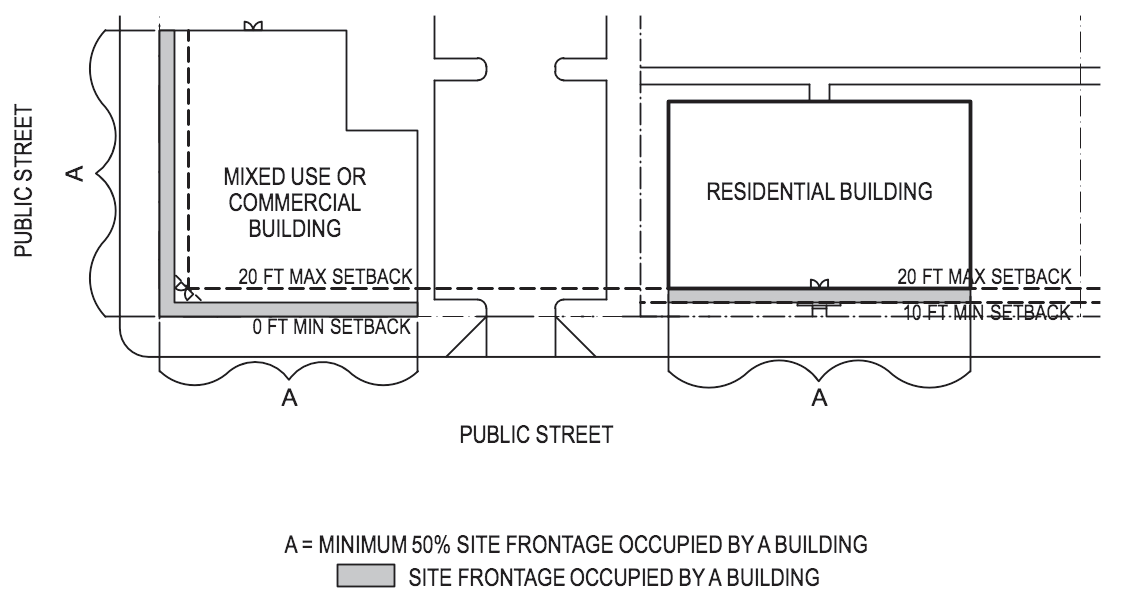
Figure 392-1 Illustrative Example of Setbacks from Street-facing Lot Lines and Frontage
Occupancy
392-9
Development Standards for Pedestrian-Oriented Mixed-Use Districts
The development standards listed below apply within the Pedestrian-Oriented Mixed-Use Districts. In addition, the standards of Article IV - Development Standards, including Section 422 (Significant Natural Resources), are applicable as required by Section 403-3.
392-9.1
Building Entrances
Buildings must have at least one primary entrance door facing a public sidewalk. The allowed entrance location includes a building corner.
392-9.2
Transparency
Transparency refers to the amount of glazing (such as windows and glass doors) on a building façade. High levels of transparency at the ground floor allow pedestrians to see into interior spaces, thereby creating a direct connection between public and private realms and engaging the interest of passersby. High transparency on building street-facing façades is appropriate for mixed-use areas with active commercial or nonresidential uses at the ground floor, but less so for multi-dwelling buildings where privacy is more of a concern for residents.
A.
Transparency is measured as a percentage of wall area. Ground floor transparency is measured as the wall area up to the finished ceiling height of the fronting space or 14 feet above finished grade, whichever is less. Upper floor transparency is measured as the wall area higher than 14 feet above finished grade.
B.
Visible transmittance (VT) is a measure of the amount of visible light transmitted through a material (typically glass).
C.
The transparency standards described in the table and E., below, are applicable to all street-facing building façades that are visible from the street and are not located behind other buildings.
D.
Figures 392-2 and 392-3 are illustrative examples of building façades meeting the transparency standards. The figures are not intended to depict specific required window configurations.
E.
Additional Transparency Standards:
(1)
All buildings with nonresidential ground floor windows must have a visible transmittance (VT) of 0.6 or higher, with the exception of medical and dental offices, which may have tinted windows. A development application must include VT information from the manufacturer for all windows and glass doors on street-facing building façades.
(2)
Minimum transparency is not required on building façades that do not face a street.
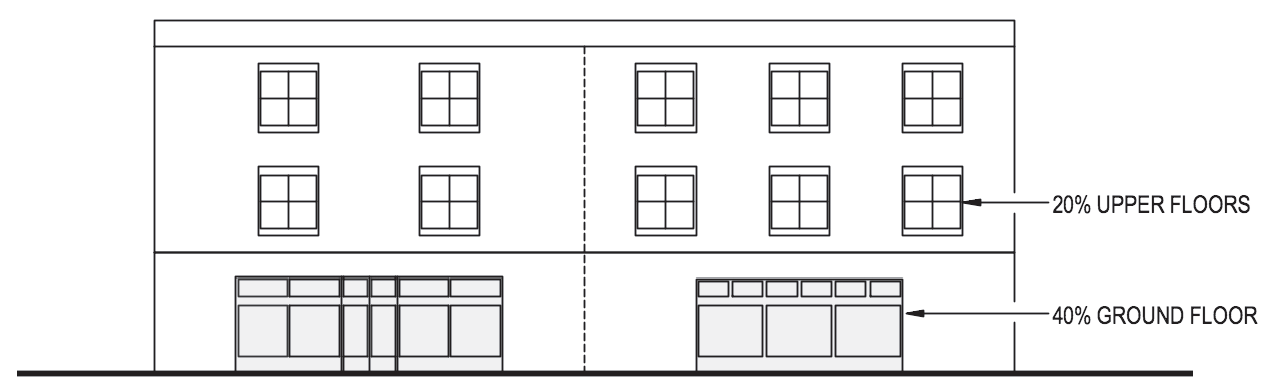
Figure 392-2 Transparency Example for Commercial
or Nonresidential Building
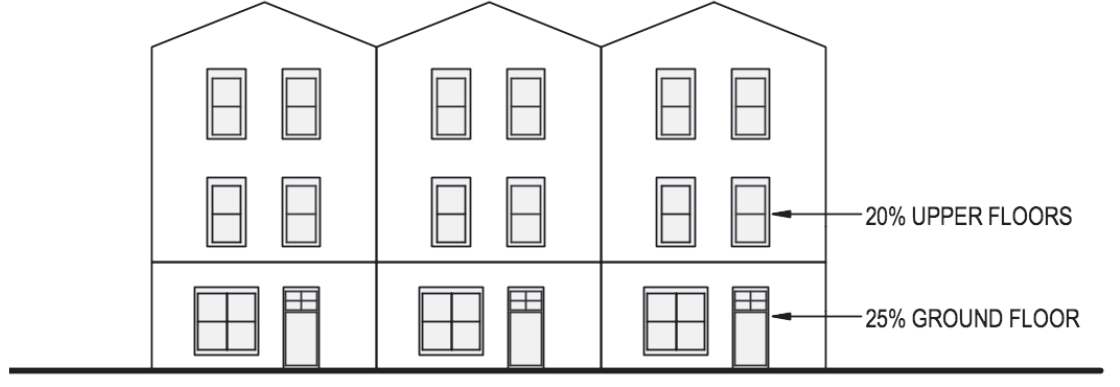
Figure 392-3 Transparency Example for Residential Building
392-9.3
Weather Protection
Weather protection such as awnings, canopies, and recessed entries enhance pedestrian comfort by providing protection against sun and rain. They can also provide visual interest and help define the ground level of buildings, while establishing a human scale for development.
A.
The weather protection standards described in the table and B., below, are applicable to all street-facing building façades that are visible from the street and are not located behind other buildings. Figures 392-4 and 392-5 provide illustrative examples of the standards.
B.
Additional Weather Protection Standards:
(1)
Weather protection may be provided by awnings, canopies, arcades, colonnades, recessed entries, or a combination of these elements.
(2)
Vertical clearance from the weather protection element to the sidewalk must be between 8 and 12 feet.
(3)
Awnings and canopies must project at least 5 feet from the building façade.
(4)
Awnings and canopies that extend over the right-of-way must meet the following additional standards:
(a)
Must be removable, and are limited to those that are cantilevered or supported by wall-mounted brackets;
(b)
Must not reduce the minimum sight distance below the thresholds in Section 501-8.5 F.; and
(c)
Require the approval and recordation of an Encroachment Agreement (Revocable Permit to Encroach Right-of-Way).
(5)
Balconies, arcades, colonnades, structural awnings or canopies, and awnings or canopies supported by ground-mounted poles shall not extend over or into the right-of-way.
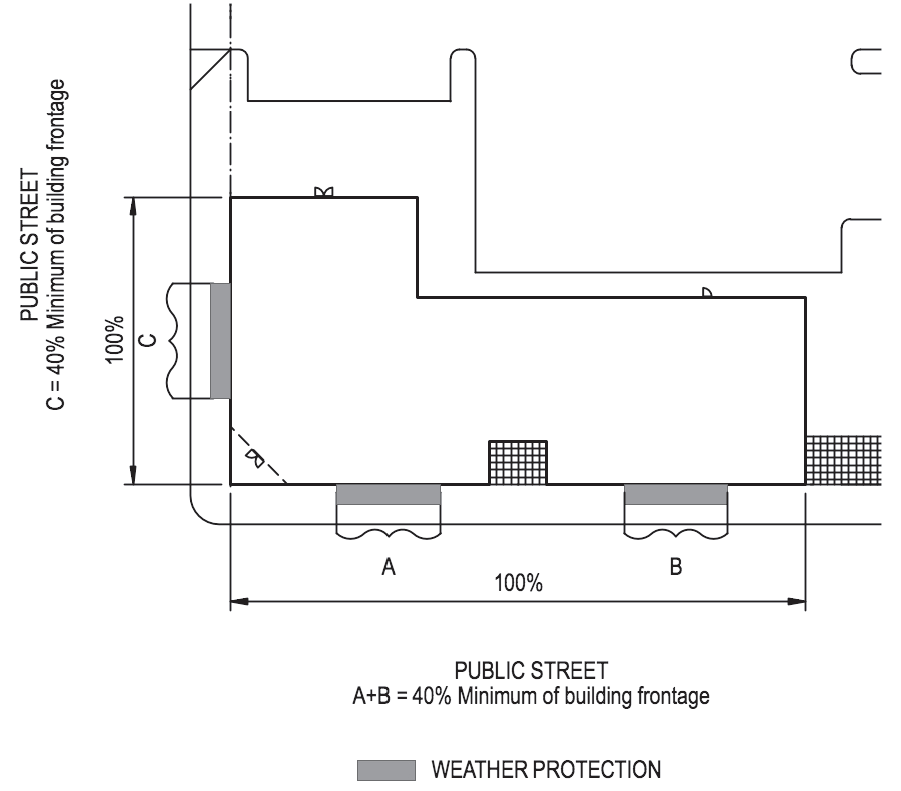
Figure 392-4 Weather Protection Example for Commercial or Nonresidential Building
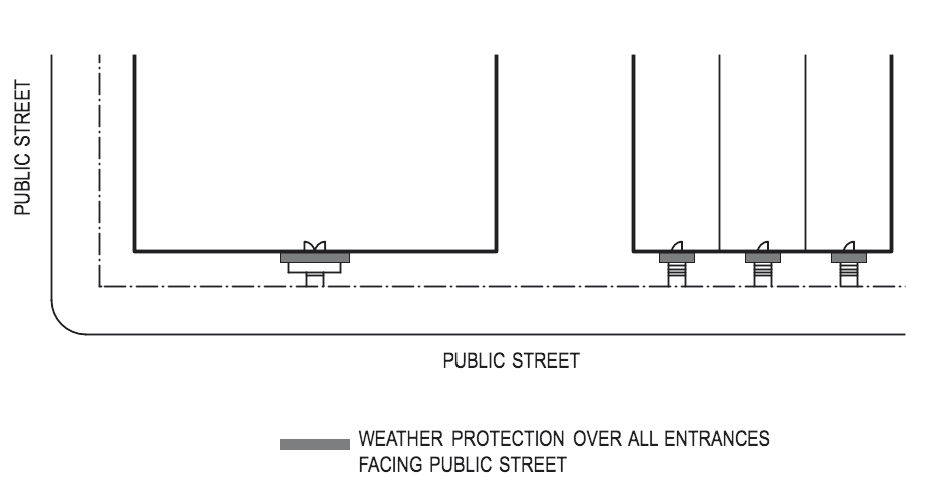
Figure 392-5 Weather Protection Example
for Residential Building
392-9.4
Building Articulation
Articulation is variation in architectural features that breaks up larger building fronts into smaller planes and masses. Articulation is key to creating visual interest, establishing a rhythm for pedestrians, and maintaining a human scale. Features that create articulation include windows, balconies, recesses, projections, roofline offsets, canopies, or changes in building material.
A.
The building articulation standards listed below apply to all street-facing façades that are visible from the street and are not located behind other buildings. Figures 392-6 and 392-7 provide illustrative examples of the standards.
B.
Façade Variation Standards:
(1)
Street-facing building façades shall be articulated with a minimum 2-foot horizontal change in building plane at least every 30 feet of the façade's length. This façade variation standard must be met for each building story.
(a)
Façade variation features may, but are not required to, extend the full height of the building.
(b)
The façade variation through change in building plane shall be provided through at least two of the following:
(i)
Building projections at least 6 feet wide;
(ii)
Building recesses at least 6 feet wide;
(iii)
Upper level balconies (projecting or recessed) at least 6 feet wide;
(iv)
Front porch or stoop projections, at least 4 feet wide;
(v)
Recessed building entries at least 6 feet wide;
(vi)
Green walls (vertical surfaces designed and planted to be covered at maturity by plants to a minimum height of 10 feet; sometimes called "vegetated walls," "living walls," or "vertical gardens") at least 6 feet wide.
C.
Roofline Articulation Standards:
(1)
Roofline articulation shall be accomplished by providing one of the following roofline or roof form elements at least every 30 feet: gables, dormers, offsets in ridgeline, stepped parapets, cornice lines, or changes in roofline elevation.
(2)
The distance between roofline articulation elements shall be measured from the center point of the element (for example, gable, dormer, offset) to the center point of the next roofline articulation element, or to the edge of the roof if that is the next closest break in the roofline.
D.
Significant Recess Standards:
(1)
When the length of a building exceeds 200 feet, every 100 feet of building length requires a full building height recess that is at least 20 feet wide by 15 feet deep.
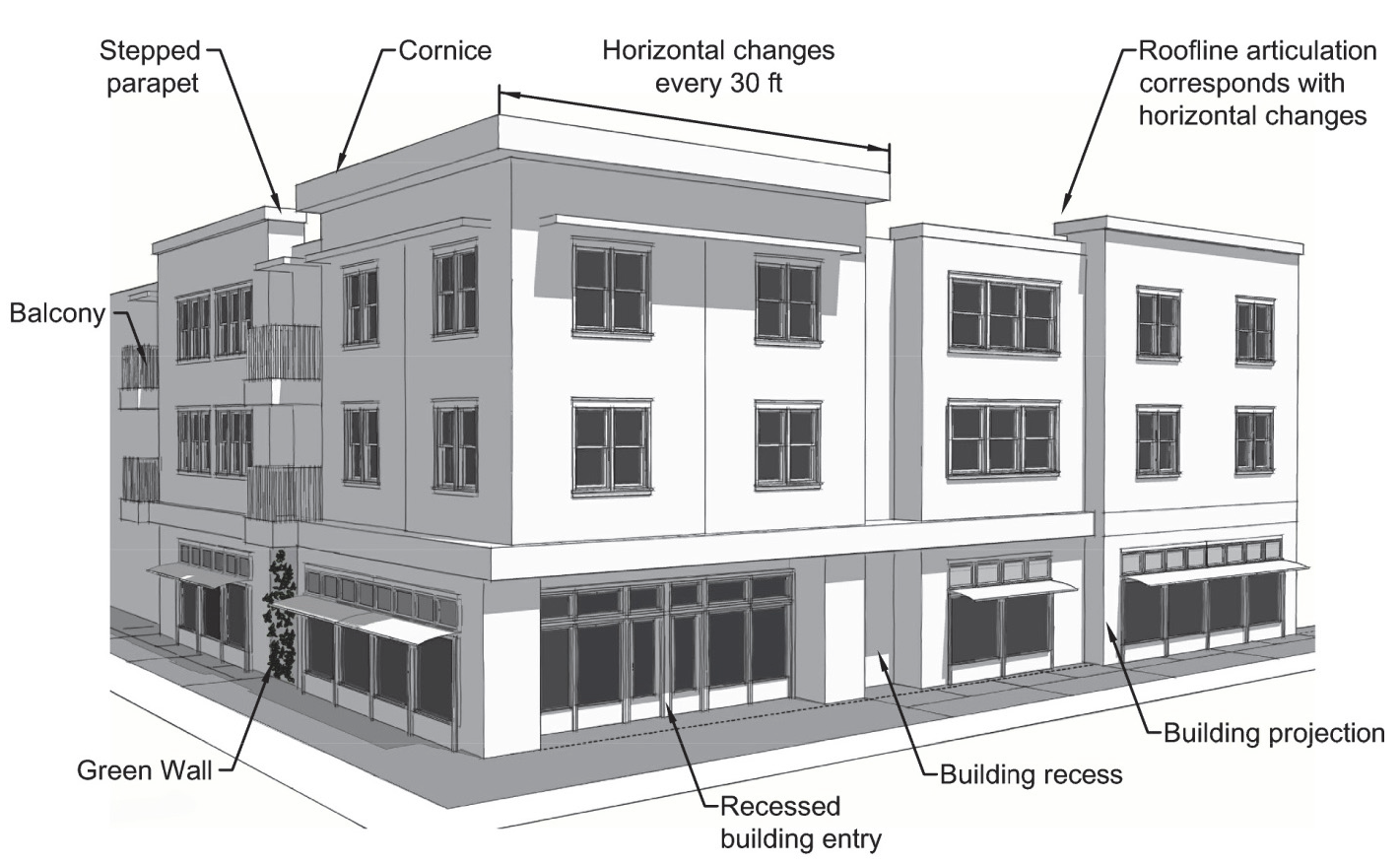
Figure 392-6 Example Perspective of Façade Variation and Roofline Articulation
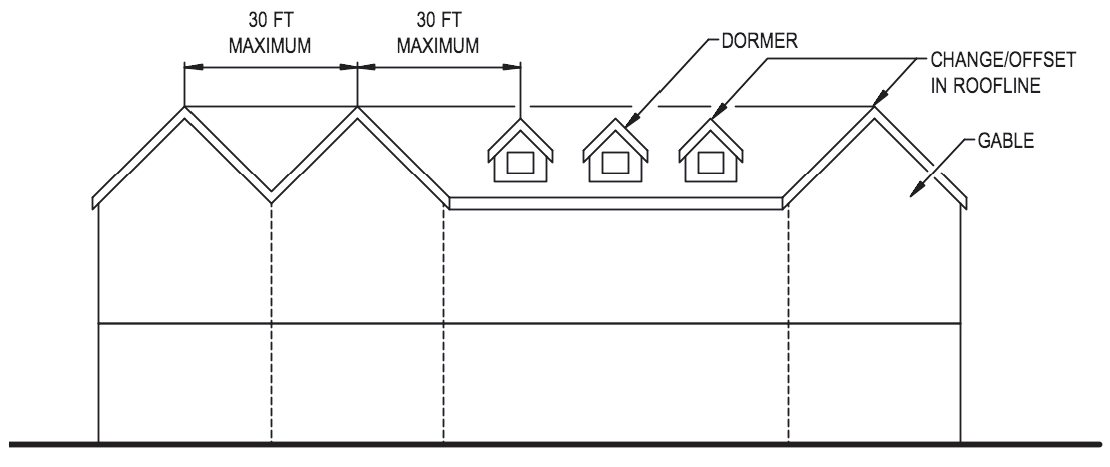
Figure 392-7 Roofline Articulation Examples (Elevation)
392-9.5
Sites with Multiple Street Frontages
The following standards apply to new development on sites with multiple street frontages:
A.
Lot at the corner of two intersecting streets, or site having three or more street frontages:
(1)
The maximum setback and street frontage occupancy requirements in Section 392-8 must be met on all street frontages.
(2)
The transparency, weather protection, and building articulation standards of Section 392-9 (Development Standards for Pedestrian-Oriented Mixed-Use Districts) must be met on all street frontages.
(3)
One of the following must be located at each corner:
(a)
A building; or
(b)
A plaza space with pedestrian amenities and a landscape or hardscape design that incorporates at least two of the following features:
(i)
Bench(es).
(ii)
Seat wall(s).
(iii)
Pavers or scored, patterned, textured, or colored concrete.
(iv)
Landscaping contained in planters or raised planter boxes.
(v)
Green wall on an adjacent building. A green wall, sometimes called a "vegetated wall," "living wall," or "vertical garden" is a vertical surface designed and planted to be covered at maturity by plants to a minimum height of 10 feet.
(vi)
Fountain.
(vii)
Public art.
B.
Through lot with frontage on two streets:
(1)
At least one frontage must meet the maximum setback and street frontage occupancy requirements of Section 392-8, and the transparency, weather protection, and building articulation standards of Section 392-9 (Development Standards for Pedestrian-Oriented Mixed-Use Districts).
(2)
If the requirements and standards in (1) above are proposed to be met on only one frontage:
(a)
The street frontage to which the requirements and standards must apply shall be determined by using the following priority hierarchy:
(i)
A Primary Frontage as identified in the relevant community plan.
(ii)
If the community plan does not identify a Primary Frontage that applies to the site, the frontage to which the standards and requirements must apply shall be the frontage adjacent to the street with the higher functional classification. If both frontages are adjacent to streets with the same functional classification, the applicant may choose the frontage on which the requirements must be met.
(b)
Along the other street frontage, a street edge treatment is required that includes the following:
(i)
A wall or fence between 3 and 4 feet in height (excluding chain link fencing). The wall or fence may incorporate taller or overhead elements (e.g., trellises or pergolas) at locations along its length for interest and/or screening of particular uses (e.g., loading areas); and
(ii)
A minimum 8-foot wide landscape strip containing trees spaced not more than 30 feet on center, and a mix of shrubs and groundcover to provide a landscaped buffer.
(iii)
The wall or fence and the landscape strip are not required where they would obstruct vehicle or pedestrian access.
392-9.6
Prominent Corners
Highly visible corner sites that are designated as Prominent Corners in the relevant community plan are subject to the standards below. The standards are intended to distinguish the building corners on these sites from the rest of the block, with features that create focal points and establish a strong building edge for the street. Figures 392-8 and 392-9 provide illustrative examples of the standards.
A.
Standards for Prominent Corners:
Buildings at Prominent Corners shall feature at least two of the treatments listed in options (1)-(5) below. The treatments shall have a minimum width of 10 feet along both of the intersecting building façades, measured from the building corner to the edge of the treatment option along each façade. (See Figure 392-9 for an illustration of the 10-foot minimum width measurement.)
(1)
Increase in building height at least 10% above the height of the remainder of the building.
(2)
Break in horizontal massing of at least 2 feet; this can be a projection or a recess. If the building has more than one story, the massing break must extend for at least two stories.
(3)
Distinct cornice treatment that is differentiated from the rest of the building roofline.
(4)
Chamfered or curved corner. A chamfered corner shall have a 45-degree corner cut and a 3-foot minimum depth. A curved corner shall have a 2-foot minimum rounded corner depth. (See Figure 392-9 for an illustration of the chamfered corner and curved corner minimum depths.)
(5)
Plaza space with a minimum area of 100 square feet, of which no dimension shall be less than 10 feet, with pedestrian amenities and a distinct landscape or hardscape design that incorporates at least two of the following features:
(a)
Bench(es).
(b)
Seat wall(s).
(c)
Pavers or scored, patterned, textured, or colored concrete.
(d)
Landscaping contained in planters or raised planter boxes.
(e)
Green wall on an adjacent building. A green wall, sometimes called a "vegetated wall," "living wall," or "vertical garden," is a vertical surface designed and planted to be covered at maturity by plants to a minimum height of 10 feet.
(f)
Fountain.
(g)
Public art.
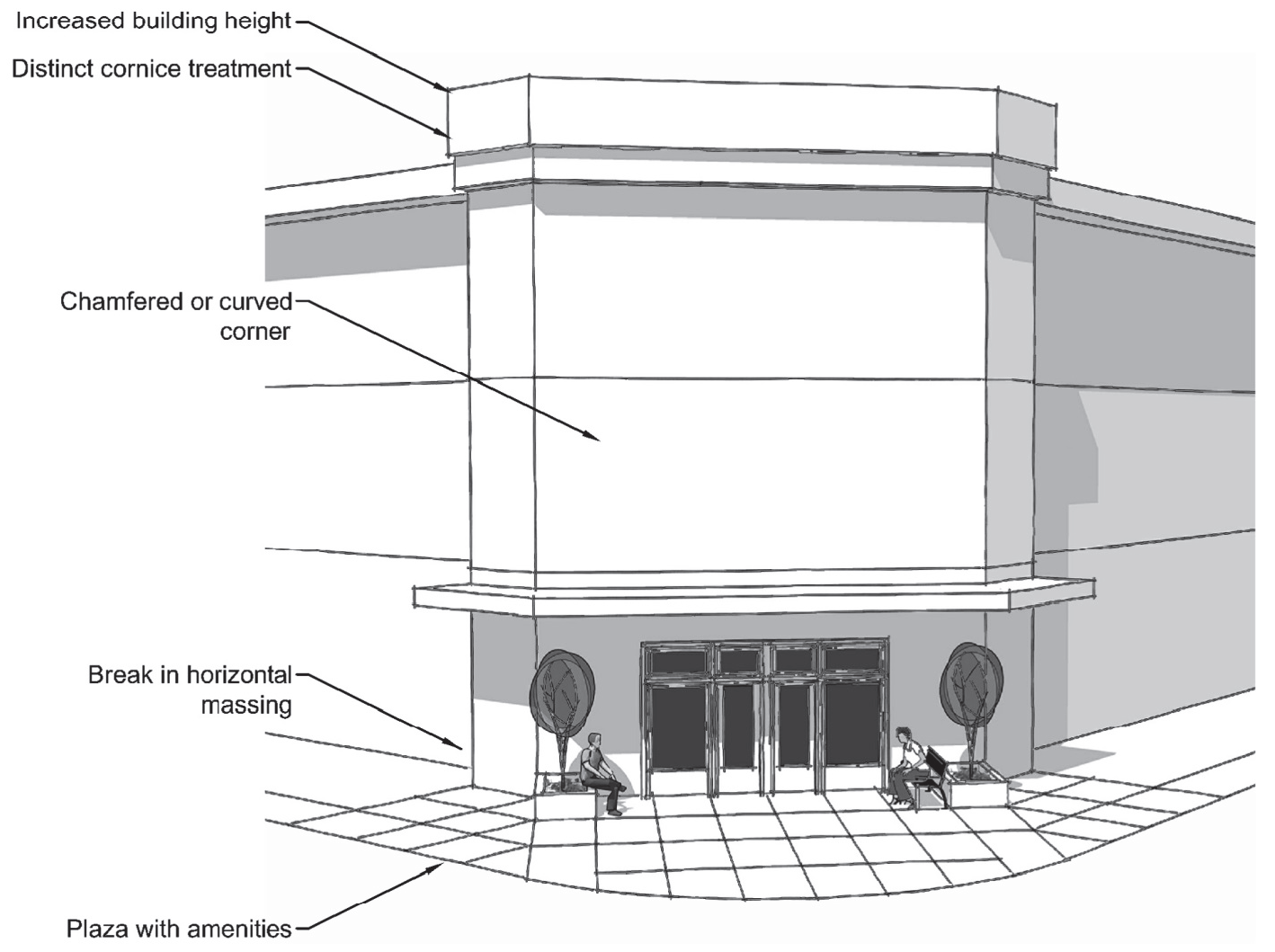
Figure 392-8 Examples of Prominent Corner Treatment Options
(Elevation)
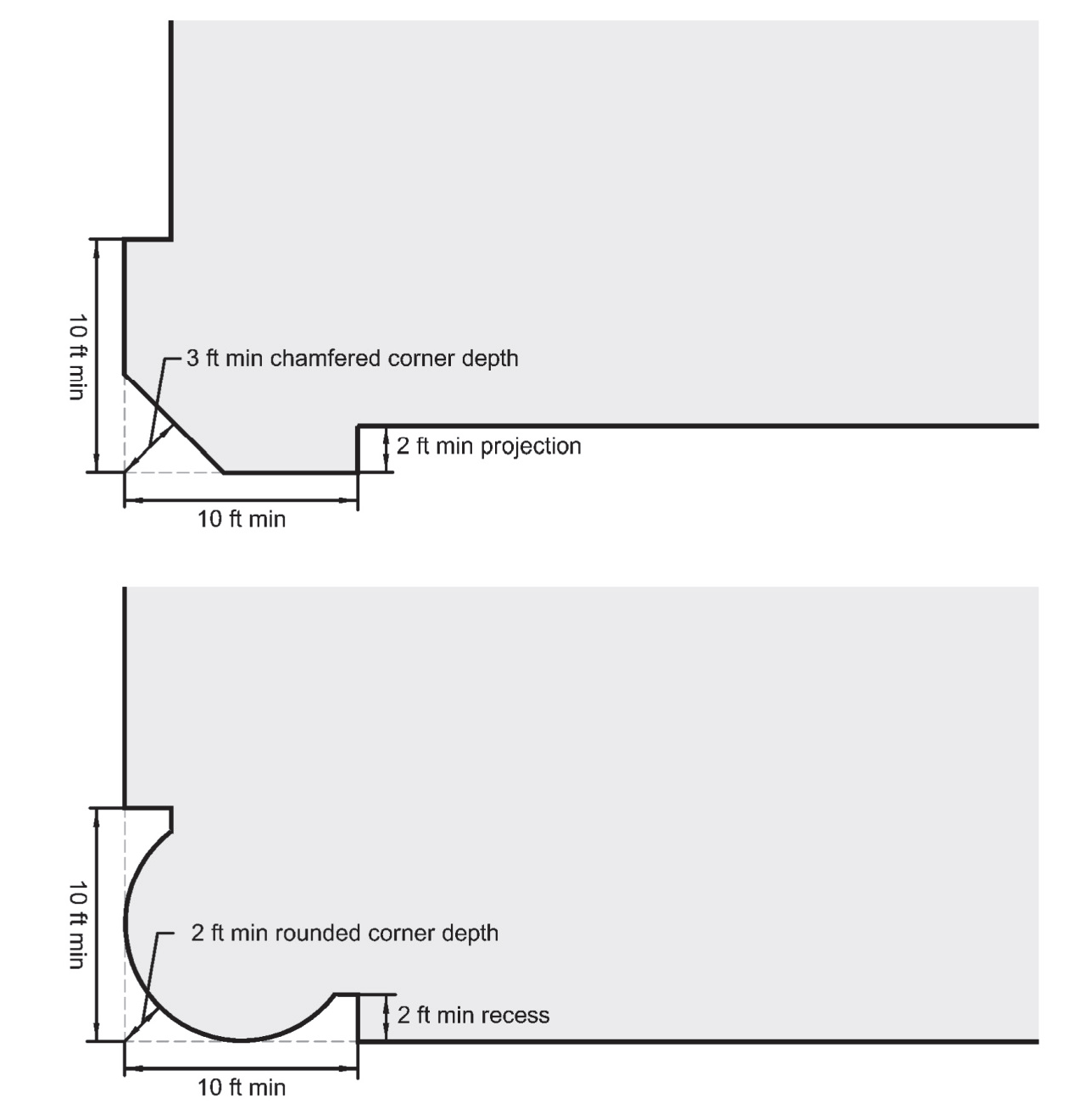
Figure 392-9 Examples of Chamfered and Curved Corner Treatment Options (Plan View)
392-9.7
Off-Street Parking Location and Screening
A.
Off-street parking in the Pedestrian-Oriented Mixed-Use Districts is subject to the requirements of Section 413 (Parking and Loading) as well as the specific location, screening and minimum quantity standards below. Figure 392-10 provides an illustrative example of the parking location standards.
B.
Parking Location:
(1)
All surface vehicular parking areas and vehicular circulation facilities, when provided, shall be located to the side or rear of buildings.
C.
Screening from Right-of-Way:
(1)
Screening requirements for through lots with frontage on two streets:
(a)
Frontage(s) that are required to meet the maximum setback and street frontage occupancy requirements of Section 392-8 and the transparency, weather protection and building articulation standards of Section 392-9 (Development Standards for Pedestrian-Oriented Mixed-Use Districts), must comply with the screening requirements of C.(2) below.
(b)
A frontage that does not meet the requirements and standards in C.(1)(a) above must provide screening that complies with the street edge treatment requirements for through lots in Section 392-9.5 B.(2)(b).
(2)
Screening requirements for all other lots:
(a)
A minimum 5-foot setback shall be provided between a surface parking area and an adjacent right-of-way.
(b)
The screening treatment within the setback area shall be:
(i)
A solid, low wall with a maximum 3-foot height, or
(ii)
A landscape buffer consisting of shrubs and groundcover with a maximum 3-foot height at maturity.
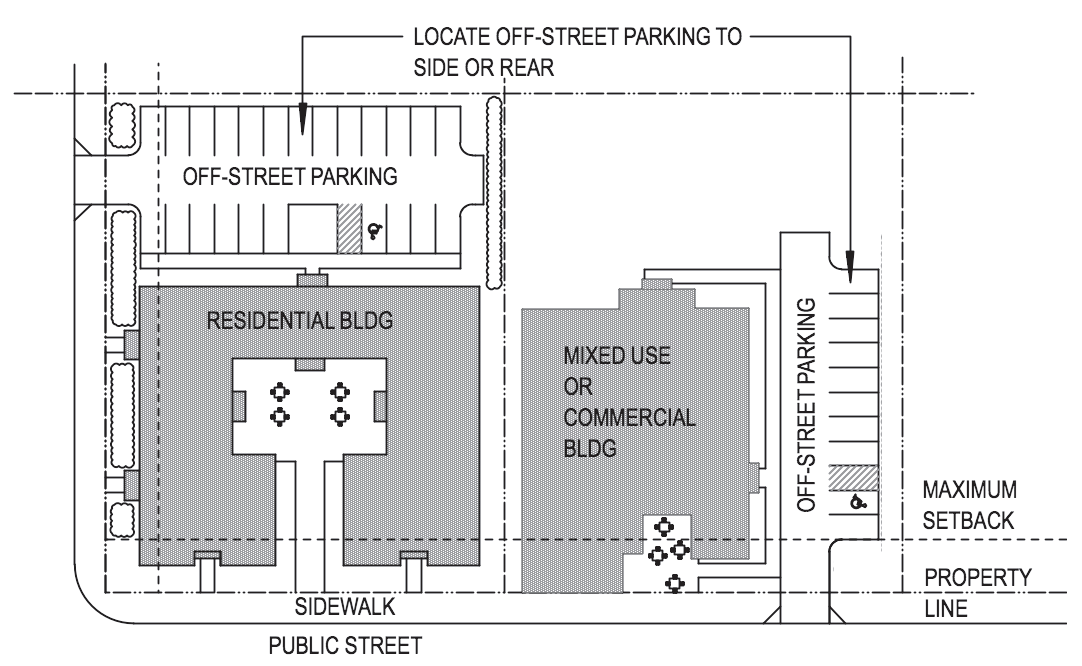
Figure 392-10 Example of Parking Location
392-9.8
Signs
The standards of Section 414-3 (Signs - Mixed-Use Districts) shall apply to all permitted signage within the Pedestrian-Oriented Mixed-Use Districts.
(Ord. No. 857, § 2.C.(Exh. 3), 8-27-19, 11-28-19; Ord. No. 885A, § 2.1.(Exh. 1), 6-28-22, eff. 7-28-22; Ord. No. 903, § 2.M.(Exh. 13, § 14.), 10-15-24, eff. 11-14-24)
390-1 - Intent and Purpose
390-1.1
The purpose of the North Bethany Subarea Overlay District is to direct and encourage development that is primarily residential, with community needs (e.g., parks, neighborhood commercial, and public/community services) within 0.25-mile of residents in the North Bethany Subarea.
390-1.2
The intent of the North Bethany Subarea Overlay District is to establish a development pattern that adheres to the North Bethany Concept Plan. This District reflects the detailed planning that went into the creation of the concept plan, including planning infrastructure and services across the Subarea, with attention to the neighborhood scale rather than for each development. Land use and density in North Bethany is established to support commercial development within walking distance of residential development and to accommodate future transit service to the area. Trails, street connectivity, and building setbacks and orientation enhance the pedestrian environment in North Bethany.
(Ord. No. 903, § 2.M.(Exh. 13, § 13.), 10-15-24, eff. 11-14-24)
390-2 - Applicability
390-2.1
The North Bethany Subarea Overlay District provisions of Section 390 are only applicable to the North Bethany Subarea of the Bethany Community Plan.
390-2.2
Unless otherwise specified in Section 390 or in the North Bethany Subarea Plan, all other provisions of this Code are applicable to the North Bethany Subarea Overlay District.
390-3 - Applicability of Other Comprehensive Plan Elements
All development in the North Bethany Subarea shall comply with the applicable standards and requirements of the North Bethany Subarea of the Bethany Community Plan. In the event standards of this Section conflict with a requirement of the Community Plan, the Community Plan shall control.
A.
In addition to the Community Plan requirements listed in Sections 300-1.1, 401-1, and 601-1.3 A., the following provisions of the North Bethany Subarea of the Bethany Community Plan shall apply to development in the North Bethany Subarea:
(1)
Land Use Designations;
(2)
The Neighborhoods map;
(3)
Core Design Elements designations;
(4)
Primary Street designations;
(5)
Special Setbacks designations;
(6)
Special Frontages designations;
(7)
Community Service Use locations;
(8)
Landslide Inventory map;
(9)
Landslide Study Areas Deep-Seated map;
(10)
Landslide Study Areas Shallow-Seated map;
(11)
Density Restricted Lands designations;
(12)
Parks, Trails and Pedestrian Connections designations;
(13)
Street Design Plan map;
(14)
Conceptual Street Design Cross Sections;
(15)
Street Tree Requirements - Table 1, Street Tree List; Table 2, Street Tree Guide;
(16)
Neighborhood Plan maps;
(17)
Drainage Master Plan Area designation;
(18)
Neighborhood provisions, including their design elements;
(19)
North Bethany Main Street Program Guide; and
(20)
Urban/Rural Edge map.
(Ord. No. 890A, § 2.A.(Exh. 1, § 13.), 2-7-23, eff. 3-9-23)
390-4 - Conflicts Between other Code Provisions
Notwithstanding Section 401, in the event of a conflict between the standards of this district and the standards of any other provision of this Code, except those applicable to Middle Housing (Section 430-84), the standards of this district shall control.
(Ord. No. 885A, § 2.1.(Exh. 1, § 11.), 6-28-22, eff. 7-28-22; Ord. No. 890A, § 2.A.(Exh. 1, § 1.), 2-7-23, eff. 3-9-23)
390-5 - Permitted Uses
The uses allowed in the North Bethany Subarea are limited to those listed in the land use districts provided below and shall be processed in accordance with the procedure types and standards specified by the districts below.
390-6 - Prohibited Uses
390-6.1
The following structures and uses are prohibited in all residential districts in the North Bethany Subarea.
A.
Structures or uses not specifically authorized by Section 390.
B.
The use of a recreational vehicle as a residence except where specifically authorized under Section 390.
C.
Any parking or storage of tractor trailers, semi-trucks, or heavy equipment, not including farm equipment or logging trucks used in conjunction with a farm or forest use.
D.
The outdoor parking or storage of any five or more operable vehicles on a single lot or parcel for more than 48 hours, except as approved in conjunction with a development.
E.
Keeping of fowl for sale, keeping of swine (except for up to three purebred potbelly pigs as household pets and not for breeding purposes) or operating a feed lot.
F.
The location of service facilities such as high schools, hospitals, nursing homes, public assembly and high density residential development in airport approach zones. Location of these facilities shall be avoided within any existing (June, 1983) airport year 2000 LDN 55 contour.
G.
Mounting a communication tower or antenna that is not a permitted accessory use on a detached dwelling.
H.
Mounting an antenna that is not a permitted accessory use on a communication tower that is accessory to a detached dwelling.
I.
Auto wrecking yards.
J.
Electrical substations.
K.
Marijuana production that requires a license from the Oregon Liquor Control Commission. Marijuana production includes the manufacture, planting, cultivation, growing, or harvesting of marijuana.
390-6.2
The following structures and uses are prohibited in all nonresidential districts in the North Bethany Subarea.
A.
Structures or uses not specifically authorized by Section 390, unless identified under Section 201-2 (Exclusions from Permit Requirement).
B.
The use of a manufactured dwelling, except as provided in Section 430-135.1 A. - Temporary Use.
C.
New residential uses except as provided in Sections 390-13.3 H. and 390-14.3 G. and K. or identified under Section 201-2 (Exclusions from Permit Requirement).
D.
The location of service facilities such as high schools, hospitals, nursing homes, public assembly and high density residential development in airport approach zones. Location of these facilities shall be avoided within any existing (June, 1983) airport year 2000 LDN 55 contour.
E.
Auto wrecking yards.
F.
Electrical substations.
(Ord. No. 810, § 2.A.(Exh. 1, § 25), 10-25-16; Ord. No. 867, § 2.A.(Exh. 1, § 12), 9-1-20, eff. 10-1-20)
390-7 - Parking Requirements
Off-street parking, when provided, and on-street parking shall be in accordance with the provisions of Section 413.
(Ord. No. 903, § 2.M.(Exh. 13, § 13.), 10-15-24, eff. 11-14-24)
390-8 - R-6 North Bethany District (R-6 NB)
390-8.1
Intent and Purpose
The R-6 North Bethany District (R-6 NB) is intended to implement the policies of the Comprehensive Plan for areas in the North Bethany Subarea Plan designated for residential development at no more than six units per acre and no less than five units per acre, except as otherwise specified for Middle Housing. A density bonus may be provided through a Planned Development.
The purpose of the R-6 NB District is to provide areas for detached houses as well as areas for manufactured homes on individual lots. Middle Housing, and attached dwelling units are also allowed in this district.
390-8.2
Uses Permitted Through a Type I Procedure
The following uses are permitted subject to the specific standards set forth below and in applicable Special Use Sections of Section 390-16 and Section 430, as well as the general standards for the District, the Development Standards of Article IV and all other applicable standards of the Code.
A.
Accessory Uses and Structures - Section 430-1.
B.
Bus Shelter - Section 430-23.
C.
Co-location of antennas, excluding those antennas exempt pursuant to Sections 430-109.3 and 201-2, located on existing legally established communication towers - Section 430-109.
D.
Single Detached Dwelling Unit
(1)
Single Detached Dwelling Unit on an existing lot or parcel that meets the following:
(a)
Buildable area is less than 13,100 square feet (Section 430-37.1 A); and
(b)
When on a public street:
(i)
Along the entire site frontage, existing right-of-way width meets the required minimum below, or the applicant proposes to dedicate right-of-way to meet the following:
• Local street: 25 feet to centerline;
• Neighborhood route: 30 feet to centerline;
• Collector: 37 feet to centerline;
• Arterial: 45 feet to centerline; or
If road improvements built to ultimate County standard exist, no additional right-of-way is required.
(ii)
Right-of-way dedications needed to meet minimums above shall be provided using a document prepared and approved by the County Surveyor's Office, and recorded prior to issuance of the first building permit.
(2)
Expansion or replacement of an existing Single Detached Dwelling Unit (Section 430-37.1 A) that meets the following:
(a)
Expansion or replacement will not create an additional primary dwelling unit; and
(b)
Expansion or replacement will result in a net habitable space increase of 2,000 square feet or less; or
(c)
If the expansion or replacement will result in a net habitable space increase of more than 2,000 square feet, when on a public street:
(i)
Along the entire site frontage, existing right-of-way width meets the required minimum below, or the applicant proposes to dedicate right-of-way to meet the following:
• Local street: 25 feet to centerline;
• Neighborhood route: 30 feet to centerline;
• Collector: 37 feet to centerline;
• Arterial: 45 feet to centerline; or
If road improvements built to ultimate County standard exist, no additional right-of-way is required.
(ii)
Right-of-way dedications needed to meet minimums above shall be provided using a document prepared and approved by the County Surveyor's Office, and recorded prior to issuance of the first building permit.
E.
Middle Housing (Section 430-84) on an existing lot or parcel that meets the following:
(1)
Buildable area is less than 13,100 square feet in buildable area; or
(2)
Equals or exceeds 13,100 square feet in buildable area, and the proposed number of Middle Housing units would meet or exceed the minimum density required for other housing types in the district (five units per acre). Existing lawful dwellings to be retained may be counted in this calculation; and
(3)
In the case of (1) or (2), above, when on a public street:
(a)
Along the entire site frontage, existing right-of-way width meets the required minimum below, or the applicant proposes to dedicate right-of-way to meet the following:
(i)
Local street: 25 feet to centerline;
(ii)
Neighborhood route: 30 feet to centerline;
(iii)
Collector: 37 feet to centerline;
(iv)
Arterial: 45 feet to centerline; or
If road improvements built to ultimate County standard exist, no additional right-of-way is required.
(b)
Right-of-way dedications needed to meet minimums above shall be provided using a document prepared and approved by the County Surveyor's Office, and recorded prior to issuance of the first building permit.
Note: For a Middle Housing Land Division (Article VI), right-of-way minimums for site frontage are as required by Washington County Functional Classification standards, and dedications shall be included on the plat.
F.
Expansion of any Type II or III use which meets the following:
(1)
Is exempt from application of public facility standards of Section 501-2;
(2)
Is not in an Area of Special Concern as designated on the applicable Community Plan map; and
(3)
Is not a telecommunication facility.
G.
New Telecommunication Facilities with Towers using Stealth Design to a maximum height of 100 feet and new Small Wireless Facilities, excluding those facilities exempt pursuant to Sections 430-109.3 and 201-2 - Section 430-109.
H.
Home Occupation - Section 430-63.1.
I.
Manufactured Home on an existing lot or parcel with a buildable area less than 13,100 square feet - Section 430-76.
J.
Park - Section 430-97.
K.
Temporary Use - Section 430-135.1, except for temporary storage of relocated dwelling
structures (430-135.1 C.(4)), temporary batch plants (430-135.1 G.), temporary use
permit for Farmers Markets (430-135.1 C.(9)), and temporary use permits for Mobile
Food Sites (Small)
(430-135.1 J.).
L.
Urban Accessory Dwelling Unit(s) - Section 430-2.1.
M.
Tree removal in areas identified in the applicable Community Plan as Significant Habitat, subject to Section 422-7.
390-8.3
Uses Permitted Through a Type II Procedure
The following uses may be permitted subject to the specific standards set forth below and in applicable Special Use Sections of Section 390-16 and Section 430, as well as the general standards for the District, the Development Standards of Article IV and all other applicable standards of the Code. Approval may be further conditioned by the Review Authority pursuant to Section 207-5.
A.
Attached Dwelling Unit - Section 390-16.2. (when proposal is not consistent with 390-8.2 L, above, the Middle Housing definition in Section 106, and provisions of 430-84).
B.
Middle Housing (Section 430-84) on an existing lot or parcel when any of the following apply:
(1)
Buildable area is 13,100 square feet or greater, and the proposed number of Middle Housing units will not meet or exceed the minimum density required for other housing types in the district (five units per acre). Existing lawful dwellings to be retained may be counted in this calculation. (Section 430-37.1 B); and/or
(2)
Where site fronts a public road, the proposal does not meet right-of-way requirements of Section 390-8.2 E, above, and the applicant seeks a Type II exemption subject to criteria of 501-8.4.
C.
Flag Lot - Section 430-46.
D.
Home Occupation - Section 430-63.2.
E.
Manufactured Dwelling Park - Section 430-77.
F.
Manufactured Dwelling Subdivision - Section 430-79.
G.
Community Service Uses in Residential Land Use Districts - Section 390-16.4.A.
H.
Construction of Public Transportation Facilities not otherwise authorized by Article VII.
I.
Expansion of Existing Telecommunication Facilities, including co-located antennas, not otherwise allowed through a Type I Procedure pursuant to Section 430-109.5 or exempt pursuant to Sections 430-109.3 and 201-2 - Section 430-109.
J.
Single Detached Dwelling Unit
(1)
Single Detached Dwelling Unit on an existing lot or parcel when any of the following apply:
(a)
Buildable area is 13,100 square feet or greater - Section 430-37.1 B; and/or
(b)
Where site fronts a public road, the proposal does not meet right-of-way requirements of Section 390-8.2 D(1), above, and the applicant seeks a Type II exemption subject to criteria of 501-8.4.
(2)
Expansion or replacement of an existing Single Detached Dwelling Unit (Section 430-37.1 A) that will not create an additional primary dwelling unit and will result in a habitable space increase of more than 2,000 square feet, where the following apply:
(a)
Where site fronts a public road, the proposal does not meet right-of-way requirements of Section 390-8.2 D(2), above; and
(b)
The applicant seeks a Type II exemption subject to criteria of 501-8.4.
K.
Manufactured Home on an existing lot or parcel with a buildable area greater than 13,100 square feet - Section 430-76 and Section 430-37.1 B. (1) through (3).
L.
Regional Stormwater Facility, as required by Clean Water Services - Section 390-16.14 (Public Facilities - North Bethany)
M.
Tree removal in areas identified in the applicable Community Plan as Significant Habitat, subject to Section 422-9 or 422-10.
N.
Uses Accessory and Incidental to a Residential Development provided for the service and convenience of the residents, including clubhouse, meeting hall, recreation center, gymnasium, and indoor swimming pool.
O.
Zero Lot Line Development - Section 430-147.
P.
Temporary Use - Section 430-135.2 B.
390-8.4
Uses Which May Be Permitted Through a Type III Procedure
The following uses may be permitted subject to the specific standards set forth below, the standards of Section 390-21, and in applicable Special Use Sections of Section 390-16 and Section 430, as well as the general standards for the District, the Development Standards of Article IV and all other applicable standards of the Code. Approval may be further conditioned by the Review Authority pursuant to Section 207-5.
A.
Boarding House, including a Bed & Breakfast for more than five persons in an existing dwelling - Section 430-19.
B.
Community Service Uses in Residential Land Use Districts - Section 390-16.4.B.
C.
Public Utilities - North Bethany (except for Regional Stormwater Facilities, as required by Clean Water Services) - Section 390-16.14.
D.
Group Care Facilities Section 430-53.2 and 430-53.3.
E.
Tree removal in areas identified in the applicable Community Plan as Significant Habitat, subject to Section 422-11.
390-8.5
Density/Number of Units
In the R-6 NB District:
A.
Middle Housing
(1)
Density is not a consideration for development of the three Middle Housing types listed below, however, the following limits apply to the parent lot:
(a)
Duplex - maximum of two units;
(b)
Triplex - maximum of four units per lot;
(c)
Quadplex - maximum four units per lot.
(2)
Cottage Clusters:
(a)
Up to 12 units allowed per common courtyard (no maximum number of courtyards);
(b)
Minimum density of four units per acre;
(c)
Maximum density does not apply.
(3)
Townhouses provided as Middle Housing:
(a)
Minimum of two units per development (land must be divided to create a separate lot or parcel for each unit);
(b)
Minimum density does not apply;
(c)
Maximum density 24 units per acre.
(4)
For all Middle Housing types, if the parent lot or parcel is divided through a Middle Housing Land Division, only one dwelling is permitted on each resulting lot or parcel.
B.
Other housing (residential development that does not meet the definition of Middle Housing in Section 106):
(1)
The permitted residential density shall be no more than six units per acre and no less than five units per acre, except as otherwise specified by Section 300-2 or by Section 390-8.5 B(2) below.
(2)
A density bonus is permitted when the following standards are met:
(a)
The development shall be a Type III Planned Development subject to Section 390-17.7;
(b)
The density bonus does not exceed three units per acre, resulting in a maximum density of nine units per acre; and
(c)
The development site is designated by the North Bethany Subarea Area Plan as being eligible for a density bonus.
390-8.6
Development to the required minimum density may be phased over time through future Standard Land Divisions when the following standards are met:
A.
A future development plan shall be submitted which demonstrates how the entire site can be ultimately developed consistent with the minimum density and other applicable standards of the Code and the North Bethany Subarea Plan. The plan shall include:
(1)
Complete parcelization of the subject property, including the size and configuration of all lots or parcels;
(2)
Vehicular and pedestrian access and circulation necessary to serve the ultimate development on the subject property and adjacent properties; and
(3)
Public facilities and services necessary to serve the ultimate development, including location and required easements and tracts. Public facilities and services shall include, but are not limited to, water, sewer, fire protection, parks, trails and drainage, including storm water and water quality facilities and any necessary buffers;
B.
The size, configuration, and location of proposed lots or parcels to be created through an application, and the location of new dwellings and structures on the proposed lots or parcels, shall not preclude:
(1)
Future development of the subject property to the minimum density as shown on the future development plan; and
(2)
Future development or redevelopment of adjacent properties to the permitted density.
C.
No future street, easement, or public facility shall be located on the subject property in a manner that would preclude future development to the minimum density as shown on the future development plan or preclude development of adjacent properties to the permitted density; and
D.
For Standard Subdivisions, each phase of a Subdivision shall comply with the minimum density requirement.
390-8.7
Dimensional Requirements
The Dimensional Requirements of Section 303-7 are the required standards for the R-6 NB District.
(Ord. No. 826A, § 2.A.(Exh. 1, § 28), 10-24-17, eff. 11-24-17; Ord. No. 831A, § 2.A.(Exh. 1, § 16), 7-17-18, eff. 8-16-18; Ord. No. 832A, § 2.A.(Exh. 1, § 20), 9-18-18, eff. 10-18-18; Ord. No. 856A, § 2.A.(Exh. 1, § 27), 10-22-19, eff. 11-28-19; Ord. No. 859, § 2.A.(Exh. 1, § 10), 9-17-19, eff. 11-28-19; Ord. No. 864, § 2.A.(Exh. 1, § 1), 7-21-20, eff. 8-20-20; Ord. No. 885A, § 2.1.(Exh. 1, § 11.), 6-28-22, eff. 7-28-22; Ord. No. 890A, § 2.A.(Exh. 1, §§ 1., 13.), 2-7-23, eff. 3-9-23; Ord. No. 902A, § 2.B.(Exh. 2, § 20.), 11-5-24, eff. 12-5-24; Ord. No. 912A, § 2.B.(Exh. 2, § 1), 4-28-26, eff. 5-28-26)
390-9 - R-9 North Bethany District (R-9 NB)
390-9.1
Intent and Purpose
The R-9 North Bethany District (R-9 NB) is intended to implement the policies of the Comprehensive Plan for areas in the North Bethany Subarea Plan designated for residential development at no more than nine units per acre and no less than seven units per acre, except as otherwise specified for Middle Housing. A density bonus may be provided through a Planned Development.
The purpose of the R-9 NB District is to provide areas for detached and attached houses on small lots as well as areas for manufactured homes on individual lots and manufactured dwelling subdivisions and parks. Middle Housing is also permitted in the R-9 NB District.
390-9.2
Uses Permitted Through a Type I Procedure
The following uses are permitted subject to the specific standards set forth below and in applicable Special Use Sections of Section 390-16 and Section 430, as well as the general standards for the District, the Development Standards of Article IV and all other applicable standards of the Code.
A.
Accessory Uses and Structures - Section 430-1.
B.
Bus Shelter - Section 430-23.
C.
Co-location of antennas, excluding those antennas exempt pursuant to Sections 430-109.3 and 201-2, located on existing legally established communication towers - Section 430-109.
D.
Single Detached Dwelling Unit
(1)
Single Detached Dwelling Unit on a lot or parcel that:
(a)
Was approved for the construction of a Single Detached Dwelling Unit through a Standard Subdivision or Standard Partition in the R-9 NB District (Section 430-37.1 A); and
(b)
When on a public street:
(i)
Along the entire site frontage, existing right-of-way width meets the required minimum below, or the applicant proposes to dedicate right-of-way to meet the following:
• Local street: 25 feet to centerline;
• Neighborhood route: 30 feet to centerline;
• Collector: 37 feet to centerline;
• Arterial: 45 feet to centerline; or
If road improvements built to ultimate County standard exist, no additional right-of-way is required.
(ii)
Right-of-way dedications needed to meet minimums above shall be provided using a document prepared and approved by the County Surveyor's Office and recorded prior to issuance of the first building permit.
(2)
Expansion or replacement of an existing Single Detached Dwelling Unit (Section 430-37.1 A) that meets the following:
(a)
Expansion or replacement will not create an additional primary dwelling unit; and
(b)
Expansion or replacement will result in a net habitable space increase of 2,000 square feet or less; or
(c)
If the expansion or replacement will result in a net habitable space increase of more than 2,000 square feet, when on a public street:
(i)
Along the entire site frontage, existing right-of-way width meets the required minimum below, or the applicant proposes to dedicate right-of-way to meet the following:
• Local street: 25 feet to centerline;
• Neighborhood route: 30 feet to centerline;
• Collector: 37 feet to centerline;
• Arterial: 45 feet to centerline; or
If road improvements built to ultimate County standard exist, no additional right-of-way is required.
(ii)
Right-of-way dedications needed to meet minimums above shall be provided using a document prepared and approved by the County Surveyor's Office and recorded prior to issuance of the first building permit.
E.
Middle Housing - Section 430-84 - on a lot or parcel that was approved for the construction of a Single Detached Dwelling Unit through a Standard Subdivision or Standard Partition in the R-9 NB District when the lot or parcel meets the following:
(1)
The proposed number of Middle Housing units would meet or exceed the minimum density required for other housing types in the district (seven units per acre). Existing lawful dwellings to be retained may be counted in this calculation; and
(2)
When on a public street:
(a)
Along the entire site frontage, existing right-of-way width meets the required minimum below, or the applicant proposes to dedicate right-of-way to meet the following:
(i)
Local street: 25 feet to centerline;
(ii)
Neighborhood route: 30 feet to centerline;
(iii)
Collector: 37 feet to centerline;
(iv)
Arterial: 45 feet to centerline; or
If road improvements built to ultimate County standard exist, no additional right-of-way is required.
(b)
Right-of-way dedications needed to meet minimums above shall be provided using a document prepared and approved by the County Surveyor's Office and recorded prior to issuance of the first building permit.
Note: For a Middle Housing Land Division (Article VI), right-of-way minimums for site frontage are as required by Washington County Functional Classification standards, and dedications shall be included on the plat.
F.
Expansion of any Type II or III use which meets the following:
(1)
Is exempt from application of public facility standards of Section 501-2;
(2)
Is not in an Area of Special Concern as designated on the applicable Community Plan map; and
(3)
Is not a telecommunication facility.
G.
New Telecommunication Facilities with Towers using Stealth Design to a maximum height of 100 feet and new Small Wireless Facilities, excluding those facilities exempt pursuant to Sections 430-109.3 and 201-2 - Section 430-109.
H.
Home Occupation - Section 430-63.1.
I.
Manufactured Home on a lot or parcel approved for the construction of a detached dwelling unit through a Standard Subdivision or Standard Partition in the R-9 NB District - Section 430-76 and Section 430-37.1 B. (1-3).
J.
Park - Section 430-97.
K.
Urban Accessory Dwelling Unit(s) - Section 430-2.1.
L.
Temporary Use - Section 430-135.1 except for temporary storage of relocated dwelling
structures (430-135.1 C.(4)), temporary batch plants (430-135.1 G.), temporary use
permit for Farmers Markets (430-135.1 C.(9)), and temporary use permits for Mobile
Food Sites (Small)
(430-135.1 J.).
M.
Tree removal in areas identified in the applicable Community Plan as Significant Habitat, subject to Section 422-7.
390-9.3
Uses Permitted Through a Type II Procedure
The following uses may be permitted subject to the specific standards set forth below and in applicable Special Use Sections of Section 390-16 and Section 430, as well as the general standards for the District, the Development Standards of Article IV and all other applicable standards of the Code. Approval may be further conditioned by the Review Authority pursuant to Section 207-5.
A.
Attached Dwelling Units - Section 390-16.2.
B.
Middle Housing (Section 430-84) on a lot or parcel that was approved for the construction of a Single Detached Dwelling Unit through a Standard Subdivision or Standard Partition, when any of the following apply:
(1)
The proposed number of Middle Housing units would not meet or exceed the minimum density required for other housing types in the district (seven units per acre). Existing lawful dwellings to be retained may be counted in this calculation; and/or
(2)
Where site fronts a public road, the proposal does not meet right-of-way requirements of Section 390-9.2 E, above, and the applicant seeks a Type II exemption subject to criteria of 501-8.4.
C.
Expansion of Existing Telecommunication Facilities, including co-located antennas, not otherwise allowed through a Type I Procedure pursuant to Section 430-109.5 or exempt pursuant to Sections 430-109.3 and 201-2 - Section 430-109.
D.
Community Service Uses in Residential Land Use Districts - Section 390-16.4.A.
E.
Construction of Public Transportation Facilities not otherwise authorized by Article VII.
F.
Single Detached Dwelling Unit
(1)
Single Detached Dwelling Unit, not otherwise permitted by Section 390-9.2 D(1) - Section 430-37.1 B, and/or:
(a)
Where site fronts a public road, the proposal does not meet right-of-way requirements of Section 390-9.2 D(1), above; and
(b)
The applicant seeks a Type II exemption subject to criteria of 501-8.4.
(2)
Expansion or replacement of an existing Single Detached Dwelling Unit (Section 430-37.1 A) that will not create an additional primary dwelling unit and will result in a habitable space increase of more than 2,000 square feet, where issues under (a) and (b), below, apply:
(a)
Where site fronts a public road, the proposal does not meet right-of-way requirements of Section 390-9.2 D(2); and
(b)
The applicant seeks a Type II exemption subject to criteria of 501-8.4.
G.
Flag Lot - Section 430-46.
H.
Group Care - Section 430-53.1 and 430-53.5.
I.
Home Occupation - Section 430-63.2.
J.
Manufactured Dwelling Park - Section 430-77.
K.
Manufactured Dwelling Subdivision - Section 430-79.
L.
Manufactured Home, not otherwise permitted by Section 304-2.8 - Section 430-76 and Section 430-37.1 B. (1-3).
M.
Regional Stormwater Facility, as required by Clean Water Services - Section 390-16.14 (Public Facilities - North Bethany).
N.
Tree removal in areas identified in the applicable Community Plan as Significant Habitat, subject to Section 422-9 or 422-10.
O.
Uses Accessory and Incidental to a Residential Development provided for the service and convenience of the residents, including clubhouse, meeting hall, recreation center, gymnasium, and indoor swimming pool.
P.
Zero Lot Line Development - Section 430-147.
Q.
Temporary Use - Section 430-135.2 B.
390-9.4
Uses Which May be Permitted Through a Type III Procedure
The following uses may be permitted subject to the specific standards set forth below, the standards of Section 390-21, and in applicable Special Use Sections of Section 390-16 and Section 430, as well as the general standards for the District, the Development Standards of Article IV and all other applicable standards of the Code. Approval may be further conditioned by the Review Authority pursuant to Section 207-5.
A.
Boarding House, including a Bed & Breakfast in an existing dwelling - Section 430-19.
B.
Community Service Uses in Residential Land Use Districts - Section 390-16.4.B.
C.
Public Utilities - North Bethany (except for Regional Stormwater Facilities, as required by Clean Water Services) - Section 390-16.14.
D.
Group Care - Section 430-53.2 and 430-53.3.
E.
Tree removal in areas identified in the applicable Community Plan as Significant Habitat, subject to Section 422-11.
390-9.5
Density/Number of Units
In the R-9 NB District:
A.
Middle Housing
(1)
Density is not a consideration for development of the three Middle Housing types listed below, however the following limits apply to the parent lot:
(a)
Duplex - maximum of two units;
(b)
Triplex - maximum four units per lot;
(c)
Quadplex - maximum four units per lot.
Except in areas subject to Section 421 and/or 422-8, up to one lawful existing Single Detached Dwelling Unit and up to two lawful existing Accessory Dwelling Units (ADUs) may be retained as such on the parent lot, without counting toward plex unit maximums.
Any existing dwellings converted to/considered as Middle Housing shall count toward plex unit maximums.
(2)
Cottage Clusters:
(a)
Up to 12 units allowed per common courtyard (no maximum number of courtyards);
(b)
Minimum density of four units per acre;
(c)
Maximum density does not apply.
(3)
Townhouses provided as Middle Housing:
(a)
Minimum of two units per development (land must be divided to create a separate lot or parcel for each unit);
(b)
Minimum density does not apply;
(c)
Maximum density 25 units per acre.
(4)
For all Middle Housing types, if the parent lot or parcel is divided through a Middle Housing Land Division, only one dwelling is permitted on each resulting lot or parcel.
B.
Other housing (residential development that does not meet the definition of Middle Housing in Section 106):
(1)
The permitted residential density shall be no more than nine units per acre and no less than seven units per acre, except as otherwise specified by Section 300-2 or by Section 390-9.5 B(2) below.
(2)
A density bonus is permitted when the following standards are met:
(a)
The development shall be a Type III Planned Development subject to Section 390-17.7; and
(b)
The density bonus does not exceed three units per acre, resulting in a maximum density of 12 units per acre.
(3)
For developments with detached dwelling units and attached dwelling units, where the detached dwelling units comprise 60% or more of the total density, building permits for the final 15% of the proposed number of detached dwelling units shall not be issued until at least 50% of the proposed number of attached dwelling units have been constructed or are under construction.
390-9.6
Dimensional Requirements
The Dimensional Requirements of Section 304-7 are the required standards for the R-9 NB District.
(Ord. No. 823, § 2.A.(Exh. 1, § 8), 9-5-17, eff. 10-5-17; Ord. No. 826A, § 2.A.(Exh. 1, § 28), 10-24-17, eff. 11-24-17; Ord. No. 831A, § 2.A.(Exh. 1, § 16), 7-17-18, eff. 8-16-18; Ord. No. 832A, § 2.A.(Exh. 1, § 20), 9-18-18, eff. 10-18-18; Ord. No. 856A, § 2.A.(Exh. 1, § 27), 10-22-19, eff. 11-28-19; Ord. No. 859, § 2.A.(Exh. 1, § 10), 9-17-19, eff. 11-28-19; Ord. No. 864, § 2.A.(Exh. 1, § 1), 7-21-20, eff. 8-20-20; Ord. No. 885A, § 2.1.(Exh. 1, § 11.), 6-28-22, eff. 7-28-22; Ord. No. 890A, § 2.A.(Exh. 1, §§ 1., 13.), 2-7-23, eff. 3-9-23; Ord. No. 902A, § 2.B.(Exh. 2, § 21.), 11-5-24, eff. 12-5-24; Ord. No. 912A, § 2.B.(Exh. 2, § 1), 4-28-26, eff. 5-28-26)
390-10 - R-15 North Bethany District (R-15 NB)
390-10.1
Intent and Purpose
The R-15 North Bethany District (R-15 NB) is intended to implement the policies of the Comprehensive Plan for areas in the North Bethany Subarea Plan designated for residential development at no more than 15 units per acre, and no less than 12 units per acre, except as otherwise specified for Middle Housing. A density bonus may be provided through a Planned Development.
The purpose of the R-15 NB District is to provide areas for higher density attached dwelling units (on individual lots), multi-dwelling attached units (not on individual lots), and family housing. Middle Housing is also permitted in the R-15 NB District. Detached dwelling units may be permitted in the R-15 NB District through a Type III Planned Development.
390-10.2
Uses Permitted Through a Type I Procedure
The following uses are permitted subject to the specific standards for the use set forth below and in applicable Special Use Sections of Section 390-16 and Section 430, as well as the general standards for the District, the Development Standards of Article IV and all other applicable standards of the Code.
A.
Accessory Uses and Structures - Section 430-1.
B.
Bus Shelter - Section 430-23.
C.
Co-location of antennas, excluding those antennas exempt pursuant to Sections 430-109.3 and 201-2, located on existing legally established communication towers - Section 430-109.
D.
Expansion or replacement of an existing dwelling (Section 430-37.1 A) that meets the following:
(1)
Expansion will not create an additional primary dwelling unit; and
(2)
Expansion or replacement will result in a net habitable space increase of 2,000 square feet or less; or
(3)
If the expansion or replacement will result in a net habitable space increase of more than 2,000 square feet, when on a public street:
(a)
Along the entire site frontage, existing right-of-way width meets the required minimum below, or the applicant proposes to dedicate right-of-way to meet the following:
(i)
Local street: 25 feet to centerline;
(ii)
Neighborhood route: 30 feet to centerline;
(iii)
Collector: 37 feet to centerline;
(iv)
Arterial: 45 feet to centerline; or
If road improvements built to ultimate County standard exist, no additional right-of-way is required.
(b)
Right-of-way dedications needed to meet minimums above shall be provided using a document prepared and approved by the County Surveyor's Office and recorded prior to issuance of the first building permit.
E.
Expansion of any Type II or III use which meets the following:
(1)
Is exempt from application of public facility standards of Section 501-2;
(2)
Is not in an Area of Special Concern as designated on the applicable Community Plan map; and
(3)
Is not a telecommunication facility.
F.
New Telecommunication Facilities with Towers using Stealth Design to a maximum height of 100 feet and new Small Wireless Facilities, excluding those facilities exempt pursuant to Sections 430-109.3 and 201-2 - Section 430-109.
G.
Home Occupation - Section 430-63.1.
H.
Park - Section 430-97.
I.
Temporary Use - Section 430-135.1, except for temporary storage of relocated dwelling
structures (430-135.1 C.(4)), temporary batch plants (430-135.1 G.), temporary use
permit for Farmers Markets (430-135.1 C.(9)), and temporary use permits for Mobile
Food Sites (Small)
(430-135.1 J.).
J.
Urban Accessory Dwelling Unit(s) - Section 430-2.1.
K.
Middle Housing - Section 430-84 on a lot or parcel:
(1)
Where the proposed number of Middle Housing Units would meet or exceed the minimum density required for other housing types in the district (12 units per acre). Existing lawful dwellings to be retained may be counted in this calculation; and
(2)
When on a public street:
(a)
Along the entire site frontage, existing right-of-way width meets the required minimum below, or the applicant proposes to dedicate right-of-way to meet the following:
(i)
Local street: 25 feet to centerline;
(ii)
Neighborhood route: 30 feet to centerline;
(iii)
Collector: 37 feet to centerline;
(iv)
Arterial: 45 feet to centerline; or
If road improvements built to ultimate County standard exist, no additional right-of-way is required.
(b)
Right-of-way dedications needed to meet minimums above shall be provided using a document prepared and approved by the County Surveyor's Office and recorded prior to issuance of the first building permit.
Note: For a Middle Housing Land Division (Article VI), right-of-way minimums for site frontage are as required by Washington County Functional Classification standards, and dedications shall be included on the plat.
L.
Tree removal in areas identified in the applicable Community Plan as Significant Habitat, subject to Section 422-7.
390-10.3
Uses Permitted Through a Type II Procedure
The following uses are permitted subject to the specific standards for the use set forth below and in applicable Special Use Sections of Section 390-16 and Section 430, as well as the general standards for the District, the Development Standards of Article IV and all other applicable standards of the Code. Approval may be further conditioned by the Review Authority pursuant to Section 207-5.
A.
Attached Dwelling Units - Section 390-16.2.
B.
Middle Housing (Section 430-84) on an existing lot or parcel when any of the following apply:
(1)
The proposed number of Middle Housing units will not meet or exceed the minimum density required for other housing types in the district (12 units per acre). Existing lawful dwellings to be retained may be counted in this calculation. (Section 430-37.1 B); and/or
(2)
Where site fronts a public road, the proposal does not meet right-of-way requirements of Section 390-10.2 K, above, and the applicant seeks a Type II exemption subject to criteria of 501-8.4.
C.
Expansion of Existing Telecommunication Facilities, including co-located antennas, not otherwise allowed through a Type I Procedure pursuant to Section 430-109.5 or exempt pursuant to Sections 430-109.3 and 201-2 - Section 430-109.
D.
Community Service Uses in Residential Land Use Districts - Section 390-16.4.A.
E.
Construction of Public Transportation Facilities not otherwise authorized by Article VII.
F.
Group Care - Section 430-53.3 and 430-53.5.
G.
Home Occupation - Section 430-63.2.
H.
Regional Stormwater Facility, as required by Clean Water Services - Section 390-16.14 (Public Facilities - North Bethany).
I.
Tree removal in areas identified in the applicable Community Plan as Significant Habitat, subject to Section 422-9 or 422-10.
J.
Uses Accessory and Incidental to a Residential Development provided for the service and convenience of the residents, including clubhouse, meeting hall, recreation center, gymnasium, and indoor swimming pool.
K.
Temporary Use - Section 430-135.2 B.
L.
Expansion or replacement of an existing Single Detached Dwelling Unit (Section 430-37.1 A) that will not create an additional primary dwelling unit and will result in a habitable space increase of more than 2,000 square feet, where the following apply:
(1)
Where site fronts a public road, the proposal does not meet right-of-way requirements of Section 390-10.2 D, above; and
(2)
The applicant seeks a Type II exemption subject to criteria of 501-8.4.
390-10.4
Uses Which May Be Permitted Through a Type III Procedure
The following uses may be permitted subject to the specific standards set forth below, the standards of Section 390-21, and in applicable Special Use Sections of Section 390-16 and Section 430, as well as the general standards for the District, the Development Standards of Article IV and all other applicable standards of the Code. Approval may be further conditioned by the Review Authority pursuant to Section 207-5.
A.
Boarding House, including a Bed and Breakfast in an existing dwelling - Section 430-19.
B.
Community Service Uses in Residential Land Use Districts - Section 390-16.4.B.
C.
Group Care - Section 430-53.2.
D.
Detached dwelling units - Section 390-17.8.
E.
Public Utilities - North Bethany (except for Regional Stormwater Facilities, as required by Clean Water Services) - Section 390-16.14.
F.
Tree removal in areas identified in the applicable Community Plan as Significant Habitat, subject to Section 422-11.
390-10.5
Density/Number of Units
In the R-15 NB District:
A.
Middle Housing
(1)
Density is not a consideration for development of the three Middle Housing types listed below, however the following limits apply to the parent lot:
(a)
Duplex - maximum of two units;
(b)
Triplex - maximum four units per lot;
(c)
Quadplex - maximum four units per lot.
Except in areas subject to Section 421 and/or 422-8, up to one lawful existing Single Detached Dwelling Unit and up to two lawful existing Accessory Dwelling Units (ADUs) may be retained as such on the parent lot, without counting toward plex unit maximums.
Any existing dwellings converted to/considered as Middle Housing shall count toward plex unit maximums.
(2)
Cottage Clusters:
(a)
Up to 12 units allowed per common courtyard (no maximum number of courtyards);
(b)
Minimum density of four units per acre;
(c)
Maximum density does not apply.
(3)
Townhouses provided as Middle Housing:
(a)
Minimum of two units per development (land must be divided to create a separate lot or parcel for each unit);
(b)
Minimum density does not apply;
(c)
Maximum density 25 units per acre.
(4)
For all Middle Housing types, if the parent lot or parcel is divided through a Middle Housing Land Division, only one dwelling is permitted on each resulting lot or parcel.
B.
Other housing (residential development that does not meet the definition of Middle Housing in Section 106):
(1)
The permitted residential density shall be no more than 15 units per acre and no less than 12 units per acre, except as otherwise specified by Section 300-2 or by Section 390-10.5 B(2) below.
(2)
A density bonus is permitted when the following standards are met:
(a)
The development shall be a Type III Planned Development subject to Section 390-17.7; and
(b)
The density bonus does not exceed five units per acre, resulting in no more than 20 units per acre.
390-10.6
Dimensional Requirements
The Dimensional Requirements of Section 305-7 are the required standards for the R-15 NB District.
(Ord. No. 823, § 2.A.(Exh. 1, § 8), 9-5-17, eff. 10-5-17; Ord. No. 826A, § 2.A.(Exh. 1, § 28), 10-24-17, eff. 11-24-17; Ord. No. 831A, § 2.A.(Exh. 1, § 16), 7-17-18, eff. 8-16-18; Ord. No. 832A, § 2.A.(Exh. 1, § 20), 9-18-18, eff. 10-18-18; Ord. No. 835, § 2.A.(Exh. 1, § 3), 8-21-18, eff. 9-20-18; Ord. No. 856A, § 2.A.(Exh. 1, § 27), 10-22-19, eff. 11-28-19; Ord. No. 859, § 2.A.(Exh. 1, § 10), 9-17-19, eff. 11-28-19; Ord. No. 885A, § 2.1.(Exh. 1, § 11.), 6-28-22, eff. 7-28-22; Ord. No. 890A, § 2.A.(Exh. 1, §§ 1., 13.), 2-7-23, eff. 3-9-23; Ord. No. 902A, § 2.B.(Exh. 2, § 22.), 11-5-24, eff. 12-5-24; Ord. No. 912A, § 2.B.(Exh. 2, § 1), 4-28-26, eff. 5-28-26)
390-11 - R-24 North Bethany District (R-24 NB)
390-11.1
Intent and Purpose
The R-24 North Bethany District (R-24 NB) is intended to implement the policies of the Comprehensive Plan for areas in new urban communities designated for residential development at no more than 24 units per acre and no less than 19 units per acre.
The purpose of the R-24 NB District is to provide areas for high density townhouse and multi-dwelling residential with design flexibility to allow for a variety of configurations.
390-11.2
Uses Permitted Through a Type I Procedure
The following uses are permitted subject to the specific standards for the use set forth below and in applicable Special Use Sections of Section 390-16 and Section 430, as well as the general standards for the District, the Development Standards of Article IV and all other applicable standards of the Code.
A.
Accessory Uses and Structures - Section 430-1.
B.
Bus Shelter - Section 430-23.
C.
Co-location of antennas, excluding those antennas exempt pursuant to Sections 430-109.3 and 201-2, located on existing legally established communication towers - Section 430-109.
D.
Expansion or replacement of an existing dwelling - Section 430-37.1 A.
E.
Expansion of any Type II or III use which meets the following:
(1)
Is exempt from application of public facility standards of Article VIII;
(2)
Is not in an Area of Special Concern as designated on the applicable Community Plan map; and
(3)
Is not a telecommunication facility.
F.
New Telecommunication Facilities with Towers using Stealth Design to a maximum height of 100 feet and new Small Wireless Facilities, excluding those facilities exempt pursuant to Sections 430-109.3 and 201-2 - Section 430-109.
G.
Home Occupation - Section 430-63.1.
H.
Park - Section 430-97.
I.
Temporary Use - Section 430-135.1 except for temporary storage of relocated dwelling
structures (430-135.1 C.(4)), temporary batch plants (430-135.1 G.), temporary use
permit for Farmers Markets (430-135.1 C.(9)), and temporary use permits for Mobile
Food Sites (Small)
(430-135.1 J.).
J.
Tree removal in areas identified in the applicable Community Plan as Significant Habitat, subject to Section 422-7.
390-11.3
Uses Permitted Through a Type II Procedure
The following uses are permitted subject to the specific standards for the use set forth below and in applicable Special Use Sections of Section 390 and Section 430, as well as the general standards for the District, the Development Standards of Article VI and all other applicable standards of the Code. Approval may be further conditioned by the Review Authority pursuant to Section 207-5.
A.
Attached Dwelling Units - Section 390-16.2.
B.
Expansion of Existing Telecommunication Facilities, including co-located antennas, not otherwise allowed through a Type I Procedure pursuant to Section 430-109.5 or exempt pursuant to Sections 430-109.3 and 201-2 - Section 430-109.
C.
Community Service Uses in Residential Land Use Districts - Section 390-16.4.A.
D.
Construction of Public Transportation Facilities not otherwise authorized by Article VII.
E.
Group Care - Sections 430-53.3 and 430-53.5.
F.
Home Occupation - Section 430-63.2.
G.
Regional Stormwater Facility, as required by Clean Water Services - Section 390-16.14 (Public Facilities - North Bethany).
H.
Tree removal in areas identified in the applicable Community Plan as Significant Habitat, subject to Section 422-9 or 422-10.
I.
Uses Accessory and Incidental to a Residential Development provided for the service and convenience of the residents, including clubhouse, meeting hall, recreation center, gymnasium, and indoor swimming pool.
J.
Live/Work Housing - Section 390-16.7.
K.
Temporary Use - Section 430-135.2 B.
390-11.4
Uses Which May Be Permitted Through a Type III Procedure
The following uses may be permitted subject to the specific standards set forth below, the standards of Section 390-21, and in applicable Special Use Sections of Section 390-16 and Section 430, as well as the general standards for the District, the Development Standards of Article IV and all other applicable standards of the Code. Approval may be further conditioned by the Review Authority pursuant to Section 207-5.
A.
Group Care - Section 430-53.2.
B.
Community Service Uses in Residential Land Use Districts - Section 390-16.4.B.
C.
Public Utilities - North Bethany (except for Regional Stormwater Facilities, as required by Clean Water Services) - Section 390-16.14.
D.
Tree removal in areas identified in the applicable Community Plan as Significant Habitat, subject to Section 422-11.
390-11.5
Density
In the R-24 NB District, the permitted residential density shall be no more than 24 units per acre and no less than 19 units per acre, except as otherwise specified by Section 300-2.
390-11.6
Dimensional Requirements
The Dimensional Requirements of Section 306-7 are the required standards for the R-24 NB District, with the following exception:
A.
Within the Main Street area identified in Area of Special Concern (ASC) Road Corridor 2 of the North Bethany Subarea Plan, the required yard requirements (setbacks) from Kaiser Road are those listed in ASC 2.
390-11.7
Design Requirements
Residential building façades in the R-24 North Bethany District (R-24 NB) that are located within ASC Road Corridor 2 of the North Bethany Subarea Plan (Chapter 2 of the Bethany Community Plan) and face Kaiser Road are subject to the design requirements of ASC 2.
(Ord. No. 823, § 2.A.(Exh. 1, § 8), 9-5-17, eff. 10-5-17; Ord. No. 826A, § 2.A.(Exh. 1, § 28), 10-24-17, eff. 11-24-17; Ord. No. 831A, § 2.A.(Exh. 1, § 16), 7-17-18, eff. 8-16-18; Ord. No. 832A, § 2.A.(Exh. 1, § 20), 9-18-18, eff. 10-18-18; Ord. No. 846A, § 2.B.(Exh. 2), 5-28-19, eff. 6-28-19; Ord. No. 856A, § 2.A.(Exh. 1, § 27), 10-22-19, eff. 11-28-19; Ord. No. 885A, § 2.1.(Exh. 1), 6-28-22, eff. 7-28-22; Ord. No. 902A, § 2.B.(Exh. 2, § 23.), 11-5-24, eff. 12-5-24)
390-12 - R-25+ North Bethany District (R-25+ NB)
390-12.1
Intent and Purpose
The R-25+ North Bethany District (R-25+ NB) is intended to implement the policies of the Comprehensive Plan for areas in the North Bethany Subarea Plan designated for residential development at no more than 25 units per acre and no less than 20 units per acre. A density bonus may be provided through a Planned Development.
The purpose of the R-25+ NB District is to provide areas for high density, multi-dwelling residential housing as well as senior housing and assisted living in proximity to services (e.g., retail and civic uses) and with reduced off-street parking needs. Student housing is also considered an appropriate residential use in this District.
390-12.2
Uses Permitted Through a Type I Procedure
The following uses are permitted subject to the specific standards for the use set forth below and in applicable Special Use Sections of Section 390-16 and Section 430, as well as the general standards for the District, the Development Standards of Article IV and all other applicable standards of the Code.
A.
Accessory Uses and Structures - Section 430-1.
B.
Bus Shelter - Section 430-23.
C.
Co-location of antennas, excluding those antennas exempt pursuant to Sections 430-109.3 and 201-2, located on existing legally established communication towers - Section 430-109.
D.
Expansion of any Type II or III use which meets the following:
(1)
Is exempt from application of public facility standards of Section 501-2;
(2)
Is not in an Area of Special Concern as designated on the applicable Community Plan map; and
(3)
Is not a telecommunication facility.
E.
New Telecommunication Facilities with Towers using Stealth Design to a maximum 100 feet and new Small Wireless Facilities, excluding those facilities exempt pursuant to Sections 430-109.3 and 201-2 - Section 430-109.
F.
Home Occupation - 430-63.1.
G.
Park - Section 430-97.
H.
Temporary Use - Section 430-135.1 except for temporary storage of relocated dwelling structures (430-135.1 C.(4)), temporary batch plants (430-135.1 G.), temporary use permit for Farmers Markets (430-135.1 C.(9)), and temporary use permits for Mobile Food Sites (Small) (430-135.1 J.).
I.
Tree removal in areas identified in the applicable Community Plan as Significant Habitat, subject to Section 422-7.
390-12.3
Uses Permitted Through a Type II Procedure
The following uses are permitted subject to the specific standards for the use set forth below and in applicable Special Use Sections of Section 390-16 and Section 430, as well as the general standards for the District, the Development Standards of Article IV and all other applicable standards of the Code. Approval may be further conditioned by the Review Authority pursuant to Section 207-5.
A.
Attached Dwelling Units - Multi-dwelling (limited to attached multi-dwelling residential, e.g., apartments, condominiums, senior housing).
B.
Expansion of Existing Telecommunication Facilities, including co-located antennas, not otherwise allowed through a Type I Procedure pursuant to Section 430-109.5 or exempt pursuant to Sections 430-109.3 and 201-2 - Section 430-109.
C.
Community Service Uses in Residential Land Use Districts - Section 390-16.4.A.
D.
Construction of Public Transportation Facilities not otherwise authorized by Article VII.
E.
Group Care - Sections 430-53.3 and 430-53.5.
F.
Home Occupation - Section 430-63.2.
G.
Live/Work Housing - Section 390-16.7.
H.
Regional Stormwater Facility, as required by Clean Water Services - Section 390-16.14 (Public Facilities - North Bethany).
I.
Tree removal in areas identified in the applicable Community Plan as Significant Habitat, subject to Section 422-9 or 422-10.
J.
Uses Accessory and Incidental to a Residential Development provided for the service and convenience of the residents, including clubhouse, meeting hall, recreation center, gymnasium, and indoor swimming pool.
K.
Temporary Use - Section 430-135.2 B.
390-12.4
Uses Which May Be Permitted Through a Type III Procedure
The following uses may be permitted subject to the specific standards set forth below, the standards of Section 390-21, and in applicable Special Use Sections of Section 390-16 and Section 430, as well as the general standards for the District, the Development Standards of Article IV and all other applicable standards of the Code. Approval may be further conditioned by the Review Authority pursuant to Section 207-5.
A.
Community Service Uses in Residential Land Use Districts - Section 390-16.4.B.
B.
Group Care - Section 430-53.2.
C.
Public Utilities - North Bethany (except for Regional Stormwater Facilities, as required by Clean Water Services) - Section 390-16.14.
D.
Tree removal in areas identified in the applicable Community Plan as Significant Habitat, subject to Section 422-11.
390-12.5
Density
In the R-25+ NB District:
A.
The permitted residential density shall be no more than 25 units per acre and no less than 20 units per acre, except as otherwise specified by Section 300-2 or by Section 390-12.5 B. below.
B.
A density bonus is permitted when the following standards are met:
(1)
The development shall be a Type III Planned Development subject to Section 390-17.7;
(2)
The density bonus does not exceed 25 units per acre, resulting in a maximum density of 50 units per acre;
(3)
The proposed development is limited to multi-dwelling units; and
(4)
The maximum height shall be 70 feet except as provided in Section 419.
The Density standards of Section 307-6 are the required standards for the R-25+ NB District.
390-12.6
Dimensional Requirements
The Dimensional Requirements of Section 307-7 are the required standards for the R-25+ NB District, with the following exception:
A.
Within the Main Street area identified in Area of Special Concern (ASC) Road Corridor 2 of the North Bethany Subarea Plan, the required yard requirements (setbacks) from Kaiser Road are those listed in ASC 2.
390-12.7
Design Requirements
Residential building façades in the R-25+ North Bethany District (R-25+ NB) that are located within ASC Road Corridor 2 of the North Bethany Subarea Plan and face Kaiser Road are subject to the design requirements of ASC 2.
(Ord. No. 823, § 2.A.(Exh. 1, § 8), 9-5-17, eff. 10-5-17; Ord. No. 826A, § 2.A.(Exh. 1, § 28), 10-24-17, eff. 11-24-17; Ord. No. 831A, § 2.A.(Exh. 1, § 16), 7-17-18, eff. 8-16-18; Ord. No. 832A, § 2.A.(Exh. 1, § 20), 9-18-18, eff. 10-18-18; Ord. No. 846A, § 2.B.(Exh. 2), 5-28-19, eff. 6-28-19; Ord. No. 856A, § 2.A.(Exh. 1, § 27), 10-22-19, eff. 11-28-19; Ord. No. 885A, § 2.1.(Exh. 1), 6-28-22, eff. 7-28-22; Ord. No. 902A, § 2.B.(Exh. 2, § 24.), 11-5-24, eff. 12-5-24)
390-13 - Neighborhood Corner Commercial District (NCC NB)
390-13.1
Intent and Purpose
The Neighborhood Corner Commercial North Bethany District (NCC NB) is intended to provide for the convenient shopping and service needs of residents in the North Bethany Subarea Plan at a smaller neighborhood scale than the more prominent Neighborhood Commercial Mixed Use District. Neighborhood Corner Commercial locations are easily accessible to surrounding neighborhoods by foot, bike and car. Neighborhood Corner Commercial uses are designed to be integrated in the community without negatively impacting surrounding residential properties.
The purpose of the Neighborhood Corner Commercial North Bethany District is to allow small shopping and service uses at various locations in the community. Residential uses may be located above ground floor retail or office uses.
390-13.2
Uses Permitted Through a Type I Procedure
The following uses are permitted subject to the specific standards for the use set forth below and in applicable Special Use Sections of Section 390-16 and Section 430, as well as the general standards for the District, the Development Standards of Article IV and all other applicable standards of the Code.
A.
Accessory Uses and Structures - Section 430-1.
B.
Any Type II or III use, expansion of an existing use or change of use which meets all of the following:
(1)
Is exempt from application of the Public Facility Standards under Section 501-2;
(2)
Is not in an "Area of Special Concern" as designated on the applicable Community Plan map; and
(3)
Is not a telecommunication facility allowed through a Type II procedure.
C.
Bus Shelter - Section 430-23.
D.
Co-location of antennas, excluding those antennas exempt pursuant to Sections 430-109.3 and 201-2, located on existing legally established communication towers - Section 430-190.
E.
New Telecommunication Facilities with Towers using Stealth Design to a maximum height of 100 feet and new Small Wireless Facilities, excluding those facilities exempt pursuant to Sections 430-109.3 and 201-2 - Section 430-109.
F.
Park - Section 430-97.
G.
Temporary Use - Section 430-135.1 except for temporary storage of relocated dwelling structures (430-135.1 C.(4)), temporary batch plants (430-135.1 G) and temporary use permit for Farmers Markets (430-135.1 C (9)).
H.
Outdoor Marijuana Production - Section 390-16.15.
I.
Tree removal in areas identified in the applicable Community Plan as Significant Habitat, subject to Section 422-7.
390-13.3
Uses Permitted Through a Type II Procedure
The following uses are permitted subject to the specific standards for the use set forth below and in applicable Special Use Sections of Section 390-16 and Section 430, as well as the general standards for the District, the Development Standards of Article IV and all other applicable standards of the Code. Approval may be further conditioned by the Review Authority pursuant to Section 207-5.
A.
Expansion of Existing Telecommunication Facilities, including co-located antennas, not otherwise allowed through a Type I Procedure pursuant to Section 430-109.5 or exempt pursuant to Sections 430-109.3 and 201-2 - Section 430-109.
B.
Commercial School - Section 390-16.3.
C.
New Telecommunication Facilities with towers greater than 100 feet - Section 430-109.
D.
Farmers Market with no new permanent structures - Section 390-16.6.
E.
Construction of Public Transportation Facilities not otherwise authorized by Article VII.
F.
Convenience Grocery - with a maximum gross floor area of 3,500 square feet - Section 430-35.
G.
Day Care Facility - Section 390-16.5.
H.
Dwelling units, provided:
(1)
They are located on the upper floor(s) of the building and not developed as a stand-alone use;
(2)
The ground floor is used for non-residential uses; and
(3)
Maximum density of 15 units per gross acre.
I.
Eating and Drinking Establishments with a maximum gross floor area of 3,500 square feet.
J.
Financial institutions, such as banks, insurance agents, and real estate offices - with a maximum gross floor area of 3,500 square feet per use.
K.
Nursery School - Section 390-16.9.
L.
Personal service uses such as laundry, dry cleaners, barber and beauty shop, shoe repair, photographic studios - with a maximum gross floor area of 3,500 square feet per use.
M.
Professional office uses, including medical offices, and veterinary clinics which do not include boarding facilities other than indoor boarding for immediate, critical care - with a maximum gross floor area of 3,500 square feet per use.
N.
Retail businesses, such as variety, hardware, drug, dry goods, clothing, photography, hobby and similar retail uses as well as eating and drinking establishments - with a maximum gross floor area of 3,500 square feet per use.
O.
Regional Stormwater Facility, as required by Clean Water Services - Section 390-16.14 (Public Facilities - North Bethany).
P.
Service station, including a car wash - Section 390-16.12.
Q.
Tree removal in areas identified in the applicable Community Plan as Significant Habitat, subject to Section 422-9 or 422-10.
R.
Indoor Marijuana Production - Section 390-16.15.
S.
Mobile Food Site (Large) - Section 430-81.
T.
Group Care - Section 430.53.3, subject to the requirements of 390-13.3 H.
U.
Temporary Use - Section 430-135.2 B.
390-13.4
Uses Which May Be Permitted Through a Type III Procedure
The following uses may be permitted subject to the specific standards set forth below, the standards of Section 390-21, and in applicable Special Use sections of Section 390-16 and Section 430, as well as the general standards for the District, the Development Standards of Article IV and all other applicable standards of the Code. Approval may be further conditioned by the Review Authority pursuant to Section 207-5.
A.
Public Utilities - North Bethany (except for Regional Stormwater Facilities, as required by Clean Water Services) - Section 390-16.14.
B.
Tree removal in areas identified in the applicable Community Plan as Significant Habitat, subject to Section 422-11.
390-13.5
Dimensional Requirements
A.
Lot Area:
The minimum lot area shall be 8,500 square feet.
B.
Yard Requirements:
The minimum yard requirements shall be as follows:
(1)
Ten-foot front yard;
(2)
Side yards:
(a)
When abutting a Residential or Office Commercial District, the side yard shall be no less than required by the abutting district;
(b)
Except on corner lots, and as in (a) above there is no required side yard;
(c)
On a corner lot, the side or rear yard abutting the street shall be 10 feet;
(3)
Twenty-foot rear yard; and
(4)
Additional setbacks may be required as specified in Sections 411 and 418.
C.
Height:
(1)
The maximum height for structures shall be 35 feet except as modified by other Sections of this Code.
(2)
Normal building appurtenances and projections such as spires, belfries, cupolas, chimneys, ventilators, elevator housings or other structures placed on or extending above roof level may exceed the 35-foot building height limit to a maximum height of 65 feet.
(3)
The height of telecommunication facilities are regulated by the Permitted Use sections of this Land Use District, Sections 201, 430-1, 430-109 and other applicable provisions of this Code.
D.
Lot Dimensions:
(1)
The minimum average lot width shall be 85 feet;
(2)
The minimum average lot depth shall be 85 feet; and
(3)
The minimum lot width at the access point shall be 40 feet.
(Ord. No. 810, § 2.A.(Exh. 1, § 25), 10-25-16; Ord. No. 826A, § 2.A.(Exh. 1, § 28), 10-24-17, eff. 11-24-17; Ord. No. 831A, § 2.A.(Exh. 1, § 16), 7-17-18, eff. 8-16-18; Ord. No. 832A, § 2.A.(Exh. 1, § 20), 9-18-18, eff. 10-18-18; Ord. No. 856A, § 2.A.(Exh. 1, § 27), 10-22-19, eff. 11-28-19; Ord. No. 866, § 2.C.(Exh. 3, § 17), 9-1-20, eff. 10-1-20; Ord. No. 902A, § 2.B.(Exh. 2, § 25.), 11-5-24, eff. 12-5-24)
390-14 - Neighborhood Commercial Mixed Use District (NCMU NB)
390-14.1
Intent and Purpose
The Neighborhood Commercial Mixed Use North Bethany District (NCMU NB) is intended to provide for the daily shopping and service needs of new urban communities. The Neighborhood Commercial Mixed Use District area is easily accessible from the surrounding neighborhoods by foot, bike and car.
The NCMU NB District is intended to serve as a community focal point for daily needs such as services and retail goods and as a gathering place for the community. The NCMU NB is intended to be a prominent feature in the community. High density attached multi- family residential uses may be allowed on upper floors of buildings within this District.
390-14.2
Uses Permitted Through a Type I Procedure
The following uses are permitted subject to the specific standards for the use set forth below and in applicable Special Use Sections of Section 390-16 and Section 430, as well as the general standards for the District, the Development Standards of Article IV and all other applicable standards of the Code.
A.
Accessory Uses and Structures - Section 430-1.
B.
Any Type II or III use, expansion of an existing use or change of use which meets all of the following:
(1)
Is exempt from application of the Public Facility Standards under Article V;
(2)
Is not in an "Area of Special Concern" as designated on the North Bethany Subarea Community Plan map; and
(3)
Is not a telecommunication facility allowed through a Type II procedure.
C.
Co-location of antennas, excluding those antennas exempt pursuant to Sections 430-109.3 and 201-2, located on existing legally established communication towers - Section 430-109.
D.
New Telecommunication Facilities with Towers using Stealth Design to a maximum height of 100 feet and new Small Wireless Facilities, excluding those facilities exempt pursuant to Sections 430-109.3 and 201-2 - Section 430-109.
E.
Park - Section 430-97.
F.
Temporary Use - Section 430-135 except for temporary storage of relocated dwelling structures (430-135.1 C.(4)), temporary batch plants (430-135.1 G.) and temporary use permit for Farmers Markets (430-135.1 C (9)).
G.
Outdoor Marijuana Production - Section 390-16.15.
H.
Tree removal in areas identified in the applicable Community Plan as Significant Habitat, subject to Section 422-7.
390-14.3
Uses Permitted Through a Type II Procedure
The following uses are permitted subject to the specific standards for the use set forth below and in applicable Special Use Sections of Section 390 and Section 430, as well as the general standards for the District, the Development Standards of Article IV and all other applicable standards of the Code. Approval may be further conditioned by the Review Authority pursuant to Section 207-5.
A.
Community Service Use, limited to a Farmers Market with no new permanent structures - Section 390-16.6.
B.
Expansion of Existing Telecommunication Facilities, including co-located antennas, not otherwise allowed through a Type I Procedure pursuant to Section 430-109.5 or exempt pursuant to Sections 430-109.3 and 201-2 - Section 430-109.
C.
Commercial School, such as vocational, music, dance, martial arts, when developed as part of a mixed-use development - Section 390-16.3.
D.
New Telecommunication Facilities with towers greater than 100 feet in height - Section 430-109.
E.
Construction of Public Transportation Facilities not otherwise authorized by Article VII.
F.
Day Care Facility, when developed as part of a mixed-use development - Section 390-16.5.
G.
Dwelling units, including accessory and incidental uses, such as indoor recreational amenities, provided:
(1)
They are located on the upper floor(s) of the building;
(2)
The ground floor is used for non-residential uses; and
(3)
Maximum density of 25 units per gross acre.
H.
Eating and Drinking Establishments.
I.
Financial institutions, such as banks, insurance agents, and real estate offices.
J.
Food Market - not to exceed 25,000 square feet.
K.
Live/Work Housing - Section 390-16.7.
L.
Nursery School, when developed as part of a mixed-use development - Section 390-16.9.
M.
Personal Service Establishments such as laundry, dry cleaners, barber and beauty shop, shoe repair, photographic studios.
N.
Professional office uses, including medical offices, and veterinary offices which do not include boarding facilities other than indoor boarding for immediate, critical care.
O.
Public Building - Section 430-103.
P.
Regional Stormwater Facility, as required by Clean Water Services - Section 390-16.14 (Public Facilities - North Bethany).
Q.
Retail businesses, such as variety, hardware, dry goods, clothing, photography, hobby, automotive parts stores, and similar retail uses.
R.
Service Businesses for services such as photocopying, duplicating, addressing, drafting, blue printing, photocopying, stenographic and notary public like services, shoe repair, and photographic studios.
S.
Special Recreation Use, when developed as part of a mixed-use development and not to exceed 24,000 square feet in size.
T.
Tree removal in areas identified in the applicable Community Plan as Significant Habitat, subject to Section 422-9 or 422-10.
U.
Retail Marijuana Facility - Section 390-16.15.
V.
Indoor Marijuana Production - Section 390-16.15.
W.
Mobile Food Site (Large) - Section 430-81.
X.
Group Care - Section 430.53.3, subject to the requirements of 390-14.3 G.
Y.
Temporary Use - Section 430-135.2 B.
390-14.4
Uses Which May Be Permitted Through a Type III Procedure
The following uses may be permitted subject to the specific standards set forth below, the standards of Section 390-21, and in applicable Special Use sections of Section 390-16 and Section 430, as well as the general standards for the District, the Development Standards of Article IV and all other applicable standards of the Code. Approval may be further conditioned by the Review Authority pursuant to Section 207-5.
A.
Public Utilities - North Bethany (except for Regional Stormwater Facilities, as required by Clean Water Services) - Section 390-16.14.
B.
Tree removal in areas identified in the applicable Community Plan as Significant Habitat, subject to Section 422-11.
390-14.5
Dimensional Requirements
The minimum dimensional standards below are not applicable to parcels that are intended to be nonbuildable for the purpose of providing Open Space and/or Parks identified in the North Bethany Subarea Plan, stormwater treatment, or utility placement.
A.
Lot Area: The minimum lot area shall be 6,000 square feet.
B.
Yard Requirements: Minimum and maximum yard requirements (setbacks) are listed in Area of Special Concern (ASC) Road Corridor 2 of Bethany Community Plan, Chapter 2: North Bethany Subarea Plan.
C.
Height:
(1)
The minimum interior ground floor height shall be 14 feet.
(a)
Interior ground floor height shall be measured from the finished floor of the ground floor to the ceiling of the ground floor.
(b)
Minimum interior ground floor height must be met for a minimum depth of 20 feet from the front building wall.
(2)
The minimum height for structures shall be 20 feet.
(3)
The maximum height for structures shall be 65 feet.
(4)
Normal building appurtenances and projections such as spires, belfries, cupolas, chimneys, ventilators, elevator housings or other structures placed on or extending above roof level may exceed the 65-foot building height limit to a maximum height of 85 feet.
(5)
The height of telecommunication facilities are regulated by the Permitted Use sections of this Land Use District, Sections 201, 430-1, 430-109 and other applicable provisions of this Code.
D.
Lot Dimensions:
(1)
The minimum average lot width shall be 85 feet;
(2)
The minimum average lot depth shall be 50 feet; and
(3)
The minimum lot width at the access point shall be 40 feet.
390-14.6
Design Requirements
Development in this district is subject to design requirements that are described in Area of Special Concern (ASC) Road Corridor 2 of the Bethany Community Plan, Chapter 2: North Bethany Subarea Plan.
(Ord. No. 810, § 2.A.(Exh. 1, § 25), 10-25-16; Ord. No. 826A, § 2.A.(Exh. 1, § 28), 10-24-17, eff. 11-24-17; Ord. No. 831A, § 2.A.(Exh. 1, § 16), 7-17-18, eff. 8-16-18; Ord. No. 832A, § 2.A.(Exh. 1, § 20), 9-18-18, eff. 10-18-18; Ord. No. 838A, § 2.C.(Exh. 3), 10-23-18, eff. 11-22-18; Ord. No. 846A, § 2.B.(Exh. 2), 5-28-19, eff. 6-28-19; Ord. No. 856A, § 2.A.(Exh. 1, § 27), 10-22-19, eff. 11-28-19; Ord. No. 902A, § 2.B.(Exh. 2, § 26.), 11-5-24, eff. 12-5-24)
390-15 - Institutional North Bethany District (INST NB)
390-15.1
Intent and Purpose
The INST NB District is intended to implement the policies of the Comprehensive Plan and the North Bethany Subarea Plan by providing standards and procedures for existing quasi-public institutional facilities and future public facilities and services in the North Bethany Subarea.
The purpose of the District is to provide for identification of existing quasi-public institutional facilities (religious institution, cemetery) and future public institutional uses and services (e.g., schools, fire station, parks) identified through the planning of the North Bethany Subarea. The District is intended to allow public and quasi-public service providers the assurance that future sites identified through the North Bethany planning process will be available for the uses specifically identified when they are needed.
390-15.2
Uses Permitted Through a Type I Procedure
The following uses are permitted subject to the specific standards for the use set forth below and in applicable Special Use Sections of Section 390-16 and Section 430, as well as the general standards for the district, the Development Standards of Article IV and all other applicable standards of the Code.
A.
Accessory Uses and Structures - Section 430-1.
B.
Any Type II or III use, expansion of an existing use or change of occupancy which meets all of the following:
(1)
Is exempt from application of the Public Facility Standards under Article V;
(2)
Is not in an "Area of Special Concern" as designated on the applicable Community Plan map;
(3)
Is on an existing lot;
(4)
Does not amend any previous approval or previous condition of approval;
(5)
Is in compliance with all applicable standards of this Code; and
(6)
Is not a telecommunication facility allowed through a Type II procedure.
C.
Co-location of antennas, excluding those antennas exempt pursuant to Sections 430-109.3 and 201-2, located on existing legally established communication towers - Section 430-109.
D.
New Small Wireless Facilities as defined in Section 430-109.2 and new Telecommunication Facilities with Towers, excluding those towers exempt pursuant to Sections 430-109.3 and 201-2 that do not exceed a maximum height of 100 feet - Section 430-109.
E.
Park - Section 430-97.1.
F.
Park and Ride Facility in an existing parking lot - Section 430-89.4.
G.
Temporary Use - Section 430-135 except for temporary storage of relocated dwelling structures (430-135.1 C.(4)), temporary batch plants (430-135.1 G.) and temporary use permit for Farmers Markets (430-135.1 C (9)).
H.
Tree removal in areas identified in the applicable Community Plan as Significant Habitat, subject to Section 422-7.
390-15.3
Uses Permitted Through a Type II Procedure
The following uses are permitted subject to the specific standards for the use set forth below and in applicable Special Use Sections of Section 390-16 and Section 430, as well as the general standards for the District, the Development Standards of Article IV, and all other applicable standards of the Code. Approval may be further conditioned by the Review Authority pursuant to Section 207-5.
A.
New Telecommunication Facilities with towers greater than 100 feet in height - Section 430-109.
B.
Construction of Public Transportation Facility not otherwise authorized by Article VII.
C.
Expansion of an existing Institutional use which does not meet the criteria of Section 390-15.2 B., above.
D.
Park - Section 430-97.2.
E.
Regional Stormwater Facility, as required by Clean Water Services - Section 390-16.14 (Public Facilities - North Bethany).
F.
Tree removal in areas identified in the applicable Community Plan as Significant Habitat, subject to Section 422-9 or 422-10.
G.
Day Care Facility - Section 390-16.5.
390-15.4
Uses Which May be Permitted Through a Type III Procedure
The following uses may be permitted subject to the specific standards set forth below, the standards of Section 390-21, and in applicable Special Use Sections of Section 390-16 and Section 430, as well as the general standards for the District, the Development Standards of Article IV and all other applicable standards of the Code. Approval may be further conditioned by the Review Authority pursuant to Section 207-5.
A.
Cemetery - Section 430-27.
B.
Nursery (Pre-School) - Section 390-16.9.
C.
Public Building limited to fire station, library, and other uses accessory to the primary use (e.g., community meeting room[s] - Section 390-16.10.
D.
School - Section 390-16.11.
E.
Park and Ride Facility - new facilities; see Section 430-89.
F.
Religious Institution - Section 430-116.
G.
Public Utilities - North Bethany (except for Regional Stormwater Facilities, as required by Clean Water Services) - Section 390-16.14.
H.
Group Care - Section 430-53.2, 430-53.3 and 430-53.5.
I.
Temporary Use - Section 430-135.2 B.
J.
Tree removal in areas identified in the applicable Community Plan as Significant Habitat, subject to Section 422-11.
390-15.5
Dimensional Requirements
A.
Lot Area:
(1)
The minimum lot area shall be as required for the specific use as listed in Section 390-16 or Article IV.
(2)
Where no specific site size is required, site size and yard shall be based upon a site plan submitted by the applicant. The site plan shall identify measures taken to establish compatibility of the facility with the existing surrounding uses and the uses allowed by the plan designation. Compatibility measures may include fencing, building orientation and increased setbacks.
B.
Yard Requirements:
The minimum yard requirements shall be as follows:
(1)
Fifteen-foot front, side or rear yards that abut a street;
(2)
Fifteen-foot side yard;
(3)
Twenty-foot rear yard; and
(4)
Additional setbacks may be required as specified in Section 418.
C.
Height:
(1)
The maximum height for structures shall be 35 feet except as modified by other sections of this Code.
(2)
The maximum height for accessory structures shall be 15 feet except as modified by other sections of this Code.
(3)
Normal building appurtenances and projections such as spires, belfries, cupolas, chimneys, ventilators, elevator housings or other structures placed on or extending above roof level may exceed the 35-foot building height limit to a maximum height of 60 feet.
(4)
The height of telecommunication facilities are regulated by the Permitted Use sections of this District, Sections 201, 430-1, 430-109 and other applicable provisions of this Code.
(Ord. No. 826A, § 2.A.(Exh. 1, § 28), 10-24-17, eff. 11-24-17; Ord. No. 832A, § 2.A.(Exh. 1, § 20), 9-18-18, eff. 10-18-18; Ord. No. 856A, § 2.A.(Exh. 1, § 27), 10-22-19, eff. 11-28-19; Ord. No. 902A, § 2.B.(Exh. 2, § 27.), 11-5-24, eff. 12-5-24)
390-16 - Special Use Standards
In addition to the requirements of Section 390 and Sections 400 through 429, the following standards are provided for specific uses.
390-16.1
Religious Institution
A building or other development used for a faith-based organization such as a church, mosque, temple or synagogue; together with its accessory uses and buildings, including but not limited to monasteries, offices, schools and living quarters for caretakers.
A.
There shall be a minimum lot area of 20,000 square feet. Additional area may be required based on the extent of the proposal.
B.
Yard Requirements:
The minimum yard requirements shall be:
(1)
Twenty-foot front yard;
(2)
Side and rear yard setbacks: 20 feet. This distance shall increase by 5 feet for each story in excess of two stories.
(3)
On a corner lot, the side or rear yard abutting the street (street side yard) shall be 20 feet.
(4)
Within the Main Street area identified in Area of Special Concern Road Corridor 2 (ASC 2) of the North Bethany Subarea Plan, the applicable yard requirements (setbacks) from Kaiser Road are those listed in ASC 2.
C.
A minimum 10-foot landscape area shall be provided in all required yards that abut land with a residential designation and shall be:
(1)
Free from all parking and loading areas, refuse and recyclable storage areas and utility facilities, except that ground-mounted utility boxes no greater than 36 inches in height may be located provided that they adequately screened with low-growing shrubs or other similar landscape screen; and
(2)
Planted with the following landscaping placed every 100 lineal feet of landscape area:
Four canopy trees
Four understory trees
Ten shrubs
D.
Existing mature landscaping may be incorporated into the required landscape area.
E.
Gaps in fences, walls or landscaping are allowed if required by Section 408.
390-16.2
Attached Dwelling Units
Two or more dwelling units with a common building wall on individual lots or a single lot, commonly known as row houses, Townhouses, Duplexes, or multiplexes; or two or more units which share a common wall or ceiling on a single lot, commonly known as apartments, condominiums, Duplexes, or multiplexes. Sections 390-16.2 A and 390-16.2 B are applicable to new developments in the R-6 NB and the R-9 NB Districts as noted in these sections below. Section 390-16.2 C applies to applications to divide attached units onto separate lots.
A.
In the R-6 NB District, the perimeter setbacks of a development with attached units shall be no less than 15 feet.
B.
In the R-6 NB and R-9 NB Districts, no more than six dwellings units may be provided in a building.
C.
Standard Land Divisions of Attached Dwelling Units
Duplexes, multiplexes, or Townhouses may be divided into separate lots upon demonstration of compliance with current building code requirements prior to final approval of the Standard Land Division.
390-16.3
Commercial School
Commercial schools are schools that are customarily commercial rather than academic in nature, such as business, dancing, karate, and other instruction schools.
A.
Commercial schools shall be located within an enclosed building or structure.
390-16.4
Community Service Uses in Residential Land Use Districts
Community Service Use are neighborhood-scale public and quasi-public uses and/or gathering spaces that are necessary components of a complete community. These uses may only be located on residential sites designated in the North Bethany Subarea Plan and are intended to be provided in addition to similar uses permitted in North Bethany's commercial land use districts and the Institutional NB District. These uses shall be processed according to the procedure types indicated below and comply with requirements for Community Service Uses in the North Bethany Subarea Plan.
A.
Community Service Use - Type II
(1)
Farmers Market - the standards of Section 390-16.6 apply.
(2)
Day Care Facility - the standards of Section 390-16.5 apply.
B.
Community Service Use - Type III
(1)
Religious Institution - the standards of Section 390-16.1 apply.
(2)
Membership Organization (e.g., Elks, Rotary, Grange) - the standards of Section 390-16.8 apply.
(3)
Nursery School (Preschool) - the standards of Section 390-16.9 apply.
(4)
Private School (K-12) - the standards of Section 390-16.11 apply.
(5)
Public Building, at a scale oriented to serve the surrounding area, such as a post office, library, museum, community building, police office or similar use (fire station, motor vehicle drive test center and motor vehicle field offices are excluded) - subject to the standards of Section 430-103.
(6)
Transit Plaza (does not include vehicular parking) - the standards of Section 390-16.13 apply.
C.
Community Service Use may be located in a mixed use building. Community Service Uses shall not be located in an accessory building or the parking lot of a residential development.
D.
Incentives to Establish Community Service Uses
(1)
To encourage the establishment of Community Service Uses, an applicant may locate two or more Community Service Uses on a lot or in a building (e.g., a religious institution with a daycare center); or create a lot to be used for the future development of a Community Service Use. At the election of the applicant, a lot for the Community Service Use may be used to calculate the minimum or maximum density of the parent parcel provided the transferred density does not more than double the density allowed on the remaining buildable portion of the parent parcel.
E.
Conversion of a Community Service Use Site
A site approved for a Community Service Use may be redeveloped as a residential use when:
(1)
All of the density from the Community Service Use site has not been transferred to another site; or
(2)
The remaining density on the Community Service Use site will allow a residential use permitted by the underlying land use district.
F.
Restrictive Covenant
When density is transferred from a lot for a Community Service Use, a restrictive covenant shall be recorded prior to granting final approval of the development application creating the lot for the Community Service Use consistent with the following requirements:
(1)
The restrictive covenant shall state:
(a)
That density from the Community Service Use site has been transferred to the parent parcel;
(b)
That development of the Community Service Use site is limited to one of the uses specified in Section 390-16.4 and the standards of Section 390-16.4;
(c)
That the community service use site may be converted to a different use when the standards of Section 390-16.4 E. are met; and
(d)
This restrictive covenant shall run with the land.
(2)
The restrictive covenant shall be approved as to form by the Director and County Counsel, completed, signed by the applicant and property owner, notarized, and filed with the Department of Assessment & Taxation Recording Division.
G.
Notation of the Approval of a Community Service Use
When a site for a Community Service Use has been approved, the Director designate shall make a notation on the land use maps used by the Department of Land Use & Transportation which reads CSU. The land use maps include but are not limited to the North Bethany Subarea maps in the Bethany Community Plan.
390-16.5
Day Care Facility
Day Care Facilities, as defined by Section 106-48, are permitted subject to the following:
A.
The minimum lot area in a residential district or adjacent to a residential district shall be 20,000 square feet;
B.
Yard Requirements
The minimum yard requirements shall be:
(1)
Twenty-foot front yard;
(2)
Side and rear yard setbacks: 20 feet. This distance shall increase by 5 feet for each story in excess of two stories;
(3)
On a corner lot, the street side yard shall be 20 feet;
(4)
Within the Main Street area identified in Area of Special Concern Road Corridor 2 (ASC 2) of the North Bethany Subarea Plan:
(a)
For property designated R-24 North Bethany District (R-24 NB) or R-25+ North Bethany District (R-25+ NB), the applicable yard requirements (setbacks) from Kaiser Road are those listed in ASC 2.
(b)
For property designated Neighborhood Commercial Mixed Use District (NCMU NB), the applicable yard requirements (setbacks) from all streets are those listed in ASC 2.
C.
All state and county licensing and Department of Health & Human Services requirements must be met;
D.
The maximum sign area shall be 20 square feet, except as provided otherwise in Section 390-22;
E.
Outdoor play areas shall be screened from adjacent properties by a site-obscuring fence or masonry wall at a minimum height of 6 feet;
F.
Day care facilities located within a religious institution, school or public building are allowed through a Type II procedure when permitted by the primary district; and
G.
Child care provided at a public or private school for before and/or after school care, exclusively for students affiliated with the school, is not subject to the requirements of this Section. This use is permitted pursuant to Section 201-2.19.
390-16.6
Farmers Market
Farmers Markets and all Vendors shall:
A.
For the purposes of Section 390-16.6, apply the following definitions:
(1)
Farm Products. Means fruits, vegetables, mushrooms, herbs, nuts, shell eggs, honey or other bee products, flowers, nursery stock, livestock and dairy food products (including meat, milk, cheese and other dairy products), poultry, seafood, fish, or similar products approved by the Director or the Director's designee.
(2)
Producer. Means a person or business that raises or produces Farm Products on land that the person or business farms and owns, rents, or leases. "Producer" also means a person or business that propagates and/or harvests fish, seafood or other aquatic species.
(3)
Value-added Farm Product. Means any product processed by a Producer from a Farm Product, such as baked goods, jams, and jerky.
(4)
Farmers Market. Means an outdoor market open to the public, operated by a public agency, a nonprofit corporation, or one or more Producers, at which:
(a)
At least 75% of the products sold are Farm Products or Value-added Farm Products; and
(b)
At least 75% of the vendors regularly participating during the market's hours of operation are Producers, or family members or employees of Producers.
B.
Comply with all federal, state, and county laws and regulations relating to the operation, use, and enjoyment of the market premises.
C.
Receive all required operating and health permits, and these permits (or copies) shall be in the possession of the Farmers Market Manager or the vendor, as applicable, on the site of the Farmers Market during all hours of operation.
D.
Have an established set of operating rules addressing the governance structure of the Farmers market, hours of operation, maintenance and security requirements and responsibilities, and appointment of a Market Manager.
E.
Have a Market Manager or designee authorized to direct the operations of all participating vendors on the site of the market during all hours of operation.
F.
Provide for recycling and waste removal in accordance with all applicable county requirements.
G.
Provide a litter control program. Trash and recycling receptacles shall be provided on-site. Written verification must be provided that the Market Manager or designee will conduct at a minimum daily on-site litter pickup and an off-site litter pick-up along sidewalks adjacent to the site.
H.
Provide bicycle and other non-motorized vehicle parking for their patrons.
I.
Comply with the following permitted days and hours of operation:
(1)
May through October;
(2)
No more than twice weekly; and
(3)
Hours of operation: 7:00 AM - 8:00 PM.
J.
Yard Requirements
The minimum yard requirements shall be:
(1)
Twenty-foot front yard when across the street from a residential designation;
(2)
Side and rear yard setbacks: 20 feet when adjacent to a residential land use district;
(3)
On a corner lot, the street side yard shall be 20 feet when across the street from a residential land use district;
390-16.7
Live/Work Housing
Live/Work Housing units combine residential uses with pedestrian oriented commercial retail, office, or personal service businesses into a single unit. Live/Work Housing emphasizes residential occupancy with commercial activity as a secondary use. Live/Work Housing units include a ground floor level dedicated to office, personal services or retail space and an upper floor level(s) that contains the living quarters.
Live/Work Housing may be provided when the following standards are met.
A.
Development Standards
(1)
The business must be conducted in a specifically delineated area on the first floor of the unit and occupy no more than 700 square feet. The Review Authority may grant an increase to the floor area requirement for an applicant with a disability when additional floor area is necessitated as a result of the applicant's disability. The additional floor area shall not be greater than the minimum area needed to accommodate the disability.
(2)
The Live/Work Housing Development site is located in a land use district that requires minimum residential densities of at least 24 units per acre [e.g., R-24 North Bethany District (R-24 NB) and R-25+ North Bethany District (R-25+ NB)].
(3)
The minimum residential density requirements are met.
(4)
The Live/Work Housing Development site maintains frontage along a public street.
(5)
Signage shall be in accordance with Section 390-22, except that business identification signage for the ground floor work area shall be limited to no more than one wall-mounted business identification sign not to exceed 20 square feet in size.
(6)
Off-street parking, when provided, shall be in accordance with Section 413, and located behind the structure, within an attached or detached garage, or in an underground parking garage. No off-street parking shall be provided between the front of the unit and the abutting street.
(7)
Live/Work Housing unit façades fronting the public street shall incorporate the following in order to create a visual relationship between activities within the building and the streetscape:
(a)
Transparent windows which allow views into and from the portion of a building that is used as a business; and
(b)
Other architectural feature to provide a strong visual distinction between the pedestrian oriented ground floor and upper residential stories, such as a cornice above the first floor, a change of building materials, a row of clerestory windows, and/or an overhang.
(8)
Business entrances shall be sheltered by an overhang, awning, canopy, recessed entries, or other architectural feature of at least 4 feet in width.
B.
Accessory Dwelling Units are not permitted in a Live/Work Housing unit.
C.
Home Occupations are not permitted in a Live/Work Housing unit.
D.
Employ no more than two persons in part-time or full-time capacity at any one time in addition to those who are permanent residents of the dwelling.
E.
Operators of the business portion of the Live/Work Housing unit shall live in the residential portion of the Live/Work Housing unit.
F.
Produce no noise or obnoxious odors, vibrations, glare, fumes, or electrical interference detectable to normal sensory perception outside the business.
390-16.8
Membership Organization
A Membership Organization includes buildings and grounds used for and operated by a nonprofit organization, whose membership is by invitation and election according to qualifications in the organization's charter or bylaws. The use of the organization's facilities is primarily restricted to members and their guests. Membership Organizations may be allowed subject to the following:
A.
Yard Requirements:
The minimum yard requirements shall be:
(1)
Twenty-foot front yard; in the Institutional North Bethany Land Designation, the front yard setback is 15 feet.
(2)
Side and rear yard setbacks: 20 feet. This distance shall increase by 5 feet for each story in excess of two stories.
(3)
On a corner lot, the side or rear yard abutting the street shall be 20 feet.
(4)
Within the Main Street area identified in Area of Special Concern Road Corridor 2 (ASC 2) of the North Bethany Subarea Plan, the applicable yard requirements (setbacks) from Kaiser Road are those listed in ASC 2.
B.
A minimum 10-foot landscape area shall be provided in all required yards that abut land with a residential designation and shall be:
(1)
Free from all parking and loading areas, refuse and recyclable storage areas and utility facilities, except that ground-mounted utility boxes no greater than 36 inches in height may be located provided that they are adequately screened with low-growing shrubs or other similar landscape screen; and
(2)
Planted with the following landscaping placed every 100 lineal feet of landscape area:
Four canopy trees
Four understory trees
Ten shrubs
C.
Existing mature landscaping may be incorporated into the required landscape area.
D.
Gaps in fences, walls or landscaping are allowed if required by Section 408.
390-16.9
Nursery School (Pre-school)
A nursery school is a place for academic instruction of children prior to attending kindergarten.
A.
Play areas, such as playgrounds, adjacent to a residential district shall be screened by a site-obscuring fence or masonry wall.
B.
The minimum lot area shall be 20,000 square feet when adjacent to a residential district.
C.
Yard Requirements
The minimum yard requirements shall be:
(1)
Twenty-foot front yard;
(2)
Side and rear yards: 20 feet. This distance shall increase by 5 feet for each story in excess of two stories; and
(3)
On a corner lot, the street side yard shall be 20 feet.
(4)
Within the Main Street area identified in Area of Special Concern Road Corridor 2 (ASC 2) of the North Bethany Subarea Plan:
(a)
For property designated R-24 North Bethany District (R-24 NB) or R-25+ North Bethany District (R-25+ NB), the applicable yard requirements (setbacks) from Kaiser Road are those listed in ASC 2.
(b)
For property designated Neighborhood Commercial Mixed Use District (NCMU NB), the applicable yard requirements (setbacks) from all streets are those listed in ASC 2.
390-16.10
Public Building
Public buildings are limited to fire stations and libraries.
Minimum Yard Requirements
A.
Twenty-foot front yard;
B.
Side and rear yard setbacks: 20 feet. The distance shall increase by 5 feet for each story in excess of two stories;
C.
On a corner lot, the street side yard shall be 20 feet.
390-16.11
Schools (Private and Public)
A place for systematic instruction in any branch or branches of knowledge including any of the following: nursery school in conjunction with a K-12 school, kindergarten, primary, intermediate and high school or combination thereof, which may be a public school or a private school offering instruction substantially similar to public schools. School does not include trade and commercial schools or day care facilities.
A.
Play areas, such as playgrounds, adjacent to a residential district shall be screened by a site-obscuring fence or masonry wall.
B.
A minimum 10-foot landscape area shall be provided in all required yards that abut land with a residential designation and shall be:
(1)
Free from all parking and loading areas, refuse and recyclable storage areas and utility facilities, except that ground-mounted utility boxes no greater than 36 inches in height may be located provided that they adequately screened with low-growing shrubs or other similar landscaping; and
(2)
Planted with the following landscaping placed every 100 lineal feet of landscape area:
Two canopy trees
Four understory trees
(3)
Minimum 5-foot high Wood/Cyclone Barrier Fence
C.
Dimensional Standards
(1)
The minimum lot area in a residential district or adjacent to a residential district shall be 20,000 square feet.
(2)
Yard Requirements
The minimum yard requirements shall be:
(a)
Twenty-foot front yard;
(b)
Side and rear yard setbacks: 20 feet. This distance shall increase by 5)feet for each story in excess of two stories; and
(c)
On a corner lot, the street side yard shall be 20 feet.
(d)
Within the Main Street area identified in Area of Special Concern Road Corridor 2 (ASC 2) of the North Bethany Subarea Plan, the applicable yard requirements (setbacks) from Kaiser Road are those listed in ASC 2.
D.
Existing mature landscaping may be incorporated into the required landscape area.
E.
Gaps in fences, walls or landscaping are allowed if required by Section 408.
F.
Before and/or after school child care provided at a school exclusively for students affiliated with the school is permitted pursuant to Section 201-2.19.
390-16.12
Service Station and/or Car Wash
A commercial establishment primarily involved with sales and services of motor fuels. In addition, the following may occur: supplying goods and services generally required in the operation and maintenance of automotive vehicles, including sales of petroleum products, sale and servicing of tires, batteries, automotive accessories and replacement items; car washing and lubricating services; the performance of minor automotive maintenance and repair; the supplying of other incidental customer services and products; and the sale of frequently purchased foods and sundries to residents of the immediate area and the traveling public. No merchandise or incidental items, including prizes or premiums, shall be displayed outside an enclosed building. Major automotive repairs, painting and fender work are prohibited. Service stations and car washes are subject to the following:
A.
Entrances and Exits
(1)
Access shall be determined based upon a site inspection which considers:
(a)
Site size;
(b)
Road Classification;
(c)
Sight distance and allowed MPH; and
(d)
Adjacent development.
(2)
Vehicle access shall be located as far from adjacent residential land uses as practical.
(3)
A maximum of two access points to a public roadway are allowed.
(4)
Consolidation of access with adjoining non-residential uses shall be encouraged and may be required.
B.
The use shall be screened from adjacent residential properties by a site-obscuring fence or masonry wall with a minimum height of 6 feet.
C.
A minimum 15-foot landscape buffer shall be provided in all required yards that abut land with a residential designation and shall be:
(1)
Free from all parking and loading areas, refuse and recyclable storage areas and utility facilities, except that ground-mounted utility boxes no greater than 36 inches in height may be located provided that they adequately screened with low-growing shrubs or other similar landscape screen; and
(2)
Planted with the following landscaping placed every 100 lineal feet of landscape area:
Five canopy trees
Ten understory trees
Fifteen shrubs
D.
Existing mature landscaping may be incorporated into the required landscape area.
E.
Gaps in fences, walls or landscaping are allowed if required by Section 408.
F.
Lighting, sign illumination, height and hours of operation may be restricted through the development review process in consideration of possible negative impact on nearby residential uses.
G.
No display of merchandise outside the building except small items such as oil, windshield wiper blades and tires.
H.
No outside storage of vehicles is permitted for more than 24 hours per vehicle.
I.
Dimensional Requirements
(1)
Lot Area:
The minimum lot area shall be 8,500 square feet.
(2)
Yard Requirements:
The minimum yard requirements shall be as follows:
(a)
Ten-foot front yard;
(b)
Twenty-foot rear yard;
(c)
Fifteen-foot side yard;
(d)
On a corner lot, the side or rear yard abutting the street shall be 10 feet.
390-16.13
Transit Plaza
A transit plaza is a small area adjacent to a transit stop which provides a place for transit riders to sit, stand or rest while waiting for the bus. See CDC Sections 380-4.2, Pedestrian Plaza, and 380-5, Additional Transit Improvements, for applicable standards.
390-16.14
Public Utilities - North Bethany
Any corporation, including municipal or semi-municipal corporation, service district, company, individual or association that owns or operates any plant or equipment for any of the following: conveyance of telephone communications to residences or other entities; the transportation of water or natural gas by pipeline to residences or other entities; for the production, transmission, delivery or furnishing of heat, light, water, or electricity to residences or other entities (with the exception of electrical substations, which are prohibited in North Bethany); for the transmission and delivery of video pictures and sound by cables or conduit to residences or other entities; for the transportation of persons or property by street, rail or other street transportation or common carriers; for the disposal of sewage; for regional stormwater facilities; or for the disposal of storm water runoff.
A.
A public utility service center includes any buildings or premises used for the administration of public utility repair, maintenance and installation crews including parking for vehicles, but not including warehouses or storage yards.
B.
A public utility service yard includes any buildings or premises used for the office, warehouse, storage yard, or maintenance garage of a public utility including microwave repeater stations when incorporated as part of the service yard use.
C.
A public utility service facility includes buildings, structures, and equipment within a fenced or otherwise enclosed area for the purpose of switching, regulating or controlling public utility services.
D.
Approval of a public utility shall be based upon a study submitted by the applicant which includes:
(1)
The need for the facility, present or future; and how the facility fits into the utility's Master Plan; and
(2)
The minimum area required for the facility for the present and anticipated expansion.
(3)
What measures will be used to minimize damage to paved roads and natural resources or open space.
E.
Site size and yard shall be based upon a site plan submitted by the applicant. The site plan shall consider especially, the compatibility of the facility with existing surrounding uses and uses allowed by the plan designation.
F.
Buildings primarily intended to house utility equipment (e.g., pump stations) are exempt from the standards in Section 390-20 (Building Design and Variety) regarding window trim, ground floor windows, and maximum limits on the use of concrete or split-face concrete masonry unit (CMU) on upper facades.
G.
All Public Utilities are subject to Section 390-21 (Review Criteria for Type III Uses), which allows the Review Authority to impose specific conditions of approval to ensure that the proposed Public Utility is compatible with adjacent existing or future uses and/or to mitigate adverse impacts.
H.
Exemptions from the Requirements of Section 390-16.14:
(1)
Underground pipes and conduits except where such pipes or conduits would introduce an urban service outside the Urban Growth Boundary.
For all sewer lines, there shall be no connections to the line unless approved pursuant to Section 430-105.7.
Individual hookups to community, private or public water systems;
(2)
Above ground electric transmission, distribution, communication and signal lines on a single pole system where a single pole system is defined as above ground electrical lines and their supporting concrete, wood or metal poles, but does not include self-supporting steel lattice-type structures;
(3)
Above-ground equipment that is accessory to underground water, stormwater, and sanitary sewer lines, and does not exceed 8 square feet in area and 4 feet in height (e.g., fire hydrant, water sample station, enclosure for backflow prevention assembly);
(4)
Public utility facilities in the form of Telecommunication Facilities. These uses are subject to the applicable provisions of Section 430-109, except as exempt under Sections 201-2.30 or 430-109.3.
390-16.15
Marijuana Facilities and Marijuana Production
Marijuana Facilities under this Section include Retail Marijuana Facilities, Marijuana Processing Facilities, Wholesale Marijuana Facilities, and Marijuana Research and Testing Facilities subject to license requirements of the OLCC.
Marijuana Production under this Section applies to Indoor and Outdoor Marijuana Production Operations as defined in Section 390-16.15 C.
A.
No more than one licensee of each of the following marijuana business activities may be established on the same lot of record:
(1)
Marijuana Production (Indoor and Outdoor)
(2)
Marijuana Processing Facility
(3)
Wholesale Marijuana Facility
(4)
Retail Marijuana Facility
(5)
Marijuana Research and Testing Facility
B.
Retail Marijuana Facility
Retail Marijuana Facilities are limited to Medical Marijuana Dispensaries and Retail Recreational Marijuana Facilities.
A Medical Marijuana Dispensary is a facility, registered by the Oregon Health Authority, that is allowed to receive marijuana or immature marijuana plants and transfer that marijuana to a patient or a patient's caregiver if the patient or caregiver has an Oregon Medical Marijuana Program card.
A Retail Recreational Marijuana Facility is a facility, registered and licensed by the Oregon Liquor Control Commission, that engages in retail sales of marijuana and marijuana-derived products to persons 21 years of age or older.
Retail Marijuana Facilities are permitted subject to the following:
(1)
All state requirements must be met;
(2)
Hours of operation shall be limited to between 8:00 a.m. and 10:00 p.m.;
(3)
Entrances and off-street parking areas for a Retail Marijuana Facility shall be well lit and not visually obscured from public view/right of way; and
(4)
In addition to state requirements for location, a Retail Marijuana Facility must be located:
(a)
At least 1,000 feet away from any other Retail Marijuana Facility;
(b)
At least 1,000 feet from a youth-oriented recreational facility owned and operated by Tualatin Hills Park & Recreation District (THPRD).
Distances are measured by a straight line between any point on the boundary line of the real property containing a Retail Marijuana Facility to any point on the boundary line of the real property containing another Retail Marijuana Facility or THPRD youth-oriented recreational facility.
C.
Marijuana Production
Marijuana production can occur indoors or outdoors and includes the manufacture, planting, cultivation, growing, or harvesting of marijuana subject to a production license requirement from the Oregon Liquor Control Commission.
Indoor Production. Producing marijuana in any manner:
(1)
Utilizing artificial lighting on mature marijuana plants; or
(2)
Other than outdoor production as defined below.
Outdoor Production. Producing marijuana:
(1)
In an expanse of clear or open ground; or
(2)
In a greenhouse, hoop house or similar non-rigid structure that does not utilize any artificial lighting on mature marijuana plants, including but not limited to electrical lighting sources.
Indoor Marijuana Production is permitted subject to the following requirement:
For odor control, buildings used for Indoor Marijuana Production shall be equipped with a carbon filtration system to ensure that air leaving the building through an exhaust vent first passes through an activated carbon filter. The air filtration system shall be designed by a mechanical engineer licensed in Oregon. The air filtration system shall be maintained in working order and remain in use while marijuana activity is occurring within the building.
An alternative odor control system is permitted if the applicant submits a report by a mechanical engineer licensed in Oregon demonstrating that the alternative system will control odor as well or better than the activated carbon filtration system otherwise required.
(Ord. No. 810, § 2.A.(Exh. 1, § 25), 10-25-16; Ord. No. 826A, § 2.A.(Exh. 1, § 28), 10-24-17, eff. 11-24-17; Ord. No. 846A, § 2.B.(Exh. 2), 5-28-19, eff. 6-28-19; Ord. No. 885A, § 2.1.(Exh. 1), 6-28-22, eff. 7-28-22; Ord. No. 890A, § 2.A.(Exh. 1, § 1.), 2-7-23, eff. 3-9-23; Ord. No. 903, § 2.M.(Exh. 13, § 13.), 10-15-24, eff. 11-14-24)
390-17 - North Bethany Planned Development Standards
390-17.1
Intent and Purpose
The purpose of the Planned Development standards in the North Bethany Subarea is to provide flexibility in standards and the location of permitted uses and increased density while ensuring the integrity of the North Bethany Subarea Plan. In exchange, Planned Developments are required to use innovative design and provide private or public open space or other site/building amenities. Planned Developments that propose a density bonus are required to provide Work Force Housing in exchange for the density bonus. The Planned Development standards in Section 404-4 are not applicable to the North Bethany Subarea.
390-17.2
Definitions
As used in this section, the words listed below have the following meaning:
A.
Relocating the Primary Districts. Moving the locations of two or more land use districts within the boundary of the Planned Development. The Primary Districts (land use districts) are designated by the Community Plan.
B.
Work Force Housing. A detached or attached dwelling unit that complies with one of the following:
(1)
Ownership units shall have a purchase price affordable [1] to households at no more than 80% of the current median income for the applicable household size for the Portland-Vancouver-Hillsboro OR-WA Metropolitan Statistical Area (MSA) as published annually by the U. S. Department of Housing and Urban Development (HUD); or
(2)
Rental units shall have rents, inclusive of utilities, affordable [2] to households at no more than 60% of the current median income for the applicable household size for the Portland-Vancouver-Hillsboro OR-WA Metropolitan Statistical Area (MSA) as published annually by the U. S. Department of Housing and Urban Development (HUD).
390-17.3
Type II Planned Development
The following types of development shall be reviewed as a Type II Planned Development:
A.
Moving the centerline of a Primary Street no more than 75 feet when meeting the requirements of General Design Element 10 of the North Bethany Subarea Plan;
B.
Modifying the development standards described in Section 390-17.9;
C.
Relocating the Primary Districts, as designated by the Community Plan for the subject site, within the boundaries of the proposed Planned Development; or
390-17.4
Type III Planned Development
The following types of development shall be reviewed as a Type III Planned Development:
A.
Moving the centerline of a Primary Street more than 75 feet when meeting the requirements of General Design Element 10 of the North Bethany Subarea Plan;
B.
Moving the boundary of a land use designation in conjunction with moving the centerline of a Primary Street when meeting the requirements of General Design Element 10 of the North Bethany Subarea Plan;
C.
Providing a density bonus in the following land use districts as described in each applicable district: R-6 NB, R-9 NB, R-15 NB, and R-25+ NB Districts;
D.
Selecting the superior building and site design and construction option for a Planned Development to adjust development standards, relocate land use districts, or move the centerline of a Primary Street; or
E.
Detached dwelling units in the R-15 NB District.
390-17.5
Planned Development Review Requirements
Modifications to development standards, relocating land use districts, moving the centerline of a Primary Street, and providing increased densities may be approved through a Type II or Type III Planned Development when the following requirements are met:
A.
Only those uses allowed within the Primary District are permitted.
B.
Work Force Housing shall be provided in accordance with the standards of Section 390-17.11 in exchange for a density bonus that is permitted by the Primary District.
C.
Reserved.
D.
An applicant shall choose one or more of the following options to compensate for the adjustment of development standards, relocating land use districts or moving the centerline of a Primary Street. This Section is not applicable to a Planned Development for detached dwelling units in the R-15 NB District.
(1)
The provision of public or private open space as specified by Section 390-17.10;
(2)
The provision of Work Force Housing as specified by Section 390-17.11;
(3)
The provision of varying lot widths for a residential Planned Development for detached single-family dwellings in the R-6 NB or R-9 NB Districts as specified by Section 390-17.12;
(4)
The provision of a Community Service Use (CSU) when the subject site is eligible for a CSU per the Community Service Use map in the North Bethany Subarea Plan as specified by Section 390-17.13; or
(5)
The provision of superior building and site design and construction.
E.
The applicant shall demonstrate that, where applicable, the Planned Development is consistent with the following provisions of the North Bethany Subarea Plan:
(1)
Key elements of the North Bethany Subarea Plan that shall be maintained:
(a)
Five distinct neighborhoods, each approximately a quarter-mile (¼) mile from center to edge organized around centrally-located public destinations with one or more discernable center(s) or destination point(s) (node);
(b)
A centrally located Main Street Area along Kaiser Road;
(c)
Two prominently located community parks connected by a series of Park Blocks along the Subarea's east-west ridgeline;
(d)
A Primary Street system;
(e)
A Park, Trail, and Open Space system;
(f)
Four Gateways that mark prominent entry points into the Subarea and the Subarea's Main Street Area; and
(g)
Provision for community service uses in residential districts.
(2)
Components of each of the five neighborhoods that shall be maintained:
(a)
A variety of residential densities resulting in distinct housing types that reflect each neighborhood's residential land use designations (e.g., large and small lot single detached, town homes, and multi-dwelling buildings at varying densities).
Densities shall generally transition from high to medium and medium to low. The highest densities shall be adjacent to commercial areas, the community parks and the Park Blocks. High density need not be located adjacent to arterials or collectors. The lowest densities shall be adjacent to the UGB and areas with natural constraints, such as steep slopes;
(b)
Neighborhoods are designed to be walkable with most of each neighborhood's dwellings within a five-minute walk of the neighborhood center(s) (an average of approximately one-quarter mile);
(c)
Neighborhoods are organized around centrally-located public destinations with one or more discernable center(s) or destination point(s) (node);
(d)
Include a neighborhood park, a commercial area and the opportunity for a civic use (e.g., a community service use) and/or a community gathering space; and
(e)
Have edges that mark the transition between neighborhoods. Examples of edges are a natural area, a trail, or arterial or collector street.
(3)
The Main Street Area is located along Kaiser Road and includes the Subarea's primary commercial area and highest residential densities (R-24 NB and R-25+ NB Districts). Buildings in the Main Street Area shall be two or more stories high;
(4)
Outside of the Main Street Area, development adjacent to the Park Blocks and Kaiser Road shall be fronted with land designated primarily as R-24 NB and R-25+ NB. Buildings adjacent to the Park Blocks and Kaiser Road shall be two or more stories high;
(5)
Parks are located adjacent to or near the R-15 NB, R-24 NB and R-25+ NB Districts to provide park access to higher density housing; and
(6)
In order to ensure that parks are part of the public realm, have adequate parking, and have increased levels of public safety, parks shall have adequate frontage on public streets and shall not be hidden behind private backyards or buildings.
F.
The proposed development uses innovative design;
G.
The site design utilizes progressive concepts that reduce major alterations of the site. Examples of major alterations include excavations, retaining walls, steep road cuts and fill, and extensive grading; and
H.
The site design retains to the greatest extent feasible existing natural features, such as drainage swales, slopes, ridgelines, rock outcroppings, vistas, natural plant formations, and trees.
390-17.6
Reserved
390-17.7
Planned Development Standards for a Density Bonus
When an applicant proposes to provide a density bonus in a residential Planned Development, as provided for under Section 390-17.4 B., the Planned Development shall meet the following requirement:
The applicant must provide Work Force Housing consistent with Section 390-17.11.
390-17.8
Planned Development Standards for Detached Dwelling Units in the R-15 NB District
Detached dwelling units are permitted as a Type III Planned Development in the R -15 NB District when the proposed development complies with the following standards:
A.
The maximum size of any individual North Bethany development site for detached dwelling units in the R-15 NB District is 15 acres;
B.
The Required Outdoor Yard Area for detached dwelling units may be re-allocated to the development's public or private open space when the requirements below are met for each detached dwelling unit:
(1)
The detached dwelling unit has a porch on its front elevation with clear dimensions of at least 8 feet wide and 5 feet deep, which is covered by a roof supported by structurally integral columns, cables or brackets;
(2)
If utilized, decks on rear elevations of detached dwelling units must have clear dimensions of at least 8 feet wide and 4 feet deep.
(3)
Required Outdoor Yard Area re-allocated to public or private open space shall have the following attributes:
(a)
Each required open space area shall maintain a minimum dimension of 20 feet and a minimum area of 1,000 square feet.
(b)
Open space required by this provision shall be located within a one-quarter mile of 90% of the dwelling units affected by any reduction in standards.
(c)
For security purposes, the open space shall be adequately illuminated during hours of darkness.
(d)
The open space shall not be located within public or private streets.
(e)
The open space is designed to be accessible, promote activity, and be comfortable and sociable.
390-17.9
Modification of Standards through the Planned Development
A.
Modifications to the following standards may be allowed through a Planned Development when an applicant demonstrates compliance with the standards of this Code and the North Bethany Subarea Plan:
(1)
Lot dimensions;
(2)
Lot area requirements;
(3)
Yard (setback) requirements;
(4)
Building height (except the building height standards of Section 427-3);
(5)
Landscaping; and
(6)
Relocating the Primary Districts in the Planned Development.
B.
Allowed Modifications
Upon findings that the applicant's plan achieves the applicable criteria in Section 390-17.5, the Review Authority may modify the identified standards within the following prescribed limits:
(1)
Front, side, and rear yards may be reduced to zero provided that:
(a)
Building code standards are met;
(b)
The Primary District's driveway setback standard is not reduced;
(c)
Adequate buffering shall be provided around the perimeter of the Planned Development (front, side, and rear yards) so that the Planned Development will be compatible with adjacent existing or future development, particularly when adjacent development is or will be of a different density or intensity (e.g., commercial);
(i)
The design of the Planned Development shall include transitioning measures (e.g., lower to higher density, lower to higher building height, mass and scale) and/or buffers so that structures and site improvements (e.g., on-site parking) will be compatible with existing or future adjacent development; and
(ii)
When provided, planting areas shall be of sufficient width to provide a long-term healthy environment for proposed landscaping consisting of trees, groundcover, and shrubs. The width of the planting area shall accommodate the mature width of plant materials.
(d)
When a Planned Development proposes to reduce front or street side yards, the requirements of (c) above shall be applicable along those streets. A planted street median may be utilized as an element of the proposed buffer along adjacent streets.
(2)
The reduction of private roadway pavement width may be allowed, subject to fire district approval, if provisions are made to provide off-street parking in addition to that required by Section 413-4;
(3)
Maximum height limitations may be increased up to 70 feet;
(4)
Lot size and lot dimension requirements may be reduced or eliminated. However, this modification:
(a)
Shall not allow increased density, except for a density bonus through a Type III Planned Development; and
(b)
Shall continue to provide for the Required Outdoor Yard Area specified in the Primary District.
(5)
Landscaping requirements may be reduced. However, when a Planned Development does not utilize the provision of open space under Section 390-17.5 D. (1), the minimum required amount of landscaping shall:
(a)
Not be reduced by more than 50% for Planned Developments for attached residential units and commercial and institutional developments; and
(b)
Include a common open space area(s) for residents and/or employees/customers. The common open space area(s) shall be designed to promote interaction among people. Examples of common open space include courtyards, lawn areas, community gardens, playground areas, and a picnic table(s) with barbeque facilities. Pedestrian amenities, including seating, and other amenities, such as trash and recycling receptacles, shall be provided.
(6)
The Primary Districts, as designated by the Community Plan for the subject site, may be relocated within the boundaries of the proposed Planned Development.
390-17.10
Standards for the Public or Private Open Space Option
When an applicant proposes to provide open space as provided for under Section 390-17.5 D (1), the Planned Development application shall meet the following requirements:
A.
The site design shall comply with the following standards for ground-level public or private open space. The gross acreage of the development site, excluding existing public road rights-of-way, shall be used to calculate the minimum required open space based on the following area requirements:
(1)
Twenty percent on sites between zero and ten acres;
(2)
Fifteen percent on sites between ten and 50 acres; and
(3)
Ten percent on sites greater than 50) acres.
(4)
When an indoor recreational facility is provided, such as a fitness center or swimming pool, the floor area of the facility may be used to satisfy the open space requirements of (A) (1) through (3) above.
(5)
Each required open space area shall maintain a minimum dimension of ten feet and a minimum area of 1,000 square feet.
(6)
Open space required by the provisions of the standards of Section 390-17.10 shall be located within a one-quarter mile of 90% of the dwelling units affected by any reduction in standards.
(7)
For security purposes, the open space shall be adequately illuminated during hours of darkness.
(8)
Open space required by the standards of Section 390-17.10 shall not be located within public or private rights-of-way.
(9)
Open space tracts shall be free from all structural encroachments (i.e., roof overhangs, awnings, and other architectural features) of structures on abutting properties.
B.
The open space shall be improved and landscaped to reflect the intended character of the development, the requirements of Section 390-17.10 C. below, and as approved by the Review Authority and shall be in addition to that required by Section 405-1 (Open Space), other Code standards, including the landscaping and screening and buffering requirements of Sections 407 and 411, and Density Restricted Lands designated by the North Bethany Subarea Plan. However, Commercial or Institutional Planned Development proposals shall be allowed to use floodplain, drainage hazard, or riparian open space on the subject property to offset up to 50% of this open space, provided that the area counted for offset is not used for parking (see Section 421-13).
C.
Recreational Facilities Standards for Open Space
Open space provided under Sections 390-17.10 A and B above shall meet the following requirements for recreational facilities:
(1)
Provision of one or more of the following active recreational facilities: playgrounds, bike and pedestrian trails, swimming pools, tennis courts, community garden areas, and similar facilities.
(2)
For development sites that are less than one acre in size, provision of at least two of the following passive recreation improvements may be substituted for the active recreational facilities: a bench or benches for seating; public art, such as a statue; a water feature such as a fountain; a gazebo; or picnic table(s) with barbecue facilities.
(3)
A facility or amenity that is required by another Code standard (including accessways, internal sidewalks, and walkways) shall not count as a Planned Development recreational facility.
(4)
A recreational facility may be placed within the Planned Development open space or within a building (e.g. fitness center), but shall not be located within an area utilized for another Code-required use or activity (including accessways required by Section 408, private and public street rights-of-way, required screening and buffering areas) except for required yard areas (building setbacks).
390-17.11
Standards for the Work Force Housing Options
A.
When an applicant requests a density bonus to exceed the maximum density prescribed in the Primary District under Section 390-17.5 B, the Planned Development shall meet the following requirements:
(1)
The provision of a minimum of 20% of the total number of dwelling units shall be provided as Work Force Housing ownership units. Ownership units under this option are not subject to the minimum affordability period specified in Section 390-17.11 A (5); or
(2)
The provision of a minimum of 10% of the total number of dwelling units shall be provided as Work Force Housing ownership units. Ownership units under this option shall comply with the minimum affordability period specified in Section 390-17.11 A (5); or
(3)
The provision of a minimum of 10% of the total number of dwelling units shall be provided as Work Force Housing rental units. Rental units under this option shall comply with the minimum affordability period specified in Section 390-17.11 A (5); or
(4)
A Planned Development with rental and ownership units may provide a minimum of 10% of the total number of dwelling units as Work Force Housing through a combination of rental and ownership units that comply with the minimum affordability period specified in Section 390-17.11 A (5).
(5)
Affordability at the levels in Sections 390-17.11 A. (2), (3) and (4) above shall be assured for a minimum period of 30 years through a legal instrument as specified in Section 390-17.11 B.(5) below.
B.
Requirements
(1)
Work Force Housing units shall be integrated with market rate units throughout the entirety of the Planned Development and shall not be segregated into separate areas or buildings in the Planned Development;
(2)
The exterior design of buildings with Work Force Housing units shall be similar to that of other buildings in the development;
(3)
For a phased development, Work Force Housing units shall be provided proportionately and concurrently with market rate units;
(4)
The size of the Work Force Housing units (e.g., number of bedrooms per unit) shall be consistent with the range of unit sizes proposed for market rate dwellings;
(5)
When required by Section 390-17.11 A, a restrictive covenant or other legally binding document approved by County Counsel shall be recorded for the affected parcel(s) or lot(s) describing the requirements of Section 390-17.11 A.(5) above. The recorded restriction shall run with the land for a minimum of 30 years and shall commence from the date of issuance of the building's certificate of occupancy or final building inspection. When the recording of a restrictive covenant or other legally binding document is required, the document shall be recorded prior to final land use approval;
(6)
An application for a Planned Development shall include a written description about how the development will provide Work Force Housing in accordance with the requirements of Section 390-17.11. Sufficient information shall be provided to demonstrate that it is feasible for the applicant to meet the requirements of Section 390-17.11; and
(7)
Prior to granting final approval of the Planned Development, the applicant shall submit all documents necessary to execute the requirements of Section 390-17.11, including but not limited to how the Work Force Housing will be provided in the development (e.g., rental units, ownership units, both rental and ownership units) and the restrictive covenant or other appropriate legal document.
C.
When an applicant proposes to modify development standards or relocate the Primary Districts and chooses to provide Work Force Housing in exchange for this level of flexibility as provided for by Section 390-17.5 D (2), Work Force Housing shall be provided as required by Section 390-17.11 A. The standards of Section 390-17.11 B are also applicable to this type of Planned Development.
390-17.12
Standards for the Provision of Single-family Dwelling Lot Width Variation Option
When an applicant proposes to vary lot widths for detached single-family dwellings in the R-6 NB or R-9 NB Districts as provided for under Section 390-17.5 D (3), the Planned Development application shall meet the following requirements:
A.
At least 30% of the lots in each block face shall be 25% greater than the Primary District's minimum lot width;
B.
The provisions of Section 390-17.9 B (4) shall not be used. Lots that are not intended to satisfy A. above shall meet or exceed the minimum dimensional standards of the Primary District; and
C.
Flag lots and private streets shall not be used to achieve variation in lot widths.
390-17.13
Standards for the Provision of a Community Service Use Option
When an applicant proposes to provide a Community Service Use (CSU) in a residential Planned Development, as provided for under Section 390-17.5 D (4), the Planned Development application shall meet the following requirement:
The CSU use must be consistent with the applicable requirements for community service uses in the Bethany Community Plan (see Ch. 2, North Bethany Subarea Plan) and Section 390-16.4.
390-17.14
Standards for the Provision of Superior Building and Site Design and Construction
When an applicant proposes to provide superior building and site design and construction in a residential Planned Development as provided for under Section 390-17.5.D.(5), the Planned Development application shall meet the following requirement:
The Planned Development must include at least two factors from the "Building Factors" list in 390-17.14.A. at least two factors from the "Site Design" list in 390-17.14.B., and a total of five factors.
A.
Building Factors
(1)
Energy efficiency and conservation (15% above current code).
(2)
Sustainable construction techniques (waste and disposal).
(3)
Building water efficiency and conservation.
(4)
No blank walls over 30 feet in length.
(5)
Openings from buildings to the street open onto stoops, porches and/or paved walkways.
(6)
Quality building materials that are durable and attractive.
(7)
Building lengths not to exceed 300 feet.
(8)
Buildings designed and constructed to follow site topography, which may require buildings to be stepped down to follow the existing grade in some locations.
(9)
Window shutters on windows that face streets or public spaces.
(10)
Tile or shake roofing material.
(11)
One or more dormers on the front elevation.
(12)
Three or more gables.
(13)
Bay or bowed window(s) on the front elevation.
(14)
Porches on the front elevation that have clear dimensions of at least 8 feet wide and 6 feet deep, and are covered by a roof supported by structurally integral columns or brackets.
(15)
Building face or roof offsets (minimum 12-inch offset) on the front elevation.
(16)
Permanent planter boxes of at least 25 square feet constructed as an extension of a front elevation or primary building entrance.
(17)
Balcony on the same façade as the main entrance. The balcony must be at least 48 square feet and a minimum 8 feet wide, and must be accessible from the interior living space of the house.
(18)
Trim marking roof lines, porches, windows and doors on all elevations. The trim must be at least 3½ inches wide.
(19)
Other architectural or design elements that apply to at least 10% of the front elevation and result in visual interest, variety and beauty.
B.
Site Design
(1)
Low impact development measures: rain gardens, bio-swales, porous pavement systems.
(2)
Low water demand landscaping (lawn permitted).
(3)
Provision of park and recreation space / gathering spaces.
(4)
Open space is designed to be accessible, promote activity, and be comfortable and sociable.
(5)
Buildings are oriented to street(s), rather than set behind parking areas.
(6)
Building façades must address all street(s), rather than set behind parking areas.
(7)
Proposed streetscape design exceeds current standards (e.g. more street furniture, more or larger trees, landscaping or wider sidewalks).
(8)
Locate parking interior to the site to minimize visual impact of parking areas.
(9)
Motion sensor lighting in common areas.
(10)
Landscaping provided along building façades.
(11)
Design includes place-making elements and consideration of the area's history.
(12)
Bicycle and pedestrian connections beyond those required by existing standards provided through the development site.
(13)
Trees and shrubs used in setback areas help minimize the height and mass of buildings and differences in grade from adjoining properties.
(14)
Heightened intensity of open space design, inclusion of more active and passive amenities than those required by CDC Section 390-17.10.C (Recreational Facilities Standards for Open Space).
C.
Process
(1)
An application relying on this section shall hold a neighborhood meeting as required by Section 203-3.
(2)
An application relying on this section shall be processed using the Type III procedure.
(Ord. No. 827A, § 2.A.(Exh. 1, § 2), 10-24-17, eff. 11-24-17; Ord. No. 885A, § 2.1.(Exh. 1, § 11.), 6-28-22, eff. 7-28-22; Ord. No. 903, § 2.M.(Exh. 13, § 13.), 10-15-24, eff. 11-14-24)
In Section 390-17.2 B (1), the word "affordable" has the following meaning: A household pays not more than 30% of its income toward the following housing costs: home loan principal, interest, taxes, insurance, and any Home Owners Association fee.
--- (2) ---
In Section 390-17.2 B (2), the word "affordable" has the following meaning: A household pays not more than 30% of its income for rent and utilities.
390-18 - Density Restricted Lands
390-18.1
Intent and Purpose
Density Restricted Lands are intended to implement the policies of the Comprehensive Plan and North Bethany Subarea Plan by identifying areas in North Bethany where a more detailed level of analysis has been conducted through the planning process to identify areas not planned for residential development.
Section 390-18 refers to the corresponding Density Restricted Lands Map in the North Bethany Subarea Plan. The purpose of identifying Density Restricted Lands is to identify lands in North Bethany where density for future residential development has not been provided pursuant to standards under Title 11 of Metro's Urban Growth Management Functional Plan.
Density Restricted Lands are comprised of those areas where development is otherwise limited under applicable regulations, such as significant wetlands (Water Areas and Wetlands, per Section 422), water quality buffer areas (CWS' vegetated corridors), floodplains (FEMA 100-year floodplain, per Section 421), drainage hazard areas (per Section 421), parks and open spaces (per the Significant Natural and Cultural Resources map), and slopes greater than 25% (per Section 410). In many cases these different categories of restricted areas overlap with one another.
390-18.2
Density Restricted Lands Designation
The boundaries of the Density Restricted Lands designation are defined as concurrent with the edge of the combined restricted area, represented by a composite of the various areas of applicability as defined in this Section. The Community Plan map depiction of Density Restricted Lands is based on best available information at the time of adoption, including a Local Wetland Inventory completed in February 2010. For some features, such as Drainage Hazard Areas, specific boundaries have not yet been determined.
Precise boundaries for Density Restricted Lands may be refined by specific site analysis, such as survey and wetland delineation, provided all applicable land categories are addressed. It is anticipated that more accurate, site-specific boundary data will be provided as part of a development application and that this more accurate information will be used to identify the delineated extent of the Density Restricted Lands designation on a given site. Community Plan maps may be periodically updated by the county to reflect any more accurate data that has been approved through development review.
390-18.3
Applicability
The Density Restricted Lands designation applies to land categories with known regulatory limitations on development. These include:
A.
Significant Natural and Cultural Resource Areas (Open Space, Riparian Wildlife Habitat, Upland Wildlife Habitat);
B.
Vegetated Corridors associated with Water Quality Sensitive Areas (pursuant to Clean Water Services "Design and Construction Standards for Sanitary Sewer and Surface Water Management" or its successor);
C.
Floodplain and Drainage Hazard Areas (per Section 421), and
D.
Slopes greater than 25% (per Section 410).
390-18.4
Permitted Development
A.
Permitted uses are subject to applicable land use designation(s) and applicable regulations in the Community Plan, Community Development Code, and/or Clean Water Services' "Design and Construction Standards for Sanitary Sewer and Surface Water Management" or its successor. In cases of over-lapping regulation, the most restrictive shall dictate.
B.
For slopes greater than 25% that are located outside of the Natural Features Buffer shown on the Urban/Rural Edge Map of the North Bethany Subarea Plan, development may be permitted if all CDC requirements are met, including the applicable requirements of CDC Section 410.
390-18.5
Prohibited Uses
Notwithstanding Section 390-18.4, the following uses are prohibited on Density Restricted Lands:
A.
Density transfers - Section 300-3.
B.
Development within the Natural Features Buffer shown on the Urban/Rural Edge Map of the North Bethany Subarea Plan, except as permitted by Sections 390-19.2 and 390-19.4.
390-18.6
Standards for Adjusting the Density Restricted Lands Map
The Density Restricted Lands Map in the Community Plan is based on best available information at the time of adoption. The mapped boundary of Density Restricted Lands may be refined as more accurate data is approved through development review, and as future Open Space areas are determined (e.g., Neighborhood Parks).
(Ord. No. 801, § 2.B.(Exh. 2), 10-25-16, eff. 11-25-16; Ord. No. 902A, § 2.B.(Exh. 2, § 28.), 11-5-24, eff. 12-5-24)
390-19 - Urban/Rural Edge Standards
390-19.1
Intent and Purpose
The urban/rural edge standards are provided to comply with Metro Ordinance No. 02-987A, Condition 6, which required the County to adopt Comprehensive Plan provisions to ensure compatibility between urban uses and agricultural practices on adjacent land outside the UGB and designated for farm or forest use. Section 390-19 refers to the corresponding Urban/Rural Edge Map in the North Bethany Subarea Plan.
390-19.2
General Requirements:
A.
Street stubs and/or driveways are prohibited at all North Bethany boundaries that abut rural lands with Rural Reserves designations. In the circumstance where a pre-existing access easement or agreement to provide access was recorded prior to January 1, 2009, one private street stub or driveway access will be allowed.
B.
The installation of fencing to discourage trespass onto rural lands by residents and pets in the urban area is required between proposed development and the North Bethany boundaries that are adjacent to rural lands. Where the required fencing is located along public use areas (such as trails), it shall be posted with signage that provides information about adjacent farm/forest uses, as approved by the Director.
C.
Prior to final land use approval, the applicant/owner of any pre-existing parcel within 1,200 feet of rural property outside the Urban Growth Boundary shall sign and record in the Department of Assessment & Taxation Recording Division of the county a waiver of right to remonstrate against customarily accepted farm and forest practices.
D.
Installation and ongoing maintenance of required buffer elements (fencing, existing vegetation, and buffer landscaping) is the responsibility of the development and shall comply with the standards of Sections 405-4 and 405-5 (ownership and maintenance of open space areas). For Standard Subdivisions, a Homeowner's Association (HOA) shall be required to maintain the fencing and landscaping, except as otherwise allowed in Section 390-19.4 (Natural Features Buffer with Fencing) and Section 390-19.5 (Vegetation Buffer with Fencing).
390-19.3
Fence-Only Buffer
The following standards apply to the proposed development of land identified with the "Fence-Only Buffer" on the Urban/Rural Edge Map of the North Bethany Subarea Plan:
A.
Installation of a minimum 5-foot high fence (cyclone, wire mesh "no climb", or wood). The fence shall be located adjacent to the North Bethany boundary.
B.
At time of development, the Review Authority may require one or more of the following additional buffer measures, if an adjacent rural property owner provides evidence that the above requirements are not adequate to provide compatibility with agricultural practices on adjacent rural land:
(1)
The required fence shall be sight-obscuring;
(2)
The height of the required fence shall be greater than 5 feet;
(3)
The required fence shall include a sloped angle at its top;
(4)
A Vegetation Buffer, as described in Section 390-19.5 below, shall be required in addition to the fence.
390-19.4
Natural Features Buffer with Fencing
The following requirements apply to the proposed development of land that includes any portion of the "Natural Features Buffer with Fencing" as shown on the Urban/Rural Edge Map of the North Bethany Subarea Plan:
A.
Placement of the land located within the "Natural Features Buffer with Fencing" as illustrated on the North Bethany Subarea Urban/Rural Edge Map into a tract or tracts.
B.
No development, grading, vegetation removal, or other alteration shall be allowed, except for the following:
(1)
Removal of non-native and invasive vegetation;
(2)
The planting of native trees and shrubs for habitat restoration and to provide screening and buffering between urban and rural agricultural uses;
(3)
The following Clean Water Services (CWS) stormwater and sanitary sewer facilities:
(a)
CWS stormwater conveyance facilities;
(b)
CWS in-riparian-corridor stormwater management approaches;
(c)
Regional and/or neighborhood stormwater facilities in the locations shown on the North Bethany Subarea Urban/Rural Edge Map. Grading and removal of native trees and vegetation related to these facilities shall not extend beyond the mapped stormwater facility locations;
(d)
CWS underground sanitary sewer facilities and manholes within the southern 10% of the buffer to the minimum extent necessary to maintain gravity flow design;
(e)
Mechanized construction equipment shall be allowed within the buffer only as required to construct and maintain the above stormwater and sanitary sewer facilities. All such work shall conform to applicable CWS construction and maintenance standards;
(f)
Any disturbance in the buffer must be replanted to the "Natural Features Buffer with Fencing" planting standards.
C.
Prior to any site clearing, grading or construction, the applicant shall survey, stake and demarcate with standard orange construction fencing or its equivalent, the urban development edge of the "Natural Features Buffer with Fencing." This fencing shall remain undisturbed until the permanent buffer fence is installed.
D.
Installation of a minimum 7-foot high solid wood, sight obscuring fence, located along the urban development edge of the Natural Features Buffer with Fencing. The intent is to establish a continuous fence along the "Natural Features Buffer with Fencing" to discourage trespass from urban areas into adjacent rural agricultural areas. The fence is not required where it would impede the function of a floodplain, drainage hazard area or wetland. The fence is not intended to extend into CWS vegetated corridors or sensitive areas.
(1)
The buffer fence shall connect with adjacent rear yard fences of residential lots and adjacent CWS fences along vegetated corridors and stormwater facilities so as to discourage trespass.
(2)
On the west side of the unnamed Abbey Creek tributary on the property at Map 1N1 17B, Tax Lot 950, the buffer fence may be a minimum 4-foot high split-rail fence.
(3)
Where a regional or neighborhood stormwater facility is located within the buffer, the buffer fence shall be located on the buffer-facing side of the facility.
E.
An application for development approval of land that includes a "Natural Features Buffer with Fencing" may move the density from portions of the buffer tract that are not density-restricted lands to the remaining part of the development site.
F.
When an application for development approval of land that includes a "Natural Features Buffer with Fencing" proposes to move any density from the portions of the buffer tract that are not density-restricted lands, the application shall be denied unless the applicant demonstrates that the requirements of Sections 390-19.4.A. through 390-19.4.D. will be met.
G.
At time of development, the Review Authority may require the following additional buffer measure, if an adjacent rural property owner provides evidence that the above requirements are not adequate to provide compatibility with agricultural practices on adjacent rural land, and the proposed fence would not impede the function of a floodplain, drainage hazard area or wetland.
(1)
Installation of a minimum 4-foot high fence (cyclone, wire mesh "no climb", or split rail) adjacent to North Bethany's north boundary, in addition to the required installation of a fence along the southern edge of the buffer tract.
H.
Installation of permanent landscape screening within the "Natural Features Buffer with Fencing" to reduce visual impacts and provide a physical separation between the urban uses and agricultural practices on adjacent rural lands. Landscape screening shall consist of a mix of native trees and shrubs, installed in accordance with the requirements in Section 390-19.4.I.(1) and 390-19.4.J.
I.
Prior to preliminary approval, development applications that include any portion of the "Natural Features Buffer with Fencing" shall be required to include:
(1)
An agricultural screening and buffering plan prepared by a registered landscape architect demonstrating that all requirements of this section will be met. The plan shall include the following:
(a)
Plan and cross-sectional views, to scale, clearly delineating the "Natural Features Buffer with Fencing" in relation to all adjacent property line(s), streets, and features such as creeks and proposed building envelopes. The plan shall show the proposed fencing and plantings in accordance with the standards in Sections 390-19.4.D and 390-19.4.J. If available at the time of plan submission, the plan shall also show buildings and structures, and other on-site improvements such as driveways, decks and retaining walls.
(b)
Identification, location and description of existing trees 6 inches or greater in diameter at 4 feet above grade to be preserved or removed (including common name, species and size) and extent of existing understory vegetation to remain. In the case of existing heavily vegetated areas, current aerial and ground level photos demonstrating dense tree and understory coverage may substitute for this requirement.
(c)
A plant list including a description (including common name and species) of proposed trees and shrubs to be planted, location, spacing and size (height or caliper).
(2)
A management plan prepared by a registered landscape architect for the establishment and ongoing maintenance of permanent buffer elements in accordance with Sections 390-19.2.D, 390-19.4.H, 390-19.4.L, 390-19.4.O and 390-19.4.P. The owner shall be responsible for implementation of the management plan. The following shall be included in the management plan:
(a)
Signatures and contact information of the owner and responsible party agreeing to the maintenance of permanent buffer elements. If ownership or responsible party changes, a replacement signature sheet shall be provided with the signatures and contact information of the new owner and/or responsible party.
(b)
Preliminary plat showing the "Natural Features Buffer with Fencing" tract subject to the management plan.
(c)
Planting dates for new landscape screening. The management plan shall take effect at the time the plantings are installed.
(d)
A two-year plant establishment period shall be required. For this period, the following is required:
(i)
Inspections - a minimum of one inspection prior to onset of growing season (March 1 through October 1) and one toward the end of the growing season to establish the health of plantings and the need for any replanting.
(ii)
Watering - a watering schedule for new landscape screening, either through hand watering or temporary drip irrigation. The watering schedule shall include a transition plan for a gradual reduction in watering in order to maximize successful establishment. Unless otherwise approved when establishing the agricultural screening and buffering plan, watering shall be at a minimum rate of at least 1 inch per week from June 15 through October 15.
(iii)
Plant replacement and preservation - dead or dying plants shall be replaced with plants of equal size and similar variety.
(e)
Provisions for weed, trash and debris removal.
(f)
Methods for managing agricultural pests such as vertebrate pests, invasive vegetation and crop threatening insects, including provisions for maintenance such as mowing to remove non-native vegetation around newly planted trees and shrubs three times per year.
(g)
Provisions for ensuring access tracts are kept clear of vegetation and other flammable plant matter.
(h)
Provisions for removal of any temporary irrigation.
(i)
Provisions for an assessment prepared by a certified forester or other qualified professional and submitted to Current Planning Services five years after completion of landscape screening installation documenting that at least 75% of new buffer plantings remain in healthy condition.
(3)
For land within the "Natural Features Buffer with Fencing" that is also within Clean Water Services' vegetated corridor or water quality sensitive areas, the planting requirements section of Clean Water Services' Design and Construction Standards (or its successor) shall supersede the standards of this Section.
J.
The agricultural screening and buffering plan prepared under Section 390-19.4.I.(1) shall meet the following standards:
(1)
Landscape screening shall consist of a layered canopy of native deciduous and evergreen trees and shrubs and shall be planted (for every 5,000 square feet of the buffer) to the following standards:
Six canopy trees
Eighteen evergreen/conifer trees
Nine understory trees
Thirty-six shrubs
(2)
Evergreen trees shall be a minimum of 6 feet in height, fully branched, at the time of planting. Evergreen tree species shall have a minimum mature height of 30 feet.
(3)
Deciduous trees shall be fully branched, have a minimum caliper of 1½ inches and a minimum height of 8 feet at the time of planting. Deciduous tree species shall have a minimum mature height of 30 feet.
(4)
Unless otherwise approved when establishing the agricultural screening and buffering plan, shrubs shall be supplied in minimum one-gallon containers or 8-inch burlap balls with a minimum spread of 12 inches.
(5)
Containerized stock shall be installed from February 1 through May 1 and October 1 through November 15. Bare root stock shall be installed from December 15 through April 15. Plantings may be allowed outside these times if additional measures to ensure survival are specified in the management plan as required by Section 390-19.4.I.(2).
(6)
Plant layout and placement shall be consistent with naturally occurring plant communities. Trees and shrubs shall be in clustered groups that are staggered to provide a natural looking planting scheme and to provide screening between new developments and rural agricultural lands.
(7)
Trees and shrubs planted outside riparian areas shall be mulched a minimum of 3 inches in depth and 18 inches in diameter, to retain moisture and discourage weed growth around newly installed plants.
(8)
For land within the "Natural Features Buffer with Fencing" that is also within Clean Water Services' vegetated corridor or water quality sensitive areas, the planting requirements section of Clean Water Services' Design and Construction Standards (or its successor) shall supersede the standards of this Section.
(9)
Areas within the "Natural Features Buffer with Fencing" that are located between a Clean Water Services vegetated corridor and the buffer's urban development edge and are less than 5,000 square feet in size may utilize either Clean Water Services' standards for planting requirements in vegetated corridors, or the planting requirements of this Section.
(10)
In existing vegetated areas within the buffer, supplemental landscape screening shall be required to enhance existing native trees and shrubs to a level that is consistent with the minimum landscaping requirements of this Section.
K.
Prior to final approval, the applicant or owner shall record a 5-foot wide access tract to provide maintenance access from a public or private street to the "Natural Features Buffer with Fencing." The access tract shall be kept clear of vegetation and other flammable materials to provide for regular maintenance of buffer elements. A minimum of one access tract shall be required per development or one for every 530 feet of street frontage pursuant to Section 408.
L.
All planting and maintenance of required buffer landscaping and existing vegetation within the "Natural Features Buffer with Fencing" shall be by means of hand implements. Maintenance shall include removal of non-native, invasive vegetation.
M.
Prior to occupancy of the first unit in any development phase that abuts or includes the "Natural Features Buffer with Fencing," the applicant or owner shall demonstrate that installation of all required planting and fencing consistent with the approved screening and buffering plan has occurred.
N.
By February 15 of each of the two years following the planting establishment period, the applicant or owner shall submit to Current Planning Services a monitoring and maintenance report for buffer landscaping prepared by a certified forester or other qualified professional. The report shall include:
(1)
Dates of inspections, as required by Section 390-19.4.I.(2);
(2)
Status of plantings, including assessment of plan health and recommendations for plan care and replacement of any dead or dying plants; and
(3)
Recommendations for changes to the management plan to ensure plan establishment and retention.
O.
The applicant or owner shall be responsible for installing and maintaining the required buffer landscaping for the first two years after installation. After the first two years, the HOA or buffer tract owner shall be responsible for maintenance of all buffer landscaping.
P.
Five years after installation of required planting, the applicant or owner shall submit to Current Planning Services an assessment documenting that at least 75% of new buffer plantings (measured in each 5,000 square feet of the buffer) remain in healthy condition, as required by Section 390-19.4.I.(2). If this survival rate has not been achieved, the assessment shall make recommendations to restore landscape screening to meet this standard, and the HOA or owner shall be responsible for implementing the recommendations to maintain landscape screening. The assessment shall be submitted to Current Planning Services to ensure compliance with required landscape screening requirements of Section 390-19.4.J.
390-19.5
Vegetation Buffer with Fencing
The following standards apply to the proposed development of land identified with the "Vegetation Buffer with Fencing" on the Urban/Rural Edge Map of the North Bethany Subarea Plan:
A.
Installation of a minimum 5-foot high fence (cyclone, wire mesh "no climb", or wood). The fence shall be located adjacent to the North Bethany boundary.
B.
Provision of a minimum 20-foot wide vegetation buffer, located between the proposed development and adjacent rural land on the east side of North Bethany. The buffer is intended to incorporate sections of the eastern perimeter trail in the North Bethany Subarea unless sections of the trail are located in the BPA right of way to the east of North Bethany. When the trail is within the buffer, alternative vegetation may be used in lieu of the requirements of Subsection 390-19.5.B.2, as determined through the development review process. Sections of the buffer that are not used for the trail shall be used exclusively for vegetation screening consistent with the requirements of Subsection 390-19.5.B.2 below.
(1)
The vegetation buffer shall be provided by one of the following methods. In all cases, the method shall specify that no development is allowed within the vegetation buffer.
(a)
A recorded easement on the adjacent rural land for the vegetation buffer. The easement shall specify that the area is to be used only for the required vegetation buffer, and that the required buffer vegetation shall be maintained long-term. The easement shall identify the responsible party for ongoing maintenance. The easement shall not be removed without the approval of the county.
(b)
Conveyance of the vegetation buffer to Tualatin Hills Park & Recreation District (THPRD), or other appropriate public agency, consistent with the requirements of Sections 405-4 and 405-5. The public agency shall be responsible for the ongoing maintenance of the buffer vegetation.
(c)
Creation of a buffer tract in the residential Standard Subdivision that will be owned and maintained by the Subdivision's homeowner's association, consistent with the requirements of Sections 405-4 and 405-5.
(d)
For non-residential development, the recording of a restrictive covenant that specifies the vegetation buffer location and provision for ongoing maintenance.
(2)
The minimum 20-foot-wide vegetation buffer shall be planted with Western Red Cedar and/or Western Hemlock trees, spaced 8 to 10 feet apart, and with low-growing native groundcover such as salal or kinnikinnick.
(a)
Trees shall have a caliper of 1½ to 3 inches at time of planting.
(b)
Prior to on-site construction, the required trees, groundcover, and fencing shall be installed, and temporary construction fencing shall be placed between the vegetation buffer and the construction area to protect the vegetation.
(c)
All required landscaping shall be continually maintained, including necessary watering, weeding, pruning and replacement.
(d)
Irrigation shall be provided for a minimum period of 5 years, with supplemental irrigation when necessary.
C.
The locations of the vegetation buffer and the perimeter trail relative to the east boundary will be determined at time of development.
D.
An application for development approval of land that includes "Vegetation Buffer with Fencing" may move the density from the vegetation buffer to the remaining part of the development site.
E.
When an application for development approval of land that includes "Vegetation Buffer with Fencing" proposes to move any density from the vegetation buffer, the application shall be denied unless the applicant demonstrates that the requirements of Sections 390-19.5.A and 390-19.5.B will be met.
F.
At time of development, the Review Authority may require one or more of the following additional buffer measures if an adjacent rural property owner provides evidence that the above requirements are not adequate to provide compatibility with agricultural practices on adjacent rural land:
(1)
The required fence shall be sight-obscuring;
(2)
The required fence height shall be greater than 5 feet;
(3)
The required fence shall include a sloped angle at its top.
390-19.6
Notice of Type II and III Development Actions
For proposed development on land that is wholly or partially within an area identified as "Fence-Only Buffer", "Natural Features Buffer with Fencing", or "Vegetation Buffer with Fencing" on the Urban/Rural Edge Map, a public notice of the proposed development shall be mailed to all rural property owners consistent with the requirements of Section 204.
(Ord. No. 801, § 2.B.(Exh. 2), 10-25-16, eff. 11-25-16; Ord. No. 890A, § 2.A.(Exh. 1, § 1.), 2-7-23, eff. 3-9-23)
390-20 - Building Design and Variety
390-20.1
Intent and Purpose
The purpose of this Section is to prevent monotony, excessive repetition, and a lack of architectural features on building façades in the North Bethany Subarea.
390-20.2
Applicability
A.
The standards of this Section are applicable to development in all of the North Bethany Subarea land use districts, with the following exceptions:
(1)
Residential development in the R-6 North Bethany District (R-6 NB) is exempt from the standards of this Section;
(2)
Nonresidential development in the Institutional District (INST) that is more than 50 feet from any public street is exempt from the standards of this Section;
(3)
Residential building facades in the R-24 North Bethany District (R-24 NB) and R-25+ North Bethany District (R-25+ NB) that are within Area of Special Concern (ASC) Road Corridor 2 of the North Bethany Subarea Plan and face Kaiser Road are exempt from the standards of this Section; and
(4)
Development in the Neighborhood Commercial Mixed-Use District (NCMU NB) is exempt from the standards of this Section.
B.
Where development is subject to the Special Frontages requirements of the North Bethany Subarea Plan, the standards in this Section are also applicable, except where an exemption is specifically stated in the standards below.
390-20.3
Street-Facing Building Façades
Street-facing façades shall not consist of featureless blank walls, and shall comply with the standards below.
A.
Single Detached Dwelling Units shall comply with the following standards:
(1)
Front façades shall include windows and/or pedestrian doors, with these features equaling or exceeding 10% of the front facing wall area visible from the street. Garage door windows do not count toward meeting this standard. In addition, front façades shall include at least two of the three features listed below. Front façades that are subject to the North Bethany Subarea Plan Special Frontages standards are exempt from this standard.
(a)
A covered stoop that is a minimum of 4 feet wide and 3 feet deep, or a covered porch that is a minimum of 6 feet wide and 6 feet deep;
(b)
A minimum of 2 types of siding materials and/or siding styles, separated by trim that is a minimum of 5½ inches wide. The secondary siding type shall have a minimum area of 10% of the overall facade;
(c)
A minimum 2-foot horizontal offset in the structural exterior wall that requires a break in the roofline.
(2)
Street-facing side and/or rear façades shall include at least two of the features listed below. Side and/or rear façades that are subject to the North Bethany Subarea Plan Special Frontages standards are exempt from this standard.
(a)
Windows and/or pedestrian doors, with these features equaling or exceeding 10% of the side and/or rear facing wall area visible from the street;
(b)
A minimum of two types of siding materials and/or siding styles, separated by trim that is a minimum of 5½ inches wide;
(c)
A minimum 2-foot horizontal offset in the structural exterior wall that requires a break in the roofline.
(3)
Garage Frontage
(a)
No more than 40% of the width of the ground floor of a dwelling shall be an attached garage (the garage width is the width of the garage door); or
(b)
Up to 50% of the width of the ground floor of a dwelling may be an attached garage (the garage width is the width of the garage door) provided the garage front is located at least 5 feet behind the front building wall (the front building wall does not include a porch or other projections); or
(c)
For lots with front loaded double car garages, up to 60% of the width of the ground floor of a dwelling may be an attached garage (the garage width is the width of the garage door) when:
(1)
The garage front is located at least 8 feet behind the entire width of the remaining frontage of the dwelling; and
(2)
A minimum of 20 square feet of windows on the front exterior wall of living space (e.g., living or family room; does not include an enclosed porch) is provided. Lower window sills shall not be more than 3 feet above grade except where interior floor levels prevent such placement, in which case the lower window sill shall be not more than a maximum of 4 feet above the finished exterior grade; and
(3)
The lots are interspersed among other lots within the development that meet the garage frontage standards of a. and b. above; or
(d)
For lots in which the grade at the rear lot line is at least 6 feet higher than the grade at the front (street side) lot line, up to 60% of the width of the ground floor of a dwelling may be an attached garage (the garage width is the width of the garage door) when:
(1)
A covered porch and/or front building wall, located on the floor immediately above the garage, projects at least 8 feet in front of the garage door. The length of the covered porch and/or front building wall must be equal to or greater than the width of the garage door.
(2)
The required amount of on-street parking is provided, per CDC Section 413-5.
(e)
The width of an attached garage may exceed the dimensional requirement of A, B, or C above when the applicant demonstrates compliance with the principles of Section 431-5.3 pursuant to the Type III procedure and Departmental review requirements for Type III actions in Transit Oriented Districts.
(f)
The above garage frontage standards do not apply to lots on non-through public or private streets (e.g., culs-de-sac) unless the street is connected by an accessway to another street.
B.
Townhouse Dwelling Units shall comply with the following standards:
(1)
The front façade of each dwelling unit shall include windows and/or pedestrian doors, with these features equaling or exceeding 10% of the front facing wall area visible from the street. Garage door windows do not count toward meeting this standard. In addition, the front façade of each dwelling unit shall include at least two of the three features listed below. Front façades that are subject to the North Bethany Subarea Plan Special Frontages standards are exempt from this standard.
(a)
A covered stoop that is a minimum of 4 feet wide and 3 feet deep, or a covered porch that is a minimum of 6 feet wide and 6 feet deep;
(b)
A minimum of two types of siding materials and/or siding styles, separated by trim that is a minimum of 5½ inches wide. The secondary siding type shall have a minimum area of 10% of the overall facade;
(c)
A minimum two-foot horizontal offset in the structural exterior wall that requires a break in the roofline.
(2)
Street side and/or rear façades facing a street (not alley) shall include at least two of the features listed below. Side and/or rear façades that are subject to the North Bethany Subarea Plan Special Frontages standards are exempt from this standard.
(a)
Windows and/or pedestrian doors, with these features equaling or exceeding 10% of the side and/or rear facing wall area visible from the street;
(b)
A minimum of two types of siding materials and/or siding styles, separated by trim that is a minimum of 5½ inches wide;
(c)
A minimum two-foot horizontal offset in the structural exterior wall that requires a break in the roofline.
(3)
Townhome blocks (buildings) are limited to no more than ten attached units in the R-15 NB and R-24 NB Districts.
(4)
Garage Frontage
(a)
No more than 40% of the width of the ground floor of a dwelling shall be an attached garage (the garage width is the width of the garage door); or
(b)
Up to 50% of the width of the ground floor of a dwelling may be an attached garage (the garage width is the width of the garage door) provided the garage front is located at least 5 feet behind the front building wall (the front building wall does not include a porch or other projections); or
(c)
For lots with front loaded double car garages, up to 60 of the width of the ground floor of a dwelling may be an attached garage (the garage width is the width of the garage door) when:
(1)
The garage front is located at least 8 feet behind the entire width of the remaining frontage of the dwelling; and
(2)
A minimum of 20 square feet of windows on the front exterior wall of living space (e.g., living or family room; does not include an enclosed porch) is provided. Lower window sills shall not be more than 3 feet above grade except where interior floor levels prevent such placement, in which case the lower window sill shall be not more than a maximum of 4 feet above the finished exterior grade; and
(3)
The lots are interspersed among other lots within the development that meet the garage frontage standards of A. and B. above; or
(d)
For lots in which the grade at the rear lot line is at least 6 feet higher than the grade at the front (street side) lot line, up to 60% of the width of the ground floor of a dwelling may be an attached garage (the garage width is the width of the garage door) when:
(1)
A covered porch or a front building wall, located on the floor immediately above the garage, projects at least 8 feet in front of the garage door. The length of the covered porch and/or front building wall must be equal to or greater than the width of the garage door.
(2)
The required amount of on-street parking is provided, per CDC Section 413-5.
(e)
The width of an attached garage may exceed the dimensional requirement of A, B, or C above when the applicant demonstrates compliance with the principles of Section 431-5.3 pursuant to the Type III procedure and Departmental review requirements for Type III actions in Transit Oriented Districts.
(f)
The above garage frontage standards do not apply to lots on non-through public or private streets (e.g., culs-de-sac) unless the street is connected by an accessway to another street.
C.
Multi-dwelling buildings shall comply with the following standards:
(1)
Street-facing building façades shall avoid long monotonous, uninterrupted walls by including at least two of the items listed under subsection (a) below, as well as the required items listed under subsection (b) below. Street-facing building façades that are subject to the North Bethany Subarea Plan Special Frontages standards are exempt from this standard.
(a)
Each street-facing building façade shall include at least two of the following three items:
(1)
For every 50 feet of building façade, at least one of the following elements shall be provided:
A)
A minimum of two breaks in the roofline or the provision of two dormers; or
B)
Recessing a section of the façade by at least two feet; the recessed section must be at least six feet wide; or
C)
A bay window, extending the full height of a floor or floors, that extends at least two feet.
(2)
A minimum of two balconies, each a minimum of three feet in depth and six feet in width, that are enclosed by railings or parapets.
(3)
When a street-facing building façade is more than 750 square feet in area, the building wall plane shall be divided into smaller planes of 500 square feet or less. This division of a building wall plane into smaller planes may be accomplished by including one or more of the following elements:
A)
A porch, a dormer that is at least four feet wide, or a balcony that is at least three feet deep and is accessible from an interior room;
B)
A bay window, extending the full height of a floor or floors, that extends at least two feet; or
C)
Recessing a section of the façade by at least two feet; the recessed section must be at least six feet wide.
(b)
The following items are required on each street-facing building façade:
(1)
Fifteen percent of the ground level of street (not alley) facing building façades must be window area. Ten percent of upper-story street-facing building façade areas must be window area.
(2)
A primary building entrance that is oriented to, and visible from, the street. (For corner buildings that have more than one street-facing façade, a primary building entrance is only required on one street-facing façade.)
(3)
A minimum of two types of siding materials, each with an area of no less than 20% of the façade. However, brick siding material may be used singly and applied to the entirety of the façade.
(4)
High-quality siding materials: Buildings shall be constructed with exterior building materials and finishes of high quality to convey an impression of permanence and durability.
A)
Allowed materials include masonry; stucco; stone; wood or cementious shakes and shingles; horizontal lapped siding; wood or architectural grade fiber cementious panel siding; concrete-wood mix siding; metal (standing seam or panel, painted or galvanized); and similar durable architectural materials as approved by the Director.
B)
Concrete or split-face concrete masonry unit (CMU) exterior siding materials are only allowed for the ground floor.
C)
Prohibited exterior siding materials include T-111 siding, plain or plain painted plywood and strandboard sheets, and similar exterior materials.
(2)
The overall length of a building is limited to 300 feet.
(3)
For buildings with flat roofs, the roof shall have either 12-inch eaves/soffits or a cornice. Parapets shall have a cap or a cornice. Caps shall be a minimum of 6 inches. Cornices shall consist of the following:
(a)
There shall be two parts to the cornice. The top part of the cornice shall project at least six inches from the face of the building and be at least two inches further from the face of the building than the bottom part of the cornice. The cornice shall have a minimum height of 11 inches.
D.
For non-residential development (commercial, Community Service Use, or institutional use), the following standards shall apply:
(1)
The façade treatments listed below shall be provided on all street-facing sides of the building:
(a)
High-quality siding materials: Buildings shall be constructed with exterior building materials and finishes of high quality to convey an impression of permanence and durability.
(i)
Allowed materials include masonry; stucco; stone; wood or cementious shakes and shingles; horizontal lapped siding; wood or architectural grade fiber cementious panel siding; concrete-wood mix siding; metal (standing seam or panel, painted or galvanized); and similar durable architectural materials as approved by the Director.
(ii)
Concrete or split-face concrete masonry unit (CMU) exterior siding materials are allowed for the ground floor. However, the use of these materials on upper floors is limited to a maximum of 10% of the upper floor façade.
(iii)
Prohibited exterior siding materials include T-111 siding, plain or plain painted plywood and strandboard sheets, and similar exterior materials.
(b)
A minimum of two types of siding materials, each with an area of no less than 20% of the façade. However, brick siding material may be used singly and applied to the entirety of the facade;
(c)
Window and door trim:
(i)
For façades predominantly sided with horizontal lapped siding, shingles, or board and batten, fully trimmed windows and doors are required. Trim shall be a minimum of 3½ inches wide and completely surround the windows and/or doors.
(ii)
For façades predominantly sided with brick, stone, metal, concrete, stucco, CMU, or a combination of these materials, no trim is required.
(2)
For buildings with two or more stories, the street-facing façade at the ground level of the structure shall be visually distinct from upper stories. This separation shall be provided by one or more of the following:
(a)
A band, band course, band molding, belly band, belt course, or similar horizontal element of relatively slight projection, which marks a horizontal division in the wall plane between the ground floor and the upper floors;
(b)
A projecting façade element (awning, canopy, or arcade) between the ground floor and the upper floors. Awnings and canopies must be made of glass, metal, or exterior grade fabric (or a combination of these materials);
(c)
The use of a different exterior material, wall surface pattern, or wall texture on the ground floor facade;
(d)
The street-facing façade above the ground floor is set back from the ground floor facade;
(e)
The use of larger windows on the ground floor façade and smaller windows on the upper floors; or
(f)
A row of transom windows above the main windows on the ground floor façade.
(3)
For buildings with length or width greater than 100 feet, roof-line offsets shall be provided at intervals of 100 feet or less, to create variety in the massing of structures and relieve the effect of a single, long roof. Roofline offsets shall be a minimum 8-foot variation either vertically from the gutter line or horizontally.
(4)
For any street-facing exterior wall, at least 20 percent of a ground floor wall area shall be comprised of windows. Required windows are limited to windows on the wall or within pedestrian entrance doors that allow views into working areas or lobbies, or display windows set into the wall. The square footage of garage doors and garage windows shall not count towards this standard, unless the entire garage door is composed of window panels.
(5)
Ground floor windows on street-facing exterior walls may not be darkly tinted windows and mirrored windows that block two-way visibility.
(6)
For buildings with flat roofs, the roof shall have either 12-inch eaves/soffits or a cornice. Parapets shall have a cap or a cornice. Caps shall be a minimum of 6 inches. Cornices must consist of the following:
There shall be two parts to the cornice. The top part of the cornice shall project at least 6 inches from the face of the building and be at least 2 inches further from the face of the building than the bottom part of the cornice. The cornice shall have a minimum height of 11 inches.
(Ord. No. 827A, § 2.A.(Exh. 1, § 2), 10-24-17, eff. 11-24-17; Ord. No. 846A, § 2.B.(Exh. 2), 5-28-19, eff. 6-28-19; Ord. No. 885A, § 2.1.(Exh. 1), 6-28-22, eff. 7-28-22; Ord. No. 903, § 2.M.(Exh. 13, § 13.), 10-15-24, eff. 11-14-24)
390-21 - Review Criteria for Type III Uses
390-21.1
Intent and Purpose
The planning process to develop the North Bethany Subarea Plan identified the location of the majority of future public and private Type III uses (e.g., public schools, a fire station, a religious institution). Since the Subarea Plan, with its implementing land use districts, specifies the types and locations of the majority of needed Type III uses, these uses are presumed to be appropriate uses, subject to these uses being developed in a manner:
A.
That makes the Type III uses compatible with existing and future adjacent uses; and
B.
That mitigates adverse impacts, if any, to existing and future adjacent uses.
The intent of this Section is to provide standards for review of Type III uses in the North Bethany Subarea in lieu of Section 403-3.1's Type III denial criteria that is applicable outside of the North Bethany Subarea. Application of Section 390-21 is intended to ensure that, to the extent practicable, 1) adverse impacts from a Type III use on existing or future adjacent uses are mitigated; and 2) the Type III use will be compatible with existing or future adjacent uses.
Application of the requirements of this Section implements the intent and purpose of this Section through a Type III review process that emphasizes building orientation and height, building materials, privacy, buffering, and access; and provides an opportunity for nearby property owners and residents to testify about the proposed development at a public hearing.
Application of the requirements of this Section shall not preclude approval of the Type III use.
390-21.2
Applicability
The requirements of this Section shall apply to all Type III uses in the North Bethany Subarea. This Section does not apply to Type I or Type II uses reviewed through the Type III procedure.
390-21.3
Type III uses shall meet the following:
A.
Consider the location of access and parking for the proposed use in relationship to existing or future adjacent uses;
B.
Buildings and building openings (e.g., windows, doors) shall be located and oriented to provide maximum privacy to surrounding existing and future structures;
C.
Maintain the setback requirements of the primary district unless the Review Authority determines that it is necessary to modify the setbacks to provide more privacy to existing and proposed structures; and
D.
Landscaping and fencing may be required (in addition to requirements of Section 390-16 or Section 430) to maintain the privacy of existing and proposed dwellings on adjacent properties.
390-21.4
The Review Authority may impose specific conditions of approval to ensure that the development is compatible with adjacent existing or future uses and/or to mitigate adverse impacts. Conditions of approval may include but are not limited to:
A.
Require increased setbacks;
B.
Require landscape buffers;
C.
Change the location or orientation of buildings, the location of building openings, and the location of the access and parking;
D.
Change the type or color of proposed exterior building materials;
E.
Reduce the maximum allowed building height;
F.
Reduce the maximum square footage and height of signs; and
G.
Limit the use of outside public address systems.
390-21.5
Submittal Requirements
In addition to all other submittal requirements, applications shall include:
A.
A plan of complete development of the subject property and existing or potential development of adjacent vacant parcels, including the distance between the proposed structures on the subject property and existing or future structures on adjacent parcels;
B.
A site plan showing locations and setbacks of each structure and other on-site improvements, such as parking, ball fields and playgrounds; and
C.
A screening and buffering plan showing all existing landscaping and buffering and any additional landscaping and buffering, including fencing, needed to maintain the privacy of existing structures on adjacent parcels.
390-22 - Additional North Bethany Subarea Development Standards
In addition to the standards of Article IV, Development Standards, the following requirements apply to development in the North Bethany Subarea.
390-22.1
Building, Siting and Architectural Design
In addition to the requirements of Section 406, the following standards apply:
A.
Darkly tinted windows and mirrored windows that block two-way visibility are prohibited as ground floor windows, including windows in doors and garage doors; and
B.
Roof mounted mechanical, electrical and electronic equipment (HVAC, antennae, etc.) shall be fully screened from view through the incorporation of parapets, screening walls, roof-top landscaping, or sight-obscuring fences which provide a full visual barrier from adjacent uses.
390-22.2
Landscape Design
In addition to the requirements of Section 407, the following standards apply:
A.
Development shall meet the street tree standards identified in the North Bethany Subarea Plan. The species of street trees to be planted shall be from the approved North Bethany Street Tree List in the North Bethany Subarea Plan. Trees shall meet the required spacing standard to maximize canopy coverage and provide canopy overlap for shade.
B.
Shared outdoor recreation areas:
(1)
Usable outdoor recreation area(s) shall be provided for multi-dwelling structures for the shared or common use of all the residents in the following amounts:
(a)
Studio, up to and including two-bedroom units, 200 square feet per unit; and
(b)
Three or more bedroom units, 300 square feet per unit.
(2)
The required recreation space may be provided as follows:
(a)
It may be all outdoor space; or
(b)
It may be part outdoor space and part indoor space; for example, an outdoor tennis court, and an indoor recreation room.
(3)
Shared outdoor recreation space shall be readily observable by residents to promote crime prevention and safety.
(4)
Outdoor recreation areas required by Subsection B. (1) above may be used to satisfy by the minimum landscape requirements of Section 407-1.3. The outdoor recreation areas are not intended to require more landscaping than required by Section 407-1.3.
390-22.3
Neighborhood Circulation
In addition to the requirements of Section 408, the following standards apply:
A.
Streets
(1)
Streets shall be public and designed according to the specific street cross-section type in the North Bethany Subarea Plan (or the county's Transportation System Plan functional classification, or in both).
(2)
Street cross-sections, including alleys, shall be consistent with those set forth in the North Bethany Subarea Plan.
(3)
Streets shall be designed to be consistent with other applicable requirements of the North Bethany Subarea Plan, such as the requirements for Primary Streets, the street tree program, Area of Special Concern provisions for Road Corridors, and street related design elements.
(4)
Traffic management elements incorporated into the street cross sections shall be consistent with the North Bethany Street Design Cross-Sections and the Washington County Road Design and Construction Standards. Curb extensions, colored and/or textured pavement treatments, or medians may be allowed on any public street based on prior approval from the County Engineer and findings that the treatment will be safe, will not result in an unreasonable amount of public maintenance, and will maintain the functional classification of the facility.
In addition to the requirements of Section 390-22.3 A.(3) above, the Review Authority may approve other traffic management measures on any North Bethany street based on prior approval from the County Engineer through the engineering modification process. Any prior engineering approval for such measures is to be considered preliminary and subject to subsequent land use approval.
B.
Alleys
Alleys may be allowed in the North Bethany Subarea subject to compliance with all of the following requirements:
(1)
Alleys shall be private and designed in accordance with the Special Area Local Street - Alleys (SAL-5) standards set forth in the Washington County Road Design and Construction Standards.
(2)
Lots or parcels utilizing an alley must have frontage on a separate public street which provides on-street parking and sidewalks or alternatively may have frontage on a park or natural open space, provided that adequate on-street parking is provided to the lots or parcels in accordance with Section 413;
(3)
Alleys cannot be used to meet the block length or perimeter standards of Section 408-6;
(4)
Alleys shall connect two public streets except when a through connection is not possible due to topographical and environmental constraints, access spacing limitations, and/or sight distance restrictions. When an alley only connects to one public street, it shall be designed in accordance with Section 409-3.7.
Notwithstanding (4) above, alleys shall not directly access a collector or arterial road;
(5)
Minimum four-foot setback to a garage or parking area; and
(6)
The Review Authority shall determine tract width for the alley during development review based on the specific needs and use of the alley.
Alley tracts shall be at least 16 feet wide.
C.
Parking Lot Driveways
Parking lot driveways that access public streets with parking stalls shall be designed with curbs and sidewalks on one side, unless one of the following is met:
(1)
The parking lot driveway is less than 100 feet long; or
(2)
The parking lot driveway serves four or less residential units.
D.
Modifications to Streets
Modifications to the alignments of the Primary Streets are permitted through the development review process or through a plan amendment. Permitted modifications are defined in the North Bethany Subarea Plan General Design Elements, Section V.A. 9 (circulation). The design intent for each Primary Street is described in the applicable Neighborhood Design Elements in Section VI of the North Bethany Subarea Plan.
390-22.4
Signs
Signage in the North Bethany Subarea shall comply with the following requirements.
A.
Standards
(1)
Signage attached to a building shall complement the building's character (e.g., wall signs shall not cover building columns).
(2)
In all of the residential districts in the North Bethany Subarea, the standards of Section 414-1 shall apply.
(3)
In all of the non-residential districts in the North Bethany Subarea, the standards of Section 414-2 shall apply, except as noted in this Section.
B.
Exceptions to Section 390-22.4 A.
(1)
Façade-mounted, non-residential signs shall not exceed 5% of the area of the façade upon which it is mounted, up to a maximum of 200 square feet per façade or 400 square feet per building.
(2)
Ground-mounted monuments or site entry markers up to 15 feet in height may be approved subject to the following:
(a)
Total area and volume of the portion of the monument or marker incorporating sign letters shall not exceed 45 square feet or 90 cubic feet; and
(b)
Position of the monument or marker shall not obscure roadway visibility or result in potential traffic hazard(s) as may be determined by the County Engineer.
C.
Prohibited signs:
(1)
Free-standing signs (e.g., pole-mounted signs) as defined in Section 106-193.4;
(2)
Signs with moving or flashing lights;
(3)
Signs with exposed electrical conduits, ballast boxes, or other equipment;
(4)
Signs incorporating audible or odor-producing elements;
(5)
Roof-mounted signs; and
(6)
Other signs prohibited under Section 414.
390-22.5
Road Landscape and Street Furniture Maintenance
In addition to other requirements of the Community Development Code related to the maintenance of road landscaping, the following requirements are applicable to all development in the North Bethany Subarea.
A.
Property owners shall maintain landscaping between the curb and property line along all adjacent roads in North Bethany that is not the responsibility of Clean Water Services or the Tualatin Hills Park & Recreation District. Standard Subdivision developments along Arterials and Collectors shall provide landscape maintenance through the formation of a home owners association (HOA).
B.
The applicant/property owner shall sign a petition and waiver of remonstrance against the formation of a Maintenance Local Improvement District that would pay for the maintenance of Gateways and for the maintenance of landscaping in medians on Arterials and Collectors in North Bethany.
C.
For development that has frontage on an Arterial and/or Collector in North Bethany:
(1)
Except for Section 390-22.5 D. below, an application for development shall indicate how adjoining Arterial and Collector landscaping between the curb and the property line will be maintained. For Standard Subdivisions, this will be achieved by providing documentation that an HOA will be established to maintain this Arterial and/or Collector landscaping.
(2)
The documentation that establishes the HOA or other mechanism for maintenance shall not have any financial limits that restrict the ability to undertake required maintenance over time.
(3)
HOAs that are established prior to an ultimate improvement of an adjoining Collector and/or Arterial shall maintain the planter strip landscaping of the ultimate improvement after an ultimate improvement is completed.
(4)
The applicant shall provide a copy of the draft document that they intend to record to fulfill this requirement for review by County Counsel and the Director designate.
(5)
The applicant shall provide to the Director designate a final copy of all recorded documents related to the maintenance of road landscaping prior to final land use approval.
D.
For properties with frontage on Kaiser Road in the Main Street Area (the Main Street Area is defined by Area of Special Concern (ASC) Road Corridor 2 of the North Bethany Subarea Plan), an association shall be established to maintain adjoining landscaping and street furniture along Kaiser Road, between the curb and the property line. This will be achieved by providing documentation that an association will be established to maintain the adjoining landscaping and street furniture along Kaiser Road within the Main Street Area.
(1)
The documentation that establishes the association shall not have any financial limits that restrict the ability to undertake required maintenance.
(2)
The first property owner that develops in the Main Street Area shall establish the association.
(3)
The association agreement shall have an equitable method for paying for the adjoining road landscaping and street furniture to be shared by all subject properties and must not unfairly burden subsequent properties with a disproportionate amount of financial responsibility for landscape and street furniture maintenance.
(4)
Subsequent properties must join the association at the time of development.
(5)
To help ensure the association maintains the applicable landscaping and street furniture, the applicant/property owner shall sign a remonstrance against the formation of a Local Improvement District that would pay for the adjoining Kaiser Road landscaping and street furniture.
(6)
The association shall maintain all adjoining Kaiser Road landscaping that is not maintained by THPRD or Clean Water Services, and shall maintain all adjoining Kaiser Road street furniture.
(7)
The applicant shall provide a copy of the draft document that they intend to record to fulfill this requirement for review by County Counsel and the Director designate.
(8)
In the event that formation of the association proves impracticable, individual property owners may be conditioned to maintain landscaping and street furniture between the curb and the property line.
(9)
The applicant shall provide to the Director designate a final copy of all recorded documents related to landscape and street furniture maintenance prior to final land use approval.
(Ord. No. 846A, § 2.B.(Exh. 2), 5-28-19, eff. 6-28-19; Ord. No. 885A, § 2.1.(Exh. 1), 6-28-22, eff. 7-28-22; Ord. No. 890A, § 2.A.(Exh. 1, § 1.), 2-7-23, eff. 3-9-23)
390-23 - Pre-Application Conference
A pre-application conference shall be required for all Type II and III applications, except for home occupations. The purpose of the pre-application conference is to assist the applicant or representative by acquainting them with the requirements of the Community Development Code, the North Bethany Community Plan and other relevant criteria.
Pre-application conferences are not intended to be an exhaustive review of all potential issues. The conference shall not bind or prohibit the county in any way from enforcing all applicable regulations.
390-24 - Application Review Committee
390-24.1
An Application Review Committee (Committee) shall be established to act in an advisory capacity for the review of Type II and III development applications in the North Bethany Subarea, with the exception of home occupations. The Committee shall meet when a meeting is called by the Director.
390-24.2
The Committee shall consist of representatives of appropriate county departments, service providers and other appropriate or affected agencies. Divisions in the Department of Land Use & Transportation that shall be represented are: Current Planning, Long Range Planning, Engineering, Traffic Engineering, and the Building Divisions.
390-24.3
It shall be the duty of the Committee to review all Type II and III development applications for completeness prior to an application being accepted as complete. The Committee shall then provide its comments to the Current Planning Division.
390-24.4
It shall be the duty of the Committee to review all complete Type II and III development applications for compliance of the application to the provisions of this Code, the Community Plan and the Transportation Plan. The Committee shall then make recommendations to the Review Authority as to the compliance of the application to the applicable review requirements, including recommended conditions of approval necessary to insure compliance with the standards.
390-24.5
The Committee may request information from any affected municipality, service district, county department or other agency which will aide in the performance of its duties.
390-24.6
The Director may schedule a Committee meeting with an applicant at an applicant's request. Representatives of other affected agencies or county departments may, and shall be encouraged to attend the meeting.
390-25 - Main Street Area
North Bethany's Main Street Area is subject to Community Plan provisions, including the requirements of Area of Special Concern (ASC) Road Corridor 2 and the guidelines of the Main Street Program Guide, as provided for in the North Bethany Subarea Plan.
(Ord. No. 846A, § 2.B.(Exh. 2), 5-28-19, eff. 6-28-19)
390-26 - Adjusting Land Use District Boundaries
The boundary between two land use districts within a development site may be adjusted through the Type II or III development review process (without the use of a Planned Development) when the following requirements are met.
390-26.1
The land use district boundary does not follow:
A.
A property line;
B.
An existing street; or
C.
A Primary Street.
390-26.2
The land use district boundary may be moved within a 150-foot wide corridor that is measured 75 feet from the land use district boundary. The land use districts on either side of the adjusted boundary shall remain unchanged.
390-26.3
The adjusted land use district boundary shall not:
A.
Result in a decrease to the minimum density required on the development site; or
B.
Result in an increase to the maximum density permitted on the development site that is greater than 5%.
390-26.4
The adjusted land use district boundary is consistent with the North Bethany Subarea Plan's density transect, including the density transition designation on the applicable Neighborhood map.
390-26.5
For the purposes of this Section, "density transect" means the transition of residential density from high to medium and medium to low. The highest densities are adjacent to commercial areas, the community parks and the Park Blocks. The lowest densities are adjacent to the UGB and areas with natural constraints, such as steep slopes. Density transition designations are noted on the Neighborhood maps.
390-27 - Reserved
Editor's note— Ord. No. 885A, § 2.1.(Exh. 1, § 11.), adopted June 28, 2022, effective July 28, 2022, repealed the former § 390-27 in its entirety, which pertained to Cluster Housing and derived from original codification.
390-28 - Alternative Partition Standards for the Conveyance of Land in the North Bethany Subarea for Fixed Parks, Neighborhood Parks, and Regional Stormwater Facilities
390-28.1
Intent and Purpose
The purpose of this Section is to provide alternative Standard Partition standards to allow property owners in the North Bethany Subarea to sell a portion of their property to the Tualatin Hills Park & Recreation District (THPRD) for parks and/or Clean Water Services (CWS) for regional stormwater facilities prior to the development of their property. Consequently, the implementation of standards in this Section may create one or more parcels that cannot be developed until a subsequent development application is submitted and approved for the created parcel(s).
It is not the intent of this Section to require preliminary or final development plans or engineering plans to show how the subject site will ultimately develop for the purpose of creating parcels for parkland or regional stormwater facilities. The provisions of this Section defer the application of other requirements of this Code and the requirements of the North Bethany Subarea Plan (in the Bethany Community Plan) that are applicable to the North Bethany Subarea. However, the provisions of this Section require that all deferred requirements must be satisfied when the parcels created pursuant to this Section are developed.
Examples of deferred standards include, but are not limited to, the full application of Article V (e.g., right-of-way dedication, street improvements), Section 430-97 (Parks), and the dimensional requirements of the Primary District. Due to the deferral of these standards, a parcel without frontage on a street may be created without a variance to the applicable access standards.
Under the provisions of this Section, some parcels may be created where a Primary Street (adopted by the North Bethany Subarea Plan) forms the property line for a portion of two or more of the parcels. Because development and engineering plans are not required to show how each parcel will ultimately be developed (e.g. through a Standard Subdivision), the final location of the Primary Street(s) will be determined as part of a subsequent development application. Therefore, it is expected that property line adjustments will be necessary to reflect the final location of the Primary Street(s) and to allow for the deferred standards to be met.
When a property owner chooses to use these alternative Standard Partition standards, the property owner understands that the development of the property is restricted until all the deferred standards are met, except for permits for building improvements to existing, lawful structures.
In order to inform potential future purchasers about the restricted use of a parcel(s) until full development occurs, the property owner will be required to record a legal document in the county Department of Assessment & Taxation Recording Division that describes the restrictions and that runs with the title of the land.
When the subject parcel has a dwelling, a new parcel containing the dwelling cannot be created unless that parcel has frontage on a public street as required by the Primary District.
390-28.2
Applicability
A.
Only property that has land designated as a fixed or neighborhood park as shown on the North Bethany Subarea Plan or land designated as a regional stormwater facility as shown on the North Bethany Subarea Drainage Master Plan is subject to this Section.
B.
When THPRD or CWS propose to acquire property to accommodate facilities identified in Section 390-28.2 A. above, all applicable standards of this Code and the North Bethany Subarea Plan that are not required to approve the application, including right-of-way and easement dedications and construction of transportation improvements, shall be deferred until a subsequent development application for any of the parcels created pursuant to this Section is approved. This provision does not preclude the property owner from obtaining building permits for improvements to existing, lawful structures.
C.
When a Primary Street forms the property line of a new parcel(s), that property line will need to move to coincide with the location of a future right-of-way, a stormwater facility or a park configuration as determined by a future final land use approval on any parcel approved by the Standard Partition. Therefore, the applicants of the alternative Standard Partition shall be conditioned to allow future property line adjustment to facilitate development of the approved parcels.
D.
All conditions of approval shall be recorded in the Department of Assessment & Taxation Recording Division and shall be binding upon all heirs, successors and assigns.
390-28.3
Submittal Requirements
A.
Applications shall include the following:
(1)
Documentation verifying THPRD or CWS ownership of the land or evidence that the land will be conveyed to THPRD or CWS by way of the Standard Partition approved pursuant to this Section:
(a)
A letter of intent to purchase or a signed purchase agreement from CWS or THPRD for the proposed parcel(s); and
(b)
Application by all the owners of the subject property, and CWS or THPRD identify which parcel(s) is proposed to be purchased by CWS or THPRD, or any person authorized in writing to act as agent of the owners or applicable service provider(s).
(2)
Service provider letters for the following services that state the proposed application is consistent with the service provider's requirements or describe any conditions of approval needed to ensure compliance with the applicable service provider's standards:
(a)
THPRD: Parks and trails; and
(b)
CWS: Sewer and surface water management.
(3)
A site plan, drawn to scale, showing:
(a)
Existing rights-of-way;
(b)
Existing and future Primary Street right(s)-of-way as shown on the Primary Streets map;
(c)
Flood areas - the location of any floodplain, drainage hazard area and other areas subject to ponding;
(d)
Significant Natural Resources — the location of Significant Natural Resources as shown on the Community Plan;
(e)
The location of any water quality sensitive areas and vegetated corridors;
(f)
Easements - locations, widths and purpose of all recorded and proposed easements;
(g)
Lot dimensions - all existing property lines and their lengths and the location and dimension of all proposed parcels;
(h)
Existing structures — location and present use of all structures on the site; and,
(i)
Identification of the parcel to be conveyed to THPRD or CWS.
(4)
An accurate aerial photograph showing the subject parcel and surrounding properties.
390-28.4
General Requirements
A.
The property lines of the proposed parcels shall be established as described below:
(1)
For fixed parks, the centerline of a Primary Street(s) as shown on the Primary Street map and the Parks, Trails and Pedestrian Connections map of the North Bethany Subarea Plan;
(2)
For neighborhood parks, the proposed configuration shall be consistent with the applicable requirements of the North Bethany Subarea Plan, including but not limited to the neighborhood park designations on the Park, Trails Pedestrian Connection map, and applicable General Design Elements, Areas of Special Concern, and Neighborhood Design Elements; or
(3)
For regional stormwater facilities, the proposed configuration shall be consistent with the North Bethany Subarea Drainage Master Plan and applicable requirements of the North Bethany Subarea Plan, including but not limited to Areas of Special Concern 7 and 8 and applicable Neighborhood Design Elements.
B.
A parcel without frontage on a public road may be approved when:
(1)
There is no dwelling on the property;
(2)
The property line locations are consistent with the applicable requirements of the North Bethany Subarea Plan (e.g. provisions applicable to the subject site, a park, or regional stormwater facility proposed for the site);
(3)
The applicant demonstrates that access to the parcels, consistent with the requirements of the Primary District and applicable standards of this Code and the North Bethany Subarea Plan, will be provided when the parcels created by the Standard Partition are developed; and
(4)
Necessary access easements or access rights are recorded to provide access to a new parcel(s) that will not have frontage on a public street. Access easements shall be a minimum of 30 feet in width, or as approved by the Fire Marshal. Alternative access agreements (such as temporary access) may be allowed as approved by County Counsel.
C.
Prior to final approval, the following documentation shall be submitted to the Director:
(1)
A copy of the restrictive covenant or other legally binding document approved by County Counsel which addresses the items described below. The document shall be recorded in the Washington County Department of Assessment & Taxation Recording Division and shall be binding upon all heirs, successors and assigns.
(a)
Identify the parcel or parcels that will be owned by THPRD or CWS and state that the use of the parcel(s) is limited for use as a park and/or regional stormwater facility;
(b)
That existing and all future owners agree to the requirement that no development shall be permitted on any parcel created by the Standard Partition unless approved by a subsequent land use application or permitted by Section 390-28.2 B;
(c)
The subsequent land use application for each parcel shall be conditioned to satisfy all deferred county standards as permitted by Section 390-28.2;
(d)
That existing and all future owners agree to execute one or more property line adjustments in order to facilitate the development of each parcel consistent with the applicable standards of this Code and the North Bethany Subarea Plan, including but not limited to roads, parks and regional stormwater facilities;
(e)
The conditions of approval of the Standard Partition application shall be included in the restrictive covenant or other legally binding document; and
(f)
The restrictive covenant or other legally binding document required by this Section shall not be released unless approved by the Director and County Counsel.
(2)
A copy of any recorded use, ownership and maintenance rights of any easements or tracts that are subject to any of the created parcels.
(3)
Documentation from CWS that all applicable CWS' standards have been satisfied.
(Ord. No. 890A, § 2.A.(Exh. 1, § 1.), 2-7-23, eff. 3-9-23)

