
Watkinsville City Zoning Code
ARTICLE 10
- OUTDOOR DINING AND SPECIAL EVENT FACILITIES2
Outdoor dining enlivens the pedestrian environment. For ease of access, outdoor dining areas must be designed to allow unimpeded pedestrian passage around or through them. Outdoor dining helps create a visually attractive streetscape while promoting retail activity.
Editor's note— An amendment of February 16, 2022, § 1, amended article 10 to include special event facilities. The title of article 10 and the title of chapter 10.01 were amended at the discretion of the editor.
Chapter 10.01. - Standards—Outdoor dining.
For outdoor dining to be permitted within the public right-of-way, all of the following standards must be met:
A.
Location.
1.
Outdoor dining is limited to the area approved by the city as specified on the permit application.
2.
Outdoor dining operation shall provide not less than five contiguous feet of sidewalk clear of obstructions and parallel to the street, to allow unimpeded pedestrian traffic. At street corner intersections, there shall be a minimum of five feet of unobstructed sidewalk.
A minimum of five feet back from both handicap ramps is required.
Obstructions shall include, but not be limited to, light poles, traffic signal poles, fire hydrants, utility structures and street signs. Further, the location of outdoor dining cannot obstruct the clear sight distance for vehicles or access or crossings for the disabled.
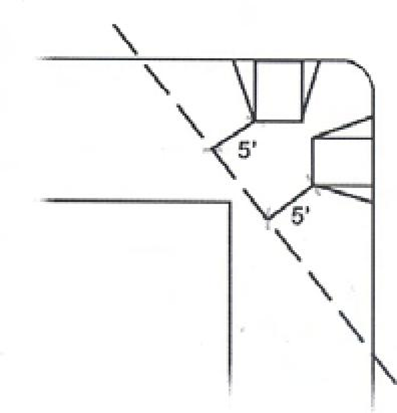
Figure 34. Tables and chairs must be kept out of sight
triangles
3.
Clear unobstructed height of seven feet shall be maintained between the sidewalk surface and overhead objects including umbrellas.
4.
A minimum clearance of five feet shall be maintained between the outdoor dining space and edge of driveways, alleys, curbs or tree islands.
5.
The outdoor dining space shall not block access to public amenities like street furniture, trash receptacles, and way finding or directional signs or existing obstructions (i.e., fire hydrants).
B.
Design.
1.
Outdoor dining furniture shall be constructed of durable material. Plastic and unfinished or pressure treated wood is not permitted.
2.
Perimeter posts, planters, decorative metal fencing not exceeding three feet in height, pots, hanging baskets or markers may be used to delineate the outdoor dining space.
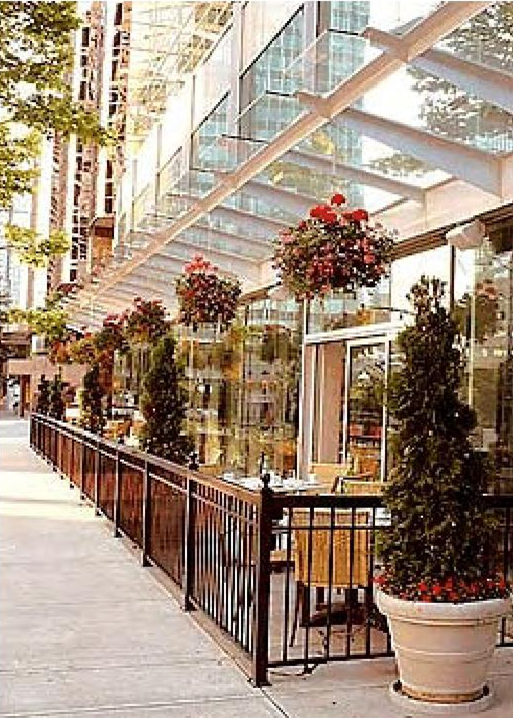
Figure 35. Outdoor Dining Space
3.
Tabletop signage is limited to menus and must not exceed two square feet in area.
4.
There can be no more than two umbrellas per table and umbrellas must be fixed such as to leave a clear height of seven feet from the sidewalk surface.
5.
Umbrellas are not allowed on tables located within ten feet of block corners.
C.
Operation.
1.
Outdoor dining is permitted in the front of a restaurant property or on the side or in the rear if in a COURTYARD.
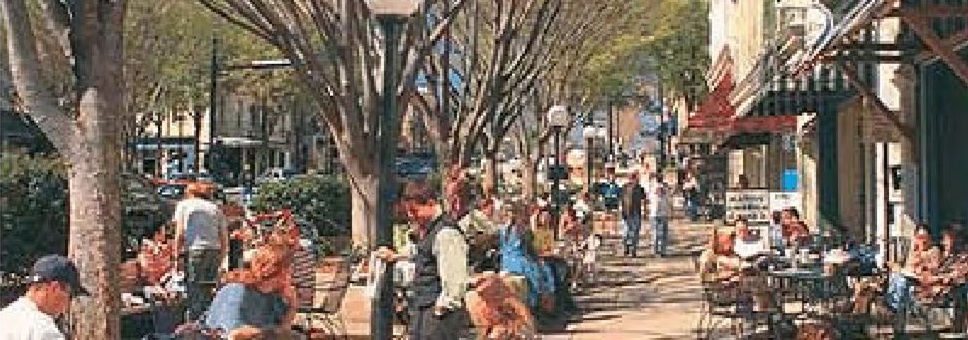
Figure 36. Outdoor dining in front of restaurant
2.
Waiters are permitted to access all pedestrian space between the building and the designated outdoor dining space to serve the diners.
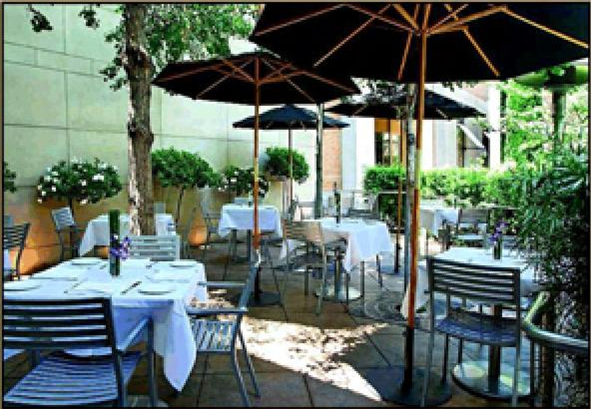
Figure 37. Courtyard
3.
Tables, chairs, planters and pots may remain in the designated outdoor dining area throughout the permit period. All umbrellas, signage and other accessories however, must be removed from the dining area at the close of business each day.
4.
Outdoor dining areas are permitted to be open until 10:30 p.m. daily.
5.
A host stand and table top candles are allowed within the approved dining area. However, these accessories have to be removed from the dining area at the close of business.
6.
No tents or cash registers are permitted within the outdoor dining area.
7.
Outdoor dining areas shall not run electrical cords from the restaurant building.
8.
Where beer and wine are served, the permit hold must comply with all state and local regulations for the sale, possession and/or consumption of beer and wine.
9.
Loudspeakers are prohibited.
D.
Maintenance.
1.
The permit holder is responsible for keeping the immediate area covering six feet on all sides from the edge of the designated outdoor dining area clean of garbage, food debris, paper, cups or cans associated with the operation of the outdoor dining space on a daily basis. All waste and trash must be properly disposed of by the permit holder.
2.
The permit holder is responsible for the maintenance, upkeep and security of furniture and accessories used in the outdoor dining area.
3.
Sidewalks within and adjacent to the outdoor dining area must be washed down and cleaned on a daily basis by the permit holder. Any stains from spills must be removed. Soiled pavement not able to be cleaned must be replaced by the permit holder. Water and detergents used for cleaning must not drain into tree walls.
4.
Umbrellas and other outdoor dining area furniture shall be kept clean, safe, and attractive.
5.
The permit holder is responsible for paying any costs resulting from damage to public space due to the outdoor dining operation. Repairs may also be contracted to third parties. However, the permit holder is responsible to ensure that the contract work meets the city streetscape standards.
6.
Outdoor dining space is subject to inspection by the City's building inspector or code enforcement officer for compliance with these standards.
(Amd. of 2-16-2022, § 1)
Note— See editor's note, article 10.
Chapter 10.02a. - Standards—Special event facilities—Residential.
A.
Criteria. To protect the integrity of existing neighborhoods, SPECIAL EVENT FACILITIES are allowed only in qualifying historic residences on primary thoroughfares at an existing intersection, only at residences contiguous to or within 100 feet of a current commercial use and the residence is over 3,000 square feet and on a parcel or parcels over 2.75 acres, and only in compliance with all conditions herein. SPECIAL EVENT FACILITY OPERATORS shall, after meeting all criteria and securing mayor and council approval, obtain an annual occupation tax permit for a fee set forth in the schedule of fees, which shall constitute a SPECIAL EVENT FACILITY OPERATOR license.
B.
Application. An applicant shall submit the following for review: A completed signed application; a floor plan specifically denoting square footage of the residence and portions of the residence allotted for special event use illustrating that the operation will comply with all ordinances and regulations; a plat of survey by a state registered surveyor which shows all improvements; a nonrefundable license application fee per the schedule of fees and charges in addition to the annual license fee, such as required inspection fees, as established by Council resolution. All fees must be paid at the time the application is submitted.
C.
License requirements. No more than three SPECIAL EVENT FACILITY OPERATOR licenses shall be issued in the city per year. No license shall be granted until the premises has been inspected by appropriate building, fire, and health code officials with their written findings that the residence and areas to be used for special events are in safe and satisfactory condition and compliant with all applicable codes. All licenses shall be for one year or until December 31 of the year application is made, whichever is earlier. OPERATORS shall report at the time of licensing the number and size of special events for the preceding year.
D.
Criteria. To grant, renew, suspend or revoke a license, council shall consider:
1.
Compliance herewith and all relevant laws, ordinances, regulations and resolutions.
2.
Business reputation of applicant/license holder.
3.
Conduct of the business of applicant/license holder.
4.
Effect on neighborhood: impact on residential properties, traffic, parking, deliveries, noise, dust, vibration, odor, smoke, glare, light, pollution, property values, etc.
5.
Effect on city services.
6.
Special conditions and compliance therewith, as part of a conditional use permit.
7.
Other relevant issues, including but not limited to public health, safety, morals, interest and convenience. Council, in its reasonable discretion, shall consider all relevant circumstances which may reflect on the applicant/license holder, the application or proposed location. If, in its reasonable judgment, grant, suspension, or revocation would or would not be in the best interest of the general public, such is grounds for the decision of council.
E.
Conditions.OPERATORS may only be licensed under the following conditions:
1.
OPERATORS shall obtain a SPECIAL EVENT FACILITY license, remit any required fees, and provide proof of insurance which shall be maintained at all times during events. A policy or policies of comprehensive general public liability insurance shall include personal injury and property damage coverage, not less than $1,000,000.00 for bodily injury or death to any one person, not less than $2,000,000.00 per occurrence incident involving bodily injury or death, and not less than $500,000.00 for property damage. All such insurance shall be underwritten by an insurance company which appears in the U.S. Department of Treasury Circular 570.
2.
A SPECIAL EVENT FACILITY license shall be valid for one weekend special event per week and one weekday special event per week. One special event on two consecutive calendar days shall be a single special event. These limits are to avoid a use potentially inconsistent with the residential use and character of the home and the neighborhood.
3.
OPERATORS shall be present on premises for all events and maintain a log listing location, date and time of each special event and number of guests for each special event.
4.
The grant of a license shall be a privilege, not a right. A license shall be immediately voided on the sale, lease, or transfer of the real estate. Operation shall be respectful of neighboring residences and not extend beyond the standards herein nor the requirements and conditions of zoning. No for-profit activity or commercial operations shall be conducted on premises with the exception of special event rental revenues.
F.
Event requirements.
1.
Special events that are during non-daylight hours shall conclude by 11:00 p.m. on Friday and Saturdays and by 10:00 p.m. on weeknights (Sunday through Thursday evening), and outdoor music and concerts shall end at 9:00 p.m. all evenings;
2.
Allow only special event activity defined as follows: weddings, receptions, meetings, seminars, conventions, shows and sales;
3.
On allowed special event dates, incidental sale of homeowner produced or designed goods that relate to the historic significance of the premises, in compliance with law;
4.
No signs except: one identifying sign, four square feet, and a directional sign, four square feet; and an event sign, four square feet, is permissible within 24 hours of the special event;
5.
No formal on-site prepared sit down restaurant style meals, as such would improperly convert SPECIAL EVENTS FACILITIES into restaurants; provided, however, limited meal prep shall be permitted such as in association with a men's or women's group, family reunion or similar, such as smoking BBQ, grilling hamburgers and hot dogs, fish fry or similar non-restaurant meal prep. Catering kitchen for light hors d'oeuvres, finger foods, and beverages is permissible but kitchen must meet local health codes and be approved in writing by the local health code official.
6.
Any malt beverages and wine shall be served by a folly licensed caterer (or state licensed bartender if they meet the requirements of a "licensed alcoholic beverage caterer", meaning any retail dealer who has been licensed per O.C.G.A. 3-4-2, 3-5-2, or 3-6-2. In addition to the city requirements, such organizations must file an application with and pay a fee of $25.00 to the commissioner of the state department of revenue, and receive approval and issuance of the state license), in compliance with all legal requirements.
7.
The use shall be incidental to the residential character and/or setting, meaning no more than two special events per week.
8.
No more than 30 persons per 1,000 square feet of heated residential space, 100 person maximum. For exterior only yard and garden events, no more than 100 persons per acre of yard and garden, 200-person maximum. The premises shall have parking and unloading/loading space on premises sufficient to accommodate special event-related vehicles without adversely affecting local traffic.
9.
OPERATOR shall maintain a registry, of date, time, and number of persons per event.
10.
Vending, vendors, and peddlers are prohibited.
11.
An owner shall be on premises at all times during the special event and responsible for seeing that the provisions above are complied with.
12.
No OPERATOR shall discriminate on the basis of race, color, sex, religion, creed, age or natural origin.
G.
Minimal operational standards.
1.
Special events shall be on the grounds and in the residence, not accessory structure;
2.
No visible exterior changes to the residence or its premises, except typical residential character improvements and maintenance and landscaping improvements;
3.
Bathrooms in sufficient number must be available to all guests;
4.
No pets of guests shall be allowed inside the residence or on premises;
5.
Fencing and/or buffering around the periphery to protect neighbors.
H.
Violations. Should the city serve notice of violation of any of the foregoing, the notice shall advise of the time and location of an informal hearing at a council meeting and the right to present evidence and be represented by counsel. Should council order suspension or revocation of a license or should the alleged violator fail to appear, the suspension or revocation shall take effect at the close of the hearing. Any person aggrieved by a decision may seek a writ of certiorari from superior court specifying the grounds. Such writ shall be obtained within 30 days after the decision of the council.
(Amd. of 2-16-2022, § 1; Amd. No. 2025.03.002, § 1, 3-19-2025)
Editor's note— Amd. No. 2025.03.002, § 1, adopted March 19, 2025, amended the Code by renumbering former ch. 10.02 as a new ch. 10.02a.
Chapter 10.02b. - Standards—Special event facilities—Non-residential.
Such a facility shall be subject to approval under the special use procedures section and the following conditions:
A.
The events facility shall have direct frontage on and access from an arterial or collector street.
B.
Rental of overnight accommodations directly attached to the facility shall be prohibited.
C.
Bars and other alcohol serving establishments that do not meet the city Code criteria for a restaurant as defined therein shall be prohibited.
D.
Kitchens must meet all applicable health codes and be approved in writing by the local health code official.
E.
Any malt beverages and wine shall be served by a fully licensed caterer (or state licensed bartender) who meets the requirements of state law including without limitation a "licensed alcoholic beverage caterer," meaning any retail dealer who has been licensed as such per O.C.G.A. 3-4-2, 3-5-2, or 3-6-2. Such organizations shall file an application with and pay a fee of $25.00 to the commissioner of the state department of revenue and receive approval and issuance of the state license), in compliance with all legal requirements.
F.
Events shall be restricted to hours between 8:00 a.m. and 11:00 p.m.
G.
The events facility shall adhere to the following requirements:
1.
Accessible parking shall be provided per article 8, Street and Parking Standards, of this Code.
2.
Parking areas shall be provided with adequate aisles or turn-around areas so that all vehicles may enter the street in a forward manner.
3.
Adequate parking shall be provided on site for the event or spaces shall be secured at an adjacent site with safe passage provided by private security or other means.
(Amd. No. 2025.03.002, § 1, 3-19-2025)
Chapter 10.03. - Mobile vendors.
Unregulated mobile vendors can have adverse effects on health, safety, and welfare of the citizens; public health, safety, traffic, noise, and visual impact require mobile vendors regulations. This is to protect the public and promote the general economic development and atmosphere of the city for the benefit of businesses and citizens, and create an aesthetic ambiance which will attract citizens and tourists to downtown and surrounding areas. The city manager shall administer the provisions hereof. "Mobile vendors" (sometimes "vendors") as regulated hereby are those below engaged in selling to the public, not vendors at private events such as weddings, birthday parties, anniversary events, graduation parties, properly permitted community festivals and the like.
A.
Definitions.
1.
Commissary - approved, licensed, responsible, local Oconee County or contiguous county based catering establishment, restaurant, or other place in which food, containers or supplies are handled, prepared, packaged, or stored.
2.
Ice cream truck - motor vehicle in which ice cream, popsicles, sherbets and/or other frozen desserts are carried for retail sale.
3.
Food vendor - food vendor that operates from a commissary with a motorized or towed vehicle, specifically designed for safe storage and service of food and equipped to serve prepared or prepackaged ready to eat "fast" food such as sandwiches, BBQ, tacos, hors d'oeuvres and other similar non-fine dining type meals and/or drink, and with no table service.
4.
Local product vendor - motorized or towed vehicle vendor designed and equipped to sell regionally produced (within Oconee and contiguous counties) items such as produce, cheesecakes, flowers, art, woodworking, pottery, soap, and other handmade artisan type local products.
5.
Pushcart or bicycle cart - non-self-propelled cart, commercially designed for safe storage and service of food, only serving commissary prepared or prepackaged ready to eat "fast" food such as sandwiches, BBQ, tacos, hors d'oeuvres and other similar non-fine dining type meals and/or drink, and with no table service.
6.
Oil change and/or light vehicle maintenance—vendor that performs oil changes and/or changes.
B.
License.
1.
It is unlawful to sell, or offer food from a commissary, ice cream truck, food vendor, local product vendor or pushcart without a license hereunder. All licenses shall expire on December 31 of the year issued. They are not transferable without approval of the city manager and are not renewable. A new application must be made and a new license each year. The license is the property of the city and must be surrendered on expiration or revocation. A license allows no more than 52 days a year of vending.
2.
An application shall be submitted to the Clerk at least ten days in advance of the proposed initial vending, setting forth all information required hereunder and in compliance herewith, with payment of a nonrefundable fee set by the city.
3.
The following shall be provided with each application: Name of business; Schedule of intended days and hours of operation; Make, model, model year, and license plate number(s) if a vehicle is to be used; Current color 8 × 10 photos of all four sides of the vehicle; proof of insurance as required hereunder; a current state department of highways and transportation safety inspection sticker; operator's and owner's contact information including legal and local address; the nature of the business and the goods to be sold; permit from county environmental health department; operating locations and times; signed agreements from property owners indicating consent for use of their property; signature of applicant indicating agreement to all city requirements. If the vehicle is more than two calendar years old, the manager shall make a visual inspection. The manager shall consider the condition, safety, design, and color of the vehicle, including character and appropriateness of the design and color for use in/near downtown, and age, noise level, pollution emission level and overall appearance of the vehicle.
4.
The manager shall consider effect of the vendor on the primary purpose and use of nearby public access areas and right-of-way including efficiency and clearance of the pedestrian access zone; parking; travel lanes; loading/unloading; hydrants; utility access; crosswalks and accessibility ramps; drives and alleys; intersection visibility; sidewalks; obstructions; signs; streetscape elements; proximity of other vendors; adjoining property owners and/or tenants; nearby residential; any objections by an adjoining property or business owner; public buildings; restrooms; other areas impacted by heightened pedestrian activity and traffic; noise; odor; smoke; litter; property values and all relevant considerations. For corner locations or where other limitations exist, consider alternative areas.
5.
Not later than ten working days after filing of the completed application, applicant shall be notified in writing of issuance or denial. It shall be denied if in the judgment of the city, the license would not be in the best interest of the public. If denied, applicant shall have ten days following the notice to request a hearing before the council. The applicant may present evidence and cross examine opposing witnesses at that hearing.
6.
Failure to abide by any city ordinances or state law, or failure to maintain a city occupation tax permit, or current state inspection sticker, vehicle license tags and required insurance, shall be grounds for suspension or revocation; see below.
C.
Prohibited Conduct and requirements.
1.
It shall be unlawful for any vendor to operate or display food or products to endanger the safety, health and/or welfare of the public. A minimum of five feet shall be reserved at all times for continuous unobstructed pedestrian traffic. Except ice cream trucks (due to unique nature), no vending in public right-of-way; vending on private property only.
2.
No operation on private property without signed written agreement from owner.
3.
Proof of current $1,000,000.00 liability insurance policy and workers' compensation and employer's liability as required by the State of Georgia., issued by an insurance company on the Circular 570 A rated or better, licensed in Georgia, protecting the public and the City from all claims for damage to property and bodily injury, including death. Such shall name the city as an additional insured and provide that the policy shall not be canceled prior to expiration without 30 days advance written notice to the city. The applicant must provide an original certificate of insurance as evidence that the above requirements have been met prior to issuance of a license.
4.
Mobile vendors shall not make sounds or announcements to call attention either while traveling or when stationary.
5.
The license must be firmly attached and visible at all times, as must the health department permit (if applicable).
6.
Any driver must possess a valid Georgia driver's license. Vendors and their employees and helpers shall wear neat, clean clothing that complies with all requirements of law.
Vending operations, including vehicles and carts, must be kept clean, attractive, sanitary, safe, operable, in good repair, and structurally sound at all times.
7.
Except ice cream trucks, (due to unique nature), vendors are allowed only in Corridor Commercial (CC), Downtown (DT), Historic Main, Cultural Arts Preservation District, and Mixed-Use Office (MUO) districts.
8.
Vendors shall not be within 15 feet of an intersection or crosswalk or ten feet of a driveway, nor operate in a congested area where their operations may impede or inconvenience the public. The police may require a Vendor to move or relocate to safeguard the health, safety and welfare of the public.
9.
No operation between 11:00 p.m. and 6:30 a.m.
10.
Shall not be left unattended or stored at any time when vending is not taking place, nor during non-permitted hours.
11.
No exposed flames or use of oil or torches. Small votives, where the flame is fully surrounded by a non-flammable container, are permitted.
12.
No food preparation, cooking, storage, cooling, refrigeration, or any other equipment, outside the vending vehicle or pushcart.
13.
No sale or offer of products shall be made unless each side of the vehicle is marked, in letters and numbers at least three inches in height, with the name and address of the licensee.
14.
Vendors shall comply with all health and safety requirements, maintain all licenses required by any other organization or government having jurisdiction, and keep the vending location clear of trash or other debris.
15.
The following safety regulations on all non-pushcart vehicles: a reverse gear signal alarm with a sound distinguishable from the surrounding noise level; firmly attached outside rear-view mirrors on each side for clear view to the rear.
16.
No alcoholic beverages.
17.
The manager may, in their reasonable discretion hereunder, place additional reasonable conditions on approval to insure protection of the public rights-of-way and adjoining property owners and the health, safety, and general welfare of the public.
D.
Indemnity. Applicant shall execute an indemnity agreement indemnifying and releasing Watkinsville, its agents, employees, and elected officials from any and all liability against any and all claims, actions and suits of any type whatsoever.
E.
Revocation and Suspension. The city manager shall have the right to revoke or suspend any license granted hereunder, after notice and hearing for including any of the following causes: 1) fraud, misrepresentation or false statement; 2) any violation of these regulations; 3) conviction of a felony, or misdemeanor involving moral turpitude; 4) conducting the business in an unlawful manner or as to constitute a breach of the peace or a menace to the health, safety or general welfare; 5) failing to permit inspection by health officials or to comply with a request of a police officer. Notice of a hearing for revocation of a license shall set forth the grounds of complaint and the time and place of hearing. Such shall be mailed to the licensee at least five days prior to the hearing. The licensee may present evidence and cross examine opposing witnesses. Any person aggrieved by the action of the manager may appeal in writing to the council within 14 days after notice of the manager's action has been received.
F.
Fee. The fee for every application for license under this section shall be set by the city.
(Amd. of 1-17-2024; Amd. No. 2025.04.001, 4-16-2025)

