
Watkinsville City Zoning Code
ARTICLE 9
- LANDSCAPING, BUFFERS, SCREENING, & LIGHTING
Chapter 9.01. - Landscaping.
A.
Intent.
1.
The intent of this Chapter is to preserve the City's special character, and integrate and enhance new development by promoting quality landscape design that:
a.
Reinforces the identity of the community and each neighborhood;
b.
Anchors new buildings in the landscape;
c.
Provides tree canopies within paved areas; and
d.
Is environmentally sensitive by preserving existing trees, using water conservation techniques, planting native species (when appropriate), and enhancing valuable habitat.
B.
General Provisions.
1.
All development applications shall be accompanied by an appropriate landscape plan. BUILDING permit applications for individual single-family residences will not require landscape plans.
2.
Site Landscape Design.
a.
Landscape improvements shall be an integral part of the overall site design for each property. Landscape improvements shall be designed to complement and enhance the character of the neighborhood and shall follow these requirements:
(1)
Landscaped areas shall be configured to maximize their interconnectivity within the site to natural areas and to landscaped areas in adjacent developments. Small, isolated islands of landscaping should be avoided except as required in parking LOTS and for screening along roadways.
(2)
Enhance functional OPEN SPACE through the creation of outdoor room appropriate to the location and purpose of the OPEN SPACE within the development. This can be accomplished through a combination of plantings, fencing, and berms and by using natural features on site.
(3)
Landscape design shall enhance natural features, drainage ways and environmental resources.
(4)
All landscape improvements shall be designed for mature landscapes.
(5)
Preserve and frame view both into and out of the neighborhood.
(6)
Incorporate the elements of gateway, path, and destination into the design of landscapes. Gateways are entries that provide transitions from one space to another. Pathways are routes that lead to a destination. Destinations are focal points that can include anything from a garden bench at the end of a path to a civic building.
(7)
Landscaping shall be no more than 30 inches tall when located in a SIGHT DISTANCE TRIANGLE.
3.
Landscapes shall use the following xeriscaping design principles to facilitate water conservation:
a.
Well-planned planting schemes;
b.
Appropriate turf selection;
c.
Use of mulch to maintain soil moisture and reduce evaporation;
d.
Zoning of plant materials according to their microclimatic needs and water requirements;
e.
Improve the soil with organic matter if needed;
f.
Efficient irrigation systems; and
g.
Proper maintenance and irrigation schedules.
4.
All landscapes shall maximize the use of native species. Where native material is not appropriate for the intended use or appearance, plant species that are regionally adapted and noninvasive may be used.
5.
Landscapes shall consist of a variety of species to enhance biodiversity. No one species may make up more than 25 percent of the total non-grass plant materials on the site.
6.
Buildings and parking areas shall be located to preserve and promote the health of existing trees, environmental resources, and natural drainage ways. No healthy tree shall be removed unless the root zone is encroached on inside the drip line due to siting of buildings or parking areas. This requirement is not intended to prevent the removal of unhealthy trees in conjunction with site development.
7.
Trees shall be located to provide summer shade and limit winter shade on walks and STREETS.
8.
A combination of plantings, berms, walls, and fences shall be used to BUFFER SENSITIVE HABITAT.
9.
Use BUFFERS to protect the physical integrity of riparian ecosystems. Buffers should be designed in accordance with "Georgia's Best Management Practices for Forestry."
10.
All areas disturbed by construction shall be reseeded to prevent erosion. Native, non-invasive grasses shall be used for revegetation where practical. Weed control is the responsibility of the landowner on all reseeded areas.
C.
New buildings and paved areas.
1.
Anchor STRUCTURES in the landscape through the use of trees, shrubs and groundcover. The size and number of plantings shall be appropriate to the size and context of the improvements.
2.
Integrate adjacent land use of different intensities through a combination of berming, planting, and fencing. A fence shall not be the only screening material used.
3.
Use landscaping to provide a transition from developed, managed landscape to more natural vegetation.
D.
Plant Materials.
1.
The minimum planting sizes of all required landscaping shall be 2-inch caliper deciduous trees, 1½ inch caliper ornamental trees, 6 foot tall evergreen trees, and 5-gallon shrubs.
2.
Required plant materials shall be grown in a recognized nursery in accordance with proper horticultural practice. Plants shall be healthy, well-branched vigorous stock with a growth habitat normal to the species and variety and free of diseases, insects and injuries.
3.
All plants shall conform to standards for measurements, grading, branching, quality, ball and bur lapping as stated by the American Association of Nurserymen, Inc. (AANN-ASNS).
E.
Irrigation.
1.
All required landscaping shall be irrigated as required for plant establishment and maintenance. Irrigation shall be appropriate to the type and scope of the improvements.
F.
Guarantee of installation.
1.
Required landscape improvement shall be installed prior to issuance of a certificate of occupancy for all STRUCTURES. If weather conditions prevent installation, the developer shall post a financial guarantee for the improvements. This guarantee shall be released upon completion of the installation of the landscaping.
G.
Maintenance.
1.
In order to provide for the ongoing health and appearance of landscape improvements, all landscaping shall be maintained and replaced by the landowner/occupant as necessary. All property owners/occupants shall be responsible for maintenance of landscaping within the portion of the public RIGHT-OF-WAY between the back of the curb or STREET pavement and the adjacent property.
H.
Landscaping design standards.
1.
All development must comply with the Watkinsville Urban Forest Ordinance.
2.
Within the commonOPEN SPACE the developer or assigns shall provide:
a.
Street Trees.
(1)
STREET TREES shall comply with Chapter 7.03B[8.05B].
b.
Live groundcover, including a combination of grass, trees, flowers, or shrubs along collector and local STREETS. In commercial areas, this area may be paved if it functions as pedestrian access to storefronts and is integrated into the overall design of the other improvements on the site.
c.
Live groundcover as appropriate to the use and function of the area, including a combination of grass, trees, flowers, paving, and 1 shrub for every 100 square feet of landscape area clustered into planting beds along ARTERIAL STREETS.
d.
Landscaping for required common OPEN SPACE shall be appropriate to the use and function of the area and include trees, shrubs, groundcover, irrigation (where necessary), and paving. A mechanism for long-term maintenance of common OPEN SPACE shall be submitted with the plan.
I.
Detached Residential.
1.
In addition to required STREETSCAPE landscaping, the developer or assigns shall provide:
a.
A combination of sod, shrubs, ornamental grass, groundcover, and trees (shade and ornamental) to cover the front yard of each home.
b.
Live materials shall constitute at least 75 percent of the front YARD coverage.
c.
HARDSCAPES and/or mulch shall cover the remaining front yard not dedicated to live materials.
J.
Attached Residential.
1.
In addition to trees required by the Watkinsville Urban Forest Ordinance, the developer or his assigns shall:
a.
Install a minimum of 1 shrub per 100 square feet of landscaped area. Shrubs shall be grouped and distributed throughout the site. Shade trees may be substituted for up to ½ of the required shrubs at the rate of 1 tree for 10 shrubs.
b.
Install irrigated turf maintained to appropriate standards for active recreation in areas that will function for active recreation.
c.
Live materials shall cover at least 75 percent of the disturbed LOT not occupied by buildings, active recreation facilities, or parking.
d.
Landscape SETBACK to parking lots shall be 25 feet from the STREET. This SETBACK may be reduced to 15 feet if used in combination with a 4-foot masonry or stone decorative wall.
K.
Business, commercial, and industrial development.
1.
Landscape improvements shall be designed to enhance the overall appearance of the development and integrate the project with adjacent land uses and into the surrounding neighborhood. All improvements shall be designed to take into consideration the people who will use the site and travel through or by the site and adjacent land uses.
2.
The developer or assigns shall:
a.
Site trees in a quantity that meets the standards of the Watkinsville Urban Forest Ordinance.
b.
Plant a minimum of 1 shrub per 100 square feet of landscaped area. Group shrubs and distribute throughout the site. Shade trees may be substituted for up to ½ of the required shrubs at the rate of 1 tree for 10 shrubs.
c.
Establish irrigated turf grass maintained in areas that will function as OPEN SPACE. There shall be a minimum of 75 percent live materials between the building and the STREET.
3.
Landscape SETBACK to parking LOTS shall be 25 feet from the STREET. This SETBACK may be reduced to 15 feet if used in combination with a 4-foot masonry or stone decorative wall.
4.
Loading areas, service and storage areas shall be screened so as they are not visible from the public RIGHT-OF-WAY or adjacent property with an opaque screen that is an integral part of the building architecture or by landscaping. Alternative materials including, without limitation, chain link fencing with slats, tires or used building materials are not acceptable screening materials.
5.
Integrate improvements on the subject property with adjacent land uses by utilizing a combination of landscaping, building orientation and appropriate architectural elements.
Chapter 9.02. - Buffering and screening.
A.
Intent.
1.
It is the intent of this Chapter to integrate adjacent land uses and provide seamless transitions from one use to another through the use of building orientation and access, landscaping, and appropriate architectural elements.
B.
General Provisions.
1.
Special consideration shall be given to adjacent land uses of different intensities. It shall be the responsibility of the developer of the more intensive use to ensure that the transition from one use to another is attractive and functional and minimizes conflicts between the current and planned uses.
2.
It is the responsibility of the developer of the higher intensity use to demonstrate that the uses will be compatible. This can be accomplished through the effective use of shared access and parking, appropriate building orientation and SETBACKS, landscaping, architectural treatment and limited use of fencing and screening walls. Special consideration shall be given to the impact of aesthetics, noise, lighting, and traffic.
3.
Buffering is required between any development and adjacent NATURAL AREA or ENVIRONMENTALLY SENSITIVE AREA.
4.
Under no circumstances shall a fence be the only screening material used as a BUFFER between land uses.
C.
Location and screening of required loading and service areas.
1.
Loading docks, dumpsters, recycling containers and other service areas shall be placed to the rear or side of BUILDINGS in visually unobtrusive locations.
2.
Screening and landscaping shall prevent direct views of the loading and service areas and their driveways from adjacent properties or from the public RIGHT-OF-WAY.
3.
Screening and landscaping shall also prevent spillover glare, noise or exhaust fumes. Screening and BUFFERING shall be achieved through walls, architectural features and landscaping and shall be opaque, and be sometimes referred to as a "structural buffer." Recesses in the BUILDING or depressed access ramps may be used.
D.
Dumpsters.
1.
All dumpster sites:
a.
Shall be located to facilitate collection and minimize any negative noise, visual or odor impact on persons occupying the development site, neighboring properties or public rights-of-way; and
b.
Constructed to allow for collection without damage to the development site or the collection vehicle.
c.
Screened to prevent them from being visible to:
(1)
Persons located within any DWELLING UNIT on residential property other than that where the dumpster is located;
(2)
Occupants, customers or other invitees located within any BUILDING on non-residential property other than that where the dumpster is located; and
(3)
Persons travelling on any public STREET, sidewalk or other public way.
E.
Mechanical Equipment.
1.
The following shall be placed away from any BUILD-TO-LINE, not be stored or located within any STREET, and be screened from view from the STREET:
(1)
Air compressors.
(2)
Mechanical pumps.
(3)
Exterior water heaters.
(4)
Water softeners.
(5)
Meters or boxes.
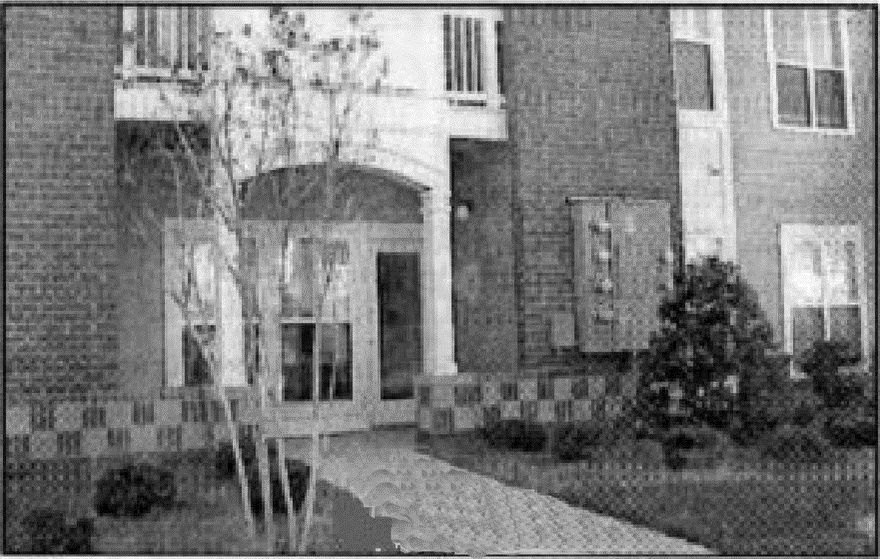
Figure 33. Electrical boxes near the front entry—Unacceptable
Chapter 9.03. - Landscape plans.
A.
Landscape Plans required by this Ordinance shall be illustrated as described below:
1.
General requirements for all landscaping and buffer plans.
a.
Landscaping and buffer plans shall be drawn at a scale of 1 inch - 20 feet to 50 feet, as needed to clearly illustrate the proposed plantings. Multiple sheets keyed to an index sheet may be used.
b.
Caption.
(1)
Each plan sheet is to include:
(a)
The name of the development and its acreage (or square footage if less than an acre).
(b)
Name, address, telephone and fax numbers of the property owner and sub divider or developer.
(c)
Name, address, telephone and fax numbers of the applicant.
(d)
Name, address, telephone and fax numbers of the individual or company responsible for the design. The name, registration number and seal of the landscape architect by whom the plan was prepared shall be stamped on the plan and signed.
c.
The location and size of all utilities on the site, including the limits of any public or private utility easements and stormwater detention areas, are to be shown.
d.
Plant materials.
(1)
Standards and requirements for the quality and type of plant materials and their installation and required in §9.01D.
2.
Landscaping Plan.
a.
Landscaping plans must include the following, as appropriate to the landscaping requirements of this Zoning Ordinance:
(1)
The location of all existing and proposed parking areas, sidewalks and other paved or impervious surfaces.
(2)
The outline of all existing and proposed buildings and STRUCTURES.
(3)
The boundaries of all natural areas, stream Buffers and other areas required to remain undisturbed, and an illustrated description of the protective fencing and signage to be placed around such areas, along with a note regarding protection of undisturbed areas as follows:
(a)
"Undisturbed Area Notes. All protection devices for undisturbed areas must be installed and inspected prior to clearing, grubbing or grading. Call the City for an inspection.
Tree protection shall be vigorously enforced. No activities of any kind are to be allowed within any area shown to be undisturbed on this plan.
The retention and planting of trees as shown on this plan must be verified prior to issuance of a Certificate of Occupancy or acceptance of the project. Call the City for an inspection.
A maintenance inspection of trees will be performed prior to the expiration of the 2-year maintenance period. Project owners at the time of the maintenance inspection are responsible for compliance with the provisions of this plan and the Watkinsville Zoning Ordinance."
(4)
The boundaries of each landscape area required by this Zoning Ordinance or conditions of zoning approval.
(5)
A planting plan showing:
(a)
The location, size, and common name of proposed plant materials in required landscaping areas or as otherwise required by this Zoning Ordinance or conditions of zoning approval.
(b)
For individual LOTS in a residential subdivision, standards may be listed on the plan that are to be met for each lot, such as the number, type, and caliper of new trees (front and back), in lieu of illustrating such trees on each lot. Such standards must include the following notation clearly legible in bold type:
"These planting standards must be met on a lot prior to issuance of a Certificate of Occupancy or approval of permanent power for the residence constructed thereon."
(6)
The location, size, and common name of all existing plant materials to be retained that contribute to meeting the minimum requirements of this Ordinance.
3.
Submittal Standards for Landscape Plans.
a.
All DEVELOPMENT REVIEW APPLICATIONS and applications for VARIANCE will be accompanied by the appropriate landscape plan.
b.
Preliminary Landscape Plan.
(1)
The preliminary landscape plan shall be submitted with the preliminary plat and shall:
(a)
Illustrate the master landscape plan for the development; and
(b)
How the proposal is consistent with the purpose and intent of these regulations.
(2)
Landscaping shall be included on the preliminary OPEN SPACE plan if it can be clearly illustrated and the scale is not greater than 1" = 100'.
(3)
Information required on the plan as listed in "Landscape Plan Information" (See Appendix).
c.
Final Landscape Plan.
(1)
The final landscape plan shall be submitted with the final plat and shall:
(a)
Describe the design intention and how the proposal is consistent with the preliminary landscape plan.
(b)
The final landscape plan must be on a separate page from the final plat map and shall be included with the final OPEN SPACE plan if it can be clearly illustrated. The scale shall not be greater than 1" = 50'.
(2)
Information required on the plan as listed in "Landscape Plan Information" (See Appendix).
d.
Buffer Plan.
(1)
A BUFFER plan shall be prepared for any buffer required in accordance with this Ordinance. The buffer plan shall show:
(a)
The boundaries of each required BUFFER area.
(b)
The location and size of all utilities on the site, including the limits of any utility easements and stormwater detention areas.
(c)
For each NATURAL AREA BUFFER, the plan must show:
(i)
Methods to be employed to protect the drip line areas of the trees in the BUFFER from disturbance during construction, including fencing details, erosion control, signage, etc., along with a note regarding protection of undisturbed areas as shown in §[Chapter] 9.03.A.2.(3)(a) (undisturbed areas note).
(ii)
Proposed supplemental planting required to maintain the opaque visual screen required.
(d)
For each BUFFER the plan must show:
(i)
All grading and construction details for earthen berms, walls, and fences that are proposed as part of the opaque visual screen.
(ii)
A planting plan showing the location, size, and type of proposed plant materials.
(iii)
The location, size, and common name of all existing plant materials to be retained that contribute to meeting the requirements of this Ordinance for BUFFERS.
(iv)
Typical cross-sections of the BUFFER illustrating the improvements proposed and typical location of vegetation. At least one cross-section shall be provided for each buffer.
Chapter 9.04. - Storm Drainage Facilities.
A.
Intent.
1.
The intent of this Chapter is to require innovative and effective land and water management techniques that protect and enhance water quality.
B.
General Provisions.
1.
Landscaping associated with storm drainage facilities shall be integrated into the overall design of the project.
2.
It shall enhance the overall appearance of the project, prevent erosion and improve water quality of stormwater runoff.
3.
Storm drainage facilities may function as OPEN SPACE for active recreation, trail corridors or habitat enhancement areas if they are designed appropriately and approved by the City.
4.
The use of planting strips and shallow, landscaped depressions in parking LOTS and along roads is required to help trap and remove pollutants from stormwater runoff. (See Land Development Provisions to Protect Georgia Water Quality, School of Environmental Design, The University of Georgia, October 1997.)
C.
Applicability.
1.
All storm drainage facilities shall be landscaped and maintained in accordance with the Watkinsville Storm Drainage and Stormwater Management's Ordinance.
D.
Minimum Requirements.
1.
All facilities shall be seeded to grass appropriate to the function of the area. Areas to be used for active recreation shall be seeded to a turf-type grass and irrigated with a permanent irrigation system. Areas to be maintained for habitat enhancement shall be seeded to native grasses and wildflowers. The developer is responsible for establishment of a complete, weed-free stand of grass.
2.
Maximum side slope on drainage facilities shall be 4:1 and minimum slope of the bottom of a drainage facility shall be ½ percent.
3.
Landscape improvements shall be designed to enhance the function of the facility.
4.
Habitat and water quality enhancement, including wetland plantings in low wet areas, is encouraged.
E.
Ownership and maintenance.
1.
All drainage facilities shall be owned and maintained by the landowner or occupant.
(Amd. of 12-21-2022)
Chapter 9.05. - Exterior lighting.
A.
Intent.
1.
It is the intent of this chapter to:
a.
Create an attractive lighting system to enhance visibility and safety, while minimizing glare and contrast.
b.
Encourage exterior lighting that is functional, aesthetically pleasing and complementary to the architectural style of the BUILDING.
B.
General provisions.
1.
Evaluation of exterior lighting.
a.
Evaluation of exterior lighting.
(1)
Exterior lighting shall be evaluated in the development review process to ensure that the functional and security needs of the project are met in a way that does not adversely affect the adjacent properties or neighborhood. The degree to which exterior lighting affects a property owner or neighborhood will be examined considering the light source, level of illumination, hours of illumination and need for illumination in relation to the effects of the lighting on the adjacent property owners and the neighborhood.
(a)
Outdoor lighting is necessary but must not be used on a property so that the scale of the fixture or amount of light overpowers the building.
(b)
Lighting may be used to illuminate entrances to highlight ornamentation. Lighting shall not be used to wash and entire building facade in light.
(c)
Minimize visual impacts of the site and architectural lighting.
(d)
Use exterior light sources with a low level of LUMINESCENCE.
(e)
Use white lights that cast a similar color to daylight.
(f)
HIGH INTENSITY LIGHTS are prohibited.
b.
Light style.
(1)
The style of lights shall be consistent with the style and character of architecture proposed on the site.
c.
Concealed or fully shielded lighting.
(1)
Light sources shall be concealed or fully shielded to minimize the potential for glare and unnecessary diffusion on adjacent property and to direct light away from the vision of passing motorists. All lights shall be directed downward and the light source shall be equipped with "cut-off" devices so that it will not be visible from any adjacent property. Flagpole lighting shall be permitted to be directed upward as long as the light source is shielded and not visible from any adjacent property. Light fixtures installed under canopies, AWNINGS, overhangs and similar shall be fully recessed.
d.
Prohibited types of lighting.
(1)
Bright floodlights.
(2)
Fluorescent LIGHTS.
(3)
Fixtures that are historically inaccurate for Watkinsville's history.
(4)
Bare floodlights without reflectors.
(5)
WALL PACKS.
(6)
Neon.
e.
Hours of lighting operation.
(1)
All non-residential parking lot lighting fixtures and exterior BUILDING LIGHTS, except those required for security purposes, shall be extinguished within one hour after the close of business and remain extinguished until no more than one hour prior to the beginning of business hours. If a portion of a parking lot is used after dark, only that portion shall be lighted.
f.
Height standards for lighting.
(1)
Residential zoning districts.
(a)
Light fixtures shall be mounted on fiberglass or painted metal poles no higher than 16 feet from the ground. Lighting mounted on a building or structure shall not exceed the height of the building or structure. Bollard-type lighting fixtures shall be between three and four feet high.
(2)
Non-residential zoning districts.
(a)
Light fixtures shall be mounted on concrete, fiberglass or painted metal poles no higher than 25 feet from the ground. Lighting mounted on a building shall not exceed the height of the building or structure. Bollard-type lighting fixtures shall be between three and four feet high.
(3)
Exemption for outdoor recreational uses.
(a)
Because of their limited hours of operation and their unique requirements for nighttime visibility, ball diamonds, playing fields, tennis courts, and other similar outdoor recreational uses, shall be exempt from the general provisions of this Chapter during times of use.

