
Winder City Zoning Code
ARTICLE VIII
COMBINATION-USE DISTRICT: DOWNTOWN DISTRICT
Sec. 8-1.- Combination-use districts.
A.
This article shall be collectively known, cited, and referred to as the Combination Use District: Downtown Districts of the City of Winder, Georgia (hereinafter "Combination Use Districts").
B.
The following zoning districts are established as Combination Use Districts:
1.
Downtown (DT).
C.
Applicability. The standards contained in this section apply to all Combination Use Districts.
D.
Variances.
1.
City Council is authorized to grant variances to the requirements of Combination Use Districts.
2.
Variances may provide relief from any of the requirements of the Combination Use Districts, but may not be used to increase permitted density, increase maximum height more than 5 feet, or permit a use that is not allowed.
3.
Variances may only be granted to permit a practice that is not consistent with a specific provision of these regulations, but is justified by their purpose.
4.
In addition to the general criteria for variances provided in Sec. 11-8, variances relating to a physical element or numeric measurement must be based upon credible submitted evidence demonstrating that:
i.
Approval, if granted, would not offend the purposes indicated in Sec. 8-2A;
ii.
There are such extraordinary and exceptional situations or conditions pertaining to the particular piece of property such that the literal or strict application of the regulations would create an unnecessary hardship due to size, shape, or topography or other extraordinary and exceptional situations or conditions not caused by the applicant;
iii.
Relief, if granted, would not cause a substantial detriment to the public good and surrounding properties; and
iv.
That the public safety, health and welfare are secured, and that substantial justice is done.
E.
Building types. Within Combination Use Districts, building types are used to regulate the design of buildings. Each building type is described below and is determined by the Zoning Administrator. Graphic depictions of building types are for illustrative purposes only. These building types are for zoning purposes only, and not linked to the Building Code. Freestanding parking structures are not considered to be a building type.
1.
Detached house. A building type that accommodates one dwelling unit on an individual lot with yards on all sides. A detached house is not intended for non-residential uses.
2.
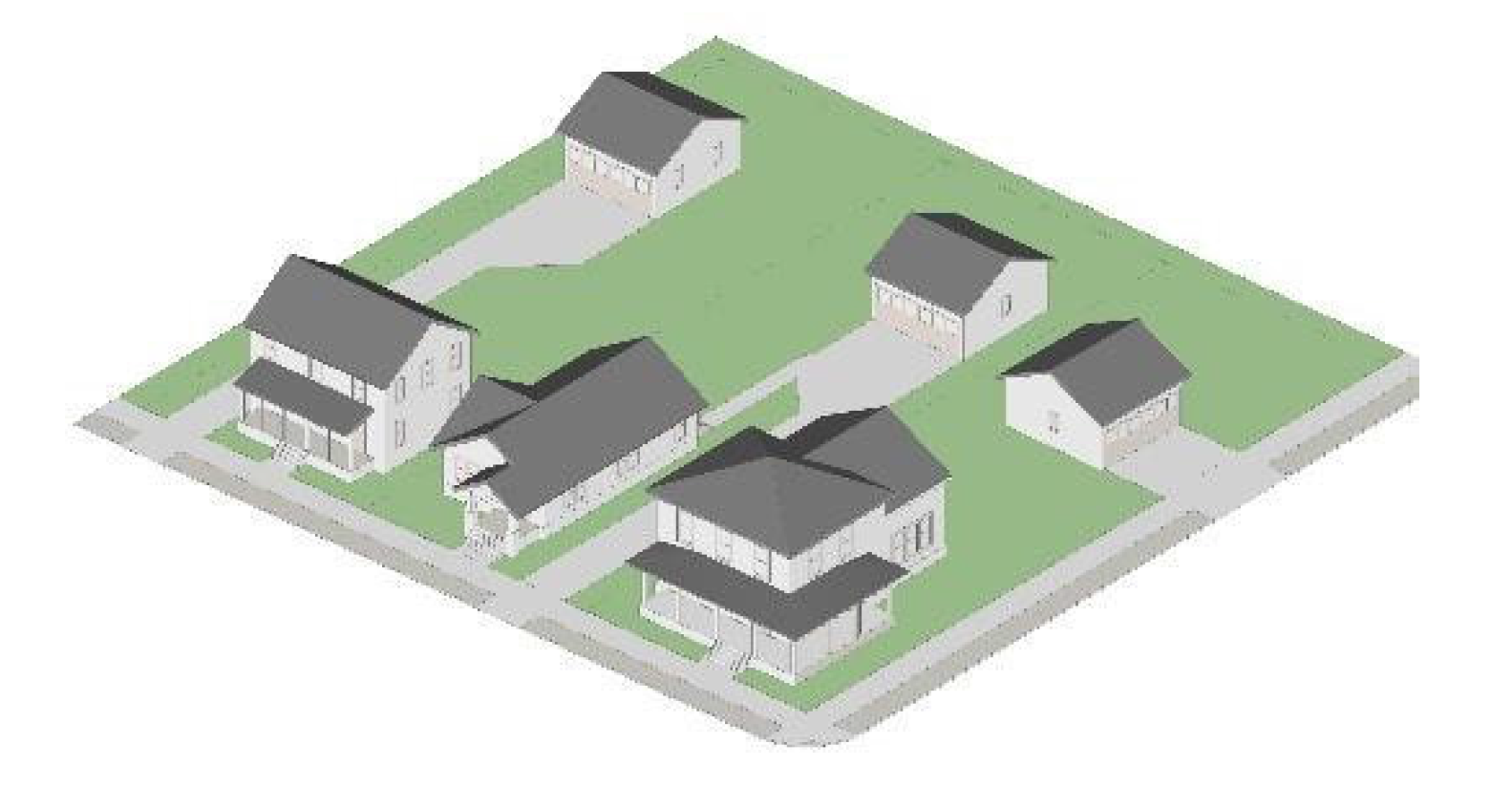
Cottage court. A building type designed to accommodate 5 to 10 detached dwelling units organized around a shared internal courtyard. Units cannot be vertically mixed. All units must front a public street or a landscaped courtyard of at least 40 feet in width and 3,000 square feet in total area. Courtyard may not be parked or driven upon, except for emergency access and permitted temporary events.
3.
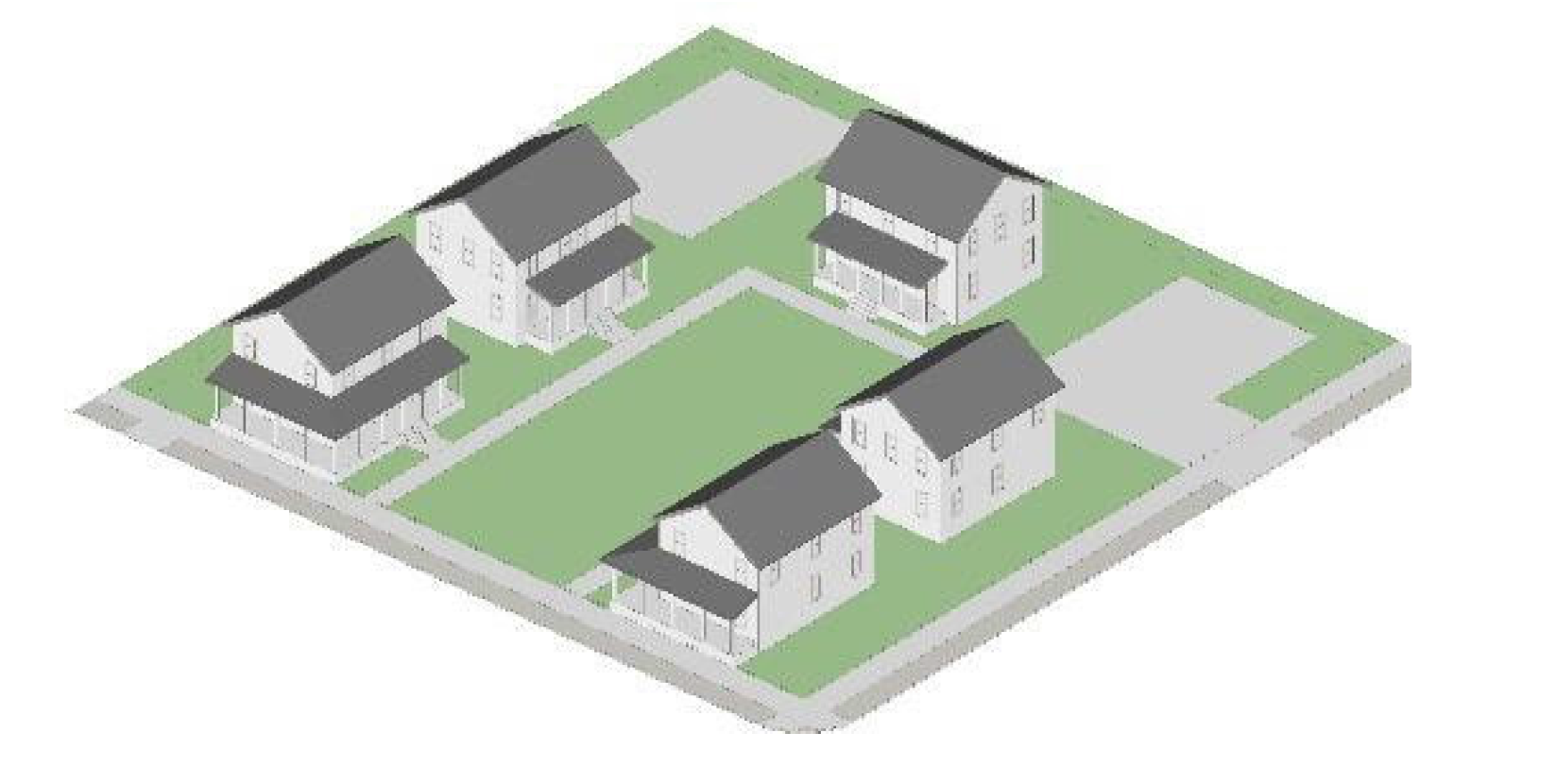
Dwelling, two-family. A building that contains two dwelling units. Not intended for non-residential uses.
4.
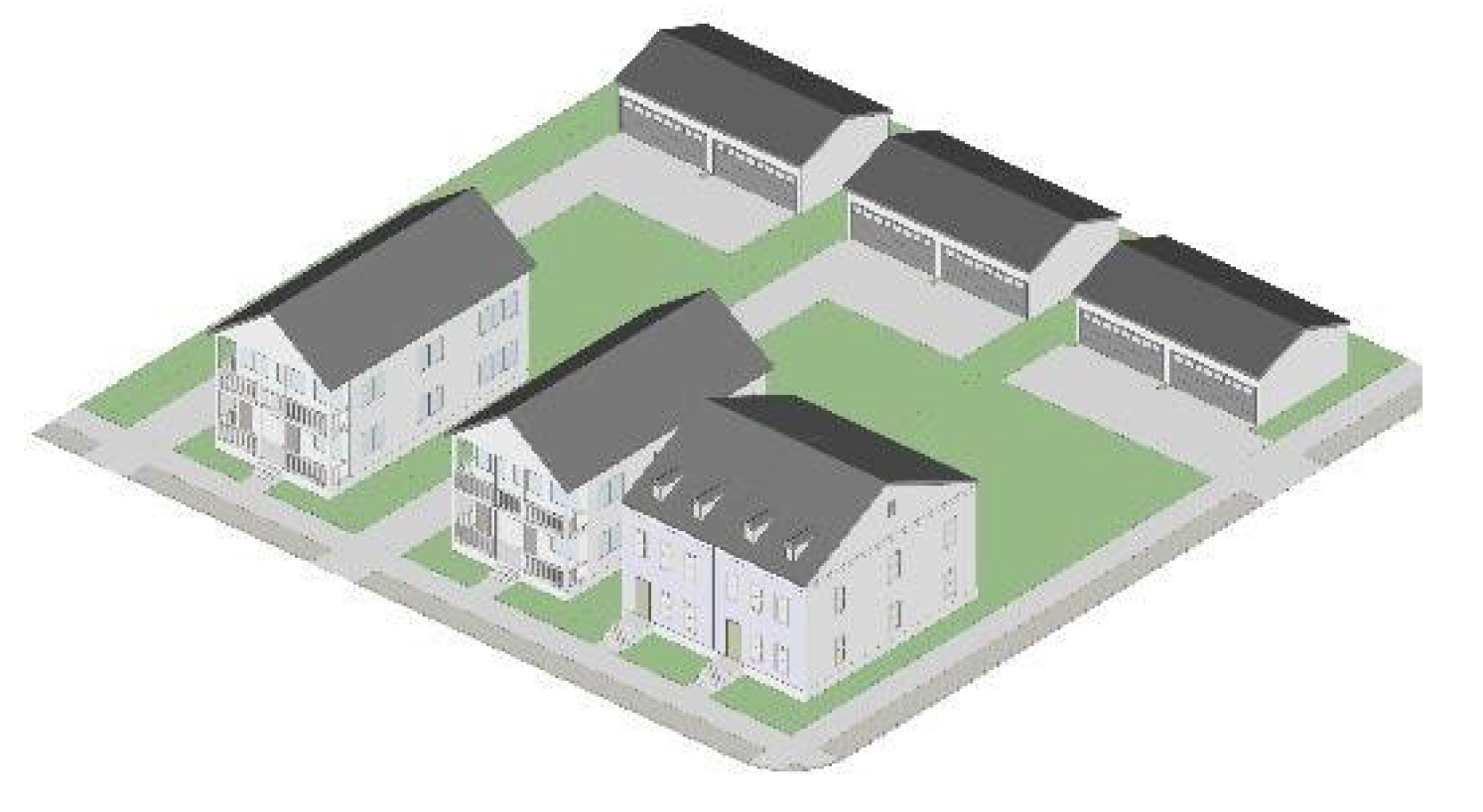
Townhouse. A building type that accommodates 3 to 6 dwelling units where each unit is separated by a common side wall. Units may not be vertically mixed.
5.
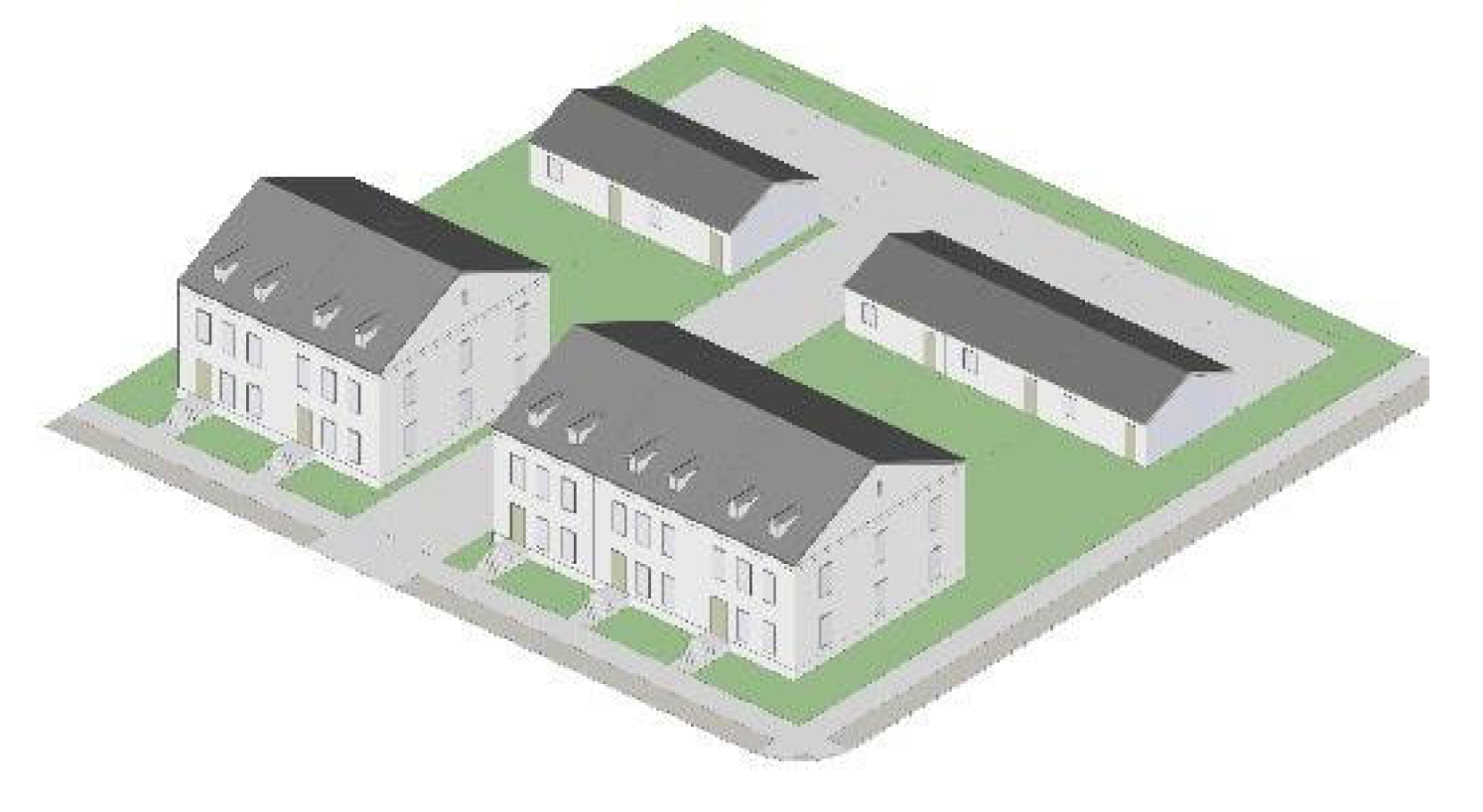
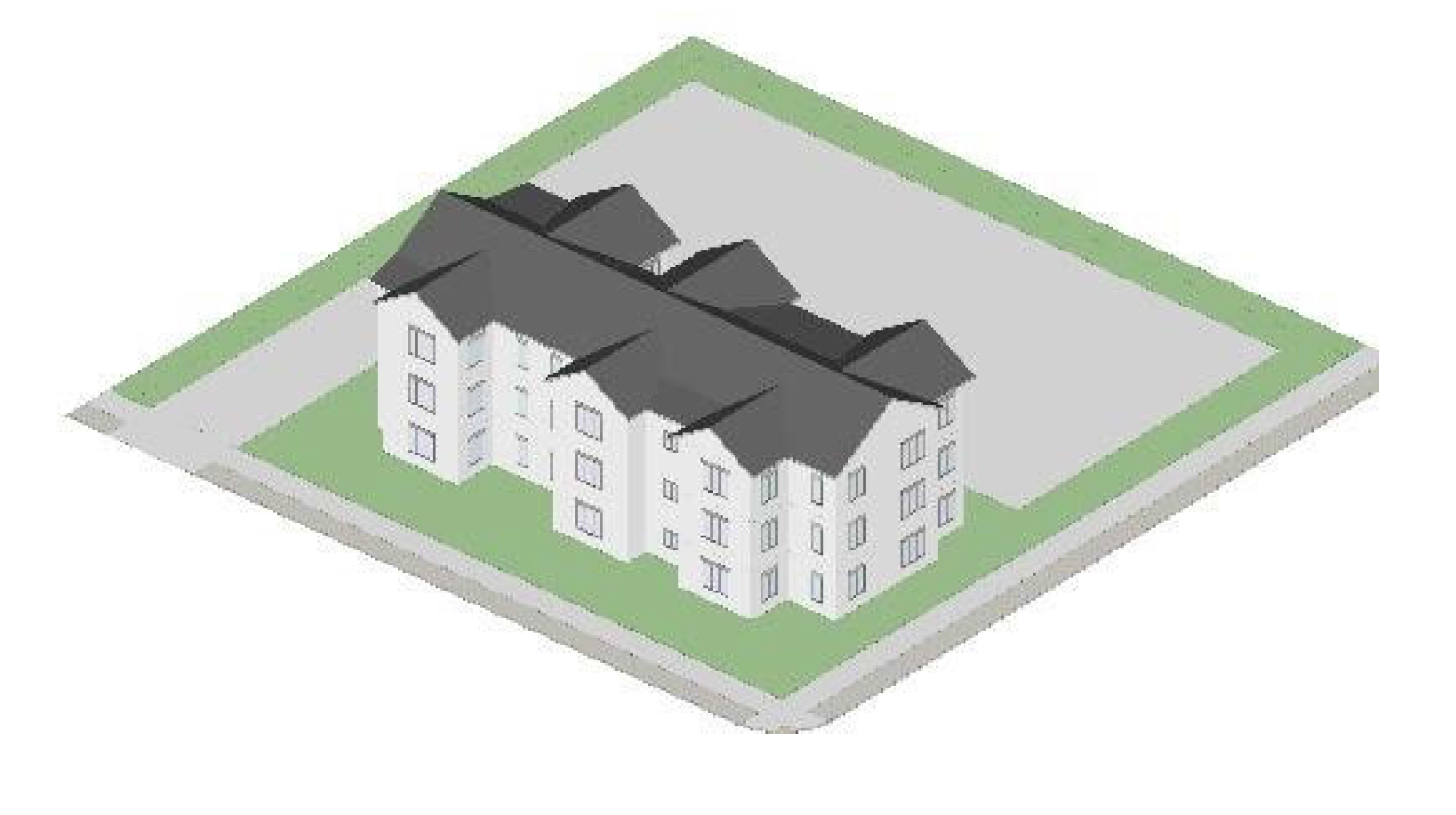
Conventional multifamily. A building type that accommodates 9 or more dwelling units vertically and horizontally integrated, with a maximum street facing façade length of 200 feet.
6.
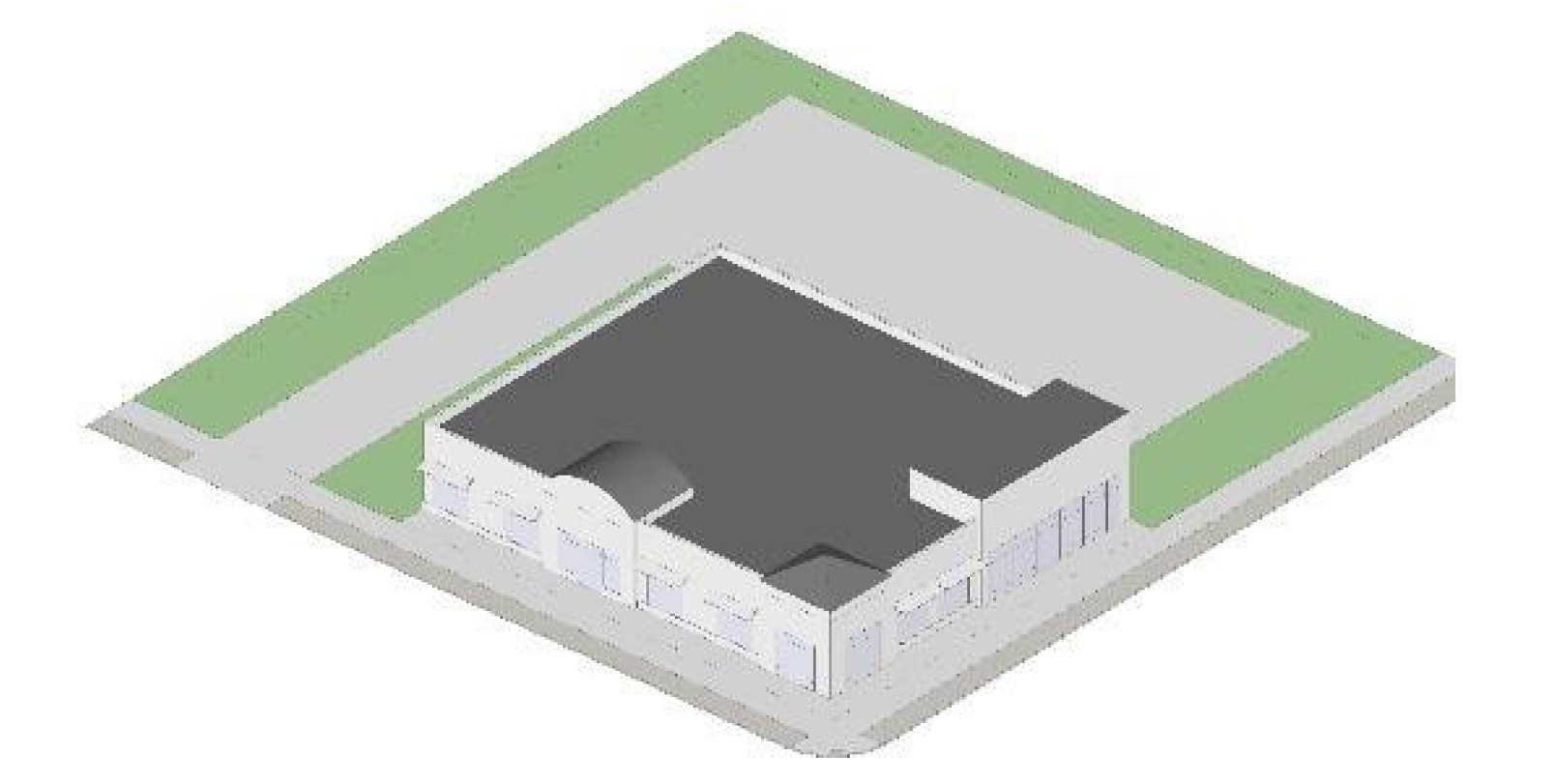
Storefront. A single-story building type that typically accommodates single-use retail or commercial activity. The maximum street facing façade length is 200 feet. Not intended for residential uses.
7.
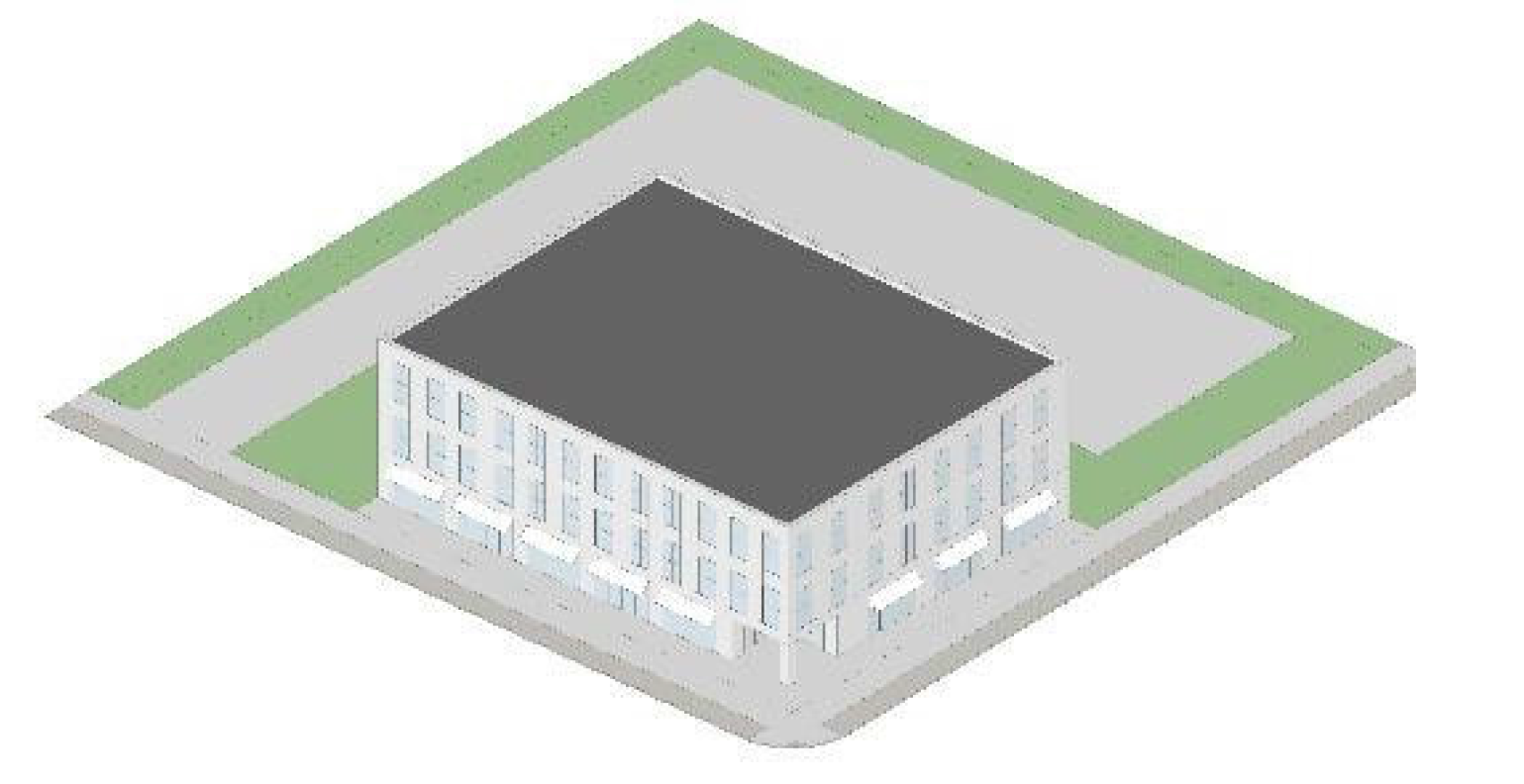
Mixed use building. A multi-story building type that typically accommodates ground floor retail, office, or commercial uses with upper-story residential or office uses. The maximum street facing façade length is 200 feet. Not intended for ground floor dwelling units.
8.
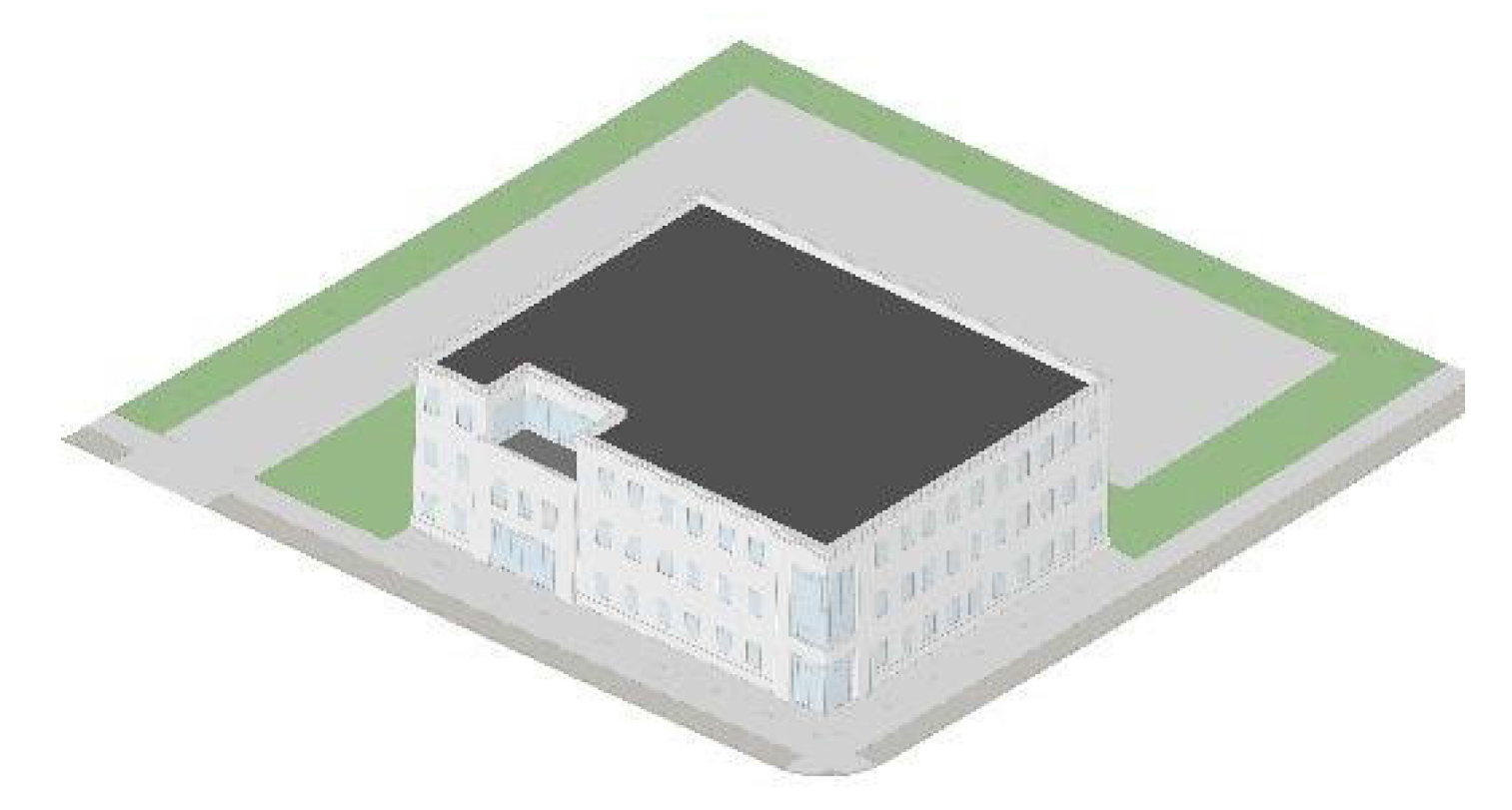
General building. A multi-story building type that typically accommodates non-residential uses such as industrial, hotel, or office uses on all stories. The maximum street facing façade length is 200 feet.
9.
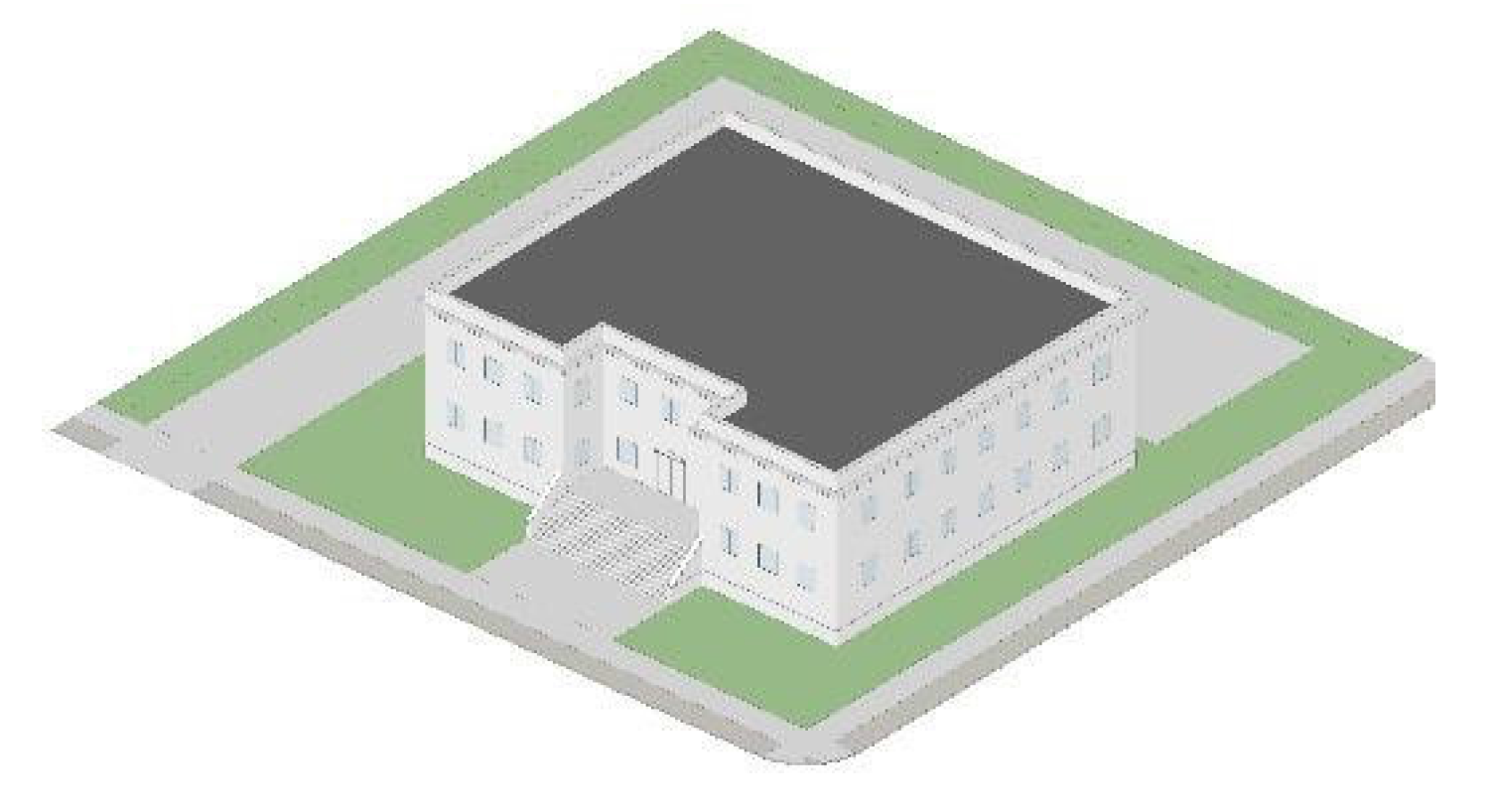
Civic building. A building type that accommodates civic uses. Not intended for commercial, retail, office, or residential uses.
F.
Relationship of building to street. The following regulations shall apply to all principal buildings.
1.
The primary pedestrian entrance for pedestrians to access all street level uses and business establishments with street frontage:
i.
Shall face and be visible from the street.
ii.
Shall be directly visible and accessible from the sidewalk.
iii.
Shall remain unlocked during business hours for non-residential uses.
2.
All multifamily, commercial or civic uses shall have paved walkways with a minimum width of 5 feet connecting all building entrances to ground level parking and the public sidewalk.
3.
No walls or fences, except those surrounding authorized outdoor dining, outdoor sales, or screening required by Section 3-14, are allowed between a storefront, mixed use, general, or civic building and the closest public street, unless an administrative variance is granted for topographic hardship. Fences within a maximum height of 30 inches are allowed surrounding outdoor dining, but may not encroach into the required sidewalk zone.
4.
No ground story interior finished floor elevation shall be more than 5 feet above or below the grade of the adjacent sidewalk.
5.
All buildings with more than four ground-floor dwelling units facing the sidewalk shall have individual entrances directly accessible from the sidewalk.
6.
No driveway or off-street parking lot, deck, or garage shall be located between a building and any public street without an intervening building.
7.
All parking for newly created single-family, duplex, townhouse, cottage court, or multi-family lots must be accessed from alleys.
8.
All utilities must be buried or placed to the rear of structures.
G.
Block standards.
1.
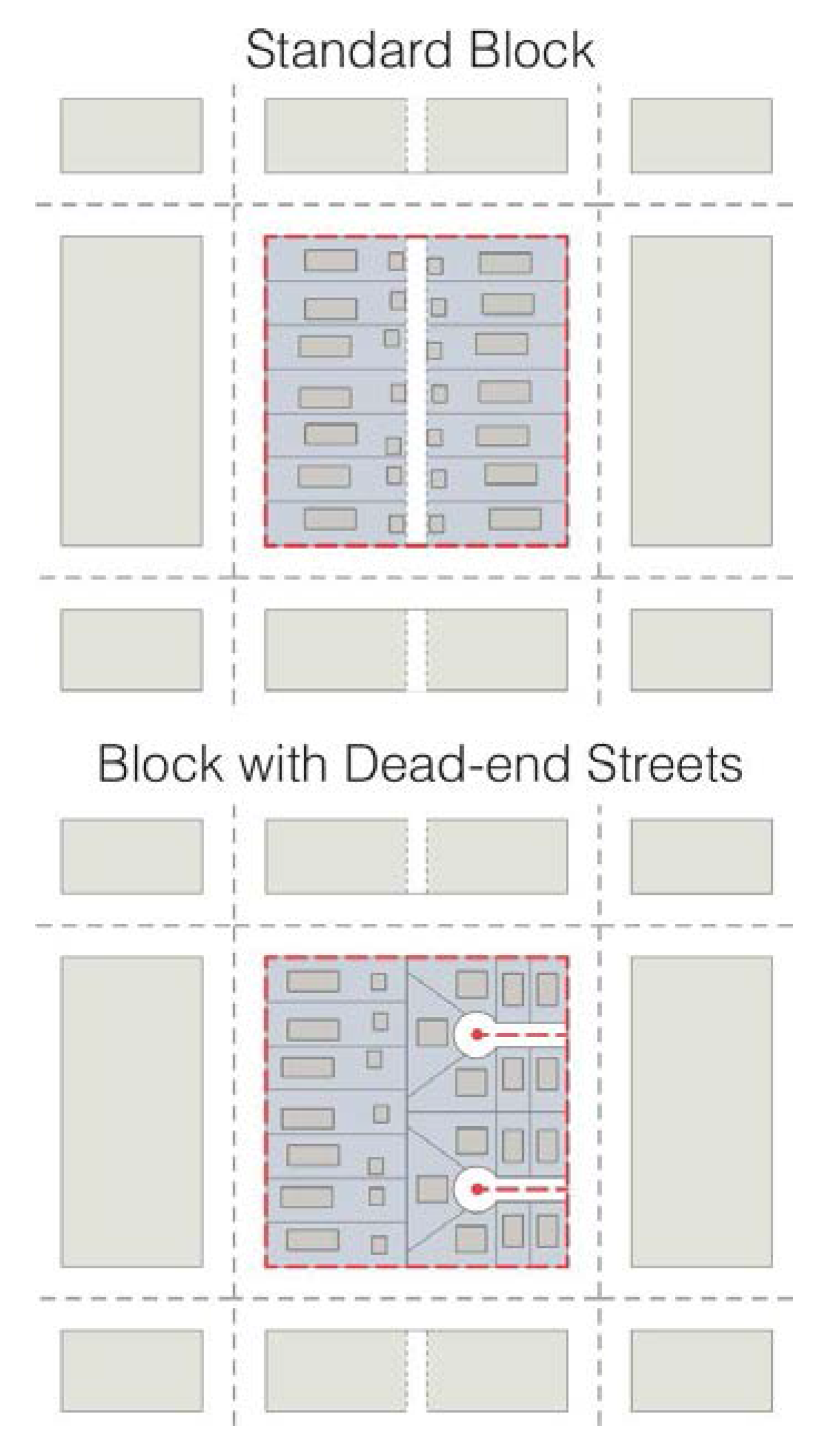
Sites greater than 4 acres in size must incorporate existing or new streets that terminate at other existing or new streets to form an interconnected network with a maximum block perimeter of 2,000 feet, as measured from intersecting centerlines.
2.
A block must be bounded by public streets. Block perimeter is measured along the edge of the property abutting a public street, except for the measurement of existing dead-end streets, which are measured from intersecting centerlines.
3.
The Zoning Administrator may modify the block perimeter requirements by administrative variance when steep slopes in excess of 25%, preexisting development, tree protection areas, stream buffers, cemeteries, open space, or easements would make the provision of a complete block infeasible.
4.
There is no maximum block perimeter length when a block contains a park of at least one acre in size and when no other use is located in that block.
5.
Culs-de-sac are prohibited except on local streets where topography, environmental protection, preservation of cultural resources, or similar considerations prohibit the creation of street connections. In no case shall any dead-end street be greater than 600 feet in length.
H.
Stub out streets.
1.
Where a development abuts a parcel greater than 4 acres in size, stub-out streets within the development must be installed to meet the block standards in subsection I.
2.
The stub-out street right-of-way, pavement, and curbing must extend to the boundary of the abutting parcel to the point where the connection to the anticipated street is expected.
3.
Stub-out streets must be located so that the portion of the block perimeter located on the development does not exceed 50% of the applicable block perimeter maximum.
4.
If a stub-out street exists on an abutting parcel, the street system of any new development must connect to the stub-out street to form a through street.
5.
The Zoning Administrator may grant an administrative variance to eliminate the requirement for a stub-out street or require pedestrian and bicycle only access when steep slopes in excess of 25%, highways, waterways, tree conservation areas, stream buffers, cemeteries, open space, civic space, or easements would make the provision of a stub-out street infeasible.
I.
Lot requirements. Every lot (except cottage court lots) and every cottage court site must have frontage on a public street. Alleys may not be used to satisfy this requirement.
J.
Decorative pedestrian lights of a type approved by the City must be installed in the landscape zone, a maximum of 40 feet on center and spaced equally between street trees.
K.
Fencing within the front yard is permitted only when:
1.
The front setback is located adjacent to ground floor dwelling units;
2.
Said fencing is used to separate authorized outdoor dining from the required sidewalk; or
3.
Said fencing surrounds public or private utility structures.
L.
Public art. Placement or installation of outdoor sculpture and other art forms on private property intended to be viewed from a public right-of-way or other public property shall not require a permit, provided that the following apply:
1.
The art is not offered for sale.
2.
The art does not constitute an advertisement.
3.
The placement does not impede the flow of pedestrian, bicycle or vehicle traffic or block motorist visibility at intersections, alleys or driveways.
M.
Miscellaneous provisions.
1.
No development shall contain more than 250 multifamily units.
Sec. 8-2. - DT downtown district.
A.
Purpose. It is the intent of this district to provide for a vibrant downtown; implement the vision of Winder's Livable Centers Initiative plan; encourage walking and bicycling; support small businesses; create a sustainable mixed-use downtown; combine a wide variety of compatible commercial and residential uses in close proximity; and foster a safe and livable downtown.
B.
The following building types are allowed:
1.
Storefront;
2.
Mixed-use building;
3.
Civic building;
4.
Townhouse;
5.
Cottage court;
6.
Dwelling, multi-family;
7.
General building;
8.
Dwelling, two-family
C.
Lot standards.
D.
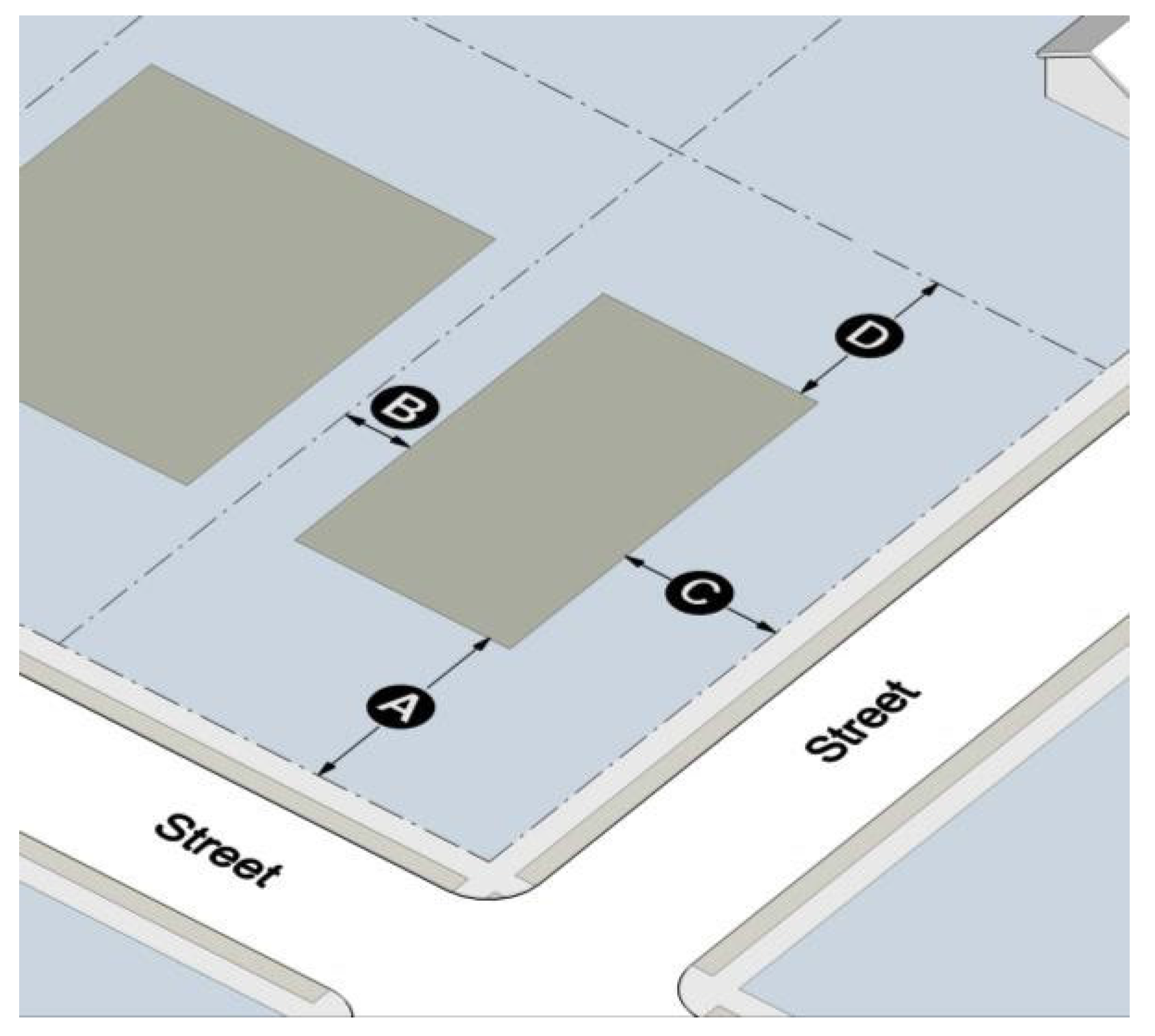
Building placement.
E.
Other requirements.
1.
Maximum height: 50 feet
2.
Maximum lot coverage: 80%
3.
Minimum floor area (heated space): none
4.
Maximum residential density: 8 dwelling units per net useable acre, provided that a 4 story apartment style building will allow a maximum of 32 dwelling units per net useable acre.
5.
No multifamily residential development shall have more than 250 units
6.
Maximum building footprint: No building footprint may exceed 15,000 square feet.
7.
In the DT zone district, proposed commercial and multi-family buildings exceeding a height of thirty-five feet (35') and located next to an existing single-family home in residential zones must follow a "stepback" design requirement along all property lines adjoining an R-1, R-1A, R-1B, or R-2 district. This means that for every foot of height above thirty-five feet (35'), the building must step back by at least one foot (1'). For instance, if the building height is forty feet (40'), it could begin at thirty-five feet (35') at the setback line, then increase by one foot (1') for every foot behind the setback line until reaching the maximum height of forty feet (40') at a distance of at least five feet (5') behind the setback line.

