
Allen City Zoning Code
ARTICLE IV
ZONING REGULATIONS1
State Law reference— Zoning regulations, generally, V.T.C.A., Local Government Code § 211.003; procedures for adoption of zoning regulations and district boundaries, V.T.C.A., Local Government Code § 211.006.
Sec. 4.01.- Applicability.
This article shall govern any and all buildings, structures, and land located within the corporate limits of the city and any annexations of land or additions made to the city subsequent to the adoption of this Code as such buildings, structures, and land may be occupied, used, erected, altered, removed, demolished or converted. Such buildings and land shall be used, removed, placed and erected in conformance with the zoning regulations prescribed for the zoning district in which such land or building is located.
Sec. 4.02. - Zoning districts.
State Law reference— Zoning districts, V.T.C.A., Local Government Code § 211.005.
Sec. 4.02.1. - Zoning districts established.
The city has established the following zoning districts:
"A-O" Agriculture-Open Space District
"R-1" Single-Family Residential District
"R-1.5" Single-Family Residential District
"R-2" Single-Family Residential District
"R-3" Single-Family Residential District
"R-4" Single-Family Residential District
"R-5" Single-Family Residential District
"R-6" Single-Family Residential District
"R-7" Single-Family Residential District
"2-F" Duplex Residential District
"TH" Townhome Residential District
"MF-12" Multifamily Residential District
"MF-18" Multifamily Residential District
"MH" Mobile Home Park District
"GO" Garden Office District
"O" Office District
"LR" Local Retail District
"SC" Shopping Center District
"LC" Light Commercial District
"GB" General Business District
"CC" Corridor Commercial District
"IT" Industrial Technology District
"LI" Light Industrial District
"HI" Heavy Industrial District
"CF" Community Facilities District
"DD" Downtown District
(Ord. No. 2101-10-02, § 1, 10-8-2002; Ord. No. 3976-1-23, § 1.B, 1-10-2023)
Sec. 4.02.2. - Zoning district map.
The boundaries of the zoning districts established herein are delineated upon a zoning district map of the city adopted as part of this Code as if contained herein.
The official zoning district map, bearing the signature of the mayor, shall be filed in the office of the city secretary. It shall be the duty of the director of planning and development to update and maintain the official zoning district map by entering any changes that the city council may approve.
Sec. 4.02.3. - Zoning district boundaries.
Where uncertainty exists with respect to the boundaries of any zoning the following rules shall apply:
1.
Boundaries indicated as approximately the centerline of streets, highways, or alleys shall be construed to follow such centerlines.
2.
Boundaries indicated as approximately following platted lot lines shall be construed as following such lot lines.
3.
Whenever any street, alley or other public way is vacated by official action of the city council, the zoning district adjoining each side of such street, alley, or public way shall be automatically extended to the center of such vacation and all area included in the vacation shall then and henceforth be subject to all regulations of the extended districts.
4.
Where the streets or alleys on the ground differ from the streets or alleys as shown on the zoning map, the streets or alleys on the ground shall control.
5.
Boundaries indicated as approximately following city limits shall be construed as following city limits.
6.
Boundaries indicated as following railroad lines shall be construed to be midway between the right-of-way lines.
7.
Boundaries indicated as following the centerline of all creeks, streams or drainageways shall be construed to follow such centerline.
8.
Distances not specifically indicated on the official zoning map shall be determined by the scale of the map.
9.
The zoning classification applied to a tract of land adjacent to the street shall extend to the centerline of the street, unless as a condition of zoning approval it is stated that the zoning classification shall not apply to the street.
10.
Where physical features on the ground are at variance with information shown on the official zoning district map or when there arises a question as to how or whether a parcel of property is zoned and such question cannot be resolved by the application of the above subsections, the property shall be considered as A-O agriculture-open space in the same manner as provided for newly annexed territory.
Sec. 4.02.4. - Compliance required.
All land, buildings, structures or appurtenances thereon located with the city which are hereafter occupied, used, constructed, erected, removed, placed, demolished or converted shall be occupied, used, erected, altered, removed, placed, demolished or converted in conformance with the zoning regulations prescribed in this Code. All of the standards and regulations prescribed herein shall be considered as the minimum requirements unless explicitly stated otherwise.
No uses shall be allowed which are prohibited by state law or which exceed state or national environmental or pollution standards.
Sec. 4.02.5. - Schedules and illustrations.
Definitions, schedules and illustrations, together with all notations, references, and other information, and all amendments thereto, are as much a part of this Code as any specific requirement or regulation fully set forth and described herein.
Sec. 4.02.6. - Planned development ordinances continued.
Prior to adoption of this Code, the city council established various planned development districts, some of which are to be continued in full force and effect. The ordinances or parts of ordinances approved prior to this Code specified in appendix D shall be carried forth in full force and effect and are the conditions, restrictions, regulations and requirements which apply to the respective planned development districts shown on the zoning map at the date of the adoption of this Code. Some of the base districts which were established under preceding ordinances have been converted to new base districts under this Code.
Sec. 4.02.7. - New and unlisted uses.
New types of land use will develop and forms of land use not anticipated may seek to locate in the city. In order to provide for such changes and contingencies, a determination as to the appropriate classification of any new or unlisted form of land use shall be made as follows:
1.
Uses of land or structures that are not expressly listed in the schedule of principal uses (section 4.20.2) are prohibited uses and shall not be permitted in established zoning districts.
2.
The director shall determine if a proposed use constitutes a land use classification listed in the schedule of permitted uses (section 4.20.2) and within what land use classification the proposed use is to be included. The director's decision finding (a) that a proposed use is not included among the land use classifications listed in section 4.20.2 or (b) that a proposed use is included within a land use classification listed in section 4.20.2 other than the land use classification which the proponent of the proposed use desires, may be appealed to the board of adjustment in accordance with section 2.02.
(Ord. No. 2900-3-10, § 2, 3-23-2010)
Sec. 4.03. - Newly annexed territory.
All territory hereafter annexed to the city shall be temporarily classified as "A-O" agricultural-open space district until permanent zoning is established by the city council. The procedure for establishing permanent zoning on annexed territory shall conform to the procedure established by law for the adoption of original zoning regulations.
In an area temporarily classified as "A-O" agricultural-open space district:
1.
No person shall erect, construct or continue with the construction of any structure or add to any structure or cause the same to be accomplished in any newly annexed territory to the city without first obtaining a building permit or certificate of occupancy from the chief building official.
2.
No permit for the construction of a building or use of land shall be issued by the chief building official other than a permit which will allow for the construction of a building that is allowed in the "A-O" agricultural-open space district.
3.
The commission may consider a zoning application and make recommendation to the city council for such application prior to annexation of the subject property into the city. The city council may act on the application for permanent zoning and annexation simultaneously. The commission recommendation shall be valid for a period of up to six months only.
Sec. 4.04.1. - Platting property.
1.
The commission shall not review any plat of any subdivision within the city limits of the city until the area comprised by the proposed plat shall have been permanently zoned by the city council.
2.
The commission shall not review any plat of any subdivision where a petition for annexation is pending before the city council.
3.
The commission may consider a plat application for property that is in the extraterritorial jurisdiction of the city.
Sec. 4.04.2. - Creation of building site.
No permit for the construction of a building or buildings upon any tract or plot shall be issued until a building site, building tract, or building lot has been created by compliance with one of the following conditions:
1.
The lot or tract is part of a plat of record that has been approved by the commission, and has been filed in the plat records of Collin County. Such lot shall face upon a dedicated street, face a public access easement, or have some frontage on a dedicated street.
2.
The plot, tract, or lot faces a dedicated street and was separately owned prior to October 1981; or prior to annexation to the city, whichever is applicable, in which event a building permit for only one main building conforming to all the requirements of this Code may be issued on each such original separately owned parcel.
Sec. 4.05. - Nonconforming uses.
1.
Intent of provisions.
a.
Within the districts established by this Code or amendments thereto, there exist lots, structures, uses of land and structures, and characteristics of use which were lawful before the adoption of this Code was made applicable to such lots, structures or uses, but which do not now conform to the regulations of the district in which they are located. It is the intent of this Code to permit such nonconforming uses to continue, as long as the conditions within this section and other applicable sections are met.
b.
It is further the intent of this Code that nonconforming uses shall not be enlarged upon, expanded or extended, and not be used as a basis for adding other structures or uses prohibited elsewhere in the same district.
c.
Nonconforming uses are hereby declared to be incompatible with the permitted uses in the affected districts.
2.
Nonconforming status. Any use, platted lot or structure which does not conform with the regulations of the zoning district in which it is located shall be deemed a nonconforming use or structure when:
a.
The use, platted lot or structure was in existence and lawfully operating prior to June 21, 1972, or the adoption of this Code and which has since been in regular and continuous use;
b.
The use, platted lot or structure was in existence and lawfully constructed, located, and operating at the time of any amendment to this Code, but by such amendment is placed in a district wherein such use, platted lot or structure is not otherwise permitted and has since been in regular and continuous use; or
c.
The use, platted lot or structure was in existence at the time of annexation into the city and has since been in regular and continuous use.
3.
Continuing lawful use of property.
a.
The lawful use of land or lawful existence of structures at the time of passage of this Code, although such do not conform to the provisions hereof, may be continued; but if said nonconforming use or structure is discontinued or abandoned, any future use of the premises shall be in conformity with the provisions of this Code.
b.
Discontinuance of a nonconforming use shall commence on the actual act or date of discontinuance. Abandonment of a nonconforming structure shall commence on the act or date of abandonment.
c.
When a nonconforming use or structure does not meet the development standards of this Code, is discontinued or abandoned for a period of six months, such use shall not be resumed, and proof of such event shall constitute prima facie evidence of an act of abandonment. Any nonconforming use which does not involve a permanent structure and which is moved from the premises shall be considered to have been abandoned.
d.
No nonconforming use may be abandoned, reoccupied with another nonconforming use or increased as of the effective date of this Code.
e.
Single-family or two-family dwellings constructed on platted lots which may now be nonconforming due to stricter standards shall be deemed in conformance with this Code, as long as the use of the lot is allowed in the respective district. Only the lot size, lot depth, setbacks and width shall be allowed to be less than the regulations prescribed in the zoning district in which it is located. All other regulations of this Code shall be met or the lot shall be considered nonconforming.
f.
Any existing vacant lot platted prior to the adoption of this Code which was legally conforming shall be deemed a conforming lot.
g.
Uses which, prior to the effective date of this Code, do not provide the required number of off-street parking spaces shall not be considered as nonconforming structures.
4.
Changing nonconforming uses.
a.
Any nonconforming use may be changed to a conforming use, and once such a change is made, the use shall not be changed back to a nonconforming use.
b.
Where a conforming use is located in a nonconforming structure, the use may be changed to another conforming use as provided in subsection 5. below.
c.
A nonconforming use may not be changed to another nonconforming use.
5.
Expansion of a nonconforming use or structure. An expansion of a nonconforming use or structure is allowed in accordance with the following:
a.
A nonconforming use located within a building may be extended throughout the existing building if:
i.
No structural alteration may be made except those required to preserve the structure.
ii.
The number of dwelling units or rooms in a nonconforming residential structure shall not be increased so as to exceed the number of dwelling units or rooms existing as the time the use became nonconforming.
b.
No nonconforming use within a building may be extended to occupy any land outside the building.
c.
No nonconforming use of land or building shall be enlarged, increased, or extended to occupy a greater area of land than was occupied at the time the land became a nonconforming use, except to provide off-street loading or off-street parking.
d.
The minimum residential lot areas for the various zoning districts shall be in accordance with their respective districts except that a lot having less area than herein required which was an official "lot of record" prior to the adoption of this Code may be used for a single-family dwelling.
e.
Buildings or structures which do not conform to the area regulations or development standards in this Code but where the uses are deemed conforming may increase the gross floor area by up to ten percent with the approval of the board of adjustment.
6.
Restoration of nonconforming structure. If a structure occupied by a nonconforming use is destroyed by fire, or elements, it may only be rebuilt to conform to the provisions of this Code, save and except any single-family residence located in the "DD" downtown district. In the case of partial destruction of a nonconforming use not exceeding 50 percent of its reasonable value, reconstruction will be permitted, but the size or function of the nonconforming use cannot be expanded.
7.
Completion of structures. Nothing herein shall require any change in the plans, construction, or designated use of a building or structure for which a building permit has been issued or a site plan approved prior to the effective date of this Code, nor shall any building or structure for which a substantially complete application for a building permit was accepted by the chief building official on or before the effective date of these regulations, provided that the building permit shall comply with all applicable regulations on the date that the application was filed and the building permit is issued within 30 days of the effective date of these regulations.
(Ord. No. 3976-1-23, § 1.B, 1-10-2023)
Sec. 4.06. - Changes and amendments.
1.
Application. Each application for zoning or for an amendment or change to the existing provisions of this Code shall be made in writing on an application form available from the city and shall be accompanied by payment of the fees required in the fee schedule adopted by resolution of the city council. If no progress is made toward completion the application within two years following acceptance of the application, then the application shall be deemed expired and subsequently withdrawn from consideration. Progress toward completion shall be defined in V.T.C.A., Local Government Code § 245.005, as amended.
2.
Submission to planning commission. Before taking any action on any proposed amendment, supplement, or change, the city council shall submit the proposed revision to the commission for its review and recommendation. Such submission should include a property legal description and land use plan. If the submission is a planned development, then any variance from the zoning regulations should be identified; otherwise, the standards of this Code shall govern. If the proposed use generates more than 1,000 trips per day, then a traffic study shall be required. The requirements of the traffic study are identified in the traffic impact analysis requirements, identified in appendix L of this Code. If community facilities are identified in the comprehensive plan, then they should be indicated on the land use plan after determinations have been made by the city and/or school district as to the appropriateness of the site reservation.
3.
Failure to appear. Failure of the applicant to appear before the planning and zoning commission or city council for more than one hearing without an approved delay by the director of planning and development shall constitute sufficient grounds for the planning and zoning commission to table or deny the application.
4.
Public hearing and notice. Prior to making its report to the city council, the planning and zoning commission shall hold at least one public hearing. Written notice of all public hearings on proposed changes shall be sent to all owners of property within 200 feet of the property on which the change of zoning classification is proposed, not less than ten days before the date of the hearing. Such notice may be served by using the last known address as shown on the last approved city tax roll, and depositing the notice, properly addressed and postage paid in the U.S. mail. Notice of hearings on proposed changes in the text of zoning regulations affecting the city in general shall be accomplished by one publication in a newspaper of general circulation in the city not less than 15 days prior to the date of the hearing. Changes in the text of the zoning regulations which do not affect zoning district boundaries do not require written notification to individual property owners.
5.
Sign. Not less than ten days prior to the public hearing held by the commission relating to a proposed amendment to the zoning regulations applicable to a specific property, a sign shall be erected by the city on the property which is the subject of the proposed amendment. The sign shall be visible to the public and state in bold letters that a change in zoning has been requested and the telephone number for additional information. The sign placed on the property pursuant to this paragraph shall remain on the property until the day following the close of the public hearing conducted by the city council on the proposed zoning amendment or the date the application is otherwise terminated, whichever is earlier. Failure to erect the sign on the property that is the subject of the zoning amendment does not invalidate the public hearing nor require a delay of action by the commission or the city council. The submission of an application by the owner or person authorized by the owner of the property that is the subject of rezoning constitutes consent by the owner of said property for city employees to enter the property to place and remove the sign as well as consent to place the sign on the property. If the change of zoning is initiated by the city, the sign required by this paragraph shall be placed on the closest public right-of-way to the boundary of the property that is the subject of the zoning amendment if the owner of the property does not otherwise consent to the placement of the sign on the property.
6.
Applications recommended for approval by the planning and zoning commission. Every application or proposal which is recommended for approval by the planning and zoning commission shall be automatically forwarded to the city council for setting and holding of public hearing thereon. No change, however, shall become effective until after the adoption of an ordinance and publication required by law.
7.
Applications recommended for denial by the planning and zoning commission. When the planning and zoning commission makes a recommendation that a proposal be denied, the request in its original form will not automatically be placed on the city council agenda unless requested by the applicant in writing within ten days of the action.
8.
Council consideration.
a.
At least one public hearing shall be held by the city council before adopting any amendment, supplement, or change to the zoning regulations or zoning map. Not less than 15 days prior to the date of the hearing, notice of such hearing shall be given by publication in a newspaper of general circulation in the city, stating the time and place of such hearing.
b.
In considering a motion to deny an application to amend the zoning regulations, or upon voting to deny an application for an amendment to these zoning regulations, the city council may further consider whether the application shall be denied with or without prejudice against refiling. If the city council denies the petition and fails to clearly state the same as being denied with prejudice, then the petition shall be deemed to be denied without prejudice against refiling.
9.
Resubmission of application. If an application to amend the zoning regulations has been denied by the city council:
a.
If denied without prejudice, the same application may be resubmitted at any time after the date of the action by the city council accompanied by payment of a filing fee in the amount required of a new application; and
b.
If denied with prejudice, an application relating to the development and/or use of all or a portion of the same property that was the subject of the denied application may not be submitted on or before the date that is one year from the date of the city council's denial of the prior application if the requested to amendments are substantially the same or similar to the amendments previously denied with prejudice.
10.
Super majority.
a.
A favorable vote of three-fourths of all of the members of the entire city council shall be required to approve any change in zoning when written protest are received and filed with the city secretary in accordance with V.T.C.A., Local Government Code § 211.006. The protest must be written and signed by the owners of at least 20 percent of either: (1) the area of the lots or land covered by the proposed change; or (2) except as provided by subsection 4.06(11), the area of the lots or land immediately adjoining the area covered by the proposed change and extending 200 feet from that area; in computing the percentage of land area, the area of streets and alleys shall be included in the computation, and the land area is not calculated individually for each tract of land subject to a proposed change in a zoning regulation or district boundary but in the aggregate for all tracts of land subject to the change. All written protests must comply with the requirements of subsection 12. of this section.
b.
A favorable vote of three-fourths of all of the members of the entire city council shall be required to approve any zoning change request which is recommended for denial by the planning and zoning commission.
11.
Simple majority. A majority of all of the members of the entire city council shall be required to approve any change of zoning if, at least 60 percent of the area of the lots or land immediately adjoining the area covered by the proposed change and extending 200 feet from that area if the proposed change has the effect of allowing more residential development than the existing zoning regulation or district boundary and does not have the effect of allowing additional commercial or industrial uses unless the additional use is limited to the first floor of any residential development and does not exceed 35 percent of the overall development.
12.
Written protest procedures.
a.
Purpose.
(1)
State law expressly enables the governing body of a municipality to establish procedures for adopting and enforcing zoning regulations and district boundaries. Pursuant to that authority, the city council enacts this subsection governing the receipt of written protests submitted for the purpose of requiring the favorable vote of three-fourths of all members of the city council to effect a change in a zoning district classification or boundary.
(2)
This subsection is not intended to conflict with the state law; it is being enacted at a time when the state law does not explicitly provide how, when, or where a written protest must be filed. The city council expressly recognizes that this subsection may be partially or completely preempted at any such time that the state law is amended to explicitly provide how, when, or where a written protest must be filed.
(3)
This subsection is intended to accomplish the following listed objectives which, in the opinion of the city council, are fully in keeping with the purposes, spirit, and intent of the state law:
(a)
To allow city staff sufficient time to accurately calculate the land area percentages that determines the voting requirement;
(b)
To protect the rights of all parties by establishing minimum criteria to assure the reliability of written protests received;
(c)
To protect the rights of those protesting by establishing procedures and deadlines which are not unduly burdensome or restrictive; and
(d)
To promote order and maintain the integrity of the zoning process.
b.
Form of protest.
(1)
A protest must be in writing submitted on a form prepared by the city secretary and, at a minimum, contain the following information:
(a)
A description of the zoning case at issue;
(b)
The printed or typewritten names of all persons signing the protest of the proposed change in zoning district classification or boundary;
(c)
A description of the area of lots or land owned by the protesting parties that is either covered by the proposed change or located within 200 feet of the area covered by the proposed change;
(d)
The mailing addresses of all persons signing the protest;
(e)
The date and time the protest is signed; and
(f)
If signing the protest on behalf of the owner of property pursuant to a power of attorney, so indicate on the protest and submit a copy of the power of attorney with the protest.
(2)
The protest must bear the original signatures of all persons required to sign under paragraph c., below.
(3)
The return of the notice provided to an owner pursuant to subsection 4 of this section shall not constitute a written protest pursuant to subsection 10 of this section.
c.
Who must sign.
(1)
A protest must be signed by the owner of the property in question, or by a person authorized by power of attorney to sign the protest on behalf of the owner. If the property is owned by two or more people, the protest must be signed by a majority of the owners, or by a person authorized by power of attorney to sign the protest on behalf of a majority of the owners, except that in the case of community property, the city shall presume the written protest of one spouse to be the protest of both.
(2)
In the case of property owned by a corporation, the protest must be signed by the president, a vice-president, or by an attorney in fact authorized to sign the protest on behalf of the corporation. In the case of property owned by a general or limited partnership, the protest must be signed by a general partner or by an attorney in fact authorized to sign the protest on behalf of the partnership.
(3)
Lots or land subject to a condominium regime are presumed to be commonly owned in undivided interests by the owners of all condominium units and under the control of the governing body of the condominium. For such lots or land to be included in calculating the lots or land area protesting a proposed rezoning, the written protest must state that the governing body of the condominium has authorized a protest in accordance with procedures required by its bylaws, and that the person signing the protest is authorized to act on behalf of the governing body of the condominium. A written protest signed by the owner of an individual condominium unit shall not be accepted unless the filing party produces legal documents governing the condominium which clearly establish the right of an individual owner to act with respect to his or her respective undivided interest in the common elements of the condominium.
(4)
For purposes of this subsection, the "owner" of the property for which a protest is being submitted shall be determined to be the owner of the property shown in the records of the Collin Central Appraisal District as of the date of delivery of the protest to the city secretary. A person with only a leasehold or easement interest in property is not an "owner" for purposes of filing a protest pursuant to this subsection.
d.
Filing deadline.
(1)
A written protest must be filed with the city secretary before noon of the business day immediately preceding the date advertised for the city council public hearing in the statutory notice published in the official newspaper of the city. A protest sent through the mail must be received by the city secretary before the deadline.
(2)
Before the public hearing on the case, the filing deadline is automatically extended whenever the public hearing is re-advertised in the official newspaper of the city pursuant to statutory notice requirements.
(3)
After the public hearing has begun; and
(a)
The public hearing is concluded with no action being taken on the zoning amendment at the same meeting and a subsequent public hearing and advertising that public hearing in the official newspaper of the city pursuant to statutory notice requirements; or
(b)
The public hearing is continued to a date certain as otherwise allowed under the Texas Open Meetings Act; the filing deadline may be extended to noon of the working day immediately preceding the newly advertised public hearing date or the date to which the public hearing is continued, as the case may be.
(4)
Written protests may be filed electronically by emailing the written protest as an attachment in .pdf format to the city secretary or by sending via facsimile transmission to the published facsimile telephone number for the office of the city secretary.
(5)
For purposes of determining compliance with the filing deadline, the date and time the city secretary's office actually receives the written protest is solely determinative.
e.
Withdrawals of protests filed. Withdrawals of protests filed must be in writing and filed with the city secretary before the filing deadline for protests. The provisions of this subsection governing the form and filing of protests apply equally to withdrawals.
f.
Presumptions of validity.
(1)
In all cases where a protest has been properly signed pursuant to this subsection, the city shall presume that the signatures appearing on the protest are authentic and that the persons or officers whose signatures appear on the protest are either owners of the property or authorized to sign on behalf of one or more owners as represented.
(2)
In cases of multiple ownership, the city shall presume that a properly signed protest which on its face purports to represent a majority of the property owners does in fact represent a majority of the property owners.
(3)
The presumptions in subparagraphs (1) and (2) above are rebuttable, and the city attorney may advise the city council that a presumption should not be followed in a specific case based on extrinsic evidence presented.
g.
Conflicting instruments. In the event that multiple protests and withdrawals are filed on behalf of the same owner, the instrument with the latest date and time of execution controls.
13.
The city council may from time to time on its own initiative amend or change the boundaries of the districts or amend the regulations set forth in this Code or otherwise established by city ordinance.
(Ord. No. 2068-6-02, § 1, 6-25-2002; Ord. No. 2112-11-02, 11-26-2002; Ord. No. 2978-12-10, § 1, 12-14-2010; Ord. No. 3125-11-12, § 10, 11-27-2012; Ord. No. 3488-6-17, § 1.A, 6-27-2017; Ord. No. 3754-6-20, § 1.B, 6-9-2020; Ord. No. 3846-8-21, § 1.A—C, 8-10-2021; Ord. No. 4197-12-25, § 1, 12-9-2025)
State Law reference— Procedures governing adoption of zoning regulations and district boundaries, V.T.C.A., Local Government Code § 211.006.
Sec. 4.08.1. - "A-O" agricultural-open space district.
The "A-O" district is to be used for farming, forestry, and mining uses not hazardous by reason of odors, dust, fumes, noise, or vibration; single-family dwellings on acreage sites; public recreation and open spaces; and is considered the proper classification for lease areas of undeveloped land or land newly annexed to the city and appropriate for permitted principal and accessory uses identified in section 4.20.2 and section 4.20.3, respectively.
(Ord. No. 2978-12-10, § 2, 12-14-2010; Ord. No. 4018-8-23, § 1.A, 8-22-2023)
Editor's note— Ord. No. 4018-8-23, § 1.A, adopted August 22, 2023, amended the title of § 4.08.1 to read as herein set out. The former § 4.08.1 title pertained to "A-O" agriculture-open space district.
Sec. 4.08.2. - "R-1" and "R-1.5" single-family residential estate district.
1.
Purpose. The "R-1" and "R-1.5" districts are limited to development of single-family detached dwellings on estate lots of not less than 40,000 and 30,000 square feet respectively, and are appropriate for permitted principal and accessory uses identified in section 4.20.2 and section 4.20.3, respectively.
2.
Supplemental district regulations. In addition to other applicable use and development regulations set forth in this Code, the following regulations shall apply to property located within an "R-1" and/or "R-1.5" districts:
a.
Alleys are not permitted.
b.
Sidewalks are only required on one side of the street and may be located within a pedestrian easement on private property.
c.
Park fees and/or dedication of parkland that would normally be assessed for neighborhood parks may be waived; provided, however, park fees for community and citywide parks must be paid.
(Ord. No. 2978-12-10, § 2, 12-14-2010)
Sec. 4.08.3. - "R-2," "R-3," "R-4," "R-5," "R-6," and "R-7" single-family residential district; purpose.
The "R-2," "R-3," "R-4," "R-5," "R-6"" and "R-7" single-family residential districts are limited to development and use of single-family, detached dwellings, on lots of not less than the area specified in section 4.15.2, and appropriate for permitted principal and accessory uses identified in section 4.20.2 and section 4.20.3, respectively).
(Ord. No. 2978-12-10, § 2, 12-14-2010)
Sec. 4.08.4. - "2-F" duplex residential district; purpose.
The "2-F" duplex residential district provides a medium density dwelling classification in the form of two-family attached or duplex dwellings and is appropriate for permitted principal and accessory uses identified in section 4.20.2 [and] section 4.20.3, respectively. The "2-F" district also permits any principal or accessory use permitted in single-family residential districts.
(Ord. No. 2978-12-10, § 2, 12-14-2010)
Sec. 4.08.5. - "TH" townhome residential district.
The "TH" townhome residential district provides a medium-density dwelling classification in the form of attached single-family dwelling units on separate lots or as condominium units where individual units are under separate ownership with common areas under the control of a condominium association and is appropriate for permitted principal and accessory uses identified in section 4.20.2 and section 4.20.3, respectively.
(Ord. No. 2978-12-10, § 2, 12-14-2010; Ord. No. 3562-3-18, § 2.A, 3-27-2018)
Sec. 4.08.6. - "MF-12" and "MF-18" multifamily residential district.
The "MF-12" and "MF-18" multifamily residential districts provide for attached multifamily dwellings with the number of dwelling units per acre established by section 4.15.2 and are appropriate for permitted principal and accessory uses identified in section 4.20.2 and section 4.20.3, respectively.
(Ord. No. 2978-12-10, § 2, 12-14-2010)
Sec. 4.08.7. - "MH" manufactured home park district.
1.
Purpose. The "MH" manufactured home park district provides for the location of manufactured homes within developments with necessary attendant facilities and is appropriate for permitted principal and accessory uses identified in section 4.20.2 and section 4.20.3, respectively.
2.
Supplemental district regulations. In addition to other applicable use and development regulations set forth in this Code, in the "MH" manufactured home park district, open recreation and 500 square feet of public service area is required for each of the first 20 units and 250 square feet of public service area is required per unit for each additional unit. Outdoor swimming pools may be counted toward satisfaction of the public service area requirement, but the area in the required front, side and rear yards may not be so counted.
(Ord. No. 2978-12-10, § 2, 12-14-2010)
Sec. 4.08.8. - "GO" garden office district.
The "GO" garden office district is intended for low-rise office uses not dependent upon retail trade or retail traffic for their operation and is appropriate for permitted principal and accessory uses identified in section 4.20.2 and section 4.20.3, respectively. The "GO" garden office district is designed to permit the location of offices of any profession, trade, or service.
(Ord. No. 2978-12-10, § 2, 12-14-2010)
Sec. 4.08.9. - "O" office district.
The "O" office district is intended for office uses not dependent upon retail trade or retail traffic for their operation and is appropriate for permitted principal and accessory uses identified in section 4.20.2 and section 4.20.3.
(Ord. No. 2978-12-10, § 2, 12-14-2010)
Sec. 4.08.10. - "LR" local retail district.
1.
Purpose. The "LR" local retail district is a limited retail category intended for use near neighborhood areas for the purposes of supplying day-to-day retail needs of the residents, such as food, drugs, and personal services, and is appropriate for permitted principal and accessory uses identified in section 4.20.2 and section 4.20.3, respectively.
2.
Supplemental district regulations. Notwithstanding conflicting use and development regulations set forth in this Code, materials other than masonry may be considered and allowed for the construction of restaurants located in the "LR" local retail district to carry out a unique theme or architectural concept.
(Ord. No. 2978-12-10, § 2, 12-14-2010)
Sec. 4.08.11. - "SC" shopping center district.
The "SC" shopping center district provides for medium intensity concentrations of shopping, dining and entertainment-related commercial activity that are compatible with and appropriate for permitted principal and accessory uses identified in the section 4.20.2 and section 4.20.3, respectively.
(Ord. No. 2593-2-07, § 1(Exh. A), 2-13-2007; Ord. No. 2882-1-10, § 1.A, 1-12-2010; Ord. No. 2978-12-10, § 2, 12-14-2010)
Sec. 4.08.12. - "LC" light commercial district.
The "LC" light commercial district is designed to provide support services for residential areas and is appropriate for permitted principal and accessory uses identified in section 4.20.2 and section 4.20.3, respectively.
(Ord. No. 2978-12-10, § 2, 12-14-2010)
Sec. 4.08.13. - "GB" general business district.
The "GB" general business district provides for high intensity concentrations of commercial activities along major thoroughfares, is a transition from lighter business to industrial and manufacturing uses, and is appropriate for permitted principal and accessory uses identified in section 4.20.2 and section 4.20.3, respectively.
(Ord. No. 2978-12-10, § 2, 12-14-2010)
Sec. 4.08.14. - "CC" corridor commercial district.
The "CC" corridor commercial district is characterized by development of high intensity retail, office, and light industrial uses in selected locations along the U.S. 75 and S.H. 121 corridor and is appropriate for permitted principal and accessory uses identified in section 4.20.2 and section 4.20.3 respectively.
(Ord. No. 2978-12-10, § 2, 12-14-2010)
Sec. 4.08.15. - "IT" industrial technology district.
The "IT" industrial technology district is characterized by industrial parks accommodating distribution, processing and light manufacturing in a campus type development with building sites of four acres or more and is appropriate for permitted principal and accessory uses identified in section 4.20.2 and section 4.20.3, respectively.
(Ord. No. 2978-12-10, § 2, 12-14-2010)
Sec. 4.08.16. - "LI" and "HI" industrial districts.
1.
Purposes. The "LI" and "HI" districts are intended to establish major employment centers, provide locations for business parks and accommodate distribution, processing, and manufacturing, and are distinguished by the intensity of use and are appropriate for permitted uses identified in the schedules of principal uses (section 4.20.2) and the schedule of accessory uses (section 4.20.3).
2.
Supplemental district regulations. In addition to other applicable use and development regulations set forth in this Code, the following regulations shall apply to property located within an "LI" or "HI" district:
a.
Areas designated on the official zoning map as "LI(C)" shall be subject to the regulations of the "LI" district, with the exception that mini-warehouses are not allowed.
b.
"HI" heavy industrial district uses shall not be located adjacent to any "R" district.
c.
Wrecking yards and junkyards shall be wholly enclosed within a building or by a fence or wall not less than eight feet in height.
d.
All outdoor storage areas shall be screened from view of public streets by a fence or wall constructed in compliance with the standards set forth in section 7.07.4, and shrubs, trees or other landscaping.
(Ord. No. 2978-12-10, § 2, 12-14-2010; Ord. No. 2882-1-10, § 1.B, 1-12-2010)
Sec. 4.08.17. - "PD" planned development district.
1.
Purpose. The city council, after public hearing and proper notice to all parties affected and after recommendation from the planning and zoning commission, may authorize the creation of a planned development district. The "PD" planned development district is designed to permit flexibility and encourage a more creative, efficient and aesthetically desirable design and placement of buildings, open spaces, circulation patterns, by allowing mixture or combination of uses, and to best utilize special site features such as topography, size and shape. A planned development district may be used to permit new or innovative concepts in land utilization not permitted by other zoning districts in this Code. While greater flexibility is given to allow special conditions or restrictions which would not otherwise allow the development to occur, the requirements established herein ensure against misuse of increased flexibility.
2.
Approval process and procedure. The procedure for establishing a planned development district shall follow the procedure for zoning amendments as set forth in section 4.06 of this Code. The applicant for a planned development district shall comply with the zoning amendment procedure for a change in zoning district classification. An applicant for a planned development district shall specify the base zoning district, the proposed use or combination of uses, proposed development regulations including all requested deviations from the base zoning district and any other requirements of this Code and be accompanied by a concept plan (or detail site plan, in lieu of a concept plan). The concept plan (or detail site plan if appropriate) shall be attached to and made a part of the ordinance establishing the planned development district.
3.
Permitted uses. A planned development district may contain any use or combination of uses permitted in the schedule of principal uses or schedule of accessory uses. Uses shall conform to the standards and regulations to the base zoning district stated in the ordinance establishing the planned development district.
4.
Planned development requirements.
a.
Base zoning district. The ordinance establishing a planned development district shall specify the base zoning district. The specific uses permitted in the base zoning district which are to be allowed in the planned development district must be specified in the ordinance. Any additional uses not permitted in the base zoning district must also be specified in the ordinance. In selecting a base zoning district, the uses allowed in the base zoning district must be similar or compatible with those allowed in the planned development district. Any variations or deviations to the base zoning district or other provisions of this Code shall be stated in the ordinance. The planned development district shall conform to all other sections of the ordinance unless expressly provided otherwise in the granting ordinance.
b.
Development regulations. The ordinance establishing a planned development district shall specify appropriate development regulations in written form and shall include, but may not be limited to: uses, density, lot area, lot width, lot depth, yard depth, and widths, building height, lot coverage, floor area ratio, off-street parking and loading, open space, access, screening, landscaping, project phasing or scheduling, property or homeowner management associations, and other conditions or requirements the planning and zoning commission and city council may deem appropriate.
c.
Concept plan. During the review and public hearing process, the planning and zoning commission and city council shall require and approve a concept plan as part of the ordinance granting the planned development district.
i.
Content of concept plan. The concept plan shall be submitted by the applicant at the time of application. The concept plan shall graphically show the applicant's intent for the use of the land within the proposed planned development district.
(a)
Residential concept plan. A concept plan for residential land use shall show site topography with contour intervals, the boundary of the planned development district, generalized location of treed areas, floodplain areas, location of all land use areas and gross acreage for each use and tract, density (net and gross), identification of major access points, rights-of-way or other areas to be dedicated to the city, open space or common areas, fence row trees and/or proposed mitigation of same, parkland, preliminary lot arrangements and street patterns, indication of each phase of development if separate phases are proposed, and other information to adequately describe the proposed development. For residential development which does not propose individual platted lots, the concept plan shall also show the size, type and location of buildings, building sites, lot coverage, access, screening, parking and circulation areas, and landscaped areas. Building elevations shall be required except for single-family detached structures.
(b)
Nonresidential concept plan. A concept plan for other than residential uses shall show site topography with contour intervals, the boundary of the planned development district, floodplain areas, generalized locations of treed areas, the land uses, gross acreage for each use, building sites or lots, building elevations, lot coverage, floor area ratio for each use, building height and location, parking and circulation areas, identification of major access points, rights-of-way or other areas to be dedicated to the city, location of building setbacks along the site boundaries on dedicated streets and between residential and nonresidential uses, parking ratios, fence row trees and/or proposed mitigation of same, off-street parking and loading, indication of each phase of development if separate phases are proposed and other information to adequately describe the proposed development.
ii.
Amendment to concept plan. An amendment to a concept plan approved as a part of the ordinance establishing the planned development district is a change in zoning district classification and must follow the same procedures set forth in section 4.06, except the director of planning and development may approve minor revisions which do not alter the basic relationship of the proposed development to adjacent property, the uses permitted, increase the density, building height, coverage of site, off-street parking ratio, or area regulations as indicated on the approved concept plan.
d.
Compliance. All development and construction shall conform to the approved concept plan. Before a certificate of occupancy can be granted, all development regulations and provisions of the concept plan must be adequately addressed.
5.
Open space. For all residential uses (including multifamily uses) within a planned development district open space (whether dedicated to public use or owned and maintained in common by all or part of the occupants of the planned development district through a property or homeowners' association) shall be provided within the planned development district reserved primarily for the leisure and recreational use of the occupants of the residential uses. The open space shall comprise not less than one acre of land for each 75 dwelling units. Applicants are discouraged from submitting a concept plan which varies from the requirements for open space set forth herein without a recommendation of approval by the director of planning and development. The amount of open space for developments of ten acres or less or which include lots 18,000 square feet in size or greater may be varied downward by the city council when a lesser amount of open space would be more appropriate to the density of the development, or where the availability and nature of adjacent public open space is such that a lesser amount of open space would adequately protect the health, safety and welfare and promote the orderly development of the planned development district. The determination of whether land is eligible for open space shall be within the discretion of the city council.
For purposes of this section, open space shall include:
a.
Land area accessible to and permanently reserved for the common use and enjoyment of the occupants of the residential uses within the planned development district for leisure and recreational purposes (not including area devoted to parking, accessory uses or for required landscaping or building separation);
b.
Ponds or lakes, not to exceed 50 percent of the required open space acreage maintained as an amenity, if specifically approved as being suitable for open space by the planning and zoning commission and city council.
Land required for open space shall not include:
a.
Accessory buildings, swimming pools, recreation or community centers, climate controlled improvements, and areas reserved for the exclusive use and benefit of an individual tenant or owner;
b.
Dedicated streets, alleys or public rights-of-way, required landscaped areas, areas required for yard depth or building setback or separation;
c.
Vehicular driveways, private streets, parking areas, loading or storage areas;
d.
Floodplain (100-year), floodprone areas, drainage easements, natural drainage areas or creeks unless maintained as an amenity and specifically approved as being suitable for open space by the planning and zoning commission and city council.
In a planned development district for residential uses, property owner or homeowners' associations are to be established for the purpose of ownership, maintenance and management of open spaces as required by section 8.20, mandatory homeowners' association, of this Code.
6.
City/developer facilities agreement. Planned development districts may require a city/developer facilities agreement prior to or contemporaneous with final plat approval. This agreement shall reflect the agreement of the city and the developer as to the cost sharing for the installation or oversizing of utility systems, perimeter streets, mandatory construction or dedication of park or open space area, landscaping or greenbelt development or other comparable items, phasing of the development, maximum density or intensity of use during the construction process, and the maintenance of open space.
7.
Reference on zoning district map. All planned development districts approved in accordance with the provisions of the zoning ordinance in its original form, or by subsequent amendments thereto, shall be referenced on the zoning district map, and a list of such planned development districts, together with the category of uses permitted therein, shall be maintained as part of this Code.
(Ord. No. 2425-7-05, § 1, 7-26-2005)
Sec. 4.08.18. - "CF" community facilities district; purpose.
The "CF" community facilities district provides for only those educational, recreational, religious, municipal, and related institutional uses intended to serve the welfare of the community and is appropriate for permitted uses identified in the schedules of principal uses (section 4.20.2) and the schedule of accessory uses (section 4.20.3).
Sec. 4.08.19. - "DD" downtown district.
Administration.
1.
Purpose. The downtown district has been designed to aid in revitalization and redevelopment of the oldest developed area of the city. The purpose of the downtown district, including all overlay districts within the downtown district, is to:
a.
Provide for a diversity of pedestrian-oriented retail, office, residential, and mixed-uses indicative of an urban center. Housing should be considered a desirable activity in the downtown district;
b.
Provide a venue for artists, musicians, and other entertainment businesses, and serve as a community center and gathering place;
c.
Create a lively day and night urban environment for residents, workers, and visitors through the integration of a range of uses, building types, and open space;
d.
Produce a quality environment by combining inviting streetscapes and excellence in building design; and
e.
Increase property values and stimulate development with strategically placed civic features such as parks, medians, street trees, and public art.
2.
Applicability. No building or structure, or part thereof located within the downtown district, shall hereafter be erected, constructed, reconstructed, or altered, and no existing use, new use, or change of use of any building, structure, or land, or part thereof located within the downtown district shall be made or continued except in conformity with the provisions of this section 4.08.19 after March 1, 2023. When the regulations in this section are silent on a development standard, the applicable regulations within the ALDC relating to such standard will apply. If regulations within this section conflict with regulations in other sections of the ALDC, the regulations in this section 4.08.19 shall apply.
3.
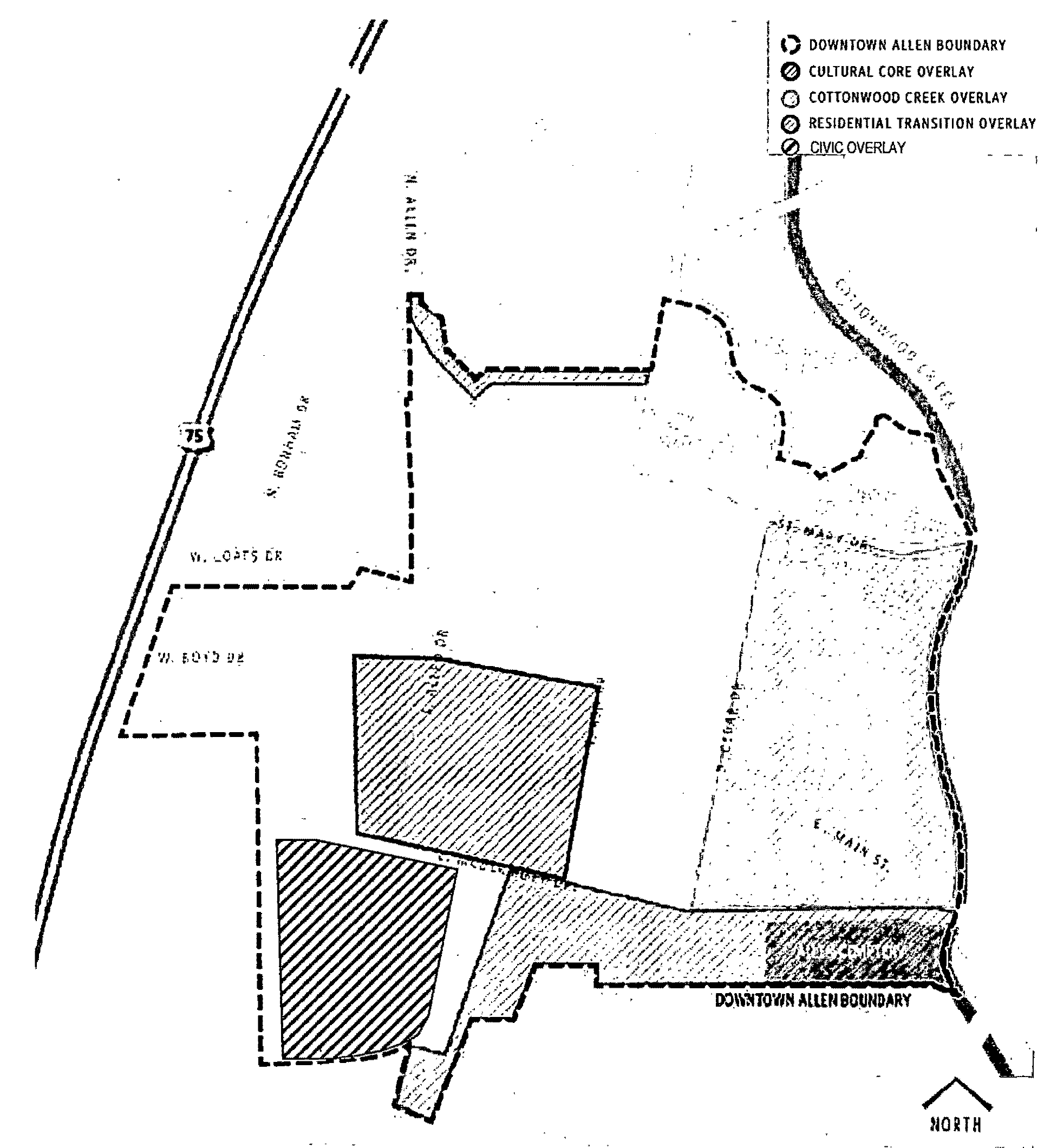
Regulating plan. The downtown district consists of overlay districts and street types established through the attached regulating plan as shown in Figure 1. Unless otherwise stated, all references in this section 4.08.19 to the downtown district shall be inclusive of all of the overlay districts located within the downtown district:
a.
Overlay districts. The overlay districts are distinguished from one another by their physical form and function, as well as their location within the downtown district:
i.
The cultural core overlay (CCO) district is the central part of the downtown district and is the core area where the oldest storefronts from the early 1900's exist. It is intended to form the heart of the downtown through mixed-use with active pedestrian-scale development.
ii.
The residential transition overlay (RTO) district is intended to support the revitalization of the Downtown District by providing for appropriate transitions between the higher density commercial and mixed-use development in the downtown district and the surrounding single-family residential neighborhoods.
iii.
The Cottonwood Creek overlay (CWCO) district is intended to serve as a mixed-use area focusing on activating Cottonwood Creek from a pedestrian use standpoint. The CWCO may allow a residential density bonus where the development meets required criteria as defined in subsection 4.08.19.6.c.
iv.
The civic overlay (CO) district is intended to serve the city municipal campus that incorporates several municipal buildings. Buildings will have similar design features and aesthetics to create an identity within this overlay district.
FIGURE 1. PLAN AREA AND OVERLAY DISTRICTS
b.
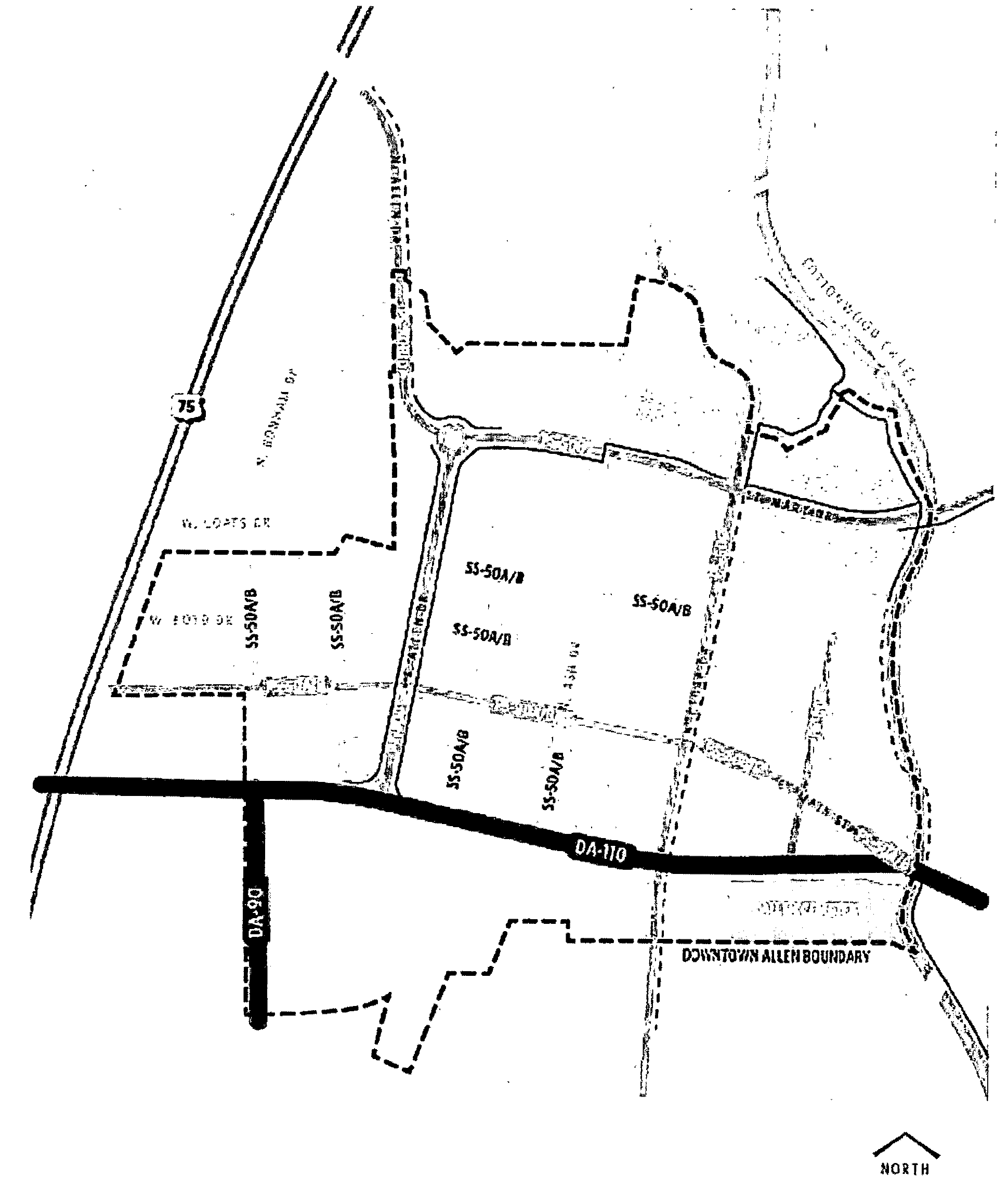
Street types. All streets within the downtown district shall be designed to be in general conformance with the adopted street sections in the downtown thoroughfare plan (Table 1 and Figure 2), which is a component of the city's master thoroughfare plan (article IX, section 9.01 of this Code).
The downtown district includes three street type classifications: downtown arterial streets, downtown primary streets, and downtown secondary streets. In order to provide design flexibility that is context sensitive, each street type classification includes a number of sections that may be incorporated into the final design. These options are illustrated in the downtown thoroughfare plan Figures 3 to 15.
Table 1. Proposed Street Classifications and Rights-of-Way
FIGURE 2. DOWNTOWN ALLEN STREET HIERARCHY MAP
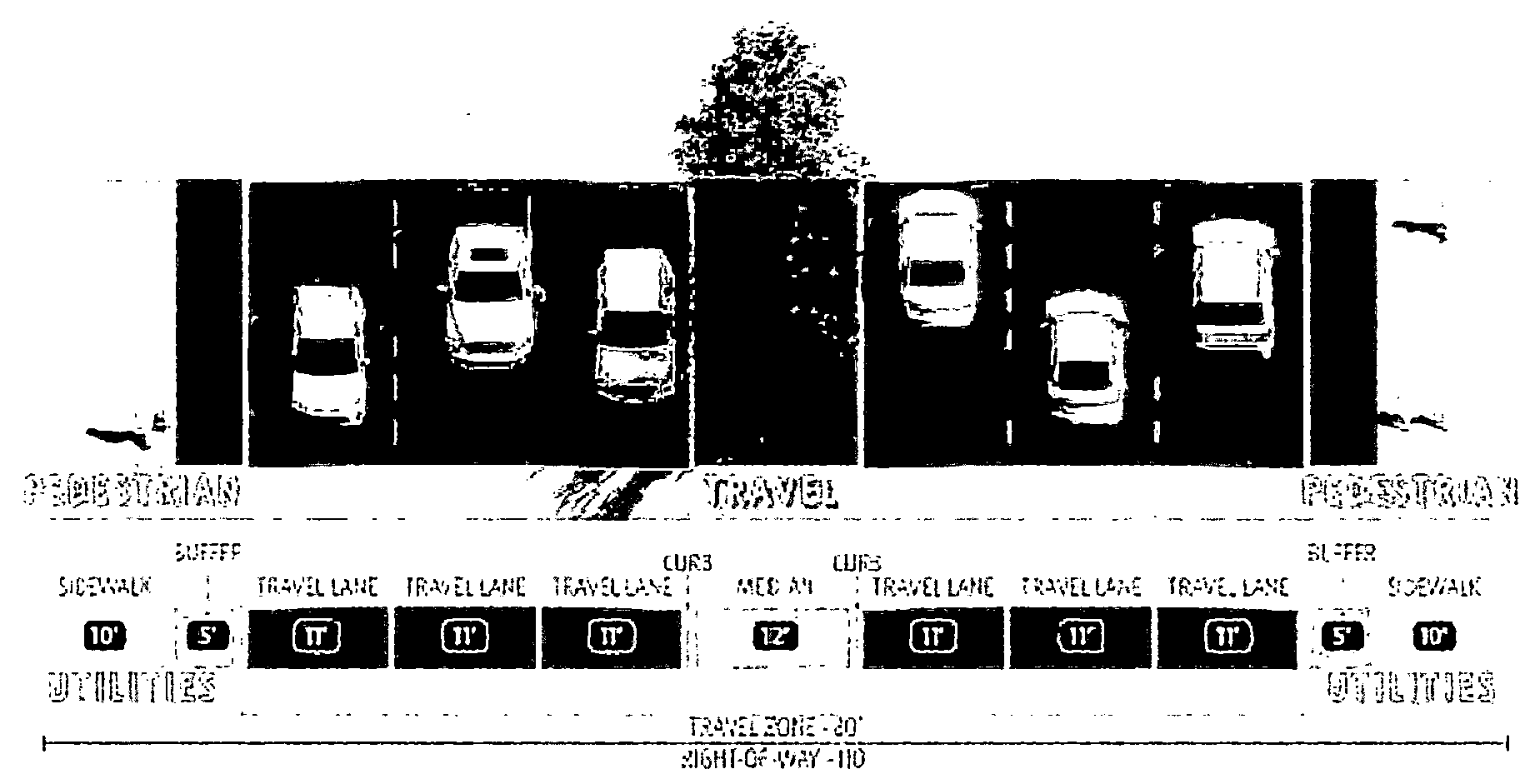
ARTERIAL STREETS — 110' ROW
Key Characteristics
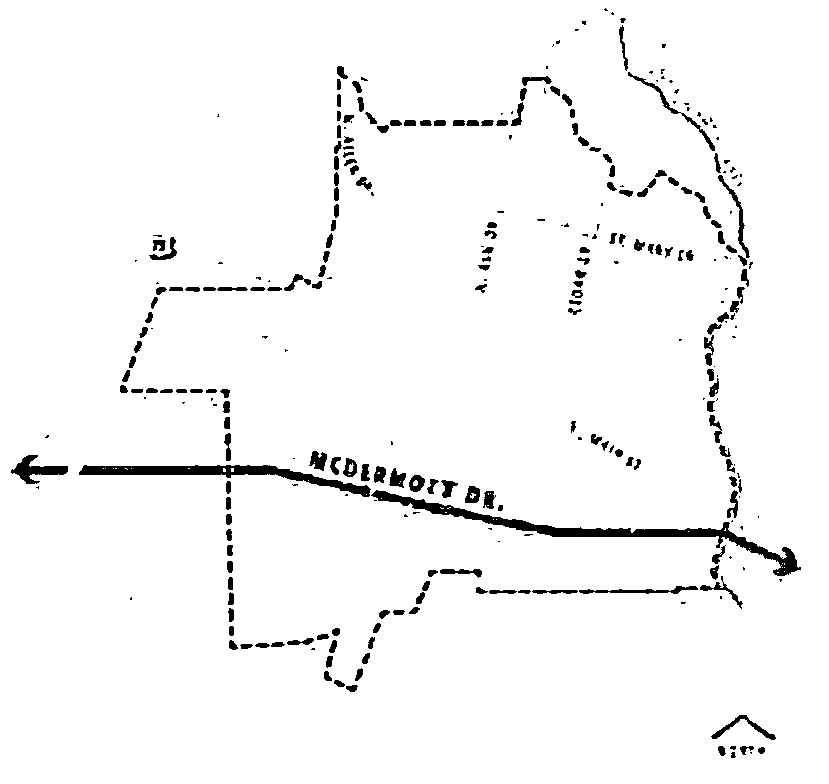
FIGURE 3. CROSS-SECTION DA-110
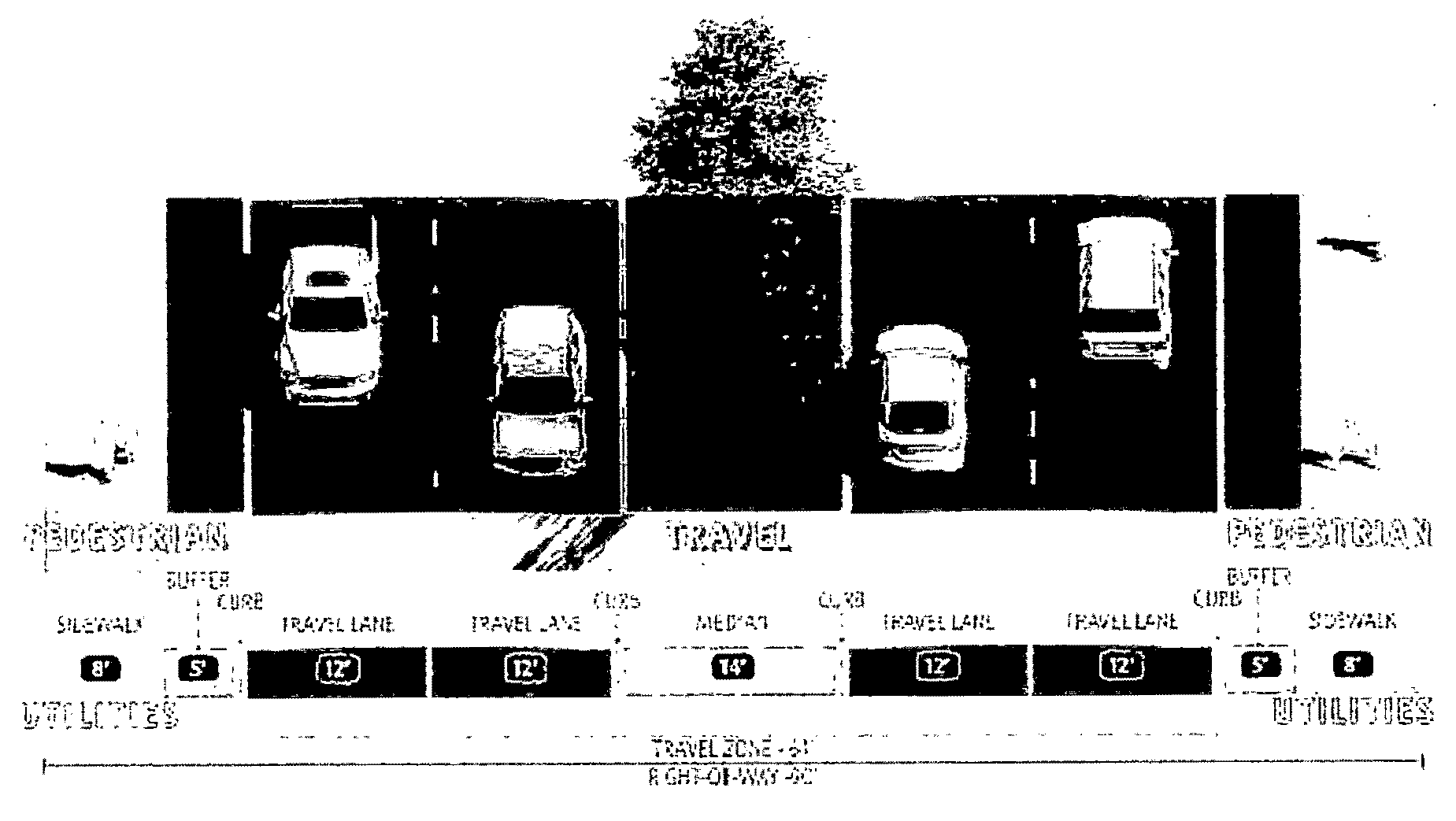
ARTERIAL STREETS — 90' ROW
Key Characteristics
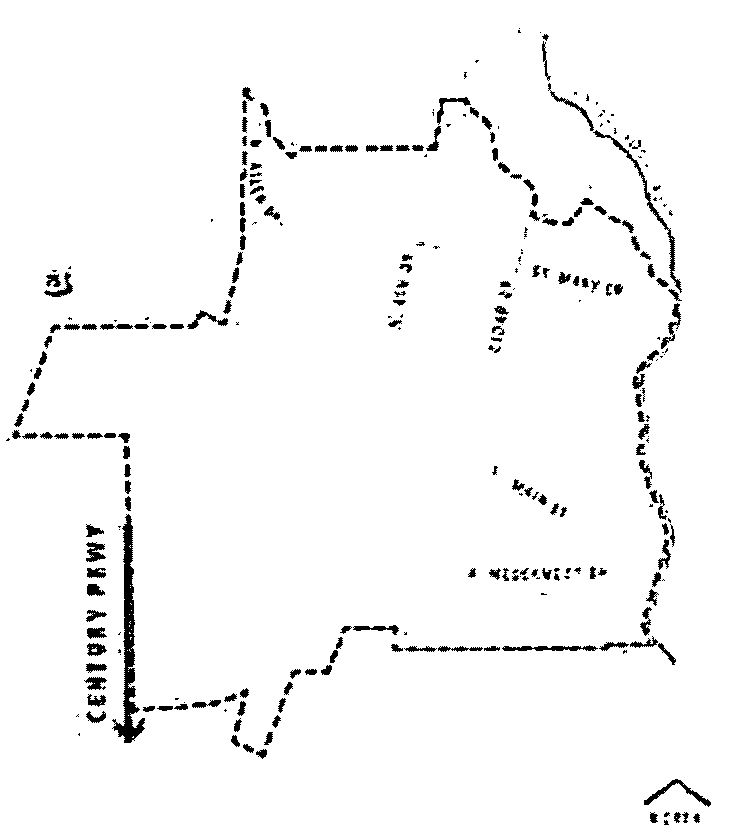
FIGURE 4. CROSS-SECTION DA-90
PRIMARY STREETS — 80' ROW
Key Characteristics
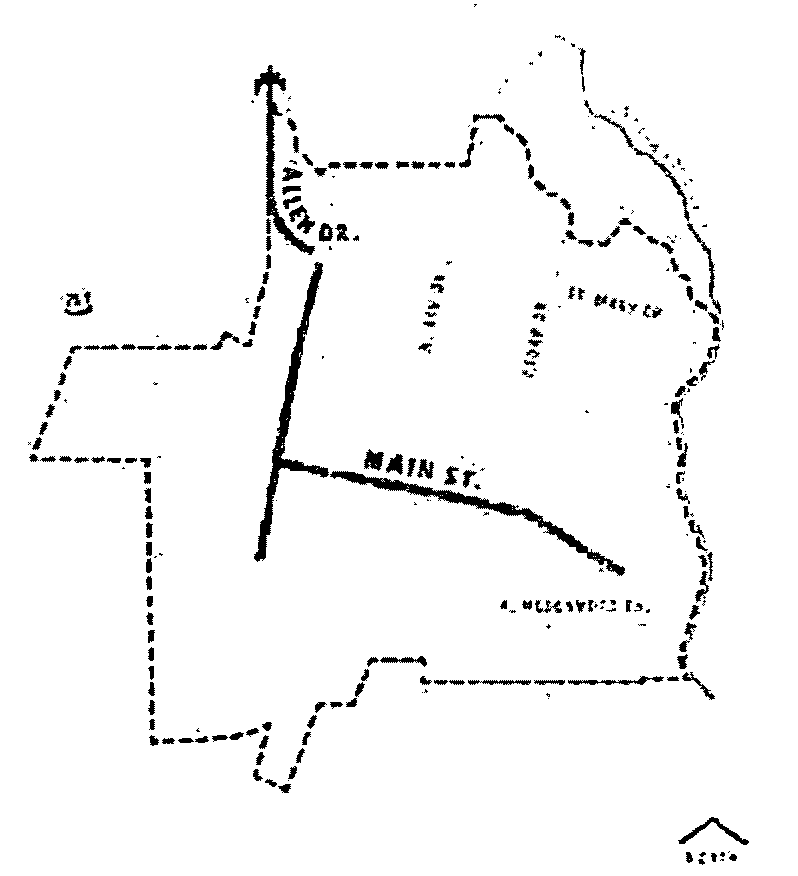
FIGURE 5. CROSS-SECTION: PS-80A
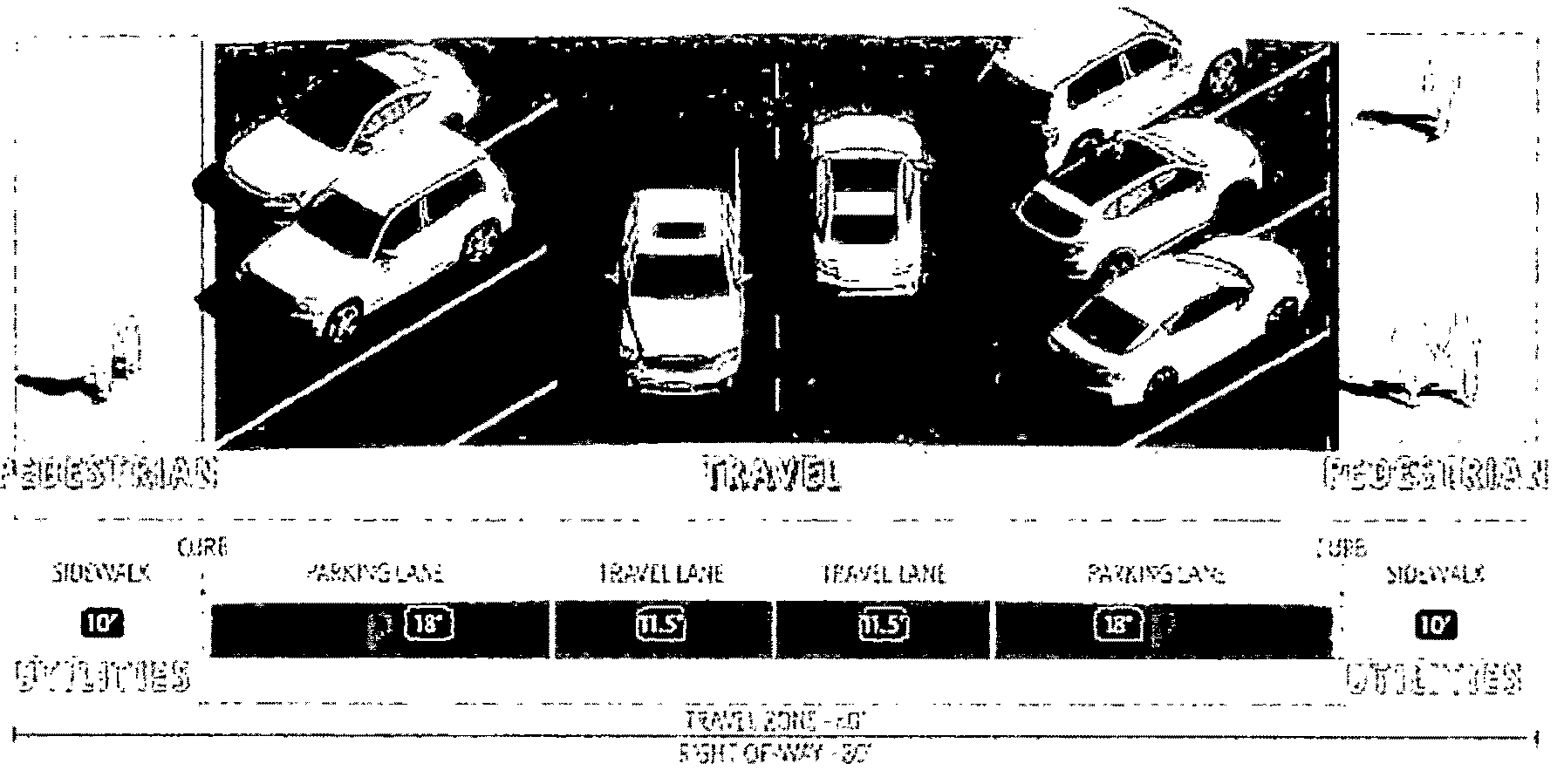
FIGURE 6. CROSS-SECTION: DA-80B
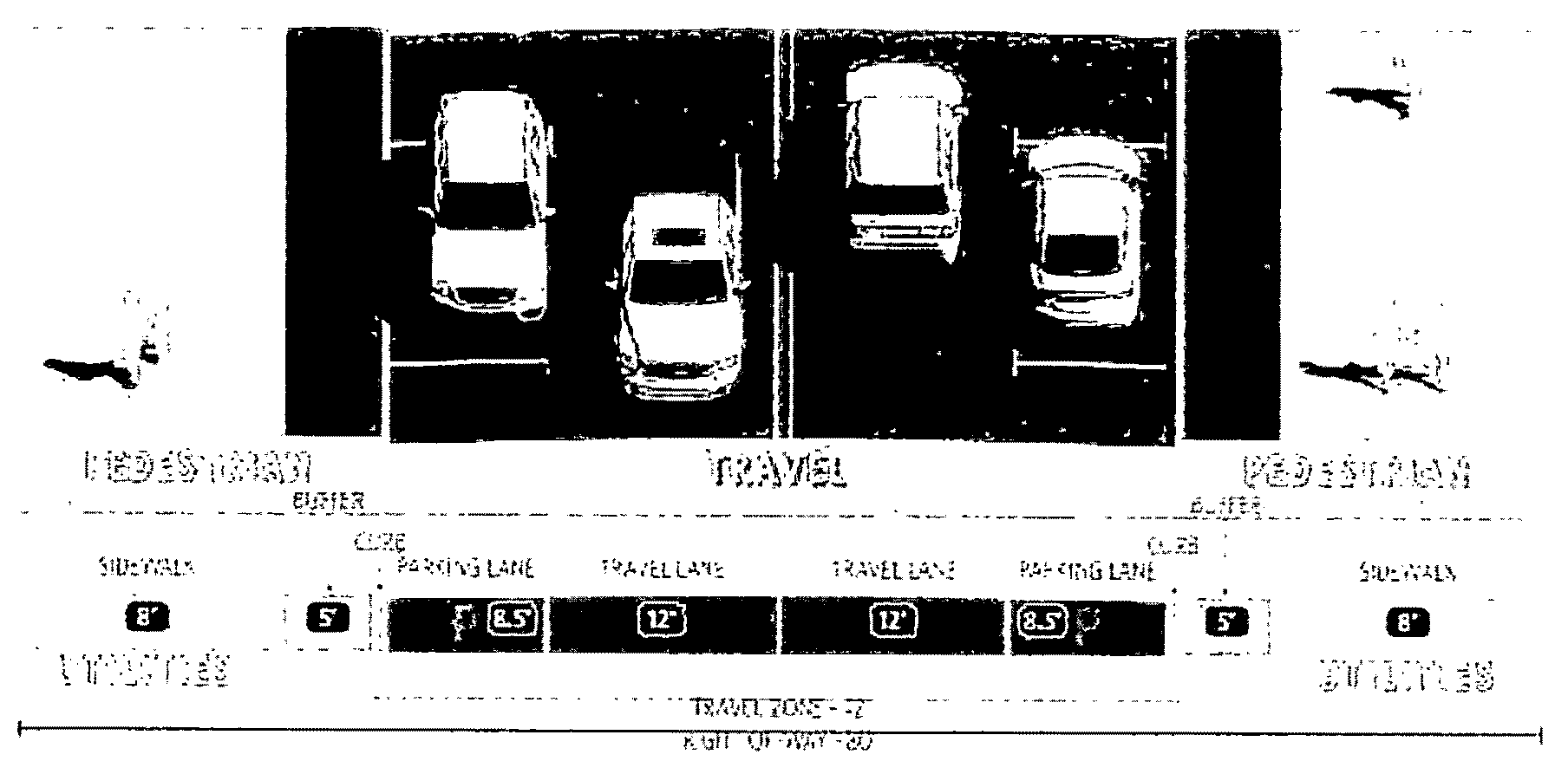
FIGURE 7. CROSS-SECTION: PS-80C
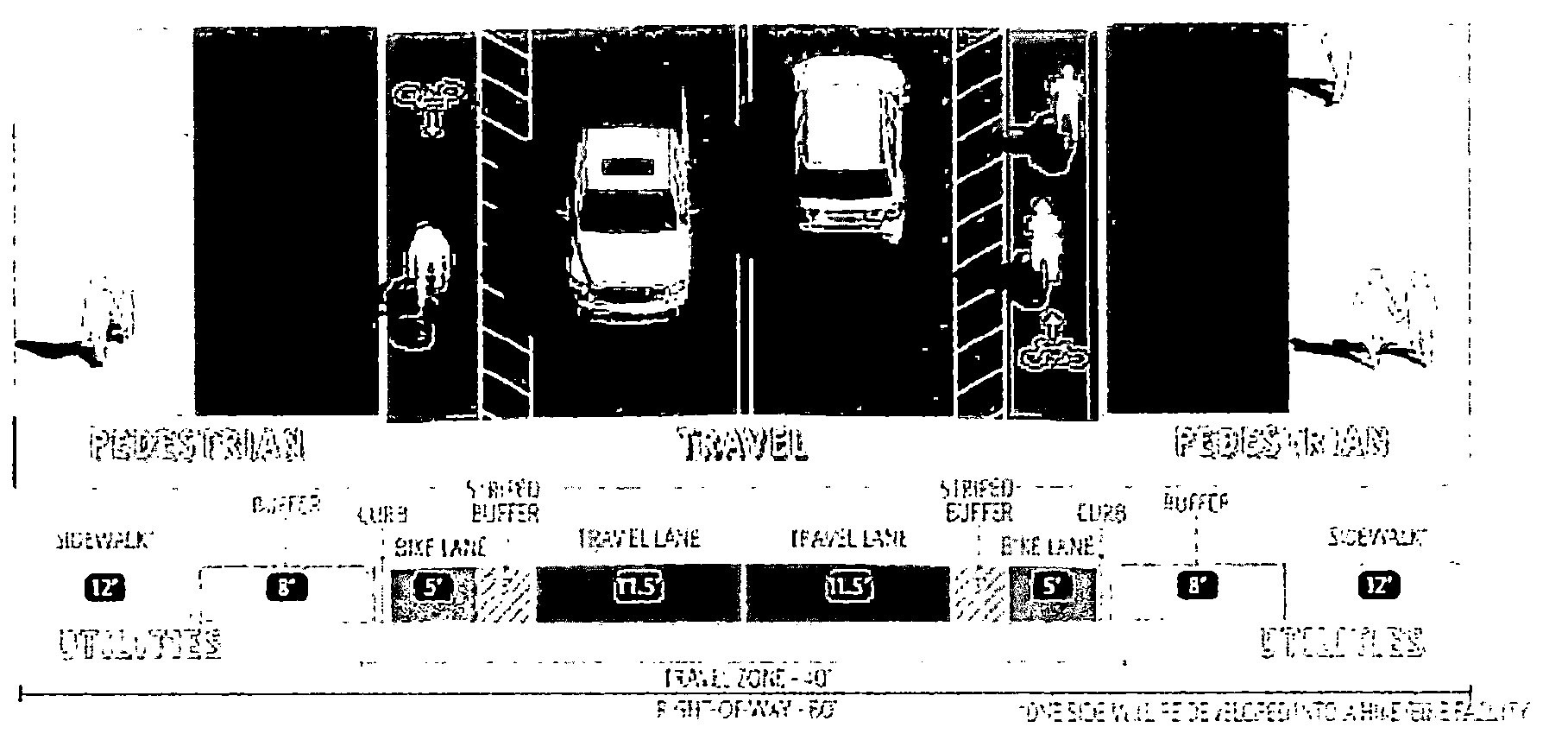
FIGURE 8. CROSS-SECTION: PS-80D
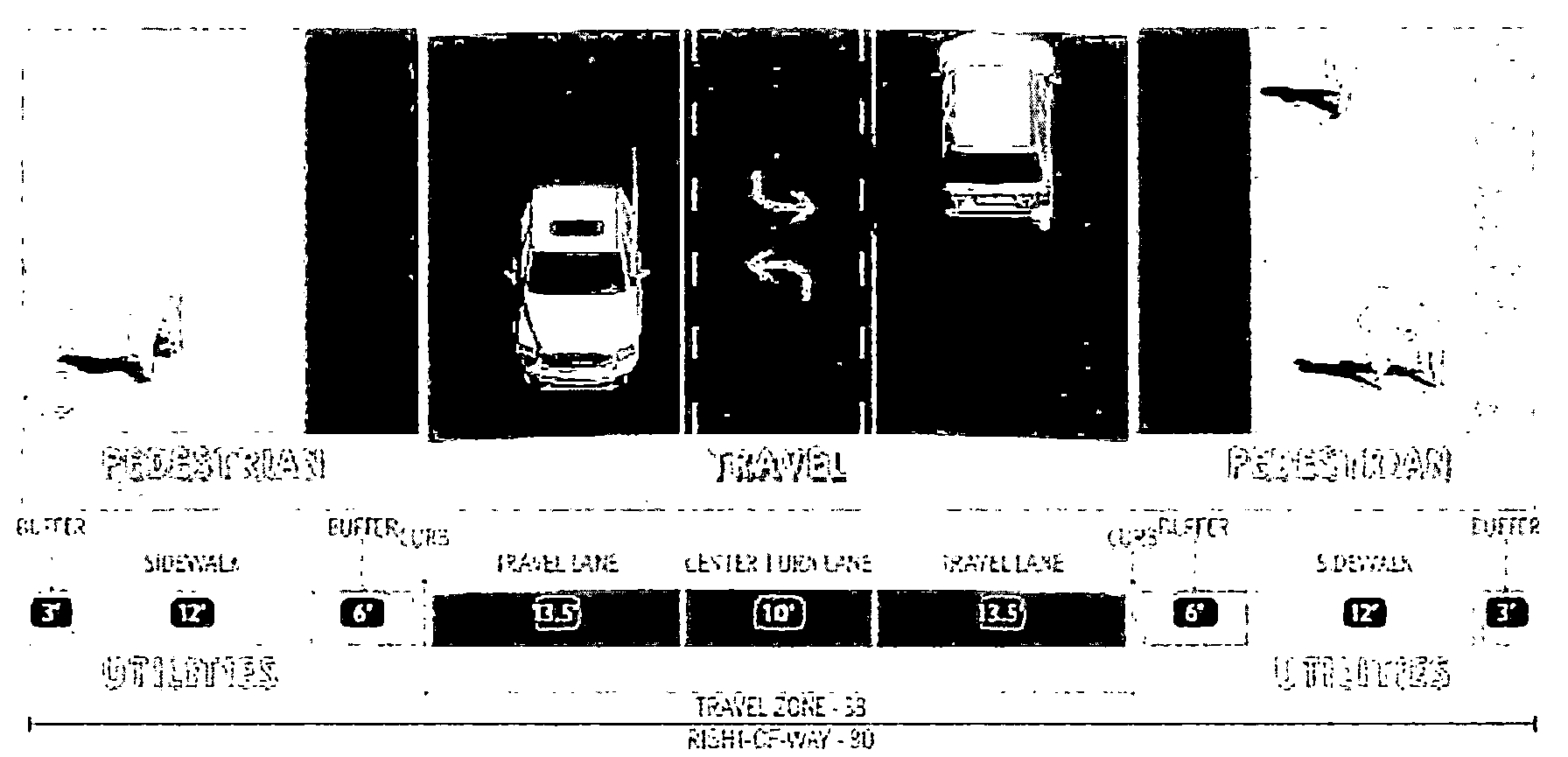
PRIMARY STREETS — 60' ROW
Key Characteristics
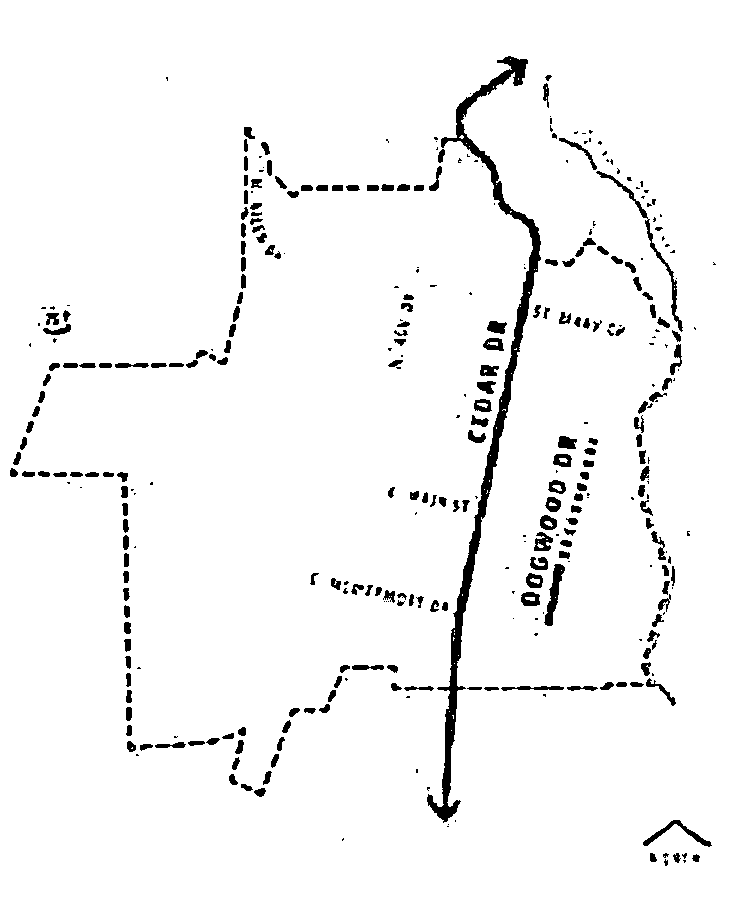
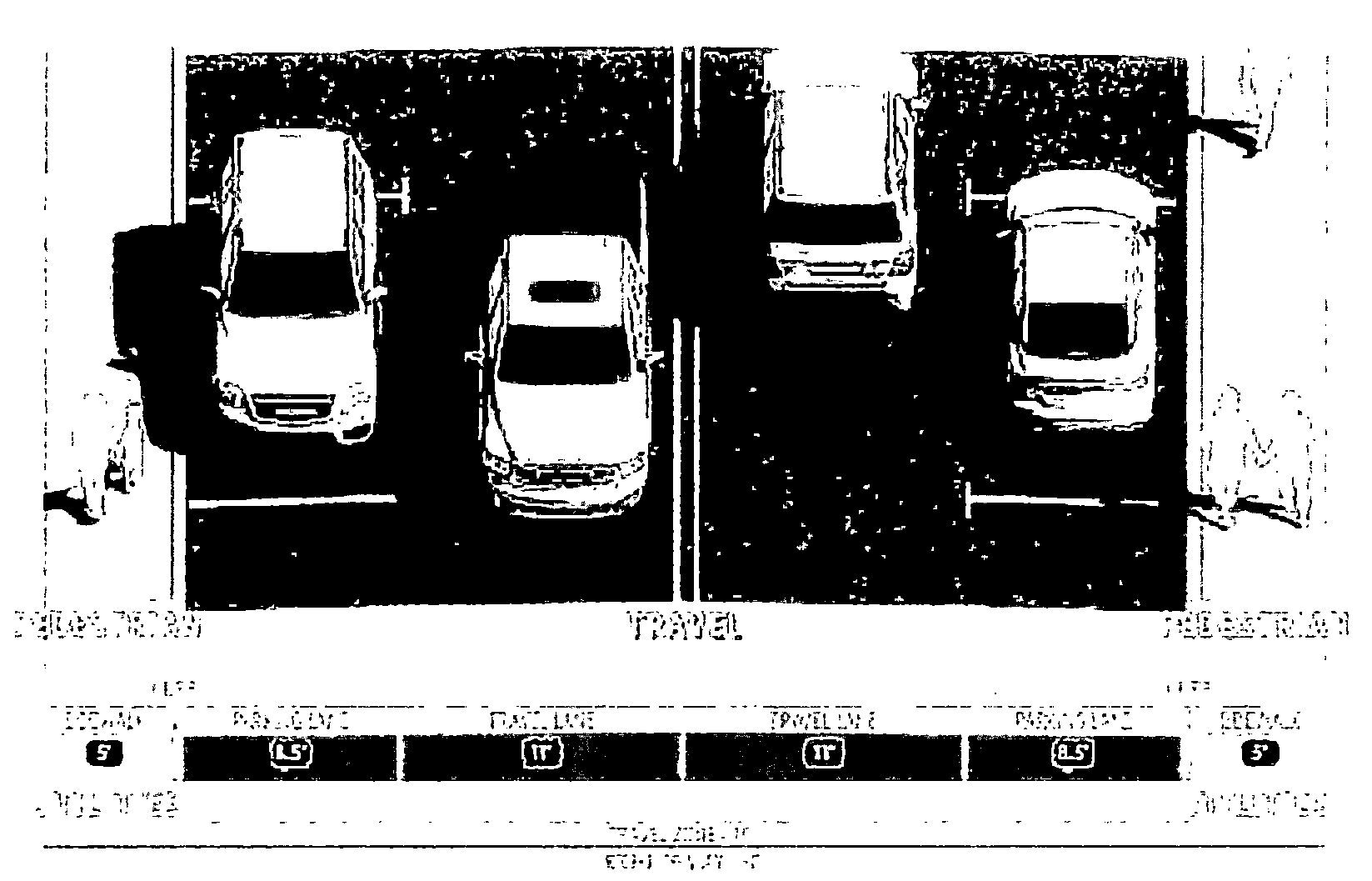
FIGURE 9. CROSS-SECTION: PS-60A
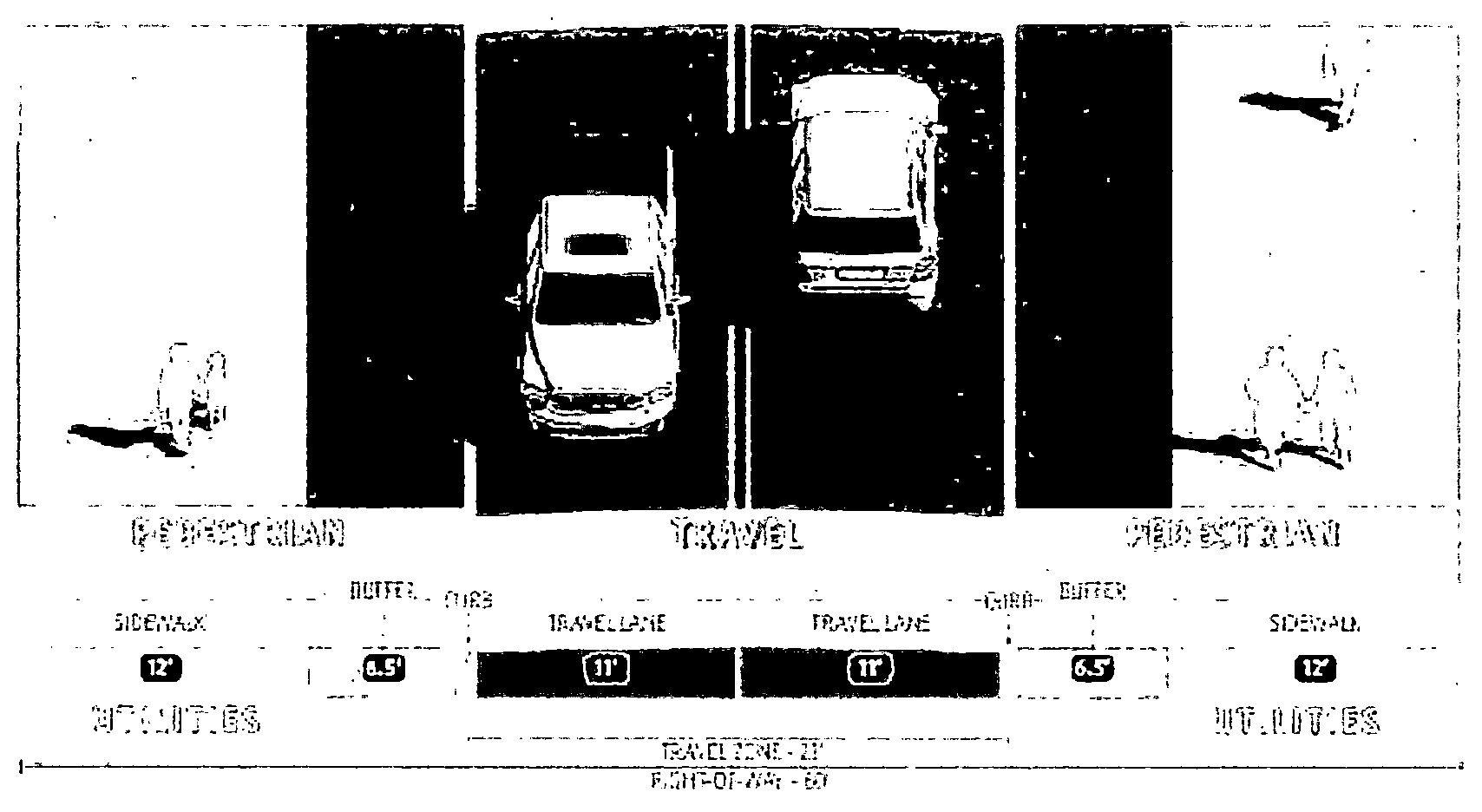
FIGURE 10. CROSS-SECTION: PS-60B
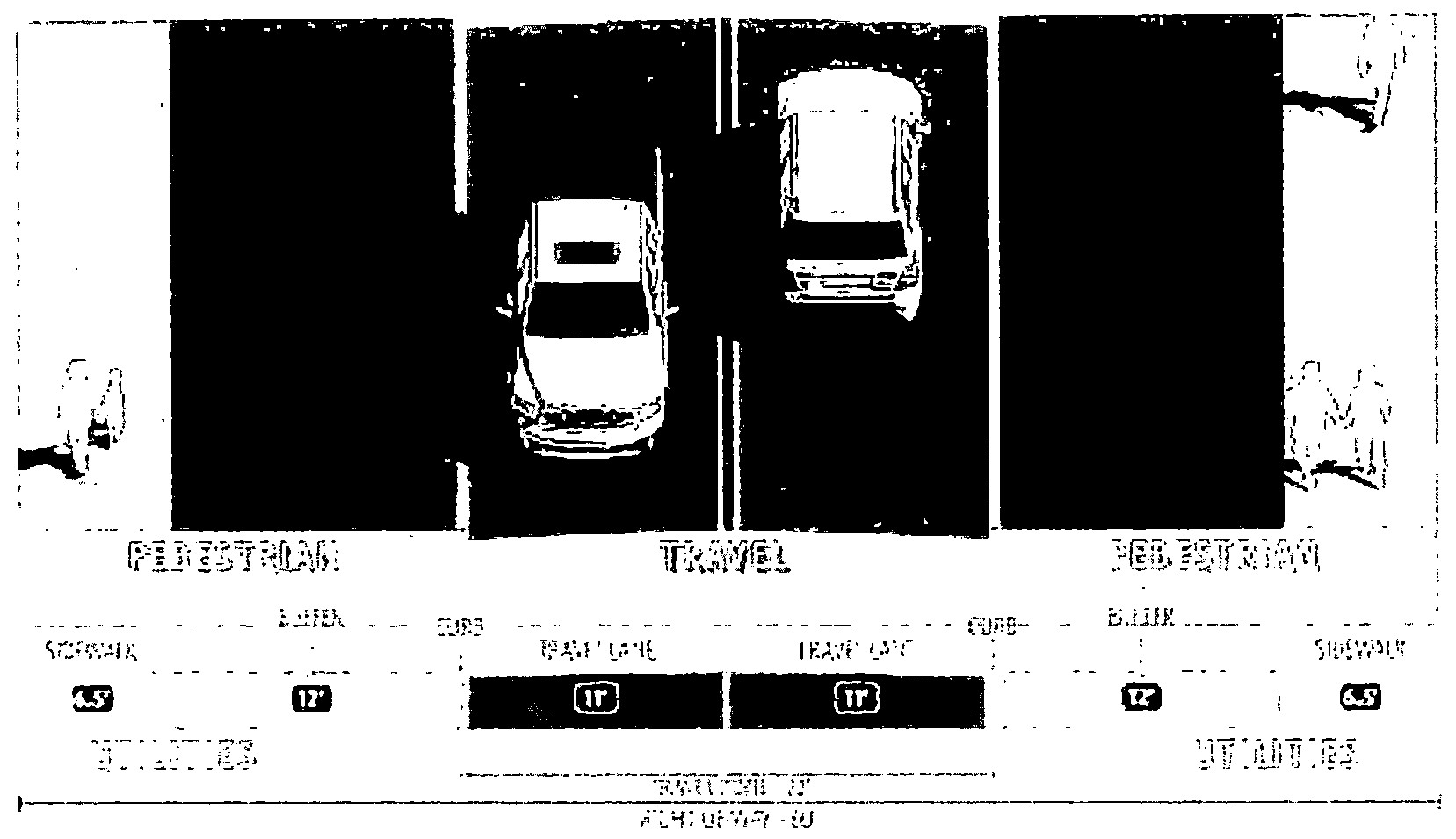
FIGURE 11. CROSS-SECTION: PS-60C
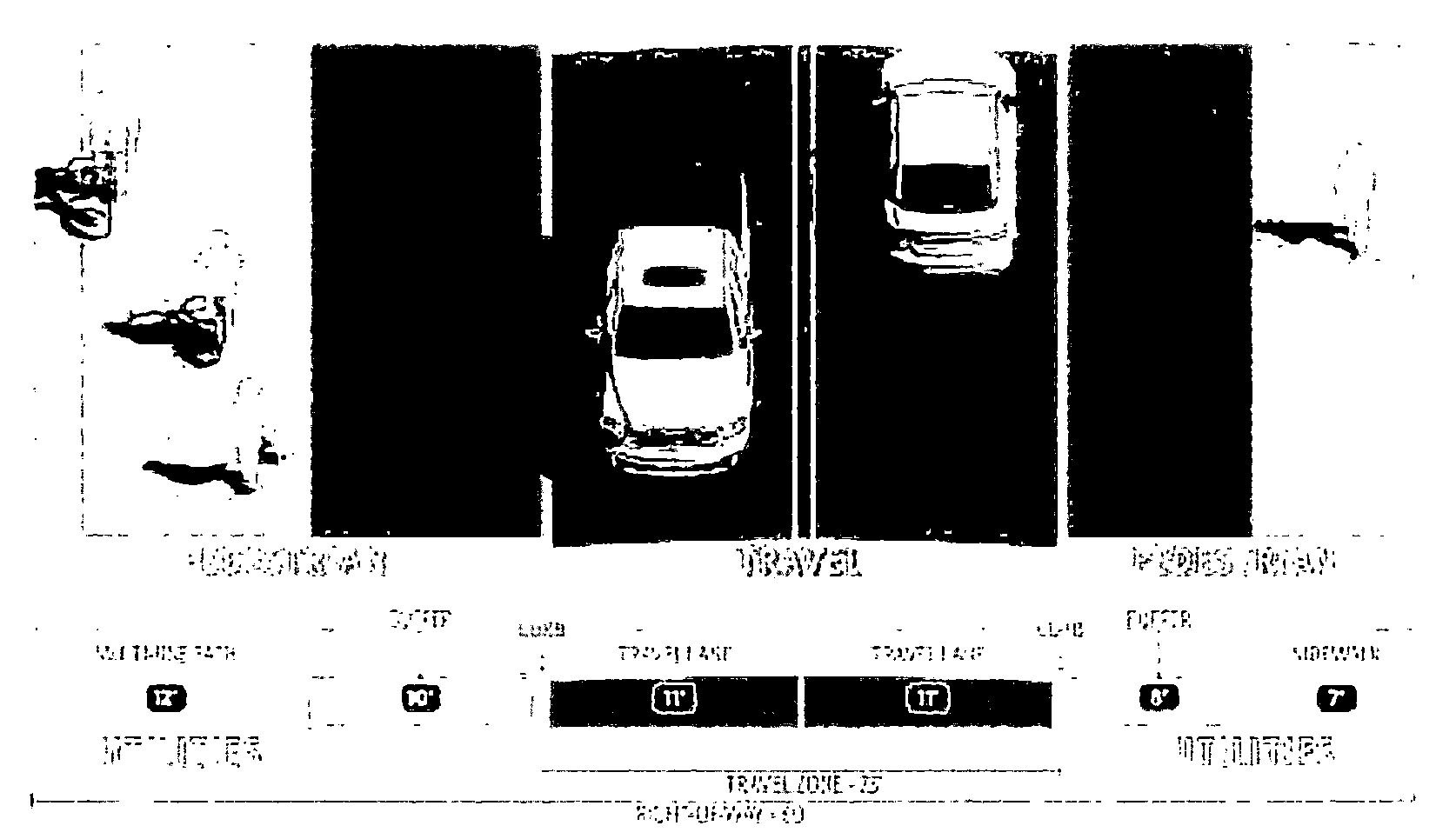
PRIMARY STREETS — 50' ROW
Key Characteristics
FIGURE 12. CROSS-SECTION: PS-50A
;FIGURE 13. CROSS-SECTION: DA-50B
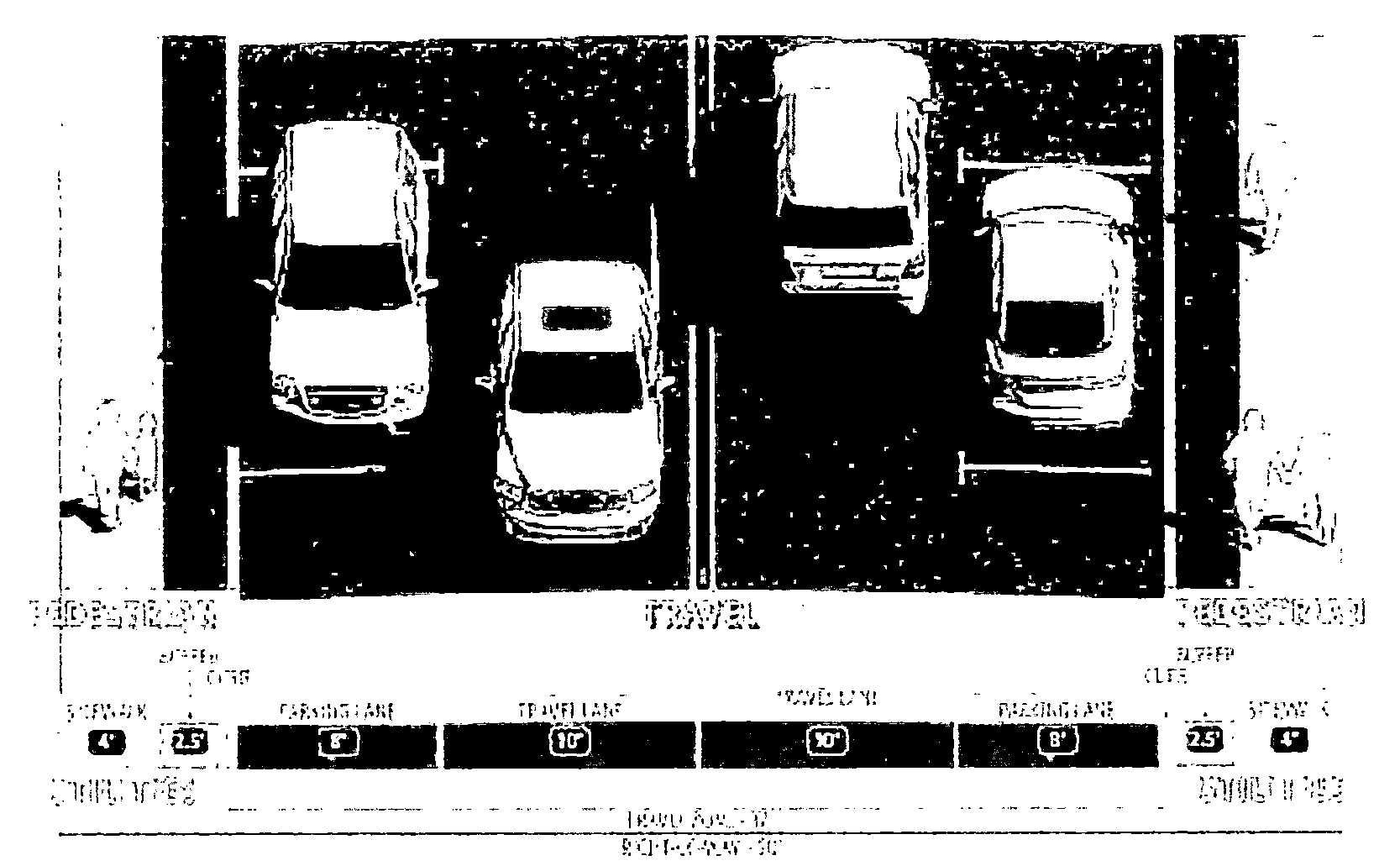
SECONDARY STREETS — 50' ROW
Key Characteristics
FIGURE 14. CROSS-SECTION: SS-50A
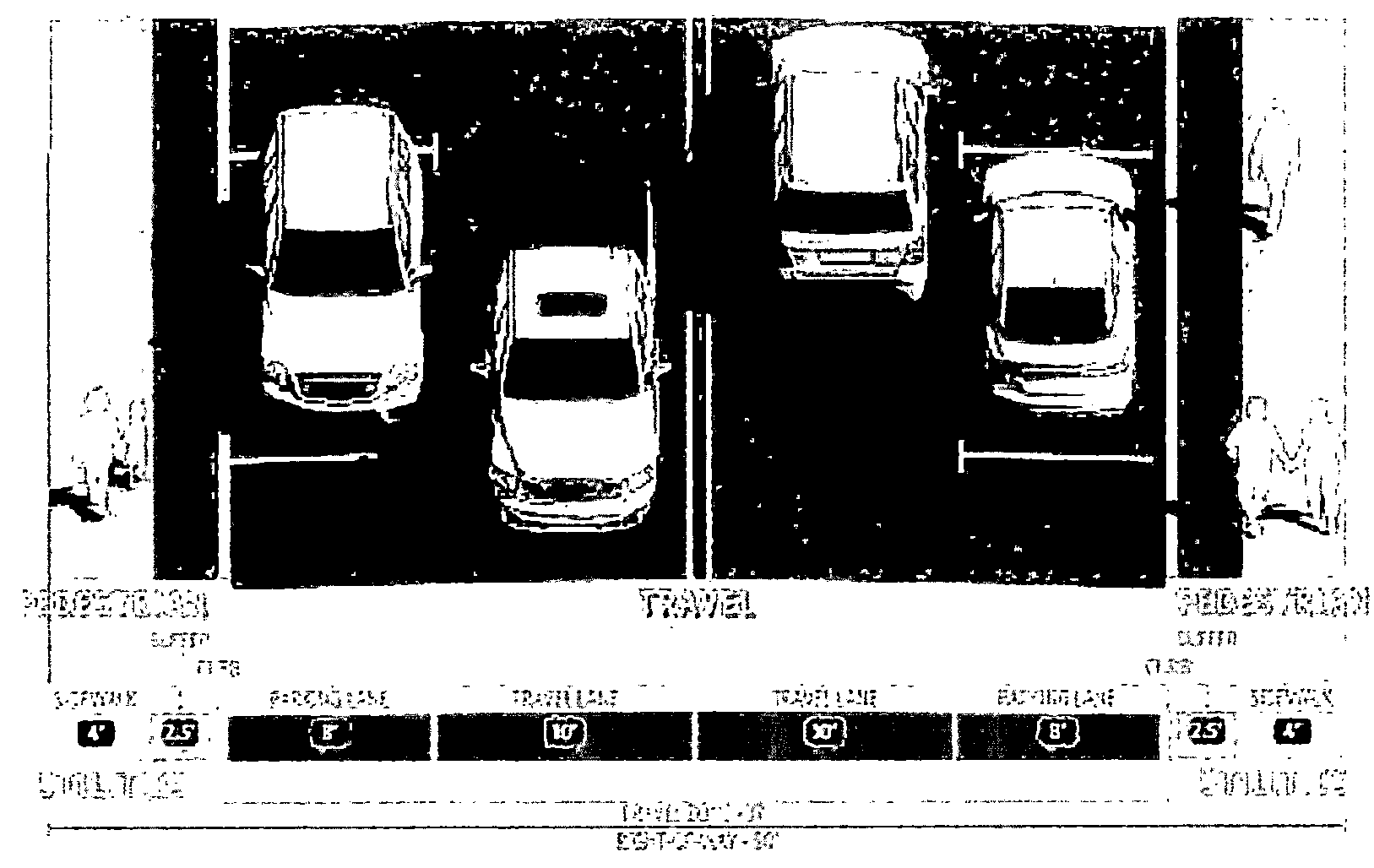
FIGURE 15. CROSS-SECTION: SA-50B
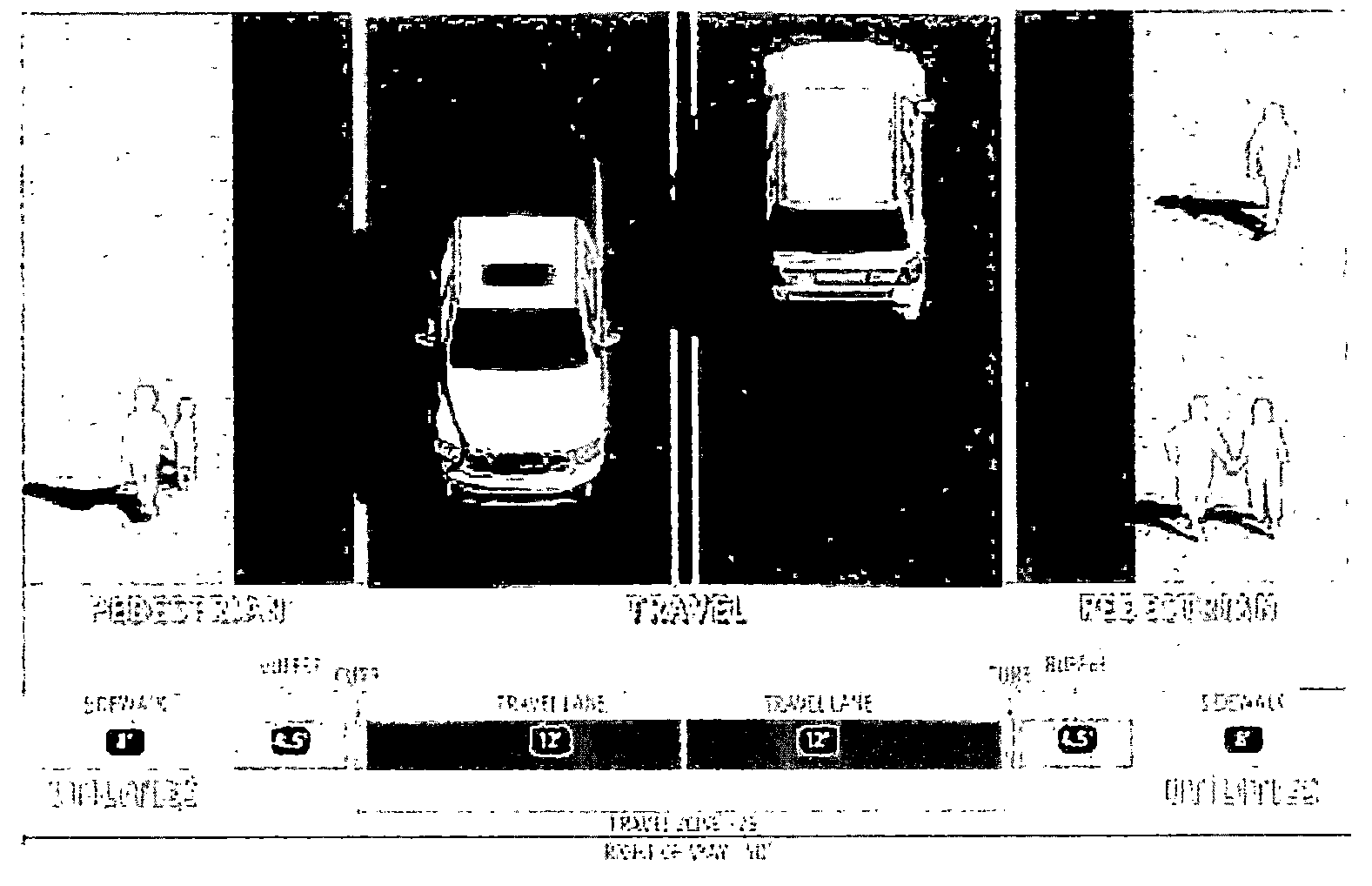
4.
Downtown design review board.
a.
Membership. The downtown design review board shall consist of seven voting members appointed by the city council who have the following qualifications:
i.
To the extent possible, two members shall be design professionals with a degree and/or not less than five years of experience in real estate development, architecture, landscape architecture, planning, urban design, or similar professional field who have resided in the city for a period of at least one year prior to the date of appointment and are, at the time of their appointment, registered voters within the city, and are residents of the city throughout their term of appointment; and
ii.
Two members who, at the time of their appointment, are owners of property within the downtown district, owners, officers, or employees in a management position of a business located in the downtown district, and/or owners, officers, or employees in a management position of a business entity that owns a business located in the downtown district; and
iii.
Three members who have resided in the city for a period of at least one year prior to the date of appointment and are, at the time of their appointment, registered voters within the city, and are residents of the city throughout their term of appointment.
If the city council does not receive sufficient applications to fill the positions described in paragraphs i. and/or ii., above, such positions may be filled by people who satisfy the qualifications of the other paragraphs above; provided, however, the majority of the members shall at all times be people who have resided in the city for a period of at least one year prior to the date of appointment and are, at the time of their appointment, registered voters within the city.
b.
Organization; meetings. The downtown design review board shall elect a chairperson and vice-chairperson annually at its first regular meeting in October who shall serve for a period of one year or until the person's successor is elected.
i.
Chairperson. The chairperson shall preside at all meetings when present and shall implement any practice or procedure in the calling of meetings, conducting of meetings, or reporting of activities, that the chairperson considers in the best interest of the board and shall inform or consult with the city council when requested and at such times when it deems necessary.
ii.
Vice-chairperson. The vice-chairperson shall assist the chairperson in directing the affairs of the board and shall preside in the absence of the chairperson.
iii.
City manager. The city manager shall be responsible for keeping of minutes of all board meetings, maintaining the records of the board, and for delivery and posting of notices. References in this section to the city manager shall include such other city employees to whom the city manager may from time to time delegate the city manager's authority and responsibilities described in this section.
iv.
The board shall establish its own rules and procedures and conduct such meetings as may be required to fulfill its responsibilities; provided, however, all meetings shall be conducted in accordance with the Texas Open Meetings Act.
v.
The board shall meet in the city hall or other specified location at such times as may be designated by the chairperson and at such intervals as may be necessary to transact the business of the board in a proper and orderly manner.
c.
Term. To provide for staggered terms, the appointment of downtown design review board members identified by the city secretary as places 2 and 7, shall be appointed to initially serve a full three-year term. The appointment of downtown design review board members identified by the city secretary as places 4 and 6, shall be appointed to serve an initial term of two years, and downtown design review board members identified by the city secretary as places 1, 3, and 5 shall be appointed to serve an initial term of one year, with places 1, 3, 4, 5, and 6, being subsequently appointed to serve a full three-year term.
d.
Powers and duties. The downtown design review board shall have the following powers and duties:
i.
To review and approve or disapprove minor modifications in the cultural core overlay district as defined in subsection 4.08.19.6.a;
ii.
To review and approve or disapprove major modifications in the downtown district as defined in subsection 4.08.19.6.b;
iii.
To review and approve or disapprove architectural renderings and plans of all proposed façade improvements (either modifications or new construction) in the cultural core overlay;
iv.
To review requests for designation of a culturally significant structure and make a recommendation for such designation to the city council;
v.
To serve as an advisory board for any long-range planning activities related to the downtown district; and
vi.
To make recommendations to the city council concerning amendments to the regulations relating to the use and development of property within the downtown district.
e.
Procedures. The downtown design review board shall meet in city hall or other specified location at such times as may be designated by the chairperson and at such intervals as may be necessary to transact the business of the downtown design review board in a proper and orderly manner, but not less than once every three months. All meetings will be held in conformance with state law.
i.
Four members of the downtown design review board shall constitute a quorum and all members, including the chairperson, shall have the right of one vote each, a quorum being present. All actions of the downtown design review board shall be by a majority vote of those members present and an affirmative vote of four members shall be necessary for the passage of any action.
ii.
Staff should coordinate periodic training workshops for downtown design review board members regarding the subject of planning, zoning, comprehensive plans, historic preservation, open meetings, or other subjects of benefit to the members and the functioning of the downtown design review board.
f.
Appeal. Any determination of the downtown design review board regarding standards of the downtown district may be appealed to the city council by the applicant. An appeal must be filed in writing with the community development department accompanied by a fee established by the city council by resolution from time to time not later than the tenth business day after the date of the decision of the board. The appeal shall state the specific relief sought and the reasons therefor and provide the justification for the relief requested. The city council shall act on an appeal not later than 60 business days after the date the written appeal is filed. The failure to act within the 60-day period shall be deemed an approval of the appeal. In considering the appeal, the sole issue before the city council is whether the board erred in its decision. The appeal to the city council shall be the final administrative remedy.
g.
Variances and special exceptions. Applications for variances and special exceptions that are not specifically included in section 4.08.19 downtown district shall comply with the procedures set forth in article II administration, section 2.01 planning and zoning commission, section 2.02 board of adjustments, and article IV zoning regulations, section 4.06 changes and amendments of this Code.
5.
Application review process. Each application for a major modification, minor modification, or designation of culturally significant structure, shall be made in writing on an application form available from the city and shall be accompanied by payment of the fees required in the fee schedule adopted by resolution of the city council. If no progress is made toward completion of the application within two years following acceptance of the application, then the application shall be deemed expired and subsequently withdrawn from consideration. Progress toward completion shall be defined in V.T.C.A., Local Government Code § 245.005, as amended.
6.
Code modifications. Based on site-specific issues, an applicant may request one or more minor modifications and/or major modifications to the standards of the downtown district as described in this section 4.08.19.6 without the necessity of seeking an amendment to the zoning regulations applicable to the to the property. Such modification may be granted if intent of the standards of the downtown district are substantially satisfied, the modification results in a better urban design for the area, and the modification does not impede or burden existing or future development of adjacent properties. Minor and major modifications may be approved as follows:
a.
Minor modifications. Except for minor modifications for property within the cultural core overlay district, minor modifications may be approved by the city manager. Minor modifications for property within the cultural core overlay district may only be approved by the downtown design review board. Any decision made by the city manager relating to the failure to grant in part or in full a request for a minor modification may be appealed to the downtown design review board. Any decision made by the downtown design review board relating to the failure to grant in part or in full a request for a minor modification, including a decision upholding an appeal to the city manager's prior decision to deny in part or in full a request for a minor modification, may be appealed to the city council. Minor modifications shall be limited to the following:
i.
Deviations of 20 percent or less to the following standards provided the project (i) continues to meet or exceed all other requirements for buildings in this section and (ii) provides public open space in accordance with and may be used to satisfy the requirements in subsection 4.08.19.6.c.i.:
(a)
Height and area requirements in subsection 4.08.19.8.d Table 3, specifically:
(1)
Minimum lot area;
(2)
Maximum lot coverage;
(3)
Maximum block length;
(4)
Minimum building frontage; and
(5)
Minimum first floor transparency;
(b)
Quantity of landscape materials and/or area required by subsection 4.08.19.11; and
(c)
Number and/or size of signs authorized by subsection 4.08.19.13.
ii.
A reduction not to exceed 20 percent of the number of required off-street parking spaces for nonresidential uses if:
(a)
Required off-street parking is provided entirely in structured garage, located within 800 feet of the nonresidential use; and
(b)
Not less than ten percent of the remaining off-street parking spaces provided in the structured parking garage are unreserved and open for general public parking.
b.
Major modifications. The downtown design review board shall have the authority to approve major modifications for any property within the downtown district. Any decision made by the downtown design review board relating to the failure to grant in part or in full a request for a major modification may be appealed to the city council, whose decision shall be final. Major modifications shall be limited to the following:
i.
Deviations from the architectural standards in section 4.08.19.9 limited to the following may be granted, provided the proposed design, after the major modifications (i) continues to the extent possible to retain and/or be compatible with the architectural details (e.g., trim, shutters, columns, porches, and other elements) of the existing structure and/or adjacent structures and (ii) reflects at least two similarities to the elements shown in images for building types and in Figures 16 to 21 in section 4.08.19.9, below:
(a)
Location of building types;
(b)
Location and placement of a building on the lot;
(c)
Orientation of the principal entrance to a building; and
(d)
Requirements for building façades, fenestration, and materials.
ii.
A reduction not to exceed 20 percent of the number of required off-street parking spaces is allowed for nonresidential uses in the cultural core overlay district if:
(a)
A parking study submitted to the downtown design review board shows proximity of the property to transit supportive modes of transportation (such as pedestrian or bike trail reducing daily trips by car or mass transit where available) and specific land uses that support a reduction in parking through time of use, type, patronage distribution, systems, and other appropriate factors, including walkable, livable environments; and
(b)
Not less than ten percent of the remaining off-street parking spaces provided in the structured garage are unreserved and open for general public parking.
c.
Cottonwood Creek overlay district density bonus. The maximum residential density within the Cottonwood Creek overlay district may be increased up to 45 dwelling units per acre (i.e., a "density bonus") subject to the following:
i.
Eligibility requirements for density bonus. A density bonus may be requested for a development located in the Cottonwood Creek overlay district subject to compliance with one of the following:
(a)
Structured parking. All off-street parking for the development consists of structured parking subject to the following:
(1)
Not less than 20 percent of the parking spaces must be unreserved, available and accessible for general public parking, of which ten percent of the public parking spaces may be counted toward off-street parking requirements;
(2)
The structured parking must be located on the interior of the site or lined with habitable space along all street-facing façades at street level and follow the architectural standards in subsection 4.08.19.9.d.viii.; and
(3)
The structured parking facility must otherwise comply with the parking requirements in this section and the ALDC; or
(b)
Public open space. In addition to any park land dedication that may be required in relation to the development, the development includes not less than 2,500 square feet of privately maintained and publicly accessible open-air and functional open space to support community cultural activities or a payment into the downtown improvement fund according to the requirement in section 4.08.19.14 may be made in lieu of the dedication and development of the open space. Such open space shall be subject to the following:
(1)
Such open space must consist of a plaza, a park, or a combination thereof accessible from the street and connected to an adjacent sidewalk or trail;
(2)
Such open space must be developed with:
(i)
Hardscape and/or softscape that includes a minimum of two of the following per 2,500 square feet of open space:
a.
Minimum two ornamental or one shade trees;
b.
Minimum four raised planters with plant materials equaling 75 square feet in size;
c.
Minimum 125 square feet of at-grade plantings in the hardscape;
d.
Minimum two trash receptacles similar to those shown in Figure 16;
e.
Minimum two bike racks similar to those shown in Figure 17;
f.
Minimum one outdoor electrical receptacle and speaker for outdoor music; and
(ii)
Not less than one of the following amenities:
a.
A shade structure over at least five percent area of the provided open space with a minimum of two shade sails in a design similar to those shown in Figure 18. A shade structure made of wood or metal in designs similar to those shown in Figure 19 may be used to satisfy this requirement;
b.
A central water feature not less than 100 square feet similar to those shown in in Figure 20;
c.
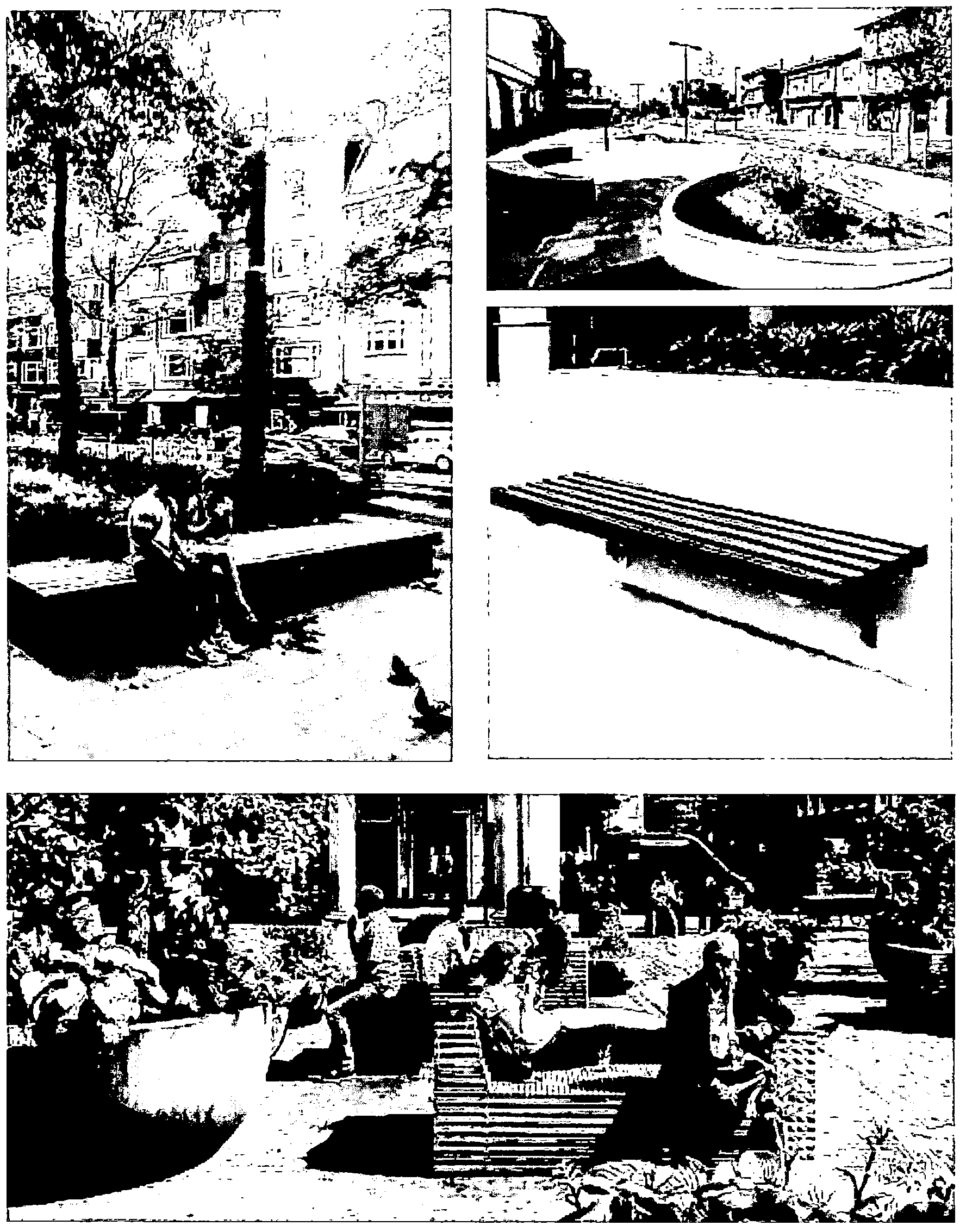
Not less than two benches for seating similar to the ones shown in in Figure 21; or
d.
Any other amenity approved by the city manager and found to be equivalent in value to those noted above in this subsection 4.08.19.6.c.i.2).b).ii).
FIGURE 16. EXAMPLE IMAGERY OF TRASH CANS
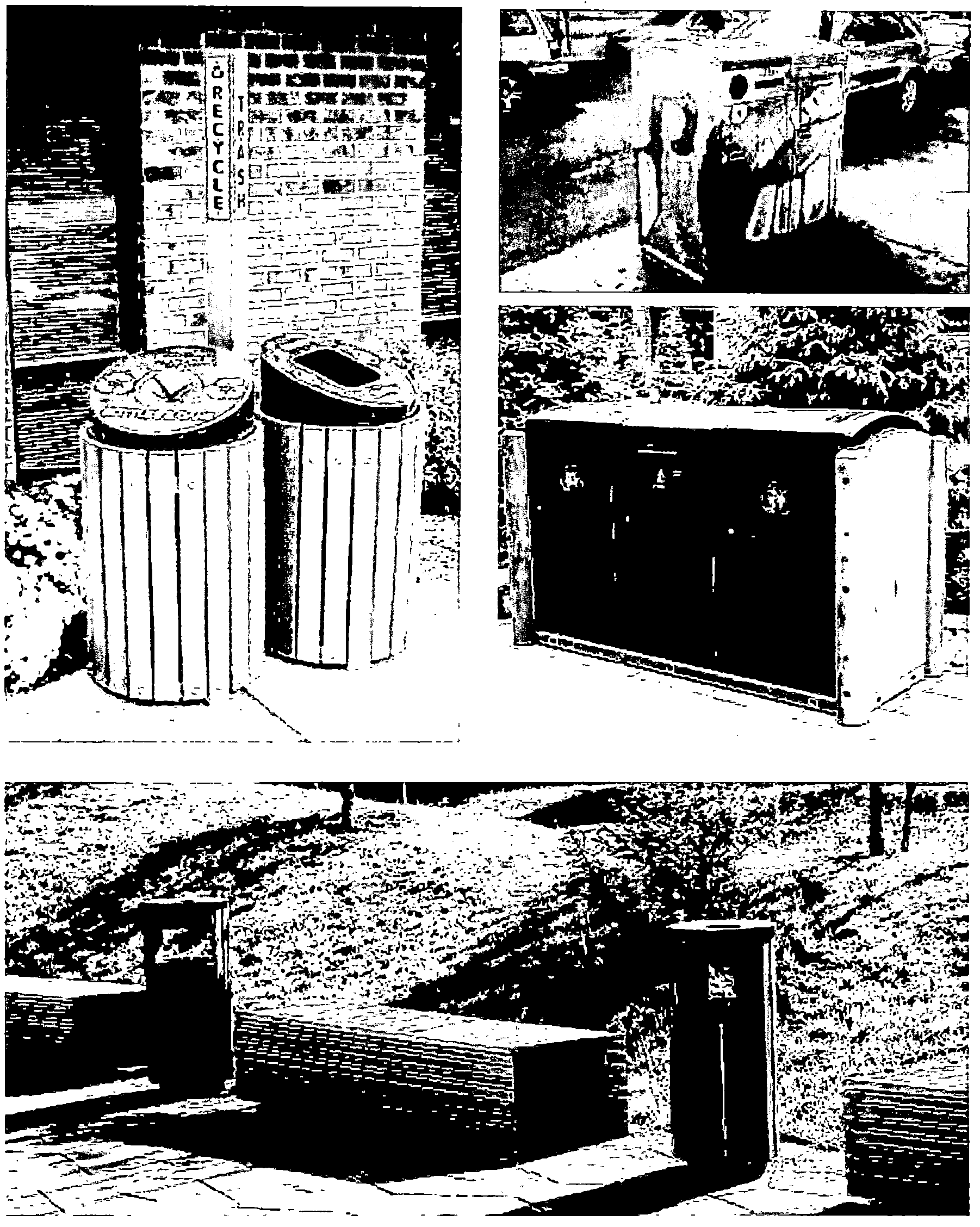
FIGURE 17. EXAMPLE IMAGERY OF BIKE RACKS
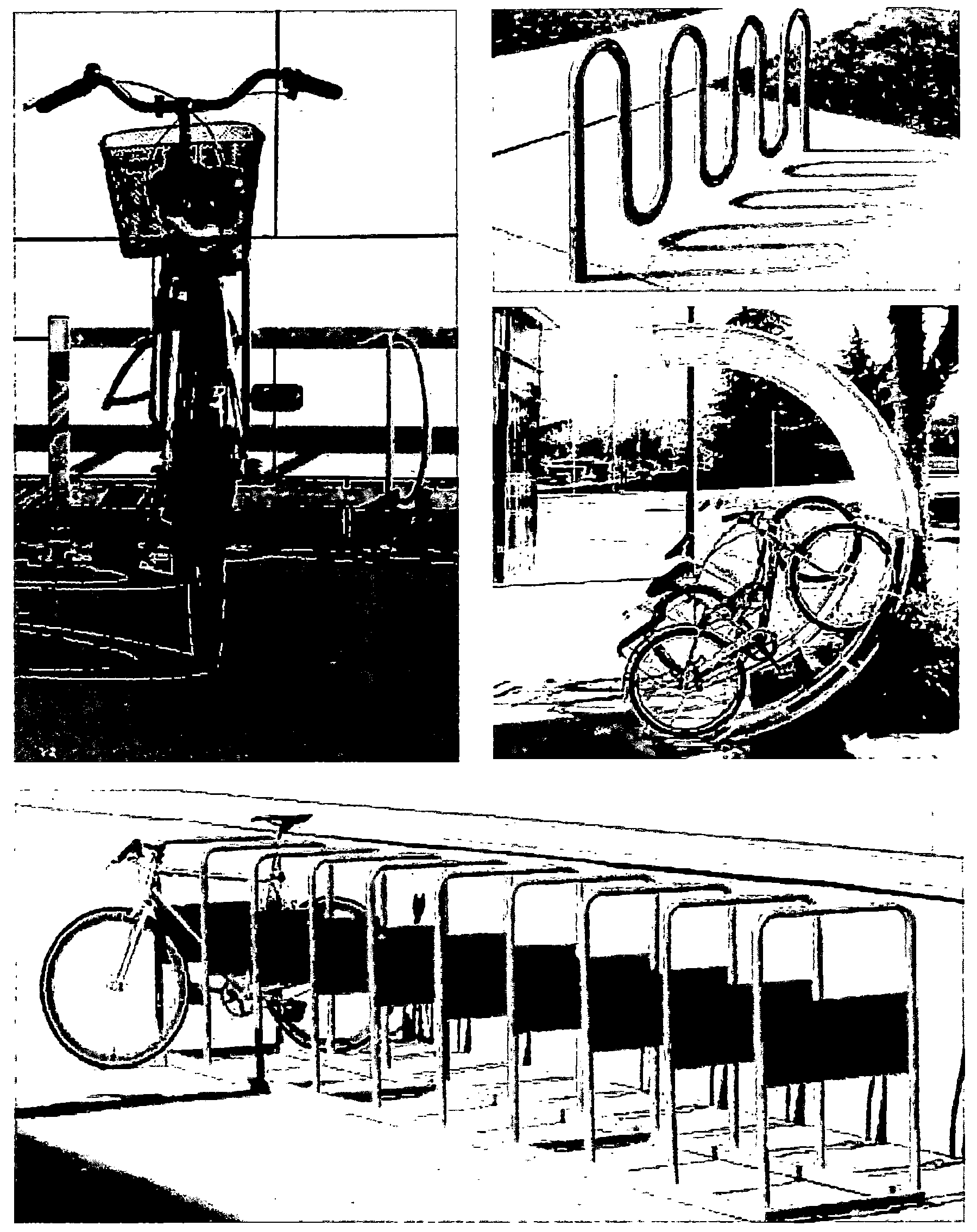
FIGURE 18. EXAMPLE IMAGERY OF SHADE SAILS
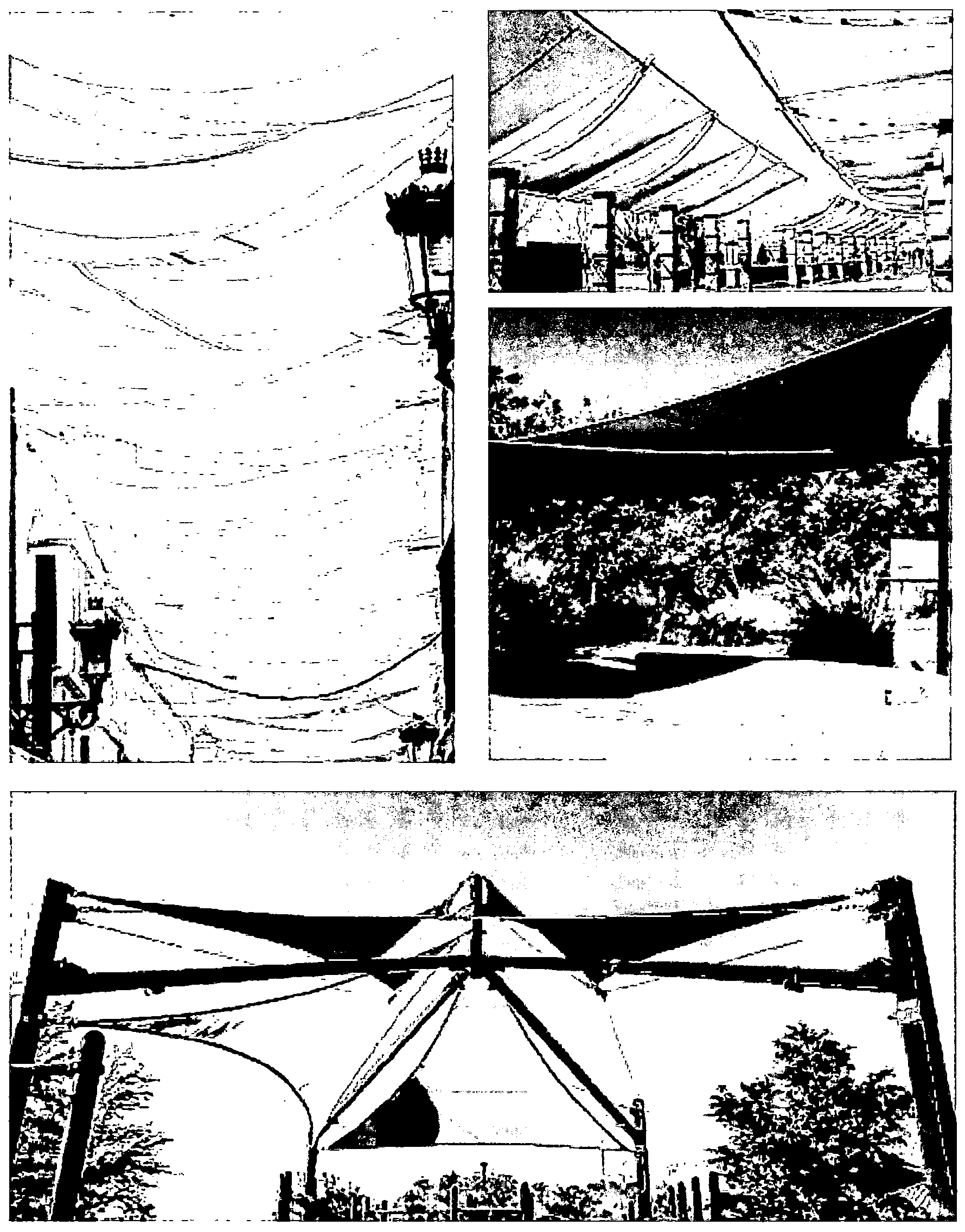
FIGURE 19. EXAMPLE IMAGERY OF SHADE STRUCTURES
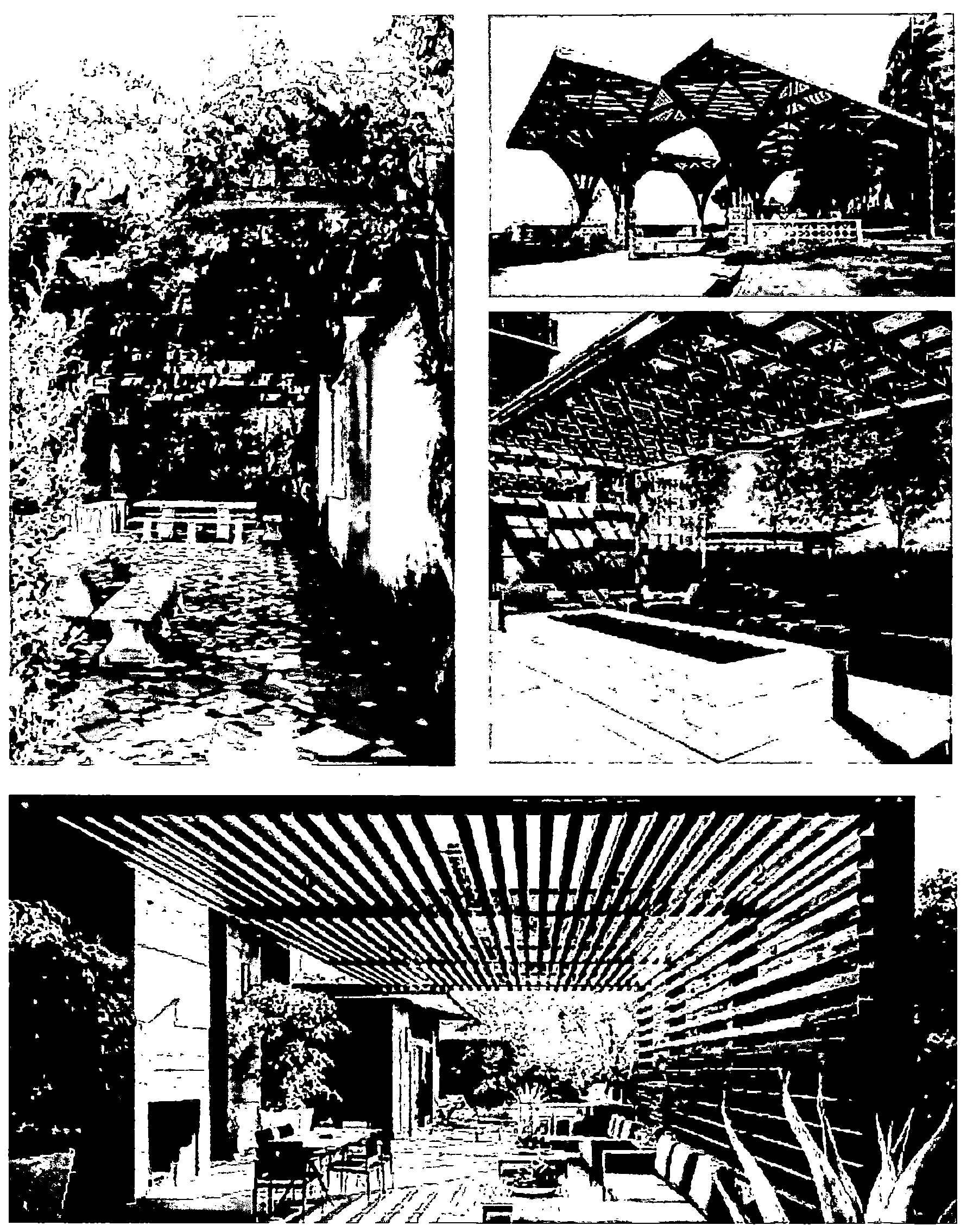
FIGURE 20. EXAMPLE IMAGERY OF WATER FEATURES
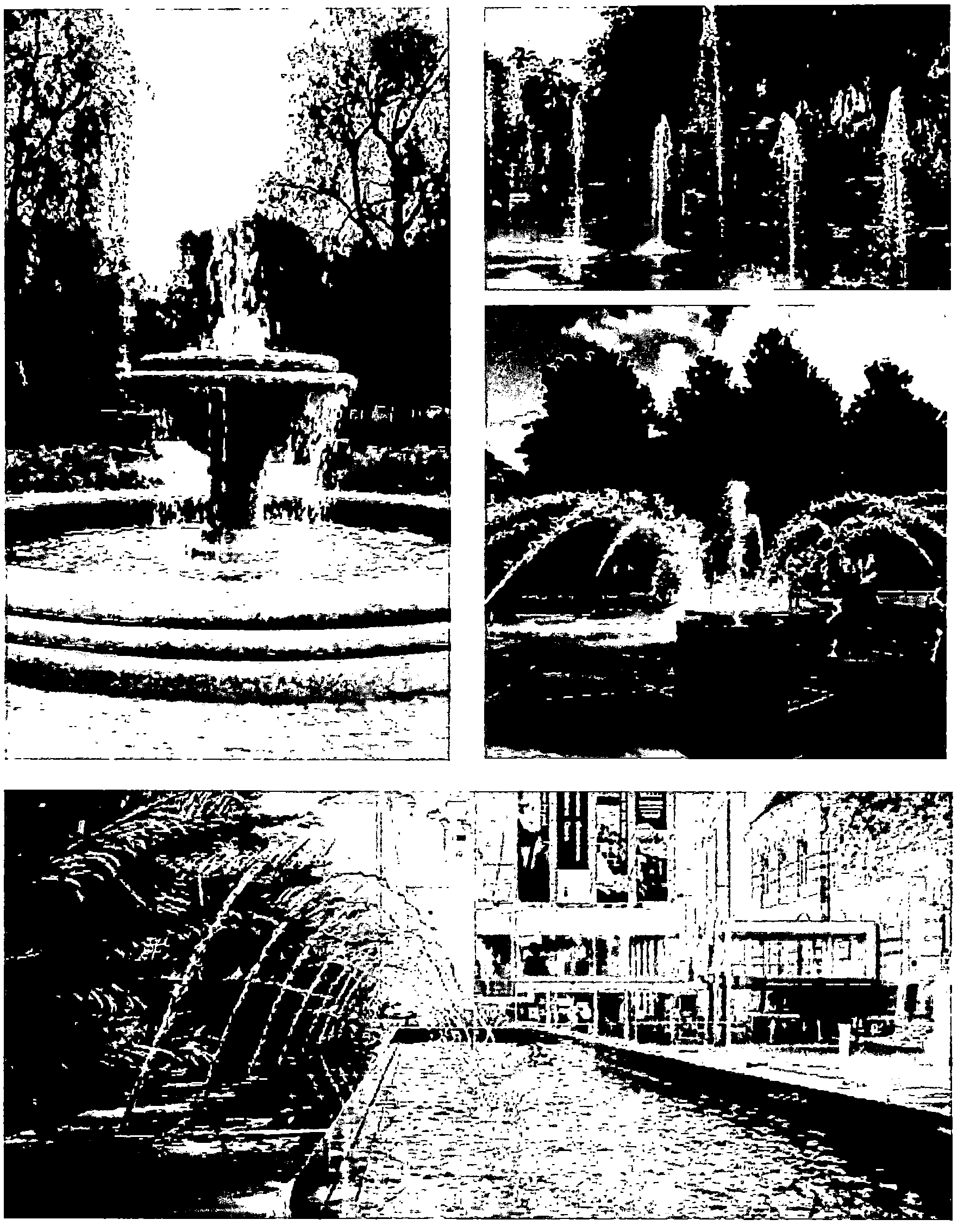
FIGURE 21. EXAMPLE IMAGERY OF BENCHES
ii.
Criteria for density bonus. If a development is determined to be eligible for a density bonus, the density for the development may be increased up to (i) 38 dwelling units per acre upon compliance with at least one of the following conditions and (ii) 45 dwelling units per acre upon compliance with at least two of the following conditions and approval of such increase in accordance with subsection 4.08.19.6.c.iii, below:
(a)
Land donation. Not less than the greater of (i) five percent of the total area of the property to be developed and (ii) 1/2-acre of land is donated to the city to be used for public open space or public parking within the downtown district, with the location of the land to be approved by the city manager based on city council-adopted long-range plans for development in the city;
(b)
Trail connection. Construct and dedicate to the city on behalf of the public in accordance with the city's trail design standards in appendix I of this Code a public trail connecting the development site to the city's existing trail system; provided, however, in areas where there is a proposed future trail more than 1,500 feet from the development, then not less than 1,500 feet of public trail connection is constructed and dedicated at a location that will facilitate a future connection of the development to the city's public trail system;
(c)
Ground level. The ground floor of the building(s) constructed on the property is designed, constructed, and used subject to the following:
(1)
Not less than 50 percent of the gross floor area of the interior space is constructed with ceiling heights with not less than 14 feet of clearance and designed for nonresidential purposes; and
(2)
Not less than 50 percent of the area of the ground floor façades along all street frontages are transparent; or
(d)
Senior independent living. Restrict the use of not less than 20 percent of the dwelling units for people 55 years of age or older through execution of a restrictive covenant enforceable by the city in a form approved by the city attorney.
iii.
Approval of density bonus.
(a)
Downtown design review board approval. The downtown design review board shall have the authority to approve applications for a density bonus up to 38 dwelling units per acre upon a finding that:
(1)
The development is eligible for obtaining a density bonus;
(2)
The development of the subject property does not require any other deviations from the requirements of the ALDC, such as a waiver, variance, or special exception; and
(3)
The condition required to obtain the density bonus has been satisfied or, if the condition is one that requires construction of improvements as part of the development, the development plans approved by the city provide for construction of such improvements in accordance with the condition to be satisfied, in which case the issuance of a certificate of occupancy for any portion of the development shall be subject to completion of construction of such improvements in accordance with the approved plans and in satisfaction of the required condition(s).
(4)
The increased density is compatible with the character, scale, and function of its surrounding area.
An applicant may appeal the denial in whole or in part of a request for a density bonus by the downtown design review board to the city council by filing with the director of community development a written appeal to such denial not later than ten days delivery of written notice of such denial.
(b)
City council approval. The city council shall have the authority to approve applications for a density bonus of up to 45 dwelling units per acre upon a finding that:
(1)
The development is eligible to obtain a density bonus;
(2)
The development of the subject property does not require any other deviations, such as a waiver, variance, or special exception, from the requirements of ALDC over which the downtown design review board does not have authority to grant;
(3)
The conditions required to obtain the density bonus have been satisfied or, if one or more of conditions require construction of improvements as part of the development, the development plans approved by the city provide for construction of such improvements in accordance with the condition(s) to be satisfied, in which case the issuance of a certificate of occupancy for any portion of the development shall be subject to completion of construction of such improvements in accordance with the approved plans and in satisfaction of the required condition(s); and
(4)
The increased density is compatible with the character, scale, and function of its surrounding area.
Regulations for all districts.
7.
Principal and accessory land uses.
a.
Principal uses. Buildings or land shall not be used, and buildings shall not be erected, except for the following specified uses, unless otherwise provided for in this section 4.08.19. Land and/or buildings in the downtown district may be used as shown in Table 1 and denoted by the following abbreviations:
i.
Permitted use (P). Land and/or buildings in the downtown district may be used by right, subject to all other applicable provisions of this Code.
ii.
Specific use (S). Land and/or buildings are subject to and will be reviewed and permitted in accordance with article VI special zoning provisions, section 6.01 specific use permits of the ALDC.
iii.
Not permitted. Blank cells indicate that a use is not permitted within the downtown district or respective overlay district.
Where there is a conflict in Table 1 of this section between the base zoning and one or more of the overlay districts with respect to whether a use is permitted, permitted following approval of a specific use permit, or prohibited, the indication with respect to the overlay district shall be controlling within the applicable overlay district.
b.
Accessory uses. Accessory uses shall not exceed 25 percent of the total floor area of the main use.
i.
In the CCO district, accessory uses shall only be allowed within the same building as the principal use and shall not be allowed in a separate building or structure.
ii.
All uses allowed as principal uses in the downtown district shall be allowed as accessory uses in the downtown district but only the principal uses allowed in CCO, RTO and CWCO districts shall be allowed as accessory uses in those specific overlay district.
c.
Drive-throughs shall not be permitted in the downtown district as a part of any principal or accessory use.
d.
Schedule of principal and accessory land uses in downtown district in Table 2.
TABLE 2. SCHEDULE OF PRINCIPAL AND ACCESSORY LAND USES IN DOWNTOWN DISTRICT
* Less than 5,000 square feet in floor area.
** Less than 10,000 square feet in floor area.
e.
Supplementary regulations for dwelling, single-family attached (townhome). Townhome developments within the downtown district shall be subject to only the development and use regulations in this section.
i.
Units. There shall be no limit to the number of dwelling units attached in one continuous row provided the townhome units meet all other requirements in this section 4.08.19. Developments with ten or more townhome units shall be developed with common public outdoor space with an area of not less than 100 square feet/unit but not less than 10,000 square feet for a single development. Such outdoor space shall be restricted or platted as a common area for open space and developed as any combination of the open space types — park, or plaza and identified on the final plat(s) of the property. Such open space shall be developed subject to the following:
(a)
For every 2,500 square feet of open space no fewer than two of the following amenities maintained by a homeowners'/property owners association shall be installed in the common outdoor space:
(1)
Minimum two ornamental or one shade trees;
(2)
Minimum four raised planters with plant materials equaling 75 square feet in size;
(3)
Minimum 125 square feet of at-grade plantings in the hardscape;
(4)
Hardscape gathering space with outdoor movable tables and chairs; or
(5)
Outdoor trail fitness/stretch equipment.
(b)
All common public outdoor spaces shall incorporate trash receptacles, electrical outlets, and pedestrian lighting as part of the design; and
(c)
The location of such common outdoor space within the townhome development or within 600 feet of the townhome development in the downtown district shall be approved by the city manager as a part of the overall site plan application review.
ii.
Lot design. Townhome developments shall be developed with units that face a public street or an open space in accordance with the following:
(a)
Dwelling units that front a public street shall be developed subject to the following:
(1)
On-street parallel parking spaces are required. On-street spaces complying with the minimum dimensional requirements of this code may be counted in satisfying the minimum number of visitor parking spaces required for the development;
(2)
A utility and pedestrian access easement not less than ten feet wide must be located between the tree planting area and townhome but no closer than five feet from any structure, including any porches, steps or stoops, extending from the front of the dwelling unit, the width of which easement may need to be increased to accommodate utility depth requirements;
(3)
All franchise utilities and telecommunication facilities shall be located in easements located within the rear (alley side) of the dwelling units;
(4)
Front-loading garages are prohibited;
(5)
Rear access garage door shall be located six feet from the alley right-of-way;
(6)
No fence shall be located closer to an alley than the face of the garage or within a utility easement; and
(7)
Alleys with garage access shall be not less than 24 feet wide.
(b)
Dwelling units that front an open space shall be developed subject to the following:
(1)
The open space shall be not less than 30 feet wide. The depth of any required front yard shall not be counted in determining the required width of an open space;
(2)
Pedestrian access easements in which sidewalks must be constructed, must be dedicated across the open space and/or front yards;
(3)
Front-loading garages are prohibited;
(4)
Rear access garage door shall be located six feet from the alley right-of-way;
(5)
No fence shall be located closer to an alley than the face of the garage or within a utility easement;
(6)
Alleys with garage access shall be not less than 24 feet wide of pavement within a 28-foot right-of-way;
(7)
Franchise utilities and telecommunication facilities shall be located in the front of each dwelling unit in an easement that may be a part of the usable open space.
(8)
City-owned facilities shall be located in easements located within the rear (alley side) of the dwelling units, which easement may be a part of the alley right-of-way; and
(9)
No fence shall be located closer to an alley than the face of the garage.
iii.
Parking.
(a)
A two-car garage shall be required for each unit for off-street parking.
(b)
Visitor parking spaces may be provided as on-street parking spaces or as off-street spaces in a surface parking lot or a parking structure and shall be constructed subject to the following:
(1)
One visitor parking space must be constructed for every two dwelling units constructed within the development;
(2)
No dwelling unit shall be located more than 200 feet from a visitor parking space; and
(3)
Surface parking, if provided, shall be located behind or to the side of the buildings in the downtown zoning district.
8.
Height and area regulations.
a.
Cooling towers, roof gables, chimneys, vent stacks, and citizens band (CB) antennae may extend up to an additional ten feet above the maximum allowable roof height.
b.
Water standpipes and tank, church steeples, domes and spires, school buildings, and institutional buildings may be erected to exceed three stories or 45 feet in height, provided that one additional foot shall be added to the width and depth of front, side, and rear yards for each foot that such structures exceed the maximum height.
c.
No structure may be erected to a height in excess of that permitted by applicable airport hazard zoning regulations.
d.
For schedule of downtown district height and area regulations see Table 3.
9.
Architectural standards—Generally. The following standards shall apply to all building types constructed or reconstructed within the downtown district. To the extent of any conflicts between this section and requirements in the other sections of ALDC, this section shall apply.
a.
Building types. The following are descriptions of the types of buildings that can be developed in the downtown district. Each building type has unique characteristics that contributes to walkability, built character, and the public realm to create a framework for good urbanism. These building types do not indicate land use but are meant to ensure consistency in building scale, form, and design. For example, a townhome may have nonresidential uses such as retail sales, coffee shop, or an office use within the same building as the dwelling unit. The building types allowed in downtown district are:
i.
Single-family detached.
ii.
Townhome.
iii.
Live-work townhome.
iv.
Multiplexes (multifamily).
v.
Urban residential walk-up.
vi.
Urban residential elevator.
vii.
Live-work mixed use.
viii.
Vertically integrated mixed use.
ix.
Traditional downtown retail.
x.
Office.
TABLE 3. SCHEDULE OF DOWNTOWN DISTRICT HEIGHT AND AREA REGULATIONS
* Block lengths can be met using pedestrian only pathways.
** See landscape requirements for additional regulations.
*** Development shall be a campus style where accessibility to the building, vehicular and pedestrian connections, are interior in nature.
FIGURE 22. BUILDING TYPES
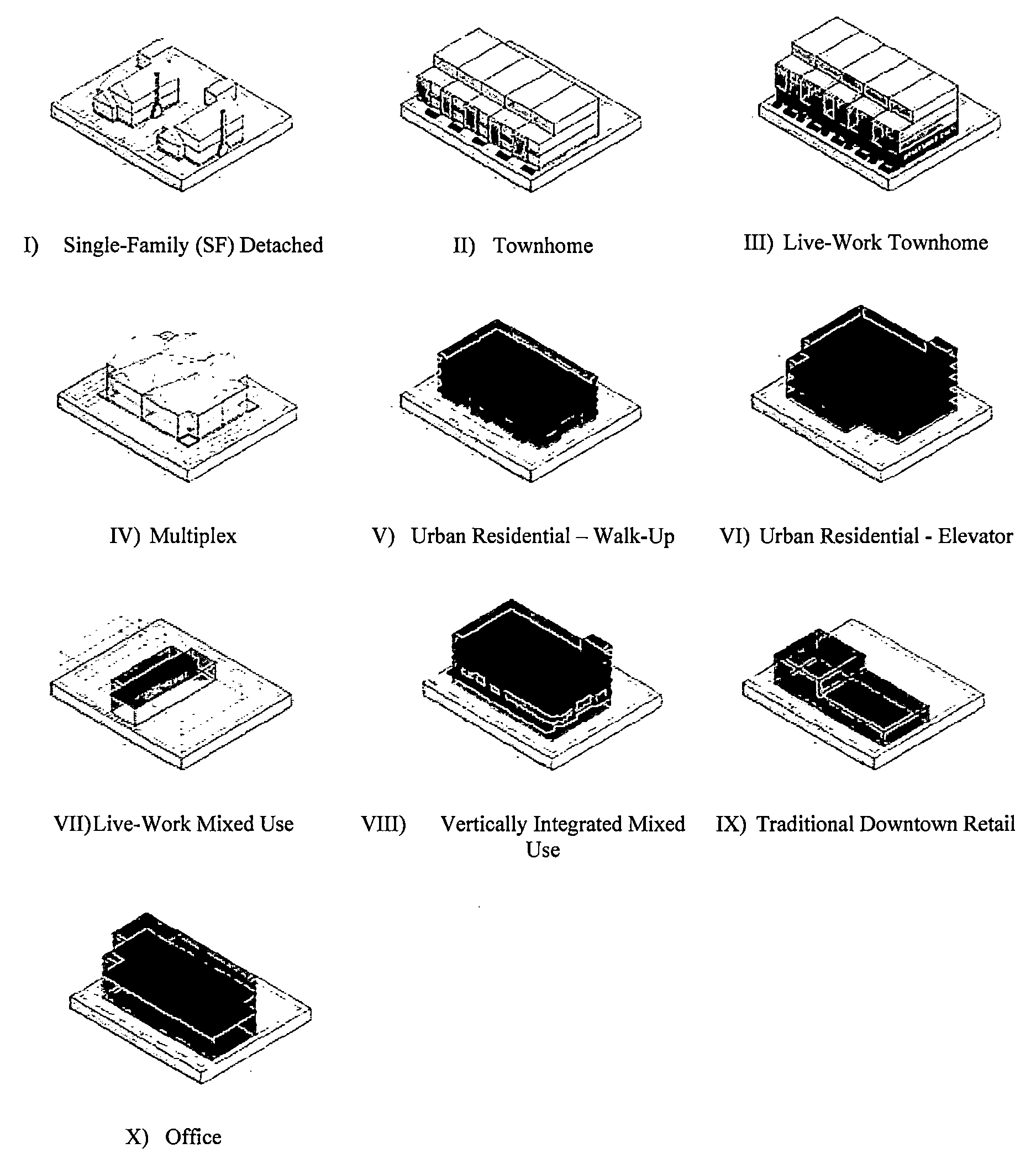
SINGLE-FAMILY (SF) DETACHED
Single-family detached homes are a type of housing that feature standalone buildings, moderate to generous street setbacks, rear yards, and individual unit entrances.
These homes are typical to suburban environments and considered low density with eight—12 units per acre. While typically car-oriented they can encourage walkable neighborhoods by orienting entrances to the street, providing rear accessed parking, and providing welcoming landscaping. Parking is typically located off-street or with access from a secondary street or an alley, reserving primary building frontage for windows, entrances, and landscaping.
* Dimensions must follow the area and height requirements of the specific overlay district in which this building type is located.
FIGURE 23(A). SINGLE-FAMILY DETACHED-CONTEMPORARY
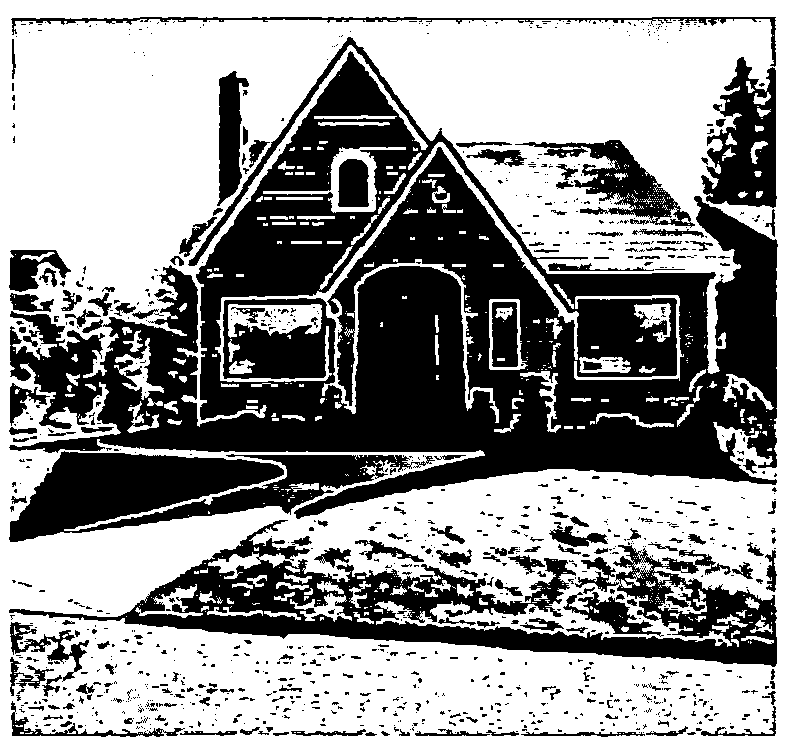
FIGURE 23(B). SINGLE-FAMILY DETACHED-TRADITIONAL
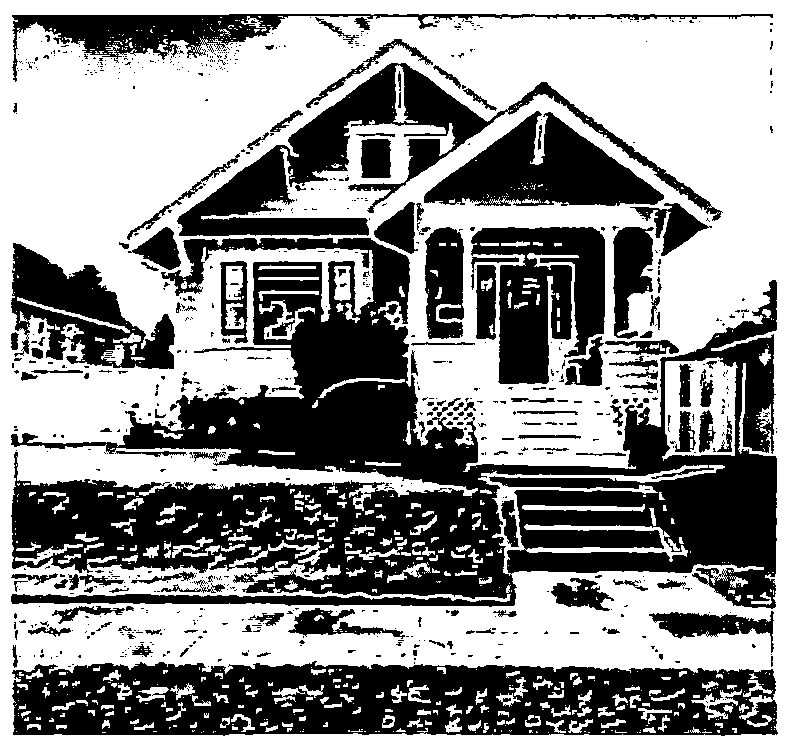
● ALLOWED
◐ ALLOWED WITH CODE MODIFICATION
○ NOT ALLOWED
TOWNHOME
Townhomes are a type of housing that feature shared walls between housing units, minimal street setbacks, rear yards, and individual unit entrances.
Townhomes encourage walkable neighborhoods by providing a medium level of housing density with about 12—18 dwelling units an acre. Parking is typically located on the street or with access from an alley, reserving building frontage for windows, entrances, and landscaping. Townhomes are typically more narrow than single-family detached housing units and should have a variety of façade styles to cultivate visual interest and architectural character.
* Dimensions must follow the area and height requirements of the specific overlay district in which this building type is located.
FIGURE 24(A). TOWNHOME-CONTEMPORARY
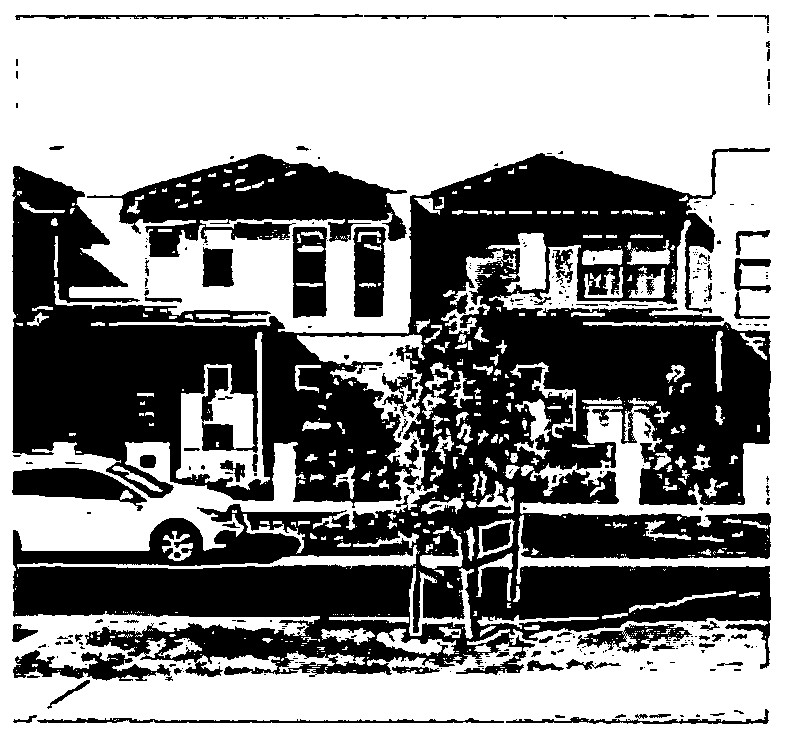
FIGURE 24(B). TOWNHOME-TRADITIONAL
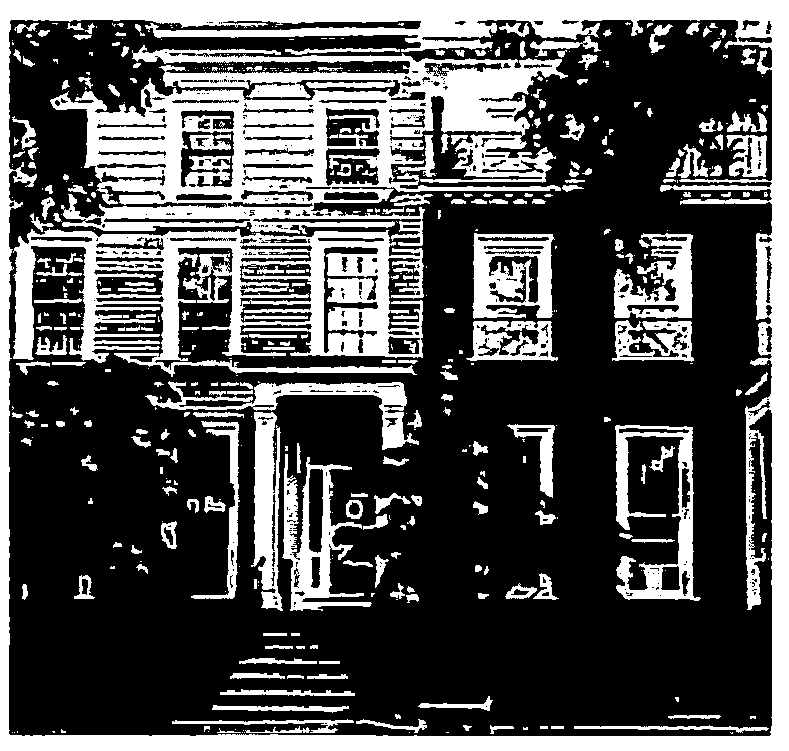
● ALLOWED
◐ ALLOWED WITH CODE MODIFICATION
○ NOT ALLOWED
LIVE-WORK TOWNHOME
Live-Work townhomes are a higher density type of townhome where multiple units are integrated into a vertical span. Typically this manifests as an apartment 'flat' on the ground level with a multi-level two—three story townhome above. The "flat" can be used for a separate live-work unit or a commercial studio space. Each unit has a private entrance at street level.
Stacked townhomes encourage walkable neighborhoods by providing a medium to high level of housing density with about 24—36 dwelling units an acre. Parking is typically located on the street or with access from an alley, reserving building frontage for windows, entrances, and landscaping. Stacked townhomes should have a variety of façade styles to cultivate visual interest and architectural character.
* Dimensions must follow the area and height requirements of the specific overlay district in which this building type is located.
FIGURE 25(A). LIVE-WORK TOWNHOME-CONTEMPORARY
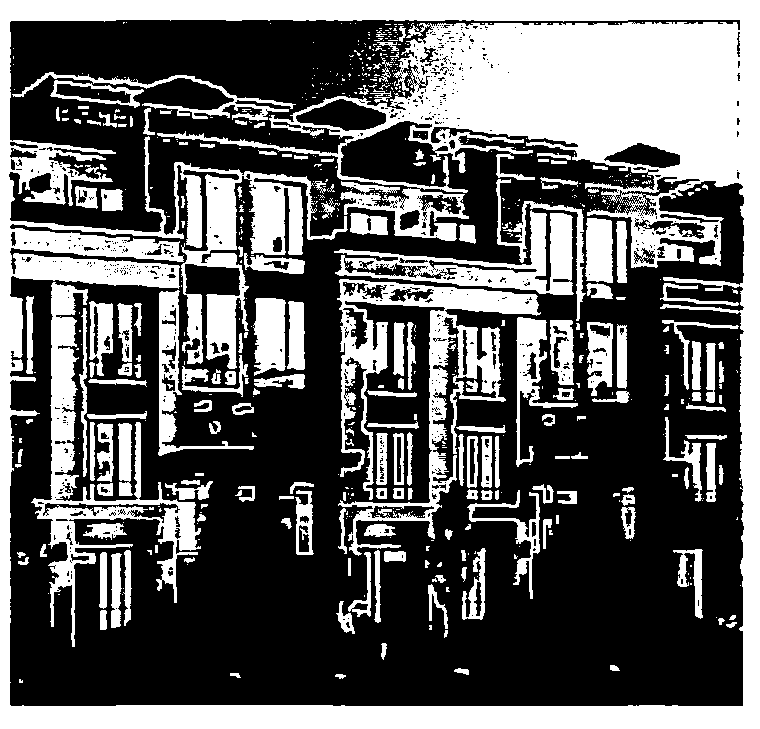
FIGURE 25(B). LIVE-WORK TOWNHOME-TRADITIONAL
● ALLOWED
◐ ALLOWED WITH CODE MODIFICATION
○ NOT ALLOWED
MULTIPLEX
Multiplexes are a higher density type of housing where multiple units are integrated into a horizontal span. Typically this manifests as units sharing one to two walls with other units. These configurations typically range from a duplex (two units) to a fourplex (four units). Each unit has a private entrance at street level.
Multiplexes encourage walkable neighborhoods by providing a medium to high level of housing density with about 15—22 dwelling units an acre. Parking is typically located on the street or with access from an alley, reserving building frontage for windows, entrances, and landscaping. Stacked townhomes should have a variety of façade styles to cultivate visual interest and architectural character.
* Dimensions must follow the area and height requirements of the specific overlay district in which this building type is located.
FIGURE 26(A). DUPLEX-CONTEMPORARY
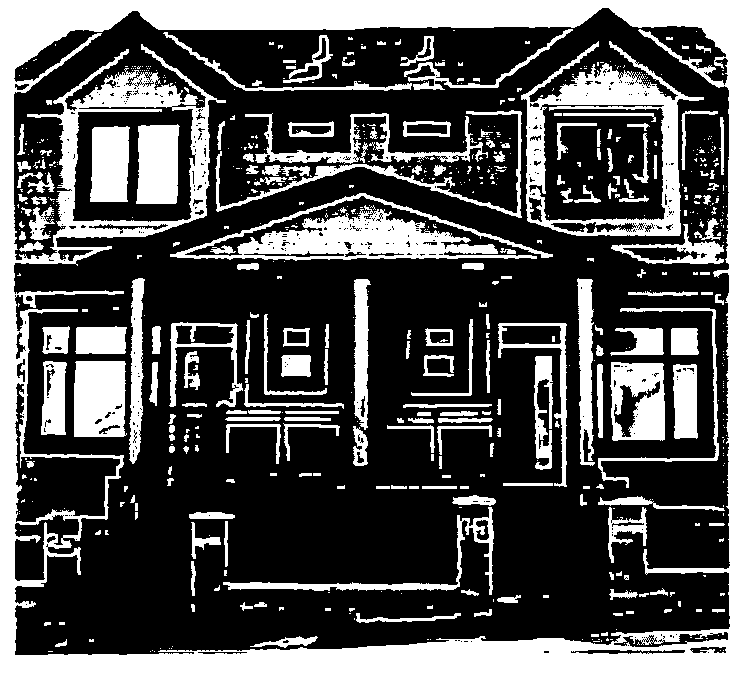
FIGURE 26(B). FOURPLEX-CONTEMPORARY
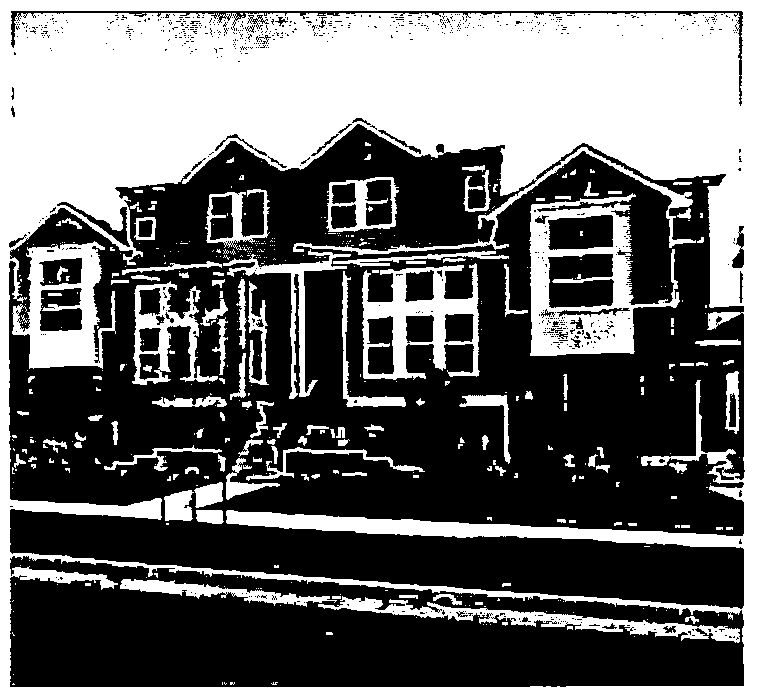
● ALLOWED
◐ ALLOWED WITH CODE MODIFICATION
○ NOT ALLOWED
URBAN RESIDENTIAL — WALK-UP
A walk-up building is a residential building with multiple housing units, usually in the form of apartment "flats." Typically walk-ups have a shared primary entrance and an internal stairwell and shared corridors to access units. Walk-ups generally are three stories or less and often do not have elevators.
Walk-ups encourage walkable neighborhoods by providing a medium to high level of housing density with about 19—25 dwelling units an acre. Parking is typically located on the street or in a surface lot, reserving building frontage for windows, entrances, and landscaping. These buildings typically have minimal setbacks and are oriented to a primary street frontage.
* Dimensions must follow the area and height requirements of the specific overlay district in which this building type is located.
FIGURE 27(A). URBAN RESIDENTIAL WALK-UP
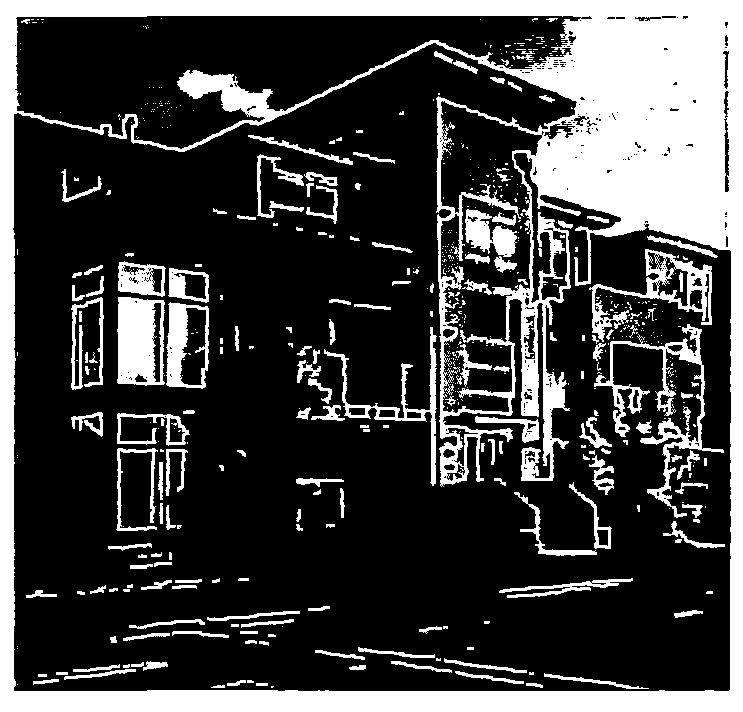
FIGURE 27(B). URBAN RESIDENTIAL WALK-UP
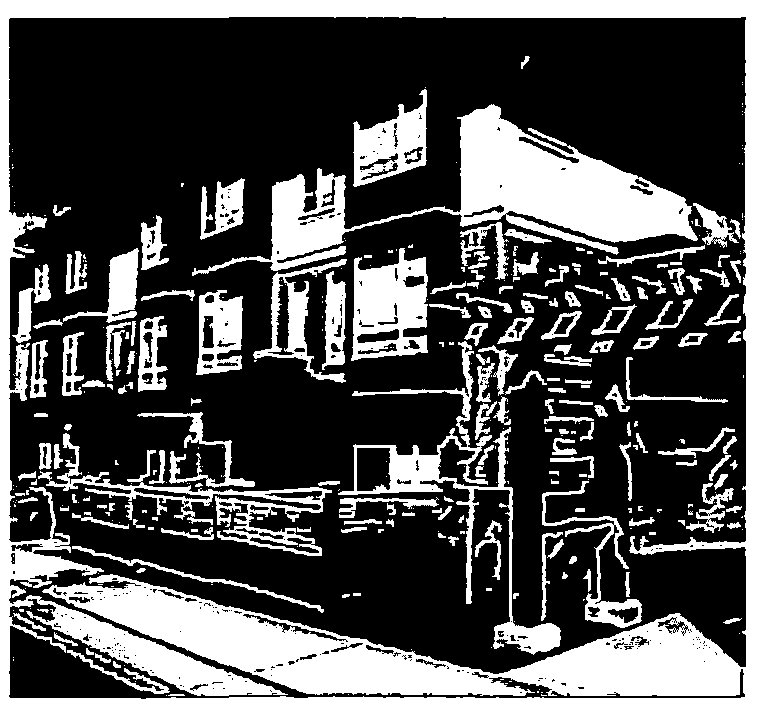
● ALLOWED
◐ ALLOWED WITH CODE MODIFICATION
○ NOT ALLOWED
URBAN RESIDENTIAL — ELEVATOR
An elevator building is a residential building with multiple housing units, usually in the form of apartment "flats." Typically these have a shared primary entrance, an internal stairwell and shared corridors to access units. Elevator buildings generally are three stories or higher.
Multi-family elevator buildings encourage walkable neighborhoods by providing a high level of housing density with about 30 or more dwelling units an acre. Parking is typically located on the street, in a surface lot, or in a structure. These buildings typically have minimal setbacks and are oriented to a primary street frontage with access from the sidewalk.
* Dimensions must follow the area and height requirements of the specific overlay district in which this building type is located.
FIGURE 28(A). URBAN RESIDENTIAL — ELEVATOR
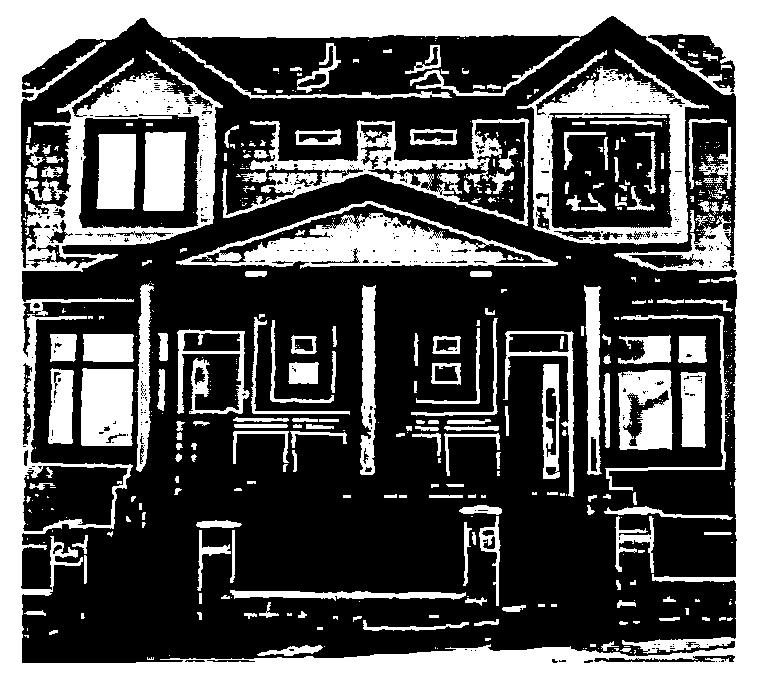
FIGURE 28(B). URBAN RESIDENTIAL — ELEVATOR
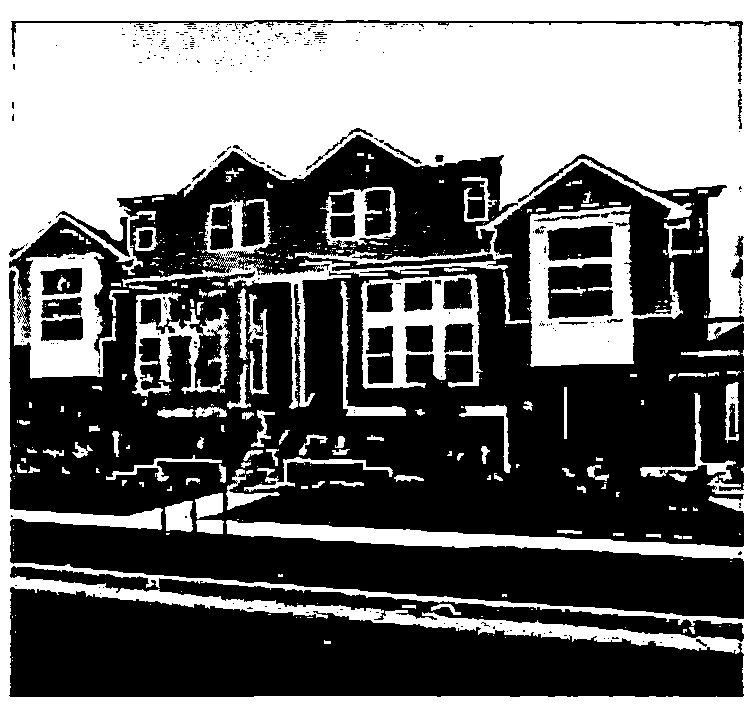
● ALLOWED
◐ ALLOWED WITH CODE MODIFICATION
○ NOT ALLOWED
LIVE-WORK MIXED-USE
Live-work buildings are a unique mixed-use development. These typically involve a nonresidential space on the ground floor with a housing unit above. Live-work development is often specialized to the land use and can vary from traditional downtown retail with apartments above to industrial makerspaces and artist lofts.
The diversity of this building type results in a variety of housing densities. Typically this building type can be found on traditional main streets and in revitalized industrial areas. Parking is typically located on the street, in a surface lot, or in a structure. These buildings typically have minimal setbacks and are oriented to a primary street frontage with access from the sidewalk.
* Dimensions must follow the area and height requirements of the specific overlay district in which this building type is located.
FIGURE 29(A). LIVE-WORK—CONTEMPORARY
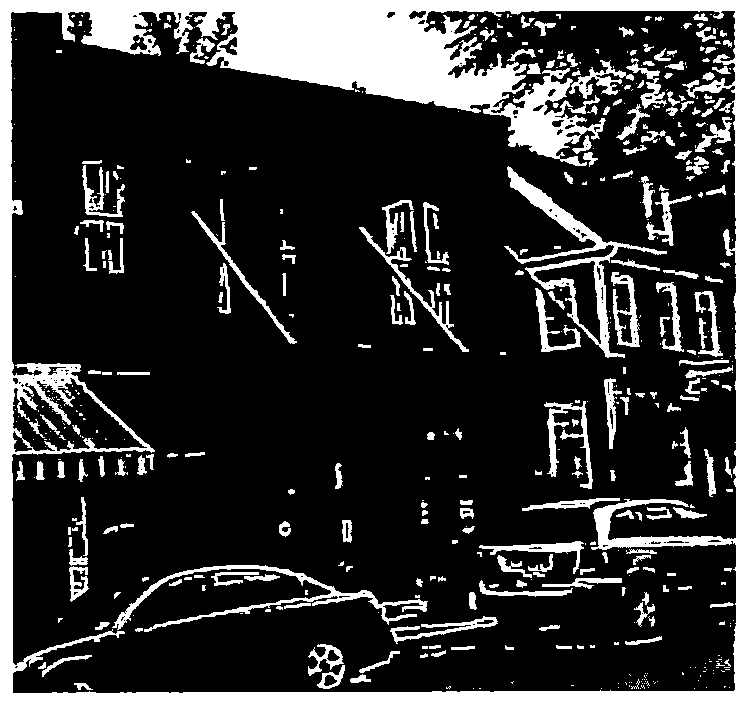
FIGURE 29(B). LIVE-WORK—TRADITIONAL
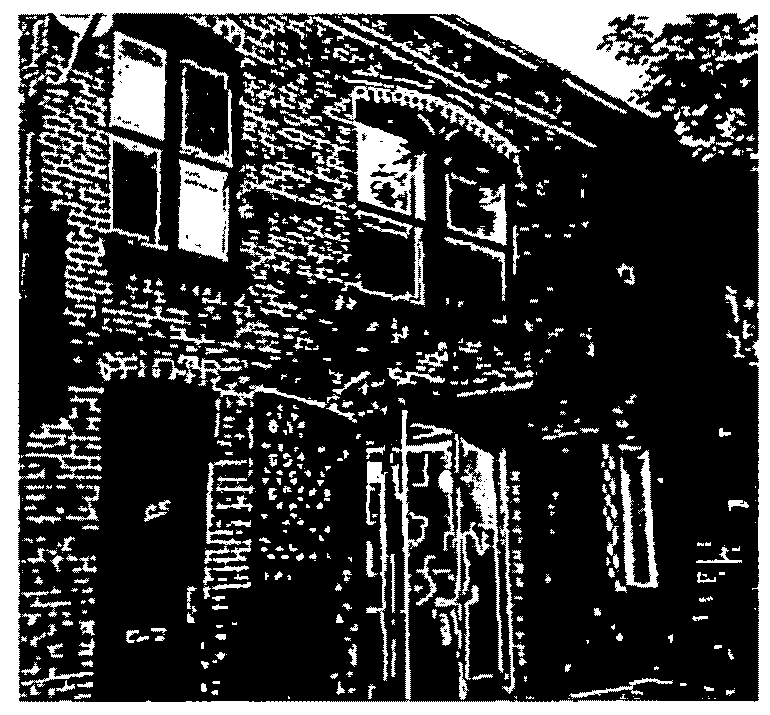
● ALLOWED
◐ ALLOWED WITH CODE MODIFICATION
○ NOT ALLOWED
VERTICALLY INTEGRATED MIXED-USE
A vertically integrated mixed-use building is a mixed-use building with multiple housing units, usually in the form of apartment "flats" over a nonresidential base. Typically, these have a shared primary entrance, for residences with an internal stairwell or elevator and shared corridors to access units. Typically, the first floor features neighborhood retail and service uses with separate entrances. These buildings generally are three stories or higher.
Vertically integrated mixed-use buildings encourage walkable neighborhoods by providing a high level of housing density with about 30 or more dwelling units an acre. Parking is typically located on the street, in a surface lot, or in a structure. These buildings typically have minimal setbacks and are oriented to a primary street frontage with access from the sidewalk.
* Dimensions must follow the area and height requirements of the specific overlay district in which this building type is located.
FIGURE 30(A). VERTICALLY INTEGRATED-CONTEMPORARY
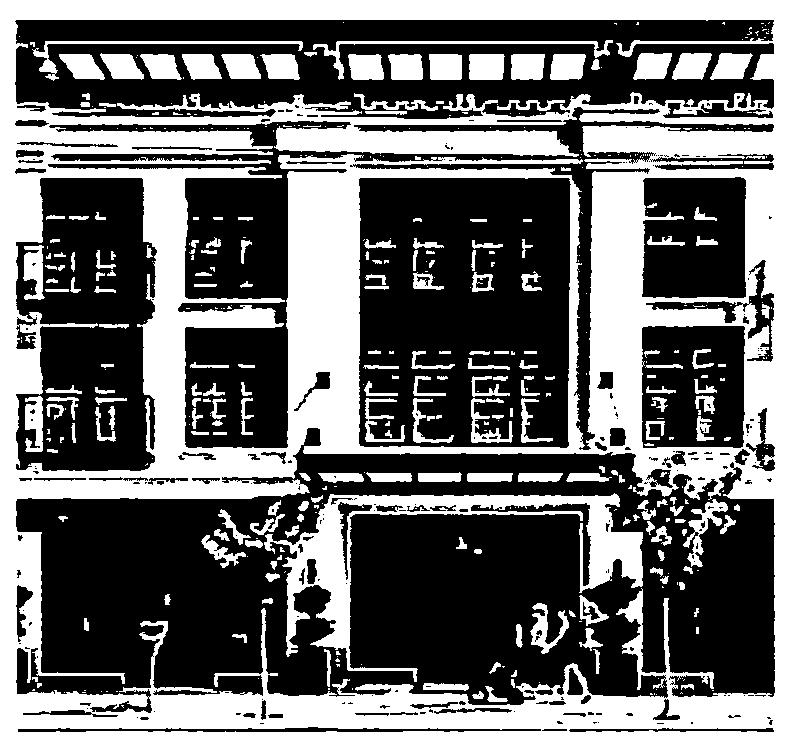
FIGURE 30(B). VERTICALLY INTEGRATED-TRADITIONAL
● ALLOWED
◐ ALLOWED WITH CODE MODIFICATION
○ NOT ALLOWED
TRADITIONAL DOWNTOWN RETAIL
Traditional downtown retail is a commercial building type that features a standalone retail or service use. These buildings typically occur on mixed-use or nonresidential streets and vary greatly in lot size, building massing, and site configuration.
When feasible, a traditional downtown retail building should have the primary entrance and building frontage close to pedestrian circulation areas like sidewalks, plazas, or open space. Parking should be located in the rear of the building or accessed off a secondary street.
* Dimensions must follow the area and height requirements of the specific overlay district in which this building type is located.
FIGURE 31(A). TRADITIONAL DOWNTOWN RETAIL-CONTEMPORARY

FIGURE 31(B). TRADITIONAL DOWNTOWN RETAIL-TRADITIONAL
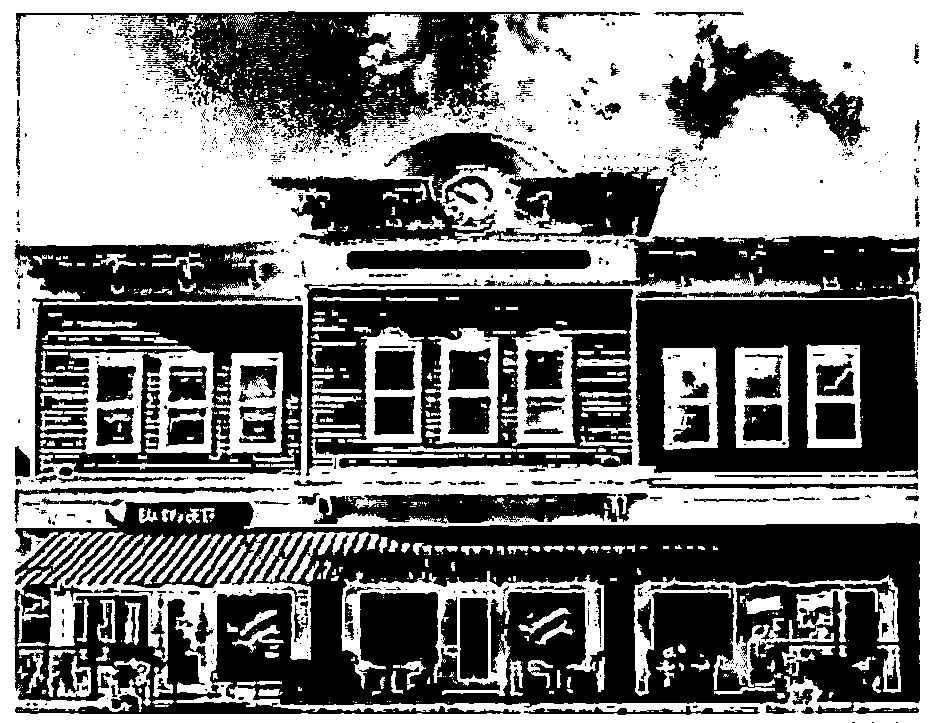
● ALLOWED
◐ ALLOWED WITH CODE MODIFICATION
○ NOT ALLOWED
OFFICE
Offices are a building type that serves as a central business operation for a company. These buildings typically have restricted access and may not be publicly accessible. In some cases retail or service uses may be integrated into the ground floor. Office buildings vary greatly in layout, massing, and site configuration.
When feasible, office buildings should have the primary entrance and building frontage close to pedestrian circulation areas like sidewalks, plazas, or open space. Parking should be located in the rear of the building or accessed off a secondary street.
* Dimensions must follow the area and height requirements of the specific overlay district in which this building type is located.
FIGURE 32(A). OFFICE-CONTEMPORARY
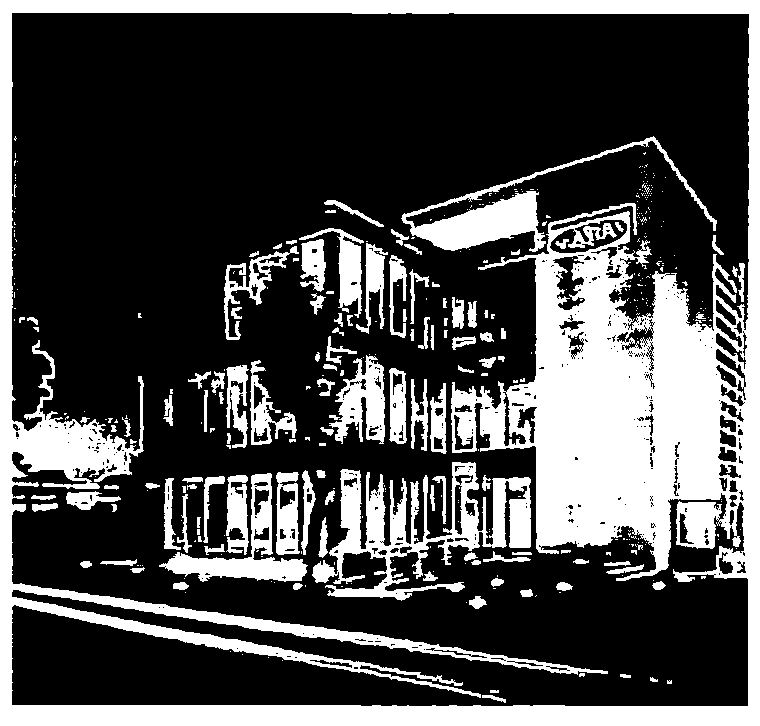
FIGURE 32(B). OFFICE-TRADITIONAL
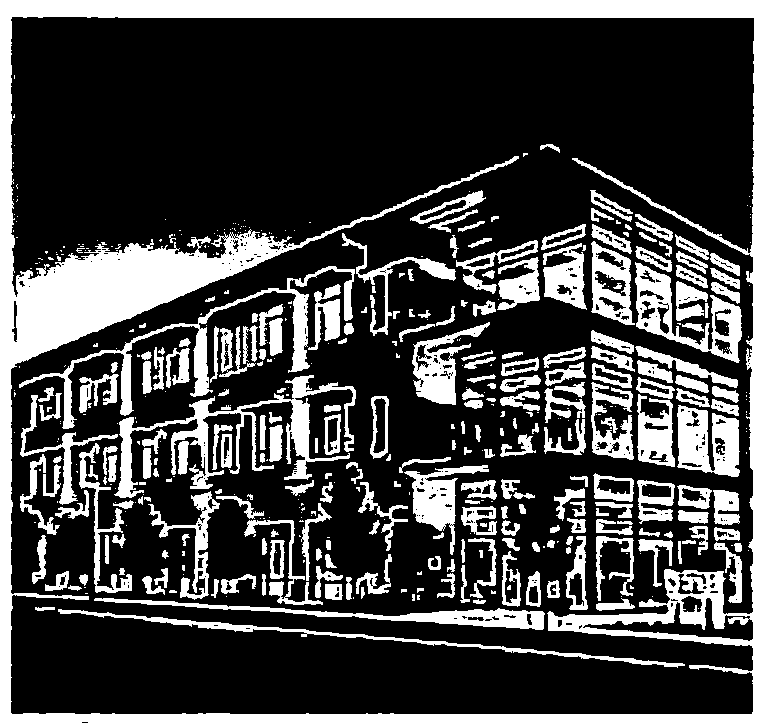
● ALLOWED
◐ ALLOWED WITH CODE MODIFICATION
○ NOT ALLOWED
FIGURE 33. BUILDING PLACEMENT REFERENCE DIAGRAM
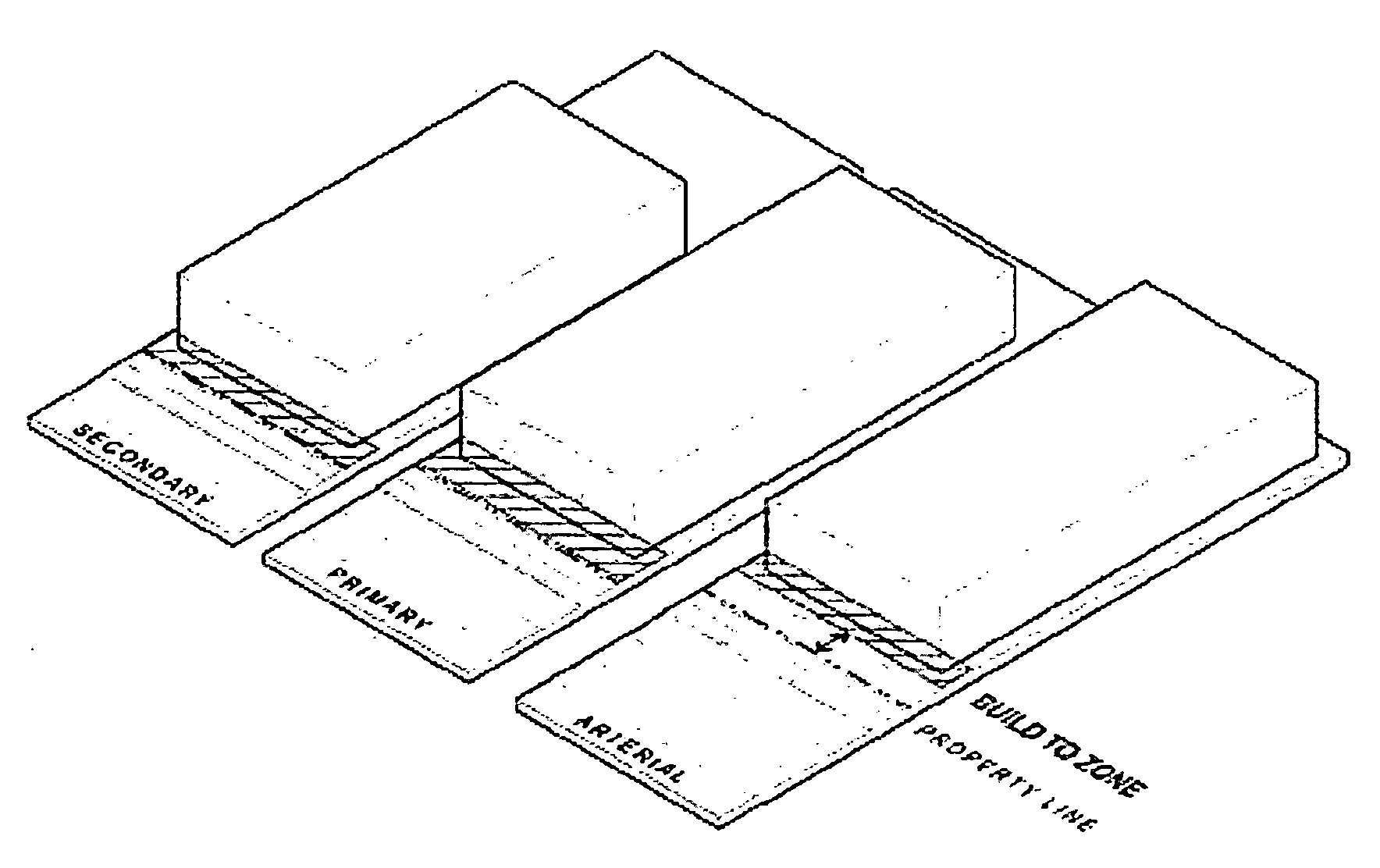
b.
Building placement.
i.
The placement of buildings on a lot shall be compatible with the area, maximize natural surveillance and visibility, and facilitate pedestrian access and circulation. For example: the setback from the property line along a street frontage shall be the same as the adjacent buildings or an average of the setbacks along the block regardless of the allowed setbacks for the property, windows shall face the street frontage, and sidewalks shall be connected to the building entrance through a pedestrian access.
ii.
The building frontages shall be located within a build-to zone regulated by the street type adjacent to the front of the building. Build-to zones are as follows:
(a)
Downtown arterial streets — ten feet to 20 feet.
(b)
Downtown primary streets — 0 to 15 feet.
(c)
Downtown secondary streets — 0 to ten feet.
FIGURE 34. BUILDING ORIENTATION REFERENCE DIAGRAM
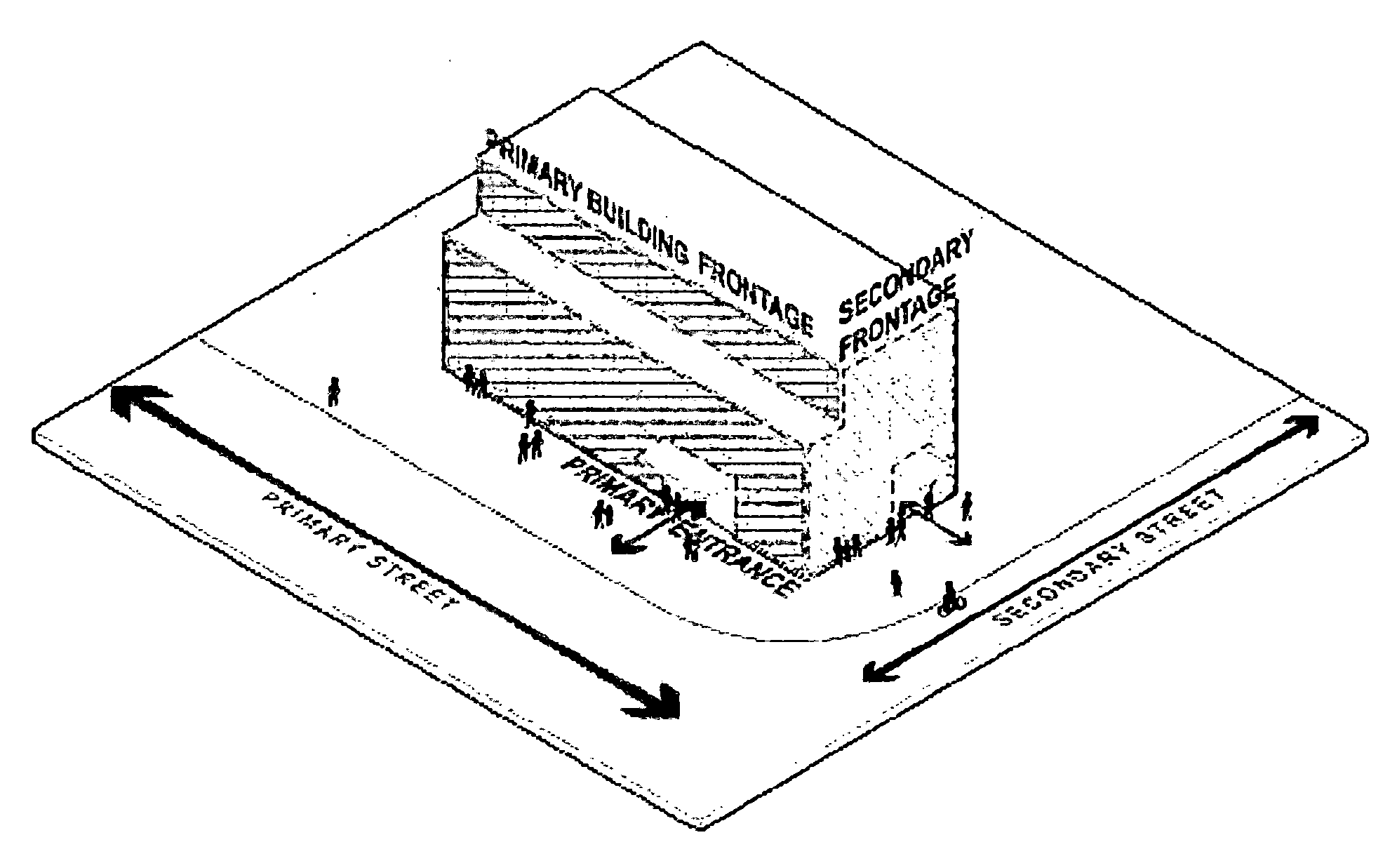
c.
Building orientation.
i.
Buildings shall be oriented to street or toward another focal point, such as a civic open space or public plaza. A building's front/principal entrance shall be facing and located on a primary or secondary street; provided, however, residential land uses may front on a shared open space.
ii.
Front/principal entrances of buildings shall be clearly defined and emphasized using architectural features such as porches, roofs, awnings, overhangs, or signs that express the importance of the entrance.
iii.
All building façades with public entrances shall be oriented to face the adjoining public street.
iv.
A building with multiple street frontages must have an entrance on each street frontage.
FIGURE 35. BUILDING FAÇADES REFERENCE DIAGRAM
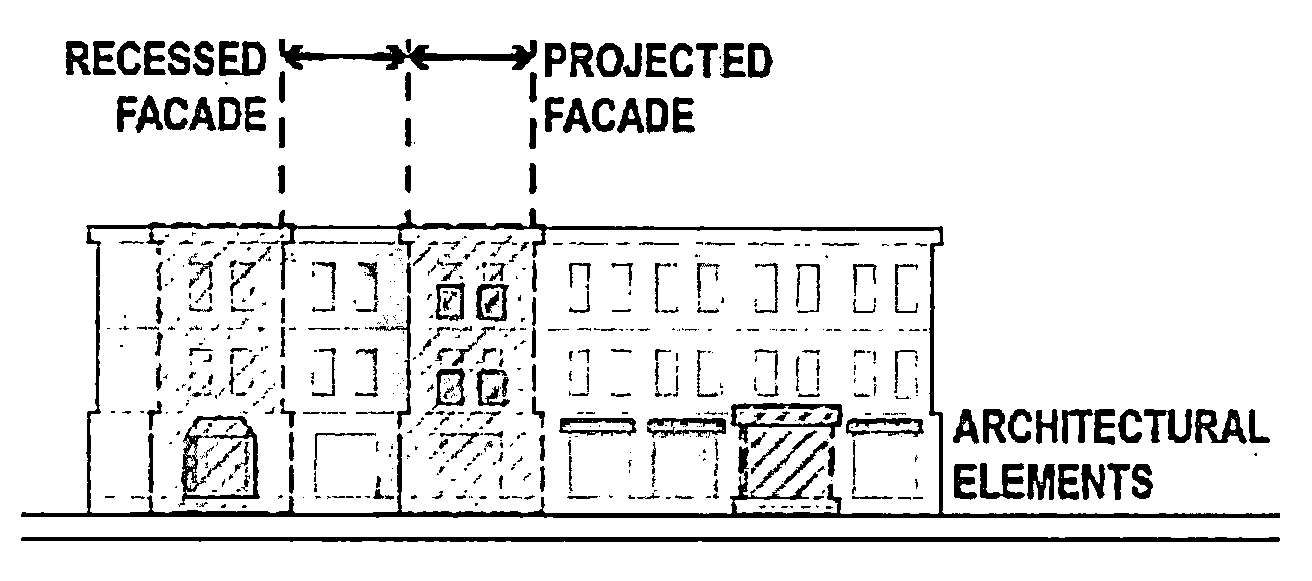
d.
Building façades (elevations).
i.
No blank façade shall be allowed on buildings, and each façade shall have windows regardless of the presence of an adjacent street frontage, except in instances where openings may be prohibited by the building and/or fire code.
ii.
Recesses and/or projections shall be provided in the façade every 25 feet to 35 feet in length to divide the building into smaller identifiable sections.
iii.
Variations in the rhythms within individual building façades shall be achieved within a block of building façades with the use of at least three architectural elements, such as bays, columns, bay-windows, storefront display windows, cornices, balconies, porches or stoops, and canopies or awnings over building entrances.
iv.
Office, urban residential, and vertically integrated mixed-use buildings in the downtown district shall have building façade widths between 25 feet and 35 feet by using recesses, projections, and/or cornices and console brackets. If such building façade sectioning is not practicable, a major modification may be requested in accordance with subsection 4.08.19.6.b.
v.
A building's façade shall serve to define entry points and help orient pedestrians by:
(a)
Installing not less than one of the following elements at the entry point:
(1)
Porch or stoop;
(2)
Canopy or awning; and
(3)
Console brackets; or
(b)
Integrating one or more of the features listed in (a), above, on a larger area along the façade other than just at the entrance.
vi.
Building façades shall emphasize and frame individual buildings in a block of buildings by installing:
(a)
In a nonresidential or mixed-use building type façade, no fewer than two of the following architectural elements:
(1)
Eaves;
(2)
Console brackets;
(3)
Arcades;
(4)
Colonnades; or
(5)
Balconies; and
(b)
In a residential building type façade, no fewer than three of the following architectural elements:
(1)
Bay window;
(2)
Vertical offsets;
(3)
Fireplace structures;
(4)
Balconies (including juliet balconies); or
(5)
Entryway stoops or porches.
vii.
The following roof styles shall be subject to the following:
(a)
Gable roofs, shall have a minimum pitch of 5:12.
(b)
Hipped roofs shall have a minimum pitch of 6:12.
(c)
Other roof types shall be appropriate to the architectural style of the building.
(d)
In the cultural core overlay district only flat roofs shall be allowed.
FIGURE 36. BUILDING FAÇADE EXAMPLES — PARKING GARAGE/STRUCTURE
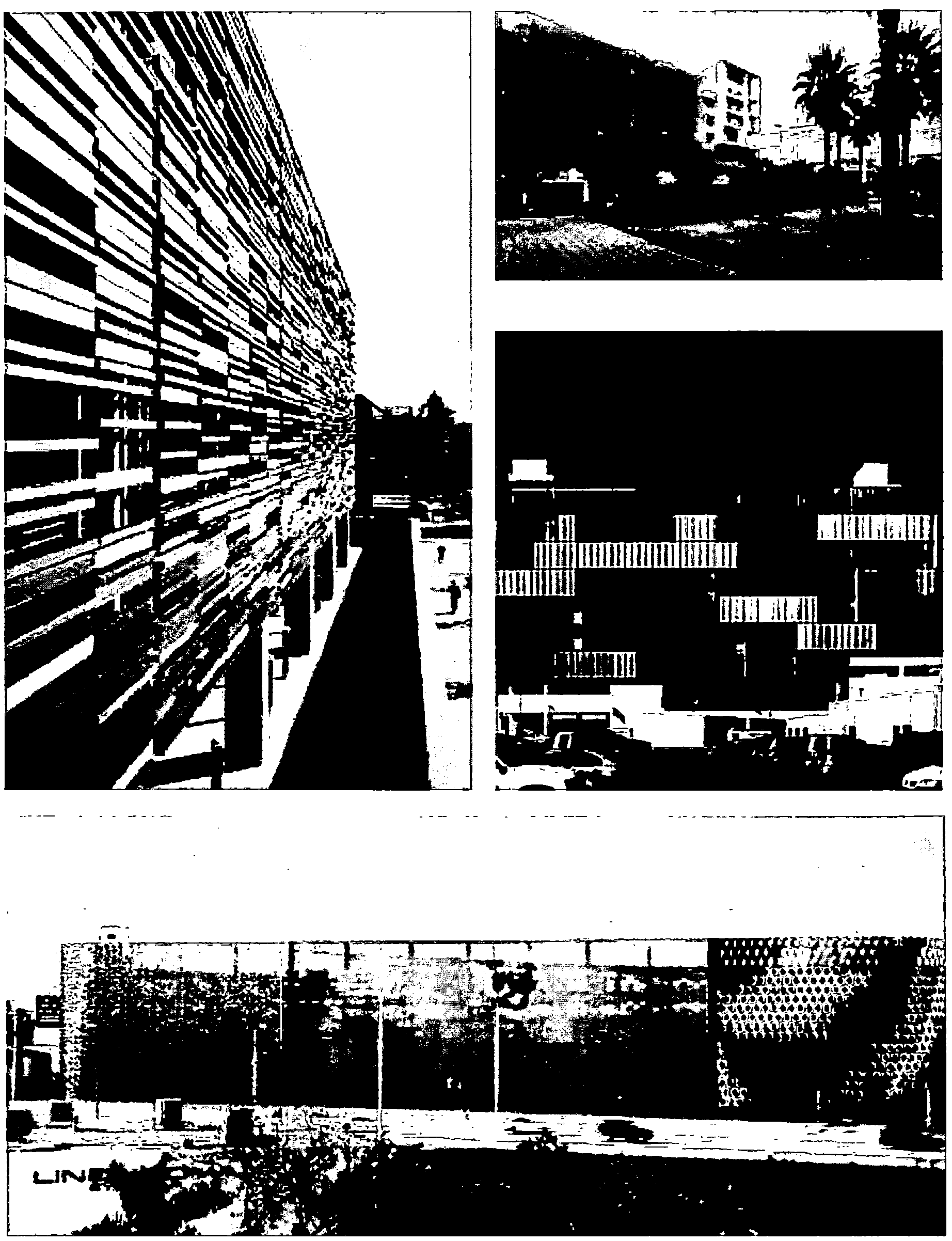
FIGURE 37. BUILDING FENESTRATION REFERENCE DIAGRAM
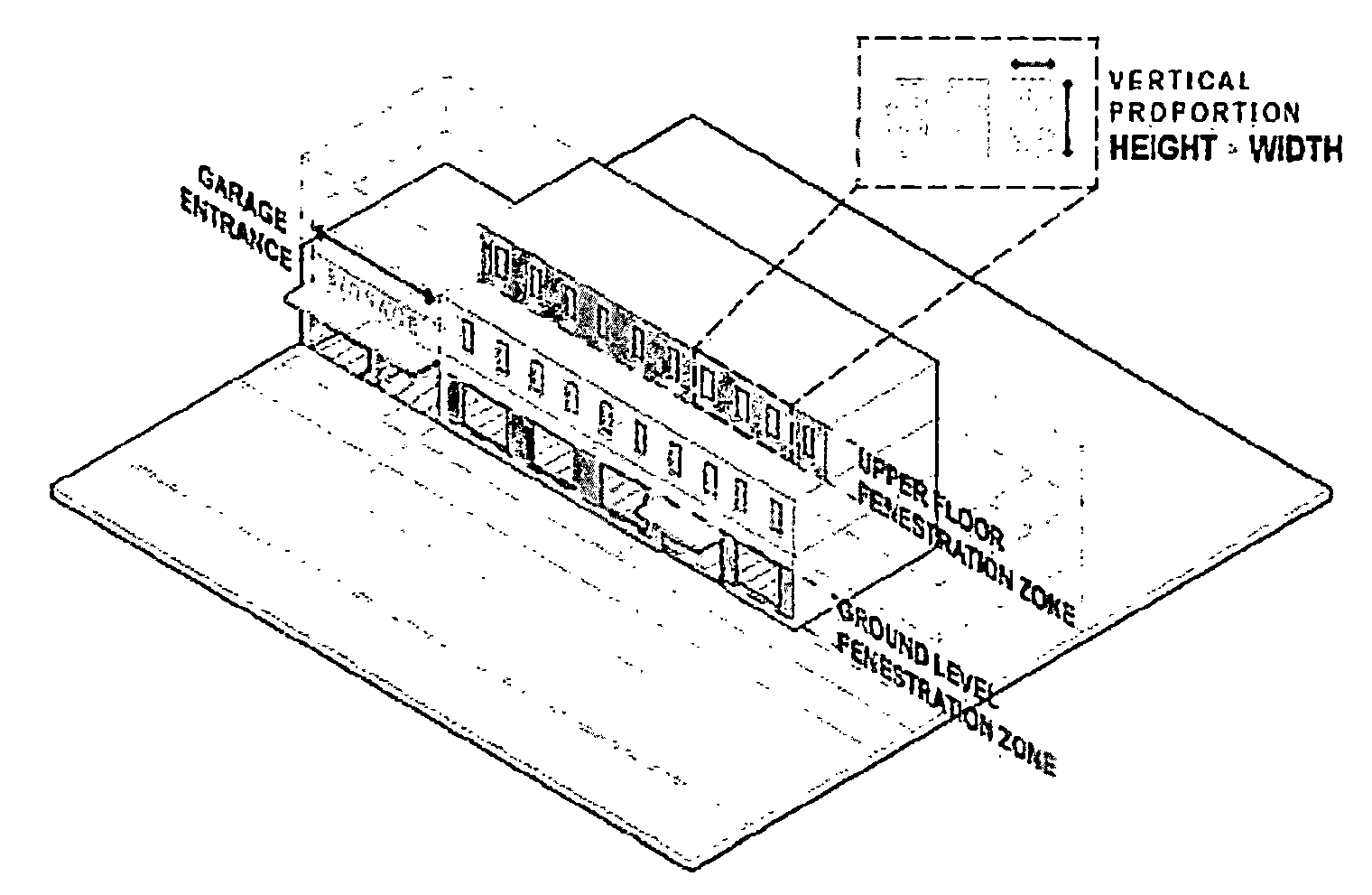
viii.
Parking garage/structure shall be designed and constructed subject to the following:
(a)
A minimum ground floor clear height of 18 feet must be provided for commercial space or pedestrian-oriented uses on the parking garage ground floor facing a primary or secondary street where commercial/retail space is adjacent;
(b)
Façades of parking structures must incorporate design components and materials utilized and compatible with the primary building(s) that it serves or to which it is adjacent; and
(c)
On façades adjacent to primary and secondary streets, architectural treatments, artwork, lattices, and/or other design features similar to the images in Figure 36 must be used, which design features shall cover a not less than 60 percent of the façade. If lattice is used, the material shall be decorative and durable to enable vines to attach themselves for support.
ix.
Exception for civic overlay. New construction façade details and roof to be detailed similarly to existing city hall to maintain campus identity. Façade detailing to include strong base and masonry material of a similar tonality to city hall, canopies at entry points to help define points of entry, and the use of columns or change in materials horizontally and vertically in order to avoid monolithic appearance of façades. See Figure 38 for examples of city hall façade.
FIGURE 38. BUILDING FAÇADE EXAMPLES — ALLEN CITY HALL
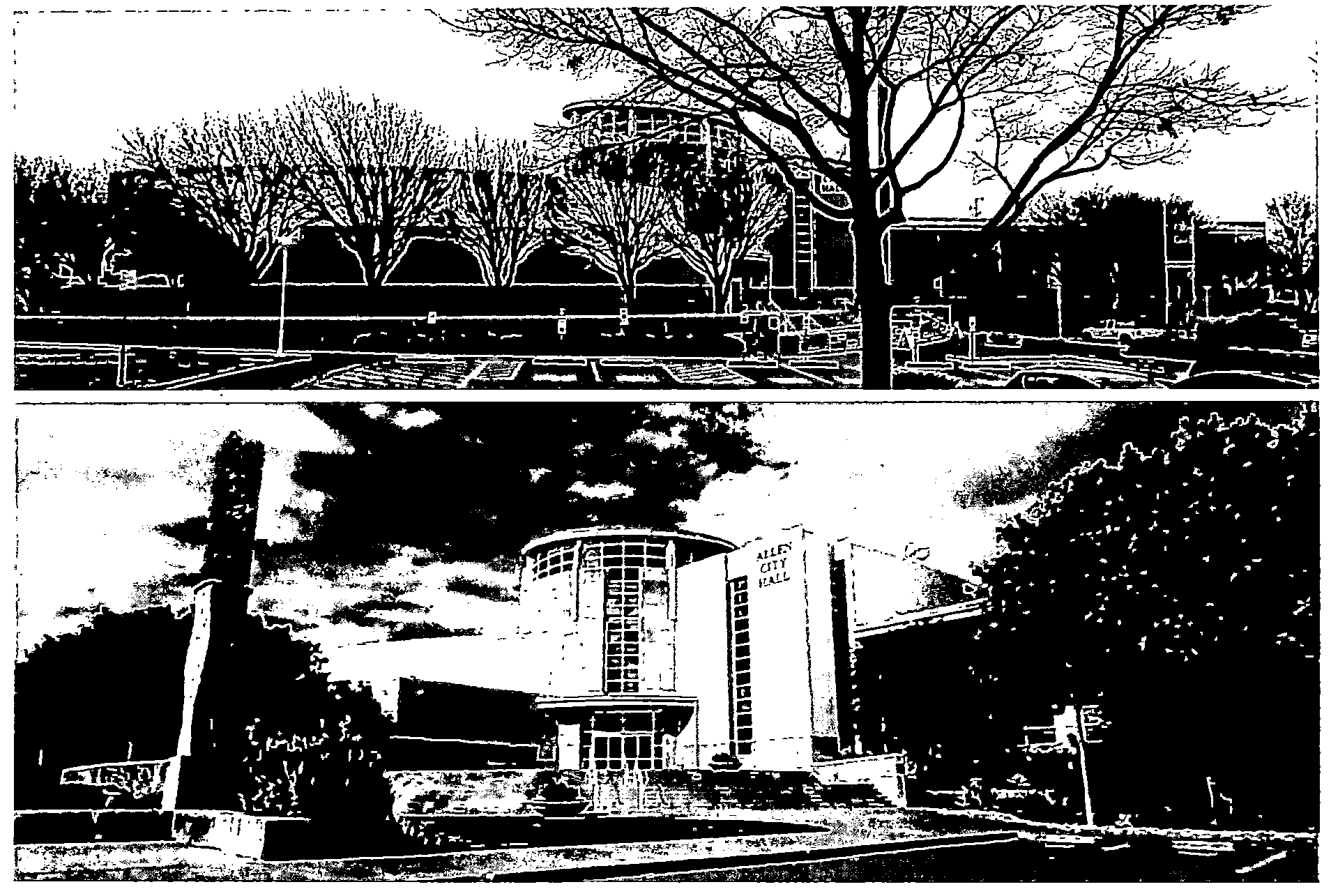
e.
Building fenestrations (openings).
i.
Window openings shall be vertical in proportion and distributed in an even manner. Dormer windows shall also be vertically proportioned and slightly shorter than the windows below, in order to provide clear views of merchandise and perceived connections.
ii.
Except as otherwise provided in this paragraph, building fenestrations shall be used to provide 50 percent transparency on the ground level or first floor and ten percent of the wall area on each floor above the first along a building façade that faces a public street, public sidewalk, public pathway, civic open space or public plaza, or on-site parking lot, except for:
(a)
Ground level or first floor in the cultural core overlay district must have not less than 75 percent transparency;
(b)
Ground level or first floor in the Cottonwood Creek overlay district and residential transition overlay district must have not less than 25 percent transparency;
(c)
Ground level or first floor of a parking garage with a façade adjacent to a primary or secondary street must have not less than 20 percent transparency; and
(d)
Windows in nonpublic portions of the ground-level of public safety facilities where visual safety of the occupants are concerned shall be horizontal in orientation above seven feet and six inches.
FIGURE 39. FAÇADE MATERIALS REFERENCE DIAGRAM
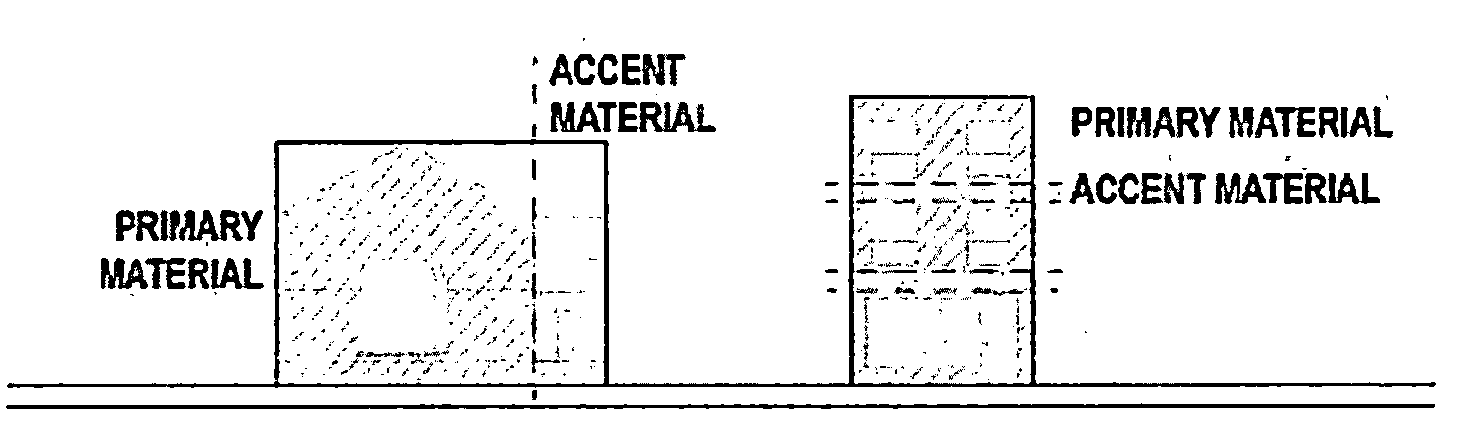
iii.
Minimum window area shall be measured as follows:
(a)
Between two and ten feet above the adjacent grade at the first floor or ground level.
(b)
Between the upper surface of a floor and the upper surface of the floor above on walls above the first floor.
iv.
In the cultural core overlay district, windows and doors on the first floor or ground level shall be designed in the traditional downtown retail architectural style shown in Figure 31;
v.
The door openings/entrance on the first floor or ground level shall be minimum ten feet in height and have a minimum of one of the following architectural elements: fanlight, canopy, or console brackets; and
vi.
The entrance to a parking structure/garage shall front on a primary or secondary street, be clearly marked by signs when visitor or public parking is available in the garage, and the entrance shall not exceed 50 feet in length.
vii.
In the civic overlay, windows proportions and doors shall be detailed similarly to the existing city hall to maintain campus identity and subject to the following:
(a)
Entry doors are to be eight feet tall with transom above to match city hall;
(b)
Window size and shape are to be determined by the occupants' need for available natural light;
(c)
Windows are to be shaped horizontally to allow for natural light and visual safety for the occupants;
(d)
The bottom of windows on the first floor are to be not less than seven feet and six inches above the grade of the first floor; and
(e)
Upper level windows are to be not less than two feet and six inches above the base plate of the floor on which the windows are installed.
f.
Building materials. All exterior building materials are divided into the following two types: (i) "primary materials," used for the majority of the building façade, and (ii) "accent materials," used for additional design and character of the façade.
i.
Primary material. The primary materials shall be those defined as "masonry materials" in subsection 4.08.19.9.g, below, and shall be installed on not less than 70 percent of the visible area of each façade, excluding the area for doors and windows.
(a)
For nonresidential building types, the primary material shall be one or more masonry materials.
(b)
For residential building types, wood and cementitious fiber board may be used as primary materials but shall be installed on more than 50 percent of the area of each façade.
ii.
Accent material. Accent materials shall be installed on no more than 30 percent of the area of each façade, excluding the area of doors and windows. Accent materials shall be one or a combination of the following:
(a)
Architectural metal (not corrugated aluminum);
(b)
Wood;
(c)
Cementitious fiber board and form line;
(d)
Stucco; and
(e)
Glass.
iii.
Material mix. Each façade shall be designed and constructed with no fewer than two but no more than five different materials on the same façade.
iv.
Roofing materials. Roofs shall consist of copper, factory finished painted metal, slate, synthetic slate, terra cotta, cement tile, glass fiber shingles or similar approved materials.
v.
Rear and side façades. The exterior materials and appearance of the rear and side façades of any building shall comply with the same architectural requirements as the front façade of the building.
vi.
Plain face concrete block. Plain face concrete block is prohibited for use as an exterior material on a façade adjacent to a public street, public sidewalk, or public pathway.
vii.
If 75 percent or more of the buildings on the street on which the new construction, or redevelopment project is located is not consistent with the masonry requirements of this section, then the applicant may use materials similar to and compatible with the existing materials used on façades of the existing structures on the street with administrative approval from the city manager, when the building is located outside the cultural core overlay district. Such administrative approval shall be based on the following considerations:
(a)
The condition and maintenance history of the existing buildings on the street; and/or
(b)
Likelihood of redevelopment of the existing buildings in the future; and/or
(c)
The compatibility of the existing façades with the vision set forth in the long-range plans for that particular area.
g.
"Masonry materials" defined. For purposes of this section, "masonry materials" means natural stone, face brick, face tile, concrete, glass, split face concrete masonry units, decorative pattern concrete block, and brick or stone veneer.
h.
Percentage of masonry materials; how measured.
i.
Except for the cultural core overlay district, all building façades within the downtown district shall consist of not less than 70 percent masonry materials.
ii.
All building façades within the cultural core overlay district shall consist of not less than 90 percent masonry materials.
iii.
The percentage of masonry materials on a façade shall be determined by (1) determining the vertical surface area of the wall between its farthest corners and from where the façade meets ground level to the point where the wall meets the eaves of the roof including the areas of doors and windows installed within the façade, and (2) dividing the area of the façade determined by (1) in this paragraph by the area of the façade covered by masonry materials.
10.
Parking requirements.
a.
Generally. With respect to development in the downtown district, the provisions of this section 4.08.19.10 shall control over any conflicts with section 7.04.
b.
Parking reductions. Except for an urban residential dwelling development, the number of required off-street parking spaces for a single development may be reduced by the following amounts if the development complies with all other conditions, which reductions can be cumulative if two or more of the below conditions:
i.
Except for the cultural core overlay district, all building façades within the downtown district shall consist of not less than 70 percent masonry materials.
ii.
All building façades within the cultural core overlay district shall consist of not less than 90 percent masonry materials.
iii.
The percentage of masonry materials on a façade shall be determined by (1) determining the vertical surface area of the wall between its farthest corners and from where the façade meets ground level to the point where the wall meets the eaves of the roof including the areas of doors and windows installed within the façade, and (2) dividing the area of the façade determined by (1) in this paragraph by the area of the façade covered by masonry materials.
c.
Parking alternatives.
i.
Required off-street parking for a use within the downtown district may be satisfied in whole or in part through the use of remote parking, shared parking, or on-street parking if such spaces are located within 800 feet of the property where the off-street parking is otherwise required subject to the following:
(a)
On-street parking may be used to satisfy no more than 25 percent of the off-street parking requirement for developments with a front entrance on a street with 15 or more on-street parking spaces located within 800 feet of the front entrance of the development; and/or
(b)
Shared parking may be used to satisfy no more than 50 percent of the off-street parking requirement using publicly accessible private parking lots and/or structured parking located within 800 feet of the front entrance of the building, subject to a shared parking agreement approved by the city attorney's office; and/or
(c)
Remote parking may be used to satisfy up to 75 percent of the off-street parking requirement of a development using publicly accessible private parking lots and/or structured parking located within 800 feet of the front entrance of the development.
(1)
Remote parking may be provided in parking lots and/or structured parking under same ownership as the development for which the parking is being provided, subject to a restrictive covenant or other instrument signed by the owner of both properties enforceable by the city and approved as to form by the city attorney's office that provides for such remote parking for the benefit of the occupants and/or visitors to the property requiring use of such remote parking; or
(2)
Remote parking may be provided in parking lots and/or structured parking owned by a separate person or entity, subject to a shared parking agreement approved as to form by the city attorney's office.
ii.
Required parking for nonresidential and mixed-use developments may be satisfied by making a one-time payment to the city of cash to the downtown improvement fund in lieu of constructing or otherwise providing for required off-street parking. The amount of the payment is calculated by taking the cost of constructing a garage space and multiplying that cost by the number of parking spaces that will not be required by reason of the payment. The cost of constructing a garage space shall be at a rate set by the council by resolution. The payment into the downtown improvement fund is due prior to issuance of a building permit for construction of any building on the property being developed.
iii.
Prior to counting any shared parking and/or remote parking space toward the minimum off-street parking for a use, the owner of the property needing to satisfy the off-street parking requirement and the owner of the property on which the shared and/or remote parking spaces are located shall sign a parking agreement in a form acceptable to the city attorney that provides, as a minimum, the parking agreement cannot be terminated or otherwise amended in a manner that reduces the number of off-site spaces available to the owner of the property needed to satisfy the off-street parking requirement without the written consent of the city.
d.
Other parking related requirements.
i.
If more than one use is to be located on a building site, all uses on the building site must share parking. The number of required parking spaces shall be determined by (1) adding the parking space requirement for each use using the parking reductions from subsection 4.08.19.10.b. above, and then (2) applying another ten percent reduction to the total number of spaces. No off-street parking for new developments (not including the expansion or redevelopment of existing buildings) shall be allowed in the front of the building adjacent to primary or secondary streets. Utilities shall be allowed under the surface of a parking lot in the downtown district in a dedicated utility easement.
ii.
Utilities shall be allowed under the surface of a parking lot in the downtown district in a dedicated utility easement.
iii.
The number of off-street parking spaces required for an urban residential development shall be not less than 1.1 spaces for each urban residential dwelling unit in the development.
FIGURE 40. SIDEWALK LANDSCAPE
11.
Landscape requirements.
a.
There is no on-site minimum landscape requirement for building sites in the downtown district except as provided herein.
b.
Landscaping shall be planted or updated, to comply with the requirements of this section when:
i.
A site is being developed; or
ii.
A site is redeveloped where an existing parking area is altered or expanded to increase the total number of spaces by one-third or more of the total existing spaces, in which case the entire parking lot shall be updated to comply with the landscape standards in this section; or
iii.
The existing building area square footage increases more than 25 percent.
c.
Properties adjacent to downtown arterial streets with two cross sections: 110 feet right-of-way (DA 110) and 90 feet right-of-way (DA 90) shall comply with the landscaping requirements in article VII of this Code.
d.
Properties adjacent to downtown primary streets.
i.
Properties located along seven cross sections: 80-foot right-of-way (PS-80B, PS-80C, PS-80D), and 60-foot right-of-way (PS-60A, PS-60B, PS-60C) shall be planted with shade trees in the buffer area between the back of curb and the sidewalk on centers not greater than 30 feet center to center.
ii.
Properties located along 80-foot right-of-way (PS-80A) cross sections shall be planted with shade trees not greater than 30 feet center to center along the property frontage and within five feet adjacent to the sidewalk. If placement of buildings on a property does not allow the location of trees as required in the previous sentence, in lieu of planting the required shade trees, a minor modification may be requested to authorize the installation of city-specified self-watering planters located in the sidewalk along the frontage of the property at not greater than 10 feet center to center and setback one-foot from back of curb.
iii.
Properties located along 50-foot right-of-way (PS-50A and PS-50B) cross sections shall be planted with shade trees not greater than 30 feet center to center along the property frontage and within five feet adjacent to the sidewalk. If placement of buildings on a property does not allow the location of trees as required by the prior sentence, in lieu of planting the required shade trees:
(a)
A minor modification may be requested to authorize the installation of city-specified self-watering planters located in the sidewalk along the frontage of the property at not greater than ten feet center to center and setback one-foot from back of curb; or
(b)
Prior to issuance of a building permit for construction of any building to be located on the property, the developer or owner of the property may pay into the downtown improvement fund an amount equal to the cost of purchasing and installing the number of city specified self-watering planters that would be required to obtain the minor modification pursuant to paragraph (a), above.
e.
Properties located adjacent to downtown secondary streets along 50-foot right-of-way (SS-50A and SS-50B) cross sections shall be planted with shade trees not greater than 30 feet center to center along the property frontage and within five feet adjacent to the sidewalk. If placement of buildings on a site does not allow the location of trees as required in the prior sentence, in lieu of planting the required shade trees:
i.
A minor modification may be requested to authorize the installation of city-specified self-watering planters located in the sidewalk along the frontage of the property at not greater than ten feet center to center and setback one-foot from back of curb; or
ii.
Prior to issuance of a building permit for construction of any building to be located on the property, the developer or owner of the property may pay into the downtown improvement fund in an amount equal to the cost of purchasing and installing the number of city specified self-watering planters that would be required to obtain the minor modification pursuant to paragraph (i), above.
f.
In addition to the landscaping requirements along street types described above, surface parking lots shall be required to:
i.
Be developed with not less than five percent of the area of the parking lot or 400 square feet, whichever is greater, for a public plaza adjacent to a sidewalk or a paseo connecting parking spaces in the lot to the sidewalk.
(a)
Such public plaza shall consist of:
(1)
Pedestrian hardscape and soft-scape that includes at least one of the following:
(i)
Raised planters;
(ii)
At-grade planting in the hardscape; or
(iii)
Potted plant material; and
(2)
At least one of the following amenities:
(i)
Ornamental shade trees;
(ii)
Shade structures;
(iii)
Water features;
(iv)
Bench seating;
(v)
Water fountains;
(vi)
Trash receptacles;
(vii)
Bike racks;
(viii)
Electrical receptacles; or
(ix)
Any other amenity approved by the city manager.
(b)
Such paseo or publicly accessible urban linear open spaces used for pedestrian connectivity, if provided, shall be designed and constructed in accordance with the following:
(1)
A paseo shall be a minimum of 18 feet in width and must have a minimum height clearance of eight feet;
(2)
To the extent possible, paseos shall be straight with the opening at the opposite end readily visible from the other end with a minimum of two public access points;
(3)
Hardscape of pedestrian scaled detail, texture, and color shall be provided to enhance the pedestrian experience; and
(4)
Two of the following supportive amenities shall be provided:
(i)
Shade structures;
(ii)
Water features;
(iii)
Public art;
(iv)
Distinctive planters;
(v)
Raised planters;
(vi)
At-grade plantings in the hard-scape;
(vii)
Benches;
(viii)
Trash receptacles; or
(ix)
Pedestrian lighting.
ii.
With parking lots with more than ten parking spaces, plant shade trees at a ratio one shade tree for each five parking spaces in the public plaza or, to the extent possible for parking lots with less than 200 spaces, along a paseo.
iii.
In parking lots with more than 200 spaces, a landscape island not less than 81 square feet in area is required to be located at the end of every ten spaces and shall be planted with at least one shade tree and a mix of ground cover and shrubs covering the entire area of the island.
iv.
Parking lots shall be screened in compliance with section 4.08.19.12.d. below.
v.
[Landscape reference diagrams.]
FIGURE 41 (A). LANDSCAPE REFERENCE DIAGRAM
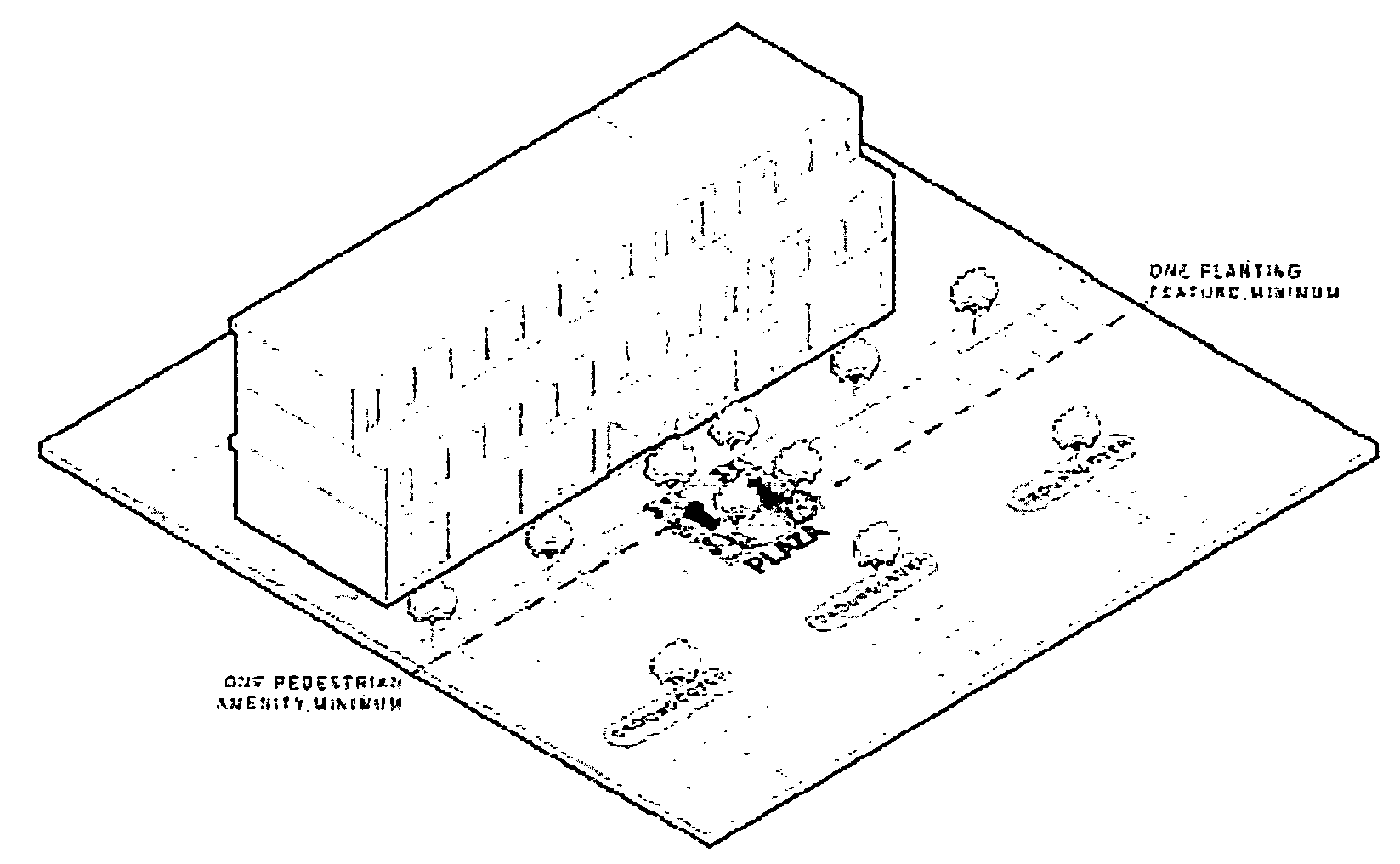
FIGURE 41 (B). LANDSCAPE REFERENCE DIAGRAM
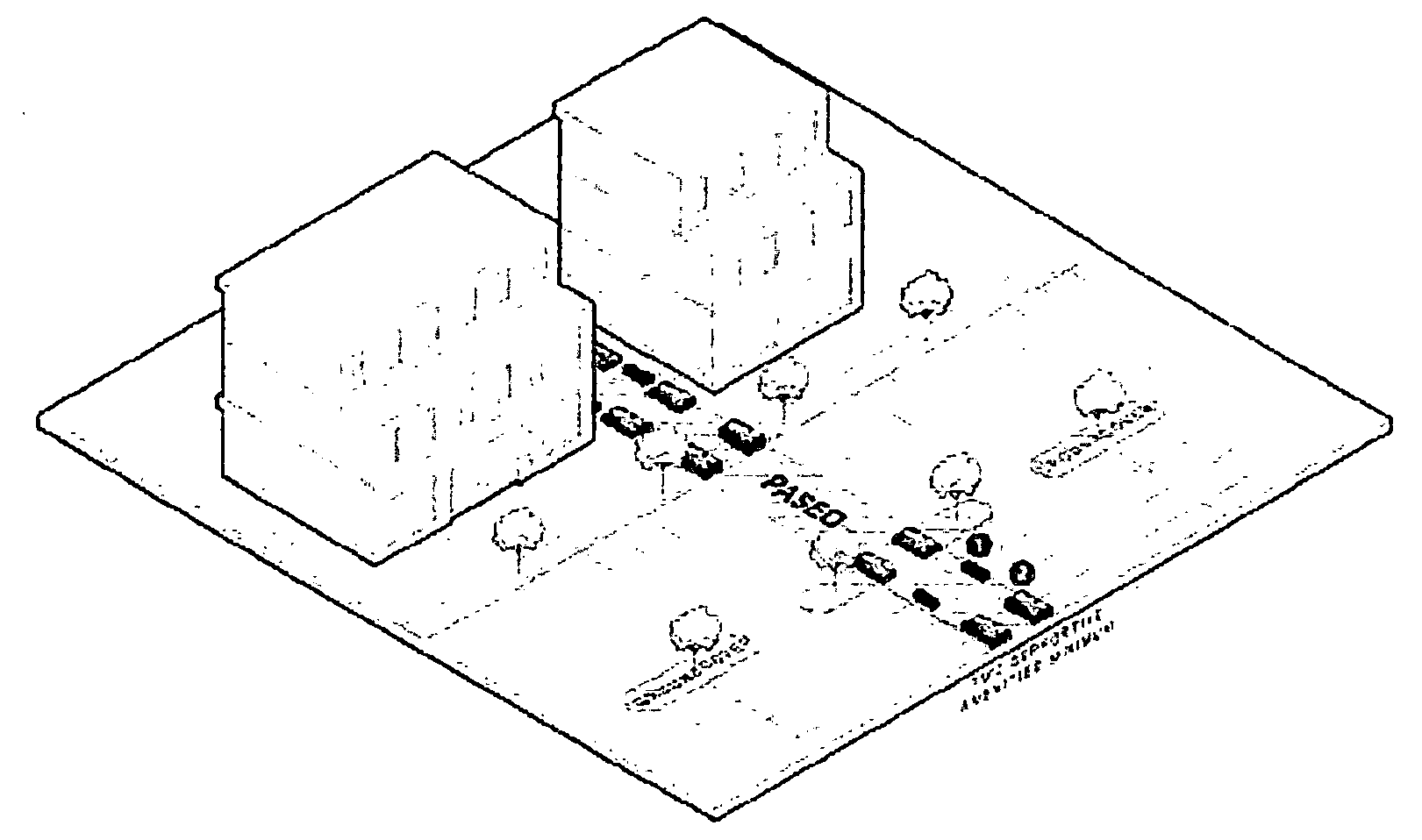
FIGURE 42. PLANTING REFERENCE DIAGRAM
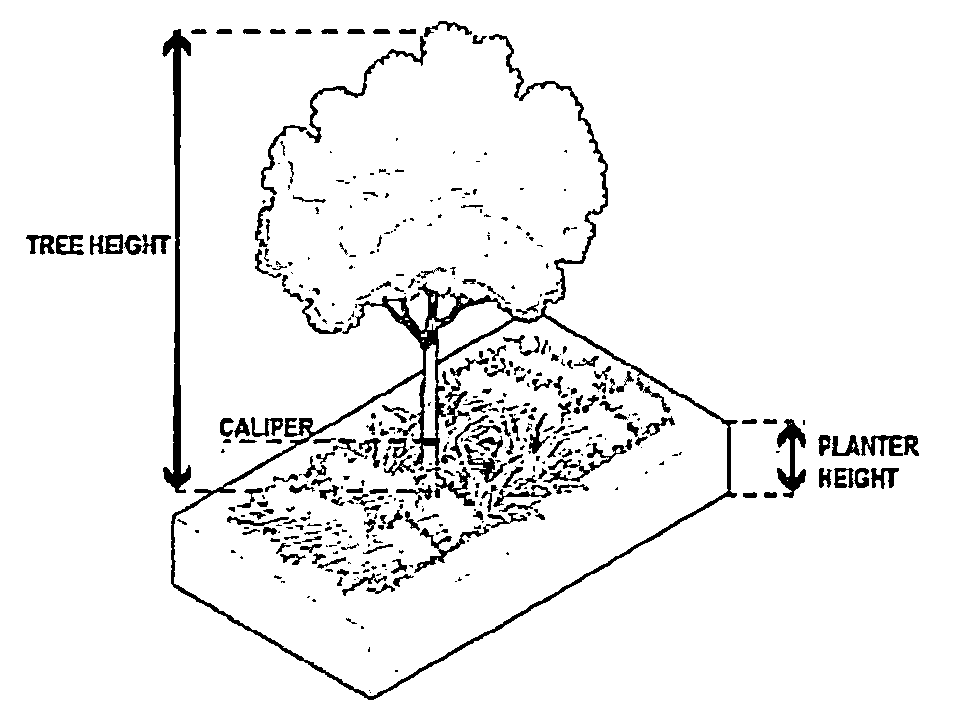
g.
Landscaping installed within the downtown district shall be subject to the following standards:
i.
Trees.
(a)
Minimum caliper for trees required under this section is three inches.
(b)
Minimum height required for shade trees is ten feet and for ornamental trees is eight feet.
(c)
Trees shall be selected from the city approved tree list in appendix C of this Code.
ii.
Planters.
(a)
The height of planters shall be not less than 18 inches nor greater than 36 inches.
(b)
The planting materials in a planter may contain any combination of ground cover, shrubs, and ornamental trees/grasses as approved by the city manager.
(c)
The planters shall be self-watering type planters and must be of city specified variety.
(d)
Planters located along cross-section PS-80A shall incorporate seating in the design as shown in Figure 21.
iii.
Required plant material. Materials and planting standards must comply with the American Standard for Nursery Stock (latest edition) published by the American Association of Nurserymen also known as American Nursery and Landscape Association (ANLA).
h.
Property owners shall be responsible for the maintenance of all landscaping on their properties and the soft-scape landscaping in the right-of-way in front of their property and shall comply with section 7.05.5 of this Code.
FIGURE 43. SCREENING REFERENCE DIAGRAM
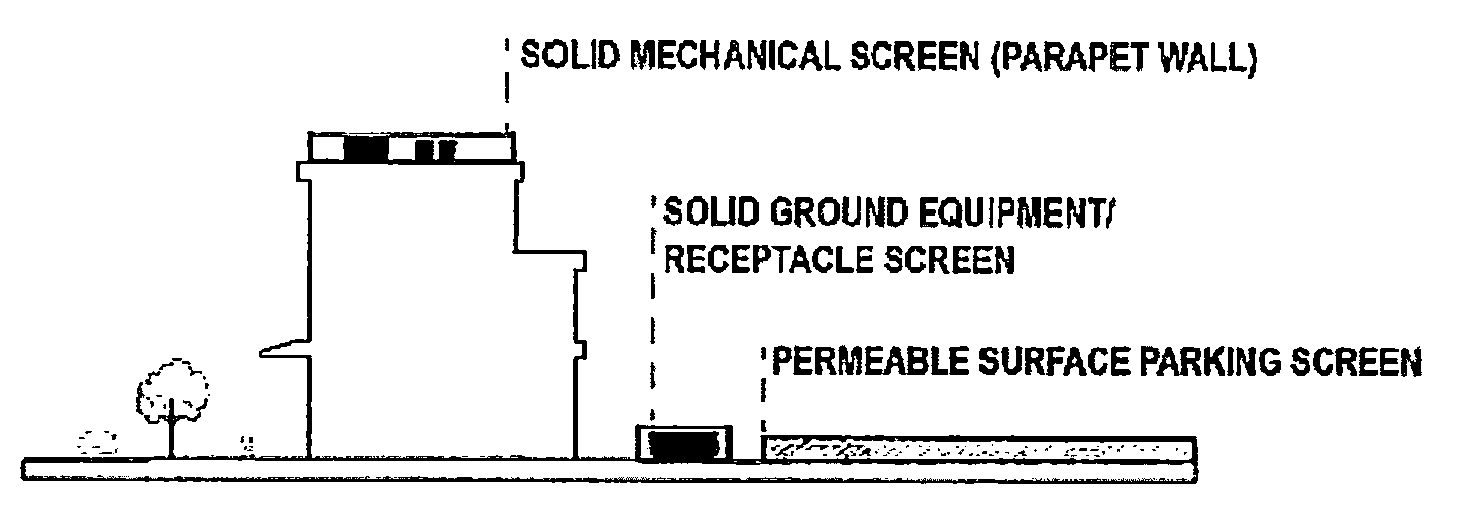
12.
Screening requirements. Screening walls and fences are prohibited in the downtown district except as follows:
a.
Roof-mounted mechanical equipment shall be screened with a parapet wall;
b.
Ground mounted mechanical equipment shall be located in the side or rear of the buildings and screened from the view of pedestrians and the primary and secondary streets. Artwork or landscape features may be used as a screening mechanism for ground mounted equipment in lieu of screening walls or enclosures as represented in Figure 43. However, if such enclosures are used to screen equipment, then the enclosure shall be constructed with the same materials and architecture as the main building;
c.
Trash receptacle areas for nonresidential building type developments shall be screened with an enclosure using the same materials and architecture as the main building;
d.
Surface parking lots shall be designed to allow clear visibility into parking areas from the street to promote crime prevention and safety subject to the following:
i.
Screening shall consist of wrought iron or tubular steel fencing not greater than four feet in height; and
ii.
Screening may additionally incorporate landscaping or a trellis or grillwork with climbing vines and/or pedestrian amenities, such as a seating ledge.
FIGURE 44. EXAMPLE OF GROUND MOUNTED EQUIPMENT SCREENING
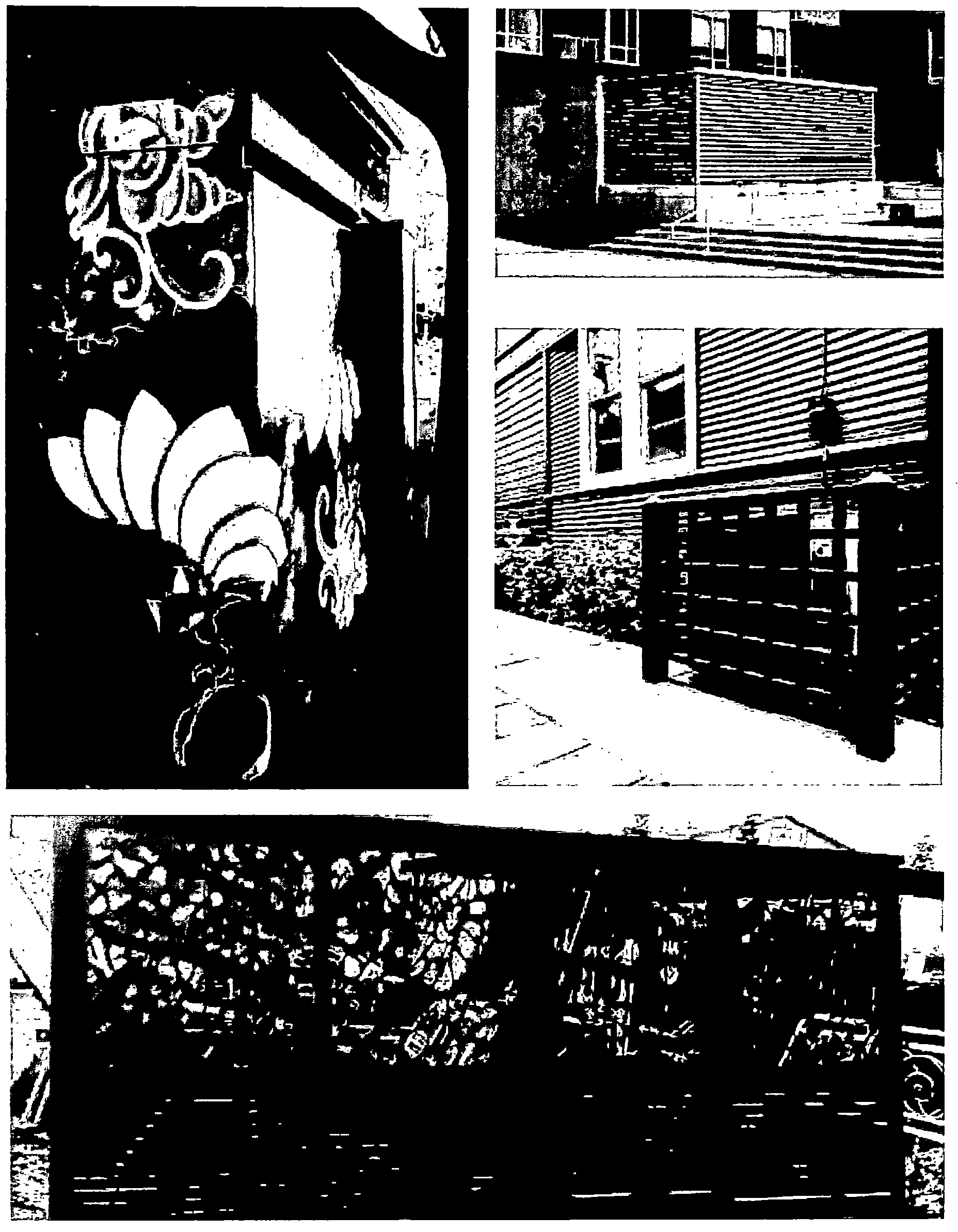
FIGURE 45 (A). SIGNAGE REFERENCE DIAGRAM
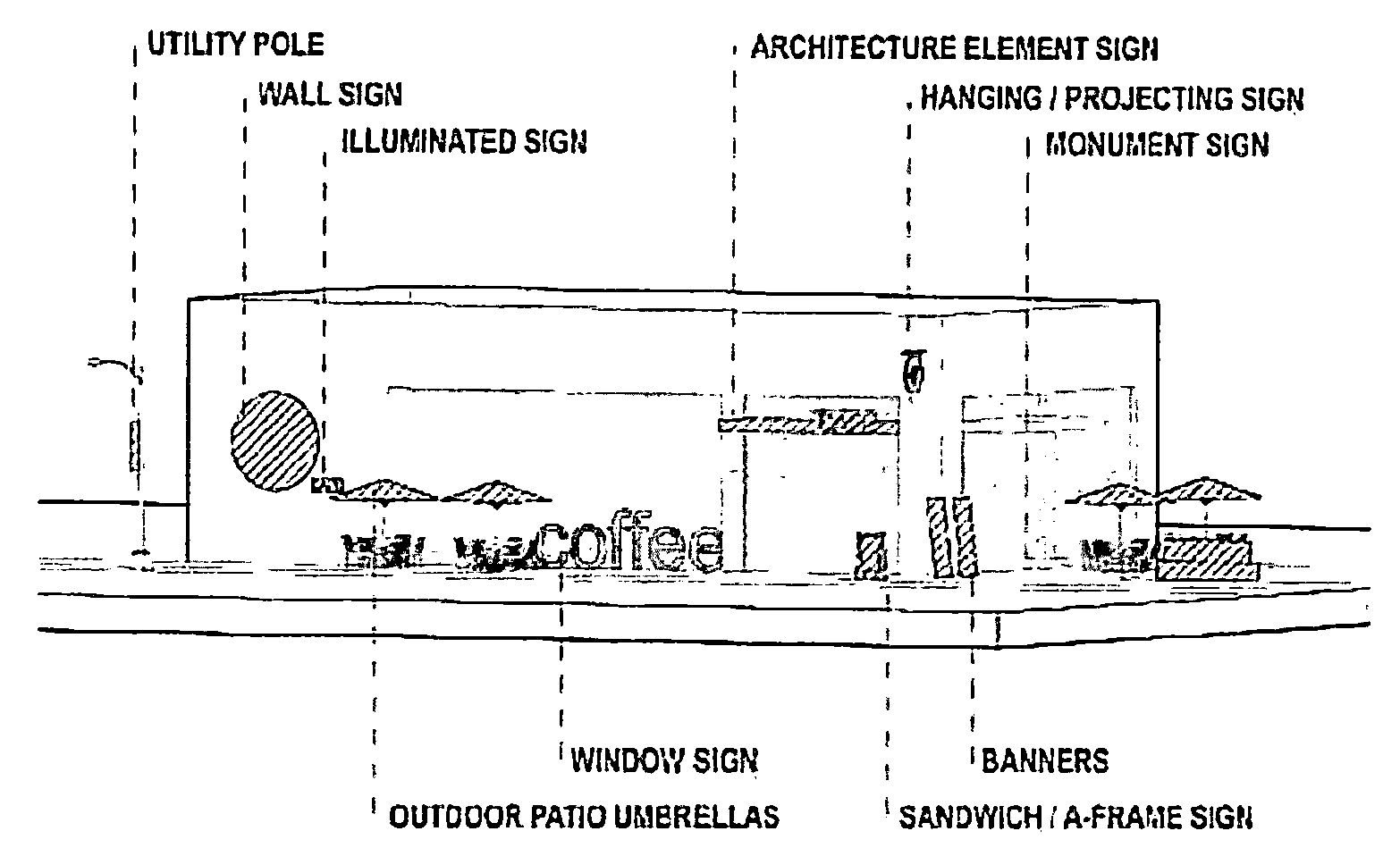
13.
Signs. Article VII zoning development standards, section 7.09 sign regulations, shall apply in the downtown district except as follows:
a.
Prohibited signs. Except for temporary signs, off-premises signs are prohibited.
b.
Allowed signs. The following signs are permitted subject to the size restrictions set forth in the ALDC except as follows:
i.
Temporary signs.
(a)
Sandwich/A-frame sign. Sandwich/A-frame signs may be located subject to the following:
(1)
The sign height shall not exceed four feet;
(2)
Each sign face shall not exceed an area of eight square feet;
(3)
The sign may be placed on the sidewalk, provided that:
(i)
The sign is located no closer than one foot to the face of the curb;
(ii)
A minimum unobstructed sidewalk width of six feet is maintained.
(4)
A sign permit must be obtained prior to placement of the sign on the property;
(5)
Only one A-frame sign is permitted per occupancy; and
(6)
A-frame signs may be placed on the sidewalk adjacent to the associated business with the sign only during the hours in which the business is open to customers and/or clients.
FIGURE 45 (B). SIGNAGE REFERENCE DIAGRAM
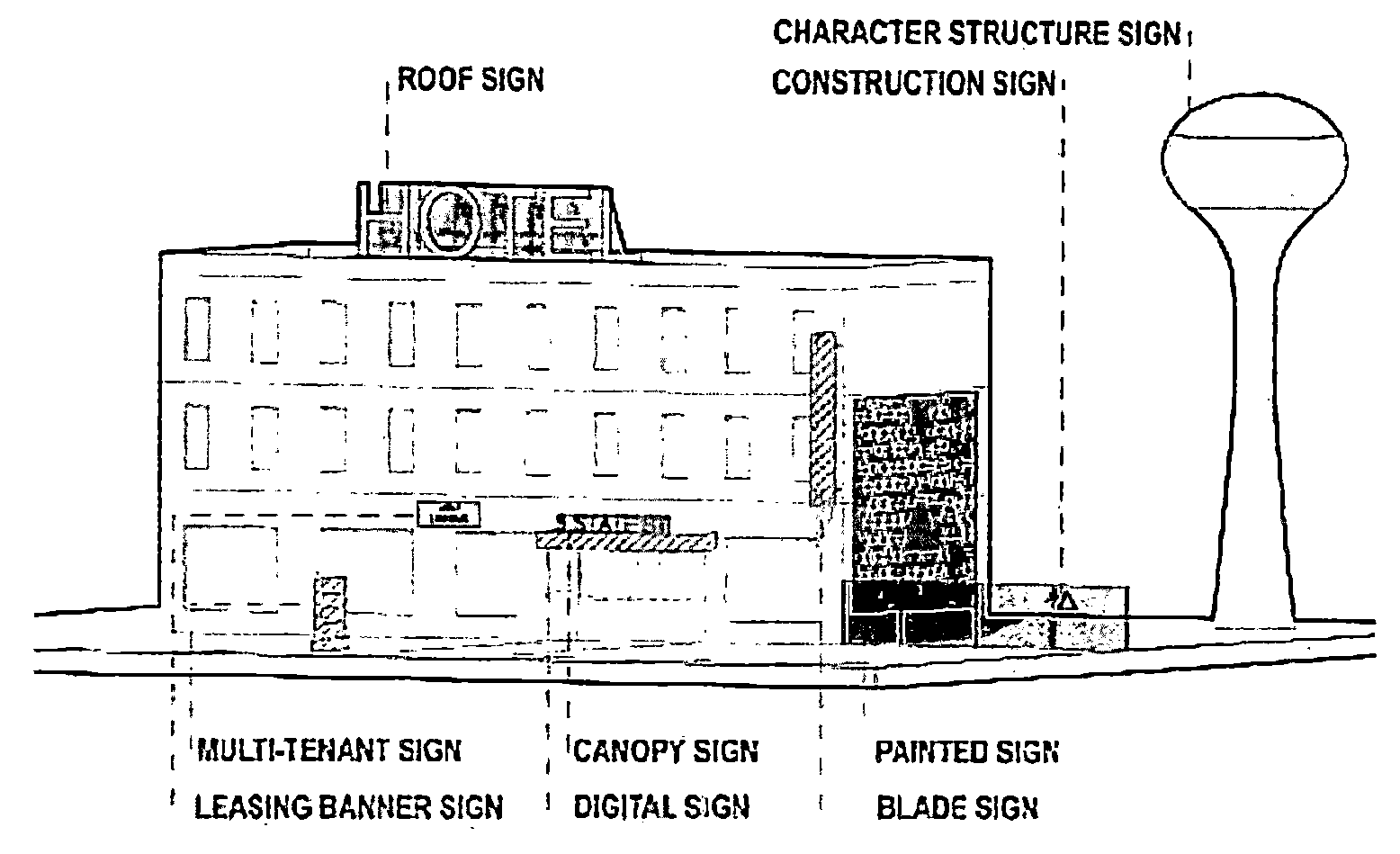
(b)
Utility poles. Signs may be attached to public utility poles or light poles if approved by the sign control board, the owner of the pole, and any other party that has prior rights to use of the pole. These signs shall be subject to:
(1)
The overall size and dimensions of an authorized utility pole sign shall be no greater than 60 inches in length and 30 inches in width;
(2)
Locations and placement of the signs shall be determined by the city manager. Additionally, the city manager shall develop and implement administrative regulations for the orderly installation and maintenance of the signs. The administrative regulations may be amended by the city manager as needed in the interest of public safety; and
(3)
A revocable nonexclusive license agreement, approved by the city manager, shall be required of any person, group, entity, or organization that desires to install a utility pole sign in addition to requirements referenced above.
(c)
Special event banners. Banners for special events shall not be restricted by number of permits per year or restrictions on running consecutively; provided, however, banner signs may be installed no earlier than three weeks prior to the special event to which the sign relates and must be removed no later than one week after the conclusion of the special event.
FIGURE 46. EXAMPLE OF SIGNS
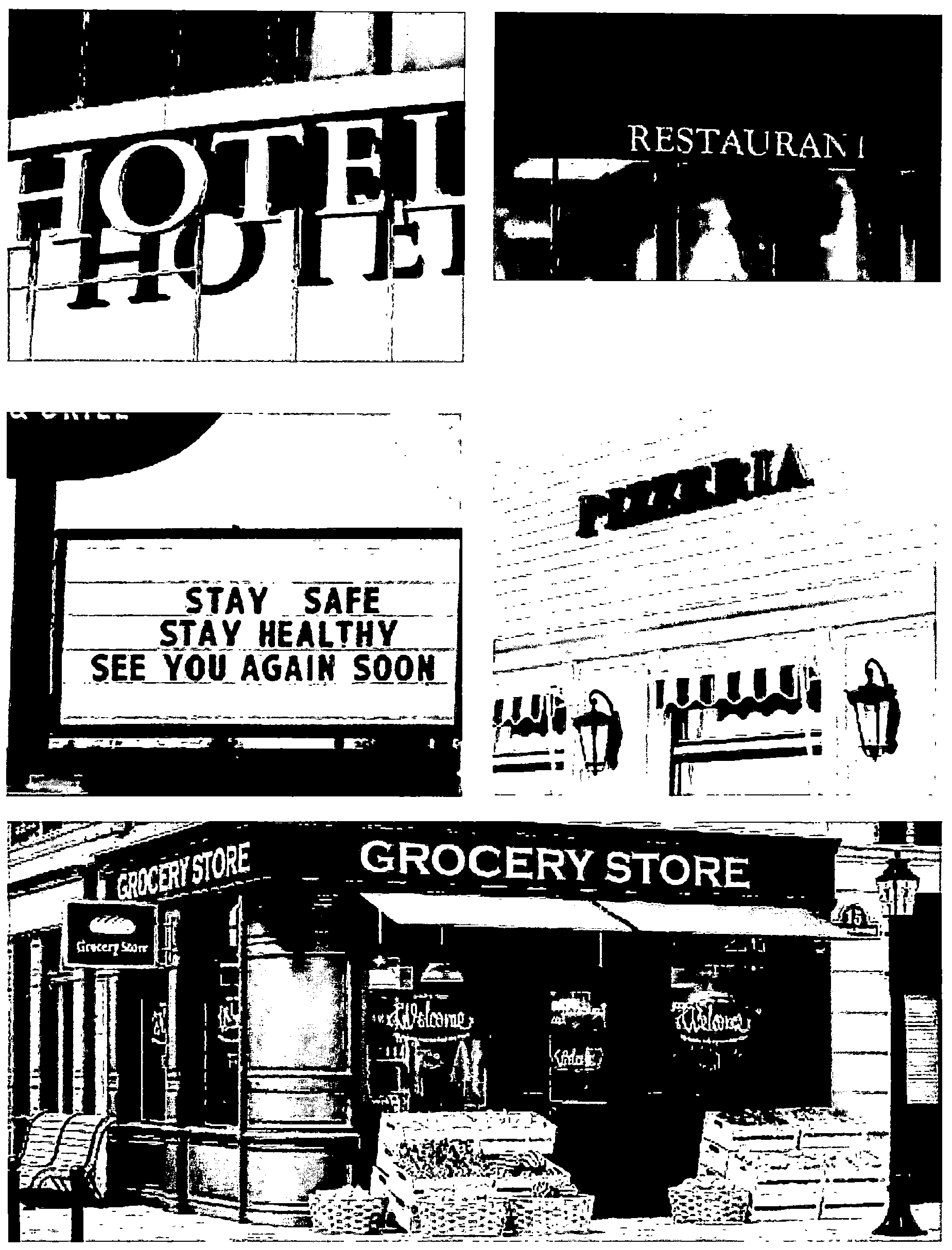
ii.
Attached signs.
(a)
General.
(1)
All signs shall be securely attached to a building façade/structure.
(2)
Total combined area of all attached signs on a building façade shall not exceed 40 percent of the total area of each building façade.
(3)
For the purpose of determining the size of attached signs the building façade area shall be calculated as shown in Figure 44.
(4)
Signs must be located to fit within one architectural element (such as the lintel or sign frieze) to prevent overlap of multiple architectural elements.
(b)
Wall signs.
(1)
Maximum area of a wall sign shall be five percent of the building façade to which it is attached. If a sign extends across the corner of a building, the sign area will be calculated by adding five percent of each building façade over which the sign extends, provided that the sign area of the wall sign does not exceed five percent of the area of each façade.
(2)
A wall sign may extend no more than six inches horizontally from the surface of the building façade to which it is attached.
(3)
No more than one wall sign shall be allowed on each building façade for each space within a building for which a certificate of occupancy has been issued; provided, however, the cumulative sign area of all wall signs on the building façade shall not exceed five percent of the area of the façade.
(4)
The holder of a certificate of occupancy shall be allowed no more than one wall sign to be attached to the building to which the certificate of occupancy applies.
(c)
Canopy and awning signs. A canopy or awning sign shall not exceed 75 percent of the linear width of the canopy/awning or 50 square feet, whichever is less, with lettering and/or logo not to exceed 24 inches in height.
(d)
Blade signs.
(1)
No more than one blade sign will be allowed for each building face. No monument sign shall be permitted on the same street frontage adjacent to the building façade when a blade sign is installed on the same building face.
(2)
Each sign face of a blade sign shall not exceed an area of 50 square feet or five feet in width.
(3)
The lowest edge of the blade sign shall be not less than nine feet above the ground beneath the sign.
(4)
The top edge of the blade sign shall not exceed a height that is two-thirds (in linear feet) of the height of the building face at the location of the building face where the sign is attached.
(e)
Hanging/projecting signs.
(1)
No more than one hanging sign will be allowed for each first-floor occupancy; provided, however, a first floor building occupant with public entrances on more than one street frontage may have one hanging sign on each street frontage;
(2)
The holder of a certificate of occupancy shall be allowed no more than one hanging sign to be attached to the building to which the certificate of occupancy applies.
(3)
Each sign face shall not exceed an area of 12 square feet;
(4)
Each sign face shall not exceed a width of five feet;
(5)
The lowest edge of the sign shall not be less than eight feet above the ground below the sign; and
(6)
No hanging sign shall be closer than 15 feet from another hanging sign.
(f)
Painted signs. Signs with commercial speech painted directly on the surface of a building or structure may be permitted after a recommendation by the sign control board and approval of the downtown design review board.
(g)
Murals. Also known as art with no commercial speech may be painted to cover an entire building façade subject to a recommendation from the City of Allen Public Art Committee and approval by the downtown design review board.
(h)
Character structure signs. Signs are permitted to be erected on character structures (e.g., water towers, windmills, or similar structures), subject to the following:
(1)
Character structure signs may be illuminated internally or externally, or both; and
(2)
Character structure signs may not exceed 1,200 square feet total effective area.
(i)
Roof signs. One rooftop-mounted premises sign is permitted per lot, for buildings three stories or more, subject to the following conditions:
(1)
A rooftop-mounted premises sign may be illuminated internally or externally, or both;
(2)
A rooftop-mounted premises sign may not exceed 300 square feet total effective area and shall not exceed 20 feet in width or 15 feet in height; and
(3)
A roof sign in the cultural core overlay district may be installed following approval by the downtown design review board, which approval shall be based on the following findings:
(i)
The proposed sign is historically appropriate to the era of the building's architecture; and/or
(ii)
The proposed sign is aligned with the history of Allen; and/or
(iii)
The proposed sign is culturally appropriate in Allen.
(j)
Window signs. One window sign per window is allowed. The sign may not be directly painted on the window and may be in the form of a window display or a decal, not to exceed 30 percent area of the window including the window frame.
iii.
Detached/freestanding signs.
(a)
General.
(1)
All freestanding signs shall be setback a minimum five feet from the property line.
(2)
Freestanding signs, except architectural elements signs, are prohibited in the cultural core overlay district.
(3)
Pole signs are prohibited in the downtown district.
(4)
A property may not be developed with both a multi-tenant sign and a monument sign.
(5)
The following combination of freestanding sign types is allowed on a premises at any given time:
(i)
An architectural element sign or a vehicle sign may be combined with any other freestanding signs; and
(ii)
A flag sign (defined as a flag on a flagpole) may be combined only with a monument sign.
(b)
Architectural element sign. Freestanding sign that is attached to an architectural element (a structure such as a pergola, freestanding canopy, fence, or retaining wall) that is built for the purpose of serving as an architectural enhancement of the site, is architecturally compatible to the main building and the overall site, but does not include sign structures for other sign types and/or structures for antennas or similar type structures. Architectural element signs shall be subject to the following:
(1)
Signs shall be attached to the surface of the architectural element;
(2)
The area of the sign including the structure, shall not exceed 200 square feet;
(3)
Sign height may not extend beyond the surface of the architectural element to which it is attached; and
(4)
One sign per elevation of the architectural element.
(c)
Monument sign. Monument signs are permitted in the downtown district subject to the following:
(1)
Only one monument sign is permitted per lot per street frontage;
(2)
The sign shall not be located in the visibility triangle;
(3)
Sign area shall not exceed 50 square feet;
(4)
Sign height shall not exceed five feet;
(5)
Monument signs on the same side of the street shall not be less than 100 feet from any other monument sign measured from the closest point of the outer frames or elements of the signs; and
(6)
Monument signs are prohibited in the cultural core overlay district.
(d)
Multi-tenant sign. Multi-tenant signs located in the downtown district are subject to the following:
(1)
Multi-tenant signs may only be installed on lots adjacent to the downtown arterial street cross-section or the U.S. Highway 75 service road;
(2)
Only one multi-tenant may be installed on a lot, per street frontage;
(3)
Multi-tenant signs on the same side of the street shall be not less than 150 feet from any other multi-tenant sign measured from the closest point of the outer frames or elements of the signs;
(4)
Sign area shall not exceed 180 square feet; and
(5)
Sign height shall not exceed 15 feet.
(e)
Outdoor patio umbrellas. Outdoor patio umbrellas may contain advertising and be allowed for special events, retail, service, or restaurant uses.
iv.
Other signs.
(a)
Changeable electronic variable message signs (CEVMS). CEVMS shall be allowed on all permitted signs subject to the following:
(1)
One CEVMS may be a part of an attached sign or a freestanding sign;
(2)
A CEVMS shall not comprise an area greater than 50 percent of the allowed area of a monument sign;
(3)
If constructed as part of a monument sign, the CEVMS cabinet must be wrapped in material to match or complement the building served by the sign;
(4)
A CEVMS may not be used as a temporary sign;
(5)
Only one CEVMS may be installed on a lot, per street frontage;
(6)
A CEVMS on the same side of the street shall not be less than 200 feet from any other CEVMS measured from the closest point of the outer frames or elements of the signs;
(7)
Every CEVMS shall have an auto dimmer photo eye installed in the sign to limit the illumination of the signs as follows:
(i)
Maximum brightness between 7:00 a.m. and 6:00 p.m. shall be 5000 nits; and
(ii)
Maximum brightness between 6:01 p.m. and 6:59 a.m. shall be 660 nits;
(8)
Message changes shall be allowed with no less than two-second transition with and not less than an eight-second hold time;
(9)
Attached signs may be a CEVMS with a light source that is not directly visible;
(10)
The copy area for any individual CEVMS shall not exceed 50 percent of the allowed sign area per side;
(11)
The copy area for a CEVMS used as a multi-tenant sign is 180 square feet;
(12)
A CEVMS may not display light of such intensity or brilliance to cause glare, impair the vision of an ordinary driver, or constitute a nuisance; and
(13)
No flashing, dimming, or brightening of message is permitted except to accommodate changes of message.
(b)
Illuminated signs. Illuminated signs are allowed within 150 feet of a residential property internal to the downtown district, but only if the illumination does not exceed 2.0 foot-candles measured at a level five feet above the common property line. Illuminated signs are prohibited within 150 feet of a residential zoning district.
(c)
Undefined signs. Sign types not clearly defined in this section or the ALDC may be allowed in the downtown district including all overlay districts within downtown if approved by the downtown design review board.
14.
Downtown improvement fund; right to refund.
a.
All money paid pursuant to subsections 4.08.19.6.c.i.2), 4.08.19.10.c.ii., or 4.08.19.11 shall be deposited in an interest-bearing account identified as the downtown improvement fund.
b.
Funds deposited in the downtown improvement fund shall be used only within the boundaries of the downtown district and shall only be used for:
i.
Acquisition and development of public parks, civic places, and plazas;
ii.
Acquisition and development of structured public parking garage, surface parking lot, or on-street parking; or
iii.
Street and alley improvements, including, but not limited to, acquisition or property interest necessary to add or enhance multi-modal connectivity with and through the downtown district including streetscape or public improvements along public streets.
c.
The city will account for all funds paid into the downtown improvement fund and must spend the funds received within 15 years from the date received and on a first in, first out basis. If funds paid into the downtown improvement fund are not spent within the time required, the then record owner(s) of the property, the development of which the payment of the funds was related, shall be entitled to a refund of the unpaid balance of the funds originally paid without interest upon filing a written claim for such funds not prior to nor later than one year after the expiration of the 15-year period or such right shall be barred. The city shall only be obligated to pay the refund described in the paragraph c to the current record owner of the property, even if different than the original payor of the funds.
d.
A payment into the downtown improvement fund made in lieu of the dedication and development of the open space described in subsection 4.08.19.6.c.i.2).b), the amount of which shall be determined by adding:
i.
The market value of a 2,500 square foot portion of the land proposed to be developed as determined by the Collin Central appraisal district as of January 1 of the year in which the payment is made; and
ii.
Twenty thousand dollars in open space development costs.
(Ord. No. 3976-1-23, § 1.A, 1-10-2023; Ord. No. 4068-2-24, § 1.A(Exh. A), 2-27-2024; Ord. No. 4170-8-25, § 1.A, 8-26-2025)
Editor's note— Ord. No. 3976-1-23, § 1.A, adopted January 10, 2023, repealed the former § 4.08.19, and enacted a new § 4.08.19 as set out herein. The former § 4.08.19 pertained to "CBD" central business district and derived from Ord. No. 2069-6-02, § 1, adopted June 25, 2002; Ord. No. 2112-11-02, adopted November 26, 2002; Ord. No. 2433-9-05, § 1, adopted September 13, 2005; Ord. No. 3846-8-21, § 1.D, adopted August 10, 2021.
Sec. 4.09.1. - Design overlay district No. 1 [deleted].
(Ord. No. 2433-9-05, § 1, 9-13-2005)
Sec. 4.09.2. - Design overlay district No. 2 [deleted].
(Ord. No. 2433-9-05, § 1, 9-13-2005)
Sec. 4.10. - Residential accessory use regulations.
1.
General. The standards in this section 4.10 shall apply to all single-family residential zoning districts.
2.
Accessory structures:
a.
Building permits. No person shall install or construct an accessory structure with a floor area of greater than 120 square feet without first obtaining a building permit issued by the city.
b.
Engineered floors. Notwithstanding paragraph 2.a, above, a building permit shall be obtained by a person prior to construction of an accessory structure that is required pursuant to one or more of the codes adopted pursuant to article III to be constructed with a permanent and/or engineered foundation.
c.
Compliance with lot coverage limits. The cumulative area of all accessory structures located on a single-family residential lot and the area of the main structure located on the same lot shall not exceed the maximum lot coverage permitted in the zoning district.
d.
Setbacks:
i.
Front yard. A detached accessory structure must be located in the rear yard or in the area of a side yard not less than 20 feet behind the front building facade.
ii.
Side and rear yards. The required side and rear yard for any detached accessory structure is three feet from any side or rear lot line, except as follows:
(a)
If no alley exists, the rear yard shall not be less than five feet from the rear lot line.
(b)
No accessory structure shall be located within any easement affecting the lot as recorded in the Official Public Records of Collin County, Texas.
(c)
A garage entered from an alley or side street shall be set back from the side street or alley not less than 20 feet.
(d)
An accessory structure with an area greater than 400 square feet shall comply with the side and rear setback requirements applicable in the underlying zoning district applicable to the primary structure located on the same lot or tract.
iii.
Accessory structure height greater than 15 feet. An accessory structure with a height greater than 15 feet shall comply with the setback requirements applicable to the primary structure or the setbacks set forth in paragraphs d.i and d.ii, above, whichever is more restrictive.
iv.
Maximum height of accessory structures. At no point shall the height of the accessory structure exceed the height of the primary structure or the maximum height allowed for buildings constructed in the underlying zoning district, whichever is less.
3.
Cooling towers and similar structures. Air conditioning compressors and pads on a lot or tract developed with a detached single-family residential unit shall be setback not less than three feet from any property line. Cooling towers and similar accessory structures shall be located in compliance with all front, side, or rear yard setback regulations applicable to the zoning district.
4.
Carports. Carports accessed from a rear alley or side street shall shelter no more than three vehicles, shall not exceed 27 feet on its longest dimension, and shall be located no closer than three feet to any side or rear lot line.
5.
Swimming pools. Swimming pools (including all decking and equipment) must be located behind front building setback lines and at not less than three feet from any property line. Any swimming pool water edge shall be not less than five feet from any primary structure. All pools must be completely enclosed by a fence or wall not less than six feet in height equipped with self-latching and self-closing gates. The latching device shall be located on the poolside not less than four and one-half feet above the ground. Automatic electric gates may be used, provided closing action is initiated within 60 seconds after pass-through of a vehicle or person. Temporary fencing is required during excavation.
6.
Home occupations. Home occupations are permitted as accessory uses subject to the following requirements:
a.
The activity shall be conducted wholly within the main building or within any accessory building.
b.
Total floor area to be used for a home occupation shall not occupy more than 20 percent of the total floor area of the main building nor exceed 400 square feet.
c.
Outdoor activities shall be limited to instructional activities conducted in the backyard and screened from the neighboring property.
d.
No outside storage of materials, goods, supplies, trailers, or equipment connected with the home occupation shall be allowed unless otherwise screened in accordance with chapter 6 article IV of the Code of Ordinances.
e.
A maximum of one commercial vehicle (at a capacity of less than one and a half tons) may be used or parked on the property in connection with the home occupation. Vehicles connected with the home occupation shall be regulated in accordance with chapter 9 article IX of the Code of Ordinances. In addition, no more than one vehicle connected with the home occupation may be parked or stored on the street.
f.
No advertisement, sign, or display relating to the home occupation shall be allowed on the premises. Unless otherwise required by law, no advertisement of the home occupation shall include the street address of the premises.
g.
Instructional activities shall be limited to a maximum of six students at any time.
h.
Parking, picking up, or dropping off students is prohibited in city alleys.
i.
Merchandise or products of the home occupation shall not be offered or displayed for sale at or on the premises. It is not a violation to conduct garage sales on a residential property provided that: (1) the merchandise sold at such sale is not acquired solely for the purpose of resale on the premises; (2) the duration of sale does not exceed three calendar days; (3) signs advertising the sale shall be in compliance with section 7.09 of this Code, and (4) no more than two garage sales are conducted on the same property within the same calendar year.
j.
Sales incidental to a service are allowed, provided that orders previously made by telephone generally are filled off the premises of the person conducting the home occupation, or at a sales party conducted off the premises of the person conducting the home occupation.
k.
There shall be no external evidence of the home occupation on the property where the home occupation is being conducted. No activity shall indicate, from the exterior of the structure, that the premises are being used for anything other than a dwelling unit.
l.
The activity shall employ only residents of the location of the home occupation.
m.
A home occupation shall produce no offensive odor, noise, dust, smoke, fumes, glare, vibration, electrical disturbance, or heat in excess of those normally found in residential areas.
n.
No traffic or parking of vehicles shall be generated by a home occupation in greater volumes than normally expected in a residential neighborhood and any need for parking must be accommodated within the required off-street parking for the dwelling unit.
o.
Childcare in a registered family home will be allowed and shall be limited to the number of children allowed under applicable state law or city regulation.
p.
Any business, occupation, or activity conducted within a dwelling unit, and which does not comply with this section 4.10.6 shall be construed to be a commercial activity and shall be cause for the city to order cessation to all such activity within such dwelling unit.
q.
Except for a person working on or selling a motor vehicle owned by the person and subject to all other applicable laws, rules, ordinances and regulations, the service, repair, painting, or onsite selling of any motor vehicle, including, but not limited to, automobiles, motorcycles, trailers, boats, personal watercraft, recreation vehicles and lawn equipment is not authorized as, and is specifically excluded from the definition of "home occupation."
(Ord. No. 1939-5-01, 5-3-2001; Ord. No. 2900-3-10, § 3, 3-23-2010; Ord. No. 3157-6-13, § 1, 6-11-2013; Ord. No. 3342-12-15, § 1, 12-8-2015; Ord. No. 3846-8-21, § 1.E, 8-10-2021; Ord. No. 3912-5-22, § 1, 5-10-2022; Ord. No. 3988-2-23, § 1.A, 2-28-2023)
Sec. 4.11. - Commercial accessory use regulations.
1.
Accessory buildings and structures located on property developed for one or more nonresidential uses are considered commercial buildings and shall obtain all necessary permits and inspections and abide by all applicable codes. Donation bins and drop off bins/trailers are considered accessory structures and shall not be installed or constructed prior to the issuance of a building permit by the city.
2.
An accessory structure located on property developed for one or more nonresidential uses shall be located to comply with the setbacks of the primary structure and shall not be placed such that it conflicts with site features such as fire lanes, landscape buffers, required parking, or other identified features deemed pertinent during the permit review process.
3.
The combined floor area of all accessory buildings shall comprise no more than five percent of the lot coverage or 60 percent of the primary structure, whichever is less. In no case shall the combined area of the primary structure and accessory building(s) exceed the maximum percentage of lot coverage allowed for the zoning district on which the structures are placed.
4.
Support columns associated with an accessory structure covering parking spaces shall not be placed so as to impede the opening of a vehicle door; the support columns shall be located at the front or back of the parking spaces. Support columns shall not extend into the minimum width and depth of a parking space.
5.
The use of modular storage units and portable demand storage as accessory buildings or structures is prohibited.
(Ord. No. 3846-8-21, § 1.F, 8-10-2021; Ord. No. 3988-2-23, § 1.B, 2-28-2023)
Sec. 4.15.1. - General height and area provisions.
1.
Height.
a.
Cooling towers, roof gables, chimneys, vent stacks, and citizens band (CB) antennae may extend up to an additional ten feet above the maximum allowable roof height.
b.
Water standpipes and tank, church steeples, domes and spires, school buildings, and institutional buildings may be erected to exceed three stories or 45 feet in height, provided that one additional foot shall be added to the width and depth of front, side and rear yards for each foot that such structures exceed the maximum height.
c.
No structure may be erected to a height in excess of that permitted by applicable airport hazard zoning regulations.
d.
Height and area regulations are set forth in residential height and area regulations (section 4.15.2) and nonresidential height and area regulations (section 4.15.3).
2.
Front yards.
a.
No fence, walls, building or other structure shall be allowed in front yard.
b.
Where lots have double frontage, running through from one street to another, the required front yard shall be provided on both streets.
c.
Where the frontage on one side of a street between two intersecting streets is divided by two or more zoning districts, the front yard setback shall comply with the requirements of the most restrictive district for the entire frontage.
d.
Every part of a required yard shall be open and unobstructed except for permitted accessory structures, and the ordinary projections of window sills, belt courses, cornices and other architectural features projecting not more than 12 inches and roof eaves projecting not more than 24 inches.
e.
No supporting member of any garage, carport or other automobile storage structure shall be located within the required front yard or within the required yard on a side street.
f.
Attached unenclosed front porches or uncovered patios shall be permitted to extend up to ten feet into the front yard of R-1, R-1.5, R-2, R-3, R-4, and R-5 zoning districts.
g.
Attached unenclosed front porches or uncovered patios shall be permitted to extend up to eight feet into the front yard of R-6 and R-7 zoning districts.
3.
Side yards abutting collectors or thoroughfares. Any residential side yard abutting a collector or thoroughfare street, including corner lots and lots located on cul-de-sacs, shall have a side yard setback of not less than 25 feet.
4.
Rear yards. Any residential rear yard abutting a major thoroughfare requires a 15-foot rear yard setback, in addition to the rear yard setback required by section 4.15.2 of this Code.
(Ord. No. 1939-5-01, 5-3-2001; Ord. No. 3125-11-12, § 1, 11-27-2012; Ord. No. 3846-8-21, § 1.G, 8-10-2021)
Sec. 4.15.2. - Schedule of residential height and area regulations.
(1)
50 feet when abutting any single-family residential district.
(2)
Minimum side yards apply except where located across a public street from a front yard where the front yard setback shall also apply to the side yard.
(3)
Side or rear entry garage access is required unless the front of the garage is 20 feet or more behind the front or side building setback line.
(4)
No required parking shall be allowed within the required front yard.
(5)
No portion of any structure within 100 feet of any single-family residential district or any front property line shall be more than two stories in height.
(6)
Minimum lot width of 65 feet required for lots without rear alleys.
(7)
Property developed for townhome use shall also comply with section 6.06.14.
(8)
The exterior walls of all buildings, exclusive of doors and windows, shall be constructed of 100 percent brick, stone masonry, or stucco materials per elevation. For the purposes of this section, cementitious fiber board shall not be considered a masonry material.
(Ord. No. 2293-6-04, § 1(4.15.2), 6-8-2004; Ord. No. 2339-9-04, § 1, 9-28-2004; Ord. No. 2593-2-07, § 1(Exh. A), 2-13-2007; Ord. No. 3125-11-12, § 1, 11-27-2012; Ord. No. 3562-3-18, § 2.B—D, 3-27-2018; Ord. No. 3976-1-23, § 1.C, 1-10-2023)
Sec. 4.15.3. - Schedule of nonresidential height and area regulations.
(1)
No parking or storage permitted in front yard, except automobile parking permitted if separated at least 100 feet from a residential district.
(2)
No storage or similar uses shall be allowed in the front yard.
(3)
No parking shall be allowed within 50 feet (50'-0") of the front property line.
(4)
Deleted by Supp. 3.
(5)
Within 200 feet of any property zoned for residential or community facilities.
(6)
See appendix A.
(7)
Maximum height for primary structure only; all additional structures limited to 45 feet or three stories.
(8)
Properties adjacent to Highway 121 shall have a front yard setback of 50 feet. No parking shall be allowed within 30 feet of the front property line.
(Ord. No. 1939-5-01, 5-3-2001; Ord. No. 1984-9-01, 9-6-2001; Ord. No. 2101-10-02, § 3, 10-8-2002; Ord. No. 2112-11-02, 11-26-2002; Ord. No. 2390-4-05, § 1, 4-12-2005; Ord. No. 3342-12-15, § 2, 12-8-2015; Ord. No. 3562-3-18, § 2.E, 3-27-2018)
Sec. 4.15.4. - "CBD" height and area regulations [deleted].
(Ord. No. 1984-9-01, 9-6-2001; Ord. No. 2433-9-05, § 1, 9-13-2005)
Sec. 4.20.1. - General provisions.
The use of land and buildings listed shall be in accordance with those listed in the following schedule of permitted principal uses (section 4.20.2) and schedule of permitted accessory uses (section 4.20.3). No land shall be used and no building or structure shall be occupied, erected, altered, removed, placed, demolished, or converted, or arranged or designed to be used or used for other than those uses specified in the zoning district in which located.
Legend for interpreting schedules of permitted principal and accessory uses:
X — Use permitted in district indicated.
— Use prohibited in district indicated.
S — Use may be permitted upon approval of specific use.
C — Use may be permitted upon approval of specific use permit (conditional).
T — Use may be permitted as temporary use.
Sec. 4.20.2. - Schedule of principal uses.
(Ord. No. 1939-5-01, 5-3-2001; Ord. No. 1984-9-01, 9-6-2001; Ord. No. 2101-10-02, § 4, 10-8-2002; Ord. No. 2112-11-02, 11-26-2002; Ord. No. 2222-9-03, 9-23-2003; Ord. No. 2301-6-04, § 1, 6-22-2004; Ord. No. 2425-7-05, § 1, 7-26-2005; Ord. No. 2882-1-10, § 1.C, 1-12-2010; Ord. No. 2900-3-10, § 4.A—4.D, 3-23-2010; Ord. No. 2978-12-10, § 3, 12-14-2010; Ord. No. 3086-5-12, § 1, 5-22-2012; Ord. No. 3146-4-13, § 1, 4-23-2013; Ord. No. 3157-6-13, § 6, 6-11-2013; Ord. No. 3177-9-13, §§ 4, 5, 9-24-2013; Ord. No. 3272-01-15, § 1, 1-13-2015; Ord. No. 3342-12-15, § 3, 12-8-2015; Ord. No. 3347-1-16, § 1, 1-12-2016; Ord. No. 3488-6-17, § 1.B, 6-27-2017; Ord. No. 3562-3-18, § 2.F, 3-27-2018; Ord. No. 3575-5-18, § 1.A, B, 5-22-2018; Ord. No. 3614-9-18, § 1, 9-25-2018; Ord. No. 3697-8-19, § 1.B, 8-27-2019; Ord. No. 3846-8-21, § 1.H, 8-10-2021; Ord. No. 4018-8-23, § 1.B, 8-22-2023; Ord. No. 4112-9-24, § 1, 9-24-2024; Ord. No. 4170-8-25, § 1.B, 8-26-2025)
Sec. 4.20.3. - Schedule of accessory uses.
(Ord. No. 1984-9-01, 9-6-2001; Ord. No. 2101-10-02, § 4, 10-8-2002; Ord. No. 2112-11-02, 11-26-2002; Ord. No. 2882-1-10, § 1.D, 1-12-2010; Ord. No. 2900-3-10, § 5, 3-23-2010; Ord. No. 2978-12-10, § 4, 12-14-2010; Ord. No. 3342-12-15, § 4, 12-8-2015; Ord. No. 3488-6-17, § 1.C, 6-27-2017; Ord. No. 3846-8-21, § 1.I, 8-10-2021; Ord. No. 3988-2-23, § 1.C, 2-28-2023; Ord. No. 4170-8-25, § 1.B, C, 8-26-2025)
Sec. 4.20.4. - Reserved.
Editor's note— Ord. No. 3976-1-23, § 1.D, adopted January 10, 2023, repealed § 4.20.4, which pertained to schedule of principal uses—central business district and derived from Ord. No. 2301-6-04, § 1, adopted June 22, 2004; Ord. No. 2433-9-05, § 2, adopted September 13, 2005; Ord. No. 3157-6-13, § 7, adopted June 11, 2013; Ord. No. 3251-9-14, § 1, adopted September 9, 2014; Ord. No. 3488-6-17, § 1.D, adopted June 27, 2017; Ord. No. 3575-5-18, § 1.C, adopted May 22, 2018; Ord. No. 3614-9-18, § 2, adopted September 25, 2018; Ord. No. 3846-8-21, § 1.J, adopted August 10, 2021.
Sec. 4.20.5. - Reserved.
Editor's note— Ord. No. 3976-1-23, § 1.E, adopted January 10, 2023, repealed § 4.20.5, which pertained to schedule of accessory uses central business district and derived from Ord. No. 2433-9-05, § 3, adopted September 13, 2005; Ord. No. 3251-9-14, § 2, adopted September 9, 2014; Ord. No. 3846-8-21, § 1.K, adopted August 10, 2021.

