
Allen City Zoning Code
ARTICLE VI
SPECIAL ZONING PROVISIONS
Sec. 6.01.1. - Purpose of specific use permits.
A specific use permit allows uses compatible with other permitted uses, provided the uses comply with the specific criteria established by the city under this section. The city council may, by an affirmative vote, after public hearing and proper notice to all parties affected, in accordance with state law, and after recommendation from the planning and zoning commission, that the use is in general conformance with the comprehensive plan of the city and containing such requirements and safeguards as are necessary to protect adjoining property, authorize the granting of a specific use permit. Every specific use permit granted pursuant to this Code constitutes an amendment to the zoning regulations applicable to the property for which the specific use permit is granted and shall remain applicable to such property so long as all conditions imposed at the time of granting said permit continue to be satisfied, the use for which such specific use permit is granted continues, and no substantive change in the use of the property occurs.
(Ord. No. 3846-8-21, § 2.A, 8-10-2021)
Sec. 6.01.2. - Permitted uses generally.
A specific use permit may be granted for those uses indicated by "S" in the schedule of permitted principal uses (section 4.20.2).
Sec. 6.01.3. - Approval process and procedure for specific use permits.
1.
Application shall be accompanied by a site plan meeting the requirements of section 6.05 and a complete sign plan. The city shall make available application forms specifying drawing requirements. The director, commission or city council may require additional information or drawings (such as building floor plans), operating data and expert evaluation or testimony concerning the location, function and characteristics of any building or use proposed.
2.
In recommending that a specific use permit for the premises under consideration be granted, the planning and zoning commission and city council shall determine that such uses are compatible with building structures and uses of abutting property and other property in the vicinity of the premises under consideration and shall make recommendations as to the requirements for approval. In approving a requested specific use permit, the planning and zoning commission and city council may consider the following:
a.
Whether the use is compatible with surrounding existing uses or proposed uses;
b.
Whether the uses requested by the applicant are normally associated with the permitted uses in the base district;
c.
Whether the nature of the use is reasonable;
d.
Whether any negative impact on the surrounding area has been mitigated;
e.
That any additional conditions specified ensure that the intent of the district purposes is being upheld.
(Ord. No. 2978-12-10, § 5.A, 12-14-2010)
Sec. 6.01.4. - Specific use permit requirements.
1.
In recommending and/or granting a specific use permit, the commission and city council may impose special conditions. Any special conditions shall be set forth in writing and made a part of the ordinance granting the specific use permit. Unless otherwise set forth in the ordinance, the applicant, owner, or grantee must comply with the special conditions before a certificate of occupancy may be issued for the use described in the specific use permit. Time limits for the satisfaction of special conditions contained in a specific use permit may be imposed as a condition of granting a specific use permit. The expiration of time limits without the satisfaction of the special conditions shall be a violation of this Code.
2.
No specific use permit shall be granted unless the applicant, owner and grantee of the specific use permit shall be willing to accept and agree to be bound by and comply with the requirements of the specific use permit. Such requirements shall be set forth in the ordinance granting the specific use permit, including, but not limited to, attached site plan drawing(s), and other depictions of design and use elements.
3.
A building permit shall be obtained from the city not later than six months after the effective date of the ordinance granting the specific use permit if new construction is required to comply with the specific use permit, provided, however, the director may authorize an extension not to exceed 12 months. A specific use permit shall expire if a required building permit has not been issued within the time required by this section, or if a building permit has been issued but has subsequently expired. If a building permit is not required, the specific use permit shall expire six months after the effective date of the ordinance granting the specific use permit if a certificate of occupancy is not obtained.
4.
No building, premises, or land use which is subject to a specific use permit may be enlarged, modified, structurally altered, or otherwise significantly changed unless an amended specific use permit is granted for such enlargement, modification, structural alteration, or change. Minor changes or alterations may be approved by the director, which do not alter the basic relationship of the proposed development to adjacent property, the uses permitted, increase the density, building height, coverage of site, off-street parking ratio, or area regulations provided such changes are not contrary to the approved conditions.
5.
If a specific use permit is granted for an accessory use for property in association with an otherwise permitted use for which a specific use permit is not required, an amended specific use permit for the accessory is not required prior to the issuance of a building permit for the enlargement, modification, or alteration of the building to be used for the permitted use as long as the conditions pursuant to which the specific use permit for the accessory use was granted, including any associated site and other design plans, are not altered by such enlargement, modification or alteration.
6.
If for a period in excess of 180 days (i) a building or property subject to a specific use permit is vacated, or (ii) a building or property, though still occupied, is not being used for the purpose for which the specific use permit was granted, the specific use permit shall terminate and the use of the building or property described in the specific use permit shall thereafter conform to the regulations of the original zoning district of such property unless a new and separate specific use permit is granted for continuation of the use for which the original specific use permit was granted.
7.
The board of adjustment shall not have jurisdiction to hear, review, reverse, or modify any decision, determination, or ruling with respect to the granting, extension, revocation, modification or any other action taken relating to such specific use permit.
8.
When the city council grants a specific use permit, the zoning map shall be amended to indicate that the affected area has conditional and limited uses.
(Ord. No. 2978-12-10, § 5.B, 12-14-2010)
Sec. 6.01.5. - Reserved.
Editor's note— Ord. No. 2978-12-10, § 5.C, adopted Dec. 14, 2010, repealed § 6.01.5 which pertained to specific permitted uses and derived from Ord. No. 2102-10-2, § 1, adopted Oct. 8, 2002; Ord. No. 2112-11-02, adopted Nov. 26, 2002; Ord. No. 2882-1-10, § 1.D, adopted Jan. 12, 2010; and Ord. No. 2900-3-10, § 5, adopted March 23, 2010.
Sec. 6.01.6. - Revocation of specific use permit.
A specific use permit may be revoked by the city council for failure to meet the conditions, following notice and hearing.
Sec. 6.02.1. - Purpose of specific use permits (conditional).
A specific use permit (conditional) allows uses compatible with other permitted uses which meet the criteria established by the city including private clubs, firearms sales and service, uses requiring a specific use permit located on leased premises, and those principal uses indicated by "C" in section 4.20.2.
(Ord. No. 2978-12-10, § 6, 12-14-2010)
Sec. 6.02.2. - Applicability of conditional specific use permits.
1.
A specific use permit (conditional) authorizing the sale of alcoholic beverages or the sale and service of firearms is issued to the person or entity holding the required state and/or federal licenses and is not transferable. Failure to maintain valid state and/or federal licenses shall void the specific use permit (conditional).
2.
Specific use permits (conditional) issued to allow uses for leased premises shall expire at the termination of the lease or at such time as the holder of the permit fails to meet the conditions of the permit or the occupancy changes.
Sec. 6.03.1. - Private club—Location, term, renewal, and termination.
1.
A specific use permit (conditional) for private clubs may be granted in zoning districts indicated by "C" in section 4.20.2, and in a country club. Private clubs shall also be located 300 feet or more from the property line of a public or parochial school, or the front door of any nonprofit hospital or church. This distance shall be measured by according to applicable state law.
2.
A specific use permit (conditional) for private clubs shall be approved with a term effective for two years from the date of approval by the city council, and shall be extended and terminated as set forth in this section.
3.
A specific use permit (conditional) for private clubs shall be renewed for additional two-year terms or terminated in accordance with the following procedure:
a.
The then current owner of the property or business which is subject to the permit shall submit to the planning and development department an application for a renewal of the permit not later than 60 days prior to the expiration of the then current term, which application shall contain such information as may be required by the director. As part of the application for renewal, the property owner shall certify under oath that the use of the property has been at all times during the term of the permit in compliance with the provisions of the permit.
b.
Upon a finding of the director that the use of the property has been and remains in compliance with the provisions of the permit originally issued or as subsequently amended, and all codes and ordinances of the city, the term of the permit shall be extended for an additional two-year term from the date of termination of the prior term.
c.
Not later than ten working days after making a finding that the use of the property has not been or is not in compliance with the provisions of the permit or applicable codes and ordinances, the director shall send written notice to the applicant that the permit will not be extended beyond the then current term. Said notification shall contain a summary of the findings by the director citing what provisions of the permit or codes or ordinances of the city have been violated. The owner of the property shall have ten calendar days from receipt of the director's notice to file a written appeal with the city council with a summary of the property owner's basis for appeal. The appeal shall be heard at the next available regular city council meeting. The specific use permit shall remain in full force and effect pending the decision of the city council
d.
The appeal to the city council shall be conducted in accordance with the procedures adopted by the city council. The decision of the city council shall be final.
4.
A specific use permit (conditional) for private club shall terminate prior to the expiration of the then current term upon a finding by the director that the property for which the permit was issued has not been used for the purpose for which the permit was issued for a period of more than 90 consecutive days. The director shall within ten days of said finding send written notice of termination pursuant to this section to the owner of the property. Whether or not a use of property as a private club has been discontinued shall be determined in the same manner as for discontinuance of a nonconforming use pursuant to section 4.05.
(Ord. No. 2301-6-04, § 1, 6-22-2004; Ord. No. 2593-2-07, § 1(Exh. A), 2-13-2007; Ord. No. 2978-12-10, § 7.A, 12-14-2010; Ord. No. 3086-5-12, § 2, 5-22-2012)
Sec. 6.03.2. - Private clubs—Operational regulations.
1.
A private club that holds a private club registration permit and a food and beverage certificate pursuant to V.T.C.A., Alcoholic Beverage Code ch. 32 may provide service of alcoholic beverages from a drive-in window, curb service, or drive-through service for off-premise consumption only in accordance with V.T.C.A., Alcoholic Beverage Code § 32.155.
2.
Except as provided in paragraph 3, below, a private club shall only provide inside service of alcoholic beverages for on-premise consumption.
3.
A private club may serve alcoholic beverages on the exterior of a restaurant provided such service occurs in an attached patio or garden area accessible by customers only from the main dining area of the restaurant.
4.
The private club operator shall maintain a valid state license for the sale of alcoholic beverages.
(Ord. No. 2978-12-10, § 7.B, 12-14-2010; Ord. No. 3614-9-18, § 3, 9-25-2018; Ord. No. 3852-8-21, § 1.A, 8-24-2021)
Sec. 6.03.3. - Private clubs—Site plan and interior design.
1.
A site plan shall accompany all applications for private clubs.
2.
A private club shall submit a floor plan including location of all waiting areas reflecting the kitchen, storage and serving areas for all food and alcoholic beverages, and dance floor.
3.
The city may impose additional conditions to protect the health, safety, and general welfare of the community.
(Ord. No. 2978-12-10, § 7.C, 12-14-2010)
Sec. 6.03.4. - Private clubs—Food/beverage ratio.
1.
Revenues from the sale of alcoholic beverages in a private club shall not exceed 75 percent of the gross revenues derived from the sale of food and beverages.
2.
Hotels and motels: the gross receipt shall include all restaurant and club operations in the facility, as well as room rental charges.
3.
Upon written request, the city shall be provided with copies of appropriate reports submitted to state agencies within 30 days of the end of each quarter. Also, any other information that may be required by the city to determine the alcoholic beverage/food ratio shall be submitted within 30 days of the end of each quarter.
4.
The city may audit the average of combined sales as reflected on these reports for the last two quarters to determine if the sale of alcohol exceeds the maximum allowed percentage specified for an average of two consecutive quarters. The private club shall have two more consecutive quarters to bring the average ratio into compliance with city ordinances. If at the end of two additional quarters, the ratio is still not in compliance with city ordinance, the council, after notification and hearing, may revoke the specific use permit.
(Ord. No. 2301-6-04, § 1, 6-22-2004; Ord. No. 2978-12-10, § 7.D, 12-14-2010)
Sec. 6.03.5. - Restaurants with food and beverage certificates—Geographic locations.
1.
Restaurants may serve alcohol for on-site consumption by right if they are located on property that was within the city limits as of May 15, 2004. For restaurants located on property that was annexed after May 15, 2004, a private club specific use permit (SUP) must be obtained for the ability to serve alcohol.
2.
Restaurants holding a mixed beverage permit with a food and beverage certificate pursuant to V.T.C.A., Alcoholic Beverage Code ch. 28 may provide service of alcoholic beverages from a drive-in window, curb service, or drive-through service for off-premise consumption only in accordance with V.T.C.A., Alcoholic Beverage Code § 28.1001.
3.
Restaurants are permitted by right as indicated in section 4.20.2.
4.
Restaurant/private clubs will be allowed to continue operation as before May 15, 2004, with the same rules in effect at that time.
5.
The following distance separation criteria are effective for restaurants serving alcoholic beverages holding a food and beverage certificate:
a.
Cannot locate closer than 300 feet to a church or hospital. The measurement of the distance between the place of business where alcoholic beverages are sold and the church or public hospital shall be along the property lines of the street fronts and from front door to front door, and in direct line across intersections.
b.
Cannot locate closer than 300 feet to a school (public or private). The measurement of the distance between the place of business where alcoholic beverages are sold and the public or private school shall be:
i.
In a direct line from the property line of the public or private school to the property line of the place of business, and in a direct line across intersections; or
ii.
If the permit or license holder is located on or above the fifth story of a multistory building, in a direct line from the property line of the public or private school to the property line of the place of business, in a direct line across intersections, and vertically up the building at the property line to the base of the floor on which the permit or license holder is located.
6.
The distance separation criteria set forth in section 6.03.5.5 shall not apply to a restaurant located on property within the prohibited areas described in section 6.03.5.5 if:
a.
The restaurant is classified as a "restaurant (no drive-in or through)" or "restaurant (with drive-through)" as defined in Appendix A;
b.
The applicant for a permit or license from the Texas Alcoholic Beverage Commission to serve alcoholic beverages on such property obtains and delivers to the city a letter signed by an officer of the school (whether public or private), church, or hospital located within the prohibited distance consenting to the location of a restaurant serving alcoholic beverages with a food and beverage certificate on the property identified, said letter including identifying the property to which the exception is to apply and containing a representation that the officer signing the letter is fully authorized to act on behalf of the school, church, or hospital and its governing body when signing and delivering said letter of consent to the city; and
c.
The applicant who obtained the letter required by paragraph b. of this section 6.03.5 obtains a license or permit to sell alcoholic beverages on the property on or before the 180th day after the date said letter was signed.
Subject to the provisions of V.T.C.A., Alcoholic Beverage Code § 109.59, as amended, the exception granted in accordance with this section 6.03.5 shall terminate if the license or permit from the Texas Alcoholic Beverage Commission to serve alcoholic beverages in the establishment on the property to which the exception applied expires or is terminated. Nothing in this section 6.03.5 shall be construed as prohibiting the city council from exercising its discretion to grant a variance to the provisions of section 6.03.5 as authorized by V.T.C.A., Alcoholic Beverage Code § 109.33(e).
(Ord. No. 2301-6-04, § 1, 6-22-2004; Ord. No. 2593-2-07, § 1(Exh. A), 2-13-2007; Ord. No. 2978-12-10, § 7.E, 12-14-2010; Ord. No. 3366-3-16, § 2, 3-8-2016; Ord. No. 3852-8-21, § 1.B, 8-24-2021)
Sec. 6.03.6. - Restaurants with food and beverage certificates—Permit process.
The permit process is as follows:
1.
The applicant will have to request an alcoholic beverage permit and a food and beverage permit from the Texas Alcoholic Beverage Commission.
2.
The Texas Alcoholic Beverage Commission will direct the applicant to obtain verification of zoning wet/dry location, and distance separations, from the city.
3.
This request will be accepted by the department of community development, which will verify wet/dry location, zoning, and distance separation, and forward to the city secretary for certification.
(Ord. No. 2301-6-04, § 1, 6-22-2004; Ord. No. 2978-12-10, § 7.F, 12-14-2010; Ord. No. 3846-8-21, § 2.B, 8-10-2021)
Sec. 6.03.7. - Hours of operation.
The hours of sale of mixed beverages shall be as defined by V.T.C.A., Alcoholic Beverage Code § 105.03, as "extended hours," and the hours of consumption shall be as defined by V.T.C.A., Alcoholic Beverage Code § 105.06, as "extended hours."
(Ord. No. 2301-6-04, § 1, 6-22-2004; Ord. No. 2978-12-10, § 7.G, 12-14-2010)
Sec. 6.03.8. - Reserved.
Editor's note— Ord. No. 3846-8-21, § 2.C, adopted August 10, 2021, repealed § 6.03.8, which pertained to beer and wine package sales regulations and derived from Ord. No. 2301-6-04, § 1, adopted June 22, 2004; Ord. No. 2593-2-07, § 1(Exh. A), adopted February 13, 2007; and Ord. No. 2978-12-10, § 7.H, adopted December 14, 2010.
Sec. 6.03.9. - Reserved.
Editor's note— Ord. No. 3846-8-21, § 2.D, adopted August 10, 2021, repealed § 6.03.9, which pertained to beer and wine package sales permit process and derived from Ord. No. 2301-6-04, § 1, adopted June 22, 2004.
Sec. 6.03.10. - Reserved.
Editor's note— Ord. No. 2978-12-10, § 7.I, adopted Dec. 14, 2010, repealed § 6.03.10 which pertained to firearms and explosives sales and service and derived from Ord. No. 2102-10-2, § 1, adopted Oct. 8, 2002; Ord. No. 2301-6-04, § 1, adopted June 22, 2004; and Ord. No. 2900-3-10, § 6, adopted March 23, 2010.
Sec. 6.04. - Temporary use permits.
1.
A temporary use permit serves to identify permissible temporary events and uses, limit the number of these events a year, and ensure the site can support the proposed event. It provides an opportunity to ensure public safety concerns are addressed, adequate parking is provided and prohibits unlisted temporary uses.
2.
The issuance of temporary use permits may be allowed under the conditions and for the time specified upon proper application to, review by, and approval of the director in accordance with Sections 6.04.1 and 6.04.2.
(Ord. No. 1939-5-01, 5-3-2001; Ord. No. 2900-3-10, § 7, 3-23-2010; Ord. No. 3086-5-12, § 3, 5-22-2012; Ord. No. 4170-8-25, § 2.A, 8-26-2025)
Sec. 6.04.1. - Temporary use permit applications.
1.
Number of permits and duration. Unless stated otherwise herein, a business or property owner may receive during any calendar year no more than two temporary use permits, or no more than one temporary use permit and one renewal of said permit for a specific property upon making application, after paying the required fee and receiving approval of the director. Except as otherwise set forth in this Code, a temporary use permit and each extension of a temporary use permit shall be effective for no more than 30 consecutive days.
2.
Application.
a.
Unless otherwise determined by the director, an application for a temporary use permit must be submitted with the following information:
i.
A written letter of approval from the property owner indicating the applicant has the right to use such property for the temporary use described in the application.
ii.
A site plan of the property showing:
(1)
Property boundaries.
(2)
Building footprint of permanent structures and paved parking lot, if applicable.
(3)
Location of all fire lanes, driveways and/or alleys.
(4)
Location of temporary use structures temporary tent, canopy or shelter and merchandise.
(5)
Fire rating documentation for any temporary tent, canopy or shelter to be used during the event.
(6)
The number of displaced parking spaces, if applicable, and the required parking spaces for existing uses on the property, where applicable.
(7)
Location of temporary lighting or security lighting.
(8)
Size and location of any temporary signage, pennants or banners.
(9)
Location of restrooms that will be available for use by the public during the event for which the permit is to be issued.
(10)
A description of the temporary use event activities and requested days and hours of operation.
(11)
At least two points of contact with up to date contact information for the applicant and/or organization operating the event.
(12)
Information regarding any mobile food vendors, and/or any food or drink preparation, sales or sampling.
iii.
Charitable, religious, educational or public service, civic organizations are exempt from all fees to be collected pursuant to this section 6.04.1.
b.
Additional requirements.
i.
No parking space required by this Code or other ordinance setting forth minimum parking spaces for the property shall be used for a temporary use permit for seasonal sales and Christmas tree sales.
ii.
All temporary lighting, if applicable, will require issuance of an electrical permit and an inspection by a city building inspector prior to the event. No lighting may flash, travel, blink, fade, move or scroll.
iii.
Temporary restroom's and/or on-site restrooms shall be allowed with the approval of the property owner and business owner whose restrooms will be used.
iv.
The preparation, sale and/or sampling of any food and/or drinks shall comply with all applicable provisions of chapter 6, article VIII, division 2 of the Code of Ordinances, as amended, and including, but not limited to, the prior issuance of any required health permit.
v.
The use of a temporary tent, canopy or shelter, made of cloth, plastic, canvas or similar material, shall comply with requirements of section 3.04 (the International Fire Code), as amended. The application submittal shall include fire rating certificate documentation.
vi.
No event receiving a temporary use permit shall locate in an approved landscape buffer or within 20 feet of a roadway or alley.
3.
Decommission or removal. The site shall be vacated completely and cleaned at the end of the event and prior to the issuance of new temporary use permits for the same property.
4.
Types of temporary use permits.
a.
Seasonal sales. Temporary sales of seasonal products such as firewood, plants, fruits, vegetables, and similar items or products may be allowed during their normal and generally accepted season, and subject to the following provisions:
i.
Issuance of permits for temporary outdoor sales of seasonal products shall be limited to areas zoned for retail or commercial uses.
ii.
Where an existing business is operating in accordance with a certificate of occupancy, the area for display shall be no more than 200 square feet, being generally square or rectangular in shape, with a maximum length of 25 feet and a minimum width of eight feet. Examples would be ten feet by 20 feet, or eight feet by 25 feet.
iii.
An application for a temporary use shall also include a true copy of the sales tax permit which designates the city as point of sale.
iv.
Temporary sales of fruits and vegetables for off-premises consumption shall be allowed; however, the products must remain whole, and not be cut or opened in any manner.
b.
Christmas tree sales. Temporary sales of Christmas trees during the normal and generally accepted season subject to the following provisions:
i.
Issuance of permits for temporary outdoor sales of Christmas trees shall be limited to areas zoned for retail or commercial uses, or any church or other religious facility property.
ii.
Sales may not begin prior to November 15.
iii.
Sale site must be cleaned and vacated by January 1.
iv.
The application for a temporary use permit shall also include a true copy of the sales tax permit which designates the city as point of sale.
v.
A temporary use permit for Christmas tree sales shall be excluded from the maximum number of temporary use permits allowed under section 6.04.1.1.
c.
Carnival, circus, or fairgrounds may be allowed provided the use conforms to all other provisions of this Code and the Code of Ordinances.
i.
The term of a temporary use permit for a carnival, circus, or fairgrounds shall not exceed a maximum of five days.
ii.
Issuance of permits for a carnival, circus or fairgrounds shall be limited to areas zoned for retail or commercial uses, or any church or other religious facility property.
d.
Temporary event. Sporting events, philanthropic or religious events, community garage sales for charities, political rallies and similar activities may be allowed provided the use conforms to all other provisions of this Code and the Code of Ordinances. Parking lot sales may be allowed for the existing businesses holding a certificate of occupancy for the site. An event is not considered a parking lot sale if no point of sale occurs onsite and the event is not for the express purpose of generating sales.
i.
Issuance of a permit for a temporary event pursuant to this paragraph d. shall be limited to areas zoned for non-residential uses.
ii.
The term of a temporary use permit issued pursuant to this paragraph d. for a temporary event shall not exceed 15 days.
e.
Temporary food vendor. A mobile food establishment, as defined in section 6.06.15, may operate as a temporary food vendor in association with temporary use permits issued for seasonal sales, Christmas tree sales, or temporary events. A separate temporary use permit for the mobile food establishment shall not be required if the temporary food vendor information is submitted with the temporary use permit application for seasonal sales, Christmas tree sales, or temporary event. Such temporary use permit must be obtained prior to the mobile food establishment commencing the preparation or sale of any food on the property for which the temporary use permit is issued. This permit is required in addition to any permits that may be required by the chapter 6, article VIII, division 2 of the Code of Ordinances, as amended.
f.
Food truck site. Property owners or business owners may be issued a temporary use permit to operate at a food truck site complying with section 6.06.15, subject to the following:
i.
The property owner shall submit an application and site plan as required in this section;
ii.
The site plan shall demonstrate compliance with all requirements of this section and section 6.06.15;
iii.
Only one permit per site, valid for no more than six months, may be issued per calendar year; and
iv.
A mobile kitchen, as defined in section 6.06.15, may operate at a food truck site for which a temporary use permit is issued pursuant to this section 6.04.1.4.f with an approved health permit as required by chapter 6, article VIII, division 2 of the Code of Ordinances, as amended, without obtaining a separate temporary use permit for the mobile food establishment.
g.
Other temporary uses. A temporary use permit may be granted for those uses indicated by a "T" in the schedule of permitted principal uses, section 4.20.1, and are not subject to the maximum permit term described in section 6.04.1.1.
h.
Uses excluded. This section does not apply to temporary outdoor services such as mobile blood banks, mammography screening, eye screening, or similar medical services for humans.
(Ord. No. 3086-5-12, § 3, 5-22-2012; Ord. No. 3562-3-18, § 3.A, 3-27-2018; 3575-5-18, § 2.A, B, 5-22-2018; Ord. No. 3754-6-20, § 1.C, 6-9-2020; Ord. No. 3846-8-21, § 2.E, 8-10-2021)
Sec. 6.04.2. - Temporary buildings.
An applicant for a permit for a temporary building will be required to submit a site plan application, as described in section 6.05.
1.
Temporary construction office building. A temporary building may be used as a construction office if it is located within the same subdivision, contains no living quarters, and provides for only uses incidental to construction on the premises. Such building shall be removed within 30 days following final acceptance of the construction by the city. Additional temporary construction office buildings and storage trailers may be allowed for nonresidential subdivisions with the approval of the director.
2.
Temporary residential subdivision sales office. A temporary sales office may be located within an approved residential subdivision. This office should be used for display purposes in order to enhance the sales of residential structures within the subdivision. No more than one sales office shall be allowed for any one builder in any subdivision, unless a model home park is developed. Such temporary use shall be allowed for a period of one year, with extensions of not more than six months upon application and approval, provided the builder has unsold lots remaining in the subdivision and the office continues to be in use and properly maintained.
3.
Temporary model homes. A temporary model home park may be allowed for the display and sales of residential structures within the subdivision. A site plan shall be provided and shall conform to the following requirements:
a.
All temporary fencing shall be on private property.
b.
All city sidewalks shall be installed.
c.
Temporary fencing shall include openings for fire access or, if gated, shall be constructed with fire department approved locks.
d.
All temporary walks and parking lots shall be shown on the site plan.
e.
All evidence of the temporary facilities shall be removed upon expiration of the permit and prior to a request for conversion of the certificate of occupancy to a single-family use.
4.
Temporary accessory buildings for school use. Temporary accessory buildings for church or other religious facility, public or private school use are subject to the following conditions:
a.
Temporary accessory buildings for church or other religious facility, private or public school use constructed of alternate exterior building materials are allowed by permit by the director for a maximum of 24 months. Thereafter, the permit may be renewed by the city council on an annual basis for additional periods of 12 months each if active preparation and/or efforts have or are being taken in completion of the development which necessitated the temporary accessory buildings.
b.
The director may approve an alternate exterior building material if of noncombustible construction and in accordance with the city's building code and fire prevention code. Metal exterior walls shall be compatible in color with the principal building and existing surrounding structures. If the walls are metal, the use of corrugated panels is prohibited; profile panels, deep ribbed panels and concealed facing systems are permitted. Exterior finish for metal walls fronting or siding a public street shall be of a permanent material such as baked or enamel finish or painted to the wall manufacture standards. The use of galvanized, corrugated aluminum coated, zinc-aluminum coated, or unpainted exterior metal finish is prohibited.
c.
The temporary accessory building shall be removed prior to the end of the period when such building is allowed under this section.
d.
Not more than three temporary accessory buildings shall be allowed on the same site, lot or tract of land for church or other religious facility or private school use.
e.
Temporary accessory buildings shall not exceed 840 square feet in size and one story in height; except 1,792 square feet shall be allowed for public schools.
f.
Temporary accessory buildings shall meet the area regulations of the zoning district in which located.
g.
Temporary accessory buildings are not permitted without a main structure on the same site, lot or tract.
h.
Each temporary accessory building shall be constructed in such a manner that it shall be portable, easily transportable, and capable of being moved. The director shall consider the nature of the use; existing uses in surrounding areas; noise, dust, light, and traffic generated by the proposed use; health and sanitary conditions; and compliance with other regulations within this Code or the Code of Ordinances. The director shall have the right to revoke any temporary use permit at any time or to deny any extension upon finding that a hazard or nuisance shall exist by continuing such use; after which revocation or denial such temporary use shall immediately cease and shall be removed within ten days of notification of such finding.
(Ord. No. 3086-5-12, § 3, 5-22-2012; Ord. No. 3846-8-21, § 2.F, 8-10-2021)
Sec. 6.05.1. - Purpose of site plan approval.
The approval of a site plan pursuant to this section 6.05 and its subsections is intended to ensure the proposed development of a specific tract of land complies with the zoning regulations applicable to the use and development of the property and that such development provides for efficient and safe land development, compatible use of land, compliance with appropriate design standards, safe and efficient vehicular and pedestrian circulation, parking and loading, and adequate water supply, drainage, and other utilities. A site plan reviewed and approved pursuant to this section 6.05 and its subsections is not related to the subdivision of property pursuant to Article VIII of this Code or V.T.C.A., Local Government Code ch. 212.
(Ord. No. 3697-8-19, § 1.C, 8-27-2019)
Sec. 6.05.2. - Applicability of site plan approval.
No building permit shall be issued for the following unless a site plan is first approved by the city:
1.
Any nonresidential development.
2.
Any multifamily development or mobile home park.
3.
Any development with two or more buildings per platted lot.
4.
Any planned development, specific use or temporary use permit.
No building permit shall be issued except in conformance with the approved site plan. No certificate of occupancy shall be issued unless all construction and development conform to the approved site plan as approved by the city.
(Ord. No. 3697-8-19, § 1.C, 8-27-2019)
Sec. 6.05.3. - Site plan details.
The site plan shall be drawn to scale and shall include the following information:
1.
Boundary description.
a.
Letter size (8½ × 11) copy of the boundary description (metes and bounds) of the property to be included in the site plan signed and sealed by a surveyor with labeling at top of the document indicating "boundary description."
b.
Digital copy of the boundary description in Microsoft Word for editing and copying the description digitally.
c.
The director of community development may waive the requirement for a surveyed boundary description of the property if the property to be encompassed in the site plan is platted, the proposed site plan does extend beyond the boundaries of the platted lots, and the property can be described in reference to the lot, block, subdivision name, and recording information for the plat on which such lot appears.
2.
Site plan.
a.
A title block with:
i.
"Site Plan or Revised Site Plan."
ii.
Project name.
iii.
Acreage.
iv.
Subdivision name, lot, block or survey name and abstract.
v.
City of Allen, Collin County.
vi.
Submission date.
b.
North arrow, scale ratio, and scale bar.
c.
Location/vicinity map showing the location of the subject property. Indicate scale or not to scale (NTS) and provide north arrow.
d.
The name or names, address, and phone number of the owner, developer, engineer, and/or architect.
e.
Legend including all symbols and abbreviations used on the plan.
f.
Site data summary table, including:
i.
Proposed use(s).
ii.
Existing zoning district.
iii.
Gross site area (acres and square feet).
iv.
Required landscape area (acres and percentage).
v.
Provided landscape area (acres and percentage).
vi.
Lot coverage.
vii.
Parking ratio per use.
viii.
Parking required.
ix.
Parking provided.
x.
Maximum height (in feet and stories).
xi.
FAR.
xii.
Setbacks (front, side interior, side street, and rear).
g.
Adjacent property subdivision name/owner, property lines, zoning, and ownership with recording information (e.g., volume/page; book/page; cabinet/slide; instrument no.); identified as being filed in the deed records, Collin County, Texas (DRCCT), plat records, Collin County, Texas (PRCCT), map records, Collin County, Texas (MRCCT), or official public records, Collin County, Texas (OPRCCT).
h.
All shown streets to be labeled and include an abbreviated suffix and no directional prefix.
i.
Setbacks as required by zoning.
j.
Location of proposed building(s) and structures.
k.
Concrete sidewalks; label as existing or proposed and dimension the width(s).
l.
On-site and off-site circulation (including truck loading and pickup areas). Public streets, private drives and fire lanes with pavement widths, right-of-way, median openings, turn lanes (including storage and transition space), and driveways (including those on adjacent property) with dimensions, radii, surface type, and distances between driveways.
m.
Location of off-site improvements including adjacent drives, existing and proposed median cuts, parking, buildings or other structures within 200 feet of subject property.
n.
Parking areas and structures, including the number of parking spaces provided and required, and layout of standard spaces, handicap spaces, the location of ramps, crosswalks and loading areas with typical dimensions and surface type.
o.
Dumpster and trash compactor locations and screening.
p.
Existing overhead utility lines.
q.
Turning exhibit for all trucks (dumpster, fire truck—50 feet long, etc.).
r.
Location and size of the grease trap(s).
s.
Screening (including heights and materials).
t.
Location of all fire hydrants, fire department connections (FDC), and location of the fire riser room.
u.
Landscape buffers.
v.
Hike and bike trails.
3.
Landscape plan. A landscape plan shall be sealed, signed, and dated by a registered landscape architect, and include the following components:
a.
Site landscape area.
i.
Clearly reflect the required percentage of area devoted to landscaping, based on the property zoning.
ii.
The proper landscape buffer provided adjacent to public street right-of-way.
iii.
All easements located on this site shown on the landscape plan.
iv.
Shade and ornamental trees provided in the landscape buffer (based on the length of the property's street frontage including drive aisles).
b.
Parking lot landscaping.
i.
Retail development: one shade tree plus one ornamental tree for every 40 parking spaces.
ii.
Non-retail development: one shade tree plus one ornamental tree for every 30 parking spaces.
iii.
If the parking lot has over 200 spaces, subdivided into areas of no more than 200 spaces by a ten foot landscaped island.
iv.
All landscape areas are protected by a raised six-inch concrete curb.
v.
Root barriers required per section 7.05.3.6.j.
vi.
All parking spaces within 50 feet of the center of an approved parking lot tree.
vii.
All parking rows must end in a parking lot island.
viii.
All islands must be a minimum of eight feet by 17 feet from back-of curb to back-of-curb.
ix.
An island is required every ten spaces around the perimeter of the site.
x.
All parking must be screened from the adjacent public right-of-way.
xi.
A two-foot wide strip of non-vegetative permeable material around all parking.
xii.
All landscape areas to be irrigated with a fully automatic irrigation system and this requirement is noted on the landscape plan.
xiii.
Trees listed in the approved plant lists follow in appendix C of the Allen Land Development Code.
xiv.
For multi-family, a minimum of eight square feet of landscape area provided for each parking space and one shade tree within the parking lot for every ten spaces.
c.
Corner lot landscaping.
i.
A 20-foot landscape buffer provided at the corner street frontage for 175 feet or to nearest driveway.
ii.
A 900 square foot or larger landscape area provided at the intersection corner of the lot.
4.
Tree survey plan and tree mitigation plan.
a.
A tree survey plan shall be prepared by a certified arborist or landscape architect and shall include the following information:
i.
Property boundary description.
ii.
Date of preparation.
iii.
North arrow.
iv.
Name, address, and phone number of owner.
v.
Name, address, and phone number of preparer.
vi.
Zoning of property.
vii.
Documentation of agricultural/open space tax status if exemption is requested.
viii.
Caliper of all trees with a trunk diameter of six-inches in caliper or larger.
ix.
Location and common name of tree species.
x.
Identification of all trees.
xi.
Identification of caliper, common name of species, and location of trees that are to be used as replacement trees.
xii.
The tree survey should be set up in a tabular format with the following as column headers:
(1)
Tree #.
(2)
Common name.
(3)
Caliper (DBH).
(4)
Protected (Y/N).
(5)
Positive credits.
(6)
Negative credits.
xiii.
Identification of caliper, common name of species, and location of existing trees that are to be used for credits.
b.
A tree mitigation plan, if applicable, shall include the following:
i.
Species of replacement trees.
ii.
The proposed location of replacement trees.
iii.
The proposed schedule for replacement of trees.
iv.
Proposals for payment in lieu of planting replacement trees.
5.
Building elevations.
a.
Elevations, from each direction, of the existing and/or proposed building(s).
b.
Label the maximum building height per elevation.
c.
Include the cardinal direction (north, south, east, or west) in the label for each elevation.
d.
Label each building material.
e.
A building material table, per elevation, that includes the square foot and percent of each building material. Glazing, doors, roofs, or awnings should not be included.
6.
Photometric plan.
a.
Foot-candles as generated by lighting across the property.
b.
Bolded property line.
c.
North arrow.
d.
Location/vicinity map showing the location of the subject property.
e.
A title block with:
i.
"Photometric Plan."
ii.
Project name.
iii.
Acreage.
iv.
Subdivision name, lot, block or survey name and abstract.
v.
City of Allen, Collin County.
vi.
Submission date.
f.
All shown streets to be labeled and include an abbreviated suffix and no directional prefix.
7.
Preliminary grading and utility plan.
8.
Dumpster enclosure detail and trash service detail. The following two items will be required as part of the site plan submittal:
a.
A dumpster enclosure detail in conformance with Figure 6.05.3.8.a.1. Single Dumpster Enclosure with No Access Door; Figure 6.05.3.8.a.2. Single Dumpster Enclosure with Access Door; Figure 6.05.3.8.a.3 Single Dumpster Enclosure with Access Door and Storage; Figure 6.05.3.8.a.4. Double Dumpster Enclosure with No Access Door; or Figure 6.05.3.8.a.5. Compactor Enclosure.
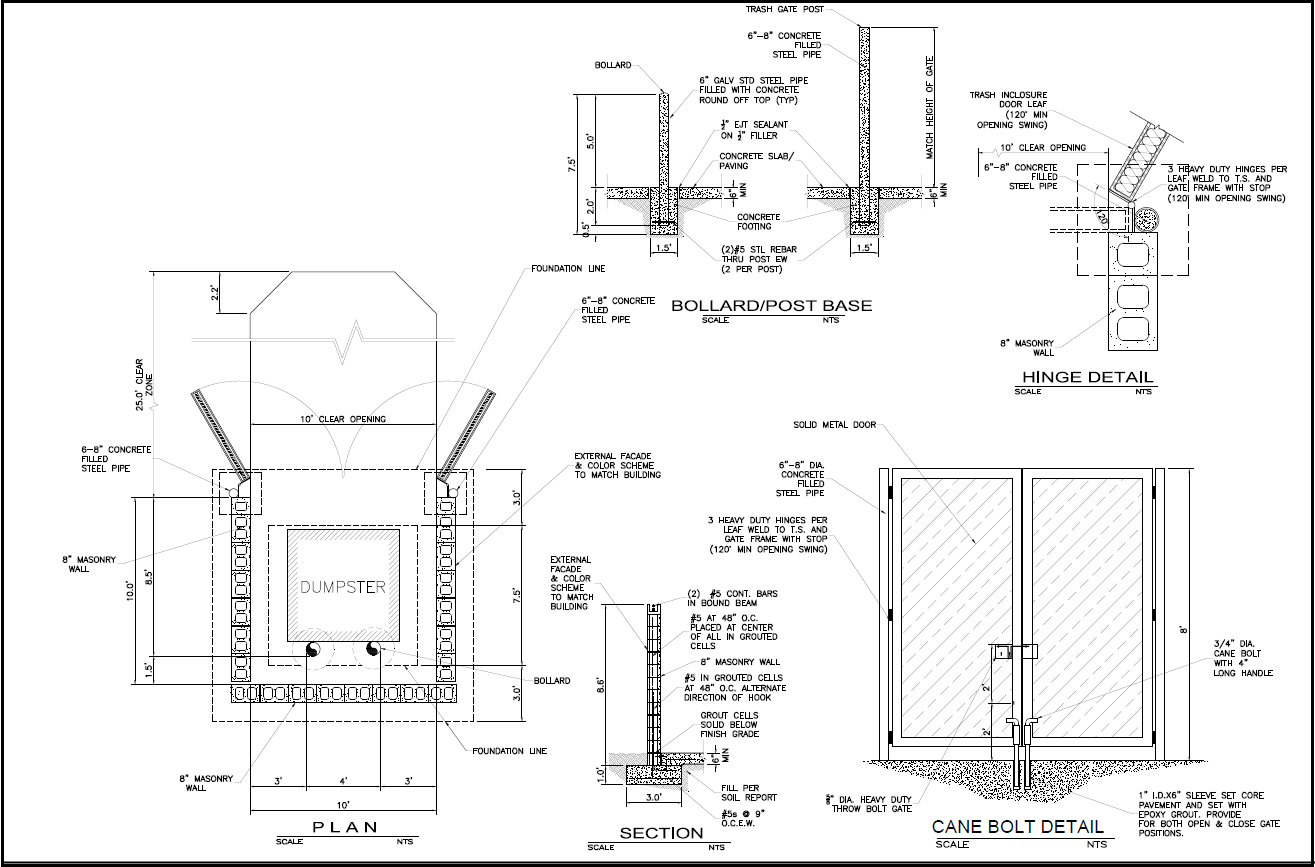
Figure 6.05.3.8.a.1.Single Dumpster Enclosure with No Access Door
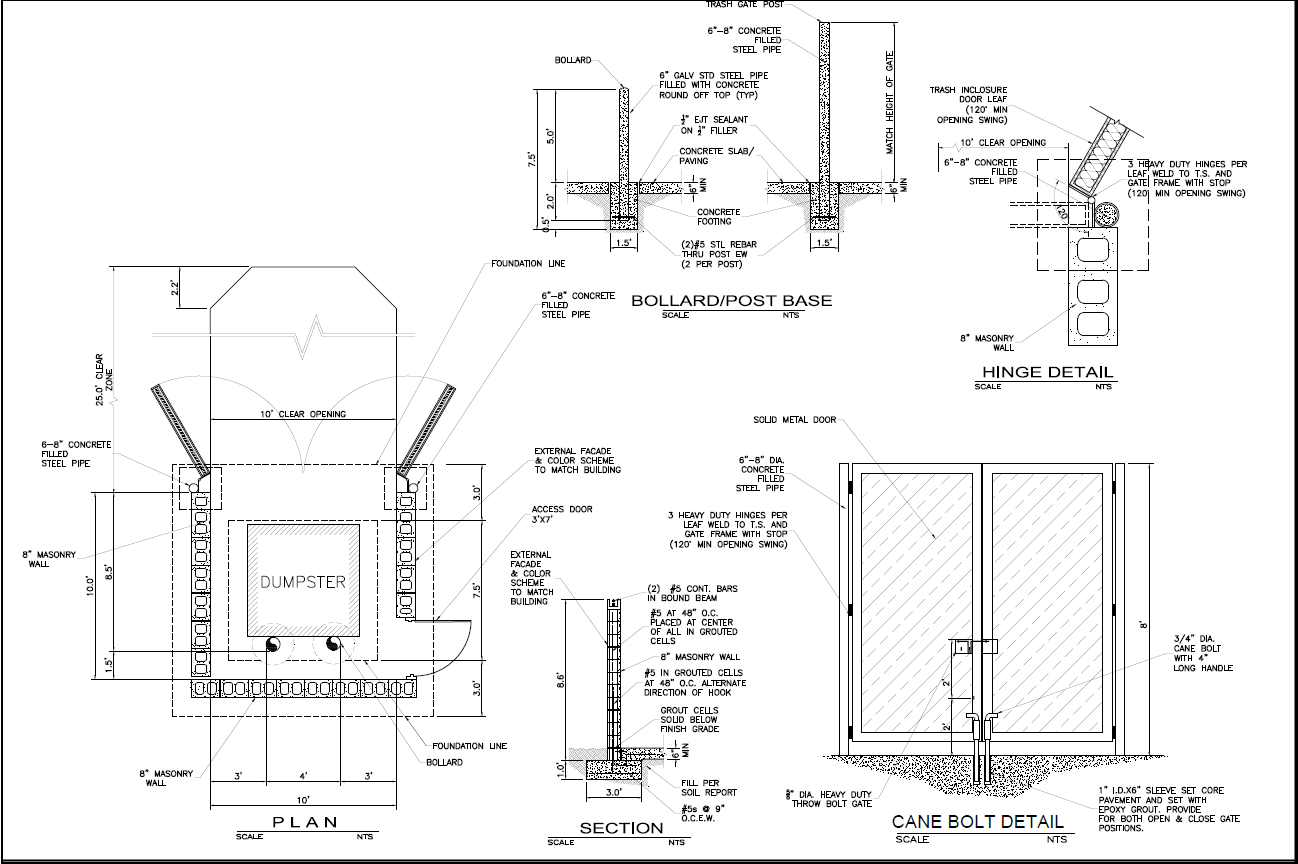
Figure 6.05.3.8.a.2.Single Dumpster Enclosure with Access Door
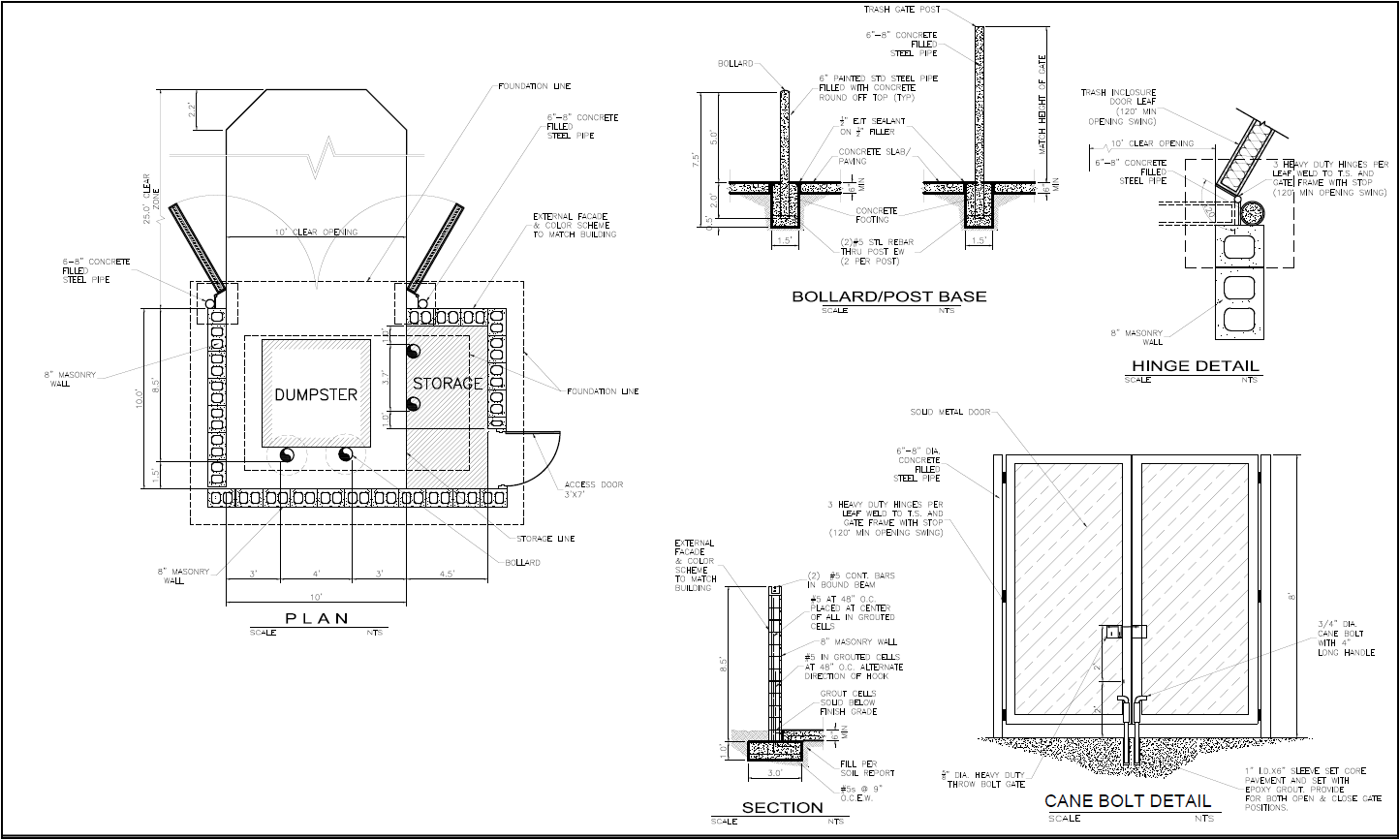
Figure 6.05.3.8.a.3.Single Dumpster Enclosure with Access Door and Storage
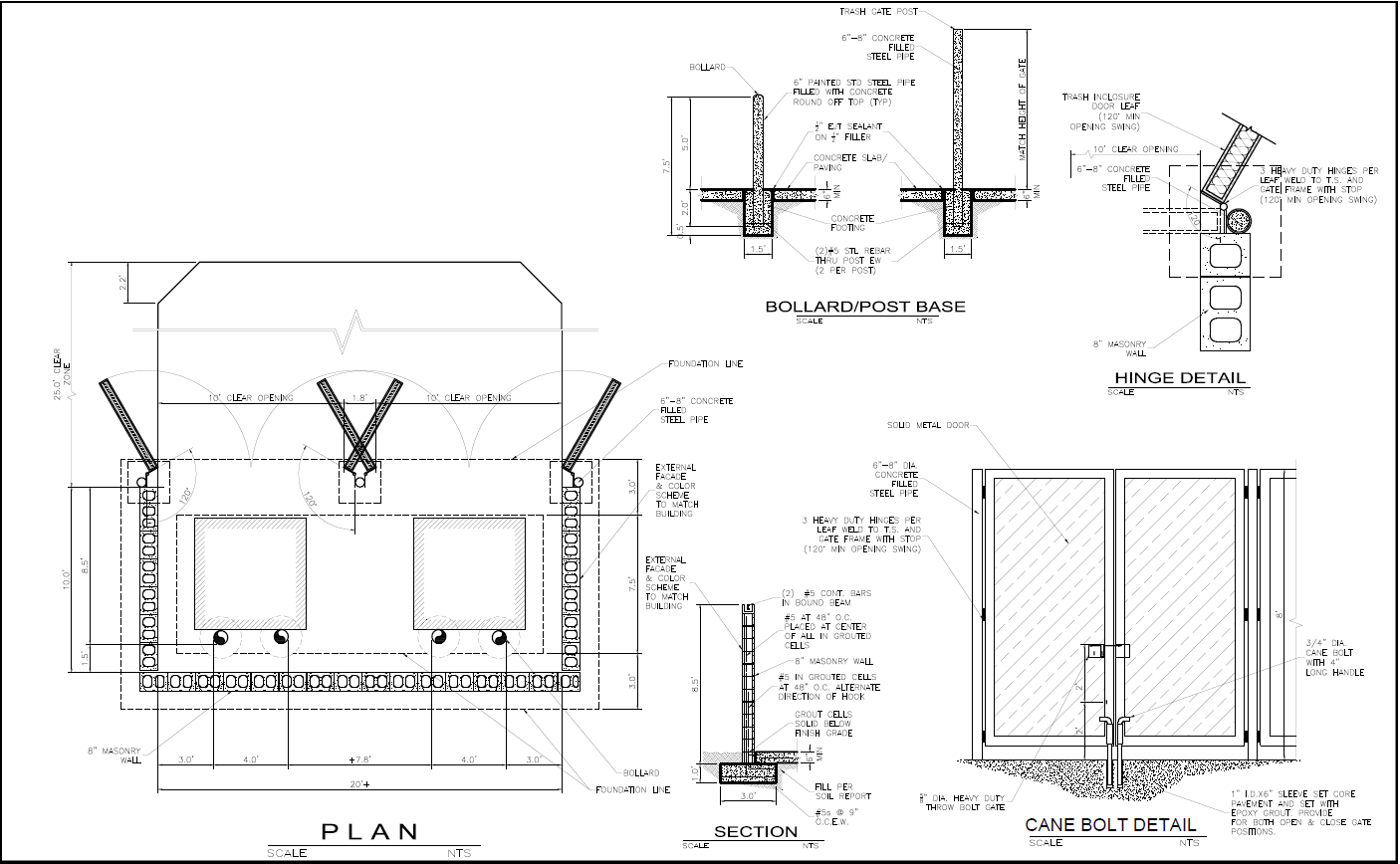
Figure 6.05.3.8.a.4.Double Dumpster Enclosure with No Access Door
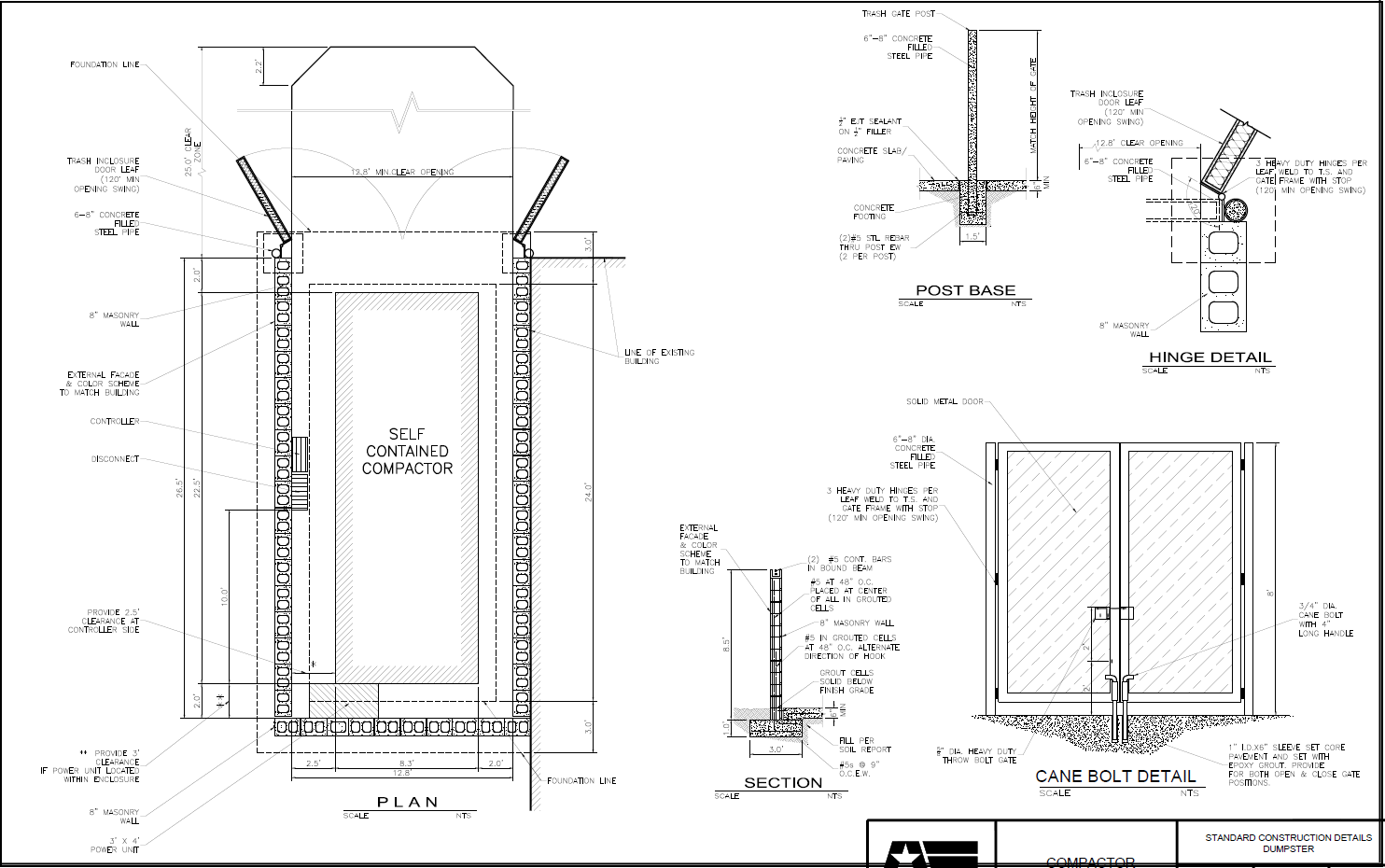
Figure 6.05.3.8.a.5.Compactor Enclosure
b.
A service detail in conformance with Figure 6.05.3.8.b.1. Dumpster Service Detail if a dumpster service is used or Figure 6.05.3.8.b.2. Compactor Service Detail if a compactor service is used.
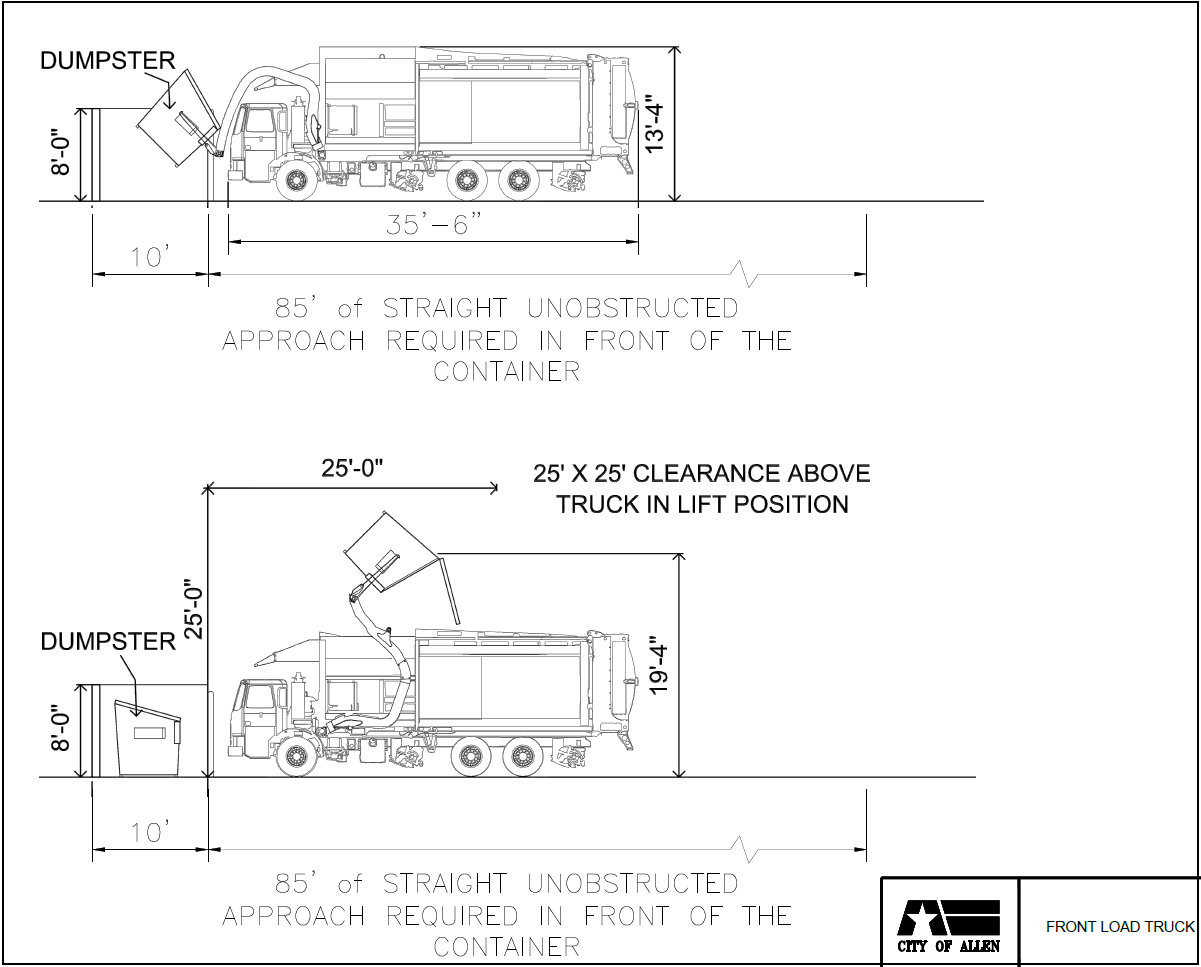
Figure 6.05.3.8.b.1.Dumpster Service Detail
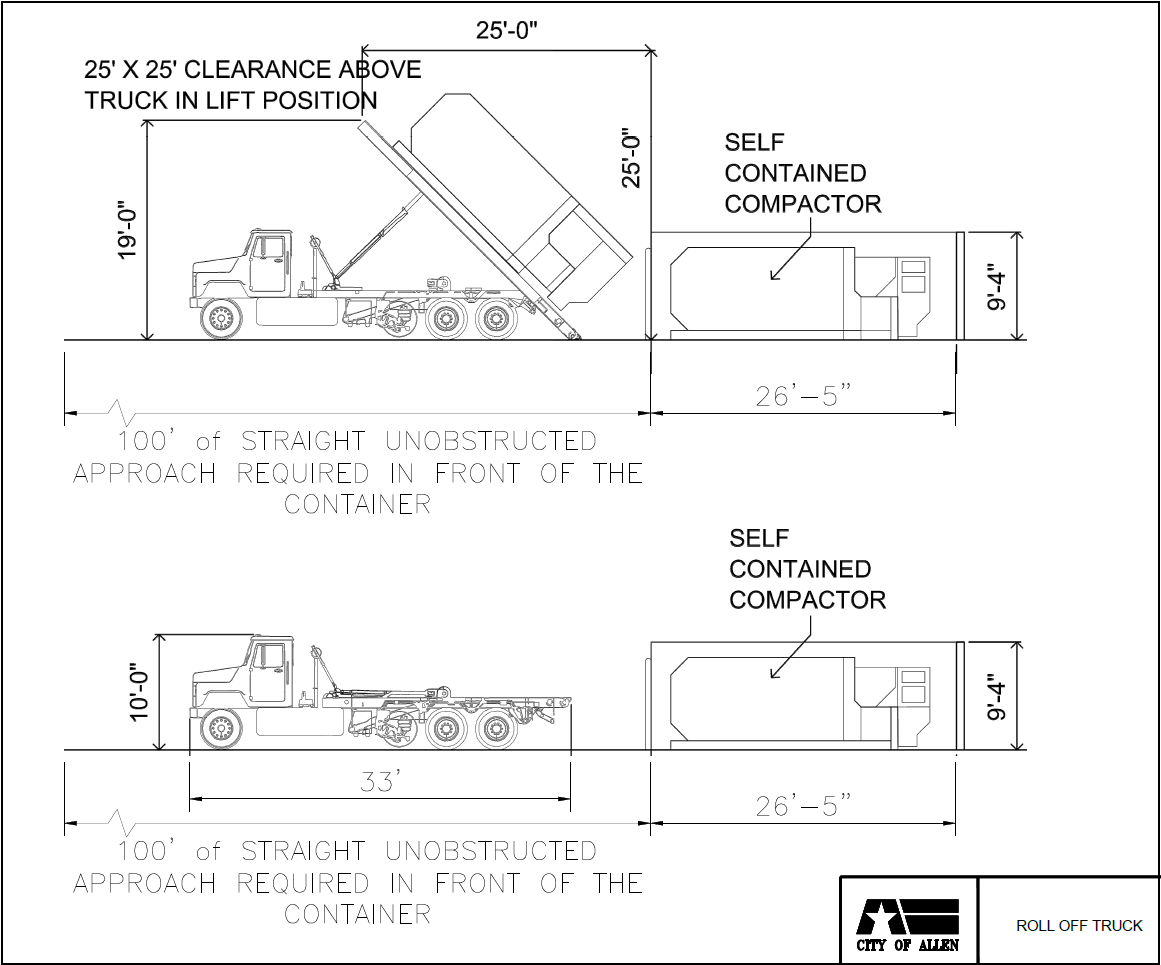
Figure 6.05.3.8.b.2.Compactor Service Detail
(Ord. No. 1939-5-01, 5-3-2001; Ord. No. 3697-8-19, § 1.C, 8-27-2019; Ord. No. 3754-6-20, § 1.D, 6-9-2020; Ord. No. 4125-11-24, § 2, 11-12-2024)
Sec. 6.05.4. - Site plan review standards.
The director of community development shall review the site plan for the following:
1.
Compliance with all provisions of the Code, the objectives of the comprehensive plan, the major thoroughfare plan and other ordinances of the city.
2.
The director of community development or designee shall review and approve, approve with conditions, or deny all site plans.
3.
Appeals. The applicant may appeal any decision of the director of community development to the commission within 30 days after the written request for appeal is made. The decision of the commission may be appealed to the city council, whose decision shall be final within 30 days.
4.
Site plan approval shall expire if construction has not commenced within one year of the date of final approval.
5.
The director may revoke an approved site plan:
a.
For failure to comply with or complete all conditions of approval or improvements indicated on the approved development plans.
b.
If the construction of a building or creation of a use is found to be in nonconformance with the approved site plan.
c.
For failure to comply with any of the applicable requirements of this Code or any other applicable city ordinance.
d.
Upon discovery that any required site plan element has been misrepresented or is otherwise substantially different than actual physical conditions (e.g., distances between two points, locations of property lines or other significant landmarks, area calculations, etc.).
(Ord. No. 2978-12-10, § 8, 12-14-2010; Ord. No. 3697-8-19, § 1.C, 8-27-2019)
Sec. 6.05.5. - Site plan amendments.
A site plan amendment application may be submitted in lieu of a site plan application if the amendment does not require review and approval by more than two city administrative departments. A site plan amendment application shall be accompanied by an application fee established by resolution of the city council and shall be subject to this section 6.05.5; provided, however, such application is only required to include the information outlined in section 6.05.3 that is changed from the approved site plan and, if only a portion of the site plan is to be changed without changing the remaining areas of the site plan, a drawing showing the revised area of the site plan.
(Ord. No. 3988-2-23, § 2, 2-28-2023)
Sec. 6.06. - Supplemental use regulations.
In addition to the use and development regulations set forth in this Code, the use and development regulations set forth in sections 6.06.1 through 6.06.12 shall apply for the uses described therein. In the event of a conflict between other provisions of this Code and those in sections 6.06.1 through sections 6.06.12, provisions of sections 6.06.1 through section 6.06.12, shall be controlling. The use and development regulations set forth in sections 6.06.1 through sections 6.06.12 shall apply regardless of whether the uses described are permitted by right or by specific use permit as principal or accessory uses as indicated in section 4.20.2 and section 4.20.3.
(Ord. No. 2978-12-10, § 9, 12-14-2010; Ord. No. 3125-11-12, § 3, 11-27-2012)
Sec. 6.06.1. - Firearms and explosives sales and service.
Uses constituting firearms sales and service shall be classified as a retail use and permitted in accordance with section 4.20.2 and as a home occupation in accordance with section 4.10 and shall be subject to the following additional development and use regulations:
1.
The storage of flammable or explosive materials is subject to the approval of the fire marshal.
2.
The manufacture or assembly of ammunition or explosives for sale or commercial purposes is prohibited in all areas within the city.
(Ord. No. 2978-12-10, § 9, 12-14-2010; Ord. No. 3697-8-19, § 1.D, 8-27-2019)
Sec. 6.06.2. - Fueling stations.
Fueling stations, whether developed as a principal or accessory use, shall be subject to the following additional development and use regulations:
1.
Gasoline pump islands may not be located nearer than 18 feet to the street right-of-way or to any adjacent property line.
2.
Underground fuel tanks may not be located under designated fire lanes.
3.
A fuel truck maneuvering schematic must be submitted and approved prior to issuance of a building permit.
4.
All fueling station canopies shall be designed and built with a sloped, mansard roof or similar style. Fueling station canopies with flat roofs are not permitted. The columns supporting the fueling station canopy shall be encased with brick, stone, or other similar material that matches the primary building.
5.
Vent stacks and pipes shall be placed so they are not visible from any adjacent street.
6.
When developed on a corner at the intersection of two streets, the buildings, structures, and site improvements shall be oriented to face the intersection (radially/45 degrees facing the point of intersection); provided, however, the director of community development and director of engineering may grant an exception to the foregoing requirement when one of the intersecting streets is a residential street or similar minor street.
(Ord. No. 2978-12-10, § 9, 12-14-2010; Ord. No. 3488-6-17, § 2.A, 6-27-2017; Ord. No. 3846-8-21, § 2.G, 8-10-2021)
Sec. 6.06.3. - Hotels.
Hotels shall be subject to the following additional use and development regulations:
1.
Building design.
a.
Accessibility. A guest room shall be accessible only from an internal hallway while is accessible primarily from a central lobby area contained within the hotel.
b.
Exterior walls. Exterior walls, regardless of the number of stories (excluding doors, windows and window units) shall be composed of:
i.
At least 75 percent primary masonry materials such as brick, stone, hand-laid tile (laid unit-by-unit), or veneer of such materials having the appearance of hand-laid units;
ii.
Not more than 25 percent secondary masonry, materials that is exterior insulation and finish systems composed of natural aggregates and synthetic binders having a minimum applied thickness of 0.75 inches, exposed aggregate, glass block or decorative concrete masonry units other than flat-gray block; and
iii.
Not more than ten percent non-masonry materials.
2.
Site facilities.
a.
Number of rooms. A full-service hotels and suite hotels shall have at least 100 guest rooms.
b.
Meeting rooms. A full-service hotel shall have at least 4,000 square feet of meeting room space. A limited-service hotel shall have meeting rooms of at least 700 square feet in area. Meeting rooms shall be equipped with a sink and a coffee bar.
c.
Swimming pools. All hotels shall have a swimming pool of at least 800 square feet of surface area.
d.
Restaurants and food service. A full-service hotel shall have full food and beverage service. Suite and limited-service hotels shall have either full or limited food and beverage service.
i.
For purposes of this section, the phrase "full food and beverage service": shall mean providing three meals per day in an on-site restaurant with table service provided primarily by waitpersons, seating for at least 30 customers, and full menu service offering multiple entrees with on-site food and beverage preparation.
ii.
For purposes of this section, the phrase "limited food and beverage service: shall mean providing food and beverage service for fewer than three meals per day.
3.
Parking and circulation. The following requirements apply to all hotels:
a.
In addition to required parking for any additional component of the hotel such as meeting rooms and restaurants, parking shall be provided at the ratio of 1.25 parking spaces per guest room for full service hotels and 1.0 space per guest room for limited service and suite hotels.
b.
An attached, covered, drive-through area adjacent to the hotel lobby or main desk shall be provided for the temporary parking of vehicles during guest registration or check-out.
c.
All parking areas shall be illuminated by lighting standards having a minimum illumination intensity of 2.0 foot-candles measured at ground level.
4.
Screening. In addition to any other screening and landscaping requirements imposed by the Code of Ordinances and/or this Code, all hotels shall provide screening of ground-mounted dish antennas, satellite earth stations, parabolic or spherical antennas, and any other device or assemblage of devices designed to transmit and/or receive signals to or from orbiting satellites, HVAC (other than HVAC equipment serving an individual unit), mechanical equipment and auxiliary power equipment by means of a masonry screening wall or a wrought-iron (tubular steel) fence with a living screen, either of which shall be of sufficient height to block visibility of the equipment from view from the street.
5.
Site access. Primary access to the site shall be from freeway access roads, major arterials, or internal service roads serving commercial development. Secondary access shall be from streets classified as major collectors, arterials, freeway access roads, or internal service roads serving commercial development.
(Ord. No. 2978-12-10, § 9, 12-14-2010; Ord. No. 3846-8-21, § 2.H, 8-10-2021)
Sec. 6.06.4. - Laboratories.
Laboratories, regardless of bio-safety level classification, shall comply with the following additional use and development regulations:
a.
An emergency management and contingency plan shall be required and maintained on file with the city.
b.
Detailed information concerning materials handling and waste disposal shall be required.
(Ord. No. 2978-12-10, § 9, 12-14-2010)
Sec. 6.06.5. - Mini-warehouses/public storage.
Uses classified as mini-warehouse or public self-storage shall be used and developed in accordance with the following additional use and development regulations:
a.
An on-site caretaker office and residence is required.
b.
Detailed design schematics are required.
c.
Mini-warehouses shall be one story, except for the portion constituting the on-site caretaker residence, which shall be limited to two stories.
d.
No roof-mounted mechanical equipment shall be permitted on the facility.
e.
The doors of individual storage units shall not be visible from any street.
f.
No truck or vehicle rental or storage is permitted to be conducted from the facility.
g.
No outdoor storage of any kind is permitted.
h.
Exterior walls of the facilities may serve as screening walls, provided the exterior wall is set back not less than 25 feet from any residential zoned district or public street, and not less than ten feet on any other side. The area within the setback must be landscaped in a manner approved by the director, and shall include as a minimum trees placed on 25-foot centers. The landscaped area shall be maintained by the property owner so that all landscape plants and groundcover a maintained in a healthy growing condition.
i.
Exterior walls shall have no penetrations and shall receive exterior architectural detailing.
j.
The facility owner shall prohibit the storage within the facility of odorous, hazardous or toxic materials.
k.
The conduct of sales, business, or any activity other than storage within any individual storage unit is prohibited.
(Ord. No. 2978-12-10, § 9, 12-14-2010)
Sec. 6.06.6. - Oil and gas wells.
The drilling, development, maintenance, and abandonment of oil and gas wells within the city shall meet the requirements of Chapter 6, Article VII of the Code of Ordinances in addition to the provisions of this Code.
Sec. 6.06.7. - Motorcycle sales.
Business engaged in the sale of motorcycles shall comply with the following additional use and development regulations:
a.
The sale of parts and accessories are permitted, provided no installation or repair of parts and accessories is allowed in LR-local retail districts or SC-shopping center districts.
b.
Test driving of new or used motorcycles shall not be permitted on any premises within 100 feet of any "R" residential district.
(Ord. No. 2978-12-10, § 9, 12-14-2010)
Sec. 6.06.8. - Outdoor storage and display.
Outdoor display and outdoor storage, where allowed in association with a principal or accessory use in accordance with section 4.20.2 or section 4.20.3, respectively, shall be subject to the following additional use and development regulations:
1.
Outdoor display. Outdoor display shall only be permitted as follows:
a.
Outdoor display shall not be located within any required front or side yard and must be located a minimum of 20 feet from any street or alley right-of-way line.
b.
Outdoor display may not cover more than 30 percent of a front yard (not including required yards) and may not be located on the roof of any structure.
c.
Outdoor display and any associated display structures (e.g. tables, display cases, trailers, etc.) shall not be located within any required parking space, loading area, fire lane, vehicle maneuvering aisle, or customer pick-up lane.
d.
Displayed items and their associated display structures shall not obstruct visibility or interfere with pedestrian or vehicle circulation.
e.
Detailed drawings of proposed outdoor display areas must be submitted to the director or designee for review and approval prior to setting items out for display.
f.
Outdoor vending machines and unattended vending machines/facilities are prohibited.
g.
Attended and unattended donation boxes, structures, and sites shall be allowed only as an accessory use to a permitted use on the property, shall not be subject to the standards set forth in subsections 1.a—1.f of this section, and shall comply with the following requirements:
i.
Approval of a site plan must be obtained from the city prior to placing the donation box on the property;
ii.
Donation boxes shall not be allowed in any residential zoning district;
iii.
No more than one donation box is allowed per lot;
iv.
A "no dumping" sign and the name, mailing address, and phone number of the party responsible for collection from the box must be posted in a conspicuous location on the box;
v.
Donation boxes must be maintained in good condition and appearance with no structural damage and shall be kept free of graffiti;
vi.
The operator and property owner shall maintain or cause to be maintained the area surrounding the unattended donation box(es) free of any junk, debris or other material and shall be responsible to the extent provided by law for the cost to abate any violation. Any junk, debris or material must be removed not later than 24 hours after delivery of notice by the city.
2.
Outdoor storage. Outdoor storage shall only be permitted as follows:
a.
Outdoor storage shall not be located within any required front yard.
b.
Outdoor storage shall be screened from all streets, alleys, rights-of-way and adjacent properties in accordance with section 7.07.4.
c.
Detailed drawings of proposed screening for outdoor storage areas must be submitted to the director or designee for review and approved prior to setting items out for storage.
(Ord. No. 2978-12-10, § 9, 12-14-2010; Ord. No. 3846-8-21, § 2.I, 8-10-2021)
Sec. 6.06.9. - Tattoo studio.
Tattoo studio shall not be located within 1,000 feet of any church or other religious facility, residentially-zoned district, or public or private school. In order to determine compliance with this section, the distance between the tattoo studio and the church or other religious facility, residential district, or school shall be measured from the front door of the premises to be permitted to the closest property line and then in a straight line to the nearest property line of the church or other religious facility, school or residential property.
(Ord. No. 2978-12-10, § 9, 12-14-2010; Ord. No. 3846-8-21, § 2.J, 8-10-2021)
Sec. 6.06.10. - Wind energy systems.
An applicant's submittal for a building permit, electrical permit, and specific use permit for location and installation of a wind energy system within the city must demonstrate compliance with the following use and development regulations, in addition to the specific use permit review standards under section 6.01:
1.
Location requirements.
a.
Minimum lot size. Minimum lot size for all districts is 1.5 acres.
b.
Lot to system ratio. Maximum of one system per 1.5 acres.
c.
Maximum height. Maximum height for all freestanding systems is 90 feet. The height of a freestanding wind energy system must be measured as the distance from the existing grade, prior to any modifications to the grade, to the highest point on the system, including the vertical length of any extensions such as the rotor blade. Attached systems shall not extend more than 15 feet above the roofline and shall not exceed 90 feet in total height, dependent upon the results of the structural engineering plans, performed by a Texas registered professional engineer, for the building or structure on which the system will be mounted. The height of any wind energy system may not exceed the manufacturer's recommendations for the system.
d.
Yards. No wind energy system may be located in any required front yard, between a principle building and a required front yard, in front of the front building line of the principal building, or between the principal building and any public street.
e.
Fall radius. Each wind energy system must be set back a minimum distance of 110 percent of the total system height from any property line, right-of-way, or public or private easement where above ground structures or utility lines exist, or are likely to exist, without proof of the lawful consent of the easement owners.
f.
Vertical ground clearance. The blade tip of any wind energy system must, at its lowest point, have a ground clearance of no less than 25 feet, as measured at the lowest point of the arc of the blades.
2.
Requirements.
a.
Certification. All wind energy systems must be approved under an emerging technology program, such as the California Energy Commission, IEC, or any other small wind certification program recognized by the American Wind Energy Association (AWEA) or the U.S. Department of Energy.
b.
Survival wind speed. All wind energy systems and associated components, including, but not limited to, generator, rotor blades, or other components and covers, must be constructed of materials and be installed to meet or exceed the minimum wind resistant construction standards of the Texas Department of Insurance wind load factors for the north Texas area and article III of this Code.
c.
Controls and brakes. All wind energy systems must have automatic and manual braking systems which engage at the maximum wind speeds allowable as designated for the type of wind energy system installed to prevent uncontrolled rotation and excessive pressure on the tower structure, rotor blades, and turbine components.
d.
Maintenance. The owner and operator of a wind energy system must maintain the system to manufacturer standards. All required periodic maintenance must be performed as recommended by the manufacturer.
e.
Appearance. All wind energy systems must maintain a non-reflective, white or off-white finish.
f.
Signs.
i.
Advertising. Advertising or identification of any kind on wind energy conversion systems is prohibited.
ii.
Informational sign. Each wind energy system must have a sign, not to exceed two square feet in area, posted at the base of the tower providing the following information:
(a)
Electrical shock hazard or high voltage warning;
(b)
Manufacturer's name;
(c)
Emergency phone number; and
(d)
Emergency shutdown procedures.
g.
Wiring.
i.
Storage. All electrical wires and cables associated with a freestanding wind energy conversion system must be located on or within the tower in a manner that minimizes their visibility and must be installed in compliance with article III of this Code.
ii.
Installation. All transmission wires and cables must be installed underground and comply with article III of this Code.
h.
Lighting. Wind energy systems may not be artificially lighted, unless requested or required by the Federal Aviation Administration.
3.
Prohibition, nuisance abatement and decommissioning.
a.
Prohibited models. The following wind energy systems are prohibited in all zoning districts:
i.
Guyed or latticed towers for small, medium, or large wind energy systems;
ii.
Experimental, homebuilt, and prototype models.
b.
Shadow flicker. Plans submitted for review with the building permit application must disclose how the property owner and operator shall minimize shadow flicker to any occupied building on or offsite, by limiting flicker effect to a maximum of two five-minute periods in one day.
c.
Signal interference. The manufacturer or wind energy system representative must take into consideration the proposed location of the wind energy system and certify that the siting of the wind energy system will not interfere with any existing microwave communications links or existing fixed broadcast, retransmission, or reception antenna for radio, television, wireless phone, or other personal communication systems. Operation of wind energy systems must be discontinued if such interference occurs after the construction, until such time as the interference is mitigated for or eliminated.
d.
Security.
i.
Ground clearance. The bottom of the tower, measured from ground level to 15 feet above ground level, must be designed in a manner to discourage unauthorized climbing.
ii.
Access. All access doors to wind turbine towers and electrical equipment must be lockable and remain locked at all times except while people are on the site of the tower performing maintenance or repair of the system.
iii.
Fencing. Fencing of turbine areas may be required, at the discretion of the director, based upon site-specific safety concerns.
e.
Public safety. The proposed wind energy system must be designed and operated to protect public safety by measures that may include, but are not limited to, the following:
i.
The proposed wind energy system must be designed, constructed, and operated so the public cannot come within close proximity to turbine blades and electrical equipment; and,
ii.
The proposed wind energy system must be designed, sited, constructed, operated, and maintained to prevent the structural failure of the system or blades that could endanger the public's safety.
f.
Other properties. The wind energy system or facility may not adversely affect the uses of adjoining and adjacent properties.
g.
Wildlife resources. The proposed wind energy system must be designed to reduce the likelihood of significant adverse effects on wildlife and wildlife habitat, particularly with regard to migratory birds and protected species.
h.
Enforcement.
i.
Safety. Any wind energy system found to be unsafe by the city building official must be repaired by the owner not later than 60 days of receipt of the building official's notice to meet federal, state, local and manufacturer safety standards, and the standards of this section.
ii.
Notice. If any wind energy system is not operated for at least a continuous period of six months because of operational difficulties or abandonment, the landowner shall provide the city the reasons for the operational difficulty or abandonment and provide a reasonable timetable for corrective action, or removal of the wind energy system as outlined under subsection 3.i, below, regarding decommissioning.
iii.
Resolution. If the director or designee deems the timetable for corrective action as unreasonable, the director or designee, may notify the landowner or operator, who shall remove the wind energy system not later than six months of receipt of notice from the director.
i.
Decommissioning.
i.
Useful life. The wind energy system is presumed to be at the end of its useful life if no electricity is generated for a continuous period of six months.
ii.
Responsibility. The property owner or operator shall, at their sole expense, complete decommissioning of the wind energy system not later than six months from the time it is determined that the wind energy system has met the end of its useful life as outlined in this subsection 3.i.
iii.
Required action. Decommissioning must include removal of the entire wind energy system, including buildings, cabling, electrical components, and any other associated facilities.
iv.
Remediation. Disturbed earth must be graded and re-seeded.
v.
Bonds. At the city's request, the applicant shall post a bond for the costs of decommissioning the wind energy system at the end of its useful life.
4.
Application requirements.
a.
Applications. An application for approval of a wind energy system must include text and maps sufficient to show that the proposed wind energy system complies with the standards under this section. A site plan meeting the requirements of section 6.05 must be submitted in addition to the following:
i.
The approximate generating capacity of the wind energy system.
ii.
An estimate of the total on-site electrical demands.
iii.
The name of the manufacturer and model being used.
iv.
The height of the wind turbine to be constructed.
v.
The phone number and name of a responsible person for the public to contact with inquiries and complaints throughout the life of the project.
vi.
The exact location and orientation of each wind energy system within the site and the direction of the prevailing winds.
vii.
The location and distance to neighboring residences, buildings, schools, churches, hospitals, or libraries to a distance of 500 feet.
viii.
The location and distance to neighboring residences, buildings, schools, religious facilities, hospitals, or libraries to a distance of 500 feet.
(a)
Design specifications of the wind energy system, including the tower, base, footings, and system components;
(b)
An engineering analysis and certification of each tower, showing compliance with article III of this Code;
(c)
Drawings that indicate the total finished wind energy system heights from the grade level prior to any modifications, including any engineered break points along the tower;
(d)
The wind survival speed of the entire system, including turbine, rotor blades, covers, and other components;
(e)
Data pertaining to the tower's safety and stability, including any safety results from test facilities; and
(f)
A copy of the manufacturer's installation instructions.
(g)
For building or structurally-mounted systems:
(i)
The certified and sealed engineering plans prepared by a professional engineer registered in the State of Texas must show how the wind energy system will be installed for the portions of the structure proposed for use in the mounting the system.
(ii)
The engineering plans must state and show that the proposed wind energy system is compatible with the portions of the mounting structure proposed for use.
(iii)
The engineering plans must state that the wind energy system does not impose a safety hazard to the main structure, adjacent property, or their occupants.
b.
Written statementsand additional documentation. In addition to the site plan, applications for all wind energy systems must include proof of the following in the form of written statements:
i.
A statement verifying that the small, medium, or large wind energy conversion system will be used solely for on-site consumption of electricity, and any additional energy produced above the total onsite demand can only be sold to an electrical utility that normally provides electrical power to the property;
ii.
A statement from any architectural review board, property owners', or homeowners' association that the proposed system complies with association requirements and restrictions if applicable;
iii.
A statement that the project site is, or is not, where air traffic may be a consideration affecting the installation of the system. (The applicant shall provide evidence of compliance with any applicable aviation regulatory requirements);
iv.
Copies of all required applications for city, state, and federal permits and licenses;
v.
Copies of all biological/environmental assessments performed for the project site, which may have been required by a federal or state government agency having jurisdiction of the property or the system;
vi.
Copies of any city, state, and federal permits, licenses, biological opinions, records of decision, memoranda of understanding, exemption, variance, or other authorization or approval related to the proposed wind energy project; and
vii.
Copy of the manufacturer's scheduled maintenance requirements for the proposed system.
c.
Permit issuance. Prior to receiving a building permit, electrical permit, or specific use permit for the wind energy system from the city, the applicant must show consideration of, and provide proof of compliance with the following:
i.
Federal Aviation Administration (F.A.A.) Order JO 7400.2, "Procedures for Handling Airspace Matters Advisory Circular AC 70/7460-1K," and Title 14 Code of Federal Regulations (14 CFR) part 77, "Obstruction Marking and Lighting, Obstruction Standards," including, if required, filing Form 7460-1 with the F.A.A.
ii.
All state laws regarding connection of the wind energy system to the state electrical grid, which proof shall include providing a copy of the "Application for Interconnection and Parallel Operation of Distributed Generation," as may be amended or replaced in the future, that has been fully executed and approved by the electric utility company that owns the electrical system to which the wind energy system will be connected.
(Ord. No. 2978-12-10, § 9, 12-14-2010; Ord. No. 3846-8-21, § 2.K, 8-10-2021; Ord. No. 4083-5-24, § 1, 5-28-2024)
Sec. 6.06.11. - Solar panels.
An applicant's submittal for a building permit and electrical permit, for locating a solar panel within the city must demonstrate compliance with the following standards.
1.
Permit requirements. All solar panel systems shall comply with the current adopted International Building Code and International Fire Code, as amended, except to the extent a solar pergola is exempt pursuant to V.T.C.A., Local Government Code § 214.221.
2.
Solar pergolas. Solar pergolas are subject to section 4.10, "Residential accessory use regulations," or section 4.11, "Commercial accessory use regulations," as applicable, except to the extent said section conflicts with V.T.C.A Local Government Code §§ 214.221 and 229.101.
(Ord. No. 3125-11-12, § 4, 11-27-2012; Ord. No. 3415-8-16, § 1, 8-23-2016; Ord. No. 3697-8-19, § 1.E, 8-27-2019; Ord. No. 3754-6-20, § 1.E, 6-9-2020; Ord. No. 3846-8-21, § 2.L, 8-10-2021; Ord. No. 3852-8-21, § 1.C, 8-24-2021; Ord. No. 4018-8-23, § 2.A, 8-22-2023)
Sec. 6.06.12. - Certain veterinary hospitals, animal clinics, or animal board facilities.
Any outdoor runs, outdoor kennels, or other outdoor areas to be used by animals associated with a veterinary hospital, animal clinic or animal boarding facility shall not be located within 100 feet of any residentially zoned property. This section 6.06.12 does not apply to veterinary services that are accessory to an agricultural use.
(Ord. No. 3157-6-13, § 3, 6-11-2013; Ord. No. 4018-8-23, § 2.B, 8-22-2023)
Sec. 6.06.13. - Urban residential.
Urban residential dwelling uses shall be subject to the following additional development and use regulations:
1.
Base zoning. Urban residential uses shall comply with the use and development regulations applicable to the development of a multi-family residential district except as provided in this section, section 4.08.19 downtown district, or when modified by the development regulations of a planned development zoning district that permits urban residential uses.
2.
Mixed-use integration. Urban residential projects shall be integrated at the time of construction within mixed-use developments. Residential units may be located in separate freestanding buildings or may be combined in multi-use buildings of multi-story design.
3.
One-bedroom minimums. No less than 65 percent of the dwelling units shall be one-bedroom units.
4.
Access. All dwelling units shall be accessed through an interior climate controlled corridor.
5.
Parking. Not less than 70 percent of all parking spaces must be located in a parking structure or enclosed garage.
6.
Connectivity. Pedestrian walkways shall connect all on-site common areas, parking areas, open space, recreational facilities and to adjacent uses within the mixed-use development.
7.
Retail component. Where buildings face a public or private street or an active pedestrian area, the first floor shall be retail ready, and shall be constructed with minimum 14-foot-high ceilings and mechanical chases necessary for conversion to commercial uses.
8.
Architecture. All buildings containing dwelling units shall be a minimum of three stories. Street-facing facades shall incorporate articulation and mix of color and materials consistent with the architectural style of the building to create diversity in the streetscape. All buildings are required to have consistent "four-sided" architectural treatments. Sloped roofs shall provide articulation, variations, parapets, gables, dormers or similar architectural elements to screen the roof and to break up the massiveness of the roof.
(Ord. No. 3488-6-17, § 2.B, 6-27-2017; Ord. No. 3846-8-21, § 2.M, 8-10-2021; Ord. No. 3976-1-23, § 1.F, 1-10-2023)
Sec. 6.06.14. - Townhomes.
Townhome developments shall be subject to the following additional development and use regulations:
1.
Base zoning. Townhome uses shall comply with the use and development regulations applicable to the development of a townhome residential district ("TH") except as provided in this section or the development and use regulations of a planned development zoning district.
2.
Units.
a.
No more than six dwelling units shall be attached in one continuous row or group.
b.
No dwelling unit shall be constructed above another dwelling unit.
3.
Lot design. Townhome developments shall be developed with units that face a public street or an open space in accordance with the following:
a.
Dwelling units that front a public street shall be developed subject to the following:
i.
On-street parallel parking spaces are required. On-street spaces complying with the minimum dimensional requirements of this code may be counted in satisfying the minimum number of visitor parking spaces required for the development.
ii.
Trees are required to be planted in tree planting areas not less than nine feet wide located between the curb and sidewalk. Trees may be planted in landscaping bump-outs located between parallel parking spaces and having a minimum size of nine feet by ten feet. No utilities shall be located in the tree planting area.
iii.
A utility and pedestrian access easement not less than ten feet wide must be located between the tree planting area and townhome but no closer than five feet from any structure, including any porches, steps or stoops, extending from the front of the dwelling unit. The width of this easement may need to be increased to accommodate utility depth requirements.
iv.
All franchise utilities and telecommunication facilities shall be located in easements located within the rear (alley side) of the dwelling units.
v.
Front-loading garages are prohibited.
vi.
Rear access driveways shall be either 20 feet in length or longer or six feet in length.
vii.
No fence shall be located closer to an alley than the face of the garage or within a utility easement.
b.
Dwelling units that front an open space shall be developed subject to the following:
i.
The open space shall be not less than 30 feet wide. The depth of any required front yard shall not be counted in determining the required width of an open space.
ii.
Required trees shall be planted in the open space in lieu of a tree planting area.
iii.
Pedestrian access easements in which sidewalks must be constructed, must be dedicated across the open space and/or front yards.
iv.
Driveways shall be not less than 20 feet in length.
v.
Paved alleys not less than 24 feet wide are required.
vi.
City-owned utilities must be located in easements dedicated outside the alley pavement.
vii.
Franchise utilities and telecommunication facilities shall be located in the front of each dwelling unit in an easement the width and location of with does not reduce the required usable open space width.
viii.
Franchise utilities and telecommunication facilities may not be located in the rear of the dwelling units unless located in a separate easement that does not conflict with city-owned utilities.
ix.
No fence shall be located closer to an alley than the face of the garage or within a utility easement.
4.
Parking.
a.
An attached garage containing two parallel (not tandem) spaces must be constructed with each dwelling unit.
b.
Visitor parking spaces shall be constructed subject to the following:
i.
One visitor parking space must be constructed for every two dwelling units constructed within the development with a driveway 20 feet in length;
ii.
One and one-half visitor parking spaces must be constructed for every two dwelling units constructed within the development with a driveway six feet in length;
iii.
No dwelling unit shall be located more than 100 feet from a visitor space; and
iv.
On-street or off-street spaces, excluding driveways, may be counted toward required visitor parking spaces.
5.
Setbacks.
a.
Front yards. Where a dwelling unit fronts an open space, for the purpose of determining the required front yard setback, the distance shall be measured from the common line between the lot and the open space and the main building line as provided in this section.
i.
Minimum 15 feet.
ii.
No above ground utility and telecommunications equipment, including but not limited to meters, transformers, utility boxes and heating/air conditioning units, shall be placed in the front yard, except electric and gas meters that are attached to the building.
b.
Rear yards.
i.
Minimum ten feet; except where garages are accessed with six-foot-long driveways, in which case the setback shall be six feet.
ii.
All above ground utility and telecommunications equipment, including but not limited to meters, transformers, utility boxes and heating/air conditioning units, shall be placed adjacent to, or attached to, the building.
c.
Side yards.
i.
Minimum 12 feet between buildings.
ii.
Minimum 15 feet if adjacent to a street or alley.
6.
Trees. For all streets within the development, shade trees shall be planted in the tree planting area required by section 6.06.14.3, Lot design, at a ratio of one tree for every 30 linear feet of street frontage. Trees shall be planted a minimum of 30 feet apart on center. Root barriers and similar planting standards shall be required unless the proximity of tree root systems to existing or proposed utilities and other improvements is in the opinion of the director of engineering or designee not likely to interfere with or cause damages to such utilities or improvements without such protection.
7.
Open space. Open space areas must be evenly distributed, centrally located and easily accessible. All lots must be located within 1,320 feet of usable open space as measured along a street or trail. Open space shall have no dimension of less than 15 feet. Lots shall not back to open space.
8.
Architecture. Townhome buildings shall be designed to comply with the following:
a.
Building and roof lines must have horizontal and vertical articulation on all walls facing or adjacent to a street or public open space. Building facades shall be designed to reduce the uniform monolithic scale and appearance of large unadorned walls, while providing a more pedestrian-oriented design and visual interest through the use of detail and scale and fenestration (i.e., character and interrelationships of facade design components including windows, doors, and roof design).
b.
All living units must have an individual identity which is to be achieved by a combination of some of the following:
i.
Varying building unit height.
ii.
Varying building unit forms.
iii.
Varying roof pitch and pitch directions.
iv.
Addition or deletion of patio and patio walls.
v.
Staggering of exterior walls.
(Ord. No. 3562-3-18, § 3.B, 3-27-2018; Ord. No. 3846-8-21, § 2.N, 8-10-2021)
Sec. 6.06.15. - Mobile food establishments.
This section establishes regulations for operating various mobile food establishments within the city. Mobile food establishments may only operate in accordance with the following:
1.
Definitions. As used in this section 6.06.15, the following words and phrases shall have the following meanings unless the context clearly indicates as different meaning:
a.
Food truck park means one or more lots or parcels of land where three or more mobile kitchens congregate to offer food or beverages for sale to the public as the principal use of the land.
b.
Food truck site means an existing, developed site where a mobile kitchen operates as an accessory use to the primary active business located on the same site.
c.
Mobile construction site food vehicle means a vehicle with no or limited kitchen facilities that carries prepackaged food or non-prepackaged foods prepared at an approved commissary that contains no potentially hazardous food, as defined by Code chapter 6, article VIII, division 2, and services only active construction sites.
d.
Mobile food establishment means a vehicle-mounted food establishment designed to be readily moveable that is equipped with food preparation equipment and includes vehicles in which food is prepared on site. Mobile food establishments include mobile kitchens, mobile construction site food vehicle, mobile ice-cream/frozen dessert vehicle and non-motorized food vending carts. Mobile food establishments do not include restaurant delivery and catering vehicles.
e.
Mobile food trailer means a mobile kitchen that serves food or beverages from an enclosed, self-contained, non-motorized vehicle that is normally pulled behind a motorized vehicle.
f.
Mobile food truck means a mobile kitchen that serves food or beverages from an enclosed, self-contained, motorized vehicle.
g.
Mobile ice cream/frozen dessert vehicle means a motorized vehicle that normally contains a commercial freezer in which all products for sale are prepackaged and frozen.
h.
Mobile kitchen means a motorized vehicle or tow-behind trailer equipped with kitchen facilities such as plumbing, hot water supply, mechanical refrigeration, cooking equipment, and dry goods storage used for the preparation and sale or service of food and beverages. Customer service is provided at a counter or window in the vehicle. Mobile kitchens may include, but are not limited to, mobile food trucks and mobile food trailers. Mobile kitchens shall not include individual non-motorized vending carts, mobile construction site food vehicles or mobile ice cream/frozen dessert vehicles.
i.
Non-motorized vending cart means a non-motorized vehicle that is normally propelled by the operator, contains products for sale that are prepackaged and/or frozen, and operates independent of any fixed food establishment.
2.
Authorized locations.
a.
No person may serve food to the public from a mobile kitchen except at the following locations:
i.
At a food truck site approved in accordance with section 6.06.15.3.
ii.
At a food truck park approved in accordance with section 6.06.15.4.
iii.
At the location of a temporary event that has received a temporary use permit in accordance with section 6.04.1.4.e.
iv.
At an event hosted or sponsored by the city pursuant to a written agreement with the city.
b.
No person may serve food to the public from a mobile construction site food vehicle except at the following locations:
i.
A construction site for which an active building permit has been issued by the city; or
ii.
Property owned or leased by the United States, State of Texas, or Collin County on which active construction is occurring.
c.
Any person providing food to the public from a mobile ice cream/frozen dessert vehicle must operate in compliance with chapter 6, article VIII, division 2 of the Code of Ordinances, as amended, and Code of Ordinances section 8-65(i) through (l), as amended.
d.
A non-motorized vending cart may be operated only at a temporary event in accordance with a temporary use permit issued pursuant to section 6.04.1.4.e.
3.
Food truck sites.
a.
The operator of a mobile kitchen may operate a food truck site upon receipt of a temporary food vendor permit in accordance with subsection 6.04.1.4.e, and in accordance with the requirements of this Code.
b.
Food truck sites may be established within:
i.
The limits of any city park or city property pursuant to a written agreement with the city; and
ii.
In the following zoning districts or, unless otherwise expressly prohibited by the ordinance establishing the planned development, any planned development with the following base zoning:
(a)
"CC" corridor commercial.
(b)
"SC" shopping center.
(c)
"LI" light industrial.
(d)
"O" office.
(e)
"DD" downtown district.
c.
A food truck site must be located on private property on which is located a permanent structure in which a business is operating in accordance with a certificate of occupancy. The operator of the food truck site must obtain and maintain written consent from the property owner or property manager and provide written proof thereof upon demand of the city.
d.
Except for a mobile kitchen for which written consent has been granted by the owner or authorized representative of the restaurant or food establishment, no mobile food establishment shall sell or serve food to the public within 300 feet of any door, window or outdoor dining area of any existing restaurant or food service establishment, provided however, a food truck may locate on any private property in the downtown district subject to 100 foot distance from an existing restaurant or food service establishment.
e.
Mobile kitchens and their customers shall not sell or consume food within any public street, public alley, driveway, or fire lane unless closed to through traffic pursuant to permit issued by the city authorizing such use.
f.
Mobile kitchens may operate only during the business hours of the primary business on the property where the food truck site is located.
g.
Access to restrooms available for use by operators, employees, and customers of a food truck site shall be provided no farther than 1,000 feet from the location of the mobile food establishment, except in the downtown district.
h.
A mobile kitchen shall not be left unattended. Mobile kitchens shall not be stored at any location visible to the public when not in operation.
i.
A mobile food establishment must be operated in compliance with the site plan and other conditions set forth in the approved temporary food vendor permit issued to the owner or operator of the mobile kitchen.
4.
Food truck parks. Food truck parks may be located in the various zoning districts within the city in accordance with Section 4.20.2, schedule of principal uses and section 4.08.19.7, schedule of principal uses — downtown district, all applicable development requirements of this Code for the respective zoning districts, and the following:
a.
A site plan shall be approved in accordance with section 6.05 prior to locating any mobile kitchen on the property.
b.
Permanent restroom facilities available to owners, operators, and customers of the mobile kitchens operating in the food truck park must be located within 1,000 feet of each location where a mobile kitchen may be parked.
c.
All vehicles, including mobile kitchens, shall be parked on an improved surface as defined in section 6-82 of the Code of Ordinances.
d.
Electricity shall be provided with permanent outlets by way of a portable cord that complies with section 3.09 (National Electrical Code), as amended.
e.
Any waste, liquid or solid, shall be disposed of safely and properly as per all associated local and state regulations. Trash service and receptacles shall be provided in accordance with city requirements.
f.
A mobile kitchen cannot be left unattended or left on site overnight.
5.
Additional requirements. Any person operating a mobile food establishment shall comply with the following:
a.
No person shall operate a mobile food establishment involving food products unless the vehicle used in the operation is constructed and operated in accordance with the chapter 6, article VIII, division 2 of the Code of Ordinances, as amended.
b.
Any person operating any mobile food establishment shall ensure that all food preparation, cooking, service, or other food service related activities take place within the confines of the vehicle used in such operation.
c.
Signs advertising a mobile food establishment and/or the menu of food and beverages sold from the food truck shall be limited to:
i.
Signs permanently attached to the mobile food establishment; and
ii.
One menu board sign with a sign face area of not greater than eight square feet, placed adjacent to the mobile food establishment on private property.
d.
On request of the city, a mobile food establishment operator must be able to demonstrate that the mobile food establishment is moveable and operable;
e.
A mobile food establishment operator shall not alter or modify a mobile food establishment or the premises adjacent to the mobile food establishment in a manner that would prevent the operation or mobility of the mobile food establishment.
f.
The water supply for a mobile food establishment shall be from an internal water tank which must be filled from an external source when not in operation. Temporary connection of a mobile food establishment to a potable water source while in operation is prohibited.
g.
Electricity for a mobile food establishment shall be from an internal or portable generator or an electrical outlet by way of connected to a portable cord in compliance with section 3.09 (National Electrical Code), as amended.
h.
Service from a mobile food establishment through a drive through window is prohibited.
i.
Mobile food establishment must be parked, situated and operated in a manner that does not restrict orderly and/or safe vehicular and/or pedestrian movements.
j.
Loudspeakers or loud noises of any kind for the purpose of attracting attention to a mobile food establishment are prohibited, except in the "DD" downtown district with a temporary event permit or special event permit.
k.
No mobile food establishment operator shall operate a generator and/or vehicle motor which generates visible smoke, excessive noise, or excessive gasoline/diesel fumes.
l.
Unless provided by the operator of a food truck park, a mobile food establishment operator shall provide solid waste containers for customers to dispose of trash and food waste when the mobile food establishment is parked and food is being sold and served. All such solid waste containers and the solid waste collected therein shall be removed from the site by the mobile food establishment operator when leaving the site; provided, however:
i.
If the operator of a food truck park is responsible for the disposal of waste generated from operation of the site and place in solid waste receptacle provided by said operator, the mobile food establishment operator shall be responsible for ensuring that all solid waste generated from the vendor's operations is placed in the provided receptacles before departing; or
ii.
If there is a solid waste dumpster located on the food truck site or food truck park that is available for disposal of solid waste generated by the operation of a mobile food establishment, the mobile food establishment operator may dispose of the solid waste in said dumpster before departing the site.
m.
Mobile food establishments will not be allowed to touch, lean against or be affixed temporarily or permanently to any building structure, wall, tree, shrubbery or planting bed.
n.
Mobile food establishment operators shall not hang or display merchandise on trees, umbrellas, or walls, or sell from any other temporary structures located upon any public street, sidewalk, right-of-way or other public property.
o.
Where exigent circumstances exist and an Allen Police Officer, or other authorized officer of the city, gives notice to a mobile food establishment operator to temporarily move from a location, such mobile food establishment operator will not operate from or otherwise remain at such location. For the purpose of this paragraph, exigent circumstances shall include, but shall not be limited to, unusually heavy pedestrian or vehicular traffic; the existence of any obstructions at or near such location; a major event, festival, program or park activity; a fire; a parade or demonstration; construction activity, or other such event or circumstance that causes the site to become unsafe or unusable.
p.
Mobile food establishment operators shall only engage in the sale and service of food and beverages. The sale of other products or services from a mobile food establishment is prohibited, including but not limited to, tobacco products, alcoholic beverages, sexually explicit and/or drug related paraphernalia, obscene material, sales real estate and vacation packages, marketing and advertising activities, sales of tickets for events, any nonfood vending, and other services or products not approved by the city prior to issuance of the permit.
(3575-5-18, § 3.B, 5-22-2018; Ord. No. 3754-6-20, § 1.F, 6-9-2020; Ord. No. 3846-8-21, § 2.O, 8-10-2021; Ord. No. 3976-1-23, § 1.G, 1-10-2023)
Sec. 6.06.16. - Massage establishments.
1.
Definitions.
a.
Massage therapist means a person who practices or administers massage therapy or other massage services to a client for compensation. The term includes a licensed massage therapist, therapeutic massage practitioner, massage technician, masseur, masseuse, myotherapist, body massager, body rubber, or any derivation of those titles.
b.
Massage therapy means the manipulation of soft tissue by hand or through a mechanical or electrical apparatus for the purpose of body massage and includes effleurage (stroking), petrissage (kneading), tapotement (percussion), compression, vibration, friction, nerve strokes, and Swedish gymnastics. The terms "massage," "therapeutic massage," "massage technology," "myotherapy," "body massage," "body rub," or any derivation of those terms are synonyms for "massage therapy."
c.
Massage therapy instructor means a licensed massage therapist who provides to one or more students instruction approved by the department in massage therapy.
d.
Regulatory authority means the city's health officer or designated representative; police chief or designated representative; or any other city official designated by the city manager.
2.
Standards of operation.
a.
Every massage establishment located within the city shall operate in compliance with V.T.C.A., Texas Occupations Code Ch. 455, as amended, and V.T.C.A., Texas Administrative Code, Tit. 16 Ch. 117, as amended.
b.
It shall be unlawful for any person to act as a massage therapist, massage school, massage therapy instructor, or massage establishment unless the person holds an appropriate license issued by the state.
c.
A person who holds a license shall publicly display the license as specified by the Texas Department of Licensing and Regulation. Each massage establishment must post in plain sight the license for each massage therapist who practices in the massage establishment. The license of a massage therapist must have attached to the front of the license a photograph of the massage therapist. A massage establishment or massage therapist shall present the person's license on the request of the regulatory authority.
d.
A massage establishment shall only operate between the hours of 7:00 a.m. and 10:00 p.m.
3.
Sanitation. It shall be the duty of every person conducting or operating a massage establishment to keep the same at all times in a clean and sanitary condition. Each massage establishment shall be maintained in accordance with applicable state sanitary and health codes and regulations governing massage establishments, including, but not limited to, 16 T.A.C. § 117.83.
4.
Records of treatment. Every massage establishment shall properly maintain and secure for each client the initial consultation documents, all session notes, and related billing records; and make such documents available to the regulatory authority on request.
5.
Inspections.
a.
The regulatory authority shall be authorized to inspect any massage establishment at any time to determine or ensure compliance with the provisions of this article.
b.
Massage establishments may be inspected periodically or following receipt of a complaint by the city. Such inspections will be performed to determine compliance with the requirements of this Section 6.06.16 and applicable laws and ordinances.
c.
Whenever necessary to inspect or enforce any of the provisions of this Section 6.06.16, the regulatory authority may enter the building or premises at all reasonable times during the hours of operation to conduct any duty authorized by this Section 6.06.16. A person who operates a massage establishment, or any agent or employee of the operator, commits an offense if the person refuses to permit a lawful inspection of the premises by the regulatory authority during hours of operation. If entry is refused, or, if the owner or other person having charge or control of the building or premises cannot be located, the regulatory authority may exercise any and all enforcement powers granted by law to secure entry.
d.
Proof of compliance with all applicable provisions of the ordinances of the city shall be provided by each massage establishment.
6.
Applicability to existing businesses. The provisions of this Section 6.06.16 shall be applicable to all persons in businesses described in this Section 6.06.16 whether the described activities were established before or after the effective date of this Section 6.06.16.
7.
Enforcement.
a.
Designated officials of the regulatory authority shall be responsible for enforcing the provisions of this Section 6.06.16.
b.
Failure to comply with the terms of this Section 6.06.16 after receipt of written notice of violation from the city setting out the violation and time to rectify such may result in revocation of the certificate of occupancy issued pursuant to this Code authorizing the operation of a massage establishment.
c.
Appeal. A decision to suspend or revoke the certificate of occupancy pursuant to subsection 6.06.16.7.b herein may be appealed by the holder of the certificate of occupancy to the board of adjustment within ten days of the date of the revocation.
(Ord. No. 4170-8-25, § 2.B, 8-26-2025)
Editor's note— Ord. No. 4018-8-23, § 2.C, adopted August 22, 2023, repealed § 6.06.16, which pertained to massage establishments and derived from Ord. No. 3614-9-18, § 4, adopted September 25, 2018. Subsequently, Ord. No. 4170-8-25, § 2.B, adopted August 26, 2025, enacted a new § 6.06.16 as set out herein.
Sec. 6.06.17. - Smoke shop.
1.
Intent. The intent of these regulations is to provide separation, development, and operational standards for smoke shops to best serve the public health, safety, and welfare of residents and businesses within the city.
2.
Applicability. For the purposes of this section, the standards of this section apply to new establishments of smoke shops. An establishment is considered new when no previous smoke shop existed at that location for a period of 90 days or greater immediately preceding the filing date of an application for permit under this section.
3.
Vesting.
a.
Any existing establishment meeting the definition of smoke shop and retaining a valid certificate of occupancy as of September 24, 2024, that is not in compliance with this section shall be considered a legal nonconforming use and shall be subject to the provisions of Section 4.05 of this Code.
b.
Notwithstanding the provisions of subsection 4.05.3.c. of this Code, any existing establishment meeting the definition of smoke shop and retaining a valid certificate of occupancy as of September 24, 2024, that discontinues active operation for more than six months, shall be considered a termination of the use and all privileges and rights held therein.
4.
Location requirements. Smoke shops are permitted in accordance with the schedule of uses in this Code, subject to the following:
a.
Shall not be located within 300 feet of a single-family zoned property, church or other religious facility, public hospital, or daycare facility;
b.
Shall not be located within 1,000 feet of a public, private, or parochial school;
c.
Shall not be located within 1,000 feet of another smoke shop that is in current operation;
d.
The measurement of the distances of the subsections (a)—(c) above shall be in a direct line from the property line of the applicable use to the property line of the smoke shop, and in a direct line across intersections; and
e.
The city council may grant exceptions to location requirements set forth in subsections (a)—(c) above if it determines that enforcement of the regulation in a particular instance is not in the best interest of the public, constitutes waste or inefficient use of land or other resources, creates an undue hardship on an applicant, does not serve its intended purpose, is not effective or necessary, or for any other reason the city council, after consideration of the health, safety, and welfare of the public and the equities of the situation, determines is in the best interest of the community. An application for this exception must be filed in writing with the community development department accompanied by a fee established by the city council by resolution from time to time. The request shall state the location requirement(s) of which an exception is sought and the reasons and justification for such an exception. The city council shall act on the request at the next meeting for which notice can be provided, and, in any case, not later than the 60 th business day after the date the request is filed. The failure to act within the 60-day period shall be deemed an approval of the request. The decision of city council shall be the final decision for the request.
5.
Development and operational standards. Smoke shops shall comply with the following development and operational standards:
a.
A smoke shop shall not knowingly allow or permit a minor, not accompanied by his or her parent or legal guardian, to enter or remain within the premises.
b.
A smoke shop located in a building sharing one or more common walls or sharing common attic space with another retail or commercial establishment shall not allow product use on the premises in a manner that interferes with any other establishment's use or enjoyment of the premises.
c.
A floor plan shall accompany any new application for a certificate of occupancy. The floor plan shall be drawn to scale designating all interior dimensions of the premises, the proposed use of all spaces, identification of limited access areas, and areas of ingress and egress.
d.
A smoke shop owner or operator shall not permit criminal activity on the premise of the smoke shop, including the sale of illegal products.
(Ord. No. 4112-9-24, § 2, 9-24-2024)
Sec. 6.06.18. - Electric vehicle chargers.
1.
Regulations. The following regulations apply to the electric vehicle charging stations:
a.
The use of electric vehicle charging stations for off-premises advertising is prohibited.
b.
Any integrated electronic display or screen shall not exceed an area of 2.25 square feet.
c.
Electric vehicle charging stations shall not contain any flashing lights or any flashing sign, beacon, or any sign that flutters, undulates, swings, rotates or moves.
(Ord. No. 4170-8-25, § 2.C, 8-26-2025)
Editor's note— Ord. No. 4170-8-25, § 2.C, adopted August 26, 2025, set out provisions intended for use as § 6.06.17. Inasmuch as there were already provisions so designated, said section has been codified herein as § 6.06.18 at the discretion of the editor.

