Zoneomics Logo
search icon

Archer Lodge City Zoning Code

ARTICLE 11

- APPENDIX.

DIVISION 1. - ZONING MAP.

The map included here is provided for informational purposes, and may or may not be an accurate depiction of the Town's official zoning map. Landowners, applicants, or other interested individuals should contact Archer Lodge Town Hall in order to view or obtain a copy of the Town's Official Zoning Map.
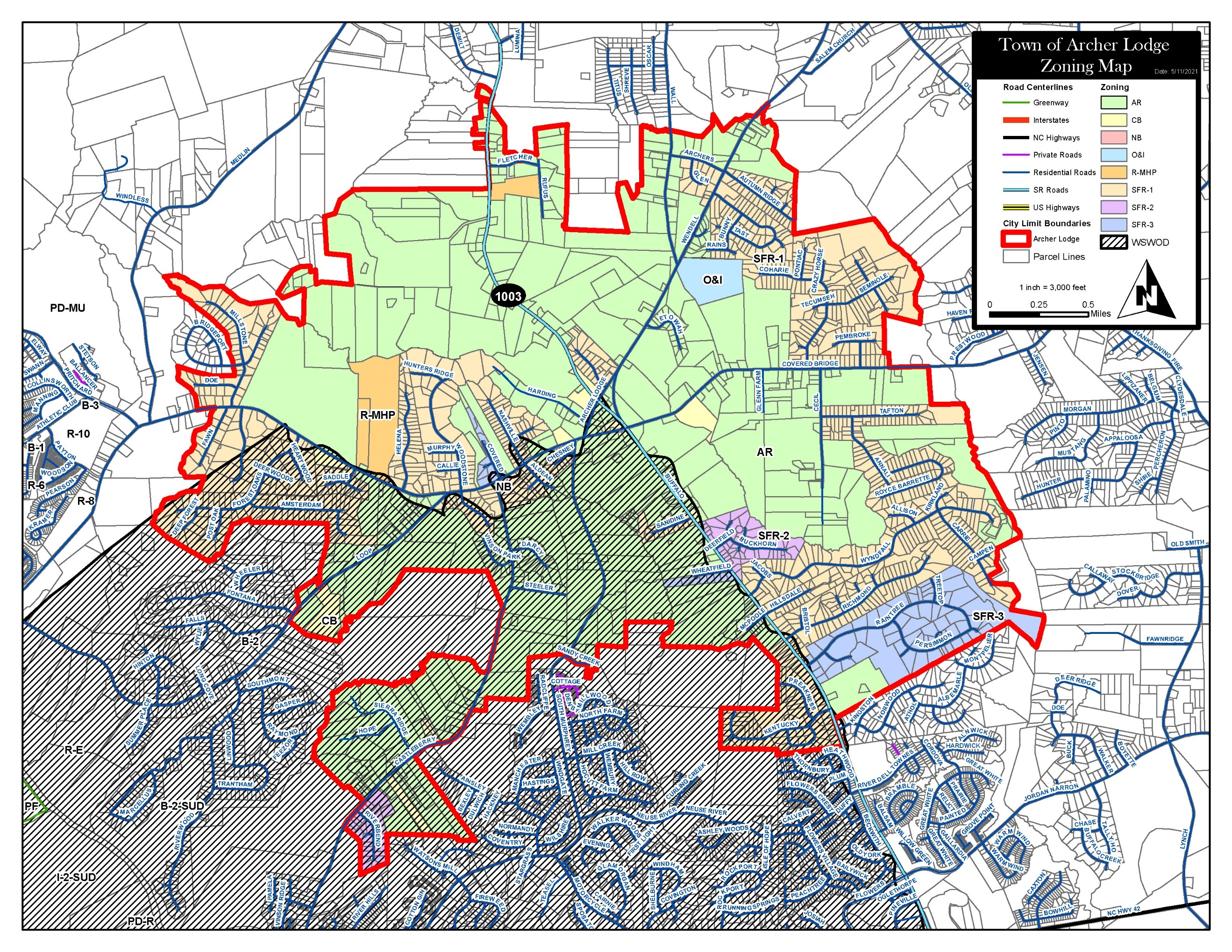
(Ord. No. AL2021-06-1, § 1, 6-7-2021)

DIVISION 2. - RECOMMENDED PLANTS LIST.

SUGGESTED PLANT MATERIALS LIST—TREES & SHRUBS
Plant Name/
Common Name
HeightSpreadGrowth Rate
S = Slow;
M = Moderate;
R = Rapid
Light
Needs

S = Sun;
SH = Shade;
PS = Partial Sun
Comments
LARGE VARIETY TREES
(MATURE HEIGHT: 35 FEET OR GREATER)
Native Evergreen
Ilex opaca
American Holly
40—60′ 20—30′ S S—SH Tolerates a variety of conditions, male and female plants needed for fruit, pyramidal form
Juniperus virginiana
Eastern Red Cedar
40—50′ 15—25′ M S—PS Tolerates a variety of conditions, pyramidal form, male and female plants needed for fruit
Magnolia grandiflora
Southern Magnolia
60—80′ 30—40′ R S—PS Less shade tolerant with age, attracts wildlife, fragrant spring and summer flowers
Pinus taeda
Loblolly Pine
90—120′ 30—40′ R S Tolerates flooding and drought, critical to Brown-headed Nuthatch
Quercus laurifolia or hemisphaerica
Laurel Oak
60—80′ 30—40′ R S—SH Shade tolerant, good for moist sites
Native Deciduous
Acer barbatum or floridanum
Southern Sugar Maple
50—60′ 20—35′ M S—PS Heat tolerant, dislikes dry, compact soil
Acer rubrum
Red Maple
60—90′ 30—50′ R-M S—SH Tolerates a variety of conditions, including wet soil, fall color
Acer saccharum
Sugar Maple
90—120′ 40—60′ S S—PS Extensive root system, fall color, shade tolerant
Betula nigra
River Birch
60—80′ 30—50′ R S—PS Lacy texture, tolerates a variety of conditions, including wet soil, tends to drop small limbs, cultivars available
Celtis laevigata
Southern Hackberry or Sugarberry
70—80′ 30—50′ R S—PS Tolerates a variety of conditions
Cladrastis kentukea
Yellow-wood
40—50′ 40—45′ M S Tolerates a variety of conditions, fragrant white blooms in alternate years
Diospyros virginiana
American Persimmon
30—60′ 20—25′ S—M S—PS Tolerates dry soil, good fall color, fruit attracts wildlife. Separate male and female plants.
Fraxinus pennsylvanica
Green Ash
50—120′ 40—50′ R S—PS Tolerates a variety of conditions. Separate male and female plants. Many cultivars available.
Gymnocladus diocus
Kentucky Coffee-tree
60—75′ 40—50′ S Tolerant of air pollution and drought, fall color
Liriodendron tulipifera
Tulip-Tree or Yellow Poplar
90—120′ 60—80′ R S Tolerates a variety of conditions, drops limbs, best in natural areas, host for N.C. State butterfly
Nyssa sylvatica
Black Gum
50—80′ 30—50′ M S—PS Fall color, pyramidal when young
Platanus occidentalis
Sycamore
80—120′ 40—60′ R S—PS Showy bark, tolerates a variety of conditions but needs water, best in natural areas
Prunus serotina
Wild Black Cherry
60—80′ 30—50′ R S—PS Tolerates a variety of conditions, seeds heavily, best in natural areas
Quercus alba
White Oak
80—100′ 40—60′ S—M S—PS Sensitive to construction damage, good fall color
Quercus bicolor
Swamp White Oak
50—60′ 50—60′ M—R S Needs acidic soil, drought resistant, intolerant of salt and air pollution
Quercus coccinea
Scarlet Oak
50—80′ 40—50′ R S Good fall color, tolerates dry, sandy soil
Quercus falcata
Southern Red Oak
70—80′ 30—40′ R S—PS Tolerates drought
Quercus imbricaria
Shingle Oak
50—60′ 50—60′ S—M S Tolerates a variety of conditions
Quercus lyrata
Overcup Oak
35—45′ 35—40′ M S Tolerates a variety of conditions
Quercus macrocarpa
Bur Oak
60—80′ 60—80′ S S Tolerant of Town conditions
Quercus nigra
Water Oak
70—90′ 30—50′ R S May retain some leaves through the winter, tolerates a variety of conditions
Quercus palustris
Pin Oak
60—80′ 40—50′ R S Tolerates a variety of conditions, pyramidal form, good fall color
Quercus phellos
Willow Oak
80—100′ 40—50′ R S—PS Tolerates a variety of conditions, golden fall color
Quercus rubra
Red Oak
80—90′ 30—50′ R-M S—PS Needs moist soils, good fall color
Quercus shumardii
Shumard Oak
90—100′ 40—50′ R-M S Tolerates a variety of conditions
Quercus texana or nuttallii
Nuttall Oak
60—80′ 30—40′ R S—PS Tolerates poorly drained soils, drought tolerant
Taxodium distichum
Bald-cypress
100—120′ 30—40′ R S Pyramidal when young, tolerates wet and dry soils, fall color, attractive trunk
Tilia americana
Southern Basswood or American Linden
50—70′ 30—45′ M S—PS Tolerates drought and clay soil, intolerant of air pollution, consider 'Redmond' cultivar
Non-Native Evergreen
Cedrus deodara
Deodar Cedar
40—70′ 30—40′ M S—PS Tolerates drought and hot, dry summers, likes acidic soil
Cryptomeria japonica
Japanese Cryptomeria
50—60′ 25—30′ M S—PS Tolerates a variety of conditions, pyramidal shape, many cultivars available
Thuja 'Green Giant'
Green Giant Arborvitae
40—50′ 15—20′ R S—PS Tolerates a variety of conditions, may need some wind protection, bronzes in winter
Non-Native Deciduous
Acer × freemanii
Freeman Maple
Gen. 40—70′ Gen. 15—40′ M S—PS A hybrid of red maple and silver maple, cultivars vary in size and characteristics
Cercidiphyllum japonicum
Katsura Tree
40—60′ 20—40′ M—R S Intolerant of hot, dry sites, fall color
Ginkgo biloba
Ginkgo
50—80′ 30—40′ S S Plant male trees to avoid messy, smelly fruit, tolerates a variety of conditions, bright yellow fall color
Metasequoia glyptostroboides
Dawn Redwood
70—100′ 15—25′ R S Tolerates a variety of conditions, tolerates wet soils, attractive trunk
Platanus × acerifolia
London Planetree
65—80′ 75—100′ M S—PS Good street tree, light brown exfoliating bark
Quercus robur 'Fastigata'
Upright English Oak
50—60′ 10—20′ S S Tolerates drought and air pollution, narrow, upright form
Sophora japonica or Styphnolobium japonicum
Japanese Scholartree or Japanese Pagodatree
50—70′ 50′ M—R S—PS Resistant to air pollution and drought, but marginally heat hardy in Piedmont N.C.
Tilia cordata 'Greenspire'
Greenspire Littleleaf Linden
30—40′ 25—35′ S—M S Piedmont N.C. is at southern extreme of range, air pollution tolerant, cultivars available
Tilia tomentosa
Silver Linden
40—70′ 25—45′ R S—PS Tolerates drought and air pollution and a variety of soil conditions
Ulmus parvifolia
Lacebark or Chinese Elm
40—50′ 40—50′ M—R S Tolerates a variety of conditions, attractive bark, a tough and durable tree
Ulmus hybrida
Hybrid Elm
75—125′ 60—120′ M—R S—PS Tolerates a variety of conditions; Dutch Elm disease resistant varieties available
Zelkova serrata
Japanese Zelkova
50—80′ 40—50′ M S—PS Good street tree; tolerates urban conditions well, cultivars available
MEDIUM VARIETY TREES
(MATURE HEIGHT: 25 TO 35 FEET)
Native Evergreen
Ilex × attenuata 'Fosteri'
Foster's Holly
20—30′ 10—20′ R S—PS Red fruits, male plants not needed for fruiting, best berry production in full sun
Magnolia virginiana
Sweet Bay Magnolia
20—30′ 10—15′ M S—PS Tolerates some shade, good for wet sites, cultivars provide evergreen and deciduous options
Pinus virginiana 'Wate's Golden'
Wate's Golden Virginia Pine
15—30′ 10—20′ S—M S Grows in poor soils, turns golden in winter, seeds eaten by birds, especially Brown-headed Nuthatch
Prunus caroliniana
Carolina Laurel Cherry
20—40′ 15—20′ M—R S—PS Tolerates a variety of conditions, colonizes
Native Deciduous
Carpinus caroliniana
American Hornbeam or Ironwood
20—30′ 20—30′ S S—PS Does well in moist to wet soil, attractive trunk, interesting fruit
Cercis canadensis
Eastern Redbud
20—30′ 25—35′ M S—PS Tolerates a variety of conditions, many cultivars available, early spring purple/pink blooms
Cornus florida
Flowering Dogwood
15—30′ 15—20′ S—M PS Best in part shade, many cultivars available, flowers in spring, fall color and red fruit
Gleditsia triacanthos var. inermis
Thornless Honeylocust
30—70′ 30—40′ R S Range of soil types, drought tolerant;
Halesia tetraptera
Common Silverbell
20—40′ 20—35′ M S—PS Tolerates a variety of conditions, showy white blooms in spring, cultivars available
Ostrya virginiana
Eastern Hop-hornbeam
20—30′ 20—30′ S S—PS Tolerates a variety of conditions, interesting fruit
Oxydendrum arboreum
Sourwood
20—30′ 10—15′ S S—PS Tolerates a variety of conditions, white summer flowers, fall color, source of sourwood honey
Non-Native Evergreen
Ilex × 'Nellie R. Stevens'
Nellie Stevens Holly
30—40′ 10—15′ R S—PS Red fruit, drought and heat tolerant, male and female plants (I. cornuta) needed for best fruiting, also used as a large shrub
Pinus thunbergii
Japanese Black Pine
20′ 20′ S—M S Select small tree cultivar from among dwarf cultivars, heat and drought tolerant
Non-Native Deciduous
Acer buergerianum
Trident Maple
25—35′ 20—30′ M S—PS Tolerates a variety of conditions; good fall color
Acer campestre
Hedge Maple
25—35′ 25—35′ S S Tolerates drought and air pollution; shallow root system
Carpinus betulus 'Fastigata'
Pyramidal European Hornbeam
30—40′ 20—30′ S—M S—PS Pyramidal when young, tolerates a range of conditions
Koelreuteria paniculata
Goldenrain Tree
20—40′ 15—35′ M—R S—PS Tolerates drought and air pollution, yellow flowers in June
Magnolia × soulangiana or soulangeana
Saucer Magnolia
15—25′ 15—25′ M S—PS Late flowering cultivars avoid frost damage to blooms
Pistacia chinensis
Chinese Pistachio
25—35′ 20—30′ M—R S Drought tolerant, male and female plants needed for fruit, fall color
Prunus 'Kwanzan'
Kwanzan Cherry
20—30′ 15—25′ M S—PS Pink blooms in April, may be short-lived, good fall color, no fruit
Prunus 'Okame'
Okame Cherry
15—30′ 20—30′ M—R S Tolerates a variety of conditions, pink blooms in late winter lasting longer than most cherries
Prunus subhirtella 'Autumnalis'
Fall Blooming Cherry
20—30′ 15—25′ R S—PS Flowers best in full sun, flowers both in fall and late winter, may be short lived
Prunus subhirtella 'Pendula'
Weeping Cherry
20—40′ 15—30′ M S Tolerant of heat and clay soil; white to pinkish flowers in early spring; relatively long lived
Prunus × yedoensis
Yoshino Cherry
30—40′ 30—50′ R S Tolerates a variety of conditions, pale pink to white flowers in early spring, many cultivars available
SMALL VARIETY TREES
(MATURE HEIGHT: LESS THAN 25 FEET)
Native Evergreen
Ilex vomitoria
Yaupon Holly
15—20′ 10—20′ S—M S—SH Tolerates a variety of conditions, male and female plants needed for fruit, many cultivars available in many sizes
Magnolia grandiflora 'Little Gem'
Little Gem Magnolia
15—20′ 8—10′ R S—PS Dwarf cultivar of Magnolia grandiflora
Morella or Myrica cerifera
Wax-myrtle
10—15′ 8—10′ R S—PS Tolerates wet to dry soils, can colonize, many cultivars available, male and female plants needed for fruit, also can be used in shrub form
Native Deciduous
Aesculus pavia
Red Buckeye
10—20′ 10—20′ M S—PS Especially attracts hummingbirds and pollinators, red flowers in spring, leaf scorch may develop in dry soils
Amelanchier × 'Autumn Brilliance'
Autumn Brilliance Serviceberry
25—40′ 20—30′ S S—PS Tolerates a variety of conditions, rust fungus can attack fruit, early spring white blooms, fall color, other cultivars available
Chionanthus virginicus
Fringe-tree or Old Man's Beard
12—20′ 12—20′ S—M S—PS Tolerates a variety of conditions, male and female plants needed for fruit, fragrant white flowers in spring
Crataegus viridis 'Winter King'
Winter King Green Hawthorn
15—30′ 10—20′ S S—PS Drought tolerant, has thorns, other native species available, white flowers in spring, fall color, interesting bark
Non-Native Deciduous
Acer palmatum
Japanese Maple
15—25′ 10—25′ S—M S—PS Avoid hot, dry and windy sites; many cultivars available
Chionanthus retusus
Chinese Fringe-tree
15—25′ 10—25′ M S—PS Tolerates a variety of conditions, showy white flowers in spring
Cornus kousa
Dogwood
15—30′ 15—30′ S S—PS Resistant to anthracnose, white flowers in May, fall color
Lagerstroemia indica cvs.
Crape Myrtle
15—30′ 6—15′ R S Summer blooms, attractive bark, overused, many cultivars (including dwarfs) available, do not top
Magnolia stellata
Star Magnolia
10—15′ 6—10′ S—M S—PS Blooms best in full sun, late winter white flowers
Malus hybrida
Hybrid Crabapple
15—25′ 10—20′ M S Plant only disease resistant cultivars, many cultivars available, showy spring flowers and fall fruit
Prunus sargentii
Sargent Cherry
20—40′ 20—40′ R S One of the hardiest cherries; pink flowers; sensitive to air pollution; reddish bark
Prunus serrulata 'Snowgoose'
Snowgoose Japanese Cherry
15—25′ 15—20′ M S—PS White sprung flowers; reddish bark; may be short-lived
Syringa reticulata
Japanese Tree Lilac
20—30′ 15—20′ M S Tolerates a variety of conditions; creamy white flowers in mid-summer
EVERGREEN SHRUBS AND SCREENING PLANTS
Native
Ilex opaca
American Holly
40—60′ 20—30′ S S—SH Tolerates a variety of conditions, male and female plants needed for fruit, pyramidal form, cultivars available
Ilex × attenuata 'Fosteri'
Foster's Holly
20—30′ 10—20′ R S—PS Red fruits, male plants not needed for fruiting, best berry production in full sun
Juniperus virginiana
Eastern Red Cedar
40—50′ 15—25′ S S—PS Tolerates a variety of conditions, pyramidal form, male and female plants needed for fruit
Morella or Myrica cerifera
Wax-myrtle
10—15′ 8—10′ R S—PS Tolerates wet to dry soils, can colonize, many cultivars available, male and female plants needed for fruit, can reach small tree size
Prunus caroliniana
Carolina Laurel Cherry
20—40′ 15—20′ M—R S—PS Tolerates a variety of conditions, colonizes
Thuja occidentalis
American Arborvitae
Var. Var. Gen. S S Many cultivars in countless shapes and sizes, some tolerate part shade, some reach small tree size
Non-Native
Ilex × 'Nellie R. Stevens'
Nellie Stevens Holly
30—40′ 10—15′ R S—PS Red fruit, drought and heat tolerant, male cultivar (I. cornuta) needed for best fruiting, also used as a large shrub
Pinus thunbergii
Japanese Black Pine
20′ 20′ S—M S Select small tree cultivar from among dwarf cultivars, heat and drought tolerant
LANDSCAPING SHRUBS
{MATURE HEIGHT 36 INCHES OR MORE)
Native Evergreen
Agarista populifolia
Florida Leucothoe or Agarista
8—12′ 8—12′ R PS Tolerates a variety of conditions, but prefers moist soil
Ilex glabra
Inkberry Holly
5—9′ 5—10′ S—M S—PS Drought tolerant but prefers moist soil, many cultivars available, male and female plants needed for fruit
Ilex vomitoria
Yaupon Holly
10—20′ 8—12′ M—R S—PS Tolerates wet to dry soils, male and female plants needed for fruit, dwarf and other cultivars available
Illicium floridanum
Florida Star-anise
5—8′ 6—8′ M PS—SH Prefers moist, well-drained soil high in organic matter, many cultivars available, showy spring flowers
Illicium parviflorum
Yellow Anise-tree
7—10′ 8—10′ M S—PS Tolerates a variety of conditions, drought tolerant, can colonize, some cultivars available
Morella or Myrica cerifera
Wax-myrtle
10—15′ 8—10′ R S—PS Tolerates wet to dry soils, can colonize, many cultivars available, male and female plants needed for fruit, can reach small tree size
Rhododendron catawbiense
Catawba Rhododendron
6—12′ 6—10′ M PS Showy flowers, needs excellent drainage and organic soil, many cultivars available
Thuja occidentalis 'Emerald'
Emerald American Arborvitae
6—10′ 3—6′ M S—PS Tolerates a range of soils and conditions; good screening plant
Native Deciduous
Calycanthus floridus
Sweet-shrub or Carolina Allspice
6—9′ 6—12′ S—M S—PS Tolerates a range of conditions, drought tolerant, fragrant maroon flowers in early spring, fall color, cultivars available
Callicarpa americana
American Beautyberry
3—4′ 4—5′ R S—PS Prefers moist soil, showy purplish berries in fall
Ceanothus americanus
New Jersey Tea
3—4′ 3—5′ S—M S—PS Easy to grow in a wide range of conditions, drought tolerant, early summer flowers
Clethra alnifolia
Sweet-
pepperbush
4—8′ 4—6′ S—M S—PS Needs moist soil, fragrant white summer flowers, may colonize, fall color
Fothergilla gardenii
Witch-alder or Fothergilla
3—5′ 3—4′ S S—PS Drought tolerant, fall color, may colonize, fragrant white spring flowers
Fothergilla major
Large Witch-alder
6—10′ 5—9′ S PS Drought tolerant, cultivars include 'Mt. Airy,' white spring flowers
Hamamelis virginiana
Witch-hazel
15—30′ 15—25′ S—M S—PS Multi-stemmed, yellow fall flowers and leaf color, tolerates heavy clay soil
Hydrangea arborescens
Smooth Hydrangea
3—5′ 3—5′ R PS Suffers in full sun and with drought, likes moist well-drained soil, attracts bees, prune in early spring, cultivars available, including 'Annabelle,' long bloom period
Hydrangea quercifolia
Oakleaf Hydrangea
4—8′ 3—8′ R PS—S Somewhat drought tolerant, attractive bark, needs mulch to keep roots cool, long bloom period in spring and summer, fall color, dwarf cultivars available
Ilex decidua
Possum-haw
6—7′ 6′ M PS Prefers moist, well-drained soil, male and female plants needed for fruit
Ilex verticillata
Winterberry
6—15′ 6—10′ S—M S—PS Tolerates a range of conditions, but prefers moist soil, male and female plants needed for fruit, dwarf cultivars available
Itea virginica
Sweetspire
3—6′ 4—6′ M S—PS Tolerates wide range of moisture, excellent fall color, fragrant white spring flowers
Lindera benzoin
Spicebush
6—12′ 6—12′ S—M S—PS Prefers moist, well-drained soil, male and female plants needed for fruit, fall color, early spring yellowish flowers
Physocarpus opulifolius
Eastern Ninebark
5—8′ 6—10′ M—R S—PS Drought tolerant, tough and durable, white spring flowers, attractive bark, dwarf cultivars available
Rhododendron calendulaceum
Flame Azalea
4—8′ 8—10′ S PS Good for naturalistic landscape, needs some direct sun, orange/yellow flowers in late spring, needs well-drained organic soil
Rhododendron periclymenoides
Pinxterbloom Azalea
3—6′ 4—7′ S S—PS Drought tolerant, needs some sun, pink spring flowers, needs well-drained organic soil
Rhododendron viscosum
Swamp Azalea
2—8′ 3—8′ M PS Likes moist organic soil, but tolerates some drought, fragrant white flowers in early summer
Sambucus canadensis
American Elderberry
5—12′ 5—12′ R S Likes moist soil, may colonize, white summer flowers and dark fruit
Vaccinium arboreum
Sparkleberry
10—20′ 10—15′ M S—SH Tolerates drought, needs multiple genetic strains for fruit set, fall color
Vaccinium stamineum
Deerberry
3—5′ 3—5′ M S—PS Drought tolerant, needs acidic soil, needs multiple genetic strains for fruit set
Vaccinium virgatum or ashei
Rabbiteve Blueberry
8—12′ 6—10′ M S—PS Drought tolerant, needs acidic soil, needs multiple genetic strains for fruit set, fall color, grown for fruit production
Viburnum acerifolium
Mapleleaf Viburnum
4—6′ 4—6′ M S—SH Tolerates drought, may colonize, needs multiple genetic strains for fruit set, white spring flowers, fall color
Viburnum dentatum
Arrow-wood Viburnum
6—10′ 6—15′ M S—PS Tolerates drought but prefers moist soil, may colonize, needs multiple genetic strains for fruit set, white spring flowers, fall color, cultivars available
Viburnum nudum
Possumhaw or Southern Wild Raisin
6—10′ 6—10′ M S—PS Prefers moist to wet soil, needs multiple genetic strains for fruit set, white spring flowers, fall color, cultivars available
Viburnum prunifolium
Blackhaw Viburnum
12—15′ 8—12′ S—M S—SH Drought tolerant, needs multiple genetic strains for fruit set, white spring flowers, fall color
Viburnum rafinesqueanum
Downy Arrow-wood Viburnum
4—6′ 4—6′ M S—PS Drought tolerant, needs multiple genetic strains for fruit set, white spring flowers, fall color
Viburnum rufidulum
Southern Black Haw Viburnum
10—20′ 10—15′ M PS Needs multiple genetic strains for fruit set, white spring flowers, fall color
Non-Native Evergreen
Abelia × grandiflora
Glossy Abelia
5—8′ 5—8′ M—R S—PS Tolerates a variety of conditions, drought tolerant, summer flowers, many dwarf cultivars available
Aucuba japonica
Aucuba
6—10′ 4—6′ S PS—S Needs winter shade, drought tolerant, many cultivars available
Berberis julianae
Wintergreen Barberry
4—8′ 6—8′ S S—PS Tolerates a variety of conditions, drought tolerant, has spines, good barrier plant
Berberis verruculosa
Warty Barberry
3—6′ 3—4′ S S—PS Tolerant of drought and urban conditions, tolerates a variety of soils
Buxus microphylla
Littleleaf Boxwood
2—8′ 2—8′ S S—PS Many shapes and sizes, var. japonica is often used, generally densely branched, leaves may bronze in winter
Buxus sempervirens
Common Boxwood
15—20′ 10—15′ S S—PS Drought tolerant, protect from wind, many cultivars available
Camellia japonica
Camellia
8—15′ 5—10′ S—M PS Excess sun, cold or shade can reduce flowering, many cultivars available, blooms in early spring
Camellia sasanqua
Sasanqua Camellia
6—10′ 5—7′ M—R S—PS Drought tolerant, many cultivars available, blooms in the fall
Euonymus japonicus
Japanese Euonymus
10—15′ 5—6′ R S—SH Tolerates drought and variety of soil types, subject to scale insects
Ilex crenata cvs.
Japanese Holly (i.e., Compacta Holly )
4—10′ 3—5′ S—M S—PS Many cultivars available in varying shapes and sizes, black fruit when present, generally hardy, male and female plants needed for fruit
Loropetalum chinensis
Loropetalum
6—10′ 6—10′ R S—PS Tolerates a variety of conditions, drought tolerant, long spring bloom period, dwarf cultivars available
Osmanthus heterophyllus
Tea Olive
8—10′ 5—10′ S—M S—PS Drought and heat tolerant, a good plant for screening, many cultivars available, fragrant fall flowers
Osmanthus × fortunei
Fortune's Osmanthus
15—20′ 15—20′ M S—SH Drought tolerant, good for screening and barriers, fragrant fall flowers
Pinus mugo
Pine
15—20′ 25—30′ S S—PS Varies greatly in size; tolerates clay soil, cultivars available
Prunus laurocerasus
Cherry laurel
4—8′ 5—8′ M S—SH Favorite cultivars are Zabel, Otto Luyken and Schip laurel, need well-drained soil, some disease problems and scale insects
Rhaphiolepis cvs.
Indian Hawthorn
4—10′ 4—10′ S S—PS Tolerates a variety of conditions, drought tolerant, many cultivars available
Rhododendron hybrida
Evergreen Azalea
2—8′ 2—10′ M PS Many hybrids and cultivars available, needs well drained soil
Sarcococca confusa
Sweetbox Sarcococca
3—5′ 3—5′ S—M PS—SH Drought tolerant, fragrant flowers in late winter
Viburnum awabuki 'Chindo'
Chindo Viburnum
10—15′ 6—8′ R S—PS Pyramidal form, drought tolerant
Viburnum rhytidophyllum
Leatherleaf Viburnum
10—15′ 10—15′ M PS—SH Protect from winter wind and sun
Non-Native Deciduous
Chaenomeles speciosa or japonica
Japanese Flowering Quince
5—8′ 4—8′ R S—PS Varied flower colors, flowers best in full sun, tolerates a variety of conditions, many cultivars available, stems often have spines
Cotinus coggygria
Smoketree or Smokebush
10—15′ 8—12′ M—R S Tolerates a range of soil types, drought tolerant, showy summer flowers, many cultivars available
Forsythia × intermedia
Border Forsythia
8—10′ 10—12′ R S—PS Tolerates a variety of conditions, blooms in early spring, best in full sun, many cultivars to choose from
Hydrangea macrophylla
Bigleaf Hydrangea
3—4′ 4—6′ R PS—SH Moist well drained soil, wilts in drought, long bloom period, needs pruning after blooming
Hydrangea paniculata
Panicle Hydrangea
6—20′ 6—8′ R S—PS Drought tolerant, white flowers in summer, long bloom period, many cultivars available
Kerria japonica
Japanese Kerria
3—6′ 6—9′ M PS—SH Drought tolerant, early spring yellow flowers, interesting green stems, cultivars available
Rosa hybrida
Hybrid Landscape Rose (i.e., Knock Out Rose )
3—4′ 3—4′ M S—PS Drought and disease resistant, blooms all summer, has thorns, many cultivars available
Spiraea cvs.
Spirea (excl. Spiraea japonica)
Var. Var. Gen. R S Spring or summer flowering shrubs, many cultivars available, Spiraea japonica species is considered an invasive exotic in N.C.


(Ord. No. AL2021-06-1, § 1, 6-7-2021)

DIVISION 3. - PLAT CERTIFICATES.

(a)

Certificates and endorsements on final plat. The certificates and endorsements in the following table, where applicable, must be shown on plats of subdivisions. See Article 11, Division 3 for examples of the certificates:

REQUIRED CERTIFICATES TABLE
Type of
Subdivision
Reference Numbers
Exempt (1) - (3), (5), (9), (10)
Minor (1) - (5), (9-10)
As applicable (7), (8),(13)
Major (1) - (11)


(1)

Certificate of Survey and Accuracy:

I, ___________, certify that this plat was drawn under my supervision from an actual survey made under my supervision (deed description recorded in Book _____, page _____, etc.) (other); that the boundaries not surveyed are clearly indicated as drawn from information found in Book _____, page _____; that the ratio of precision or positional accuracy as calculated is _______; that this plat was prepared in accordance with § 47-30 of the North Carolina General Statutes as amended. Witness my original signature, license number and seal this _______ day of _______, A.D., ___.

Seal or Stamp


___________
Professional Land Surveyor
License Number #_____

(2)

Professional Land Surveyor's Certification:

As denoted by an "X" below, I, ___________, certify as to the following:

a.

That the survey creates a subdivision of land within the area of a county or municipality that has an ordinance that regulates parcels of land.

b.

That the survey is in a portion of a county or municipality that is unregulated as to an ordinance that regulates parcels of land.

c.

Any one of the following:

(1)

That the survey is of an existing parcel or parcels of land or one or more existing easements and does not create a new street or change an existing street. For the purposes of this subsection, an "existing parcel" or "existing easement" is an area of land described in a single, legal description or legally recorded subdivision that has been or may be legally conveyed to a new owner by deed in its existing configuration.

(2)

That the survey is of an existing feature, such as a building or other structure, or natural feature, such as a watercourse.

(3)

That the survey is a control survey. For the purposes of this subsection, a "control survey" is a survey that provides horizontal or vertical position data for support or control of other surveys or for mapping. A control survey, by itself, cannot be used to define or convey rights or ownership.

(4)

That the survey is of a proposed easement for a public utility as defined in § 62-3.

d.

That the survey is of another category, such as the recombination of existing parcels, a court- ordered survey, or other exemption or exception to the definition of subdivision.

e.

That the information available to the surveyor is such that the surveyor is unable to determine to the best of the surveyor's professional ability as to provisions contained in (a) through (d) above.

(3)

Certificate of Floodway Information:

Property shown hereon _______ is/is not located in a FEMA designated flood zone. FEMA Flood Hazard Panel: _____; Effective Date: _______.


___________
Professional Land Surveyor
License Number #_____

(4)

Certificate of Ownership, Maintenance and Dedication:

I hereby certify that I am the owner (or corporate officer) of the property shown and described hereon, which is located in the zoning and subdivision jurisdiction of Archer Lodge and that I hereby adopt this subdivision plan with my free consent, establish minimum setback lines, and dedicate all streets, alleys, parks and other sites and easements to the public or private as noted. I understand that I am responsible for maintenance of public property shown hereon until it is accepted by the appropriate government entity.


________  ___________
Date        Owner/Officer or Corporation

(5)

Certificate of Wastewater Disposal:

I hereby certify that all lots are provisionally approved for subsurface wastewater disposal systems, except as noted on the plat, subject to issuance of improvement permits by the Johnston County Health Department, and, to the North Carolina Administrative Code.

OR

On _______ (date), lot(s) ___________, were found to be unsuitable for installation of a subsurface wastewater disposal system, in accordance with North Carolina Administrative Code.

OR

Lot(s) ___________ has an existing sewage disposal system that complies with all applicable requirements of the Johnston County Code of Ordinances.

THIS THE DAY OF _______, 20___.
COUNTY OF JOHNSTON

By: ___________

___________
Designated Johnston County Official

(6)

Certificate of Approval by Public Utilities:

The Director of Public Utilities for County of Johnston, North Carolina, hereby certifies that this plat meets all Johnston County standards and requirements for public utilities required by the Johnston County ordinances. Upon recordation of this plat, Johnston County accepts the owner's offer of dedication for public water and/or sanitary sewer purposes all easements, common areas, and/or rights-of-way shown and delineated on this plat as dedicated for public utility purposes. No structures or fences shall be placed within the public utility easements. Access to the dedicated areas shall not be blocked or obstructed by any fence or structures unless pre-approved access is provided with a 12' minimum opening gate. The County shall have the right to clear and/or remove any vegetation within the public utility easements. Furthermore, the County will not replace any landscaping (other than grass, which will be replaced with seed) within the public utility easement area disturbed for maintenance of the utilities.

THIS THE _____ DAY OF _______, 20___.
COUNTY OF JOHNSTON

By:___________
Director of Public Utilities

(7)

North Carolina Department of Transportation Division of Highways Certification:

Proposed Subdivision Road Construction Standards Certification

Approved: ________  ___________
     Date        District Engineer

Note: Only North Carolina Department of Transportation approved structures are to be constructed on public right-of-way.

Note: Site triangle takes precedent over any sign easement.

Note: Owner, developer, or contractor shall set the centerline of the existing roadway ditch back to a minimum of 12 feet from the existing/proposed edge of pavement along all road front lots.

Note: All drainage easements shall be dedicated as public, and it shall be the responsibility of the property owners to maintain the drainage easements and any drainage structures there in, so as to maintain the integrity of the drainage system and ensure positive drainage.

Note: All lots shall be served by the internal street system.

(8)

Road Maintenance Statement of Understanding:

I, ___________ am responsible for the construction, maintenance and required road improvements of the subdivision streets on this plat until the earlier of the follow occurs:

(a)

Approved and accepted for permanent maintenance by the North Carolina Department of Transportation as public roads; or

(b)

Approved and taken over by the Homeowners Association for private roads permanent maintenance; or

(c)

Private road maintenance agreement is signed and recorded by owners of each lot.

___________
Name of Corporation or Owner

________  ___________
Date        Developer/Owner/Officer of Corporation

(9)

Town Planner 's Certification:

Certificate of Approval for Recording—Subdivision Plat

I hereby certify that the subdivision plat shown hereon has been found to comply with the Subdivision Regulations of the Town of Archer Lodge, North Carolina, and that this plat has been approved for recording in the Office of the Register of Deeds of Johnston County. This plat is null and void if not recorded at the Johnston County Deed Registry within 60 days of the date written below.

________  ___________
Date        Town Planner

Certificate of Approval for Recording—Exempt Plat

I hereby certify that this plat is exempt from the Subdivision Regulations with the Town of Archer Lodge, North Carolina, and that this plat has been approved for recording in the Office of the Register of Deeds of Johnston County.

________  ___________
Date        Town Planner

(10)

Review Officer's Certification:

State of North Carolina
County of _______

I, ___________, Review Officer of _______ County, certify that the map or plat to which this certification is affixed meets all statutory requirements for recording.

________  ___________
Date        Review Officer

(11)

Acceptance of Offer of Dedication:

NOTE: To be used only if Town Council accepts an offer of dedication.

I hereby certify that all parks and greenways as shown on this plat were accepted, as specified, by the Town Council by a resolution adopted at the meeting held on _______, 2___.

________  ___________
Date      Town Clerk

(12)

Subdivision Road Disclosure Statement:

Developers are required to give lot purchases a subdivision street disclosure statement pursuant to § 136-102.6(F) of the North Carolina General Statutes.

(13)

Additional Certifications, Statements, or Notations necessary.

Notations:

1.

Maximum Impervious Surface Per Lot.

2.

Designate whether lot is within a protected watershed.

(14)

Electronic Signatures.

Verifiable digital or electronic signatures ("e-signatures" such as those provided by Adobe Sign software) may be substituted for a handwritten signature on any of the above certification statements included on a subdivision plat.

(Ord. No. AL2021-06-1, § 1, 6-7-2021; Ord. No. AL2022-03-1 (UDO-TA-1-22), § 1, 3-7-2022; Ord. No. AL2022-08-2 (UDO-TA-3-22), § 1, 8-1-2022)

DIVISION 4. - MODEL LANGUAGE FOR DECLARATION OF RESTRICTIVE COVENANTS.

THIS DECLARATION AND AGREEMENT is entered into this the _____ day of _______, 20___, between (Developer) (hereinafter "Declarant") and all parties hereafter acquiring any of the described property.

WITNESSETH:

WHEREAS, Declarant is the owner and developer of all lots within a subdivision of the Town of Archer Lodge, Johnston County, NC, known as _______ and being that certain tract or parcel more particularly described by map and survey in Plat Book _____, Page _____, of the Johnston County Registry; and

WHEREAS, it is in the best interest of the Declarant and to the benefit, interest, and advantage of every party hereinafter acquiring any of the described property that certain covenants, conditions, easements, assessments, liens, and restrictions governing and regulating the use of the property be established; and

WHEREAS, Declarant desires to provide for the continued ownership, maintenance, and repair of all streets, roads, sidewalks, and greenways together with the associated stormwater drainage infrastructure located in the above-named subdivision; and

WHEREAS, Declarant has caused or will cause to be incorporated under the laws of the State of North Carolina, a non-profit corporation known as "_______" (hereinafter referred to as "Association") for the purpose of exercising the functions aforesaid, and which are hereinafter fully set forth.

NOW, THEREFORE, in consideration of the premises, the Declarant agrees with all parties hereafter acquiring any of the property herein described, that it shall be and is hereby subject to the following restrictions, covenants, conditions, easements, assessments, and liens relating to the use thereof, which shall be construed as covenants running with the land, which shall be binding on all parties acquiring any right, title, or interest in any of the properties and which shall inure to the benefit of each owner thereof.

(1)

MEMBERSHIP: Every person who is a record owner of a fee or undivided fee interest in any lot which is subject to assessment by the Association, including contract sellers, but excluding persons who hold an interest merely as security for the performance of any obligations, shall be a member of the Association. Ownership of such interest shall be the sole qualification for such membership. Membership shall be appurtenant to and may not be separated from ownership of any lot which is subject to assessment. Membership in the Association is mandatory and may not be waived by the Association for any such owner.

(2)

OWNERSHIP OF STREETS, ROADS, SIDEWALKS, AND GREENWAYS: The Declarant shall own and maintain the streets, roads, sidewalks, and greenways together with the associated stormwater drainage infrastructure of the subdivision until such a time that the ownership interest in the above shall be transferred to the Association or to NCDOT.

(3)

MAINTENANCE, REPAIR, AND UPKEEP OF STREETS AND ROADS: Until such a time that the ownership interest in the streets and roads of the subdivision shall be transferred to the Association or NCDOT, the Declarant shall maintain, and repair said streets and roads in the subdivision at a minimum of NCDOT standards as set forth in the most current edition of the "Subdivision Roads Minimum Construction Standards." In the event that, and after such a time that, the ownership interest in the streets and roads of the subdivision has been transferred to the Association, the Association shall maintain, and repair said streets and roads in the subdivision at a minimum of NCDOT standards as set forth in the most current edition of the "Subdivision Roads Minimum Construction Standards."

(4)

ASSESSMENTS FOR MAINTENANCE, REPAIR, AND UPKEEP OF STREETS, ROADS, SIDEWALKS, AND GREENWAYS: Each member of the Association shall be required to pay an annual assessment for their pro rata share of the costs of maintenance, repair, and upkeep of the streets, roads, sidewalks, and greenways together with associated stormwater drainage infrastructure of the subdivision, with a minimum annual payment of $_______.

(5)

MAINTENANCE ACCOUNT: The Association shall deposit all assessments for the purpose of maintenance, repair, and upkeep of the streets, roads, sidewalks, and greenways together with associated stormwater drainage infrastructure of the subdivision into a separate account with an accredited, FDIC backed banking institution in the name of the Association. The Association shall file with the Town, by the first day of the calendar year, an annual accounting of said maintenance account.

(6)

CONTINUED STREET, ROAD, SIDEWALK, AND GREENWAY MAINTENANCE: Either the Declarant or the Association, whichever shall possess the ownership interest in the streets, roads, sidewalks, and greenways together with associated stormwater drainage infrastructure, shall either (i) Petition the NCDOT to assume ownership and maintenance of the streets, roads, sidewalks, and greenways together with associated stormwater drainage infrastructure of the subdivision and the rights-of-way thereto, or (ii) Provide that the streets, roads, sidewalks, and greenways together with associated stormwater drainage infrastructure of the subdivision and the rights-of-way thereto shall be privately owned and maintained to NCDOT standards as set forth in the most current edition of the "Subdivision Roads Minimum Construction Standards" by the Association, its successors or assigns, in perpetuity.

(7)

TRANSFER OF OWNERSHIP INTEREST UPON DISSOLUTION OF ASSOCIATION: To the extent permitted by law, in the event that the streets, roads, sidewalks, and greenways together with associated stormwater drainage infrastructure of the subdivision and the rights-of-way thereto have not been previously dedicated to the NCDOT, in the event the Association should dissolve, the Association shall transfer any and all ownership interest in the streets, roads, sidewalks, and greenways together with associated stormwater drainage infrastructure of the subdivision and the rights-of-way thereto, as well as the associated Maintenance Account as described in Paragraph (5) above, to another legal entity for the purpose of maintenance, repair, and upkeep.

(8)

FIREARMS: The discharge of firearms of any kind is strictly prohibited anywhere in the subdivision or on any adjoining land owned by the Association, a member of the Association, or the Declarant. Discharging of air guns, air pistols, and air rifles, not to exceed a caliber of 0.177, is permitted, as they are not considered firearms within the meaning of this section.

(Ord. No. AL2021-06-1, § 1, 6-7-2021)

DIVISION 5. - INFORMATION REQUIRED WITH SITE PLANS AND SUBDIVISIONS.

All site plans and subdivision plats shall be prepared by a North Carolina registered engineer, architect or professional land surveyor, signed and be sealed by the same, and shall include the following information:

(a)

Information required for both site plans and subdivision plats.

(1)

Site plans shall include a location map that shows the location of the project in the broad context of the Town or planning jurisdiction.

(2)

Development site plans shall be drawn to scale, using such a scale that all features required to be shown on the plans are readily discernible. Large developments may require that plans show the development in sections. The objective may be accomplished by using different plans or plans drawn to different scales to illustrate different features. Also, an applicant may use a narrative or master plan to describe and define those site plan elements that cannot be readily depicted in a graphic format.

(3)

Development site plans shall show on the first page the following information:

a.

Name of applicant.

b.

Name of development (if any).

c.

North arrow.

d.

Legend.

e.

Scale.

(4)

Existing natural, man-made and legal features:

a.

Tree line of wooded areas.

b.

Streams, ponds, drainage ditches, swamps, boundaries of flood ways and flood plains.

c.

Existing storm drainage patterns.

(5)

Existing man-made features:

a.

Public streets, sidewalks and other walkways, all designated by the type of surface material.

b.

Curbs and gutters, curb inlets and curb cuts and drainage grates.

c.

Stormwater and drainage facilities.

d.

Underground utility lines, including water, sewer, electric, telephone, gas and cable.

e.

Above-ground utility lines and other utility facilities.

f.

Fire hydrants.

g.

Buildings, structures (including dimensions).

h.

The location of any areas previously used for landfill or other waste disposal purposes that are known or reasonably should be known to the applicant.

(6)

Existing legal features:

a.

Zoning of the subject property and surrounding properties.

b.

Property lines of the tract to be developed (with dimensions identified).

c.

Street right-of-way lines.

d.

Utility or other easement lines.

e.

Deed book and page reference demonstrating ownership of property. If the applicant does not yet own the property, the applicant shall include a written statement describing the applicant's legal authority to make application for the requested permit or conditional zoning.

(7)

Show all proposed changes in existing natural, man-made and legal features, including, but not limited to, the following:

a.

Lot dimensions.

b.

The location, dimensions, and footprints of all buildings on the property, including the distances of all buildings from property lines, streets or street right-of-way lines; (subdivisions may show building setback lines).

c.

The location and dimensions of all recreational areas.

d.

The location and dimensions of all areas intended to remain as usable open space. The plans shall clearly indicate whether such open space areas are intended to be offered for dedication to public use or to remain privately owned.

e.

Street names (labeled by classification) showing linear feet, street paving widths and typical street cross-sections.

f.

Curbs and gutters (constructed using the same specifications as used by the North Carolina Department of Transportation), curb cuts and drainage grates as required by Town policy.

g.

If required, a stormwater management plan, as approved by the State of North Carolina, or Town in the Water Supply Watershed Protection Overlay District and drainage facilities.

h.

All new proposed storm drainage patterns.

i.

Sidewalks and walkways, showing widths and surface material.

j.

Bridges.

k.

Underground utility lines or easement areas for said lines, including water, sewer, electric, telephone, gas, and cable.

l.

Above-ground utility lines and other facilities.

m.

Fire hydrants.

n.

Vehicle accommodation areas including parking areas, loading areas and circulation areas, all designated by the type of surface material and dimensions of proposed parking spaces. The total number of parking spaces and the total number of parking spaces for disabled persons (i.e. handicapped spaces) shall be indicated;

o.

For properties in the Water Supply Watershed Protection Overlay District provide the proposed total impervious surface area and the calculations showing how the impervious surface area was found.

p.

The location and description of all yards, buffers, screening, landscaping and plantings or devices (i.e. fences, berms, etc.) proposed for compliance. Plans shall label trees and shrubbery by common or scientific name, show the distance between plants and indicate the height at the time of planting and expected mature height and width.

q.

Proposed phasing, if any. Phasing plans shall provide a description of the facilities to be built in each phase.

r.

Documentation confirming that the applicant has a legally sufficient interest in the property proposed for development to use it in the manner requested or is the duly appointed agent of such a person, such as a deed book and page reference demonstrating ownership of property. If the applicant does not yet own the property, the applicant shall include a written statement describing the applicant's legal authority to make application for the requested permit.

s.

Certifications from the appropriate agencies that all necessary easements have been provided; and

t.

If any street or driveway is proposed to intersect with a state-maintained road, a copy of the application for driveway approval as required by the Department of Transportation, Division of Highways Manual on Driveways Regulation.

(b)

Additional information required for site plans.

(1)

Existing topography at ten foot or other appropriate contour intervals, as approved by the Town Planner.

(2)

Individual trees eight inches in diameter or more, identified by common or scientific name.

(3)

Other individual trees the applicants intend to preserve.

(4)

Location of exterior light fixtures, with type and intensity of lighting fixtures sufficiently identified.

(5)

The proposed use or uses of all land within the subject property.

(6)

The scale of buildings relative to abutting property.

(7)

The total number of residential units and the total square footage of any nonresidential development.

(8)

Building elevations for all accessory structures, except for accessory structures to single family residences, duplexes and townhouses approved under the North Carolina Single Family Building Code.

(9)

All refuse facilities (including dumpsters and their screens), mechanical equipment and utility equipment.

(10)

Vehicle accommodation areas including parking areas, loading areas and circulation areas, all designated by the type of surface material and dimensions of proposed parking spaces. The total number of parking spaces and the total number of parking spaces for disabled persons (i.e. handicapped spaces) shall be indicated. Site and subdivisions in the Water Supply Watershed Protection Overlay District.

(11)

Building elevations for typical units of new buildings or exterior remodeling of existing buildings showing building heights, widths and materials (except single family, duplex or townhouse buildings approved under the NC Residential Building Code for One- and Two-Family Dwellings).

(12)

The location and dimensions, including height, of all signs, including the distances of all signs from property lines, streets or street right-of-way lines. If applicable, this information may be included as part of a sign plan.

(13)

Any other facilities to be constructed or otherwise provided as part of the development.

(c)

Additional information required only for subdivision plats. The number of square feet in every lot created by a new subdivision and the total number of lots created.

(d)

Number of copies of plans and documents.

(1)

With respect to all site plans submitted pursuant to this appendix, the applicant shall submit a minimum of two copies of full size plans (i.e. 24 inches by 36 inches) and two copies of plans drawn on ledger size paper (11 inches by 17 inches). Other documents required by this appendix shall be submitted on letter size paper (eight and one-half inches by 11 inches) or legal size paper (eight and one-half inches by 14 inches).

(2)

The applicant shall submit a minimum of two copies of all other documents required by this appendix.

(3)

The applicant shall submit all documents in Adobe format or other software approved by the town planner.

(Ord. No. AL2021-06-1, § 1, 6-7-2021)

DIVISION 6. - SUBDIVISION REQUIREMENTS BY TYPE OF SUBDIVISION

The Subdivision Requirements Table below specifies the characteristics and requirements for each type of subdivision required by this Ordinance. In the event of conflict between the table below and the text of this Ordinance, the text shall control.

SUBDIVISION REQUIREMENTS TABLE
Characteristic or
Requirement
Type of Subdivision
Exempt
Subdivision
Expedited
Subdivision [1]
Minor
Subdivision [1]
Major
Subdivision [1]
Maximum Number of Lots Created [2] No Limit 3 or less [3] 4 or less [3] No Limit
Minimum Tract Size [4] More than 5 acres No minimum No minimum
Review Authority Deciding Application Town Planner Town Planner Town Planner Planning Board [5]
Plat for Recording Required No Yes Yes Yes [6]
Lot Access Provided Solely by Individual Driveway or Alternative Accessway Yes Yes Yes No
Driveway Permit Required for each new Driveway a Public Street [7] Yes Yes Yes Yes
Public or Private Street Extension Permitted No No No Yes [8]
Traffic Impact Analysis Required No [9] [9] [9]
Potable Water or Sanitary Sewer Extension Permitted No No No Yes
Curb and Gutter Required No No No [10]
Sidewalks Required No No No Yes [11]
Open Space Set-Aside Required No No No Yes [12]
Parkland Dedication Required No No No Yes [13]
Owners' Association Required No No No [10] Yes [14]
Certificate Statements Required No [15] [15] [15]
NOTES:
[1] All proposed lots must meet the minimum dimensional requirements of the base and overlay district(s) where located.
[2] Including "parent" tract or residual parcel.
[3] Extension of public utilities (like water, sewer, roads, or public roads) makes this a major subdivision.
[4] Subdivision is an exempt subdivision when all lots are 10 acres or larger, when tract is no greater than 2 acres and no more than 3 lots are created, or when existing lots are recombined with no changes in the number of lots.
[5] Includes a recommendation by the Technical Review Committee prior to Planning Board review.
[6] Only final plat is recorded, not preliminary plat.
[7] Driveways shall be configured in accordance with Section 30-6101.
[8] All streets shall be configured in accordance with public street standards, including the provisions in Section 30-7301.
[9] A traffic impact analysis shall be required for all residential subdivisions of 100 or more lots and for all nonresidential subdivisions generating an average daily traffic count of 1,000 vehicles per day or more or all nonresidential subdivisions generating 100 or more vehicle trips during its peak hour.
[10] In accordance with NCDOT standards (private streets must be built to public street standards (see Section 30-7301).
[11] Sidewalks or multi-use paths are required for major subdivisions of 7 or more lots.
[12] Not required if subdivision occupies 2 acres or less.
[13] Parkland (or a fee-in-lieu) dedicated to the Town is required for major subdivisions of 5 or more lots.
[14] an owner's association is required if the subdivision has a private road or other commonly owned features, including stormwater facilities.
[15] See Appendix Division 3; Certificates 5 and 13 required only as appropriate. Certificates for final plats shall be as required in Section 30-3310(f).


(Ord. No. AL2022-03-1 (UDO-TA-1-22), § 1, 3-7-2022)

