
Astoria City Zoning Code
ARTICLE 16
STANDARDS FOR SMALL SCALE SOLAR ENERGY SYSTEMS
[Article 16 added by Ordinance 13-10, 11-4-13]
16.005 PURPOSE
The purpose of this ordinance is to promote renewable energy resources and provide a framework for the construction and operation of small scale solar energy systems in the City of Astoria, subject to standards which address the public health and safety of its residents. This ordinance will allow small scale solar energy systems with specific standards to protect the general public and preserve the historic, environmental, and aesthetic qualities of the City.
16.010 APPLICABILITY
- All small scale solar systems located within the City of Astoria, whether upon private or public lands shall comply with the requirements of Article 16.
- Except as noted in Section 16.025.B, “Zoning Permit”, the provisions of this Article do not apply to the following facilities. However, if located on a historic property, the facility would still require historic design review.
- A solar facility meeting all of the following:
- less than four (4) square feet; and
- mounted parallel to the slope of the roof on which it is installed (less than 1’ above the plane of the roof); and
- located on a non-primary elevation of a structure that is not highly visible from the streetscape.
- A solar facility of less than one (1) square foot each mounted on a structure to produce light such as a fence post or landscape/walkway lighting.
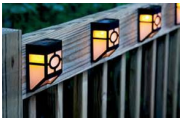
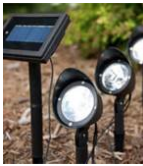
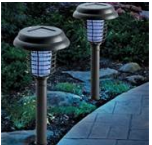
- A solar facility meeting all of the following:
16.015 DEFINITIONS
CAMOUFLAGE: A way of painting and mounting a solar facility and/or support structure, resulting in the structure being reasonably difficult for the naked eye to detect or observe.
GRANTING AUTHORITY: The Community Development Director or designee, Astoria Planning Commission, Historic Landmarks Commission, and/or the Design Review Committee who review and approve land use requests.
GUYED TOWER: A monopole or lattice tower that is tied to the ground or other surface by diagonal cables.
HIGHLY VISIBLE: The degree by which a facility is visible from the street shall be determined by whether the facility can be seen from a moving vehicle traveling at the posted speed limit at a distance of greater than 100’ from the subject property. Initial visibility at a shorter distance shall be deemed not to be highly visible.
LATTICE TOWER: A vertical support structure consisting of a network of crossed braces, forming a tower which may be three, four, or more sided.
MONOPOLE: A vertical support structure consisting of a single vertical metal, concrete, or wooden pole, pipe, tube, or cylindrical structure, typically round or square, and driven into the ground or mounted upon or attached to a foundation.
NON-RESIDENTIAL UTILIZED PROPERTY: Property within a residential, neighborhood commercial, or attached-housing zone that is not used for residential purposes. Such property includes, but is not limited to, schools, churches, public parks, public safety facilities, and streets and highways. A public or privately owned vacant lot in a residential zone shall be not be considered non-residentially utilized property as the capacity for residential use exists.
PHOTOVOLTAIC PANEL: A device used for the collection and/or production of electric power through the conversion of light to electric power by semiconductor devices. For the purposes of this Code, it will also refer to tubular designs.
PRIMARY ELEVATION: For the purposes of the Solar Energy Ordinance, the primary elevation shall be any elevation (front, side and/or rear) that has frontage on an improved public right-of-way.
RESIDENTIAL UTILIZED PROPERTY: Property within any zone that is used primarily for residential purposes such as, single-family dwelling, two-family dwelling, multi-family dwelling, Accessory Dwelling Unit, condominium, townhome, etc. (Amended by Ordinance 21-02, 2-16-21)
SHOULD: A requirement, unless it can be shown that to comply with the requirement would be unreasonable, impractical, or unfeasible. Economic hardship alone shall not be justification for noncompliance with the requirement, but may be considered in conjunction with other reasons for noncompliance.
SOLAR FACILITY: Small scale solar energy system.
SMALL SCALE SOLAR ENERGY SYSTEM: Facility for the collection of solar energy either ground mounted facilities of less than 1,000 square feet combined total area, or roof mounted of less than the square footage of the total roof area. Solar water heater and solar thermal energy system is included in this definition.
SOLAR THERMAL ENERGY: Technology which harnesses solar energy to produce useful heat for residential, commercial, and industrial uses. Solar thermal systems absorb the sun's radiation in flat plate collectors, much like the road absorbs sunlight. There, a heat transfer fluid is circulated through the collectors, heating it to temperatures as high as 200° Fahrenheit. The heated fluid can be used for domestic hot water, industrial process heat. or for space heating. Solar thermal systems do not produce electricity.
SOLAR WATER HEATER: Facility for heating water that generally contains a solar collector and a storage tank for water.
SPECULATION (“SPEC”) TOWER / SUPPORT STRUCTURE: A solar facility support structure designed for the purpose of providing location mounts for solar facility without a binding commitment or option to lease a location upon the tower by a licensed service provider at the time of initial application.
16.020 PERMITTED LOCATIONS FOR SMALL SCALE SOLAR ENERGY SYSTEMS
- Solar facilities are permitted in all zones established as of July 2013 within the City through the Conditional Use and/or Administrative Review process in accordance with Astoria Development Code Article 9 except the following.
- Prohibited Zones.
- Natural Shorelands (S-5)
- Sensitive Bird Habitat Overlay (SBHO)
- Restricted Zones.
- Aquatic Conservation (A-3). Solar facilities may be located on residential and commercial buildings allowed within the zone. Freestanding solar facilities are prohibited.
- Aquatic Natural (A-4). Solar facilities may be located on commercial buildings allowed within the zone. Freestanding solar facilities are prohibited.
- Prohibited Zones.
- Large Scale Solar Energy Systems. Solar Energy systems that do not meet the definition of “small scale” as defined in this Code are prohibited within the City.
- Location, Siting, and Designs in Preferred Priority Order.
- Camouflaged / Concealed Design;
- Location on Existing Support Structure or Existing Alternative Support Structure;
- Location on New Support Structure;
- Location within Restricted Zones.
- Prohibited Structures. The following structures are prohibited:
- Lattice and guyed wire towers and support structures.
- Speculation (“spec”) support structures.
- Number of Facilities. Only one solar facility, other than those listed in 16.030.A.1 below, is allowed per site of less than one acre. Sites of greater than one acre may have multiple facilities at a ratio of one facility per 0.25 acre. Sites may contain both a solar and wind facility.
16.025 PERMITS REQUIRED
- Building Permit. A building permit is required for each solar facility in accordance with the requirements of the Building Codes as adopted by the City. A building permit will not be issued until all land use approvals have been obtained; any associated conditions have been met; and all other applicable local, State, and Federal approvals have been secured.
- Zoning Permit. A Solar Energy Permit is required for each solar facility regardless of outright or conditional use classification.
- Historic Design Review. All solar facilities proposed to be located on or adjacent to properties designated as historic or within or adjacent to a historic district shall obtain approval from the Historic Preservation Officer or the Historic Landmarks Commission (as applicable) prior to the issuance of a building permit. Historic design review shall be in accordance with Development Code Article 6 and Section 16.040.B.
- Exception. Solar facilities installed by the City, County, and/or Oregon Department of Transportation for traffic control devices to which they are attached are exempt from the permit requirements. Other solar facilities are still subject to the standards of this Code.
16.030 ZONING PERMIT REVIEW
- Type I Permit, Administrative Review – Outright Use. The following solar permit applications may be reviewed administratively in accordance with Article 16 as an outright use permit.
- Roof-mounted Facilities. A solar facility may be approved as an outright use if it complies with the following criteria. Historic design review may be required.
- Photovoltaic panels or solar thermal energy system. Roof-mounted photovoltaic panels and solar thermal energy systems located on any residential structure, or on any non-residential structure in a zone that allows non-residential structures that:
- does not increase the footprint of the structure; and
- does not exceed the peak height of the portion of the roof on which it is installed; and
- is mounted so that the plane of the system is parallel to the slope of the roof.
- Roof-mounted solar water heaters located on any structure that:
- heat water for that structure; and
- are less than 25% of the roof area on which they are located; and
- are not on a primary elevation; and
- are not highly visible from the street scape.
- Photovoltaic panels or solar thermal energy system. Roof-mounted photovoltaic panels and solar thermal energy systems located on any residential structure, or on any non-residential structure in a zone that allows non-residential structures that:
- Freestanding Facilities: A freestanding solar facility mounted on poles or the ground may be approved as an outright use if it complies with the following criteria. Historic design review may be required.
- Photovoltaic panels and solar thermal energy systems mounted on poles or the ground that:
- generate power for that structure or adjacent uses; and
- do not exceed 100 square feet in area; and
- do not exceed a maximum height of 6’ on residential structures or residential developed areas and zones; or do not exceed a maximum height of 10’ in non-residential areas or zones; and
- are not located on the primary elevation of the site; and
- are not highly visible from a street scape.
- Solar water heaters mounted on poles or the ground that:
- heat water for that structure or adjacent uses; and
- do not exceed 100 square feet in area; and
- do not exceed a maximum height of 6’ on residential structures or residential developed areas and zones; or do not exceed a maximum height of 10’ in non-residential areas or zones; and
- are not located on the primary elevation of the site; and
- are not highly visible from a street scape.
- Photovoltaic panels and solar thermal energy systems mounted on poles or the ground that:
- Historic Design Review. Historic design review is required for any solar facility located on a structure designated as historic, or is located in or adjacent to a designated historic district, or is located in an area designated as a significant scenic resource. For Type I Administrative Review Solar Permits, historic design review shall be processed as a Type I Certificate of Appropriateness in accordance with Article 6, if it also complies with the following:
- Roof-mounted Facilities.
- generate power for that structure; and
- are less than 25% of the roof area on which they are located; and
- are not on a primary elevation; and
- are not highly visible from a street scape.
- Roof-mounted Facilities.
- Roof-mounted Facilities. A solar facility may be approved as an outright use if it complies with the following criteria. Historic design review may be required.
- Type II, Administrative Review – Conditional Use. A Solar Energy Permit application may be reviewed administratively in accordance with Article 9 as a conditional use permit. The Community Development Director may determine that a permit should be reviewed by the Planning Commission in lieu of an Administrative Review.
- Roof-mounted Facilities. A roof-mounted solar facility may be approved as a conditional use if it complies with the following criteria. Historic design review may be required.
- Photovoltaic panels or solar thermal energy system. Installation of a solar photovoltaic energy system or solar thermal energy system located on any residential structure, or on any non-residential structure in a zone that allows non-residential structures that meets the following:
- increases the footprint of the structure; or
- exceeds the peak height of the portion of the roof on which it is installed; or
- is mounted so that the plane of the system is not parallel to the slope of the roof; or
- is located on a non-residential structure in a zone that does not allow non-residential structures.
- Solar water heaters. Installation of a solar water heater system located on any residential structure, or on any non-residential structure in a zone that allows non-residential structures that meets the following:
- heat water for that structure; and
- are less than 50% of the roof area on which they are located.
- Photovoltaic panels or solar thermal energy system. Installation of a solar photovoltaic energy system or solar thermal energy system located on any residential structure, or on any non-residential structure in a zone that allows non-residential structures that meets the following:
- Freestanding Facilities. A freestanding solar facility mounted on poles or the ground may be approved as a conditional use if it complies with the following criteria. Historic design review may be required.
- Photovoltaic energy system or solar thermal energy system. Installation of a solar photovoltaic energy system or solar thermal energy system located adjacent to any residential structure, or any non-residential structure in a zone that allows non-residential structures that meets the following:
- generate power for that structure or adjacent uses; and
- do not exceed 100 square feet in area; and
- do not exceed a maximum height of 10’ on residential structures or residential developed areas and zones; or do not exceed a maximum height of 20’ in non-residential areas or zones; and
- are not located on the primary elevation of the site.
- Solar water heaters. Installation of a freestanding solar water heater system located adjacent to any residential structure, or any non-residential structure in a zone that allows non-residential structures that meets the following:
- heat water for that structure; and
- do not exceed 100 square feet in area; and
- do not exceed a maximum height of 10’ on residential structures or residential developed areas and zones; or do not exceed a maximum height of 20’ in non-residential areas or zones; and
- are not located on the primary elevation of the site.
- Photovoltaic energy system or solar thermal energy system. Installation of a solar photovoltaic energy system or solar thermal energy system located adjacent to any residential structure, or any non-residential structure in a zone that allows non-residential structures that meets the following:
- Historic Design Review. Historic design review is required for any solar facility located on a structure designated as historic, or is located in or adjacent to a designated historic district, or is located in an area designated as a significant scenic resource. For Type II Administrative Conditional Use Review Solar Permits, historic design review shall be processed as a Type II Certificate of Appropriateness permit in accordance with Article 6, if it also complies with the following:
- Roof Mounted, Freestanding, and/or Solar Water Heater Facilities
- are not highly visible from a street scape.
- Roof Mounted, Freestanding, and/or Solar Water Heater Facilities
- Roof-mounted Facilities. A roof-mounted solar facility may be approved as a conditional use if it complies with the following criteria. Historic design review may be required.
- Type III, Commission Review.
- Planning Commission. All solar permit applications that do not meet the criteria noted above to be reviewed administratively, shall be reviewed by the Planning Commission in accordance with Article 9 as a conditional use permit.
- Historic Landmarks Commission. Historic design review is required for any solar facility located on a structure designated as historic, or is located in or adjacent to a designated historic district, or is located in an area designated as a significant scenic resource. In addition to the required conditional use permit review, all solar permit applications that do not meet the criteria noted above to be reviewed administratively as a Type I or Type II Certificate of Appropriateness, shall be reviewed by the Historic Landmarks Commission in accordance with Article 6 as an Exterior Alteration or New Construction permit, as applicable.
- Planning Commission. All solar permit applications that do not meet the criteria noted above to be reviewed administratively, shall be reviewed by the Planning Commission in accordance with Article 9 as a conditional use permit.
16.035 APPLICATION SUBMITTAL REQUIREMENTS
- All applications for permits for the placement and construction of solar facilities, except those listed in Section 16.010.B shall be accompanied by the following:
- A complete description of the proposed solar facility system including use of concealment technology, height, location, siting/site plan, color, and design, and description of services the applicant intends to provide from the facility. Manufacturer specification sheets on the equipment shall be provided.
- Proof of ownership of the land upon which the solar facility is proposed; or evidence of an appropriate easement, lease, rental agreement, or land use application signed by the applicant and signed by the underlying property owner.
- If mounted on a tower, data pertaining to the tower’s safety and structural stability, including safety results from test facilities.
- An accurate and scaled site plan, scaled elevation views, and other supporting drawings illustrating the location and dimensions of the proposed solar facility, including but not limited to:
- Support structure(s)
- Alternative support structure(s)
- Equipment enclosures
- Any and all other devices and attachments.
- If Federal funds are involved, evidence demonstrating that the applicant has filed a request with the State Historic Preservation Office (SHPO) to review the application under Section 106 of the National Historic Preservation Act (NHPA), or evidence demonstrating that the applicant has complied with all State Historic Preservation Office requirements as a result of the Section 106 consultation.
- Payment of fees. Not required for facilities listed as Outright in Section 16.030.A.
- All such additional information as the Community Development Director may identify as being relevant to the permitting process.
- No small scale solar energy systems shall be constructed or operated within the City limits until all necessary City, State, and Federal approvals have been secured. Evidence of approvals shall be provided to the City.
- Manufacturer information on the reflective nature of the solar facility to evaluate the potential light reflection into adjacent properties and rights-of-way.
Not required for facilities listed as Outright in Section 16.030.A. - Visual impact analysis and demonstrations including mock-ups and/or photo simulations from at least three (3) directional perspectives. Simulations should include:
- Perspectives from all directions that could impact view corridors;
- Perspectives from above the site for roof mounted facilities;
- Landscape and/or screening plan as required by Section 16.040.E.
- Applicant shall submit the fee, copies of a complete application and plans, and other required information in accordance with Article 16. Only one copy shall be submitted for Type I and Type II applications reviewed administratively as an Outright Use and/or Administrative Conditional Use. For Type III applications requiring Planning Commission Conditional Use review, ten (10) copies shall be submitted. Digital copies of plans and required information is encouraged.
- All applications for solar facilities specified in Section 16.010.B.1 shall be accompanied by the following:
- A complete description of the proposed solar facility system including use of concealment technology, height, location, siting/site plan, color, and design, and description of services the applicant intends to provide from the facility. Manufacturer specification sheets on the equipment shall be provided.
- Proof of ownership of the land upon which the solar facility is proposed; or evidence of an appropriate easement, lease, rental agreement, or land use application signed by the applicant and signed by the underlying property owner.
- Photo of the proposed location as viewed from the street.
16.040 STANDARDS AND REVIEW CRITERIA FOR SOLAR FACILITIES
All applications for solar facilities, including solar water heaters, shall demonstrate compliance and conformity with the following requirements. The burden of proof is on the applicant to demonstrate such compliance and conformity. Section 16.040.B shall be reviewed by the Historic Landmarks Commission. All other standards and review criteria shall be reviewed by the Community Development Director and/or the Astoria Planning Commission, as applicable.
- Environmental Resource Protection. All solar facilities shall be sited so as to minimize the effect on environmental resources. To that end, the following measures shall be implemented for all small scale solar energy systems:
- The solar facility shall comply with all applicable local, State, and Federal regulations, including but not limited to the Columbia River Estuary Shoreland Overlay (CRESO), Sensitive Bird Habitat Overlay (SBHO), National Environmental Policy Act (NEPA), and Endangered Species Act (ESA);
- Historic Resource Protection. All solar facilities shall be sited so as to minimize the impact on historic resources both structurally and visually. To that end, the following measures shall be implemented for all solar facilities and shall be reviewed by the Historic Landmarks Commission or Historic Preservation Officer, as applicable:
- The solar facility shall comply with all applicable local, State, and Federal regulations, including but not limited to the Astoria Historic Properties Ordinance and National Historic Preservation Act (NHPA).
- Roof mounted solar facilities should be located on non-primary roof elevations of historic buildings, and shall be located back from the eave of the roof so as to be as inconspicuous as possible. If location on a primary elevation is proposed as the only alternative, the facility should be hidden behind existing architectural features when possible.
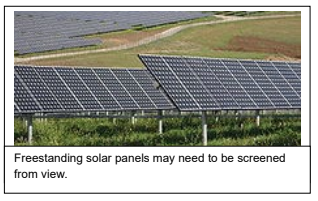
- Freestanding solar facilities shall not be located on a primary elevation of a historic site nor within the historic streetscape of the neighborhood within a Historic District or Historic Inventory Area regardless of the historic status of the individual site if the facility would be highly visible. Freestanding solar facilities shall be considered prior to proposal for alteration to a historic structure. They shall be screened from view of the streetscape by fence or landscaping.
- Solar facilities shall be located on newer additions or accessory buildings before location on the historic structure.
- Consideration should first be given to alternative solar facilities such as shingle cells or other materials that are less intrusive. The applicant shall provide information concerning the other materials considered and the reason why they are not being proposed.
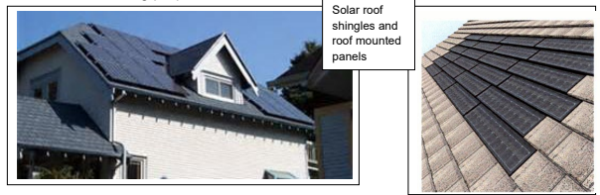
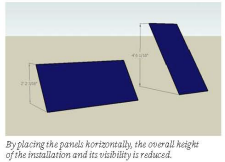
- Roof mounted solar facilities shall be mounted horizontal and not vertical to reduce the visual impact from the ground. The vertical tilt shall be the minimum needed to obtain efficiency of the facility. For facilities with multi-tilt angles, the maximum angle at any given time shall maintain minimal visibility from the ground level.
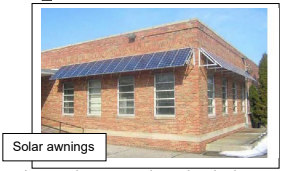
- Solar facilities may be incorporated into architectural features such as awnings or other building features on non-primary elevations.
- The color of the solar facility including mounting equipment and mechanical equipment shall be compatible with the historic material background color so as to blend in with the historic character of the site, and/or landscaping.
- Mechanical equipment necessary for solar facilities such as solar water heaters, etc. shall be screened from view.
- Historic material and architectural features shall not be removed or damaged with the installation of a solar facility.
- Color and Materials.
- All buildings, poles, support structures, and other associated components of each solar facility site shall be initially coated and thereafter recoated as necessary with a non-reflective neutral color in muted tones.
- The color selected shall be one that will minimize visibility of the solar facility to the greatest extent feasible. To this end, improvements which will be primarily viewed against soils, trees, or grasslands shall be coated with colors matching those landscapes (i.e. green, brown, tan, etc.), while elements which rise above the horizon shall be coated a color that matches the typical overcast sky (i.e. white, light gray, etc.), or the background color at that location.
- The color and coating shall be reviewed and approved by the granting authority.
- Upon a clear showing by the applicant that compliance with the requirements of this Section would void a manufacturer's warranty on any specific equipment, or that natural aging of the material would provide greater concealment, the granting authority may waive the requirements of this Section for such specifically identified equipment.
- Height. Solar facilities shall comply with the maximum structure height limitations of the underlying zone and shall comply with the following height requirements, unless a variance is obtained:
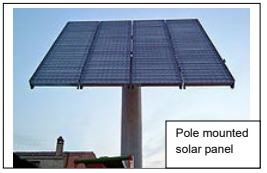
- The height of the facility shall be calculated from grade level to the maximum height of all elements including a fully extended solar panel.
- Maximum height.
- Residential. Freestanding solar facilities shall not exceed a maximum height of 10’ on residential utilized properties or in residential developed areas or zones.
- Non-Residential. Freestanding solar facilities shall not exceed a maximum height of 20’ in non-residential developed areas or zones.
- If there is not a height limit in the underlying zone, the maximum height of a facility on a structure shall be 45’ feet.
- Building or other structure-mounted solar facilities shall not project more than ten (10) additional feet above the highest ridge of the roof on the building or structure.
- Landscape and Screening. Ground mounted solar facility sites greater than 100 square feet in area shall be improved with native vegetation, suitable landscaping, and/or fencing installed to screen the facility, where it is necessary for visual and/or security buffering. To this end, the following requirements shall be implemented for all freestanding solar facilities which are installed on ground support structures:
- Landscaping.
- A landscape plan, meeting the requirements of Development Code Sections 3.105 to 3.120, shall be submitted as part of the application.
- Any proposed or required fenced area is to be surrounded, where feasible, by a landscaped strip of sufficient width (minimum five feet wide) and height to create a visual screen. Required landscaping shall be located outside of the fenced area.
- A majority of the planted vegetation shall be of an evergreen variety.
- The location of the landscape buffer may be at any distance from the facility to create a visual buffer. The landscaping does not need to be directly adjacent to the facility.
- The landscape plan shall be subject to review and approval of the Community Development Director.
- Fences. A fence may be needed for security and/or to enclose ground mounted equipment to minimize the visual impact on surrounding properties. If it is determined that a fence is required, it shall comply with the following:
- The fence shall be a maximum of six (6’) feet in height.
- The fence shall, where feasible, be installed and maintained around the entire perimeter of the site and surround the solar facility and equipment shelter.
- If the granting authority determines that a fence surrounding support structures is not feasible, such structures may be exempted from the fencing requirements of this Section.
- Chain link fences shall be powder coated with a non-reflective color. If a chain link fence is used for visual buffering, it shall contain slats in the chain linking.
- Electric, barbed wire, and concertina wire fences are prohibited.
- The fence shall be a maximum of six (6’) feet in height.
- Landscaping.
- Setback. All solar facilities shall comply with the required setback area of the underlying zone, unless a variance is obtained.
- Access Driveways and Parking. New or additional access driveways and parking areas shall not be allowed for solar facilities for single-family, two-family dwellings, or Accessory Dwelling Unit, or within a residential developed area or zone. When an access driveway or parking area is needed for installation, maintenance, or operation of a solar facility in other than residential applications, the following shall apply: (Section 16.040.G amended by Ordinance 21-02, 2-16-21)
- All access drives and parking areas shall be no longer or wider than necessary and be improved to comply with the requirements of the City’s Engineering Department Standards, Development Code, and City Codes.
- Existing driveways shall be used for access whenever possible.
- New parking areas shall, whenever feasible, be shared with other solar facilities and/or other permitted uses.
- Lighting.
- Solar facilities shall only be illuminated as necessary to comply with FAA or other applicable State and Federal requirements. Documentation from such State and Federal agencies describing required compliance measures is required.
- Exterior lighting shall comply with applicable lighting standards in Section 3.128. (Section 16.040.H.2 amended by Ord 19-05, 6-17-2019)
- Strobe lights are prohibited unless required by FAA.
- Signs and Advertising.
- Appropriate warning signage shall be placed on solar facilities, electrical equipment, and facility entrances, as needed.
- For emergency purposes, equipment information limited to the solar facility provider(s) name and contact phone number shall appear at the facility in a discreet yet visible location, either on the equipment cabinet or supporting structure.
- The use of any portion of a solar facility for signs or advertisements other than warning or equipment information signs is strictly prohibited.
- Underground Utilities. All wiring between solar facilities and a structure or energy facility substation, shall be installed underground.
16.045 MONITORING AND MAINTENANCE
- Compliance Testing. All solar facilities shall comply with all Federal, State, and local regulations. The City at any time may require evidence of testing of a facility to determine if the facility is in compliance with all applicable Federal, State, and local regulations. Such measurements shall be signed and certified by a registered engineer, stating that measurements or calculations are accurate and meet the standards of this Code.
All testing shall be at the cost of the solar facility owner(s). Failure to cooperate with the City in performing such testing shall be adequate basis for revocation of the permit. - Maintenance. The applicant, co-applicant, and/or property owner shall maintain the solar facility. Such maintenance shall include, but shall not be limited to, painting/coating, maintaining structural integrity, landscaping, and other conditions of approval. In the event the applicant, co-applicant, and/or property owner fails to maintain the facility in accordance with permit conditions, the City of Astoria may undertake the maintenance at the expense of the applicant or underlying property owner. Violations of the facility required maintenance conditions shall be declared a nuisance and abated in accordance with the City Code Sections 5.700 to 5.728. Enforcement of the continued maintenance of the structure shall be processed as a nuisance or by any other manner provided by law.
- Revocation of Permit. Any facility not in compliance with all applicable Federal, State, and local regulations shall be removed, upon failure to bring the facility into compliance within thirty (30) days after written notice. The permit may be suspended or revoked for non-compliance.
16.050 GENERAL AND OPERATING REQUIREMENTS
- Owner and Applicant Responsibilities. The owner and applicant of the solar facility and his or her successors and assigns at all times shall have the following responsibilities:
- The owner shall coordinate planning for energy projects with public and privately-owned electric utility companies, with independent developers, and with State and Federal agencies, including but not limited to the Oregon Department of Energy (ODOE), the Oregon Water Resources Department (OWRD), the Northwest Power Planning Council (NPPC), Bonneville Power Administration (BPA), the Bureau of Land Management (BLM), and the United States Forest Service (USFS).
- The applicant shall ensure that sufficient anti-climbing measures have been incorporated into the solar facility, as needed to reduce potential for trespass and injury.
- To limit climbing access, a fence six (6’) feet high with a locking portal shall be placed around the facility’s tower base or the tower climbing apparatus shall be limited to no lower than twelve (12’) feet from the ground or the facility’s tower may be mounted on a roof top.
16.055 ABANDONMENT
- Notice of Abandonment.
- City Issued Notice of Abandonment. A solar facility that is out-of-service for a continuous twelve (12) month period shall be deemed to have been abandoned. The Community Development Director shall issue a Notice of Abandonment to the owner of a solar facility that is deemed to have been abandoned. The owner shall have the right to respond to the Notice of Abandonment within thirty (30) days from the date the Notice is mailed.
The Community Development Director shall withdraw the Notice of Abandonment and notify the owner that the Notice has been withdrawn if the owner provides information that demonstrates the solar facility has not been abandoned. - Abandonment by Owner. At such time that a solar facility provider plans to abandon or discontinue, or is required to discontinue, the operation of a solar facility, such provider shall notify the Community Development Director by Certified United States Postal Service mail of the proposed date of abandonment or discontinuation of operations. Such notice shall be given no less than thirty (30) days prior to abandonment or discontinuation of operations.
- City Issued Notice of Abandonment. A solar facility that is out-of-service for a continuous twelve (12) month period shall be deemed to have been abandoned. The Community Development Director shall issue a Notice of Abandonment to the owner of a solar facility that is deemed to have been abandoned. The owner shall have the right to respond to the Notice of Abandonment within thirty (30) days from the date the Notice is mailed.
- Removal of Abandoned Facility. Upon abandonment or discontinuation of use, the owner shall physically remove the solar facility within 90 days from the date of abandonment or discontinuation of use. "Physically remove" shall include, but not be limited to:
- Removal of solar panels, towers, mounts, equipment cabinets, security barriers, and foundations including entirety of depth of the foundation located below ground surface.
- Restoring the location of the solar facility to a condition acceptable to the Community Development Director, except any remaining landscaping and grading. During such 90 days, the owner may apply, and for good reason, be granted an extension of time on such terms as the Community Development Director or Building Official shall determine appropriate.
- Failure to Remove Abandoned Facility. If such structure and equipment enclosure are not removed, as indicated in this Section, the facility may be deemed to be a nuisance, and the City may remove the facility and/or may seek and obtain a court order directing such removal and impose a lien upon the real property upon which the structure(s) are situated in an amount equal to the cost of removal, including any administrative costs in accordance with City Code Sections 5.700 to 5.728 concerning Nuisances and Abatement.
- Penalties. Recognizing the extremely hazardous situation presented by abandoned and unmonitored support structures, failure to remove an abandoned facility as required by this Section shall constitute a violation and be subject to the penalties prescribed in Astoria City Code “Penalty and Violation Provisions” in Sections 1.008 to 1.015, in addition to any other methods of enforcement available to the City.
16.060 FEES
Applicant, at the time of submission of an application, shall pay the filing fee and/or deposit as set by the City. If a deposit is required, actual costs incurred in processing the application shall be billed from the deposit. Should actual costs exceed the deposit, the City shall bill the applicant for the difference.
In accordance with ORS 227.175, no zoning permit fees shall be charged for applications for solar facilities listed in Section 16.030.A.1.
The City shall determine all expenses and return any remaining filing deposit as follows:
- Approved Permit. Upon final inspection and after all conditions have been met.
- Denied and/or Withdrawn Application. After all appeals have been exhausted and a final determination made.
16.065 BONDING
The City may require that the applicant for a solar facility furnish to the City a performance bond up to, and not to exceed, the anticipated cost to dismantle the facility and restore the site. The bond may be required to assure that the approval criteria and conditions imposed are completed in accordance with the plan and specifications as approved, and that the facility would be removed if the project is not completed as approved.
The bond shall be released only after final inspection and all conditions have been met.
Not required for facilities listed as Outright in Section 16.030.
16.070 TECHNICAL EXPERT SUPPORT
- The Community Development Director may employ, on behalf of the City, an independent technical expert to review any technical materials submitted including, but not limited to:
- materials required under Article 16; or
- technical demonstration of unavoidable need or unavailability of alternatives, if required; or
- to determine the condition of an existing solar facility.
- The costs associated with the independent technical expert review shall be at the expense of the solar facility owners and/or applicants.
16.075 PROCEDURES
- Application. Applicant shall submit the fee, copies of a complete application and plans, and other required information in accordance with Section 16.035.
- Mailed and Published Notice. For applications reviewed as a Type II Conditional Use or Type III Conditional Use, public notice and procedures on applications shall be in accordance with the Administrative Procedures in Article 9.
- Notice to Other Agencies. In addition to the notices required in Article 9, for applications reviewed as a Type II Conditional Use or Type III Conditional Use, public notice to other agencies shall be sent to the City of Astoria Fire Department, United States Fish and Wildlife, Columbia River Estuary Study Taskforce, and any special districts, and local, State, or Federal agency that may have an interest in the proposed application. Written comments will be incorporated into the record of the public hearing.
- Display Ad. For Type II applications, in addition to the required public notice in Article 9, the City shall publish a display ad of not less than four (4) square inches in a newspaper of general circulation in the City of Astoria at the expense of the applicant. The notice shall set forth the required information pertinent to the application.
- Decision.
- Type I Permit - Outright Use Review. A decision shall be made by the Community Development Director after a determination is made that the requirements of Article 16 have been met.
- Type II Permit - Administrative Conditional Use Review. A decision shall be made by the Community Development Director after the notice period and after findings of fact are made that the requirements of Article 16 and the Conditional Use standards in Article 11 have been met. A decision of the Community Development Director may be appealed to the Planning Commission in accordance with Article 9.
- Type III Permit - Conditional Use Review and Historic Landmarks Commission Review. A decision shall be made by the Commission after a public hearing is held and after findings of fact are made that the requirements of Article 16 and the Conditional Use standards in Article 11 have been met. In addition to the requirements of Article 16, historic design review shall also include findings of fact that the applicable requirements of Article 6, Historic Properties Ordinance, have been met. A decision of the Commission may be appealed to the City Council in accordance with Article 9.
- Notice of Decision. For all permit applications, in addition to the requirements of Article 9, written notice of the decision shall be provided to the Clatsop County Assessment and Taxation Department, and the Astoria Fire Department.
16.080 APPEALS
A decision of the Granting Authority made pursuant to this Article may be appealed in accordance with Astoria Development Code Article 9.

