
Avon City Zoning Code
CHAPTER 5
Design And Maintenance Standards
5.1 Accessory Structures
- Accessory buildings are permitted in all Zoning Districts. The maximum ground floor area of an accessory building is the lesser of the ground floor area of the principal building or 1,000 square feet, however these limitations do not apply to lots exceeding two (2) acres in size and locate within the AG or E-1 Primary Zoning Districts or located within the AGO Overlay District.
- Accessory buildings must be constructed on the same lot as their principal building.
- Accessory buildings for residential uses must be setback at least 10 feet behind the front facade of the principal building.
- An accessory building 200 square feet or smaller must be a minimum of 3 feet from the side and rear lot lines and located outside of all easements. An accessory building over 200 square feet must meet the minimum side, street side, and rear yard building setback lines of the Zoning District, except as otherwise established by this chapter.
- Accessory buildings must not be constructed until the construction of the principal building on the same lot has begun. Accessory buildings cannot be occupied or utilized unless the principal building is first legally occupied for a permitted use within the applicable Zoning District. The construction of an accessory building must be completed:
- Within one year of the issuance of a building permit, if such permit is obtained individually; or
- Within one year of the completion of construction of the principal building, if the accessory building’s building permit is obtained as part of the building permit for the principal building.
- Property owners should refer to any applicable Declaration of Covenants, Conditions, and Restrictions which may impose greater restrictions than are found in this Ordinance. This ordinance does not abrogate any private covenants that may apply to property.
- Likewise, approval of any addition or improvement pursuant to private covenants does not act as a waiver of any requirements contained in this ordinance.
- Screening of Receptacles and Loading Areas: These standards apply to all garbage containers, trash receptacles, pallet storage areas, trash compactors, recycling areas and other similar facilities in all Zoning Districts; however, these standards do not apply to single-family dwellings:
- Garbage containers, trash receptacles, pallet storage areas, trash compactors, recycling areas, loading areas and other similar facilities must be completely and permanently screened from view of rights-of-way and where possible, adjoining properties.
- Enclosures cannot be in an established front yard or in any required side or rear yard.
- The enclosure must be solid on all sides and not less than 6 feet in height above grade or 2 feet above the receptacle, whichever is greater.
- Enclosures must be constructed of materials that match or complement the principal building.
- Enclosures must have opaque gates. The gates cannot be oriented towards residential properties or rights-of-way, where possible.
- Trash enclosures should provide convenient pedestrian access for daily waste disposal. Such access should be provided without swinging or moveable doors.
- Gates and doors on enclosures must be kept closed when not in use.
- Landscaping must be provided around enclosures in accordance with 6.1 Landscaping - General Standards.
- A satellite receiver antenna 2 feet in diameter or less may be installed in any location in accordance with the provisions of IC 36-7-4-201.1.
- The standards of this Ordinance do not prevent the use of a temporary construction building to be utilized for the storage of tools, materials, and other equipment during the period of construction.
- Carports must be consistent in design, appearance, and materials with the principal building.
5.2 Building Standards
- Every building erected must be located on a lot and in accordance with this Ordinance.
- A lot used for single-family residential purposes must have only one principle building devoted to residential use, except as otherwise permitted in this ordinance.
- A lot used for multi-family purposes may have more than one principal building devoted to residential use.
- A lot in a non-residential district may have more than one principal building devoted to non-residential uses.
- Building Types:
- Purpose: This section sets forth the standards applicable to the residential building types shown on the Permitted Land Use Table. These standards supplement the standards for each zoning district where the building types are allowed. These standards are intended to ensure development reinforcing the highly valued character and scale of the Town of Avon’s neighborhoods.
- Applicability: The requirements of this chapter apply to all proposed development and will be considered in combination with the standards for the applicable zoning district.
- Building Types Overview: The names of the building types are not intended to limit uses within a building type. For example, a detached house may have non-residential uses within it, such as a restaurant or office.
- Each lot can have only one building type.
- Specific Building Types: [see specific building types in 5.3-5.10]
5.3 Single Family Detached: Standard
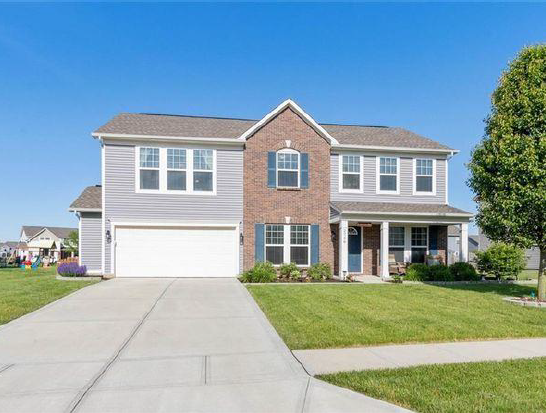
- Description: The Single-Family Detached House: Standard building type is a detached structure on a medium size lot that incorporates one unit. It is typically located within a primarily single-family neighborhood. This type is the most common type found in Avon. Typically, this building type has a front-load garage, but side-load garages are possible on corner lots or wider lots.
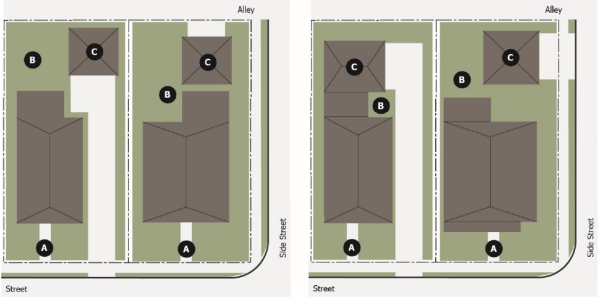
Figure 5-1: Standard Detached House: Model Site Plan - Number of Units:
Units per Building 1 max. Compact Houses per Lot 1 max. - Building Size and Massing:
Height Per Zoning District standards in CHAPTER 2. - Pedestrian Access:
Main Entrance Location Front Street 
- Private Open Space:
Area 400 sf min. 
Required street setbacks and driveways cannot be included in the private open space area calculation. Required private open space must be located behind the main body of the building. - Parking Location:
With Alley Rear Yard 
Without Alley Front Yard or Street Side Yard
5.4 Single Family Detached: Compact
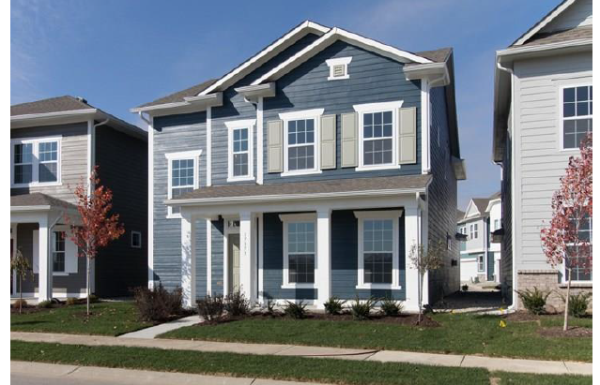
- Description: The Single-Family Detached House: Compact building type is a detached structure on a small lot that incorporates one unit. It is typically located within a primarily single-family neighborhood in a walkable urban setting, potentially near a neighborhood main street. This type enables appropriately scaled, well-designed higher densities, provides a broad choice of housing types, and promotes walkability. Typically, this building type has a rear-load garage, but frontload garages are possible as long as the garage is recessed well behind the front façade of the building. It is important that the front façade of this building type not be dominated by garage doors.
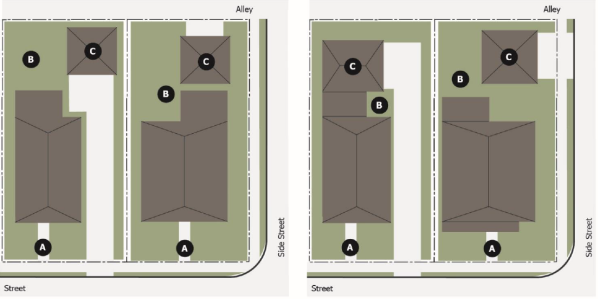
Figure 5-1: Compact Detached House: Model Site Plan - Number of Units:
Units per Building 1 max. Compact Houses per Lot 1 max. - Building Size and Massing:
Height Per Zoning District standards in CHAPTER 2. - Pedestrian Access:
Main Entrance Location Front Street 
- Private Open Space:
Area 300 sf min. 
Required street setbacks and driveways cannot be included in the private open space area calculation. Required private open space must be located behind the main body of the building. - Parking Location:
With Alley Rear Yard 
Without Alley Front Yard or Street Side Yard
5.5 Duplex
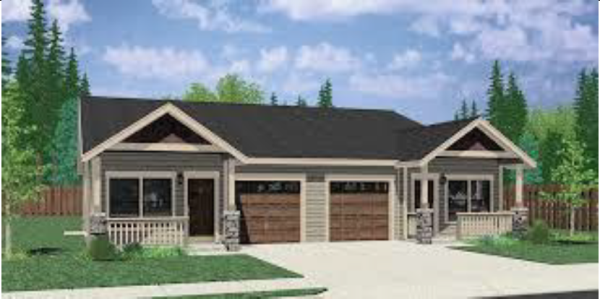
- Description: The Duplex building type is a small- to medium-sized structure that consists of two side-by-side or stacked dwelling units and within a single building massing. This type has the appearance of a medium to large single-family home and is appropriately scaled to it within primarily single-family residential neighborhoods or medium-density residential neighborhoods. It enables appropriately scaled, well-designed higher densities, provides a broad choice of housing types, and promotes walkability. Both units may be on one lot or the lot can be split so each unit is on its own lot.
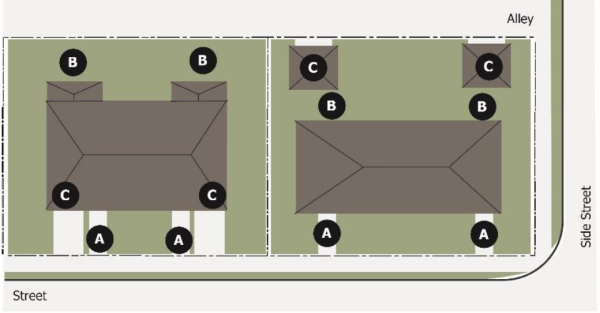
Figure 5-2: Duplex: Model Site Plan - Number of Units:
Units per Building 2 max. Duplexes per Lot 1 max. - Building Size and Massing:
Height Per Zoning District standards in CHAPTER 2. - Pedestrian Access:
Main Entrance Location Front Street or Side Street 
Each unit must have an individual entry facing a Street. - Private Open Space:
Area 300 sf per unit, min. 
Required street setbacks and driveways cannot be included in the private open space area calculation. Required private open space must be located behind the main body of the building. - Parking Location:
With alley Rear Yard 
Without alley Front Yard or Street Side Yard
5.6 Bungalow Court
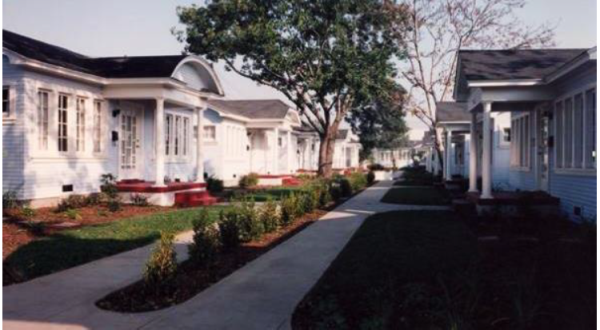
- Description: The Bungalow Court building type consists of a series of small, detached structures, providing multiple units arranged on a single lot to define a shared court that is typically perpendicular to the street. The shared court takes the place of a private backyard and becomes an important community-enhancing element of this type. This type is appropriately scaled to it within primarily single family or medium-density neighborhoods. It enables appropriately scaled, well-designed higher densities, provides a broad choice of housing types, and promotes walkability. Parking is typically located along an alley at the rear of the lot.
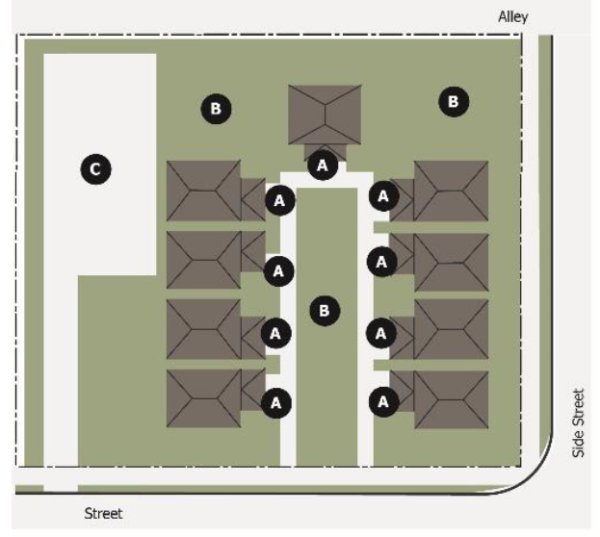
Figure 5-3: Bungalow Court: Model Site Plan - Number of Units:
Units per Building 1 max. Bungalow Houses per Lot 3 min., 9 max. - Building Size and Massing:
Height 1 1/2 stories max. - Pedestrian Access:
Main Entrance Location Front Street or Courtyard 
- Private Open Space:
Area 400 sf per unit min. 
Required street setbacks and driveways cannot be included in the private open space area calculation. - Parking Location:
Rear Yard or Side Yard 
5.7 Townhouse
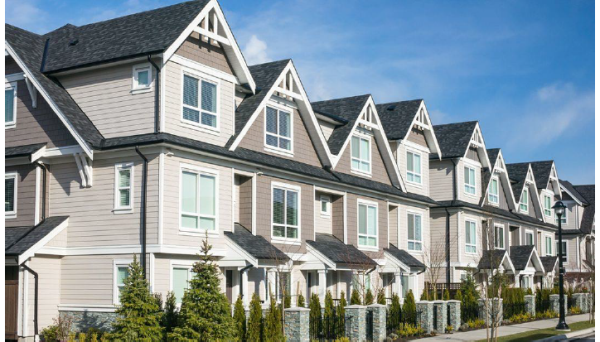
- Description: The Townhouse building type is a small- to medium sized typically attached structure that consists of 2–8 townhouses placed side-by-side. This type may also occasionally be detached with minimal separations between the buildings. This type is typically located within medium density residential neighborhoods or in a location that transitions from a primarily single-family residential neighborhood into a neighborhood main street. This type enables appropriately scaled, well-designed higher densities, provides a broad choice of housing types, and promotes walkability.
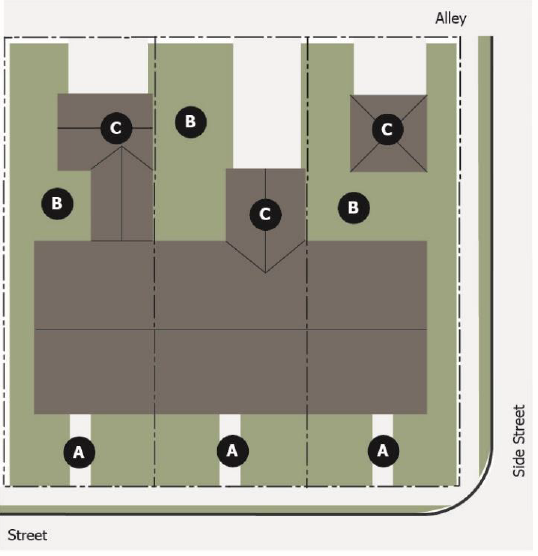
Figure 5-4: Townhouse: Model Site Plan - Number of Units:
Units per Townhouse 1 per floor max. Townhouses per Lot 1 max. Townhouses per run 2 min., 8 max. - Building Size and Massing:
Height Per Zoning District standards in CHAPTER 2. - Pedestrian Access:
Main Entrance Location Front Street 
Each unit must have an individual entry facing the Street. - Private Open Space:
Area 100 sf per unit, min. 
Required street setbacks and driveways cannot be included in the private open space area calculation. Required private open space must be located behind the main body of the building. - Parking Location:
With alley Rear Yard 
Without alley Front Yard or Street Side Yard
5.8 Apartment Complex: Small
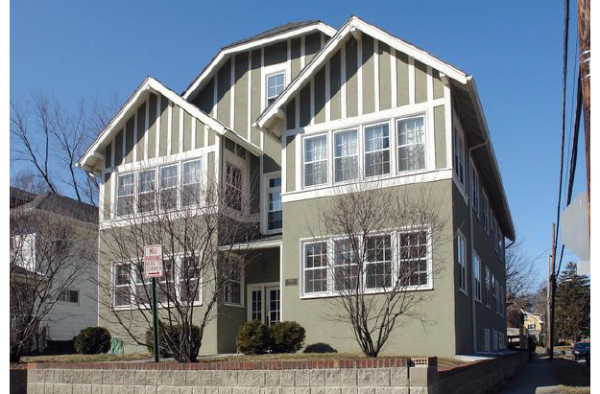
- Description: The Apartment Complex: Small building type is a structure that consists of 3–6 side-by-side and/or stacked dwelling units, typically with one shared entry or individual entries along the front. This type has the appearance of a large-sized family home and is appropriately scaled to fit within traditional residential or mixed density residential. This type enables appropriately scaled, well-designed higher densities, provides a broad choice of housing types, and promotes walkability. Parking is typically located in the rear of the lot behind the building.
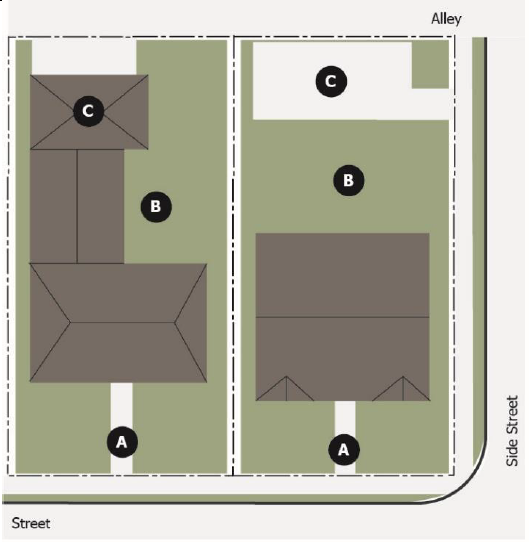
Figure 5-5: Small Apartment Complex: Model Site Plan - Number of Units:
Units per Building 3 min., 6 max. Small Apartment Buildings per Lot 1 max. - Building Size and Massing:
Height Per Zoning District standards in CHAPTER 2. - Pedestrian Access:
Main Entrance Location Front Street 
Each unit may have an individual entry. - Private Open Space:
Area 100 sf per unit min. 
Required street setbacks and driveways cannot be included in the private open space area calculation. Required private open space must be located behind the main body of the building. - Minimum Dwelling Unit Size: Refer to Section 2.3 for these standards
- Parking Location:
Rear Yard or Side Yard 
5.9 Apartment Complex: Large
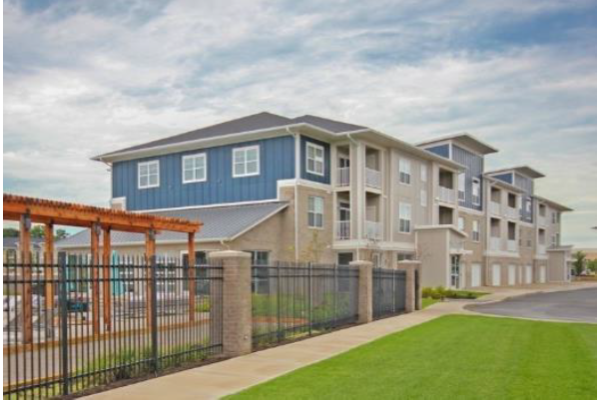
- Description: The Apartment Complex: Large building type is a medium-to-large-sized structure that consists of 7-30 side-by-side and/or stacked dwelling units, typically with one shared entry. Used in an infill development context, this type is appropriately scaled to fit within mixed density residential neighborhoods or sparingly within large lot predominantly single-family residential neighborhoods. On larger sites, multiple buildings per lot may be appropriate. This type enables appropriately scaled, well-designed higher densities, provides a broad choice of housing types, and promotes walkability.
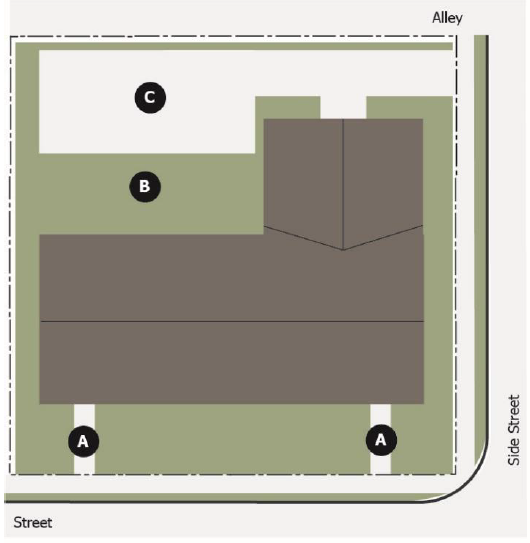
Figure 5-6: Large Apartment Complex: Model Site Plan - Number of Units:
Units per Building 7 min., 30 max. Number of Large Apartment Buildings per Lot per Zoning District standards in CHAPTER 2. - Building Size and Massing:
Height Per Zoning District standards in CHAPTER 2. - Pedestrian Access:
Main Entrance Location Front Street 
Units located in the main body must be accessed by a common entry along the front street. On corner lots, units in a secondary wing may enter from the side street. - Private Open Space:
No private open space requirement. - Minimum Dwelling Unit Size: Refer to Section 2.3 for these standards
- Parking Location:
Rear Yard or Side Yard 
5.10 Live/Work
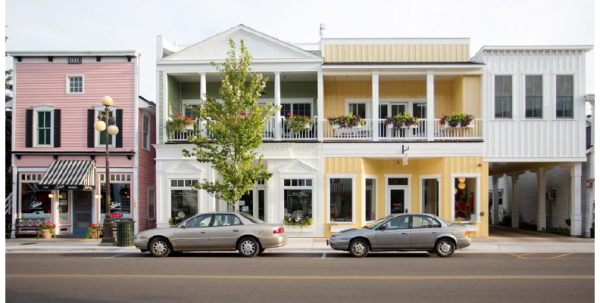
- Description: The Live/Work building type is a small to medium sized attached or detached structure that consists of one dwelling unit above and/or behind a flexible ground floor space that can be used for service or retail uses. Both the ground-floor flex space and the unit above are owned by one entity. This type is typically located within medium-density neighborhoods or in a location that transitions from a neighborhood into a neighborhood main street. It is especially appropriate for incubating neighborhood-serving retail and service uses and allowing neighborhood main streets to expand as the market demands. Parking is typically located in the rear of the lot behind the building, often in an attached or detached garage.
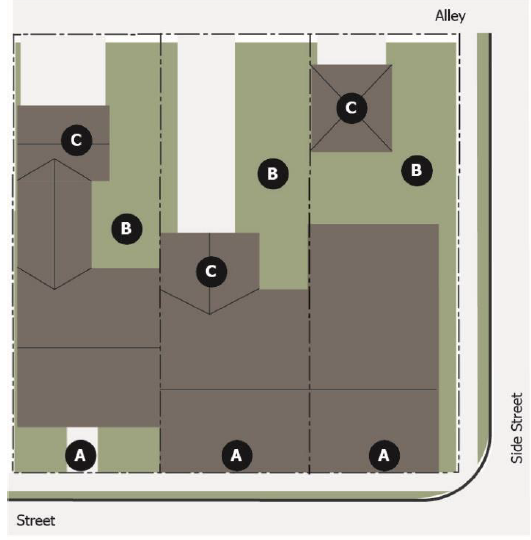
Figure 5-7: Live/Work: Model Site Plan - Number of Units:
Units per Building 2 max.; both must be used by same occupant Live/Work Buildings per Lot 1 max. - Building Size and Massing:
Height Height 2 stories min.; 4 stories max.1 1Height must also comply with Zoning District standards in CHAPTER 2. - Pedestrian Access:
Main Entrance Location Front Street 
Ground-floor space and upper unit must have separate entries. - Private Open Space:
Area 15% of Lot Area min. 
- Parking Location:
Rear Yard 
5.11 Fence And Wall Standards
All fences and walls must meet the requirements below. Fences and walls cannot be installed without first being issued an Improvement Location Permit according to 8.11 Improvement Location Permit.
- Fences Permitted Generally:
- Residential and Agricultural Districts: The following fence materials are permitted in residential districts: wood, wrought iron, masonry or stucco wall, live continuous dense hedge of a nonhazardous nature, PVC/vinyl, and vinyl coated chain link, subject to 5.11 Fence and Wall Standards. Chain link, chicken wire, wire mesh, agricultural wire (typical farm field fence) are only permitted in agricultural districts for the containment of livestock or to surround agricultural fields.
- Non-residential Districts: The following fence materials are permitted in nonresidential districts: wood, wrought iron, masonry or stucco wall, live continuous dense hedge of a non-hazardous nature, PVC/vinyl, barbed wire subject to 5.11 Fence and Wall Standards, and chain-link of conventional construction utilizing metal piping or tubing for fence post.
- The Administrator may require safety fencing for construction sites that present an immediate danger to public health, safety and welfare.
- Location and Height Limitations:
- Agricultural Districts:
- Fences, walls, or structural barriers in a front yard cannot exceed 4 feet high except for containment fences and agricultural field fences that cannot exceed 6 feet high.
- Fences, walls, or structural barriers located in a side or rear yard must not exceed 8 feet high. Fence posts or support framework may exceed these height limitations by 6 inches.
- Residential Districts:
- Ornamental fences, walls, or structural barriers located in a front yard must be at least 60% open and limited to 4 feet high.
- Live continuous dense hedges are limited to 3 feet high.
- Fences, walls, or structural barriers located in a side or rear yard are limited to 8 feet high. Fence posts or support framework may exceed these height limitations by 4 inches.
- Non-residential Districts:
- In all commercial districts, fences, walls, or structural barriers are prohibited in any front yard and are limited to 8 feet high in side and rear yards.
- In all industrial districts, fences, walls, or structural barriers are limited to 8 feet high. Fence posts or support framework may exceed these height limitations by 6 inches
- No fence, wall, or structural barrier can be erected within a public right-of-way. Fences, walls, or structural barriers erected or placed in these areas are a violation of this Ordinance and subject to enforcement (CHAPTER 9: ADMINISTRATION AND ENFORCEMENT).
- Agricultural Districts:
- Fences, walls, or structural barriers may be placed in public utility easements, with the following conditions:
- Prohibited:
- Fences, walls, or structural barriers cannot be erected without providing Town staff access to a connected or abutting easement.
- Fences, walls, or structural barriers cannot be erected above the known location of a buried stormwater drainage conveyance.
- Fences, walls, or structural barriers cannot be located within 5 feet of any stormwater inlet.
- Impervious fences, walls, or structural barriers are not allowed within a drainage easement.
- Permissions:
- Prior to issuing a permit for the location of a fence, wall or structural barrier within a drainage agreement, an Easement Encroachment Agreement must be recorded with the title to the property on a form acceptable to the Town. The costs associated with the recording of an Easement Encroachment Agreement is borne by the property owner.
- Any fence, wall or structure within a drainage easement must be erected to provide access to connected or abutting drainage easements.
- If, in the sole determination of the Town, additional gates or removable sections are necessary to provide access to connected or abutting drainage easements, the Town may require such improvements as a condition of approving the proposed fence, wall or structural barrier. Failure to agree to providing the required gate or removable section will results in the denial of the requested permit. Eliminating or disabling a required gate or removable section constitutes a violation of this ordinance and is subject to enforcement (CHAPTER 9: ADMINISTRATION AND ENFORCEMENT).
- A registered utility location service must identify the location of any buried stormwater pipe before issuing a permit for any fence, wall or structural barrier. The location of any buried stormwater pipe must be noted on the submitted plot plan accompanying the requested permit. Any fence, wall or structural barrier be setback a minimum of 5 feet from any publicly maintained buried stormwater conveyance or sanitary sewer.
- Any fence, wall, or structure within a swale must allow for the movement of water through the swale. The area between the finish grade and an elevation one foot below the top of the swale must have a minimum unobstructed pervious area of at least 20%. For fences, this can be achieved through providing gaps between the vertical slats of the fence. A detail depicting how the permeability requirement is being attained must accompany the ILP application for all fences, walls, or structural barriers located within the swale.
- Prohibited:
- Improvement Location Permit applications for fences, walls, and structural barriers are reviewed and approved by the Avon Public Works Director prior to issuing the permit.
- Construction Requirements:
- All fences must be designed and constructed in conformity with the wind, stress, foundation, structural, and other requirements of the Building Code and other ordinances of the Town.
- All fences, walls, and like structural barriers must meet the vision clearance requirements (see Vision Clearance Standards).
- All fence posts and support framework must be located on the side of the fence facing the fence owner's property, and the finished side of the fence must face the exterior of the lot.
- Chain link fences must be a minimum of 9 gauge.
- Fences that completely enclose all or part of a lot must have at least one gate access.
- Fences cannot be constructed of a material or in a manner obviously intended to inflict great bodily harm should a person or animal attempt to climb it. Such material includes, but is not limited to, electrically charged wires or other electrical conduit, broken glass, razor blades, and sharp or ragged metal spikes or spears. Barbed wire may be permitted according to Paragraph (I) of this section.
- Maintenance Requirements: Every fence must be maintained in a structurally sound and safe condition. Every fence must be maintained in a good and presentable condition, free of clutter, debris, damage or missing elements. Every damaged or missing element of any fence must be repaired or replaced immediately.
- Enforcement: Any fence, wall, or structural barrier erected, expanded, altered, relocated, or repaired contrary to this section is a violation of this Ordinance and is subject to enforcement (CHAPTER 9: ADMINISTRATION AND ENFORCEMENT). According to 1.16 - Nonconforming Structures, any fence lawfully existing when this Ordinance is adopted that does not conform with this section may be continued so long as it otherwise remains lawful. Nonconforming barbed wire, electrically charged fences, and dilapidated or deteriorated fences, due to the public safety risk they pose, must be immediately removed or immediately brought in full compliance with this section upon adoption of this Ordinance:
- Barbed Wire Fences:
- Barbed wire fences may be permitted in industrial districts only where the Administrator finds that barbed wire fence is necessary to protect the safety of persons or for security of the property. The barbed wire must be installed at least 6 feet above ground level, and be either:
- In a gable configuration having 5 strands or less, or
- Attached to an angled arm supported approximately 45 degrees to the vertical and having 3 strands or less.
- Barbed wire fences may be used in districts where agricultural activities are permitted subject to the following limitations:
- Barbed wire fences are only be permitted in agricultural districts for the containment of livestock or to surround agricultural fields and may not be used as a property fence, boarder fence or security/ privacy fence.
- Barbed wire must be placed a minimum of 4 feet above grade level.
- Barbed wire fences may be permitted in industrial districts only where the Administrator finds that barbed wire fence is necessary to protect the safety of persons or for security of the property. The barbed wire must be installed at least 6 feet above ground level, and be either:
5.12 Height Standards
A structure must not exceed the height limits established and specified in the Zoning District in which the structure is located except as otherwise noted.
In all Zoning Districts, spires, church steeples, chimneys, cooling towers, stacks, tanks, water towers, elevator bulkheads, fire towers, scenery lofts, power transmission lines or towers and distribution poles and lines, and essential mechanical appurtenances may be erected to any height not prohibited by other laws or ordinances.
5.13 Lot Standards
- Number of Buildings on a Lot: Except for unified developments, no more than one principal use and no more than one principal building may be located on a single lot of record or a single zoning lot.
- Division of Lots: No lot can be divided unless the division conforms to the applicable subdivision regulations of this Ordinance.
- Corner Lots: On a corner lot, the narrowest street frontage of the lot is the front lot line, and the other street frontage is the street side lot line, unless the Administrator determines otherwise based upon the context of the lot.
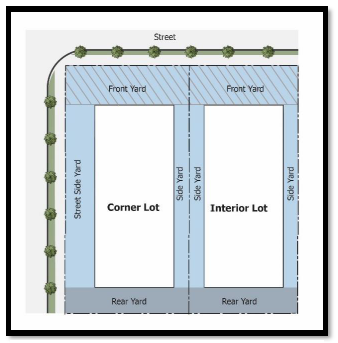 Figure 5-1 Lot Standards
 - Street Frontage and Access:
- Every lot must abut on a public street or private access drive with facilities for ingress and egress between the lot and street or drive. Lots having 100 feet or less of frontage are allowed only one access point. Each multi-family development, regardless of size, must have an additional access point for emergency access. Lots with more than 100 feet of frontage may have more than one access point as determined by the Administrator or Plan Commission. Any request for more than one access point onto any public street may require a traffic study if requested by the Administrator, Director of Public Works, or the Plan Commission.
- Access to lots should be provided from public streets whenever possible. Private access drives are discouraged and will be permitted only when site conditions prevent reasonable access to the lot from a public street. Examples of such conditions include lots with limited or no road frontage or where providing access by a public street would result in a physical or financial hardship.
- Private access drives must meet the following requirements.
- Private access drives can provide access only to commercial and industrial lots.
- Private access drives must provide access only to abutting lots and are allowed only for drives that have no public interest for traffic circulation.
- Private access drives can provide access to a maximum of three lots.
- Private access drives must be designed and constructed to the same standards as the public roads providing access to similar development and meet all provisions of the subdivision regulations for public roads.
- Every lot must abut on a public street or private access drive with facilities for ingress and egress between the lot and street or drive. Lots having 100 feet or less of frontage are allowed only one access point. Each multi-family development, regardless of size, must have an additional access point for emergency access. Lots with more than 100 feet of frontage may have more than one access point as determined by the Administrator or Plan Commission. Any request for more than one access point onto any public street may require a traffic study if requested by the Administrator, Director of Public Works, or the Plan Commission.
- Lot Area Exclusions: Any portion of a lot located within the 100-year floodplain, wetlands, lakes, ponds, stormwater detention areas, or floodplain compensatory storage areas, cannot be counted towards the minimum lot area.
- Yards, Courts, and Other Open Spaces on Lots:
- Open Spaces: The provisions of yards and open spaces and minimum lot area required for a building are continuing obligations of the owner. Legally required yards or open space, or minimum lot area allocated to a building, cannot be used to satisfy yard or open space or minimum lot area requirements for any other building.
- Location of Required Yards and Open Space: All yards and open space allocated to a building or group of buildings must be located on the lots as the building or group of buildings.
5.14 Performance Standards
- Application of Performance Standards: All uses must comply with the performance standards established in this chapter, unless any federal, state, county, or local ordinance, law or regulation establishes a more restrictive standard in which event the more restrictive standard applies.
- Compliance with Performance Standards: When tests by the Administrator indicate a possible violation of these performance standards, the Administrator requires the property owner to obtain and bear the cost of the qualified technical assistance to ascertain the exact amount of emissions of noxious effects at the lot lines of the property in question. The results of the test(s) are presented to the Plan Commission in writing.
- Enforcement: Enforcement of the performance standards is the duty of the Administrator according to CHAPTER 9: ADMINISTRATION AND ENFORCEMENT.
- Toxic Matter: The storage, handling, or transport of toxic substances must comply with all federal laws and regulations, all state laws and regulations, and all county and local ordinances, laws, and regulations regarding the storage, handling, or transport of toxic material. No use can discharge across the boundaries of its lot toxic matter so as to endanger the public health, safety, or general welfare, or cause injury or damage to an abutting or adjoining property. Neither can toxic matter be discharged into any streams or ground water running through the lot.
- Fire and Explosion Hazards: Materials that present potential fire and explosive hazards must be transported, stored and used only in conformance with all applicable federal, state, and local ordinances and laws.
- Glare or Heat: No use must produce heat or glare in such a manner as to be a nuisance or create a hazard perceptible from any point beyond the lot lines.
- Odor: Emission of noxious, objectionable or annoying odor in such quantities as to be detectable at any point along a lot boundary without the aid of special instruments is prohibited.
- Noise: Sound levels are measured with a sound level meter and associated octave band filter manufactured according to standards prescribed by the American Standards Association. Measurements are made using the flat network of the sound level meter. Pure tone and impulsive type noises are subject to the performance standards below, provided that such noises are capable of being accurately measured with such equipment. Noises capable of being measured, for the purpose of this Ordinance, are those noises with a measurable variation of no more than plus or minus two (2) decibels. Noises incapable of being so measured, such as those of an irregular and intermittent nature, are controlled so as not to become a nuisance to adjacent uses. At no point on the boundary of a district can the sound intensity level of any individual operation or plant exceed the decibel levels in the designated octave bands.
Table 5-1 Noise Levels1For monitoring purposes only.Octave Band (Frequency Cycles per Second) Maximum Permitted Decibels Along Residential District Boundaries Sound Level (Decibels) Along Business District Boundaries 0 to 75 72 75 76 to 150 67 70 151 to 300 59 63 301 to 600 52 57 601 to 1200 46 52 1201 to 2400 40 45 2401 to 4800 34 40 Above 4800 32 38 A Scale1 56 60
The prescribed limits for sound levels along residential district boundaries apply between the hours of 8:00 AM and 6:00 PM. At other times, the allowable sound levels in each octave band are each reduced by six (6) decibels. Public safety sirens and related apparatus used solely for public safety purposes are exempt from the noise standards. - Dust and Air Pollution:
- Dust and other types of air pollution borne by the wind from sources such as storage areas, yards, roads, conveying equipment and the like within lot boundaries must be kept to a minimum by appropriate landscaping, screening, sheltering, paving, oiling, fencing, wetting, collecting or other acceptable means.
- No person can cause or allow the emission of fugitive particulate matter across lot lines which is visible by an observer looking generally toward the zenith, beyond the property line. This requirement does not apply when the wind speed is greater then 40.2 kilometers per hour (25 miles per hour). Determinations of wind speed for the purposes of this rule are the one hour average or hourly recorded value at the nearest official station of the US Weather Bureau or by wind speed instruments operated on the site.
- Nuisance: No use can be operated or maintained which creates an environmental detriment or public nuisance, including visual clutter created by excessive signage, lighting, or outdoor storage; noise or odors as defined herein; or other noise and odors such as those created by pets or garbage.
- Electromagnetic Interference:
- Electromagnetic interference from any operations of any use in any district cannot adversely affect the operation of any equipment located off the zoning lot on which such interference originates.
- Structures (including communications facilities) in all commercial districts, must be constructed and/or maintained so as to provide for in-building public safety communications coverage. Additionally, structures (including communications facilities) in all districts must be constructed and/or maintained so as to prevent interference with existing public safety communications.
- Water Pollution: All uses must comply with the State of Indiana rules and regulations regarding prevention of water pollution.
5.15 Permitted Obstructions In Required Yards
The following are not considered obstructions when located in the required yards specified.
- All Yards:
- Open porches, patios, terraces, and decks no more than 18 inches above the average grade. Porches, patios, terraces, and decks with a permanent roof can extend no more than 2 feet into the required yard.
- Residential window awnings attached to the principal dwelling, but not projecting more than 3 feet out, and at least 7 feet clearance above the adjoining ground.
- Steps 4 feet or less above grade which are necessary for access to a permitted building.
- Chimneys projecting 18 inches or less into the yard;
- Arbors, trellises, flag poles, fountains, sculptures, plant boxes, and other similar ornamental objects.
- Overhanging eaves and gutters projecting 3 feet or less into the yard.
- Front Yards:
- One-story bay windows projecting 3 feet or less into the yard.
- Down spouts projecting not more than 6 feet into the yard.
- Side and Rear Yards:
- Air conditioning units and compressors.
- One-story bay windows projecting 3 feet or less into the yard.
- Rear Yards:
- Enclosed, attached or detached off-street parking spaces in non-residential districts.
- Balconies and breezeways.
5.16 Property Maintenance Standards
This chapter applies to all Zoning Districts.
- All land and exterior areas under roof but not enclosed must be maintained free from:
- Accumulation of garbage, debris, or blight, including: graffiti, tires, broken glass, or anything posing a hazard to public health;
- Tarps, plastic sheeting, or similar materials used as screening, fencing, or wall covering;
- Abandoned vehicles or inoperable vehicle parts, visible from a right-of-way, except a single inoperable vehicle undergoing minor repair work, not to exceed 72 hours; or lawful commercial activities involving vehicles as allowed by this Ordinance;
- Commercial appliances, machinery, freezers, refrigerators or other household items;
- Any object or landscaping that interferes with the use of any sidewalk, street, alley, highway, or visibility of a traffic light or sign in the town;
- Landscaping visible from public property that is substantially dead, damaged, or characterized by uncontrolled growth;
- Anything posing an imminent hazard to public health and safety;
- Any unprotected well or excavation more than 2 feet deep;
- Any wall or fence missing blocks, boards, or other material, or is otherwise deteriorated to constitute a hazard to people or property; and
- Graffiti visible from a public area or right-of-way.
These standards do not apply to the orderly storage of materials in side and rear yards provided:- The storage does not exceed 10% of the area of the yard, and
- The storage does not exceed the height of any fence or wall enclosing the storage area.
- All premises must be kept free from rodent infestation and other noxious pests.
- All premises must prevent the accumulation of stagnant water.
- All fences and walls must be safe, structurally sound, and uniform in color, structure, and design. They must not constitute a hazard or be in disrepair. Repair of an existing fence or wall must be made with the same or similar materials.
- Occupied buildings must have an adequate number of garbage receptacles maintained in clean condition and good repair. The owner or occupant must arrange for the removal of garbage from the premises.
- Vacant lots or land subject to enforcement action for dumping must be secured to prevent future dumping.
- Unenclosed or unsecured excavations, septic tanks, cesspools, and similar conditions must be fully restored to a safe, serviceable condition, or filled with clean fill. Excavations must be maintained in a secure manner to prevent a hazard to public health and safety.
- Buildings or structures determined to be unsafe or dangerous as defined in the Building Code must be abated in accordance with the provisions of that code.
- Vacant structures and premises must be maintained and monitored including:
- Maintenance of the exterior of the building and landscaping with regular removal of all exterior trash, debris, and graffiti; and
- Prevention of reoccurring criminal activity on the premises. Unsecured buildings and structures must secured in the following manner:
- Doorways and windows must be boarded up using 5/8” or thicker exterior grade plywood, fastened by tamper-proof screws or one-way bolts;
- All boarding must be painted to match the dominant exterior color of the elevation of the structure; and
- For commercial buildings, opaque window coverings may be allowed by the Administrator in lieu of boarding provided all windows are maintained and if broken or cracked, are replaced within 48 hours. The Administrator may revoke the use of this alternative when the owner or responsible party fails to maintain the within the specified period.
- If, after 5 business days from when notice provided, the owner fails to install barricades, the Administrator is authorized to barricade the building or structure. All costs associated with this work will be recovered from the property owner.
5.17 Satellite Dish Antenna
These regulations apply to satellite dish antenna and other satellite reception devices greater than 2 feet in diameter.
- General Purposes:
- These regulations are designed to promote the public health and safety by providing criteria for the placement of these antenna. This ensures that all installations limits endangerment of life and property on the site and surrounding properties due to collapse or destruction.
- These regulations are also designed to decrease the potential for urban blight in residential neighborhoods generated by guy wires, poles, cables, and other appurtenances.
- These regulations allow satellite dish antenna and other satellite reception devices to be located so that: (1) does not unreasonably delay or prevent the installation, maintenance or use of the antenna; (2) does not unreasonably increase the cost of installation, maintenance or use of the antenna; or (3) preclude reception of an acceptable quality signal.
- General Requirements:
- A satellite receiver antenna 2 feet in diameter or less may be installed in any location in accordance with the provisions of IC 36-7-4-201.1.
- Satellite dish antenna greater than 2 feet in diameter may be erected in the R-4 and R-5 residential zoning districts after an improvement location permit is obtained, provided the following criteria are met.
- The satellite dish antenna is ground mounted.
- The diameter does not exceed 10 feet.
- The height does not exceed 12 feet.
- It is located between the rear building line of the principal structure and the required rear yard setback line. In case of a corner lot, the antenna must not be located within the street side yard.
- In the R-5 residential district, a satellite dish antenna may be roof mounted provided the diameter is no more than 10 feet, and the height of the antenna is no more than 12 feet. A roof mounted satellite dish antenna must be located at least 10 feet behind the front roofline of the structure. A roof-mounted antenna cannot exceed the maximum height requirement of the zoning district.
- Satellite dish antenna may be erected in any non-residential zoning district provided:
- The diameter must not exceed 12 feet.
- The height of a ground-mounted antenna must not exceed 25 feet.
- The height of a roof-mounted antenna cannot exceed 15 feet.
- A roof-mounted antenna must not exceed the maximum height requirement of the zoning district. A roof mounted satellite dish antenna must be located at least 10 feet behind the front roofline of the structure.
- A ground-mounted antenna must comply with the yard setback requirements of the district. Antenna must not in a front yard or open space.
- Satellite dish antennas must be installed and maintained in compliance with all applicable building and electrical codes and are subject to the following standards:
- Satellite dish antennae must be solid in color.
- Not more than one antenna greater than two feet in diameter is allowed on any lot unless shown on an approved site plan.
- No advertising, logos, or corporate symbols are permitted on any satellite dish antenna greater than 2 feet in diameter.
5.18 Amateur Radio Standards
Individual amateur transmitting and receiving antennae and associated support structures owned or operated by licensed amateur radio operators are permitted as accessory structures according to these provisions.
- Amateur Radio Club and repeater station antennae and support structures are permitted to the height necessary to maintain reliable communications.
- Antenna structures of amateur radio operators licensed by the Federal Communication Commission may not exceed 75 feet above grade. The height is measured vertically and includes the height of the building where the antenna support structure is mounted.
- Antennae may be located above the antenna support structure as necessary for effective radio communications.
- Upon the Federal Communication Commission licensed operator’s cessation of ownership or leasehold rights in the antenna support structure, or on loss of his or her federal amateur radio license (whichever occurs first), the operator must safely remove all antenna support structures within 30 days at no expense to the Town. If the operator fails or refuses to remove the antenna support structure, the owner of the subject lot is responsible for the removal of all such structures. Failure to remove antenna support structures is a violation of this Ordinance and subject to enforcement (CHAPTER 9: ADMINISTRATION AND ENFORCEMENT).
- On residential lots, antenna support structures must be located between the rear building line of the principal structure and the required rear yard setback line. For a corner lot, the antenna cannot be located within the street side yard.
- Nothing in this section affects any existing antenna support structure utilized by any federally licensed amateur radio operator constructed and in place before the passage of this Ordinance.
5.19 Setback Standards
These standards apply in all Zoning Districts.
- The measurement of any building setback line or building separation is the shortest distance between the building façade and the lot line or right-of-way line, whichever is closest. Where there is no right-of-way line, the building setback line is measured from the building façade to the edge of pavement or the access easement line, whichever is closest. The front yard setback for mew lots is measured from the lot line abutting the open space to the building façade.
- The minimum building setback lines and minimum building separation requirements are as set forth in this Ordinance (see also CHAPTER 2: ZONING DISTRICTS).
- If a minimum building separation requirement is not provided, the minimum building separation requirement is the district’s minimum side yard building setback.
- Porches, patios or decks 18 inches or more above grade must comply with all setback requirements of the district except for stairs, which may encroach into the required yards.
- Where 25% or more of the lots in a block frontage are occupied by buildings, then the average building setback line of buildings on that block determines the location of the building setback line for the block frontage in lieu of the building setback lines contained in this Ordinance.
- Building setback lines established in a recorded subdivision establish the setback of buildings in such subdivisions, except when such building setback lines may be less restrictive than provided in this Ordinance.
- On through lots, the front yard is established by the existing principal buildings in the block.
- All improvements are subject to 5.21 Vision Clearance Standards, unless specifically exempted.
5.20 Swimming Pools And Hot Tubs
In addition to conforming to the regulations for accessory uses and structures above, all swimming pools and hot tubs must meet the following requirements:
- Swimming pools cannot be installed without first being issued an Improvement Location Permit according to 8:11 Improvement Location Permits.
- Swimming pools or hot tubs cannot be in any required front, side, or rear yard or in front of the front building line of a principal use.
- Swimming pools or hot tubs cannot be constructed unless adequate distance from overhead electrical wires is provided according to the current National Safety Code and National Electrical Code.
- All swimming pools and hot tubs must be included in the calculation of maximum lot coverage.
- All swimming pool construction, including associated decking, fencing, and means of access must conform with the regulations set forth in 675 IAC 20-4.
5.21 Vision Clearance Standards
No building, structure, or improvement can be placed that interferes with a vision clearance area located between 2 1/2 feet and 9 feet above the crown of a street, driveway, or alley. A vision clearance area is formed by the intersecting centerlines of each right-of-way and the line connecting the two end points of each extended centerline. The distance along the right-of-way centerlines is as follows:
Table 5-3 Vision Clearance
| Street Classification | Distance Along ROW Centerline |
| Arterial | 100' |
| Collector | 80' |
| Local | 50' |
| Alley | 40' |
| Driveway | 35' |
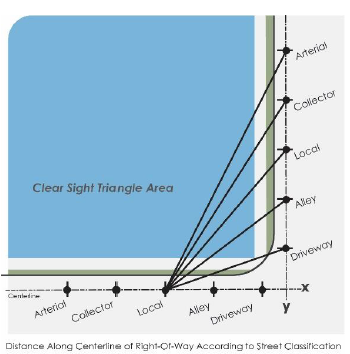 Figure 5-2 Vision Clearance
5.22 Yard Standards
- Buildings must not be erected, reconstructed, or structurally altered to encroach upon or reduce the yards, lot area, minimum living area, or lot coverage provisions established for the use and the Zoning District or Overlay District in which such building is located.
- One-half of an alley abutting the rear or side yard may be included in the required rear or side yard of a lot, respectively, if the alley has not been developed for carrying traffic; however, such alley area must not be included for loading berths.
- The yard width and depth of required yards are measured as the shortest horizontal distance from a lot line to the required building setback line. In the case of a standard applying to an established yard, the yard width and depth are measured as the shortest horizontal distance (e.g., ninety degrees) from a lot line to the nearest outside wall of a building or structure.
- All required Yards must be maintained as open space and landscaped with grass, trees, shrubs, or in combination with other suitable groundcover materials in compliance with 6.1 – 6.9 Landscaping Standards, except as otherwise improved in accordance with this Ordinance (e.g., Parking Areas).

