
Belvidere City Zoning Code
ARTICLE 10
- SIGNS
Sec. 150.1001.- Purpose.
The purposes of these sign regulations are: to encourage the effective use of signs as a means of communication; to maintain and enhance the aesthetic environment and the city's ability to attract sources of economic development; to encourage signs that are compatible with their surroundings; to minimize the possible adverse effect of signs on nearby public and private property; to improve pedestrian and traffic safety; to enable the fair and consistent enforcement of these sign restrictions.
(Ord. No. 801G, § 3, 3-6-06)
Sec. 150.1002. - Goals.
The standards, procedures, exemptions, and other requirements of this chapter are intended to establish a permit system to allow a variety of types of signs in commercial and industrial zones, and a limited variety of signs in all other zones, subject to the standards and permit procedures of this chapter; to allow certain signs that are small, unobtrusive, and incidental to the principal use of the respective lots on which they are located, subject to the substantive requirements of this chapter, but without permits; to provide for temporary signs in limited circumstances; to prohibit all signs not expressly permitted or provided for by this section; to provide for the enforcement of the provisions of this section.
(Ord. No. 801G, § 3, 3-6-06)
Sec. 150.1003. - Definitions.
The definitions contained in this section shall be applied to the interpretation of the text of this section. Words and phrases not defined in this section but defined in § 150.013 of this chapter shall be given the meanings set forth in that section. All other words and phrases shall be given their common meaning, subject to context.
Animated: Any sign that uses mechanical movement or change of lighting to depict action or create a special effect or scene.
Banner: Any sign of lightweight fabric or similar material that is permanently mounted to a pole or a building by a permanent frame at one or more edges. National flags, state or municipal flags, or the official flag of any institution or business shall not be considered banners.
Beacon: Any light with one or more beam directed into atmosphere or directed at one or more points not on the same zone lot as the light source; also, any light with one or more beams that rotate or move.
Building marker: Any sign indicating the name of a building, date and incidental information about its construction that is cut into a masonry surface or made of bronze or other permanent material. The sign shall not exceed six square feet and shall be attached to the building.
Building sign: Any sign attached to any part of a building as contrasted to a free standing sign.
Changeable copy: A sign or portion thereof with characters, letters, or illustrations that can be changed or rearranged without altering the face or the surface of the sign. A sign on which the message changes more than eight times per day shall be considered an animated sign and not a changeable copy sign. A sign on which the only copy that changes is an electronic or mechanical indication of time or temperature shall be considered a "time and temperature" portion of a sign and not a changeable copy sign. No portion of a residential sign may be changeable copy sign.
Commercial message: Any sign wording, logo, or other representation that, directly or indirectly, names, advertises, or calls attention to a business, product, service, or other commercial activity.
Directional sign (on site): Signs of three square feet or less, that do not exceed five feet in height, and are intended to facilitate the movement of vehicles and pedestrians on private property. A directional sign marking a vehicular entrance or exit may include a commercial message or logo of one square foot or less pertaining to an establishment located on the site, but is limited in number to one per entrance and one per exit. A "drive thru" sign of three square feet or less placed adjacent to or directly over the drive through lane shall be treated as a directional sign; otherwise, the sign will count as a freestanding or building sign, whichever is applicable.
Flag: Any fabric, banner, or bunting containing distinctive colors, patterns, or symbols, used as a symbol of a government, political subdivision, or other entity.
Freestanding sign: Any sign supported by structures or supports that are placed on, or anchored in, the ground and that are independent from any building or structure. Both pole or ground signs are types of freestanding signs.
Identification sign: A sign containing only a name and/or an address and limited to two square feet in area. Name may be personal, or identify an organization.
Illumination: Internal, external, exposed bulb, or tubular (including neon).
Incidental sign: A sign, generally informational, that has a purpose secondary to the use of the zone lot on which it is located, such as "no parking," "loading only," "telephone," menu boards, and other similar directives. No sign with a commercial message or logo legible to a normal person of average person standing on any property line of the zone lot on which the sign is located shall be considered incidental.
Monument sign: A sign where the base of the sign structure is on the ground or of a masonry material that is equal or greater to the width of the sign and is supported primarily by an internal structural framework or is integrated into landscaping or other solid structural features other than support poles.
Pennant: Any lightweight plastic, fabric, or other material, whether or not containing a message of any kind, suspended from a rope, wire, string, usually in series, designed to move in the wind.
Portable sign: Any sign not permanently attached to the ground or other permanent structure, or a sign designed to be transported, including but not limited to, signs designed to be transported by means of wheels; signs converted to A- or T-frames; menu and sandwich board signs; balloons used as signs; and umbrellas used for advertising.
Principle building: The building in which is conducted the principal use of the zone lot on which it is located. Zone lots with multiple principal uses may have multiple principal buildings, but accessory storage buildings, garages, filling station pump shelters, and other clearly accessory uses shall not be considered principal buildings.
Sign: Any device, fixture, placard, or structure that uses any color, form, graphic, illumination, symbol, or writing to advertise, announce the purpose of, or identify the purpose of a person or entity, or to communicate information of any kind to the public.
Temporary sign: Any sign that is used only temporarily and is not permanently mounted.
Window sign: Any sign, pictures, symbol, or combination thereof, designed to communicate information about an activity, business, commodity, event, sale, or service, that is placed directly on the surface of the window panes or glass or is hung from the window frame and is visible from the exterior of the window.
(Ord. No. 801G, § 3, 3-6-06; Ord. No. 113H, § 2, 5-16-11; Ord. No. 341H, § 3, 4-3-17)
Sec. 150.1004. - Computations.
The following principles shall control the computations of sign number, sign area and sign height. Figures 150.1004(F)1 and 150.1004(F)2 illustrate the method of computation for various sign types.
(A)
Computation of area of individual building signs. The area of a sign face shall be computed by means of the smallest rectangle, triangle, circle, or combination thereof that will encompass the extreme limits of the writing, emblem, or other representation, together with any material or color forming an integral background to the display or used to differentiate the sign from the backdrop. Area does not include any supporting framework, bracing, or decorative wall or fence when such wall or fence is clearly incidental to the display itself.
(B)
Computation of number and area for freestanding signs. All writing, emblems, decorative framework, or other representations mounted on a single sign support structure shall be regarded as one sign. All writing, emblems, decorative framework, or other representations facing the same direction shall be counted as one sign face. Area of a sign face and total freestanding sign area shall be computed by means of the smallest single rectangle that will encompass all said elements, including intervening support elements.
(C)
Computation of area of multifaced signs. The sign area for signs with surfaces facing more than one direction shall be computed by adding the area of all sign faces visible from any one point. When two identical sign faces are placed back to back, so that both faces cannot be viewed from any one point at the same time, and when such sign faces are part of the same structure, and are not more than 42 inches apart, the sign area shall be computed by the measurement of one of the faces.
(D)
Computation of height. The height of a sign shall be computed as the distance from the base of the sign at normal grade to the top of the highest component of the sign. Normal grade shall be construed as the grade after construction, exclusive of any earth altering activity solely for the purpose of locating or elevating the sign.
(E)
Computation of maximum total sign area for a zone lot. The permitted number and area of all individual signs on a zone lot shall be determined by applying the formulas contained in the table 150.1007(B)1. Lots fronting on two or more streets are allowed the permitted sign area for each frontage. However, the total sign area that is oriented toward a particular street may not exceed the portion of the lot's total sign allocation that is derived from the street or wall area frontage on that street.
(F)
Illustrated computations.
ILLUSTRATED AREA COMPUTATIONS
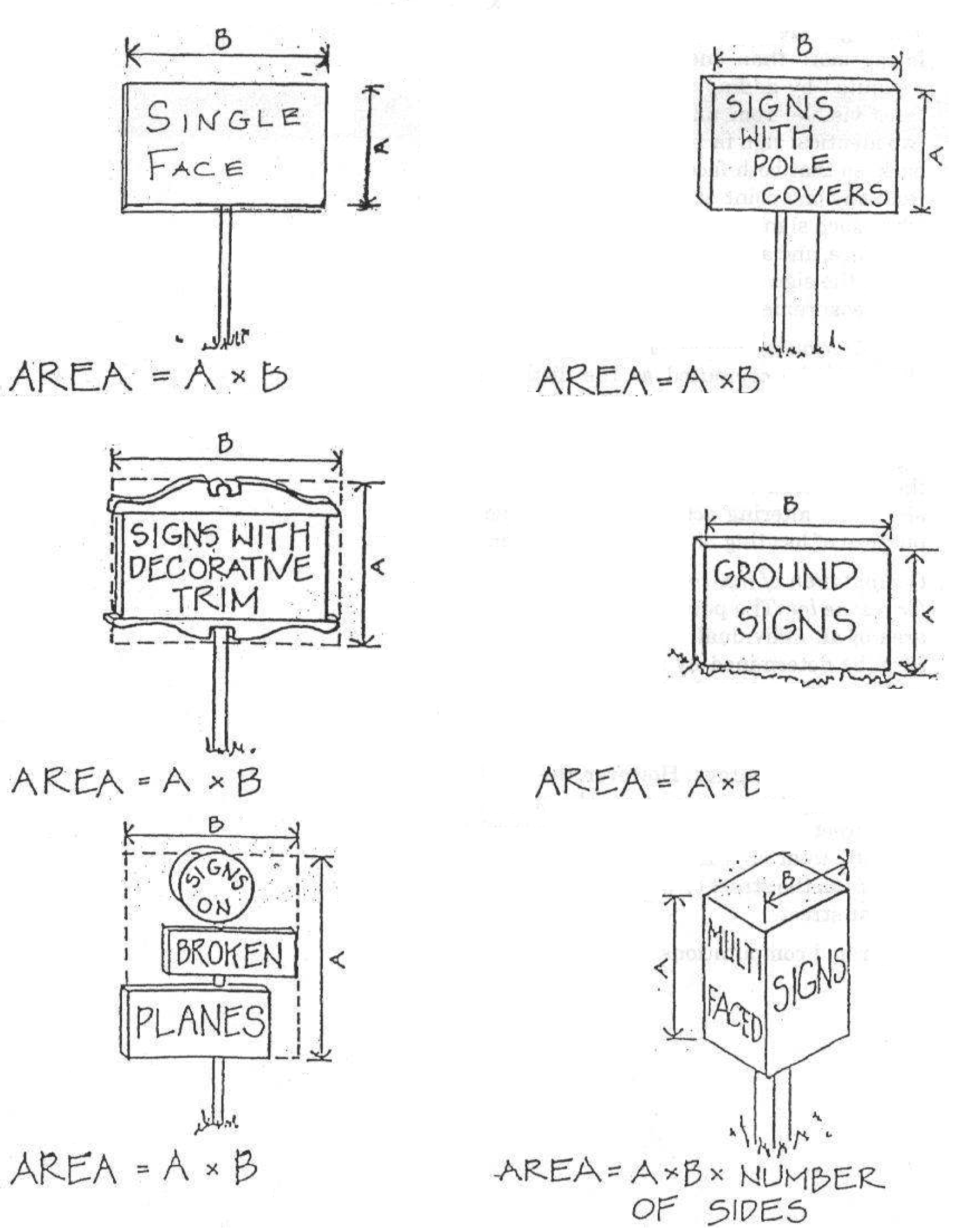
Figure 150.1004(F)1
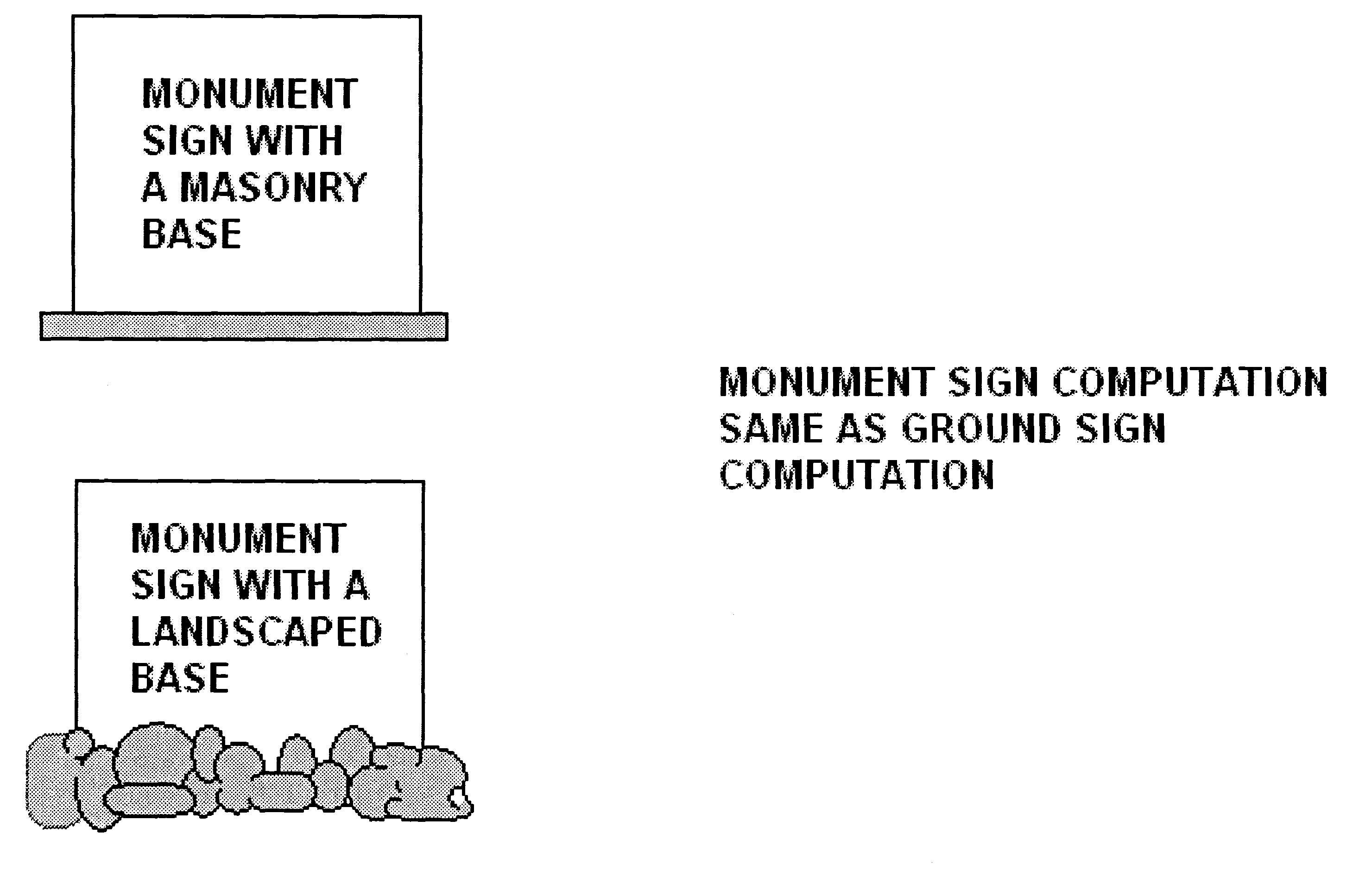
Figure 150.1004(F)1a
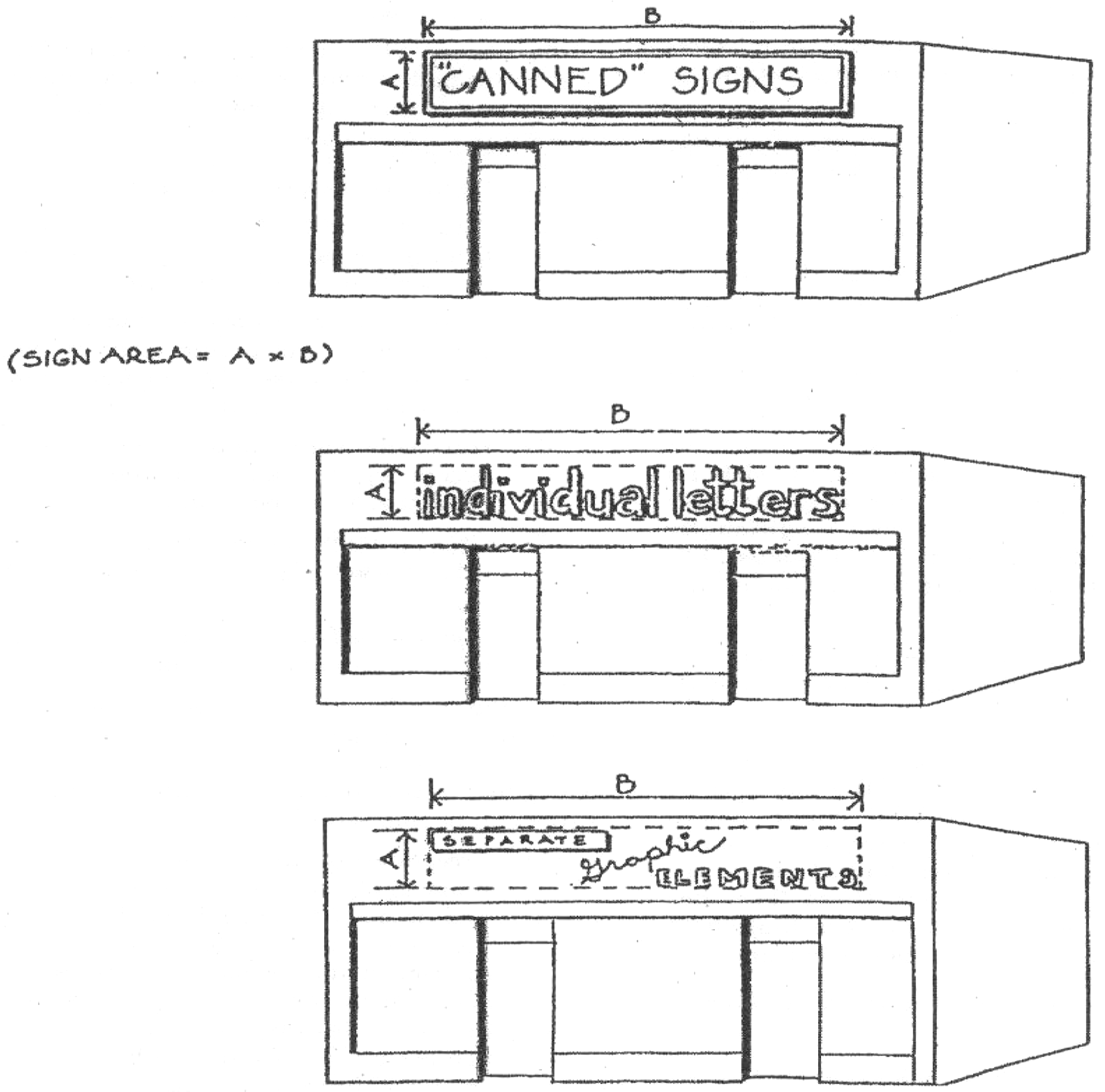
(Ord. No. 801G, § 3, 3-6-06; Ord. No. 113h, § 3, 5-16-11)
Sec. 150.1005. - Signs exempt from regulation under this section.
(A)
Public signs. Including notice, warning, traffic control, historic, civic, or memorial signs authorized by a valid and applicable federal, state, or local law, regulation, or ordinance.
(B)
Traffic control signs on private property. The face of which meet department of transportation standards and which contain no commercial message.
(C)
Interior building signs. Any sign inside a building, that is not attached to a window or door, and is not intended to be viewed from the exterior.
(D)
Religious symbols. Religious symbols attached to religious buildings or located on private church property.
(E)
Holiday lights and decorations. Holiday lights and decorations with no commercial message, but only 30 days prior to and 30 days after a traditionally accepted civic, patriotic, or religious holiday in the commercial and industrial districts.
(F)
Descriptive signs. Descriptive signs on merchandise/inventory for sale in the commercial and industrial districts.
(G)
Flags. Flags, emblems, or insignia of governmental, or other noncommercial organizations having a size of less than 60 square feet in area, and mounted on poles not to exceed 40 feet in height. A total of three flag poles with up to three flags each are permitted per lot.
(H)
Building markers. As defined in § 150.1003.
(I)
Directional signs. As defined in § 150.1003.
(J)
Identification signs. As defined in § 150.1003, of two square feet or less in area, or the size required by law, which ever is greater.
(K)
Incidental signs. As defined in § 150.1003.
(L)
Window signs. As defined in § 150.1003 that cover no more than 50 percent of any one window.
(Ord. No. 801G, § 3, 3-6-06; Ord. No. 537H, § 4, 6-21-21; Ord. No. 552H, § 1, 11-1-21)
Sec. 150.1006. - Signs prohibited under this section.
(A)
Obstructing signs. Signs which obstruct the vision of drivers or pedestrians or detract from the visibility of any traffic control device.
(B)
Beacons.
(C)
Pennants. Except under § 150.1011.
(D)
Lights. Strings of lights not permanently mounted to a rigid background, except holiday lights as specified in § 150.1003.
(E)
Vehicle signs. Signs attached to or painted on vehicles visible from the public right-of-way unless vehicle is used for normal day-to-day transportation operations of the business.
(F)
Inflatable signs. Inflatable signs and tethered balloons, except when used as temporary sign as regulated in § 150.1011.
(G)
Portable signs. Other portable signs, except when used as a temporary sign as regulated in § 150.1011.
(H)
Right-of-way signs. Signs attached to trees, poles, or fences within the public right-of-way.
(Ord. No. 801G, § 3, 3-6-06; Ord. No. 341H, § 4, 4-3-17)
Sec. 150.1007. - Signs allowed on private property by district.
Signs shall be allowed on private property in the city in accordance with the tables and text contained in this section, and all other applicable provision of this section.
(A)
Freestanding signs. The following restrictions apply to the number, area, height and setback requirements for freestanding signs on private property in each district including banners and animated signs except for holiday lights as specified in § 150.1005 may be allowed by special use permit, but excluding building markers, flags, directional signs, incidental signs, identification signs, community signs, subdivision or development identification signs, temporary signs, and other signs exempt per § 150.1005.
Table 150.1007(A)1 Freestanding Signs
Note: SF refers to all single-family residential zoning districts (SR-3, SR-4, SR-6). *NC is not a separate zoning category, but refers to other uses in the residential districts such as commercial, office, institutional and industrial uses in the SR-3, SR-4, SR-6, TR-7, MR-8S and MR-8L districts.
*
In no case shall the sign height exceed the height of the front wall of the principle building, and in no case shall the height of the sign exceed the actual sign setback from any adjacent lot that is zoned residential.
**
Residential signs in the SR-3, SR-4, and SR-6 districts may either be freestanding or building signs-not both, and are limited to one residential sign per lot. Residential signs shall only contain a noncommercial message except advertising for goods or services legally offered on the premises where the sign is located, if the offering of such services at the location conforms to all requirements of the zoning ordinance. The use of changeable copy on residential signs is prohibited.
***
Setback for freestanding signs is from the sign support. In no case shall any portion of the sign project into the right-of-way. See Figure 150.1007(C)(1)a, Maximum height and area restrictions.
****
In all non SF districts, lots fronting on two or more streets are allowed the permitted signage for each street frontage, but signage cannot be accumulated and used on one street in excess of that allowed for lots with only one street frontage. Freestanding signs regulated in table 150.1007(1)A on one frontage must be placed a minimum of 200 feet from nearest same-lot freestanding sign on another frontage, measured in a straight line, except in the following instances:
(1)
A permanent structure obstructs the view of one freestanding sign when viewed from another.
(2)
The lot fronts on two parallel or nearly parallel streets that do not intersect at a point adjacent to the lot.
Zone lots with two or more establishments where said establishments each have separate building entrances are allowed one additional freestanding sign for every 200 feet of street frontage, beginning at 400 feet of street frontage. (0-399 feet = maximum of one freestanding sign, 400-599 feet of street frontage = maximum of two freestanding signs; 600 799 feet = 3 signs, etc.) However, in no case shall the number of freestanding signs on one frontage exceed the number of establishments located on the zoning lot. Said signs must be spaced a minimum of 150 feet apart.
Developments including shopping centers, industrial parks, and office parks, that include two or more establishments, having 400 or more feet per street frontage, and that do not display any other freestanding sign used by an individual tenant, may substitute a single sign designating the entire development. Such sign may be 25 percent larger in area than the area restrictions found in Table 150.1007(A)1, but must contain only the name and/or logo of the entire development.
_____
(B)
Building signs. The following restrictions apply to the number, area, height and setback requirements for building signs in each district except for building markers, window signs, flags, directional signs, incidental signs, identification signs, community signs, temporary signs, and other signs exempted per § 150.1005.
Table 150.1007(B)1 Building Signs
Note: SF refers to all single-family residential zoning districts (SR-3, SR-4, SR-6). *NC is not a separate zoning category, but refers to other uses in the residential districts such as commercial, office, institutional and industrial uses in the SR-3, SR-4, SR-6, TR-7, MR-8S, and MR-8L districts.
*
Length of wall will be calculated using only portions of the wall of the principle building parallel or most nearly parallel to the adjacent property line or street frontage. In multi-establishment buildings with separate entrances, the sign area allocated to each establishment will be apportioned by length of wall that each establishment occupies, unless otherwise allocated by the legal owner or manager of the principle building. In multi-establishment buildings with separate entrances, maximum total area per wall applies to each establishment.
(C)
Permitted building signs by type and zoning district. All signs contained in this section count against the strike (number) and area limits found in table 150.1007(B)1, except as noted below.
Table 150.1007(C)1 Permitted Building and Freestanding Sign By Type and Zoning District
Note: SF refers to all single-family residential zoning districts (SR-3, SR-4, SR-6). *NC is not a separate zoning category, but refers to other uses in the residential districts such as commercial, office, institutional and industrial uses in the SR-3, SR-4, SR-6, TR-7, MR-8S, and MR-8L districts.
Key to Table 150.1007(C)1
P = Permit required
SU = Special use permit required
N = Not allowed
_____
(1)
Building sign types and characteristics.
A.
Banner. Any sign of lightweight fabric or similar material that is permanently mounted to a pole or a building by a permanent frame at one or more edges. National flags, state or municipal flags, or the official flag of any public institution conforming to § 150.1005 shall not be considered banners.
B.
Canopy sign. A canopy sign is any sign that is part of or attached to an awning, canopy or other fabric, plastic or structural protective cover over a door, entrance, window or outdoor service area, including both fixed and movable awning signs. Letters, logos, etc. shall be permanently mounted and flush with the surface of the canopy and shall not protrude above, below or beyond the sides of the canopy. Canopy signs five inches or less in height shall not be counted against total permitted area (or number).
C.
Marquee sign. A sign attached to or part of a permanent, projecting structure sheltering the entrance of a theater or other use, which advertises present or scheduled events. Marquee signs must have a vertical clearance of 7½ feet above the adjacent sidewalk, and extend no higher than 36 inches above the marquee.
D.
Projecting sign. Any sign affixed to a building or wall in such manner that its leading edge extends more than six inches (to a maximum of 48 inches) beyond the surface of such building or wall. Projecting signs are only permitted if a freestanding sign is not or cannot be located on the subject property, and only one projecting sign per building is permitted. Projecting signs must be mounted perpendicular to the wall whose total sign allotment the sign shall count against. Projecting signs must provide a minimum overhead clearance of 7½ feet measured from the sidewalk; nine feet from vehicular right-of-ways.
E.
Residential sign. A sign located in a residential district and used for single-family residential uses that contains a noncommercial message except advertising for goods or services legally offered on the premises where the sign is located, if offering such services at such location conforms with all requirements of the zoning ordinance. Residential signs shall be a maximum of six square feet in area and may either be freestanding or wall mounted, not both, and only one residential sign is permitted per residence. The use of changeable copy on a residential sign is prohibited.
F.
Roof sign. Any sign erected and constructed wholly on and over the roof of a building, and supported by the roof structure. Signable area for below-peak roof signs is limited to 20 feet above base of building unless mounted flush with vertical roof surfaces below roof peak that is integral to the roof itself. Above-peak roof signs require a special use permit required and shall extend no more than 10 feet above roof peak, and shall only be granted in cases where architecture of building prevents wall sign or below-peak roof sign.
G.
Suspended sign. A sign that is suspended from the underside of a horizontal surface such as a canopy and is supported by such surface. The number of suspended signs shall be limited to one per entrance, and must provide a minimum overhead clearance of seven and one-half feet measured from the sidewalk. A single suspended sign of two square feet or less and containing only the name and/or address of an establishment shall not count against the total number or area of permitted building signs, unless an identification sign is located elsewhere on that building face.
H.
Wall sign. Any sign attached parallel to, but within six inches of, a wall, painted on the wall surface of, or erected and confined within the limits of an outside wall of any building or structure, which is supported by such wall or building, and which displays only one sign surface. Wall signs shall not cover any part of windows, doorways, or architectural detail.
Figure 150.1007(C)(1)a
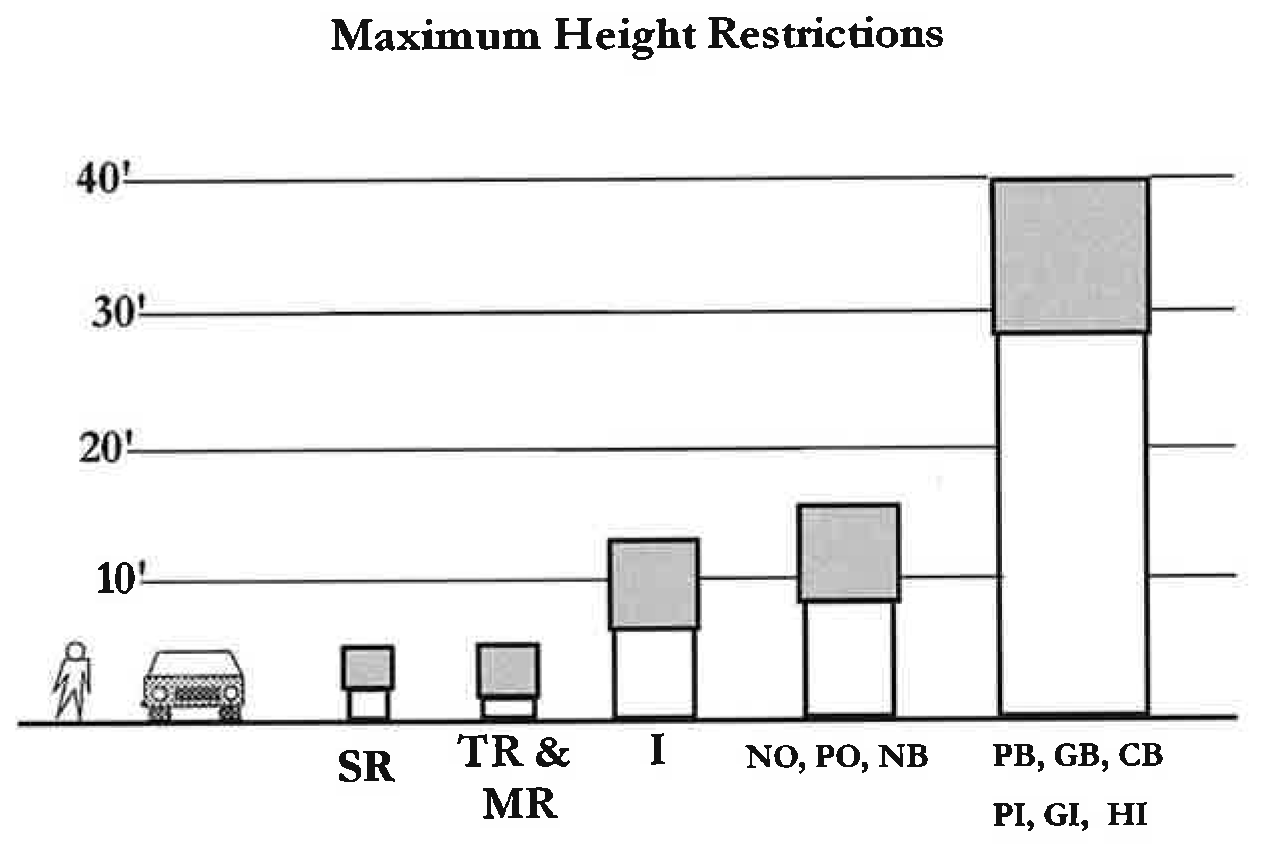
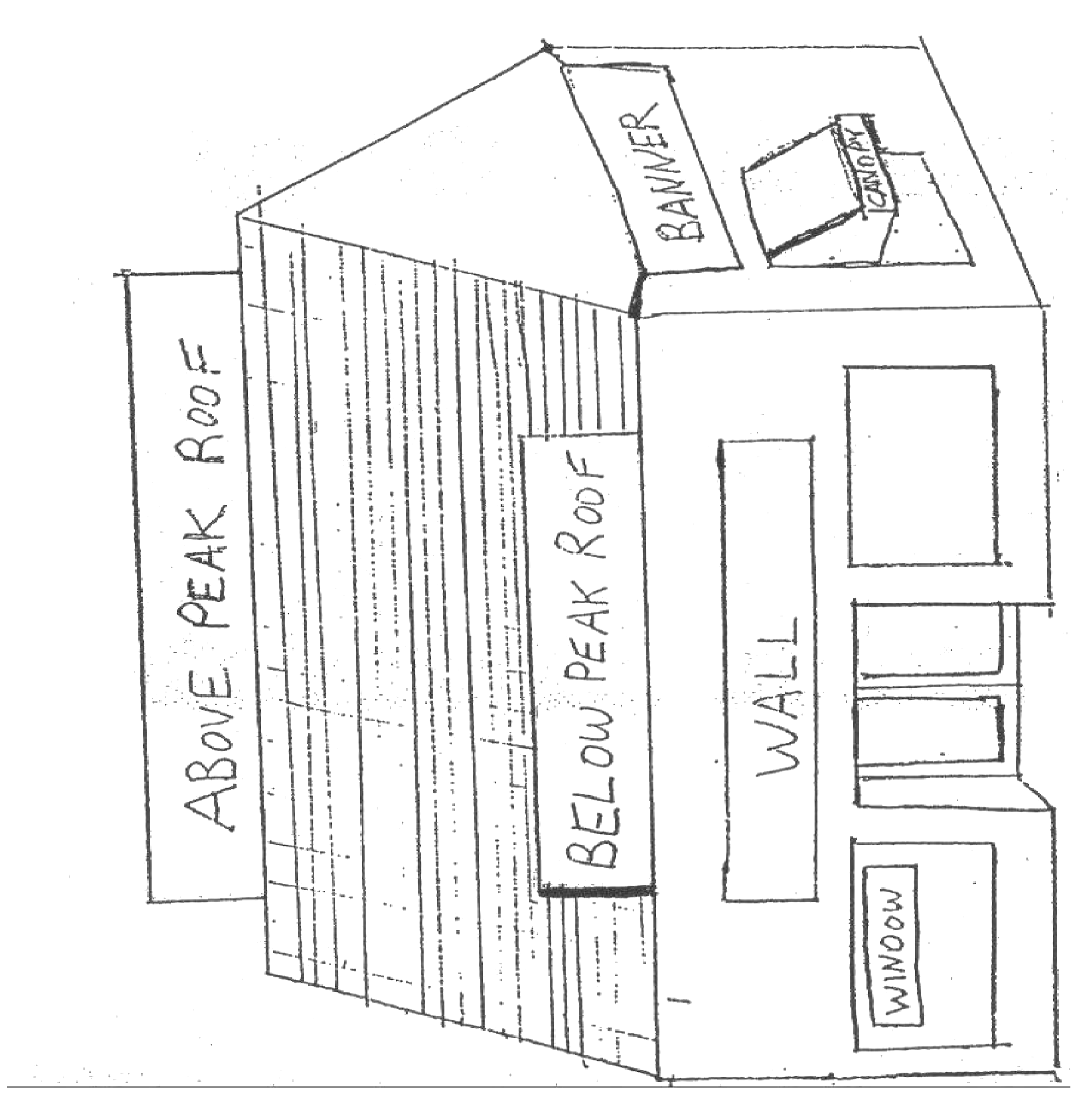
Figure 150.1007(C)(1)b
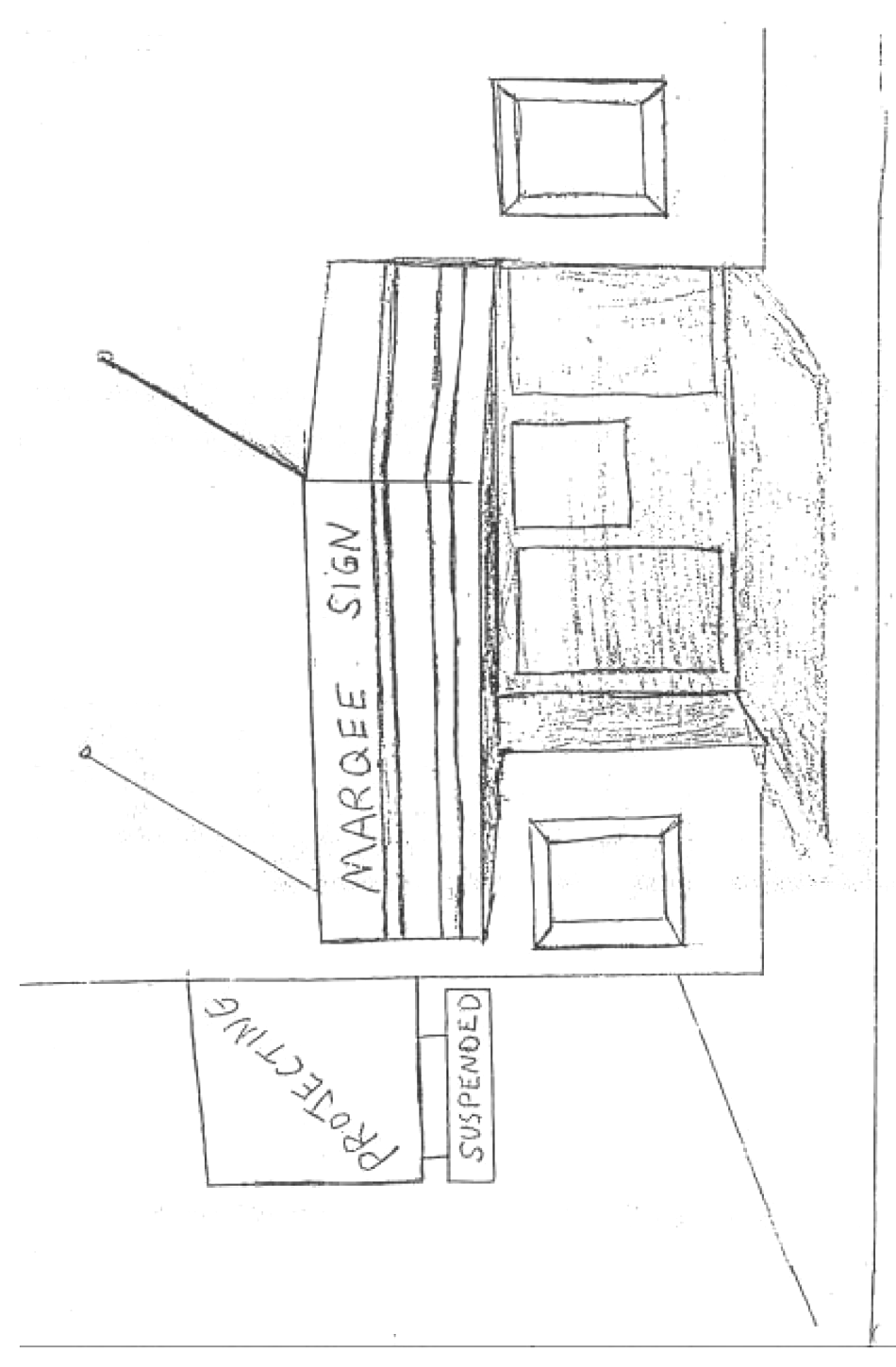
Figure 150.1007(C)(1)c
(Ord. of 3-6-06; Ord. No. 880G, § 1, 1-2-07; Ord. No. 976G, § 1, 8-18-08; Ord. No. 24H, § 19, 9-8-09; Ord. No. 61H, § 1, 6-7-10; Ord. No. 141H, § 6, 2-20-12; Ord. No. 164H, § 5, 12-3-12; Ord. No. 240H, § 11, 12-1-14; Ord. No. 341H, § 5, 4-3-17; Ord. No. 433H, § 1, 12-3-18; Ord. No. 453H, §§ 3—5, 5-6-19; Ord. No. 701H, §§ 21—24, 11-4-24)
Sec. 150.1008. - Changeable copy signs.
Changeable copy signs as defined in § 150.1003, are permitted in all districts, except for lots in residential use in single-family residential districts (SR-3, SR-4, and SR-6).
The changeable copy portion of a free standing sign, including background materials, shall be not be greater than 50 percent of the total freestanding sign area.
Changeable copy signs with information that changes more than eight times a day shall be treated as animated signs.
(Ord. No. 801G, § 3, 3-6-06; Ord. No. 619H, § 3, 4-3-23)
Sec. 150.1009. - Animated signage.
Animated signs as defined in Section 150.1003 shall adhere to the following restrictions:
(A)
Messages displayed within the animated portion of the sign shall be static for a minimum of five seconds.
(B)
Graphics and images shall be static, no flashing or animation is allowed. There shall be an instantaneous change of display for all graphics/images/messages.
(C)
Illumination levels from the sign shall not exceed 0.5 foot-candles at the property line.
(Ord. No. 341H, § 6, 4-3-17)
Sec. 150.1010. - Off-site advertising signs.
Signs advertising services, products for sale, or organizations not located or provided on the zone lot shall only be permitted in the GB commercial district, shall be limited to one per zone lot, and shall comply with the restrictions for area, height, and setbacks for freestanding signs located in table 150.1007(A)1.
(Ord. No. 801G, § 3, 3-6-06; Ord. No. 341H, § 6, 4-3-17)
Editor's note— Ord. No. 341H, § 6, adopted April 3, 2017, renumbered §§ 150.1009—150.1017 as §§ 150.1010—150.1018.
Sec. 150.1011. - Temporary signs.
(A)
Seasonal banners, pennants and display boards are limited to one temporary sign up to 200 feet of linear road frontage. One additional temporary sign is allowed for each additional 200 feet. One additional temporary sign is allowed for a lot that supports more than one business. The maximum size is 32 square feet. These temporary signs shall not be displayed for more than a combined total of 60 days per calendar year.
(B)
No more than one inflatable sign, portable signs and other temporary signs that are larger than 32 square feet are allowed per incident, with a combined total of no more than 60 days per calendar year. When inflatable signs, or other portable signs are displayed concurrently, each sign shall be counted toward this maximum.
(C)
The owner must contact the zoning enforcement officer or designee and provide the name and address of the applicant, and the description and location of the sign(s) to be erected prior to actual installation. A building permit shall be required upon approval of the temporary sign.
(D)
Lots fronting on two or more streets are allowed the permitted signage for each street frontage, but signage cannot be accumulated and used on one street in excess of that allowed for lots with only one street frontage.
(E)
Temporary signs described in items (1) through (4) below are allowed without permit, subject to the restrictions contained herein.
(1)
For each lot. One sign pertaining to the sale, lease, or rent of real estate on that lot or any political signs or election signs, subject to the following area restrictions: Six square feet for SR-3, SR-4, and SR-6 districts. 32 square feet for all other districts.
(2)
For each subdivision. If approved in accordance with the city subdivision regulations, one development sign not to exceed 24 square feet in area, and only during actual construction. Such sign shall not be located closer than 30 feet from the public right of way.
(3)
For construction on or development of a lot. One sign not more than 24 square feet in area, indicating the name of the contractors, engineers, or architects, or products being used in construction, but only during the time that actual construction is under way.
(4)
Temporary events. Events of public interest (e.g. neighborhood garage sales, church fairs), one sign of not more than 32 square feet in area and located on the site of the event. Sign shall not be erected more than 30 days prior to the event, and shall be removed immediately after the event.
(Ord. No. 801G, § 3, 3-6-06; Ord. No. 113H, § 1, 5-16-11; Ord. No. 341H, § 6, 4-3-17; Ord No. 453H, § 1, 5-6-19)
Editor's note— See editor's note, § 150.1010.
Sec. 150.1012. - Community information signs.
Community information signs shall require a special use permit within all zoning districts, but are not permitted on lots used for residential purposes in the SR-3, SR-4, and SR-6 districts. Such signs shall not be counted against the permitted number and area of signs otherwise permitted in this section.
(A)
Community sign types.
(1)
Murals. Defined as a work of art, such as a painting, applied to a wall or ceiling.
(2)
Others. Any other sign or bulletin board which only display copy regarding events and information of general interest to the community.
(Ord. No. 801G, § 3, 3-6-06; Ord. No. 341H, § 6, 4-3-17)
Editor's note— See editor's note, § 150.1010.
Sec. 150.1013. - Illumination.
(A)
Unshielded. The use of unshielded bulbs to illuminate buildings, outdoor sales areas, and outdoor storage areas is prohibited. All lights used for these purposes shall be located, shielded, and directed in such a manner that the light source is not directly visible from any surrounding property.
(B)
Neon. Signs may be illuminated through the use of tubular lighting (e.g. neon signs), light sources internal to the sign and filtered by translucent material, or an external light source. Whenever external illumination is used for a sign, the source of light shall be located, shielded and directed is such a manner that the source is not directly visible from the surrounding property. The use of exposed bulb lighting mounted directly on a sign face is prohibited.
(C)
External. Whenever external illumination is used for a sign or building, no light shall be directed above the top of the sign or structure.
(D)
Animated. Except for portions of a sign showing only time or temperature, the use of flashing lights or lights used in messages that change more than eight times per day shall be treated as animated signs and are prohibited unless allowed by special use.
(Ord. No. 801G, § 3, 3-6-06; Ord. No. 141H, § 7, 2-20-12; Ord. No. 341H, § 6, 4-3-17)
Editor's note— See editor's note, § 150.1010.
Sec. 150.1014. - Nonconforming signs.
Signs legally existing as of the effective date of this section which do not conform to the provisions of this article, shall be nonconforming signs and shall be subject to the following provisions:
(A)
Maintenance. Nonconforming signs may be maintained. However no nonconforming sign shall be altered or moved to a new location without being brought into compliance with the requirements of this section.
(B)
Removal. Nonconforming signs shall be removed when the principle structure located on the premises undergoes a change of use. Closing businesses must remove their signs within 60 days of closing.
(C)
Alteration. Nonconforming signs shall be removed if altered for the following reasons: alteration of a sign is considered to be a change to the exterior of the sign frame, supporting structure, height, or location, or any other alterations as determined by the zoning enforcement officer for the same business. Nonconforming signs that are altered for the following reasons may be altered without removal: Maintaining the existing appearance of the sign; replacing the sign face, changing the message of a marquee or changeable copy sign; or changing the face of an off-site advertising sign.
If a business changes ownership or nature of business, all nonconforming signs must come into compliance with the new sign ordinance or apply for the required special use permit.
(D)
Tenant signs. For a period extending ten years from the date of this section, a tenant sign which is part of a nonconforming multi-use establishment sign may be replaced to accommodate the new tenant, without necessity of bringing the entire sign group into conformance with the provisions of this section.
(Ord. No. 801G, § 3, 3-6-06; Ord. No. 341H, § 6, 4-3-17)
Editor's note— See editor's note, § 150.1010.
Sec. 150.1015. - Maintenance of signs.
Maintenance of signs. All signs and canopies shall be maintained in good repair and be properly anchored so as to be kept in a sound condition. All exposed surfaces shall be protected from the elements and against decay. In the event any sign should suffer structural deterioration or damage, it shall be repaired or removed by the owner.
(Ord. No. 375H, § 4, 11-6-17)
Sec. 150.1016. - Special districts.
(A)
Reserved.
(Ord. No. 801G, § 3, 3-6-06; Ord. No. 341H, § 6, 4-3-17; Ord. No. 375H, § 4, 11-6-17)
Editor's note— Ord. No. 375H, § 5, adopted November 6, 2017, renumbered §§ 150.1015—150-1018 as §§ 150.1016—150.1019.
Sec. 150.1017. - Subdivision or development identification signs.
A subdivision or development identification sign is defined as a freestanding sign that is permanent and located at a major entrance of a residential, office, commercial, or industrial subdivision with more than eight lots, a planned community development, or a multi-family development with more than ten dwelling units. Such a sign is permitted within all zoning districts and may identify only the name of the subdivision, development, or planned community development, the subdivision's or development's logo, and the name of the city in which the subdivision or development lies within. A subdivision or development identification sign shall not contain advertising material or messages. The sign is permitted only at a major entrance of a subdivision/development (not within the public right-of-way) and shall be setback a minimum of ten feet from any lot line. There shall be a maximum of two signs per subdivision/development and no more than one sign at a major entrance. A subdivision or development identification sign shall not exceed 60 square feet in surface area nor exceed six linear feet in structure height. Such a sign may be lighted provided that the sign is in compliance with § 150.012. The number and surface area of a subdivision or development identification sign shall not limit the number or surface area of other allowable signage on a zoning lot.
(Ord. No. 801G, § 3, 3-6-06; Ord. No. 341H, § 6, 4-3-17; Ord. No. 375H, § 4, 11-6-17)
Editor's note— See editor's note, § 150.1016.
Sec. 150.1018. - Permit requirements.
(A)
Only those permanent or temporary signs which have been granted a permit by the zoning enforcement officer in accordance with the provisions of this section may be erected, installed, constructed or maintained, unless specifically exempted or allowed without permit in the previous sections.
(B)
Whenever there is a change in user (except off-site advertising signs), owner, or owner of property on which a sign is located, the new user or owner shall forthwith notify the zoning enforcement officer of the change. No new sign permit is required unless there is modification of the sign face or sign structure.
(C)
All applications for permanent sign permits and special use permits must include:
(1)
Name and address of the applicant.
(2)
Site plan and sign plan, drawn to scale, showing the location, dimensions, design of the signs(s) requested, as well as the site, building and landscaping and all other signs requiring a permit.
(3)
Applicable sign permit fee.
(D)
All applications for temporary sign permits must include:
(1)
Name and address of applicant;
(2)
A description and/or drawing of the proposed sign and its location;
(3)
Applicable temporary sign deposit, to be refunded upon retirement of the sign.
(Ord. No. 801G, § 3, 3-6-06; Ord. No. 341H, § 6, 4-3-17; Ord. No. 375H, § 4, 11-6-17)
Editor's note— See editor's note, § 150.1016.
Sec. 150.1019. - Enforcement.
If any permanent sign has been constructed, erected, altered or maintained in violation of the provisions of this section, the zoning enforcement officer or designee shall supply written notice of the violation to the owner and/or occupant of the property in question. If the owner or occupant fails to remove or alter the sign so as to comply with the standards of this section within 30 days of this notice, such sign may be removed or altered by the city and a lien placed on the property for the full cost of such action, including administrative, legal, and overhead charges.
If any temporary sign has been constructed, erected, altered or maintained in violation of the provisions of this section, the zoning enforcement officer or designee shall supply written notice of the violation to the owner and/or occupant of the property in question. If the owner or occupant fails to remove or alter the temporary sign so as to comply with the standards of this section within 24 hours of receiving this notice, such sign may be removed or altered by the city, and the owner shall be subject to the general penalty provisions of this section. Furthermore, a lien may be placed on the property for the full cost of such action, including administrative, legal, and overhead charges. In the case where a temporary sign is not retired per condition of the temporary sign permit, the deposit shall be forfeited by the applicant.
(Ord. No. 801G, § 3, 3-6-06; Ord. No. 341H, § 6, 4-3-17; Ord. No. 375H, § 4, 11-6-17)
Editor's note— See editor's note, § 150.1016.

