
Berkeley County Unincorporated
City Zoning Code
City Zoning Code
ARTICLE 6
- RURAL ZONING DISTRICTS
6.1.- Rural single-family residential district (R1-R).
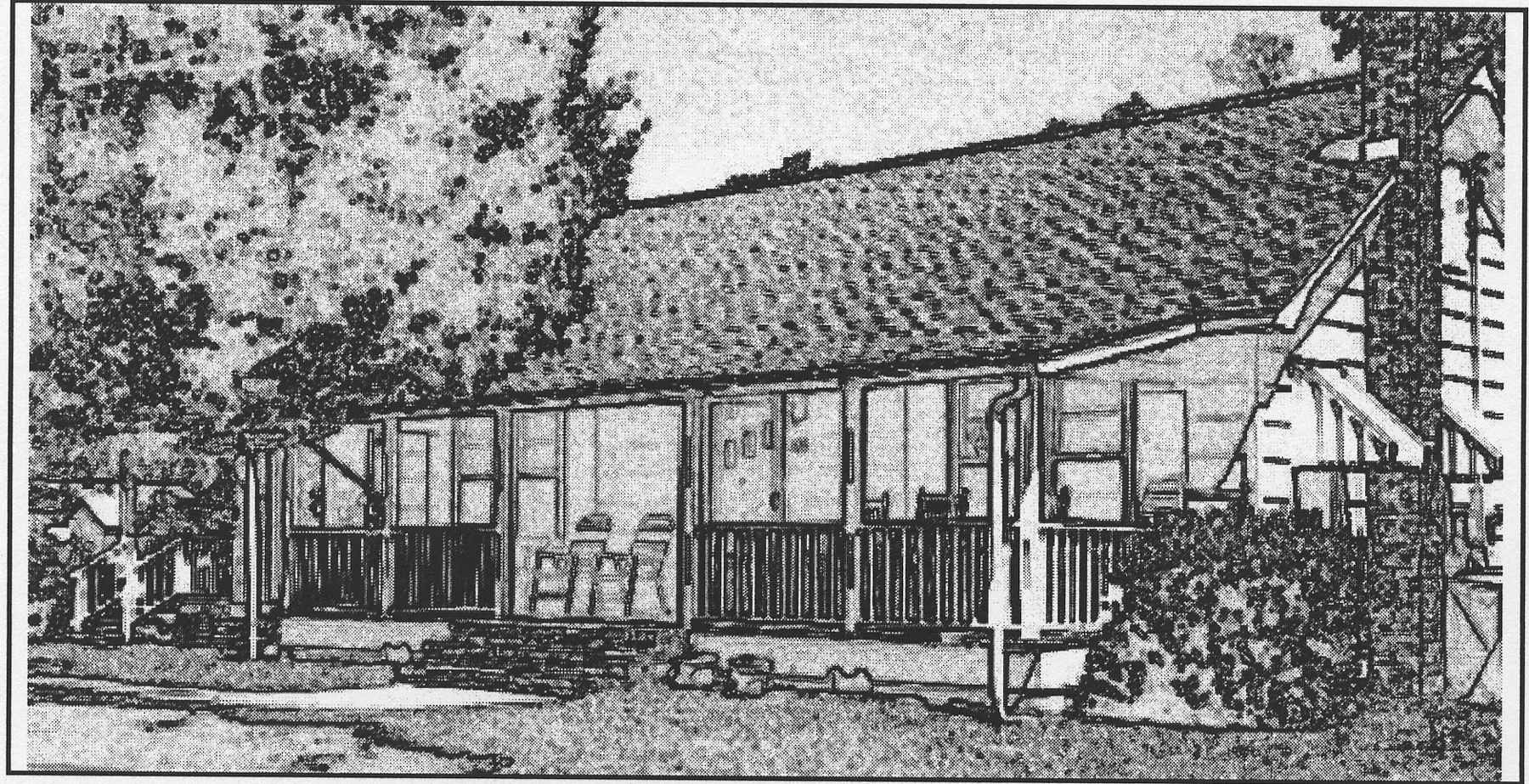
6.1.1. Intent.
A.
The R1-R rural single-family district is intended to implement the land use goals of the rural village areas and residential growth areas within rural areas in the unincorporated portions of Berkeley County. Rural village areas are areas that have an identity and represent the heritage of development patterns in Berkeley County's rural landscape.
B.
This district is intended to:
1.
Encourage development within the rural village areas as an alternative to other developing agricultural areas of the county by allowing a broader range of land uses at a higher density than permitted in surrounding rural areas.
2.
Protect and enhance existing character of rural villages.
3.
Encourage efficient development patterns and use of in-fill development.
4.
Minimize development problems in areas where, due to the absence of urban infrastructure, individual on-site sewage disposal systems are necessary.
5.
Protect development in rural village areas from infiltration of incompatible land uses.
6.
Provide for the development of recreational, religious, and educational facilities as basic elements of a balanced residential area.
7.
Permit the location of needed community facilities in support of residential development.
6.1.2. Location. This district shall be applied in the rural village areas and residential growth areas mapped on the future land use map in the comprehensive plan.
USES
6.1.3. Permitted uses. The following uses are permitted within the R1-R rural single-family district:
A.
Agricultural uses.
1.
Agriculture, crop.
2.
Forestry.
B.
Recreation and amusement uses.
1.
Golf course.
2.
Indoor recreation.
3.
Outdoor recreation, active.
4.
Outdoor recreation, passive.
C.
Institutional uses.
1.
Assembly and worship.
2.
Government office, public services, and local utilities.
3.
School, neighborhood and community.
D.
Residential uses.
1.
Single-family detached.
6.1.4 Accessory uses. Accessory uses are permitted as a detached structure or use subordinate to the main building or classification that is used for purposes customarily incidental to the principal use. Accessory uses shall not exceed 65 percent of the size of the principal classification; excluding agricultural uses and uses located on parcels one acre in size or larger.
The following uses are permitted as accessory uses within the R1-R rural single-family district:
A.
Agricultural.
1.
Sale of products produced on-site;
2.
Accessory agricultural uses shall include all residential accessory uses and those accessory uses and activities customarily associated with agricultural operations, as determined by the zoning administrator. Barns and farm-related structures, including roadside stands selling sweet-grass baskets or indigenous produce grown or produced on the farm where the roadside stand is located, shall be allowed in all parcels in Agricultural zoning districts.
B.
Residential.
1.
Fences and walls;
2.
Garages, carports, and off-street parking;
3.
Guesthouses, gate houses and guard houses;
4.
Playhouses, patios, cabanas, porches, gazebos, and incidental household storage buildings;
5.
Radio and television receiving antennas;
6.
Recreational and play facilities for the use of residents;
7.
Tennis courts, swimming pools, and hot tubs;
8.
Other necessary and customary uses determined by the zoning administrator to be appropriate, incidental and subordinate to the principal use of the property, subject to compliance with any development and performance standards imposed by the planning department as a means of ensuring land use compatibility.
C.
Institutional and civic.
1.
Cemetery;
2.
Refreshment stands and food and beverage sales located in uses involving public assembly;
3.
Cafeterias, dining halls, and similar food services when operated primarily for the convenience of employees, residents, clients, patients, or visitors to the principal use;
4.
Gift shops, newsstands, and similar commercial activities operated primarily for the convenience of employees, residents, clients, patients, or visitors to the principal use;
5.
Recreation areas and facilities for the use of the employees;
6.
Other necessary and customary uses determined by the zoning administrator to be appropriate, incidental and subordinate to the principal use of the property, subject to compliance with any development and performance standards imposed by the planning department as a means of ensuring land use compatibility.
6.1.5. Uses permitted with conditions. The following uses are permitted as conditional uses within the R1-R rural single-family district. All listed conditions shall be demonstrated prior to permit approval. See article 11 for the procedure for approval of conditional uses.
A.
Agricultural uses.
1.
Agriculture, horses only.
a.
All conditions and regulations found in article 11.3 shall be met prior to permit approval.
B.
Institutional uses.
1.
Family day care home.
a.
All conditions and regulations found in article 11.6 shall be met prior to permit approval.
C.
Residential uses.
1.
Home occupation.
a.
Permitted as accessory use only.
b.
All conditions and regulations found in article 11.9 shall be met prior to permit approval.
6.1.6. Special exceptions. (Reserved)
6.1.7. Prohibited uses. The following uses are prohibited within the R1-R rural single-family district.
1.
Mobile home park.
2.
All uses not listed as permitted are prohibited.
LOT AND BUILDING STANDARDS
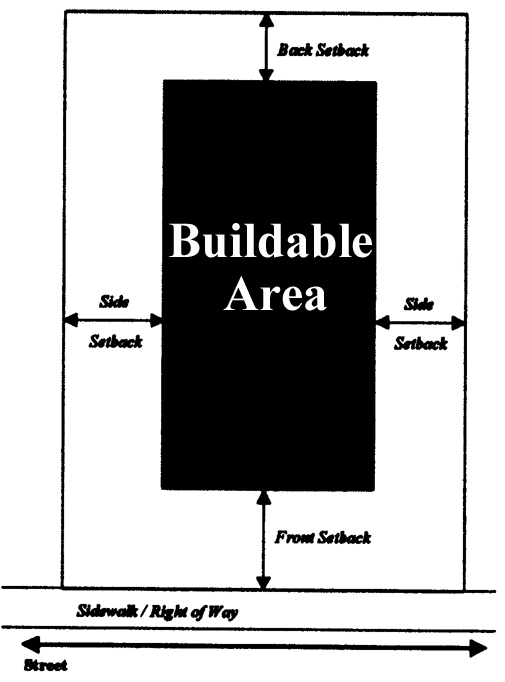
6.1.8. Lot requirements.
A.
Minimum lot size: Two acres.
B.
Minimum lot frontage:
1.
Standard lot: 20 feet.
2.
Corner lot: 40 feet.
C.
Clustering of lots may be permitted by the procedures outlined in Article 13 of the Zoning and Development Standards Ordinance.
6.1.9. Density regulations.
A.
There shall be no more than one principal dwelling unit per one acre (43,560 square feet) of platted land, lot, or parcel.
6.1.10. Minimum yard requirements.
*
This is the minimum setback required for open drainage ditch and/or stormwater pond easement lines (excluding swales).
†
This is the minimum setback from any ingress/egress easement.
Accessory structures are permitted in the rear and side yards only with minimum of five-foot setbacks from the side and rear property lines or ingress/egress easements, whichever is greater. If the accessory structure is placed in that portion of the yard that fronts a second street frontage of the property, the setback from the second street frontage property line for the accessory structure is the required second street frontage setback for the primary structure. Agricultural structures shall not be less than 60 feet from the property line.
6.1.11. Building requirements.
A.
Impervious coverage: 50 percent maximum.
B.
Building height: Less than 40 feet to the highest part of the structure. The height limits contained in the airport overlay district, as regulated by article 10, may apply additional height limitations to a specific piece of property.
SITE STANDARDS
6.1.12. Parking standards. All uses within this district shall conform to the standards outlined in article 15: Off-Street Parking Requirements.
6.1.13. Bufferyard standards. All uses within this district shall conform to the standards outlined in article 17: Bufferyards. Unless expressly exempted, the buffering standards of this ordinance shall apply to all new nonresidential development and all new residential major subdivisions (15 or more lots).
(Ord. No. 04-11-68, 11-23-2004; Ord. No. 05-08-58, 8-29-2005; Ord. No. 09-04-16, 4-13-2009; Ord. No. 10-08-24, 8-23-2010; Ord. No. 11-04-02, 4-25-2011; Ord. No. 14-03-04, 3-24-2014)
6.2. - Rural manufactured residential district (R2-R).
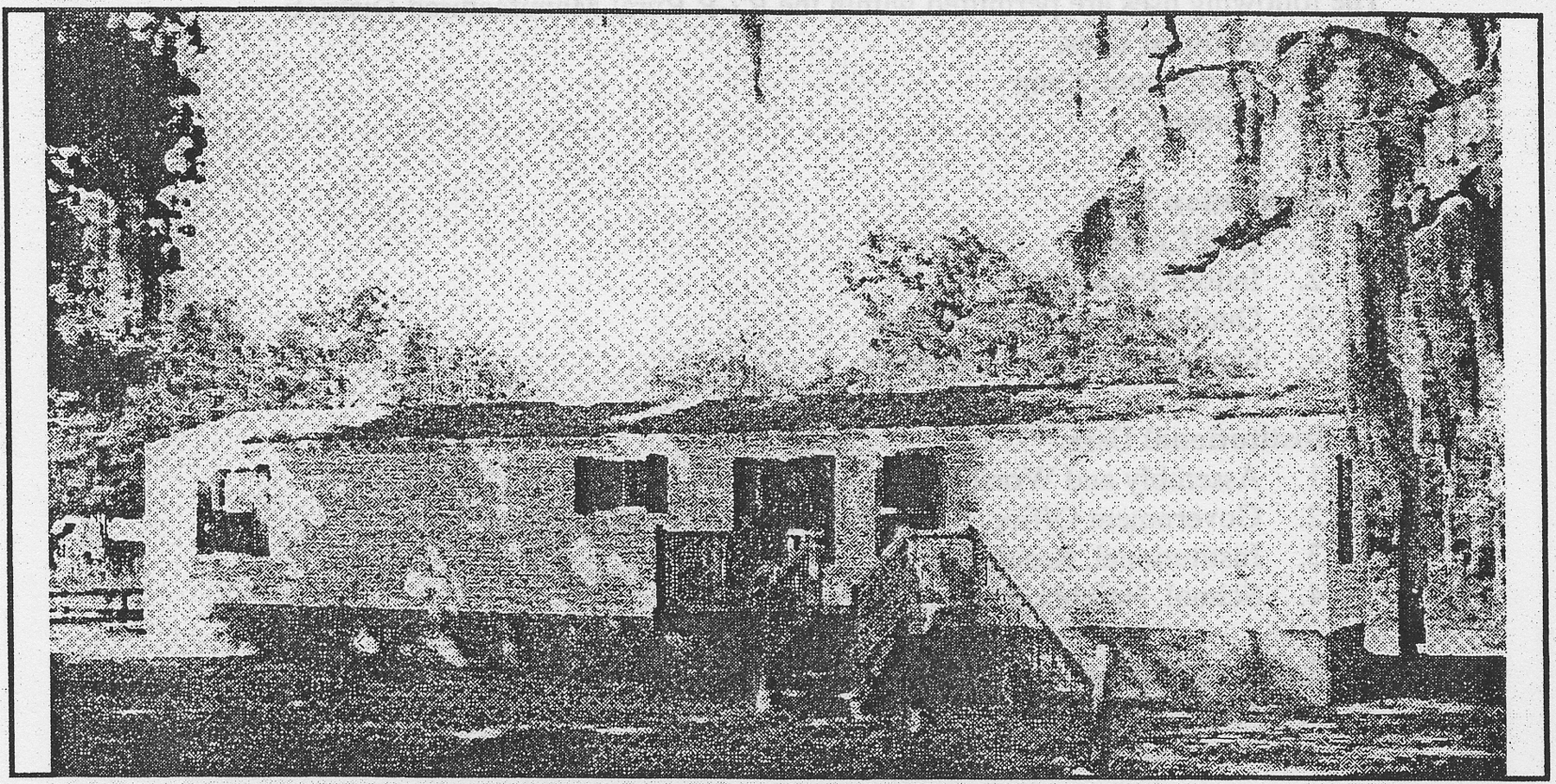
6.2.1. Intent.
A.
The R2-R rural manufactured residential district is intended to implement the land use goals of the rural settlement areas, rural village areas and residential growth areas within rural areas in the unincorporated portions of Berkeley County. Rural settlement areas are residential areas that act as transition areas between agricultural lands and urbanizing portions of the county. Rural village areas are areas that have an identity and represent the heritage of development patterns in Berkeley County's rural landscape.
B.
This district is intended to:
1.
Encourage development within the rural village areas as an alternative to other developing agricultural areas of the county by allowing a broader range of land uses at a higher density than permitted in surrounding rural areas.
2.
Protect and enhance existing character of the rural area.
3.
Encourage efficient development patterns and use of in-fill development.
4.
Minimize development problems in areas where, due to the absence of urban infrastructure, individual on-site sewage disposal systems are necessary.
5.
Implement the comprehensive plan regarding the location of manufactured home dwellings and neighborhoods in predominantly rural or designated low-density areas.
6.
Minimize development problems in such areas where due to the absence of urban infrastructure, individual on-site sewage disposal systems are necessary.
7.
Protect development in these areas from infiltration of incompatible land uses.
8.
Provide for the development of recreational, religious, and educational facilities as basic elements of a balanced residential area.
9.
Permit the location of needed community facilities in support of residential development.
6.2.2. Location. This district shall be applied in the rural settlement areas, rural village areas and residential growth areas mapped on the future land use map in the comprehensive plan.
USES
6.2.3. Permitted uses. The following uses are permitted within the R2-R rural manufactured single-family district:
A.
Agricultural uses.
1.
Agriculture, crop.
2.
Forestry.
B.
Recreation and amusement uses.
1.
Golf course.
2.
Indoor recreation.
3.
Outdoor recreation, active.
4.
Outdoor recreation, passive.
C.
Institutional uses.
1.
Assembly and worship.
2.
Government office, public services, and local utilities.
3.
School, neighborhood and community.
D.
Residential uses.
1.
Single-family detached.
2.
Manufactured home.
6.2.4 Accessory uses. Accessory uses are permitted as a detached structure or use subordinate to the main building or classification that is used for purposes customarily incidental to the principal use. Accessory uses shall not exceed 65 percent of the size of the principal classification; excluding agricultural uses and uses located on parcels one acre in size or larger.
The following uses are permitted as accessory uses within the R2-R rural manufactured district:
A.
Agricultural.
1.
Sale of products produced on-site;
2.
Other necessary and customary uses determined by the zoning administrator to be appropriate, incidental and subordinate to the principal use of the property, subject to compliance with any development and performance standards imposed by the planning department as a means of ensuring land use compatibility.
B.
Residential.
1.
Fences and walls;
2.
Garages, carports, and off-street parking;
3.
Guesthouse, gate houses and guard houses;
4.
Playhouses, patios, cabanas, porches, gazebos, and incidental household storage buildings;
5.
Radio and television receiving antennas;
6.
Recreational and play facilities for the use of residents;
7.
Tennis courts, swimming pools, and hot tubs;
8.
Other necessary and customary uses determined by the zoning administrator to be appropriate, incidental and subordinate to the principal use of the property, subject to compliance with any development and performance standards imposed by the planning department as a means of ensuring land use compatibility.
C.
Institutional and civic.
1.
Cemetery;
2.
Refreshment stands and food and beverage sales located in uses involving public assembly;
3.
Cafeterias, dining halls, and similar food services when operated primarily for the convenience of employees, residents, clients, patients, or visitors to the principal use;
4.
Gift shops, newsstands, and similar commercial activities operated primarily for the convenience of employees, residents, clients, patients, or visitors to the principal use;
5.
Recreation areas and facilities for the use of the employees;
6.
Other necessary and customary uses determined by the zoning administrator to be appropriate, incidental and subordinate to the principal use of the property, subject to compliance with any development and performance standards imposed by the planning department as a means of ensuring land use compatibility.
6.2.5. Uses permitted with conditions. The following uses are permitted as conditional uses within the R2-R rural manufactured [district]. All listed conditions shall be demonstrated prior to permit approval. See article 11 for the procedure for approval of conditional uses.
A.
Agricultural uses.
1.
Agriculture, horses only.
a.
All conditions and regulations found in article 11.3 shall be met prior to permit approval.
B.
Institutional uses.
1.
Family day care home.
a.
All conditions and regulations found in article 11.6 shall be met prior to permit approval.
C.
Residential uses.
1.
Home occupation.
a.
Permitted as accessory use only.
b.
All conditions and regulations found in article 11.9 shall be met prior to permit approval.
6.2.6. Special exceptions. (Reserved)
6.2.7. Prohibited uses. The following uses are prohibited within the R2-R rural manufactured district.
1.
Mobile home park.
2.
All uses not listed as permitted are prohibited.
LOT AND BUILDING STANDARDS
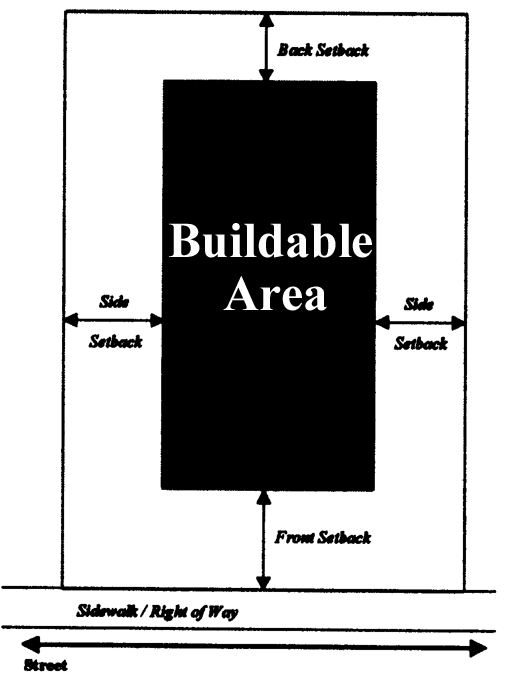
6.2.8. Lot requirements.
A.
Minimum lot size: Two acres.
B.
Minimum lot frontage:
1.
Standard lot: 20 feet.
2.
Corner lot: 40 feet.
6.2.9. Density regulations.
A.
There shall be no more than one principal dwelling unit per one acre (43,560 square feet) of platted land, lot, or parcel.
6.2.10. Minimum yard requirements.
*
This is the minimum setback required for open drainage ditch and/or stormwater pond easement lines (excluding swales).
†
This is the minimum setback from any ingress/egress easement.
Accessory structures are permitted in the rear and side yards only with minimum of five-foot setbacks from the side and rear property lines or ingress/egress easements, whichever is greater. If the accessory structure is placed in that portion of the yard that fronts a second street frontage of the property, the setback from the second street frontage property line for the accessory structure is the required second street frontage setback for the primary structure. Agricultural structures shall not be less than 60 feet from the property line.
6.2.11. Building requirements.
A.
Impervious coverage: 50 percent maximum.
B.
Building height: Less than 40 feet to the highest part of the structure. The height limits contained in the airport overlay district, as regulated by article 10, may apply additional height limitations to a specific piece of property.
SITE STANDARDS
6.2.12. Parking standards. All uses within this district shall conform to the standards outlined in article 15: Off-Street Parking Requirements.
6.2.13. Bufferyard standards. All uses within this district shall conform to the standards outlined in article 17: Bufferyards. Unless expressly exempted, the buffering standards of this ordinance shall apply to all new nonresidential development and all new residential major subdivisions (15 or more lots).
(Ord. No. 04-11-68, 11-23-2004; Ord. No. 05-08-58, 8-29-2005; Ord. No. 10-08-24, 8-23-2010; Ord. No. 11-04-02, 4-25-2011; Ord. No. 14-03-04, 3-24-2014)
6.3. - Mobile home rural farm residential district (R2-R(F)).
6.3.1. Intent.
A.
The R2-R(F) mobile home farm residential district is intended to implement the land use goals of the rural settlement areas, rural village areas and residential growth areas within rural areas in the unincorporated portions of Berkeley County. Rural settlement areas are residential areas that act as transition areas between agricultural lands and urbanizing portions of the county. Rural village areas are areas that have an identity and represent the heritage of development patterns in Berkeley County's rural landscape.
B.
This district is intended to:
1.
Encourage development within the rural village areas as an alternative to other developing agricultural areas of the county by allowing a broader range of land uses at a higher density than permitted in surrounding rural areas.
2.
Protect and enhance existing character of the rural area.
3.
Encourage efficient development patterns and use of in-fill development.
4.
Minimize development problems in areas where, due to the absence of urban infrastructure, individual on-site sewage disposal systems are necessary.
5.
Implement the comprehensive plan regarding the location of manufactured home dwellings and neighborhoods in predominantly rural or designated low-density areas.
6.
Minimize development problems in such areas where due to the absence of urban infrastructure, individual on-site sewage disposal systems are necessary.
7.
Protect development in these areas from infiltration of incompatible land uses.
8.
Provide for the development of recreational, religious, and educational facilities as basic elements of a balanced residential area.
9.
Permit the location of needed community facilities in support of residential development.
10.
Permit noncommercial, agricultural land uses associated with the residential enjoyment of domestic farm animals.
6.3.2. Location. This district should be applied in the rural settlement areas, rural village areas and residential growth areas mapped on the future land use map in the comprehensive plan.
USES
6.3.3. Permitted uses. The following uses are permitted within the R2-R(F) mobile home farm residential district:
A.
Agricultural uses.
1.
Agriculture, crop.
2.
Forestry.
B.
Recreation and amusement uses.
1.
Golf course.
2.
Indoor recreation.
3.
Outdoor recreation, active.
4.
Outdoor recreation, passive.
C.
Institutional uses.
1.
Assembly and worship.
2.
Government office, public services, and local utilities.
3.
School, neighborhood and community.
D.
Residential uses.
1.
Single-family detached.
2.
Manufactured home.
6.3.4 Accessory uses. Accessory uses are permitted as a detached structure or use subordinate to the main building or classification that is used for purposes customarily incidental to the principal use. Accessory uses shall not exceed 65 percent of the size of the principal classification; excluding agricultural uses and uses located on parcels one acre in size or larger.
The following uses are permitted as accessory uses within the R2-R(F) mobile home farm residential district:
A.
Agricultural.
1.
Sale of products produced on-site;
2.
Other necessary and customary uses determined by the zoning administrator to be appropriate, incidental and subordinate to the principal use of the property, subject to compliance with any development and performance standards imposed by the planning department as a means of ensuring land use compatibility.
B.
Residential.
1.
Fences and walls;
2.
Garages, carports, and off-street parking;
3.
Guesthouse, gate houses and guard houses;
4.
Playhouses, patios, cabanas, porches, gazebos, and incidental household storage buildings;
5.
Radio and television receiving antennas;
6.
Recreational and play facilities for the use of residents;
7.
Tennis courts, swimming pools, and hot tubs;
8.
Other necessary and customary uses determined by the zoning administrator to be appropriate, incidental and subordinate to the principal use of the property, subject to compliance with any development and performance standards imposed by the planning department as a means of ensuring land use compatibility.
C.
Institutional and civic.
1.
Cemetery;
2.
Refreshment stands and food and beverage sales located in uses involving public assembly;
3.
Cafeterias, dining halls, and similar food services when operated primarily for the convenience of employees, residents, clients, patients, or visitors to the principal use;
4.
Gift shops, newsstands, and similar commercial activities operated primarily for the convenience of employees, residents, clients, patients, or visitors to the principal use;
5.
Recreation areas and facilities for the use of the employees;
6.
Other necessary and customary uses determined by the zoning administrator to be appropriate, incidental and subordinate to the principal use of the property, subject to compliance with any development and performance standards imposed by the planning department as a means of ensuring land use compatibility.
6.3.5. Uses permitted with conditions. The following uses are permitted as conditional uses within the R2-R(F) mobile home farm residential district. All listed conditions shall be demonstrated prior to permit approval. See article 11 for the procedure for approval of conditional uses.
A.
Agricultural uses.
1.
Agriculture, home animal production.
a.
This group is limited to noncommercial uses only.
b.
Domestic animals allowed in this zoning district are limited to those listed in subsections 7.4.9 and 7.4.10 [6.3.9] below.
c.
All conditions and regulations found in this district shall be met prior to permit approval.
B.
Institutional uses.
1.
Family day care home.
a.
All conditions and regulations found in article 11.6 shall be met prior to permit approval.
C.
Residential uses.
1.
Home occupation.
a.
Permitted as accessory use only.
b.
All conditions and regulations found in article 11.9 shall be met prior to permit approval.
6.3.6. Special exceptions. (Reserved)
6.3.7. Prohibited uses. The following uses are prohibited within the R2-R(F) mobile home farm residential district:
1.
Mobile home park.
2.
All uses not listed as permitted are prohibited.
LOT AND BUILDING STANDARDS
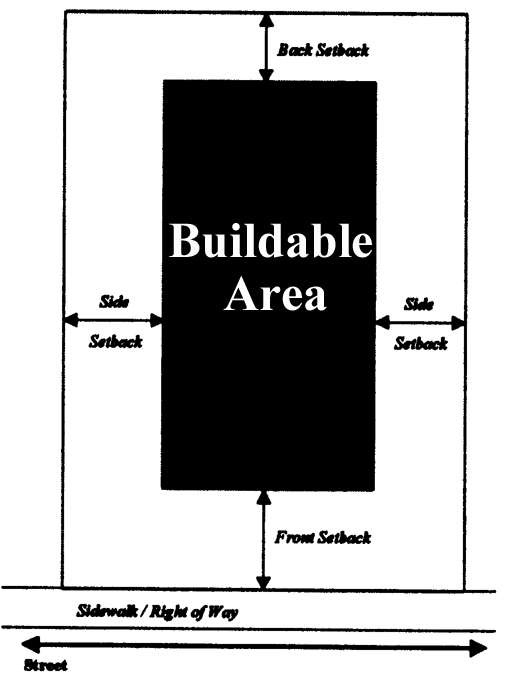
6.3.8. Lot requirements.
A.
Minimum lot size: One acre.
B.
Minimum lot frontage:
1.
Standard lot: 20 feet.
2.
Corner lot: 40 feet.
6.3.9. Density regulations.
A.
There shall be no more than one principal dwelling unit per one acre (43,560 square feet) of platted land, lot or parcel.
B.
For each one acre of any lot, one large animal or five small animals, as defined below, may be maintained, and for each additional one-half acre, one large animal or five small animals, as defined below, may be maintained on the lot as a whole; provided, however, that the maximum number of animals per lot shall not exceed ten.
1.
Large animals—Equine or bovine.
2.
Small animals—Goats, sheep, emu, ostrich, or llama.
3.
Fowl—Ducks, chickens, geese, swans, turkeys, doves, pheasants, quail, pigeons, and guinea fowl (no limit on density).
6.3.10. Minimum yard requirements.
*
This is the minimum setback required for open drainage ditch and/or stormwater pond easement lines (excluding swales).
†
This is the minimum setback from any ingress/egress easement.
Accessory structures are permitted in the rear and side yards only with minimum of five-foot setbacks from the side and rear property lines or ingress/egress easements, whichever is greater. If the accessory structure is placed in that portion of the yard that fronts a second street frontage of the property, the setback from the second street frontage property line for the accessory structure is the required second street frontage setback for the primary structure. Agricultural structures shall not be less than 60 feet from the property line.
6.3.11. Building requirements.
A.
Impervious coverage: 50 percent maximum. Provided that this requirement will be superseded by specific development guidelines contained in Berkeley County Drainage Ordinance No. 89-4-9, as amended, and in Berkeley County Subdivision Ordinance No. 79-12-34, as amended.
B.
Building height: Less than 40 feet to the highest part of the structure. The height limits contained in the airport overlay district, as regulated by article 10, may apply additional height limitations to a specific piece of property.
SITE STANDARDS
6.3.12. Parking standards. All uses within this district shall conform to the standards outlined in article 15: Off-Street Parking Requirements.
6.3.13. Bufferyard standards. All uses within this district shall conform to the standards outlined in article 17: Bufferyards. Unless expressly exempted, the buffering standards of this ordinance shall apply to all new nonresidential development and all new residential major subdivisions (15 or more lots).
6.3.14. Restrictions.
A.
No barn or other agricultural structure shall be located any closer than 60 feet to any property line.
B.
The lot must be designed and maintained to drain so as to prevent ponding and propagation of insects.
C.
The lot must be designed and maintained so as to prevent the pollution by drainage of adjacent streams and other water bodies.
D.
The premises must be maintained in a sanitary condition through the proper use of lime and pesticides.
E.
The premises must be maintained by keeping manure piles in covered containers at least 50 feet from any dwelling or any pool, patio, or other recreational structure on an adjoining lot and at least 25 feet from any property line.
F.
All manure must be removed as necessary so as to prevent propagation of flies and creation of odors.
G.
All grain on the lot must be stored in rodentproof containers.
H.
All feed spillage on the lot must be promptly removed so as to prevent attraction of flies, rodents, and birds, and creation of odors.
I.
The exercise and training areas on the lot must be dampened so as to prevent dust.
J.
All animals must be confined to the premises while maintaining a ten-foot setback from the property line. No free-roaming animals will be permitted including fowl.
(Ord. No. 04-11-68, 11-23-2004; Ord. No. 05-08-58, 8-29-2005; Ord. No. 09-04-16, 4-13-2009; Ord. No. 10-08-24, 8-23-2010; Ord. No. 11-04-02, 4-25-2011; Ord. No. 14-03-04, 3-24-2014)
6.4. - Agricultural district (Flex1).
6.4.1. Intent. A significant portion of the county's land area is used for agricultural, forestry, and agricultural/residential purposes. These areas represent the county's rural landscape and historic character of Berkeley County. The viability of agricultural operations and production is contingent upon their protection from incompatible land uses and development. Additionally, premature conversion of these lands to accommodate urban and suburban development increases the demand for costly public infrastructure.
A.
The Flex1 agricultural district is intended to implement the land use goals of the agriculture and resource conservation areas within rural areas in the unincorporated portions of Berkeley County.
B.
This district is intended to:
1.
Preserve agricultural activities as a primary use, but to allow residential development as a secondary use.
2.
Manage growth to protect agricultural land and land uses from development pressures to avoid increasing demands for road improvements and public infrastructure.
3.
Provide standards to control the intensity of development in rural areas of sensitive natural and historical resources.
4.
Preserve wetlands, watercourses and other significant natural resource areas, and to preserve the scenic quality of the landscape.
5.
Preserve and protect the rural residential character of specific areas within the county.
6.
Ensure that the cultural integrity of the county's historical resources is protected.
7.
Protect these areas from infiltration of incompatible land uses.
6.4.2. Location. This district should be applied in the resource conservation areas and agricultural areas mapped on the future land use map in the comprehensive plan.
6.4.3. Agricultural nuisance disclaimer. Lands within the agricultural districts are used for commercial agricultural and forestry production. Owners, residents, and other users of this property may be subjected to inconvenience, discomfort, and the possibility of injury to property and health arising from normal and accepted agricultural practices and operations, including, but not limited to, noise, odors, dust, the operation of machinery of any kind, including aircraft, the storage and disposal of manure, the application of fertilizers, herbicides, and pesticides, clear cutting, and prescribed burning. Owners, residents, and users of this property should be prepared to accept these conditions.
USES
6.4.4. Permitted uses. The following uses are permitted within the Flex1 agricultural district:
A.
Agricultural uses.
1.
Agriculture, crop.
2.
Agriculture, home animal production.
3.
Agriculture, home horses.
4.
Forestry.
B.
Recreation and amusement uses.
1.
Ecotourism.
2.
Golf course.
3.
Indoor recreation.
4.
Outdoor recreation, active.
5.
Outdoor recreation, passive.
C.
Institutional uses.
1.
Assembly and worship.
2.
College and professional schools.
3.
School, neighborhood and community.
4.
Government office, public services, and local utilities.
D.
Residential uses.
1.
Single-family detached.
2.
Duplex (residential, two-family).
3.
Manufactured home.
6.4.5 Accessory uses. Accessory uses are permitted as a detached structure or use subordinate to the main building or classification that is used for purposes customarily incidental to the principal use. Accessory uses shall not exceed 65 percent of the size of the principal classification; excluding agricultural uses and uses located on parcels one acre in size or larger.
The following uses are permitted as accessory uses within the Flex1 agricultural district:
A.
Agricultural.
1.
Agriculture, sales and services.
2.
Agriculture, storage. Freight/cargo containers may be permitted by the county for the storage of agricultural supplies, products and/or machinery. Freight/cargo containers are limited to one container to [on] parcels of at least one acre with not more than three containers on parcels of five acres or more as described above. The container must adhere to all necessary zoning and building codes.
3.
Sale of products produced on-site.
4.
Accessory agricultural uses shall include all residential accessory uses and those accessory uses and activities customarily associated with agricultural operations, as determined by the zoning administrator. Barns and farm-related structures, including roadside stands selling sweet-grass baskets or indigenous produce grown or produced on the farm where the roadside stand is located, shall be allowed in all parcels in agricultural zoning districts.
B.
Recreation.
1.
Campground.
2.
Other necessary and customary uses determined by the zoning administrator to be appropriate, incidental and subordinate to the principal use of the property, subject to compliance with any development and performance standards imposed by the planning department as a means of ensuring land use compatibility.
C.
Residential.
1.
Fences and walls.
2.
Garages, carports, and off-street parking.
3.
Gate houses and guard houses.
4.
Playhouses, patios, cabanas, porches, gazebos, and incidental household storage buildings.
5.
Radio and television receiving antennas.
6.
Recreational and play facilities for the use of residents.
7.
Tennis courts, swimming pools, and hot tubs.
8.
Other necessary and customary uses determined by the zoning administrator to be appropriate, incidental and subordinate to the principal use of the property, subject to compliance with any development and performance standards imposed by the planning department as a means of ensuring land use compatibility.
D.
Institutional and civic.
1.
Cemetery.
2.
Refreshment stands and food and beverage sales located in uses involving public assembly.
3.
Cafeterias, dining halls, and similar food services when operated primarily for the convenience of employees, residents, clients, patients, or visitors to the principal use.
4.
Gift shops, newsstands, and similar commercial activities operated primarily for the convenience of employees, residents, clients, patients, or visitors to the principal use.
5.
Recreation areas and facilities for the use of the employees.
6.
Other necessary and customary uses determined by the zoning administrator to be appropriate, incidental and subordinate to the principal use of the property, subject to compliance with any development and performance standards imposed by the planning department as a means of ensuring land use compatibility.
6.4.6. Uses permitted with conditions. The following uses are permitted as conditional uses within the agricultural districts. All listed conditions shall be demonstrated prior to permit approval. See article 11 for the procedure for approval of conditional uses.
A.
Agricultural uses.
1.
Boarding facility.
a.
All conditions and regulations found in article 11.3 shall be met prior to permit approval.
B.
Commercial uses.
1.
Bed and breakfast.
a.
Permitted as accessory use only.
b.
All conditions and regulations found in article 11.4 shall be met prior to permit approval.
2.
Domestic boarding facility.
a.
The facility shall be buffered with an opaque eight-foot tall privacy fence between the facility and all adjoining properties in addition to any landscaping requirements found in article 17 of this ordinance.
3.
Campgrounds.
a.
Minimum project will be ten acres unless a special exception is granted by the board of zoning appeals (BZA) in accordance with the standards and procedures set forth in articles 11 and 21, and a single-site development (site) plan and applicable supporting materials that demonstrate how the other conditions of this section are met or exceeded, is submitted with the application.
b.
Twenty-five percent of the total site area will contain designated recreational areas, for, but not limited to, such games as shuffleboard, volleyball courts, horseshoe pits, walking trails and swimming areas.
c.
Campgrounds may have one caretaker residence. This will be the only permanent residential structure within the campground and must meet the definition of a single-family detached dwelling);
d.
Shelters designed for sleeping will not be equipped with any interior cooking facilities.
e.
All utilities including, but not limited to, electric, water and sewer will be placed underground.
f.
DHEC approval will be required prior to single-site development (site) plan approval;
g.
The campground will provide off-street parking, access and roads (surface may be gravel or similar material) in accordance with all applicable provisions of the Berkeley County Code of Laws;
h.
Accessory buildings such as bathhouses, storage buildings, dining halls, meeting halls, boathouses, stables, and the like will be for incidental use by the campsites;
i.
A single-site development (site) plan must be submitted, reviewed, and approved in accordance with all applicable provisions of this chapter and chapter 59, the Land Development and Subdivision Regulations of Berkeley County;
j.
Storage areas for storage of recreational vehicles are permitted, provided the area;
(a)
Does not exceed 20 percent of the development area; and
(b)
Storage is limited to storage of recreational vehicles as an accessory use in conjunction with the principal campground use;
k.
Recreational vehicles must maintain current registration and tags and covenants must be submitted, approved and recorded to prohibit the use of the RVs as permanent residences.
C.
Institutional uses.
1.
Family day care home.
a.
Permitted as accessory use only.
b.
Care is provided in a family home during the day for no more than six children including the day care parents' own children.
c.
All conditions and regulations found in article 11.6 shall be met prior to permit approval.
2.
Cemetery (primary use).
a.
Minimum lot size: One acre.
b.
The cemetery shall meet all tax, fire and building code, Americans with Disabilities Act (ADA) accessibility regulations, South Carolina Department of Health and Environmental Control (SCDHEC), zoning and development, stormwater management, and applicable local, state, and/or federal requirements prior to the commencement of operations and at all times thereafter.
c.
Parking and accesses serving the cemetery shall be designed and constructed in accordance with articles 15 and 10.3 of the Berkeley County Zoning and Development Standards Ordinance and chapter 59, the Land Development and Subdivision Regulations of Berkeley County, as applicable.
d.
The cemetery shall be buffered in accordance with standards set forth in articles 17 and 10.3, as applicable.
e.
Prior to commencement of operations, a single site development plan, submitted in accordance with the requirements and processes established in chapter 59, shall be submitted for concurrent departmental review and approval.
f.
Prior to single site development plan approval, the owner shall record at the Berkeley County Register of Deeds restrictive covenants that establish perpetual care, maintenance, and protection of the cemetery and those interred and furnish to the department evidence of such.
g.
The cemetery shall not accompany a crematory, mortuary, or any other facility for preparing deceased individuals for internment.
D.
Office and industrial uses.
1.
Commercial communication towers.
a.
List of conditionally approved uses.
1.
Locating antennas on existing structures with modifications consistent with the conditions [in] article 11.7.
2.
Locating antennas on existing towers with modifications consistent with the conditions [in] article 11.7.
3.
Locating new monopole, guyed, or lattice towers consistent with the conditions [in] article 11.7.
b.
District conditions.
1.
Maximum height: 150 feet, unless a special exception permit is granted by the Berkeley County Board of Zoning Appeals.
2.
A tower and/or antenna mounted on an existing building, water tank, or structure other than a freestanding or guyed tower must not extend more than 20 feet above the highest part of the structure.
c.
General conditions.
1.
All conditions and regulations found in article 11.7 shall be met prior to permit approval.
2.
Proposed communications equipment [co-locating] on existing towers and structure without adding to their height shall not be subject to the requirements of this conditional use.
2.
Small wireless facilities.
a.
The use shall meet all applicable standards found in section 11.7.
3.
Mining.
a.
Mine pit must be five acres or less.
b.
Mine pit must be less than 20 feet deep as measured from the original ground elevation immediately surrounding the pit.
c.
Mine site may not operate greater than 12 months. The zoning administrator, upon finding that site has operated substantially in compliance with the standard contained in this section, has the authority to grant no more than two extensions each of which will be a maximum of six months.
d.
Site must be buffered in accordance with the mine buffer requirements of section 17.7 and other applicable sections of the Berkeley County Zoning and Development Ordinance.
e.
Dust reduction measures must be employed to alleviate both on-site and off-site dust nuisance generated by the mine site's activities. These measures include, but are not limited to, one or more of the following:
1.
Stabilization of nonactive exposed soil and stockpiles through vegetation, mulching, chemical stabilizer, and/or stone/gravel layering.
2.
Utilization of stabilized roadways within the site.
3.
On-site speed limits to minimize disturbance.
4.
Application of water or other dust palliatives.
f.
DHEC reclamation and regulations must be observed.
g.
An emergency contact sign not to exceed four square feet with light reflective and minimum four-inch letters that includes the name of the operator and an after hours phone number must erected at the entrance. The sign must be placed a minimum ten feet from the road right-of-way but no more than 25 feet from the road right-of-way and must be appropriately maintained throughout the operation of the mine site.
h.
Must comply with Berkeley County Noise Ordinance and, for sites located within the MS4 area, The Berkeley County Stormwater Management Ordinance.
i.
A single-site development (site) plan must be submitted, reviewed, and approved in accordance with all applicable provisions of this chapter and chapter 59, the Land Development and Subdivision Regulations of Berkeley County prior to the commencement of operations.
E.
Residential uses.
1.
Home occupation.
a.
Permitted as accessory use only.
b.
All conditions and regulations found in article 11.9 shall be met prior to permit approval.
2.
Accessory dwelling unit.
a.
Permitted as an accessory dwelling unit only and includes guesthouse and garage apartment accessory dwelling unit types.
b.
There shall be no more than one accessory dwelling unit per platted lot.
c.
The accessory dwelling unit is no larger than 25 percent of the primary dwelling's heated square footage, up to a maximum of 850 square feet.
d.
The accessory dwelling unit is used only for the housing of individuals who do not pay any form of consideration in exchange for residing therein.
6.4.7. Special exception. The following uses are permitted as special exception uses within the agricultural districts. Applications for special exception shall include a single-site development plan, conforming to the requirements outlined for the requested use and all applicable codes, payment of fees established in chapter 47, and any supporting documentation deemed necessary by the planning and zoning director by the required deadline to be eligible for consideration by the board of zoning appeals (BZA). The board of zoning appeals (BZA) will evaluate the request in accordance with the standards, criteria, and processes set forth in articles 11 and 21.
1.
Institutional, residential.
a.
Maximum occupancy of nine persons per unit.
b.
Off-street parking must be provided in accordance with article 15 as a hospital and clinic use.
c.
Business and retail buffers must be provided in accordance with article 17 and any overlay standards must be met.
2.
Mine sites with pit sizes greater than five acres and/or greater than 20 feet deep provided:
a.
The board of zoning appeals will use the following criteria, based upon factual evidence presented by the applicant and/or the public during the public hearing, for judging the compatibility of the proposal with the surrounding area: 1) Will private and/or surface water facilities, and existing stormwater/drainage systems be negatively impacted by the proposed use? 2) Is the proposed site, access, transportation route and operations located where existing residences may be negatively impacted by the mine's activities and equipment operations? 3) Will pedestrian and/or vehicular transportation corridors and access be negatively impacted? In considering the effect upon transportation corridors the board of zoning appeals must find that existing residences, a public or private school, public park or public recreation area (Within the Francis Marion National Forest, includes only designated recreation areas), youth activity center, public library, and/or a child care facility will not be negatively impacted by the mine site's operations, access, or truck route. 4) Will the proposed use negatively impact the character of the surrounding area and is it compatible with surrounding uses?
b.
An operations plan must be submitted indicating the following:
1.
The proposed life of the mine with a statement that the operator understands that the indicated life cannot be exceeded unless the BZA approves an extension through the same process as the initial special exception.
2.
Statement of proposed dust control measures and time frames for applications to alleviate both on-site and off-site dust nuisance generated by the mine site's activities. These measures include, but are not limited to, one or more of the following:
a.
Stabilization of nonactive exposed soil and stockpiles through vegetation, mulching, chemical stabilizers, and/or stone/gravel layering.
b.
Utilization of stabilized roadways within the site.
c.
On-site speed limits to minimize disturbance.
d.
Application of water or other dust palliatives.
3.
Hours of operation shall be 7:30 a.m. to 6:30 p.m. State, local and federal projects mandated for night work may be temporarily exempted from these hours of operation upon the submittal of satisfactory documentation to the zoning administrator demonstrating the need for the exemption and to extend only through the duration of the mandated night work.
4.
Signed statement of intent to comply with Berkeley County Noise Ordinance.
5.
The site will comply with the Berkeley County Stormwater Management Ordinance for sites located within the MS4 area of Berkeley County.
6.
The site shall be located within ½ mile of an arterial road or a truck routing plan must be developed that minimizes the travel of trucks and equipment along routes that pass existing uses where children are frequently present such as public or private schools, public parks or public recreation areas, youth activity centers, public libraries, childcare facilities, or residential uses. Travel distance and cost shall not be a factor of consideration for the development and approval of the truck routing plan. Truck routes proposed along county-maintained roads shall be approved through the county encroachment permit process. The county engineer may require a maintenance bond to ensure the road is properly maintained for the duration of the mine site's use of the county-maintained road.
c.
Site must be buffered in accordance with the required mine buffer as defined in section 17.7 and other applicable sections of the zoning ordinance.
d.
An emergency contact sign not to exceed four square feet with light reflective and minimum four-inch letters that includes the name of the operator and an afterhours phone number must erected at the entrance. The sign must be placed a minimum ten feet from the road right-of-way but no more than 25 feet from the road right-of-way, and must be appropriately maintained throughout the operation of the mine site.
e.
The mine shall not operate within 500 feet of a public or private school, a public park or public recreation area (within the Francis Marion National Forest, includes only designated recreation areas), a residential use, a youth activity center, a public library, or a licensed child care facility.
For the purpose of this section, measurement shall be made in a straight line, without regard to intervening structures or objects, from the nearest portion of the mine pit to the nearest eave of the premises of a religious institution, public or private school, youth activity center, public library, child care facility, or to a residential use, and to the nearest active portion of a public park or public recreation area (within the Francis Marion National Forest, includes only designated recreation areas).
A mining operation lawfully operating as a conforming use is not rendered a nonconforming use by the location of a religious institution, public or private school, public park or recreation area (within the Francis Marion National Forest, includes only designated recreation areas), a residential use, youth activity center, public library, or child care facility subsequent to the grant or renewal of a mining permit.
f.
DHEC reclamation and regulations must be observed.
g.
Where surface water features remain, or a depressed area is created, a final grading plan matched to the proposed end use, as specified in the DHEC reclamation plan, shall be submitted. The final grading plan shall demonstrate that sufficient land is to remain unexcavated or that the excavation will be done in a manner permitting the development to conform to this chapter's regulations without any variances.
h.
Commencement. Commencement of mining operations and associated site improvements shall not commence until a special exception is issued by the board, the associated single-site development (site) plan is submitted, reviewed, and, upon demonstrated compliance to the applicable requirements and any additional conditions imposed by the BZA, approved in accordance with the processes and requirements set forth in chapter 59, and all applicable building, trades, and special events permits have been issued. Operations shall not commence until the site is inspected by applicable county personnel and deemed to be in conformance with the approved single-site development (site) plan, the standards stipulated in this chapter, and applicable authorizations for occupancy have been issued by the building and codes department.
3.
Commercial event venue.
a.
Minimum lot size required. Any lot for which a commercial event venue is proposed shall be a minimum of five acres in size.
b.
Bufferyards. The site containing the commercial event venue shall be buffered in accordance with the bufferyard established for "business and retail" type uses as defined in section 17.7 and other applicable sections of the zoning ordinance.
c.
Occupancy. Maximum occupancy will be determined by the more restrictive of the availability of parking, International Building Code, or International Fire Code. Under no circumstances shall the number of guests to the commercial event venue exceed 400 persons per day.
d.
Separation from dissimilar uses. The commercial event venue, and any accessory use thereof, shall not operate within 250 feet of a parcel that contains an existing, or permitted but not yet constructed, public or private school, a residential use or zone, a youth activity center, a public library, or a licensed childcare facility. The board of zoning appeals (BZA) may permit reductions in this separation standard upon demonstration of adequate alternative measures to attenuate noise and other adverse impacts. The board may consider written consent from the affected adjoining landowner(s) to the reduction and alternative measures proposed.
For the purpose of this section, measurement shall be made in a straight line, without regard to intervening structures or objects, from the nearest portion of the property intended to be used for the commercial event facility, including accompanying accessory uses, to the nearest property line of the premises of an existing, or permitted but not yet constructed, religious institution, public or private school, youth activity center, public library, child care facility, or to a residential use or zone.
A commercial event venue lawfully operating as a conforming use is not rendered a nonconforming use by the location of a religious institution, public or private school, a residential use or zone, youth activity center, public library, or childcare facility subsequent to the issuance of authorizations to operate the commercial event venue.
e.
Compliance. The commercial event venue shall meet all tax, fire and building code, Americans with Disabilities Act (ADA) accessibility regulations, South Carolina Department of Health and Environmental Control (SCDHEC), zoning and development, stormwater management, and applicable local, state, and/or federal requirements prior to the commencement of operations and at all times thereafter.
f.
Access. Access to the commercial event venue shall be served primarily by arterial and secondary roadways. Under no circumstances shall access into the commercial event venue be served by minor local (residential) streets. The applicant shall demonstrate that proper authorizations and permissions are in place for proposed accesses.
g.
Traffic impacts. The trips generated by the commercial event venue shall not adversely affect the capacities and levels of service of adjoining public roadways that serve the venue; adequate traffic control measures shall be in place for all special events.
h.
Dispensation of alcohol. Alcoholic beverages may be served in connection with a special event conducted at the commercial event venue for on-site consumption, provided that a special event license is obtained by the Berkeley County Sherriff's Office, it is served in accordance with applicable state and local laws, and event security is provided for the duration of the special event in accordance with the procedures set forth by the Berkeley County Sherriff's Office. A separate special event license is required to be obtained for each event in which alcohol is intended to be dispensed in accordance to the policies and procedures set forth by the Berkeley County Sherriff's Office.
i.
Parking facilities. Parking lot design, including dimensions and construction materials for internal access aisles, parking stalls, and interior landscaping, shall conform to the standards established in article 15 and section 10.3, as applicable.
j.
Hours of operation. The commercial event venue shall operate between the hours of 7:30 a.m. and 10:00 p.m. The BZA may limit hours of operation if it finds it necessary to mitigate adverse impacts to adjoining uses and retain neighborhood compatibility.
k.
Operational impacts. Special events hosted at the commercial event venue shall not result in excessive noise as defined in section 38.1, Noise.
l.
Site and operations plans. A site and operations plans shall be submitted with the application for special exception, describing how the site will be developed and operated. Substantive changes to the operations plan shall require additional approval by the BZA. The site and operations plans shall include, at a minimum, the following items:
i.
The name and contact information for the on-site manager. An on-site manager shall be present and available for the duration of all events occurring at the venue. Up-to-date contact information for the on-site manager shall be included in the venue's advertising materials and in the venue's operations plan. Updated contact information for the on-site manager shall be provided to the zoning administrator any time the on-site manager's contact information changes; and
ii.
A description of who will provide event security, including traffic escort services, during special events in which 100 or more visitors are expected to attend or in which alcohol is served; and
iii.
Maximum capacity of the facility, based on building code, fire code, and/or parking requirements; and
iv.
Duration of time that the event venue will be operational (seasonal or year-round) and daily hours of operation; and
v.
Types and annual number of events anticipated and/or marketed; and
vi.
An internal access/vehicle circulation plan, demonstrating that the venue and any accessory uses related thereto can be safely and efficiently accessed by motorists and pedestrians; and
vii.
A solid waste management plan indicating how solid waste will be disposed of and managed; and
viii.
A noise control plan demonstrating how the standards established in section 38.1, Noise, will be met; and
ix.
A site development plan demonstrating compliance to all applicable site development standards as prefaced herein.
m.
Commencement. Construction of the commercial event venue and associated site improvements shall not commence until a special exception is issued by the board, the associated single-site development (site) plan is submitted, reviewed, and, upon demonstrated compliance to the applicable requirements and any additional conditions imposed by the BZA, approved in accordance with the processes and requirements set forth in chapter 59, and all applicable Building, Trades, and Special Events Permits have been issued. Operations shall not commence until the site is inspected by applicable county personnel and deemed to be in conformance with the approved single-site development (site) plan, the standards stipulated in this chapter, and applicable authorizations for occupancy have been issued by the building and codes department.
n.
Hold harmless and indemnification agreement. The property owner(s) and responsible party shall execute a hold harmless and indemnification agreement that shall be presented to and approved by the county attorney, or his/her designee, prior to single-site development (site) plan approval of the proposed commercial event venue and shall release and forever discharge Berkeley County, the Berkeley County Board of Zoning Appeals, their employees, agents, elected and appointed officials, and their successors and assigns from all liabilities, indemnifications, damages, suits, liens, rights, or any other claims or liabilities of any nature whatsoever, known or unknown, fixed or contingent, liquidated or unliquidated, arising out of the application for the special exception permit and the operation of the commercial event venue on the premises.
o.
Notice upon transfer of ownership. In at least 90 days in advance of a transfer of ownership, the owner/permit holder shall submit written notice to the department of a transfer of ownership as well as updated contact information and other relevant supporting permit materials. Failure to do so will result in permit revocation.
p.
Permit compliance. Should the board of zoning appeals (BZA) approve a request for special exception, the applicant and/or operator shall meet the conditions of the special exception permit, including those imposed by the BZA as a means of ensuring land use compatibility, prior to commencement of operations and at all times thereafter.
6.4.8. Prohibited uses. The following uses are prohibited within agricultural districts:
1.
Mobile home park.
2.
All uses not listed as permitted are prohibited.
LOT AND BUILDING STANDARDS
6.4.9. Lot requirements.
A.
Minimum lot size when subdividing: 30,000 square feet (.69 of an acre).
B.
Minimum lot frontage.
1.
Standard lot: 20 feet.
2.
Corner lot: 40 feet.
6.4.10. Density regulations.
A.
When not subdividing, there shall be no more than two principal dwelling units per one acre (43,560 square feet) of platted land, lot, or parcel. For each additional half acre in land area, one additional dwelling may be permitted, up to a maximum of four dwellings.
B.
In no case shall there be more than four units placed on one parcel.
C.
In the situation whereby the parcel is legally designated as "heirs" property the density of principal dwelling units when not subdividing may [be] no more than three units per one acre (43,560 square feet). In no case shall there be more than ten units placed on one parcel legally referred to as "heirs" property.
D.
Clustering of lots may be permitted by the procedures outlined in article 13 of the Zoning and Development Standards Ordinance.
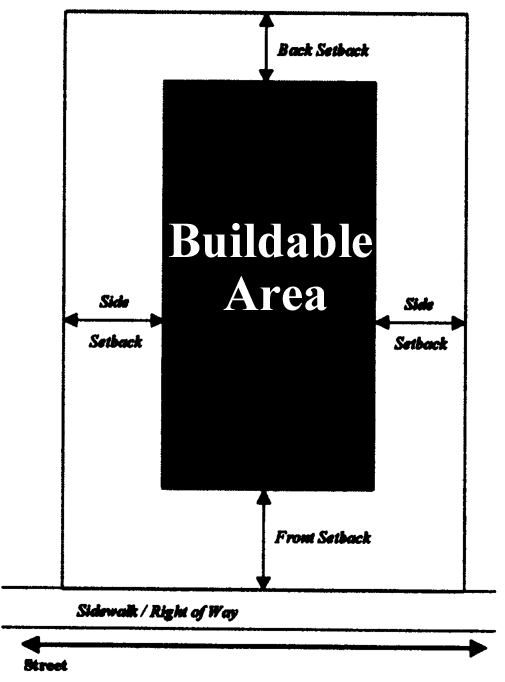
6.4.11. Minimum yard requirements.
A.
The following yard requirements apply to the principal structure(s).
* This is the minimum setback required for open drainage ditch and/or stormwater pond easement lines (excluding swales).
† This is the minimum setback from any ingress/egress easement.
B.
Accessory structure(s). Accessory structures are permitted in the rear and side yards only with minimum of five-foot setbacks from the side and rear property lines or ingress/egress easements, whichever is greater. If the accessory structure is placed in that portion of the yard that fronts a second street frontage of the property, setback from the second street frontage property line for the accessory structure is the required second street frontage setback for the primary structure. An accessory structure may be permitted within the front yard or that portion of yard situated between the front lot line and the front facade of the principal structure if the following conditions are met:
1.
The proposed accessory structure meets the front setback applicable to the principal structure.
2.
The proposed accessory structure is greater than 200 square feet in size.
3.
With the exception of bona fide agricultural structures, the proposed accessory structure shall not exceed the height of the principal dwelling.
4.
With the exception of structures that are sited 150 feet or more from the front property line, vehicular access to the proposed accessory structure is oriented to the side or second street frontage lot line, and vehicular doors and bays to the accessory structure are not visible from the fronting street right-of-way.
5.
There shall be no more than one accessory structure permitted within the front yard or that portion of yard situated between the front lot line and the front facade of the principal structure per platted parcel of less than five acres in size.
6.4.12. Unit separation. The minimum distance between dwelling units shall be:
A.
Side to side: 15 feet minimum.
B.
Front to front or rear: 15 feet minimum.
C.
Rear to rear: 15 feet minimum.
6.4.13. Building requirements.
A.
Impervious coverage: 50 percent maximum.
B.
Building height: Less than 40 feet to the highest part of the structure. The height limits contained in the airport overlay district, as regulated by article 10, may apply additional height limitations to a specific piece of property.
SITE STANDARDS
6.4.14. Parking standards. All uses within this district shall conform to the standards outlined in article 15: Off-Street Parking Requirements.
6.4.15. Bufferyard standards.
A.
Residential development of parcels consisting of 15 or more lots shall conform to the bufferyard regulations outlined in article 17 to minimize conflicts between residential and agricultural or forestry practices.
B.
All other uses shall conform to the bufferyard regulations outlined in article 17.
(Ord. No. 02-08-33, 8-26-2002; Ord. No. 04-11-68, 11-23-2004; Ord. No. 05-08-58, 8-29-2005; Ord. No. 09-04-16, 4-13-2009; Ord. No. 10-08-24, 8-23-2010; Ord. No. 11-04-02, 4-25-2011; Ord. No. 14-03-04, 3-24-2014; Ord. No. 14-11-38, 11-24-2014; Ord. No. 14-12-40, 12-8-2014; Ord. No. 21-01-02, 1-25-2021)
6.5. - Preservation residential district (R15).
6.5.1. Intent.
A.
The R15 rural manufactured single-family residential district is intended to implement the land use goals of the resource conservation areas within rural areas in the unincorporated portions of Berkeley County.
B.
This district is intended to:
1.
Provide standards to control the intensity of development in rural areas of sensitive natural and historical resources.
2.
Preserve and protect the rural residential character of specific areas within the county.
3.
Ensure that the cultural integrity of the county's historical resources is protected.
4.
Protect these areas from infiltration of incompatible land uses.
6.5.2. Location. This district shall be applied in the resource conservation areas and agricultural areas mapped on the future land use map in the comprehensive plan.
USES
6.5.3. Permitted uses. The following uses are permitted within the R15 preservation residential district:
A.
Agricultural uses.
1.
Agriculture, crop.
2.
Agriculture, home animal production.
3.
Agriculture, home horses only.
4.
Forestry.
B.
Recreation and amusement uses.
1.
Ecotourism.
2.
Golf course.
3.
Indoor recreation.
4.
Outdoor recreation, active.
5.
Outdoor recreation, passive.
C.
Institutional uses.
1.
Assembly and worship.
2.
Government office, public services, and local utilities.
3.
School, neighborhood and community.
D.
Residential uses.
1.
Single-family detached.
2.
Manufactured home.
6.5.4 Accessory uses. Accessory uses are permitted as a detached structure or use subordinate to the main building or classification that is used for purposes customarily incidental to the principal use. Accessory uses shall not exceed 65 percent of the size of the principal classification; excluding agricultural uses and uses located on parcels one acre in size or larger.
The following uses are permitted as accessory uses within the R15 preservation residential district:
A.
Agricultural.
1.
Sale of products produced on-site;
2.
Agricultural storage;
3.
Accessory agricultural uses shall include all residential accessory uses and those accessory uses and activities customarily associated with agricultural operations, as determined by the zoning administrator. Barns and farm-related structures, including roadside stands selling sweet-grass baskets or indigenous produce grown or produced on the farm where the roadside stand is located, shall be allowed in all parcels in agricultural zoning districts.
B.
Residential.
1.
Fences and walls;
2.
Garages, carports, and off-street parking;
3.
Gate houses and guard houses;
4.
Playhouses, patios, cabanas, porches, gazebos, and incidental household storage buildings;
5.
Radio and television receiving antennas;
6.
Recreational and play facilities for the use of residents;
7.
Tennis courts, swimming pools, and hot tubs;
8.
Other necessary and customary uses determined by the zoning administrator to be appropriate, incidental and subordinate to the principal use of the property, subject to compliance with any development and performance standards imposed by the zoning administrator as a means of ensuring land use compatibility.
C.
Institutional and civic.
1.
Cemetery;
2.
Refreshment stands and food and beverage sales located in uses involving public assembly;
3.
Cafeterias, dining halls, and similar food services when operated primarily for the convenience of employees, residents, clients, patients, or visitors to the principal use;
4.
Gift shops, newsstands, and similar commercial activities operated primarily for the convenience of employees, residents, clients, patients, or visitors to the principal use;
5.
Recreation areas and facilities for the use of the employees;
6.
Other necessary and customary uses determined by the zoning administrator to be appropriate, incidental and subordinate to the principal use of the property, subject to compliance with any development and performance standards imposed by the planning department as a means of ensuring land use compatibility.
6.5.5. Uses permitted with conditions. The following uses are permitted as conditional uses within the R15 preservation residential district. All listed conditions shall be demonstrated prior to permit approval. See article 11 for the procedure for approval of conditional uses.
A.
Agricultural uses.
1.
Boarding facility.
a.
All conditions and regulations found in article 11.3 shall be met prior to permit approval.
B.
Commercial uses.
1.
Bed and breakfast.
a.
Permitted as accessory use only.
b.
All conditions and regulations found in article 11.4 shall be met prior to permit approval.
2.
Domestic boarding facility.
a.
The facility shall be buffered with an opaque eight-foot tall privacy fence between the facility and all adjoining properties in addition to any landscaping requirements found in article 15 of this ordinance.
C.
Institutional uses.
1.
Family day care home.
a.
Permitted as accessory use only.
b.
Care is provided in a family home during the day for no more than six children including the day care parents' own children.
c.
All conditions and regulations found in article 11.6 shall be met prior to permit approval.
D.
Residential uses.
1.
Accessory dwelling unit.
a.
Permitted as an accessory dwelling unit only.
b.
There shall be no more than two accessory dwelling units per principal unit.
c.
Accessory dwelling units shall be used by an employee or family member and shall not be rented.
d.
Only one manufactured home per principal dwelling unit shall be allowed.
2.
Home occupation.
a.
Permitted as accessory use only.
b.
All conditions and regulations found in article 11.9 shall be met prior to permit approval.
6.5.6. Special exceptions. (Reserved)
6.5.7. Prohibited uses. The following uses are prohibited within the R15 preservation residential district.
1.
Mobile home park.
2.
All uses not listed as permitted are prohibited.
6.5.8. Lot requirements.
A.
Minimum lot size: 15 acres.
B.
Minimum lot frontage:
1.
Standard lot: 20 feet.
2.
Corner lot: 40 feet.
6.5.9. Density regulations. Maximum density: There shall be no more than one principal dwelling unit per 15 acres. There shall be no more than two accessory dwelling units per principal unit. An accessory dwelling unit shall be used by an employee or family member only, and shall not be rented. Examples of accessory dwelling units are: guesthouses, caretaker quarters, servant quarters, or house for elderly family member. Only one mobile home (manufactured home) per 15 acres shall be allowed.
LOT AND BUILDING STANDARDS
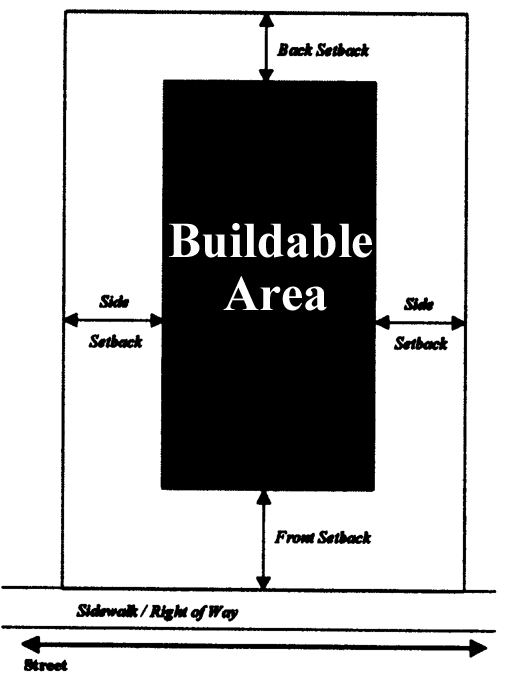
6.5.10. Minimum yard requirements. The minimum setbacks shall be:
A.
Front yard: 100 feet minimum.
B.
Side yard: 50 feet minimum.
C.
Rear yard: 50 feet minimum.
D.
Accessory structures are permitted in the rear and side yards only with minimum of five-foot setbacks from the side and rear property lines or ingress/egress easements, whichever is greater. If the accessory structure is placed in that portion of the yard that fronts a second street frontage of the property, the setback from the second street frontage property line for the accessory structure is the required second street frontage setback for the primary structure.
E.
Second street frontage: 100 feet minimum.
F.
Open drainage ditch and/or stormwater pond easement lines (excluding swales): 30 feet minimum.
G.
Ingress/egress easements: The minimum distance stated above for front, side, or rear.
6.5.11. Unit separation. The minimum distance between dwelling units shall be:
A.
Side to side: 15 feet minimum.
B.
Front to front or rear: 15 feet minimum.
C.
Rear to rear: 15 feet minimum.
6.5.12. Building requirements.
A.
Impervious coverage: 50 percent maximum.
B.
Building height: Less than 40 feet to the highest part of the structure. The height limits contained in the airport overlay district, as regulated by article 10, may apply additional height limitations to a specific piece of property.
SITE STANDARDS
6.5.13. Parking standards. All uses within this district shall conform to the standards outlined in article 15: Off-Street Parking Requirements.
6.5.14. Bufferyard standards. All uses within this district shall conform to the standards outlined in article 17: Bufferyards. Unless expressly exempted, the buffering standards of this ordinance shall apply to all new nonresidential development and all new residential major subdivisions (15 or more lots).
(Ord. No. 04-11-63, 11-23-2004; Ord. No. 05-08-58, 8-29-2005; Ord. No. 10-08-24, 8-23-2010; Ord. No. 11-04-02, 4-25-2011; Ord. No. 14-03-04, 3-24-2014)

