
Big Bear Lake City Zoning Code
CHAPTER 17
13 - SPECIAL EVENTS
17.13.010 - Intent and purpose.
The intent of this chapter is to implement several policies and programs found in the Land Use and Open Space, Parks and Recreation Elements of the general plan. Those policies and programs include the following. Land Use Element Policy LU 2.3 and the associated Program LU 2.3.5 were established to promote Big Bear Lake as a resort destination by developing standards for special events and simplifying the permitting process while protecting public health and safety and limiting impacts to residents and businesses. Open Space, Parks and Recreation Element Policy OPR 4.1 supports the maintenance and expansion of cultural programs and special events which will enhance the quality of life for city residents, enhance the experience of visitors, and expand economic development opportunities for local businesses. Program OPR 4.1.1 directs staff to evaluate proposals for special events to ensure that appropriate facilities and services will exist to support the event and to ensure that the event will not negatively impact residents or visitors.
In addition to the objectives expressed in the general plan, this chapter is intended to achieve the following objectives:
A.
To encourage the production of outdoor special events and enable staff and applicants to determine the appropriate scope, scale, dates, and venues for such events;
B.
To allow event organizers to produce special events for the benefit of the community, including businesses, citizens, and visitors;
C.
To promote and protect public health, safety and general welfare during special events;
D.
To protect property owners, business owners, and the general public from undue negative impacts that may be generated by special events;
E.
To establish an effective process that enhances the community and promotes benefits to local property owners, business owners, and residences.
(Ord. No. 2012-422, § 4, 12-10-2012)
17.13.020 - Definitions.
As used in this chapter, the terms and phrases, provided in alphabetical order below, shall have the following meanings:
"Special event" shall mean a temporary outdoor use or group of related temporary outdoor uses of limited duration not regularly conducted on a site as a normal, ongoing component of the primary land use occupying the site. Special events vary in size and intensity and are separated into major special events and minor special events as defined below and as generally categorized in Table 17.13.020.A.
"Special event, major" shall mean a special event which, as determined by the city planner, has the potential to impact surrounding properties of the community because of the type or intensity of the proposed use, through generation of traffic, noise or other similar effects. Examples of major special events include:
A.
Circuses, rodeos, carnivals, food truck shows, fairs, and festivals;
B.
Parades, excepting those that are protected by the right to free expression under federal or state law;
C.
Outdoor concerts, cultural performances, and large scale arts and crafts shows;
D.
Athletic races and recreational events, such as triathlons, marathons, and motorcycle rides;
E.
Car shows, truck shows, and boat shows;
F.
Certified farmers market or similar collective sale of produce and related goods;
G.
Other events and activities similar in scope and nature to the above, as determined by the city planner.
"Special event, minor" shall mean a special event, which as determined by the city planner, will cause no or negligible impact to the surrounding properties or the community due to its small scale, location, and the nature of the uses. Examples of minor special events include:
A.
Small-scale arts and crafts sales conducted on a site having adequate paved parking and access to accommodate the event without impacting primary uses on the site;
B.
Bake sales, candy sales, and similar fundraising activities conducted on commercial premises, provided that no pedestrian or vehicular access will be blocked;
C.
Seasonal activities, including the retail sale of agricultural products prior to and typically associated with holidays, such as Christmas trees or pumpkins, haunted houses or other similar events;
D.
Grand openings of businesses in commercial zones provided that each such event shall last no longer than fifteen (15) consecutive days. For purposes of this section, "grand opening" shall mean outdoor activities on a site to celebrate a new structure, site improvement, or the commencement of a commercial activity thereon;
E.
Parking lot sales or sidewalk sales in commercial zones, for outdoor sale of merchandise typically sold on the premises, provided that adequate parking and vehicular access is maintained and pedestrian pathways are provided for disabled access as required by law; and
F.
Car washes conducted by registered non-profit organizations for fundraising purposes, provided that the following requirements are met:
1.
The applicant has obtained approval for the car wash from Big Bear Municipal Water District;
2.
The applicant has obtained approval of a watering exemption permit from the department of water and power;
3.
Buckets shall be used and hoses shall be equipped with shut-off nozzles to reduce water consumption and runoff;
4.
No portions of the operation, including solicitation for customers, shall be allowed in the public roadway.
G.
Private events open to the general public.
(Ord. No. 2012-422, § 4, 12-10-2012)
17.13.030 - Special event location types and events permitted.
A.
For the purposes of this chapter, special event venues are divided into two general categories, public facilities and private facilities.
1.
Public facilities include, but are not limited to, parks, streets, parking lots, and the Civic Center. While these facilities offer utilities desirable to event organizers, they are primarily intended to be resources for residents and visitors to use for recreation, mobility, and parking. Section 17.13.040 includes regulations specific to the closure and use of city facilities.
a.
Public parks include, but are not limited to, Rotary Park, Veteran's Park, and Boulder Bay Park. Public parks are recommended for smaller events with minimal parking demand. For the purposes of this chapter, Meadow Park is considered a permanent event venue, provided that parking areas are to remain open for public parking.
b.
Streets are designated as primary arterial, secondary arterial, collector, and local streets in the Circulation Element of the general plan. They are used for personal vehicles, public transit, goods movement, and emergency response. Due to topological and other physical constraints, alternative routes are limited in the Big Bear Valley. Therefore, streets are not recommended for special events unless anticipated impacts may be adequately mitigated.
i.
For the purposes of this chapter, Highway 18, Pine Knot Avenue, Village Drive and associated sidewalks are distinguished from all other city streets because they have a unique role to the city in terms of both economic activity and overall circulation. When applicants propose to use or close Highway 18, Pine Knot Avenue, and/or Village Drive, the city engineer and economic development director should be consulted.
(1)
The city engineer should be consulted to determine if anticipated volumes of traffic may be reasonably detoured. Generally, holiday, summer, and Saturday traffic is more difficult to detour due to higher traffic volumes.
(2)
The economic development director should be consulted to evaluate the extent of economic impacts that may be caused by a street closure.
c.
Parking lots include, but are not limited to, the Alden Road, Bartlett Road, Indian Village, and Civic Center lots. These locations are recommended for events that require large open areas, but have limited need for electricity and other utilities.
d.
The Civic Center is located at 39707 Big Bear Boulevard. The Civic Center grounds are recommended for events that include both indoor and outdoor activities.
e.
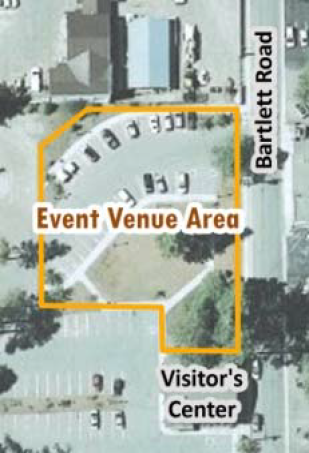
The following maps, in Table 17.13.030.A, generally illustrate public event venue areas. Other public areas and street sections may be used for special events. Those areas and street sections shall be treated in the same manner as the area or street section most similar, as determined by the city planner.
| Table 17.13.030.A. Public Event Venue Areas | |
|---|---|
Bartlett Event Area A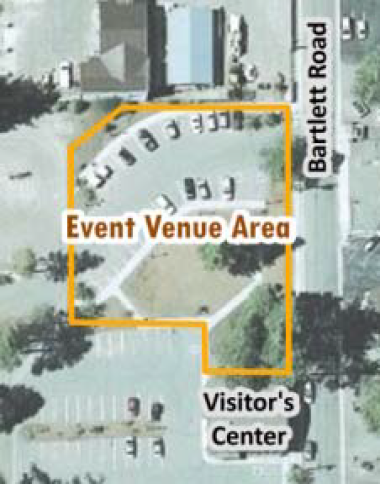 | Bartlett Event Area B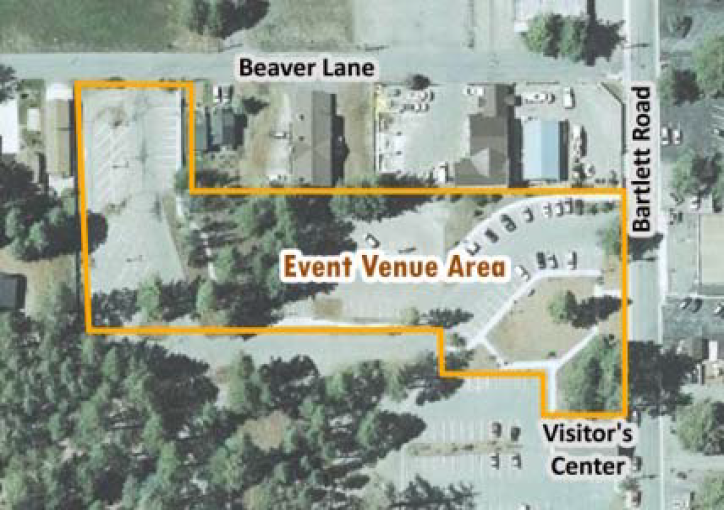 |
Bartlett Event Area C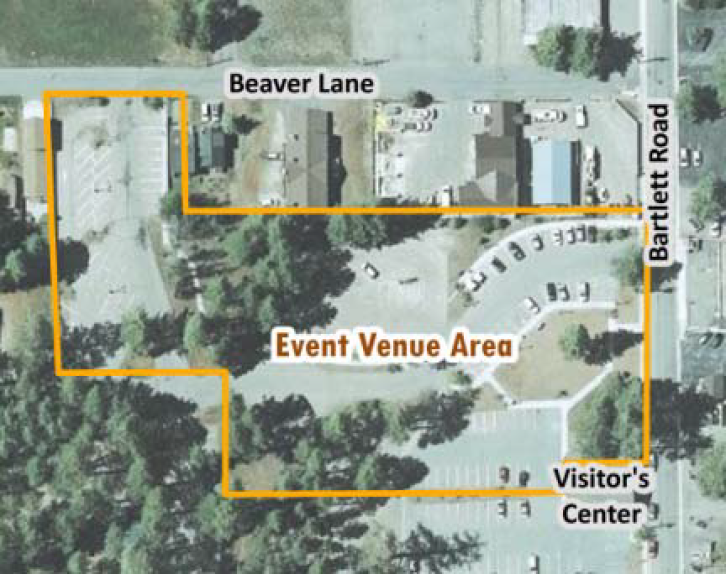 | Bartlett Event Area D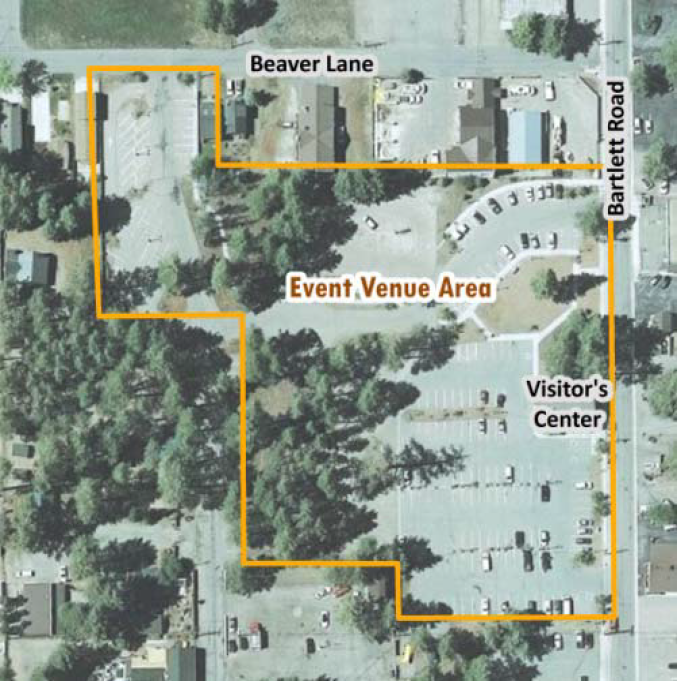 |
Village Street Closure B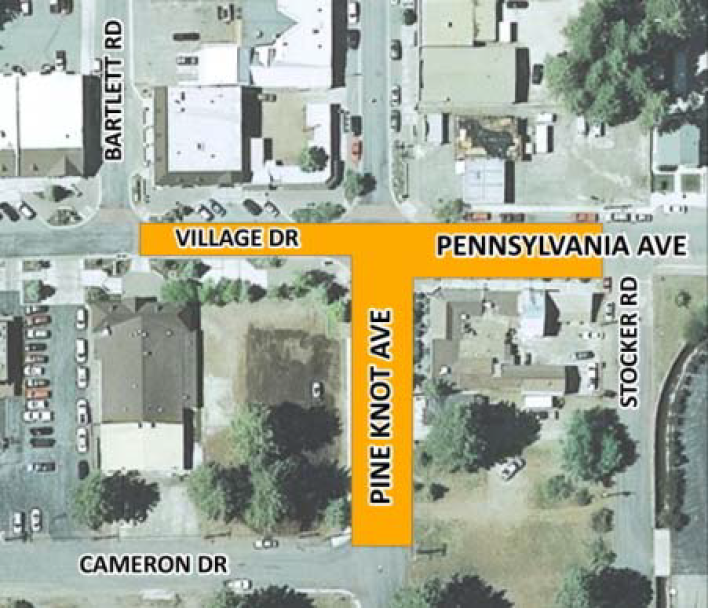 | Village Street Closure C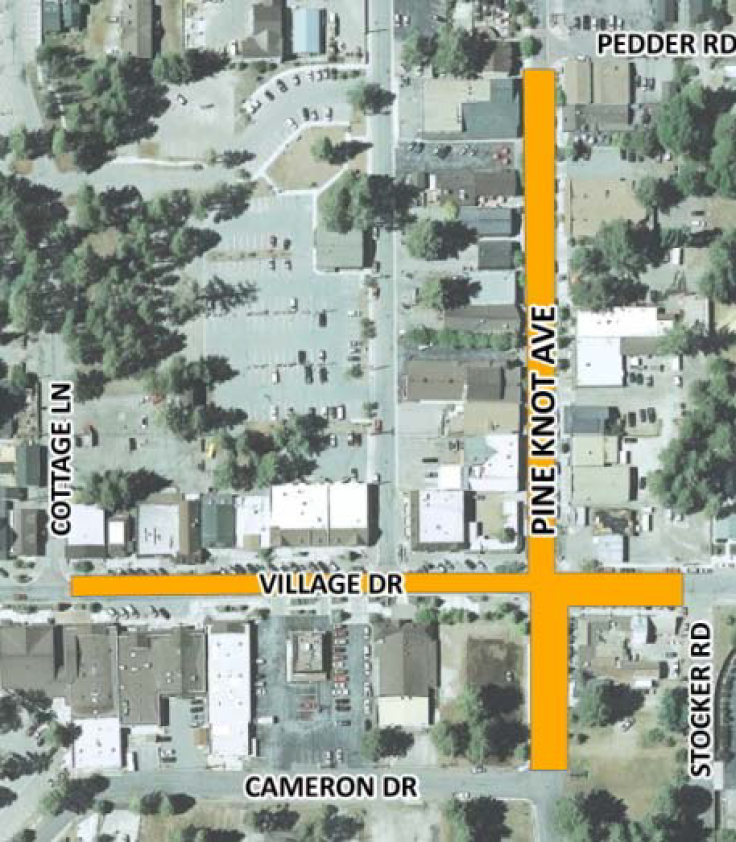 |
Village Street Closure D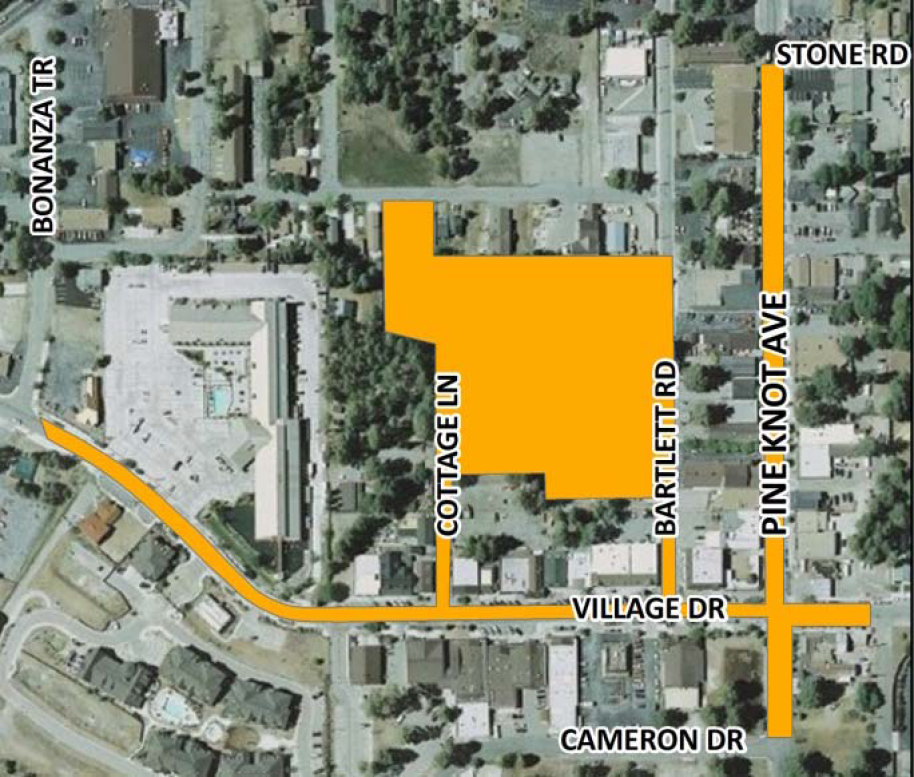 | |
Indian Village Parking Lot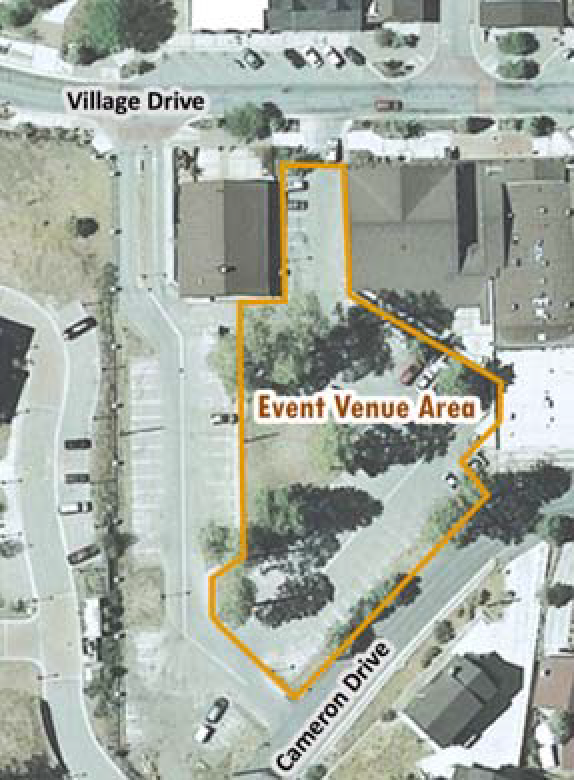 | Veteran's Park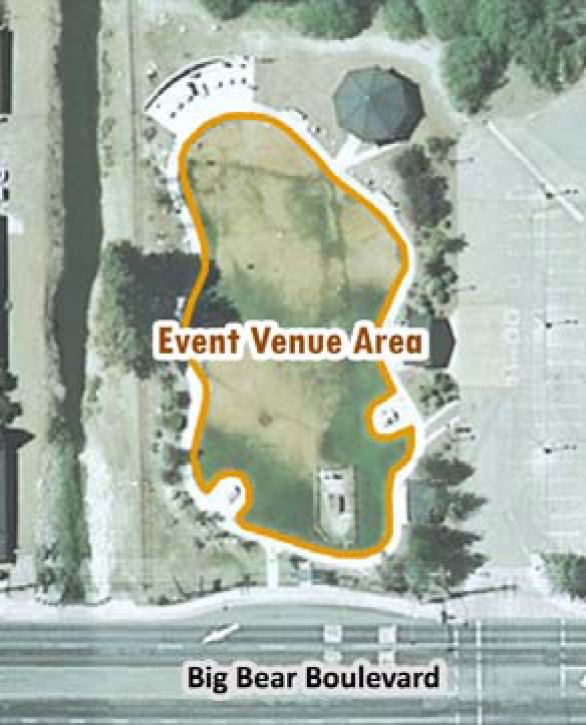 |
Civic Center Parking Lot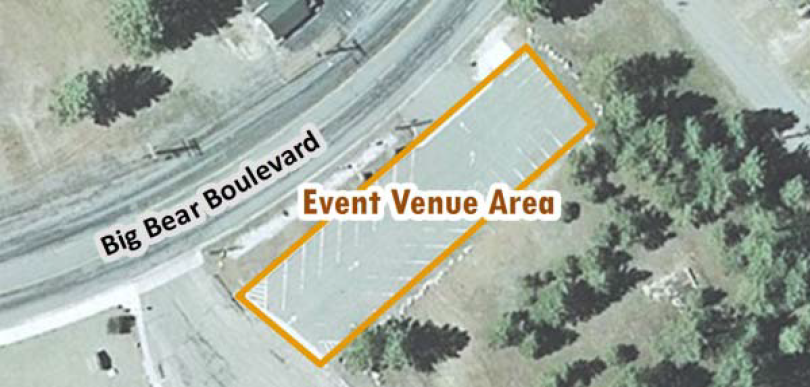 | Civic Center Lawn Area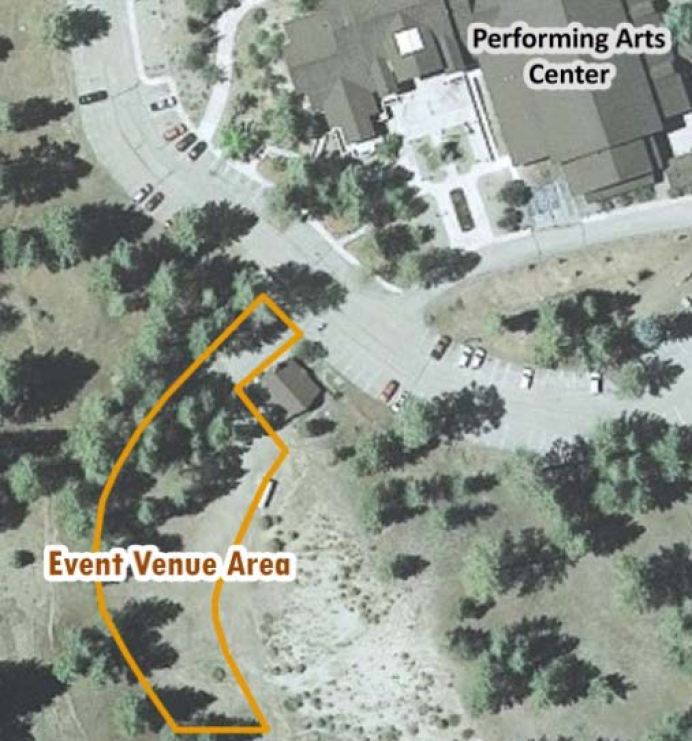 |
2.
Private facilities include permanent event venues and temporary event venues. This chapter is not intended to limit the ability of private property owners to allow their properties to be used for special events. Instead, the purpose is to ensure that when private properties are used for special events, impacts to the neighborhood and the community may be mitigated.
a.
Permanent private event venues may be used for events with no additional review because they have been analyzed for impacts as part of a land use approval. Commercial parking areas located at a private event venue may also be used for special events without approval of a special event permit, provided that the facility is used in a manner that maintains public safety and is free of public nuisance.
b.
Temporary private event venues may be used for special events with approval from the city planner or the planning commission according to Table 17.13.030.B. These facilities have limited or no built-in infrastructure to support large outdoor gatherings and, as a result, need a higher level of analysis that may result in special conditions and/or limitations. Examples of temporary private event venues include, but are not limited to, vacant commercial lots like the property commonly known as Christmas Tree Corner (40803 Village Drive) and commercial parking lots such as those adjacent to office buildings or shopping centers.
B.
Special events may be permitted only in those special event venues where expressly or conditionally permitted according to Table 17.13.030.B.
1.
Use of Table 17.13.030.B shall be guided by city council administrative instructions as they may be amended from time to time. The administrative policies may classify the size and impact of special events based on characteristics such as, but not limited to, duration, attendance, visitor draw, event reach, and economic impact. Such classifications shall be used by the city planner and planning commission to determine if an event is minor or major and, for major special events, to determine if the impact is small, medium or large.
2.
According to Table 17.13.030.B, an event may be permitted by right, permitted, discretionary, or discretionary with a special finding.
a.
"Permitted by right" shall mean that the event is permitted without approval of a special event application;
b.
"Permitted" shall mean that the event may be permitted with the approval of a minor special event application;
c.
"Discretionary" shall mean that the event may be permitted with the approval of a major special event application;
d.
"Discretionary with special finding" shall mean that the event may or may not be permitted depending on the proposed date and intensity of the event.
i.
The following dates tend to generate high volumes of vehicular and pedestrian traffic in the City of Big Bear Lake. Therefore, events proposed for the following dates will be subject to a higher level of scrutiny by the planning commission and must demonstrate a compelling reason to use or close public property during a period of high impacts to vehicular and pedestrian circulation.
(1)
Seven days before Independence Day through seven days after Labor Day;
(2)
Nationally recognized holidays, including New Year's Day, Memorial Day, Independence Day, Labor Day, Thanksgiving Day, and Christmas week through New Year's week;
(3)
Weekends associated with nationally recognized major holidays including President's Day, Memorial Day, Labor Day, and Thanksgiving Day; or
(4)
Other dates as determined by the city council.
ii.
For events proposed during the dates listed in this section, the reviewing authority shall make a special finding that:
(1)
The event is consistent with relevant administrative policies adopted by the city council, as they may be amended from time to time, and
(2)
The benefits generated by the visitor draw, event reach, and/or economic benefit are sufficient to offset potential negative impacts such as loss of parking, street closures, and/or other impacts.
iii.
For events proposed during the dates that are not listed in this section, the reviewing authority may approve the event without making a special finding.
e.
"Not permitted" shall mean that the event is not allowed because the size and intensity of the temporary event has the potential to cause significant negative impacts for the surrounding neighborhood and businesses for an unreasonable period.
3.
Larger impact events may be approved to use smaller event venues if the event may be reasonably accommodated in the smaller area.
C.
A special event as defined in this chapter which does not have a valid and current special event permit as specified herein is hereby declared to be a public nuisance, subject to the enforcement provisions of the Municipal Code and other applicable laws.
D.
Special events are intended to be held at locations that are absent of sensitive biological resources or for which such environmental impacts have been fully analyzed and mitigated. Special events are not permitted in locations known to have occurrences of federally- or state-listed endangered or threatened species unless all necessary environmental studies, clearances, and permits are obtained. Proposed event locations that have not previously been subject to environmental review shall be analyzed under the California Environmental Quality Act for any potentially significant environmental impacts, including impacts to biological resources.
E.
The following events are exempt and shall be permitted, in all zoning districts, without approval of a special event permit. Although a permit is not required, exempt events shall comply with other applicable requirements and performance standards in this chapter.
1.
Residential yard sales are exempt provided that the sale is registered with the code compliance division and that no more than four such sales are conducted per site within any calendar year, and each sale does not exceed four consecutive days. For the purposes of this section, a "residential yard sale" shall mean the outdoor sale of personal goods from a private residence.
2.
Filming, including but not limited to, activities related to the production of motion pictures, television, still photography, charitable or educational media, and news media, provided that no streets or public facilities are to be closed. While these activities are exempt from land use approval in the form of a special event permit, a film permit may be required by the city.
3.
Private, invitation-only parties, in residential zones, provided that public streets are free and clear for emergency vehicles and all applicable performance standards are met, including those for alcohol, noise, fire and life safety, and public health.
4.
Any event proposed for a permanent private event venue, as described in [Section] 17.13.030(A)2, provided that parking facilities remain open for parking and that all applicable performance standards are met, including those standards for alcohol, noise, fire and life safety, and public health.
5.
Traditional events associated with holidays including the Independence Day Fireworks Show, Halloween in the Village, and Christmas in the Village.
6.
Major special events exempted by a city council resolution due to special circumstances or characteristics of the event.
(Ord. No. 2012-422, § 4, 12-10-2012)
17.13.040 - Use of city facilities.
A.
Public facilities include land and facilities owned by the City of Big Bear Lake. They include parks, sidewalks, streets and parking lots, which are intended to be resources freely available for use by residents and visitors for recreation, transportation, and parking.
B.
Event Criteria.
1.
When appropriate and feasible, city-owned parks, sidewalks, streets and parking lots may be used by event organizers, for the purpose of holding special events, provided that the event meets the following criteria:
a.
The event is free to spectators.
b.
The event is family-oriented, visitor-oriented, or both.
c.
The event does not involve the sale of used or mass produced goods as are typically associated with swap meets or auctions. Events that involve the sale of produce, antiques, arts and crafts and similar original items are allowed.
C.
Limitations.
1.
City land and facilities available for use for special events are described along with other public facilities in Section 17.13.030(A)1. City venues include public streets, sidewalks, parking lots, and parks and are listed as follows:
a.
City Streets: All streets in the city with the exception of Big Bear Boulevard, which is under the jurisdiction of the California Department of Transportation.
b.
Parking Lots: Bartlett Road, Indian Village, Alden Road, Civic Center, Boulder Bay, and Veteran's Park.
c.
Parks: Rotary Park, Boulder Bay Park, and Veteran's Park. These parks are available for special events provided that the event does not close the park to the general public unless approved by the planning commission. Meadow Park is not a city facility and is not subject to Section 17.13.040 regarding the use of city facilities.
D.
Priority.
1.
If two organizations apply for the use of the same land or facility on the same weekend, the following priority shall apply in order from high to low:
a.
An event organized by the City of Big Bear Lake,
b.
Recurring events that have demonstrated success and growth on that particular date,
c.
New events, organized for the benefit of a local charitable organization,
d.
New events, organized for the benefit of a non-local charitable organization,
e.
All other events.
E.
Authorization to Use or Close City Facilities.
1.
Requests to use or close city facilities shall be authorized by the planning commission for major special events and by the city engineer for minor special events. The use or closure of city facilities, including city streets, shall be considered as an integral component of the special event application review and approval process and is not intended to be reviewed and approved as a separate action.
(Ord. No. 2012-422, § 4, 12-10-2012)
17.13.050 - Special event permit requirements and procedures.
A.
Application Requirements.
1.
All major special events shall be screened prior to application submittal. That screening shall include:
a.
Consultation with the event resource office and city staff.
b.
Consultation with the planning commission. Applications for first time, large-impact major special events shall not be accepted until the applicant makes a presentation to the planning commission and the planning commission directs staff to accept and process the application. If the planning commission recommends changes to the proposal, those amendments shall be made prior to application submittal.
2.
A request for a special event permit shall be submitted to the planning division on a form provided for that purpose. The application shall be submitted along with the following:
a.
A letter from the events resource office confirming that the event concept, location, and date complement the community's calendar of events and does not detract from the potential success of other events due to conflicts in time, character, or location.
b.
Proof of property owner's permission or a completed application form requesting use of a city facility.
c.
Application and related fees. The following fees are required at the time of application submittal. Fees include, but are not limited to:
i.
Planning division, fire department, and environmental review,
ii.
Public noticing fees, and
iii.
Rental fees and security cash deposit for all events requesting to use city facilities or equipment.
d.
For discretionary events for which a special finding must be made, a special event report is required.
i.
Applicants submitting for a first-time event shall submit a first-time special event report on a form provided by the planning division. Content shall include anticipated attendance, publicity and marketing plans, and a summary of anticipated economic benefits. For medium and large impact event applications, the report shall also include qualifications or information about similar events that have been produced in the past.
ii.
Recurring event applicants shall submit a recurring special event report on a form provided by the planning division. Content shall present results from the previous year including attendance, a publicity and marketing plan, copies of advertising materials used in the previous year, and an economic benefit analysis. Events that have demonstrated consistent success for two years are exempt from this requirement provided that similar data is available from other sources.
e.
For events requesting approval to use city facilities or equipment, the applicant shall submit a special event city facilities request, on a form provided by the planning division.
f.
For events requesting approval to use any portion of a California Department of Transportation (Caltrans) right-of-way, applicants shall submit a completed Caltrans encroachment permit application. Once the event is approved, the application will be submitted to Caltrans for their approval.
g.
Other materials required by the city planner depending on the scope and scale of the proposed event. Such materials may include but are not limited to site plan, design plan, parking plan, area maps, routes, temporary structures, vendor locations, and mailing labels.
B.
Timelines.
1.
Applications shall be received according to the timelines below:
a.
Inaugural major special event applications shall be submitted at least one hundred eighty (180) calendar days prior to the event. Subsequent applications shall be submitted at least one hundred twenty (120) calendar days prior to the event.
b.
Minor special events applications should be submitted at least ten (10) calendar days prior to the event.
c.
Permit applications not received within the deadlines required above will not be processed. An extension of time may be approved by the city planner based upon the applicant's written request justifying the delay in submitting the application.
C.
Public Notification.
1.
Public notice for major special events shall be provided pursuant to Development Code Section 17.03.030.
2.
Additional public notification as determined by the city planner shall be required for events proposing to close public facilities such as parks, streets and parking lots or for events deemed to have a significant impact on the community.
3.
Public notice shall not be required for issuance of minor special events.
D.
Reviewing Authority.
1.
The planning commission shall be the reviewing authority for first-time major special event applications. After an applicant has demonstrated two years of consistency and success with a single event, the planning commission may authorize the city planner to approve that event thereafter, provided that no significant changes are proposed. Determinations of consistency and success shall be made by the planning commission based on the "recurring special event report" required in this section. Significant changes include, but are not limited to:
a.
Adding activities that may introduce new negative impacts to the neighborhood or community as determined by the city planner;
b.
Changing event venues;
c.
Changing the site plan in a manner that may introduce new negative impacts to the neighborhood or community as determined by the city planner.
2.
The city planner or his/her designee shall have reviewing authority for all minor special events.
E.
Findings for Approval.
1.
The reviewing authority may deny, approve, or conditionally approve a request for a special event permit based on the following findings for approval.
a.
The use is consistent with the general purposes of the general plan and this chapter and the specific provisions of the zoning district in which the site is located, and any other applicable codes and policies;
b.
Appropriate measures have been taken to protect the public health, safety, and general welfare and to minimize detrimental effects to adjacent properties, businesses and the community;
c.
The event will have adequate parking, ingress and egress, traffic circulation and access, and provision for pedestrian safety;
d.
All structures and equipment will be erected and maintained in compliance with the applicable codes; and
e.
The subject site will be restored to its original or better condition upon termination of the special event.
2.
For events listed as "Discretionary with special finding" in Table 17.13.030.B, the reviewing authority shall make an additional finding as follows and based on the city council administrative instruction for special event application review as it may be amended from time to time.
a.
The event has been determined to be a minor special event or major special event with a small-, medium-, or large-impact and has also been determined, based on the city council administrative instruction, to offer sufficient returns to the community to offset economic impacts due to the loss of parking, street closures, and/or other such concerns because of the proposed visitor draw, event reach, and/or economic potential.
F.
Community Events Grants.
1.
Once an event has been approved by the planning commission or city planner, applicants may be eligible for reimbursement for fees through a community events grant. The grant program is explained in City Council Administrative Instruction 2004-01, which may be amended from time to time.
(Ord. No. 2012-422, § 4, 12-10-2012)
17.13.060 - Performance standards.
A.
The performance standards included in this section are intended to protect the community from undue special event impacts. These performance standards may apply to all events, including those that are exempt as listed in Section 17.13.030.E. However, not all performance standards are applicable to all events. Therefore, the specific performance standards applied to an event will be determined as part of application approval. Due to the nature of special events, the city can not foresee all necessary performance standards. Consequently, the reviewing authority may condition an event to meet performance standards not listed in this section.
B.
Fees and Cost Recovery.
1.
The city will require a cash deposit or other security, as determined by the city engineer, for events proposed on public property. The city may require a cash deposit or other security for events proposed on private property if that event is determined to have a potential impact to public property or surrounding private properties. Such potential impacts may be caused by stormwater, trash, or other nuisances that necessitate the use of public resources for clean up or repair. The cash deposit or other security will be used to defray the cost of returning a public or private event venue to its original or better condition, should the applicant fail to leave the property in a satisfactory condition.
2.
The cash deposit or security shall reflect the estimate of staff time and materials supplied to support the event as determined by the city engineer.
3.
City costs shall be based on the fully burdened hourly rate for staff time and material that is required to support the event. Said cost shall be determined by the fee schedule set by the city council.
4.
Prior to returning the balance of the security to the applicant the city engineer shall provide a written cost analysis of staff time and material to the applicant and shall deduct that amount from the cash deposit or security. If clean up has not been completed within twenty-four (24) hours, the event organizer will be notified. If clean up has not been completed within forty-eight (48) hours, then the city will complete clean up and the cost of that clean up will be deducted from the security deposit.
C.
Time and Duration.
1.
Unless otherwise specified in the permit, public facilities may be closed for set up no more than twenty-four (24) hours before the event is opened to the public.
2.
Unless otherwise specified in the permit, all sites for temporary uses shall be cleaned of trash, debris and temporary structures and otherwise restored within twenty-four (24) hours after the conclusion of the event.
D.
Traffic, Circulation and Parking.
1.
Events proposing to close parking lots, to close streets, or to generate a parking demand that is higher than parking available on-site may be required to implement a parking and traffic plan. For the purposes of special events, parking demand shall be calculated based on two people per vehicle, unless otherwise determined by the city planner. The parking plan will be distributed to the code compliance division for enforcement. Vehicles not in compliance with the parking plan are hereby considered a public nuisance, subject to the enforcement provisions of the Municipal Code and other applicable laws, which authorize citations or towing.
2.
Provisions shall be made for adequate handicap and standard parking, emergency personnel and emergency vehicle access, pedestrian and vehicular circulation, fire protection, security, and traffic control.
3.
Shuttle services or valet parking may be required where parking is not immediately adjacent to the event or where access to the event is unsafe for pedestrians.
4.
All events serving alcohol shall coordinate with an established designated driver program. If such a program is not available other provisions to discourage drunk driving may be required of the applicant. Other provisions to discourage drunk driving should include information about transportation alternatives, such as taxis or buses.
E.
Noise.
1.
The event is subject at all times to Development Code Section 17.01.090.J.6., which states:
"No person shall operate or permit the operation or playing of any device which reproduces, produces, or amplifies sound in such a manner as to be unusually loud, excessive, raucous or disturbing from residentially used or designated properties or commercial lodging facilities between the hours of 10:00 p.m. and 7:00 a.m., except as otherwise authorized through issuance of a Special Event Permit, pursuant to [Chapter 17.13] (emphasis added)." And that:
"No person shall operate or permit the operation or playing of any device which reproduces, produces, or amplifies sound in such a manner as to be loud, excessive, raucous or disturbing from 50 feet, if such device is operated on or over any public right-of-way, except as otherwise authorized through issuance of a Special Event Permit, pursuant to [Chapter 17.13] (emphasis added)."
F.
Fire and Life Safety.
1.
All events shall comply with the requirements of the most recently adopted edition of the California Code of Regulations, Title 24, Part 2 California Building Code; Part 3 California Electrical Code; Part 4, California Mechanical Code; Part 5, California Plumbing Code and Part 9, California Fire Code as they relate to the installation and construction of temporary structures, equipment and devices.
2.
All events shall comply with the requirement of the most recently adopted edition of the California Code of Regulations Title 24, Part 9, California Fire Code, Chapter 24, Section 2403, relating to temporary tents, canopies and membrane structures.
3.
For major special events, an inspection permit shall be obtained from the City of Big Bear Lake Building and Safety Division and the Big Bear Lake Fire Protection District. Each permit shall be obtained at least thirty (30) days in advance of the event.
4.
Applicants are responsible for contacting both agencies at least ten (10) days in advance to schedule an inspection time for the day of the event.
5.
Temporary tents, canopies and membrane structures may require additional anchorage as required by the building official.
6.
The event organizer is responsible for insuring that emergency access, fire lanes, tent separations, exiting and other related public health and safety features are maintained throughout the duration of the event.
7.
A first aid station/headquarters or a designated first aid responder shall be provided by the applicant. The station or person shall be readily accessible and recognizable to emergency responders and the general public.
8.
No ember producing BBQs, fire pits, equipment or similar appliances are allowed.
9.
No fireworks or products simulating fireworks are allowed on site including items sold by vendors.
10.
Extension cords in pedestrian areas shall be protected from damage and adequately covered as to not create a tripping hazard. No strung lighting over pedestrian walkways shall be allowed unless approved by the building official.
11.
Electrical distribution systems and/or generators that supply over twenty (20) amps to more than one activity or vendor shall be reviewed and approved by the building official.
12.
Fire extinguishers shall be placed at one hundred fifty (150) foot intervals and/or at locations that are within seventy-five (75) feet of any event activity.
G.
Public Health.
1.
Event organizers proposing to serve food to the general public, either for free or for a fee, shall be required to obtain necessary approvals and/or permits from the San Bernardino County Department of Environmental Health or applicable enforcing agency.
2.
An adequate number of portable toilets shall be provided based on the anticipated attendance of the event. The number of portable toilets shall be based on the most recently adopted edition of the California Plumbing Code, Table 4-1, Minimum Plumbing Facilities, Assembly Places. Public restrooms or restrooms located in buildings not under control of the event shall not be included in the total number of portable toilets required. In no case shall there be less than two portable toilets one of which shall be an ADA approved accessible portable bathroom. An adequate number of ADA accessible wash stations, but no less than one, shall be provided as determined by the building official.
3.
An adequate number of trash and recyclable containers shall be placed throughout the event area. All trash and/or debris generated by the event is to be removed from the event venue in a container provided by the local waste hauler unless other arrangements have been made by the event organizer to dispose of the material in a manner approved by the city engineer. In no case shall event-generated trash and/or debris be placed in a private or public container without prior permission.
H.
Event Emergencies and Management.
1.
The event organizer shall have at least one on-site manager for the duration of the event from set up to tear down. The on-site manager is responsible for:
a.
Insuring that the conditions of special event approval are followed at all times, with special attention to fire, life, and public safety conditions;
b.
Responding to affected business owners;
c.
Verifying that all vendors have accurate information about utilities available for their use, have obtained the appropriate city licenses, and are parked in designated vendor areas;
d.
Ensuring that the event venue is maintained in a clean and safe manner;
e.
Ensuring that the event venue is restored to its original, pre-event condition or better;
f.
Other duties as deemed necessary by the reviewing authority.
I.
Public Communications.
1.
The event organizer shall develop and implement a public communications plan appropriate to the scope of the event to assist the general public. Smaller events may be required to employ measures such as an informational signage program or a public information booth and larger events may be required to employ measures such as one or more information booths.
J.
Vendors.
1.
All applicants shall obtain a valid City of Big Bear Lake business license. In lieu of a business license, organizations may register with the city if the organization qualifies as a non-profit.
2.
If an event will include vendors, then the event organizer shall recruit city-based businesses and local non-profit organizations prior to recruiting non-local vendors. City-based businesses and non-profits shall be offered discounted vendor space.
3.
All vendors shall pay vendor fees pursuant to City Council Resolution No. 93.15, as it may be amended from time to time.
4.
Each vendor or exhibitor generating on-site sales shall obtain and display a State Board of Equalization Resale Number or "Detailed Allocation by Sub-outlet of Uniform Local Sales and Use Tax" form or equivalent with the State Board of Equalization designating the City of Big Bear Lake as the point of sales for that event.
5.
During the event vendors are required to:
a.
Display merchandise in a safe and attractive manner;
b.
Screen excess merchandise from public view;
c.
Park in designated vendor parking;
d.
Follow all of the conditions of approval specific to the event;
e.
Follow all of the applicable public health and safety requirements proscribed in this section.
K.
Events Serving Alcohol.
1.
Events proposing to serve alcohol to the general public, either for free or for a fee, are required to obtain necessary approvals/permits from the California Department of Alcoholic Beverage Control.
2.
The applicant shall abide by all of the requirements of the department of alcoholic beverage control including but not limited to:
a.
Alcoholic beverages shall be sold, served or consumed only within the designated licensed area. No additional dispensing points shall be permitted. Persons may not take alcoholic beverages from the designated area.
b.
Event organizers shall provide security personnel to monitor all alcoholic beverage dispensing points and the area noted in condition (a). Said security persons must wear distinctive uniforms so as to readily identify them as security personnel and shall be present in the area where consumption of alcoholic beverages is taking place at all times that the license privileges are being exercised.
c.
Security personnel shall prevent people from carrying alcoholic beverages outside the designated area as noted in condition (a).
d.
Alcoholic beverages shall only be sold and served in distinctive cups and no other cups may be used for the dispensing of alcoholic beverages. Said containers shall be readily identifiable as containing alcoholic beverages and shall be distinct and different than containers containing non-alcoholic beverage.
e.
Sales, service and consumption of alcoholic beverages shall occur only during the hours designated in the special event permit unless more restrictive time restrictions are required by the department of alcoholic beverage control.
f.
All persons serving or otherwise dispensing alcoholic beverages must be twenty-one (21) years of age or older.
g.
No more than two alcoholic beverages may be purchased by any one person at any one time.
h.
Cup size for beer shall not exceed sixteen (16) ounces. Cup size for wine shall not exceed four and one-half ounces.
i.
No person serving alcohol may consume any alcohol.
j.
No person serving alcohol shall sell, furnish, or give away any alcohol to anyone who is obviously intoxicated or under twenty-one (21) years of age.
k.
Alcoholic beverages shall not be sold in glass or metal containers.
l.
This license may be revoked summarily by the department of alcoholic beverage control or any peace officer if, in the opinion of the enforcing agency, it is necessary to protect the health, safety, welfare, peace and morals of the community.
L.
Performance Standard Enforcement.
1.
Failure to follow the conditions of approval may result in one or more of the following actions:
a.
Revocation of the special event permit;
b.
Immediate termination of the event;
c.
Issuance of an administrative citation by City of Big Bear Lake Code Compliance Division;
d.
An enforcement action by the City of Big Bear Lake Sheriff's Department.
2.
Any event in violation of the conditions designated in the permit may be required to submit as a new application as required by this section and shall have no vested rights as a repeat event.
(Ord. No. 2012-422, § 4, 12-10-2012)
17.13.070 - Village event regulations.
A.
The Village Specific Plan, Ordinance No. 87-142, has been adopted to enhance and support the traditional business core with the intent of expanding urban development, enhancing the character of the marketplace, and enhancing the city's nature as a resort destination. The plan contains a "Uses Permitted by District Chart" to designate where various types of events may be allowed in the Village Specific Plan Area. This Section 17.13.070 is intended to reinforce and implement the business and tourist-oriented objectives of the Village Specific Plan, and to replace the "Uses Permitted by District Chart" contained therein.
B.
The success of visitor-oriented retail depends on parking facilities and foot traffic. This section has been adopted to ensure that parking facilities are available throughout special events and that businesses do not carry an unreasonable burden caused by special events located in the Village Specific Plan Area.
C.
The provisions described in this section shall apply to all areas subject to the Village Specific Plan, as defined in the Specific Plan and illustrated on the Village Specific Plan Zoning Map.
D.
All provisions of Section 17.13.060 (performance standards) shall apply to events within the Village Specific Plan area, except as modified below:
1.
Special event applicants shall implement an approved parking plan. Parking plans may be required to include the following, as deemed necessary by the city planner.
a.
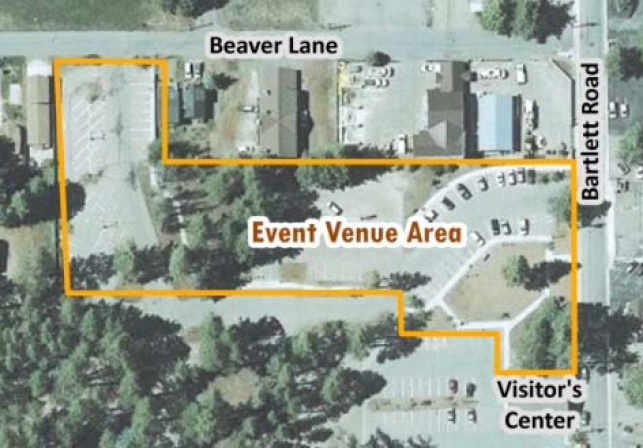
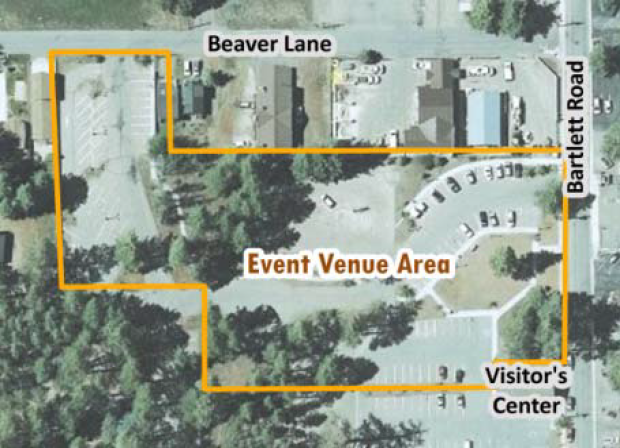
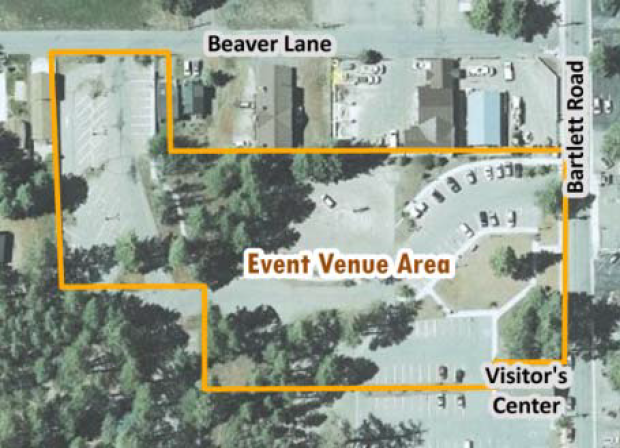
Designated event parking areas. For the use of Bartlett Event Areas illustrated in Section 17.13.030, designated parking areas must offset the closure of parking spaces as illustrated in Table 17.13.070.A and according to the following schedule on the next page.
| Table 17.13.070.A. Parking Requirements for Bartlett Parking Lot Closures | |||
|---|---|---|---|
| Bartlett A & B | |||
| Attendee Parking | Vendor & Event Volunteer Parking | Replacement Spaces | |
  |
1 space for every 2 anticipated attendees/
participants | At least 1 vendor space per vendor & 1 space for every 2 volunteers/event staff | No specific number required |
| Bartlett C | |||
| Attendee Parking | Vendor & Event Volunteer Parking | Replacement Spaces | |
 |
1 space for every 2 anticipated attendees/
participants | At least 1 vendor space per vendor & 1 space for every 2 volunteers/event staff | 139 spaces |
| Bartlett D | |||
| Attendee Parking | Vendor & Event Volunteer Parking | Replacement Spaces | |
 |
1 space for every 2 anticipated attendees/
participants | At least 1 vendor space per vendor & 1 space for every 2 volunteers/event staff | 277 spaces |
i.
Event organizers approved to use Bartlett Event Area A or B are not required to show a specific number of parking spaces, but they are required to show designated parking areas for event attendees, vendors, and volunteers.
ii.
Event organizers approved to use Bartlett Event Area C shall be required to show at least one hundred thirty-nine (139) replacement parking spaces as well as parking areas for attendees, vendors and volunteers.
iii.
Event organizers approved to use Bartlett Event Area D shall be required to show at least two hundred seventy-seven (277) replacement parking spaces as well as parking areas for attendees, vendors and volunteers.
b.
Designated time-restricted public parking. For Type A, B, and C events, the southern portions of the Bartlett Parking Lot shall be restricted to a two-hour time limit to encourage turnover of parking spaces. Applicants are hereby informed that parking limits will be enforced and vehicles found not in compliance with parking limits may be subject to citation or towing.
c.
A sign plan for directional signage and parking restrictions, including a schedule for how, when, and who will set up and tear down parking directional signage.
d.
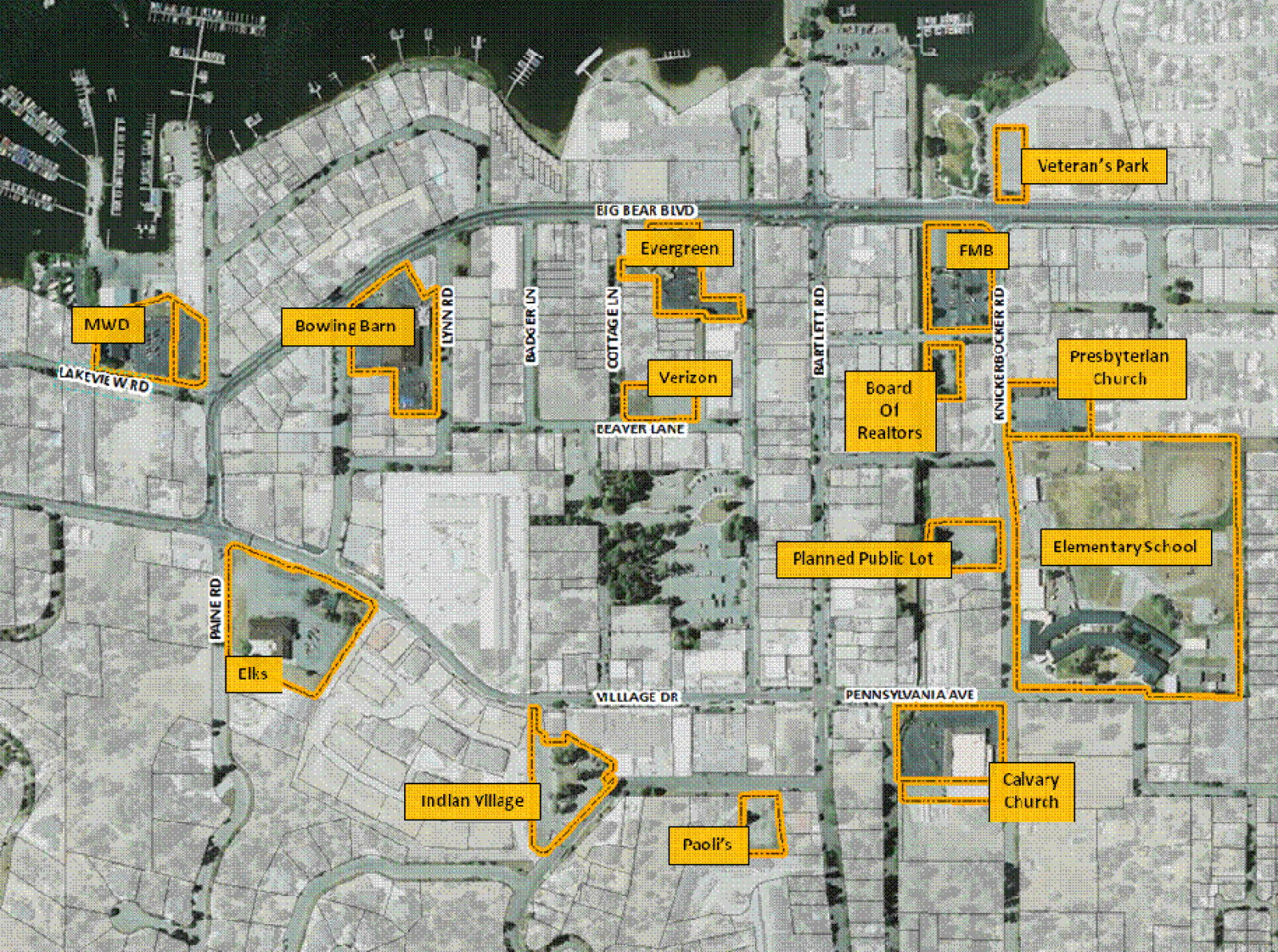
Authorization from private property owners to use private lots to meet parking requirements.
e.
An inventory of sign materials requested to be provided by the city.
f.
A staffing plan for high impact events to implement the parking plan.
| Table 17.13.070.B. Parking Lots Suitable for Event Parking |
|---|
 |
2.
Vendors.
a.
Applicants shall allow any business or group of businesses located in the Village Specific Plan Area to participate as an event vendor at a discounted rate, provided that all businesses have a valid city business license.
b.
Applicants shall prepare and implement a list of rules for vendors including, but not limited to the following:
i.
At all times, vendors shall display or be able to produce evidence that they are an approved event vendor. Such evidence shall be provided by the event organizer.
ii.
At all times, vendors shall maintain an orderly display. Tablecloths, display cases and other attractive materials are encouraged to avoid cluttering the streetscape.
 | 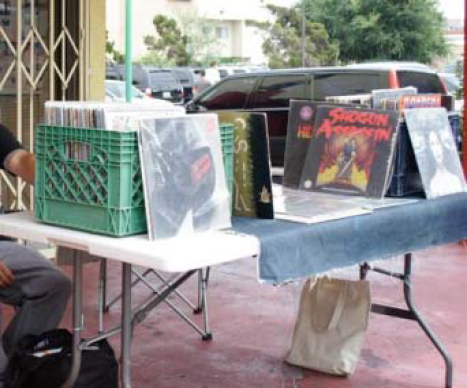 |
| This | Not This |
| The display on the left is more desirable because the display includes a professional banner, a tablecloth with finished edges that covers the table, and attractive racks designed for displaying wares. | |
iii.
All packaging and business related materials shall be screened from public view.
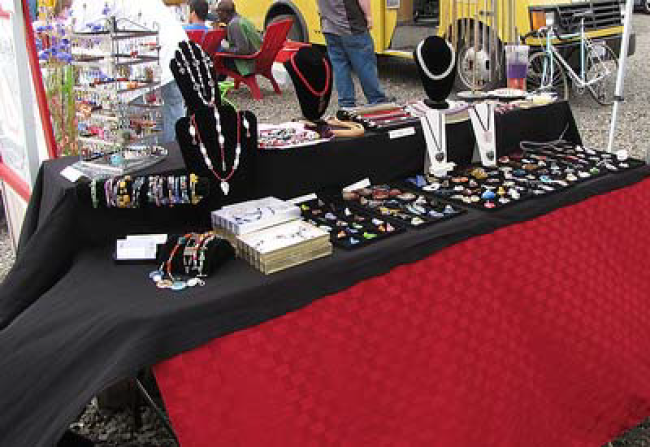 | 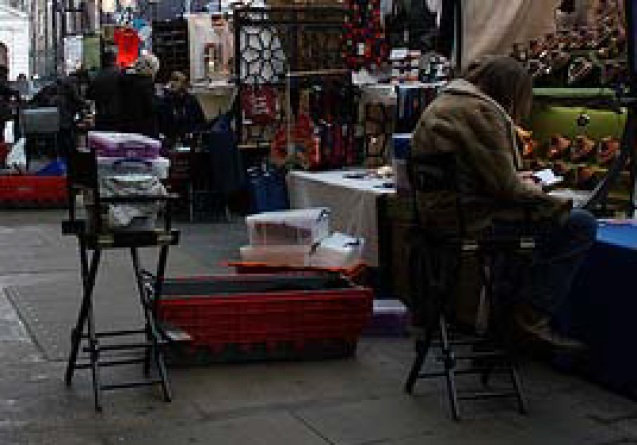 |
| This | Not This |
| Packaging materials, trash, and other materials that are not for sale should be screened. The vendor to the left uses a tablecloth and the vendor on the right has containers sitting out in the open. | |
iv.
Wares may not be displayed on the ground unless they are designed to rest on the ground. For example, garden art may be displayed on the ground, but televisions may not.
 | 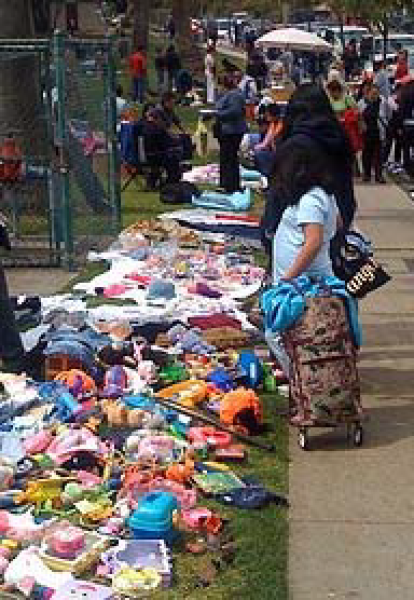 |
| This | Not This |
| Garden art is designed for outdoor use. Therefore vendors may display these types of materials on the ground. However, clothing, electronics, and other materials that are not designed to be placed on the ground may not be displayed in such a manner during an event. | |
c.
Event organizers are responsible for ensuring that vendors are compliant with vendor rules.
d.
Event organizers shall maintain an attractive site throughout the course of the event. Accordingly event organizers may be required to include design elements that reflect the event theme, consistent with the scale and intensity of the event.
3.
All event signage must conform to Chapter [Section] 17.12.130.
(Ord. No. 2012-422, § 4, 12-10-2012)

