
Bloomington City Zoning Code
CHAPTER 20
03 - USE REGULATIONS
20.03.010 - General.
(a)
Organization of the Table. In the Allowed Use Table, land uses are classified into general use categories and specific uses based on common functional, product, or physical characteristics such as the type and amount of activity, the type of customers or residents, how goods or services are sold or delivered, and site conditions. This classification provides a systematic basis for assigning present and future land uses into appropriate zoning districts.
(b)
Allowed Use Table.
(1)
A "P" in a cell of the Allowed Use Table indicates that the use is permitted by-right in that zoning district, subject to compliance with the Use-Specific Standards cross-referenced in the right-hand column of that line of the table.
(2)
A "C" in a cell of the Allowed Use Table indicates that the use is permitted only after the petitioner obtains Conditional Use Approval pursuant to Section 20.06.050(b) (Conditional Use Permit), and subject to the Use-Specific Standards cross-referenced in the right-hand column of that line of the table.
(3)
An "A" in a cell of the Allowed Use Table indicates that the use is permitted as an accessory use only in support of a permitted use on the site, and subject to the Use-Specific Standards cross-referenced in the right-hand column of that line of the table.
(4)
A "CA" in a cell of the Allowed Use Table indicates that the use is permitted only as an accessory use and only after the petitioner obtains Conditional Use Approval pursuant to Section 20.06.050(b) (Conditional Use Permit), and subject to the Use-Specific Standards cross-referenced in the right-hand column of that line of the table.
(5)
A "T" in a cell of the Allowed Use Table indicates that the use is permitted as a temporary use, subject to the Use-Specific Standards cross-referenced in the right-hand column of that line of the table.
(6)
An "*" in a cell indicates that a Use-Specific Standard cross-referenced in the right-hand column of the table applies to the use in that zoning district.
(7)
A blank cell in the Allowed Use Table indicates that the use is not allowed in that zoning district.
(c)
Multiple Uses.
(1)
A lot or parcel in a Residential zoning district may include only one principal use, but may also include any Accessory, Conditional Accessory, or Temporary uses as shown in the Allowed Use Table, provided that a Conditional Use Approval is obtained for any Conditional Accessory Use, and that all Use-Specific Standards applicable to each use are met.
(2)
A lot or parcel in a Mixed-Use or Nonresidential zoning district may include multiple principal uses, including a combination of residential and non-residential uses, provided that each use is either a Permitted Use or a Conditional Use in that zoning district, that a Conditional Use Approval is obtained for any Conditional Use, and that all Use-Specific Standards applicable to each use are met.
(d)
Unlisted Uses. When a proposed land use is not explicitly listed in Table 03-1, Allowed Use Table, the Planning and Transportation Director shall make a determination pursuant to Section 20.06.080(c) (Administrative Interpretation).
(e)
Additional Use Standards in the Downtown Character Overlays.
(1)
Nonresidential Ground Floor Standards. A minimum of fifty percent of the total ground floor area of a building located along each street frontage identified by a black line in Figure 49 shall be occupied by nonresidential primary uses listed in Table 03-1 as Permitted or Conditional in the MD zoning district, as those Permitted or Conditional Uses are modified by those prohibited uses listed in subsection (2) below. Enclosed parking garages shall not be counted toward the required nonresidential use.
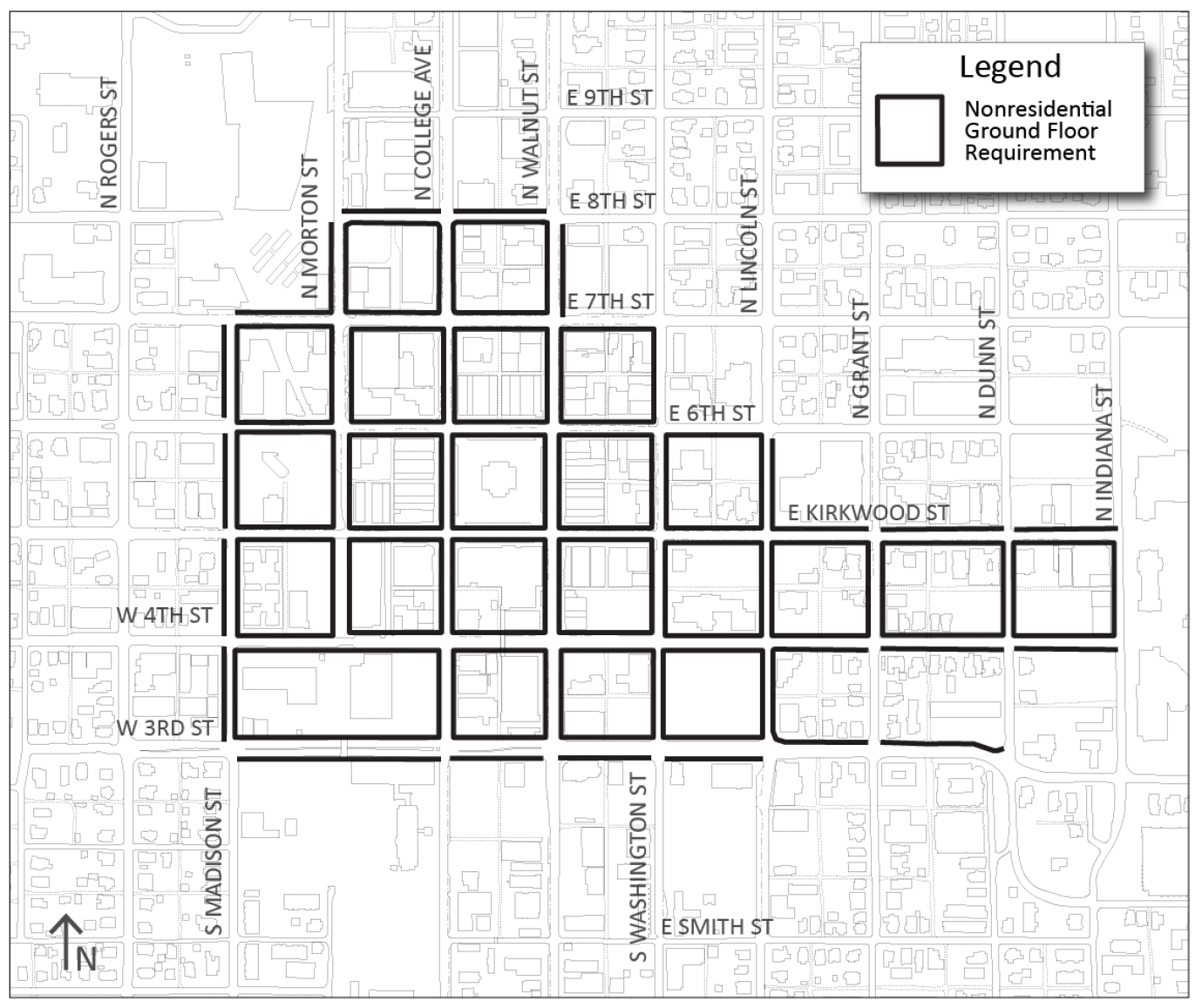
Figure 49: Downtown Nonresidential Ground Floor Requirement
(2)
Standardized Businesses. In the MD-CS and MD-UV Character Areas a standardized business shall require Conditional Use permit review in accordance with Section 20.06.050(b) (Conditional Use Permit), and shall comply with the following standards:
(A)
The proposed standardized business shall be designed and constructed in a style that visually complements its surroundings, especially the existing buildings on both sides of the same block the business is to be located, as well as the character of the particular overlay district. Visual complementation shall include, but may not be limited to:
i.
Architecture;
ii.
Scale;
iii.
Facade; and
iv.
Signage.
(B)
If the use is proposed for a site that contains an existing building of special historical, cultural, or architectural significance, with or without official historic designation, the proposed use shall seek to preserve and reuse as much of the existing building as possible, particularly the building's facade.
(C)
Visual complementation may also include interior décor. Elements of interior décor such as displays of public art, photos or memorabilia of Bloomington or Indiana University, may be considered.
(3)
Allowed Use Table Modifications. The lists of Permitted, Conditional, Accessory, Conditional Accessory, and Temporary uses listed in Table 03-1 (Allowed Use Table) are modified as follows.
(A)
Courthouse Square Character Area. The following uses are prohibited in the Courthouse Square Character Area: Assisted Living Facility, vehicle fuel station, and medical clinic.
(B)
Downtown Core Character Area. The following use is prohibited in the Downtown Core Character Area: Vehicle fuel station.
(C)
University Village Character Area.
i.
The following use is prohibited in the University Village Character Area: Vehicle fuel station.
ii.
The following uses are prohibited in the Restaurant Row area: Assisted living facility; financial institution; personal services (except in spaces of seven hundred square feet or less); community center; adult or child day-care center; hotel/motel; liquor or tobacco sales; club or lodge; medical clinic; park; pawn shop; pet grooming; public or private school; trade or business school; transportation terminal; utility substation and transmission facility; and veterinary clinic.
(D)
Showers Technology Character Area. The following uses are prohibited in the Showers Technology Character Area: Assisted living facility; personal services; vehicle fuel station; liquor or tobacco sales; club or lodge; pawn shop; and place of worship.
(f)
Historic Adaptive Re-Use. Any adaptive re-use, protection, or restoration of a historic resource for a land use not specifically permitted in the zoning district pursuant to Table 03-1, Allowed Use Table, shall be subject to Conditional Use review pursuant to Section 20.06.050(b)(3)(E)iii (Historic Adaptive Re-Use).
(g)
Quarry Adaptive Re-Use. Any adaptive re-use of a former quarry site not specifically permitted in the zoning district pursuant to Table 03-1, Allowed Use Table, shall be subject to Conditional Use review pursuant to Section 20.06.050(b)(3)(E)iv (Quarry Adaptive Re-Use).
(h)
Required Licenses, Permits, and Operational Rules.
(1)
All uses required by any unit of local, state, or federal government to have an approval, license, or permit to operate are required to have that local, state, or federal approval, license, or permit in effect at all times, and failure to do so is a violation of this UDO.
(2)
All uses subject to the operational standards of a local, state, or federal government agency, including without limitation the regulations contained in the Bloomington Municipal Code, and regulations of the Indiana Department of Health and Human Services, shall operate in compliance with those standards and regulations at all times, and failure to do so is a violation of this UDO.
(Amd. of 1-14-2020; Ord. No. 2024-05, § II(Att. A), 4-10-2024; Ord. No. 2025-29, § II(Att. A), 8-6-2025)
20.03.020 - Allowed Use Table.
Table 03-1. Allowed Use Table
(Amd. of 1-14-2020; Ord. No. 20-07, § I(Att. B), 4-15-2020; Ord. No. 21-17, § II(Att. A), 4-21-2021; Ord. No. 21-22, § II(Att. A), 4-21-2021; Ord. No. 21-23, § II(Atts. A, B), 6-14-2021; Ord. No. 2024-05, § II(Att. A), 4-10-2024; Ord. No. 2025-25, § II(Att. A), 8-6-2025; Ord. No. 2025-27, § II(Att. A), 8-6-2025; Ord. No. 2025-29, § II(Att. A), 8-6-2025; Ord. No. 2025-41, § II(Att. A), 11-19-2025; Ord. No. 2025-26, § II(Att. A), 8-6-2025; Ord. No. 2025-28, § II(Att. A), 8-6-2025)
_____
20.03.030 - Use-Specific Standards.
(a)
Generally.
(1)
The Use-Specific Standards listed in this Section 20.03.030 apply to those uses listed on the same line of Table 03-1, regardless of whether those uses are shown as Permitted, Conditional, Conditional Accessory, Accessory, or Temporary uses. These Use-Specific Standards cannot be modified through the Conditional Use Approval process in Section 20.06.050(b) (Conditional Use Permit), but relief may be granted through the Variance process in Section 20.06.080(b) (Variance).
(2)
Any of the uses listed as Household Living Uses in Table 03-1 (Allowed Use Table) may be organized as cooperative housing, but shall be a permitted use or a Conditional Use only in those zoning districts where another household living use with the same layout and number of units would be allowed as a permitted use or Conditional Use, and shall be subject to those Use-Specific Standards applicable to such Household Living Use with the same layout and number of units. For example, a cooperative housing facility that meets the definition of "dwelling, multifamily" in terms of layout and number of units is a permitted use available only in those zoning districts where a "dwelling, multifamily" is a permitted use in Table 03-1 (Allowed Use Table), and is a Conditional Use available only in those zoning districts where a "dwelling, multifamily," is listed as a Conditional Use in Table 03-1 (Allowed Use Table), and is subject to those Use-Specific Standards applicable to a "dwelling, multifamily" in Section 20.03.030(b)(5).
(b)
Residential Uses.
(1)
Dwelling, Single-Family (Detached).
(A)
In the RM, RH, MN, MM, MC, ME, and MH zoning districts, single-family detached dwelling units shall be permitted only on lots of record lawfully established before February 12, 2007.
(B)
Any legally established single-family dwelling that was established prior to the effective date of this UDO shall not be made non-conforming by adoption of this UDO.
(C)
Occupancy of a single-family detached dwelling unit is subject to the definition of "family" in Chapter 20.07 (Definitions).
(2)
Dwelling, Single-Family (Attached).
(A)
Access.
i.
Each individual dwelling unit shall have a separate entrance facing the street frontage to which the building address is assigned. Buildings on corner lots may have entrances facing either street frontage.
ii.
Each dwelling shall have direct access to a street or alley.
(B)
Design. In the R2 and R3 zoning districts, the maximum number of dwelling units allowed in one single-family attached structure shall be two, and each individual dwelling unit shall be located on a separate lot.
(C)
Occupancy. Occupancy of single-family attached dwelling units is subject to the definition of "Family" in Chapter 20.07 (Definitions).
(3)
Dwelling, Duplex.
(A)
Generally.
i.
The property owner (or HAND registered agent) shall have no Notices of Violation on file in the Planning and Transportation Department for the prior three years at application.
(B)
Occupancy. Occupancy of each dwelling unit in a duplex dwelling is subject to the definition of "Family" in Chapter 20.07 (Definitions).
(C)
Design. In the R1, R2, R3, and R4 zoning districts the following shall apply:
i.
Each unit in a newly constructed duplex dwelling shall have a separate exterior entrance facing a public or private street. Duplex dwellings created through renovation or expansion of existing structures shall have at least one exterior entrance facing a public or private street.
ii.
The following design elements of the duplex dwelling shall be similar in general shape, size, and design with the majority of existing single-family or duplex structures on the same block face on which it is located:
1.
Roof pitch;
2.
Front porch width and depth;
3.
Front building setback; and
4.
Vehicle parking access (i.e., front-, side-, or rear-access garage or parking area).
iii.
No duplex dwelling structure shall contain more than six bedrooms total.
(D)
Approval. In the R1, R2, and R3 zoning districts, upon Conditional Use approval, a one hundred fifty foot buffer shall be created around the approved duplex dwelling. No newly created or expanded (through addition or habitable space) duplex dwellings shall be allowed in said buffer in the R1, R2, and R3 zoning districts for a period of two years after the date of the Conditional Use approval. For purposes of this section, the one hundred fifty feet shall be measured from the property lines of the parcel receiving approval.
(E)
Maximum Number. In the R1, R2, and R3 zoning districts, the BZA shall approve a maximum of fifteen duplex dwellings (newly created or expanded through addition or habitable space) per calendar year.
(4)
Dwelling, Triplex and Fourplex.
(A)
Generally.
i.
The property owner (or HAND registered agent) shall have no Notices of Violation on file in the Planning and Transportation Department for the prior three years at the time of Conditional Use application.
(B)
Occupancy. Occupancy of each unit in a triplex and fourplex dwelling is subject to the definition of "Family" in Chapter 20.07 (Definitions).
(C)
Design.
i.
Triplex and fourplex dwellings shall have a minimum of one exterior entrance and no more than two exterior entrances facing a public or private street.
ii.
The following design elements of the triplex or fourplex dwelling shall be similar in general size, shape, and design with the majority of existing structures on the same block face on which it is located:
1.
Roof pitch;
2.
Front porch width and depth;
3.
Front building setback; and
4.
Vehicle parking access (i.e., front-, side-, or rear-access garage or parking area).
iii.
In the R4 zoning district, no triplex dwelling structure shall contain more than nine bedrooms total, and no fourplex dwelling structure shall contain more than twelve bedrooms total.
(5)
Dwelling, Multifamily.
(A)
Ground Floor Parking. Any portions within the ground floor of a structure used for vehicular parking and drive aisles directly accessing parking spaces shall be located at least twenty feet behind the building facade facing a public street, except that drive aisles are excluded for development sites of one-half acre or less. If there are multiple primary buildings on a site, this requirement only applies to the building closest to a public street.
(B)
Size. In the MN and R4 zoning districts, no more than eight multifamily or student housing or dormitory dwelling units shall be constructed on one single lot or parcel.
(C)
Building Floor Plate. Buildings with more than twenty dwelling units cannot have a floor plate larger than ten thousand square feet. Buildings that utilize either the affordable housing or sustainable incentive shall be allowed a maximum of fifteen thousand square feet per qualified building. Buildings that utilize both the affordable housing and sustainable incentives shall be allowed a maximum of thirty thousand square feet per qualified building.
(D)
Ground Floor Units.
i.
Ground floor dwelling units shall be prohibited in the MD-ST (Showers Technology) and MD-CS (Courthouse Square) Downtown Character Overlays, and the ME zoning district.
ii.
In the MD zoning district, each dwelling unit located on the ground floor within twenty feet of the front property line shall be constructed with the first floor elevated a minimum of three feet above adjacent sidewalk grade. Any dwelling unit located at least twenty feet from the front property line does not have to meet the three-foot elevation requirement.
(6)
Dwelling, Live/Work.
(A)
The residential unit shall be located above or behind the nonresidential areas of the structure.
(B)
The residential living space shall be occupied by the owner of the commercial or manufacturing activity or the owner's employee, including that person's household.
(C)
The resident owner or employee is responsible for the commercial or manufacturing activity performed.
(D)
In the R4, RM, and RH zoning districts, the commercial activity area shall not exceed fifty percent of the gross floor area of the unit.
(E)
Signs are limited to not more than two internally illuminated wall or window signs not exceeding ten square feet in total area.
(F)
The work activities shall not adversely impact the public health, safety, or welfare of adjacent properties.
(7)
Dwelling, Cottage Development.
(A)
Ownership. Individual cottage lots or portions of the project may not be subdivided for sale.
(B)
Bulk and Density Standards.
_____
Table 03-2. Cottage Development Bulk and Density Standards
_____
(C)
Setbacks.
i.
Parking Lot. Minimum of thirty feet from the right-of-way.
ii.
Minimum Dwelling Separation. Minimum of ten feet between dwelling units.
iii.
Building Setbacks. All other setbacks for the project site (not individual units) shall comply with those applicable in the underlying zoning district.
iv.
R3 Zoning District. Cottage developments within the R3 zoning district shall include a minimum of one dwelling unit that is built at the build-to-line.
(D)
Central Open Space. Each cottage development shall include at least one centrally located open space area of at least four hundred square feet per dwelling unit. Parking areas cannot be counted toward this open space requirement.
(E)
Parking and Access.
i.
Parking shall be designed to limit curb cuts and most efficiently park vehicles.
ii.
Parking may take place on a shared, paved parking lot or in shared driveways.
iii.
Shared driveways may access individual garages.
iv.
Project perimeter sidewalks may be required, and internal walkways shall connect each cottage unit to the project perimeter sidewalks.
(F)
Landscaping and Buffering.
i.
All cottage developments shall install a bufferyard type 1 along rear and side lot lines per Section 20.04.080 (Landscaping, Buffering, and Fences).
ii.
Parking lot landscaping shall be provided per the requirements of Section 20.04.060 (Parking and Loading).
(G)
Architecture.
i.
All structures shall meet the design standards applicable to single-family homes in the zoning district where the property is located.
ii.
Dwelling units shall have a maximum one to three width to depth ratio for the first floor.
iii.
Each unit shall have a maximum cumulative area of one thousand two hundred square feet
(8)
Dwelling, Mobile Home. All mobile homes shall be installed on a permanent foundation and have perimeter skirting.
(9)
Manufactured Home Park.
(A)
Entrance and Drive. Manufactured or mobile home parks with twenty or more dwelling sites shall comply with the following standards.
i.
At least two access points for ingress to and egress from the park shall be provided.
ii.
Individual dwelling sites shall only have driveways providing access to interior streets.
iii.
Each new driveway apron onto a street shall be surfaced with concrete.
iv.
Enlargement or modification of any existing driveway shall require the driveway apron to be surfaced with concrete.
(B)
Parking.
i.
Location. Required parking shall be located on each dwelling site.
ii.
Surface Material.
1.
Parking spaces shall utilize a dustless, hard surface of concrete, asphalt, brick pavers, or a similar durable surface approved by the Planning and Transportation Director.
2.
Crushed stone, stone, rock, dirt, sand, or grass shall not be permitted as a parking surface.
(C)
Accessory Structures.
i.
Generally. Management offices, sales offices, storage, laundry, and other structures customarily accessory to manufactured home parks or mobile home parks are permitted, provided that:
1.
The accessory structure is located, designed, and intended to serve only the needs of the park; and
2.
The establishments located within the accessory structure present no visible evidence of their business nature to areas outside the park.
ii.
Maximum Number. Each manufactured home or mobile home is allowed no more than one accessory structure in addition to a carport or garage.
iii.
Maximum Cumulative Area. The total area of all accessory structures, including the area of detached or attached garages or carports, shall not exceed ten percent of the dwelling site.
(D)
Infrastructure. Infrastructure shall be installed in accordance with Indiana Code § 16-41-27-1 et seq., Rule 410 IAC 6-6 and their subsequent amendments, the State Board of Health Requirements, and the requirements of this UDO.
(10)
Group Care Home, FHAA (Small and Large) and Opioid Rehabilitation Home (Small and Large).
(A)
Group homes for the exclusive use of citizens protected by the provisions of the Federal Fair Housing Act Amendments of 1988 (FHAA), as defined in that Act and interpreted by the courts, or by any similar legislation of the State of Indiana, may be established in any Residential zoning district or portion of a Mixed-Use zoning district or PD district that permits residential dwellings, provided that they meet the definition of "small" and "large" facilities in Chapter 20.07 (Definitions) and are located in zoning districts where facilities of that size are allowed pursuant to Table 03-1, and subject to the licensing requirements of the state and the City of Bloomington.
(B)
In the MN and R4 zoning districts, group homes shall not be designed for or occupied by more than twenty residents living together.
(C)
No group care home shall be located within three hundred feet of any other group care home.
(D)
No Opioid Rehabilitation Home shall be located within three hundred feet of any other Opioid Rehabilitation Home.
(E)
Where minimum spacing is required by subsections (C) and (D) above, the distance shall be measured from the nearest property line of the property from which spacing is required to the nearest property line on which the group home will be located, using a straight line, without regard to intervening structures or public rights-of-way.
(11)
Single Room Occupancy.
(A)
The maximum number of bedrooms allowed per SRO for this use are limited to the following for each zoning district:
(i)
R1—R4. A maximum of three bedrooms are allowed.
(ii)
All other districts shall not have a maximum number of bedrooms.
(B)
No bedroom occupied by a person shall be rented for a period of less than thirty consecutive days.
(C)
A maximum of two adults per bedroom are allowed.
(D)
Within the R1, R2, R3, and R4 zoning districts a one hundred fifty foot buffer shall be created around the approved single room occupancy (SRO). No newly created or expanded (through addition or habitable space) SRO shall be allowed in said buffer in the R1, R2, R3, or R4 zoning districts for a period of two years after the date of the conditional use approval. For purposes of this section, the one hundred fifty feet shall be measured from the property lines of the parcel receiving approval.
(E)
The property owner (or HAND registered agent) shall have no notices of violation on file in the planning and transportation department for the prior three years of application for conditional use approval.
(F)
Within the R1, R2, R3, and R4 districts the following design elements of the SRO shall be similar in general shape, size, and design with the majority of existing structures on the same block face on which it is located:
(i)
Roof pitch;
(ii)
Front porch width and depth;
(iii)
Front building setback; and
(iv)
Vehicle parking access (i.e., front-, side-, or rear-access garage or parking area).
(G)
Within the R1, R2, R3, and R4 districts the owner of the property must live within the dwelling unit.
(12)
Student Housing or Dormitory.
(A)
Ground Floor Parking. All portions within the ground floor of a structure used for vehicular parking shall be located at least twenty feet behind the building facade facing a public street. If there are multiple primary buildings on a site, this requirement only applies to the building closest to a public street.
(B)
Location.
i.
By at least nine hundred feet, as measured between the closest points on the two lots containing the student housing or dormitory uses; and
ii.
By at least nine hundred feet, as measured between the closest points of two or more residential or mixed-use structures within one lot containing the student housing or dormitory use.
However, if either the affordable housing incentive codified at Section 20.04.110(c) or the sustainable development incentive codified at Section 20.04.110(d) has been earned, only the requirements of Section 20.03.030(b)(13)(B)(i) apply to each student housing or dormitory use in the RM, RH, MN, MM, MC, and MI zoning districts, if both the affordable housing incentive codified at Section 20.04.110(c) and the sustainable development incentive codified at 20.04.110(d), the separation requirements of this section do not apply to each student housing or dormitory use in the RM, RH, MN, MM, MC, and MI zoning districts.
(C)
Building Floor Plate.
i.
In the MN zoning district, the maximum building floor plate for a student housing or dormitory use shall be two thousand square feet per building, pursuant to the measurement standards in Section 20.04.020(g) (Building Floor Plate). However, if either the affordable housing incentive codified at Section 20.04.110(c) or the sustainable development incentive codified at Section 20.04.110(d) has been earned, the maximum building floor plate for a student housing or dormitory use in the MN zoning district shall be three thousand square feet per building, pursuant to the measurement standards in Section 20.04.020(g). If both the affordable housing incentive codified at Section 20.04.110(c) and the sustainable development incentive codified at Section 20.04.110(d) have been earned, the maximum building floor plate of a student housing or dormitory use shall be five thousand square feet per building.
ii.
In the RM and MD zoning districts, the maximum building floor plate for a student housing or dormitory use shall be three thousand square feet per building, pursuant to the measurement standards in Section 20.04.020(g) (Building Floor Plate). However, if either the affordable housing incentive codified at Section 20.04.110(c) or the sustainable development incentive codified at Section 20.04.110(c) has been earned, the maximum building floor plate for a student housing or dormitory use in the RM and MD zoning districts shall be five thousand square feet per building pursuant to the measurement standards in Section 20.04.020(g), if both the affordable housing incentive codified at Section 20.04.110(c) and the sustainable development incentive codified at Section 20.04.110(d) have been earned, the maximum building floor plate of a student housing or dormitory use shall be ten thousand square feet per building.
iii.
In the RH, MM, MC, and MI zoning districts, the maximum building floor plate for student housing or dormitory use shall be five thousand square feet per building, pursuant to the measurement standards in Section 20.04.020(g) (Building Floor Plate). However, if either the affordable housing incentive codified at Section 20.04.110(c) or the sustainable development incentive codified at Section 20.04.110(d) has been earned, the maximum building floor plan for a student housing or dormitory use in the RH, MM, MC, and MI zoning districts shall be eight thousand square feet per building pursuant to the measurement standards in Section 20.04.020(g). If both the affordable housing incentive codified Section 20.04.110(c) and the sustainable development incentive codified at Section 20.04.110(d) have been earned, the maximum building floor plate of a student housing or dormitory use shall be twenty thousand square feet per building.
iv.
In the MS zoning district, the maximum building floor plate for a student housing or dormitory use shall be ten thousand square feet per building, pursuant to the measurement standards in Section 20.04.020(9) (Building Floor Plate). However if either the affordable housing incentive codified at Section 20.04.110(c) or the sustainable development incentive codified at Section 20.04.110(d) has been earned, the maximum building floor plate for a student housing or dormitory use shall be 14,000 square feet per building, pursuant to the measurement standards in Section 20.04.020(9). If both the affordable housing incentive codified at Section 20.04.110(c) and the sustainable development incentive codified at Section 20.04.110(d) have been earned, the maximum building floor shall be 40,000 square feet per building.
(D)
Building Height.
i.
In the RH zoning district, the maximum building height for a student housing or dormitory use shall be three stories, not to exceed forty feet, except as necessary to accommodate additional height earned through the affordable housing incentive in Section 20.04.110(c) (Affordable Housing).
ii.
In the MD-DC Character Area, the maximum building height for a student housing or dormitory use shall not exceed forty feet.
iii.
In the MD-CS, MD-UV, MD-DE, MD-DG, and MD-ST Downtown Character Overlays, the maximum building height for a student housing or dormitory use shall not exceed thirty feet.
(c)
Public, Institutional, and Civic Uses.
(1)
Art Gallery, Museum, or Library. In the R4 zoning district, art galleries, museums, and libraries shall be limited to seven thousand square feet gross floor area.
(2)
Community Center. In the RM and RH zoning districts, community centers shall be a Permitted use when created through renovation of an existing building. If a community center requires new construction or a major addition to an existing structure (greater than thirty-three percent of the existing gross floor area), then the use shall be subject to a Conditional Use Approval.
(3)
Day Care Center, Adult or Child.
(A)
When located in a Residential zoning district, an adult or child day care center shall not be located closer than five hundred feet to any other adult or child day care center.
(B)
When a license is required by the state, proof of licensing shall be presented with the petition for the Conditional Use Approval. Day care centers exempt from state licensing requirements shall provide proof of exemption.
(C)
The operation of the facility shall not include overnight occupancy by the clients.
(D)
A level 3 buffer pursuant to Section 20.04.080(g)(3) (Buffer Yard Types), shall be established along the property line(s) separating a day-care center and any single-family detached, duplex, triplex, or fourplex dwellings.
(4)
Jail or Detention Facility.
(A)
Adequate access shall be provided to a street classified as a collector or arterial per the Transportation Plan.
(B)
The design and intensity of the use, site, and structure shall be compatible with the surrounding area.
(C)
Site design and security measures shall ensure that the peace and safety of the surrounding area shall not be disturbed or impaired.
(5)
Urban Agriculture, Noncommercial.
(A)
Structures.
i.
Greenhouses and hoop houses are limited to a maximum height of fifteen feet, shall be located at least ten feet from any lot line and may not cover more than twenty-five percent of the property.
ii.
Cold frames are limited to a maximum height of four feet and shall be located at least ten feet from any lot line.
iii.
Agricultural stands are limited to a maximum height of twelve feet and shall be located at least ten feet from any abutting lot with an occupied residential use.
Fences intended exclusively to protect food garden plots from animals shall not be more than twelve feet in height. The portion of the fence that exceeds five feet in height shall, by the use of voids and solids via latticework or other similar techniques, be of open construction. This portion of the fence shall be constructed of materials widely accepted in the fence industry for garden protection.
(B)
Operational Standards.
i.
Retail sales shall be prohibited on the noncommercial urban agriculture site, except for the sale of produce grown on that site. Such sales shall be in compliance with Section 20.03.030(h)(4) (Farm Produce Sales).
ii.
The site drainage and maintenance shall prevent water and fertilizer from draining onto adjacent property that is not part of the contiguous land in the urban agricultural use.
iii.
Compost piles shall not exceed six feet in height. Refuse and compost area shall be enclosed at ground level to be rodent-resistant.
iv.
No outdoor work activity that involves power equipment or generators may occur between sunset and sunrise.
(C)
Soil Quality. Food products may be sold if grown in soil native to the site if the applicant can provide documentation to the City that the following standards are satisfied:
i.
A composite sample of the native soil, consisting of no less than five individual samples, has been tested for lead content and the lead content in the soil is determined to be at or below the residential screening levels for soil exposure, direct-contact for lead established by the Indiana Department of Environmental Management; and either:
1.
Proof through maps, deeds, prior permits or a combination of those sources that the site has only been used for residential or agricultural activities in the past; or
2.
A composite sample of the native soil, consisting of no less than five individual samples, has been tested for metal content using the US EPA 3050B, 3051, or a comparable method and that the metals arsenic, cadmium, mercury, molybdenum, nickel, selenium, and zinc are determined to be at or below the residential screening levels for soil exposure, direct-contact established by the Indiana Department of Environmental Management.
ii.
If metal content in soil exceeds established thresholds, food products may only be grown in raised beds filled with clean topsoil.
iii.
As an alternative to meeting the standards in subsection (i) or (ii) above, food products may be grown in clean soil brought to the site without completing a soil test of the soil native to the site.
(6)
School, Public or Private.
(A)
Each public or private high school shall be located on a site with direct access to an arterial or collector street.
(B)
Each public or private elementary or middle school located on a site adjacent to an arterial or collector street shall provide an automobile pick-up/drop-off area adequate to protect student safety with access from either a collector or local street, and shall provide a direct pedestrian connection to at least one local street adjacent to the site.
(7)
Methadone Treatment Facility or Opioid Rehabilitation Facility.
(A)
Each clinic or facility shall be at least one thousand feet from the nearest property line of a lot containing a primary use that falls under the Household Living Category, Group Living Category, a Place of Worship, or a Public or Private School.
(B)
Each clinic or facility shall include a waiting and departure lounge sufficient in size to accommodate all scheduled patrons, which shall be open to patrons at least one hour before and after any official business is to be conducted. Such areas shall include restroom facilities that shall be open at least one hour prior to the beginning of scheduled services.
(d)
Commercial Uses.
(1)
Crops and Pasturage.
(A)
Generally.
i.
Except in the R1 zoning district, this use shall be accessory to a principal use on the same lot or parcel.
ii.
Land with a slope in excess of fifteen percent shall not be considered in determining the total pasture size and shall not be used for pasture purposes.
iii.
All outside pens, exercise areas, and pastures shall be fenced.
(B)
Location.
i.
Structures containing large or medium livestock or any structures containing livestock waste (except chicken coops) shall meet the following minimum setbacks:
1.
Front setback: seventy-five feet;
2.
Side setback: fifty feet;
3.
Rear setback: seventy-five feet.
ii.
Structures containing small livestock shall meet the following minimum setbacks:
1.
Front setback: thirty-five feet;
2.
Side setback: fifteen feet;
3.
Rear Setback: twenty-five feet.
(C)
Number of Livestock.
i.
Domesticated livestock are permitted in accordance with the requirements indicated in Table 03-3 below, unless otherwise prohibited or limited by this UDO or other regulation.
ii.
The maximum number of livestock per acre shall be cumulative between the categories of domesticated animals.
_____
Table 03-3. Number of Animals Allowed
_____
(2)
Kennel.
(A)
The parts of a building where animals are boarded shall be fully enclosed, with solid core doors and no operable windows, and shall be sufficiently insulated so no unreasonable noise or odor can be detected off premises.
(B)
Animals shall not be permitted outside except within a secure animal run, and no outdoor animal run shall be permitted within two hundred feet of any adjacent residential district or use, except where the adjoining property is owned or occupied by the operator of the kennel.
(C)
The perimeter of the kennel operation shall be enclosed with an opaque fence that meets the following standards:
i.
Minimum depth underground: twelve inches.
ii.
Height: eight feet from grade.
iii.
Minimum gauge of chain-link fence: eleven.
iv.
Minimum fence setback: twenty feet from any adjoining property line.
v.
Where a kennel operation abuts a residential land use, a minimum of one evergreen shrub with a mature height of at least ten feet shall be planted no more than six feet on center along the entire length of the shared property line.
(D)
Prior to establishment, the property owner, or the kennel operator if the operator is not the property owner, shall provide proof of all necessary licenses to the Planning and Transportation Director.
(E)
A plan for management of animal wastes shall be submitted with the Conditional Use petition.
(3)
Orchard or Tree Farm, Commercial. Commercial orchards and/or tree farms shall be limited to twenty-five percent of the lot area when allowed as an accessory use.
(4)
Pet Grooming and Veterinarian Clinic. If a pet grooming or veterinarian clinic has a kennel associated with it, then it shall comply with Section 20.03.030(d)(2) (Kennel) and the following standards:
(A)
In the MN, MM, and MD zoning districts, outdoor kennel facilities are not permitted.
(B)
In the MC zoning district, outdoor kennels shall require a Conditional Use permit pursuant to Section 20.06.050(b) (Conditional Use Permit).
(5)
Amenity Center. In the R1, R2, R3, and R4 zoning districts, an amenity center shall not be established on a lot or parcel larger than one acre. The amenity center shall not exceed five thousand square feet of gross floor area.
(6)
Recreation, Indoor. In the R3, R4, RM, and RH zoning districts, indoor recreation facilities shall be permitted when created through the renovation of an existing building. If a recreation center requires new construction or a major addition to an existing structure (greater than thirty-three percent of the existing gross floor area), then the use shall be subject to a Conditional Use Approval.
(7)
Sexually Oriented Business.
(A)
Purpose. Within the City it is acknowledged that there are some uses, often referred to as sexually oriented businesses, which because of their nature can have a negative impact on nearby property, particularly when these sexually oriented businesses are concentrated together or located in direct proximity to places where children congregate including but not limited to: residential uses; child care centers; places of worship; schools; libraries; playgrounds; and/or parks. Special regulations for these sexually oriented businesses are necessary to ensure that these adverse impacts will not contribute to the blighting of surrounding areas. The primary goal of these regulations is to prevent the concentration or location of these uses in a manner that would exacerbate their adverse effects.
(B)
Location. A sexually oriented business shall not be located on a property within five hundred feet (measured from the nearest property line of the property from which spacing is required to the nearest wall of the building or tenant space that houses the sexually oriented business use using a straight line, without regard to intervening structures or public rights-of-way) of any of the following:
i.
Place of worship;
ii.
School, public or private (preschool, K-12);
iii.
Day care center, adult or child;
iv.
Park (including publicly owned multiuse trails);
v.
Library;
vi.
Homeless shelter;
vii.
R1, R2, R3, R4, or RMH zoning district, including any portion of a Planned Unit Development designated for single-family residential use;
viii.
RM or RH zoning district, including any portion of a Planned Unit Development designated for multifamily residential use; and
ix.
Another sexually oriented business.
(C)
PUDs. For the purposes of this section, sexually oriented businesses shall be considered permitted uses in any PUD zoning district created before February 12, 2007, where the underlying zoning is MC, MM, and IN.
(D)
Exterior Display. No sexually oriented business shall be conducted in any manner that permits the observation from any right-of-way of material depicting specified sexual activities or specified anatomical areas by display, decoration, sign, show window or other opening.
(8)
Bed and Breakfast.
(A)
In the R1, R2, R3, R4, and RM zoning districts, this use is limited to single-family detached dwellings.
(B)
In the R1, R2, R3, R4, and RM zoning districts, the maximum number of guest units for any bed and breakfast shall be three. In all other zoning districts, the maximum number of guest units for any bed and breakfast establishment shall be eight.
(C)
The business owner or manager of the bed and breakfast establishment shall be required to reside on the property or on an adjacent property.
(D)
Each guest stay shall be limited to a maximum of thirty consecutive days.
(E)
The exterior design of any exterior modification of the structure or premises shall include facade articulation, and numbers and locations of windows and building entrances on the primary building facade, that are similar to those in the surrounding area and neighborhood.
(9)
Brewpub, Distillery, or Winery.
(A)
In the MN zoning district, brewpubs, distilleries, or wineries shall not manufacture more than five thousand barrels of beverage (all beverages combined) annually.
(B)
In the MM, MD, and MC zoning districts, brewpubs, distilleries, or wineries shall not manufacture more than twenty thousand barrels of beverage (all beverages combined) annually.
(C)
Brewpubs, distilleries, or wineries shall maintain copies of all reports filed with the Bureau of Alcohol, Tobacco and Firearms (ATF) and shall be able to demonstrate, upon request of the City, that they have not exceeded the annual beverage production limit in any twelve-month period.
(D)
In the MN, MM, and MC zoning districts, brewpubs, distilleries, or wineries shall maintain at least fifteen percent of the gross floor area of the facility or five hundred square feet of floor space, whichever is greater, for public use as a tavern, restaurant, or tasting area.
(E)
In the MD zoning district, brewpubs, distilleries, or wineries shall maintain at least fifty percent of the gross floor area of the facility for public use as a tavern, restaurant, or tasting area.
(F)
Brewpubs may ship beverages for consumption at other sites, but only if it is demonstrated that:
i.
The location and flow of shipping traffic does not impact access by other users; and
ii.
The proposed shipping routes are designed to accommodate the weight of the delivery vehicles.
(10)
Restaurant
(A)
In the RM and RH zoning districts, the restaurant shall contain no more than two thousand five hundred gross square feet of floor area. Such smaller establishments typically include but are not limited to cafes, coffee shops, delis, and small restaurants. In the ME zoning district the restaurant shall contain no more than five thousand gross square feet of floor area.
(B)
In the RM and RH zoning districts, structures containing this use shall be similar in appearance to the surrounding buildings with respect to architectural style, roof pitch, color and materials.
(11)
Artist Studio or Workshop. In the R1, R2, R3, and R4 zoning districts:
(A)
The artist studio shall be accessory to a residential use.
(B)
No retail activity shall be permitted in association with the artist studio.
(C)
No display of art pieces for public viewing, such as within a gallery, shall be permitted.
(D)
Use of the artist studio shall be limited to the production of art by the resident of the home in which the studio is located.
(12)
Office. In the MH zoning district, only office uses performing services related to the medical or health care industries are permitted.
(13)
Equipment Sales and Rental.
(A)
Outdoor display of equipment for sale or rental shall only be permitted in the MC and EM zoning districts.
(B)
In the MC zoning district, all outdoor display of merchandise shall be contained on an improved surface such as asphalt, concrete, or pavers.
(C)
Any outdoor display area shall not block ADA-accessible parking areas, parking lot access aisles, or sidewalk areas, and shall not reduce the number of parking spaces below any minimum requirement for the use in this UDO.
(14)
Vehicle Fuel Station.
(A)
All activities other than vehicle fueling shall be conducted within a completely enclosed building.
(B)
No outdoor storage of automobile parts, discarded tires, or similar materials shall be permitted.
(C)
Outdoor storage of more than three wrecked or temporarily inoperable vehicles awaiting repairs shall be prohibited.
(D)
All structures including fuel canopies shall be similar in appearance to the surrounding development with respect to architectural style, color, and materials.
(E)
Fuel canopies shall be located to the side or rear of properties to minimize visual impact from public streets.
(F)
At least fifty percent of the total number of dispenser units shall provide alternative fuels including, but not limited to biodiesel, electricity, majority ethanol blend, hydrogen or natural gas.
(15)
Vehicle Fleet Operations.
(A)
In the MM and MN zoning districts, only vehicle fleet operations that do not include the exclusive use of autonomous vehicle services are permitted.
(B)
Vehicle fleet operations that include autonomous vehicle services shall not be located on a property within three hundred feet (measured from the nearest property line of the vehicle fleet operations using a straight line, without regard to intervening structures or the public right-of-way) of any of the following:
i.
School, Public or Private (preschool, K-12);
ii.
Day care center, adult or child;
iii.
Park (including publicly owned multiuse trails);
iv.
R1, R2, R3, R4, or RHM zoning district, including any portions of a Planned Unit Development designated for single family residential use; and
v.
RM or RH zoning district, including any portion of a Planned Unit Development designated for multifamily residential use.
(C)
No outdoor storage of automobile parts, discarded tires, or similar materials shall be permitted.
(D)
Outdoor storage of more than three wrecked or temporarily inoperable vehicles awaiting repairs shall be prohibited.
(E)
All structures, including fuel canopies, shall be similar in appearance to the surrounding development with respect to architectural style, color, and materials.
(F)
Fuel canopies shall be located to the side or rear of properties to minimize visual impact from the public streets.
(16)
Vehicle Impound Storage. Vehicle impound storage lots shall be screened with a solid fence or wall at between eight and ten feet in height and shall provide at least one tree and three shrubs per ten linear feet of fencing to minimize the visual impact of the use on surrounding properties, public streets, and public open spaces. Required plantings shall be located on the side of the fence closest to abutting properties.
(17)
Vehicle Parking Garage.
(A)
In the MD-CS, MD-DC, MD-UV, MD-DG, and MD-ST Downtown Character Overlays, a freestanding primary use vehicle parking garage, or a parking garage that is attached to but not located within the building envelope of a structure containing another primary use shall require Conditional Use permit approval pursuant to Section 20.06.050(b) (Conditional Use Permit).
(B)
In all districts, if exterior facades of a parking structure are not covered with residential or commercial spaces, then the following design elements shall all be included:
i.
Exterior facades shall utilize a punched-out window design with a minimum of two feet solid space between openings and defined lentils and sills that utilize different finishing material then adjacent facade.
ii.
The building shall be designed so that the presence of parked vehicles is not visible.
iii.
A minimum of one pedestrian entrance with required entrance detailing is required per street frontage.
iv.
A minimum of twenty-five percent of each facade facing a public street shall incorporate public art, planter boxes, or similar elements.
(18)
Vehicle Repair, Major or Minor.
(A)
All major overhaul, body and fender work, upholstering and welding, and spray painting shall be conducted within a completely enclosed building.
(B)
No outdoor storage of automobile parts, discarded tires, or similar materials shall be permitted.
(C)
Outdoor storage of more than three wrecked or temporarily inoperable vehicles awaiting repairs shall be prohibited.
(19)
Vehicle Wash. Where a car wash facility is located adjacent to a Residential zoning district, the following restrictions shall apply:
(A)
The hours of operation for automated car wash facilities shall be limited to between seven a.m. and ten p.m.
(B)
Automated audio warnings (e.g., beepers), instructions and other audio recordings associated with the car wash facility are not permitted.
(e)
Employment Uses.
(1)
Storage, Outdoor.
(A)
Screening. Primary use outdoor storage yards shall be screened with a solid fence or wall at between eight and ten feet in height and shall provide at least one tree and three shrubs per ten linear feet of fencing to minimize the visual impact of the use on surrounding properties, public streets, and public open spaces. Required plantings shall be located on the side of the fence closest to abutting properties.
(B)
Prohibited Storage Materials. In all zoning districts, except for the MI zoning district, outdoor storage of equipment, materials, waste or scrap materials, and pallets is prohibited.
(2)
Storage, Self-Service.
(A)
All storage shall be kept within an enclosed building, except recreation or other oversized vehicles, which shall be stored only in exterior areas screened from view from any street frontage.
(B)
Only storage of goods and materials are allowed in self-storage rental spaces. The use of storage spaces to conduct or operate a business is prohibited.
(C)
The use of power tools, paint sprayers, or the servicing, repair or fabrication of furniture, boats, trailers, motor vehicles, lawn mowers, appliances, and other similar equipment within a storage unit is prohibited.
(D)
The storage of hazardous materials is prohibited.
(E)
Security fencing shall not include razor wire or barbed wire.
(F)
Where the site is adjacent to a Residential zoning district or a portion of a PUD zoning district designated for single-family residential uses:
i.
Loading docks are prohibited on the side of the facility facing the residentially zoned land;
ii.
A permanent screen shall be required along all property boundaries and shall conform to landscaping and screening requirements in Section 20.04.080(m) (Screening);
iii.
Public access shall only be permitted between six a.m. and ten p.m.
(G)
All storage shall be contained within a fully enclosed structure that:
i.
Is at least a two-story structure with a defined use on the upper floor(s) and if storage units are provided on the upper floors, then access to the units shall be from interior hallways.
ii.
Does not have any garage doors or access doors to any storage unit facing any public street, park, or open space, unless the doors are screened from all visible public streets, parks, and open spaces.
(H)
The maximum footprint allowed for this use on a property shall be one thousand five hundred square feet or twenty percent of the property, whichever is less.
(I)
Within the MS district, this use is allowed as an Accessory Use only if there are more than twenty dwelling units on the property.
(3)
Gravel, Cement, or Sand Production, or Quarry. Each facility shall be screened with a solid fence or wall between eight and ten feet in height and shall provide at least one tree and three shrubs per ten linear feet of fencing to minimize the visual impact of the use on surrounding properties, public streets, and public open spaces. Required plantings shall be located on the side of the fence closest to abutting properties.
(f)
Utilities and Communication.
(1)
Communication Facility.
(A)
Purpose. These standards are intended to provide sensible and reasonable development standards that comply with the requirements of state and federal law for public and private telecommunication service and to:
i.
Maximize the use of any communication facilities in order to reduce the total number of facilities needed to serve the communications needs of the area;
ii.
Minimize the adverse, undesirable visual effects of communication facilities; and
iii.
Provide for the reasonable location of communication facilities in the City.
(B)
Compliance with State Law.
i.
Eligible Petitioners. All communication facilities shall comply with the standards of Indiana Code § 8-1-32.3-19.
ii.
New Communication Facilities. Petitions for new communication facilities shall comply with the standards of Indiana Code § 8-1-32.3-20.
iii.
Modifications to Existing Communication Facilities. Modifications of existing antennas, communication towers and communication equipment shall comply with Indiana Code § 8-1-32.3-21.
(C)
Co-Location. If co-location is not possible, a sworn statement shall be submitted documenting why co-location on an existing communication tower cannot meet the petitioner's requirements. Such statement must demonstrate that co-location of communication facilities on an existing communication tower is not a viable option because co-location:
i.
Would not result in the same communication service, functionality, coverage, and capacity;
ii.
Is technically infeasible; or
iii.
Is an economic burden to the petitioner.
(D)
Construction Requirements. All antennas, communication towers, accessory structures and any other wiring shall comply with the following requirements:
i.
All applicable provisions of this UDO and of the Indiana Building Code, as amended, and the Federal Communications Commission (FCC) when applicable.
ii.
All communication towers and communication equipment shall be certified by a qualified and licensed professional engineer to conform to the latest structural standards and wind loading requirements of the International Building Code, as amended, and the Electronics Industry Association.
iii.
With the exception of necessary electric and telephone service and connection lines approved by the Board of Zoning Appeals, no part of any communication equipment or communication tower nor any lines, cables, equipment or wires or braces in connection with either shall at any time extend across or over any part of a right-of-way, public street, highway, sidewalk, trail, or property line without appropriate approval in writing.
iv.
All communication towers and communication equipment shall be designed to conform to accepted electrical engineering methods and practices and to comply with the provisions of the National Electrical Code, as amended.
v.
All communication towers and communication equipment shall be constructed to conform to the requirements of the Occupational Safety and Health Administration (OSHA).
vi.
All communication towers and communication equipment shall be designed and constructed to all applicable standards of the American National Standards Institute (ANSI) manual, as amended.
vii.
An engineer's certification shall be submitted for all communication towers and all other communication equipment to document and verify the design specifications, including, but not limited to, the foundation for all towers, anchors for all guy wires (if used), the location of all co-location sites, calculated fall zone, and strength requirements to withstand natural forces such as ice, wind, and earth movements.
viii.
All communication towers shall be of monopole design.
ix.
Communication towers shall be set back from all property lines a minimum distance equal to the calculated fall zone, as set forth in the petitioner's engineering certification for the communication tower.
x.
Only lighting that is for safety or security reasons or required by the FAA or other federal or state authority, shall be permitted. All lighting shall meet requirements of Section 20.04.090 (Outdoor Lighting), except where state or federal requirements provide otherwise.
xi.
Communication towers shall not exceed a height equal to one hundred ninety-nine feet from the base of the structure at ground level to the top of the highest point, including appurtenances.
(E)
Design. Each tower and antenna shall be masked, colored, or enclosed to appear visually similar to the surface on which it is mounted, or to minimize visual differences in color and texture when viewed against its background from public streets and open spaces, to reduce negative visual impact.
(F)
Screening. The outermost perimeter or security fence of a communication facility shall be screened with a solid fence or wall at between eight and ten feet in height and shall provide at least one tree and three shrubs per ten linear feet of fencing to minimize the visual impact of the use on surrounding properties, public streets, and public open spaces. Required plantings shall be located on the side of the fence closest to abutting properties.
(G)
Abandoned Towers. Any tower unused or left abandoned for six months shall be removed by the tower owner at the owner's expense. Should the communication tower owner fail to remove the tower after thirty days from the date a notice of violation is issued, the City may remove the tower and bill the owner for the costs of removal and cleanup of the site.
(H)
Noncommercial Antennas. Noncommercial antennas for individual, private use, including but not limited to, amateur radio antennas, shall be permitted as an accessory use in all residential districts, subject to the following standards:
i.
Height. The height of a noncommercial antenna shall not exceed seventy-five feet, measured from the ground, whether the antenna is mounted on the roof or on the ground.
ii.
Setbacks. No such antenna shall be located within a front setback and shall be set back at least five feet from any side or rear property line.
(I)
Additional Standards for the MD Zoning District. Communication facilities shall be strictly limited to antennas or other communication equipment accessory to the primary use of the building. No free-standing communication facilities are allowed.
i.
All antennas or other communication equipment shall be no taller than ten feet above the height of the building to which they are affixed.
ii.
All communication facilities shall be mounted on a building of at least two stories in height.
iii.
Communication facilities shall be designed to blend into the surrounding environment through the use of color, camouflaging, materials, and/or architectural treatment, except in an instance where the color is dictated by federal or state authorities such as the Federal Aviation Administration (FAA).
(2)
Solar Collector, Ground- or Building-Mounted.
(A)
Accessory solar collectors shall only be located behind the front yard setback or on rooftops.
(B)
In the R1, R2, R3, and R4 zoning districts, accessory building-mounted solar collectors may exceed the maximum building height requirement by a maximum of thirty-six inches. For all other zoning districts, accessory building-mounted solar collectors may exceed the maximum building height requirement by a maximum of five feet.
(3)
Utility Substation and Transmission Facility. Utility substations and transmission facilities (not including sewer or water boost or lifting stations) shall be screened with a solid fence or wall at between eight and ten feet in height and shall provide at least one tree and three shrubs per ten linear feet of fencing to minimize the visual impact of the use on surrounding properties, public streets, and public open spaces. Required plantings shall be located on the side of the fence closest to abutting properties.
(4)
Wind Energy System, Large. The maximum height of a primary use large wind energy system shall not exceed two hundred feet, and each wind energy generating tower shall be set back from each property line at least a distance equal to the height of the tower and blade with the blade in its highest vertical position.
(5)
Wind Energy System Small.
(A)
In Residential zoning districts, an accessory small wind energy system may exceed the maximum building height of the applicable zoning district by ten feet.
(B)
In Mixed-Use zoning districts, an accessory small wind energy system may exceed the maximum building height of the applicable zoning district by twenty feet.
(C)
In Nonresidential zoning districts, an accessory small wind energy system may exceed the maximum building height of the applicable zoning district by forty feet.
(D)
Each accessory small wind energy system shall be set back from each property line at least a distance equal to the height of the tower and blade with the blade in its highest vertical position.
(g)
Accessory Uses and Structures. All accessory uses shown in Table 03-1 shall comply with the following standards.
(1)
Generally. Accessory uses and structures customarily incidental to the principal use and/or structure shall be permitted subject to site plan requirements, all necessary permits and approvals, and other applicable requirements.
(A)
Compliance Required. Accessory structures shall comply with all dimensional and development standards for the subject zoning district regardless of whether a temporary use permit or certificate of zoning compliance is required.
(B)
Exemptions. The installation of flag poles and/or detached structures that serve as covered, short-term class II bicycle parking facilities shall not count towards the maximum number of accessory structures allowed.
(C)
Prohibitions. A mobile home, manufactured home, recreational vehicle, semi-tractor trailer, boat, or motor vehicle shall not be used as an accessory structure in any zoning district.
(D)
Timing. Accessory structures are not permitted on a parcel prior to any primary structure being constructed, except where the accessory structure is being used in conjunction with the act of constructing a primary structure or for agricultural purposes.
(E)
Number and Size Permitted. The maximum number (per lot or parcel) and maximum footprint (cumulative total per parcel) of enclosed accessory structures permitted is indicated in the table below:
_____
Table 03-4. Number and Size of Enclosed Accessory Structures Permitted
_____
(F)
Location.
i.
Unless otherwise authorized in this UDO, accessory structures shall be located no closer than thirty-five feet from the front property line and five feet from side and rear property lines.
ii.
Flag poles shall be located no closer than twelve feet from the front property line and one foot from the side and rear property lines.
(G)
Design. Accessory structures larger than one hundred twenty square feet shall incorporate materials, scale, colors, architectural details, and roof slopes that are compatible with the principal building(s).
(2)
Chicken Flocks. Chicken flocks, as defined in the Bloomington Municipal Code Section 7.01.010, may be kept as an accessory use to a permitted principal use, provided that such use is permitted by and complies with all regulations of Title 7 (animals) of the Bloomington Municipal Code, as amended. The regulations of Title 7 (animals) of the Bloomington Municipal Code are expressly incorporated into this UDO by reference.
(3)
Detached Garage Design.
(A)
For detached garages accessory to residential uses, exposed or corrugated metal facades are not permitted. The exterior finish building materials used for a detached garage shall comply with the standards in Section 20.04.070(d)(3)(B) (Materials).
(B)
Detached garages and carports shall be located a minimum of ten feet behind the primary structure's front facade and five feet from side and rear property lines, except for exceptions listed in Section 20.04.020(e)(3) (Exceptions to Setback Requirements).
(4)
Drive-Through.
(A)
In the MM district, all uses, except for financial institutions shall be limited to one drive-through bay. Financial institutions shall be allowed up to three drive-through bays.
(B)
In the MC district, all uses, except for financial institutions shall be limited to two drive-through bays. Financial institutions shall be allowed up to three drive-through bays.
(5)
Dwelling, Accessory Unit.
(A)
Purpose. These accessory dwelling unit ("ADU") standards are intended to permit the creation of legal ADUs that are compatible with residential neighborhoods while also adding housing options for the City's workforce, seniors, families with changing needs, and others for whom ADUs present an affordable housing option.
(B)
Generally.
i.
This use shall be accessory to a single-family or duplex dwelling that is the principal use on the same lot or parcel.
ii.
Not more than one ADU may be located on one lot.
iii.
ADUs shall not contain more than two bedrooms.
iv.
No more than one family, as defined in Chapter 20.07 (Definitions), shall reside in one accessory dwelling unit; provided, however, that units lawfully in existence prior to the effective date of the ordinance from which this section derives where the number of residents located in one accessory dwelling unit lawfully exceed that provided by the definition of family in Chapter 20.07 (Definitions), may continue to be occupied by the same number of persons as occupied the accessory dwelling unit on that effective date. For purposes of this section, attached ADUs with internal access that were approved under this section shall be considered one dwelling unit.
v.
A request for an ADU shall be required to submit a separate site plan petition with the Planning and Transportation Department, if no building permit is processed for the ADU.
(C)
Utilities. All ADUs shall be connected to the public water main and sanitary sewer that are adjacent to the property on which the ADU is located, per City of Bloomington Utilities' Rules and Regulations or Construction Specifications. Where water or sanitary sewer mains are not adjacent to the property and the primary dwelling on the lot uses a septic system, the ADU may use the septic system in compliance with Monroe County Health Department standards.
(D)
Standards for Attached ADUs.
i.
The maximum square footage of any attached ADU shall be eight hundred forty square feet.
ii.
The maximum height of any attached ADU shall be the same as that applicable to the primary dwelling structure in the zoning district where the ADU is located.
iii.
Each ADU shall be set back from each property line by at least the same setback distance applicable to the primary dwelling structure in the zoning district where the ADU is located.
(E)
Standards for Detached ADUs. Detached ADUs shall meet the architectural and foundation requirements for a single-family dwelling within the applicable zoning district as found in Section 20.04.070(d)(3) (Residential).
i.
The maximum gross floor area of the detached ADU portion of any accessory structure shall be eight hundred forty square feet or the maximum square footage allowed for accessory structures permitted by Section 20.03.030(g) (Accessory Uses and Structures), whichever is less.
ii.
The detached ADU shall not exceed twenty-five feet in height.
iii.
The detached ADU shall not extend closer to any street than the existing primary dwelling structure.
iv.
The detached ADU shall comply with the requirements for accessory structures in Section 20.03.030(g) (Accessory Uses and Structures). Where one or more of the standards in Section 20.03.030(g) (Accessory Uses and Structures) conflict with these Use-Specific Standards, these Use-Specific Standards shall govern.
v.
A detached ADU shall be set back from any side or rear property by at least five feet.
vi.
Existing single-story detached accessory structures converted to ADUs shall be exempt from the setback requirements pursuant to Section 20.06.090(d) (Nonconforming Structures).
(F)
Historic Districts. If located within a historic district, any exterior changes or new construction shall be in compliance with the historic district's Guidelines and any required certificate of appropriateness shall be obtained pursuant to Title 8 (Historic Preservation and Protection) of the Bloomington Municipal Code.
(G)
Owner Occupancy.
i.
ADUs shall only be permitted on a property where either the primary dwelling unit or the ADU is occupied by the owner of the property.
ii.
The owner of each property on which an ADU is located shall sign an affidavit pledging agreement with the terms of this section. The affidavit shall specify which dwelling unit (either the primary dwelling unit or the ADU) the owner will occupy. If at any time the owner moves from one dwelling unit to the other, the owner shall file an updated affidavit. Otherwise, all affidavits shall be filed annually with the Planning and Transportation Department.
iii.
Any primary dwelling or ADU used as a rental unit shall register with the Department of Housing and Neighborhood Development (HAND) and receive appropriate certification prior to occupancy.
(H)
Recorded Documents.
i.
Prior to receiving a building permit for an ADU, the petitioner shall record a deed or title restriction with the Monroe County Recorder, in a form acceptable to the City, stating that:
1.
The ADU shall not be sold separately from the primary unit; and
2.
Either primary dwelling unit or the ADU shall be occupied by the owner(s) of record as their primary residence.
ii.
If at any time the City determines that the subject property is in violation of this UDO or in violation of the deed or title restriction, the ADU approval shall be withdrawn. In addition, the City may require that the ADU be removed from the property, which may include but is not limited to removal of any second kitchen on the property, including all kitchen appliances and cabinets.
(6)
Home Occupation.
(A)
Exempted Uses.
i.
The following uses are permitted and shall not be regulated as home occupations:
1.
Childcare home, provided that the childcare home is also the primary residence of the operator.
2.
Adult day care home.
3.
Group care home, FHAA (small or large).
ii.
Activities that create no external visual changes and produce no odors, noise, vibration, or other discernible impacts outside the dwelling, including but not limited to drafting, drawing, typing, writing, and operating telephones, sewing machines or computers, shall not require a certificate of zoning compliance or Conditional Use Approval, provided that the following regulations are met:
1.
No employees or customers visit or park vehicles on the premises;
2.
No signs are displayed; and
3.
No deliveries other than those normally associated with residential uses are made to the site.
(B)
Certificate of Zoning Compliance. Except as noted in subsection (A)ii. above, no person shall conduct a home occupation in a dwelling in any zoning district without having first received a certificate of zoning compliance. Such certificate of zoning compliance shall not be transferable to any other person, nor shall this certificate of zoning compliance be valid at any address or for any Home Occupation other than the one appearing on the certificate of zoning compliance.
(C)
Conditional Use Approval. In Residential zoning districts, a Conditional Use approval shall be required for home occupations prior to the issuance of a certificate of zoning compliance.
(D)
Site Plan Review.
i.
Residential Districts. A Home Occupation in a Residential zoning district shall be treated as a single-family dwelling unit for purposes of site plan review.
ii.
Mixed-Use Districts.
1.
A Home Occupation in a Mixed-Use zoning district that meets all of the standards of this Section 20.03.030(g)(6) shall be treated as a single-family dwelling unit for purposes of site plan review.
2.
A Home Occupation that does not meet the standards of this section shall be treated as a commercial use and subject to site plan review.
(E)
Operator Residency Required. The operator of the Home Occupation shall reside in the dwelling unit.
(F)
Maximum Number of Nonresident Employees. Any Home Occupation shall be permitted a maximum of one employee who does not reside in the dwelling unit.
(G)
Maximum Floor Area
i.
For Home Occupations located within a primary structure no more than fifty percent of the total interior floor area of the dwelling unit may be used in connection with the Home Occupation.
ii.
If there is more than one Home Occupation being conducted within a dwelling unit then all Home Occupations within the dwelling unit shall cumulatively use no more than fifty percent of the dwelling unit.
iii.
Area used for storage of material or products used in the Home Occupation shall be included in this calculation.
iv.
For Home Occupations located within an accessory structure no more than eight hundred forty square feet or the maximum square footage allowed for accessory structures permitted by Section 20.03.030(g) (Accessory Uses and Structures), whichever is less maybe be used in connection with the Home Occupation.
v.
Exempted Uses are excluded from square footage limitations in Section 20.03.030(g)(6)(A).
(H)
Multiple Home Occupations.
i.
More than one Home Occupation may be permitted within an individual dwelling unit.
ii.
Where multiple Home Occupations are conducted within an individual dwelling unit, the operations standards of this subsection shall be applied to the combined total of all Home Occupation activities, not to each Home Occupation individually.
(I)
Residential Character. There shall not be any interior or exterior, structural or aesthetic alterations that change the residential character of the dwelling unit within which the Home Occupation operates.
(J)
Outdoor Display and Storage. Outdoor display of goods, materials, supplies, or equipment is prohibited.
(K)
Sales and Rentals Prohibited. Direct sales and/or rentals of products from the property on which the Home Occupation is located is prohibited, except that incidental sales of products related to personal services provided through the Home Occupation are permitted. Mail and/or telephone sales activities are permitted.
(L)
Off-Street Parking and Loading. No additional driveway to serve the Home Occupation shall be permitted. A minimum of one off-street parking space shall be provided for home occupations that are located within an established Neighborhood Parking Zone District.
(M)
Hours of Operation. Customer visits in association with the Home Occupation shall not occur before eight a.m. or after eight p.m.
(N)
Commercially Licensed Vehicles. No vehicles requiring the operator to have a commercial driver's license shall be allowed in conjunction with any Home Occupation.
(O)
Deliveries. Deliveries to the property shall not be permitted, except those by typical residential delivery services at a frequency similar to homes that do not operate a Home Occupation.
(7)
Outdoor Retail and Display.
(A)
All outdoor display of merchandise shall be contained on an improved surface such as asphalt, concrete, or pavers, and such areas shall be limited to fifteen percent of the gross floor area of the principal structure.
(B)
Any outdoor display area shall not block ADA-accessible parking areas, parking lot access aisles, or sidewalk areas, and shall not reduce the number of parking spaces below any minimum requirement for the use in this UDO.
(C)
In those zoning districts where Table 03-1 indicates that this is a temporary use:
i.
The temporary retail activity or outdoor display shall be associated with an approved retail primary use on the property;
ii.
The temporary retail activity shall be of the same nature as the permanent retail activity conducted on the property;
iii.
A temporary use permit shall be required and good for a maximum of forty-five consecutive days;
iv.
A temporary use permit shall only be issued to the operator of the associated permanent retail use; and
v.
No property shall be issued more than one such temporary use permit in a calendar year.
(8)
Outdoor Trash and Recyclables Receptacles.
(A)
Outdoor trash and recyclables receptacles, dumpsters, compactors and similar containers shall be placed on a paved slab.
(B)
Outdoor trash receptacles, dumpsters, compactors and similar containers shall be effectively screened on all sides pursuant to Section 20.04.080(m) (Screening).
(C)
Screened outdoor storage facilities shall be adequately protected from damage by vehicles through the installation of bollards and shall be properly maintained and kept in good repair at all times.
(9)
Swimming Pools.
(A)
Swimming pools are subject to the Indiana Administrative Code (675 IAC 14-4.4-38: Swimming Pool Code), the standards of this UDO, and the standards of the Bloomington Municipal Code (Section 14.36.160).
(B)
Pool and pool equipment shall be located no closer than thirty-five feet to the front property line and five feet from side and rear property lines.
(h)
Temporary Uses. All temporary uses shown in Table 03-1 (Allowed Use Table), shall comply with the following standards.
(1)
Generally.
(A)
Permit Required. All temporary uses and temporary structures larger than one hundred forty-four square feet shall require a Temporary Use Permit pursuant to Section 20.06.050(k) (Temporary Use Permit), unless otherwise specified in this UDO. Uses not specifically authorized in Table 03-1: Allowed Use Table, shall be prohibited.
(B)
Off-Street Parking. Parking for temporary uses shall not result in parking for any other existing use on the property falling below the minimum off-street parking required by Section 20.04.060 (Parking and Loading), and shall not block any driveways or drive aisles required for access to any other existing use on the property.
(C)
Public Rights-of-way. Temporary uses shall be arranged so that vehicles do not block a public right-of-way.
(D)
Signs. Temporary uses shall be permitted to display one banner sign with an area of up to sixteen square feet without the need to obtain sign permits, subject to regulations on permitted locations and maximum height of signs of the same type in the zoning district where the temporary use is located. Temporary banner signs shall be located on a structure (not freestanding).
(2)
Book Buyback. The temporary buyback of higher education books shall require a temporary use permit. Such permit shall be valid for a maximum of two periods of seven consecutive days or one period of fifteen consecutive days. No property shall be issued permits totaling more than fifteen days in a calendar year.
(3)
Construction Support Activities. Contractor's offices, equipment storage, and portable lavatories are permitted on or adjacent to construction sites on property owned or controlled by the owner of the property on which the construction is taking place, subject to the following conditions:
(A)
The use shall only occur between fifteen days before and fifteen days after the construction activity. All temporary facilities shall be removed within fifteen days after completion of construction;
(B)
The structures shall not contain sleeping or cooking facilities; and
(C)
Portable lavatories shall be located as to minimize impacts to adjacent residential uses.
(D)
Temporary signage is allowed to be mounted to construction fencing.
(4)
Farm Produce Sales. A temporary use permit is not required to operate a farm produce sales use, but such use shall comply with the standards of this UDO, in addition to the following standards:
(A)
Temporary tents, structures, or stands used for the sale of farm produce shall not exceed one hundred fifty square feet;
(B)
Farm produce sales operations shall not block ADA-accessible parking areas, parking lot access aisles, or sidewalk areas, and shall not reduce the number of parking spaces below any minimum requirement for the principal use in this UDO;
(C)
Farm produce sales shall not operate on the same lot for more than one hundred eighty days in a calendar year; and
(D)
The Bloomington Community Farmers' Market and any other farmers' market approved by the City shall be exempt from this requirement.
(5)
Real Estate Sales or Model Home. Real estate sales or model homes are permitted in any zoning district on the site of the development for which the sales are taking place. They are permitted to remain on the site of the development from fifteen days before homes are offered for sale until fifteen days after all homes or home sites within the development are sold.
(6)
Seasonal Sales.
(A)
Fireworks sales shall be permitted only at locations within the MC zoning district.
(B)
A temporary use permit shall be required and shall be valid for a maximum of thirty consecutive days.
(C)
No property shall be issued more than three temporary use permits in a calendar year.
(D)
The temporary use shall be located on a lot that fronts on a collector or arterial street.
(E)
The temporary use shall be located at least fifty feet from any residential district.
(7)
Special Event.
(A)
A temporary use permit is required for a special event and is permitted for fifteen days. No property shall be issued more than one special event permit per calendar year.
(Amd. of 1-14-2020; Ord. No. 20-07, § I(Att. B), 4-15-2020; Ord. No. 21-22, § II (Att. A), 4-21-2021; Ord. No. 21-17, § II(Atts. A, B), 4-21-2021; Ord. No. 21-23, § II(Atts. A, B), 6-14-2021; Ord. No. 20-08, § 2(Att. A), 5-18-2022; Ord. No. 22-09, § II(Att. A, B), 5-18-2022; Ord. No. 23-04, § 2(Att. A), 4-19-2023; Ord. No. 23-05, § 2(Att. A), 4-19-2023; Ord. No. 23-10, § 2(Att. A), 6-21-2023; Ord. No. 2024-03, § II(Att. A), 4-10-2024; Ord. No. 2024-05, § II(Att. A), 4-10-2024; Ord. No. 2025-13, § II(Att. A), 5-21-2025; Ord. No. 2025-25, § II(Att. A), 8-6-2025; Ord. No. 2025-26, § II(Att. A), 8-6-2025; Ord. No. 2025-27, § II(Att. A), 8-6-2025; Ord. No. 2025-41, § II(Att. A), 11-19-2025)

