
Bloomington City Zoning Code
CHAPTER 20
06 - ADMINISTRATION AND PROCEDURES
20.06.010 - General.
(a)
Purpose. This Chapter 20.06 (Administration and Procedures) identifies the types of permits, approvals, and processes which are required as part of this UDO.
(b)
Enforcement. Failure to comply with any provision of this Chapter 20.06 (Administration and Procedures), including but not limited to failure to comply with the terms and conditions of any permit or other approval obtained hereunder, shall be a violation of this UDO and shall be subject to the penalties and remedies in Section 20.06.100 (Enforcement and Penalties).
(Amd. of 1-14-2020)
20.06.020 - Review and decision-making bodies.
(a)
Purpose. This Section 20.06.020 describes the organization, powers, and duties of the offices responsible for the administration of this UDO.
(b)
Common Council.
(1)
Jurisdiction and Authority. The Common Council shall have the following jurisdiction and authority subject to the provisions of this UDO and the applicable provisions of the Indiana Code:
(A)
To initiate, adopt, or reject any amendment to the Official Zoning Map, and to initiate, adopt, amend, or reject any amendment to the text of this UDO in accordance with Indiana Code § 36-7-4-600 Series: Zoning Ordinance;
(B)
To adopt, impose reasonable conditions, condition the issuance of a certificate of zoning compliance on the providing of certain assurances, and allow or require the property owner to make written commitments; or reject a Planned Unit Development (PUD) district ordinance in accordance with Indiana Code § 36-7-4-1500 Series: Planned Unit Development;
(C)
To initiate, approve, amend, or reject proposed amendments to the City's Comprehensive Plan and its components, including but not limited to the Transportation Plan and the subarea plans; and
(D)
To exercise such other powers and perform such other duties as are allowed by Indiana law in connection with this UDO.
(2)
Conflicts.
(A)
Pursuant to Indiana Code § 36-7-4-223, a member of the Common Council may not participate in a hearing or decision of the Common Council concerning a zoning matter in which he or she has a direct or indirect financial interest. The Common Council shall enter in its records the fact that its member has such a disqualification. As used in this section, "zoning matter" does not include the preparation or adoption of a Comprehensive Plan.
(B)
A member of the Plan Commission or the Common Council may not directly or personally represent another person in a hearing before the Plan Commission or Common Council concerning a zoning matter.
(c)
Plan Commission.
(1)
Jurisdiction and Authority. The Plan Commission shall have the following jurisdiction and authority subject to the provisions of this UDO and the applicable provisions of the Indiana Code.
(A)
To initiate, hear, review, and certify recommendations to the Common Council on replacement or amendment of the Comprehensive Plan and this UDO, including the Official Zoning Map;
(B)
To hear, review, and make recommendations to the Common Council on the PUD district ordinance and preliminary plan for a proposed Planned Unit Development. When stipulated by the Plan Commission at the time of preliminary approval, to review and approve the final plan for a Planned Unit Development, unless the Plan Commission has delegated that authority to the Planning and Transportation Department;
(C)
To authorize a hearing officer pursuant to Indiana Code § 36-7-4-923, and to establish rules prescribing and limiting the authority and procedures therefore pursuant to Indiana Code § 36-7-4-923 and Indiana Code § 36-7-4-924;
(D)
To review and approve or disapprove site plans and amendments to site plans, as required pursuant to Section 20.06.050(a) (Site Plan Review), including the power to approve with conditions, to permit or require commitments, and to require bonding or other financial assurances for public improvements;
(E)
To aid and assist the Common Council and the mayor in implementing the City's adopted Comprehensive Plan and in planning, developing, and completing specific projects;
(F)
To review and report on any matters referred to it by the Common Council or the mayor;
(G)
Upon reasonable written request, to make its special knowledge and expertise available to any official, department, board, or commission of the City to aid them in the performance of their respective duties relating to the planning and development of the City;
(H)
To delegate responsibilities relating to ordinance administration and enforcement to the staff and to other appropriate executive departments and personnel;
(I)
To review and approve or disapprove plats and replats of subdivisions;
(J)
To supervise and make rules for the administration of the affairs of the Plan Commission, including but not limited to adopting and maintaining a schedule of uniform fees for permits, processes and official actions of the Common Council and the Planning and Transportation Department;
(K)
To prescribe uniform rules pertaining to investigations and hearings;
(L)
To keep a complete record of all proceedings;
(M)
To record and file all bonds and contracts and assume responsibility for the custody and preservation of all papers and documents of the Plan Commission;
(N)
To prepare, publish, and distribute reports, ordinances, and other materials relating to the activities authorized under this Chapter 20.06 (Administration and Procedures);
(O)
To adopt a seal;
(P)
To certify all official acts of the Plan Commission;
(Q)
To make recommendations to the Common Council or other bodies concerning any other matter within the jurisdiction of the Plan Commission, as authorized by the advisory planning law (Indiana Code § 36-7-4: Local Planning and Zoning);
(R)
To approve or delegate the assignment of street numbers to lots and structures and the naming of streets, including renumbering or renaming;
(S)
To authorize a plat committee pursuant to Indiana Code § 36-7-4-701(e);
(T)
To permit, require, modify, and terminate commitments;
(U)
To hear appeals from final plan decisions by staff; as authorized elsewhere in Indiana Code Title 36; and
(V)
To exercise such other powers and perform such other duties as are allowed by Indiana law in connection with this UDO.
(2)
Membership, Term, and Organization. The Plan Commission shall be composed as set forth in Chapter 2.13 (Plan Commission) of the Bloomington Municipal Code in accordance with Indiana statute.
(3)
Conflicts.
(A)
Pursuant to Indiana Code § 36-7-4-223, a member of the Plan Commission may not participate in a hearing or decision of the Plan Commission concerning a zoning matter in which he or she has a direct or indirect financial interest. The Plan Commission shall enter in its records the fact that its member has such a disqualification. As used in this section, "zoning matter" does not include the preparation or adoption of a Comprehensive Plan.
(B)
A member of the Plan Commission or the Common Council may not directly or personally represent another person in a hearing before the Plan Commission or Common Council concerning a zoning matter.
(d)
Board of Zoning Appeals.
(1)
Jurisdiction and Authority. The Board of Zoning Appeals shall have the following jurisdiction and authority subject to the provisions of this UDO:
(A)
To hear and decide upon petitions for development standards variances from this UDO;
(B)
To hear and decide upon petitions for Conditional Use permits;
(C)
To establish or extend time limitations placed upon variances and Conditional Uses;
(D)
To permit or require commitments under Indiana Code § 36-7-4-921 as a condition of approval of a variance or Conditional Use;
(E)
To hear and determine appeals from:
i.
Any order, requirement, decision, or determination made by an administrative office, hearing officer, or staff member under this UDO;
ii.
Any order, requirement, decision, or determination made by an administrative board or other body except the Plan Commission in relation to the enforcement of this UDO;
iii.
Any order, requirement, decision, or determination made by an administrative board or other body except the Plan Commission in relation to the enforcement of this UDO requiring the procurement of a certificate of zoning compliance or certificate of occupancy.
(F)
Upon reasonable written request, to make its special knowledge and expertise available to any official, department, board, or commission of the City, to aid them in the performance of their respective duties relating to this UDO and its administration; and
(G)
To exercise such other powers and perform such other duties as are allowed by Indiana law in connection with this UDO.
(2)
Membership, Term, and Organization. The Board of Zoning Appeals shall be composed as set out in Chapter 2.15 (Advisory Board of Zoning Appeals) of the Bloomington Municipal Code in accordance with Indiana statute.
(3)
Meetings and Procedures.
(A)
Meetings of the Board of Zoning Appeals shall be conducted in accordance with the rules established by the Board of Zoning Appeals;
(B)
The Board of Zoning Appeals shall adopt rules of procedure, which may not conflict with this UDO, concerning the:
i.
Filing of appeals;
ii.
Petition for variances, and Conditional Uses;
iii.
Giving of notice; and
iv.
Conduct of hearings.
(C)
The Board of Zoning Appeals may also adopt rules of procedure:
i.
Governing the creation, form, recording, modification, enforcement, and termination of commitments.
ii.
Designating those specially affected persons and classes of specially affected persons who are entitled to enforce commitments.
(D)
Rules adopted by the Board of Zoning Appeals shall be printed and be made available to all petitioners and other interested persons.
(4)
Decisions. The Board of Zoning Appeals shall, in all cases heard by it, make written findings of fact.
(5)
Conflicts.
(A)
A person shall not communicate with any member of the Board of Zoning Appeals before hearings with intent to influence the member's action on a matter pending before the Board of Zoning Appeals. A member who feels his or her impartiality has been compromised in this manner is allowed to disqualify himself or herself. The staff may, however, file with the Board of Zoning Appeals a written statement setting forth any facts or opinions relating to the matter no less than five days before the hearing.
(B)
A member of the Board of Zoning Appeals shall not participate in a hearing or decision of the Board of Zoning Appeals concerning a zoning matter in which he or she has a direct or indirect financial interest. The Board of Zoning Appeals shall enter in its records the fact that a member has such a disqualification and the name of the alternate member, if such an alternate member is appointed under Section 2.15.030 (Terms of the BMC), who participates in the hearing or decision in place of the regular member.
(e)
Planning and Transportation Department
(1)
Authority. Pursuant to Chapter 2.14 (Planning and Transportation Department) of the Bloomington Municipal Code, the Planning and Transportation Director or his or her designee (sometimes referred to in this UDO as "staff," unless the staff of another department or agency is clearly indicated) shall be charged with the administration of this UDO and, in particular, shall have the jurisdiction, authority, and duties described in this Chapter 20.06 (Administration and Procedures).
(A)
To meet with and counsel those persons maintaining an interest in this UDO, other questions of land use, and related City ordinances, plans, and policies;
(B)
To conduct zoning compliance reviews regarding any permit pertaining to the alteration, erection, construction, reconstruction, moving, division, enlargement, demolition, use or maintenance of lands, buildings or structures, and to issue or refuse to issue certificates of zoning compliance;
(C)
To approve temporary uses requiring administrative approval;
(D)
To review any site plan submitted for such review pursuant to Section 20.06.050(a) (Site Plan Review), which shall include the power to approve with conditions, to permit or require commitments, and to require bonding or other financial assurance for public improvements, and to make decisions or recommendations to the Plan Commission, as appropriate and as authorized in Section 20.06.050(a)(1)(A);
(E)
To make written interpretations of permitted use and other specific provisions of this UDO pursuant to the provisions of Section 20.06.080(c) (Administrative Interpretation);
(F)
To approve, or forward to the Plan Commission, petitions for approval of Planned Unit Development final development plans, which shall include authority to permit or require commitments and impose reasonable conditions, as authorized elsewhere in this UDO;
(G)
If authorized by the Plan Commission, to approve secondary plats of subdivisions pursuant to this UDO;
(H)
In the event an undetected karst feature is formed on a developed lot or parcel, the Planning and Transportation Director may authorize emergency remediation measures subject to guidance from the City senior environmental planner; and
(I)
To exercise such other powers and perform such other duties as are allowed by Indiana law.
(2)
Staff Assistance to the Board of Zoning Appeals and Plan Commission. The Planning and Transportation Department shall make staff and consulting assistance available to the Board of Zoning Appeals and the Plan Commission, and to any hearing officer or plat committee as may be authorized by the Plan Commission in its rules, and shall in that capacity:
(A)
Attend the meetings of each such body;
(B)
Inform each such body of all facts and information at the Planning and Transportation Department's disposal with respect to any matter brought before each such body;
(C)
Assist each such body by performing research and making recommendations on matters brought before each such body; and
(D)
Perform such other duties as may be assigned to the staff by this UDO.
(3)
Records.
(A)
The staff shall maintain permanent and current records of this UDO, including all maps, amendments, Conditional Use, site plan, variance and Planned Unit Development approvals and denials, interpretations, and decisions rendered respectively by the Board of Zoning Appeals, the hearing officer, the Plan Commission, the plat committee, and the staff, together with relevant background files and materials. The records shall be maintained for public inspection in the Planning and Transportation Department.
(B)
The City shall maintain a current geographic information system (GIS). All petitioners shall have the affirmative duty to inform the Planning and Transportation Department in writing of any errors in the GIS maps they receive or have access to as part of the petition process.
(4)
Zoning Text and Map. The staff shall prepare and have available for examination in the Planning and Transportation Department:
(A)
The compiled text of this UDO, including all amendments thereto; and
(B)
The Official Zoning Map of this UDO, showing the zoning districts, divisions and classifications, including all amendments thereto.
(5)
Receipt, Processing, and Referral of Petitions. The staff shall receive all petitions for any petition, permit, or process required to be filed pursuant to this UDO. Upon receipt of any such petition, the staff shall see to its processing, which may include its prompt referral to and retrieval from each official, department, board or commission of the City, or any other governmental unit or agency with any interest or duty with respect to such petition.
(6)
Investigation of Petition. Whenever the Plan Commission, the Board of Zoning Appeals, or the Common Council shall so request, by general rule or specific direction, the staff may conduct or cause to be conducted such surveys, investigations, and field studies and may prepare or cause to be prepared such reports, maps, photographs, charts, and exhibits as may be necessary and appropriate to the processing of any petition filed pursuant to this UDO.
(7)
Inspection and Enforcement. To ensure enforcement of this UDO, the staff may initiate investigations and inspections as warranted, and may take all actions necessary and appropriate to abate and redress such violations, pursuant to the provisions of Section 20.06.100 (Enforcement and Penalties).
(8)
New Technologies. The Planning and Transportation Department shall be responsible for investigating and evaluating the feasibility of adopting new technologies, such as three-dimensional architectural computer modeling, that will enable it, other City departments, the Plan Commission, Board of Zoning Appeals, and Common Council to make better, more informed decisions about the visual impact that proposed developments will have on surrounding structures.
(f)
Floodplain Administrator.
(1)
Authority. The floodplain administrator and/or designated staff is hereby authorized and directed to enforce the provisions of Section 20.04.040 (Floodplain). The floodplain administrator is further authorized to render interpretations of Section 20.04.040 (Floodplain), which are consistent with its spirit and purpose.
(2)
Duties and Responsibilities.
(A)
Review all floodplain development permits to assure that the permit requirements of this UDO have been satisfied;
(B)
Inspect and inventory damaged structures in the SFHA and complete substantial damage determinations;
(C)
Ensure that construction authorization has been granted by the Indiana Department of Natural Resources for all development projects required to receive such authorization and maintain a record of such authorization (either copy of actual permit/authorization or floodplain analysis/regulatory assessment);
(D)
Ensure that all necessary federal or state permits have been received prior to issuance of the floodplain development permit. Copies of such permits/authorizations are to be maintained on file with the floodplain development permit;
(E)
Maintain and track permit records involving additions and improvements to residences located in the floodway;
(F)
Notify adjacent communities and the state floodplain coordinator prior to any alteration or relocation of a watercourse, and submit copies of such notifications to FEMA;
(G)
Maintain for public inspection and furnish upon request local permit documents, damaged structure inventories, substantial damage determinations, regulatory flood data, SFHA maps, letters of map change (LOMC), copies of DNR permits, letters of authorization, and floodplain analysis and regulatory assessments (letters of recommendation), federal permit documents, and "as-built" elevation and floodproofing data for all buildings constructed subject to this ordinance;
(H)
Use and enforce all letters of map change (LOMC) or physical map revisions (PMR) issued by FEMA for the currently effective SFHA maps of the community;
(I)
Ensure that maintenance is provided within the altered or relocated portion of said watercourse so that the flood-carrying capacity is not diminished;
(J)
Review certified plans and specifications for compliance;
(K)
Verify and record the actual elevation of the lowest floor (including basement) of all new or substantially improved structures, in accordance with Section 20.06.050(d) (Floodplain Development Permit); and
(L)
Verify and record the actual elevation to which any new or substantially improved structures have been floodproofed in accordance with Section 20.06.050(d) (Floodplain Development Permit).
(g)
Hearing Officer.
(1)
Authority. The hearing officer, as may be authorized in the Plan Commission rules of procedure, shall have authority to act upon those matters, if any, delegated by the Plan Commission pursuant to Indiana Code § 36-7-4-923, which may include to approve or deny a:
(A)
Variance from this UDO in accordance with Indiana Code § 36-7-4-918.5; and
(B)
Conditional Use under the terms of this UDO in accordance with Indiana Code § 36-7-4-918.2.
(2)
Procedures. The hearing officer shall review and hear petitions pursuant to procedures adopted by the Plan Commission by rule in accordance with Indiana Code § 36-7-4-923 and Indiana Code § 36-7-4-924. Where feasible and permissible, those procedures shall allow for the consolidation and simultaneous review of approvals connected with petitions relating to the same site.
(3)
Appeals. Any interested person may appeal a decision by the hearing officer to the Board of Zoning Appeals within ten days after the decision is made.
(h)
Plat Committee.
(1)
Authority. The plat committee, as may be authorized in the Plan Commission rules of procedure, shall have authority to act upon those matters, if any, delegated to it by the Plan Commission, pursuant to Indiana Code § 36-7-4-701(e), which may include approval or denial of:
(A)
Primary plats;
(B)
Secondary plats;
(C)
Requests for vacation of plats or parts of plats.
(2)
Procedures. The plat committee shall review and hear petitions pursuant to procedures adopted by the Plan Commission by rule.
(Amd. of 1-14-2020; Ord. No. 23-07, § 2(Att. A), 4-19-2023)
20.06.030 - Summary table of review procedures.
Table 06-1 lists the development petitions authorized by this UDO, whether public notice is required, whether pre-submittal activities are required, and the role of City review and decision-making bodies.
_____
Table 06-1. Summary Table of Review Procedures
(Amd. of 1-14-2020; Ord. No. 22-08, § II(Att. A), 5-18-2022; Ord. No. 2024-06, § II(Att. A), 4-10-2024; Ord. No. 2024-17, § II(Att. A), 9-18-2024)
_____
20.06.040 - Common review procedures.
(a)
General.
(1)
The common review procedures in this Section 20.06.040 provide the foundation for specific review and approval procedures identified in Section 20.06.050 (Development Permits and Procedures) through Section 20.06.080 (Flexibility and Relief Procedures). The common review procedures are illustrated in Figure 06.04-1. Tailored versions of this illustration appear in each of the specific petition types.
(2)
Not all common review procedures apply to every development petition type. Section 20.06.050 (Development Permits and Procedures) through Section 20.06.080 (Flexibility and Relief Procedures) identify how these common review procedures are applied to specific petition types, and identify additional procedures and requirements beyond the common review procedures.
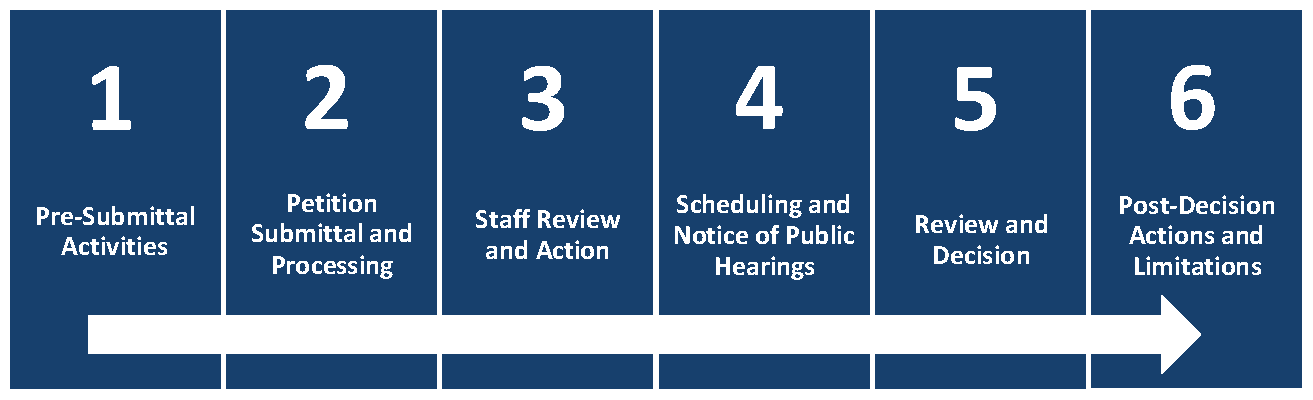
Figure 06.04-1: Summary of General Order of Review Steps if Public Hearing Required
(b)
Pre-Submittal Activities.
(1)
Pre-Submittal Meeting.
(A)
Purpose. The pre-submittal meeting is intended to provide an opportunity for the petitioner to meet with City staff to review the zoning classification of the site, the regulatory ordinances and materials, the procedures, and examine the proposed use and development of the property. The staff shall aid and advise the petitioner in preparing the petition and supporting documents as necessary. This meeting shall take place on or prior to the pre-submittal meeting deadline as listed on the schedule of meeting dates.
(B)
Applicability. A pre-submittal meeting shall be required as indicated in Table 06-1 (Summary Table of Review Procedures).
(C)
Procedure. The petitioner shall submit a request for a pre-submittal meeting to Planning and Transportation Department staff.
(D)
Effect. Any information or discussions held at the pre-submittal meeting shall not be binding on the City or the petitioner. Discussions of potential conditions or commitments to mitigate impacts do not reflect actions by the decision-making body until and unless a decision-making body takes formal action to attach that condition or commitment to an approval.
(2)
Development Review Committee (DRC) Meeting.
(A)
Purpose. The development review committee (DRC) meeting is intended to provide an opportunity for City staff from several departments to discuss details and potential impacts of the proposed project, and to establish points of contact. The staff shall advise the petitioner in preparing the petition and supporting documents as necessary. The petitioner or petitioner's representation is required to attend the DRC meeting.
(B)
Applicability. A DRC meeting shall be required as indicated in Table 06-1 (Summary Table of Review Procedures).
(C)
Procedure.
i.
The petitioner shall refer to the schedule of meeting dates in the administrative manual to determine the filing deadline for any given meeting of the DRC. Incomplete submittal information may result in the petition being postponed from the DRC agenda to allow the petitioner sufficient time to complete the submittal.
ii.
The staff shall inform the petitioner of the time, date, and place of the DRC meeting.
(D)
Effect. Any information or discussions held at the DRC meeting shall not be binding on the City or the petitioner. Discussions of potential conditions or commitments to mitigate impacts do not reflect actions by the decision-making body until and unless a decision-making body takes formal action to attach that condition or commitment to an approval.
(3)
Pre-Submittal Neighborhood Meeting.
(A)
Purpose. The purpose of the pre-submittal neighborhood meeting is to allow residents, businesses, and organizations in the area surrounding a proposed development project an early opportunity to learn about the project details and to provide feedback to the petitioners before significant funds have been spent on project design and engineering.
(B)
Applicability. A pre-submittal neighborhood meeting shall be required as indicated in Table 06-1 (Summary Table of Review Procedures).
(C)
Notification.
i.
The petitioner shall send a written notification of the required pre-submittal neighborhood meeting to the Planning and Transportation Department and neighborhood associations on record with the City that have boundaries within a five-hundred-foot radius of the boundaries of the proposed project site, at least ten days prior to the meeting date.
ii.
If the parties receiving notice do not respond, and as a result a pre-submittal neighborhood meeting cannot be scheduled, the petitioner may file the petition and the City may conduct the review procedures established in this UDO.
(D)
Meeting Specifics.
i.
City staff may attend the pre-submittal neighborhood meeting but are not required to attend nor facilitate the meeting.
ii.
The petitioner shall present information about the proposed land uses, dimensional standards, location of buildings, and overall site layout and design. Detailed engineering is not required. The material presented shall be adequate to describe the project features without the need for the petitioner to have retained architects, engineers, or consultants before this meeting.
iii.
If a pre-submittal neighborhood meeting is required, and subsequent petition submittals show that the proposed development is larger, taller, or contains significantly different land uses than those presented at the neighborhood meeting, the Planning and Transportation Director may require that an additional neighborhood meeting be held before the petition is accepted.
(E)
Requirements for Petition Submittal.
i.
Details of the pre-submittal neighborhood meeting, including proof of notification, a meeting summary, and a list of meeting attendees, as well as copies of any exhibits used at the meeting, shall be provided to the Planning and Transportation Department along with the project petition.
ii.
Any petition, permit, or process included in this Chapter 20.06 (Administration and Procedures) shall be filed with the Planning and Transportation Department within one hundred eighty days after any pre-submittal neighborhood meeting has been held. If no petition is filed during that period, the Planning and Transportation Director may require that another pre-submittal neighborhood meeting be held before the petition will be accepted.
(c)
Petition Submittal and Processing.
(1)
Authority to Submit a Petition.
(A)
No petition shall be submitted prior to completing required pre-submittal requirements as indicated in Table 06-1 (Summary Table of Review Procedures).
(B)
Unless expressly stated otherwise in this UDO, petitions, permits, or processes under this UDO shall be submitted by:
i.
The owner, contract purchaser, or any other person having a recognized property interest in the land on which development is proposed within the City; or
ii.
A person authorized to submit the petition on behalf of the owner, contract purchaser, or other person having a recognized property interest in the land, as evidenced by a letter or document signed by the owner or contract purchaser.
iii.
The owner of at least fifty percent of the land involved may initiate a zoning map amendment for that land.
(C)
Notwithstanding subsections (A) and (B) above, the Plan Commission and/or Common Council may initiate any action permitted by Indiana Code and other applicable laws.
(2)
Petition Submittal Requirements.
(A)
Each petition shall include all forms and information required by the City for that type of petition as indicated below:
i.
Required petition materials as provided in the City's administrative manual, as those lists may be updated by the Planning and Transportation Department from time to time to reflect best practices.
ii.
If the proposal is for a project to be developed in phases the petition shall be for all permits and approvals required for that phase of the project.
(B)
The Planning and Transportation Director may waive certain submittal requirements in order to reduce the burden on the petitioner and to tailor the requirements to the information necessary to review a particular petition. The Planning and Transportation Director may waive such requirements upon finding that the project size, complexity, anticipated impacts, or other factors associated with the proposed development clearly, in his or her opinion, support such waiver. Any such waivers shall be authorized in writing and retained in the project file.
(3)
Payment of Fees.
(A)
City staff shall maintain an official fee schedule for any petition, permit, or process included in this Chapter 20.06 (Administration and Procedures). Such fees shall be approved by the Plan Commission and, where applicable, the Common Council. The official fee schedule shall be available to the public in the Planning and Transportation Department office.
(B)
Fees shall be paid at the Planning and Transportation Department office at the time of petition submittal. When the Planning and Transportation Department has received a complete submittal, the staff shall calculate the total amount of the application fee and any other applicable fees. All payments shall be made to the City of Bloomington.
(C)
Until all applicable fees, charges, and expenses have been paid in full, no action shall be taken on any petition, subdivision request, or permit.
(D)
No application fees shall be required for any petition or permit by a not-for-profit community service organization with a current 501(c)(3) federal tax exemption or unit of government.
(E)
The Plan Commission may waive the application fee for any proposal that is actively being promoted by a unit of local government or quasi-public organization or that involves a local subsidy.
(F)
No refunds shall be permitted after a Plan Commission or plat committee hearing on the petition has been held, regardless of whether or not the Plan Commission or plat committee has taken action on the petition.
(4)
Completeness of Petition.
(A)
On receiving a petition, the Planning and Transportation Director shall determine whether the petition is complete. A complete petition is one that contains all information and materials required by the administrative manual and this UDO for submittal of the particular petition, and that has sufficient detail and readability to evaluate the petition for compliance with applicable review standards of this UDO.
(B)
No petition shall be considered complete until all pre-submittal requirements of Section 20.06.040(b) (Pre-Submittal Activities) have been satisfied and all required fees have been paid.
(C)
Upon determining that the petition is incomplete, the Planning and Transportation Director or designee, shall notify the petitioner of the submittal deficiencies. The petitioner may correct the deficiencies and resubmit the petition for a determination of completeness until the Planning and Transportation Director determines the petition is complete.
(D)
No development petition shall be reviewed for compliance with this UDO or scheduled for a public hearing by any review or advisory body until it is determined to be complete.
(E)
Upon determining that the petition is complete, the Planning and Transportation Director shall accept the petition for review in accordance with the procedures and standards of this Chapter 20.06 (Administration and Procedures).
(5)
Minor Petition Revisions.
(A)
A petitioner may revise a petition after receiving notice of compliance deficiencies following staff review according to Section 20.06.040(d) (Staff Review and Action), or upon requesting and receiving permission from an advisory or decision-making body after that body has reviewed, but not yet taken action on, the petition.
(B)
Revisions shall be limited to changes that directly respond to specific requests or suggestions made by staff or the advisory or decision-making body, as long as they constitute only minor additions, deletions, or corrections and do not include significant substantive changes to the development proposed in the petition, as determined by the Planning and Transportation Director.
(C)
All other petition revisions shall be processed as a new petition.
(6)
Abandoned Petitions. If a petition has not been resubmitted to address staff-noted deficiencies within ninety days after notification of those deficiencies, the petition shall be deemed abandoned and all fees forfeited. The petitioner may request an additional ninety days to address staff-noted deficiencies. Restarting an abandoned petition shall require a new pre-submittal meeting and may be subject to additional fees.
(7)
Petition Withdrawal.
(A)
After a petition has been accepted, the petitioner may withdraw the petition by submitting a notarized letter to the Planning and Transportation Director before the City takes action by a vote of the decision-making body or by rendering an administrative decision.
(B)
A petitioner is not entitled to a refund of application fees for withdrawn petitions. However, the Planning and Transportation Director may refund fees not expended during the first round of staff review if the petition is withdrawn prior to preparation of any official written comments.
(8)
Simultaneous Review and Approval.
(A)
Whenever a petition requires review under the provisions of more than one permit, approval, or process, the staff may schedule the review procedures and hearings so that review for each different permit, approval, or process can be scheduled on the same agenda, to the extent practicable.
(B)
Some forms of approval depend on the petitioner having previously received another form of approval or require the petitioner to take particular action within some time period following the approval in order to avoid having the approval lapse. Therefore, even though this UDO intends to accommodate simultaneous processing, petitioners should note that each of the permits and approvals set forth in this UDO has its own timing and review sequence, and so as a result, concurrent filings are not guaranteed to expedite the respective timing and review sequences of any particular permit or approval.
(9)
Authorization of Site Inspection. By submitting a petition, the petitioner is authorizing City staff to inspect the subject property being considered for development at any reasonable time to obtain the information required for review of compliance with this UDO.
(10)
Examination of Petition and Other Documents. Upon reasonable request, and during normal business hours, any person may examine a petition and materials submitted in support of, or in opposition to, a petition in the Planning and Transportation Department office.
(d)
Staff Review and Action.
(1)
Referral to Staff and Review Agencies. The Planning and Transportation Director shall distribute the complete petition to appropriate staff and appropriate review agencies, per the administrative manual.
(2)
Petition Routing.
(A)
Referral to Plan Commission.
i.
If Table 06-1 (Summary Table of Review Procedures) authorizes staff or the plat committee to make a decision, and the Planning and Transportation Director determines that the application is unusually complex or raises potentially unique or serious impacts on the City or the surrounding neighborhoods, the Planning and Transportation Director may, refer the petition to the Plan Commission for decision pursuant to the same criteria that the staff or the plat committee would have been required to apply to that petition.
ii.
In cases where the Planning and Transportation Director refers the decision to the Plan Commission, all applicable noticing requirements per Section 20.06.040(e) (Scheduling and Notice of Public Hearings) shall apply.
(B)
Referral to Board of Zoning Appeals.
i.
If Table 06-1 (Summary Table of Review Procedures) authorizes the hearing officer to make a decision, and the hearing officer determines that the application is unusually complex or raises potentially unique or serious impacts on the City or the surrounding neighborhoods, the hearing officer may refer the decision to the Board of Zoning Appeals for a decision pursuant to the same criteria that the hearing officer would have been required to apply to that decision.
ii.
In cases where the hearing officer refers the decision to the Board of Zoning Appeals, all applicable noticing requirements per Section 20.06.040(e) (Scheduling and Notice of Public Hearings) shall apply.
(3)
Staff Review and Petition Revisions. Staff shall review the petition and shall consult with applicable City departments and participating reviewing agencies with jurisdiction over public health and safety or required public services. Staff shall submit recommendations and comments to the petitioner in a form established by the Planning and Transportation Director. The petitioner shall attend a meeting with the appropriate staff as determined by the Planning and Transportation Director to discuss staff and/or DRC recommendations and comments. The petition will not move forward for further review until the Planning and Transportation Director determines that the petitioner has adequately responded to the City's recommendations and comments, or the petitioner requests that the petition move forward without responding to the City's recommendations and comments.
(4)
Petitions Subject to Staff Recommendation.
(A)
Staff Report. If a petition is subject to staff review and recommendation to another review and decision-making body as indicated in Table 06-1 (Summary Table of Review Procedures), staff shall prepare a written staff report that summarizes the proposal, findings, and recommendations.
(B)
Distribution and Availability of Petition and Staff Report. The Planning and Transportation Director shall submit a copy of the staff report to the petitioner and the advisory and/or decision-making body, and shall make the staff report and related materials available for public review prior to the public meeting or public hearing at which the petition is scheduled to be heard.
(5)
Petitions Subject to Staff Decision.
(A)
If a petition is subject to staff review and a final decision by the Planning and Transportation Director, the Planning and Transportation Director shall make a decision based on the review standards applicable to the petition type. The decision shall be in writing and shall clearly state reasons for a denial, conditions of approval, or commitments.
(B)
Any appeal of an administrative decision shall be made pursuant to Section 20.06.080(d) (Administrative Appeal).
(6)
Approval Criteria.
(A)
Applicability.
i.
When Section 20.06.050 (Development Permits and Procedures) through Section 20.06.080 (Flexibility and Relief Procedures) cross-reference this Section 20.06.040(d)(6), City review and decision-making bodies shall review all petitions submitted pursuant to this UDO for compliance with the general review criteria stated below.
ii.
The petition may also be subject to additional review criteria specific to the type of petition, as set forth in Section 20.06.050 (Development Permits and Procedures) through Section 20.06.080 (Flexibility and Relief Procedures).
iii.
If there is a conflict between the general review criteria in this section and the specific review criteria in Section 20.06.050 (Development Permits and Procedures) through Section 20.06.080 (Flexibility and Relief Procedures), the applicable review criteria in Section 20.06.050 (Development Permits and Procedures) through Section 20.06.080 (Flexibility and Relief Procedures) shall control.
(B)
General Compliance Criteria. All petitions shall be subject to review pursuant to the following criteria and shall only be approved if they comply with these criteria.
i.
Compliance with this UDO. The proposed use and development shall comply with all applicable standards in this UDO, unless the standard is lawfully modified or varied. Compliance with these standards is applied at the level of detail required for the subject submittal.
ii.
Compliance with Other Applicable Regulations. The proposed use and development shall comply with all other City regulations and with all applicable regulations, standards, requirements, or plans of the federal or state governments and other relevant entities with jurisdiction over the property or the current or proposed use of the property. This includes, but is not limited to, floodplain, water quality, erosion control, and wastewater regulations.
iii.
Compliance with Utility, Service, and Improvement Standards.
1.
As applicable, the proposed use and development shall comply with federal, state, county, service district, City, and other regulatory authority standards, and design/construction specifications for roads, access, drainage, water, sewer, schools, emergency/fire protection, and similar standards.
2.
Municipal sewer and water hookup are required for all developments except for instances where written approvals by the City utilities department and the county health department grant an exception to the hookup requirement. All sewer and water facilities shall meet the design specifications of the City utilities department.
3.
When public improvements are required, the petitioner or authorized representative shall post performance and maintenance guarantees for such improvements. Such financial guarantees shall be submitted, reviewed, and approved per Section 20.06.060(c)(3)(E)iii. (Financial Bond Required).
iv.
Compliance with Prior Approvals. The proposed use and development shall be consistent with the terms and conditions of any prior land use approval, plan, or plat approval for all or part of the property that is in effect and not proposed to be changed. This includes consistency with any approved phasing plan for development and installation of public improvements and amenities.
(C)
Additional Criteria Applicable to Conditional Uses.
i.
Consistency with Comprehensive Plan and Other Applicable Plans. The proposed use and development shall be consistent with and shall not interfere with the achievement of the goals and objectives of the Comprehensive Plan and any other applicable adopted plans and policies.
ii.
Provides Adequate Public Services and Facilities. Adequate public service and facility capacity shall exist to accommodate uses permitted under the proposed development at the time the needs or demands arise, while maintaining adequate levels of service to existing development. Public services and facilities include, but are not limited to, streets, potable water, sewer, stormwater management structures, schools, public safety, fire protection, libraries, and vehicle/pedestrian connections and access within the site and to adjacent properties.
iii.
Minimizes or Mitigates Adverse Impacts.
1.
The proposed use and development shall not result in the excessive destruction, loss or damage of any natural, scenic, or historic feature of significant importance.
2.
The proposed development shall not cause significant adverse impacts on surrounding properties nor create a nuisance by reason of noise, smoke, odors, vibrations, or objectionable lights.
3.
The hours of operation, outside lighting, and trash and waste collection shall not pose a hazard, hardship, or nuisance to the neighborhood.
4.
The petitioner shall make a good-faith effort to address concerns of the adjoining property owners in the immediate neighborhood as defined in the pre-submittal neighborhood meeting for the specific proposal, if such a meeting is required.
iv.
Rational Phasing Plan. If the petition involves phases, each phase of the proposed development shall contain all of the required streets, utilities, landscaping, open space, and other improvements that are required to comply with the project's cumulative development to date and shall not depend upon subsequent phases for those improvements.
(D)
Additional Criteria Applicable to Primary Plats and Zoning Map Amendments (Including PUDs).
i.
Consistency with Comprehensive Plan and Other Applicable Plans. The proposed use and development shall be consistent with and shall not interfere with the achievement of the goals and objectives of the Comprehensive Plan and any other adopted plans and policies.
ii.
Consistent with Intergovernmental Agreements. The proposed use and development shall be consistent with any adopted intergovernmental agreements and shall comply with the terms and conditions of any intergovernmental agreements incorporated by reference into this UDO.
iii.
Minimization or Mitigation of Adverse Impacts.
1.
The proposed use and development shall be designed to minimize negative environmental impacts and shall not cause significant adverse impacts on the natural environment. Examples of the natural environment include water, air, noise, stormwater management, wildlife habitat, soils, and native vegetation.
2.
The proposed use and development shall not result in the excessive destruction, loss or damage of any natural, scenic, or historic feature of significant importance.
3.
The proposed use and development shall not result in significant adverse fiscal impacts on the City.
4.
The petitioner shall make a good-faith effort to address concerns of the adjoining property owners in the immediate neighborhood as defined in the pre-submittal neighborhood meeting for the specific proposal, if such a meeting is required.
iv.
Adequacy of Road Systems.
1.
Adequate road capacity must exist to serve the uses permitted under the proposed development, and the proposed use and development shall be designed to ensure safe ingress and egress onto the site and safe road conditions around the site, including adequate access onto the site for fire, public safety, and EMS services.
2.
The proposed use and development shall neither cause undue traffic congestion nor draw significant amounts of traffic through residential streets.
v.
Provides Adequate Public Services and Facilities. Adequate public service and facility capacity shall exist to accommodate uses permitted under the proposed development at the time the needs or demands arise, while maintaining adequate levels of service to existing development. Public services and facilities include, but are not limited to, streets, potable water, sewer, stormwater management structures, schools, public safety, fire protection, libraries, and vehicle/pedestrian connections and access within the site and to adjacent properties.
vi.
Rational Phasing Plan. If the petition involves phases, each phase of the proposed development shall contain all of the required streets, utilities, landscaping, open space, and other improvements that are required to comply with the project's cumulative development to date and shall not depend upon subsequent phases for those improvements.
(7)
Conditions of Approval.
(A)
Where this UDO authorizes a review body to approve or deny a petition subject to applicable criteria, the review body may approve the petition with conditions necessary to bring the proposed development into compliance with this UDO or other regulations, or to mitigate the impacts of that development on the surrounding properties and streets.
(B)
All conditions of approval shall be reasonably related to the anticipated impacts of the proposed use or development or shall be based upon standards duly adopted by the City. Such conditions may include those necessary to carry out the purpose and intent of the Comprehensive Plan, other adopted City plans, and this UDO.
(C)
No conditions of approval shall be less restrictive than the requirements of this UDO, except where the UDO expressly allows deviations.
(D)
Any condition of approval that requires a petitioner to dedicate land or pay money to a public entity in an amount that is not calculated according to a formula applicable to a broad class of petitioners shall be roughly proportional both in nature and extent to the anticipated impacts of the proposed development, as shown through an individualized determination of impacts.
(E)
During its consideration, the decision-making body may consider alternative potential conditions, and no discussion of potential conditions shall be deemed an attempt or intent to impose any condition that would violate the federal or state constitutions, statutes, or regulations. Discussions of potential conditions to mitigate impacts do not reflect actions by the decision-making body unless and until the decision-making body takes formal action to attach that condition to a development approval.
(F)
Unless otherwise provided in this UDO, any representations of the petitioner in submittal materials or during public hearings shall be binding as conditions of approval.
(G)
Any conditions shall be listed in or attached to the approval document, and violation of any approved condition shall be a violation of this UDO.
(8)
Commitments.
(A)
Authority. The final review body of the petition types listed below may allow or require the owner of a parcel of real property to make a written commitment concerning use and/or development of that parcel where the making of such commitment will further the goals of the Comprehensive Plan or this UDO:
i.
Site plan review, minor;
ii.
Site plan review, major;
iii.
Conditional Use permit;
iv.
Zoning map amendment;
v.
Rezoning to Planned Unit Development (PUD); and
vi.
Variance.
(B)
Approval Procedure. The procedure by which the final review body allows or requires a written commitment shall be the same as the procedure set forth in this UDO for the underlying development or ordinance proposal, but no additional notice or hearing shall be required for the consideration or approval of a commitment.
(C)
Recording. A commitment established under this UDO shall be recorded in the county recorder's office upon approval of the proposal and prior to issuance of any certificates of zoning compliance for the area involved in the proposal. The petitioner shall deliver one copy of the recorded commitment instrument to the Planning and Transportation Department within ten business days after recording.
(D)
Effect of Commitments. A commitment made under this UDO takes effect upon approval of the proposal (i.e., adoption of an ordinance changing the zoning map, designating a Planned Unit Development zoning district, or approval of a final plan) in connection with which the commitment is made. An unrecorded commitment is binding upon the owner of the parcel but is only binding upon a subsequent owner or other person acquiring an interest in the parcel if that person has actual notice of the commitment. A recorded commitment is binding upon any subsequent owner and any person acquiring an interest in the parcel.
(E)
Right to Enforce Commitments.
i.
The City may enforce any commitment allowed or required by the decision-making body as if the commitment were a standard of the UDO.
ii.
A written commitment shall be enforceable by any property owner adjacent to the parcel of real estate that was the subject of the underlying petition in connection with which the commitment was made, or other interested party as defined by the applicable rules of procedure.
(F)
Modification or Termination.
i.
The Plan Commission shall not delegate the authority to modify or terminate a commitment to another entity.
ii.
The hearing officer may not modify or terminate any commitment, whether made by the hearing officer or under Indiana Code § 36-7-4-1015, as amended. Commitments made by the hearing officer may be only modified by the Board of Zoning Appeals.
iii.
When a commitment has been allowed or required in conjunction with a petition under this UDO, either the petitioner, a subsequent owner of the parcel, or a person who acquires an interest in the parcel may apply to the Plan Commission for modification or termination of the commitment.
iv.
The Plan Commission may approve modification or termination after notice and public hearing in any case where the modification or termination will further the goals of the Comprehensive Plan or this UDO.
v.
The petitioner shall record the modification or termination instrument in the office of the Monroe County Recorder. The petitioner shall deliver one copy of the recorded modification or termination instrument to the Planning and Transportation Department within ten business days after recording. No certificate of zoning compliance for the area involved in the proposal may be issued until the modification or termination instrument has been recorded.
(e)
Scheduling and Notice of Public Hearings.
(1)
Scheduling.
(A)
When the staff determines that a petition is complete and that a public hearing is required as indicated in Table 06-1 (Summary Table of Review Procedures), the staff shall place the item on the next agenda with space available pursuant to the rules of procedure of the appropriate decision-making body.
(B)
The public hearing shall be scheduled to allow sufficient time to prepare a staff report per Section 20.06.040(d) (Staff Review and Action).
(2)
Public Hearing Notice.
(A)
General Notice Requirements. All public hearings required by this UDO shall be preceded by the notices identified in Table 06-1 (Summary Table of Review Procedures) and in accordance with Indiana Code § 5-3-1-2 and Indiana Code § 36-7-4-604 and Indiana Code § 36-7-4-706, as amended. Persons with specific issues or concerns regarding a proposed petition are encouraged to contact the Planning and Transportation Department in writing, by phone, or in person prior to the hearing.
(B)
Responsibility for Notice. The City shall be responsible for the accuracy of and proper publication of notice of the public hearing. The petitioner shall be responsible for mailing and posting of notice of the public hearing and maintaining posted notices after they have been posted on the site.
(C)
Notice Content. All required notices shall state:
i.
The time and place of the hearing;
ii.
The geographic areas (or zoning districts in a specified geographic area) to which the proposal applies; or the geographic area that is the subject of the zoning map change;
iii.
A summary of the subject matter contained in the proposal; or a summary of the subject matter contained in the proposal that describes any new or changed provisions; or a description of the proposed change in the zoning maps;
iv.
If the proposal contains or would add or amend any penalty or forfeiture provisions, the entire text of those penalty or forfeiture provisions;
v.
The place where a copy of the proposal is on file for examination before the hearing;
vi.
That written objections to the proposal that are filed with the secretary of the commission before the hearing will be considered;
vii.
That oral comments concerning the proposal will be heard; and
viii.
That the hearing may be continued from time to time as may be found necessary.
(D)
Notice to Interested Parties. All public hearings required by this UDO or by state law shall be sent to interested parties in accordance with the following:
i.
"Interested parties" shall include the following:
1.
All persons owning land adjacent and contiguous to the property included in the petition or proposal. All persons owning land within three hundred linear feet from the subiect parcel(s) for which a petition or proposal is being requested. Where property included in the petition abuts or includes a county line (or a county line street or road or county line body of water), then all owners of real property to a depth of two ownerships or one-eighth of a mile into the adjacent county, whichever is less, shall be interested parties.
a.
Intervening public rights-of-way shall not be considered in determining what property is adjacent and contiguous.
b.
Where any adjacent or contiguous parcel is owned by a petitioner, the property included in the petition shall be deemed to include said adjacent parcel or parcels owned by a petitioner.
c.
Owners of property adjacent and contiguous to parcel(s) owned by a petitioner but not included in the petition shall be considered interested parties entitled to notice.
ii.
In order to determine the names and addresses of property owners to whom notice shall be sent, staff shall consult either the current plat book and computerized ownership records located in the office of the auditor of Monroe County, Indiana or the Monroe County, Indiana Geographic Information System to determine the name of each adjacent property owner and address.
iii.
A good faith effort shall be made to investigate and resolve any discrepancies or omissions in or among such records in order to determine name and address of the current owner of record.
(E)
Notice to Adjacent Governmental Entities. In a proceeding involving a petition for property that abuts unincorporated areas of the county, copies of the notice of public hearing shall be transmitted by the City to the planning agency of the governmental unit abutting such land.
(3)
Notice Format and Timeframes.
(A)
Published Notice. Published notice shall be distributed in a newspaper in accordance with Indiana Code § 5-3-1 (Publication Procedures), at least ten days prior to the initial scheduled public hearing before the Plan Commission, Board of Zoning Appeals, plat committee, or hearing officer.
(B)
Mailed Notice. Mailed notices shall be postmarked and sent via first class mail to all interested parties at least ten days before the date of the initial scheduled public hearing before the Plan Commission, Plat Committee, Hearing Officer, or Board of Zoning Appeals.
i.
Proof of Notice. The Planning and Transportation Department shall retain proof of notice within the petition file pursuant to the administrative manual.
ii.
Verification of Proper Notice. City staff shall verify proper noticing pursuant to the administrative manual and shall advise the decision-making body at its initial public hearing of any omissions or deficiencies in the proof of notice.
iii.
Inadequate Notice. If adequate notice in accordance with this section is not given to the interested parties, and this fact is confirmed by staff prior to action by the decision-making body, such petition may be continued to a later date to allow proper notice to all interested parties.
(C)
Posted Notice.
i.
Required posted notice shall include at least one sign per street frontage on the subject property at least twenty-one days prior to the scheduled public hearing before the Plan Commission or Board of Zoning Appeals and at least ten days prior to the scheduled public hearing before the plat committee or hearing officer.
ii.
The required sign(s) shall be clearly visible from adjacent streets or public rights-of-way and shall remain on the property until after the hearing.
(4)
Minor Defects in Notice Shall Not Invalidate Proceedings.
(A)
Minor defects in any notice shall not impair the notice or invalidate proceedings pursuant to the notice if a bona fide attempt has been made to comply with applicable notice requirements.
(B)
Minor defects in notice shall be limited to errors in a legal description or typographical or grammatical errors that do not impede communication of the notice to affected parties.
(C)
In all cases, however, the requirements for the timing of the notice and for specifying the time, date, and place of a hearing shall be strictly construed.
(f)
Appearance Waives Defects. Appearance at any hearing on a petition or proposal, in person or by representative, shall waive any defect in notice unless the alleged defect is raised at the beginning of the hearing.
(g)
Review and Decision.
(1)
Hearing, Review, and Decision.
(A)
The petition shall be subject to review, hearings, recommendations, and decisions as indicated in Table 06-1 (Summary Table of Review Procedures).
(B)
If the petition is subject to a public hearing, the applicable review or decision-making body shall hold a public hearing in accordance with Section 20.06.040(e) (Scheduling and Notice of Public Hearings).
(C)
The applicable review or decision-making body shall consider the following:
i.
The written statement and supportive material submitted by the petitioner;
ii.
Any commitments or conditions of approval attendant to prior approvals;
iii.
The testimony of the petitioner;
iv.
The testimony of the public during the public hearing, when applicable;
v.
Any requirements of the members of the development review committee;
vi.
The Planning and Transportation Department report; and
vii.
Such other additional information as may be required by the review or decision-making body to evaluate the petition.
(D)
The applicable review or decision-making body shall approve, approve with conditions, or deny the petition based on the applicable approval criteria listed in the petition-specific procedures in Sections 20.06.050 (Development Permits and Procedures) through 20.06.080 (Flexibility and Relief Procedures). The review or decision-making body may also continue the hearing in accordance with the review or decision-making body's adopted rules and procedures.
(E)
If the review involves a quasi-judicial hearing, the recommendation or decision (as applicable) shall be based only on the record of the public hearing; shall be in writing; shall include findings of fact based on competent, material, and substantial evidence presented at the hearing; shall reflect the determination of contested facts; and shall state how the findings support compliance with applicable review standards.
(F)
The review or decision-making body may incorporate or require, as part of a condition of approval or commitment, a written agreement between the petitioner and the City that enforces the conditions or commitments. All conditions and commitments shall comply with the limitations in Sections 20.06.040(d)(7) (Conditions of Approval) and 20.06.040(d)(8) (Commitments), as applicable.
(G)
The applicable review or decision-making body shall clearly state the factors considered in making its recommendation or decision, as well as the basis or rationale for the recommendation or decision.
(2)
Public Hearing Procedures. Whenever a public hearing is required by this UDO or by state law, the following public hearing procedures shall apply:
(A)
Attendance. The petitioner is required to be present at the public hearing to address and discuss comments and concerns posed by the review or decision-making body. Failure to appear shall result in the petition being dealt with as outlined in the review or decision-making body's rules of procedure.
(B)
Actions by Review or Decision-Making Bodies and Officers. All decisions shall include a brief summary of the matter being acted upon, and a clear statement of approval, approval with conditions, or disapproval. Conditions of approval and commitments shall be clearly stated and enumerated.
i.
Action by Board of Zoning Appeals. Action by the Board of Zoning Appeals shall be final.
ii.
Action by Plan Commission. In the instance where the Plan Commission has final authority, action by the Plan Commission shall be final. When the Plan Commission action is advisory to the Common Council, the Planning and Transportation Director shall certify the Plan Commission recommendation to the Common Council pursuant to Indiana Code § 36-7-4 (Local Planning and Zoning). When the Plan Commission action is advisory to any other body or agency, the staff shall forward such recommendation to that body or agency.
iii.
Action by Common Council. The Common Council shall act on any petition forwarded by the Plan Commission within the time period specified and, in the manner set forth in Indiana Code § 36-7-4 (Local Planning and Zoning). Additionally, the mayor may exercise his or her authority to veto an action of the Common Council pursuant to Section 2.04.350 (Veto Procedure) of the Bloomington Municipal Code. The Common Council may override a mayoral veto pursuant to Section 2.04.350(d) of the Bloomington Municipal Code.
(h)
Post-Decision Actions and Limitations.
(1)
Expiration of Approval.
(A)
A petition approval shall be valid as authorization for the approved activity unless it expires in accordance with expiration time periods provided in this UDO.
(B)
A change in ownership of the land shall not affect the established expiration time period of an approval.
(C)
The original decision-making body may grant extensions of the expiration time period for up to one year, following a written request that explains reasonable cause for such extension, prior to the expiration date. The final approval authority shall determine whether or not there is reasonable cause for the requested extension. Further extensions shall be subject to the approval of the decision-making body for the original petition.
(2)
Bound by Submissions. A recipient of any permit or other approval under this UDO shall be bound by the representations and information submitted in the original petition and in any revision, amendment, or supplement to the original petition that is provided to the reviewing authority prior to issuance of the permit or other approval except with respect to any detail that is clearly neither regulated by a provision of this UDO or other applicable law or regulation, nor expressly required as a commitment or condition of approval by the reviewing authority.
(3)
Modification or Amendment of Approval. The following provisions apply to all proposed modifications or amendments of approvals previously granted by the City unless another provision of this UDO provides different standards, criteria, or procedures for modifications or amendments to specific types of approvals.
(A)
Minor Changes Allowed. Development authorized by any approval under this UDO may incorporate minor changes from the approved plan, or permit, without the need for a new petition, provided that the Planning and Transportation Director determines that the proposed changes:
i.
Comply with the standards of this UDO;
ii.
Would not significantly alter the function, form, intensity, character, demand on public facilities, or impact on adjacent properties as originally approved.
(B)
Major Changes. Any modification of an approved plan or permit that the Planning and Transportation Director determines does not meet the criteria in subsection (A) above shall require a new petition that is submitted and reviewed in accordance with the full procedure and fee requirements applicable to the particular type of the original petition.
(4)
Limitation on Subsequent Similar Petitions. Following denial of a petition, the decision-making body shall not decide on petitions that are the same or substantially similar within one year of the previous denial, or in accordance with Indiana Code § 36-7-4-609, as amended. This waiting period may be waived by the decision-making body provided that:
(A)
There is a substantial change to circumstances, or new information available, relevant to the issues or facts considered during the previous petition review; or
(B)
The new petition is materially different from the previous petition.
(5)
Appeals. Unless a different procedure is provided in Section 20.06.080(d) (Administrative Appeal) or another provision of this UDO, the following provisions apply to appeals of decisions under this UDO.
(A)
Staff or Hearing Officer Decision. A staff decision may be appealed to the Board of Zoning Appeals pursuant to the procedure set forth in Section 20.06.080(d) (Administrative Appeal). Any appeal shall be filed with the Planning and Transportation Department within ten days of staff's or the hearing officer's decision.
(B)
Plan Commission, Board of Zoning Appeals, or Common Council Decision. Any person that has standing to obtain judicial review of a zoning decision as established in Indiana Code § 36-7-4-1603 (Standing) may appeal a zoning decision made by the Plan Commission according to the judicial review process established in Indiana Code § 36-7-4-1600 (Judicial Review). Such appeal shall be filed at the appropriate venue in the judicial district where the land affected by the zoning decision is located and shall be filed no later than thirty days after the date of the zoning decision.
(C)
Plat Committee Decision. A plat committee decision may be appealed to the Plan Commission pursuant to the procedure set forth in Section 20.06.080(d) (Administrative Appeal). Any appeal shall be filed with the Planning and Transportation Department within ten days of the plat committee's decision.
(D)
Time of Expiration During Appeals. If an appeal by writ of certiorari is taken from a decision, the time during which such appeal is pending shall not be counted in determining whether the permit or approval has expired under subsections (A) through (C).
(Amd. of 1-14-2020; Ord. No. 22-11, § II(Att. A), 5-18-2022; Ord. No. 23-04, § 2(Att. A), 4-19-2023; Ord. No. 23-07, § 2(Att. A), 4-19-2023; Ord. No. 2024-06, § II(Att. A), 4-10-2024)
20.06.050 - Development permits and procedures.
(a)
Site Plan Review.
(1)
Purpose. The site plan review procedure is intended to ensure that potential impacts of development are considered before submittal of a petition for construction or issuance of a building permit and to:
(A)
Promote well-planned and well-designed use of property;
(B)
Promote a high character of community development;
(C)
Review site plans relative to site layout, improvements and engineering in the interest of public health, safety, convenience, and welfare;
(D)
Promote new development that has a positive impact on the community as a whole, does not negatively impact neighbors, protects sensitive natural resources, is well-designed to maximize efficient use of the land and surrounding transportation system, and provides for adequate stormwater management;
(E)
Determine compliance with the standards of this UDO;
(F)
Protect environmental quality; and
(G)
Ensure that the statutory requirements established in the Indiana Code for development plan review and approval are met.
(2)
Applicability.
(A)
Activities Subject to Site Plan Review. Site plan review is required prior to the issuance of a building permit and/or construction of physical site improvements. Site plan review is required for all development and changes in use subject to this UDO, including the following, unless exempted by subsection (B) below:
i.
New building construction;
ii.
Newly established uses of land;
iii.
Expansions, alterations, or modifications of existing structures or sites for commercial, public, institutional, civic, employment, utilities and communication, group living, and multifamily residential uses of property within the City that result in increased occupancy or intensity of use; and
iv.
Creation or expansion of any vehicular parking area.
(B)
Activities Exempt from Site Plan Review. Site plan review is not required for the following activities, but such activities shall be subject to the standards of this UDO and building permit review:
i.
Construction of a single-family detached, duplex, triplex, or fourplex dwelling on a single lot, additions to such dwellings, an accessory dwelling unit, and structures accessory to such dwellings; and
ii.
Construction or erection of accessory buildings, fences, hedges, or walls; and
iii.
Interior tenant alterations or improvements that do not increase parking requirements or alter exterior building appearances.
iv.
Projects that fall below the thresholds for minor site plan review in Section 20.06.050(a)(2)(C)i.
(C)
Thresholds for Minor and Major Site Plan Review. Site plan review is conducted by the Planning and Transportation Director or the Plan Commission, based on the thresholds below:
i.
Minor Site Plan Review. Minor site plan review is required for any of the following activities unless that activity is exempt from the site plan process under Section 20.06.050(a)(2)(B) (Activities Exempt from Site Plan Review), or the project meets or exceeds the thresholds requiring major site plan review under Section 20.06.050(a)(2)(C)ii. (Major Site Plan Review).
1.
A change in use that involves or requires site improvements;
2.
Any expansion, alteration, or modification of a lawful nonconforming site feature or building that meets or exceeds the thresholds established in Section 20.06.090(f)(2) (Limited Compliance), and falls below the thresholds for major site plan review in Section 20.06.050(a)(2)(C)ii.;
3.
Development that contains twenty thousand square feet or less of new non-residential gross floor area;
4.
Development that contains fifty dwelling units or less;
5.
The alteration of any vehicular parking area;
6.
Petitions for a site development permit; or
7.
Projects that qualify for affordable housing incentives and/or sustainable development incentives established in Section 20.04.110 (Incentives), provided that, if located adjacent to one or more lots in an R1, R2, R3, or R4 district such project does not contain more than seventy-five dwelling units.
ii.
Major Site Plan Review. Major site plan approval is required for any project that meets or exceeds the following criteria, unless otherwise exempted from site plan review under Section 20.06.050(a)(2)(B) (Activities Exempt from Site Plan Review):
1.
Any minor site plan determined by the Planning and Transportation Director to require major site plan review due to unusual size, complexity, or the creation of potential significant unanticipated impacts on the City or surrounding neighborhoods; or
2.
Any project that would individually qualify for minor site plan review but that, when considered collectively with prior minor site plan approvals for adjacent lots or sites under common or related ownership within the last three years, would have required major site plan review, if the Planning and Transportation Director concludes that the combined impact of any such adjacent projects creates impacts similar to those requiring major site plan review.
3.
Anything that exceeds minor site plan review thresholds.
(3)
Minor Site Plan Review Process. Figure 06.05-1 identifies the applicable steps from Section 20.06.040 (Common Review Procedures) that apply to minor site plan review. Additions or modifications to the common review procedures are noted below.
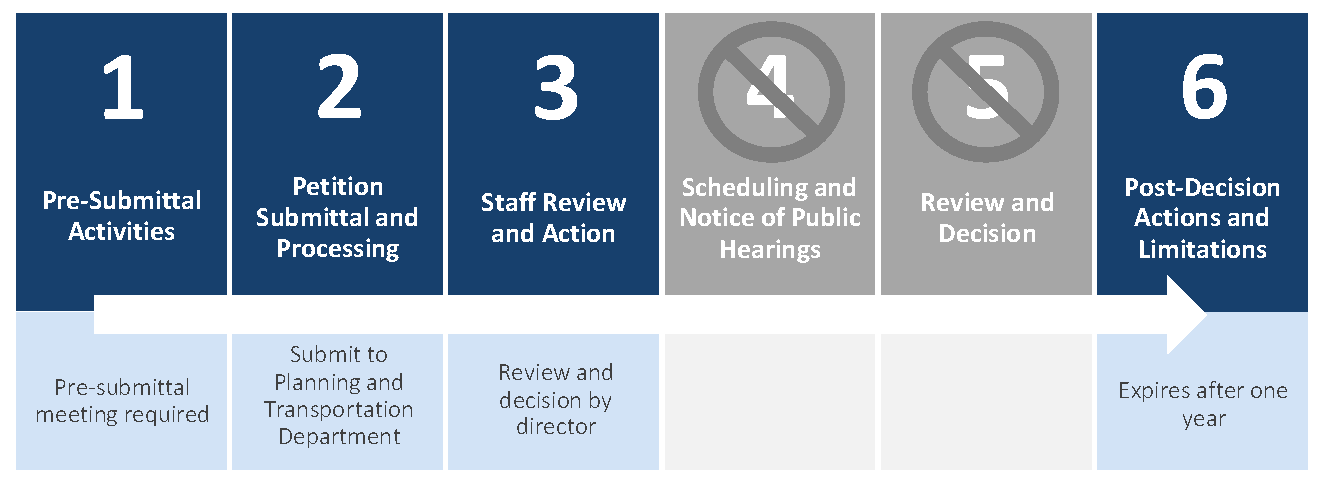
Figure 06.05-1: Summary of Minor Site Plan Review Procedure
(A)
Pre-Submittal Activities. A pre-submittal meeting is required in accordance with Section 20.06.040(b)(1) (Pre-Submittal Meeting).
(B)
Petition Submittal and Processing. The minor site plan petition shall be submitted, accepted, and revised, and may be withdrawn, in accordance with Section 20.06.040(c) (Petition Submittal and Processing).
(C)
Staff Review and Action.
i.
Generally.
1.
The Planning and Transportation Director shall review the minor site plan petition and approve, approve with conditions, or deny the petition in accordance with Section 20.06.040(d) (Staff Review and Action), based on the general approval criteria in Section 20.06.040(d)(6)(B) (General Compliance Criteria).
2.
Alternatively, the Planning and Transportation Director may refer the petition to the Plan Commission pursuant to Section 20.06.040(d)(2) (Petition Routing).
ii.
Commitments. The Planning and Transportation Director may allow or require the owner of a parcel of real property to make a written commitment concerning use and/or development of that parcel in connection with approval of a site plan pursuant to Section 20.06.040(d)(8) (Commitments).
iii.
Additional Review for Drainage and Floodplain. Any projects that are determined by the Planning and Transportation Department to be located within an identified floodway, flood fringe, or within the floodplain shall also meet the criteria in Section 20.04.040 (Floodplain).
(D)
Post-Decision Actions and Limitations. Post-decision actions and limitations in Section 20.06.040(h) (Post-Decision Actions and Limitations) shall apply with the following modifications:
i.
Notification of Findings. The Planning and Transportation Director shall make and sign written findings concerning each decision to approve or disapprove a minor site plan, and such written findings shall be made available to the petitioner.
ii.
Expiration of Approval. Approval of a minor site plan shall be effective for a maximum period of one year unless, upon petition by the petitioner, the Planning and Transportation Director grants an extension during that one year period and pursuant to Section 20.06.040(h)(1) (Expiration of Approval). A site plan approval will be considered expired if no Site Development Permit has been approved related to the site plan within the one year period or the approved extended time period. Or, in the case where no Site Development Permit is required, no Certificate of Zoning Compliance for a building permit on the site plan has been approved related to the approval within the one year period, or the approved extended time period.
iii.
Modification or Amendment of Approval. An approved minor site plan may be modified or amended in accordance with Section 20.06.040(h)(3) (Modification or Amendment of Approval).
iv.
Appeal. Any person, other than the petitioner, aggrieved by a minor site plan decision by the Planning and Transportation Director may appeal the decision to the Plan Commission. Such appeal shall be filed in the Planning and Transportation Department within ten days of the staff's decision. The appeal shall specify the grounds for the appeal and shall be filed in the form established by the Plan Commission rules of procedure. All appeals shall be accompanied by fees required by the Plan Commission rules of procedure.
(4)
Major Site Plan Review Process. Figure 06.05-2 identifies the applicable steps from Section 20.06.040 (Common Review Procedures) that apply to major site plan review. Additions or modifications to the common review procedures are noted below.
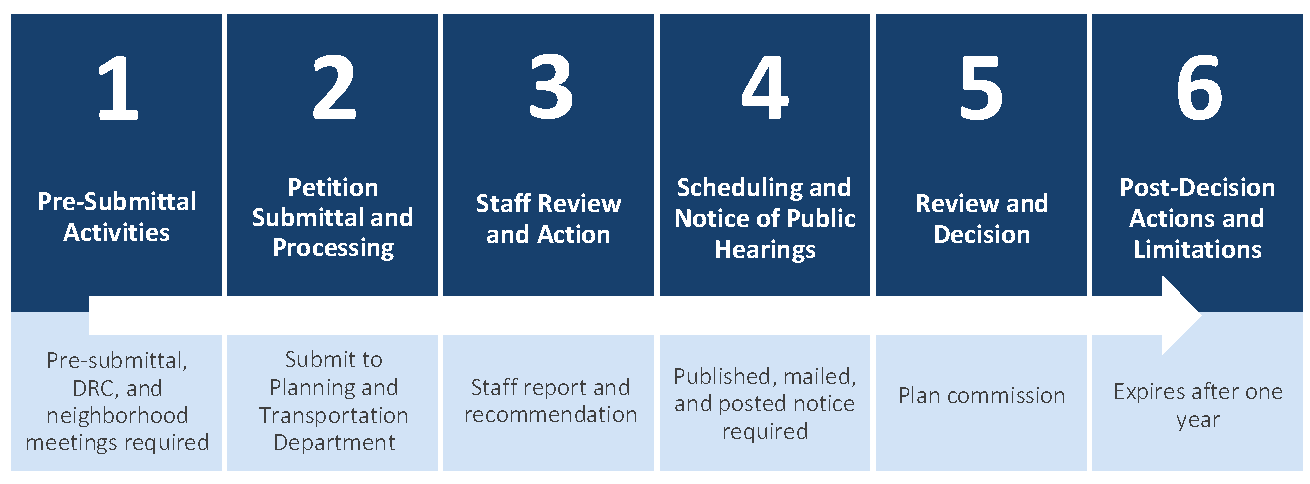
Figure 06.05-2: Summary of Major Site Plan Review Procedure
(A)
Pre-Submittal Activities.
i.
A pre-submittal meeting shall be held in accordance with Section 20.06.040(b)(1) (Pre-Submittal Meeting).
ii.
A development review committee meeting shall be held in accordance with Section 20.06.040(b)(2) (Development Review Committee (DRC) Meeting).
iii.
A pre-submittal neighborhood meeting shall be held in accordance with Section 20.06.040(b)(3) (Pre-Submittal Neighborhood Meeting).
(B)
Petition Submittal and Processing. The major site plan petition shall be submitted, accepted, and revised, and may be withdrawn, in accordance with Section 20.06.040(c) (Petition Submittal and Processing).
(C)
Staff Review and Action. The planning and transportation staff shall review the petition and prepare a staff report and recommendation in accordance with Section 20.06.040(d) (Staff Review and Action), based on the general approval criteria in Section 20.06.040(d)(6)(B) (General Compliance Criteria).
(D)
Scheduling and Notice of Public Hearings. The major site plan petition shall be scheduled for a public hearing before the Plan Commission and noticed in accordance with Section 20.06.040(e) (Scheduling and Notice of Public Hearings).
(E)
Review and Decision.
i.
Generally. The Plan Commission shall review the major site plan petition and approve, approve with conditions, or deny the petition in accordance with Section 20.06.040(g) (Review and Decision), based on the general approval criteria in Section 20.06.040(d)(6)(B) (General Compliance Criteria).
ii.
Commitments. The Plan Commission may allow or require the owner of a parcel of real property to make a written commitment concerning use and/or development of that parcel in connection with approval of a site plan pursuant to Section 20.06.040(d)(8) (Commitments).
iii.
Additional Review for Drainage and Floodplain. Any projects that are determined by the Planning and Transportation Department to be located within an identified floodway, flood fringe, or within the floodplain shall also meet the criteria in Section 20.04.040 (Floodplain).
(F)
Post-Decision Actions and Limitations. Post-decision actions and limitations in Section 20.06.040(h) (Post-Decision Actions and Limitations) shall apply with the following modifications:
i.
Notification of Findings. The Plan Commission shall make written findings concerning each decision to approve or disapprove a major site plan, and such findings shall be made available to the petitioner.
ii.
Expiration of Approval. Approval of a major site plan shall be effective for a maximum period of one year unless, upon petition by the petitioner, the Plan Commission grants an extension during that one year period and pursuant to Section 20.06.040(h)(1) (Expiration of Approval). A site plan approval will be considered expired if no Site Development Permit has been approved related to the site plan within the one year period or the approved extended time period. Or, in the case where no Site Development Permit is required, no Certificate of Zoning Compliance for a building permit on the site plan has been approved related to the approval within the one year period, or the approved extended time period.
iii.
Modification or Amendment of Approval. An approved major site plan may be modified or amended in accordance with Section 20.06.040(h)(3) (Modification or Amendment of Approval).
(b)
Conditional Use Permit.
(1)
Purpose. The Conditional Use permit procedure provides a mechanism for the City to evaluate proposed land uses in a particular zoning district and to establish certain conditions to address unique characteristics associated with the proposed land use. The use shall be permitted by the Board of Zoning Appeals or hearing officer if it is determined that the listed conditions are met.
(2)
Applicability. No use classified as conditional in Table 03-1 (Allowed Use Table), or any other standard in this UDO may be conducted without first obtaining a Conditional Use permit under this Section 20.06.050(b) (Conditional Use Permit). No Conditional Use shall be conducted except in compliance with all applicable provisions of this UDO and with any conditions upon such Conditional Use Approval.
(3)
Conditional Use Permit Review Process. Figure 06.05-3 identifies the applicable steps from Section 20.06.040 (Common Review Procedures) that apply to Conditional Use permit review. Additions or modifications to the common review procedures are noted below.
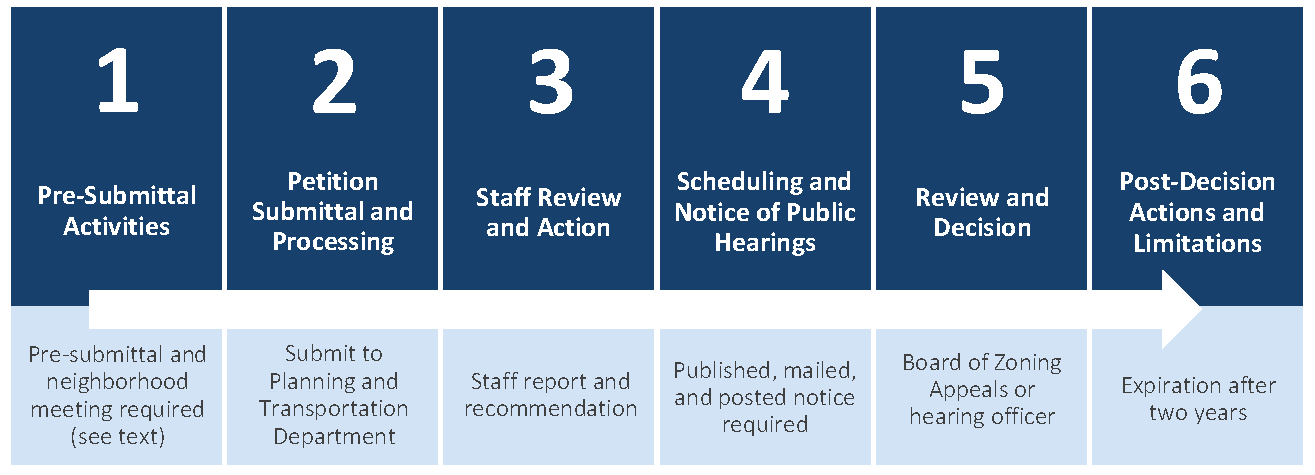
Figure 06.05-3: Summary of Conditional Use Permit Procedure
(A)
Pre-Submittal Activities.
i.
A pre-submittal meeting shall be held in accordance with Section 20.06.040(b)(1) (Pre-Submittal Meeting).
ii.
Petitions subject to review and decision by the hearing officer shall not require a development review committee meeting or a pre-submittal neighborhood meeting.
iii.
For petitions subject to review and decision by the Board of Appeals, a Development Review Committee meeting and pre-submittal neighborhood meeting may be required by the Planning and Transportation Director, in accordance with Section 20.06.040(b)(2) (Development Review Committee (DRC) Meeting) and Section 20.06.040(b)(3) (Pre-Submittal Neighborhood Meeting). The requirements of Sections 20.06.050(b)(3)(D) and 20.06.050(b)(3)(E)(v) apply to conditional use permit petitions for the "Dwelling, Duplex" use in the R1, R2, or R3 zoning districts.
(B)
Petition Submittal and Processing. The Conditional Use permit petition shall be submitted, accepted, and revised, and may be withdrawn, in accordance with Section 20.06.040(c) (Petition Submittal and Processing).
(C)
Staff Review and Action. The Planning and Transportation Director shall review the petition and prepare a staff report and recommendation in accordance with Section 20.06.040(d) (Staff Review and Action).
(D)
Scheduling and Notice of Public Hearings. The conditional use permit petition shall be scheduled for a public hearing before the Board of Zoning Appeals or Hearing Officer and noticed in accordance with Section 20.06.040(e) (Scheduling and Notice of Public Hearings). Conditional use permit petitions for the "Dwelling, Duplex" use in the R1, R2 or R3 zoning districts shall be scheduled for a public hearing before the Board of Zoning Appeals and noticed in accordance with Section 20.06.040(e).
(E)
Review and Decision.
i.
Generally. The hearing officer or Board of Zoning Appeals shall review the Conditional Use permit petition and approve, approve with conditions, or deny the petition in accordance with Section 20.06.040(d)(7) (Conditions of Approval), based on the general approval criteria in Section 20.06.040(d)(6) (Approval Criteria), and the following specific approval criteria:
ii.
Floodway and Floodway Fringe Development.
1.
No Conditional Use shall be approved until a permit citing the one hundred year flood elevation and the recommended flood protection grade, or a letter stating that no permit is required, has been obtained from the Indiana Department of Natural Resources (DNR) and all conditions and specifications of that permit and other applicable DNR regulations are met.
2.
Development shall not increase the elevation of the regulatory flood beyond the limits allowed by state and federal regulations.
3.
On-site waste disposal systems such as sewage treatment plants shall be located so as to avoid their impairment and to avoid contamination during the occurrence of the regulatory flood. No septic systems shall be installed within either floodway or floodway fringe areas.
4.
New and replacement sanitary sewer lines and on-site waste disposal systems may be permitted provided that all manholes or other above ground openings are located at or above the flood protection grade, or those which are located below the flood protection grade are watertight.
iii.
Historic Adaptive Re-Use. The following shall apply to any adaptive use, protection, or restoration of a historic resource for a land use not specifically permitted in the zoning district pursuant to Table 03-1 (Allowed Use Table).
1.
The property shall have been designated historic at the local level, or have had a petition filed for such designation, at the time of petition for Conditional Use Approval.
2.
The proposed use shall not diminish the historic character of the property or, if it is located within an historic district, the historic character of said historic district.
3.
The proposed use shall enhance the ability to restore and/or preserve the property.
4.
The granting of the Conditional Use Approval shall be contingent upon any required certificate of appropriateness and upon the granting of a local historic designation or the presence of such designation being in place.
iv.
Quarry Adaptive Re-Use.
1.
The petitioner shall provide documentation that limestone or other stone processing operations are no longer feasible due to environmental and/or physical site characteristics. Market economic conditions may be considered, but the purpose is to protect these natural resources from encroachment of other land uses that may inhibit or prevent quarry or stone processing activities.
2.
The proposed adaptive re-use shall retain, to the greatest extent possible, the existing quarry features to preserve the region's quarry heritage.
3.
Land use decisions shall be made in consideration of the dominant land use patterns that surround each site.
4.
The proposed adaptive re-use shall be a less intense land use than quarry uses in regard to environmental regulatory standards and general nuisance in regard to noise, vibration, and dust.
5.
An environmental mitigation plan shall be submitted with the Conditional Use petition. The environmental mitigation plan shall include, but not be limited to cleanup measures, water quality protection, and long-term monitoring standards. All environmental mitigation plans shall meet the standards of the City utilities department, as well as any applicable state and federal requirements.
v.
Dwelling, Duplex in R1, R2, or R3 Zoning Districts. Conditional use permit petitions for the "Dwelling, Duplex" use in the R1, R2, or R3 zoning districts shall require a pre-submittal neighborhood meeting in accordance with Section 20.06.040(b)(3) (Pre-Submittal Neighborhood Meeting).
vi.
Commitments.
1.
The board of zoning appeals or hearing officer may allow or require the owner of a parcel of real property to make a written commitment concerning use and/or development of that parcel in connection with approval of a Conditional Use permit in accordance with Section 20.06.040(d)(8) (Commitments).
2.
If the owner of a parcel of real estate fails to accept a condition imposed, or to make a commitment allowed or required, by the hearing officer, then the owner's petition shall be considered withdrawn or, if requested by the owner, shall be transferred to the Board of Zoning Appeals.
(F)
Post-Decision Actions and Limitations. Post-decision actions and limitations in Section 20.06.040(h) (Post-Decision Actions and Limitations) shall apply with the following modifications:
i.
Effect of Approval of a Conditional Use. The granting of a Conditional Use authorizes the use and establishes the terms of use. Conditional Uses are also subject to site plan requirements, all necessary permits and approvals, and other applicable requirements. All required permits and approvals shall be obtained before any grading, construction, or use commences.
ii.
Duration. A Conditional Use permit granted by the Board of Zoning Appeals or the hearing officer shall expire:
1.
Two years after the date granted by the Board of Zoning Appeals or hearing officer, unless:
a.
A building permit has been obtained and construction of the structure or structures has commenced; or
b.
An occupancy permit has been obtained and the use has commenced; or
2.
At the date of termination established by the Board of Zoning Appeals or hearing officer as a condition or commitment if different from subsection (1) above.
iii.
Modification or Amendment of Approval.
1.
Any modification or intensification of a Conditional Use that alters the essential character or operation of the use in a way not intended by the Board of Zoning Appeals or hearing officer at the time the Conditional Use was granted shall require a new Conditional Use Approval.
2.
The Planning and Transportation Director shall determine in writing whether the proposed modification or intensification represents an alteration in the essential character of the original Conditional Use as approved. The operator of the Conditional Use shall provide the Planning and Transportation Director with all the necessary information to render this determination.
3.
In the case where the Planning and Transportation Director determines a new Conditional Use permit is required, a petition shall be submitted, accepted, and revised, and may be withdrawn, in accordance with Section 20.06.040(c) (Petition Submittal and Processing) and this Section 20.06.050(b) (Conditional Use Permit).
4.
The hearing officer may hear requests for amendments to a Conditional Use, if authorized by the Plan Commission.
(c)
Demolition Delay Permit.
(1)
Purpose. The demolition delay permit procedure is intended to ensure that potentially historic structures are protected from demolition or alteration.
(2)
Applicability.
(A)
This Section 20.06.050(c) shall not apply to any structure that is within a property or group of properties locally designated as a historic district or a conservation district pursuant to Title 8 (Historic Preservation and Protection) of the Bloomington Municipal Code.
(B)
No certificate of zoning compliance authorizing release of a permit allowing the demolition, substantial demolition, or partial demolition of a structure that is listed as "Outstanding" or "Notable," or demolition or substantial demolition of a structure listed as "Contributing" on the City of Bloomington Survey of Historic Sites and Structures, or any accessory structure of the same era of construction as the principal structure that is so listed, shall be issued prior to review pursuant to this Subsection (c).
(3)
Demolition Delay Permit Review Process. Figure 06.05-4 identifies the applicable steps from Section 20.06.040 (Common Review Procedures) that apply to demolition delay permit review. Additions or modifications to the common review procedures are noted below.
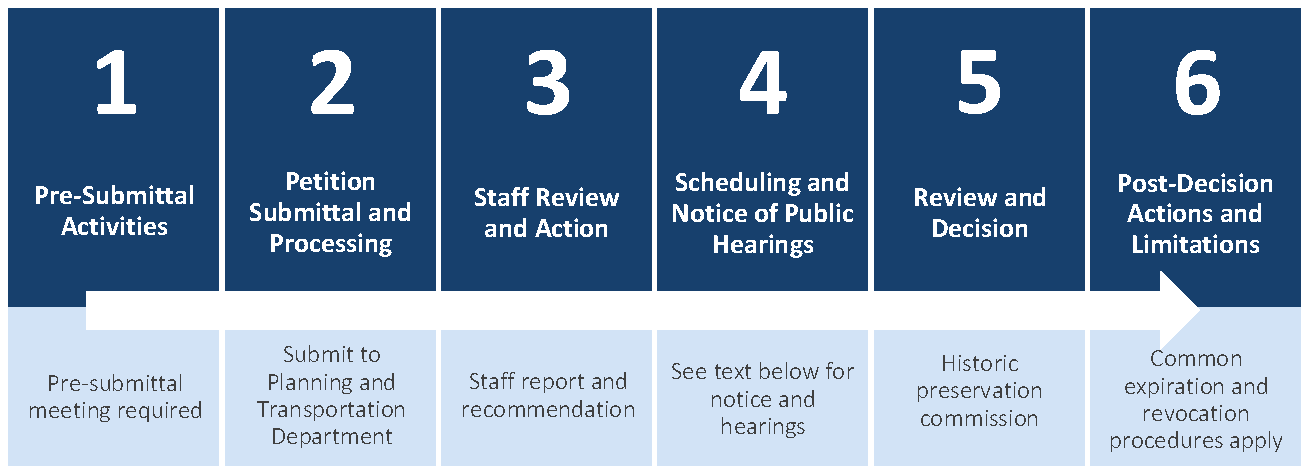
Figure 06.05-4: Summary of Demolition Delay Permit Procedure
(A)
Pre-Submittal Activities. A pre-submittal meeting is required in accordance with Section 20.06.040(b)(1) (Pre-Submittal Meeting).
(B)
Petition Submittal and Processing.
i.
The demolition delay permit petition shall be submitted, accepted, and revised, and may be withdrawn, in accordance with Section 20.06.040(c) (Petition Submittal and Processing).
ii.
If a petition for demolition or partial demolition that is subject to the demolition delay procedures of this UDO is withdrawn by the petitioner, the demolition delay period shall be terminated and no certificate of zoning compliance for the withdrawn petition shall be issued.
(C)
Staff Review and Action.
i.
Notice to Property Owner and Housing and Neighborhood Development Director.
1.
Upon receiving a petition for a demolition or partial demolition covered by this Section 20.06.050(c) (Demolition Delay Permit), the Planning and Transportation Director shall give notice to the housing and neighborhood development director and to the property owner, or his/her representative. Such notice shall advise the property owner that the permit petition may need to be amended to include materials required by Section 20.06.050(a) (Site Plan Review) and the rules and regulations of the Historic Preservation Commission, in order for the petition to be considered complete.
2.
Not later than thirty days after such notice is given by the Planning and Transportation Director, the housing and neighborhood development director shall give notice to the chairperson of the Historic Preservation Commission and to the property owner, if the one-hundred-twenty-day waiting period is to be imposed pursuant to section 20.06.050(c)(3)(C)ii. (Waiting Period).
ii.
Waiting Period.
1.
Determination of Waiting Period. The ninety-day period shall apply in all cases unless the housing and neighborhood development director, or his/her designee, finds that an additional thirty-day delay period is needed in order for the Historic Preservation Commission to responsibly consider and determine whether to recommend designation of the property. The housing and neighborhood development director shall make such finding only where:
a.
There are multiple demolition permits and/or historic designation proposals pending or expected to come before the Historic Preservation Commission during the ninety-day period; or
b.
The demolition request presents unusually complex public policy issues due to the location or survey classification of the structure; or
c.
The structure is located within an area that contains multiple surveyed properties, it is located within an area designated on the National Register of Historic Places, or the survey classification of the structure proposed for demolition or partial demolition is "notable" or "outstanding."
2.
Early Termination of Waiting Period. The remainder of the waiting period shall be considered waived and the certificate of zoning compliance shall be issued if within the ninety- or one-hundred-twenty-day period one of the following occurs and all other requirements of this UDO are satisfied:
a.
The Historic Preservation Commission votes affirmatively not to recommend local historic designation to the Common Council; or
b.
The Historic Preservation Commission votes on a motion to recommend local designation and the motion fails; or
c.
In cases of contributing structures in a single family district, staff for the Historic Preservation Commission decides not to recommend local historic designation to the Historic Preservation Commission and Common Council based on the same review criteria used by the Historic Preservation Commission when determining if a property should be recommended for local historic designation; or
d.
The Common Council disapproves a recommended local historic designation of the subject property.
3.
Waiting Period Limited to Once per Year.
a.
No structure that has been subjected to the waiting period under this section shall be subject to a second waiting period until one year has passed from the date of expiration of the first waiting period.
b.
During this one-year period, no action of the Historic Preservation Commission or the Common Council may prevent issuance or effect revocation of a certificate of zoning compliance or demolition permit that is otherwise properly issued or petition that meets all requirements of the Bloomington Municipal Code and this UDO.
c.
This provision shall not apply except to the extent that the work covered by the certificate of zoning compliance or demolition or partial demolition permit, or petition for such a certificate or permit, is substantially identical to the work shown in the submission that occasioned the first waiting period.
d.
For purposes of this Section 20.06.050(c)(3)(C)ii. (Waiting Period).
i.
"Work" includes the proposed demolition, partial demolition and any proposed construction, reconstruction, or alteration associated therewith;
ii.
"Substantially identical" means without significant deviation in any detail of any elevation or in the type, design, or location of materials that will be subject to public view; and
iii.
"Submission" shall mean the submission that is authorized to receive approval pursuant to Section 20.06.040(c) (Petition Submittal and Processing) of this Chapter 20.06 (Administration and Procedures).
4.
Emergency Waiver of Waiting Period. The waiting period may be waived upon a written determination by the City's housing and neighborhood development department that there is an emergency condition dangerous to life, health, or property that requires demolition prior to the expiration of the waiting period.
(D)
Scheduling and Notice of Hearings.
i.
Discretionary Hearing. The Historic Preservation Commission may conduct a hearing, at its sole discretion, during the waiting period, to determine if any structure described below should be recommended for local designation by the Common Council:
1.
A "Contributing" structure located in any of multifamily or mixed-use zoning district.
2.
A "Contributing" structure located in the R1, R2, R3, or R4 zoning districts if the staff for the HPC determines that a review of the petition necessitates full HPC review.
3.
A "notable" structure located in any zoning district of the City.
4.
An "outstanding" structure located in any zoning district of the City.
ii.
Posted Notice Required.
1.
Generally.
a.
Within three business days of receiving notice by the Planning and Transportation Director that his/her property is subject to the waiting period provisions of this section, the owner shall place upon the property where the structure is located, in plain public view, a notice to the public of the proposed demolition or partial demolition of the structure.
b.
The notice shall be in such form as approved by the staff and shall remain in place until termination of the waiting period.
c.
Noncompliance with this provision shall result in the delay period being extended by an amount of time equal to the amount of time, as reasonably determined or estimated by the Planning and Transportation Director, during which the notice was not properly in place.
2.
Exemption to Posted Notice.
a.
This section shall not apply to a petition for partial demolition of a property classified as "contributing" in any single-family district if staff for the Historic Preservation Commission reviews and releases the petition.
i.
Staff, for purposes of this subsection, shall be those persons who have the same or equivalent technical expertise as the members of the Historic Preservation Commission as outlined in Section 2.16.010(c) (Composition) of the Bloomington Municipal Code.
ii.
If within seven business days of the receipt of a petition the staff has not taken steps to forward the matter to the Historic Preservation Commission for further review, the petition shall be released automatically and the provisions of Section 20.06.050(c) (Demolition Delay Permit) shall apply.
iii.
Staff's decision shall be based on the same criteria used by the Historic Preservation Commission when it renders a determination about whether or not a property should be recommended for local historic designation.
b.
If staff for the Historic Preservation Commission determines that full Historic Preservation Commission review of a petition for a partial demolition of a property classified as "contributing" in a single-family district is necessary, then the owner shall post the notice described in subsection D.ii.1. above on the property.
(E)
Review and Decision.
i.
After expiration of the waiting period, which shall include early termination of the waiting period, a certificate of zoning compliance authorizing demolition shall be issued if the property owner has submitted a complete petition and all other requirements of the Bloomington Municipal Code and this UDO are met.
ii.
For any structure that is exempt from the waiting period of this section, a certificate of zoning compliance authorizing release of a demolition or partial demolition permit shall be issued within a reasonable time following receipt by the Planning and Transportation Department of a complete petition, provided all other requirements of the Bloomington Municipal Code and this UDO are met.
iii.
If within the ninety- or one-hundred-twenty-day waiting period the property is placed under interim protection or is locally designated as a historic or conservation district pursuant to Chapter 8.08 (Historic Districts and Standards) of the Bloomington Municipal Code, then no certificate of zoning compliance authorizing demolition or partial demolition may be issued except:
1.
Upon termination of interim protection without historic or conservation district designation being placed upon the property; or
2.
Where historic or conservation district designation is placed upon the property, in accordance with and after all approvals required by Chapter 8.08 (Historic Districts and Standards) of the Bloomington Municipal Code.
(F)
Post-Decision Actions and Limitations. Post-decision actions and limitations in Section 20.06.040(h) (Post-Decision Actions and Limitations) shall apply with the following modifications:
i.
The recipient of a permit or other approval subject to this section shall be bound to the details of the elevations, and the design, type, and location of materials depicted in the submission and may not deviate from such depiction, except as modified and approved at one or more public meetings of the Historic Preservation Commission, without applying for a new certificate of zoning compliance, petition for which shall commence a new waiting period.
ii.
No action of the Historic Preservation Commission may prevent issuance or effect revocation of such certificate of zoning compliance, or a demolition permit issued in reliance upon such certificate of zoning compliance, for a period of one year from the end of the waiting period. The demolition delay approval by the Historic Preservation Commission shall expire one year after the approval is issued.
(d)
Floodplain Development Permit.
(1)
Purpose. The floodplain development permit procedure is intended to minimize public and private losses due to flood conditions in specific areas and to provide a mechanism to ensure compliance with this UDO by providing a thorough permitting and inspection process for all floodplain development activities.
(2)
Applicability.
(A)
No development shall occur in any special flood hazard area (SFHA) and known flood prone areas, unless a required stormwater management permit per Title 13 (Stormwater) of the Bloomington Municipal Code for such activity has been issued. In cases where a stormwater management permit is not required, no development shall occur unless a site development permit has been issued.
(B)
Compliance with the standards in this UDO shall not relieve any person of the independent obligation to comply with all applicable standards and practices established in federal and state law and all other applicable rules, regulations, standards and specifications of the City regarding development within a floodplain.
(C)
The following activities are exempt from requiring a floodplain development permit- installation of underground utilities that do not require any fill, construction of sidewalks or similar features at existing grade, and signs.
(3)
Floodplain Development Permit Review Process. Figure 06.05-5 identifies the applicable steps from Section 20.06.040 (Common Review Procedures) that apply to floodplain development permit review. Additions or modifications to the common review procedures are noted below.
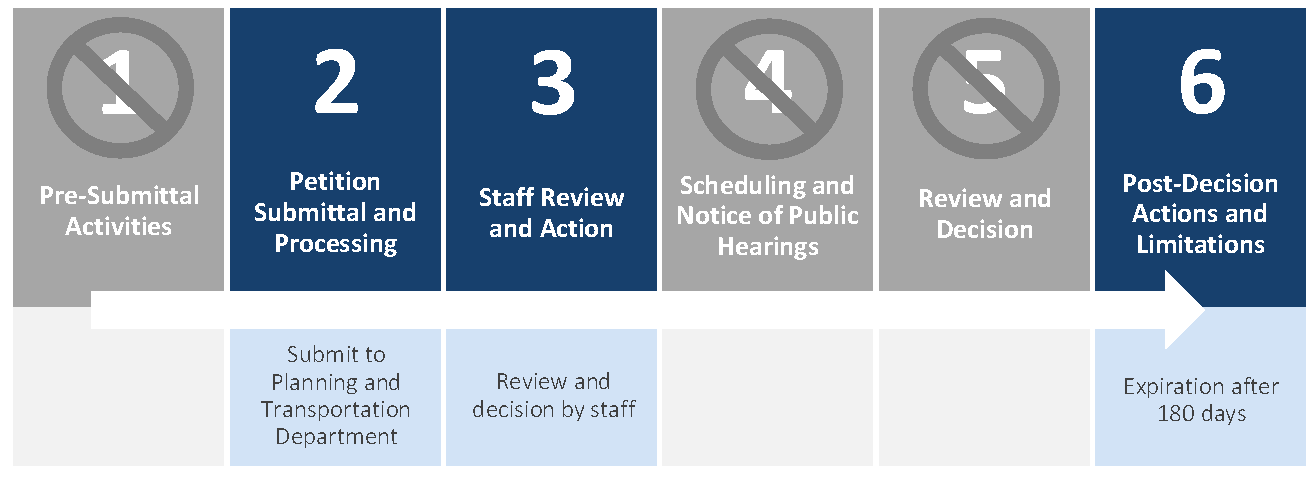
Figure 06.05-5: Summary of Floodplain Development Permit Procedure
(A)
Petition Submittal and Processing. The floodplain development permit petition shall be submitted, accepted, and revised, and may be withdrawn, in accordance with Section 20.06.040(c) (Petition Submittal and Processing) with the following modifications:
i.
Petition Submittal Requirements. The petition shall include, but not be limited to, the following documents:
1.
A description of the proposed development;
2.
Location of the proposed development sufficient to accurately locate property and structure(s) in relation to existing roads and streams;
3.
A legal description of the property site;
4.
A site development plan showing existing and proposed development locations and existing and proposed land grades;
5.
Elevation of the top of the planned lowest floor (including basement) of all proposed buildings. Elevation should be in NAVD 88 or NGVD;
6.
Elevation (in NAVD 88 or NGVD) to which any non-residential structure will be floodproofed; and
7.
Description of the extent to which any watercourse will be altered or relocated as a result of proposed development. A hydrologic and hydraulic engineering study is required, and any watercourse changes submitted to DNR for approval and then to FEMA as a letter of map revision.
ii.
Submittal to the Indiana Department of Natural Resources. If the site is in an identified floodway pursuant to Section 20.04.040(c)(1) (Basis for Establishing Regulatory Flood Data), the floodplain administrator shall require the petitioner to forward the petition, along with all pertinent plans and specifications, to the Indiana Department of Natural Resources and apply for a permit for construction in a floodway.
iii.
Petitions Involving Channel Modifications or Fill. For all projects involving channel modifications or fill (including levees) the City shall submit the data and request that the Federal Emergency Management Agency revise the regulatory flood data per mapping standard regulations found at 44 CFR § 65.12.
(B)
Staff Review and Action. The floodplain administrator shall review the floodplain development permit petition and approve, approve with conditions, or deny the petition in accordance with Section 20.06.040(d) (Staff Review and Action), based on the general approval criteria in Section 20.06.040(d)(6)(B) (General Compliance Criteria) and the following specific approval criteria:
i.
Ensure that all necessary federal or state permits have been received prior to issuance of the floodplain development permit;
ii.
Under the provisions of Indiana Code § 14-28-1 a permit for construction in a floodway from the Indiana Department of Natural Resources is required prior to the issuance of a local building permit for any excavation, deposit, construction, or obstruction activity located in the floodway. This includes land preparation activities such as filling, grading, clearing and paving, etc., undertaken before the actual start of construction of the structure. However, it does exclude non-substantial additions/improvements to existing (lawful) residences in a non-boundary river floodway. (Indiana Code § 14-28-1-26 allows construction of a non-substantial addition/improvement to a residence in a non-boundary river floodway without obtaining a permit for construction in the floodway from the Indiana Department of Natural Resources. Please note that if fill is needed to elevate an addition above the existing grade, prior approval for the fill is required from the Indiana Department of Natural Resources.)
iii.
No action shall be taken by the floodplain administrator until a permit or letter of authorization (when applicable) has been issued by the Indiana Department of Natural Resources granting approval for construction in the floodway. Once a permit for construction in a floodway or letter of authorization has been issued by the Indiana Department of Natural Resources, the floodplain administrator may issue the local floodplain development permit, provided the provisions contained in this UDO have been met. The floodplain development permit cannot be less restrictive than the permit for construction in a floodway issued by the Indiana Department of Natural Resources.
iv.
No development shall be allowed, which acting alone or in combination with existing or future development, will adversely affect the efficiency of, or unduly restrict the capacity of the floodway. This adverse effect is defined as an increase in the elevation of the regulatory flood of at least 0.15 of a foot as determined by comparing the regulatory flood elevation under the project condition to that under the natural or pre-floodway condition as proven with hydraulic analyses.
(C)
Post-Decision Actions and Limitations. Post-decision actions and limitations in Section 20.06.040(h) (Post-Decision Actions and Limitations) shall apply with the following modifications:
i.
Duration.
1.
Floodplain development permits shall be valid for a period of one hundred eighty days, as measured from the date on the certificate of zoning compliance or run concurrently with the building permit or other construction authorizations, whichever is longer.
2.
At the written request of the petitioner, the City may extend the period one or more times for up to a maximum of an additional one hundred eighty days. The City may require additional erosion control measures as a condition of the extension if they are necessary to meet the requirements of this UDO.
ii.
Changes or Amendments.
1.
The petitioner may submit revisions or amendments to an approved floodplain development permit for consideration by the local, state, and federal authorities having jurisdiction. A revision or amendment to an approved floodplain development permit shall only be authorized upon review and approval by all the local, state, and federal authorities having jurisdiction.
2.
Changes to the floodplain development permit shall be approved in writing.
iii.
Construction Stage
1.
Inspections Required. The floodplain administrator shall perform a minimum of three inspections to ensure that all applicable floodplain development requirements have been satisfied:
a.
The first upon the establishment of the flood protection grade reference mark at the development site;
b.
The second upon the establishment of the structure's footprint/establishment of the lowest floor; and
c.
The final inspection upon completion and submission of the required finished construction elevation certificate. Authorized City officials shall have the right to enter and inspect properties located in the SFHA.
2.
Certification.
a.
Upon establishment of the lowest floor of an elevated structure or structure constructed on fill, it shall be the duty of the petitioner to submit to the floodplain administrator a certification of the NAVD 88 or NGVD elevation of the lowest floor, as built. Said certification shall be prepared by or under the direct supervision of a registered land surveyor, professional engineer or architect and certified by the same. The floodplain administrator shall review the lowest floor elevation survey data submitted. The petitioner shall correct deficiencies detected by such review before any further work is allowed to proceed. Failure to submit the survey or failure to make said corrections required hereby shall be cause to issue a stop-work order for the project. Any work undertaken prior to submission of the elevation certification shall be at the petitioner's risk.
b.
Upon establishment of the floodproofed elevation of a floodproofed structure, it shall be the duty of the petitioner to submit to the floodplain administrator a floodproofing certificate. Certification shall be prepared by or under the direct supervision of a registered professional engineer or architect and certified by same. The floodplain administrator shall review the floodproofing certification submitted. The applicant shall correct any deficiencies detected by such review before any further work is allowed to proceed. Failure to submit the floodproofing certification or failure to make correction required shall be cause to issue a stop-work order for the project.
c.
Upon completion of construction, an elevation certification (FEMA elevation certificate form 81-31 or any future updates) which depicts the "as-built" lowest floor elevation is required to be submitted to the floodplain administrator. If the project includes a floodproofing measure, floodproofing certification (FEMA floodproofing certificate form 81-65 or any future updates) is required to be submitted by the applicant to the floodplain administrator.
3.
Stop Work Orders.
a.
Upon notice from the floodplain administrator, work on any building, structure or premises that is being done contrary to the provisions of this UDO shall immediately cease.
b.
Such notice shall be in writing and shall be given to the owner of the property, or to his agent, or to the person doing the work, and shall state the conditions under which work may be resumed.
iv.
Revocation of Permits.
1.
The floodplain administrator may revoke a permit or approval, issued under the provisions of this UDO, in cases where there has been any false statement or misrepresentation as to the material fact in the application or plans on which the permit or approval was based.
2.
The floodplain administrator may revoke a permit upon determination that the construction, erection, alteration, repair, moving, demolition, installation, or replacement of the structure for which the permit was issued is in violation of, or not in conformity with, the provisions of this UDO.
(e)
Site Development Permit.
(1)
Purpose. The site development permit procedure is intended to provide a mechanism to ensure compliance with this UDO by providing a thorough permitting and inspection process for all site development activities.
(2)
Applicability. No site development activity shall occur on platted or unplatted lands in any zoning district, unless a site development permit for such activity has been issued.
(A)
Exemptions.
i.
Site development activity on lots containing the uses: dwelling, single-family (attached); dwelling, single-family (detached); dwelling, duplex; dwelling, triplex; or dwelling, fourplex.
ii.
Site development activity containing only new buildings or changes, alterations, or additions to an existing building, with no additional improvements required.
iii.
Site development activity containing only new signs, or changes, alterations, or additions to a sign.
iv.
Site development activity containing related to an approved temporary use.
(3)
Site Development Permit Review Process. Figure 06.05-6 identifies the applicable steps from 20.06.040 (Common Review Procedures) that apply to site development permit review. Additions or modifications to the common review procedures are noted below.
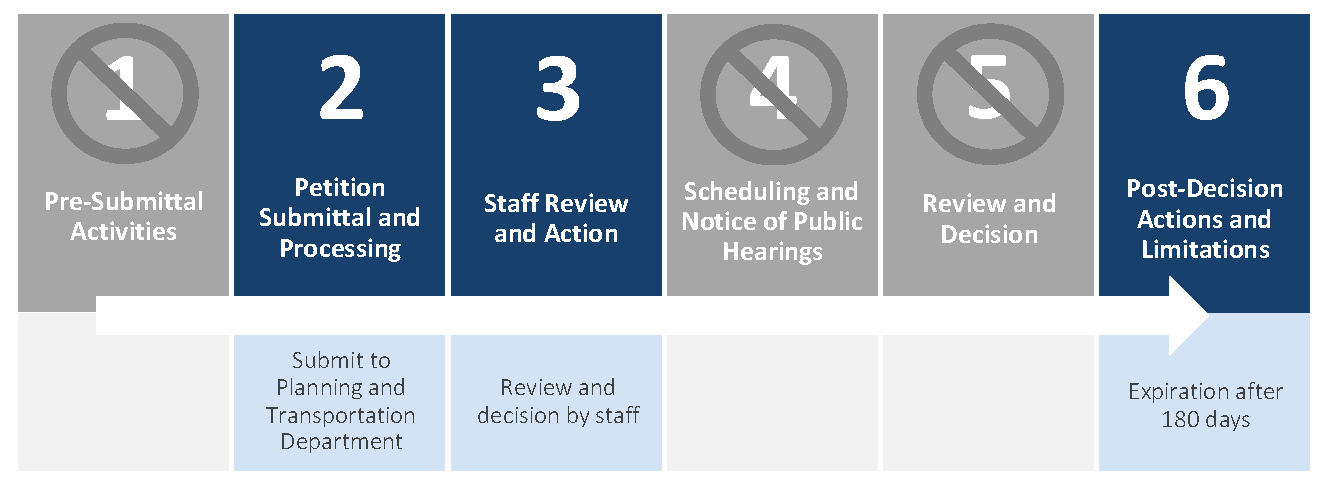
Figure 06.05-6: Summary of Site Development Permit Procedure
(A)
Petition Submittal and Processing. The site development permit petition shall be submitted, accepted, and revised, and may be withdrawn, in accordance with Section 20.06.040(c) (Petition Submittal and Processing) with the following modifications:
i.
Petition Submittal Requirements. The petition shall include, but not be limited to, the following documents:
1.
Verification of site plan approval when such approval is required;
2.
Construction plan including all proposed site improvements;
3.
Topography of the site - proposed and existing two-foot contours;
4.
Identification of environmental features, including but not limited to karst, water, trees, and steep slopes.
(B)
Staff Review and Action. The planning and transportation staff shall review the site development permit petition and approve, approve with conditions, or deny the petition within twenty working days of the receipt of a complete petition and all supportive documents in accordance with Section 20.06.040(d) (Staff Review and Action), based on the general approval criteria in 20.06.040(d)(6)(B) (General Compliance Criteria) and the following specific approval criteria.
i.
Construction Plan. The construction plans shall include all required and proposed environmental protections including but not limited to: tree protection zones, easements and setbacks from environmental features and conservation areas; as well as all required and proposed site improvements. The requirements are further detailed in the Administrative Manual.
ii.
Planned Unit Development Approval. An approved final plan shall be in place prior to the issuance of a grading permit.
iii.
Stormwater Permit. If required by Title 13 (Stormwater) in the Bloomington Municipal Code, petitioner must submit an application for a stormwater management permit to the City of Bloomington Utilities Department at the time of application for the site development permit.
(C)
Post-Decision Actions and Limitations. Post-decision actions and limitations in Section 20.06.040(h) shall apply with the following modifications:
i.
Duration.
1.
Site development permits shall be valid for a period of one hundred eighty days, as measured from the date on the certificate of zoning compliance or run concurrently with the building permit or other construction authorizations, whichever is longer.
2.
At the written request of the petitioner, the city may extend the period one or more times for up to a maximum of an additional one hundred eighty days.
ii.
Changes or Amendments.
1.
The petitioner may submit revisions or amendments to an approved site development permit for consideration by the local, state, and federal authorities having jurisdiction. A revision or amendment to an approved site development permit shall only be authorized upon review and approval by all the local, state, and federal authorities having jurisdiction.
2.
Changes to the site development permit shall be approved in writing.
(f)
Certificate of Zoning Compliance.
(1)
Purpose. The Certificate of Zoning Compliance procedure is intended to provide a mechanism for City staff to ensure that the establishment of and alterations to uses, sites, and structures conform to the standards of this UDO.
(2)
Applicability.
(A)
Generally.
i.
A Certificate of Zoning Compliance shall be required for any of the following activities:
1.
Alteration, erection, construction, reconstruction, division, enlargement, demolition, partial demolition or moving of any building, structure, sign, or mobile home;
2.
Establishment of a use or change in use to another use (see Section 20.06.090(c)(2) (Change in Use);
3.
Enlargement in the area used for any use or relocation of a use to another portion of a lot, site, or building;
4.
Site development, improvement, or other alteration of land, including paving or the establishment of drives or parking areas, or any other land distributing activity.
5.
Tree removal requests that decrease the baseline canopy cover shall follow the procedures outlined in Section 20.06.050(a) (Site Plan Review), and shall comply with the requirements of Section 20.04.030(h) (Tree and Forest Preservation).
6.
Any action that would result in partial or complete demolition of any exterior portion of a building or structure that is listed as "Outstanding," "Notable," or "Contributing" on the City of Bloomington Survey of Historic Sites and Structures as the same may be amended or replaced ("Historic Survey"). Such action shall be subject to the procedures outlined in Section 20.06.050(c) (Demolition Delay Permit). An accessory building or structure not attached to the principal building or structure upon the listed parcel shall not be considered "listed" within the meaning of this UDO unless the accessory building or structure is of the same era of construction as the principal building or structure, as determined by the staff. Such determination shall be based upon resources that may include but shall not be limited to Sanborn Company Fire Insurance maps, visual inspection of the accessory building or structure, and records and expertise of Historic Preservation Commission or its staff.
ii.
A single certificate of zoning compliance may be issued for a combination of such actions if they occur together. Any petition for a certificate of zoning compliance, permit, or other approval for an action described in subsection (A)i.6. above shall be subject to the procedures outlined in Section 20.06.050(c) (Demolition Delay Permit).
(B)
Exemptions. Activities involving the removal of dead, dying, or hazardous trees, or exotic, invasive vegetation, as verified by the Planning and Transportation Department, are exempt from receiving a certificate of zoning compliance, unless such removal decreases the baseline canopy cover.
(3)
Certificate of Zoning Compliance Review Process. Figure 06.05-7 identifies the applicable steps from Section 20.06.040 (Common Review Procedures) that apply to certificate of zoning compliance review. Additions or modifications to the common review procedures are noted below.
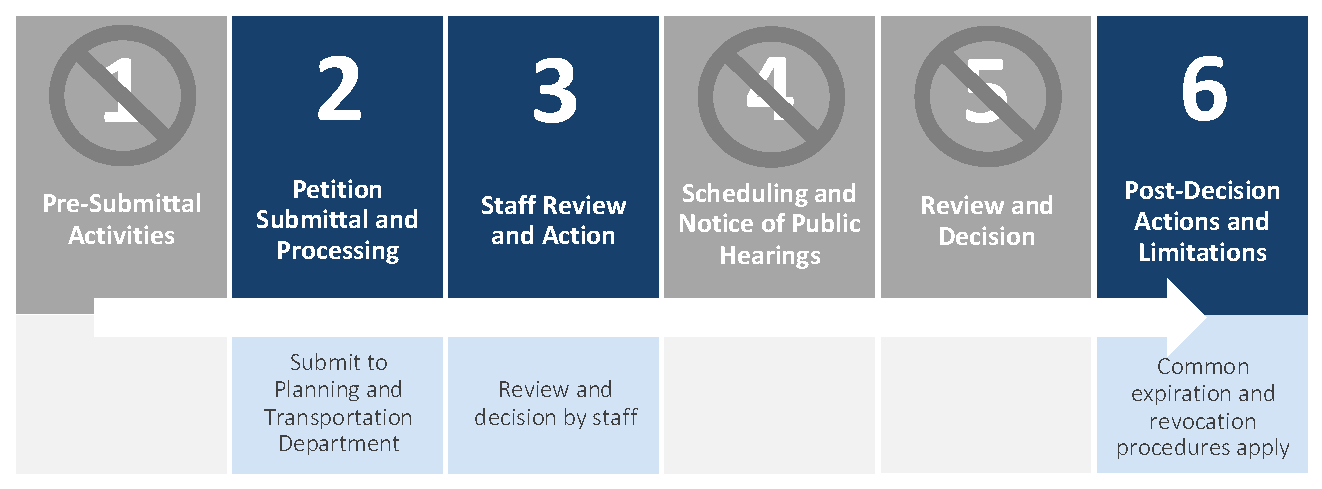
Figure 06.05-7: Summary of Certificate of Zoning Compliance Procedure
(A)
Petition Submittal and Processing. The certificate of zoning compliance petition shall be submitted, accepted, and revised, and may be withdrawn, in accordance with Section 20.06.040(c) (Petition Submittal and Processing).
(B)
Staff Review and Action. The Planning and Transportation Director shall review the certificate of zoning compliance petition and approve, approve with conditions, or deny the petition in accordance with Section 20.06.040(d) (Staff Review and Action), based on the general approval criteria in Section 20.06.040(d)(6)(B) (General Compliance Criteria).
(C)
Post-Decision Actions and Limitations. Post-decision actions and limitations in Section 20.06.040(h) (Post-Decision Actions and Limitations) shall apply with the following modifications:
i.
Expiration of Approval. Approval of a certificate of zoning compliance shall be effective for a maximum period of one year unless:
1.
Construction under a valid site development permit or building permit has commenced and is ongoing; or
2.
Upon petition, the Planning and Transportation Director grants an extension pursuant to Section 20.06.040(h)(1) (Expiration of Approval).
(g)
Certificate of Occupancy.
(1)
Purpose. The certificate of occupancy procedure is intended to provide a mechanism for City staff to ensure that the establishment of and alterations to uses, sites, and structures conform to the standards of this UDO.
(2)
Applicability.
(A)
Generally. A certificate of occupancy shall be obtained prior to a building or structure being occupied or used in each of the following situations, except for detached single-family dwellings:
i.
Occupancy or use of any new building or structure;
ii.
Re-use or re-occupancy of any existing building or structure that requires either a permit from the county building department or a certificate of zoning compliance from the Planning and Transportation Department;
iii.
Addition to any existing building or structure. Parts of the existing building or structure not included in the addition may continue to be occupied or used.
(B)
Certificate of Occupancy Required. If a certificate of occupancy is required pursuant to subsection (A) above, it is unlawful and a violation of this UDO for anyone to occupy or use a building or structure, or to cause, suffer or permit another to occupy or use a building or structure, until a temporary or final certificate of occupancy has been granted. Any violation of this provision shall be subject to a stop work order, mitigation, and/or fines and penalties as specified in Section 20.06.100 (Enforcement and Penalties).
(3)
Certificate of Occupancy Review Process. Figure 06.05-8 identifies the applicable steps from Section 20.06.040 (Common Review Procedures) that apply to certificate of occupancy review. Additions or modifications to the common review procedures are noted below.
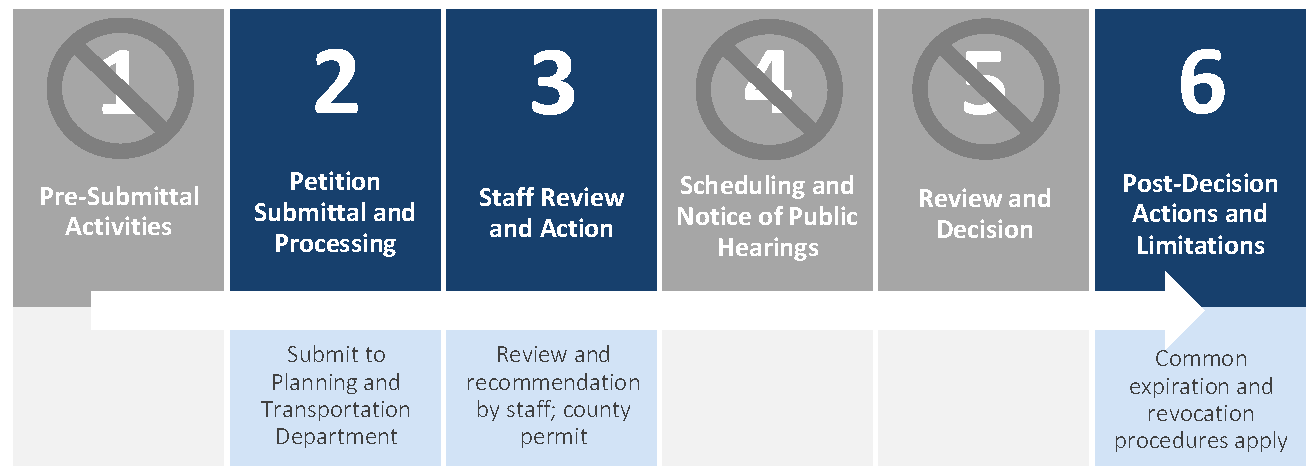
Figure 06.05-8: Summary of Certificate of Occupancy Procedure
(A)
Petition Submittal and Processing. The certificate of occupancy petition shall be submitted, accepted, and revised, and may be withdrawn, in accordance with Section 20.06.040(c) (Petition Submittal and Processing).
(B)
Staff Review and Action.
i.
Temporary Certificate of Occupancy.
1.
For a recommendation for a temporary certificate of occupancy to be issued each of the following shall be successfully completed:
a.
Installation of required public and internal sidewalk improvements;
b.
Installation of required parking areas surfaced and striped, including installation of upright ADA signage; and
c.
Safe ingress and egress from all principal buildings.
2.
All recommendations for a temporary certificate of occupancy are contingent upon approvals from the Monroe County Building Department, Monroe County Health Department, City of Bloomington Fire Department, City of Bloomington Housing and Neighborhood Development Department, City of Bloomington Engineering Department, and City utilities department, if applicable.
3.
A recommendation for a final certificate of occupancy shall be obtained within six weeks of the date of the recommendation for the temporary certificate of occupancy. Due to weather or other circumstances, this period may be extended for a period of up to six months at the discretion of the Planning and Transportation Director or designee.
ii.
Final Certificate of Occupancy.
1.
For a recommendation for a final certificate of occupancy to be issued, the installation of all required site lighting, landscaping, and elevations as approved by the certificate of zoning compliance(s) shall be successfully completed.
2.
All recommendations for a final certificate of occupancy are contingent upon approvals from the Monroe County Building Department, Monroe County Health Department, City of Bloomington Fire Department, City of Bloomington Housing and Neighborhood Development Department, City of Bloomington Engineering Department, and City utilities department, if applicable.
(C)
Post-Decision Actions and Limitations. Post-decision actions and limitations shall be pursuant to Monroe County standards and procedures.
(h)
Certificate of Final Acceptance.
(1)
Purpose. The certificate of final acceptance procedure is intended to provide a mechanism for the City to ensure that public facility improvements and installations conform to the standards of this UDO.
(2)
Applicability. A certificate of final acceptance shall be required for any project for which a performance bond has been submitted and upon the completion of any required public facility improvements and installations.
(3)
Certificate of Final Acceptance Review Process. Figure 06.05-9 identifies the applicable steps from Section 20.06.040 (Common Review Procedures) that apply to certificate of final acceptance review. Additions or modifications to the common review procedures are noted below.
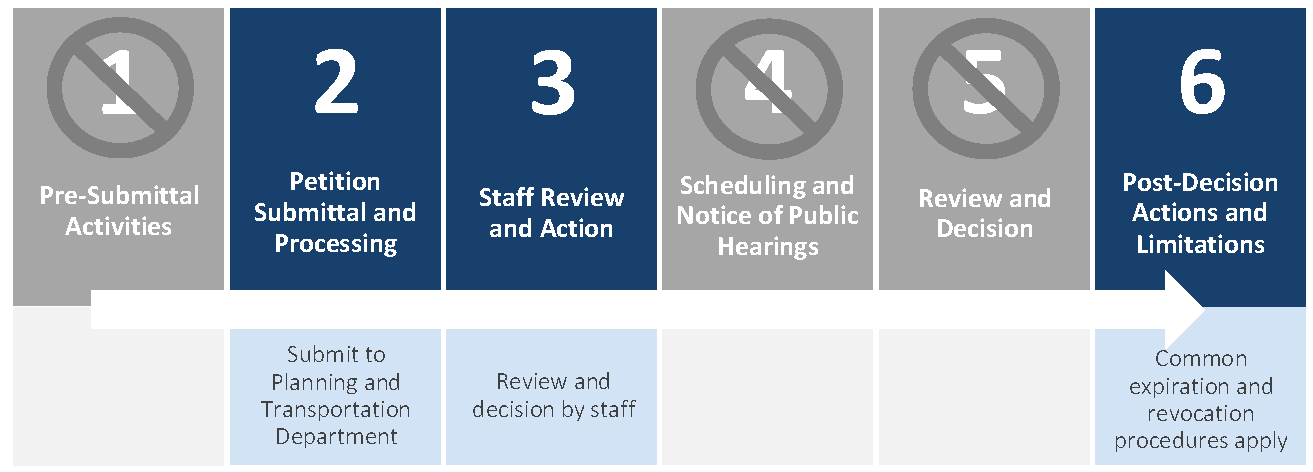
Figure 06.05-9: Summary of Certificate of Final Acceptance Procedure
(A)
Petition Submittal and Processing. The certificate of final acceptance petition shall be submitted, accepted, and revised, and may be withdrawn, in accordance with Section 20.06.040(c) (Petition Submittal and Processing).
(B)
Staff Review and Action.
i.
Inspection. The Planning and Transportation Department and Engineering Department staff shall inspect the improvements for compliance with this UDO and any other applicable City Planning and Transportation Department and City Engineering Department requirements.
ii.
Recommendation. The City Engineering Department shall recommend that the performance bond be released, extended, reduced, or declared in default based on the results of the inspection of improvements, and the City Engineer shall act on the recommended release, extension, reduction, or default of the performance bond after acceptance of the improvements by the Board of Public Works.
iii.
Improvements. The Board of Public Works will consider acceptance of public improvements that meet the following conditions:
1.
The completed public improvements shall comply with this UDO; have been constructed in accordance with City Engineering Department standards and specifications; and have been installed in accordance with the approved plans; and
2.
All inspections required by the Bloomington Municipal Code have been completed and the improvements found to be acceptable by the City Engineering Department.
(C)
Post-Decision Actions and Limitations. The City Planning and Transportation Department and City Engineering Department shall maintain records of all petitions, plans, and permits filed for a certificate of final acceptance.
(i)
Certificate of Nonconforming Use.
(1)
Purpose and Applicability. A person who owns or operates a nonconforming use that has not been deemed abandoned pursuant to Section 20.06.090(c)(3) (Abandonment of a Nonconforming Use), may request a certificate of nonconforming use to protect the lawful nonconforming status.
(2)
Certificate of Nonconforming Use Review Process. Figure 06.05-10 identifies the applicable steps from Section 20.06.040 (Common Review Procedures) that apply to certificate of nonconforming use review. Additions or modifications to the common review procedures are noted below.
Figure 06.05-10: Summary of Certificate of Nonconforming Use Review Procedure
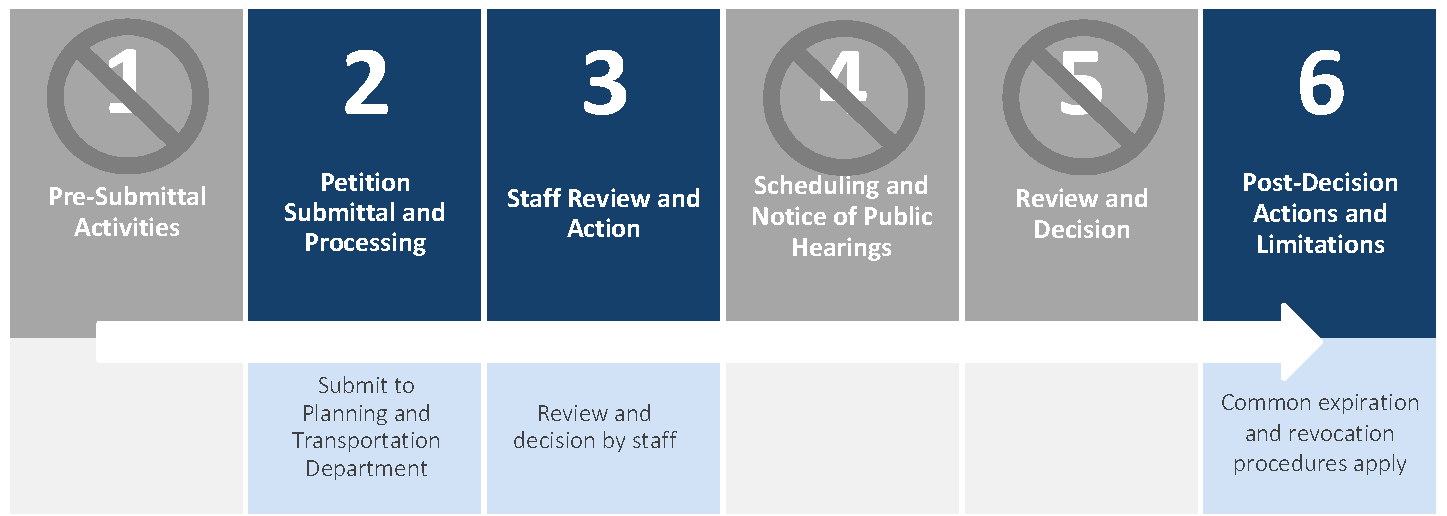
(A)
Petition Submittal and Processing. The certificate of nonconforming use petition shall be submitted, accepted, and revised, and may be withdrawn, in accordance with Section 20.06.040(c) (Petition Submittal and Processing).
(B)
Staff Review and Action. The Planning and Transportation Director shall review the certificate of nonconforming use petition, and shall approve, approve with conditions, or deny the petition in accordance with Section 20.06.040(d) (Staff Review and Action), based on the general approval criteria in Section 20.06.040(d)(6)(B) (General Compliance Criteria) and the following criteria:
i.
The petitioner shall demonstrate that the use is a lawful nonconforming use prior to the issuance of the certificate.
(C)
Post-Decision Actions and Limitations. Post-decision actions and limitations in Section 20.06.040(h) (Post-Decision Actions and Limitations) shall apply with the following modifications:
i.
Effect of Approval.
1.
A certificate of nonconforming use authorizes the continuation of an existing use of a property or building with any additional terms and conditions of the certificate and shall be valid as long as the use of the building or land remains in effect and is not abandoned.
2.
The certificate of nonconforming use shall clearly state that the existing use of the building or property was legally established prior to the effective date of the current UDO.
ii.
Revocation of a Certificate of Nonconforming Use.
1.
A certificate of nonconforming use may be revoked by the Planning and Transportation Director if the use of the property or building is inconsistent with the authorized use of the certificate of nonconforming use.
2.
The Planning and Transportation Director shall notify the certificate holder in writing and provide thirty days from the date of the letter for the certificate holder to bring the use of the property into compliance with the certificate of nonconforming use, or the certificate shall be revoked.
(j)
Sign Permit.
(1)
Purpose. The sign permit procedure is intended to provide a mechanism for enforcement of the sign regulations of this UDO in order to:
(A)
Establish for all signs located on any premises a reasonable and impartial means to permit adequate communication;
(B)
Control confusing sign displays that present a hazard to pedestrians and motorists along streets;
(C)
Ensure light, air, and open space;
(D)
Protect the natural beauty and environment of the City;
(E)
Safeguard and enhance property values;
(F)
Protect public and private investment in buildings and open spaces;
(G)
Protect the public health, safety, and general welfare; and
(H)
Comply with all state and federal laws and case decisions of courts applicable to the City concerning freedom of expression.
(2)
Applicability.
(A)
Generally.
i.
Except as otherwise provided, no person shall erect any sign as defined in this UDO without first obtaining a sign permit from the Planning and Transportation Department.
ii.
The use requesting the sign permit shall be legally established on the property for which the signage is being requested.
(B)
Exemptions. Signs that are exempt from the sign permit requirement are specified in Section 20.04.100 (Signs).
(3)
Sign Permit Review Process. Figure 06.05-11 identifies the applicable steps from Section 20.06.040 (Common Review Procedures) that apply to sign permit review. Additions or modifications to the common review procedures are noted below.
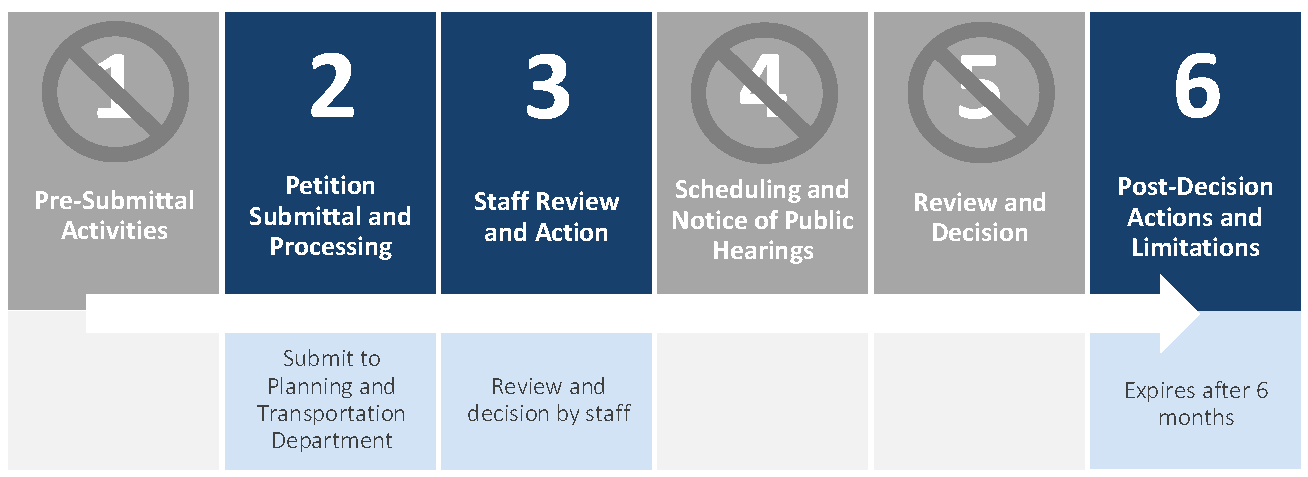
Figure 06.05-11: Summary of Sign Permit Review Procedure
(A)
Petition Submittal and Processing. The sign permit petition shall be submitted, accepted, and revised, and may be withdrawn, in accordance with Section 20.06.040(c) (Petition Submittal and Processing).
(B)
Staff Review and Action.
i.
The planning and transportation staff shall review the sign permit petition and approve, approve with conditions, or deny the petition in accordance with Section 20.06.040(d) (Staff Review and Action), based on the general approval criteria in Section 20.06.040(d)(6)(B) (General Compliance Criteria).
ii.
A staff decision on the petition shall be made within thirty days of receipt of a complete petition.
iii.
If a petition for a sign permit is denied, and the denial is appealed to the Board of Zoning Appeals pursuant to Section 20.06.080(d) (Administrative Appeal), the Board of Zoning Appeals shall make a decision on the appeal at the next regularly scheduled hearing.
(C)
Post-Decision Actions and Limitations. Post-decision actions and limitations in Section 20.06.040(h) (Post-Decision Actions and Limitations) shall apply with the following modifications:
i.
Duration. The sign authorized by a sign permit shall be completed and erected within six months of the date of issuance; otherwise, the sign permit shall lapse and become null and void, unless good cause for an extension of time for completion is approved by the Planning and Transportation Director.
ii.
Extension. One extension of up to six months may be authorized by the Planning and Transportation Director for reason/cause. The petitioner shall submit the request for extension in writing to the Planning and Transportation Director, and the Planning and Transportation Director shall make a written determination regarding his or her decision to extend or deny extension. Both the request and the determination shall be made part of the sign permit record.
iii.
Changes or Amendments. When a sign permit has been issued, it shall be unlawful to change, modify, alter, or otherwise deviate from the terms and conditions of the sign permit without prior approval of the Planning and Transportation Director. When granted, a written record of such amendment shall be entered upon the original sign permit petition and maintained in the files of the Planning and Transportation Department.
(k)
Temporary Use Permit.
(1)
Purpose. The temporary use procedure is intended to provide a mechanism for enforcement of the temporary use regulations of this UDO, in order to allow short-term and minor deviations for uses which are temporary in nature, which will not adversely impact surrounding properties and land uses, and which can be terminated and removed at will.
(2)
Applicability.
(A)
Generally. A temporary use permit shall be required prior to the establishment of any temporary use, unless otherwise exempted in subsection (B) below.
(B)
Exemptions. The following uses are permitted and shall not be regulated as temporary uses under this UDO.
i.
Garage or yard sales, tent meetings, nonprofit events and political rallies, provided they meet the following standards:
1.
The event is allowed for a maximum of seven consecutive days;
2.
No property shall hold more than three such events in a single calendar year; and
3.
The hours of operation of such events shall be limited to between the hours of seven a.m. and eleven p.m.
ii.
Temporary structures used for collection of donation items by a non-profit organization, provided they are displayed for a maximum of ninety days.
iii.
Any business activity licensed by Title 4 (Business Licenses and Regulations), of the Bloomington Municipal Code.
(3)
Temporary Use Permit Review Process. Figure 06.05-12 identifies the applicable steps from Section 20.06.040 (Common Review Procedures) that apply to temporary use permit review. Additions or modifications to the common review procedures are noted below.
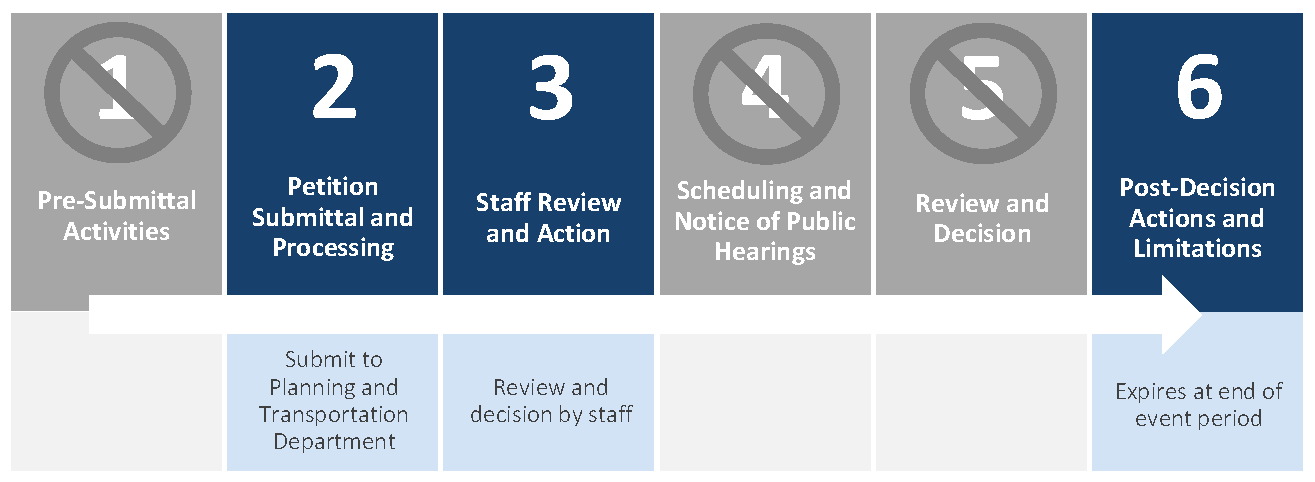
Figure 06.05-12: Summary of Temporary Use Permit Review Procedure
(A)
Petition Submittal and Processing. The temporary use permit petition shall be submitted, accepted, and revised, and may be withdrawn, in accordance with Section 20.06.040(c) (Petition Submittal and Processing).
(B)
Staff Review and Action. The planning and transportation staff shall review the temporary use permit petition and approve, approve with conditions, or deny the petition in accordance with Section 20.06.040(d) (Staff Review and Action), based on the general approval criteria in Section 20.06.040(d)(6)(B)i. (Compliance with this UDO), and Section 20.03.030(h) (Temporary Uses).
(C)
Post-Decision Actions and Limitations. Post-decision actions and limitations in Section 20.06.040(h) (Post-Decision Actions and Limitations) shall apply with the following modifications:
i.
Temporary uses shall be terminated and removed at the end of the event period unless otherwise specified in Section 20.03.030(h) (Temporary Uses).
ii.
A temporary use permit may be granted only one time per year on any individual zoning lot and is nonrenewable. For purposes of this standard, fireworks, Halloween pumpkin, and Christmas tree sales are considered separate uses.
(l)
Easements.
(1)
Purpose. The purpose of this section is to outline the procedures for obtaining and recording easements, modifying platted or unplatted easements, terminating unplatted easements, and vacating platted easements and to ensure that the statutory requirements of the Indiana Code are met.
(2)
Applicability. This Section 20.06.050(l) (Easements) governs easements that are:
(A)
Required and/or granted pursuant to a provision of this UDO;
(B)
Permitted or required as a commitment;
(C)
Permitted or required as a condition of approval; or
(D)
Shown on a recorded plat.
(3)
Easement Review Process. Figure 06.05-13 identifies the applicable steps from Section 20.06.040 (Common Review Procedures) that apply to easement review. Additions or modifications to the common review procedures are noted below.
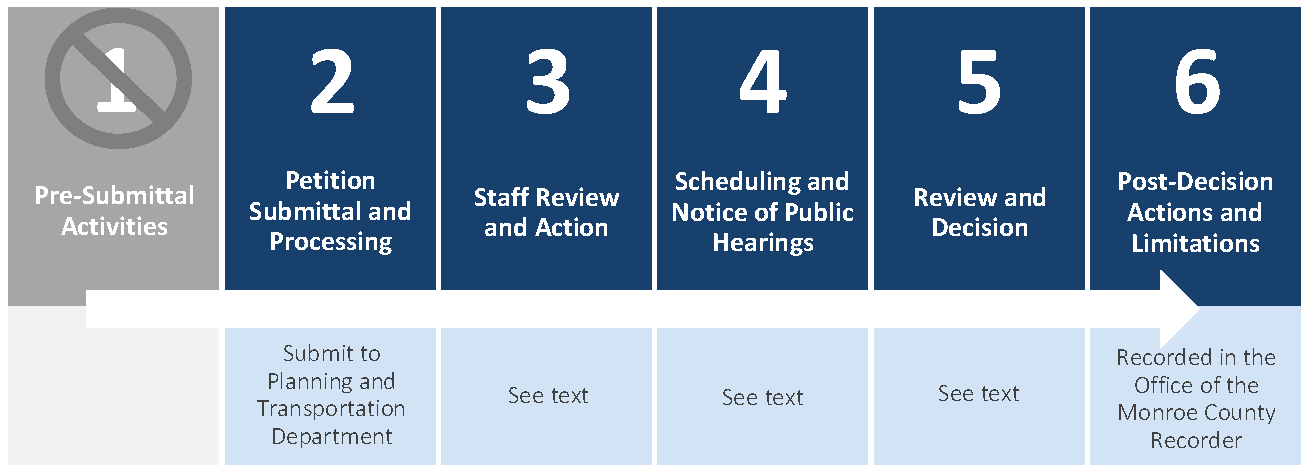
Figure 06.05-13: Summary of Easement Review Procedure
(A)
Petition Submittal and Processing.
i.
The easement petition shall be submitted, accepted, and revised, and may be withdrawn, in accordance with Section 20.06.040(c) (Petition Submittal and Processing).
ii.
Either the grantor or the grantee of an easement may apply to the approving body for modification of an easement.
iii.
Persons who own or hold an interest in a lot or lots adjacent to a platted easement may petition the Common Council for vacation of the easement in the manner outlined in Indiana Code § 36-7-3-12.
iv.
Any easement required by this UDO that is not included in a plat subject to Section 20.06.060 (Subdivision Procedures) shall comply with the procedure outlined in this Section 20.06.050(l) (Easements).
(B)
Staff Review and Action.
i.
Easements Not Required by Conditions or Commitments. The Planning and Transportation Director shall review the easement petition and approve, approve with conditions, or deny the petition in accordance with Section 20.06.040(d) (Staff Review and Action), if the Planning and Transportation Director determines that the proposed action complies with Section 20.06.040(d)(6)(B)iii. (Compliance with Utility, Service, and Improvement Standards), and those general standards for easements in Section 20.05.040(b) (General Standards) as applicable, and will not create significant adverse impacts on surrounding properties.
ii.
Easements Required by Conditions or Commitments. If the easement to be vacated was established as a result of a permitted or required commitment or condition of approval by the Plan Commission or Board of Zoning Appeals, the body that required the commitment or condition of approval shall approve both the easement vacation petition and the termination of the commitment or condition. The decision of that body shall be based on a determination as to whether the proposed action complies with Section 20.06.040(d)(6)(B)iii. (Compliance with Utility, Service, and Improvement Standards), and those general standards for easements in Section 20.05.040(b) (General Standards) as applicable, and will not create significant adverse impacts on surrounding properties.
(C)
Post-Decision Actions and Limitations. Post-decision actions and limitations in Section 20.06.040(h) (Post-Decision Actions and Limitations) shall apply with the following modifications:
i.
Form. Easement instruments shall be prepared in a recordable form acceptable to the City Legal Department.
ii.
Recording. Approved easement instruments shall be recorded in the county recorder's office. The original recorded easement shall be delivered to the grantee and a copy shall be delivered to the Planning and Transportation Department.
iii.
Covenants, Conditions, and Restrictions. Inclusion of language defining easements in an instrument creating covenants, conditions, and restrictions shall not be sufficient to create, modify, terminate, or vacate an easement. Easement instruments shall be independently recorded documents that may be modified, terminated, or vacated only as provided in this UDO.
iv.
Removal of Improvements. When applicable, the petitioner shall remove any improvements associated with the use of the easement prior to the termination of the easement.
v.
Time Limitation. If an easement modification or termination petition has been denied, the petitioner shall not file a new petition with the same or substantially similar request for a period of six months.
(Amd. of 1-14-2020; Ord. No. 20-07, § I(Att. B), 4-15-2020; Ord. No. 21-15, § II (Att. A), 4-21-2021; Ord. No. 21-20, § II (Att. A), 4-21-2021; Ord. No. 21-23, § II(Att. B), 6-14-2021; Ord. No. 22-11, § II(Art. A), 5-18-2022; Ord. No. 22-08, § II(Att. A), 5-18-2022; Ord. No. 23-04, § 2(Att. A), 4-19-2023; Ord. No. 23-07, § 2(Att. A), 4-19-2023; Ord. No. 2024-03, § II(Att. A), 4-10-2024; Ord. No. 2024-06, § II(Att. A), 4-10-2024; Ord. No. 2024-17, § II(Att. A), 9-18-2024; Ord. No. 2025-14, § II(Att. A), 5-21-2025)
20.06.060 - Subdivision procedures.
(a)
General Standards.
(1)
Purpose. The purpose of these subdivision procedures, and the related standards in Chapter 20.05 (Subdivision Standards) is to guide the development of the Plan Commission's jurisdiction to provide for the improvement of the health, safety, convenience, and general welfare of its citizens and to plan for the future development of the community; to the end that streets and highways be carefully planned; that new areas grow only with adequate street/utility, health, education and recreational facilities; that the needs of public utilities and facilities be recognized in the future growth; and that residential areas provide healthy surroundings for family life and that the growth of the community is commensurate with the efficient and economical use of public funds.
(2)
Applicability.
(A)
Generally. This Section 20.06.060 (Subdivision Procedures) shall apply to all subdivisions of land in any zoning district located within the jurisdiction of the Plan Commission, except as stated in subsection (B) below. No land within that jurisdiction shall be subdivided until:
i.
A plat conforming to these regulations has been approved and certified by the Plan Commission; and
ii.
The approved secondary plat has been filed with the county recorder's office.
(B)
Exemptions. The regulations of this Section 20.06.060 (Subdivision Procedures) shall not apply to the following:
i.
An adjustment of lot lines as shown on a recorded plat which does not reduce the lots below the minimum zoning requirements of Chapter 2 and does not increase the original number of lots. Such adjustment is subject to Sections 20.05.050(e)(1), 20.05.050(3)(B), and 20.05.050(3)(C).
ii.
A division of land into two or more tracts for an agricultural use of ten or more acres, not involving any new street or access easement.
iii.
An allocation of land in the settlement of an estate of a decedent or a court decree for the distribution of property.
iv.
The unwilling sale of land as a result of legal condemnation as defined and allowed in state law.
v.
Modification of existing streets to conform to the Comprehensive Plan.
vi.
The acquisition of street rights-of-way by a public agency in conformance with the Comprehensive Plan.
vii.
The exchange of land between owners of adjacent property provided that such exchange does not reduce the parcels below the minimum zoning requirements of Chapter 2 and does not increase the original number of parcels. Such adjustment is subject to Sections 20.05.050(e)(1), 20.05.050(3)(B), and 20.05.050(3)(C).
viii.
The platting of condominium units regulated by Indiana Code Article 32-25 (Condominiums).
(C)
Jurisdiction. After the provisions of this Section 20.06.060 (Subdivision Procedures) and related provisions in Chapter 20.05 (Subdivision Standards) have been adopted, the Plan Commission shall have exclusive control over the approval of all plats and replats involving land covered by this UDO.
(D)
Subdivision Type. All subdivisions shall be designed according to one of the subdivision types specified in Chapter 20.05 (Subdivision Standards). A single subdivision shall not incorporate more than one of the subdivision types unless specifically authorized by the Plan Commission.
(b)
Primary Plat.
(1)
Purpose. The primary plat procedure provides a mechanism for the City to review an overall plan for a proposed subdivision and ensures that the statutory requirements established in the Indiana Code for the subdivision of land are met.
(2)
Applicability. A primary plat shall be prepared in conjunction with any proposal to subdivide or plat property within the jurisdictional area of the Plan Commission.
(3)
Primary Plat Review Process. Figure 06.06-1 identifies the applicable steps from Section 20.06.040 (Common Review Procedures) that apply to primary plat review. Additions or modifications to the common review procedures are noted below.
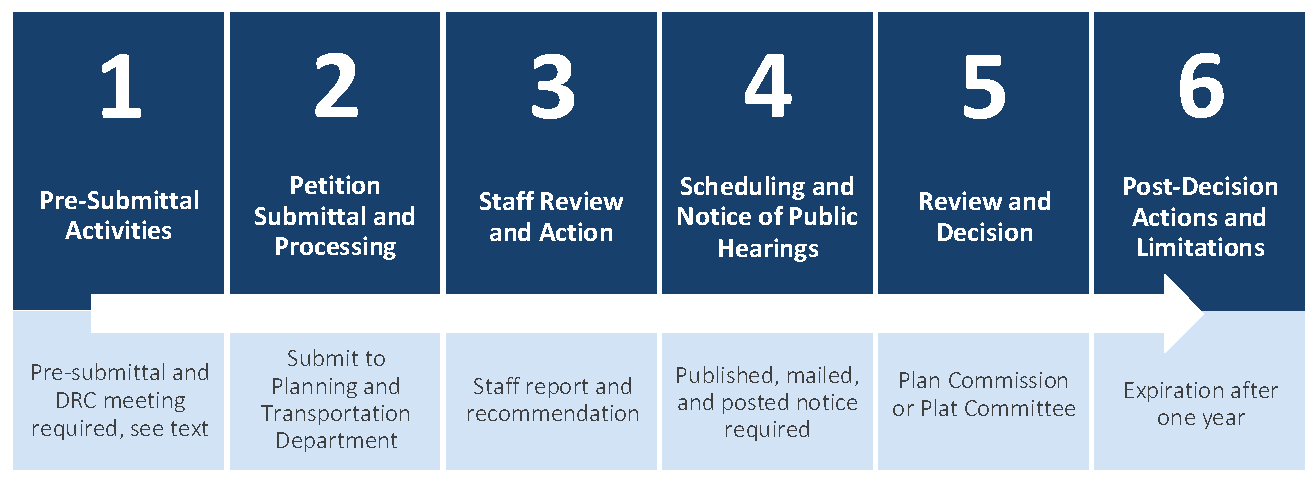
Figure 06.06-1: Summary of Primary Plat Procedure
(A)
Pre-Submittal Activities.
i.
A pre-submittal meeting shall be held in accordance with Section 20.06.040(b)(1) (Pre-Submittal Meeting).
ii.
A development review committee meeting shall be held in accordance with Section 20.06.040(b)(1)(D) (Development Review Committee (DRC) Meeting).
iii.
For petitions subject to review and a decision by the Plan Commission, pre-submittal neighborhood meeting may be required by the Planning and Transportation Director, in accordance with Section 20.06.040(b)(3) (Pre-Submittal Neighborhood Meeting).
(B)
Petition Submittal and Processing. The primary plat petition shall be submitted, accepted, and revised, and may be withdrawn, in accordance with Section 20.06.040(c) (Petition Submittal and Processing).
(C)
Staff Review and Action. The planning and transportation staff shall review the petition and prepare a staff report and recommendation in accordance with Section 20.06.040(d) (Staff Review and Action).
(D)
Scheduling and Notice of Public Hearings. Within thirty days after receipt of a complete petition, the primary plat petition shall be scheduled for a public hearing before the Plan Commission or plat committee and noticed in accordance with Section 20.06.040(e) (Scheduling and Notice of Public Hearings).
(E)
Review and Decision. The Plan Commission or plat committee shall review the primary subdivision petition and approve, approve with conditions, or deny the petition in accordance with Section 20.06.040(g) (Review and Decision), based on the general approval criteria in Section 20.06.040(d)(6) (Approval Criteria) and the following standards:
i.
All subdivision proposals shall be consistent with the need to minimize flood damage.
ii.
All subdivision proposals shall have public utilities and facilities such as sewer, gas, electrical, and water systems located and constructed to minimize flood damage.
iii.
All subdivision proposals shall have adequate drainage provided to reduce exposure to flood hazards.
iv.
Base flood elevation data shall be provided for subdivision proposals and other proposed development (including manufactured home parks and subdivisions), which is greater than the lesser of fifty lots or five acres.
v.
All subdivision proposals shall minimize development in the SFHA and/or limit intensity of development permitted in the SFHA.
vi.
All subdivision proposals shall ensure safe access into/out of SFHA for pedestrians and vehicles (especially emergency responders).
(F)
Subdivision Waivers. Waivers from any standards within Chapter 5 shall be reviewed according to the following criteria:
i.
The granting of the subdivision waiver shall not be detrimental to the public safety, health, or general welfare, or injuries to other property; and
ii.
The conditions upon which the request for a Subdivision Waiver are based are unique to the property; and
iii.
The Subdivision Waiver shall not in any manner vary the provisions of the development standards, Comprehensive Plan, or Transportation Plan, except that waivers related to sidewalks and tree plots in the Transportation Plan may be requested.
(G)
Post-Decision Actions and Limitations. Post-decision actions and limitations in Section 20.06.040(h) (Post-Decision Actions and Limitations) shall apply with the following modifications:
i.
Effect of Approval.
1.
All decisions of the Plan Commission or plat committee approving, denying, or placing conditions upon a primary plat must be in writing and signed by the president of the Plan Commission, the chair of the plat committee, or the Planning and Transportation Director.
2.
The approval of a primary plat by the Plan Commission is strictly tentative, involving merely the general acceptability of the layout as submitted.
ii.
Revisions to Primary Plat. Following Plan Commission approval, the petitioner shall submit revised copies of the plans that address the conditions required by the Plan Commission. The petitioner shall refer to the petition form to determine the format and number of copies of the revised plans to deliver to the Planning and Transportation Department.
iii.
Expiration of Primary Plat.
1.
A secondary plat petition shall be filed no later than twelve months after the date of approval of the primary plat, otherwise the primary plat approval shall be considered void, to the extent permitted by Section 20.01.040(b) (Effect of Change in the Law After Filing of Complete Petition).
2.
One extension of up to six months may be authorized by the Planning and Transportation Director for reason/cause. The petitioner shall submit the request for extension in writing to the Planning and Transportation Director, and the Planning and Transportation Director shall make a written determination regarding his or her decision to extend or deny extension. Both the request and the determination shall be made part of the primary plat record.
(c)
Secondary Plat.
(1)
Purpose. The secondary plat procedure provides a mechanism for the City to review a petition for the secondary platting of a subdivision and ensures that the statutory requirements established in the Indiana Code for the subdivision of land are met.
(2)
Applicability. No secondary plat of a subdivision of land located within the jurisdiction of the Plan Commission shall be recorded in the office of the Monroe County Recorder until the plat has been approved by the Plan Commission in accordance with the following requirements, standards, and specifications, and such approval has been entered in writing on the plat by the president of the Plan Commission, chair of the plat committee, or the Planning and Transportation Director.
(3)
Secondary Plat Review Process. Figure 06.06-2 identifies the applicable steps from Section 20.06.040 (Common Review Procedures) that apply to secondary plat review. Additions or modifications to the common review procedures are noted below.
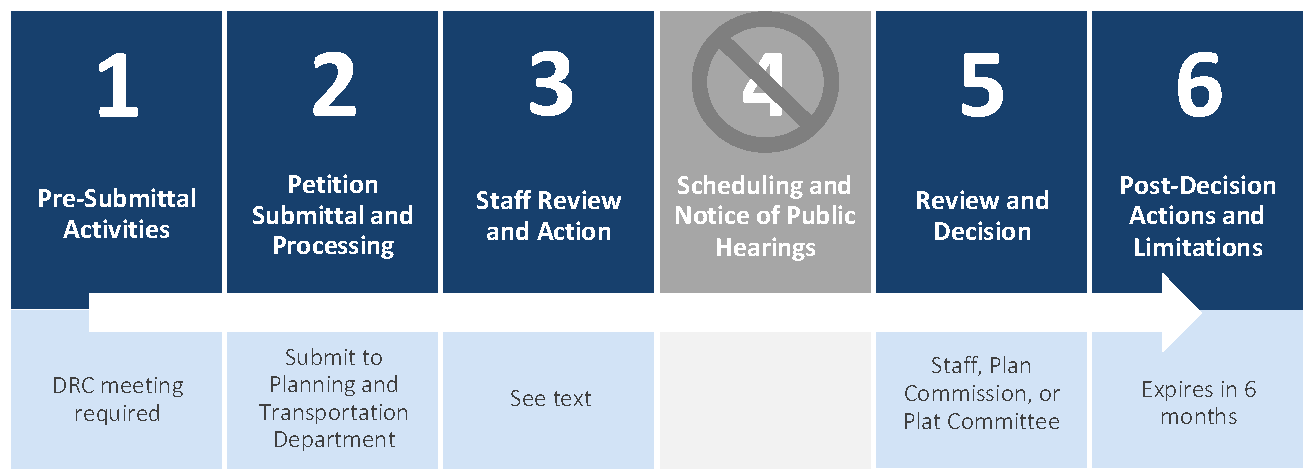
Figure 06.06-2: Summary of Secondary Plat Procedure
(A)
Pre-Submittal Activities. A development review committee meeting shall be held in accordance with Section 20.06.040(b)(2) (Development Review Committee (DRC) Meeting).
(B)
Petition Submittal and Processing. The secondary plat petition shall be submitted, accepted, and revised, and may be withdrawn, in accordance with Section 20.06.040(c) (Petition Submittal and Processing).
(C)
Staff Review and Action. Staff review and action standards in Section 20.06.040(d) (Staff Review and Action) shall apply with the following modifications:
i.
Review and Decision by Staff.
1.
If Table 06-1 (Summary Table of Review Procedures) authorizes the plat committee or Plan Commission to make a decision on a secondary plat, and the plat committee or Plan Commission determines that the application is not unusually complex or does not raise potentially unique or serious impacts on the City or the surrounding neighborhoods, the plat committee or Plan Commission may, at their discretion, refer the decision to the staff for decision pursuant to the same criteria that the plat committee or Plan Commission would have been required to apply to that decision.
2.
Prior to approval of a secondary plat, the Plan Commission or plat committee shall have approved the primary plat; and the primary plat must not be expired.
3.
The staff shall, based upon the facts presented for review, notify the petitioner in writing what revisions, changes, or further changes in the petition are needed for approval.
4.
Following the petitioner's submittal of plans that incorporate the necessary revisions, the staff shall approve the secondary plat, or the Planning and Transportation Director may forward the secondary plat to the plat committee for review; or forward the secondary plat to the Plan Commission for review.
ii.
Review and Decision by the Plan Commission or Plat Committee. If the Plan Commission elects to review the secondary plat, or delegates to the plat committee authority to review the secondary plat, then the Planning and Transportation Director shall review the petition and prepare a staff report and recommendation in accordance with Section 20.06.040(d) (Staff Review and Action).
(D)
Review and Decision. The Plan Commission or plat committee shall review the secondary subdivision petition and approve, approve with conditions, or deny the petition in accordance with Section 20.06.040(g) (Review and Decision), based on the general approval criteria in Section 20.06.040(d)(6)(B) (General Compliance Criteria).
(E)
Post-Decision Actions and Limitations. Post-decision actions and limitations in Section 20.06.040(h) (Post-Decision Actions and Limitations) shall apply with the following modifications:
i.
Effect of Approval.
1.
After compliance with this UDO and upon approval of the secondary plat, the Planning and Transportation Director shall sign and seal the plat at the appropriate locations.
2.
The staff shall then notify the petitioner of the Planning and Transportation Director's actions.
3.
The petitioner shall then file the secondary plat for recording in the office of the Monroe County Recorder, as required by law.
4.
Within thirty days after recording the secondary plat, the petitioner shall provide the City Planning and Transportation Department with a copy of the recorded plat in a form acceptable to the City.
ii.
Expiration of Secondary Plat.
1.
If the secondary plat, or a phase thereof, has not been recorded within a maximum period of six months from the date of approval by the Plan Commission or plat committee, the secondary plat shall be null and void and the secondary plat must again be submitted for approval, to the extent permitted by Section 20.01.040(b) (Effect of Change in the Law After Filing of Complete Petition).
2.
For a secondary plat where an initial phase was recorded within six months of the date of approval by the Plan Commission or plat committee, successive phases shall be recorded within eighteen months of the previous phase. If a successive phase fails to meet the eighteen-month requirement, the approval of the phases that have not been recorded shall be null and void, but only the secondary plat must again be submitted for approval, to the extent permitted by Section 20.01.040(b) (Effect of Change in the Law After Filing of Complete Petition).
iii.
Financial Bond Required.
1.
Purpose. In conjunction with the approval of a secondary plat, the petitioner shall be required to provide a financial performance guarantee, by performance bond or an irrevocable, unconditional, acceptable letter of credit issued by a financial institution acceptable to the City, that all public facility improvements and installations required under the provisions of this UDO and Planning and Transportation and Engineering Departments requirements shall be completed.
2.
Applicability.
a.
A performance agreement between the petitioner and the City, supported by a performance surety or irrevocable letter of credit, shall be required ensuring the timely and proper installation of required public facility improvements; provided, however, that any improvements to be dedicated to Monroe County within the City of Bloomington shall be bonded in accordance with Monroe County bonding policy.
b.
The performance guarantee for each individual public facility improvement or installation may be handled separately and shall in no way be contingent on the completion of any other individual public facility improvements and installations or their performance guarantees.
c.
The posting of a performance guarantee may be accepted for incomplete requirements that will be completed as per a written agreement with the City. The time period and amount of the performance guarantee shall be determined by the Board of Public Works and shall comply with Indiana Code § 36-7-4-709(i).
d.
The posting of a performance guarantee is not required when the petitioner is the City of Bloomington.
3.
Review. The City Engineering Department shall review the estimate upon receipt of a complete petition and supportive documents. The City Engineering Department shall verify that the performance bond or letter of credit shall:
a.
Be in a sum of not less than one hundred twenty-five percent of the approved estimate of the total improvement construction cost of the project in order to be sufficient to complete the improvements and installations in compliance with this UDO and City Engineering Department requirements;
b.
Provide bond satisfactory to the City or to the county;
c.
Run to and be in favor of the City or the county;
d.
Specify the time for the completion of the improvements and installations (both on site and off site);
e.
Be in effect and shall not terminate until a period of two years after the date of substantial completion of the public improvements, but in no situation shall the performance bond or letter of credit be permitted to have an effective period greater than three years;
f.
Notwithstanding any partial release of the performance bond or letter of credit pursuant to subsection e. above, the City shall require a maintenance bond to remain in effect for a period of two years after the certificate of final acceptance is approved. The maintenance bond shall be in the amount of five percent of the original performance bond, or ten thousand dollars, whichever is greater, or as determined by the City Engineer; and
g.
Be in a form approved by the City Legal Department.
4.
Report. The City Engineering Department shall recommend approval or rejection of the performance bond to the Board of Public Works.
5.
Record. The City Planning and Transportation and Engineering Departments shall maintain records of all petitions, plans, and permits filed for a performance bond.
6.
Time Limit. The completion of public facility improvements and installations shall be within two years of the approval of the project. The approval date of the project is the date of the Plan Commission or Plat Committee hearing at which the Secondary Plat was approved or the date the Planning and Transportation Director signed the Secondary Play (if the Plat was delegated to staff approval).
7.
Extension of Completion Time. Should the petitioner not complete the public facility improvements and installations as herein required within a two year period, the City Planning and Transportation Department may approve the petitioner's written request for an extension of time for up to one additional year, granted at six month intervals and conditioned in every case upon extension or renewal of the bond accordingly, for completion of the required public facility improvements and installations, but in no situation shall an extension of a performance bond or letter of credit be permitted to have an effective period greater than three years.
8.
Nonperformance. Should the petitioner not complete the public facility improvements and installations as required by this UDO within the two year period or within any time extension approved by the City Planning and Transportation Department, the City may take the necessary steps to proceed with the completion of the public facility improvements and installations, making use of the performance bond or letter of credit.
9.
Expiration. The performance bond or letter of credit shall be in effect and shall not terminate until thirty calendar days after the certificate of final acceptance is approved by the City Engineering Department, and the maintenance bond has been accepted.
10.
Performance Bond Reductions.
a.
Annual partial releases of performance sureties held by the City shall be approved by the City Engineering Department in accordance with a partial release schedule agreed to in a signed written document, after that document has been signed by the City Engineer or his or her designee, and the developer or his or her designee.
b.
The following standards shall apply to any request for a bond reduction:
i.
No more than three reductions shall be permitted within any twenty-four-month period.
ii.
No performance bond shall be reduced beyond seventy-five percent of the original bond amount.
iii.
Periodic partial releases shall not occur before completion of at least thirty percent of the improvements covered by the performance bond.
(d)
Vacating Plat.
(1)
Purpose. The vacating plat procedure provides a mechanism for the City to review a petition for the vacation of a subdivision and ensures that the statutory requirements established in the Indiana Code for the subdivision of land are met.
(2)
Applicability.
(A)
Secondary Plat.
i.
The owner of land in a secondary plat may file with the Plan Commission or plat committee a petition to vacate all or part of the secondary plat pertaining to the land owned by the petitioner.
ii.
In a case in which not all the owners of land in a secondary plat are in agreement regarding a proposed vacation, one or more owners of the land in the secondary plat may file with the Plan Commission or plat committee a petition to vacate all of the secondary plat or only that part of the secondary plat that pertains to land owned by the petitioner or petitioners. A petition under this subsection shall:
1.
State the reasons for and the circumstances prompting the request;
2.
Specifically describe the property in the secondary plat proposed to be vacated; and
3.
Give the name and address of every other owner of land in the secondary plat.
(B)
Rights-of-way. This plat vacation procedure shall not be used to vacate rights-of-way, regardless of whether they are platted. Rights-of-way shall be vacated pursuant to Indiana Code § 36-7-3-12.
(C)
Covenants or Commitments. The plat vacation petition may include a request to vacate any recorded covenants or commitments filed as part of the secondary plat. The covenants or commitments are then also subject to vacation.
(D)
Easements.
i.
This plat vacation procedure shall not be used to vacate platted easements. Platted easements shall be vacated pursuant to Section 20.06.050(l) (Easements).
ii.
Per Indiana Code § 36-7-3-16, platted easements are vacated by the Common Council.
(E)
Public Utilities. Notwithstanding the provisions of this Section 20.06.060(d) (Vacating Plat), plat vacation proceedings do not deprive a public utility of the use of all or part of a public right-of-way or public place to be vacated, if, at the time the proceedings are instituted, the utility is occupying and using all or part of that public right-of-way or public place for the location and operation of its facilities. However, the utility may waive its rights under this section by filing its written consent in the plat vacation proceedings.
(3)
Vacating Plat Review Process. Figure 06.06-3 identifies the applicable steps from Section 20.06.040 (Common Review Procedures) that apply to the vacating plat review. Additions or modifications to the common review procedures are noted below.
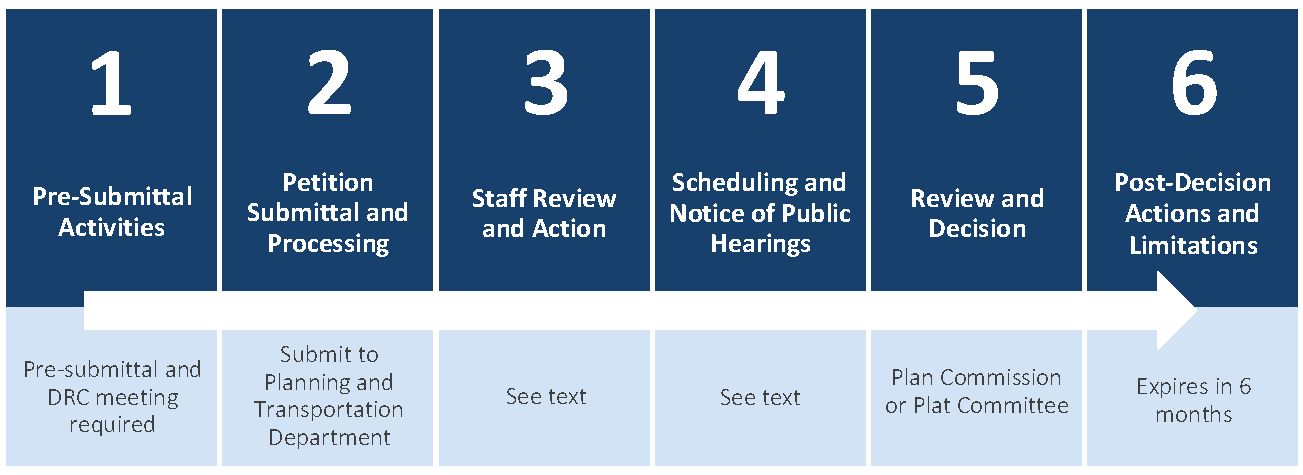
Figure 06.06-3: Summary of Vacating Plat Procedure
(A)
Pre-Submittal Activities.
i.
A pre-submittal meeting shall be held in accordance with Section 20.06.040(b)(1) (Pre-Submittal Meeting).
ii.
A development review committee meeting shall be held in accordance with Section 20.06.040(b)(1)(D) (Development Review Committee (DRC) Meeting).
(B)
Petition Submittal and Processing. The vacating plat petition shall be submitted, accepted, and revised, and may be withdrawn, in accordance with Section 20.06.040(c) (Petition Submittal and Processing).
(C)
Staff Review and Action. The planning and transportation staff shall review the petition and prepare a staff report and recommendation in accordance with Section 20.06.040(d) (Staff Review and Action).
(D)
Scheduling and Notice of Public Hearings. The vacating plat petition shall be scheduled for a public hearing before the Plan Commission or plat committee and noticed in accordance with Section 20.06.040(e) (Scheduling and Notice of Public Hearings).
(E)
Review and Decision. The Plan Commission or plat committee shall review the vacating plat petition and approve, approve with conditions, or deny the petition in accordance with Section 20.06.040(g) (Review and Decision), based on the following specific approval criteria:
i.
Grounds for Remonstrances and Objections. All persons may comment at the public hearing in accordance with the procedural rules of the Plan Commission or plat committee. A remonstrance or objection may be filed or raised by any person aggrieved by the proposed plat vacation, but only on one or more of the following grounds:
1.
The plat vacation would hinder the growth or orderly development of the unit or neighborhood in which it is located or to which it is contiguous;
2.
The plat vacation would make access to the lands of the aggrieved person by means of a public right-of-way difficult or inconvenient;
3.
The plat vacation would hinder the public's access to a place of worship, school, or other public building or place; and/or
4.
The plat vacation would hinder the use of a public right-of-way by the neighborhood in which it is located or to which it is contiguous.
ii.
Findings of Fact. The Plan Commission or plat committee may approve the petition for plat vacation of all or part of a secondary plat only upon making written findings that:
1.
Conditions in the platted area have changed so as to defeat the original purpose of the secondary plat;
2.
It is in the public interest to vacate all or part of the secondary plat; and
3.
The value of that part of the land in the secondary plat not owned by the petitioner will not be diminished by vacation.
(F)
Post-Decision Actions and Limitations. Post-decision actions and limitations in Section 20.06.040(h) (Post-Decision Actions and Limitations) shall apply with the following modifications:
i.
Effect of Decision.
1.
The findings of fact shall be signed by the president of the Plan Commission or plat committee chair.
2.
The Plan Commission or plat committee shall furnish a copy of its decision to the office of the Monroe County Recorder for recording.
3.
The plat vacation instrument shall be signed by the president of the Plan Commission or plat committee chair and the owner of the vacated property.
4.
The petitioner shall record the plat vacation instrument in the office of the Monroe County Recorder within sixty days of the approval of the plat vacation. Failure to record the vacation within that time period shall render the vacating plat null and void. The petitioner shall deliver a copy of the recorded plat vacation instrument to the City Planning and Transportation Department.
ii.
Bond Requirement. In conjunction with the approval of a plat vacation, and unless determined to be unnecessary by the Plan Commission or plat committee, the petitioner shall provide financial bond for all public improvements pursuant to Section 20.06.060(c)(3)(E)iii. (Financial Bond Required).
iii.
Time Limitation. After the termination of a plat vacation proceeding under this section, a subsequent vacation proceeding affecting the same property and asking for the same relief may not be initiated for three years.
(Amd. of 1-14-2020; Ord. No. 21-20, § II (Att. A), 4-21-2021; Ord. No. 22-11, § II(Art. A), 5-18-2022; Ord. No. 23-07, § 2(Att. A), 4-19-2023; Ord. No. 2024-03, § II(Att. A), 4-10-2024; Ord. No. 2024-06, § II(Att. A), 4-10-2024; Ord. No. 2025-14, § II(Att. A), 5-21-2025)
20.06.070 - Plan and ordinance amendments.
(a)
Comprehensive Plan Amendment. The following procedure is established for review and amendment of the Comprehensive Plan.
(1)
The Plan Commission may recommend, and the Common Council may determine the appropriate interval for a review, but such review should be conducted once every four years.
(2)
Amendments to the Comprehensive Plan shall proceed pursuant to Indiana Code § 36-7-4, Series 500.
(b)
Zoning Map Amendment.
(1)
Purpose. The zoning map amendment procedure is intended to provide a mechanism for the City to consider a petition for the rezoning of real property within the jurisdictional area of the Plan Commission and to ensure that the statutory requirements established in the Indiana Code for the zoning of real property are met.
(2)
Applicability. The zoning map amendment procedure applies to all proposals requesting to change the zoning district classification of a parcel of real property to a different zoning district classification. This procedure does not include changing the zoning classification of a parcel to a Planned Unit Development, which is governed by Section 20.06.070(c) (Rezoning to Planned Unit Development).
(3)
Zoning Map Amendment Review Process. Figure 06.07-1 identifies the applicable steps from Section 20.06.040 (Common Review Procedures) that apply to zoning map amendment review. Additions or modifications to the common review procedures are noted below.
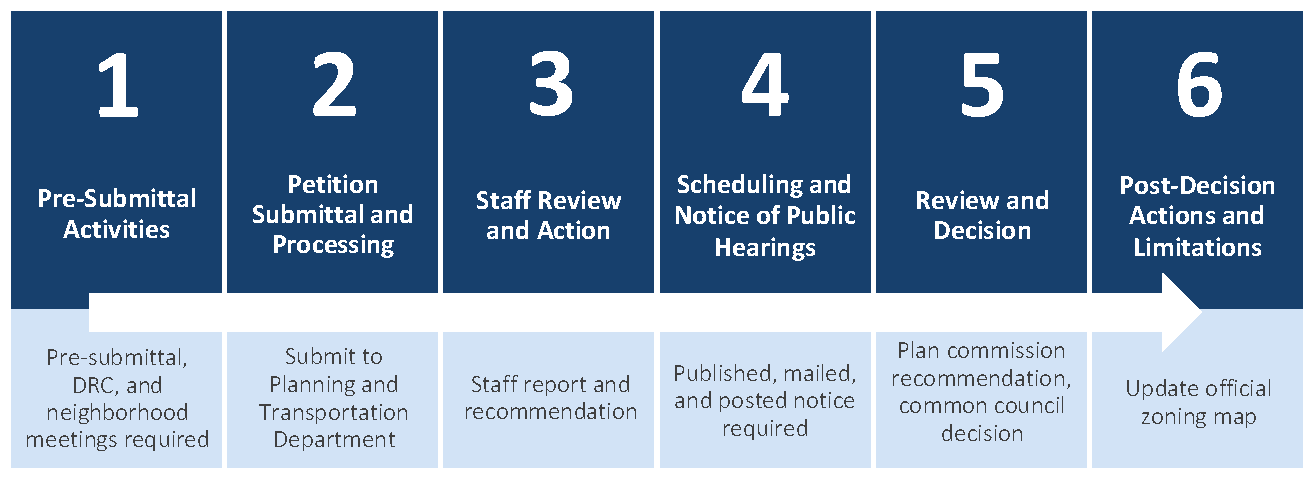
Figure 06.07-1: Summary of Zoning Map Amendment Procedure
(A)
Pre-Submittal Activities.
i.
A pre-submittal meeting shall be held in accordance with Section 20.06.040(b)(1) (Pre-Submittal Meeting).
ii.
A development review committee meeting shall be held in accordance with Section 20.06.040(b)(2) (Development Review Committee (DRC) Meeting).
iii.
A pre-submittal neighborhood meeting shall be held in accordance with Section 20.06.040(b)(3) (Pre-Submittal Neighborhood Meeting).
(B)
Petition Submittal and Processing. The zoning map amendment petition shall be submitted, accepted, and revised, and may be withdrawn, in accordance with Section 20.06.040(c) (Petition Submittal and Processing).
(C)
Staff Review and Action. The planning and transportation staff shall review the petition and prepare a staff report and recommendation in accordance with Section 20.06.040(d) (Staff Review and Action).
(D)
Scheduling and Notice of Public Hearings.
i.
The zoning map amendment petition shall be scheduled for a public hearing before the Plan Commission and Common Council, and noticed in accordance with Section 20.06.040(e) (Scheduling and Notice of Public Hearings).
ii.
Mailed notice shall not be required if the Plan Commission or Common Council initiate a petition to repeal and replace the zone maps for all or substantially all of the City.
(E)
Review and Decision.
i.
Plan Commission Review and Recommendation.
1.
The Plan Commission shall review the zoning map amendment petition and shall forward its recommendation to the Common Council in accordance with Section 20.06.040(g) (Review and Decision), based on the approval criteria in Section 20.06.040(d)(6) (Approval Criteria) and the following specific approval criteria:
a.
The recommendations of the Comprehensive Plan;
b.
Current conditions and character of structures and uses in each zoning district;
c.
The most desirable use for which the land in each zoning district is adapted;
d.
The conservation of sensitive environmental features;
e.
The conservation of property values throughout the jurisdiction; and
f.
Responsible development and growth.
2.
The Plan Commission shall forward the petition to the Common Council with:
a.
A favorable recommendation;
b.
A favorable recommendation with conditions and/or commitments;
c.
A negative recommendation;
d.
No recommendation; or
e.
Continue the petition to a definite future meeting date.
3.
If the petition has not been continued, the Plan Commission shall certify and forward the petition to the Common Council.
ii.
Common Council Review and Decision.
1.
The Common Council shall act on the petition within ninety days of certification by the Plan Commission in accordance with Indiana Code § 36-7-4-608.
2.
Commitments may be allowed or required as part of a proposal to amend the zoning map under Indiana Code § 36-7-4-608 and this UDO.
(F)
Post-Decision Actions and Limitations. Post-decision actions and limitations in Section 20.06.040(h) (Post-Decision Actions and Limitations) shall apply with the following modifications:
i.
Effect of Approval of the Amendment.
1.
When an amendment of the Official Zoning Map is approved, such amendment shall be incorporated into the Official Zoning Map in the geographic information system maintained by the City.
2.
For zoning map amendments located adjacent to public streets, all required right-of-way shall be dedicated in compliance with the Transportation Plan. Such dedication shall take place within one hundred eighty days of approval of the zoning map amendment. The one-hundred-eighty-day time limit may be extended by the Planning and Transportation Director, but not unless the requirement is clearly specified in a recordable zoning commitment approved by the City.
ii.
Automatic Termination of Commitments. A commitment made in connection with a zoning map amendment approval terminates automatically if, after adoption of the petition, the zoning district applicable to the area involved in the proposal is changed.
(c)
Rezoning to Planned Unit Development (PUD).
(1)
Purpose. The rezoning to a Planned Unit Development (PUD) procedure is established to achieve the purposes of Section 20.02.050 (Planned Unit Development (PUD) District) and to ensure that the statutory requirements established in the Indiana Code § 36-7-4-1500 et seq. are met. The PUD procedure shall not be used when a Conditional Use permit, variance, minor modification, or rezoning to an existing base zoning district could achieve a similar result.
(2)
Applicability.
(A)
This procedure applies to new Planned Unit Development (PUD) proposals, and to any proposed amendment to an existing Planned Unit Development that would affect either the text of the PUD district ordinance or the general layout of any element of the preliminary plan, and that does not qualify for approval pursuant to Section 20.06.080(a) (Minor Modification).
(B)
Any property owner in a district other than the MD district may propose a PUD zoning district in accordance with these procedures. A parcel proposed for a PUD is not required to be under single ownership. However, if not under single ownership, the multiple owners must all consent to the development of their individual properties consistent with the requirements of the proposed PUD district ordinance. Any transfer of land within the development resulting in ownership within the development by two or more parties after an application has been filed shall not alter the applicability of the regulations contained in the UDO. An approved preliminary plan shall be binding upon the petitioner, their successors and assigns and shall limit and control the issuance and validity of all certificates of zoning compliance.
(C)
All applications that involve subdivision of a parcel shall also be subject to the subdivision procedures established by Chapter 20.06 (Administration and Procedures).
(3)
Rezoning to Planned Unit Development (PUD) Review Process. Figure 06.07-2 identifies the applicable steps from Section 20.06.040 (Common Review Procedures) that apply to rezoning to Planned Unit Development (PUD) review. Additions or modifications to the common review procedures are noted below.
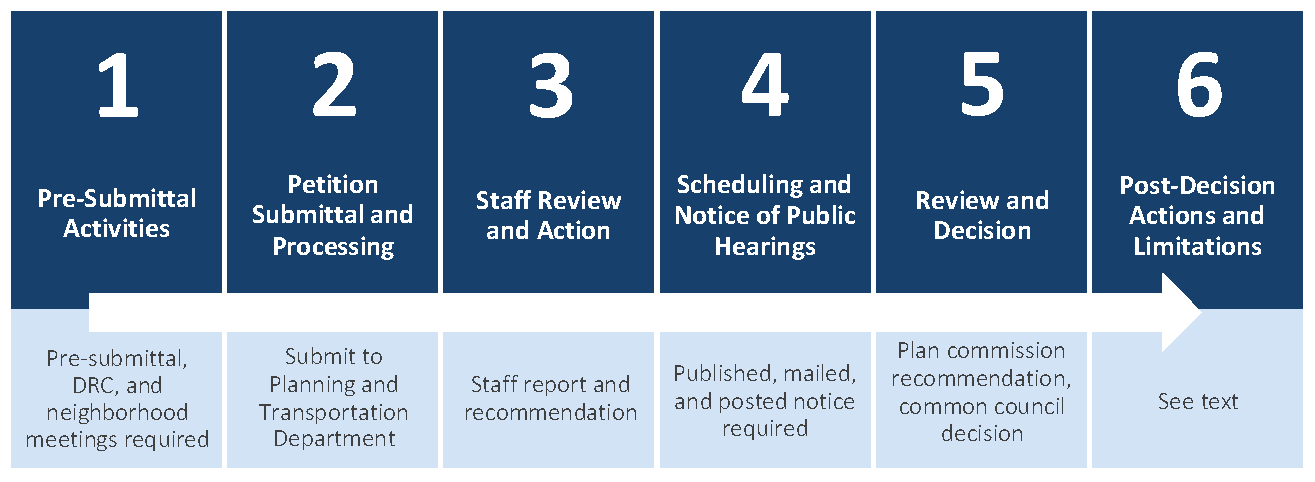
Figure 06.07-2: Summary of Rezoning to Planned Unit Development (PUD) Procedure
(A)
Pre-Submittal Activities.
i.
A pre-submittal meeting shall be held in accordance with Section 20.06.040(b)(1) (Pre-Submittal Meeting).
ii.
A development review committee meeting shall be held in accordance with Section 20.06.040(b)(2) (Development Review Committee (DRC) Meeting).
iii.
A pre-submittal neighborhood meeting shall be held in accordance with Section 20.06.040(b)(3) (Pre-Submittal Neighborhood Meeting).
(B)
Petition Submittal and Processing. A petition for rezoning to a Planned Unit Development (PUD) petition shall be submitted, accepted, and revised, and may be withdrawn, in accordance with Section 20.06.040(c) (Petition Submittal and Processing), with the following modifications:
i.
PUD Plan Required.
1.
A petition for rezoning to a PUD shall include all submittal requirements as specified by the Planning and Transportation Director or required by the administrative manual.
2.
A preliminary PUD plan and then a final PUD plan is required, unless the Planning and Transportation Director determines that the proposed divergence from UDO standards is so minor that only a final PUD plan is needed.
3.
The preliminary plan shall include the conceptual location of all required improvements.
Approval of the PUD plan is required prior to approval of a development permit in a PUD district.
ii.
PUD Plan Contents. The submittal requirements and specifications for the PUD plan shall be established in the administrative manual.
iii.
Petition. A petition for a Planned Unit Development shall not be considered complete until all information and documentation required by this subsection and the administrative manual has been submitted and all meetings required by Section 20.06.070(c)(3) (Rezoning to Planned Unit Development (PUD) Review Process) have been completed.
(C)
Staff Review and Action.
i.
PUD District Ordinance and Preliminary Plan. The Planning and Transportation Director shall review the petition and prepare a staff report and recommendation in accordance with Section 20.06.040(d) (Staff Review and Action).
ii.
Final Plan.
1.
The Plan Commission may, by rule, delegate to staff authority to review final plans. If authority is delegated to staff, the Planning and Transportation Director shall review the petition and approve, approve with conditions, or deny the petition in accordance with Section 20.06.040(d) (Staff Review and Action), based on the general approval criteria in Section 20.06.040(d)(6) (Approval Criteria) and the specific approval criteria in Section 20.06.070(c)(4) (Approval Criteria for Rezoning to a Planned Unit Development (PUD) District).
2.
Staff may allow or require the owner to make a written commitment and shall have all powers and duties of the Plan Commission under this section except the power to approve modification or termination of a commitment.
3.
Minor Deviations from Preliminary Plan. If the Planning and Transportation Director finds the final plan proposes minor deviations from the approved preliminary plan that do not require a PUD district ordinance amendment or a preliminary plan amendment pursuant to Section 20.06.070(c)(3)(E)i. (Preliminary Plan), and that do not change the concept or intent of the development, he or she may review and approve or deny the final plan without public notice or a public hearing, as authorized by rule of the Plan Commission. The Planning and Transportation Director's decision is subject to appeal under Section 20.06.070(c)(3)(E)ii.4. (Appeal to Plan Commission).
4.
Determination that Amendment is Required.
a.
If the Planning and Transportation Director finds the final plan proposes changes to the approved PUD district ordinance, or deviations from the approved preliminary plan that require a preliminary plan amendment pursuant to Section 20.06.070(c)(3)(E)i. (Preliminary Plan), he or she shall not approve the final plan, but shall notify the petitioner that a PUD amendment is required pursuant to the procedures for approval of a new PUD district ordinance or preliminary plan.
b.
If the petitioner disagrees with the Planning and Transportation Director's determination, he or she may request that the Plan Commission review the final plan and determine whether such amendment is required. Such request shall be submitted in writing to the Planning and Transportation Department not later than fourteen days after the Planning and Transportation Director's determination is made.
c.
The Plan Commission procedure upon such review shall be the same as for an appeal under Section 20.06.070(c)(3)(E)ii.4. (Appeal to Plan Commission). If the Plan Commission determines that no amendment to the PUD district ordinance or preliminary plan is required, the Plan Commission shall review and act upon the final plan. In this case, the Plan Commission decision shall be final and appealable pursuant to Indiana Code § 36-7-4-1016.
d.
If the Plan Commission determines that an amendment is required pursuant to Section 20.06.070(c)(3)(E)ii.4. (Appeal to Plan Commission), the Plan Commission shall review the proposal as a PUD amendment petition and shall forward a recommendation to the Common Council, pursuant to the procedures for approval of a new PUD district ordinance or preliminary plan.
iii.
Scheduling and Notice of Public Hearings.
1.
PUD District Ordinance and Preliminary Plan. The rezoning to a Planned Unit Development (PUD) petition shall be scheduled for a public hearing before the Plan Commission and Common Council, and noticed in accordance with Section 20.06.040(e) (Scheduling and Notice of Public Hearings).
2.
Final Plan. The final plan petition shall be scheduled for a public hearing before the Plan Commission, and noticed in accordance with Section 20.06.040(e) (Scheduling and Notice of Public Hearings) when:
a.
The Plan Commission recommends denial of the PUD district ordinance and preliminary plan; or
b.
The Plan Commission provides no recommendation on the PUD district ordinance and preliminary plan and the Common Council approves the PUD district ordinance and preliminary plan.
(D)
Review and Decision.
i.
PUD District Ordinance and Preliminary Plan.
1.
Plan Commission Review and Recommendation. The Plan Commission shall review the rezoning to a Planned Unit Development (PUD) petition and shall forward its recommendation to the Common Council in accordance with Section 20.06.040(g) (Review and Decision), based on the general approval criteria in Section 20.06.040(d)(6) (Approval Criteria) and the specific approval criteria in Section 20.06.070(c)(4) (Approval Criteria for Rezoning to a Planned Unit Development (PUD) District) below.
a.
The Plan Commission shall forward the petition to the Common Council with:
i.
A favorable recommendation;
ii.
A favorable recommendation with conditions and/or commitments;
iii.
A negative recommendation;
iv.
No recommendation; or
v.
Continue the petition to a definite future meeting date.
b.
If the petition has not been continued, the Plan Commission shall certify and forward the petition to the Common Council.
2.
Changes by Plan Commission.
a.
The Plan Commission may vote to favorably recommend a proposal with changes to the PUD district ordinance or to the preliminary plan if the petitioner agrees in writing to the changes. If the petitioner is unable to respond to the proposed changes prior to the vote, then such motion and vote shall be: either for favorable recommendation, with the changes, contingent upon the petitioner's acceptance of the changes in writing within ten days of the Plan Commission's approval, or, in the alternative, if the petitioner fails to accept the changes in writing within said specified time, the Plan Commission's motion and vote shall be to continue the petition to the next Plan Commission meeting.
b.
The Plan Commission shall permit the petitioner to comment upon changes to the PUD district ordinance or to the preliminary plan made by the Plan Commission after a motion to approve with changes is made but prior to the vote, and the Plan Commission may amend its motion accordingly.
3.
Revisions. Following Plan Commission approval, the petitioner shall submit revised copies of the PUD district ordinance and preliminary plan that address the comments, concerns, and conditions of approval of the Plan Commission. The petitioner shall refer to the petition form to determine the format and number of copies of the revised plans to deliver to the Planning and Transportation Department.
4.
Common Council Review and Decision.
a.
The Common Council shall vote on the proposal within ninety days after the Plan Commission certifies the proposal in accordance with Indiana Code § 36-7-4-608.
b.
If the Plan Commission has given the proposal a favorable recommendation and the Common Council fails to act on the proposal within ninety days, the ordinance codified in this chapter takes effect as if it had been adopted (as certified) ninety days after certification.
c.
If the Plan Commission has failed to make a recommendation or has given the proposal an unfavorable recommendation and the Common Council fails to act on the proposal within ninety days, the proposal is defeated.
d.
The Common Council may adopt or reject the proposal and may also exercise powers set forth under the Indiana Code § 36-7-4-1500 Series and this section. Those powers include imposing reasonable conditions, conditioning the issuance of a certificate of zoning compliance on bonds or certain guarantees, and allowing or requiring the owner of real property to make written commitments under Indiana Code § 36-7-4-608.
ii.
Final Plan. When the Plan Commission is the final review authority for a final plan, the Plan Commission shall review the petition and approve, approve with conditions, or deny the petition in accordance with Section 20.06.040(d) (Staff Review and Action), based on the general approval criteria in Section 20.06.040(d)(6) (Approval Criteria) and the specific approval criteria in Section 20.06.070(c)(4) (Approval Criteria for Rezoning to a Planned Unit Development (PUD) District).
(E)
Post-Decision Actions and Limitations. Post-decision actions and limitations in Section 20.06.040(h) (Post-Decision Actions and Limitations) shall apply with the following modifications:
i.
Preliminary Plan.
1.
Effect of Approval.
a.
When a PUD district ordinance and preliminary plan for a Planned Unit Development have been approved by the Common Council, the PUD district ordinance and preliminary plan shall become effective and its location shall be shown on the Official Zoning Map. The Official Zoning Map shall be amended to designate the site as a PUD zoning district.
b.
For PUDs located adjacent to existing public streets, all required right-of-way for such public streets shall be dedicated in compliance with the Transportation Plan. Such dedication shall take place within one hundred eighty days of approval of the PUD district ordinance. The one-hundred-eighty-day time limit may be extended by the Planning and Transportation Director, but not unless the requirement is clearly specified in a recordable zoning commitment approved by the City.
c.
Upon such amendment of the zoning map, the use and development of the site shall be governed by the PUD district ordinance and preliminary plan, subject to approval of a final plan.
d.
No permit of any kind shall be issued until the final plan has been approved.
2.
Duration.
a.
Abandonment. The preliminary plan shall be considered abandoned if, three years after the approval of the preliminary plan by the Common Council, no final plan approval has been granted for any section of the Planned Unit Development. In such cases, the Plan Commission shall determine if the preliminary plan should be extended for a period up to a maximum of one hundred eighty days. If no extension is sought for the Planned Unit Development, and the three-year period since Common Council approval has elapsed, the Plan Commission may initiate a proposal to rezone the area designated as a Planned Unit Development to an appropriate zoning district. Any such rezoning shall follow the process provided in Section 20.06.070(b) (Zoning Map Amendment). The owner or owners of any property proposed to be rezoned by the Plan Commission under the provisions of this subsection shall be notified at least twenty-one days in advance of the Plan Commission public hearing on the proposed rezoning.
b.
Review. If, ten years after the approval of the preliminary plan by the Common Council, final plan approval has been granted for one or more sections of the Planned Unit Development, but sections of the Planned Unit Development remain without approved final plans, the Plan Commission may, on its own initiative, make a recommendation to the Common Council to rezone those portions of the Planned Unit Development that do not have approved final plans to an appropriate zoning district.
3.
Changes or Amendments.
a.
PUD District Ordinance. Amendments to the PUD district ordinance shall follow the procedure for creating a new PUD district ordinance pursuant to this Section 20.06.070(c) (Rezoning to Planned Unit Development (PUD)).
b.
Preliminary Plan. To the extent that a preliminary plan is a conceptual and general rendering of a proposed development conforming to the PUD district ordinance, a final plan may deviate from the approved preliminary plan in some respects without necessitating an amendment to the preliminary plan. However, any deviation from an approved preliminary plan that alters the concept or intent of the Planned Unit Development shall be subject to the procedure for approval of a new preliminary plan. The Plan Commission may require that a petition for preliminary plan amendment encompass the entire Planned Unit Development. Deviations that require a preliminary plan amendment include, but are not limited to, the following:
i.
Changes in the location, proportion or allocation of uses, or changes to the types of uses allowed;
ii.
Increases in residential density;
iii.
More than a ten percent change to the proportion of housing types;
iv.
Substantial increase in the building envelope;
v.
More than a one percent reduction of proposed open space;
vi.
Changes in functional uses of open space, where such change constitutes an intensification of open space usage;
vii.
Substantial change in the ratio of off-street parking spaces to use;
viii.
Substantial changes in standards, continuity, or general location of roads, utilities, or stormwater management features; or
ix.
Substantive changes in the covenants, conditions and restrictions, or other governing agreements, that affect any matter regulated by this UDO.
ii.
Final Plan.
1.
Effect of Approval.
a.
No permit of any kind shall be issued for any purpose within a Planned Unit Development zoning district except in accordance with the approved final plan. Any material deviation from the final plan is subject to appropriate enforcement action.
b.
No permit of any kind shall be issued until the final plan has been approved.
2.
Duration.
a.
Abandonment. The final plan shall be considered abandoned if no site development permits or building permits have been obtained and are still valid for the area contained in the final plan within three years after final plan approval has been granted, or if such permits have been obtained but are no longer valid per the terms of this UDO.
b.
Extension. An extension, not to exceed twelve months, may be granted by the Plan Commission for good cause shown. The Plan Commission may grant one twelve-month extension.
3.
Changes or Amendments.
a.
Minor Changes. The Planning and Transportation Director may approve minor changes to an approved final plan, if the changes do not change the concept or intent of the development, without a public hearing or public notice as authorized by rule of the Plan Commission. Such decisions shall be subject to appeal pursuant to Section 20.06.070(c)(3)(E)ii.4. (Appeal to the Plan Commission). This shall include the following:
i.
Minor changes in the location and siting of buildings and structures;
ii.
Changes in height of less than one story, but not over eight feet in any case;
iii.
Minor changes to an approved landscape plan that do not alter the general concept or screening effectiveness of the landscaping;
iv.
Minor changes to the internal street system and off-street parking areas;
v.
Changes in the exact type of use in any particular location within the development, as long as the type of use is allowed by the PUD district ordinance and preliminary plan in that general location; and
vi.
Changes of less than ten percent of the gross floor area of an approved building.
b.
Major Changes. The following changes shall require a new final plan, provided that this subsection b. shall not be interpreted to allow any change that would otherwise require an amendment to the PUD district ordinance and/or the preliminary plan:
i.
Changes in lot arrangement, or addition of buildable lots which do not change approved density of the development;
ii.
Changes in site design requirements, such as location or design of required landscaping, signage, building heights or footprints, setbacks, encroachment into areas slated for preservation under any of the sections of Section 20.04.030 (Environment), or other such development or design standards in the PUD district ordinance;
iii.
Changes in access to the development site, where such change amounts to an intensification of traffic patterns on roadways; and/or
iv.
Any reduction in aesthetic treatment.
4.
Appeal to Plan Commission. Interested parties, as defined in Section 20.06.040(e)(2)(D) (Notice to Interested Parties), affected by the decision of the Planning and Transportation Director upon review of a final plan may within ten days of such decision request that the Plan Commission review the Planning and Transportation Director decision. Such request shall be in writing and shall specify the grounds of the appeal. A public hearing shall be required with notice pursuant to the Plan Commission rules of procedure. The Plan Commission may affirm, reverse, or modify the Planning and Transportation Director decision.
5.
Revisions. Following final approval, the petitioner shall submit revised copies of the final plan that address the comments and concerns of the staff. The petitioner shall refer to the final plan petition form to determine the format and number of copies of the revised plans to deliver to the Planning and Transportation Department.
iii.
Automatic Termination of Commitments. A commitment made in connection with the adoption of a PUD district ordinance or PUD final plan approval terminates automatically if, after adoption of the petition, the zoning district applicable to the area involved in the proposal is changed.
(4)
Approval Criteria for Rezoning to a Planned Unit Development (PUD) District. The Plan Commission and Common Council shall only approve a petition for rezoning to a PUD district if they determine that the petition:
(A)
Is consistent with the purpose of this UDO and the purpose of Section 20.02.050 (Planned Unit Development (PUD) District); and
(B)
The petitioner has demonstrated that the proposed rezoning is compatible with surrounding development or can be made compatible with surrounding development through commitments or conditions; and
(C)
Any portion of the PUD zoning district to be occupied by multifamily, mixed-use, or industrial development shall provide a greater level of internal connectivity and connectivity to surrounding developments than would be required by this UDO if the project were not being developed in a PUD zoning district; and
(D)
Each multifamily, mixed-use, or nonresidential principal structure in the PUD zoning district shall provide a greater level of design quality than would be required by this UDO if the project were not being developed in a PUD zoning district; and
(E)
At least one of the following criteria are met:
i.
The proposed PUD zoning district will include construction of a substantial open space, recreational, entertainment, or cultural amenity that will be open to and usable by the general public, and that would not otherwise be required by this UDO. Reconfiguration of open space required by this UDO does not satisfy these criteria;
ii.
The proposed PUD zoning district will protect a significant ecological, natural, historical, architectural, or archeological resource that was not already protected from development by this UDO or by state or federal law. Avoidance of designated floodplains or wetland areas, or the provision of additional buffers around such areas, does not satisfy these criteria; or
iii.
The proposed PUD zoning district provides affordable housing beyond the amounts that the petitioner would have been required to provide in order to earn a tier 1 or tier 2 affordable housing incentive under Section 20.04.110(c)(5) (Affordable Housing Incentives) by either:
1.
Income-restricting at least ten percent more of the dwelling units at or below the income levels required to earn a tier 1 or tier 2 incentive; or
2.
Income restricting the same number of dwelling units required to earn a tier 1 or tier 2 affordable housing incentive, but limiting incomes to at least ten percent lower AMI level than would have been required to earn a tier 1 or tier 2 incentive under Section 20.04.110(c)(5) (Affordable Housing Incentives).
(5)
Changes to an Approved PUD District.
(A)
Changes to the UDO that directly affect public health and safety shall apply to any PUD even if such changes are adopted during the PUD build-out.
(B)
To the extent permitted by Section 20.01.040(b) (Effect of Change in the Law After Filing of Complete Petition), changes to the UDO that alter any development standards for which the PUD district ordinance is silent shall apply to portions of the PUD for which an approved site plan has not been approved before the date of the UDO change.
(C)
To the extent permitted by Section 20.01.040(b) (Effect of Change in the Law After Filing of Complete Petition), if a PUD is no longer proceeding in accordance with its PUD district ordinance, commitments, or time requirements imposed through the procedures in this Section 20.06.070(c) (Rezoning to Planned Unit Development (PUD)) or by agreement, amendments to the UDO may be applied to portions of the PUD for which an approved site plan has not been approved before the date of the UDO change.
(D)
After at least ninety-five percent of a PUD has been built-out, the PUD may be subject to being rezoned into an appropriate standard zoning district pursuant to Section 20.06.070(b) (Zoning Map Amendment).
(d)
Zoning Text Amendment.
(1)
Purpose. The zoning text amendment procedure is intended to provide a mechanism for the City to consider a petition for an amendment to the text of this UDO and to ensure that the statutory requirements established in the Indiana Code for amending the ordinance text are met.
(2)
Applicability. The zoning text amendment procedure applies to all proposals requesting to change the text of this UDO.
(3)
Zoning Text Amendment Review Process. Figure 06.07-3 identifies the applicable steps from Section 20.06.040 (Common Review Procedures) that apply to zoning text amendment review. Additions or modifications to the common review procedures are noted below.
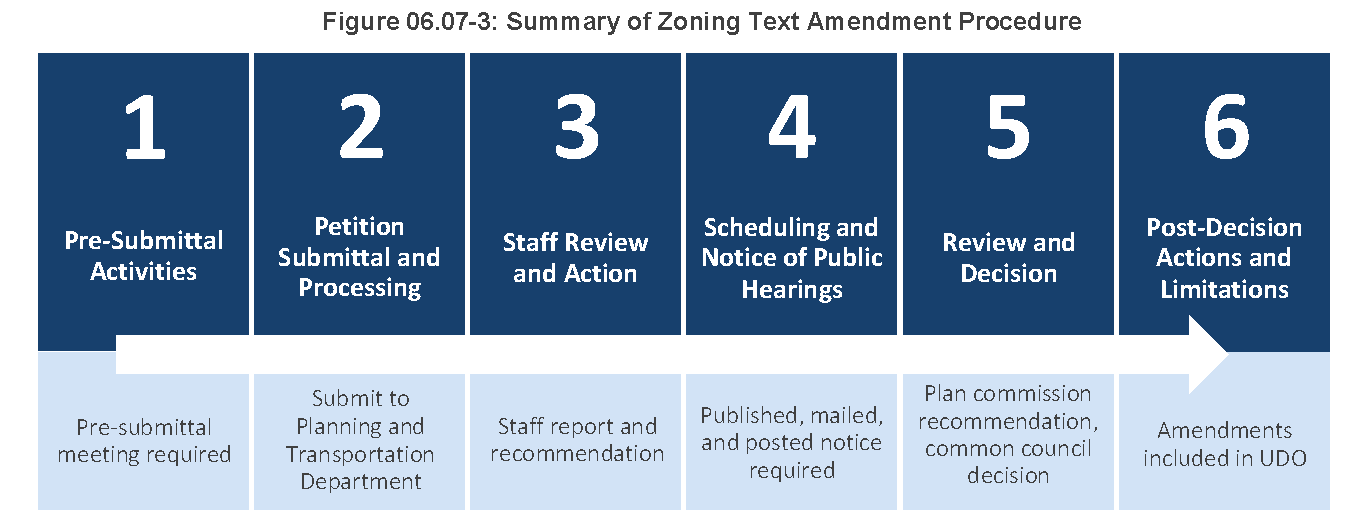
Figure 06.07-3: Summary of Zoning Text Amendment Procedure
(A)
Pre-Submittal Activities. A pre-submittal meeting shall be held in accordance with Section 20.06.040(b)(1) (Pre-Submittal Meeting).
(B)
Petition Submittal and Processing.
i.
Only the members of the Common Council or the Plan Commission shall have standing to initiate a proposal to amend the text of this UDO.
ii.
The staff shall prepare the proposal upon the direction of either the Plan Commission or the Common Council. The staff shall prepare the proposal so that it is consistent with Indiana Code § 36-7-4-601.
(C)
Staff Review and Action. The Planning and Transportation Director shall review the petition and prepare a staff report and recommendation in accordance with Section 20.06.040(d) (Staff Review and Action).
(D)
Scheduling and Notice of Public Hearings. Within sixty days of initiating a proposal to amend the text of this UDO or of receiving a proposal from the Common Council, the zoning text amendment petition shall be scheduled for a public hearing before the Plan Commission and Common Council, and noticed in accordance with Section 20.06.040(e) (Scheduling and Notice of Public Hearings).
(E)
Review and Decision.
i.
Plan Commission Review and Recommendation. The Plan Commission shall review the zoning text amendment petition and shall forward its recommendation to the Common Council in accordance with Section 20.06.040(g) (Review and Decision), based on the specific approval criteria in Section 20.06.070(d)(4) (Approval Criteria for Zoning Text Amendment).
1.
The Plan Commission shall certify and forward the proposal to the Common Council with:
a.
A favorable recommendation;
b.
A negative recommendation;
c.
No recommendation; or
d.
Continue the proposal to a definite future meeting date.
ii.
Common Council Review and Decision. The Common Council shall vote on the proposal within ninety days of certification by the Plan Commission in accordance with Indiana Code § 36-7-4-607, which governs whether the proposal is adopted or defeated.
(F)
Post-Decision Actions and Limitations. If the proposal is adopted by the Common Council pursuant to Indiana Code § 36-7-4-607, the Plan Commission shall arrange for the inclusion of the amended text in this UDO printed by the City.
(4)
Approval Criteria for Zoning Text Amendment. In reviewing the proposal, the Plan Commission and Common Council shall pay reasonable regard to:
(A)
The Comprehensive Plan;
(B)
Current conditions and the character of current structures and uses in each zoning district;
(C)
The most desirable use of land in each zoning district;
(D)
The conservation of sensitive environmental features;
(E)
The conservation of property values throughout the jurisdiction; and
(F)
Responsible development and growth.
(Amd. of 1-14-2020; Ord. No. 23-07, § 2(Att. A), 4-19-2023; Ord. No. 2024-17, § II(Att. A), 9-18-2024)
20.06.080 - Flexibility and relief procedures.
(a)
Minor Modification.
(1)
Purpose. The minor modification procedure is intended to allow relatively small adjustments or deviations from the dimensional or numeric standards of this UDO where strict application of the UDO would result in practical difficulty or undue hardship preventing the use of the land as otherwise allowed by the UDO. Minor modifications are intended to provide greater flexibility when necessary, without requiring a formal zoning amendment or variance. The minor modification procedure is not a waiver of current standards of this UDO and shall not be used to circumvent the variance procedure.
(2)
Applicability.
(A)
Other Incentives are Prerequisite. All available incentives and allowances in this UDO shall be used before a minor modification may be considered, including but not limited to the exceptions in Section 20.04.020 (Dimensional Standards). (For example, a petitioner shall apply all available alternate standards for increased height before applying for a minor modification for increased height.)
(B)
Table of Allowable Minor Modifications. A petition for a minor modification that is not related to a request for "reasonable accommodation" under the Federal Fair Housing Act or the Religious Land Use and Institutionalized Persons Act may request only the types of adjustments shown in Table 06-2 (Allowable Minor Modifications).
_____
Table 06-2. Allowable Minor Modifications
_____
(C)
Reasonable Accommodations Under the FFHA.
i.
In response to a written petition identifying the type of housing being provided and the portions of the Federal Fair Housing Act that require that reasonable accommodations be made for such housing, the Planning and Transportation Director is authorized to take any of the following actions in order to provide reasonable accommodations without the need for a rezoning or variance:
1.
Modify any facility spacing, building setback, height, lot coverage, or landscaping requirement by no more than ten percent; or
2.
Reduce any off-street parking requirement by no more than one space.
ii.
The Planning and Transportation Director may approve a type of reasonable accommodation different from that requested by the petitioner if the Planning and Transportation Director concludes that a different form of accommodation would satisfy the requirements of the Federal Fair Housing Act with fewer impacts on adjacent areas. The decision of the Planning and Transportation Director shall be accompanied by written findings of fact as to the applicability of the Fair Housing Act, the need for reasonable accommodations, and the authority for any reasonable accommodations approved.
(D)
Religious Land Use and Institutionalized Persons Act of 2000 (RLUIPA). The Planning and Transportation Director may grant minor modifications in order to eliminate a substantial burden on religious exercise as guaranteed by the Federal Religious Land Use and Institutionalized Persons Act of 2000, as amended. In no circumstance shall the Planning and Transportation Director approve a modification that allows a religious assembly use, or any uses, structures, or activities accessory to it, in a zoning district where this UDO prohibits such use or accessory use, structure, or activity.
(3)
Limitations on Minor Modifications.
(A)
Except when requested as a reasonable accommodation for Fair Housing Act or Religious Land Use and Institutionalized Persons Act purposes, a request for a minor modification shall not be used to further modify a development standard that, as applied to the subject property, already qualifies as an exception to, or modification of, a generally applicable development standard required under Chapter 20.04 (Development Standards and Incentives).
(B)
The minor modification procedure shall not apply to any proposed modification or deviation that results in:
i.
A change in permitted uses or mix of uses;
ii.
A deviation from building or fire codes;
iii.
A deviation from engineering standards;
iv.
Requirements for public roadways, utilities, or other public infrastructure or facilities; or
v.
A change to a development standard where that same standard was already modified through a separate administrative adjustment or variance.
(4)
Minor Modification Review Process.
(A)
Petition Submittal and Handling. A petition for a minor modification shall only be submitted and reviewed concurrently with a petition for a Conditional Use permit, temporary use permit, site plan review (minor or major), certificate of zoning compliance, or plat approval (primary or secondary). Each UDO standard in Table 06-2 shall be considered a separate minor modification request as it relates to the approval criteria in Section 20.06.080(a)(5) (Minor Modification Approval Criteria), but multiple modifications may be considered in one minor modification petition.
(B)
Review and Decision.
i.
Where the concurrently reviewed petition requires review and approval by the planning and transportation staff, the Planning and Transportation Director shall review the petition and shall approve, approve with conditions, or deny the modification based on the criteria in Section 20.06.080(a)(5) (Minor Modification Approval Criteria).
ii.
Where the concurrently reviewed petition requires review and approval by the Plan Commission, Plat Committee, or Common Council, the decision-making body, as applicable, shall review and decide the minor modification petition based on the criteria in Section 20.06.080(a)(5) (Minor Modification Approval Criteria).
(C)
Effect of Approval. Approval of a minor modification authorizes only the particular adjustment of standards approved, and only to the subject property of the petition.
(D)
Expiration of Minor Modification. A minor modification shall automatically expire if the associated development petition is denied or if approval of the concurrently reviewed petition expires, is revoked, or otherwise deemed invalid.
(5)
Minor Modification Approval Criteria. A minor modification may be approved if the decision-making body finds that the modification:
(A)
Will not create a hardship or adverse impacts on adjacent properties unless adequately mitigated;
(B)
Is not necessitated by the petitioner's actions; and
(C)
Is of a technical nature and is required to compensate for an unusual site condition or to protect a sensitive resource, natural feature, or community asset.
(b)
Variance.
(1)
Purpose. The variance procedure provides a mechanism for the City to authorize variances from the development standards of this UDO when it is demonstrated that such a variance will not be contrary to the public interest or the spirit of this UDO, where, owing to special conditions, literal enforcement of this UDO will result in practical difficulties or unnecessary hardship.
(2)
Applicability.
(A)
Development Standards Variance.
i.
The board of zoning appeals or hearing officer, in accordance with the procedures established in this UDO, may grant variances from the development standards applicable to the zoning district in which the subject property is located.
ii.
It is not within the jurisdiction of the board of zoning appeals or hearing officer to grant development standards variances of Chapter 20.05 (Subdivision Standards).
(B)
Floodplain Variance.
i.
The board of zoning appeals or hearing officer, in accordance with the procedures established in this UDO, may grant variances from the standards in Section 20.04.040(d) (Flood Hazard Reduction), only when a new structure is to be located on a lot of one-half acre or less in size, contiguous to and surrounded by lots with existing structures constructed below the flood protection grade.
ii.
Variances may be granted for the reconstruction, restoration, repair, or rehabilitation of any structure individually listed on the National Register of Historic Places or the Indiana State Register of Historic Sites and Structures. Upon a determination that the proposed repair or rehabilitation will not preclude the structure's continued designation as an "historic structure" and the variance is the minimum to preserve the historic character and design of the structure.
iii.
No variance for a residential use within a floodway that requires a permit for construction in a floodway from the Indiana Department of Natural Resources pursuant to the provisions of Indiana Code § 14-28-1 or a project that is subject to Section 20.04.040(e)(2)(C) may be granted.
(3)
Variance Review Process. Figure 06.08-1 identifies the applicable steps from Section 20.06.040 (Common Review Procedures) that apply to variance review. Additions or modifications to the common review procedures are noted below.
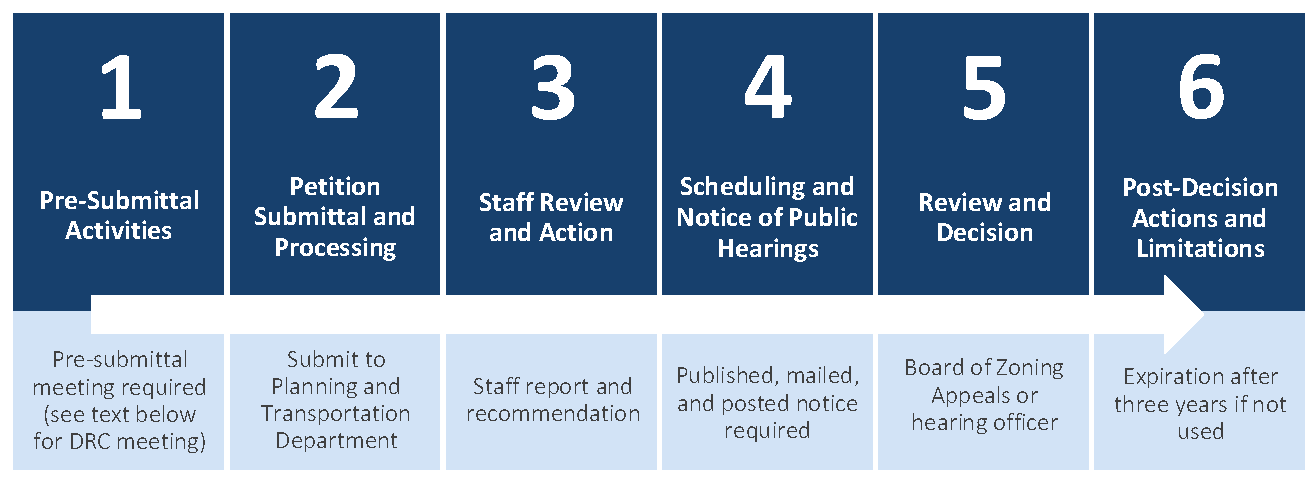
Figure 06.08-1: Summary of Variance Procedure
(A)
Pre-Submittal Activities.
i.
A pre-submittal meeting shall be held in accordance with Section 20.06.040(b)(1) (Pre-Submittal Meeting).
ii.
Petitions subject to review and decision by the hearing officer shall not require a development review committee meeting.
iii.
For petitions subject to review and decision by the board of zoning appeals, a development review committee meeting may be required at the discretion of the Planning and Transportation Director, in accordance with Section 20.06.040(b)(2) (Development Review Committee (DRC) Meeting).
(B)
Petition Submittal and Processing. The variance petition shall be submitted, accepted, and revised, and may be withdrawn, in accordance with Section 20.06.040(c) (Petition Submittal and Processing).
(C)
Staff Review and Action. The planning and transportation staff shall review the petition and prepare a staff report and recommendation in accordance with Section 20.06.040(d) (Staff Review and Action).
(D)
Scheduling and Notice of Public Hearings. The variance petition shall be scheduled for a public hearing before the Board of Zoning Appeals or hearing officer and noticed in accordance with Section 20.06.040(e) (Scheduling and Notice of Public Hearings).
(E)
Review and Decision. The hearing officer or Board of Zoning Appeals shall review the variance petition and approve, approve with conditions or commitments, or deny the petition in accordance with Section 20.06.040(g) (Review and Decision), based on the following approval criteria.
i.
Development Standards Variance. Pursuant to Indiana Code § 36-7-4-918.5, the Board of Zoning Appeals or hearing officer may grant a variance from the development standards of this UDO if, after a public hearing, it makes findings of fact in writing, that:
1.
General Approval Criteria.
a.
The approval will not be injurious to the public health, safety, morals, and general welfare of the community; and
b.
The use and value of the area adjacent to the property included in the development standards variance will not be affected in a substantially adverse manner; and
c.
The strict application of the terms of this UDO will result in practical difficulties in the use of the property; that the practical difficulties are peculiar to the property in question; that the development standards variance will relieve the practical difficulties.
2.
Affordable Housing Incentive Criteria. In addition to the general approval criteria in subsection (1) above, the Board of Zoning Appeals or hearing officer may grant a variance from Section 20.04.070(d)(5) (Neighborhood Transition Standards) for any project that qualifies for the affordable housing incentives established in Section 20.04.110(c) (Affordable Housing) if the petitioner can demonstrate that:
a.
The neighborhood transition standards substantially reduce or eliminate the building height incentive that would otherwise be allowed through the affordable housing incentive; and
b.
The development impact to abutting and adjacent properties is minimized through building placement, design, and massing.
3.
Determinate Sidewalk Variance Approval Criteria. While not to be included as separate findings of fact, items to consider when determining the practical difficulties or peculiar conditions associated with a determinate sidewalk variance include, but are not limited to:
a.
That the topography of the lot or tract together with the topography of the adjacent lots or tract and the nature of the street right-of-way make it impractical for construction of a sidewalk; or
b.
That the pedestrian traffic reasonably to be anticipated over and along the street adjoining such lot or tract upon which new construction is to be erected is not and will not be such as to require sidewalks to be provided for the safety of pedestrians; or
c.
The adjacent lot or tracts are at present developed without sidewalks and there is no reasonable expectation of additional sidewalk connections on the block in the near future; or
d.
The location of the lot or tract is such that a complete pedestrian network is present on the other side of the street on the same block; or
e.
Uniformity of development of the area would best be served by deferring sidewalk construction on the lot or tract until some future date.
ii.
Floodplain Variance.
1.
Review Considerations. In reviewing floodplain variance requests, the Board of Zoning Appeals or the hearing officer shall consider all technical evaluations, all relevant factors, all standards specified in other sections of this ordinance, and the following:
a.
The danger of life and property due to flooding or erosion damage.
b.
The susceptibility of the proposed facility and its contents to flood damage and the effect of such damage on the individual owner.
c.
The importance of the services provided by the proposed facility to the community.
d.
The necessity of the facility to a waterfront location, where applicable.
e.
The availability of alternative locations for the proposed use which are not subject to flooding or erosion damage.
f.
The compatibility of the proposed use with existing and anticipated development.
g.
The relationship of the proposed use to the Comprehensive Plan and floodplain management program for that area.
h.
The safety of access to the property in times of flood for ordinary and emergency vehicles.
i.
The expected height, velocity, duration, rate of rise, and sediment transport of the floodwaters at the site.
j.
The costs of providing governmental services during and after flood conditions, including maintenance and repair of public utilities and facilities such as sewer, gas, electrical, and water systems, and streets and bridges.
2.
Review Criteria. The Board of Zoning Appeals or the hearing officer may grant a floodplain variance if, after a public hearing, it makes findings of fact in writing, that there is:
a.
A showing of good and sufficient cause;
b.
A determination that failure to grant the variance would result in exceptional hardship;
c.
A determination that the variance is the minimum necessary, considering the flood hazard, to afford relief; and
d.
A determination that the granting of a variance will not result in increased flood heights, additional threats to public safety, extraordinary public expense, create nuisances, cause fraud or victimization of the public, or conflict with existing laws or ordinances.
iii.
Commitments.
1.
The board of zoning appeals or the hearing officer may allow or require the owner of a parcel of real property to make a written and recorded zoning commitment concerning use and/or development of that parcel in connection with approval of a variance pursuant to Section 20.06.040(d)(8) (Commitments).
2.
Upon approval of a determinate sidewalk variance, the Planning and Transportation Department staff shall prepare a zoning commitment indicating that the determinate sidewalk variance was approved, and that future installation of sidewalk may be required. The petitioner shall record the zoning commitment in the office of the Monroe County Recorder before a certificate of zoning compliance is issued.
3.
If the owner of a parcel of real estate fails to accept a condition imposed, or to make a commitment allowed or required, by the hearing officer, then the owner's petition shall be considered withdrawn or, if requested by the owner, shall be transferred to the Board of Zoning Appeals.
(F)
Post-Decision Actions and Limitations.
i.
Effect of Approval.
1.
The granting of a variance from the development standards authorizes the development and establishes the terms of use.
2.
Variances are also subject to site plan requirements, all necessary permits and approvals, and other applicable requirements. All required permits shall be obtained before any grading, construction, or use commences.
ii.
Signature and Notice.
1.
Generally.
a.
The findings of fact shall be signed by the chair of the Board of Zoning Appeals or the hearing officer.
b.
The staff shall furnish the petitioner with a copy of the decision of the Board of Zoning Appeals or hearing officer.
2.
Floodplain Variance.
a.
Any applicant to whom a variance is granted that allows the lowest floor of a structure to be built below the flood protection grade shall be given written notice over the signature of a community official that:
i.
Specifies the difference between the flood protection grade and the elevation to which the lowest floor is to be built and stating that the cost of the flood insurance will be commensurate with the increased risk resulting from the reduced lowest floor elevation;
ii.
Clarifies the issuance of a variance to construct a structure below the flood protection grade will result in increased premium rates for flood insurance up to amounts as high as twenty-five dollars for one hundred dollars of insurance coverage; and
iii.
Such construction below the flood protection grade increases risks to life and property.
b.
The floodplain administrator shall maintain a record of all variance actions, including justification for their issuance.
iii.
Duration. Unless otherwise specified at the time of approval, any variance granted by the Board of Zoning Appeals or hearing officer shall expire:
1.
In cases where new construction or modifications to an existing structure are required, three years after the date that the variance was granted, unless a building permit has been obtained and construction of the structure or structures has commenced; or
2.
In cases where new construction or modifications to an existing structure are not required, three years after the date that the variance was granted, unless a certificate of occupancy has been obtained and the use commenced; or
3.
At the date of termination as established by the Board of Zoning Appeals or hearing officer as a condition or commitment if different from (iii)(1) or (iii)(2) above.
(c)
Administrative Interpretation.
(1)
Purpose. The administrative interpretation procedure is intended to provide a uniform mechanism for rendering formal written interpretations of this UDO.
(2)
Authority. Responsibility for making interpretations of provisions of this UDO is assigned as follows:
(A)
The Planning and Transportation Director shall be responsible for all interpretations of the zoning and subdivision provisions in the text of this UDO, including, but not limited to: interpretations as to which is the stricter and thus controlling provision in case of conflict with this UDO and other provisions of the Bloomington Municipal Code; interpretations of compliance with a condition of approval; and interpretations of whether an unspecified use falls within a use classification, use category, or use type allowed in a zoning district. The Planning and Transportation Director shall also be responsible for interpretations of the zoning district boundaries on the Official Zoning Map.
(B)
The City engineer shall be responsible for all interpretations of the floodplain and engineering provisions in the text of this UDO.
(3)
Interpretation Procedure. Figure 06.08-2 identifies the applicable steps from Section 20.06.040 (Common Review Procedures) that apply to administrative interpretation review. Additions or modifications to the common review procedures are noted below.
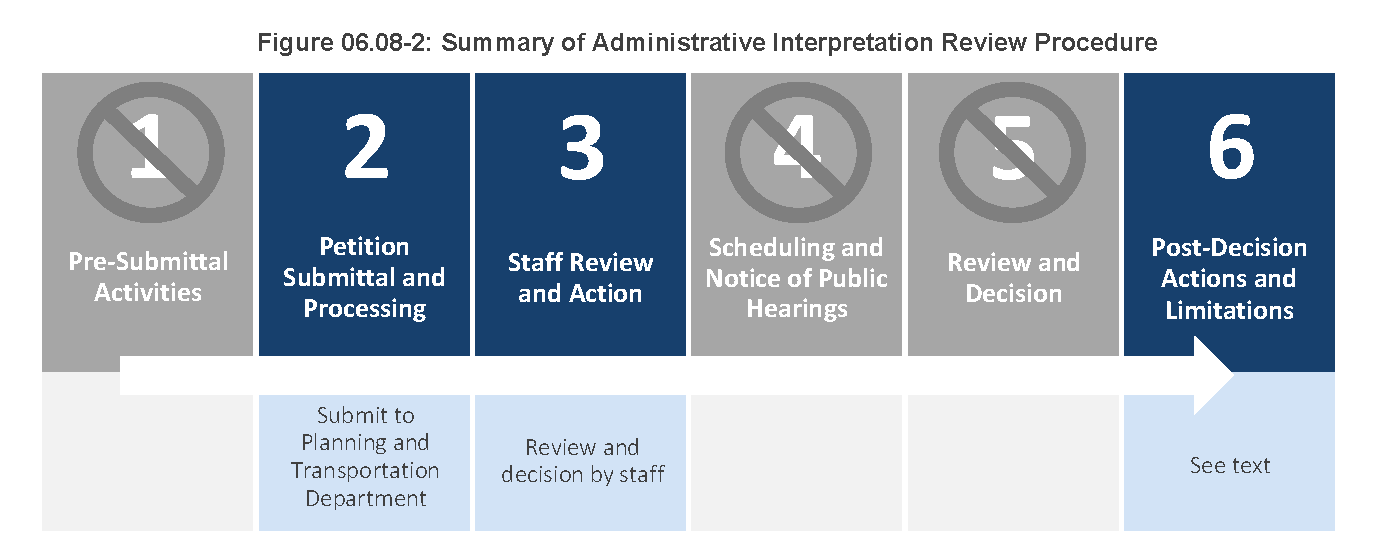
Figure 06.08-2: Summary of Administrative Interpretation Review Procedure
(A)
Petition Submittal and Processing.
i.
A request for administrative interpretation shall be submitted, accepted, and revised, and may be withdrawn, in accordance with Section 20.06.040(c) (Petition Submittal and Processing).
ii.
A request for administrative interpretation may be filed by any person having a legal or equitable interest in property that gives rise to the need for an interpretation; provided that interpretations shall not be sought by any person based solely on hypothetical circumstances or where the interpretation would have no effect other than as an advisory opinion.
(B)
Staff Review and Action. The planning and transportation staff or traffic and transportation engineer (as applicable) shall review the request for interpretation, shall consult with the City attorney and affected City officials, and shall render a decision based on the following specific approval criteria:
i.
General Interpretation. The interpretation shall be consistent with:
1.
The purposes of this UDO; and
2.
The purposes of the zoning district (and overlay district(s), if applicable) in which the property is located; and
3.
If the interpretation is based on the meaning of specific words that are not defined in this UDO, adopted City regulations, or the Indiana Code, with common use of words in the English language; and
4.
Prior interpretations of the UDO on similar or related topics, to the maximum extent practicable, unless a modification or replacement of a prior interpretation would be more consistent with criteria 1. through 3. above.
ii.
Use Interpretation.
1.
The Planning and Transportation Director shall determine if the proposed use is included in the definition of a listed use or is so similar to a listed use that it should be treated as the same use.
2.
When determining the level of permission or associated Use-Specific Standards, the size, scale, operating characteristics, multi-modal traffic impacts, storm drainage impacts, utility impacts, and neighborhood impacts of the proposed use shall be considered.
3.
The Planning and Transportation Director shall consult with the City attorney and affected City officials before rendering the interpretation.
(C)
Post-Decision Actions and Limitations. Post-decision actions and limitations in Section 20.06.040(h) (Post-Decision Actions and Limitations), shall apply, with the following modifications:
i.
Notice.
1.
The Planning and Transportation Director shall inform the petitioner in writing of his or her interpretation, stating any specific precedent, the reasons, and the analysis upon which the determination is based.
2.
The decision shall be in the form of a written interpretation and shall be made available to the public.
ii.
Effect of Approval.
1.
The interpretation shall be binding on subsequent decisions by the Planning and Transportation Director, traffic or transportation engineer, or other City administrative officials (as applicable) in applying the same provision of this UDO or the Official Zoning Map in the same circumstance, unless the decision-making body makes a different interpretation, or this UDO is amended to treat the interpretation differently, or the interpretation is reversed or modified on appeal to the Board of Zoning Appeals or a court of law.
2.
No written interpretation shall authorize the development, construction, reconstruction, alteration, or moving of any building or structure, but shall merely authorize the preparation, filing, and processing of petitions for any permits and approvals that may be required by the ordinances of the City.
3.
A land use determination finding a particular use to be permitted, or allowed as a Conditional Use in a particular zoning district, shall be deemed to authorize only the particular use for which it was issued, and such interpretation shall not be deemed to authorize any allegedly similar use for which a separate land use determination has not been issued.
iii.
Official Record of Interpretations. The Planning and Transportation Department shall maintain a record of written interpretations that shall be available for public inspection, on reasonable request, during normal business hours.
iv.
Board of Zoning Appeals. The Board of Zoning Appeals shall, pursuant to Section 20.06.080(d) (Administrative Appeal), hear and decide appeals from any administrative interpretation by the Planning and Transportation Director or traffic and transportation engineer acting pursuant to his or her authority and duties under this UDO.
(4)
Criteria for Interpretations.
(A)
Text Provisions. Interpretation of text provisions and their petition shall be based on the following considerations:
i.
The clear and plain meaning of the provision's wording, as defined by the meaning and significance given specific terms used in the provision as established in Chapter 20.07 (Definitions), and by the common and accepted usage of the term;
ii.
The intended purpose of the provision, as indicated by purpose statements, its context and consistency with surrounding and related provisions, and any legislative history to its adoption;
iii.
The general purposes served by this UDO, as set forth in Section 20.01.010(b) (Purpose);
iv.
Consistency with the Comprehensive Plan; and
v.
Consistency with the measurement standards of this UDO.
(B)
Zoning Map Boundaries. Interpretation of zoning district boundaries on the Official Zoning Map shall be in accordance with the standards in Section 20.02.010 (Zoning Districts Established), and consistent with the Comprehensive Plan.
(C)
Use Regulations. Interpretations of land use determinations shall be based on the following considerations:
i.
Any listed use defined in Chapter 20.07 (Definitions), shall be interpreted as defined in that section;
ii.
No land use determination shall authorize any use in any zoning district unless evidence is presented demonstrating that it will comply with the general zoning regulations established for that particular zoning district;
iii.
No land use determination shall authorize any use in a particular zoning district unless such use is substantially similar to other uses specifically listed as permitted or conditional in such zoning district and is more similar to such uses than to other uses listed as permitted or conditional in another zoning district;
iv.
If the proposed use is most similar to a use allowed only as a Conditional Use in the zoning district, then any land use determination authorizing such use shall be subject to Conditional Use Approval pursuant to Section 20.06.050(b) (Conditional Use Permit); and
v.
No land use determination shall allow the establishment of any use that would be inconsistent with the statement of purpose of the zoning district in question, unless such use meets the standard of either subsection (iii) or (iv) above.
(d)
Administrative Appeal.
(1)
Purpose. The administrative appeal procedure is employed by the City in order to afford citizens an avenue of appeal when there is some doubt that an administrative official, hearing officer, staff member, administrative board or other body, except the Plan Commission, has rendered a correct interpretation of the applicable ordinances and regulations while administering or enforcing any part of this UDO.
(2)
Applicability.
(A)
An administrative appeal may be made by any person aggrieved by an order, requirement, decision, or determination made by an administrative official, hearing officer, staff member, administrative board or other body, except the Plan Commission, charged with the administration or enforcement of any part of this UDO.
(B)
This administrative appeals section shall not apply to fines levied under the authority of Section 20.06.100 (Enforcement and Penalties). Such fines may be appealed under the procedures specified in Section 20.06.100 (Enforcement and Penalties).
(3)
Administrative Appeal Review Process. Figure 06.08-3 identifies the applicable steps from Section 20.06.040 (Common Review Procedures) that apply to administrative appeal review. Additions or modifications to the common review procedures are noted below.
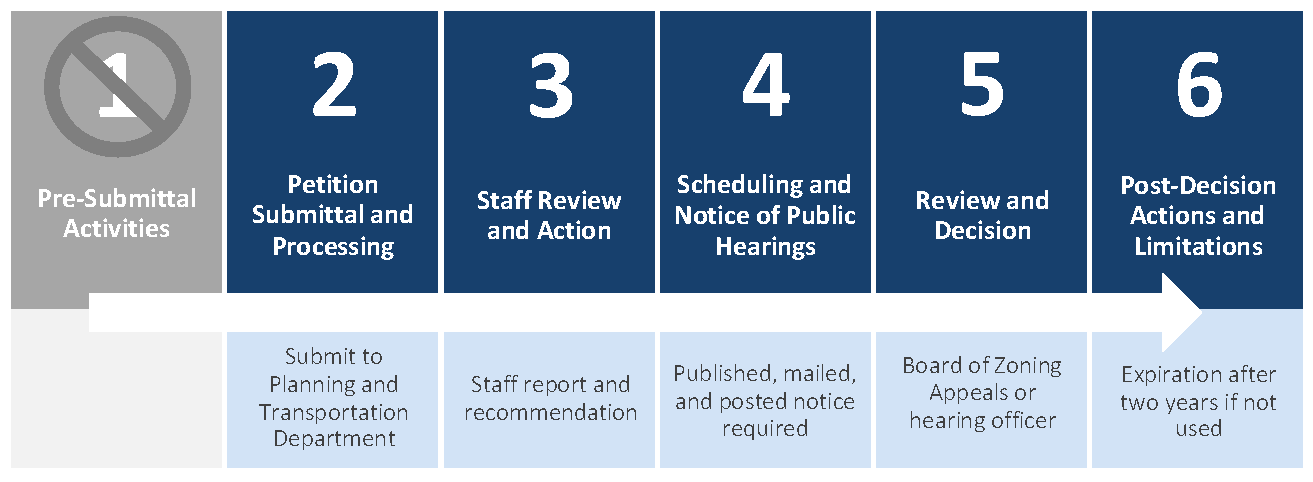
Figure 06.08-3: Summary of Administrative Appeal Procedure
(A)
Petition. An appeal petition shall be submitted and accepted, and may be revised or withdrawn, in accordance with Section 20.06.040(c) (Petition Submittal and Processing), with the following modifications:
i.
Burden of Proof on Petitioner. The petitioner has the burden of proving the necessary facts to warrant approval of an appeal by the appropriate decision-making body. Such proof shall be provided at time of petition.
ii.
Time Limit. An administrative appeal shall be filed with the Planning and Transportation Department within ten days of the order, requirement, decision, or determination that is being appealed.
iii.
Stay of Proceedings. An appeal stays all proceedings from further action unless the Planning and Transportation Director determines that a stay would create adverse impacts to the health, safety, or welfare of the City or neighborhood.
iv.
Stop Work Order. When an appeal from the decision of an administrative official or body has been filed, the Planning and Transportation Director may issue a stop work order on the premises affected.
(B)
Staff Review and Action. The planning and transportation staff shall review the petition and prepare a staff report in accordance with Section 20.06.040(d) (Staff Review and Action) with the following modifications:
i.
Staff review shall only confirm that the petition is complete and that the appeal is heard by the appropriate authority.
ii.
The staff report shall not make a formal recommendation. The report shall include necessary facts to warrant an appeal, which shall be provided by the appellant/petitioner.
(C)
Scheduling and Notice of Public Hearings. The appeal shall be scheduled for a public hearing before the Board of Zoning Appeals and noticed in accordance with Section 20.06.040(e) (Scheduling and Notice of Public Hearings).
(D)
Review and Decision.
i.
The appropriate decision-making body shall affirm, reverse, or amend a decision or interpretation made by another decision-making body in accordance with the approval criteria in Section 20.06.080(d)(3)(F) (Appeals Approval Criteria).
ii.
The appeal decision-making authority may reverse a previous decision in whole or in part, or may modify the order, requirement, decision, or determination appealed from.
iii.
The appeal decision-making authority may attach conditions of approval on any appeal to ensure the health, safety, and welfare of the City.
(E)
Post-Decision Actions and Limitations. Post-decision actions and limitations in Section 20.06.040(h) (Post-Decision Actions and Limitations) shall apply. Any further appeals from the appropriate appeal decision-making authority shall be made to the courts in accordance with state law.
(F)
Appeals Approval Criteria. In considering an appeal, the Board of Zoning Appeals shall consider the approval criteria applicable to all petitions in Section 20.06.040(d) (Staff Review and Action), the specific approval criteria in Section 20.06.050 (Development Permits and Procedures) through Section 20.06.080 (Flexibility and Relief Procedures), and shall consider the following:
i.
The written statement and supportive material submitted by the appellant;
ii.
The record of action supplied by the administrative official or body from which the appeal is taken;
iii.
The written and oral testimony of the public;
iv.
The testimony of the appellant;
v.
The requirements and intent of the applicable standards from this UDO compared to the written decision that is being appealed; and
vi.
The testimony of the administrative official or body from which the appeal is taken.
(Amd. of 1-14-2020; Ord. No. 22-11, § II(Att. A), 5-18-2022; Ord. No. 22-08, § II(Att. A), 5-18-2022; Ord. No. 23-07, § 2(Att. A), 4-19-2023; Ord. No. 2024-03, § II(Att. A), 4-10-2024; Ord. No. 2024-06, § II(Att. A), 4-10-2024; Ord. No. 2024-17, § II(Att. A), 9-18-2024)
20.06.090 - Nonconformities.
(a)
Purpose. This Section 20.06.090 is intended to regulate and limit the development and continued existence of uses, structures, lots, signs, and site features that were lawfully established prior to the effective date of this UDO, but that no longer conform to the requirements of this UDO. All such situations are collectively referred to in this section as "nonconformities." While nonconformities may continue, the provisions of this section are designed to curtail substantial investment in nonconformities to bring about their eventual elimination in order to preserve the integrity of this UDO and the goals of the City.
(b)
Regulations Applicable to All Nonconformities.
(1)
Generally. Any lot, site, structure, or land use which does not conform with one or more provisions of this UDO, but which lawfully existed upon the effective date of the provisions of this UDO with which the lot, structure or use does not conform, shall be a lawful nonconforming lot, site, use, or structure within the meaning of this section.
(2)
Authority to Continue. A lawful nonconforming lot, site, use, or structure may continue except as provided in this section and in Section 20.01.040(a)(2) (Uses Rendered Nonconforming), and Section 20.01.040(a)(3) (Buildings, Structures, and Lots Rendered Nonconforming).
(3)
Determination of Nonconformity Status. The burden of establishing the existence of a nonconformity shall be solely on the owner of the property containing the nonconformity.
(4)
Certificate of Nonconforming Use. In order to protect the lawful nonconforming status of a nonconforming use, a person who owns or operates a nonconforming use may request a certificate of nonconforming use pursuant to Section 20.06.050(i) (Certificate of Nonconforming Use).
(5)
Maintenance and Minor Repair.
(A)
Minor repairs and maintenance of nonconformities are permitted and encouraged, provided that the repairs and maintenance do not increase the degree of nonconformity and that they conform to the building code and other applicable regulations of this UDO. Minor repairs and maintenance include the following:
i.
Repairs necessary to maintain and to correct any damage or deterioration to the structural soundness of, or the exterior or interior appearance of, a building or structure without expanding the height or footprint of the building or structure, unless compliant with this UDO;
ii.
Maintenance of land to protect against and mitigate health and environmental hazards;
iii.
Repairs that are required to remedy unsafe conditions; and
iv.
Repairs necessary to comply with current building code requirements.
(B)
Normal maintenance and repair do not include the razing of walls to the foundation and rebuilding, nor does it include altering a structure which contains a lawful nonconforming use in any way which results in additional bedrooms or other habitable space.
(6)
Change in Ownership or Tenancy. Changes in ownership, tenancy, or management of property with an existing nonconformity may occur, but such nonconformities shall continue to be subject to the standards of this Section 20.06.090 (Nonconformities).
(7)
Compliance to the Maximum Extent Practicable. Where compliance with the requirements of this section is precluded by a lack of sufficient developable area due to the size of the lot, the layout of existing development, or the presence of significant wetlands, floodplains, watercourses, hazard areas, or other significant environmental features, the petitioner shall comply with the requirements of this section to the maximum extent practicable, as determined by the Planning and Transportation Director.
(c)
Nonconforming Uses. Nonconforming uses of land, buildings, or structures are subject to the following additional limitations:
(1)
Limitations on Continuation of Nonconforming Uses.
(A)
A nonconforming use may be extended throughout a conforming building or structure, provided that:
i.
No structural alteration of the building (or portion of such building containing the nonconforming use in the case of buildings with multiple uses) shall be permitted;
ii.
No additional dwelling units shall be permitted in the building;
iii.
No additional nonresidential units and/or uses shall be permitted; and
iv.
Such extension would not result in a violation of the parking standards pursuant to Section 20.04.060 (Parking and Loading).
(B)
Any existing occupied conforming single-family residential dwelling that is deemed to be a nonconforming use may make improvements to the main and accessory structures so long as improvements do not increase the degree of nonconformity or increase the height or building footprint.
(C)
A nonconforming use that is located in a nonconforming building or structure or on a lot with nonconforming site features shall comply with the requirements of Sections 20.06.090(d) (Nonconforming Structures) and 20.06.090(f) (Nonconforming Site Features) as applicable.
(D)
No additional structure not conforming to the requirements of this UDO shall be erected in connection with the nonconforming use of land or structure.
(E)
Whenever a nonconforming use of land or a building has been discontinued for a period of one year, future use of land or building shall comply with this UDO.
(2)
Change in Use.
(A)
A nonconforming use that has been changed to a less nonconforming use pursuant to this subsection may not subsequently be changed back to a more nonconforming use.
(B)
A nonconforming use, if changed to a conforming use, may not subsequently be changed back to any nonconforming use unless otherwise permitted by this UDO.
(C)
A lawful nonconforming use which has been abandoned, including a use involving occupancy by four or five adults which has been voluntarily waived and relinquished pursuant to Section 20.06.090(c)(4) (Residential Occupancy), shall not be resumed or replaced by another nonconforming use.
(3)
Abandonment of a Nonconforming Use. A lawful nonconforming use shall be deemed abandoned when the nonconforming use has been replaced by a conforming use or when the nonconforming use has ceased and has not been resumed for a continuous period of twelve months, or when the furnishings have been removed and not replaced for a continuous period of twelve months.
(4)
Residential Occupancy.
(A)
Authority to Continue. In the R1, R2, R3, and R4 zoning districts, a nonconforming use involving occupancy of a dwelling unit by four or five adults who are not all related to each other, which was duly registered on or before October 1, 1985, in accordance with Ordinance No. 85-15; or was duly registered on or before November 1, 1995, in accordance with Ordinance No. 95-21, shall be deemed a lawful nonconforming use which may be continued under this UDO, without further registration, and shall be considered a lawful nonconforming use that may continue only as provided in this section.
(B)
Transition from Prior Regulations.
i.
Where a lawfully existing dwelling unit was lawfully occupied by four or five adults who were not all related to each other on the effective date of this UDO, but becomes nonconforming under this UDO because of being so occupied, the property owner may register such property as a lawful nonconforming use, and if properly and timely registered, such use will be a lawful nonconforming use which may be continued under this UDO without further registration.
ii.
Forms for such registration shall be available in the Planning and Transportation Department and shall be completed by the property owner or agent and filed in the Planning and Transportation Department within one hundred eighty days of the effective date of this UDO.
iii.
For existing structures, the use to be vested pursuant to this provision shall be the use lawfully in effect as of the effective date of this UDO, or the predominant lawful use for the preceding five years, whichever is greater.
(C)
Pending or Approved Building Permit.
i.
When a complete building permit application has been filed with the Monroe County Building Department, where the proposed structure included a nonconforming use involving a dwelling unit intended for occupancy by four or five adults who are not all related to each other shall be considered a lawful nonconforming use subject to the following:
1.
The building permit application conforms to all applicable regulations in effect at the time of application;
2.
The property owner's intention to accommodate said four or five adults is stated in writing;
3.
The property was registered pursuant to this subsection within one hundred eighty days of the effective date of this UDO;
4.
The property was lawfully eligible for occupancy by four or five adults not all related to each other prior to the effective date of this UDO;
5.
The building permit application was filed prior to the effective date of this UDO, unless otherwise provided by Section 20.01.040(b) (Effect of Change in the Law After Filing of Complete Petition).
ii.
In the event that said application or permit expires or is suspended or revoked as provided in the Bloomington Municipal Code or other applicable regulation of the City or Monroe County, any new permit application may be subject to the regulations in this UDO, subject to Section 20.01.040(b) (Effect of Change in the Law After Filing of Complete Petition).
(D)
Abandonment of Residential Occupancy. Where such a use is classified as a lawful nonconforming use under this Section 20.06.090(c)(4) (Residential Occupancy), the use shall not be subject to termination through cessation or abandonment except when the right to continue such a lawful nonconforming use is terminated by the owner's execution and proper recording in the chain of title, in a form acceptable to City staff, of an express, voluntary, permanent, and irrevocable waiver and relinquishment of such right.
(d)
Nonconforming Structures.
(1)
Authority to Continue. A lawfully nonconforming structure may continue in its existing condition, however no increase in the degree of nonconformity with any development standard is permitted except as expressly provided herein.
(2)
Nonconforming Structures in Regulated Floodplains.
(A)
Changes to Structures. Any structure or use located in a regulated floodplain shall be governed by the general regulations of this Section 20.06.090 (Nonconformities) to the extent that nonconformance is related to requirements other than those governing regulated floodplains. To the extent that nonconformance is related to the regulations of the regulated floodplains, modifications to a lawful nonconforming structure are allowed where:
i.
A permit is issued by the department of natural resources for such modifications; and
ii.
If the addition, in combination with all other additions to the abode or residence that have been constructed since the abode or residence was originally built, would increase the market value of the abode or residence to an amount more than fifty percent greater than: (1) the market value of the abode or residence if no additions have been constructed since the abode or residence was originally built; or (2) the approximate market value the abode or residence would have in the form in which the abode or residence was originally built if at least one addition has already been constructed. For the purposes of Subsection (c), the market value of an abode or a residence does not include the value of the land on which the abode or residence is built.
(B)
Replacement of Structures. A lawful nonconforming structure or any structure which contains a lawful nonconforming use which has been partly or completely destroyed or removed by accidental cause, including acts of God, may be replaced, provided the elevation of the lowest floor, including the basement floor, must be at least two feet above the regulatory flood elevation; all necessary permits must be obtained from the department of natural resources and all other applicable requirements of state law are met; and that application for a building permit must be made within six months of the date of destruction or removal.
(3)
Restoration and Repairs. A lawful nonconforming structure, or a structure containing a lawful nonconforming use, may be restored when the conditions of this Section 20.06.090 (Nonconformities) have been met regardless of other regulations in this UDO. Replacement, restoration, and repairs shall conform to building code and other applicable regulations set forth by the Bloomington Municipal Code.
(4)
Structure Damaged or Destroyed.
(A)
A lawful nonconforming structure or a structure which contains or is associated with a lawful nonconforming use, which has been partly or completely destroyed or removed by accidental cause, including acts of God, may be replaced, provided the owner or agent makes application for a building permit within six months of the date of destruction or removal.
(B)
The replacement structure shall be placed on the footprint of the old structure, may not be higher than the old structure, and shall be substantially the same architecture and constructed of similar materials, unless any deviation would bring the structure or use into or closer to compliance with the regulations of this UDO, to the extent possible and to the extent permitted by building code or other applicable regulation.
(e)
Nonconforming Lots. A lawfully nonconforming lot may continue in its existing condition unless and until full or limited compliance with the development standards of this UDO is required as established in Section 20.06.090 (Nonconformities).
(1)
All lots legally established and recorded prior to the effective date of this UDO or its subsequent amendments that do not meet the lot area and lot width standards of this UDO shall be deemed a substandard lot, otherwise known as a lawful nonconforming lot of record.
(2)
A lawful nonconforming lot of record may be used and developed or redeveloped without compliance with the lot area and lot width standards of this UDO as long as all use restrictions and other development standards of this UDO are met.
(f)
Nonconforming Site Features. A lawfully nonconforming site feature may continue in its existing condition unless and until full or limited compliance with the development standards of this UDO is required. No increase in the degree of nonconformity with any site feature is permitted except as expressly provided in this section.
(1)
Full Compliance. A lawful nonconforming site shall be brought into compliance with this UDO with any petition for new building construction or in connection with demolition of existing and construction of new buildings, except that existing nonconforming setbacks, architecture, and height for existing structures can remain.
(2)
Limited Compliance.
(A)
Applicability. A lawful nonconforming site or structure shall be brought into compliance with the standards in paragraph (B) below when any of the following occur on the site:
i.
Nonresidential and Mixed-Use.
1.
Any change in use, expansion, enlargement, or relocation of any use;
2.
Reestablishment of a prior conforming use that has been discontinued for a period of twelve months or longer; or
3.
Expansions, alterations, or modifications that increase the gross floor area of the building by more than ten cumulative percent, including previous additions approved under any UDO effective since February 12, 2007.
ii.
Multifamily and Group Living.
1.
Any expansions, alterations, or modifications to an existing building, with the exception of accessory structures less than five hundred eighty square feet, provided that the accessory structure does not increase the degree of nonconformity regarding required maximum impervious surface coverage or required number of parking spaces;
2.
Any change in use, or any expansion, enlargement, or relocation of any use; or
3.
Any addition of dwelling units.
iii.
Single-Family Detached, Duplex, Triplex, and Fourplexes. A lawful nonconforming use or site feature on a lot where the primary use is a single-family detached, duplex, triplex, or fourplex dwelling may continue except as provided below:
1.
Enlargement or modification of an existing driveway shall be subject to Section 20.04.050(c)(3)(C) (Surface Material); and
2.
Changes to nonconforming uses and structures containing nonconforming uses involving occupancy of unrelated adults are subject to Section 20.06.090(c)(4) (Residential Occupancy).
(B)
Required Compliance. A lawful nonconforming site or structure that meets or exceeds the thresholds established in paragraph (A) above shall comply with the following standards:
i.
Building Setbacks and Height. Existing buildings shall not be subject to current setback or height standards and shall remain lawful nonconforming unless completely demolished and replaced, in which case full compliance with this UDO shall be required.
ii.
Parking Setback and Maximum Number of Spaces. All parking spaces over the maximum number of spaces allowed must be removed. If all setbacks cannot be met through the removal of excess parking spaces, then priority shall be given to the parking spaces located in the front setback. If on a corner lot, then priority for front setbacks shall be given for the side facing the higher classified street. Any parking spaces or asphalt that encroaches into public right-of-way or adjacent property not owned by the petitioner must be removed.
iii.
Parking. Any change in use or reestablishment of an abandoned conforming use must meet parking requirements of Section 20.04.060 (Parking and Loading). Any expansion, enlargement, or relocation of an existing conforming use, or addition to any building of more than ten percent of the gross floor area may not increase the degree of nonconformity regarding the required number of parking spaces.
iv.
Paving. Any substandard parking surfaces shall be brought into compliance with Section 20.04.060(i)(7) (Surface Material).
v.
ADA-Accessible Parking. All required ADA-accessible parking spaces must be installed in accordance with Section 20.04.060(f) (Accessible Parking). If no additional room for parking is available, the number of parking spaces provided may be decreased enough to provide adequate ADA-accessible aisles.
vi.
Bicycle Parking. All required bicycle parking must be installed per Section 20.04.060(1) (Minimum Bicycle Parking Required) and Section 20.04.060(m) (Bicycle Parking Location and Design).
vii.
Landscaping. If full compliance with Section 20.04.080 (General Landscaping) cannot be achieved due to lack of adequate planting area, all yard areas must be landscaped to the maximum practicable density with a priority given to shade tree installation.
viii.
Pedestrian Facilities. Any street frontage without existing pedestrian facilities shall be required to install pedestrian facilities per Section 20.04.050(d) (Pedestrian and Bicycle Circulation). If substandard pedestrian facilities exist, new facilities shall not be required if existing facilities are in functional condition, except that curb ramps shall comply with the Americans with Disabilities Act.
ix.
Signage. All signage must be brought into compliance with Section 20.04.100 (Signs) to the extent practicable, although freestanding signs may use existing setbacks where the sign is not located within a restricted vision clearance area.
x.
Dumpster Enclosures. All outdoor waste collection facilities must be brought into compliance with Section 20.04.080(m) (Screening).
xi.
Lighting. All lighting shall be brought into compliance with Section 20.04.090 (Outdoor Lighting).
xii.
Entrances and Drives. All entrances and drives shall be brought into compliance with Section 20.04.050(c) (Driveways and Access), with the exception of driveway location requirements.
xiii.
Minimum Landscape Area. If a site can be brought closer to compliance with the Minimum Landscape Area standards through the removal of excess asphalt gravel, parking, or other impervious surfaces necessary to achieve the minimum amount of landscape area requirement, then such impervious area shall be removed and landscape area and vegetation installed.
xiv.
Fencing. Any fence or wall that contains prohibited components as outlined in Section 20.04.080(n)(4)(A) must remove the prohibited components only.
(g)
Nonconforming Signs.
(1)
Generally.
(A)
Notwithstanding any other provision of this chapter or this UDO, a lawful nonconforming sign may not be altered, relocated or expanded, which includes any increase in height or area, except as expressly provided in this Section 20.06.090(g) (Nonconforming Signs).
(B)
Ordinary maintenance is permitted and shall include replacement of supports with different materials or design from the previous supports but shall not include any increase in the dimensions or numbers of supports.
(C)
A lawful nonconforming sign may be relocated only where the sign cannot be left in its existing location as a result of right-of-way acquisition and/or construction, widening or other improvement to any public sidewalk, path, trail, street, road, alley, or other public right-of-way or facility, by the City. For purposes of this section, a sign cannot be left in its existing location where it would be within the new public right-of-way; or would physically obstruct the public improvements; or, where its location would pose a safety hazard, which shall include but not be limited to being within a redefined vision clearance triangle.
(D)
In situations described in subsection (C) above, the sign may be relocated upon the same zoning lot as its original location, if the board or commission with authority to acquire right-of-way in the particular case declines to seek purchase of full sign rights for permanent removal of the sign.
(E)
A sign that is relocated under this Section 20.06.090(g)(1) (Generally) shall be brought into compliance with all development standards in its new location to the extent practicable, as determined by the staff, which may consider the factors listed in Section 20.06.090(g)(2) (Practicability of Compliance with Development Standards), among others, in determining practicability.
(2)
Practicability of Compliance with Development Standards. In determining the practicability of bringing lawful nonconforming signs into compliance with development standards pursuant to Section 20.06.090(f) (Nonconforming Site Features), the staff may consider the availability of public funds for any required compensation to any person, and/or whether or not waivers have been provided pursuant to Section 20.04.100(h) (Waiver of Right to Damages).
(3)
Repair. Minor changes to a lawfully nonconforming sign shall be permitted only where necessary in order to keep the sign in good and safe repair and operating condition; such changes may include replacement of supports with different materials or design, but shall not include any enlargement to the dimensions of such supports or any increase in the number of such supports.
(Amd. of 1-14-2020; Ord. No. 21-15, § II (Att. A), 4-21-2021; Ord. No. 21-20, § II (Att. A), 4-21-2021; Ord. No. 21-22, § II (Att. A), 4-21-2021; Ord. No. 22-11, § II(Att. A), 5-18-2022; Ord. No. 23-07, § 2(Att. A), 4-19-2023; Ord. No. 2024-06, § II(Att. A), 4-10-2024; Ord. No. 2025-14, § II(Att. A), 5-21-2025)
20.06.100 - Enforcement and penalties.
(a)
Authority. All departments, officials, and public employees of the City that are vested with the duty or authority to review and/or issue permits shall conform to the provisions of this UDO and shall issue no permit for any use, building, activity or purpose which would be in conflict with the provisions of this UDO. Any permit issued in conflict with the provisions of this UDO shall be null and void. The Planning and Transportation Director and his or her designee are designated enforcement officials with full authority to investigate, issue notices of violation, and secure remedies, including but not limited to injunctive relief, for any violation of this UDO.
(b)
Penalties and Remedies for Violations.
(1)
For the purposes of this UDO, a violation shall be defined as violation of or failure to comply with:
(A)
Any provision or requirement of this UDO; or
(B)
Any condition, requirement or commitment established with the approval of a variance, Conditional Use, site plan, Planned Unit Development, subdivision, certificate of zoning compliance, or other development approval under this UDO; or
(C)
The required elements of the submission on the basis of which any permit or approval has been rendered hereunder.
(2)
Any violation as defined herein is hereby declared a common and public nuisance, and any person who is a responsible party as defined in Section 20.06.100(e) (Enforcement Procedures—Notices of Violation) with respect to such violation shall, in addition to any other penalty or remedy provided herein, be liable for maintaining a common and public nuisance.
(3)
Any violation shall be subject to the penalties and remedies provided in this Section 20.06.100 (Enforcement and Penalties), and the City shall have recourse to any remedy available in law or equity.
(4)
Each day that any violation continues shall be considered a separate violation for purposes of the penalties and remedies specified in this chapter. A violation continues to exist until corrected. Correction includes, but is not limited to:
(A)
Cessation of an unlawful practice;
(B)
Removal of a building, structure, or other improvement;
(C)
Faithful or otherwise-approved restoration or replacement of a building, structure, site or natural feature;
(D)
Any other remedy specified in this UDO; and/or
(E)
Other remedy acceptable to the City.
(5)
The City Legal Department may institute appropriate action to impose and collect fines and/or other penalties; to enforce or defend any action taken pursuant to Section 20.06.100(e)(5); and to prevent, enjoin, abate, remove or correct any violation of or noncompliance with this UDO or any condition, requirement, or commitment established in connection with this UDO or any development approval hereunder.
(6)
In addition to all other penalties and remedies provided for herein, if a building or structure is demolished (which shall include partial demolition) in violation of Section 20.06.050(c) (Demolition Delay Permit), then, for a period of two years following such demolition, no new certificate of zoning compliance authorizing any use or any release of a building or demolition permit shall be issued for any activity upon the lot of record upon which the building or structure was located, or any adjoining lot of record under common ownership or control, except for an approved restoration or replacement of the demolished building or structure, or as otherwise agreed to by the City or ordered by the court in enforcement proceedings. The Planning and Transportation Director shall be authorized to execute and record in the office of the Monroe County Recorder a sworn statement containing these restrictions upon the properties affected thereby.
(7)
In addition to all other penalties and remedies provided for herein, where the violation is removal of one or more trees contrary to Section 20.04.030(h) (Tree and Forest Preservation), the responsible party shall be required to meet the following requirements:
(A)
Replace the removed trees with healthy trees of similar species.
i.
The aggregate caliper of replacement trees shall equal the aggregate caliper of removed trees. Determination of total caliper to be replaced shall be made by the Planning and Transportation Director.
ii.
The size of replacement trees shall be the largest reasonably available which can either be planted or transplanted from another location.
iii.
Replacement trees shall be planted in the same location where the existing trees were removed. If all of the replacement trees cannot be planted in the area where existing trees were removed without endangering their health, an alternative planting location shall be identified, subject to the approval of the Planning and Transportation Director.
(B)
Restore the area around the replacement trees, and the original disturbed area if applicable, by backfilling all holes and creating acceptable grade and covering.
(8)
In addition to all other penalties and remedies provided for herein, where the violation is disturbance of other environmental features as outlined in Section 20.04.030 (Environment), the responsible party shall be required to meet the following requirements, and no violation shall be deemed corrected for purposes of fining until all required steps are completed:
(A)
Submit a remediation plan to the Planning and Transportation Department indicating how the disturbed area shall be restored to its pre-disturbed condition. The Planning and Transportation Director may require the utilization of native seed mixes and native plantings to restore areas to their pre-disturbed condition.
(B)
Remediation plans shall be submitted by the responsible party within seven days of receiving notice from the Planning and Transportation Department.
(C)
An approved remediation plan must be fully carried out as soon as reasonably possible. A violation shall be deemed corrected as of the date of submission of a remediation plan if such plan is subsequently approved and if such plan is fully carried out as soon as reasonably possible. However, any unreasonable delay in implementation of the plan may result in each day of the period of delay being deemed an additional violation subject to the maximum fine provided for in this UDO.
(9)
In addition to all other penalties and remedies provided for herein, the City may refuse to issue any certificate of zoning compliance, certificate of occupancy, or other permit or approval for any use, development, occupancy or other activity upon or concerning any lot or parcel created in violation of Chapter 20.05 (Subdivision Standards) and/or Section 20.06.060 (Subdivision Procedures) of this UDO. The City may further take legal action to restrain and enjoin further violations, including but not limited to sales or offers of sales of lots or parcels, in violation of Chapter 20.05 (Subdivision Standards) and/or Section 20.06.060 (Subdivision Procedures).
(10)
The remedies provided for in this UDO shall be cumulative, and not exclusive, and shall be in addition to any other remedies available in law or equity.
(c)
Administration. The Planning and Transportation Director or his or her designee shall maintain a record of all complaints and investigations, and the resolutions of those complaints, whether made by citizens or by staff; communicate on a regular basis with citizen complainants about the progress being made in investigating and resolving their complaints; and report to the Plan Commission on an as-needed basis as to the number and type of complaints and the outcome of each.
(d)
Penalty.
(1)
Any violation of this UDO shall be subject to a civil penalty of not more than two thousand five hundred dollars for each such violation, and not more than seven thousand five hundred dollars for the second and any subsequent violation, in addition to any and all other remedies available to the City, except where a lesser fine is specified herein.
(2)
The following violations of this UDO shall be subject to the fines listed in Table 06-3 (Summary of Fines for UDO Violations) for the first offense. In addition, if a responsible party commits a second or subsequent violation of the same provision of this UDO within three years of the first such violation, regardless of whether the second or subsequent violation is on the same property as the first such violation, the listed fine for such second or subsequent offense shall be twice the previous fine, subject to the maximum set forth in subsection (1) above. (For example, a violation that is subject to a one hundred dollar fine per Table 06-3 (Summary of Fines for UDO Violations) will be subject to a two hundred dollar fine for the second offense, a four hundred dollar fine for the third offense, and so forth.) A responsible party will be deemed to have violated the same provision for purposes of this subsection where the violations fall under the same section of this UDO or under the same subject matter heading where such heading contains multiple sections.
_____
Table 06-3. Summary of Fines for UDO Violations
_____
(e)
Enforcement Procedures—Notices of Violation.
(1)
If the Planning and Transportation Director or his or her designee finds that any violation of this UDO is occurring, or has occurred, a notice of zoning violation (NOV) may be issued to the responsible party. Such NOVs may be further accompanied by additional warnings following the same procedures of this chapter. For purposes of issuing a NOV, the following persons shall be considered responsible parties, with liability for fines and responsibility for remedy of the violation:
(A)
The property owner;
(B)
Persons with any possessory interest in the property; and
(C)
Any person, whether as property manager, principal agent, owner, lessee, tenant, contractor, builder, architect, engineer or otherwise who, either individually or in concert with another, causes, maintains, suffers or permits the violation to occur and/or to continue.
(2)
The NOV shall be in writing and shall be served on all of the responsible parties in one or more of the following manners: delivery in person or by first class mail. The notice of zoning violation shall state:
(A)
The location of the violation;
(B)
The nature of the violation;
(C)
The date the violation began or was reported or observed;
(D)
The daily fine assessed for the violation;
(E)
Additional remedies the City may seek for violation;
(F)
That the fine is paid to the City of Bloomington;
(G)
That the NOV may be appealed to the Board Of Zoning Appeals;
(H)
That the fine may be contested in the Monroe County Circuit Courts.
(3)
Each item of noncompliance enumerated on the notice of violation shall be considered to be a separate violation, and each day that each such item of noncompliance continues shall be considered to be a separate violation. Fines shall accrue from the date the zoning violation was reported or observed.
(4)
If the responsible party refuses inspection of the property, the Planning and Transportation Director or his or her designee may obtain an inspection warrant from any court of record in the county in which the property is located.
(5)
In addition to issuing a notice of violation (NOV), the Planning and Transportation Director or his or her designee may use and/or seek through legal proceedings one or more of the following remedies:
(A)
Revoke or withhold other approvals, certificates and/or permits relevant to the development or use of the site on which the violation has occurred; and/or
(B)
Issue a stop work order; and/or
(C)
Request the county building department to issue a stop work order and suspend and withhold all building code inspections relevant to the development or use of the site on which the violation has occurred; and/or
(D)
Draw on a performance or maintenance bond, as necessary, to affect any remedial actions required to abate the violations; and/or
(E)
Revoke the permits, certificates and/or approvals that have been violated; and/or
(F)
Any and all penalties and remedies listed in Section 20.06.100(b) (Penalties and Remedies for Violations).
(f)
Appeals.
(1)
Appeals of notices of violation shall be made to the Board of Zoning Appeals as set forth in Section 20.06.080(d) (Administrative Appeal).
(2)
Fines levied for zoning violations may be challenged in the Monroe County Circuit Court.
(Amd. of 1-14-2020; Ord. No. 2024-17, § II(Att. A), 9-18-2024)

