
Bossier City City Zoning Code
ARTICLE 12
- UTILITIES, PARKING, LOADING, LIGHTING STANDARDS, AND ARCHITECTURAL BUILDING STANDARDS
Sec. 12.1 - Purpose.
The purpose of this Article is to establish the standards for construction of utility services, parking and loading areas, and on-site lighting for individual occupancies, subdivisions and all other land development projects.
Sec. 12.2 - Sanitary Sewers.
12.2.1
For those area designated in the Comprehensive Plan as part of the existing or future water system service area, a developer shall provide a complete sanitary sewer system, including stubs, for each lot that connects with a sanitary sewer outlet approved by the City or Parish Engineer. The sanitary sewer shall extend to the development project boundaries and beyond, as necessary, to provide for the extension of the sanitary sewers to adjacent property.
12.2.2
If the City or Parish requires a sanitary sewer system greater than that needed to service the development project itself, the developer and the affected jurisdictions shall collaborate in providing a system design, with appropriate cost sharing or reimbursement agreements, that will accommodate the needs of the proposed development and the jurisdiction.
Sec. 12.3 - Storm Drainage.
12.3.1
A developer shall provide a subdivision or other land development project with adequate drains, ditches, culverts, complete bridges, storm sewers, intakes and manholes to provide for the collection and removal of all surface waters. These improvements shall extend to the boundaries of the subdivision and beyond, so as to provide for extension by adjoining properties.
12.3.2
If the City or Parish requires a storm drain system greater than that needed to service the subdivision or development project itself, the developer and the affected jurisdictions shall collaborate in providing a system design, with appropriate cost sharing or reimbursement agreements, that will accommodate the needs of the proposed development and the jurisdiction.
Sec. 12.4 - Water Systems.
12.4.1
For those area designated in the Comprehensive Plan as part of the existing or future water system service area, a developer shall provide the subdivision or development project with a complete water main supply system, including hydrants, valves and all other appurtenances, which shall be extended into and through the development to the boundary lines and beyond as may be necessary. The system shall provide for a water connection for lots and shall be connected to an approved central water system.
12.4.2
If City or Parish requires a water main to be greater in size than that needed to service the subdivision itself, the City or Parish may share in the expense thereof on a pro rata basis. The procedure of such cost-sharing shall be pursuant to the rules and regulations as prescribed by the City or Parish Engineer.
Sec. 12.5 - Off-Street Parking And Loading.
12.5.1
Purpose. The regulations of this Section are intended to ensure that the off-street parking, loading, and access demands of various land uses will be met without adversely affecting surrounding areas. The regulations are also intended to help maintain a safe and efficient transportation system and advance other Comprehensive Plan goals related to land use and the environment. In recognition of the fact that different approaches may be appropriate in different settings, the regulations allow flexibility in addressing vehicle parking, loading, and access demand.
12.5.2
Applicability.
A.
The parking, loading, and access standards of this Section apply:
1.
To all new buildings constructed and all new uses established in all districts.
2.
When an existing structure or occupancy is expanded or enlarged. In the event of such expansion, the need for additional off-street parking and loading spaces will be calculated based on the extent of the expansion or change, not the entire building or use.
B.
Additional off-street parking spaces shall be required to accommodate a change of use of a structure or parcel of land only when the new use requires 25 percent or more parking spaces than the previous use or 25 or more additional spaces. In such cases, the new use must provide at least 80 percent of the number of parking spaces required for the new use on the site.
12.5.3
Reduction below Minimums. The number of parking and loading spaces existing on a site may not be reduced below the minimum requirements of this Section, unless granted a Conditional Use approval by the MPC board, following the procedures of Section 3.3.2.
12.5.4
Mixed-Use Development Projects and Shared Parking.
A.
Mixed-use development projects established in conformance with a long-term development plan shall provide 1 space for every 250 square feet of floor area.
B.
In certain cases where an establishment's period of normal operation is significantly different from adjacent or nearby establishments, formal agreements may be created that allow sharing of parking spaces in order to comply with the requirements of this Section. These arrangements must be approved by the Planning Director.
12.5.5
Exemption for B-4 Downtown Business District. Due to the unique characteristics of the B-4 Downtown Business district, permitted commercial uses in this district are exempt from providing off-street parking and loading spaces if they are fronting the following streets:
Along Barksdale Boulevard between Minden Street on the west side, and Bennett Street on the East side of the B-4 District.
12.5.6
Off-Street Parking Schedule. Unless otherwise expressly stated in this Section, off-street parking spaces must be provided in accordance with the minimum ratios provided in Table 12.5.6.
Table 12.5.6
Off-Street Parking Requirements
12.5.7
Off-Street Loading Schedule.
A.
Goods may not be loaded or unloaded from the right-of-way of a collector or arterial street and no part of any vehicle may extend into the right-of-way of a collector or arterial street while being loaded or unloaded.
B.
If required by the City or Parish Engineers, off-street loading spaces must be provided in accordance with the minimum requirements enumerated in Table 12.5.7.
Table 12.5.7
Off-Street Loading Space Requirements
C.
Off-street loading spaces are defined as follows:
1.
Small spaces must have a minimum vertical clearance of 10 feet, minimum width of 8 feet, and minimum length of 20 feet.
2.
Large spaces must have a minimum vertical clearance of 14 feet, minimum width of 12 feet, and minimum length of 50 feet.
3.
The minimum length of off-street loading spaces does not include access or maneuvering area, platforms, or other appurtenances.
12.5.8
Calculation of Requirements. The following rules apply when calculating off-street parking and loading requirements:
A.
Unless otherwise approved, lots containing more than one use must provide parking and loading in an amount equal to the total of the requirements for all uses. (See the shared parking provisions of Subsection 12.5.10 for possible exceptions.)
B.
When measurements of the number of required spaces result in a fractional number, any fractional result must be rounded up to the next consecutive whole number. For example, if a minimum requirement of 1 space per 200 square feet is applied to a 900 square foot building, 5 spaces are required, since the fraction of 4.25 is rounded up to 5 spaces.
C.
Unless otherwise specifically noted, all area-based (square feet) parking and loading standards must be computed on the basis of gross floor area.
1.
Gross floor area is to be measured as all of the floor area on each floor of the building, whether or not such area is enclosed by walls.
2.
Interior areas used for off-street parking or loading facilities are not counted in calculating the number of parking spaces required.
D.
For outdoor areas, calculations will be based on the portion of the lot actually being used for the specified purpose.
E.
For the purpose of calculating parking requirements based on employees or students, calculations are to be based on the greatest number of persons working any single shift, the maximum enrollment or the maximum fire-rated capacity, whichever is applicable and whichever results in the greater number of spaces.
F.
When seating consists of benches, pews or other similar seating facilities, each 24 linear inches of seating space counts as 1 seat.
12.5.9
Location.
A.
Except as otherwise expressly provided in this section, required off-street parking and loading spaces must be located on the same lot as the principal use. (See the shared parking provisions of Subsection 12.5.10 for possible exceptions.)
B.
In residential districts:
1.
All driveway cuts onto the street must be approved by the City or Parish Engineer.
C.
In commercial, industrial, and special purpose districts, the location of off-street parking areas must comply with the following standards:
1.
Off-street parking shall not be placed within any required landscaping buffer without approval of the MPC board as a Conditional Use following the procedures of Section 3.3.2.
12.5.10
Shared and Off-Site Parking.The shared and off-site parking provisions of this Section are intended to encourage efficient use of land and resources by allowing users to share off-street parking facilities in situations where a mix of uses creates staggered peak periods of parking demand and to locate off-street parking facilities on a different site than the uses served by the parking.
A.
Shared or off-site parking arrangements require review and approval in accordance with the Site Plan Review procedures of Section 3.7.
B.
All shared or off-site off-street parking spaces must be located no further than 600 feet from the main entrance of the buildings or uses they are intended to serve. This distance limitation:
1.
Shall be measured along the shortest legal, practical walking route; and
2.
May be waived as part of the Site Plan Review process if adequate assurances are offered that adequate van or shuttle service will be operated between the shared or off-site parking area and the principal use or uses.
C.
Shared and off-site parking areas require the same or a more intensive zoning classification than that required for the most intensive of the uses served by the shared or off-site parking area. Shared and off-site parking areas are to be considered accessory uses to the principal uses that the parking spaces serve.
D.
For proposed shared parking areas, the applicant must submit a shared parking analysis that clearly demonstrates the feasibility of shared or off-site parking.
1.
The study must be provided in a form established by the Executive Director and made available to the public.
2.
It must address, at a minimum, the size and type of the proposed development, the composition of tenants, the anticipated rate of parking turnover, and the anticipated peak parking and traffic loads for all uses that will be sharing off-street parking spaces.
E.
The sharing or off-site location of required parking must be guaranteed by a legally binding agreement, duly executed and acknowledged, between the owner of the parking area and the owners of all uses that are located on a different lot and served by the parking area.
1.
The agreement must be properly drawn and executed by the parties concerned and approved as to form and execution by the City and Parish Attorney. Approved shared or off-site parking agreements must be recorded with the Parish Recorder.
2.
The applicant for a building permit or certificate of occupancy for the use that is served by parking spaces on the other lot must submit a copy of such agreement along with the application for the permit or certificate.
3.
Any violation of the agreement required under this Subsection constitutes a violation of this Code.
12.5.11
Use of Off-Street Parking and Loading Areas.
A.
Required off-street parking and loading areas are to be used solely for loading, unloading, and the parking of licensed motor vehicles in operating condition. Required off-street parking spaces and drive aisles shall not be used for:
1.
Display or storage of goods for sale or lease; or
2.
Long or short term storage of vehicles, boats, motor homes, campers, mobile homes, manufactured housing units, or building materials or merchandise.
3.
Overnight parking of tractor trailers or recreational vehicles unless properly zoned and approved for that use.
B.
In residential districts, off-street parking areas may only be used by vehicles of up to one-ton manufacturer's rated capacity.
12.5.12
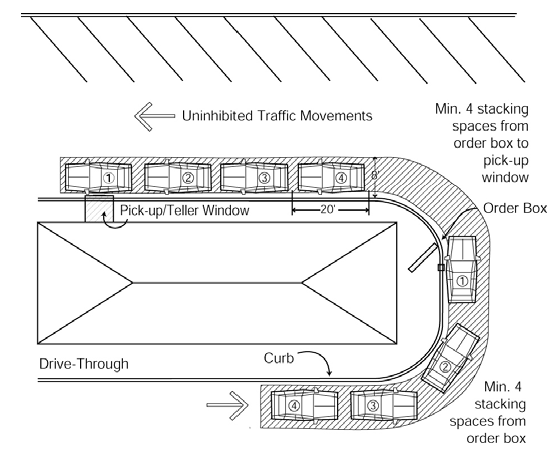
Vehicle Stacking Areas. The vehicle stacking standards listed in Table 12.5.12 apply unless otherwise expressly approved by the City or Parish Engineer.
A.
Off-street stacking spaces must be provided as follows:
Table 12.5.12
Vehicle Stacking Area Requirements
B.
Required stacking spaces are subject to the following design and layout standards:
1.
Stacking spaces must be a minimum of 8 feet by 20 feet in size.
2.
Stacking spaces may not impede on- or off-site traffic movements or movements into or out of off-street parking spaces.
C.
Stacking spaces must be separated from other internal driveways by raised medians if deemed necessary by the City or Parish Engineer for traffic movement and safety.
12.5.13
Accessible Parking for Physically Disabled Persons. A portion of the total number of required off-street parking spaces in each off-street parking area must be specifically designated, located and reserved for use by persons with physical disabilities.
A.
Table 12.5.13 shows the number of accessible spaces that must be provided, except as otherwise provided in Paragraphs B., C., and D. below. Parking spaces designed for persons with disabilities are counted toward fulfilling off-street parking standards. These standards may not be varied or waived.
Table 12.5.13
Accessible Parking Space Requirements
B.
Facilities providing medical care and other services for persons with mobility impairments must provide accessible parking spaces as follows:
1.
All outpatient facilities must provide at least one accessible parking space, or spaces equal to 10 percent of the total number of parking spaces provided, whichever is greater.
2.
Facilities that specialize in treatment or services for persons with mobility impairments must provide at least one accessible parking space, or spaces equal to 20 percent of the total number of parking spaces provided, whichever is greater.
C.
Multifamily dwellings containing 4 or more dwelling units must provide accessible parking spaces as follows:
1.
Designated accessible parking spaces must be provided for at least 2 percent of the dwelling units.
2.
Designated accessible parking spaces must be provided at facilities that serve accessible buildings, such as swimming pools and clubhouses.
3.
Additional designated accessible parking must be provided at the request of residents with disabilities, on the same terms and with the full range of choices that are provided for other residents of the project.
D.
Single family dwellings, detached and attached, two family dwellings, and multifamily dwelling containing 3 or fewer dwelling units are exempt from the requirements to provide accessible parking spaces. However, accessible parking must be provided at the request of residents with disabilities, on the same terms and with the full range of choices provided for other residents of the project.
E.
Accessible parking spaces must comply with the Americans with Disabilities Act Accessibility Guidelines (ADAAG).
F.
All accessible parking spaces must comply with the parking space dimension standards of Subsection 12.5.14, provided that access aisles must be provided immediately abutting such spaces, as follows.
G.
Car-accessible spaces must have at least a 5-foot wide access aisle.
H.
Van-accessible spaces must have at least an 8-foot wide access aisle abutting the passenger access side of the accessible parking space.
I.
Accessible parking spaces must be located in close proximity to building entrances and be designed to permit occupants of vehicles to reach the building entrance on an unobstructed path. Curb ramps must be provided whenever an accessible route crosses a curb in the parking lot. Curb ramps may not be located within required access aisle.
J.
Required spaces for persons with disabilities must be identified with signs and pavement markings identifying them as reserved for persons with disabilities.
K.
Signs must be posted directly in front of the parking space at heights that will be visible to the types of vehicles for which they are designed, specifically 60 to 82 inches.
L.
Signs must comply with the Manual on Uniform Traffic Control Devices issued by the Federal Highway Administration.
12.5.14
Parking and Loading Area Design Standards. The design standards of this Section apply to all parking areas, including commercial parking lots and "non-required" parking areas. Any alternatives as to surface type, must be approved as a "Conditional Use" using the procedures of Section 3.3.2 of this Code. Single Family Residential uses in the R-A, Residence Agriculture District are exempt from the requirements of Subsections E and F below.
A.
There must be a safe, adequate, well-lit and convenient arrangement of pedestrian pathways, bikeways, roads, driveways and off-street parking and loading spaces within off-street parking areas. Streets, pedestrian walks and parking areas must be designed as integral parts of an overall site design, which must be properly related to existing and proposed buildings, adjacent uses and landscaped areas.
B.
The layout and design of all off-street parking areas must be approved by the City or Parish Engineer prior to the issuance of a building permit. Before approving any off-street parking plan, the City or Parish Engineer must find that the spaces provided are useable and that they comply with the applicable design criteria.
C.
The materials used in the design of paving, lighting fixtures, retaining walls, fences, curbs and benches must be easily maintained and indicative of their function.
D.
Parking areas must be maintained in a safe operating condition so as not to create a hazard or nuisance.
1.
All materials used in the design of paving, lighting fixtures, retaining walls, fences, curbs and benches must be continuously maintained and kept free of debris and hazards.
2.
Striping and other pavement markings must be maintained in an easily readable condition.
E.
All off-street parking areas, motor vehicle and recreational vehicle storage areas and driveways and drive aisles, including those serving single family dwellings, detached and attached, and multi-family dwellings, must be surfaced with a minimum of:
1.
Four inches of reinforced Portland cement concrete;
2.
Five inches of full depth asphalt;
3.
In the A-1 and I-Districts, alternative methods of paving for areas expected to have a low use of off-street parking or vehicle movement on the site, may be approved by the MPC as a Conditional Use following the procedures of Section 3.3.2. The required off-street parking areas shall be constructed of the materials as stated in Subsections 1 and 2 above.
F.
As an alternative to the surfacing required in the preceding paragraph, all off-street parking for uses allowed by right within residential districts or areas of low off-street parking use as determined by the City or Parish Engineer (such as fire safety lanes or overflow parking areas), may be surfaced with the following alternative methods of paving. The surfacing must be installed per the manufacturer's recommendations, with the pavement and base designed by a professional engineer licensed in the State of Louisiana. The pavement cross-section must demonstrate the structural ability to support the anticipated vehicle loads for the use. The pavement design must be reviewed and approved by the City or Parish Engineer.
1.
Grid unit pavers with grass; or
2.
Concrete, brick, or clay interlocking paver units.
G.
Private streets and driveway approaches (aprons) shall be built to the applicable standards and maintained by the landowner.
H.
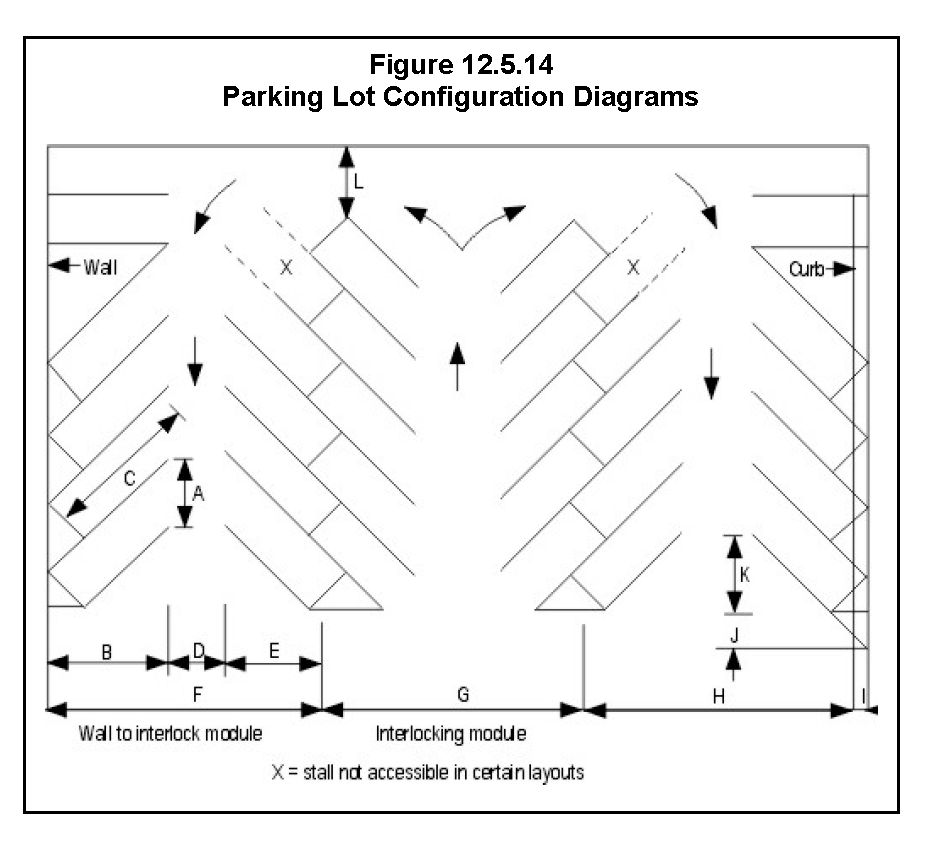
All off-street parking areas must comply with the dimensional standards in the following Table 12.5.14, except that where natural and/or man-made obstacles, obstructions, or other features such as but not limited to landscaping, support columns or grade/slope difference exist, the City or Parish Engineer may approve a reduction in stall width, stall length and/or module width. In all instances where a reduction is requested, attention to emergency vehicle access must be considered and incorporated into the parking Lot design.
Table 12.5.14
Parking Lot Stall Configuration Requirements
I.
Bicycle parking areas, whether used publicly or privately, must be designed, built and maintained in accordance with the following specifications:
1.
They must be surfaced with a minimum of:
a.
Four inches of concrete;
b.
Four inches of asphalt; or
c.
Two inches of concrete with a 2-inch brick overlay, or similar material for overlay.
2.
They must be well lit and within clear view of passersby.
3.
If bicycle and automobile parking areas or access ways abut each other, there must be provided a physical barrier between the bicycle and automobile areas to prevent a bicycle or its operator from being hit by a motor vehicle.
4.
Each bicycle parking space must provide for a secure method of locking a bicycle and be located so as to accommodate bicycle parking in a manner that is convenient to use and does not interfere with other uses of the property.
J.
To facilitate movement and to help maintain an orderly parking arrangement, all parking spaces must be clearly striped, with a minimum width of 4 inches. The width of the parking stall must be computed from the centers of the striping.
K.
The perimeter of the parking lot shall have a curb and gutter in accordance with applicable standards for concrete curbs.
L.
Parking lots must be designed to provide designated walkways for pedestrians. Walkways must connect building entrances with parking areas and with public sidewalks along adjacent streets.
12.5.15
Driveways and Access. The standards of this Section apply to all driveways providing access to multifamily dwellings or nonresidential uses.
A.
General Standards. Driveways are subject to the following standards:
1.
Access to property is allowed only by way of driveways. No other portion of the lot frontage may be used for vehicle ingress or egress, nor may any parking area or access drive be arranged so that any vehicle may back directly onto a street. All driveway cuts into the street must be approved by the City or Parish Engineer.
2.
Driveway designs must allow an entering vehicle turning speed of 15 miles per hour to help reduce interference with through street traffic. Radii of driveway must be sufficient to achieve this standard for the types of vehicles that the driveway is intended to serve.
3.
There must be sufficient on-site space to accommodate queued vehicles waiting to park or exit, without interfering with street traffic.
4.
Provisions for circulation between adjacent parcels should be provided through coordinated planning or cross access agreements.
5.
Driveways must be placed and designed so that loading and unloading activities will not hinder vehicle ingress or egress, and that vehicles entering the driveway from the street will not encroach upon the exit lane of a two-way driveway. Also, a right-turning exiting vehicle must be able to use only the first through-traffic lane available without encroaching into the adjacent through-lane.
6.
Driveways shall intersect the street at right angles.
B.
Cross-Access Easements.
1.
Definition and Intent. Cross-access easements are internal connections between adjacent properties which allow vehicles and pedestrians to make short trips between the properties without having to reenter the public road.
Improving public safety is the chief objective of cross-access between adjacent properties, which along with other benefits, can:
a.
Reduce traffic congestion and roadway delays by providing an alternative to using the public road for short trips between adjacent developments;
b.
Improve roadway safety by reducing turning conflicts on the public road;
c.
Enhance the market reach of businesses on major thoroughfares by making their access safer and more convenient.
2.
Cross-access Required. Cross-access easements between adjacent properties are required for all new developments of multifamily dwellings or nonresidential uses fronting on Arterial or Collector roads, except when waived by the City Engineer as provided herein.
3.
Waiver by City Engineer. The City Engineer may waive the cross-access easement requirements if one or more of the following conditions apply to the property:
a.
Incompatible land uses;
b.
Significant topography obstacles;
c.
Existing infrastructure obstructions;
d.
Property frontages are not on the same road;
e.
Other safety or security factors.
4.
Easement Recordation. Cross-access easements must be recorded in the conveyance records of the Bossier Parish Clerk of Court on either a plat or a separate instrument.
5.
Agreement to Grant Easement. When the property being developed is adjacent to undeveloped land and the location of the cross-access cannot be determined, the property owner may provide the legislative body with a letter of agreement to install the cross-access upon development of the adjacent property, or may grant an easement in escrow to the legislative body.
C.
Turn Lanes and Tapers. Turn lanes and tapers are required when:
1.
Expected left-turn or right-turn ingress movements meet or exceed 40 vehicles per hour during a typical weekday peak traffic period;
2.
Driveway volumes are expected to meet or exceed 1,000 vehicles per day calculated using Institute of Transportation Engineers (ITE) site generated traffic standards for closest matching land use category as set forth in the most recent edition of the ITE's Trip Generation Manual; or
3.
The City or Parish Engineer determines through a traffic impact analysis pursuant to Subsection 12.5.16 that such treatment is necessary to avoid congestion and/or unsafe conditions on the public street.
D.
The grade or slope of a two-way, one-way or divided driveway may not exceed two percent for a minimum distance of 25 feet from the edge of the pavement.
E.
Direct-access driveways must be located to allow the minimum sight distances in the following Schedule. Sight distances must be determined by a professional engineer licensed in Louisiana.
Table 12.5.15
Direct Access Driveway
Sight Distance Requirements
F.
Spacing of Driveways. Driveways shall be spaced as provided below:
1.
Access to Arterial Streets. Direct access to an arterial street is prohibited except when the subject property has no other reasonable access to the street system and the City or Parish Engineer determines that access onto the arterial street can be safely accommodated. When direct access to an arterial street is approved by the City or Parish Engineer pursuant to the requirements of this section, the following standards apply. In the event that such standard cannot be met because of an unusually narrow or shallow lot size, the City or Parish Engineer may reduce the spacing so long as the reduction does not result in an unsafe traffic condition.
a.
All driveways providing access to arterial streets shall be constructed so that the point of tangency of the curb return radius closest to a signalized or stop sign-controlled intersection is at least 300 feet from the perpendicular curb face of the intersecting street.
b.
All driveways providing access to arterial streets shall be constructed so that the point of tangency of the curb return radius closest to all non-signalized street or driveway intersections is at least 200 feet from the perpendicular curb face of the intersecting street or driveway.
2.
Access to Collector Streets.
a.
Every effort should be made to internalize individual driveways within a subdivision to avoid direct access onto collector streets. Mutual access streets within the subdivision will connect to the collector street to minimize driveway cuts.
b.
Single-family residences (individual lots) should be discouraged wherever possible along collector streets to avoid numerous and unsafe driveway cuts.
G.
At least one driveway shall be permitted for any lot.
1.
Unless otherwise specifically restricted, one driveway opening shall be allowed per 200 feet of continuous street frontage.
2.
Parcels with 200 feet of frontage or less may apply for a second driveway if shared with an adjoining parcel, provided that the required minimum spacing is maintained. In such cases, only one shared driveway will be permitted.
H.
Waiver of Standards. Waivers from these access standards may be approved by the City or Parish Engineer if the City or Parish Engineer determines that the requested waiver will not create a serious detriment to the safety or operation of traffic on the street or roadway. The City or Parish Engineer may require that the applicant for a waiver submit a traffic impact analysis in accordance with Subsection 12.5.16 if it is determined that such an analysis is necessary in order to render a competent decision on the requested waiver.
12.5.16
Traffic Impact Analysis. The City or Parish Engineer, may as provided below, conduct traffic impact analysis at the expense of the owner or developer of the premises in question, or alternatively require the owner or developer to conduct and submit a traffic impact analysis as part of an application for a permit or approval.
A.
A traffic impact analysis may be required as follows:
1.
As part of a zoning map amendment (rezoning) or Major Planned Unit Development, if required by the City or Parish Engineer for developments in which trip generation during any peak hour does not exceed 100 trips.
B.
A traffic impact analysis shall always be required as follows:
1.
When trip generation during any peak hour is expected to exceed 100 trips, based on traffic generation estimates of the Institute of Traffic Engineering's Trip Generation Manual, unless local trip generation data demonstrates a higher trip rate;
2.
When the original traffic impact analysis is more than two years old, or where increased land use intensity will result in an increase in traffic generation; or
3.
Whenever required or authorized elsewhere in this Unified Development Code.
C.
When access points are not defined or a site plan is not available at the time the traffic impact analysis is prepared, additional analysis may be conducted or required when a site plan becomes available or the access points are defined.
D.
Payment for traffic impact analysis shall be a condition of any permit or approval pursuant to this Unified Development Code.
(Ord. No. 105-2019, 10-1-2019; Ord. No. 51-2020, 5-5-2020)
Sec. 12.6 - Exterior Lighting Standards.
12.6.1
Purpose. The outdoor lighting standards of this Section are intended to eliminate spillover light and light glare on motor vehicle operators, pedestrians, and land uses near light sources. Safety considerations are a primary basis for the regulations, especially pedestrian, motor vehicle and traffic safety. In other cases, the regulations are intended to protect property values and the general welfare by controlling the nuisance aspects of glare or spillover light.
12.6.2
Applicability. The regulations of this section apply to all uses except:
A.
Public street lights, which are exempt from the standards of this Section but are subject to all applicable standards of the Louisiana Department of Transportation and the City or Parish.
B.
Residential and farm uses, which are exempt from the outdoor lighting standards of this section except that:
1.
Spotlights or floodlights that create a glare on neighboring property are prohibited; and
2.
Off-street parking lots associated with residential uses are not exempt from the outdoor lighting standards of this section.
C.
Holiday lighting.
D.
Parks and Open Space and Outdoor Commercial Recreation/Entertainment uses, which are subject only to the standards of Subsection 12.6.5.
12.6.3
Exterior Lighting Plan.
A.
An outdoor lighting plan must be submitted to the Executive Director whenever outdoor lighting is to be installed or whenever Site Plan Review is required. The lighting plan must be reviewed to determine whether the proposed outdoor lighting complies with the standards of this section.
B.
Outdoor lighting plans must include the following, unless the Executive Director determines that a thorough review and determination is possible without such information:
1.
Scale drawing of the site with all outdoor lighting fixture locations identified;
2.
Lamp type and size.
12.6.4
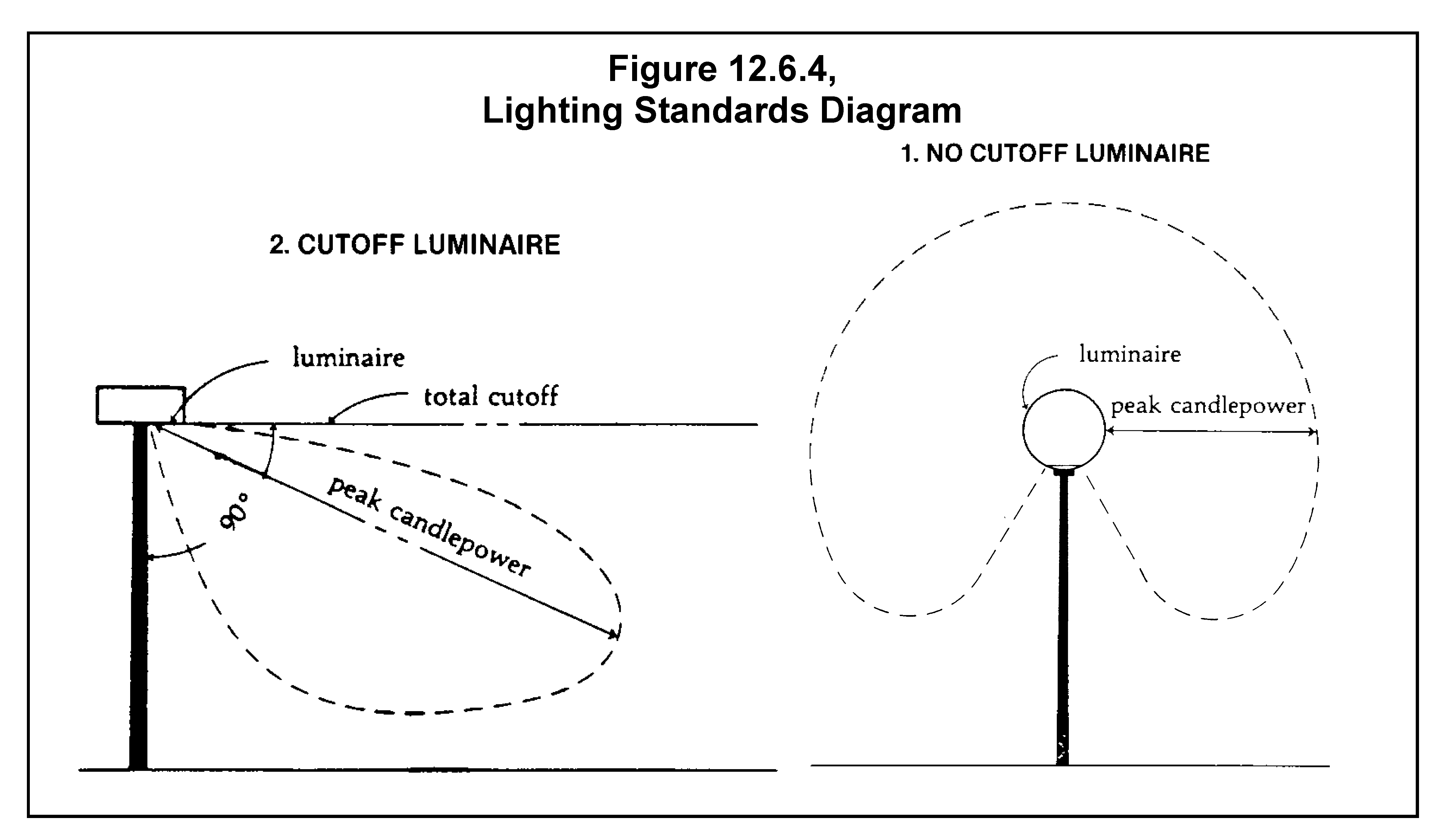
Lighting Standards. Two types of light sources or luminaires are available, as shown in Figure 12.6.4. One is a fixture having no cut-off, directing the light to limit view of the light source or luminaire. The second is a cut-off fixture, shielding the light source from view. The maximum permitted illumination and the maximum permitted luminaire height are indicated in Table 12.6.4. All nonresidential occupancies shall meet the following lighting standards:
A.
All fixtures shall be cut-off fixtures that limit lighting that is visible or measurable at the property line. Non-cutoff fixtures may only be used for decorative purposes and shall use luminaires that have incandescent sources of 100 watts or less.
B.
Abutting or nearby residential properties shall not be able to see the actual light source, unless the luminaries are less than 100-watt incandescent.
C.
The maximum illumination at a property line with abutting residential shall not exceed 0.2 footcandles. On abutting nonresidential properties or public streets, the maximum illumination at the property line shall be 5 footcandles. Where residential is across a street, the maximum illumination at the occupancy's property line shall be 2 footcandles.
D.
Maximum illumination at any point on the property shall not exceed 60 footcandles. For automobile dealers or others who believe they need more illumination, they shall provide structures. These may be the tent-type canopy structures to which lights may be attached, thus blocking the light.
E.
The lighting plan should show the layout of the poles on a lot, and indicate the total footcandles, not exceeding 60 at any point on the lot. It is preferable to install more lights at lower footcandles than to provide extremely tall poles with very bright lights.
F.
Canopy lighting for uses that have sheltered outside work or service areas such as gas stations shall meet the maximum intensity of Paragraph D. above. The luminaires shall be recessed into the canopy so that they cannot be viewed from off site from an eye height of 4 feet to protect automobile drivers from glare.
G.
Any lighting fixture or luminaire that exceeds 30 feet in height or proposes more than 400 watts or more than 4 luminaires per pole shall be approved by the Planning Commission as a Conditional Use. Such approval shall be based on a review for impact on all surrounding uses.
12.6.5
Exterior Lighting for Outdoor Amusement and Recreational Uses. Baseball diamonds, athletic fields, driving ranges and tennis courts have unique requirements for nighttime visibility and generally have limited hours of operation. These uses may meet the following standards for approval of lighting in excess of the exterior lighting standards (Subsection 12.6.4), by the Planning Commission as a Conditional Use:
A.
The site plan meets all other Ordinance requirements and, to the maximum extent possible, lighting is located to avoid shining at residential uses.
B.
Exterior light sources do not exceed the maximum permitted post height of 80 feet.
C.
The light source or luminaire shall be cut-off fixtures. The luminaire may have a cut-off angle that extends beyond the property boundaries if:
1.
A landscaped bufferyard is provided to prevent light and glare spill-over to adjacent residential property. The Executive Director may require denser bufferyards than those in Section 13.10.2, in order to achieve this objective.
2.
The maximum permitted illumination shall not exceed 1 footcandle at the residential property line or the street curb, whichever is less. If the development is within 300 feet of a residential district, the lights shall be turned off by 10:00 p.m.
12.6.6
Sign Lighting, Shielded Spotlights. Shielded spots shall be screened by evergreen landscaping, walls, berms, or cut-off shielding so the light source is not visible off-site. In most cases, a combination of cut-off shielding and a landscape or other feature will be needed to provide the necessary screening. Figure 12.6.4 provides an example of how this objective is to be accomplished.
Sec. 12.7 - Architectural Design Standards for Building within the Business, Industrial, and Special Purpose Districts.
12.7.1
Purpose. The following standards for applicable architecture throughout the Metropolitan Planning Commission (MPC) jurisdiction are intended to reflect the goal of the Bossier Comprehensive and Land Use Plan while creating development of enduring quality and unique architectural style.
12.7.2
Applicability. All new development located within an applicable district shall be subject to these provisions. Approval by the Zoning Office must be obtained before any site improvement or construction can begin, and a Certificate of Occupancy or Zoning Permit can be issued. Major rehabilitations of existing buildings, within an applicable district, are also subject to these provisions with the exception of the roofline. Major rehabilitation shall be defined as any renovation, restoration, modifications, addition, or retrofit of a building that exceeds sixty (60) percent of the current appraised value of the building. The appraised value of the land is not included in the 60% calculation. The current appraised value shall be established either by the Bossier Parish Tax Assessor's office or a current private appraisal of the building.
A.
Applicable districts shall include the following:
1.
Business Districts: B-1, B-2, B-3, B-4, and B-5.
2.
Special Purposed Districts: RFD, RT, and A-1.
3.
Industrial Districts: I-1 and I-2.
4.
All uses in the R-A district when approved as a Conditional Use and all uses approved as a component of a Planned Unit Development (PUD).
B.
Exceptions:
1.
Within the Barksdale Boulevard Redevelopment Overlay District (B-BROD), major rehabilitations as defined above, shall be required to meet ALL of the Architectural Standard requirements of this section when the rehabilitation exceeds 50% of the current appraised value of the building, as determined by the Bossier Parish Tax Assessor's office. The appraised value of the land is not included in this calculation.
12.7.3
Exemptions. The following uses or occupancies are exempt from the provisions:
A.
Single-family residential buildings that are occupied as a residence.
B.
Accessory structures, with one or more side walls, with a footprint of less than 600 square feet, and the total footprint for all such structures on the premises does not exceed 2,000 square feet. Conditional Use Approval, following the procedures of Section 3.3.2 of this Code, shall be required for more than two (2) accessory buildings or when total square footage exceeds 2,000 square feet. Accessory buildings located within the I-1, I-2, A-1 zoning classifications are exempt from this requirement.
12.7.4
Waivers and Architectural Review.
A.
If a proposed development or improvement will not be visible from a public or private street once the project is completed, the MPC board may waive any or all of the architectural standard requirements. Request for a waiver shall be reviewed as a Conditional Use Approval following the procedures of Section 3.3.2 of this Code. Applications shall include the submission of architectural elevations of the proposed construction in color and visual evidence that the project will not be visible from the street.
B.
If a proposed development or an improvement or addition greater than 60% of the appraised value as defined in Section 12.7.2, is adjacent to an industrial zoning classification or an existing Industrial land use, the owner or applicant may apply to the MPC board for the review of a lesser standards of architectural design that shall concentrate on the Front Façade and a minimum of 25% of the sides of the proposed structure that adjoin the Front Façade.
1.
All Overlay Districts and the following arterial streets shall not qualify for the above architectural design waiver.
Airline Drive, Arthur Ray Teague Parkway, Barksdale Boulevard, Benton Road, East Texas Street, Jimmie Davis Highway, McDade Street, Old Minden Road (west of Airline Drive), Shed Road (between Benton Road and Airline Drive and east of I-220), Shreveport- Barksdale, Traffic Street, Viking Drive (between Benton Road and Airline Drive).
12.7.5
Architectural Design Review. Architectural design review of alternative façade designs and materials shall be reviewed by the Metropolitan Planning Commission board. The purpose of utilizing alternative façade materials and designs is to create a unique architectural style and is not simply a means to avoid the intent and/or requirements of the architectural standard requirements.
12.7.6
Architectural Review Procedures. Architectural review requests shall be reviewed as a Conditional Use following the procedures of Section 3.3.2.
12.7.7
Façade Materials. All buildings on the same site shall be architecturally unified in color scheme and building materials.
A.
Business and Special Purpose Districts excluding the A-1 and A-2 districts.
1.
The following exterior materials are acceptable:
a.
Brick, limestone, granite, marble, stucco, glass, split-face concrete block (limited use), exterior insulation and finishing systems (EIFS), fiber cement (hardiplank) siding and wood siding.
b.
Split face concrete block may be used for up to sixty (60) percent of the exterior walls. EIFS installed via a wall drainage system, may be used only if it is a minimum of six (6) inches above grade with approval by the appropriate City or Parish building official.
2.
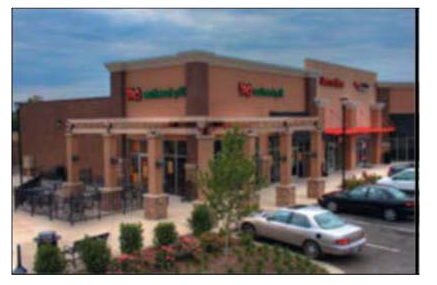
Flush architectural metal panels installed via concealed fasteners for wall systems may be used for up to fifty (50) percent of any single façade if utilized in conjunction with any of the above permitted building materials. Façades with more than fifty (50) percent must apply to the MPC Architectural Review Committee.
3.
As an alternative to Subsection 12.7.7.2, metal panels may be used as an accent material for up to twenty (20) percent of each façade. Accent materials are intended to be secondary façade materials that enhance the aesthetics of the building exterior. Accent materials generally consist of materials and/or colors that complement the primary materials and enhance a particular style.
4.
The following exterior materials are prohibited when used as a visible exterior façade material:
a.
Tilt-up concrete panels, smooth face concrete block, vinyl and aluminum siding.
b.
The provisions for façade materials apply to the front and sides of structures for a total of three (3) sides on stand-alone sites. However, these provisions apply to all four (4) sides buildings located within integrated developments with multiple buildings, out-parcels, and when facing the public right-of-way or a private drive.
B.
Industrial and A-1 Districts. Façade materials allowed in the Business and Special Purpose Districts shall be allowed and are required on a minimum of forty (40) percent on the front façade(s) only. Any other material types shall be allowed on the remaining sixty (60) percent of the building exterior.
C.
Colors. Buildings shall consist of natural earth tones that are found in the Bossier City/Parish Region. Natural earth tones include colors and shades of the following: red, orange, yellow, olive, tan, and brown. Other colors or combinations may be allowed by the Metropolitan Planning Commission. Architectural Review of alternative colors shall be reviewed as stated in Section 12.7.6 above.
12.7.8
Massing, Facades, and Entryways.
A.
Massing.
1.
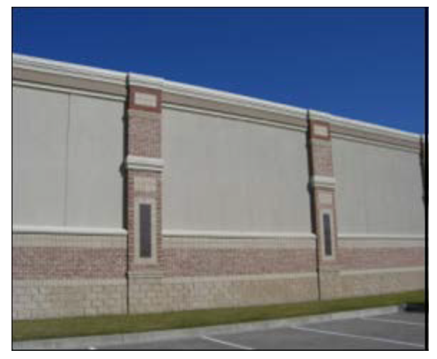
Long expanses of blank walls shall be avoided through the use of wall articulation. Breaking the continuous plane of the wall can be done by recessing vertical segments of the wall at several intervals. Also, a course of brick or other masonry material can be applied to the exterior walls to add visual interest at certain junctures in the wall. Changes in the material colors are also encouraged to break up wall surfaces. The maximum permitted width of an uninterrupted wall plane shall be fifty (50) feet. The front façade shall be articulated regardless of width.

B.
Façade. The façade of a building is defined as being all exterior walls structure. The "Front Façade" is the side that is facing the public right-of-way and/or private driveways or streets utilized for public travel or access.
1.
Buildings shall have a defined base and cap.
2.
All entryways used by the general public shall be identifiable and integrated into the building architecture.
3.
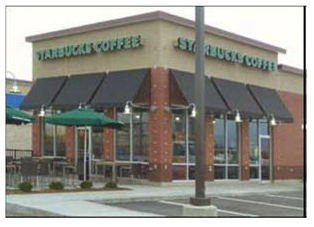
Outdoor storage display areas shall be included on the site plan submittal for review. Additional parking shall be provided to account for temporary outdoor storage or display areas that utilize parking spaces when they are in use.
4.
Awnings or canopies should be provided over pedestrian walkways within thirty (30) feet of all primary entrances used by the general public.
12.7.9
Roofs.
Hip, gable or flat roofs may be used.
Flat or Parapet roofs should be articulated and interrupted along the sides by breaking the plane of the roof along the sides and front.
Embellishment of a flat roof shall be achieved through the use of cornice or cap and base along the front and sides of the roof.
Roof mounted mechanical and air conditioning equipment shall be screened from public view on all sides, adjacent streets, and adjoining developments, with the use of parapets, dormers, or by other means. Exceptions may be allowed when topography or other unchangeable conditions such as elevated roadways, do not permit equipment to not be visible. Alternative means of screening shall be reviewed by the Architectural Review Committee.
Green Roofs, Mansard Roofs, and other alternative roof forms may be approved as a Conditional Use by the MPC zoning Board following the procedures of Section 3.3.2.
A.
Definitions.
1.
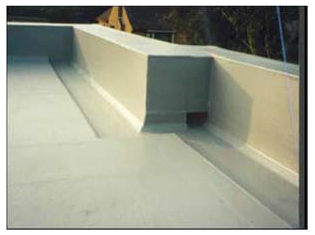
Parapet. An extension of the main walls of a building that runs along the edge of a roof. A parapet is often used to shield rooftop mechanical equipment and vents.
2.
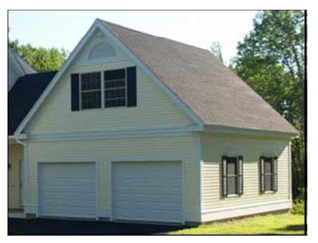
Gable. A triangular or ridged roof with two slopes that come to a point along a ridge in the middle.
3.
Cornice. A projecting decorative molding or overhang that crowns the top course of a wall.
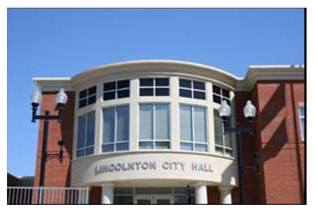
4.
Base. The lowest part of the building or structure.
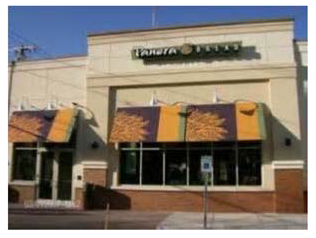
5.
Cap. The head or crowning feature of a building or structure.
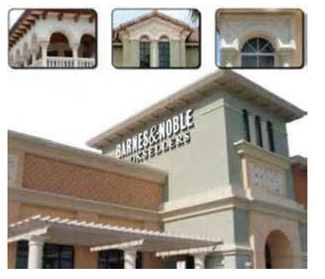
6.
Mansard. A roof with slopes on each of four sides.
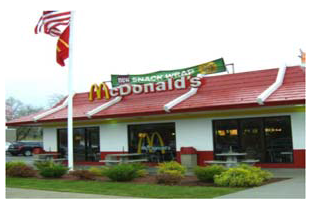
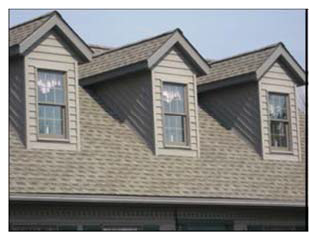
7.
Dormer. A structural component of a building that protrudes from a roof slope. It may contain windows and other architectural features.
12.7.10
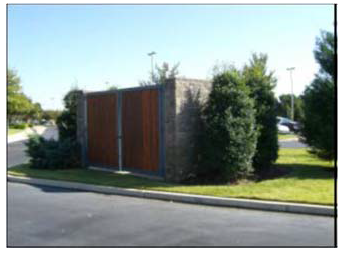
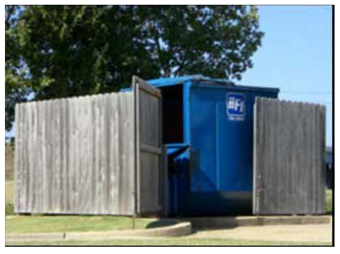
Garbage collection Areas. When Dumpsters, trash and recyclable material containment areas are visible from the street frontage or adjoining residential property, the following criteria shall apply to placement and construction type.
A.
Dumpster enclosures shall be constructed with masonry material and provide a gate or set of gates. If the gate side of the enclosure faces the street or adjoining residential property, the gates shall be of an opaque material. The gates shall be kept closed.
B.
The enclosure shall be at least two (2) feet taller the dumpster, but no taller than ten (10) feet in height without review by the MPC.
C.
Dumpster enclosures that are located within the front yard shall be landscaped. Landscaping shall be oriented to face adjoining properties and streets.
D.
Dumpster areas shall not be located within any designated streetscape or buffer yard.
E.
Development within the A-1, A-2 Airbase Buffer Zones and the Industrial districts are exempt from the above requirements.
12.7.11
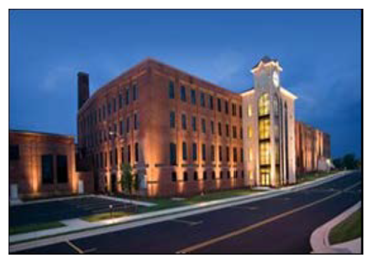
Exterior Building Lighting. Exterior building lighting plays an integral role in a commercial building whether its purpose is to emphasize architectural elements, landscaping or parking areas. Lighting fixtures should be compatible with the character, scale and function of the building as well as the surrounding area. Building mounted light fixtures shall not be located higher than the roofline and shall have the lamp source shielded from view as to minimize glare.
12.7.12
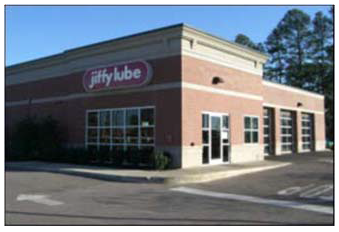
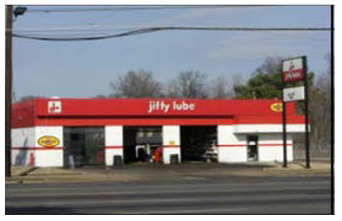
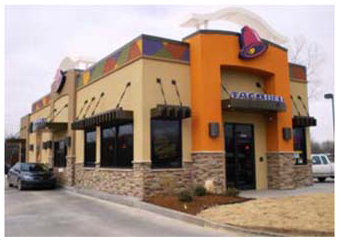
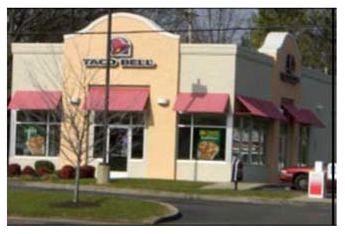
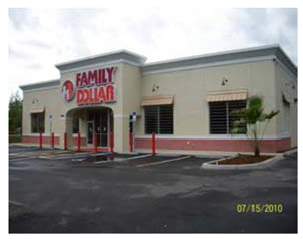
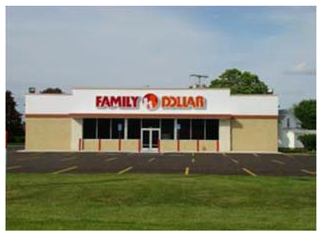
Appropriate Architectural Elements. Examples of appropriate and inappropriate architectural elements are provided below.
| Appropriate Design | Inappropriate Design |
 |  |
| Appropriate Roof Screening | Inappropriate Roof Screening |
 |  |
| Appropriate Design | Inappropriate Design |
 |  |
| Appropriate Garbage Collection Area | Inappropriate Garbage Collection Area |
 |  |
| Appropriate Design | Inappropriate Design |
 |  |
12.7.13
Appeals. Any property owner aggrieved by a decision of the MPC board, Executive Director or any Administrative Official in the interpretation of the Architectural Design Standards ordinance, may file an appeal to the Board of Adjustments. An appeal shall be filed within ten (10) days from the date of the alleged erroneous order, requirement, decision, determination, or interpretation. Failure to do so within the prescribed period will constitute a waiver of all rights to an administrative hearing.
A.
An appeal must be filed with the MPC office and shall include the following:
1.
The name, address, and telephone number of the petitioner.
2.
The decisions being appealed and description of the appeal on an applicable application provided by the zoning office.
3.
Site plan of the property involved showing dimension of the lot, architectural elevations, and any proposed improvements thereon.
B.
Upon completion of an application provided by the MPC staff, the appeal shall be scheduled for a hearing by the Board of Adjustments on the next available regular meeting of the Board of Adjustments.

