
Boulder City Zoning Code
CHAPTER 16
Definitions
9-16-1.- General Definitions.
(a)
The definitions contained in Chapter 1-2, "Definitions," B.R.C. 1981, apply to this title unless a term is defined differently in this chapter.
(b)
Terms identified with the references shown below after the definition are limited to those specific sections or chapters of this title:
(1)
Airport influence zone (AIZ).
(2)
Floodplain regulations (Floodplain).
(3)
Historic preservation (Historic).
(4)
Inclusionary housing (Inclusionary Housing).
(5)
Solar access (Solar).
(6)
Wetlands Protection (Wetlands).
(7)
Signs (Signs).
(c)
The following terms as used in this title have the following meanings unless the context clearly indicates otherwise:
A—E
Abandonment means the permanent decommissioning of an oil and gas facility, including any single well or portion of pipeline.
Accessory means subordinate or incidental to, and on the same lot or on a contiguous lot in the same ownership as, the building or use being identified or advertised. (Signs)
Accessory building orstructure means a detached building or structure located upon the same lot as the principal building or structure to which it is related and that:
(1)
Is subordinate to and customarily found with the principal building, structure, or use of the land;
(2)
For residential uses, the building coverage is no greater than the building coverage for the existing or proposed principal building;
(3)
Is operated and maintained for the benefit or convenience of the occupants, employees, and customers of or visitors to the premises with the principal use; and
(4)
Unless approved as an accessory dwelling unit pursuant to Subsection 9-6-3(n), the accessory building or structure:
(A)
Is used only by the occupant of the principal building or structure, and
(B)
For residential uses, the building or structure does not have any bathtub or shower fixtures and no more than one of any of the following combinations of plumbing fixtures:
1.
One sink, one clothes washer connection, and one hose bib; or
2.
One sink and one toilet.
Accessory dwelling unit means a separate and complete single housekeeping unit within a detached dwelling unit or within an accessory structure to the principal dwelling unit of the lot or parcel upon which the unit is located.
Accessory sales means incidental retail sales where sales do not exceed fifteen percent (twenty-five percent in an IS zone) of the gross floor area of the principal use and if the products sold are directly related to the principal use. Examples, art work sold at an artist's studio, convenience goods in a hotel or motel, health care products sold by a healing arts practitioner, or a factory outlet store selling products manufactured on the site.
Accessory use means a use located on the same lot as the principal building, structure, or use to which it is related and that:
(1)
Is subordinate to and customarily found with the principal use of the land; and
(2)
Is operated and maintained for the benefit or convenience of the occupants, employees, and customers of or visitors to the premises with the principal use.
Accredited levee or provisionally accredited levee means a system of artificial embankment(s) or flood control structure(s) used for property protection, flood control, and flood hazard mitigation that is accredited or provisionally accredited and mapped Zone X (shaded) by the Federal Emergency Management Agency (FEMA) under the National Flood Insurance Program (NFIP). (Floodplain)
Act means the city manager's grant of a siting application or issuance of a written decision denying a siting application. (Wireless Communications Facility)
Administrative review means a review process wherein the city manager is granted the authority to make an evaluation and the final decision.
Affordability standard means rents do not exceed the maximum rents established by the Colorado Housing and Finance Authority or similar agency for households earning no more than seventy-five percent of the area median income. The city manager shall publish a table setting forth the maximum rents based on information provided by the Colorado Housing and Finance Authority or its similar agency.
Affordable accessory dwelling unit means a unit for which the rents meet the affordability standard.
Affordable housing fund means a fund to which contributions collected pursuant to Chapter 9-13, "Inclusionary Housing," B.R.C. 1981, shall be deposited and from which monies shall be expended, solely to construct, purchase, and maintain permanently affordable units and for the costs of administering programs consistent with the purposes of said chapter. (Inclusionary Housing)
Airport means areas used for landing or take-off of aircraft, airport buildings, tie down areas, and appurtenant areas, which the city has represented to the federal government as being held for airport purposes. (AIZ)
Alley means a public roadway designed to serve as secondary access to the side or the rear yard of those properties whose principal frontage is on a public street.
Alteration means any addition or modification of any portion of the exterior of a building or designated feature that changes the architectural style, arrangement, texture, or material of the building or feature or significantly changes the color. Alteration includes, without limitation, the removal or replacement of historic building elements, materials, windows, doors, and porches if such change, addition, or modification is visible from the public street, sidewalk, alley, or park. (Historic)
Animal hospital or veterinary clinic means a place where animals or pets are given medical or surgical treatment and where the boarding of animals is limited to those receiving medical care or treatment.
Animal kennel means an establishment where domestic animals such as cats and dogs are boarded, trained, bred, or provided daycare.
Antenna shall mean any device used to transmit and/or receive radio or electromagnetic waves such as, but not limited to panel antennas, reflecting discs, microwave dishes, whip antennas, directional and non-directional antennas consisting of one or more elements, multiple antenna configurations or other similar devices.
Applicant means the owner of a particular property, who may be represented by an agent designated in writing, who applies for any process or permit governed by this title. For an oil and gas operations use, applicant shall mean a person, corporation or other legal entity possessing the legal right to develop a mineral resource who has filed an application under this title for an oil and gas operations use.
Approving authority means the individual or agency which grants final approval to an applicant under this title.
Appurtenances means:
(1)
Architectural features not used for human occupancy, consisting of spires, belfries, cupolas or dormers, silos, parapet walls, and cornices without windows; and
(2)
Necessary mechanical equipment usually carried above the roof level, including, without limitation, chimneys, ventilators, skylights, antennas, microwave dishes, and solar systems, and excluding wind energy conversion systems.
Architectural projection means any projection that is not intended for occupancy and that extends beyond the face of an exterior wall of a building, including, without limitation, a roof overhang, mansard, unenclosed exterior balcony, marquee, canopy, awning, pilaster, and fascia, but not including a sign. (Signs)
Area median income or AMI means the midpoint of household incomes as determined by HUD for the Boulder Primary Metropolitan Statistical Area (PMSA), and adjusted for family size; half of all household incomes are higher and half are lower than the AMI. Income limits based on AMI are used to determine if a household's gross income qualifies for affordable housing and other assistance programs.
Area of special flood hazard means the land in the floodplain subject to a one percent or greater chance of flooding in any given year. Such areas may be designated as Zones A, AO, AH, AE, and A1-30 on the FIRM for the City of Boulder. (Floodplain)
Art studio or workshop means the workshop or studio of an artist, sculptor, photographer, jeweler, potter, craftsperson, furniture maker, cabinet maker, or other artist or artisan primarily used for on-site production of unique custom goods by hand manufacturing involving the use of hand tools and small-scale equipment, which may include accessory sales, lessons, and limited events.
At-risk population facility means a preschool, public or private primary or secondary school, before and after school care center with twelve or more students, daycare center with twelve or more children the parents or guardians of which do not remain in the same building of the facility, group home, or residential or congregate care facility with twelve or more residents. (Floodplain)
Atrium means an opening through at least one floor level of a building, excluding detached dwelling units, that is enclosed on all sides and by the roof or upper floors of the building, but excluding a stairway, elevator, or other space for mechanical equipment.
Attached accessory dwelling unit means a separate and complete single housekeeping unit within a detached dwelling unit.
Automatic teller machine (ATM) means an automated structure providing limited banking services without personal attendants.
Automobile parking garage means an enclosed or unenclosed structure for parking motor vehicles, but shall not be used for long-term storage of such vehicles.
Avigation easement means Appendix F, "Avigation Easement," of this title. (AIZ)
Awning means an architectural projection roofed with flexible material, including, without limitation, fabric, supported entirely from an exterior wall of a building, and that may be retracted, folded, or collapsed against the face of the supporting building. (Signs)
Awning sign means a sign depicted or placed upon, attached to, constructed in, or supported by a marquee, canopy, or awning. (Signs)
Bank-full discharge means the stream flow generally considered to be that occurring within a recurrence interval of 1.5 to 2 years, on average, that is most effective for moving sediment, forming or removing bars, and forming or changing bends and meanders, all of which result in the average morphological characteristics of a channel. (Wetlands)
Bank-full width means the width of the channel measured at a section perpendicular to a stream flow at bank-full discharge. (Wetlands)
Banner means a sign of flexible material, including, without limitation, fabric, that does not include rigid supporting materials. (Signs)
Base flood elevation means the computed elevation to which floodwater is anticipated to rise during the one hundred-year flood. (Floodplain)
Basement means any enclosed area of a building having its lowest floor a minimum of two feet below grade level on all sides. (Floodplain)
Basement means that portion of a building that is partially or totally below grade such that no portion of the space extends more than two feet above the natural grade around the perimeter of the building. (See Figure 16-1 of this section.)
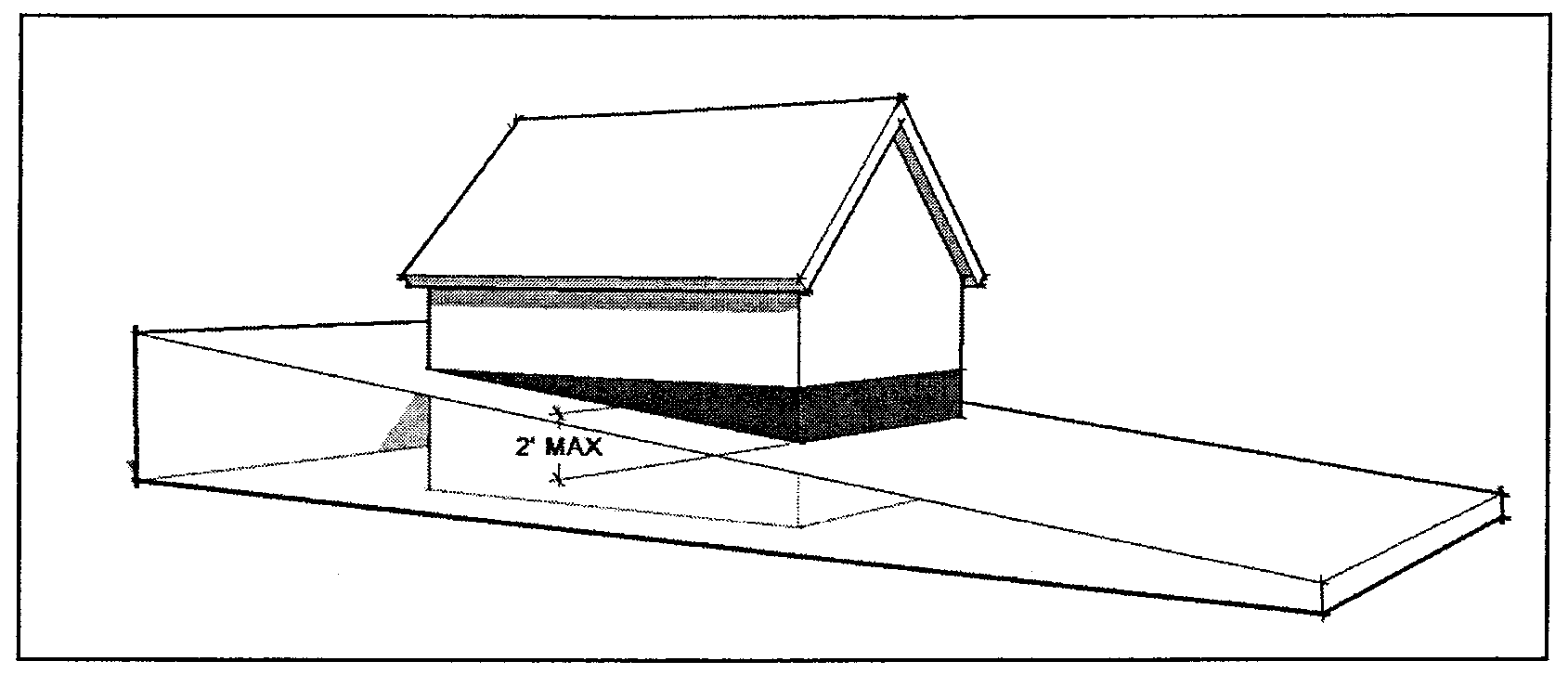
Figure 16-1: Basement
Base station means a structure or equipment at a fixed location that enables Federal Communications Commission-licensed or authorized wireless communication between user equipment and a communications network. The term does not encompass a tower as defined below or any equipment associated with a tower.
(1)
The term includes, but is not limited to, equipment associated with wireless communication services such as private, broadcast, and public safety services, as well as unlicensed wireless services and fixed wireless services such as microwave backhaul.
(2)
The term includes, but is not limited to, radio transceivers, antennas, coaxial or fiber-optic cable, regular and backup power supplies, and comparable equipment, regardless of technological configuration (including Distributed Antenna Systems and small cell networks).
(3)
The term includes any structure other than a tower that, at the time the relevant application is filed with the state or local government under this section, supports or houses equipment described in paragraphs (1) through (2) of this definition that has been reviewed and approved under the applicable zoning or siting process, or under another state or local regulatory review process, even if the structure was not built for the sole or primary purpose of providing such support.
(4)
The term does not include any structure that, at the time the relevant application is filed with the state or local government under this section, does not support or house equipment described in paragraphs (1) through (2) of this definition.
Bed and breakfast means a building of a residential character other than a hotel or motel compatible with the neighborhood offering:
(1)
Temporary lodging for less than one month;
(2)
Twelve or fewer rooms for guests;
(3)
At least one meal daily for guests; and
(4)
A manager residing on the premises, but not providing the accessory uses normally associated with a hotel.
Bedroom means a room that is not a garage, kitchen, bathroom, dining area, or living room, that has over seventy square feet of floor area, and that is used for sleeping or capable of being used for sleeping.
Beneficiary means the owner or possessor of any real property protected by a solar fence, the owner or possessor of any real property for which a solar access permit has been issued pursuant to this title, and any person entitled to the beneficial use of any energy produced by a solar energy system for which access is protected, in whole or in part, by the terms of this title. (Solar)
Berm means a strip of mounded topsoil which provides a visual screen.
Best management practices means economically feasible conservation practices, and land and water management measures that avoid or minimize adverse impacts to the chemical, physical, or biological characteristics of wetlands. These practices may be further described in rules promulgated by the city manager, which may be amended from time to time, pursuant to Chapter 1-4, "Rulemaking," B.R.C. 1981. Such practices include, without limitation, avoiding wetlands whenever practicable; controlling soil loss; reducing water quality degradation; appropriate use of native wetland plant material; and minimizing the impacts on hydrologically connected surface and ground water and on the plants and animals that it supports. The rules presently used are "City of Boulder Wetlands Protection Program: Best Management Practices" adopted July, 1995; and "City of Boulder Wetlands Protection Program: Best Management Practices - Revegetation Rules" adopted July, 1998. (Wetlands).
Boarding house means an establishment subject to the City of Boulder Building Code where, for direct or indirect compensation, lodging, with or without meals, is offered for one month or more. A boarding house does not include a fraternity, sorority, or detached dwelling unit.
Boulder Valley planning area means the limits of the area defined in the Boulder Valley Comprehensive Plan, as it may be amended. (Wetlands)
Breezeway means a roofed at grade open passage connecting a detached dwelling unit to an accessory building. A breezeway is not a space enclosed by walls.
Brewery means a use with a manufacturer or wholesaler license issued under § 44-3-401, et seq., C.R.S., and does not include any retail type liquor license under § 44-3-309, et seq., C.R.S., on the lot or parcel, that is primarily a manufacturing facility, where malt liquors are manufactured on the premises, that may include a tap room that is less than or equal to thirty percent of the total floor area of the facility or one thousand square feet, whichever is greater.
Brewpub means an establishment that is primarily a restaurant where malt liquor is manufactured on the premises as an accessory use. A brewpub may include some off-site distribution of its malt liquor consistent with state law.
Buffer area means an area around a wetland within which activities are likely to have an adverse impact upon wetland functions. Buffer area boundaries are determined according to the criteria set forth in Paragraphs 9-3-9(c)(5) and (c)(6), B.R.C. 1981. (Wetlands)
Buffer zone means an area between land uses providing fencing, berms, mounds, plant materials, or any combination thereof to act as visual or noise buffers.
Building means any structure built for the support, shelter, or enclosure of persons, animals, or property of any kind. For purposes of this title, portions of buildings connected by fully enclosed attachments that are useable by the buildings' occupants shall be treated as one building.
Building means any structure built for the support, shelter, or enclosure of persons, animals, or property of any kind. (Historic)
Building and landscaping contractor means the various trades that make up the construction and landscape industry such as plumbing, carpentry, electrical, mechanical, painting, roofing, concrete, landscaping, and irrigation.
Building coverage means the maximum horizontal area within the outer perimeter of the building walls, dividers, or columns at ground level or above, whichever is the greater area, including, without limitation, breezeways, courts, and exterior stairways, but excluding:
(1)
Uncovered decks, stoops, patios, terraces, and stairways, all less than thirty inches high;
(2)
The outer four feet of completely open, uncovered, cantilevered balconies that have a minimum of eight feet vertical clearance below;
(3)
Up to three hundred square feet of a detached dwelling unit front porch that is adjacent to a street;
(4)
Up to one hundred fifty square feet of additional porch area not located in the front yard for a detached dwelling unit;
(5)
One accessory building, no larger than 120 square feet in size and no taller than ten feet in height, associated with a detached dwelling unit; and
(6)
Up to thirty inches of a roof or a breezeway overhang.
Building envelope means that area on a lot on which a structure can be erected consistent with existing setback requirements that is defined by the setback lines applicable to that lot consistent with the underlying zoning district or pursuant to a variance, a site review, or prior city approval. (See Figure 16-2 of this section.)
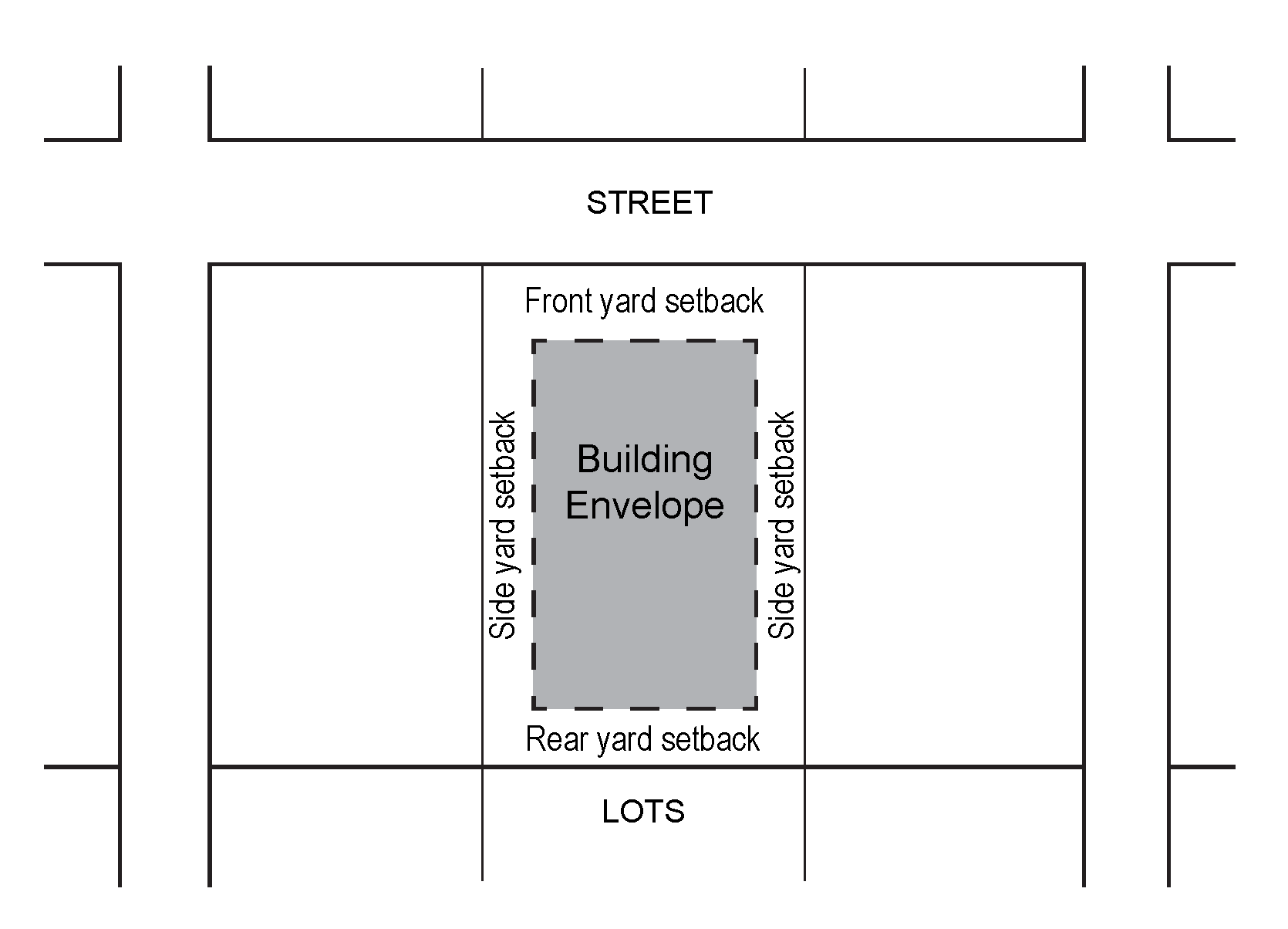
Figure 16-2: Building Envelope (General)
Building envelope means that area on any lot on which a structure can be erected consistent with existing setback requirements, and is defined by the setback lines applicable to that lot. For planned unit developments or other property that may not be subject to setback requirements as prescribed in Section 9-7-1, "Schedule of Form and Bulk Standards," B.R.C. 1981, the building envelope is defined by a line running around the protected structures on the property eight feet from their exterior walls but running no closer than five feet from any property boundary (to the extent required to avoid running closer than five feet to any property boundary this line may run less than eight feet from the exterior wall of any protected structure). (Solar)
Building mass means the three-dimensional bulk of a building (height, width, and depth).
Building material sales means a business primarily engaged in the retail sale from the premises of supplies used in construction including, without limitation, doors, hardware, windows, cabinets, paint, wall coverings, floor coverings, garden supplies, and large appliances and where the storage of materials is primarily within the principal building, but does not include a lumber yard.
Building modification means a change to the interior or exterior of a building including, without limitation, interior reconfiguration, remodeling or changes to building facades, or a change to a building that results in an increase in size, volume, floor area, or building coverage.
Building permit has the same meaning as the same term in Chapter 10-5, "Building Code," B.R.C. 1981.
Building, principal means the building containing the primary use on the lot.
Building site means either a lot or a number of parcels that have merged together to form a single building site pursuant to Subsection 9-9-2(c), B.R.C. 1981.
Business support services means establishments that provide support services primarily to other businesses such as: duplicating, mailing, parcel shipping, security, property management, business equipment repair, and office supplies.
BVCP means Boulder Valley Comprehensive Plan.
B.V.R.C. means the Boulder Valley Regional Center, as specified in this title. (Signs)
Caliper means the diameter of the tree trunk measured six inches above the ground for trees up to and including four-inch caliper size and twelve inches above the ground for larger trees.
Campground means an area on which accommodations for temporary occupancy, such as tents or recreational vehicles, are located or may be placed for less than one month, and which is primarily used for recreational purposes and retains an open air or natural character.
Canopy means a roofed architectural projection which is supported by an exterior wall of a building and by additional supports, including, without limitation, columns, upright poles, or braces extended from the ground. (Signs)
Canopy sign - see definition of awning sign. (Signs)
Car wash means a facility used for the washing and cleaning of passenger vehicles, recreational vehicles, or other light-duty equipment, by hand or with manually operated equipment or automatic machinery.
Car-pool lot means a facility used for parking of vehicles where the occupants of such vehicles are transported to and from other destinations via mass transit or carpool.
Care and shelter means a use category that includes uses characterized by providing temporary care and shelter facilities on a short-term basis.
Caretaker dwelling unit means one dwelling unit associated with a nonresidential use in a nonresidential zone which is occupied by one or more employees who reside on site and oversee or manage the operation or provide care, protection, or security for the property.
Carport means a single-story covered building for the shelter of vehicles that is not enclosed on more than two sides.
CDPHE means Colorado Department of Public Health and Environment.
Cemetery means lands used for the internment of the dead, including mausoleums, graves, columbarium, related sales and maintenance facilities, and a mortuary or funeral chapel.
Center or centerline means an imaginary line that is equidistant from the boundaries of the street.
Certificate of completion means a written document that is required prior to occupancy, issued for a use upon a developer's compliance with the provisions of this code and any applicable development agreement.
Change in a watercourse means any change in an existing thalweg, bed, or bank of a watercourse. (Floodplain)
City manager means the city manager of the City of Boulder, Colorado, or the manager's authorized representative.
Cleaning and laundry plant means an establishment that cleans garments, fabrics, or draperies. The plant is generally not visited by individual customers, but rather by commercial dry cleaning drop-off services. This definition includes uses such as rug cleaning or repair service, pressing of garments or fabrics, carpet or upholstery, industrial launderers, and linen supply.
Close means the time at which a business ceases to accept additional patrons for service.
Closed-loop pitless system means a system consisting of steel tanks for mud mixing and storage and the use of solids removal equipment by some combination of shakes, mud cleaners and centrifuges to separate drill cutting solids from the mud stream. The solids are placed in containment provided on the site. A closed-loop pitless system does not include use of a pit.
Club or lodge means a nonprofit organization with established formal membership requirements and bylaws, and with the objective of providing for the interests of its members.
Cold storage locker means an establishment primarily engaged in the warehousing and storage of perishable goods under refrigeration. The establishment may also rent locker space for the storage of food products for individual households and provide incidental services for processing, preparing, or packaging such food for storage.
COGCC means Colorado Oil and Gas Conservation Commission.
College or university means a post-secondary education provided by a public or private institution which awards associate, baccalaureate, or higher degrees, but does not include a specialized instruction facility.
Collocation means the mounting or installation of transmission equipment on an eligible support structure for the purpose of transmitting and/or receiving radio frequency signals for communication purposes.
Commercial kitchen and catering means an establishment in which the principal use is the preparation of food or meals on the premises, and where such food or meals are delivered to an off-site location for sale or consumption.
Commercial sign means a sign which identifies, advertises, or directs attention to a business or is intended to induce a purchase of a good, property, or service, including, without limitation, any sign naming a brand of good or service and any sign which is not a noncommercial sign. (Signs)
Community, cultural, and educational means a use category that includes uses providing local services directly to people of the community. They are typically of a public, non-profit, or charitable nature but may also include for-profit institutions.
Community garden means land or rooftops that are gardened by a group of people that do not reside on the property and where the garden activities are not crop production or greenhouse and plant nursery uses.
Community services means an organization whose activities are conducted for the benefit of the community and not for the gain of any private person or organization, and may include, without limitation, patriotic, philanthropic, social service, welfare, benevolent, educational, cultural, charitable, scientific, historical, athletic, or medical activities.
Concept plan means a generalized plan prepared in compliance with Section 9-2-13, "Concept Plan Review and Comment," B.R.C. 1981, for proposed projects that exceed the Site Review thresholds of Subsection 9-2-14(b), B.R.C. 1981.
Conditional use means a use that is allowed within a zoning district after demonstrating compliance with specific use standards.
Conforming use means any use of a building or use of a lot that is permitted by Section 9-6-1, "Schedule of Permitted Land Uses," B.R.C. 1981 and meets any applicable specific use standards. A conforming use also includes:
(1)
A legal existing use that is not prohibited but was not approved as a conditional use or use review use;
(2)
A use approved pursuant to a valid use review or special review, except where the review was a nonconforming use review.
Congregate care facility means a facility for long-term residence:
(a)
Where at least eighty percent of the occupied units are occupied by at least one person who is sixty-five years of age or older;
(b)
The facility is in compliance with the requirements of the federal Fair Housing Act, 42 U.S.C. § 3601, et seq., and the Colorado Housing Practices Act, § 24-34-501, et seq., C.R.S., with respect to housing for older adults; and
(c)
Which shall include, without limitation, common dining and social and recreational features, special safety and convenience features designed for the needs of older adults, such as emergency call systems, grab bars, and handrails, special door hardware, cabinets, appliances, passageways, and doorways designed to accommodate wheelchairs, and the provision of social services for residents which must include at least three of the following: meal services, transportation, housekeeping, linen, and organized social activities.
Contributing building means a building within a historic district established pursuant to Chapter 9-11, "Historic Preservation," B.R.C. 1981, that the city manager finds is consistent with the description of the characteristics of the historic district justifying its designation and is in substantially original condition; has had minimal changes to the defining characteristics of the building; or has been appropriately restored to a substantially original condition. Contributing buildings may have been previously altered with compatible additions.
Control means a fully automatic device which can turn on, turn off, or dim lights at predetermined times. A control includes, without limitation, an astronomical time clock, photocell, motion detector, and dimmer.
Convenience retail sales means a retail establishment offering for sale a limited line of groceries and household items intended for the convenience of the neighborhood.
Conveyance zone means those portions of the floodplain required for the passage or conveyance of the one-hundred-year flood. The conveyance zone is delineated based on an equal encroachment methodology (measured in volume of water), which is applied to the floodplain from the edges of the flood channel to a point where the one-hundred-year flood profile will be raised no more than six inches, after considering a reasonable expectation of blockage at bridges and other obstructions by flood-borne debris. The city may, in its discretion, delineate the conveyance zone on city owned land or right-of-way based on unequal encroachment to minimize delineation on other properties. The conveyance zone is equivalent to a floodway delineation based on a six-inch rise. (Floodplain)
Courtyard means any open, unclimatized space, without a roof, bounded by building walls for at least seventy-five percent of its perimeter.
Crawl space means the enclosed area contained inside the foundation walls and below the habitable floor of a structure. Crawl spaces having the lowest floor a minimum of two feet below grade level on all sides shall be considered a basement, and not a crawl space. (Floodplain)
Critical facility means any structure or related infrastructure, the loss of which may result in severe hazards to public health and safety or may interrupt essential services and operations for the community at any time before, during, and after a flood. Critical facilities are classified as follows: (1) essential services facility, (2) hazardous material facility, and (3) at-risk population facility. (Floodplain)
Critical species means plant, animal, or other wildlife species listed in the most current Boulder County Comprehensive Plan as a species of concern; or the most current Boulder Valley Comprehensive Plan as a species of local concern. (Wetlands)
Crop production means the commercial growing of horticultural materials such as vegetables, fruit trees, flowers, ornamental plants, and sod for wholesale sales.
Crown spread means the typical circumference of a tree at maturity.
Cumulative impacts means the combined impacts of a use over time, considering the effects of adding impacts to other impacts and impacts interacting with each other, and any compounding of effects over time. The cumulative impacts of a use can be viewed as the total effects on public health, safety, and welfare or the environment or wildlife of the use and all other activities affecting them.
Custodial care facility means a facility providing custodial care and treatment in a protective living environment for persons residing voluntarily or by court placement, including, without limitation, correctional and post-correctional facilities, juvenile detention facilities, and temporary detention facilities.
Day shelter means a facility providing basic services generally during daylight hours, which may include food; personal hygiene support; information and referrals; employment, mail, and telephone services; but excluding overnight sleeping accommodations, to people with limited financial resources, including people who are homeless.
Daycare center means a facility:
(1)
Licensed by the state, if applicable;
(2)
Providing care for children or adults who do not reside in the facility, are present primarily during daytime hours, and do not regularly stay overnight;
(3)
Which may include some instruction; and
(4)
Which is not located within a dwelling unit.
Daycare, home means a facility:
(1)
Licensed by the state, if applicable;
(2)
Which is located within a dwelling unit; and
(3)
Providing care for twelve or fewer children or adults who (except for family members) do not reside in the facility, are present primarily during daytime hours, and do not regularly stay overnight. Family members who receive care in the facility are included in the total.
Declaration of use means a document signed under oath and recorded against the title of land in order to provide notice that the use of the land or structure is subject to certain limitations and that the use will remain in compliance with this code and other ordinances of the city.
Demolition or demolish means an act or process which removes one or more of the following. The shaded area illustrates the maximum amount that may be removed without constituting demolition.
(1)
Fifty percent or more of the roof area as measured in plan view (see diagram);

(2)
Fifty percent or more of the exterior walls of a building as measured contiguously around the "building coverage" as defined in this section (see diagram); or

(3)
Any exterior wall facing a public street, but not an act or process which removes an exterior wall facing an alley (see diagram).
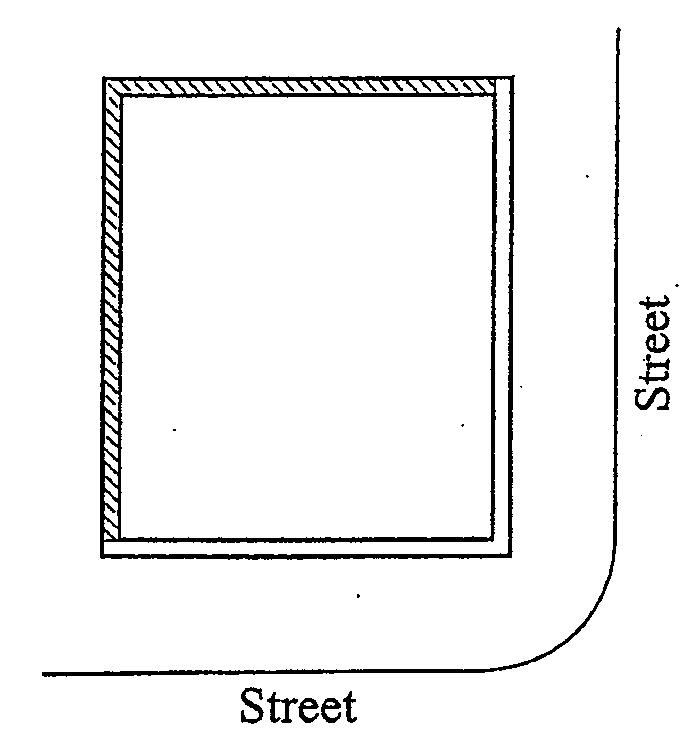
A wall shall meet the following minimum standards to be considered a retained exterior wall:
(A)
The wall shall retain studs or other structural elements, the exterior wall finish and the fully framed and sheathed roof above that portion of the remaining building to which such wall is attached;
(B)
The wall shall not be covered or otherwise concealed by a wall that is proposed to be placed in front of the retained wall; and
(C)
Each part of the retained exterior walls shall be connected contiguously and without interruption to every other part of the retained exterior walls. (Historic)
Demolition or demolish means an act or process which results in the removal or intentional destruction of a principal building that includes one or more dwelling units. (Inclusionary Housing)
Deployment means placement, construction, or modification of a wireless communications facility. (Wireless Communications Facility)
Designated feature means any structure or object other than a building located on a landmark site or within a historic district that is identified in the ordinance designating the landmark site or historic district. This includes, but is not limited to: bridges, environmental features, landscaping features, memorials, sculptures, signs, towers, engineered products, or items of natural substance. (Historic)
Designated historic property means a property with a building designated as an individual landmark or recognized as contributing to a designated historic district under Chapter 9-11, "Historic Preservation," B.R.C. 1981.
Detached accessory dwelling unit means a separate and complete single housekeeping unit within an accessory structure to the principal dwelling unit of the lot or parcel upon which the unit is located.
Developer means any person who seeks a city permit or approval for the construction of a development.
Development means any change to improved or unimproved real estate, including, without limitation, constructing, relocating, rehabilitating, reconstructing, or expanding or enlarging (but not maintaining) a building or other structure or portion thereof, or establishing or changing a use, or mining, dredging, filling, grading, paving, or excavation. (Floodplain)
Development means the entire plan to construct or place one or more dwelling units on a particular parcel or contiguous parcels of land within the city, including, without limitation, a planned unit development, site review, or subdivision approval. (Inclusionary Housing)
Development permit means any permit or authorization issued by the city as a prerequisite for undertaking any improvement to real property including, without limitation, building permits, site reviews, variances, use reviews, nonconforming use permits, discretionary review, subdivision, annexation, initial zoning, or rezoning.
Distillery means a use with a manufacturer or wholesaler license issued under § 44-3-401, et seq., C.R.S., and does not include any retail type liquor license under § 44-3-309, et seq., C.R.S., on the lot or parcel, that is primarily a manufacturing facility, where spirituous liquors are manufactured, that may include a tasting room that is less than or equal to thirty percent of the total floor area of the facility or one thousand square feet, whichever is greater.
Dormitory means a building intended or used principally for long-term sleeping accommodations only by students of a college, university, or other public, quasi-public, or private institution. A common kitchen and common rooms for social, media, entertainment, and recreation purposes may also be provided.
Drip line means a vertical line extending downward from the tips of the outermost branches of a tree or shrub to the ground.
Drive-thru means any use that is not a fuel service station, which by design, physical facilities, services, or operating procedures permits persons to receive services or obtain goods while remaining in their motor vehicles.
Duplex means a structure containing only two dwelling units.
Duplicating service means a commercial use providing reproduction and duplicating services, including, offset printing, photocopying, and blueprint printing.
Dwelling unit means one room or rooms with internal connections for residential occupancy and including bathroom and kitchen facilities. Multiple dwelling units exist if there is more than one meter for any utility, address to the property, or kitchen; or if there are separate entrances to rooms which could be used as separate dwelling units; or if there is a lockable, physical separation between rooms in the dwelling unit such that a room or rooms on each side of the separation could be used as a dwelling unit or rooms with no internal connections.
Dwelling unit, attached means three or more dwelling units within a structure.
Dwelling unit, detached means no more than one dwelling unit within a structure.
Efficiency living unit means a dwelling unit that contains a bathroom and kitchen and does not exceed a maximum floor area of four hundred seventy-five square feet.
Electric sign means any sign containing electric wiring, but not including signs illuminated by exterior light sources, such as floodlights. (Signs)
Eligible facilities request means any request for modification of an existing eligible support structure that does not substantially change the physical dimensions of such facility involving: (1) collocation of new transmission equipment; (2) removal of transmission equipment; or (3) replacement of transmission equipment.
Eligible support structure means a wireless communications facility including any structure supporting or housing the wireless communications facility or its equipment that has been reviewed, approved and lawfully constructed, in accordance with all requirements of applicable law as of the time it was built, when the relevant eligible facilities request is filed. The term includes a structure supporting or housing a wireless communications facility even if the structure was not built for the sole or primary purpose of providing such support. The term does not include a structure that does not support or house a wireless communications facility at the time the relevant eligible facilities request is filed.
Emergency shelter means a facility providing intermediate-term housing to people with limited financial resources, including people who are homeless, where occupancy is permitted on a twenty-four-hour basis. Accessory services that also may be provided at the facility include food, counseling, transportation services, and services to support the personal care of the residents of the facility including medical care, dental care, and hygiene.
Ephemeral stream means a stream, or any portion thereof, that has flowing water only during, and for a short duration after, precipitation events in a typical year. Ephemeral stream beds are locating above the water table year-round and do not convey groundwater. Runoff from rainfall is the primary source of water for stream flow. (Wetlands)
Equipment repair and rental means a business that rents and/or repairs items such as tools, construction, lawn, garden, building maintenance, party equipment, and the rental of moving trucks and trailers, but does not include an automobile repair or rental facility, and may include outdoor storage of equipment.
Essential municipal and public utility service means distribution, collection, communication, supply or disposal systems, including, without limitation, poles, wires, transformers, disconnects, regulators, mains, drains, sewers, pipes, conduits, cables, fire alarm boxes, police call boxes, traffic signals, hydrants, and other similar equipment and accessories that are reasonably necessary for public utilities or the city to furnish adequate service or for the public health, safety, or welfare.
Essential service facility means any facility providing an essential service that, if flooded, may result in severe hazards to public health and safety or interrupt essential services and operations for the community at any time before, during, or after a flood. Examples of essential service facilities include, without limitation, the following:
(1)
Public safety facilities such as police stations, fire and rescue stations, and emergency operation centers;
(2)
Emergency response facilities, such as emergency vehicle and equipment storage, and essential governmental work centers for continuity of government operations;
(3)
Emergency medical facilities, such as hospitals, emergency care, urgent care, and ambulance services, but excluding clinics, doctor's offices, and non-urgent care medical facilities;
(4)
Shelters designated by the city manager that will be used during or after a flood for displaced persons;
(5)
Communication facilities, such as main hubs for telephone systems, main broadcasting equipment for television systems, radio and other emergency warning systems, but excluding towers, poles, lines, cables, and conduits;
(6)
Public utility plant facilities and essential equipment for treatment, generation, storage, pumping, and distribution, such as hubs for water, wastewater, power, and gas, but excluding hydroelectric facilities, towers, poles, power lines, buried pipelines, transmission lines, distribution lines, and service lines;
(7)
Essential governmental facilities, including, without limitation, facilities where permanent records, as defined by an agency's data retention policy, are stored; courts and jails; building permitting and inspection services; departments that manage utilities and transportation systems; information technology departments, finance departments, and health departments; the county commissioner's office, the city manager's office, and maintenance and equipment centers; and
(8)
Air transportation lifelines, such as an airport or heliport, and structures serving emergency functions, and associated infrastructure, such as aviation control towers, air traffic control centers, and emergency equipment aircraft hangars. (Floodplain)
Exceptional hardship means a substantially disproportionate burden in relationship to the benefit to be derived from conformance with the requirements of this title. (Floodplain)
Existing manufactured home park or subdivision means a manufactured home park for which the construction of facilities for servicing the lots on which the manufactured homes are to be affixed (including, at a minimum, the installation of utilities, the construction of streets, and either final site grading or the pouring of concrete pads) was completed prior to July 12, 1978. (Floodplain)
Expansion of a nonconforming use means any change or modification to a nonconforming use that constitutes:
(1)
An increase in the floor area, traffic generation, outdoor storage, or visual, noise, or air pollution;
(2)
Any change in the operational characteristics which may increase the impacts or create adverse impacts to the surrounding area including, without limitation, the hours of operation, noise, or the number of employees or customers;
(3)
The addition of bedrooms to a dwelling unit, except a detached dwelling unit; or
(4)
The addition of one or more dwelling units.
Expansion or enlargement of a structure means any addition of an exterior wall to the structure or any addition to the floor area of the structure, whether under, at, or above grade, and whether or not the external dimensions of the structure are changed, or the reconstruction of a flood-damaged portion of a structure, so long as such expansion, enlargement, or reconstruction does not constitute a "substantial modification" or a "substantial improvement." (Floodplain)
Expansion to existing manufactured home park or subdivision means the preparation of additional sites by the construction of facilities for servicing the lots on which the manufactured homes are to be affixed (including, without limitation, the installation of utilities, the construction of streets, final site grading, or the pouring of concrete pads). (Floodplain)
Expression line means a slight change in the layup of a building material through an offset, indentation, or protrusion of a building material by at least two inches to create detail, shadow lines, and variation.
F—J
Family means the heads of household plus the following persons who are related to the heads of the household: parents and children, grandparents and grandchildren, brothers and sisters, aunts and uncles, nephews and nieces, first cousins, the children of first cousins, great-grandchildren, great-grandparents, great-great-grandchildren, great-great-grandparents, grandnieces, grandnephews, great-aunts and great-uncles. These relationships may be of the whole or half blood, by adoption, guardianship, including foster children, or through a marriage or a domestic partnership meeting the requirements of Chapter 12-4, "Domestic Partners," B.R.C. 1981, to a person with such a relationship with the heads of household.
FEMA means the Federal Emergency Management Agency. (Floodplain)
Financial institution means a use that provides financial and banking services to consumers and clients. Typical uses include banks, savings and loans associations, savings banks, credit unions, and automatic banking and teller machines.
Firewood operation means a commercial facility where wood is cut, processed, and/or stored in any form for use as firewood primarily at other locations.
Five hundred-year flood means a flood having a 0.2 percent chance of occurring in any year. (Floodplain)
Flood or flooding means a general or temporary condition of partial or complete inundation of normally dry land areas from a watercourse that temporarily overflows the boundaries within which it is ordinarily confined or from the rapid accumulation of runoff of surface water caused by rain, snow melt, flow blockage, or any other source. (Floodplain)
Flood channel means a natural or artificial watercourse with a definite bed and banks which periodically or continuously conducts flowing water and is shown on the Flood Channel Inventory Map prepared by the city's utility division of the public works department. (Floodplain)
Flood Insurance Rate Map (FIRM) means the official map on which FEMA has delineated both the areas of special flood hazard and the risk premium zones applicable to the community. (Floodplain)
Flood insurance study (FIS) means the official report provided by the Federal Emergency Management Agency that included flood profiles, the Flood Boundary-Floodway Map, and the water surface elevations of the base flood. (Floodplain)
Flood profile means a graph showing the elevations of the floodwater surface and the elevations of the underlying land as a function of distance along a path of flow. (Floodplain)
Flood protection elevation means:
(1)
In the one hundred-year floodplain, an elevation of:
(A)
Two feet above the elevation of the water surface of a one-hundred-year flood as determined pursuant to Sections 9-3-2 through 9-3-8, B.R.C. 1981, or, if no such elevation is determined, two feet above the highest grade adjacent to a structure; or
(B)
Two feet above the base flood elevation in AE zones or two feet above the flood depth number indicated for AO zones on the FIRM for the City of Boulder; whichever is higher.
(2)
In the five hundred-year floodplain, the lower of the following elevations:
(A)
One foot above the water surface of a five hundred-year flood under the standards in Sections 9-3-2 through 9-3-8, B.R.C. 1981; or
(B)
The one hundred-year flood protection elevation. (Floodplain)
Floodplain means the area that is susceptible to being inundated by a flood. (Floodplain)
Floodplain development permit means any permit granted under the terms and conditions of Sections 9-3-2 through 9-3-8, B.R.C. 1981, for development on land in a floodplain. (Floodplain)
Floodplain, five hundred-year means the area of the floodplain having a 0.2 percent or greater chance of flooding in any given year. (Floodplain)
Floodplain, one hundred-year means the area of the floodplain having a one percent or greater chance of flooding in any given year. (Floodplain)
Floodproofing means any combination of structural and nonstructural changes, modifications, or adjustments to structures or real property which reduce or eliminate flood damage to improved or unimproved real property, water and sanitary facilities, structures, and their contents. (Floodplain)
Floodway, FEMA regulatory means the channels of watercourses and the adjacent land areas that must be reserved in order to discharge the base flood without cumulatively increasing the water surface elevation more than one foot. (Floodplain)
Floor area means the total square footage of all levels measured to the outside surface of the exterior framing, or to the outside surface of the exterior walls if there is no exterior framing, of a building or portion thereof, which includes stairways, elevators, the portions of all exterior elevated above grade corridors, balconies, and walkways that are required for primary or secondary egress by Chapter 10-5, "Building Code," B.R.C. 1981, storage and mechanical rooms, whether internal or external to the structure, but excluding an atrium on the interior of a building where no floor exists, a courtyard, the stairway opening at the uppermost floor of a building, and floor area that meets the definition of uninhabitable space.
Floor area for attached dwelling units means the total square footage of all levels measured to the outside surface of the exterior framing, to the centerline of demising walls between units, and to the outside surface of the exterior walls if there is no exterior framing, which includes stairways, storage, and mechanical rooms, internal to the structure, but excluding garages. (Inclusionary Housing)
Floor area for detached dwelling units means the total habitable square footage of all levels measured to the outside surface of the exterior framing, or to the outside surface of the exterior walls if there is no exterior framing or portions thereof, which includes stairways, storage, and mechanical rooms internal to the structure, but excluding garages. (Inclusionary Housing)
Floor area for townhouses means the total habitable square footage of all levels measured to the outside surface of the exterior framing, to the centerline of demising walls between units, and the outside surface of the exterior walls if there is no exterior framing, which includes stairways, storage, and mechanical rooms, internal to the unit, but excluding garages. (Inclusionary Housing)
Floor area ratio (FAR) means the ratio of the floor area of a building to the area of the lot on which the building is situated.
Flowline means a segment of pipe transferring oil, gas, or condensate between a wellhead and processing equipment to the load point or point of delivery to a U.S. Department of Transportation Pipeline and Hazardous Materials Safety Administration or Colorado Public Utilities Commission regulated gathering line or a segment of pipe transferring produced water between a wellhead and the point of disposal, discharge, or loading. This definition of flowline includes lines within a well pad and those that are outside a well pad and includes flowlines connecting to gas compressors and gas plants.
Food, for the purposes of Subparagraph 9-6-5(e)(7)(B)(i)(h), B.R.C., 1981, means nourishment in solid form consumed for the purpose of sustenance, but also includes soup, coffee and tea drinks, soft drinks, water, fruit juice and smoothies, and milk and yogurt products.
Food, beverage, and lodging means a use category that includes uses serving prepared food or beverages for consumption on or off the premises or providing lodging, meals, and similar services to transient visitors for a defined period.
Foot-candle (fc) means a unit of illuminance equivalent to one lumen per square foot.
Fraternity or sorority means a building which is occupied only by a group of university or college students and support staff who are associated together in a social organization, which is officially recognized by a college or university, and includes services such as lodging or meals on the premises for compensation from the fraternity or sorority.
Freestanding sign means a sign that is supported by one or more columns, upright poles, or braces extended from the ground or from an object on the ground, or that is erected on the ground, if no part of the sign is attached to any part of a building, structure other than its own support, or other sign. (Signs)
Frontage, building means the horizontal, linear dimension of that side of a building that abuts a street, a parking area, a mall, or other circulation area open to the general public and that has either the primary window display of the enterprise or the primary public entrance to the building; in industrial districts, the building side with the primary entrance open to employees is the building frontage; where more than one use occupies a building, each such use having a primary window display or a primary public entrance for its exclusive use is considered to have its own building frontage, which is the front width of the portion of the building frontage occupied by that use. (Signs)
Fuel sales means a facility for the dispensing and retail sales of petroleum, natural gas, propane, and bio fuels intended for motor vehicles, and does not include any motor vehicle repair or maintenance services.
Fuel service station means a use providing fuel sales, vehicle repair, service, and maintenance, and where no more than fifteen percent of the floor area is used for the sale of convenience and variety goods.
Full cutoff light fixture means a light fixture with a light distribution pattern that results in no light being projected at or above a horizontal plane located at the bottom of the fixture.
Fully shielded light fixture means a light fixture that provides internal or external shields or louvers that prevents light being emitted by the fixture from causing glare or light trespass impacts.
Functional values means the ratings assigned to a stream, wetland, or water body functions for the purpose of defining the relative value. (Wetlands)
Functions means the beneficial roles served by streams, wetlands, and water bodies, including, without limitation, storage of floodwaters, groundwater recharge and discharge, protection of water quality by sediment trapping, and shoreline anchoring, habitat for plants, wildlife, and other animals, food chain support for a broad range of wildlife and fisheries, long- and short-term nutrient retention, and recreation which does not harm or disturb the stream, wetland, or water body. (Wetlands)
Gathering line means a gathering pipeline or system as defined by the Colorado Utilities Commission, Regulation No. 4, 4 C.C.R. 723-4901, Part 4, (4 C.C.R. 723-4901) or a pipeline regulated by the U.S. Department of Transportation Pipeline and Hazardous Materials Safety Administration pursuant to 49 C.F.R. §§ 195.2 or 192.8. and 4 C.C.R. 723-4901 in existence as of the date of this regulation and does not include later amendments.
General manufacturing means facilities for the manufacturing, fabrication, processing, or assembly of products which may produce effects on the environment that are measurable at or beyond the property line, provided that any noise, smoke, vapor, dust, odor, glare, vibration, fumes, or other environmental contamination is regulated in accordance with applicable city, state, or federal regulations.
Geophysical operation means operations that involve the transmittal of seismic waves into and through the ground to model the geophysical properties of the earth's crust.
Glare means the sensation produced by light within the visual field that is sufficiently greater than the light to which the eyes are adapted to cause annoyance, discomfort, or loss in visual performance or visibility.
Governmental facility means a municipal, county, state, or federal structure, building, or use.
Greenhouse and plant nursery means an establishment where flowers, shrubbery, vegetables, trees, and other horticultural and floricultural products are grown, propagated, and may be sold.
Ground cover means plant materials that generally do not exceed twelve inches in height and will provide one hundred percent surface coverage within two growing seasons of planting.
Ground floor facade facing a street means the area of a wall measured across the facade of a building that is nine feet above the finished grade.
Group home facility means a residential facility providing custodial care and treatment for people living with disabilities or for older adults. This category of facility includes, without limitation, group homes for people who are sixty years of age or older, group homes for people with intellectual and developmental disabilities or mental illness, substance use disorder treatment centers, and facilities for people with human immunodeficiency virus.
Group living means a use category that includes uses characterized by residential occupancy of a structure by a specified group of people. The residents may receive any combination of care, meals, or treatment, as long as they also reside at the site.
Handicap means, with respect to a person:
(1)
A physical or mental impairment which substantially limits one or more of such person's major life activities,
(2)
A record of having such an impairment, or
(3)
Being regarded as having such an impairment, but such term does not include current, illegal use of or addiction to a controlled substance (as defined in section 102 of the Federal Controlled Substances Act (21 U.S.C. § 802)).
Hazard means any structure or use of land which endangers or obstructs the airspace required for aircraft in landing, take-off, and maneuvering at the airport, as determined by the city manager. (AIZ)
Hazardous material means any material used, generated, or stored at a facility of a type and in a quantity that would classify the facility as a hazardous materials facility. (Floodplain)
Hazardous material facility means a structure (or group of structures) that is:
(1)
Subject to Section 303 of the Emergency Planning and Community Right-to-Know Act, 42 U.S.C. § 11003, as amended from time to time, because it has an "Extremely Hazardous Substance" on site in quantities that meet or exceed the "Threshold Planning Quantities" established by the United States Environmental Protection Agency and listed at 40 C.F.R. Part 355, Appendix A and Appendix B, as may be amended from time to time;
(2)
Unless covered by subpart (1) above, storing hazardous material as defined by Department of Transportation regulations at 49 C.F.R. Parts 171—180, as may be amended from time to time, but only to the extent that the facility is storing the hazardous material in the "Bulk Packaging" container in which it was delivered as that term is defined at 49 C.F.R. § 171.8, as may be amended from time to time;
(3)
Storing a hazardous substance of the type and quantity listed by § 29-22-107, C.R.S., as may be amended from time to time; or
(4)
Regulated as a transfer facility under Colorado hazardous waste regulations at 6 C.C.R. 1007-3, Part 263, as may be amended from time to time. (Floodplain)
Hazardous substance means any substance, as determined from time to time by the city manager pursuant to the rule making authority granted by Subsection 9-3-2(c), B.R.C. 1981, that is flammable, radioactive, toxic, or explosive, and that in times of flooding could be released in sufficient quantities to be harmful to humans, animals, or plant life. (Floodplain)
Heads of the household means one person or up to two persons who are married or are domestic partners meeting the requirements of Chapter 12-4, "Domestic Partners," B.R.C. 1981.
Healthy, long lived tree means a tree that is:
(1)
Healthy and classified as being in fair or better condition (typically meaning more than sixty percent of the root and canopy structure are intact as determined by an expert in tree or landscape appraisal);
(2)
Not listed on the state of Colorado noxious weed list;
(3)
Not listed by the city manager as a noxious weed or undesirable tree; and
(4)
In a sustainable location that does not threaten the public health, safety, and welfare.
Height means the vertical distance from the lowest point within twenty-five horizontal feet of the tallest side of the structure to the uppermost point of the roof or structure.
Height of a sign, high, or in height means the vertical distance measured from the elevation of the nearest sidewalk, or, if there is no sidewalk within twenty-five feet, from the lowest point of the finished grade on the lot upon which the sign is located and within twenty-five feet of the sign, to the uppermost point on the sign or the sign structure, whichever is higher. (Signs)
Heliport means a designated takeoff and landing area for helicopters. A heliport includes only tie down space and additional facilities required by law, ordinance, or regulation.
High hazard zone means those portions of the floodplain where an unacceptably high hazard to human safety exists, defined as those areas where the product number of flow velocity (measured in ft./sec.) times flow depth (measured in feet) equals or exceeds four, or where flow depths equal or exceed four feet. (Floodplain)
High water use zone means a portion of a landscaped area having plants that require approximately eighteen to twenty gallons per square foot of water per growing season or one-half inch of water three times per week.
Historic preservation organization means an organization with demonstrated experience and expertise in historic preservation that has been recognized by the Landmarks Board.
Historic resource means a district, site, building, or object that is significant to local, state, or national history, architecture, engineering, archaeology, or culture. (Historic)
Home occupation means an occupation or profession conducted as an accessory use within a dwelling unit.
Hospital means any building or portion thereof licensed as a hospital by the Colorado Department of Public Health and Environment and used for diagnosis, treatment, surgery, and care of human ailments, including the usual and customary accessory uses and ancillary offices of a hospital.
Hostel means a facility that offers temporary lodging of under one month that provides simple dormitory or sleeping rooms and common rooms for cooking, meeting, recreational, and educational use; that is chartered or approved by the International Hostel Federation or its national or regional affiliates, or similar organizations; and that is supervised by resident house-parents or managers who direct the guests' participation in the domestic duties and activities of the hostel.
Hotel or motel means an establishment that offers temporary lodging in rooms, for less than one month, and may include a restaurant, meeting rooms, and accessory uses and services, including, without limitation, newsstands, gift shops, and similar incidental uses conducted entirely within the principal building but excludes a bed and breakfast, as defined in this section.
Household living means a use category that includes uses characterized by the residential occupancy of a dwelling unit that functions as a single household, and includes mobile home parks.
Housekeeping unit means one room or rooms with internal connections for separate residential occupancy and including bathroom and kitchen facilities. Multiple housekeeping units exist if there is more than one address to the property or more than one kitchen; or if there are separate entrances to rooms which could be used as separate housekeeping units; or if there is a lockable, physical separation between rooms in a dwelling unit such that a room or rooms on each side of the separation could be used as a housekeeping unit or rooms with no internal connections.
Housing type means the particular form which an attached or detached dwelling unit takes, including, without limitation, the following: detached dwelling units and mobile homes; attached dwelling units such as townhouses and row houses; duplexes, triplexes, and apartments.
HUD means the United States Department of Housing and Urban Development. (Inclusionary Housing)
HUD low income limit means the maximum gross household income which allows a household to be considered "low income" for the purposes of HUD financial assistance. These limits are reported annually by HUD and reflect the low income limit for a particular area. (Inclusionary Housing)
Hydrozone means a portion of the irrigated landscaped area having plants with similar water needs. Each irrigated hydrozone is served by a valve or set of valves with the same irrigation schedule.
IESNA means the Illuminating Engineering Society of North America.
Illegal nonconforming sign means a sign that was in violation of the law governing the erection or construction of such sign at the time of its erection and that has never been erected or displayed in conformity with the law (including Section 9-9-21, "Signs," B.R.C. 1981), including, without limitation, signs that are pasted, nailed, or painted, or otherwise unlawfully displayed upon structures, utility poles, trees, and fences. (Signs)
Illuminance means the amount of light that falls on a surface measured in foot-candles.
Illumination, direct means lighting by an unshielded light source, including, without limitation, neon tubing, from which light travels directly to the viewer's eye. (Signs)
Illumination, indirect means lighting by a light source that is directed at the reflecting surface in such a way as to illuminate the sign from the front or by a light source that is designed to illuminate the building facade upon which a sign is displayed, but does not include lighting that is primarily used for purposes other than sign illumination, including, without limitation, parking lot lights or lights inside a building that may silhouette a window sign but that are not primarily intended to serve as inside illumination. (Signs)
Illumination, internal means lighting by a light source that is within a sign having a translucent background and silhouettes, opaque letters, or designs, or that is within letters or designs that are themselves made of translucent material. (Signs)
Impervious surface means a structure or material that does not allow water to directly infiltrate the ground. (Wetlands)
Income eligible household means an individual or family whose household meets the asset limitations established pursuant to this title and whose household income does not exceed ten percentage points more than the HUD low income limit for the Boulder Primary Metropolitan Statistical Area (PMSA), with adjustments for family size, for home buyers, or whose household income does not exceed the HUD low income limit for renters. Income eligible households will be approved by the city manager and placed on a list of approved households eligible to purchase affordable housing. The city manager will provide the list of eligible households to developers upon request. Households will be required to meet the household income requirements of this title. (Inclusionary Housing)
Indoor athletic facility means an indoor facility where persons participate in athletic activities, including, without limitation, a martial arts school, dance studio, and an exercise and health club.
Indoor commercial recreation means a commercial operation for entertainment open to the public without membership requirements, including, without limitation, bowling alleys, indoor arcades, theaters, pool halls, skating rinks, dance halls, and reception/banquet facilities.
Industrial services means a use category including uses that involve the repair, servicing, or storage of industrial, business, or consumer machinery, equipment, products, or by-products. Services may be performed off-site. Few customers from the general public come to the site.
Infrastructure means a use category that includes uses characterized by infrastructure that keeps the city operating.
In-kind means the restoration or creation of a wetland, stream, or water body with functions and plant community types approximating those of a destroyed wetland. (Wetlands)
Inorganic mulch means nonliving, nonbiodegradable materials used in landscaped areas to retard erosion and weed growth, add nutrients to the soils, and retain moisture in the soils.
Insubstantial breach means a shadowing that is caused by narrow slender items that cast narrow slender shadows; and at all protected points and during the protected time and during the time period for which protection has been provided, they together reduce the total amount of solar energy available by ten percent or less. Insubstantial breaches may include, without limitation, those caused by utility poles, chimneys, wires, flagpoles, slender antennas, or tree trunks and branches. (Solar)
Intended for human occupancy means, as applied to structures, capable of and likely to be used for residential habitation, or for commercial, industrial, or governmental occupation by persons on a regular basis. Examples of structures normally not intended for human occupancy include, without limitation, garages useable solely for the parking of vehicles or storage, open air carwashes, unheated pavilions, porches or patio covers, crawl spaces, flood-resistant enclosures useable solely for building access, barns and other agricultural buildings, garden storage sheds, ATMs, and mausoleums. (Floodplain)
Intermittent stream means a stream that has flowing water during certain times of the year when groundwater levels are high enough to provide for stream flow. During dry periods, intermittent streams may not have flowing water. Runoff from rainfall and snowfall is a supplemental source of water for stream flow. (Wetlands)
Junk means any manufactured good, appliance, fixture, furniture, machinery, motor vehicle, or trailer that is abandoned, demolished, discarded, dismantled, or so worn, deteriorated or in such a condition as to be generally unusable in its existing state, including, without limitation, scrap metal, scrap material, waste, bottles, tin cans, paper, rubble, boxes, crates, rags, used lumber, building materials, motor vehicles and machinery parts, and used tires.
Junk yard means a building, structure, or parcel of land or portion thereof, used for the collection, storage, dismantling, salvaging, demolition, or sale of junk on the premises for more than one week, but excludes such uses within enclosed buildings.
K—O
Kitchen means any part of a room or dwelling unit that can be used for the preparation of food that includes one or more of the following: a refrigerator, cooking device, kitchen sink, or dishwasher. The following do not constitute a kitchen under this definition: (1) a wet bar; or (2) an ancillary refrigerator that is used solely to store food that is prepared in the kitchen of a principal dwelling unit.
Landscaped area means any land allocated to living landscape planting materials, and includes, without limitation, landscape rock and hardscaped areas — such as arcades, plazas, patios, seating areas, courtyards, non-combustible zone areas in the wildland urban interface (WUI), or pedestrian pathways — when designed to be integrated with the landscaping, of which fences and walls and seating areas may be a part. Landscaped area does not include building footprints, driveways, vehicular circulation, non-irrigated portions of parking lots, and decks.
Landscaping means materials, including, without limitation, grass, ground cover, shrubs, vines, hedges, or trees, and nonliving natural materials commonly used in landscape development, as well as attendant irrigation systems.
Legal description means a description of real property by lots, blocks, subdivision, or metes and bounds, but excludes an assessor's tract number.
Legal nonconforming sign means any sign that was lawfully erected and maintained under the law governing such sign before its annexation but which does not conform to the provisions of Section 9-9-21, "Signs," B.R.C. 1981, or which was lawfully erected and maintained under the law of the city, but which does not comply with the provisions of Section 9-9-21, "Signs," B.R.C. 1981, because of subsequent changes in such law. (Signs)
Light bulb means the component of the light fixture that produces the actual light. A bulb includes, without limitation, a lamp or tube.
Light fixture or luminaire means the complete lighting unit consisting of one or more of the following: the lamp, ballast, housing, and the parts designed to distribute the light, to position and protect the lamps, and to connect the lamp to the power supply. Light fixtures also include any electric sign as defined in this title.
Light manufacturing means facilities for the manufacturing, fabrication, processing, or assembly of products, provided that such facilities are completely enclosed and provided that any noise, smoke, vapor, dust, odor, glare, vibration, fumes, or other environmental contamination produced by such facility is confined to the lot upon which such facilities are located and is regulated in accordance with applicable city, state, or federal regulations. Light manufacturing includes natural medicine businesses that are licensed by the state licensing authority for natural medicine businesses as a natural medicine cultivation facility, natural medicine products manufacturer, or natural medicine testing facility. Light manufacturing may include a showroom or ancillary sales of items manufactured on-site unless contrary to other laws and regulations.
Light pollution means any light that is emitted into the atmosphere, either directly or indirectly by reflection against any exterior surface, including, without limitation, the ground, buildings, cars, glass, or windshields, that alters the appearance of the night sky, interferes with astronomical observation, or interferes with the natural functioning of vegetation or wildlife.
Light source means neon, fluorescent, or similar tube lighting, an incandescent bulb, including, without limitation, the light-producing elements therein, and any reflecting surface that, by reason of its construction or placement, becomes the light source. (Signs)
Light trespass means light projected onto a property from a light source located on a different property. (See Figure 16-3 of this section.)
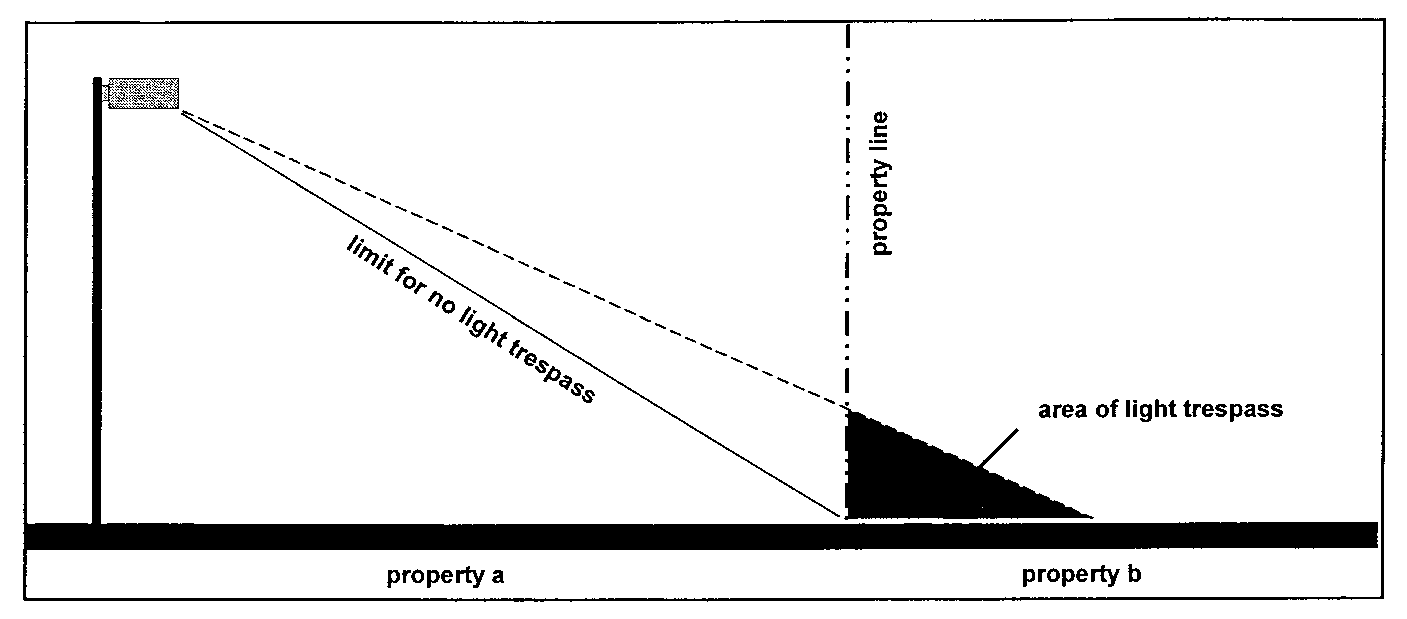
Figure 16-3: Light Trespass
Livability Standards for Permanently Affordable Housing means a set of criteria established by the city manager to clarify acceptable minimum standards for safety and habitability in affordable dwelling units. These standards may include, but are not limited to, minimum amount of kitchen counters and cabinetry, closets and storage, room, fixtures and appliances, required warranty periods, and noise mitigation. (Inclusionary Housing)
Live-work unit means a combination of residential occupancy and commercial or industrial activity as principal uses located within an integrated unit. This use does not include home occupations or caretaker dwelling units.
Local government designee means the office designated to receive, on behalf of the local government, copies of all documents required to be filed with the local government designee pursuant to COGCC Rules.
Lodging facility means a hotel, motel, dormitory, bed and breakfast, hostel, emergency shelter, and overnight shelter as defined in the Boulder Revised Code. (Floodplain)
Lot, building means a parcel of land, including, without limitation, a portion of a platted subdivision, that is occupied or intended to be occupied by a building or use and its accessory buildings and uses, together with the yards required under the provisions of this code; that has not less than the minimum area, useable open space, and building coverage required by this code for a lot in the district in which such land is situated; that is an integral unit of land held under unified ownership in fee or co-tenancy or under legal control tantamount to such ownership; and that is precisely identified by a legal description.
Lot frontage means the length of the front lot line measured at the street right-of-way line.
Lot, platted means a lot that has been subdivided pursuant to a legal subdivision approval process and is precisely identified by reference to a block and lot.
Low/moderate income dwelling unit means a dwelling unit with a price which is permanently restricted to be affordable to households with annual incomes no greater than the HUD low income limit for the Boulder Primary Metropolitan Statistical Area (PMSA). Or a dwelling unit with a rent which is permanently restricted to be affordable to households with annual incomes no greater than sixty percent of the area median income (60% AMI) for the Boulder Primary Metropolitan Statistical Area (PMSA). (Inclusionary Housing)
Low-volume irrigation means a method of irrigation that applies water directly to the root zone of plants at a slower rate (generally less than six gallons per hour) and with less runoff than above ground systems. Low volume irrigation systems can include point source drip emitters, in-line emitter tubing, and microsprays.
Low water use zone means a portion of a landscaped area having plants that require approximately zero to three gallons of water per square feet over the growing season or one-half inch of water every other week.
Lowest floor means the lowest floor of the lowest enclosed area (including basement or crawl space). An unfinished or flood resistant enclosure, usable solely for parking of vehicles, building access, or storage, in an area other than a basement area, is not considered a building's lowest floor, provided that such enclosure is not built so as to render the structure in violation of the applicable design requirements of Sections 9-3-2 through 9-3-8, B.R.C. 1981. (Floodplain)
Lumber yard means a business primarily engaged in the processing and sale of lumber and construction materials, where the majority of construction materials are stored outdoors or in nonclimatized structures.
Lumen is a measure of light energy generated by a light source. The lumen rating of a light bulb or lamp is provided by the bulb manufacturer.
Maintenance means any activity undertaken to repair or prevent the deterioration, impairment, or failure of any stream, previously constructed improvement, or structure, including, without limitation, the removal of sediment and debris, installation of erosion and sediment control devices, and the replacement of structural components. Maintenance does not include expansion or enlargement of a structure, substantial modifications, substantial improvements, total replacement of existing facilities, or total reconstruction of a facility. (Floodplain)
Maintenance means any activity undertaken to repair or prevent the deterioration, impairment, or failure of any previously constructed improvement or structure, including, without limitation, the replacement of structural components. Maintenance also includes the addition of material to reinforce or protect the integrity of an existing public facility.Maintenance does not include reconstruction that materially enlarges or expands a facility or total replacement of an existing structure. (Wetlands)
Maintenance means the replacing, repairing, or repainting of a portion of a sign structure or renewing of copy that has been made unusable by ordinary wear and tear, weather, or accident. (Signs)
Manufactured home means a structure, transportable in one (1) or more sections, which is built on a permanent chassis and is designed for use with or without a permanent foundation when connected to the required utilities. The term manufactured home does not include a recreational vehicle. (Floodplain)
Manufactured home park or manufactured home subdivision means any lot or tract of land designed, used, or intended to provide a location or accommodation for one or more manufactured homes and upon which any manufactured home is parked or located, whether or not the lot or tract or any part thereof is held or operated for profit, on which construction was completed on or after July 12, 1978. (Floodplain)
Marquee means a permanently roofed architectural projection whose sides are vertical and are intended for the display of signs, and which is supported entirely from an exterior wall of a building. (Signs)
Marquee sign - see definition of "awning sign." (Signs)
Maximum allowable light level is the maximum initial horizontal illuminance for exterior areas measured at one hundred hours of operation, in foot-candles at grade level, anywhere within the property including areas under canopies, balconies, or other nonenclosed or partially enclosed areas.
Maximum lumen rating means the maximum initial light output measured in lumens as established by the lamp manufacturer. If a light fixture has multiple lamps, this rating refers to the combined total lumens of all lamps within the fixture.
Media production means commercial arts and art-related establishments such as audio and film recording and editing studios and services, film and video production, titling, special effects production, motion picture and photograph processing, radio and television broadcast, and similar uses.
Micromobility station means a designated location of micromobility parking or docking infrastructure. Micromobility transportation includes lightweight vehicles such as bicycles or scooters.
Micro wireless facility means a small wireless facility that is no larger in dimensions than twenty-four inches in length, fifteen inches in width and twelve inches in height and that has an exterior antenna, if any, that is no more than eleven inches in length.
Middle income dwelling unit means a dwelling unit with a price which is permanently restricted to be affordable to households with annual incomes between eighty and one hundred and twenty percent of the Area Median Income (80%—120% AMI) as determined by HUD for the Boulder Primary Metropolitan Statistical Area (PMSA). (Inclusionary Housing)
Mining industries means a facility or business engaged in the removal of any earth materials, including those extracted from open mining and from places of natural occurrence to surface locations but excluding oil and gas operations.
Mitigation plan means a plan for the creation, enhancement, or restoration of a wetland, stream, or water body that is destroyed or otherwise negatively affected by an activity. (Wetlands)
Mixed-use structure means any structure with both residential uses and nonresidential uses where no less than twenty-five percent of the finished floor area contains nonresidential uses. (Floodplain)
Mobile food vehicle means a readily movable, motorized-wheeled vehicle, a towed vehicle, or a vehicle propelled solely by human power applied to pedals upon which any person may ride having two tandem wheels; two parallel wheels and one forward wheel; or two parallel wheels and one rear wheel which are more than fourteen inches in diameter, all designed and equipped to prepare, or serve, and sell food, but which does not include mobile vending carts as defined in Section 4-18-4, "University Hill Mobile Vending Cart Permit," and Section 4-11-12, "Mobile Vending Cart Permit," B.R.C. 1981.
Mobile home park means a site containing spaces with required improvements and utilities that are leased or owned for long-term placement of mobile homes or manufactured housing, subject to the requirements of Chapters 9-7, "Form and Bulk Standards," 9-8, "Intensity Standards," 9-9, "Development Standards," and 10-12, "Mobile Homes," B.R.C. 1981.
Moderate water use zone means a portion of a landscaped area having plants that require approximately ten gallons of water per square foot over the growing season or three-quarters inch of water once per week.
Mortuary and funeral chapel means a facility in which the deceased are prepared for burial or cremation, where funeral arrangements can be managed, and where funeral services can be conducted.
Moveable object means an item or material not anchored to the ground that is subject to being transported by water, including, without limitation, a manufactured home not anchored to a permanent foundation, a tank, a trash dumpster, lumber, and other materials, but not a motor vehicle. (Floodplain)
Museum means an establishment that exhibits artistic, historical, scientific, and natural objects of interest, and may include accessory uses such as a restaurant, meeting space, gift shops, theaters, and planetariums.
Natural medicine business means a business that is licensed by the state licensing authority for natural medicine as a natural medicine healing center, a natural medicine cultivation facility, a natural medicine products manufacturer, or a natural medicine testing facility pursuant to the Colorado Natural Medicine Code in Article 50 to Title 44, C.R.S. and associated state rules. In the City of Boulder, a building where natural medicine services are provided may not be located within 500 feet of a middle, junior, or high school. A building where natural medicine services are provided may be located within one thousand feet of a childcare center, preschool, elementary school, or a residential childcare facility. This is a variation of the distance restrictions imposed by C.R.S. 44-50-302(1)(d)(I) for middle, junior, and high schools and an elimination of childcare centers, preschools, elementary schools, and residential childcare facilities from the application of the distance restrictions established by or under that law. The distances from middle, junior, and high schools shall be computed as established in C.R.S. 44-50-302(1)(d)(II).
Neighborhood business center means nonresidential uses in a residential district that are constructed and operated in accordance with the standards of Subsection 9-6-5(v), B.R.C. 1981.
New construction means structures for which the "start of construction" commenced on or after July 12, 1978, and includes any subsequent improvements to such structures. (Floodplain)
New manufactured home park or subdivision means a manufactured home park or subdivision for which the construction of facilities for servicing the lots on which the manufactured homes are to be affixed (including, at a minimum, the installation of utilities, the construction of streets, final site grading, or pouring of concrete pads) is completed on or after July 12, 1978. (Floodplain)
Noncombustible zone means a five-foot area around a building or other structure having no vegetation and no combustible material. This definition has the same meaning as in Chapter 8.5, "Wildland Code," of Title 10, "Structures," B.R.C. 1981.
Noncommercial sign means a sign which in no way identifies, advertises, or directs attention to a business or is intended to induce a purchase of a good, property, or service, or portrays or symbolizes a good, property, or service, especially, but, without limitation, a brand or trade name, an identifiable container shape, or a trademark, within one thousand feet from a point of commercial solicitation, sale, or distribution of such good, property, or service. (Signs)
Nonconforming use means any legally established use of a building or use of a lot that is prohibited by Section 9-6-1, "Schedule of Permitted Land Uses," B.R.C. 1981. A nonconforming use also includes an otherwise conforming use, except a single dwelling unit on a lot, that, as a result of adoption of or amendments to zoning standards, does not meet the minimum lot area per dwelling unit or useable open space per dwelling unit requirements of Section 9-8-1, "Schedule of Intensity Standards," B.R.C. 1981.
Nonresidential structure means any structure used exclusively for, or designed as and capable of being used for, office, commercial, industrial, or governmental occupation, or the temporary lodging of persons for periods of less than six months, including hotels, motels, emergency shelters, and overnight shelters but excluding dormitories, fraternities, and bed and breakfasts. (Floodplain)
Nonstandard building or structure means any building or structure that does not conform to the setback, height, side yard bulk plane, side yard wall length articulation, or building coverage requirements of Section 9-7-1, "Schedule of Form and Bulk Standards," or the floor area ratio requirements of Section 9-8-1, "Schedule of Intensity Standards," and Section 9-8-2, "Floor Area Ratio Requirements," B.R.C. 1981, unless the nonstandard features of the building or structure were approved as part of a planned unit development or a site review, or as a variance. A nonstandard building or structure does not render a conforming use a nonconforming use.
Nonstandard lot means any lot that does not conform to the minimum lot area requirement of Section 9-8-1, "Schedule of Intensity Standards," B.R.C. 1981, or frontage upon a public street required by Section 9-12-12, "Standards for Lots and Public Improvements," B.R.C. 1981, unless the nonstandard nature of the lot was approved as part of a planned unit development or a site review. A nonstandard lot does not render a conforming use a nonconforming use.
Non-vehicular repair and rental services means a business that primarily provides services rather than goods and does not include outdoor storage, such as: appliance repair, electronics repair, furniture repair, small power equipment repair, and tool and equipment rental.
Noxious weed means a plant or parts of a plant that have been designated by rule as being noxious or has been declared a noxious weed designated by Colorado state regulations as being a state noxious weed, and meets one or more of the following criteria:
(1)
Aggressively invades or is detrimental to economic crops or native plant communities;
(2)
Is poisonous to livestock;
(3)
Is a carrier of detrimental insects, diseases, or parasites; or
(4)
The direct or indirect effect of the presence of this plant is detrimental to the environmentally sound management of natural or agricultural ecosystems.
Objectionable or harmful substance, condition, or operation means any use or operation that causes or contributes to:
(1)
A physical hazard by fire, explosion, radiation, or other cause, to persons or property at or beyond the property line of the premises in question;
(2)
Contamination of surface or underground water or any wastewater or sanitary sewer system;
(3)
An infestation;
(4)
Fly ash, smoke, gas, or dust that constitutes a hazard to the health, safety, or welfare of any person, animal, plant life, or other property, at or beyond the property line of the premises in question;
(5)
Offensive odors or noise at or beyond the property line of the premises in question;
(6)
Distracting, unreasonable, or illegal noise, vibration, or electrical disturbance at or beyond the property line of the premises in question; or
(7)
Any public nuisance.
Obstruction means any item or material not constituting a moveable object in, along, across, or projecting into the floodplain that might impede, retard, or change the direction of a flow of water, either by itself or by catching or collecting debris carried by such water, in a way that the city manager determines would increase the flood hazard to adjacent properties. (Floodplain)
Obstruction of solar access protected by permit means that any object, structure, building, or vegetation casts a shadow on the collector portion of any existing or planned solar energy system that is protected by a solar access permit during the hours of the day and season of the year for which access is protected by the permit. (Solar)
Office means businesses providing professional services to individuals or to other businesses. Examples include, without limitation, accounting, legal, insurance, real estate, counseling, publishing, architecture, engineering, graphic, industrial, and interior design. Facilitated arrangements such as shared coworking spaces, typically with membership fees, are included within this use. This use does not include medical offices or uses otherwise listed in the use table.
Office uses means a use category characterized by uses providing executive, management, medical, administrative, professional, or technical services. Office uses may or may not offer services to the public and are not materially involved in fabricating, assembling, or warehousing of physical products for the retail or wholesale market, and are not engaged in the repair of products or retail services. There is no display of merchandise, and the storage and sale of merchandise is clearly incidental to the service provided.
Office, accessory means an office subordinate to, a necessary part of, and on the same lot as the principal business, commercial, or industrial use, including, without limitation, administrative, record-keeping, drafting, and research and development offices. An accessory office is considered an accessory use.
Office, administrative means an office located within an industrial zoning district providing management or administrative services to its affiliated industrial use or research and development use.
Office, medical means any of the following:
(1)
A clinic or office of physicians, medical doctors, chiropractors, or dentists licensed to practice medicine or dentistry in the State of Colorado where the primary use is the delivery of health care services, where sale of merchandise is incidental to the delivery of services;
(2)
A natural medicine business licensed as a natural medicine healing center where a state licensed facilitator provides and supervises natural medicine services, including administration of natural medicine, without any retail sale of natural medicine consistent with state law; and
(3)
An addiction recovery facility that provides for the treatment of persons having drug or alcohol abuse problems under the supervision of professional health care or social services providers.
With the exception of addiction recovery facilities and natural medicine healing centers which may permit short-term overnight stays, no overnight accommodations are provided in medical offices.
Off-premises sign means any off-premises sign, including, without limitation, a billboard or general outdoor advertising device, that advertises or directs attention to a business, profession, commodity, entertainment, service, or activity conducted, sold, or offered elsewhere than on the same property or within the same building upon which such sign is located. (Signs)
Off-site dwelling unit means an existing or newly constructed dwelling unit restricted as permanently affordable provided to fulfill an inclusionary housing requirement and not located within the residential development that incurred the inclusionary housing requirement. (Inclusionary Housing)
Oil and gas facilities means the equipment and improvements used or installed for the exploration, production, transportation, treatment, and/or storage of oil and gas and waste products, including: an individual well pad built with one or more wells and operated to produce liquid petroleum and/or natural gas, including associated equipment required for such production; flowlines and ancillary equipment including but not limited to drip stations, vent stations, pigging facilities, chemical injection stations and valve boxes; and temporary storage and construction staging yards in place for less than six months.
Oil and gas operations means exploration for oil and gas, including the conduct of seismic operations and drilling of test bores; the siting, drilling, deepening, recompletion, reworking, or abandonment of a well; production operations related to any such well including the installation of flow lines and gathering system; the generation, transportation, storage, treatment, or disposal of exploration and production wastes; the construction, operation, maintenance and repair of any oil and gas facility, and any construction, site preparation, or reclamation activities associated with such operations.
One hundred-year flood means a flood having a one percent chance of occurring in any year. (Floodplain)
On-site means within the boundaries of the subject property. (Wetlands)
On-site dwelling unit means a dwelling unit restricted as permanently affordable located within the residential development that incurred an inclusionary housing requirement. (Inclusionary Housing)
Open space, park, and recreation use means uses which include playfields, playgrounds, athletic facilities, golf courses, and open space, which are owned by a public agency, a neighborhood or homeowners association and is operated for the benefit of the residents of the community, neighborhood or homeowners association.
Operator means any person who exercises the right to control the conduct of oil and gas operations.
Organic mulch means nonliving, biodegradable materials used in landscaped areas to retard erosion and weed growth, add nutrients to the soils, and retain moisture in the soils.
Outdoor display of merchandise means the display of merchandise on the same premises on which it is sold.
Outdoor recreation or entertainment means a use of land which provides recreation or entertainment services partially or entirely outside of an enclosed building operated as a business and open to the public for a fee or admission charge, including, without limitation, batting cages, driving ranges, miniature golf facilities, private golf course, outdoor tennis clubs or other court games, skating rinks, archery ranges, amusement parks, or go-cart tracks.
Outdoor storage means an area of land or unenclosed building where goods may be stored as a principal use in an environment without climate control, including, without limitation, automobiles, boats, recreational vehicles, and contractors' supplies, but does not include junk yards.
Overnight shelter means a facility providing short-term overnight accommodation without charge or at a nominal charge to people with limited financial resources, including people who are homeless, the primary purpose of which is to provide housing to individuals on a day-by-day basis. Accessory services that also may be provided at the facility include food, counseling, transportation services, and services to support the personal care of the residents of the facility including medical care, dental care, and hygiene.
Owner means a person, as defined by this code, who, alone, jointly or severally with others, or in a representative capacity (including, without limitation, an authorized agent, executor, or trustee) has legal or equitable title to any property in question. (Signs)
Owner-occupied means a dwelling unit or accessory dwelling unit that is the principal residence of at least one owner of record of the lot or parcel upon which the dwelling unit or accessory dwelling unit is located, who possesses at least an estate for life, or a fifty percent fee simple ownership interest, or is the trustor of a revocable living trust, or is the member that owns at least fifty percent of a limited liability company, or is the partner that owns at least fifty percent of a partnership or limited liability partnership, or similar entity.
P—T
Parapet wall means any portion of the vertical extension of a perimeter wall, constructed of materials similar in appearance to those used on the exterior wall below, and extending above but not enclosed by a roof. (Signs)
Parking lot means an off-street, ground level open area, used for the temporary storage of motor vehicles, including necessary access drives, drive lanes, and parking stalls and excluding sidewalks, carports, garages and driveways that serve detached dwelling units, and parking garages and structures.
Parking lot landscaping, interior means landscaping that is internal to or extends into the parking lot and excludes landscaping that is required in any setback area, a landscaped area between a parking lot and a building that does not extend into the parking area, sidewalks, and areas designed to meet the requirements of Subsection 9-9-14(b) or (c), B.R.C. 1981.
Pasture means land that is primarily unimproved, except for limited passive agricultural uses such as the feeding of livestock or horses.
Perennial stream means a stream that has flowing water year-round during a typical year. (Wetlands)
Permanently affordable unit mean a dwelling unit that is pledged to remain affordable in perpetuity to households earning no more than the maximum income limits specified in Chapter 9-13, "Inclusionary Housing," B.R.C. 1981. (Inclusionary Housing)
Personal service use means an establishment that provides personal services for the convenience of the neighborhood, including, without limitation, hair salons, nail or skin care salons, tattoo parlors, dry cleaners, laundromats, bakeries, pharmacies, or automatic teller machines. These uses also include personal goods repair such as bicycle, watch, shoe, phone, or similar goods. Personal service uses also include alternative healthcare providers, such as physical therapy, massage, acupuncture, nutritionists, or similar health and wellness services not performed by a medical doctor or physician.
Pipeline means any flowline or crude oil transfer line as defined by the COGCC.
Pit means any natural or man-made depression in the ground used for oil and gas exploration or production purposes excluding steel, fiberglass, concrete or other similar vessels which do not release their contents to surrounding soil.
Plan view means the view of a building from directly above which reveals the outer perimeter of the building roof areas to be measured across a horizontal plane. (Historic)
Planting season means that season of the year when plants may be planted successfully, generally from April 15 to October 15.
Planting strip means a linear strip of land in a streetscape, or planting area buffering from an adjacent use that is planted with landscaping consistent with Section 9-9-12, "Landscaping and Screening Standards," B.R.C. 1981, the City of Boulder Landscape Manual, and the Boulder Approved Tree and Plant List.
PMSA means the "Primary Metropolitan Statistical Area," as determined by the United States Department of Commerce. (Inclusionary Housing)
Pole means a structure other than a building (including, without limitation, for this purpose transmission and distribution facilities of public utilities) which supports a light at a government-owned recreation facility, a light in the public right-of-way, or a traffic signal in the public right-of-way; or an electrical transmission line or an electrical service line.
Political sign means a noncommercial sign.
Porch means a covered, unenclosed (except for railings) structure that projects from the exterior wall of a principal building, has no floor space above, and is intended to provide shelter to the entry of the building and supplemental outdoor living area.
Possessor of real property means a person not the owner of the property but who is responsible as lessee, caretaker, or otherwise for its care and upkeep and is in control of the property. (Solar)
Pre-production means the period preceding production in which oil and gas operations are prepared, including construction of well pads and access roads, installation of drilling rigs, drilling activities, cement casing of subsurface drilled wells, testing of the wells, the well completion process, and the hydraulic fracturing process.
Primary building entrance location means the principal public entrance to a building facing a public street.
Principal parking facility means an area that provides short-term or long-term off-street parking for motor vehicles and does not provide parking that is accessory to another use on the lot where the parking is located or to a use located in the same approved planned unit development or site review. A principal parking facility may be a parking lot, garage, or carpool lot. A parking area that is an accessory use may also provide parking for a principal use on a different lot or parcel or a principal use that is not within the same planned unit development or site review without being considered a principal parking facility.
Principal residence means the dwelling unit in which a person resides for more than one-half of the year. However, if (1) the person owns another dwelling unit that is not licensed for long term rental; (2) the person's spouse or domestic partner has a different principal residence; (3) the person's driver's license, voter registration or any dependent's school registration shows a different residence address; or (4) the Boulder County Assessor lists a mailing address different from the dwelling unit address, it shall be presumed that the dwelling unit in question is not a principal residence. Provided, however, no presumption shall apply in any criminal proceeding.
Printer and binder means an industrial use that provides commercial printing services involving typesetting, printing, and the binding of printed media such as books, magazines, and periodicals but does not include a duplicating service.
Produced water means water produced from a well or wellbore, including treatment fluid.
Production means the period in which one or more oil and gas wells is capable of producing hydrocarbons that flow through permanent separator facilities and into the pipeline gathering system.
Production and processing means a use category including uses involved in the processing, fabrication, packaging, or the assembly of goods, and uses receiving recoverable resources from others for on-site disposal, storage, or processing, or for transfer to another location for recycling. In manufacturing, natural, constructed, raw, secondary, or partially completed materials may be used. Products may be finished or semi-finished and are generally made for the wholesale market, for transfer to other plants, or to order for businesses or consumers. Goods are generally not displayed or sold on site, but if so, they are a subordinate part of sales. Few customers come to the site.
Program eligible household means a household that meets the income and asset limitations and other requirements established pursuant to this title for the purposes of owning or renting and a permanently affordable unit.
(1)
Initial renter households' income shall not exceed sixty percent of the area median income (60% AMI) as determined by HUD for the Boulder PMSA or as determined by the city manager, with adjustments for lower rent AMI levels.
(2)
Homebuyer households' income shall not exceed one hundred and fifty percent of the area median income as determined by HUD for the Boulder PMSA or as determined by the city manager, with adjustments for lower pricing AMI levels.
Projecting sign means a sign attached to a building and extending in whole or in part fifteen inches or more horizontally beyond the surface of the building to which the sign is attached, but does not include an "awning sign." (Signs)
Property means a portion or parcel of land, including, without limitation, a portion of a platted subdivision, occupied or intended to be occupied by a building or use and its accessories, together with yards required under the provisions of this code, that is an integral unit of land held under unified ownership in fee or co-tenancy, or under legal control tantamount to such ownership. When a property is used together with contiguous properties for a single use or unified development, all of the properties so used shall be considered a single property for the purposes of Section 9-9-21, "Signs," B.R.C. 1981. For the purposes of Section 9-9-21, "Signs," B.R.C. 1981, an access easement shall be deemed a part of the property to which it provides access, so long as the easement is the sole connection of that property to the public street network and placement of the sign on the access easement is consistent with the easement. This access easement provision does not apply if there is a development agreement regarding placement of signs on the frontage of the development. (Signs)
Public entrance means an entrance to a building or premises that is customarily used or intended for use by the general public and excludes a fire exit, an employee entrance or exit, and a loading dock entrance, in each case if not used by the public. (Signs)
Public realm means public streets (not including alleys), greenways, sidewalks, paths, plazas, courtyards, urban outdoor public spaces and open space on a development site designed to function like a plaza, courtyard or other urban outdoor public space for the use of residents, occupants, tenants, or visitors.
Public right-of-way means the entire area between property boundaries: which is owned by a government, dedicated to public use, or impressed with an easement for public use; which is primarily used for pedestrian or vehicular travel; and which is publicly maintained, in whole or in part, for such use; and includes, without limitation, the street, gutter, curb, shoulder, sidewalk, sidewalk area, parking or parking strip, and any public way. (Signs)
Publisher means a business that is responsible for the creation of printed or electronic media including the commission of content and overseeing the writing, editing, design, printing, and marketing.
Reconstruction means exact replacement of an existing structure or portion thereof or exact structural repair of a damaged structure. (Floodplain)
Recreation and entertainment means a use category that includes uses characterized by indoor or outdoor facilities providing recreation or entertainment activities to the general public or to their members.
Recreational vehicle means a vehicle which is: 1) built on a single chassis; 2) four hundred square feet or less when measured at the largest horizontal projections; 3) designed to be self-propelled or permanently towable by a light duty truck; and 4) designed primarily not for use as a permanent dwelling but as temporary living quarters for recreational, camping, travel, or seasonal use. (Floodplain)
Recyclable material means newspaper, magazines, cardboard, telephone books, loose paper, glass containers, plastic containers, steel cans, aluminum cans and scraps, leaves and organic materials, and reusable clothing and household items.
Recycling center means an enclosed building used for storing recyclable material and unenclosed premises on which recyclable material is stored for one week or less.
Recycling collection facility means a bin or other weather-tight container enclosed with a door or lid for the acceptance by donation, redemption, or purchase of recyclable material for transshipment to a recycling center, or an industrial processing facility.
(1)
A "small" recycling collection facility is accessory to a principal building and use on its lot which complies with the provisions of Section 9-7-1, "Schedule of Form and Bulk Standards," B.R.C. 1981, concerning accessory buildings and uses, does not occupy a permanent building, and does not have containers occupying more than two hundred fifty square feet.
(2)
A "large" recycling collection facility may be a principal or an accessory use or building of any size, may occupy a permanent structure, may also accept used motor oil in accordance with applicable health and safety regulations, and may include such power-driven light processing including aluminum foil and can compacting, baling, plastic shredding, or other light processing activities necessary for efficient temporary storage and shipment of material.
Recycling processing facility means a building or enclosed space used for the collection of recyclable material, used motor oil and batteries in accordance with applicable health and safety regulations, and scrap metal but not including motor vehicles, and its processing for efficient shipment or to an end-user's specifications by baling, briquetting, compacting, composting, flattening, grinding, crushing, mechanical sorting, shredding, cleaning, or remanufacturing.
Regional park means a park or recreation area owned by a public agency and 100 acres or greater in size, serving the entire city and surrounding region with specialized recreational assets that draw regional users such as ball fields, swimming facilities, boating, golf courses, and natural lands for passive recreation. Regional parks are of a scale and design to allow hosting of large and small events, such as concerts and festivals, and are often destination points for visitors.
Regulated activity means those activities requiring a stream, wetland, or water body permit pursuant to Subsection 9-3-9(d), B.R.C. 1981. (Wetlands)
Regulated area means those areas described in Subsection 9-3-9(b), B.R.C. 1981. (Wetlands)
Rehabilitation means any improvement, maintenance, or remodeling made to the interior or exterior of any existing structure or the reconstruction of a deteriorated or non-flood-damaged portion of an existing structure so long as such improvement or reconstruction does not constitute an "expansion or enlargement of a structure," "substantial modification," or a "substantial improvement." (Floodplain)
Religious assembly means a building or group of buildings that are used or proposed to be used for conducting organized religious services and accessory uses associated with the use.
Research and development means a facility that engages in product or process design, development, prototyping, or testing for an industry. Such industries may include but are not limited to biotechnology, life sciences, pharmaceuticals, medical or dental instruments or supplies, food, clothing, outdoor equipment, computer hardware or software, or electronics. Facilities may also include laboratory, office, warehousing, and light manufacturing functions as part of the research and development use.
Resident owner means a person in whom is vested at least a five percent equity interest in the ownership in a cooperative housing unit through fee ownership, as a joint tenant or a tenant in common, holder of a lease with a term of thirty years or more, or through an ownership interest in a corporation or association recognized under Colorado state law that owns or holds a lease of thirty years or more on the cooperative housing unit including, without limitation, a corporation, cooperative, partnership, or a limited liability company, provided that such person uses the cooperative housing unit as a principal residence.
Residential accessory means a use category that includes uses characterized as always accessory to the principal use on a site. The principal use or the accessory use may be residential.
Residential care facility means a facility providing social services in a protective living environment for adults or children, including, without limitation, group foster care homes; shelters for abused children or adults; nursing homes; or intermediate care facilities.
Residential structure means any structure that is used for, or designed as and capable of being used for, the temporary or permanent domicile of persons for periods of six months or more, including, without limitation, a dwelling, a boarding house, a dormitory, a fraternity, a bed and breakfast, and similarly used structures. (Floodplain)
Restaurant means an establishment provided with a food preparation area, dining room equipment, and persons to prepare and serve, in consideration of payment, food or drinks to guests.
Retail sales means the selling of goods or merchandise directly to the ultimate consumer.
Retail sales uses means a use category that includes uses involved in the sale, rental, and incidental servicing of products that are generally provided on the premises to a consumer.
Riparian area means a type of habitat occurring along a stream, wetland, or water body typically consisting of water tolerant trees and shrubs such as alter, cottonwood, and willows. (Wetlands)
Roof means the cover of any building, including, without limitation, the eaves and similar projections. (Signs)
Roof line means the highest point on any portion of a building where an exterior wall and a roof enclose usable floor space, or the highest point on any parapet wall if the parapet wall extends around the entire perimeter of the roof, whichever is higher. (Signs)
Roof sign means a sign painted on any roof of a building, supported by poles, uprights, or braces extending from any roof of a building, or projecting above any roof of a building, but does not include a "wall sign." (Signs)
Roomer means a person occupying a room or group of rooms within a dwelling unit that are arranged primarily for sleeping and study, and that may include a private bath but does not include a sink or any cooking device.
Sales or rental of vehicles means the sale or rental of a self-propelled or towed vehicle such as motorcycles, motorbikes, automobiles, trucks, snowmobiles, mobile homes, trailers, campers, recreational vehicles, boats, and the incidental sales of parts and accessories for such vehicles.
School, elementary, middle, or high means any public or private school for any grades between first and twelfth which satisfies state compulsory education requirements.
Self-service storage facility means a building consisting of individual, small, self-contained units within a building or group of buildings, which are leased or owned for the storage of business and household goods, but shall not include "outdoor storage" facilities as defined in this section.
Service of vehicles means the repair, servicing, maintenance, or installation of accessories for vehicles including motorcycles, motorbikes, automobiles, trucks, snowmobiles, trailers, campers, recreational vehicles, sailboats, and powerboats.
Service uses means a use category characterized by establishments that provide services directly to the final consumer for the conduct or improvement of the consumer's home or business or personal life.
Setback means the minimum distance in linear feet measured on a horizontal plane between the outer perimeter of a structure, above grade, and each of its lot lines.
Setback, landscaped means the minimum distance in linear feet measured on a horizontal plane between the outer perimeter of a structure, above and below grade, and its lot lines that is intended to be used exclusively for landscaping purposes.
Shrub means a self-supporting deciduous or evergreen woody plant normally branched near the base, multi-stemmed, and normally less than fifteen feet in height at maturity as grown in Boulder County.
Sign means any object or device or part thereof situated outdoors or in an exterior window which is used to advertise, identify, display, direct, or attract attention to an object, person, institution organization, business, product, service, event, or location by any means, including, without limitation, words, letters, figures, design symbols, colors, sculpture, motion, illumination, or projected images. (Signs)
Sign face means the surface of a sign upon, against, or through which the message is displayed or illustrated. (Signs)
Sign structure means any supports, uprights, braces, or framework of a sign. (Signs)
Small cell facility means any of the following:
A personal wireless communications facility as defined by the federal "Telecommunications Act of 1996" as amended as of August 6, 2014; or
A wireless communications facility that meets the following qualifications:
The facilities are mounted on structures fifty feet or less in height including their antennas; are mounted on structures no more than ten percent taller than other adjacent structures; or, do not extend existing structures on which they are located to a height of more than fifty feet or by more than ten percent, whichever is greater;
Each antenna is located inside an enclosure of no more than three cubic feet in volume or, in the case of an antenna that has exposed elements, the antenna and all of its exposed elements could fit within an imaginary enclosure of no more than three cubic feet; and
Primary equipment enclosures are no larger than twenty-eight cubic feet in volume as measured on the exterior surface of the enclosure. The following associated equipment may be located outside of the primary equipment enclosure and, if so located, is not included in the calculation of equipment volume: Electric meter, concealment, telecommunications demarcation box, ground-based enclosures, back-up power systems, grounding equipment, power transfer switch and cut-off switch; or
A micro wireless facility.
Small theater or rehearsal space means an establishment for live dramatic, operatic, or dance performances open to the public, without membership requirements, whose seating capacity does not exceed three hundred seats and seating area does not exceed three thousand square feet, or any area for the rehearsal of such live performances.
Soil moisture sensing device means a device that measures the amount of moisture in the soil and turns off a sprinkler controller when moisture has reached a pre-set quantity.
Solar access area means one of three areas for the purposes of establishing varying levels of solar access protection. (Solar)
Solar collector means any device used to collect solar energy and convert it to any other form of energy, including, without limitation, photovoltaics, flatplate concentrating devices, vacuum tubes, and greenhouses. (Solar)
Solar energy system means any human-made system that relies upon sunshine as an energy source and is capable, through physical, chemical, or biological means, of collecting, distributing, storing (if appropriate to the technology), and applying solar energy to beneficial use so as to reduce the amount of nonsolar energy that would otherwise be used by at least ten percent. (Solar)
Solar exception means a variance of the solar access requirements of Section 9-9-17, "Solar Access," B.R.C. 1981. (Solar)
Solar fence means a hypothetical obstruction designed as provided in Subsection 9-9-17(d), B.R.C. 1981. (Solar)
Solar noon means the time at which the sun is due south and in its highest position above the horizon. (Solar)
Special festival event means a use that is part of an event permitted pursuant to Chapter 4-12, "Special Festival Events," B.R.C. 1981, and may include festival activities by the festival operator and its sponsors and vendors.
Specialized instruction facility means an academic educational use providing instruction in a vocational, professional, commercial, or specialized subject or skills such as art, cooking, driving, or performing arts, but does not include a college or university.
Start of construction means the date the building permit was issued, provided the actual start of construction, repair, reconstruction, rehabilitation, addition, placement, or other improvement was within one hundred eighty days of the permit date. The actual start means either the first placement of permanent construction of a structure on a site such as the pouring of slab or footings, the installation of piles, the construction of columns, or any work beyond the stage of excavation; or the placement of a manufactured home on a foundation. (Floodplain)
Storage, distribution, and wholesaling means a use category that includes uses engaged in the storage or movement of goods for themselves or other businesses. Goods are generally delivered to other businesses or the final consumer, except for some will-call pickups. There is little on-site sales activity.
Story means that portion of a building included between the surface of any floor and the surface of the next floor above it, or if there is no floor above it, then between the floor and the ceiling next above it. A basement is a story if any portion of the space included between the surface of the floor and the surface of the ceiling above it extends more than two feet above the natural grade around the perimeter.
Stream means an open, relatively natural channel that collects and drains flows within a watershed. A stream can be perennial, intermittent, or ephemeral and is defined generally by the bank-full width of the channel. Within the city limits, streams that are regulated are mapped as regulated areas. (Wetlands)
Stream enhancement means to improve the function or value of a stream to a condition greater than the existing condition. (Wetlands)
Streams do not include man-made channels, swales, irrigation ditches, or laterals constructed solely for the purpose of delivering adjudicated water rights or trans-basin diversions; and do not include channels or swales identified as part of the municipal stormwater collection system that collect and convey stormwater runoff from properties to the watershed stream. (Wetlands)
Streetscape means the pedestrian and landscape improvements generally within public right-of-way, or provided on private property if the right-of-way is not wide enough to provide the area needed to provide trees and sidewalks.
String of lights means a series of lights attached to a wire race or inserted in transparent tubing in such a way that it can be moved about or hung in various ways, and whose bulbs are not light fixtures permanently attached to a building or other structure.
Structure means anything constructed or erected with a fixed location on the ground above grade, but the term does not include poles, lines, cables, or other transmission or distribution facilities of public utilities.
Structure means any constructed or manufactured object other than an automotive vehicle, and a travel trailer, a camper, a camper bus, or a motor home. (AIZ)
Structure means a building or other roofed construction, a basement, a wall, a fence, a manufactured home, or a storage tank. (Floodplain)
Sub-basin means an area of land within the Boulder Creek watershed that drains a single stream. (Wetlands)
Subdivision means the division of a lot, tract, or parcel of land into two or more lots, plats, sites, or other divisions of land for the purpose, whether immediate or future, of sale or building development, but the term excludes any transaction that is exempt from the subdivision regulation under Chapter 9-12, "Subdivision," B.R.C. 1981.
Substantial change means a modification to the physical dimensions of an eligible support structure (that is not a legal nonconforming tower structure located on a lot or parcel and not in the public right-of-way and was built for the sole or primary purpose of supporting Federal Communications Commission-licensed or authorized antennas and their associated facilities) that results or includes any of the following:
(1)
An increase in the height of the eligible support structure by more than ten percent or more than twenty feet, whichever is greater. Changes in height shall be measured from the original support structure in cases where deployments are or will be separated horizontally, such as on buildings' rooftops; in other circumstances, changes in height shall be measured from the dimensions of the eligible support structure, inclusive of originally approved appurtenances and inclusive of any modifications that were approved prior to the passage of the Spectrum Act on February 22, 2012;
(2)
Addition of an appurtenance to the body of the structure that would protrude more than six feet from the edge of the structure;
(3)
Installation of more than the standard number of new equipment cabinets for the technology involved, but not to exceed four cabinets; or, installation of any new equipment cabinets on the ground if there are no pre-existing ground cabinets associated with the eligible support structure, or else installation of ground cabinets that are more than ten percent larger in height or overall volume than any other ground cabinets associated with the eligible support structure;
(4)
Excavation or deployment outside the area in proximity to the eligible support structure and other transmission equipment already deployed on the ground, or excavation or deployment outside of the area in proximity by more than thirty feet in any direction, excluding any access or utility easements; or
(5)
Does not defeat the concealment element of the eligible support structure. If the eligible support structure is a legal nonconforming tower structure that is located on a lot or parcel and not in the public right-of-way and was built for the sole or primary purpose of supporting Federal Communications Commission-licensed or authorized antennas and their associated facilities, substantial change means a modification to the physical dimensions of the tower that results in or includes any of the following:
A.
An increase in height of the tower by more than ten percent or by the height of one additional antenna array with separation from the nearest existing antenna not to exceed twenty feet, whichever is greater, where separation refers to the distance from the top of the existing antenna to the bottom of the proposed antenna and does not include the height of the new antenna;
B.
Addition of an appurtenance to the body of the tower that would protrude from the edge of the tower more than twenty feet, or more than the width of the tower structure at the level of the appurtenance, whichever is greater;
C.
Installation of more than the standard number of new equipment cabinets for the technology involved, but not to exceed four cabinets; or
D.
Excavation or deployment outside the current boundaries of the leased or owned property surrounding the tower and any access or utility easements currently related to the site.
Substantial damage means damage of any origin sustained by a structure whereby the cost of restoring the structure to its before-damaged condition would equal or exceed fifty percent of the market value of the structure before the damage occurred. (Floodplain)
Substantial improvement means any repair, reconstruction, rehabilitation, addition, or improvement of a structure, the cost of which equals or exceeds fifty percent of the market value of the structure before the "start of construction" of the improvement. This term includes structures which have incurred "substantial damage," regardless of the actual repair work performed. For the purposes of this definition, "substantial improvement" is considered to occur when the first alteration of any wall, ceiling, floor, or other structural part of the building commences, whether or not that alteration affects the external dimensions of the structure. The term does not, however, include either: 1) any project for improvement of a structure to comply with existing state or local health, sanitary, or safety code specifications which are solely necessary to assure safe living conditions, or 2) any alteration of a structure listed on the National Register of Historic Places or the Colorado Inventory of Historic Places or designated as an individual landmark under Section 9-11-2, "City Council May Designate or Amend Landmarks and Historic Districts," B.R.C. 1981. (Floodplain)
Substantial modification means any expansion or enlargement of a structure which equals or exceeds fifty percent of the floor area of the structure intended for human occupancy, considered cumulatively, commencing July 12, 1978. (Floodplain)
Suspended sign means a sign suspended from an architectural projection. (Signs)
Taproom means a use associated with and on the same premises as a brewery where guests may sample the manufacturer's products and consume other nonalcoholic beverages.
Tasting room means a use associated with and on the same premises as a winery or distillery where guests may sample the manufacturer's products and consume other nonalcoholic beverages.
Tavern means an establishment serving malt, vinous, and spirituous liquors in which the principal business is the sale of such beverages at retail for consumption on the premises and where snacks are available for consumption on the premises.
Temporary event means an outdoor use open to the public such as a carnival, amusement rides, fair, outdoor theater, promotional event, musical performance, or dance for a limited duration of time. This use of land also includes sales from a tent, canopy, trailer, temporary structure, or a parked vehicle, or sales on a vacant parcel of land, or any parking lot regardless of location. Not included are sales from push carts or mobile food vendors which are subject to different regulations and licensing.
Temporary impact means a permitted, short-term activity that impairs or destroys a stream, wetland, or water body under the condition that it will be restored or recreated in place after the activity has ceased. (Wetlands)
Tower means any structure built for the sole purpose or primary purpose of supporting Federal Commission-licensed or authorized antennas, including the on-site fencing, equipment, switches, wiring, cabling, power sources, shelters, or cabinets associated with that tower but not installed as part of an antenna as defined herein. (Wireless Communications Facility)
Townhouse means an attached dwelling unit located or capable of being located on its own lot, and separated from adjoining dwelling units by a wall extending from the foundation through the roof which is structurally independent of the corresponding wall of the adjoining unit.
Transitional housing means a facility providing long-term housing in multi-unit dwelling units with or without common central cooking facilities, where participation in a program of supportive services is required, as a condition of residency, to assist tenants in working towards independence from financial, emotional, or medical conditions that limit their ability to obtain housing for themselves.
Transmission equipment means equipment that facilitates transmission for any Federal Communications Commission-licensed or authorized wireless communication service, including, but not limited to, radio transceivers, antennas, coaxial or fiber-optic cable, and regular and backup power supply. The term includes equipment associated with wireless communications services including, but not limited to, private, broadcast and public safety services, as well as unlicensed wireless services and fixed wireless services such as microwave backhaul.
Transparent materials means glass or other similar materials that possess a minimum sixty percent transmittance factor and a reflectance factor of not greater than 0.25.
Transportation Demand Management (TDM) plan means a document that outlines strategies to mitigate traffic impacts created by a development or use and the measures that the development or use will implement to promote alternate modes of travel to the single-occupant vehicle consistent with Section 2.03(I) of the City of Boulder Design and Construction Standards. Such measures may include, without limitation, car share programs, educational programs for multimodal transportation options, transit pass benefits, unbundled parking, micromobility membership benefits, and van and carpool programs.
Tree means a self-supporting deciduous or evergreen plant normally fifteen feet or more in height at maturity as grown in Boulder County.
Turf grass means continuous plant coverage consisting of grass species that, when regularly mowed, form a dense growth of leaf blades and roots.
U—Z
Understory planting means the plant materials such as turf, ornamental grasses, perennials, ground cover, or low-growing shrubs that cover the ground area under a tree in a landscaped area.
Uniformity ratio means the ratio between the maximum and the minimum light level within a specific use area such as a parking lot.
Uninhabitable space means a room or portion thereof that is six feet or less in floor to ceiling height, or a room solely used to house mechanical or electrical equipment that serves the building, including, without limitation, heating, cooling, electrical, ventilation and filtration systems, or any parking facility located completely below grade on all sides of the structure regardless of the topography of the site (see definition of "floor area").
Use review use means a use permitted in a given district only after review and approval as provided in Section 9-2-15, "Use Review," B.R.C. 1981.
Variance means a permitted deviation or waiver of the land use regulations if all of the applicable criteria for a variance have been found to be met by the appropriate approving authority.
Vegetation removal - major means: 1) clearing of woody and nonwoody vegetation canopy cover or herbaceous ground cover that does not meet the definition of minor vegetation removal; or 2) removal of any native (indigenous) annual or perennial woody or nonwoody species within the riparian area; or 3) pruning, trimming, cutting off, or removal of greater than twenty-five percent of the crown of any tree within a three-year period; or 4) clearing of twenty percent or more horticultural landscaping within a zone. (Wetlands)
Vegetation removal - minor means: 1) routine trimming of plant material; or 2) pruning of tree branches totaling less than twenty-five percent of the crown within a three-year period; or 3) removal of non-native invasive species of brush, annual or perennial vegetation, and herbaceous grass species that out-compete or suppress existing native vegetation, provided that sufficient vegetation remains to prevent erosion (bare soil shall not be left exposed); or 4) clearing of less than twenty percent of herbaceous or woody groundcover within a zone if combined with the replanting of new vegetation following the "City of Boulder Wetlands Protection Program: Best Management Practices - Revegetation Rules," adopted July 1998. (Wetlands)
Vehicle-related means a use category that includes uses characterized by the maintenance, sale, or rental of motor vehicles and related equipment, or facilities which accommodate parking, fueling, or conducting business from a motor vehicle.
Very low water use zone means a portion of a landscaped area having plants that require no irrigation once established.
Vested rights means the right to undertake and complete a development pursuant to Section 9-2-20, "Creation of Vested Rights," B.R.C. 1981.
Visible beyond the boundaries of the property upon which it is located means any sign which can be read by a person with 20/20 vision from or beyond any property line. For the purposes of applying Section 9-9-21, "Signs," B.R.C. 1981, any letters, figures, or symbols which are not larger than two inches in height are deemed not to be visible, up to an aggregate of ten square feet in total area of such visible but small lettering on the property. (Signs)
Wall sign means a sign displayed upon or against the wall of an enclosed building, if the exposed face of the sign extends not more than fifteen inches horizontally from the face of the wall, including, without limitation, a sign erected upon or against the side of a roof having an angle of more than forty-five degrees from the horizontal. (Signs)
Warehouse or distribution facility means an establishment primarily engaged in the storage and distribution of goods and materials in large quantity to retailers or other businesses for resale to individual or business customers.
Water body means an area that, during a year with normal patterns of precipitation, has standing water for sufficient duration to establish an ordinary high water mark and a depth of more than two meters. Within the city limits, water bodies that are regulated are mapped as regulated areas. (Wetlands)
Water source means water bodies that supply domestic, agricultural or municipal uses, water wells that are registered with the Colorado Division of Water Resources, including household, domestic, livestock, irrigation, municipal/public and commercial wells, permitted or adjudicated springs, and monitoring wells other than monitoring wells that are drilled for the purpose of monitoring water quality changes that are not associated with oil and gas activities.
Well or wellhead means an oil or gas well, a hole drilled for the purpose of producing oil or gas, a well into which fluids are injected for the purpose of oil or gas exploration, a stratigraphic well for the purpose of oil or gas exploration, a gas storage well, or a well used for the purpose of monitoring or observing an oil or reservoir.
Well pad means areas that are directly disturbed during the drilling and subsequent operation of, or affected by production facilities directly associated with, any oil well or gas well.
Wet bar means a bar for mixing drinks that may contain a sink with running water, a dishwasher, and a refrigerator but no other facilities that can be used for the preparation of food other than mixing drinks. A sink in a wet bar must be smaller than a kitchen sink, as defined in Section 10-2-2, B.R.C. 1981.
Wetland means an area that is inundated or saturated by surface water or groundwater at a frequency and duration sufficient to support, and that under normal circumstances do support, a prevalence of vegetation typically adapted for life in saturated soil conditions, commonly known as hydrophytic vegetation as specified under the procedures in the 1987 Corps of Engineers Wetlands Delineation Manual. Within the city limits, wetlands that are regulated are mapped as regulated areas. (Wetlands)
Wetland creation means the establishment of a wetland or other aquatic resource, where one did not formerly exist. (Wetlands)
Wetland enhancement means activities conducted in existing wetland or aquatic resources which increase one or more ecological functions. (Wetlands)
Wetland restoration means an activity that returns a stream, wetland, or water body from a disturbed or altered condition with lesser acreage or function to a condition with greater acreage or function. (Wetlands)
White light source means a spectrum of light produced by, but not limited to, incandescent, halogen, metal halide, induction and fluorescent lamps having a color temperature between 2,650 and 4,000 degrees Kelvin and a minimum Color Rendering Index (CRI) of 65.
Wholesale business means a business primarily engaged in the selling of merchandise to retailers; to industrial, commercial, institutional, or professional business users, or to other wholesalers; or acting as agents or brokers and buying merchandise for or selling merchandise to such individuals or companies.
Wind energy conversion system means any machine that converts wind to another form of energy.
Wind sign means a sign consisting of one or more banners, flags, pennants, wind socks, ribbons, spinners, streamers, captive balloons, or other objects or material fastened in such a manner as to move upon being subjected to pressure by wind. (Signs)
Window sign means a sign that is located inside a building on or within three feet of a window or door through which it can be seen from the exterior of the building, but excludes merchandise included in a display. (Signs)
Winery means a use with a manufacturer or wholesaler license issued under § 44-3-401, et seq., C.R.S., and does not include any retail type liquor license under § 44-3-309, et seq., C.R.S., on the lot or parcel, that is primarily a manufacturing facility, where vinous liquors are manufactured, that may include a tasting room that is less than or equal to thirty percent of the total floor area of the facility or one thousand square feet, whichever is greater.
Wireless communications facility means a facility used to provide personal wireless services as defined at 47 U.S.C. Section 332(c)(7)(C); or wireless information services provided to the public or to such classes of users as to be effectively available directly to the public via licensed or unlicensed frequencies; or wireless utility monitoring and control services. A wireless communications facility does not include a facility that is an accessory use. A wireless communications facility includes an antenna or antennas, including without limitation, directional, omni-directional and parabolic antennas, small cell facilities, support equipment and their permitted supporting structure, but does not include the support structure to which the wireless communications facility or its components are attached if the use of such structure for the wireless communications facility is not the primary use. The term does not include mobile transmitting devices used by wireless service subscribers, such as vehicle or hand held radios/telephones and their associated transmitting antennas.
Yard, front, rear, and side means the open space between the buildings and the property lines at the front, rear, and sides of the property, respectively and consistent with Figures 16-4 and 16-5 of this section. On a corner lot, the open space adjacent to the shorter street right-of-way shall be considered the front yard. The rear yard is opposite the front yard, and the side yard is between the rear yard and the front yard.
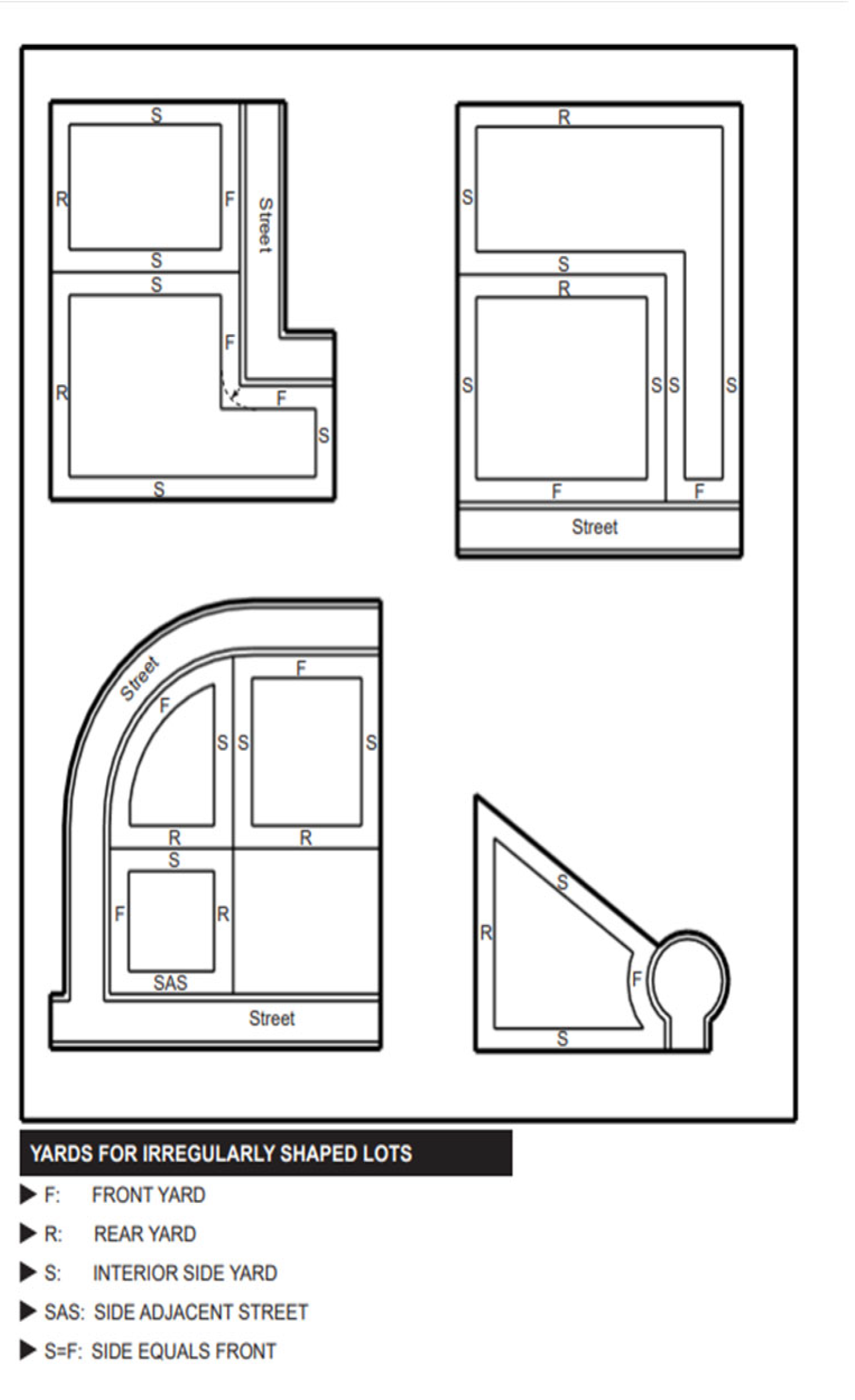
Figure 16-4: Yards for Irregularly Shaped Lots
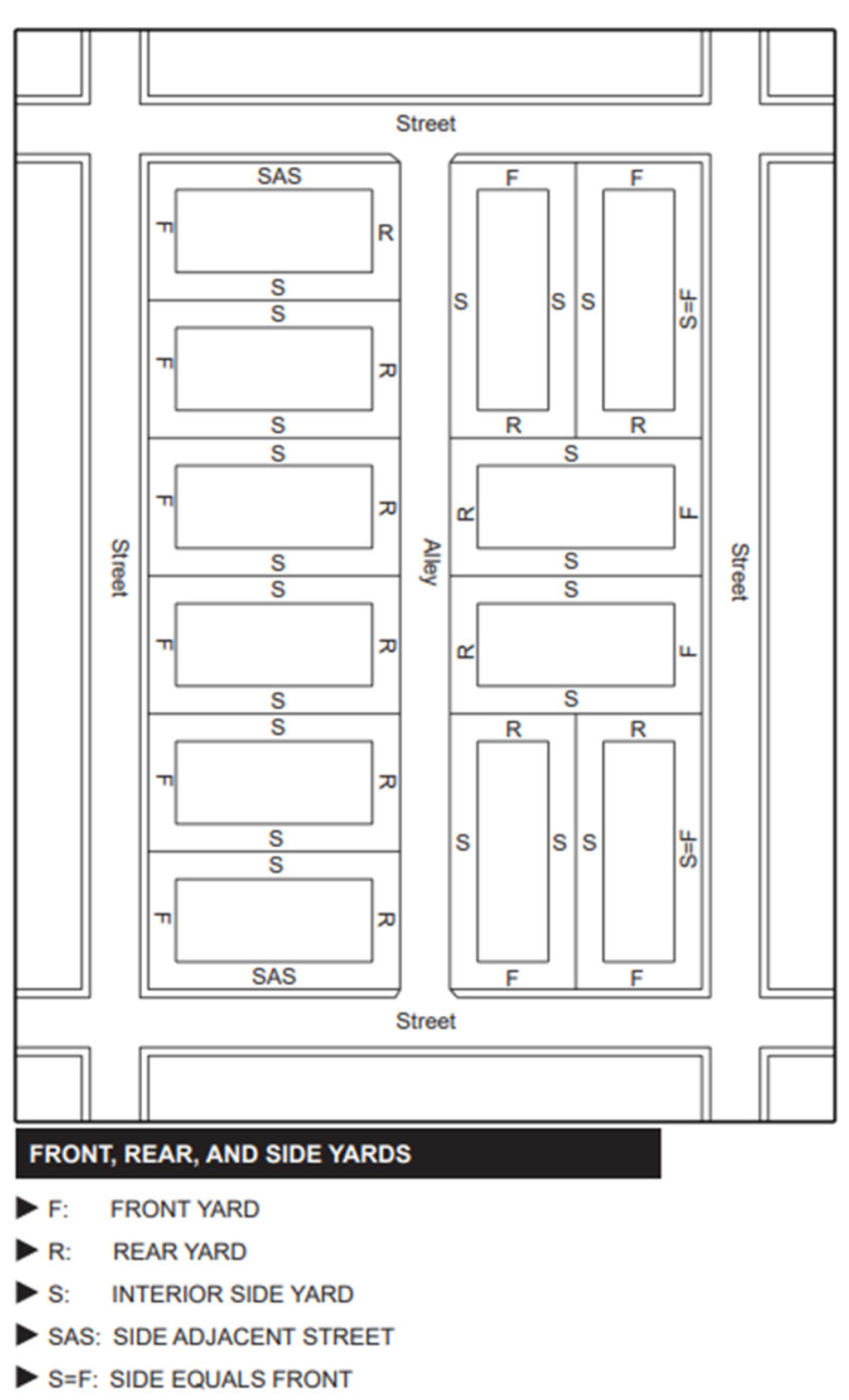
Figure 16-5: Front, Rear, and Side Yards
Zoning map means the Zoning District Map of the City of Boulder, Colorado, adopted as a part of Section 9-5-3, "Zoning Map," B.R.C. 1981, as amended from time to time as provided therein.
Ordinance Nos. 7475 (2006); 7484 (2006); 7522 (2007); 7535 (2007); 7613 (2008); 7614 (2008); 7658 (2009); 7684 (2009); 7699 (2009); 7701 (2010); 7718 (2010); 7756 (2010); 7713 (2011); 7787 (2011); 7826 (2011); 7832 (2013); 7853 (2012); 7869 (2012); 7878 (2012); 7895 (2013); 7926 (2013); 7938 (2013); 8030 (2015); 8111 (2016); 8124 (2016); 8119 (2017); 8201 (2017); 8215 (2017); 8235 (2018); 8256 (2018); 8276 (2018); 8337 (2019); 8372 (2020); 8409 (2020); 8510 (2021); 8514 (2021); 8523 (2022); 8515 (2023); 8556 (2023); 8571 (2023); 8619 (2023); 8599 (2024); 8600 (2024); 8601 (2024); 8622 (2024); 8651 (2025); 8665 (2025); 8666 (2025); 8694 (2025); 8696 (2025); 8697 (2025); 8713 (2025); 8721 (2026); 8745 (2026); 8751 (2026)
APPENDICES

