
Boulder City City Zoning Code
CHAPTER 24
SIGNS AND ADVERTISING STRUCTURES
11-24-1.- TITLE.
This chapter shall be known as the SIGN ORDINANCE OF BOULDER CITY, NEVADA.
(Ord. 1272, 11-8-2005, eff. 11-30-2005)
11-24-2. - AUTHORITY.
This chapter is enacted by the city council of Boulder City under the authority of Nevada Revised Statutes 278.020 et seq.
(Ord. 1272, 11-8-2005, eff. 11-30-2005)
11-24-3. - REGULATORY SCOPE.
This chapter regulates signs located on or attached to private property, and signs located on or attached to public property which is owned or controlled by public entities other than Boulder City and over which the city holds zoning or land use regulatory authority. Policies for signs located on or attached to property owned or controlled by the city are stated in chapter 24A.
(Ord. 1272, 11-8-2005, eff. 11-30-2005)
11-24-4. - PURPOSES AND INTERESTS SERVED.
By enacting this chapter, the city intends to serve the following purposes and interests: to promote and protect the public health, welfare and safety; to prevent unreasonable distraction of operators of motor vehicles, confusion with traffic lights, signs or signals and other interference with the effectiveness of traffic regulations; to make the city physically and visually attractive to residents, tourists, and businesses; to promote the economic well being of the city and surrounding areas; to protect the public and private investment in land improvements; to preserve and enhance the natural scenic beauty and aesthetic features of the city, its streets and highways and adjacent areas; and to encourage the orderly expression of messages, debate, and information by way of display of signs. For these purposes, the city by this chapter regulates signs by size, height, physical design, construction, illumination, maintenance, and relationship to land uses.
(Ord. 1272, 11-8-2005, eff. 11-30-2005)
11-24-5. - BASIC POLICIES.
The policies and principles stated in this section apply to all signs within the regulatory scope of this chapter, and to all procedures set forth in, or invoked by, this chapter. These policies are to prevail over any other provision to the contrary, even if more specific.
A.
Enforcement Authority. The director is authorized and directed to enforce and administrate the provisions of this chapter.
B.
Permit Requirement. Unless expressly exempted by a provision of this chapter, or by other applicable law, signs within the regulatory scope of this chapter may be displayed only pursuant to a permit issued by the city.
C.
Message Neutrality. It is the city's policy to regulate signs in a constitutional manner, which is content neutral as to noncommercial signs and viewpoint neutral as to commercial signs.
D.
Regulatory Interpretations. All regulatory interpretations of this chapter are to be exercised in light of the city's message neutrality policy. Where a particular type of sign is proposed in a permit application, and the type is neither expressly allowed nor prohibited by this chapter, or whenever a sign does not qualify as a "structure" as defined in the building code, then the director shall approve, conditionally approve or disapprove the application based on the most similar sign type that is expressly regulated by this chapter.
E.
Substitution Of Messages. Subject to the property owner's consent, a noncommercial message of any type may be substituted for any duly permitted or allowed commercial message or any duly permitted or allowed noncommercial message, provided that the sign structure or mounting device is legal without consideration of message content. Such substitution of message may be made without any additional approval or permitting. This provision prevails over any more specific provision to the contrary within this chapter. The purpose of this provision is to prevent any inadvertent favoring of commercial speech over noncommercial speech, or favoring of any particular noncommercial message over any other noncommercial message. This provision does not create a right to increase the total amount of signage on a parcel, lot or use; does not affect the requirement that a sign structure or mounting device be properly permitted; and does not allow the substitution of an off site commercial message in place of an on site commercial message.
F.
Rules For Noncommunicative Aspects Of Signs. All rules and regulations concerning the noncommunicative aspects of signs, such as location, size, height, illumination, spacing, orientation, etc., stand enforceable independently of any permit or approval process.
G.
Billboard Policy. The city completely prohibits the construction, erection or use of any billboards, other than those which legally exist in the city, or for which a valid permit has been issued and has not expired, as of the date on which this provision is first adopted. No permit shall be issued for any billboard which violates this policy, and the city will take immediate abatement action against any billboard constructed or maintained in violation of this policy. In adopting this provision, the city council affirmatively declares that it would have adopted this billboard policy even if it were the only provision in this chapter. The city council intends for this billboard policy to be severable and separately enforceable even if other provision(s) of this chapter may be declared, by a court of competent jurisdiction, to be unconstitutional, invalid or unenforceable. This provision does not prohibit agreements to relocate presently existing, legal billboards.
H.
Situs Of Noncommercial Message Signs. All signs displaying noncommercial speech messages are deemed to be "on site", regardless of location.
I.
Multiple Use Zones. In any zone where both residential and nonresidential uses are allowed, the sign related rights and responsibilities applicable to any particular use shall be determined as follows: residential uses shall be treated as if they were located in the residential zone where that type of use would be allowed as a matter of right, and nonresidential uses shall be treated as if they were located in a zone where that particular use would be allowed, either as a matter of right or subject to a conditional use permit or similar discretionary process.
J.
Property Owner's Consent. No sign may be displayed without the consent of the legal owner(s) of the property on which the sign is mounted or displayed. For purposes of this policy, "owner" means the holder of the legal title to the property and all parties and persons holding a present right to possession, control or use of the property.
K.
Legal Nature Of Signage Rights And Duties. As to all signs attached to property, real or personal, the signage rights, duties and obligations arising from this chapter attach to and travel with the land or other property on which a sign is mounted or displayed. This provision does not modify or affect the law of fixtures, sign related provisions in private leases regarding signs (so long as they are not in conflict with this chapter), or the ownership of sign structures.
L.
Sign Programs. Sign programs, voluntarily proposed for specific developments, as well as special sign districts or special sign overlay zone, when approved by the planning commission may modify the rules stated herein as to sign size, height, illumination, spacing, orientation or other noncommunicative aspects of signs, but may not override or modify any of the basic policies stated in this section. All the provisions of this section shall automatically apply to and be deemed a part of any sign program approved after the date on which this provision is initially adopted.
(Ord. 1272, 11-8-2005, eff. 11-30-2005)
M.
Variances. When a deviation from the rules stated in this chapter is sought by variance, the variance must be approved by the planning commission following a duly noticed public hearing. In considering variance requests, the planning commission shall not consider the graphic design or message of the sign display face, and may not approve a variance which would allow a sign to be used for the display of off site commercial messages.
(Ord. 1560, 10-27-2015, eff. 11-19-2015)
N.
Severance. If any section, sentence, clause, phrase, word, portion or provision of this chapter is held invalid or, unconstitutional, or unenforceable, by any court of competent jurisdiction, such holding shall not affect, impair, or invalidate any other section, sentence, clause, phrase, word, portion, or provision of this chapter which can be given effect without the invalid portion. In adopting this chapter, the city council affirmatively declares that it would have approved and adopted this chapter even without any portion which may be held invalid or unenforceable.
(Ord. 1272, 11-8-2005, eff. 11-30-2005)
11-24-6. - DEFINITIONS.
For the purpose of applying the provisions of this chapter, the following terms are defined:
All the definitions as set forth in section 11-1-3 of this title.
ADVERTISING SIGN: A sign attached to or placed on the outside of a building upon which any poster, bill, printing, painting, device or advertising of any kind may be placed, posted, fastened or affixed.
ADVERTISING STRUCTURE: Any freestanding outdoor structure or device erected for advertising purposes, or to attract the attention of the public, and which is visible from any public street or alley or public place. See also definition of Freestanding Or Pole Sign.
AWNING: A permanent or retractable roofed structure constructed of fabric or metal placed so as to extend outward from a building providing a protective shield for doors, windows, and other openings with supports extending back to the building, supported entirely by the building. This does not include cantilevers. See also definition of Canopy.
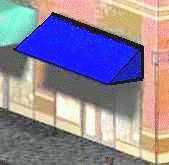
Awning
BANNER SIGN: A temporary advertising device made of lightweight fabric or similar material, containing copy, graphics, logos, or symbols for advertising purposes, that is mounted to a pole, building, or other structure.
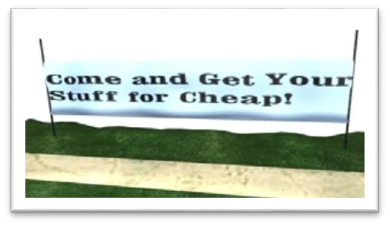
Banner
BILLBOARD: A permanent structure with a display face greater than twelve (12) square feet which is used for the display of off site commercial messages or advertising for hire or general advertising. (See Fifth Avenue Coach v. New York City, 221 U.S. 467 (1911).) A billboard may be freestanding or attached to another structure.
BUSINESS DAY: A day on which the Boulder City Hall offices are open to the public.
CABINET SIGN: A sign that contains all the text and/or logo symbols within a single enclosed case. Cabinet signs are classified into distinct categories: A single cabinet with four (4) straight sides in the form of a square or rectangle; or a single cabinet with one or more sides that follow the form of the message/logo within the cabinet.
CANOPY: A roofed structure constructed of fabric or other material placed so as to extend outward from the building providing a protective shield for doors, windows, and other openings and supported by the building and supports extending to the ground directly under the canopy.

Canopy
CANOPY SIGN: A sign attached to or constructed in a canopy.

Canopy Sign
CHANGE PANEL: Any advertising sign or advertising structure designed to permit immediate change of copy.
CHANNEL LETTERS/SIGN: Channel letters are individually illuminated letters and graphics.
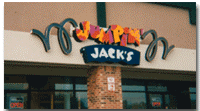
Channel Letter Sign
COMMERCIAL MASCOT: Humans or animals used as commercial advertising devices, typically by the holding or wearing of insignia, masks or costumes associated with the commercial establishment. Includes sign twirlers, sign clowns, "sandwich board" signs, etc.
COMMERCIAL MESSAGE: A message that concerns primarily the commercial or economic interests of the sign sponsor or the sign viewer. Includes any sign, wording, logo, picture, transparency, mechanical device or other representation that is intended to attract attention to a commercial or industrial business, occupancy, product, good, service or other commercial or industrial activity for a commercial or industrial purpose.
COMMUNITY SIGN: Temporary, on or off premises signs, generally made of a woven material or durable synthetic materials primarily attached to or hung in a vertical fashion from light poles or on buildings, of solely a decorative, festive, and/or informative nature announcing activities, promotions, events, seasonal or traditional themes having broad community interest, and which are sponsored or supported by Boulder City, or a local community based nonprofit organization (i.e., Damboree, holidays/seasons, etc.).
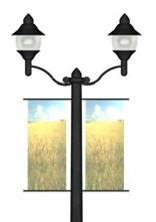
Community Sign
CONSTRUCTION SIGN: A sign displayed on the site of a real property development project during the time commencing with the issuance of all necessary permits and approvals, and ending with approval of the final inspection.
DIRECTIONAL SIGN: An on site noncommercial message sign exclusively limited to guiding the circulation of motorists or pedestrians onto or within a site (e.g., direction to parking lots, restroom locations, exits, entrances, etc.).
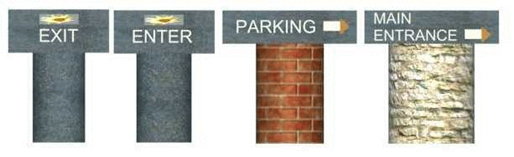
Directional Signs
DIRECTOR: The city manager or designee.
FLASHING SIGN: A sign or parts thereof which is periodically illuminated or which revolves in such a manner as to create the illusion of being visible or not, with the exclusion of time and temperature signs.
FREESTANDING OR POLE SIGN: A sign supported by a fixed permanent form(s) or support(s) in the ground. See also definition of Advertising Structure.

Freestanding Sign
GENERAL ADVERTISING: The business of renting or otherwise providing display space to commercial advertisers whose place of business is at some location other than the site of the display. Also known as "off site advertising".
GROUND SIGN OR MONUMENT SIGN: A low sign where the extent of the sign surface is attached to the ground or a foundation in the ground, and where there are no poles, braces, or other visible means of support other than attachment to the ground.
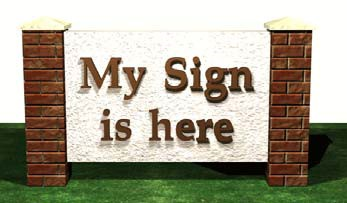
Monument Sign
HAZARDOUS SIGN: A sign constituting a hazard to public safety because it no longer meets the lateral and/or vertical load requirements as specified in the city adopted building code, or no longer meets the wiring and installation standards of the city adopted electrical code.
INDIRECT LIGHTING: A source of external illumination entirely within the sign which makes the sign visible at night by means of lighting the background upon which the freestanding characters are mounted, but wherein the source of illumination is not visible.
INFLATABLE SIGN: Any advertising or attention getting device which is supported by heated or forced air or lighter than air gases including hot or cold air balloons.

Inflatable Sign
INTERNAL LIGHTING: A source of illumination entirely within the sign which makes the contents of the sign visible at night by means of the light being transmitted through a translucent material, but wherein the source of the illumination is not visible.
MARQUEE: A permanent roofed structure which bears an advertisement and extends outward over the entrance to a building, often a theater or cinema, and supported entirely by the building.
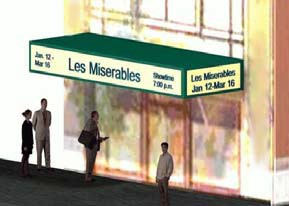
Marquee
MOBILE SIGN: A sign constructed on wheels or designed so as to allow the sign to be moved by vehicles. This includes any truck, trailer, or other vehicle conspicuously, or regularly parked on or off premises with an advertising message or logo displayed to attract attention to a business, product or promotion.

Mobile Signs
MONUMENT SIGN: See definition of Ground Sign Or Monument Sign.
NAMEPLATE: A sign indicating the name of the occupant(s) of a land use.
NEIGHBORHOOD ENTRY SIGN: A sign placed at or near a street entrance to a neighborhood, subdivision, mobile home park, apartment building or condominium project.
NONCOMMERCIAL MESSAGE: A message related to (by way of example and not limitation) opinions on matters of religion, politics, social policy, etc.
NONCONFORMING SIGN: A lawfully constructed sign existing at the time this chapter, or a predecessor version of the same effect, or amendments thereto, becomes effective, which does not conform with the sign regulation for the zone in which the sign is located.
OFF SITE SIGN: A commercial message sign not located on the site of the establishment or entity indicated or advertised by the sign; also, a commercial sign advertising a commodity, good, product, service or other commercial or industrial activity which originates or is provided at a location other than where the sign is maintained. The on site/off site distinction applies only to commercial message signs.
ON SITE SIGN: A commercial message sign which directs attention to a commercial or industrial occupancy, establishment, commodity, good, product, service or other commercial or industrial activity conducted, sold or offered upon the site where the sign is maintained. The on site/off site distinction applies only to commercial message signs. For a shopping center, each establishment located in the shopping center is "on site" as to the shopping center's advertising structure displaying tenants within the center.
PERMANENT SIGN: Any sign which is intended to be and is so constructed as to be of lasting and enduring condition, remaining unchanged in character, condition (beyond normal wear and tear) and position and in a permanent manner affixed to the ground, wall or building. This definition applies to the physical structure of the sign, not to the message displayed thereon.
POLE SIGN: See definition of Freestanding Or Pole Sign.
PORTABLE SIGN: A sign that is not attached to a structure or the ground and is movable such as A-frame or T-frame signs.
PROJECTING SIGN: A sign attached to a building and extending in whole or in part more than eighteen inches (18") beyond any wall of the building.

Projecting Sign
REAL ESTATE DEVELOPMENT SIGN: A sign displayed on the premises of a real estate development for which all necessary development approvals have been issued and actual construction has begun.
ROOF SIGN: A temporary or permanent sign erected partly or wholly freestanding on the roof of a building and/or extending above the roofline of a building. This shall include signs located on top of canopies, colonnades, and covered walks, but not marquee signs.
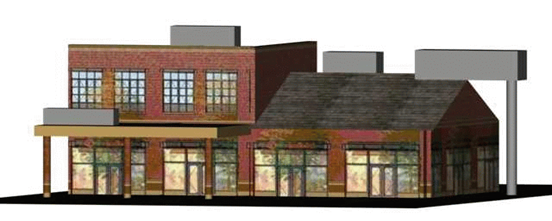
Roof Signs
ROOFLINE: The highest point of the main roof structure or highest point on a parapet, but not including cupolas, pylons, projections or minor raised portions of the roof.
SHOPPING CENTER: An integrated shopping complex comprised of two (2) or more retail stores.
SHOPPING CENTER ADVERTISING STRUCTURE: Any freestanding outdoor structure or device erected for advertising purposes on the site of a shopping center.
SIGN: Any device visible from any portion of the public right of way which is used for visual communication, including any structure or natural object or part thereof, that is used for the purpose of bringing the subject thereof to the attention of the public; however, the following are not within this definition:
A.
Interior signs: Signs which are visible only from the interior of enclosed structures, or to persons located within such structures; signs on the interior of sports stadiums and similar unroofed but enclosed structures are within this exclusion;
B.
Architectural features: Decorative or architectural features of buildings (not including lettering, trademarks or moving parts); symbols embedded in architecture: symbols of noncommercial organizations or concepts including, but not limited to, religious or political symbols, when such are permanently integrated into the structure of a permanent building which is otherwise legal;
C.
Personal appearance: Items or devices of personal apparel, decoration or appearance, including clothing, tattoos, makeup, costumes and masks; however, commercial mascots are not within this exclusion;
D.
Manufacturers' marks: Marks on tangible products, which identify the maker, seller, provider or product, and which customarily remain attached to the product even after sale;
E.
Floor mats and doormats;
F.
Fireworks, etc.: The legal use of fireworks, candles and artificial lighting not otherwise regulated by this chapter;
G.
Certain insignia on vehicles and vessels: On street legal vehicles and properly licensed watercraft: painting schemes, license plates, license plate frames, registration insignia, stickers displaying noncommercial messages, indications that the vehicle or vessel is for sale; however, commercial messages are not within this exclusion;
H.
Gravestones and grave markers;
I.
Newsracks and newsstands;
J.
Traffic signals and signs giving notice of traffic rules;
K.
Any notice which is required by another body of law to be posted within public view;
L.
Signs within windows and on doors (however signs on overhead or rollup doors are not exempt);
M.
Historical markers.
STREETSCAPE: The combination of vehicles, buildings, signs, landscaping, roads, utility poles, etc., that dominate the view of the driver or pedestrian.
SUSPENDED SIGN: A sign which is hung from a roof, pole, canopy or other similar structure.
TEMPORARY SIGN: A sign which by virtue of its construction of lightweight, flimsy or nondurable materials (i.e., plywood, fabric, etc.) or is mobile, is not intended or suitable for use for permanent display; or, any sign for which the display right is tied to a temporary land use or activity (such as a construction project, festival, etc.).
WALL SIGN: A sign that is mounted to or painted on a building wall or its facing, or is painted in such a way that it gives the visual appearance of being painted on a wall or facing by not having a frame or separation from the wall or facing.
WAYFINDING SIGN: A government maintained sign containing directional information about public places owned or operated by federal, state, or local governments or their agencies; public or privately owned natural phenomena, historic, cultural, scientific, educational, and religious sites; and areas of natural beauty or naturally suited to outdoor recreation.
WIND SIGN: Any propeller or similar commercial device which is designed to flutter, rotate, or display other movement under the influence of the wind, not including, official flags or banners.
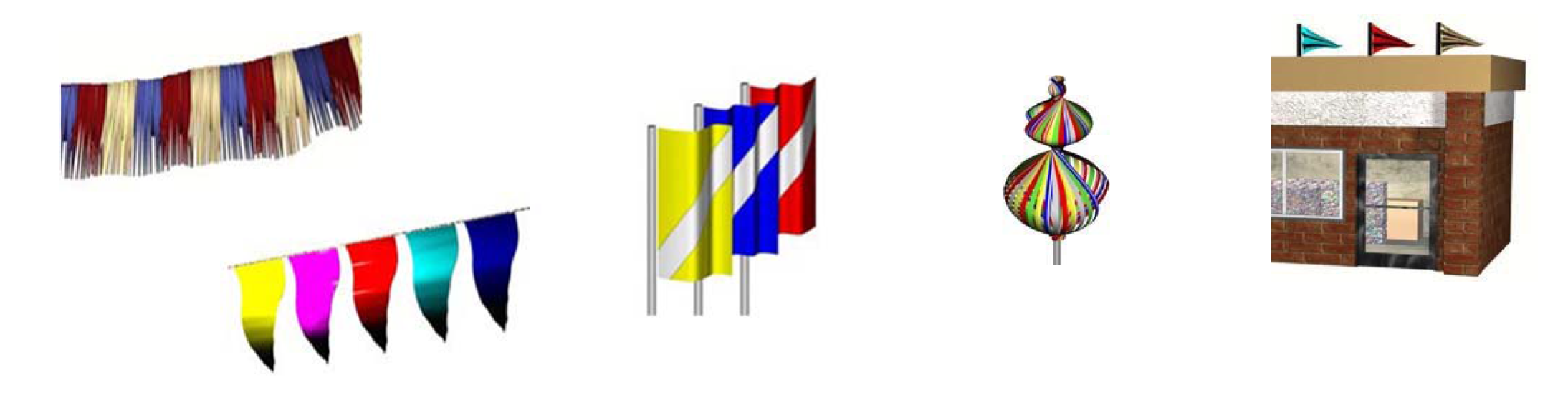
Wind Signs
WINDOW SIGN: A sign either attached to a window or door or located within a building so as to be visible through a window or door from outside of the building.

Window Sign
(Ord. 1272, 11-8-2005, eff. 11-30-2005; amd. Ord. 1322, 3-27-2007, eff. 4-18-2007; Ord. 1560, 10-27-2015, eff. 11-19-2015)
11-24-7. - MEASUREMENT OF SIGNS.
Sign area is measured as follows:
A.
Sign Area. For sign copy mounted or painted on the background panel or area distinctively painted, textured or constructed as a background for the sign copy, the sign area is measured as that area contained within the outside dimensions of the background panel or surface.
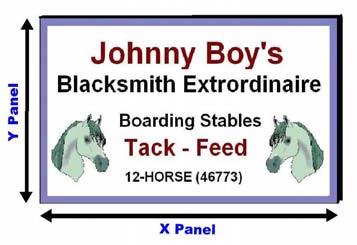
Sign Message On A Panel
1.
For sign copy mounted as individual letters and/or graphics against a wall or fascia of a building or other structure that has not been painted, textured or otherwise altered to provide a distinctive background for the sign copy, the sign area is measured as the area enclosed by the smallest single rectangle that will enclose all the sign copy.
2.
For sign copy mounted or printed on an illuminated sign or illuminated architectural element of a building, the entire illuminated surface or illuminated architectural element which contains the sign copy, shall be counted as a sign.
B.
Number Of Sign Faces.
1.
Single Face: The sign area is the area of the single face only.
2.
Two Faces: The sign area of any two (2) faced sign with parallel faces; or V-type signs having an interior angle of forty five degrees (45°) or less, is the area of the single face; if the angle between the two (2) sign faces is greater than forty five degrees (45°), the sign area is the sum of the areas of the two (2) faces.
3.
Three Or More Faces: The sign area is the sum of the areas of the three (3) or more faces.
4.
Spherical, Freeform, Sculptural Or Other Nonplanar Signs: The sign area is the sum of the areas of the smallest six (6) sided solid form that will encompass the sign structure.
5.
Signs With More Than One Component: For a sign having more than one component, the sign area is the smallest rectangle that will encompass the several components of the sign.
C.
Pole Or Pylon Signs. The regulated area of a freestanding sign shall include all parts of the sign or structure that contain identification (words or symbols) and information. The height of a freestanding sign shall be the distance from the highest point of the sign to the top of the curb or sidewalk or crown of the street when there is no curb or sidewalk. Architectural features or enhancements to the sign supports are excluded.
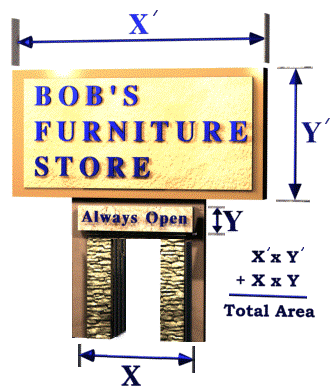
Freestanding Or Pylon Sign
D.
Ground Or Monument Signs. The regulated area of a ground or monument sign shall include all parts of the sign or structure that contain identification (words or symbols) and information. The height of a ground sign shall be the distance from the highest point of the sign to the height of the street curb or sidewalk. Architectural features or enhancements to the sign supports are excluded.
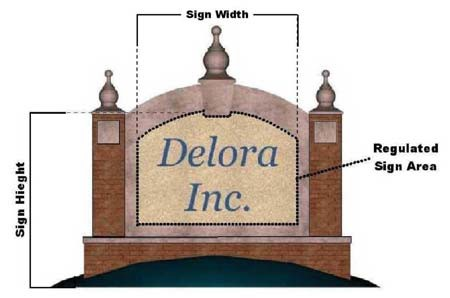
Ground Or Monument Sign
(Ord. 1272, 11-8-2005, eff. 11-30-2005)
11-24-8. - PHYSICAL STRUCTURE, SAFETY AND LOCATION RULES FOR SIGNS; ALL ZONES.
A.
General Requirements. Unless otherwise explicitly provided, the regulations stated in this section apply to all signs in all zones.
1.
Height/Dimensions. Maximum advertising sign height shall be twenty feet (20') above grade, unless a different height is specified elsewhere in this chapter for a specific sign district or zone. Note: Height restriction does not apply to signs attached directly to a wall.
(Ord. 1560, 10-27-2015, eff. 11-19-2015)
2.
Attachment. Signs erected or attached to the wall of a building shall have the exposed face of the sign in a plane parallel to the face of the wall and shall not project above cornice or roofline.
3.
Roof Placement. No advertising structures are permitted on a building roof, top or mansard, parapet or marquee. This provision applies to new sign installation. Existing signs within the historic business district may retain such signs upon receipt of a special use permit.
4.
Roof Surface. Signs shall not be attached or painted on a roof surface.
(Ord. 1272, 11-8-2005, eff. 11-30-2005)
5.
Encroachment. New signs are not allowed in the public right of way except in the historic business sign district as discussed herein. Existing signs where the base and/or structure is located in or overhangs the public right of way are subject to the requirements of an encroachment permit.
(Ord. 1560, 10-27-2015, eff. 11-19-2015)
6.
Rotating, Flashing, Moving Or Audible. No sign or advertising structure shall be installed so as to rotate, gyrate, blink, flash, move or be audible in any animated fashion.
7.
Code Compliance. All signs, including the frames, braces or supports thereof, shall be adequately built and erected in compliance with the building, electrical and other applicable safety codes of the city.
8.
Licensed Contractor Required. No sign, fixture or device involving electrical wiring or connections shall be erected or installed in Boulder City except by a licensed and bonded sign or electrical contractor. Includes the appropriate Boulder City business license, and the correct state of Nevada contractor license for the work to be performed.
9.
Engineering Required. All sign permit applications shall be engineered to demonstrate conformance with the applicable provisions of the international building code and, where required by the building official, shall be accompanied by a drawing stamped by an appropriate engineer, licensed by the State of Nevada, attesting to the adequacy of the proposed construction of the sign and its supports. Exception: Signs painted directly upon a wall surface are not required to obtain engineering.
10.
Durability. All permanent signs must be built of durable and permanent materials (e.g., no part of a sign, nor its supports shall be made of wood).
11.
Power Source. Permanent power sources for signs must be concealed underground away from public view or within the structure of the sign or building to which the sign is attached and comply with all provisions of the national electric code.
12.
Foundations. All ground signs must be mounted on foundations and footings which conform to the international building code as adopted by Boulder City.
13.
Sign Company Tag. All permanent signs must have a sign builder's identification tag or signature. The tag or signature must be made of durable weatherproof material and must be affixed to the sign so as to be visible from the sidewalk or nearest convenient location by city inspectors.
14.
Small Portable Signs. A-frame and similar portable freestanding signs are not allowed.
15.
Commercial Mascots. Commercial mascots are prohibited.
16.
Elevation. No signs or portion thereof shall occupy any area at an elevation less than eight feet six inches (8'6") above the finished or proposed grade of any pedestrian walk.
17.
Lighting, Color. The lighting and color of signs shall not imitate or resemble official traffic control devices, railroad signs or signals.
18.
Illumination. All illuminated signs must use either indirect lighting or internal lighting. Illumination of any sign shall be of such nature that when light so generated extends into any residential zone, such extended illumination shall not exceed one foot-candle maintained at any point on a vertical plane extended from each property line separating the light source from adjacent residential zones.
B.
Landscaping. All permanent freestanding or monument signs installed in Boulder City must be incorporated into a landscape design or planter box. The landscaped area in which any sign is placed shall be kept free from weeds, garbage, and debris. To deviate from this requirement, the applicant must obtain a variance upon public hearing before the planning commission. Note: To obtain a variance, the applicant must demonstrate to the planning commission to their satisfaction that the applicant has satisfied the minimum requirements to qualify for a variance as specified in section 11-32-4 of this title.
C.
Location And Setback Requirements. The following shall apply:
1.
General Location. No part of any sign shall interfere with the use of any fire escape, exit, required stairway, door ventilator, or window.
2.
Traffic Safety. No sign or other advertising structure shall be erected which in any manner may be confused with an official traffic sign or signal. No sign or advertising structure shall be erected which by reason of its size, location, shape, content, coloring, or manner of illumination might be confused as a traffic control device. No sign shall have lighting which impairs the vision of anyone traveling upon a public street or distracts any driver so as to create a public nuisance.
(Ord. 1272, 11-8-2005, eff. 11-30-2005)
3.
Public Rights Of Way. No sign shall be located on publicly owned land or inside street rights of way, except signs owned and/or erected by permission of an authorized public agency. For the purposes of this chapter, the area between the sidewalk and property line of the adjacent property owner is considered to be part of the overall development and qualifies for display of "on site" commercial message signs. Off site signs shall not be permitted at any time within the right of way.
(Ord. 1560, 10-27-2015, eff. 11-19-2015)
4.
Side Setbacks. High profile (freestanding) and low profile (ground or monument) signs shall be located at least their height in distance from side property lines in order to prevent damage to adjacent land in case a sign is toppled by accident or an act of nature.
(Ord. 1272, 11-8-2005, eff. 11-30-2005)
5.
Front Setbacks. The following shall apply:
a.
High profile (freestanding pylon or pole) and low profile (ground or monument) signs shall be set back at least three feet (3') from the back of sidewalk or public right of way whichever is greater and from all driveways.
b.
Banners or other temporary signs allowed herein shall be set back at least seven feet (7') from the public right of way.
(Ord. 1560, 10-27-2015, eff. 11-19-2015)
6.
Sight Visibility Zone. No sign may be mounted or displayed within the sight visibility zone as per the "Uniform Standard Drawings For Public Works Construction Off-Site Improvements", volume 1, Clark County area, Nevada, drawing no. 201.2. Please refer to section 11-24-17 of this chapter for drawings in effect as of August 2005.
7.
Vertical Setback. In addition to the height restrictions contained herein, no sign shall be erected or maintained which has less horizontal or vertical clearance from communication lines and energized electrical power lines than that prescribed by the laws of the State of Nevada, its agencies, or appropriate utility company.
8.
Nearness To High Voltage Conductors. No sign shall be erected in such a manner that any part will be closer to high voltage conductors than the following table allows:
The electrical distribution division shall determine the line voltage for any given location.
D.
Maintenance. All signs shall be maintained in a safe, presentable and good condition including the replacement of defective parts, cleaning, painting, oiling, changing of light bulbs, or other acts required for the maintenance of said sign. Maintenance shall also include the restoration or repair of any exterior wall penetrations, discolorations, or other damages caused by the installation, removal, or placement of signs on a building.
(Ord. 1272, 11-8-2005, eff. 11-30-2005)
11-24-9. - SIGNS NOT SUBJECT TO PERMIT REQUIREMENT.
In addition to the signage rights and rules which are defined by zone, the following signs are allowed in any zone, without a permit, subject to the conditions stated:
A.
Official Notices. Signs used to provide official notices issued by any public officer in the performance of a public duty, or by any person in giving legal notice.
B.
Functional Information. Signs providing direction, warning and functional information, when installed and maintained by an official body.
(Ord. 1322, 3-27-2007, eff. 4-18-2007)
C.
Noncommercial Messages. Signs displaying noncommercial messages, such as (by way of example, and not limitation), opinions on matters of religion, politics, social policy, etc., may be displayed at any time and in any zone, subject to:
1.
Commercial And Industrial Zones. In commercial and industrial zones, as allowed under the message substitution policy.
2.
Residential Zones. In residential zones, per residential unit, at all times:
If the sign structure is permanent in physical nature, then all applicable building and safety code requirements shall be met.
3.
Temporary Increase In Noncommercial Message Signs Area. During the period beginning sixty (60) days before any primary, special or general election, and ending five (5) days thereafter, the amount of sign area used for noncommercial speech messages may be increased as follows:
a.
In commercial and industrial zones: An additional eighteen (18) square feet of sign area;
b.
In residential zones: An additional fourteen (14) square feet of sign area per sign.
(Ord. 1435, 6-14-2011, eff. 7-7-2011)
D.
Government Flags.
1.
In residential zones, maximum one pole per dwelling unit, not to exceed twenty five feet (25') in height; maximum flag area (measured 1 side only), twenty four (24) square feet.
2.
In commercial, industrial and agricultural zones, maximum of three (3) poles per building, not to exceed the maximum height allowed for buildings within that zone; maximum aggregate flag area (measured 1 side only) of sixty four (64) square feet, with no single flag larger than forty eight (48) square feet.
(Ord. 1322, 3-27-2007, eff. 4-18-2007)
11-24-10. - SIGNS ASSOCIATED WITH DEVELOPMENT PROJECTS.
In addition to the signage rights and rules which are defined by zone, the following signs shall be permitted in any zone where the associated land use is allowed:
A.
Temporary Nonresidential Real Estate Development Signs. Temporary nonresidential real estate development signs are allowed on site in any zoning district, subject to:
1.
Display Time. The display time begins when all necessary development approvals have been obtained and actual physical construction has begun, and ends at the later of the issuance of a certificate of completion or certificate of occupancy or a final inspection approval, or their functional equivalent, has been issued, or when the last unit of the development has been sold by the developer.
2.
Structural Rules.
B.
Temporary Residential Real Estate Development. One sign may be placed on the site of a subdivision development under construction; provided, that it does not exceed sixty four (64) square feet in area or twelve feet (12') in height, and is not illuminated. Such sign must be removed at the earliest of: 1) three (3) years after the permit is issued; 2) when the last unit is sold by the developer.
1.
In addition, a maximum of four (4) small temporary real estate development signs, which must be located on site, subject to:
2.
All real estate development signs shall be removed at the earlier of ten (10) calendar days after the on site sales office is closed, or three (3) years after the permit was issued.
C.
Construction Signs. Construction signs are allowed in all zones, subject to: The sign must be displayed on the same parcel or lot as the actual construction project, and only while physical construction is actually underway. Structural rules:
(Ord. 1322, 3-27-2007, eff. 4-18-2007)
11-24-11. - SIGN REGULATIONS RELATING TO ZONES.
In addition to the standard zoning district classifications, there are composite districts that share similar signage needs, design criteria, and prohibitions. These sign districts are described as follows: historic business district, motel district, Nevada highway district, and the industrial district. The specific sign requirements or restrictions for each sign district are in addition to the standard sign regulations as outlined by each zoning district. Specifically, the sign district requirements are:
(Ord. 1272, 11-8-2005, eff. 11-30-2005)
A.
Historic Business Sign District.
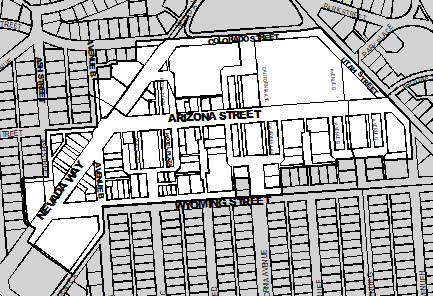
1.
Location Of Historic Business Sign District. This signage district is primarily the original commercial core of Boulder City. The following map inset specifies the boundaries of this signage district:
(Ord. 1560, 10-27-2015, eff. 11-19-2015)
(Ord. 1272, 11-8-2005, eff. 11-30-2005)
2.
Purpose Of Historic Business Sign District. The historic business district represents the original commercial core of Boulder City. The city desires to retain the original and cultural feel and appearance of the downtown area, including the preservation and reuse of original signs (both roof and pylon), and to encourage businesses to utilize suspended signs under walkway canopies, and projecting wall signs over uncovered walkways, all to be used to enhance the architecture of the downtown core. Signs attached to buildings may project into or over (but not beyond) the sidewalk portion of the public right of way a maximum of twelve inches (12"), with a clearance of at least eight feet six inches (8'6"). Projections which exceed these limits are subject to the requirements of an encroachment permit.
3.
Permissible Sign Types. The following sign types are permissible for use in the historic business sign district:
a.
Suspended signs.
b.
Projecting wall signs.
c.
Ground or monument signs, no taller than six feet (6') above sidewalk.
d.
Individual lettered signs (including channel letter or flat letter).
e.
Flat wall signs (including painted wall signs).
f.
Awning and/or canopy signs.
g.
Cabinet signs, molded or freeform (rectangular or square cabinets prohibited).
h.
Restoration of existing pylon signs on the same private property (not within a right of way).
i.
Restoration of existing roof signs, on the same building.
4.
Permissible Sign Types With A Special Use Permit. The following sign types are permissible for use in the historic business sign district upon receipt of a special use permit:
a.
Combination sign displays. Increase the permitted square footage to permit suspended signs in combination with traditional wall signs.
5.
Nonpermissible Sign Types. The following sign types are not permissible for use in the historic business sign district without approval of a variance:
a.
Pole or pylon signs (new installation or expansion of existing).
b.
Cabinet signs (rectangular or square).
c.
Roof signs, new installations.
B.
Motel Sign District.
1.
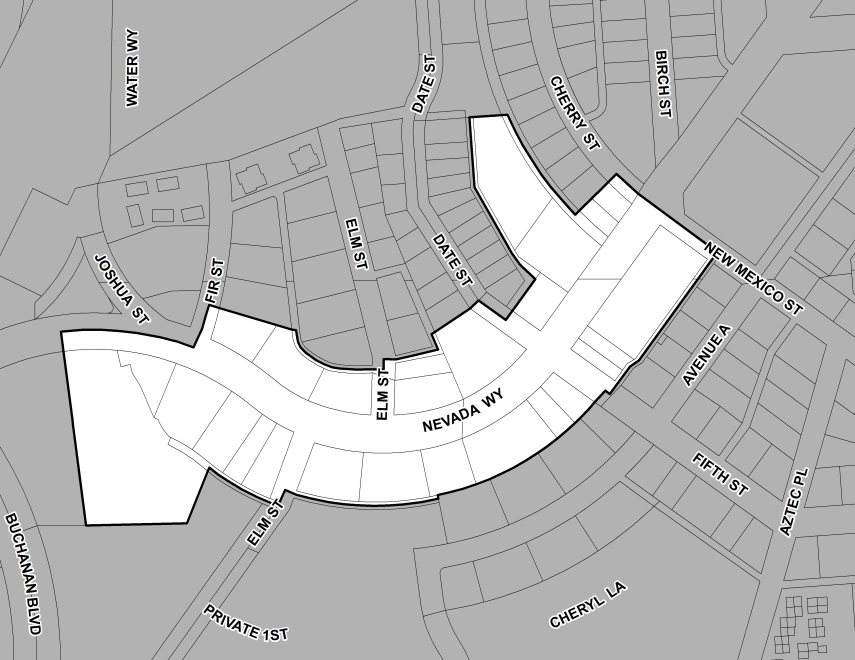
Location Of Motel Sign District. This signage district is primarily the original transient core of Boulder City. The following map inset specifies the boundaries of this signage district:
2.
Purpose Of Motel Sign District. The motel district is characterized by the predominant presence of transient lodging facilities, the majority constructed during the tourist boom during the 1950s through 1970. Unique sign styles and designs, often mimicking that of old Las Vegas, are common in this location. The city desires to retain the original and cultural feel and appearance of the motel area, including the preservation and reuse of original signs (both roof and pylon), and to encourage businesses to rehabilitate their buildings and sites to take advantage of this unique cultural resource.
3.
Permissible Sign Types. The following sign types are permissible for use in the motel sign district:
a.
Ground or monument signs.
b.
Wall mounted individual lettered signs (including channel letter or flat letter).
c.
Flat wall signs (including painted wall signs).
d.
Awning and/or canopy signs.
e.
Cabinet signs, molded or freeform (rectangular or square cabinets prohibited).
f.
Restoration of existing pylon signs on the same private property (not within a right of way).
g.
Restoration of existing roof signs, on the same building.
4.
Nonpermissible Sign Types. The following sign types are not permissible for use in the motel sign district without approval of a variance:
a.
Pole or pylon signs (new installation or expansion of existing).
b.
Cabinet signs (rectangular or square).
c.
Roof signs, new installations.
C.
Nevada Highway Sign District.
1.
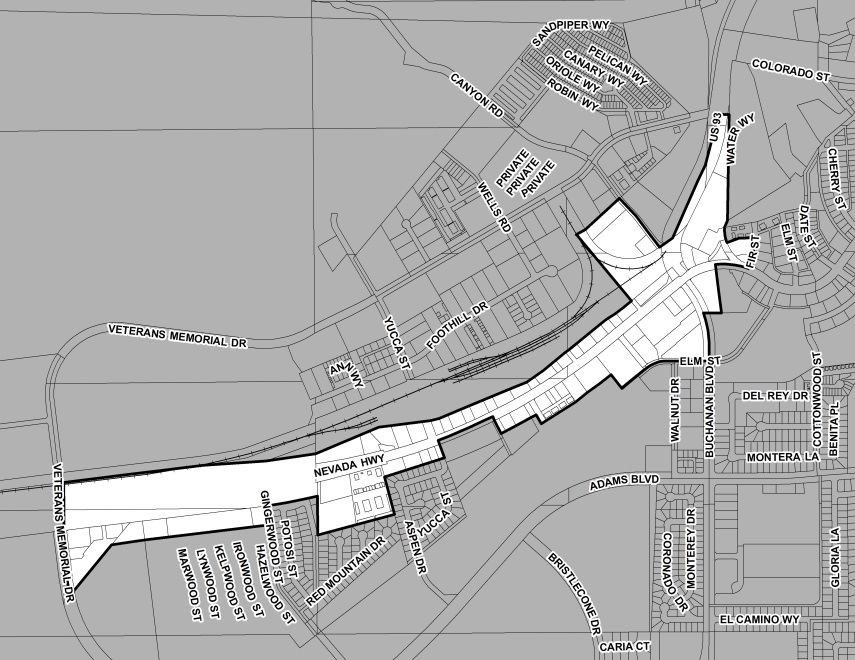
Location Of Nevada Highway Sign District. This signage district is primarily the current tourist commercial core of Boulder City. The following map inset specifies the boundaries of this signage district:
2.
Purpose Of Nevada Highway Sign District. The Nevada highway sign district represents the new commercial area of Boulder City catering primarily to highway traffic, and in a limited fashion, the tourist traveler. The city desires to provide ample opportunity for businesses within this commercial area to adequately advertise their business, yet also reflect the traditional appearance of small town Boulder City. To achieve this goal, pylon signs and larger wall signs are permitted.
3.
Permissible Sign Types. The following sign types are permissible for use in the Nevada highway sign district:
a.
Ground or monument signs.
b.
Pylon or pole signs.
c.
Individual lettered signs (including channel letter or flat letter).
d.
Flat wall signs (including painted wall signs).
e.
Awning and/or canopy signs.
f.
Cabinet signs.
4.
Permissible Sign Types With A Special Use Permit. The following sign types are permissible for use in the Nevada highway sign district upon receipt of a special use permit:
a.
Restoration of existing roof signs, on the same building.
5.
Nonpermissible Sign Types. The following sign types are not permissible for use in the Nevada highway sign district without approval of a variance:
a.
Roof signs, new installations.
D.
Industrial Sign District.
1.
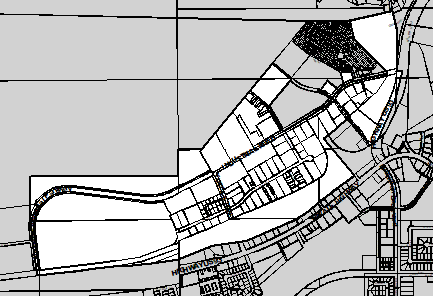
Location Of Industrial Sign District. This signage district is primarily the current light industrial and manufacturing core of Boulder City. The following map inset specifies the boundaries of this signage district:
(Ord. 1560, 10-27-2015, eff. 11-19-2015)
(Ord. 1272, 11-8-2005, eff. 11-30-2005)
2.
Purpose Of Industrial Sign District. The industrial sign district represents the industrial core of Boulder City. The intent of signage for this area is to identify business locations with minimal visual intrusion. Signage is limited to wall signs, and where physically able, ground or monument signs.
3.
Permissible Sign Types. The following sign types are permissible for use in the industrial sign district:
a.
Ground or monument signs.
b.
Individual lettered signs (including channel letter or flat letter).
c.
Flat wall signs (including painted wall signs).
d.
Awning and/or canopy signs.
e.
Cabinet signs.
f.
Pole signs that are fifteen feet (15') or less in height.
4.
Permissible Sign Types With A Special Use Permit. The following sign types are permissible for use in the industrial sign district upon receipt of a special use permit:
a.
Restoration of existing roof signs, on the same building.
5.
Nonpermissible Sign Types. The following sign types are not permissible for use in the industrial sign district without approval of a variance:
a.
Pylon or pole signs exceeding fifteen feet (15') in height.
b.
Roof signs, new installations.
(Ord. 1560, 10-27-2015, eff. 11-19-2015)
E.
Additional Sign Restrictions And Requirements By Individual Zoning Designation. In addition to the signage criteria listed above, each individual zoning district is governed by sign size, lighting, location, setback and height.
1.
R1, R2, R3, MP And ME Zones.
a.
Nameplate. One nameplate is allowed without permit, not exceeding two (2) square feet in area, for such dwelling unit, to indicate the name of the occupant. This provision does not allow commercial messages, other than real estate signs, on residential uses.
(Ord. 1272, 11-8-2005, eff. 11-30-2005)
b.
House Numbers And Street Address Indicators. House numbers and street address indicators shall be permitted as per chapter 44 of this title.
c.
Neighborhood Entrance. One permanent wall mounted real estate entry sign shall be permitted at the primary entrances of a subdivision, not to exceed sixty four (64) square feet in area.
(Ord. 1560, 10-27-2015, eff. 11-19-2015)
d.
Legal Nonresidential Uses. Legal nonresidential uses (public and quasi-public buildings and uses, private schools, public and private recreational areas and facilities, and noncommercial establishments) shall be permitted sign area as follows:
(1)
A maximum of one advertising structure.
(2)
A maximum of two (2) advertising signs.
(3)
In aggregate, the sign area for the advertising structure and the advertising sign (s) shall not exceed thirty two (32) square feet.
e.
Condominium Or Apartment Building. For each condominium or apartment building, one sign not exceeding twelve (12) square feet shall be permitted; however, such sign may not be used for off site commercial messages.
f.
Mobile Home Park. A sign not exceeding thirty two (32) square feet and located on the premises of a mobile home park shall be permitted.
(Ord. 1272, 11-8-2005, ff. 11-30-2005)
2.
CC Zone.
a.
On Site Commercial. See subsection F of this section for wall sign requirements and restrictions. However, if the sign is used for a commercial message, it must qualify as on site.
b.
Advertising Structure. A maximum of one advertising structure. Maximum sign area shall not exceed thirty two (32) square feet. Maximum height shall not exceed six feet (6').
3.
C2 And CM Zones.
a.
Uses And Occupancies Not Located In Shopping Centers. Each use or occupancy shall be permitted signs as follows:
(1)
Advertising Structures; Maximum Number: One per street frontage. Only one advertising structure may be placed along each street frontage. For those properties with more than one street frontage that desire to install one advertising structure along each street frontage, the structures shall be separated by at least one hundred feet (100'). Maximum area for regulated portion of advertising structure: One hundred (100) square feet.
(2)
Wall Signs: See subsection F of this section for wall sign requirements and restrictions.
(Ord. 1560, 10-27-2015, eff. 11-19-2015)
b.
Shopping Centers. Shopping centers and the establishments located within them shall be permitted signs as described in this subsection:
(1)
Advertising Structures:
(A)
Only one advertising structure per shopping center. Maximum sign area shall not exceed one hundred (100) square feet.
(B)
All advertising structures shall be maintained in good condition.
(C)
An advertising structure may not display off site commercial messages; for purposes of this rule, each establishment located in the shopping center is "on site" as to the shopping center's advertising structure displaying tenants within the center.
(2)
Change Panel: Only one change panel sign per establishment is permitted.
(3)
Individual Establishments: See subsection F of this section for wall sign requirements and restrictions.
c.
R3 Developments Permitted By Conditional Use Permit. For R3 developments permitted by conditional use permit in a C2 zone, the sign provisions of the R3 zone shall apply.
4.
BC Zone. Establishments located in the BC zone shall be permitted signs as stated in this subsection.
a.
Signs in the BC zone shall not display off site commercial messages.
b.
All signs attached to the building shall be flush mounted. Signs painted directly on the surface of the wall shall not be permitted.
c.
Only one advertising structure shall be permitted per street frontage.
d.
No sign or combination of signs shall exceed one square foot in area for each six hundred (600) square feet of total site area. However, no individual sign shall exceed one hundred (100) square feet in area per face.
e.
The bottom edge of an advertising structure shall not be more than four feet (4') above grade. An advertising structure in excess of sixty four (64) square feet in area may be erected in the setback area, providing it is no closer than ten feet (10') from the front or side property line.
5.
S Zone. No new signs are allowed in the S zone.
(Ord. 1272, 11-8-2005, eff. 11-30-2005)
6.
H Zone. Signs and advertising structures located in the H zone shall be permitted as stated in this subsection.
a.
Advertising structures shall be permitted as follows:
(1)
For properties at least ten (10) acres in size:
(A)
One principal advertising structure per street frontage, not to exceed forty eight (48) square feet in area and six feet (6') in height above grade or nine feet (9') in height above the nearest curb.
(B)
Internal noncommercial message directional signs within the property shall not exceed thirty two (32) square feet each in area and four feet (4') in height above grade.
(2)
For properties less than ten (10) acres in size: One advertising structure per street frontage, not to exceed thirty two (32) square feet in area and six feet (6') in height above grade or nine feet (9') in height above the nearest curb.
(3)
For the purposes of this section, a private street or multiple access driveway that provides internal access to more than one property within this zone qualifies as a street frontage for sign purposes.
(4)
For the multiple properties within this zone, each property located in the zone is "on site" as to the location of directional advertising structures.
b.
Wall signs shall be permitted as outlined in this chapter.
(Ord. 1516, 12-10-2013, eff. 1-2-2014)
7.
CO Zone. Signs and advertising structures located in the CO zone shall be permitted as stated in this subsection.
a.
A nameplate sign, not exceeding two (2) square feet for each corral lot.
b.
No new signs may be permitted in the CO zone.
8.
A1 And RV Zones. As to each development: one advertising structure or advertising sign shall be permitted, not to exceed thirty two (32) square feet. Such sign shall not be used to display off site commercial messages.
(Ord. 1272, 11-8-2005, eff. 11-30-2005)
F.
Wall Signs. The following criteria shall be met for wall signs in the C1, C2, CM and H zones:
1.
Signs shall not cover architectural features on buildings. Businesses are encouraged to utilize multiple materials and lettering styles, such as exposed neon, different type styles, and logos in conjunction with the lettering for their signs.
2.
The square footage of signage allowed on a wall shall be based on the dimensions of the vertical wall (see figure 1 of this section) to which a sign is attached and according to the following guidelines. Signage which utilizes molded logos and individual letters may occupy up to fifteen percent (15%) or six hundred (600) square feet, whichever is less, of a primary wall, and five percent (5%) of a secondary wall. Signage which utilizes square or rectangular box signs may not occupy more than five percent (5%) or fifty (50) square feet, whichever is less, of any wall. For a combination of these signs on a primary wall, signs may occupy up to fifteen percent (15%) of the primary wall, of which no more than five percent (5%) can be square or rectangular box signs on the primary wall. Regardless of sign style, all businesses shall be permitted to utilize fifty (50) square feet for signage upon the primary wall.
(Ord. 1560, 10-27-2015, eff. 11-19-2015)
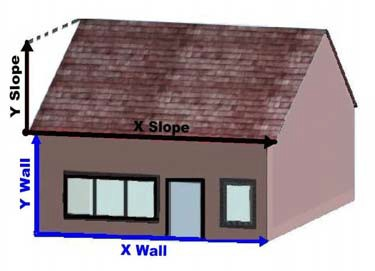
Figure 1
(Ord. 1272, 11-8-2005, eff. 11-30-2005)
a.
The primary wall shall be the wall facing the public street frontage. In the case of a shopping center where most tenants do not enjoy street frontage, the wall facing the principal parking lot shall be the primary wall. All other walls are secondary walls.
b.
For corner lots, only one wall shall be classified as a primary wall at the discretion of the business operator. All other walls are secondary walls.
c.
The maximum size for any one individual sign upon any wall shall be two hundred (200) square feet. The sign shall not exceed the maximum allowable square footage permitted for the designated wall.
(Ord. 1560, 10-27-2015, eff. 11-19-2015)
11-24-12. - SIGN PERMITS.
A.
Permits Generally Required. Unless a particular type of sign is specifically exempted from the permit requirement, by a provision of this chapter or other applicable law, no person shall erect, change or replace any sign allowed by the provisions of this chapter without first having obtained the necessary permits.
B.
Permit Process. The application for a sign permit shall be made in writing on a form provided by the director and shall be accompanied by any fee established by city council resolution. The director shall create a standard form to be used as an application for a sign permit; when approved, the application shall constitute the permit. A single application may be used for multiple signs proposed for the same lot, parcel or use; however, decisions and conditions may pertain to individual signs. Such application may call for any of the following information:
1.
The street address, assessor's parcel number, and name and contact information for the legal owner of record of the property;
2.
Proof of the consent of the property owner or other person in control or possession of the property. For example, if the subject property is leased and the applicant is the lessee, the lessee must demonstrate that the sign complies with all provisions of the lease related to signage, or submit a written landlord's consent;
3.
If a business license has been issued for the property, or an application for a business license is pending, a copy (or the number) of the business license or the application therefor;
4.
If the property is subject to a conditional use permit, either a copy of such permit or the number of such;
5.
Any pending zoning or code enforcement matters concerning the property or an establishment thereon;
6.
Whether the parcel or use is the subject of any outstanding orders for removal, repair, or other corrective action regarding any sign;
7.
A drawing to scale showing the design of the sign, including dimensions, sign size, colors (applies to commercial message signs only), materials, method of attachment, source of illumination and the relationship to any building or structure to which the sign is proposed to be attached or mounted;
8.
The name, address, phone number and license number of the sign contractor who will construct the sign;
9.
A site plan, including all dimensions, drawn to scale, indicating the location of the sign relative to property lines, rights of way, streets, sidewalks, vehicular access points and existing buildings or structures and off street parking areas located on the premises;
10.
The number, size, type and location of all existing signs on the same building, site or premises; however, temporary signs need not be shown;
11.
Whether the proposed sign will be used to display off site commercial messages;
12.
Any structural information and plans necessary to ensure compliance with current adopted building standards and safety codes;
13.
The name, address and state contractor's license number of the professional sign company or contractor, such contractor's name and contact information, along with licensing and bonding information, and the estimated time for construction and installation of the sign following all necessary permits and approvals;
14.
Information regarding interruptions to normal traffic or pedestrian traffic which may be caused by the construction;
15.
Whether the sign or any portion thereof will encroach into or over the public right of way or any property owned by the city;
16.
Such information as needed to determine if the proposed sign complies with any applicable sign plan, sign program, or redevelopment plan;
17.
The application need not show the proposed graphic design or message content of the display face, but such information may be provided at the applicant's option.
C.
Conditions Of Approval. A sign permit application may be approved subject to any of the following conditions, as applicable:
1.
Compliance: Compliance with other applicable approvals and permits, including encroachment, building, electrical, plumbing, demolition, mechanical, etc. Alternatively, the director may require the applicant to receive approval of the building and other safety code permits prior to processing the sign permit application.
2.
Remedy For Compliance Issues: No sign permit shall be issued nor sign installed upon property where exists an outstanding issue as to compliance with the city's zoning law. The sign permit shall only be issued upon verification that the subject property is in compliance with all applicable ordinances governing land use as specified in this title.
D.
Permits Issued In Error. In the event that a sign permit is issued, and the issuance is found to be in error at any time before substantial physical work on actual construction has been accomplished, then the permit may be summarily revoked by the city simply by giving notice to the permittee. In such event, the applicant may reapply within thirty (30) calendar days for a new permit, without paying a new application fee.
E.
Processing Of Permit Applications. All sign permit applications shall be initially reviewed as administrative matters by the director. When a permit application complies with this chapter and all other application laws, the application shall be granted. An application may be approved subject to such conditions as are necessary for full compliance with this chapter and all other applicable law.
1.
If the proposed sign can be approved only with a variance or other discretionary approval, then the director shall prepare a report and recommendation, and refer the matter to the planning commission.
2.
The director shall initially review a sign permit application for completeness. If the application is not complete, the director shall give written notice of the deficiencies within fifteen (15) business days following submission of the application; if no notice of incompleteness is given within such time, then the application shall be deemed complete as of the last day on which notice of completeness could have been given. If a notice of incompleteness is given, the applicant shall have fifteen (15) business days thereafter to file a corrected and complete application.
F.
Time For Decision. Unless time is waived by the applicant, the director shall issue a written decision on a sign permit application within forty five (45) calendar days of when the application is deemed complete. Failure to issue such a decision in a timely manner shall be deemed a denial of the application, and create an immediate right of appeal to the planning commission.
(Ord. 1272, 11-8-2005, eff. 11-30-2005)
11-24-13. - TEMPORARY SIGNS.
A.
Standards For Temporary Signs. Temporary signs may not flash, blink, be illuminated, spin, rotate, block traffic visibility, constitute a vehicular or pedestrian traffic hazard, or cause a public nuisance of any kind. They shall not be attached to utility poles, fences, or trees. They must be secured to the building, interior parking lot light pole or ground. Temporary signs may be attached to existing permanent signs.
B.
Examples Of Typical Temporary Sign Types. It is intended that the following images will serve to illustrate the terms being used within this section and not to be comprehensive. The following images do not represent appropriate or permitted temporary sign types. Any sign not expressly allowed by this chapter is prohibited.
(Ord. 1322, 3-27-2007, eff. 4-18-2007)
| Automotive Goods | 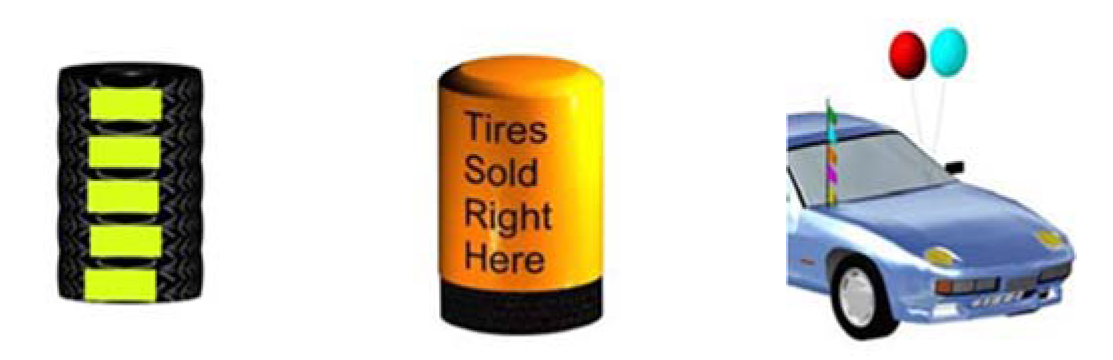 |
| Banners |  |
| Inflatables |  |
| Mobile Signs | 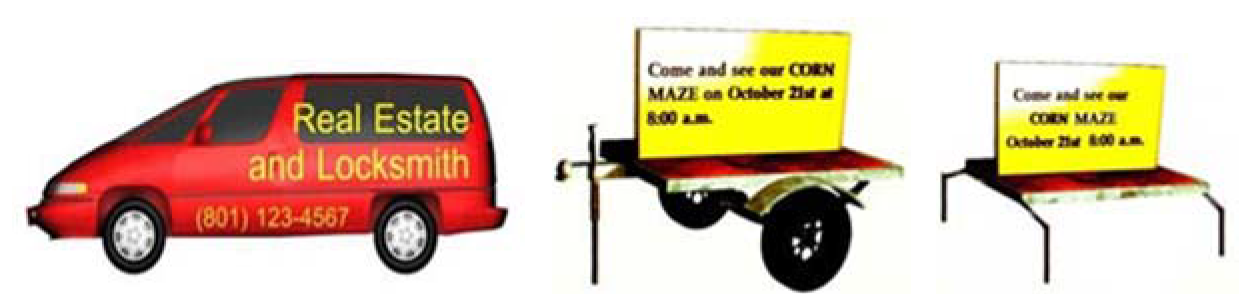 |
| Portable Signs |  |
| Real Estate Signs | 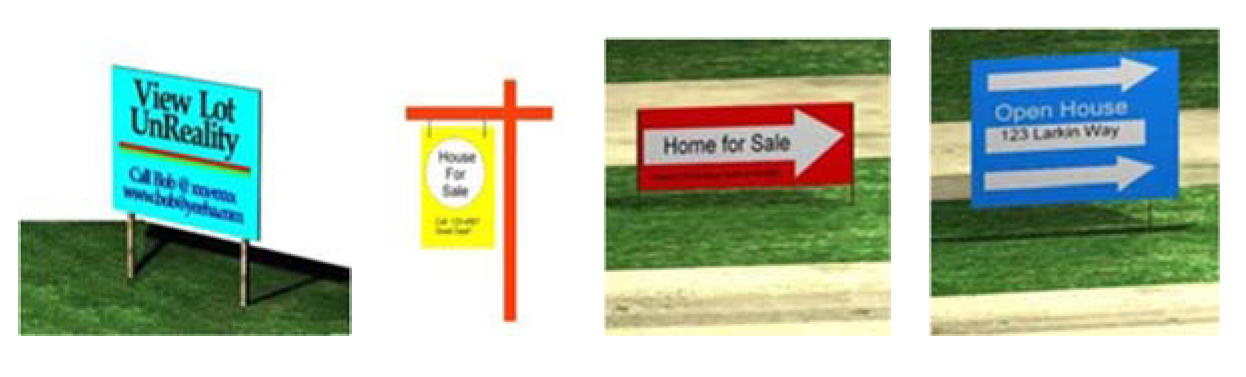 |
| Snipe Signs | 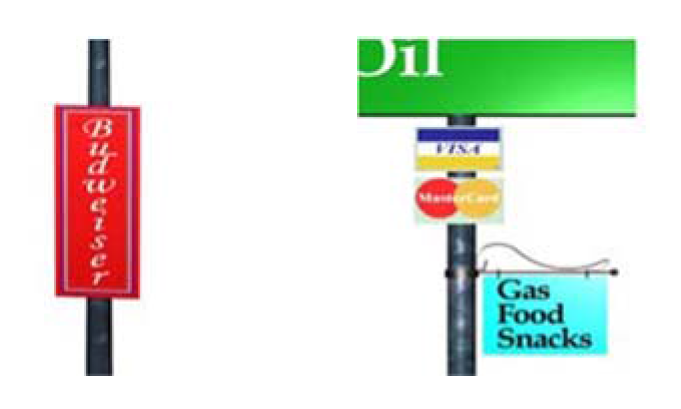 |
| Wind Signs | 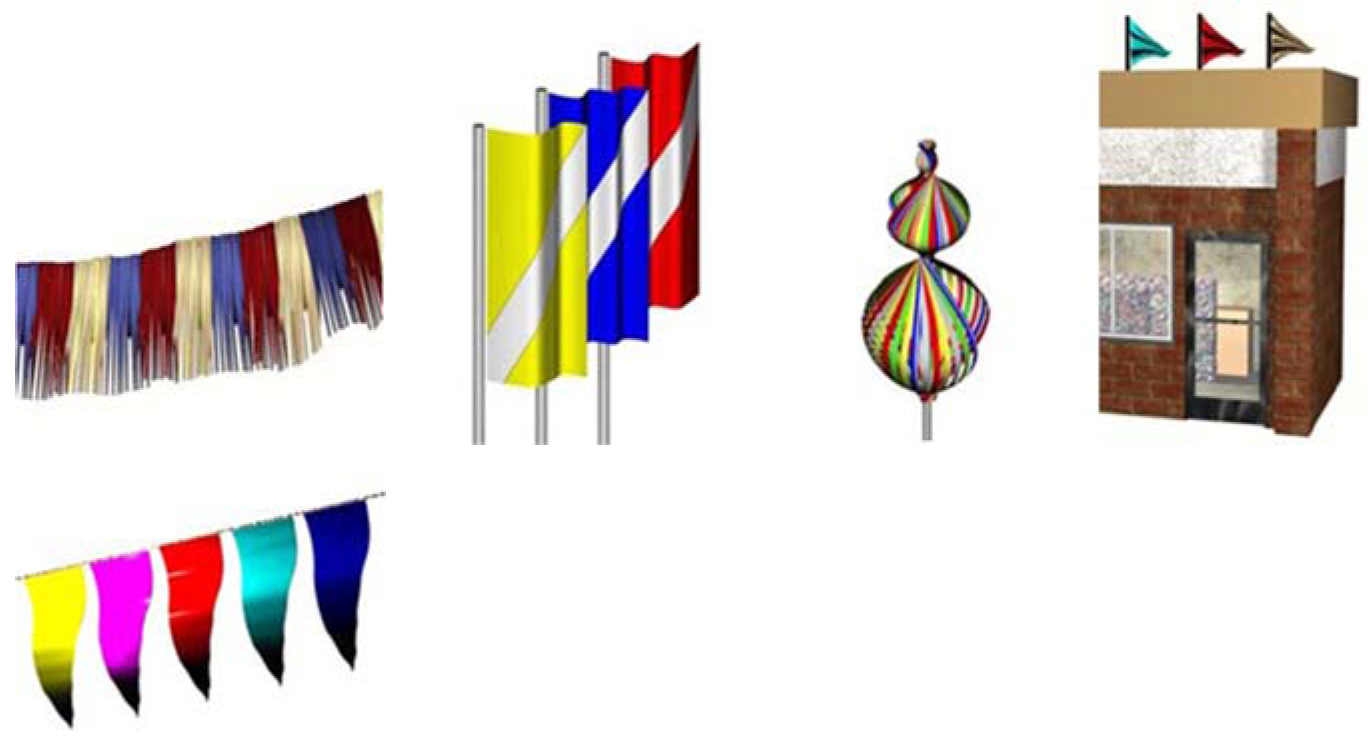 |
(Ord. 1272, 11-8-2005, eff. 11-30-2005)
C.
Temporary Signs Allowed Without A Permit In Nonresidential Zones.
1.
Business Identification. Upon application for permanent signage, one banner, attached to the building/lease space is allowed until permanent signage can be installed. Upon installation of permanent sign, temporary signage shall be removed.
2.
Road Construction Periods. Businesses with frontage immediately adjacent to a road right of way construction zone may have one banner not to exceed thirty two (32) square feet nor five feet (5') in height during periods of construction within the road right of way. The signs shall be located on site and may be in landscape areas abutting the right of way. They must be removed immediately upon restoration of traffic flow on the affected rights of way.
3.
Temporary Freestanding Business (e.g., Christmas Tree Lot). Temporary freestanding businesses are allowed only two (2) temporary signs under the following conditions:
a.
The two (2) signs may only be banners and/or portable signs (e.g., A-frame or T-frame).
b.
Banners may not exceed thirty two (32) square feet and portable signs (A-frames or T-frames) must comply with the size and area requirements for portable signs allowed without a permit.
c.
The temporary signs must be immediately adjacent to the temporary business, i.e., they are not permitted to be located at the far end of a parking lot, sidewalk, right of way, etc.
4.
Holiday Promotional Periods. A business may display additional commercial temporary signage during the following holiday periods without a permit. Only one banner sign, not to exceed thirty two (32) square feet, is allowed during these periods. Such must be secured to the building and removed by the end of the first working day after the associated holiday.
D.
Temporary Signs Requiring A Permit In Nonresidential Zones. The following promotional periods require a Boulder City issued temporary sign permit, and may not be prolonged by those above periods allowed without a permit.
(Ord. 1322, 3-27-2007, eff. 4-18-2007)
1.
Grand Opening Period. Temporary signs announcing the initial opening of a business, or the relocation, or change of ownership of an existing business may be allowed within the first year of operations for a period not to exceed forty five (45) calendar days. A combination of up to three (3) temporary signs consisting of banners, wind signs, inflatables, portable and mobile signs may be used. The signs must be removed at the end of the forty five (45) day period.
(Ord. 1560, 10-27-2015, eff. 11-19-2015)
2.
Special Promotions Periods. A business may apply for three (3) special promotion periods during the calendar year. Each period may not exceed seven (7) days in length. A single banner, not to exceed thirty two (32) square feet, is allowed during this period. It must be attached to the business structure/lease space. One banner is allowed per elevation facing a public street. These periods may run consecutively.
3.
Going Out Of Business/Bankruptcy Period. A business may apply for a special permit in order to facilitate the liquidation of inventory for a failing business for a period not to exceed ninety (90) calendar days. This permit is allowed only once for any business license. A single banner or portable sign is allowed during this period.
(Ord. 1322, 3-27-2007, eff. 4-18-2007)
E.
Temporary Signs For Real Estate Transactions.
1.
On Site. Signs relating to a proposed real estate transaction may be placed on private property, on site, subject to:
The maximum number of such signs which may be displayed at any one time on any one parcel is two (2).
2.
Off Site. Signs relating to a proposed real estate transaction may be placed on private property, off site, subject to:
The maximum number of such signs which may be displayed at any one time on any one parcel is three (3).
(Ord. 1560, 10-27-2015, 11-19-2015)
11-24-14. - PLANNING COMMISSION REVIEW; APPEALS, SPECIAL USE PERMITS AND VARIANCES.
A.
Appeals. Any official decision or action on a sign related matter may be appealed first to the planning commission, and then to the city council, and then to judicial review. Any resident of the city, or any person owning or operating an establishment located within the city may appeal any sign related decision.
(Ord. 1272, 11-8-2005, eff. 11-30-2005)
1.
Notice Of Appeal. An appeal is perfected by filing a written notice of appeal with the city clerk within seven (7) business days after the decision is announced, delivered, or posted. The notice of appeal shall identify the appellant, the decision appealed from, and the grounds for the appeal.
(Ord. 1560, 10-27-2015, eff. 11-19-2015)
2.
Status Pending Appeal. While an appeal of a sign related decision is pending, the status quo shall be maintained, unless the subject sign poses an immediate threat to the public health and safety by virtue of the physical condition of its structure, in which case the sign may be summarily abated to the least degree necessary to protect the public health and safety.
3.
Consideration Factors On Appeal. On appeal of a sign related decision, the appellate body shall not consider the message content of any noncommercial speech, and as to commercial speech, may consider only whether the message is on site or off site, whether the sign conforms to the provisions of this chapter, other applicable law, and any applicable sign program or redevelopment plan, and other noncommunicative aspects of the sign.
4.
Time For Appellate Decision. Following receipt by the city clerk of an appeal of a sign related decision, the matter shall be placed on the agenda for the next meeting of the appellate body (planning commission or city council) for which the notice and agenda requirements may be met, but in no event more than forty five (45) calendar days after the city clerk receives notice of the appeal. Unless all appellants waive time, the appellate body shall hear and decide the appeal not later than sixty (60) calendar days after the city clerk receives the written notice of appeal. A decision by the appellate body shall be in writing and shall set forth findings, based on evidence presented at the public hearing, which supports the decision.
5.
Judicial Review. After exhaustion of all internal appeal procedures, an appellant may seek judicial review of any sign related decision in any court of competent subject matter jurisdiction which also has personal jurisdiction over the city and its officers. An action seeking such judicial review must be filed with the court and served on the city not more than sixty (60) days after the final decision is reached by the city's internal review procedures.
B.
Special Use Permits. Within each sign district, certain sign types require a special use permit for continued use, relocation or installation. It is the intent and purpose of this section to outline the process and review criteria for the planning commission to utilize during the review of the special use permit. The goal of the permit process is to be fair, comprehensive, and enforceable while allowing Boulder City to create and maintain safe and aesthetically pleasing building elevations and streetscapes. These special use permit review criteria serve to balance the need to protect the public safety and welfare, the need for a well maintained and attractive community, and the need for adequate identification, communication and advertising for land uses. Special use permits shall follow the process used for notification for hearings for a conditional use permit, and shall be conducted as a public hearing.
1.
Review Criteria For A Special Use Permit.
a.
The sign shall be determined to be of significant historical interest.
b.
The proposed reuse of the sign shall be determined to eliminate the blighting effects of an otherwise dilapidated sign if properly restored or reused.
c.
The sign shall be determined to not create a vehicular or pedestrian traffic hazard.
d.
The sign shall preserve (if applicable) the historic appearance of the property, including maintaining the original sign exterior shell and lighting method.
2.
Items To Not Be Included In Review Of Special Use Permit. The planning commission shall not consider the following:
a.
The commercial or noncommercial message content of the sign.
b.
The coloring of a company logo (registered trademark or logo).
C.
Variances. All other requests to vary from the standards of this chapter, with the exception of off site commercial messages as per subsection 11-24-5M of this chapter, require the issuance of a variance as per the provisions of chapter 32 of this title.
(Ord. 1272, 11-8-2005, eff. 11-30-2005)
11-24-15. - NONCONFORMING SIGNS.
A.
Previously Conforming. Any sign which fully complied with all applicable law at the time of its construction, may be continued in use, but is subject to the standard procedures for abatement of nuisance if it is found to be unsafe because the structure creates an immediate hazard to persons or property.
B.
Maintenance. Reasonable repairs and alterations may be made to nonconforming signs, provided that there is no expansion of any nonconformity with current requirements.
C.
Repair. In the event any previously conforming sign is damaged, by any cause other than intentional vandalism, and repair of the damage would exceed fifty percent (50%) of the reproduction cost, according to appraisal thereof by competent appraisers, such sign may be restored, reconstructed, altered or repaired only to conform with the provisions of this chapter.
(Ord. 1272, 11-8-2005, eff. 11-30-2005)
11-24-16. - ENFORCEMENT.
The director may enforce the provisions of this chapter by appropriate orders and directives. Such orders and directives may include, but are not limited to, orders to remove, repair, upgrade, repaint, replace or relocate any sign. All such orders and directives are subject to appeal as provided in this chapter. Any failure to follow a valid order or directive issued by the director shall be deemed a violation of this chapter which may be remedied in the same manner as any violation of this title (zoning).
A.
Responsible Parties. Sign related rights, duties and responsibilities are joint and several as to the owner of the property, the owner of any business or other establishment located on the property, and the owner of the sign.
B.
Abandoned Signs. Any on site commercial sign associated with a business which has ceased operations for ninety (90) days may be deemed an abandoned sign, and may be ordered removed within ten (10) business days. The removal duty falls jointly and severally upon the party which used the sign as part of the business and the owner of the land on which the sign is mounted or displayed.
C.
Remedy By City. In the event that a valid directive or order of the director is not followed, and is not timely appealed, then the director may give a ten (10) calendar day written notice to the responsible parties that the city shall take corrective action and assess the cost of doing so as a lien against the property, using such procedures as are required by state or local law. The director may grant a reasonable extension of time, not to exceed one hundred twenty (120) calendar days to effect the required correction, if the owner or occupant of the premises has made proper application for a new sign which would accomplish the same result.
(Ord. 1272, 11-8-2005, eff. 11-30-2005)
11-24-17. - STANDARD DRAWING OF SIGHT TRIANGLE.
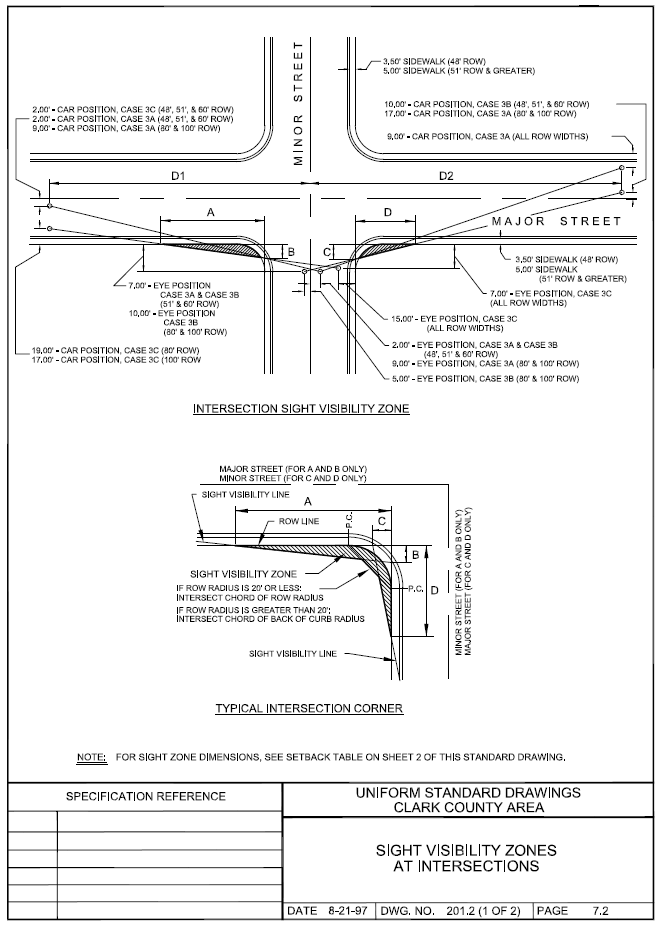
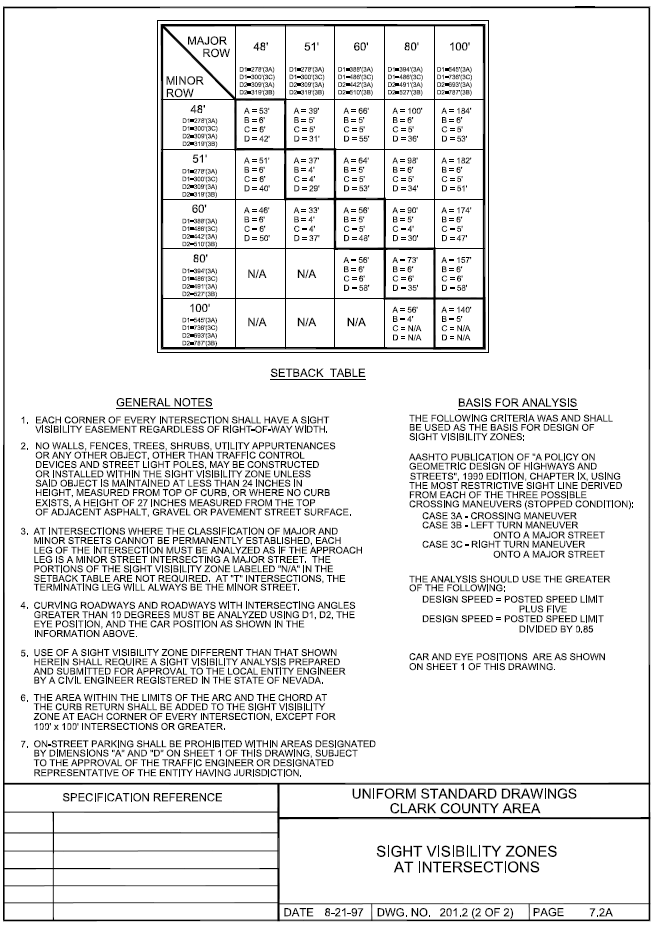
(Ord. 1272, 11-8-2005, eff. 11-30-2005)

