
Cave Junction City Zoning Code
CHAPTER 17
28 - C COMMERCIAL DISTRICT
Sections:
17.28.010 - Purpose.
The commercial district is intended to accommodate, at convenient locations within Cave Junction, commercial activities which: (1) provide the basic goods and services needed by the surrounding residents; and (2) provide appropriate tourist and recreational goods, services and facilities.
(Ord. 447 §1(part), 2004: Ord. 438 §3 Exh. C (part), 2003)
17.28.020 - Permitted buildings and uses.
A.
Any retail or service commercial use not involving the manufacture, processing, repair, storage or compounding of products other than what is clearly incidental to the business on the premises;
B.
Multiple family dwellings;
C.
Mobile home parks;
D.
Dwelling units in conjunction with a commercial use;
E.
Commercial and mixed-use buildings subject to site plan review.
F.
Residential uses (B-E) are only permitted on lots that have no street frontage Highway 199 between Hanby and Hamilton.
(Ord. 438 § 3 Exh. C (part), 2003; Ord. 447 § 1(part), 2004; Ord. No. 609, § 1(Exh. B), 2-5-25)
17.28.025 - Prohibited uses.
Wrecking, demolition, junk yards and recycling centers or other similar uses including outdoor storage as a primary use are prohibited in the commercial district. These prohibited outdoor storage uses would include any use proposing the long-term storage, dismantling, or sale of used automobiles, automobile parts, appliances, appliance parts, garbage, refuse, building materials, machinery, trailers, or recycling material in an unroofed area.
(Ord. No. 588, 11-9-2020)
17.28.030 - Buildings and uses permitted conditionally.
The planning commission or city council, subject to the procedures and conditions set forth in Chapter 17.14, may grant a conditional use permit for any use permitted outright or conditionally in commercial (C) only if the property or use meets the requirements set forth relating to the multiple family district. In addition, light industrial uses with conditions to control noise, smoke, glare, odor or visual impact of outdoor storage areas may be approved.
(Ord. 438 § 3 Exh. C (part), 2003; Ord. 447 § 1(part), 2004; Ord. No. 616, § 1b, 5-27-25)
17.28.040 - Lot requirements.
A.
Minimum average width shall be forty-five feet.
B.
Maximum lot coverage for structures plus required parking may be one hundred percent, except where the use is abutting a residential district.
C.
The side yard abutting a residential district shall be a minimum of five feet.
D.
The rear yard abutting a residential district shall be a minimum of ten feet.
(Ord. 447 §1(part), 2004: Ord. 438 §3 Exh. C (part), 2003)
(Ord. No. 536, § 4, 8-24-10)
17.28.050 - Landscaped area.
A.
Purpose. Landscaping is required to help soften the effects of building and paved areas. It also helps in reducing storm water runoff by providing a surface into which storm water can percolate.
B.
Plant Selection. A combination of deciduous and evergreen trees, shrubs and ground covers shall be used for all planted areas, the selection of which shall be based on the local climate, exposure, water availability and drainage conditions. When new vegetation is planted, soils shall be amended, as necessary, to allow for healthy plant growth.
C.
Non-Plant Ground Covers. Bark dust, chips, aggregate or other non-plant ground covers may be used, but shall cover no more than fifty percent of the area to be landscaped and shall be confined to areas underneath plants. Non-plant ground covers cannot be a substitute for ground cover plants.
(Ord. 447 §1(part), 2004: Ord. 438 §3 Exh. C (part), 2003)
(Ord. No. 536, § 5, 8-24-10)
17.28.060 - Height limit.
The maximum building height shall be forty-five feet; structures such as antennas and chimneys are excepted.
(Ord. 447 §1(part), 2004: Ord. 438 §3 Exh. C (part), 2003)
17.28.070 - Vision clearance.
A.
The minimum clearance area of a highway or street corner of a corner lot is twenty-five feet.
B.
The minimum clearance of a driveway, an alley or street intersection shall be ten feet.
(Ord. 447 §1(part), 2004: Ord. 438 §3 Exh. C (part), 2003)
17.28.080 - Architectural guidelines and standards.
A.
Purpose and Applicability. The commercial architectural guidelines standards are intended to provide detailed, human-scale design, while affording flexibility to use a variety of building styles. This section applies to all of the following types of buildings:
1.
Public and institutional buildings, except that the standard shall not apply to buildings which are not subject to site plan review or those that do not receive the public (e.g., buildings used solely to house mechanical equipment, and similar uses); and
2.
Commercial and mixed-use buildings subject to site plan review.
B.
Guidelines and Standards. Each of the following standards shall be met. An architectural feature used to comply with one standard may be used to comply with another standard.
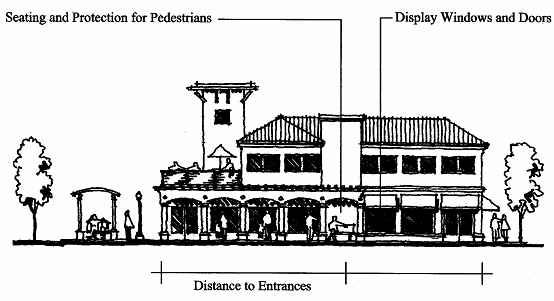
Figure 17-6 - Design of Large-Scale Buildings and Developments (Typical)
1.
Design of Large-Scale Buildings and Developments. The standards in subsection (B)(1)(c) of this section, shall apply to "Large-Scale Buildings and Developments," as defined in subsections (B)(1)(a) through (b) of this section:
a.
Buildings with greater than twenty thousand square feet of enclosed ground-floor space (i.e., "large-scale"). Multi-tenant buildings shall be counted as the sum of all tenant spaces within the same building shell,
b.
Multiple-building developments with a combined ground-floor space (enclosed) greater than forty thousand square feet (e.g., shopping centers, public/institutional campuses, and similar developments), and
c.
All large-scale buildings and developments, as defined in subsections (B)(1)(a) through (b) of this section, shall provide human-scale design by conforming to all of the following criteria:
i.
Incorporate changes in building direction (i.e., articulation), and divide large masses into varying heights and sizes, as shown above. Such changes may include building offsets; projections; changes in elevation or horizontal direction; sheltering roofs; terraces; a distinct pattern of divisions in surface materials; and use of windows, screening trees; small-scale lighting (e.g., wall-mounted lighting, or up-lighting); and similar features. Note: the example shown above is meant to illustrate examples of these building design elements, and should not be interpreted as a required architectural style,
ii.
Every building elevation adjacent to a street with a horizontal dimension of more than one hundred feet, as measured from end-wall to end-wall, shall have a building entrance; except that buildings elevations that are unable to provide an entrance due to the internal function of the building space (e.g., mechanical equipment, areas where the public or employees are not received, etc.) may not be required to meet this standard. Pathways shall connect all entrances to the street right-of-way, in conformance with Titles 16 and 17.
(Ord. 447 §1(part), 2004: Ord. 438 §3 Exh. C (part), 2003)
17.28.090 - Pedestrian amenities.
A.
Purpose and Applicability. This section is intended to provide comfortable and inviting pedestrian spaces within the commercial district. Pedestrian amenities serve as informal gathering places for socializing, resting, and enjoyment of the city's downtown, and contribute to a walkable district. This section applies to all of the following types of buildings:
1.
Three or more single-family attached townhomes on their own lots (i.e., townhomes subject to site plan review);
2.
Duplex and triplex developments with more than one building (i.e., duplex and triplex developments subject to site plan review);
3.
Multi-family housing;
4.
Public and institutional buildings, except that the standard shall not apply to buildings which are not subject to site plan review or those that do not receive the public (e.g., buildings used solely to house mechanical equipment, and similar uses); and
5.
Commercial and mixed-use buildings subject to site plan review.
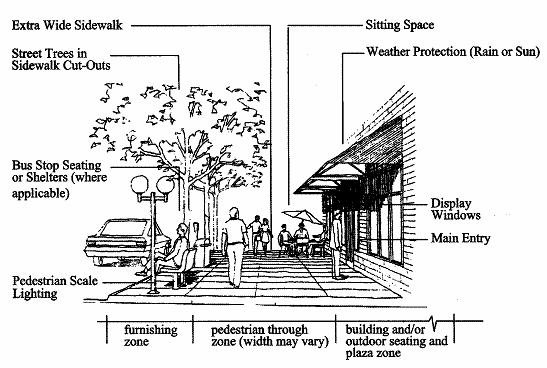
Figure 17-7 - Pedestrian Amenities (Typical)
B.
Guidelines and Standards. Every development shall provide one or more of the "pedestrian amenities" listed in subsections (B)(1) through (B)(4) of this section, and illustrated above. Note: the example shown above is meant to illustrate examples of pedestrian amenities. Other types of amenities and designs may be used. Pedestrian amenities may be provided within a public right-of-way when approved by the applicable jurisdiction.
1.
A plaza, courtyard, square or extra-wide sidewalk next to the building entrance (minimum width of ten feet);
2.
Sitting space (i.e., benches or ledges between the building entrance and sidewalk (minimum of sixteen inches in height and thirty inches in width);
3.
Building canopy, awning, pergola, or similar weather protection (minimum projection of four feet over a sidewalk or other pedestrian space);
4.
Public art which incorporates seating (e.g., fountain, sculpture, etc.).
(Ord. 447 §1(part), 2004: Ord. 438 §3 Exh. C (part), 2003)
17.28.100 - Special standards for certain uses.
This section supplements the standards contained Sections 17.28.010 through 17.28.090. It provides standards for the following land uses in order to control the scale and compatibility of those uses within the commercial district:
• Residential Uses
• Public and Institutional Uses
• Accessory Uses and Structures
• Light Manufacture
• Recreational Vehicle Park
A.
Residential Uses. Higher density residential uses, such as multi-family buildings and attached townhomes, are permitted to encourage housing near employment, shopping, and services. All residential developments shall comply with the standards in subsections (A)(1) through (A)(5) of this section, which are intended to require mixed use development; conserve the community's supply of commercial land for commercial uses; provide for designs which are compatible with a storefront character; avoid or minimize impacts associated with traffic and parking; and ensure proper management and maintenance of common areas. Residential uses which existed prior to the effective date of this code are exempt from this section.
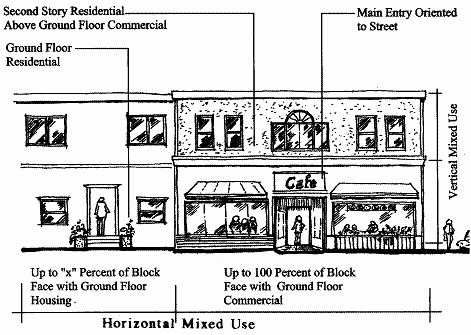
Figure 17-8 - Mixed Use Development in the Commercial District
1.
Mixed Use Development Required. Residential uses shall be permitted only when part of a mixed-use development (residential with commercial or public/institutional use). Both "vertical" mixed use (housing above the ground floor), and "horizontal" mixed-use (housing on the ground floor) developments are allowed, subject to the standards in subsections (A)(2) through (A)(5) of this section;
2.
Limitation on Street-Level Housing. No street-level frontage may be occupied by residential uses. This standard is intended to reserve storefront space for commercial uses and public/institutional uses; it does not limit residential uses above the street level on upper stories, or behind street-level storefronts. For parcels with street access at more than one level (e.g., sloping sites with two street frontages), the limitation on residential building space shall apply to all street frontages;
3.
Density. There is no minimum or maximum residential density standard. Density shall be controlled by the applicable lot coverage, floor area, and building height standards;
4.
Parking, Garages, and Driveways. All off-street vehicle parking, including surface lots and garages, shall be oriented to alleys, placed underground, placed in structures above the ground floor, or located in parking areas located behind or to the side of the building; except that side-yards facing a street (i.e., corner yards) shall not be used for surface parking. On corner lots, garage entrances shall be oriented to a side street (i.e., away from Redwood Highway) when access cannot be provided from an alley;
5.
Common Areas. All common areas (e.g., walkways, drives, courtyards, private alleys, parking courts, etc.) and building exteriors shall be maintained by a property-owners association or other legal entity. Copies of any applicable covenants, restrictions and conditions shall be recorded and provided to the city prior to building permit approval.
B.
Public and Institutional Uses. Public and institutional uses are allowed in the commercial district.
C.
Accessory Uses and Structures. Accessory uses and structures are of a nature customarily incidental and subordinate to the principal use or structure on the same lot. Typical accessory structures in the commercial district include small workshops, greenhouses, studios, storage sheds, and similar structures. Accessory uses and structures are allowed for all permitted land uses within the commercial district. Accessory structures shall comply with the following standards:
1.
Primary Use Required. An accessory structure shall not be allowed before or without a primary use;
2.
Setback Standards. Accessory structures shall comply with the setback standards, except that the maximum setback provisions shall not apply;
3.
Restrictions. A structure shall not be placed over an easement that prohibits such placement. No structure shall encroach into the public right-of-way;
4.
Compliance with Subdivision Standards. The owner may be required to remove an accessory structure as a condition of land division approval when removal of the structure is necessary to comply with setback standards.
D.
Light Manufacture. Light manufacture uses are allowed in the commercial district. "Light manufacture" means production or manufacturing of small-scale goods, such as crafts, bakery products, and printing and binderies. Light manufacture uses shall conform to all of the following standards, which are intended to protect the pedestrian-friendly, storefront character of the commercial district:
1.
Retail or Service Use Required. Light manufacture is allowed only when it is in conjunction with a permitted retail or service use and does not exceed seventy-five percent of the gross floor area;
2.
Location. The light manufacture use shall be enclosed within a building.
E.
Recreational vehicle park uses are allowed in the commercial district. To provide development standards for parks serving recreational vehicles which protect the health and safety of park occupants and maximize the park's compatibility with surrounding uses, recreational vehicle parks shall comply with the following standards:
1.
Length of Stay. There shall be no limit to the length of stay for patrons of the park, provided the following requirements are met:
a)
All standards of this section are continuously met.
b)
All park rules are adhered to.
2.
State Standards. RV Parks shall conform to Oregon Administrative Rules, Chapter 333, Division 31 and as amended at a minimum. These OAR development standards shall apply except where other standards in this section are more restrictive.
3.
Local Standards.
a)
Recreational vehicle parks may be located on property which is one acre or larger, and shall not exceed a density of fifteen recreational vehicle sites plus six campsites per acre.
b)
The space provided for each RV shall not be less than six hundred twenty-five square feet exclusive of any space used for common areas, such as roadways, general use structures, walkways, parking spaces for vehicles other than RVs and landscaped areas.
c)
One-way access roads and access ways shall be a minimum of twelve feet wide and two-way access roads shall be a minimum of twenty-four feet wide. These roads shall be paved with asphaltic concrete or concrete and shall be well drained into a storm drainage system approved by the public works director.
d)
Each space designed for vehicular use within a recreational vehicle park shall have direct access to a park, street, or road. The access shall be unobstructed by grade or vertical clearance or the entrance to such roads with impaired clearance shall be provided with warning signs. The park street system shall have direct connection to a public way.
e)
Recreational vehicle parks in excess of thirty sites shall be required to have two or more means of access off of a public street. Parks with less than thirty sites shall provide a secondary access for emergency vehicles.
f)
A space provided for an RV shall be paved with compacted fine gravel, asphalt or concrete and be designed to provide runoff of surface water.
g)
The part of the space which is not occupied by the recreational vehicle, not intended as an access way to the recreational vehicle or part of an outdoor patio, shall be landscaped with turf, shrubs or other living groundcover. One large variety deciduous shade tree shall be provided per RV space, so located to provide mid-day and afternoon shade in summer. The tree shall be a minimum of one inch in caliper and eight feet in height upon planting. All required landscaping shall be replaced within one calendar year if it is destroyed or lost.
h)
Each RV space shall be provided with municipal piped water and municipal sanitary sewage disposal system service. An RV staying in the park shall be connected to the water and sewage service provided by the park.
i)
Each RV space shall be provided with electrical service.
j)
Trash receptacles for the disposal of solid waste materials shall be provided in convenient locations for the use of guests of the park and located in such number and be of such capacity that there is no uncovered accumulation of trash at any time.
k)
The total number of parking spaces in the park, exclusive of parking provided for the exclusive use of the manager or employees of the park, shall be equal to one and one-half space per RV space or camp site. At least one of the parking spaces shall be provided at each recreational vehicle space and/or campsite. Parking spaces shall be paved with fine crushed rock, asphalt or concrete.
l)
The park shall provide toilets, lavatories and showers for each sex in the following ratios: for each fifty recreational vehicle space/campsites or any fraction thereof: one toilet, one urinal, one lavatory and one shower for men; and one toilet, one lavatory and one shower for women. The toilets and showers shall afford privacy and the showers shall be provided with private dressing rooms. Facilities for each sex shall be located in a separate building, or, if in the same building shall be separated by a soundproof wall.
m)
The park shall provide one utility building or room containing one clothes washing machine, one clothes drying machine and space for clothes sorting.
n)
The park shall provide a dump station which is connected to the city sewer system in a fashion approved by the Public Work's Director.
o)
Building spaces required by subsections l) and m) of this section shall be lighted at all times of night and day, shall be ventilated, shall be provided with heating facilities which shall maintain a room temperature no lower than sixty-five degrees Fahrenheit, shall have [a] floor of waterproof material, shall have sanitary ceiling, floor and wall surfaces and shall be provided with adequate floor drains to permit easy cleaning.
p)
The park shall be buffered from surrounding use and development by a five-foot setback and landscape strip at all interior side and rear lot lines, and a required ten-foot setback and landscape strip at front and exterior lot lines. Side and rear lot lines shall also be screened by a six-foot sight obscuring fence, and landscape strip as approved by the Planning Commission.
q)
The park shall be maintained in a neat appearance at all times. There shall be no outdoor storage of materials or supplies except articles commonly used in travel, such as lawn chairs, table, hibachi and travel chest. Indoor storage shall be confined to one building at the rear or side of the lot, built according to the Uniform Building Code, Oregon edition.
r)
The park shall provide each RV space with a patio slab of concrete or asphalt, measuring eight feet by twelve feet at a minimum, and one picnic table capable of seating at least four persons.
s)
No manufactured housing or site built housing shall be permitted on the site, except only one unit for manager of the RV Park.
t)
No storage units shall be erected at any of the camp sites.
u)
Any action towards removal of wheels of a recreational vehicle, except for temporary purposes of repairs or to attach the recreational vehicle to the ground, other than for stabilizing purposes, is prohibited.
v)
Campfire pits are authorized, provided the fire pit is protected on all four sides by noncombustible material walls at least eight inches high, forming a shape of no more than three feet square with a draft provision built into one of the noncombustible walls of the fire pit and an iron grill over the top of the fire pit. The fire pit shall be dug down to mineral earth or concrete for a two-foot radius, free from all vegetation. Use of the pit is subject to fire regulations and as specified by the Illinois Valley Fire District.
w)
No in-park propane storage shall be allowed other than that included within or attached to a recreational vehicle.
x)
A full-time manager will be available on the park premises at all times the park is open for business.
4.
Development of an RV Park shall be reviewed using the procedures specified in 17.14.060 of this code, as a Type III procedure decided by the Planning Commission.
5.
A complete submittal shall be made as provided in Section 17.14.150, submittal shall include a major site plan as provided in Section 17.14.160(B) of this code.
(Ord. 447 §1(part), 2004: Ord. 438 §3 Exh. C (part), 2003)
(Ord. No. 586, 11-14-2019)

