
Clovis City Zoning Code
CHAPTER 17
30 - USE REGULATIONS
17.30.010 - Allowed uses.
A.
Use Classification System. Uses are listed in the first column of Table 30-1. This UDO classifies uses into categories and subcategories, which are defined in 17.30.020 In some cases, specific use types and building types are listed in addition to the use categories and subcategories.
B.
Permitted Uses. Uses identified with a "P" are permitted as-of-right in the subject zoning district, subject to compliance with any supplemental regulations identified in the final column of Table 30-1 and with all other applicable regulations of this UDO.
C.
Conditional Uses. Uses identified with an "C" may be allowed if reviewed and approved in accordance with the conditional use procedures of 17.65.110. Conditional uses are subject to compliance with any supplemental regulations identified in the final column of Table 30-1 and with all other applicable regulations of this UDO.
D.
Prohibited Uses. Uses identified with a "-" are expressly prohibited. Uses that are not listed in the table and that cannot be reasonably interpreted (as stated in 17.30.020.A.5) to fall within any defined use category are also prohibited.
E.
Accessory Uses. Accessory uses, such as home occupations, are not regulated by Table 30-1. Customary accessory uses are allowed in conjunction with principal uses permitted by right or by conditional use, subject to compliance with all applicable accessory use regulations of 17.30.030.
TABLE 30-1: TABLE OF ALLOWED USES
(Ord. No. 2122-2019, § 3, 6-20-19; Ord. No. 2149-2021, § 2, 8-19-21).
17.30.020 - Use categories.
A.
Generally. This section establishes and describes the use categorization system used to classify principal uses in this UDO.
1.
Use Categories. This UDO classifies principal land uses into 8 major groupings (described in 17.30.020.B through I). These major groupings are referred to as "use categories." The use categories are as follows:
a.
Residential. See 17.30.020.B.
b.
Public, Civic and Institutional. See 17.30.020.C.
c.
Commercial. See 17.30.020.D.
d.
Wholesale, Distribution and Storage. See 17.30.020.E.
e.
Industrial. See 17.30.020.F.
f.
Agricultural. See 17.30.020.H.
g.
Cannabis. See 17.30.020.J.
h.
Other. See 17.30.020.I.
2.
Use Subcategories. Each use category is further divided into more specific "subcategories." Use subcategories classify principal land uses and activities based on common functional, product or physical characteristics, such as the type and amount of activity, the type of customers or residents, and how goods or services are sold or delivered and site conditions.
3.
Specific Use Types. Some use subcategories are further broken down to identify specific types of uses that are regulated differently than the subcategory as a whole.
4.
Use Tables. Use tables are used in this UDO to identify the land uses allowed within the respective zoning districts. The structure of the use tables reflects the hierarchical nature of the use categorization system described in this section.
5.
Determination of Use Categories and Subcategories.
a.
When a use cannot be reasonably classified into a use category, subcategory or specific use type, or appears to fit into multiple categories, subcategories or specific use types, the director of building safety is authorized to determine the most similar and thus most appropriate use category, subcategory or specific use type based on the actual or projected characteristics of the principal use or activity in relationship to the use category, subcategory and specific use type descriptions provided in this chapter. In making such determinations, the director of building safety must consider:
(1)
The types of activities that will occur in conjunction with the use;
(2)
The types of equipment and processes to be used;
(3)
The existence, number and frequency of residents, customers or employees;
(4)
Parking demands associated with the use; and
(5)
Other factors deemed relevant to a use determination.
b.
If a use can reasonably be classified in multiple categories, subcategories or specific use types, the director of building safety is authorized to categorize each use in the category, subcategory or specific use type that provides the most exact, narrowest and appropriate "fit."
B.
Residential Use Category. This category includes uses that provide living accommodations for one or more persons. The residential use subcategories are as follows:
1.
Household Living. Residential occupancy of a dwelling unit by a household. When dwelling units are rented, tenancy is arranged on a month-to-month or longer basis. Uses where tenancy may be arranged for a shorter period are not considered residential; they are considered a form of lodging. Dwelling units are housed in the following residential building types:
a.
Detached House. A detached house is a principal residential building, other than a manufactured housing unit or mobile home, that contains only one dwelling unit and that is located on a single lot that is not occupied by other principal residential buildings. Detached houses are not attached to and do not abut other dwelling units. Detached houses include conventional ("stick-built") construction and construction involving modular or system-built components as long as such construction complies with city building codes.
FIGURE 30-1: DETACHED HOUSE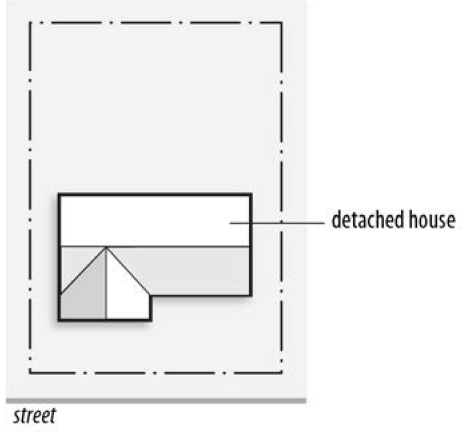
b.
Lot Line House. A lot line house (sometimes referred to as a "patio house") is a principal residential building occupied by one dwelling unit and that is located on a single lot that is not occupied by other principal residential buildings. Lot line houses are not attached to and do not abut other dwelling units. A lot line house is shifted to one side of the lot so that there is a more usable side yard on one side of the house and very little or no private yard on the other side. Lot line houses are subject to the same lot and building regulations that apply to detached houses except as modified by the following regulations:
FIGURE 30-2: LOT LINE HOUSE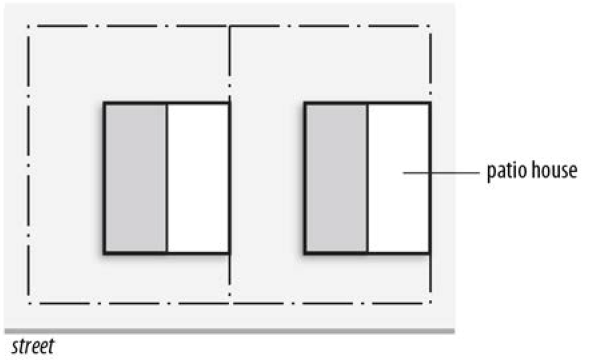
(1)
A lot line house development must consist of at least three contiguous lots with frontage on the same street.
(2)
The interior side building setback on one side of the lot containing a lot line house may be reduced to as little as zero. The zero or reduced setback side of a lot line house may not abut a street and may not abut a lot that is not part of the lot line house development. On the "non-zero" side, a side building setback must be provided equal to at least twice the minimum side building setback requirement of the subject zoning district.
FIGURE 30-3: MINIMUM SIDE BUILDING SETBACKS FOR LOT LINE HOUSES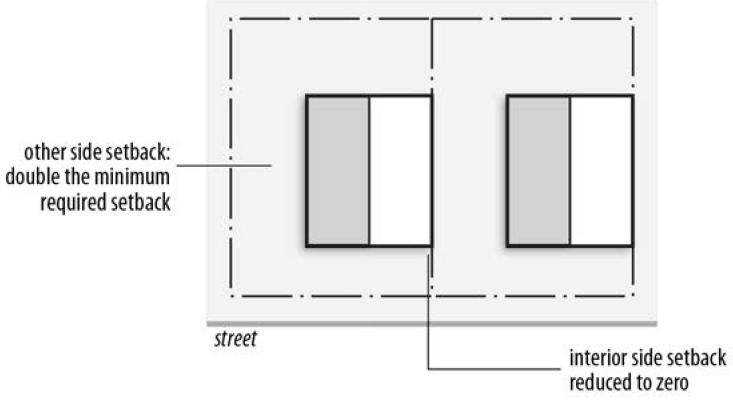
(3)
When a lot line house's exterior wall or eaves are within two feet of the abutting property line, a perpetual maintenance easement at least five feet in width must be provided on the abutting lot, which, with the exception of walls and/or fences, must be kept clear of structures. The easement must be depicted on the plat and established in the deed of dedication accompanying the plat. This provision is intended to ensure the ability to conduct maintenance on the lot line house. Eaves on the side of a lot line house with a zero or reduced setback may project over the side property line only if shown on the easement required under this paragraph.
(4)
Windows, doors and other openings that allow for visibility into the side yard of the lot abutting the reduced or zero setback side of the lot line house are prohibited. Windows that do not allow visibility into the side yard of the lot abutting the zero or reduced setback side, such as clerestory windows or translucent windows, are allowed, subject to compliance with the building code.
FIGURE 30-4: LOT LINE HOUSE MAINTENANCE EASEMENTS AND "PRIVACY" REQUIREMENTS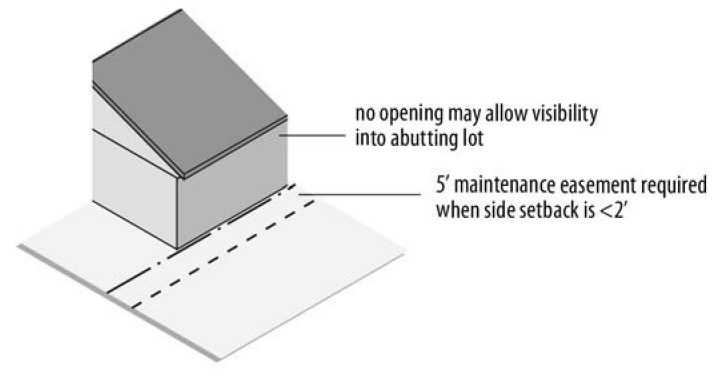
(5)
A lot line house development is permitted only if a subdivision plat incorporating these requirements is approved in accordance with the subdivision regulations and filed of record in the county clerk's office.
c.
Townhouse. A townhouse building is a principal residential building containing multiple dwelling units, each located on its own lot with a common or abutting wall along the dwelling units' shared lot lines. Each dwelling unit has its own external entrance.
FIGURE 30-5: TOWNHOUSE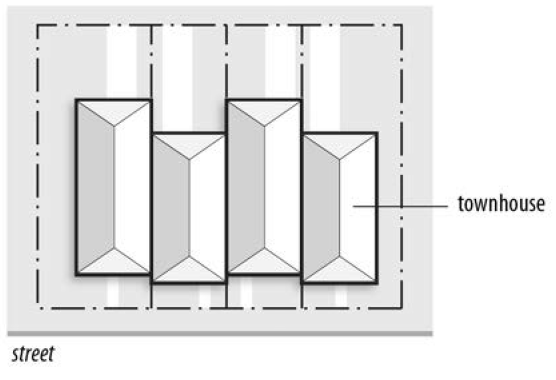
d.
Duplex. A duplex is a principal residential building occupied by two dwelling units, both of which are located on the same (single) lot, which is not occupied by other principal residential buildings. The two dwelling units are attached and may be located on separate floors or side-by-side.
FIGURE 30-6: DUPLEX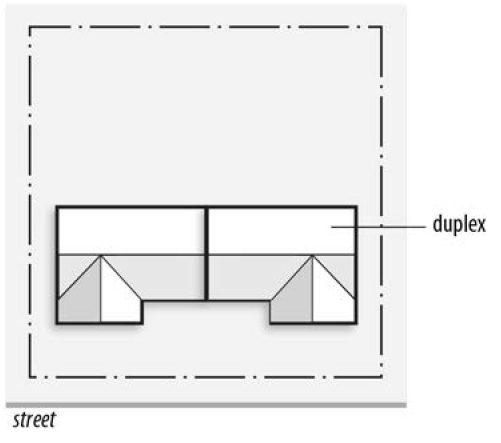
e.
Cottage Court. A cottage court is a grouping of small detached houses around a common open space or shared courtyard. Cottage courts are subject to lot and building regulations of the subject zoning district except as modified by the following supplemental cottage court regulations:
FIGURE 30-7: COTTAGE COURT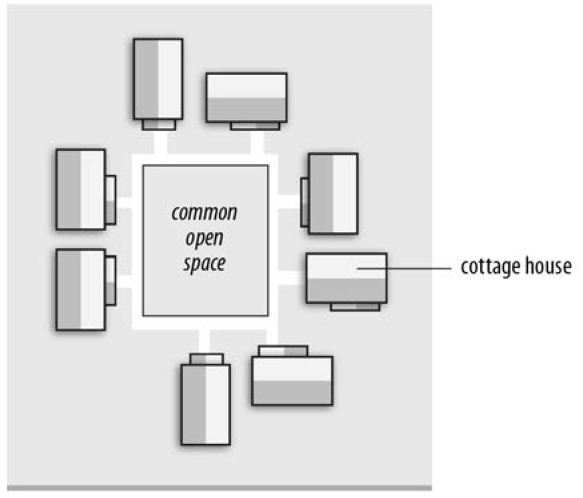
(1)
Purpose. These cottage court regulations are intended to provide opportunities for individual ownership of small houses oriented around a courtyard or common open area.
(2)
Development Size. Cottage courts must contain at least four and no more than ten houses arranged around at least two sides of a courtyard or common open space.
(3)
Orientation of Cottage Houses.
(a)
Cottage houses must be oriented to, and have a main entry onto a courtyard or common open space area that is accessible by all residents in the cottage court, provided that cottage houses on lots abutting minor streets must have their front building elevation facing the street, including a building entrance, with a second entrance facing a courtyard or common open space area.
(b)
Required courtyards and common open space areas must have cottage houses abutting on at least two sides.
(c)
All cottage houses must be located within seventy-five feet walking distance of a required courtyard or common open space area.
(4)
Open Space. A unified, contiguous courtyard or common open space must be provided as the focal point of the cottage court. The courtyard or common open space area must contain at least two hundred fifty square feet of common open space per cottage house.
(5)
Building Setbacks and Separation. All buildings within a cottage court must comply with the minimum building setbacks from lot lines that apply to detached houses in the subject zoning district, except that no building setback is required from an alley. All buildings within a cottage court must be separated by a minimum distance of ten feet.
(6)
Building Coverage. Individual cottage houses are subject to a maximum first floor area of one thousand square feet. Attached garages are counted in the calculation of first floor area, but covered porches and detached accessory buildings are not counted.
(7)
Vehicular Access and Parking.
(a)
Vehicular access to parking areas serving cottage houses within the development may come from the street, an alley or a private drive.
(b)
Required parking may be provided on each cottage house lot or in a shared parking area located within commonly owned space or in a combination of the two. Common parking areas containing four or more spaces must be screened from view of abutting R-zoned lots in accordance with the F1 screening fence or wall standards of 17.50.070.C.2. Parking may not be located in street yards or in the required courtyard or common open space area.
FIGURE 30-8: COTTAGE COURTS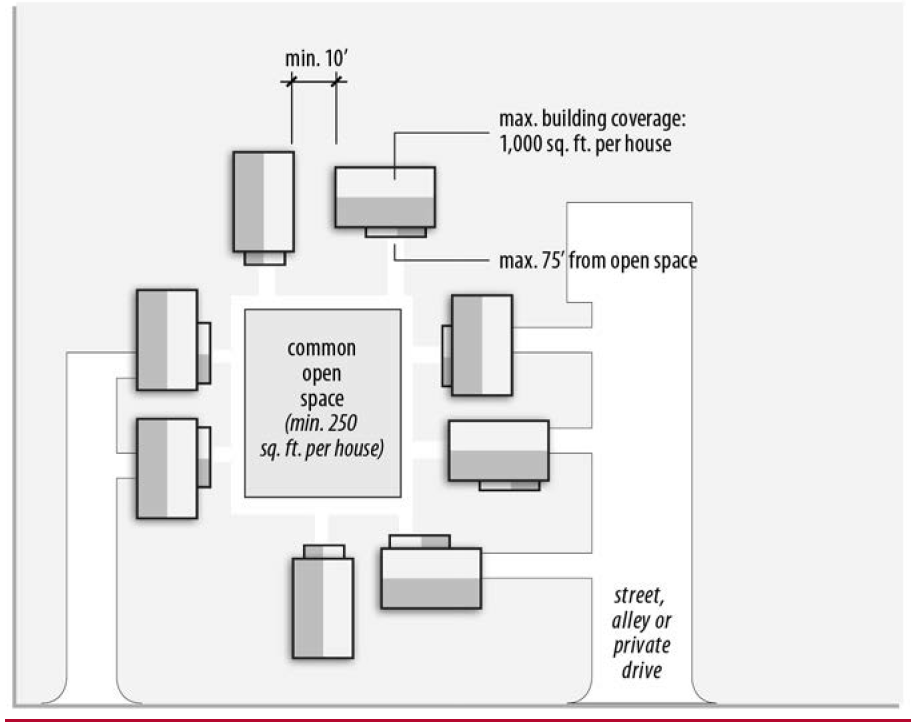
f.
Multi-unit House. A multi-unit house is a principal residential building that contains three or four dwelling units that share common walls and/or common floors/ceilings. The building is located on a single lot that is not occupied by other principal residential buildings. Multi-unit houses have the appearance of large detached houses and have only one entrance visible from the street.
FIGURE 30-9: MULTI-UNIT HOUSE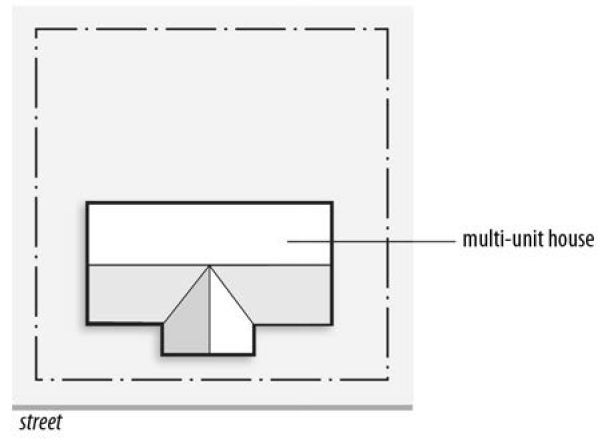
g.
Apartment. An apartment building is a principal residential building on a single lot that is occupied by three or more dwelling units (other than a multi-unit house) that share common walls and/or common floors/ceilings.
FIGURE 30-10: APARTMENT/CONDO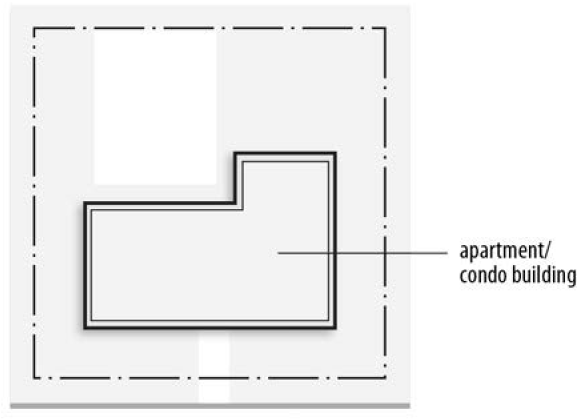
h.
Manufactured Housing Unit. A manufactured housing unit is a principal residential building that complies with the National Manufactured Housing Construction and Safety Standards Act of 1974 (42 U.S.C. § 5401, et seq.). Manufactured housing units are subject to the same regulations that apply to detached houses.
i.
Manufactured Housing Subdivision. A manufactured housing subdivision is a residential subdivision primarily comprising home sites for manufactured housing units on individual lots. Manufactured housing subdivisions and manufactured housing units are subject to the same regulations that apply to conventional subdivisions and detached houses.
j.
Mobile Home. A mobile home is a principal residential building that is built on a permanent chassis and that complies with Standard for Mobile Homes, National Fire Protection Association (NFPA) 501, American National Standards Institute (ANSI) 119.1, in effect at the time that the unit was manufactured.
k.
Mobile Home Park. A mobile home park is a lot or multiple lots upon which mobile homes or manufactured housing units are available for lease or upon which spaces for mobile homes or manufactured housing units are available for lease.
2.
Group Living. Residential occupancy of a building or any portion of a building by a group other than a household. Group living uses typically provide communal kitchen/dining facilities. Examples of group living use types include group homes, convents, monasteries, novitiates, fraternity and sorority houses, nursing homes, assisted living facilities, and homeless centers.
a.
Group Home. A community-based group living use for up to eight elderly persons (not counting staff) or eight persons with disabilities (not counting staff) that allows independent living and that provides communal room and board, personal care, and habilitation services in a household-like environment.
b.
Protective Care. A facility operated by the city, the state, the federal government or a private party under contract with the city, the state or the federal government and used for rehabilitation and overnight accommodation of individuals, including staff, who are (a) under the jurisdiction of a court or (b) individuals recently released from the jurisdiction of a court. Includes jails, prisons, and re-entry facilities.
C.
Public, Civic and Institutional Use Category. This category includes public, quasi-public and private uses that provide unique services that are of benefit to the public at-large. The public, civic and institutional subcategories are as follows:
1.
Airport or Ground Transportation Terminal.
a.
Facilities from which FAA-certified aircraft take off, land and operate, including customary accessory uses and structures.
b.
All airports shall contain the 65 DNL within the airport boundary or within land zoned I. This delineation shall be determined based on the twenty-year airport plan.
2.
Cemetery. Land or structures used for burial or permanent storage of the dead or their cremated remains. Typical uses include cemeteries and mausoleums. Also includes pet cemeteries.
3.
College or University. Institutions of higher learning that offer courses of general or specialized study and are authorized to grant academic degrees. The college or university use subcategory includes classrooms and instructional spaces, as well as on-campus residence halls, fraternity and sorority houses, administrative buildings, auditoriums and other on-campus uses and facilities that provide customary accessory and support functions for college or university uses.
4.
Day Care. Uses providing care and supervision for children or adults for a fee on a regular basis away from their primary residence for less than twenty-four hours per day (note: uses providing care and supervision for children or adults for twenty-four hours per day or longer are classified as group living uses). The three types of day care are as follows:
a.
Family Child Care Home. A state-licensed day care that provides care and supervision for no more than six children in the licensee's full-time residence.
b.
Group Child Care Home. A state-licensed day care that provides care and supervision for no more than twelve children in the licensee's full-time residence.
c.
Day Care Center. A state-licensed day care that provides care and supervision for any number of adults or more than twelve children.
5.
Fraternal Organization. The use of a building or lot by a not-for-profit organization that restricts access to its facility to bona fide, annual dues-paying members and their occasional guests and where the primary activity is a service not carried on as a business enterprise.
6.
Governmental Service. Local, state or federal government services or functions that are not otherwise classified.
7.
Hospital. Uses providing medical or surgical care to patients and offering inpatient (overnight) care.
8.
Library or Cultural Exhibit. Museum-like preservation and exhibition of objects in one or more of the arts and sciences, gallery exhibition of works of art or library collections of books, manuscripts and similar materials for study and reading. Includes aquariums and planetariums.
9.
Natural Resource Preservation. Undeveloped land left in a natural state for specific use as visual open space or environmental purposes. Typical uses include wildlife or nature preserves, arboretums, flood management projects and reservoirs.
10.
Parks and Recreation. Recreational, social or multi-purpose uses associated with public parks and open spaces, including playgrounds, playfields, play courts, community centers and other facilities typically associated with public parks and open space areas. Also includes public and private golf courses and tennis clubs.
11.
Postal Service. Facilities operated by the U.S. Postal Service, including post offices and mail sorting and distribution facilities.
12.
Religious Assembly. Religious services involving public assembly that customarily occur in churches, synagogues, temples, mosques and other facilities used for religious worship.
13.
Safety Service. Establishments that provide fire, police or life protection, together with the incidental storage and maintenance of necessary vehicles. Typical uses include fire stations, police stations, ambulance services and storm or civil defense shelters.
14.
School. Public and private schools at the primary, elementary, middle school or high school level that provide basic, compulsory education.
15
Utilities and Public Service Facility, Minor. Infrastructure services that need to be located in or close to the area where the service is provided. Minor utilities and public service facilities generally do not have regular employees at the site and typically have few if any impacts on surrounding areas. Typical uses include water and sewer pump stations; gas regulating stations; underground electric distribution substations; electric transformers; water conveyance systems; stormwater facilities and conveyance systems; telephone switching equipment and emergency communication warning/broadcast facilities.
16.
Utilities and Public Service Facility, Major. Infrastructure services that typically have substantial visual or operational impacts on nearby areas. Typical uses include but are not limited to water and wastewater treatment facilities, high-voltage electric substations, utility-scale power generation facilities (including wind, solar and other renewable and nonrenewable energy sources), sanitary landfills and utility-scale water storage facilities, such as water towers and reservoirs.
D.
Commercial Use Category. The commercial use category includes uses that provide a business service or involve the selling, leasing or renting of merchandise to the general public. The commercial use subcategories are as follows.
1.
Adult Entertainment.
a.
Any establishment in which persons' "specified anatomical areas" are displayed for customers or other employees or in which patrons may view "specified sexual activities" either live, in print or on film, video or other electronic media. It may include bars, restaurants, movie theaters, theaters, peep shows, dance halls, strip halls, bookstores, special cabarets, physical culture establishments and photographic studios or any other normally permitted use where "specified sexual activities" are displayed or where "specified anatomical areas" are exposed to customers.
b.
All adult entertainment uses are subject to the following regulations:
(1)
The use may not serve minors, employ minors or allow minors in the building. The building entrance must prominently display a sign stating: "Persons under 18 years prohibited from entering. Violators will be prosecuted." Letters on the sign must be at least two inches in height.
(2)
The use shall have a valid business license from the city. Should this license not be renewed by virtue of the business serving minors, the city shall hold hearings to revoke the business license and zoning approval.
(3)
Signs may not use any visual image that suggests sexual parts or humans.
c.
Adult entertainment uses must be spaced at least two hundred feet from one another and are prohibited within six hundred sixty feet of any of the following, measured from lot line to line:
(1)
An R-zoned lot;
(2)
A lot occupied by a residential dwelling unit;
(3)
A lot occupied by a religious assembly use; or
(4)
A lot occupied by a school.
2.
Animal Service. Uses that provide goods and services for care of animals, including the following specific use types:
a.
Grooming. Grooming of dogs, cats and similar small animals, including dog bathing and clipping salons and pet grooming shops.
b.
Boarding or Shelter. Animal shelters, care services and kennel services for dogs, cats and small animals, including boarding kennels, pet resorts/hotels, pet adoption centers, dog training centers, animal rescue shelters and zoos and animal sanctuaries.
c.
Veterinary. Animal hospitals and veterinary clinics.
3.
Assembly and Entertainment. Uses that provide gathering places for participant or spectator recreation, entertainment or other assembly activities. Assembly and entertainment uses may provide incidental food or beverage service. Typical uses include gun clubs, shooting ranges, health clubs, gymnasiums, banquet halls, entertainment centers, event centers, billiard centers, bowling centers, cinemas, go-cart tracks, laser tag, paintball, miniature golf courses, stadiums, arenas, video arcades, race tracks, fairgrounds, rodeo grounds, water parks, amusement parks and live theaters.
4.
Broadcast or Recording Studio. Uses that provide for audio or video production, recording or broadcasting.
5.
Commercial Service. Uses that provide for consumer or business services and for the repair and maintenance of a wide variety of products. Examples of commercial service use types include the following:
a.
Building Service. Uses that provide maintenance and repair services for all structural and mechanical elements of structures, as well as the exterior spaces of premises. Typical uses include janitorial, landscape maintenance, carpet cleaning, chimney sweeps, extermination, plumbing, electrical, HVAC, roofing, window cleaning and similar services.
b.
Business Support Service. Uses that provide personnel services, printing, copying, package (delivery) drop-off, photographic services or communication services to businesses or consumers. Typical uses include employment agencies, day labor hiring services, armored car services, copy and print shops, delivery/courier service drop-off location for consumers, caterers, telephone answering services and photo developing labs.
c.
Consumer Maintenance and Repair Service. Uses that provide maintenance, cleaning and repair services for consumer goods on a site other than that of the customer (i.e., customers bring goods to the site of the repair/maintenance business). Typical uses include laundry and dry cleaning pick-up shops, tailors, taxidermists, dressmakers, shoe repair, picture framing shops, gunsmiths, locksmiths, vacuum repair shops, electronics repair shops and similar establishments. Business that offer repair and maintenance service for large equipment or technicians who visit customers' homes or places of business are classified as a "building service."
d.
Personal Improvement Service. Uses that provide personal grooming, cosmetic or health and well-being-related services. Typical uses include barbers, hair and nail salons, tanning salons, day spas, body art services and fortune telling services.
e.
Research Service. Uses engaged in scientific research and testing services leading to the development of new products and processes. Such uses resemble office buildings or campuses and do not involve the mass production, distribution or sale of products. Research services do not produce odors, dust, noise, vibration or other external impacts that are detectable beyond the property lines of the subject property.
6.
Financial Service. Uses related to the exchange, lending, borrowing and safe-keeping of money. Automatic teller machines, kiosks and similar facilities that do not have on-site employees or amplified sound are not classified as financial service uses if they meet the criteria for classification as an accessory use (see 17.30.030.A.2). Typical examples of financial service use types are banks, credit unions, and personal credit establishments.
7.
Funeral and Mortuary Service. Uses that provide services related to the death of a human or domestic, household pet, including funeral homes and mortuaries. Funeral and mortuary services may include crematoriums as an accessory use. Other crematoriums and animal rendering uses are classified as moderate-impact manufacturing and industry.
8.
Lodging. Uses that provide temporary lodging for less than thirty days where rents are charged by the day or by the week. Lodging uses sometimes provide food or entertainment, primarily to registered guests. Examples of specific lodging use types include:
a.
Bed and Breakfast. A detached house in which the owner/operator offers overnight accommodations and meal service to overnight guests for compensation. Bed and breakfast uses in R districts are subject to the following regulations:
(1)
Bed and breakfast are limited to a maximum of twelve guest rooms unless a lower limit is established by the planning and zoning commission as a condition of an approved conditional use.
(2)
The maximum length of stay for any guest is limited to thirty consecutive days.
(3)
The owner/operator must maintain a register of bed and breakfast guests and on-site events for each calendar year and make the register available to city code enforcement upon request.
(4)
Cooking facilities are prohibited in guest rooms.
(5)
Signs are allowed in accordance with the sign regulations of the subject zoning district unless the planning and zoning commission establishes stricter conditions at the time of conditional use approval.
(6)
Public restaurants are prohibited. Meals may be served only to overnight guests and for on-site events expressly authorized by the planning and zoning commission at the time of conditional use approval. The planning and zoning commission may authorize bed and breakfasts to be rented for events, such as weddings, receptions, anniversaries, private dinner parties, business seminars, etc. The use of bed and breakfasts for on-site events requires express authorization of the planning and zoning commission, in accordance with the conditional use procedures of 17.65.110 As part of approval of the conditional use, the planning and zoning commission is authorized to establish the maximum number of on-site events per year and the maximum number of guests per any single event, based on the availability of off-street parking and the facility's likely impacts on the area.
b.
Hotel/Motel. An establishment, other than a bed and breakfast or rural retreat, in which short-term lodging is offered for compensation. A hotel/motel may include an accessory use restaurant.
c.
Recreational Vehicle Park/Campground. An establishment that provides temporary overnight accommodations for camping in recreational vehicles or tents.
d.
Short-Term Rental. The use of an owner-occupied residential dwelling unit for lodging.
9.
Office. Uses in an enclosed building, customarily performed in an office, that focus on providing executive, management, administrative, professional or medical services.
10.
Parking, Non-Accessory. Parking that is not provided to comply with minimum off-street parking requirements or that is not provided exclusively to serve occupants of or visitors to a particular use, but rather is available to the public at-large. A parking facility that provides both accessory and non-accessory parking will be classified as non-accessory parking if it leases twenty-five percent or more of its spaces to non-occupants of or persons other than visitors to a particular use.
11.
Restaurant. An establishment that serves food or beverages for on- or off-premises consumption as its principal business. The preparation and processing of food or beverages to be served or sold on-site directly to consumers is permitted as an accessory use to a restaurant. Typical examples of restaurant uses include sit-down restaurants, fast-food restaurants, cafés, cafeterias, ice cream/yogurt shops, donut shops, coffee shops, bars, brewpubs, nightclubs, food trucks and similar establishments. Restaurants are subject to all applicable state regulations regarding required separation distances from protected uses.
a.
Food Truck. A licensed motor vehicle or other mobile food dispensation unit that is temporarily parked outside of the right-of-way and in which food items are sold to the general public. Food trucks are subject to the following supplemental regulations:
(1)
Food trucks may only be located on a vacant lot or one containing a principal building or use.
(2)
The number of food trucks allowed per site is limited as follows:
(a)
A maximum of one food truck is allowed on sites with less than twenty thousand square feet of land area.
(b)
On sites with land area of twenty thousand square feet or more, one food truck is allowed per twenty thousand square feet of land area or fraction thereof.
(c)
For purposes of this provision, a site may consist of one lot or a combination of contiguous lots.
(d)
The number of food trucks allowed may be increased above the limits established in this section if approved in accordance with the conditional use procedures of 17.65.110.
(3)
Food trucks must be located at least one hundred feet from the main entrance of any non-food truck restaurant and at least one hundred feet from any outdoor dining area serving a non-food truck restaurant.
(4)
Food trucks may not obstruct pedestrian, bicycle or vehicle circulation routes, and must be set back at least five feet from the edge of any driveway or public sidewalk and at least fifteen feet from fire hydrants.
(5)
Food trucks and any associated seating areas may not occupy parking spaces provided to meet the minimum parking requirements of the principal use, unless the principal use's hours of operation do not coincide with those of the food truck business. Food trucks may not occupy any parking spaces reserved for persons with disabilities.
(6)
No freestanding signs or audio amplification are allowed as part of the food truck's operation.
(7)
Hours of operation of food trucks are limited to the hours between six a.m. and ten p.m.
(8)
Food trucks and associated outdoor seating must be removed from all permitted locations when not in operation.
(9)
Operators are responsible for ensuring that all waste is disposed of in accordance with city regulations and for maintaining all areas used for food vending and customer activity in a safe and clean condition.
12.
Retail Sales. Uses involving the sale, lease or rental of new or used goods to the ultimate consumer. Examples of specific retail use types include:
a.
Convenience Goods. Retail sales uses that sell or otherwise provide: (1) sundry goods; (2) products for personal grooming and for the day-to-day maintenance of personal health; or (3) food or beverages for off-premises consumption, including grocery stores, retail bakeries and similar uses that provide incidental and accessory food and beverage service as part of their primary retail sales business. Typical uses include convenience stores, drug stores, grocery and specialty food stores, wine or liquor stores, gift shops, newsstands, florists and tobacco stores.
b.
Consumer Shopping Goods. Retail sales uses that sell or otherwise provide wearing apparel, fashion accessories, furniture, household appliances and similar consumer goods, large and small, functional and decorative, for use, entertainment, comfort or aesthetics. Typical uses include clothing stores, department stores, appliance stores, TV and electronics stores, bike shops, book stores, costume rental stores, stationery stores, art galleries, hobby shops, furniture stores, pet stores and pet supply stores, shoe stores, antique shops, secondhand stores, record stores, toy stores, sporting goods stores, variety stores, video stores, musical instrument stores, medical supplies, office supplies and office furnishing stores and wig shops.
c.
Building Supplies and Equipment. Retail sales uses that sell or otherwise provide goods to repair, maintain or visually enhance a structure or premises. Typical uses include hardware stores, home improvement stores, paint and wallpaper supply stores and garden supply stores.
13.
Self-service Storage Facility. An enclosed use that provides separate, small-scale, self-service storage facilities leased or rented to individuals or small businesses. Facilities are designed and used to accommodate only interior access to storage lockers or drive-up access only from regular size passenger vehicles and two-axle non-commercial vehicles.
14.
Studio, Artist or Instructional Service. Uses in an enclosed building that focus on providing individual or small group instruction or training in fine arts, music, dance, drama, fitness, language or similar activities. Also includes dance studios, ballet academies, yoga studios, martial arts instruction, tutoring, artist studios and photography studios.
15.
Trade School. Uses in an enclosed building that focus on teaching the skills needed to perform a particular job. Examples include schools of cosmetology, modeling academies, computer training facilities, vocational schools, administrative business training facilities and similar uses. Truck driving schools are classified as "trucking and transportation terminals" (wholesale, distribution and storage use category).
16.
Vehicle Sales and Service. Uses that provide for the sale, rental, maintenance or repair of new or used vehicles and vehicular equipment. The vehicle sales and service subcategory includes the following specific use types:
a.
Commercial Vehicle Repair and Maintenance. Uses, excluding vehicle paint finishing shops, that repair, install or maintain the mechanical components or the bodies of large trucks, mass transit vehicles, large construction or agricultural equipment, aircraft or similar large vehicles and vehicular equipment. Includes truck stops and fleet vehicle fueling facilities, which may dispense conventional vehicle fuels and/or alternative vehicle fuels.
b.
Commercial Vehicle Sales and Rentals. Uses that provide for the sale or rental of large trucks, moving equipment (e.g., U-haul and Ryder) construction or agricultural equipment, aircraft, or similar large vehicles and vehicular equipment.
c.
Fueling Station (for Personal, Consumer Vehicles). Uses engaged in retail sales of vehicle fuels for personal vehicles, other than fleet fueling facilities and truck stops. (Note: Fleet vehicle fueling facilities and truck stops are part of the "Commercial Vehicle Repair and Maintenance" specific use type). Fueling stations may dispense conventional vehicle fuels and/or alternative vehicle fuels.
d.
Personal Vehicle Repair and Maintenance. Uses that repair, install or maintain the mechanical components of automobiles, small trucks or vans, motorcycles, motor homes or recreational vehicles including recreational boats or that wash, clean or otherwise protect the exterior or interior surfaces of these vehicles.
e.
Personal Vehicle Sales and Rentals. Uses that provide for the sale or rental of new or used autos, small trucks or vans, trailers, motorcycles, motor homes or recreational vehicles including recreational watercraft. Typical examples include automobile dealers, auto malls, car rental agencies. Car-share vehicles that are parked or stored when not being used by members of a car-share program are not regulated as personal vehicle sales and rental uses, but are instead considered accessory parking.
f.
Vehicle Equipment and Supplies Sales and Rentals. Uses related to the sale, lease or rental of new or used parts, tools or supplies for the purpose of repairing or maintaining motor vehicles.
g.
Vehicle Body and Paint Finishing Shop. Uses that primarily conduct motor vehicle body work and repairs or that apply paint to the exterior or interior surfaces of motor vehicles by spraying, dipping, flow-coating or other similar means.
E.
Wholesale, Distribution and Storage Use Category. This category includes uses that provide and distribute goods in large quantities, principally to retail sales, commercial services or industrial establishments. Long-term and short-term storage of supplies, equipment, commercial goods and personal items is included. The wholesale, distribution and storage subcategories are as follows:
1.
Equipment and Materials Storage, Outdoor. Uses related to outdoor storage of equipment, products or materials, whether or not stored in containers.
2.
Trucking and Transportation Terminals. Uses engaged in the dispatching and long-term or short-term storage of trucks, buses and other vehicles, including parcel service delivery vehicles, taxis and limousines. Minor repair and maintenance of vehicles stored on the premises is also included. Includes uses engaged in the moving of household or office furniture, appliances and equipment from one location to another, including the temporary on-site storage of those items.
3.
Warehouse. Uses conducted within a completely enclosed building that are engaged in long-term and short-term storage of goods and that do not meet the definition of a "self-service storage facility" or a "trucking and transportation terminal."
4.
Wholesale Sales and Distribution. Uses engaged in the wholesale sales, bulk storage and distribution of goods. Such uses may also include incidental retail sales and wholesale showrooms. Expressly includes the following uses: Bottled gas and fuel oil sales, flea markets, ice distribution centers, monument sales, portable storage building sales, vending machine sales, auctioneers, and frozen food lockers.
F.
Industrial Use Category. This category includes uses that produce goods from extracted and raw materials or from recyclable or previously prepared materials, including the design, storage and handling of these products and the materials from which they are produced. The industrial subcategories are:
1.
Low-impact Manufacturing and Industry.
a.
Manufacturing and industrial uses that do not, as part of their normal operations, generate noticeable off-site impacts in terms of noise, smoke, particulate matter, odors, or vibration. Typical examples of low-impact manufacturing and industrial uses include: Commercial laundries and linen supply services, apparel manufacturing, bakery products manufacturing, bottling plants, ice manufacturing, mattress manufacturing and assembly, microbreweries, micro distilleries, musical instrument and parts manufacturing, newspaper printing and binderies.
b.
All low-impact manufacturing and industry uses are subject to the following regulations:
(1)
All loading areas shall be accessed from alleys or side yards rather than from public streets.
(2)
In the CG district, loading areas shall be screened from view of streets and residential zoning districts.
(3)
No use shall generate any noise above 65 DNL, measured outside the building.
2.
Moderate-impact Manufacturing and Industry.
a.
Manufacturing and industrial uses that, as part of their normal operations, generate noticeable off-site impacts in terms of noise, smoke, particulate matter, odors, or vibration. Typical examples of moderate-impact manufacturing and industrial uses include: Large breweries, distilleries and alcohol manufacturing (other than micro distilleries) coffee roasting with a roasting capacity of more than three kilos, dairy products manufacturing, foundries, chrome plating, crematoriums and animal rendering plants, electroplating, fiberglass manufacturing, flour mills and paper products manufacturing.
b.
Moderate-impact manufacturing and industry uses are subject to the following regulations:
(1)
The use must meet all city sewer waste pretreatment requirements.
(2)
If the use involves hazardous chemicals (as defined by the U.S. Environmental Protection Agency), the relationship to any airport shall be reviewed to determine that:
(a)
The use is located to minimize risk of an aircraft accident involving the use.
(b)
The type of process is not likely to have adverse impacts on the airport should a spill or other problem related to the plant occur.
(3)
When abutting a lot that is R-zoned or used for residential purpose, the use must be set back from that lot by a distance of at least three hundred feet.
c.
In the CBD district, moderate-impact manufacturing and industry uses shall only be permitted on lots abutting existing railroad tracks.
3.
High-impact Manufacturing and Industry.
a.
Manufacturing and industrial uses that regularly use hazardous chemicals or procedures or that produce hazardous byproducts or explosive hazards. Typical examples of high-impact manufacturing and industrial uses include: The manufacture of acetylene, cement, lime, gypsum or plaster-of-Paris, chlorine, corrosive acid or fertilizer, insecticides, disinfectants, poisons, explosives, paint, lacquer, varnish, petroleum products, coal products, plastic and synthetic resins and radioactive materials. This subcategory also includes petrochemical tank farms, gasification plants, smelting, animal slaughtering, oil refining, asphalt and concrete (batch) plants and tanneries.
b.
High-impact manufacturing and industry uses are subject to the following regulations:
(1)
The use must meet all city sewer waste pretreatment requirements.
(2)
If the use involves hazardous chemicals (as defined by the U.S. Environmental Protection Agency), the relationship to any airport shall be reviewed to determine that:
(a)
The use is located to minimize risk of an aircraft accident involving the use.
(b)
The type of process is not likely to have adverse impacts on the airport should a spill or other problem related to the plant occur.
(3)
When abutting a lot that is R-zoned or used for residential purpose, the use must be set back from that lot by a distance of at least three hundred feet.
c.
In the CBD district, high-impact manufacturing and industry uses shall only be permitted on lots abutting existing railroad tracks.
4.
Junk or Salvage Yard. A building or open area where waste, scrap, used or second-hand materials are bought, sold, exchanged, stored, baled, packed, disassembled, crushed, processed, or handled for reclamation, disposal or other similar purposes, including but not limited to scrap iron and other metals, paper, rags, rubber tires and bottles.
5.
Mining or Mineral Processing. The extraction or quarrying of coal, ores, stone, minerals, top soil or aggregate resources from the ground. Examples include quarrying or dredging for sand, gravel or other aggregate materials; mining and top soil extraction. Also includes crushing, washing and grading coal, ore, stone, sand, gravel, minerals, top soil or aggregate resources and manufacture of Portland cement.
G.
Recycling. This category includes uses that collect, store or process recyclable material for the purpose of marketing or reusing the material in the manufacturing of new, reused or reconstituted products. The recycling use subcategories are as follows:
1.
Construction or Demolition Debris. Establishments that receive and process general construction or demolition debris for recycling.
2.
Consumer Material Drop-off Station. An establishment that: (1) accepts consumer recyclable commodities directly from the consuming party; (2) is staffed by personnel during times when recyclables are accepted from consumers; and (3) stores materials temporarily before transferring them to recyclable material processing facilities. Establishments that process recyclable material are classified as "consumer material processing" establishments. (Note: Dumpsters and recyclable material bins are regulated as accessory uses).
3.
Consumer Material Processing. Establishments that receive and process consumer recyclable commodities for subsequent use in the secondary market.
H.
Agricultural Use Category. This category includes uses such as gardens, farms and orchards that involve the raising and harvesting of food and non-food crops and the raising of farm animals. The agricultural subcategories are:
1.
Animal Husbandry. Uses that involve the feeding, housing and care of livestock, cattle, horses, poultry and similar farm animals for private or commercial purposes.
a.
Intensive. Animal husbandry uses where animals are tightly confined in buildings or outdoor pens or pastures with more than one animal unit per acre.
b.
General. Animal husbandry uses other than those classified as "intensive."
2.
Community Garden.
a.
An area less than one acre in area that is managed and maintained by a group of individuals to grow and harvest food crops or non-food crops (e.g., flowers). A community garden area may be divided into separate garden plots or orchard areas for cultivation by one or more individuals or may be farmed collectively by members of the group. Community gardens may be principal or accessory uses.
b.
Community garden uses are subject to the following supplemental use regulations:
(1)
Unless permitted by the underlying zoning district or approved as a conditional use, on-site sale of community garden products is prohibited.
(2)
Lawn and garden equipment of the type customarily used by consumers for household lawn and garden care is the only type of motorized equipment allowed. The use of motorized equipment is restricted to hours beginning at eight a.m. and ending at eight p.m.
(3)
The site must be designed and maintained to prevent any chemical pesticide, fertilizer or other garden waste from draining on to adjacent properties.
(4)
An on-site trash storage container must be provided and located as close as practicable to the rear lot line. Compost bins or piles must also be located as close as practicable to the rear lot line. Trash must be removed from the site at least once a week.
(5)
Only individuals and organizations authorized by the property owner may participate in the community garden.
(6)
A sign must be posted on the property identifying the name and phone number of the property owner or the owner's agent name. The sign must be at least four and no more than eight square feet in area and be posted so that it is legible from the public right-of-way.
(7)
The owner of any lot used for a community garden must give each abutting property owner and occupant written notice of the intent to establish a community garden and the applicable use regulations of this UDO at least thirty days before the start of the community garden.
(8)
Measures must be taken to prevent cultivated areas from encroaching onto adjacent properties.
(9)
The property must be maintained free of tall weeds and debris. Dead garden plants must be regularly removed, at least annually.
(10)
Any community garden use regulation of this section may be modified by conditional use approval.
3.
Farm. An area managed and maintained by an individual, group or business entity to grow and harvest food crops or non-food crops for sale or distribution.
4.
Nursery or Greenhouse. A building or site used for propagation and growth of trees or plants for wholesale sales and distribution.
5.
Stable. Land or structures in which horses are kept, including horses owned by owner or occupant of the subject property and those that are not owned by the subject property owner or the occupant of the subject property. Facilities that offer horse and pony rides, equestrian training and similar services and amusements are also classified as stables.
I.
Other Use Category. This category includes uses that do not fit the other use categories.
1.
Drive-in or Drive-through Facility. Any use with drive-through windows or drive-through lanes or that otherwise offer service to the occupants of motor vehicles. Typical uses include drive-through restaurants, drive-through pharmacies, drive-in restaurants and drive-in cinemas. Automatic teller machine kiosks and similar drop-off or pick-up facilities that do not have on-site employees or amplified sound are not classified as drive-in or drive-through facilities if they meet the criteria for classification as an accessory use (see 17.30.030.A.2).
2.
Off-premises Outdoor Advertising Sign. A sign that directs attention to a business, commodity, service, or activity that is conducted, sold or offered elsewhere than upon the lot where the subject sign is located. Off-premises outdoor advertising signs must comply with the following supplemental regulations.
a.
Lots on which off-premises outdoor advertising signs are located must have a minimum lot area of at least seven thousand square feet.
b.
Off-premises outdoor advertising signs are prohibited within three hundred feet of any other off-premises outdoor advertising sign.
c.
The maximum height of an off-premises outdoor advertising sign is thirty-five feet.
d.
See also the city's sign regulations in Chapter 12.12.
J.
Cannabis.
1.
Generally. This section is adopted to protect the health, safety, and welfare of the community as it relates to the regulation and use of cannabis by imposing certain time, place, manner and other restrictions on cannabis and cannabis establishments. The city of Clovis requires compliance with all applicable laws regarding the retail sale, cultivation and manufacturing of cannabis. Nothing in this section is intended to promote or condone the sale, cultivation, manufacture, transport, production, distribution, possession, or use of cannabis or cannabis products in violation of any applicable law.
2.
Definitions.
"Cannabis" means all parts of the plant of the genus cannabis containing a delta-9-tetrahydrocannabinol concentration of more than three-tenths percent on a dry weight basis, whether growing or not, as well as the seeds from the plant, the resin extracted from any part of the plant, and every compound, manufacture, salt, derivative, mixture or preparation of the plant or its seeds or resin. Cannabis does not include industrial hemp, the fiber produced from the stalks of the plant of the genus cannabis, oil or cake made from the seeds of the plant, sterilized seeds to prepare topical or oral administrations, food, drink or other products.
"Cannabis consumption area" means an area where cannabis products may be served and consumed.
"Cannabis establishment" means an entity licensed by the department to operate all of the following:
1.
A single retail location at which the licensee may operate as a cannabis retail business and sell cannabis and cannabis products directly to consumers or qualified patients.
2.
A single off-site location at which the licensee may operate as a cannabis production business and cultivate cannabis, possess unprocessed cannabis products and transport unprocessed cannabis products.
3.
A single off-site location at which the licensee may operate as a cannabis manufacturing business and manufacture cannabis and cannabis products, as well as package and store cannabis and cannabis products.
"Cannabis manufacturer" means a licensed person that:
1.
Manufactures cannabis products;
2.
Packages cannabis products;
3.
Has cannabis products tested by a cannabis testing laboratory; or
4.
Purchases, acquires, sells or transports wholesale cannabis products to other cannabis establishments.
"Cannabis manufacturing business" means a business that is operated by a cannabis manufacturer and manufactures cannabis products, packages cannabis products or transports cannabis products.
"Cannabis producer" means a person that is licensed to:
1.
Cultivates cannabis plants;
2.
Has unprocessed cannabis products tested by a cannabis testing laboratory;
3.
Transports unprocessed cannabis products only to other cannabis establishments; or
4.
Sells cannabis products wholesale.
"Cannabis product" means cannabis concentrate and products that are composed of cannabis and other ingredients and that are intended for use or consumption, including edible products, ointments, and tinctures.
"Cannabis production business" means a business that is operated by a cannabis producer and cultivates cannabis plants, possesses unprocessed cannabis plants or transports cannabis products.
"Cannabis retail business" means a single retail location at which the licensee may sell cannabis and cannabis products directly to consumers or qualified patients.
"Consume," "consuming," and "consumption" mean the act of ingesting, inhaling or otherwise introducing marijuana into the human body.
"Consumer" means an individual who is at least twenty-one years of age and who purchases marijuana or marijuana products.
"Cultivate" and "cultivation" mean to propagate, breed, grow, prepare and package marijuana.
"Department" means the state of New Mexico Regulation and Licensing Division, or its successor agency.
"Extraction" means the process of extracting or separating resin from marijuana to produce or process any form of marijuana concentrates using water, lipids, gases, solvents, or other chemicals or chemical processes.
"Manufacture" and "Manufacturing" mean to compound, blend, extract, infuse or otherwise make or prepare a marijuana product.
"Marijuana" is used interchangeably with "cannabis" and means all parts of the plant of the genus cannabis, whether growing or not, as well as the seeds from the plant, the resin extracted from any part of the plant, and every compound, manufacture, salt, derivative, mixture or preparation of the plant or its seeds or resin. Marijuana does not include industrial hemp, the fiber produced from the stalks of the plant of the genus cannabis, oil or cake made from the seeds of the plant, sterilized seeds to prepare topical or oral administrations, food, drink or other products.
"Marijuana Testing Facility" means the Department or another entity that is licensed by the Department to analyze the potency of marijuana and test marijuana for harmful contaminants.
"Person" means an individual, partnership, corporation, association, or any other entity of whatever kind or nature.
"Process" and "processing" means to harvest, dry, cure, trim or separate parts of the cannabis plant.
"Rehabilitation center" means a facility or center where individuals receive treatment for drug abuse, alcohol abuse or substance abuse.
3.
Cannabis Establishments.
a.
Cannabis establishments shall not be permitted within three hundred feet of an existing school, pre-school, daycare, trade school, higher education facility, church, religious institution, place of worship, or rehabilitation center.
b.
Cannabis establishments shall not be permitted within three hundred feet of a playground, public park or athletic field.
c.
Cannabis establishments shall not be permitted within five hundred feet of any other existing cannabis establishment.
e.
Cannabis signage shall be allowed pursuant to Section 17.45.010, provided that any signage or advertising is not designed to appeal to persons under twenty-one years of age.
f.
There shall be no outdoor cultivation, processing, curing, drying, selling, storage, or other display of cannabis or cannabis products at a cannabis establishment.
g.
Cannabis establishments shall have recorded video surveillance covering all plants and the entire exterior. The recorded video surveillance shall be operating twenty-four hours a day, seven days a week. Records of surveillance shall be kept for a minimum of thirty days.
h.
For all cannabis establishments, the odor of cannabis must not be perceptible at any adjoining use of the property or on other parcels.
i.
Cannabis establishments must provide for off-site disposal of cannabis products and other solid waste in compliance with state, federal and local law.
j.
Cannabis establishments open to the public shall be allowed to operate only during the hours of nine a.m. to nine p.m. MST.
k.
Cannabis establishments must operate within a fully enclosed and stationary building or structure, capable of being locked and secured.
(Ord. No. 2122-2019, § 3, 6-20-19; Ord. No. 2149-2021, § 2, 8-19-21; Ord. No. 2161-2021, § 2, 2-10-22; Ord. No. 2249-2025, § 2, 1-16-25).
17.30.030 - Accessory uses.
A.
Generally Applicable Regulations.
1.
Accessory Uses Allowed. Accessory uses and structures are allowed only in connection with lawfully established principal uses.
2.
Allowed Uses and Structures. Allowed accessory uses and structures are limited to those expressly regulated in this chapter as well as those that, in the determination of the director of building safety, satisfy all of the following criteria:
a.
They are customarily found in conjunction with the subject principal use or principal structure;
b.
They are subordinate and clearly incidental to the principal use of the property; and
c.
They serve a necessary function for or contribute to the comfort, safety or convenience of occupants of the principal use.
3.
Time of Construction and Establishment.
a.
Accessory uses may be established only after the principal use of the property is in place.
b.
Accessory buildings may be established in conjunction with or after the principal building or use. They may not be established before the principal building or use is in place.
4.
Location.
a.
Accessory uses and structures must be located on the same lot as the principal use to which they are accessory, unless otherwise expressly stated.
b.
Freestanding accessory buildings are not permitted within the front yard or within sixty feet of the front yard lot line.
c.
Freestanding accessory buildings within the rear yard must be set back at least one foot from the interior side lot line. No setback is required from the rear lot line.
d.
Building walls facing an interior side or rear lot line may not exceed ten feet in height unless the building is set back an additional distance from side and rear lot lines, in which case one additional foot of building height is permitted for each additional one foot of building setback beyond the minimum required setback.
e.
On corner lots, accessory buildings are subject to the same street side setback that applies to the principal building.
5.
Coverage. The total area of all accessory buildings on a residential lot may not exceed fifty percent of the area of the rear yard.
6.
Materials. Accessory buildings may not be constructed of, or incorporate, either modified or freestanding, shipping containers, boxcars, truck beds, or other containers originally designed or constructed for transporting materials and not as a freestanding building or structure.
B.
Accessory Antennas.
1.
Satellite Dish Antennas.
a.
Where Allowed.
(1)
Satellite dish antennas up to forty inches in diameter are permitted as of right as an accessory use to all lawfully established principal uses in all zoning districts. They are subject to all applicable accessory structure setback regulations.
(2)
Satellite dish antennas over forty inches in diameter, up to one hundred twenty inches in diameter, are permitted as of right as an accessory use to all lawfully established principal uses in mixed use and nonresidential zoning districts. They are subject to all applicable accessory structure setback regulations.
b.
Location.
(1)
In RS districts, satellite antennas may be located only to the rear of any principal structure. If usable communication signals cannot be obtained from a rear location, the satellite antenna may be located in the side yard. If usable satellite communication signals cannot be received by locating the antenna in the rear or to the side of the principal structure, the antenna may be placed in the street yard outside of the required building setback or on the roof in a location that is visible from the street, provided that the diameter of the satellite dish antenna does not exceed eighteen inches.
(2)
In non-RS districts, satellite dish antennas may be located anywhere in the buildable area of the lot (outside of required building setbacks) or on an allowed principal or accessory building on the lot.
(3)
Ground-mounted satellite dish antennae must be visually screened to reduce visual impact from surrounding properties at street level and from public streets.
2.
Over-the-Air TV and Amateur Radio Antennas.
a.
R Districts.
(1)
In R districts, accessory antennas and their support structures are allowed to be mounted on a principal building or accessory building, provided that:
(a)
The overall mounted height of the antenna does not exceed sixty-five feet, measured from the average ground elevation at the base of the building to the highest point of the antenna; and
(b)
The aggregate surface area of all mounted antennas may not exceed ten square feet, based on the area of side with the largest surface area.
(2)
In R districts, structures other than principal or accessory buildings that are used to support accessory antennas (including guy lines) must comply with all of the following regulations:
(a)
Only one such antenna support structure is allowed on a lot.
(b)
The antenna support structure may be located only in the rear yard, not in a street yard or side yard.
(c)
The overall height of the antenna may not exceed sixty-five feet, measured from the average ground elevation at the base of the structure to the highest point of the antenna.
(d)
The antenna support structure may not encroach upon the land or airspace of any abutting property.
(e)
The antenna support structure may not exceed twenty-four inches in width above twenty-five feet in height, exclusive of guy lines.
b.
Other Districts. In all non-R districts, antenna support structures that are accessory to principal uses must be set back from any R district a distance equal to at least one hundred ten percent of the height of the antenna, measured from the average ground elevation at the base of the structure to the highest point of the antenna. The setback distance must be measured from the nearest point of the antenna supporting structure (excluding any guy lines) to the nearest point on the residential zoning district boundary line.
C.
Accessory Dwelling Units.
1.
Purpose.
a.
The accessory dwelling unit regulations of this section are intended to help promote the benefits of accessory dwelling units, while also preserving neighborhood character and promoting predictability and certainty for established neighborhoods.
b.
Accessory dwelling units (ADUs) help advance the city's housing and land use goals and policies by:
(1)
Accommodating additional housing units while preserving the character of existing neighborhoods;
(2)
Allowing efficient use of the city's existing housing stock and infrastructure;
(3)
Providing housing options and choices that respond to varying income levels, changing household sizes and lifestyle needs;
(4)
Providing a means for residents, particularly seniors, single parents, and empty-nesters, to remain in their homes and neighborhoods, and obtain extra income, security, companionship and assistance; and
(5)
Promoting a broader range of accessible and more affordable housing.
2.
General Regulations for All ADUs. All accessory dwelling units must comply with the regulations of this subsection.
a.
Zoning District Regulations. Accessory dwelling units are subject to all applicable regulations of the zoning district in which they are located, unless otherwise expressly stated in this section.
b.
Where Allowed. Accessory dwelling units are allowed only on lots that comply with the minimum lot area regulations of the subject zoning district and that are occupied by a detached house or attached house. Accessory dwelling units are not permitted on nonconforming lots or on lots occupied by a principal use other than a detached house or attached house.
c.
Number. No more than one accessory dwelling unit is allowed per lot.
d.
Owner Occupancy. The owner of record must reside in either the principal or accessory dwelling unit for a minimum of six months of each calendar year.
e.
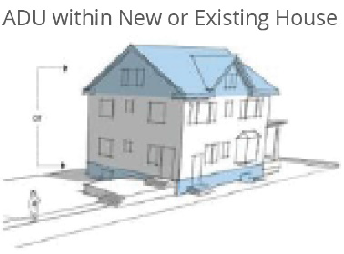
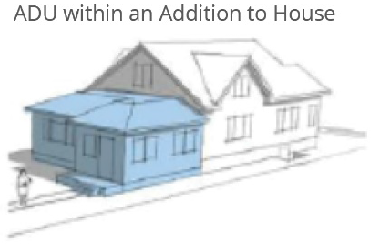
Methods of Creation. An accessory dwelling unit may be created through any of the following methods:
(1)
Converting existing area within the interior of a house (e.g., attic or basement) to an ADU;
(2)
Adding floor area to an existing house to accommodate an ADU;
(3)
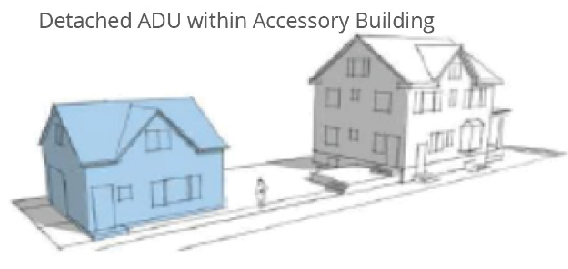
Constructing a detached accessory dwelling unit on a parcel with an existing house;
(4)
Converting space within a detached accessory building; or
(5)
Constructing a new house with an internal or detached accessory dwelling unit.
f.
Number of Residents. The total number of residents that reside in the accessory dwelling unit and the principal dwelling unit, combined, may not exceed the number permitted for a household.
g.
Location of Entrances. Only one entrance to a house containing an accessory dwelling unit may be located on a façade that faces a street, unless the house contained an additional street-facing entrance before the accessory dwelling unit was created. Detached ADUs are exempt from this regulation.
h.
Size. The floor area of an ADU may not exceed forty-nine percent of the gross floor area of the principal dwelling unit on the subject lot (excluding any attached garage), or 650 square feet, whichever is less.
i.
Parking. No additional parking is required for an accessory dwelling unit. Existing required parking for the house must be maintained or replaced on-site.
j.
Building Permit Approval. Before the issuance of a building permit for the construction of any new accessory dwelling unit, plans must be reviewed and approved by the director of building safety to determine compliance with all applicable building and life safety codes.
3.
Regulations for New Detached ADUs and Building Additions. The regulations of this subsection apply to all detached buildings and building additions proposed to be occupied by ADUs. These provisions apply only to detached buildings and building additions constructed after June 20, 2019.
a.
Exterior Finish Materials. The exterior finish material must be the same or visually match in type, size and placement, the exterior finish material of the principal dwelling unit.
b.
Roof Pitch. The roof pitch must be the same as the predominant roof pitch of the house.
c.
Trim. Trim on edges of elements on the building addition to the house or the accessory structure occupied by the ADU must be the same in type, size and location as the trim used on the principal dwelling.
d.
Entrances. Building entrances ADUs in detached structures or building additions may not face the nearest side or rear property line unless there is an alley abutting that property line.
e.
Setbacks. A detached accessory dwelling unit must be located at least ten feet behind the principal dwelling. This required ten-foot separation distance must be open from the ground to the sky except that it may include walkways, patios, decks and similar structures that do not exceed thirty inches in height above finished grade.
f.
Height. The maximum allowed height of a detached accessory dwelling unit is twenty feet or the height of the principal dwelling building, whichever is less.
D.
Carports.
1.
Where Allowed. Carports are allowed in any zone throughout the city so long as they are properly permitted and consistent with the regulations imposed by this unified development ordinance, and any other applicable law, rule or regulation.
2.
Regulations.
a.
Carports in street yards may not exceed twenty-six feet in width by twenty feet in depth.
b.
Carports that create any right-of-way obstruction by the vehicle parked in the carport are prohibited, as are carports located closer than one foot from the property line.
c.
The clear site triangle shall start twelve feet back from the inside of the curb line.
d.
Clear views from the carport are required for safety. No obstructions to view shall be located between three and one-half feet and six and one-half feet above grade along the carport's exterior. No obstructions to view may be located within a thirty-degree sight triangle located on either side of the carport.
e.
Carports may not be used for storing items other than personal or company vehicles, motorcycles or bicycles.
3.
Construction Requirements.
a.
The roof of the carport must match roof pitch and color of the principal dwelling unit on the subject lot. The carport's supporting structure must match the principal dwelling unit in terms of color and materials.
b.
When the carport roof is pitched, the gutter must be at the same level as the gutter on the principal dwelling unit.
c.
Carport ceilings must be between six and one-half feet and nine feet above floor or driveway surface immediately below.
d.
These construction requirements do not apply to lawfully constructed and permitted carports in existence on or before December 19, 2024.
4.
Permits.
a.
The city shall issue a carport construction permit to the owner(s) of any property in the city containing a residence without a two car garage, subject to the standard application, conditions and fees.
b.
The city shall issue a carport application to the owner(s) any other property within the city limits, subject to the standard conditions and fees.
c.
Any carport application issued pursuant to this section shall require posted, mailing and newspaper notice in the manner prescribed in Section 17.65.030(D).
E.
Compressed Natural Gas (CNG) Refueling Appliances. Private (restricted access), consumer-oriented (home), CNG refueling appliances are permitted as an accessory use to lawfully established household living uses in all zoning districts.
F.
Electric Vehicle Charging Stations
1.
General.
a.
Private (restricted-access) electric-vehicle (EV) charging stations are permitted as accessory uses to lawfully established principal uses in all zoning districts.
b.
Public EV charging stations are permitted as accessory uses to lawfully established principal nonresidential uses in all zoning districts.
2.
Parking.
a.
Electric vehicle charging stations may be counted toward satisfying minimum off-street parking space requirements.
b.
Public electric vehicle charging stations must be reserved for parking and charging electric vehicles.
3.
Equipment. Vehicle charging equipment must be designed and located so as to not impede pedestrian, bicycle or wheelchair movement or create safety hazards on sidewalks.
4.
Signage. Public electric vehicle charging stations must be posted with signage indicating that the space is reserved for electric vehicle charging purposes only. For purposes of this provision, "charging" means that an electric vehicle is parked at an electric vehicle charging station and is connected to the battery charging station equipment.
FIGURE 30-11: ELECTRIC VEHICLE PARKING SIGNS (TYPICAL)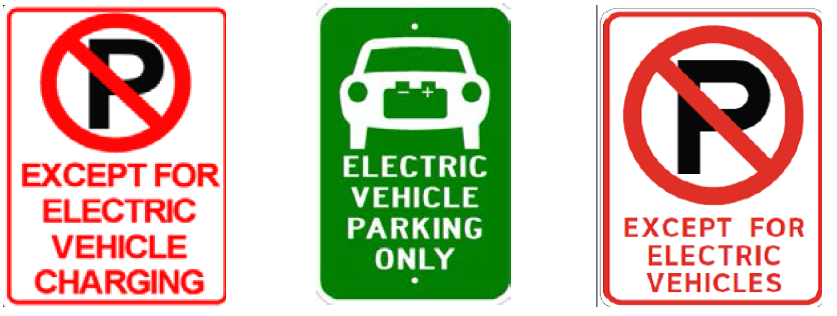
G.
Home Occupations.
1.
Description. Home occupations are jobs or professions conducted wholly or partly from a residential dwelling.
2.
Purpose. The home occupation regulations of this section are intended to allow Clovis residents to engage in customary home-based work activities, while also helping to ensure that neighbors are not subjected to adverse operational and land use impacts (e.g., excessive noise or traffic or public safety hazards) that are not typical of residential neighborhoods.
3.
Types of Home Occupations. Two types of home occupations are defined and regulated under this section: Type 1 and Type 2.
a.
Type 1 Home Occupations. Type 1 home occupations are those in which household residents use their home as a place of work, with no employees, customers or clients coming to the site. Typical examples include telecommuting office workers, writers, consultants, artists and crafts people.
b.
Type 2 Home Occupations. Type 2 home occupations are those in which household residents use their home as a place of work and either employees or customers come to the site. Typical examples include tutors, teachers, photographers, counselors, hair cutting/styling and real estate agents.
4.
Exemptions. Nonresidential uses that are expressly allowed in conjunction with residential uses (e.g., bed and breakfast uses, family day care homes and short-term rentals) are not regulated as home occupations and are not subject to these home occupation regulations.
5.
Allowed Uses. The home occupation regulations of this section establish performance standards for all home occupations rather than listing specific home occupation uses that are allowed. Uses that comply with the standards of this section are allowed as of right unless otherwise expressly stated.
6.
Prohibited Uses. The following uses are expressly prohibited as home occupations:
a.
Any type of assembly, cleaning, maintenance, painting or repair of vehicles or equipment with internal combustion engines or of large appliances (such as washing machines, clothes dryers or refrigerators);
b.
Dispatch centers or other businesses where employees come to the site and are dispatched to other locations;
c.
Equipment or supply rental businesses;
d.
Tow truck services;
e.
Taxidermists;
f.
Restaurants;
g.
Funeral or interment services;
h.
Animal care, grooming or boarding businesses;
i.
Any use involving the use or storage of vehicles, products, parts, machinery or similar materials or equipment outside of a completely enclosed building; and
j.
Any use that does not comply with regulations of this section.
7.
Where Allowed.
a.
Type 1 Home Occupations. Type 1 home occupations are permitted as of right as an accessory use to a principal use in the household living use category. Type 1 home occupations are subject to the general regulations of [subsection] 8 and the supplemental regulations of [subsection] 9.
b.
Type 2 Home Occupations. Type 2 home occupations may be approved as an accessory use to a principal use in the household living use category only through the conditional use procedures of 17.65.110. Type 2 home occupations are subject to the general regulations of 17.30.030.G.8 and the supplemental regulations of 17.30.030.G.10.
8.
General Regulations. All Type 1 and Type 2 home occupations are subject to the following regulations.
a.
Home occupations must be accessory and subordinate to the principal residential use of the property.
b.
Home occupations that change the character of the residential building they occupy or that adversely affect the character of the surrounding neighborhood are prohibited. Home occupations may not, for example, produce light, noise, vibration, odor, parking demand, or traffic impacts that are not typical of a residential neighborhood in Clovis. Home occupations must be operated so as not to create or cause a nuisance.
c.
Any tools or equipment used as part of a home occupation must be operated in a manner or sound-proofed so as not to be audible beyond the lot lines of the subject property.
d.
External structural alterations or site improvements that change the residential character of the lot upon which a home occupation is located are prohibited. Examples of such prohibited alterations include construction of parking lots, the addition of commercial-like exterior lighting, the addition of a separate building entrance that is visible from abutting streets or the exterior display of an illuminated nameplate sign.
e.
No display of any material or merchandise is allowed.
f.
The use or storage of hazardous substances is prohibited, except at the "consumer commodity" level, as that term is defined in 49 C.F.R. Sec. 171.8.
9.
Supplemental Regulations for Type 1 Home Occupations.
a.
Only residents of the dwelling unit in which the home occupation is located may be engaged in a Type 1 home occupation. No nonresident owners, employees or contractors may be present on the subject property.
b.
No clients, customers, patients, or students are allowed in conjunction with a Type 1 home occupation.
c.
Type 1 home occupations and all related activities, including storage (other than the lawful parking of passenger vehicles), must be conducted entirely within the principal residential building or an allowed accessory building.
d.
More than one Type 1 home occupation is allowed as an accessory use, but the general regulations of [subsection] 8 and the supplemental regulations of [subsection] 9 apply to the combined home occupation uses.
10.
Supplemental Regulations for Type 2 Home Occupations.
a.
Only uses approved in accordance with the conditional use procedures of 17.65.110 are allowed as Type 2 home occupations.
b.
At least one individual engaged in the home occupation must reside in the dwelling unit in which the home occupation is located as their primary place of residence.
c.
No more than three clients or customers may be present at any one time on the site of a Type 2 home occupation. Family members of the client or customer are not counted towards the three-person limit.
d.
A maximum of one nonresident employee is allowed with a Type 2 home occupation if no customers or clients come to the site at any time. Home occupations that have clients, customers or students coming to the site may not have nonresident employees and vice-versa. For the purpose of this provision, the term "nonresident employee" includes an employee, contractor, business partner, co-owner or any other person affiliated with the home occupation, who does not live at the site, but who visits the site as part of the home occupation.
e.
Type 2 home occupations and all related activities, including storage (other than the lawful parking of passenger vehicles), must be conducted entirely within the principal residential building or an allowed accessory building.
H.
Solar Energy Systems.
1.
General.
a.
Solar energy systems are permitted as of right as an accessory use to all lawfully established principal uses in all zoning districts.
b.
Accessory solar energy systems must comply with all applicable building and electrical code requirements.
2.
Building-Mounted Solar Energy Systems.
a.
Building-mounted solar energy systems may be mounted on principal and accessory structures.
b.
Building-mounted solar energy systems may not encroach into required street or side setbacks. Systems mounted on principal structures may encroach into rear building setbacks in accordance with 17.85.060.C.
c.
Only building-integrated or flush-mounted solar energy systems may be installed on street facing building elevations.
d.
Solar energy systems may not extend more than three feet above the applicable maximum building height limit for the subject building type or more than five feet above the highest point of the roof line, whichever is less.
FIGURE 30-12: ROOF-MOUNTED SOLAR
ENERGY SYSTEMS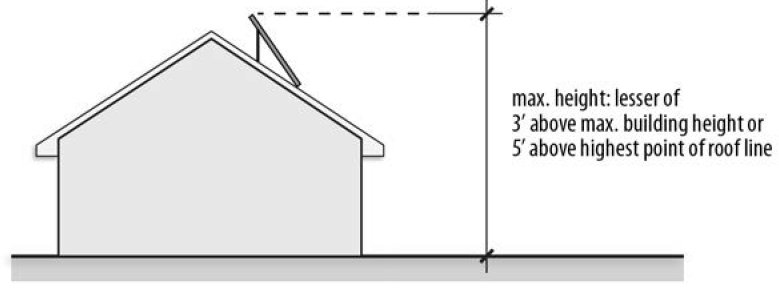
3.
Ground-Mounted Solar Energy Systems.
a.
In residential zoning districts, ground-mounted solar energy systems may not be located in a required street setback or street yard areas or in interior side setbacks.
b.
Ground-mounted solar energy systems may be located within rear setbacks.
c.
Ground-mounted solar energy systems are subject to applicable accessory structure height and lot coverage regulations.
I.
Stables, Private. Private stables are permitted an accessory use on R-zoned lots over two acres in area.
1.
Private stables are limited to the subject property owner's private use only. No horses owned by others are allowed to be boarded.
2.
Private stables may not exceed fifty percent of the total floor area of the detached house to which they are accessory.
3.
Private stables must be set back at least twenty-five feet from all lot lines.
4.
The number of animals kept in association with private stables may not exceed one-half animal per acre.
J.
Wind Energy Systems.
1.
Purpose. The wind energy system regulations of this section apply to all new wind energy systems and to any physical modification to an existing wind energy system that materially alters the size, type or number of wind turbines or other equipment.
2.
Regulations. Wind energy systems shall be permitted as an accessory use, subject to the following minimum design, location, and construction requirements:
a.
Maximum Tower Height. The maximum tower height means the vertical distance from ground level to the tip of the wind generator blade and shall not exceed forty-five feet, except in industrial zones which shall have a maximum tower height of seventy-five feet. All wind energy systems shall comply with all applicable Federal Aviation Administration height restrictions.
b.
Setbacks. The wind energy system shall be set back a distance not less than the normal set back requirements for that zoning classification, or 1.1 times the height of the wind energy system from ground level to the tip of the wind generator blade, whichever is greater, from:
(1)
Any public right-of-way, unless written permission is granted by the city or the governmental entity having jurisdiction over the right-of-way;
(2)
Any overhead utility lines, unless written permission is granted by the effected utility;
(3)
All property lines; and
(4)
Any occupied structure.
c.
Lighting. A wind energy system shall not be artificially lighted unless such lighting is required by Federal Aviation Administration Regulation.
d.
Code Compliance. A wind energy system, including the tower, shall comply with all applicable federal, state and local construction and electrical codes.
e.
Utility Interconnection. A wind energy system that is to be connected to an electric utility, shall comply with all Public Regulation Commission of New Mexico rules and regulations.
f.
Noise. Audible sound from a wind energy system shall not exceed fifty dba as measured at the exterior of any occupied building on a non-participating land owner's property. Methods for measuring and reporting acoustic emissions from wind energy systems shall be equal to or exceed the minimum standards for precision described in AWEA standard 2.1, titled "procedures for the measurement and reporting of acoustic emissions from wind turbine energy systems volume I first tier."
g.
Shadow Flicker. The owner and operator shall make reasonable efforts to minimize shadow flicker to any occupied building on a non-participating land owner's property.
h.
Ice Throw Off. The owner and operator shall prevent ice throw off from blades used as a part of a wind energy system.
i.
Signal Interference. The owner and operator shall make reasonable efforts to avoid any disruption or loss of radio, telephone, television, internet or similar wireless signals, and shall mitigate any harm caused by the wind energy system.
j.
Liability Insurance. The owner or operator shall maintain a current general liability policy covering bodily injury and property damage with limits of at least one million dollars per occurrence and one million dollars in the aggregate. Certificates of insurance shall be made available to the city upon request.
k.
System Protection. Wind energy systems shall be protected to prevent unauthorized persons from climbing the pole structure, and all access to wind turbines and electrical equipment shall be locked or fenced, as appropriate, to prevent entry by non-authorized persons.
l.
Controls and Brakes. All wind energy systems shall be equipped with a redundant braking system. The system shall include both aerodynamic over speed controls, including variable pitch, tip, and other systems (and mechanical brakes). The mechanical brakes shall be operated in a fail-safe mode. Stall regulation shall not be considered a sufficient braking system for over speed protection.
m.
Wind Resistance. Every wind energy system shall be certified to withstand sustained winds of ninety miles per hour.
n.
Batteries. If the wind energy system contains a battery component, all battery systems shall meet applicable state and local regulations.
3.
Permits.
a.
A building permit shall be required for the installation of a wind energy system.
b.
The building permit application shall be accompanied by a site plan prepared by a licensed surveyor which includes the following information:
(1)
Property lines and physical dimensions of the property;
(2)
Location dimensions and types of existing structures on the property;
(3)
Location of the proposed wind system tower;
(4)
Right-of-way of any public road or right-of-way that is contiguous to the property;
(5)
Overhead utility lines.
c.
The building permit application shall also be accompanied by:
(1)
Wind energy specifications, including manufacturer and model, rotor, diameter, tower height, tower type (free standing or guyed), and New Mexico engineer certification.
(2)
Tower foundation blueprints and drawings; certified by a New Mexico Engineer.
(3)
Certification letter from the electric utility that is to be interconnected to the wind energy system stating that all plans and procedures for interconnection are acceptable to the utility.
(4)
The fee required for a building permit.
d.
A permit issued pursuant to this chapter shall expire if:
(1)
The wind energy system is not installed and functioning within six months from the date issued; or
(2)
The wind energy system is out of service or otherwise unused for a continuous twelve-month period.
e.
The owner shall submit an application to the building safety department for a building permit for a wind energy system. The application must be on a form approved by the building safety department and must be accompanied by two copies of the documents required by this chapter.
f.
The building safety department shall issue a building permit for the wind energy system if the application materials show that the proposed system meets the requirements of this chapter.
g.
If the application is approved, the building safety department will return one signed copy of the application with the permit and retain the other copy with the application.
h.
If the application is denied, the owner will be notified in writing and provided a written statement of the reason(s) why the application was denied. The applicant may reapply if the deficiencies specified by the building safety department are corrected.
i.
The owner shall conspicuously post the building permit on the premises so as to be visible at all times until construction and installation of the wind energy system is complete.
(Ord. No. 2122-2019, § 3, 6-20-19; Ord. No. 2250-2025, § 3, 1-16-25).
17.30.040 - Temporary uses.
A.
Description and Purpose.
1.
A temporary use is the use of private property that does not require a building permit and that may or may not comply with the use and lot and building regulations of the zoning district in which the temporary use is located.
2.
The temporary use regulations of this chapter are intended to permit such occasional, temporary uses and activities when consistent with the purposes and regulations of this UDO.
B.
Authority to Approve.
1.
All temporary uses require city approval unless otherwise expressly stated in this UDO.
2.
The director of building safety is authorized to establish administrative procedures governing the processing, review and approval of temporary uses.
3.
The director of building safety is authorized to approve temporary uses that comply with the provisions of this section and to impose conditions on the operation of temporary uses to help ensure that they do not create significant adverse impacts on surrounding uses and that they operate safely and without causing nuisances, consistent with the general purposes of this UDO. Instead of taking action on proposed temporary uses, the director of building safety is also authorized to refer any temporary use to the planning and zoning commission for consideration in accordance with conditional use procedures of 17.65.110.
4.
Temporary uses that do not comply with all applicable regulations may be approved as conditional uses in accordance with 17.65.110.
C.
Exemptions. The following temporary uses are permitted as of right, without obtaining prior approval from the director of building safety:
1.
Garage sales, subject to Chapter 5.24.
2.
Temporary dumpsters on lots with ongoing construction, subject to compliance with all the following regulations:
a.
Temporary dumpsters related to ongoing construction are permitted for a period in which construction is ongoing and all required permits remain valid.
b.
Temporary dumpsters may not exceed twenty-two feet in length, eight feet in width, and eight and one-half feet in height.
c.
Temporary dumpsters must comply with all structure setback requirements of the subject zoning district.
d.
Temporary dumpsters are prohibited within stormwater basins, or any other location that may cause hazardous conditions, constitute a threat to public safety, or create a condition detrimental to surrounding land uses and development.
e.
In RS zoning districts and development areas, no more than one temporary dumpster may be located on any lot.
f.
Temporary dumpsters are allowed on lots for a period of sixty days following a natural disaster (act of God) occurring in the immediate area of the lot, to be used for the disposal of debris resulting from the natural disaster (act of God). The director of building safety is authorized to grant extensions of the sixty-day time limit.
D.
Authorized Uses. The director of building safety is authorized to approve a permit for temporary uses upon determining that the proposed use is a customary temporary use in the subject location and will generally be compatible with surrounding uses and not be a detriment to public safety. The following is a non-exhaustive list of the types of temporary uses and activities for which a permit may be approved by the director of building safety:
1.
Holiday Tree and Pumpkin Sales. Outdoor sale of trees and pumpkins during the Christmas and Halloween seasons are permitted in any district, provided that in RS districts such sales must be on the site of a public, civic or institutional use permitted in the district with direct access to a collector or arterial road.
2.
Special Events. Public interest events such as carnivals, concerts, festivals, revivals and similar public gatherings may be allowed in all zoning districts, subject to compliance with Chapter 5.40 and the following:
a.
In RS districts, such events must be on the site of a public, civic or institutional use permitted in the district.
b.
Special events shall not be held on any site more than four times per year.
c.
All special events shall be limited to fourteen successive days.
d.
If deemed necessary by the police department, the property access shall be controlled by special traffic personnel. Prior to receiving a permit, the applicant must provide a written communication from the police department indicating adequate provisions have been made.
e.
The health department must review the sanitary provisions. Prior to receiving a permit, the applicant must provide a written communication from the health department indicating adequate provisions have been made.
f.
The director of building safety must review and approve all electric and lighting facilities.
g.
Maximum noise levels may be established. The levels shall be based on the distance of the site to adjoining residential uses and any history of complaints about similar events.
h.
The applicant shall provide a written agreement or surety for complete site restoration upon the event's conclusion.
3.
Concrete/Asphalt Batch Plants. Such uses shall meet the following standards:
a.
No such use shall be located within one thousand feet of a residential use or R zoning district;
b.
All applicable state and federal regulations.
4.
Construction Staging. Construction staging areas, construction offices and storage of materials related to ongoing construction is allowed for the period in which construction is ongoing and all required permits remain valid.
5.
Sales Office. Temporary residential sales and leasing offices and model homes are allowed, when located on the same lot or in the same subdivision as the residential units actively being offered for lease or sales.
6.
Film Production. The taking of commercial still photography or motion pictures either on film, videotape, or similar recording medium, for any purpose intended for viewing on television, in theaters or for institutional uses may be approved in accordance with the general approval procedures of this section, except that when located in an R district or on public rights-of-way or public lands, such activities require review and approval in accordance with the conditional uses procedures of 17.65.110.
E.
General Procedure. Upon receipt of a complete application for a permit for a temporary use, the director of building safety must review the proposed use for its likely effects and surrounding properties and its compliance with the general provisions of this chapter. The director of building safety may impose such conditions of approval on the permit as the director of building safety determines necessary to mitigate potential adverse impacts. Such conditions may include the following:
1.
Requirements for vehicle access and parking;
2.
Restrictions on hours of operation;
3.
Limitations on signs and outdoor lighting;
4.
Requirements for financial guarantees covering the costs of cleanup and/or removal of structures or equipment; and
5.
Other conditions necessary to carry out the stated purposes of this UDO and this chapter.
(Ord. No. 2122-2019, § 3, 6-20-19).

